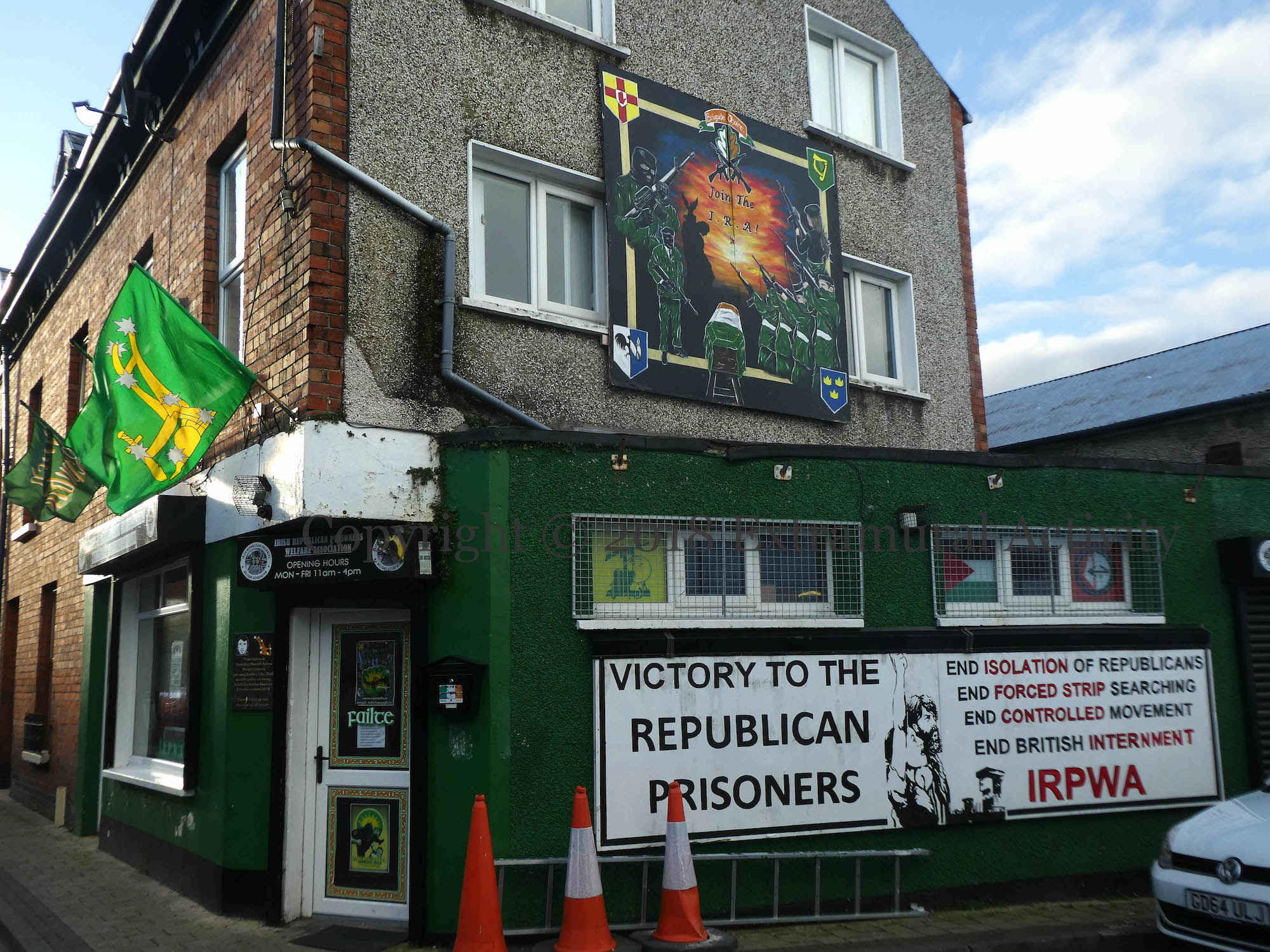
Junior McDaid house – the offices of the IRPWA (web | Fb) and Saoradh (web) in Derry – was opened two years ago (video) in Chamberlain Street. The offices are “proudly named after” IRA volunteer James McDaid, who was killed by the British Army in 1972 (Derry Journal), apparently without consulting with or inviting his wife (Derry Journal). A plaque to McDaid is to the left of the door, with two murals on the Harvey Street gable. (A third mural – recorded separately – is just out of shot to the right.)
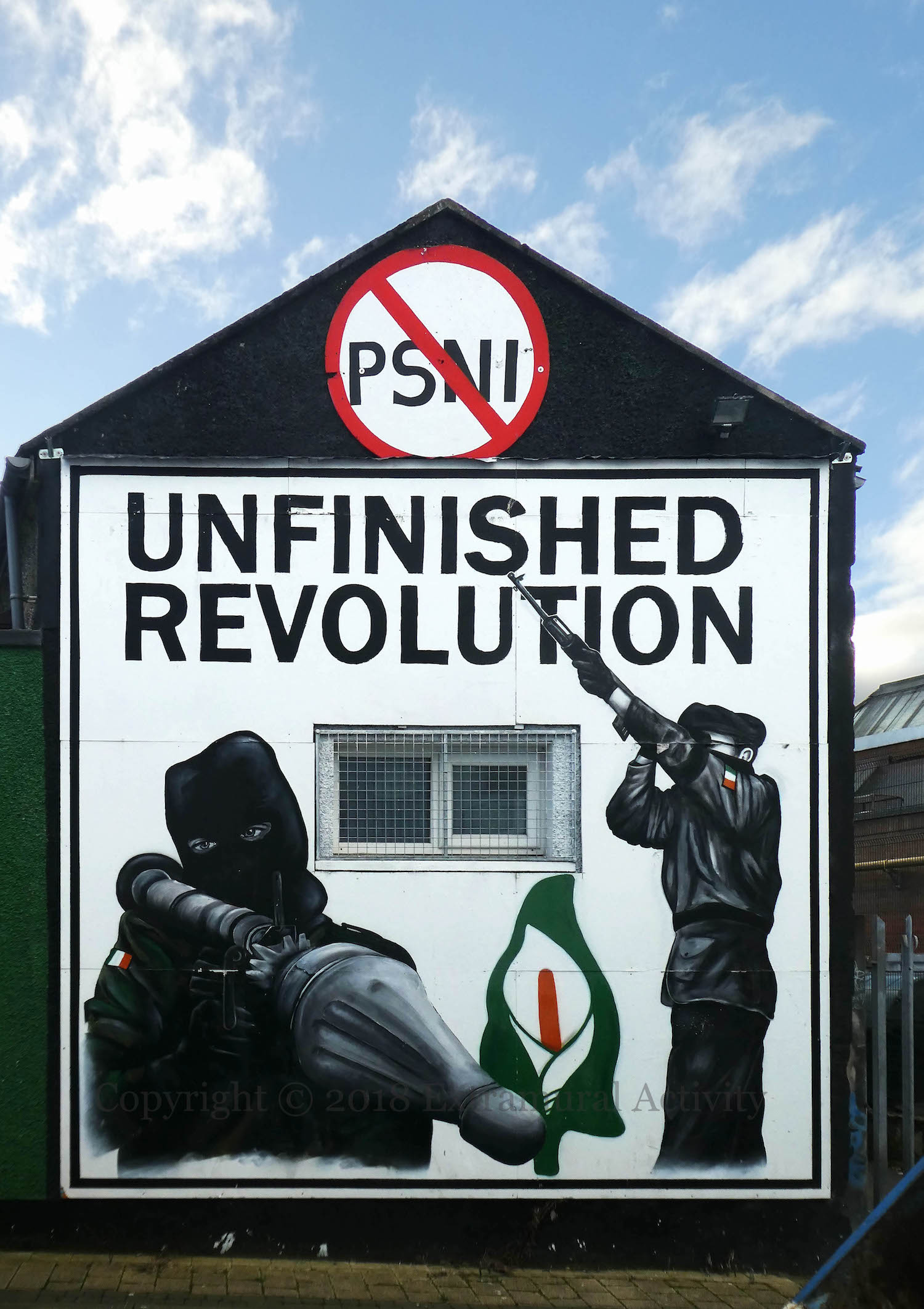
When this mural was first painted in October, 2016 there were calls for its removal on account of the re-appearance of a hooded gunman with RPG (Irish News | BelTel), in the style of IRA murals from before the peace (e.g. most similar to this 1989 mural but see also these other examples). It was still present in November of 2018. The “unfinished revolution” is that of the 1916 Easter Rising, represented by the Easter lily.
The mural is next to Junior McDaid House – the offices of the IRPWA (web | Fb) and Saoradh (web) – in Chamberlain Street, Derry – see previously Victory To The Republican Prisoners.
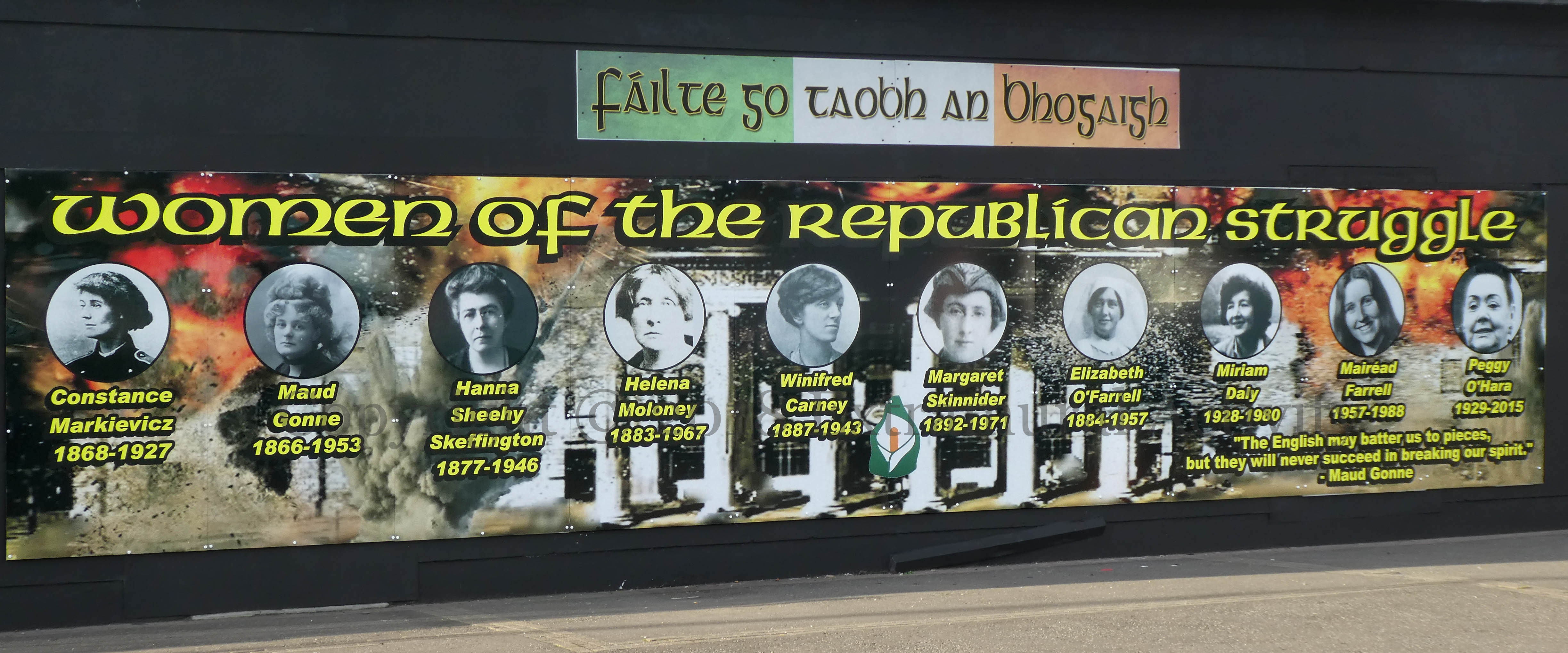
“The English may batter us to pieces, but they will never succeed in breaking our spirit – Maud Gonne.” The lesser-known figures here are Helena Moloney [Molony] and Margaret Skinnider. Both participated in the 1916 Rising. Actress Molony took part in the failed attack on Dublin Castle and, although ultimately captured, was not executed (Stories | WP). Scotland-born Skinnider was a sniper in the Easter Rising; she was shot three times but survived to flee to the USA where should would write a 1917 account of the Rising before returning to Ireland and a career in teaching (WP).
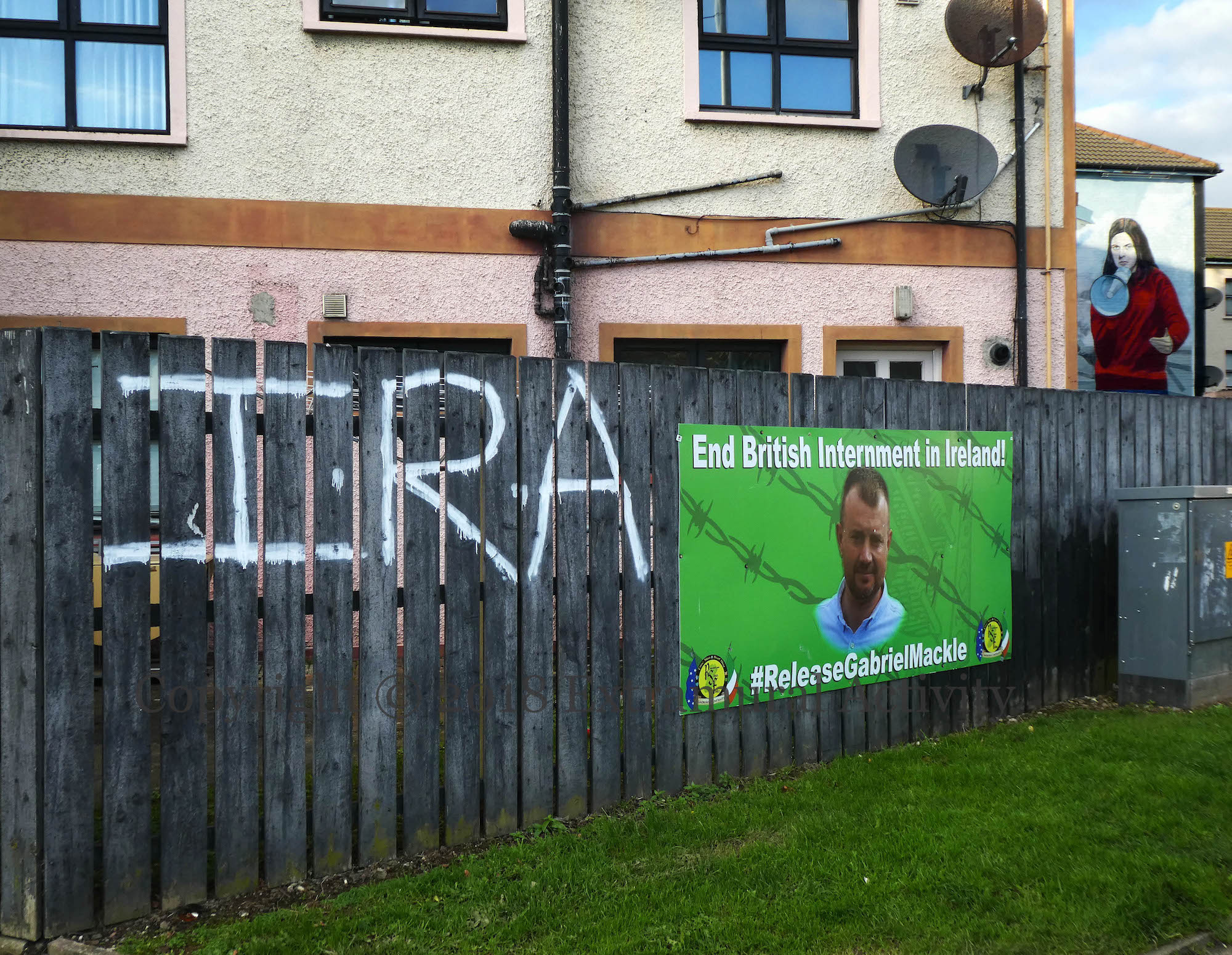
Gabriel Mackle was returned to prison most recently in November, 2017 (Pensive Quill | Irish News) and released in March, 2018 (An Phoblacht). The RSF board on the front of Lecky Road remains in place, however, as is joined by “IRA” graffiti. Bernadette Devlin (as she then was) organises in the background.
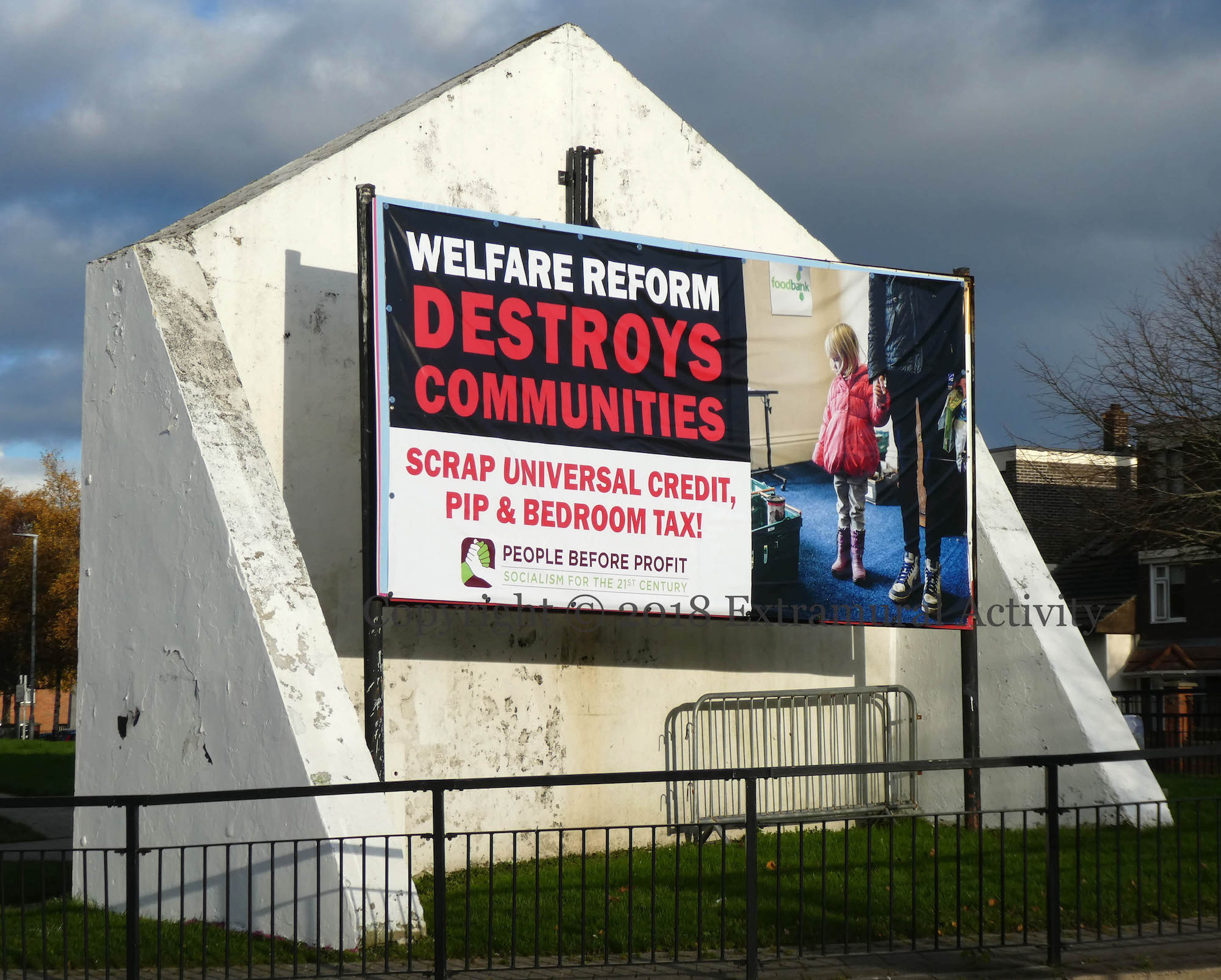
“Scrap Universal Credit, PIP [Personal Independence Payment] & Bedroom Tax.” The Universal Credit scheme is designed to replace a variety of benefits, such as Jobseeker’s Allowance and Housing Benefit began in 2013 and will take a decade to roll out (WP). (The plan in the North is detailed at NIDirect.) People Before Profit (web | Fb) oppose the programme (and related ones, such as PIP which replaces the Disability Living Allowance, and the Social Sector Size Criteria, a.k.a. Bedroom Tax), as described in this article on their web site.
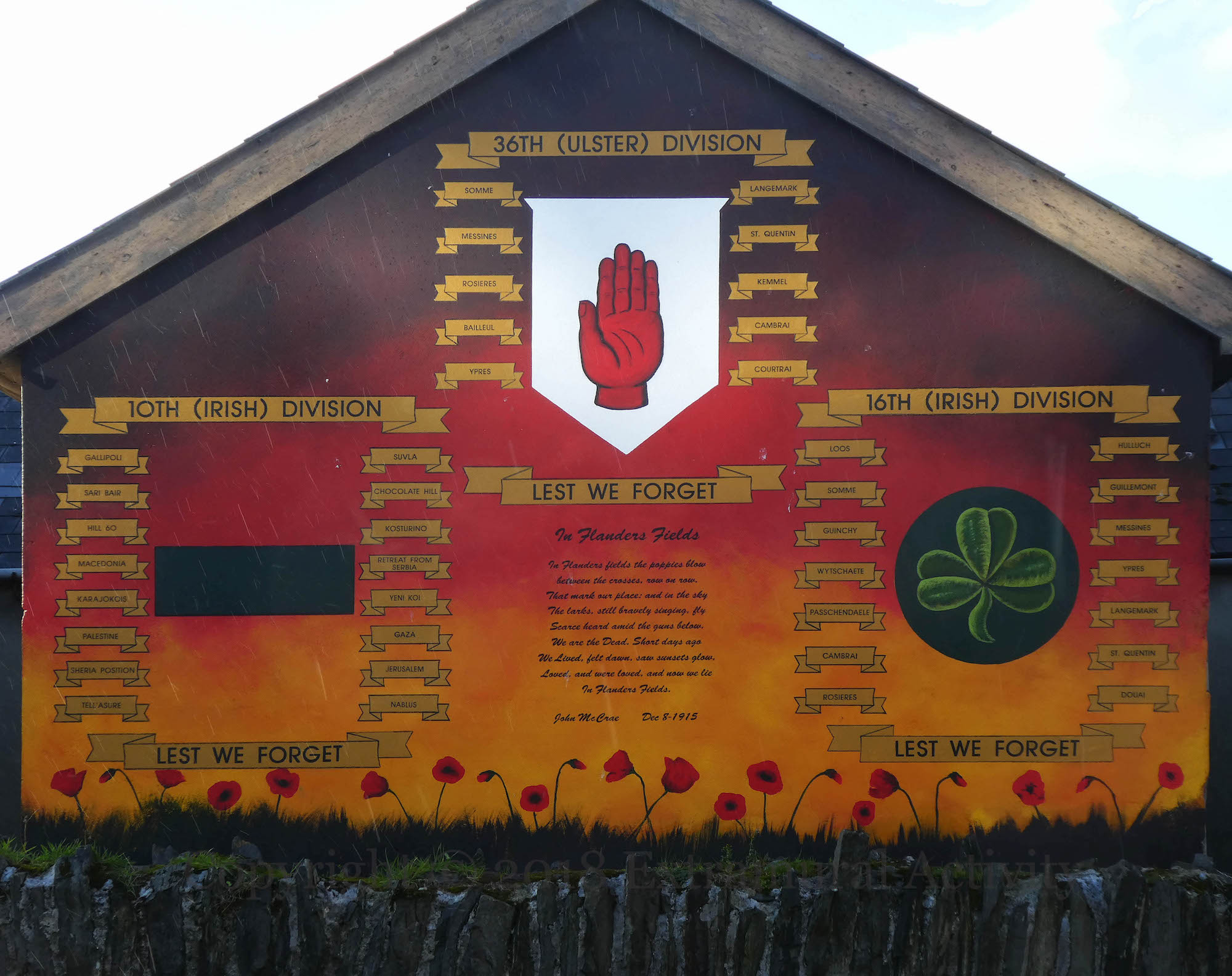
The 10th (Irish) Division fought only briefly “in Flanders fields”, towards the very end of the war, having spent most of its time in Gallipoli (in the Ottoman Empire), Macedonia, Egypt, and Palestine. The 16th took part in the Somme, especially at “Guinchy” [Ginchy] and Guillemont, while the 36th were deployed on the first day (the Battle Of Albert).
The poem in the middle is the first half of John McCrae’s In Flanders Fields: “In Flanders fields the poppies blow/Between the crosses, row on row/That mark our place, and in the sky/The larks, still bravely singing, fly/Scarce heard amid the guns below.//We are the dead; short days ago/We lived, felt dawn, saw sunset glow/Loved and were loved, and now we lie/In Flanders fields.”
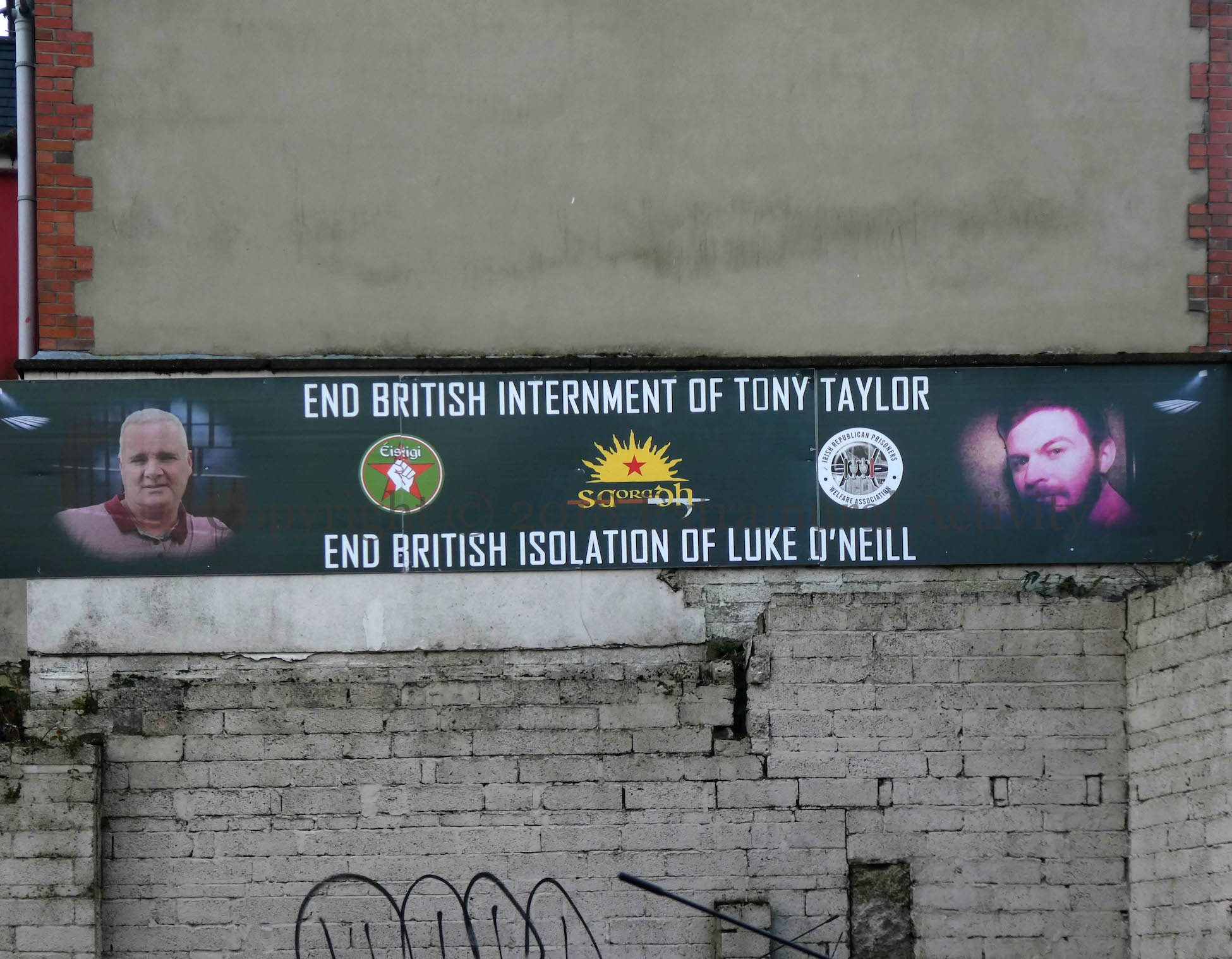
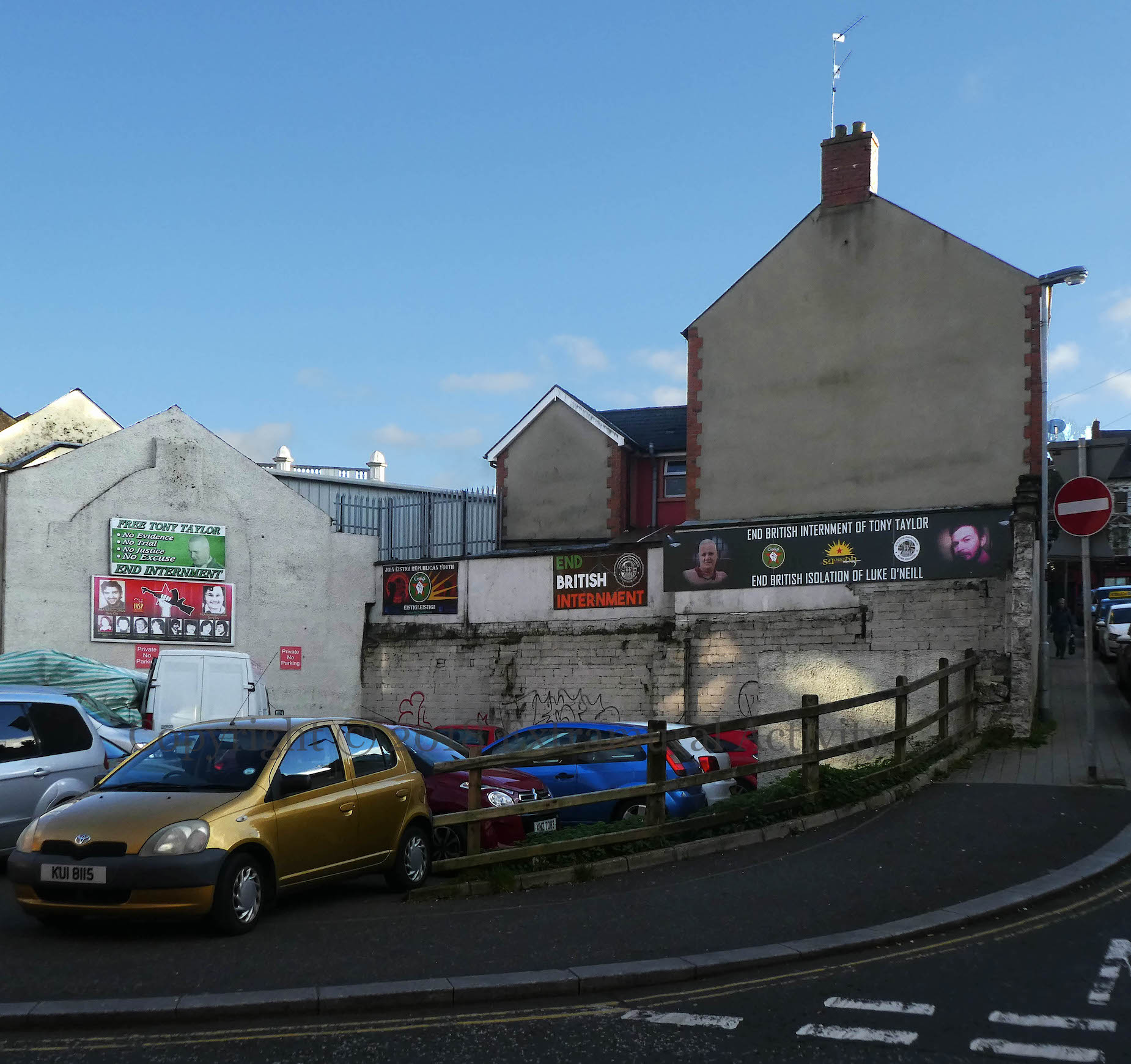
Republican prisoner Tony Taylor was released yesterday (November 28th) after 933 days in prison (BBC-NI | BelTel); for Taylor’s history in and out of prison, see Free Tony Taylor. As a result, two of the boards at the junction of William Street and Chamberlain Street will be out of date (see the wide shot, below).
In the image above, Taylor’s case is joined by that of Luke O’Neill. O’Neill is charged with attempting to kill police officers and fears for his safety in a mixed unit of Maghaberry, separated from republican prisoners in Roe House (Bel Tel).
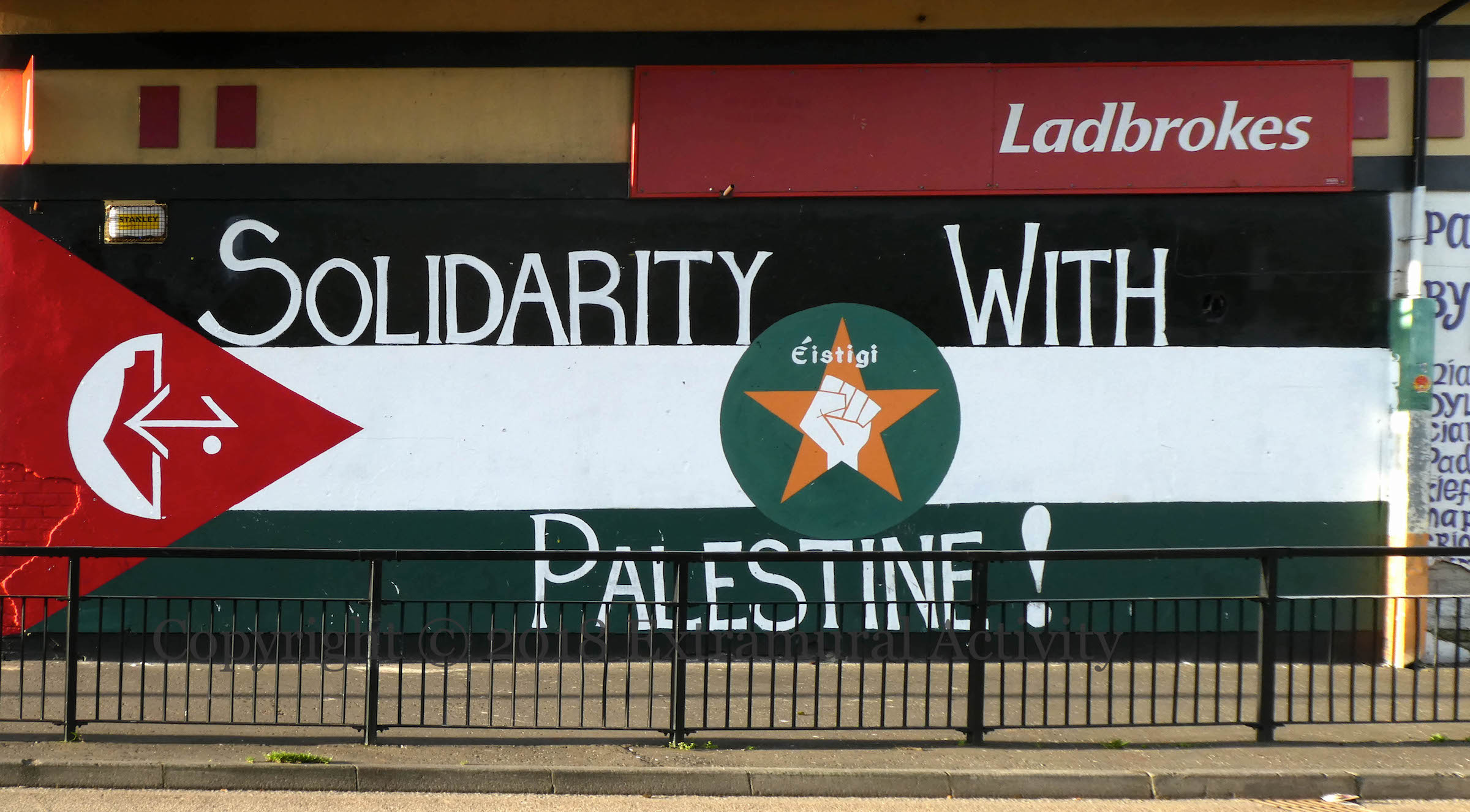
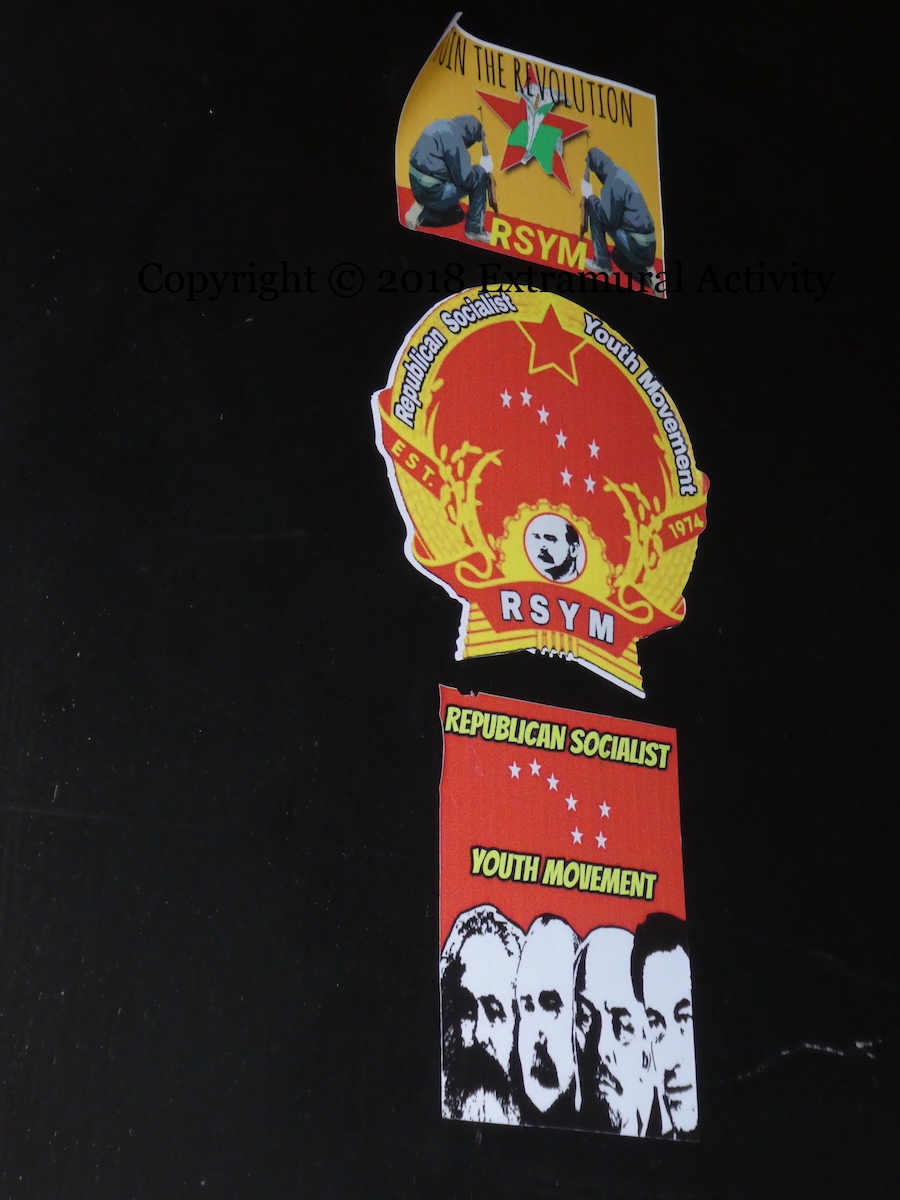
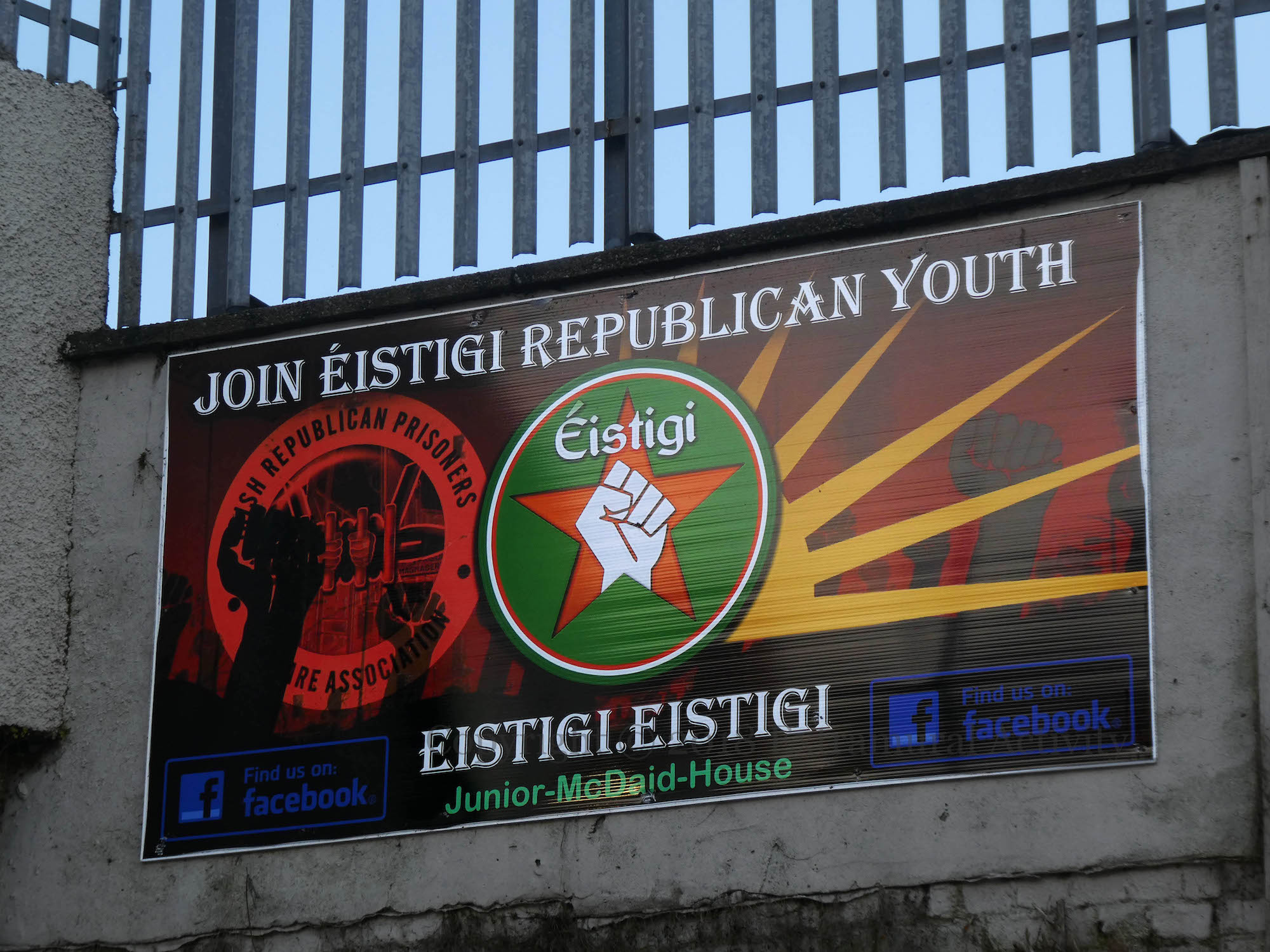
The other board (second image, below) is for Saoradh’s youth organisation, Éıstıgí. The Facebook page does not appear to be publicly visible; there is a page for Junior McDaid House in which both Saoradh (tw) and Éıstıgí have offices.
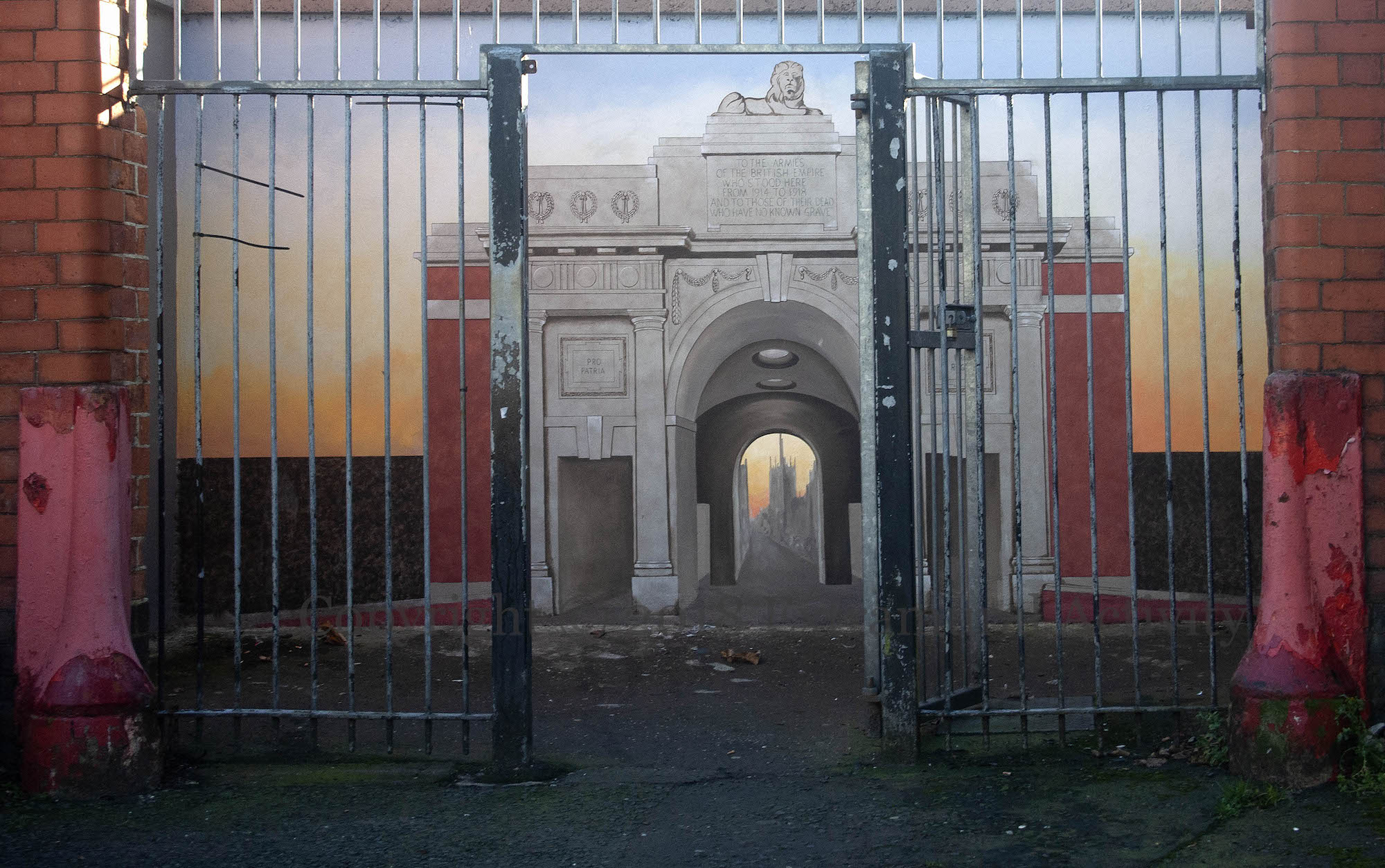
The Menin Gate memorial, at the eastern edge of Ypres, Belgium, commemorates 54,896 Commonwealth soldiers who died in the area during WWI and whose bodies were not recovered. “To the armies of the British Empire who stood here from 1914 to 1918 and to those of their dead who have no known grave.” The gates in the image above are off Bond’s Street, Londonderry, leading to the Ebrington Centre car park.
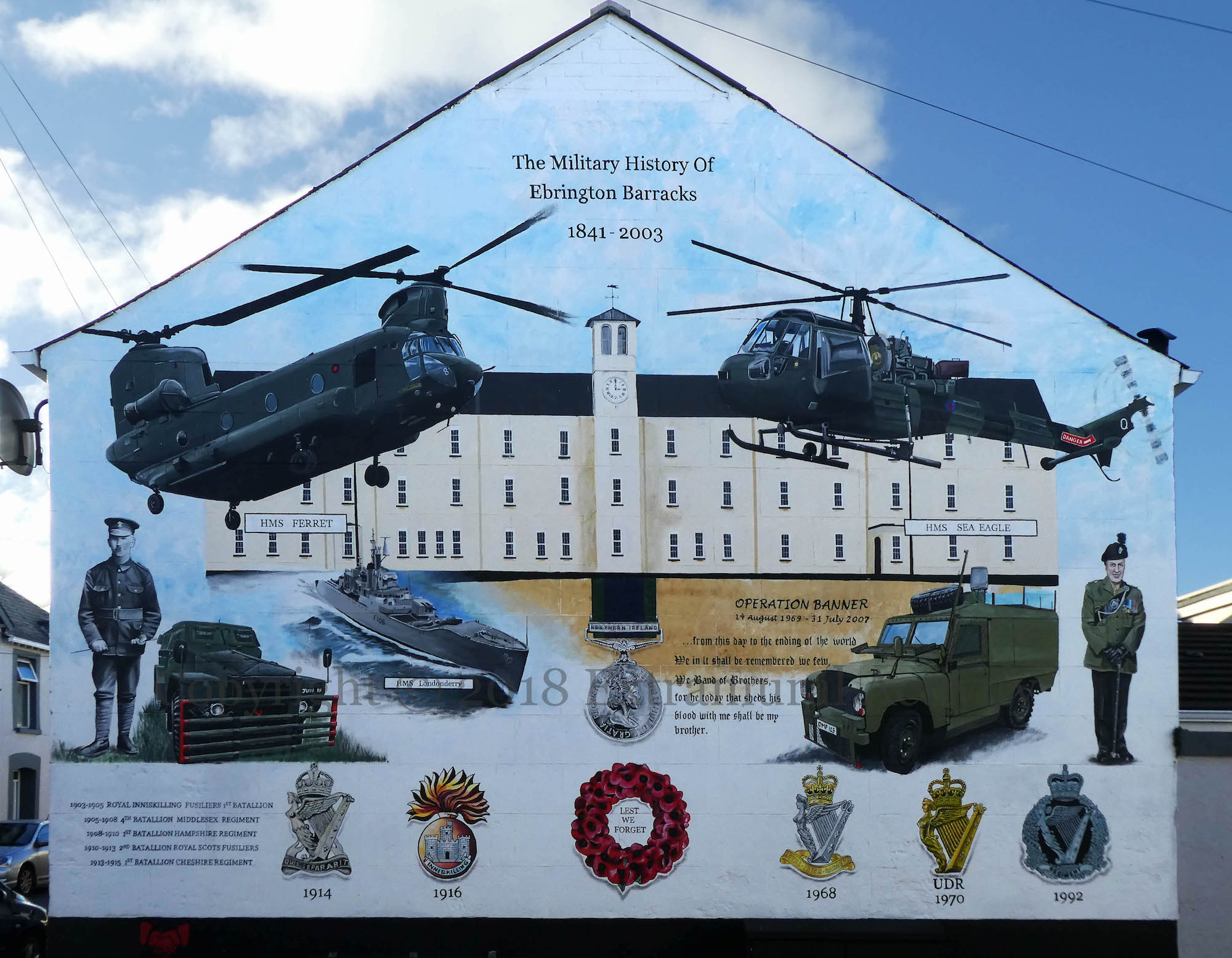
Between its construction in 1841 and decommissioning in 2003, Ebrington Barracks served as a home to many military units, including those whose emblems are at the bottom of the mural above (from left to right): the Royal Irish Rifles, Royal Inniskilling Fusiliers, Royal Irish Rangers, UDR, and the Royal Irish Regiment.
HMS Ferret and HMS Sea Eagle are not in fact ships but a part of Ebrington barracks given to the navy to serve as a “stone frigate” during (Ferret) and after (Sea Eagle) WWII. HMS Londonderry was an anti-submarine frigate but does not appear to have a particular connection to Ebrington (please comment if you know otherwise).
The Northern Ireland General Service medal – in the middle of the mural – was awarded to any soldier who served at least 30 days during Operation Banner, the deployment of British troops in Northern Ireland from 1969 onwards.
 Seosamh Mac Coille Collection