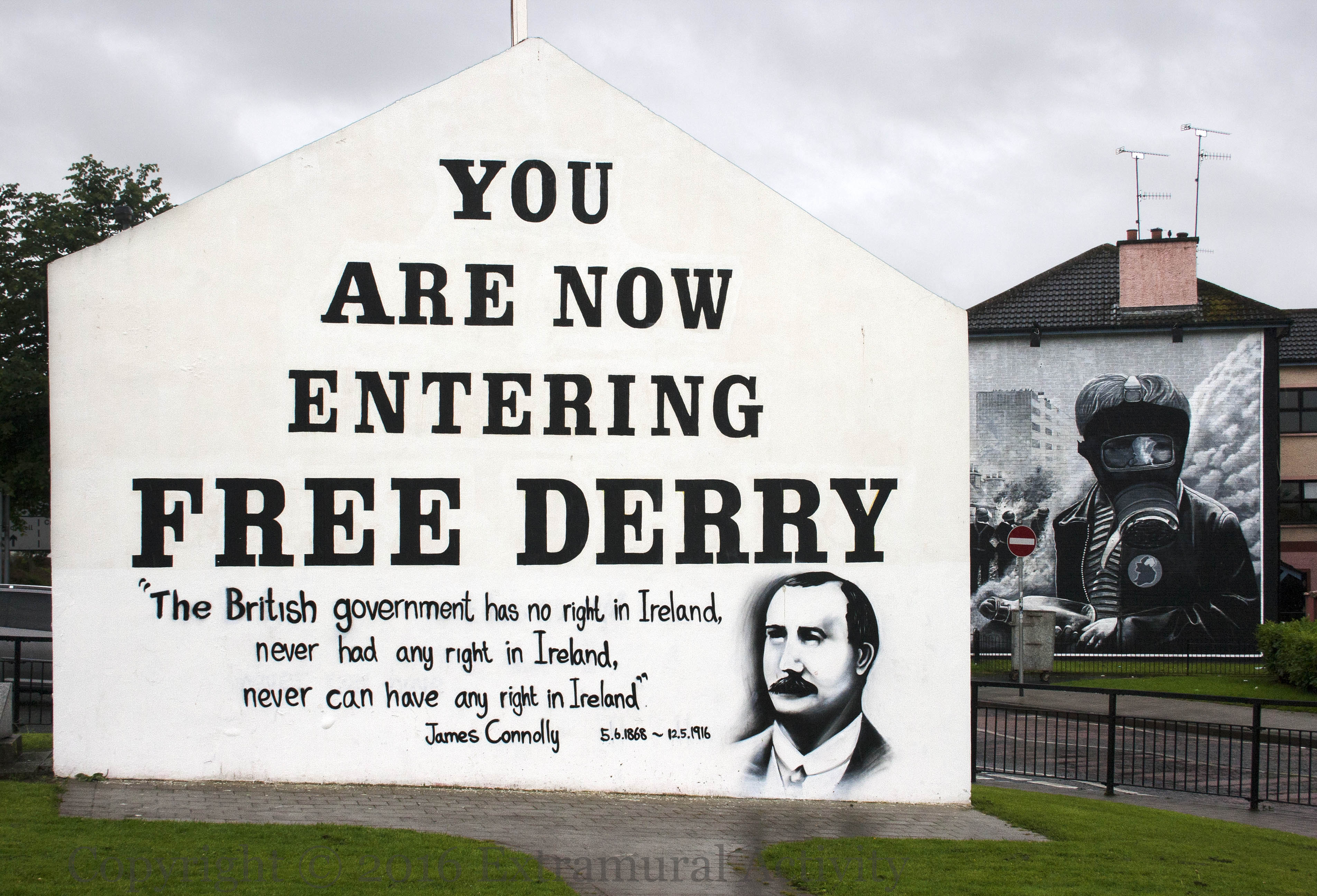
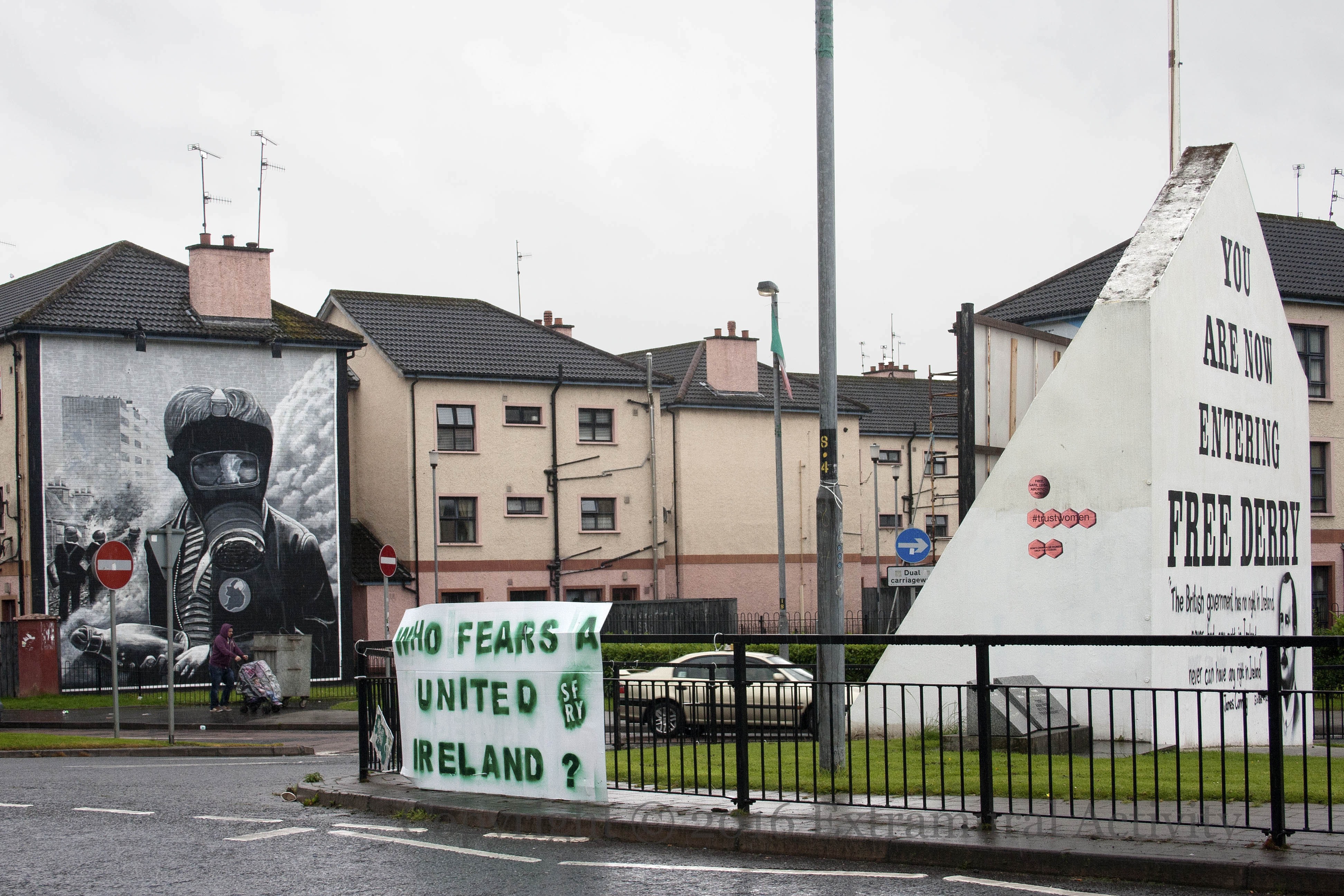
The night before he was executed for his part in the Easter Rising, republican leader James Connolly (5.6.1888-12.5.1916) penned a brief statement calling the British presence in Ireland “a usurpation and a crime against human progress” and declaring “The British government has no right in Ireland, never had any right in Ireland, never can have any right in Ireland”. Here are two images of Free Derry corner with Connolly’s quote, including The Petrol Bomber by the Bogside Artists and and “SFRY” (Sinn Féin Republican Youth) banner on the railings.
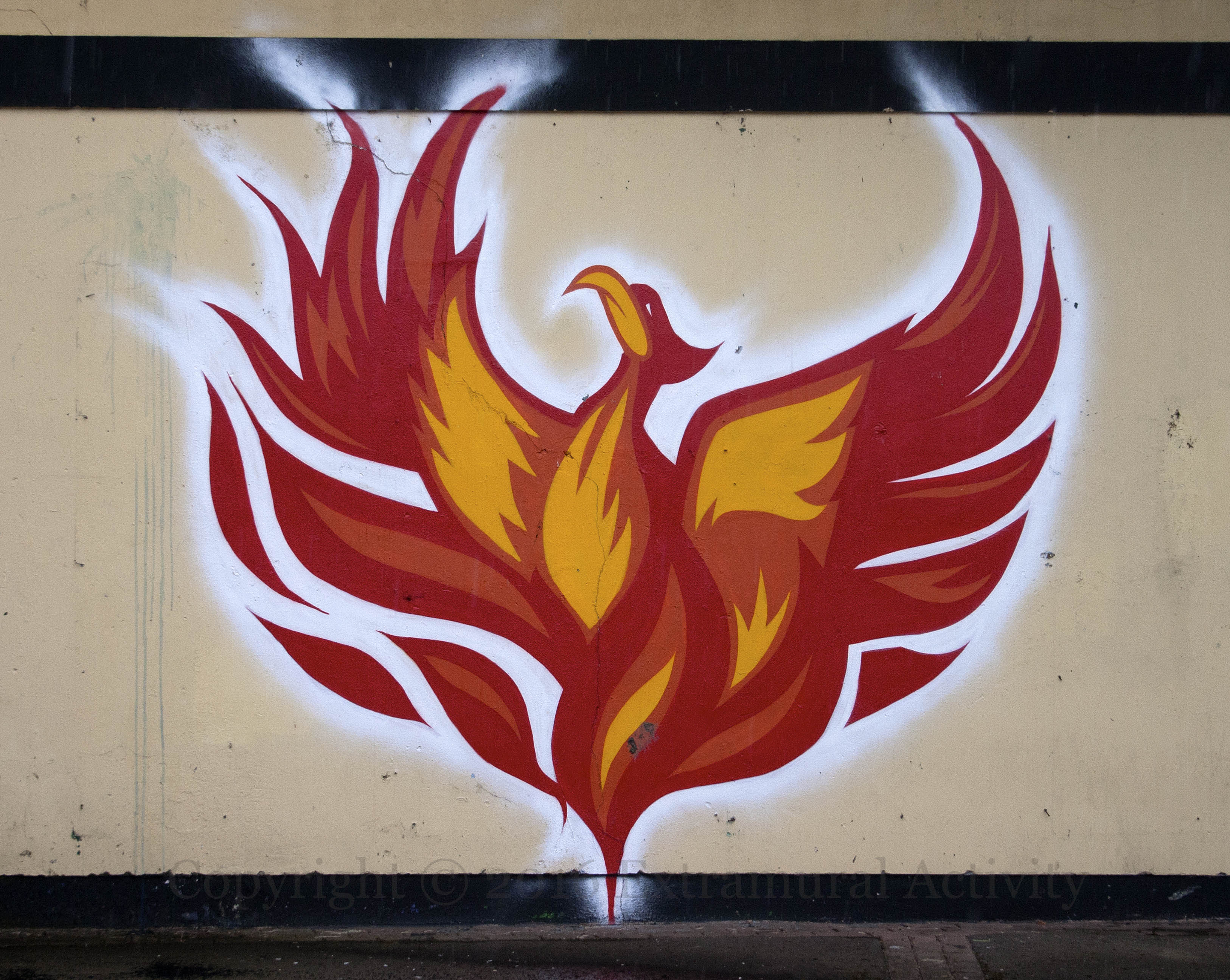
A stencilled phoenix in the Bogside, Derry’s, Meenan Square. The phoenix dies in flames and from its ashes rises another; a symbol of Irish republicanism.
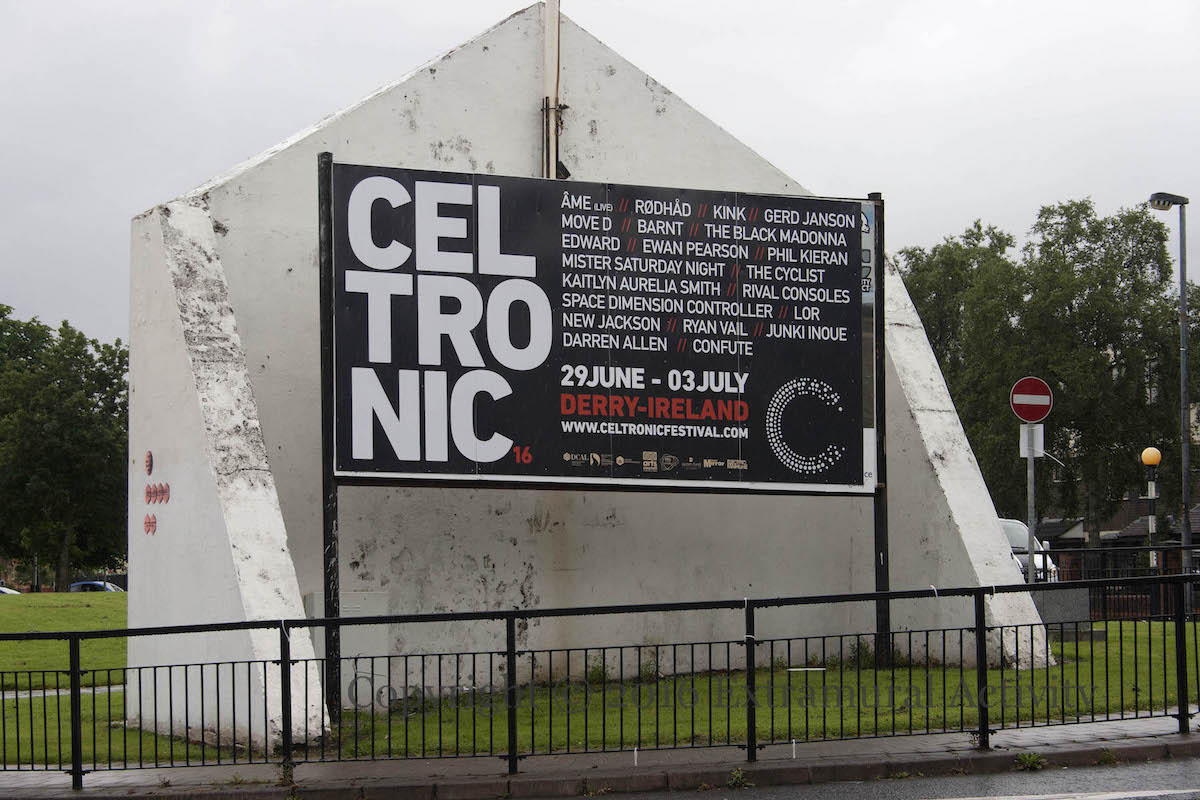
Celtronic brands itself as “Ireland’s leading electronic music festival”. This years festival takes place in clubs across “Derry, Ireland” until July 3rd. On the rear of Free Derry Corner.
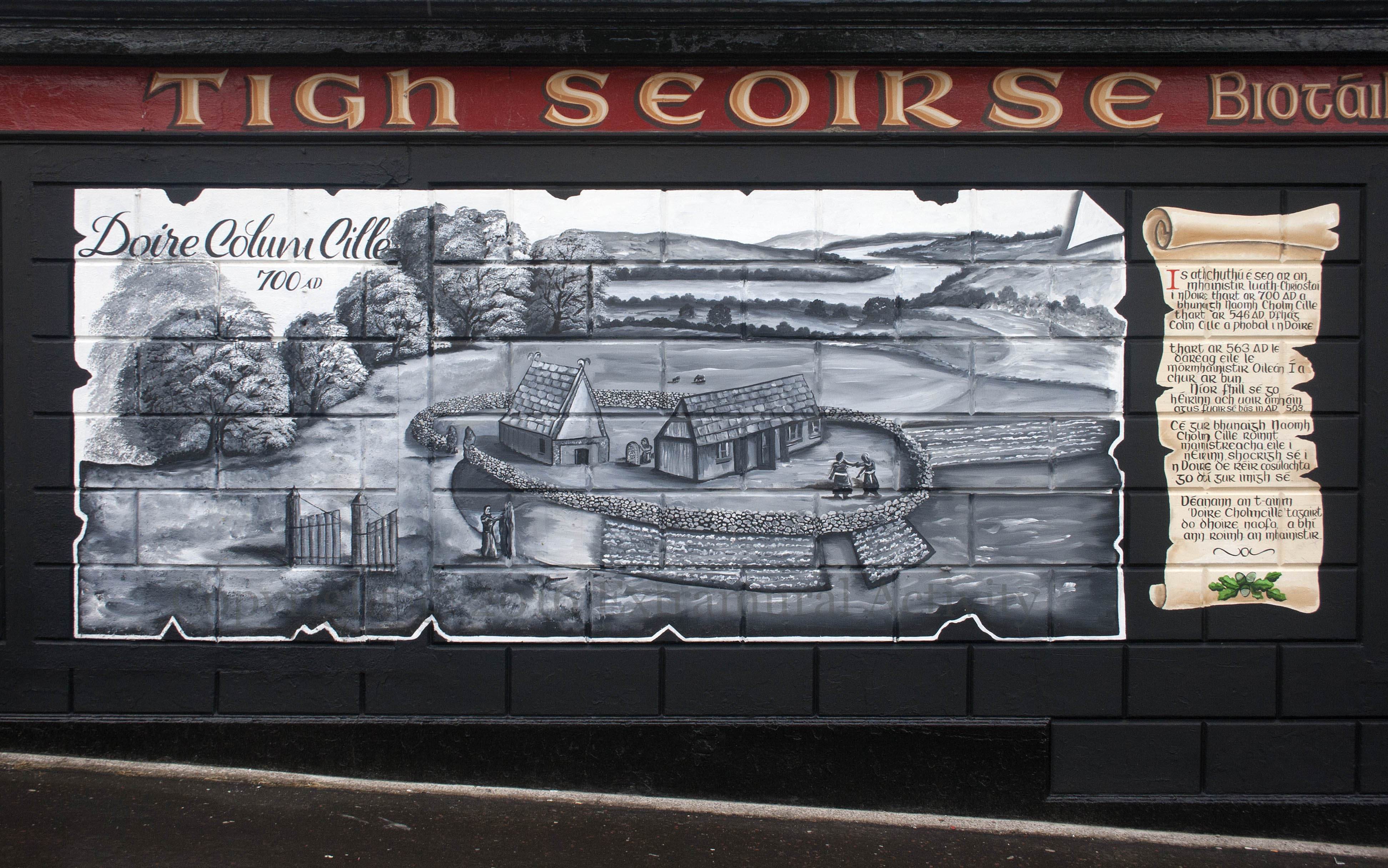
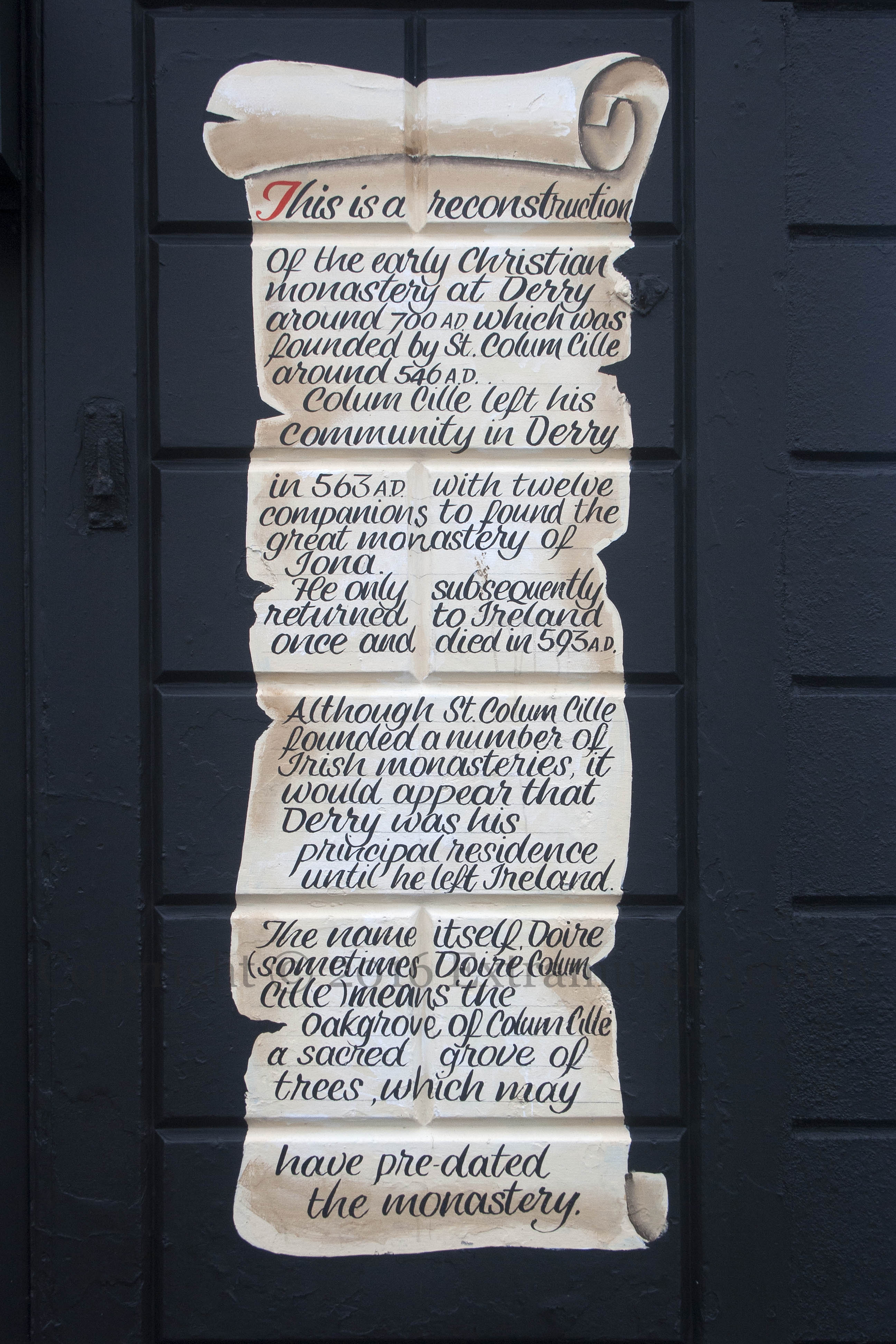
The Christian missionary Colm Cılle (in Latin, Columba), born in Donegal, founded a monastic settlement on the banks of the Foyle (then still part of Donegal) around 540 AD. The “Doıre” part of the name means “oak grove” and perhaps refers (as the information panel suggests) to “a sacred grove of trees, which may have pre-dated the monastery.” The mural above shows a reconstruction of the Derry monastery c. 700 AD. The name “Londonderry” dates to 1662.
Columba moved on to Scotland circa 563 and founded an abbey on the island of Iona. Among his reputed miracles is the banishment of a great water beast from the River Ness in 565.
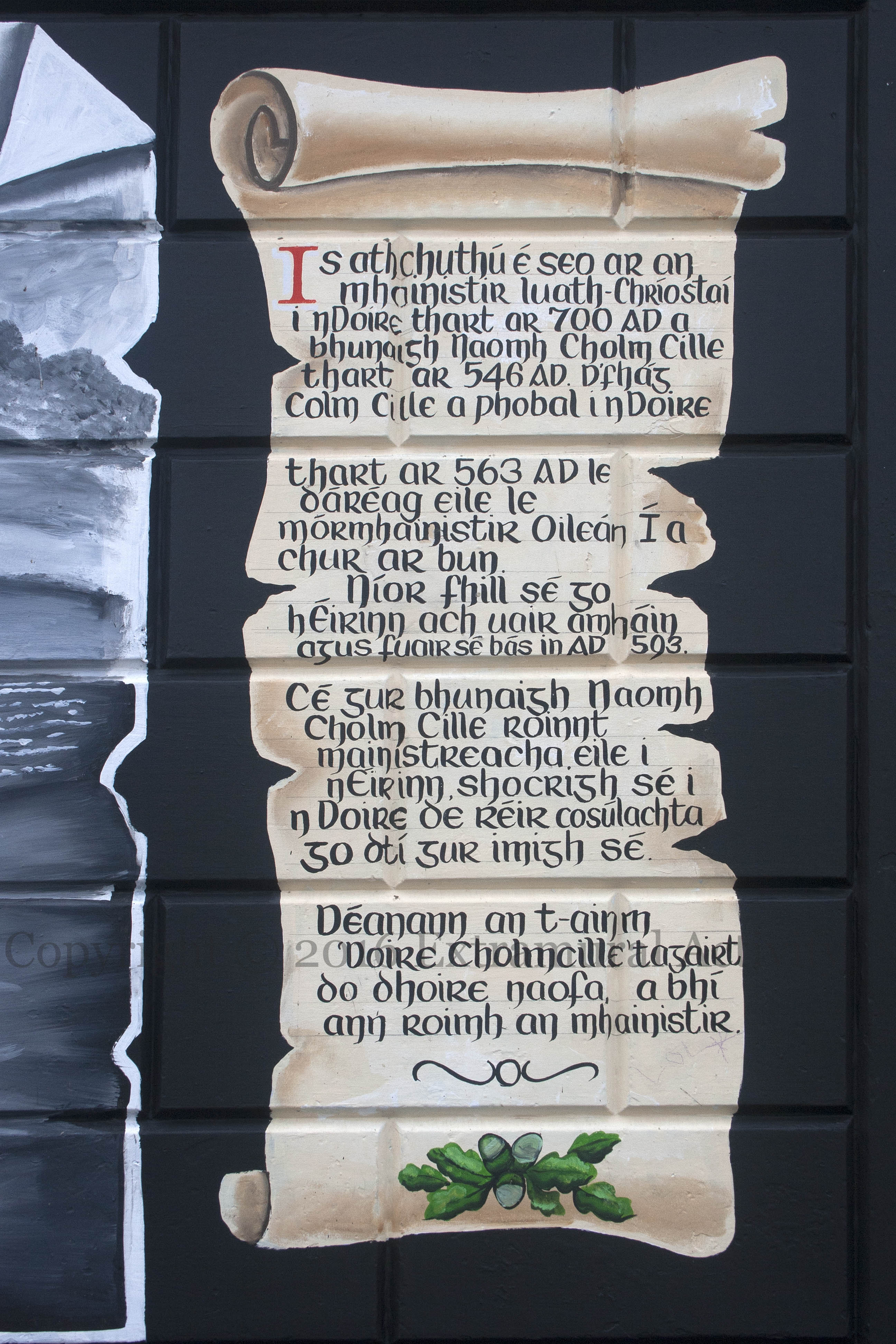
“Is athchuthú é seo ar an mhainistir luath-Chríostaí i nDoıre thart ar 700 AD a bhunaigh Naomh Cholm Cıille thart ar 546 AD. D’fhág Colm Cille a phobal ı nDoıre thart ar 563 AD le dáréag eıle le mómhaınıstır oıleán Í a chur ar bun. Níor fhill sé go hÉıreann ach uaır amháın agus fuaır sé bás in AD 593. Cé gur bhunaigh Naomh Cholm Cille roınnt maınıstreacha eıle ı nÉırınn, shocrıgh sé ı nDoıre de réır cosúlachta go dtí gut ımıgh sé. Déanann an t-aınm ‘Doıre Cholmcılle’ tagaırt do dhoıre naofa, a bhí ann roımh an mhaınıstir.”
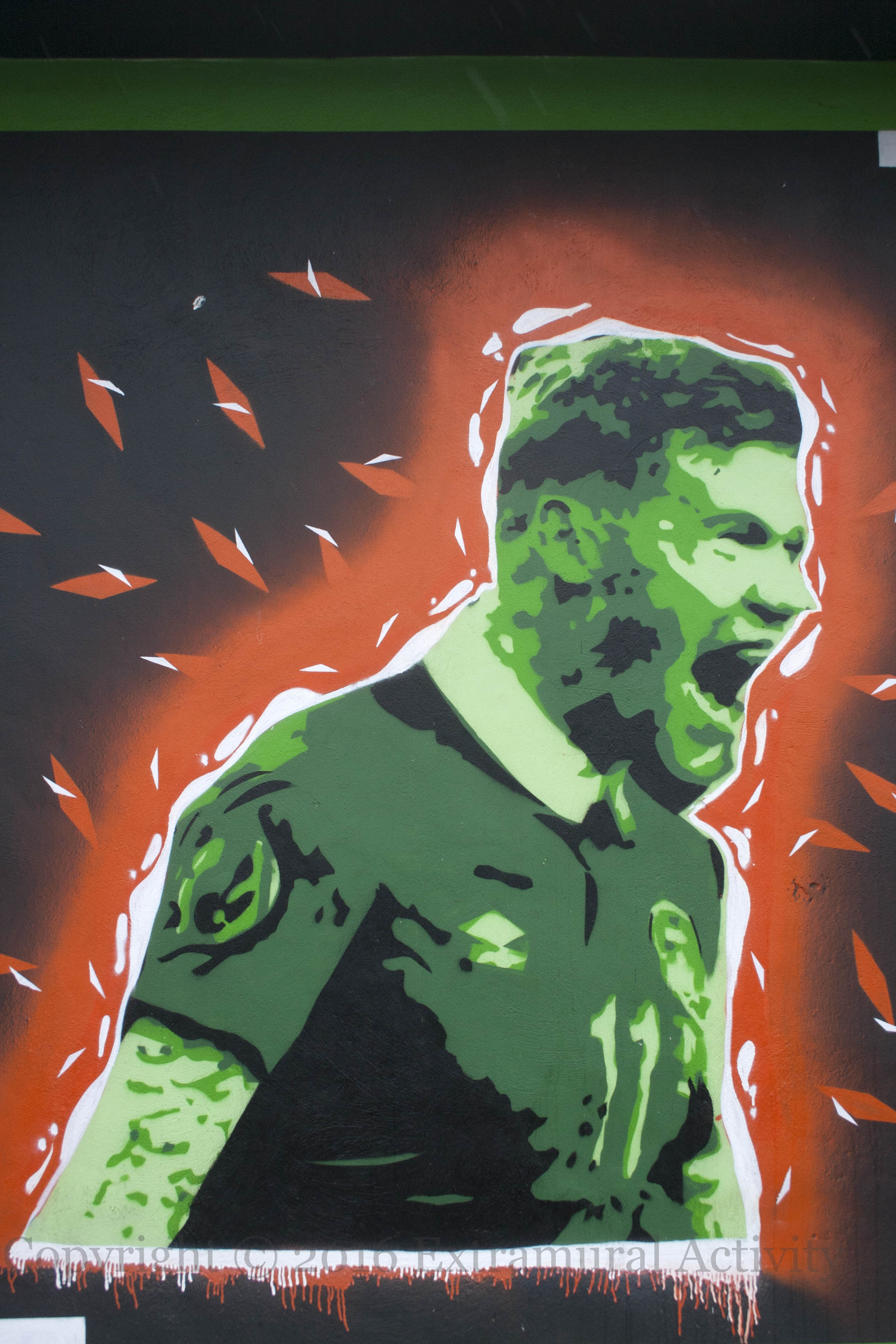
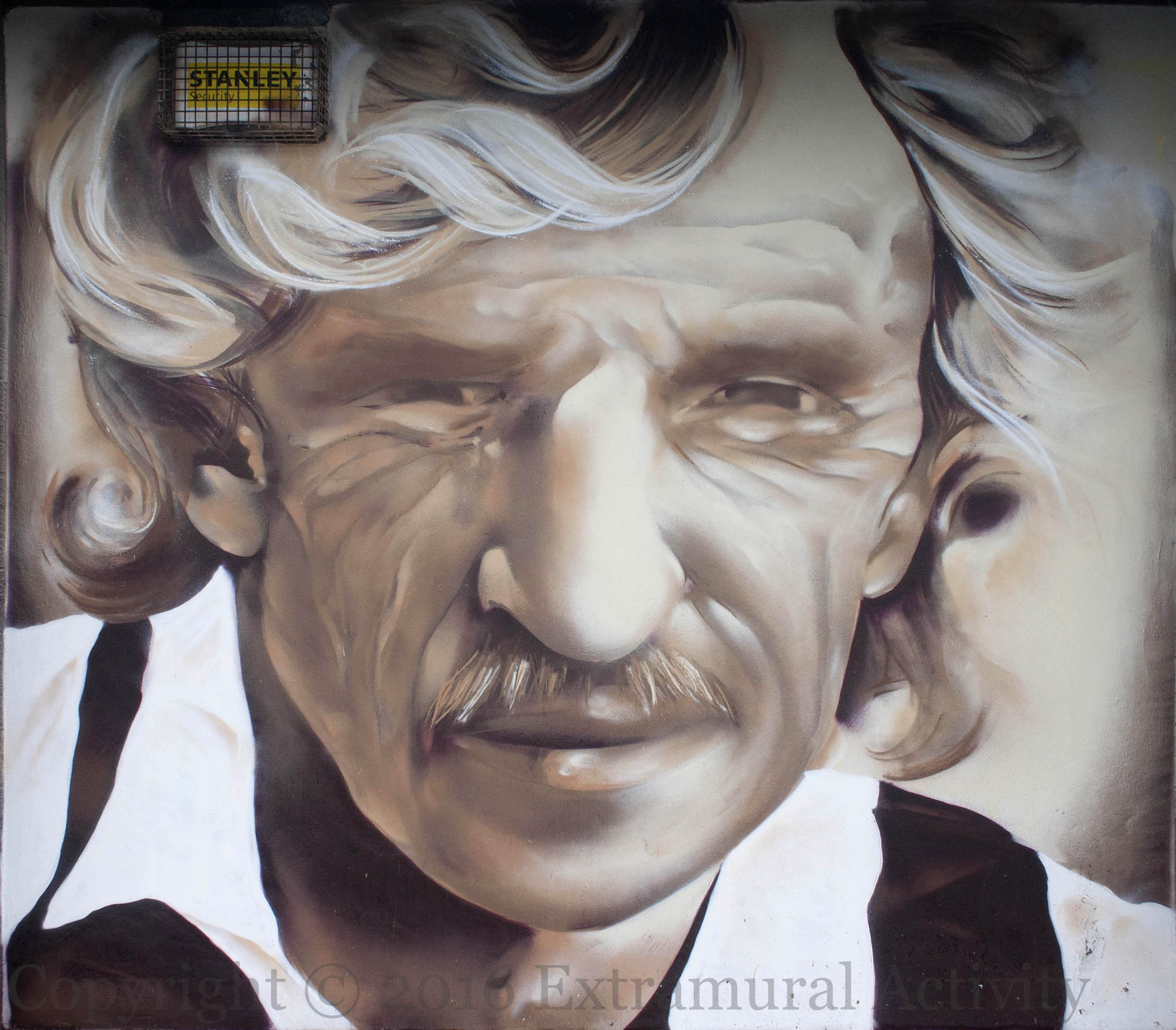
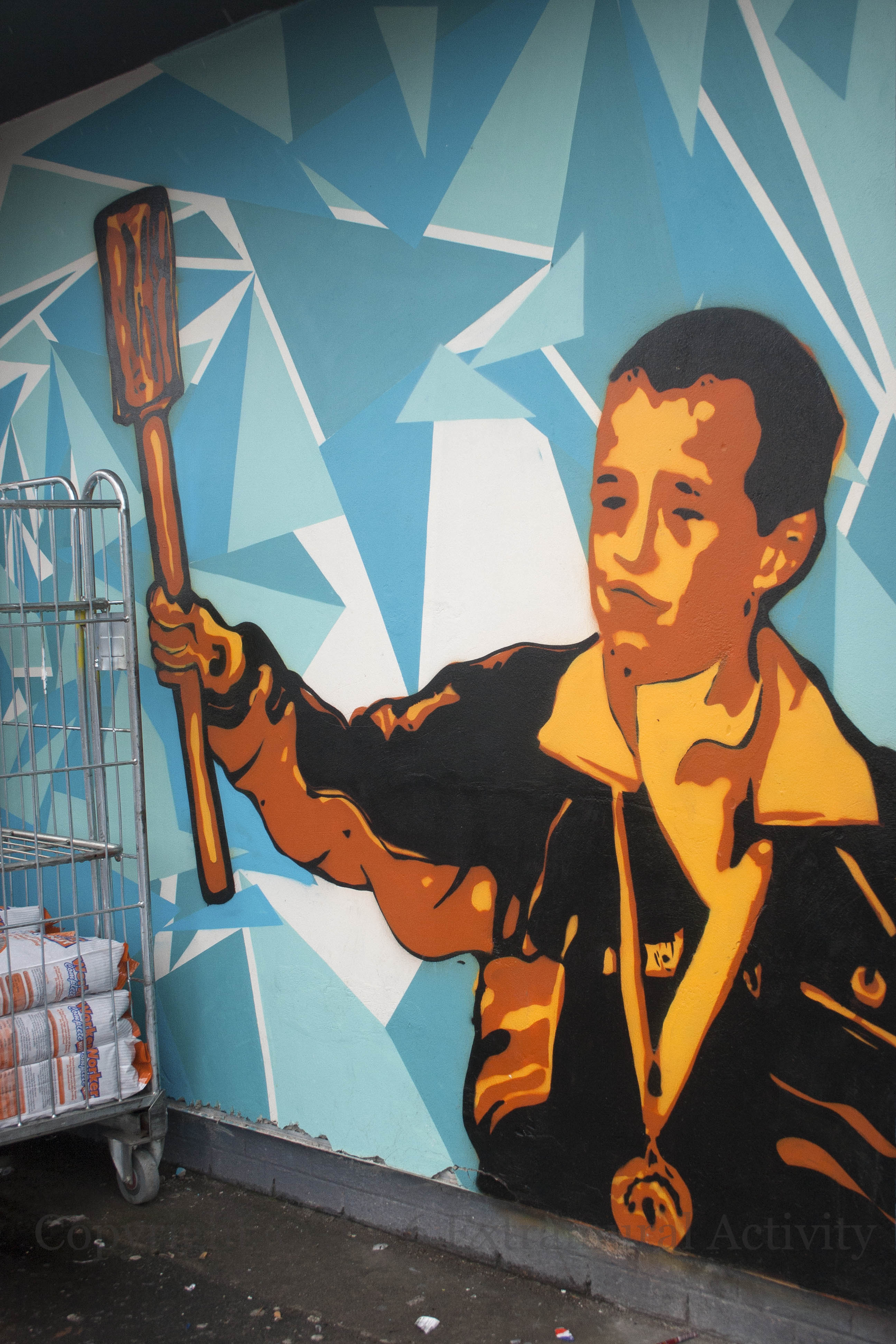
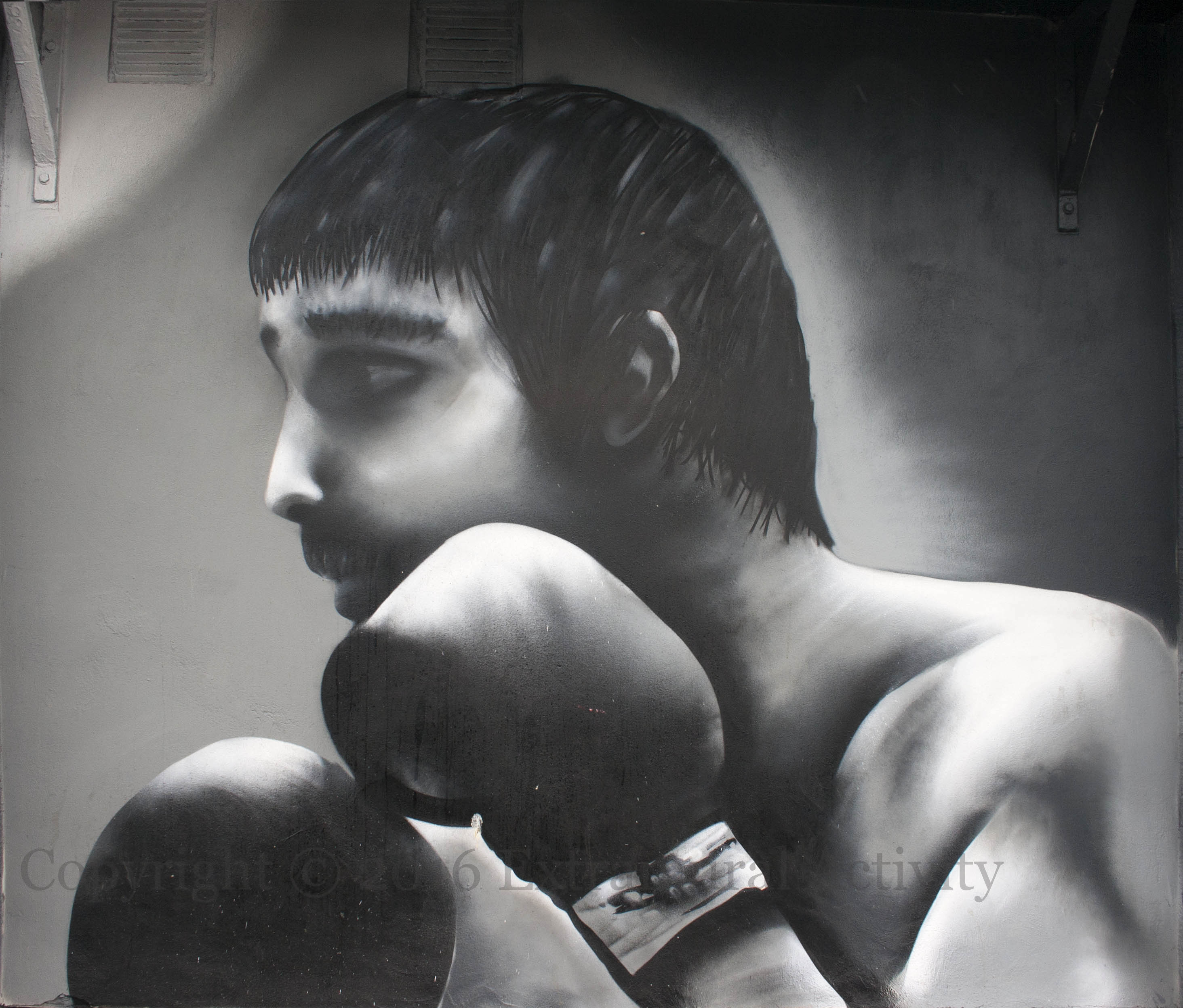
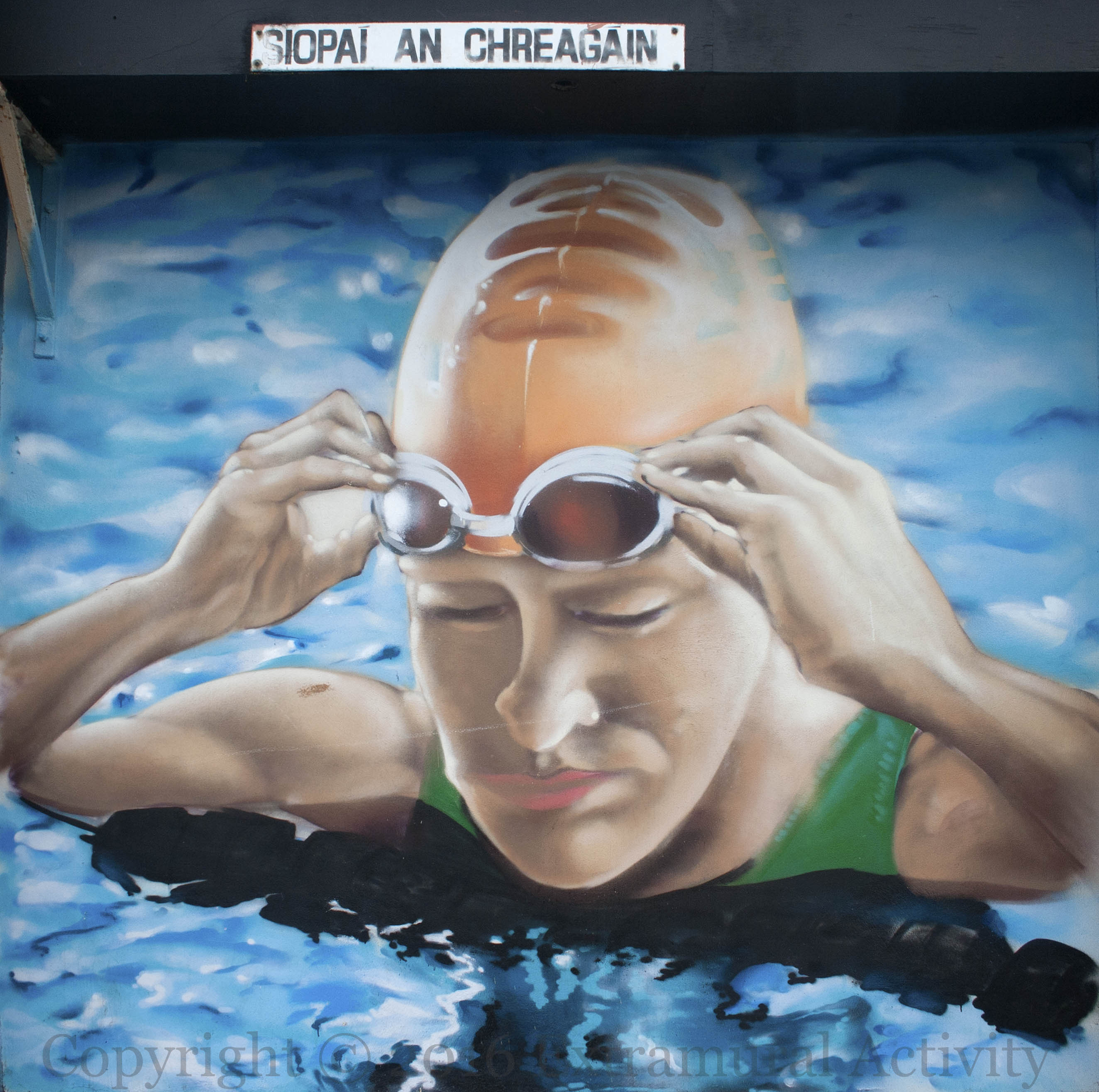
Five images from the Local Heroes at the Creggan shops: James McLean (footballer), Tony O’Doherty (footballer), David McAuley (Special Olympian who lit the flame to open the 2003 games in Dublin), Charlie Nash (boxer), and Aileen Reid (triathlete) (and, in a separate entry, swimmer Liam Ball). The murals were painted by Karl Porter and Donal O’Doherty from UV Arts.
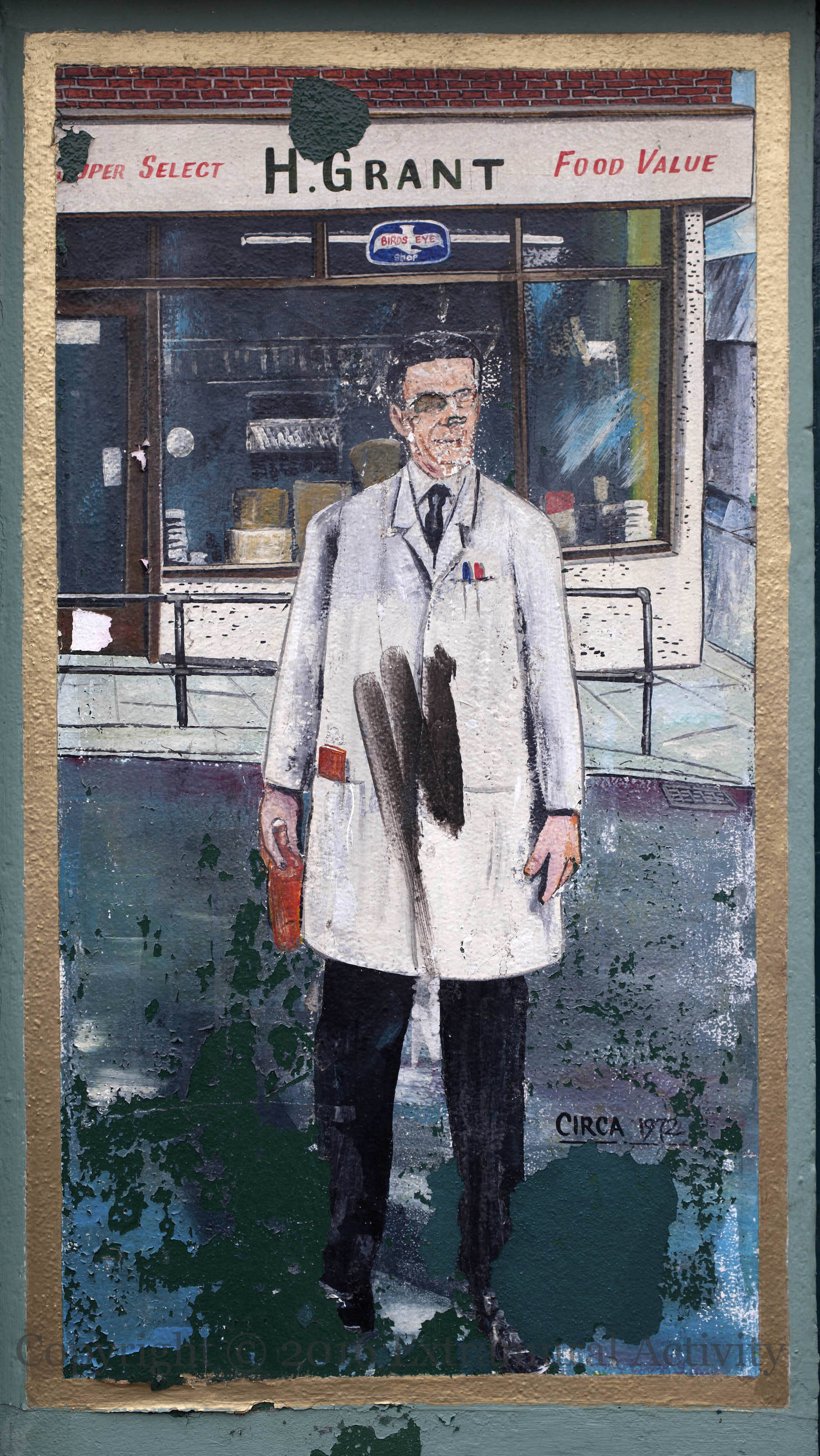
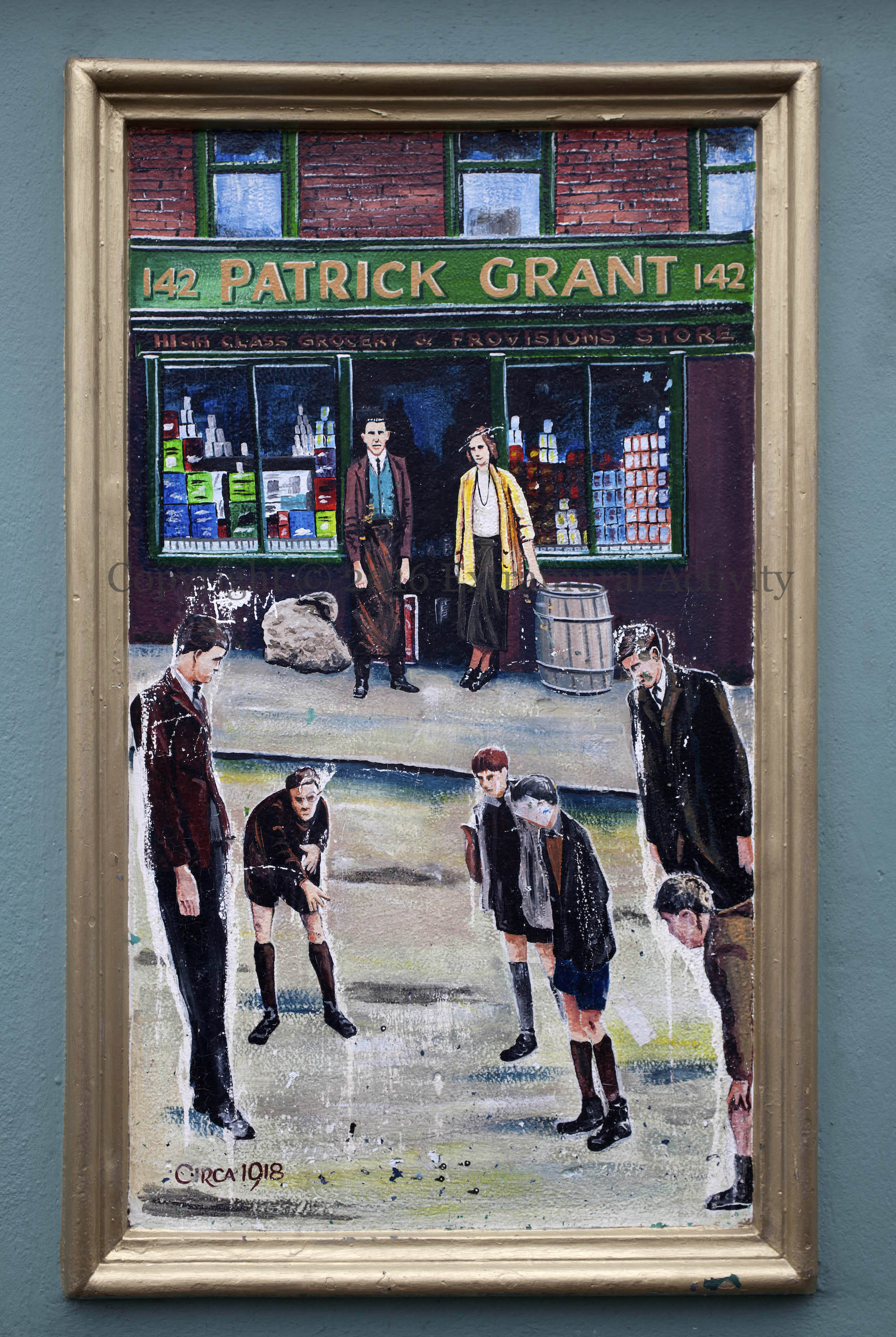
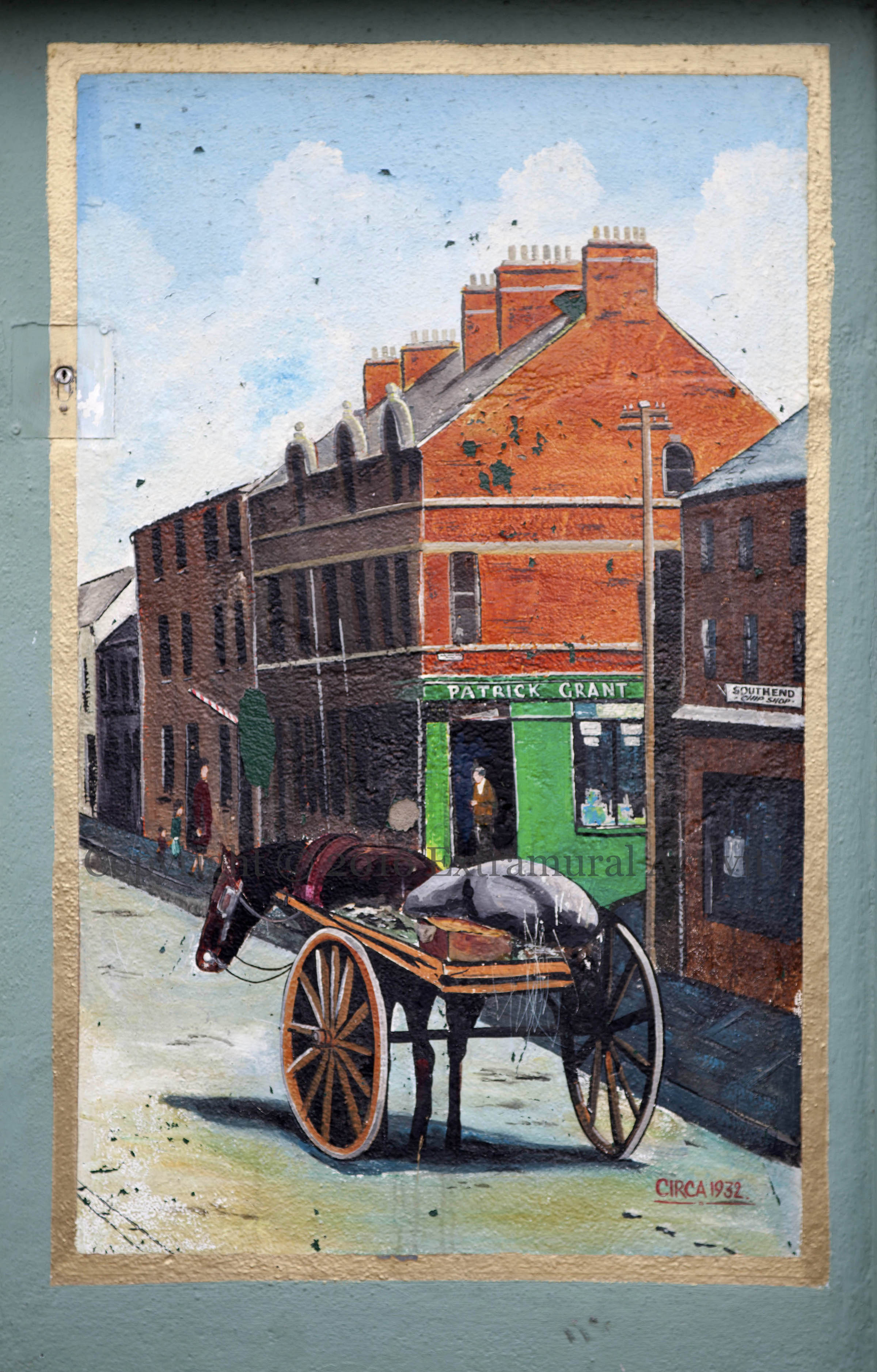
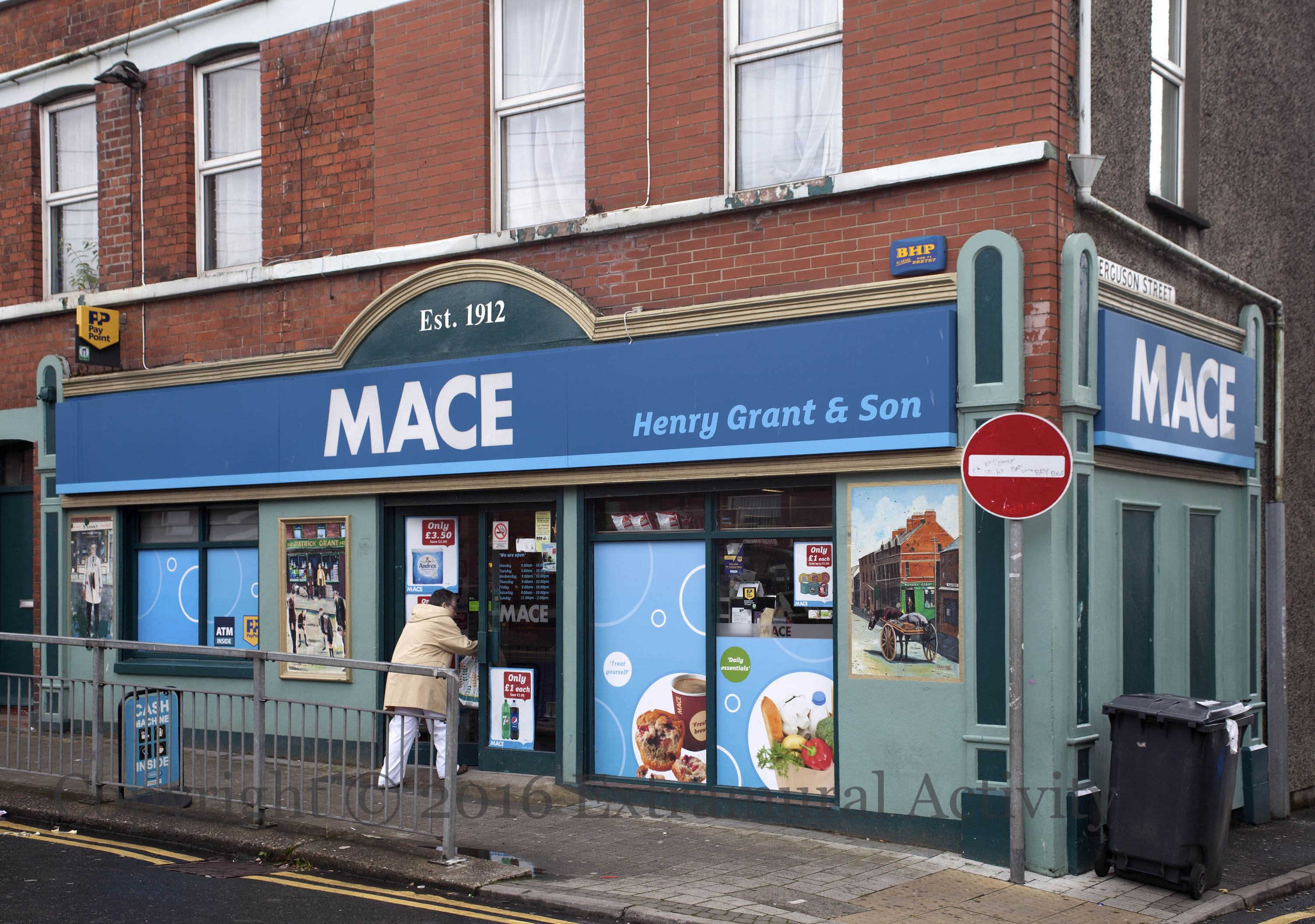
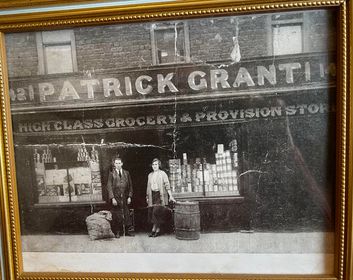
We travel through time with these three images of Grant’s shop on Bishop Street, Derry. The first above, is labelled “circa 1972” and shows Henry Grant; the second shows children playing marbles in the street in front of Patrick Grant’s shop “circa 1918”, while the third, with a horse and cart, is dated to 1932.
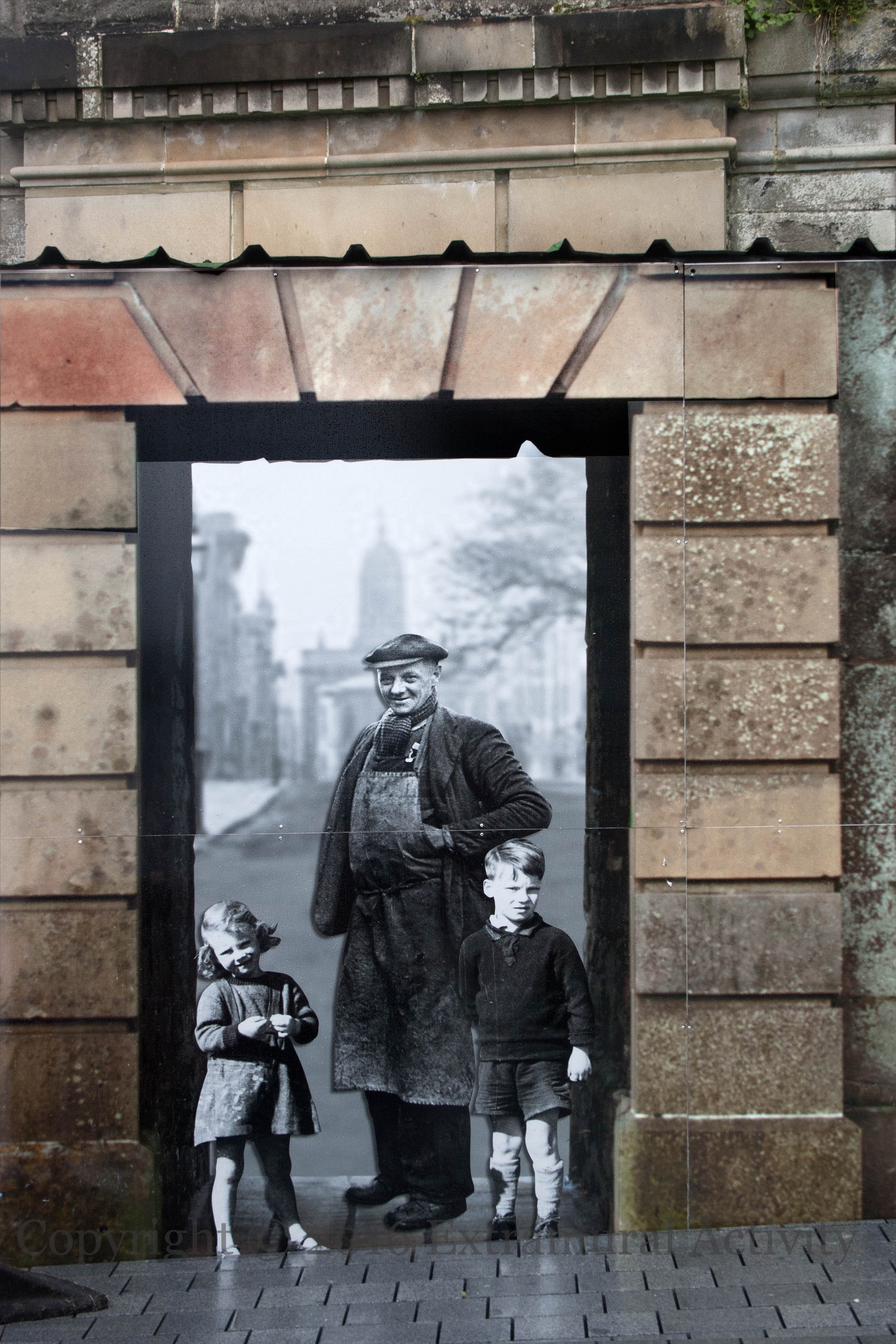
This image of London-/Derry in days-gone-by is on the outside of the walls of Derry, looking in. The brickwork of which it appears to be the portal is also fake; in fact, this is a covered walkway leading from Bishop Street to the Fountain.
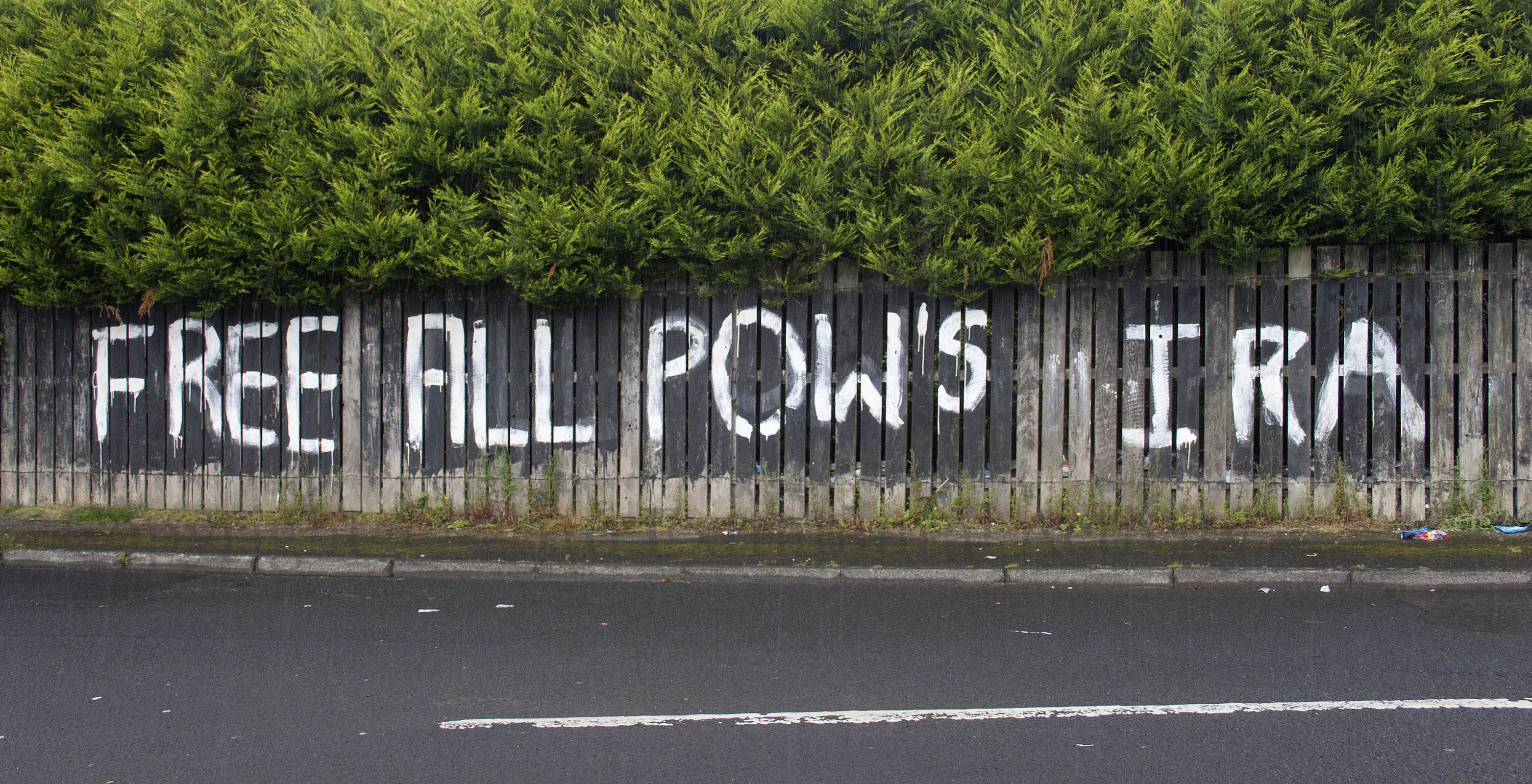
This republican graffiti in Rathmore Crescent in Derry is unusual in that it is a re-paint — the slogan shown above (“Free All POW’s IRA”) was on this fence before being blacked out.
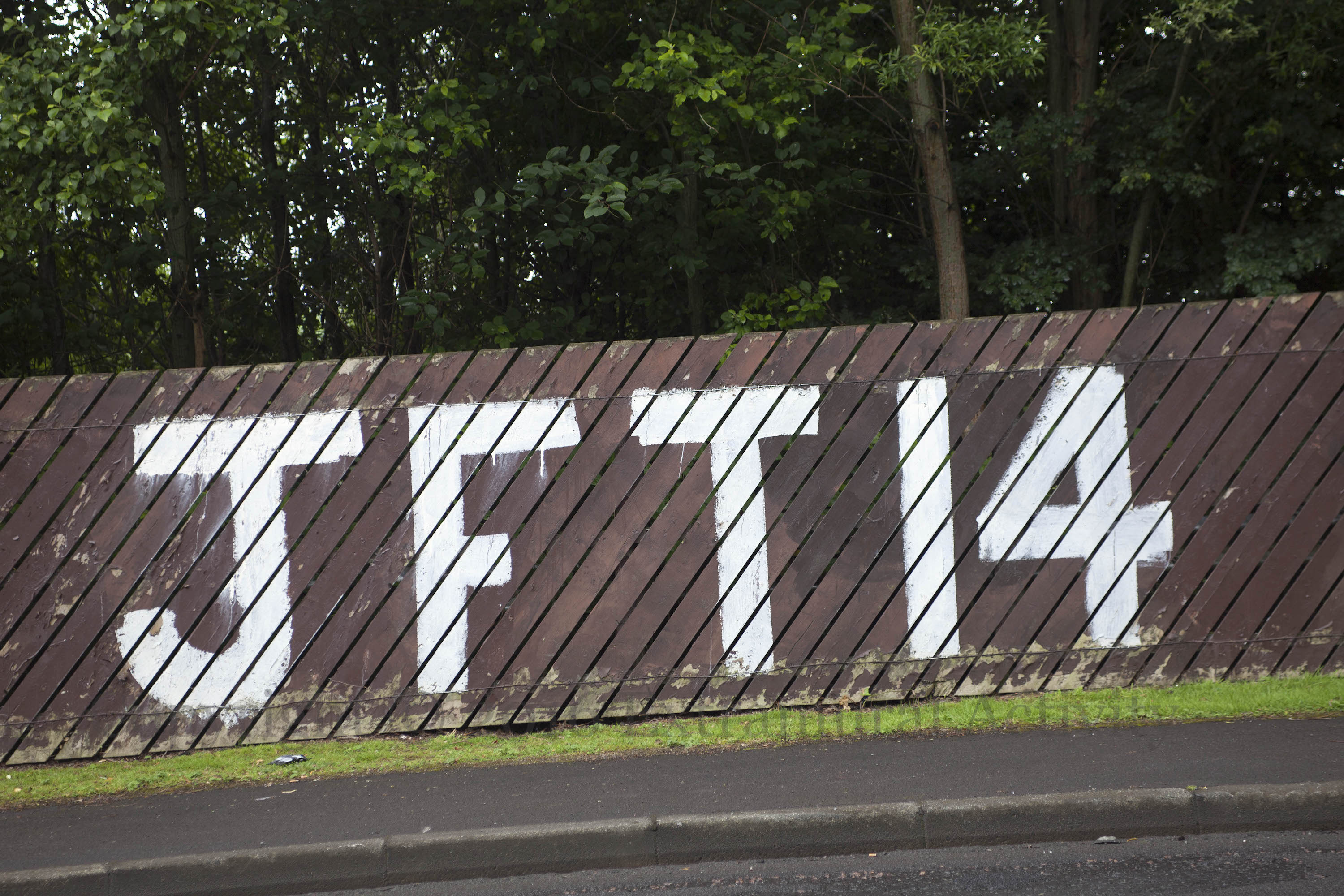
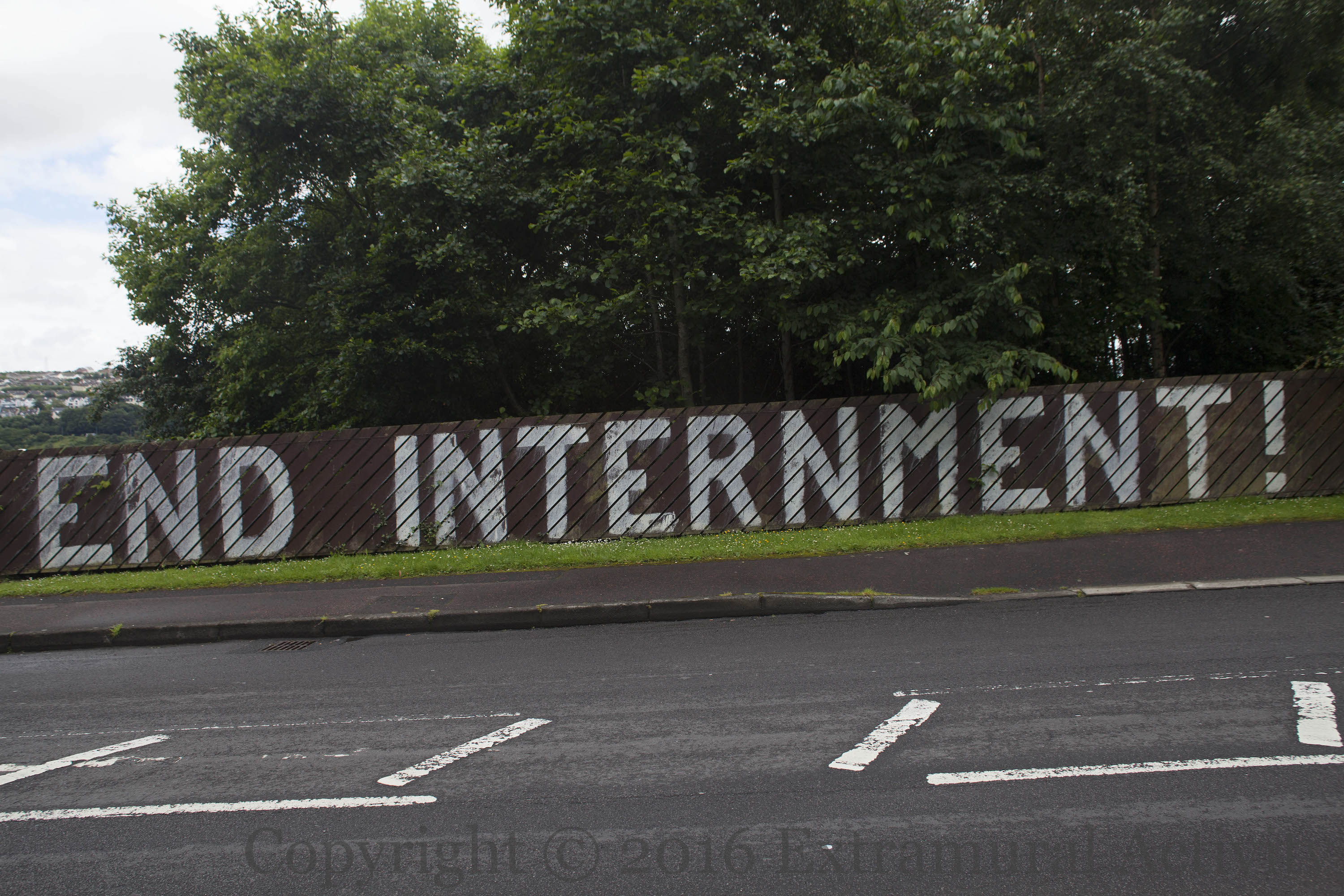
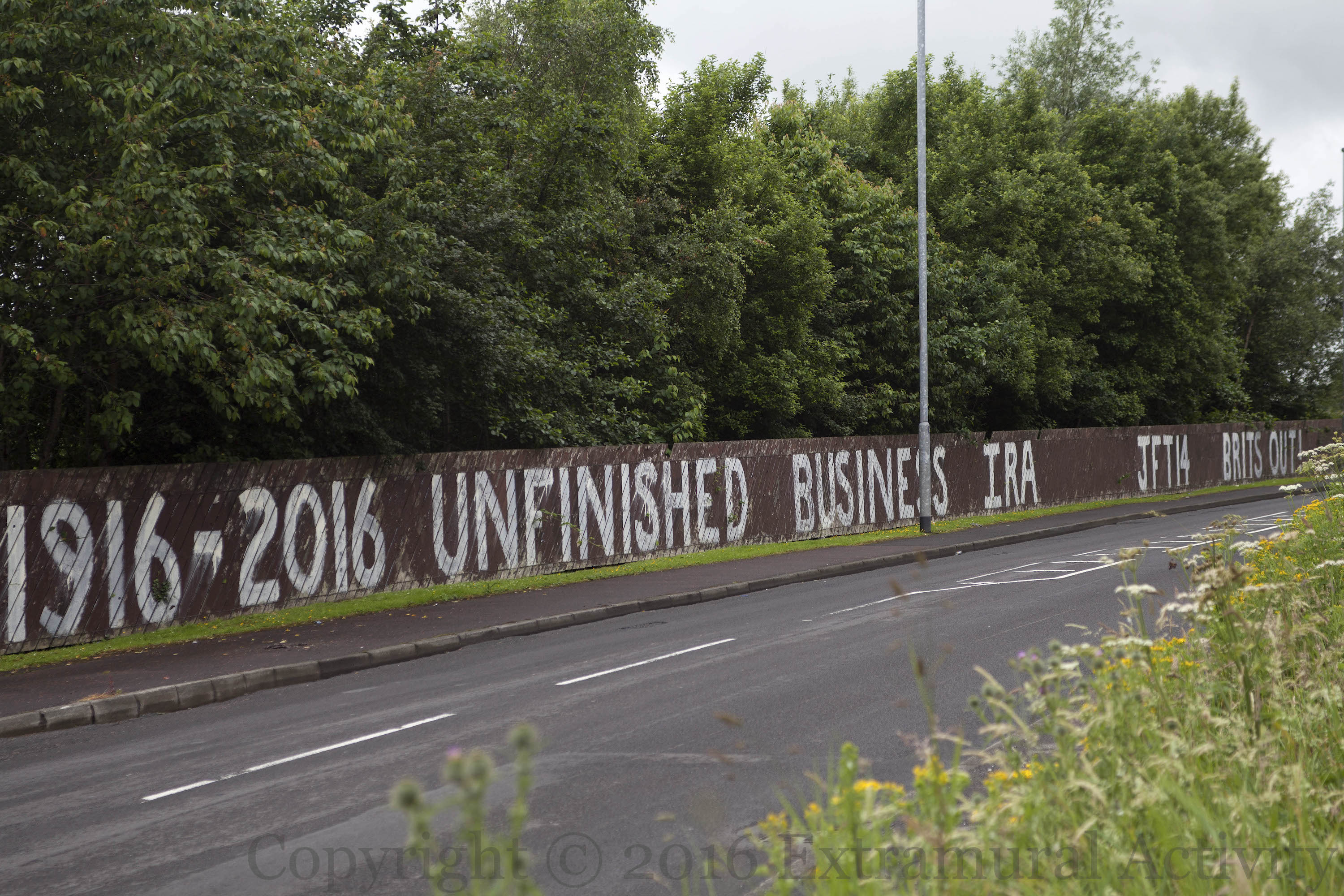
These republican slogans are on the fencing along Southway, Derry. “End internment”, “1916 – 2016 Unfinished business”, “IRA”, “JFT14” = “Justice for the 14 [Bloody Sunday victims]”, and “Brits out”.
 Seosamh Mac Coille Collection