How Is Freedom Measured?

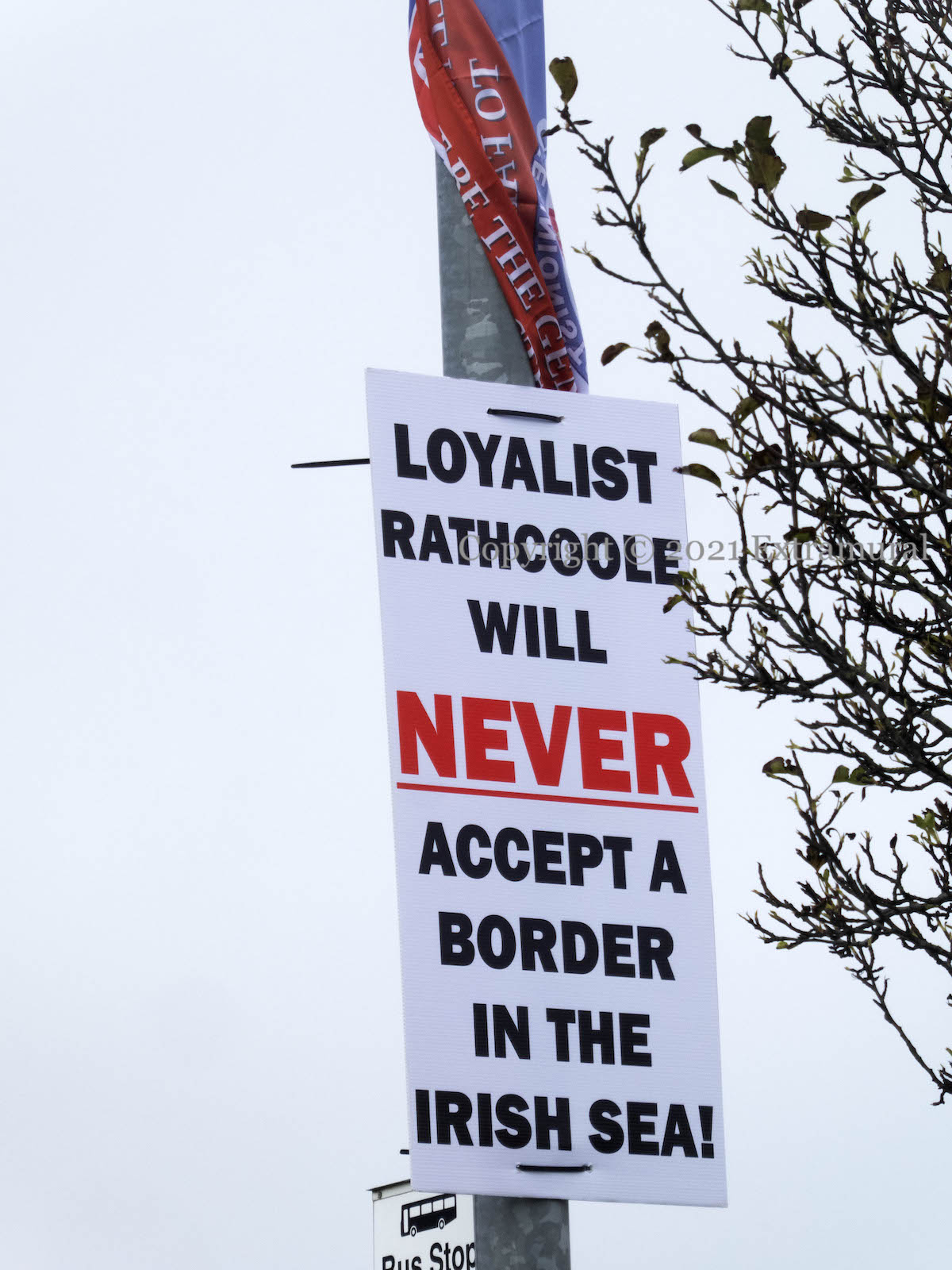
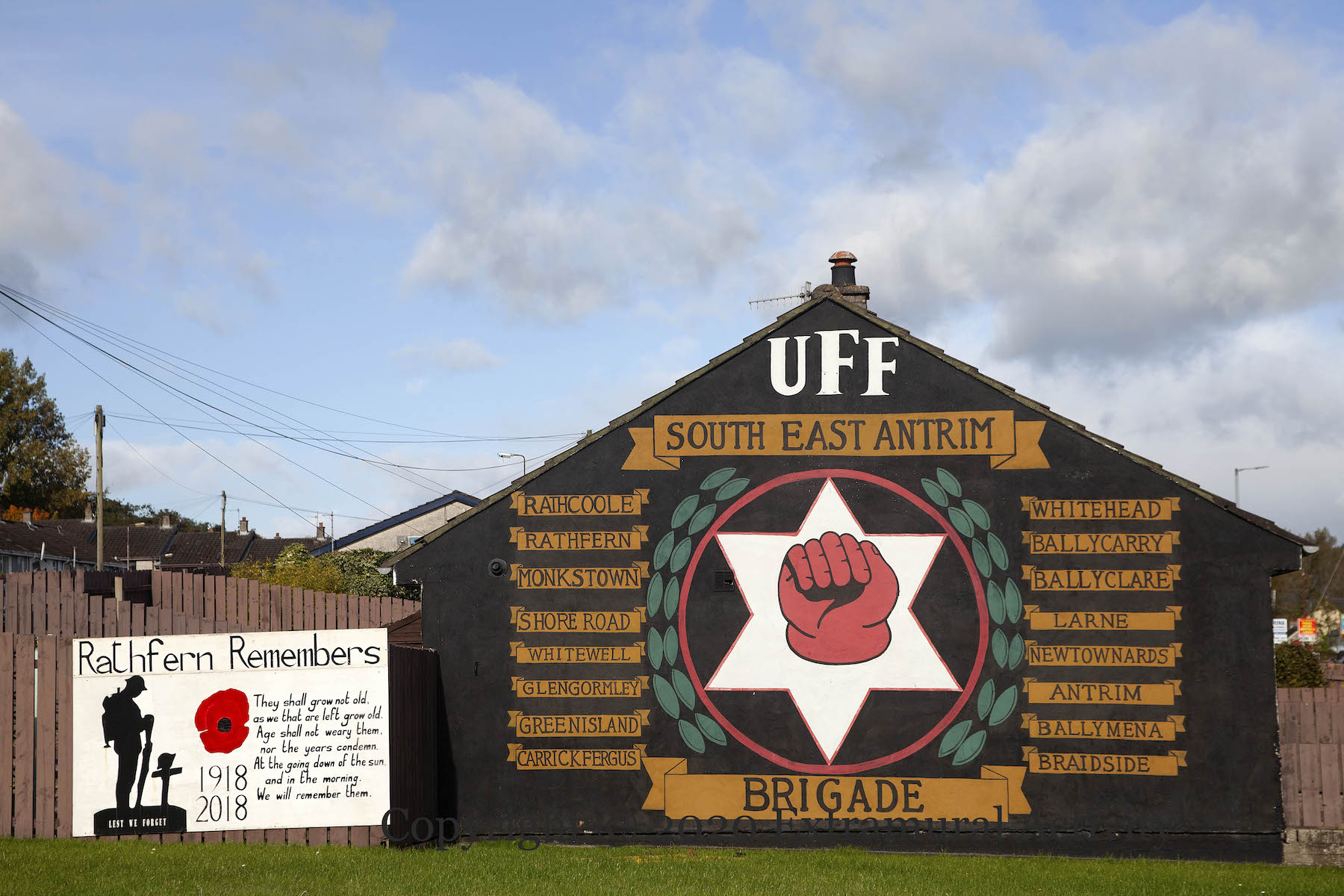
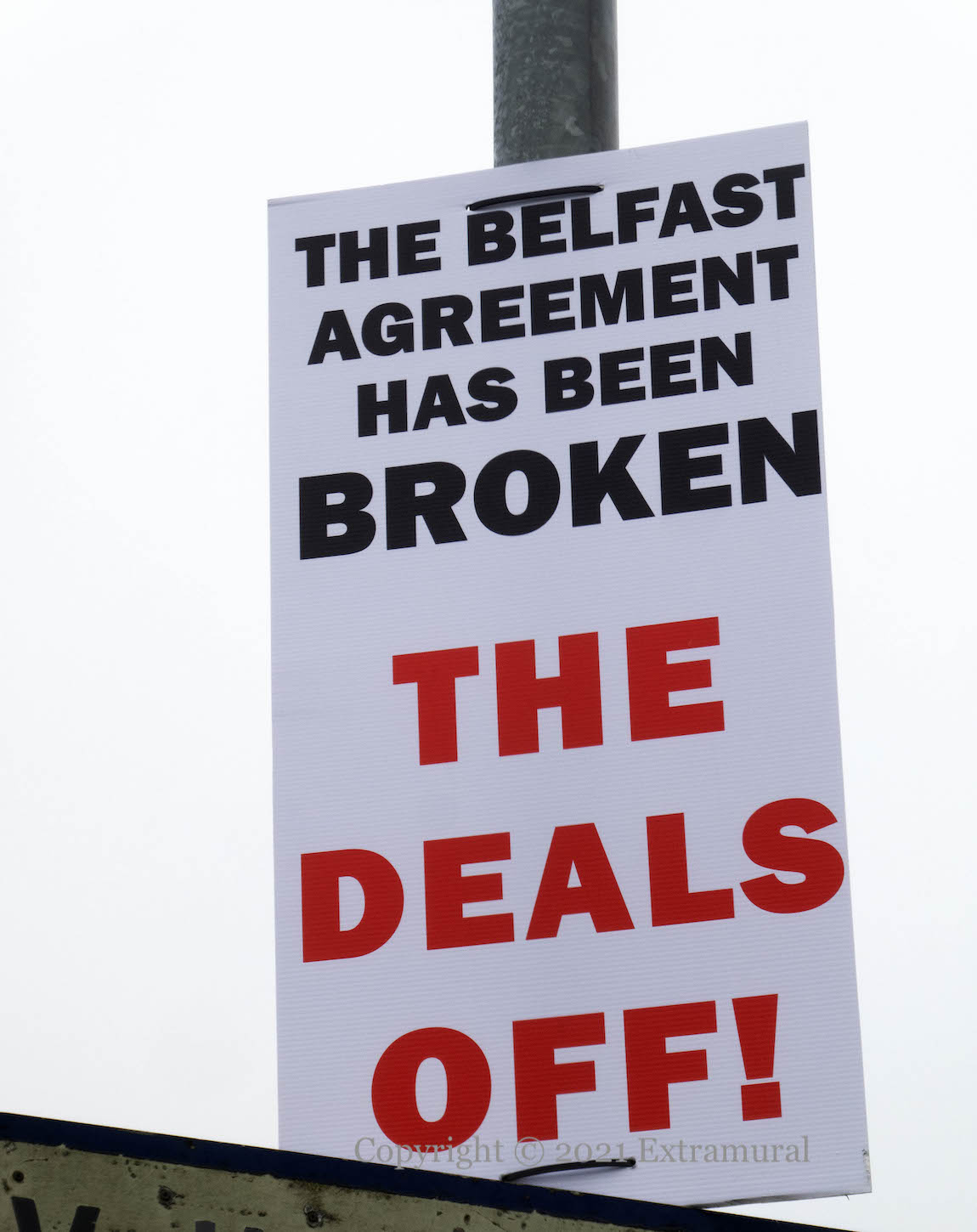
The slogan “How is freedom measured? By the effort which it costs to retain!” dates back to WWI and, in the Irish context, to the Home Rule era. It looked as though Britain was going to give Ireland – as a whole – some measure of self-governance (whether while remaining in the UK (“constitutional Home Rule”) or separating from it (“revolutionary Home Rule” or “Fenianism”). In response, it seemed to some that fighting for Britain in the war might secure the status quo. Perhaps additionally or alternatively, it indicated the willingness of unionists to fight. Great effort is the measure of freedom greatly prized – “loyalist Rathcoole will NEVER accept a border in the Irish Sea.” The placards are a product of United Unionists Of Ulster (News Letter). For a mural rendition of the WWI postcard, see previously: How Is Freedom Measured?
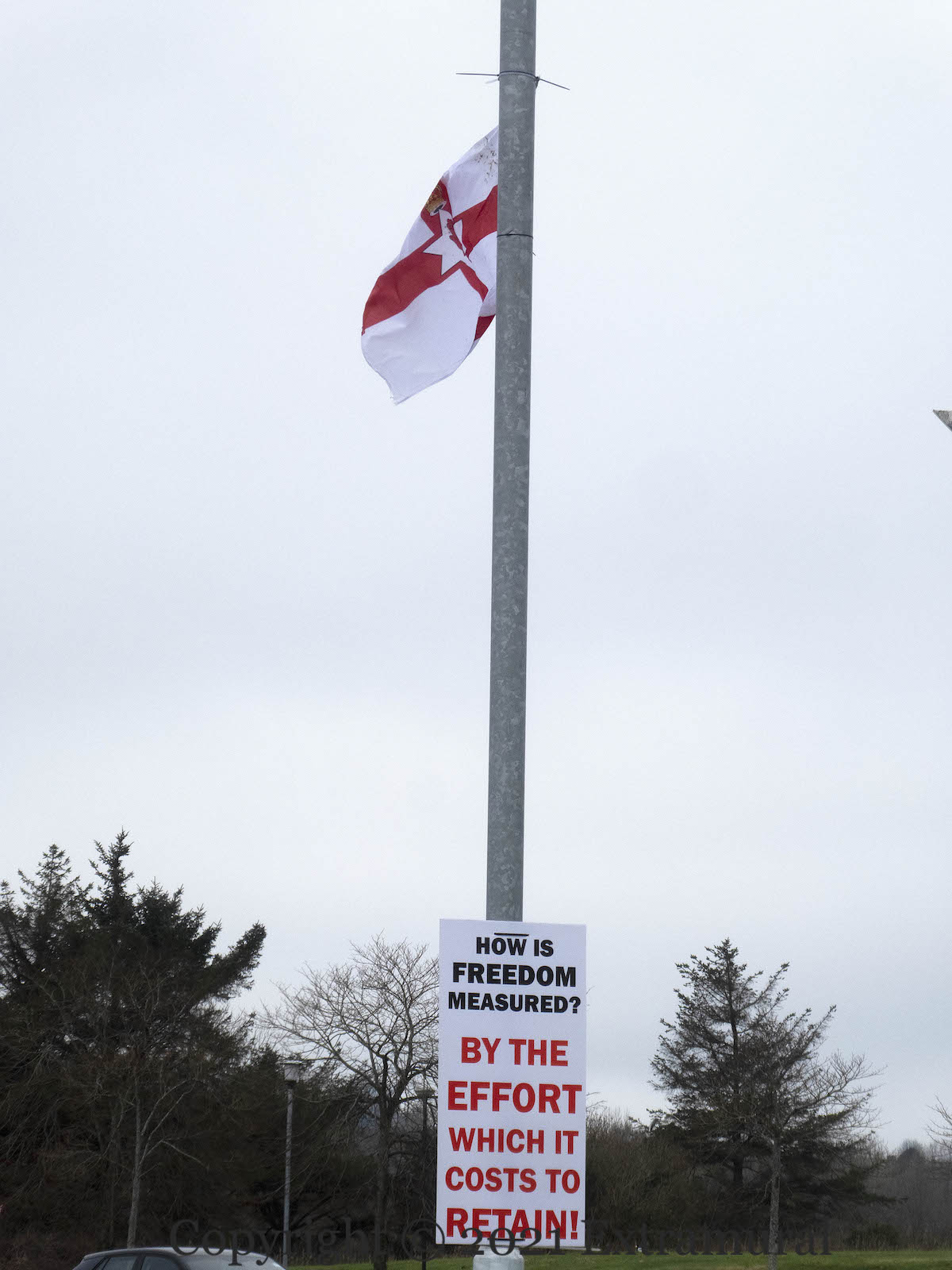
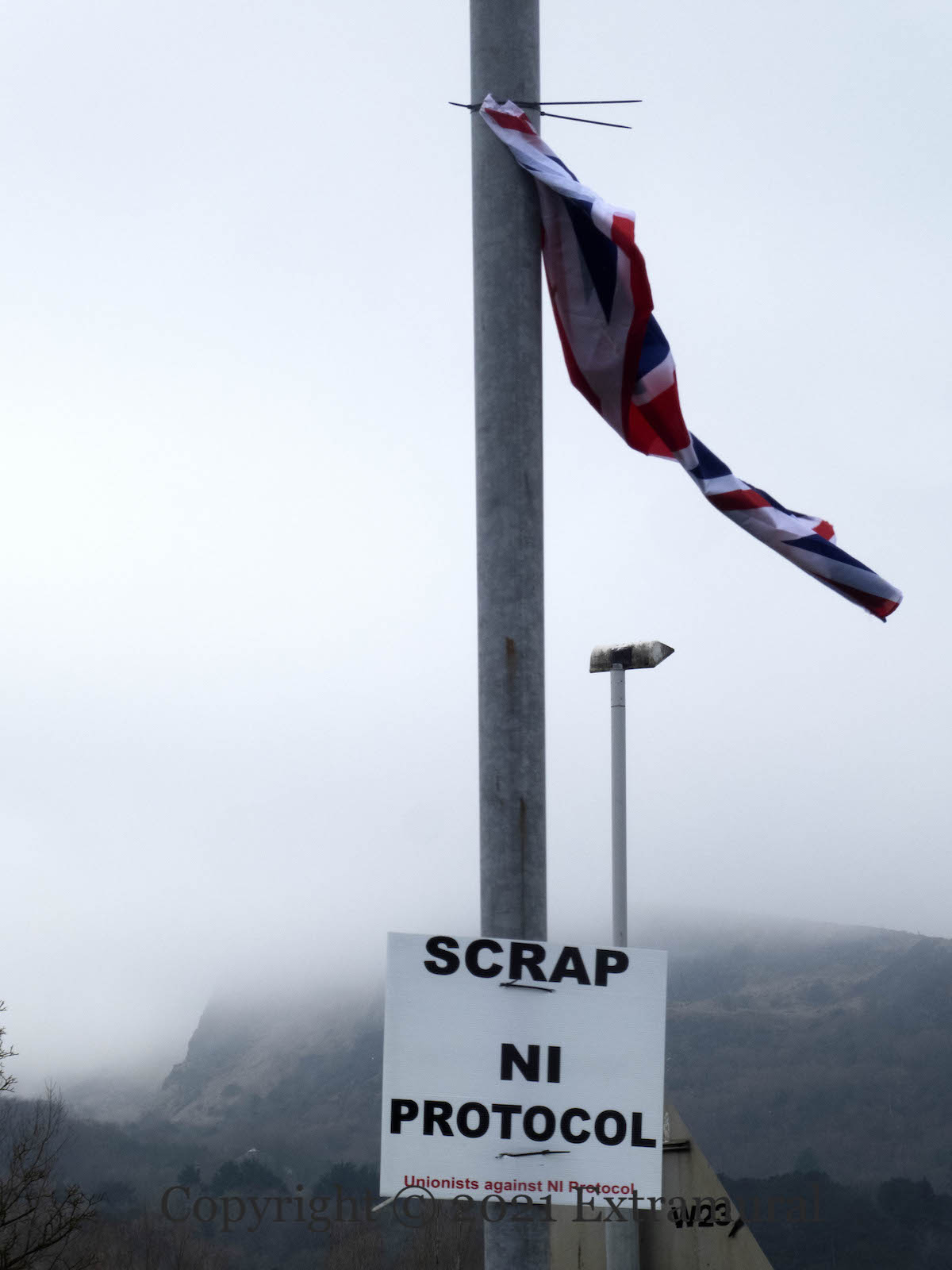
Click image to enlarge
Copyright © 2021 Seosamh Mac Coılle
X07877 X07870 [X07872] [X07873] X07871 X07874
To Every Thing There Is A Season

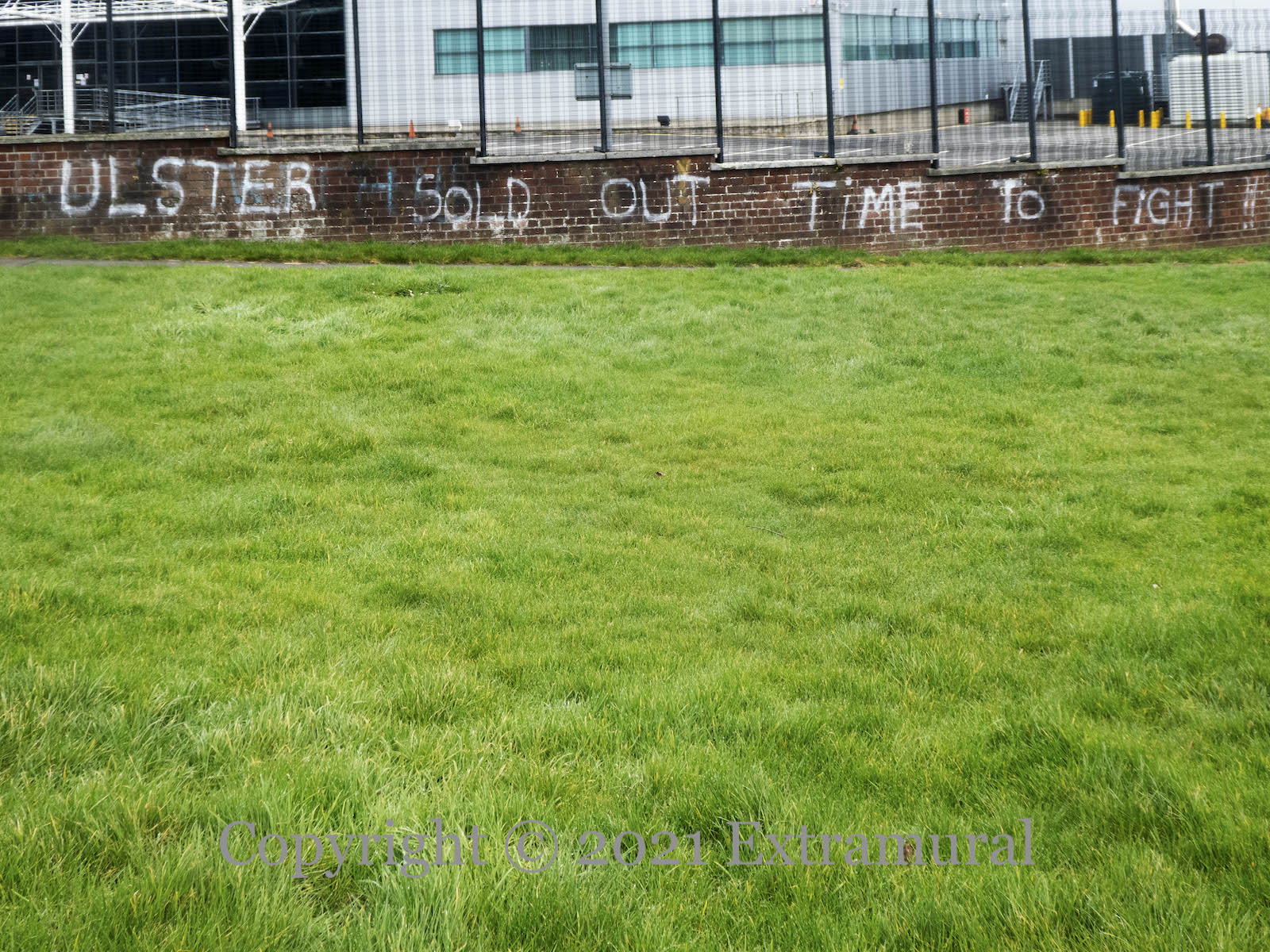
“Ulster sold out – time to fight”. The DUP’s Sammy Wilson declared the party would “fight guerilla warfare” against the ‘Northern Ireland Protocol’ which caused Commons leader Jacob Rees-Mogg to beseech them to “work through the democratic processes” (Irish Times).

This graffiti is on Church Road, Newtownabbey.

Click image to enlarge
Copyright © 2021 Seosamh Mac Coılle
X07868 [X07869]

The Past Comes Back

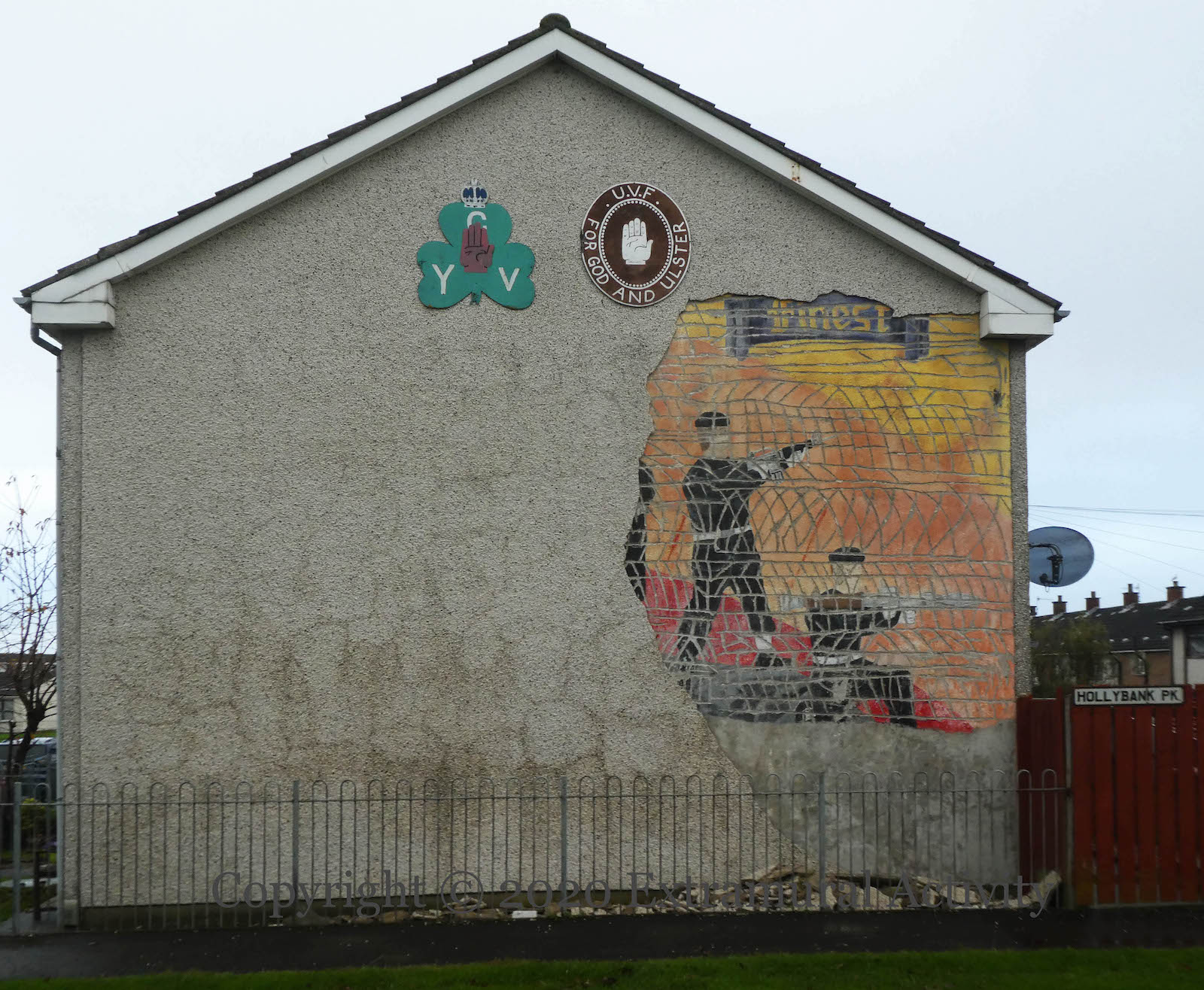
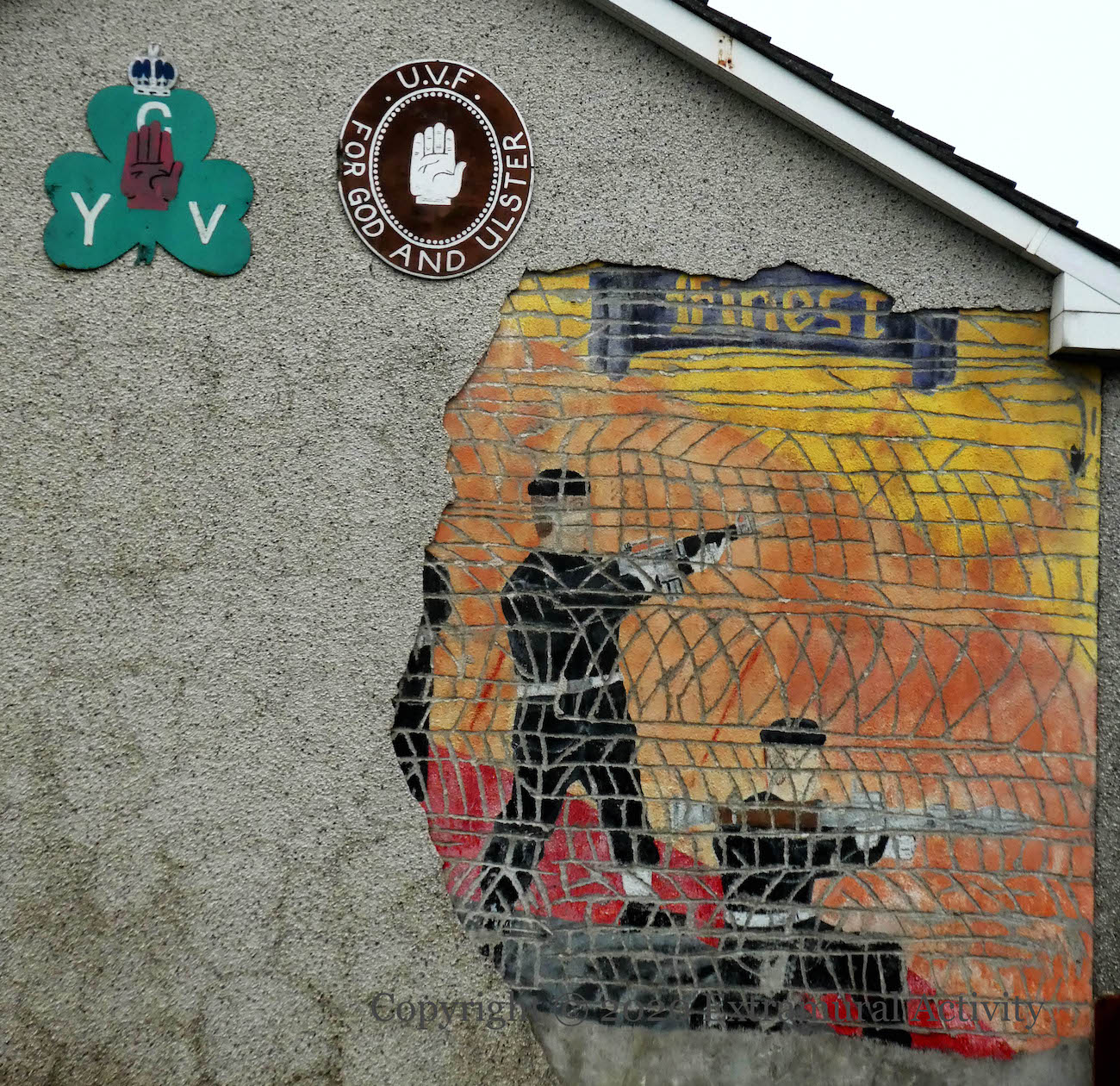
The “Ulster’s Finest” mural in Monkstown was remarkable for its depiction of two female volunteers, carrying Uzis, the only depiction of female loyalist volunteers (see Rolston ‘Women on the walls’ in Crime Media Culture 14.3, 2018, p. 373). It was plastered over, perhaps because the gable is next to Hollybank primary. Some of the pebbledash wore away in January/February to reveal the mural – still in good condition – beneath (Vintage_UVF). For the original mural, see T00230.

Click image to enlarge
Copyright © 2020 Seosamh Mac Coılle
X07742 X07741

Portrush Flyer

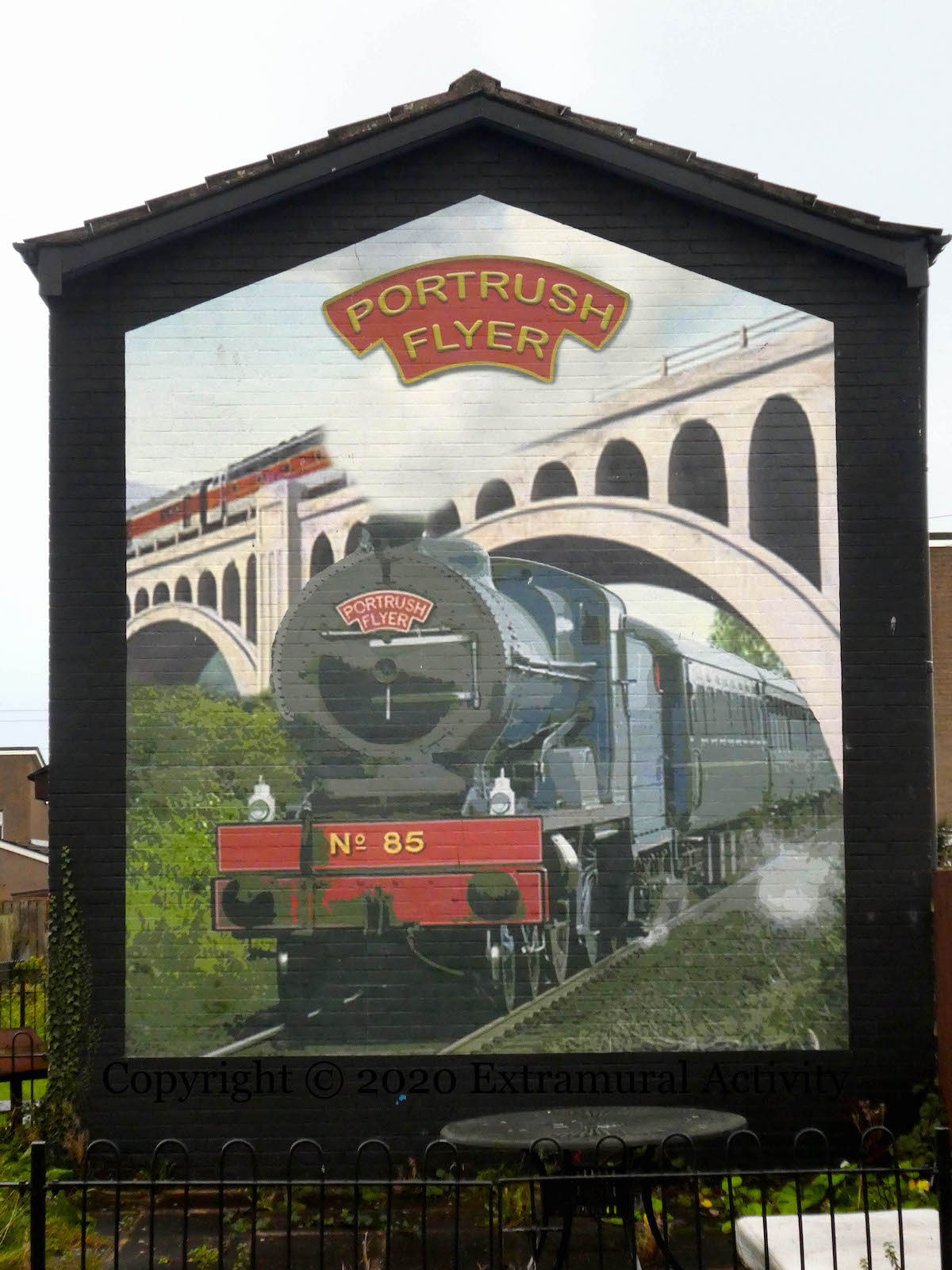
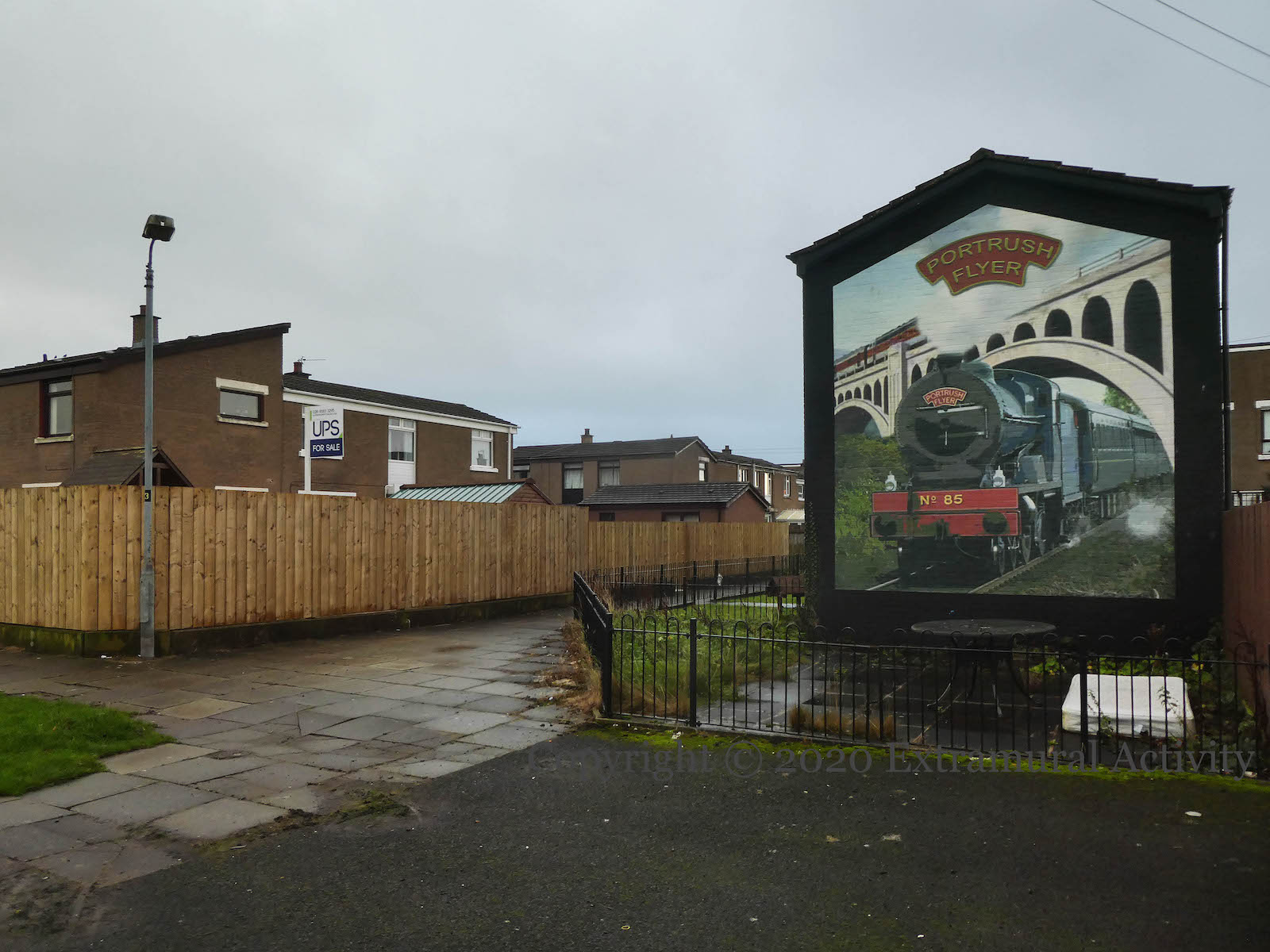
The Portrush Flyer is a steam-engine train service operating (since 1973) between Belfast and Portrush on Sundays during the summer months. The mural, in Ards Park, Monkstown, replaces a UFF mural dating back to 2001. Shown is engine ‘No. 85’ (which is just one of the engines that have been used; for images of ‘No. 171’, ‘No. 4’, ‘No. 85’, and ‘No. 131’ dating back to the 1970s, see SteamTrainsIreland) passing under one of the “new” viaducts (for more info, see Geograph). For an image of the mural’s 2019 launch, see Newtownabbey Times.

Click image to enlarge
Copyright © 2020 Seosamh Mac Coılle
X07739 X07740 Dee Craig Housing Excutive

We Await In The Shadows

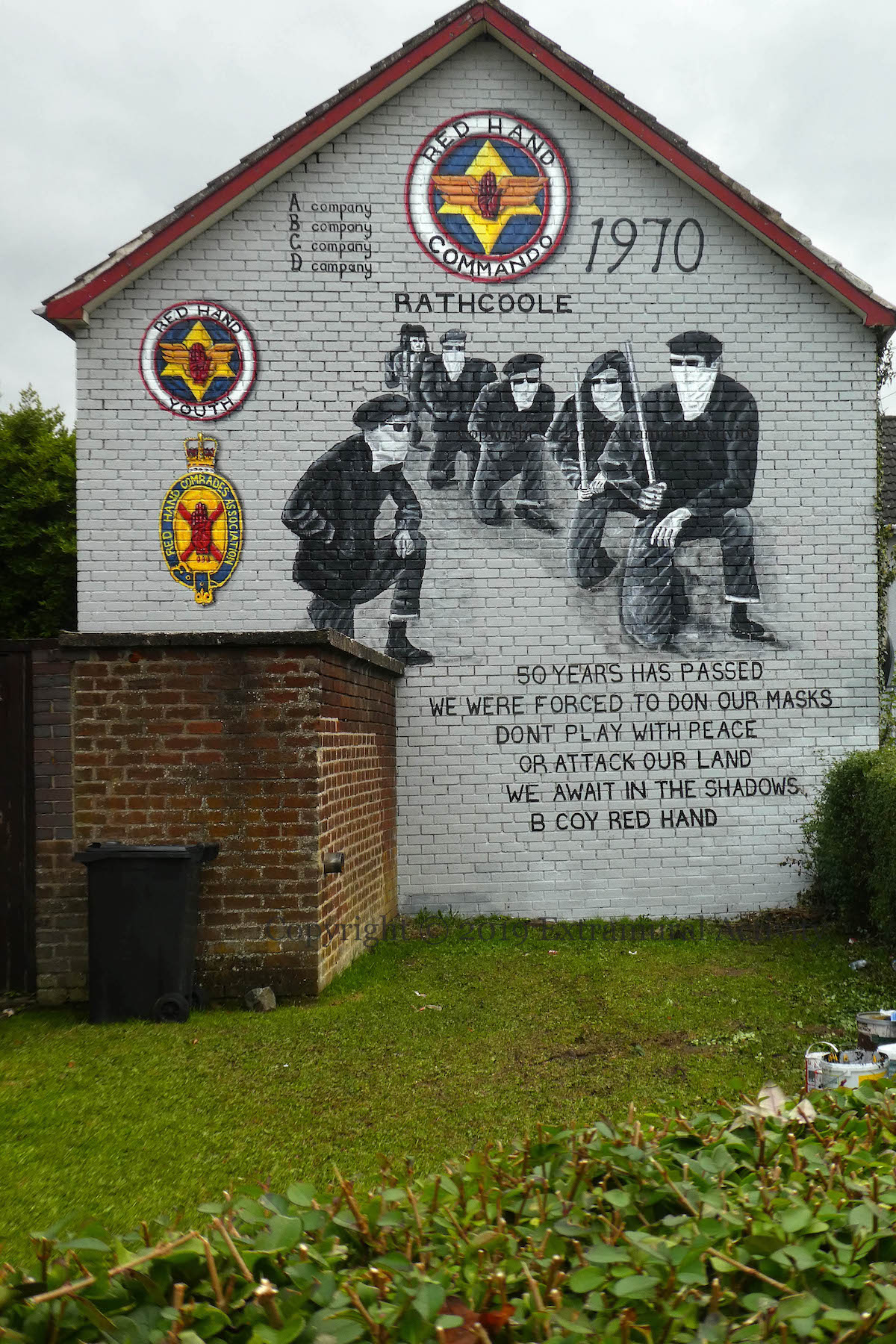
Ten years after ending its armed campaign, the Red Hand Commando in 2017 applied to be de-proscribed, on the basis that it had given up its arms in 2009 and transformed itself into an ‘old comrades association’ (see the emblem in the bottom left of the wide shot) (BBC | NewsLetter).

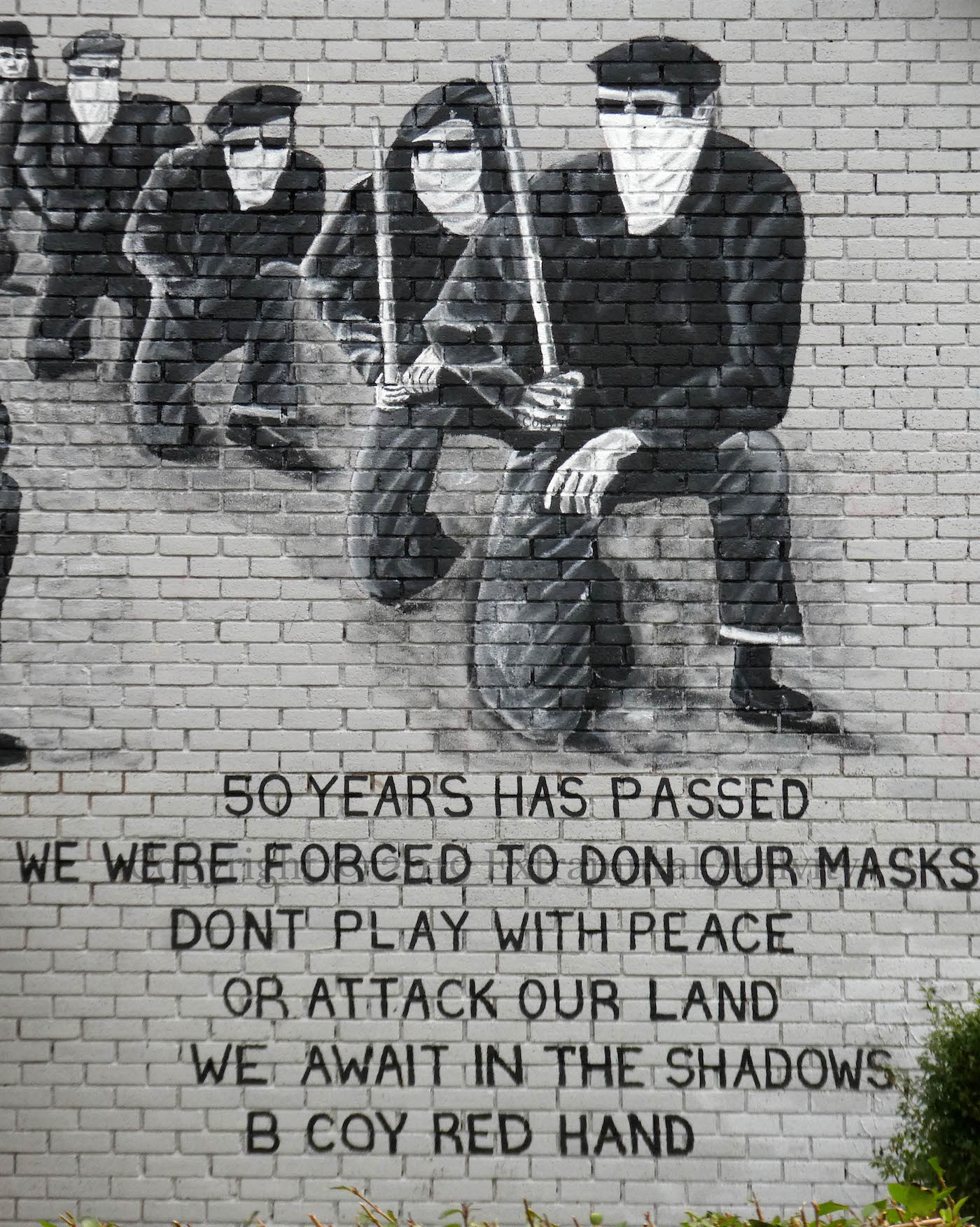
According to this mural, however, B company is ready to reform in response to those who “play with peace”, fifty years later (or so – the mural claims the group was founded in 1970; other sources give 1972 (WP cites Peter Taylor).

“50 years has passed/We were forced to don our masks/Don’t play with peace/Or attack our land/We await in the shadows/B Coy Red Hand.” The photo reproduced is of a Red Hand Action Group in Beresford Street, in the Shankill, west Belfast.

Replaces the ‘99.9% need not apply‘ RHC mural.

Click image to enlarge
Copyright © 2019 Seosamh Mac Coılle
X06861 X06862 derrycoole way rathcoole

Kingdom Of The Pretani

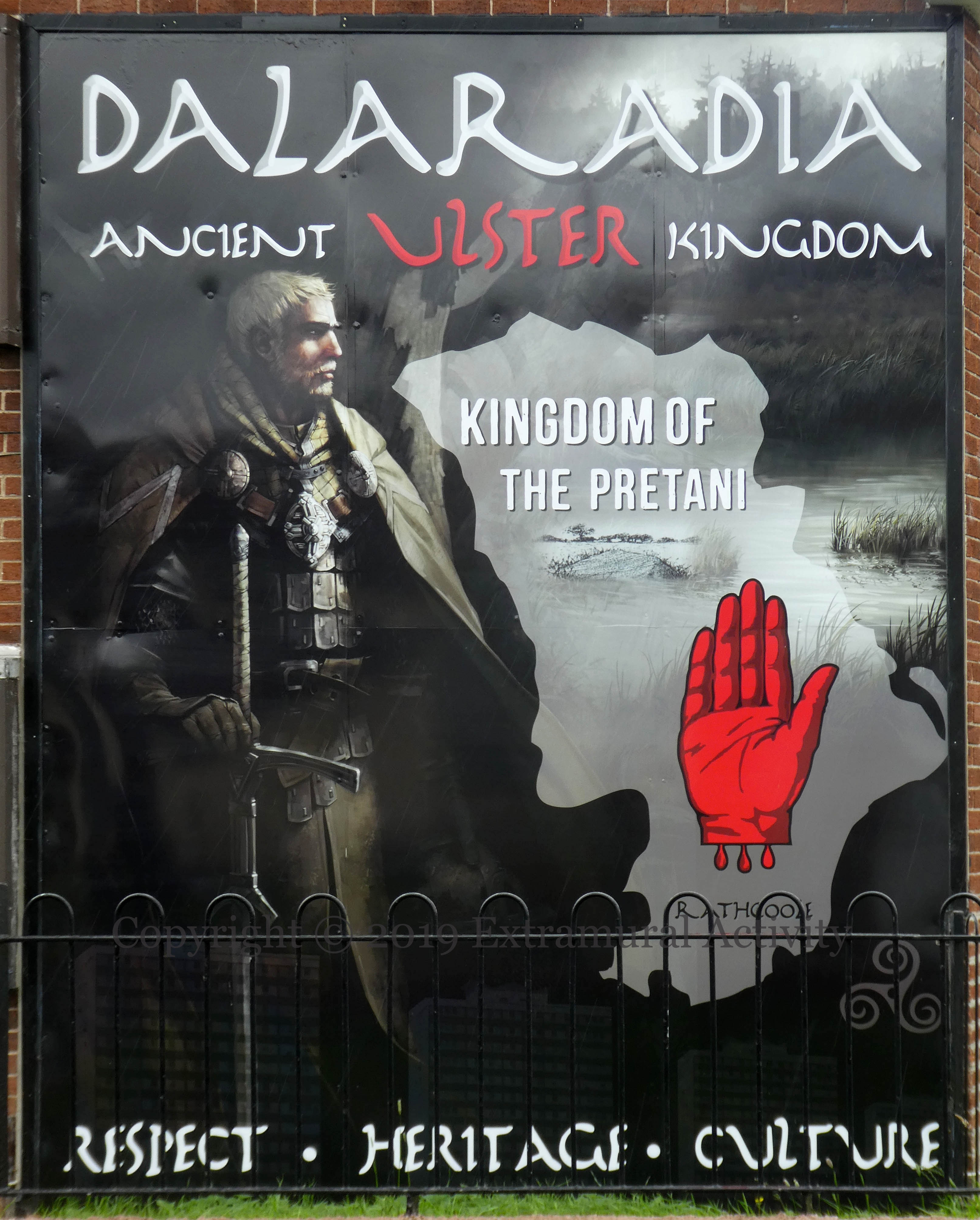
“Pretani” is the Brittonic version of the Greek term “Prettanoi”, possibly borrowed from the Gauls (WP), for the inhabitants of the two islands now known as Ireland and Britain, and “Cruthin” the Gaelic term. According to the eponymous web site, Dalaradia was “was a kingdom of the Cruthin in the north-east of Ireland and parts of Scotland in the first millennium” with the Cruthin being (more narrowly than above) a people in Antrim and Down with (in the middle of the mural) “the field of Crewe Hill, with the Ancient Crowning Stone of Ulster Kings” (REACH) in Glenavy (pretani.co.uk).

The WP page on the Cruthin notes, “The name Cruthin survives in the placenames Duncrun (Dún Cruithean, “fort of the Cruthin”) and Drumcroon (Droim Cruithean, “ridge of the Cruthin”) in County Londonderry, and Ballycrune (Bealach Cruithean, “pass of the Cruthin”) and Crown Mound (Áth Cruithean, “ford of the Cruthin”) in County Down. These placenames are believed to mark the edges of Cruthin territory.”

The towers of Rathcoole can be seen underneath the slogan “Respect, heritage, culture.” They also famously appear behind a trio of hooded gunmen in a Rathcoole mural.

Click image to enlarge
Copyright © 2019 Seosamh Mac Coılle
X06706 [X06707] [X06708] carmeen dr

Fáılte Go Dtí Glengormley

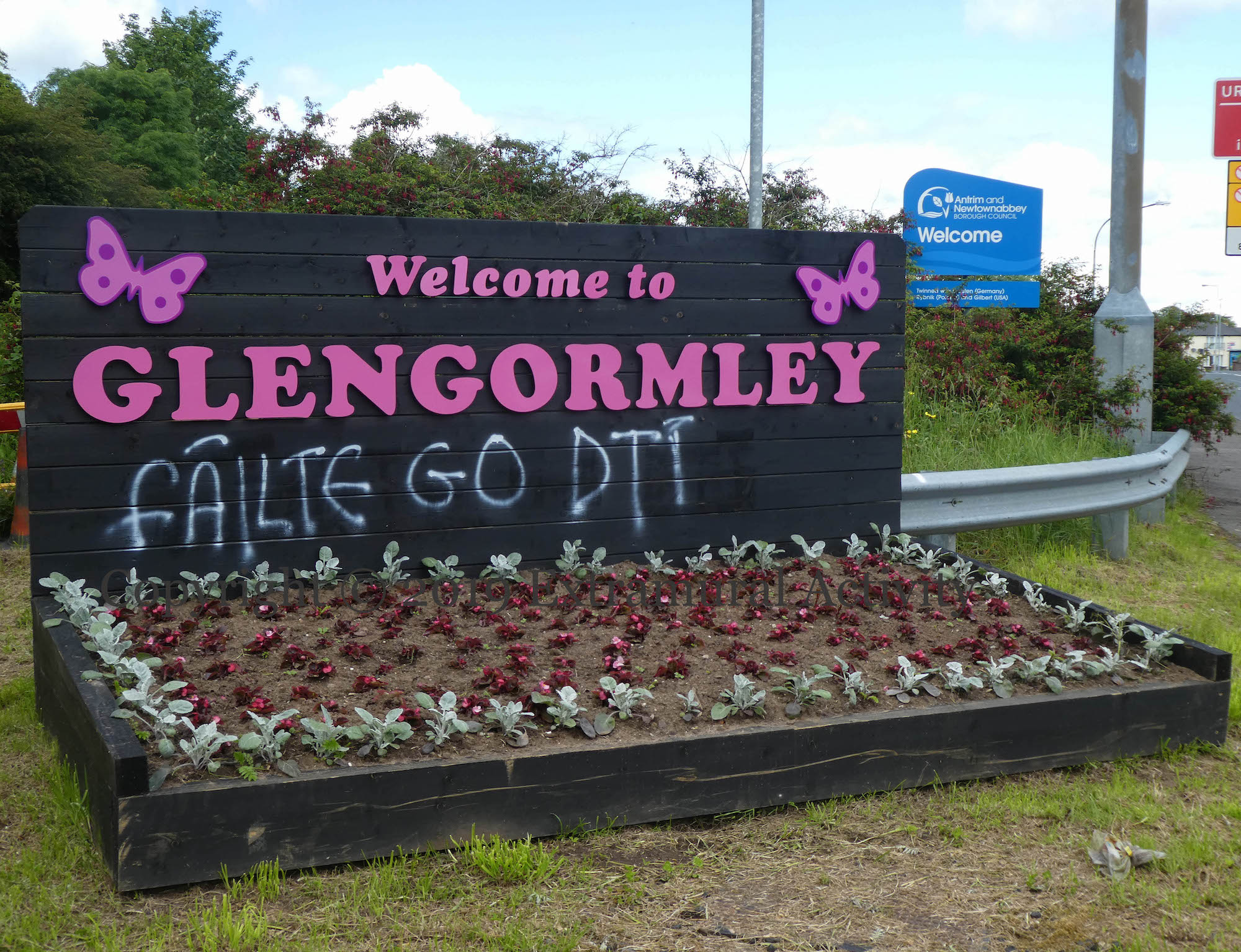
Irish-language signage was in the news recently after Antrim & Newtownabbey council threatened an 85-year-old Randalstown pensioner with a fine of up to 2,500 pounds if she failed to remove a street sign erected by her granddaughter (Irish Central). So far, no action has been taken by the same council against the Glengormley graffitist who added Irish to the new ‘welcome’ sign on the bridge near the Bellevue Arms, though without translating the placename: “Fáılte go dtí (Gleann Ghormlaıthe).” There is a matching sign at the other end of the area, on Sandyknowes roundabout.

Click image to enlarge
Copyright © 2019 Seosamh Mac Coılle
X06621

The Somme 1916

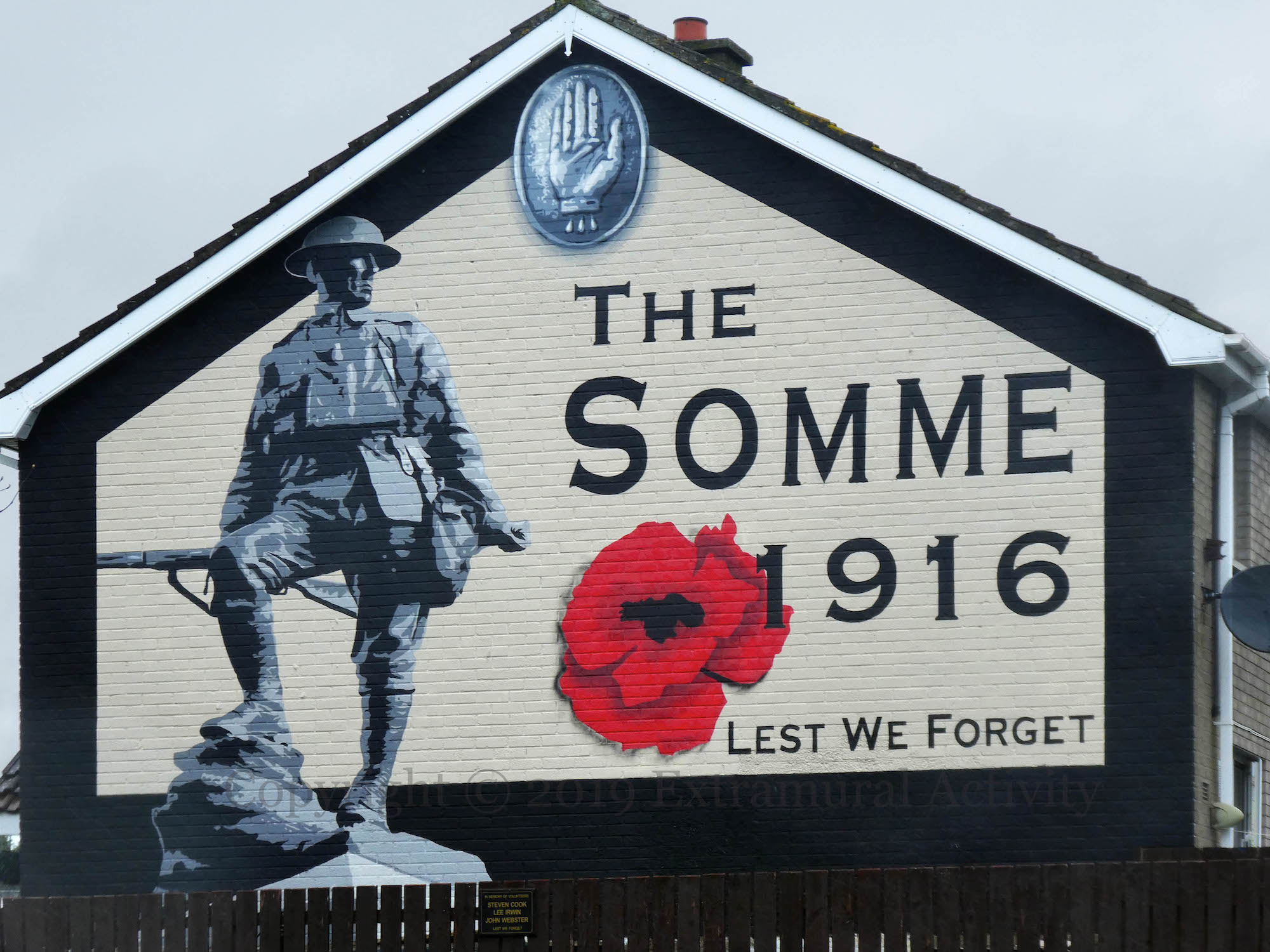
The ‘Liverpool No. 4 battalion’ UVF mural in Tynan Drive, Monkstown, (seen previously) has been replaced by a Dee Craig (Fb) mural to the soldiers of the Ulster Volunteers (see the ‘bleeding hand’ symbol in the apex) at the Somme. The small plaque on the fence to John Webster (a.k.a. Webber), Lee Irwin & Steven Cook, remains.

Click image to enlarge
Copyright © 2019 Seosamh Mac Coılle
X06479