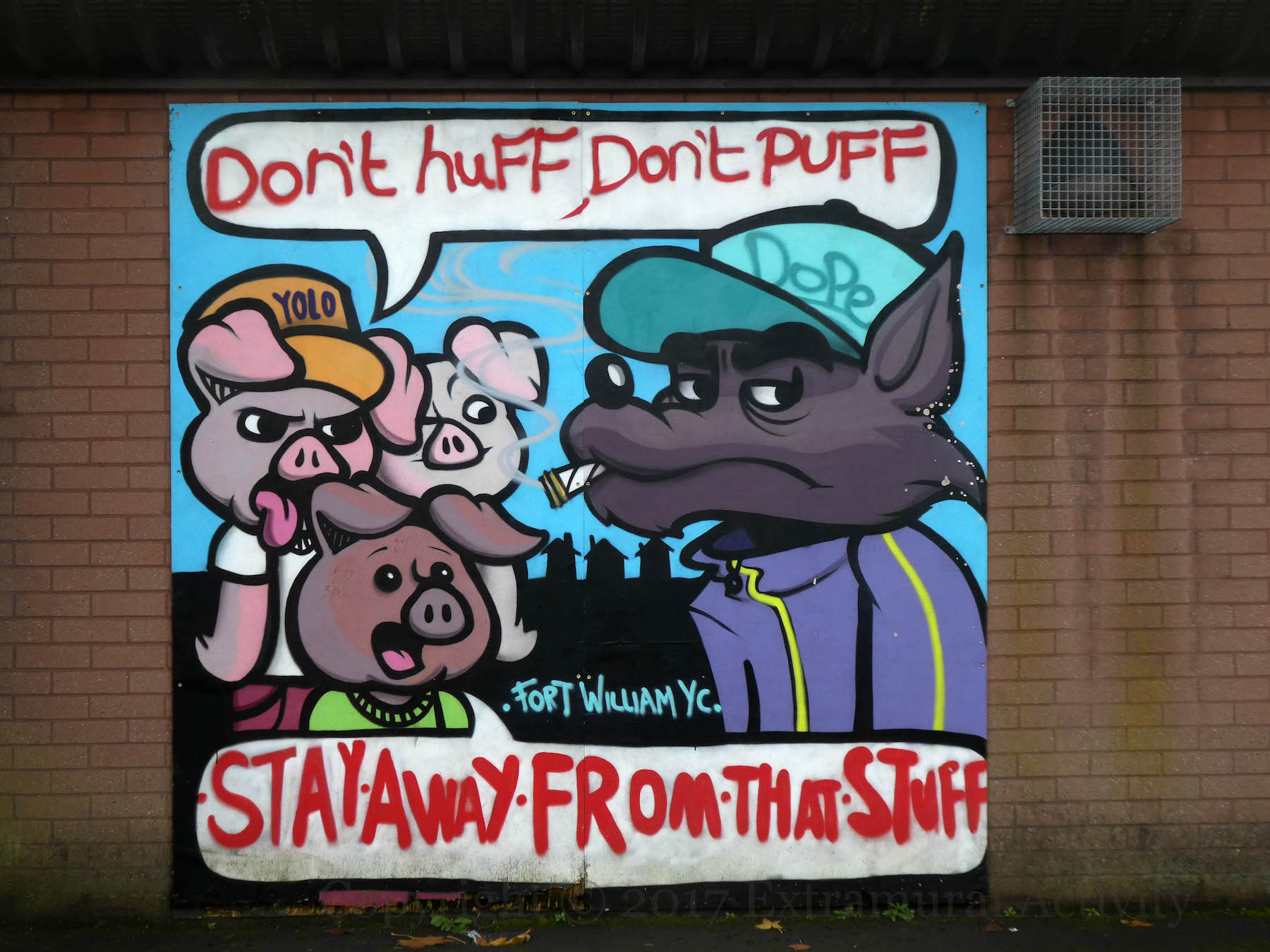
“Don’t huff, don’t puff – stay away from that stuff.” The three little piggies give the big bad wolf some grief for his “dope” habit. The message is directed at the kids in the Fortwilliam Youth Centre in Mount Vernon. “You only live once.”
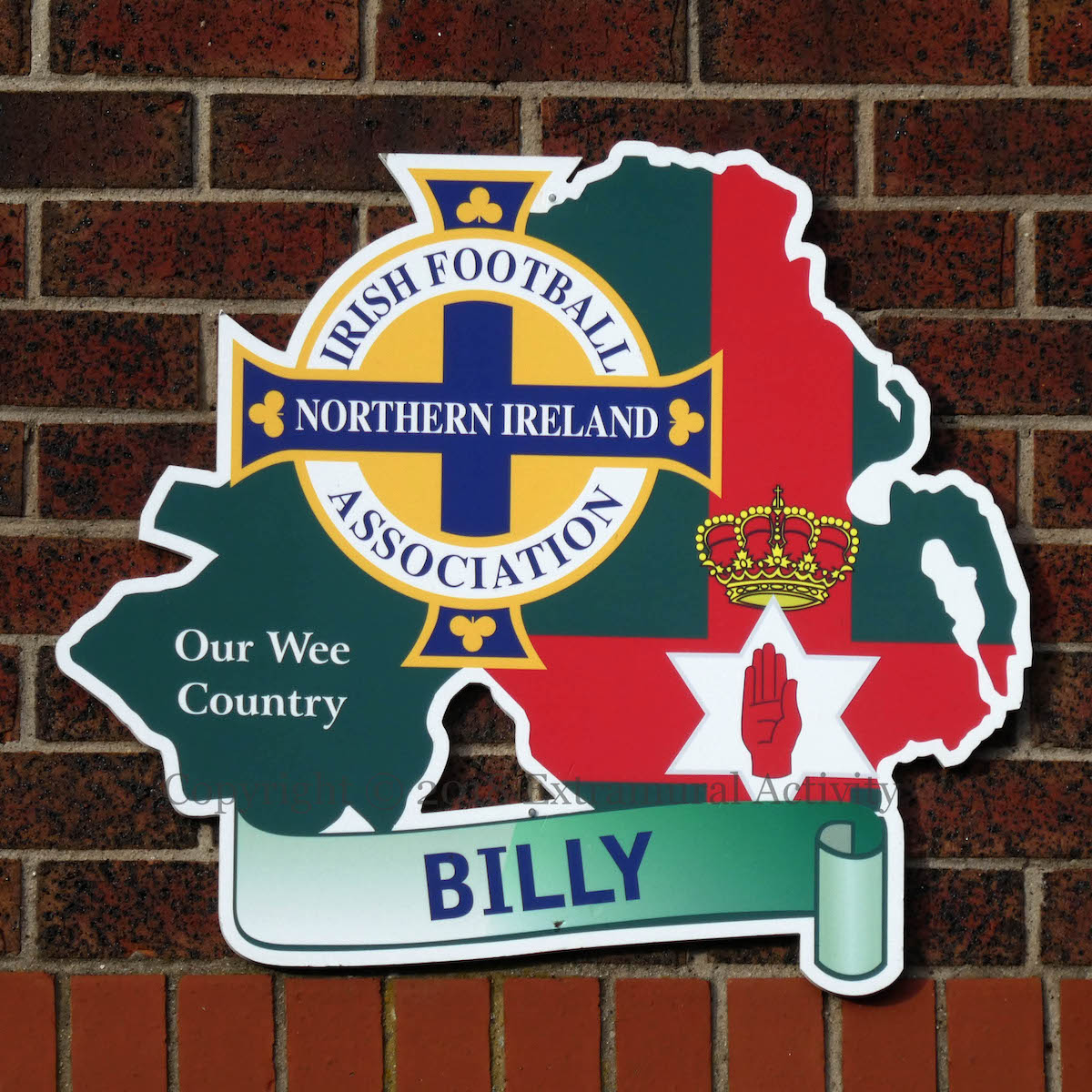
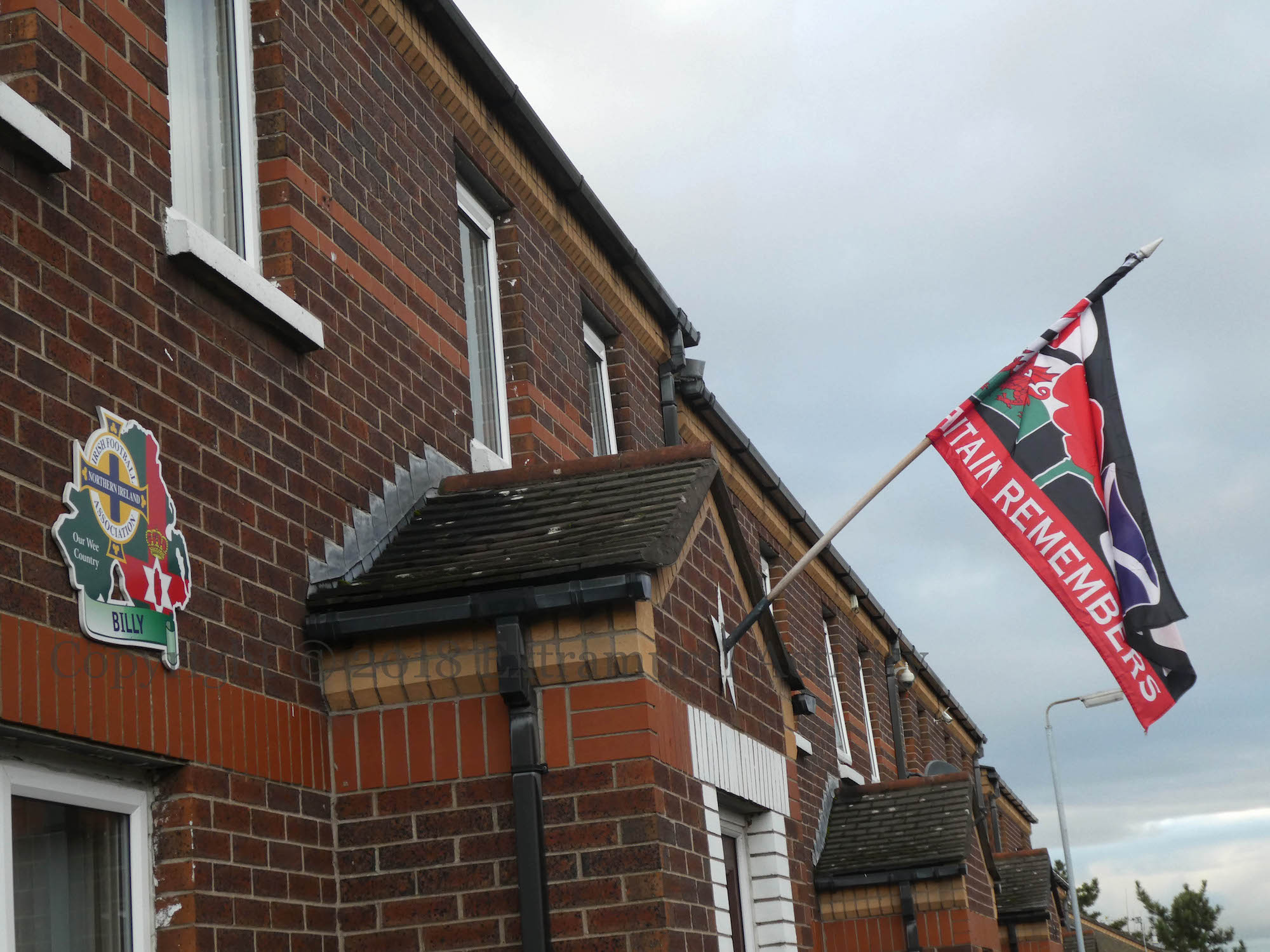
Although not completely visible in the image below, the ‘Britain remembers’ Remembrance Day flag includes the Ulster Banner, the flag of NI parliament until 1972, rather than the St Patrick’s Saltire. This is also the flag used by the Irish Football Association, the governing body of soccer in NI, to represent its teams, as is shown by the personalised supporter’s plaque in Cosgrave Heights. The organisation’s name derives from the fact that the body pre-dates partition and used to govern the whole island and not just “our wee country”.
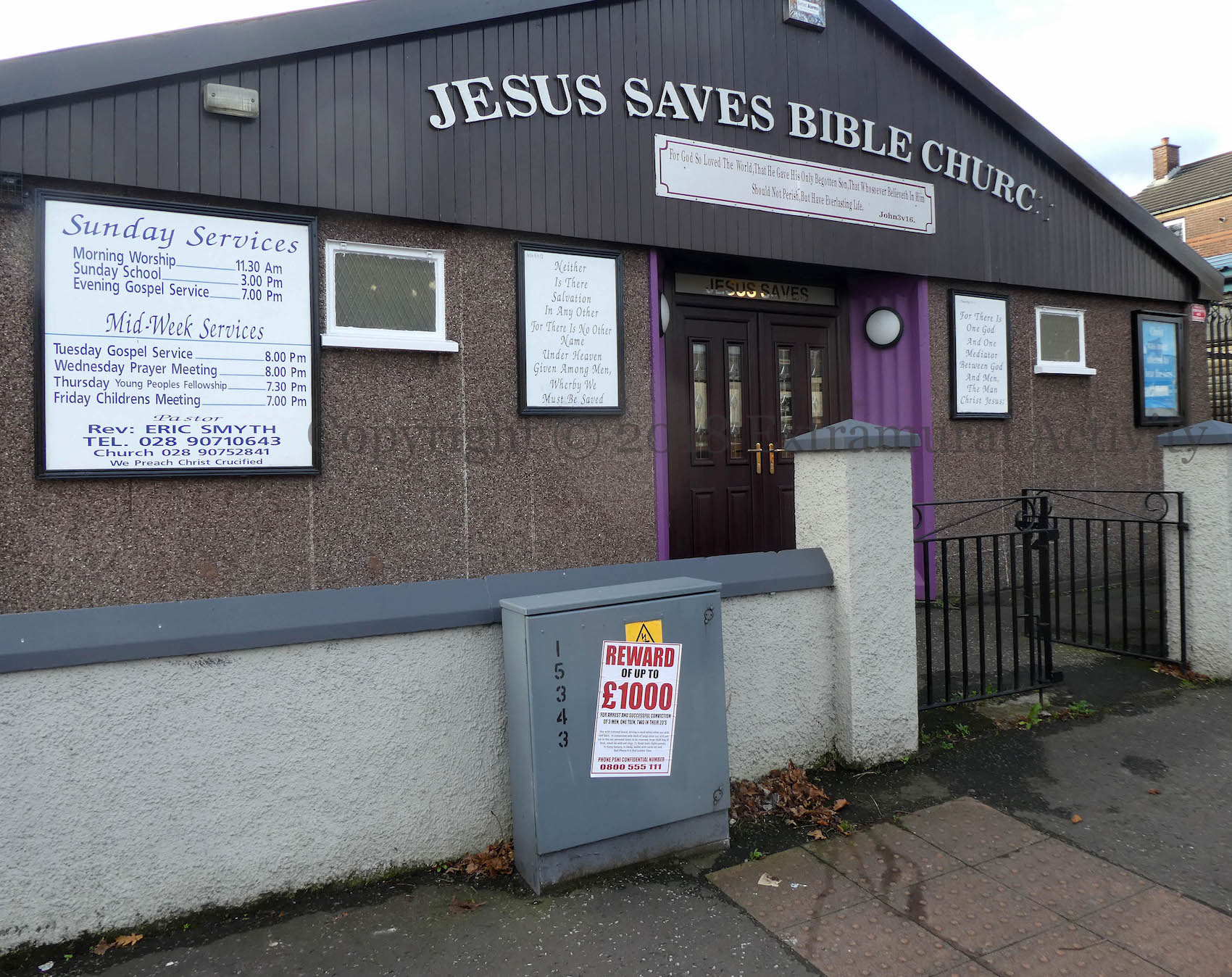
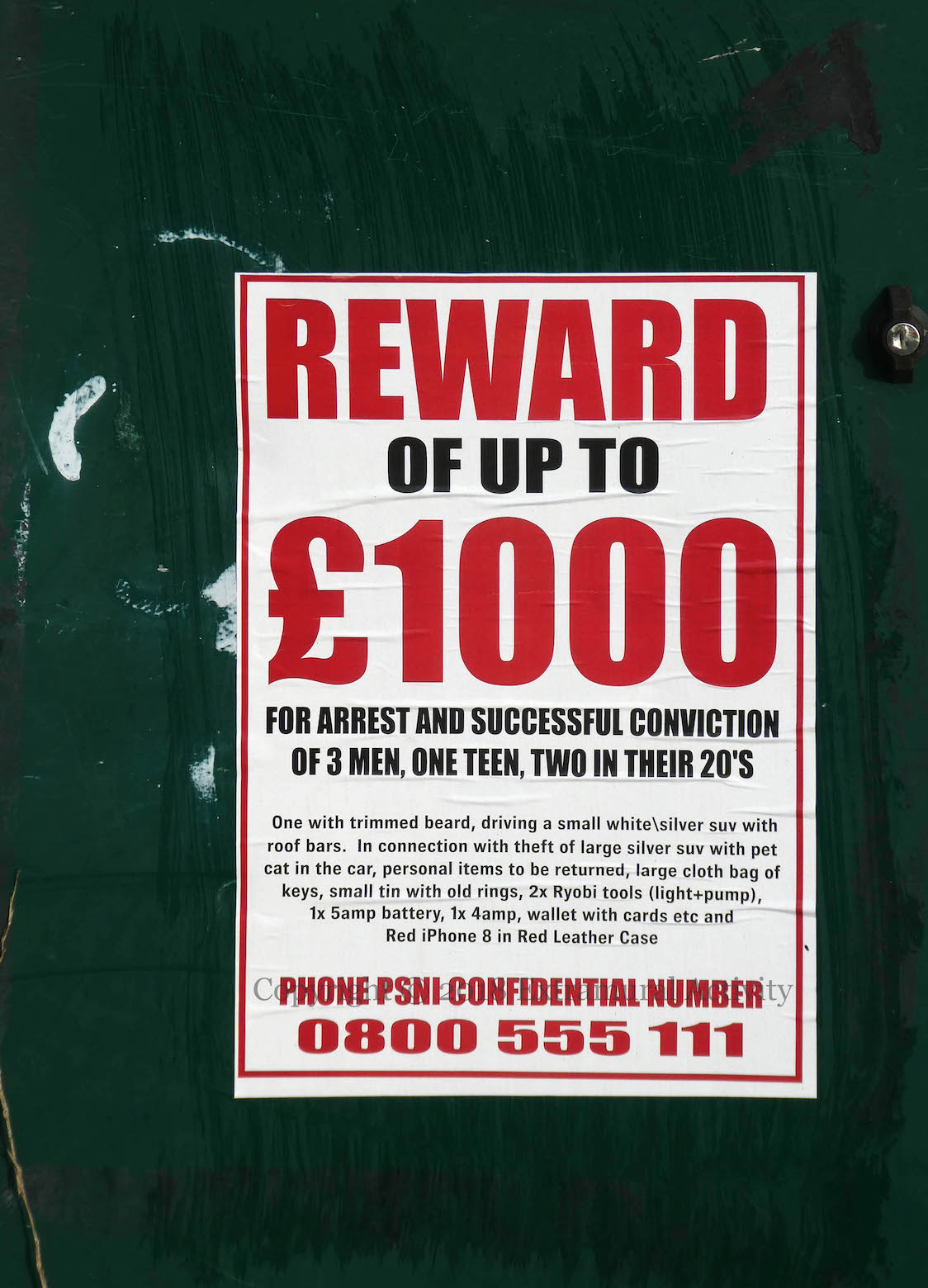
Owners of a silver SUV take their quest for justice to the north Belfast streets by plastering ‘reward’ posters all around seeking the return of wallet, iPhone, tools, and cat.
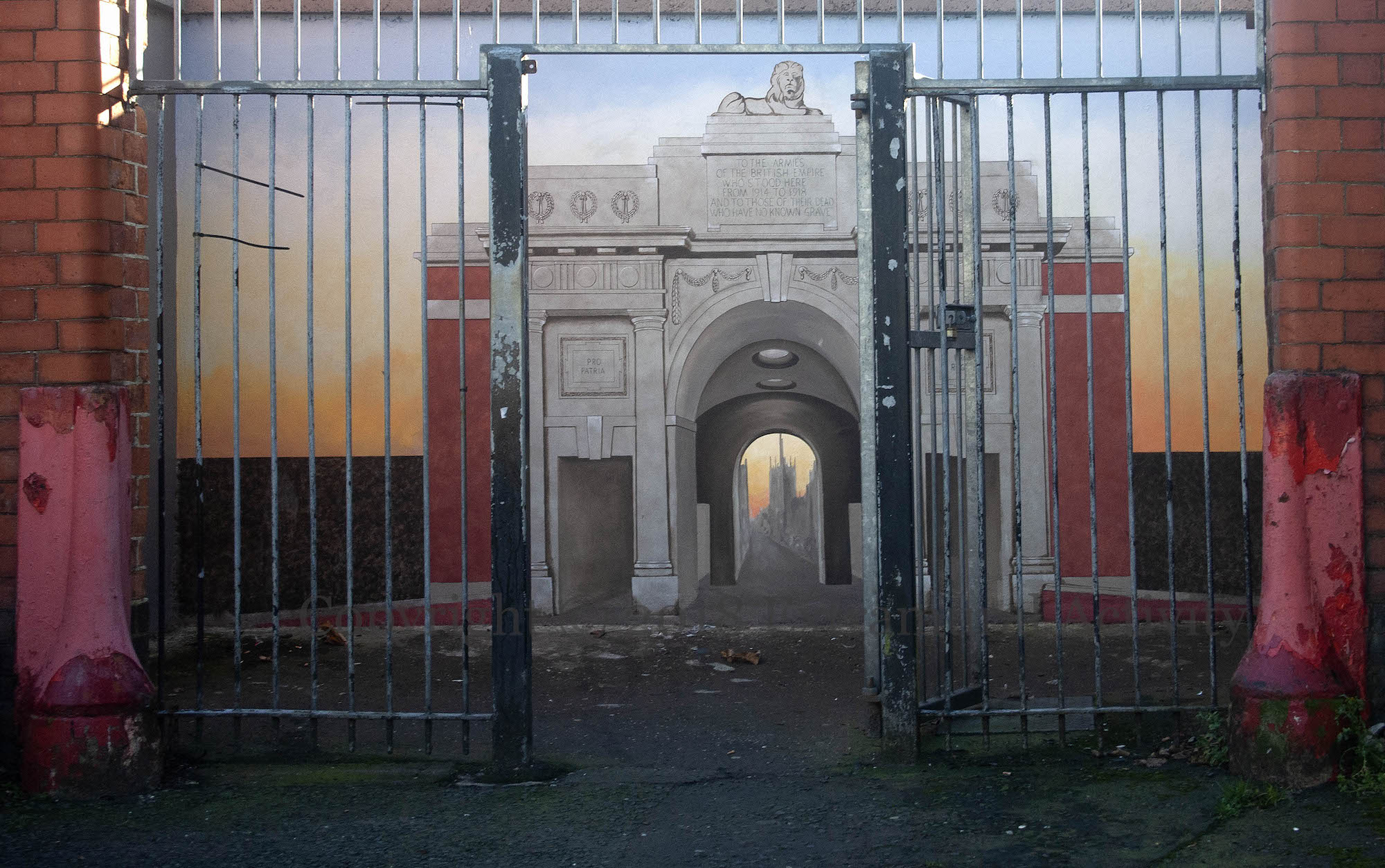
The Menin Gate memorial, at the eastern edge of Ypres, Belgium, commemorates 54,896 Commonwealth soldiers who died in the area during WWI and whose bodies were not recovered. “To the armies of the British Empire who stood here from 1914 to 1918 and to those of their dead who have no known grave.” The gates in the image above are off Bond’s Street, Londonderry, leading to the Ebrington Centre car park.
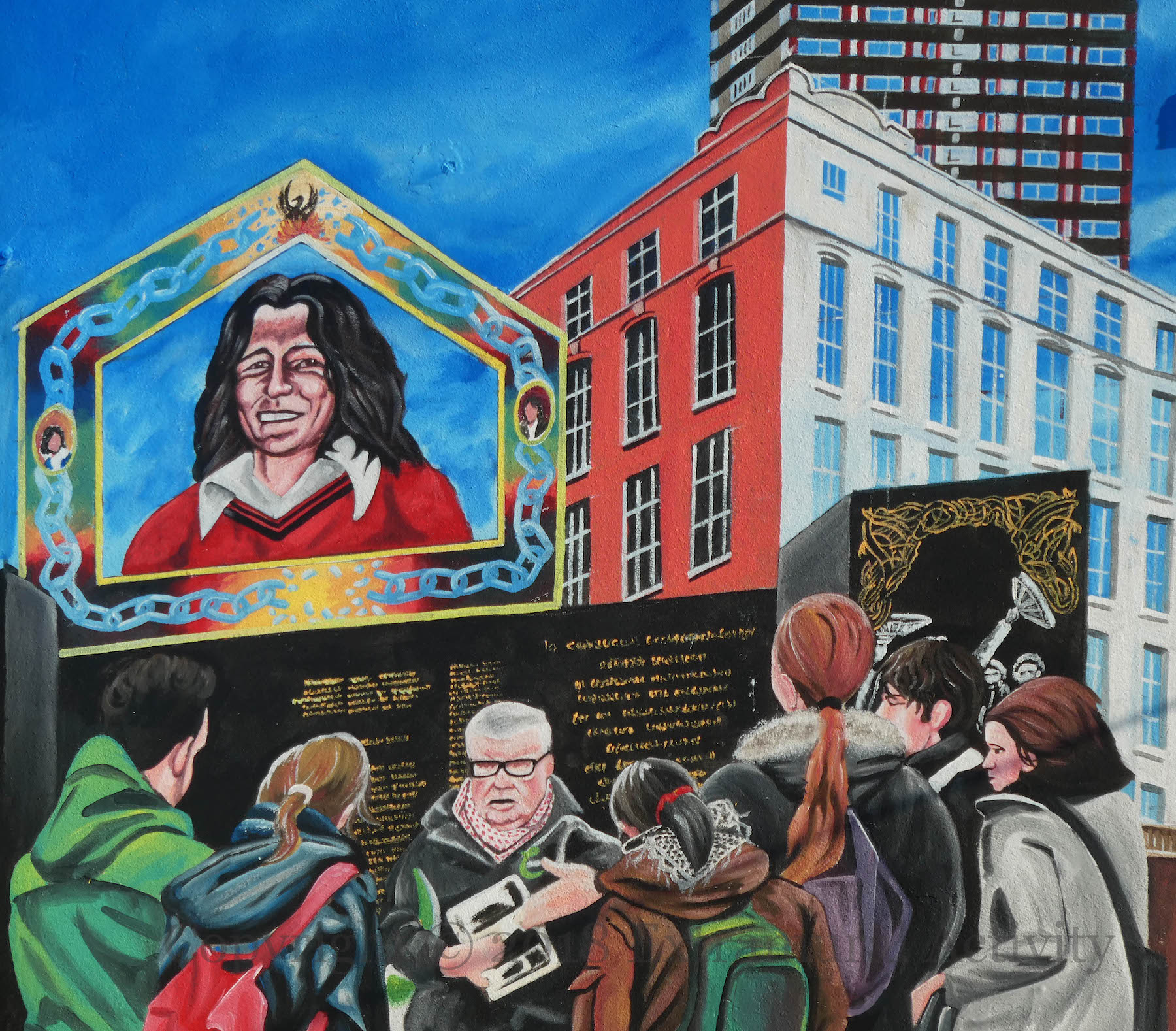
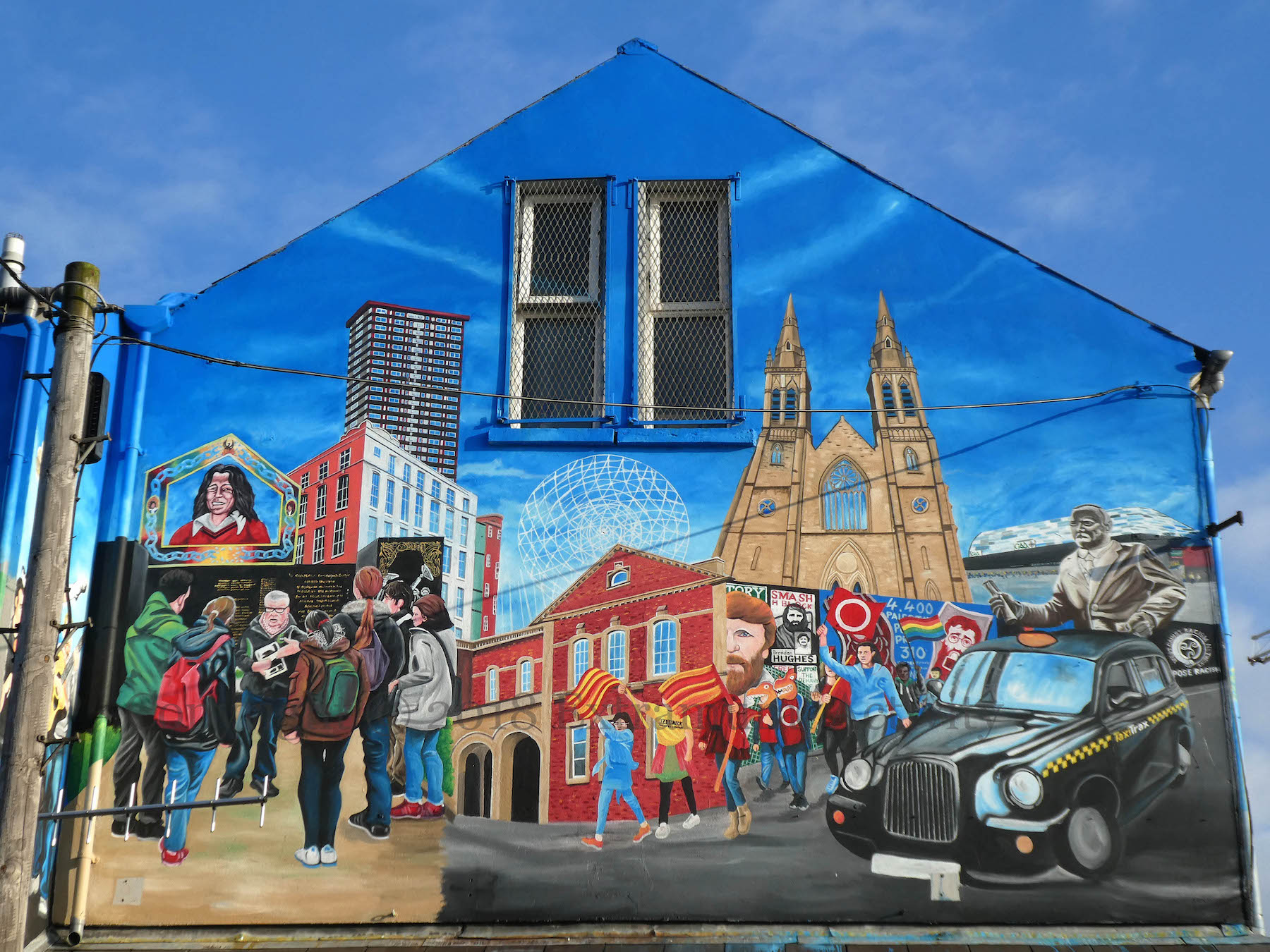
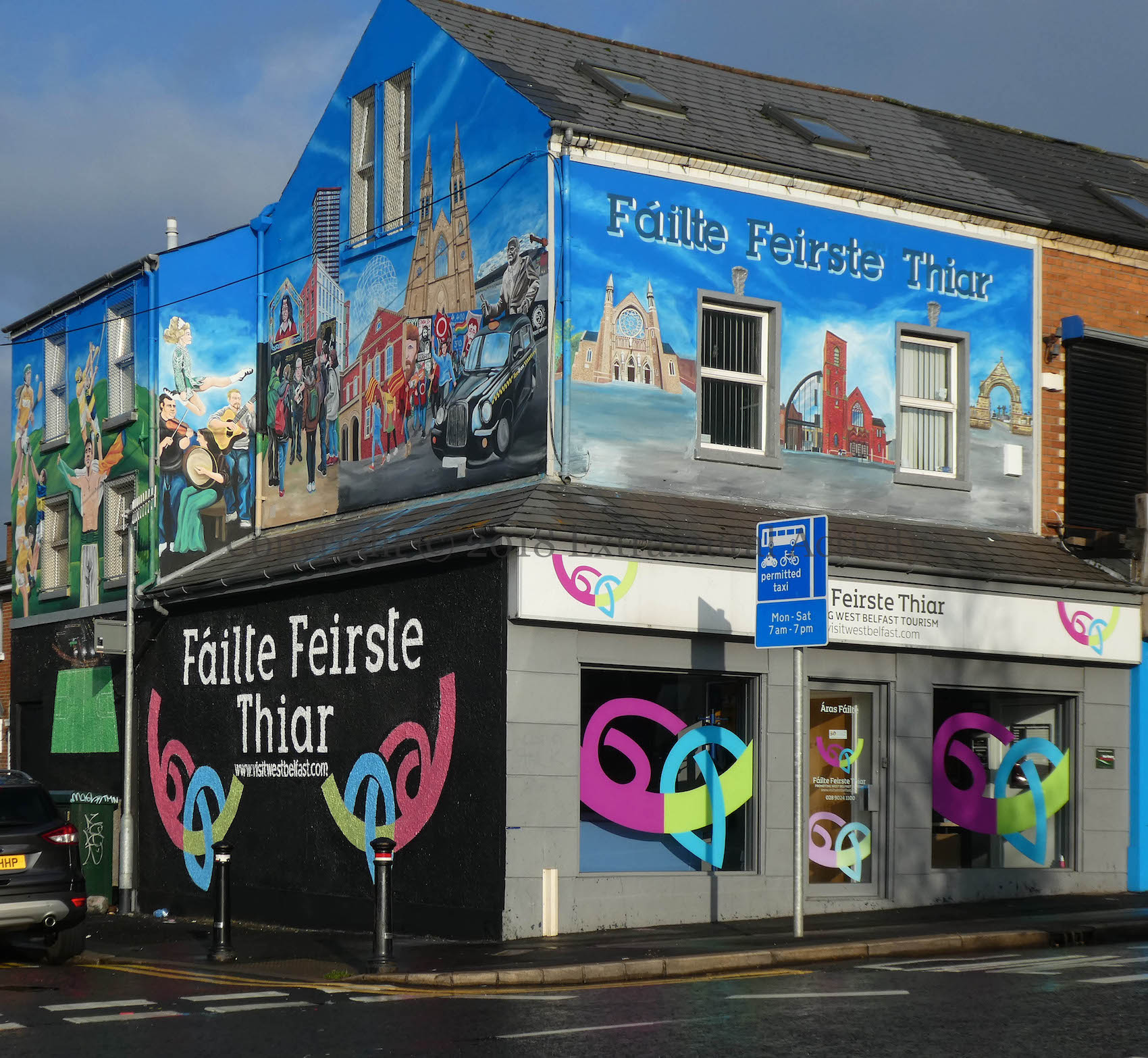
“Welcome to West Belfast.” The sights of nationalist west Belfast are depicted in (part of) a new mural by Mickey Doherty and Marty Lyons on the side wall of the tourist office. From left to right: The (2015) Bobby Sands mural in Sevastopol Street, tourists being introduced to the IRA D Company memorial garden on the lower Falls by Peadar Whelan, Conway Mill, Divis tower, RISE at the bottom of Broadway (better known as the “Balls on the Falls”), the Falls library, the “international wall” in 2012 (with marchers in support of a nondescript international cause, crocodiles for the Irish language, and gay rights), St Peter’s pro-cathedral, a black taxi, the Connolly statue outside Comhaırle Phobaıl an bhFál, and the model for the new Casement Park stadium.
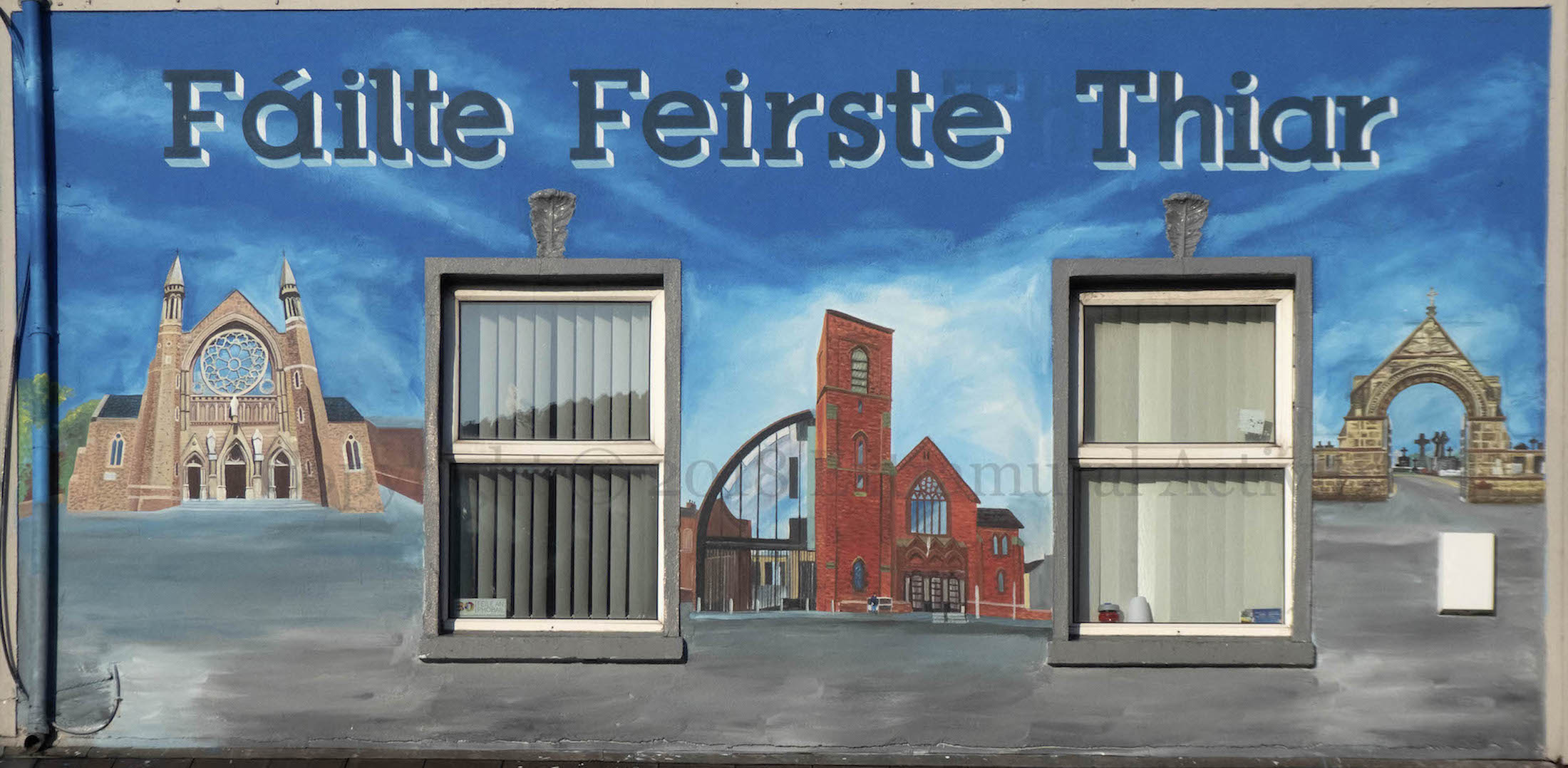
As you head west along Falls Road, you will pass by the three landmark buildings depicted in the mural above: Clonard Monastery, Cultúrlann McAdam-Ó Fıaıch (opposite this mural and the offices of Fáılte Feırste Thıar), and the entrance to Milltown Cemetery at the edge of Andersonstown. For the parts of the mural in Brighton Street, see The Conlan Revolution and Fáılte Feırste Thıar.
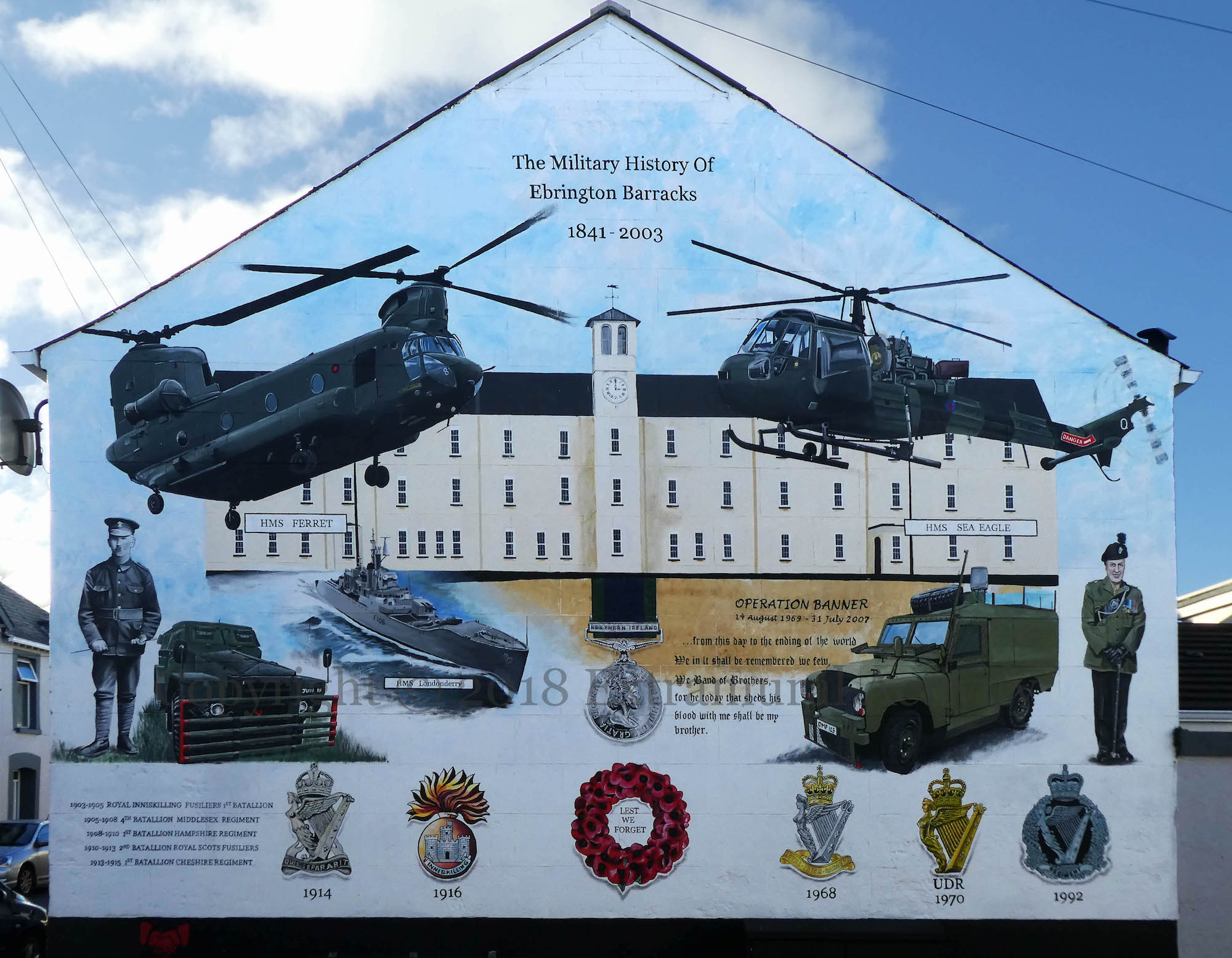
Between its construction in 1841 and decommissioning in 2003, Ebrington Barracks served as a home to many military units, including those whose emblems are at the bottom of the mural above (from left to right): the Royal Irish Rifles, Royal Inniskilling Fusiliers, Royal Irish Rangers, UDR, and the Royal Irish Regiment.
HMS Ferret and HMS Sea Eagle are not in fact ships but a part of Ebrington barracks given to the navy to serve as a “stone frigate” during (Ferret) and after (Sea Eagle) WWII. HMS Londonderry was an anti-submarine frigate but does not appear to have a particular connection to Ebrington (please comment if you know otherwise).
The Northern Ireland General Service medal – in the middle of the mural – was awarded to any soldier who served at least 30 days during Operation Banner, the deployment of British troops in Northern Ireland from 1969 onwards.
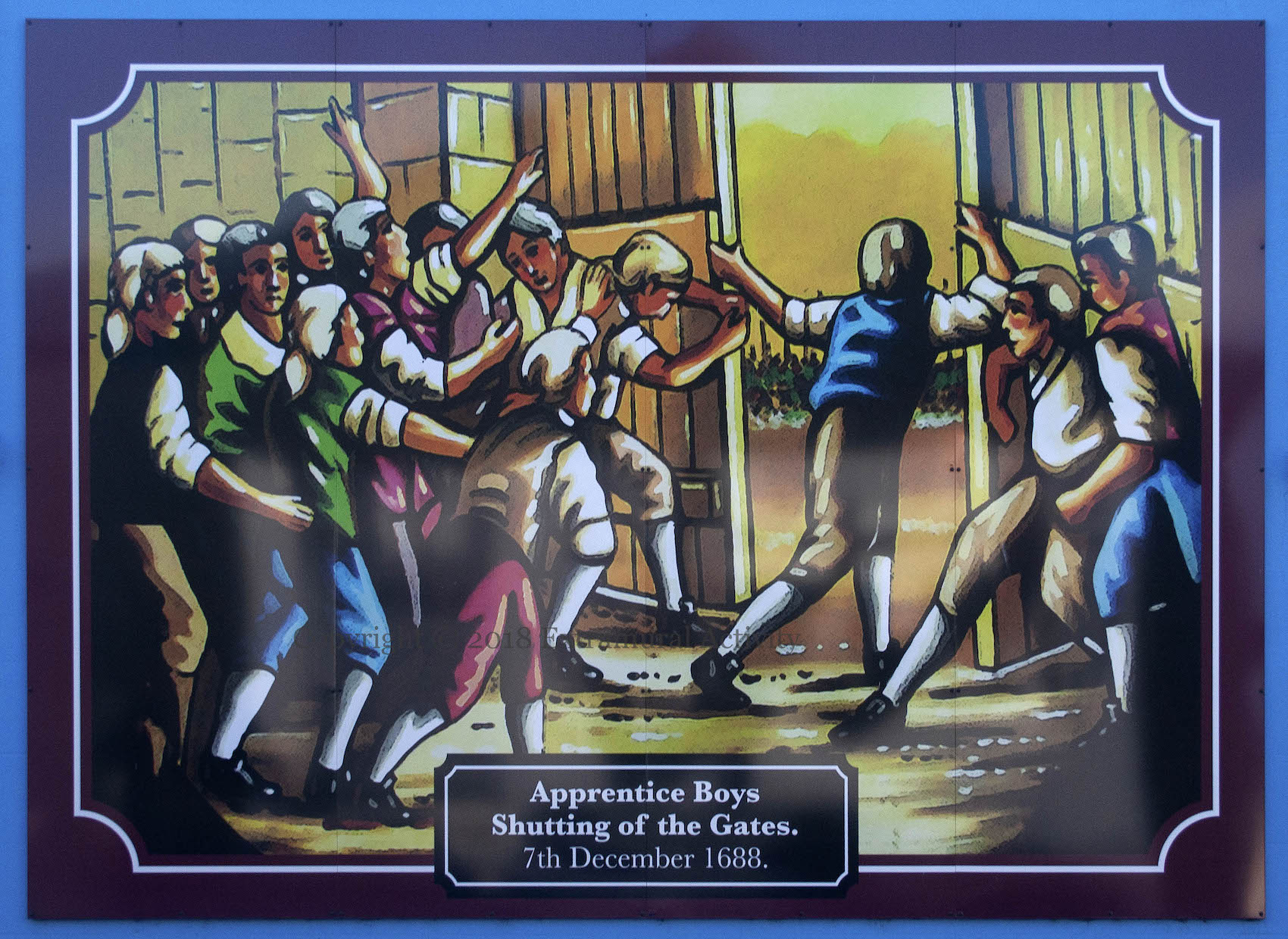
The Apprentice Boys mural in Emerson Street, Londonderry, which was at least fifteen years old, was replaced in 2018 with a version of boards (shown above). The shutting of the city gates in December 1688 began the Siege Of Derry.
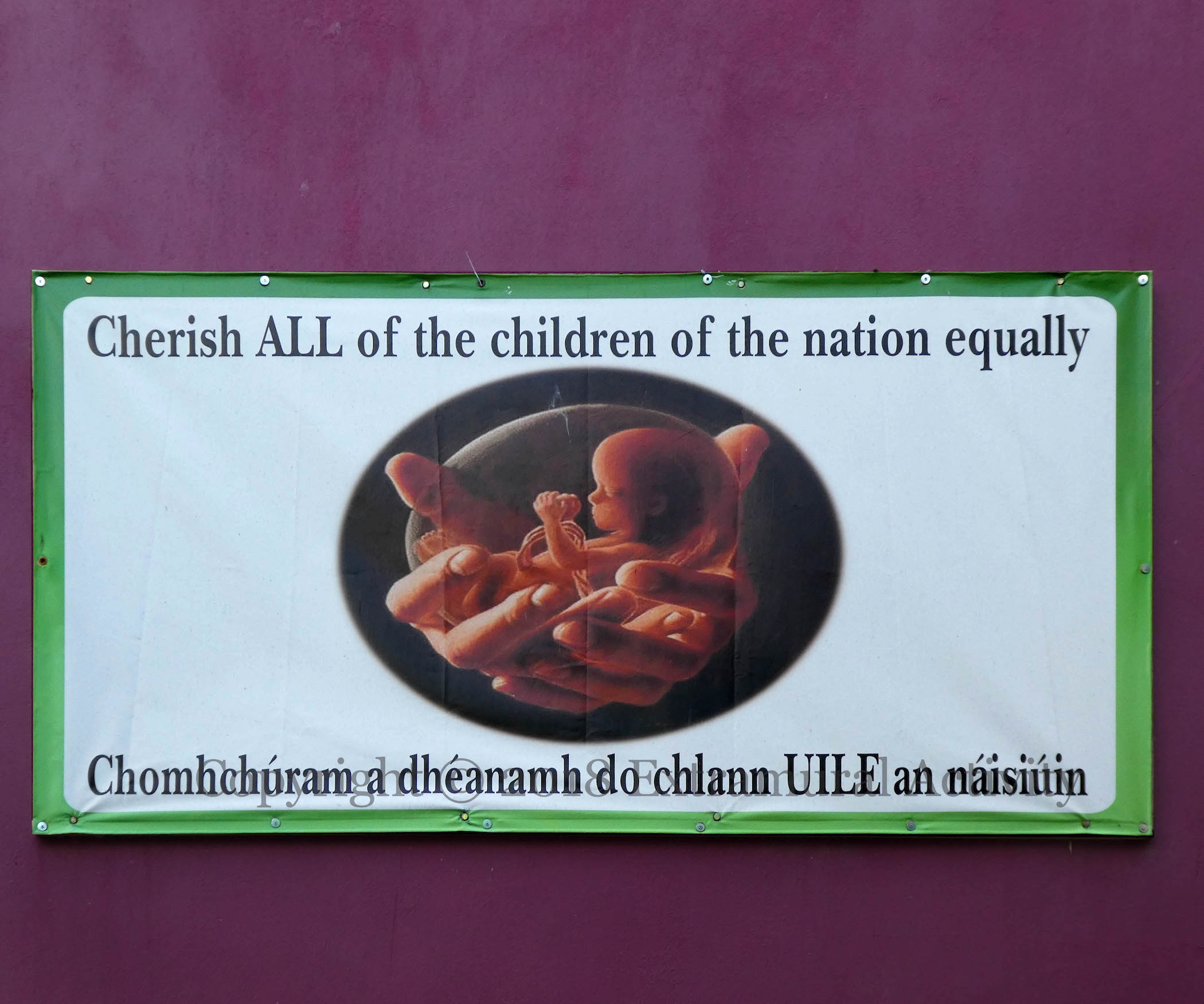
“Cherish ALL of the children of the nation equally/Chomhchúram [sic] a dhéanamh do chlann UILE an náısıúın.” Pro-life tarp at the entrance to the library on Main Street, Dungiven, perhaps in reference to the 2018 referendum on abortion in the Republic (see Yes And No | Repeal Head).
 Seosamh Mac Coille Collection