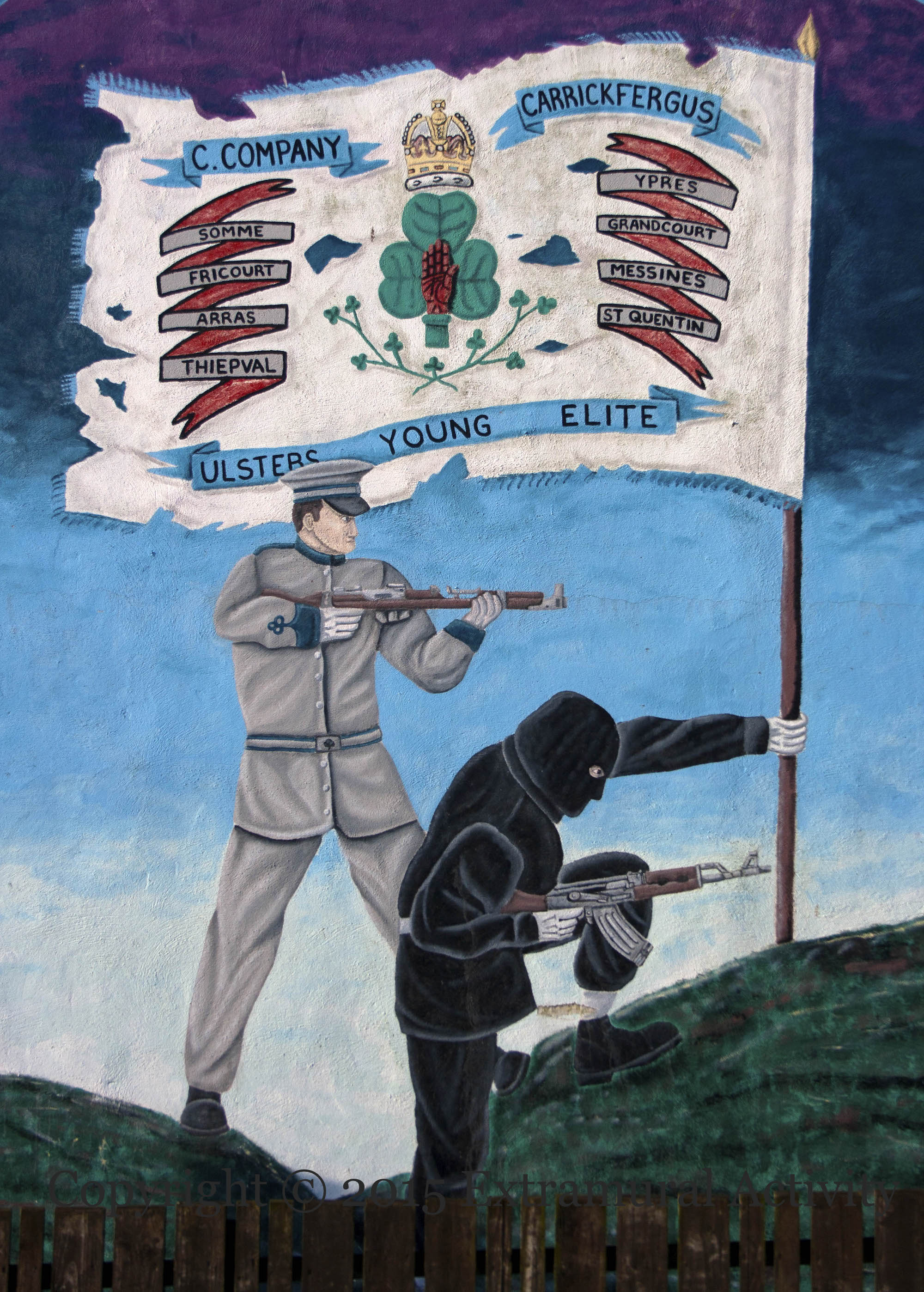
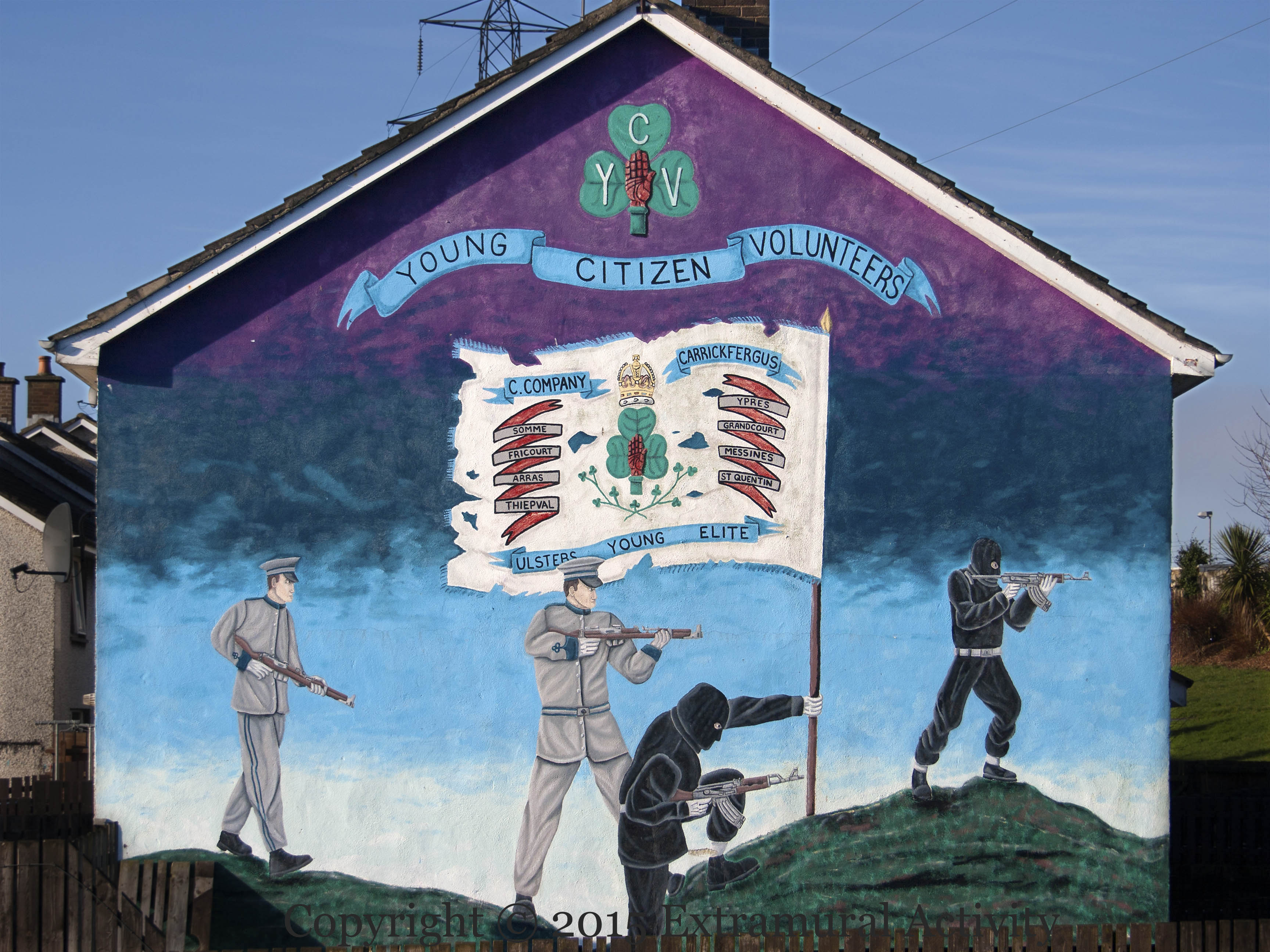
The Young Citizen Volunteers of 1912 eventually joined the Ulster Volunteers (in 1914) as the 14th battalion of the Royal Irish Rifles and part of the 36th (Ulster) Division (WP). In 1972 the name was resurrected for use as the youth wing of the UVF (WP). In the wide shot, below, this history is presented as a continuous movement from left to right; a modern-day hooded gunman climbs out of a WWI trench with one hand on a YCV flag.
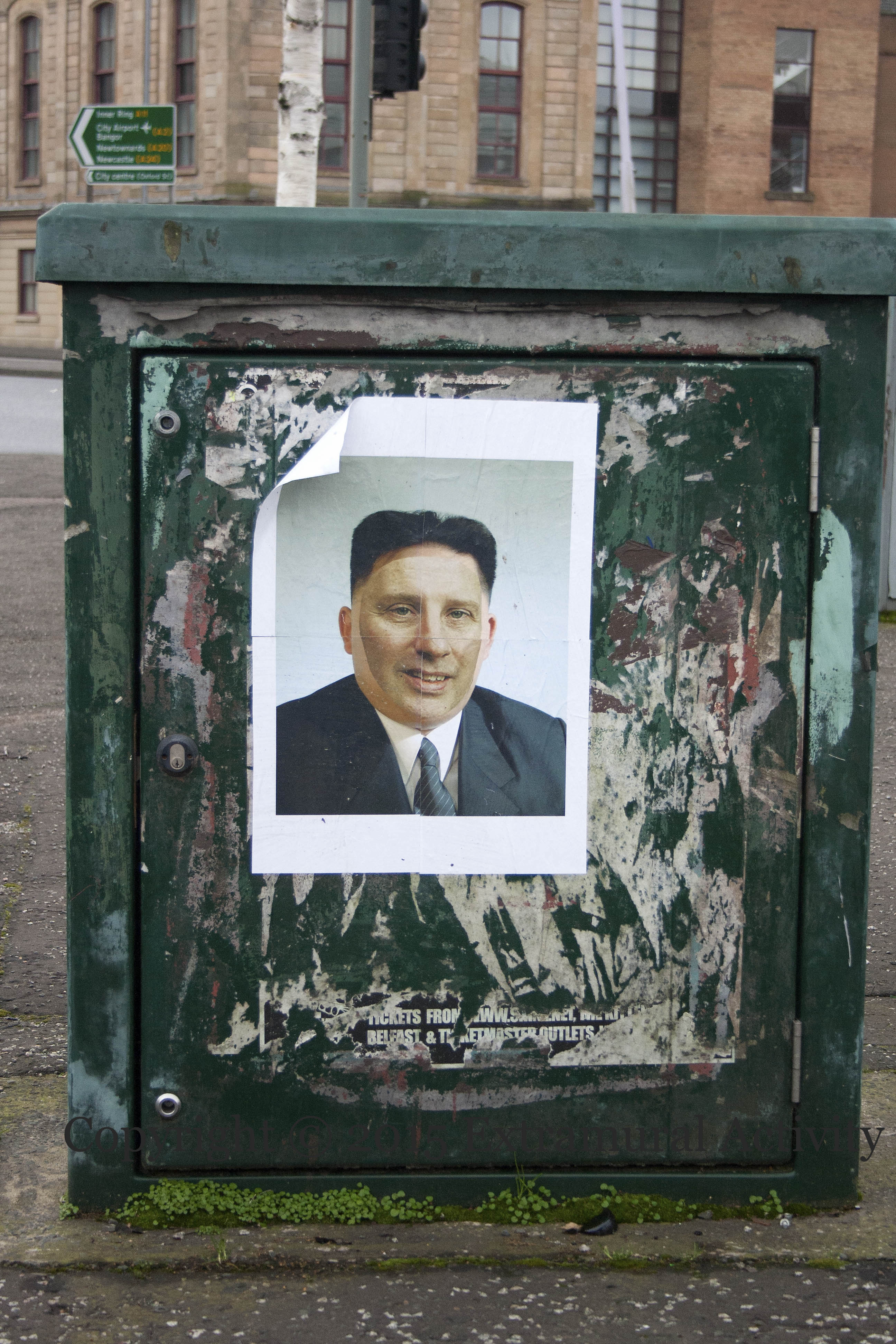
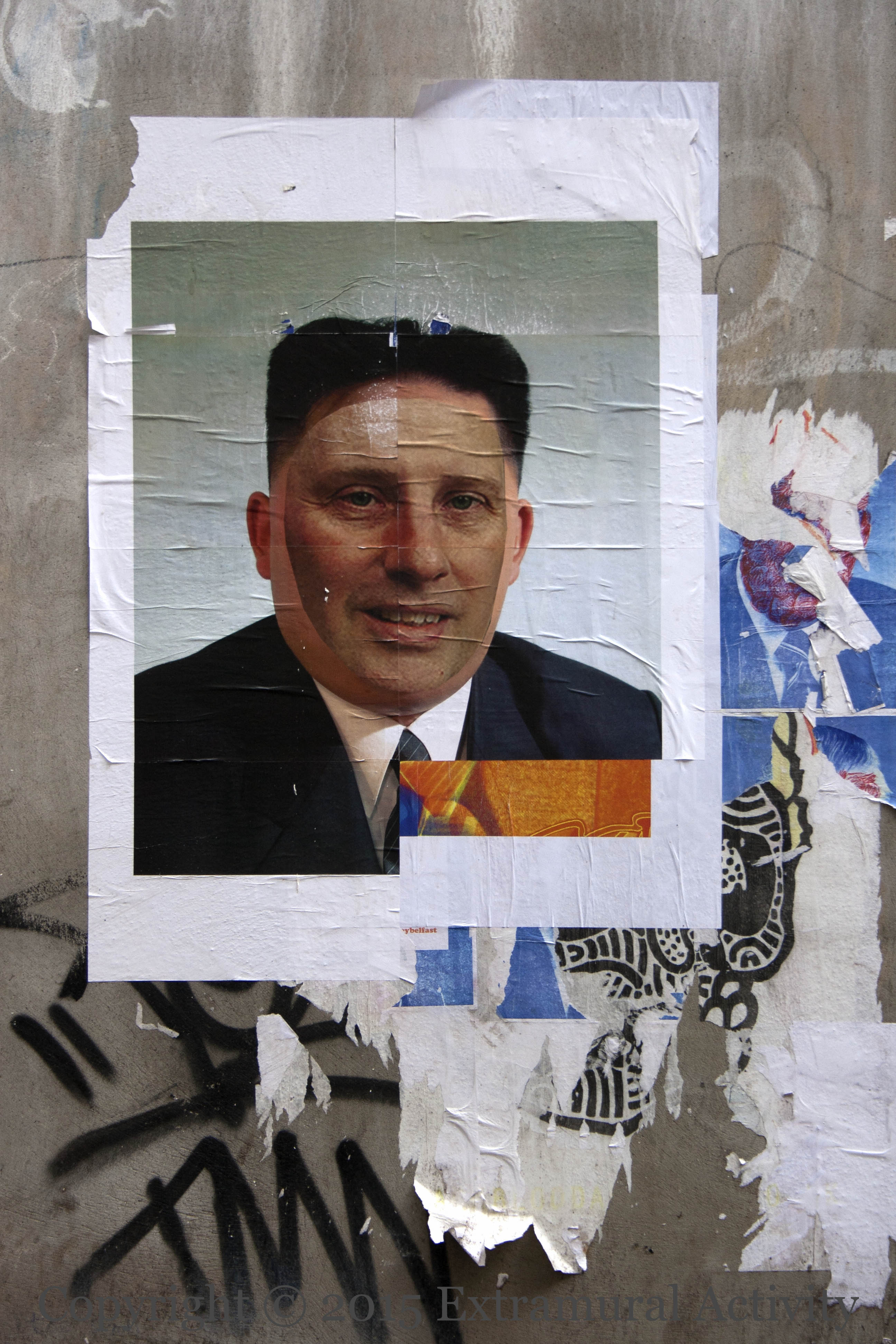
Here are two shots of the mash-up which has appeared in various city-centre locations, of Ian Paisley Jr’s visage superimposed on the bust of Kim Jong-Un. The first (above) is at the junction of Corporation St and Dunbar Link; the second (below) is in Hill Street, and is pasted over the torn remains of the previous generation of Paisley paste-up: Ian senior with a face filled in with the harp-side of pre-Euro Irish coins (see TLO’s “Doctored Paisley” web-site). For other versions of last year’s Paisley posters, see: Three Studies Of Ian Paisley | Demonizing Paisley
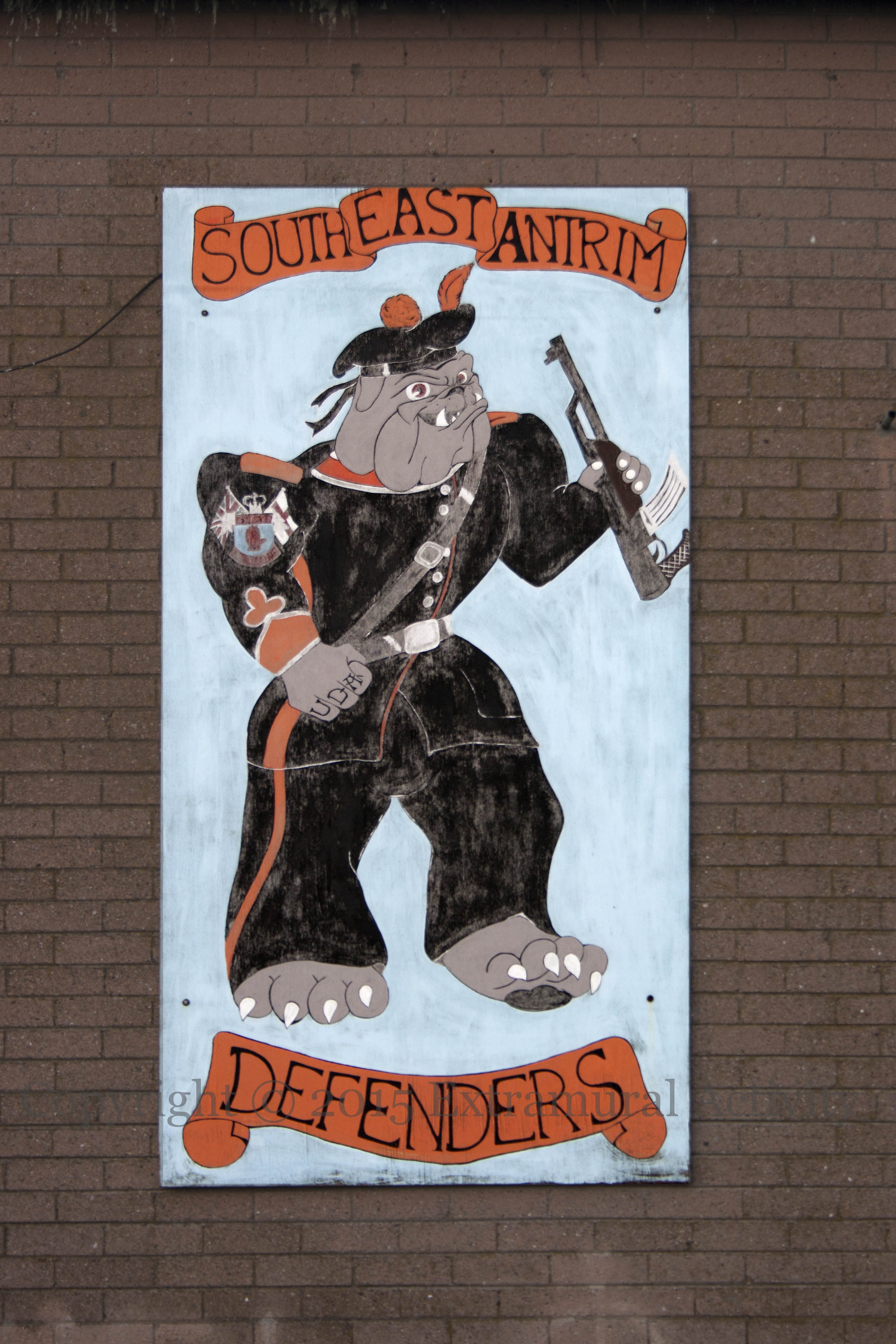
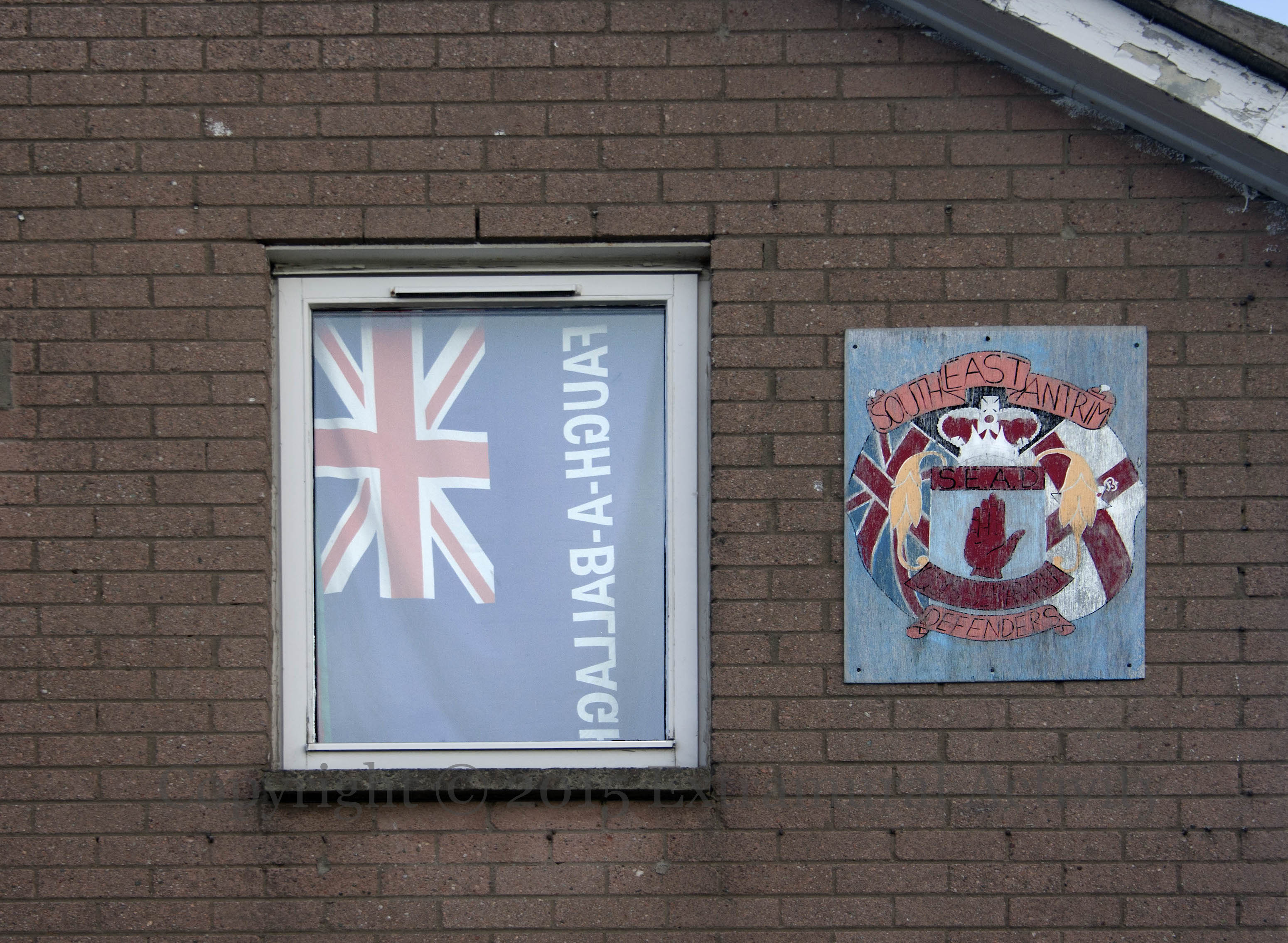
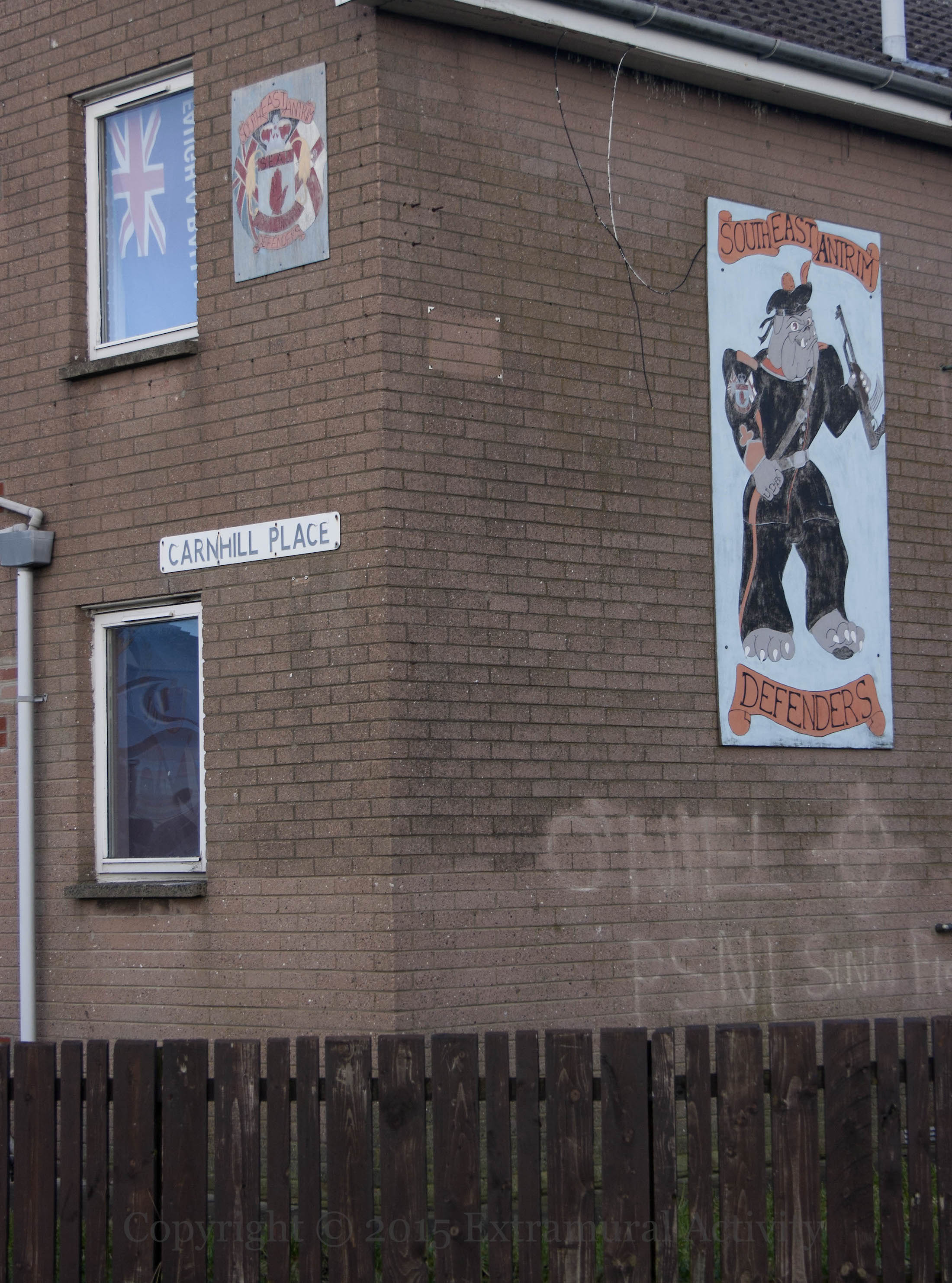
A “Faugh-a-ballagh” flag (the motto of the Royal Irish Regiment) and two South-East Antrim Defenders (a defunct flute band (Fb)) boards – the one above showing a bulldog marching with a rifle, with “UDA” across his knuckles and the UDA insignia on his lapel – adorn this house in the Castlemara estate in Carrickfergus.
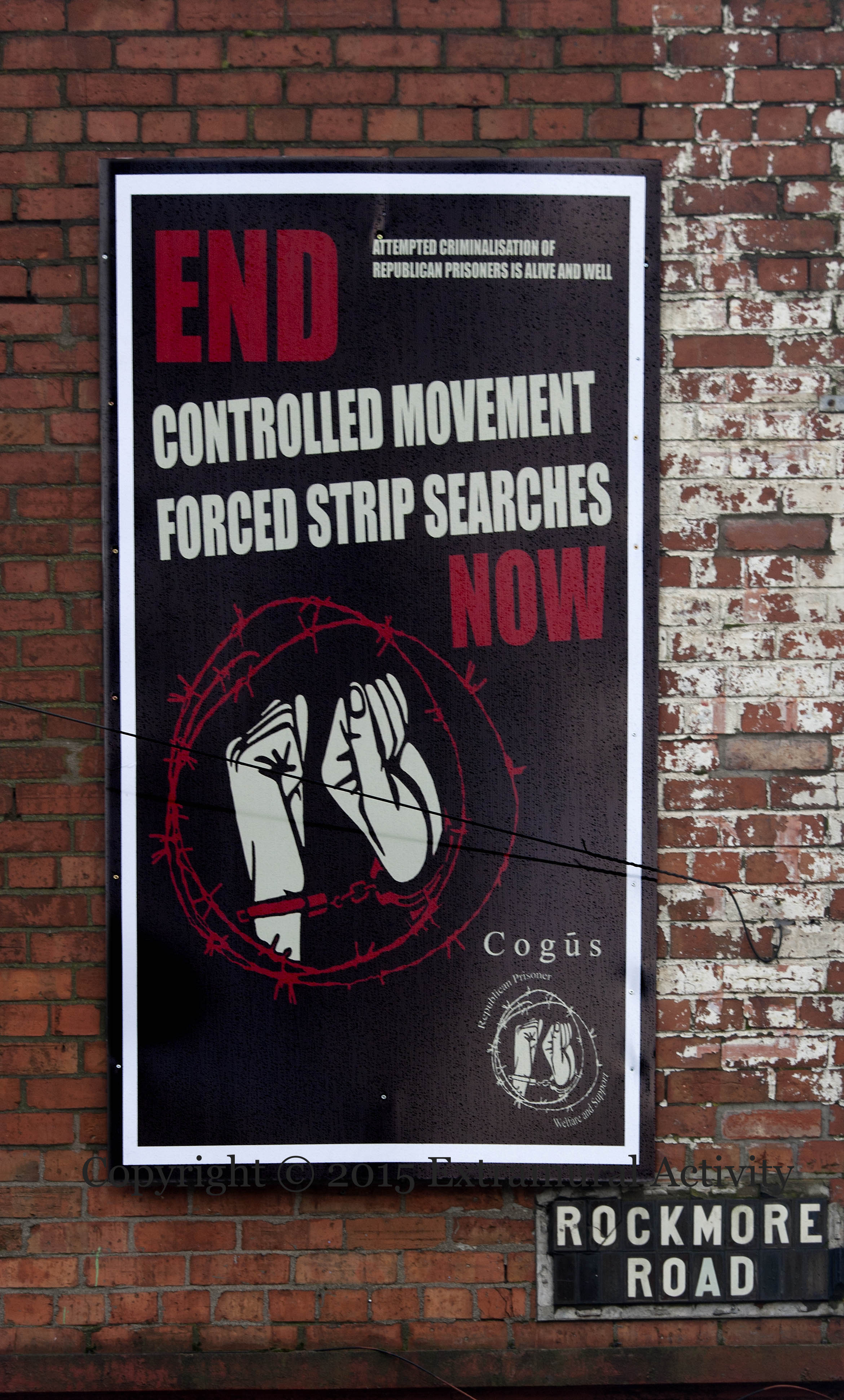
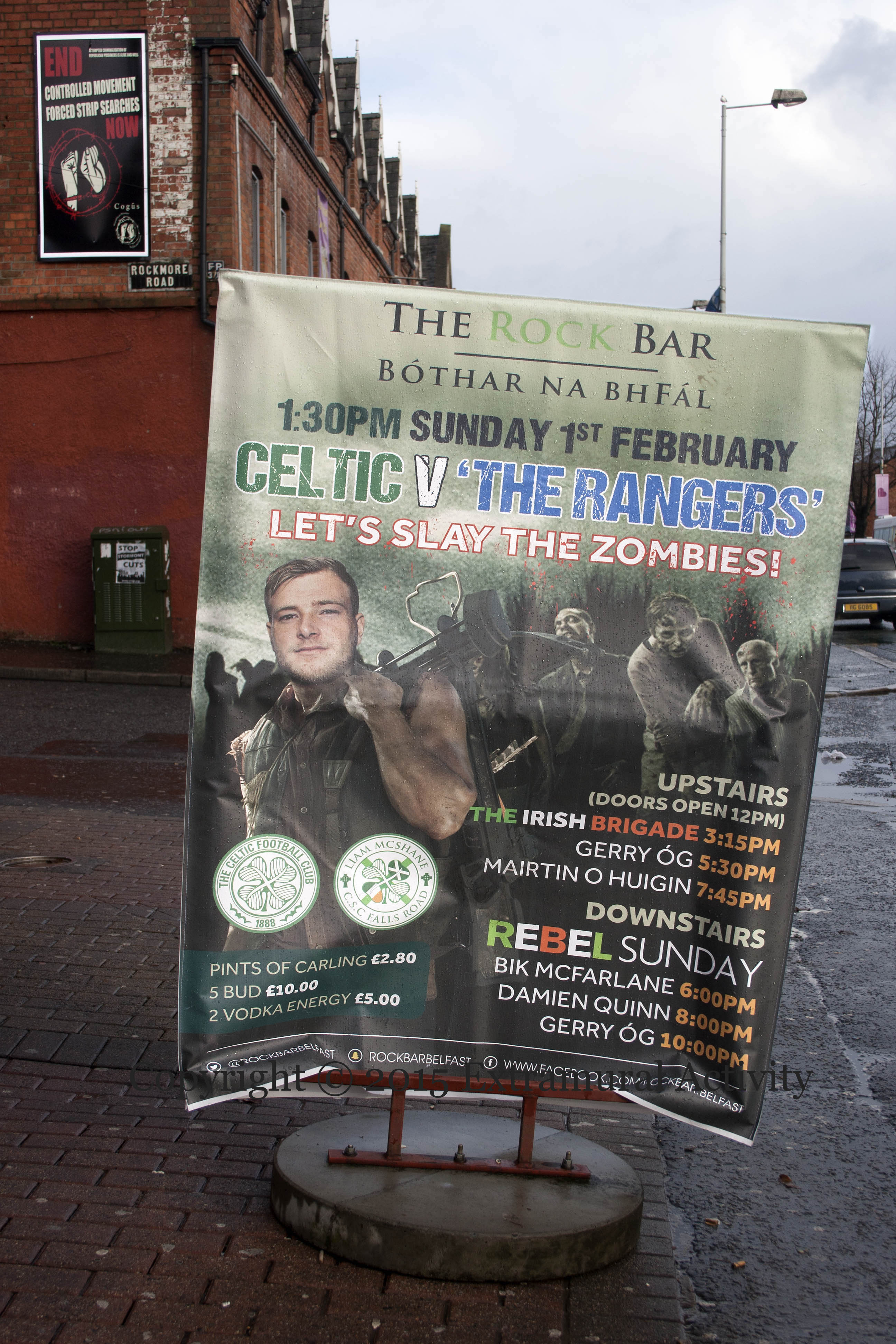
“Attempted criminalisation of republican prisoners is alive and well”: Above is a new board erected 2015-01-23 by Republican Network For Unity (RNU)’s Cogús committee in support of “Republican prisoner welfare and support”: “End controlled movement, forced strip searches now.” On the opposite corner, the Rock Bar advertises the Celtic v Rangers League Cup match last Sunday February 1st.
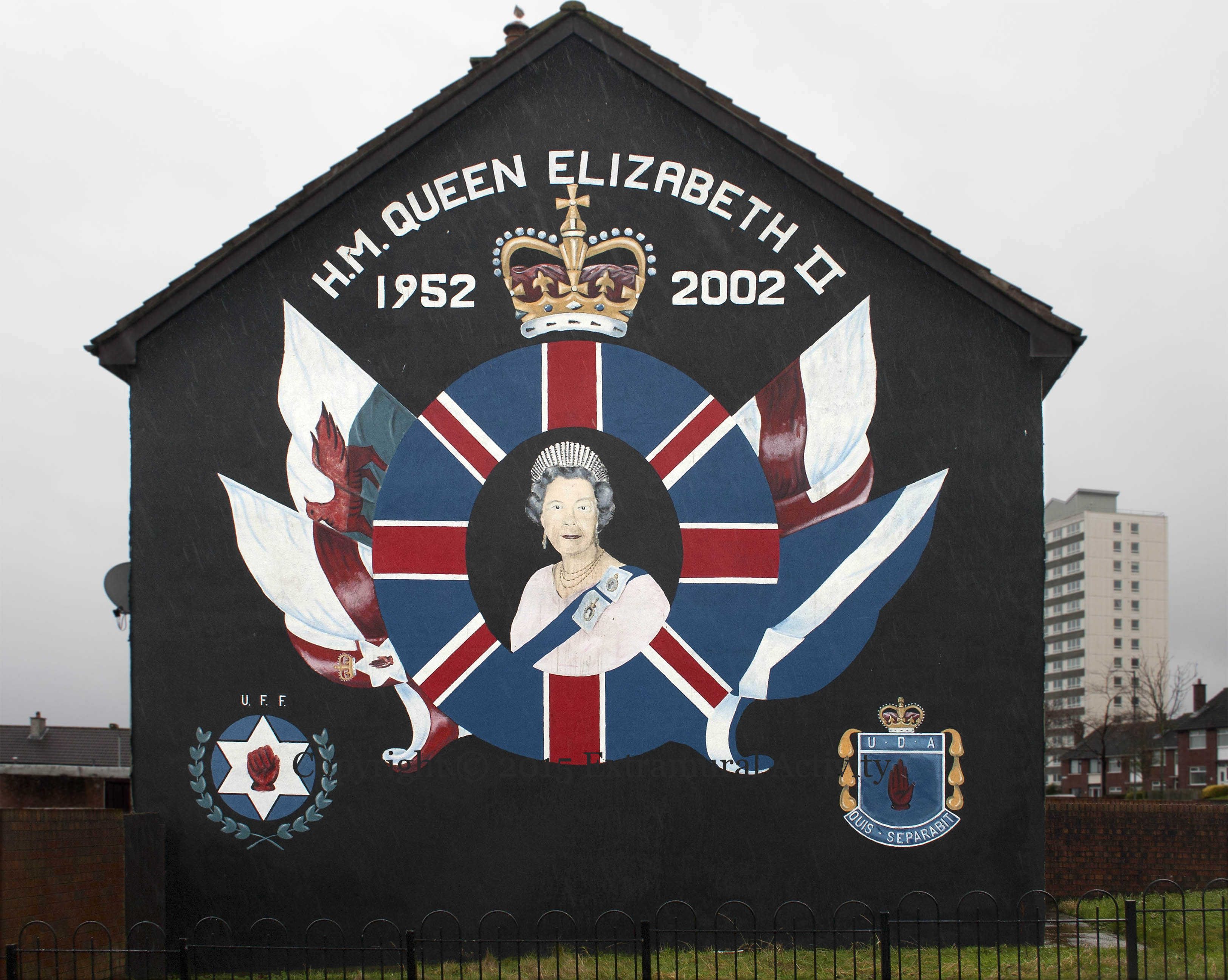
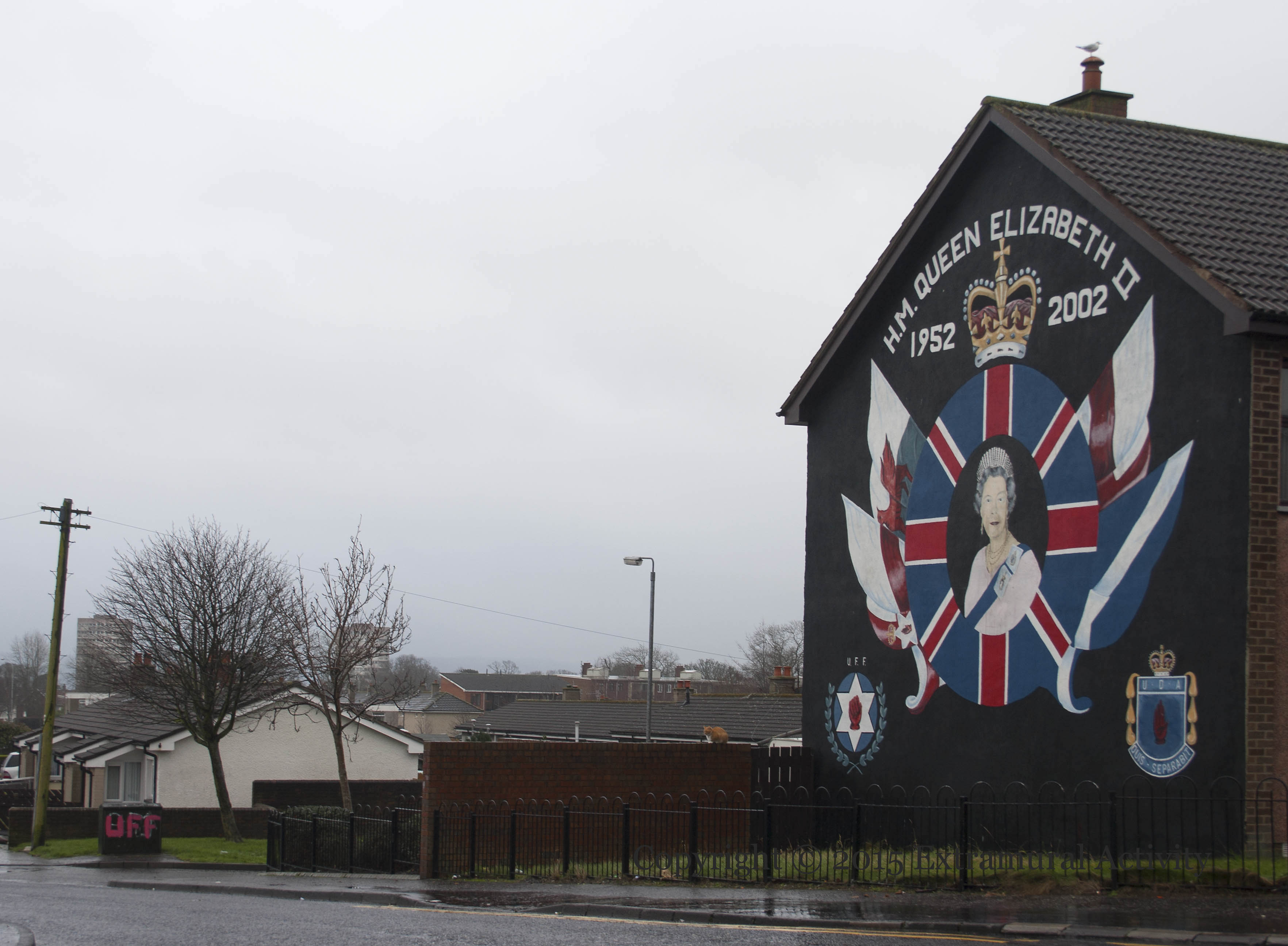
The Queen’s golden jubilee (50th anniversary 1952 – 2002) is celebrated in this long-lasting UFF/UDA mural in Rathcoole. It originally included a (painted) “plaque” at the bottom, which has been painted out. On September 10th, 2015, Elizabeth II will surpass Victoria as the longest reigning British monarch.
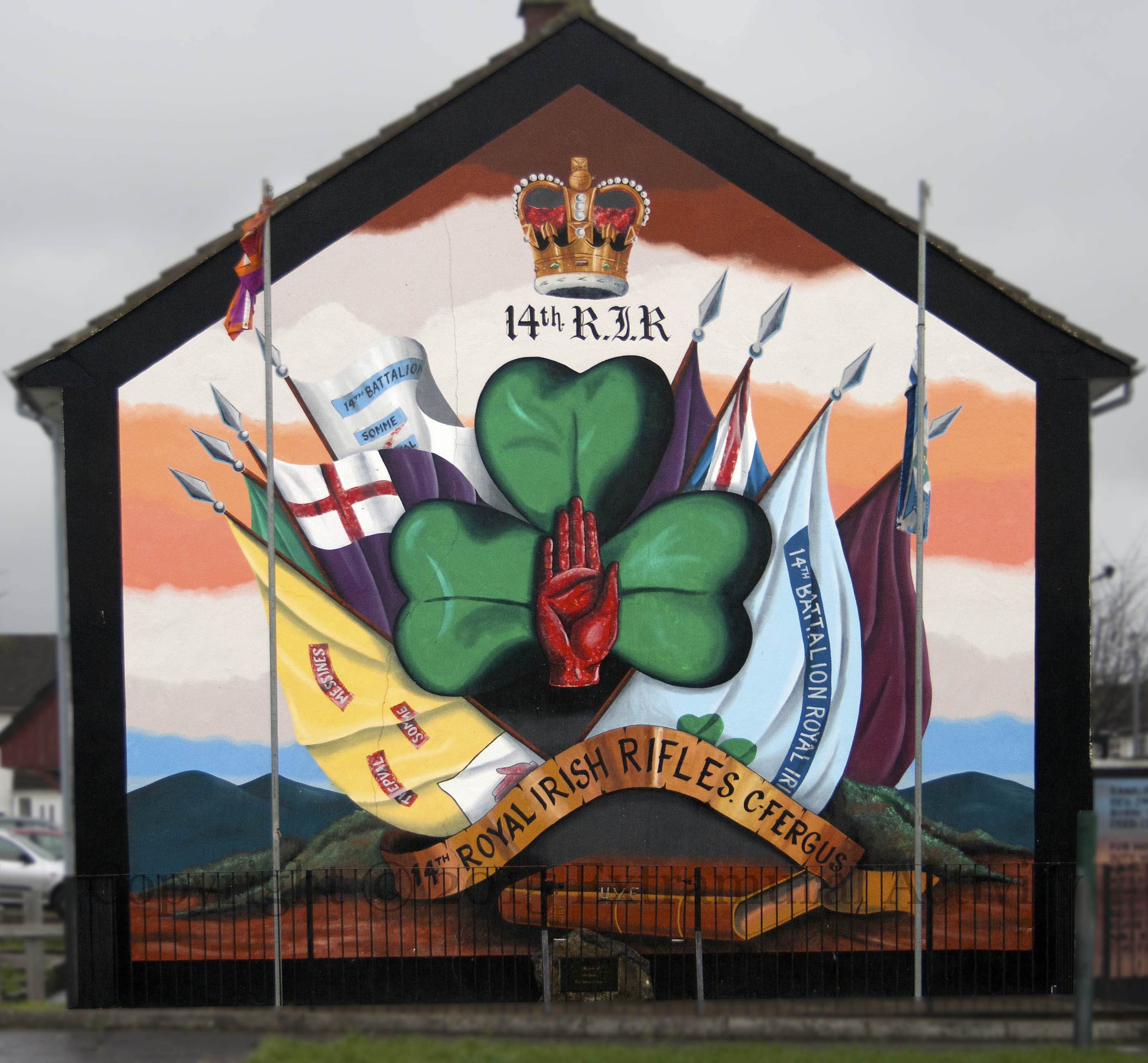
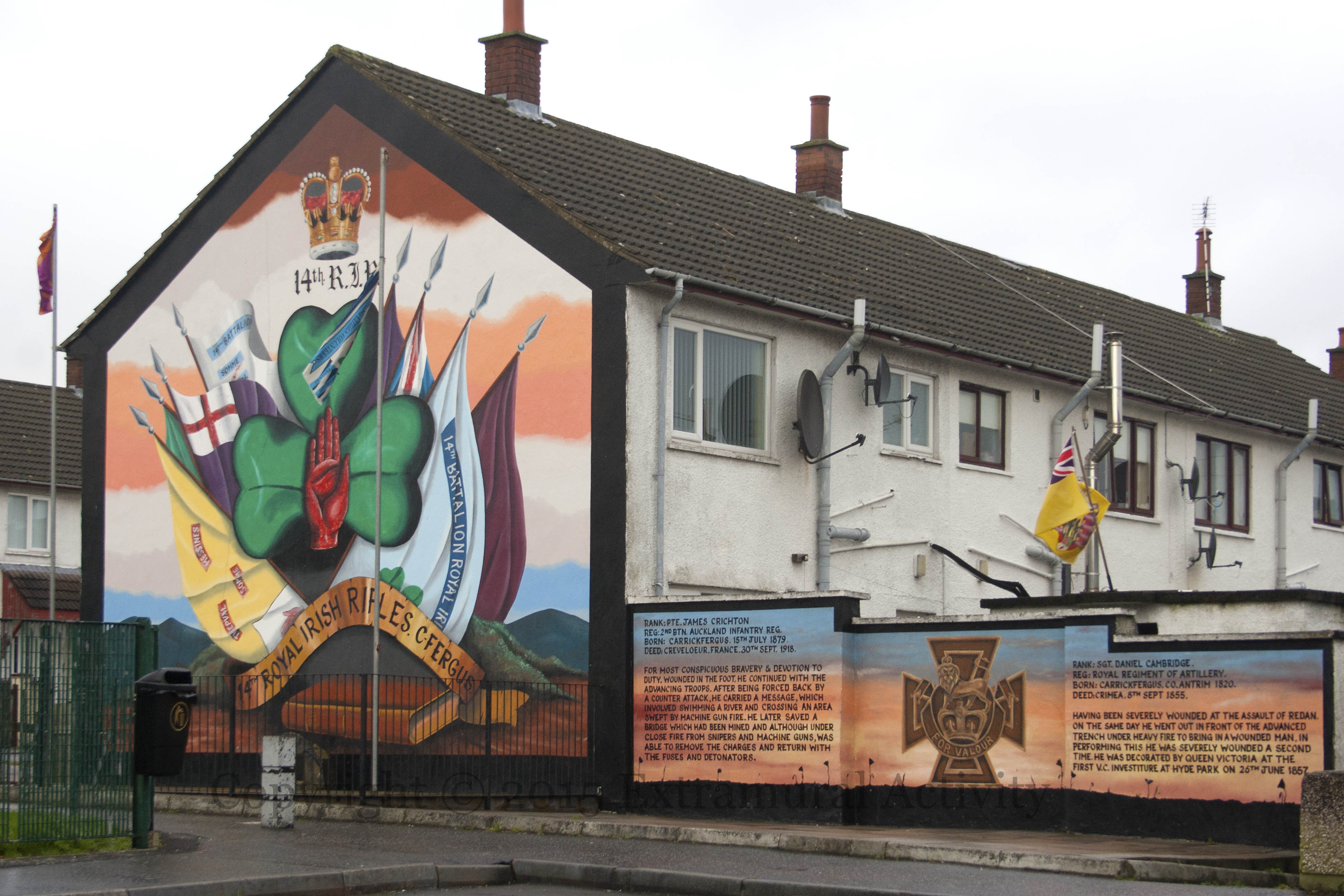
This mural celebrates the 14th Battalion of the Royal Irish Rifles and the Victoria Cross-winning exploits of two soldiers born in Carrickfergus: James Crichton, who served in the New Zealand forces (WP) and Daniel Cambridge, who served in the Royal Artillery in the Crimean War (WP). Their bravery is described as follows on the side-wall (in the image below):
Rank: Pte. James Crichton. Reg: 2nd Btn Auckland Infantry Reg. Born: Carrickfergus 15th July 1879. Deed: Creveloeur, France 30th Sept. 1918
For most conspicuous bravery & devotion to duty, wounded in the foot, he continued with the advancing troops. After being forced back by a counter attack, he carried a message, which involved swimming a river and crossing an area swept by machine gun fire. He later saved a bridge which had been mined and although under close fire from snipers and machine guns, was able to remove the charges and return with the fuses and detonators.
Rank: Sgt. Daniel Cambridge. Reg: Royal Regiment Of Artillery. Born: Carrickfergus Co. Antrim 1820. Deed: Crimea, 8th Sept. 1855
Having been severely wounded at the assault of Redan, on the same day he went out in front of the advanced trench under heavy fire to bring in a wounded man. In performing this he was severely wounded a second time [having been shot through the jaw]. He was decorated by Queen Victoria at the first V.C. investiture at Hyde Park on 26th June 1857.
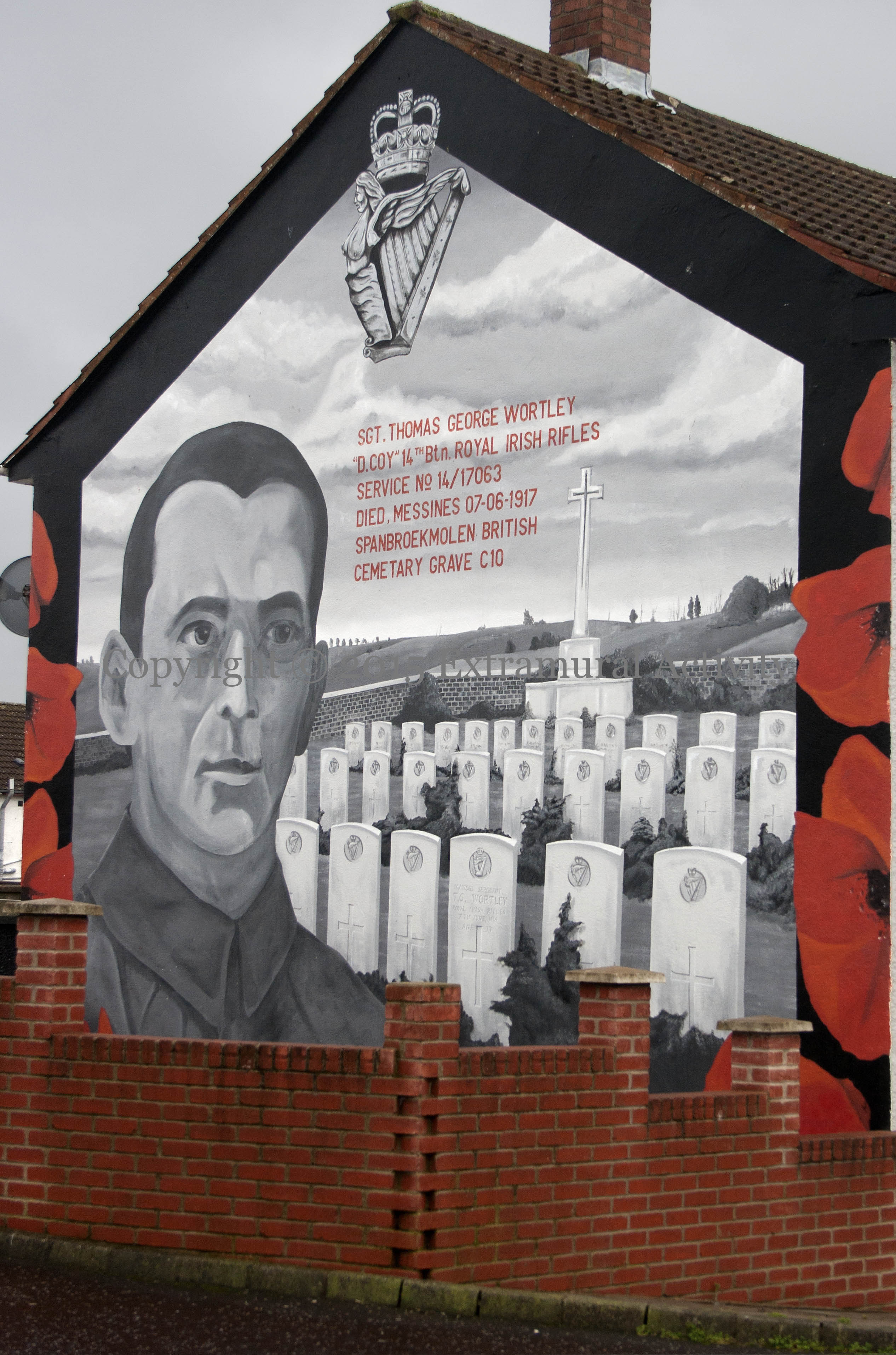
“Sgt. Thomas George Wortley , “D Coy” 14th Btn. Royal Irish Rifles, Service No. 14/17063, Died Messines 07-06-1917, Spanbroekmolen British Cemetary Grave C10″. Wortley was born in Carrickfergus, lived in Belfast, died on the first day of the battle at Messines (findagrave), buried in a small cemetery of British soldiers, many from the 36th (Ulster) Division, in Spanbroekmolen on the Ypres Salient in Flanders (WP) – shown in the mural – and is remembered in Carrickfergus with a parade each year on the date of his death (carrickfergusrollofhonour).
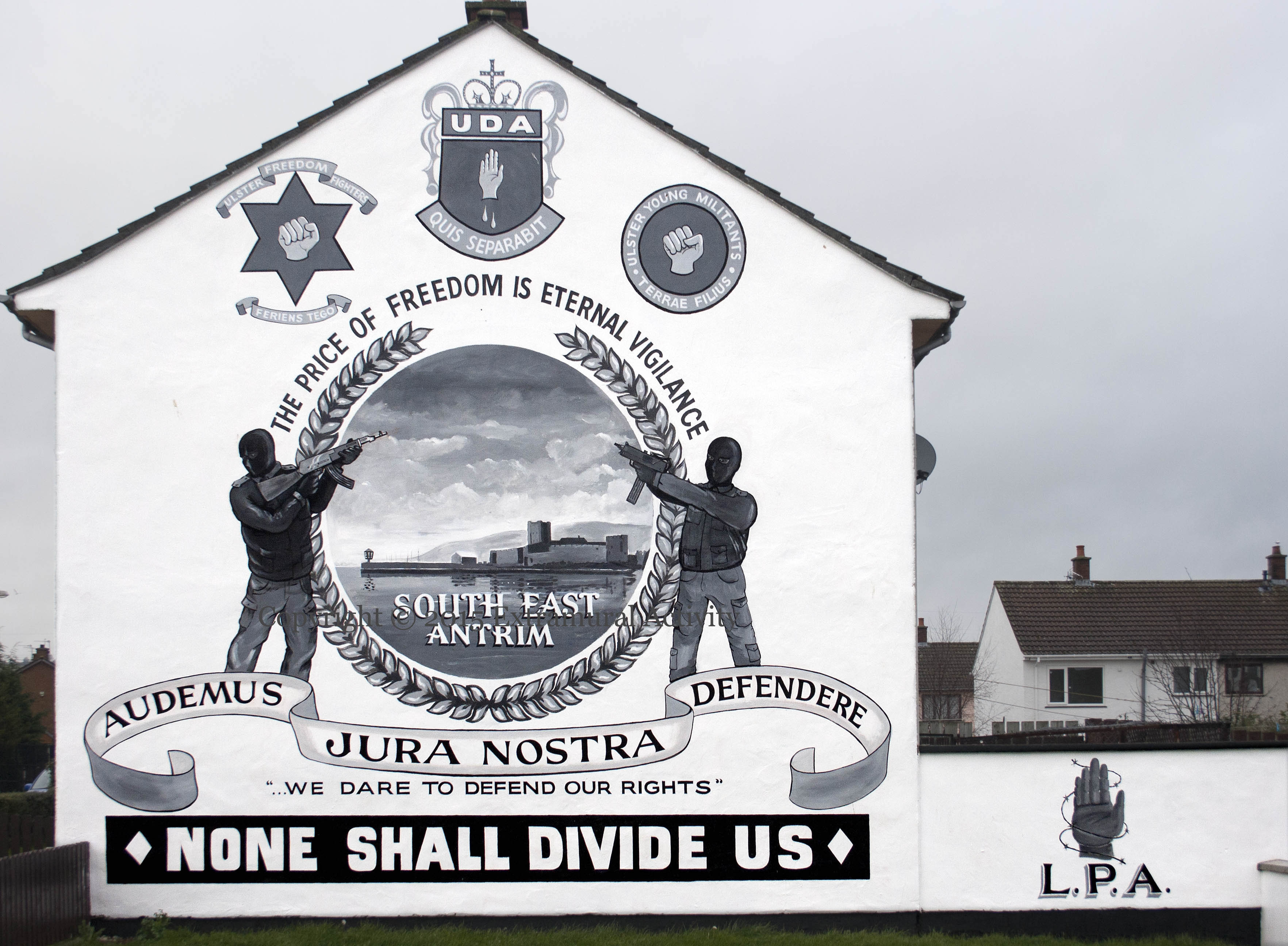
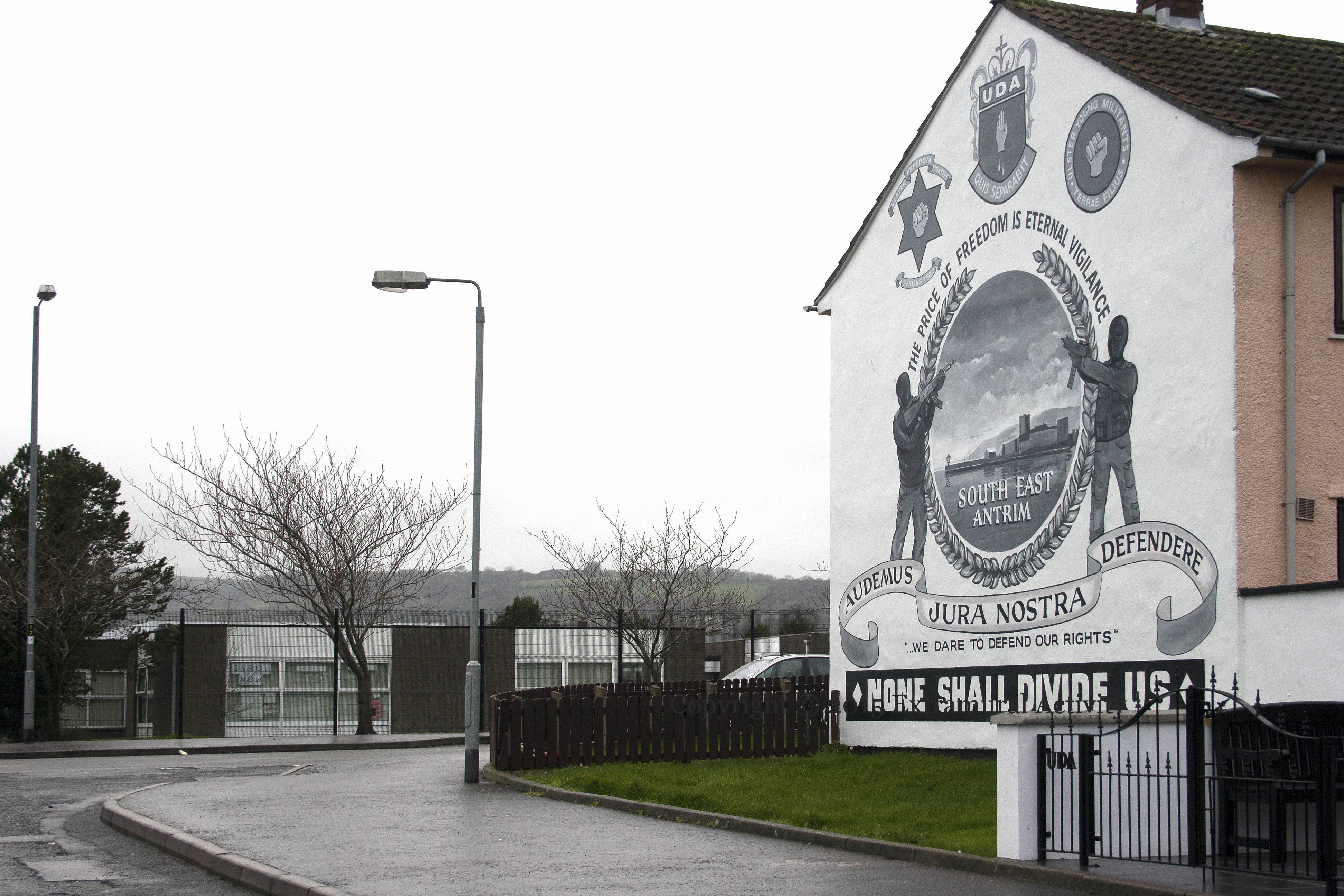
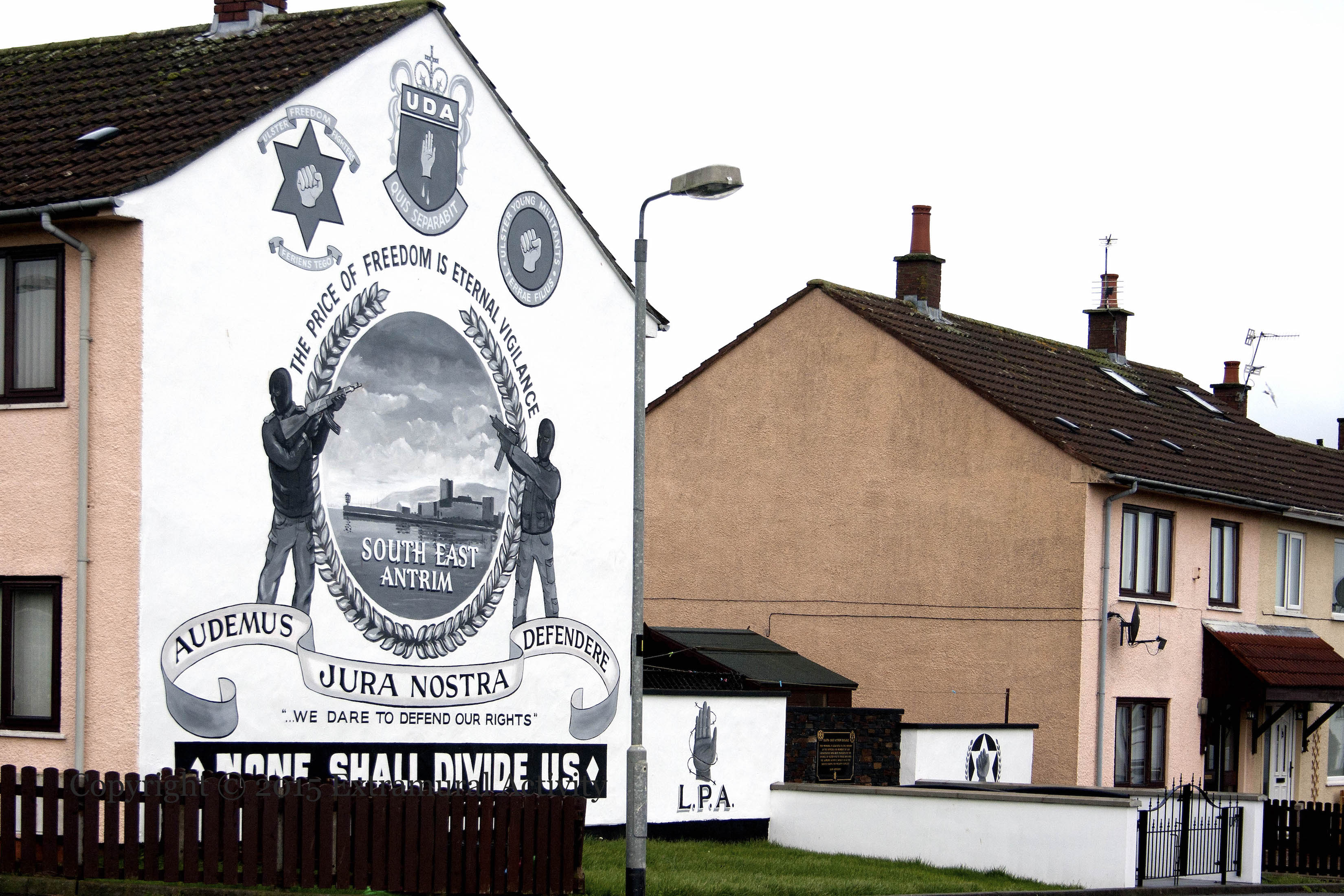
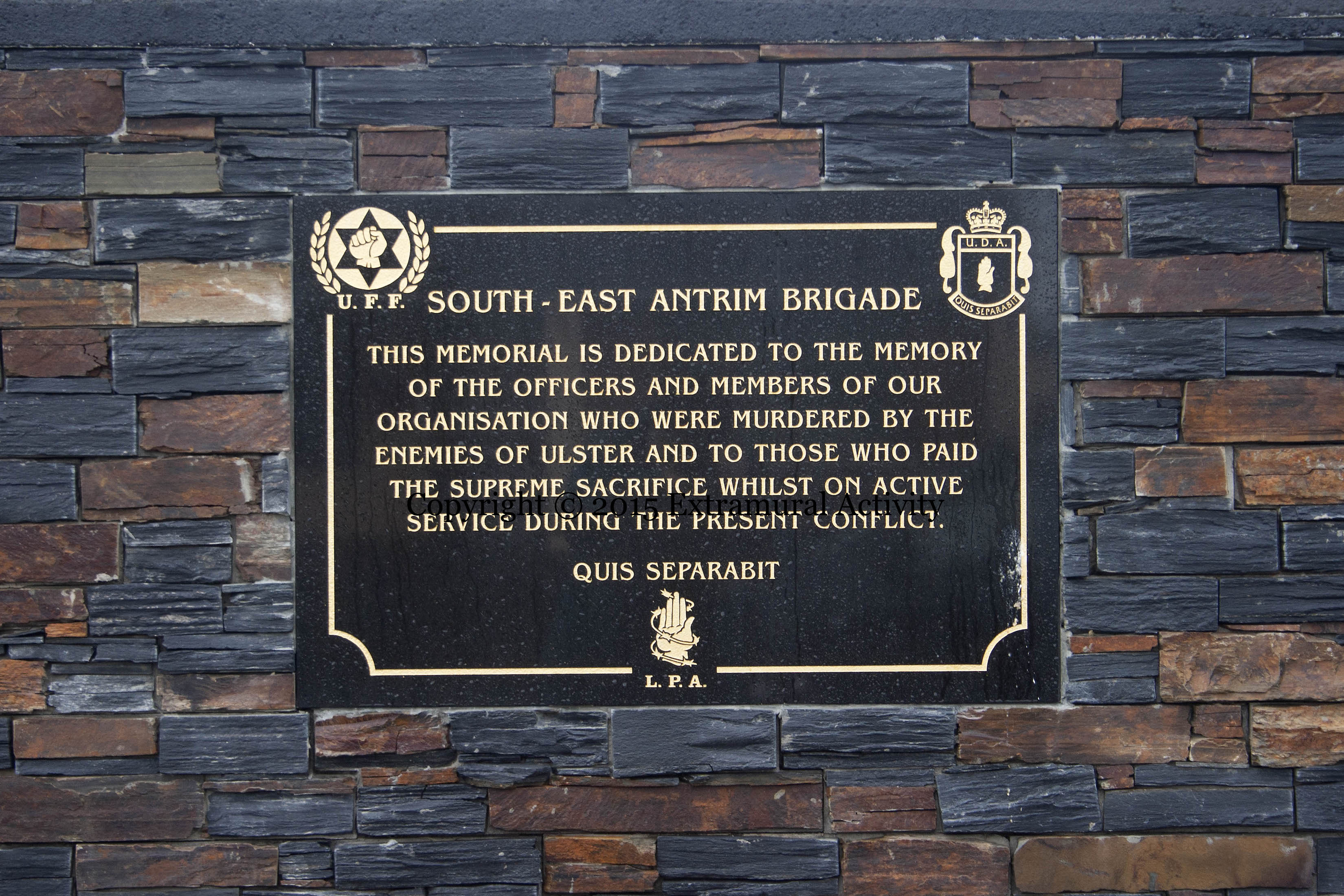
“Audemus jura nostra defendere – We dare to defend our rights”. The UDA/UFF/UYM/LPA mural above shows hooded gunmen standing either side of a view of Carrickfergus castle. The phrase “The price of peace is eternal vigilance” is associated with British politician Leonard Courtney (who also said “Lies – damned lies – and statistics”) though it probably goes further back. As can be seen from the second image, the mural watches over Woodlawn primary school. The third image shows the memorial garden off to the right-hand side; the plaque is shown fourth: “This memorial is dedicated to the memory of the officers and members of our organisation who were murdered by the enemies of Ulster and to those who paid the supreme sacrifice whilst on active service during the present conflict. Quis separabit.”
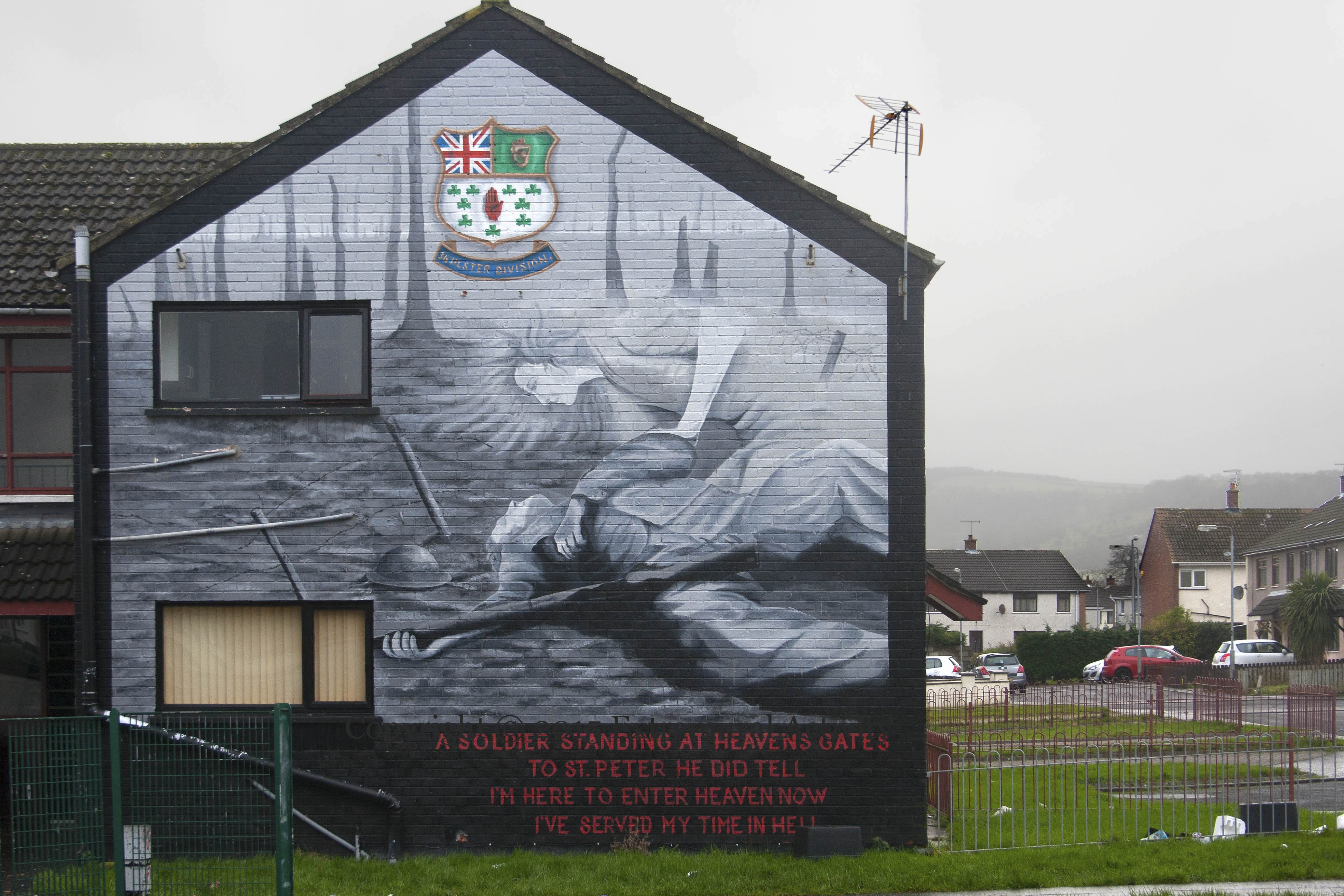
A dead WWI soldier in the scorched Belgian countryside is comforted by an ethereal figure who will convey him to heaven: A soldier standing at heaven’s gate/To St. Peter he did tell/I’m here to enter heaven now/I’ve served my time in hell – a variation on James Donahue’s WWII Soldier’s Poem (WP). The poem was previously used of Republicans in a 1981 mural in Derry (see I Refuse To Change/M00151).
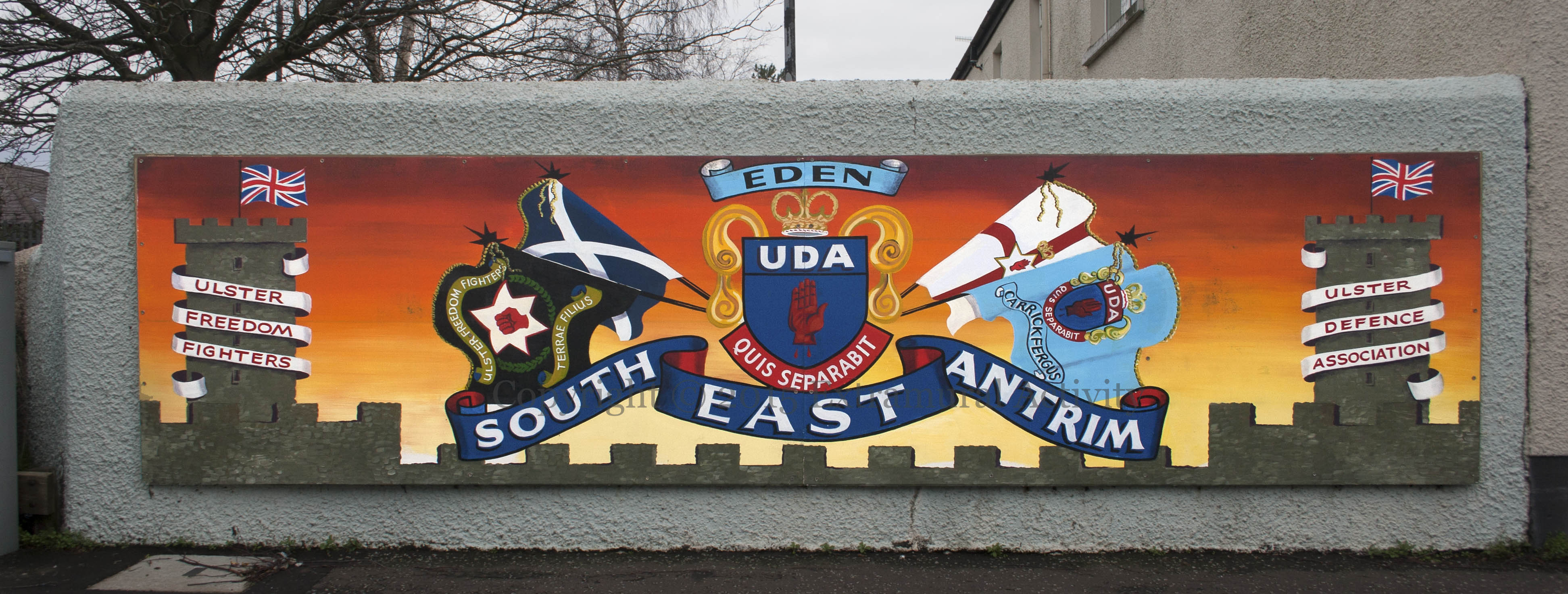
The town of Eden, on the outskirts of Carrickfergus, is defended by the walls of Carrickfergus castle and the arms of the UDA. For the previous version of this board, see Loyalist Eden.
 Seosamh Mac Coille Collection