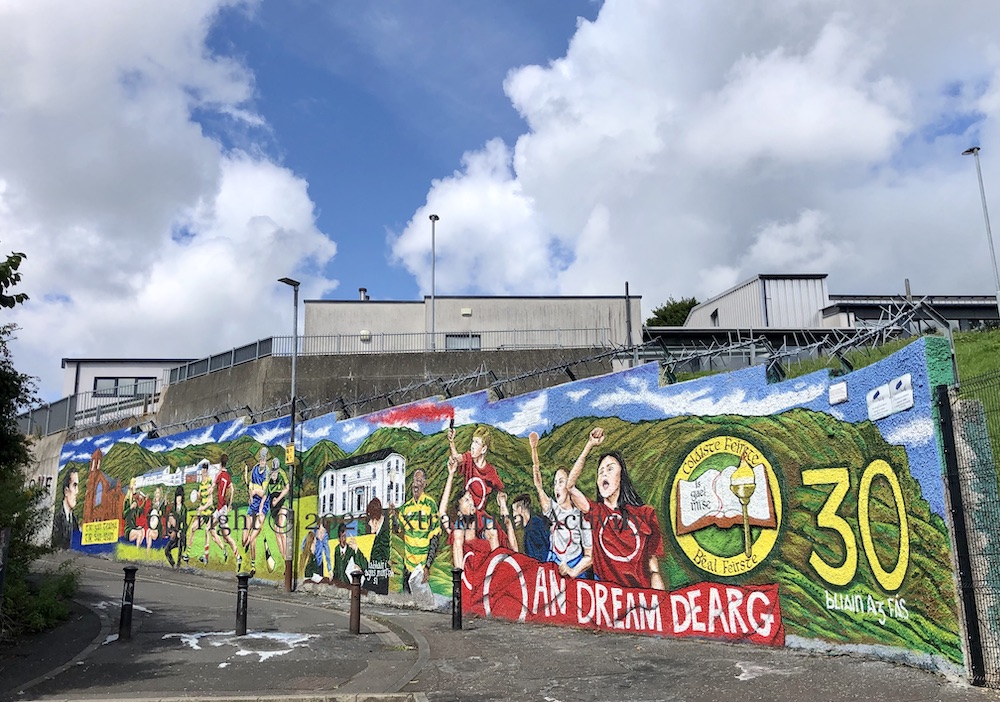
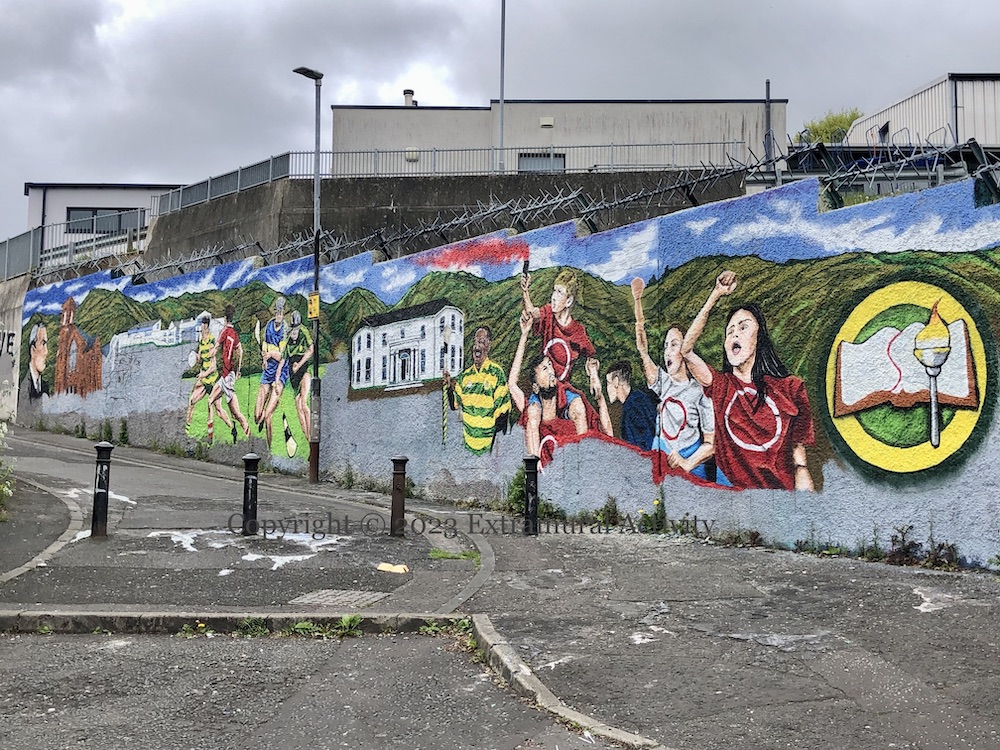
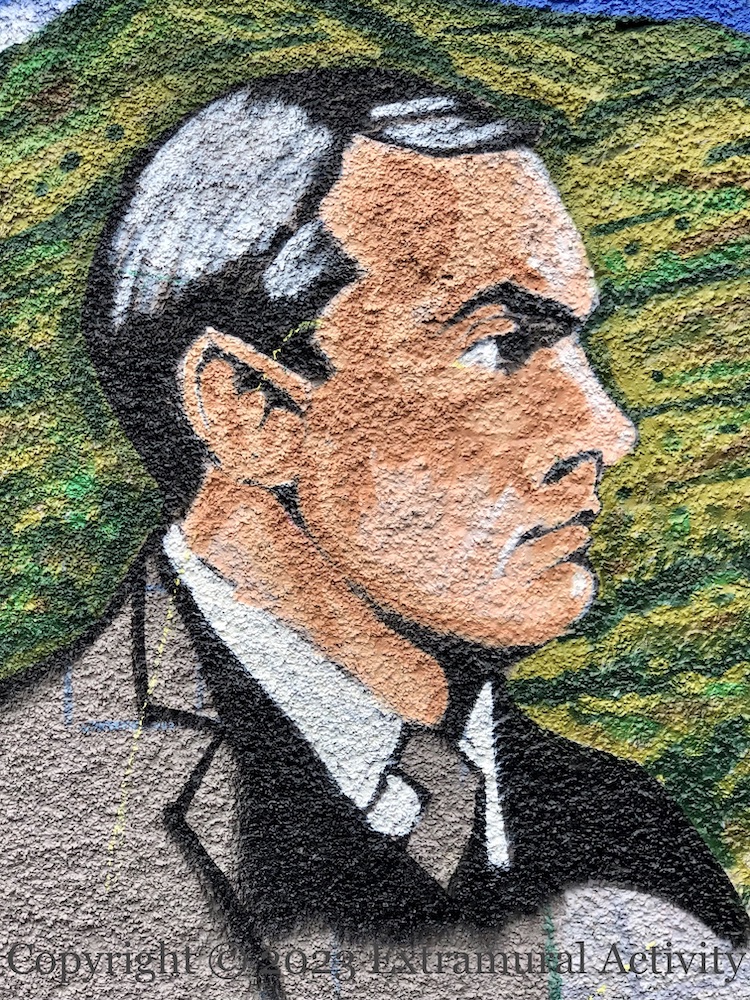
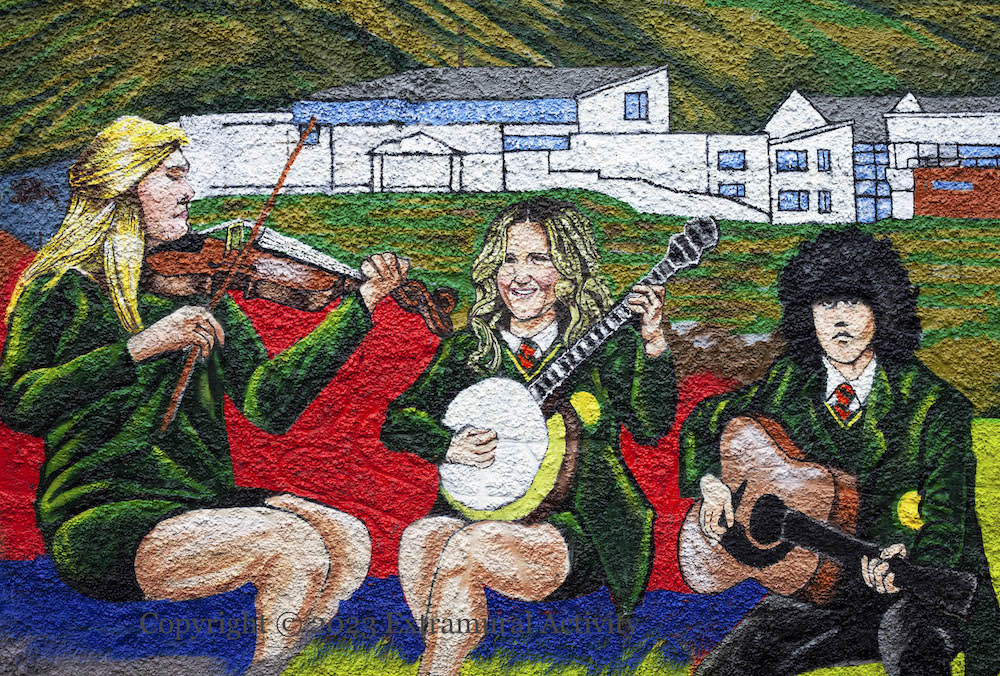
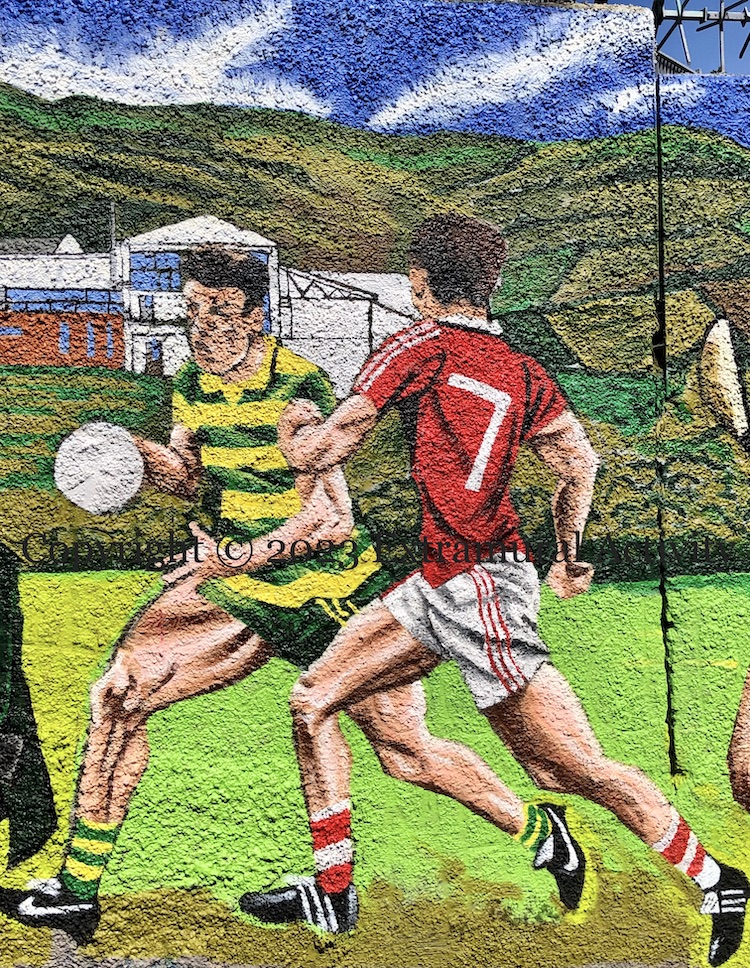
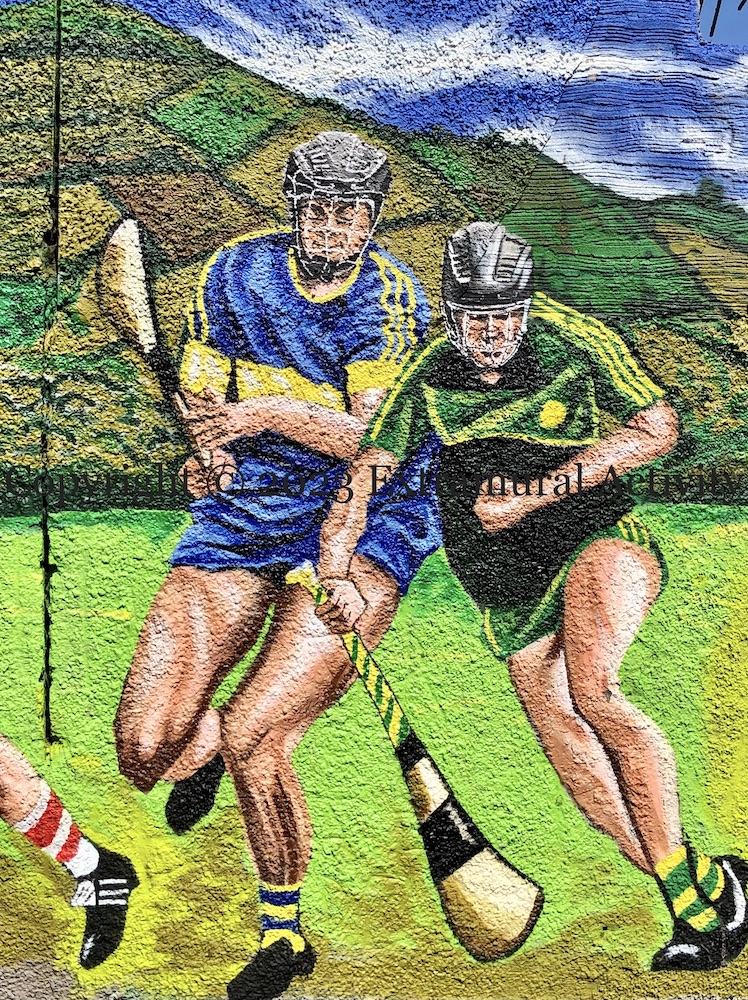
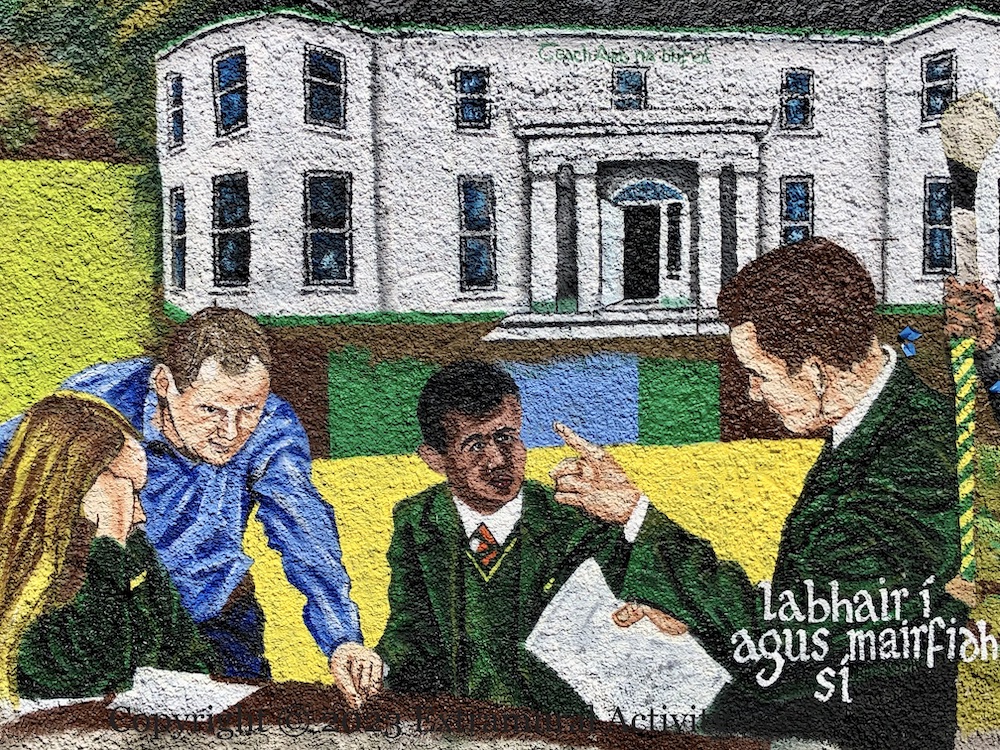
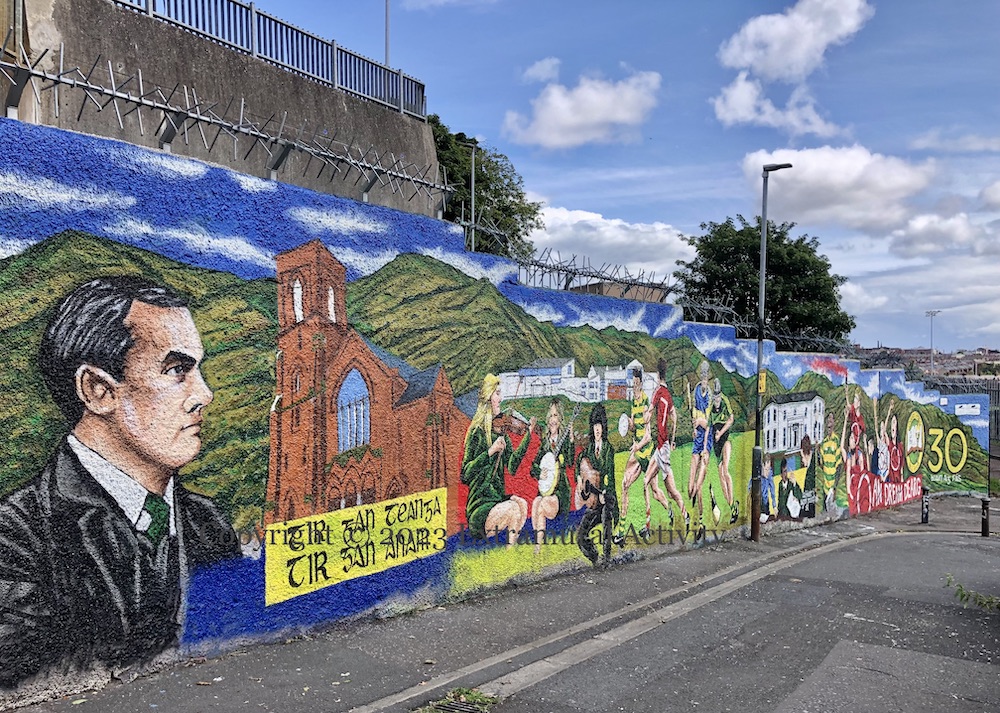
What is now Coláıste Feırste began life as Meánscoıl Feırste in 1991, teaching a group of nine students a curriculum inspired by Patrick Pearse (discussed previously in An Tusa An Chéad Laoch Eıle?) and based in Cultúrlann MacAdam-Ó Fıaıch (Cultúrlann). It moved to Beechmount in 1998 and in 2018 expanded into new buildings that were meant to accommodate 600 pupils (Doherty Architects), which it has now exceeded (BBC) as it enters its thirty-third year in existence.
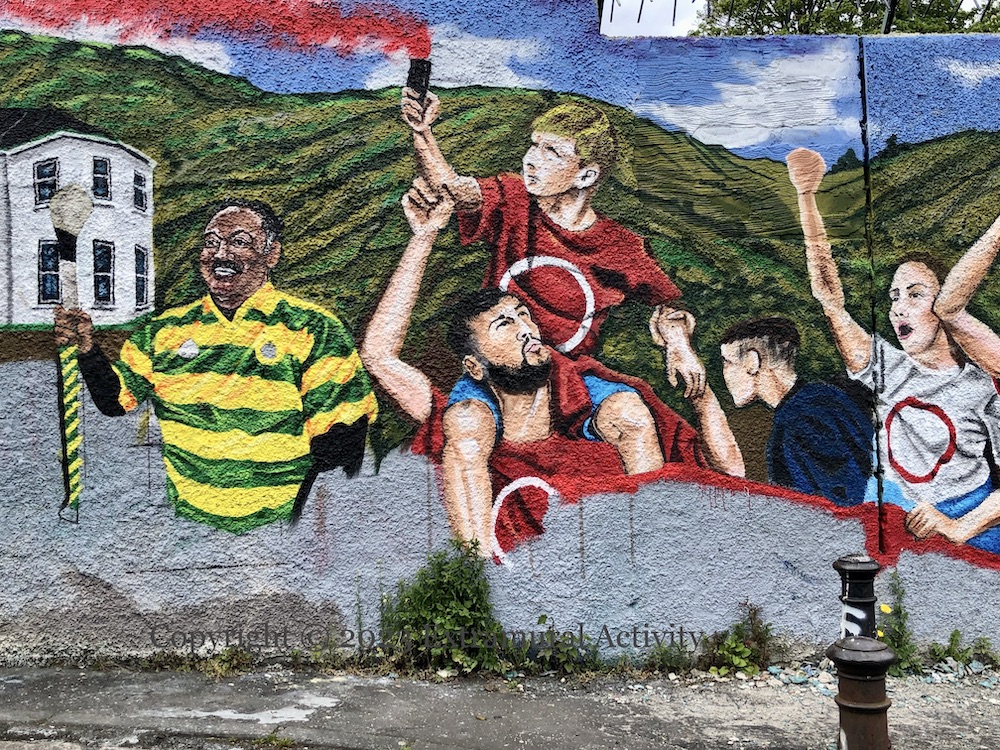
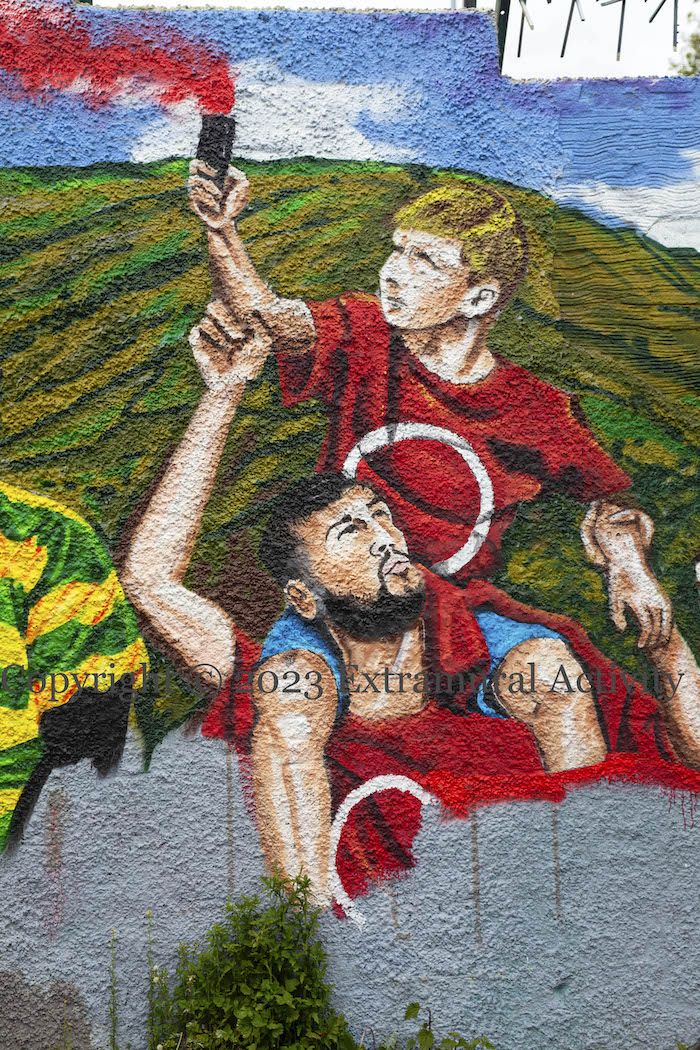
The theme of preserving and promoting the Irish language occurs in several places in the mural: next to Pearse we see his saying, “Máırtín Ó Chadháın ” [a land without a language [is] a land without a soul], in the classroom scene we have “Labhaır í agus maırfıdh sí” [speak it and it will endure], and finally we see the Dream Dearg protesting for an Irish-Language Act (see previously #AchtAnoıs).
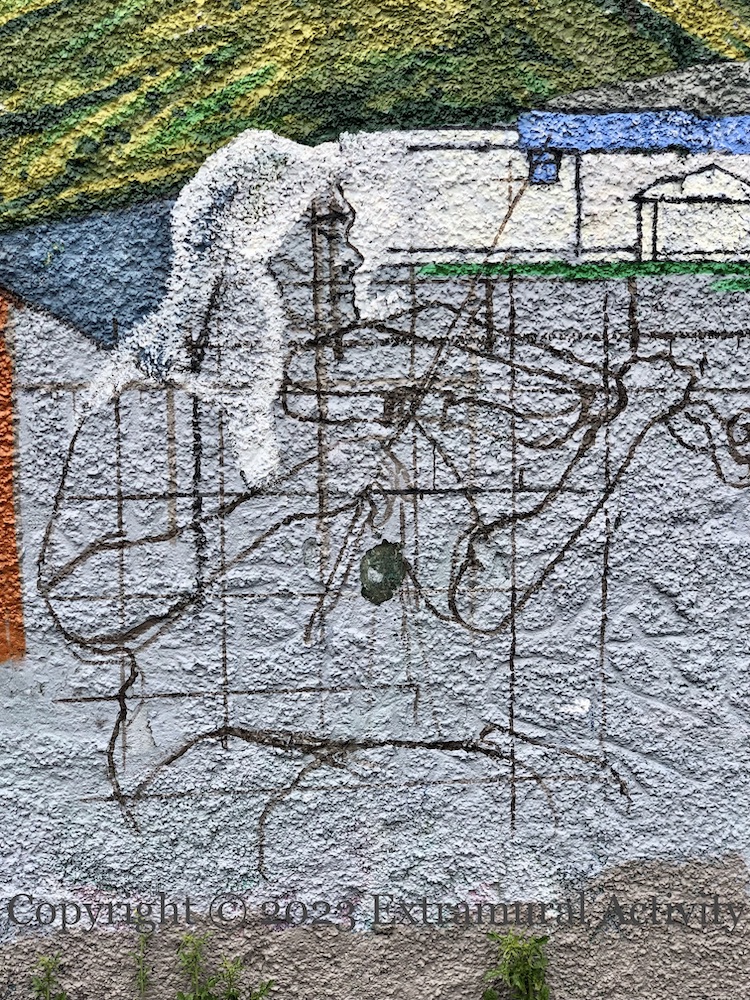
The in-progress images included below among completed detailed shots date from May 6th and 20th.
Giant’s Foot/Beechview Park. Replaces the short-lived mural of Olympians, seen in Sporting Giants.
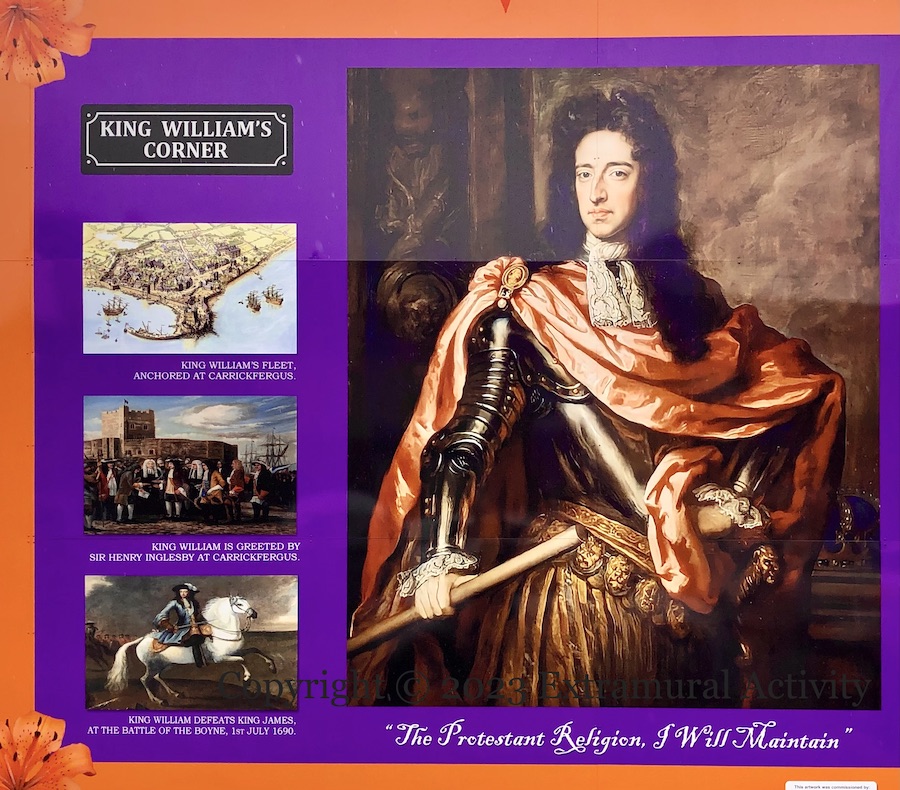
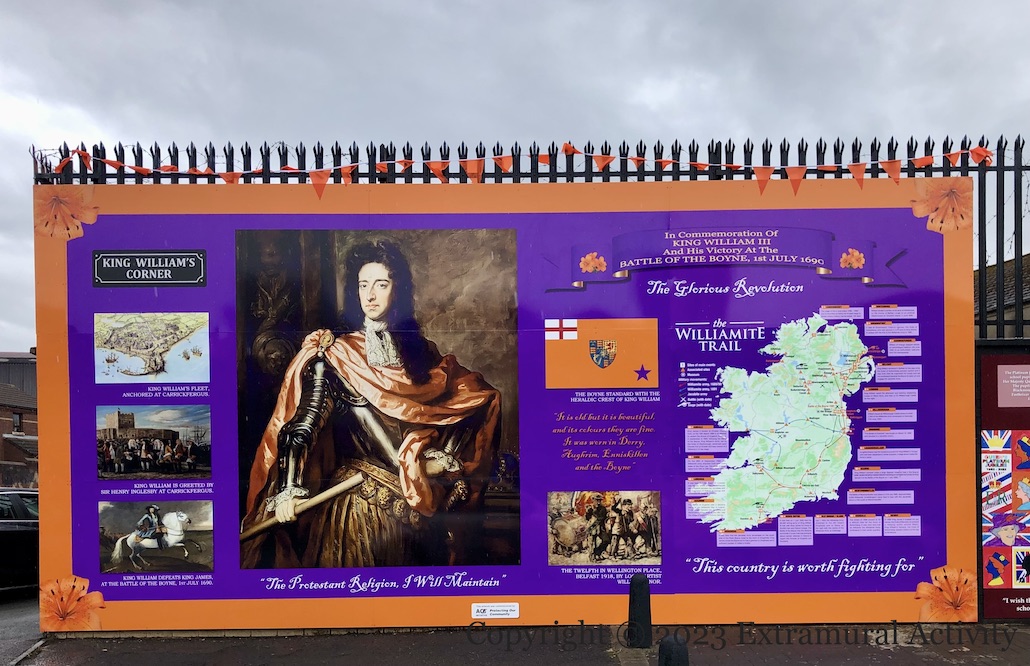
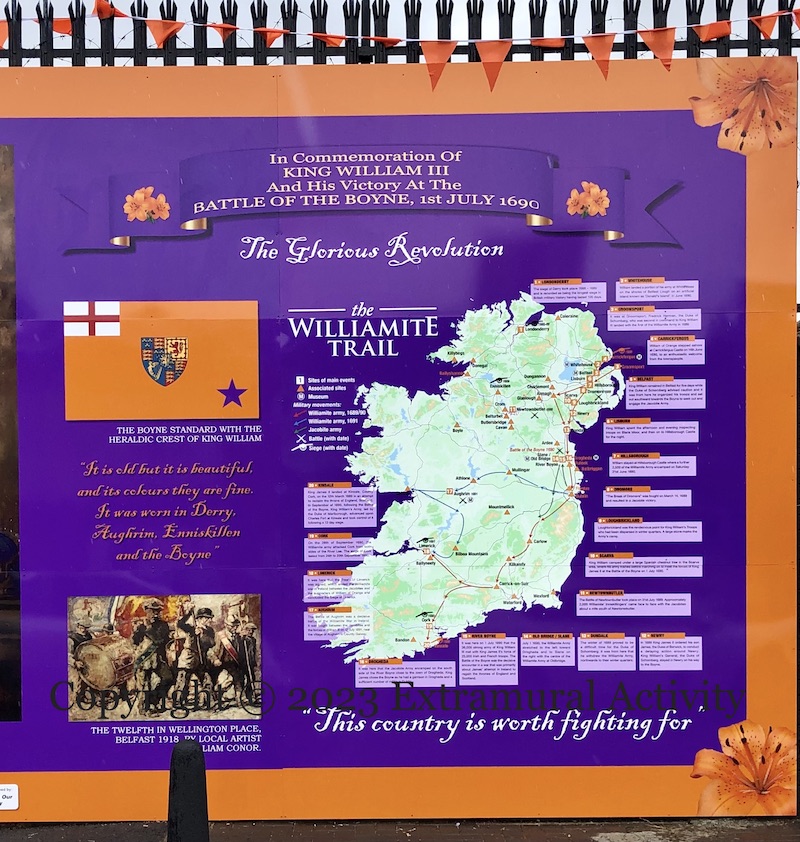
“In commemoration of King William III and his victory at the Battle Of The Boyne, 1st July 1690.” King William and images of Carrickfergus and the Boyne are included on the left of the board: in Ireland, William in person travelled from Carrickfergus to Drogheda and – after the victory at the Boyne – to Dublin, from which he left to pursue the war in Europe; his troops, on the other hand, after landing in Groomsport (1689) and Carrickfergus (1690) and fighting at the Boyne, continued on southward, to Cork and then to Limerick, and westward, to Athlone, Aughrim, and (again) Limerick. The campaign ended in October, 1691, with the signing of the Treaty Of Limerick. The information is available in pdf format from the Schomberg House Museum.
King William’s Corner joins Queen’s Corner and King’s Corner (and first of them all, Conor’s Corner –Conor’s ‘The Twelfth In Wellington Place, Belfast 1918’ is included to the left of the map, under a few lines from The Sash – “It is old but it is beautiful, and its colours they are fine/It was worn at Derry, Aughrim, Enniskillen and the Boyne” – and “The Boyne Standard [a.k.a. the flag of the Orange Order] with the heraldic crest of King William”).
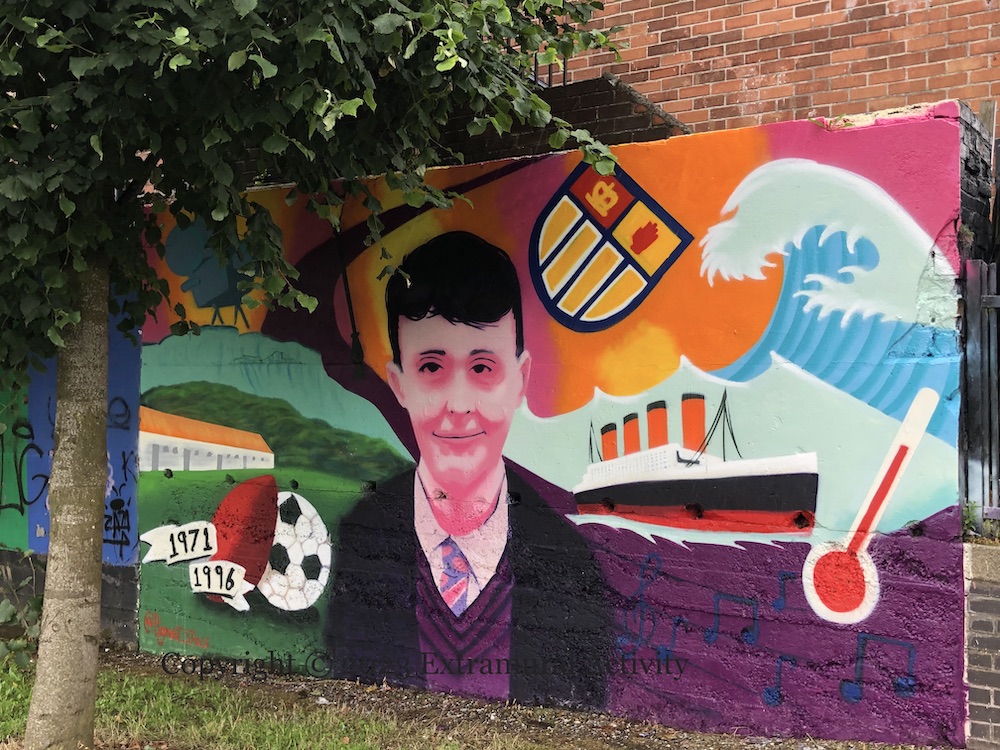
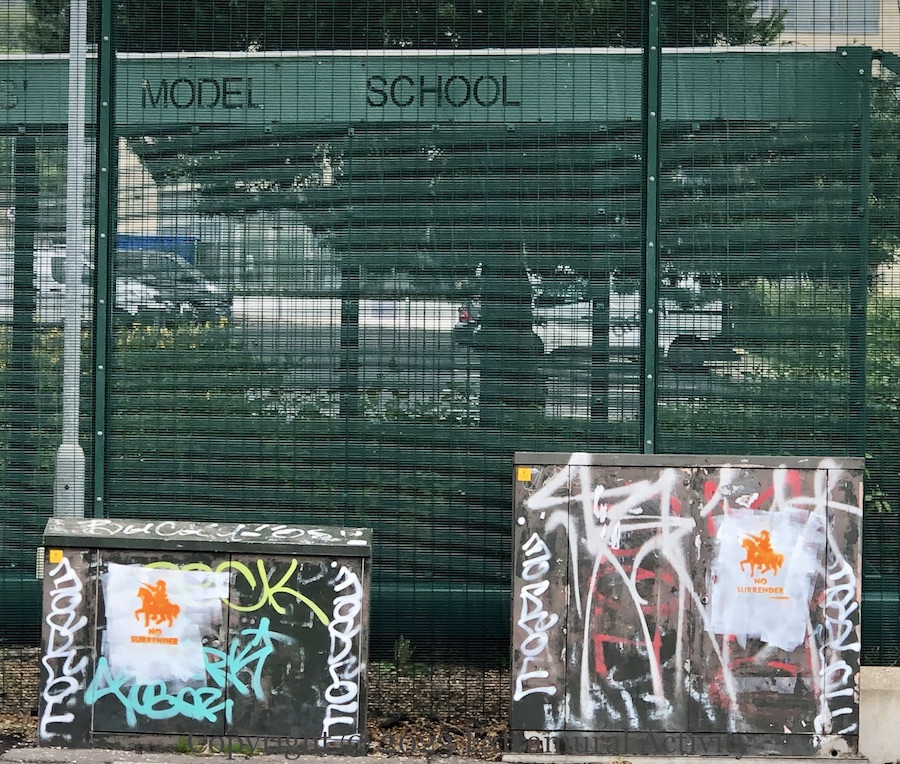
This is a new mural on the Ballysillan Road by MWAK/Pigment Space (ig) close to the Boys’ Model and featuring a student at the centre of symbols of learning – a film camera in the top left; Hokusai’s Great Wave in the top right, for art; Titanic (for engineering?) and a thermometer (for chemistry? or global warming?) on the right; musical notes in the bottom right; sports in the bottom left. The dates on the left are obscure. “1971” is perahps for the year the school won the Schools’ Cup in rugby (News Letter); there is a soccer ball next to “1996” but no similar victory can be found – get in touch if you can supply a meaning.
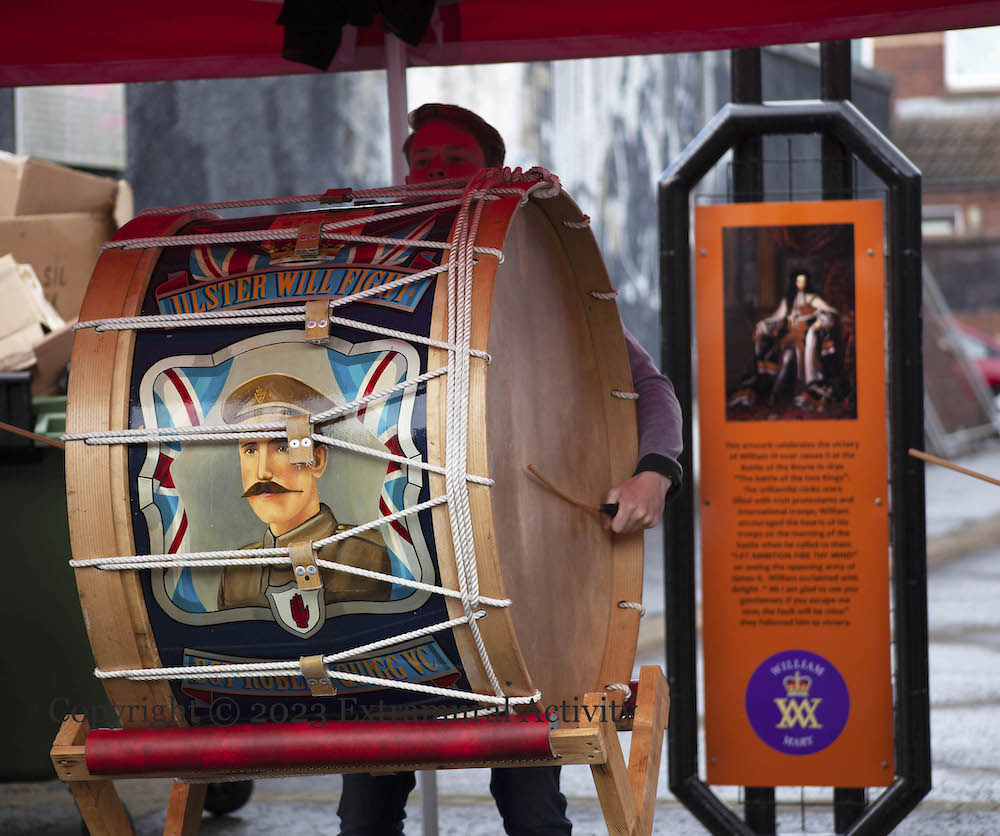
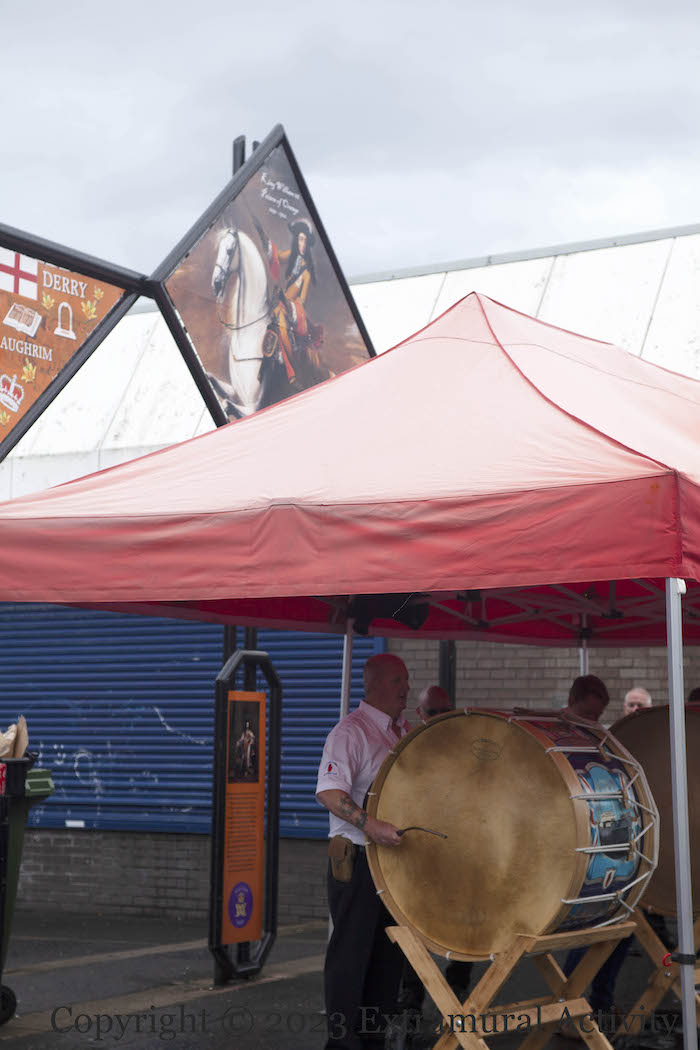
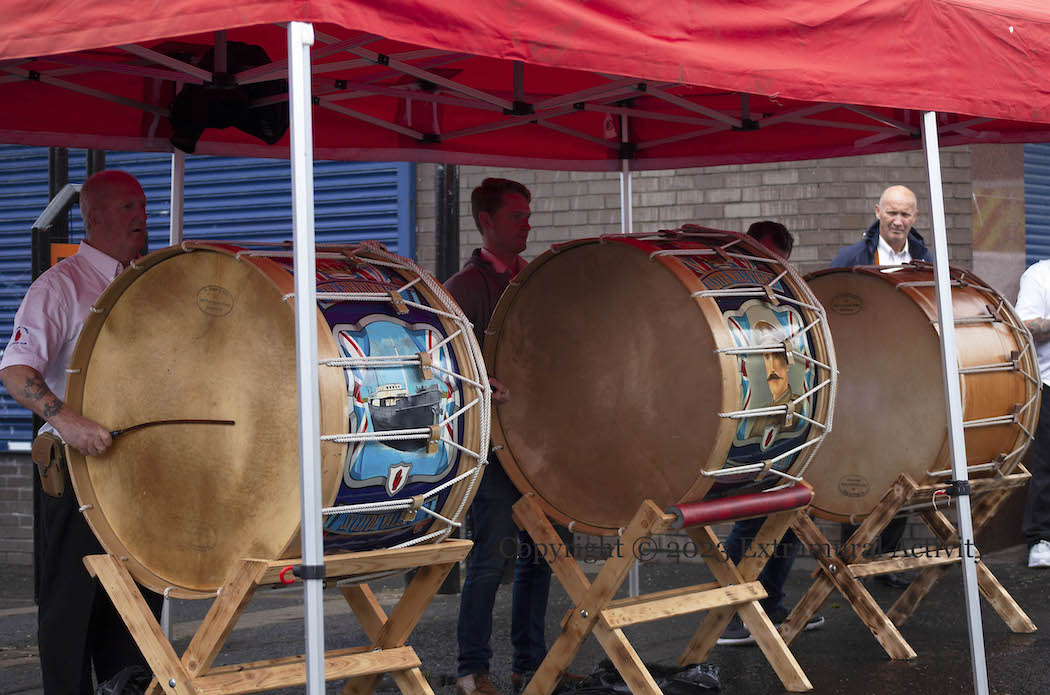
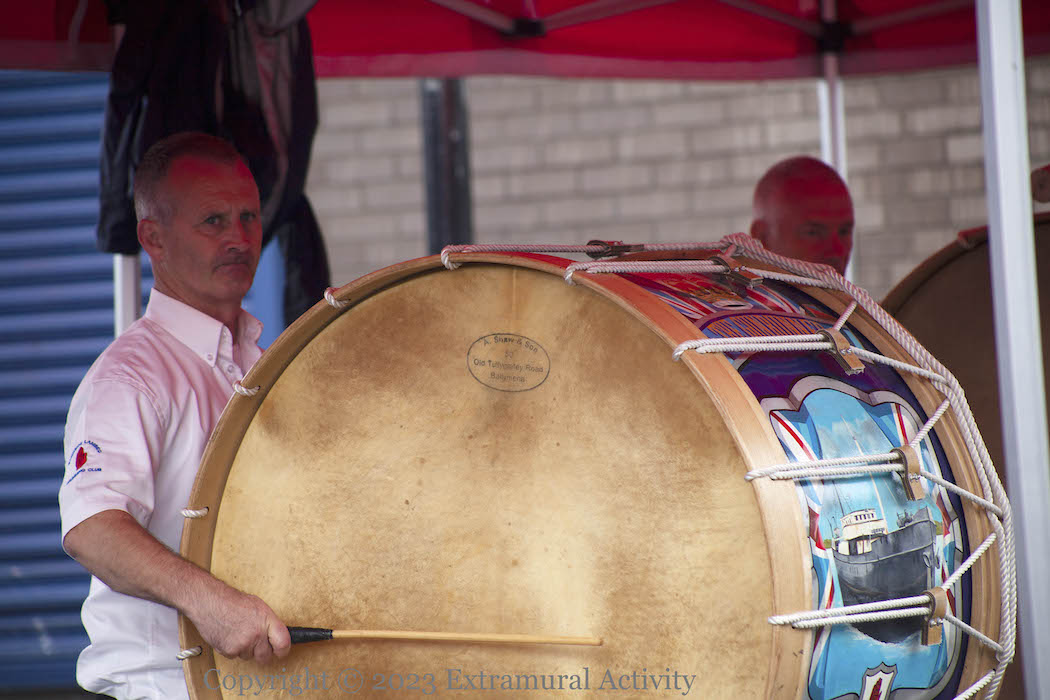
The “Lambeg drum” is named for the village near Lisburn, perhaps invented there to celebrate a visit by King Billy (LAD), or perhaps because it was there that the (already existing) drum was played with canes (WP).
As can be seen from these images, the drums are extemely large – three feet in diameter – which makes them difficult to use in parades, as does their immense noise (up to 120 dB); they are more frequently seen on their own at drumming displays such as this one on the Shankill yesterday (July 11th).
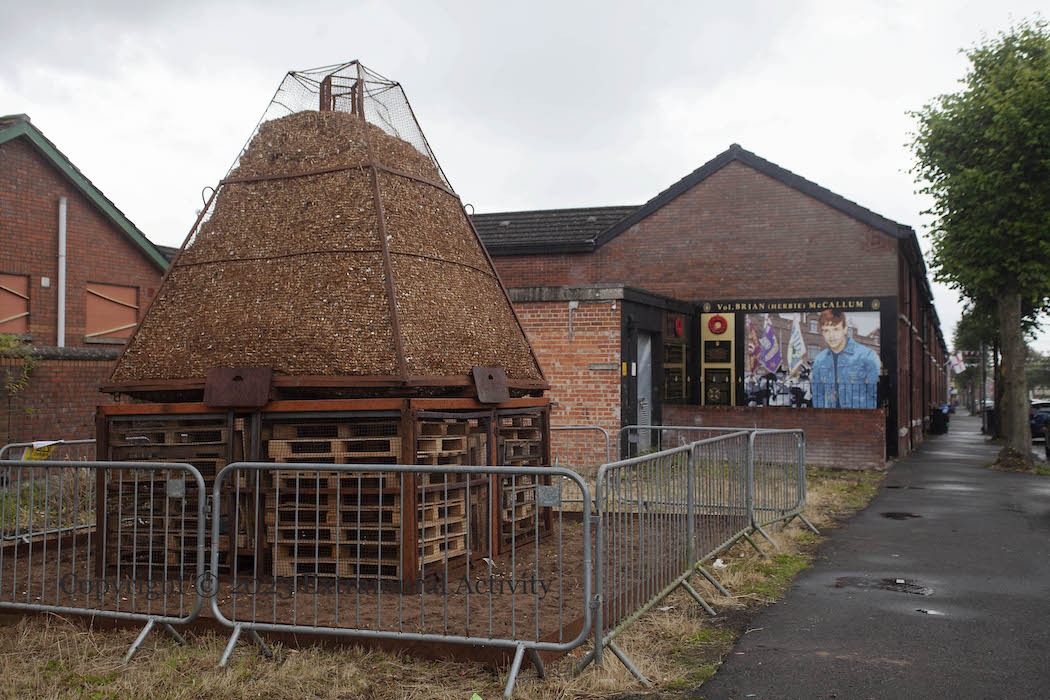
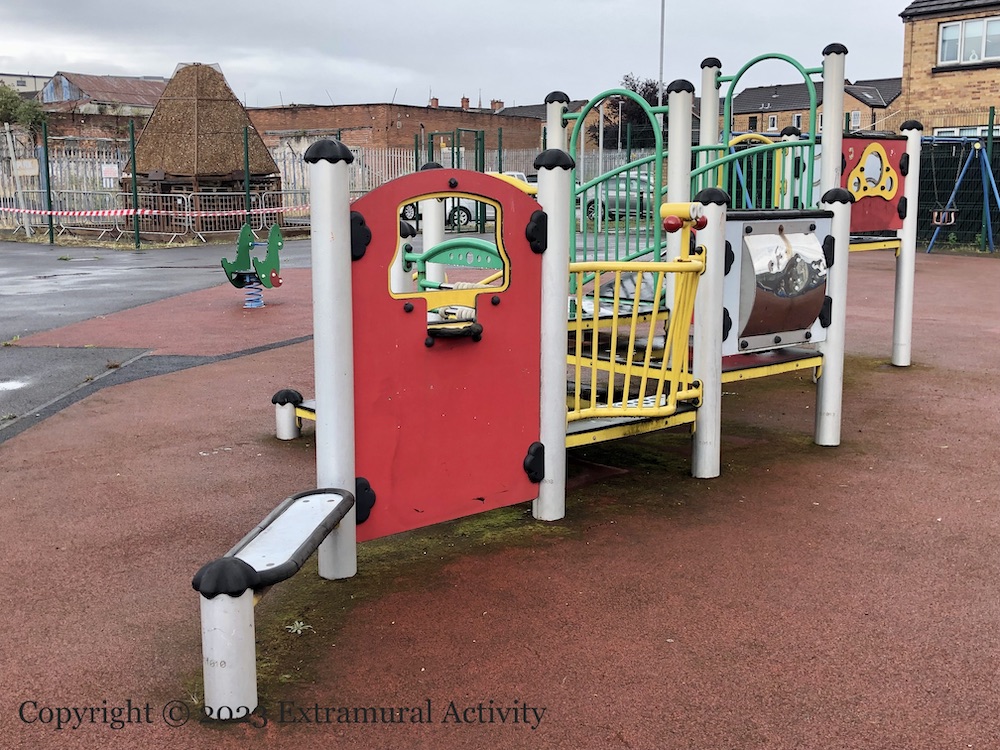
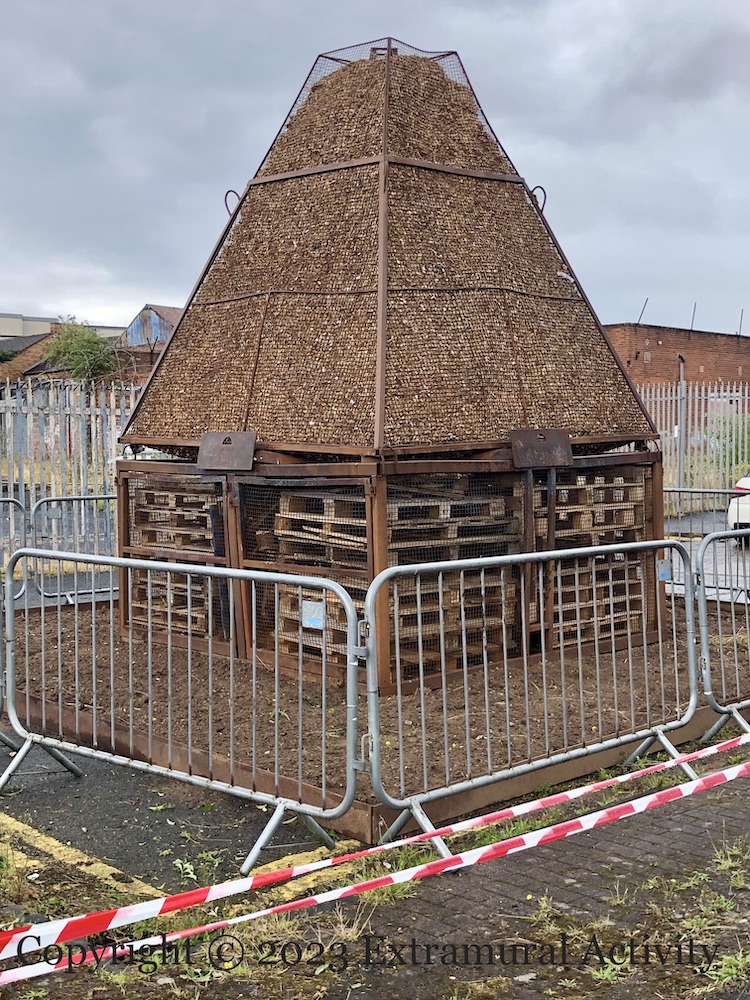
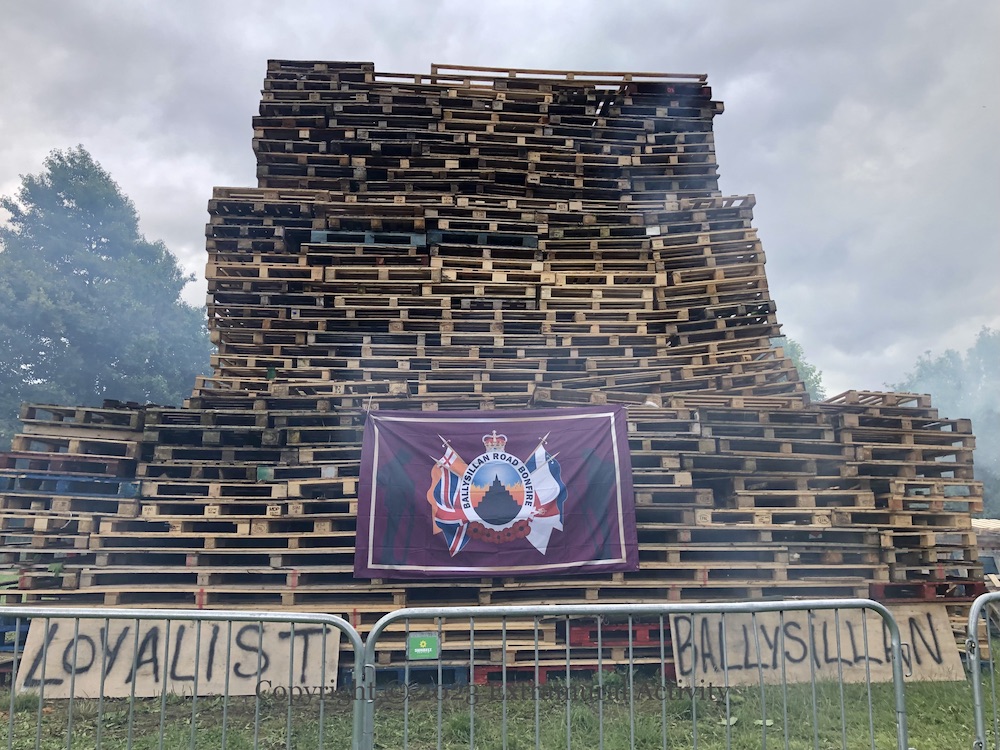
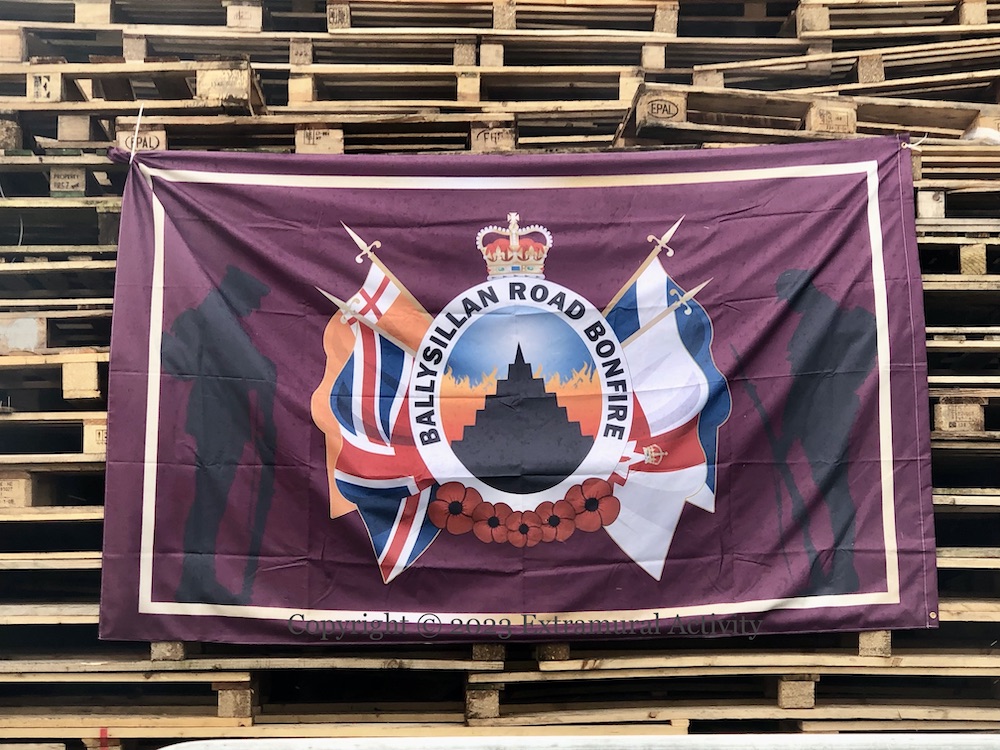
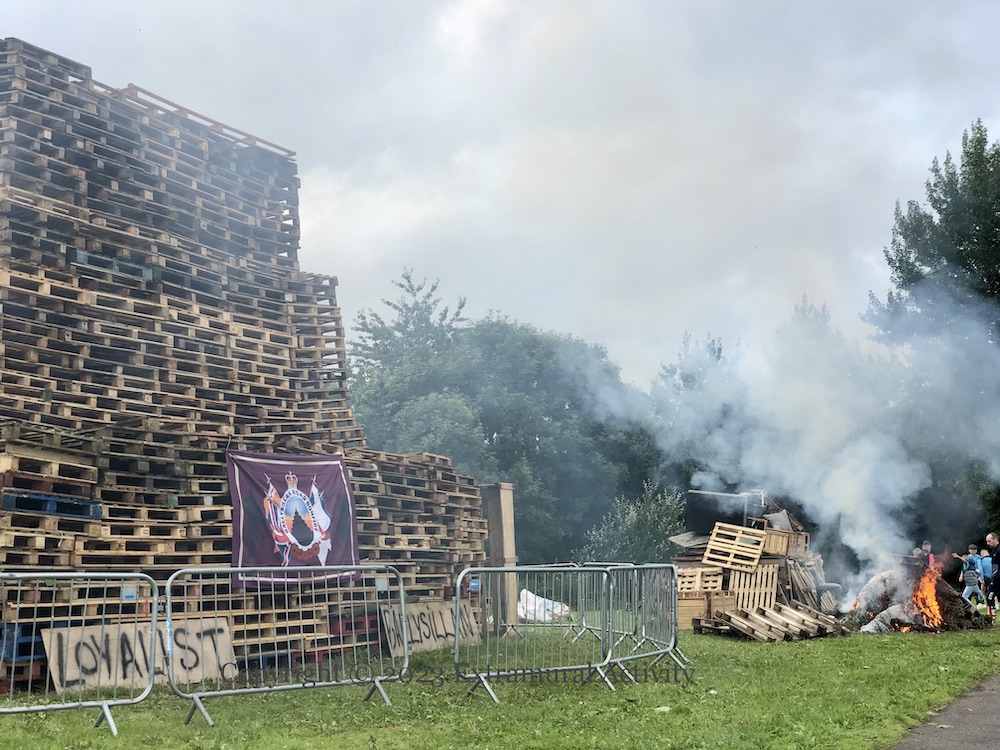
11 “beacons” are being lit across Belfast this evening, an increase over the eight from last year (Belfast Live). They are re-usable metal frames filled with willow wood (above a base of pallets) and sit on a bed of sand in order to avoid scarring the ground (BBC). The name evokes the beacons lit in the hills of Antrim and Down that allowed King William’s forces to land at Carrickfergus in 1690; the practice of lighting bonfires for festivals goes back to pagan times (Gailey).
Rather than being collected by the local commuinity, the materials are provided by a City Council programme now in its fifteen year of operation; the cost of the beacons this year is 81,000 pounds (BelTel). For discussion of the beacons (and the wider bonfire programme), see this Slugger article.
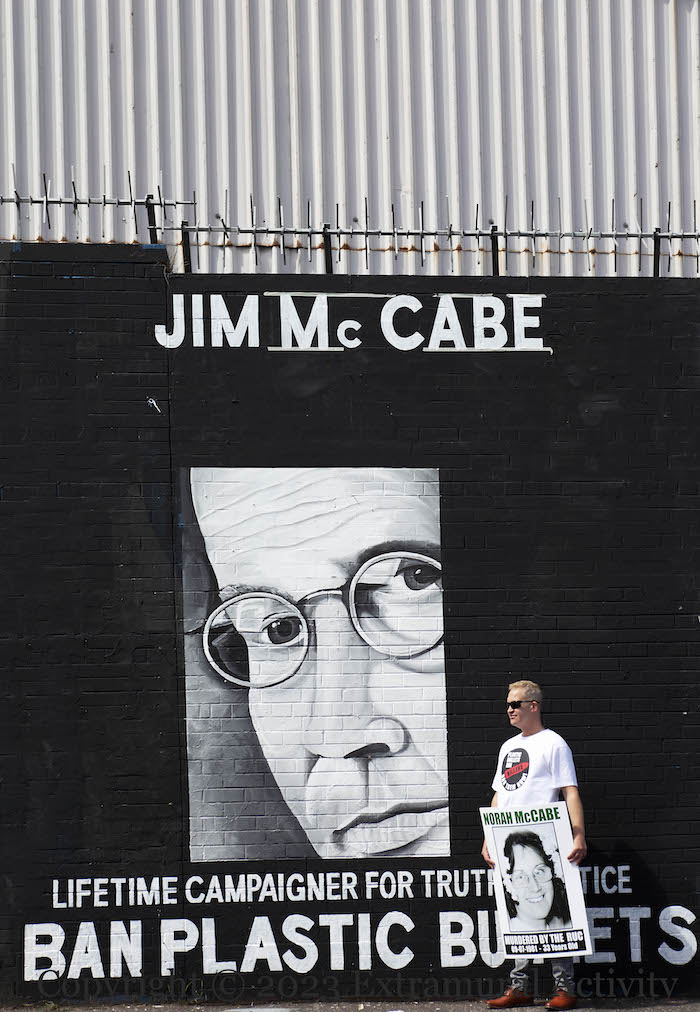
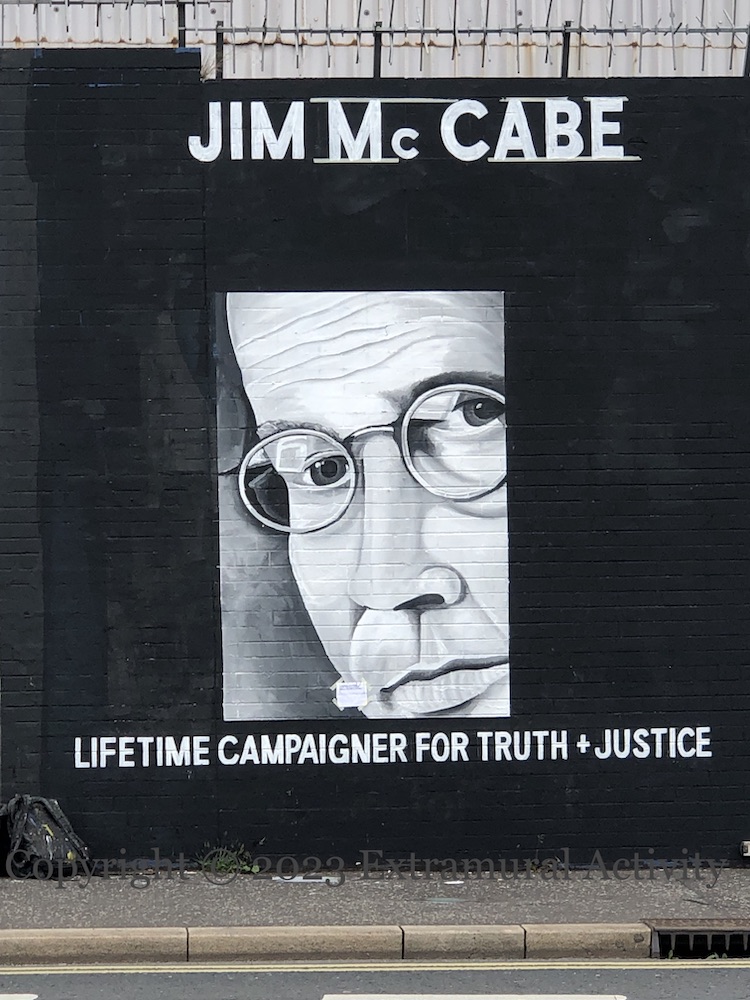
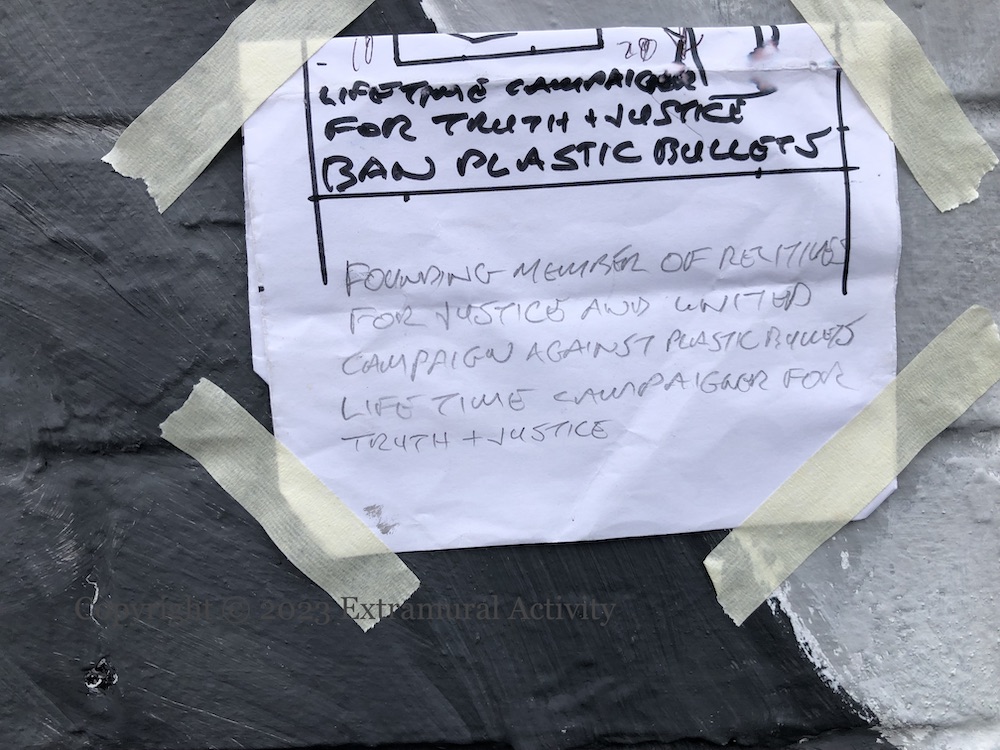
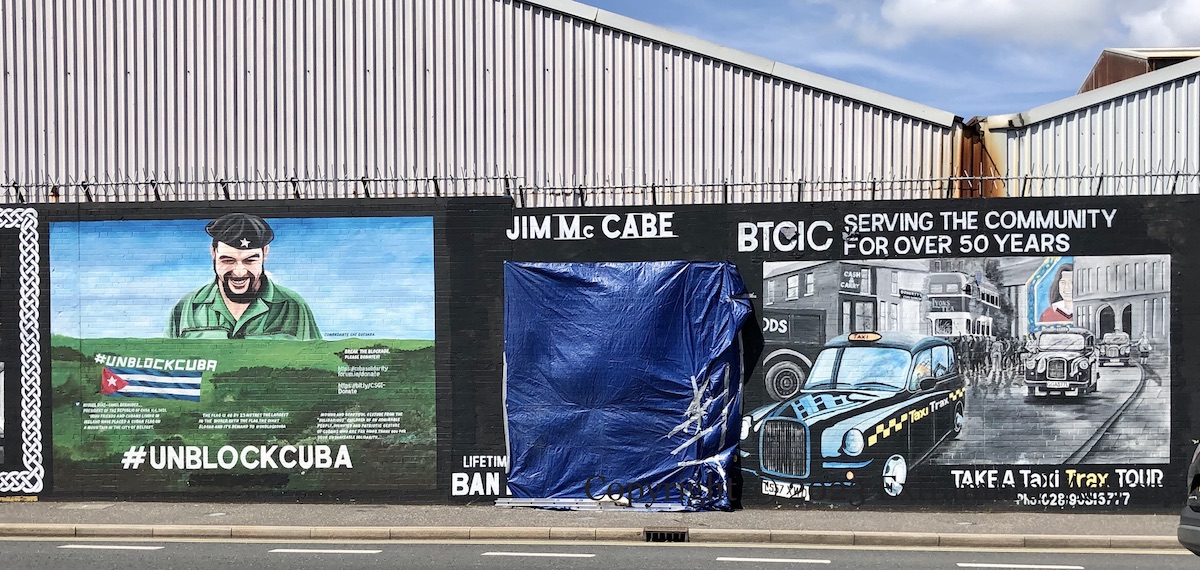
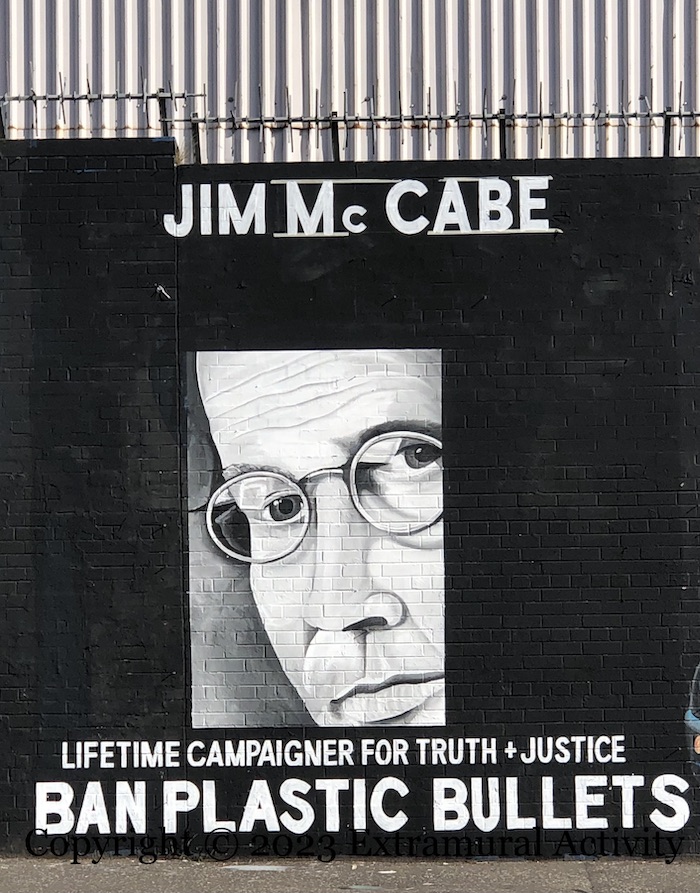
A new mural was unveiled yesterday in memory of Jim McCabe, the husband of Norah McCabe who was hit by a plastic bullet in 1981 and died a day later. Jim went on to become a “lifetime campaigner for truth + justice” and a “founder member of Relatives For Justice [web] and United Campaign Against Plastic Bullets [web]” – the sketch shown in the third image suggests this line was part of the plan for the mural. (For a profile of Jim’s campaigning work, see Belfast Media.) Jim died in January of this (2023) year.
The image above shows one of the children of Norah and Jim – James – standing in front of the new mural wearing a ‘Ban plastic bullets’ t-shirt and carrying an image of his mother.
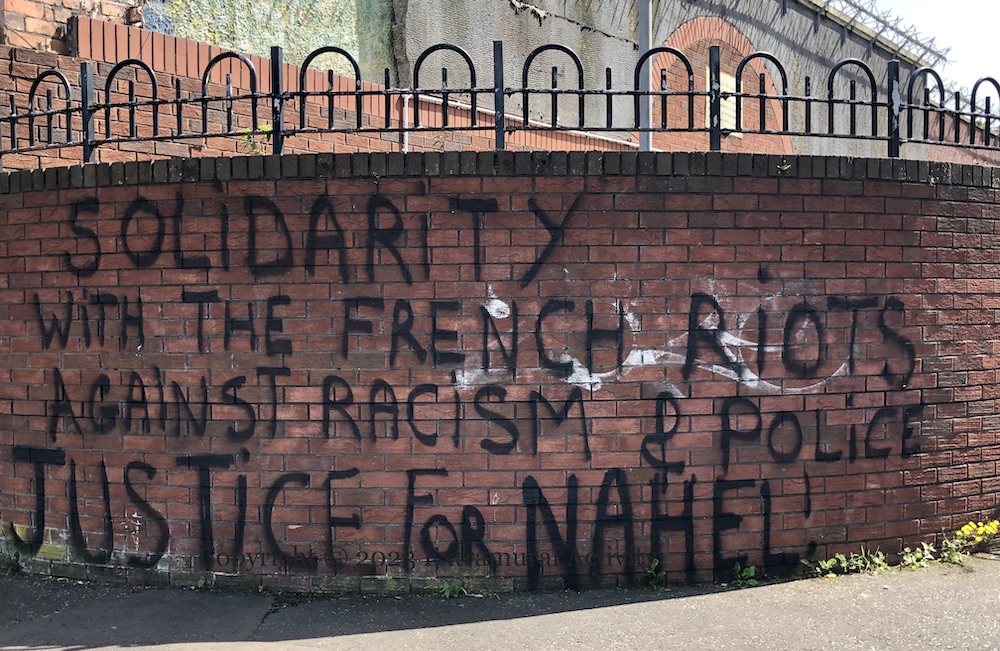
“Solidarity with the French riots against racism & police – justice for Nahel!” 17 year-old Nahel Merzouk was shot and killed on June 27th by a motor-cycle policeman in Nanterre, France. The scope of use of firearms by police was expanded in 2017 to include dangerous drivers who refused to stop; Merzouk was at the wheel of a Mercedes that had twice failed to stop and (according to police) was putting others in danger. Police specifically alleged that the car, after the second stop, was driving towards the officer; video evidence later disproved this. This cover-up, combined with long-running discontent over the use of deadly force by police, led to six nights of rioting in which two people were killed, more than 3,000 people arrested, and 800 police injured. (BBC includes video | Independent | WP)
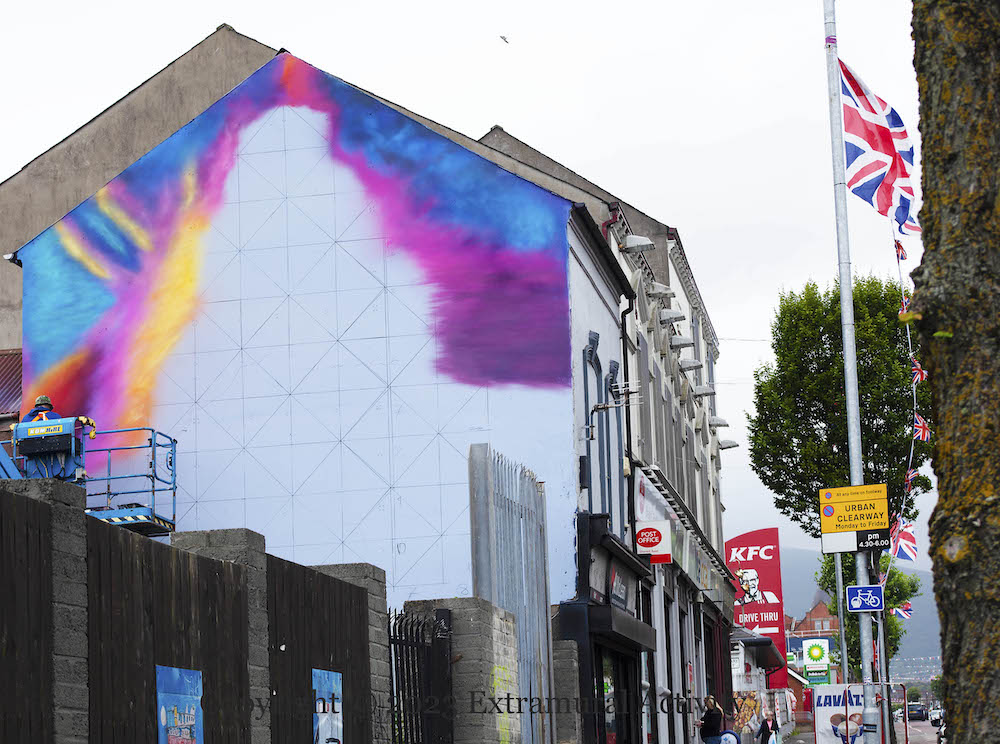
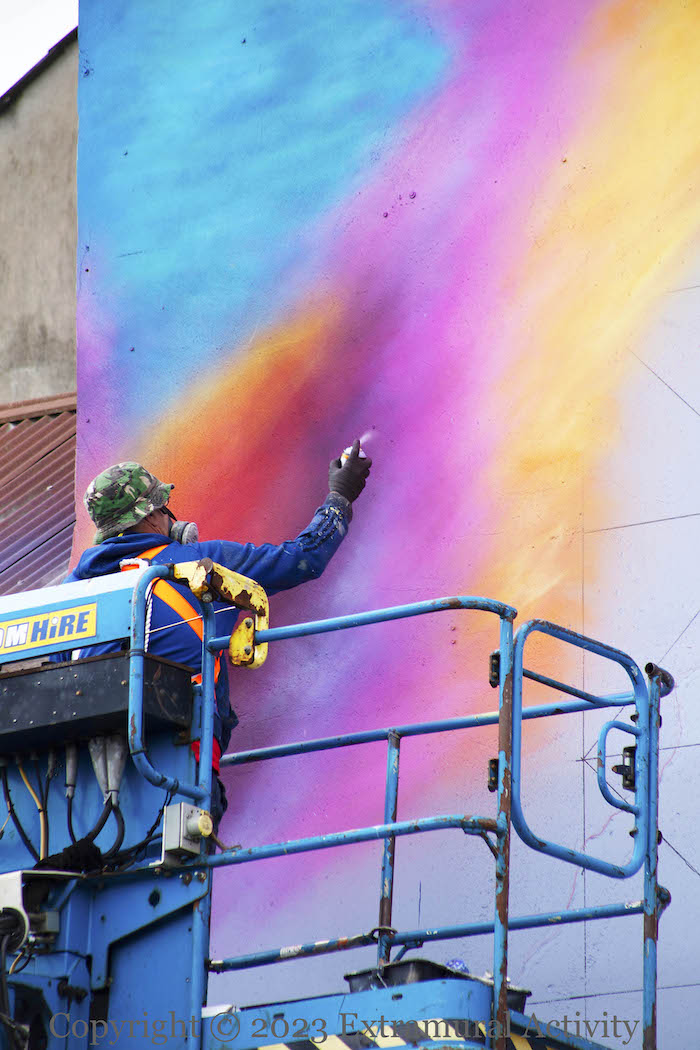
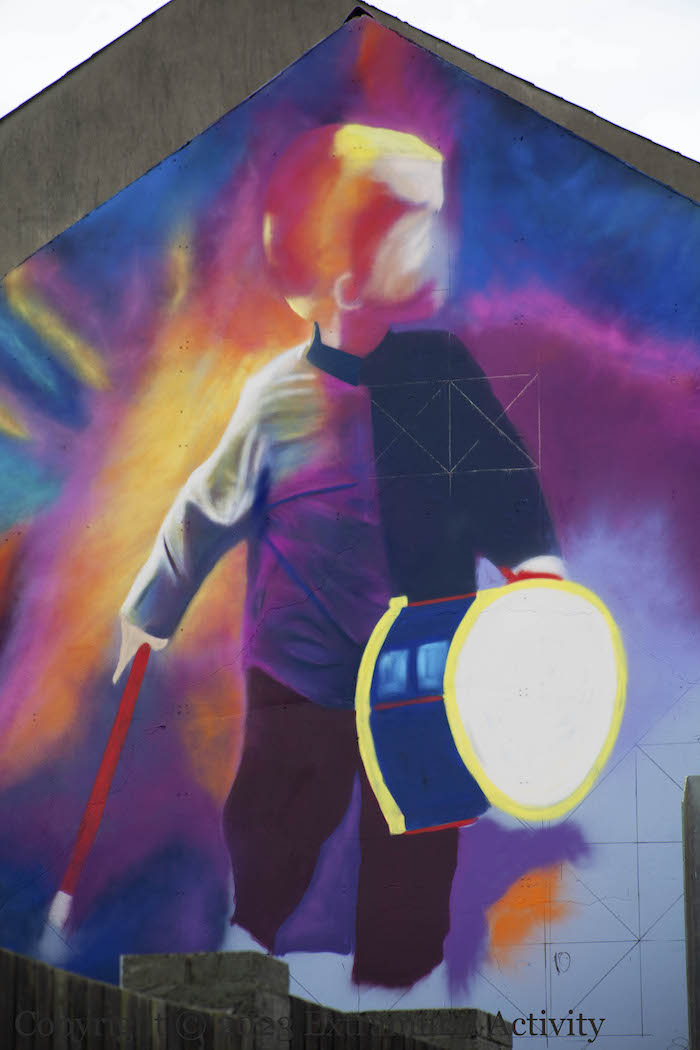
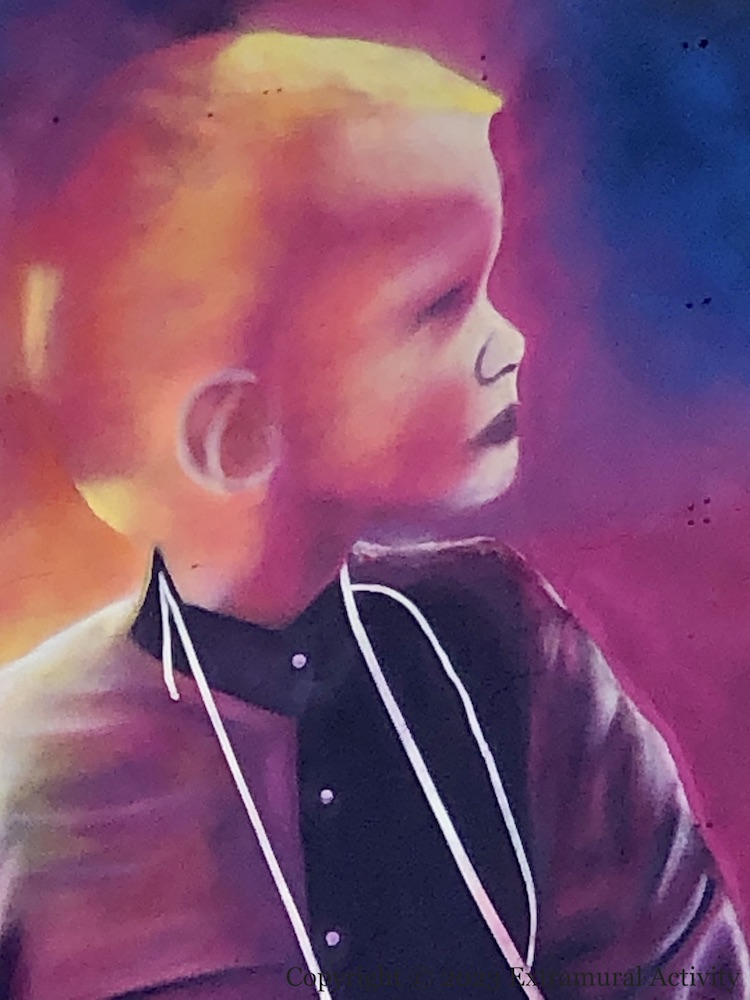
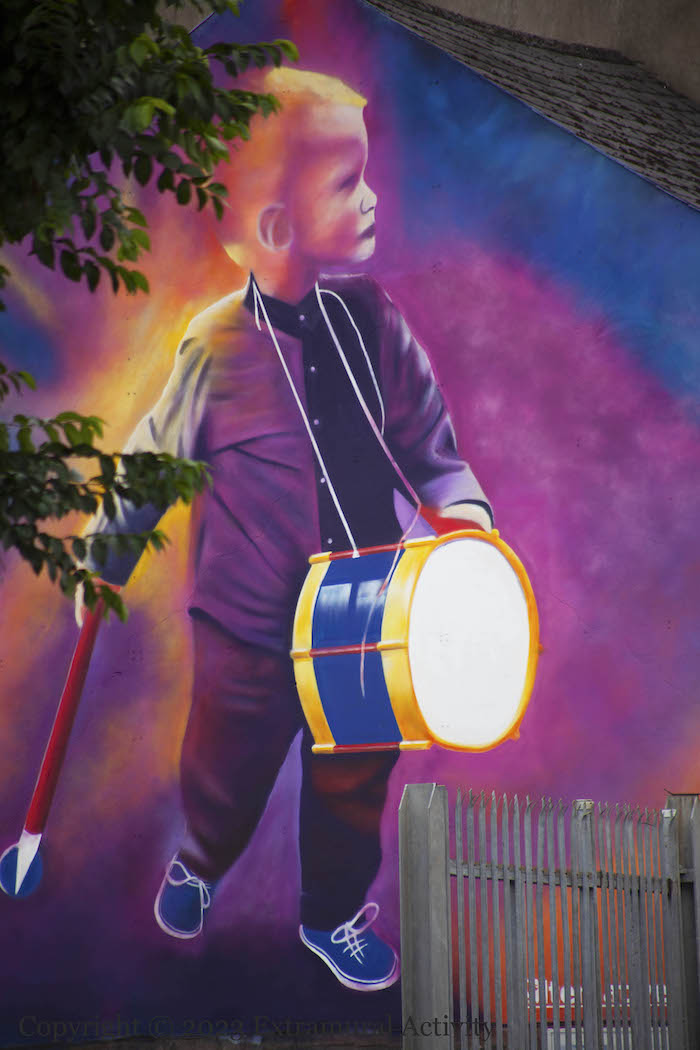
Tomorrow (August 30th, at 12:30) there will be a family fun-day and the launch of a new mural of a colourful drummer boy. The mural is on Peter’s Hill; it takes the place of the “Original Belfast” murals (2009 and 2020) and before that a UDA emblem (M02480).
Painted by Glen Molloy (ig) with support from SAFE Shankill (see Woodvale OK), Alternatives (web), Executive Office, Communities In Transition.
 Seosamh Mac Coille Collection