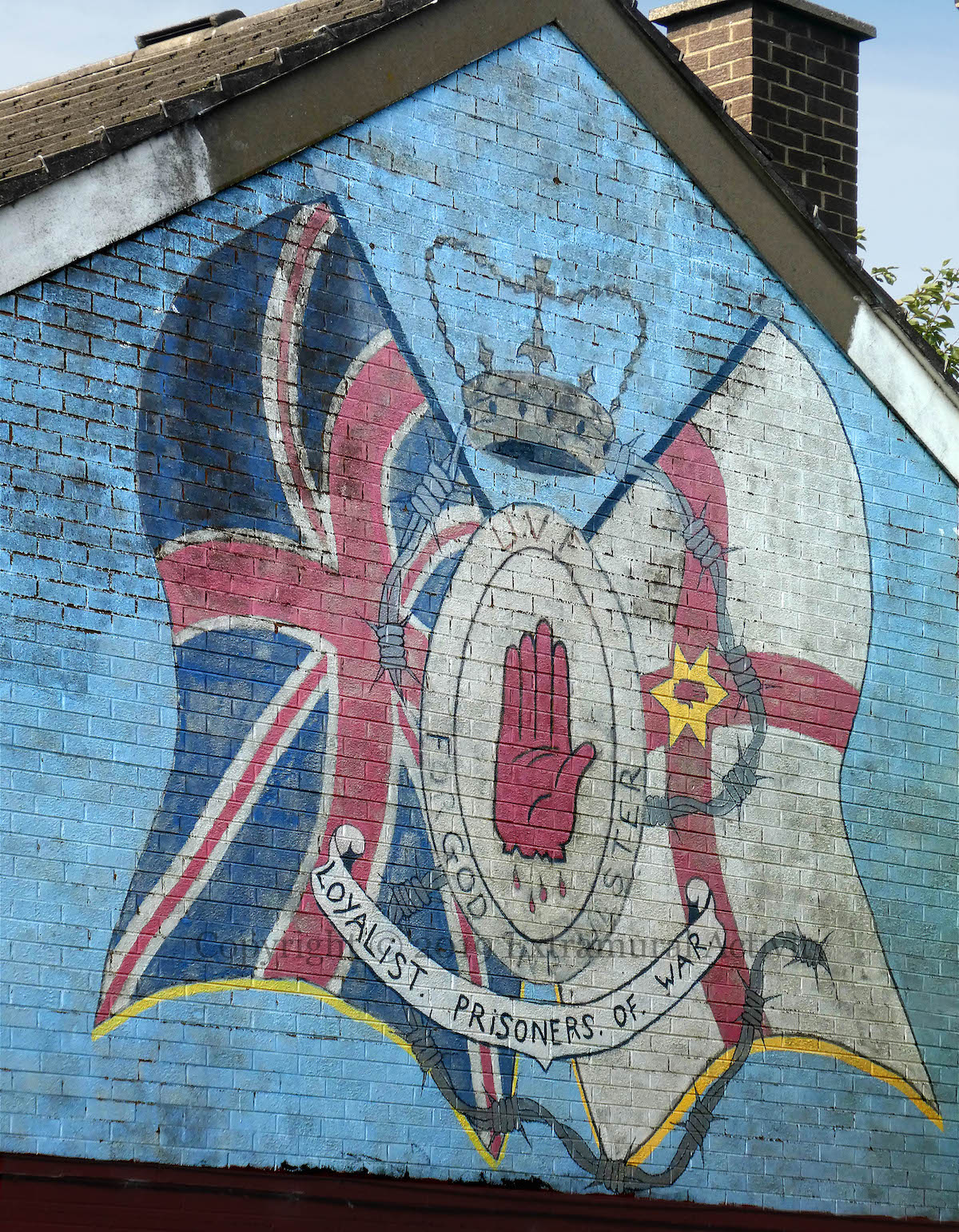
This UVF LPOW mural in Inverary Drive, east Belfast, probably dates back to the years after the Agreement, when the release of prisoners from both sides was being implemented between 1998 and 2000. That would make the mural about 20 years old.
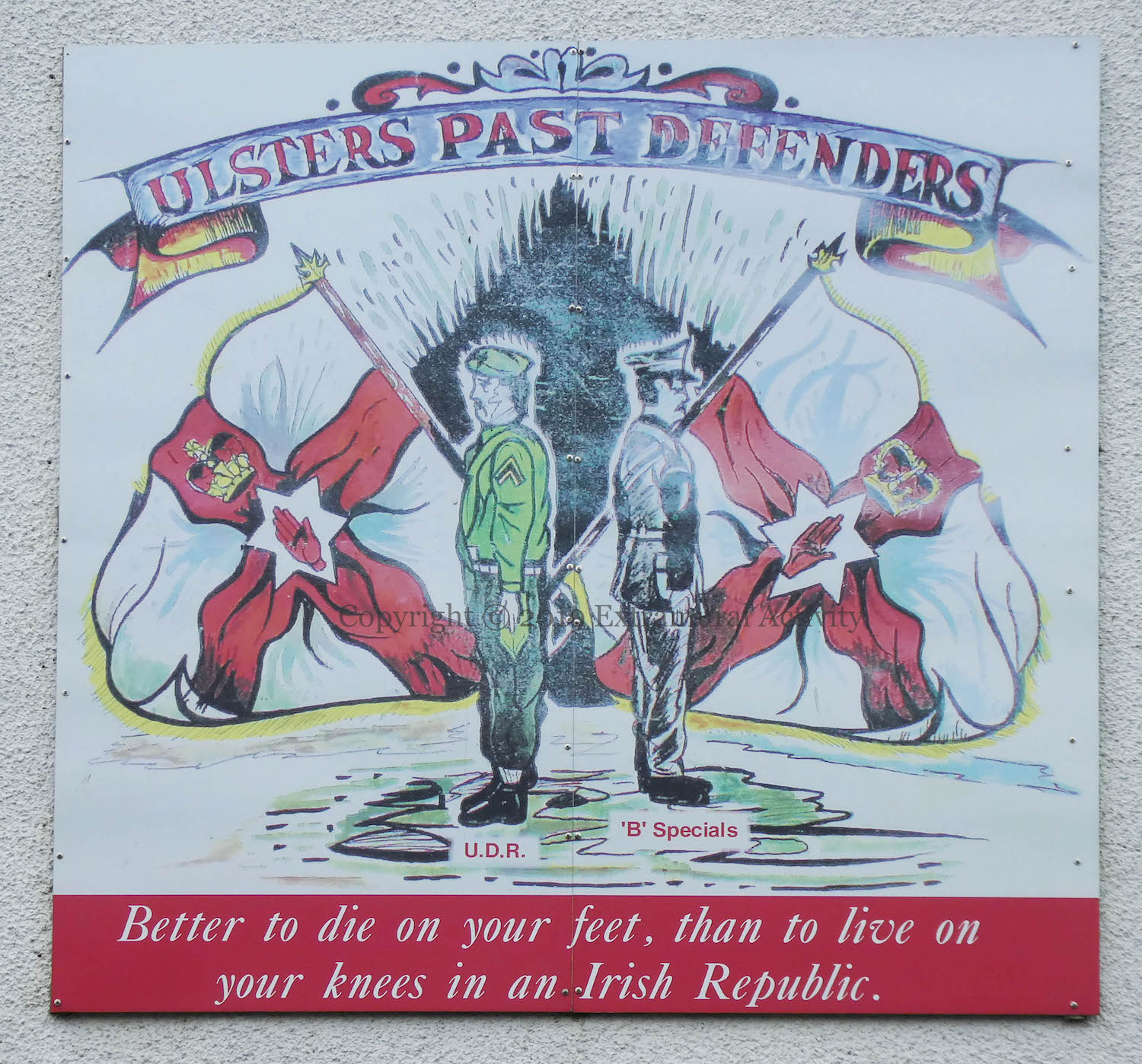
“Better to die on your feet, than to live on your knees in an Irish Republic.” The Ulster Special Constabulary was originally divided into three categories A, B, and C but after the 1922 only the B Specials remained as a reserve force for the RUC. The USC was disbanded in 1970 after its controversial behaviour in the riots of 1969, on some occasions failing to protect Catholics and in a few cases joining in with loyalists. It was replaced by the UDR (as a reserve military force), which lasted until 1992 – it was amalgamated with the Royal Irish Rangers to become the Royal Irish Regiment.
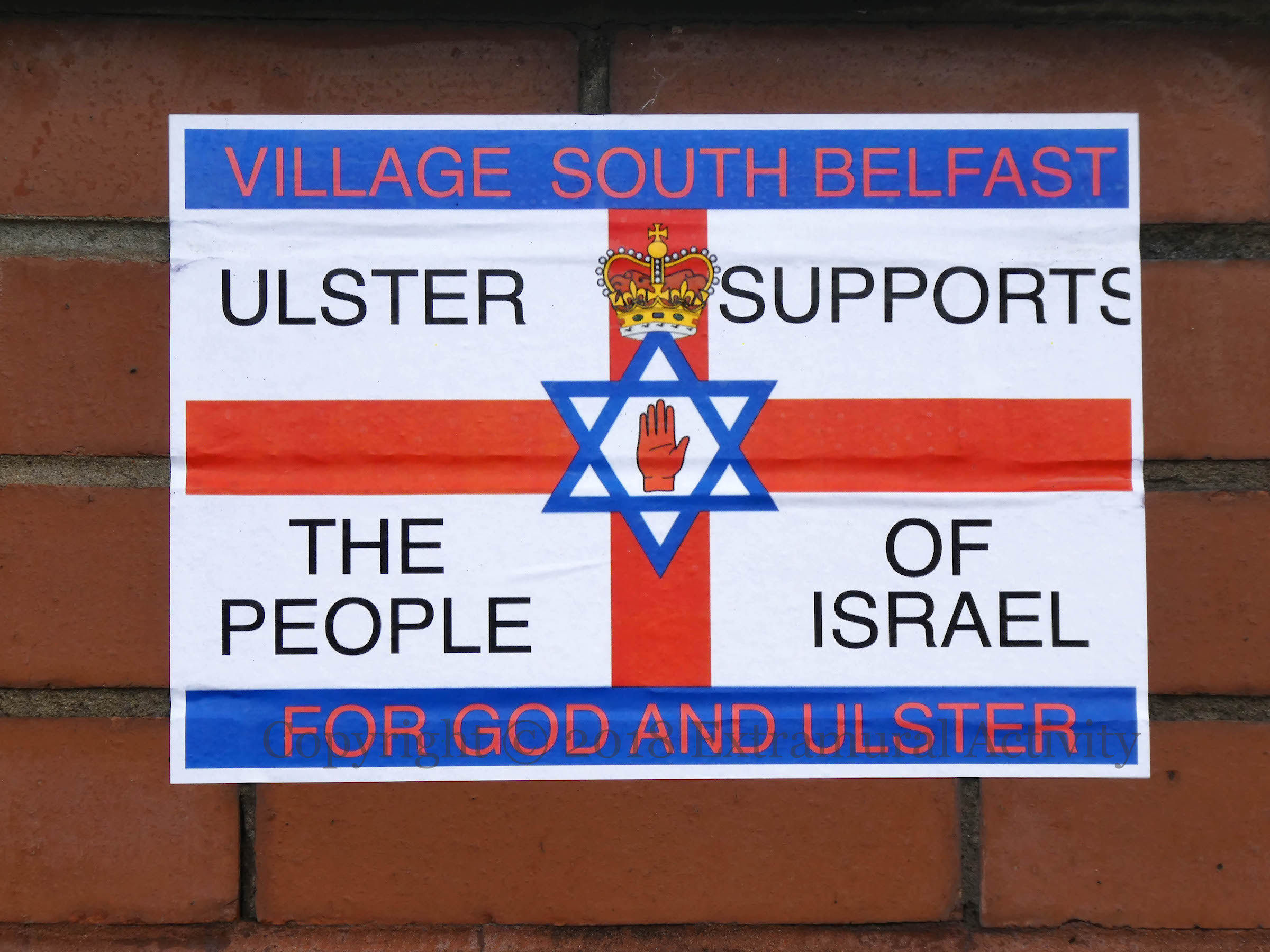
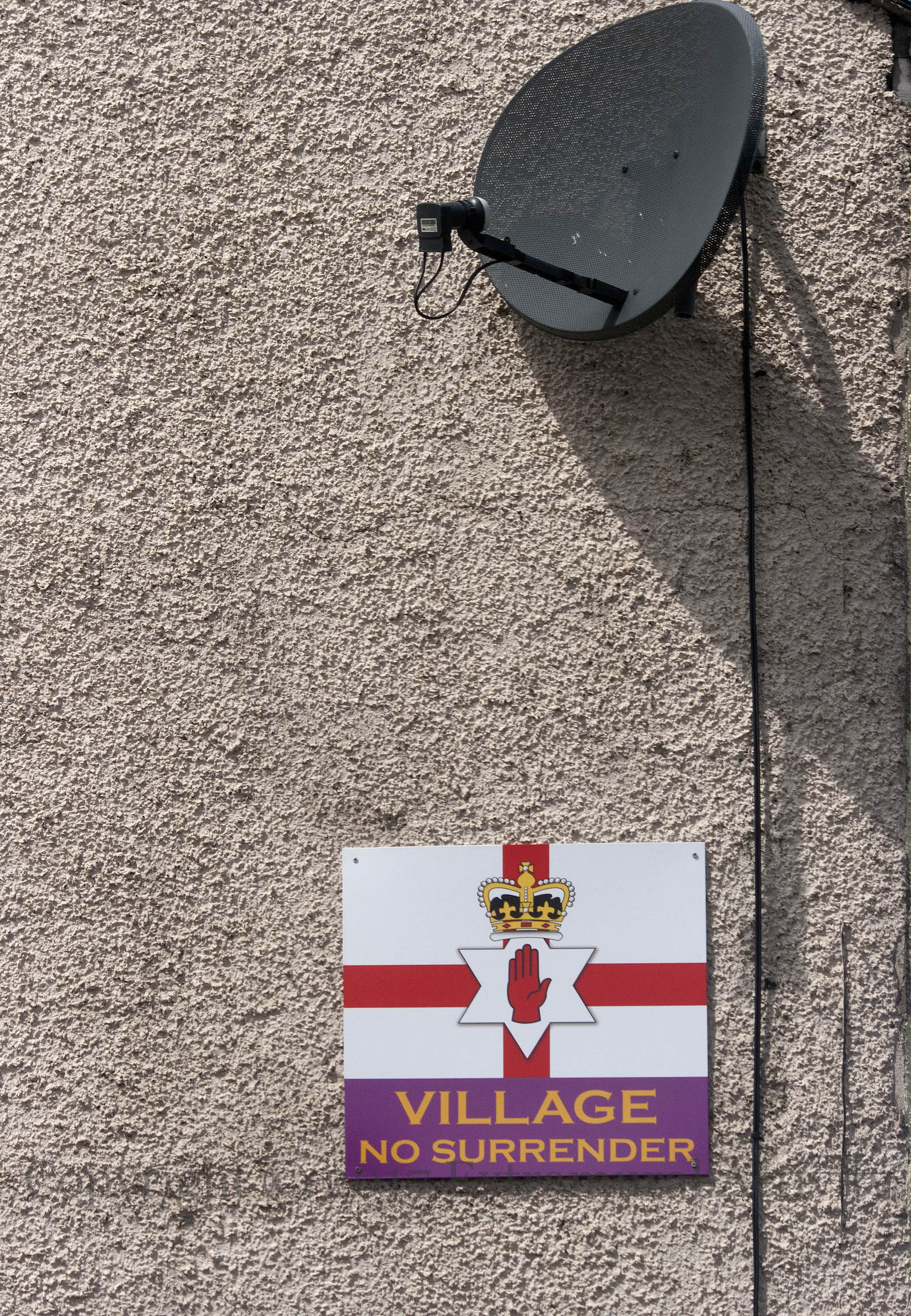
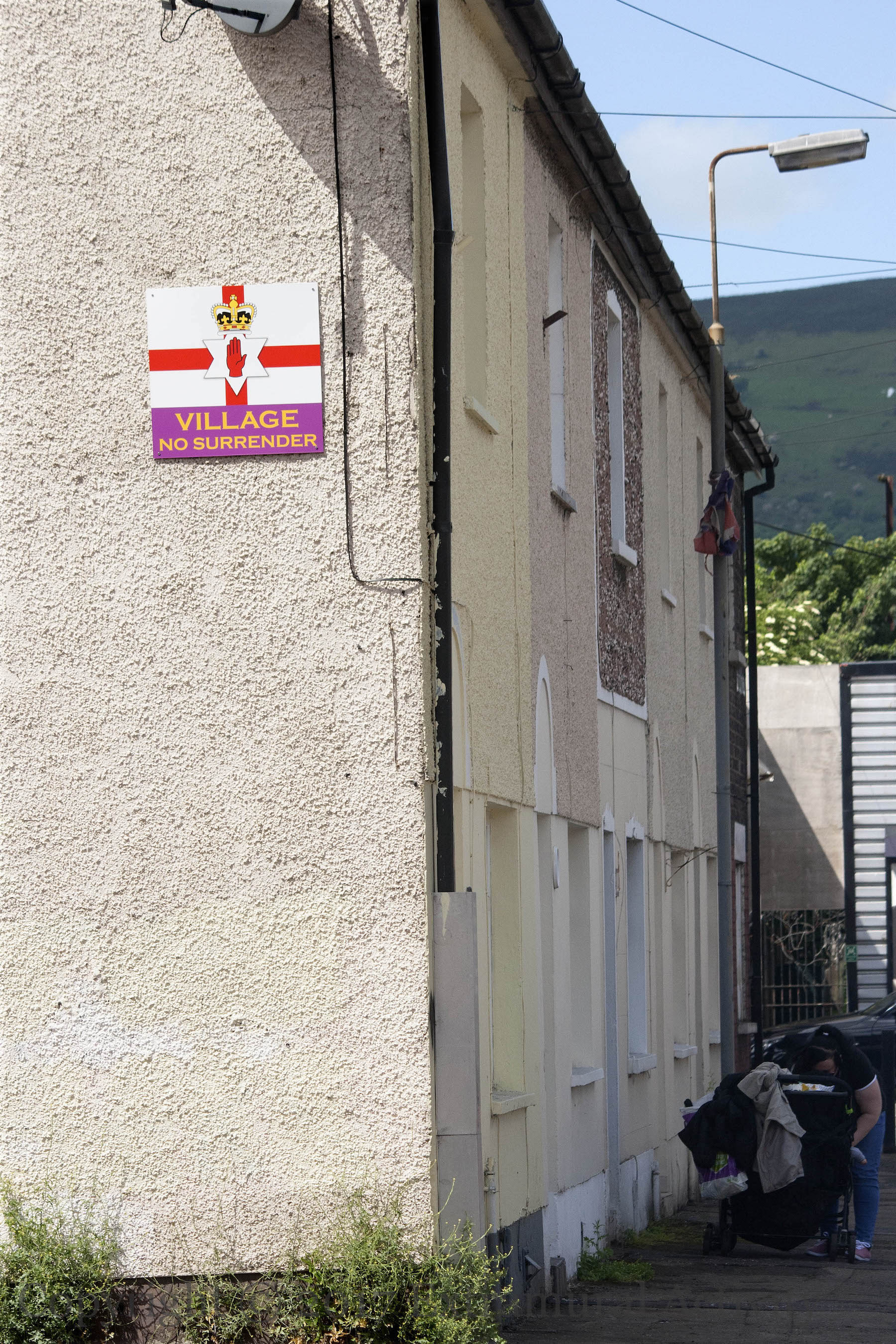
In response to the protests at the soccer match between Northern Ireland and Israel (described yesterday) the poster above appeared in the Village: an Ulster Banner with the 6-pointed star (for the six counties) turned into a Star Of David.
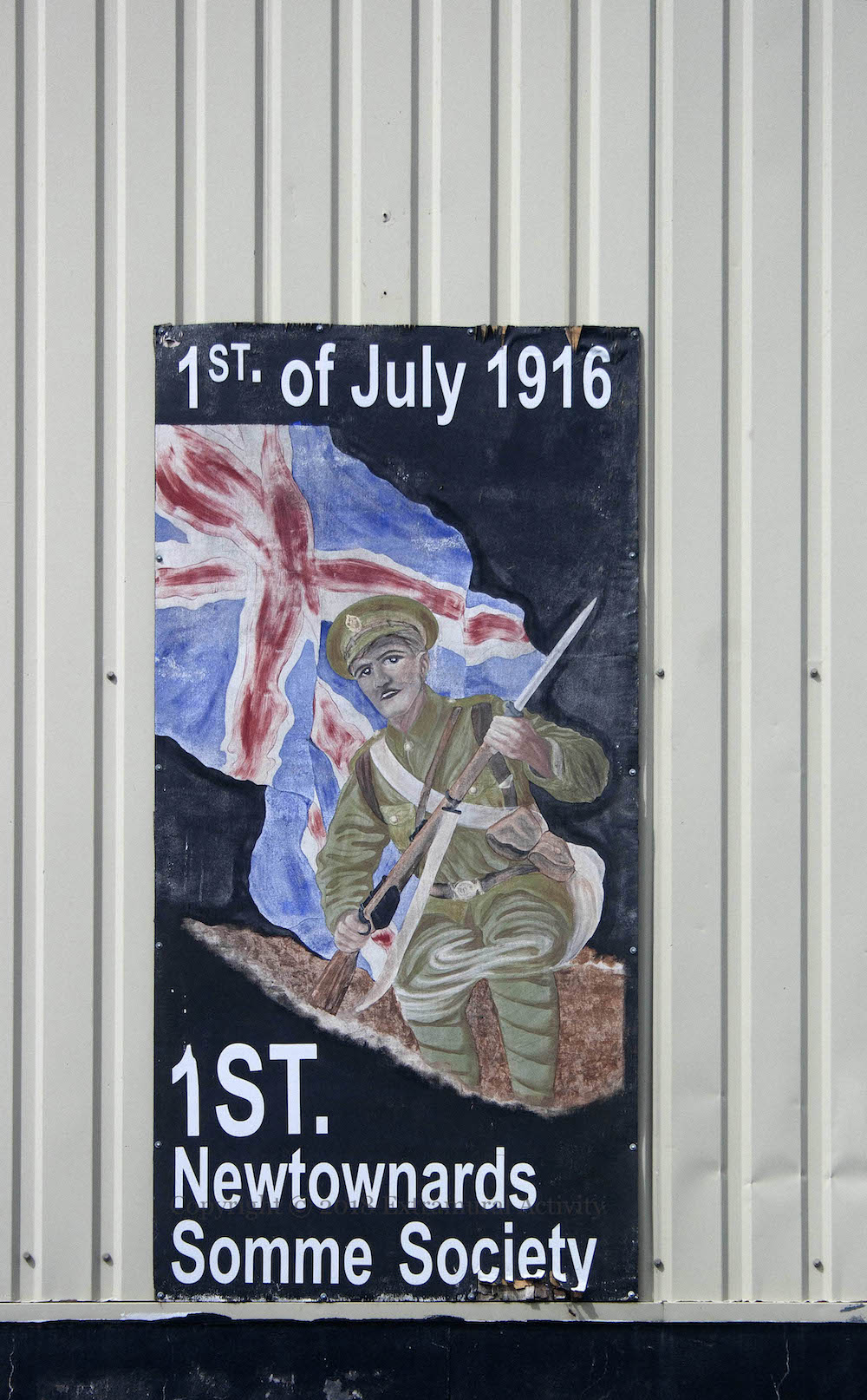
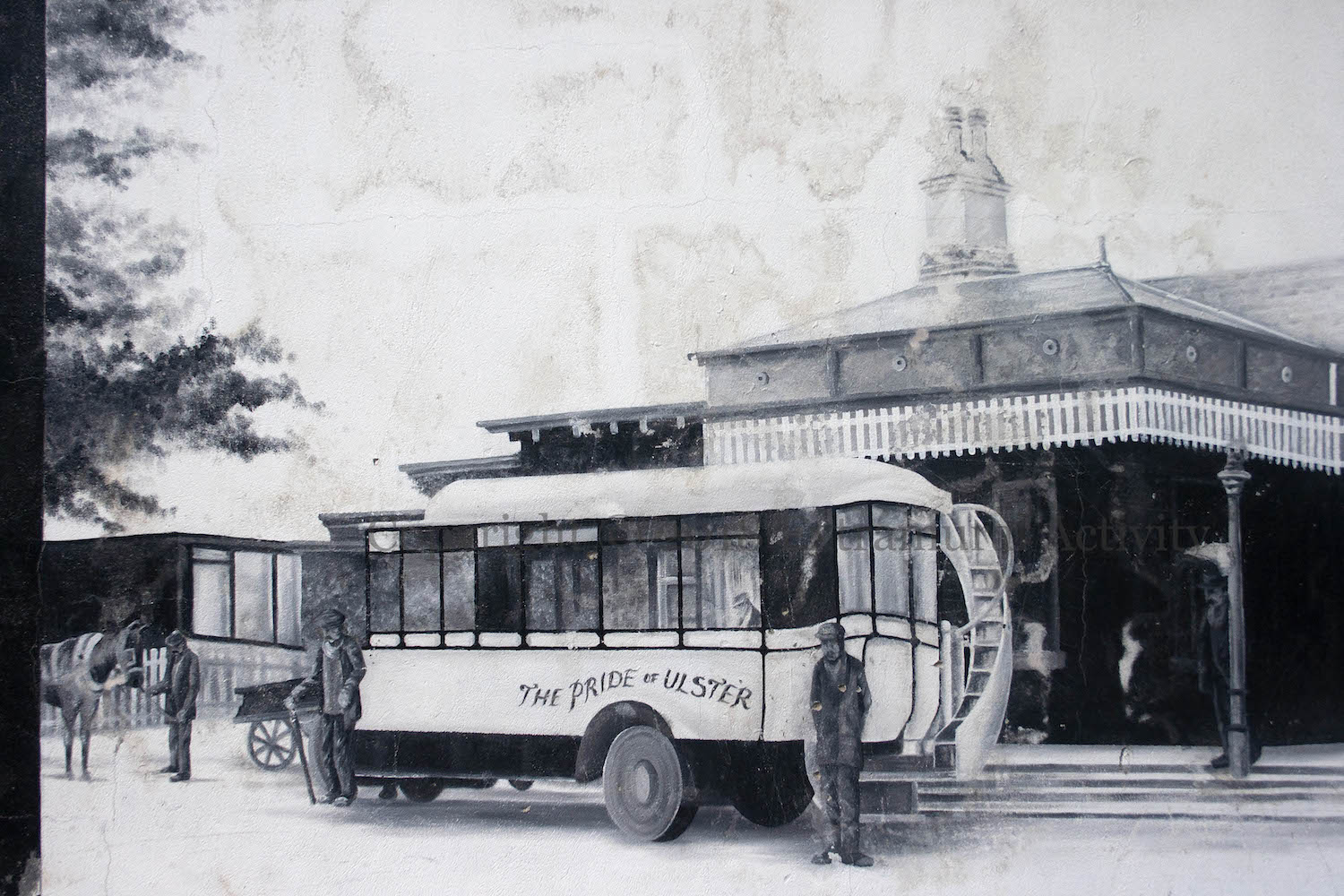
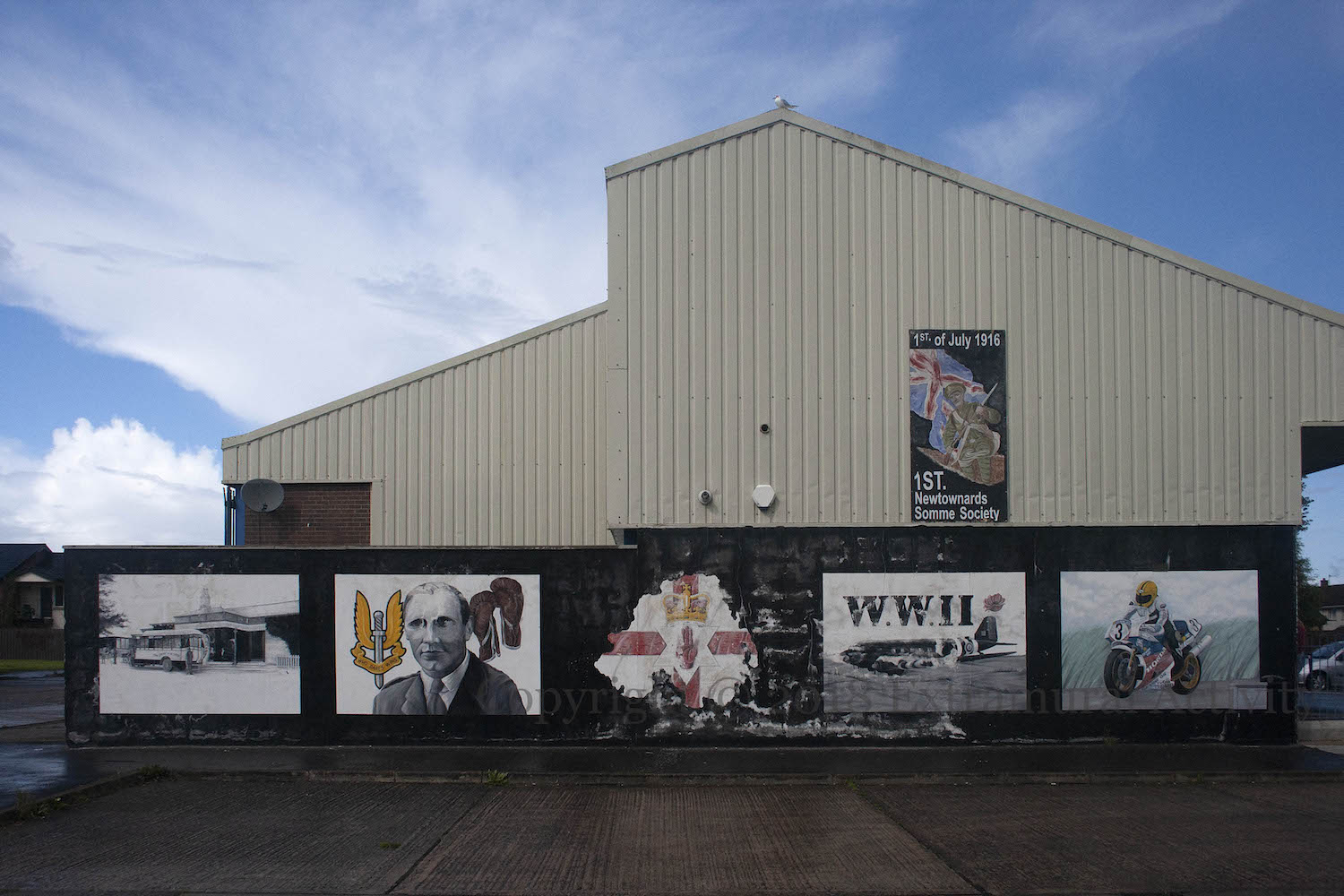
Here are six panels from the shops in the Westwinds estate in Newtownards, which have replaced a UVF mural (Help Us To Help You).
Little is known about the omnibus called “The Pride Of Ulster”, except that this picture shows it at Newtownards Railway Station, Victoria Avenue, c. 1920. SAS soldier and boxer (and rugby-player) Blair “Paddy” Mayne, DSO, is portrayed in the second panel. (For more, see these posts about Mayne from 2013 and 2014.).
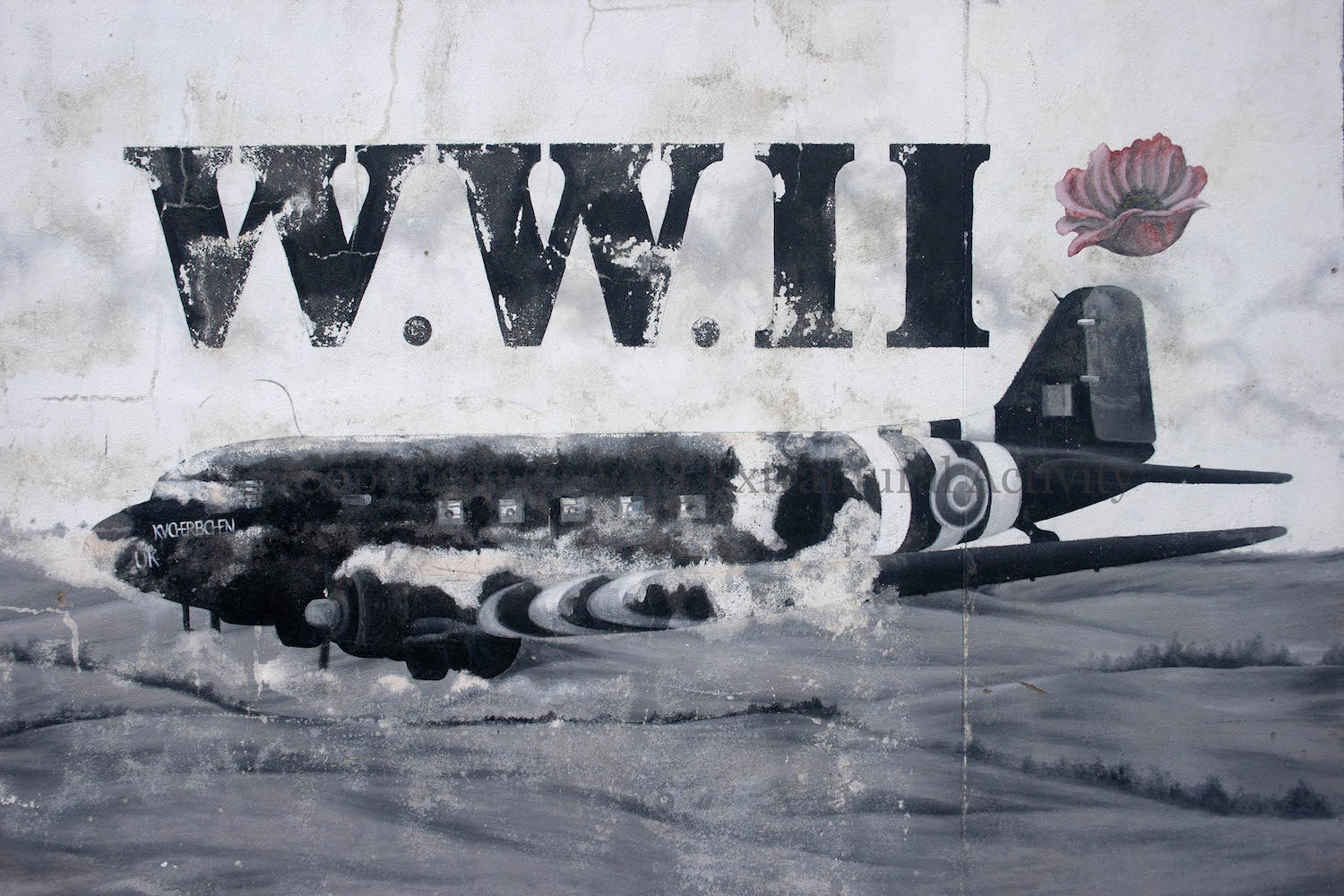
On the other side of the Ulster Banner in the centre is a WWII Douglas Dakota C-47, specifically “FZ692 of No. 233 Squadron, around the D-Day period in 1944. This aircraft, which was named “Kwicherbichen” by her crews, was involved in Para-dropping operations on the eve of D-Day and subsequently in re-supply and casualty evacuation missions into and out of forward airfields in the combat areas” (RAF).
Motorcyclist Joey Dunlop is on the far right (see Race Of Legends), and above them all is a WWI board from the 1st Newtownards Somme Society (based in the Somme museum in Conlig?).
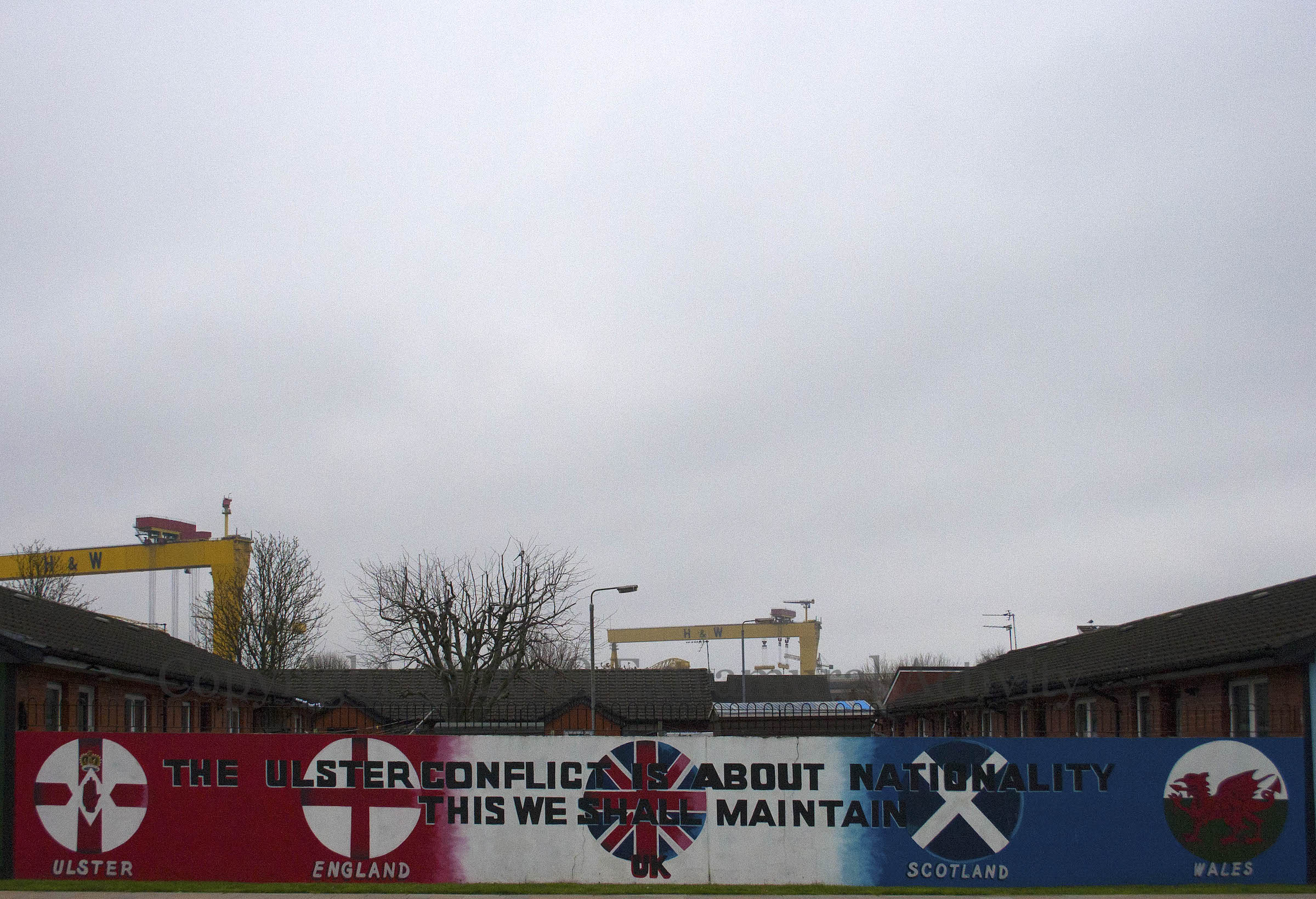
Here are the two low walls along Freedom Corner in east Belfast. Above, “The Ulster conflict is about nationality – this we shall maintain” using flags as identifiers: the Ulster banner for Northern Ireland, the St George Cross for England, the Union Flag for the UK, St Andrew’s Saltire for Scotland, and Baner Cymru for Wales. The previous version used flowers and the red hand – see Daffodil Nation.
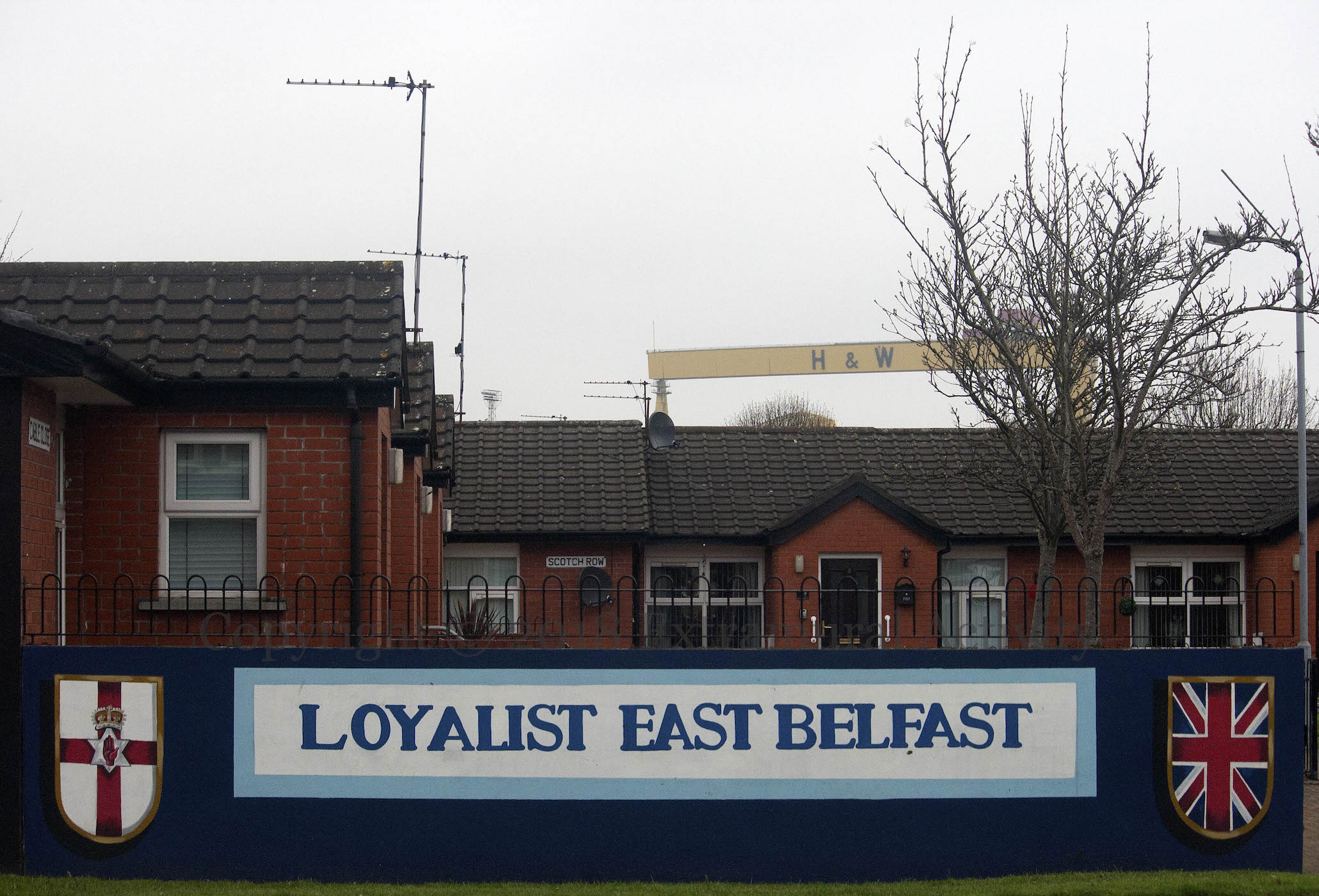
Below, “Loyalist east Belfast” between the Ulster Banner and Union Flag.
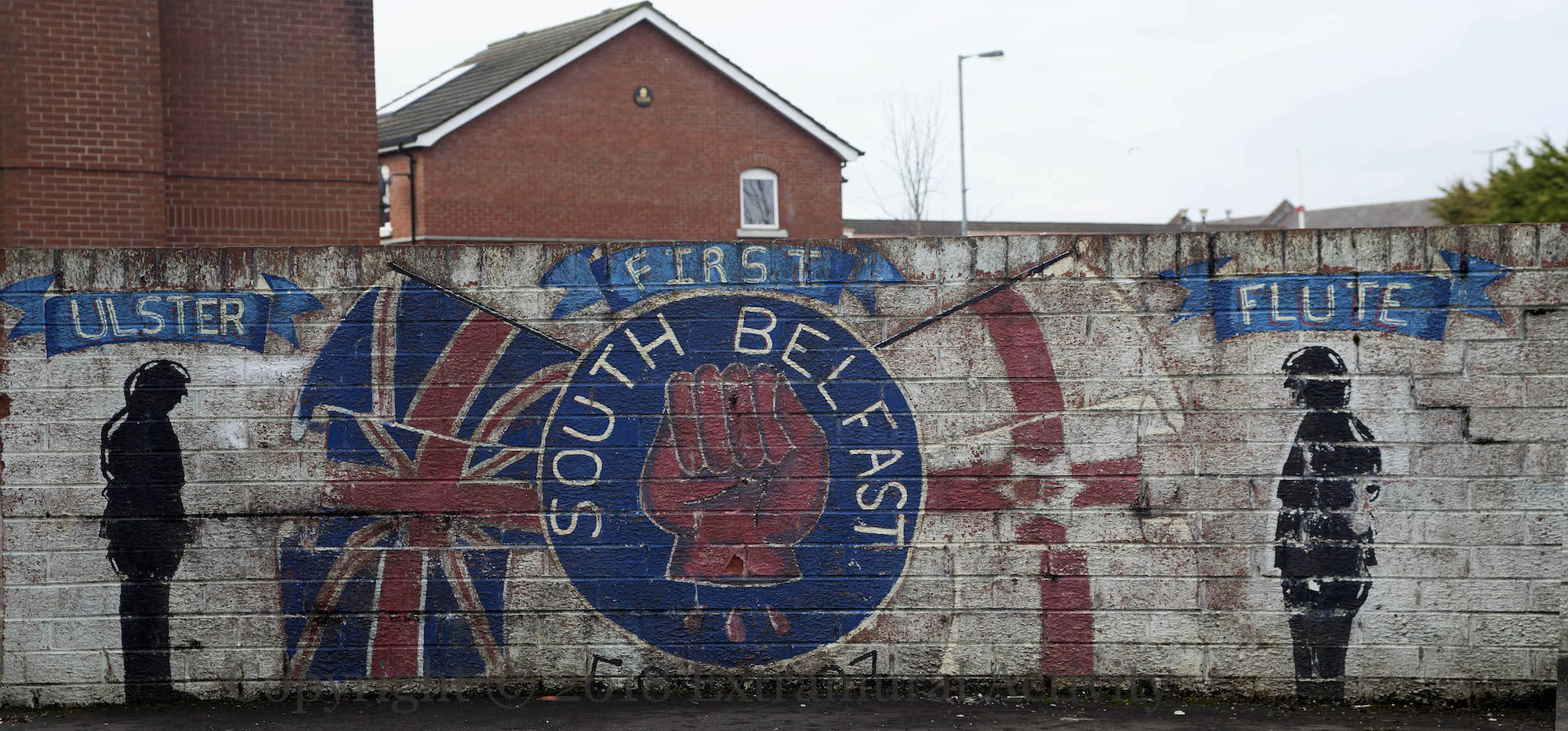
This vintage piece is next to Linfield Gardens, off Sandy Row. (For the mural all the way back in 1997, see M01330.) Ulster First Flute (Fb) shares the emblem of the other UFF – the Ulster Freedom Fighters – a red first (with or without the drops of blood). See also: Gareth ‘Big Henry’ Morrison on Loyalist Avenue.
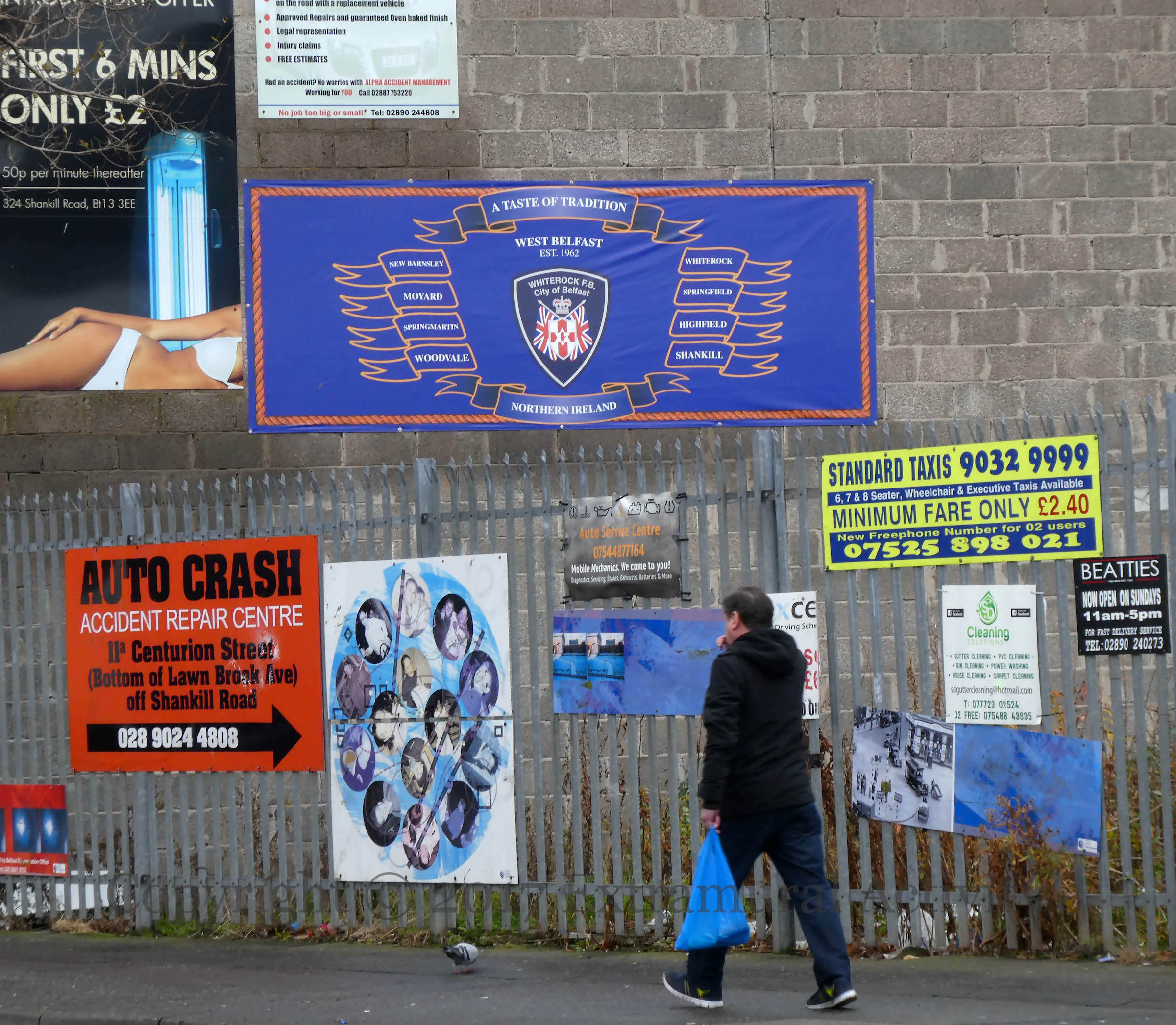
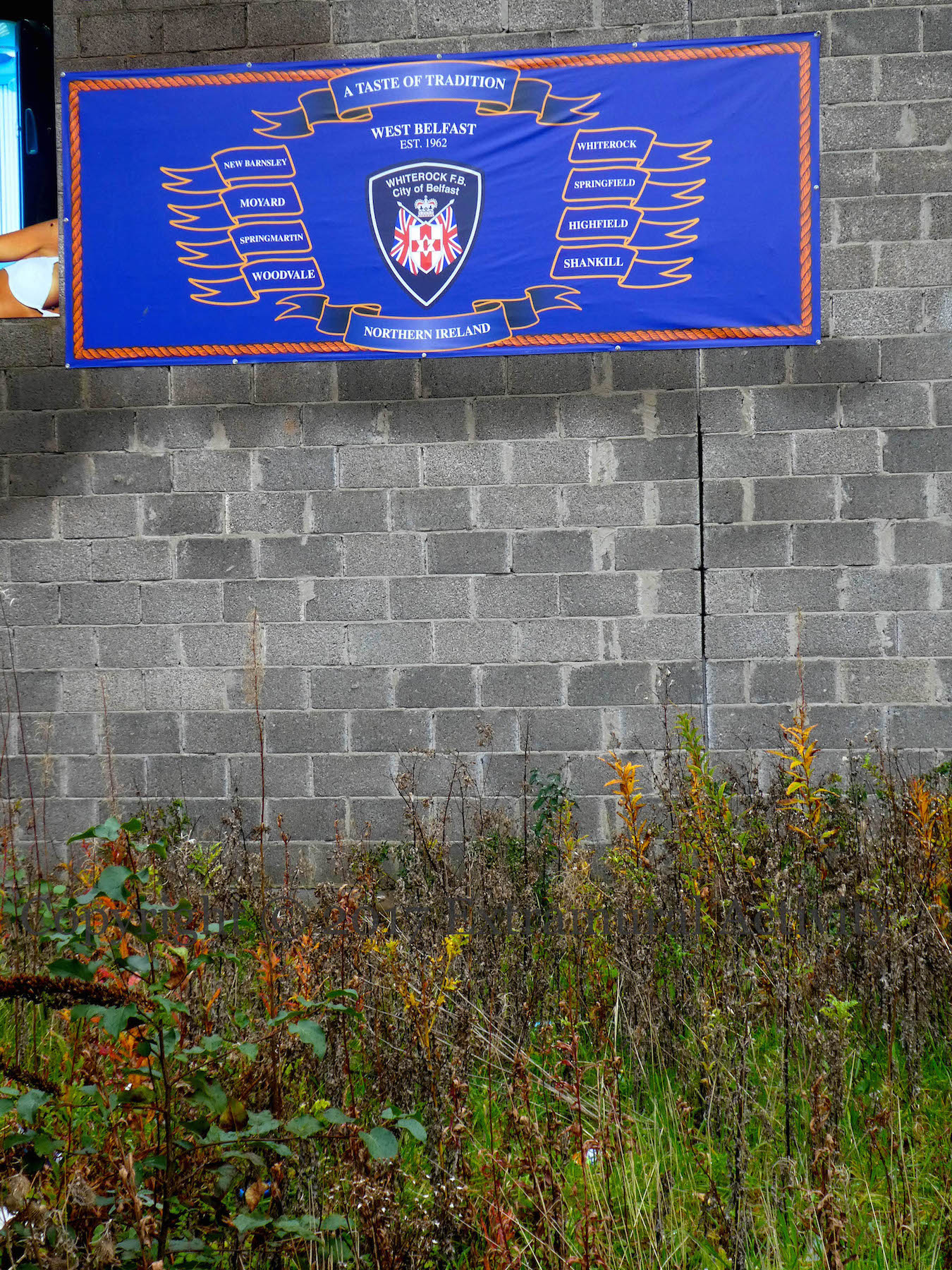
The Whiterock Flute Band was founded in 1962 by the the local Temperance Lodge and drew on areas near the now nationalist areas of New Barnsley, Moyard, Whiterock, and the upper Springfield for its membership. Over the years has seen the route of its annual parade changed “by the authorities or at the whim of nationalists” (band history pages one | two | three).
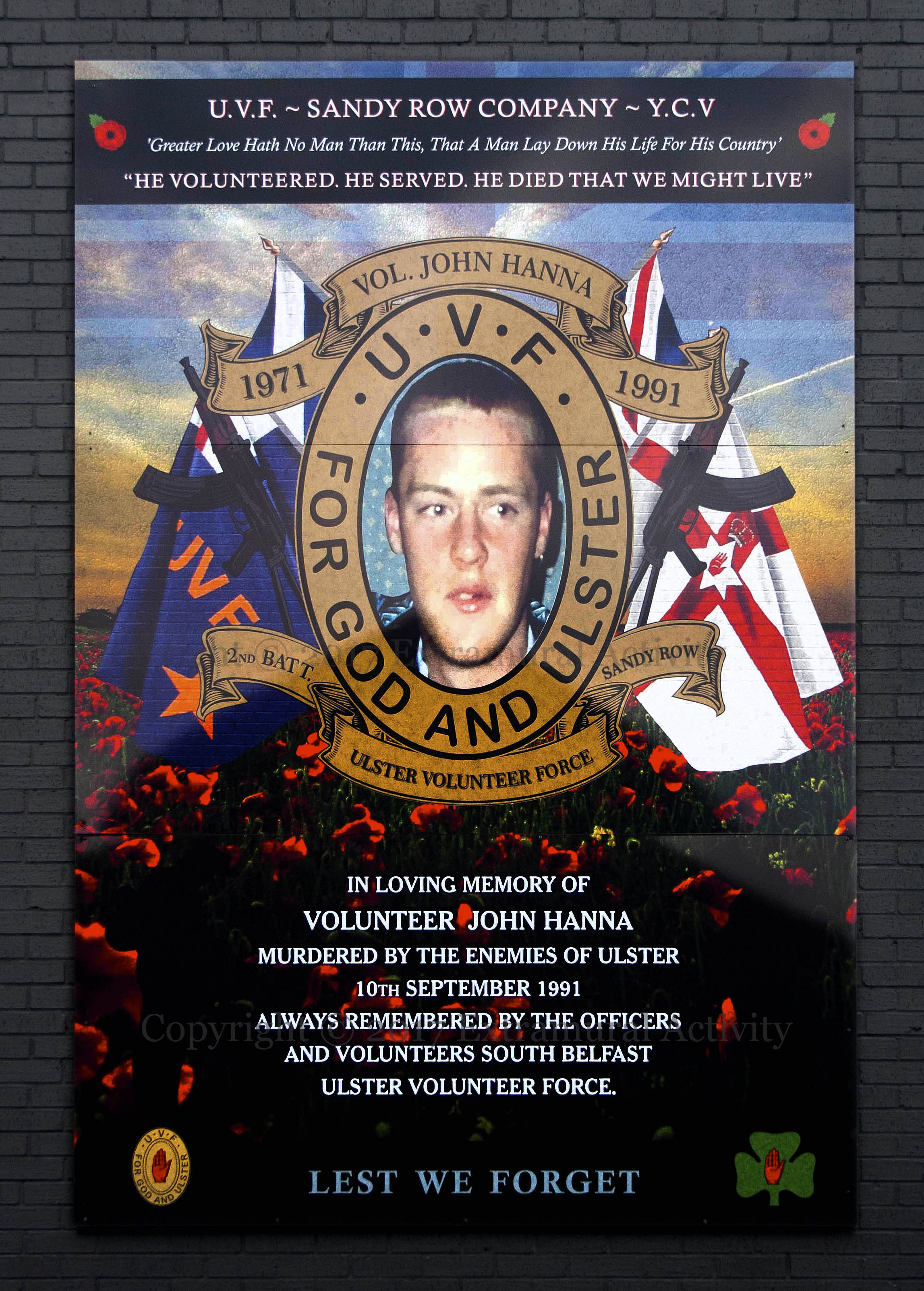
UVF volunteer John Hanna was 19 years old when he was killed by “the enemies of Ulster” (the IRA) at his home on Donegall Road in the Village. This new board is in Prince Andrew Park, just off Donegall Road. “Always remembered by the officers and volunteers South Belfast [2nd Batt Sandy Row] UVF”.
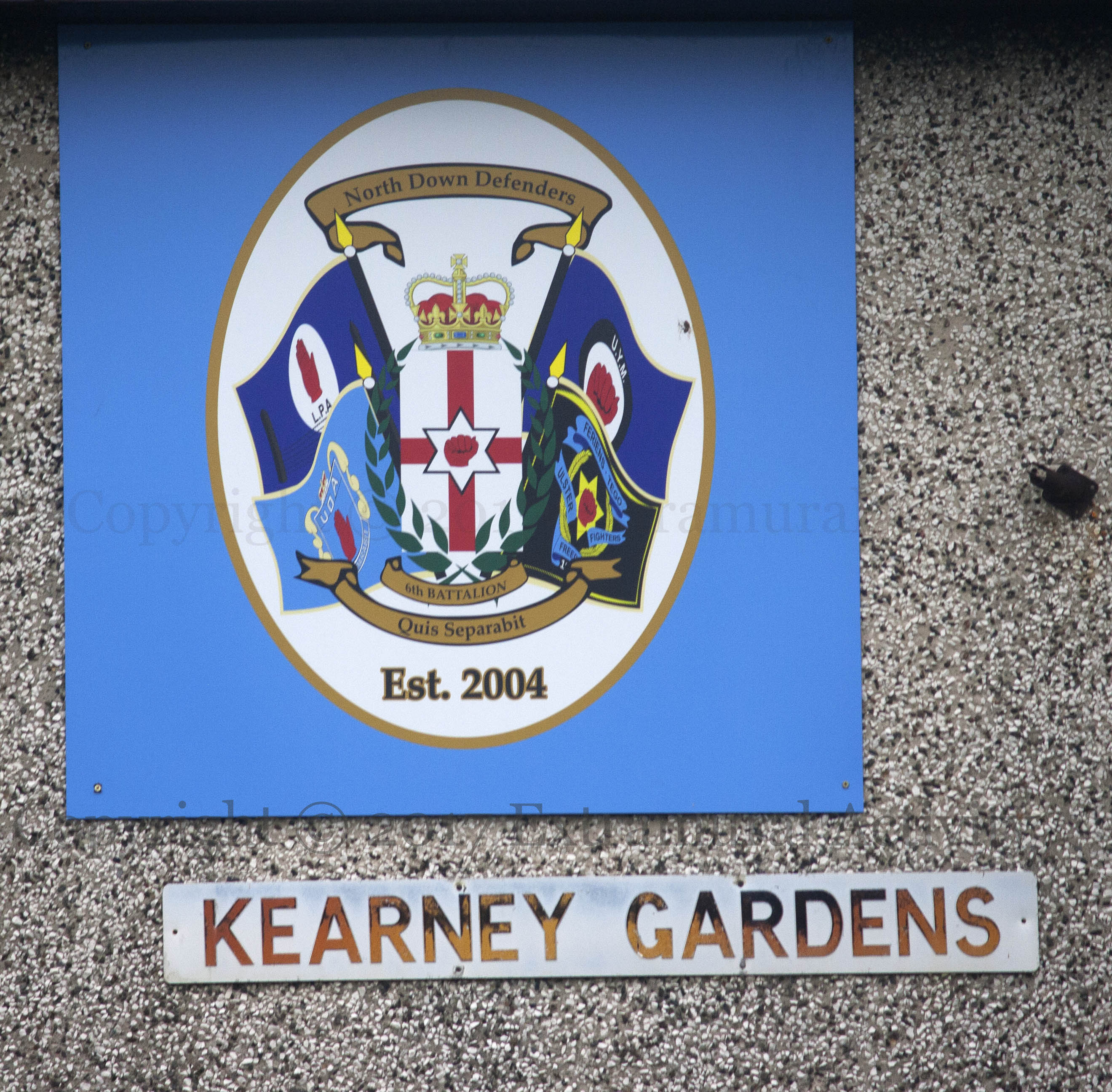
Here is a small board in Bangor from the North Down Defenders flute band (Fb), unusual due to the modified Ulster banner with clenched red hand in the centre. Surrounding it are the flags of the LPA, UDA, UFF, and UYM.