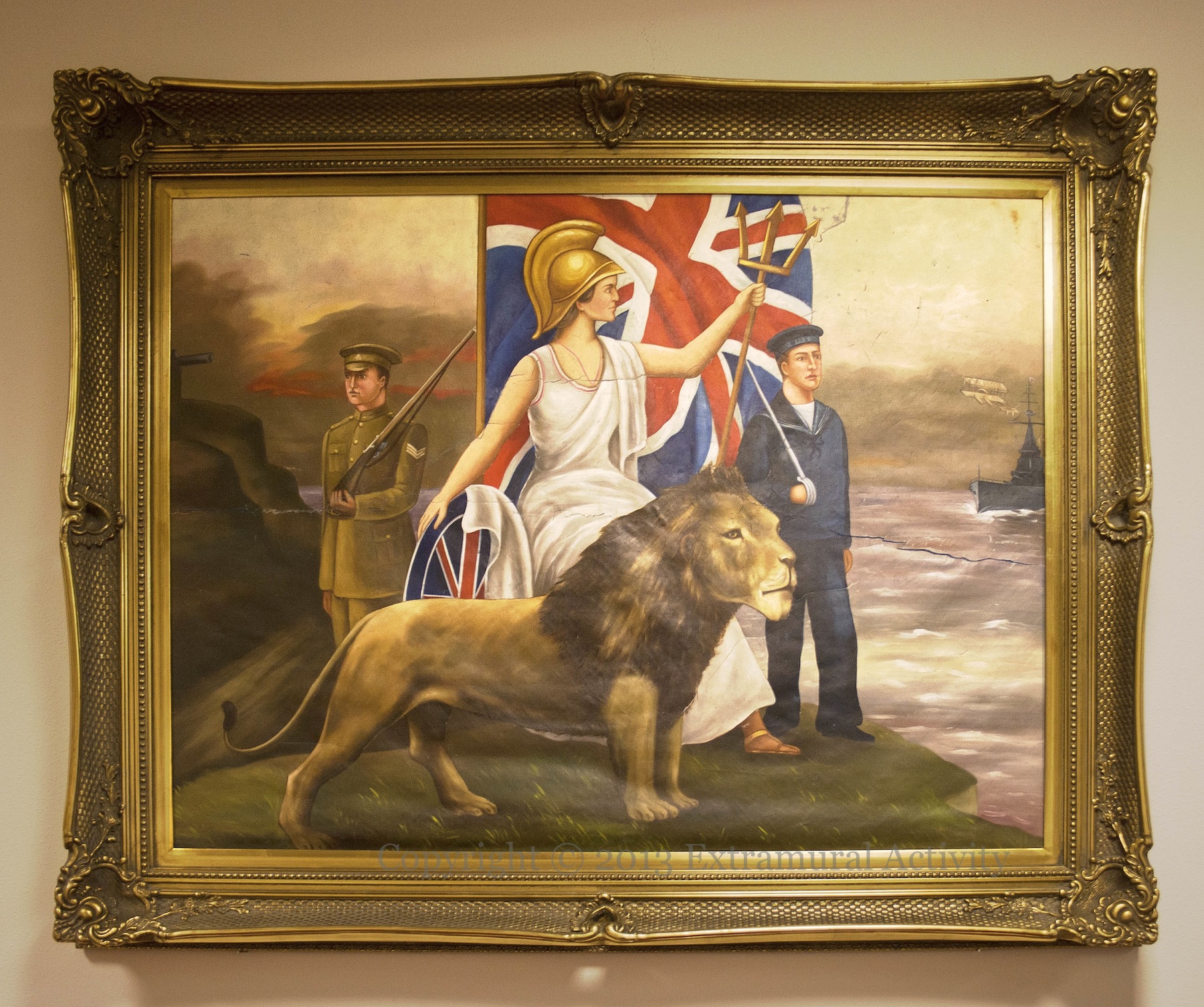
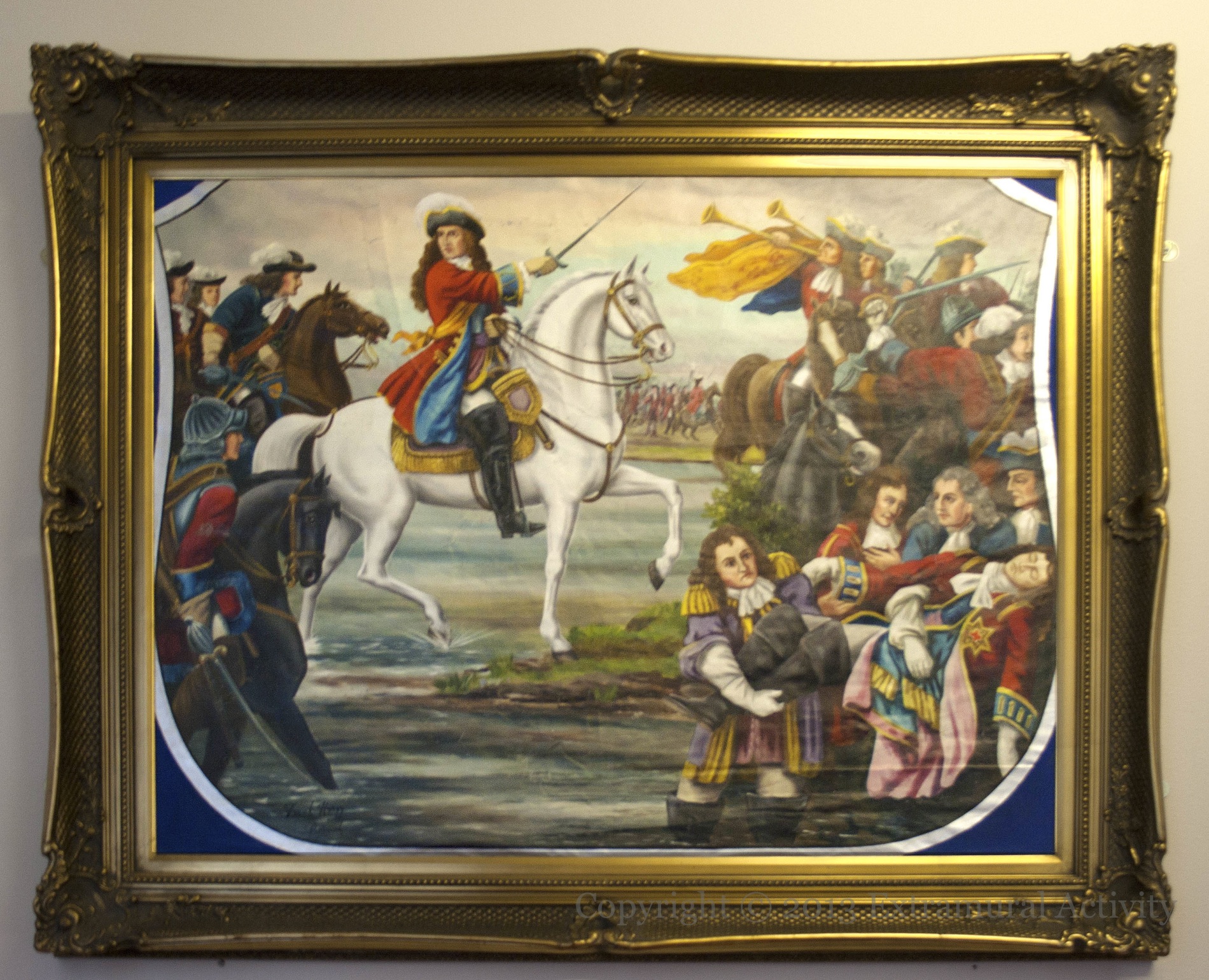
Two more images from inside the Clifton Street Orange Lodge, one of Britannia and a lion by the shore, between the army and the navy, and the other (below) of the victory of William of Orange over James in 1690.
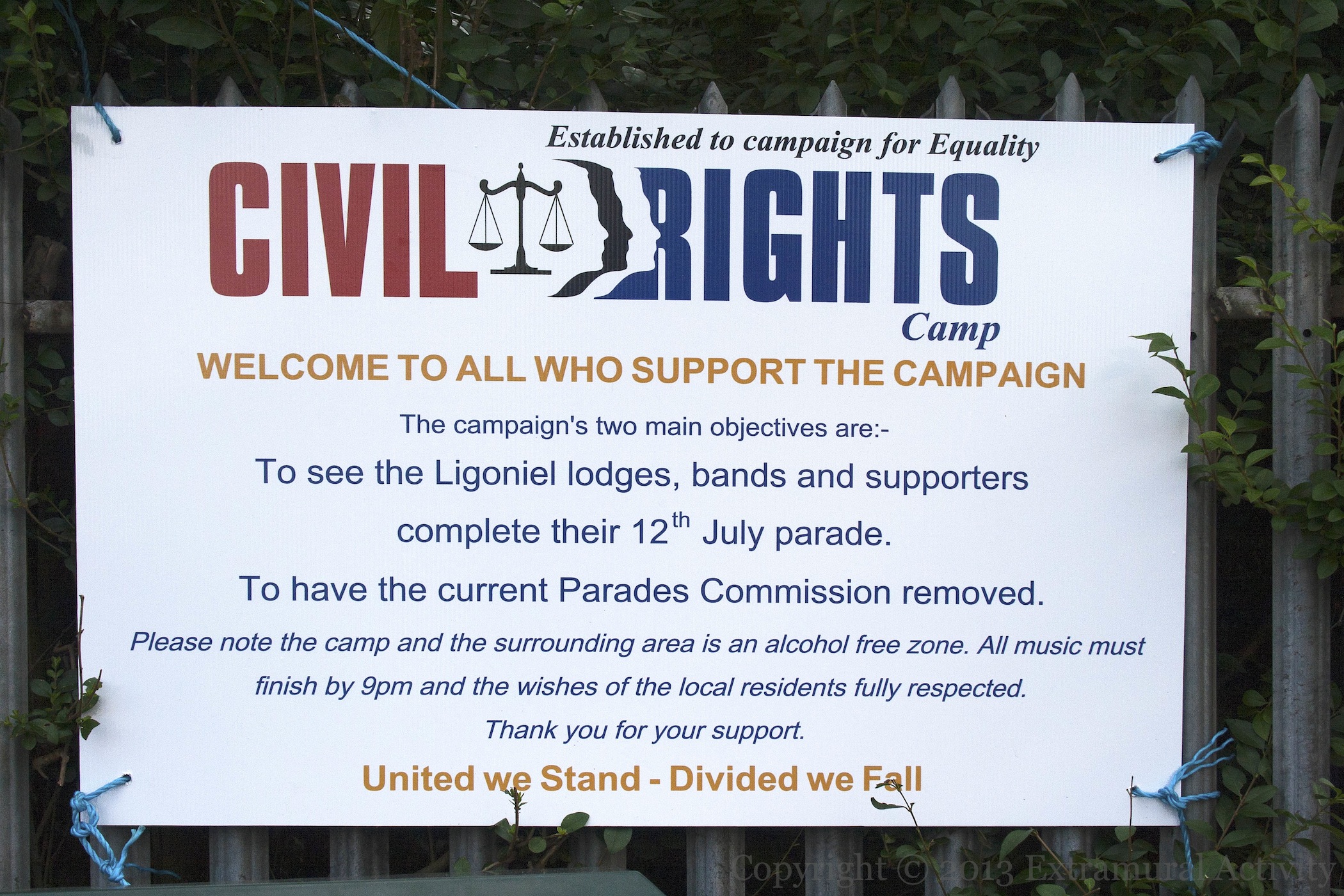
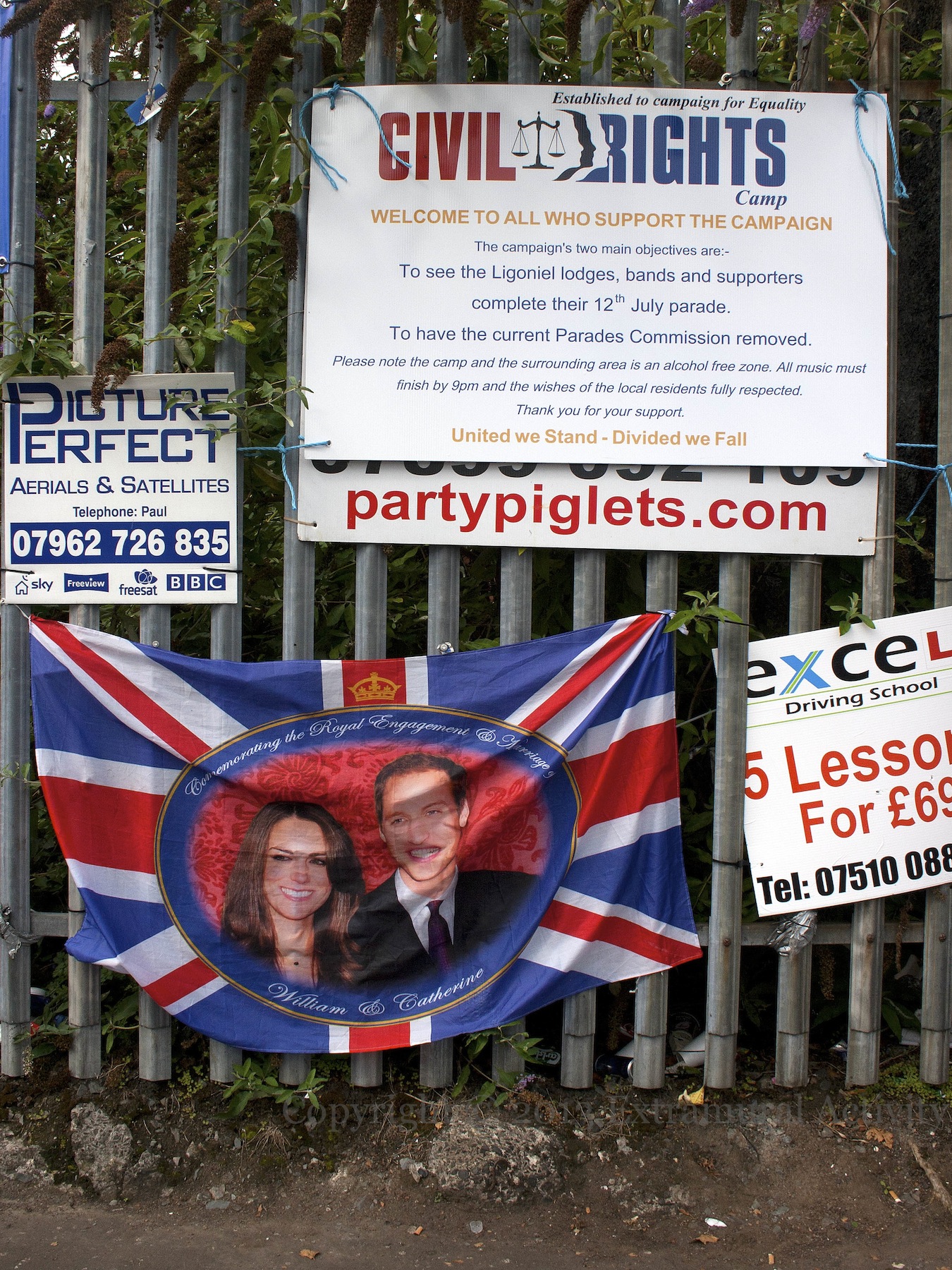
The language of “civil rights” and “equality” is being used at the Twaddell site, as can be seen in the placard shown here there are three copies of this sign: the second image, below, is of one on the north side of the street (visible in the previous set of Twaddell pictures) and the third image shows an additional copy on the electrical box on the south side of the street.
“Established to campaign for Equality. Civil Rights. Welcome to all who support the campaign. The two main objectives are to see the Ligoniel lodges, bands and supporters complete their 12th july parade; to have the current parades commission removed. Please note the camp and the surrounding area is an alcohol free zone. All music must finish by 9 p.m. and the wishes of the local residents fully respected. Thank you for your support. United we stand – divided we fall.”
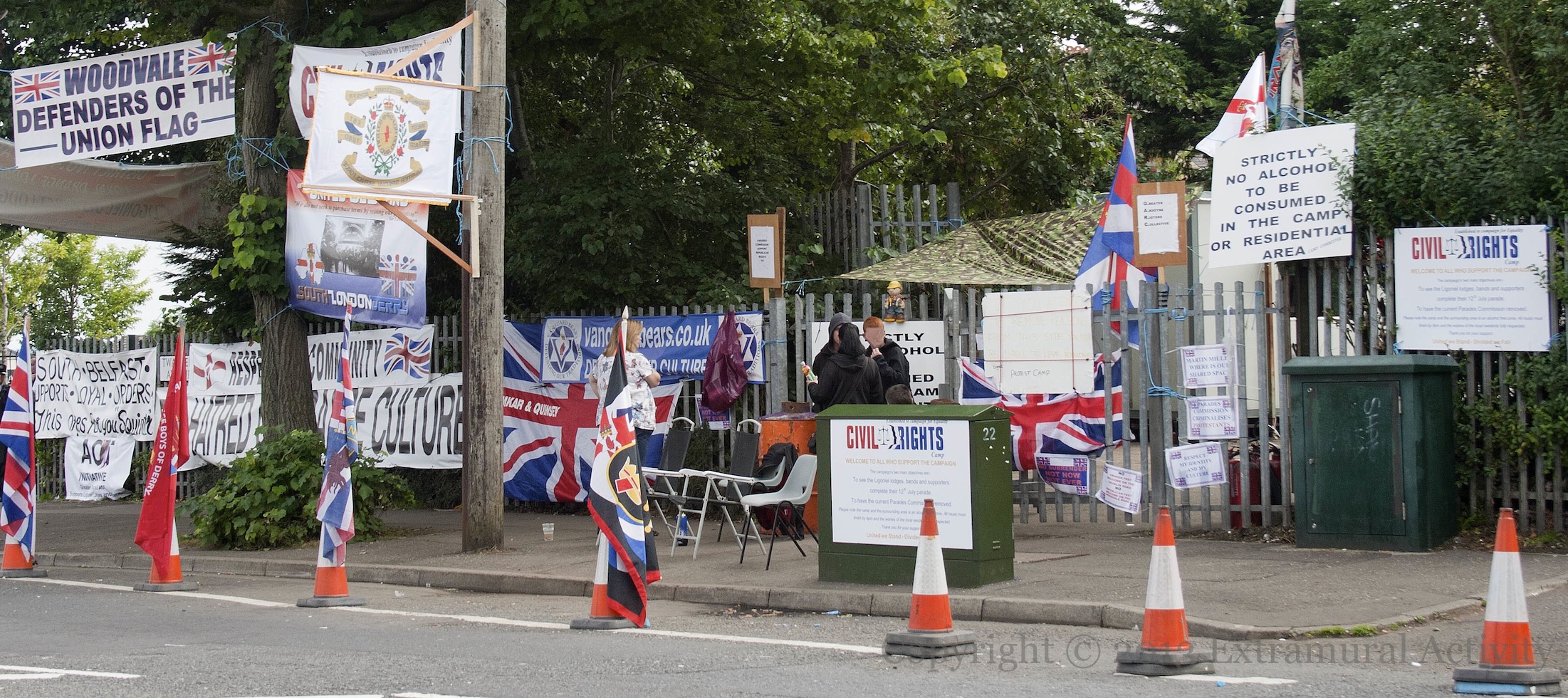
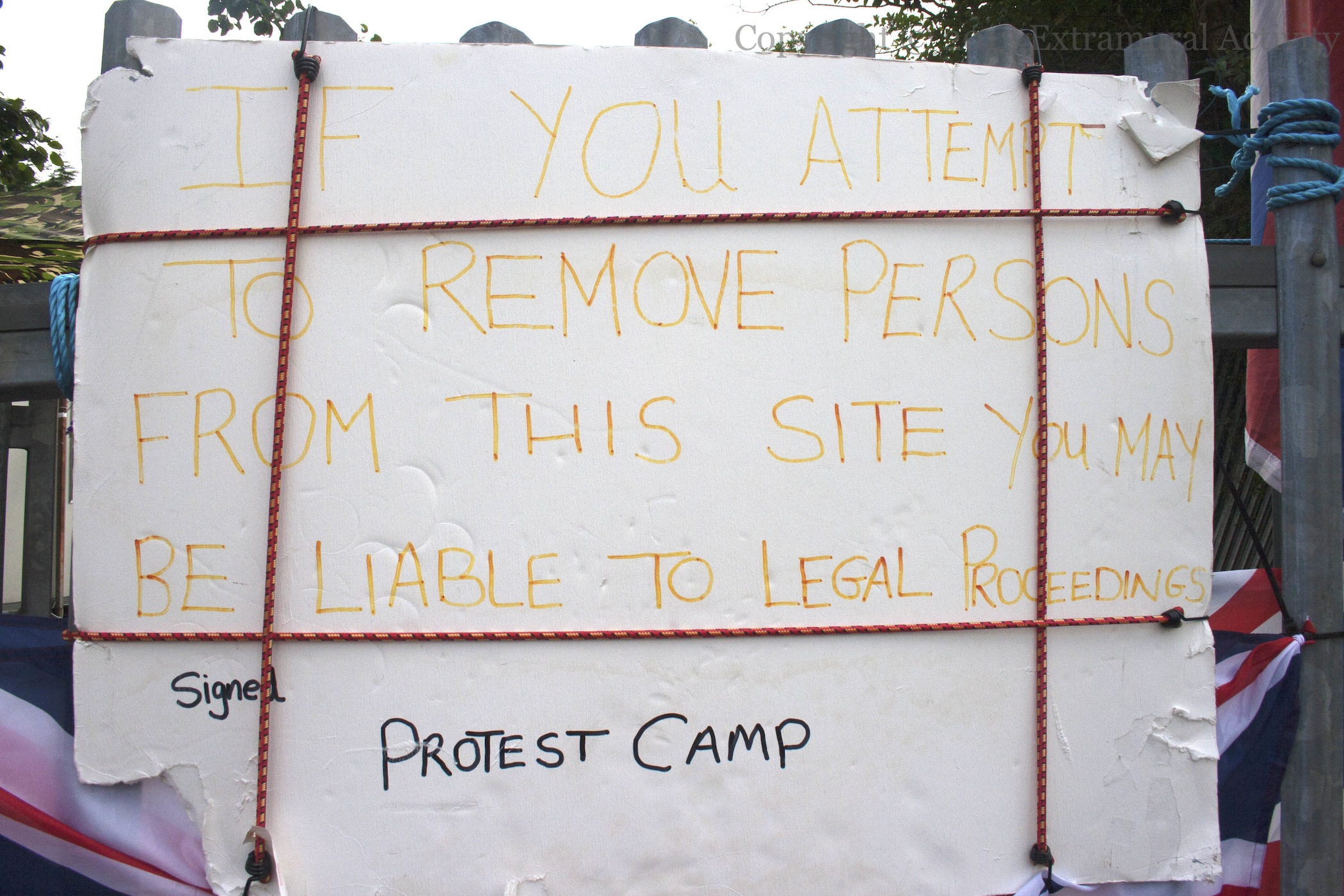
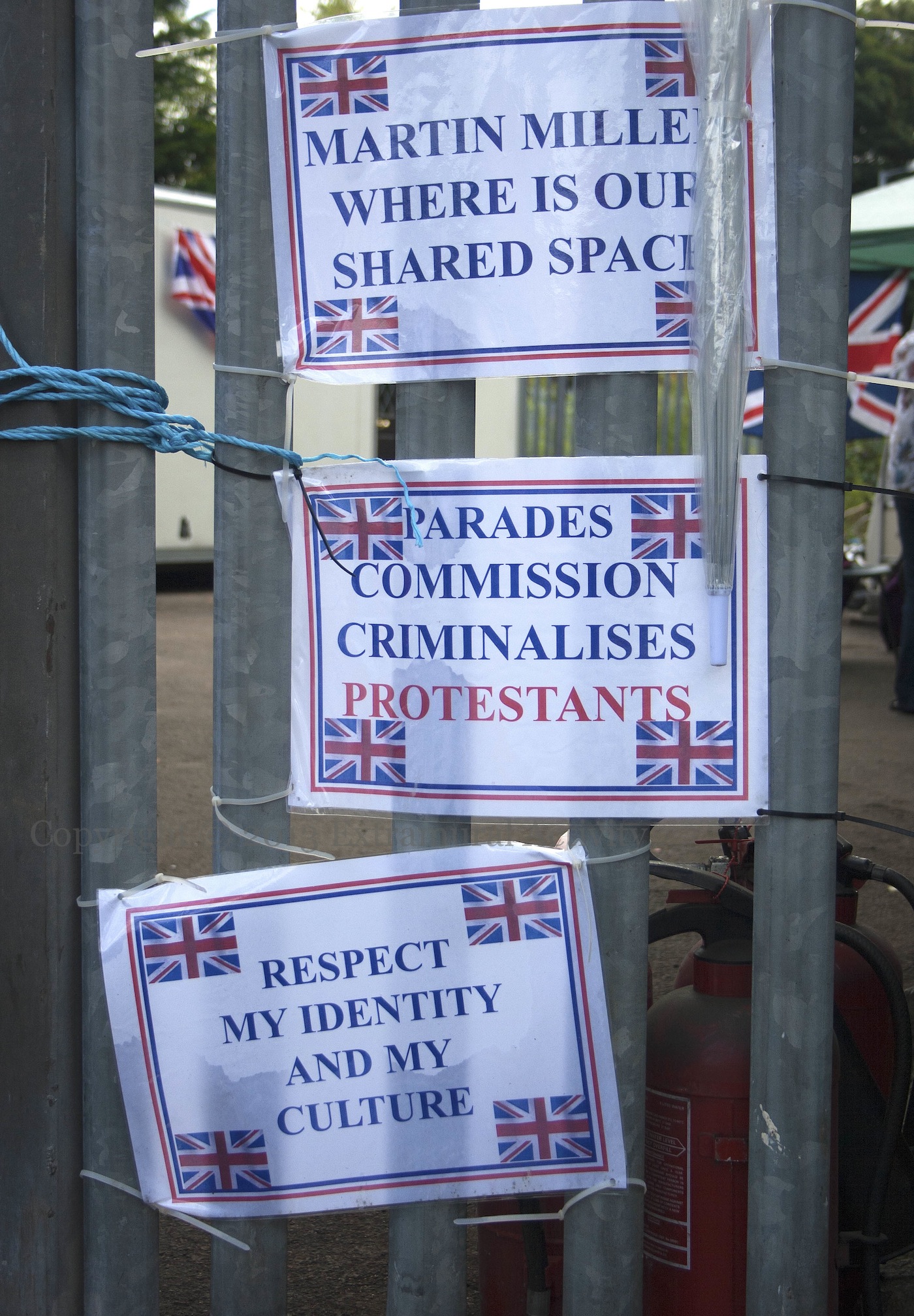
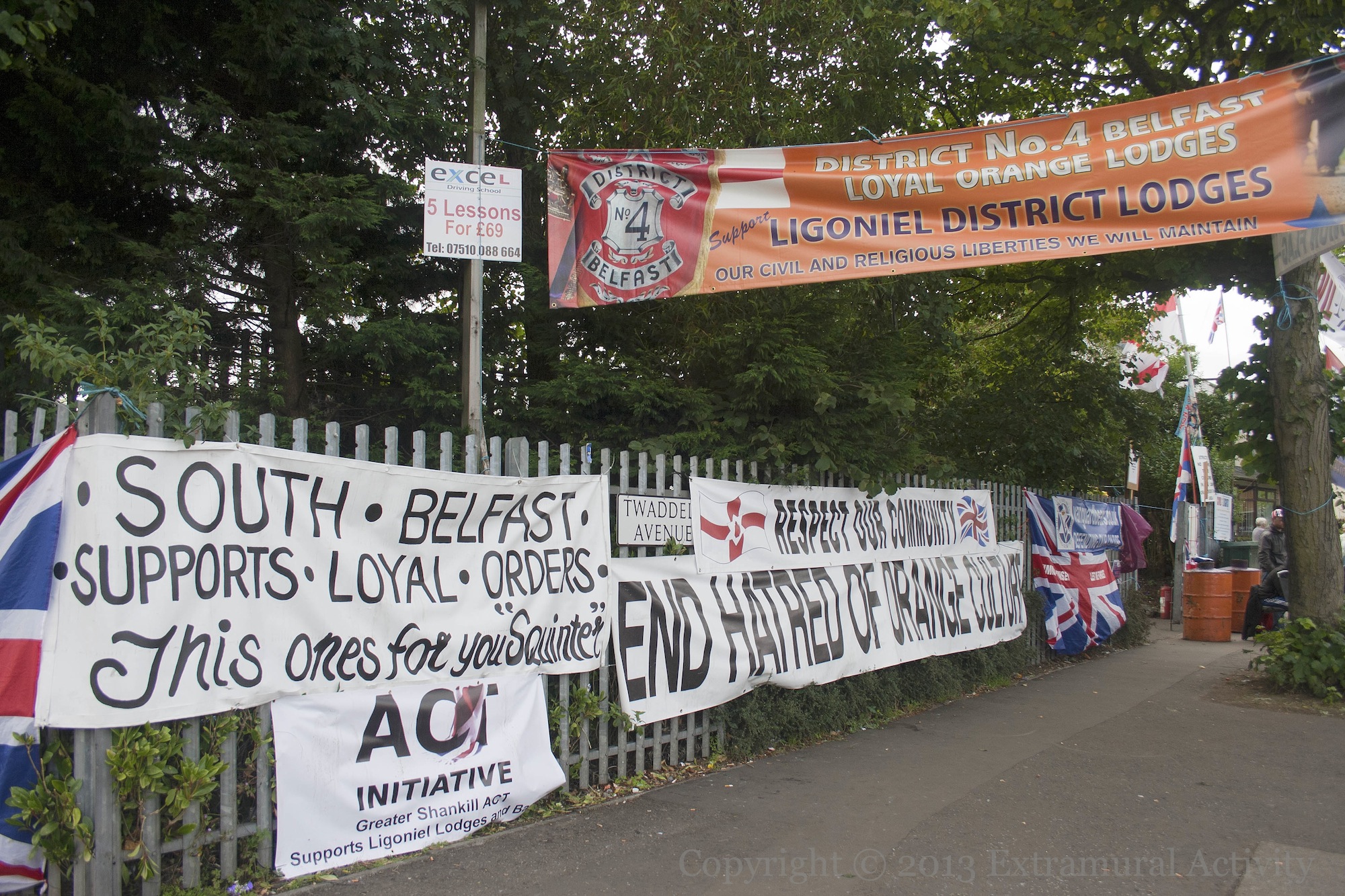
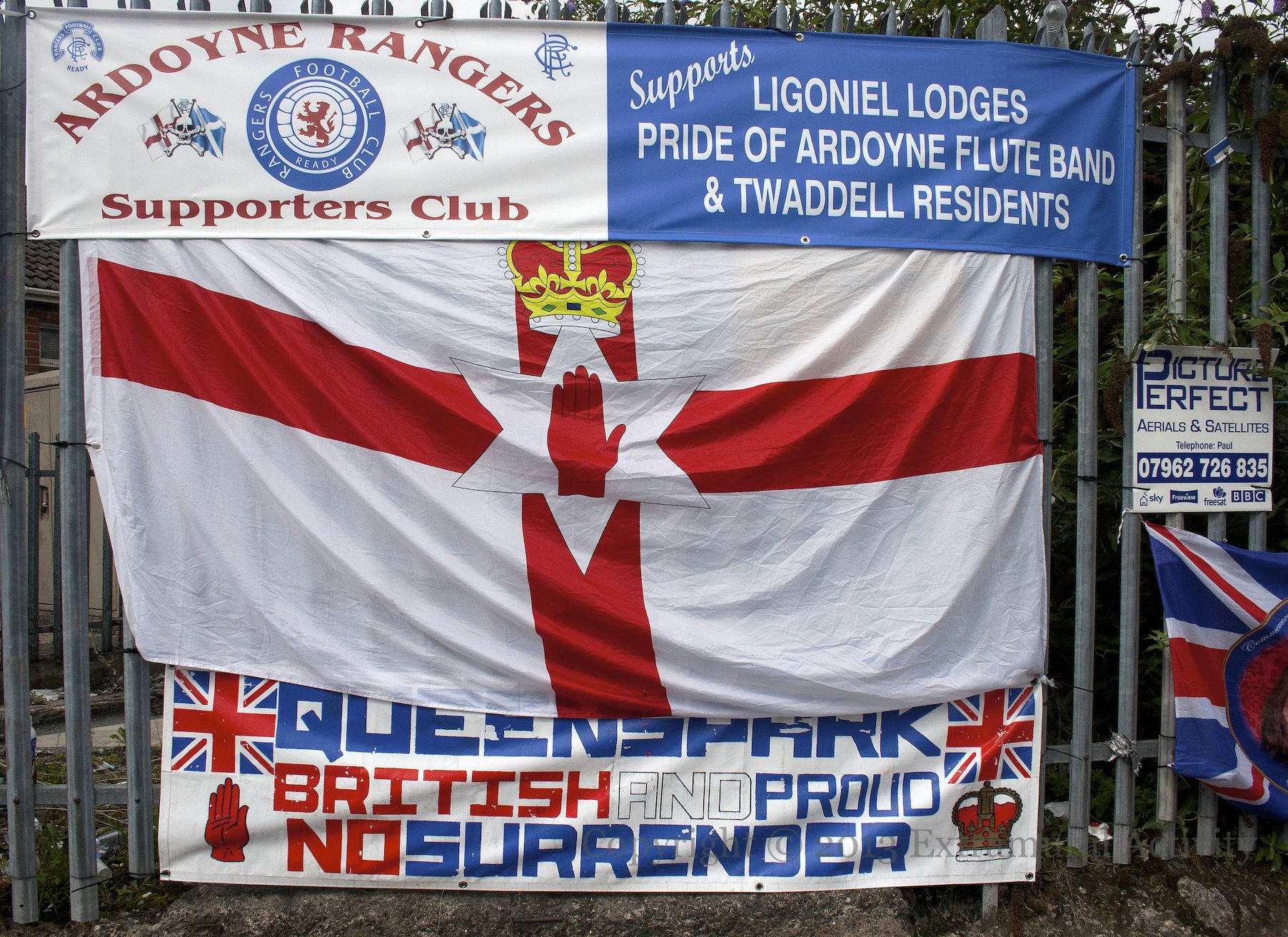
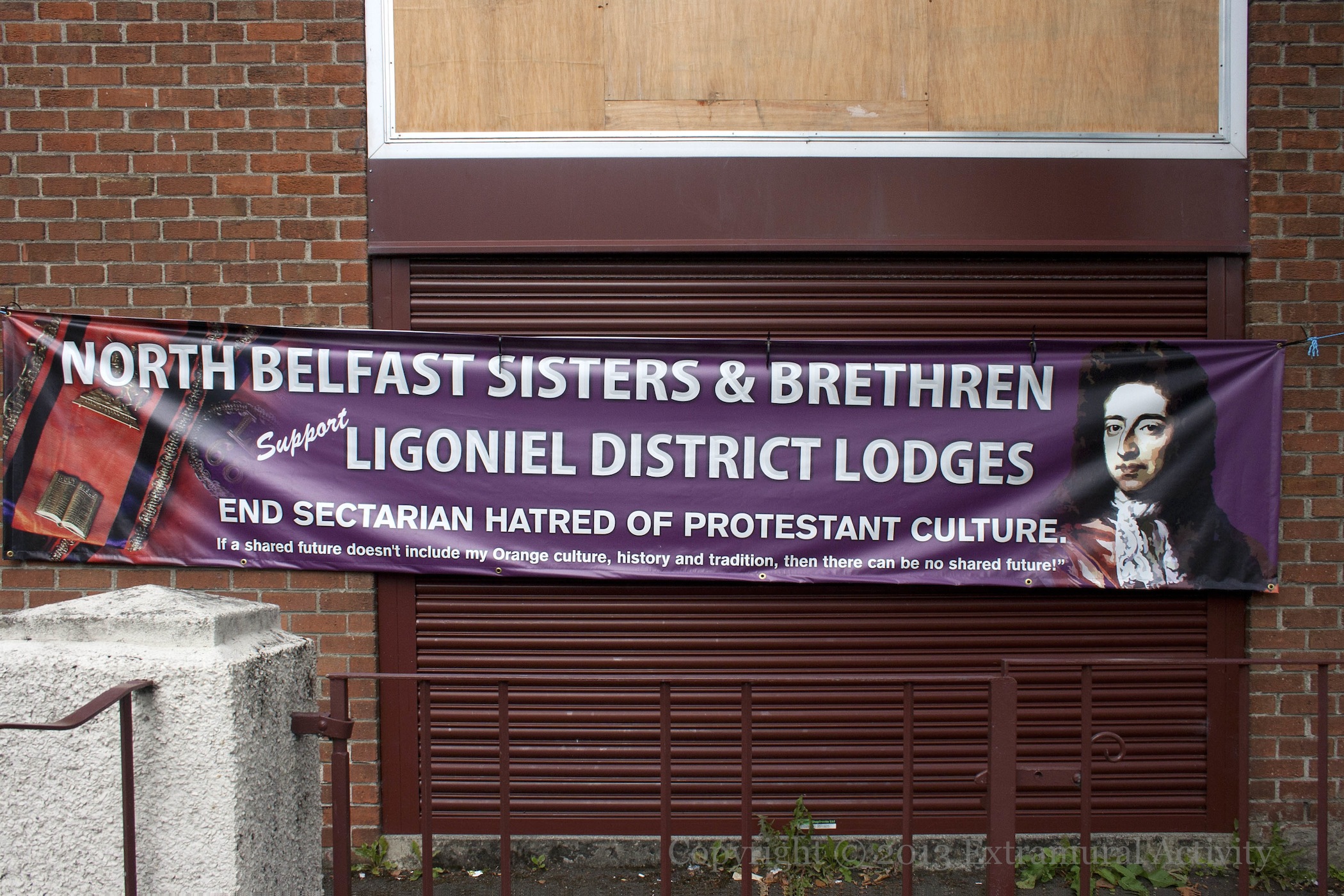
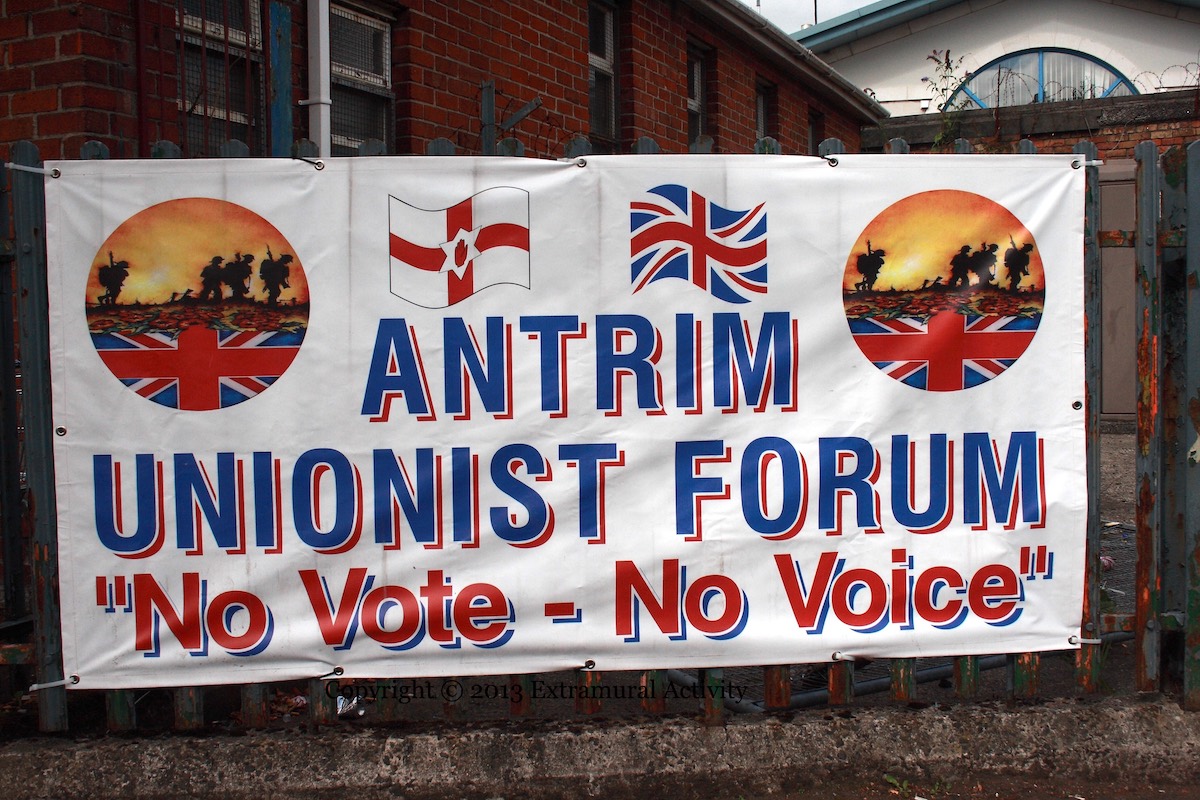
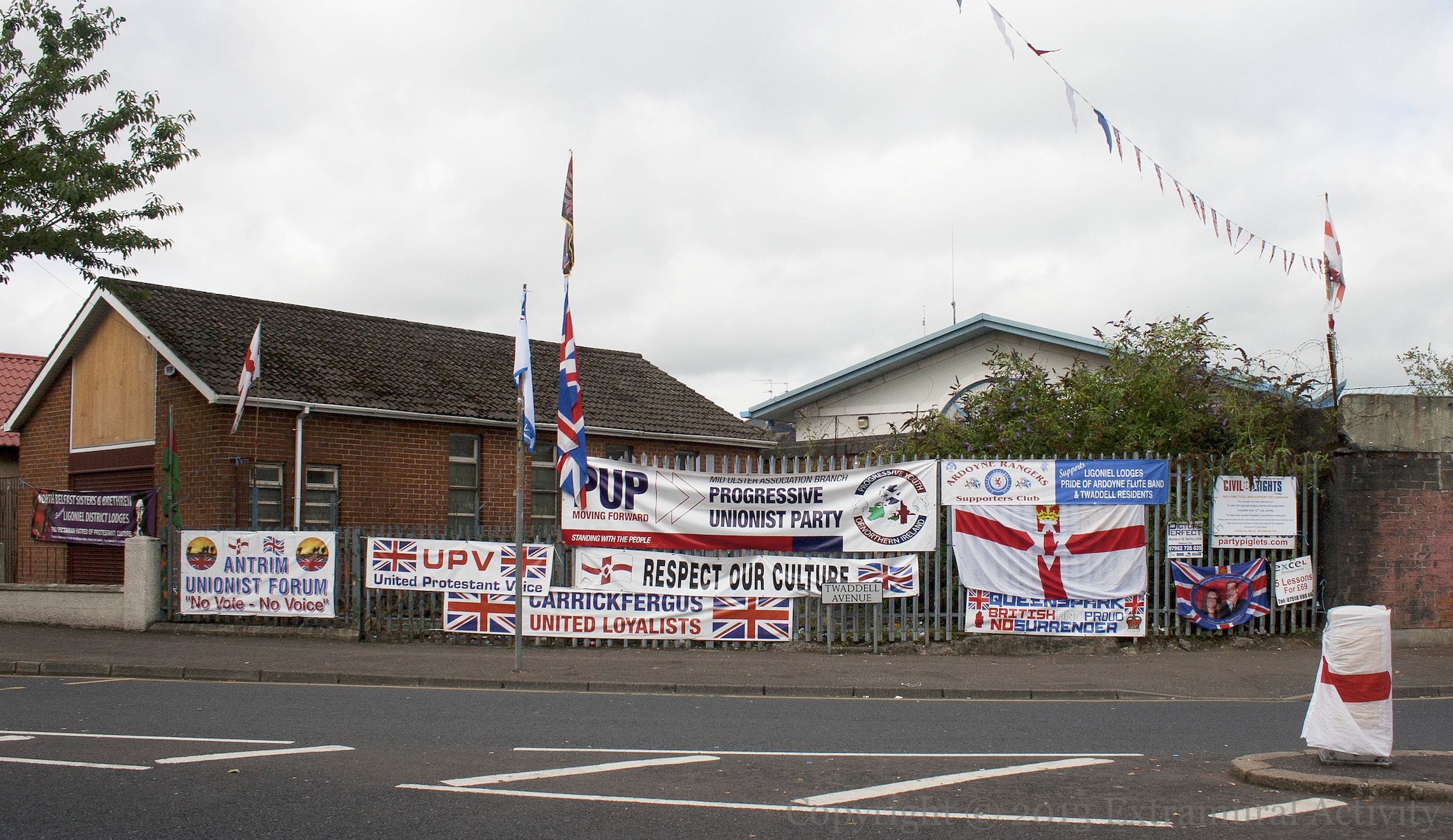
Three images from the protest camp at the top of Twaddell Avenue, at the southern border of Ardoyne. The protest is in response to a parades commission ruling that, on July 12th, Orange marches could only go past the Ardoyne shops in the morning but not return via the same route.
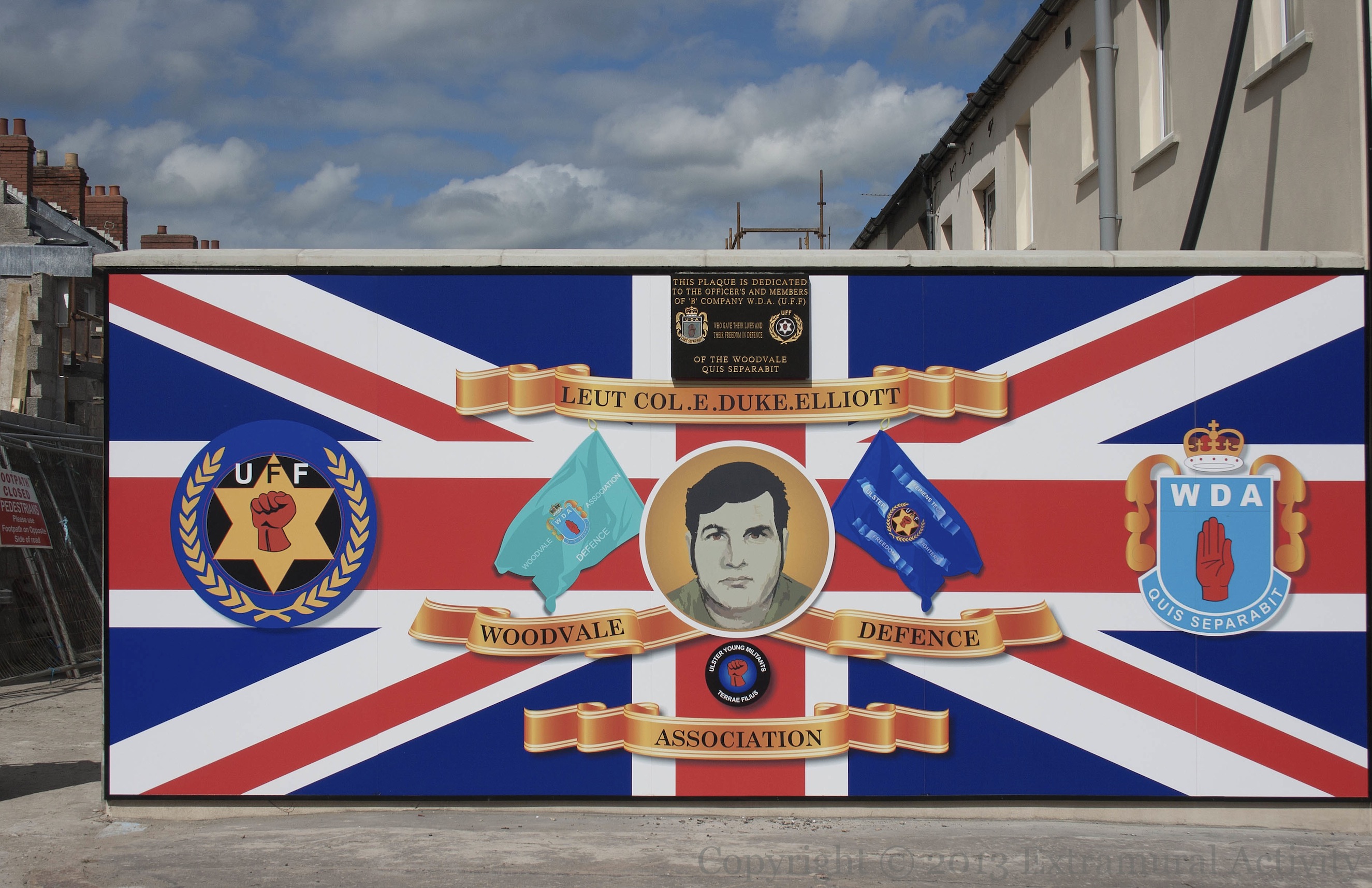
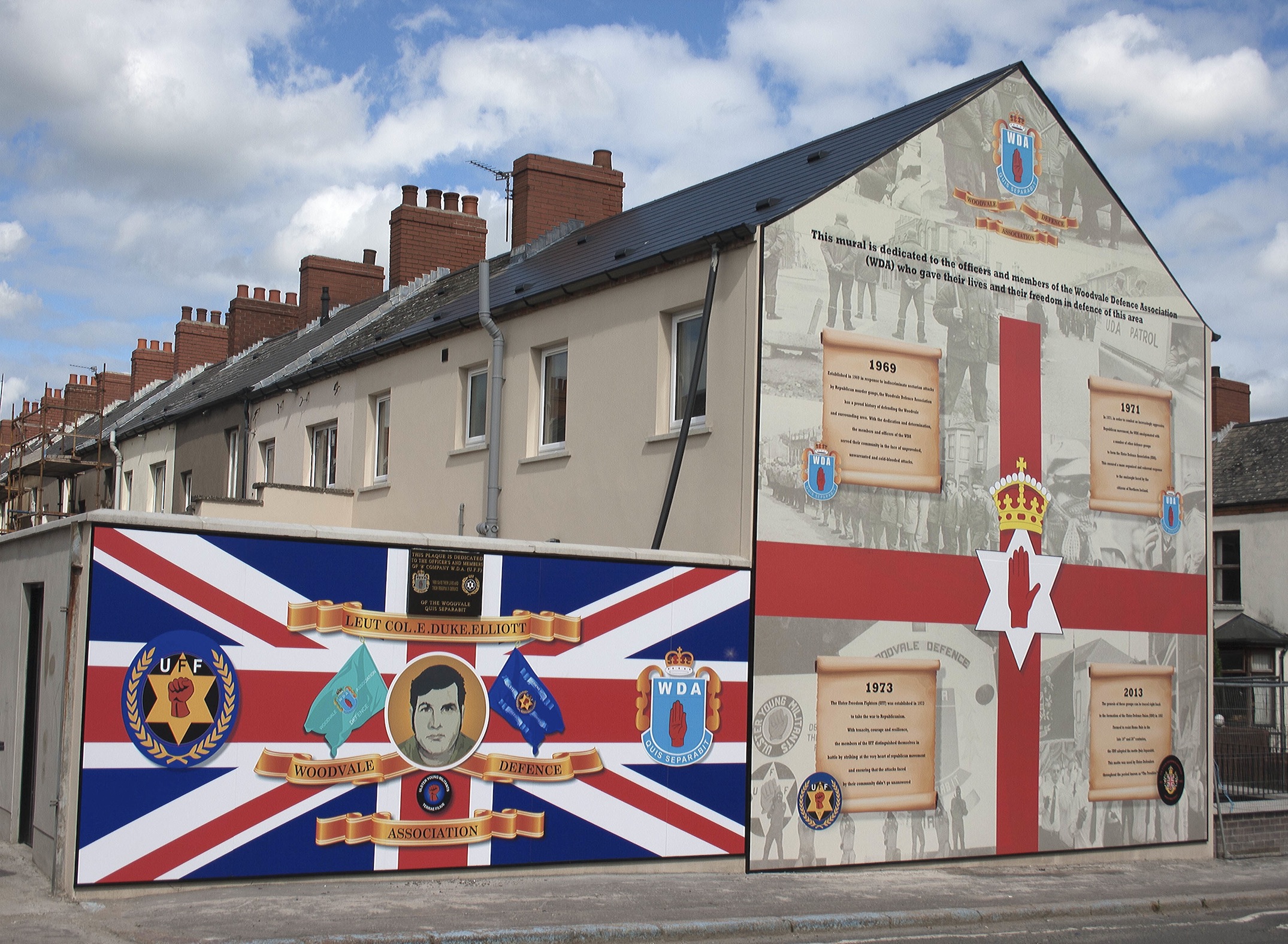
As mentioned in UDU-WDA-UDA-UFF, the end wall of Columbia Street was knocked down, taking with it a former Duke Elliott/UDA mural, which has now been replaced with boards (rather than murals) commemorating the history of the UDA and Elliott. Elliott lived one street over, in Leopold Street (WP). He was killed in 1972, at age 28, in a dispute with other UDA members.
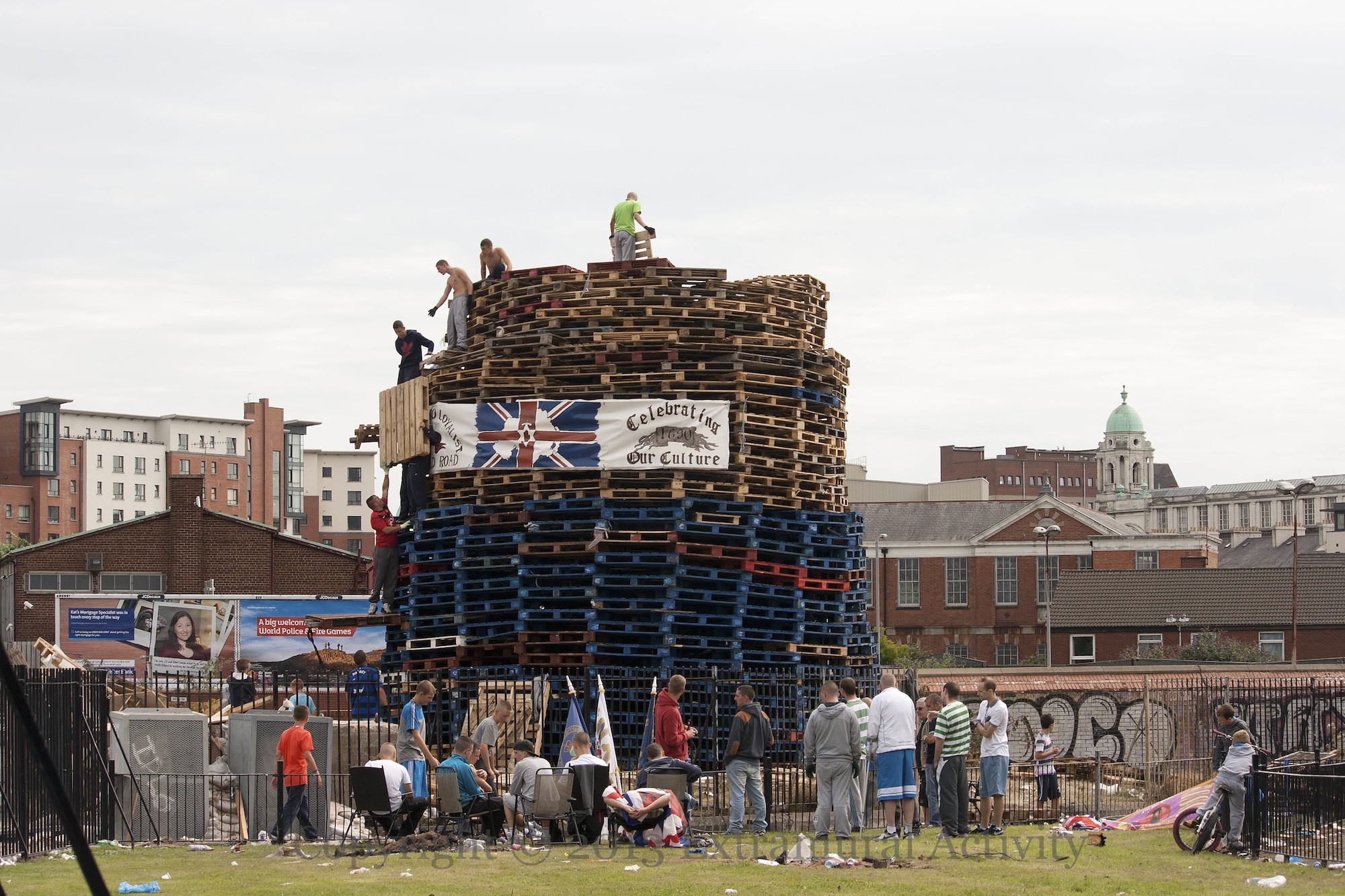
Three images of flags on two republican bonfires, built to commemorate the introduction of internment in 1971. According to news reports (e.g. BBC-NI), the ‘Celebrating Our Culture’ banner on this bonfire at the base of Divis tower had been stolen from Linfield Road in south Belfast (it hung to the left of the mural to the left in this image) but was subsequently removed from the bonfire (whether or not it was returned is not reported). The image above is from Thursday (Aug. 8th). (Last year’s bonfire also had stolen PUL banners: see M08775.)
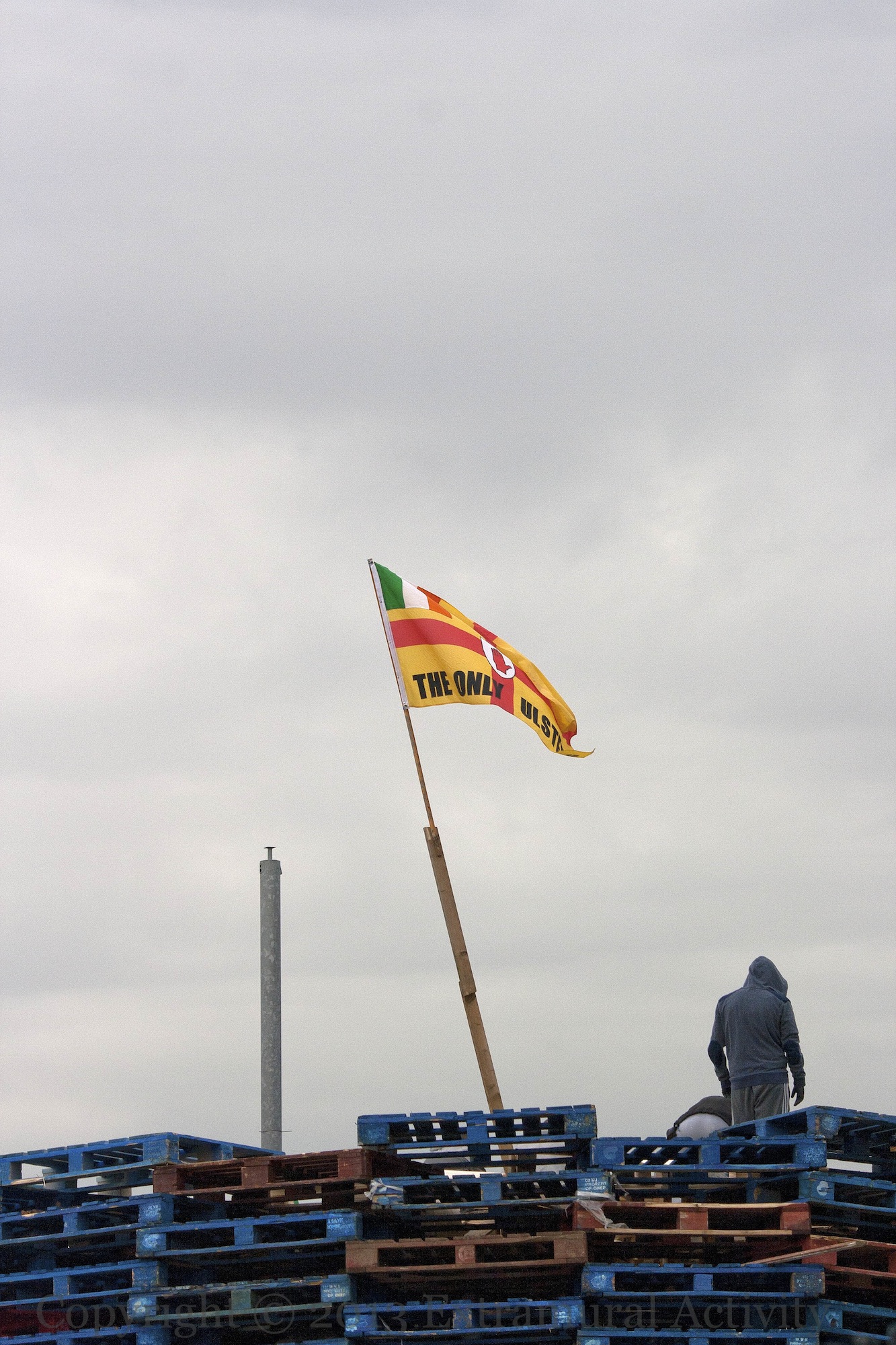
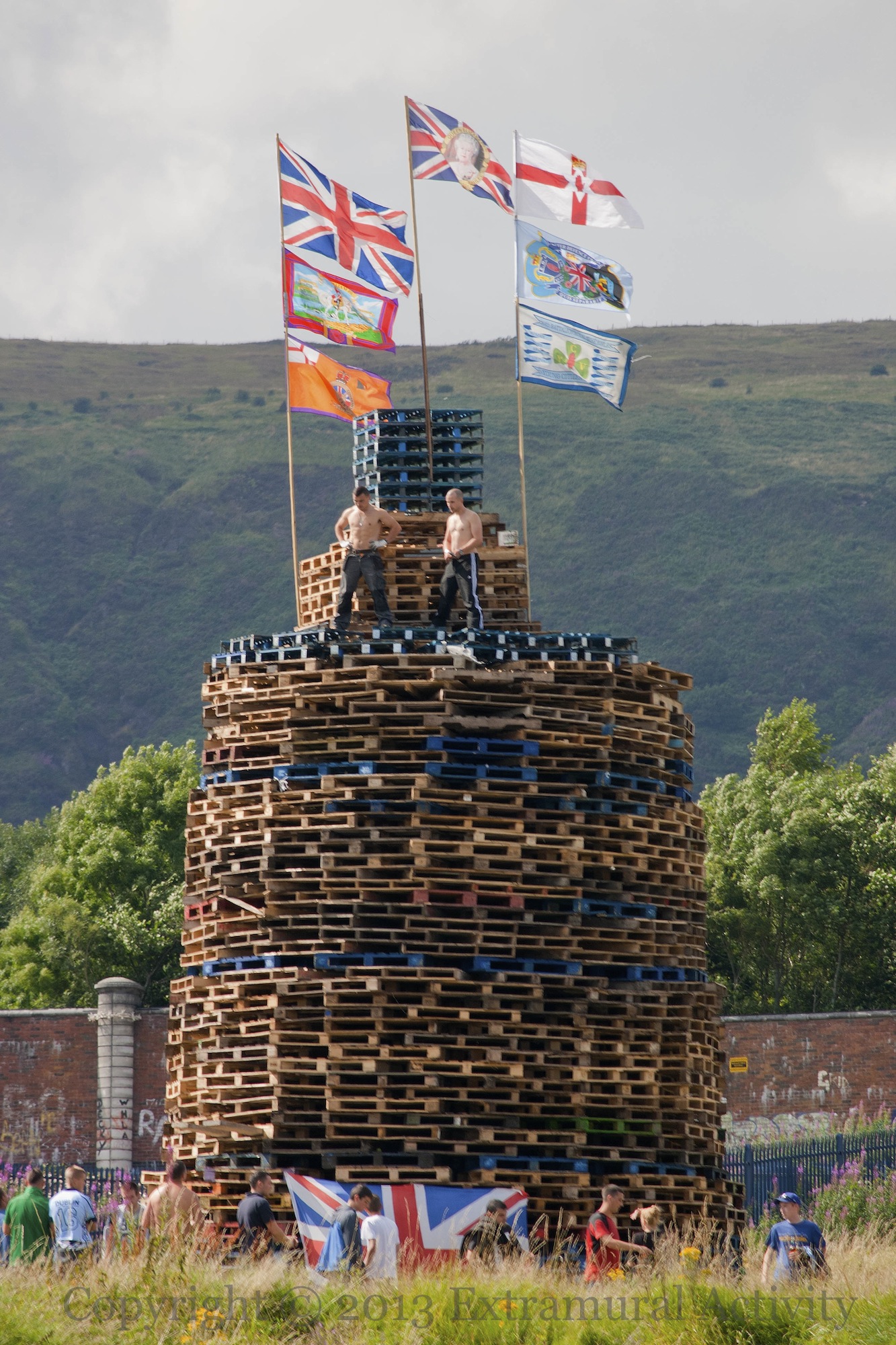
The flag in the second image (an Ulster flag with a tricolour in the corner and the words ‘The Only Ulster’ on the bottom) was on the Divis bonfire during construction on Wednesday but removed by Thursday. The third image is of a bonfire in Beechmount (between Corpus Christi and St. Paul’s schools) flying the flags of various loyalist groups, as well as the Union flag and the Northern Ireland flag.
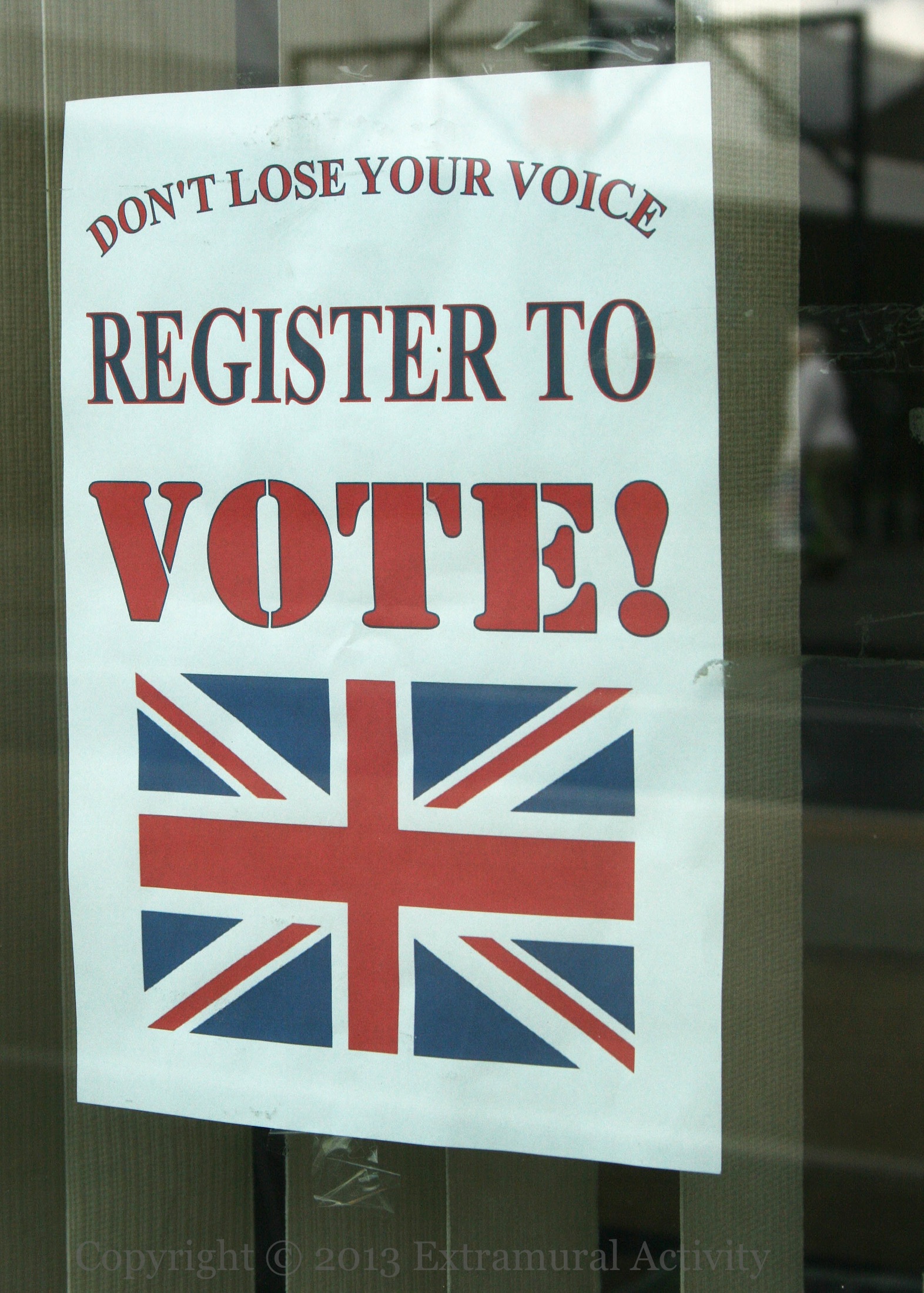
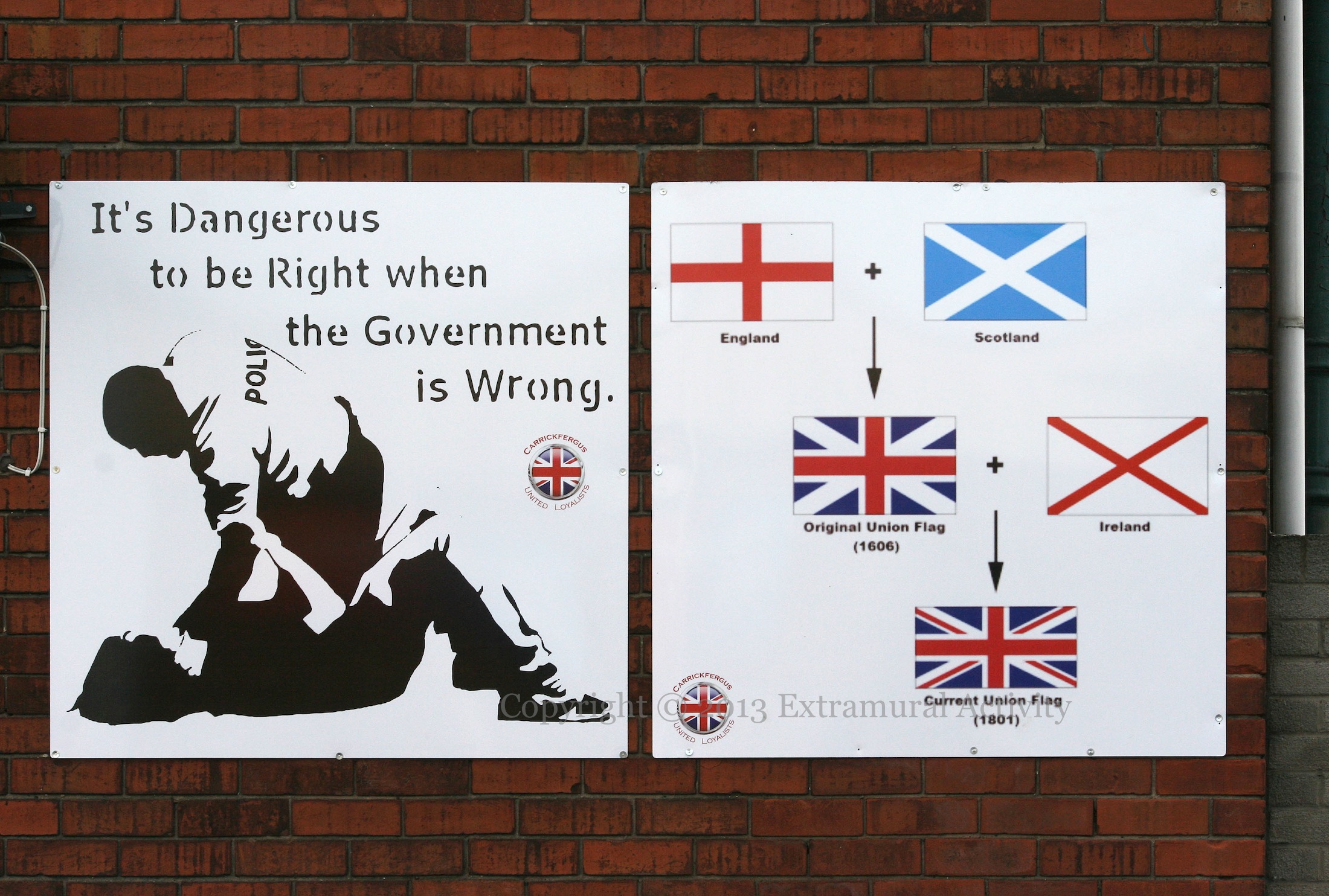
A flyer/poster in the window (of an unmarked unit, but presumably a community resource centre – next to Sam Glenn’s butchers) exhorting residents of the Shankill area to register to vote, part of the recent trend of sentiments expressing Protestant marginalization. (See previously: Carrickfergus panels one | two)
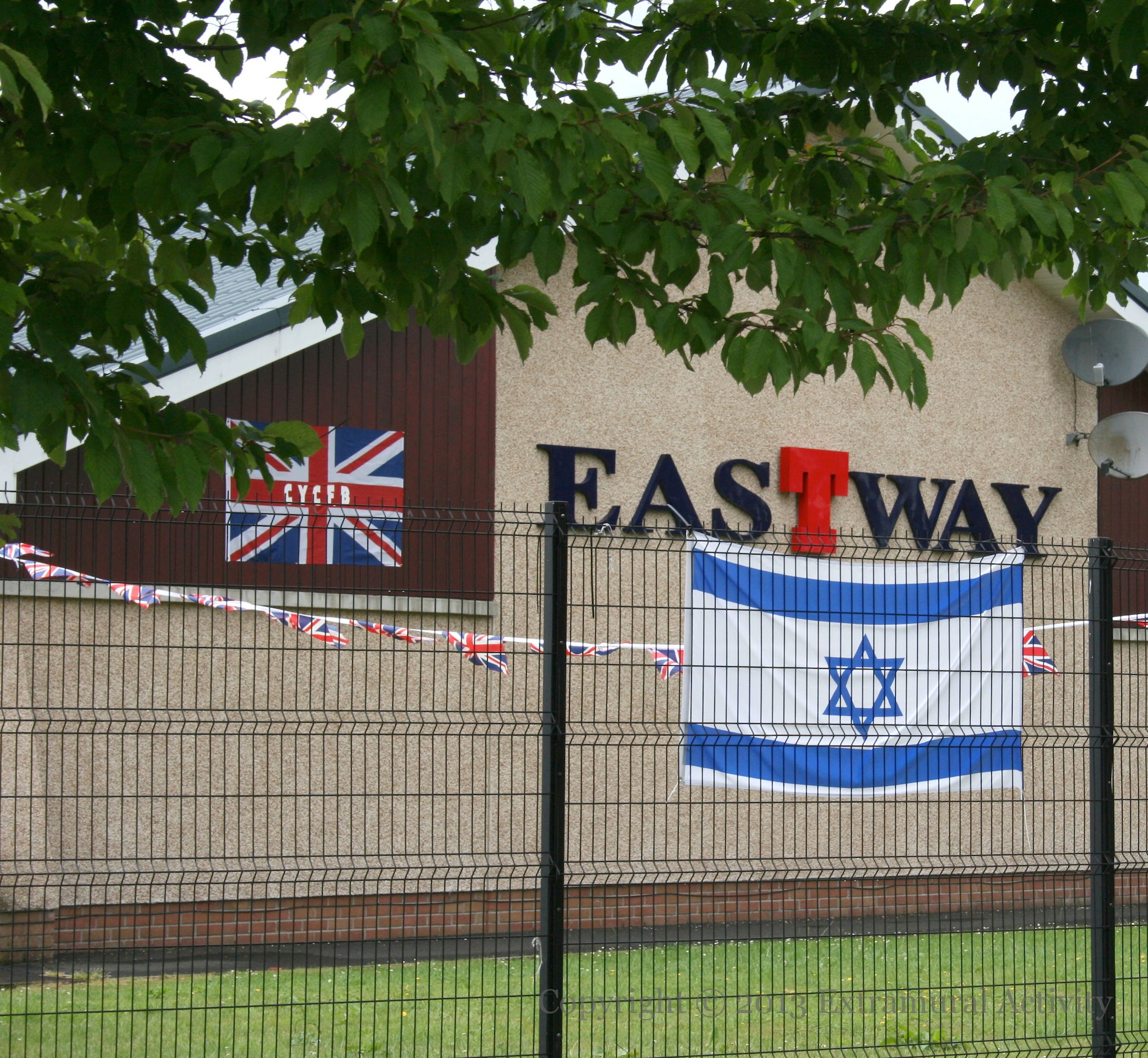
The Israeli flag flies on a fence (along with other flags, not in shot) outside the Eastway social club in Rathcoole. On the wall of the club is a union flag with the letters “CYCFB” standing for “Cloughfern Young Conquerors Flute Band”. The band will next parade in the area on August 17th. The “T” of “Eastway” is the Tennent’s Lager brand.
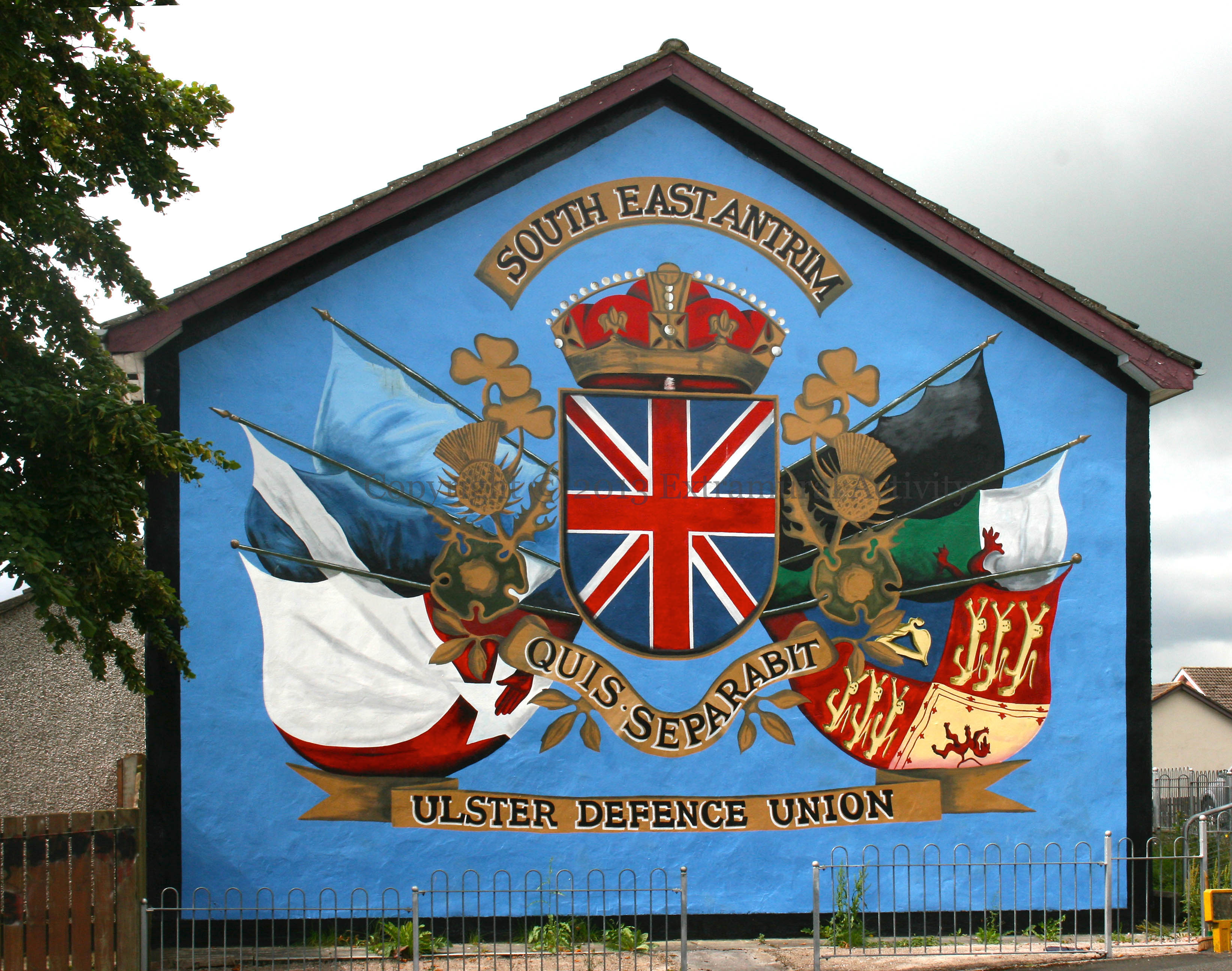
Shamrock, thistle, and rose are shown in this South East Antrim Ulster Defence Union mural but the daffodil is not, even though the Welsh “Red Dragon” is included alongside the Scottish Saltire, the flag of Northern Ireland, and Queen Elizabeth II’s royal standard.
The Ulster Defence Union was a loyalist organization founded to fight against Home Rule, launched on 17 March 1893. The name is now used by the post-ceasefire UDA (beginning in 2007: Newsletter | Remembrance Day Statement at CAIN).
Here are two more of the panels next to the new UVF ‘Inclusion’ mural in Carrickfergus, one decrying the use of force against loyalists, the other explaining the composition of the union flag, involving the St. Patrick’s saltire.
 Seosamh Mac Coille Collection