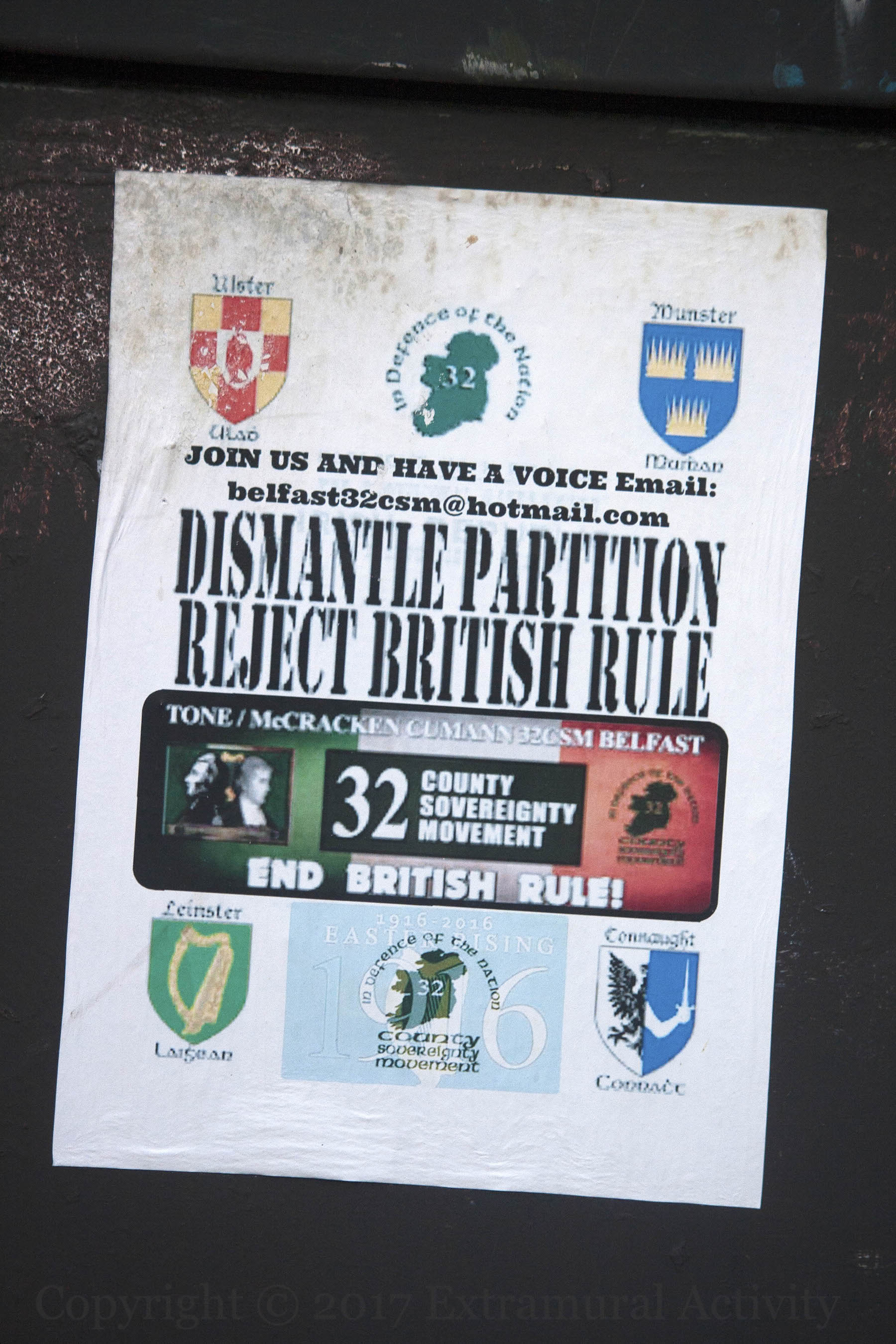
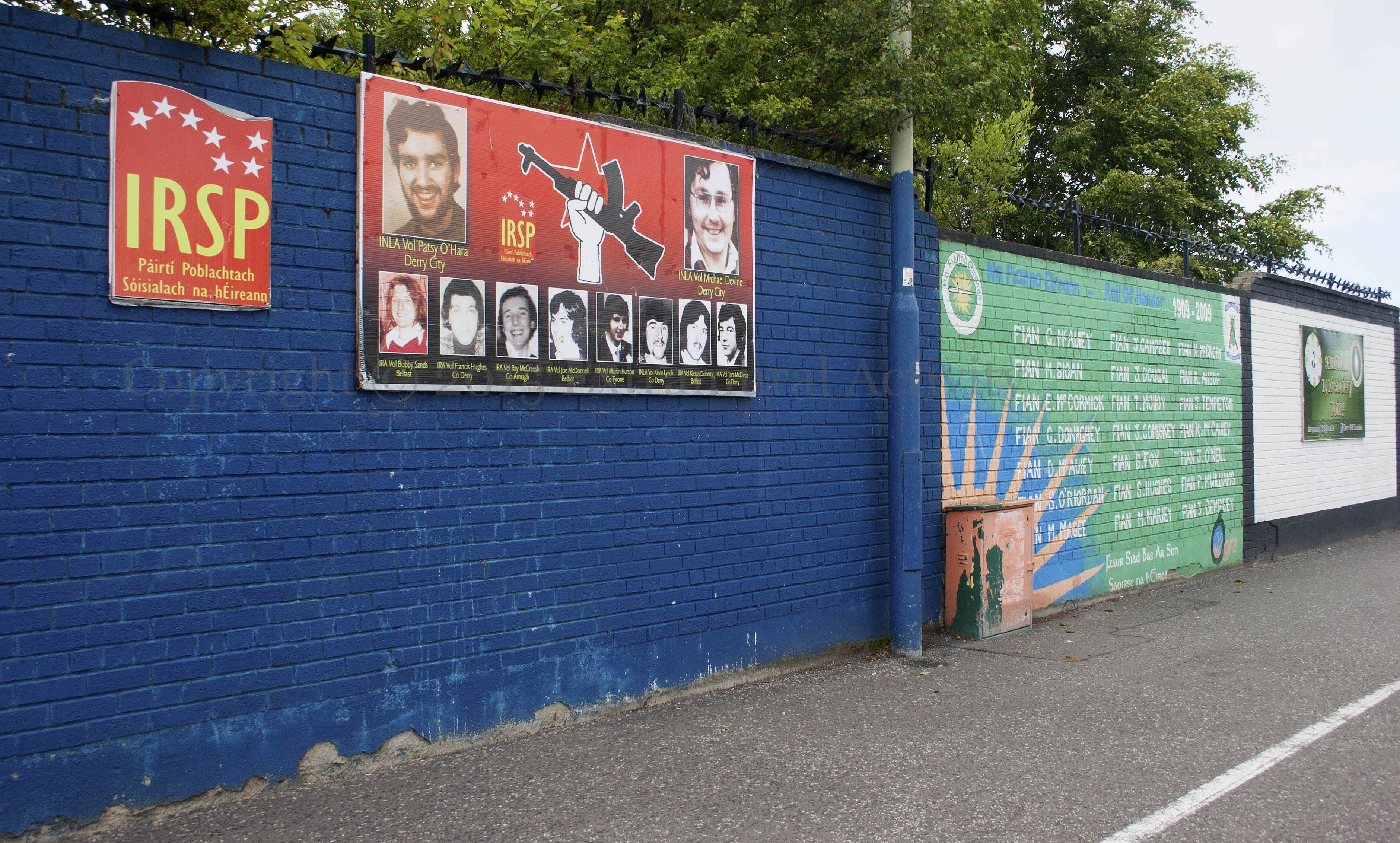
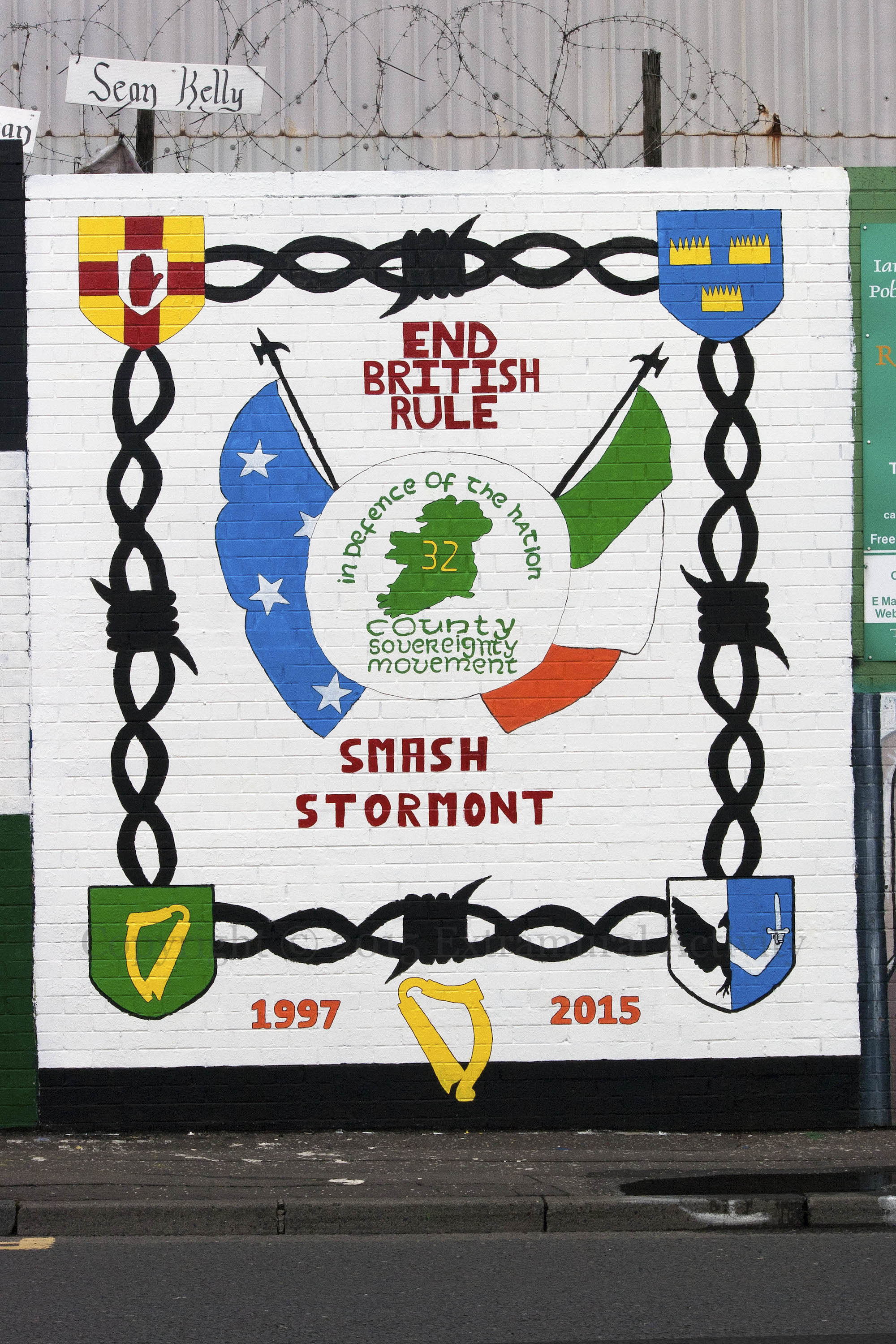
This is a 32 County Sovereignty Movement (32CSM) poster from west Belfast, asking people to “Dismantle partition – reject British rule”. The organisation describes itself as “a republican pressure group”. The Belfast cumann (Fb | web) is named after Wolfe Tone and Henry Joy McCracken (of the 1798 Rebellion).
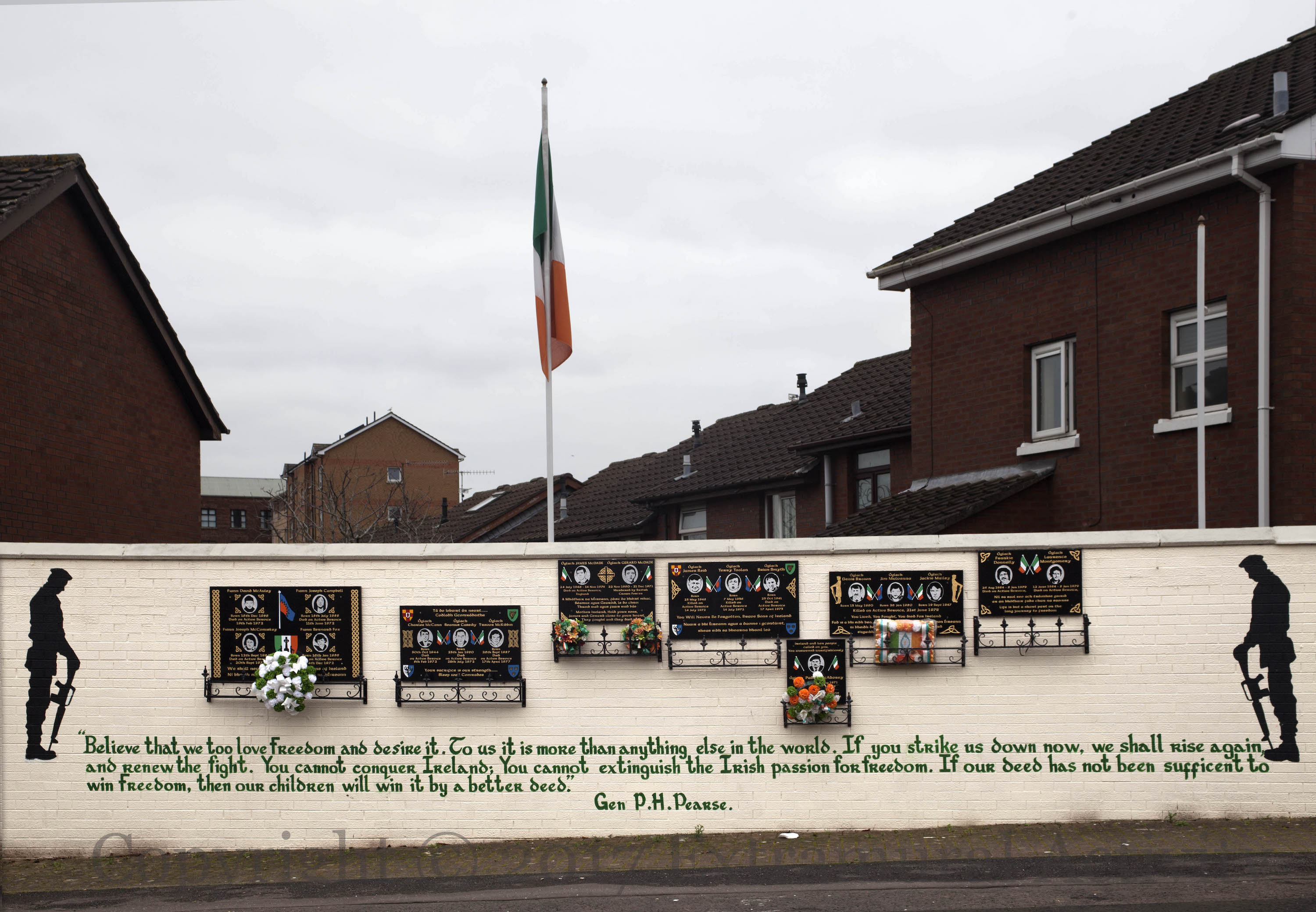
“[I assume that I am speaking to Englishmen who value their freedom, and who profess to be fighting for the freedom of Belgium and Serbia [in WWI].] Believe that we too love freedom and desire it. To us it is more than anything else in the world. If you strike us down now, we shall rise again and renew the fight. You cannot conquer Ireland; you cannot extinguish the Irish passion for freedom. If our deed has not been sufficient to win freedom, then our children will win it by a better deed – Gen. P. H. Pearse” at his court martial in 1916.
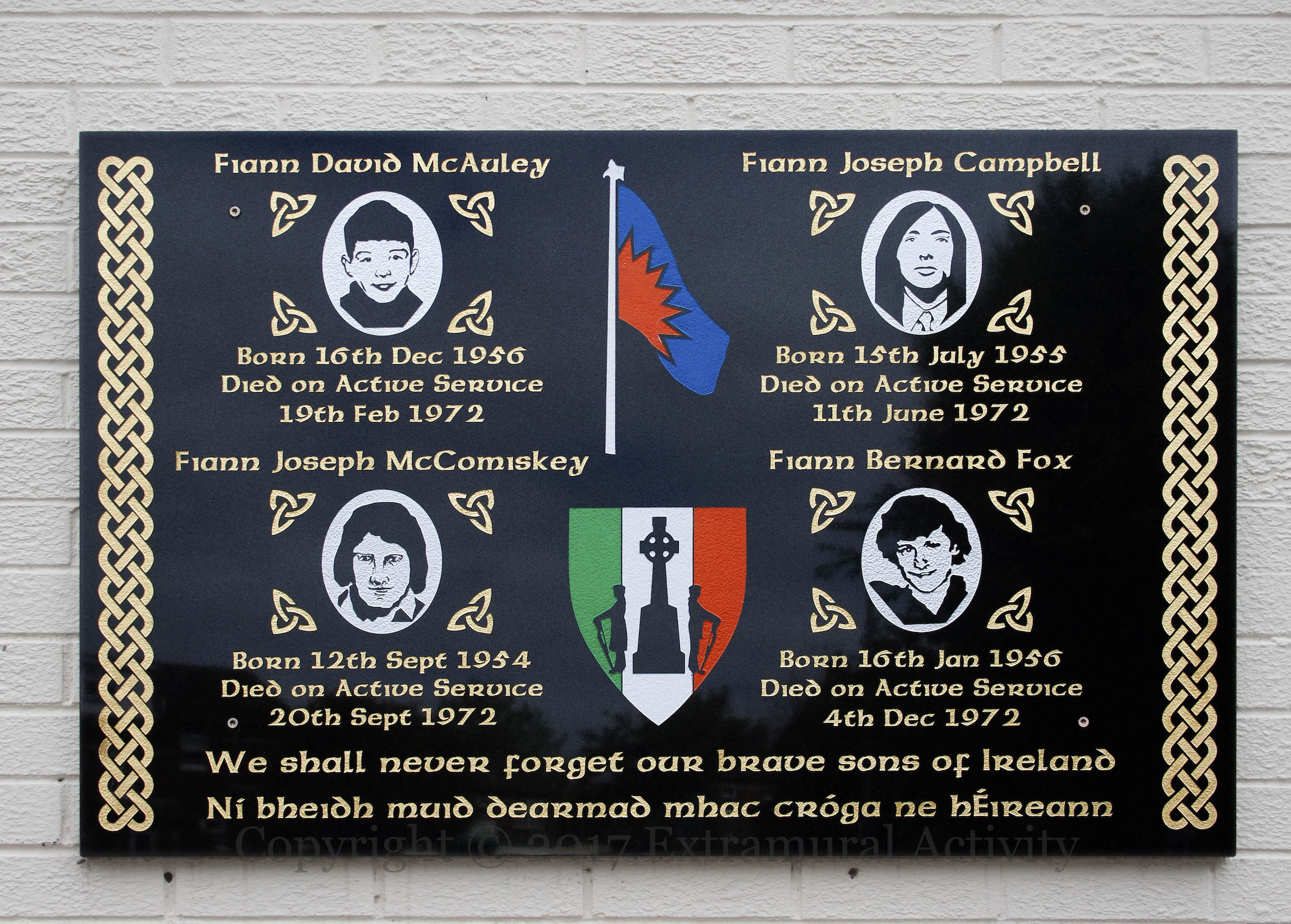
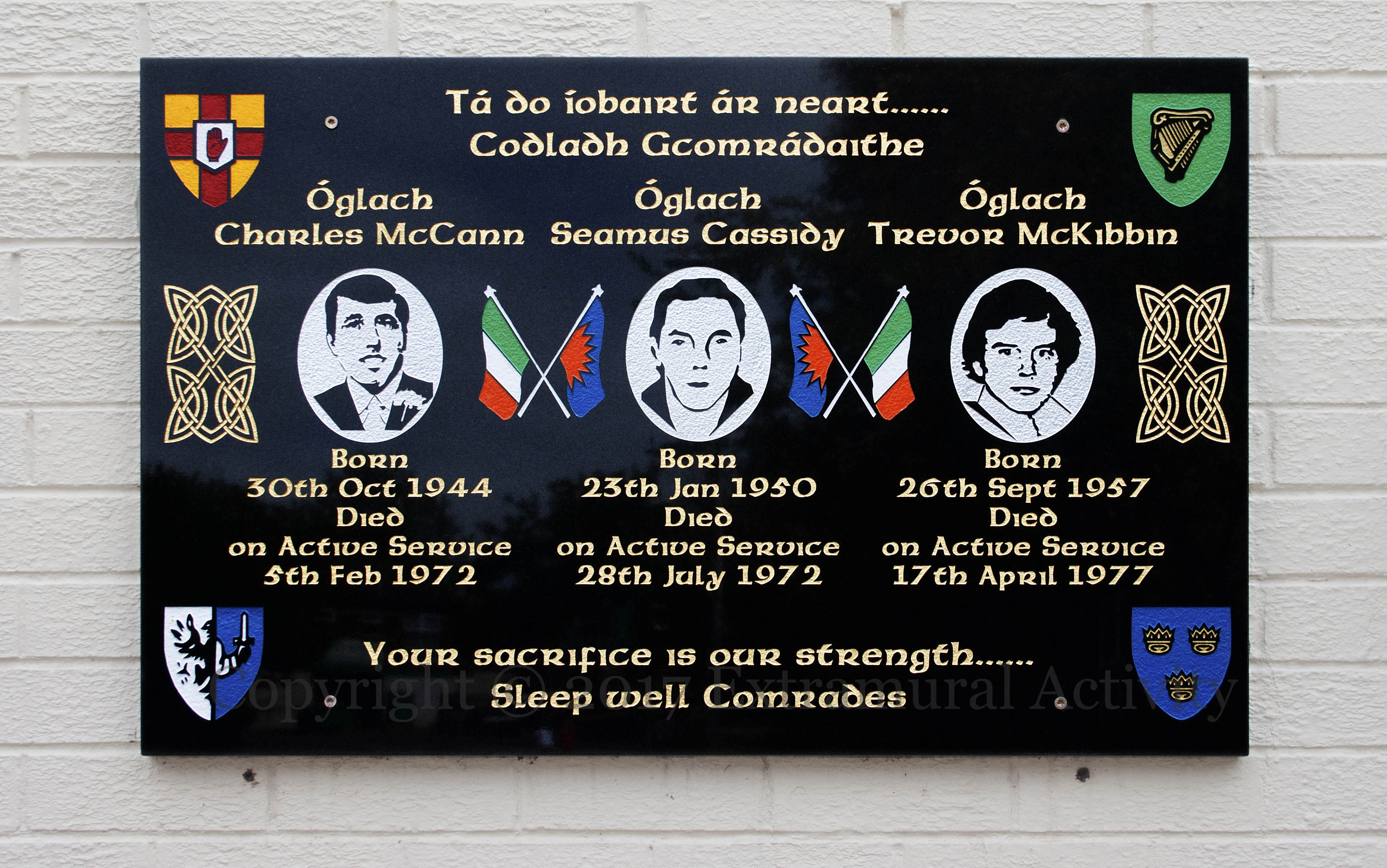
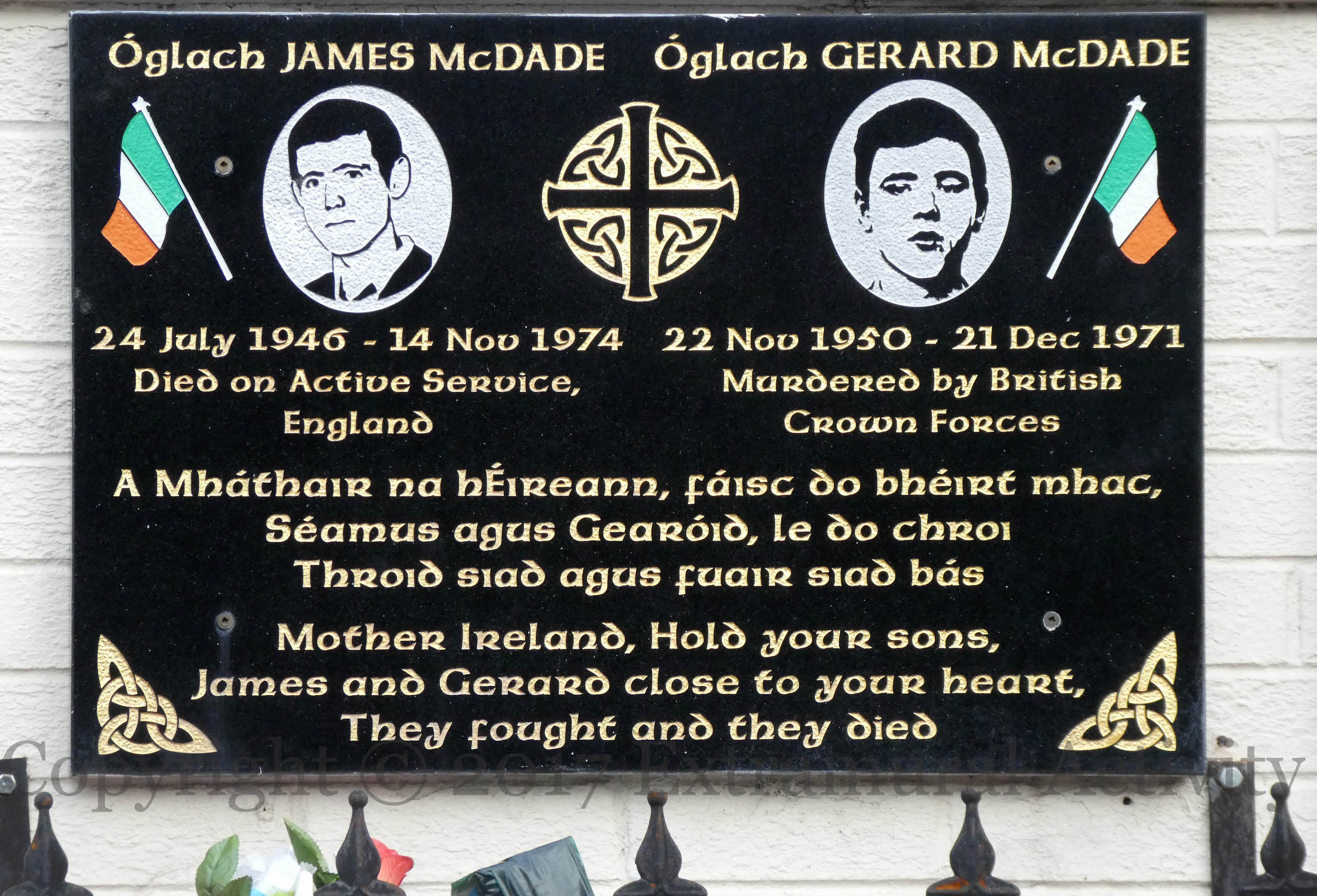
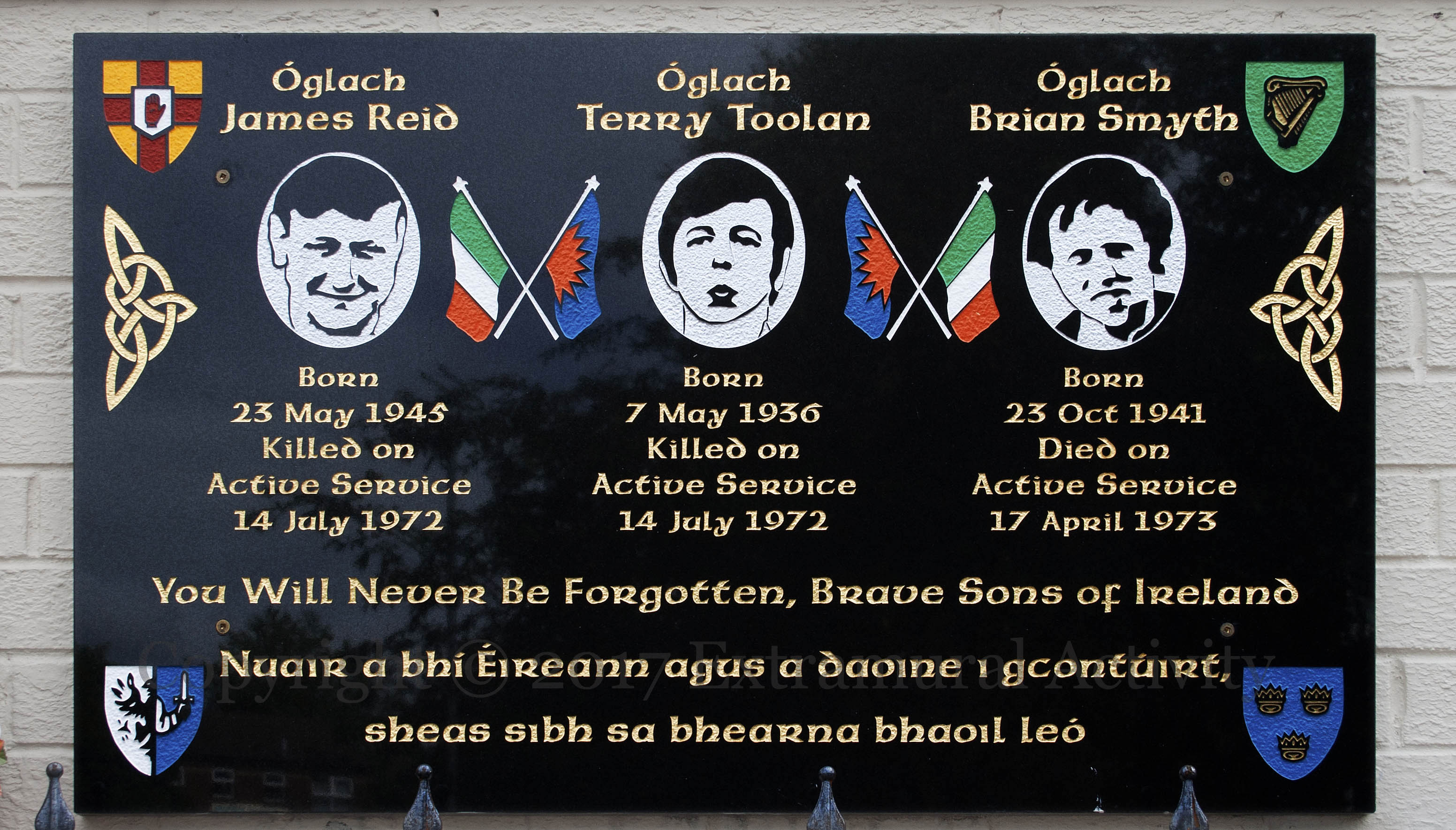
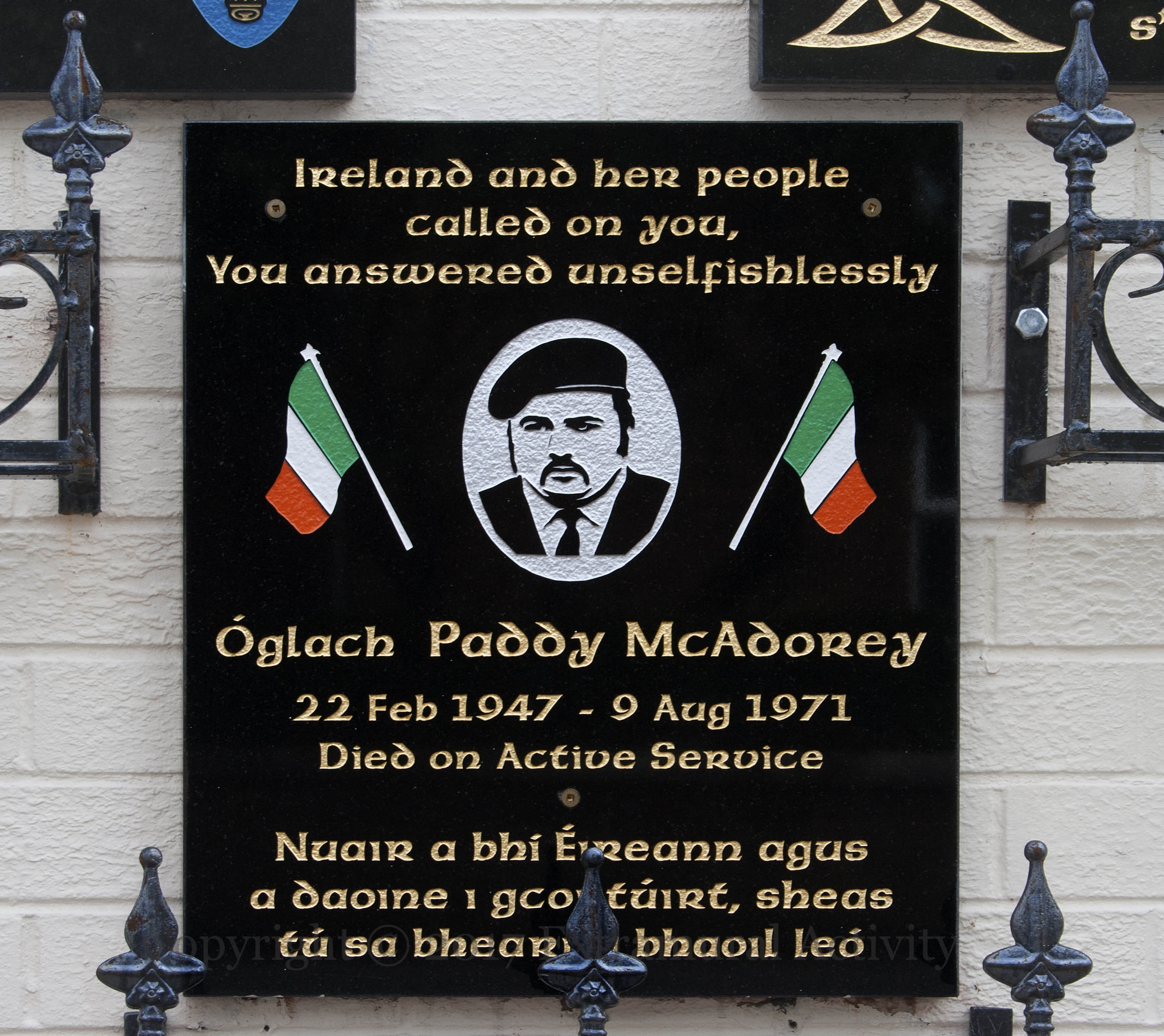
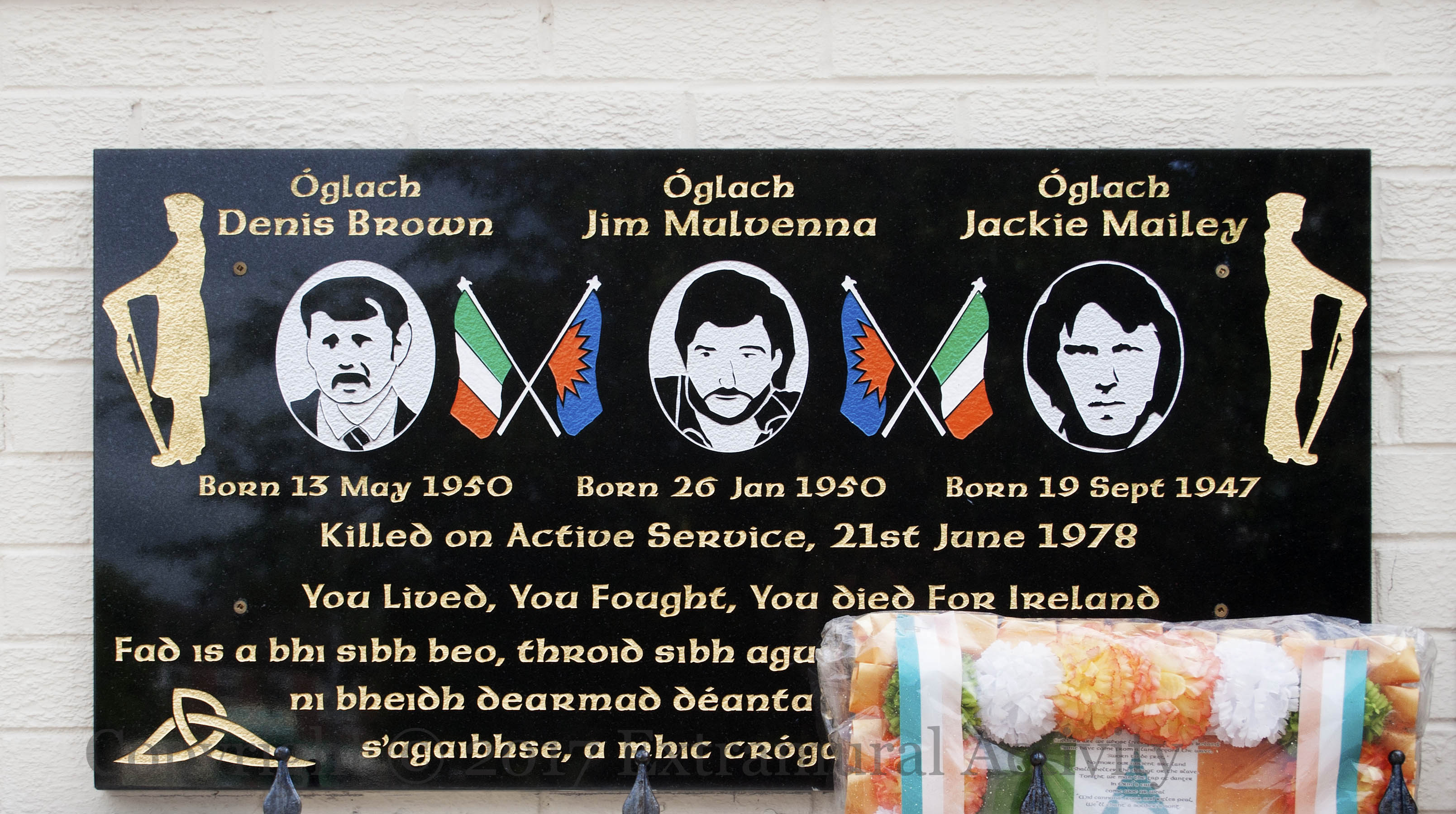
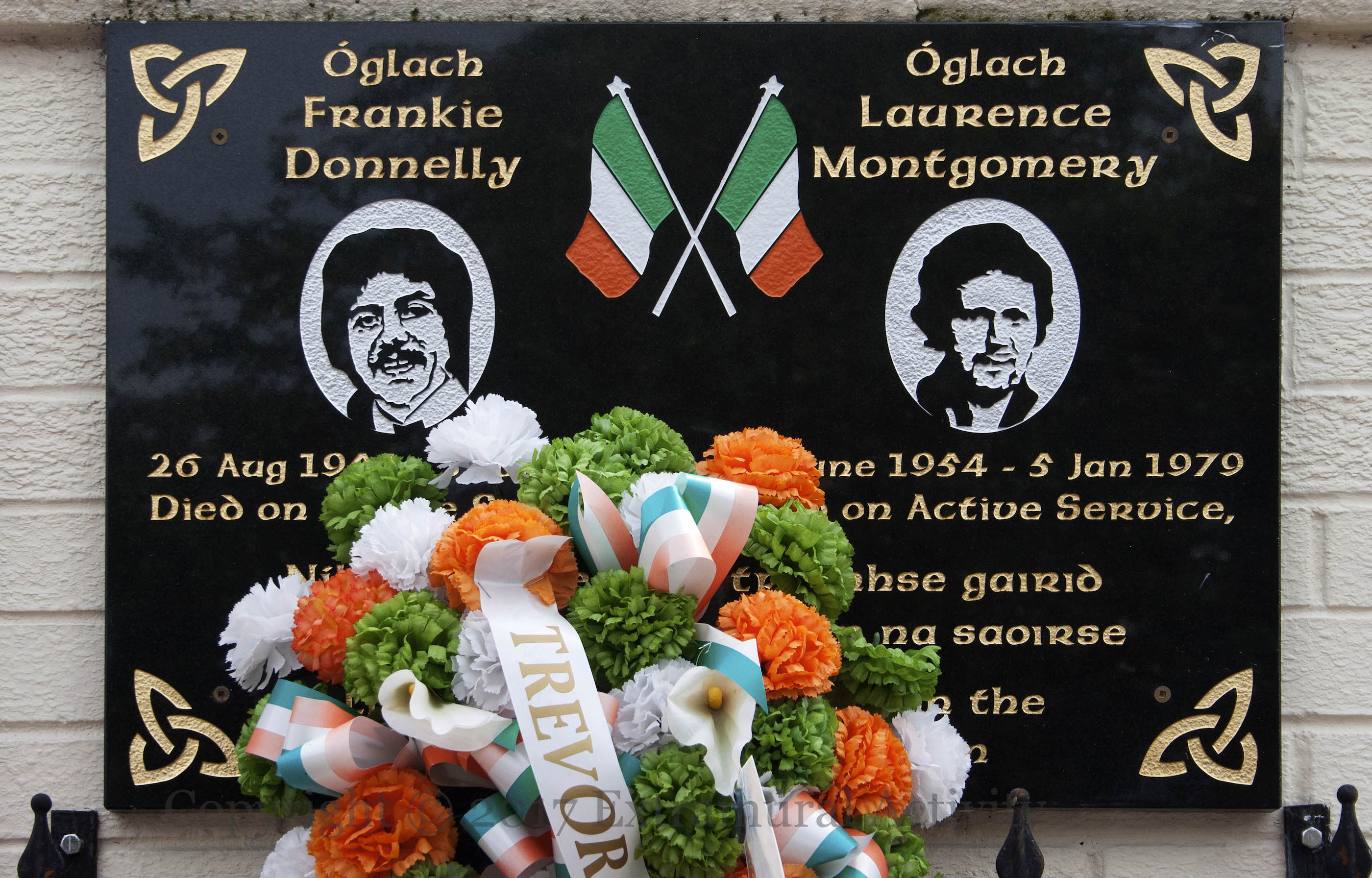
Here are eight images of the memorial plaques to deceased Ardoyne IRA fianna and ógliagh fromt he 1970s: David McAuley, Joseph Campbell, Joseph McComiskey, Bernard Fox, Charles McCann, Seamus Cassidy, Trevor McKibbin, James McDade, Gerard McDade, James Reid, Terry Toolan, Brian Smyth, Paddy McAdorey, Denis Brown, Jim Mulvenna, Jackie Mailey, Frankie Donnelly, Laurence Montgomery.
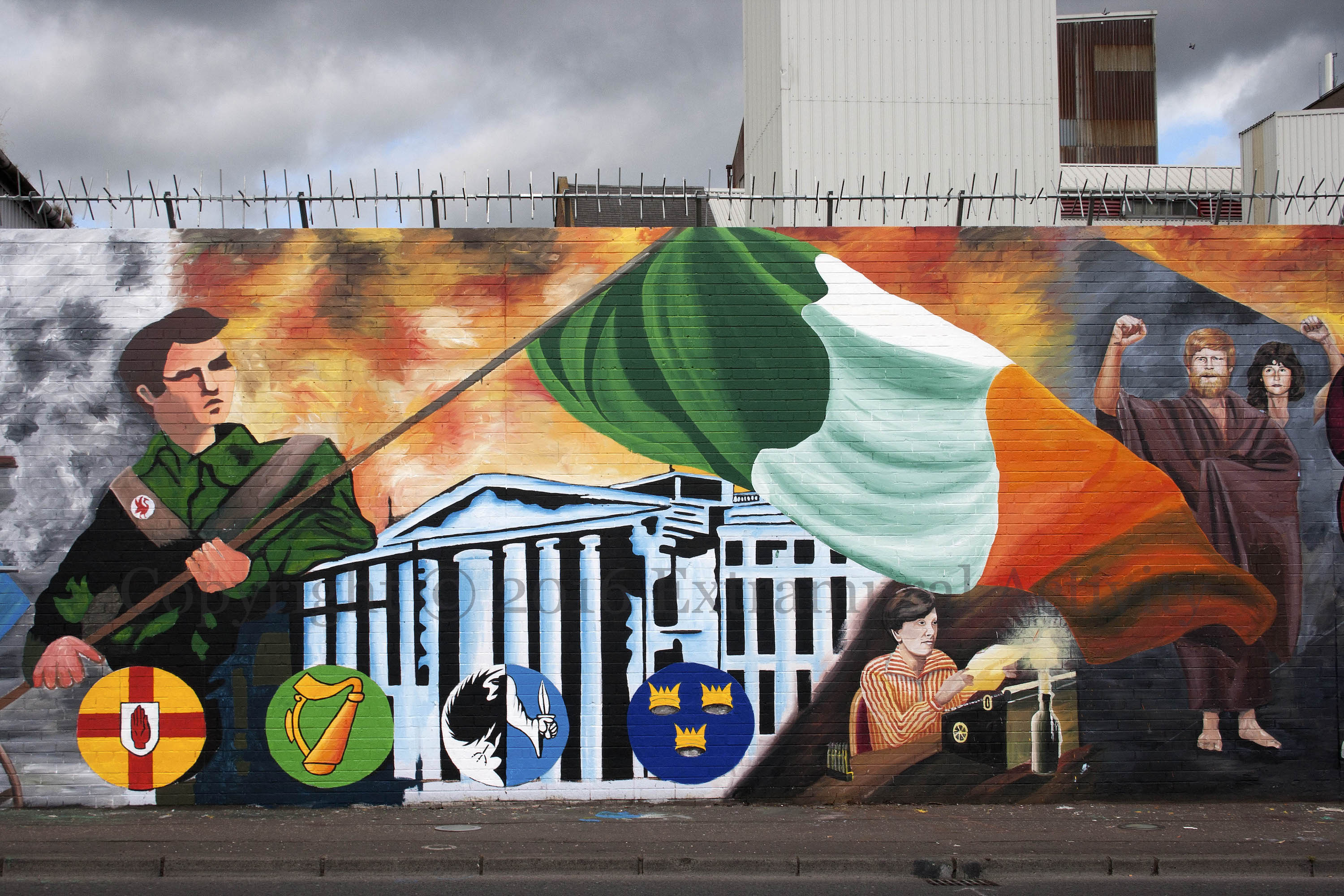
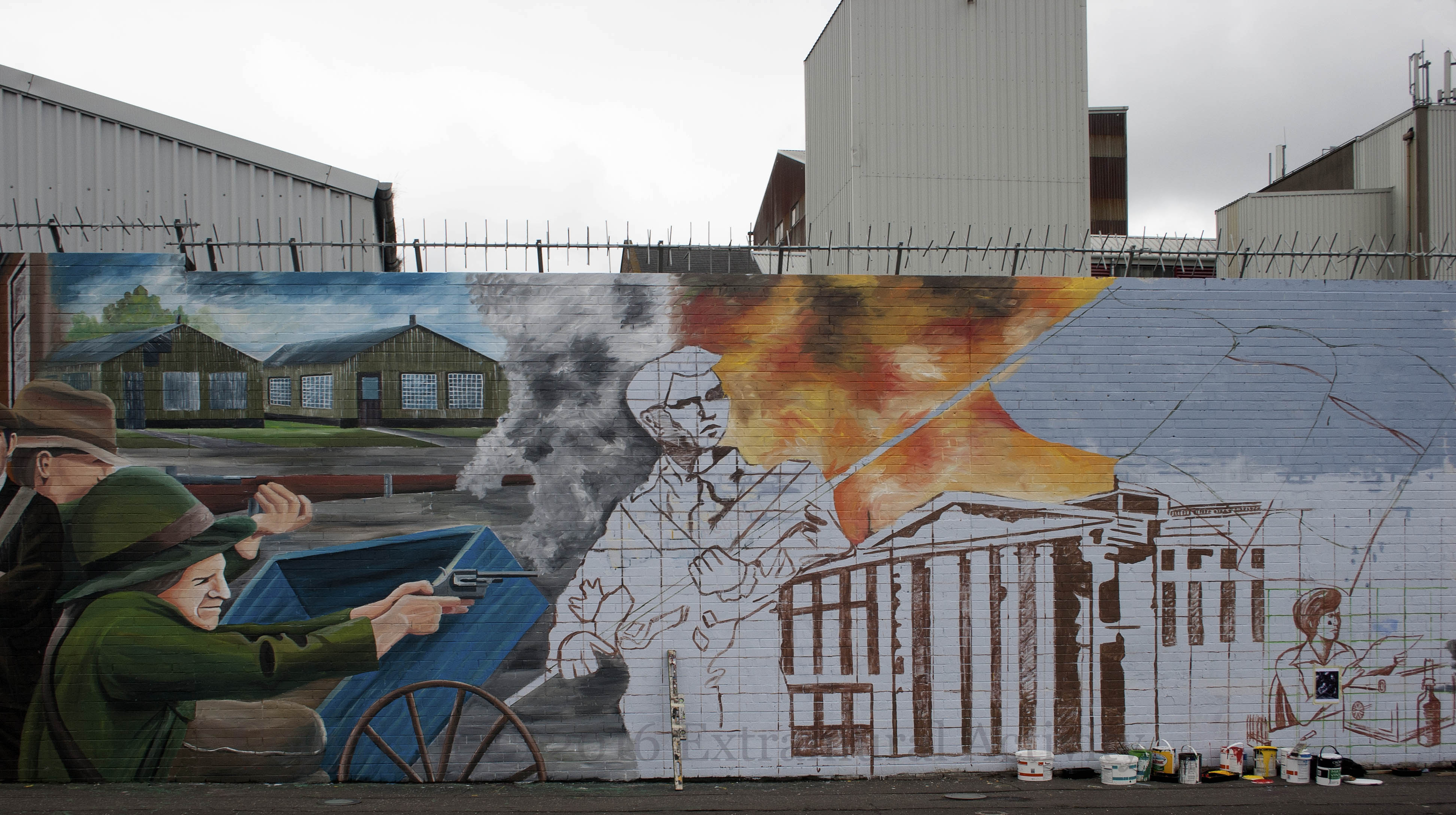
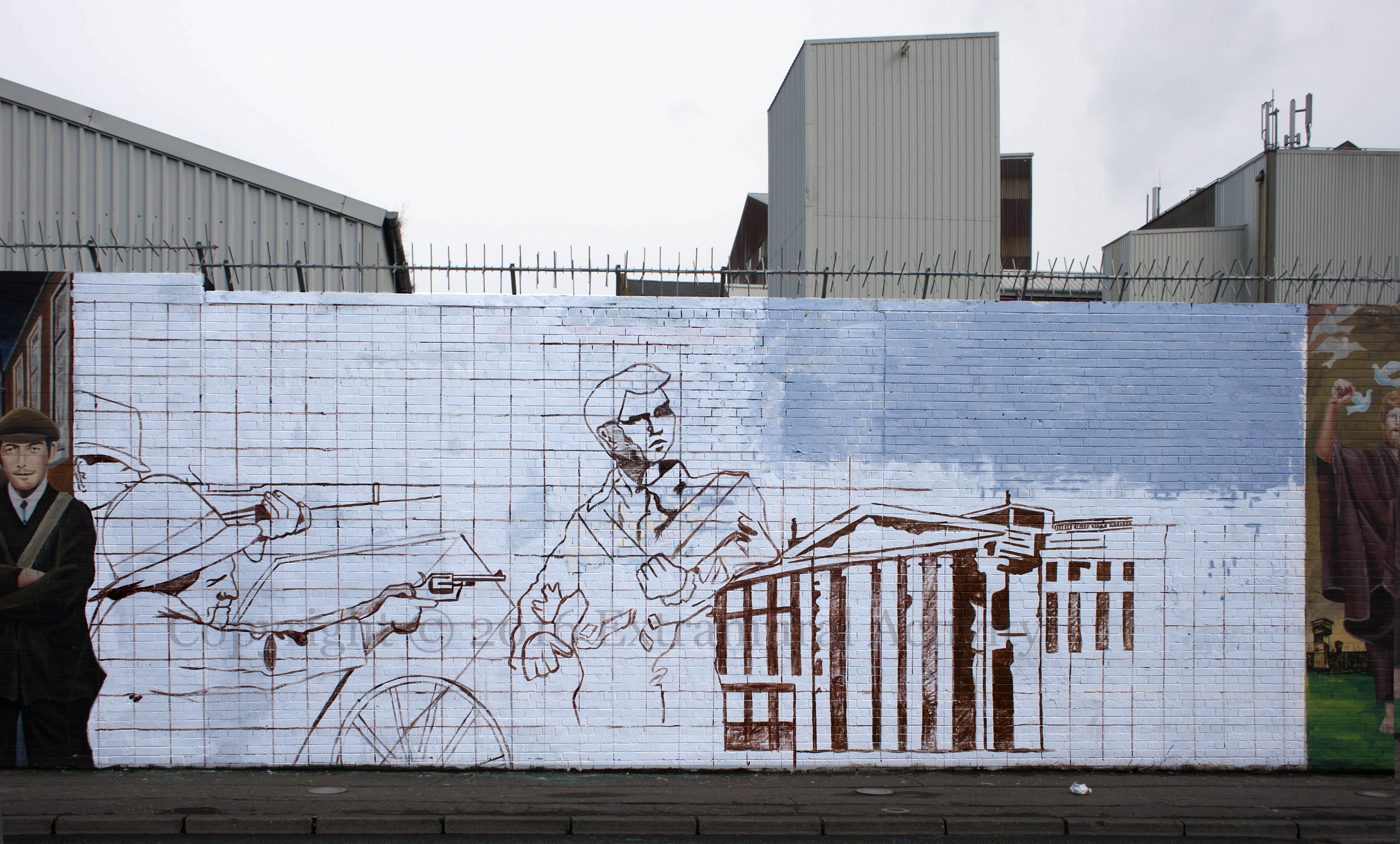
For the centenary of the 1916 Easter Rising, the whole of the International Wall on Divis Street (or, almost the whole wall, as will be explained in a subsequent post) has been repainted to depict a history of Irish republicanism, with special attention given to connections to Belfast.
As might be expected, a panel of the new mural depicts the GPO of 1916. A Tricolour is thought to have been raised over the Henry Street corner of the GPO by Liverpudlian Joe Gleeson – he sports a Liver bird badge on his bandolier – though he does not mention this in his statement to the Bureau of Military History: “We started out from Kimmage about 60 strong at about ten o’clock that Easter Monday morning …”. (A flag of the Irish Republic was raised by Harry Walpole (Irish Times) or Eamon Bulfin (Collins 22 Society, which states that Gearóıd O’Sullivan raised the Tricolour; Bulfin’s statement to the BMH says Gleeson did so).) Gleeson was one of 50 fighters from the Liverpool Irish Volunteers. (Caırde Liverpool has the names of 38 volunteers from Merseyside; this BBC article contains photographic portraits of a number.) The image here is a modified version of the 1941 stamp designed by Victor Brown showing an armed volunteer outside the GPO (stampboards).
The Belfast connection in this panel is supplied by Winifred Carney, member of Cumann Na mBan, assistant to James Connolly from 1912 until the Rising, and part of the occupying forces in the GPO during the rising, “armed with a typewriter and a Webley” (according to her WP page). She is seen here (on the right, beneath the flag) typing up communications by candlelight in the GPO.
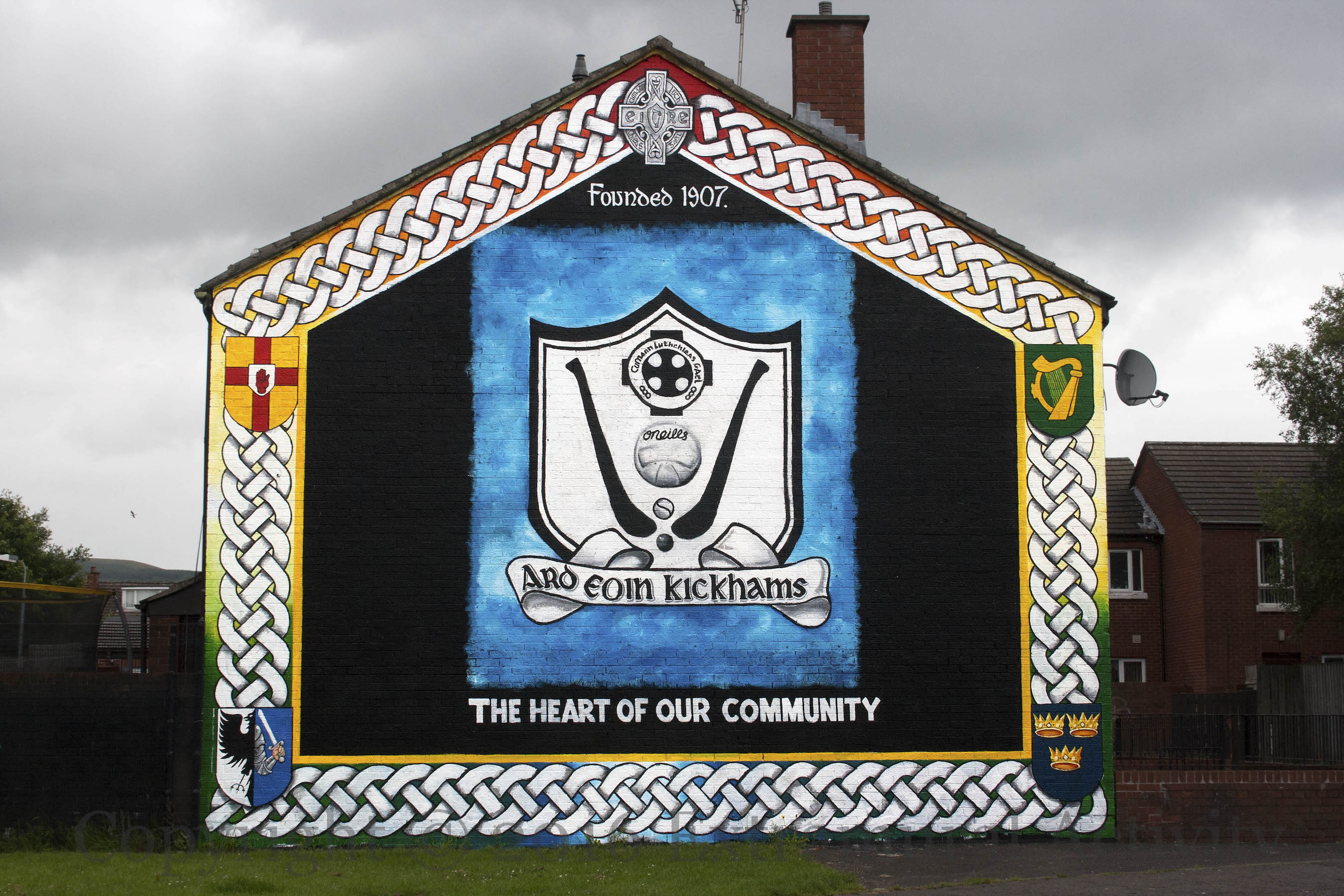
A border of Celtic knot-work and the shields of the four provinces has been added to the Ard Eoın Kickhams mural at the top of Havana Way. (For the previous version, see The Heart Of Our Community.)
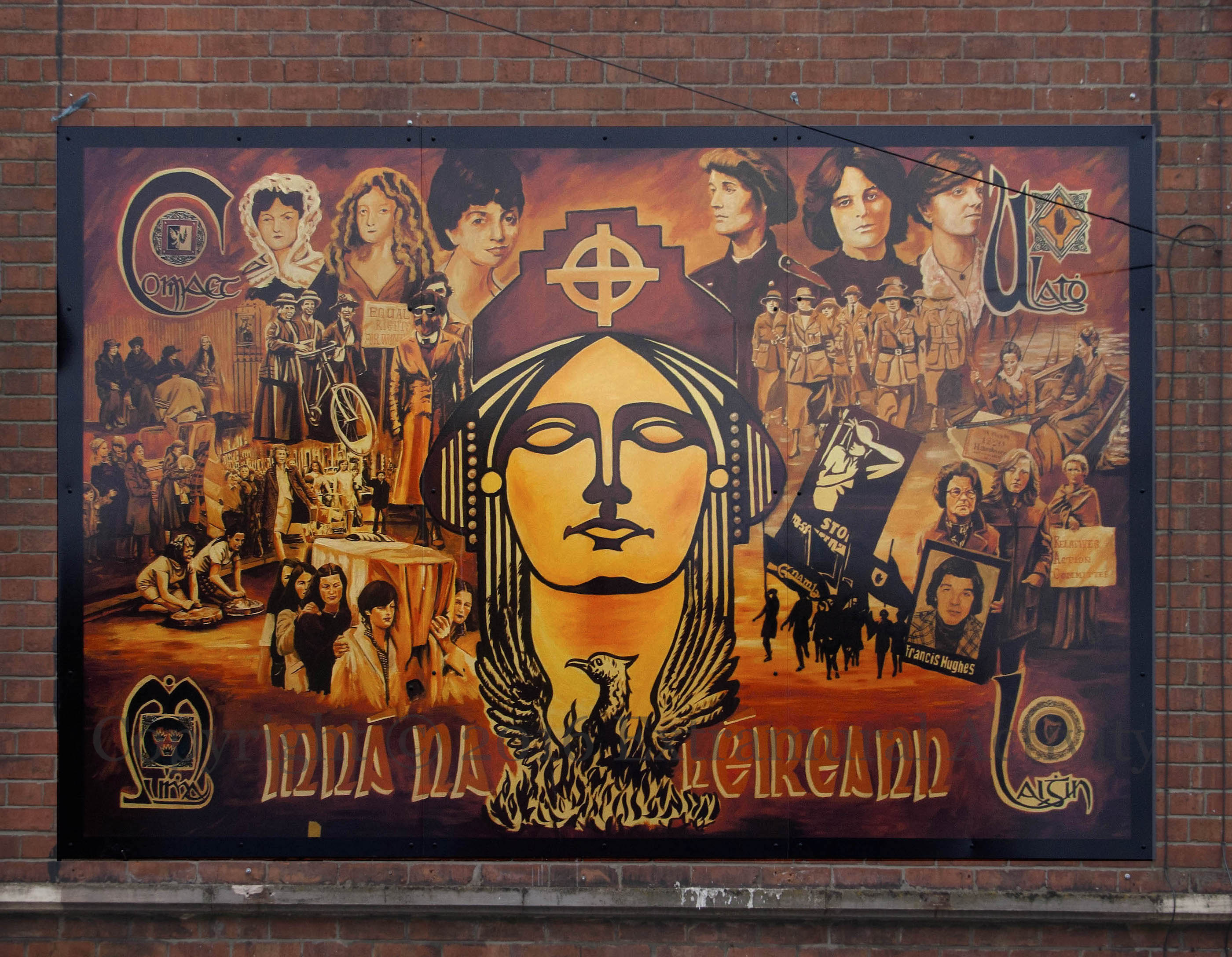
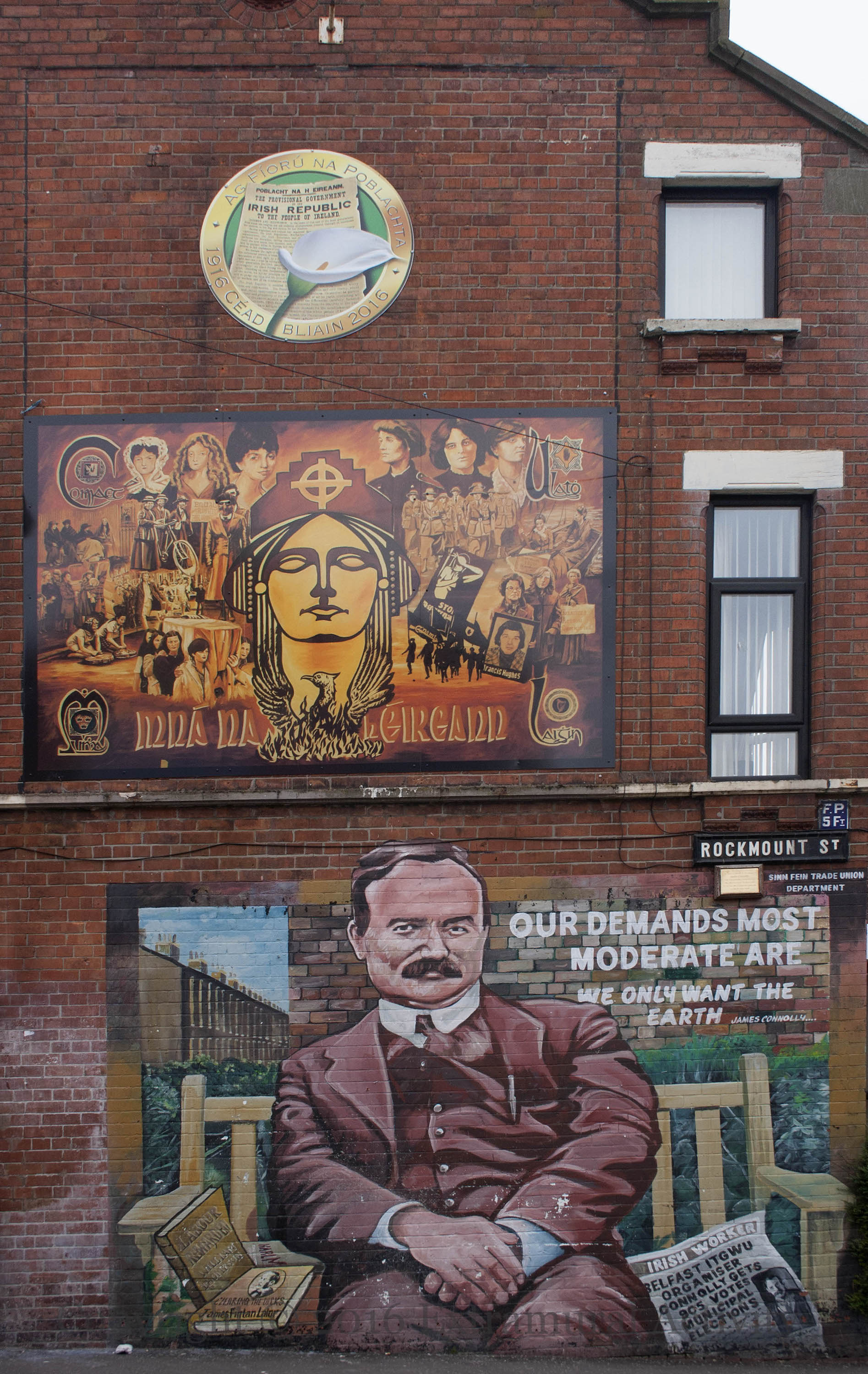
Érıu/Éıre of the Tuatha Dé Danann, queen of Ireland, (as depicted by Richard J King) is at the centre of various representations of republican women. Along the top are Ann Devlin, Betsy Gray, Mary Ann McCracken, Countess Markievicz, Nora Connolly?, and Winifred Carney. Suffragettes, the modern IRA, and Cumman Na mBan are depicted, as are Máıre Drumm at the Falls Curfew, Tom McElwee’s sisters carrying his coffin, and Molly Childers and Mary Spring Rice running guns on the Asgard. There is also an unusual ‘four provinces’ in the corners.
The wide shot (below) shows the James Connolly mural below (seen previously in 2012) and the (recently added) 1916 centenary board – for which see Ag fíorú na poblachta.
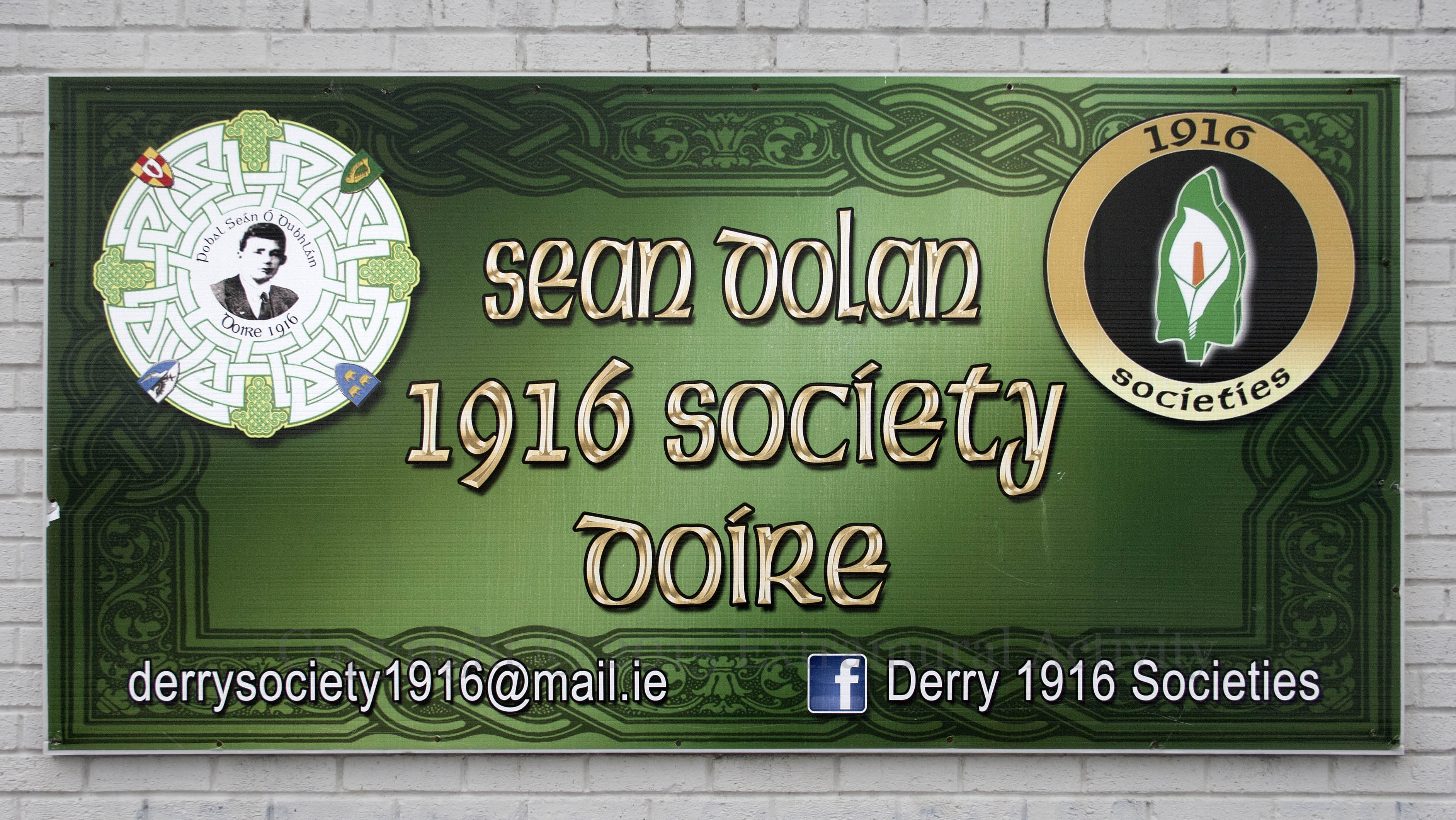
The Derry branch of the 1916 Societies (Fb) is named after Sean Dolan, an IRA volunteer interned at the outbreak of WWII on the prison ship Al Rawdah (WP | saoırse32) before being moved to Crumlin Road gaol. He was released on grounds of ill health shortly before dying in 1941 at age 28 in Derry. The title of this entry comes from Dolan’s gravestone, which is in Ardmore (findagrave).
It was the 1916 Societies that hoisted an Irish tricolour from the roof of Stormont in June 2015 (BBC).
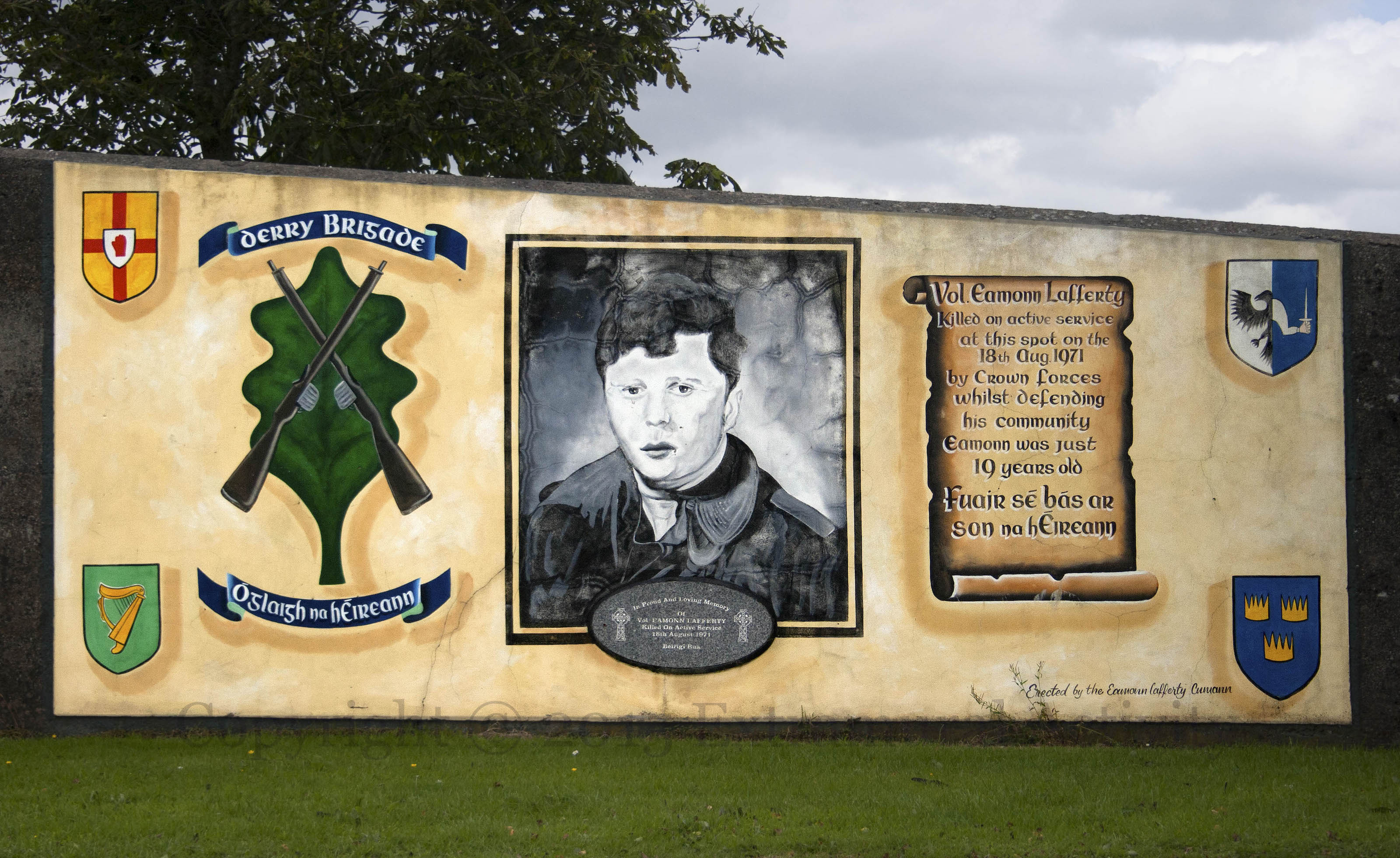
19 year-old Provisional IRA volunteer Eamonn Lafferty was killed on August 18th, 1971, in a gun-battle with British Army forces who were attempting to dismantle barricades in republican “Free Derry”. The mural and plaque shown (and a headstone) are situated—as the mural states—in the location where he was killed, in Creggan’s Kildrum area. (His body is buried in City Cemetery.)
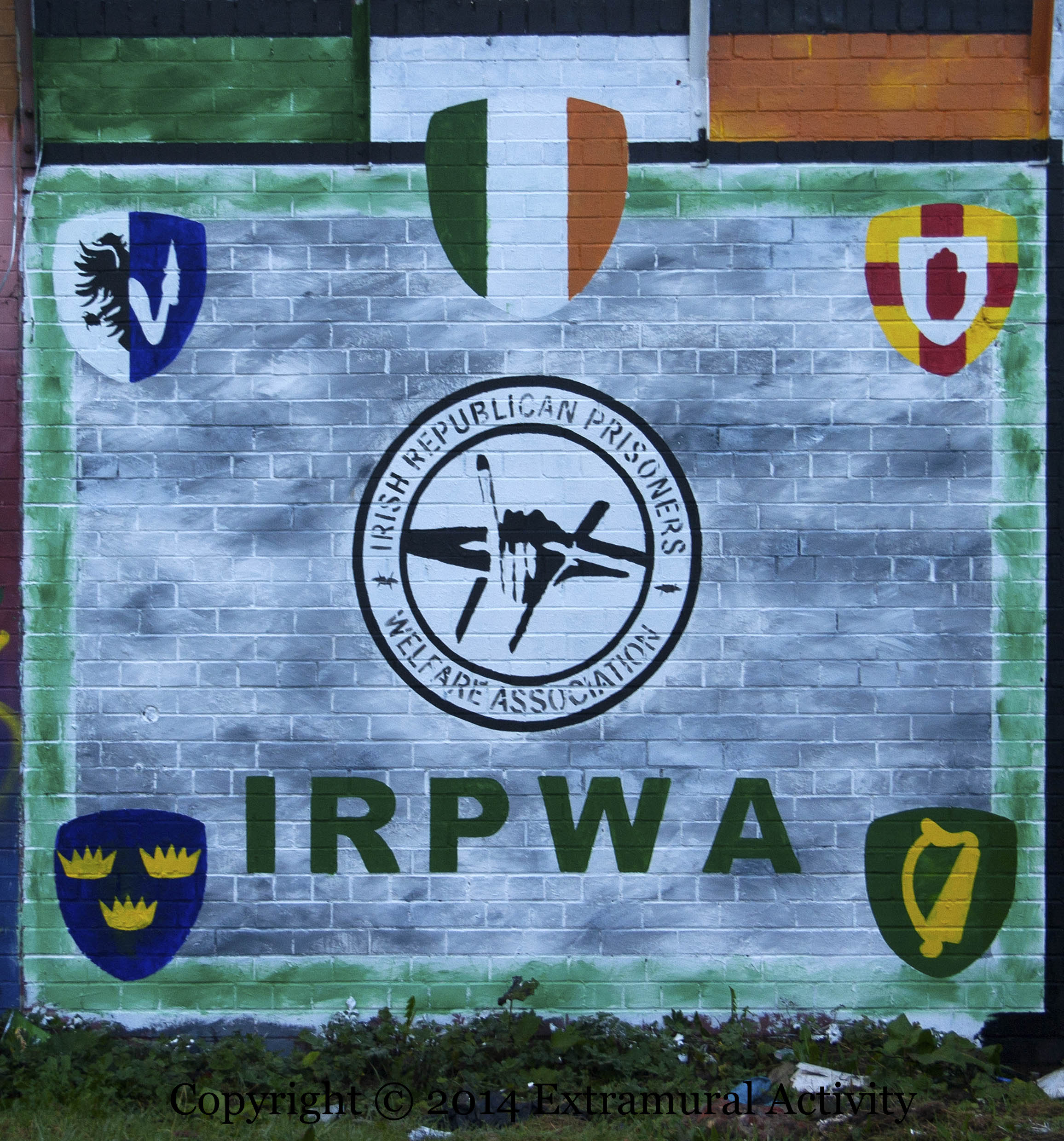
This is a new mural from the 32 County Sovereignty Movement (web) on the international wall, Divis Street, (Visual History) with symbols of nationalism (the crests of the four provinces, the harp, the tricolour), socialism (the plough in the stars) and support for republican POWs (the barbed wire).
For images of the mural being worked upon, see the Peter Moloney Collection; for an earlier version see 100% British.
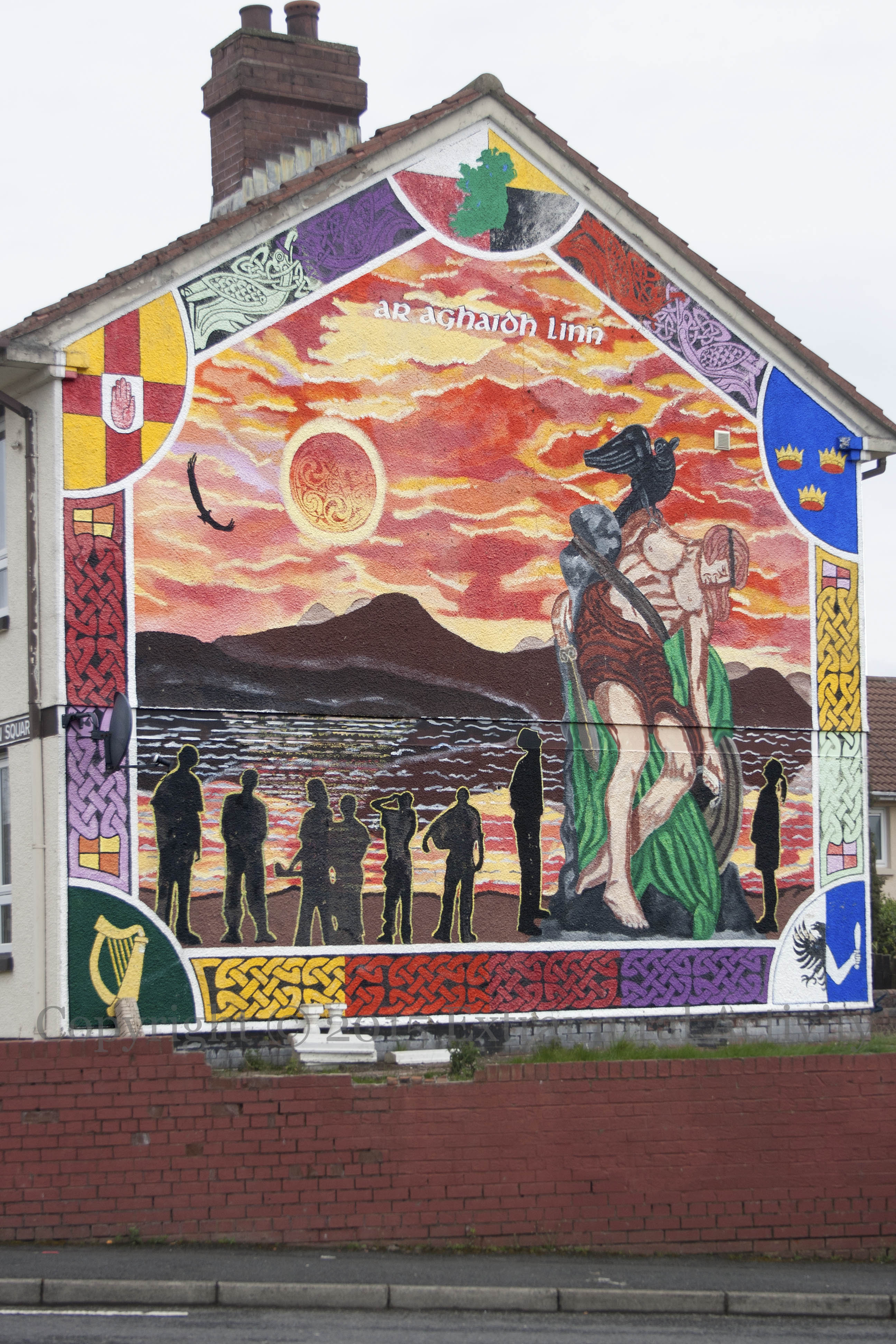
“Ar aghaıdh linn [Onward]” Silhouetted figures, one carrying a hurley, take inspiration from a dying Cú Chulaınn and gaze across a body of water, perhaps Carlingford Lough towards the mountains of Mourne – Cú Chulaınn’s traditional place of death is in County Louth, outside Dundalk. Tuan the hawk historian, who has seen all of the conquests of Ireland, flies overhead.