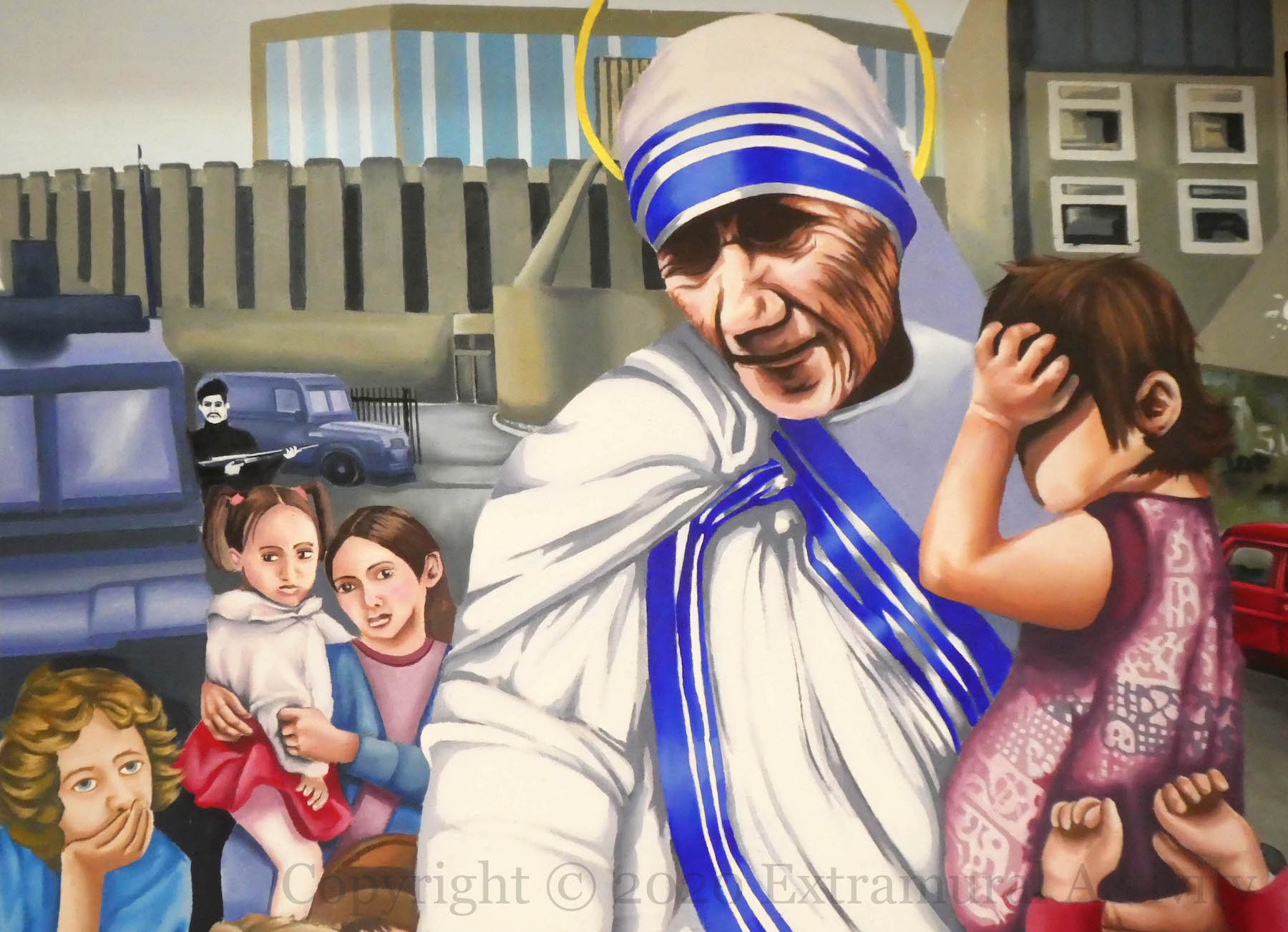
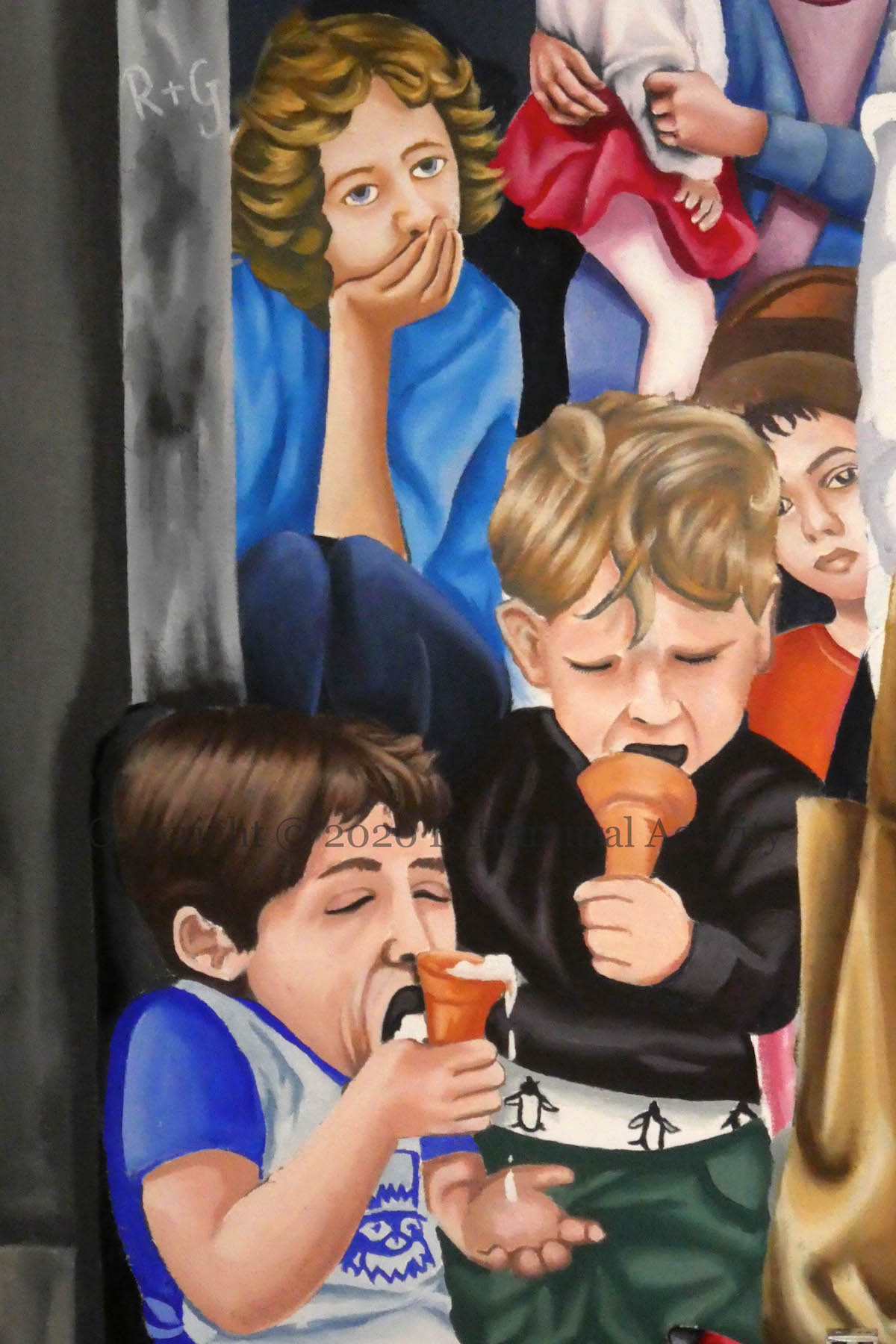
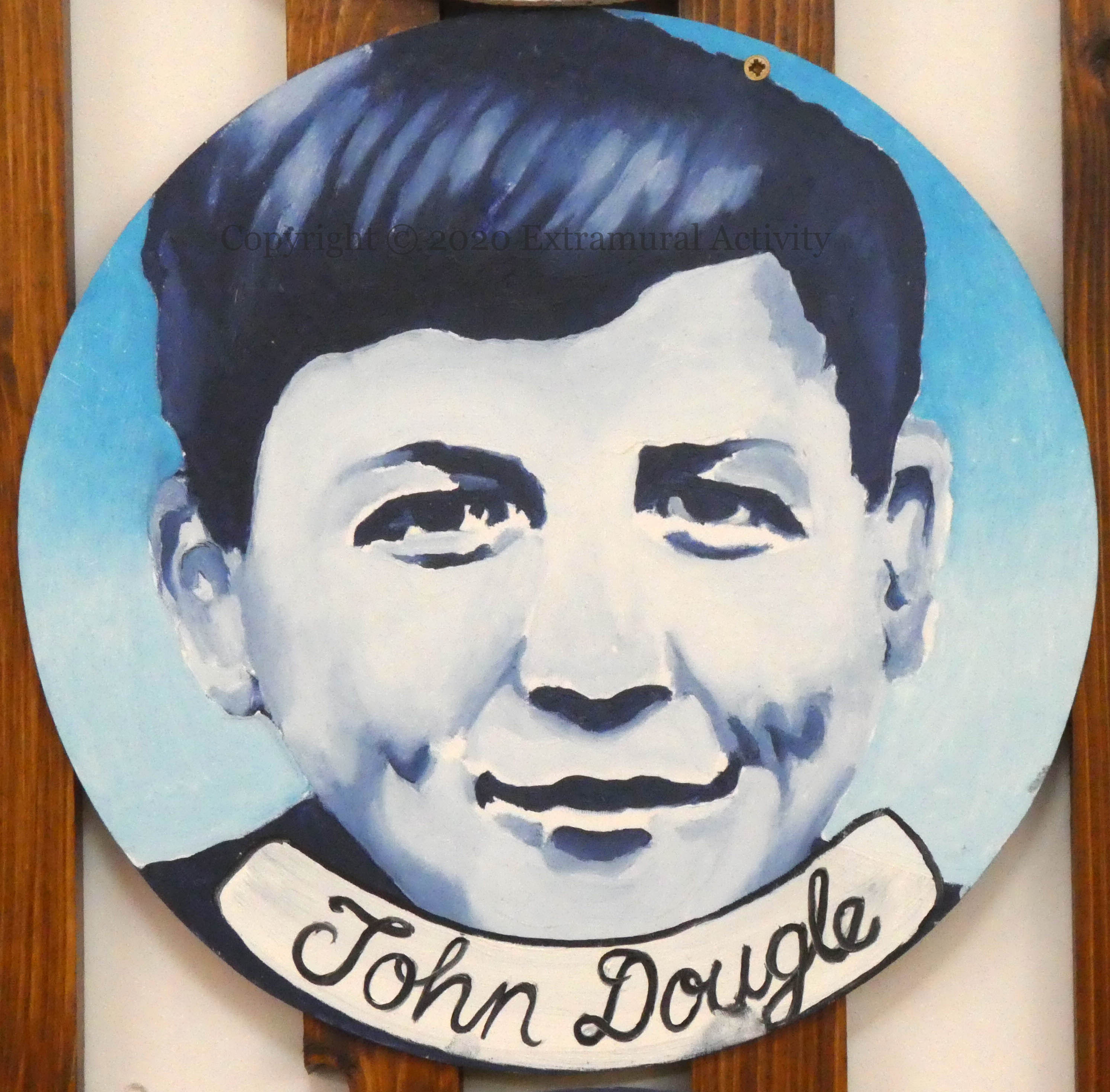
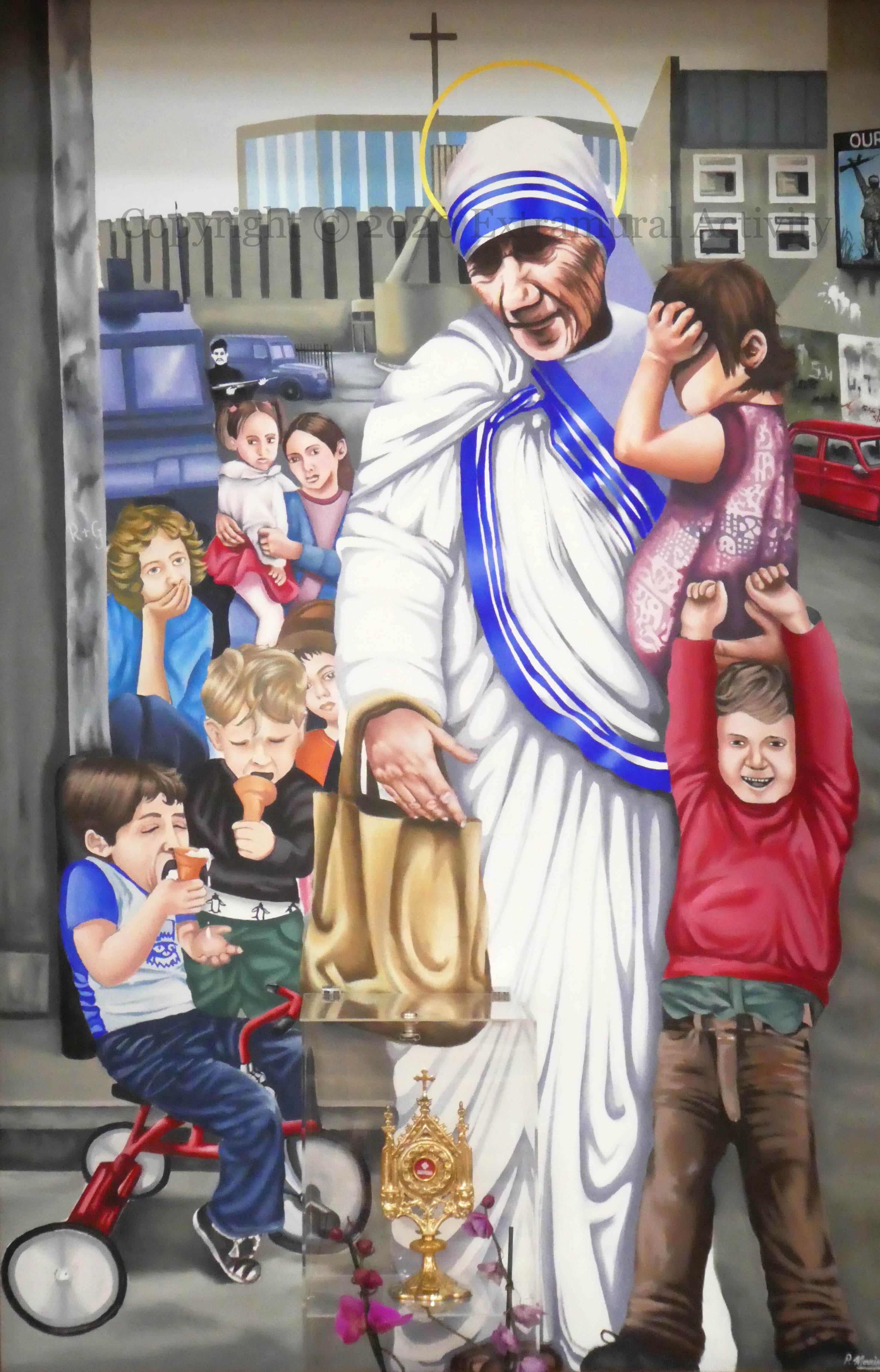
Local artist Paul Morrison (web | Fb) was asked to paint a shrine for Corpus Christi church in Westrock/Springhill. As his main subject he chose Mother Teresa, who lived and worked in the area with four nuns from 1971 to 1973 before being put out (allegedly) by the Catholic church. Morrison also painted portraits of the sixteen victims of the Ballymurphy and Springhill/Westrock massacres of 1972, including the one of John Dougal, shown below, as well as clerics Noel Fitzpatrick (from St John’s) and Hugh Mullan (from Corpus Christi itself).
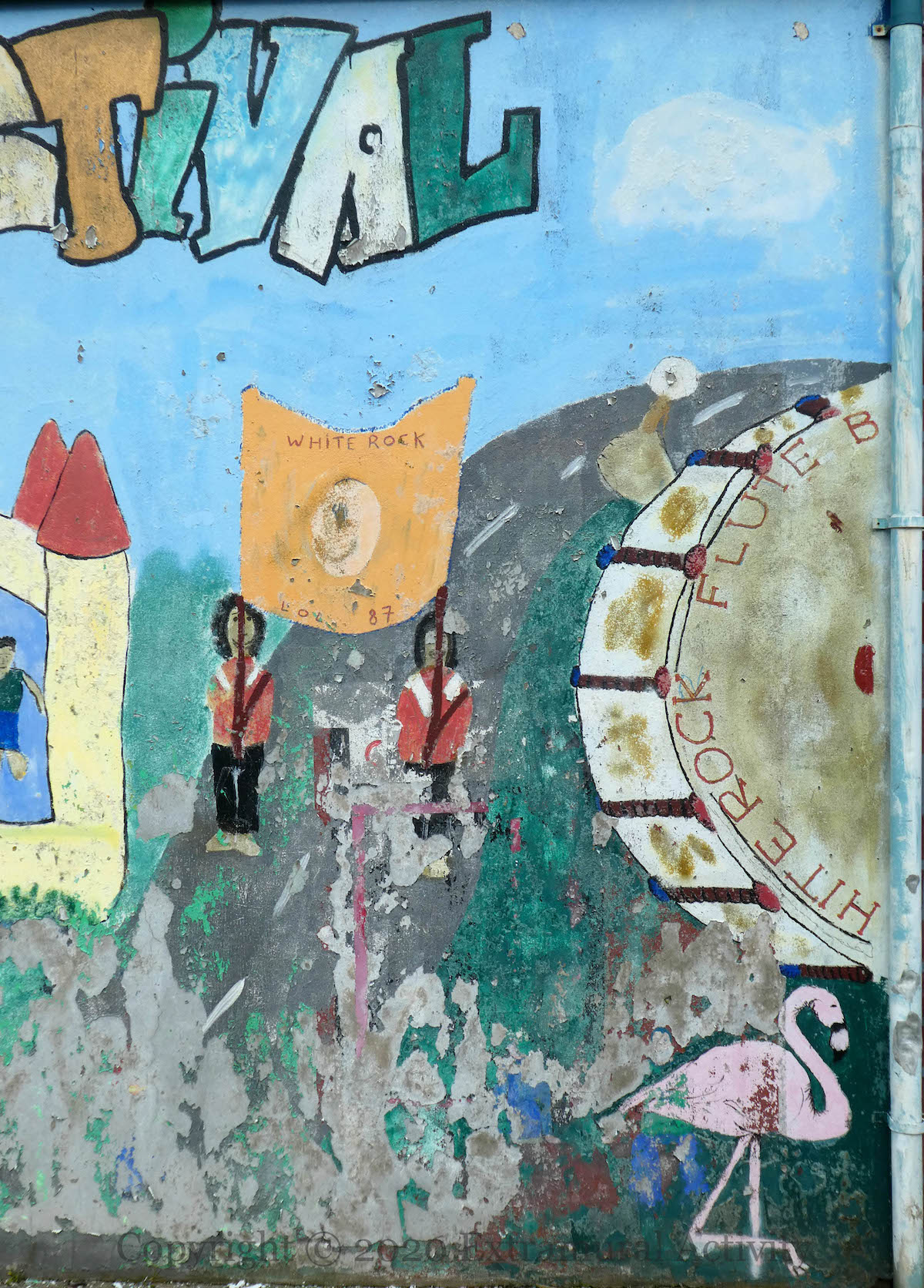
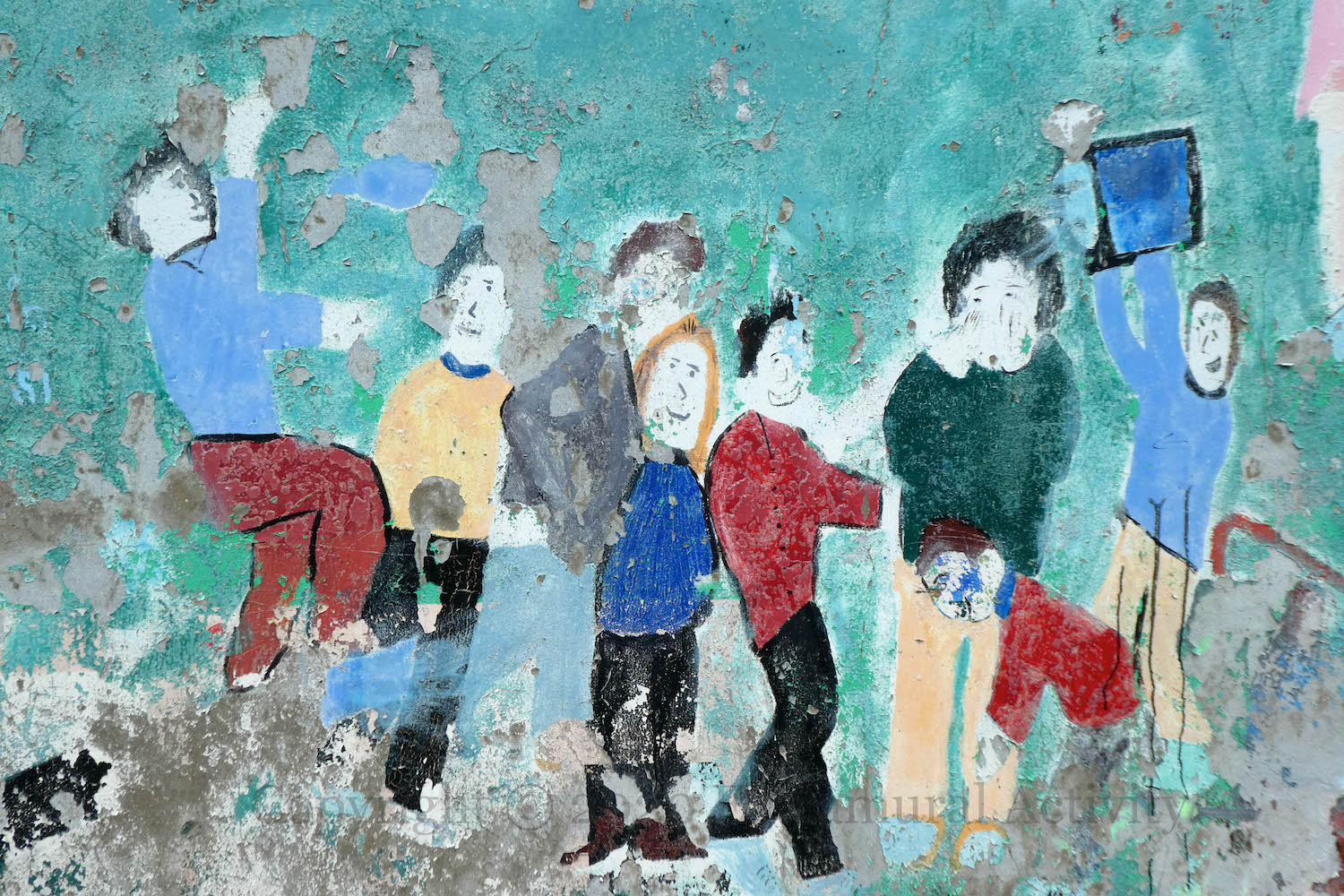
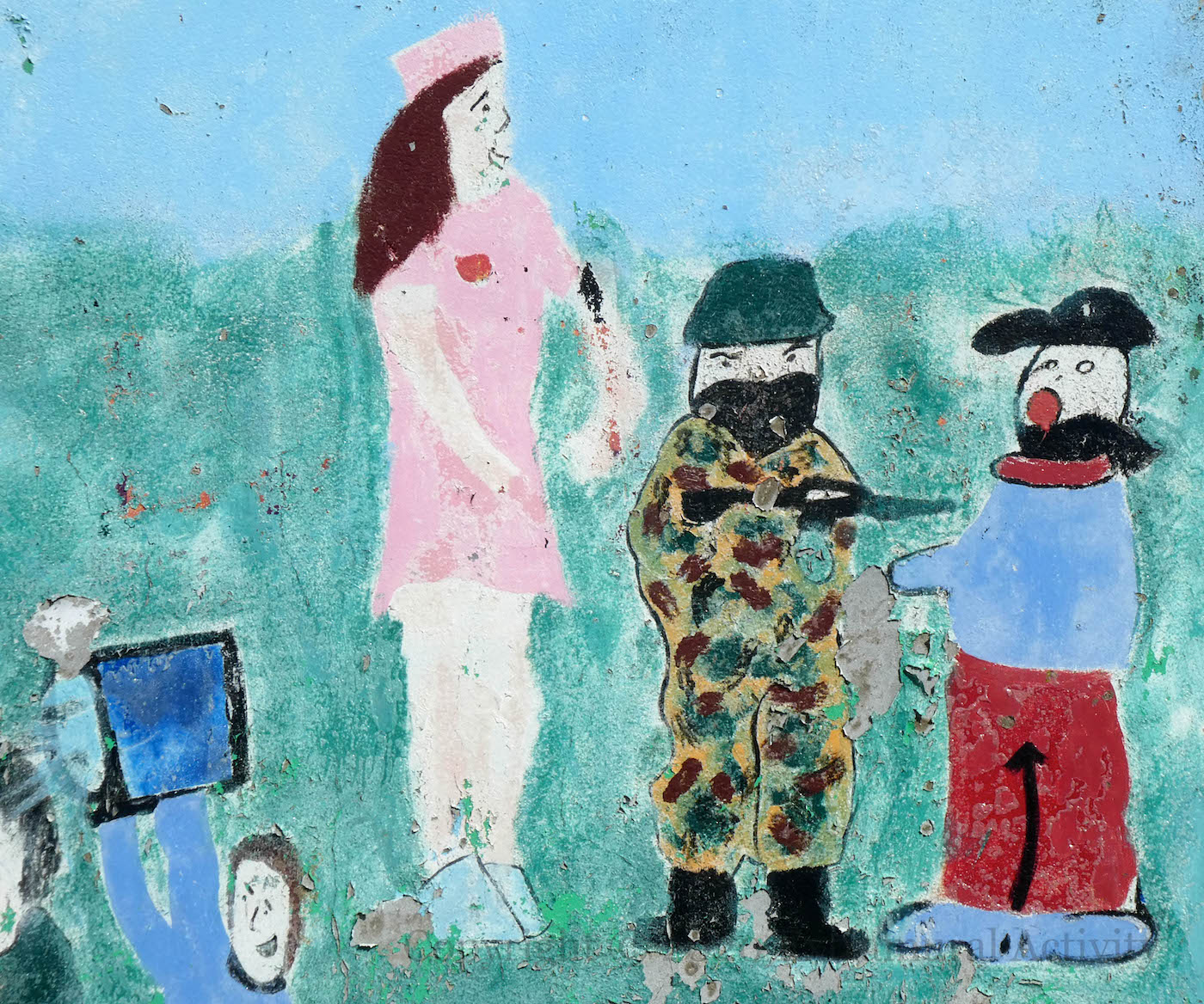
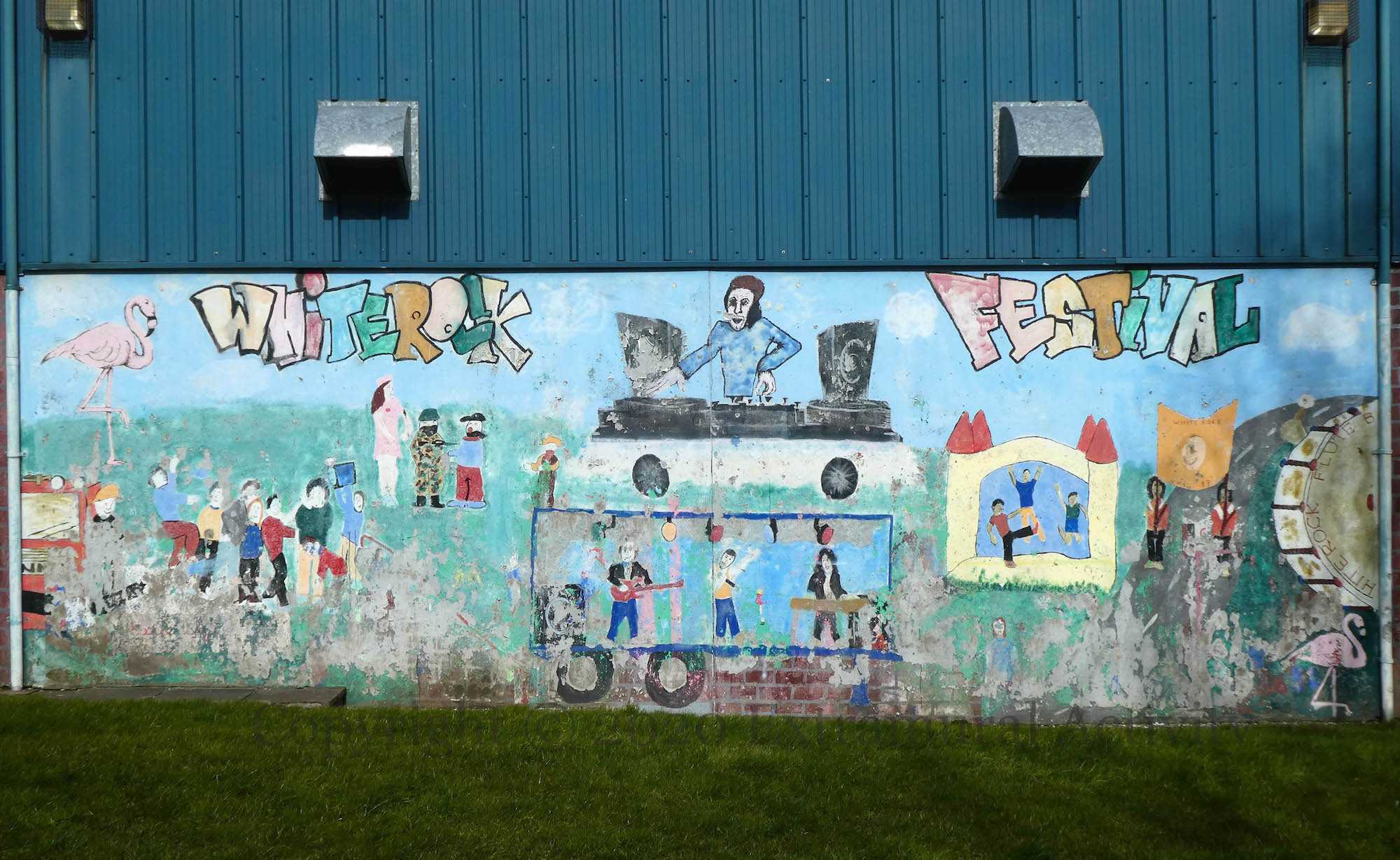
Plans for the Highfield estate were drawn up and approved in 1945, converting a green-field site in the foothills of Black Mountain between the Ballygomartin, West Circular and Springfield roads. The first houses were completed in 1948 (Belfast Forum.) The community hall sits at the centre of the estate. UDA bomb-maker Michael Wright died there in a premature explosion in 1980 (Sutton) and there used to be a UFF mural on the side. This was replaced in 2000 (C01505) and again in 2006(?) (M04512) with the current mural (entitled “Whiterock Festival” after the cross-community event sponsored by the City Council’s ‘Good Relations’ fund (one | two) showing Highfield kids having fun with music provided by a DJ, band, and the Whiterock Flute Band (Fb) drum.
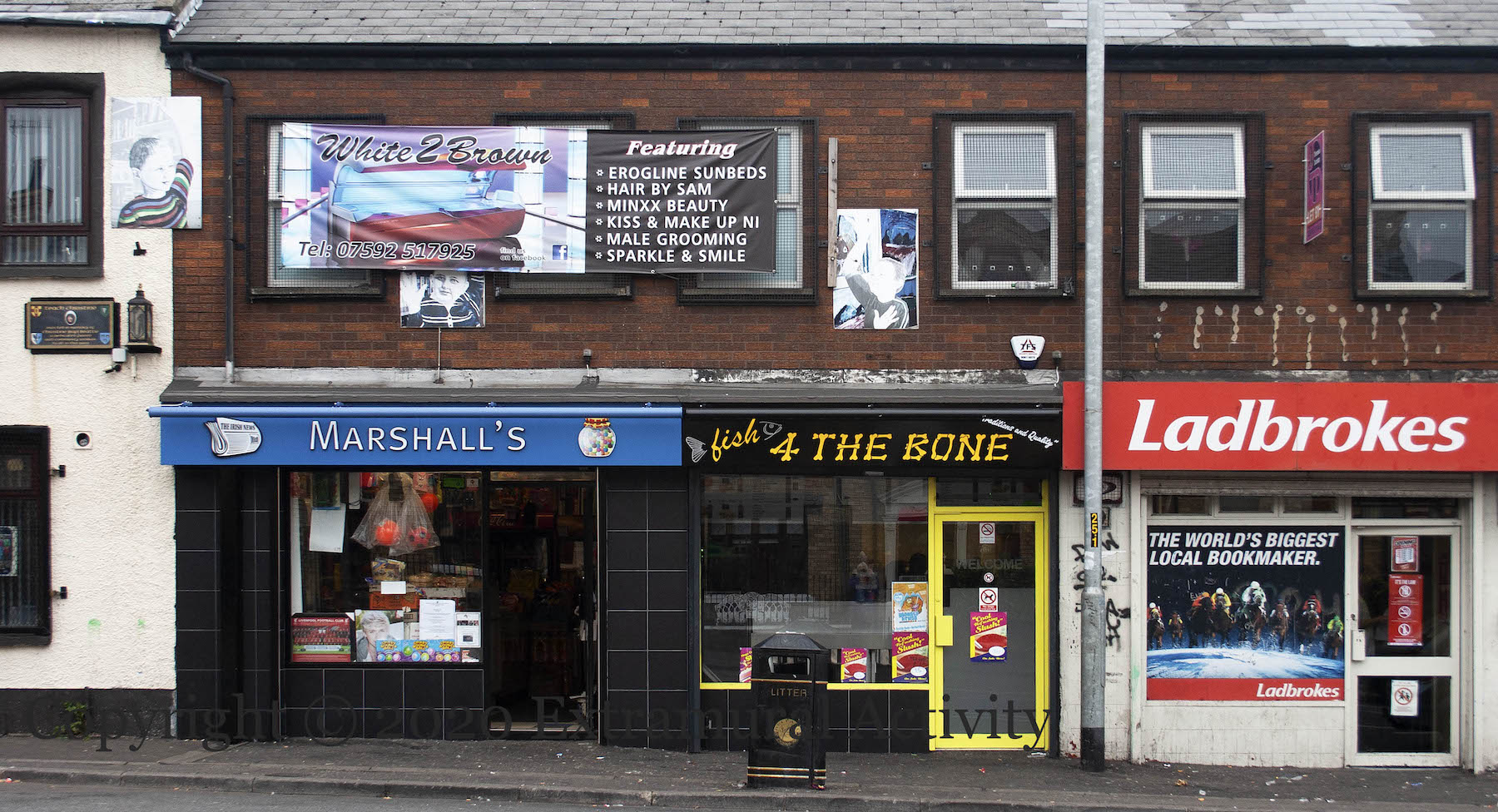
The streets in the Bone (or Marrowbone) area were built around the turn of the 20th century but before that the area was on the way to the ‘old park’. The name perhaps comes from the Irish “machaire botháin”, the “cabin field”, possibly in reference to a shepherd’s hut, and certainly nothing to do with punning fish-and-chip shops. Above the shops are pictures of local children, continuing from the Marrowbone Community Association which is out of picture to the left.
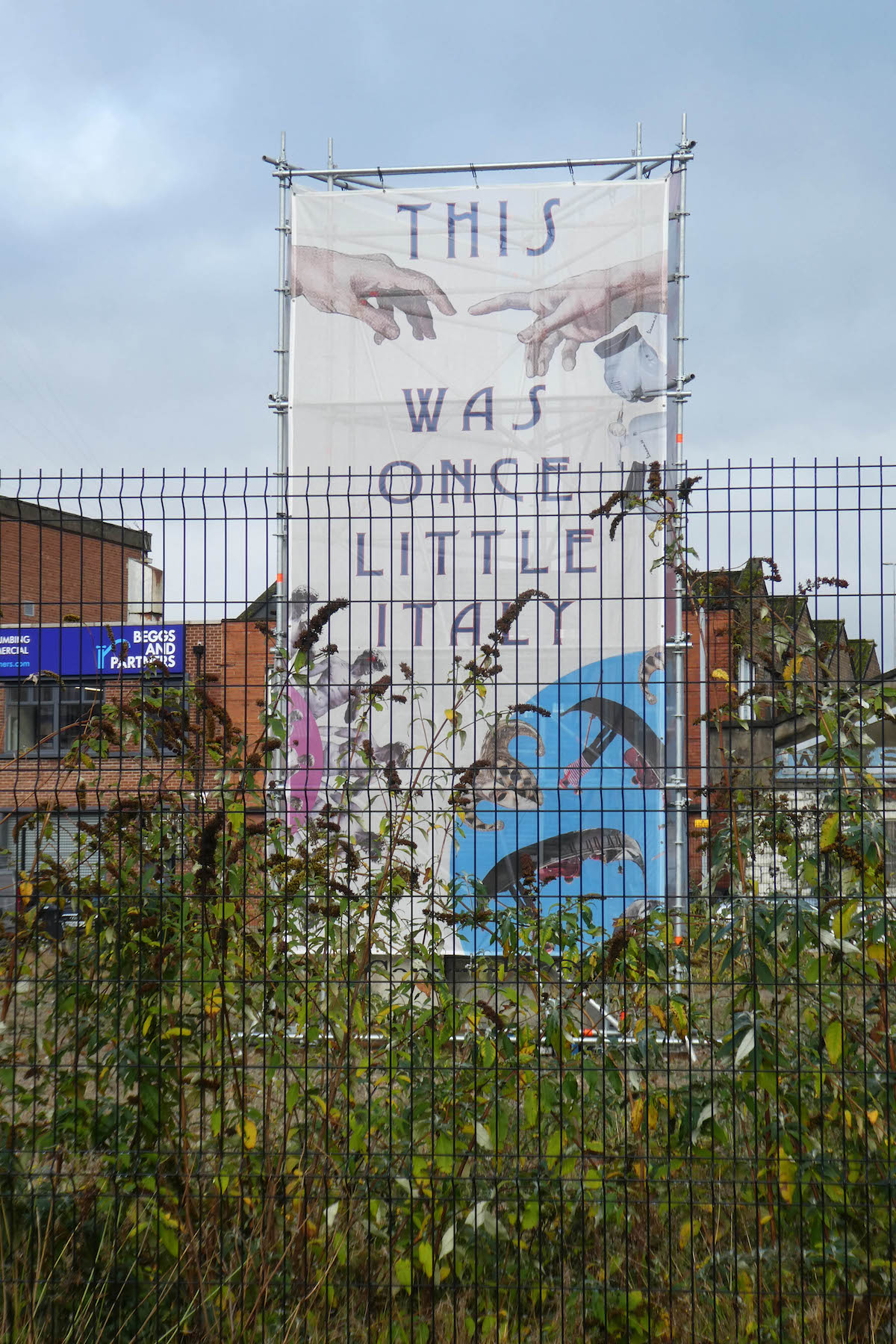
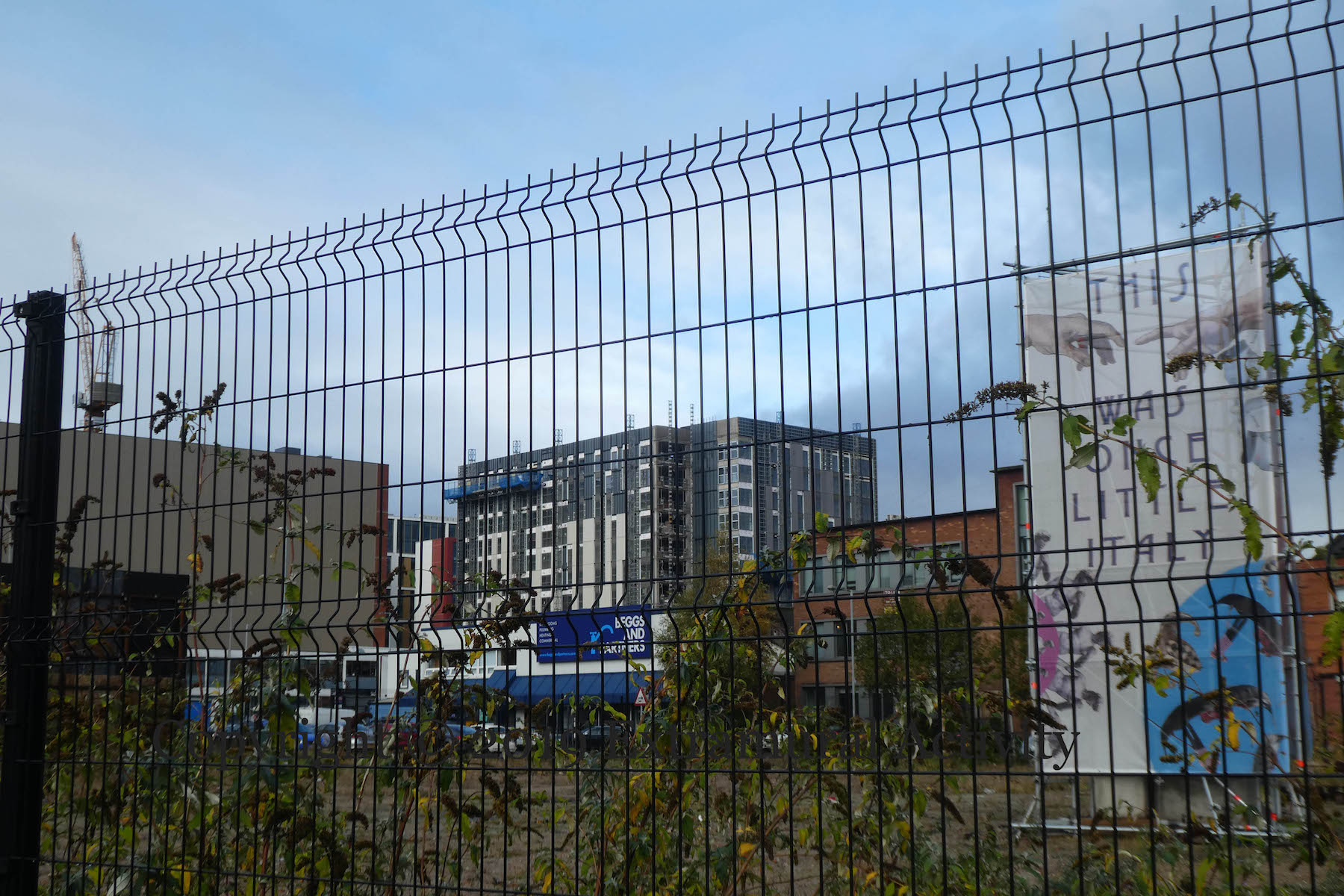
The ‘jobs and benefit office’ in Exchange Street was originally built in 1926 for what was then the Northern Ireland Ministry of Labour and was the largest job centre in the UK. It functioned until 2016 and was demolished in 2017 (FutureBelfast). In its early life it was next to the Mariner’s Church of Ireland between Great and Little Patrick streets (FutureBelfast). The banner now on the site – This Was Once Little Italy – was designed by Deirdre McKenna and erected in July, 2019 (BelTel).
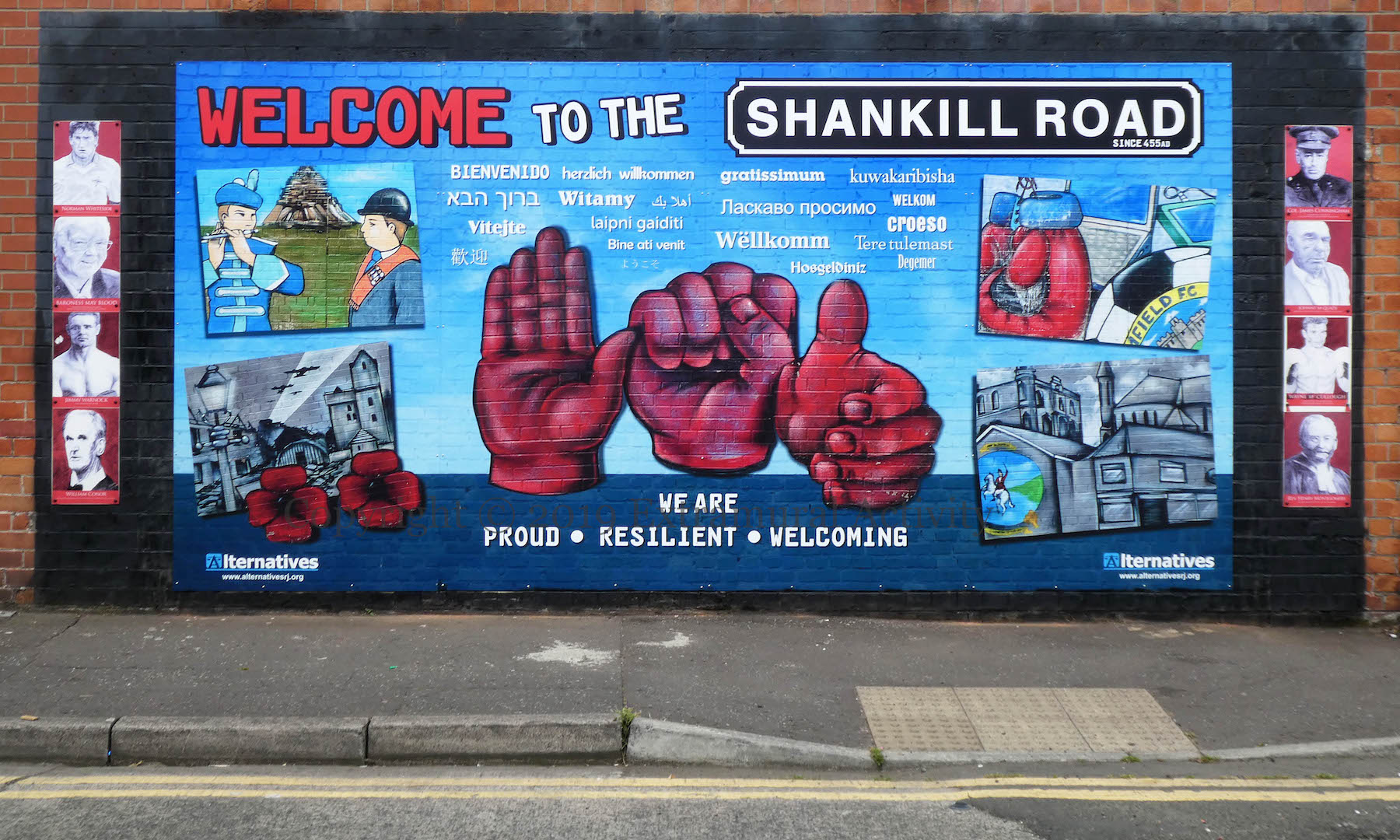
This is the new ‘Welcome To The Shankill (Road)’ mural in Gardiner Street, which replaces the one that had been there since (at least) 2009 (see Welcome To The Shankill).
The mural is a version of the old Beverley Street ‘welcome’ mural (by Blaze FX), with the same four panels (parades/bonfire, blitz, sports, murals) and the same three hands. But instead of “Proud, Defiant, Welcoming” we now have “Proud, Resilient, Welcoming”. (I Am Not Resilient in the lower Shankill complains that the word is used to justify neglect and/or maltreatment.)
It escaped no one’s notice that, although the number of languages expressing a greeting is now much greater than the original ten, Irish is not included among them. Also Ulstèr Scots. (Also French, for some reason. Polish is included – “Witamy”). (See similarly “No Irish” in the lower Shankill estate but also All Flags Are Welcome in Divis, which omitted the Union Flag.)
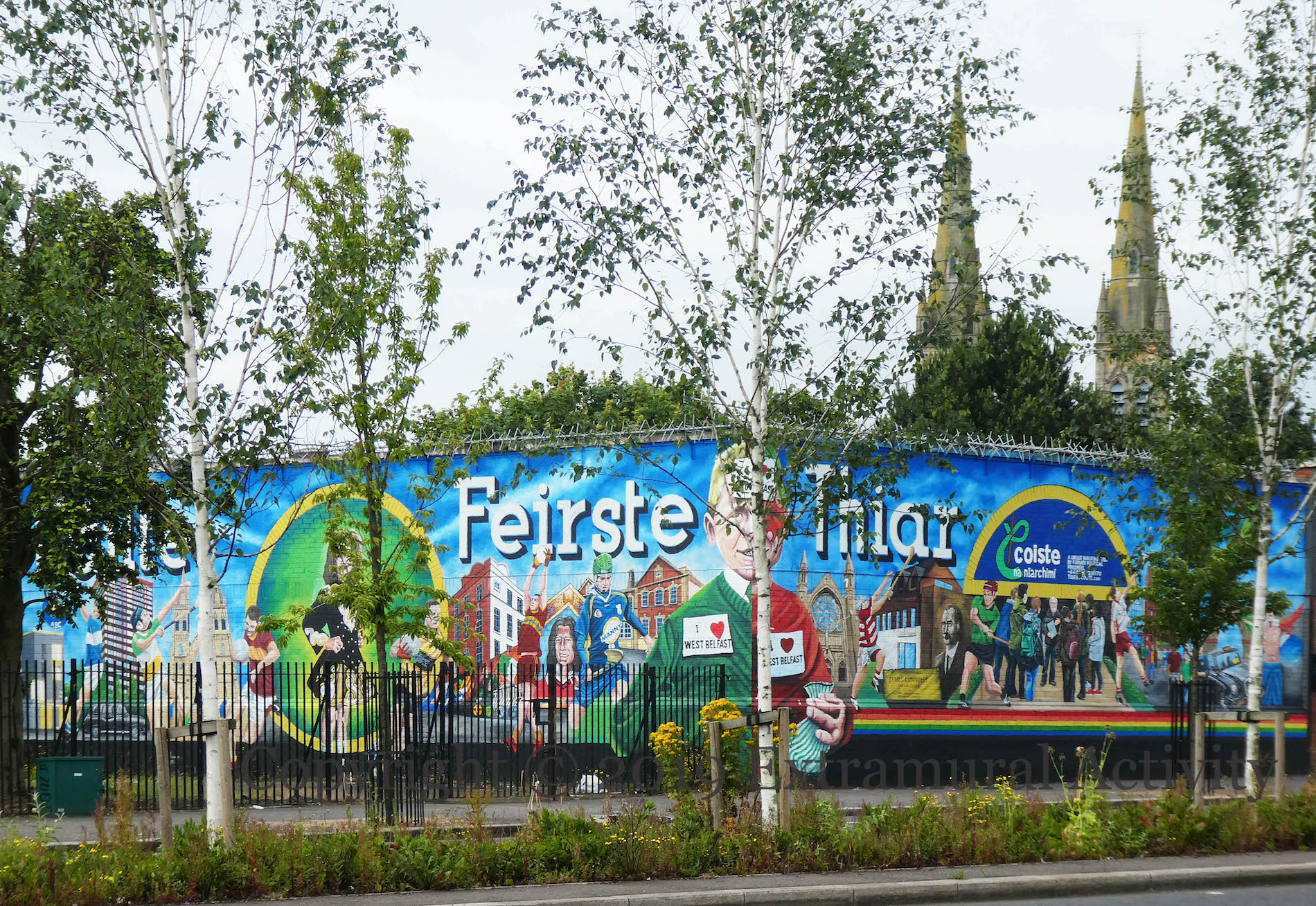
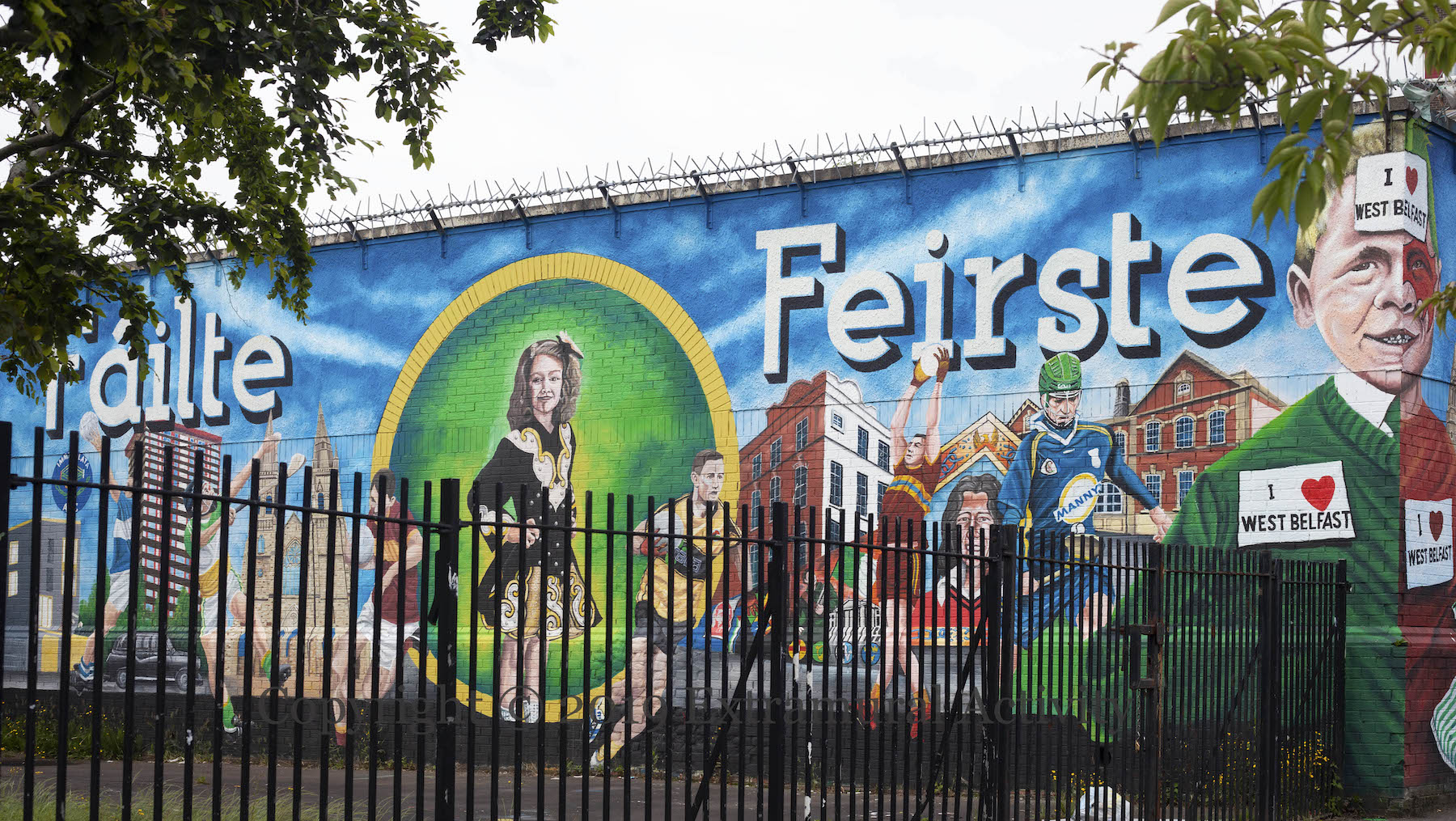
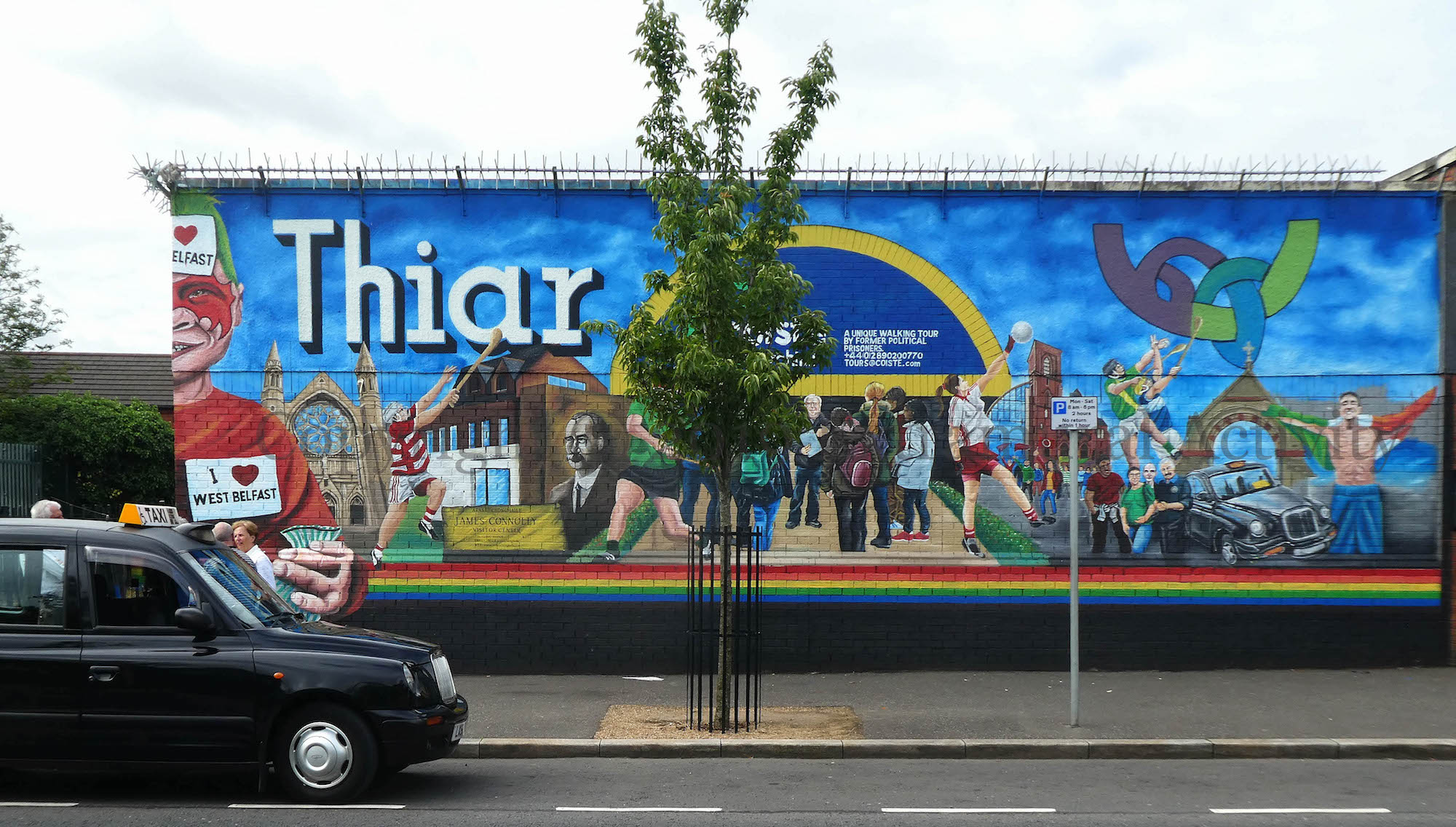
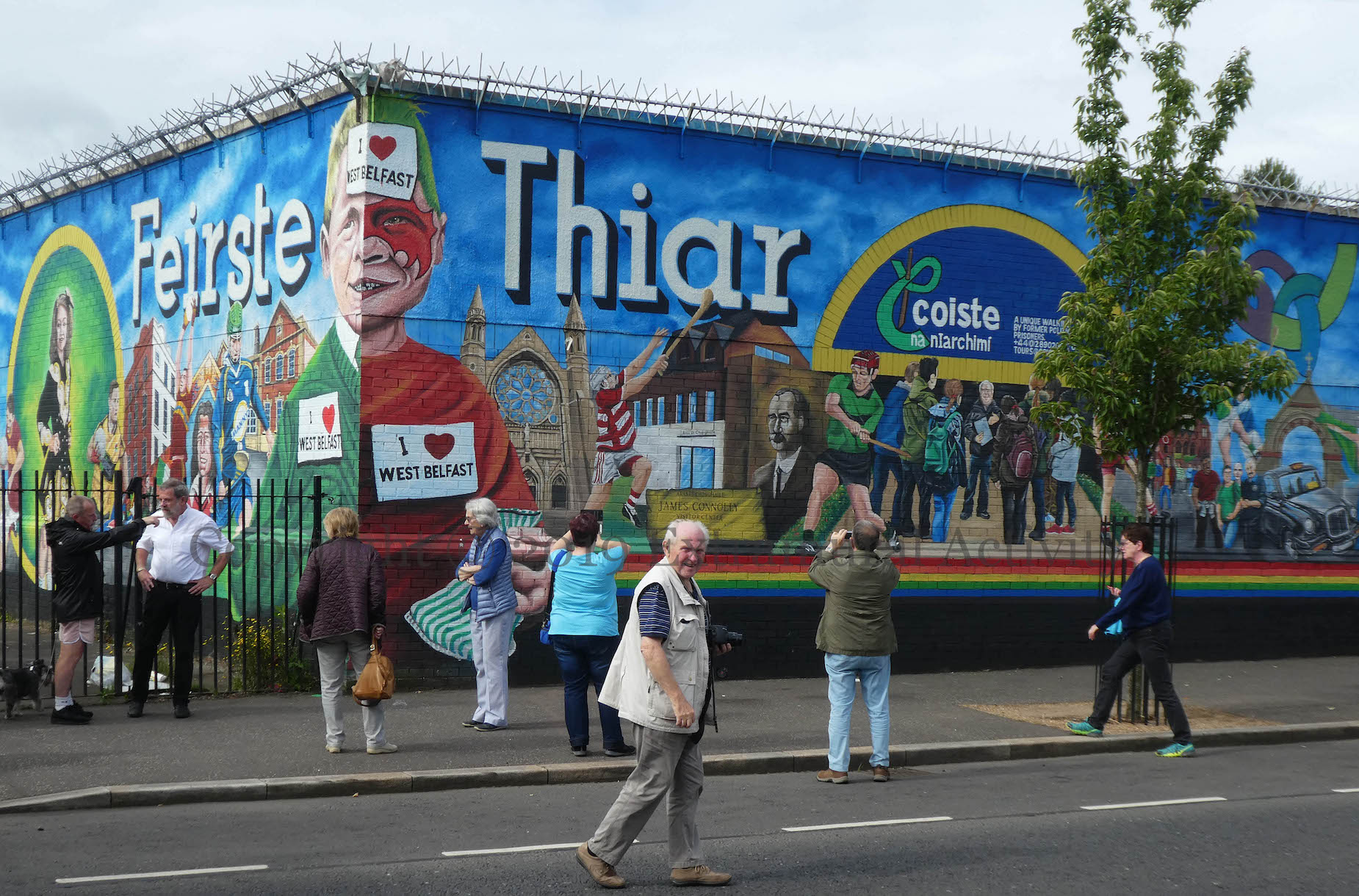
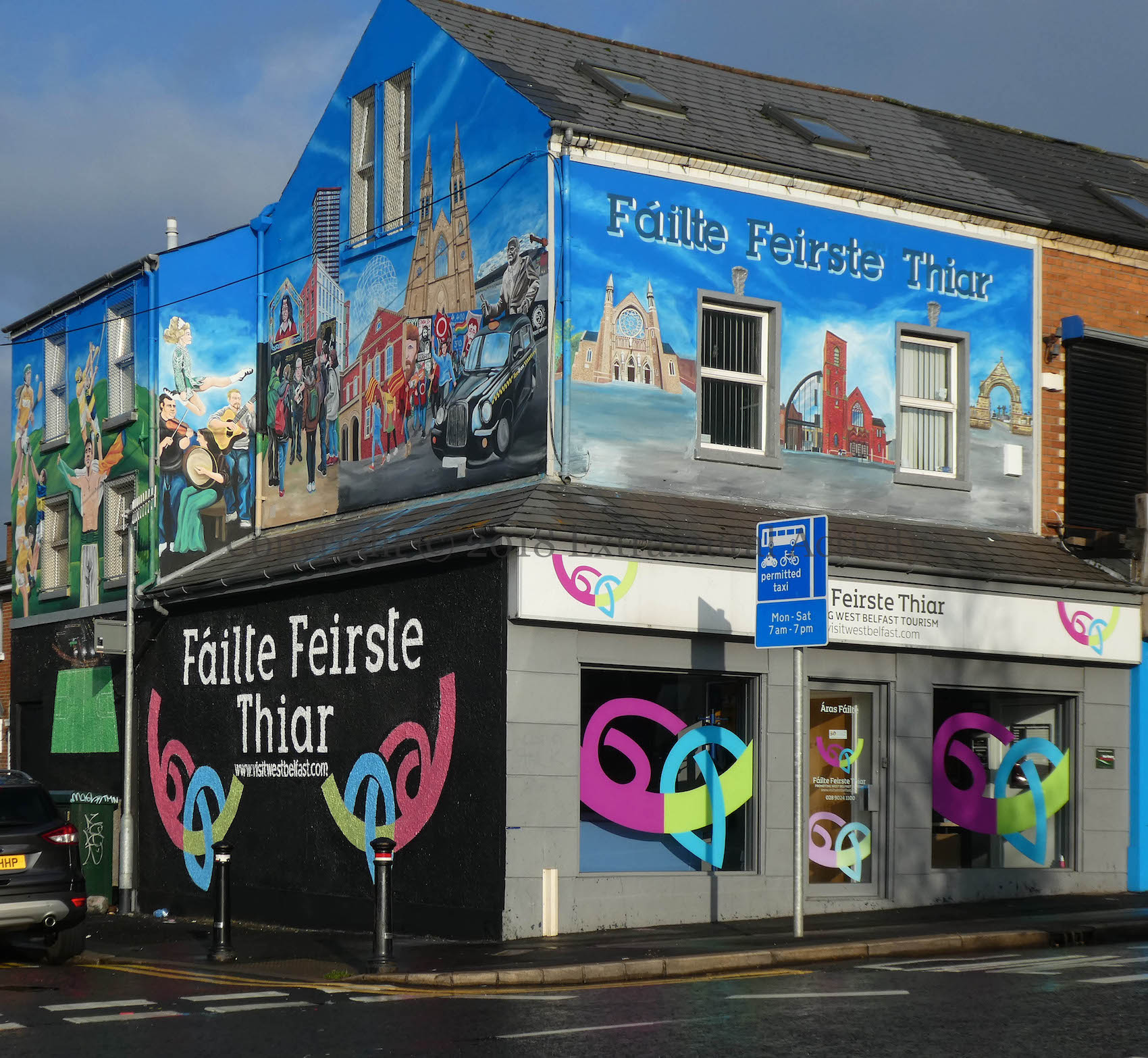
Fáılte Feırste Thıar‘s second mural (the first is outside its offices in the middle Falls – see Go West) reinforces the claim that (republican) west Belfast begins as soon as you cross the motorway, five minutes’ walk from the city centre. Coıste’s tour of republican murals begins at Divis Tower and the new mural already seems to be drawing tourists – see the final image, below. The previous Coıste mural (M04900) has been deleted and incorporated into the mural, promising tourists “a unique walking tour by former political prisoners”.
The mural is a mix of landmarks – the new Raıdıó Fáılte building (which is located just below the mural), Divis tower, St Peter’s, Conway Mill, the so-called “international wall” of murals, the Bobby Sands mural, the Falls library, the new James Connolly centre, Cultúrlann, and Milltown cemetery – cultural images (Irish dancing and Féıle An Phobaıl) – and sporting images (clubs include Immaculata ABC, Gort Na Móna GAC, St Paul’s GAC). A gay pride ‘rainbow’ stripe runs below the Divis Street portion. Before the previous mural was painted (M07533), there was a Gateway To Belfast board at this spot.
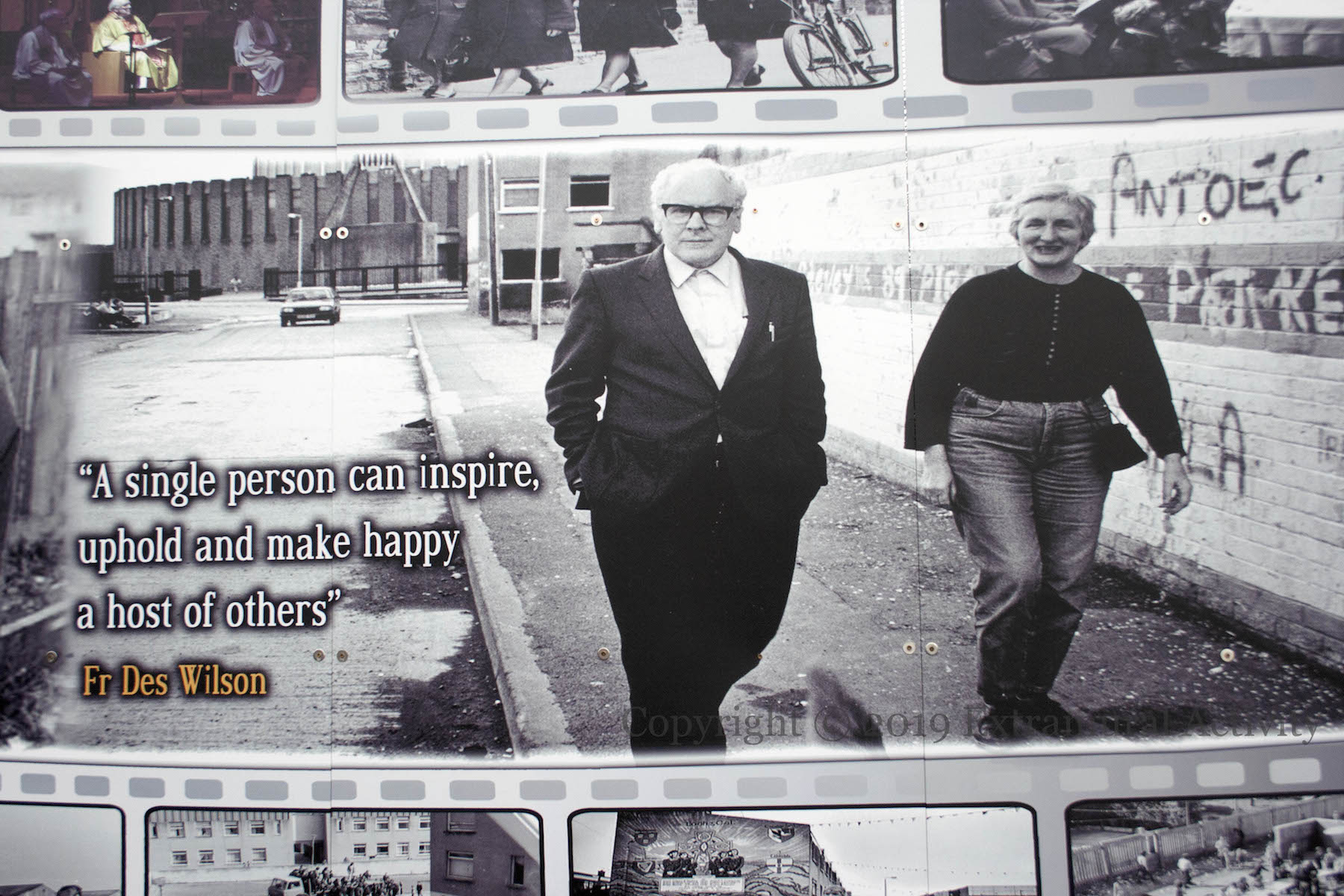
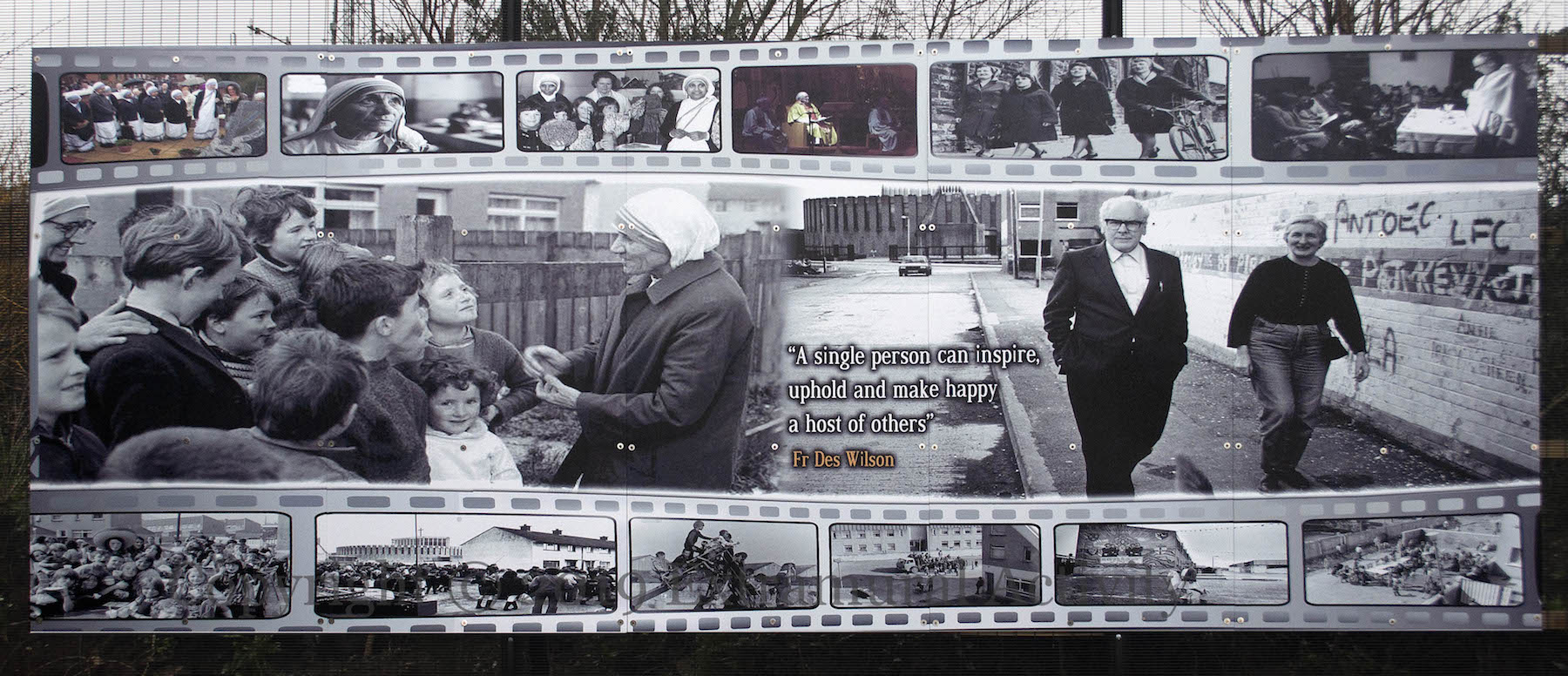
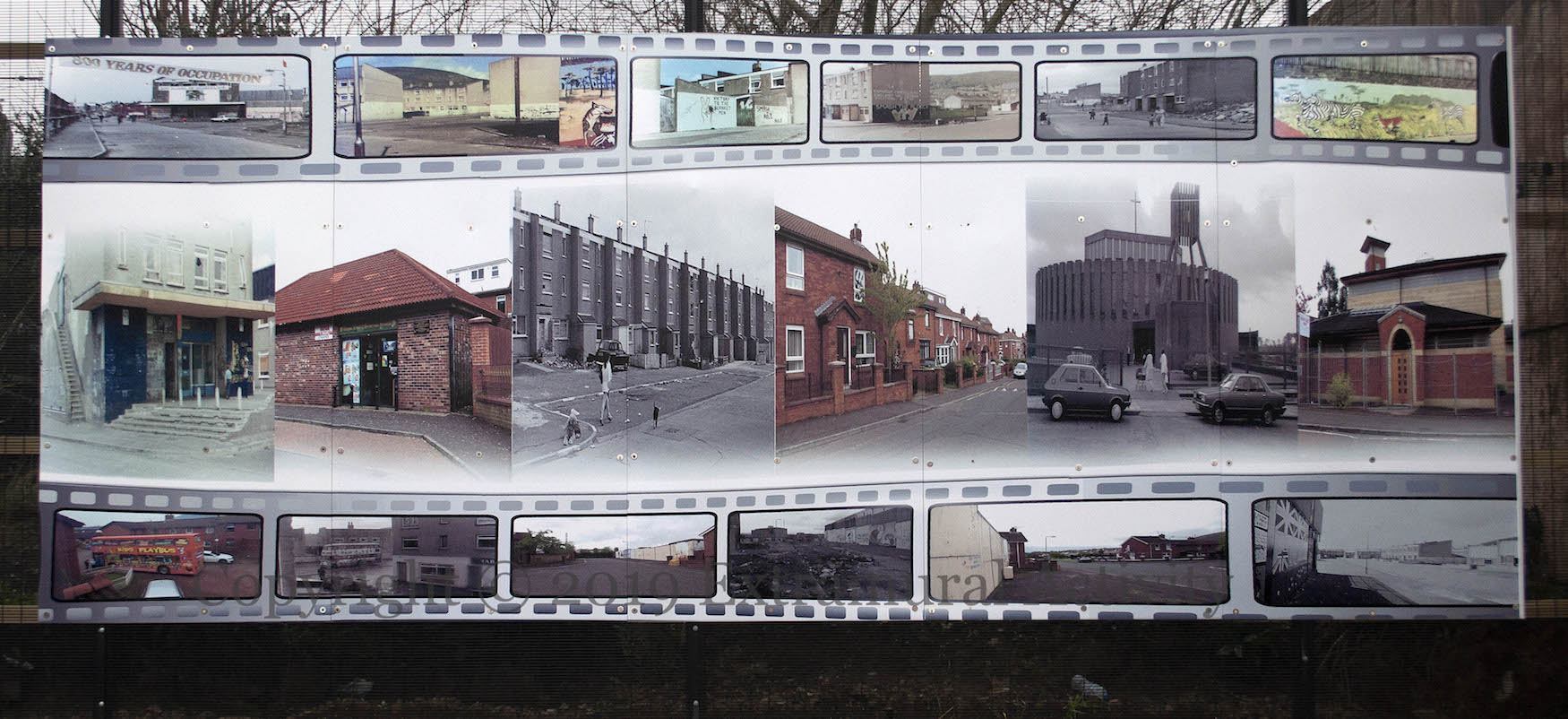
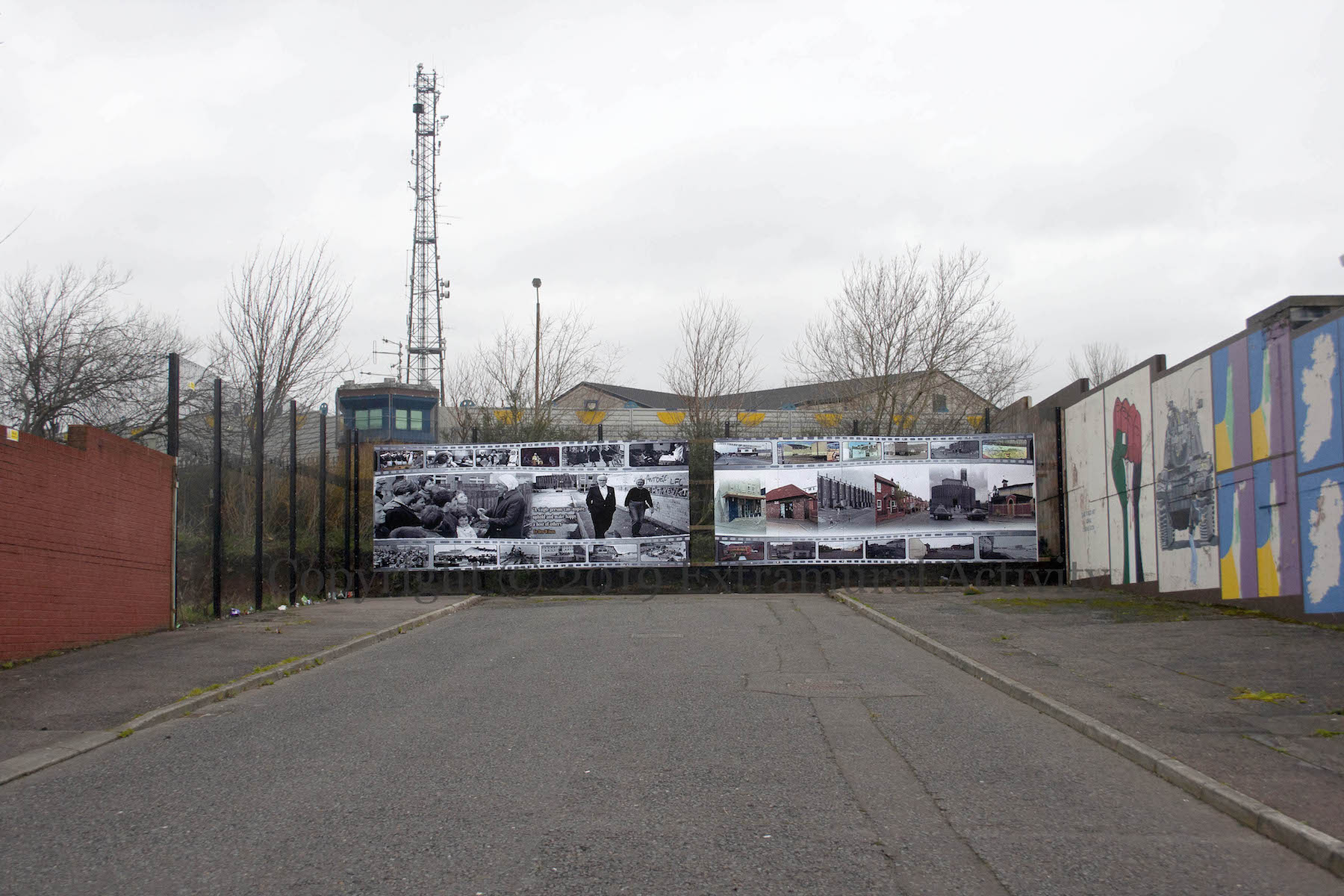
The wall at the top of Springhill Avenue was knocked down to great acclaim in 2017 (Guardian) but the impact was merely cosmetic as a wire fence and substantial shrubbery continued to block the way. The removal of the wall also meant the removal of the pro-Palestinian murals painted on it: Palestine Abú | Man Against Machine | Hellfire. In its place has now been put a large board celebrating the history of the area and especially the contribution made by Des Wilson and Noelle Ryan who worked in Springhill House for over forty years. Both Des and Noelle were interviewed by NVTv in 2012. Des turned 93 in July (encomium by Gerry Adams); Noelle died in 2014 (An Phoblacht | BBC-NI).
The left hand side of the mural shows Mother Teresa, who lived and worked in the area with four nuns from 1971 to 1973 before being put out (allegedly) by the Catholic church (TripleVision documentary).
On the right, the old and new Springhills are contrasted, with images taken from the same spot approximately 30 years apart.
Plans to redevelop Castle Arcade were published in July (NewsLetter). The arcade runs between Castle Lane and Castle Place. The castle of Belfast originally stood at the top of High Street, built by the Normans in the late 12th century and then rebuilt by Arthur Chichester in 1611 but destroyed by fire in 1708 after which the area became commercialised (Belfast Entries | Belfast Castle). If you know the art’s creator, please comment or get in touch.
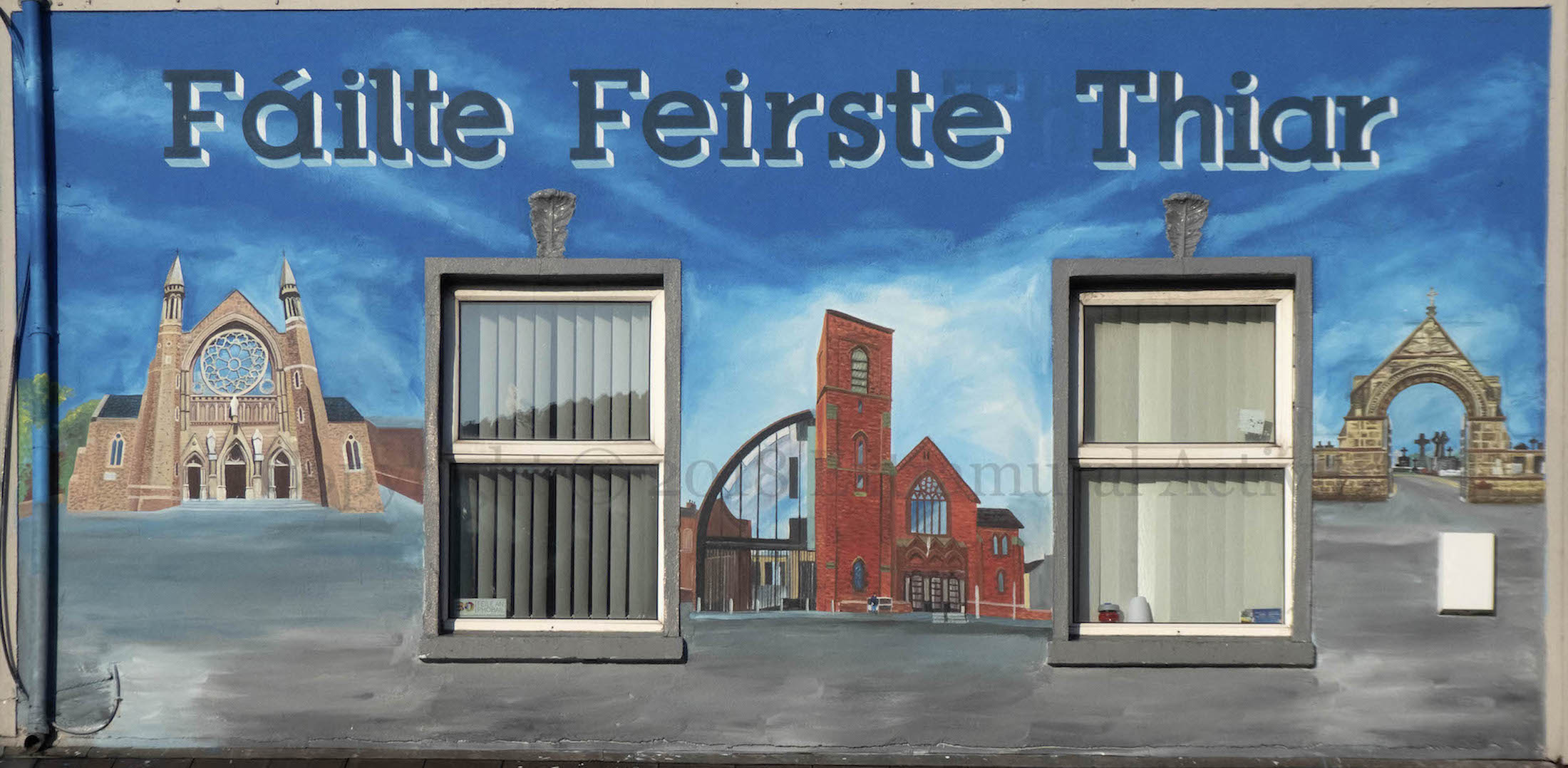
As you head west along Falls Road, you will pass by the three landmark buildings depicted in the mural above: Clonard Monastery, Cultúrlann McAdam-Ó Fıaıch (opposite this mural and the offices of Fáılte Feırste Thıar), and the entrance to Milltown Cemetery at the edge of Andersonstown. For the parts of the mural in Brighton Street, see The Conlan Revolution and Fáılte Feırste Thıar.
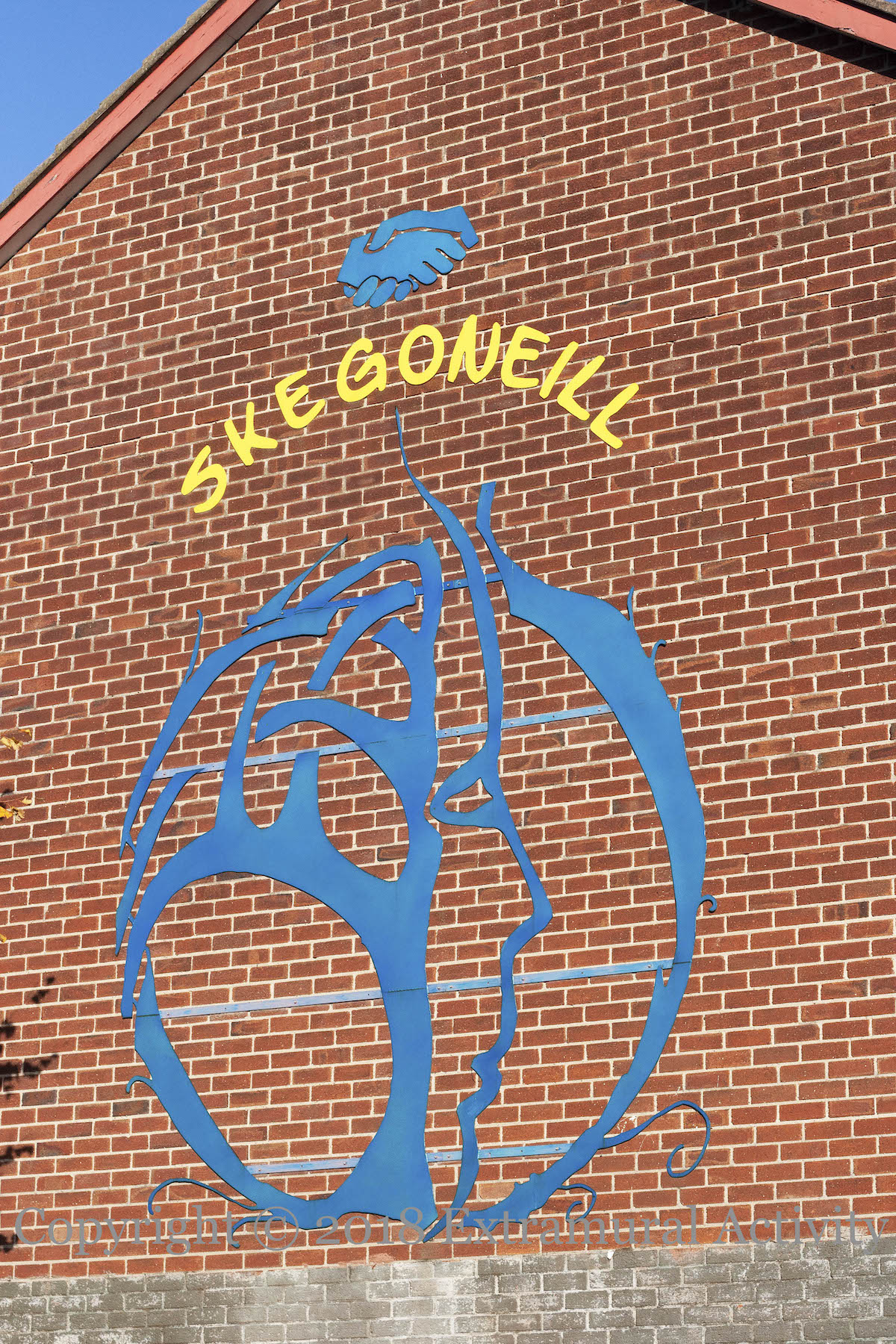
The emblem on the flats at the mini-roundabout (where Glandore and Skegoneill avenues meet) depicts a tree and a face, perhaps a reference to the name “Skegoneill” or ‘the earl’s thorn bush” after the place at which Anglo-Norman earl William de Burgo was assassinated in 1333 (PlaceNamesNI).

 Seosamh Mac Coille Collection