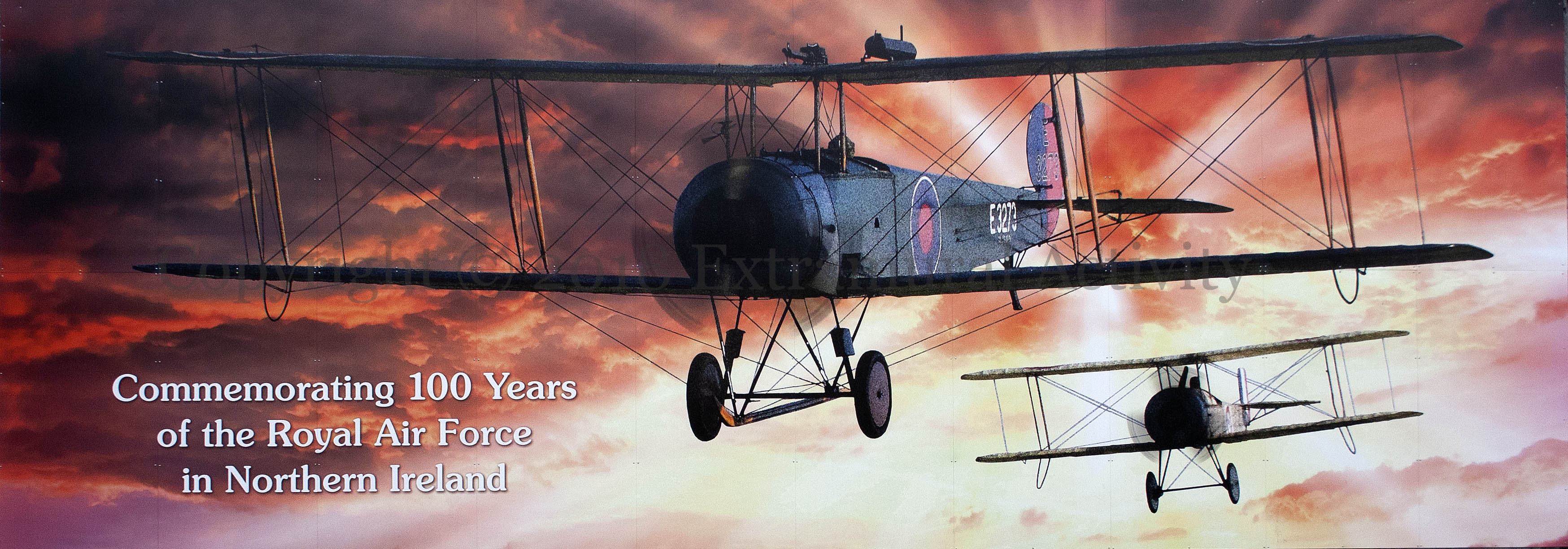
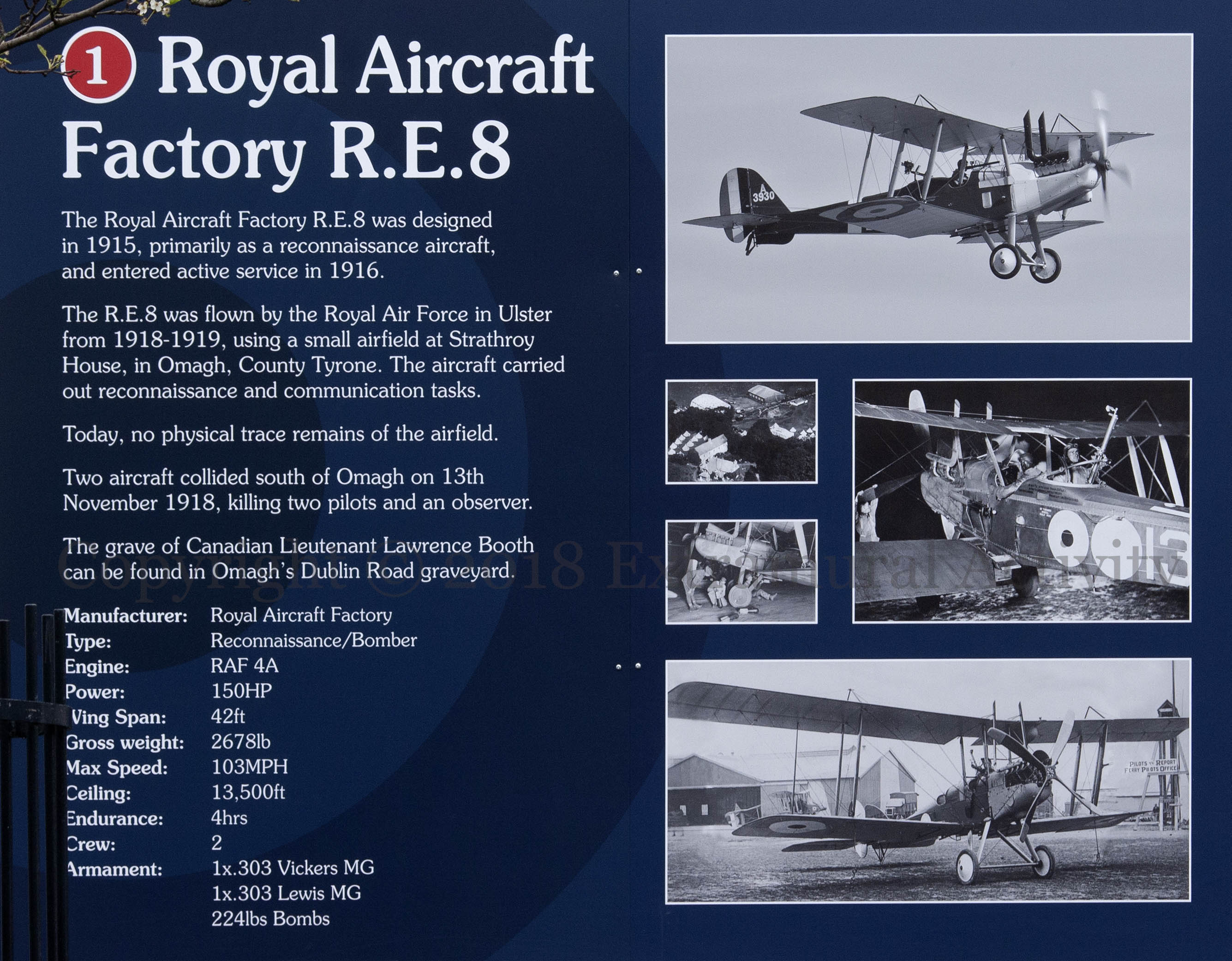
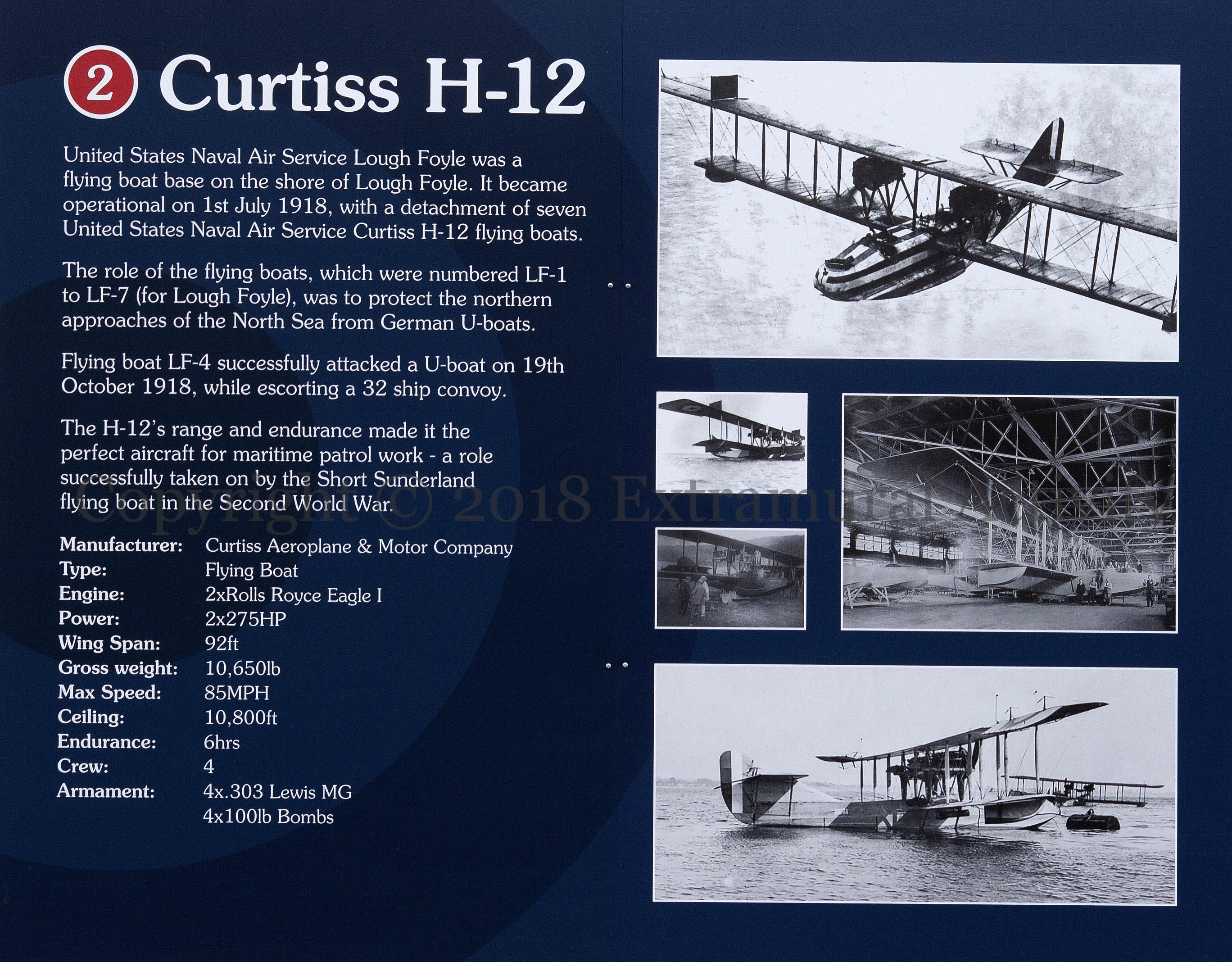
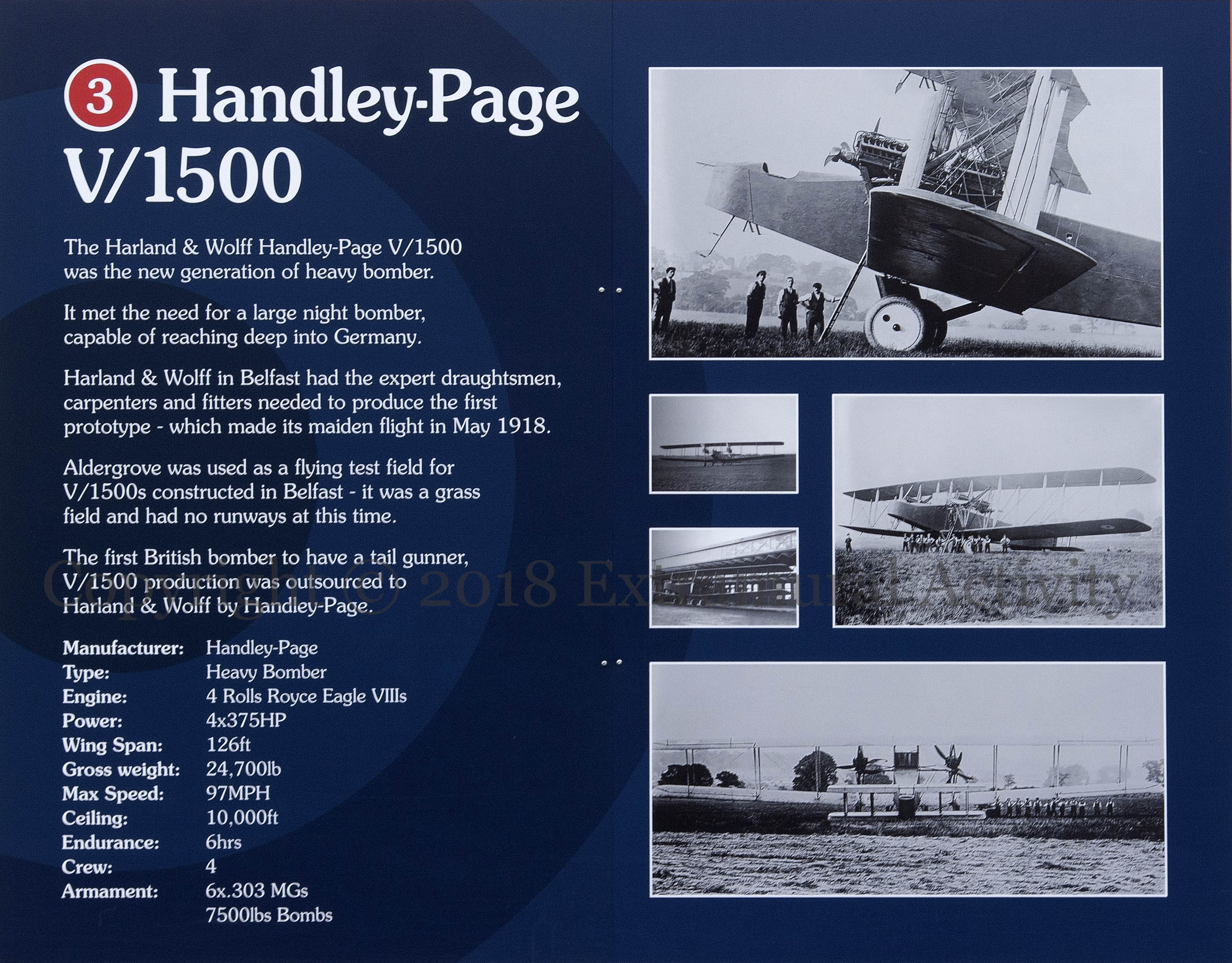
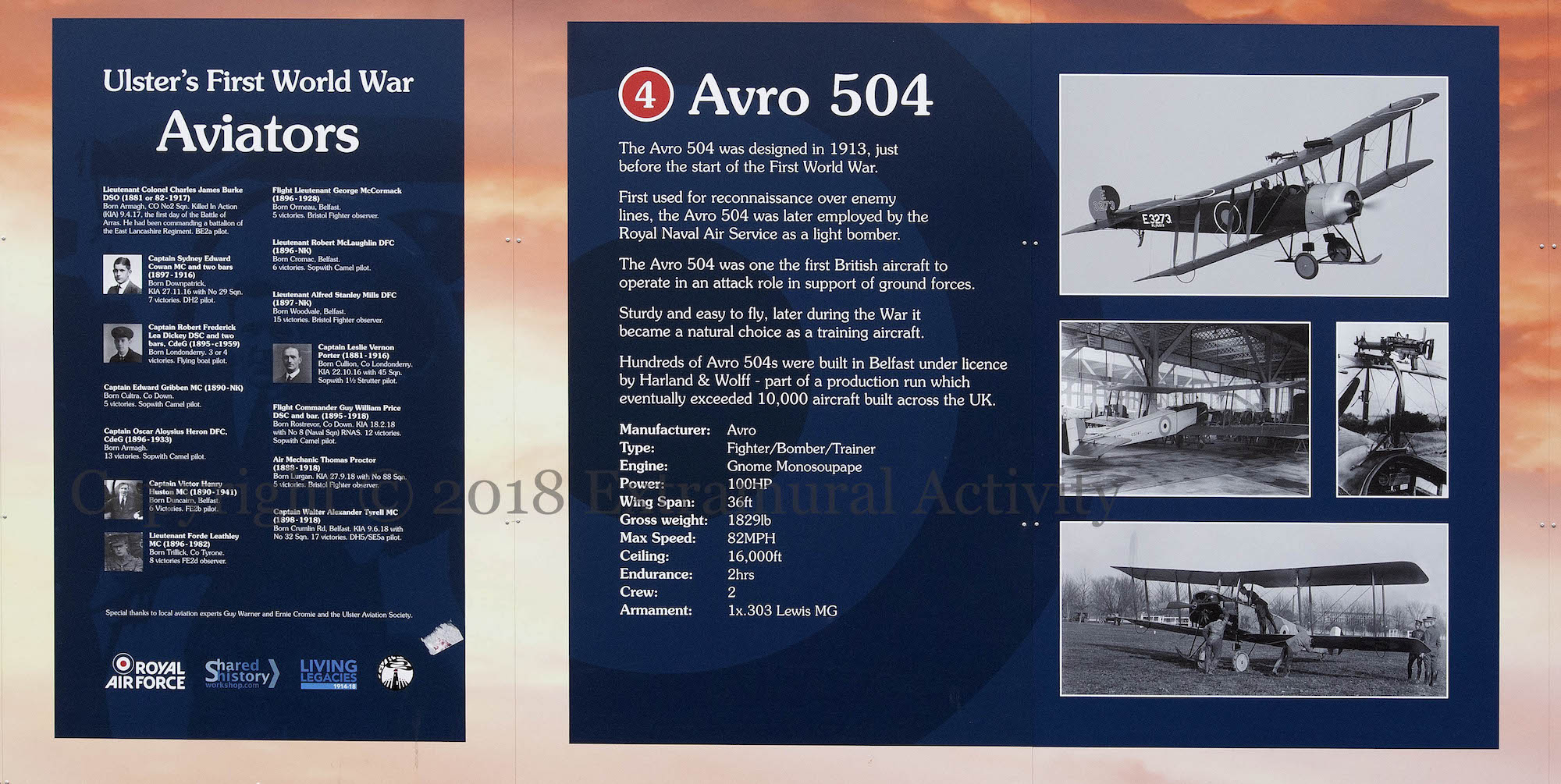
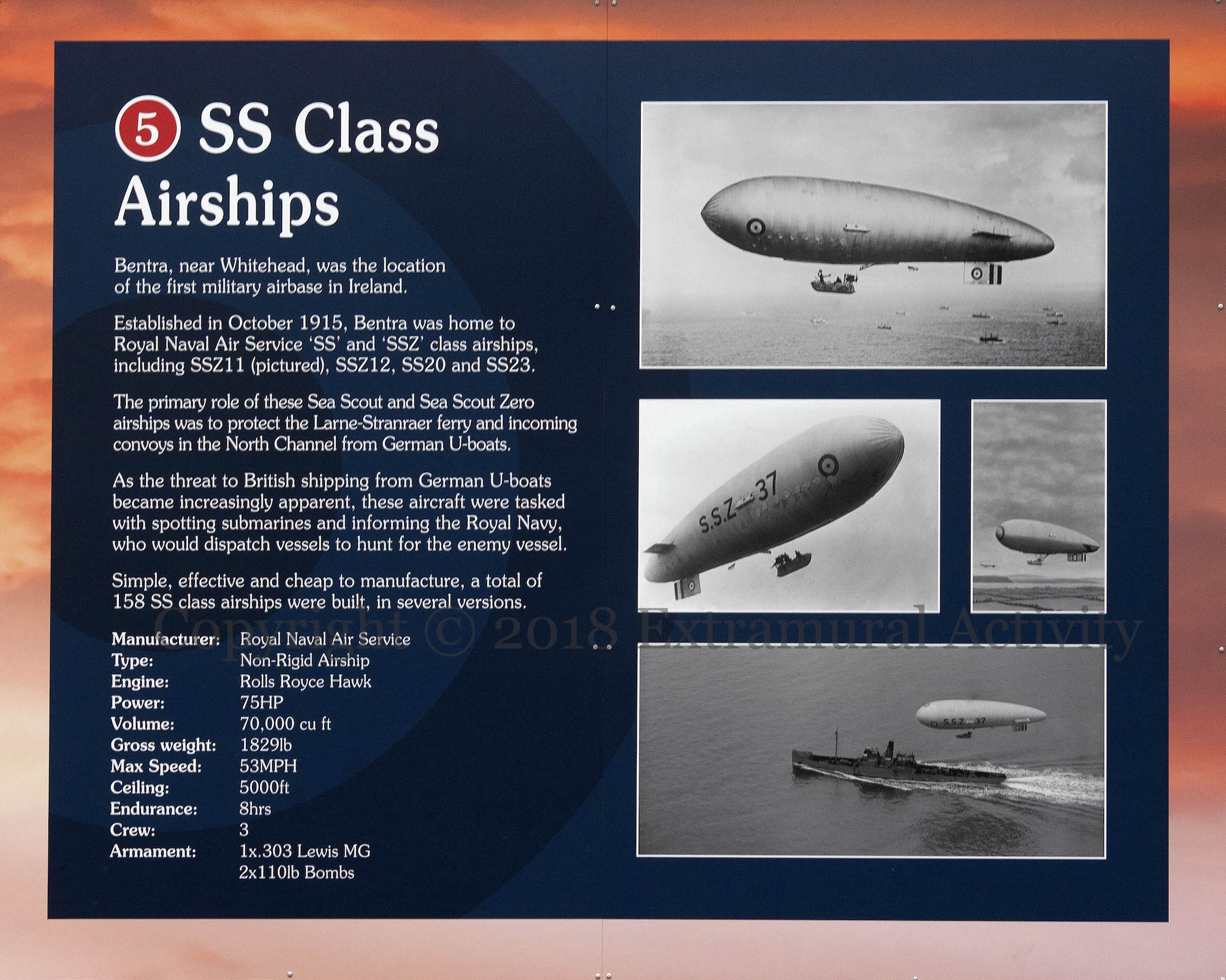
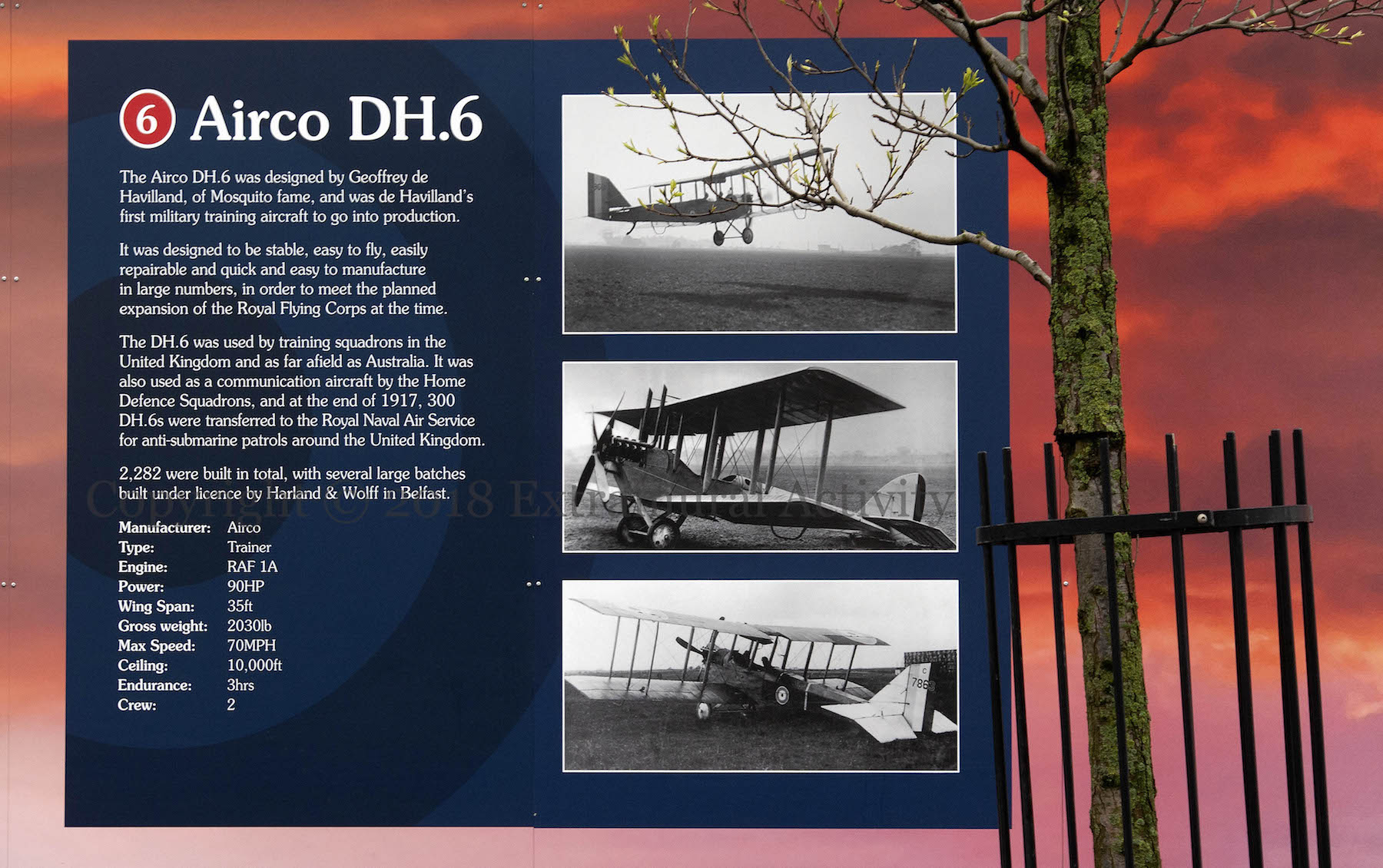
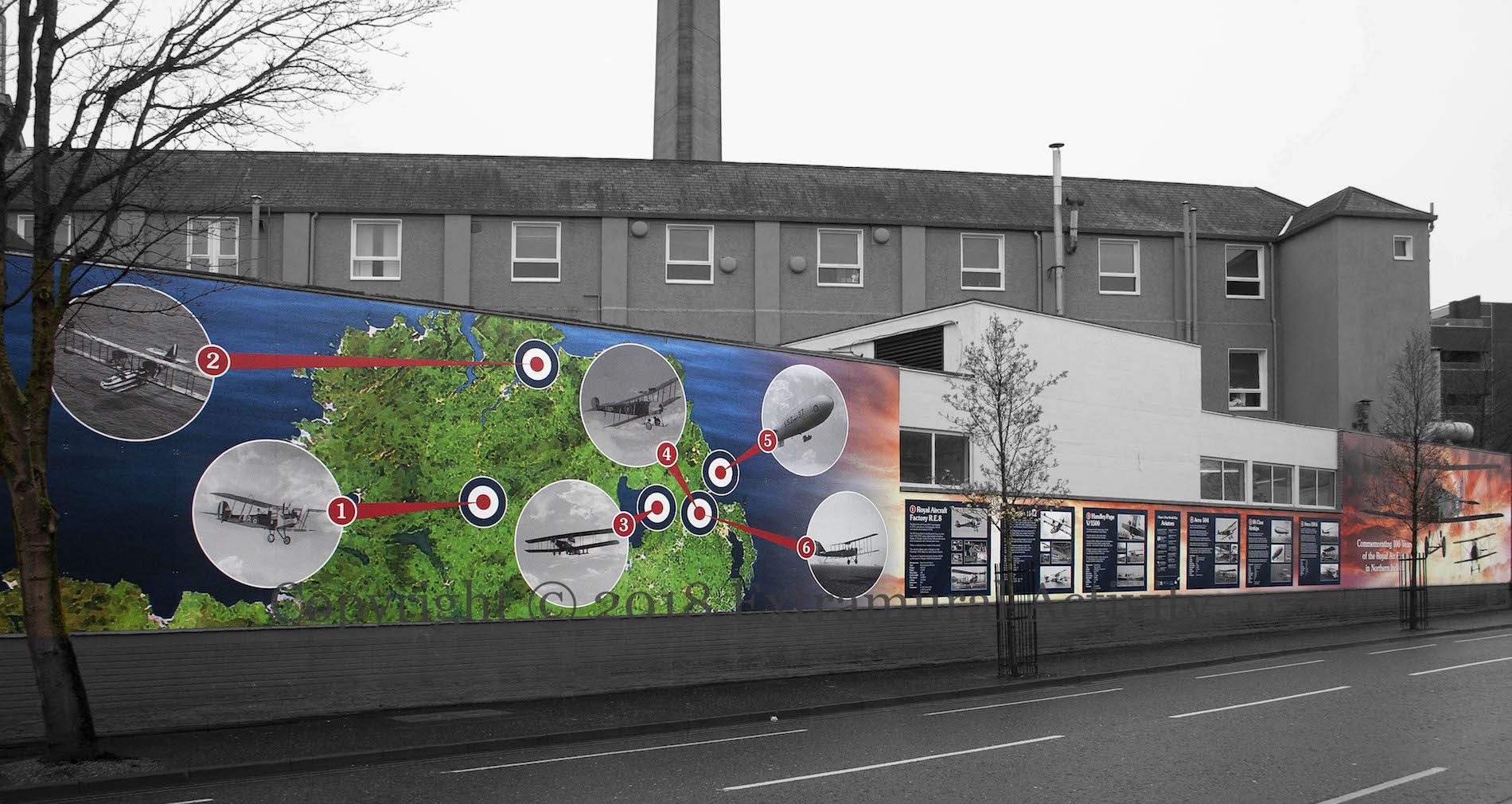
“Commemorating 100 years of the Royal Air Force in Northern Ireland.” This Donegall Road mural highlights six locations in the north and their connection to the RAF in WWI, including Bentra, near Whitehead, home to the Sea Scout airships that guarded Larne-Stranraer ferries against U-boats.
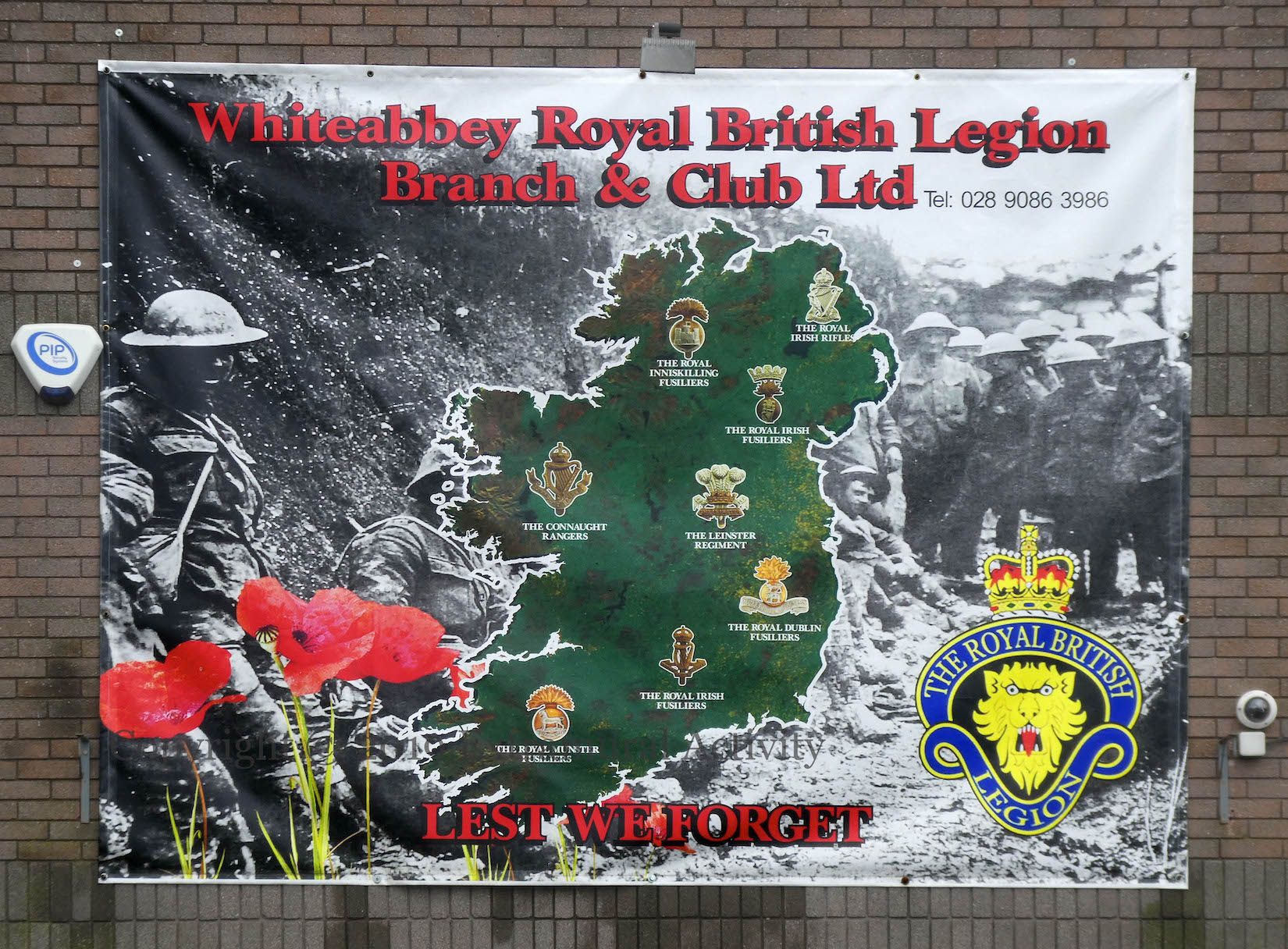
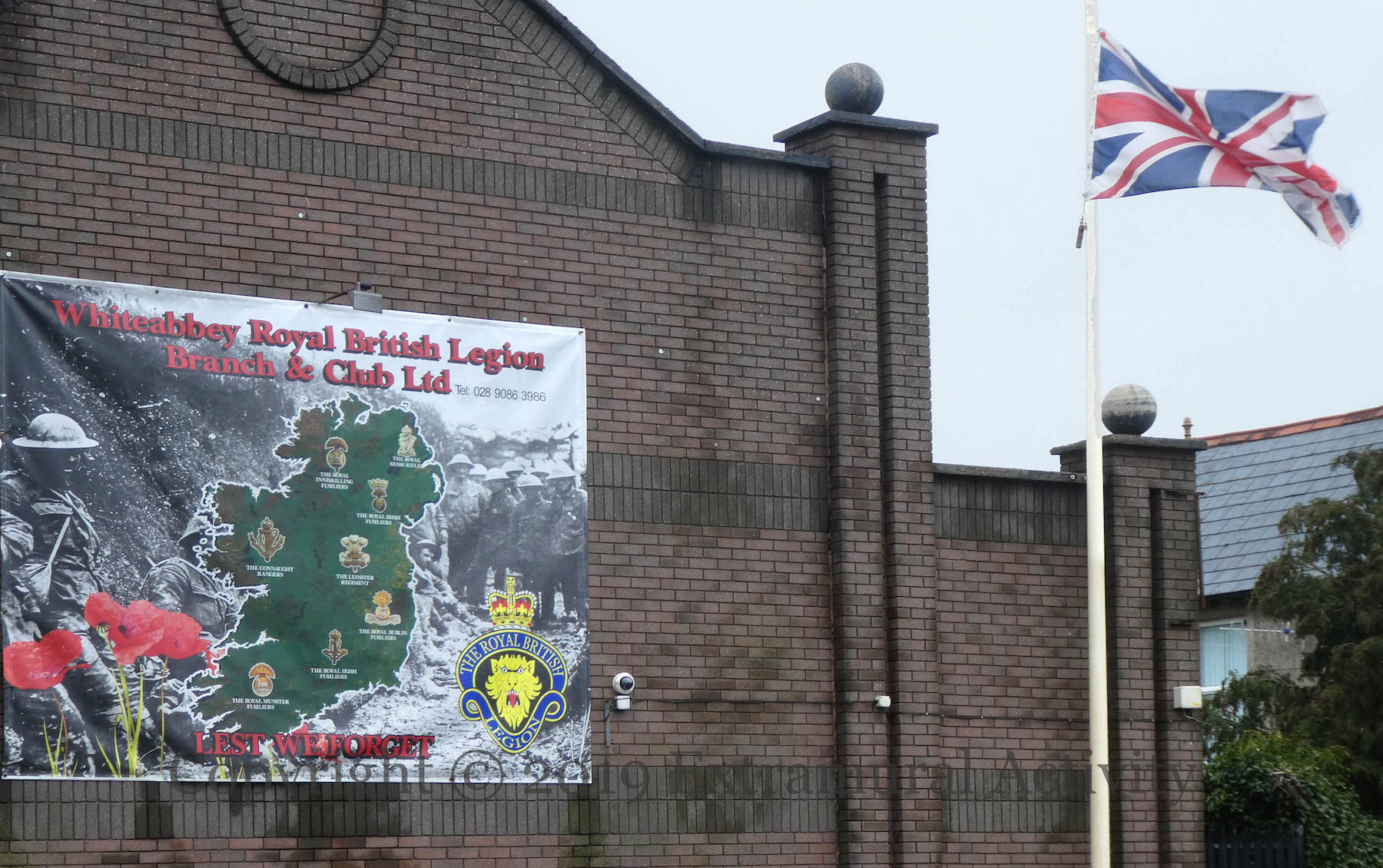
Various other murals pay tribute to the 10th and 16th Irish divisions alongside the 36th division (see, e.g., We Are The DeadBrothers In Arms | Killed Wounded Missing | Their Only Colour Was Khaki) but this tarp outside the Whiteabbey British Legion (Fb) shows instead the eight regiments raised in Ireland, whose battalions served not only these three but many other divisions: Royal Irish Rifles, Royal Inniskilling Fusiliers, Royal Irish Fusiliers, Connaught Rangers, Leinster Regiment, Royal Dublin Fusiliers, Royal Irish Fusiliers [should be Royal Irish Regiment], Royal Munster Fusiliers. The geographical distribution of the regiments (royal-irish.com has a map of the recruiting districts in Ireland; for battalions, divisions served, and regimental headquarters, see WP.) The background image is of the 36th in their trenches at the Battle Of The Somme.
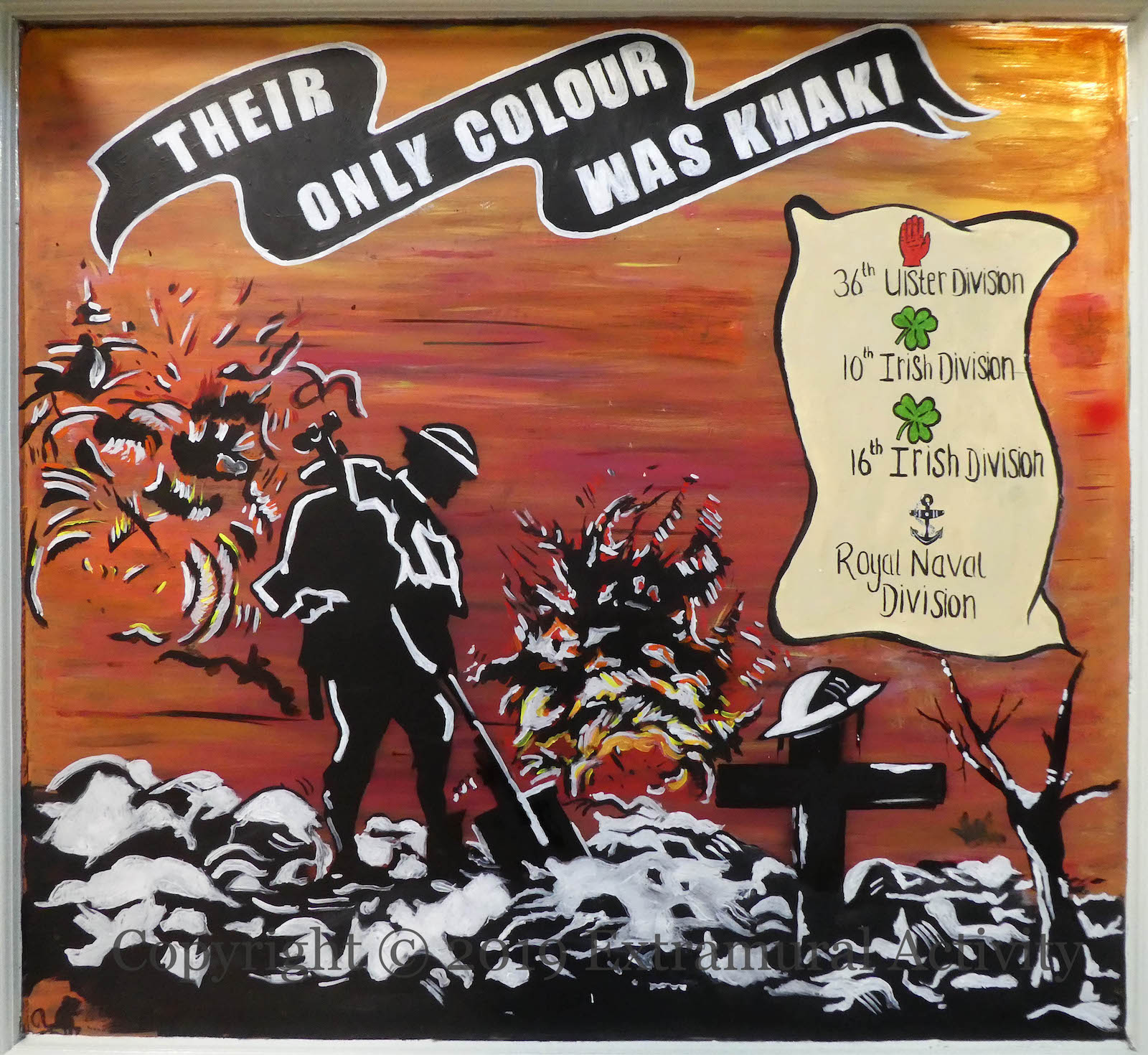
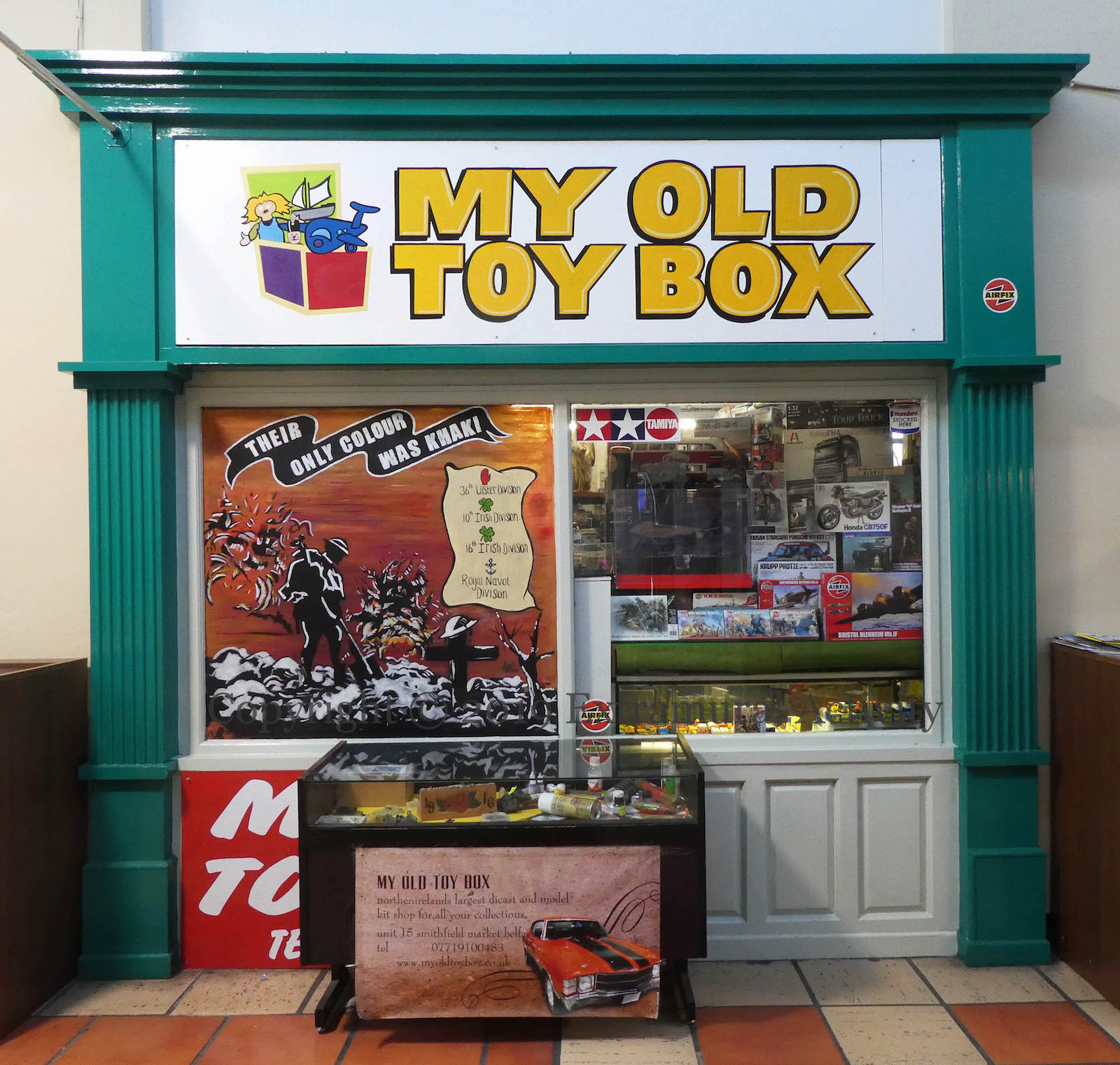
This is a close-up of the painting in the window of My Old Toy Box (Fb) in Smithfield Market (BelfastCity). It includes the 36th (Ulster) Division, and 10th and 16th (Irish) Divisions. It is not clear why the 63rd (Royal Naval) Division (WP) is included as it does not appear to have any connection to Ireland. Please leave a comment if you can explain the connection.
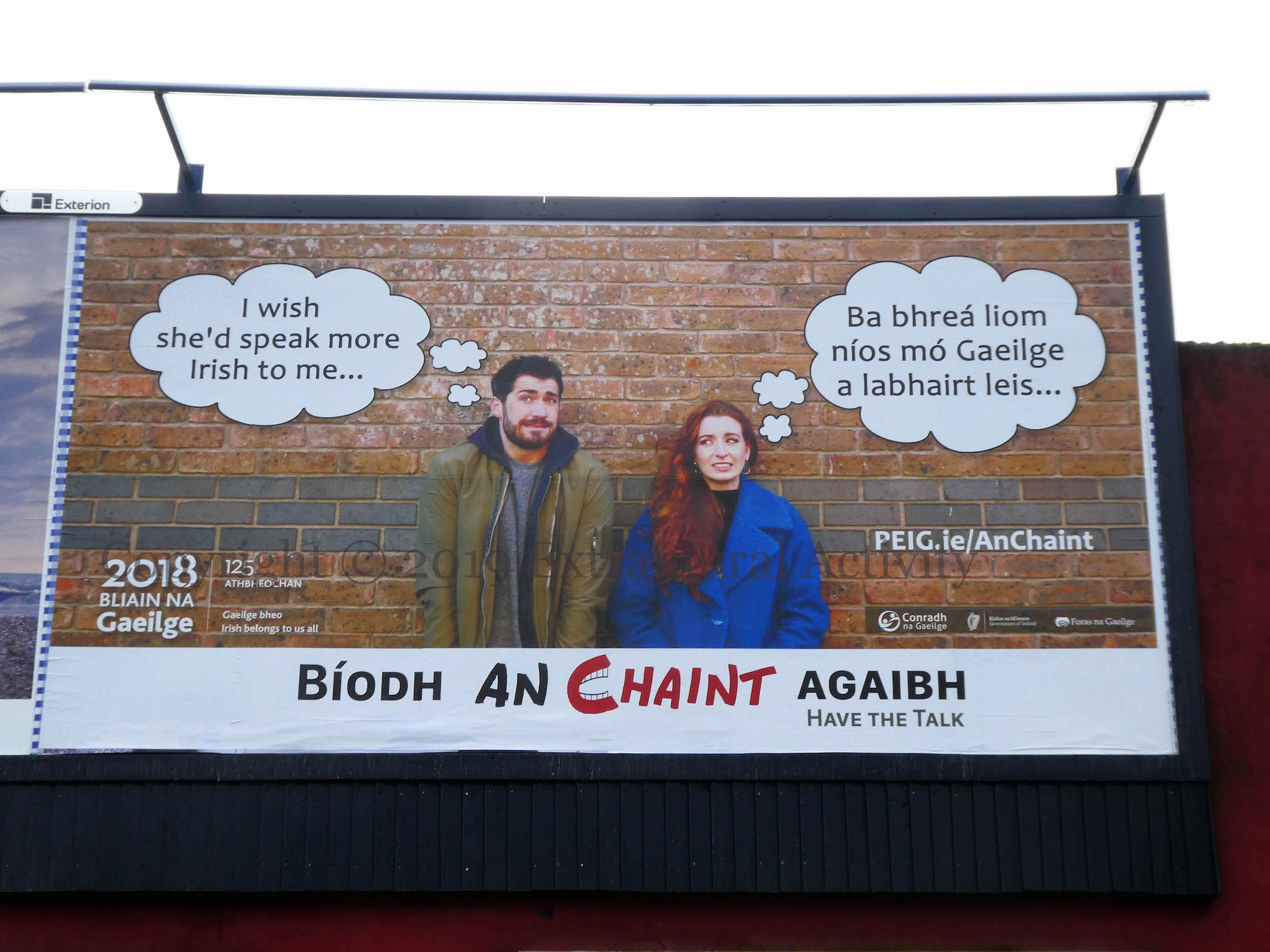
“Have the talk” is a campaign encouraging people to use and learn Irish/Gaeılge from Conradh Na Gaeılge’s PEIG (Pobal – Eolas – Ilmheáın – Gaeılge) multimedia web site (Fb). This advertising hoarding is in Belfast city centre.
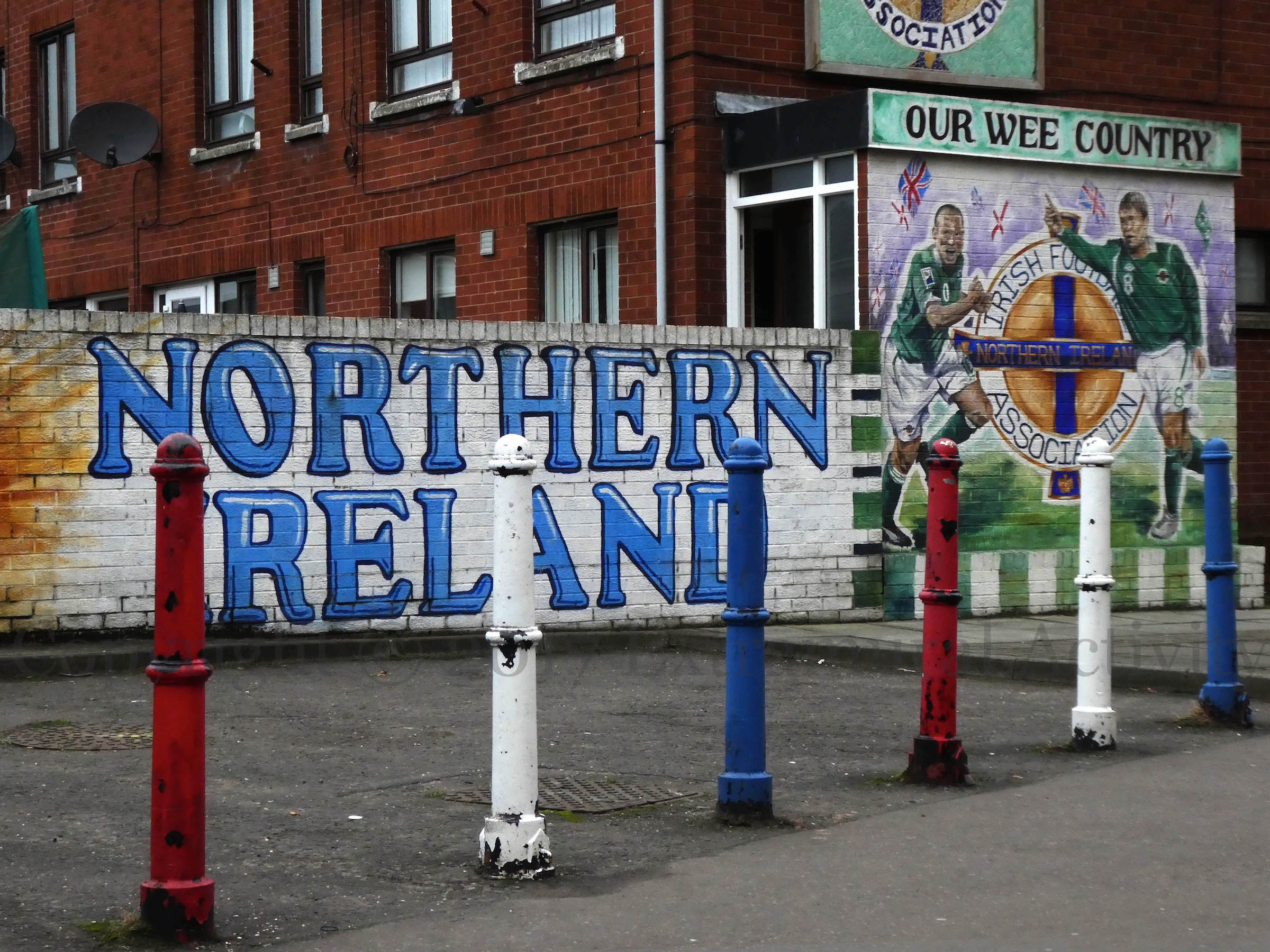
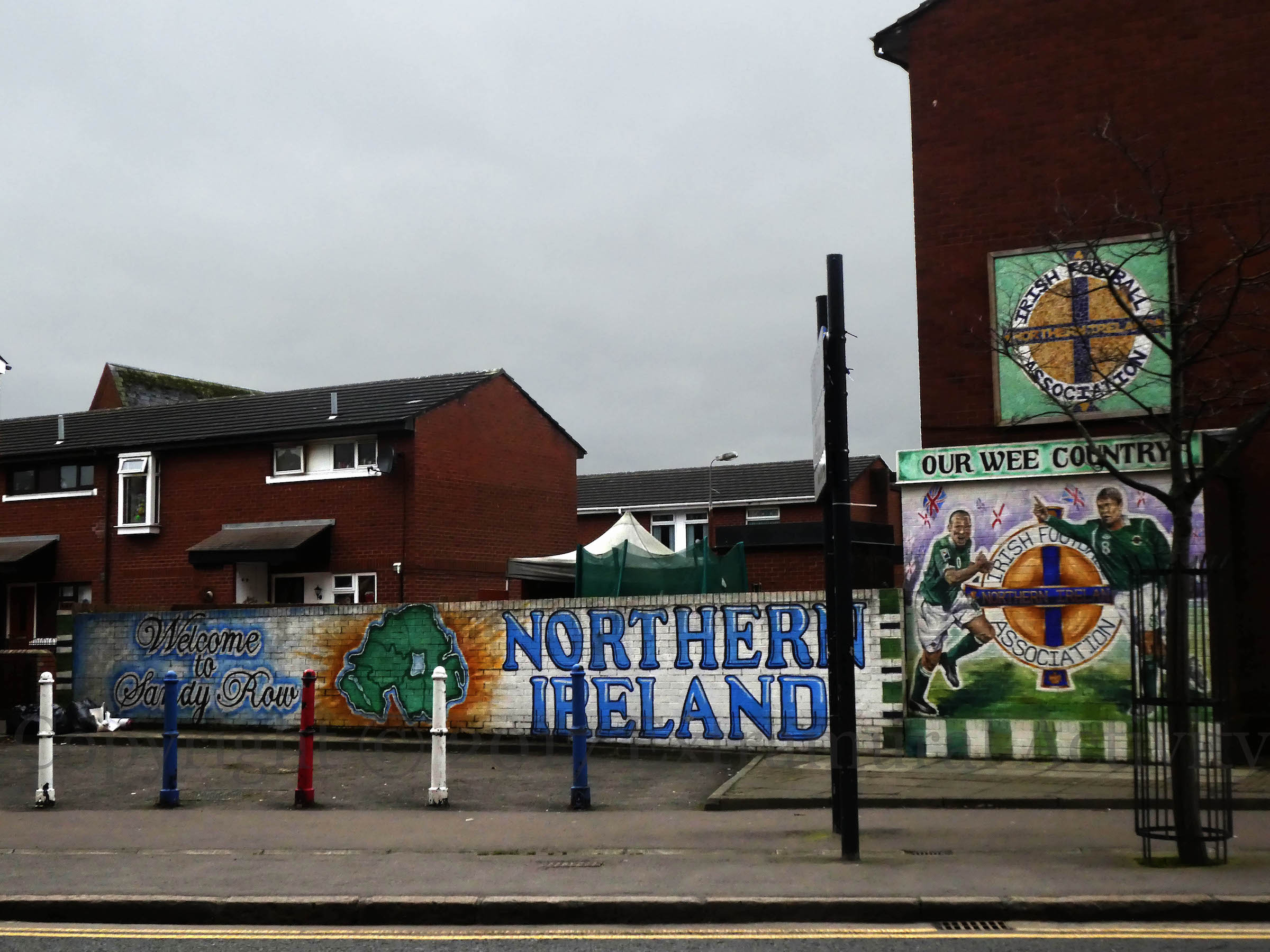
The Irish Football Association (web) is the governing body for Northern Irish soccer, overseeing both domestic and international events. The original Our Wee Country (fan organisation web) mural was in Carnforth Street, east Belfast. For another and one of the emblem with Ulster banner and Union flags, see Irish Football Association and Our Wee Country.
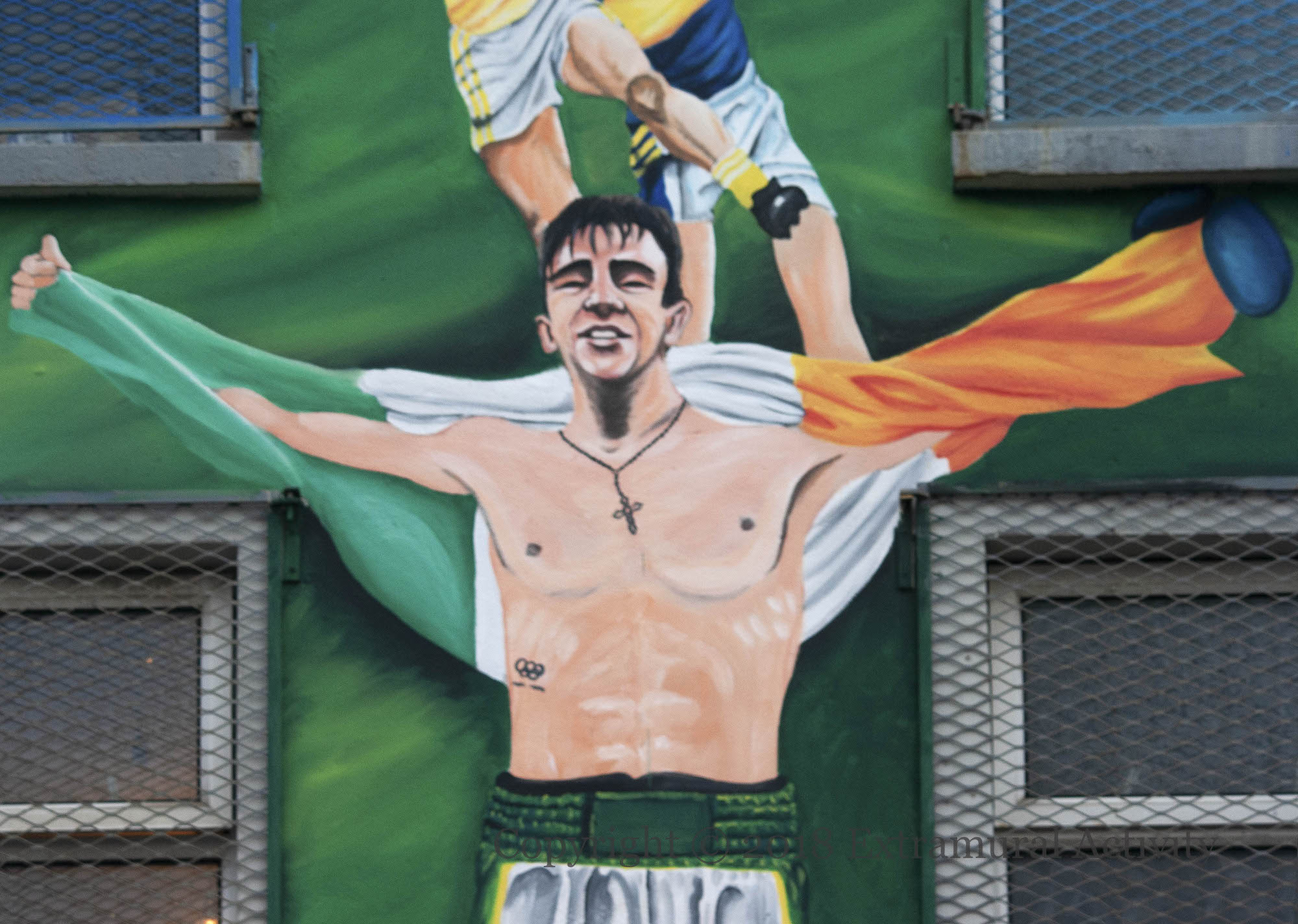
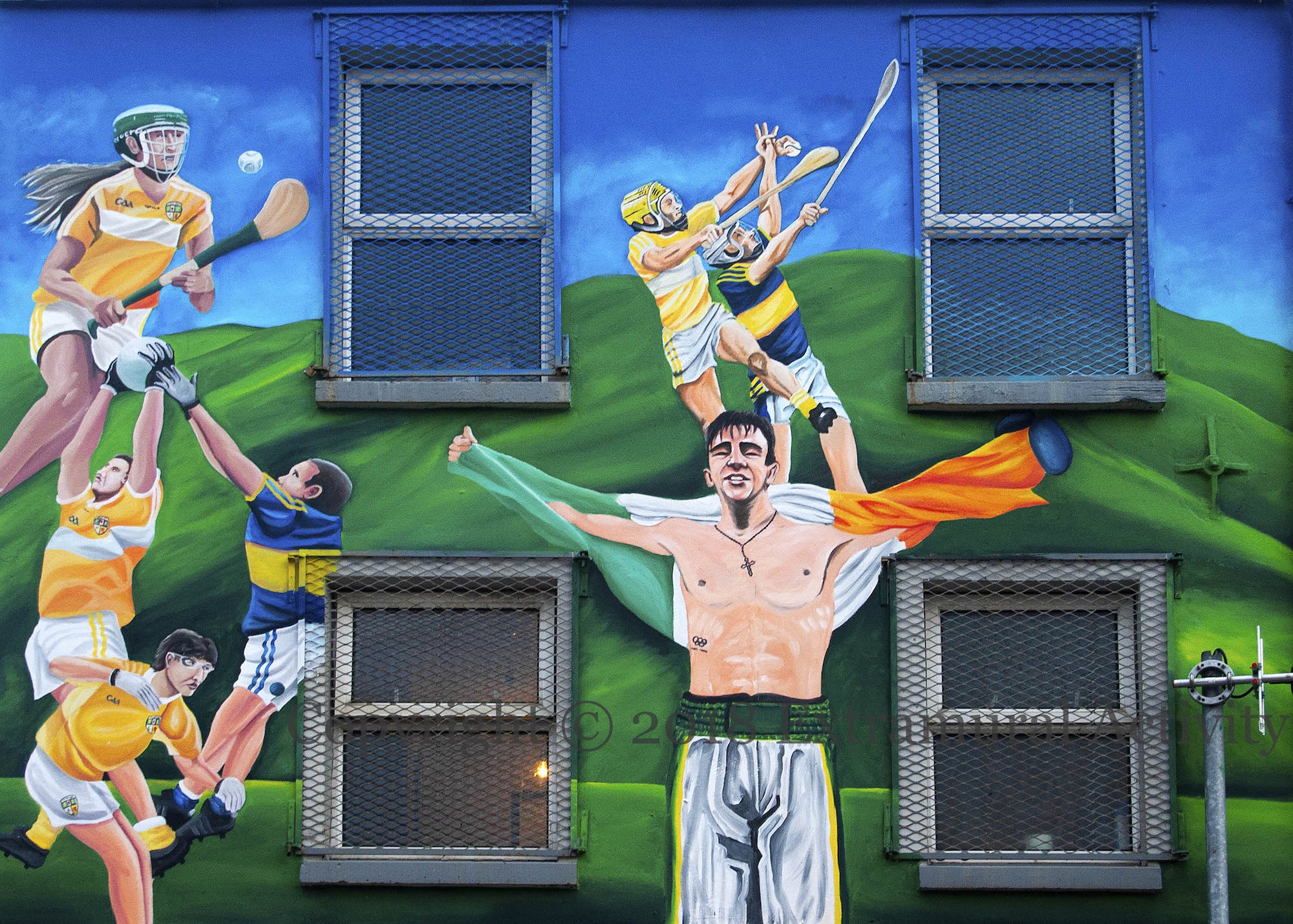
Michael Conlan (tw | ig) won his first title and tenth professional bout on Saturday night (December 22nd), in Manchester, by defeating Englishman Jason Cunningham (BBC). He features here in one of the new murals on the Fáılte Feırste Thıar offices alongside the traditional Gaelic games of hurling, camogie, football, and handball.
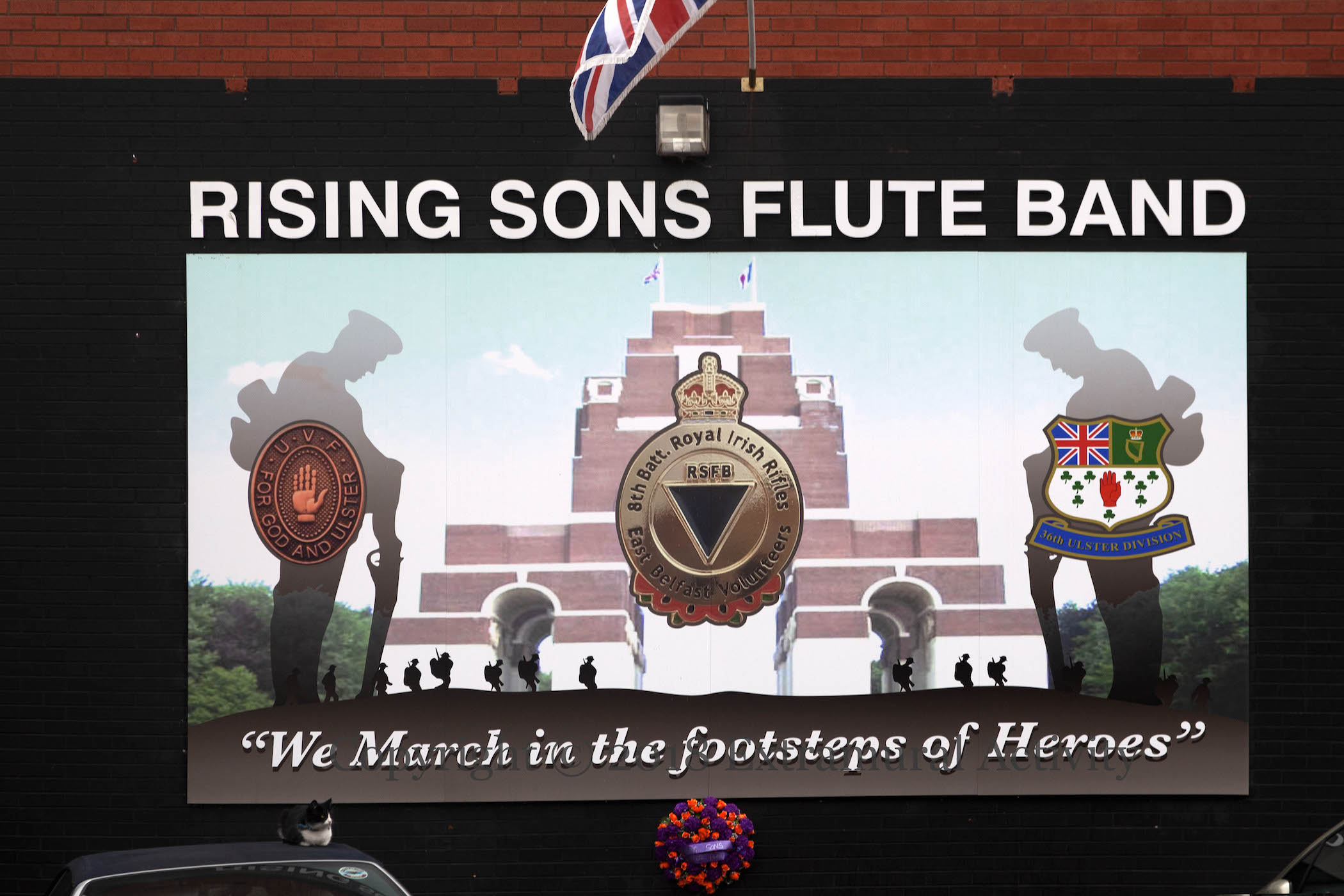
The 8th battalion of the RIR was drawn from east Belfast’s Ulster Volunteers in 1914. The board shown above, on the practice hall of Rising Sons Flute Band (Fb), shows the Thiepval Memorial to the missing of the Somme – the heroes that in whose footsteps the band claim to march.
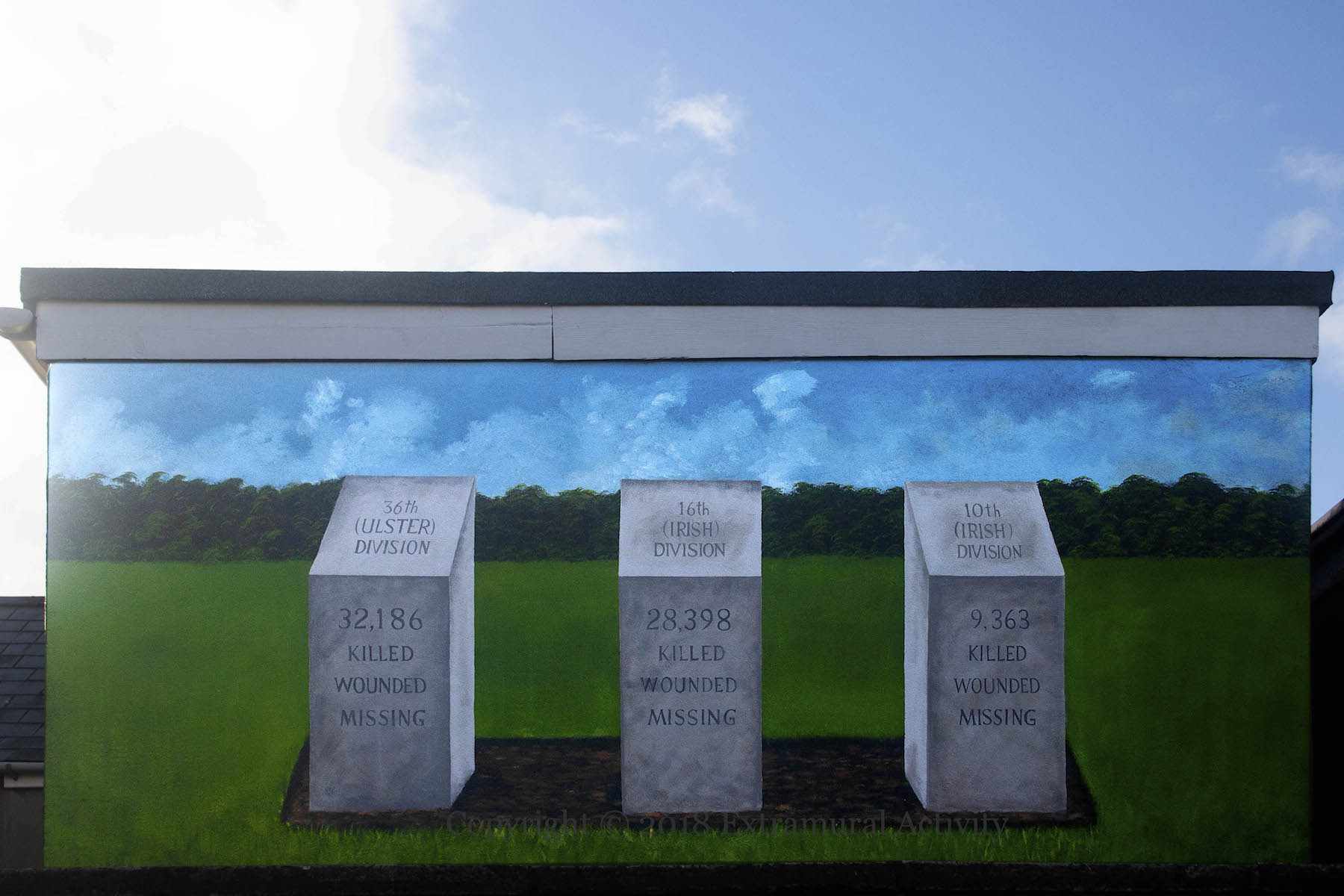
This small mural in the car-park of the Waterside Arts Centre, a companion piece to We Are The Dead which lists their battles, gives casualty totals for the 10th (Irish), 36th (Ulster), and 16th (Irish) divisions of the British Army in WWI .
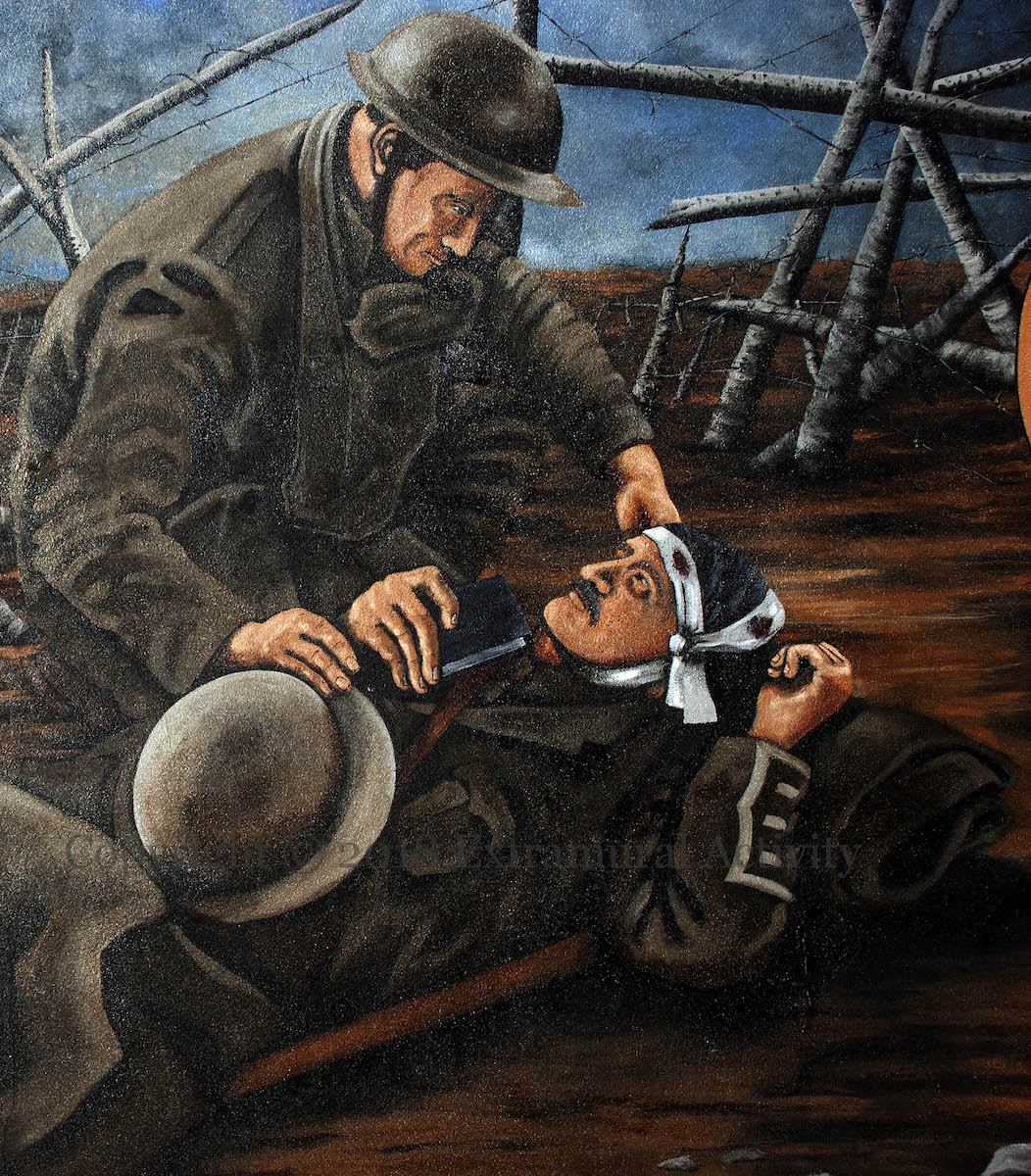
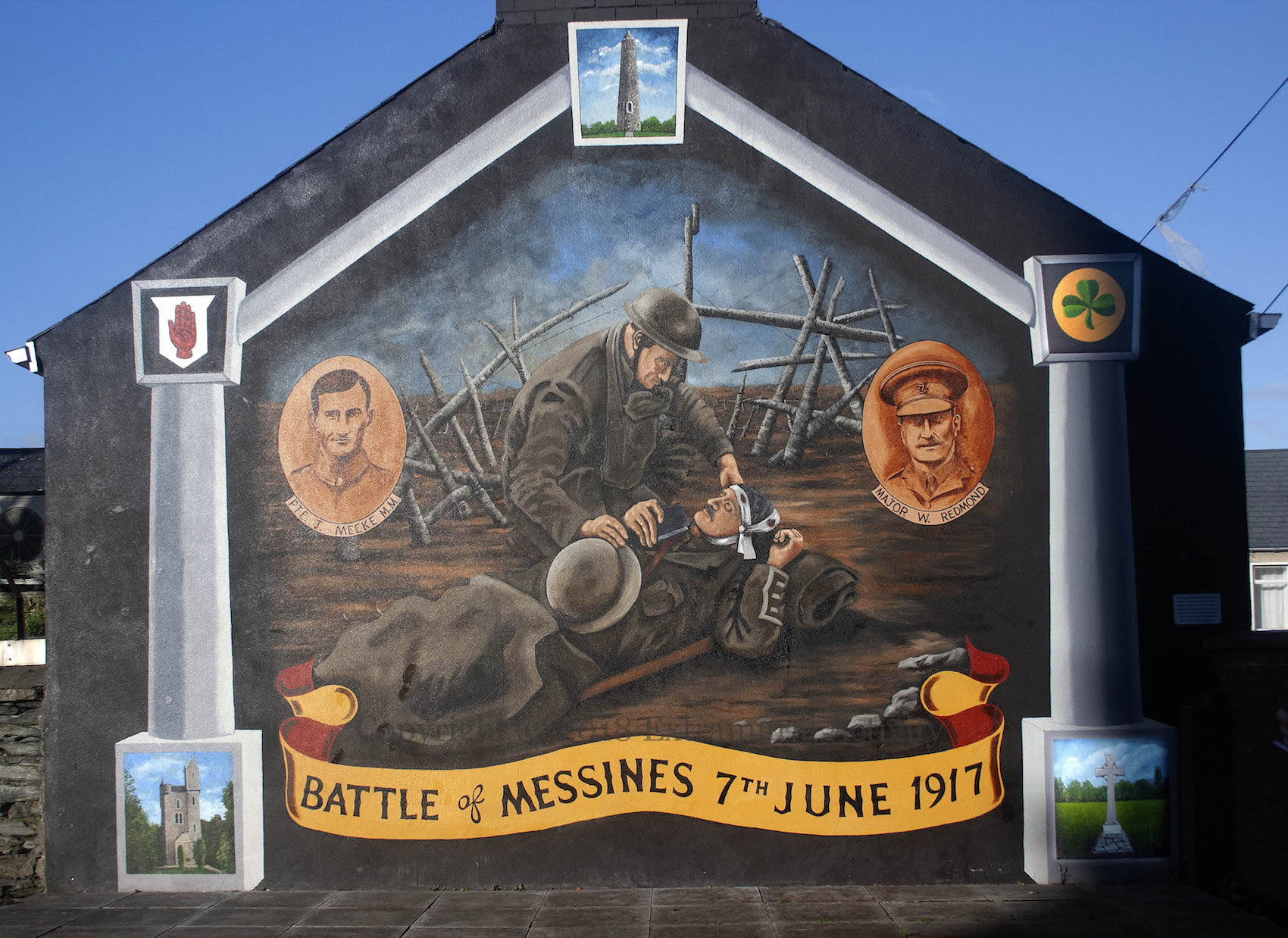
John Meeke signed the Ulster Covenant in Dervock Orange Hall in 1912 and went to war with the Ulster Volunteers. Willie Redmond, brother of John Redmond, had been jailed three times and was a nationalist MP at Westminster when, at age 53, he signed up for service.
Major Redmond went over the top with the 16th (Irish) Division at Messines Ridge and was hit by machine-gun fire. Private Meeke, a stretcher-bearer with the Royal Inniskilling Fusiliers in the 36th (Ulster) Division, found and stayed with Redmond under heavy fire, taking two bullets himself.
Redmond would die that night. He was awarded the Legion Of Honour by the French. His East Clare seat was taken by Éamon de Valera. Meeke survived after several surgeries. He was awarded the Military Medal by the British. After the World War, he joined the Specials and LOL 1001 in Benvarden before dying of TB in 1923 (NALIL | Irish Times | WP | BelTel).
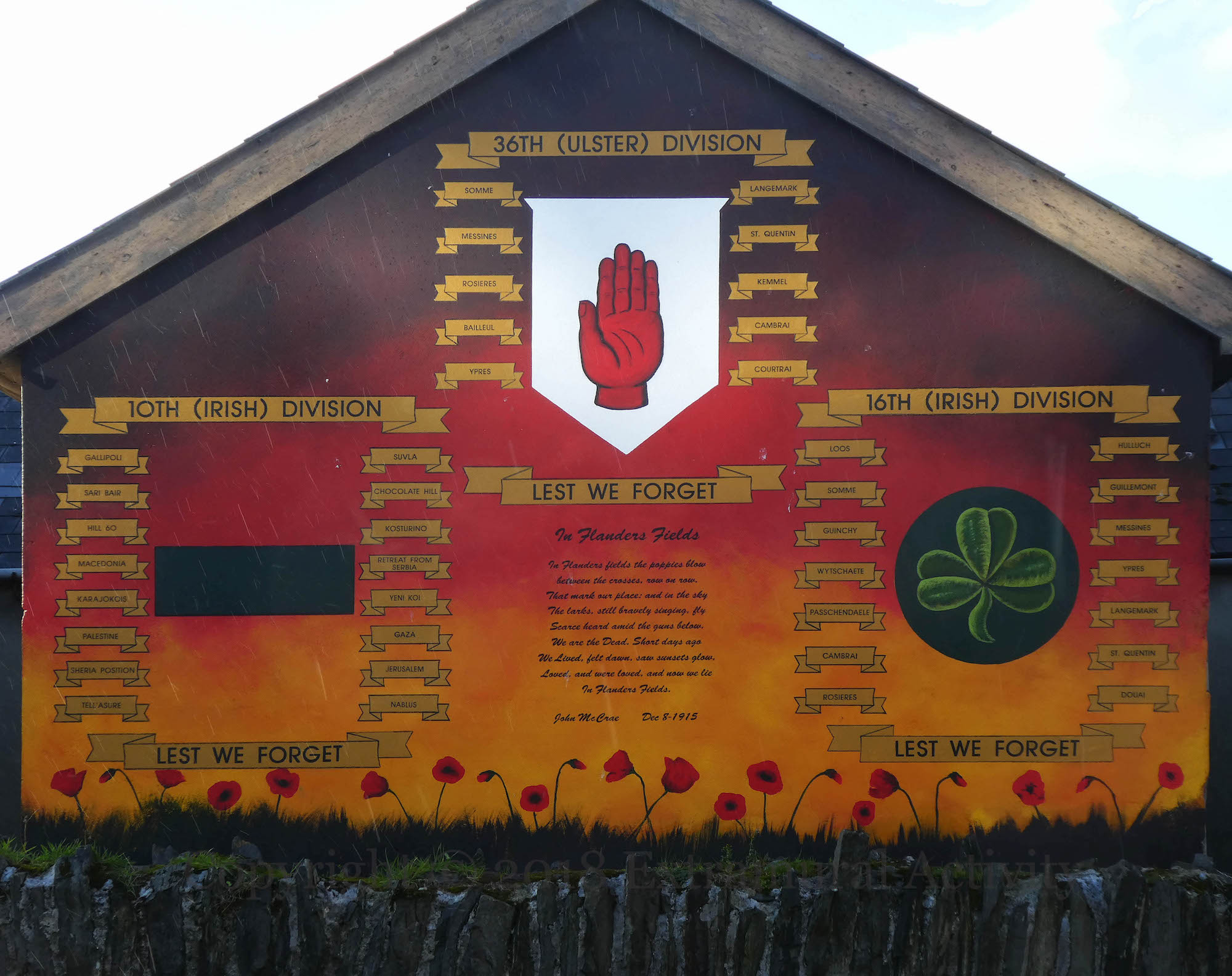
The 10th (Irish) Division fought only briefly “in Flanders fields”, towards the very end of the war, having spent most of its time in Gallipoli (in the Ottoman Empire), Macedonia, Egypt, and Palestine. The 16th took part in the Somme, especially at “Guinchy” [Ginchy] and Guillemont, while the 36th were deployed on the first day (the Battle Of Albert).
The poem in the middle is the first half of John McCrae’s In Flanders Fields: “In Flanders fields the poppies blow/Between the crosses, row on row/That mark our place, and in the sky/The larks, still bravely singing, fly/Scarce heard amid the guns below.//We are the dead; short days ago/We lived, felt dawn, saw sunset glow/Loved and were loved, and now we lie/In Flanders fields.”
 Seosamh Mac Coille Collection