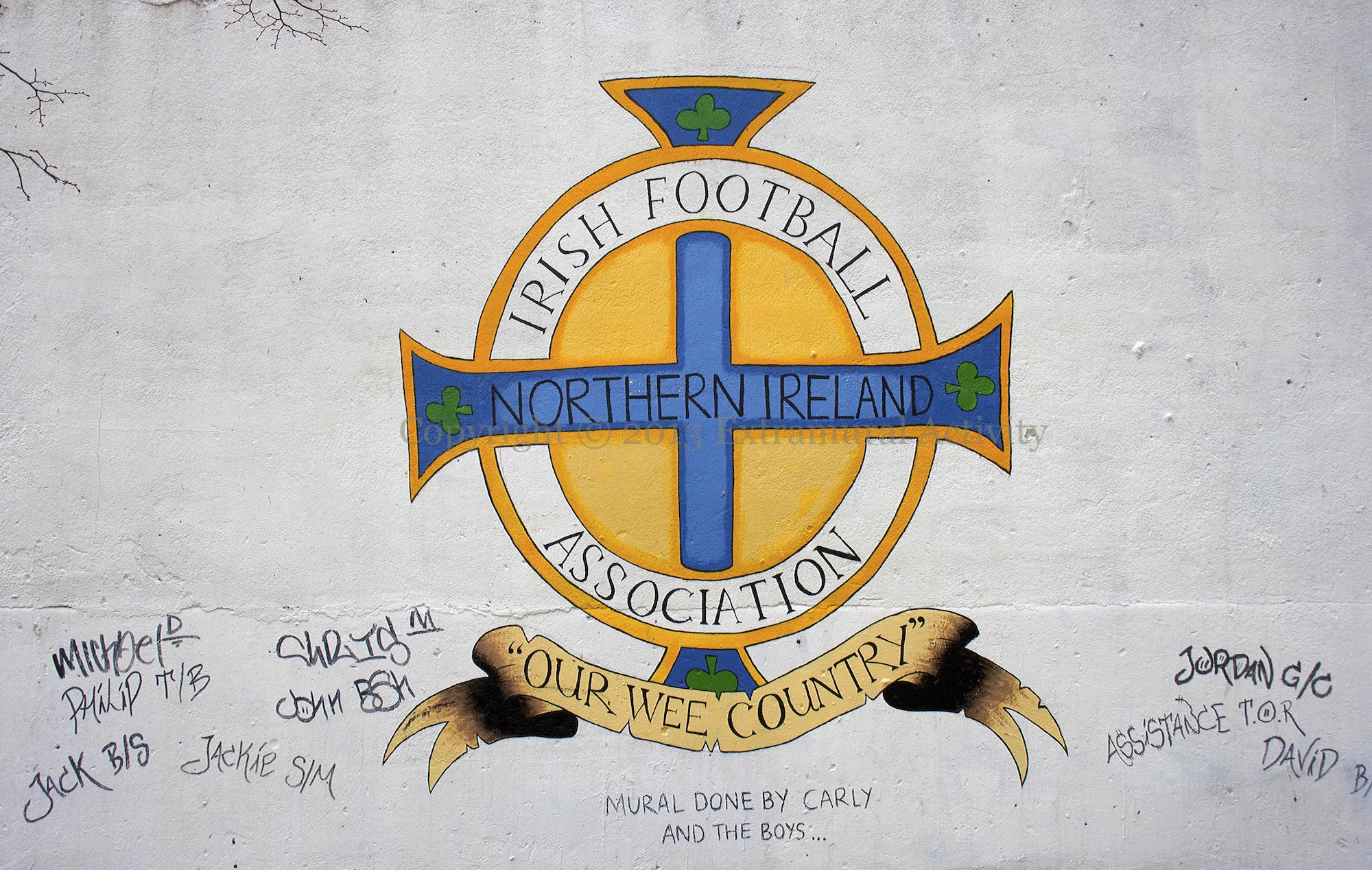
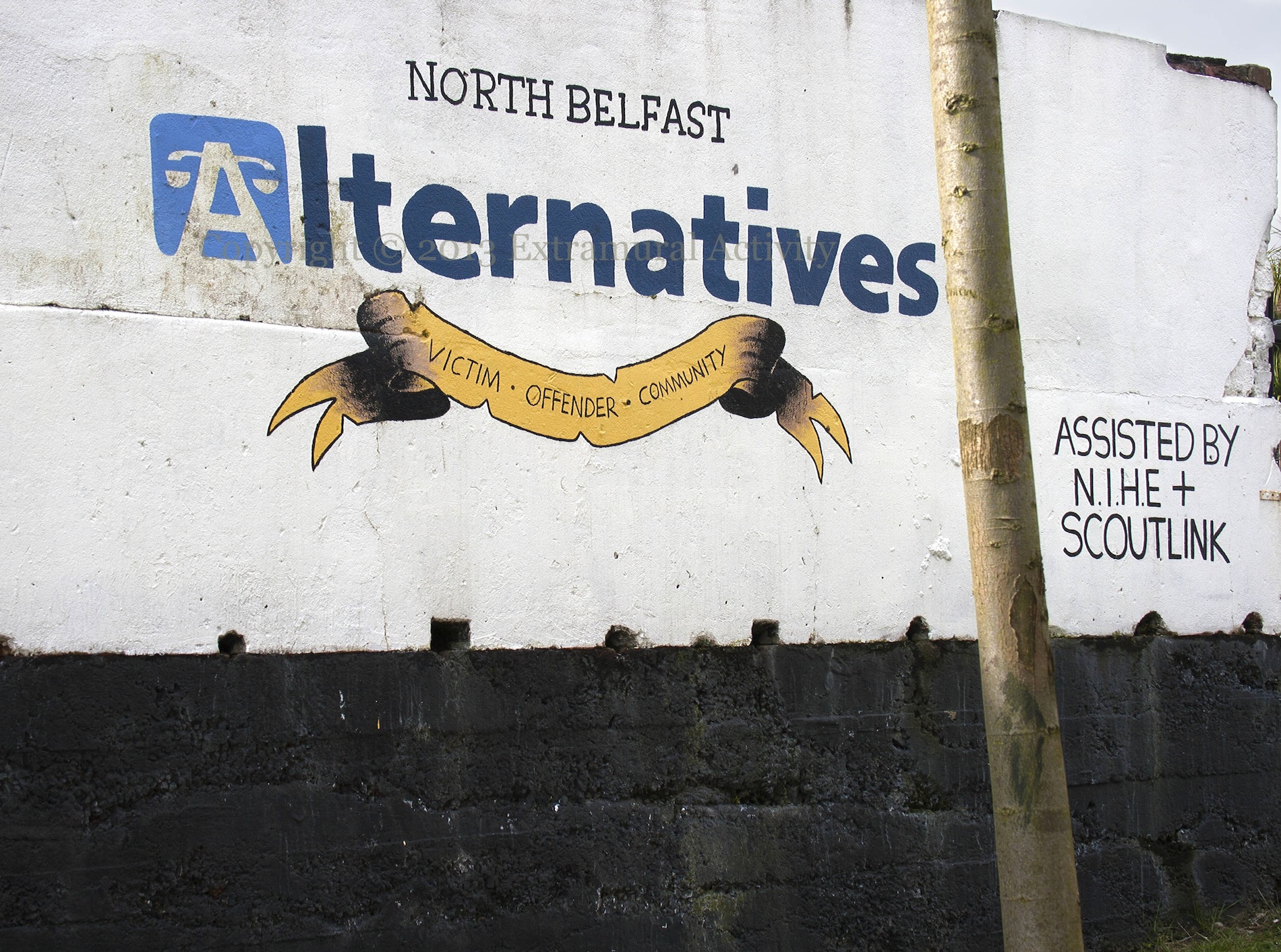
Two small pieces side by side on the Ballysillan Road in north Belfast. First a “Mural done by Carly and the boys …” showing the IFA’s crest over a banner reading “our wee country”. (Previously: Our Wee Country 1 | 2 )
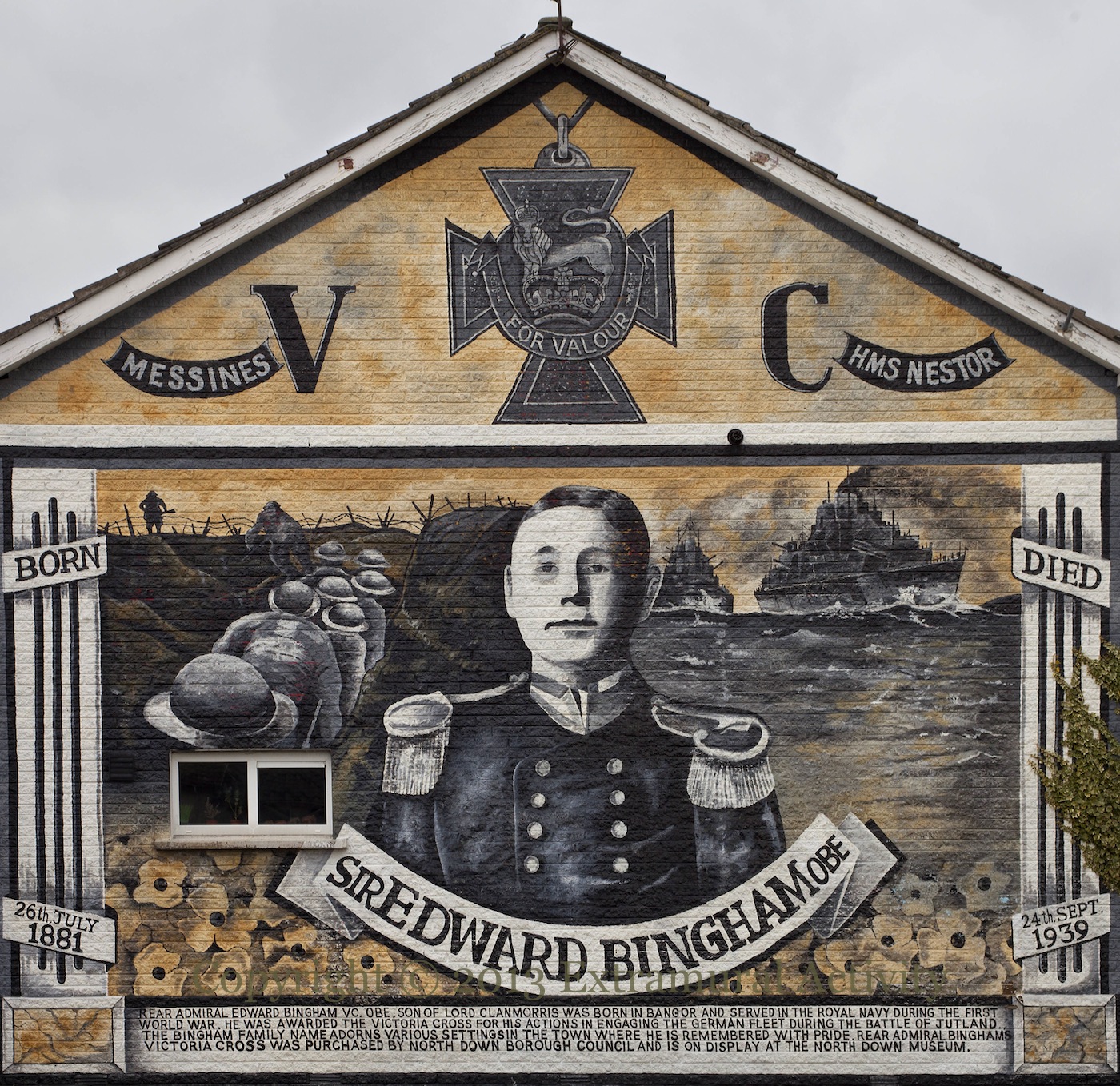
This is a mural in his home town to rear admiral Sir Edward (“Barry”) Bingham, OBE, born in Bangor and recipient of the Victoria Cross (featured in the apex of the roof) for service in WWI.
“Rear Admiral Edward Bingham VC OBE, son of Lord Clanmorris, was born in Bangor and served in the Royal Navy during the First World War. He was awarded the Victoria Cross for his actions in engaging the German fleet during the battle of Jutland. The Bingham family name adorns various settings in the town where he is remembered with pride. Rear Admiral Bingham’s Victoria Cross was purchased by North Down borough council and is on display at the North Down museum.”
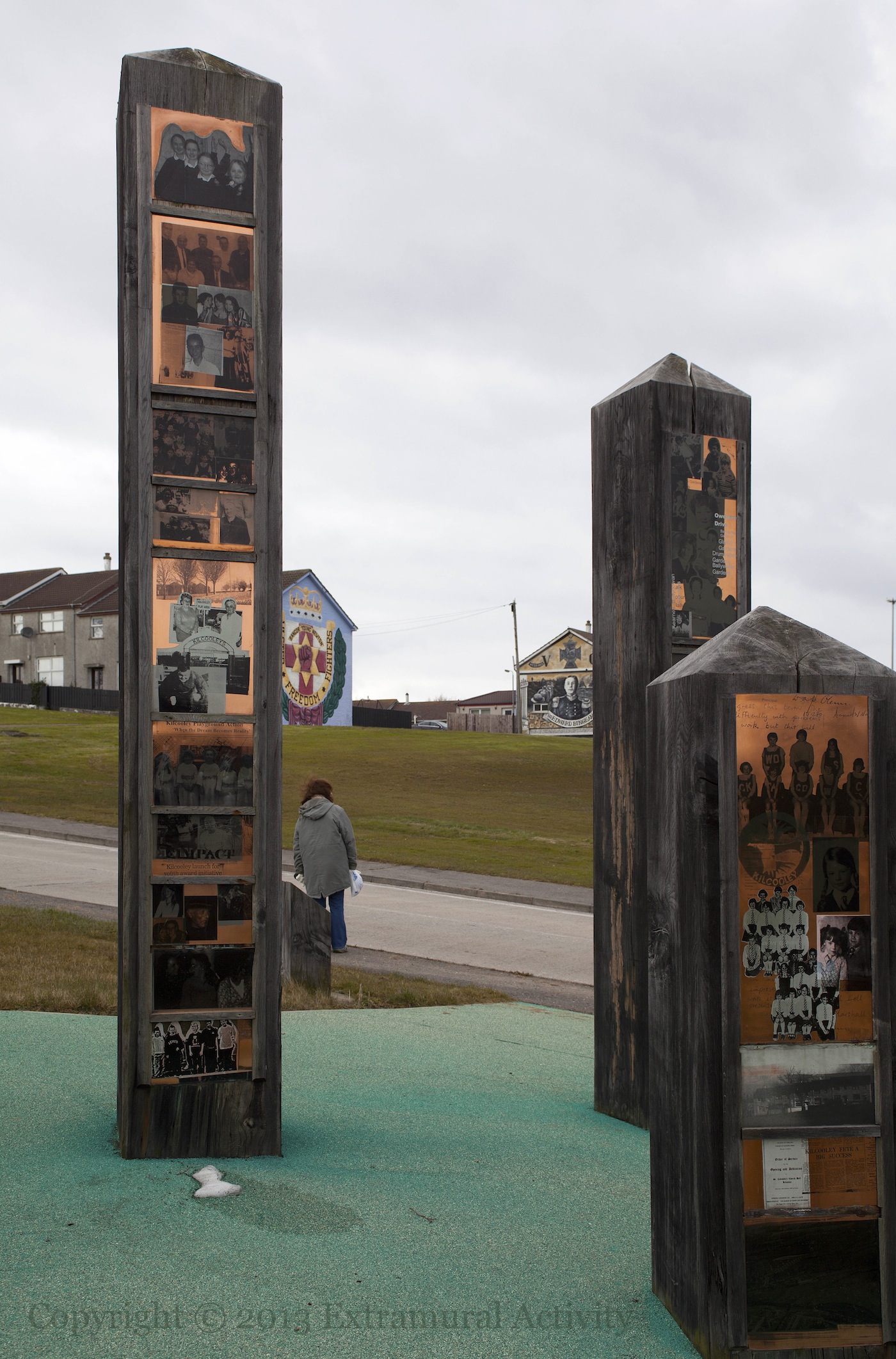
The context shot, below, shows the two together, as viewed through the uprights of a community monument just across the road, featuring old photographs and documenting the history of the local community.
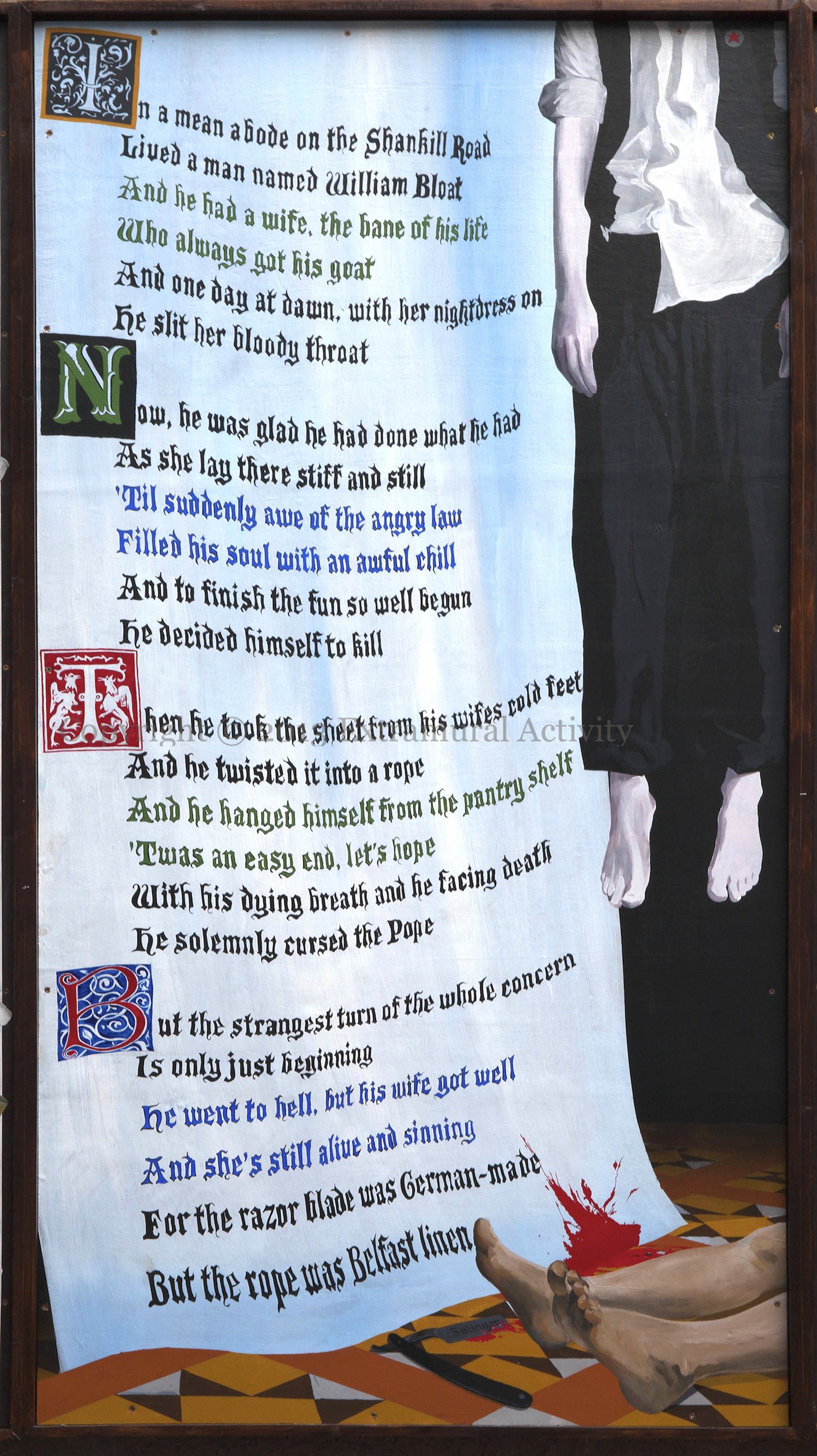
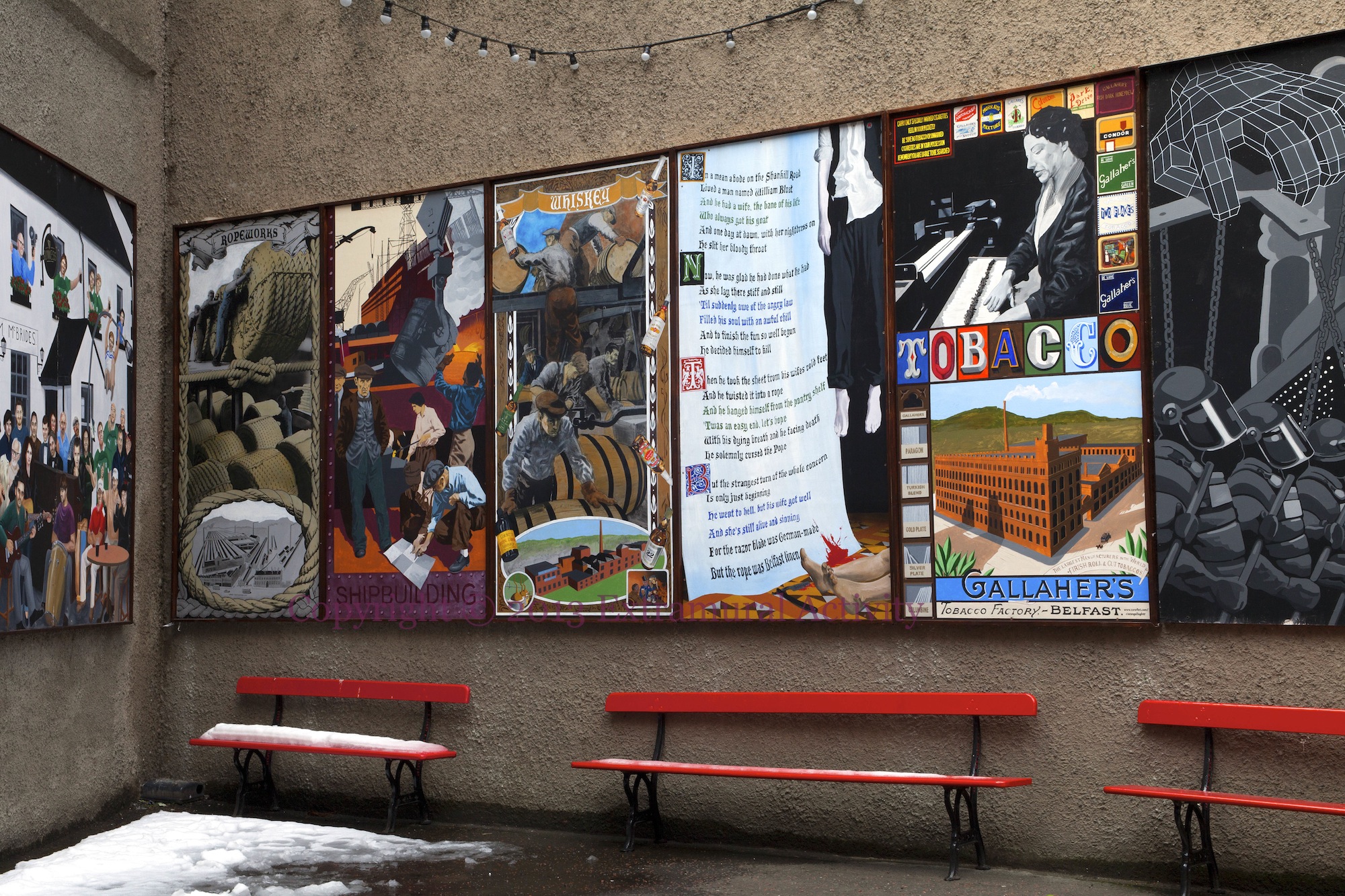
Here is a close-up of the fourth panel of the five-panel piece in the Dark Horse recorded separately. The four other panels represent the production of rope, ships, whiskey, and tobacco products. The “William Bloat” panel presumably stands for the linen industry, as the star of the tale is the bed sheet that is fashioned into a noose. The words to the song, including an extra verse not shown on the board, can be found below, along with a Tommy Makem performance of the song (from 1973!) in which the blade is Japanese-made.
William Bloat – Raymond Calvert (1926)
In a mean abode on the Shankill Road Lived a man named William Bloat; He had a wife, the bane of his life, Who always got his goat. And one day at dawn, with her nightdress on He slit her bloody throat.
[With a razor gash he settled her hash Never was crime so slick But the drip drip drip on the pillowslip Of her lifeblood made him sick. And the knee-deep gore on the bedroom floor Grew clotted and cold and thick.]
Now, he was glad he had done what he had As she lay there stiff and still ‘Til suddenly awe of the angry law Filled his soul with an icy chill. And to finish the fun so well begun He decided himself to kill.
Then he took the sheet from his wife’s cold feet And he twisted it into a rope And he hanged himself from the pantry shelf, ‘Twas an easy end, let’s hope. With his dying breath and he facing death He solemnly cursed the Pope.
But the strangest turn to the whole concern Is only just beginning. He went to Hell but his wife got well And she’s still alive and sinning, For the razor blade was German made But the rope was Belfast linen.
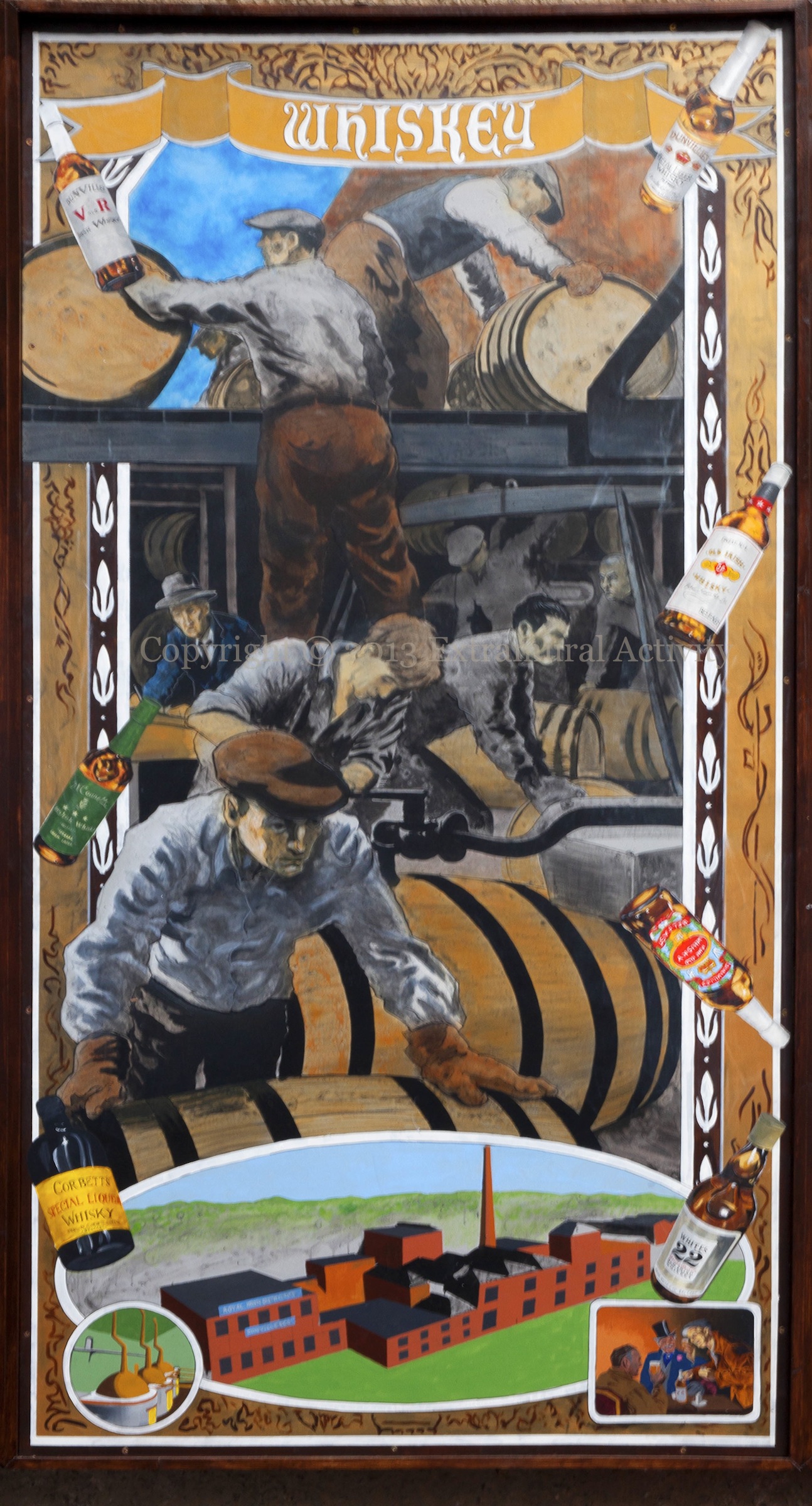
Whiskey, the middle of five panels (see below) in another piece from the courtyard of the Dark Horse pub in the city centre portraying four Northern Irish industries of/in the past – rope, ships, whiskey – the words to the song William Bloat – and tobacco products.
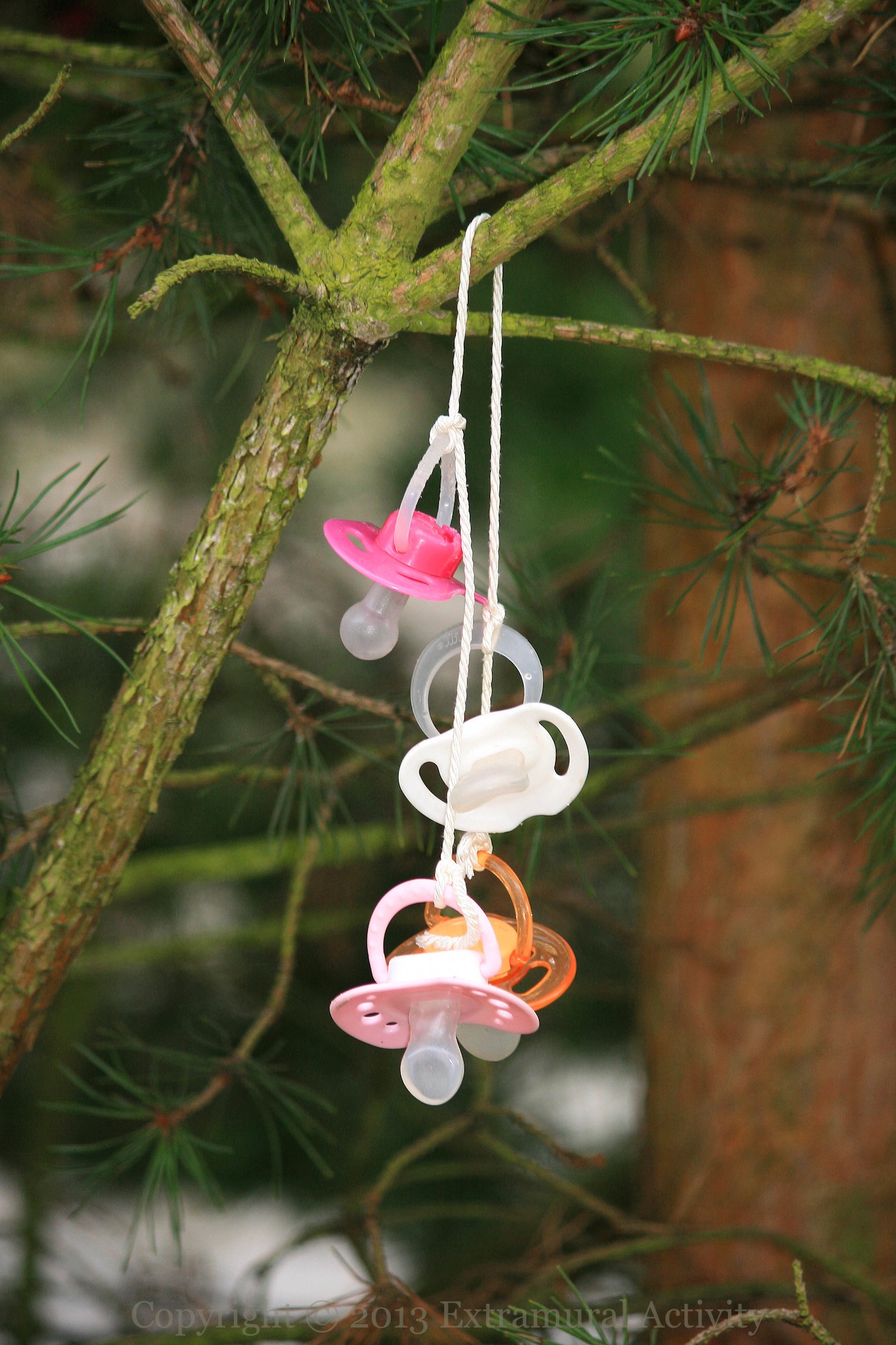
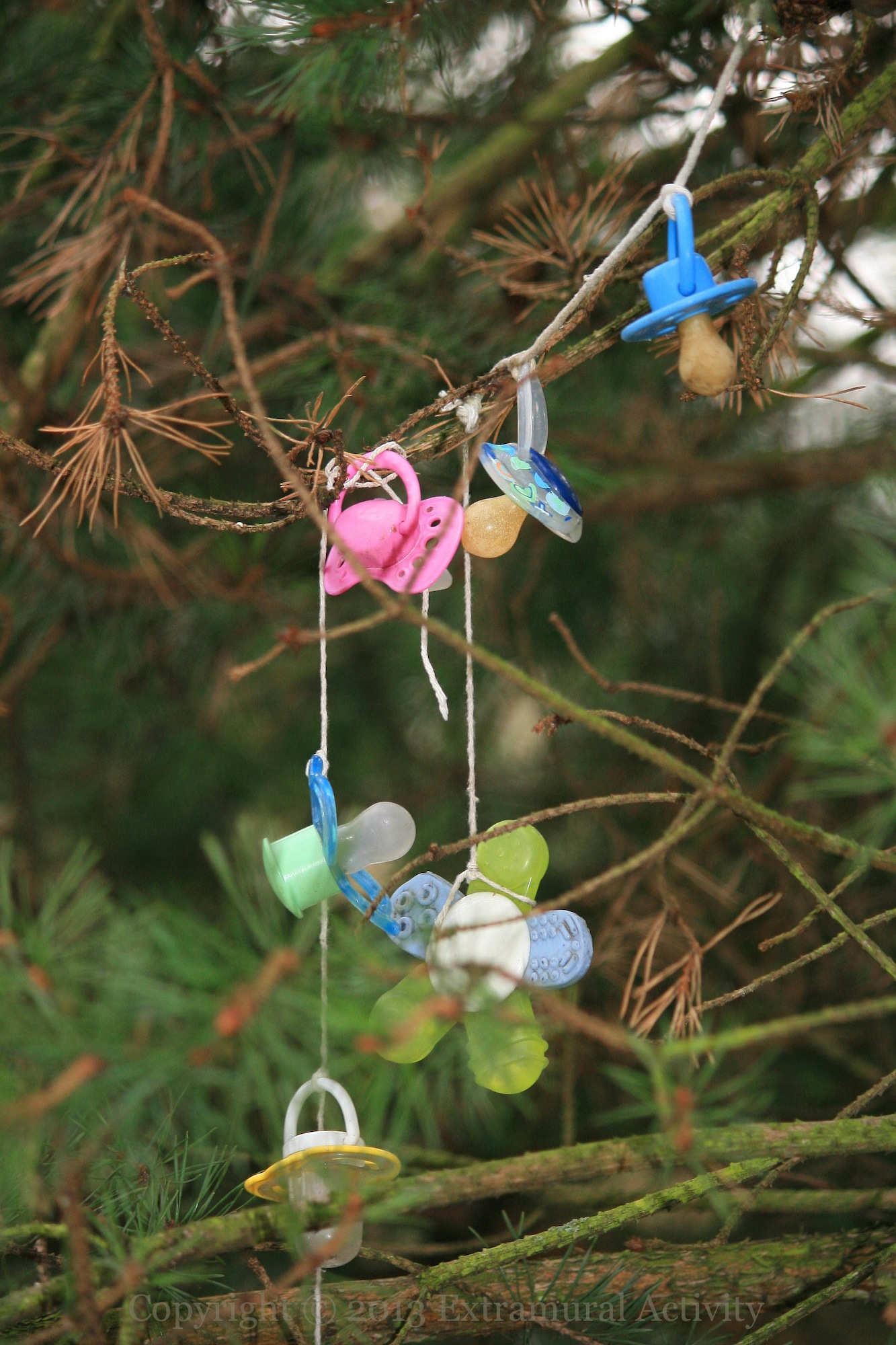
According to this page from Early Christian Sites In Ireland, trees next to wells were considered holy, and “rags were tied to trees, or objects left there, in the belief that, while they remained, the prayers were still effective”. These pacifiers (or dummies, as they are commonly known) were spotted hanging from trees in the Waterworks. Are these the holy trees of our Late Christian period? Or just a sign that drugs can be procured?
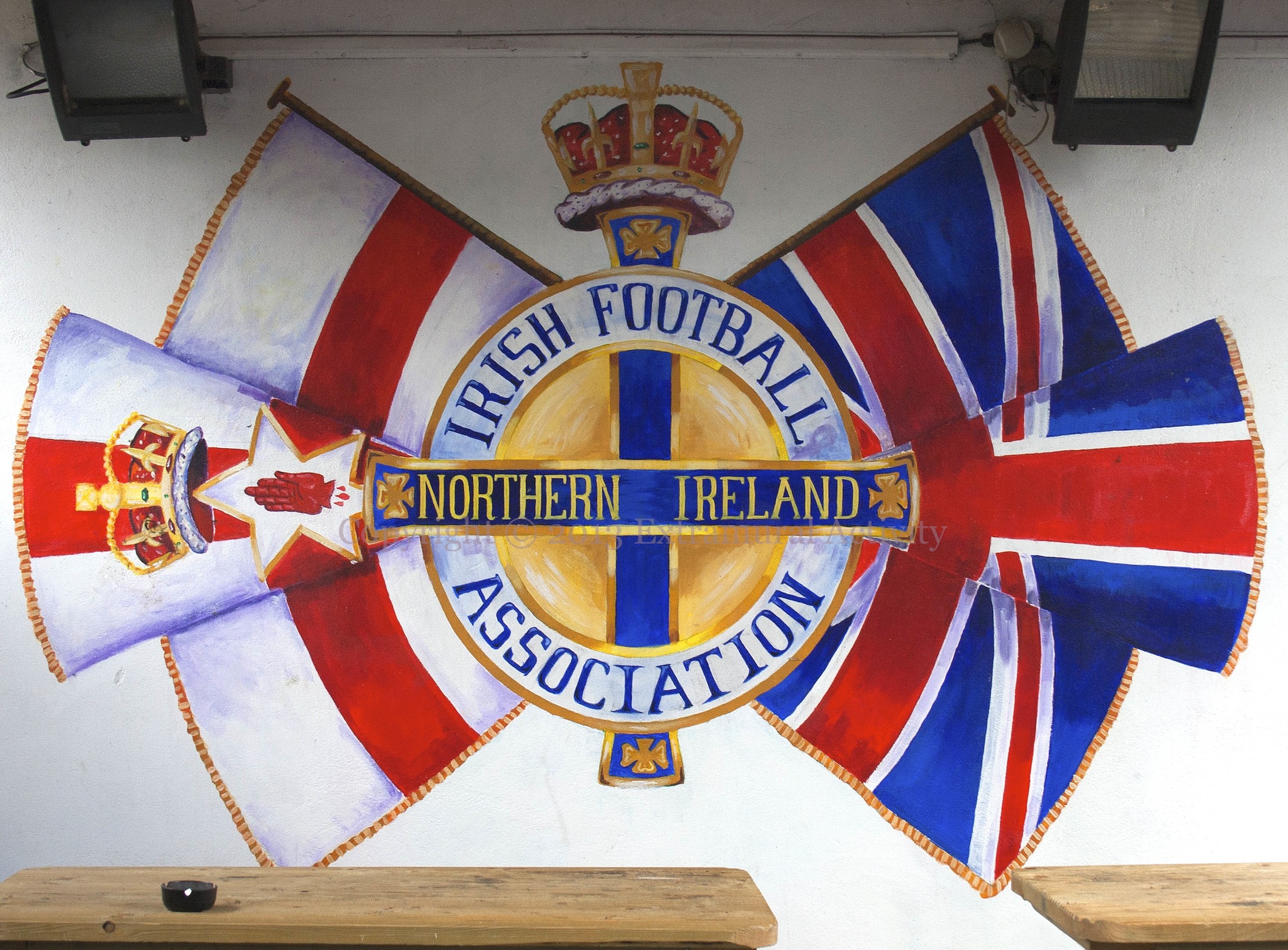
A picture from the courtyard of the Times Bar, on York Street, with both Northern Irish and Union flags, and the crest of the IFA, the association overseeing soccer in Northern Ireland. (Previously from the Times Bar.)
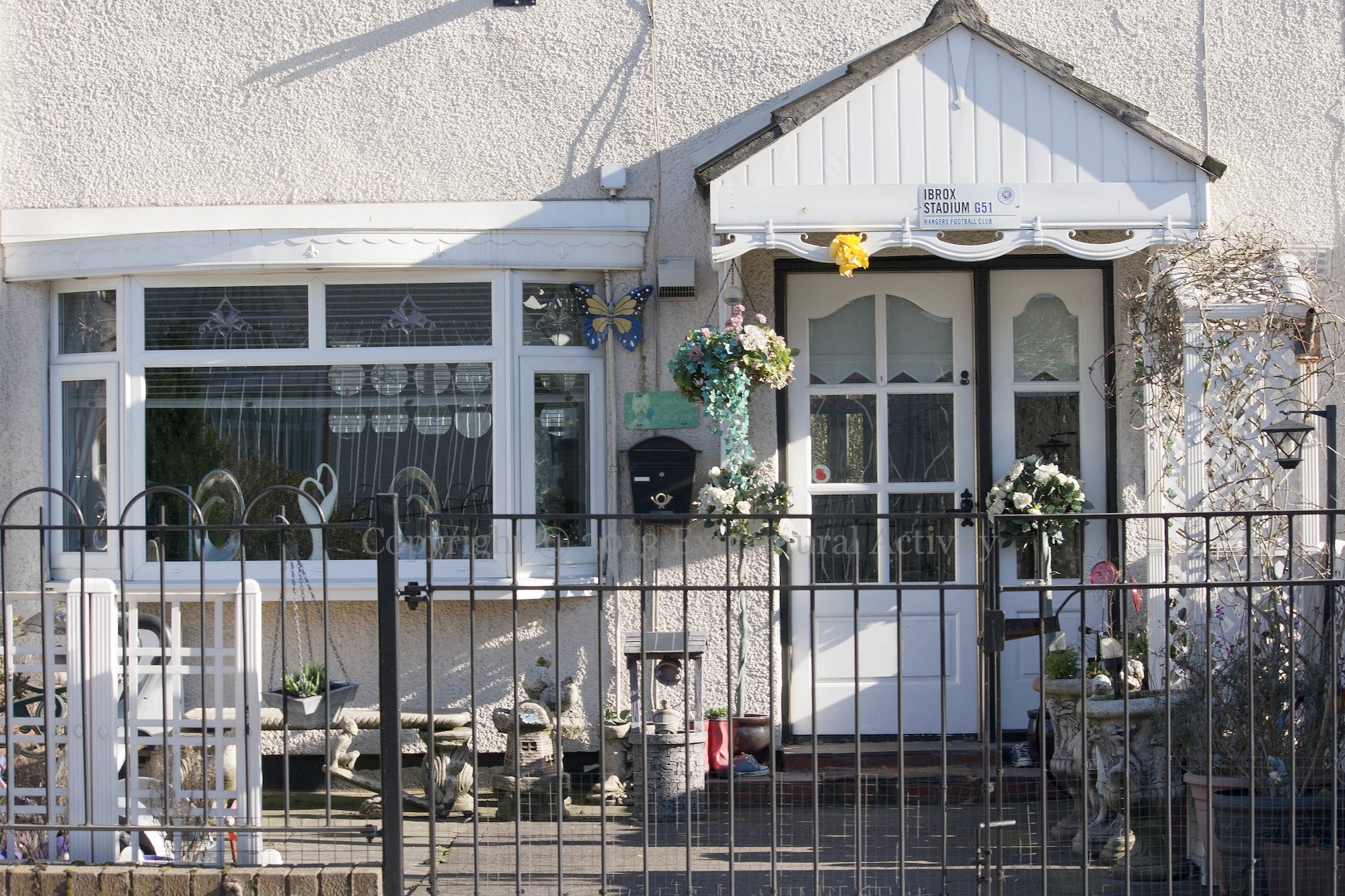
A house in Shankill Parade sports an “Ibrox Stadium G51 – Rangers Football Club” plate over the door. (G51 is the postcode for Glasgow and the surrounding area.)
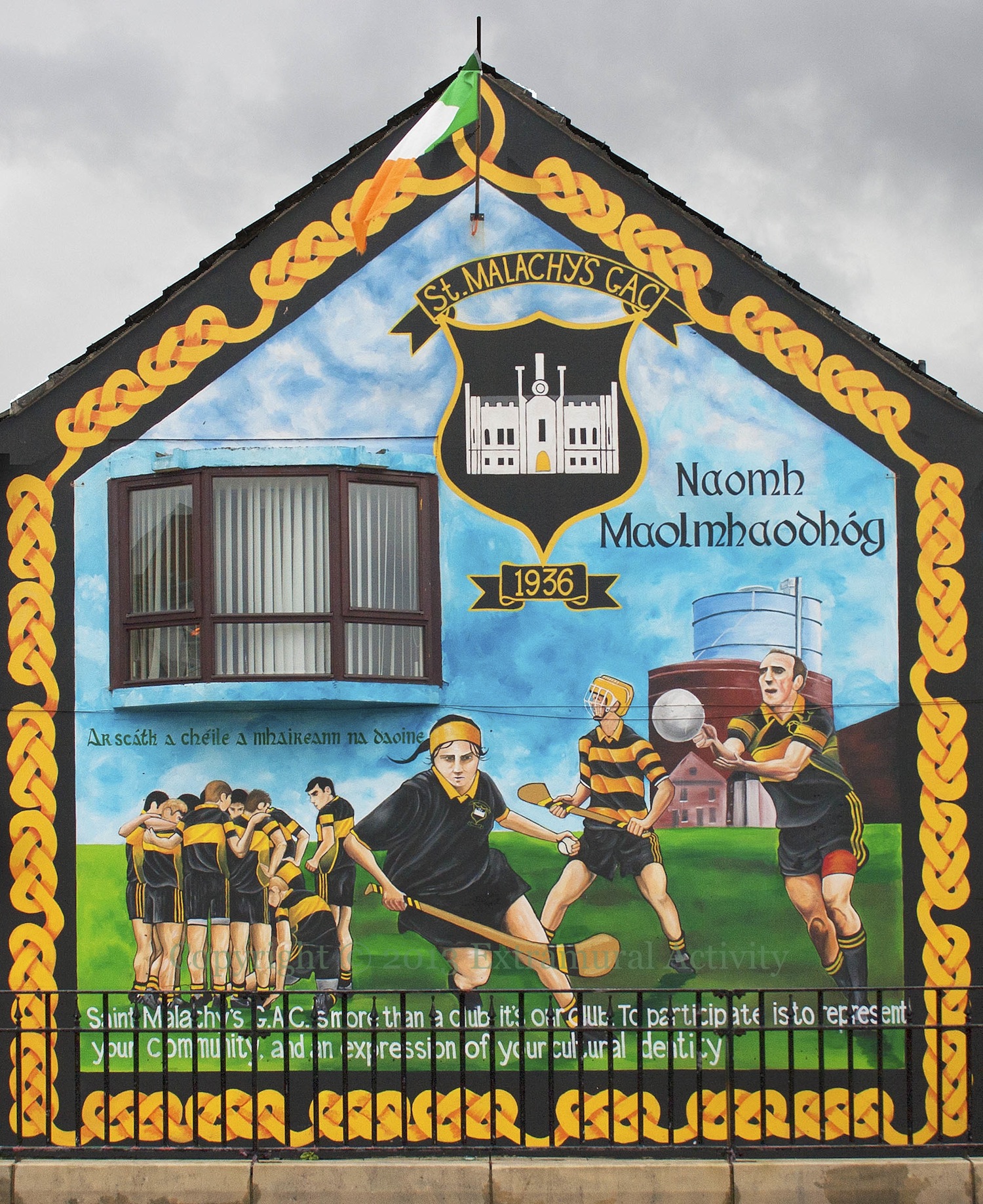
“Saint Malachy’s G.A.C. is more than a club. It’s our club. To participate is to represent your community and an expression of your cultural identity.”
A mural celebrating Gaelic games in the parish of St. Malachy/Naomh Maolmhaodhóg, in the Markets area of Belfast. The parish church – featured in the top centre – has a celebrated fan-vaulted ceiling (WP). This mural, on the other hand, features a highly unusual bay window.
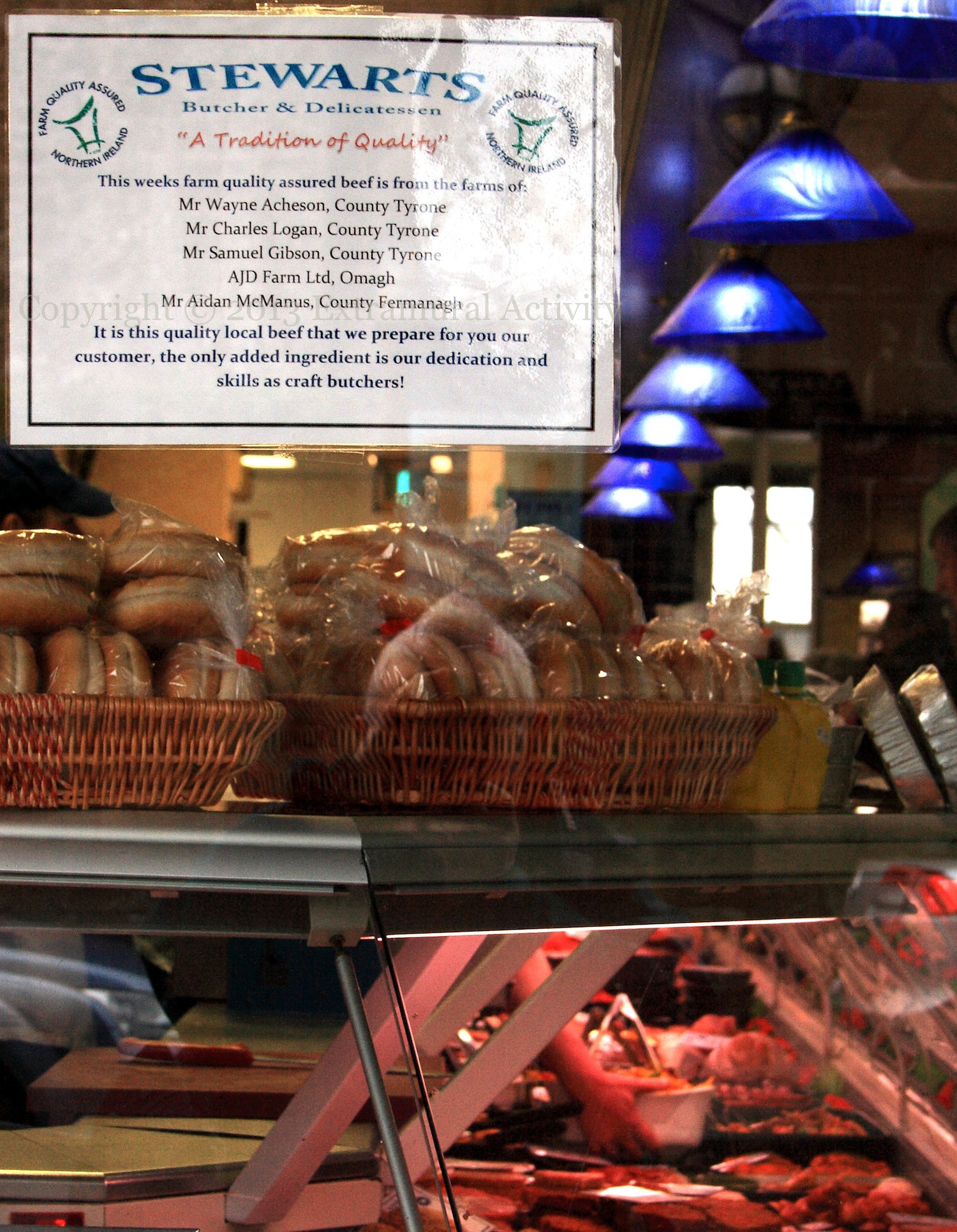
The can be no beef with this beef. The horse-meat scandal (WP) is now a month old and has “Gone Interrailing” (Spiegel Online) to Britain and the Continent, but the reverberations can still be felt in Ireland and Northern Ireland. This butchers in Inıs Ceıthleann/Enniskillen attempts to reassure its customers by providing the provenance of this week’s beef.
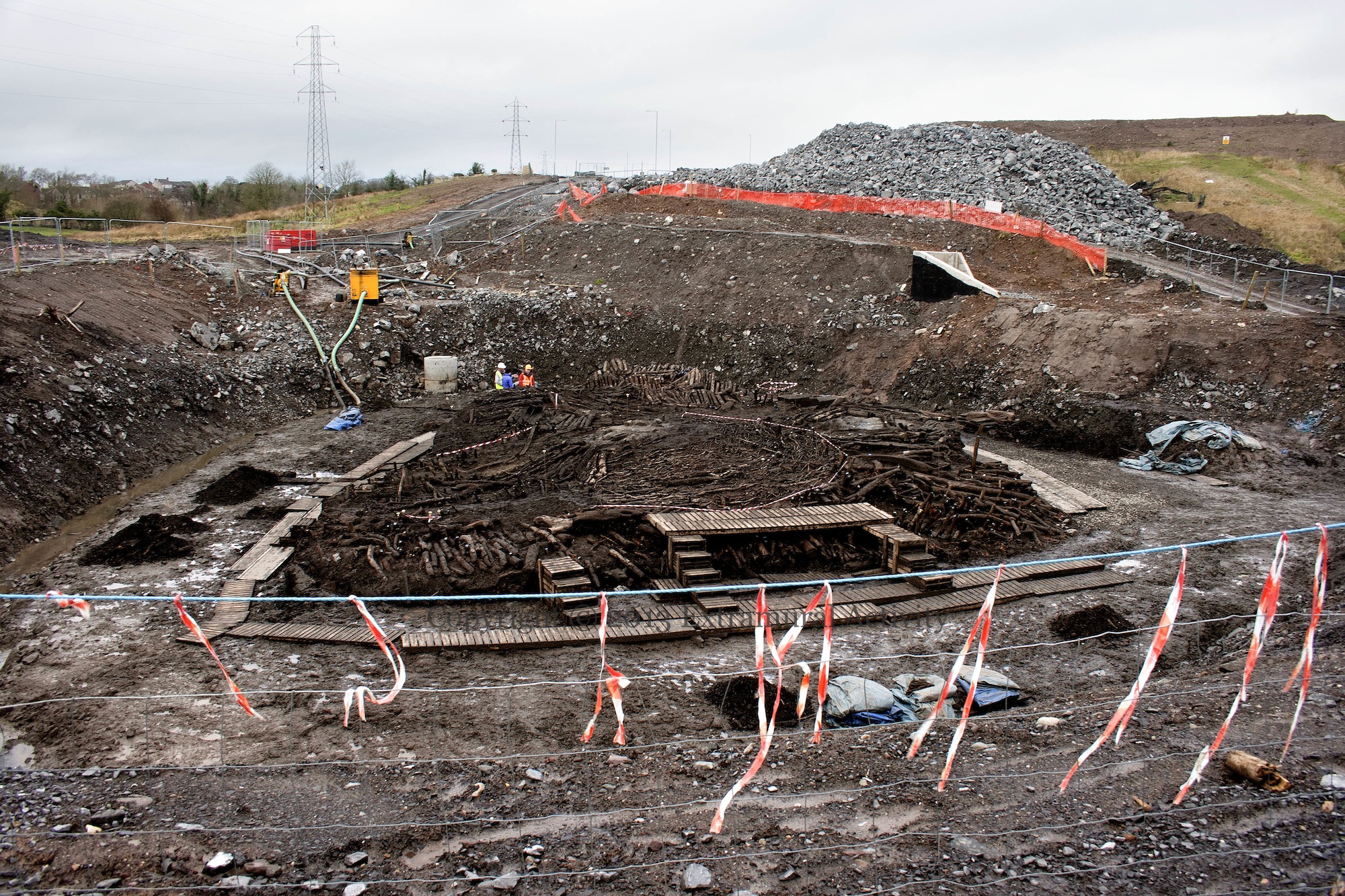
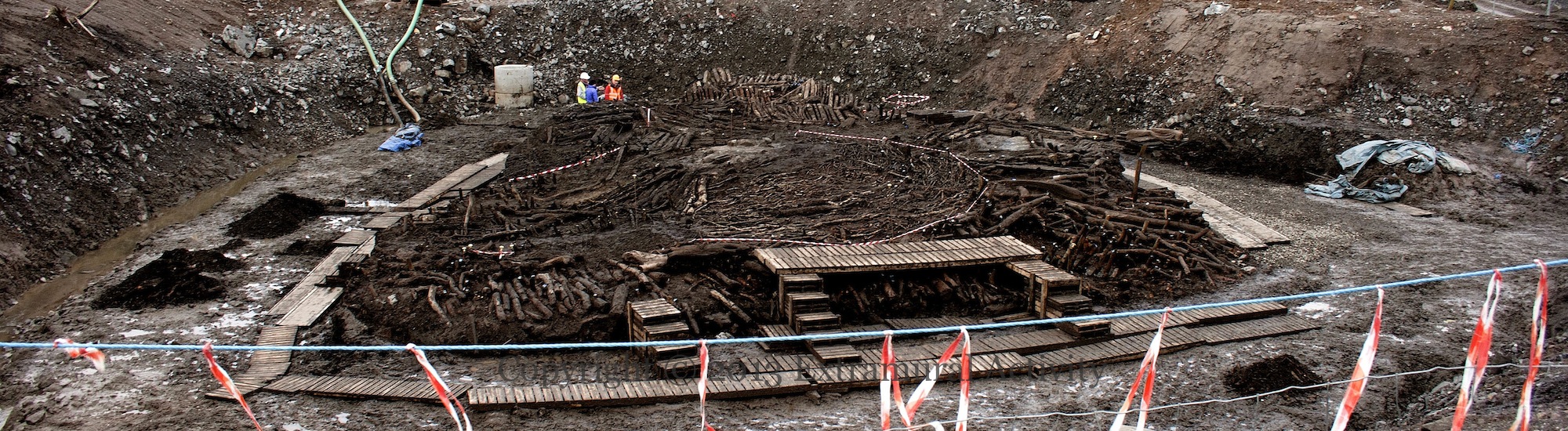
This might not look like much, but these crannóg remains in Drumclay outside Enniskillen/Inıs Ceıthleann (according to the BBC) “may be the largest house structure of the period ever to be discovered” and archaeologists have said that “their discoveries will re-write the history books of ancient Irish life.” The crannog (a compound – in this case of 30+ houses – on stilts, forming an artificial island) was brought to the public eye last (2012) summer and archaeologists have until the end of this month (March, 2013) to complete their investigations – the find is holding up construction of a road needed for the G8 summit in June. (Previously on Extramural Activity: Putting On The Ritz.)
For more details of the find and efforts to gain more time for excavation, see Robert Chapple’s blog.
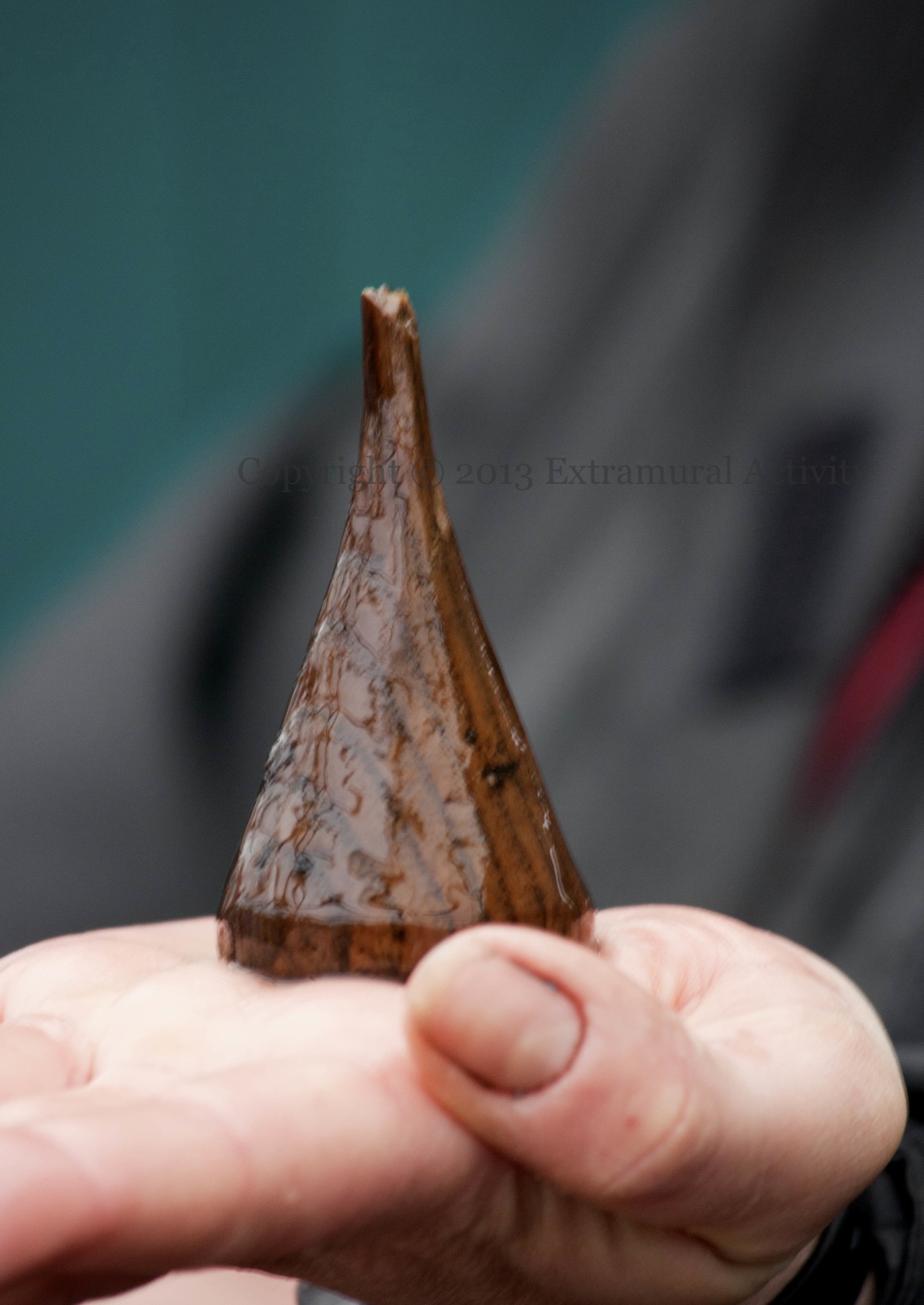
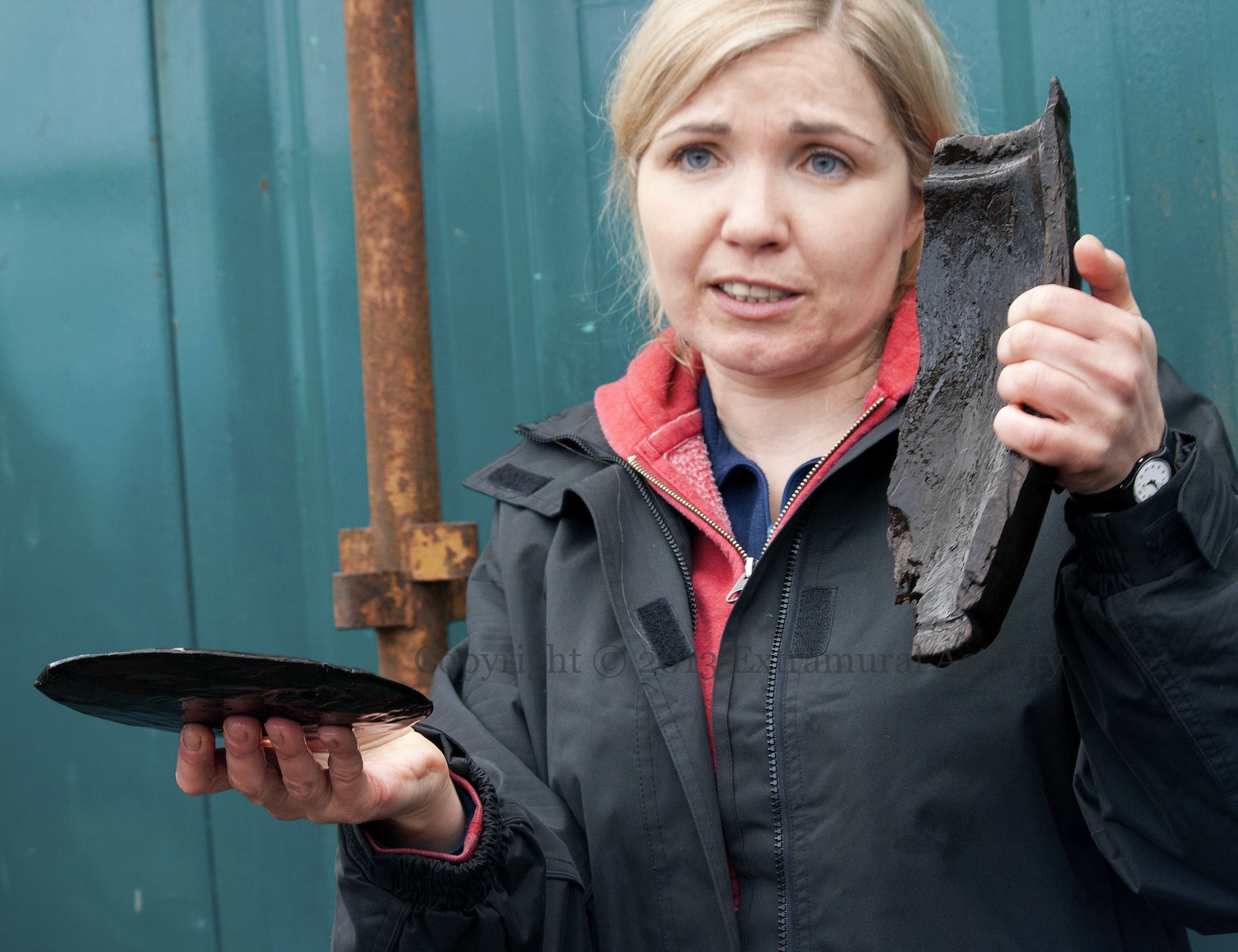
Below are images of (first) what is believed to be a game piece and (second) an archaeologist (Cathy Moore) holding up part of a vat/barrel, with an incised rim, and a disc. U.tv has a gallery of some of the more than 4,000 finds from the crannog, including combs, a shoe and shears.
Detail of the top picture, blown up in size … in the centre, the red circle of tape indicates the location of a house, the square lighter area is a hearth.