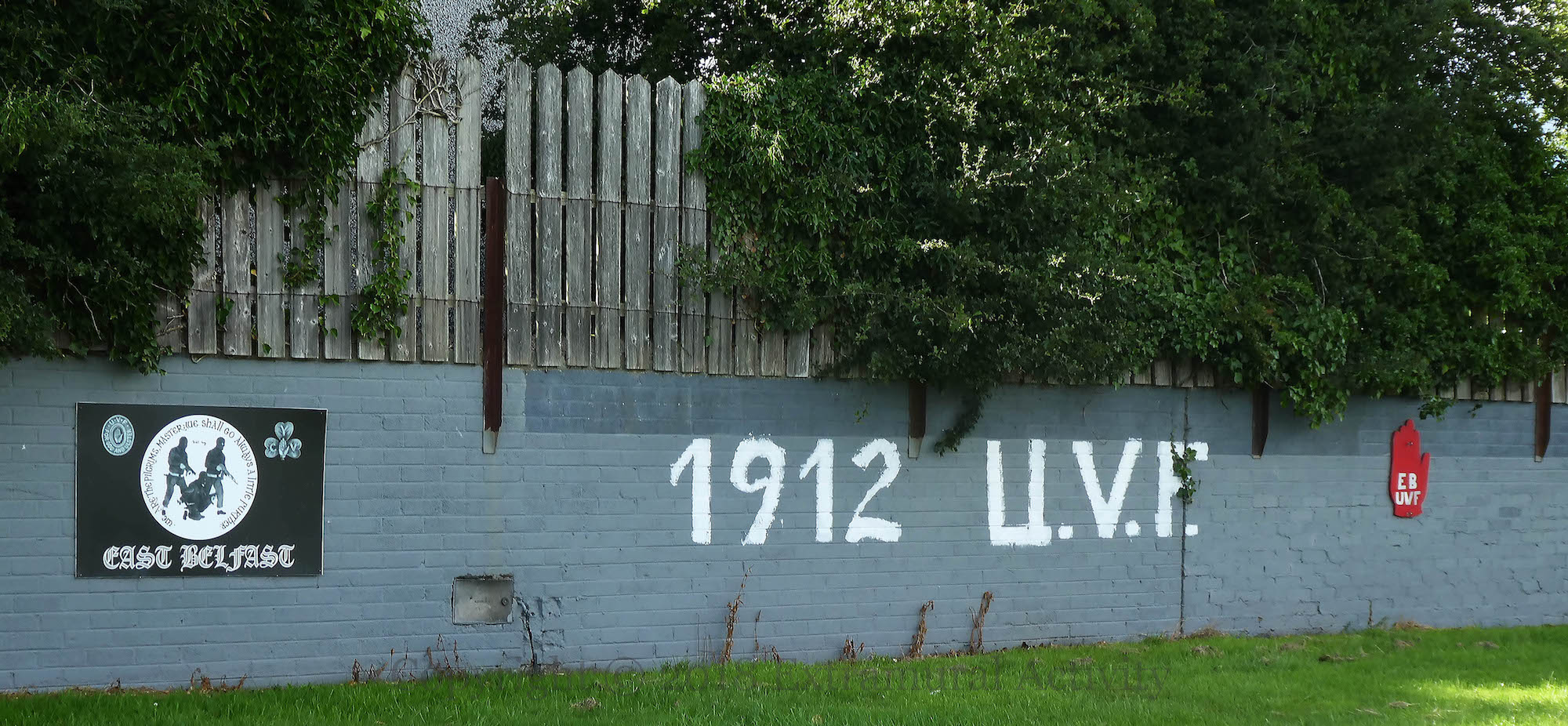
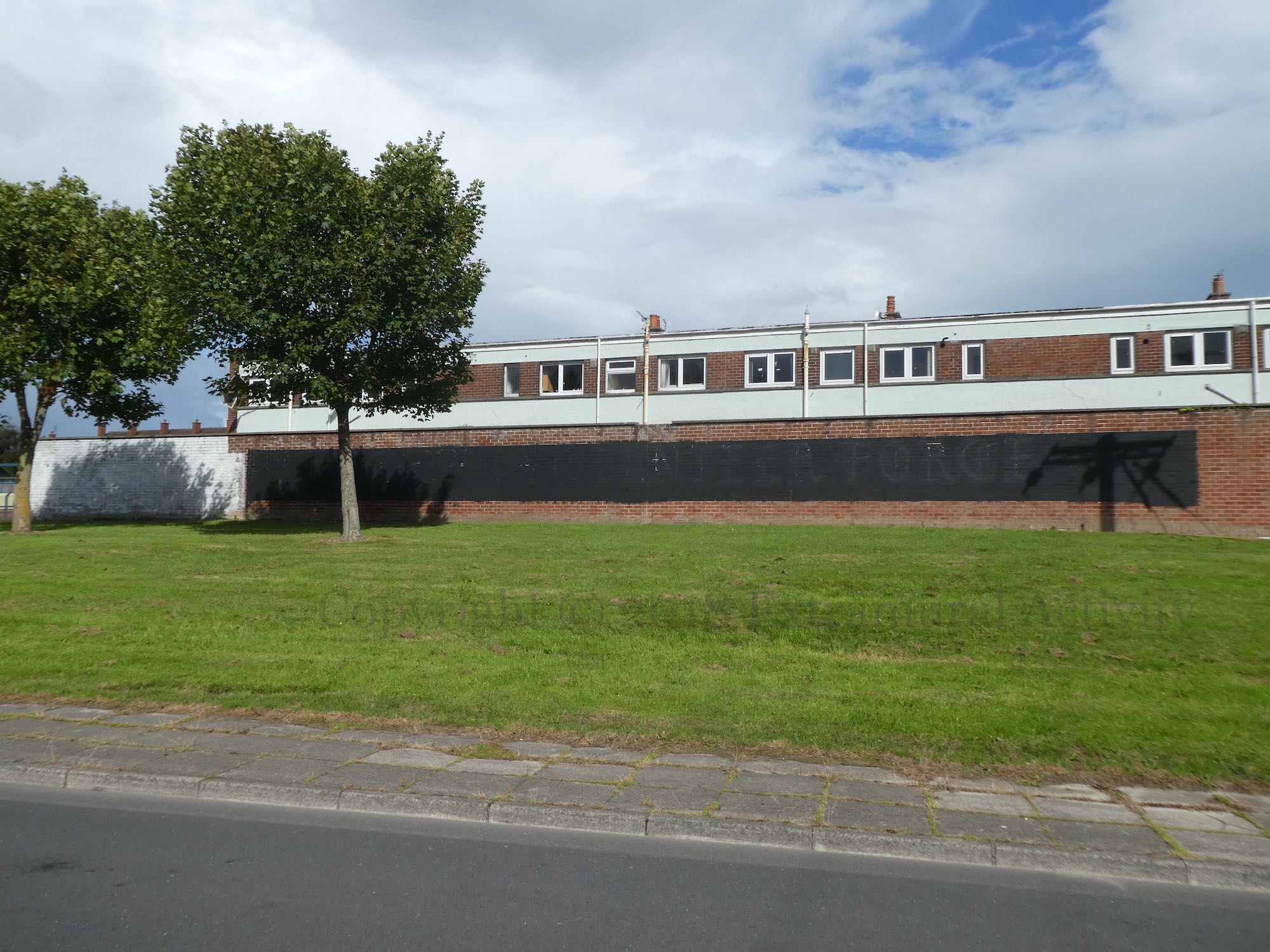
This post updates a 2017 one (Always A Little Further) from Whitehill, Bangor, with the addition of “1912 UVF” between the two “East Belfast UVF” boards, suggesting a softening of message. Similarly, a long “Ulster Volunteer Force” has been blacked out directly across the street.
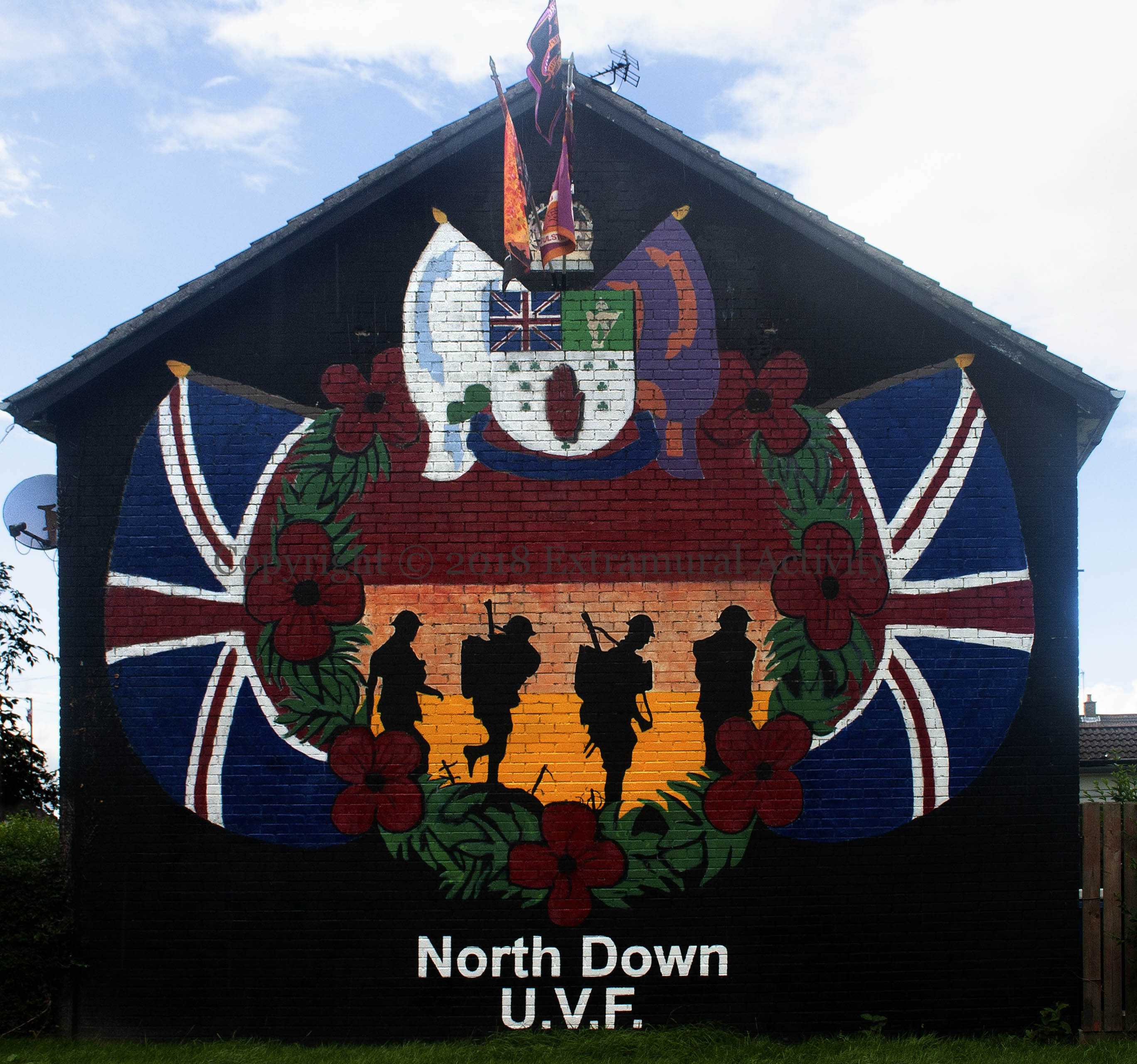
This mural at the bottom of Kilcooley estate in Bangor has recently been repainted, with the main alteration being the “North Down UVF” replaces “1st July 1916”, focusing attention on the locals from battalion that joined the 36th and away from the Somme. (See the previous mural in 1st July 1916.)
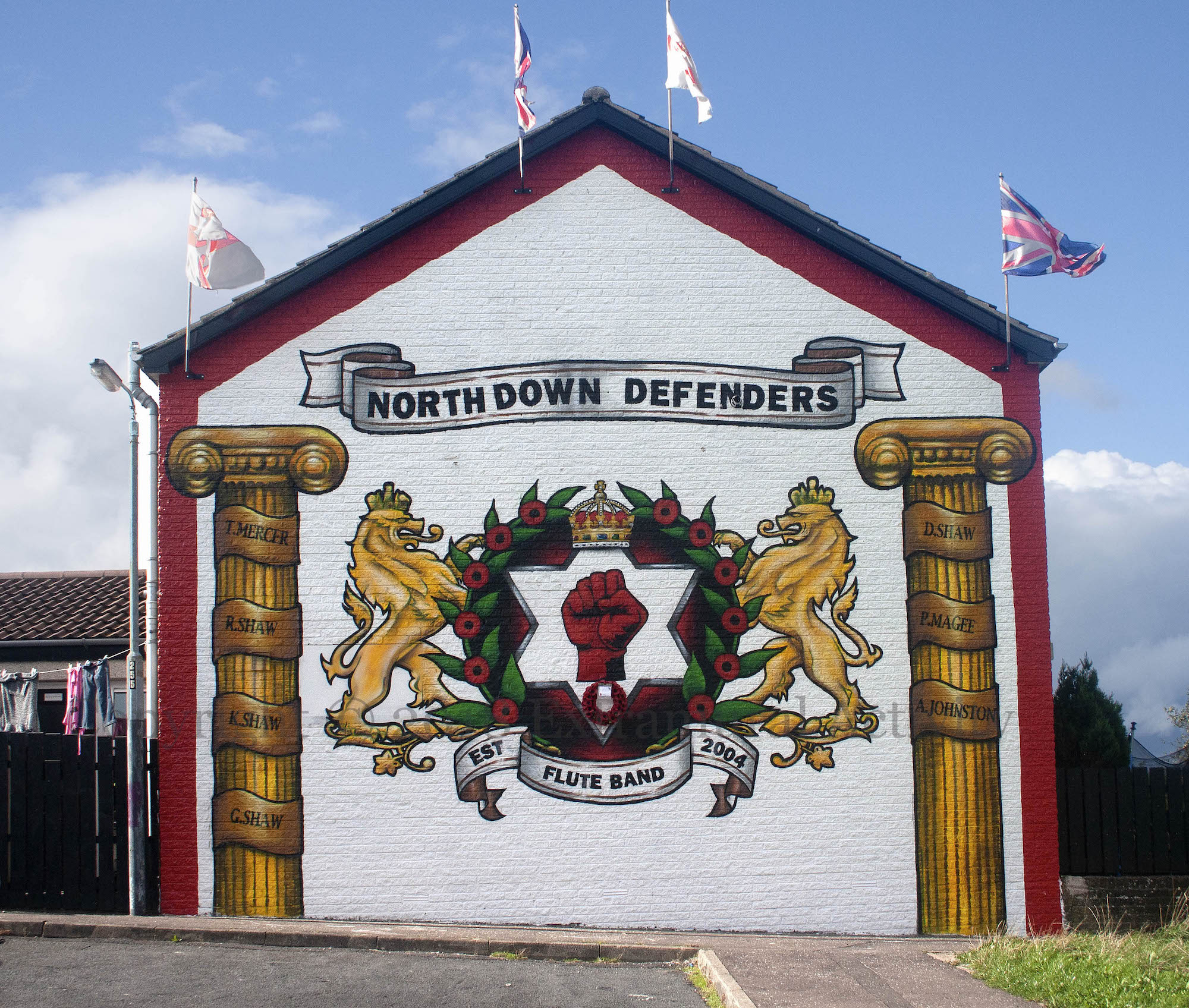
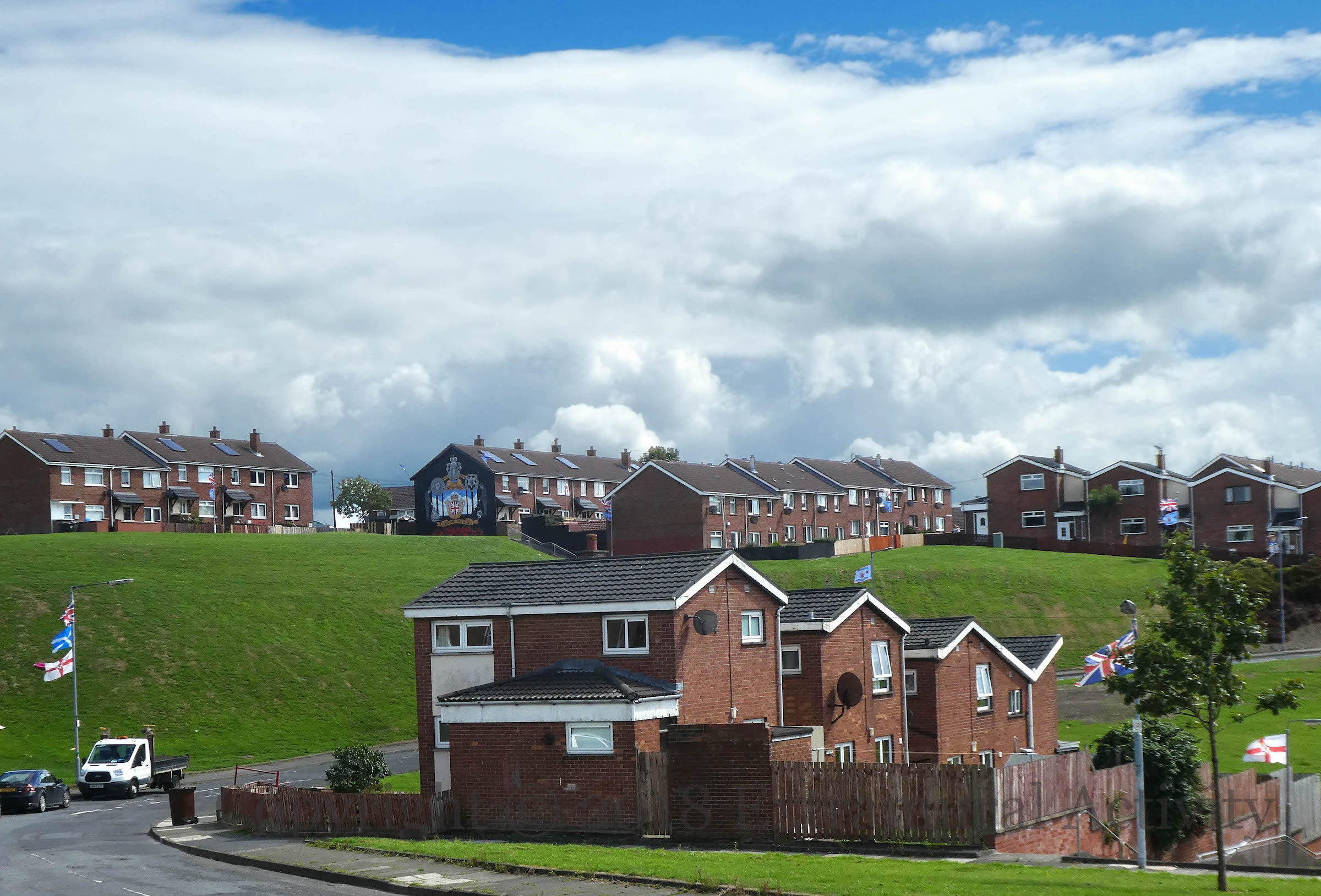
Dee Stitt of the UDA resigned last week as chair of Charter NI citing the strain on his family caused by negative media attention (BBC-NI | Irish News). At the end of 2016, Stitt was criticised for remarks describing his North Down Defenders (Fb) as the “homeland security” of the area and describing working-class estates as “jungles” in which there is always a “big guy” (Guardian video 8 min mark ff.| BelTel | ITV) . The mural above does not directly indicate ties to the UDA/UFF, except for the red fist. For a more explicit NDD board further down the estate, with UDA, UFF, UYM, and LPA flags, see North Down Defenders.
For the recent tension between UDA factions in north Down, see Ulster Defence Unions.
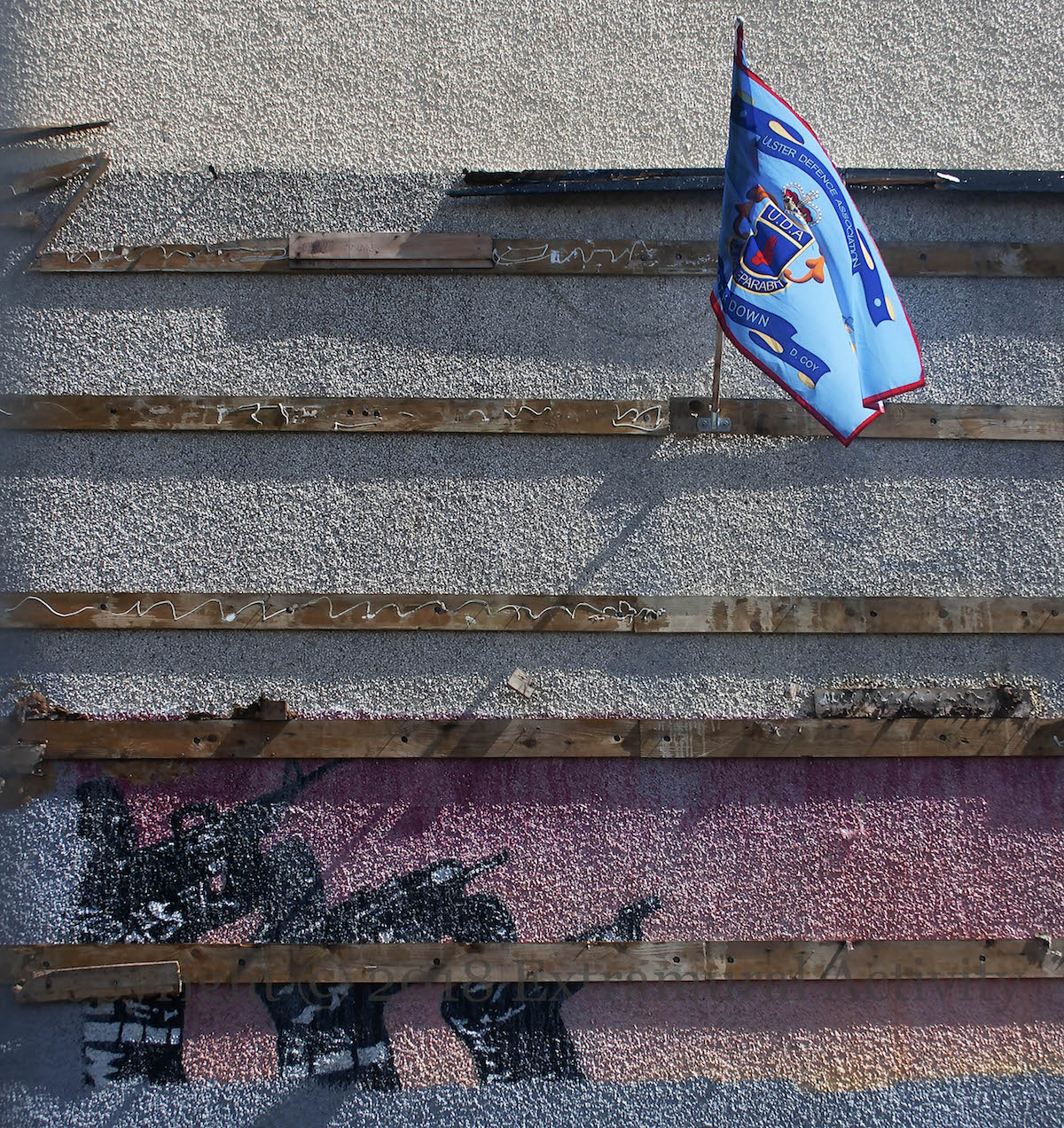
The Blair Mayne mural in Queen Street, Newtownards, which dates back to 2008, has fallen down, revealing the remnants of mural it replaced, a UVF firing party (J1754). A UDA flag, however, has been placed on the mounts.
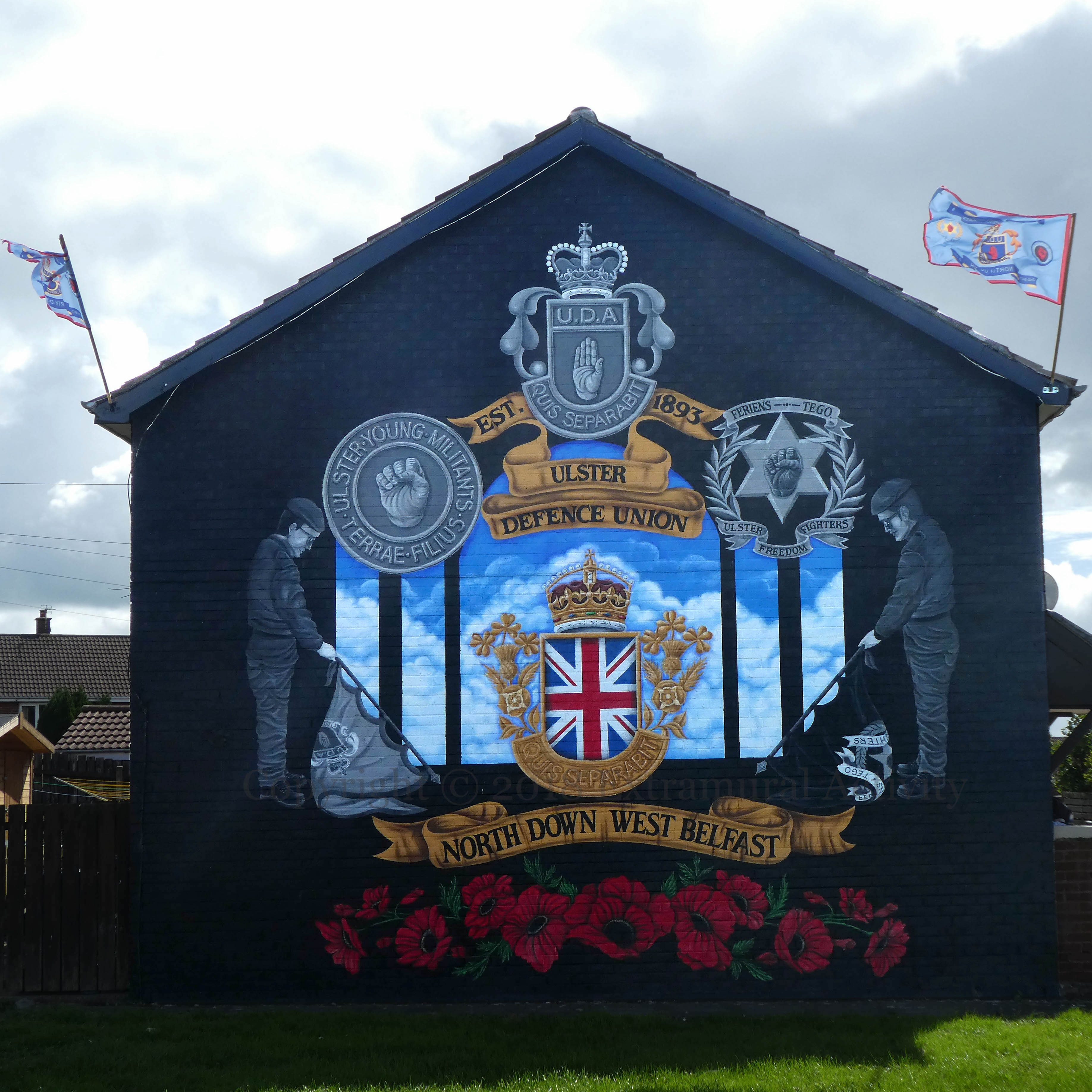
The poppy was used exclusively by the UVF (because of their shared named with the Ulster Volunteers, which became the 36th Division, which served on the western front in WWI, but in the last few years (2016-2018) it has been used frequently by the UDA in memorial murals (e.g. one | two | three), indicated here by the lowered flags and absence of weapons. (The first UDA poppy, however, dates back to the 2012 (if not earlier) tribute to Benson Kingsberry.) For background on the inclusion of “West Belfast” alongside “North Down” in a Newtownards mural, see Ulster Defence Unions, which also contains poppies (and which in turn links to information about the Ulster Defence Union of 1893). “UDU” seems to be used here to represent a desire for greater unity among (at least some parts) of the UDA.
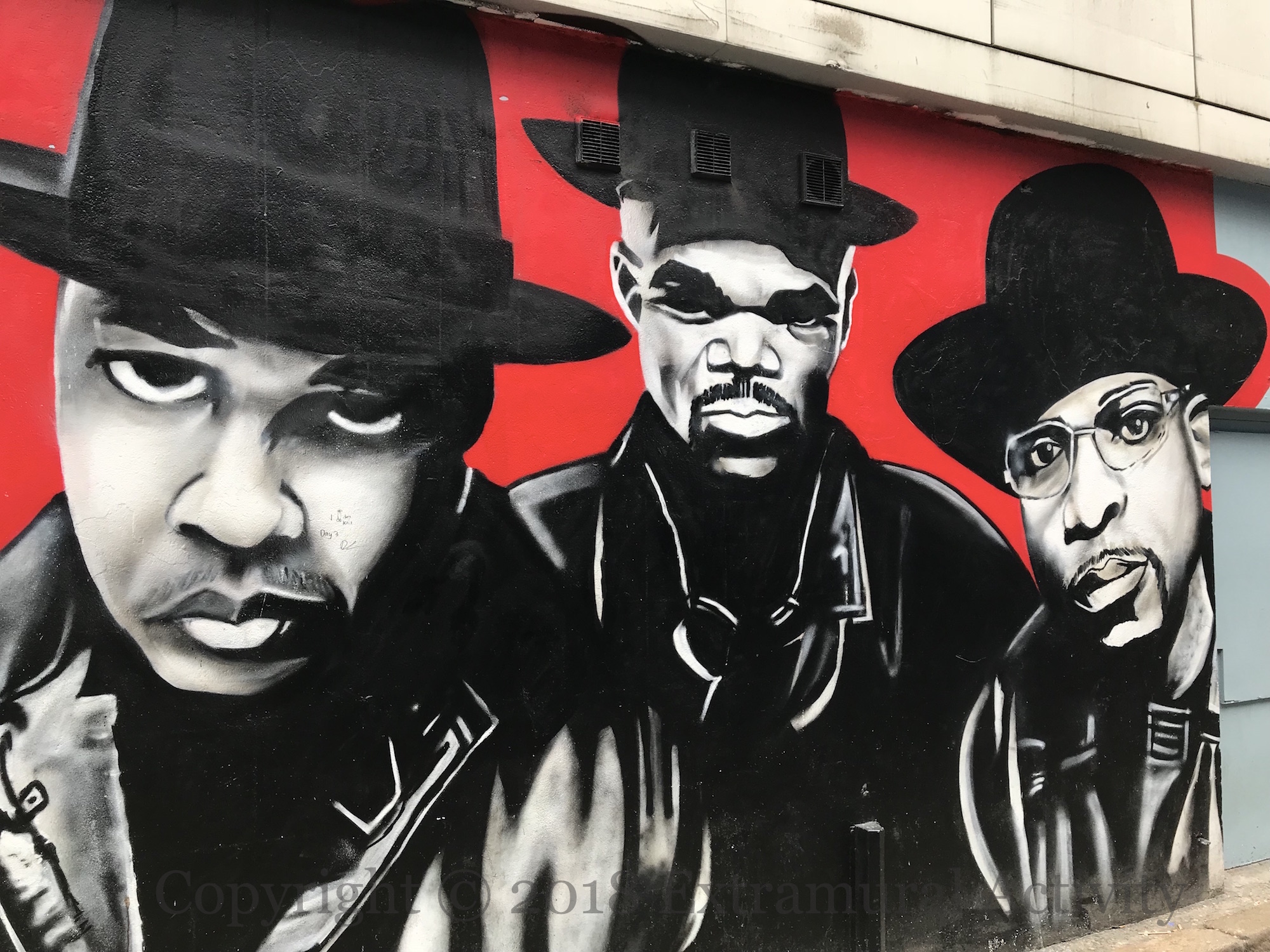
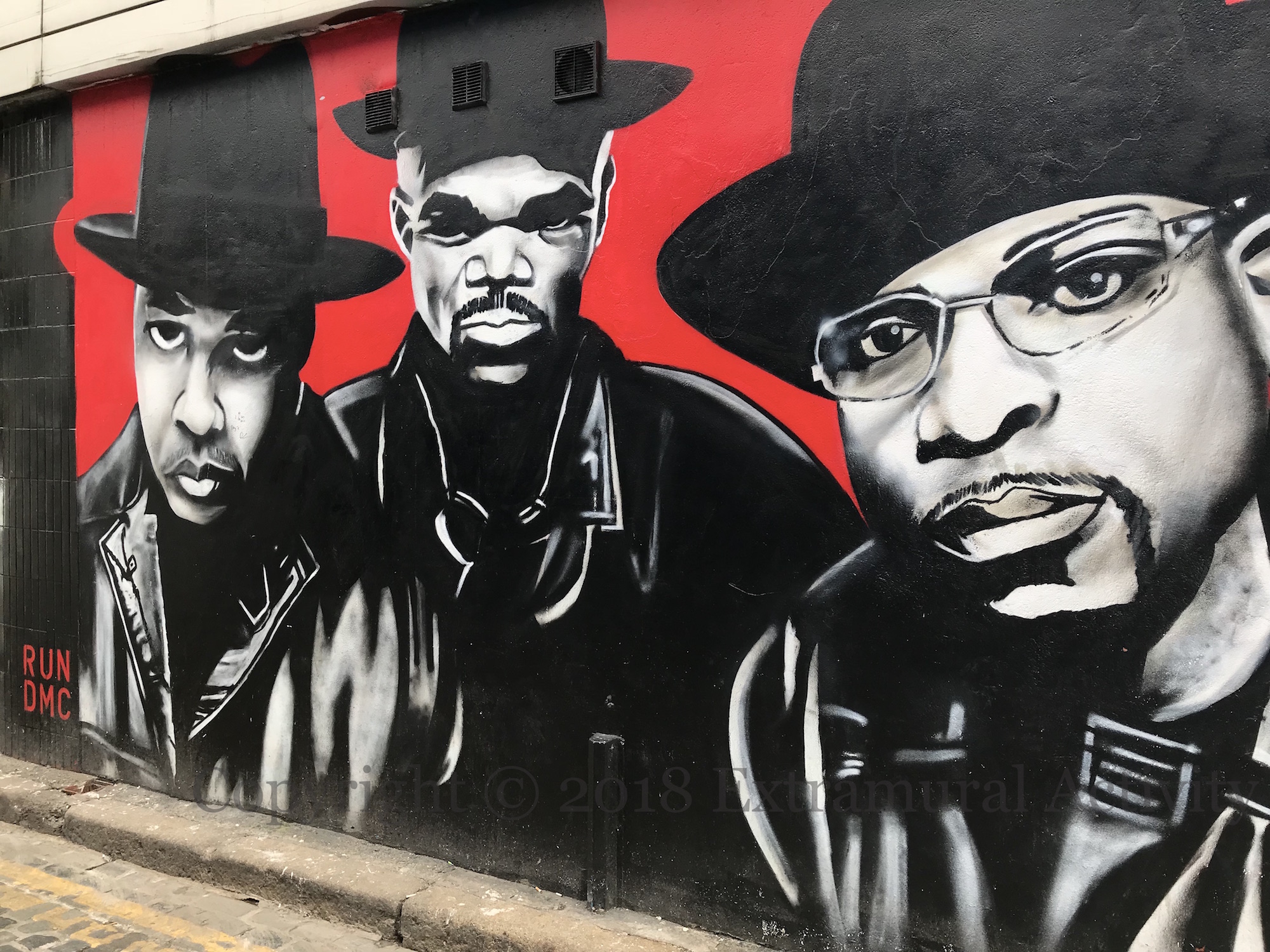
Run-DMC took hip hop into the mainstream in 1984 and were eventually declared the greatest hip hop artist/group by both MTV and VH1. The trio are Joseph “Run” Simmons, Darrell “DMC” McDaniels and “Jam Master Jay” Mizell (who was shot and killed in 2002). Street art by Glen Molloy (previous work including Beastie Boys) in Pattersons Place.
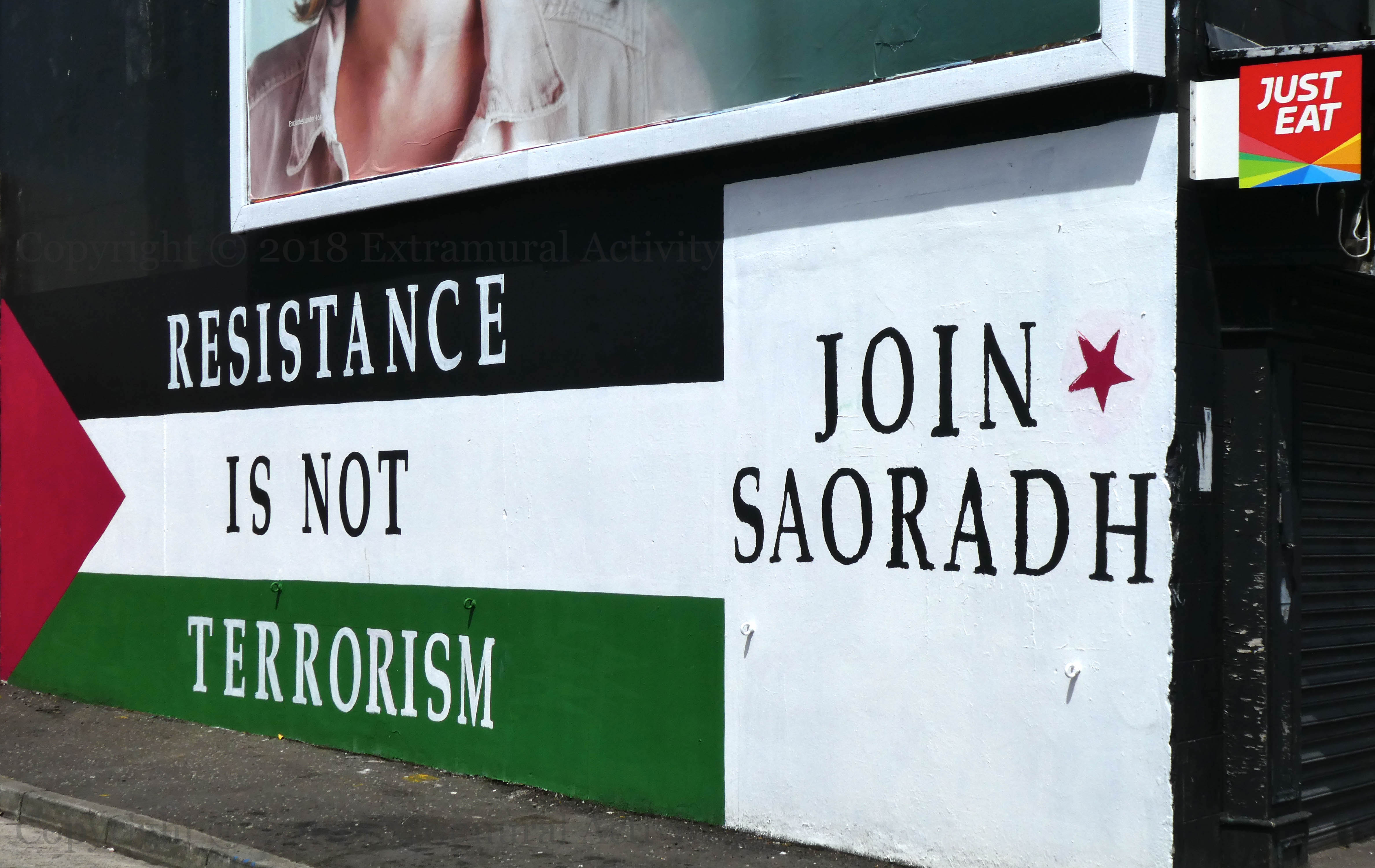
Saoradh (web | Fb) have added a pro-Palestine mural with the slogan “Resistance is not terrorism” to the Falls Road at the old Linden Street (replacing TMN’s homage to Vaughan Bodē).
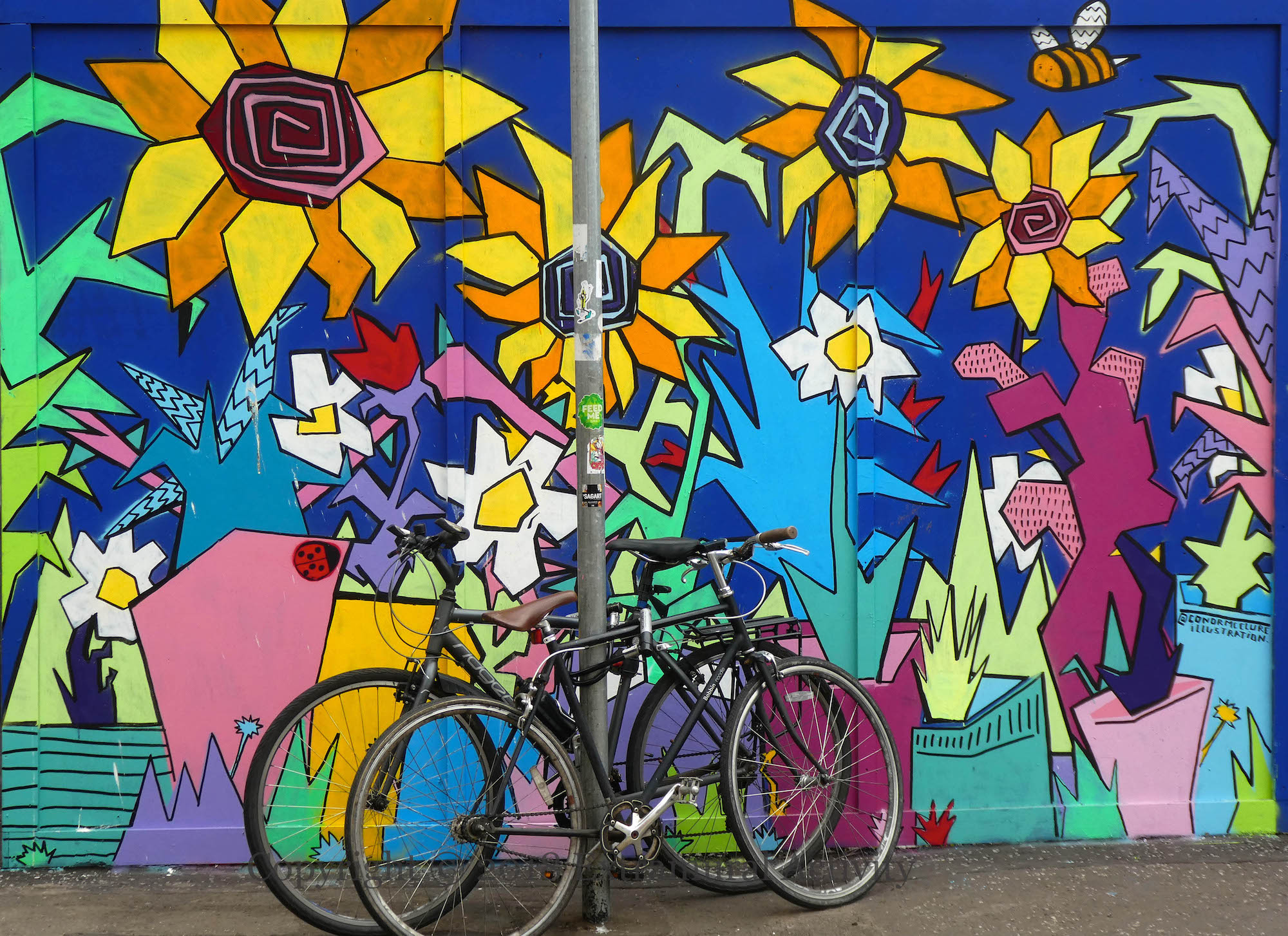
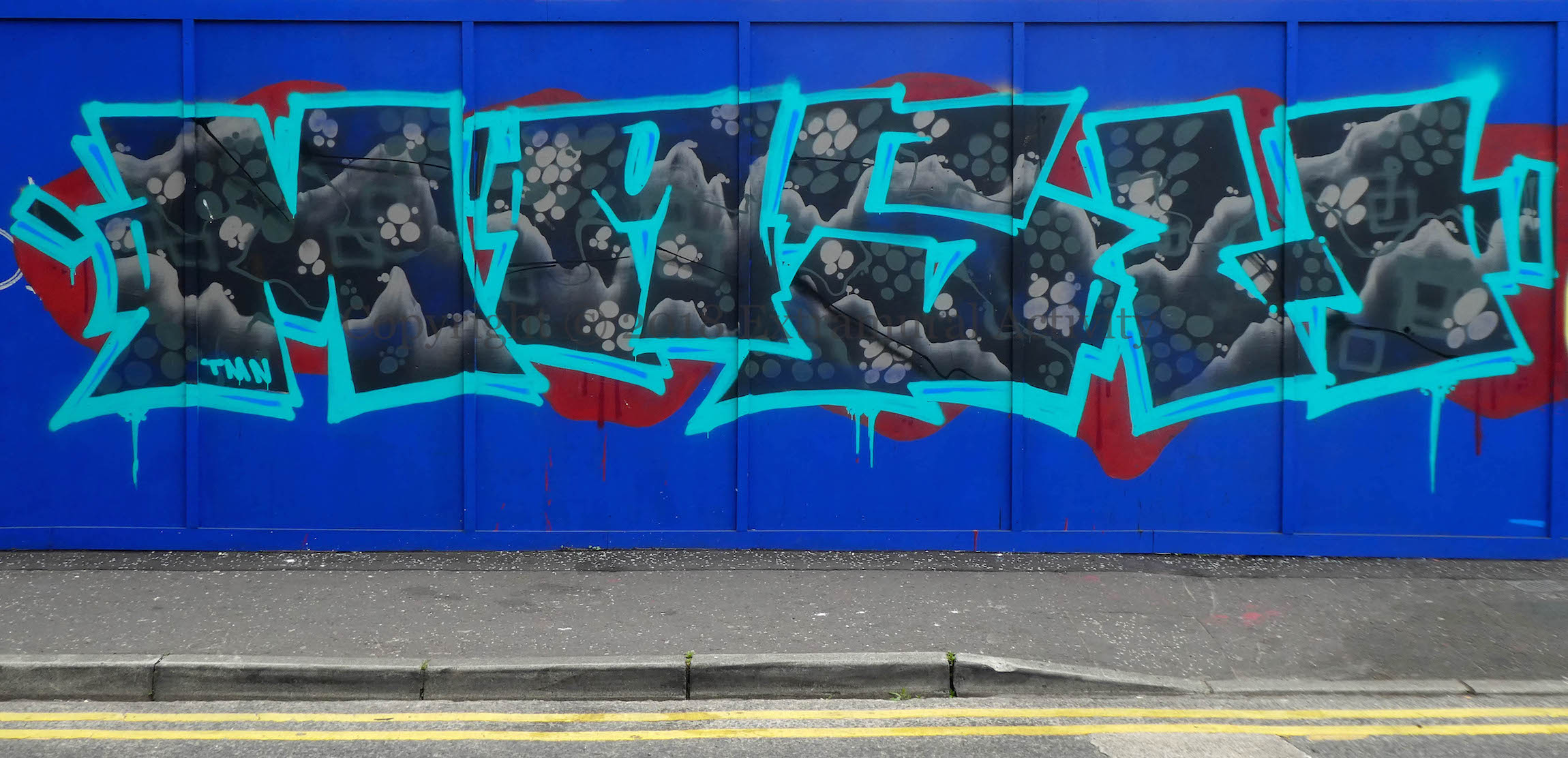
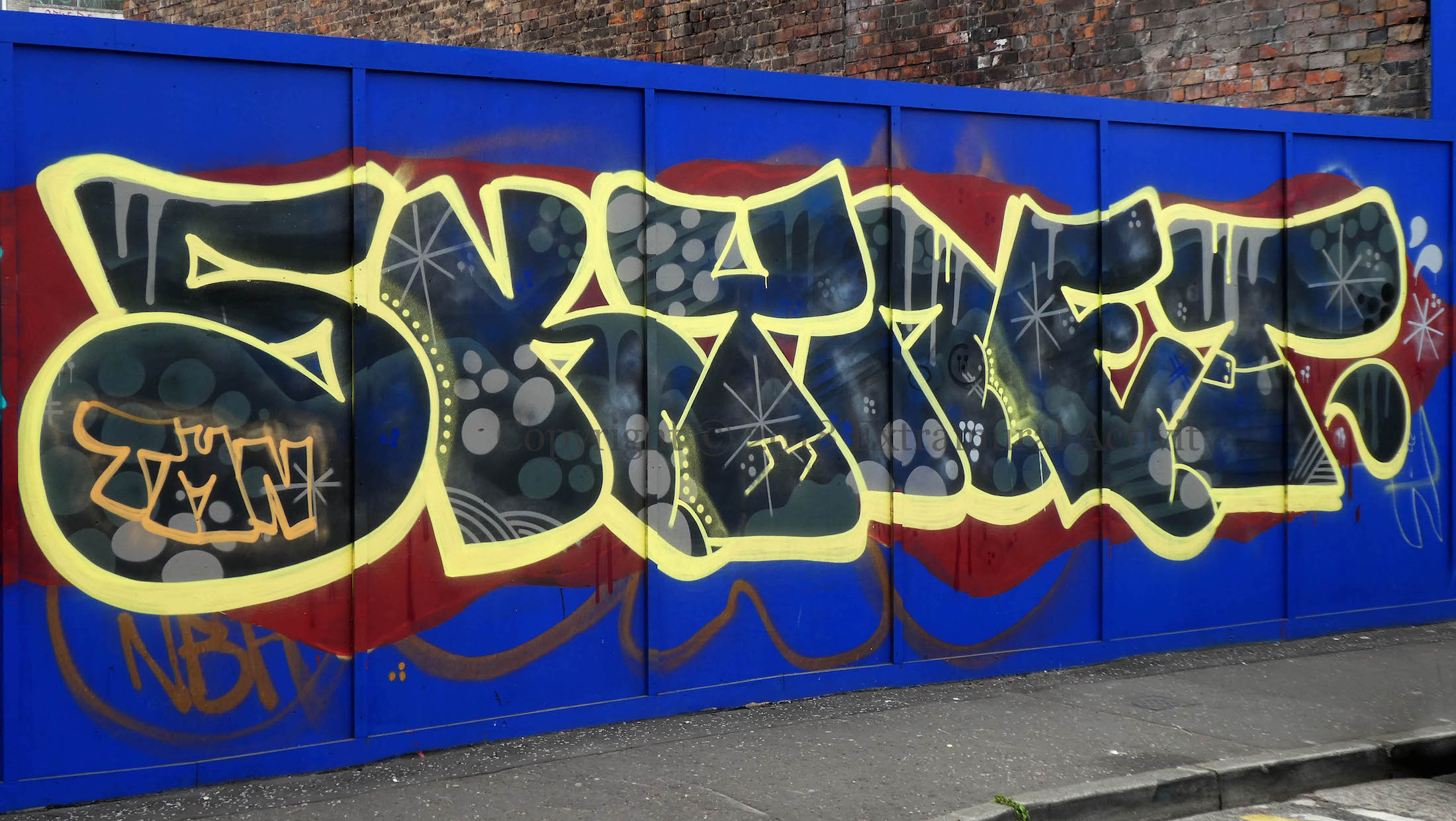
Work continues at the site opposite The Sunflower (Union Street and Kent Street). Nine murals (at least) were lost when the building was torn down but the substantial hoarding is providing artists with a temporary canvas. Above are sunflowers by Conor McClure (web | Fb – see previously More Wolf Than Woman | Spring Wings); below are pieces by TMN crew members – MASH and “Skynet“.
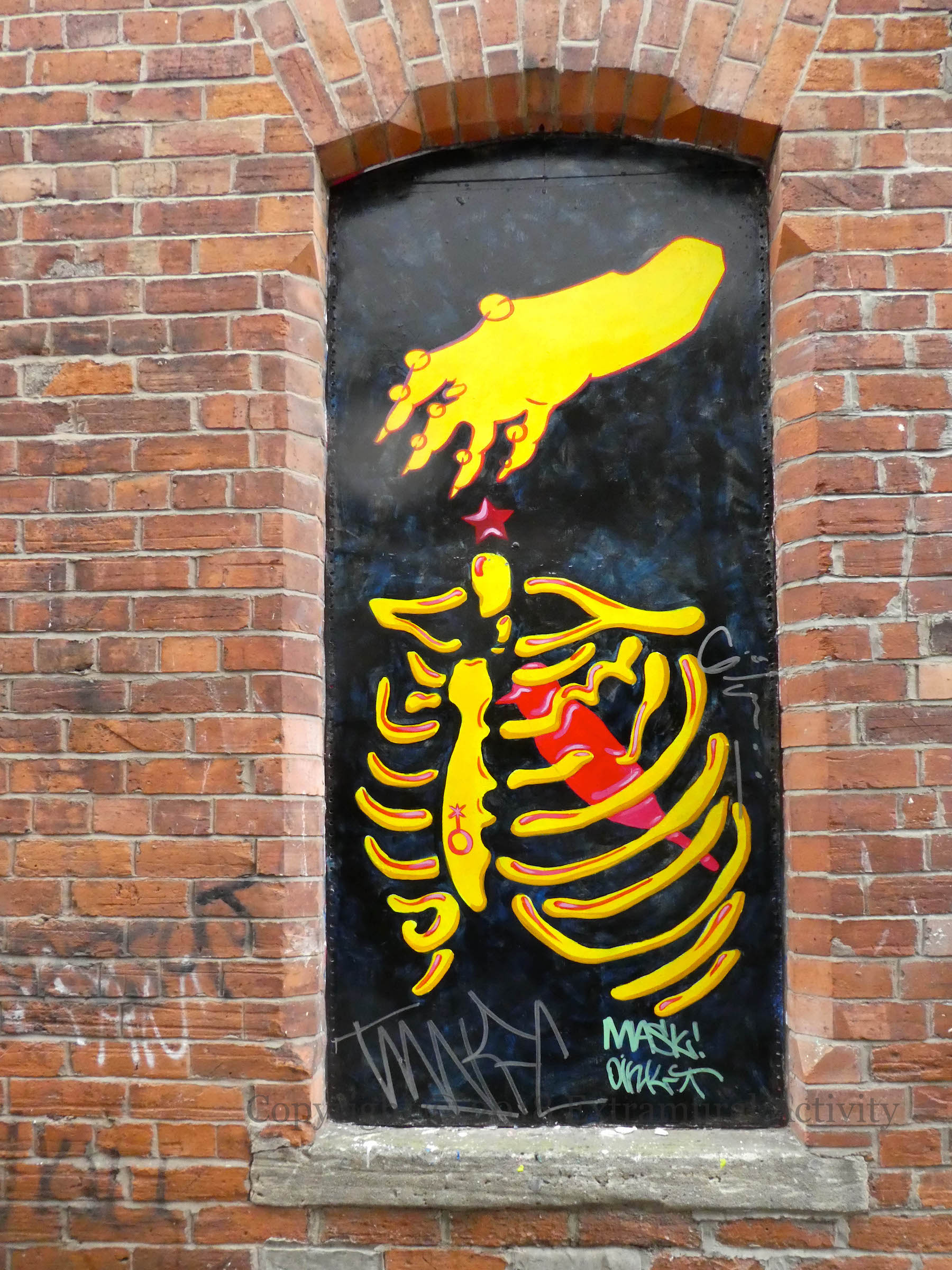
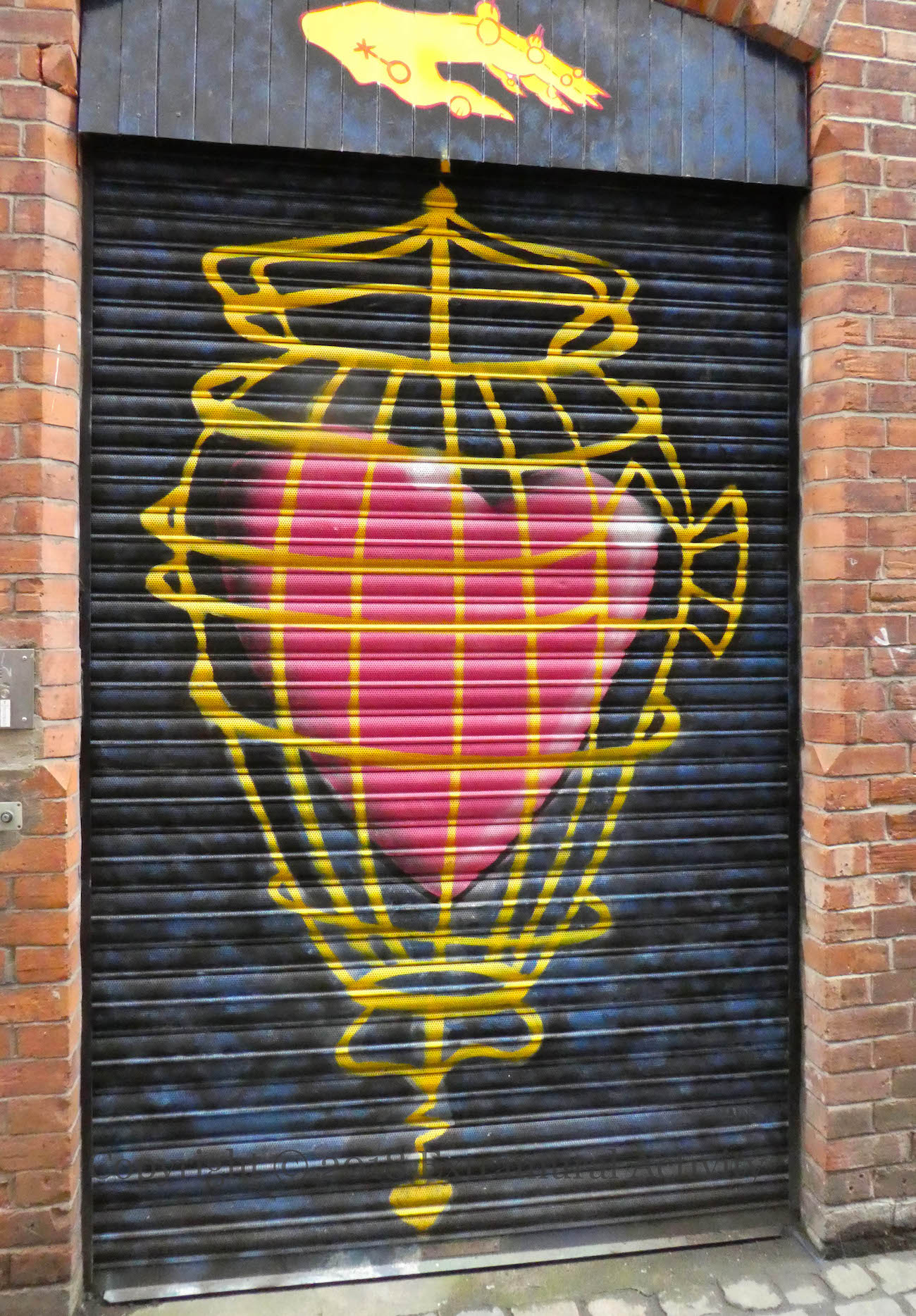
Two in Exchange Place in Belfast city centre: the bird is in the rib cage, the heart is in the bird cage. Artist unknown – please comment/get in touch if you know it!
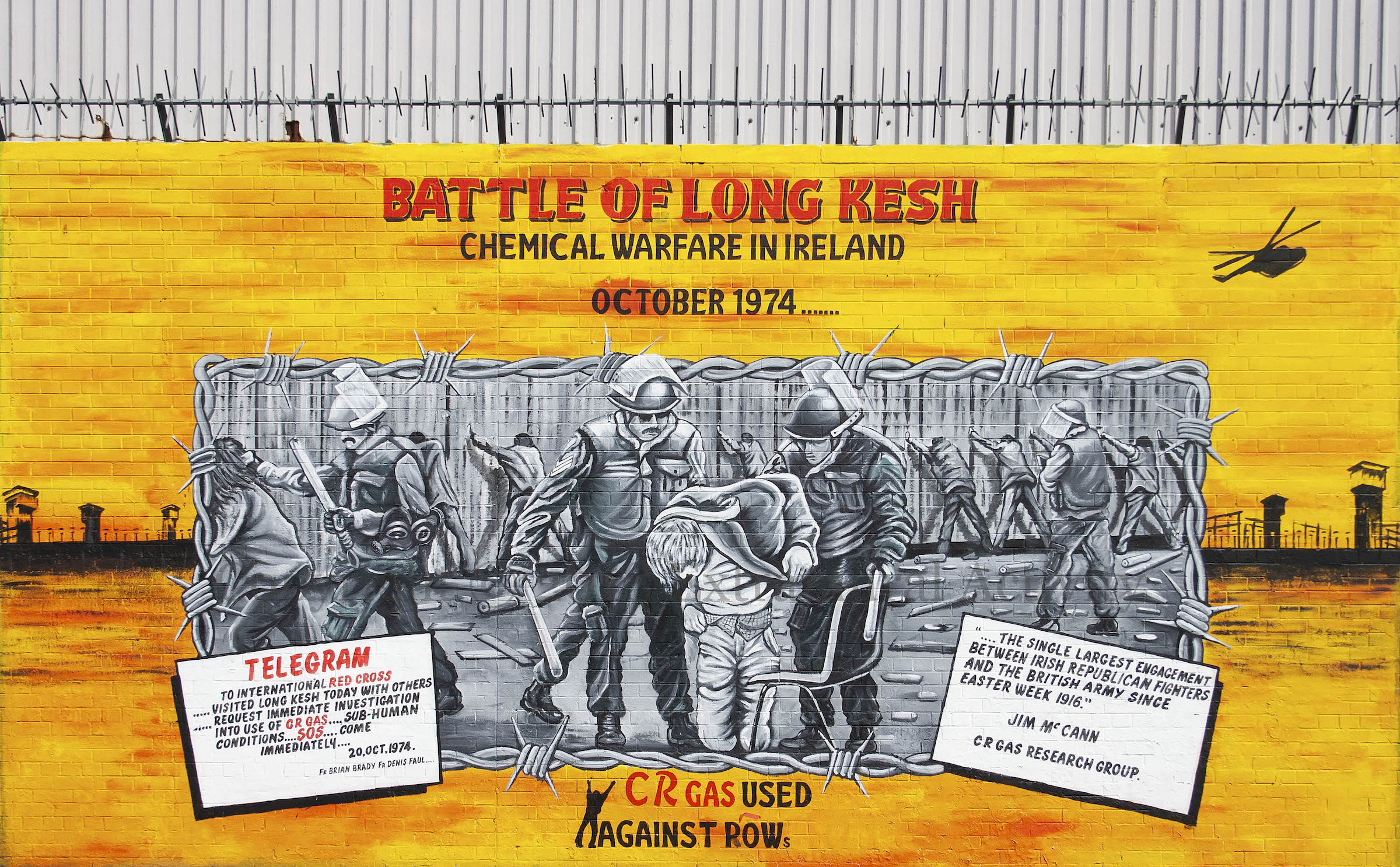
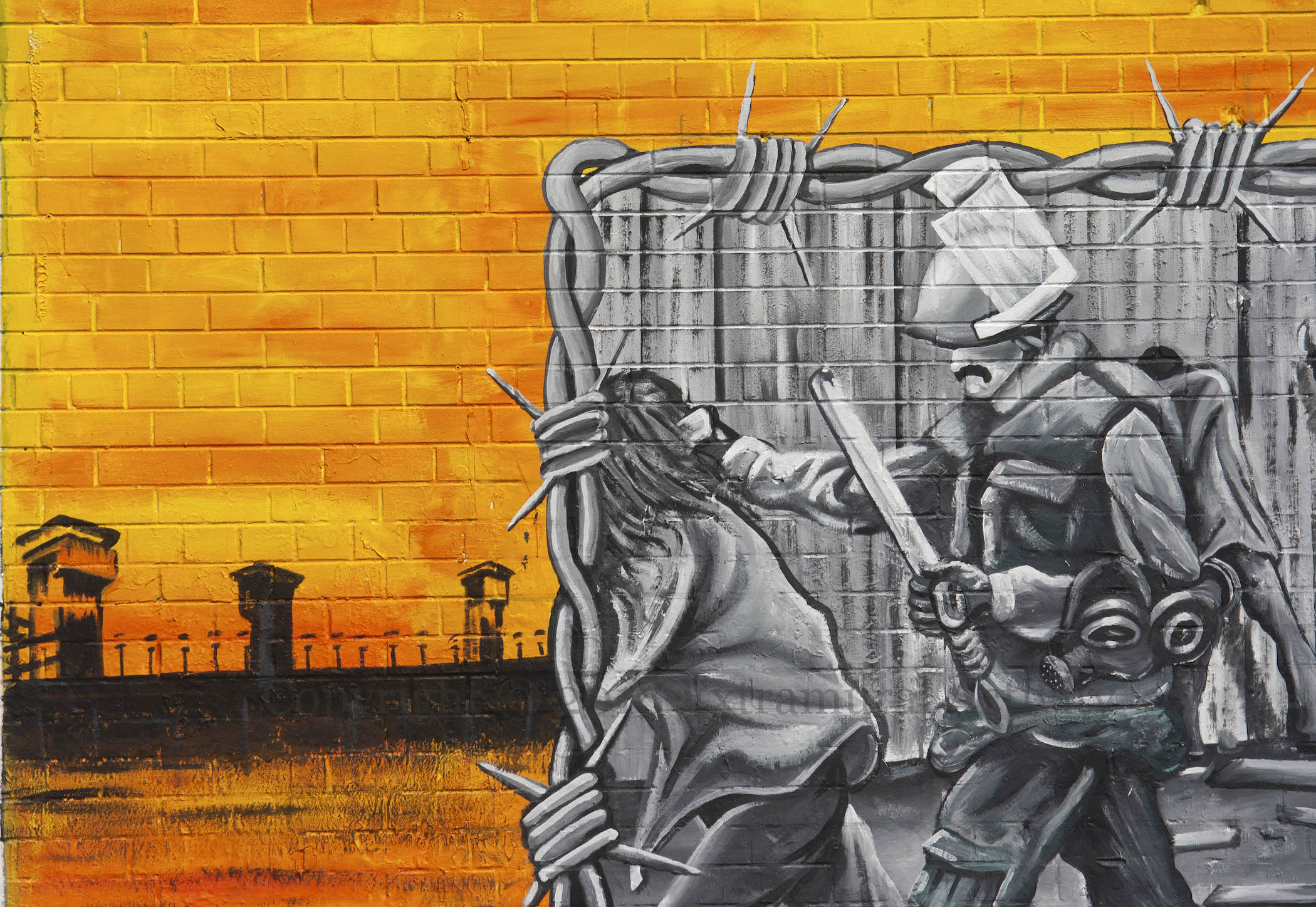
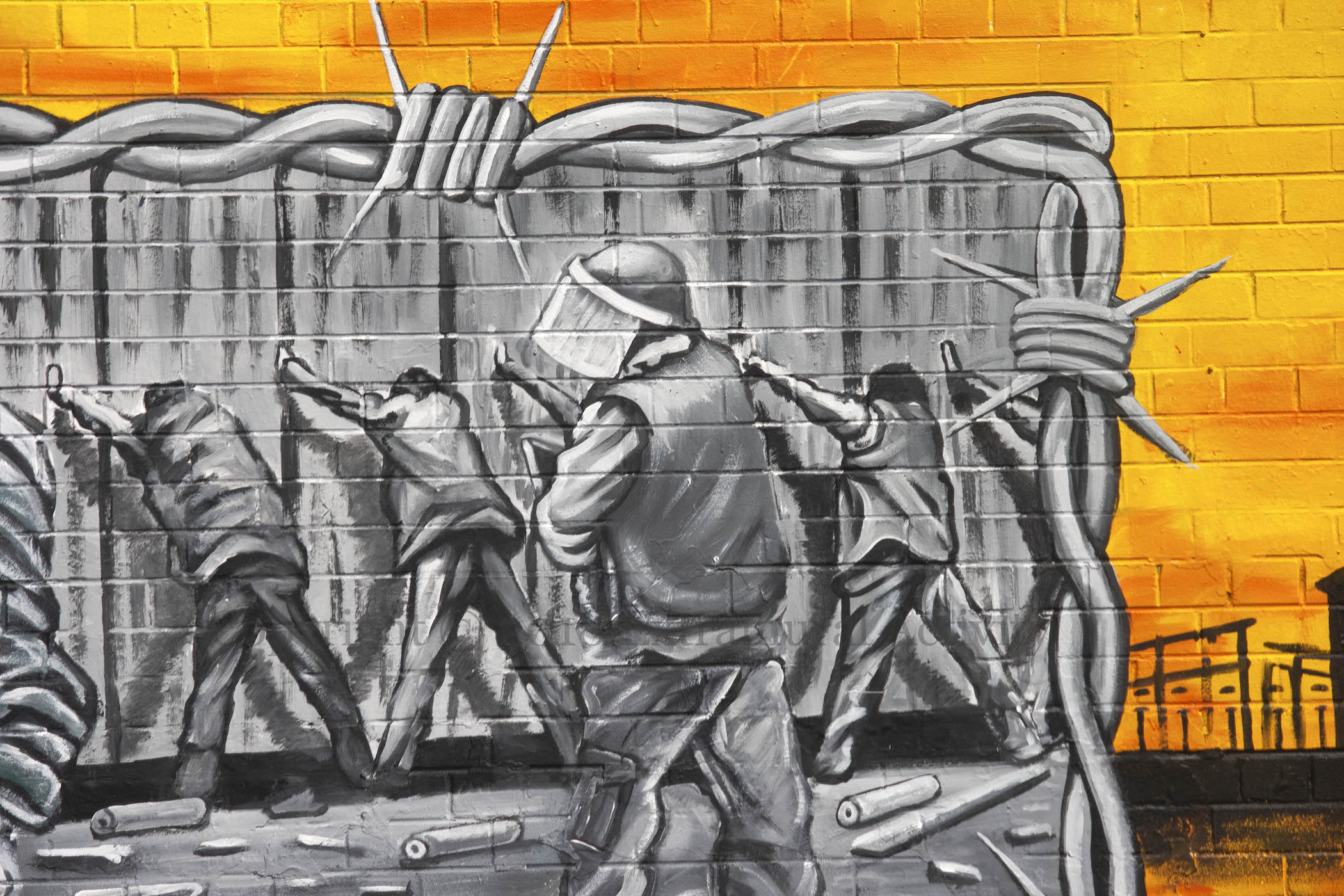
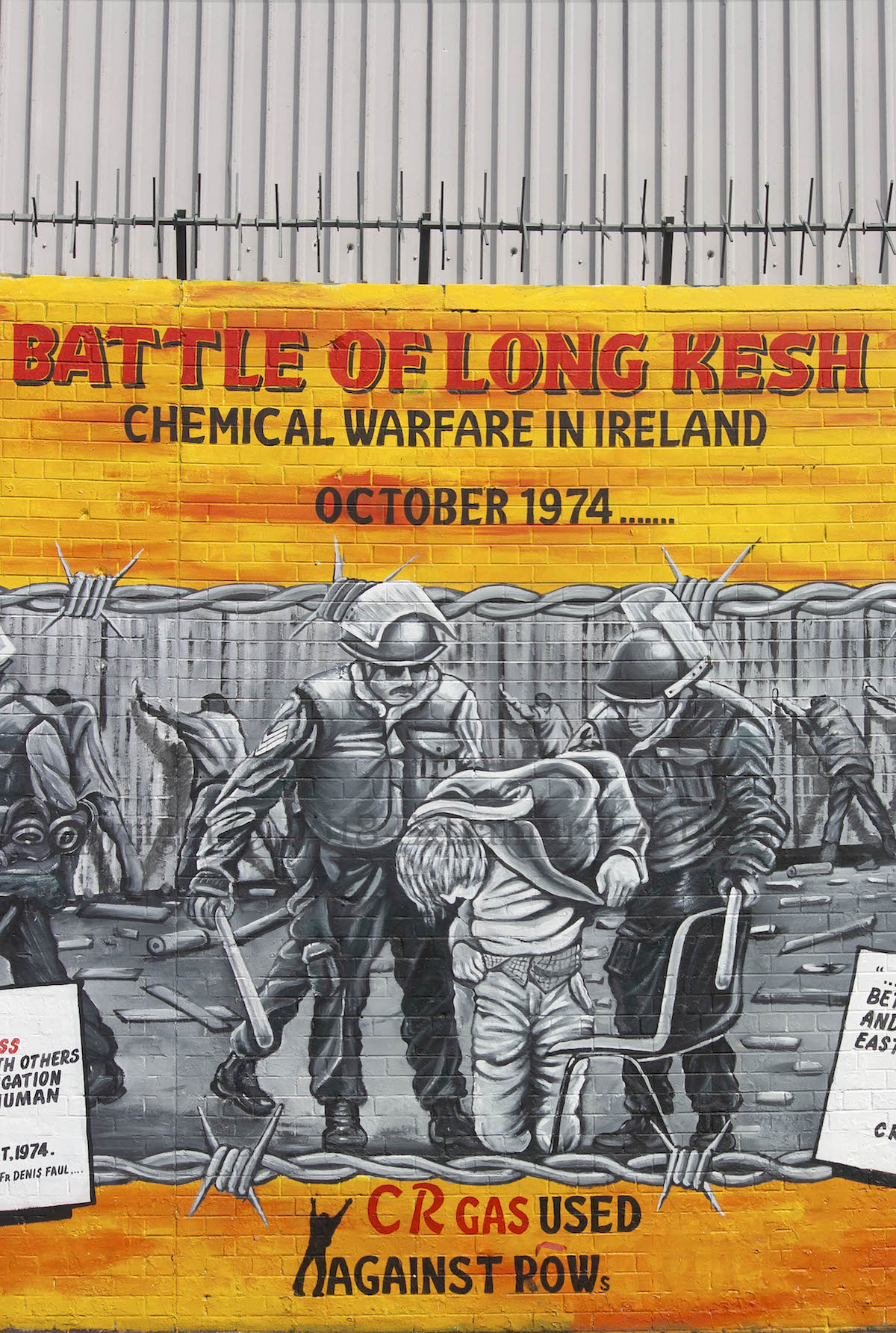
CR gas, along with CS, VX and other chemical agents, was developed at the MoD lab in Porton Down, and authorised and available for use from 1973 onwards against prisoners in Long Kesh (Guardian). Jim McCann was in Long Kesh during the ‘Battle Of Long Kesh’, when republican prisoners attempted to burn down the cages in which they were being kept in protest at conditions in the camp (An Phoblacht). His memoir, And The Gates Flew Open (An Ceathrú Póilí), continues the campaign by him and other prisoners to get the British to admit that the gas was used on inmates during the riot. The book was launched last month in the Cultúrlann.
In the lower left corner is a quoted telegram from Fr. Denis Faul, Fr. Raymond Murray: “To international Red Cross … Visited Long Kesh today with others … Request immediate investigation into use of CR gas … sub-human conditions … SOS … come immediately …” 20 Oct. 1974. These two wrote an 80-page report on the conditions at the camp following the event, entitled The Flames Of Long Kesh.
 Seosamh Mac Coille Collection