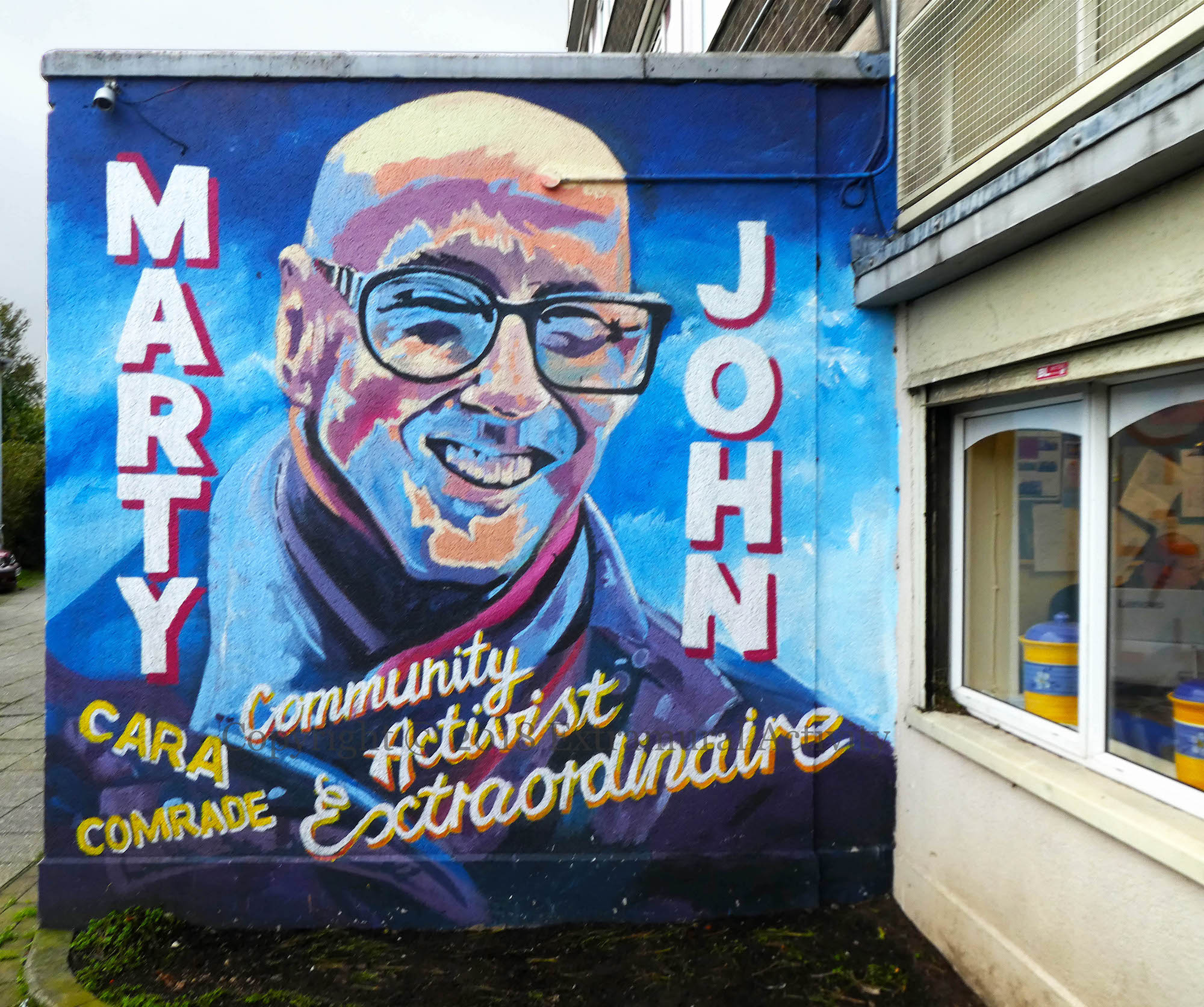
John Leathem, chairman of the Divis Tower Falls Residents’ Association, died in his flat on the 19th floor of Divis Tower in August last year (2017), after returning to the Tower four years previously when he was diagnosed with cancer (Irish News | Tele). He was described by Sınn Féın MLA Fra McCann as “a champion for the people of no property” (An Phoblacht). This new mural is outside his former office on the first floor.
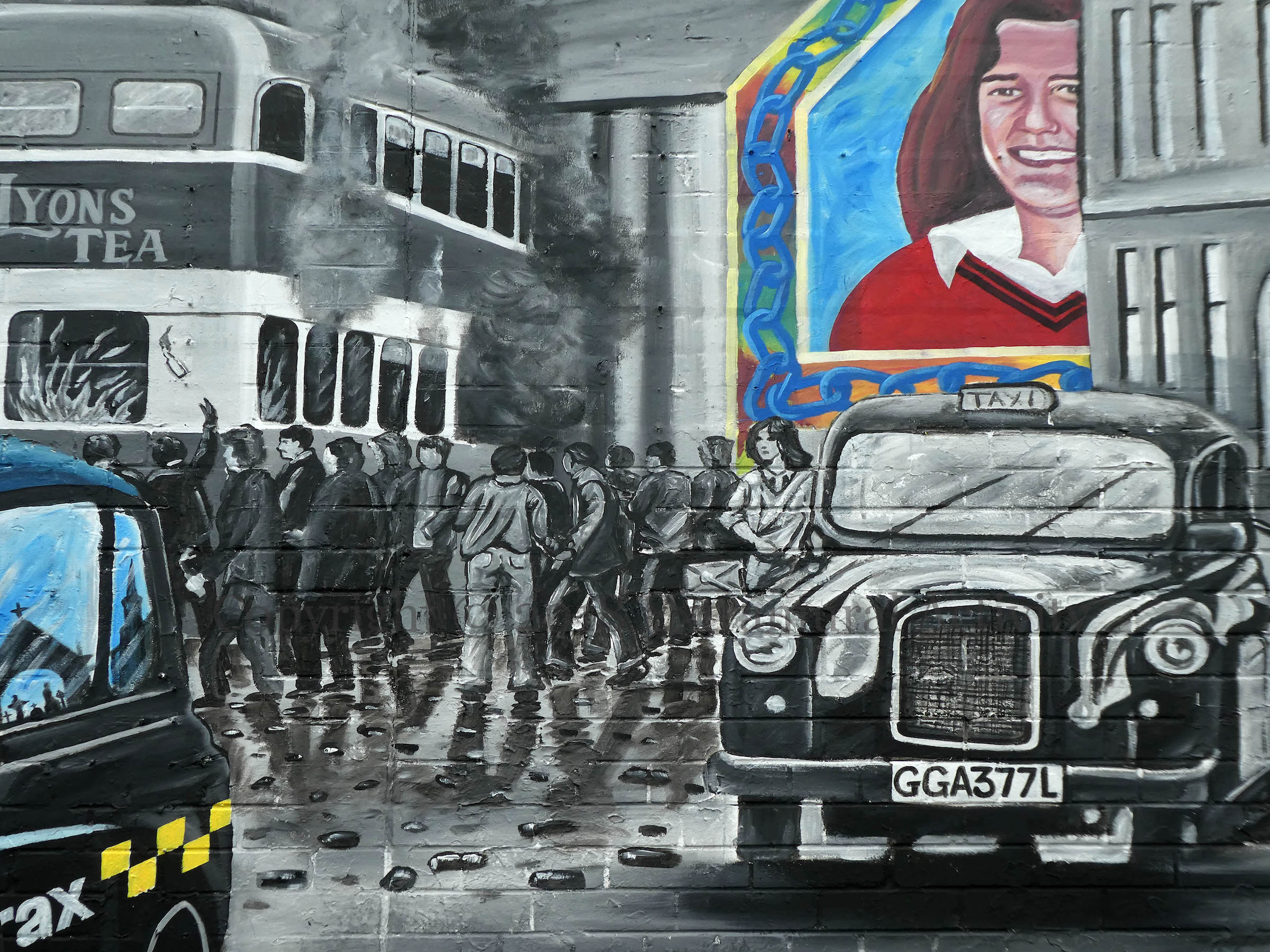
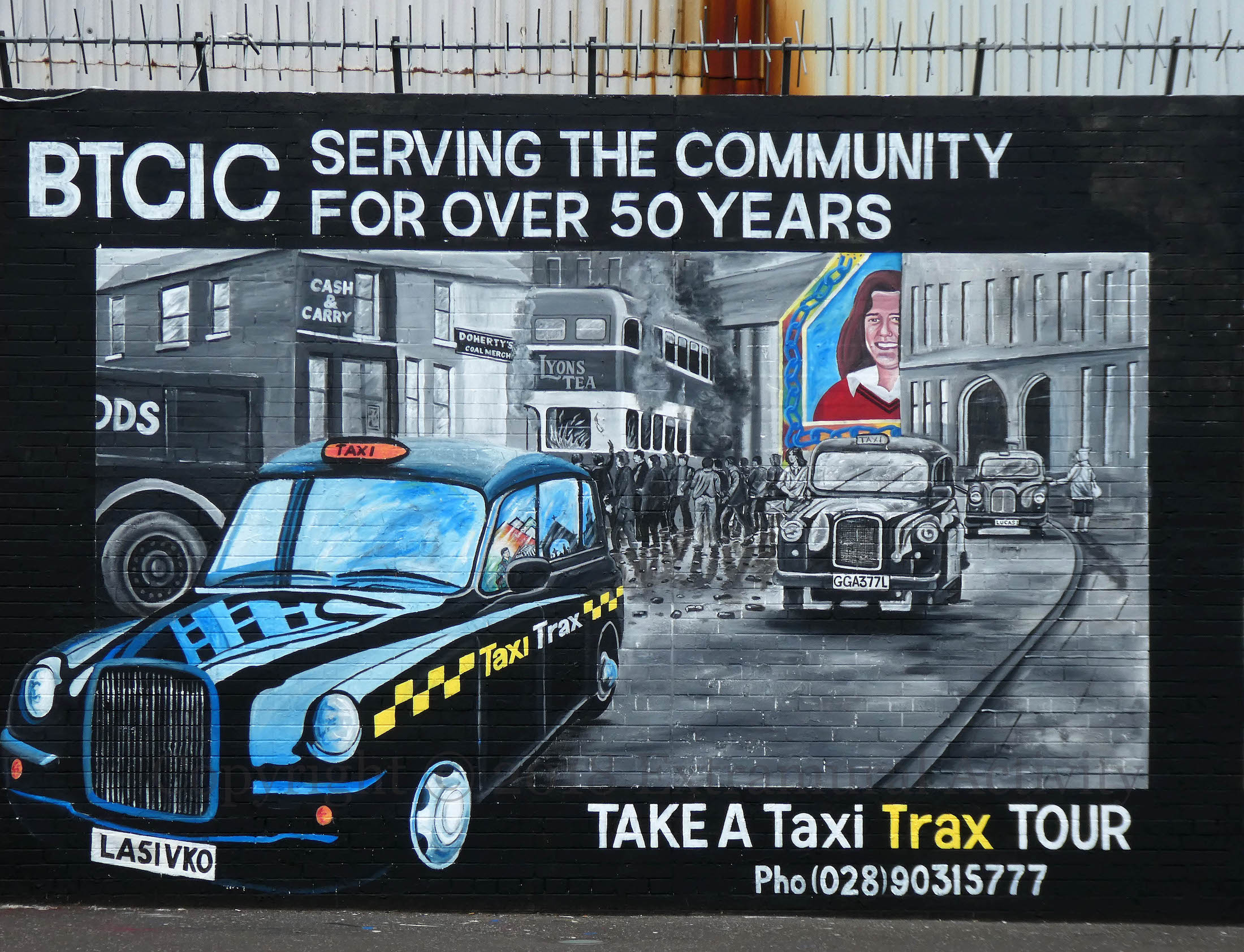
“Serving the community for over fifty years.” BTCIC is the current name for what was previously the West Belfast Taxi Association. Black taxis have been running up and down the Falls since 1970, providing an alternative form of transportation to local people during the Troubles when buses were cancelled or, as in this picture, burnt out and used as barricades. They now, in addition, provide tours of the murals (such as the Bobby Sands mural in Sevastopol Street) and Belfast city. Taxi Trax has a web site but here provides a phone number for those already at the International Wall, where there has been a black taxi mural since 2003. There are other WBTA murals in Beechmount and Ardoyne. The painters have signed the mural: Doherty’s Coal Merchant and Lyons Tea.
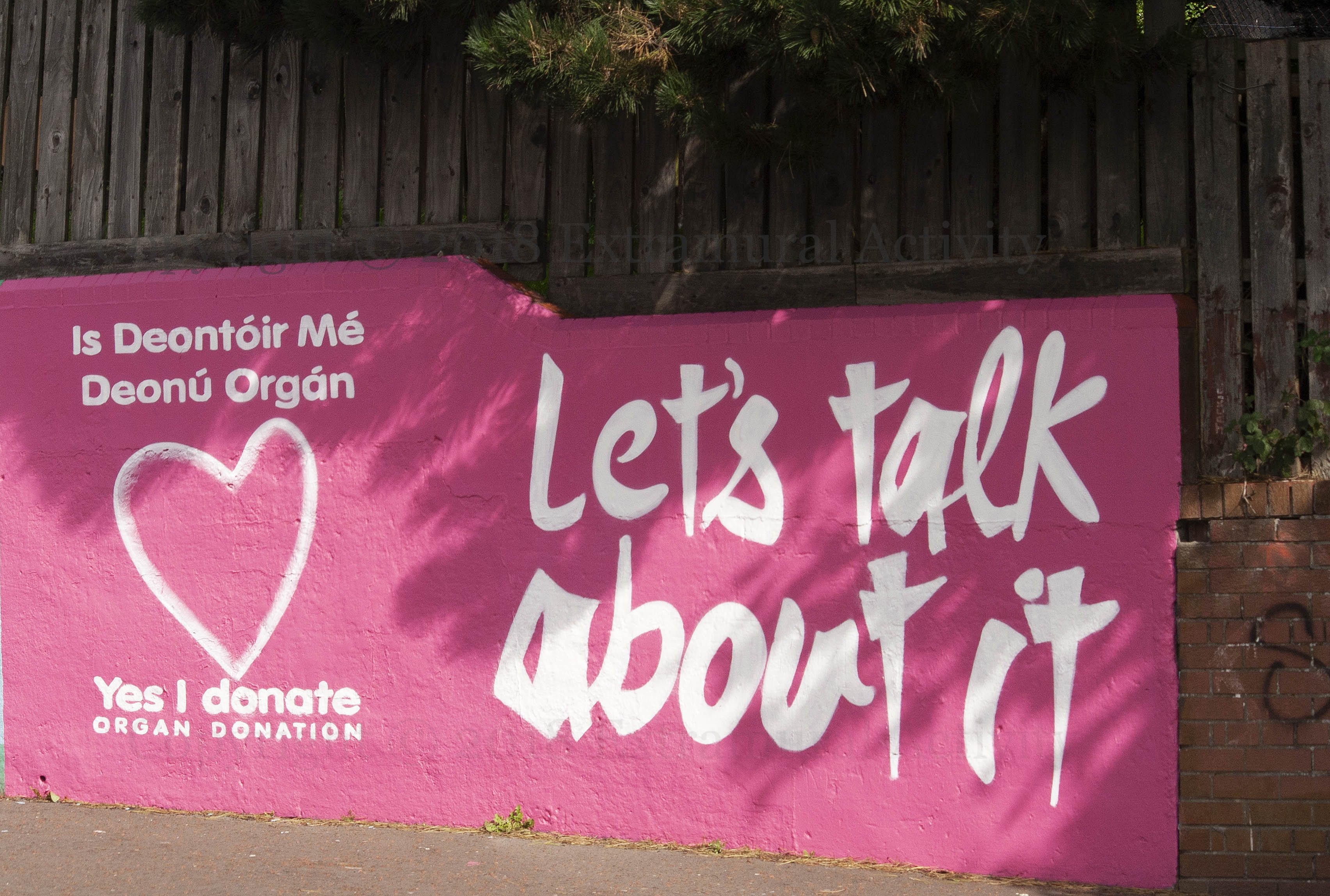
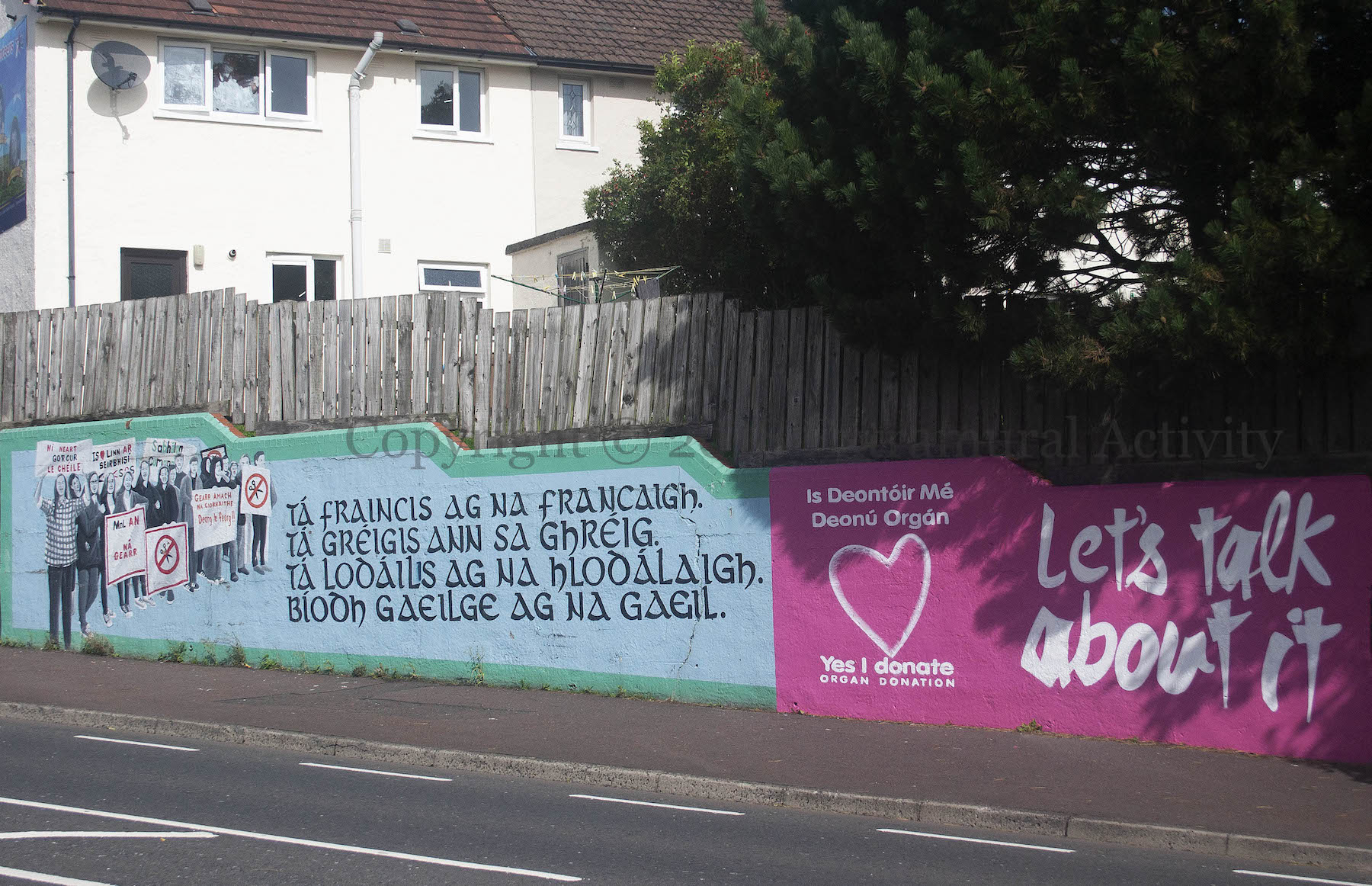
500 people took part in the 10K Na Ceathrún Gaeltachta/Gaeltacht Quarter 10K last Sunday to raise awareness for organ donation. Youngster Dáıthí Mac Gabhann (Donate4Daithí Fb) has become the face of the Irish-language campaign; his Facebook site has a gallery of 300+ images from the race. The mural above is on the Whiterock Road. You can register as a donor with the NHS.
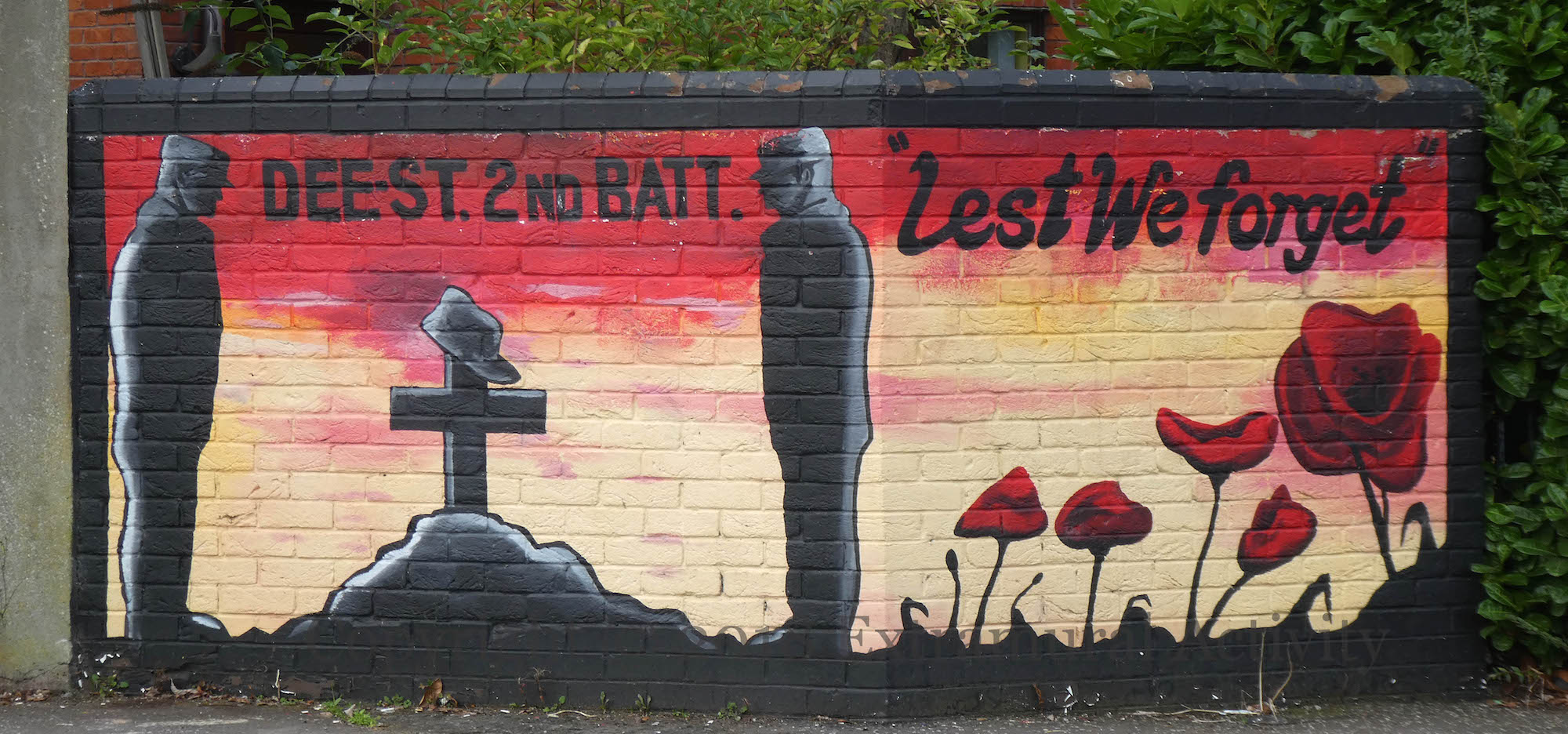
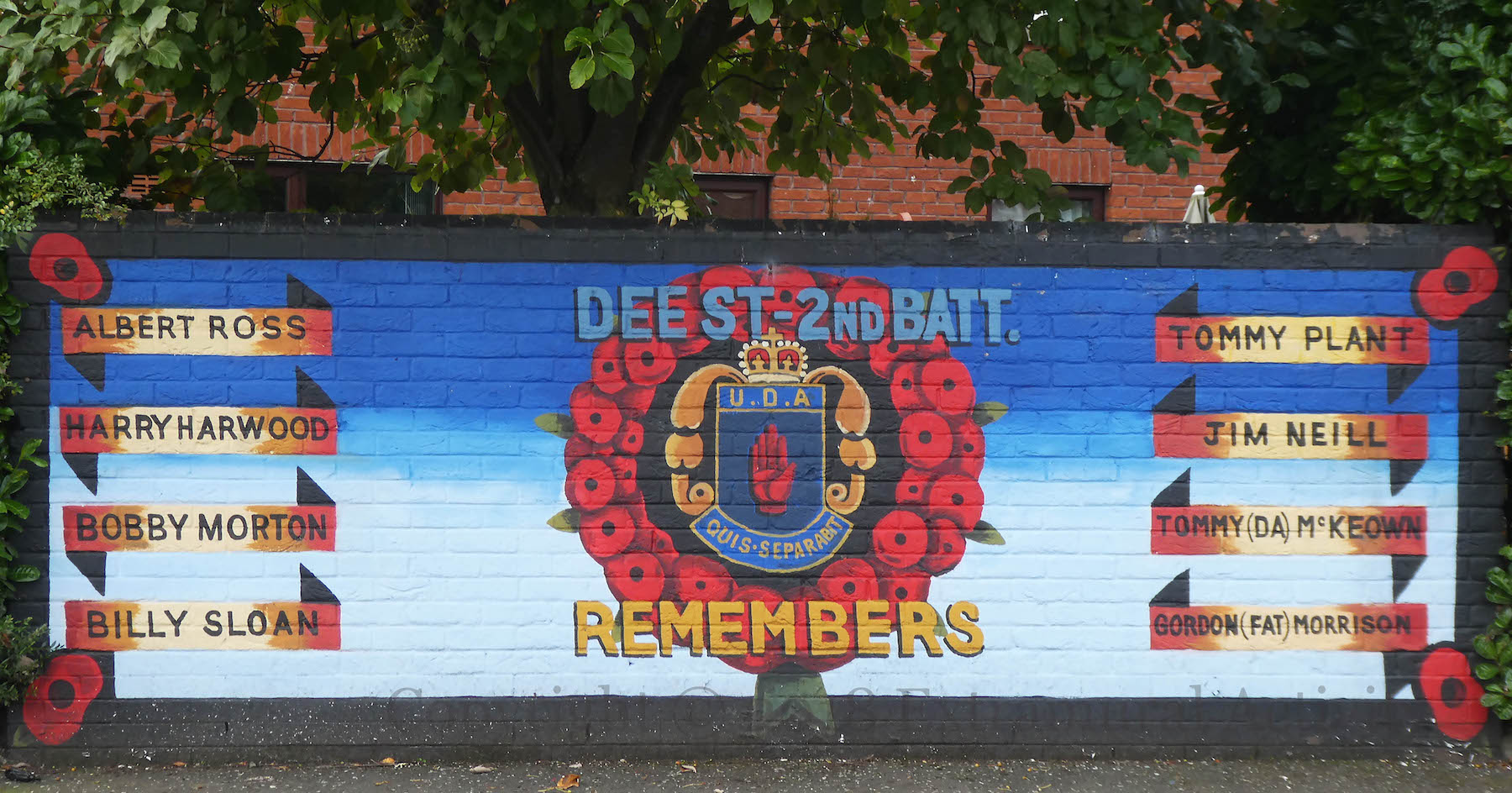
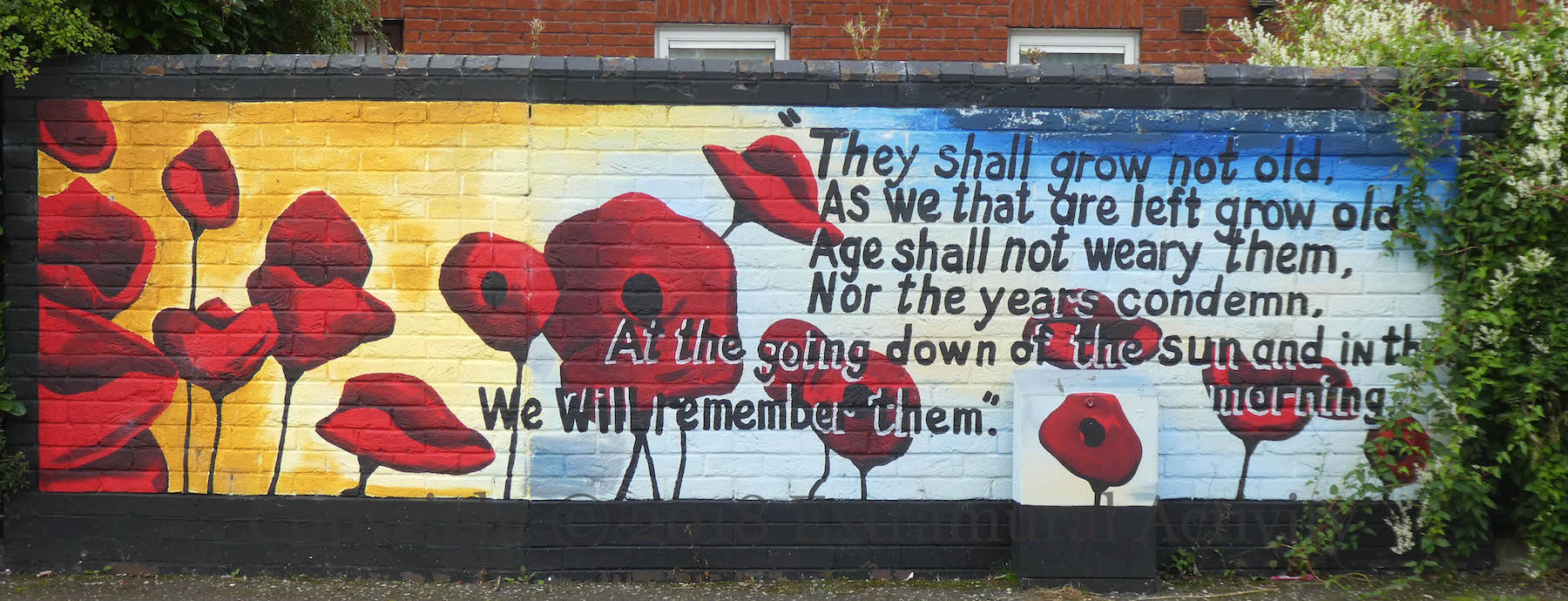
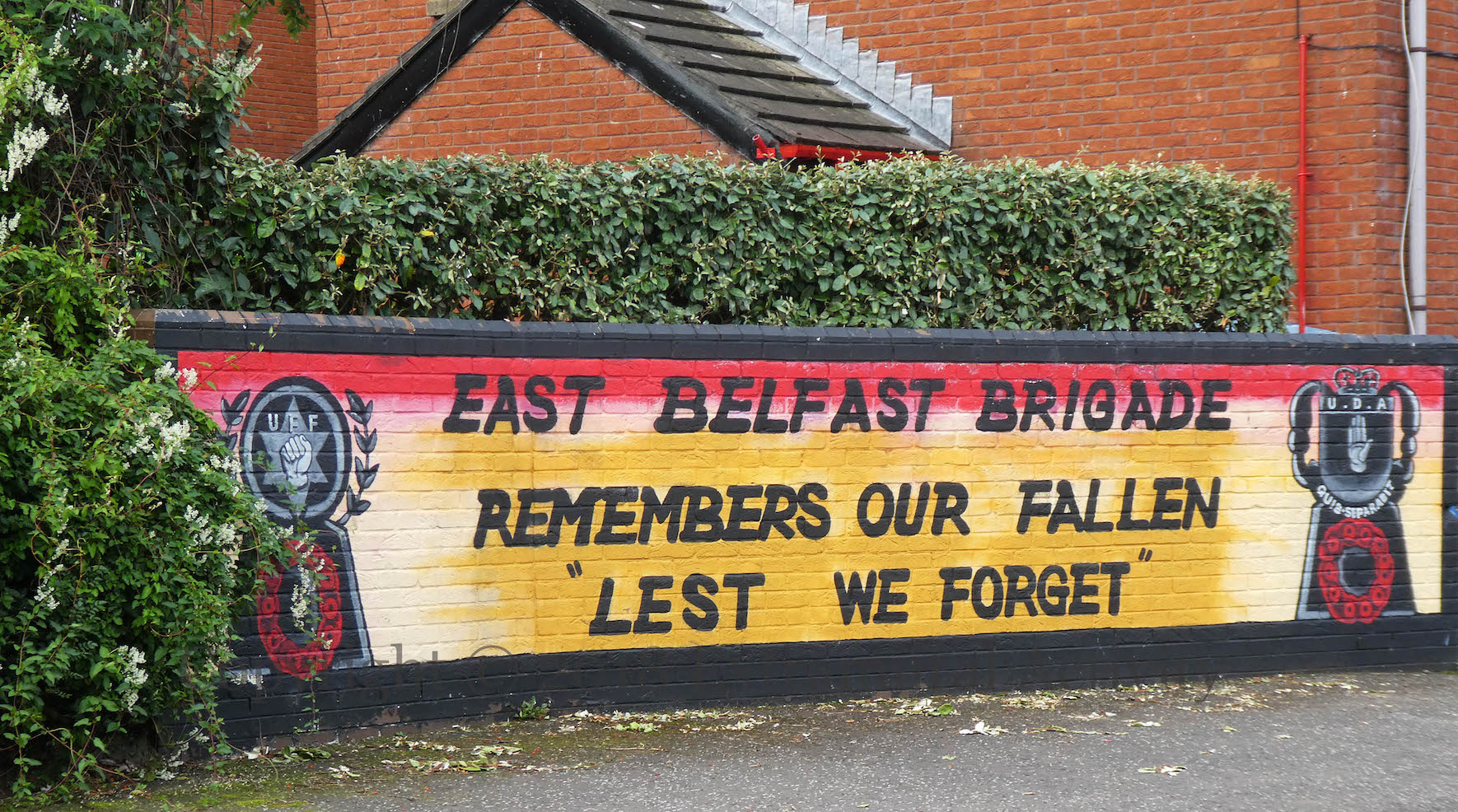
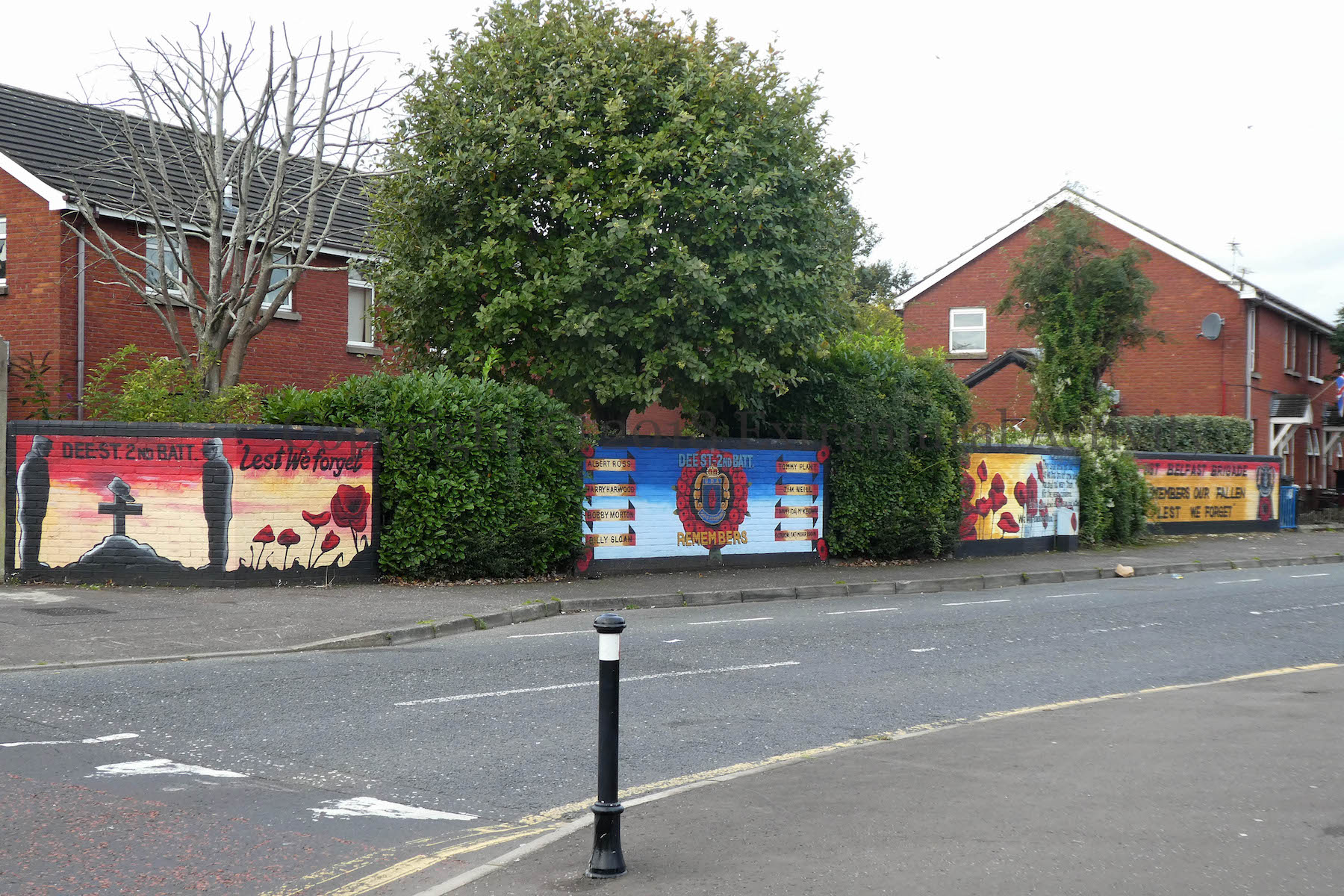
A new series of UDA “memorial” murals has been painted along Island Street, in east Belfast. Poppies are featured throughout, as we have increasingly seen over the last few years. New to this series, however, are the use of Lawrence Binyon’s poem For The Fallen in the third panel (see below) and in the image above – the left-most of the four – modern UDA volunteers stand in reflection upon an above-ground grave, also symbolic of the fallen of World War I.
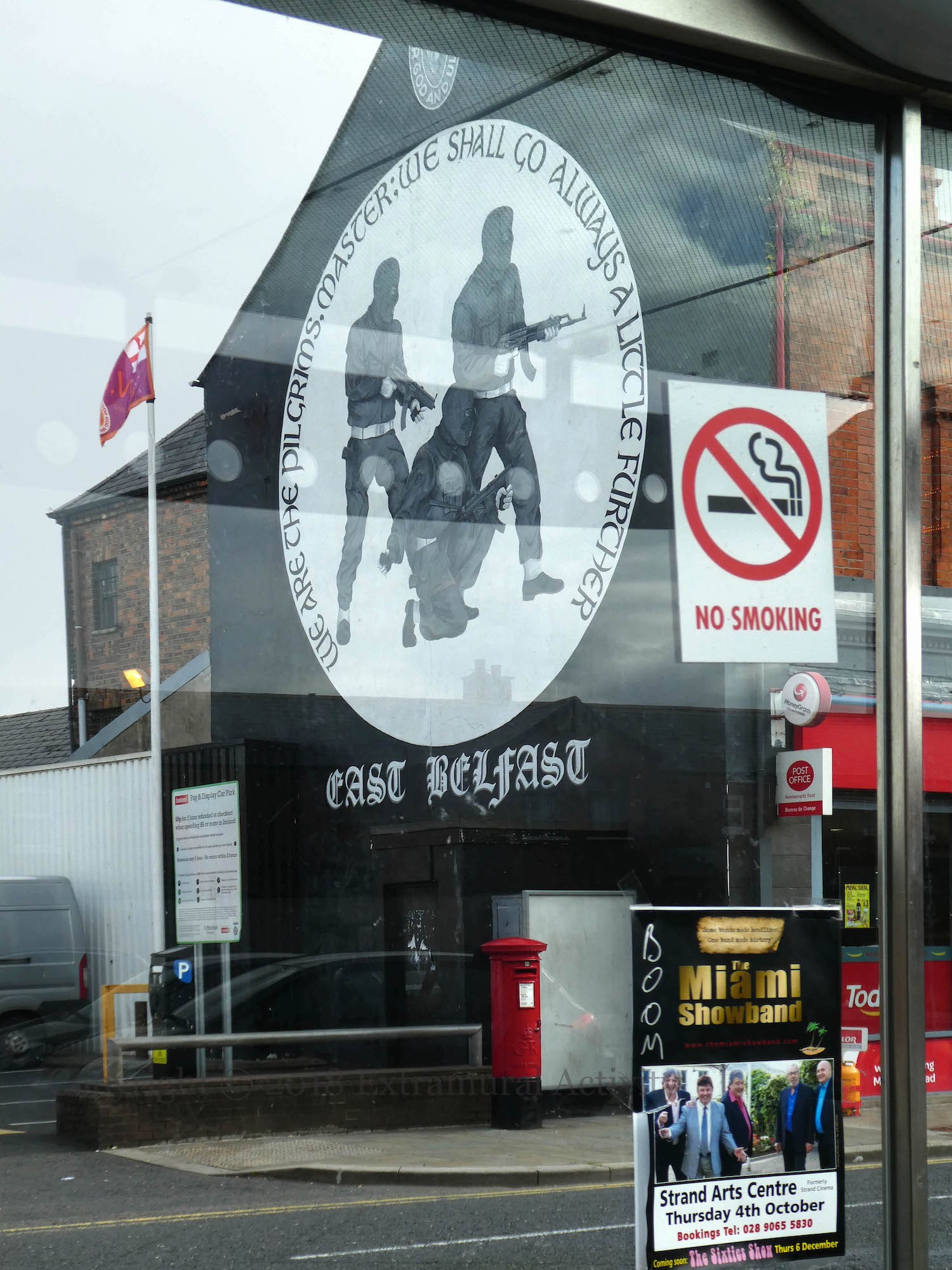
Three members of the Miami Showband were killed in 1975 at a fake check-point set by members of the UVF’s Glennane Gang. The explosion during the incident did not kill the musicians (as the graffiti on the poster above in loyalist east Belfast suggests); they were shot. Rather, a bomb exploded prematurely as it was being planted on their van, killing two of the attackers – see Boyle & Somerville – prompting the shooting spree (WP) that left three of the five band-members dead.
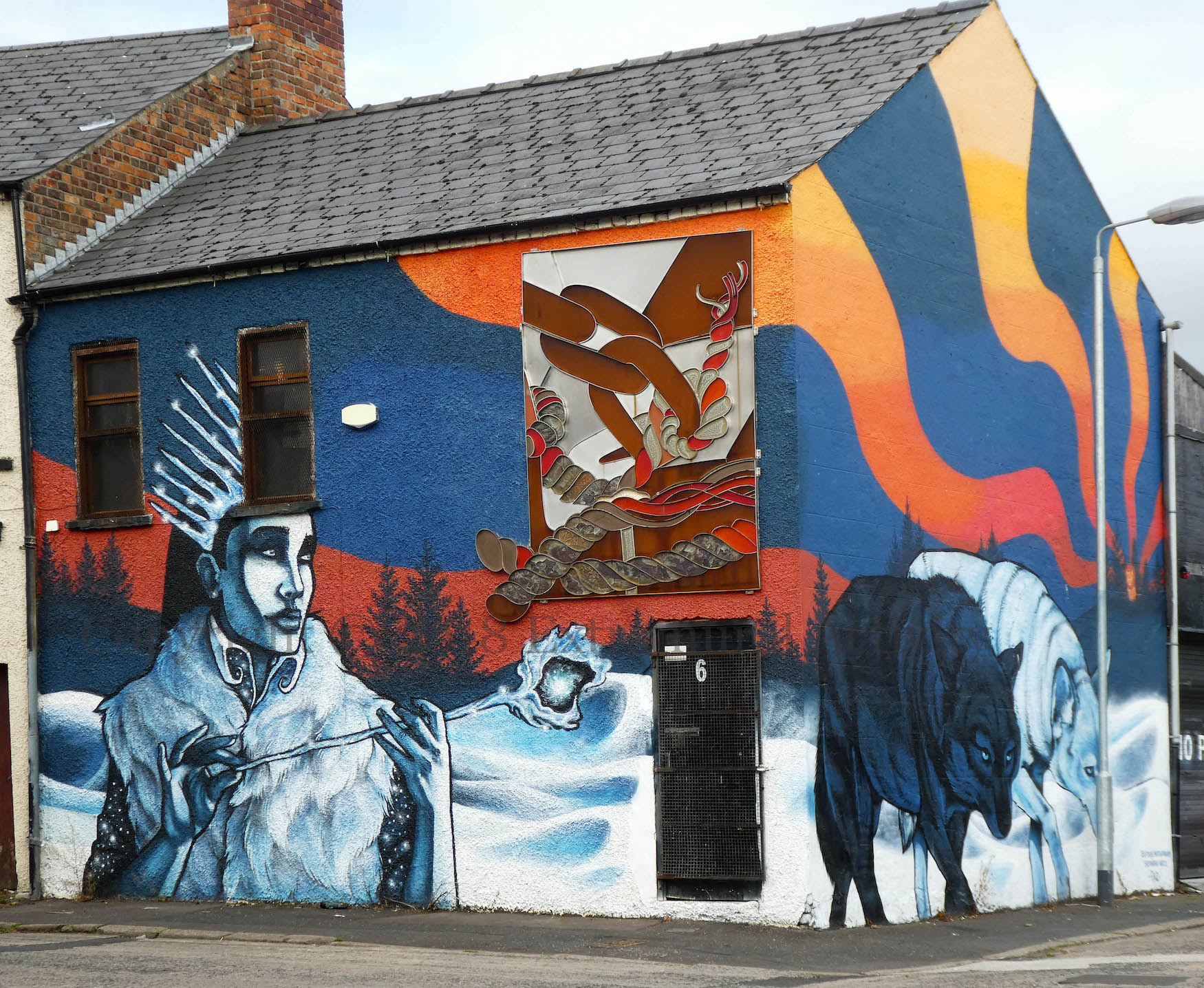
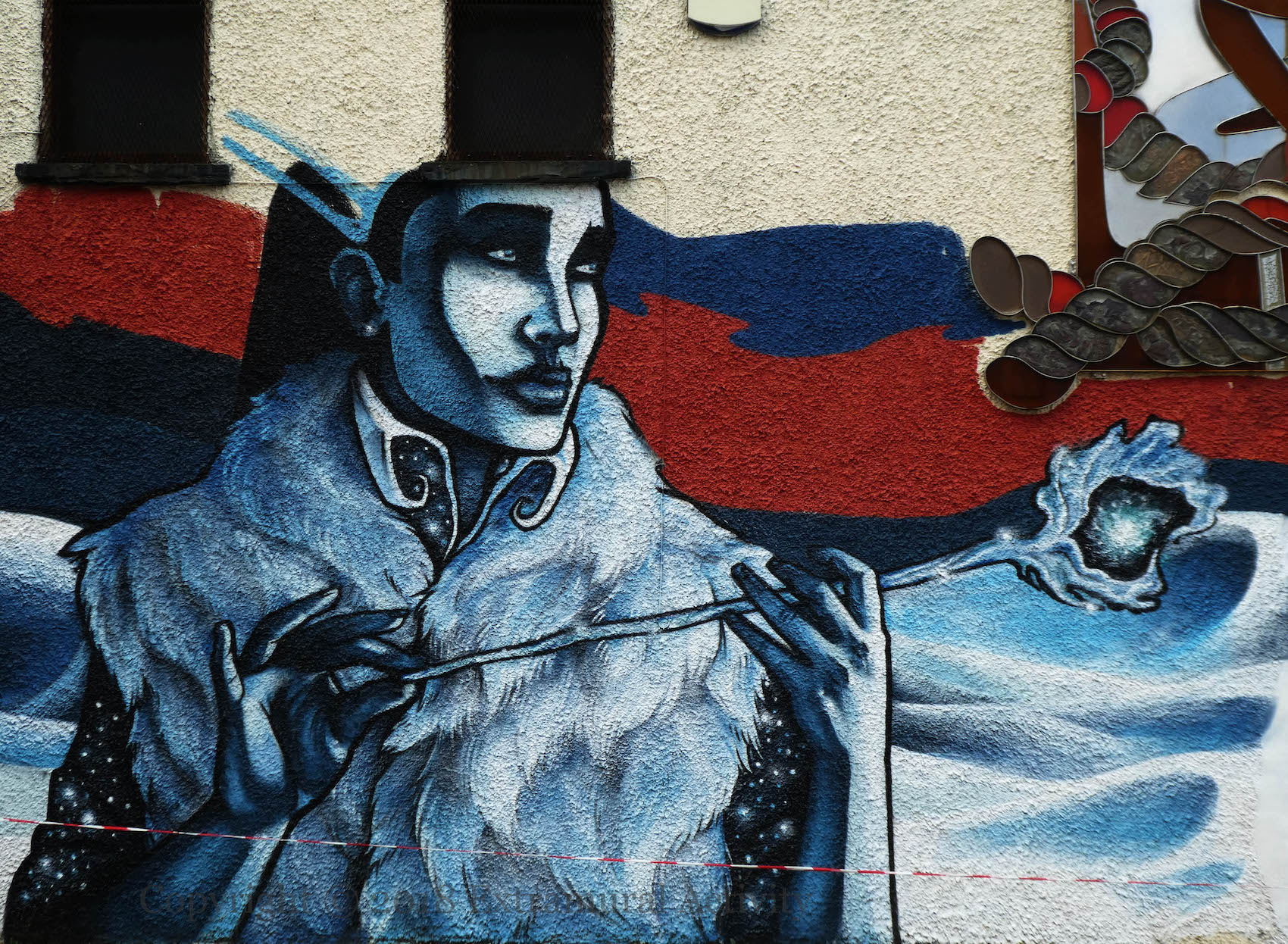
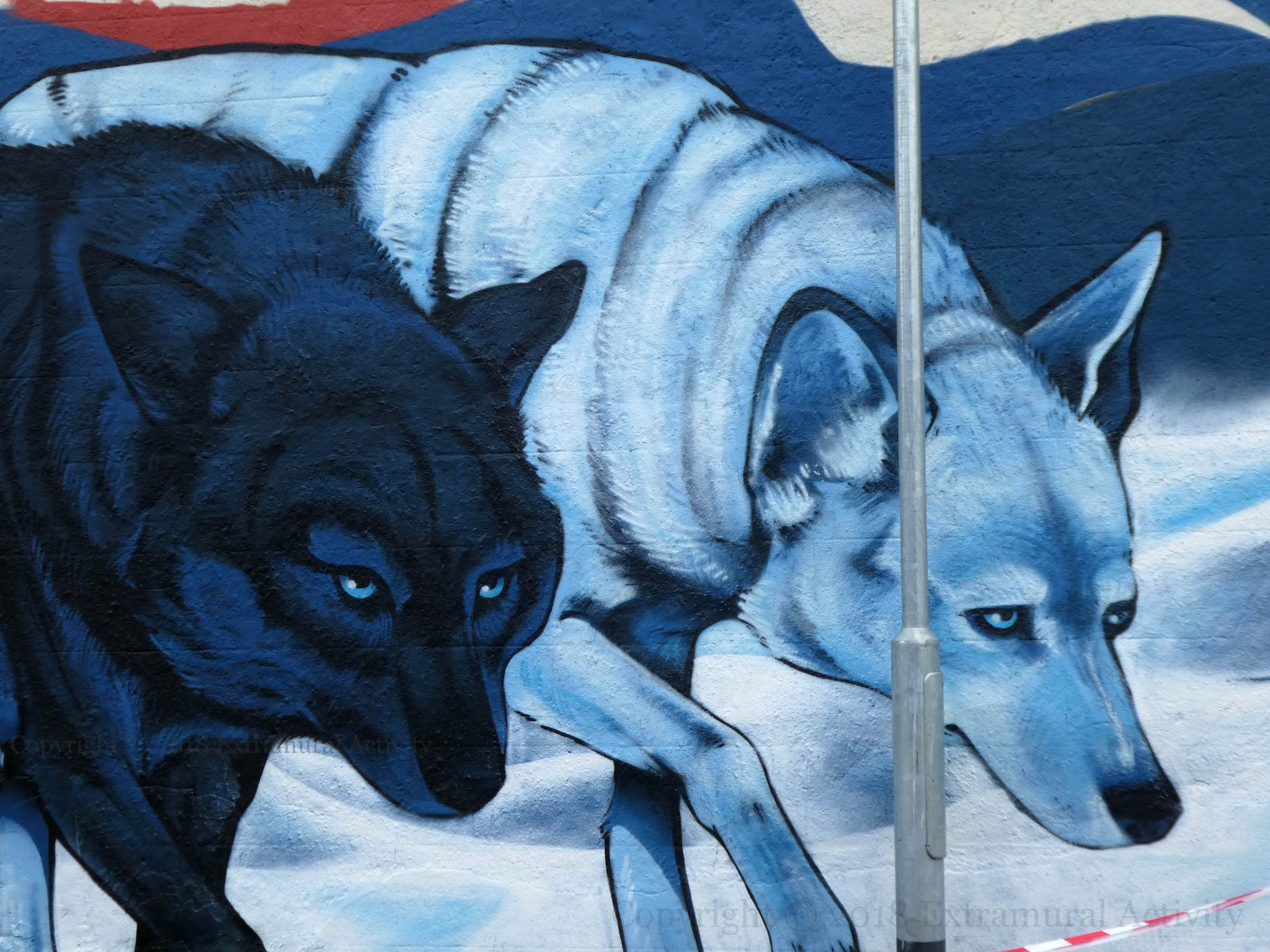
Shown are the White Witch (Jadis) and two wolves, Maugrim – Captain of the Secret Police – and Vardan (from the movie adaptation). The piece is called “Winter’s End” however, because Jadis’s reign over Narnia – the winter of 100 years – is under threat from Aslan the lion.
The piece is by Friz (web). The two images below are in-progress shots from March. For the metalwork in the top right, see Chains & Ropes. The corner – which is typically beset with cars – is in Townsley Street/Manderson Street, Belfast, next to CS Lewis square.
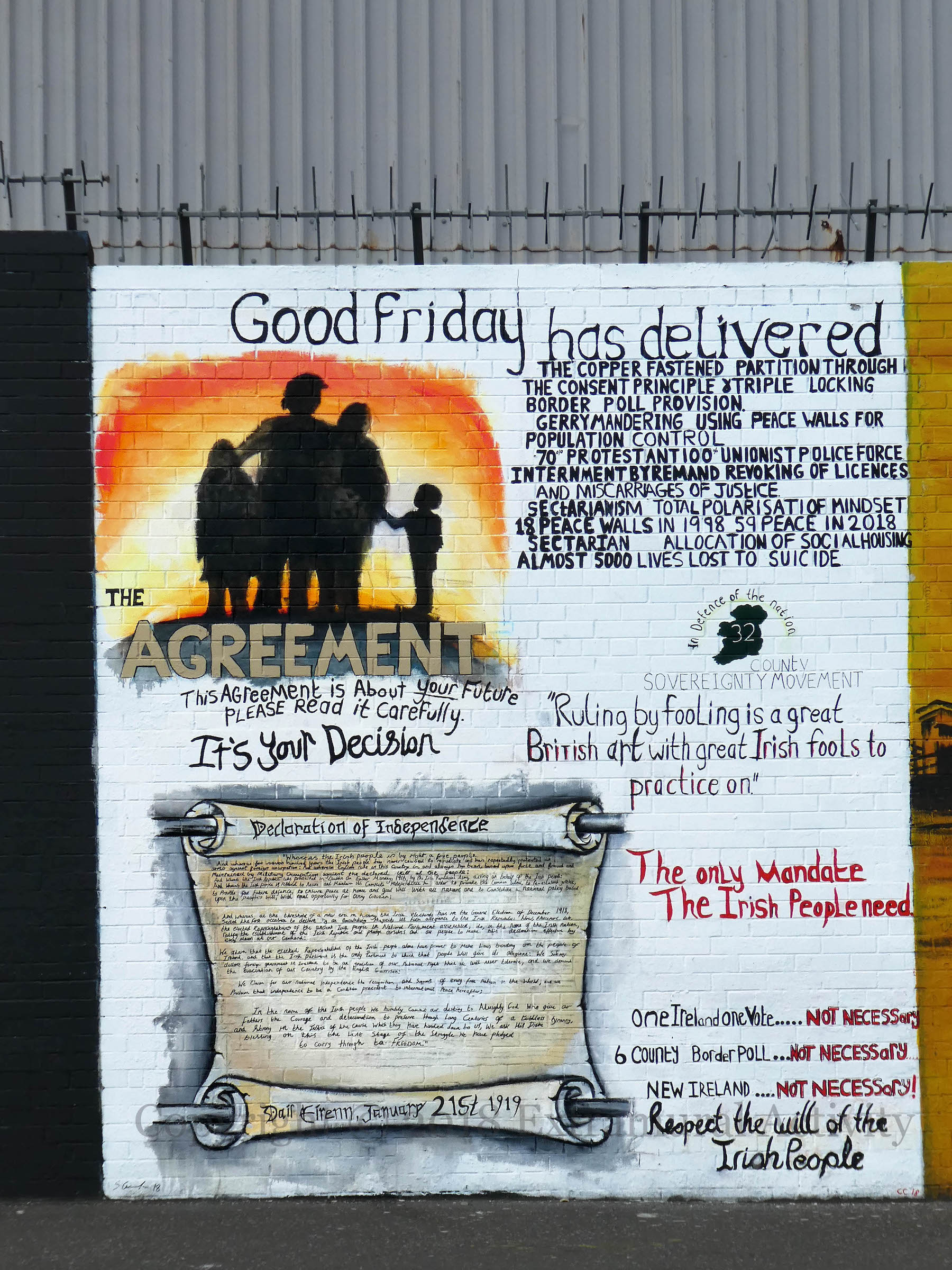
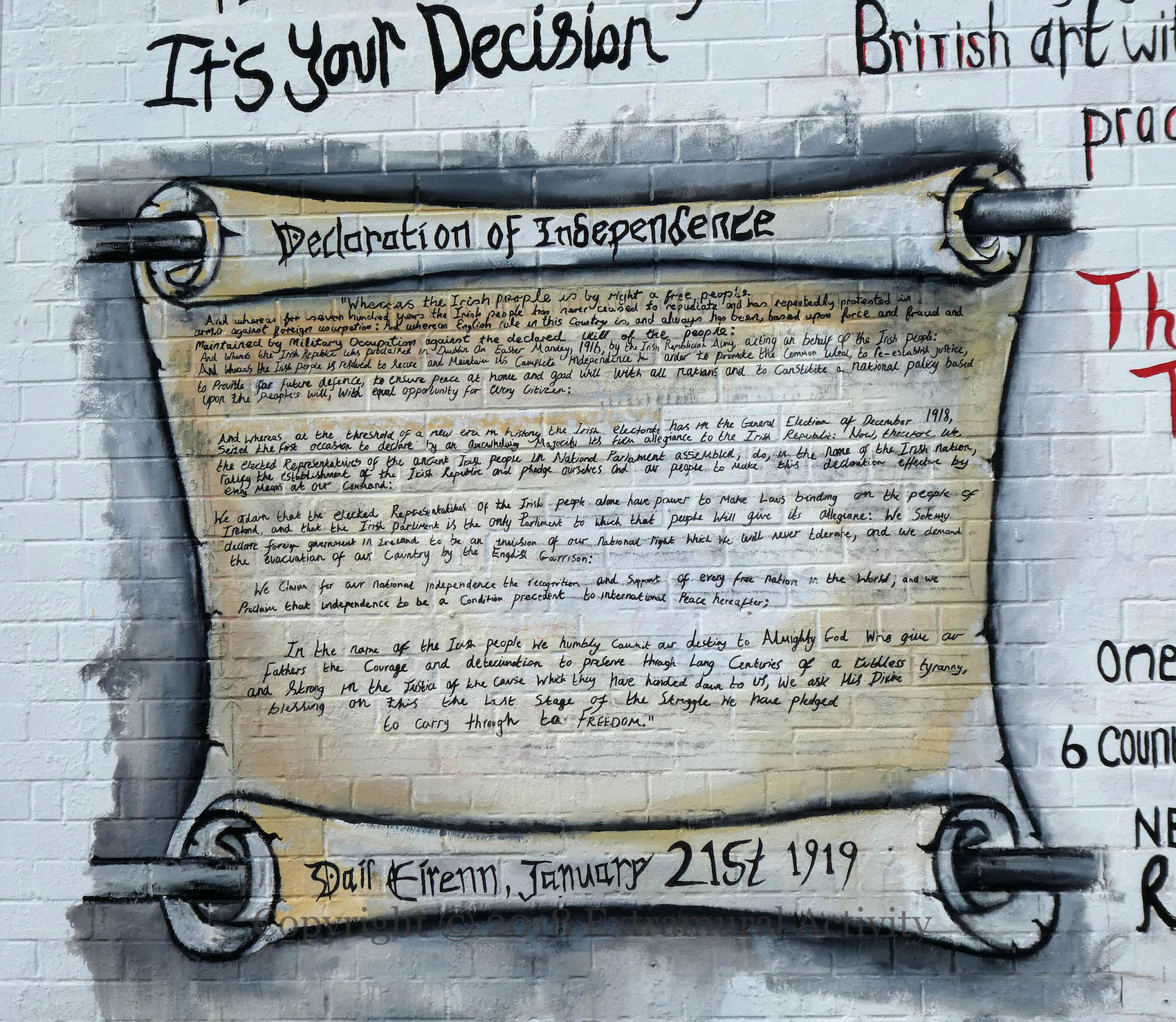
The line “Yes, ruling by fooling, is a great British art – with great Irish fools to practice on” comes from a piece by a James Connolly article in The Irish Worker in 1914. It is used here in the context of what the “Good Friday [Agreement] has delivered: the copper fastened partition through the consent principle & triple locking border poll provision; gerrymandering using peace walls for population control; 70% Protestant, 100% unionist police force; internment by remand; revoking of licences; and miscarriages of justice; sectarianism; total polarisation of mindset; 18 peace walls in 1998 59 peace walls in 2018; sectarian allocation of social housing; almost 500 lives lost to suicide.” In contrast, 32CSM declares that the Declaration Of Independence (in English | as Gaeilge | it was also translated into French) by the Dáil in 1919 is “the only mandate the Irish people need”.
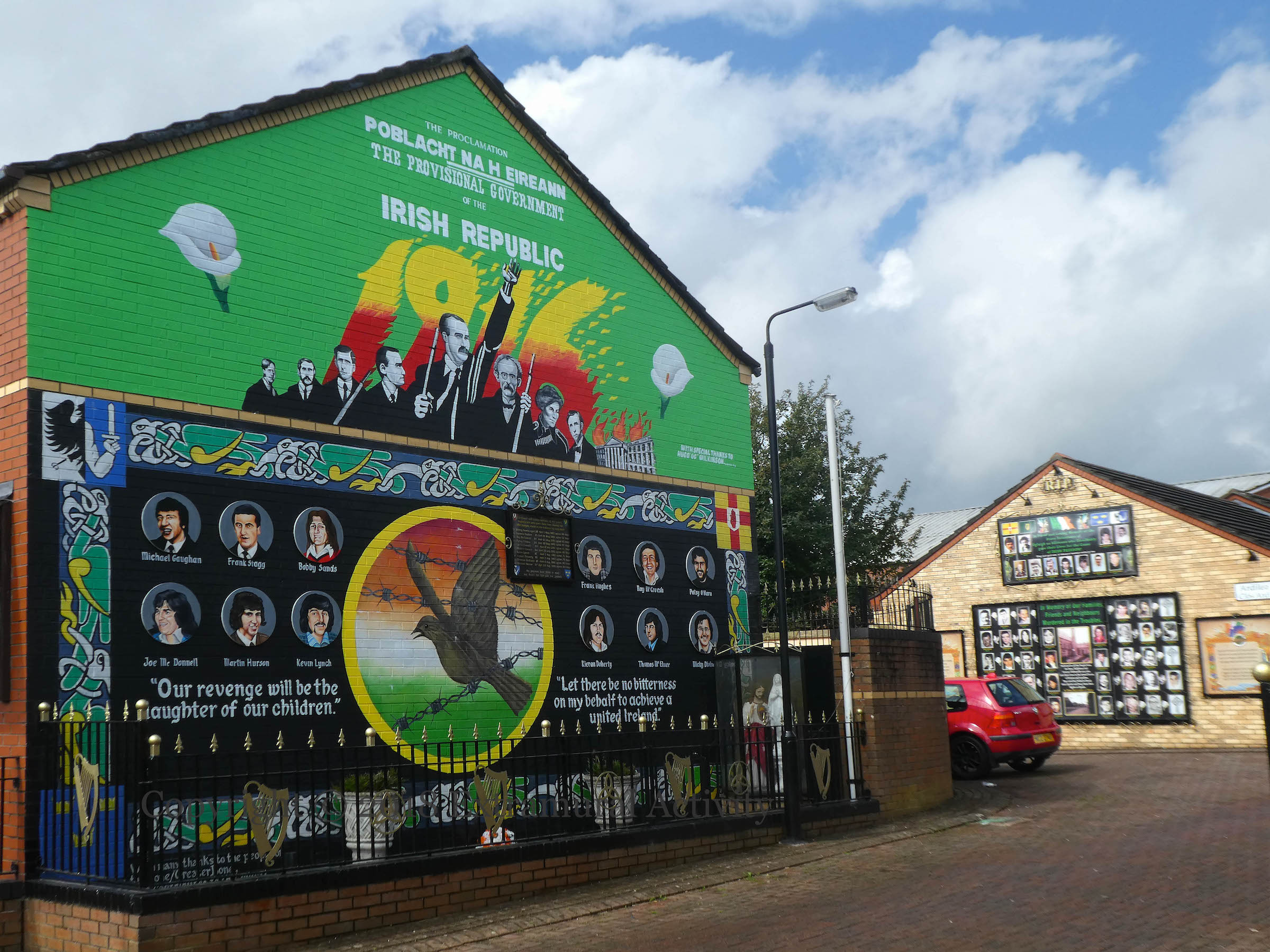
Robert Ballagh’s 1916 Proclamation was first painted as a mural by Mo Chara Kelly and Rısteard Ó Mhurchú in 1991 for the 75th anniversary of the Easter Rising (see Cáısc 1916 which also contains the Ballagh piece). That version stood for ten years on the Whiterock Road. It has reproduced again in Ard An Lao above the hunger strikers, after the removal of several plaques (see All Our Dead). “With special thanks to Hugo Óg Wilkinson”.
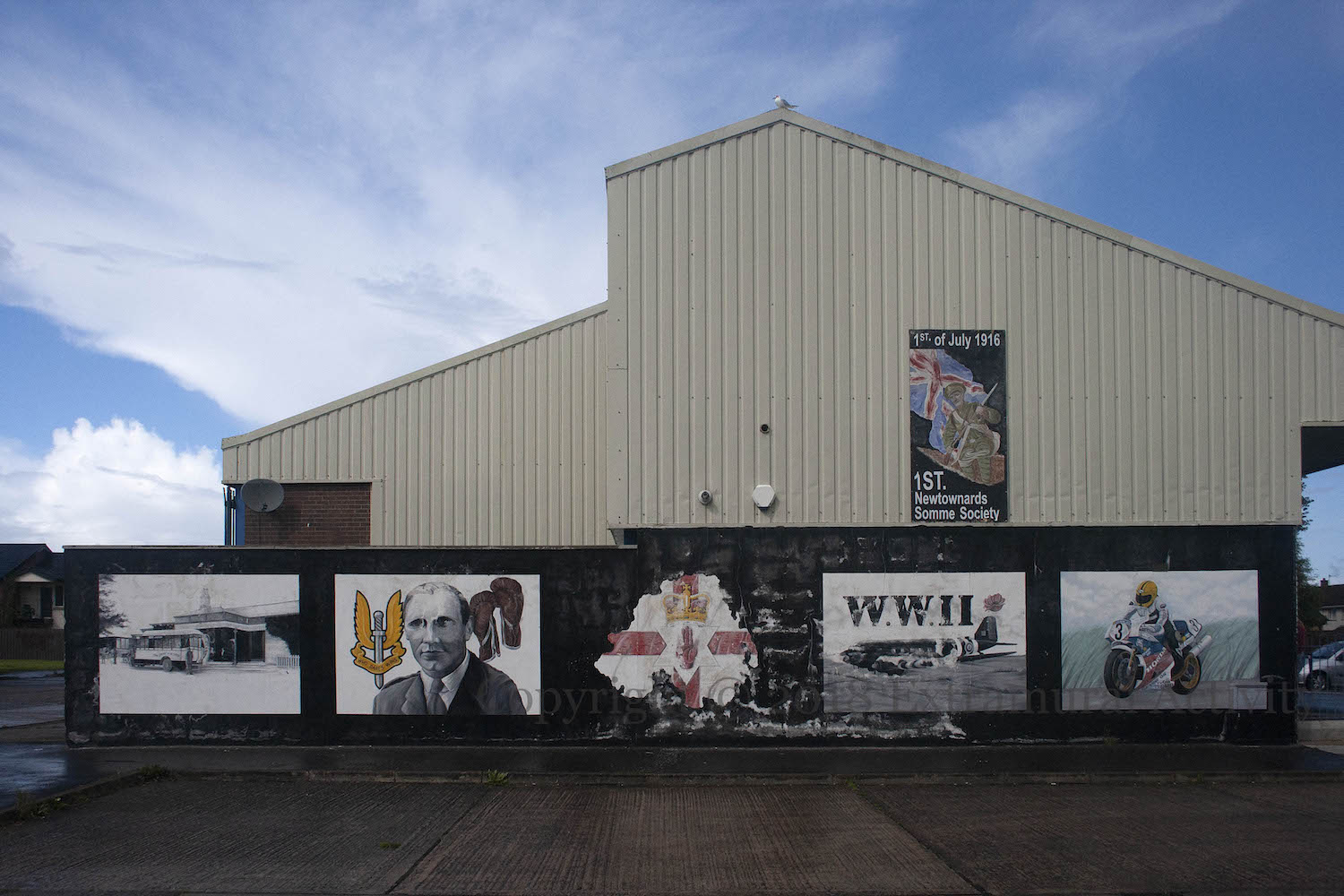
Here are six panels from the shops in the Westwinds estate in Newtownards, which have replaced a UVF mural (Help Us To Help You).
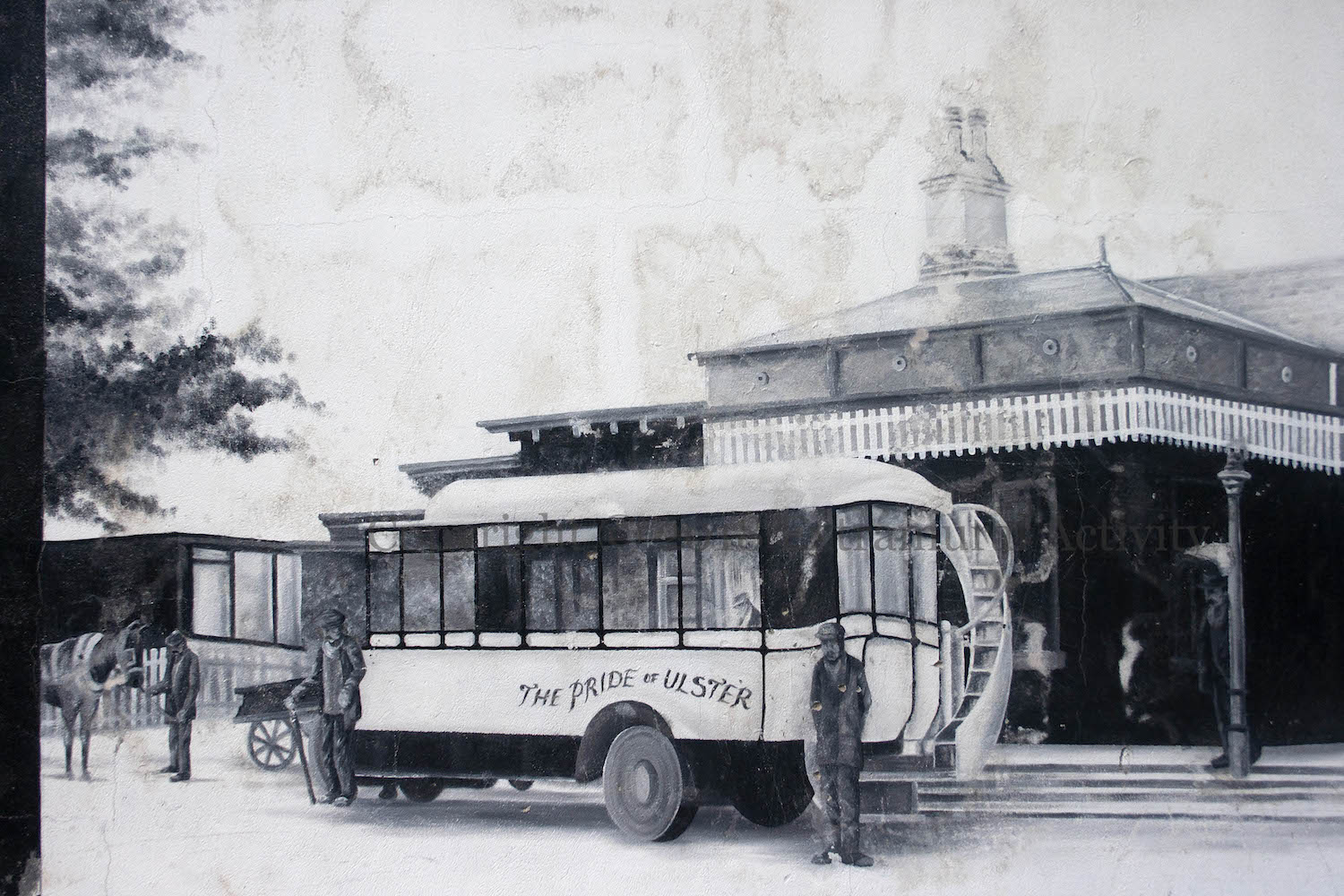
Little is known about the omnibus called “The Pride Of Ulster”, except that this picture shows it at Newtownards Railway Station, Victoria Avenue, c. 1920. SAS soldier and boxer (and rugby-player) Blair “Paddy” Mayne, DSO, is portrayed in the second panel. (For more, see these posts about Mayne from 2013 and 2014.).
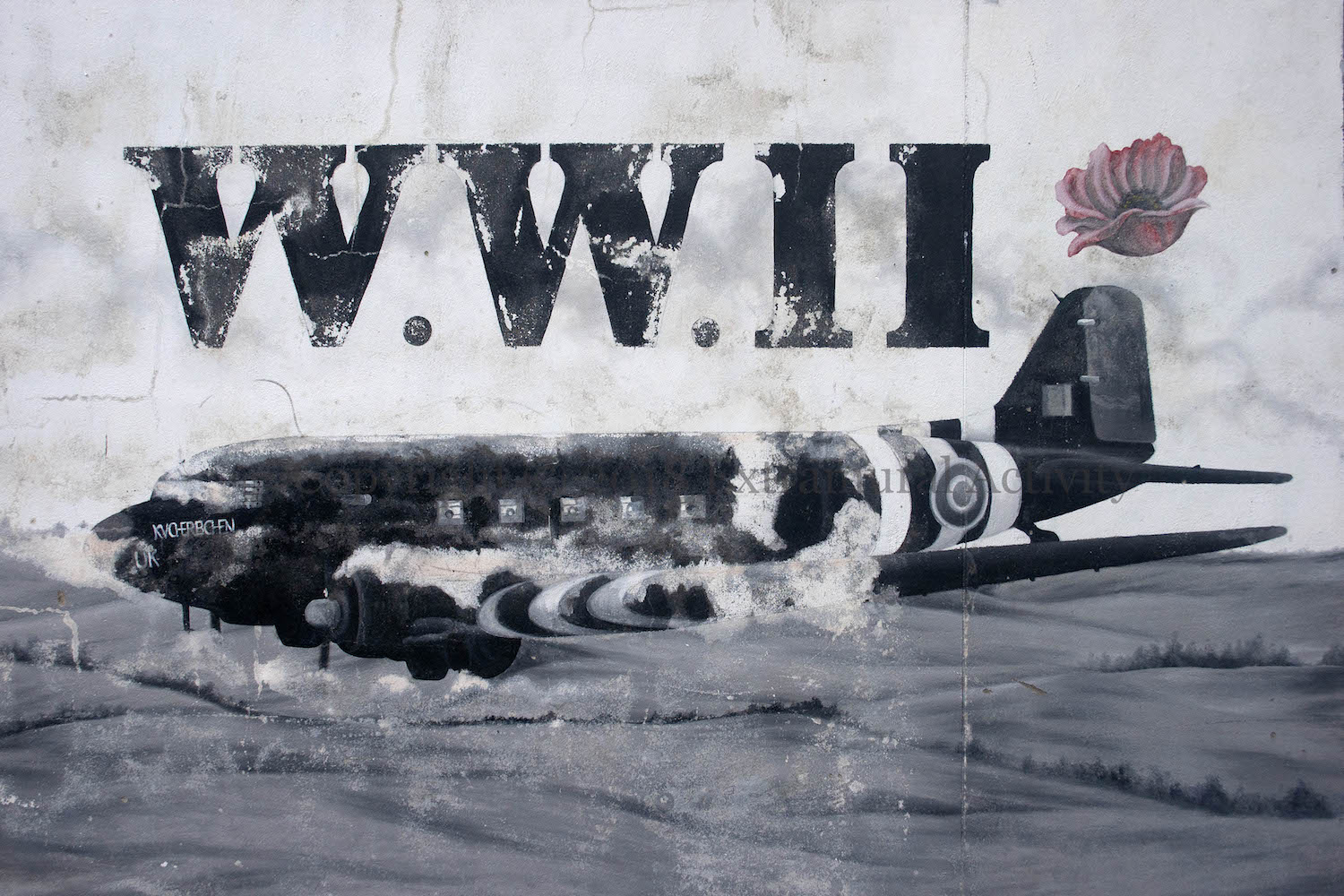
On the other side of the Ulster Banner in the centre is a WWII Douglas Dakota C-47, specifically “FZ692 of No. 233 Squadron, around the D-Day period in 1944. This aircraft, which was named “Kwicherbichen” by her crews, was involved in Para-dropping operations on the eve of D-Day and subsequently in re-supply and casualty evacuation missions into and out of forward airfields in the combat areas” (RAF).
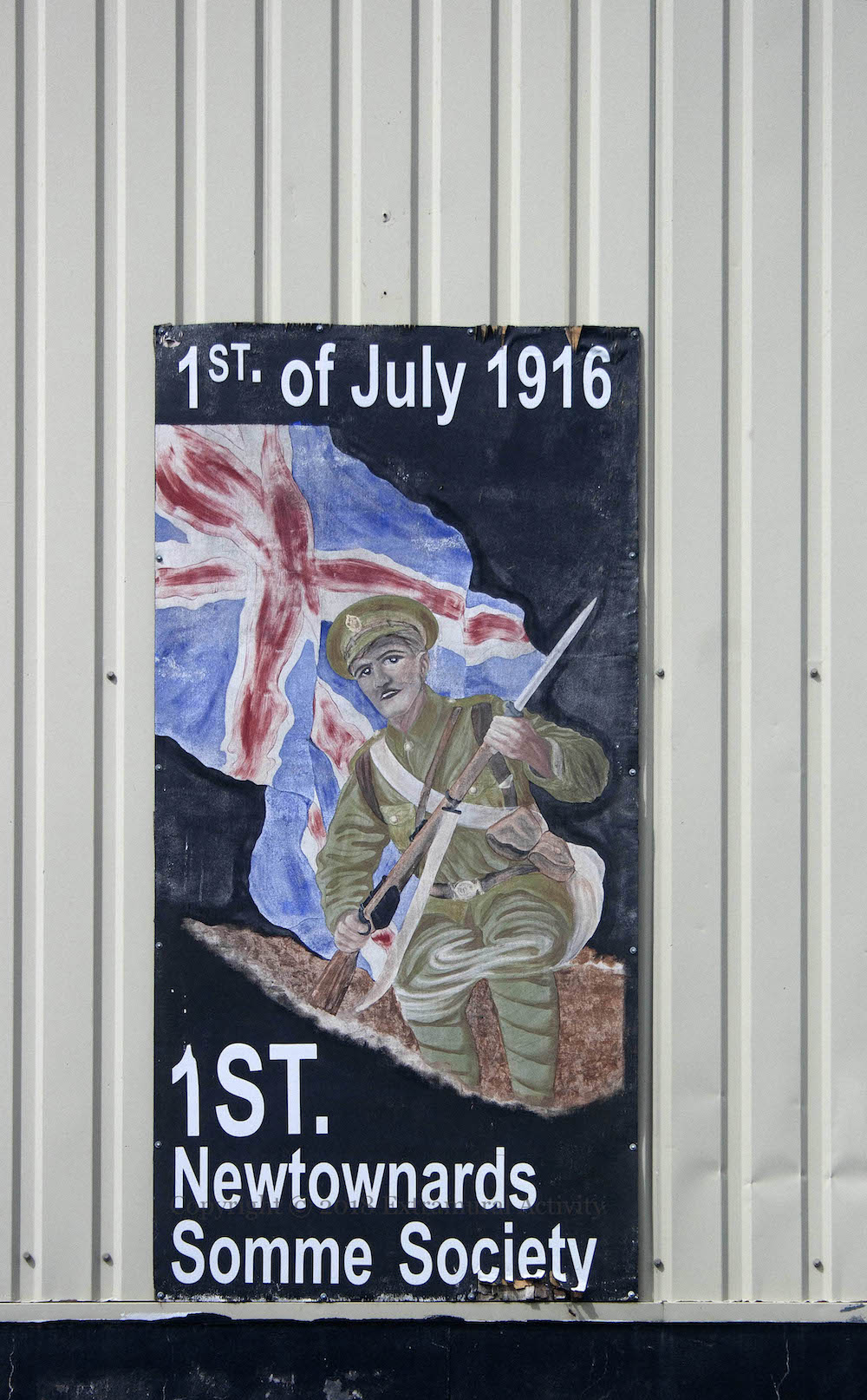
Motorcyclist Joey Dunlop is on the far right (see Race Of Legends), and above them all is a WWI board from the 1st Newtownards Somme Society (based in the Somme museum in Conlig?).
 Seosamh Mac Coille Collection