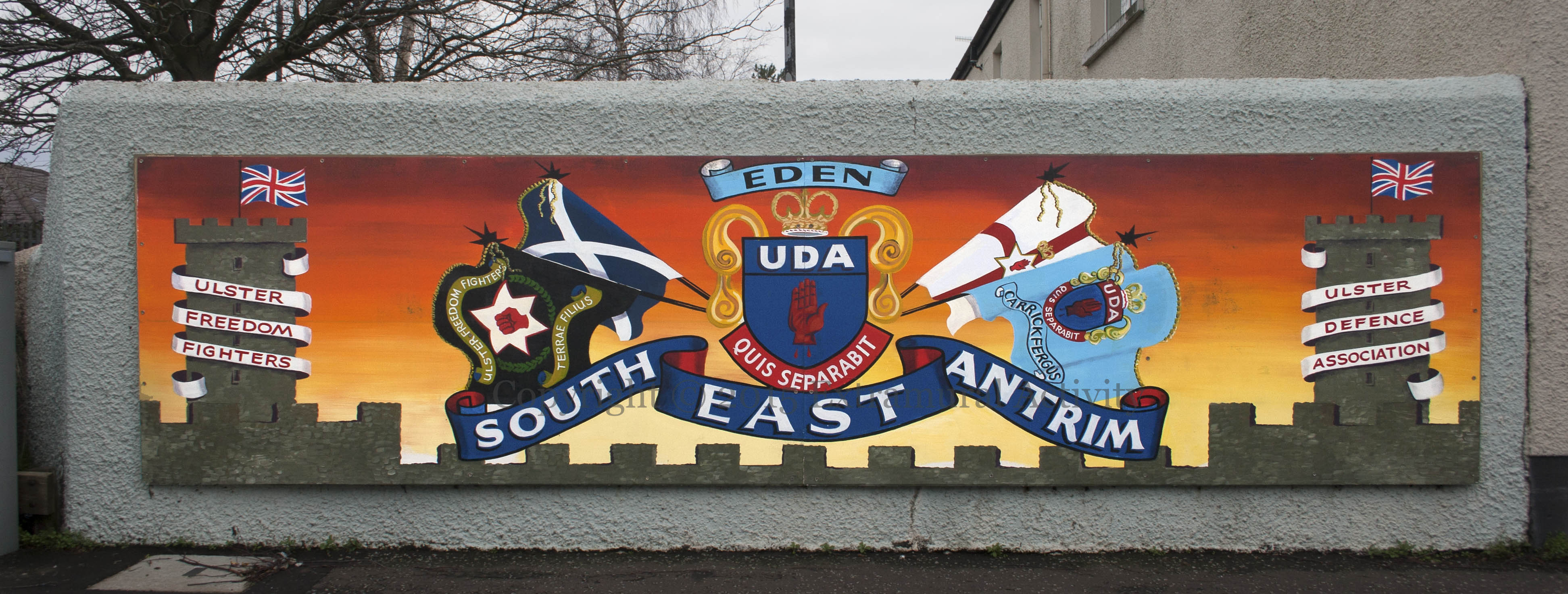
The town of Eden, on the outskirts of Carrickfergus, is defended by the walls of Carrickfergus castle and the arms of the UDA. For the previous version of this board, see Loyalist Eden.
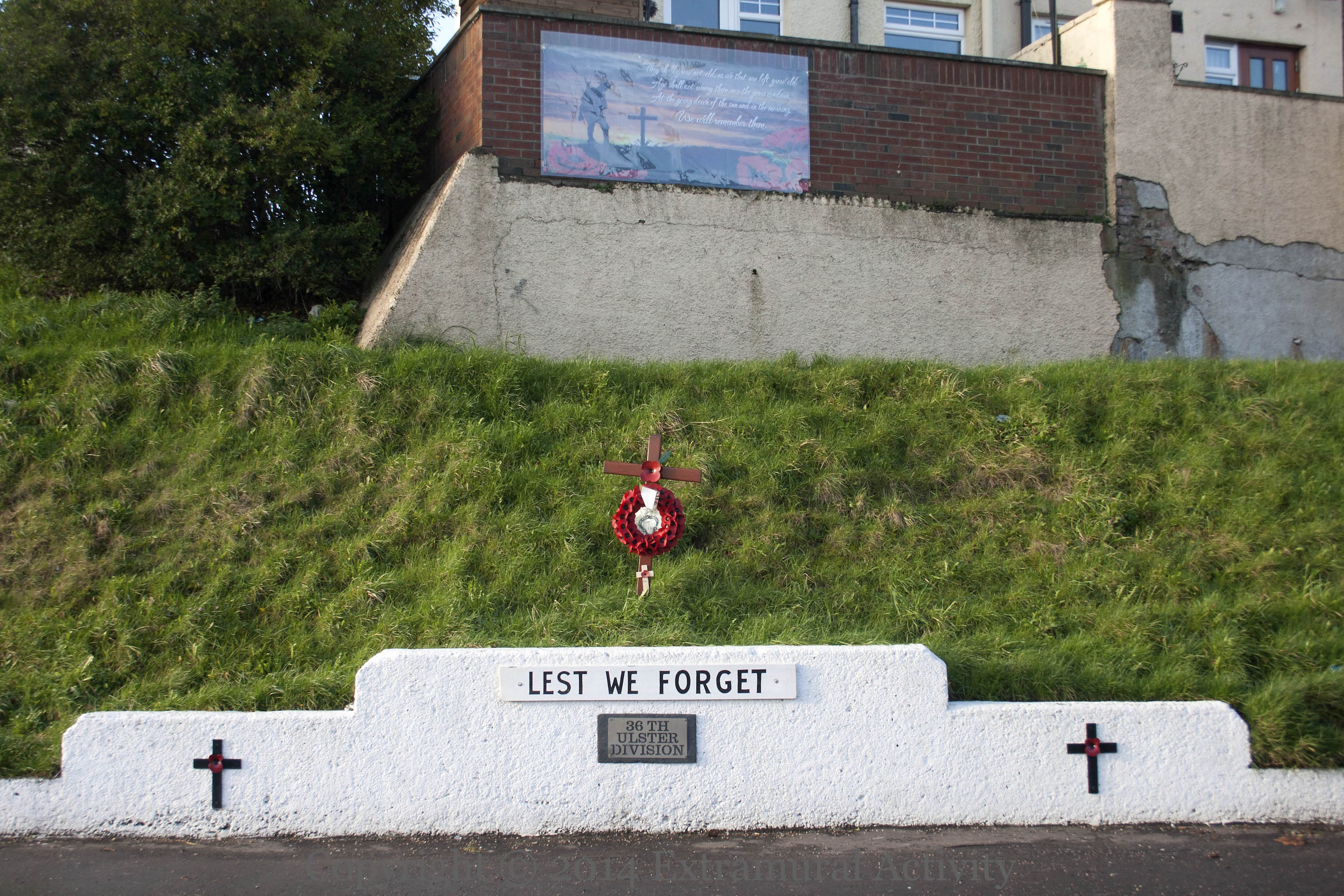
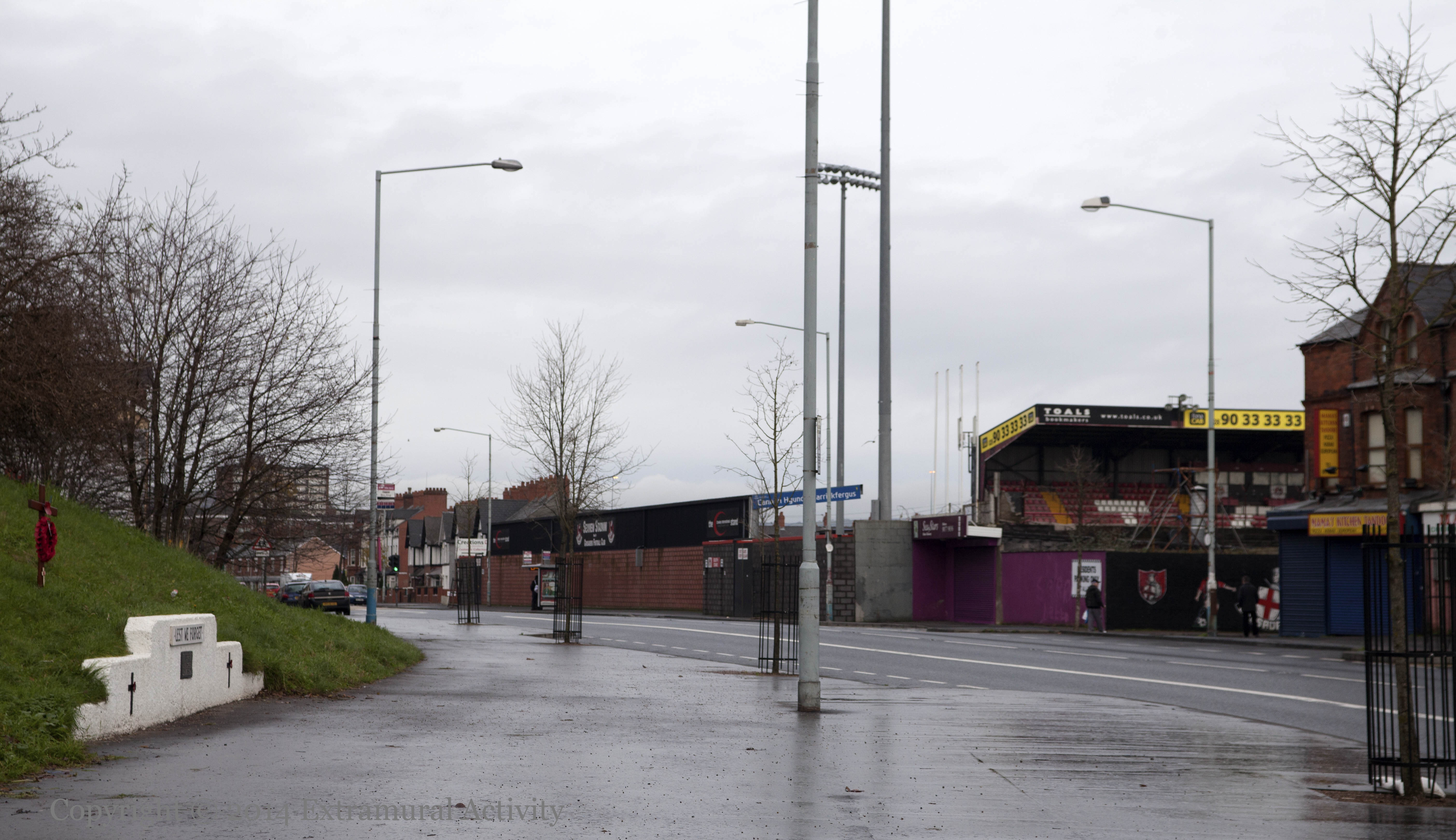
This new roadside memorial to the 36th (Ulster) Division in WWI, of wooden crosses on white stone along with a board on the wall above, has appeared on the Shore Road, across from Seaview, home of Crusaders FC, the Hatchet Men.
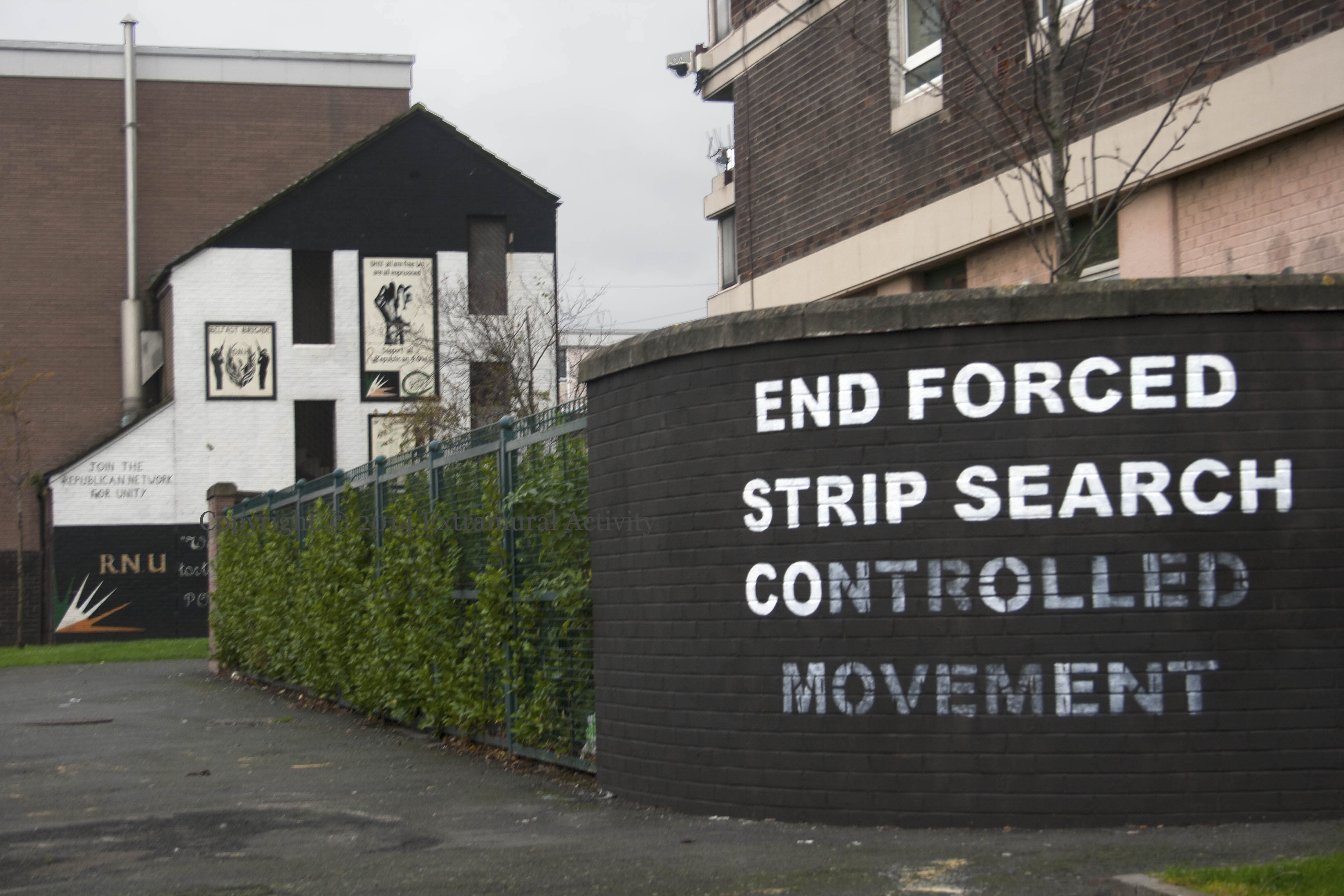
Above, “End forced strip search, controlled movement” RNU/Cogús (web) stencil (“End forced strip search, controlled movement”) in front of a gallery of RNU/Cogús boards (see Until All Are Free We Are All Imprisoned).
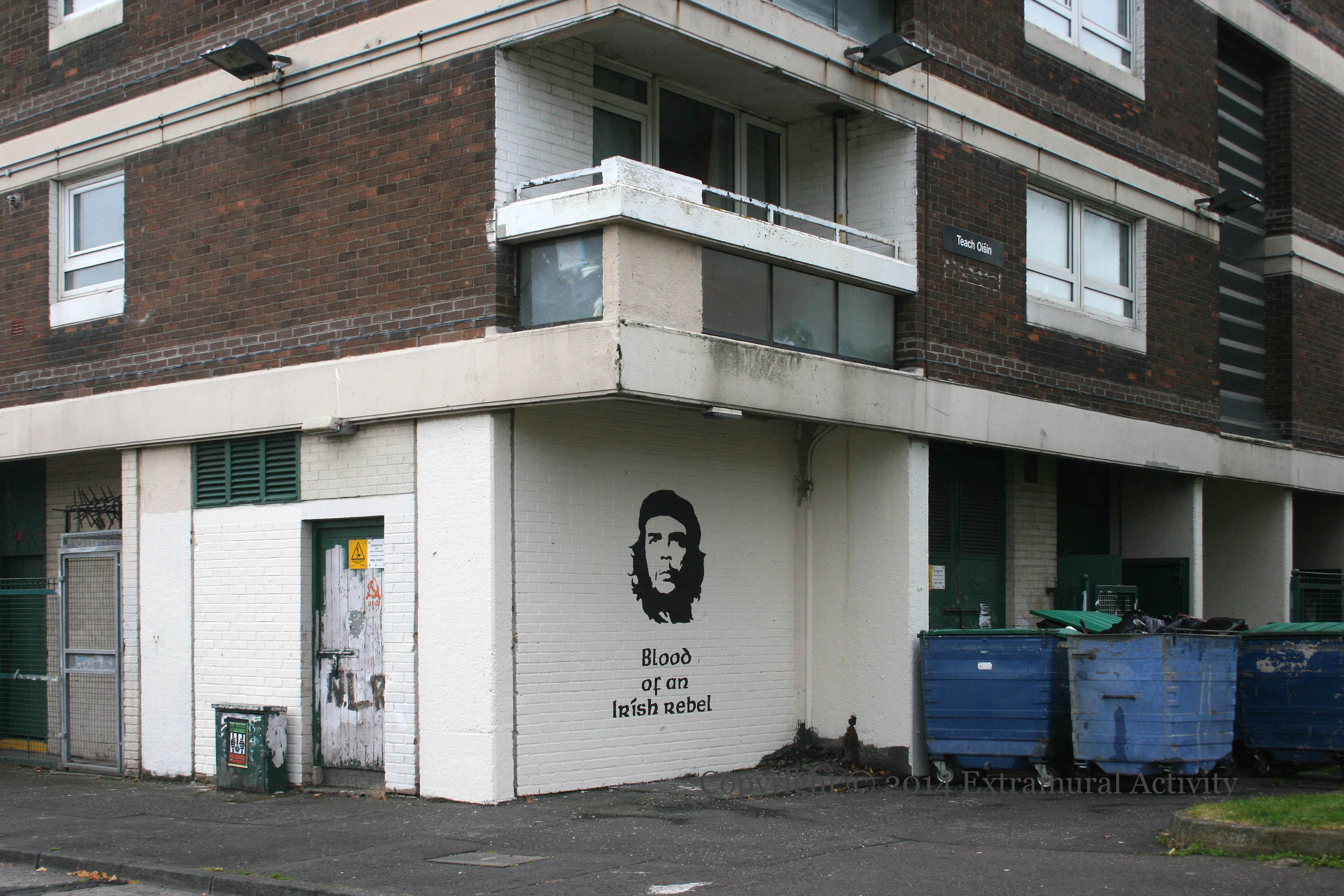
Below, stencil of the iconic Che over his father’s words: “[In my son’s veins flowed the] Blood of an Irish rebel”. (See previously: Che Guevara Lynch.)
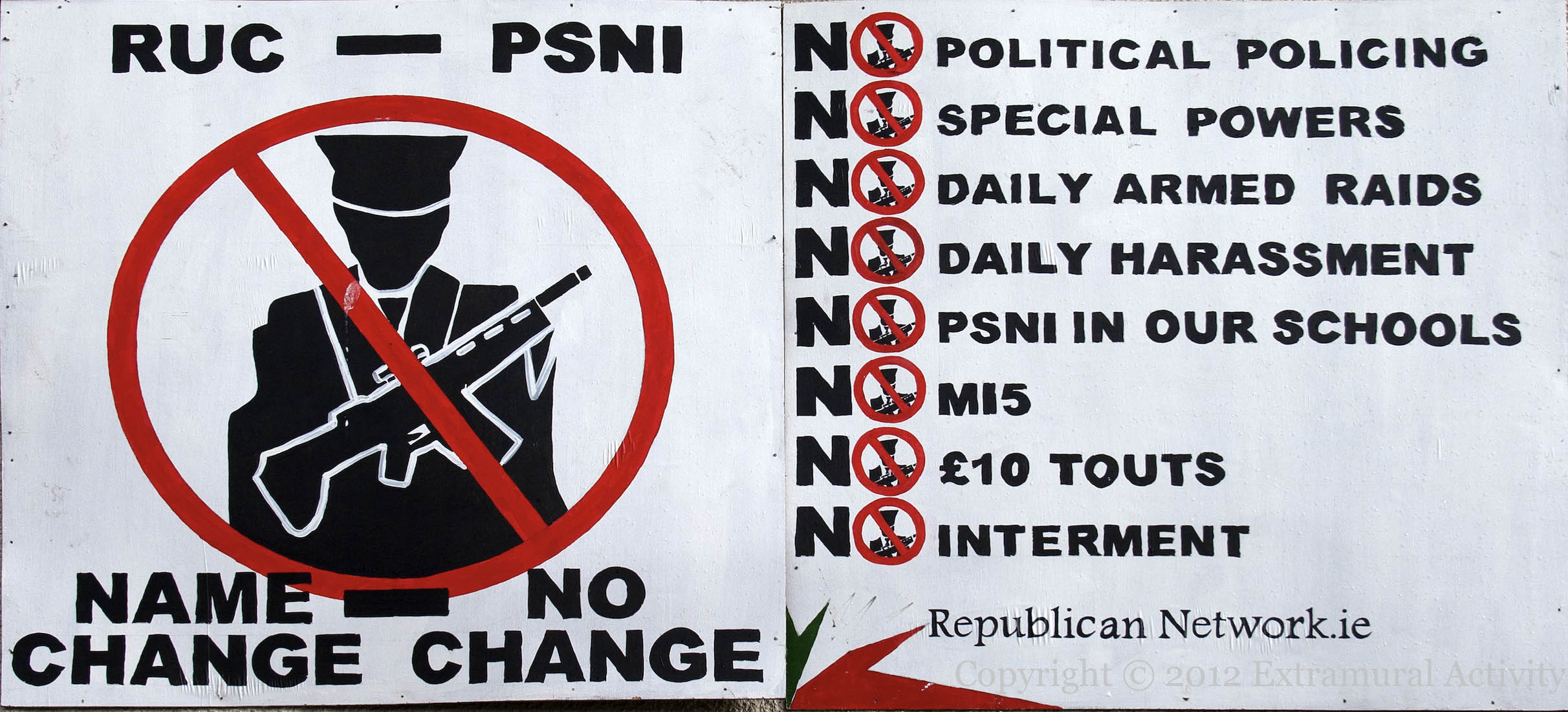
Above is an RNU board from Lenadoon, protesting against the police system and an alleged identity of the PSNI, the Orange Order and loyal paramilitaries. (See previously: Trinity)
“No political policing. No special powers. No daily armed raids. No daily harassment. No PSNI in our schools. No MI5. No £10 tours. No interment [sic].”
The board dates from 2012 (eleven years after the PSNI’s creation and five years after Sınn Féın’s acceptance of the PSNI) but is no longer present.
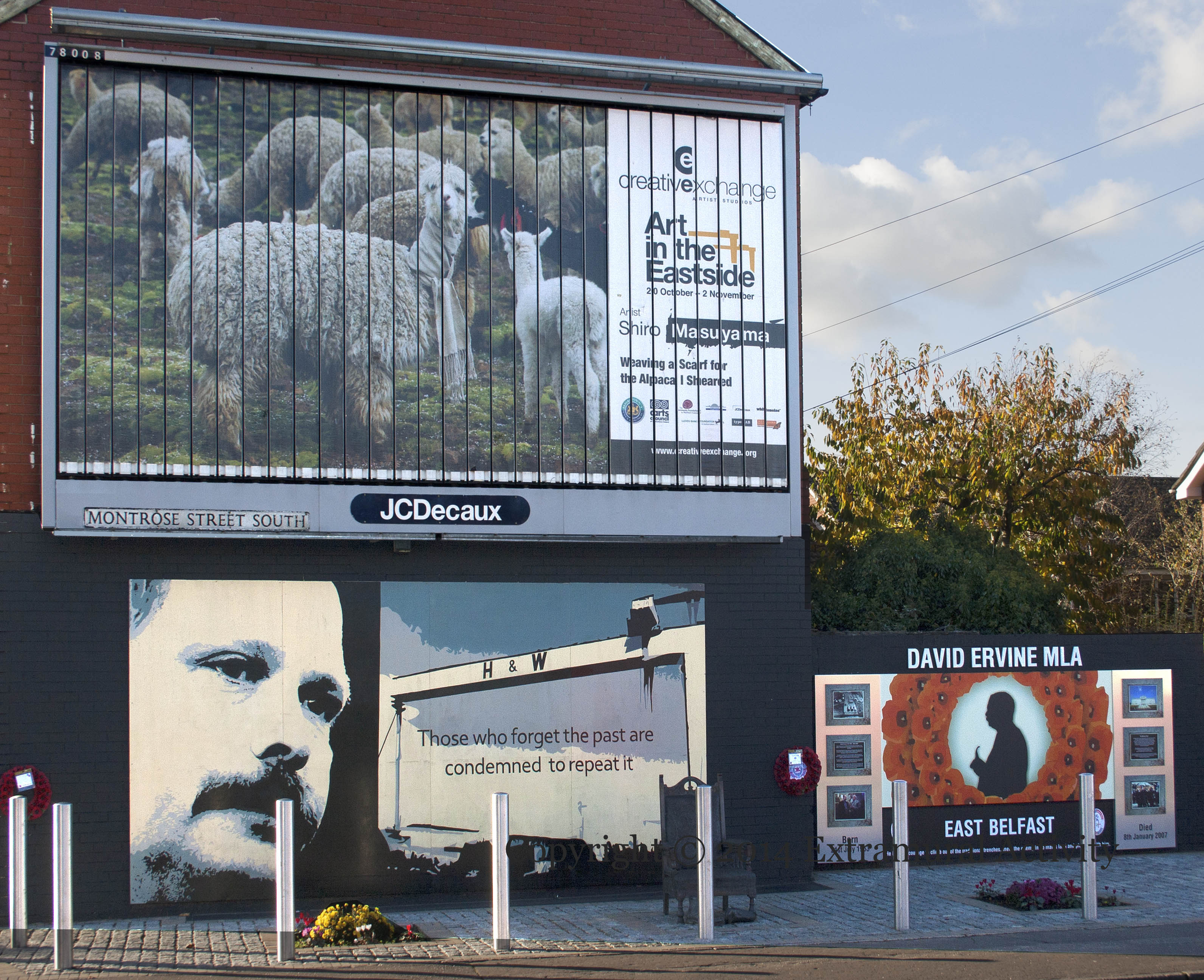
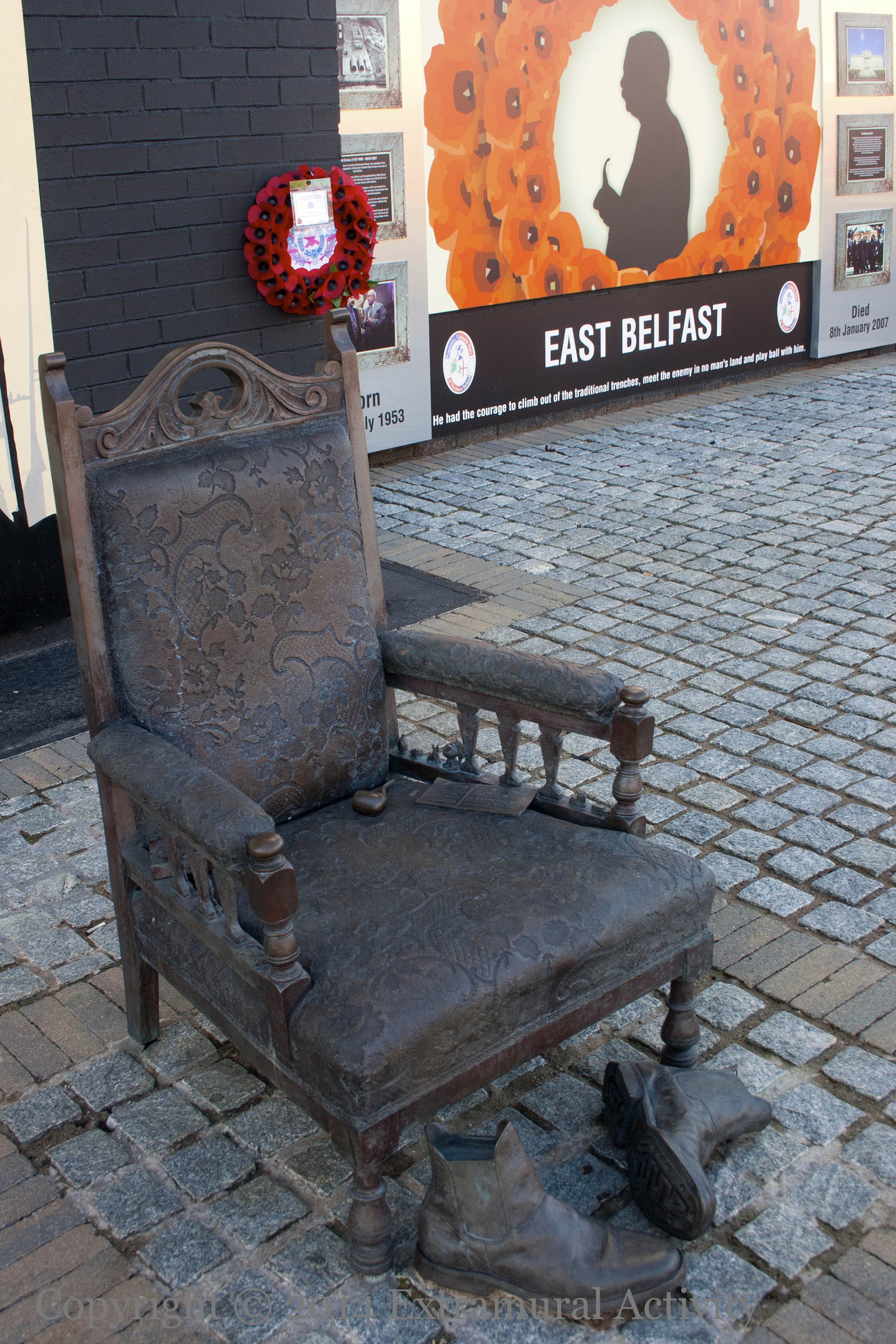
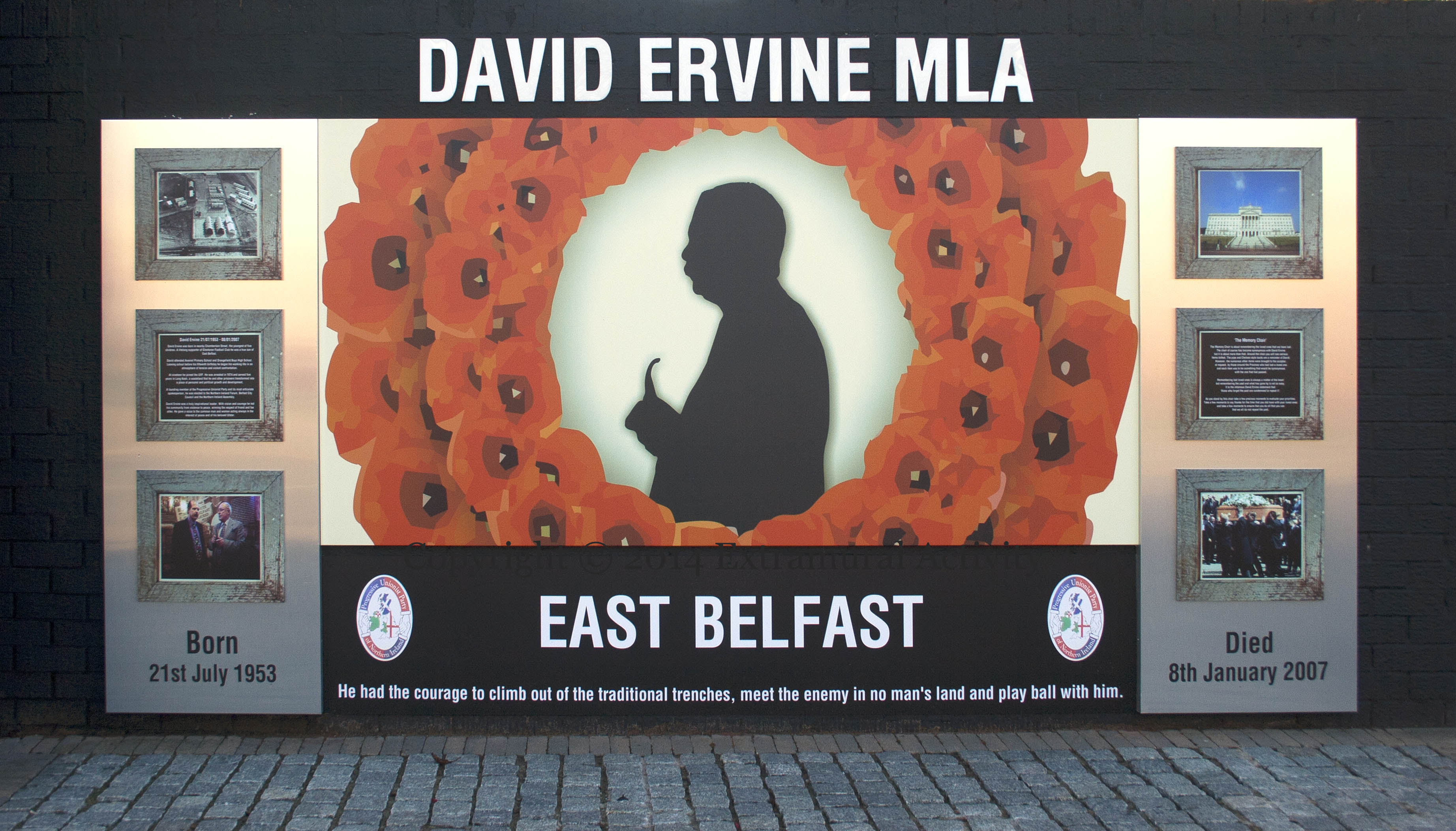
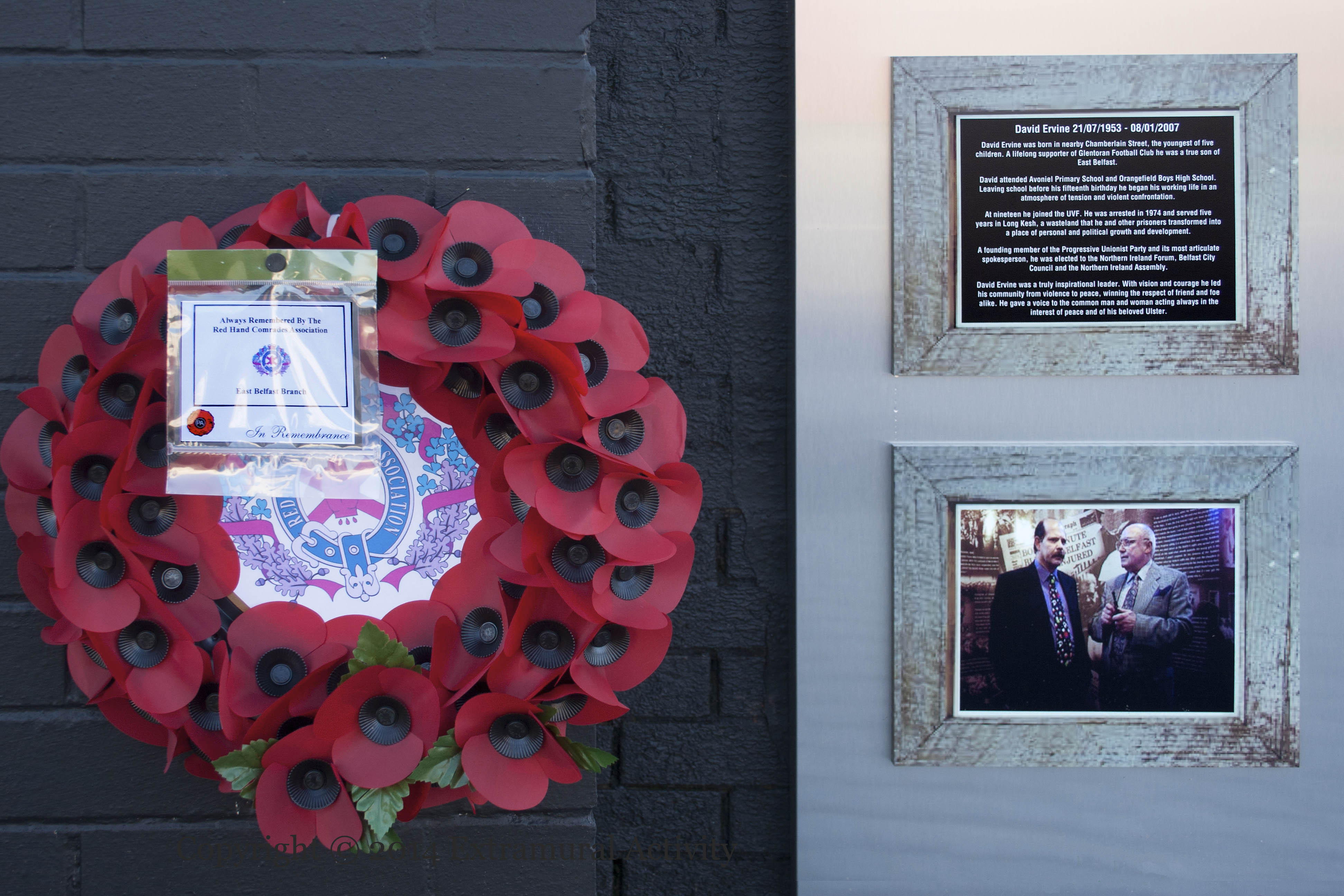
At the same time that the new David Ervine board was put in place, the existing board next to it, which dates to 2008, was spruced up. The image above is a wide shot of both boards, while the image below shows the commemorative casting in front. For the original board, see David Ervine; for explanations of the sculpture, including its pipe, prayer-book, ticket, and boots, see Memory Chair.
“He had the courage to climb out of the traditional trenches, meet the enemy in no man’s land and play ball with him.” David Ervine was a UVF member, arrested in 1974 and served six years in the Maze before turning to politics. He first ran for office in 1985 and represented East Belfast in the NI Assembly from 1998 until his death in 2007. The new board, above, shows Ervine’s silhouette in a wreath of poppies along with pictures of and information about his life; the image below of the lower left-hand side includes a photograph of Ervine with Gusty Spence.
Video of the launch (on 2014-11-01) is available at U.tv
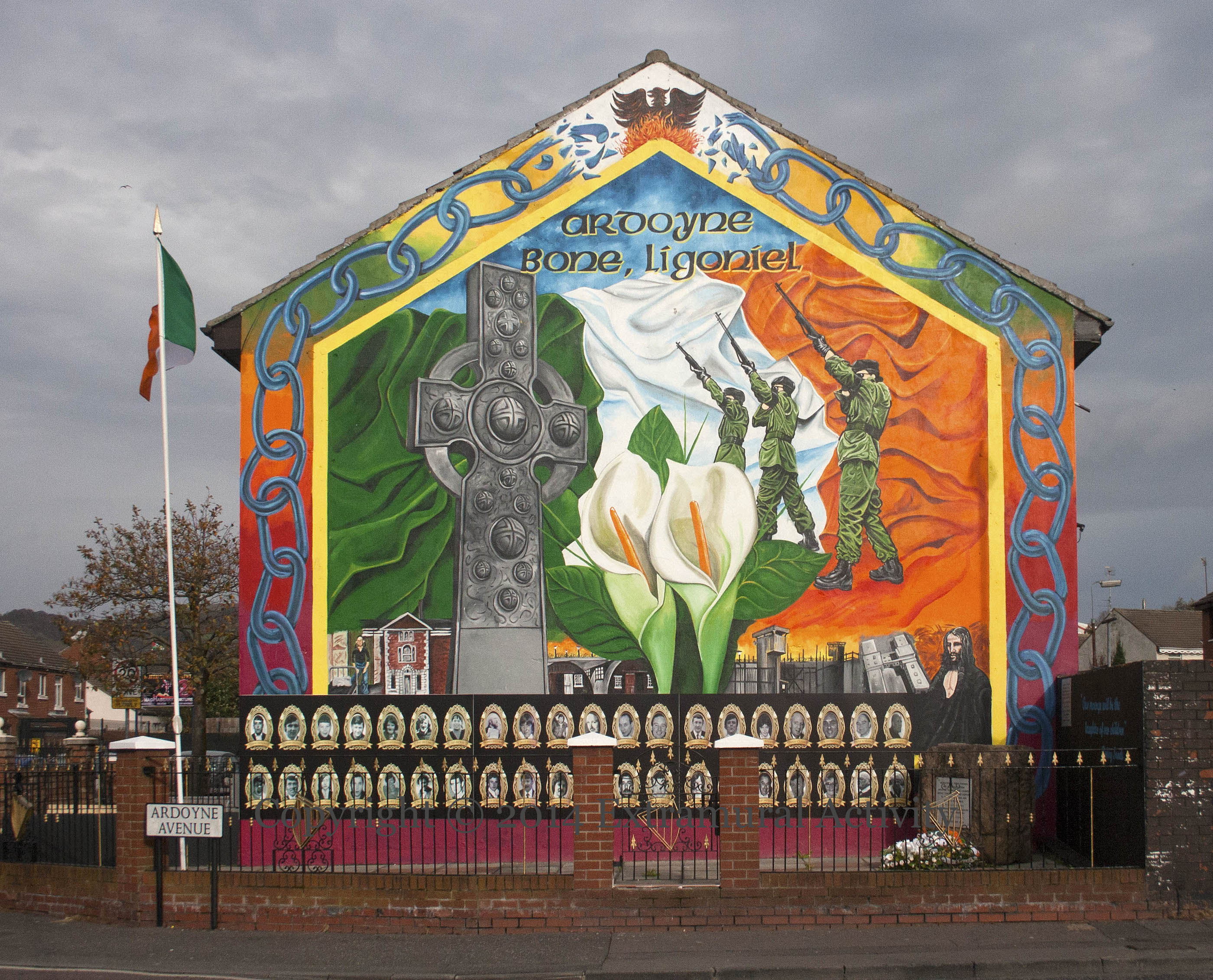
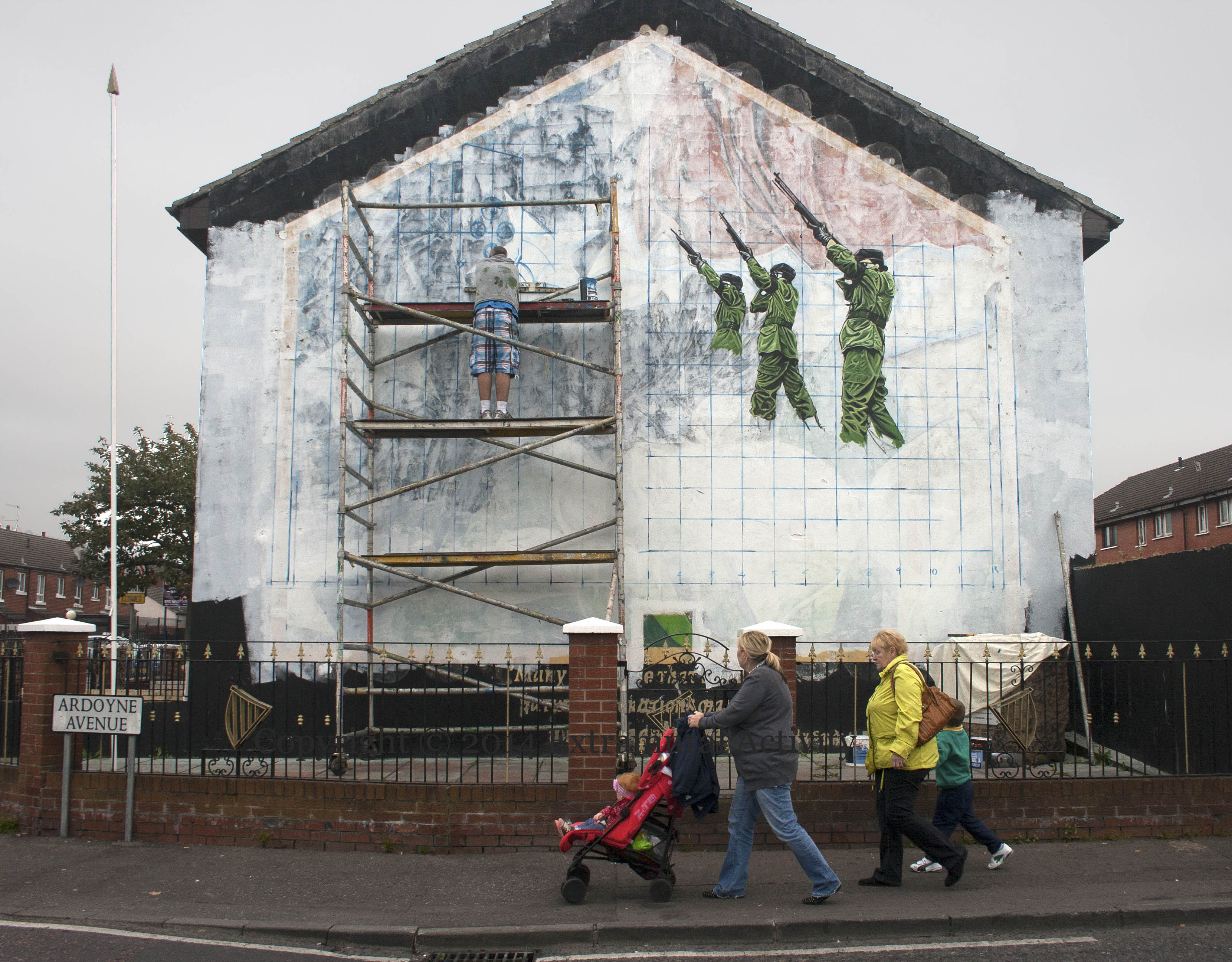
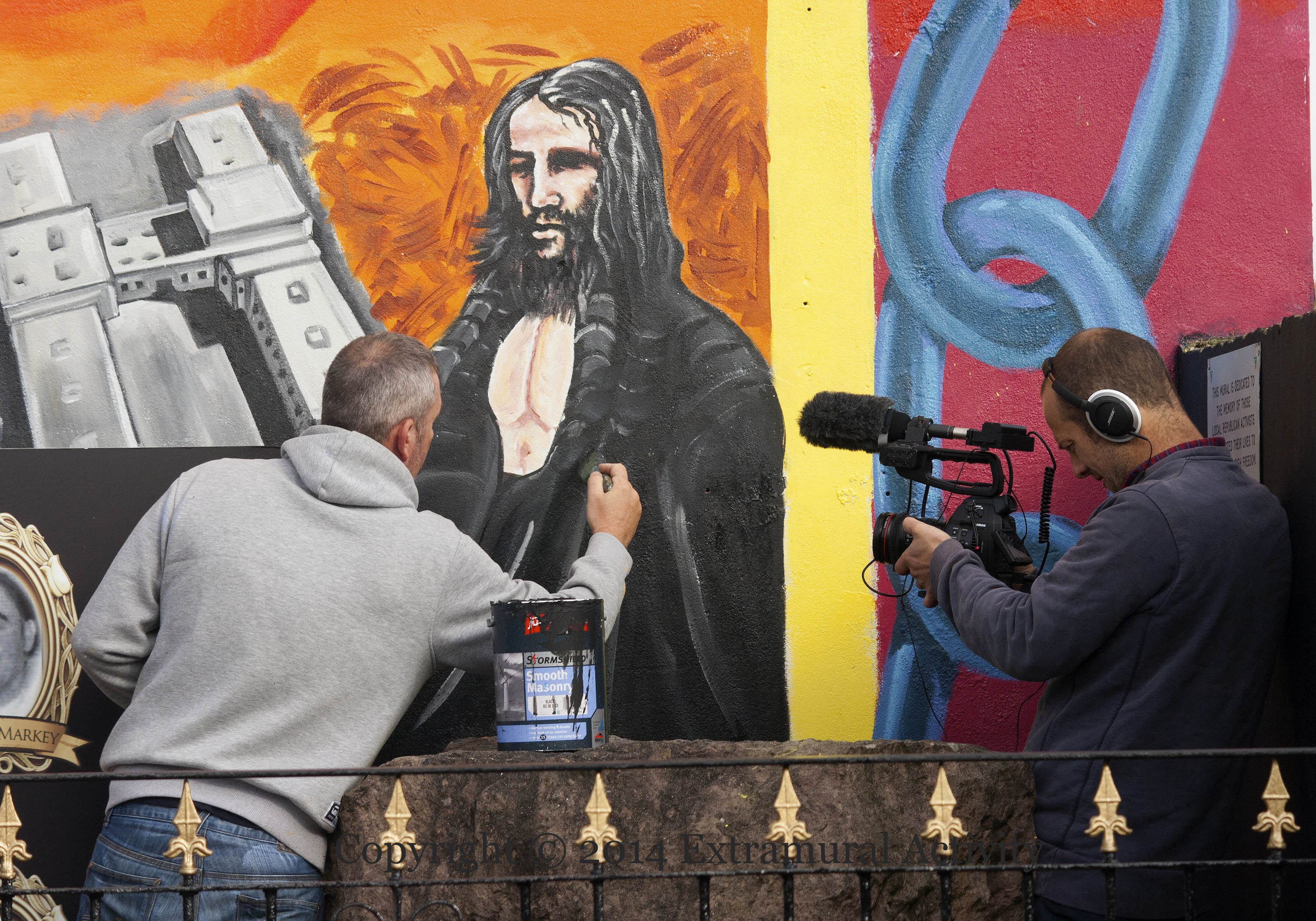
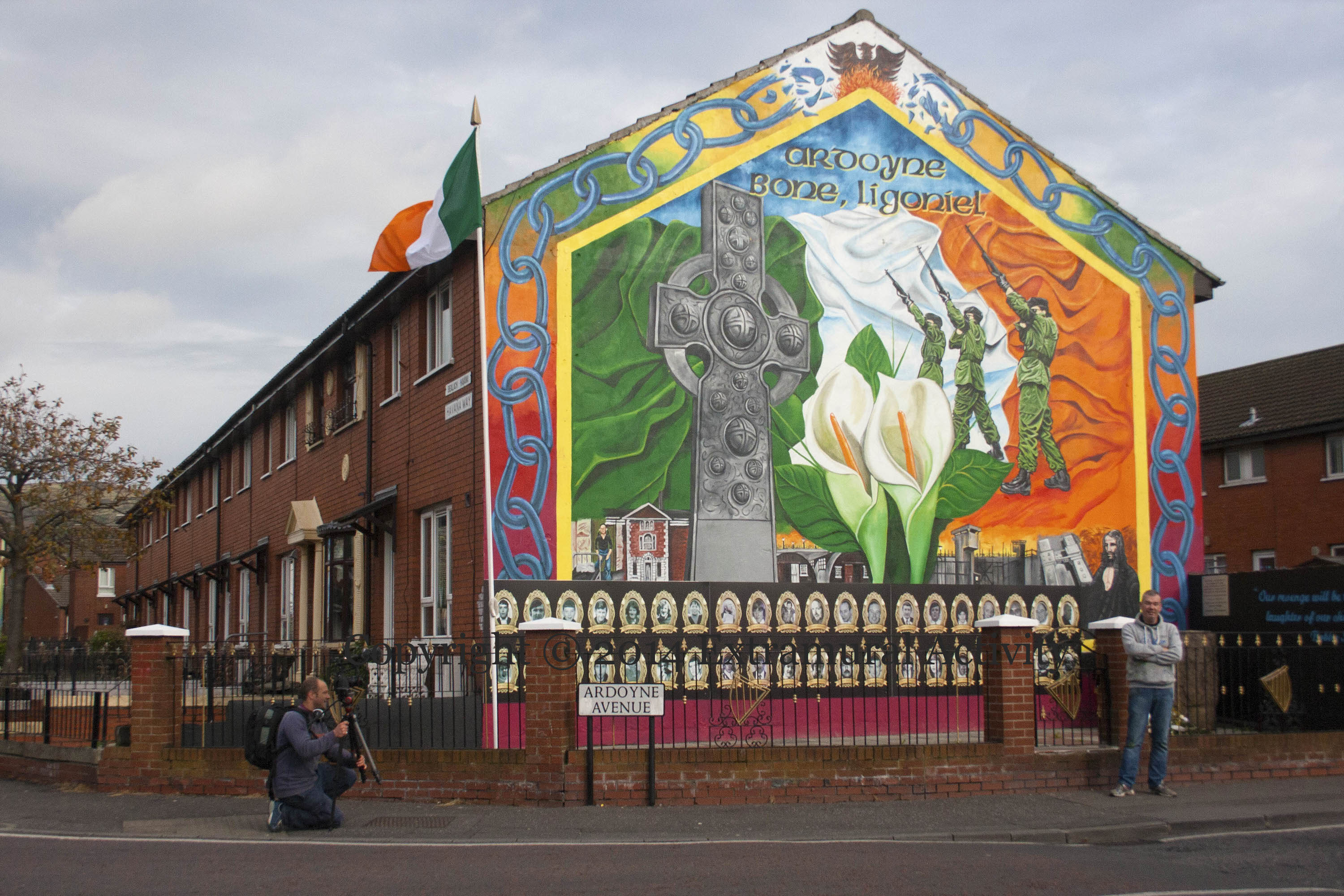
26 volunteers and 14 others from the Ardoyne, Bone, and Ligoniel areas are commemorated in a new (2014-10-05) mural. The images below show artist Mickey Doherty, himself an ex-prisoner, at the start of the process – with the grid-work visible – and shooting an “action” shot for VICE TV.
The previous mural also commemorated local volunteers (34 painted portraits rather than a printed board), but this mural adds a Celtic cross, funeral volley, and images of Armagh women’s prison, the cages at Long Kesh, and the H-blocks, as well as (an inverted image of) blanketman Hugh Rooney – detailed images can be seen in Prison Walls.
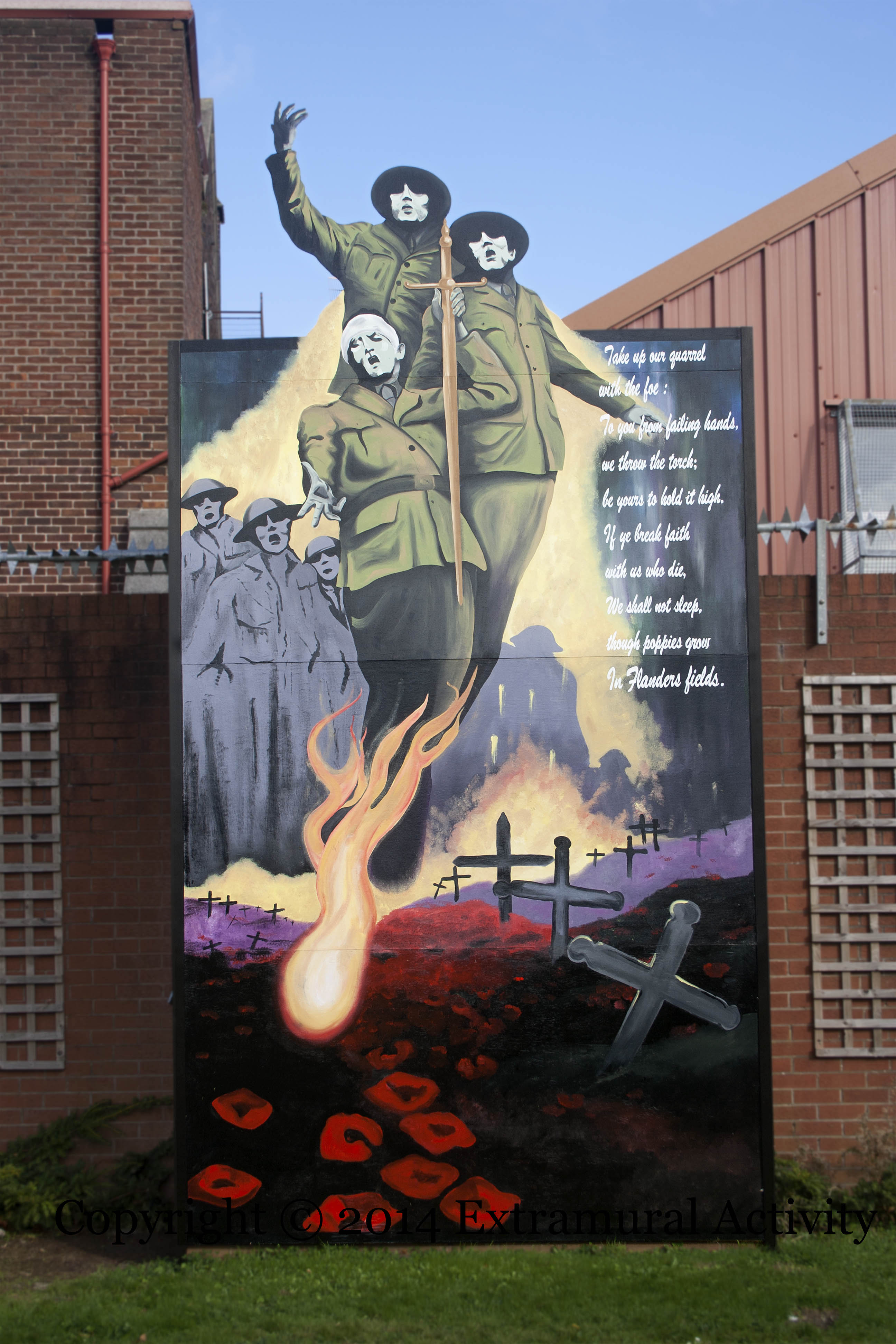
Three wraiths of dead WWI soldiers – one with its head wrapped in a bandage – rise from the grave to issue a final edict: Take up our quarrel with the foe; to you from failing hands we throw the torch; be yours to hold it high. If ye break faith with us who die, we shall not sleep though poppies grow in Flanders’ fields.
For another WWI memorial in Shankill Graveyard see The Great War.
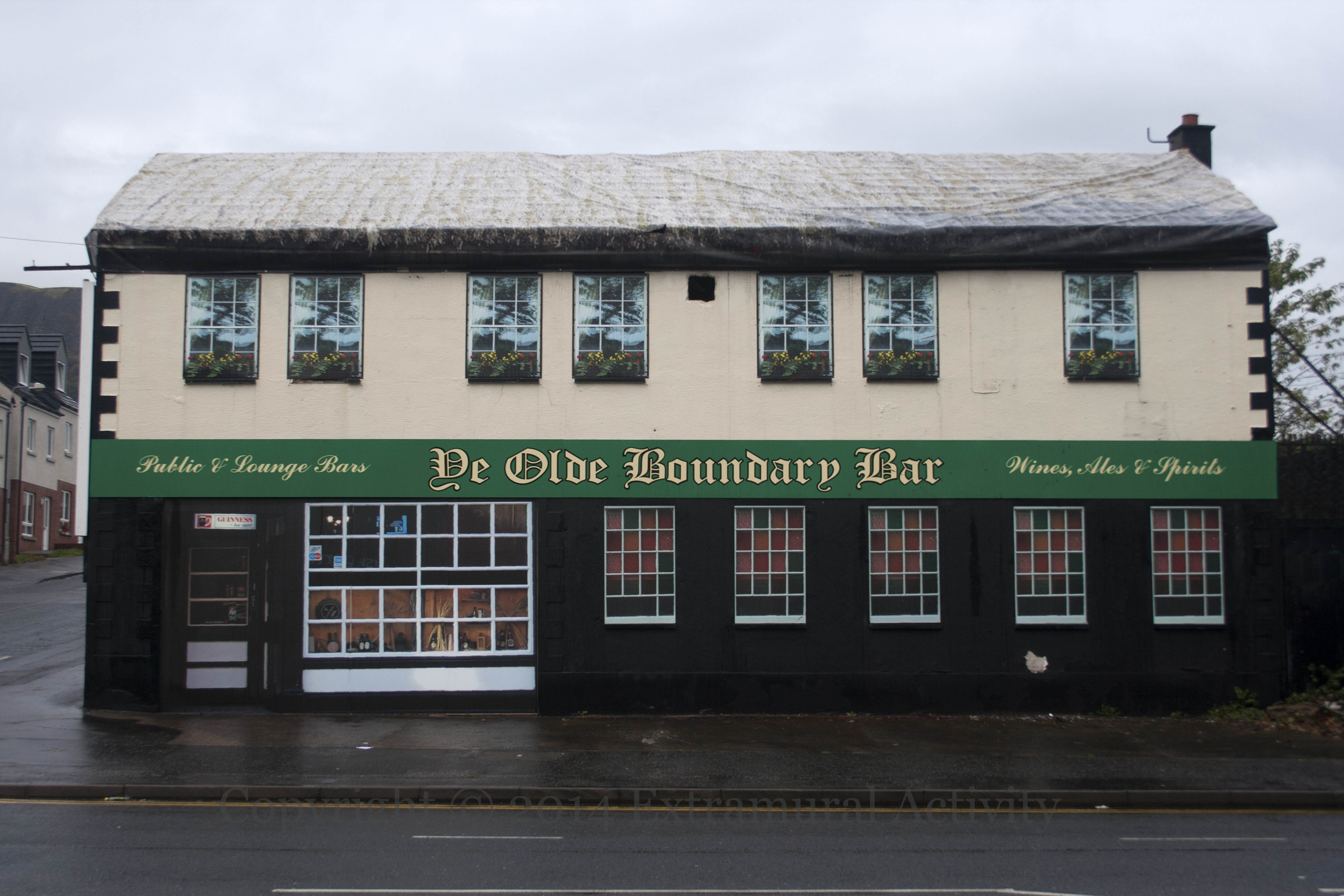
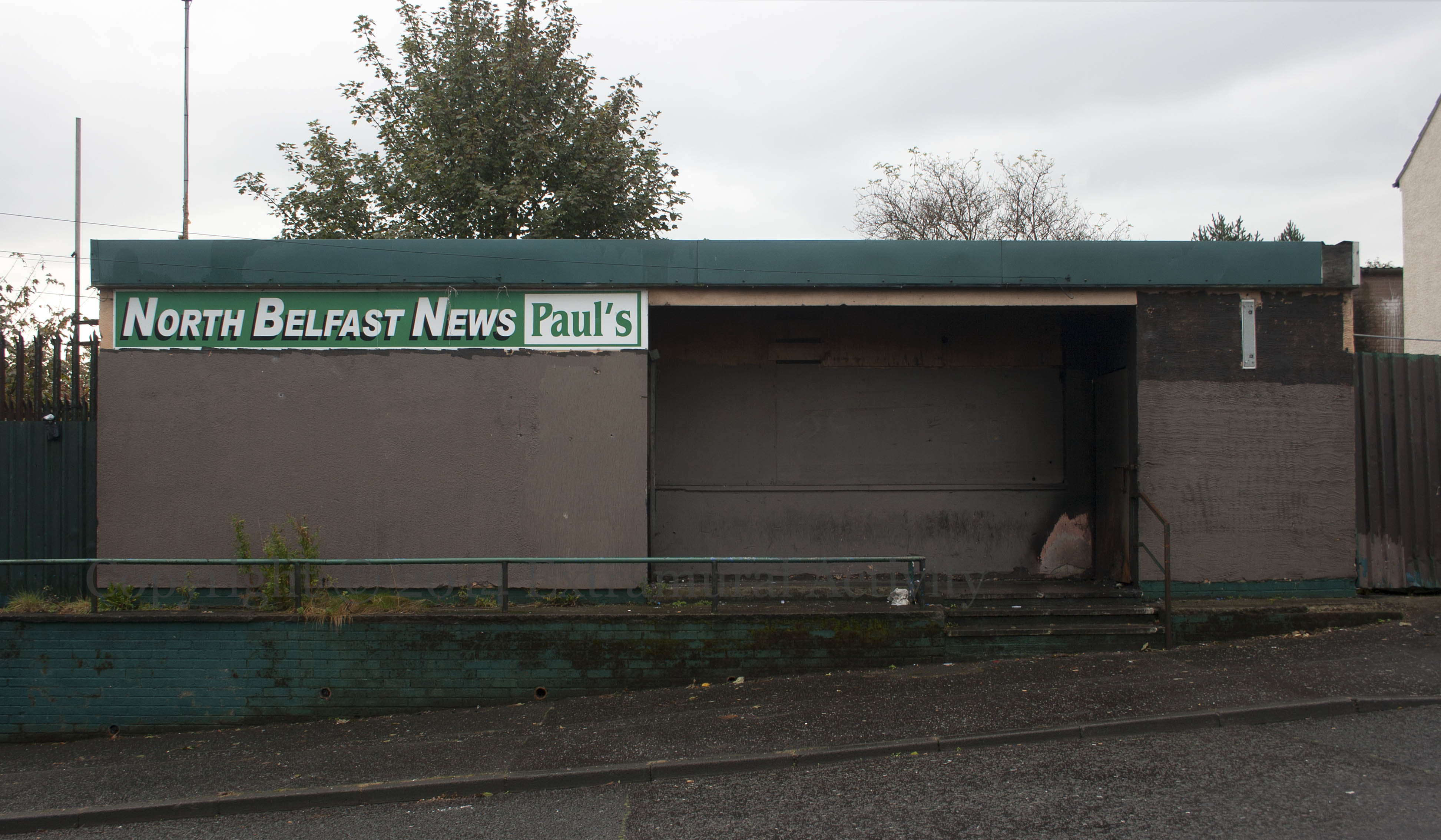
The Bawnmore area lies just beyond the border of Belfast, north of the city council along the Shore Road. While the area has seen many large retail chains erect stores over the last few decades, the local businesses have closed. Above, the Boundary Bar, which was burnt out in 2007, now with fake window dressing; below, Paul’s newsagents around the corner in Mount Street.
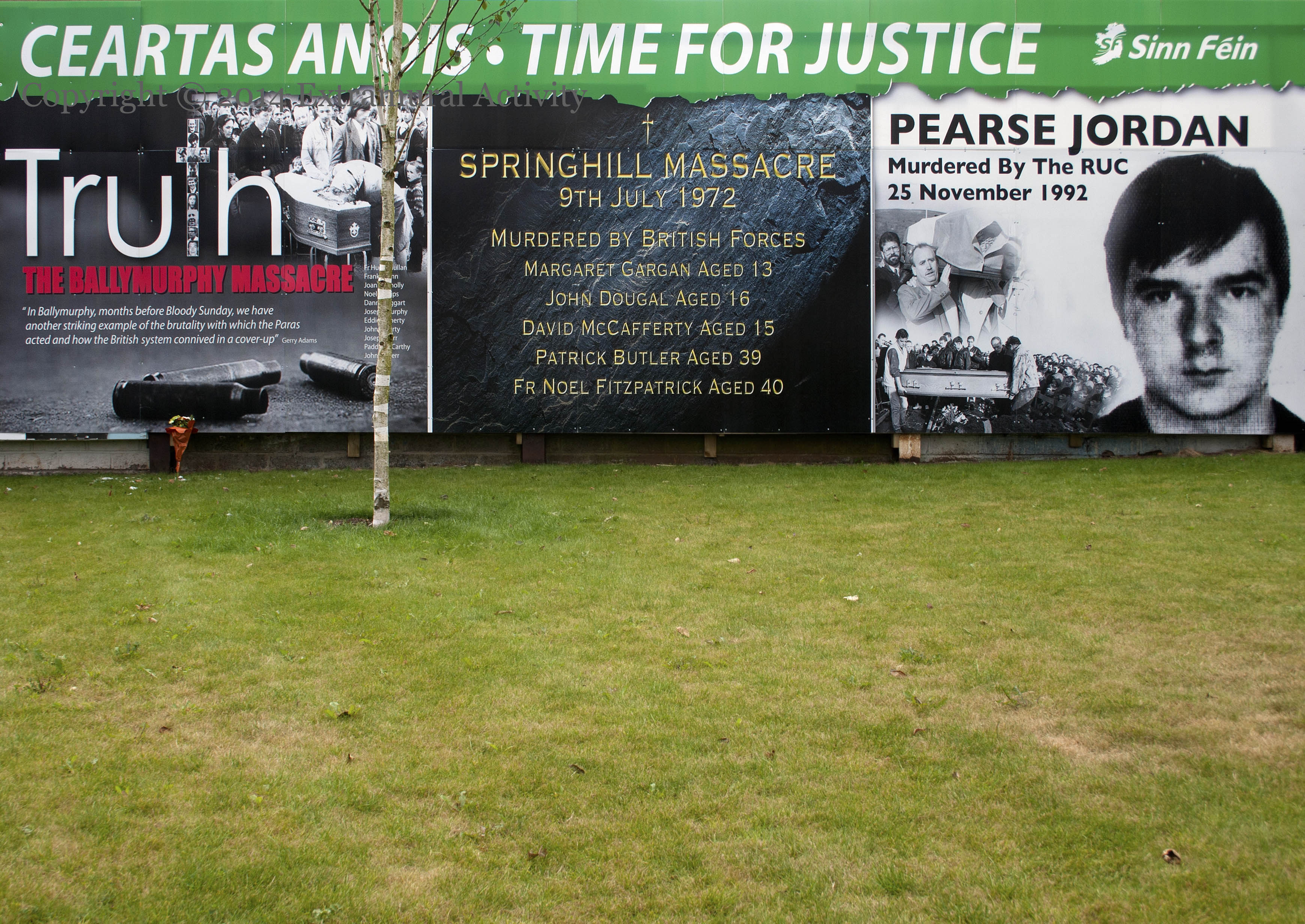
Three different campaigns for inquiries into deaths at the hands of British paratroopers are brought together into a single board on the site of the former Andersonstown RUC station: the Ballymurphy Massacre of August, 1971, in which 11 were killed; the Springhill Massacre of July 1972, in which 5 were killed, and the killing of IRA volunteer Pearse Jordan, who, like the others, lived in the greater Ballymurphy area.
 Seosamh Mac Coille Collection