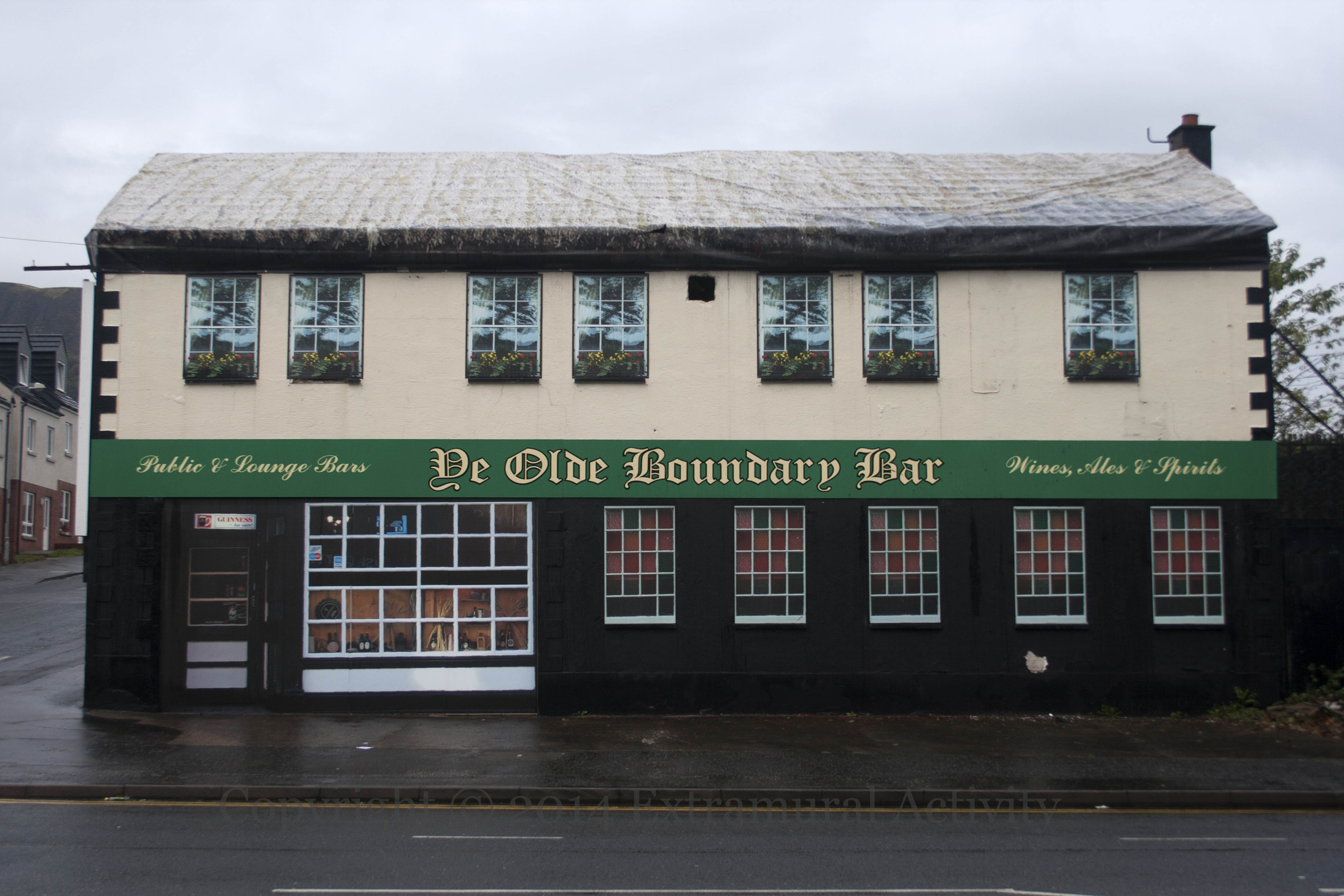
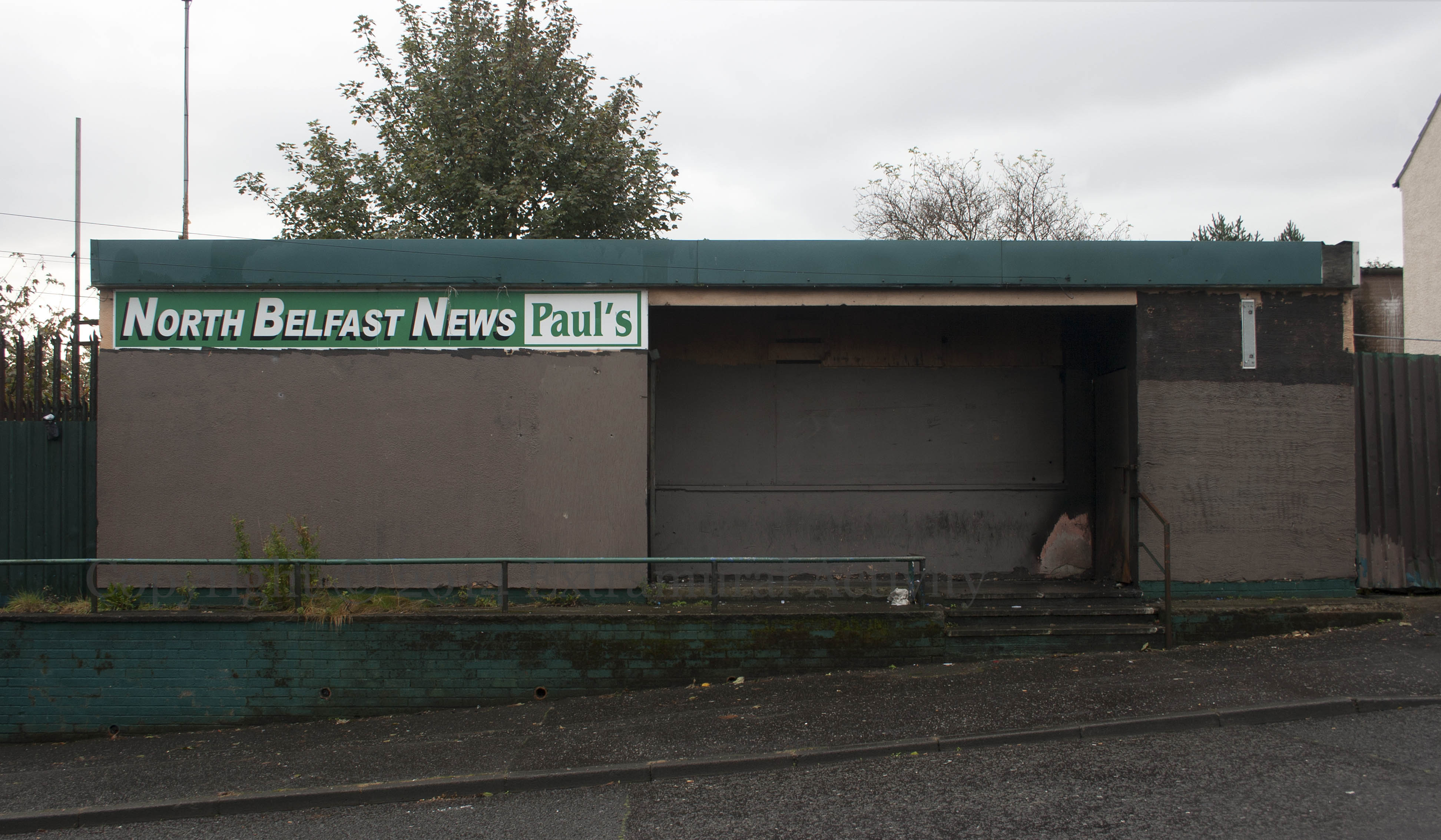
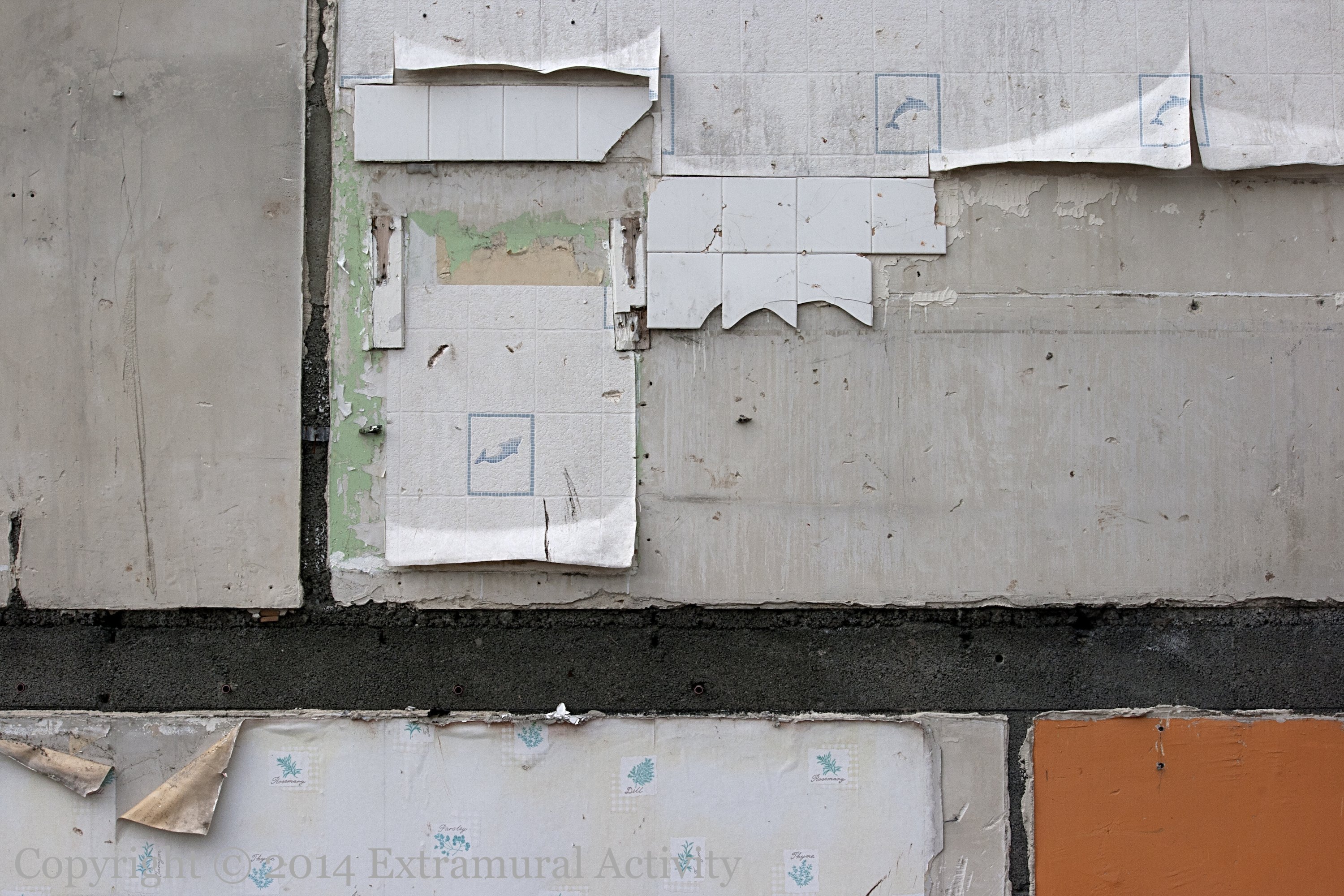
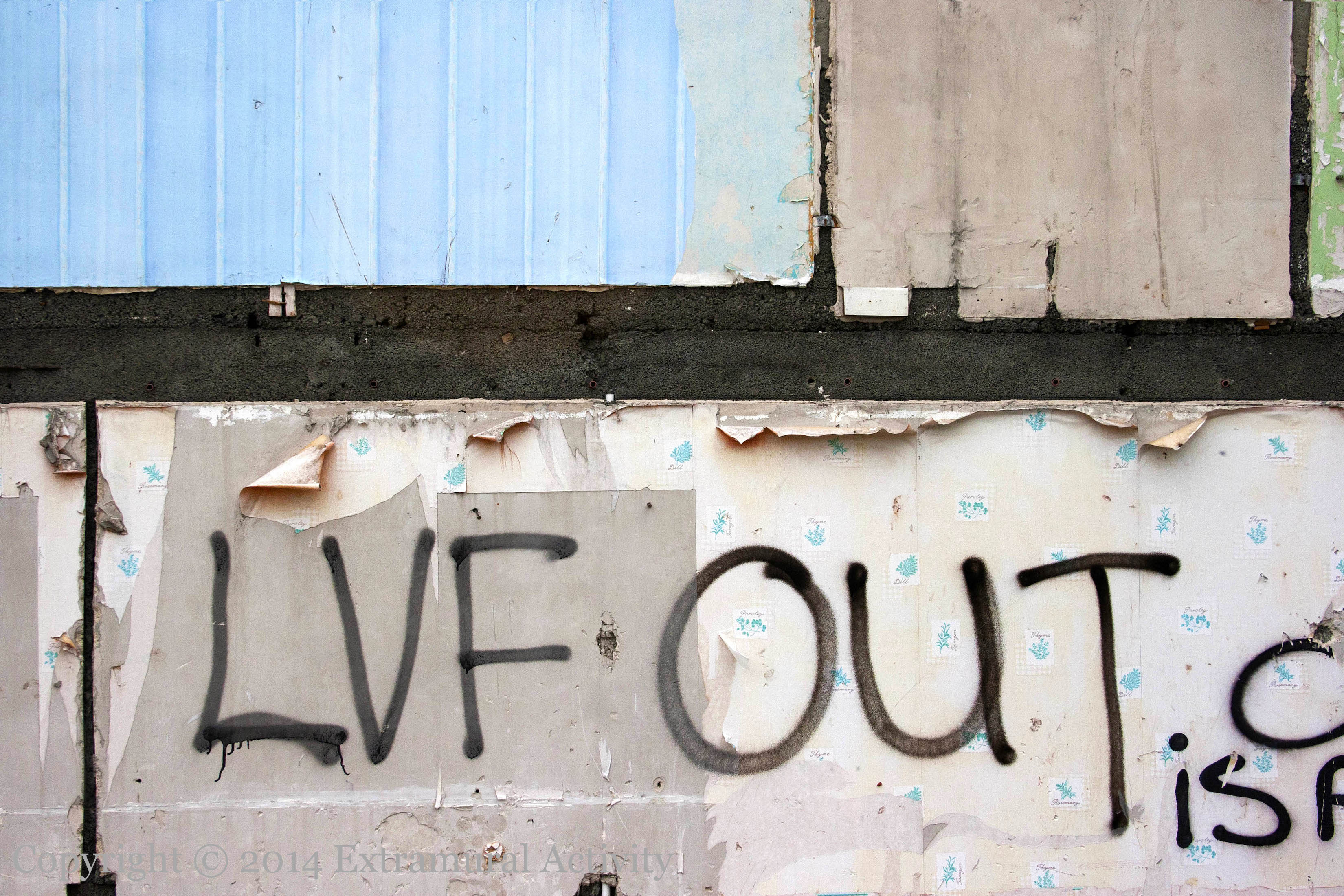
The Bawnmore area lies just beyond the border of Belfast, north of the city council along the Shore Road. While the area has seen many large retail chains erect stores over the last few decades, the local businesses have closed. Above, the Boundary Bar, which was burnt out in 2007, now with fake window dressing; below, Paul’s newsagents around the corner in Mount Street.
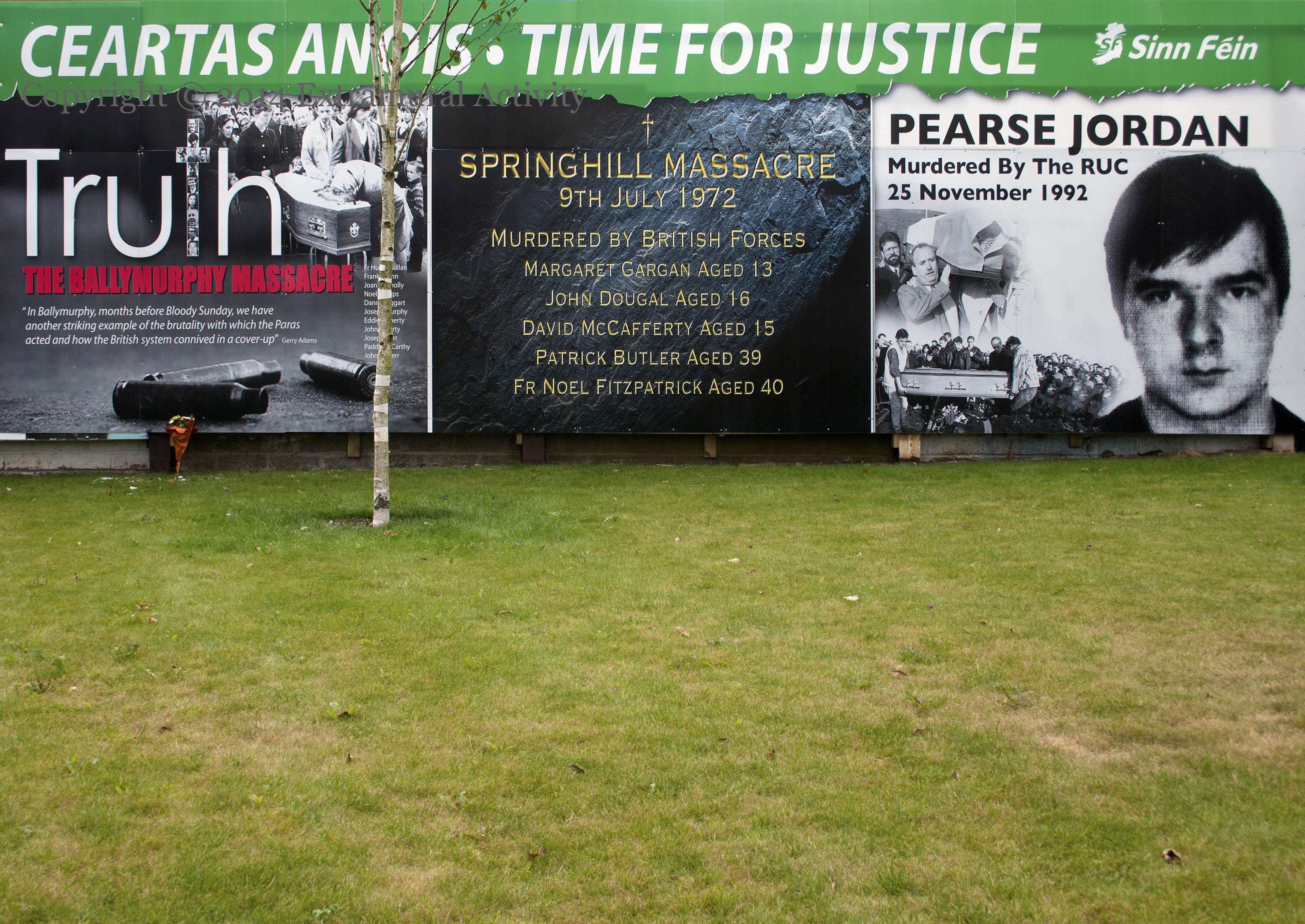
Three different campaigns for inquiries into deaths at the hands of British paratroopers are brought together into a single board on the site of the former Andersonstown RUC station: the Ballymurphy Massacre of August, 1971, in which 11 were killed; the Springhill Massacre of July 1972, in which 5 were killed, and the killing of IRA volunteer Pearse Jordan, who, like the others, lived in the greater Ballymurphy area.
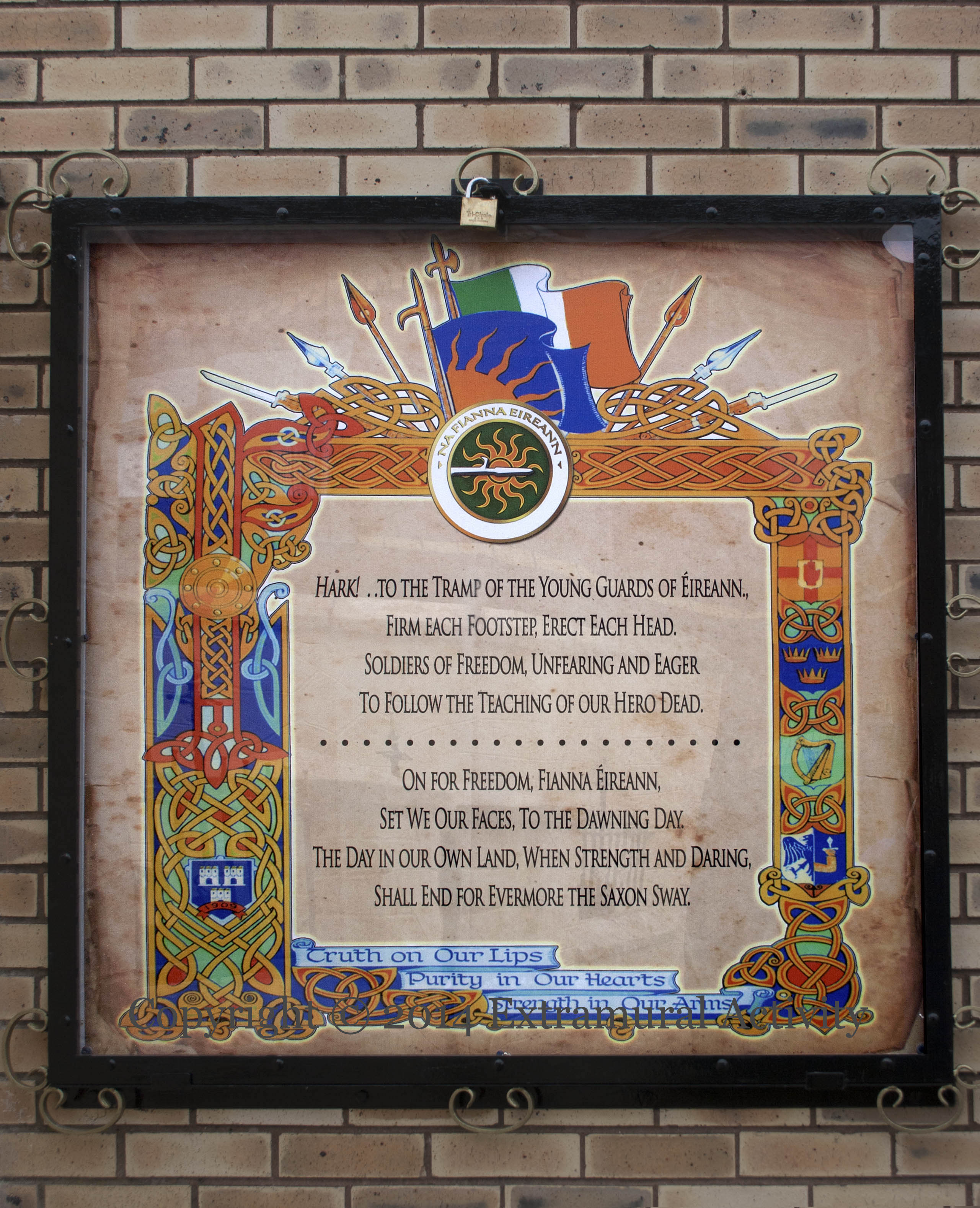
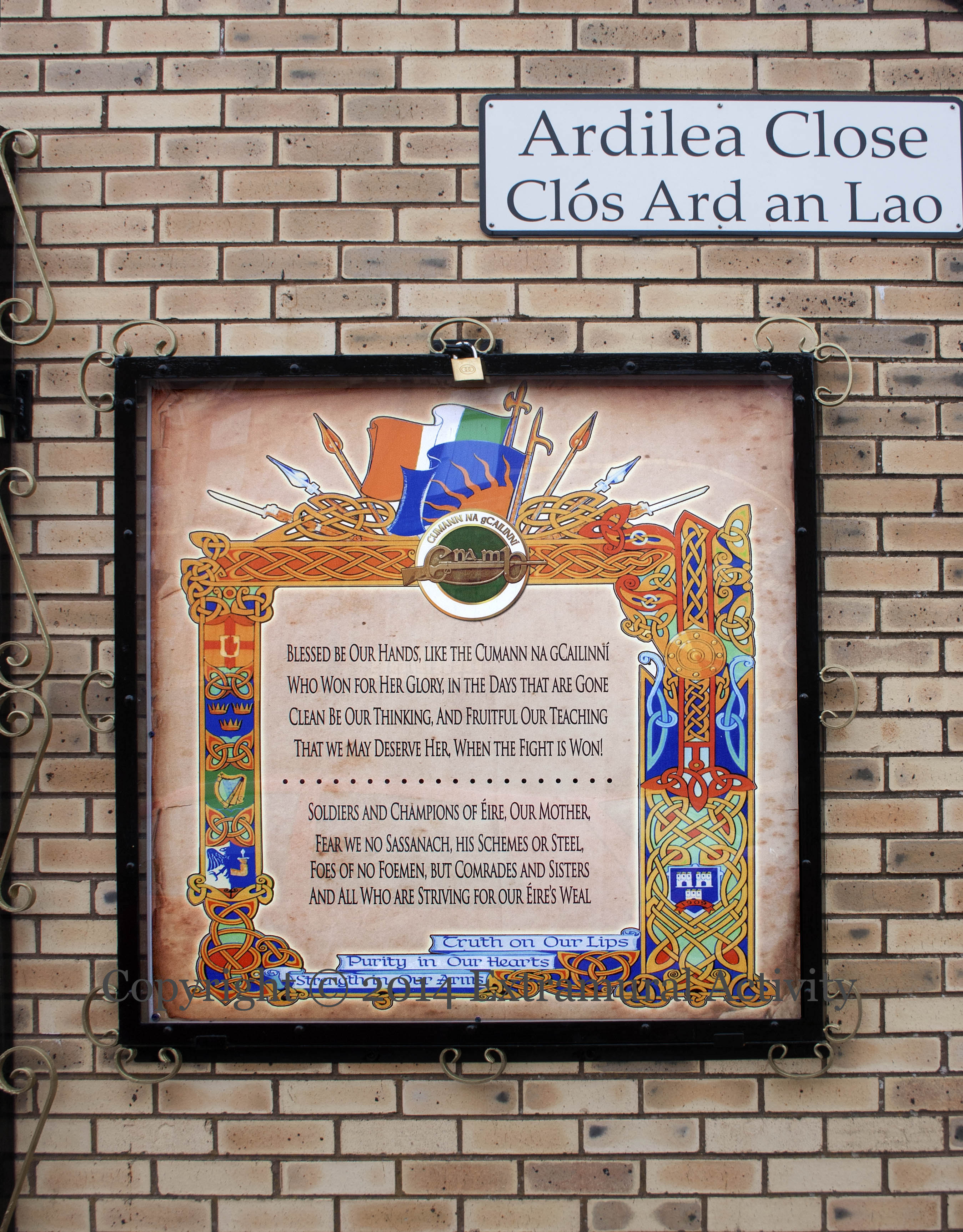
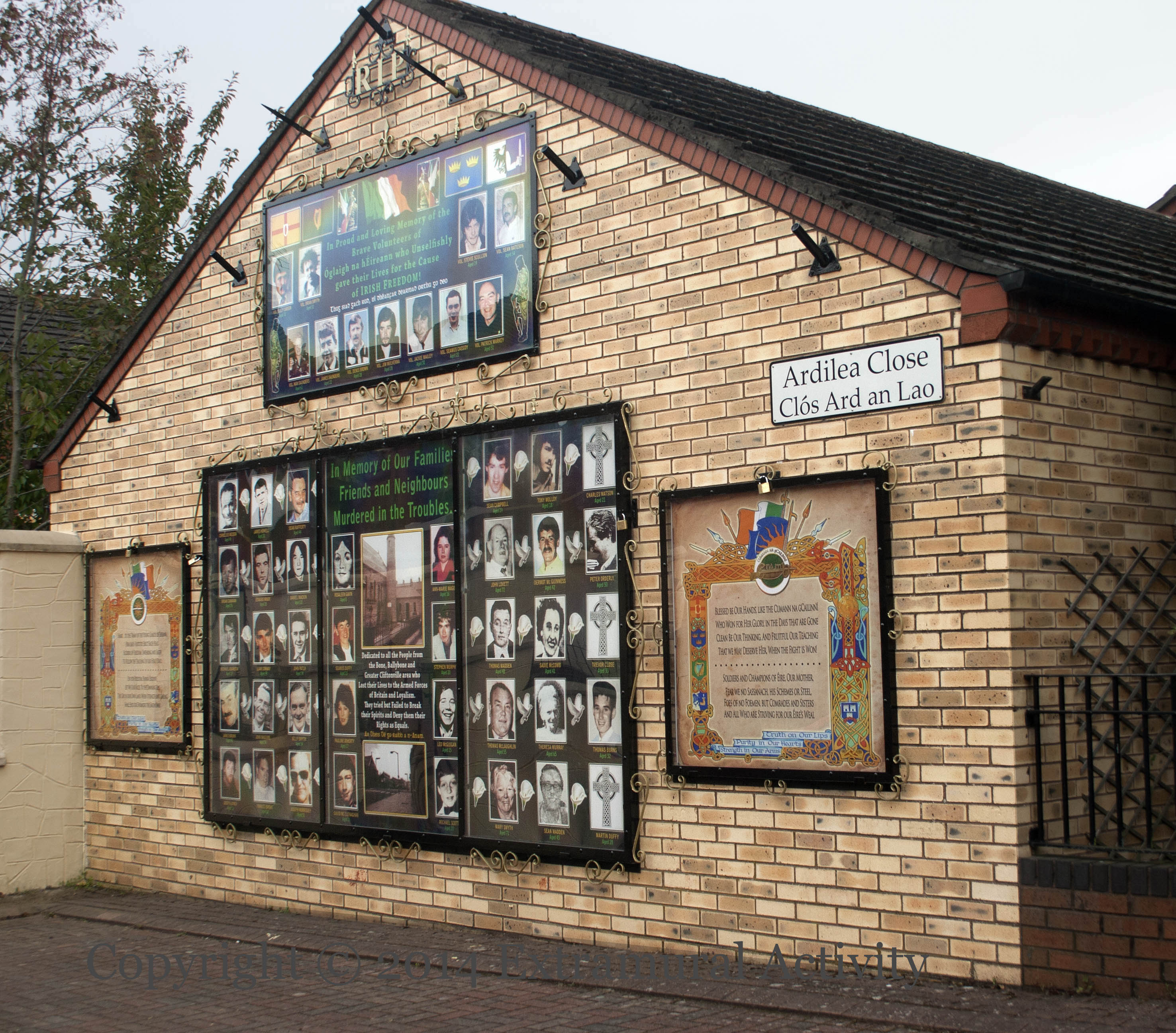
A pair of boards have been added to either side of one of the Bone memorials in Clós Ard An Lao, one for Na Fıanna Éıreann – the boys – and one for Cumann Na gCaılíní – the girls. The words are those of the Marching Song Of Na Fıanna Éıreann, except that in the second verse (the third stanza shown, first in the image below) the words “Cumann Na gCaılınní [sic]” have been inserted instead of “Fıanna Éıreann”.
The third image, below, shows the whole wall; for a close-up of the central boards, commemorating locals who lost their lives in the troubles, see Bone Memorial.
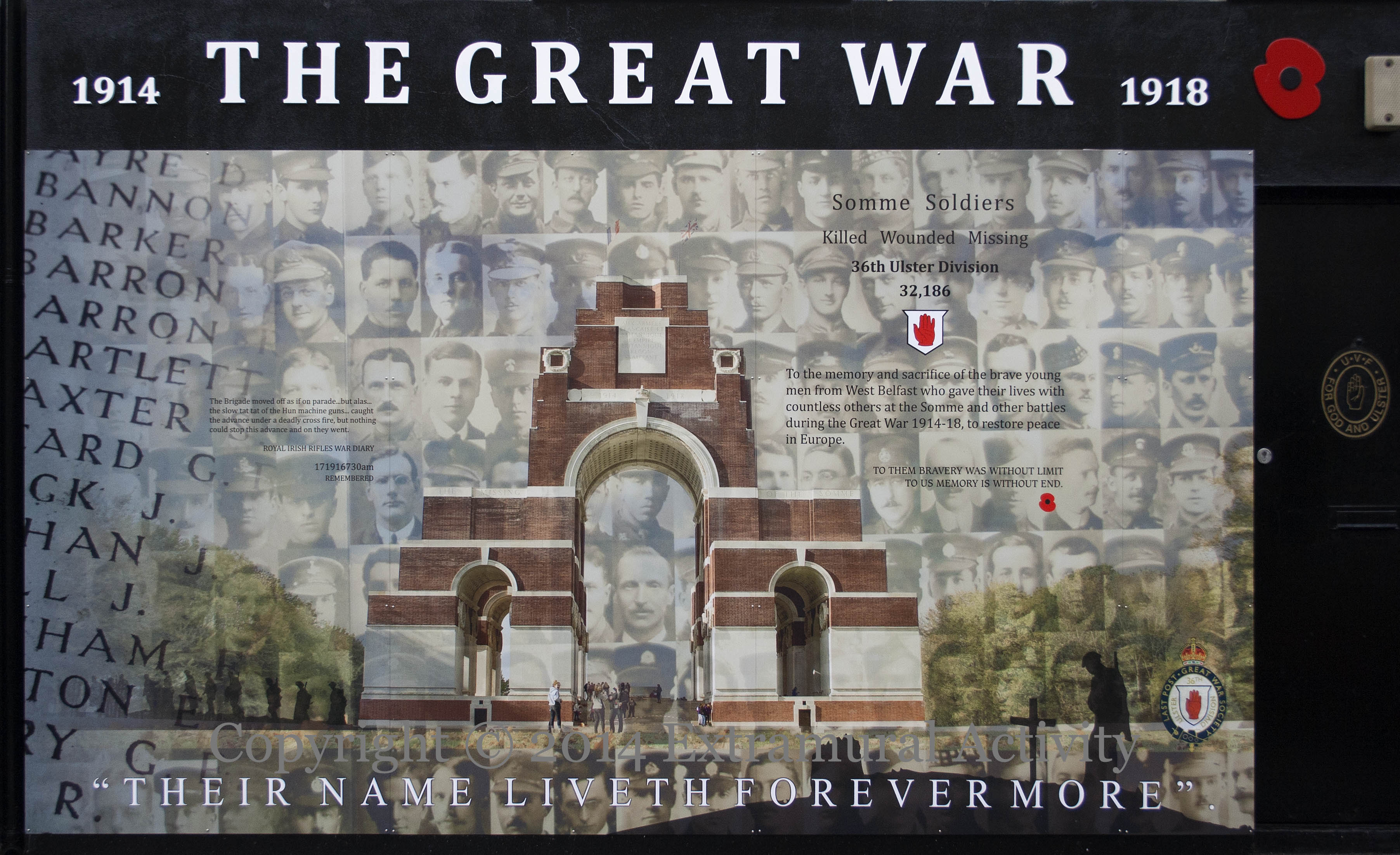
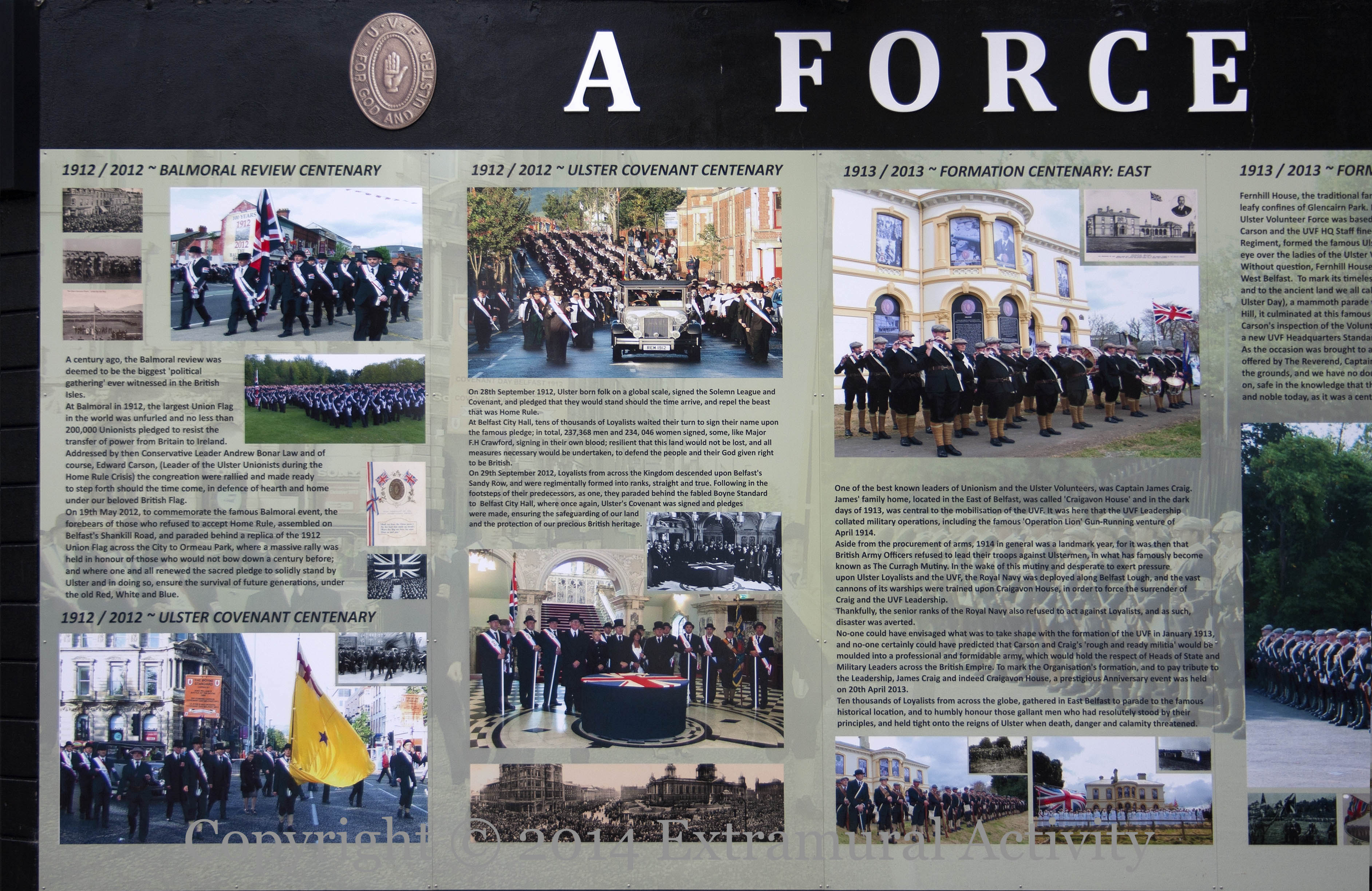
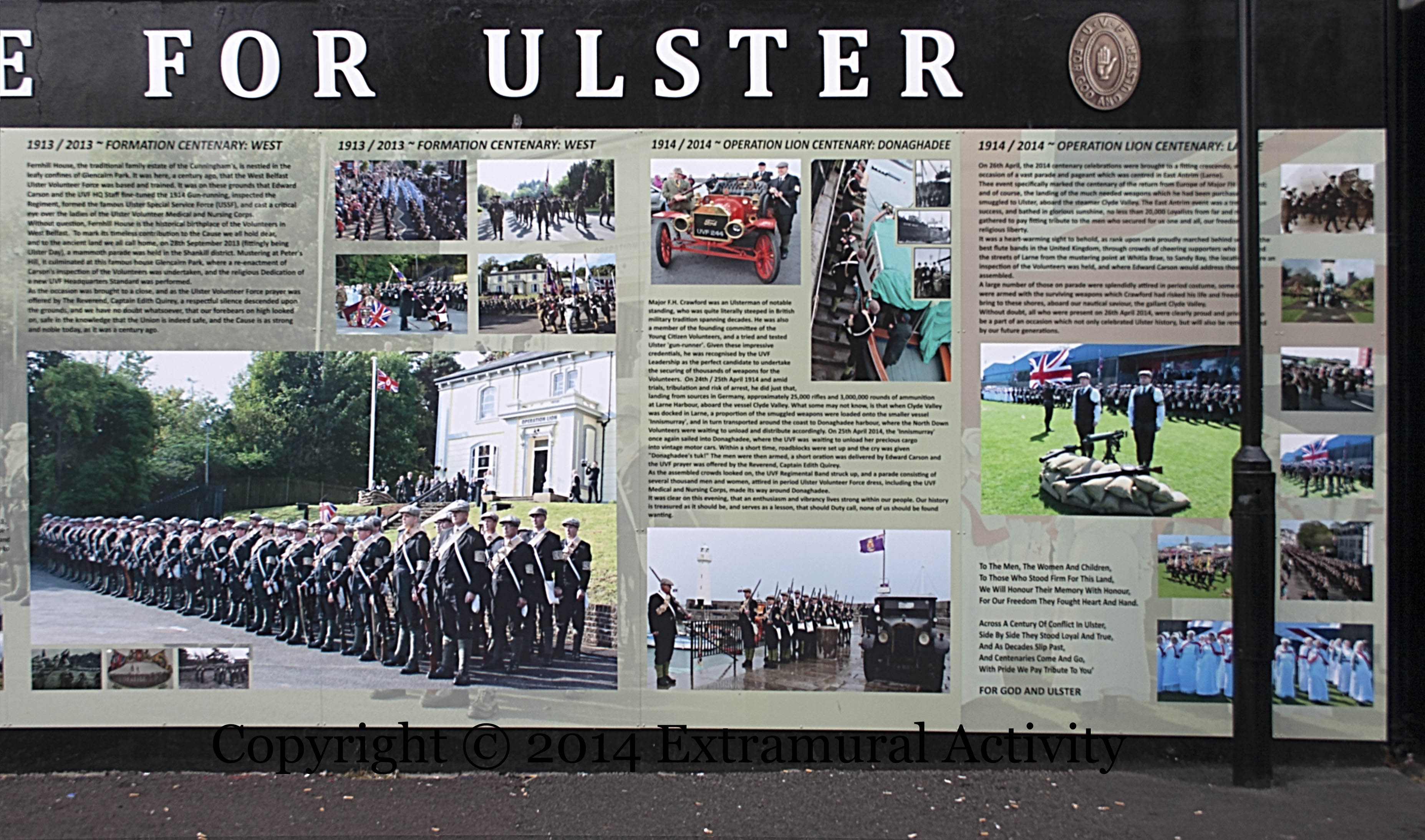
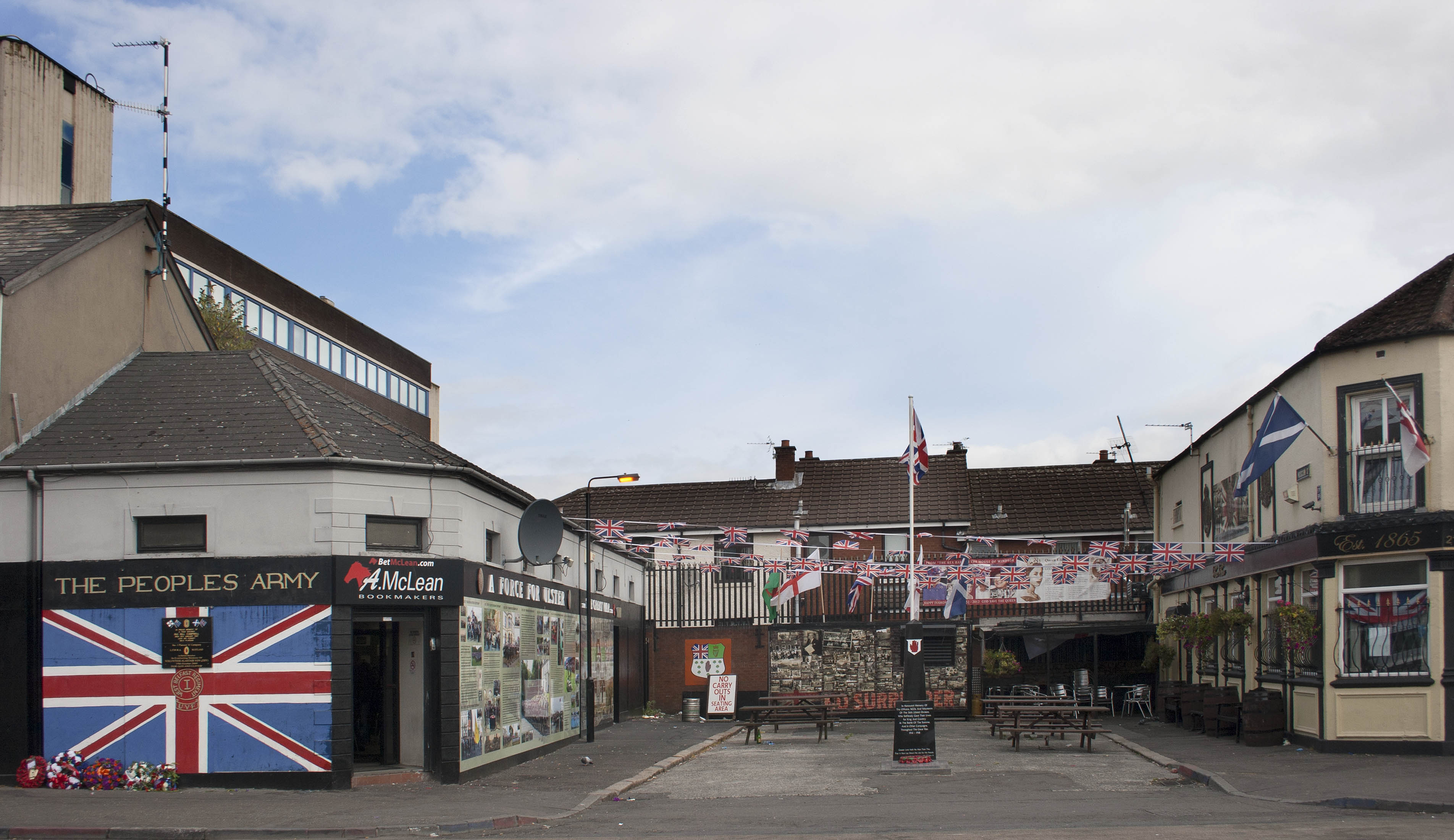
Here are two new boards in the courtyard of the Rex Bar on the Shankill Road, describing the formation of the Ulster Volunteers (‘A Force For Ulster’) and commemorating the losses suffered by the 36th (Ulster) Division of the British Army, which the Volunteers became, at the Somme and in other battles, mowed down by “the Hun machine guns” (‘The Great War’).
‘A Force For Ulster’ includes photographs of the recent centenary re-enactments of the Balmoral Review, the Ulster Covenant, the formation of the Volunteers (“east” and “west”) and “Operation Lion” – more commonly known as the Larne Gun-Running.
According to the ‘The Great War’ board, 32,186 men from west Belfast were killed, wounded, or missing. “To them bravery was without limit, to us memory is without end”. The board shows the Thiepval Memorial To The Missing Of The Somme against a background of portraits.
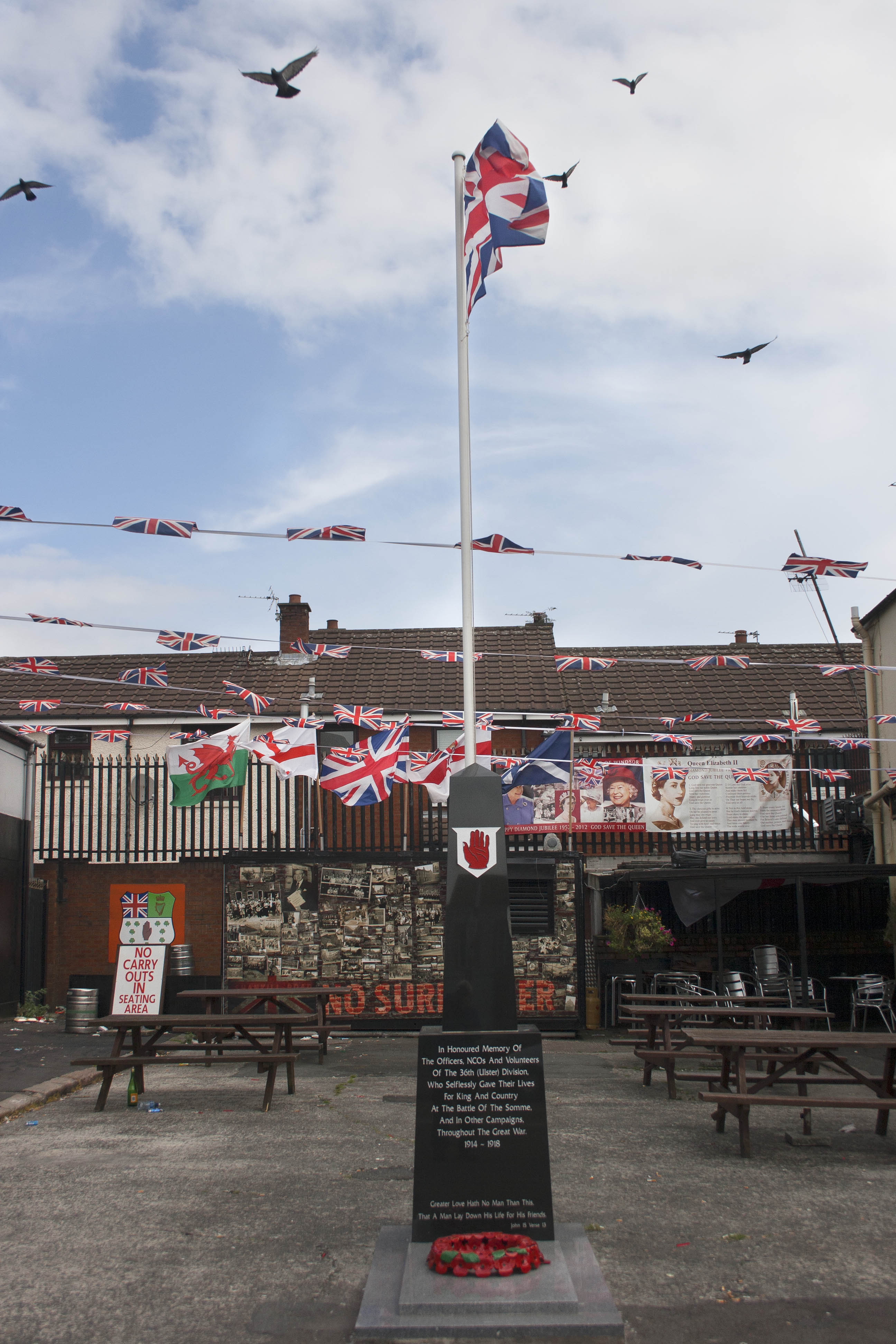
Above and below is the scene at the end of summer in the courtyard of the Rex Bar – bunting and bouquets join the flags of the home nations and various boards celebrating the queen’s diamond jubilee and commemorating the 36th Ulster division “who selflessly gave their lives for King and county at the battle of the Somme”. The new boards (on the left hand side of the wide shot) were featured previously in The Last Post, along with the Union flag of The People’s Army. For the same scene ten years previously, see Betting Office.
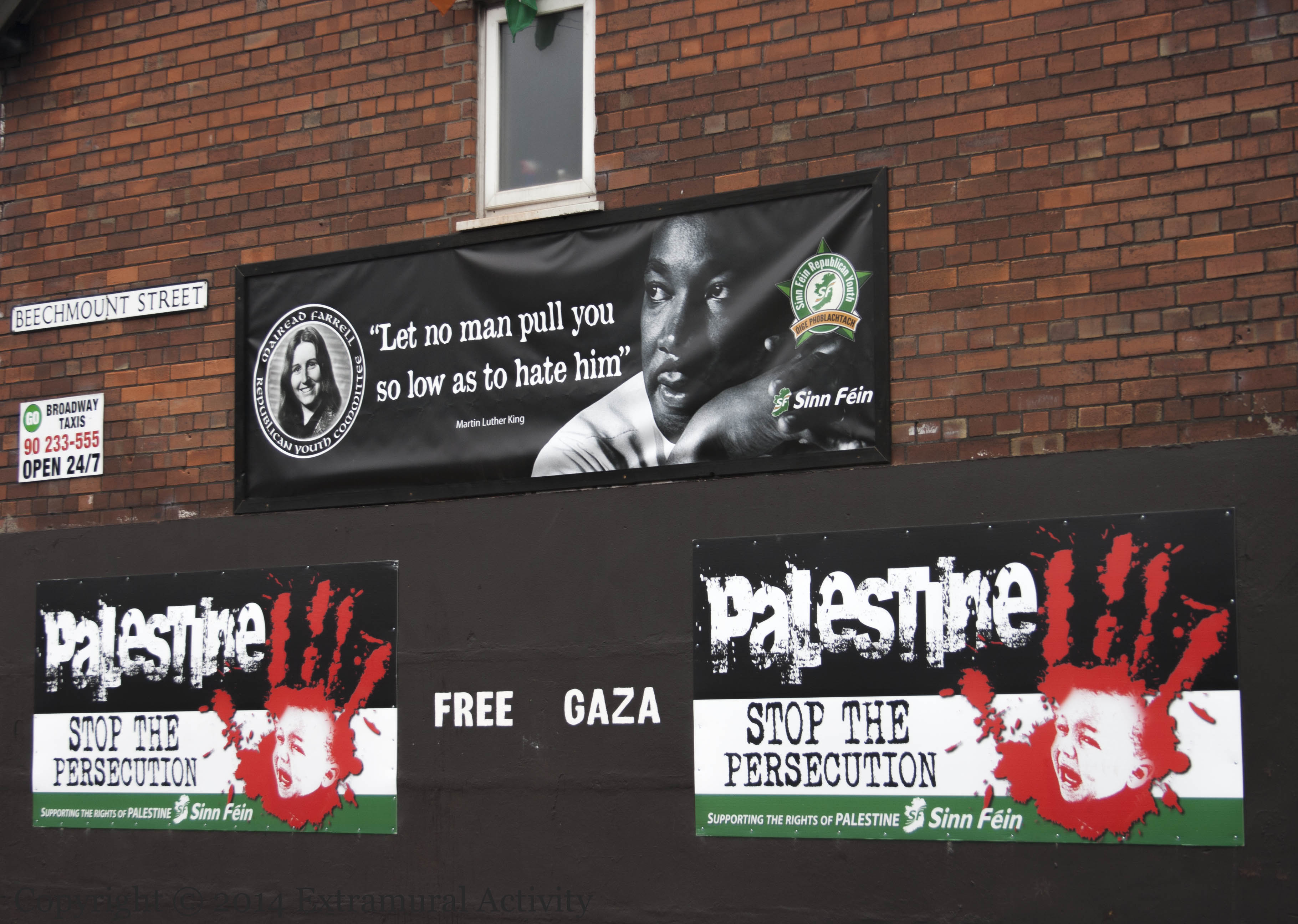
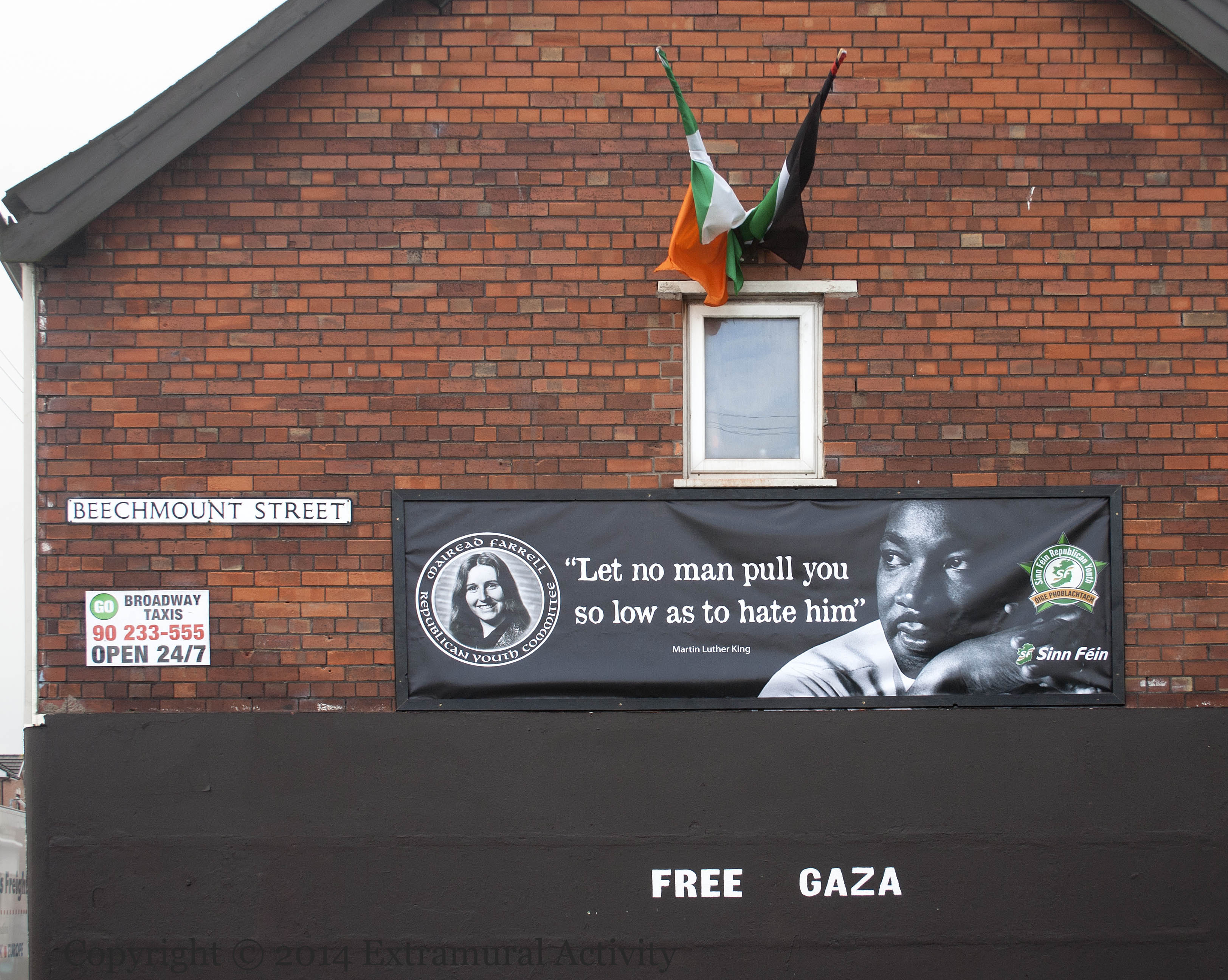
“Let no man pull you so low as to hate him”. In a sermon on November 4th, 1956 (and repeated on other occasions), Martin Luther King, Jr. imagined a letter from Paul to the Christians of America, expressing concern for spiritual life in a capitalist society and appealing for desegregation of society using non-violent methods: “the weapon of love”, keeping in mind “that you are merely seeking justice for him as well as yourself”.
Click for audio – the remark quoted occurs at the 3 minute mark of section 4 (archive.org) | Text (1958) – see page 7 (= 344)
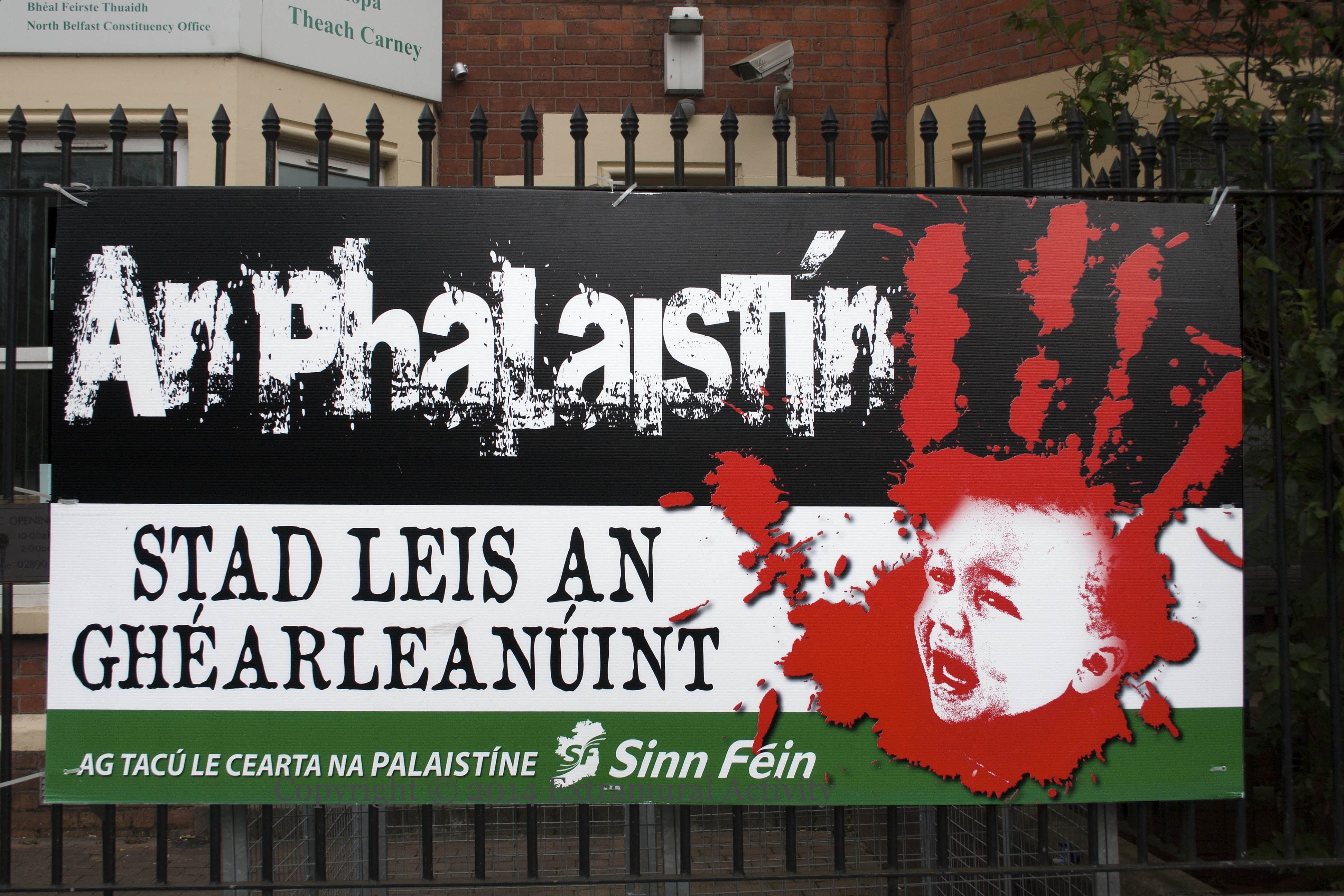
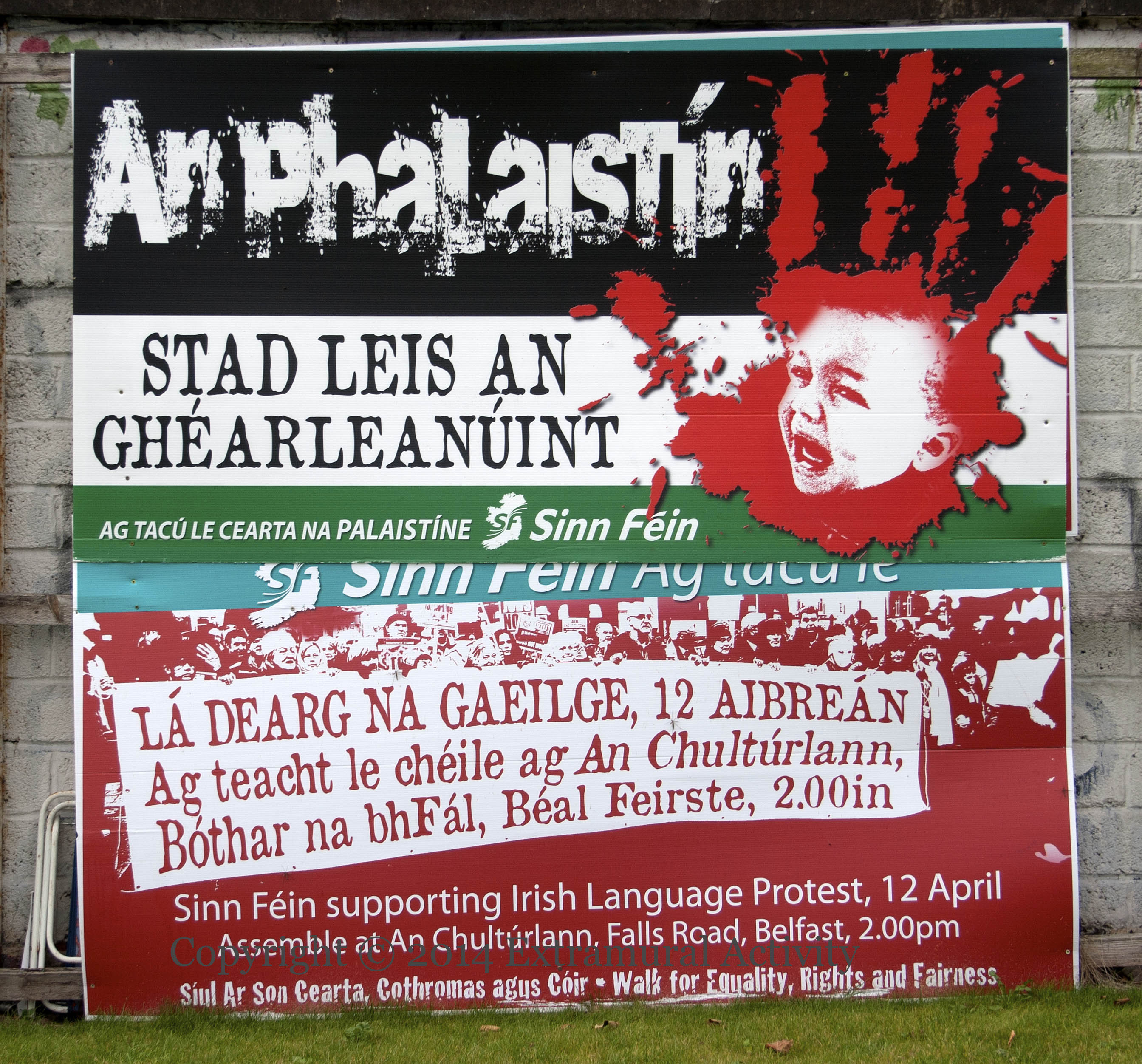
The image below shows the site in mid-August, without the pro-Palestine boards (for an Irish-language version of which see An Phalaıstín/Palestine; the image above is from the first week of September, 2014.
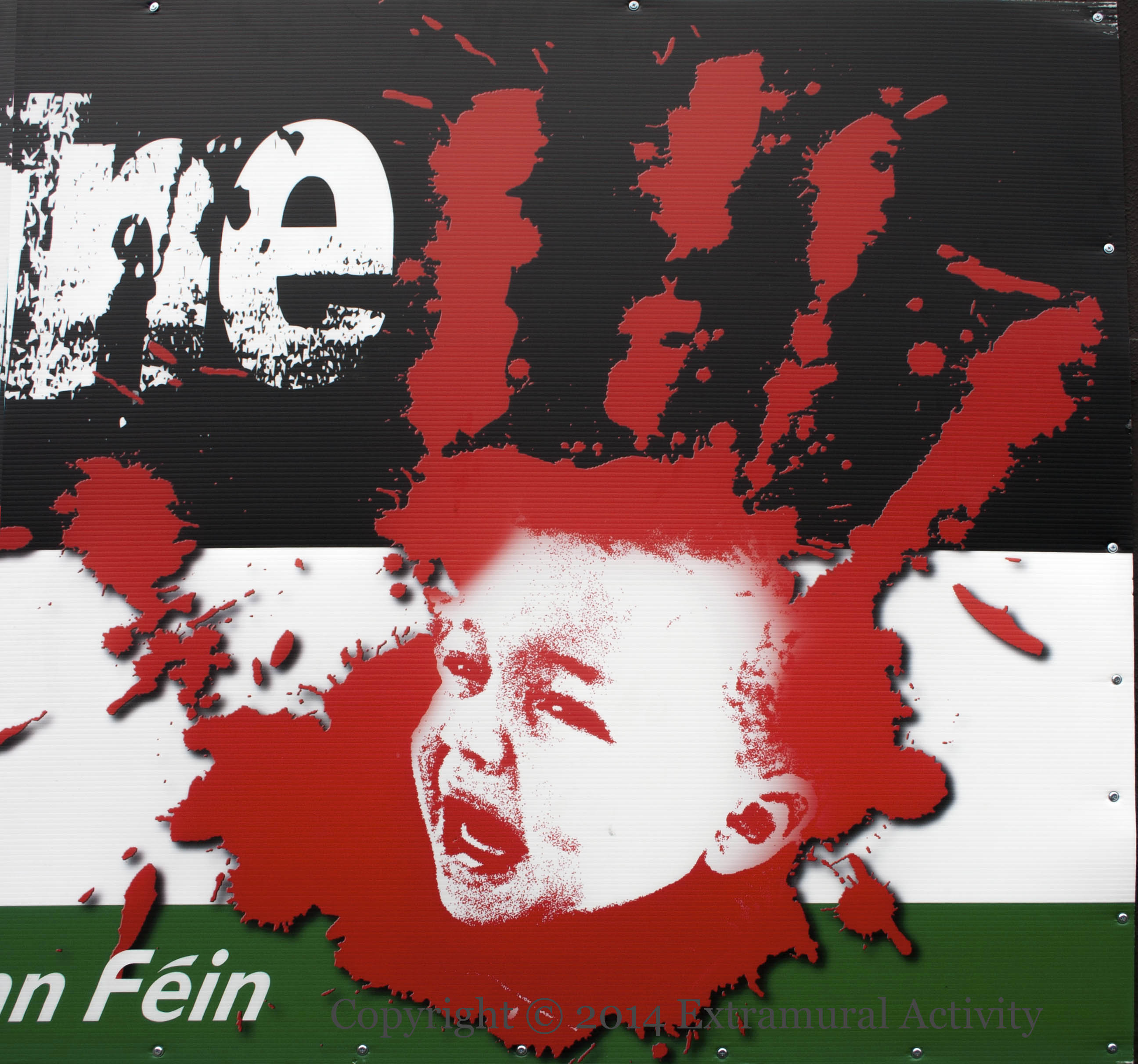
Pro-Palestine board outside the north Belfast Sınn Féın office on the Antrim Road showing a bloody hand-print and the face of a crying child: “Stad leıs an ghéarleanúınt – ag tacú le cearta na Palaıstíne” : “Stop the persecution – supporting Palestinian rights”. The close-up of the hand and face, below, is taken from an English-language version of the board in Beechmount Street. The third image is of the same board at the Glen Road/Andersonstown Road junction.
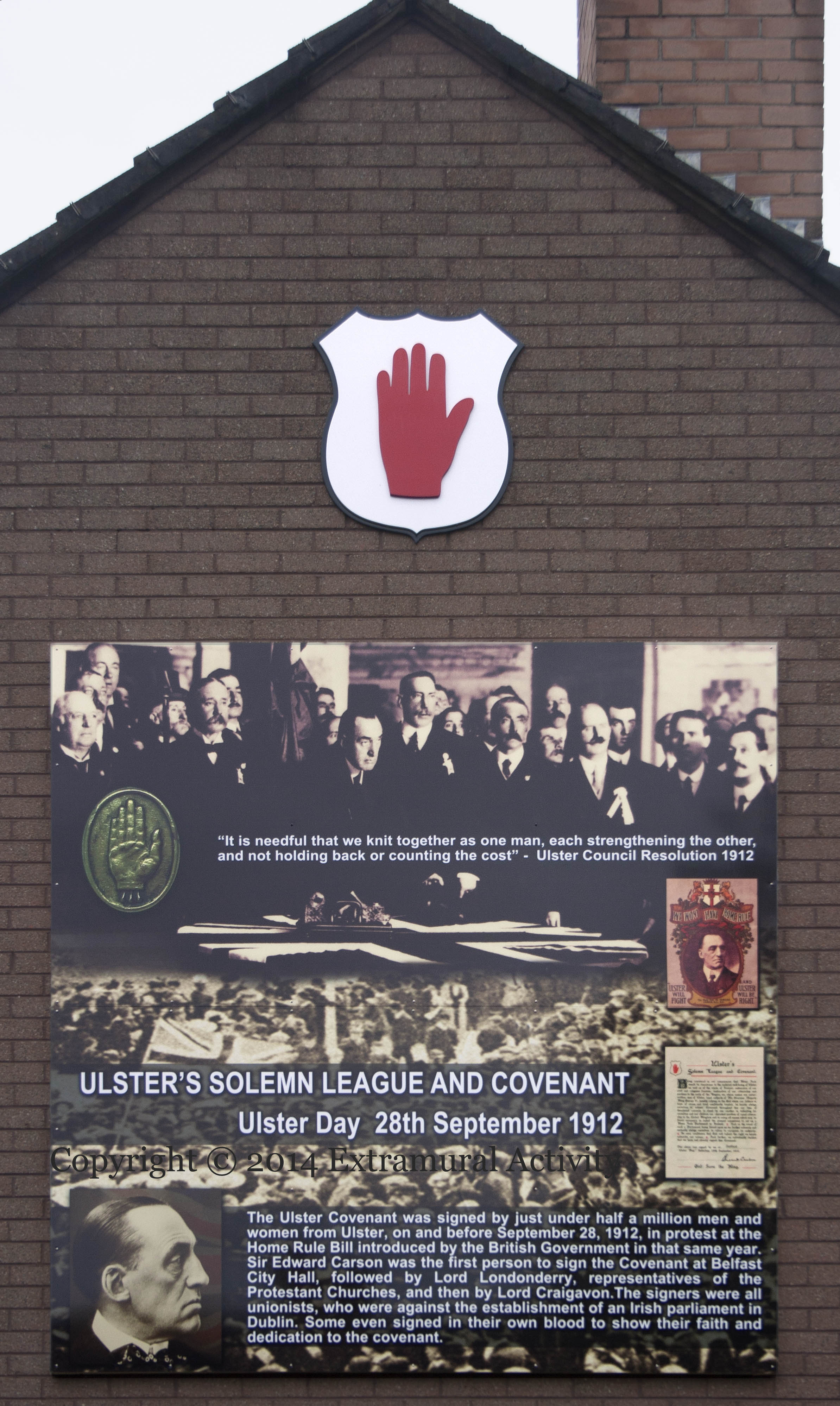
“It is needful that we knit together as one man, each strengthening the other, and not holding back of counting the cost” – Ulster [Unionist] Council Resolution 1912. The Council met on September 23rd and 471,000 people signed the covenant (figures here) on or around the 28th – Ulster Day – led by Sir Edward Carson.
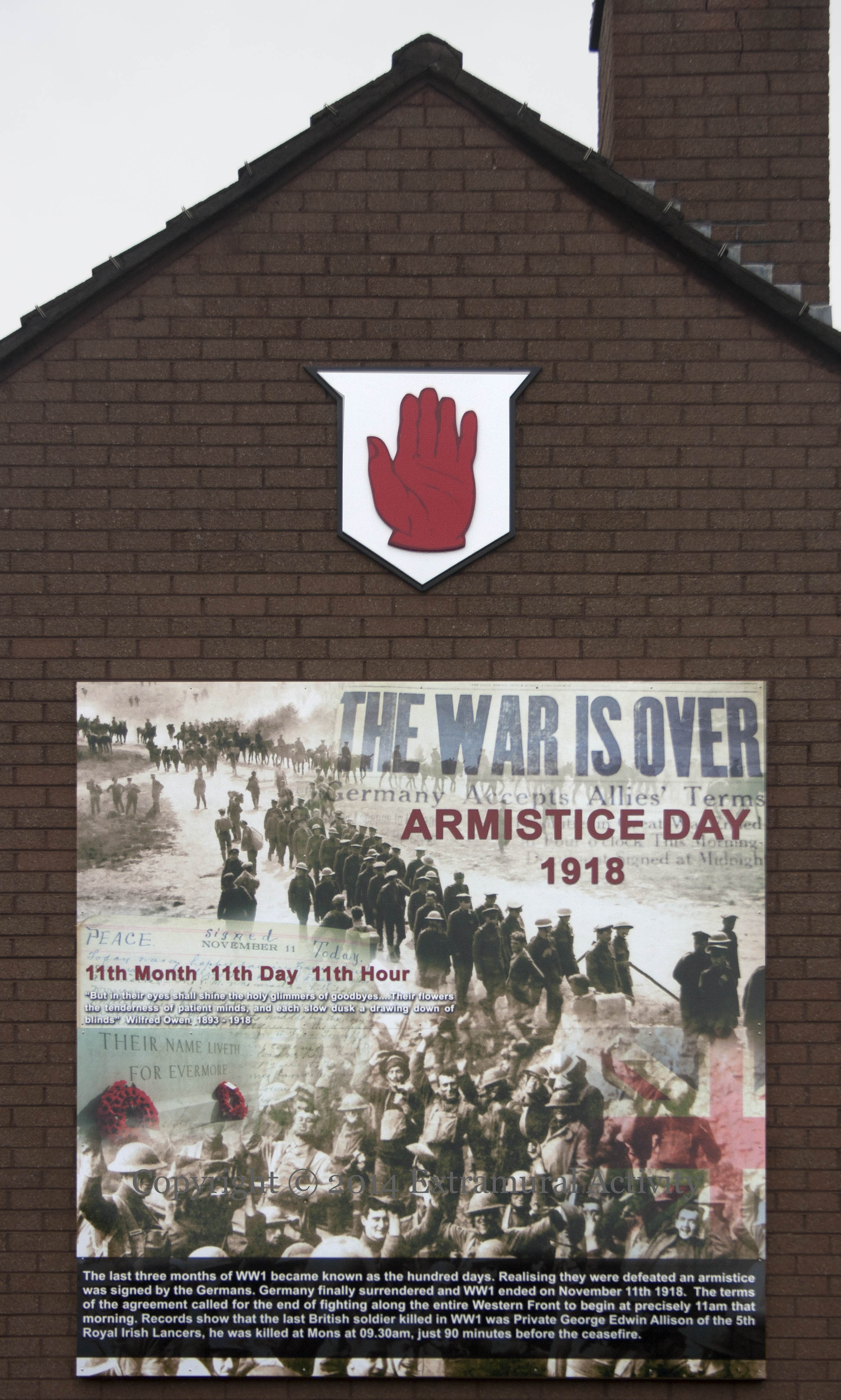
“But in their eyes shall shine the holy glimmers of goodbyes … Their flower the tenderness of patient minds, and each slow dusk a drawing down of blinds.” Lines from Wilfred Owens’ (1893-1918) ‘Anthem For Doomed Youth‘ on a new board in Lindsay Street.
The text at the bottom reads: “The last three month of WWI became known as the hundred days. Realising they were defeated an armistice was signed by the Germans. Germany finally surrendered and WWI ended on November 11th 1918. The terms of the agreement called for the end of fighting along the entire Western Front to begin a precisely 11 am that morning. Records show that the last British soldier killed in WWI was Private George Edwin Allison of the 5th Royal Irish Lancers. He was killed at Mons at 09:30 am, just 90 minutes before the ceasefire.”