We Are The Dead

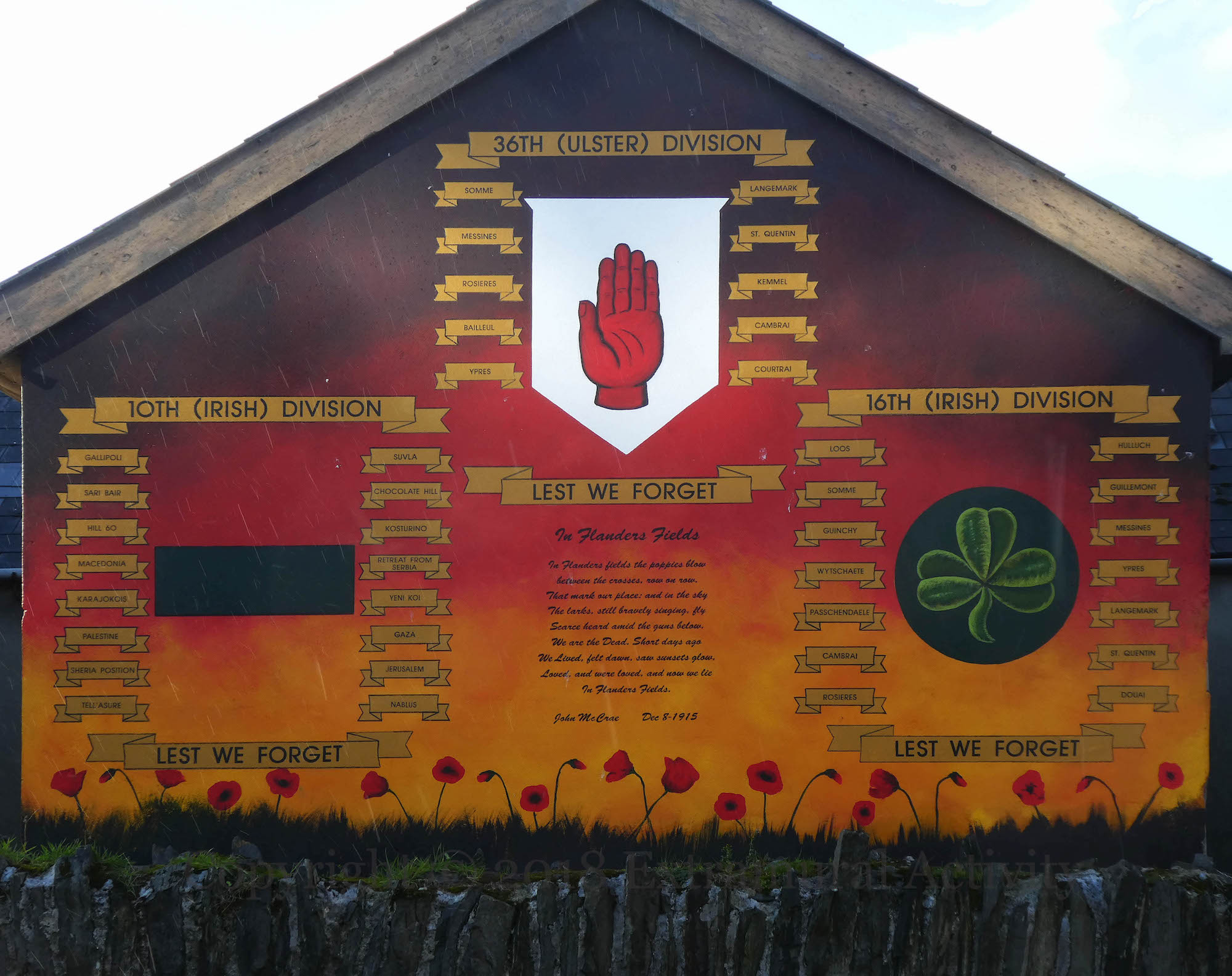
The 10th (Irish) Division fought only briefly “in Flanders fields”, towards the very end of the war, having spent most of its time in Gallipoli (in the Ottoman Empire), Macedonia, Egypt, and Palestine. The 16th took part in the Somme, especially at “Guinchy” [Ginchy] and Guillemont, while the 36th were deployed on the first day (the Battle Of Albert).

The poem in the middle is the first half of John McCrae’s In Flanders Fields: “In Flanders fields the poppies blow/Between the crosses, row on row/That mark our place, and in the sky/The larks, still bravely singing, fly/Scarce heard amid the guns below.//We are the dead; short days ago/We lived, felt dawn, saw sunset glow/Loved and were loved, and now we lie/In Flanders fields.”

Click image to enlarge
Copyright © 2018 Seosamh Mac Coılle
X06358 Ebrington Centre, Londonderry
Guns For Ulster

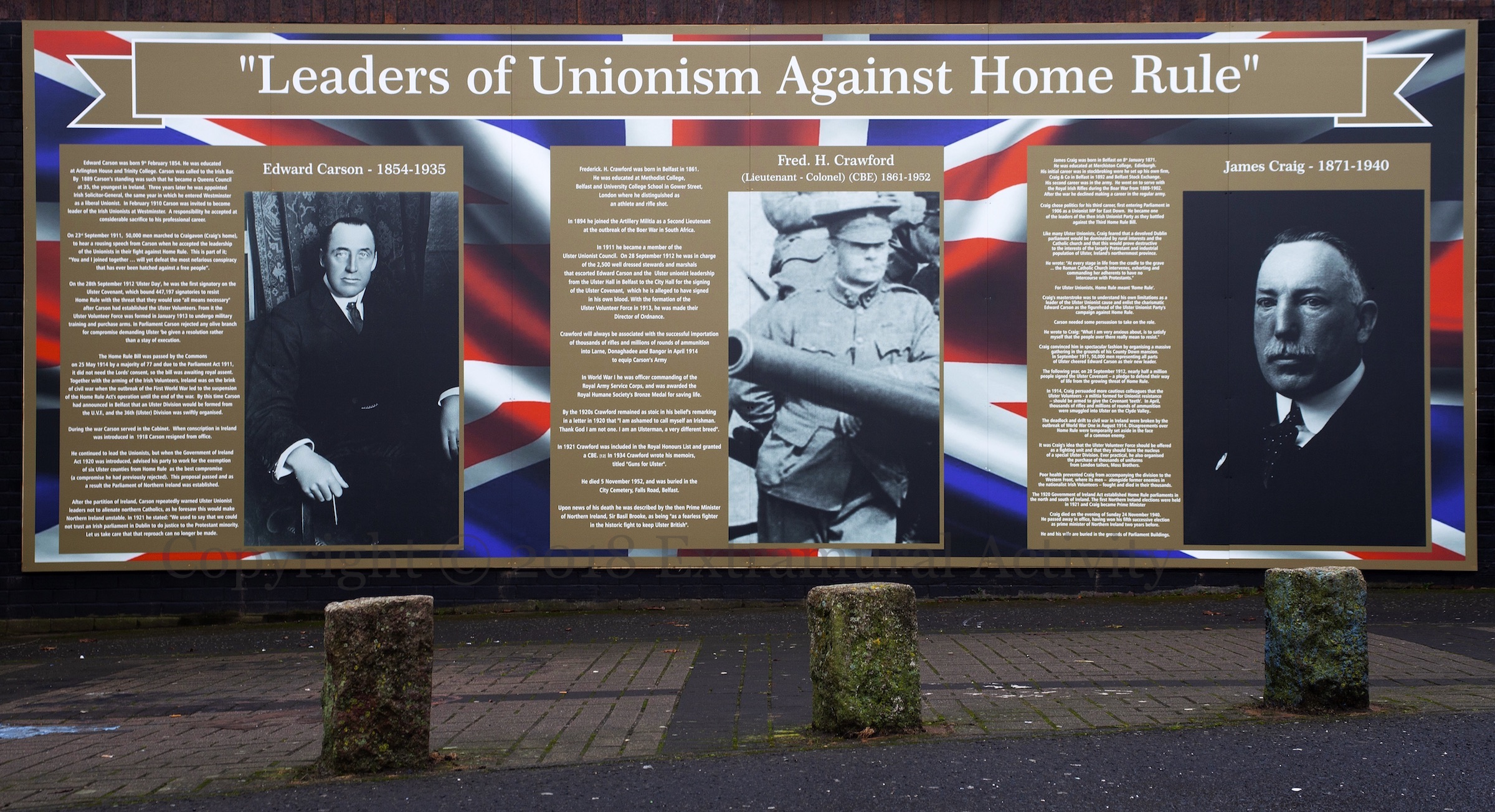
Carson, Crawford, and Craig are lionised as resisters of devolvement of Ireland to Dublin in the early twentieth century. Despite calling Home Rule “the most nefarious conspiracy that has ever been hatched against a free people” and vowing to fight it by “all means necessary”, including the Ulster Volunteers armed by Crawford’s “guns for Ulster”, Edward Carson “warned Ulster Unionist leaders not to alienate norther Catholics, as he foresaw this would make Northern Ireland unstable.”

Isthmus Street, east Belfast

Click image to enlarge
Copyright © 2018 Seosamh Mac Coılle
X06354

Tony Taylor Free

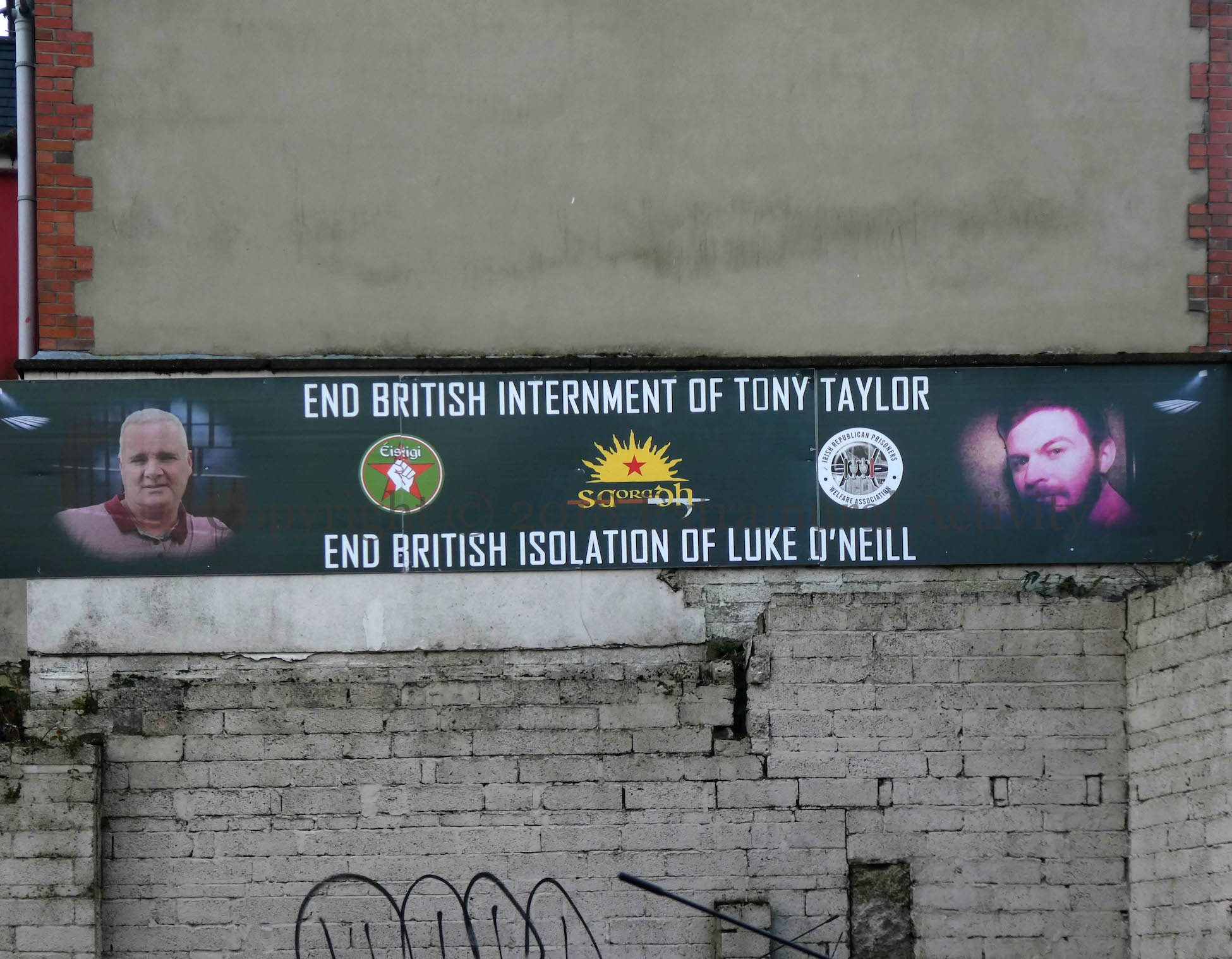
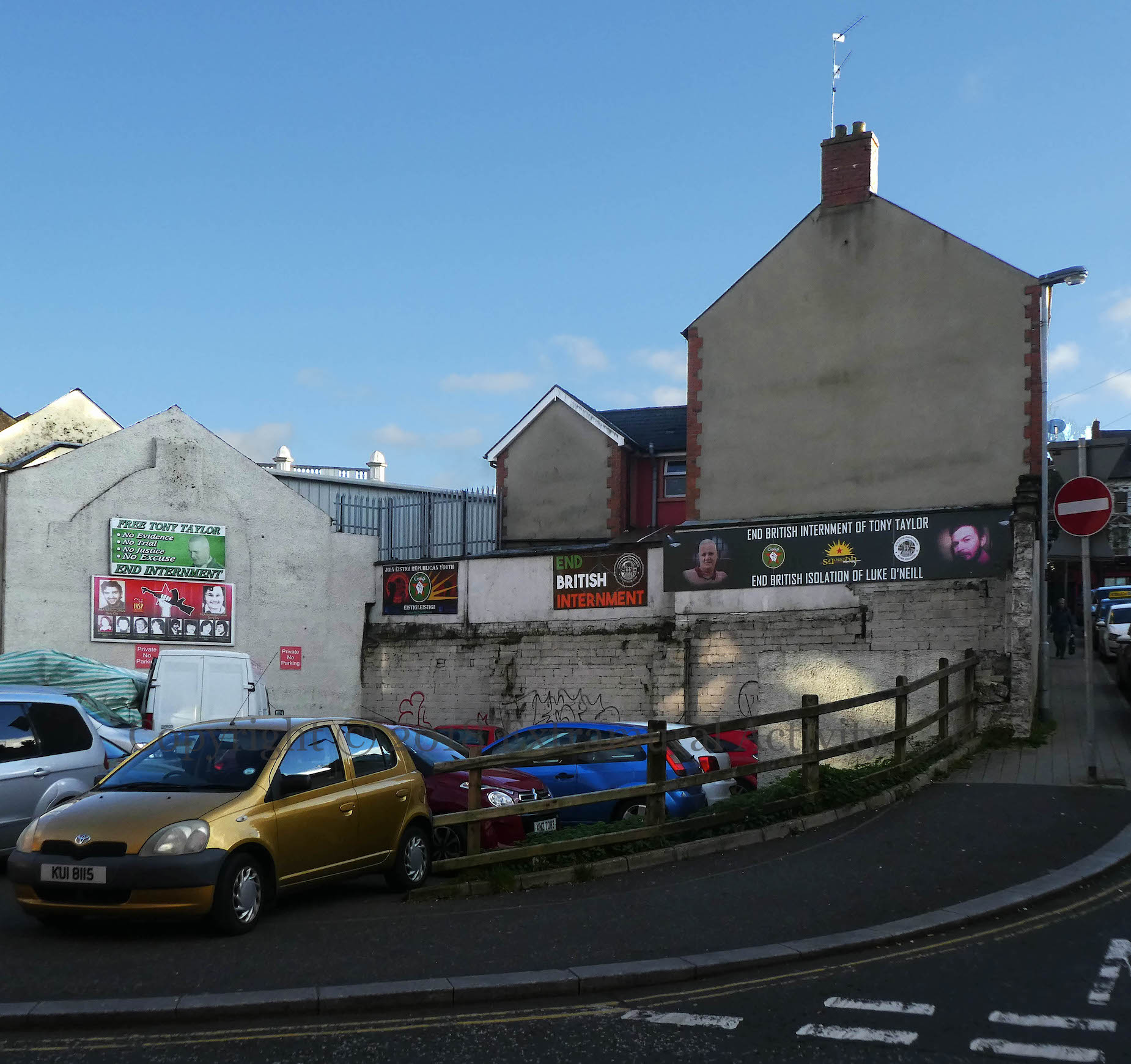
Republican prisoner Tony Taylor was released yesterday (November 28th) after 933 days in prison (BBC-NI | BelTel); for Taylor’s history in and out of prison, see Free Tony Taylor. As a result, two of the boards at the junction of William Street and Chamberlain Street will be out of date (see the wide shot, below).

In the image above, Taylor’s case is joined by that of Luke O’Neill. O’Neill is charged with attempting to kill police officers and fears for his safety in a mixed unit of Maghaberry, separated from republican prisoners in Roe House (Bel Tel).

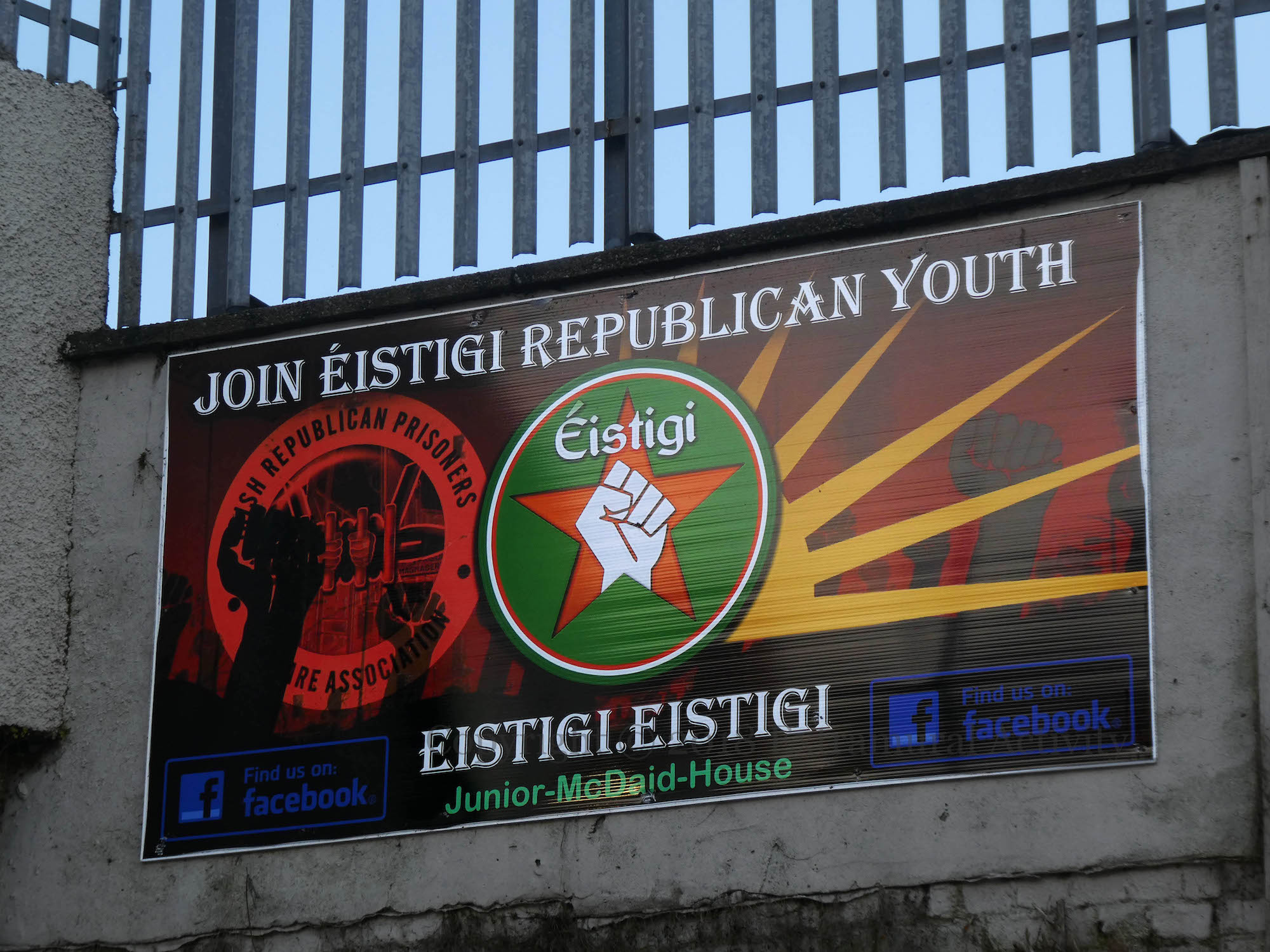
The other board (second image, below) is for Saoradh’s youth organisation, Éıstıgí. The Facebook page does not appear to be publicly visible; there is a page for Junior McDaid House in which both Saoradh (tw) and Éıstıgí have offices.

Click image to enlarge
Copyright © 2018 Seosamh Mac Coılle
X06356 X06357 X06355

Britain Remembers

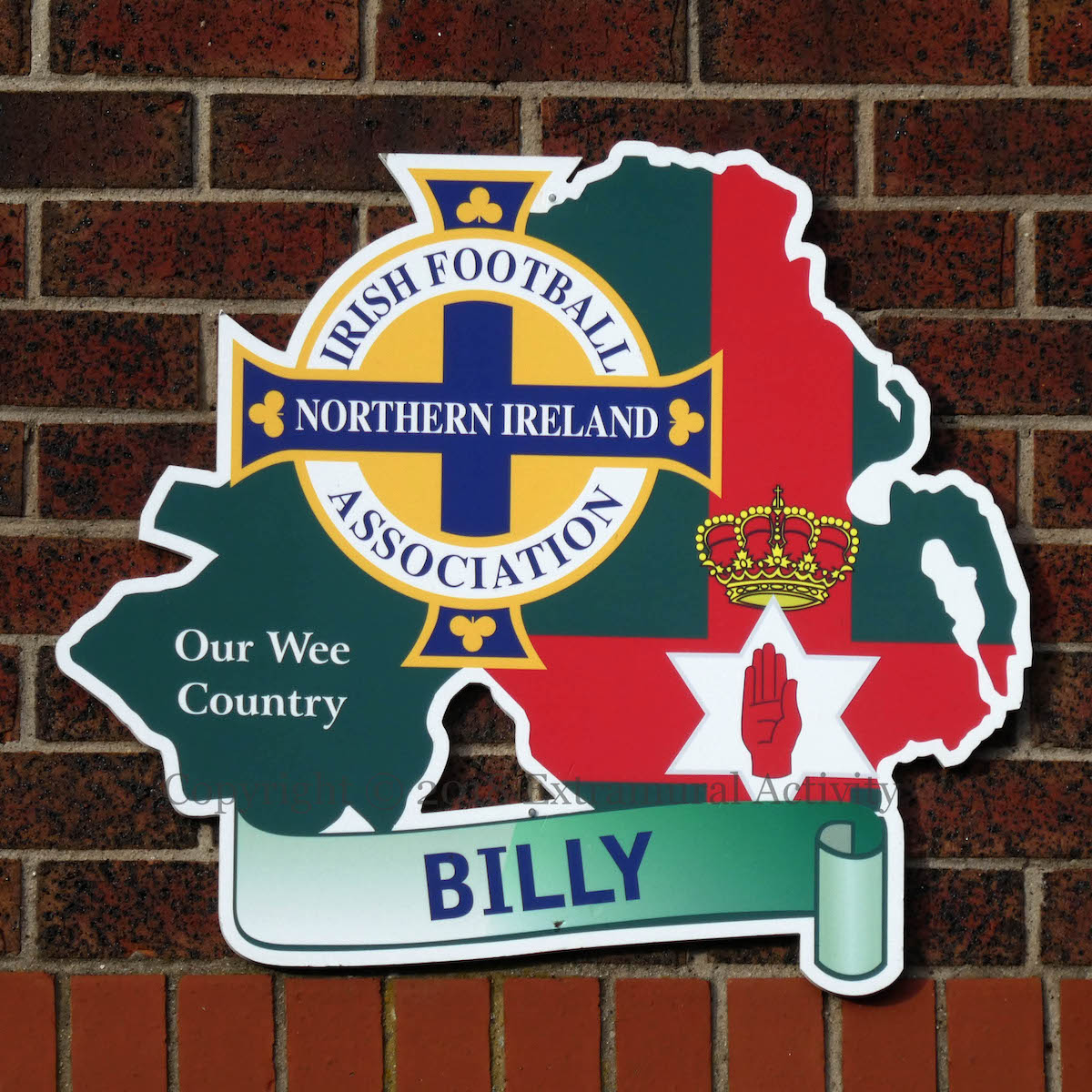
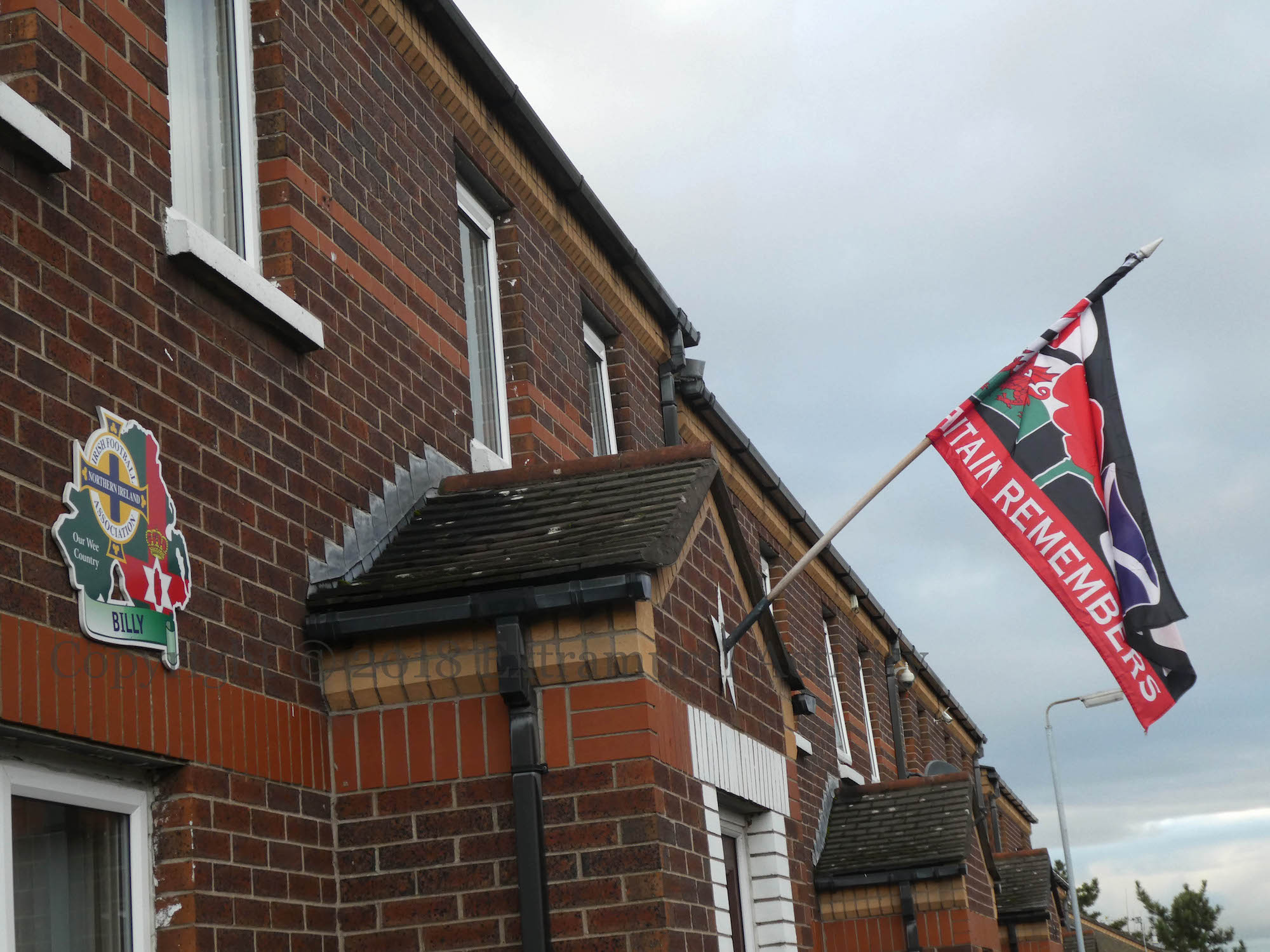
Although not completely visible in the image below, the ‘Britain remembers’ Remembrance Day flag includes the Ulster Banner, the flag of NI parliament until 1972, rather than the St Patrick’s Saltire. This is also the flag used by the Irish Football Association, the governing body of soccer in NI, to represent its teams, as is shown by the personalised supporter’s plaque in Cosgrave Heights. The organisation’s name derives from the fact that the body pre-dates partition and used to govern the whole island and not just “our wee country”.

Click image to enlarge
Copyright © 2018 Seosamh Mac Coılle
X06351 X06352

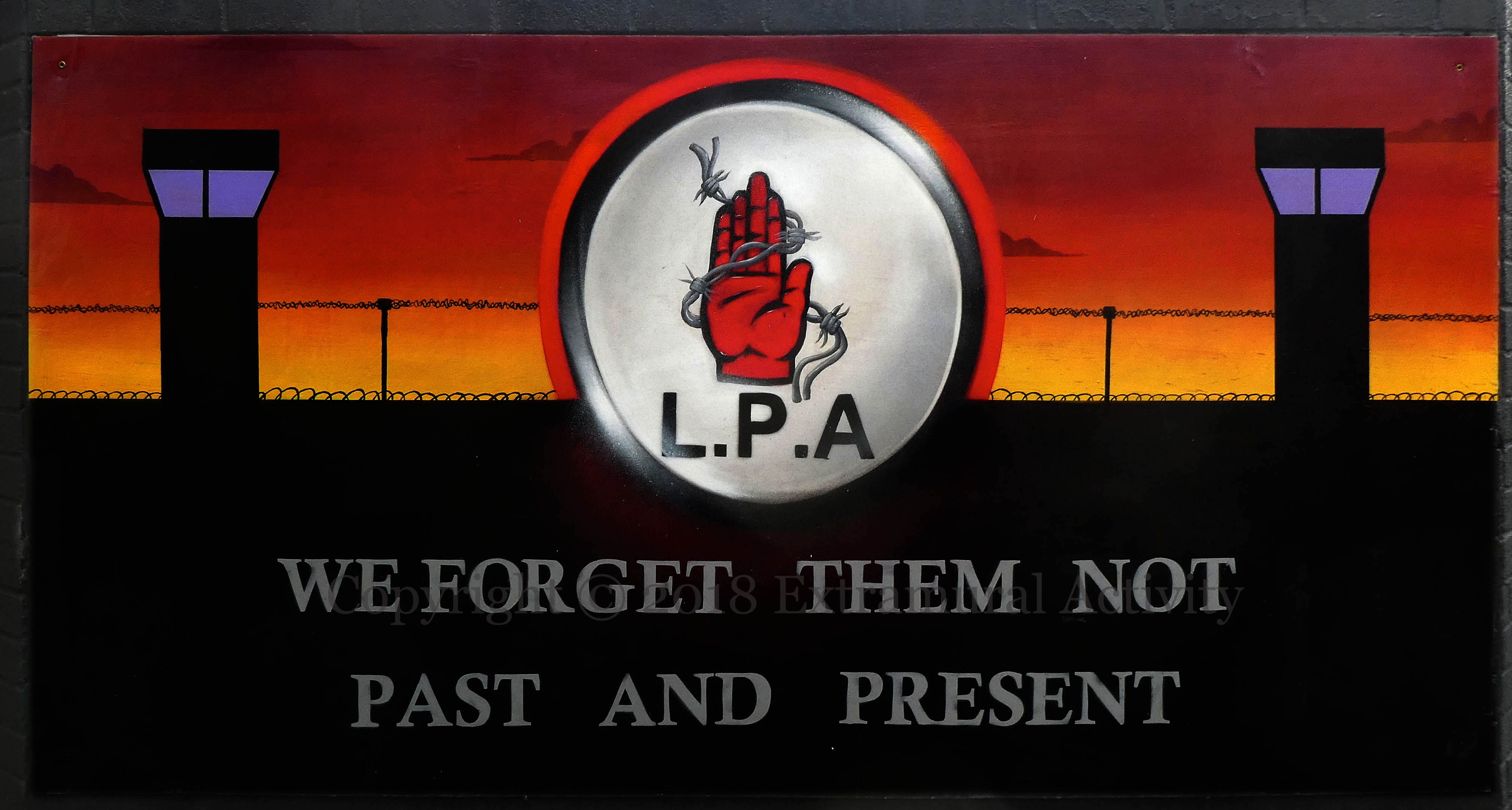
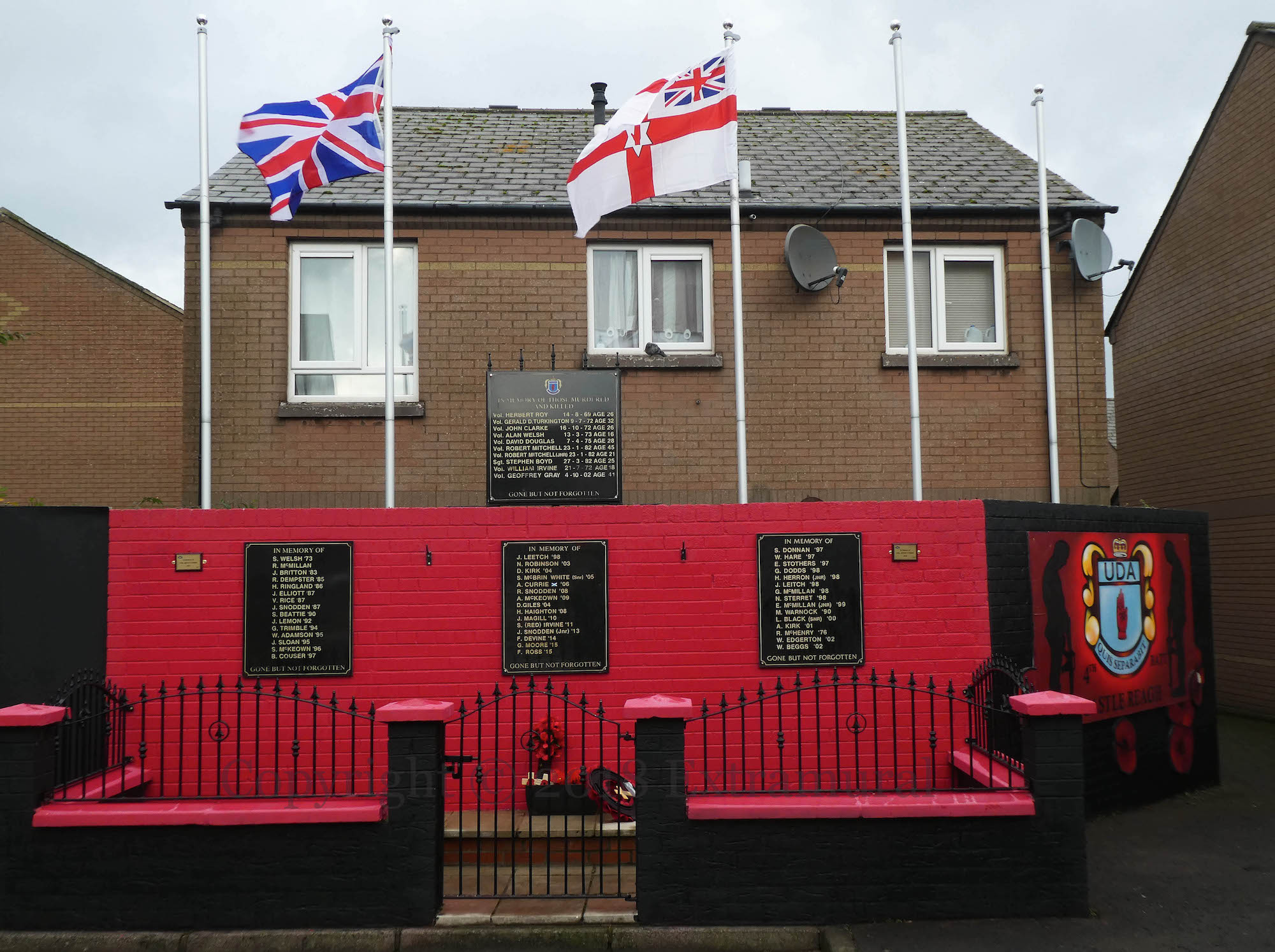
We Forget Them Not

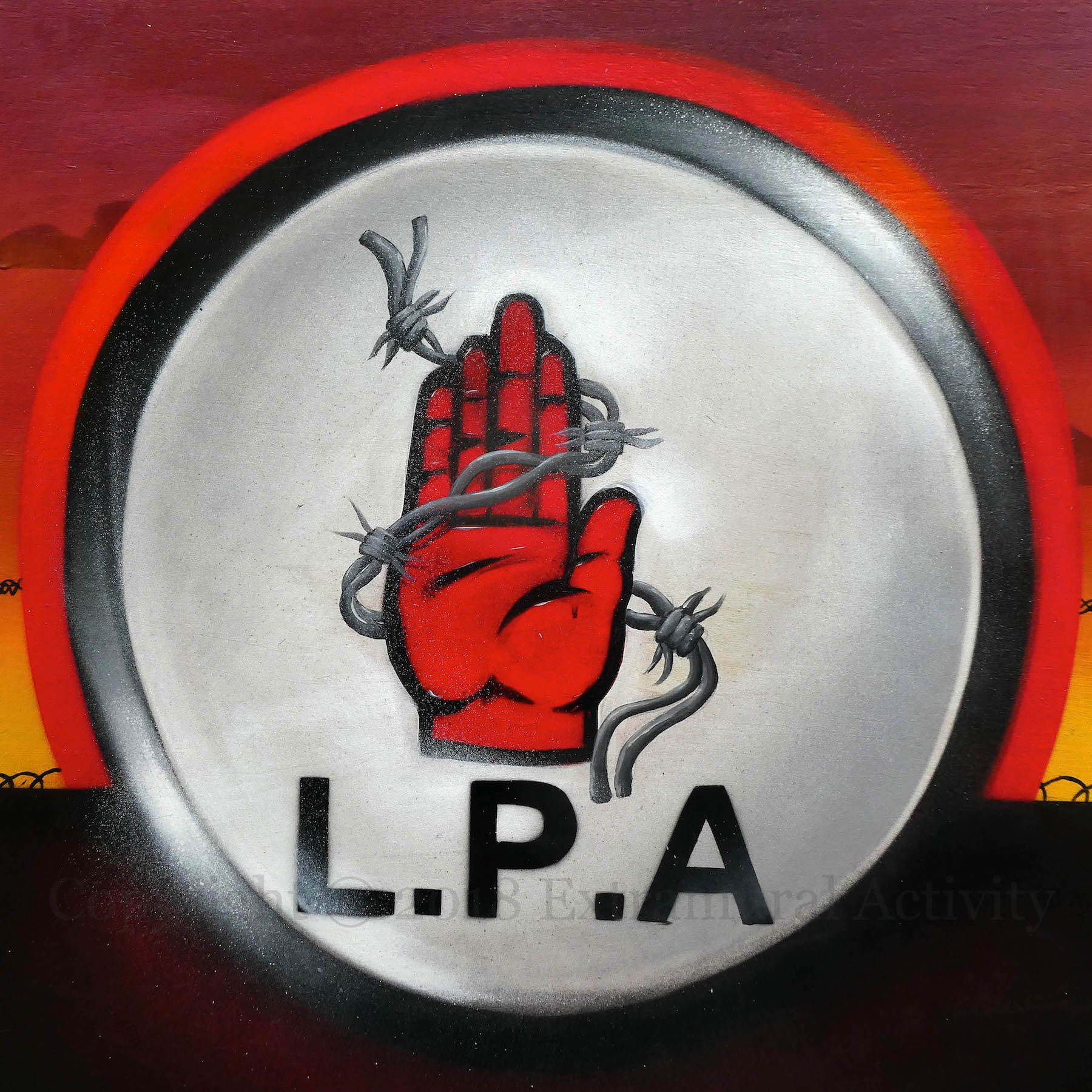
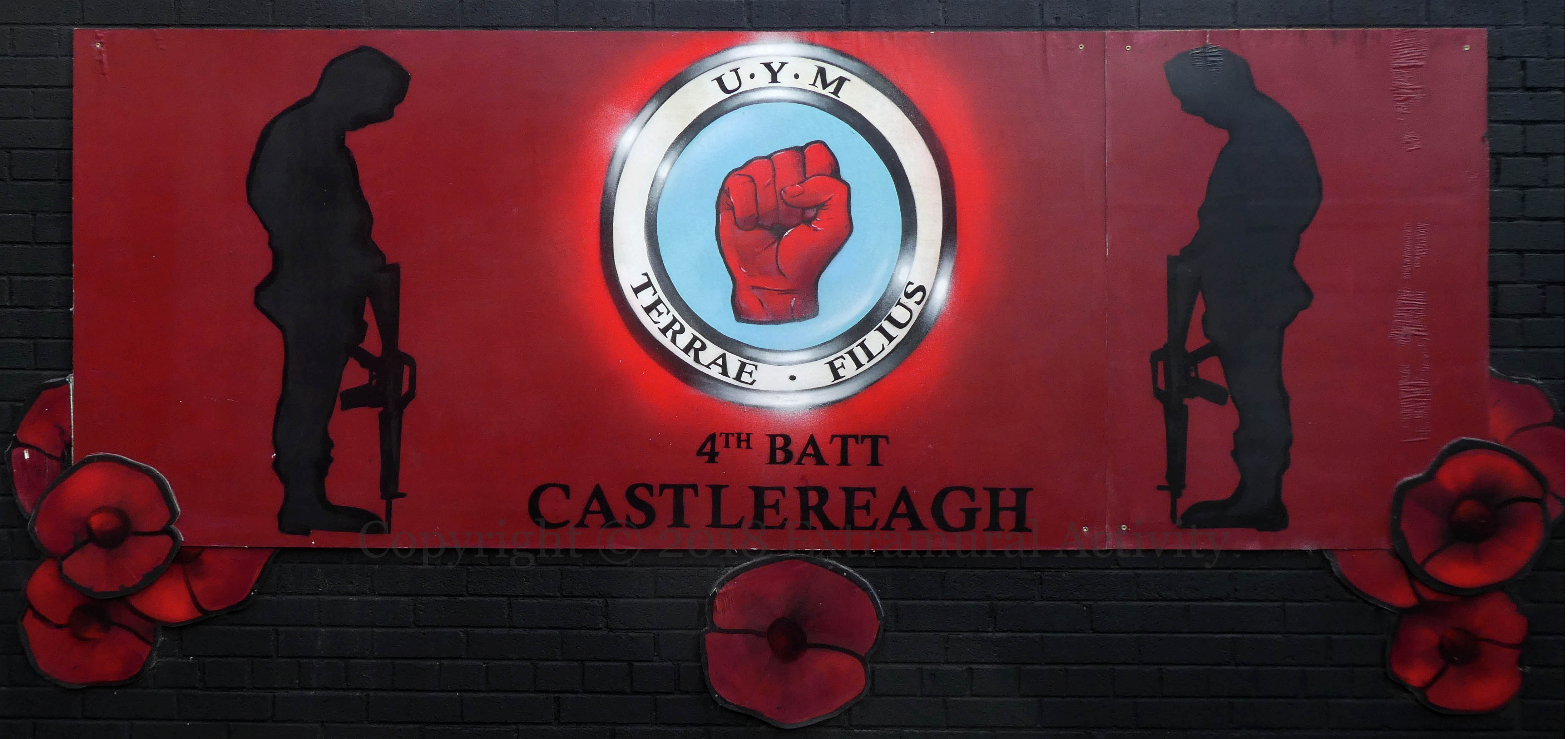
Three of the UDA/UYM/LPA murals in Kenbaan Street (see We Forget Them Not and Tomorrow Belongs To Us) have been replaced by the spray-painted boards shown here and the wall of the memorial garden repainted. The red colour-scheme matches the Tim Collins board to the left.

Click image to enlarge
Copyright © 2018 Seosamh Mac Coılle
X06347 X06346 X06344 X06348 [X06345] [X06349] [X06350]

The Menin Gates

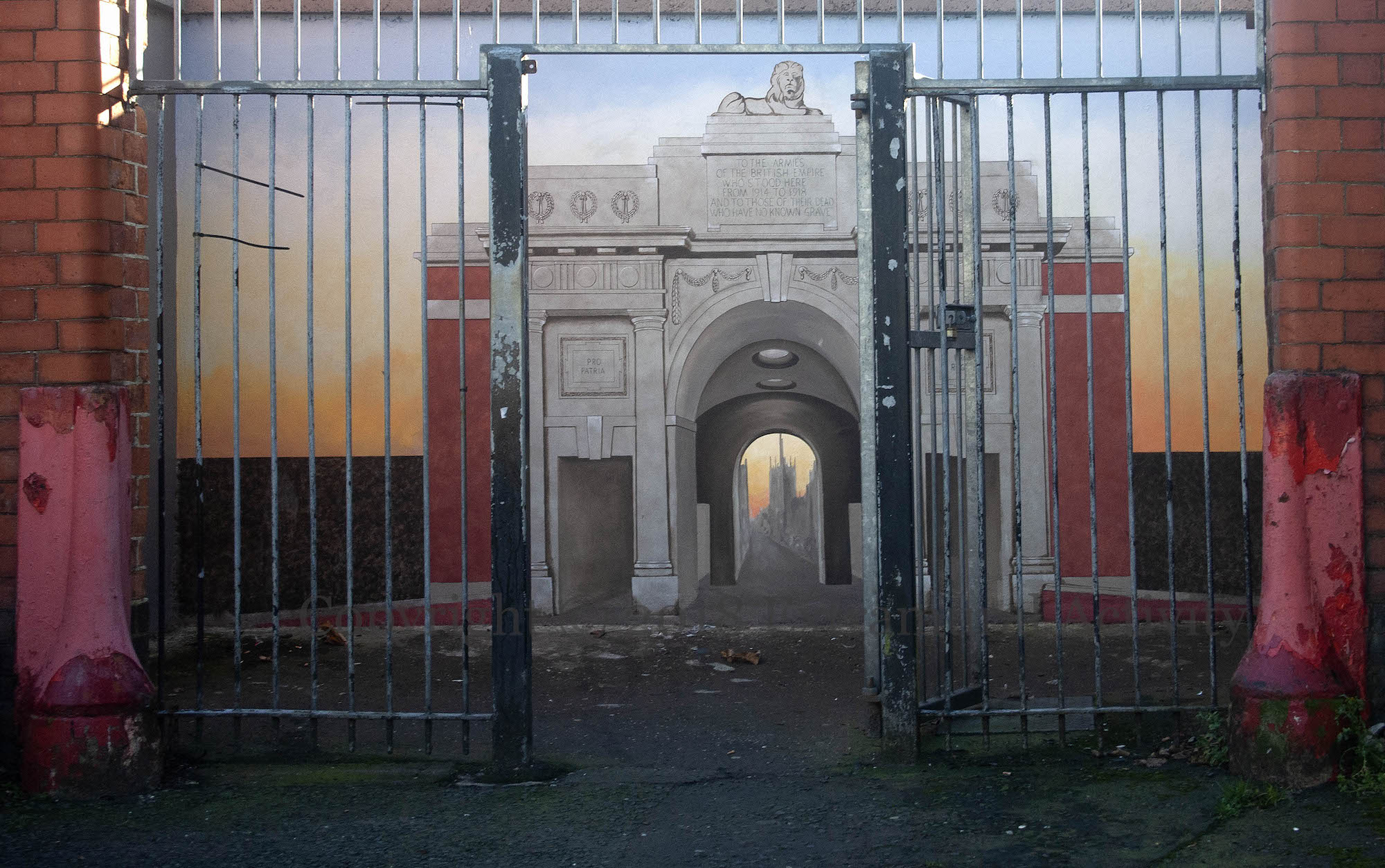
The Menin Gate memorial, at the eastern edge of Ypres, Belgium, commemorates 54,896 Commonwealth soldiers who died in the area during WWI and whose bodies were not recovered. “To the armies of the British Empire who stood here from 1914 to 1918 and to those of their dead who have no known grave.” The gates in the image above are off Bond’s Street, Londonderry, leading to the Ebrington Centre car park.

Click image to enlarge
Copyright © 2018 Seosamh Mac Coılle
X06335

Go West!

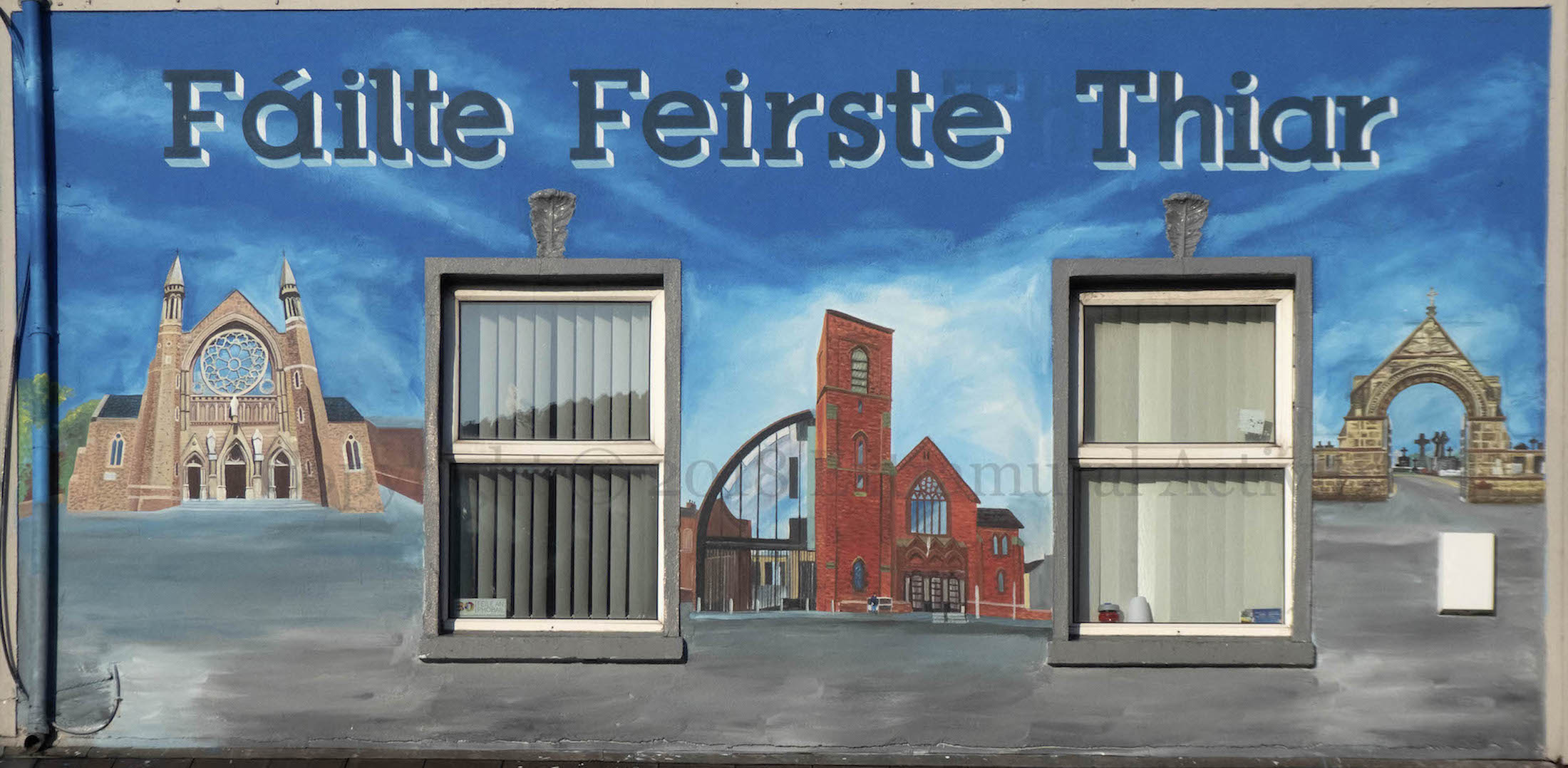
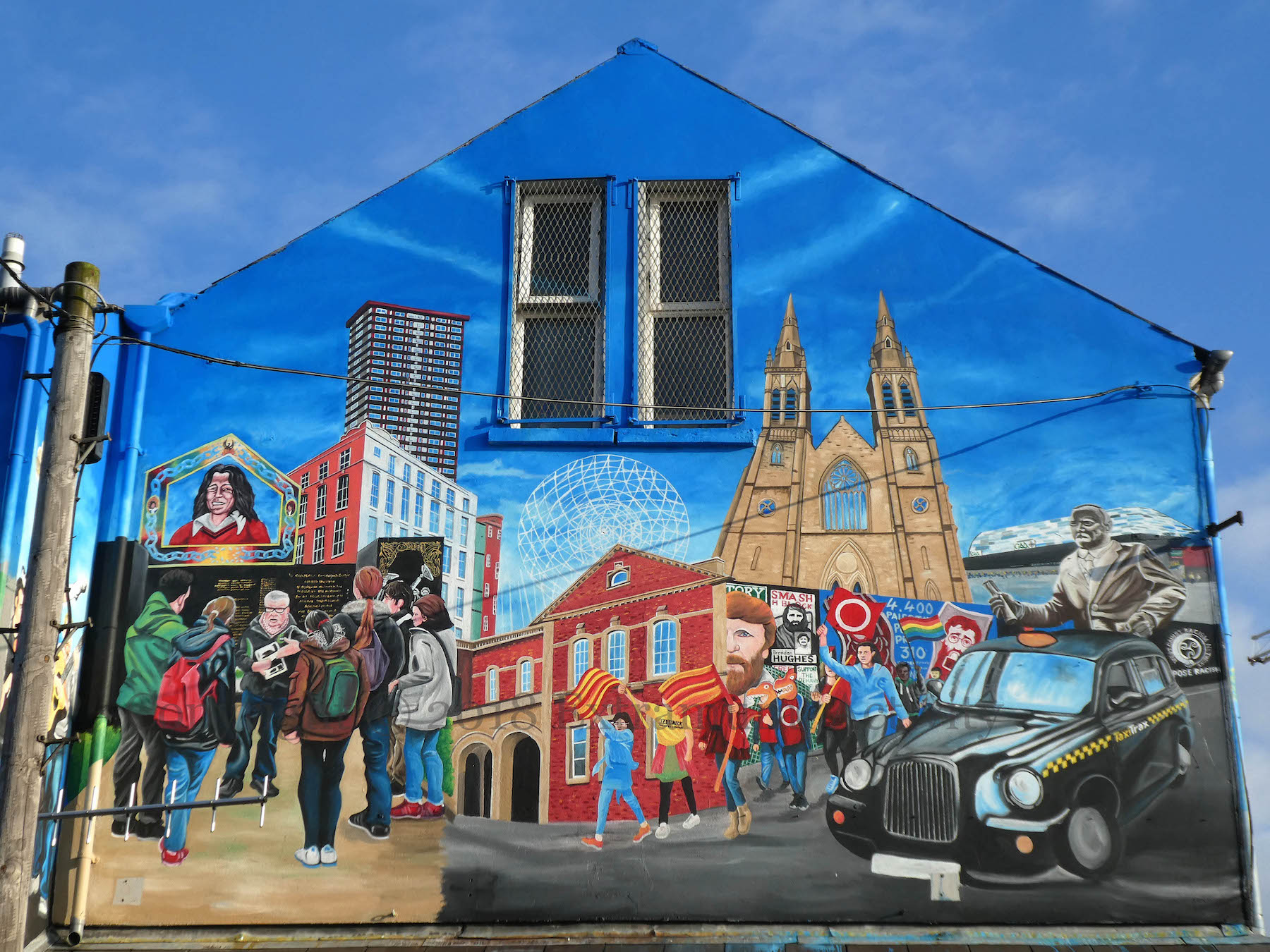
As you head west along Falls Road, you will pass by the three landmark buildings depicted in the mural above: Clonard Monastery, Cultúrlann McAdam-Ó Fıaıch (opposite this mural and the offices of Fáılte Feırste Thıar), and the entrance to Milltown Cemetery at the edge of Andersonstown. For the parts of the mural in Brighton Street, see The Conlan Revolution and Fáılte Feırste Thıar.

Click image to enlarge
Copyright © 2018 Seosamh Mac Coılle
X06338 X06341 brighton st marty lyons mickey doherty

Fáılte Feırste Thıar

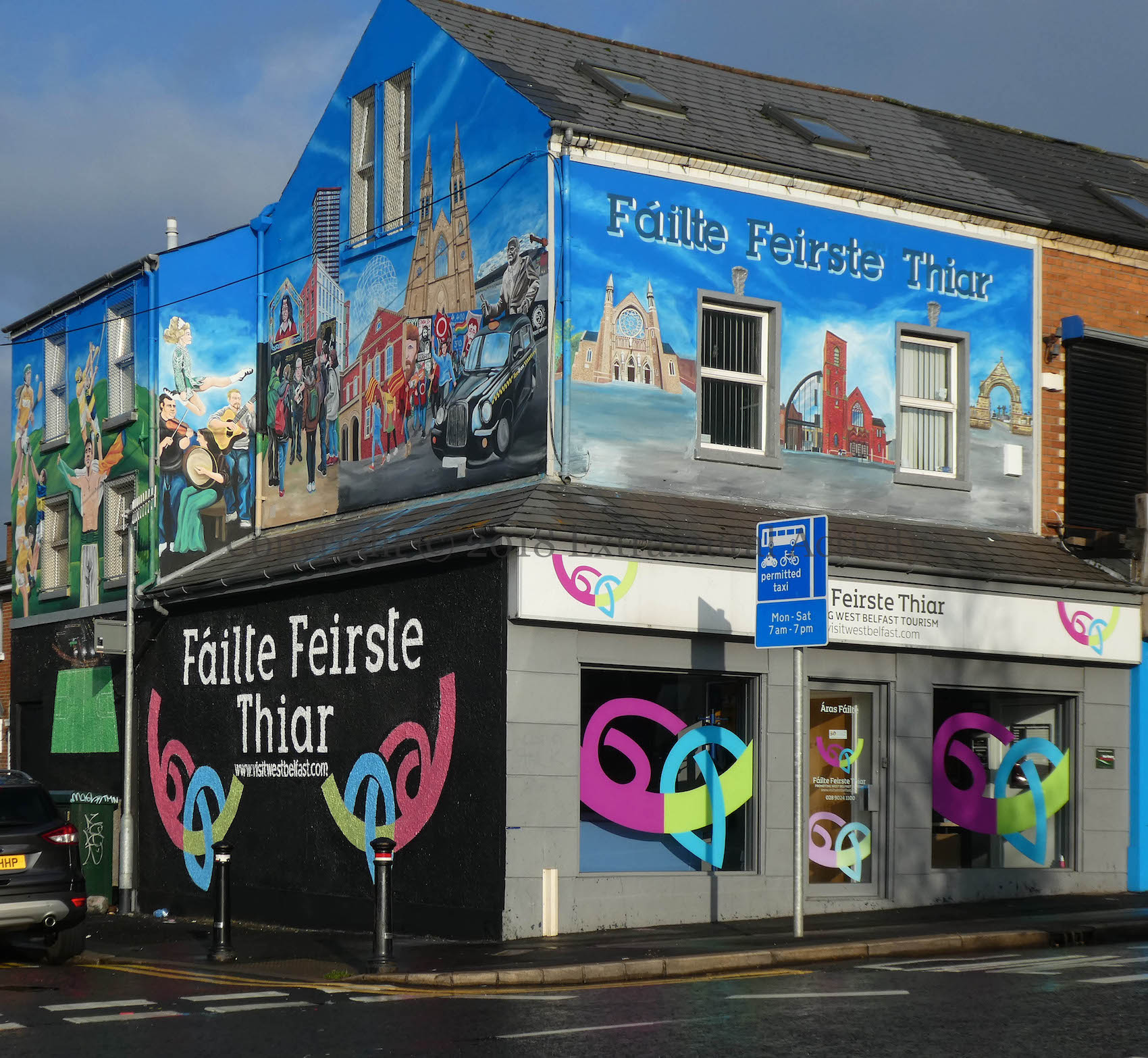
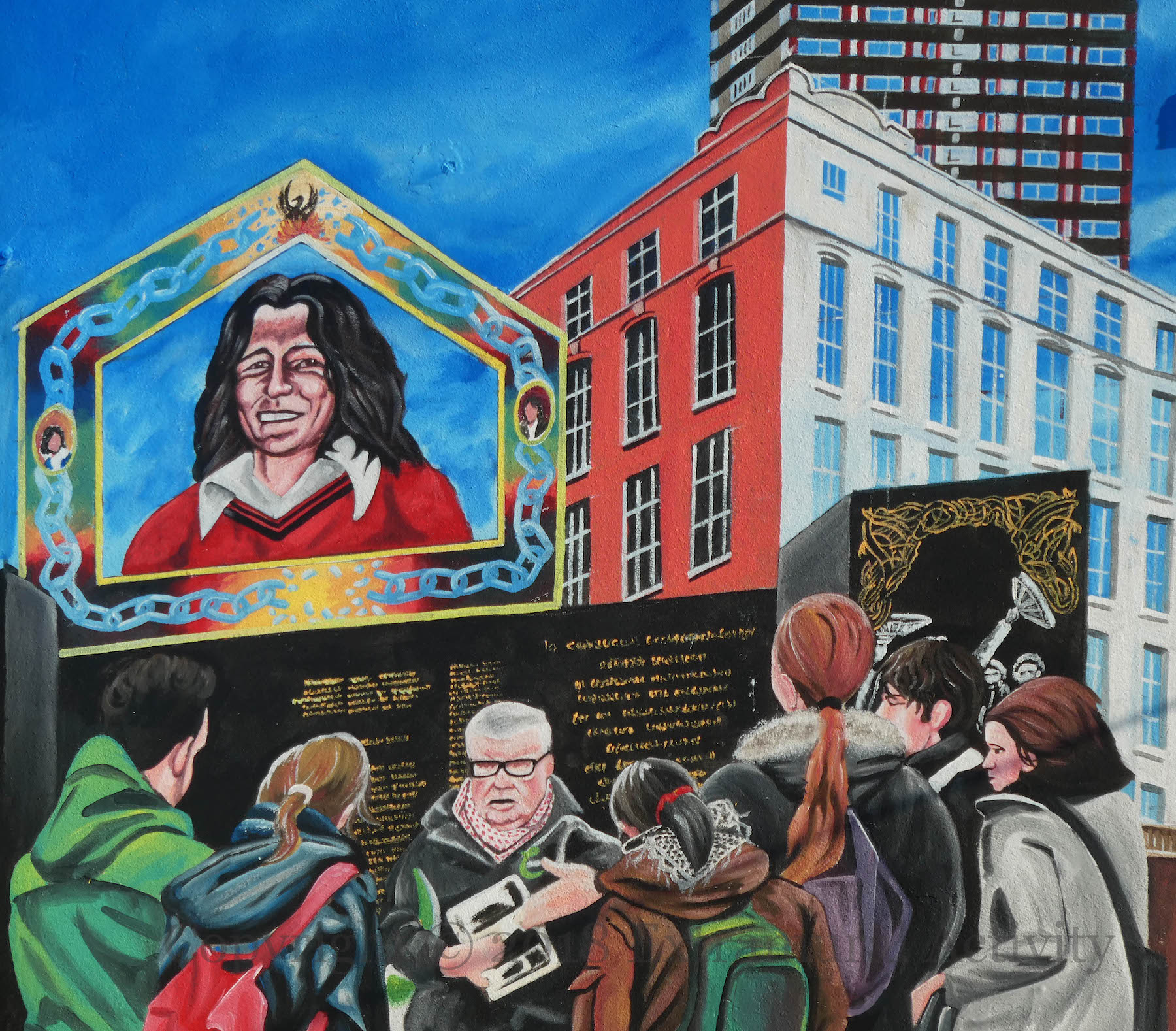
“Welcome to West Belfast.” The sights of nationalist west Belfast are depicted in (part of) a new mural by Mickey Doherty and Marty Lyons on the side wall of the tourist office. From left to right: The (2015) Bobby Sands mural in Sevastopol Street, tourists being introduced to the IRA D Company memorial garden on the lower Falls by Peadar Whelan, Conway Mill, Divis tower, RISE at the bottom of Broadway (better known as the “Balls on the Falls”), the Falls library, the “international wall” in 2012 (with marchers in support of a nondescript international cause, crocodiles for the Irish language, and gay rights), St Peter’s pro-cathedral, a black taxi, the Connolly statue outside Comhaırle Phobaıl an bhFál, and the model for the new Casement Park stadium.

Click image to enlarge
Copyright © 2018 Seosamh Mac Coılle
X06340 X06339