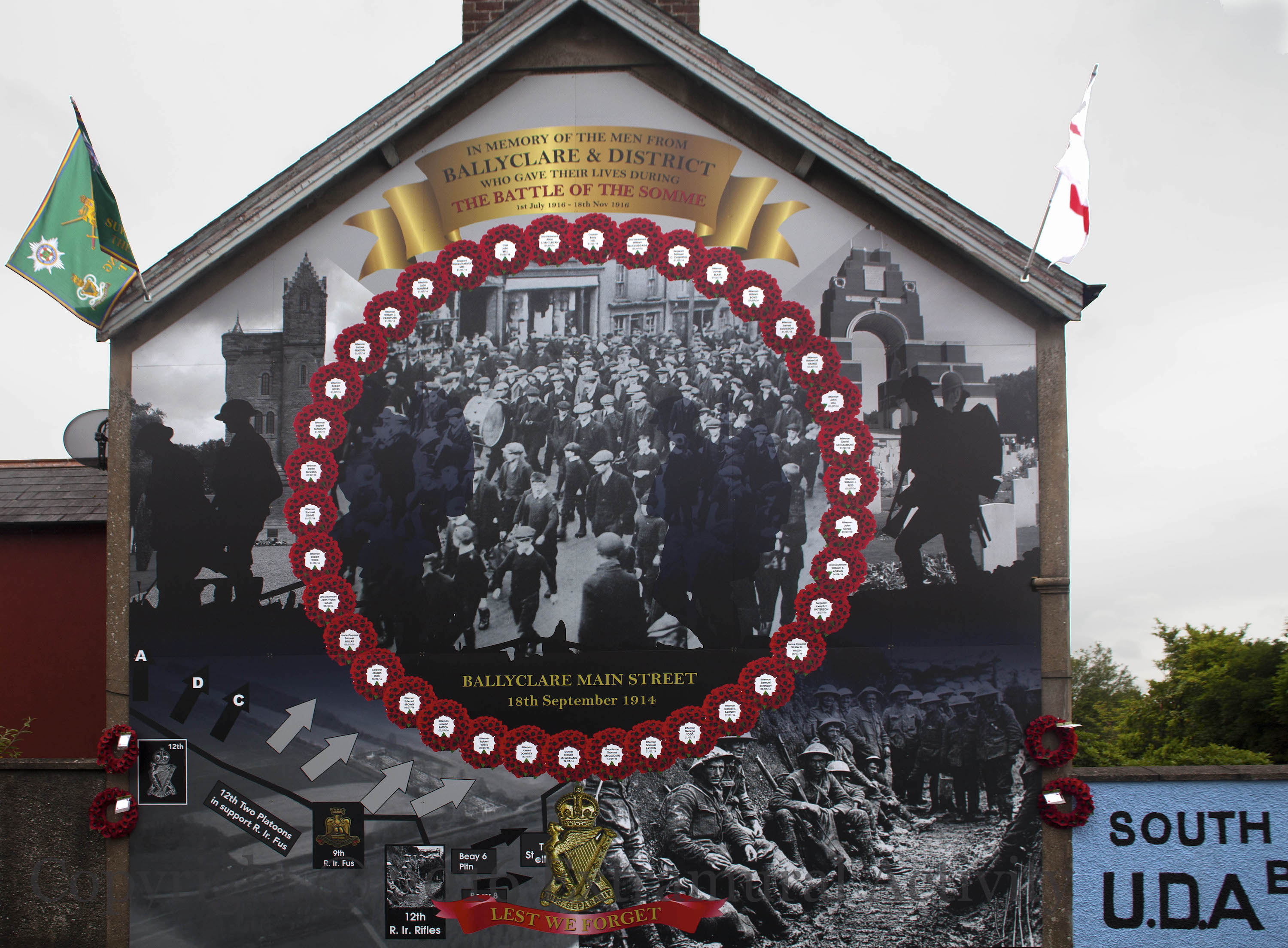
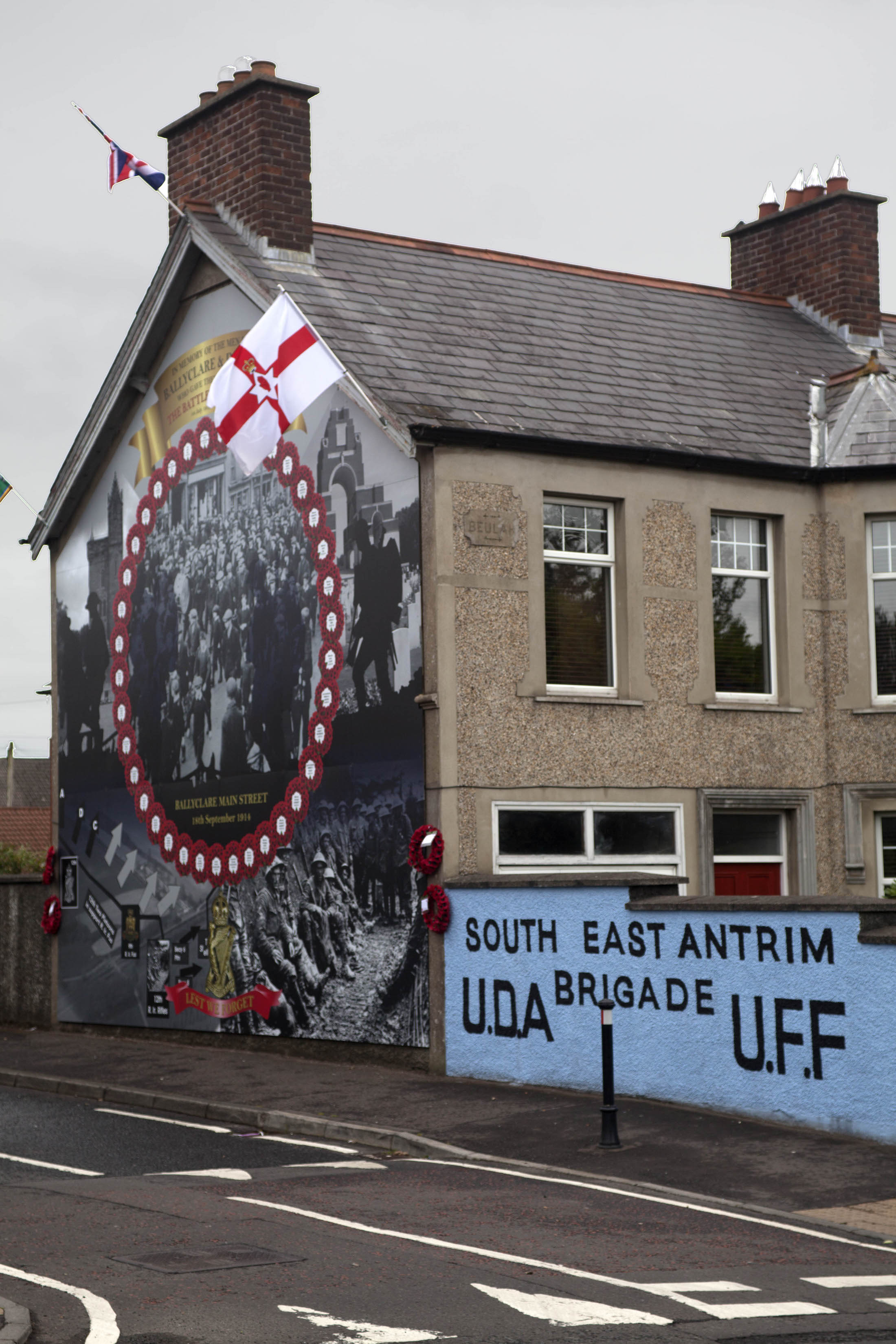
Garlands of poppies, one for each of 38 local men “who gave their lives during the Battle of the Somme 1st July 1916 – 18th Nov 1916”, form a circle around a photograph of “Ballyclare Main Streeet 18th September 1914” as the men go off to war. For information about 17 of the men, see this Love Ballyclare page.
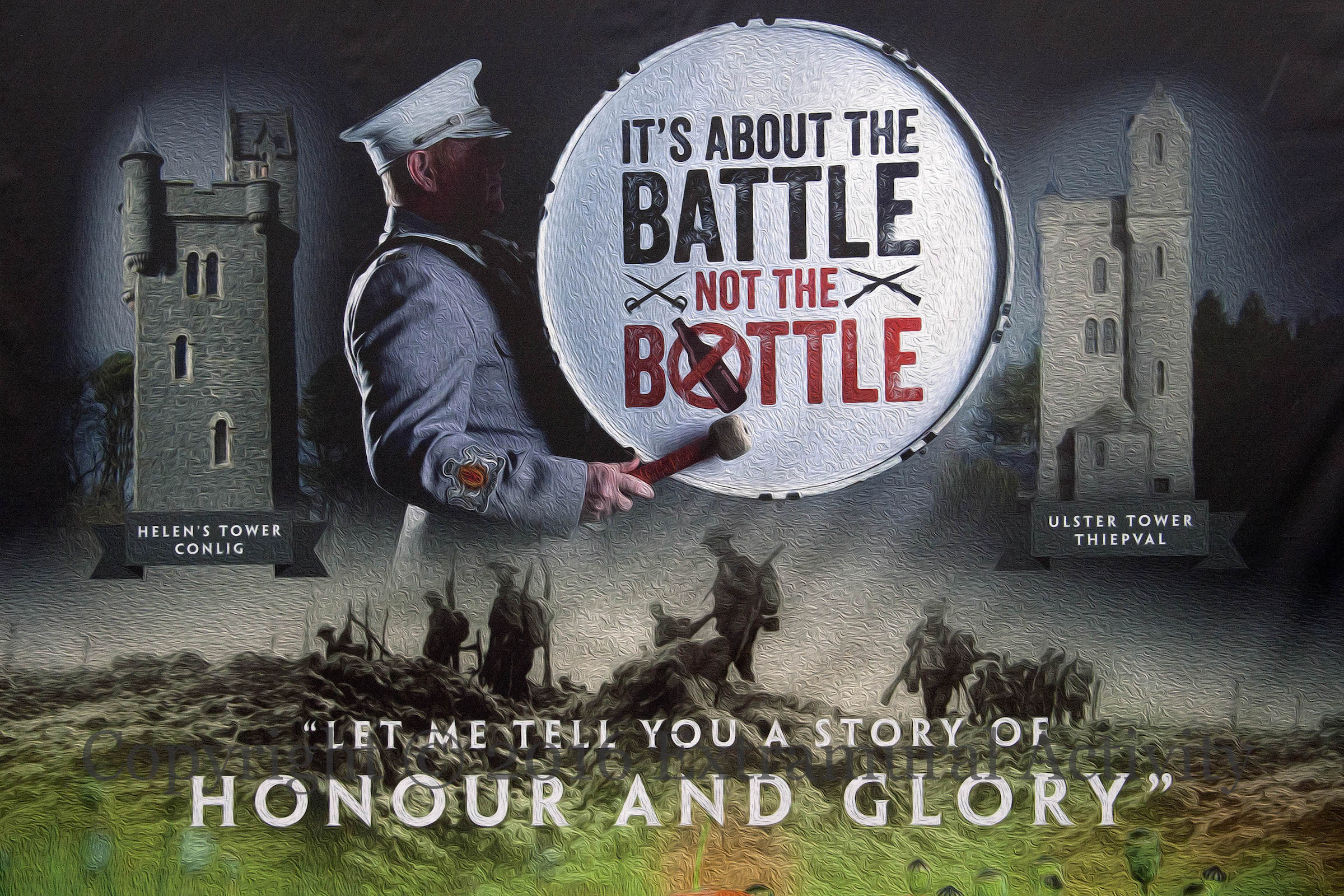
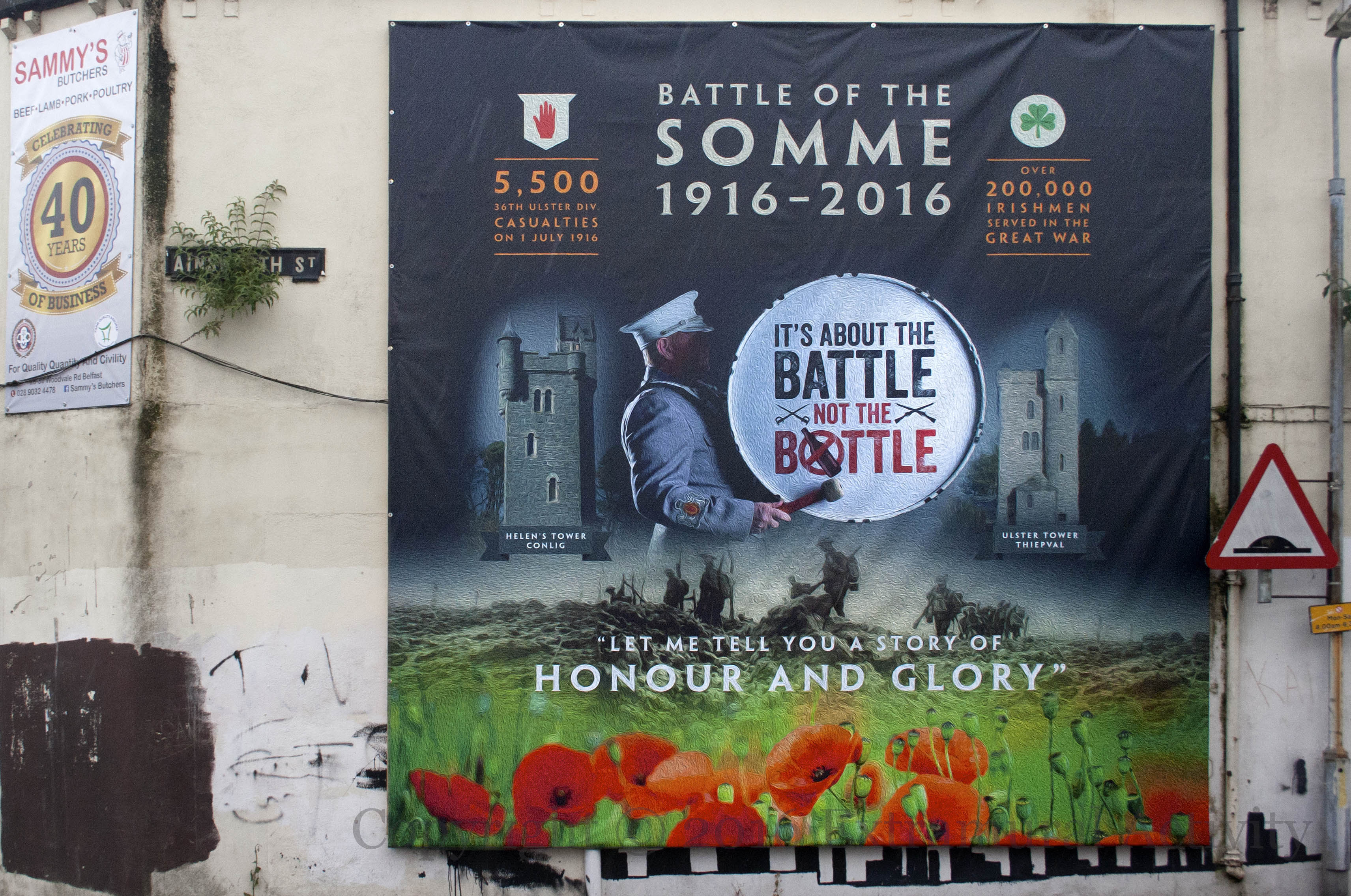
A 2012 Belfast Telegraph opinion piece asked “Is it Orangefest or vodka and Orangefest?” This year sees a campaign to curb alcohol consumption during marching season (including both the centenary of the Somme on July 1st and the traditional Twelfth celebration of the Battle of the Boyne) using the slogan “It’s about the battle not the bottle” and the hashtag #battlenotbottle. Here is a NewsLetter article on the campaign, which includes 25,000 beermats bearing the message.
It also contains (as shown in the wide shot, below) figures for both the number of casualties suffered by the 36th (Ulster) Division on July 1 at the Battle of the Somme (5,500) and the number of Irishmen who served in the Great War (200,000).
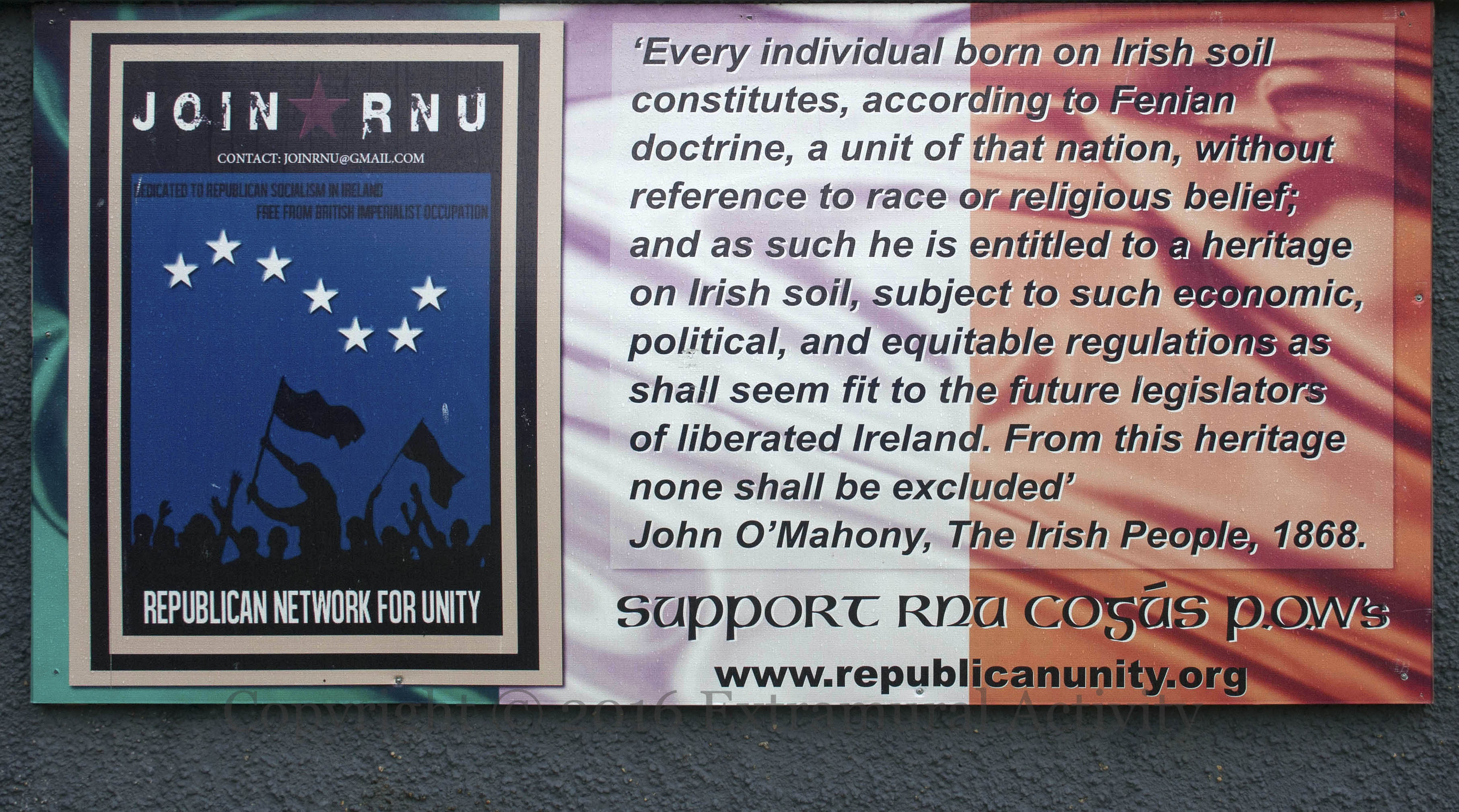
John O’Mahony was an Irish-born but American-based republican who founded the Fenian Brotherhood, whose goal was to send arms and financial support to the Irish Republican Brotherhood in Ireland (Brittanica).
His words from the IRB newspaper The Irish People are used in this RNU [“www.republicanunity.org“] board in Derry: “Every individual born on Irish soil constitutes, according to Fenian doctrine, a unit of that nation, without reference to race or religious belief; and as such he is entitled to a heritage on Irish soil, subject to such economic, political and equitable regulations as shall seem fit to the future legislators of liberated Ireland. From this heritage none shall be excluded.”
The date given is 1868, but the paper closed in 1865 when its offices were raided and its executives, including manager O’Donovan Rossa, were arrested.
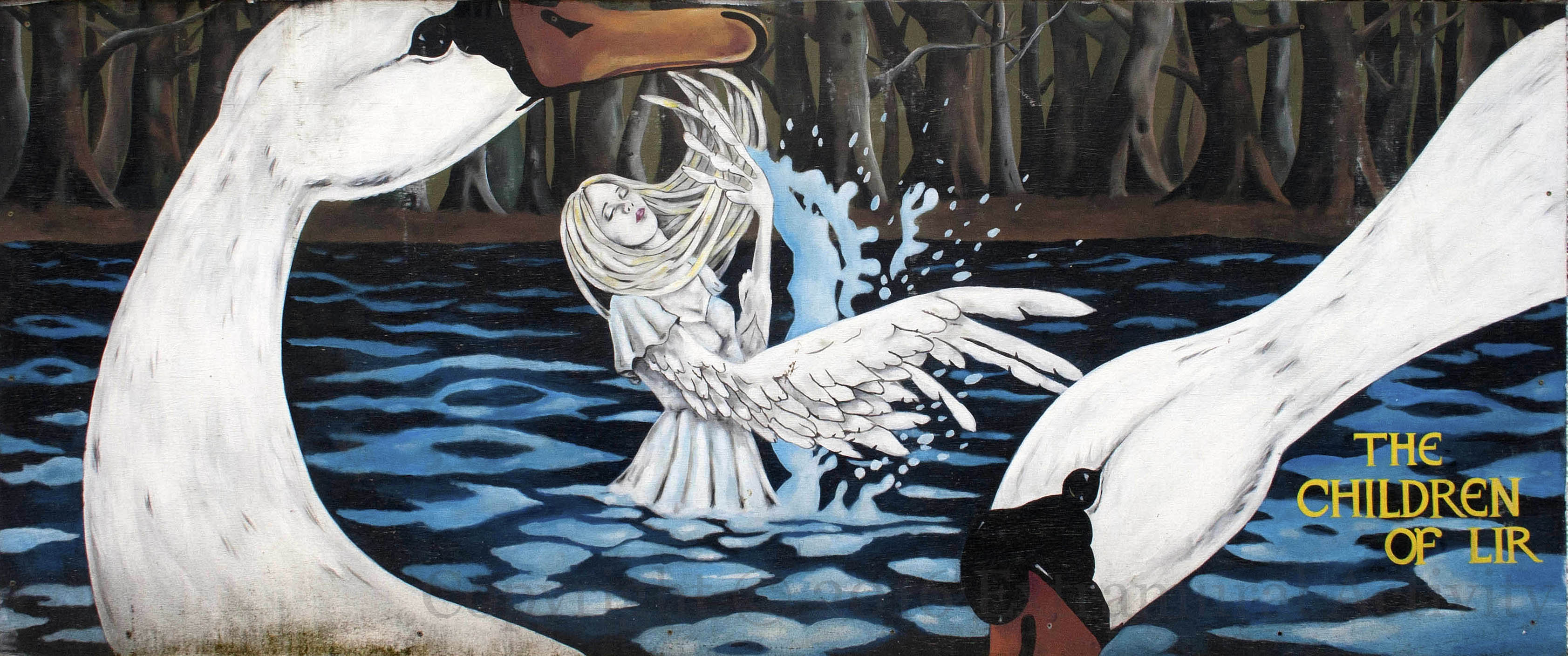
Step-mother Aoıfe resents the bonds between her husband Lear and his children and their love for their lost mother and turns them into singing swans for 900 years, by the end of which time Christianity had come to Ireland. A monk heard their song and recognised them. At his touch, they are restored to human form. Being 900 years old, they die immediately but not before being baptised.
For another ‘baptised before death’ story, see the story of the mermaid Lí Ban in Sea-Born.
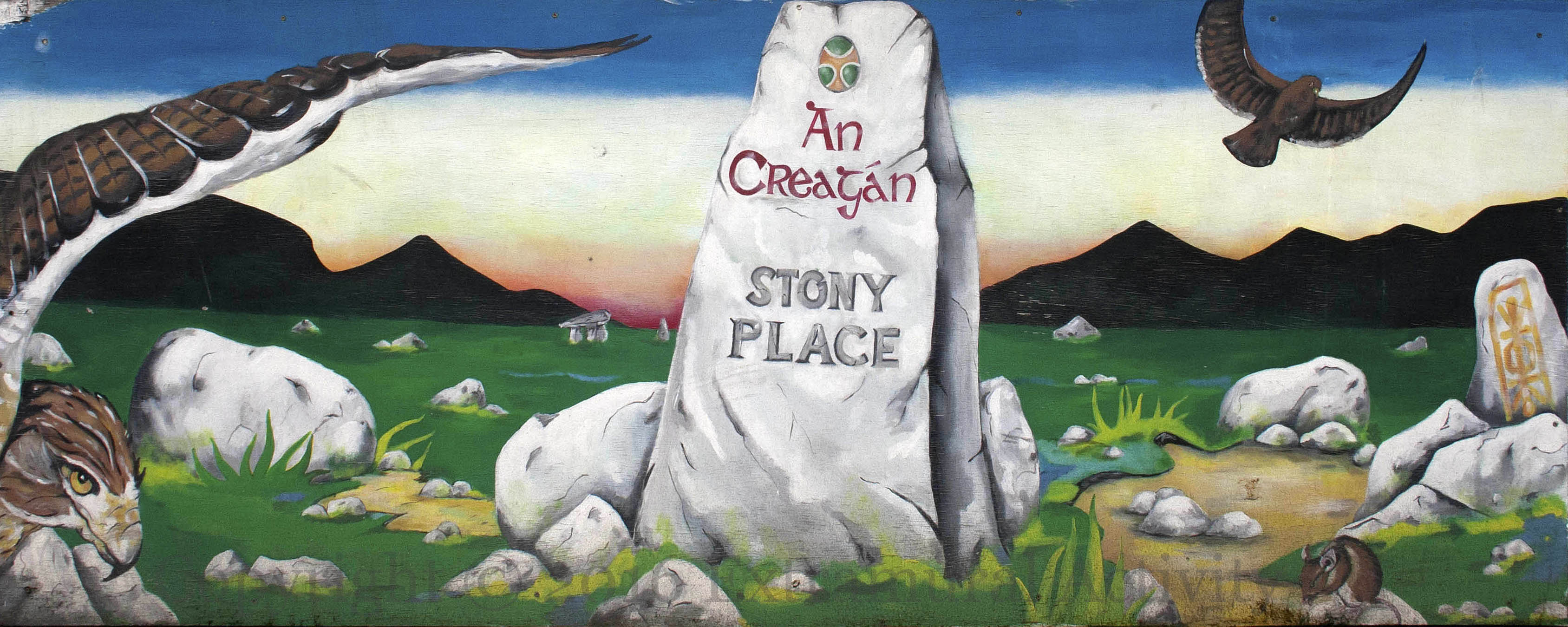
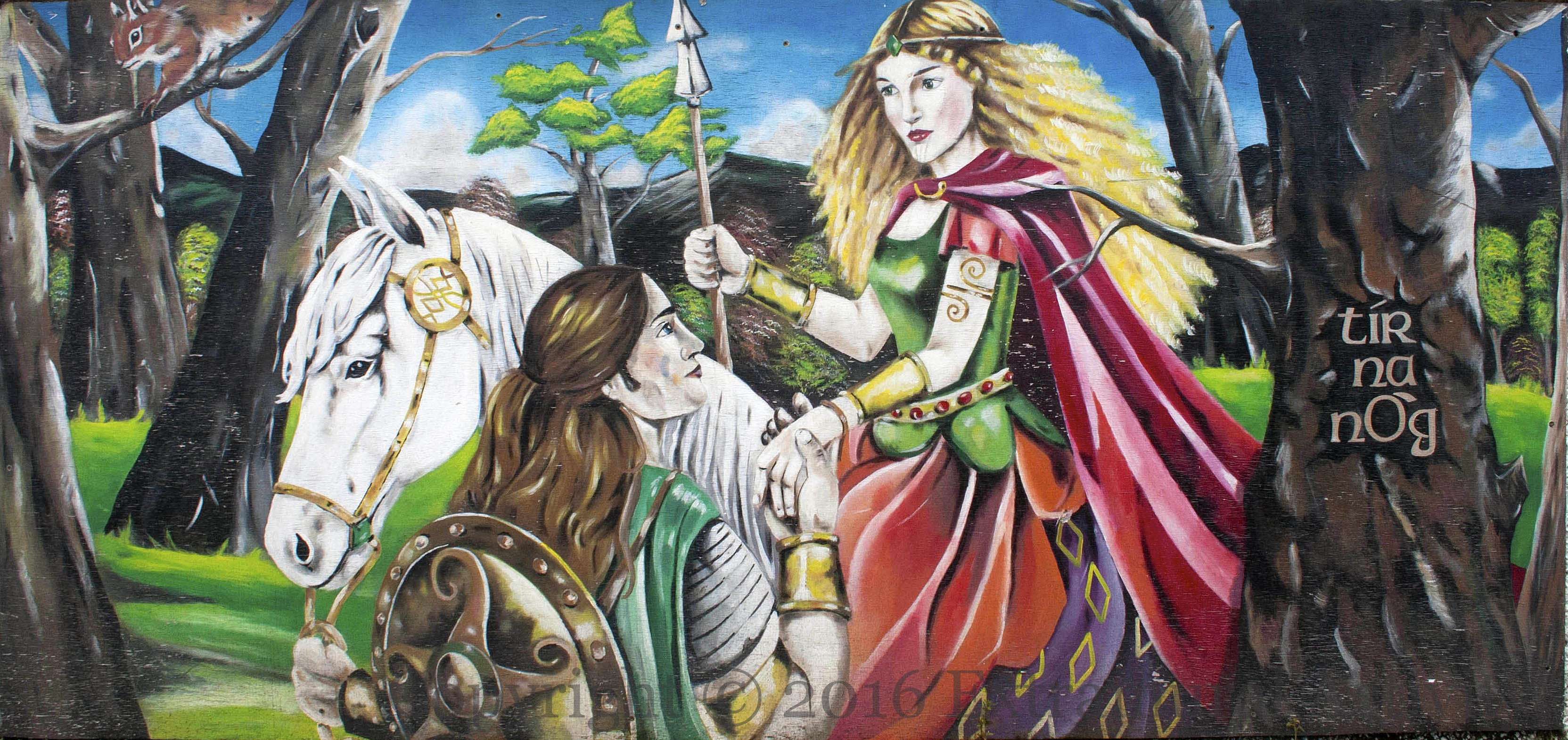
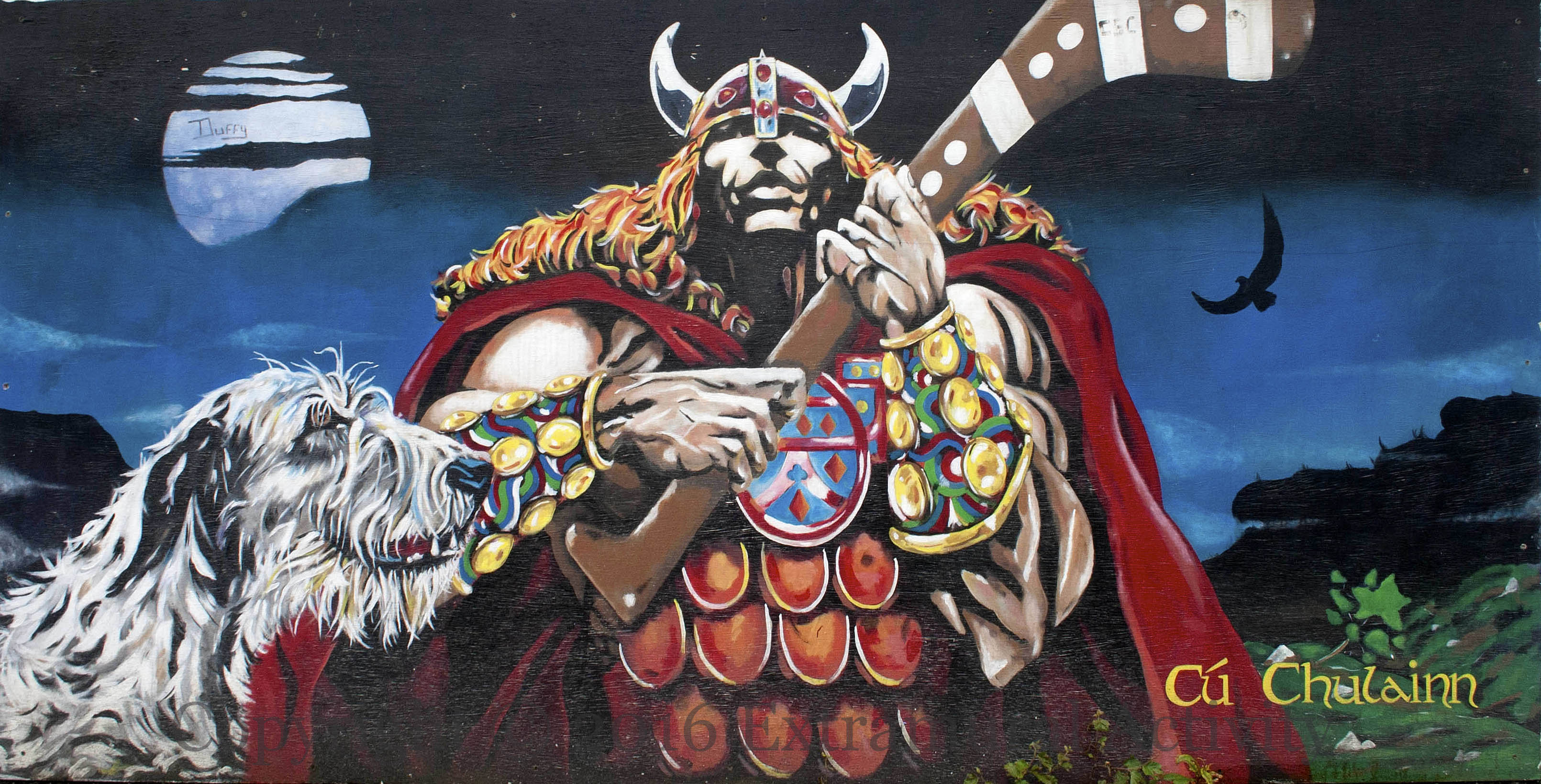
This is the third of three Celtic mythology boards in Creggan/An Creagán, Derry. See previously: Tír Na nÓg and Cú Chulaınn.
In the myths of the Tuatha Dé Danann, the Fıan Oısín falls in love with Nıamh from the Land Of Youth, but after three years — which is 300 human years — he yearns to return to Ireland. She gives him a magic horse that will preserve his youth while he remains on it. But he falls from it and dies of old age.
“Cú Chulaınn” is Irish for “Culann’s Hound” after the boy Setanta killed the smith’s hound and promised to take its place until another one was raised. In one version of the legend, Setanta kills the original hound by driving a slıotar (hurley ball) down its throat – hence the hero is shown here holding a camán (hurley stick) rather than a sword. In the original picture on which this mural is based, the hero is not Cú Chulaınn but Jim Fitzpatrick’s vision of Nuada Silverarm and he carries a sword.
On the right hand side, Tuan the hawk/eagle/sea-raven bears witness to all of Irish history.
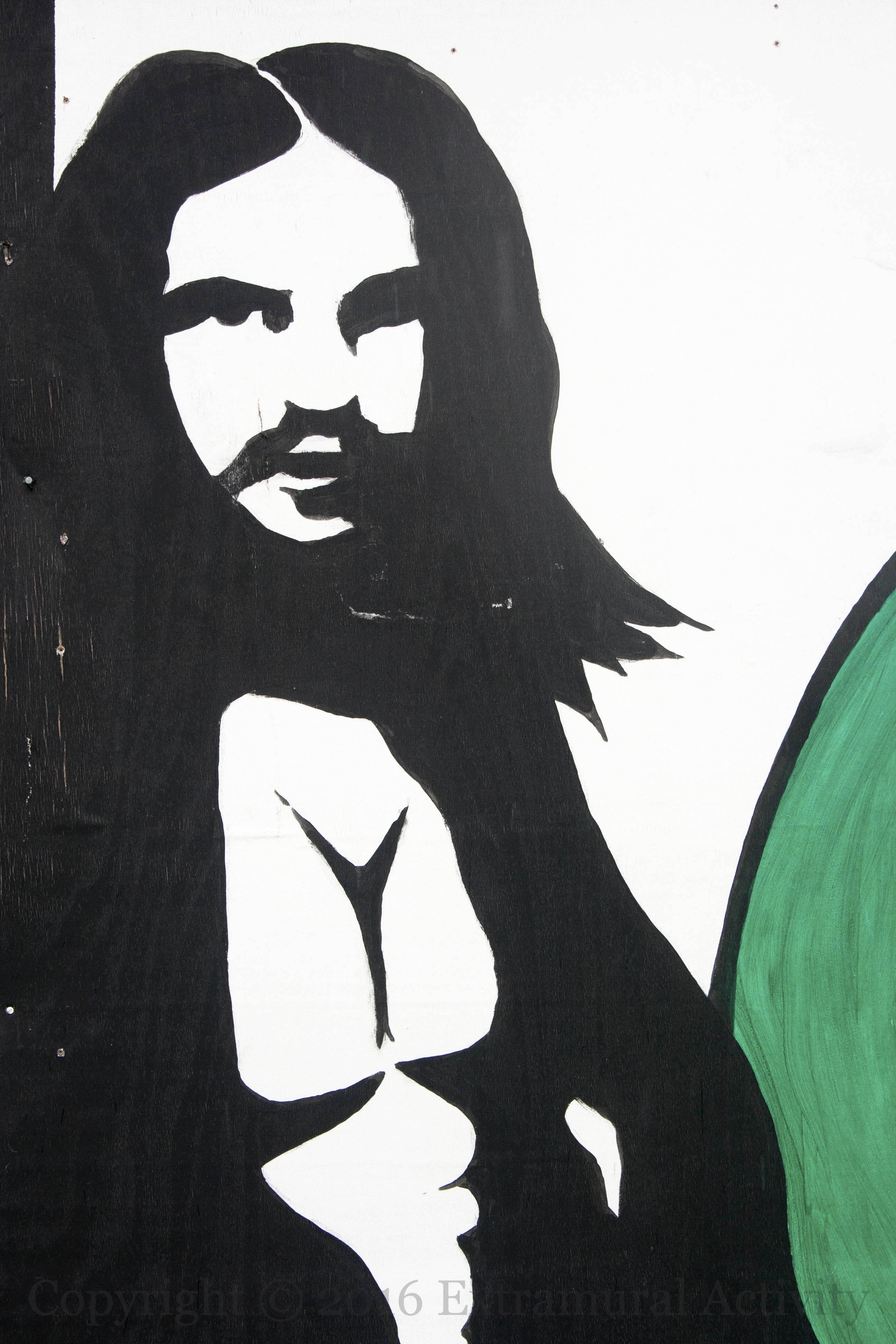
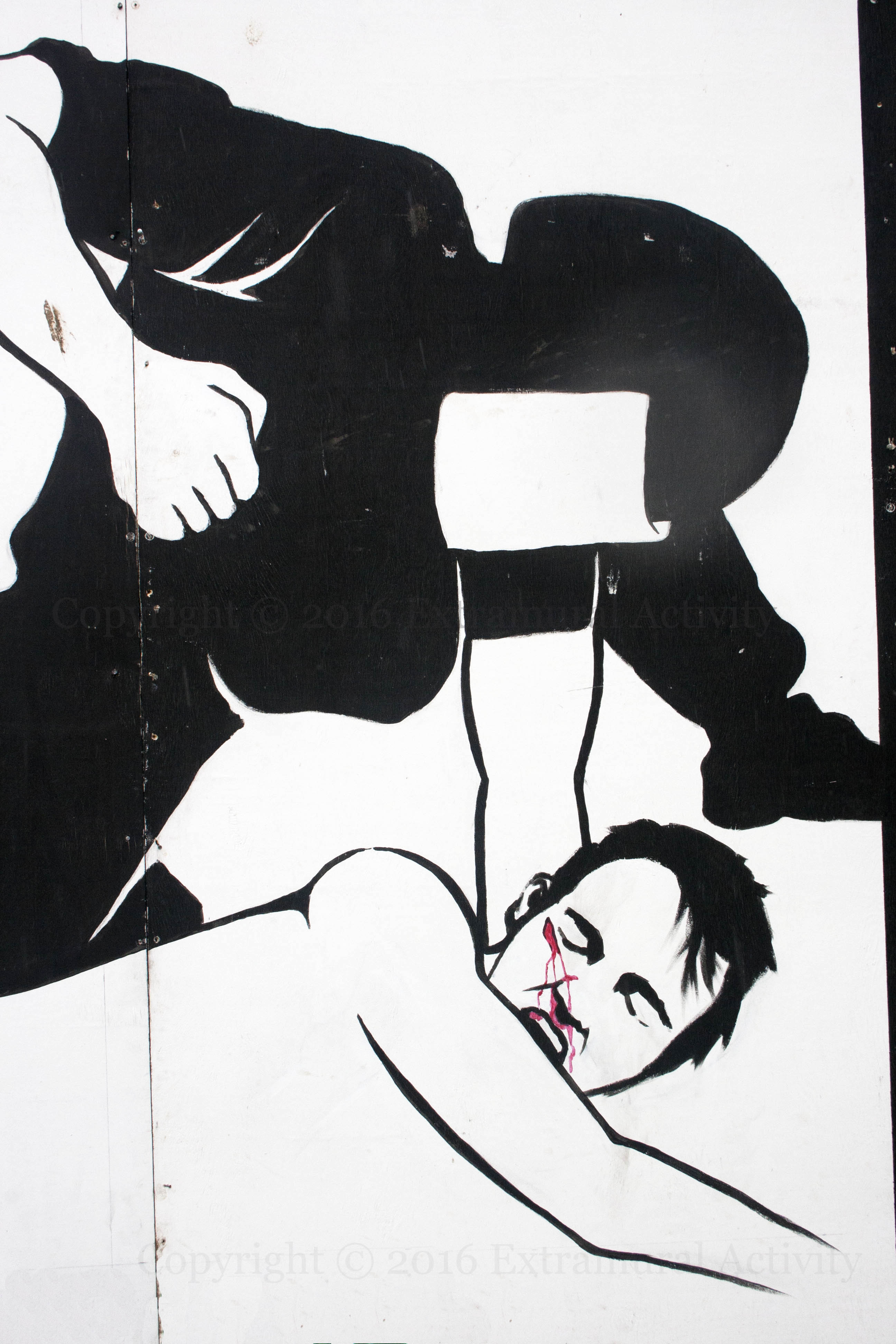
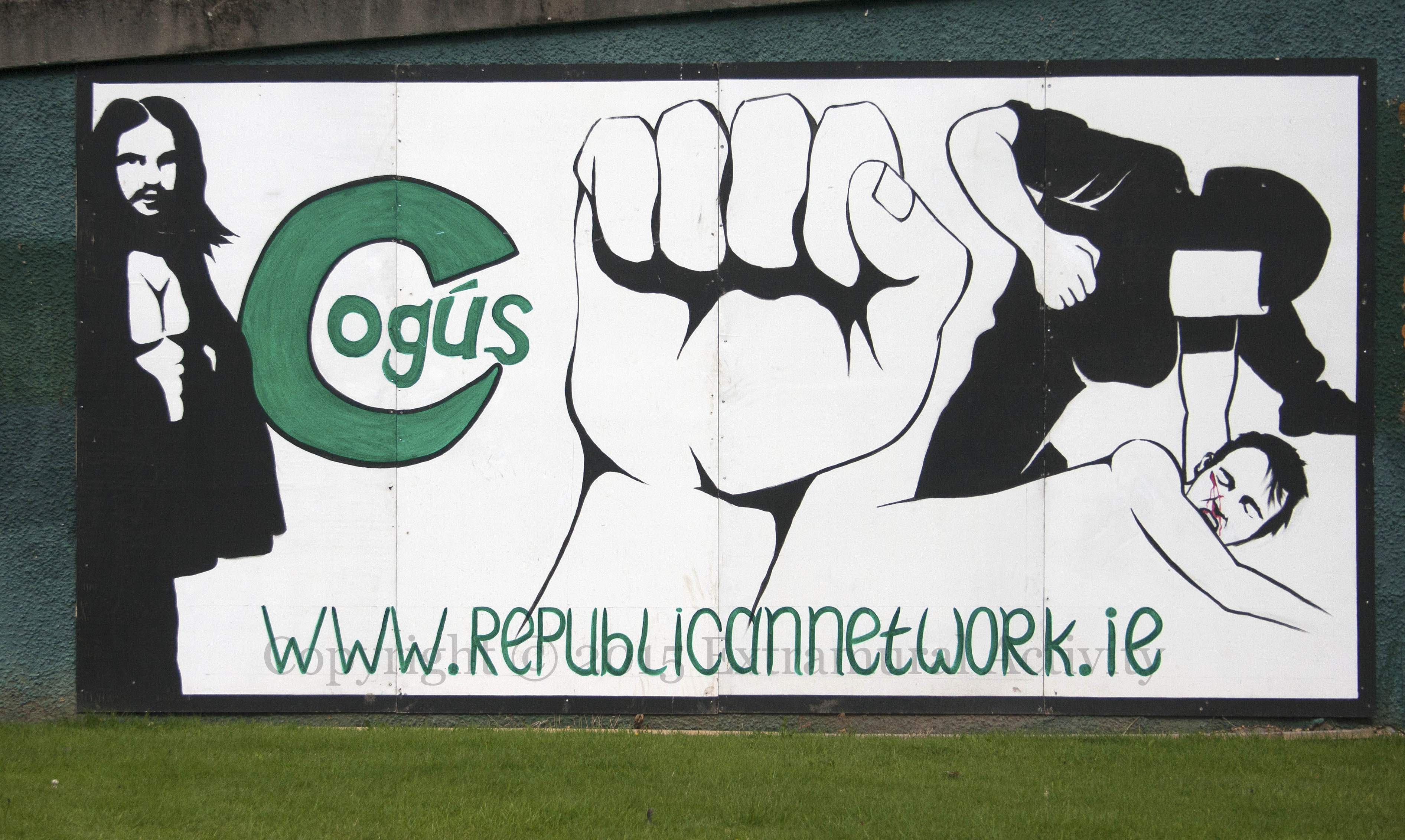
Hugh Rooney on the blanket in 1981 is one side of this RNU/Cogús board in the Bogside, Derry. The other shows a helmeted guard beating a prisoner. Here is BBC video of Rooney and Freddie Toal in their cell.
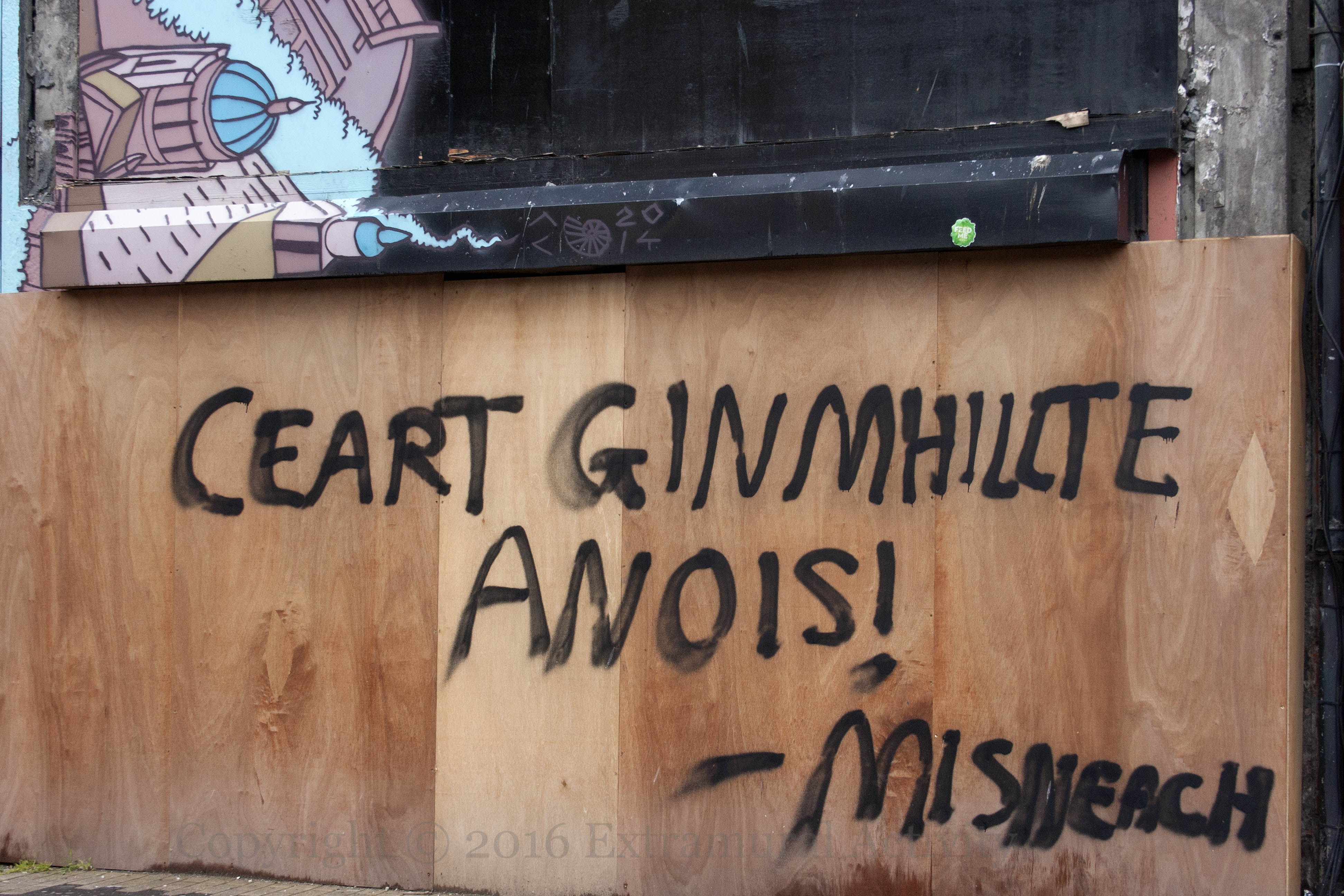
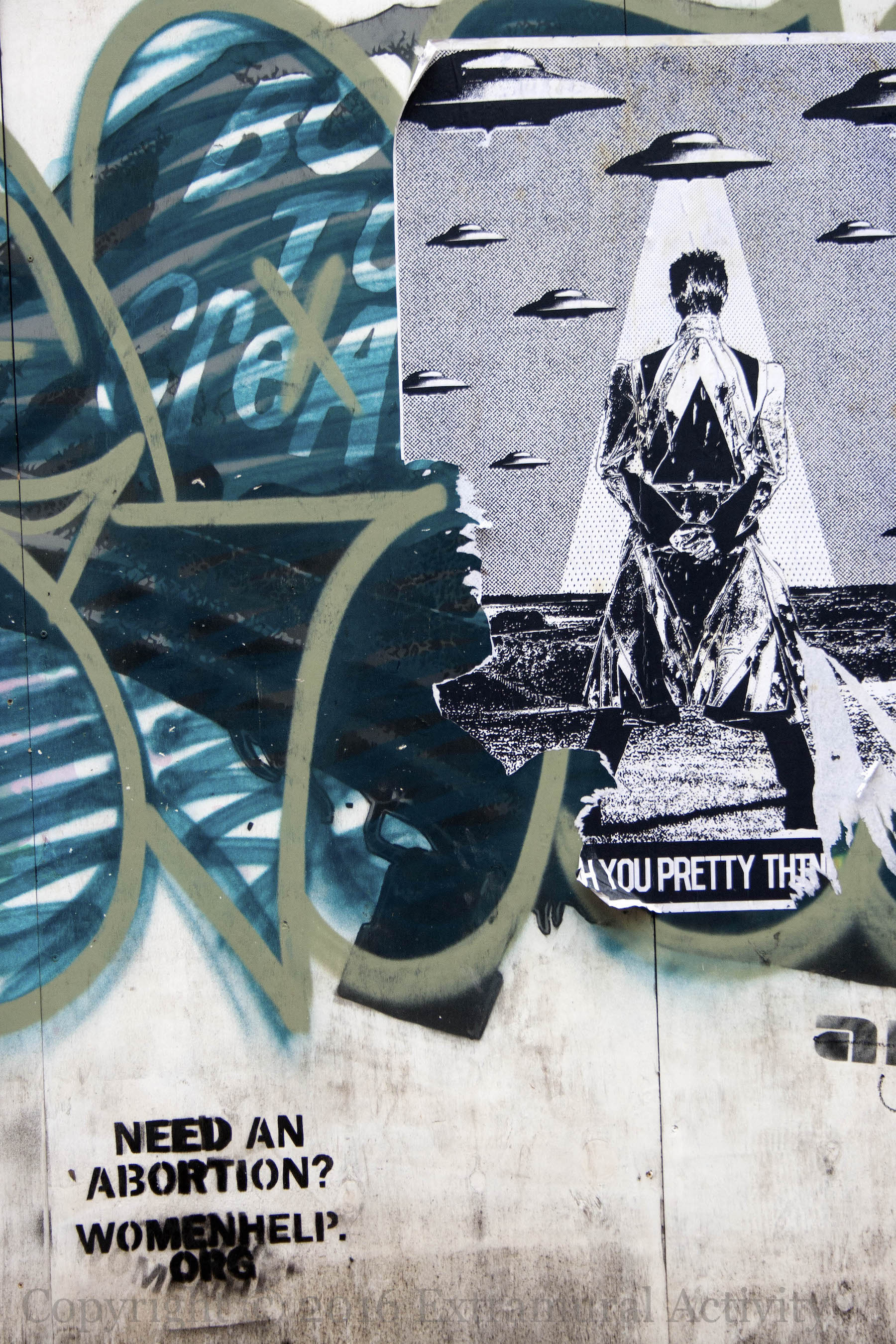
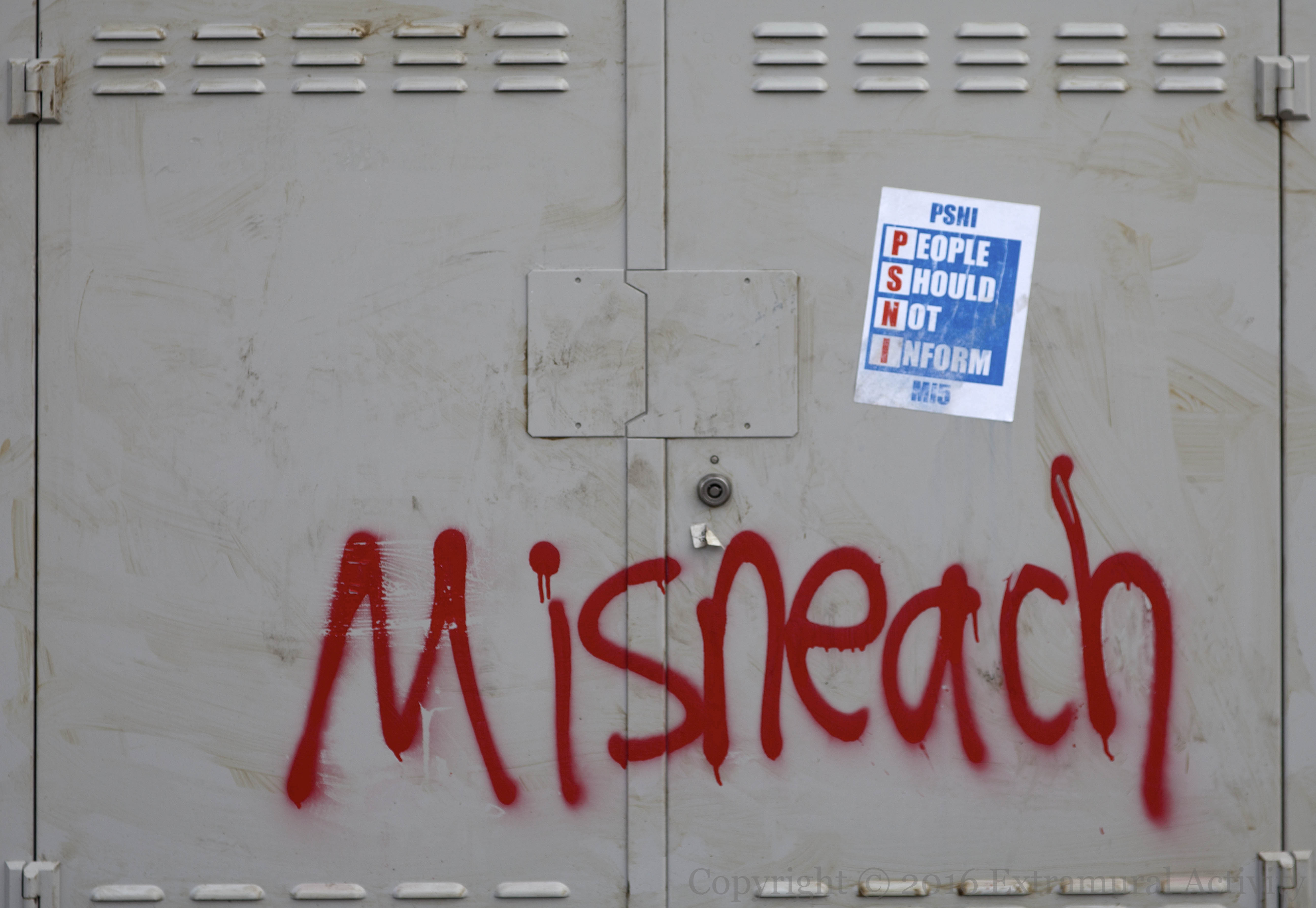
Two pieces relating to abortion rights. The first is a piece of Irish-language graffiti in North Street, below Andy Council’s CNB14 Phoenix, signed by “Mısneach” (“courage”). The second is a stencil in Garfield Street below Leo Boyd’s Bowie tribute Oh You Pretty Thing: “Need an abortion? Womenhelp.org.”
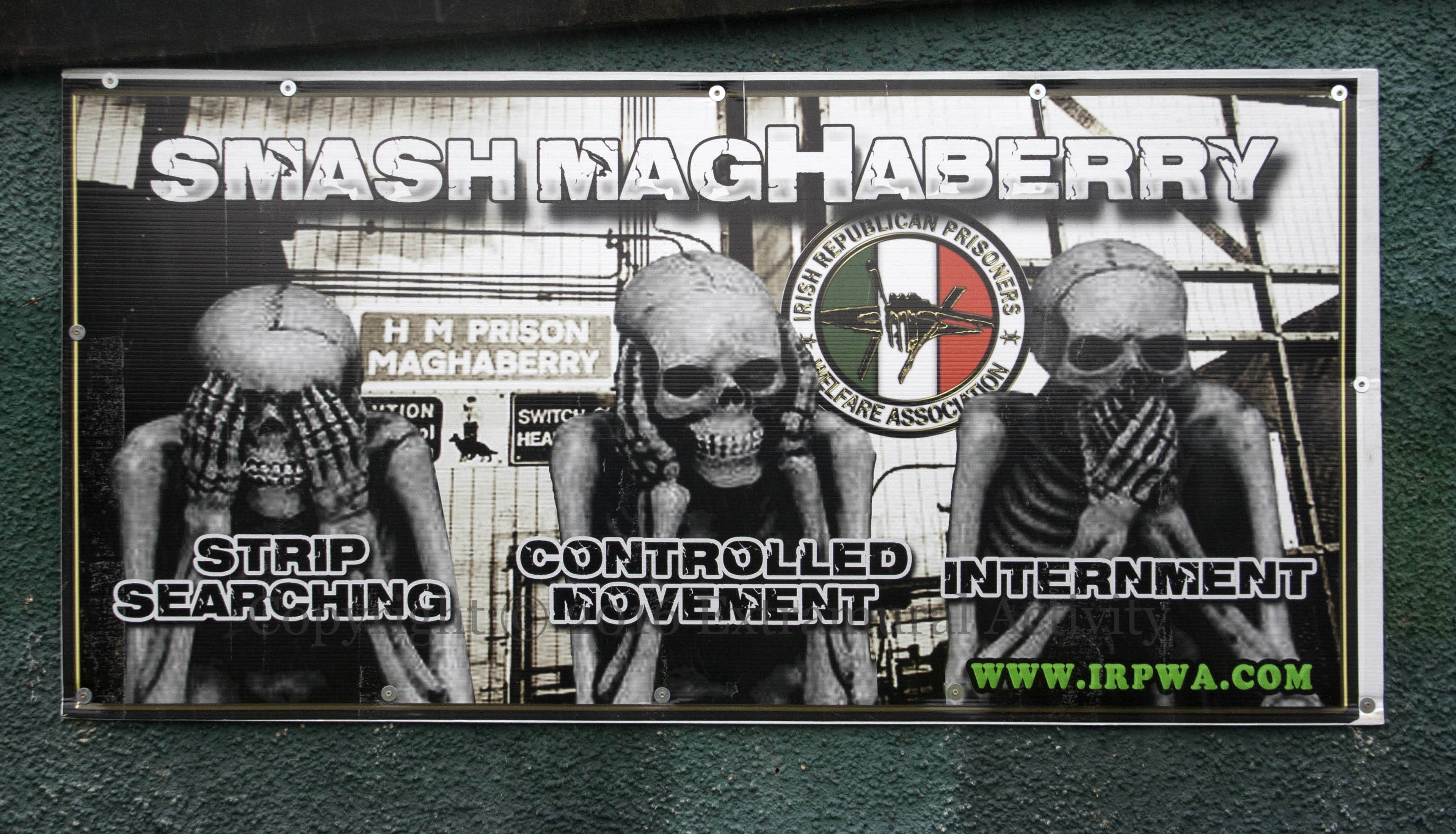
Instead of three monkeys, this IRPWA board in London-/Derry/Doire shows three skeletons in denial of the ‘strip searching’, ‘controlled movement’ and ‘internment’ happening at HM Prison Maghaberry (with an enlarged “H” to make an association with Long Kesh/Maze).