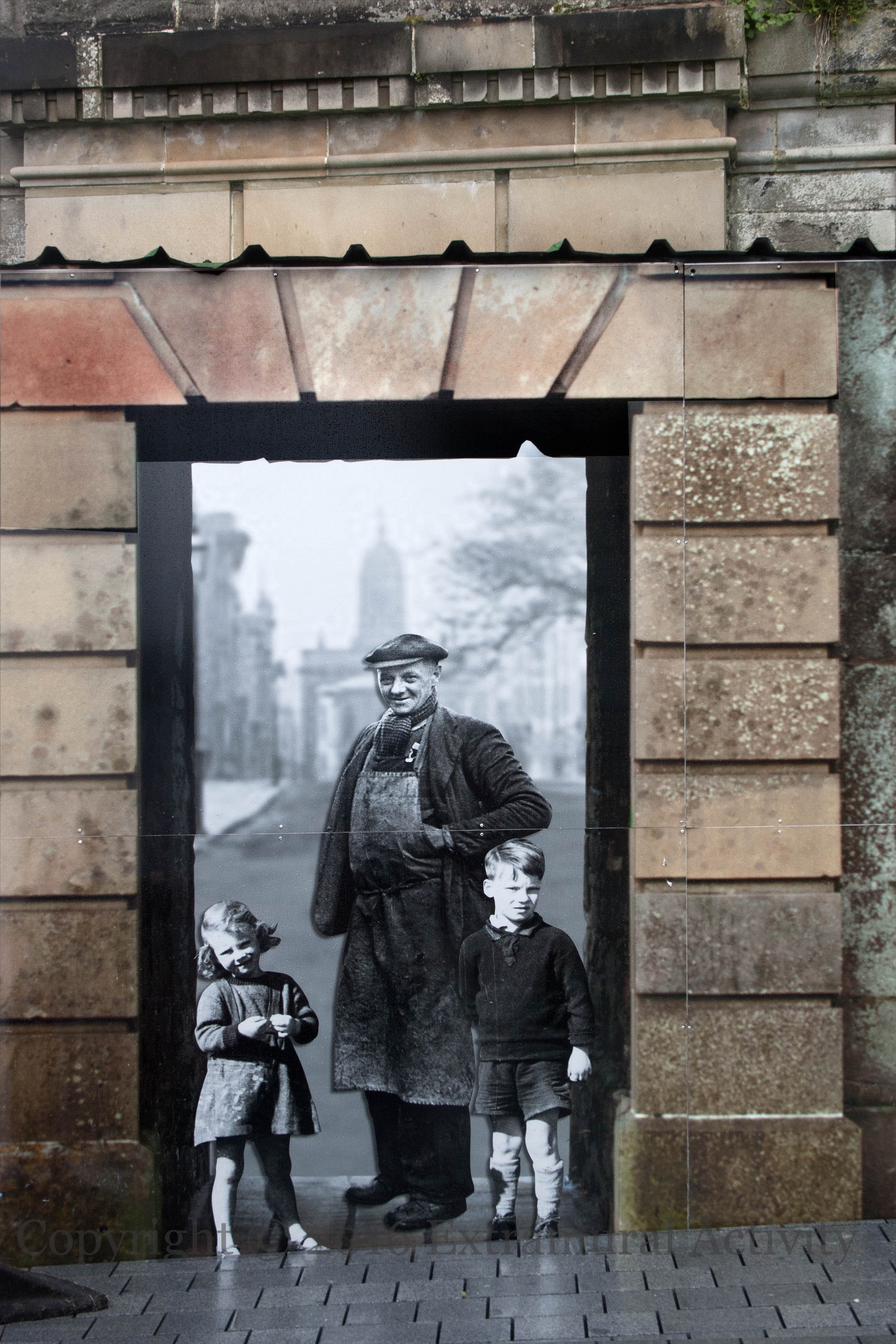
This image of London-/Derry in days-gone-by is on the outside of the walls of Derry, looking in. The brickwork of which it appears to be the portal is also fake; in fact, this is a covered walkway leading from Bishop Street to the Fountain.
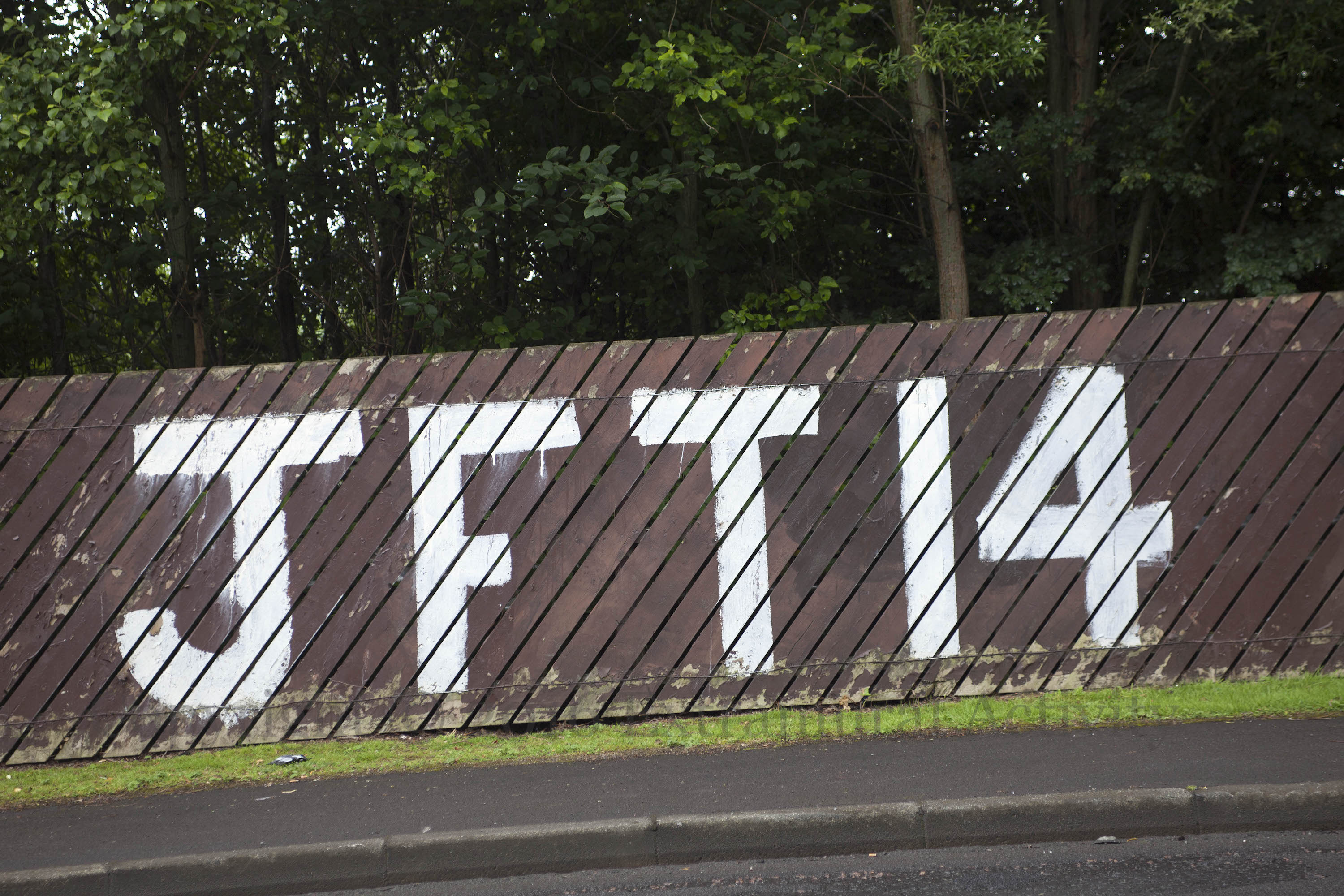
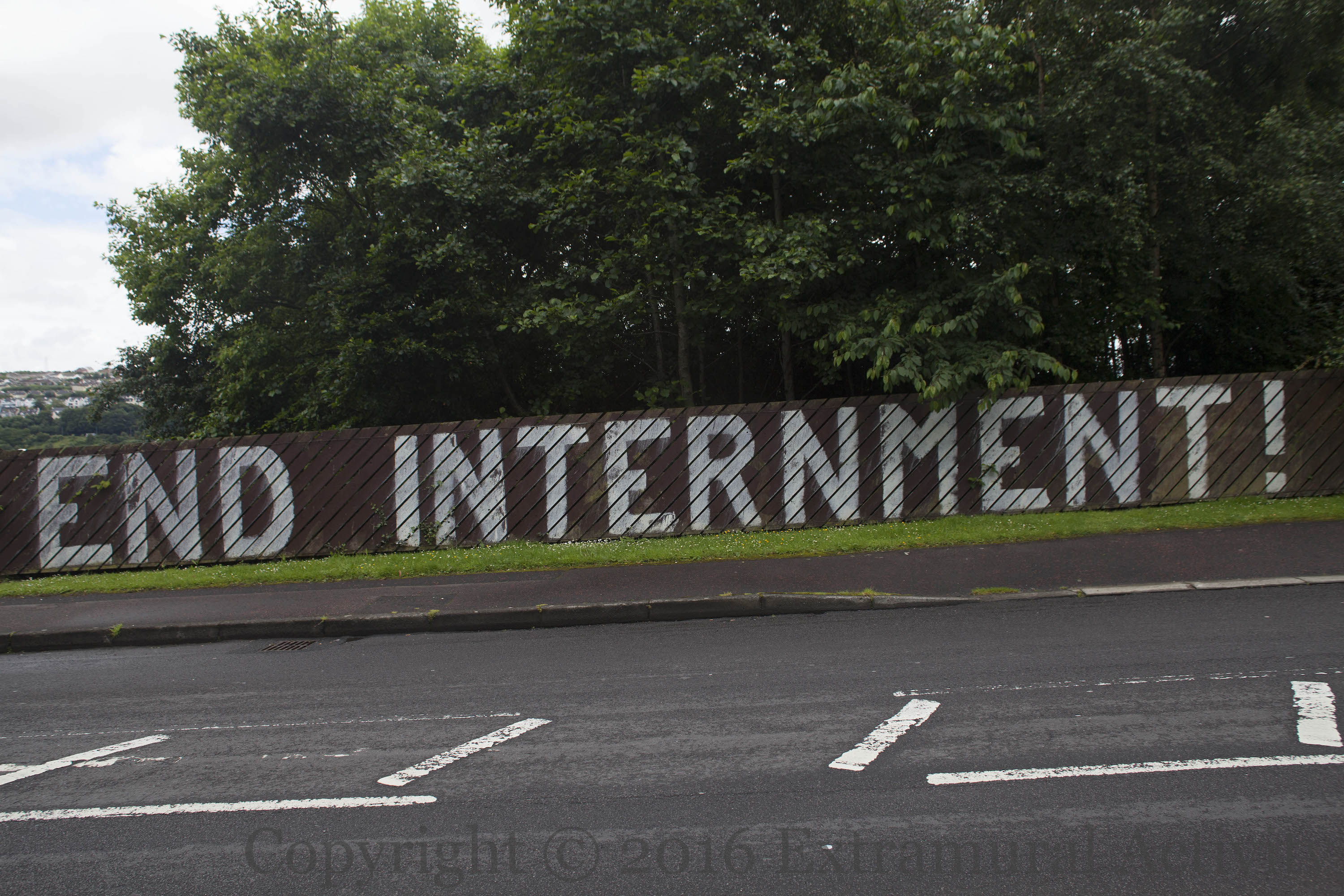
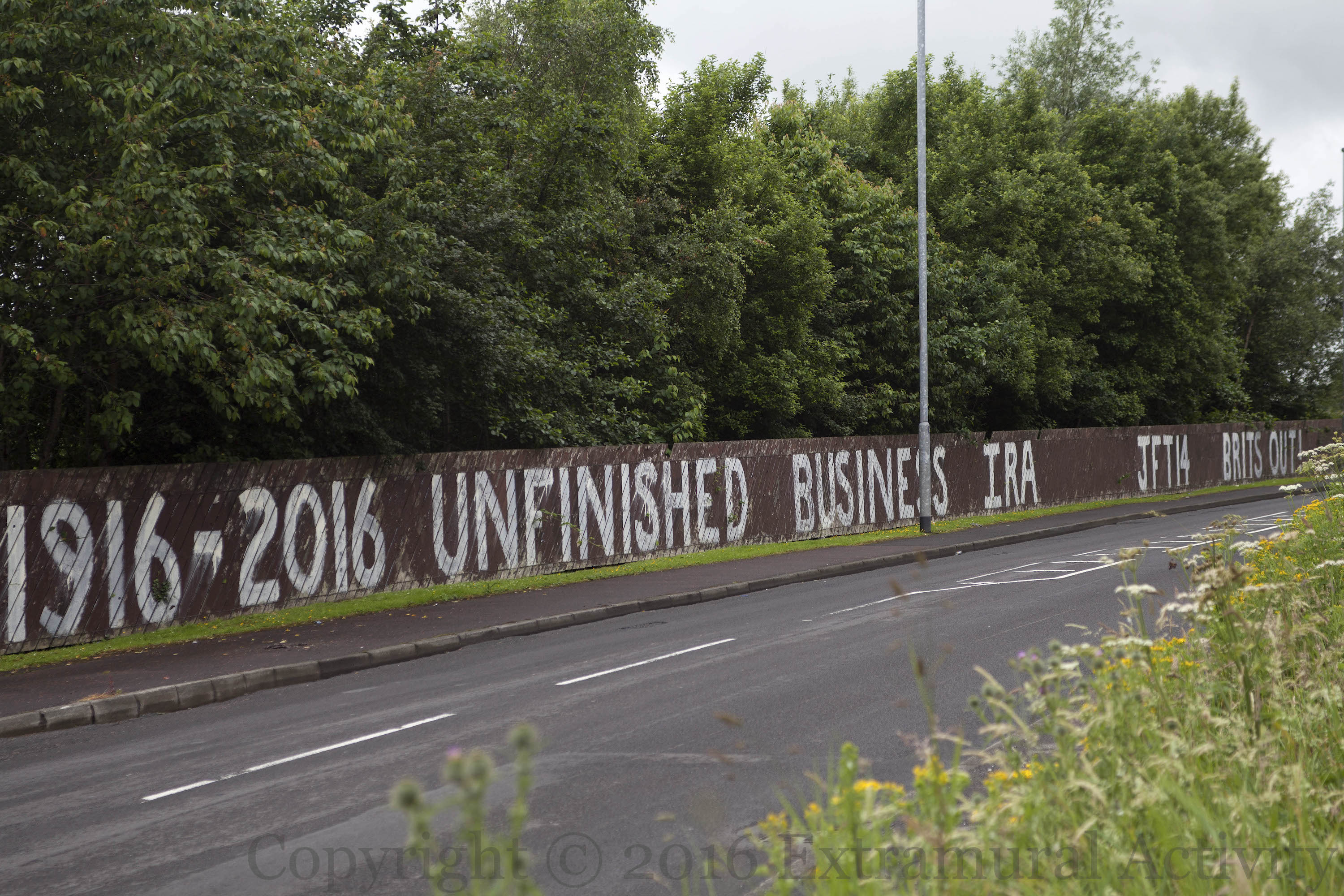
These republican slogans are on the fencing along Southway, Derry. “End internment”, “1916 – 2016 Unfinished business”, “IRA”, “JFT14” = “Justice for the 14 [Bloody Sunday victims]”, and “Brits out”.
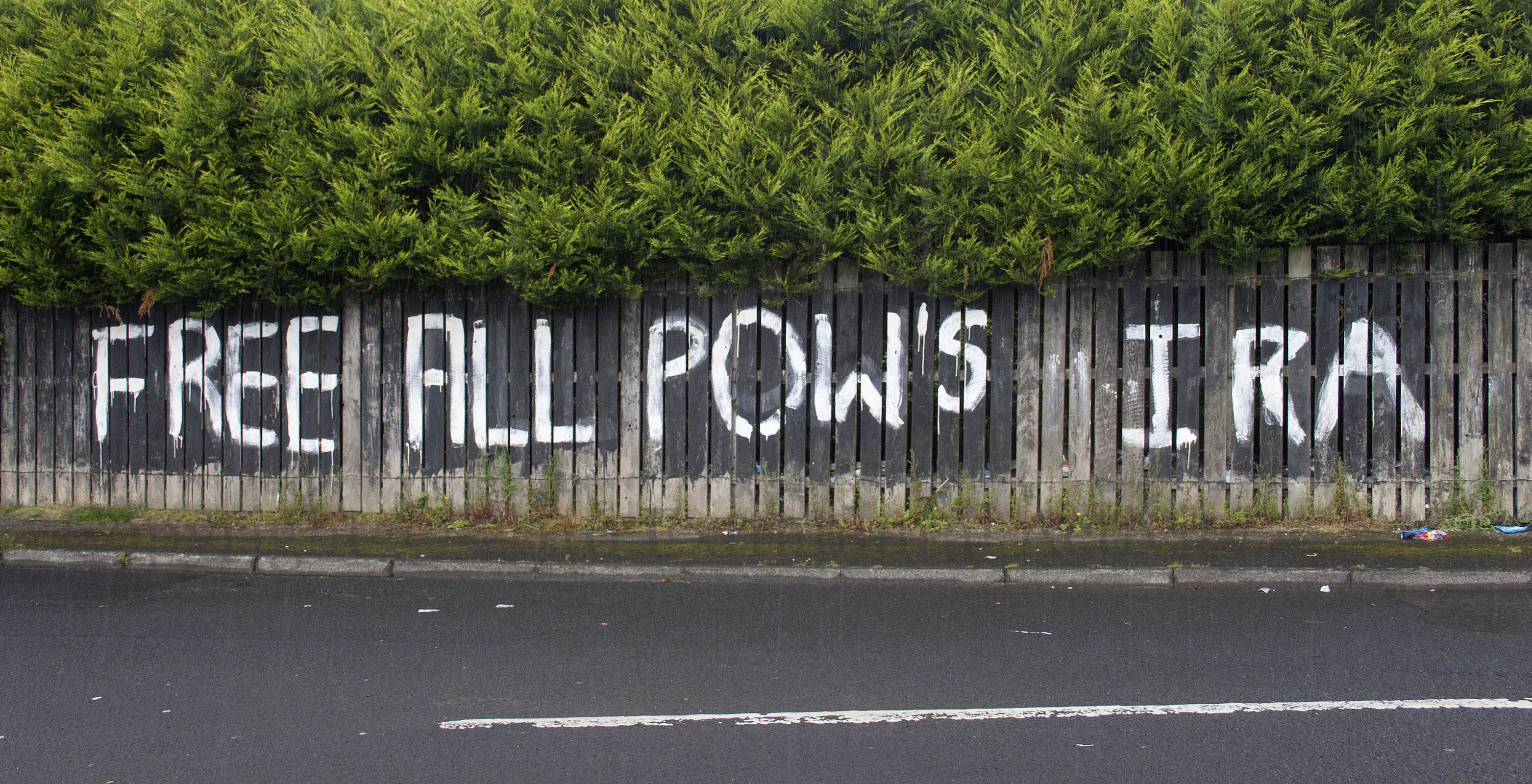
This republican graffiti in Rathmore Crescent in Derry is unusual in that it is a re-paint — the slogan shown above (“Free All POW’s IRA”) was on this fence before being blacked out.
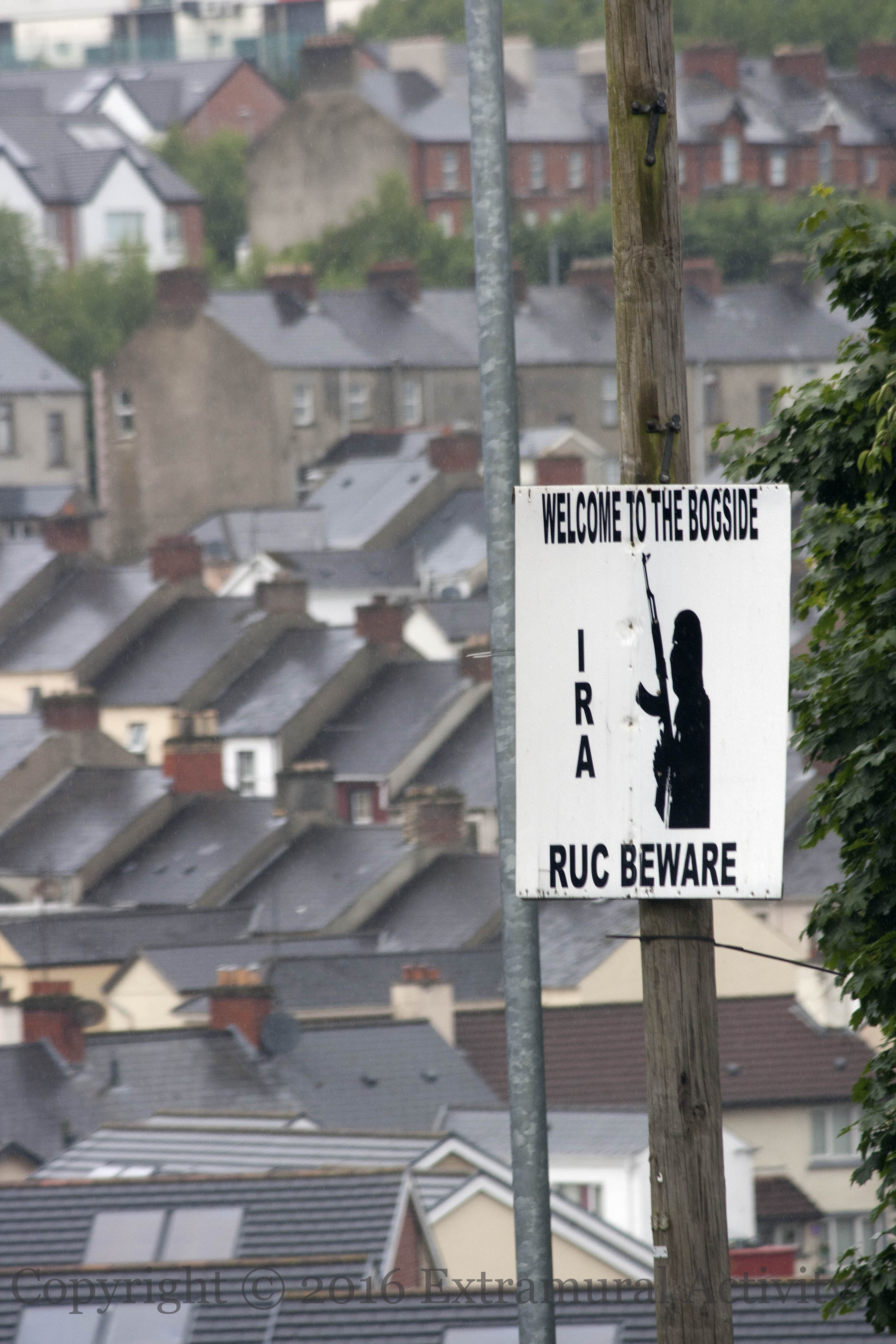
In a throw-back to earlier times (the RUC changed to the PSNI in 2001), a volunteer armed with a Kalashnikov greets visitors to the area: “Welcome to the Bogside. IRA. RUC beware.”
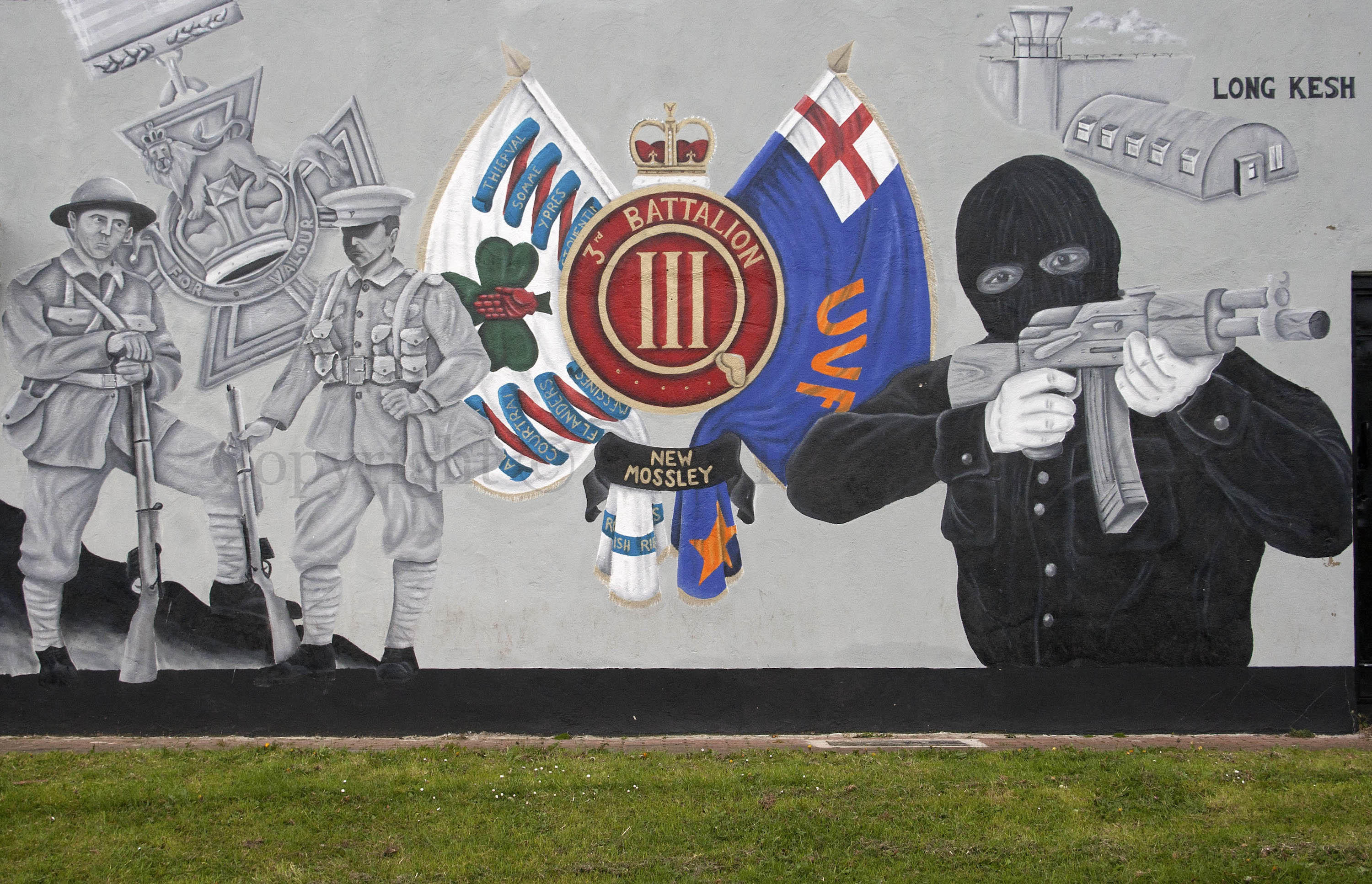
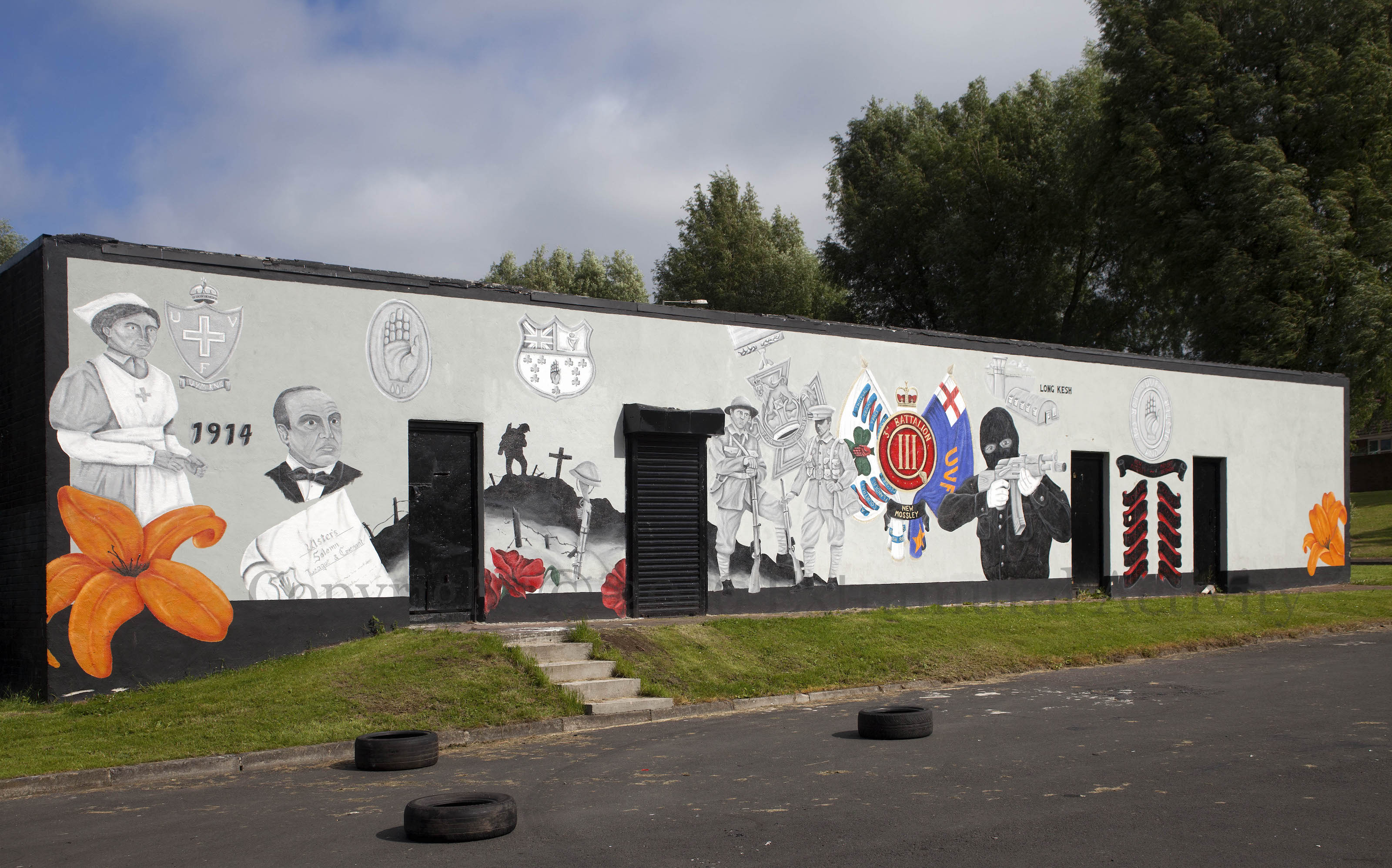
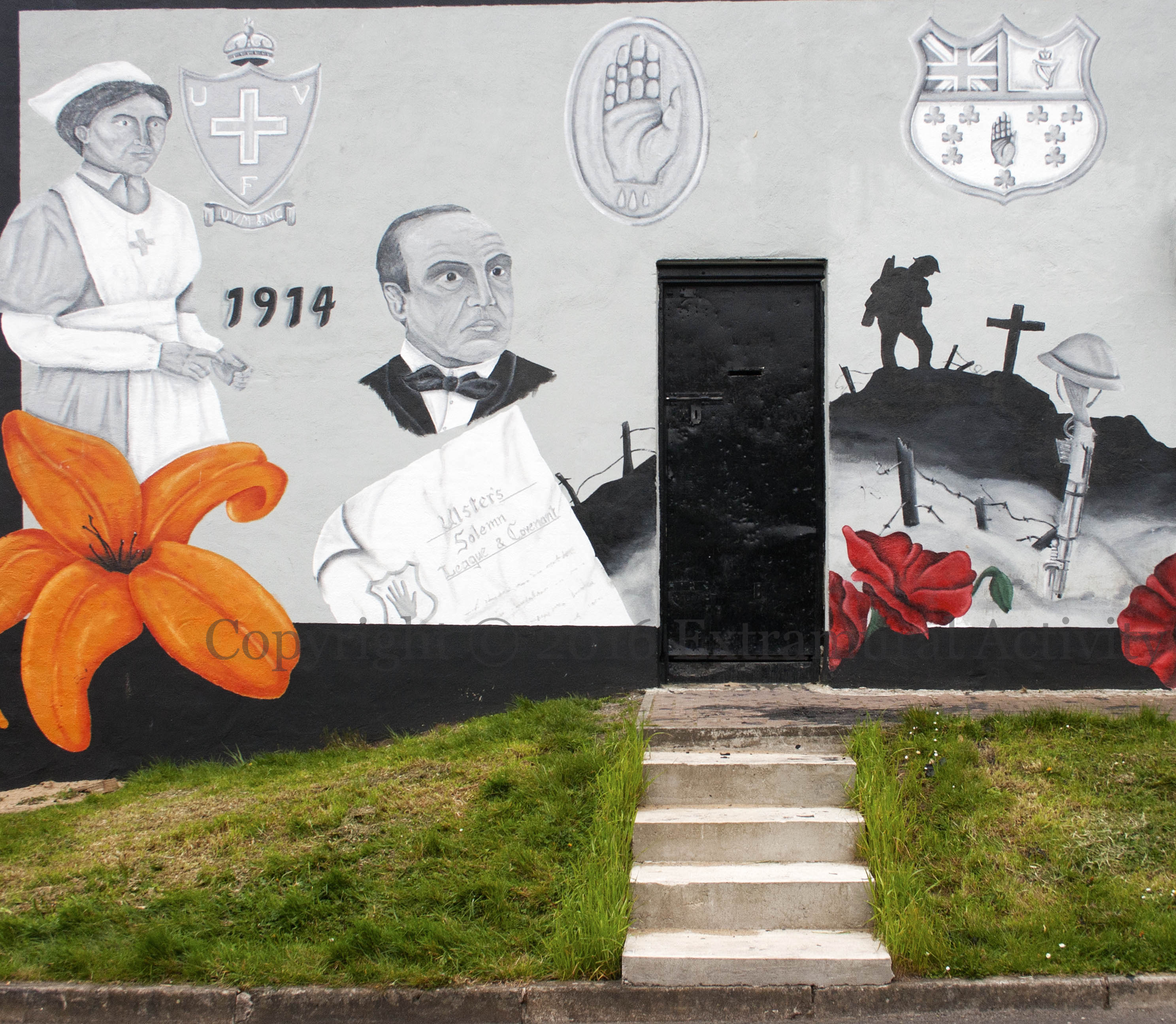
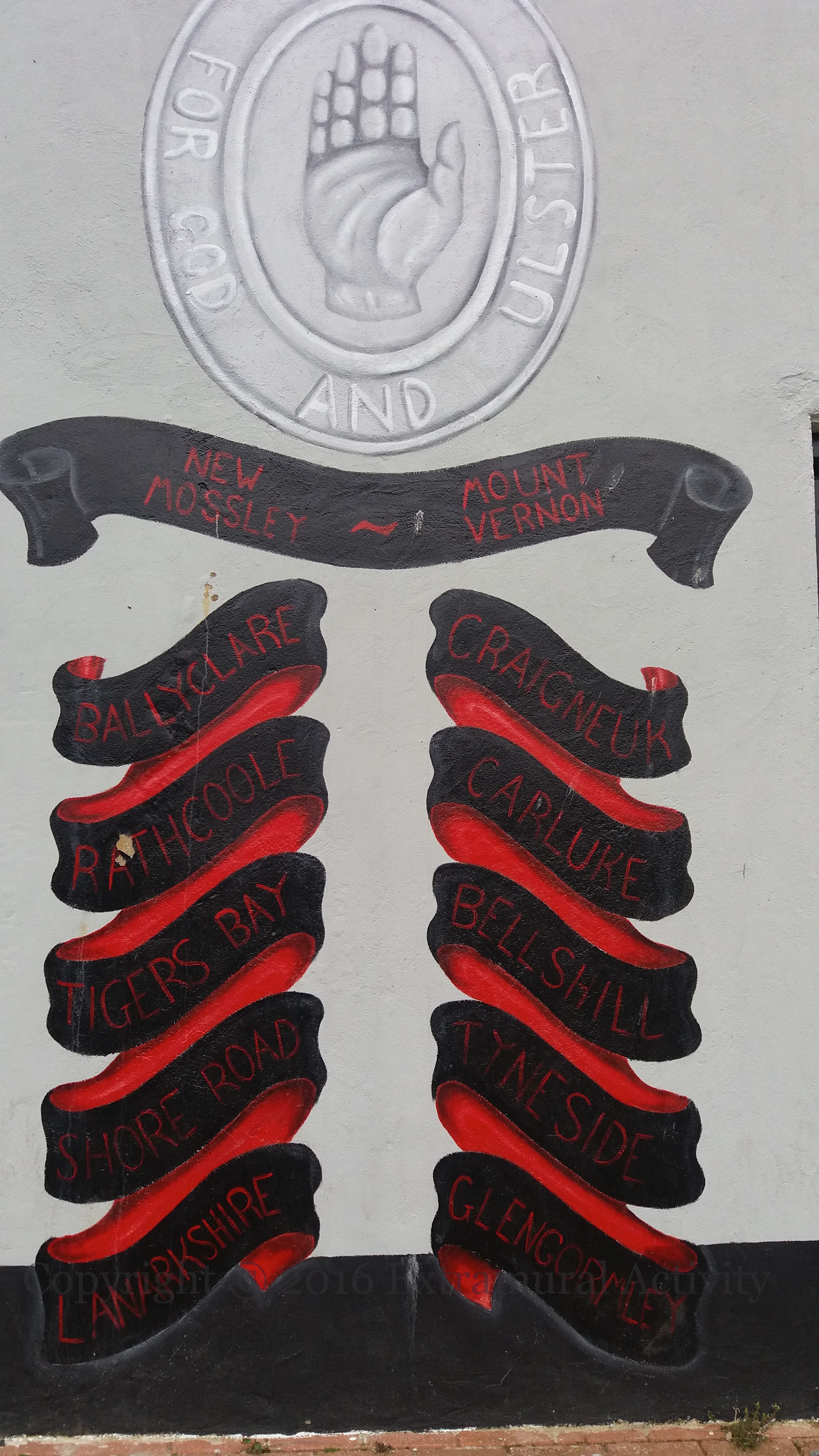
After a year without any change, work appears to have stopped on this UVF mural in Ballyearl. It links together the Ulster Volunteers of the first world war (shown on the left of the wall, with a Victoria Cross, Carson and the covenant, and a cross on the battlefield of Flanders) and the modern UVF (represented by a hooded gunman with rifle brought to bear, and the Nissen huts of Long Kesh. An orange lily and red poppy complete the tableau.
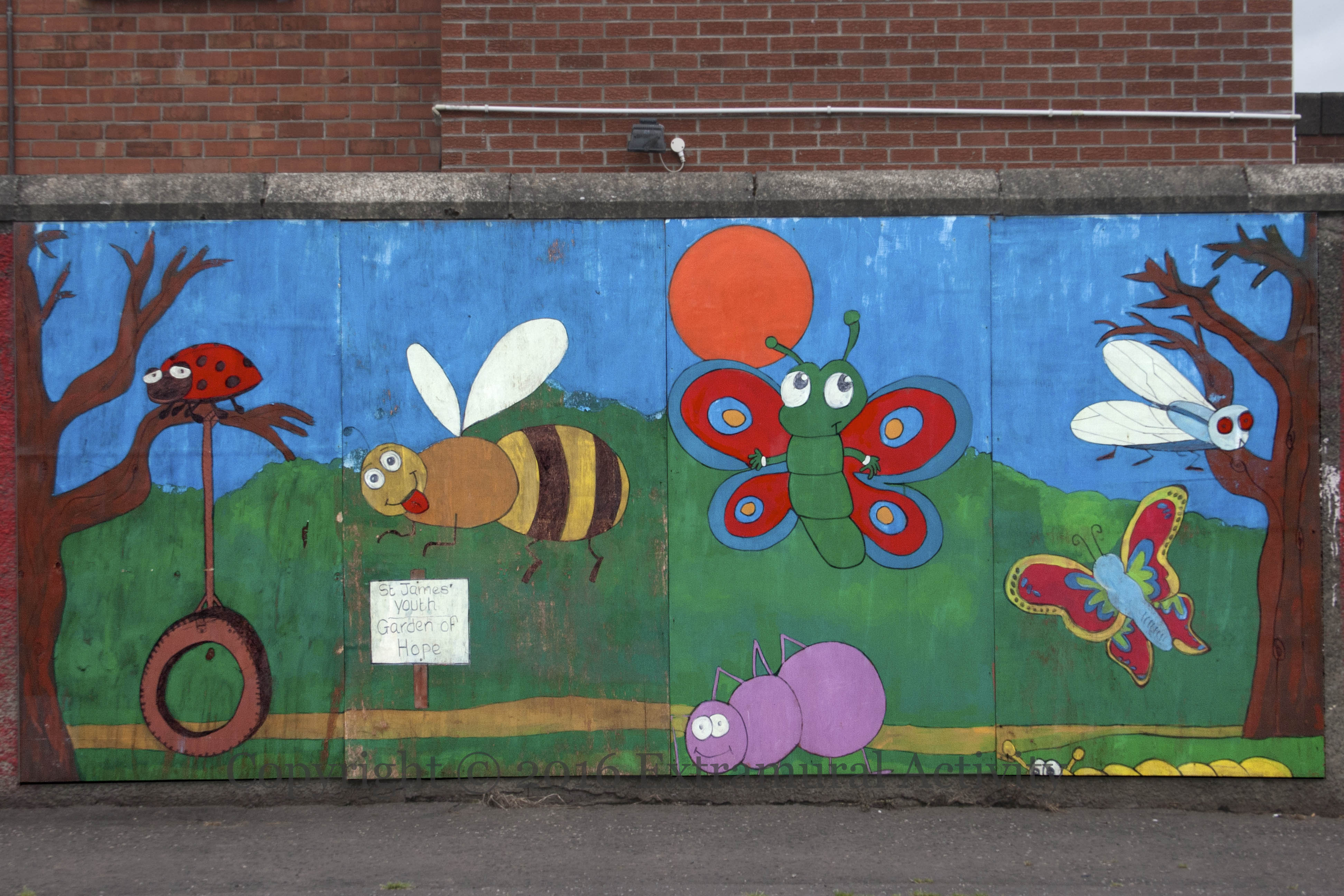
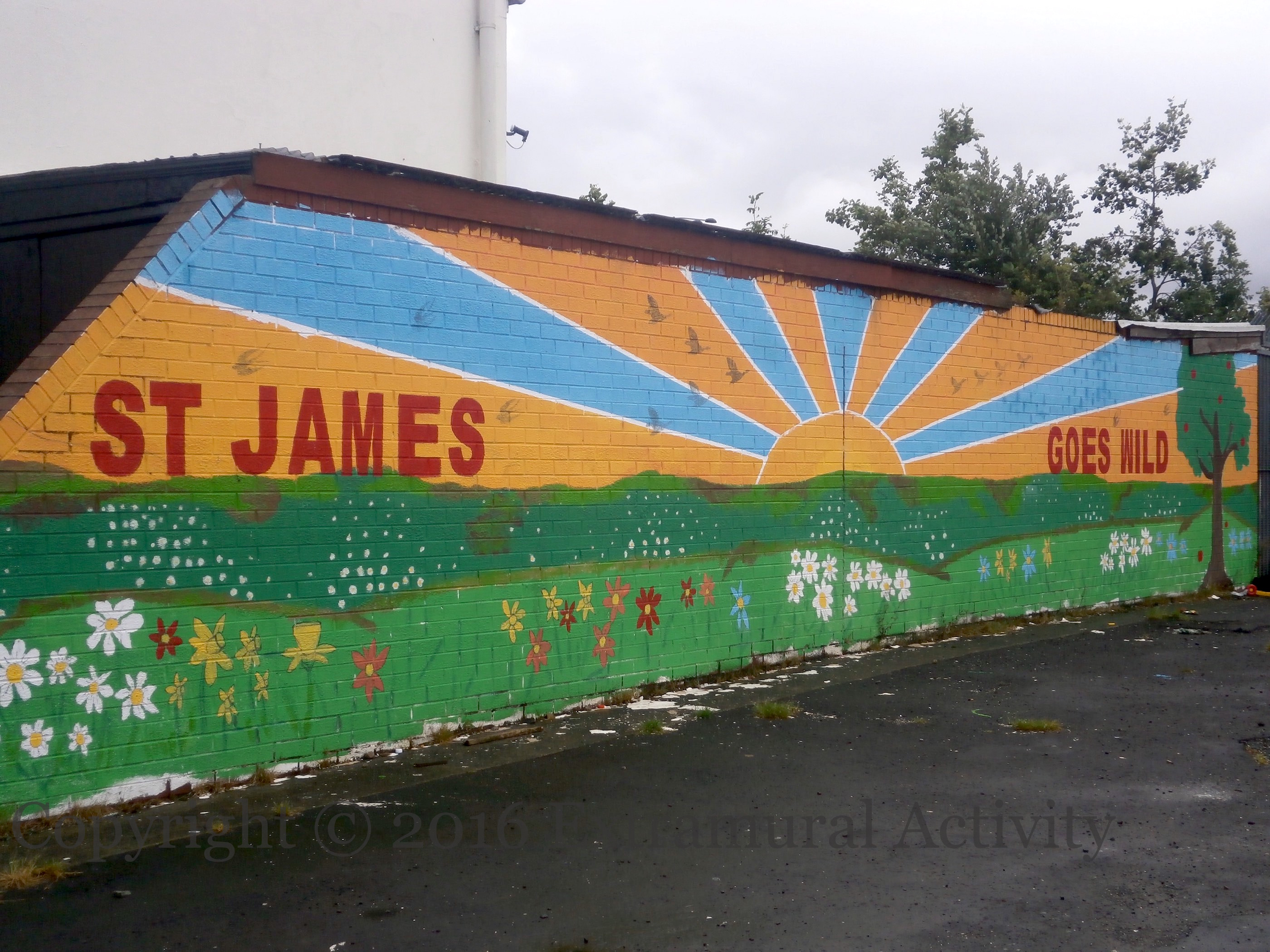
Two kids’ murals from the bottom of St James, where the ‘Garden Of Hope’ community farm is (and next to Music Is Our Drug), one showing various insects and the other (“St James Goes Wild”) showing the sun rising over a meadow of flowers.
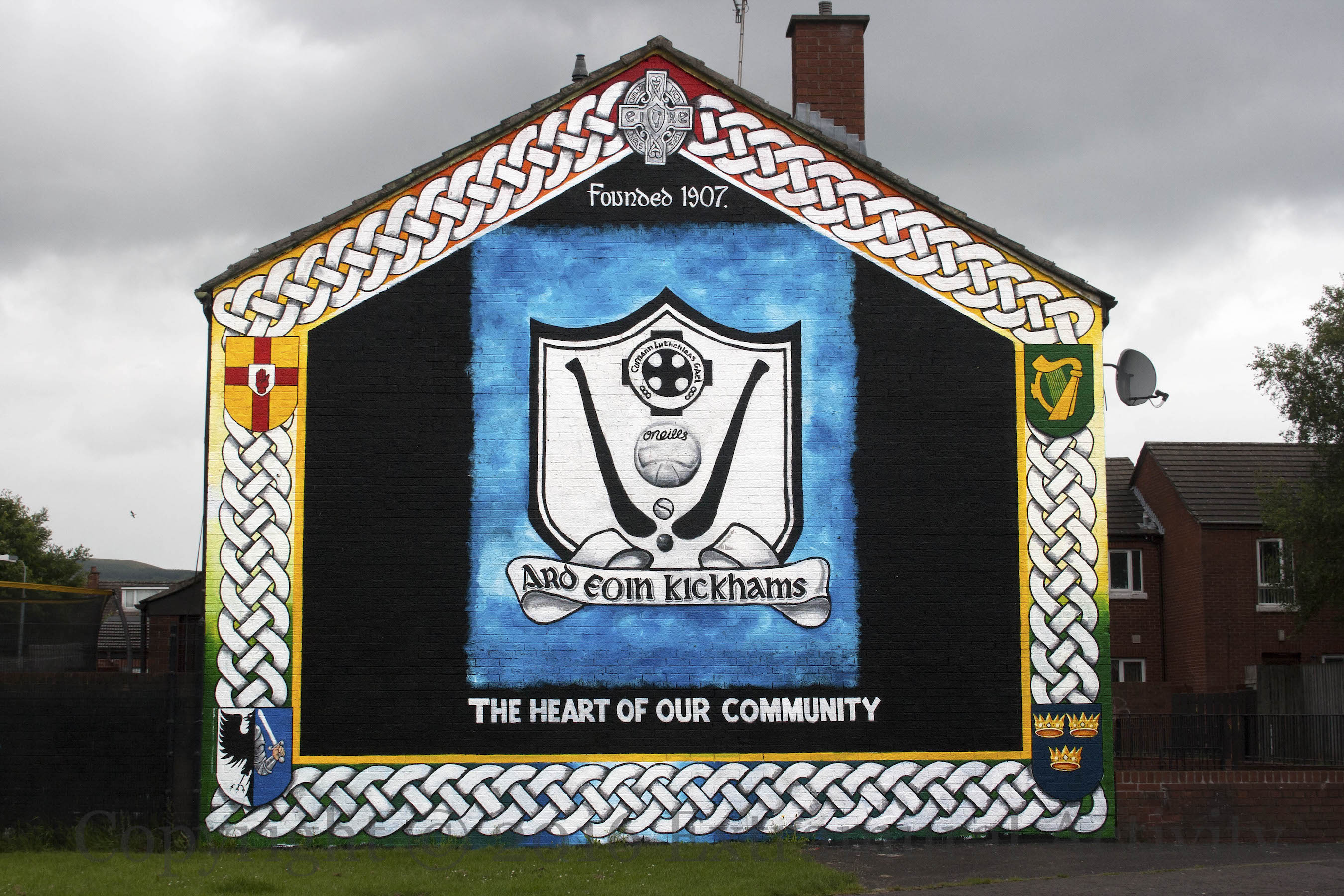
A border of Celtic knot-work and the shields of the four provinces has been added to the Ard Eoın Kickhams mural at the top of Havana Way. (For the previous version, see The Heart Of Our Community.)
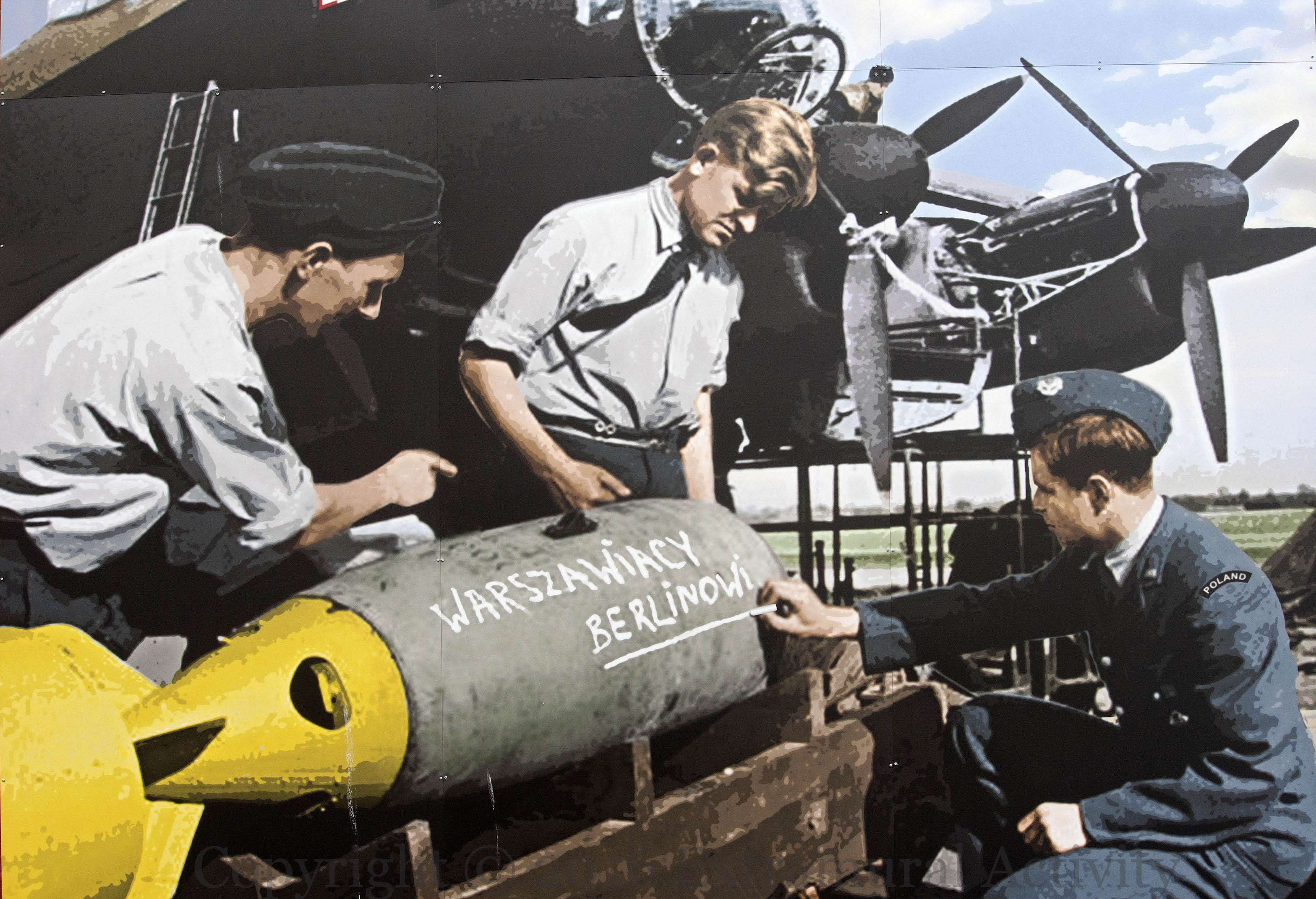
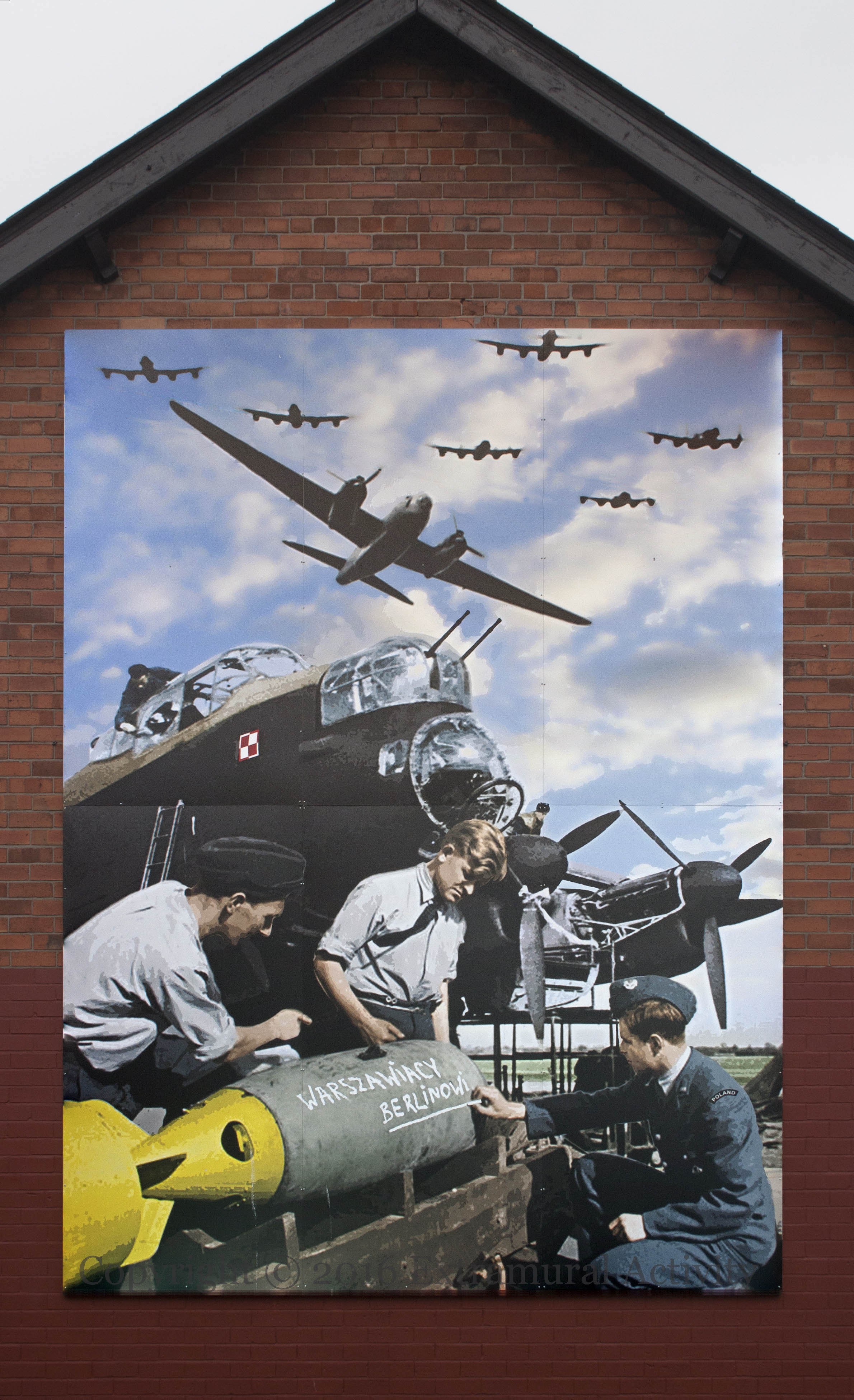
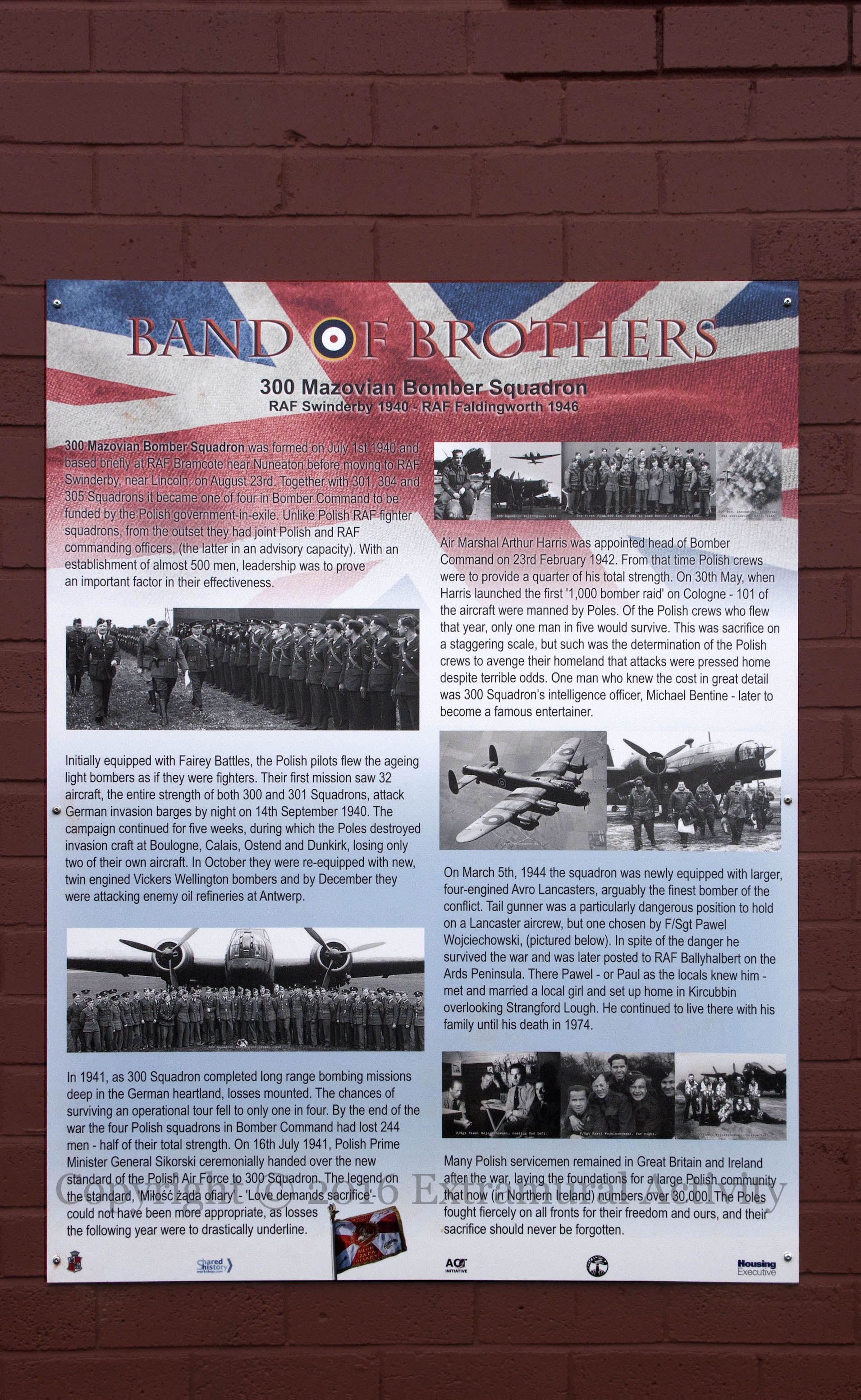
“From Warsaw to Berlin” — Polish airmen in England, in the 300 Mazovian bomber squadron, write a “dedication” on a bomb headed for Germany in August 1941. The plane added as a background is perhaps an Avro Lancaster, while the one in the middle ground (in the wide shot, below) is a Vickers Wellington. According to the information board (shown last, below) “many Polish servicemen remained in Great Britain and Ireland after the [Second World] war, laying the foundations for a large Polish community that now (in Northern Ireland) numbers over 30,000.”
 Seosamh Mac Coille Collection