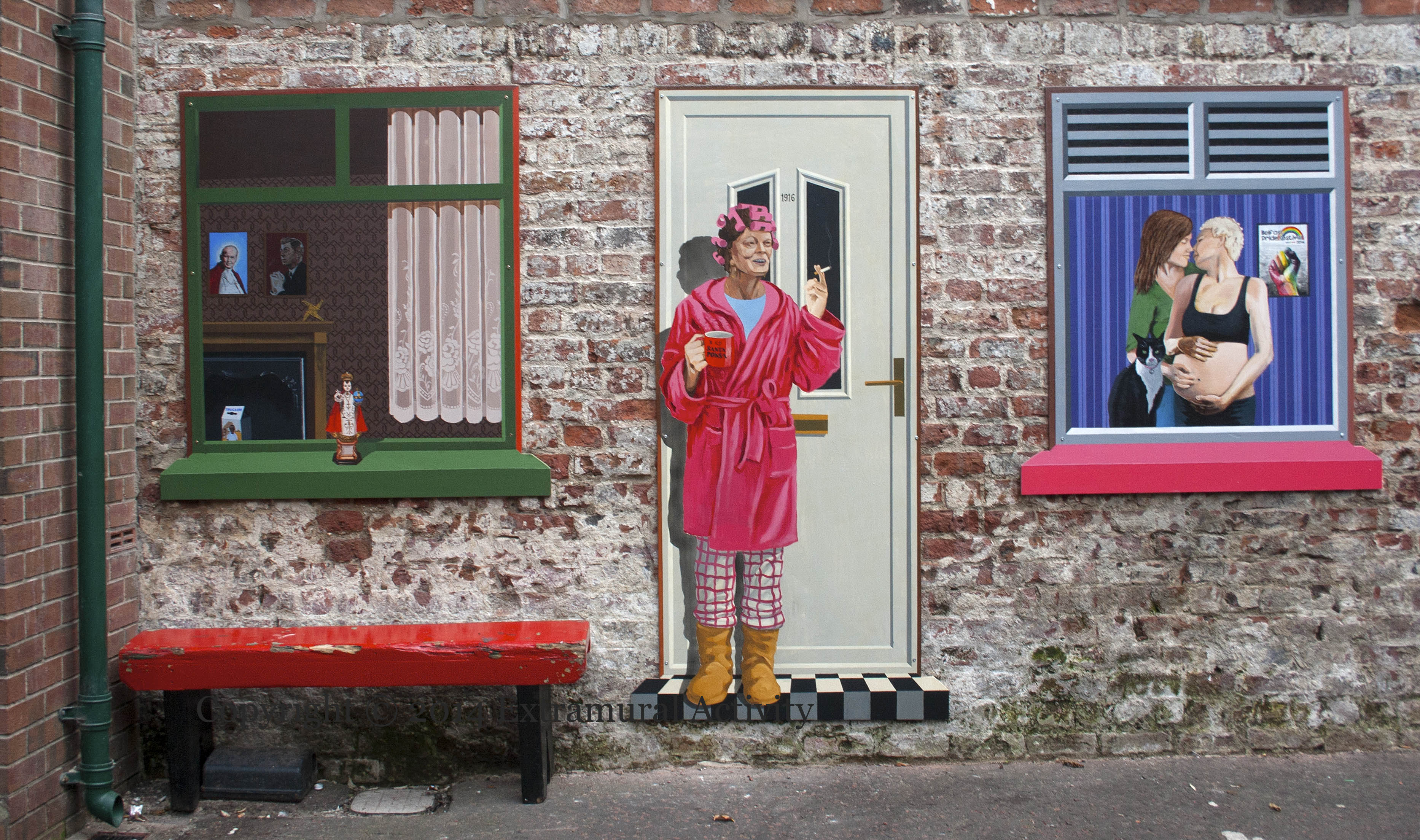
Here is the left-most of a number of panels from new work by Ciaran Gallagher (web) for CNB14 – Belfast Stripped Bare – in the courtyard of the Dark Horse/Duke of York. The piece humorously depicts a row of houses with uncurtained windows which reveal the lives of the inhabitants.
In this pair, a woman smokes a cigarette on the front step of a house with portraits of Kennedy and the pope above the mantle, next door to a pregnant lesbian couple with a pride poster and a cat. The brick-work is real.
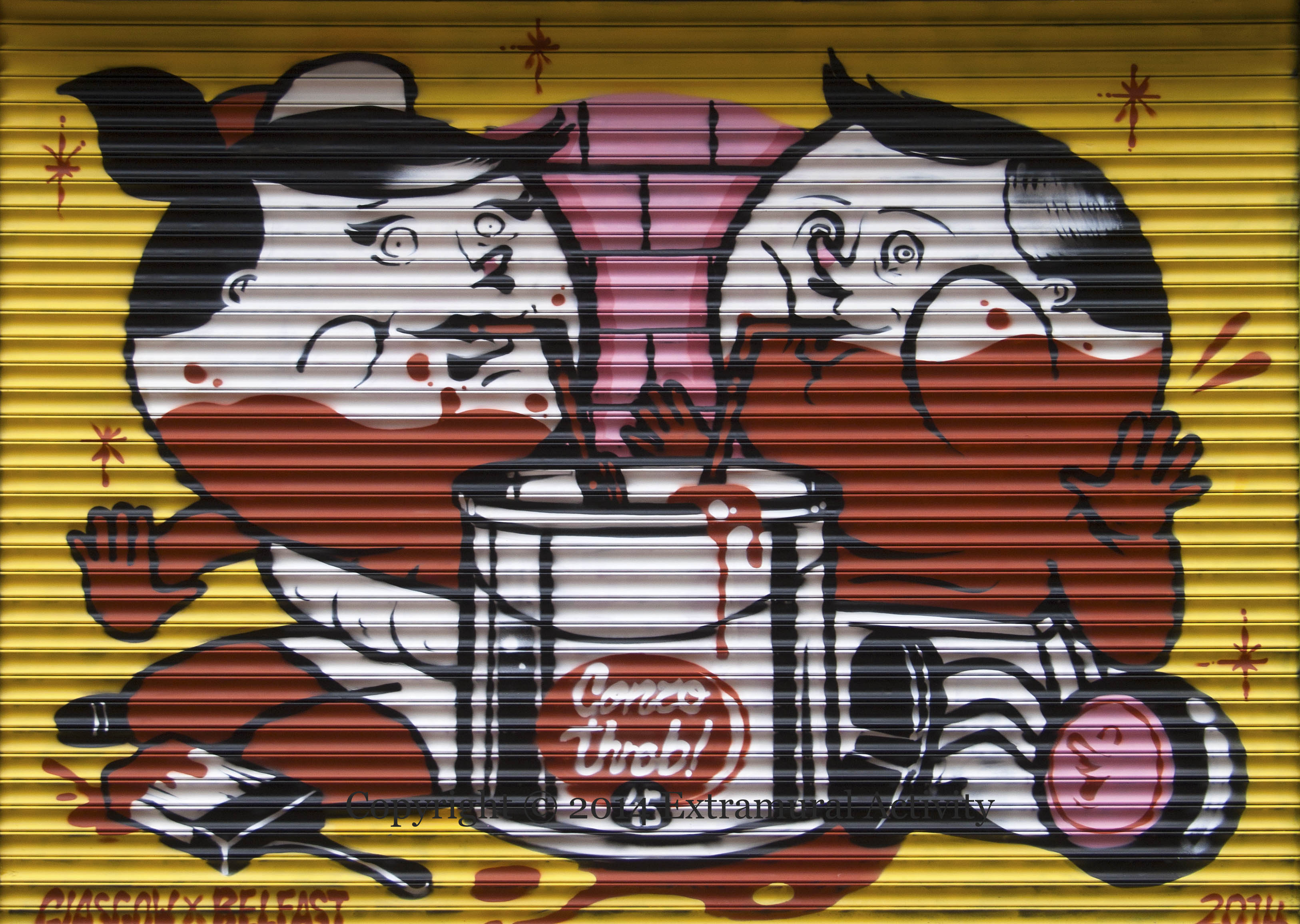
If it’s good enough to paint with, it’s good enough to drink. Two characters colour themselves by drinking paint through straws (the male is “Taps Aff“?, with little Terror Cheb in the corner) – work by Glasgow artist Conzo Throb (web | Fb) on the shutters of the old Tivoli barbers in Lower Garfield Street for Culture Night Belfast 2014.
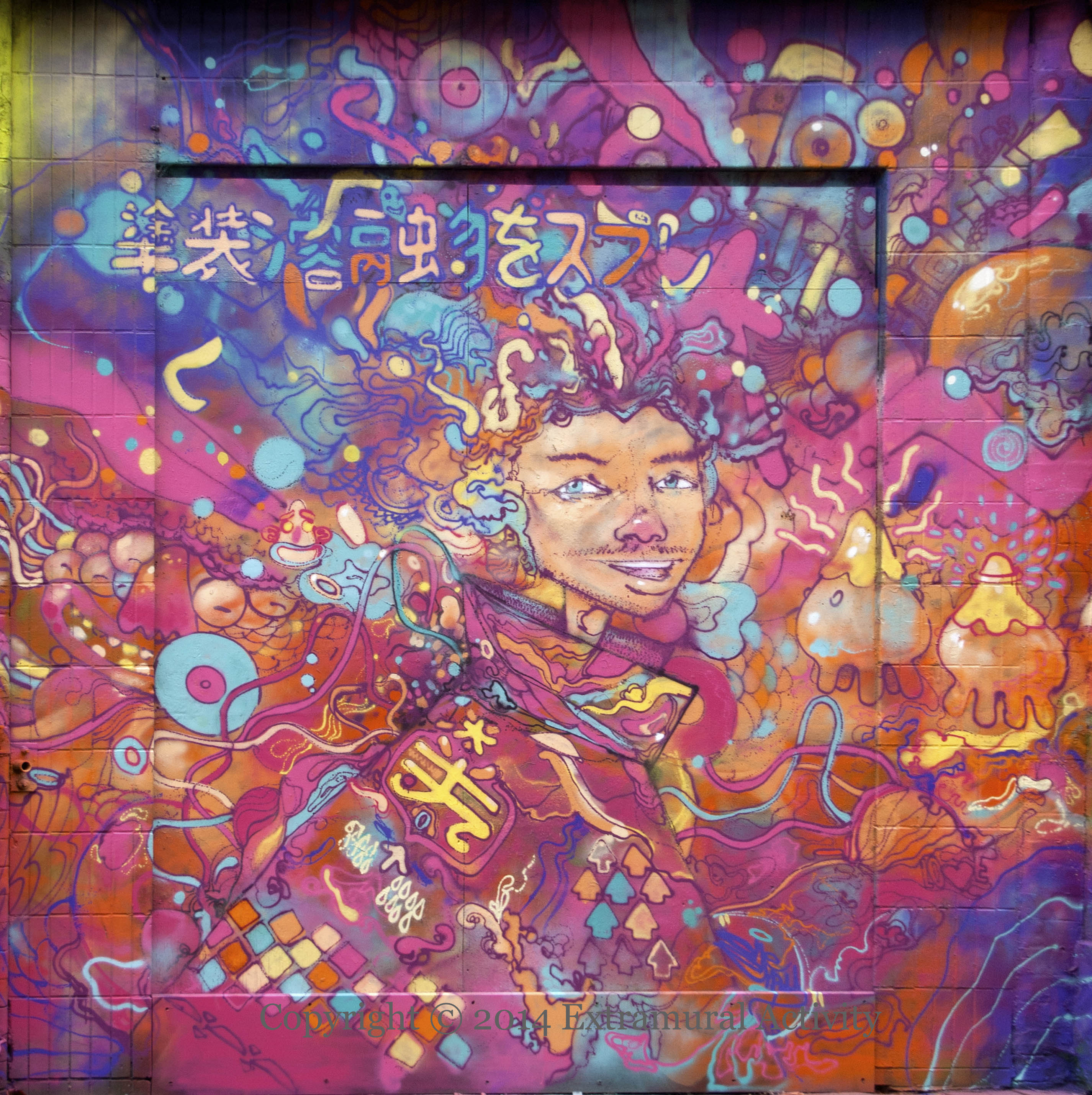
A new piece for CNB14 in Lower Garfield Street, immediately recognizable from Scottish artist Elph’s inimitable style, here using a palette of pinks and blues. On his Fb page you can see a sketch done in preparation for the work.
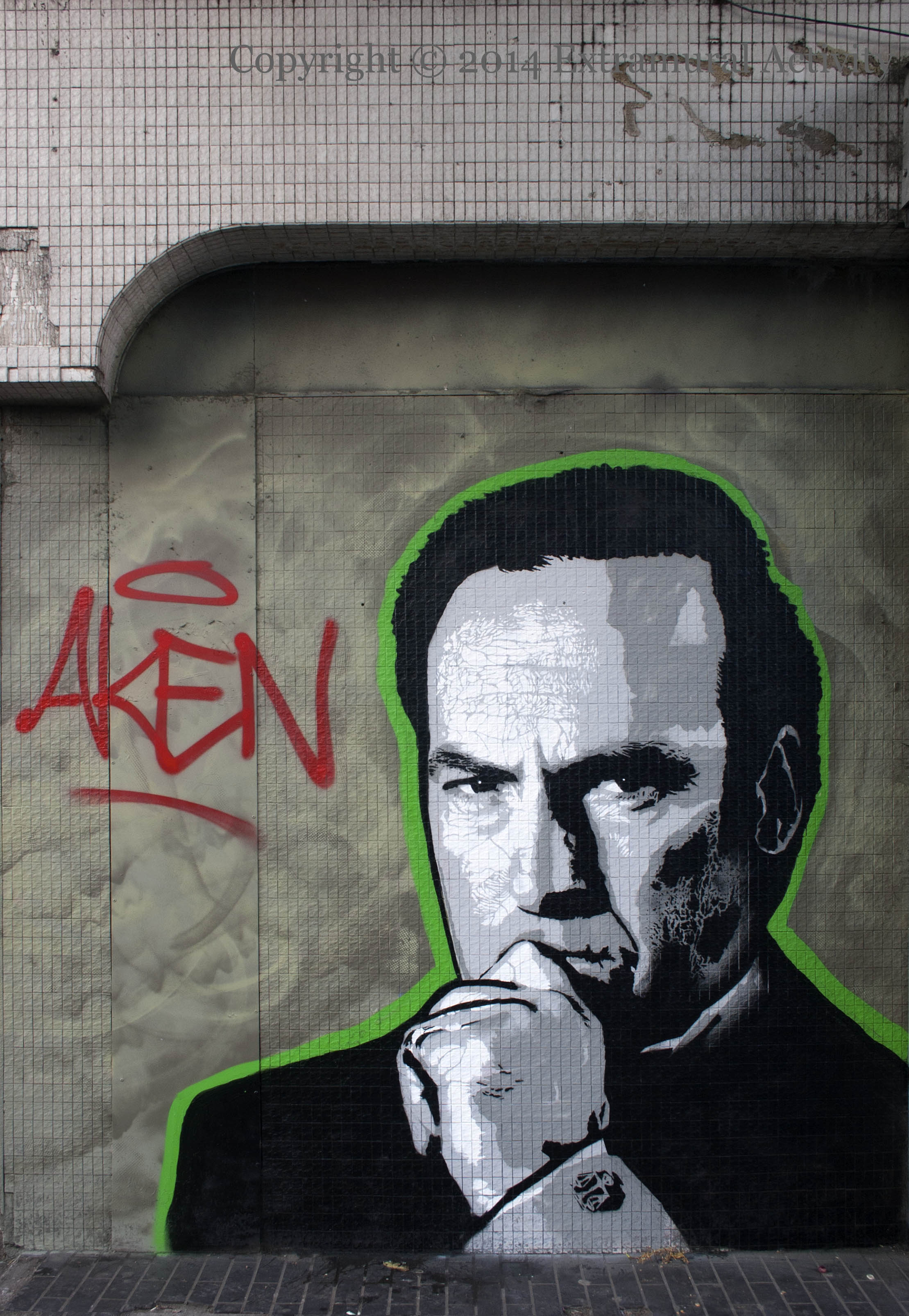
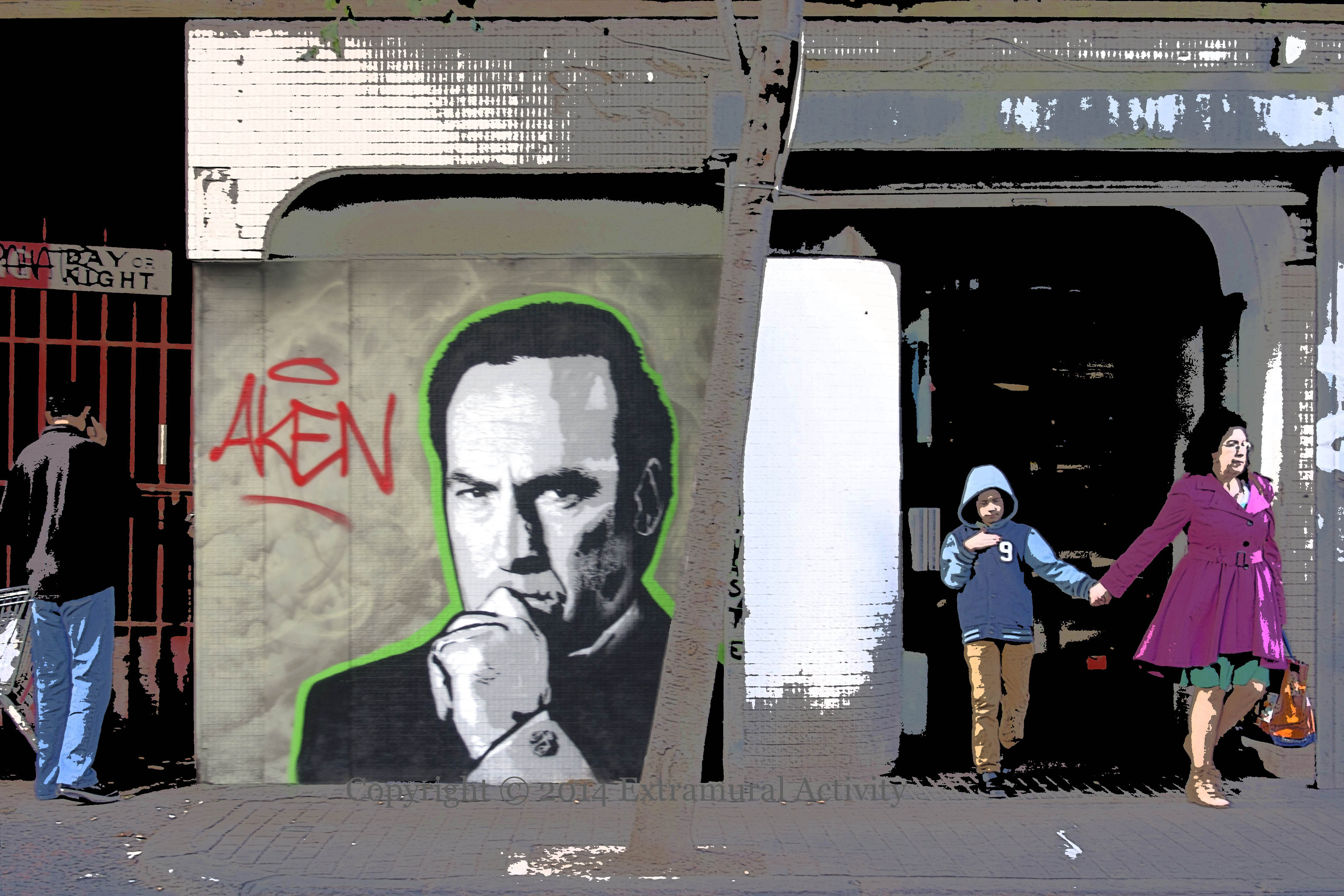
Here are two images of the new Visual Waste piece in North Street, completed as part of Culture Night Belfast, 2014. Bob Odenkirk plays the lead character, Saul Goodman, in the upcoming series Better Call Saul, a spin-off of Breaking Bad, whose lead character (Bryan Cranston as Walter White) was the subject of last year’s Visual Waste CNB piece (see Broken Bad).
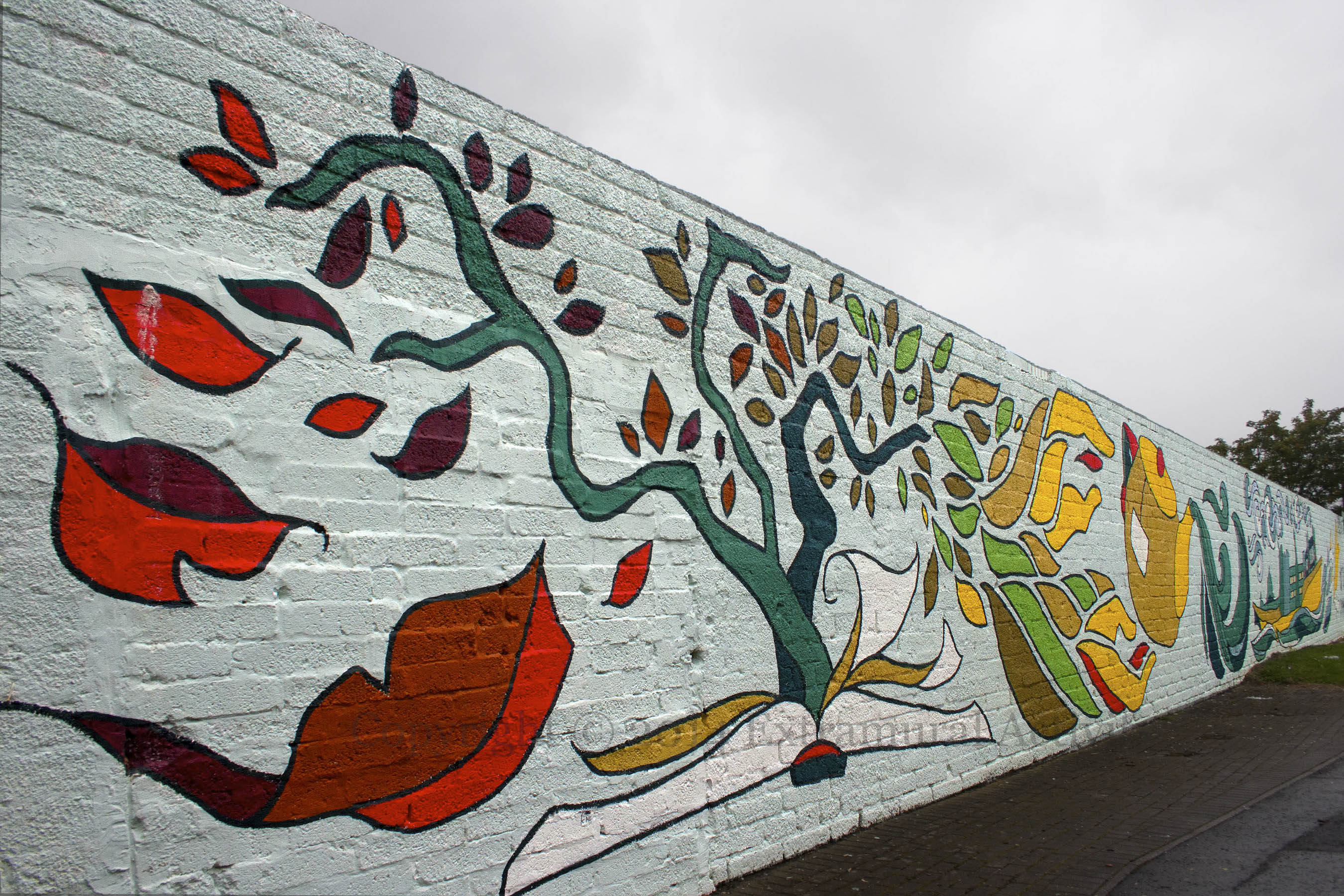
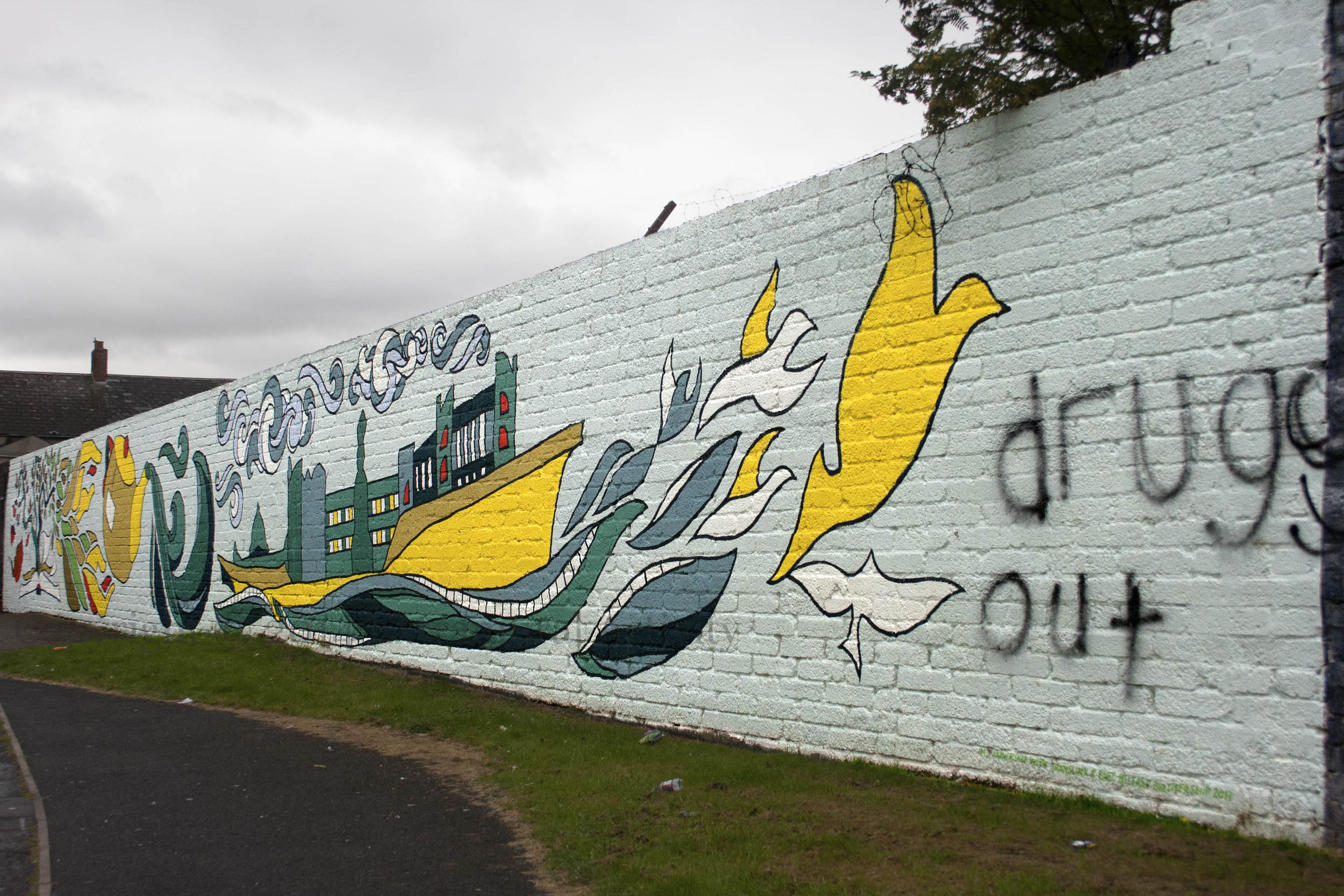
Here are two shots of a long mural between Mountforde Road and Beechfield Street in east Belfast. It features a tree growing out of a book, a golden teapot, with teabag hanging out the side, and a street scene. “Drugs Out” has been helpfully graffitied at the far end.
There doesn’t seem to be any information at all about this mural on-line. So, if you have any leads, please e-mail or leave a comment.
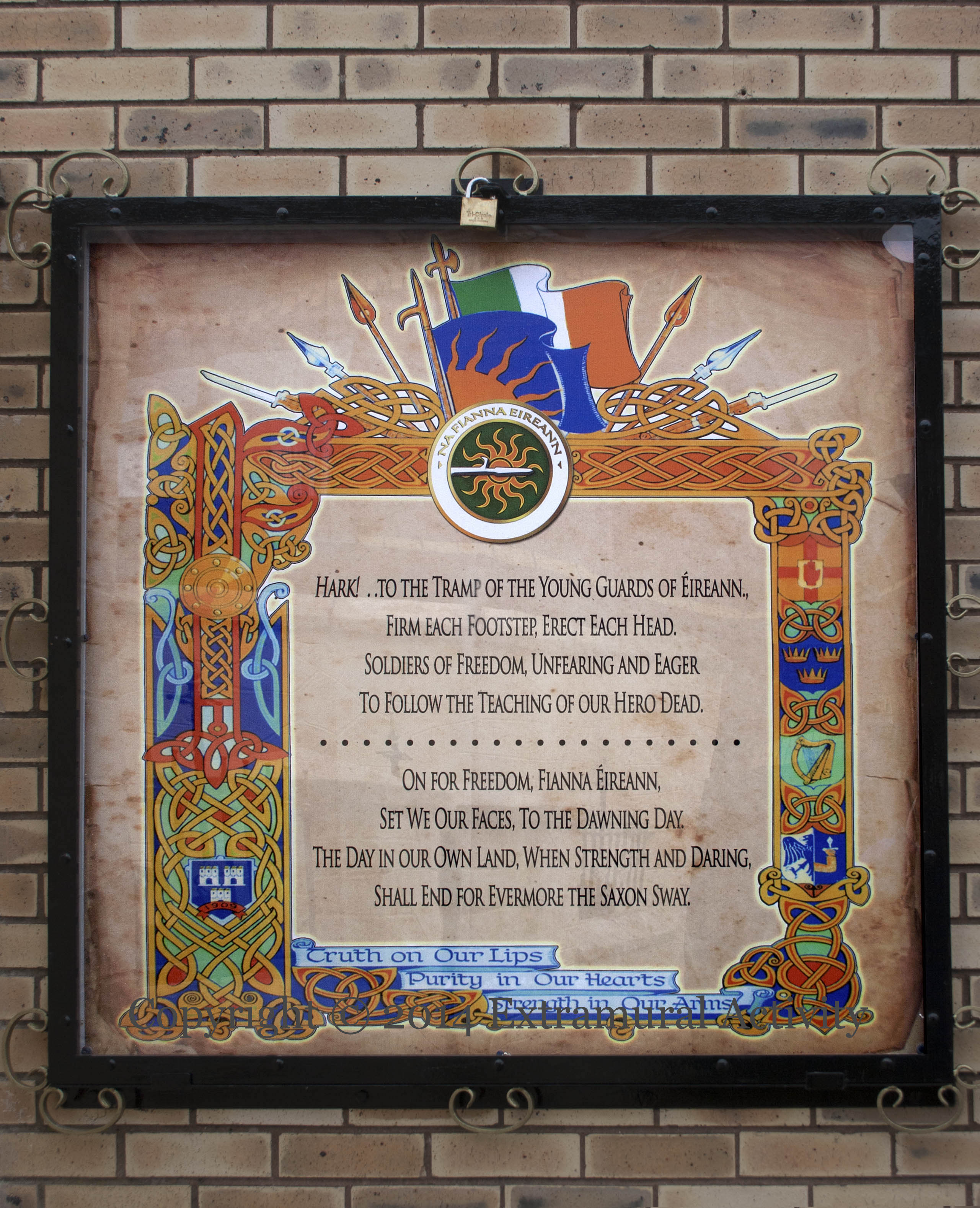
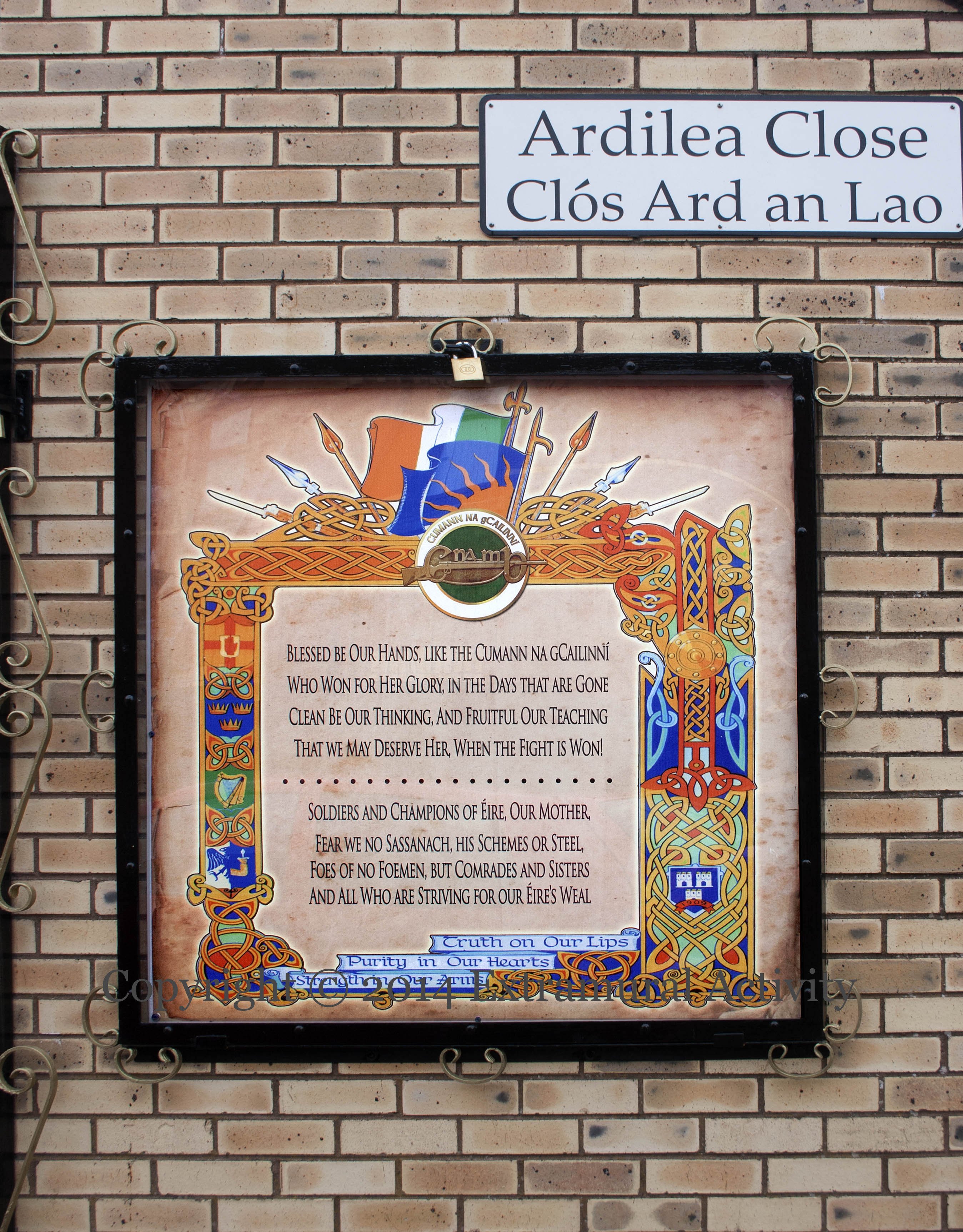
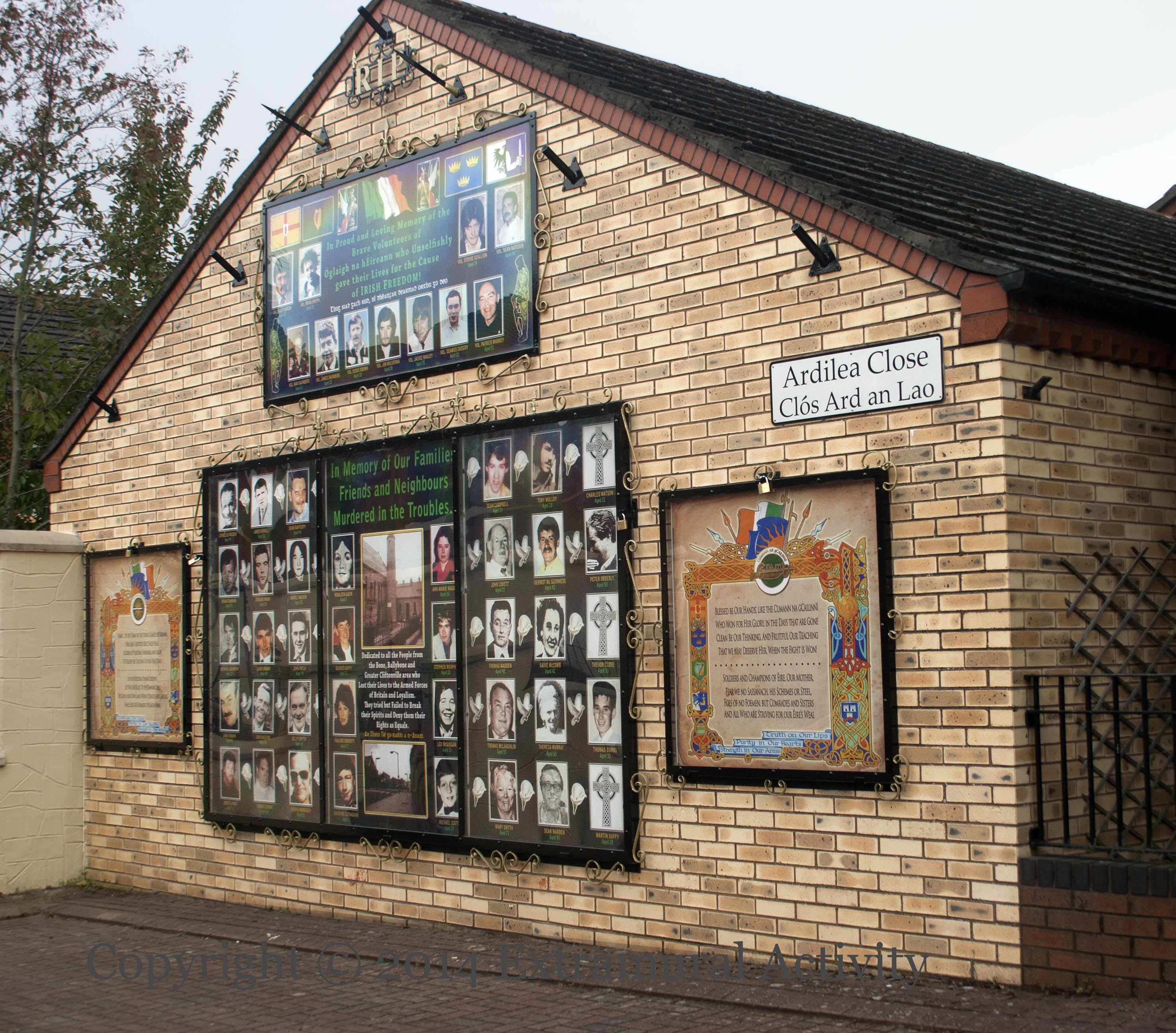
A pair of boards have been added to either side of one of the Bone memorials in Clós Ard An Lao, one for Na Fıanna Éıreann – the boys – and one for Cumann Na gCaılíní – the girls. The words are those of the Marching Song Of Na Fıanna Éıreann, except that in the second verse (the third stanza shown, first in the image below) the words “Cumann Na gCaılınní [sic]” have been inserted instead of “Fıanna Éıreann”.
The third image, below, shows the whole wall; for a close-up of the central boards, commemorating locals who lost their lives in the troubles, see Bone Memorial.
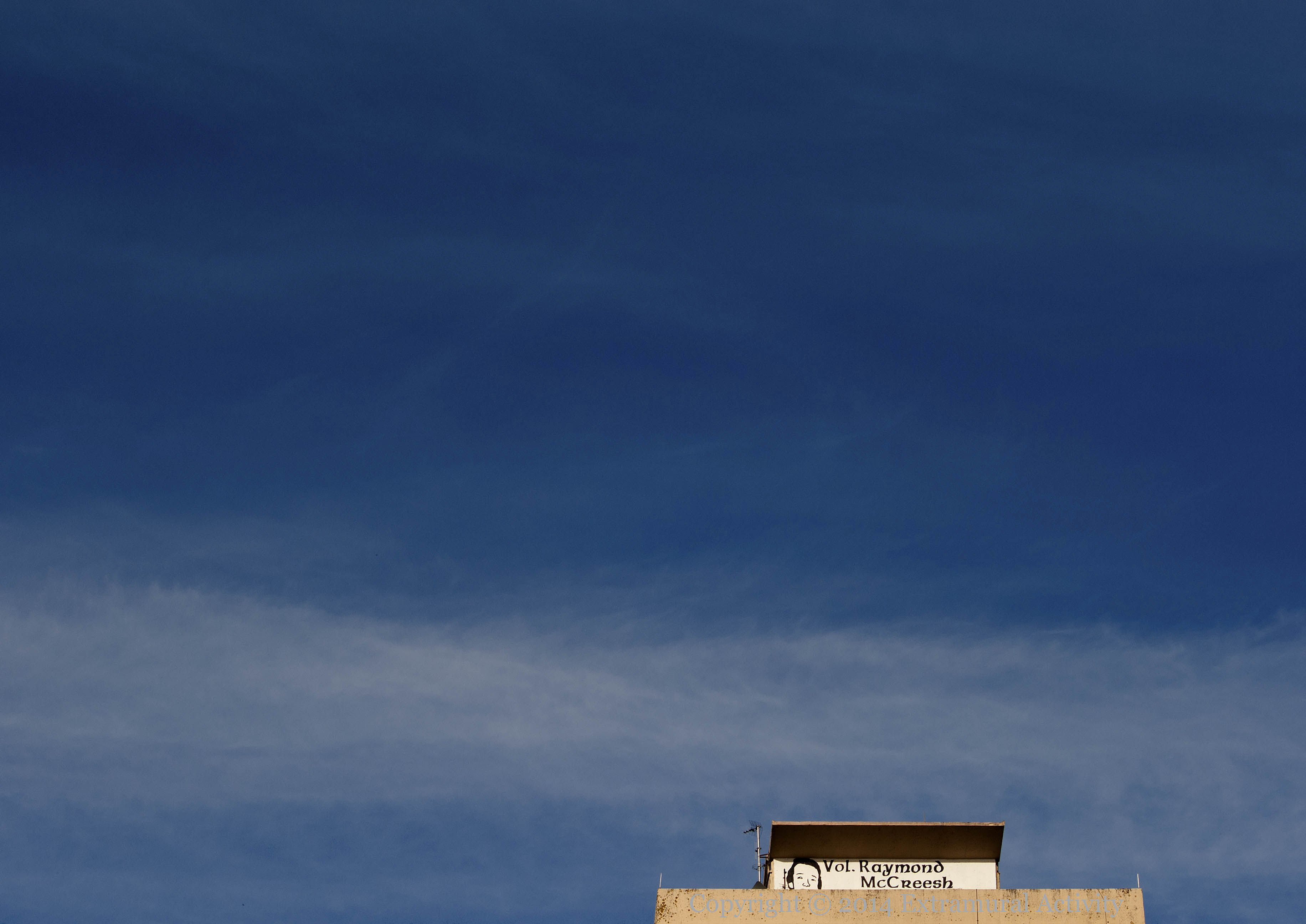
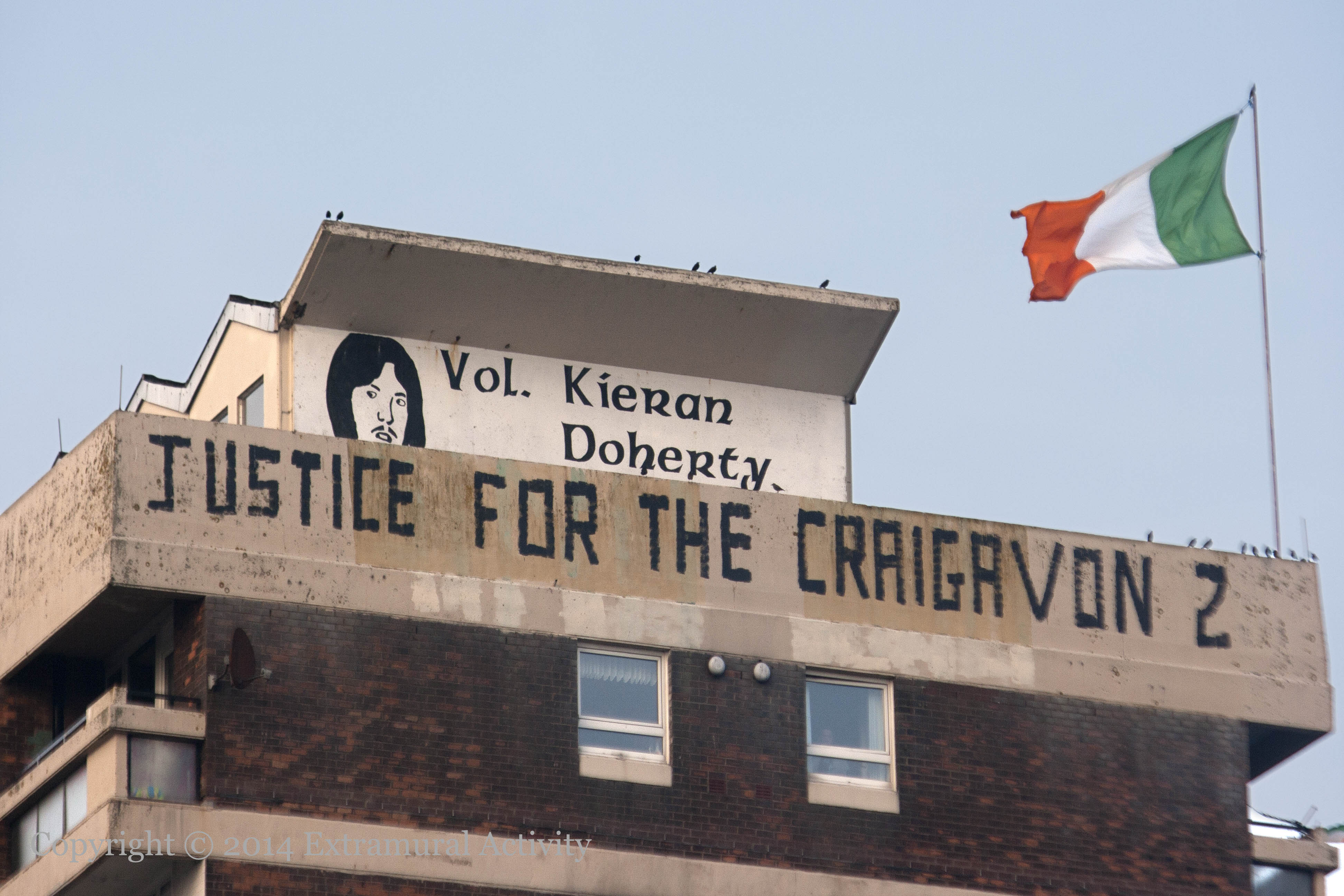
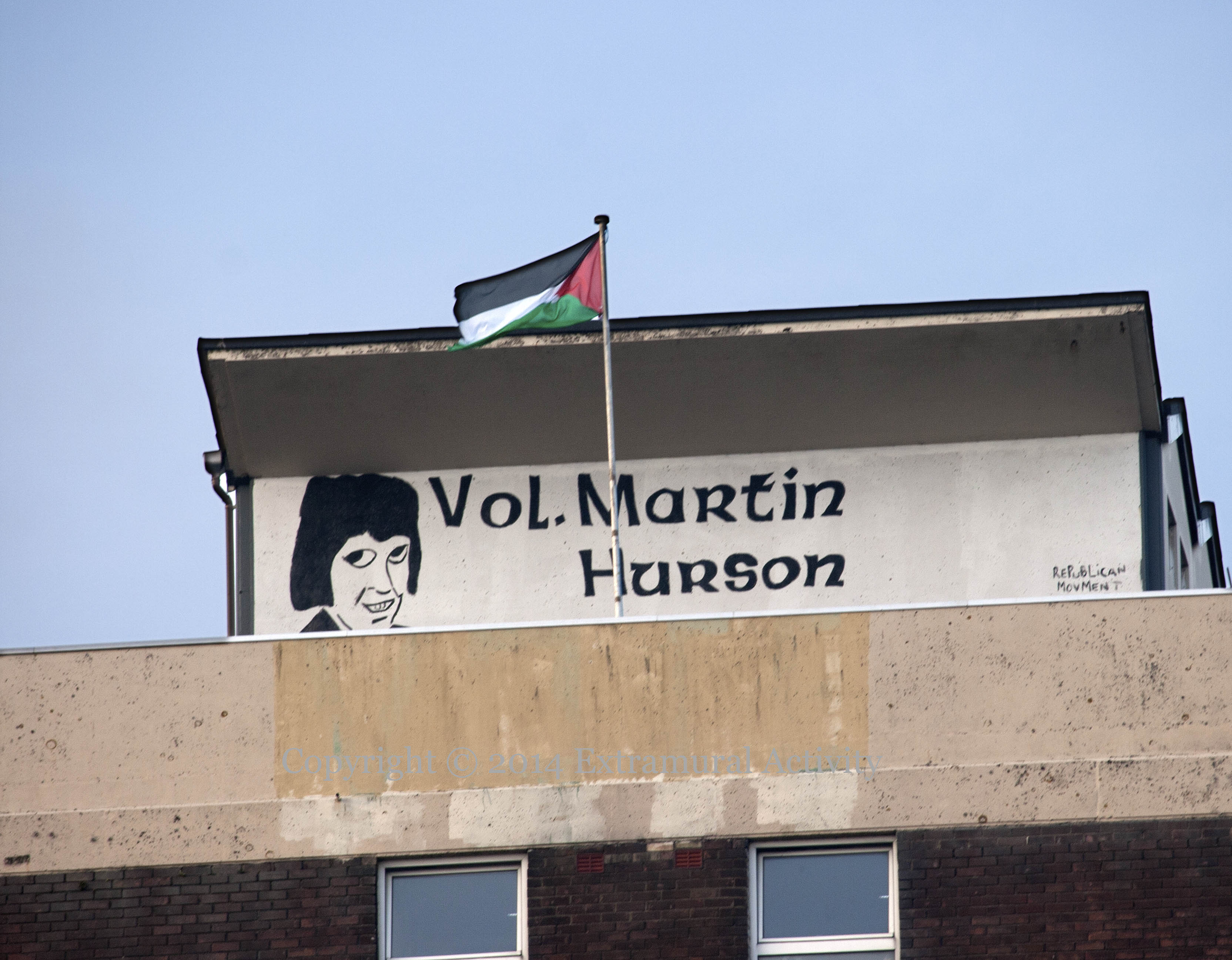
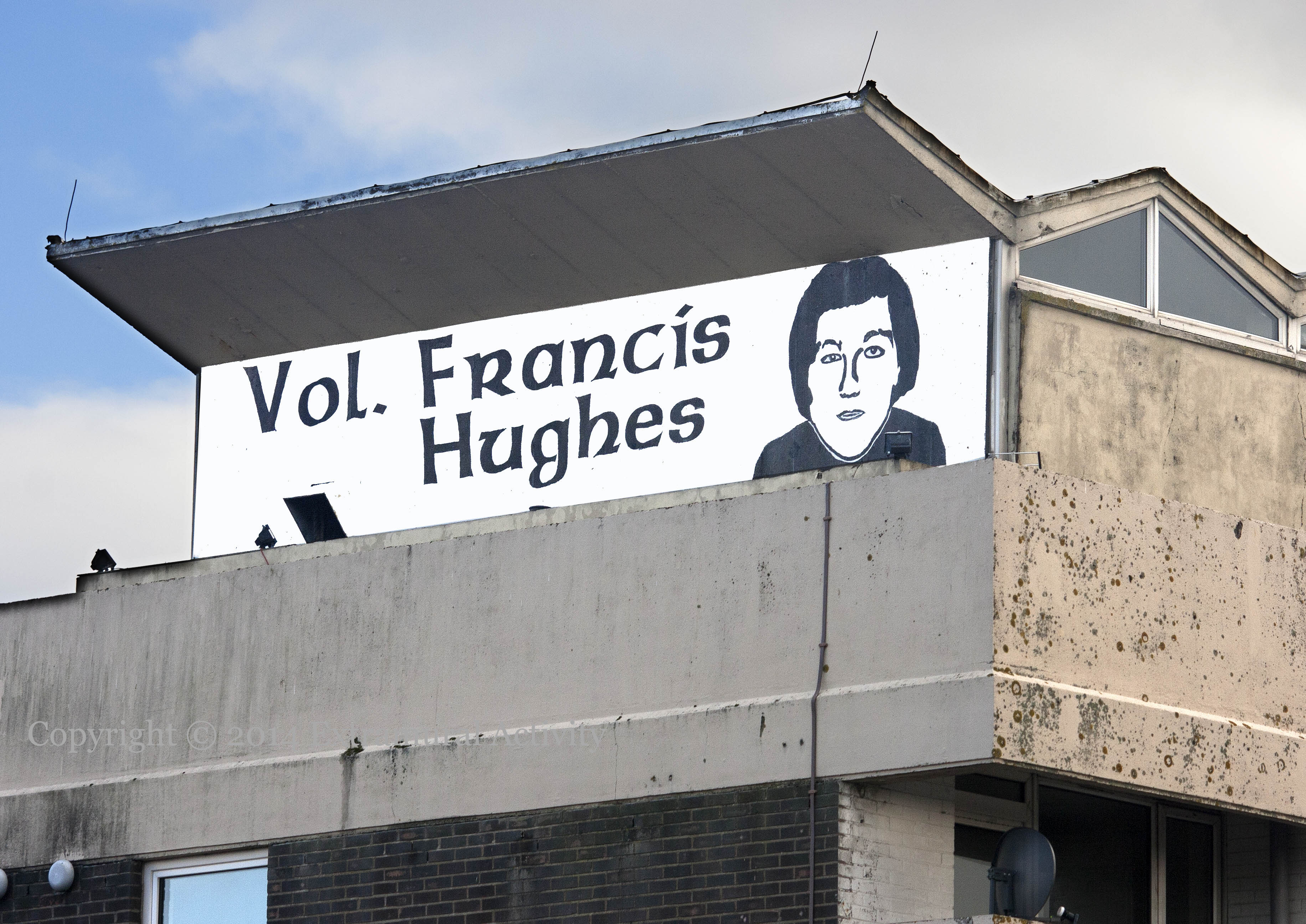
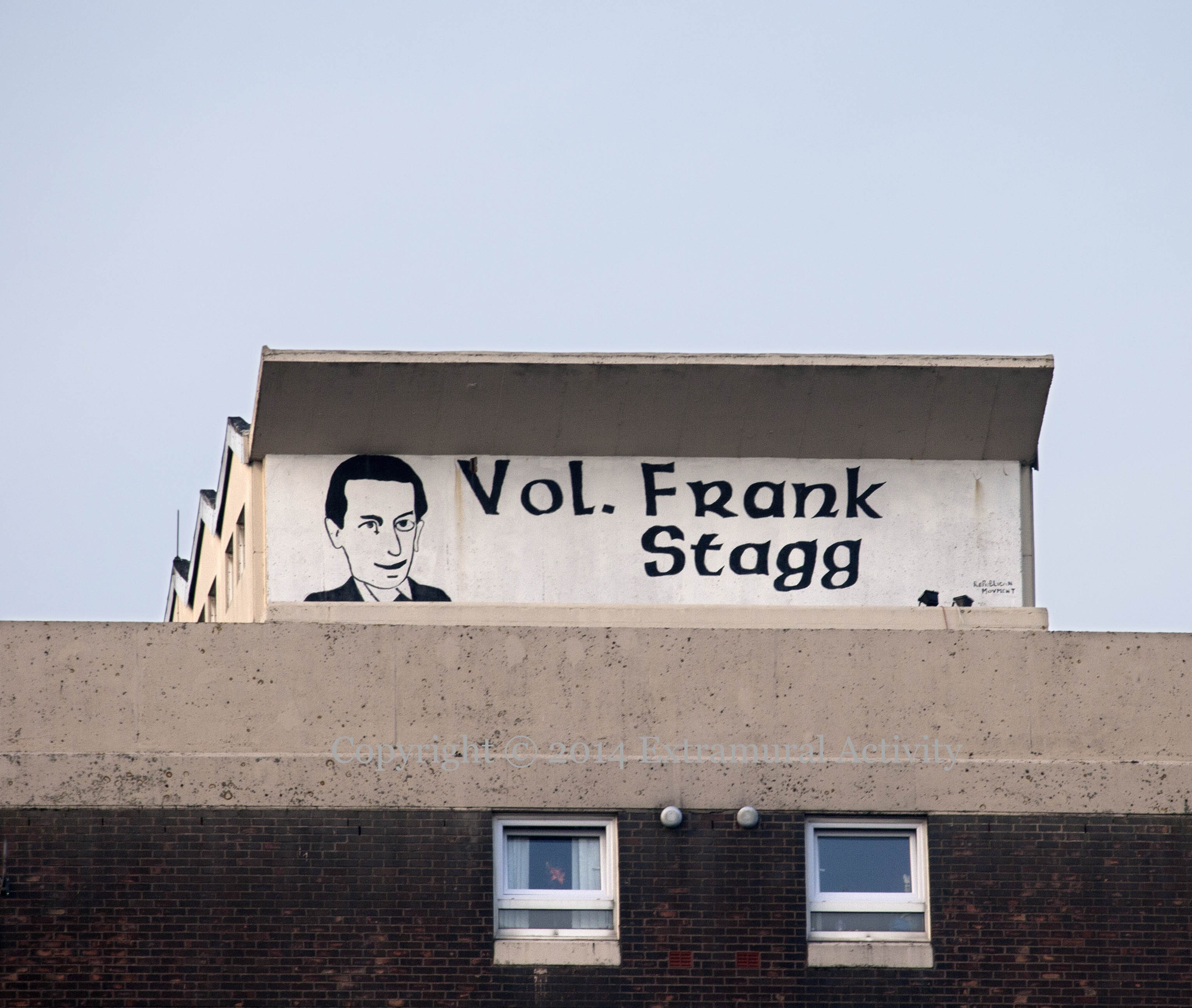
Six of the seven New Lodge tower blocks each feature two hunger strikers, on the narrow sides of the building. Those featured are the ten who died in 1981 along with Frank Stagg and Michael Gaughan. Here are images of five of them. Above is Raymond McCreesh, below is Kieran Doherty with a tricolour and ‘Justice for the Craigavon 2’, third is Martin Hurson and a Palestinian flag, fourth is Francis Hughes, and fifth is Frank Stagg.
An annotated Google map and a table give the Irish, English and former names of the flats (“houses”) as well as their locations and the hunger strikers on each.
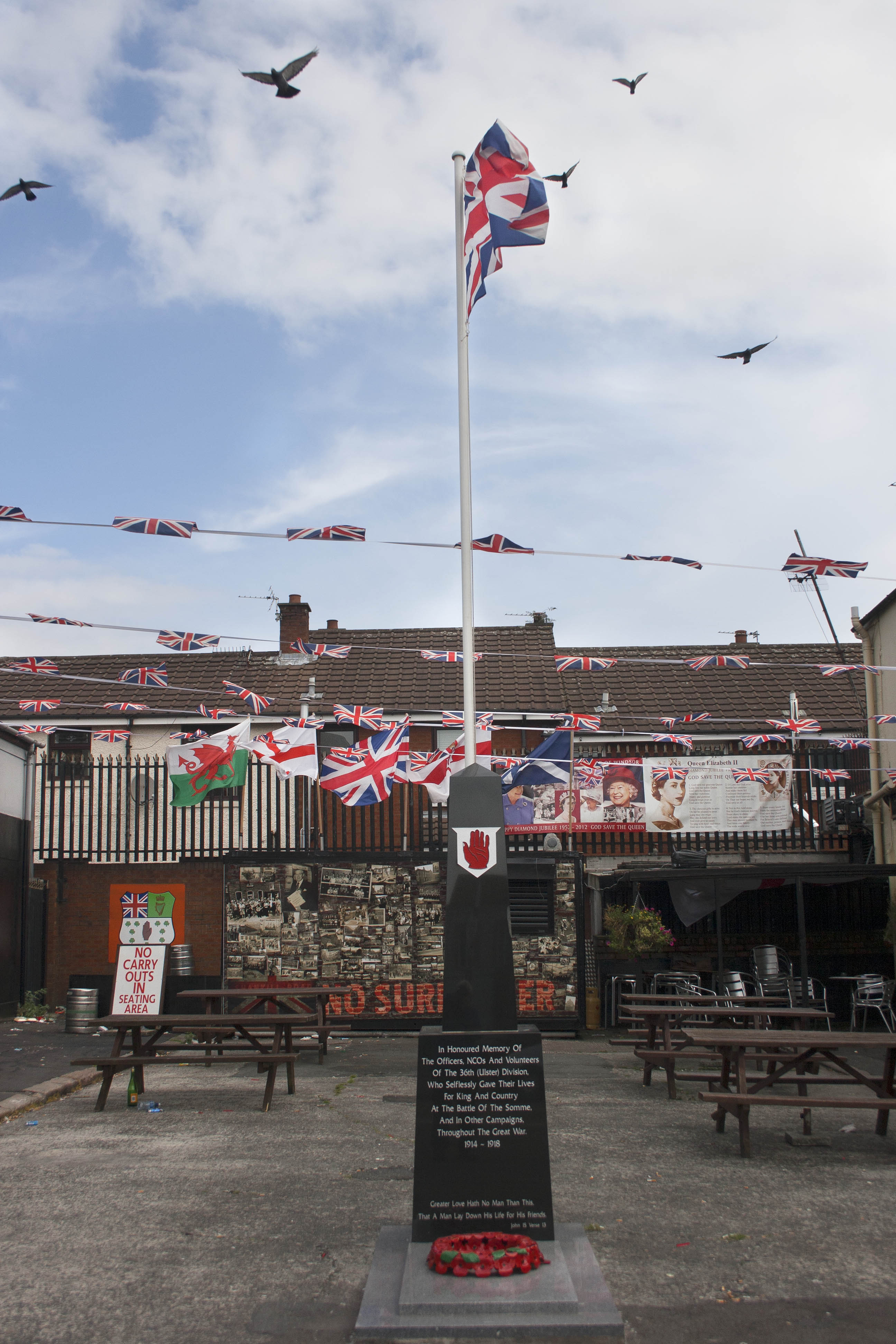
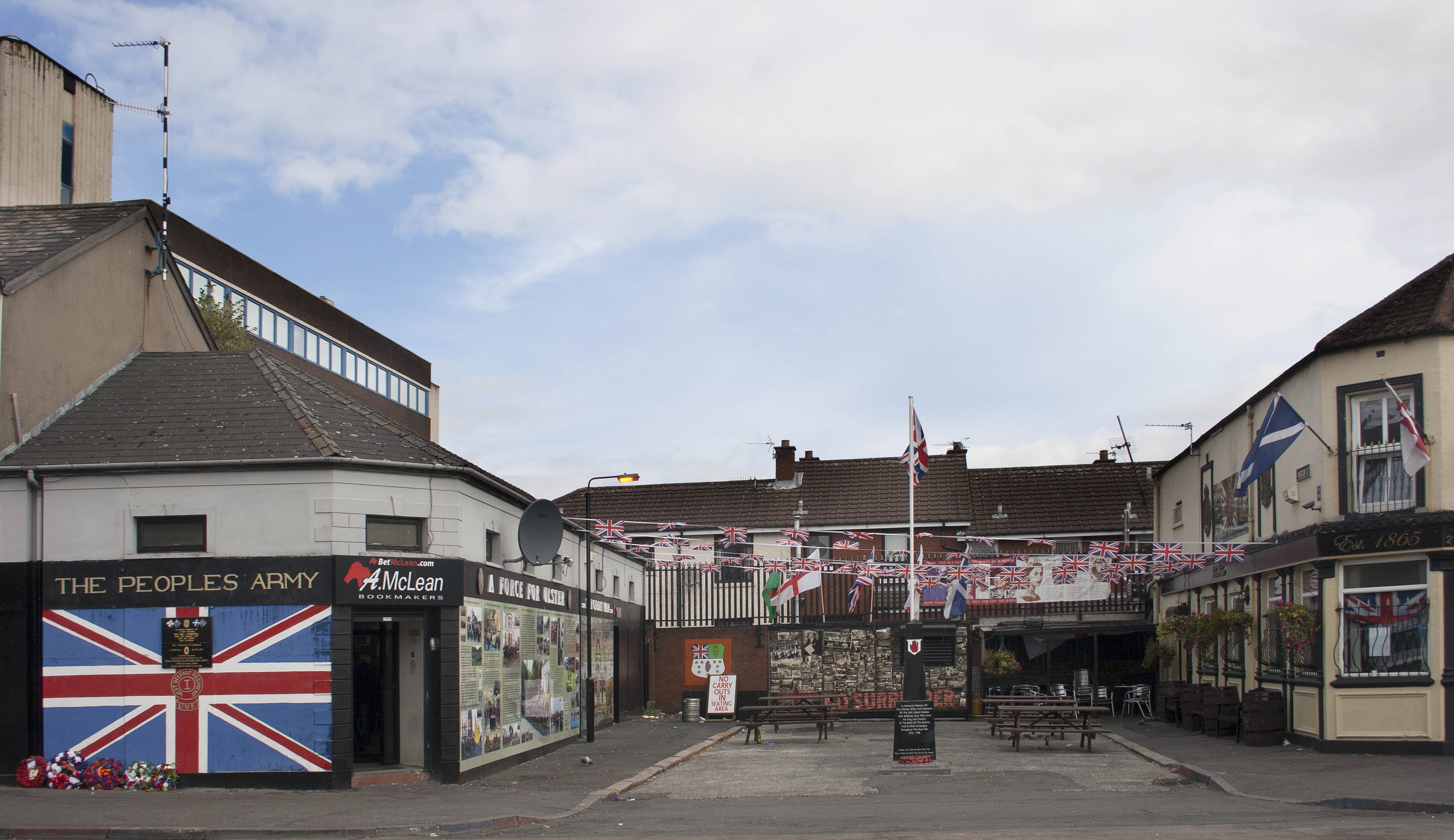
Above and below is the scene at the end of summer in the courtyard of the Rex Bar – bunting and bouquets join the flags of the home nations and various boards celebrating the queen’s diamond jubilee and commemorating the 36th Ulster division “who selflessly gave their lives for King and county at the battle of the Somme”. The new boards (on the left hand side of the wide shot) were featured previously in The Last Post, along with the Union flag of The People’s Army. For the same scene ten years previously, see Betting Office.
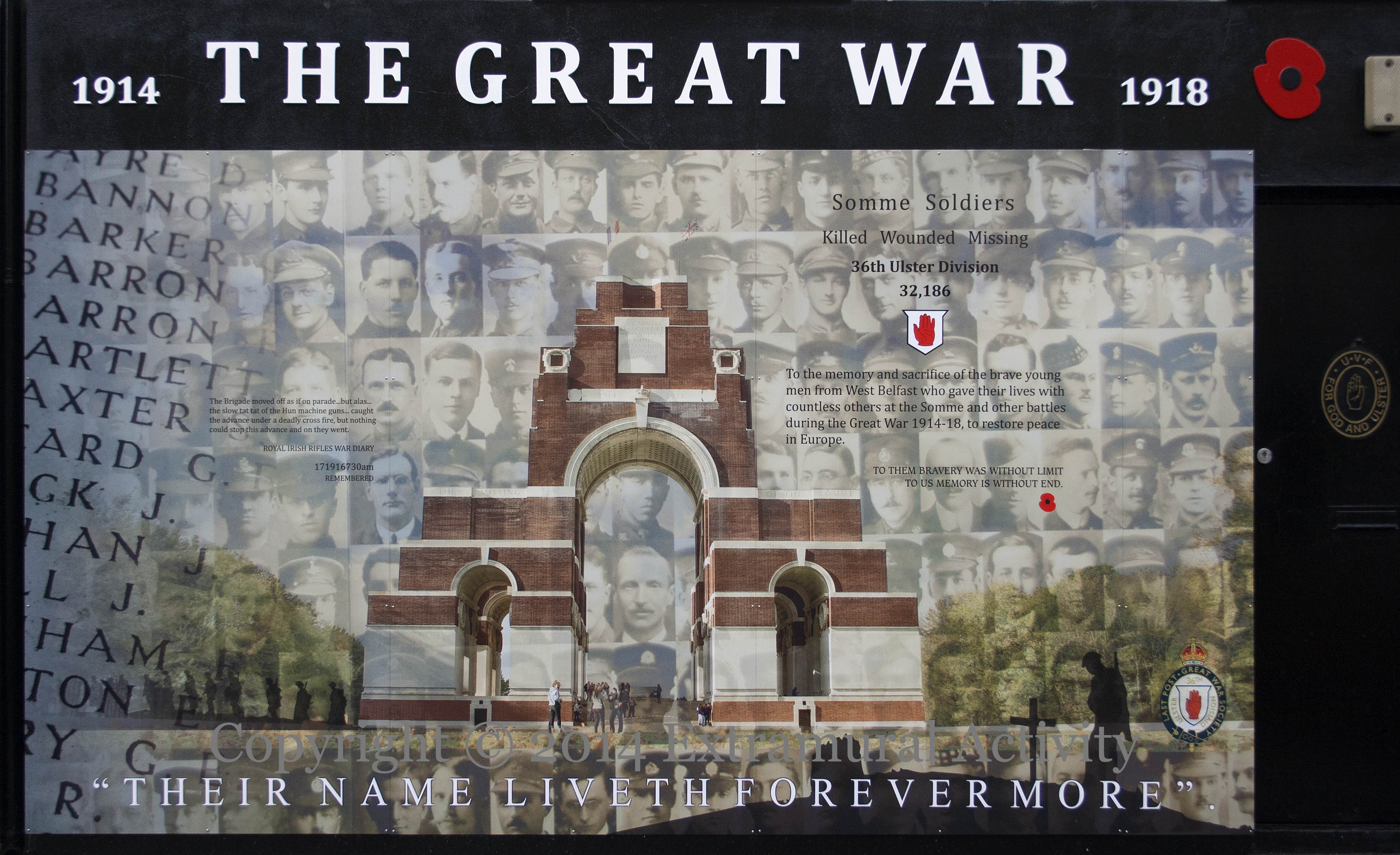
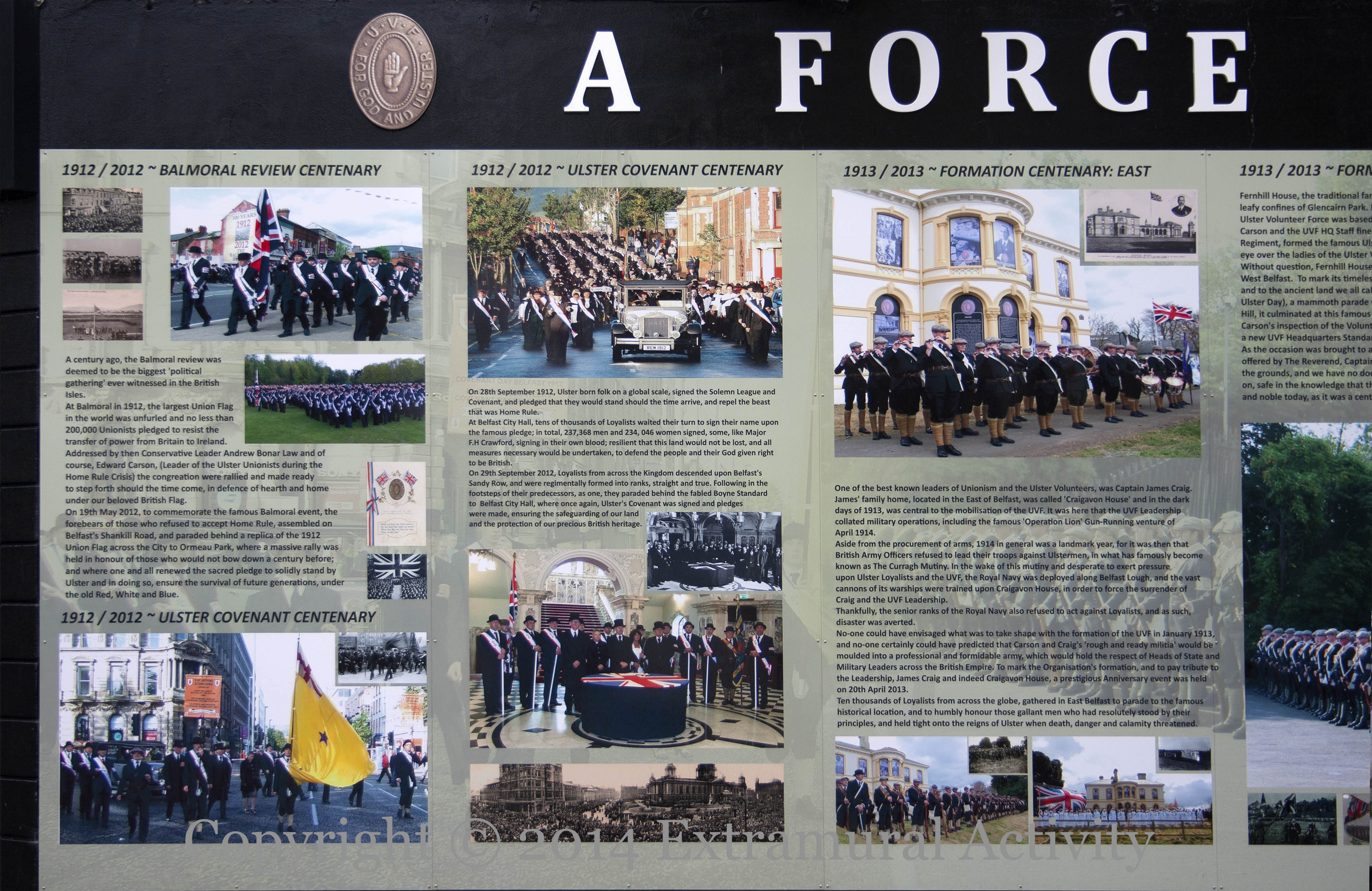
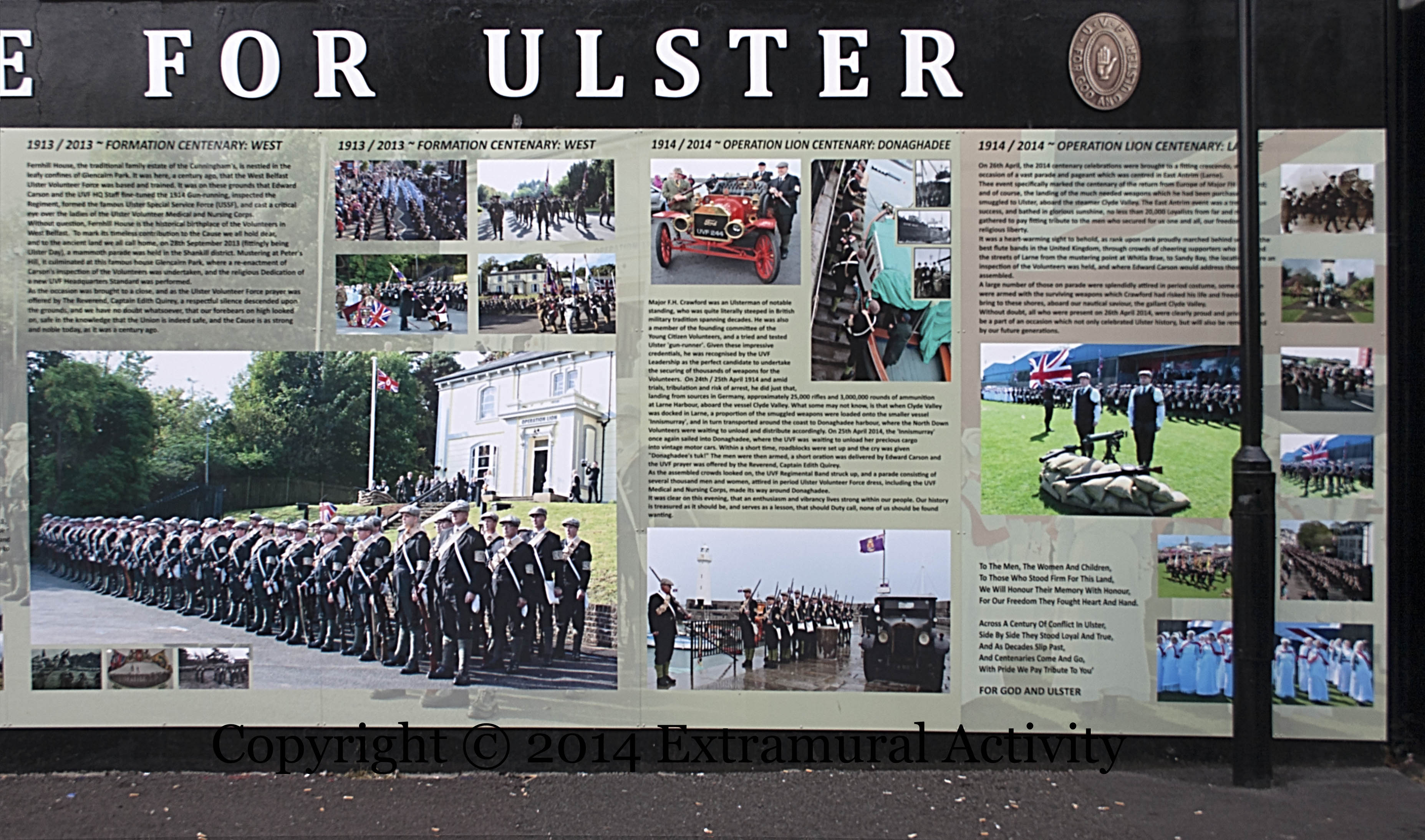
Here are two new boards in the courtyard of the Rex Bar on the Shankill Road, describing the formation of the Ulster Volunteers (‘A Force For Ulster’) and commemorating the losses suffered by the 36th (Ulster) Division of the British Army, which the Volunteers became, at the Somme and in other battles, mowed down by “the Hun machine guns” (‘The Great War’).
‘A Force For Ulster’ includes photographs of the recent centenary re-enactments of the Balmoral Review, the Ulster Covenant, the formation of the Volunteers (“east” and “west”) and “Operation Lion” – more commonly known as the Larne Gun-Running.
According to the ‘The Great War’ board, 32,186 men from west Belfast were killed, wounded, or missing. “To them bravery was without limit, to us memory is without end”. The board shows the Thiepval Memorial To The Missing Of The Somme against a background of portraits.
 Seosamh Mac Coille Collection