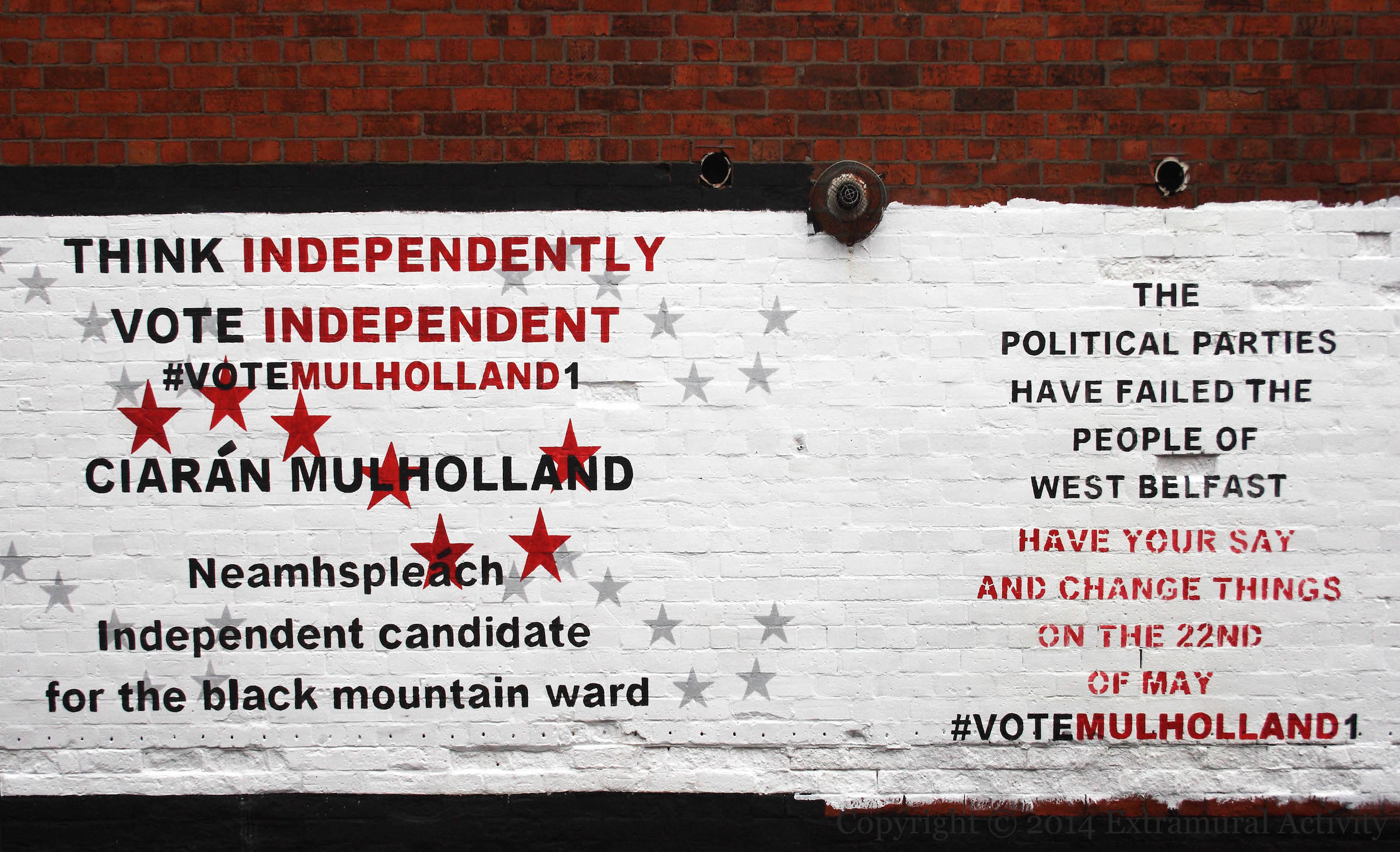
Electioneering is under way in Northern Ireland, ahead of the local and European parliament elections on May 22nd. Above is a stencil in Hugo Street drumming up support for independent (socialist) Ciarán Mulholland. “Think independently, vote independent. Neamhspleách/Independent candidate for the black mountain ward. The political parties have failed the people of west Belfast. Have your say and change things.”
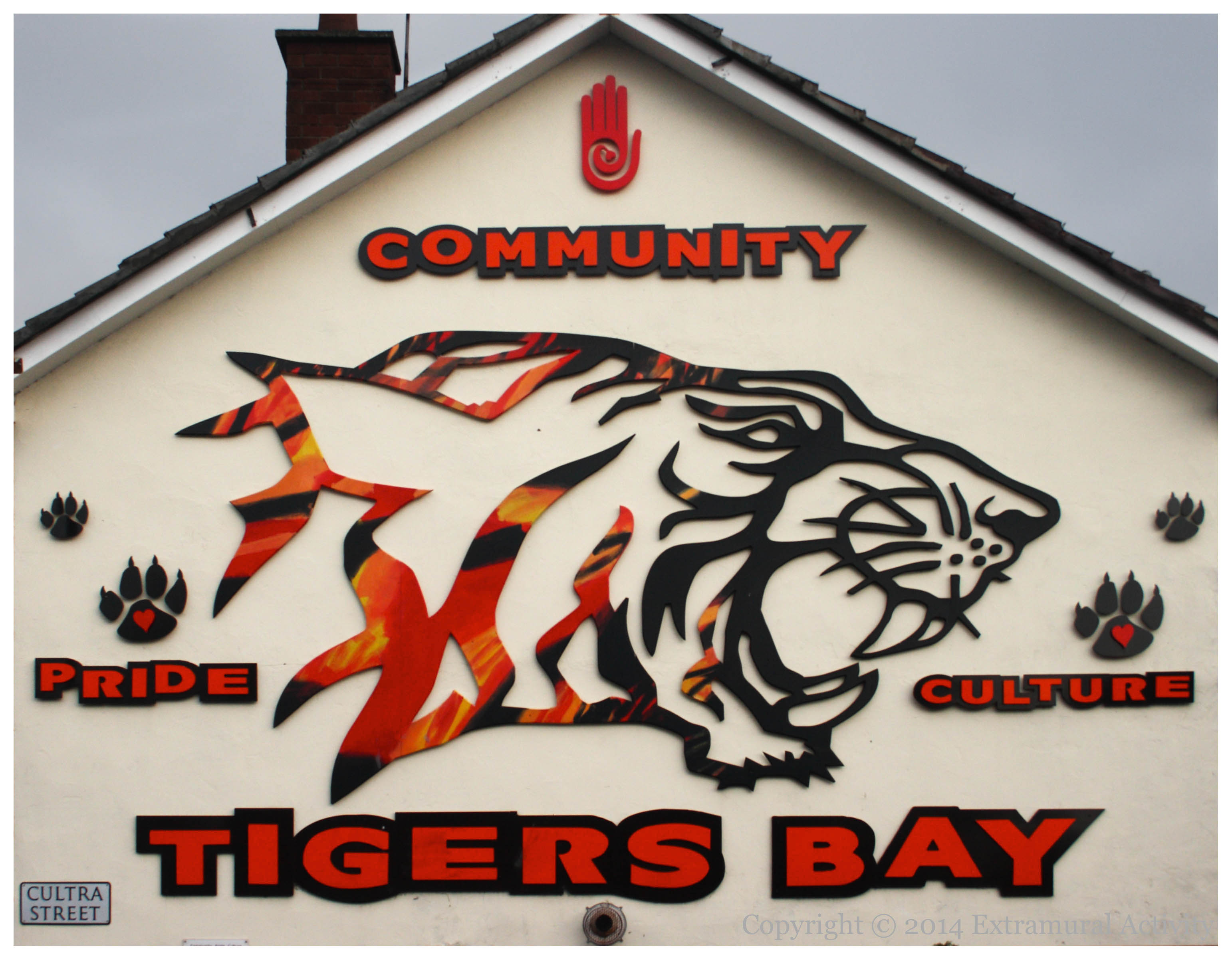
“Community. Pride. Culture.” As part of a 2009-2010 re-imaging program, the UDA mural on Cultra Street in Tiger’s Bay was replaced with this “cut-out” tiger.
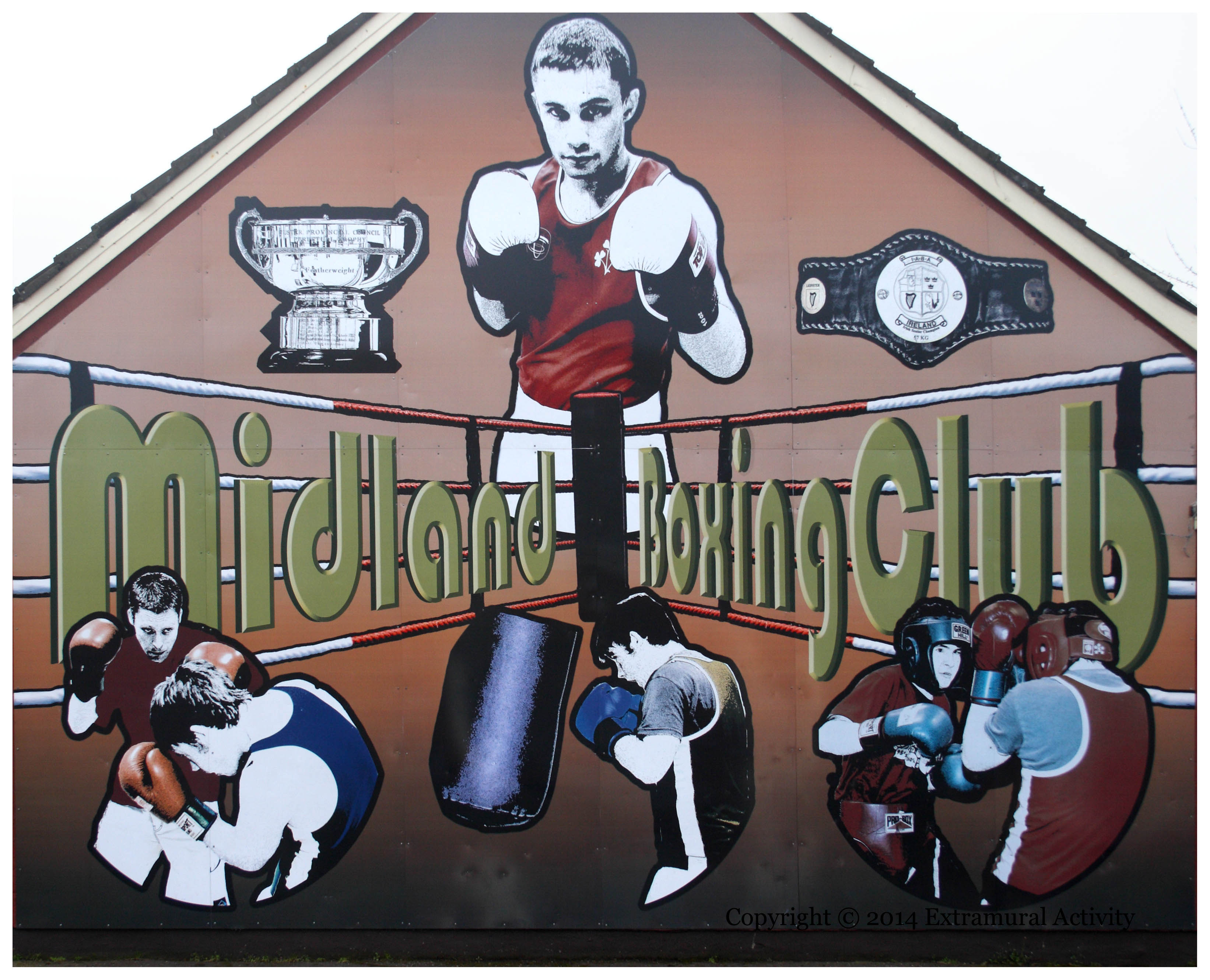
Carl ‘The Jackal’ Frampton fights tomorrow night (2014-04-04) against Hugo Cazarez for the opportunity to fight Leo Santa Cruz for the WBC super-bantamweight title. He is managed and promoted by Barry McGuigan. Here is a 2013 video profile of Frampton by The Guardian. As he mentions in the video, Frampton (who is Protestant) married a Catholic, while McGuigan (who is Catholic, from Clones) married a Protestant.
He is featured here in the apex of the ‘Midland Boxing Club’ board in Cultra Street in Tiger’s Bay, alongside his Irish featherweight title. The board is unusual in that it is tailored to the full size of the gable wall.
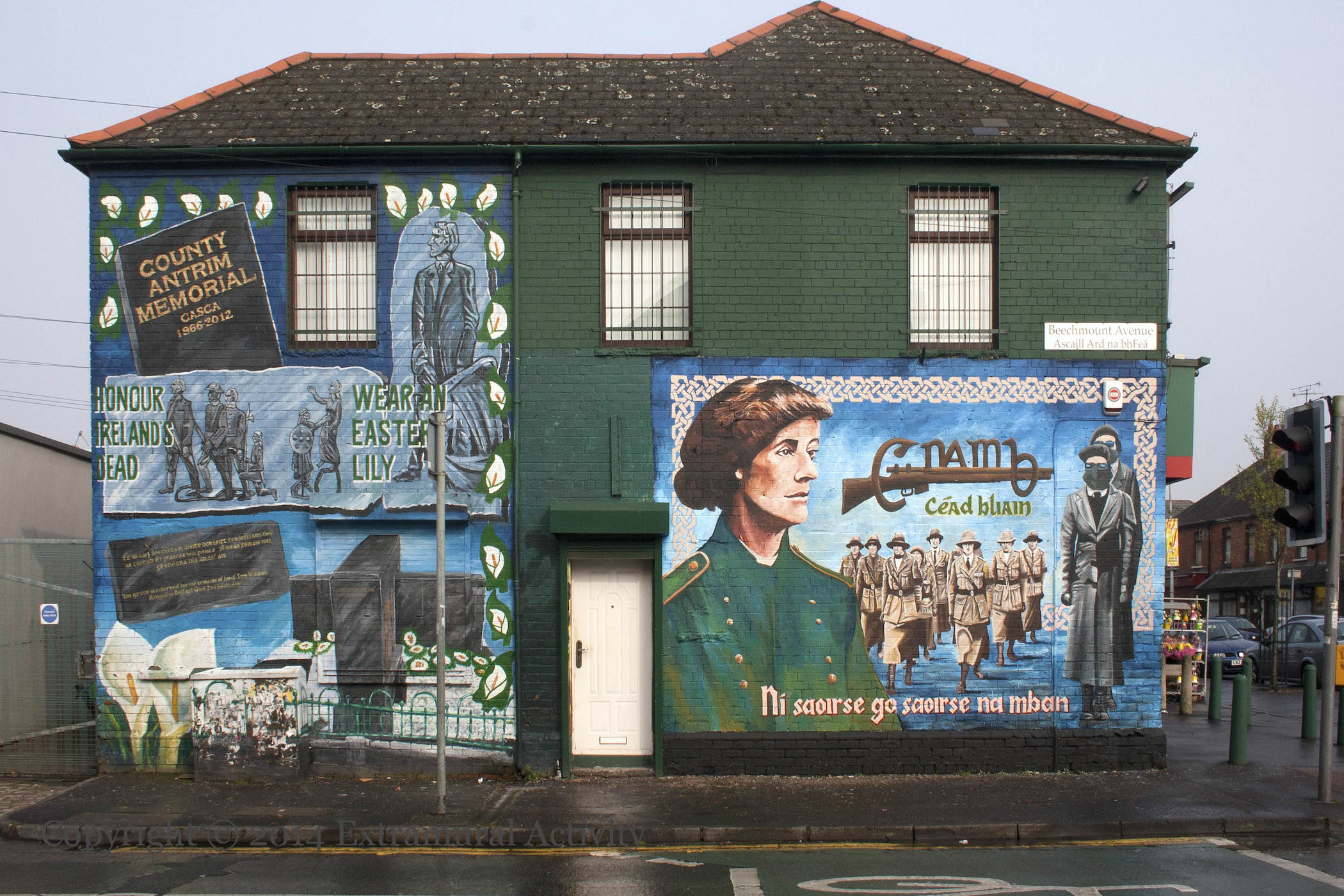
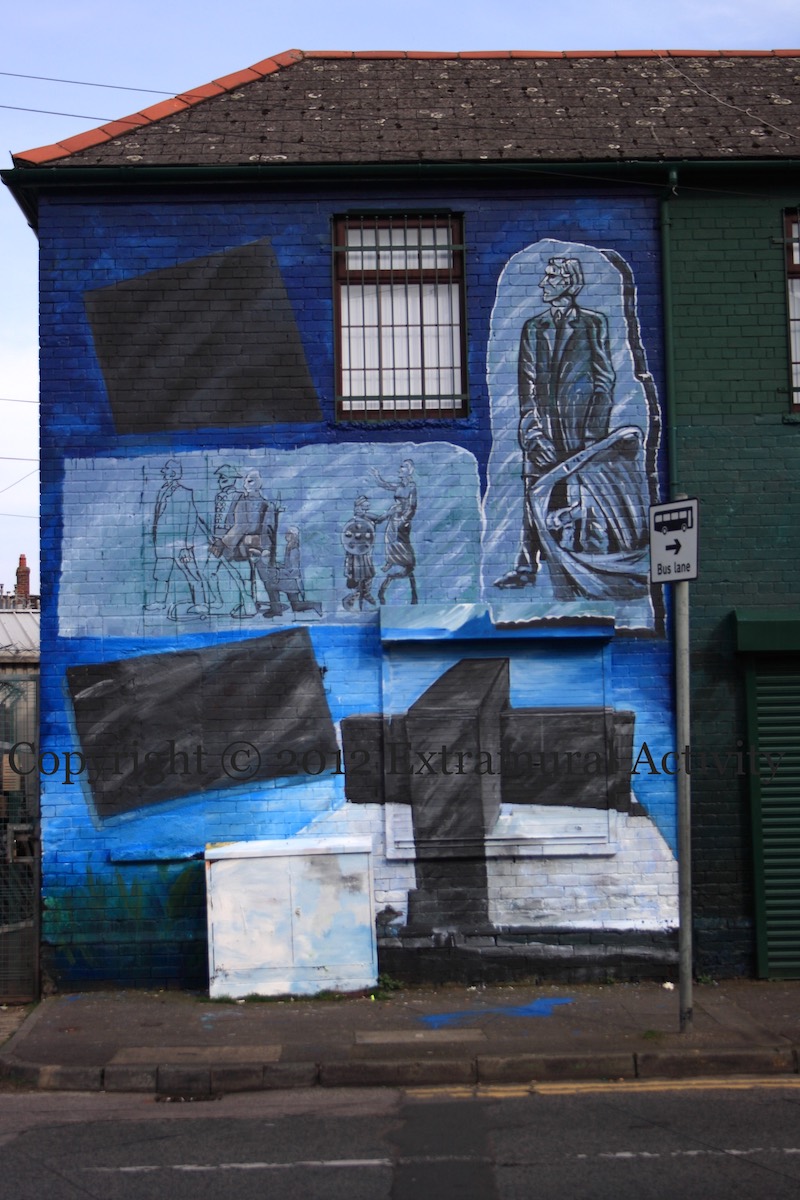
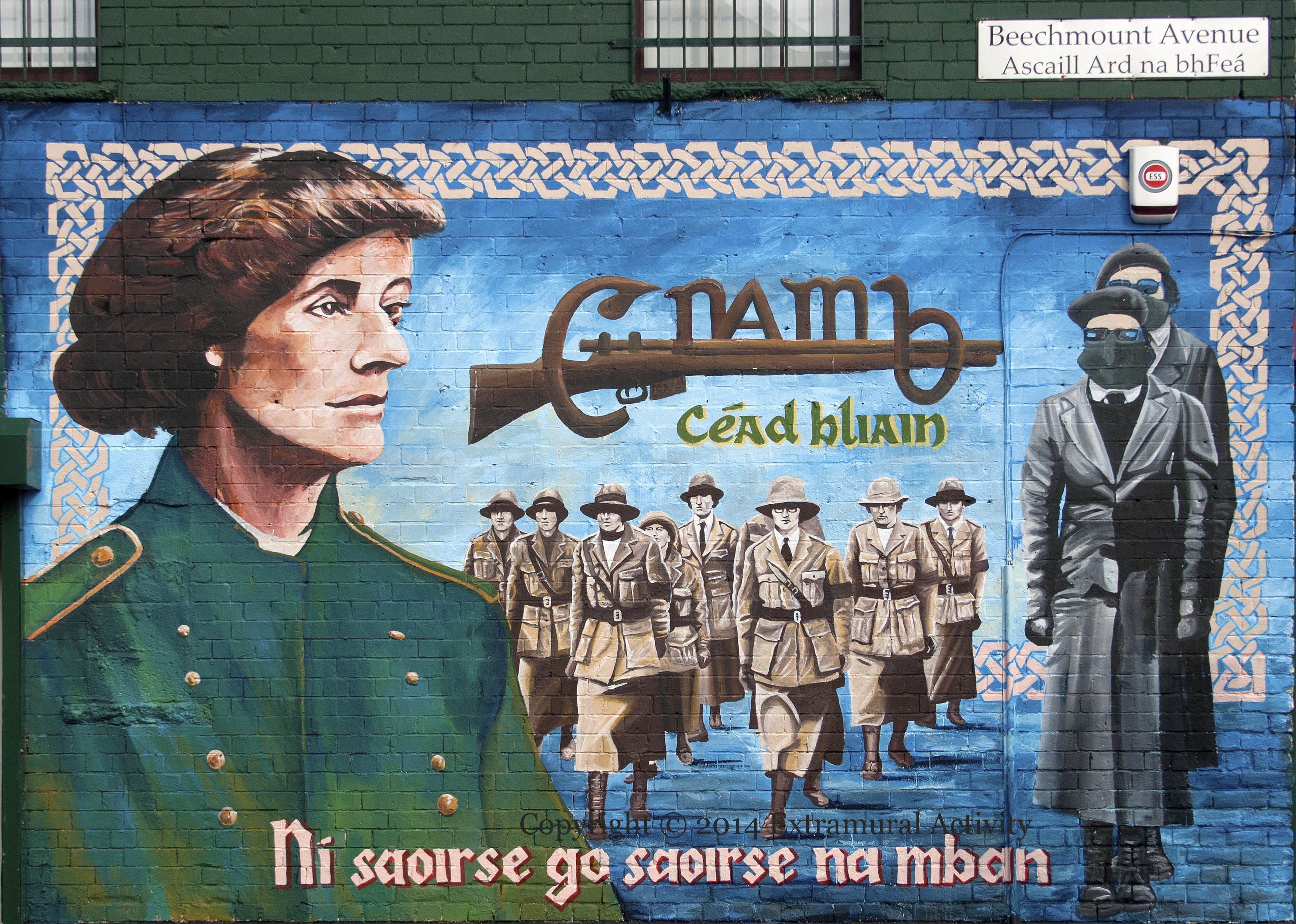
April 24th, 1916 is the date of the commencement of the Easter Rising. The left-hand side of the building on the eastern corner of the Falls Road and Ascaıll Ard Na bhFeá (Beechmount Avenue) is a memorial to Republicans from County Antrim from 1798 to 1966 – when the ‘County Antrim Memorial’ was raised in Milltown on the 50th anniversary of the Easter Rising – and beyond; it is pictured in the lower right, a large cross-shaped monument. Tom Williams (WP), an IRA volunteer who was executed during the Northern Campaign (during the second world war) and is buried in the plot, is mentioned specifically on the headstone in the lower left.
The right-hand side – the Cumman Na mBan centenary – was recorded previously.
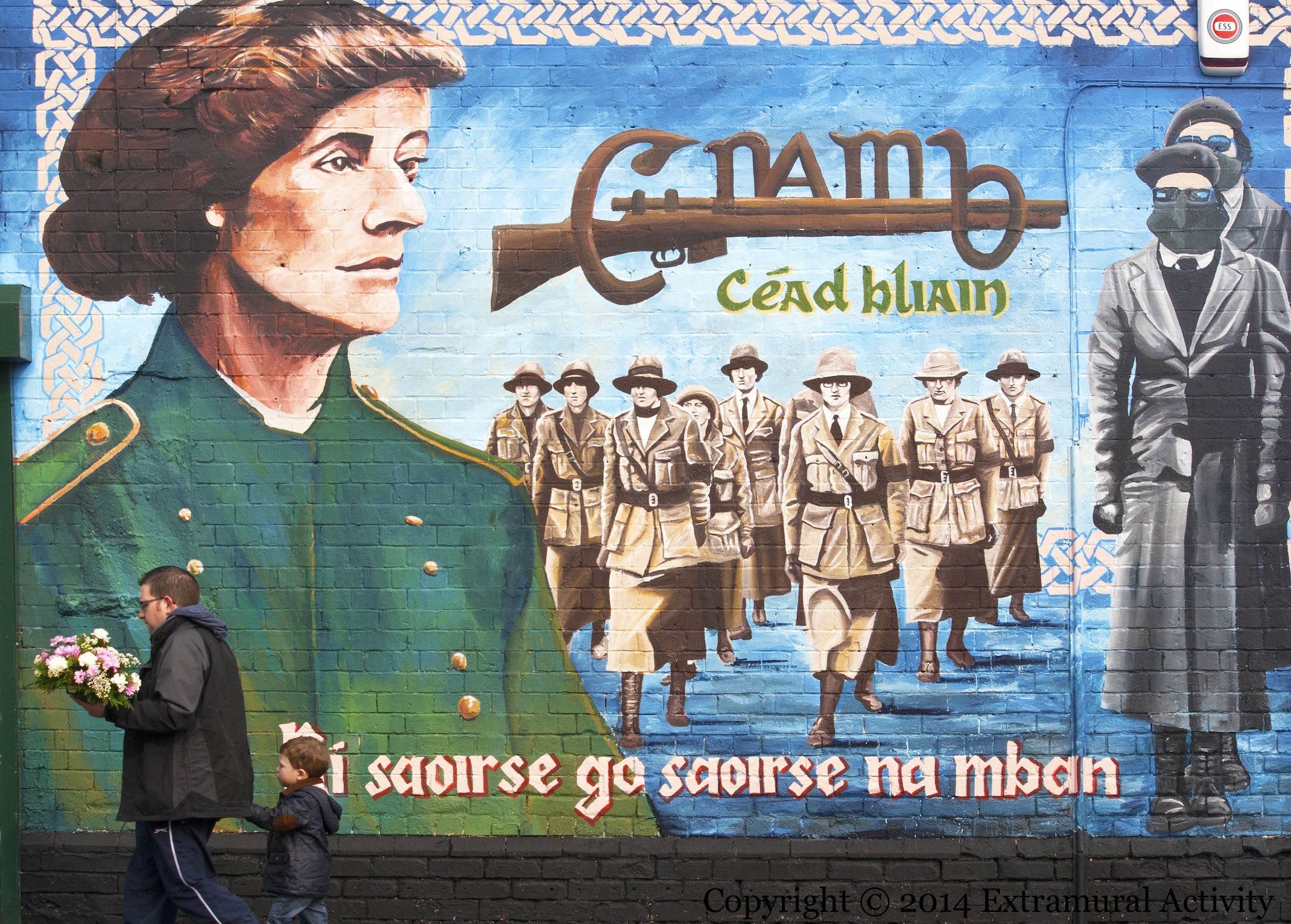
Mothering Sunday 2014 was yesterday, Sunday March 30th. On Saturday, when this image was taken, menfolk were out and about tracking down flowers and chocolates. This week also happens to be the one-hundredth anniversary (“céad blıaın”) of the founding of Cumann Na mBan on April 2nd, 1914, and it is being commemorated in various ways, including a new mural on Ascaıll Ard na bhFeá/Beechmount Avenue.
Cumann Na mBan was the women’s division of the Irish Volunteers and is best remembered for its role in the Easter Rising of 1916. Its members were involved in the occupation of many locations. Some, including (non-combatant) Winifred Carney, were in the GPO, while Countess Markievicz, the main figure of the mural, was in St. Stephen’s Green. (Here is an RTÉ gallery of vintage photographs, including one of Markievicz surrendering.)
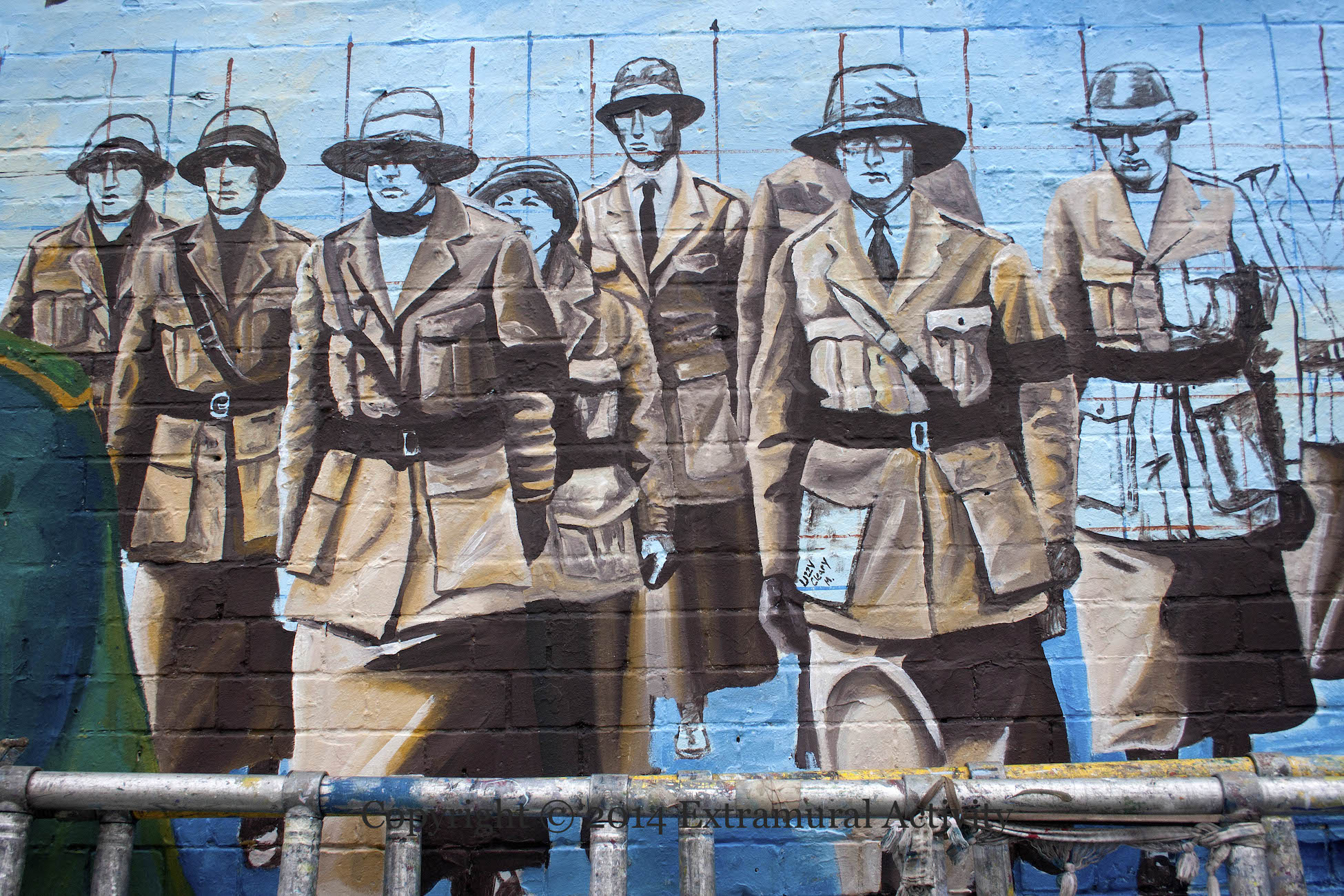
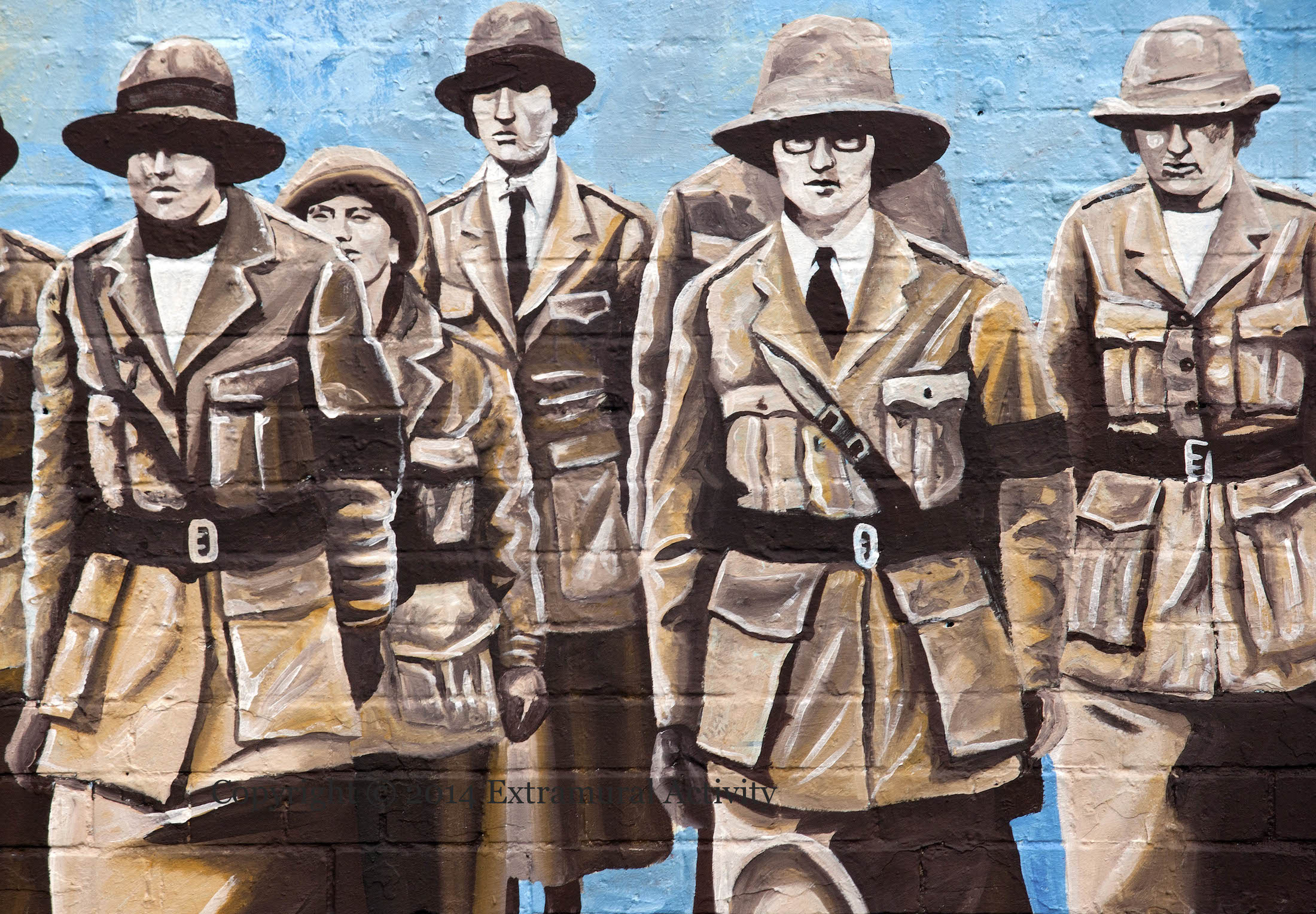
The letters “Cnamb” on a rifle formed the badge of Cumann Na mBan. The Irish “Ní saoırse go saoırse na mban” means “No freedom until the freedom of women”. Below are an ‘in-progress’ shot from last week; and a close-up of the finished mural. Below these is a plain shot of the full mural.
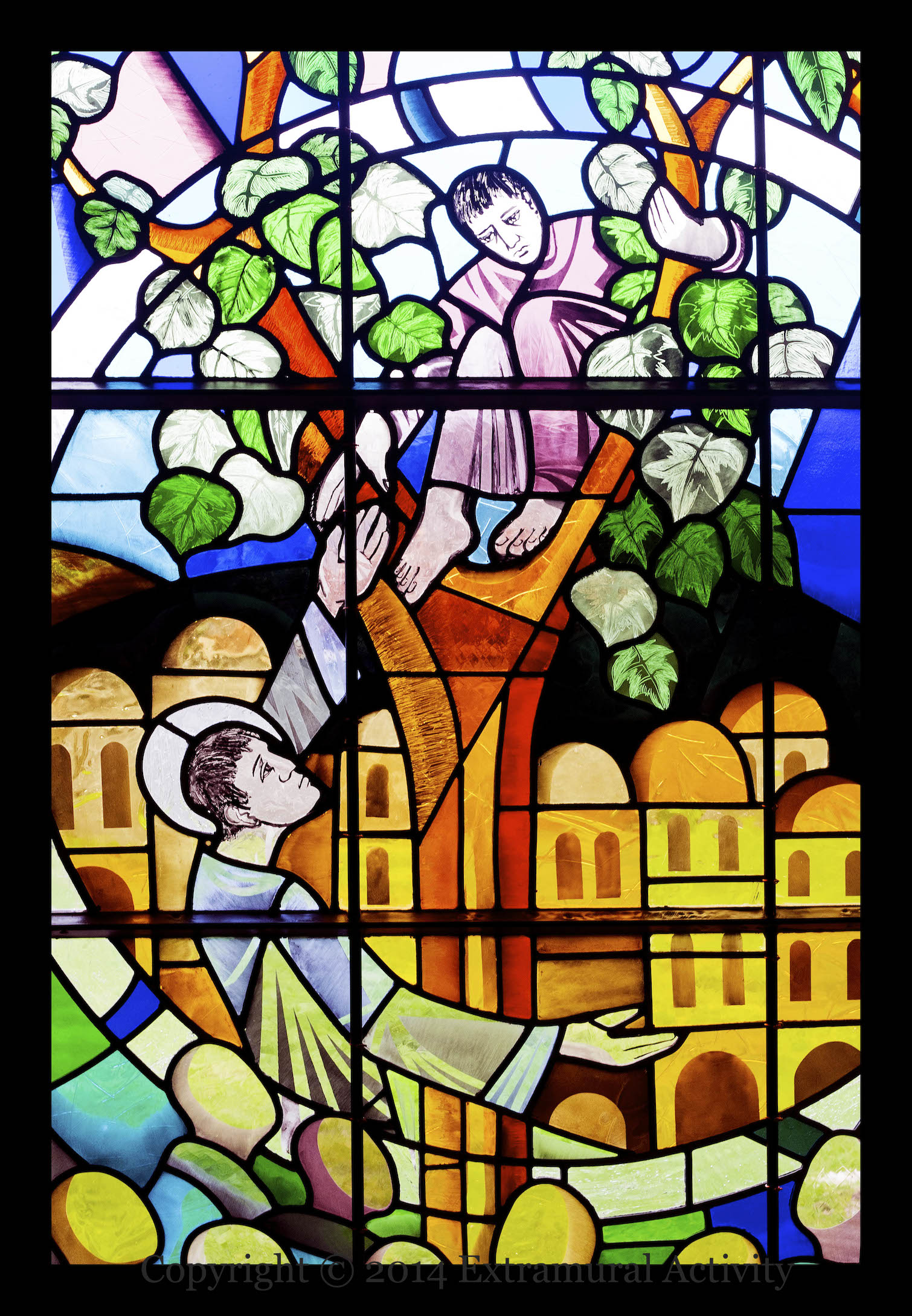
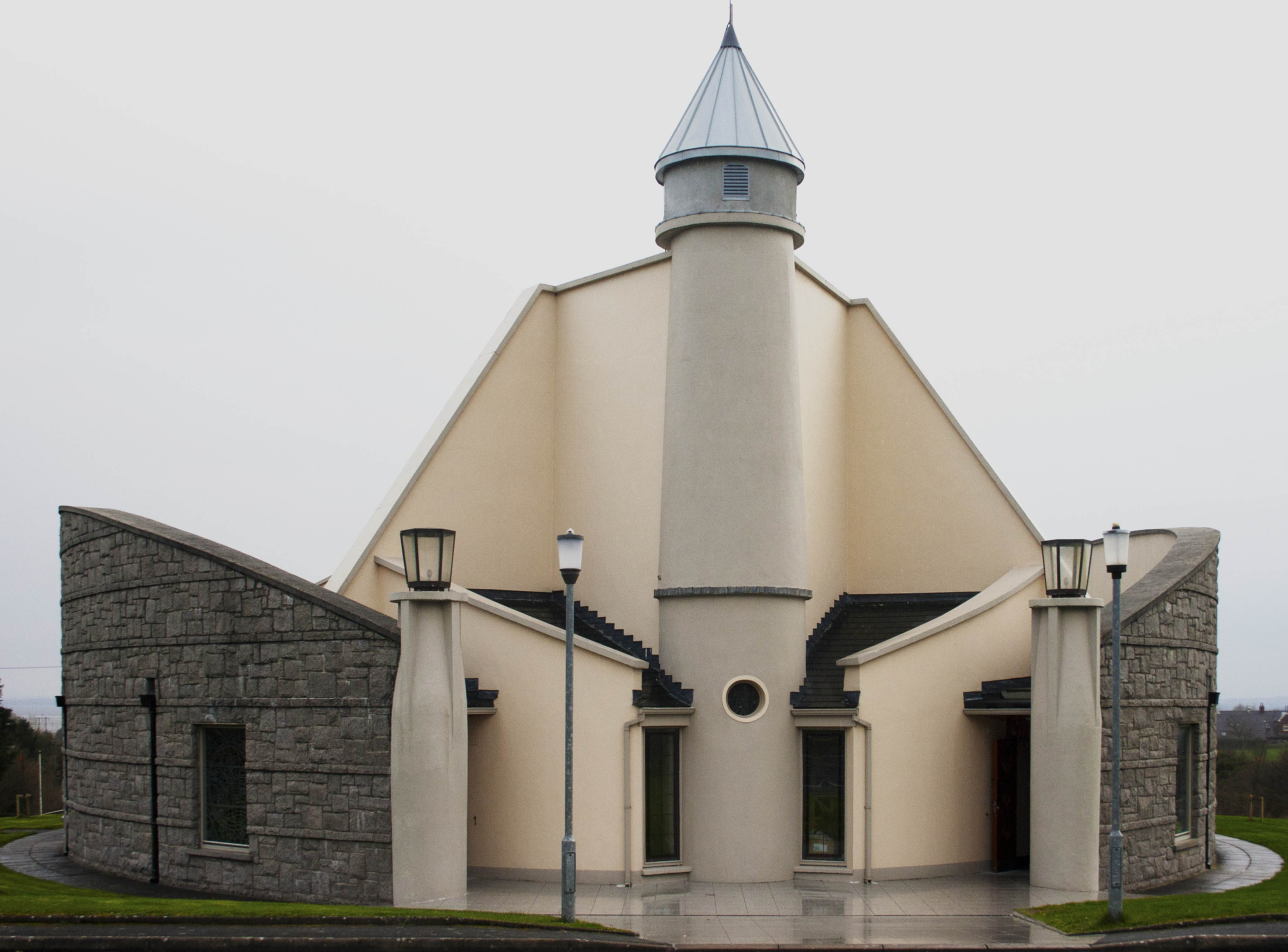
This stained glass window from Ravensdale Chapel just across the border in Louth depicts the story in Luke’s gospel (19:1-10) in which the tax-collector Zacchaeus, small of stature, climbs up the sycamore tree in order to see Jesus pass by. The chapel, shown below, is itself shaped like a lighthouse.
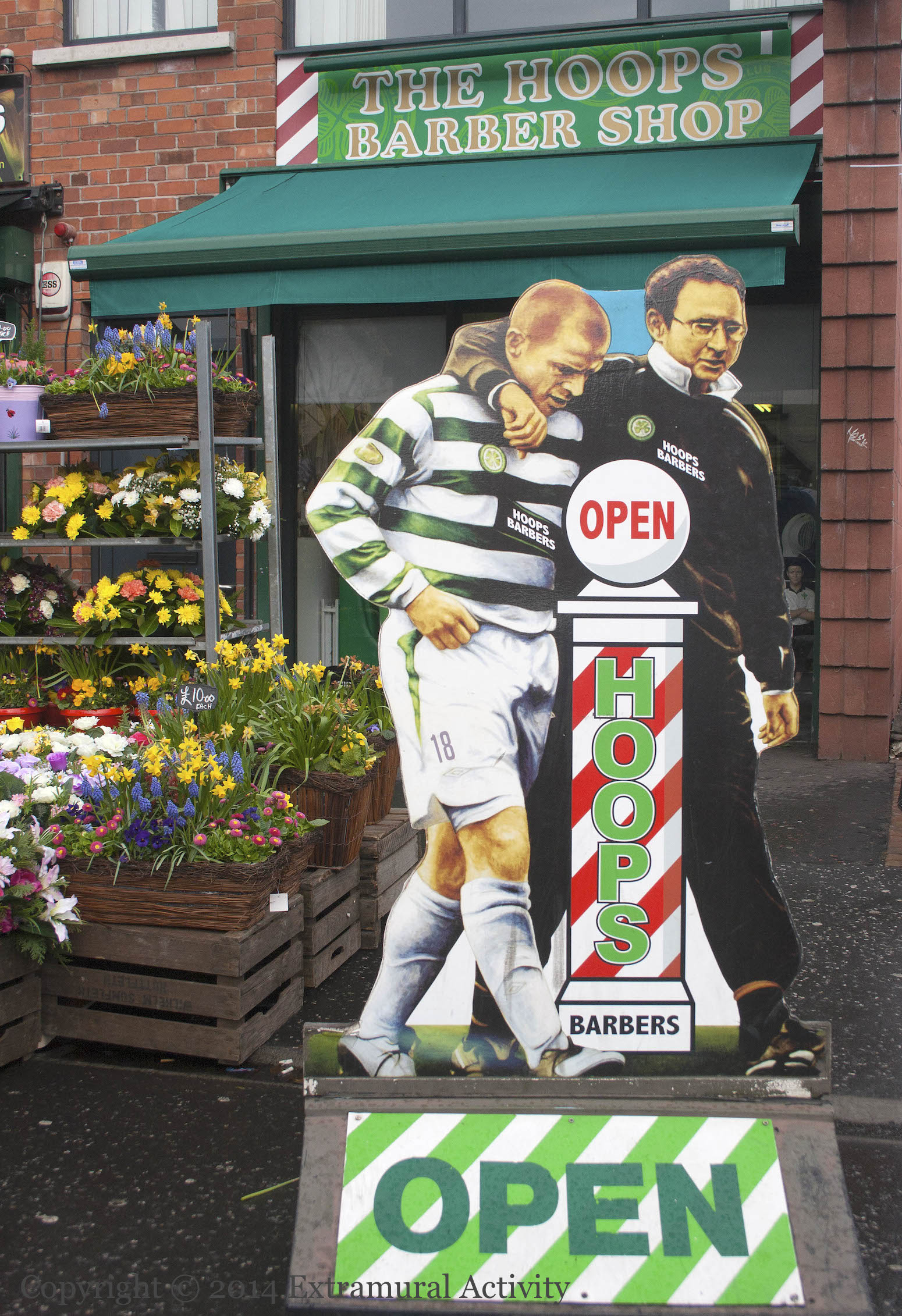
Martin O’Neill takes Neil Lennon home after his haircut at Hoops Barbers on the Falls Road. Both are from Northern Ireland – Lennon is originally from Lurgan, O’Neill from Kilrea. O’Neill was manager of Glasgow Celtic when Lennon was a player. O’Neill now manages the Republic of Ireland squad and Lennon is now (since 2010) manager of Celtic.
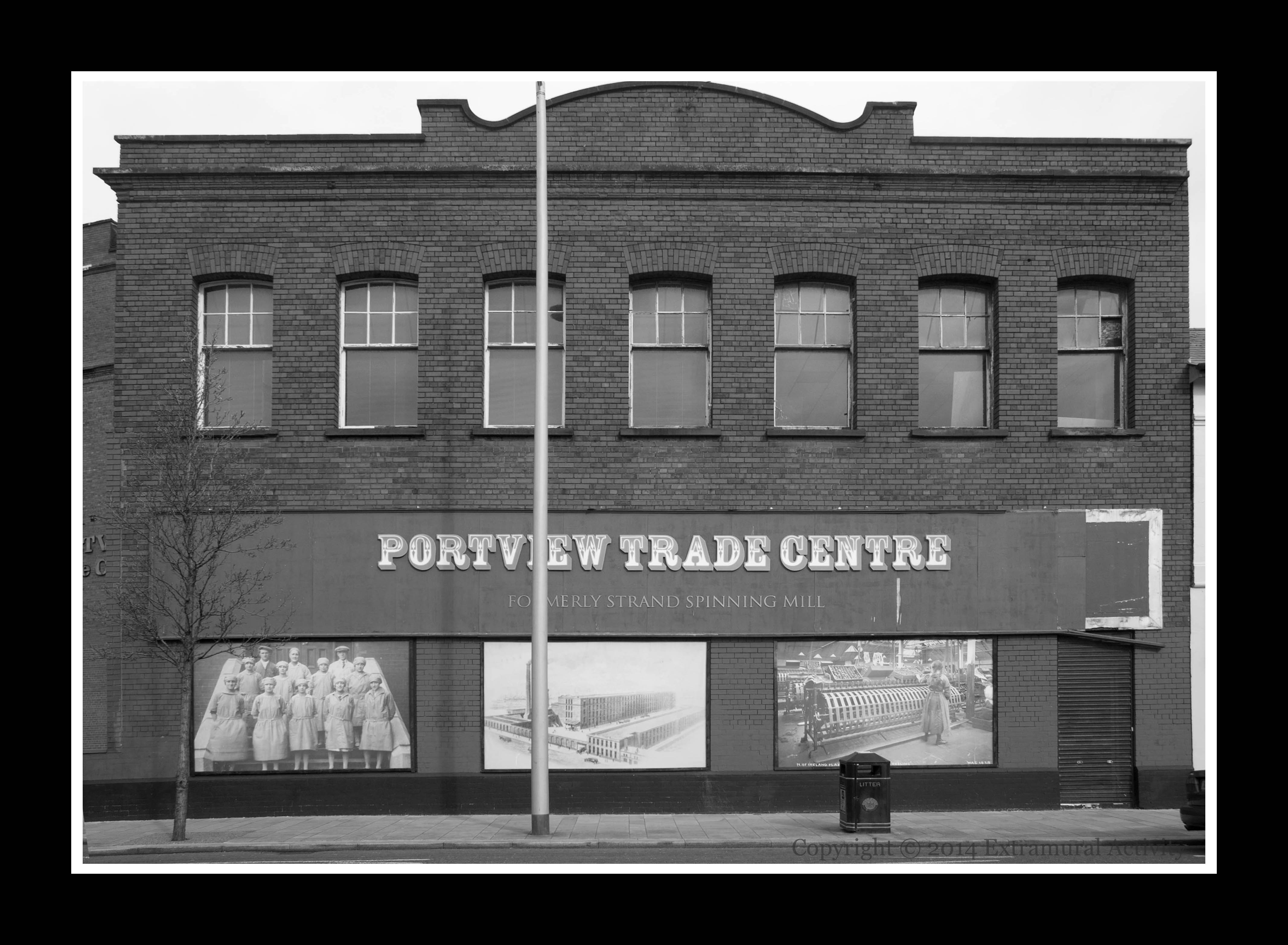
The Strand Spinning Mill on the Newtownards Road in east Belfast began life as the Jaffe Spinning Mill, after Otto Jaffe, a Jewish-German emigrant from Hamburg who became a naturalized citizen, early benefactor of Queen’s University (in 1905 he contributed £3000) and twice Lord Mayor of Belfast. It quickly became the Strand Spinning Mill when he sold it to Mackies in 1912. The mill made munitions during WWI and viscose rayon during WWII. The mill closed in 1983 and now provides space to small businesses as the Portview Trade Centre.
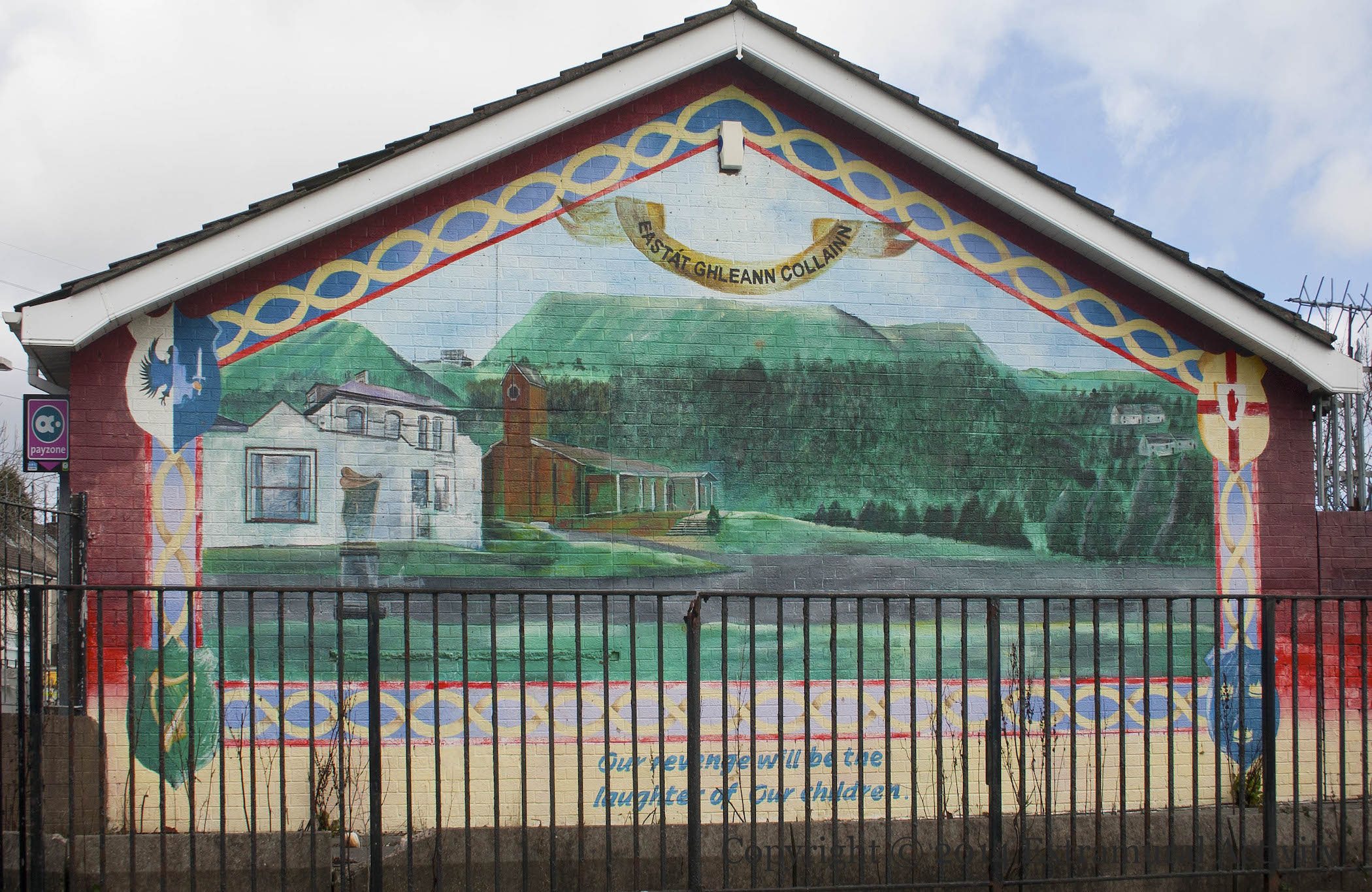
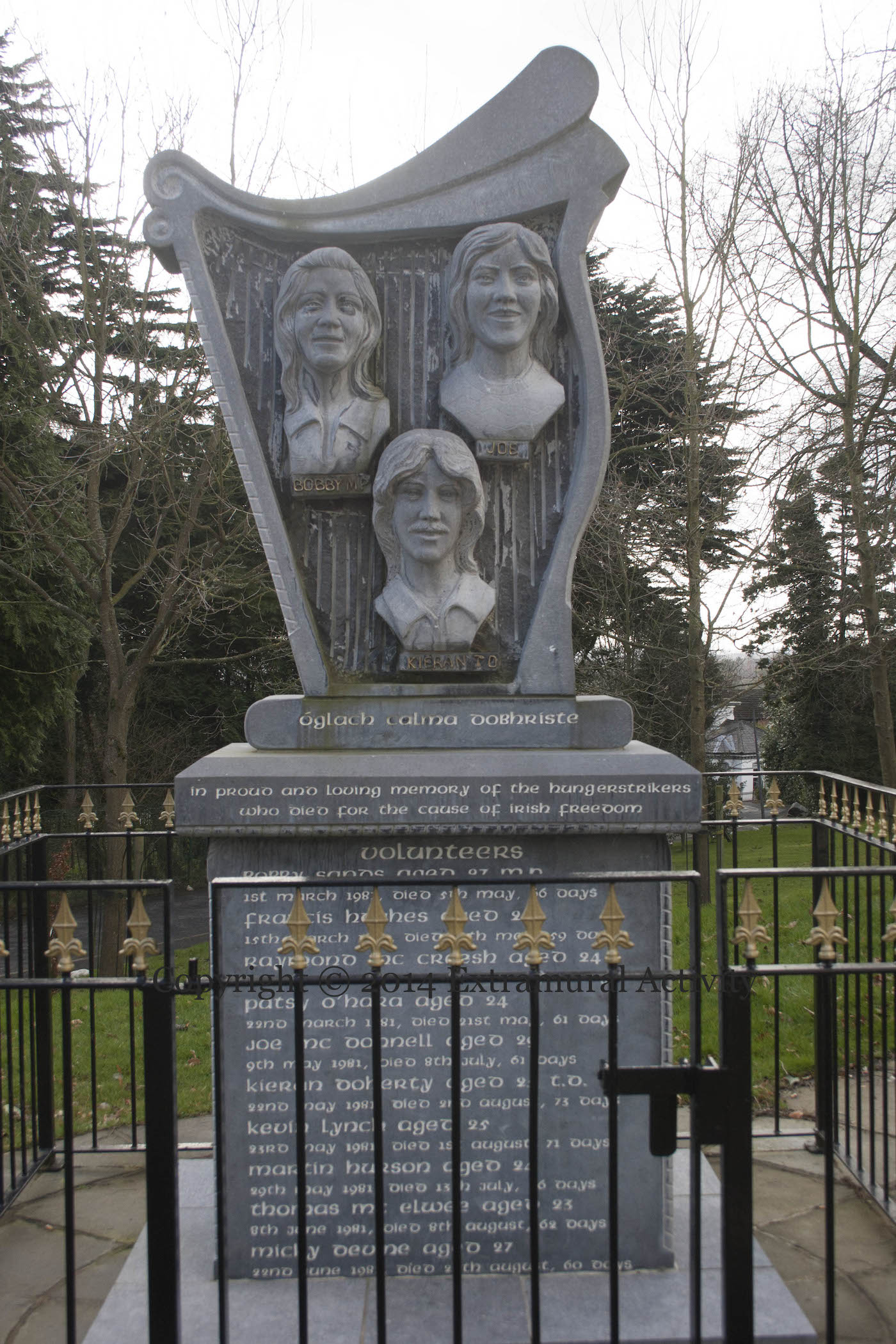
This mural in the Glen Colin estate, just off the Glen Road, shows The Roddy’s club (in white) with the hunger striker memorial in the shape of a harp in front (shown in the image below) and the St. Oliver Plunkett church, which is in fact on the other (southern) side of the Glen Road, with the twin peaks of Divis and Black Mountain in the background. The Bobby Sands quote “Our revenge will be the laughter of our children” is at the bottom.
 Seosamh Mac Coille Collection