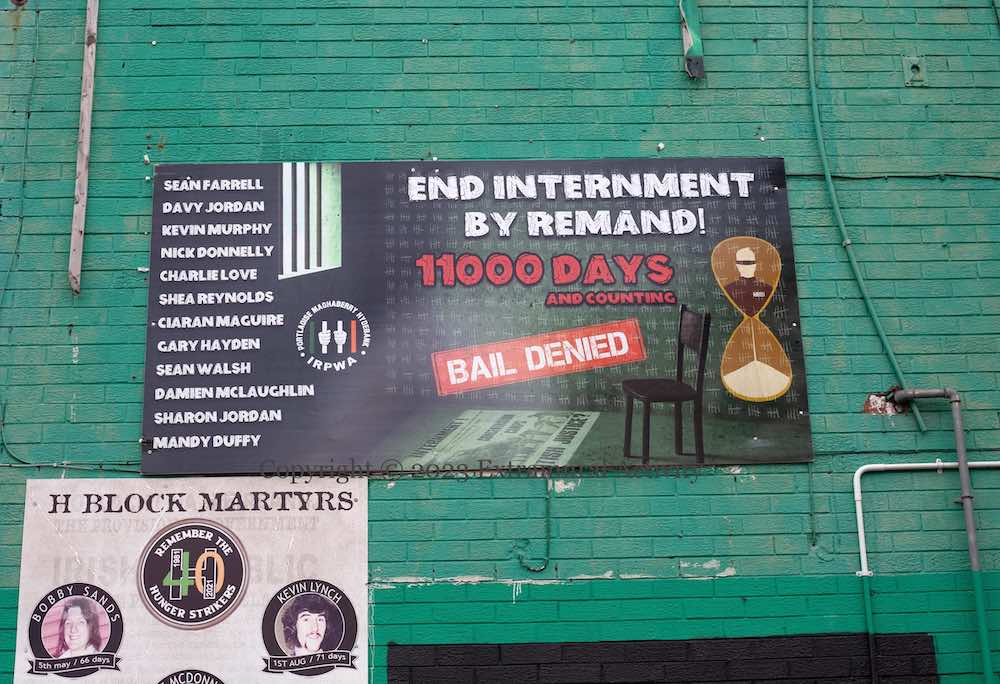
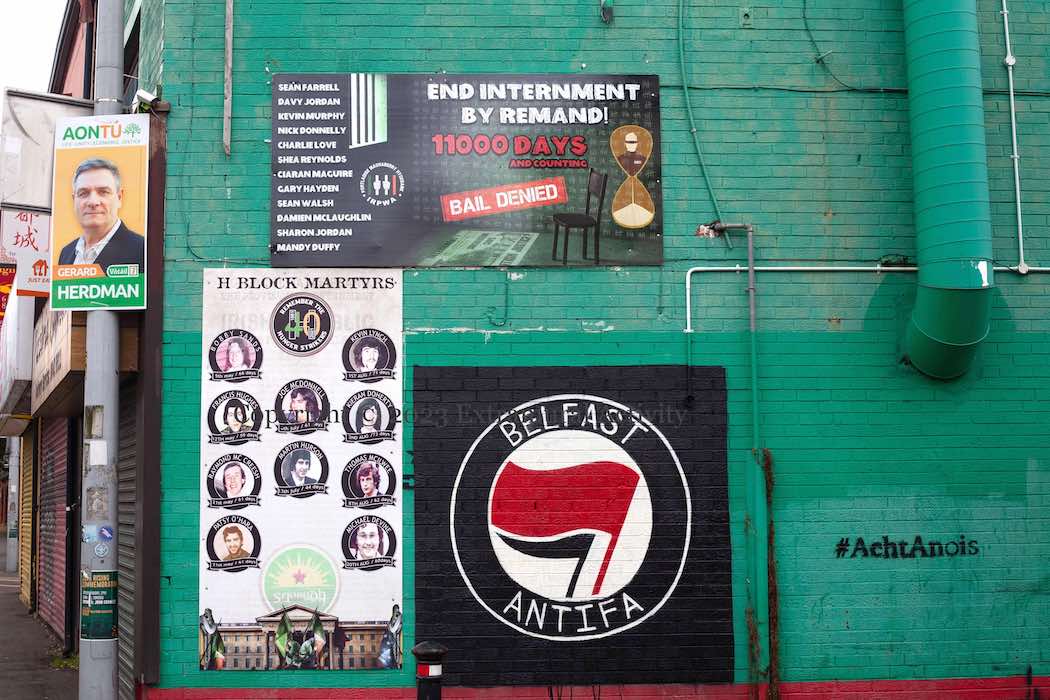
The number is arrived at by aggregating the days served by republican prisoners in Maghaberry, Hydebank, and Portlaoise (IRPWA – page contains images of all the locations in which this board was mounted).
Braemar Street, west Belfast.
“End internment by remand! 11000 days and counting. Bail denied. Seán Farrell, Davy Jordan, Kevin Murphy, Nick Donnelly, Charlie Love, Shea Reynolds, Ciaran Maguire, Gary Hayden, Sean Walsh, Damien McLaughlin, Sharon Jordan, Mandy Duffy.”
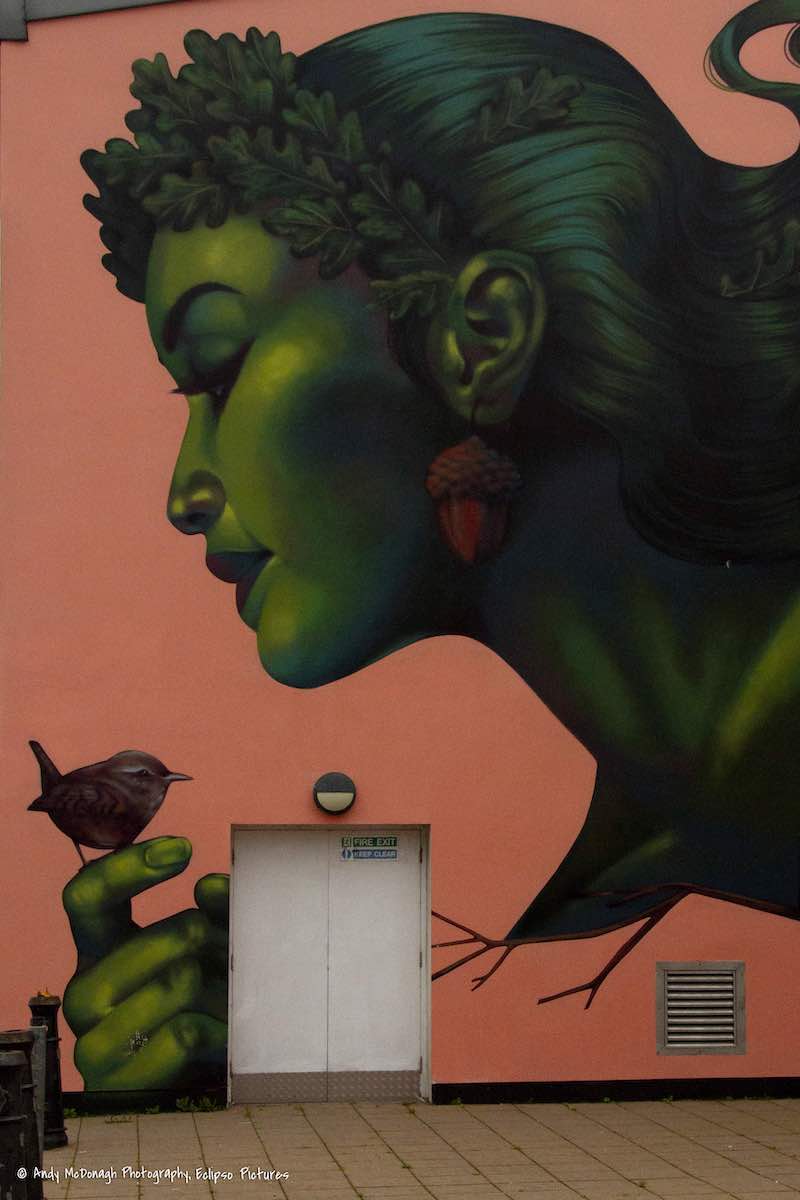
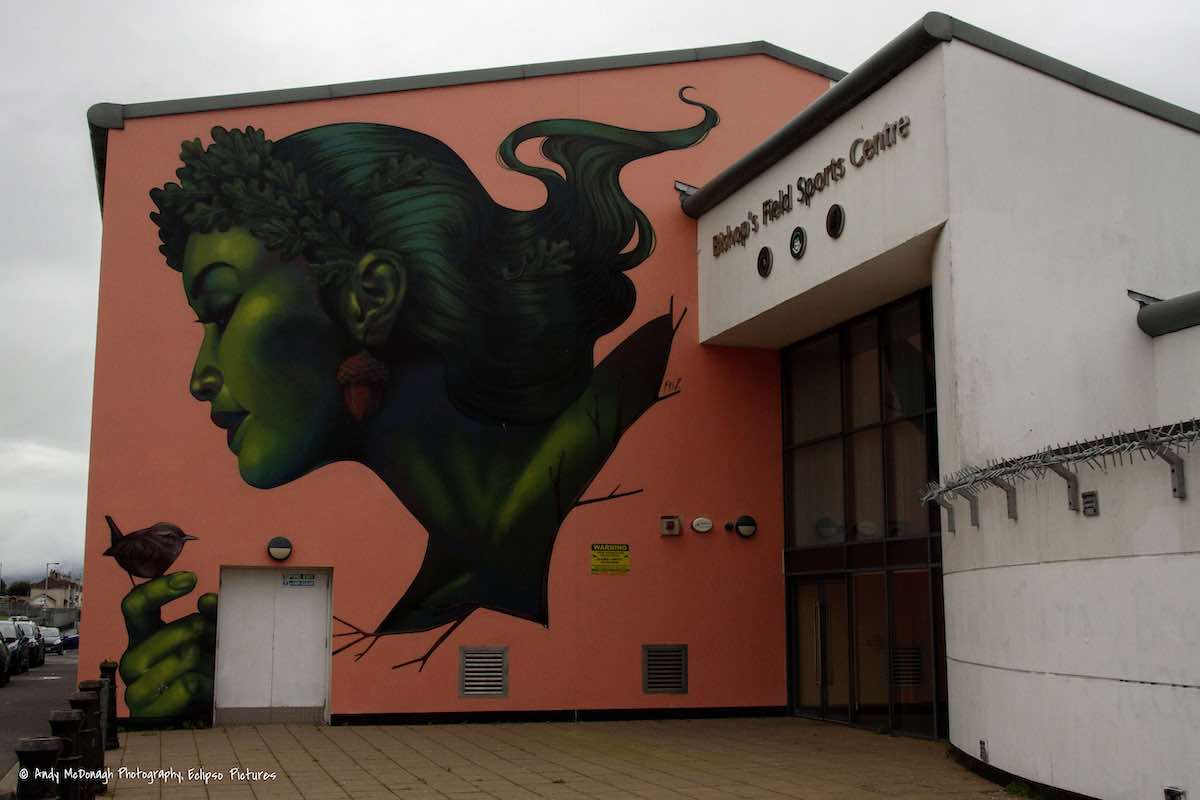
Derry is well-known as “doire”, an oak grove, and the oak leaf and acorn are used as symbols by many civic and county organisations. Friz’s (ig) piece for Derry Féile combines Derry’s oaky background with the dryads (tree spirits) of Greek mythology.
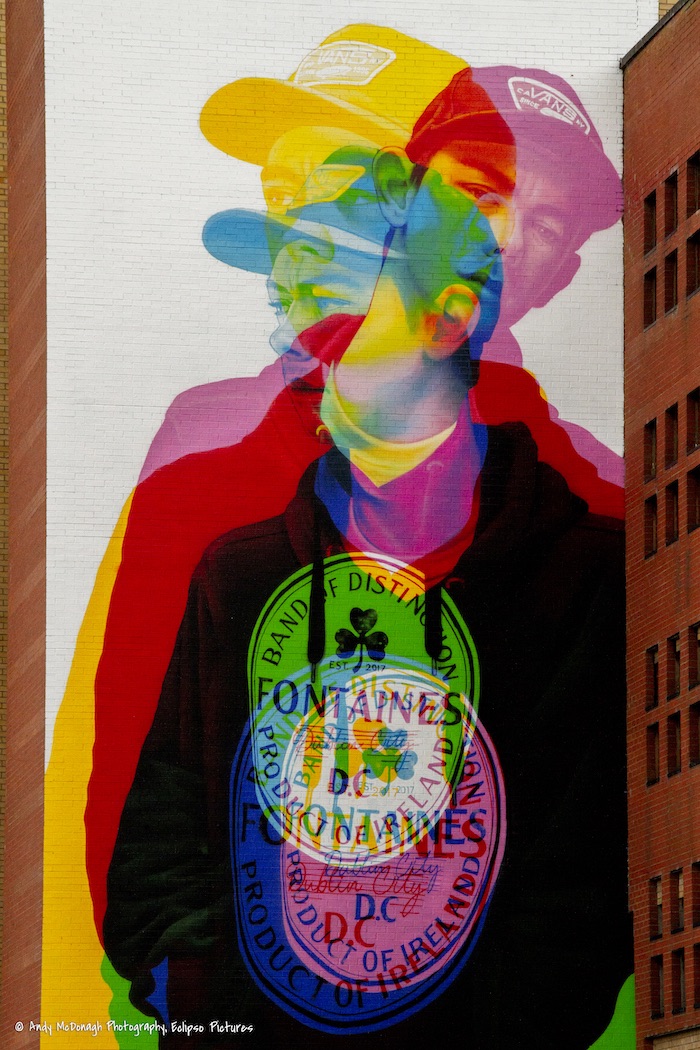
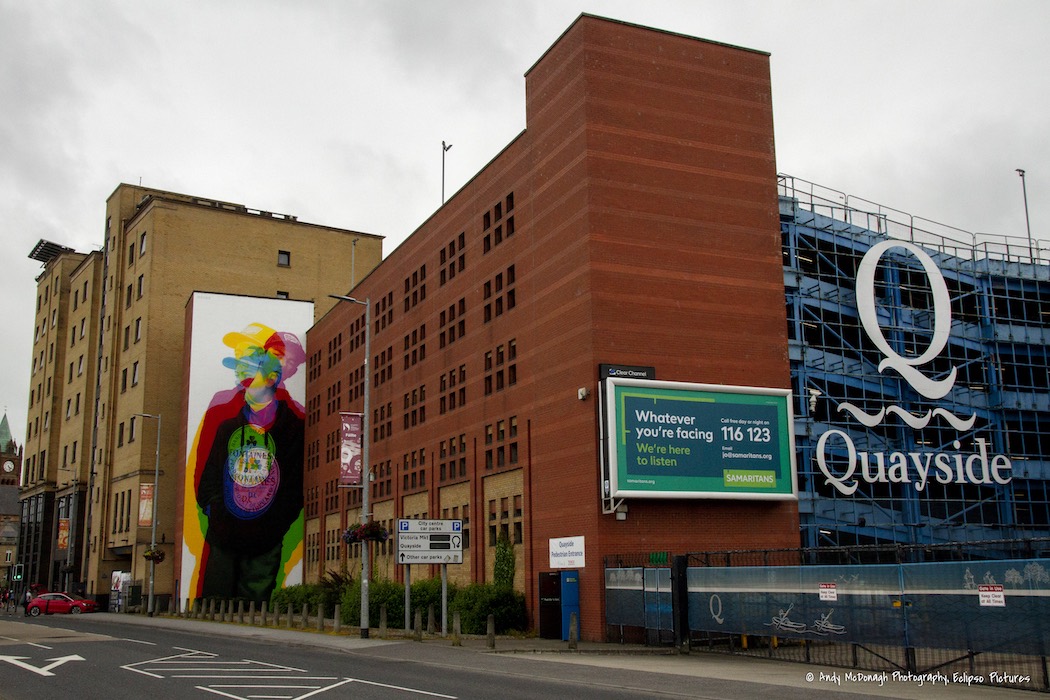
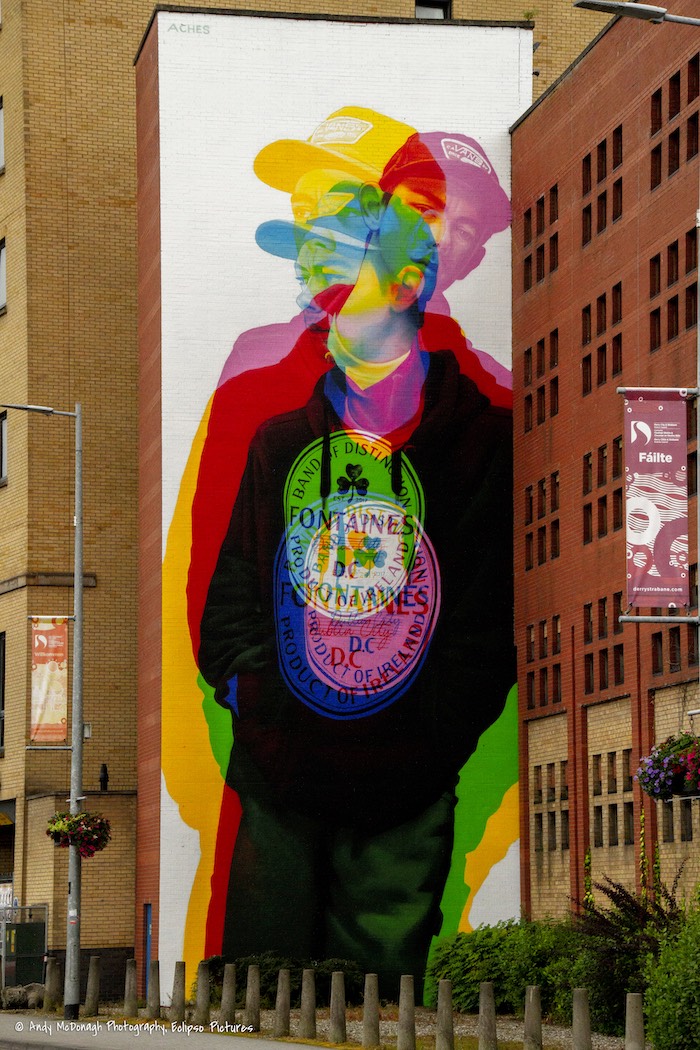
Ireland’s most famous export is not its music – including Fontaines D.C. (web) – or its stout – including Guinness – but its people, about 10 million of them since 1800 (WP). The youngster in this new mural by Dublin artist ACHES (ig) is torn in different directions.
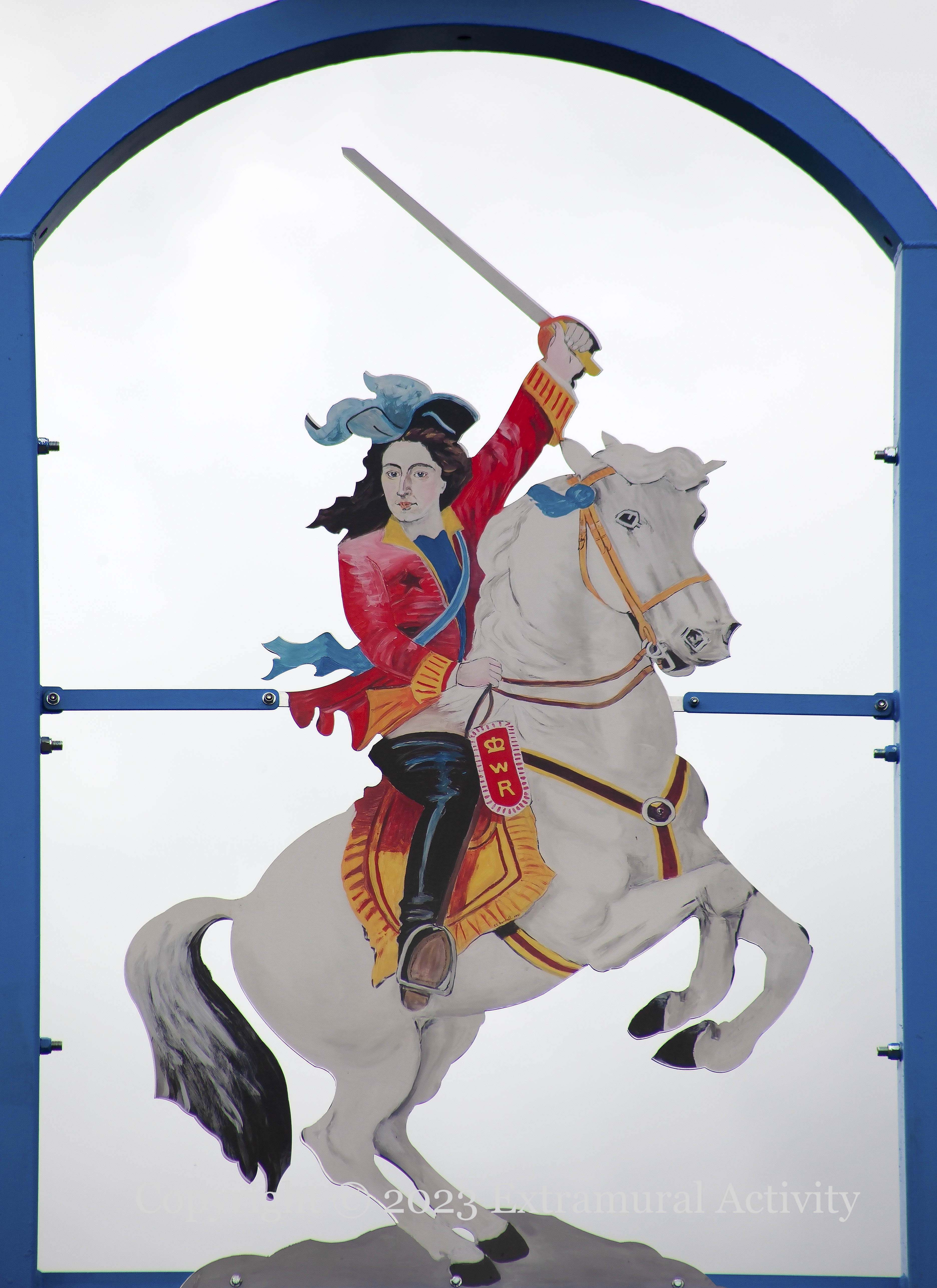
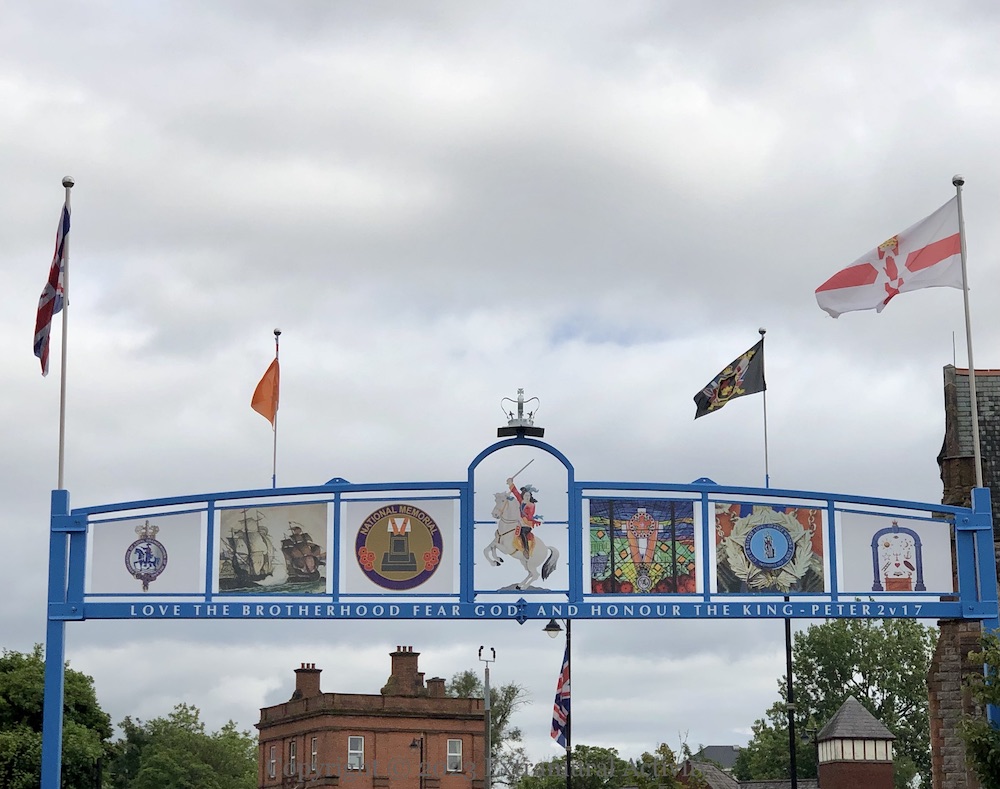
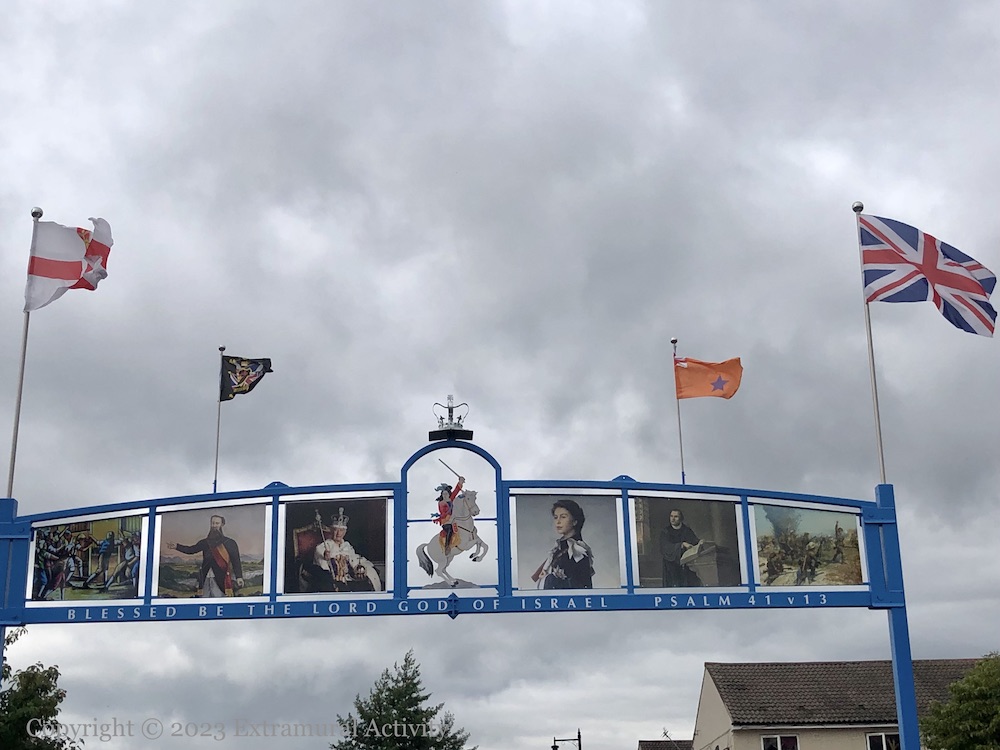
This entry is an update to 2022’s Upward which showed the new arch in Denmark Street (the north side of the lower Shankill estate). To each side of the arch has since been added a quote from scripture: on the outside, “Blessed be the Lord God of Israel – Psalm 41 v. 13”, and on the inside “Love the brotherhood, fear God, and honour the King – [1st] Peter 2 v. 17”
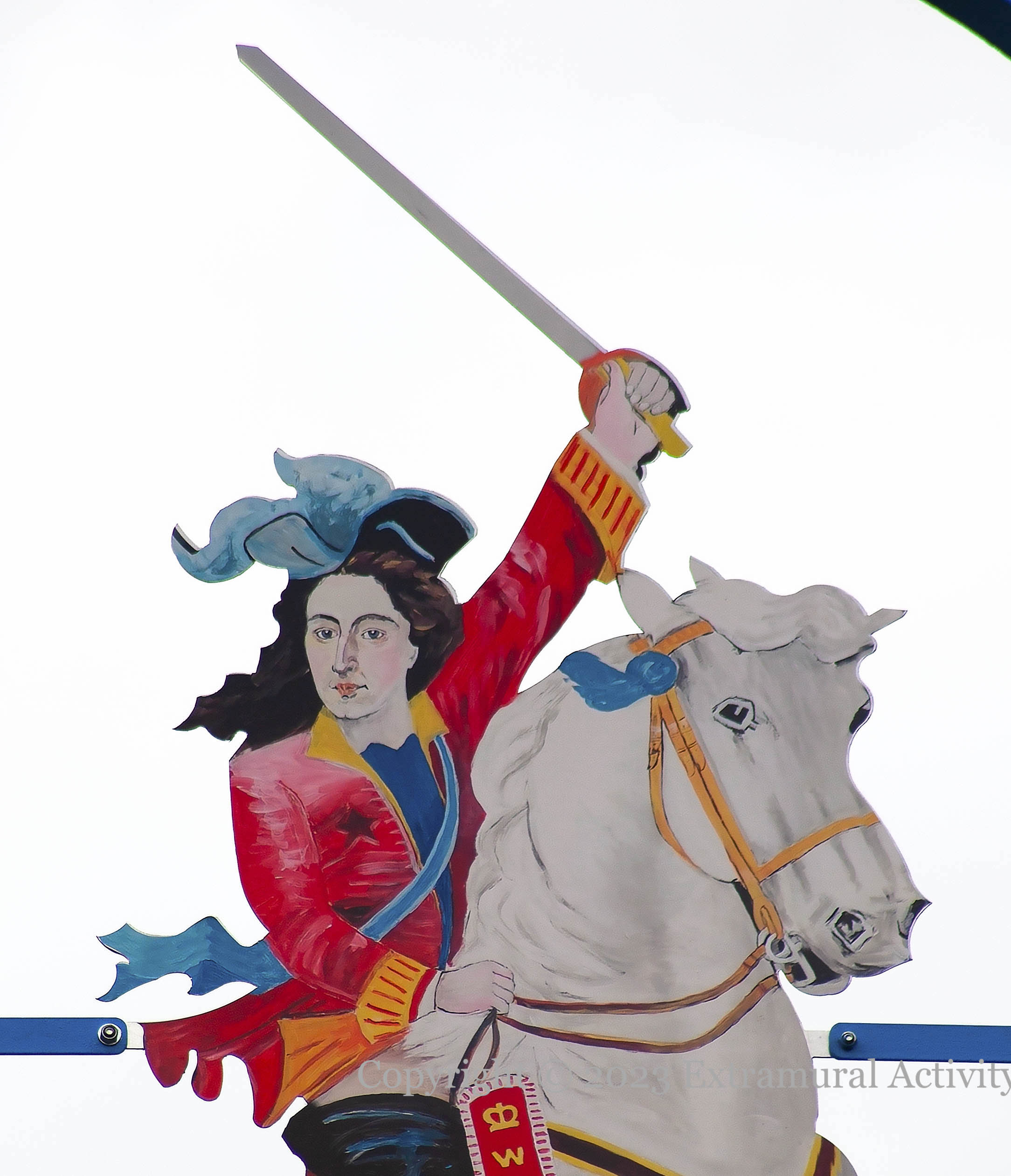
The ‘Platinum Jubilee’ panel has been replaced with the image from the other side of the ‘Faithful Unto Death’ stained glass that is in Schomberg House (see Our Murdered Brethren), and it has been replaced with an image King Charles III.
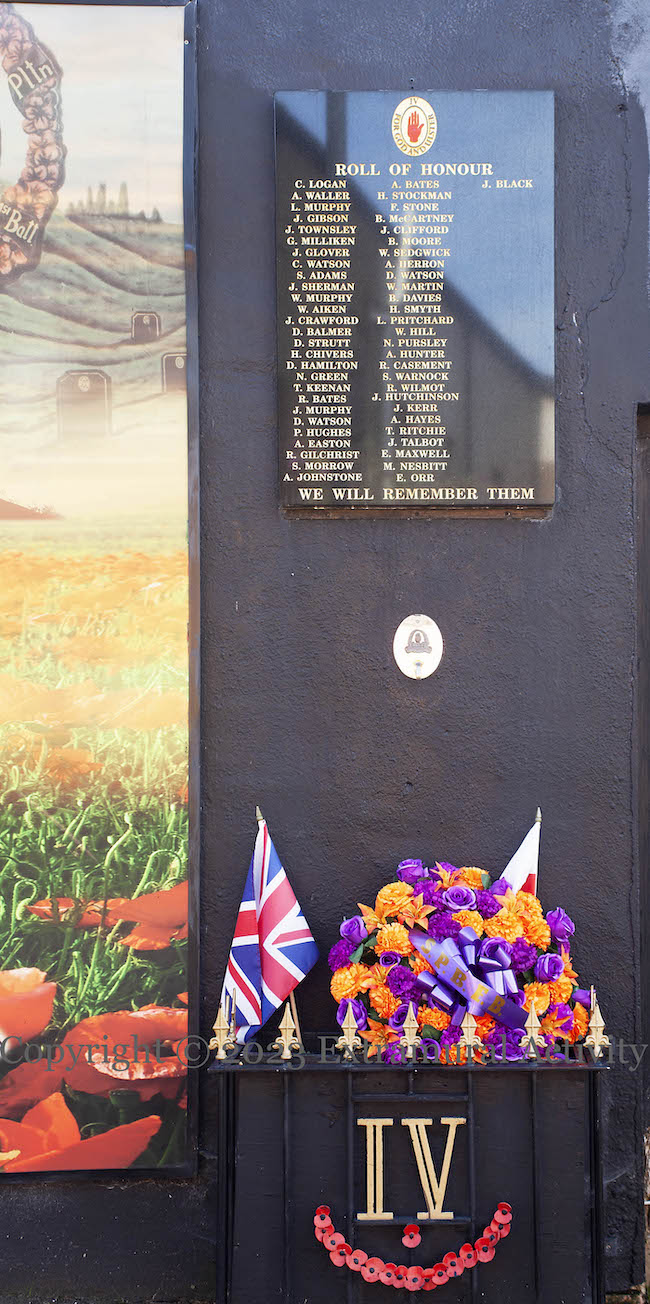
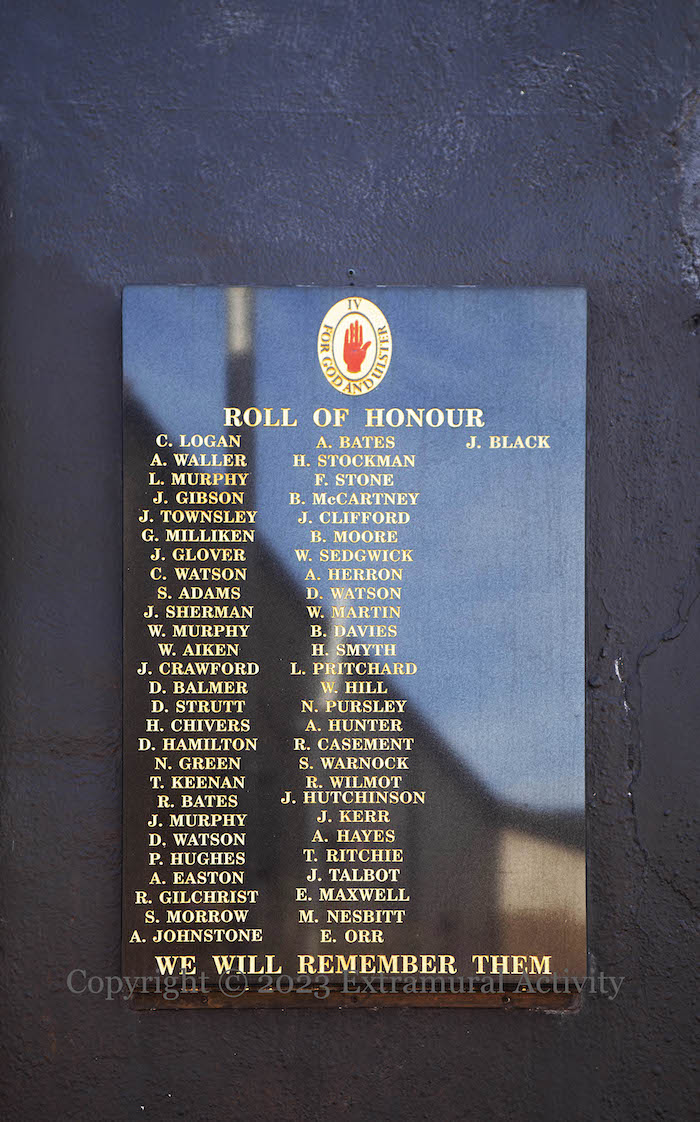
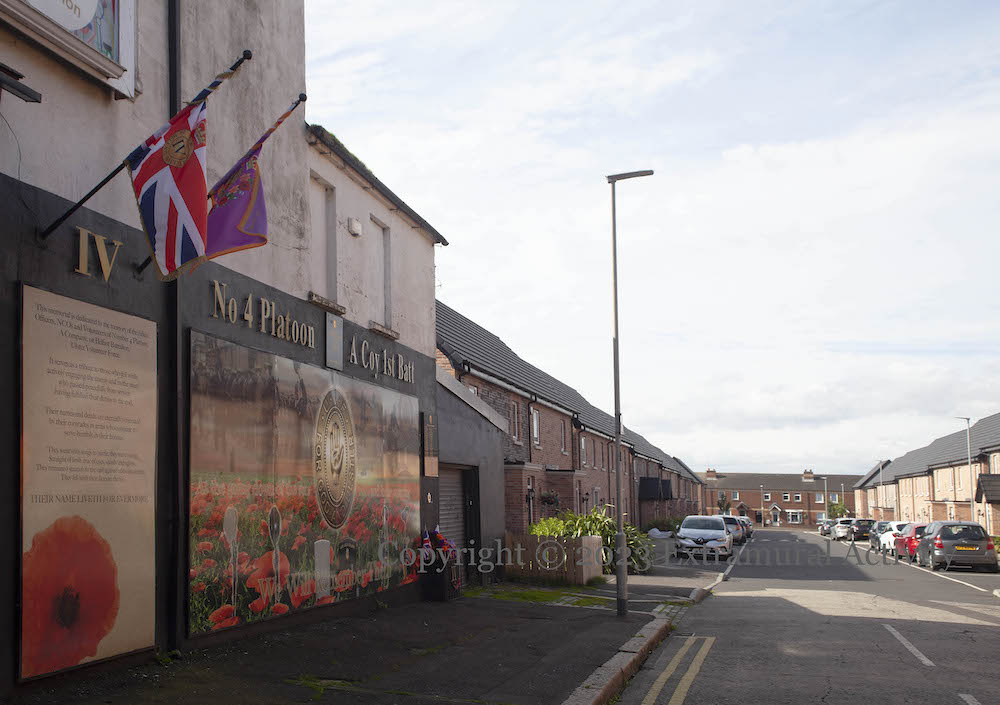
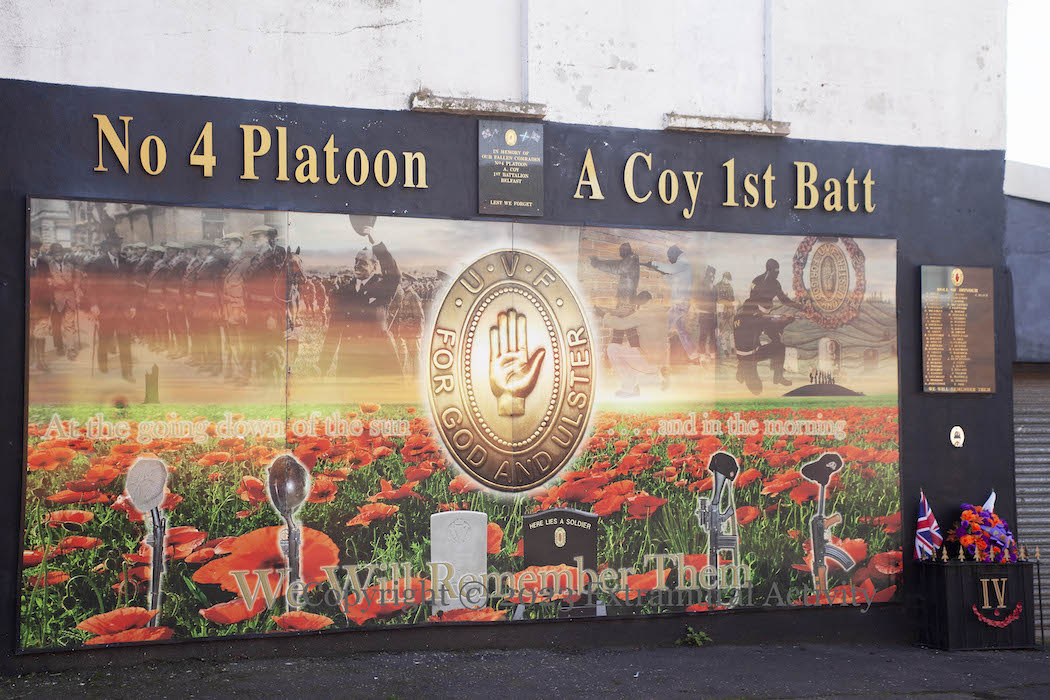
The UVF (A company, 1st battalion, platoon 4) mural in Glenwood Street was in the news last week after Jude Whyte of the Victims And Survivors Forum (web) drew attention to it because of its inclusion of some members of the Shankill Butchers (Irish News). The gang-members included in the plaque are given in a previous post – Platoon IV.
Some outlets (e.g. Sunday World) are reporting that the plaque is new but, while a few names of platoon have volunteers been recently added – Nesbitt, Orr, and Black – the plaque, including the names of various members of the gang, has been on the wall since 2017.
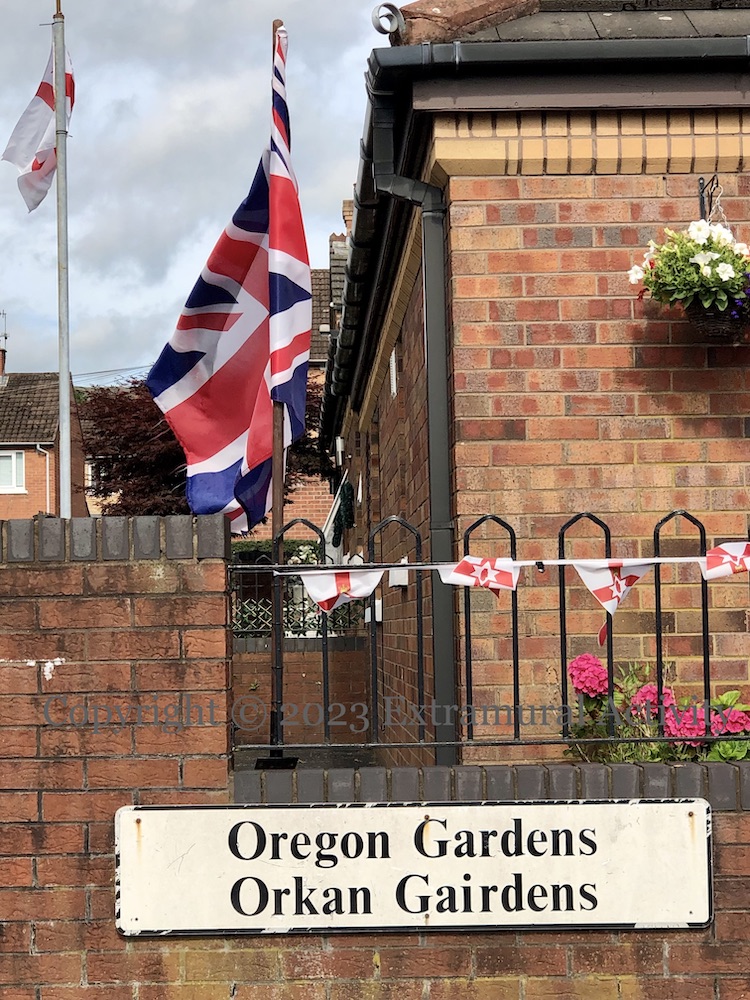
The application form for a dual-language street sign is completely agnostic as to which language (in addition to English) should go on the street sign. Based on news reports (including, recently, one home-owners complaint that such a sign would lower property values – BelTel) and our impression from tramping the streets, Irish (Gaeilge) is by far the most commonly requested language, but there are a few that include Ulster Scots; previously we recorded Heichbrea Airt in Castlereagh, and to that can now be added the sign shown above in the Woodvale: “Oregon Gardens” / “Orkan Gairdens”. (Please get in touch if you know of others.)
Ards & North Down council has just approved its own dual-language policy; like the old Belfast policy, one third of householders must sign the initial petition and two-thirds must respond positively to the subsequent survey of the street (News Letter).
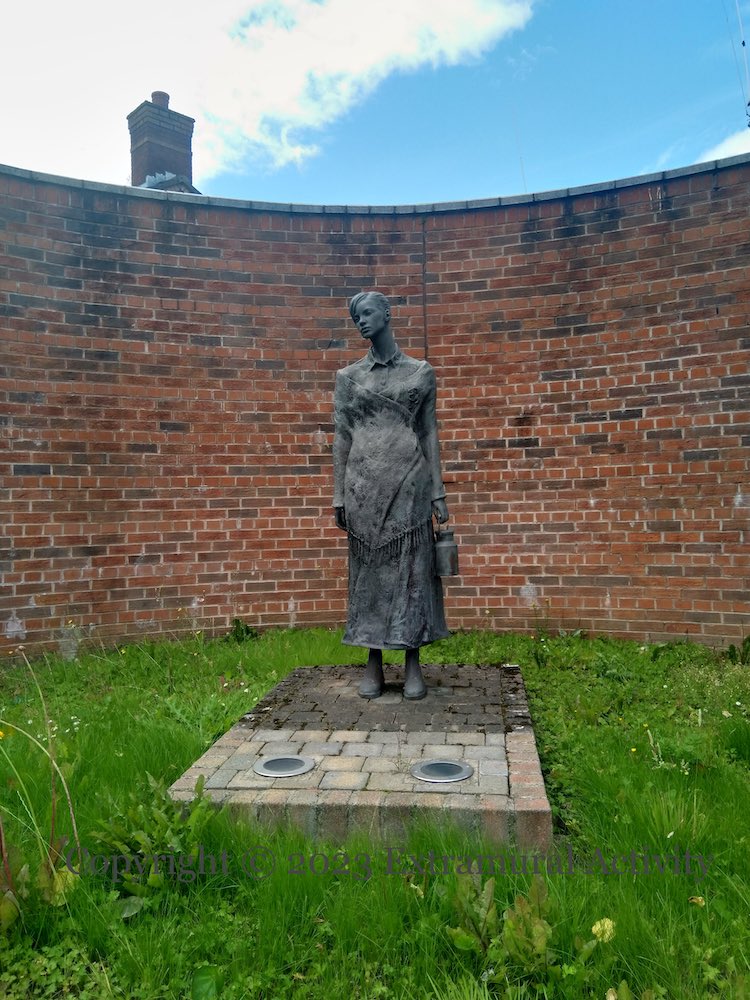
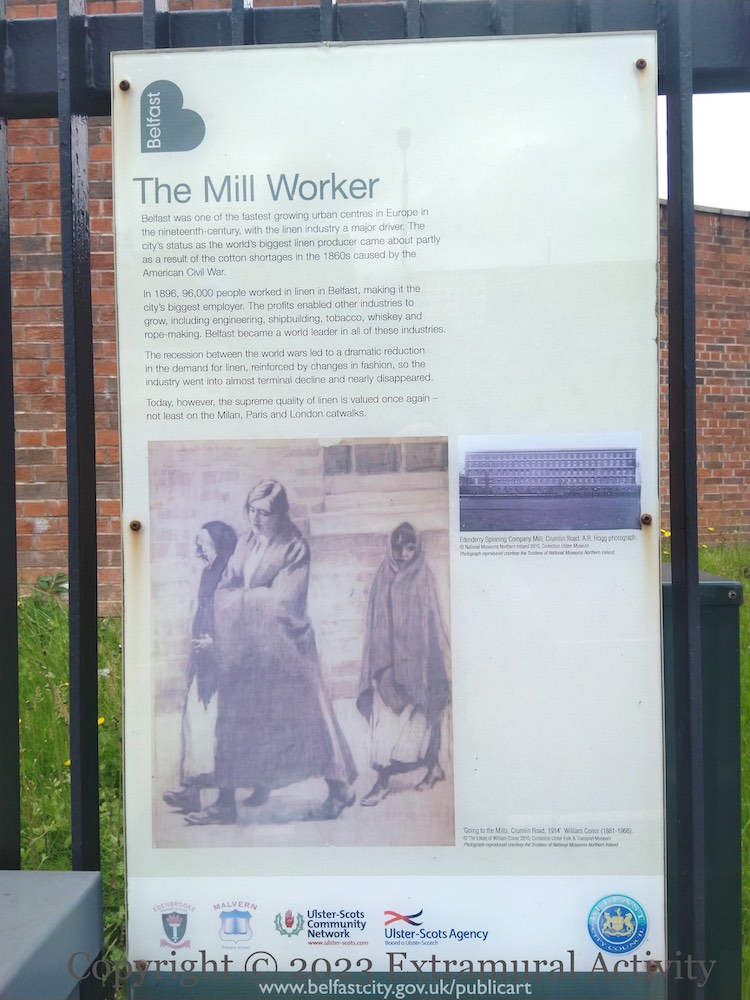
A shawlie is a working-class woman wearing a shawl to serve as a coat and hat. In Belfast they are particularly associated with the workers in the linen mills, such as the Brookfield Mill on the Crumlin Road. This statue, designed by Ross Wilson, was inspired by William Conor’s painting of mill workers (and pehaps specifically “Going to the mills, Crumlin Road, 1914” which is included in the info board, below) and installed at the top of Cambrai Street in 2010 (BelTel | BBC).
“The Mill Worker. Belfast was one of the fastest growing urban centres in Europe in the nineteenth-century, with the linen industry a major driver. The city’s status as the world’s biggest linen producer came about partly as a result of the cotton shortages in the 1860s caused by the American Civil War. In 1896, 96,000 people worked in linen in Belfast, making it the city’s biggest employer. The profits enabled other industries to grow, including engineering, shipbuilding, tobacco, whiskey and rope-making. Belfast became a world leader in all of these industries. The recession between the world wars led to a dramatic reduction in the demand for linen, reinforced by changes in fashion, so the industry went into almost terminal decline and nearly disappeared. Today, however, the supreme quality of linen is valued once again – not least on the Milan, Paris and London catwalks.”
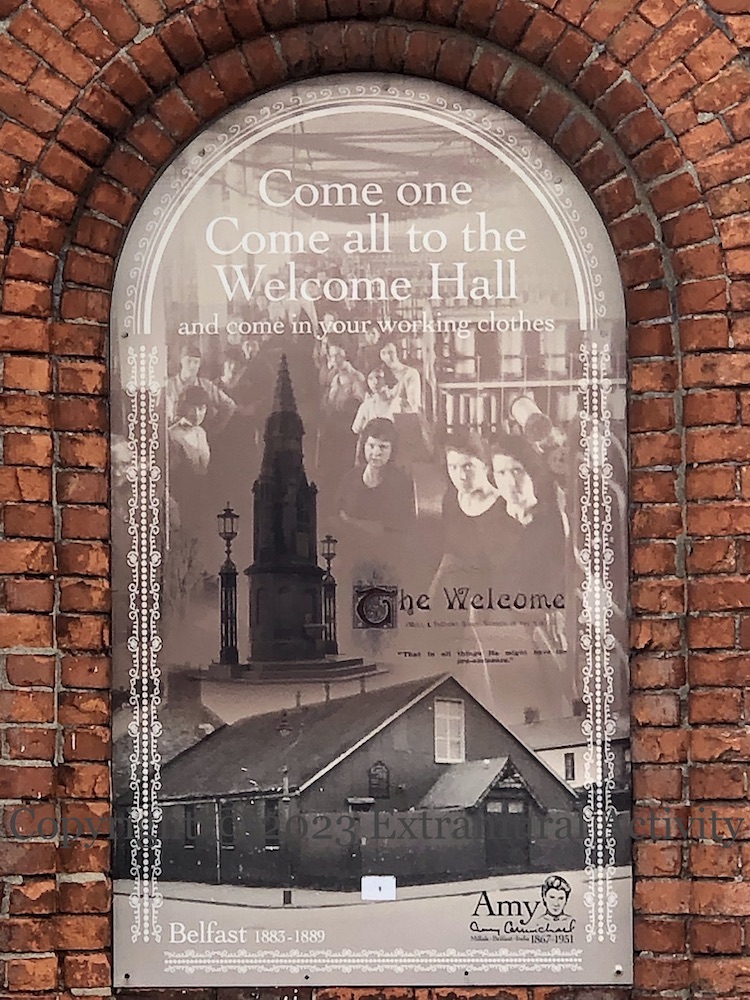
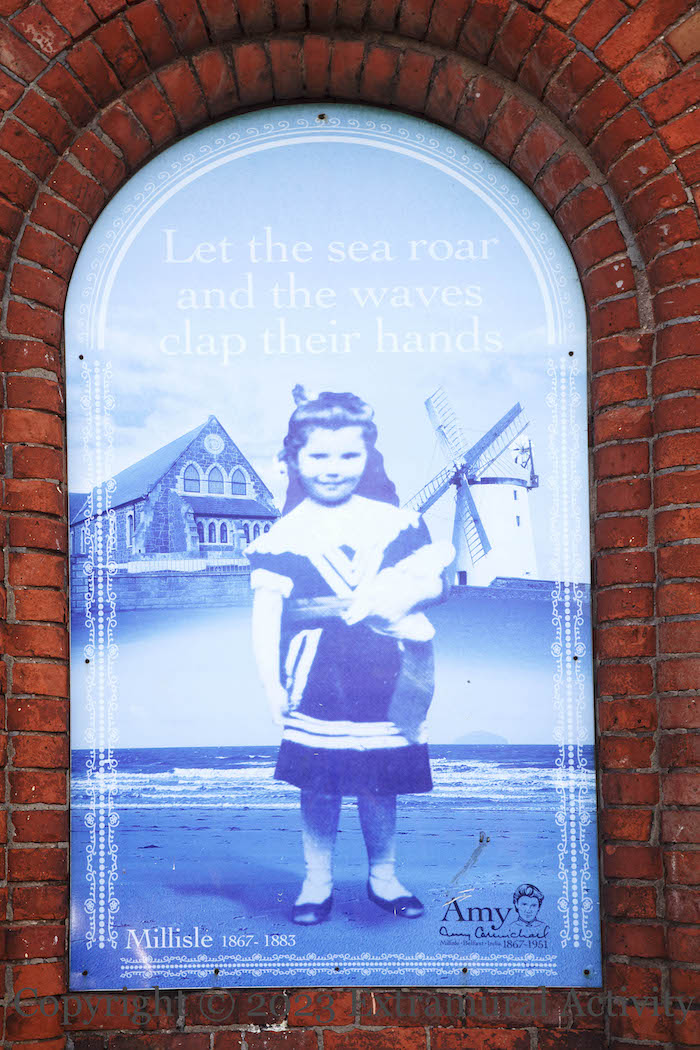
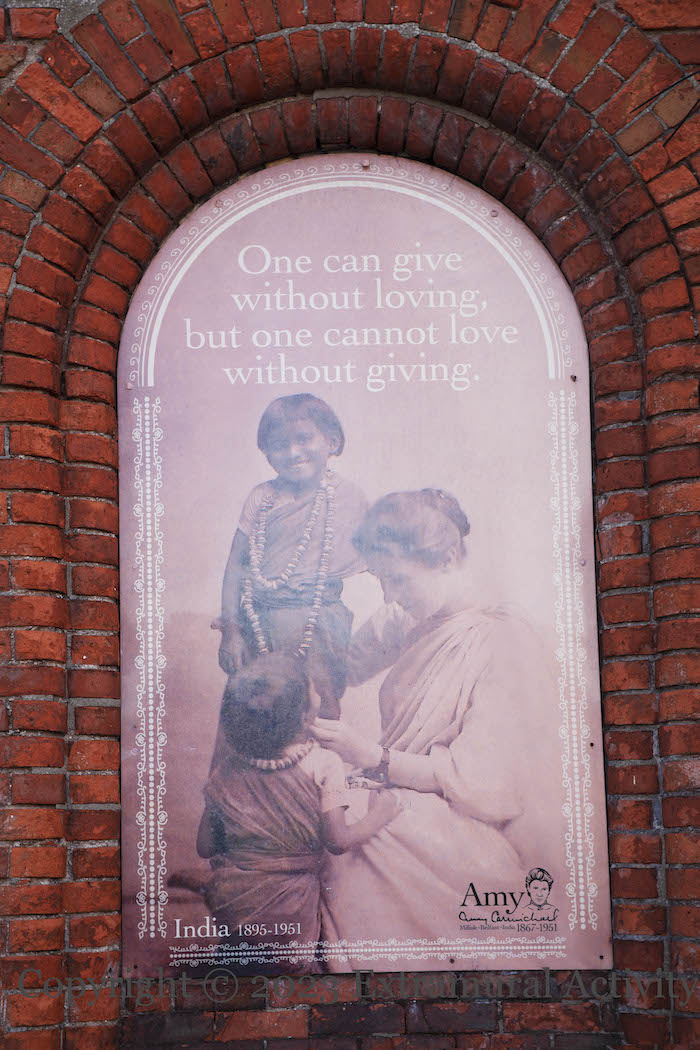
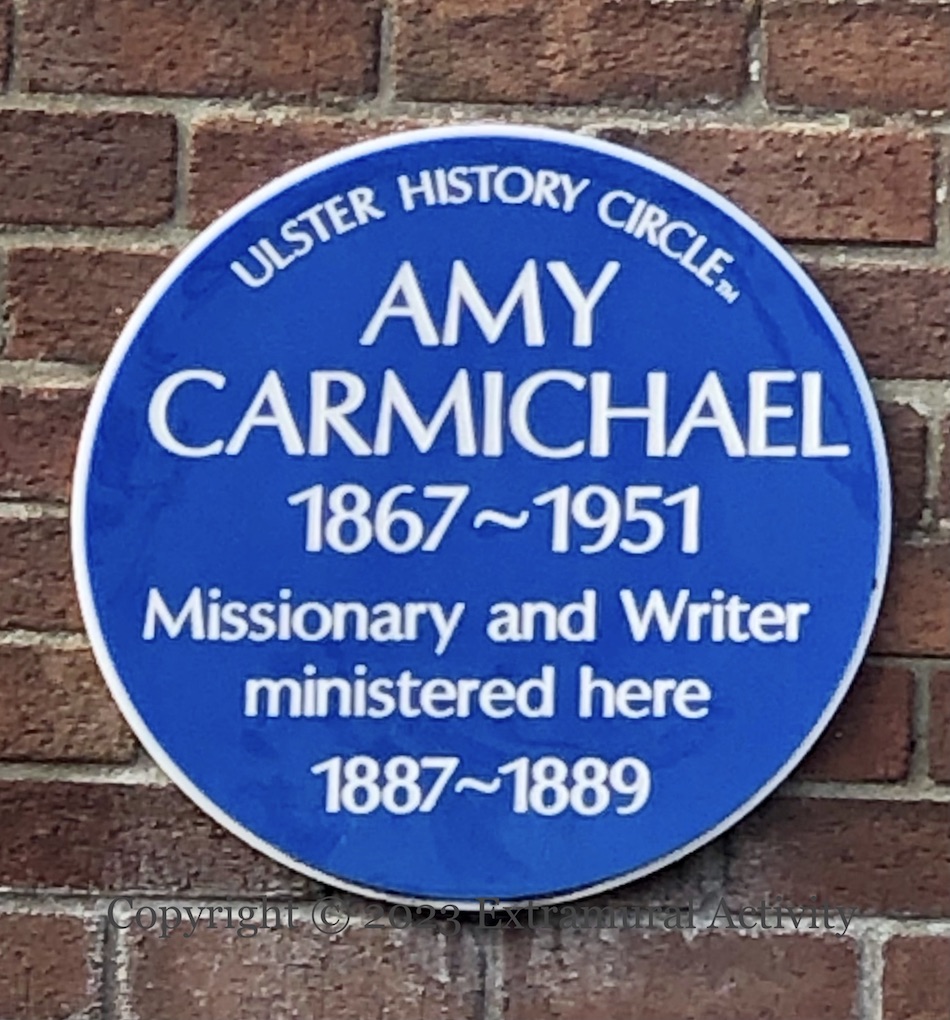
“Come one, come all, to the Welcome Hall, and come in your working clothes.” Amy Carmichael was born in Millisle, Co. Down, in 1867. In 1884 the family moved to Belfast, where Amy started Sunday classes in Rosemary Street Presbyterian for “shawlies” who worked in the mills. These were successful enough that a larger venue was required, and so, in 1887, the Welcome Hall, with seating for 500, opened in Cambrai Street (this subsequently became the Welcome Evangelical Church, where the blue plaque shown below is mounted). Carmichael then went to England (Manchester), Japan, Sri Lanka, and India (Bangalore). (Welcome Church | WP)
 Seosamh Mac Coille Collection