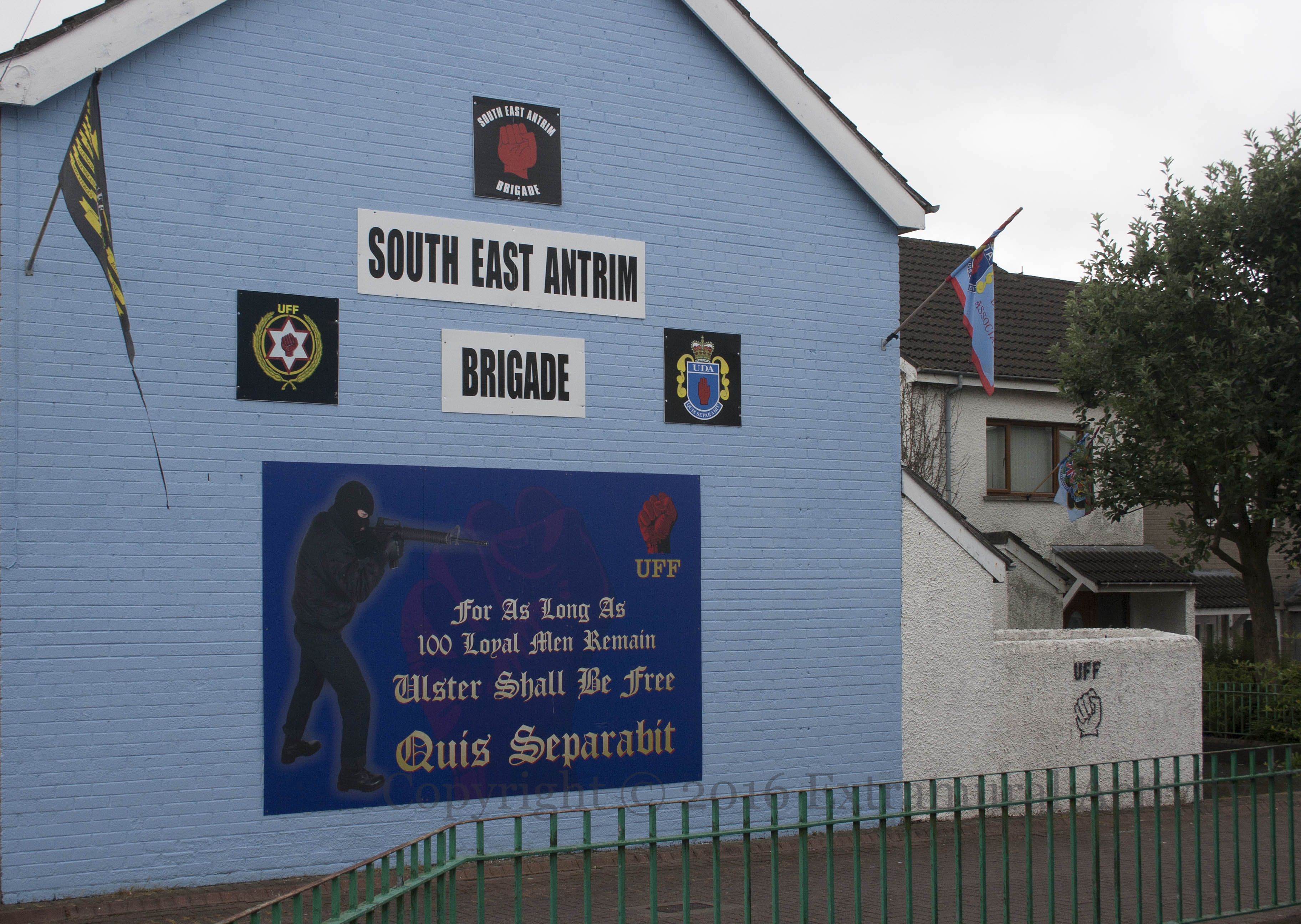
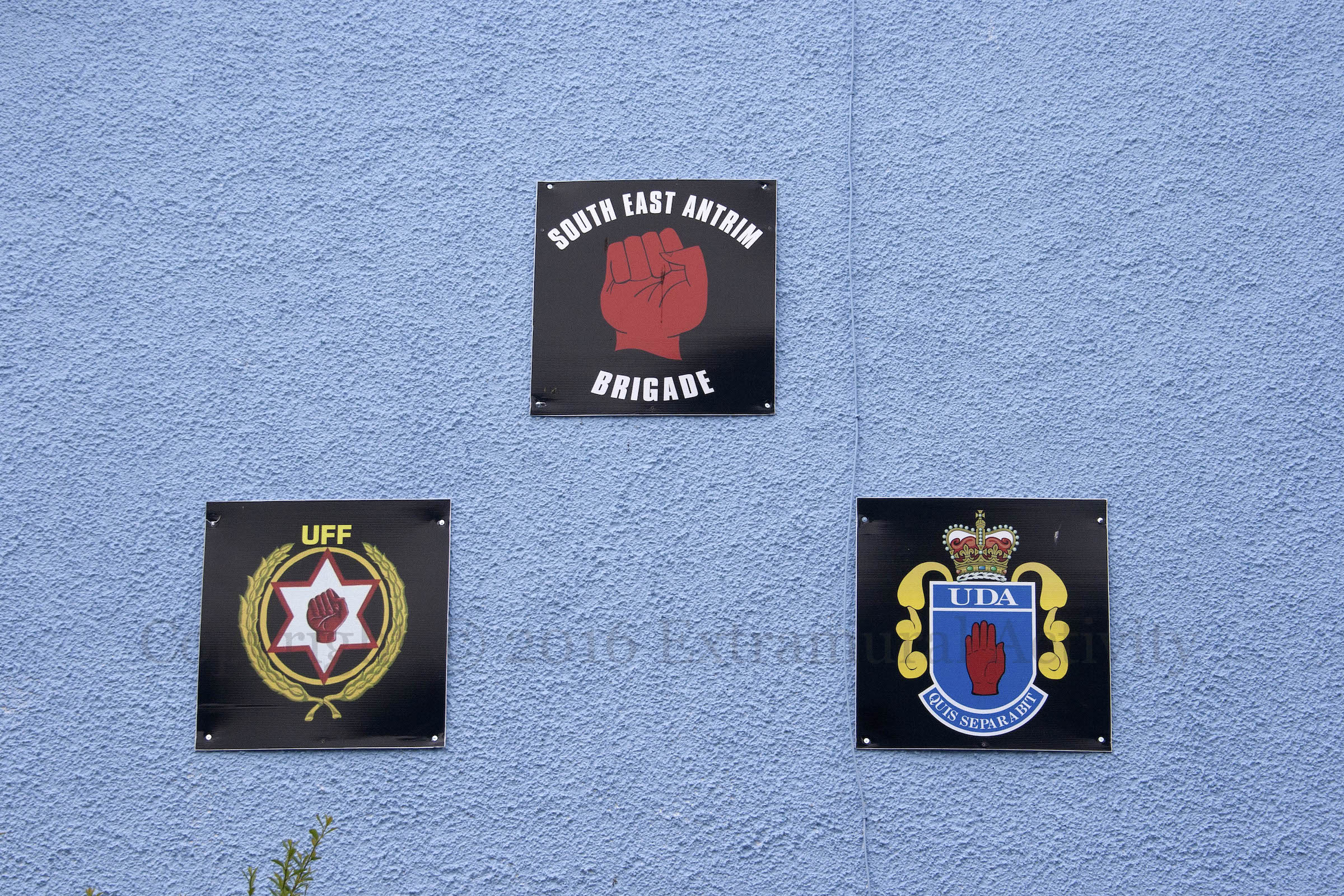
New South East Antrim UDA/UFF mural in Ballyclare, with the usual emblems and a central board featuring a photograph of a balaclava’ed volunteer: “For as long as 100 loyal men remain Ulster shall be free – Quis Separabit”.
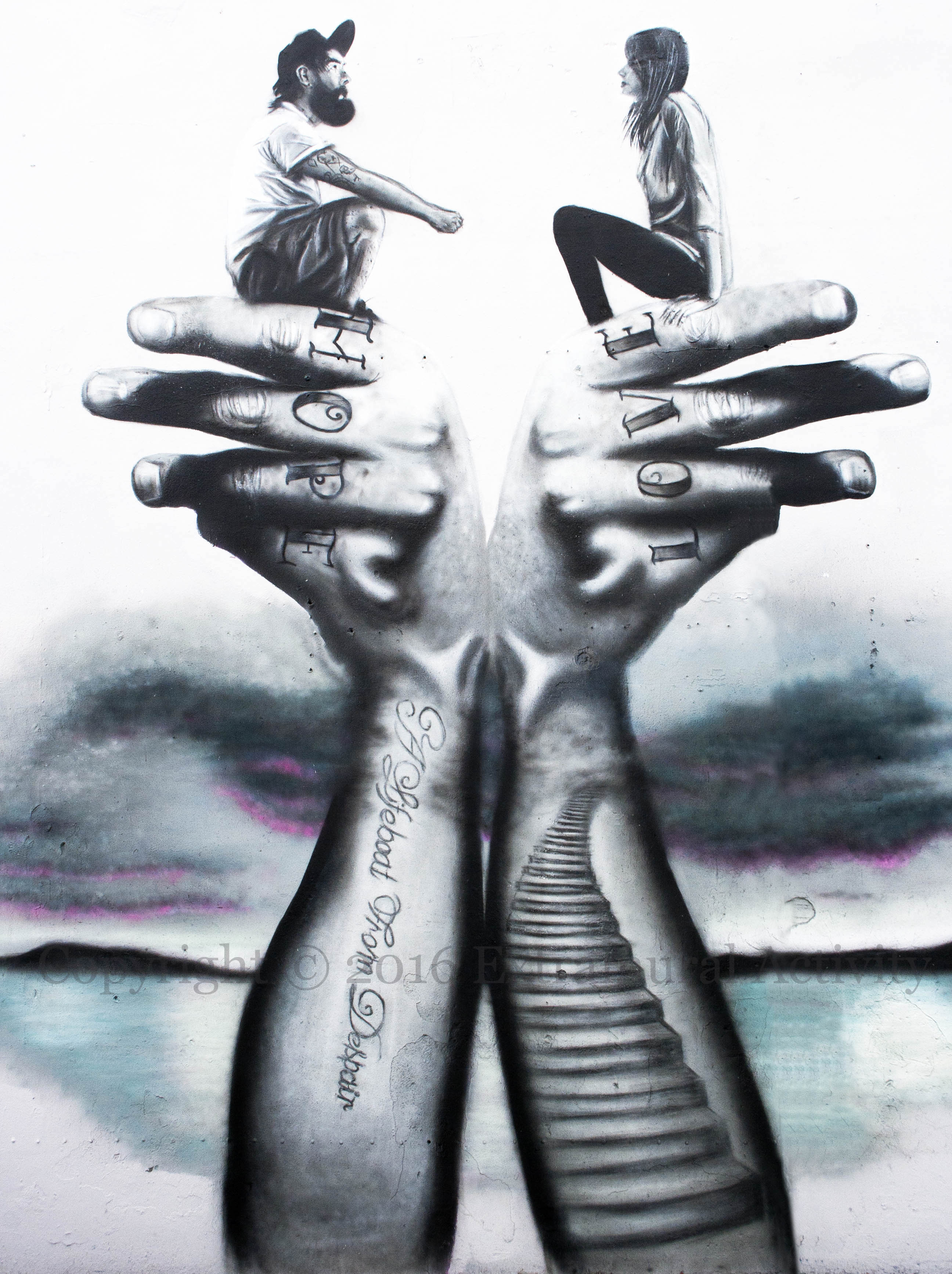
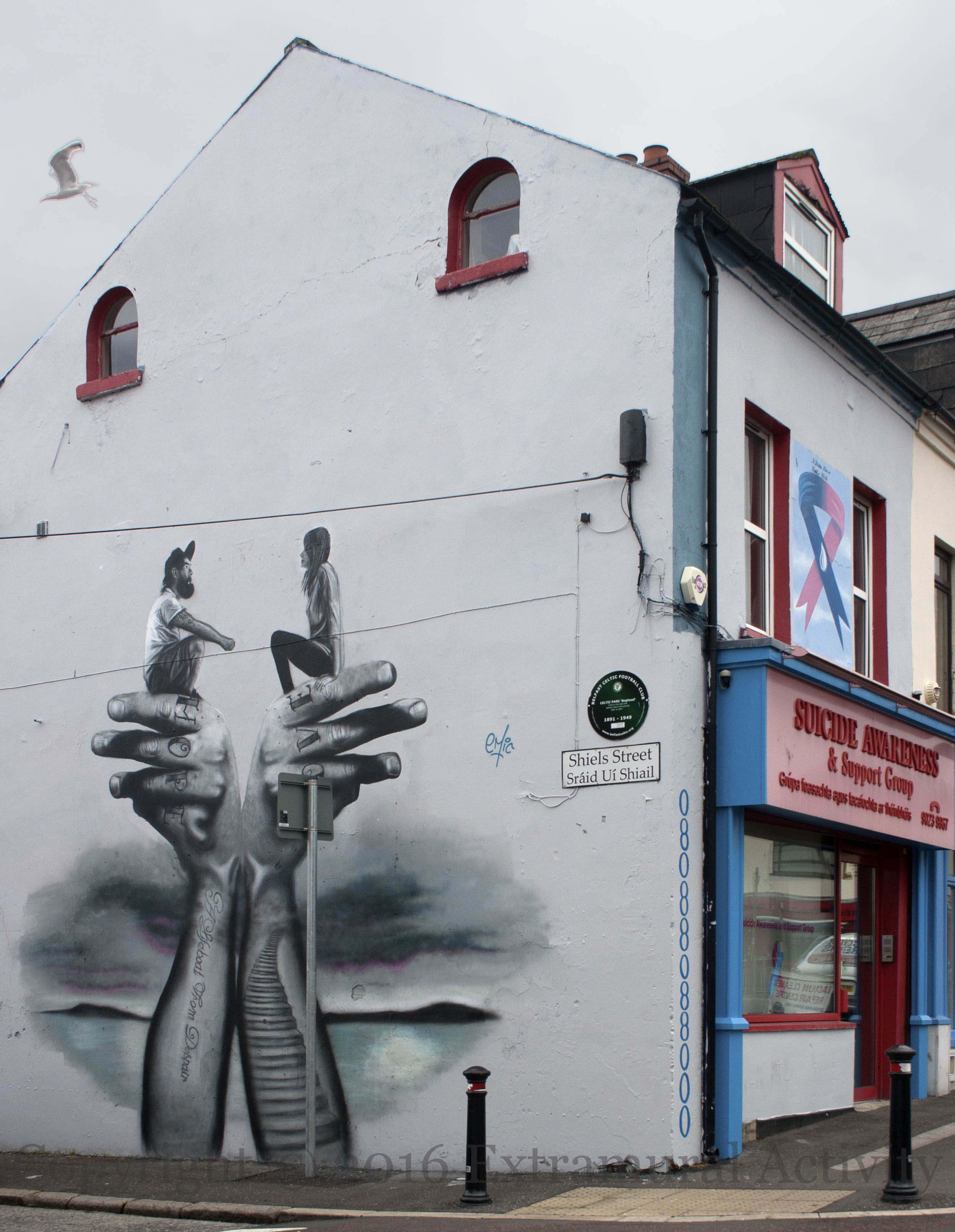
emic (Eoin McGinn Fb | web) has been at work on the Falls Road painting a mural for the Suicide Awareness & Support Group. Two figures face each other, seated on the index fingers of hands tattooed with “hope” and “love”. Wide shot below.
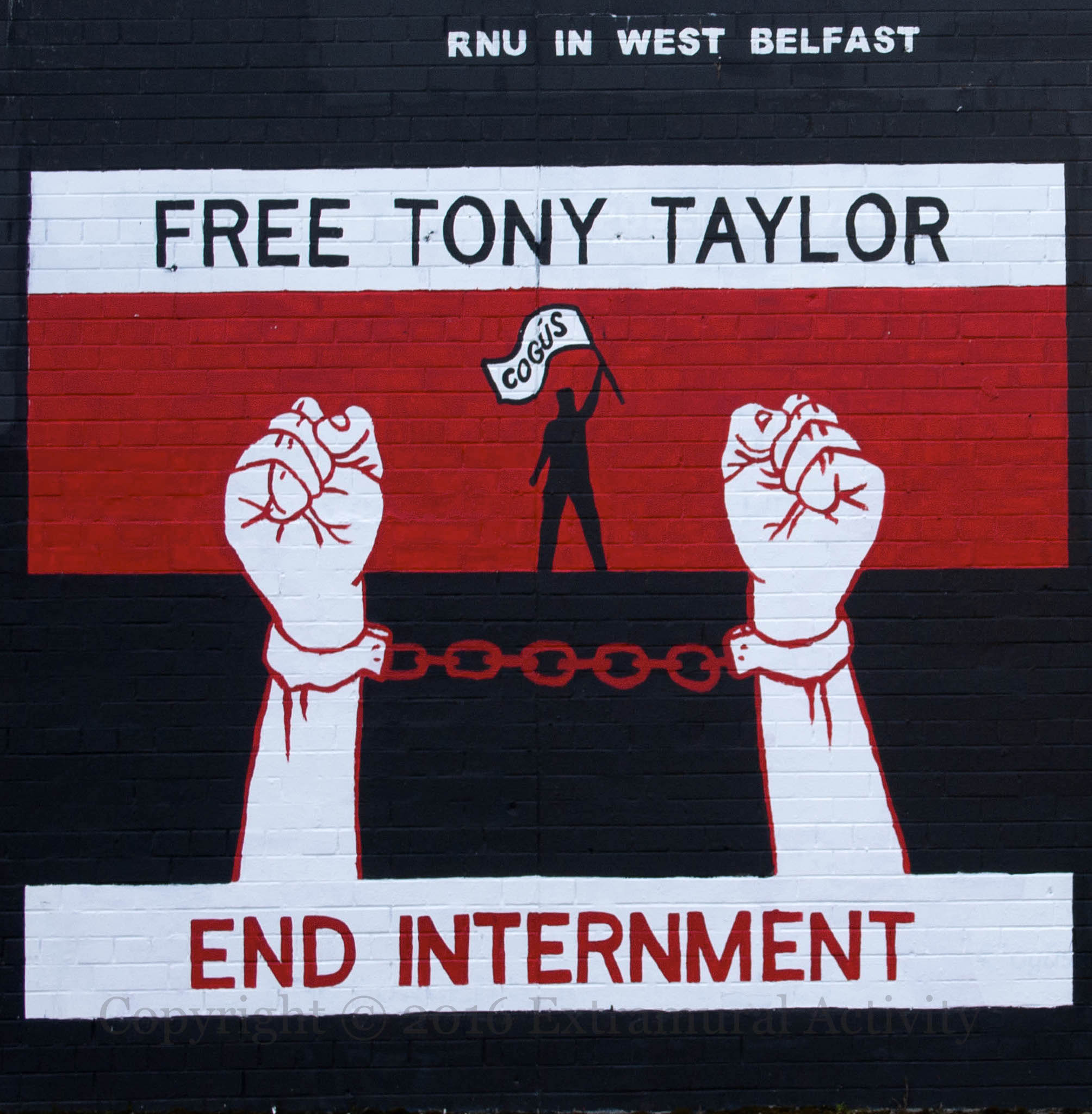
“Free Tony Taylor”, “End internment” – identical to the mural in Ardoyne, though without the “Cogús”. On the RNU “notice-board” on Northumberland Street.
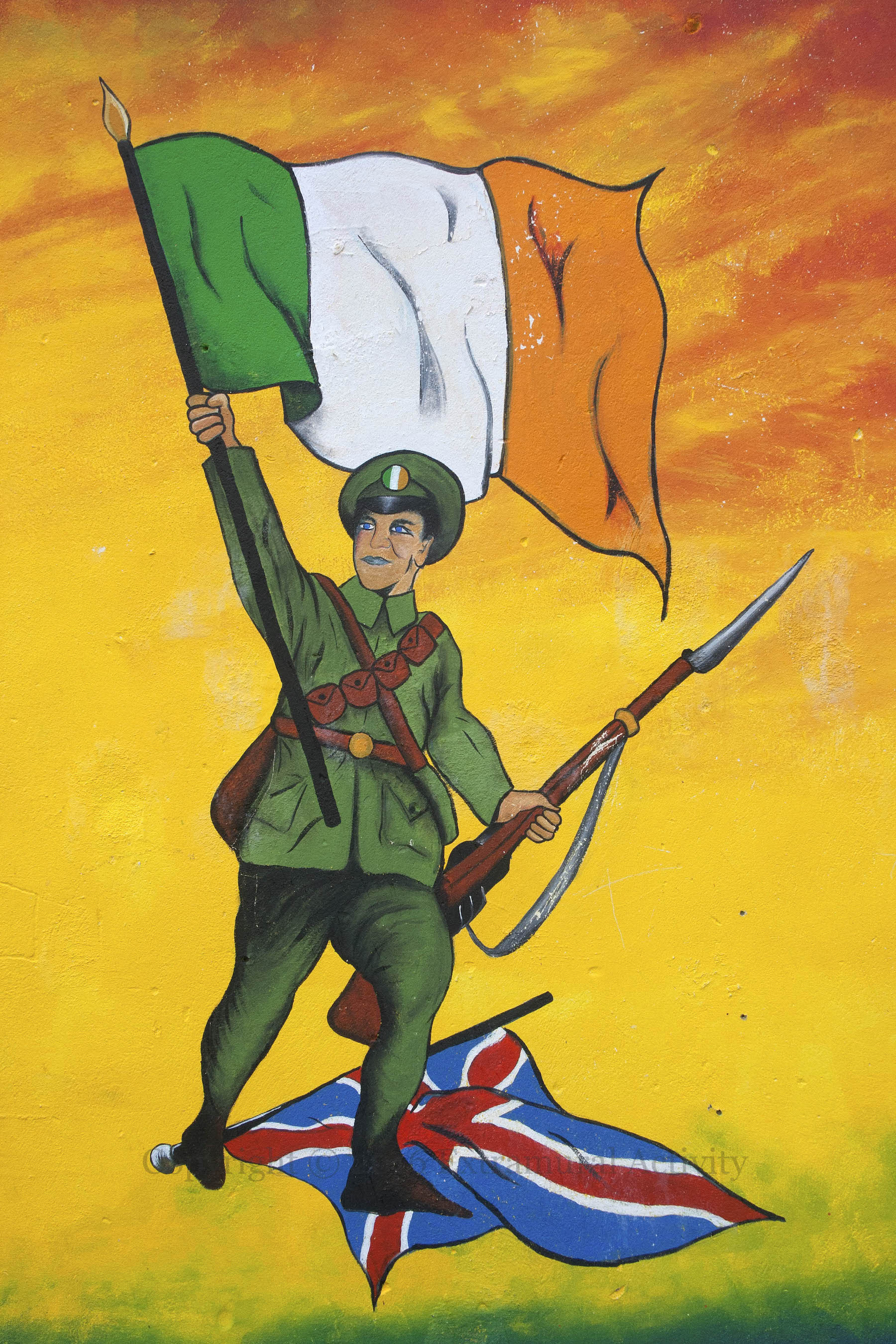
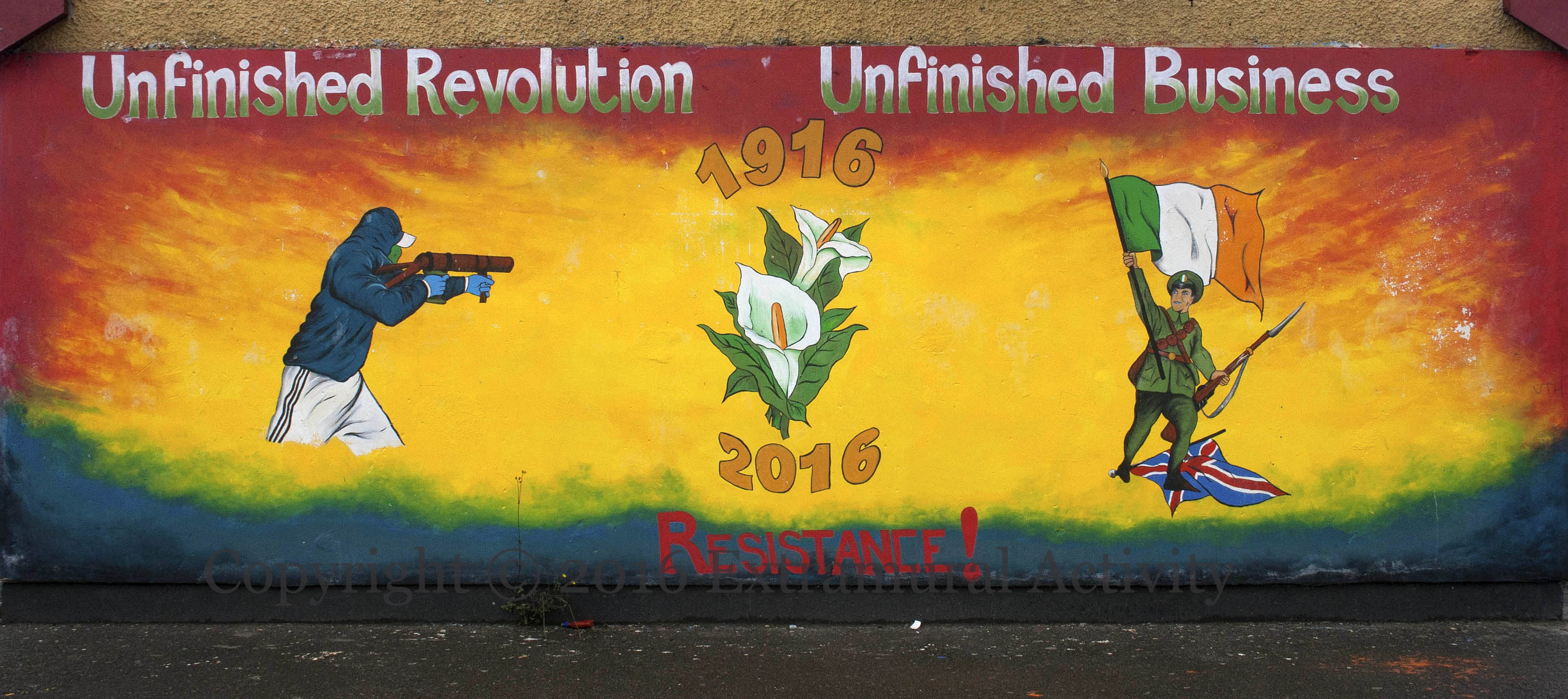
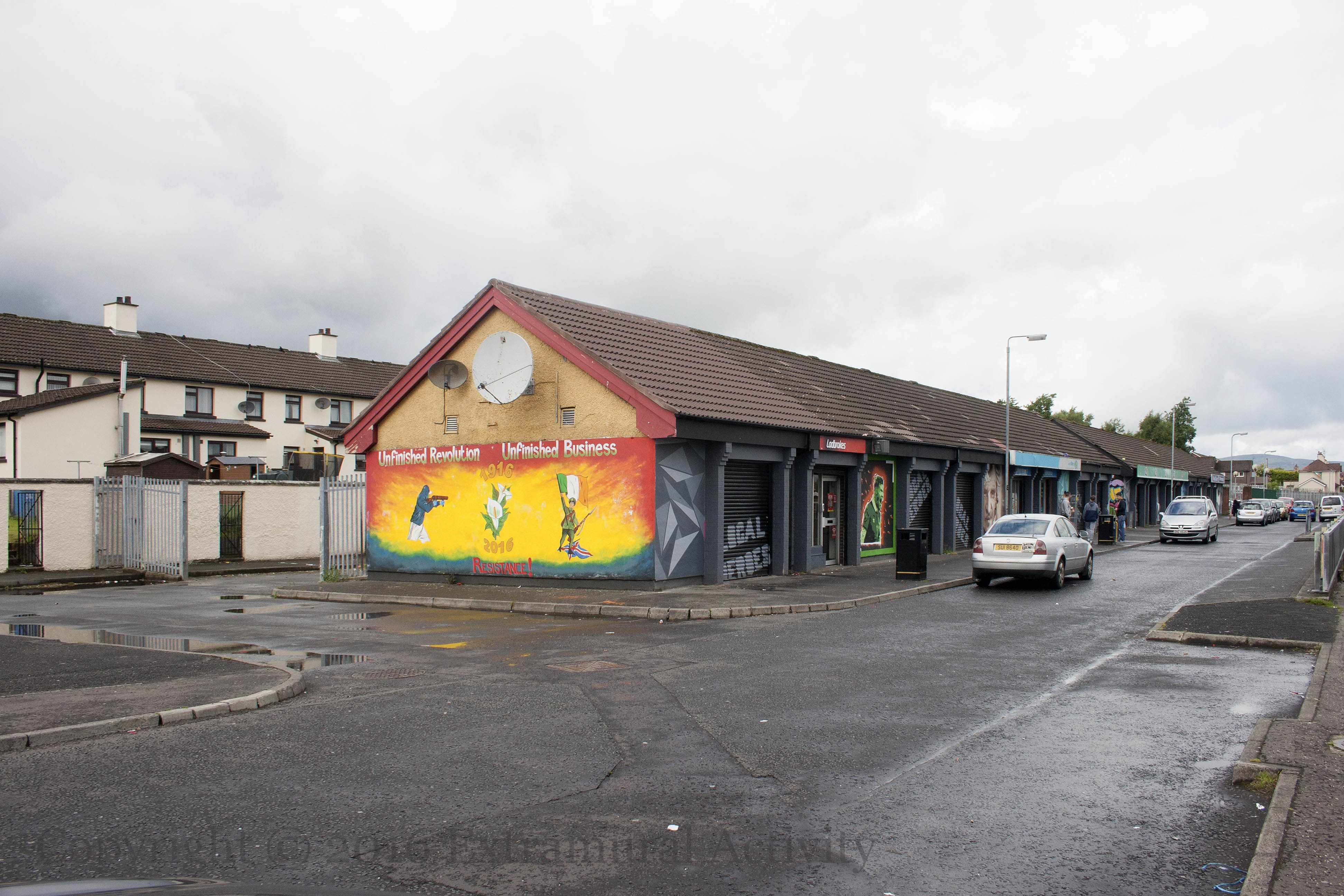
Here are three images of a new mural in the Creggan area of Derry preaching continued “Resistance!” on account of the “unfinished business” of raising the Irish Tricolour and trampling on Britain’s Union Flag and the “unfinished revolution” of 1916’s Easter Rising (reproducing a postcard of the era).
For the modern-day figure on the left, who is wielding a home-made rocket-launcher used in a 2014 attack on police, see 2015’s Resistance board in Ardoyne.
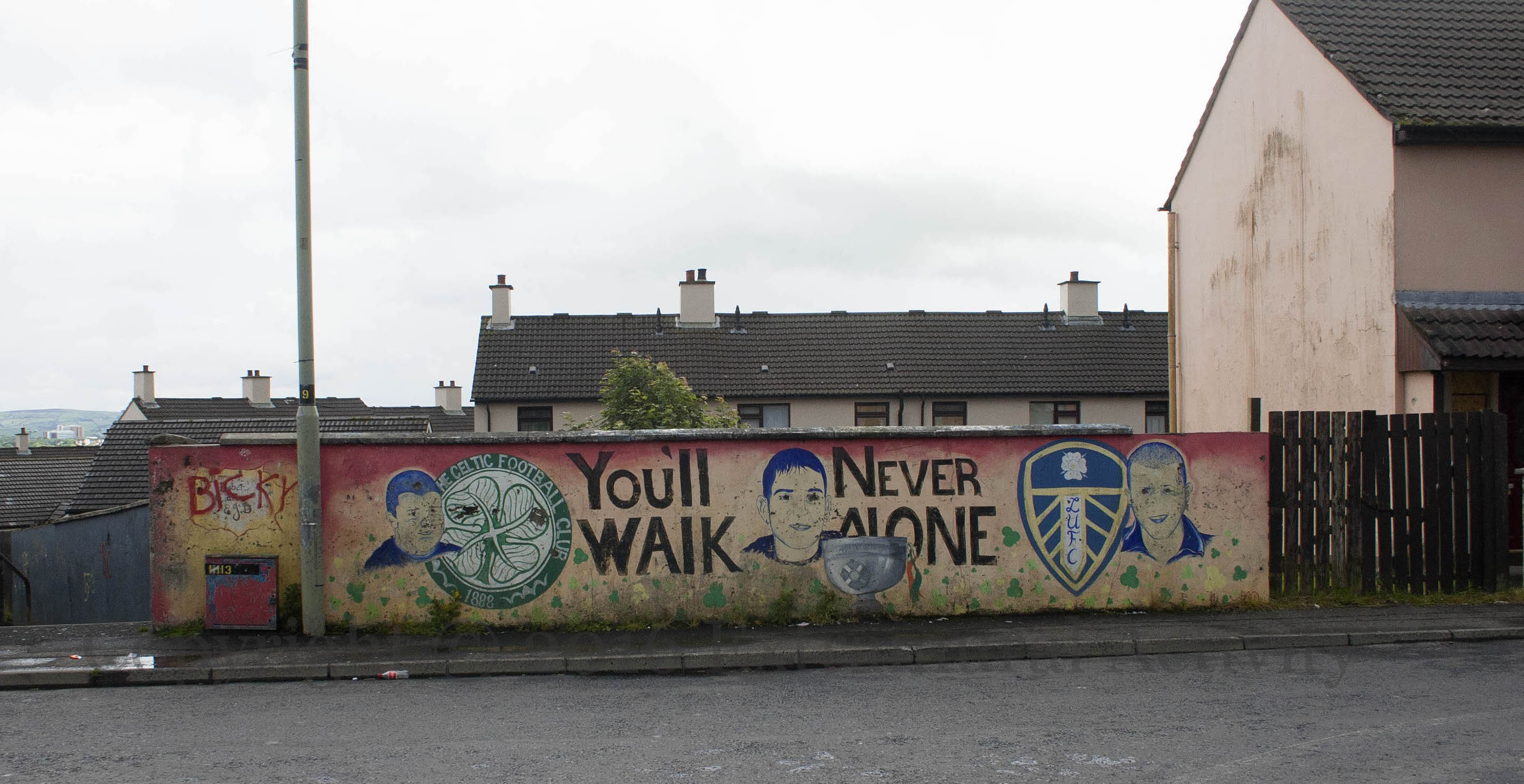
You’ll Never Walk Alone is most famously sung by the fans of Liverpool Football Club, but this Creggan mural draws on the song’s association with Celtic. Leeds United is the other club in the mural, at the right-hand end.
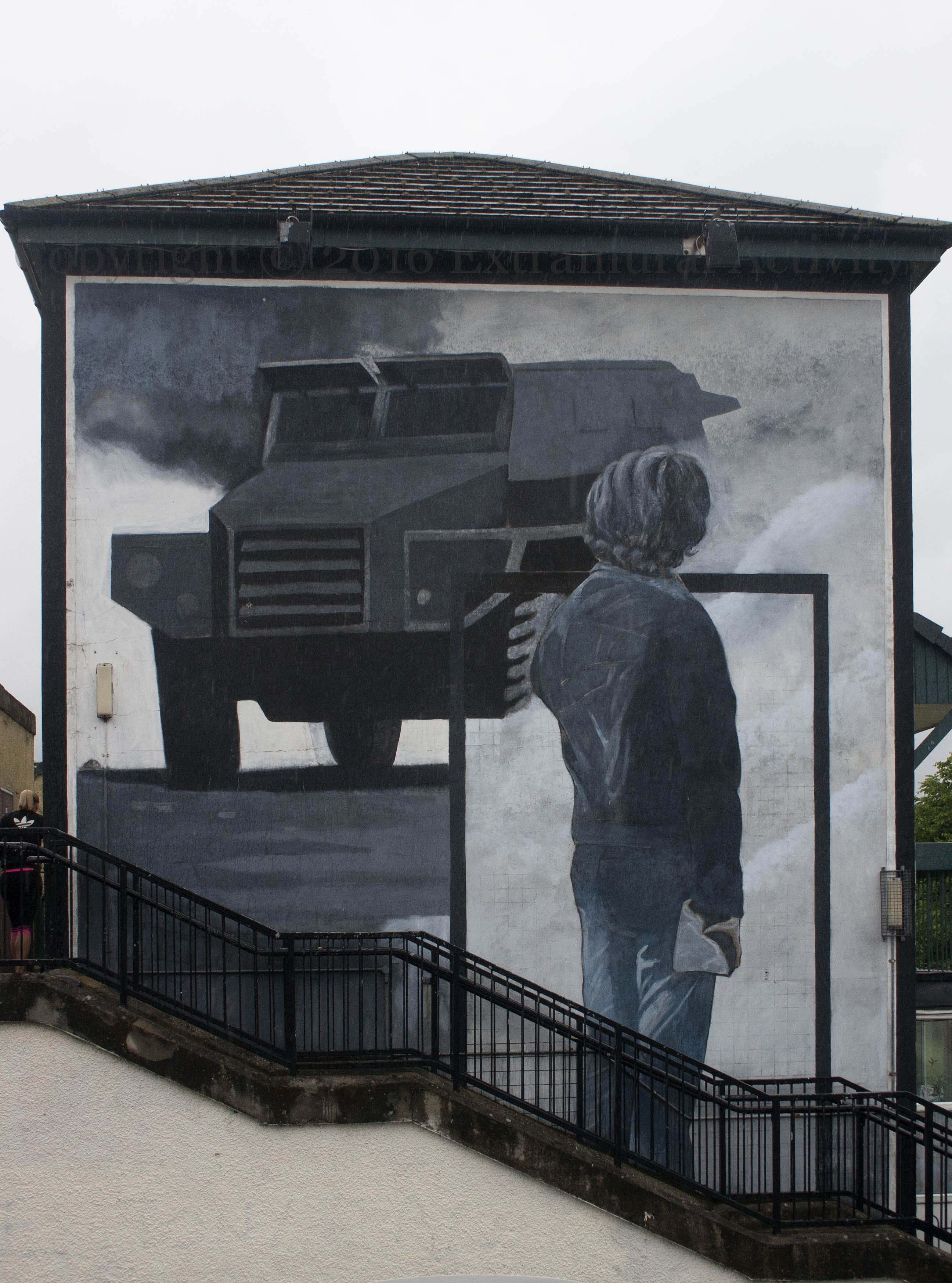
Young people in Derry would spend Saturdays (and many other days) rioting against the British Army presence in the city, which began in August 1969 after the Battle Of The Bogside. Thus, the popular name for this Bogside Artists mural ‘Saturday Matinee’; the official title is “The Rioter”. Part of The People’s Gallery.
The original photograph on which the mural is based is by Clive Limpkin. The rioter himself is perhaps Billy McVeigh.
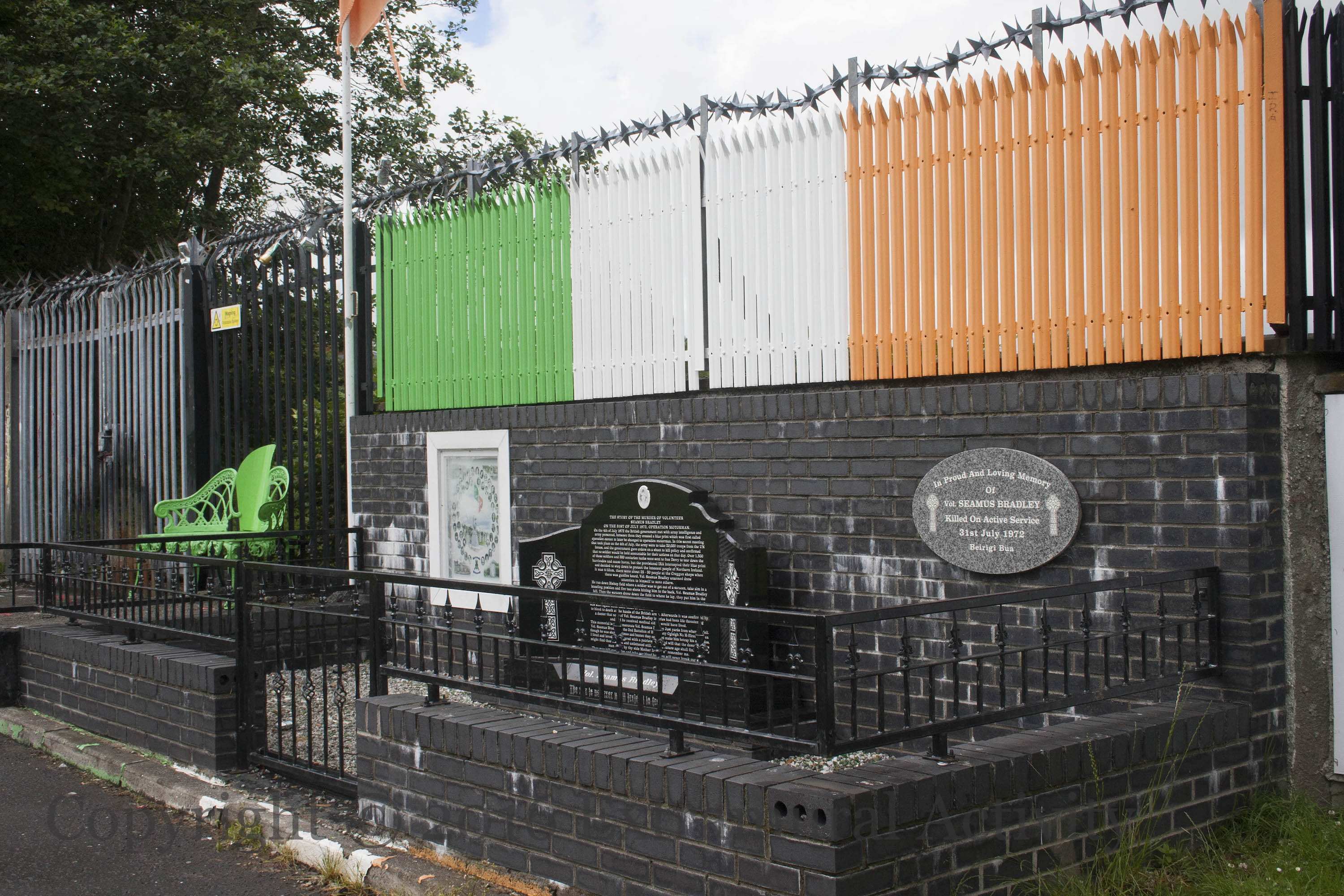
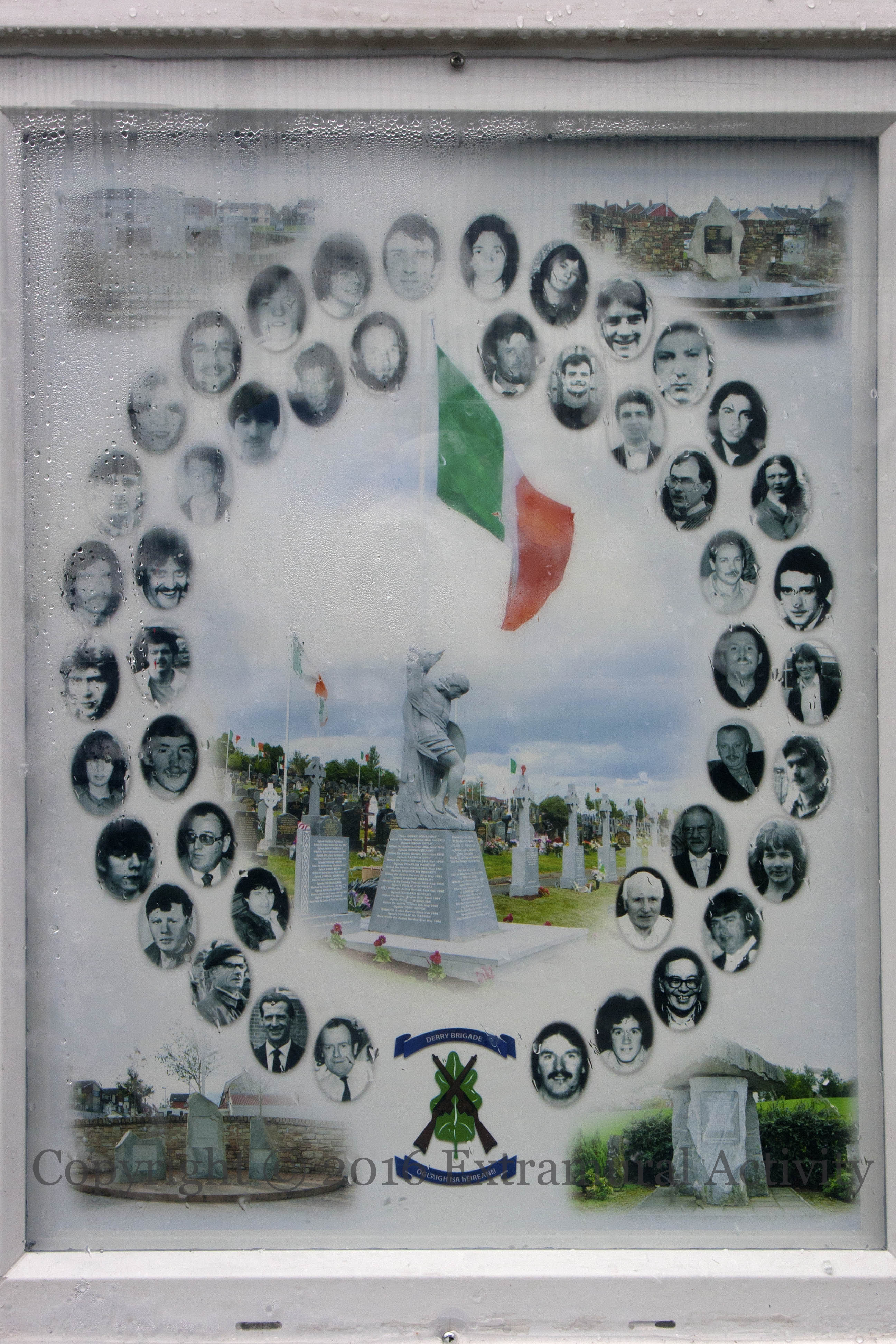
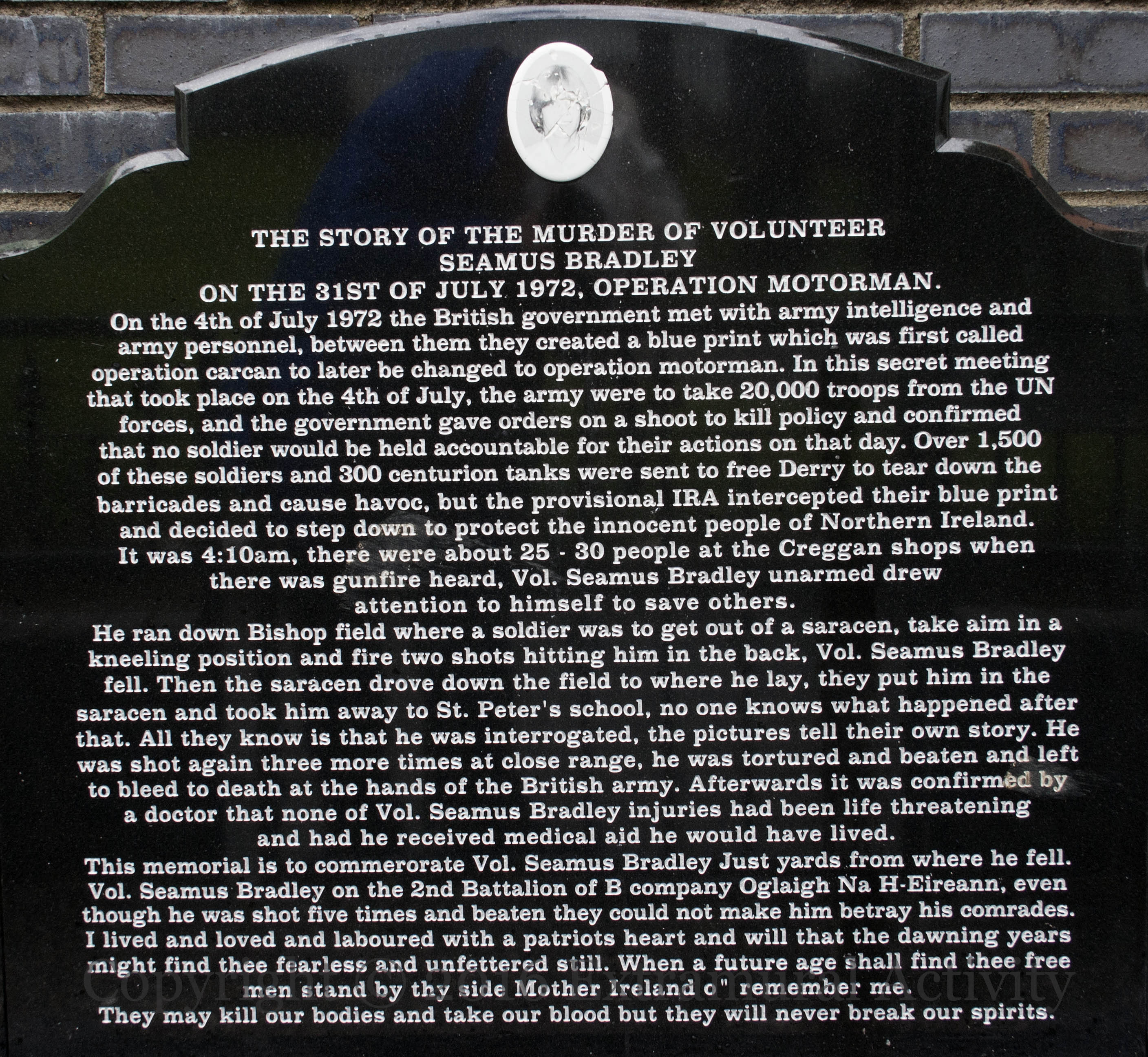
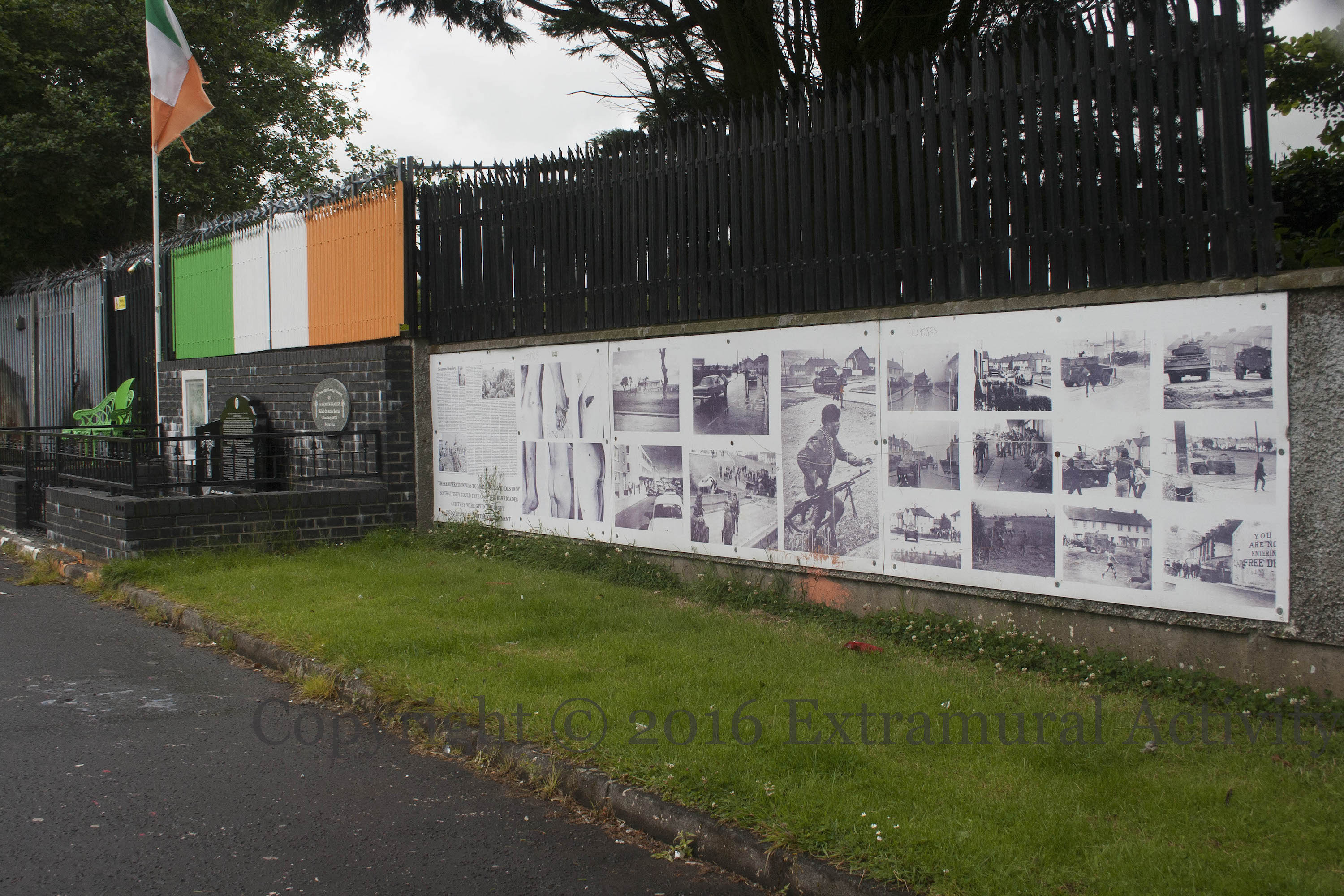
This memorial, which includes two stones, a glassed-in set of portraits of Derry Brigade members (second image), tricoloured railing and flag, commemorates the death of IRA volunteer Seamus Bradley. The stone on the right says that he was killed on active service, but the central headstone (third image) tells the story of an unarmed Bradley trying to distract the attention of British Army soldiers attacking people at the Creggan shops. To the right of the memorial is an extensive board of photographs and information relating to the treatment Bradley received, similar to the collection in front of the Operation Motorman mural in Rossville Street. (The oval plaque was on the wall of the Creggan Neighbourhood Centre – see M01604 – before it was demolished in 2013. (CAIN))
On the 4th of July 1972 the British government met with army intelligence and army personnel, between them they created a blue print which was first called operation carcan to later be changed to operation motorman. In this secret meeting that place on the 4th of July, the army were to take 20,000 troops from the UN forces, and the government gave orders on a shoot to kill policy and confirmed that no soldier would be held accountable for their actions on that day. Over 1,500 of these soldiers and 300 centurion tanks were sent to free Derry to tear down the barricades and cause havoc, but the provisional IRA intercepted their blue print and decided to step down to protect the innocent people of Northern Ireland. It was 4:10am, there were 25 – 30 people at the Creggan shops when there was gunfire heard, Vol. Seamus Bradley unarmed drew attention to himself to save others. He ran down Bishop field where a soldier was to get out of a saracen, take aim in a kneeling position and fire two shots hitting him in the back, Vol. Seamus Bradley fell. Then the saracen drove down the field to where he lay, they put him in the saracen and took him away to St. Peter’s school, no one knew what happened after that. All they know is that he was interrogated, the pictures tell their own story. He was shot again three more times at close range, he was tortured and beaten and left to bleed to death at the hands of the British army. Afterwards it was confirmed by a doctor that none of Seamus Bradley’s injuries have been life threatening and had he received medical aid he would have lived.
This memorial is to commemorate Vol. Seamus Bradley just yards from where he fell. Vol. Seamus Bradley on the 2nd Battalion of B company Oglaıgh Na H-Éıreann, even though he was shot five times and beaten they could not make him betray his comrades. I lived and loved and laboured with a patriot’s heart and will that the dawning years might make you fearless and unfettered still. When a future age shall find thee free men stand by thy side Mother Ireland o” remember me. They may kill our bodies and take our blood but they will never break our spirits. killed on active service beırıgí bua
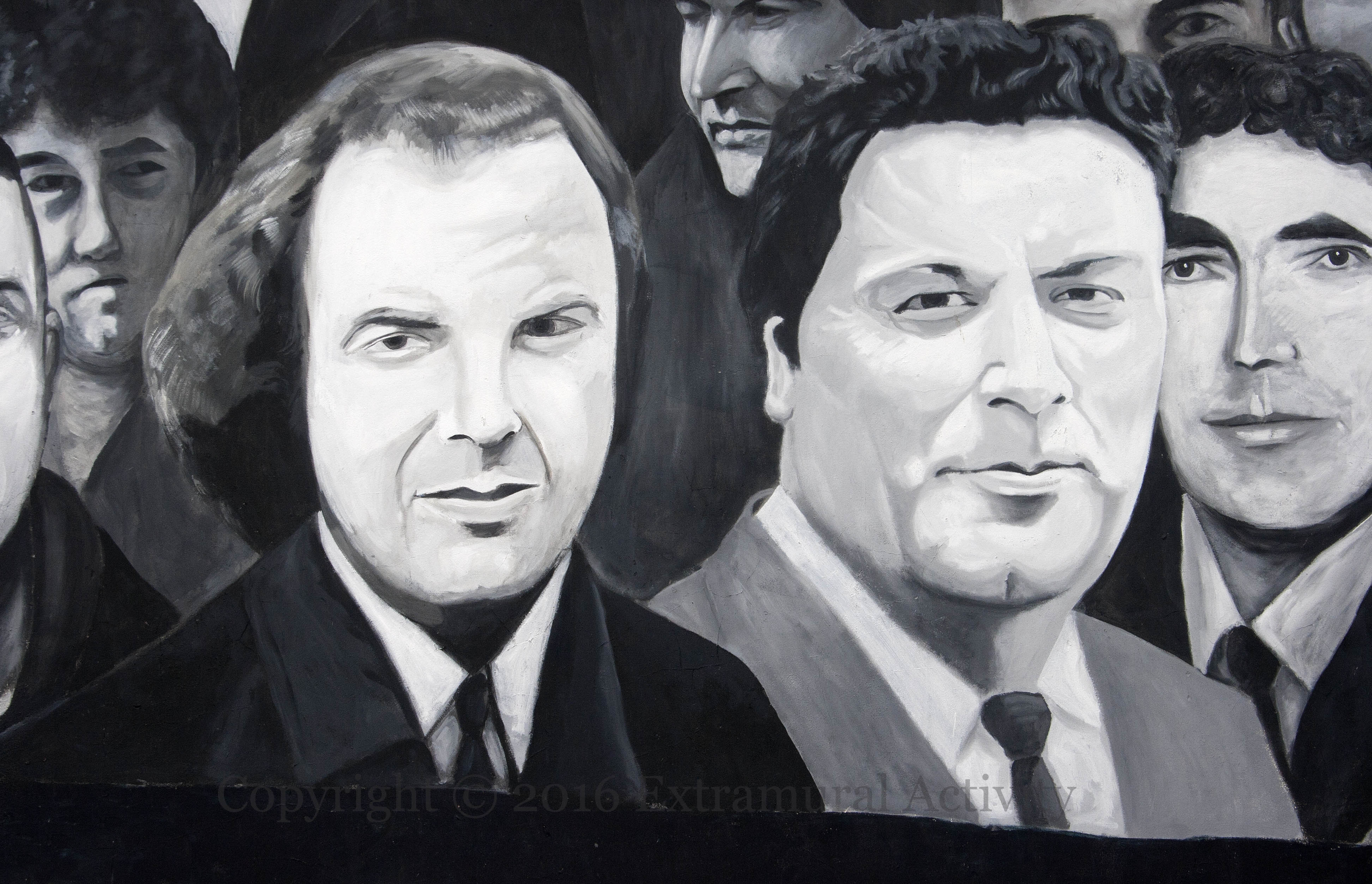
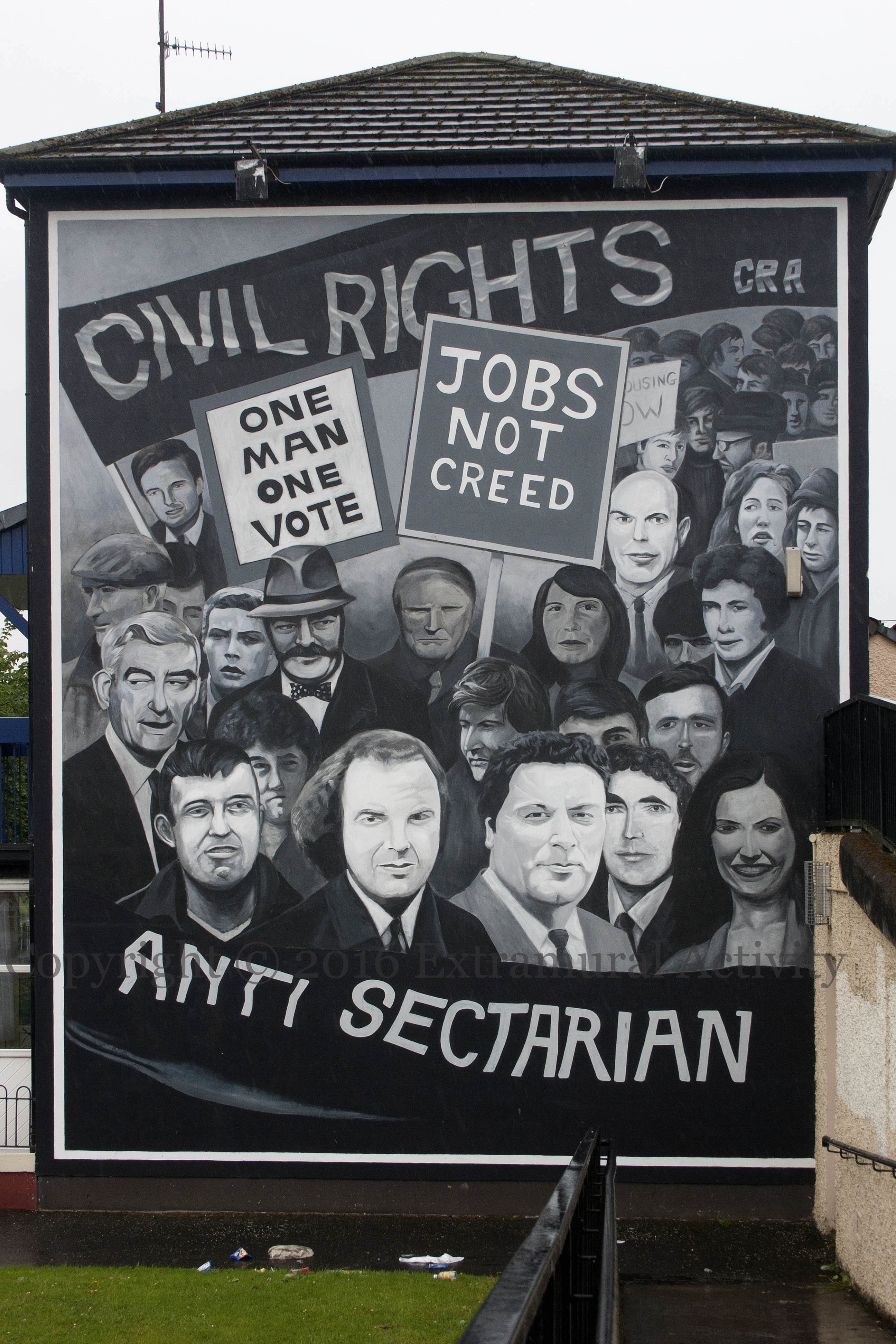
The Bogside Artists’ Civil Rights mural in Rossville Street, Derry/Doıre, which was originally painted in 2004, was repainted (in October 2015) and the portraits of Ivan Cooper and John Hume added. For video of the launch, see the Bogside Artists’ website. See also the Visual History page on the Bogside Artists.
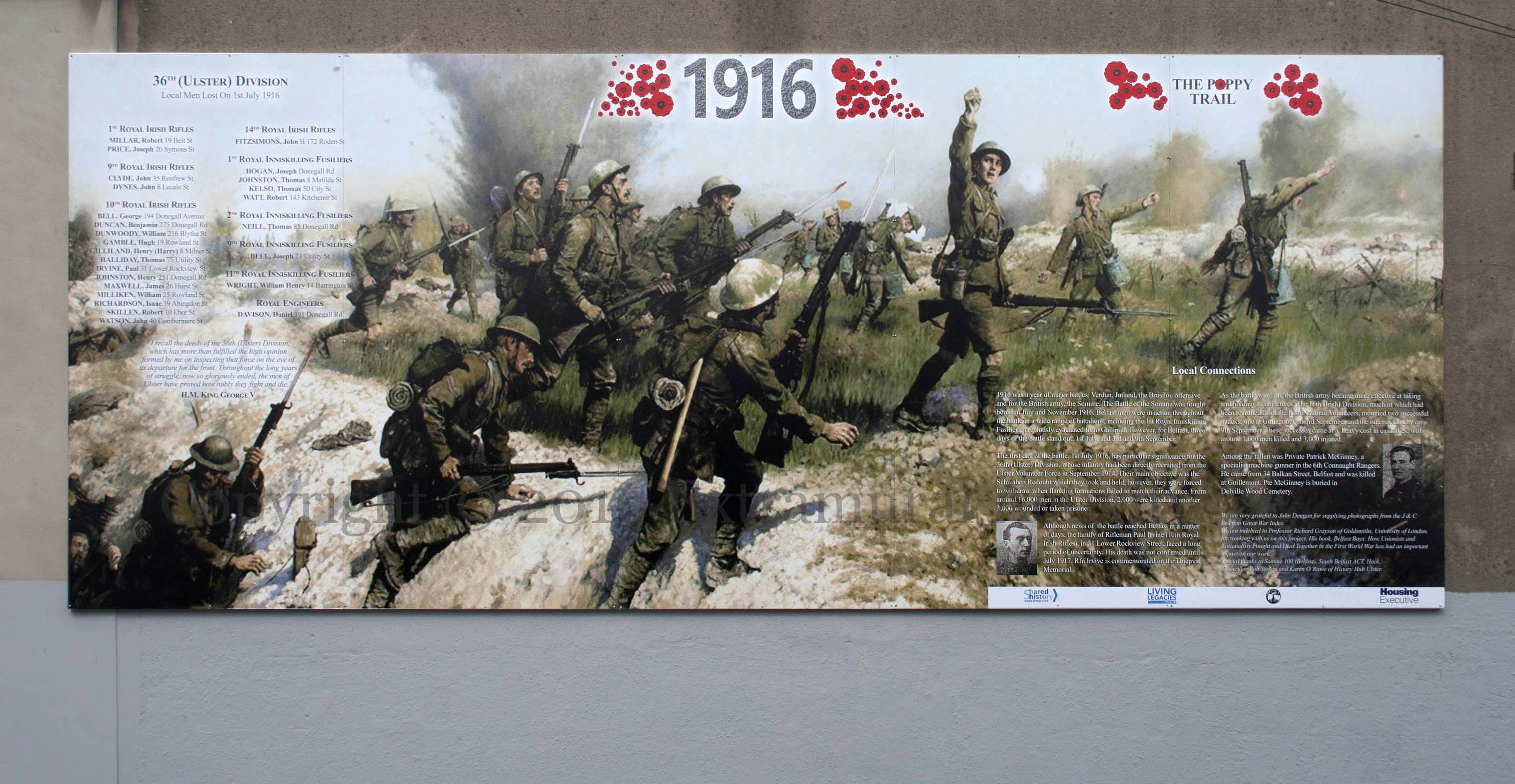
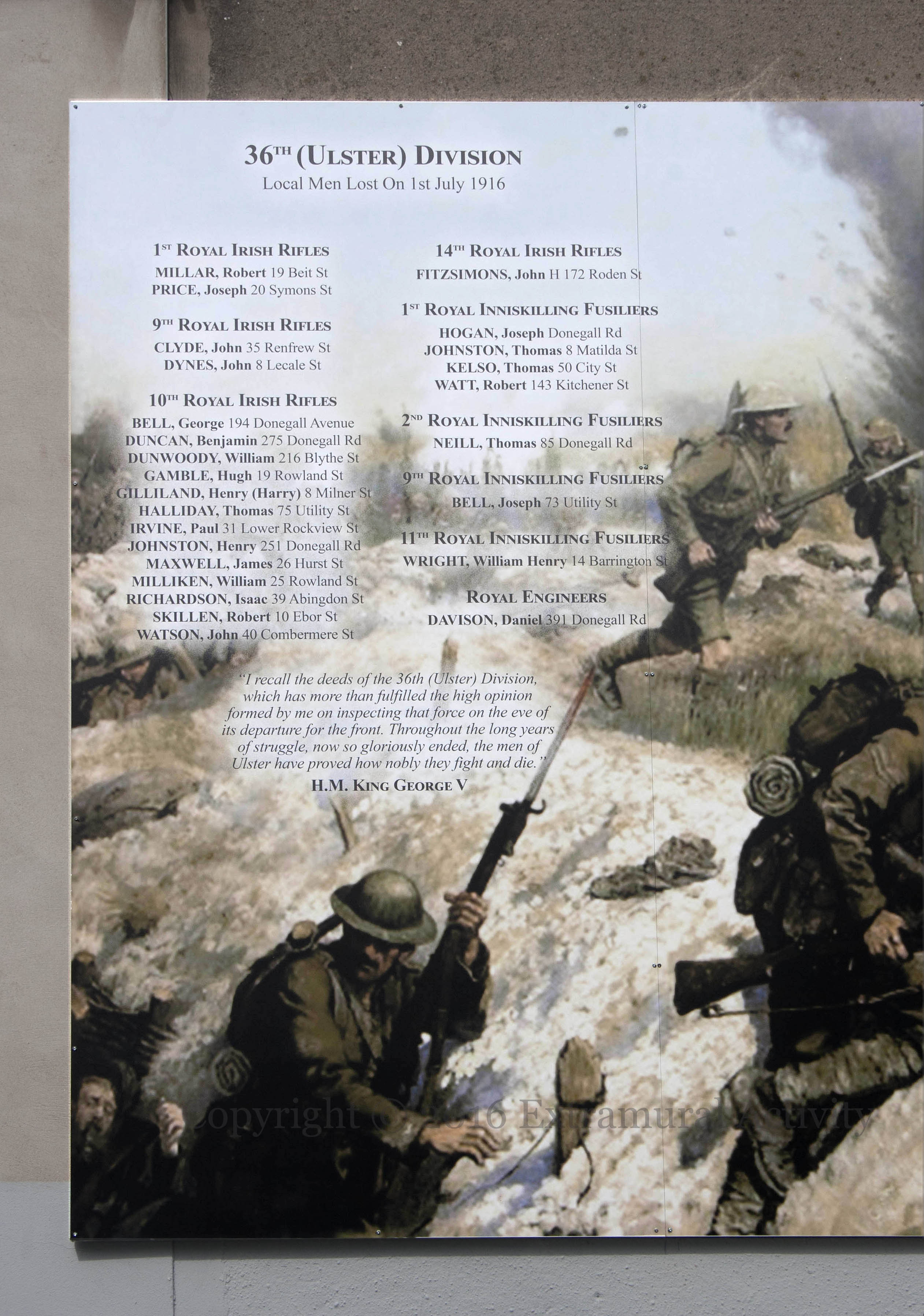
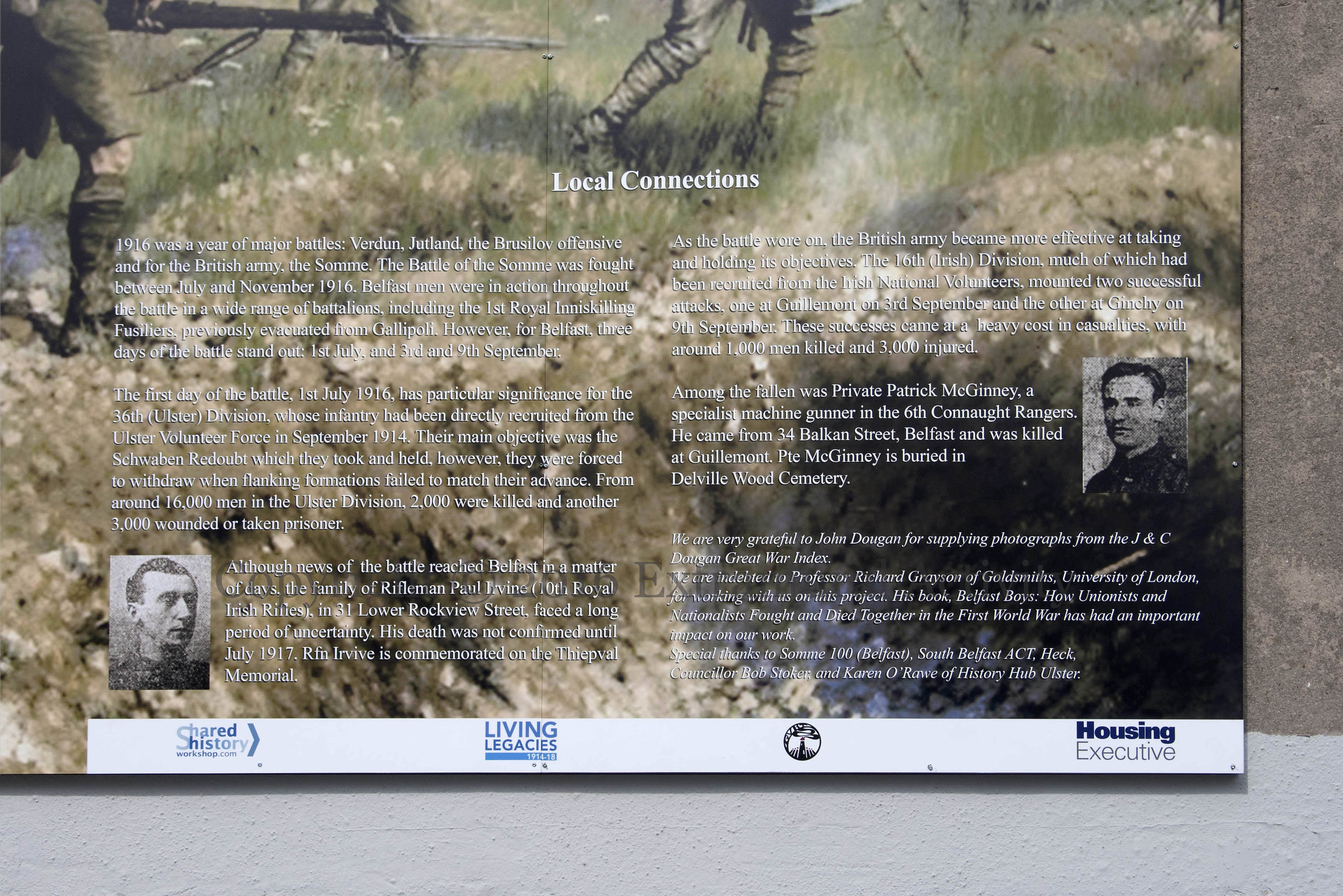
JP Beadle’s Battle Of The Somme, Attack Of The Ulster Division is reproduced in the 1916 installment of the Poppy Trail in south Belfast. (For more on the painting, see belfastsomme.com.) In addition to listing local men lost in on July 1st – from places such as Roden, Matilda, Kitchener, Barrington, Blythe, Ebor, Rowland, Abingdon, and Combermere Street – it also features an individual from each community who served and died, in this case, Rifleman Paul Irvine from Lower Rockview Street and Private Patrick McGinney from Balkan Street (in the Divis area).
 Seosamh Mac Coille Collection