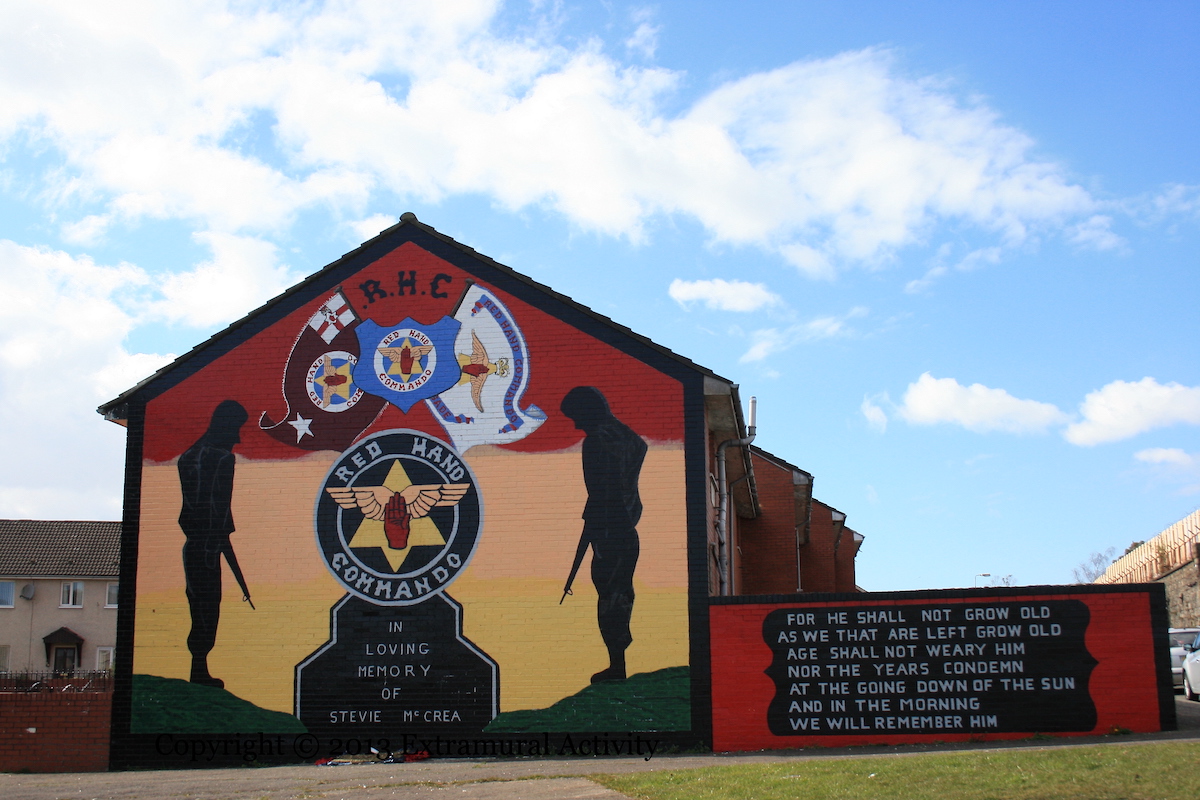
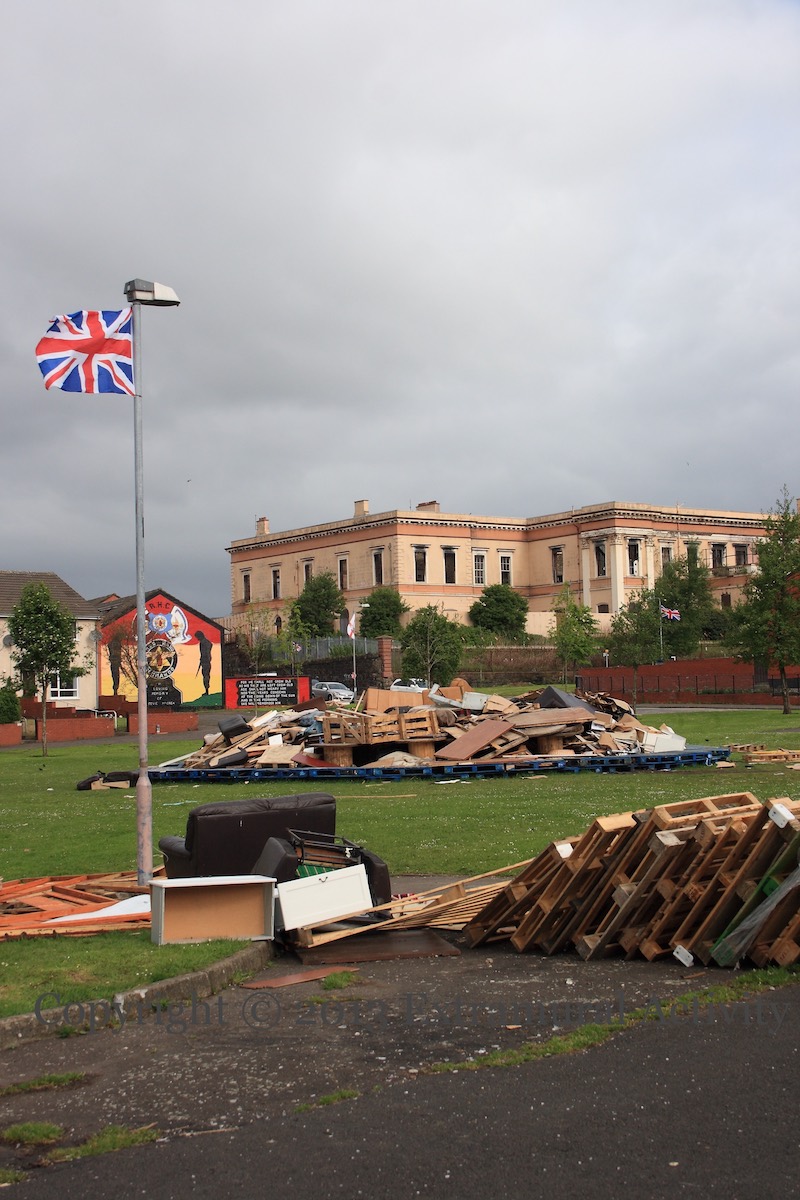
Red Hand Commando volunteer Stevie McCrea was sentenced to 16 years for the murder of James Kerr in 1972 (Behind The Mask) and was subsequently “murdered by the enemies of Ulster” on February 18th, 1989 in an IPLO attack on the Orange Cross (see M00560 | WP).
“For he shall not grow old as we that are left grow old. Age shall not weary him nor the years condemn. At the going down of the sun and in the morning, we will remember him.”
McCrea is included on murals in south Belfast’s Frenchpark Street and Broadway (dating back to at least 1993).
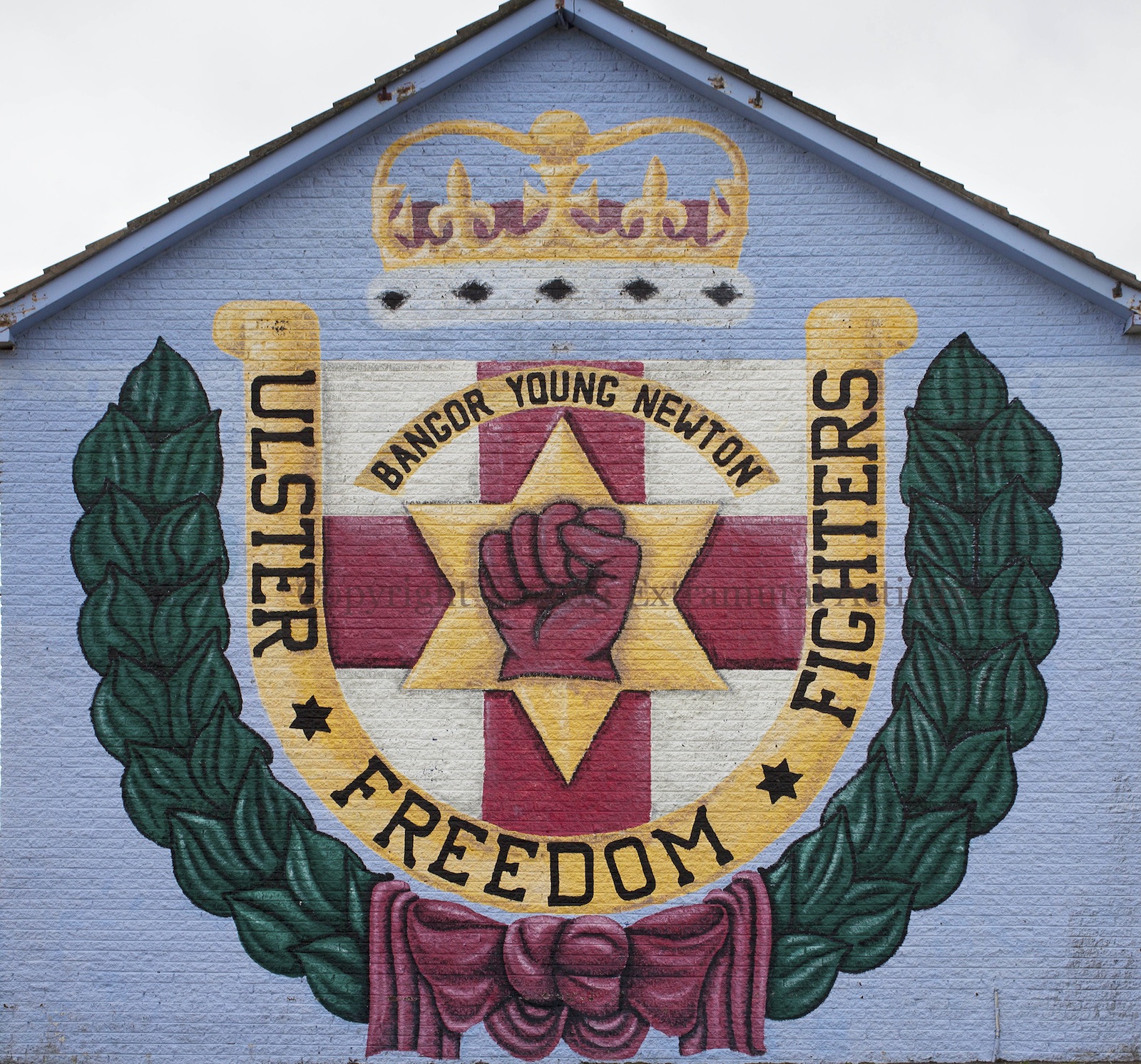
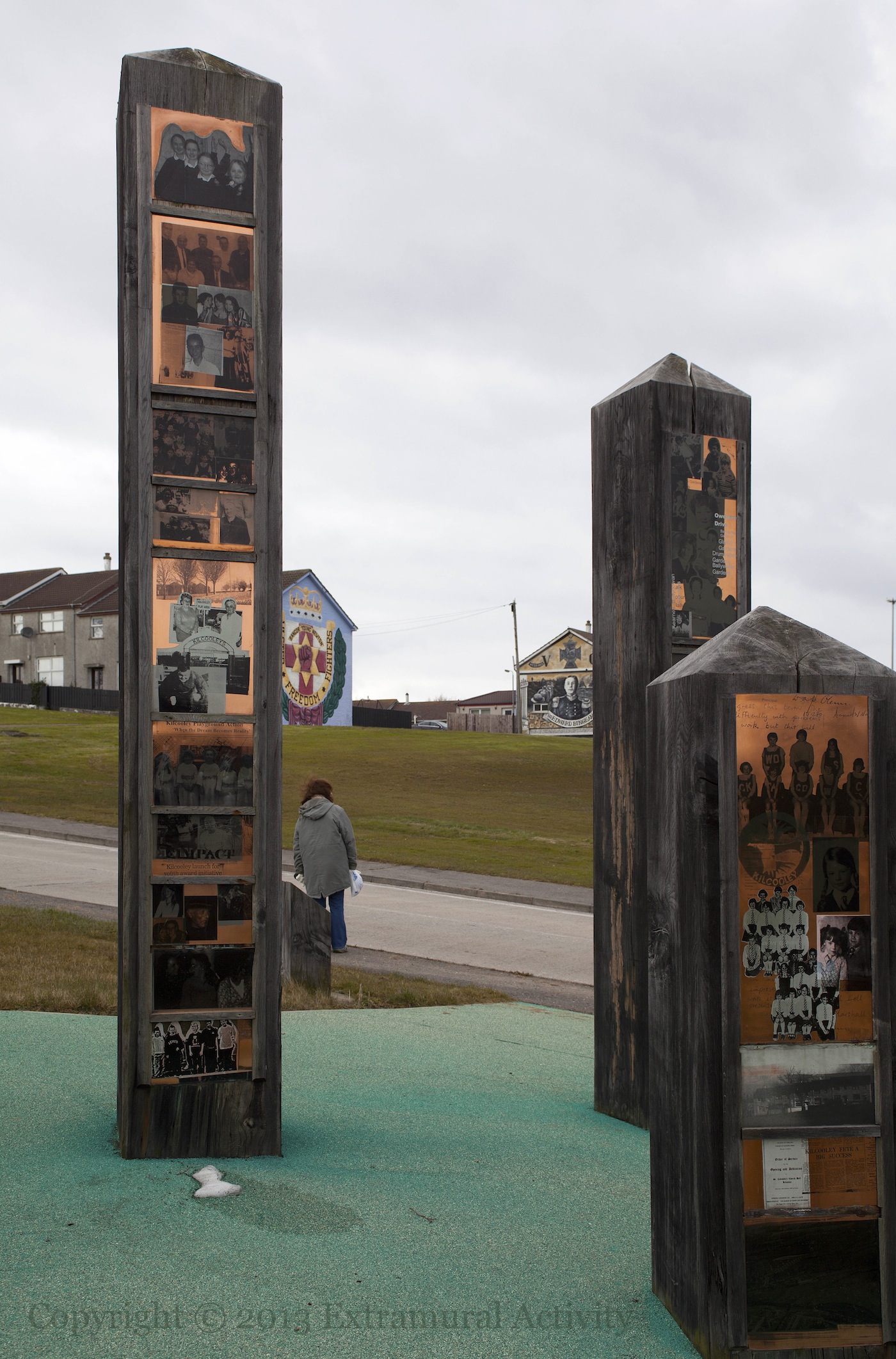
An Ulster Freedom Fighters mural in Bangor, to the northeast of Belfast. The mural is at the edge of a Loyalist estate which is on high ground; it (and its companion) overlook and dominate a major junction on a network of roads around the town.
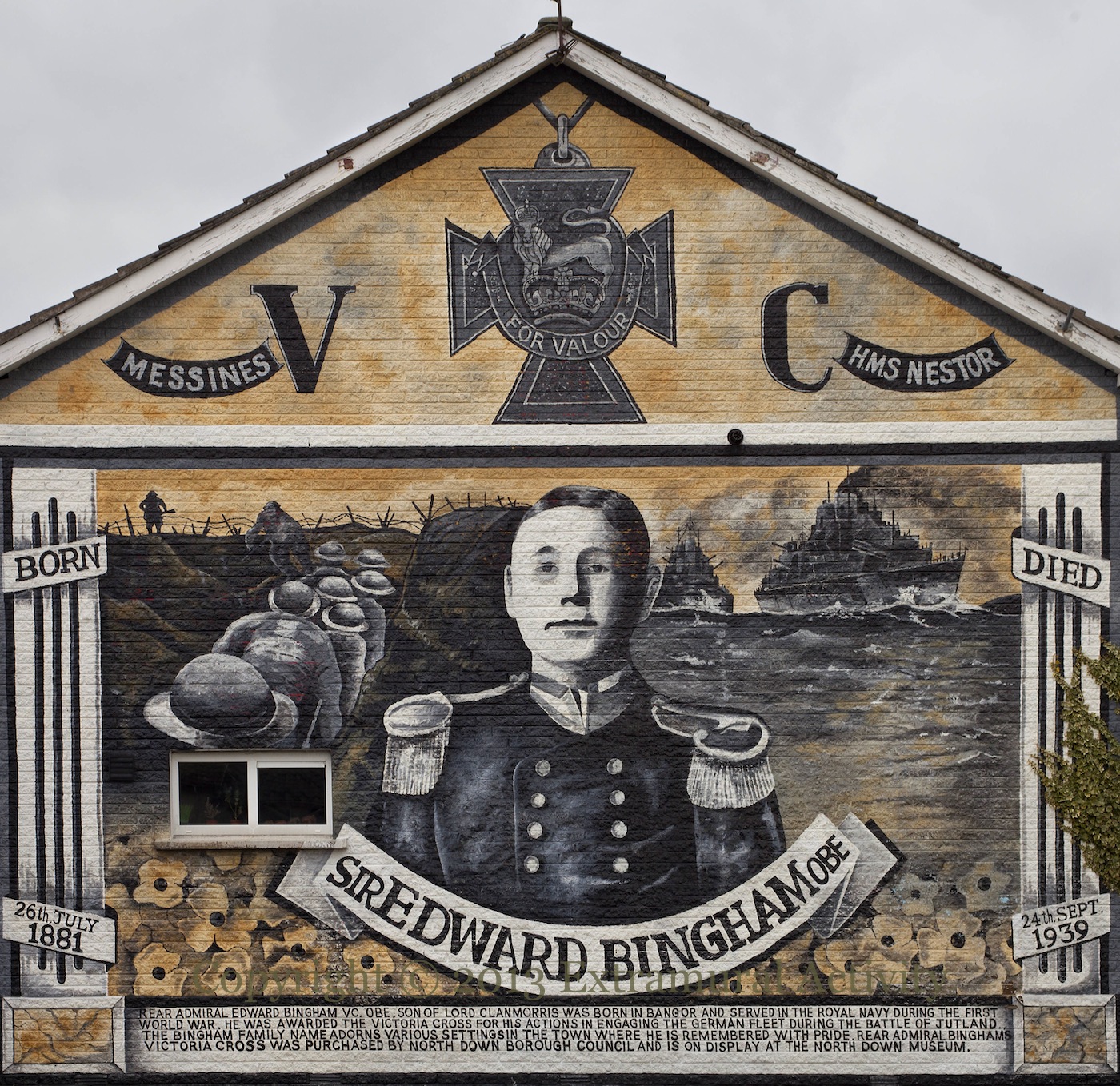
This is a mural in his home town to rear admiral Sir Edward (“Barry”) Bingham, OBE, born in Bangor and recipient of the Victoria Cross (featured in the apex of the roof) for service in WWI.
“Rear Admiral Edward Bingham VC OBE, son of Lord Clanmorris, was born in Bangor and served in the Royal Navy during the First World War. He was awarded the Victoria Cross for his actions in engaging the German fleet during the battle of Jutland. The Bingham family name adorns various settings in the town where he is remembered with pride. Rear Admiral Bingham’s Victoria Cross was purchased by North Down borough council and is on display at the North Down museum.”
The context shot, below, shows the two together, as viewed through the uprights of a community monument just across the road, featuring old photographs and documenting the history of the local community.
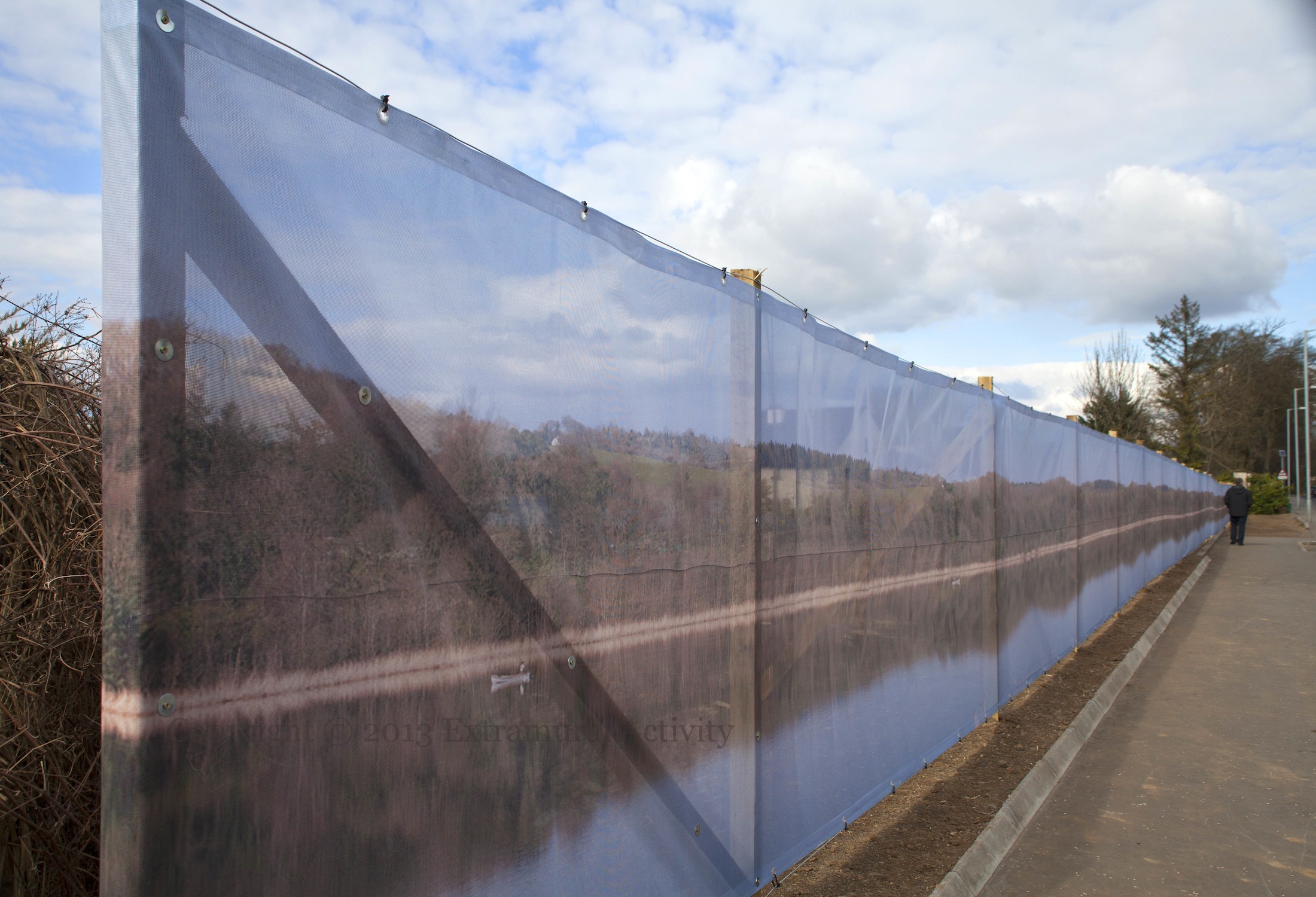
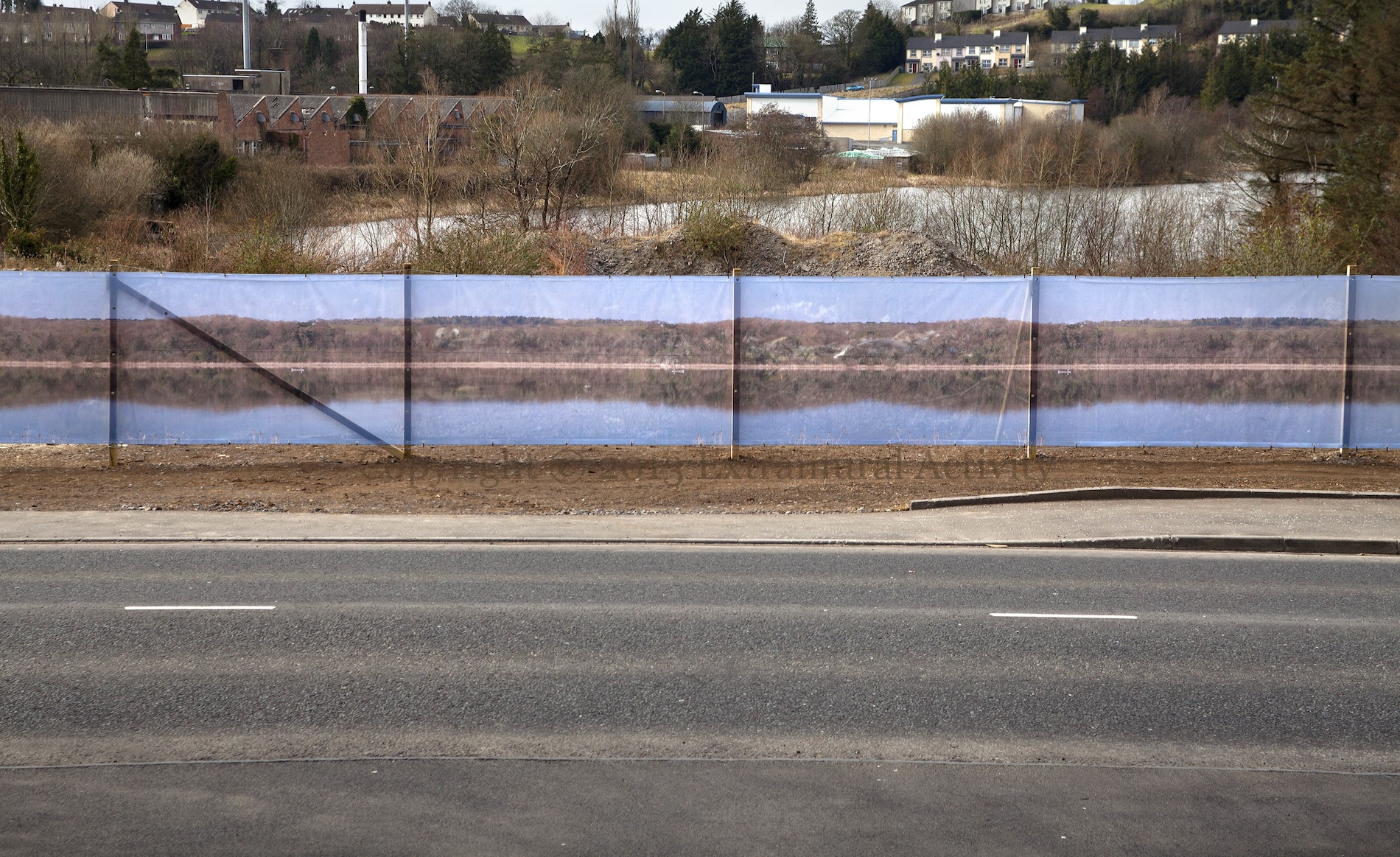
The Inıs Ceıthleann/Enniskillen face-lift ahead of the G8 summit in June gets under way with this (quite obviously fake) tarp with a photo of Lough Erne superimposed upon it, along the Irvinestown Road.
In the image below, taken from a railing across the street, you can see what Obama and other world leaders must not!
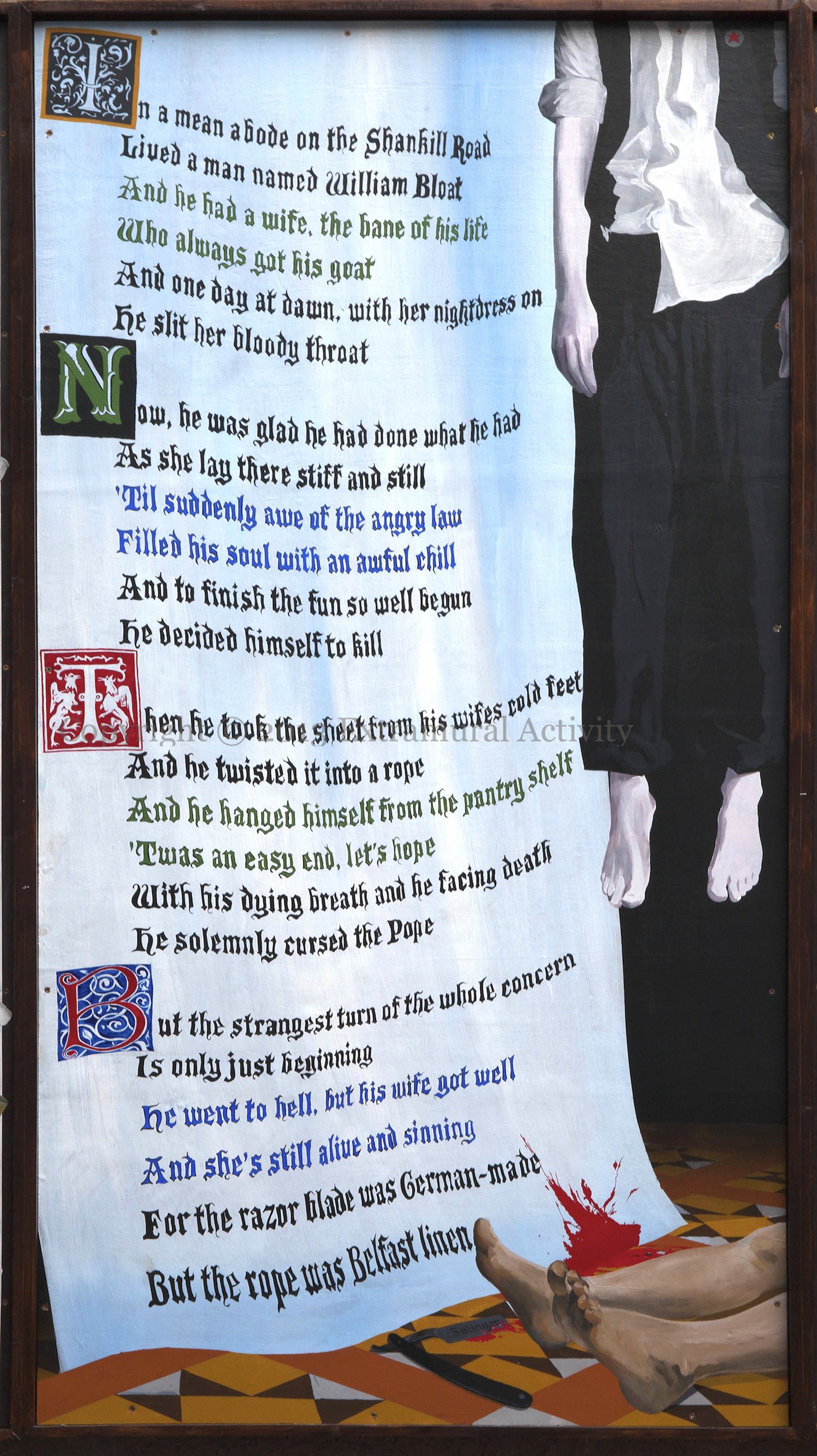
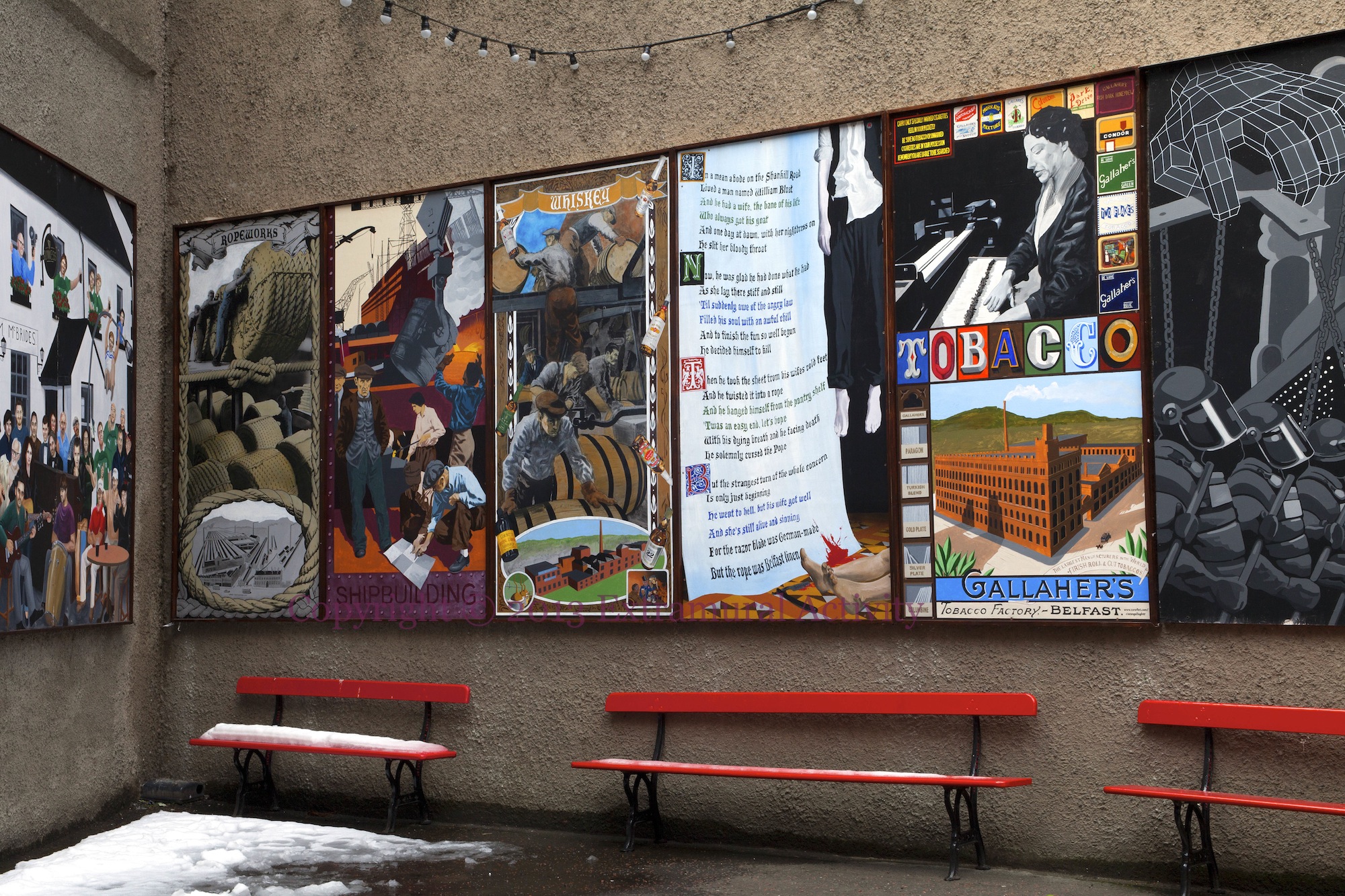
Here is a close-up of the fourth panel of the five-panel piece in the Dark Horse recorded separately. The four other panels represent the production of rope, ships, whiskey, and tobacco products. The “William Bloat” panel presumably stands for the linen industry, as the star of the tale is the bed sheet that is fashioned into a noose. The words to the song, including an extra verse not shown on the board, can be found below, along with a Tommy Makem performance of the song (from 1973!) in which the blade is Japanese-made.
William Bloat – Raymond Calvert (1926)
In a mean abode on the Shankill Road Lived a man named William Bloat; He had a wife, the bane of his life, Who always got his goat. And one day at dawn, with her nightdress on He slit her bloody throat.
[With a razor gash he settled her hash Never was crime so slick But the drip drip drip on the pillowslip Of her lifeblood made him sick. And the knee-deep gore on the bedroom floor Grew clotted and cold and thick.]
Now, he was glad he had done what he had As she lay there stiff and still ‘Til suddenly awe of the angry law Filled his soul with an icy chill. And to finish the fun so well begun He decided himself to kill.
Then he took the sheet from his wife’s cold feet And he twisted it into a rope And he hanged himself from the pantry shelf, ‘Twas an easy end, let’s hope. With his dying breath and he facing death He solemnly cursed the Pope.
But the strangest turn to the whole concern Is only just beginning. He went to Hell but his wife got well And she’s still alive and sinning, For the razor blade was German made But the rope was Belfast linen.
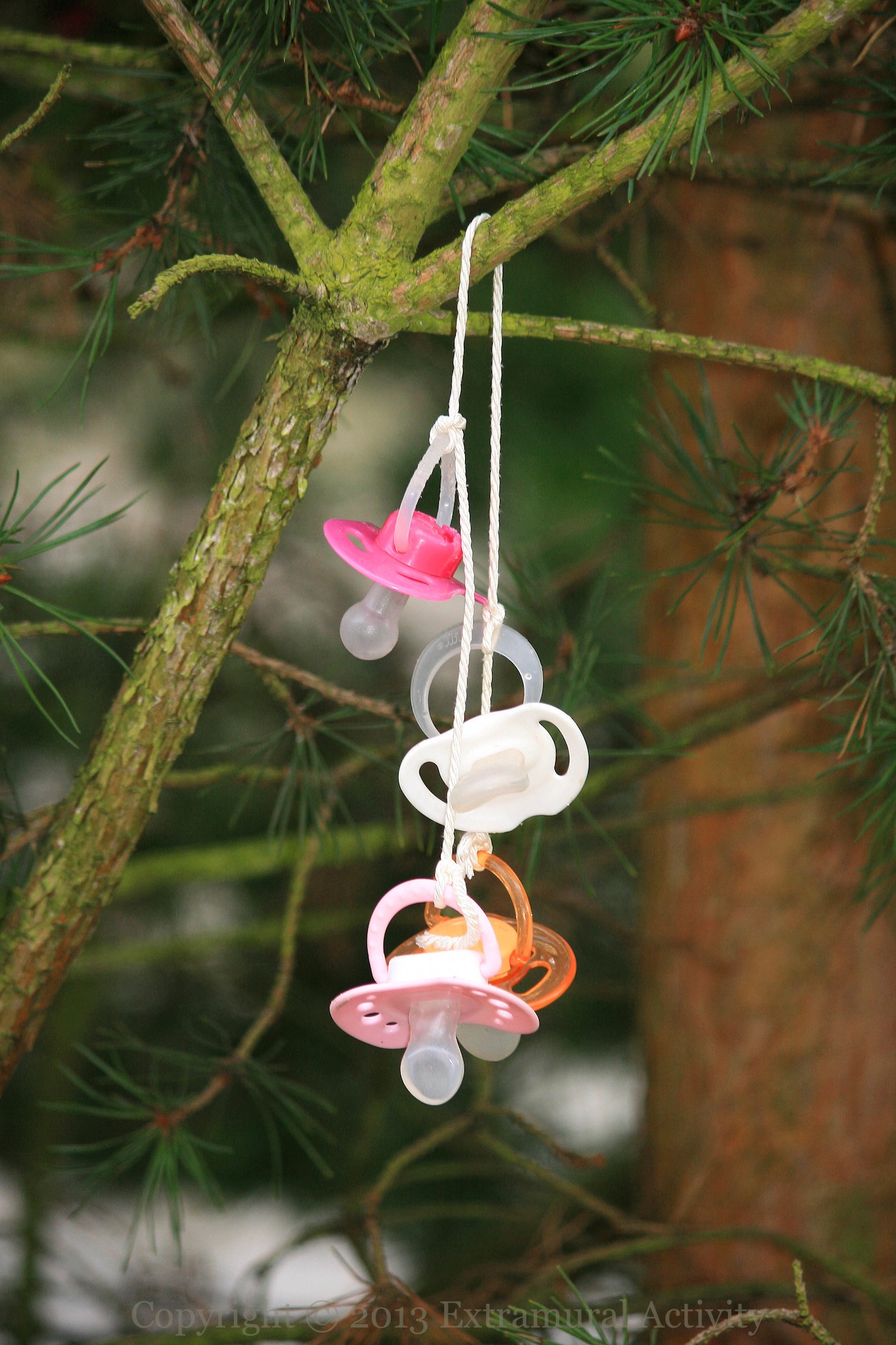
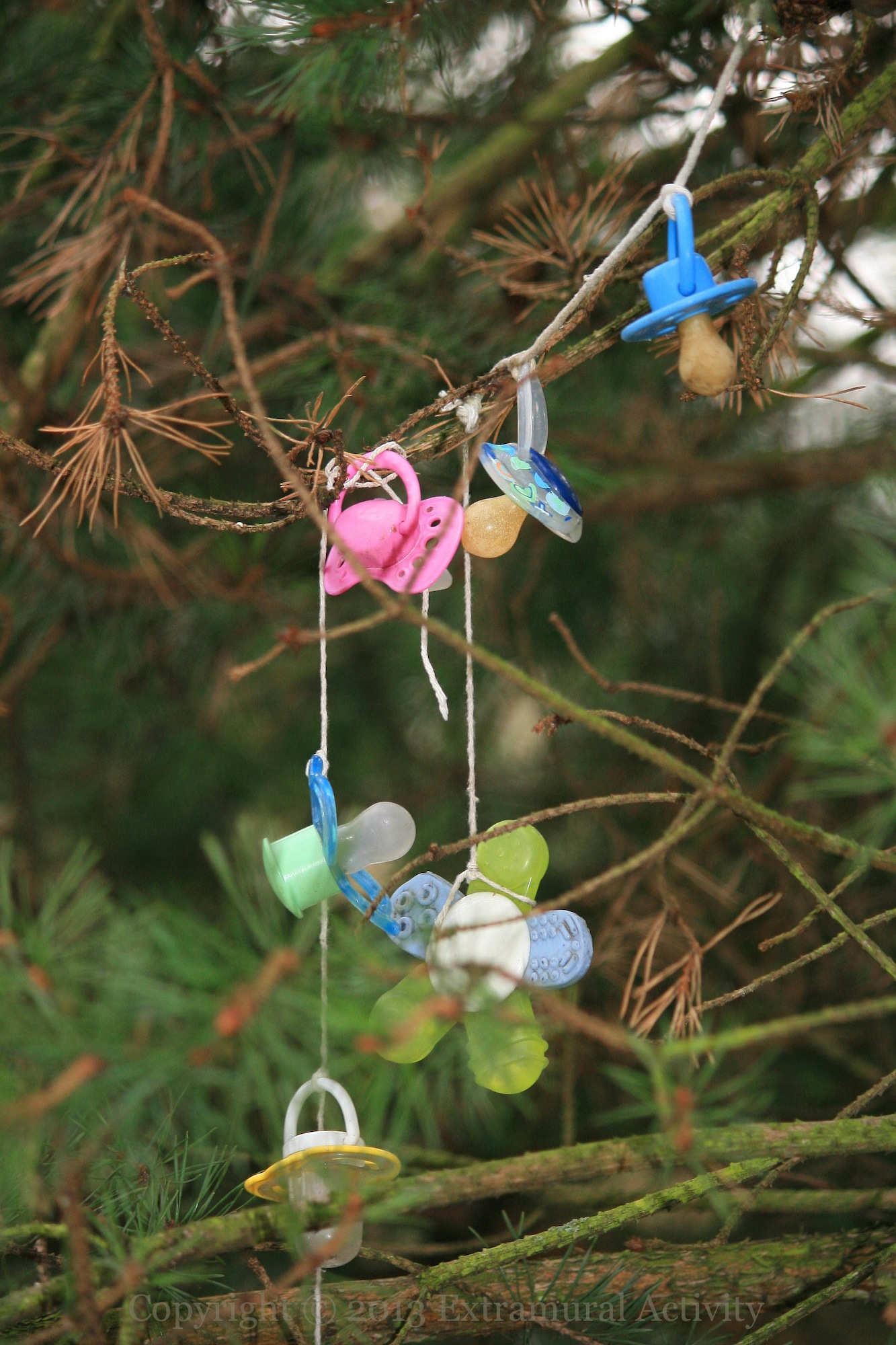
According to this page from Early Christian Sites In Ireland, trees next to wells were considered holy, and “rags were tied to trees, or objects left there, in the belief that, while they remained, the prayers were still effective”. These pacifiers (or dummies, as they are commonly known) were spotted hanging from trees in the Waterworks. Are these the holy trees of our Late Christian period? Or just a sign that drugs can be procured?
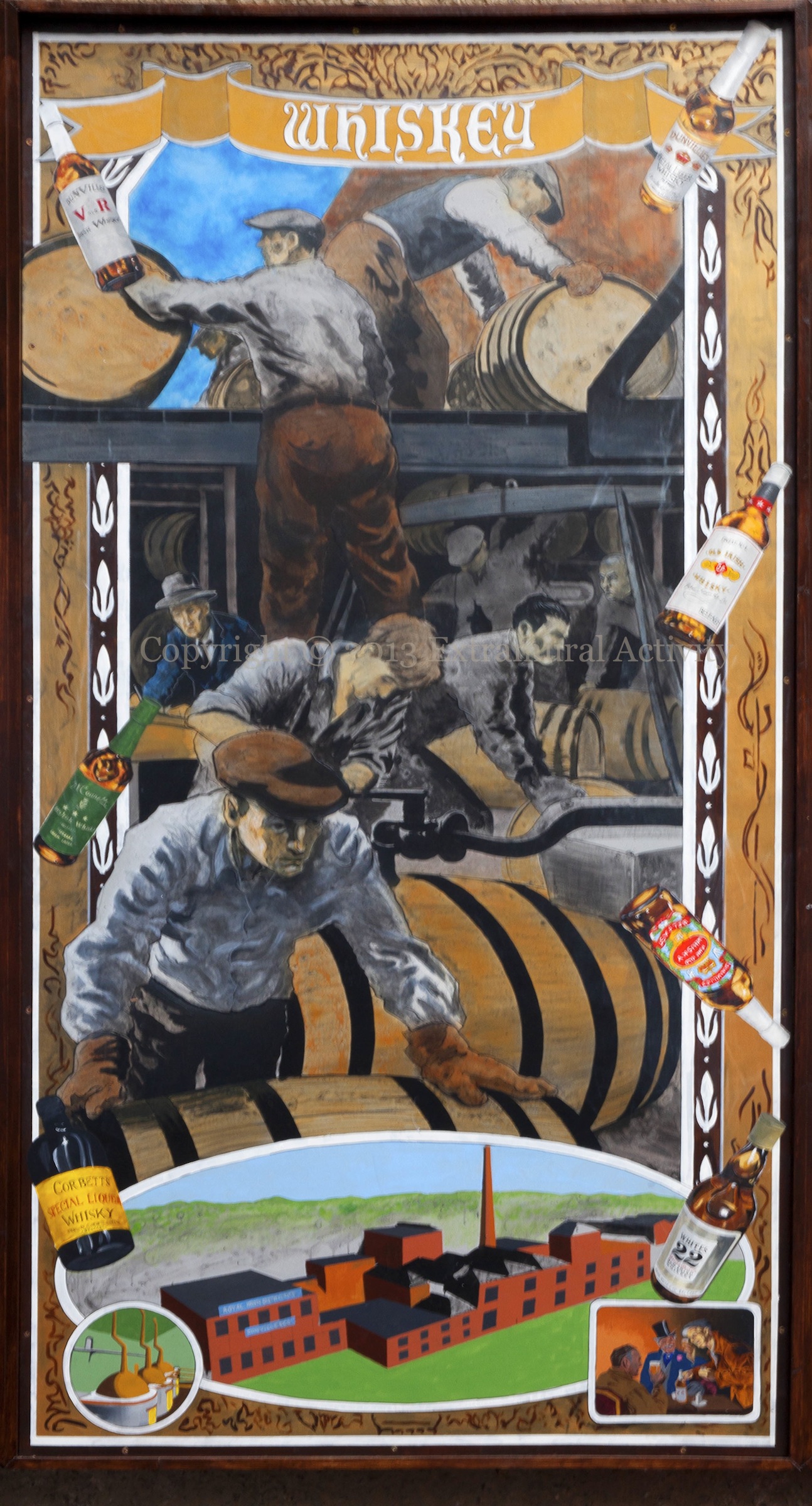
Whiskey, the middle of five panels (see below) in another piece from the courtyard of the Dark Horse pub in the city centre portraying four Northern Irish industries of/in the past – rope, ships, whiskey – the words to the song William Bloat – and tobacco products.
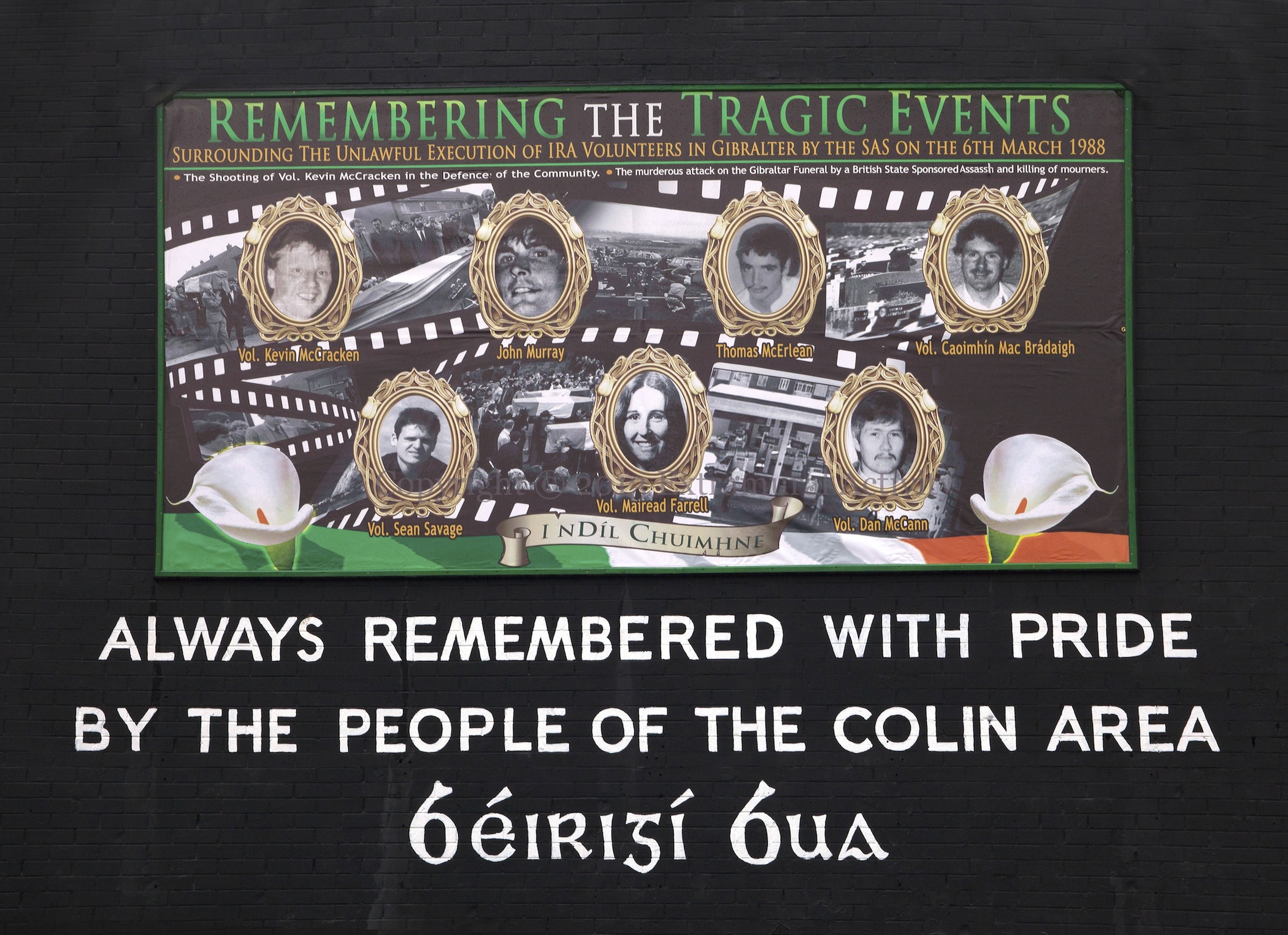
A new, computer-designed and -printed board in Twinbrook/Cıll Uaıghe, with painted lettering below, commemorating the 25th anniversary of the Gibraltar killings and subsequent attack on the funeral in Milltown cemetery (for which see also 25 Years – Complete and In Progress).
One of the twin brooks is Colin Burn, which runs through the Colin Glen forest park; Cıll Uaıghe is reflected in the name of the nearby Kilwee industrial estate. Strictly speaking, this piece is ‘beyond Belfast’, as Poleglass and Twinbrook are under the jurisdiction of Lisburn City Council.
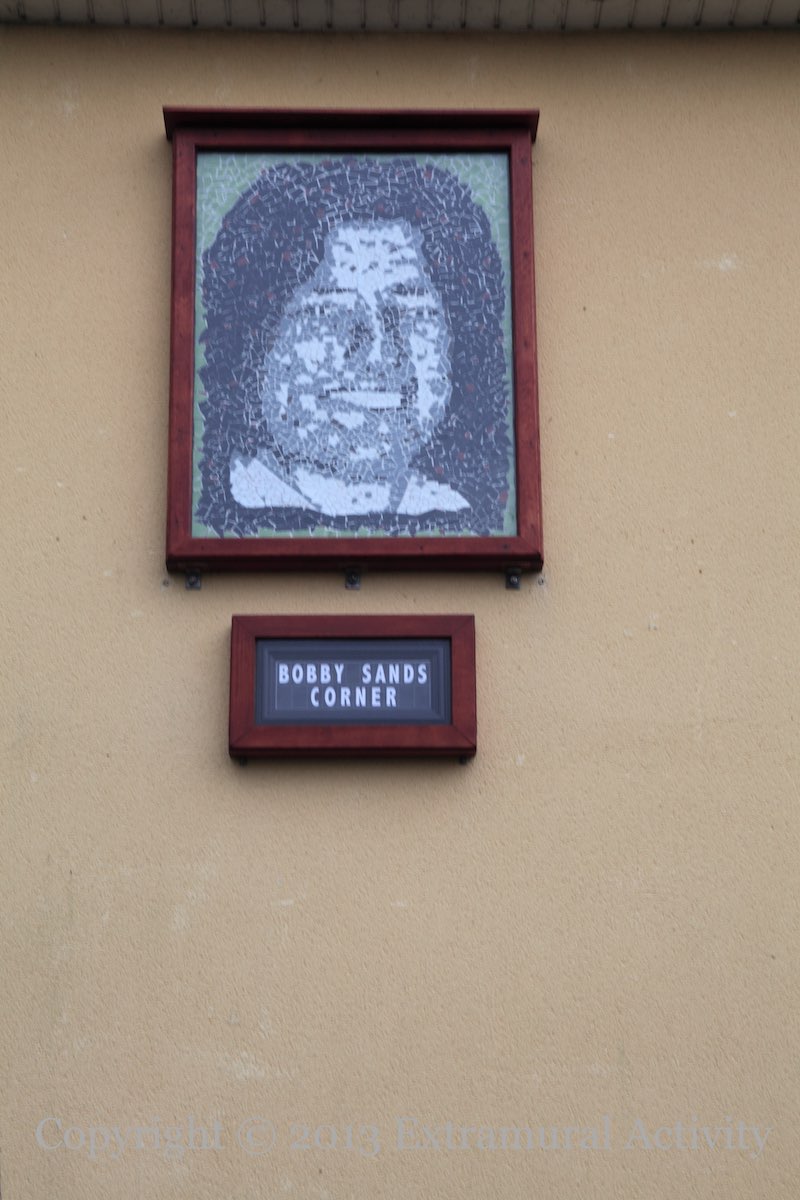
Bobby Sands grew up and went to school in Rathcoole but in 1972, when he was eighteen, the family home was attacked. They moved to Twinbrook, where Sands joined the IRA (Bobby Sands Trust | WP).
This mosaic is near the Twinbrook home, on the same wall that was the site of the Carol-Ann Kelly mural. Kelly was killed two weeks after Sands’s death.
 Seosamh Mac Coille Collection