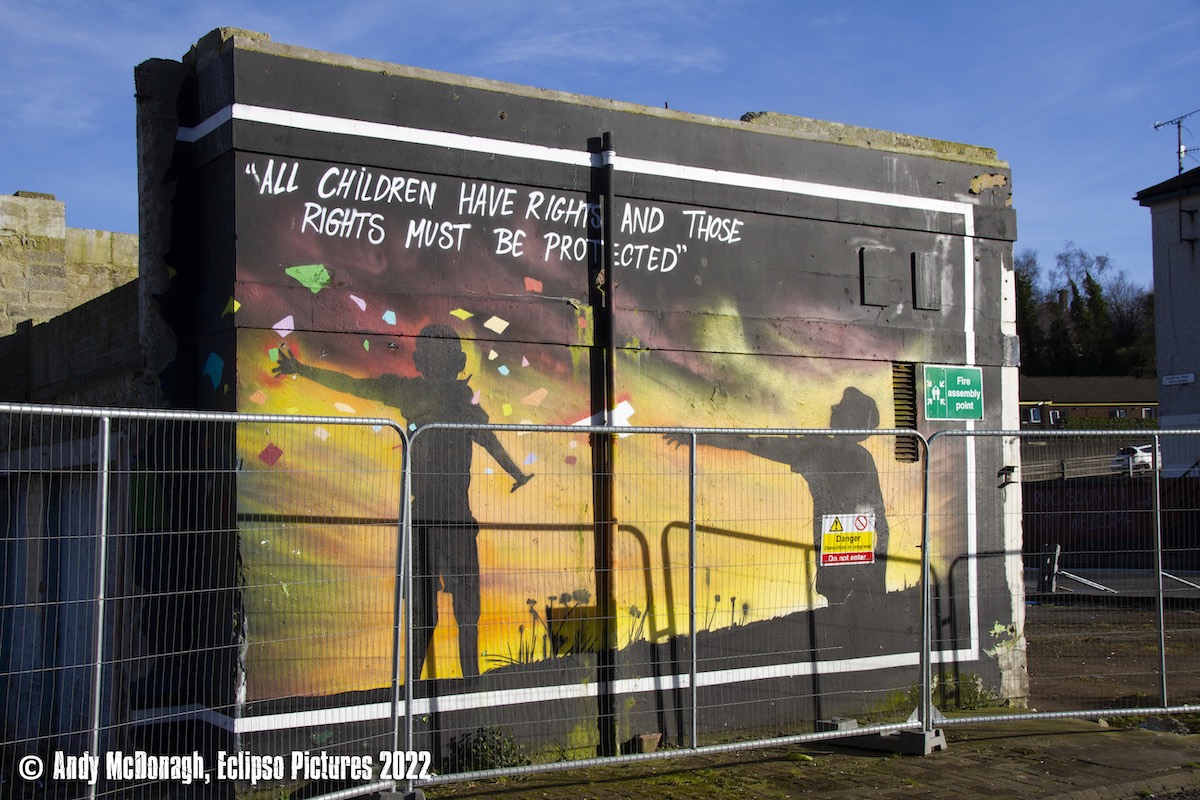
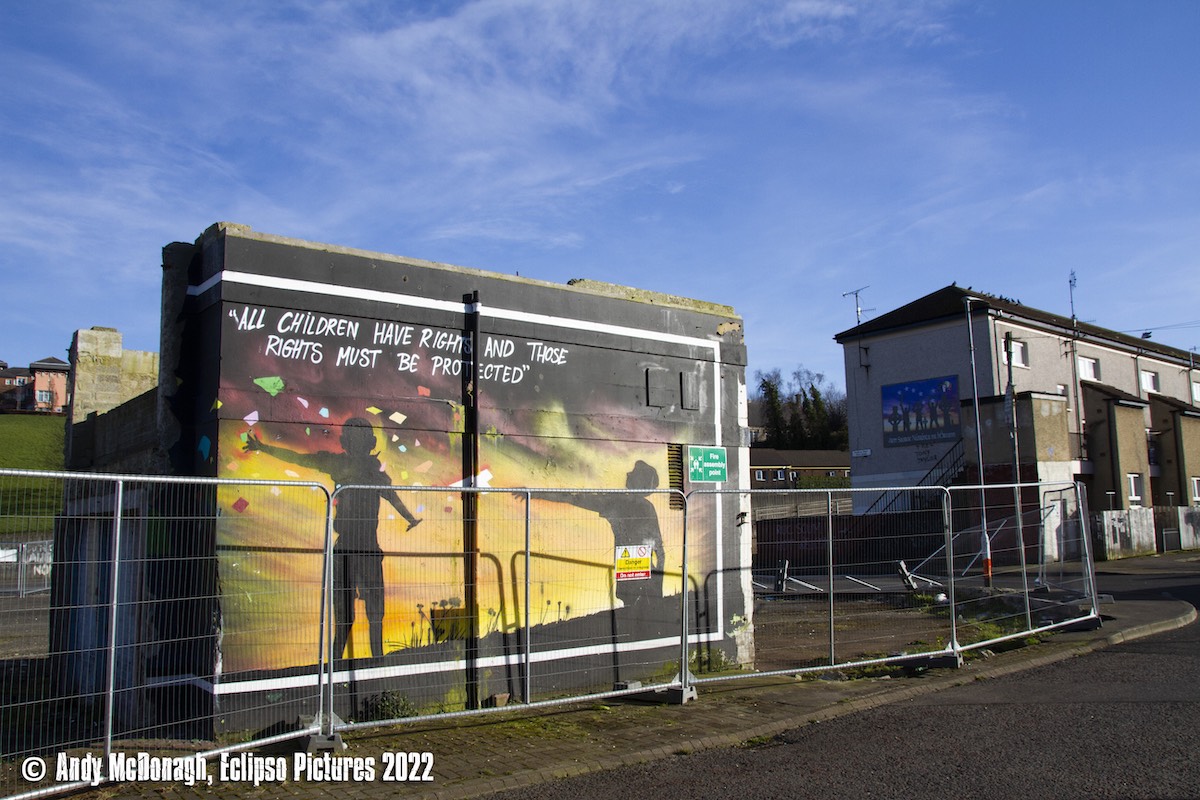
The Bogside Inn and bogside shops have been razed and “exciting plans” made for a new development (Derry Journal). All that remains at present is the electrical station near Durrow Park, and all that remains of the murals along Meenan Square is the final panel shown above: “All children have rights and these rights must be protected.”
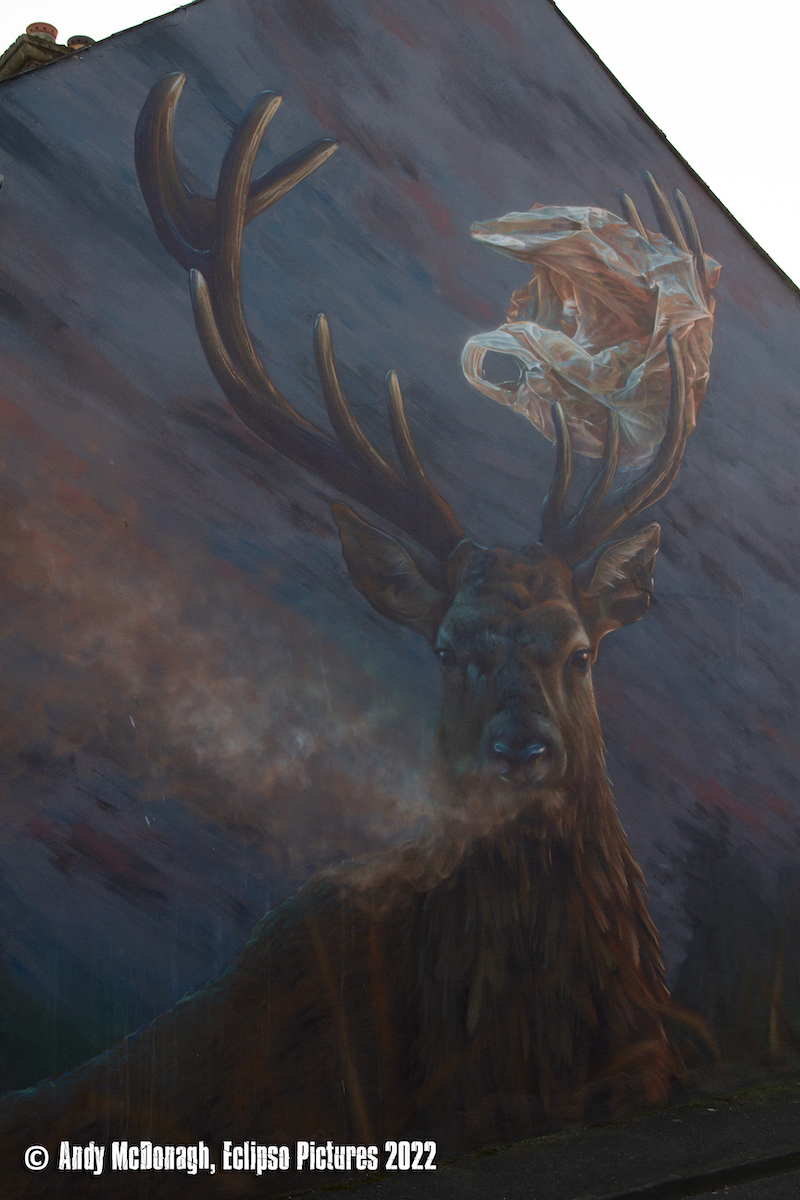
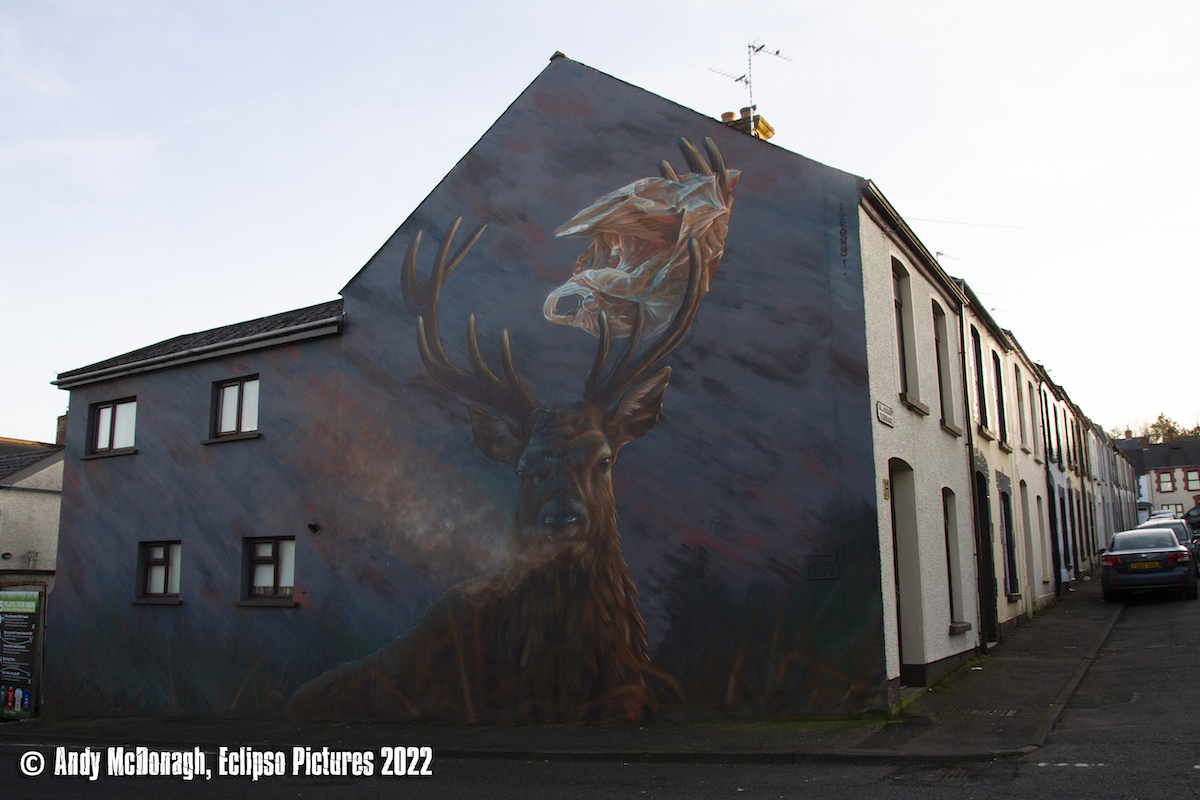
London street artist Irony (ig) drew on Edwin Landseer’s 1851 painting The Monarch Of The Glen (WP) for this piece of street art – fitting with its location as both near the Glen area of London-/Derry and formerly the old Scotch quarter (Derry Journal) – but updating it for contemporary audiences with an environmental message and the source of its less formal name: Stag With A Bag.
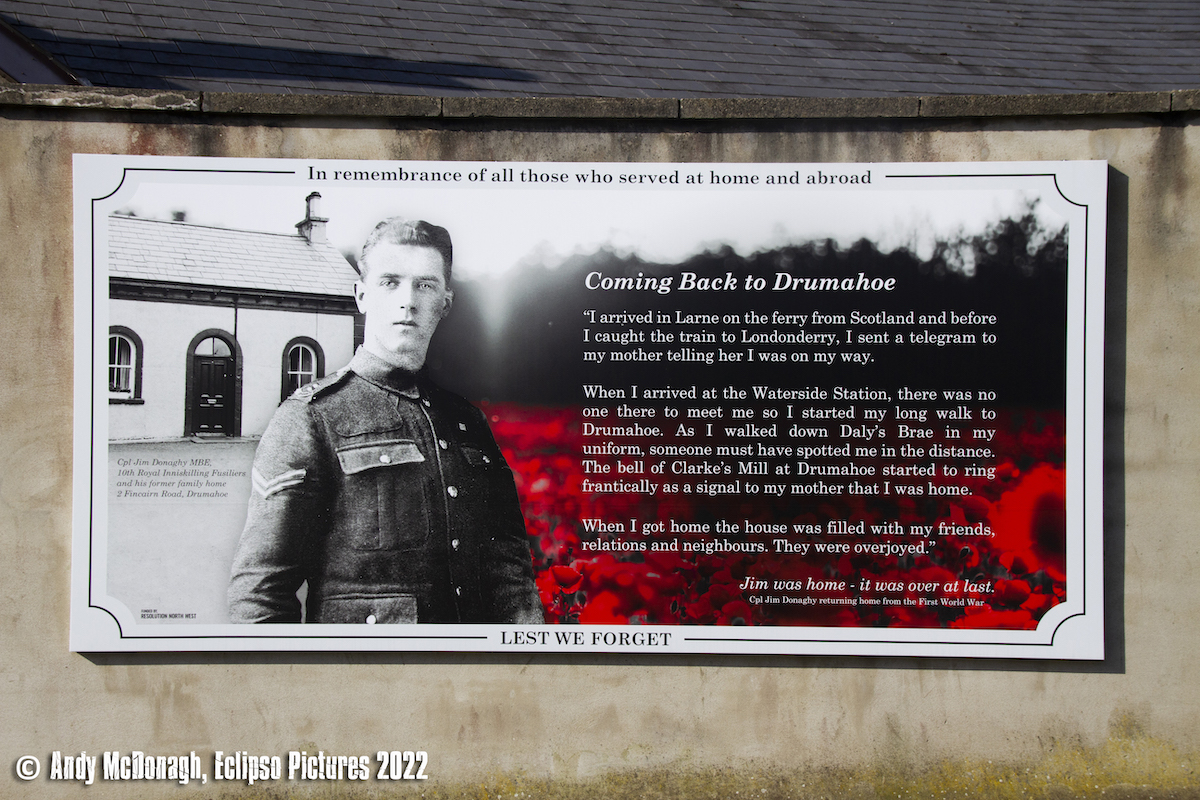
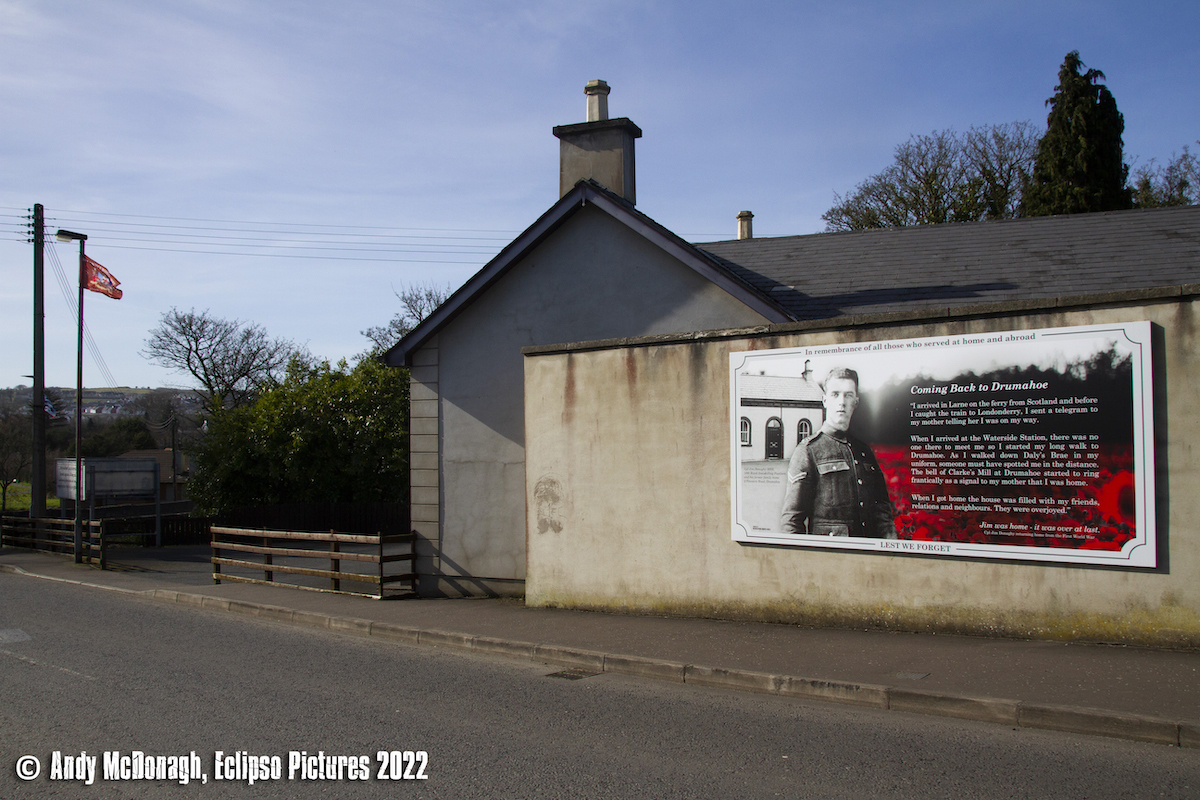
Jim Donaghy was born in the Bonds area of the Waterside but when he joined the 10th (Derry) Battalion his family was living in Drumahoe. It was to there that he returned after seeing action at The Battle Of Albert in 1916, as well as the Battle of Messines, the Battle of Langemarck, the Cambrai Operations, and the Capture Of Bourlon Wood (Reserves & Cadets | Three Cheers For The Derrys).
“”I arrived in Larne on the ferry from Scotland and before I caught the train to Londonderry, I sent a telegram to my mother telling her I was on my way. When I arrived in Waterside Station, there was no one there to meet me so I started my long walk to Drumahoe. As I walked down Daly’s Brae in my uniform, someone must have spotted me in the distance. The bell of Clarke’s Mill at Drumahoe started to ring frantically to my mother that I was home. When I got home the house was filled with my friends, relations and neighbours. They were overjoyed.” – Jim was home – it was over at least. Cpl Jim Donaghy returning home from the First World War.”
“Cpl Jim Donaghy MBE, 10th Royal Inniskilling Fusiliers and his former family home 2 Fincairn Road, Drumahoe.” The mural is on the yard wall of the house, which still stands.
“In remembrance of all those who served at home and abroad.”
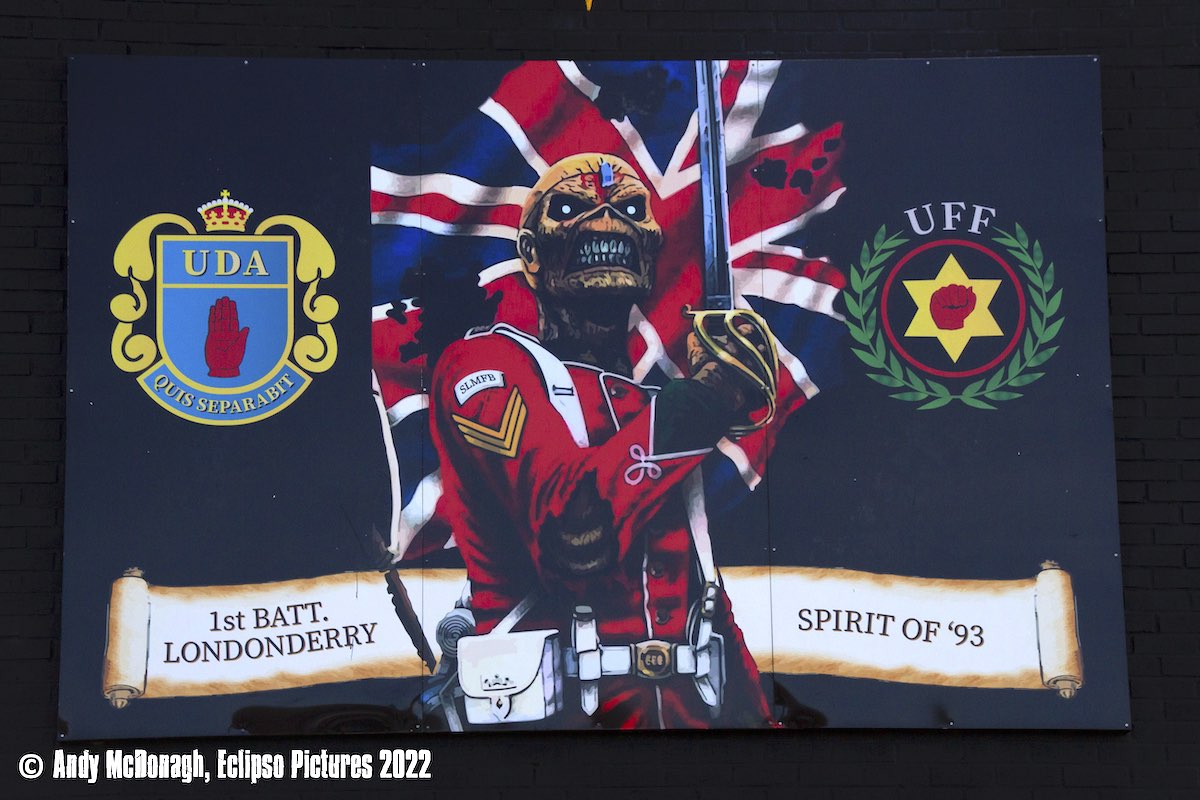
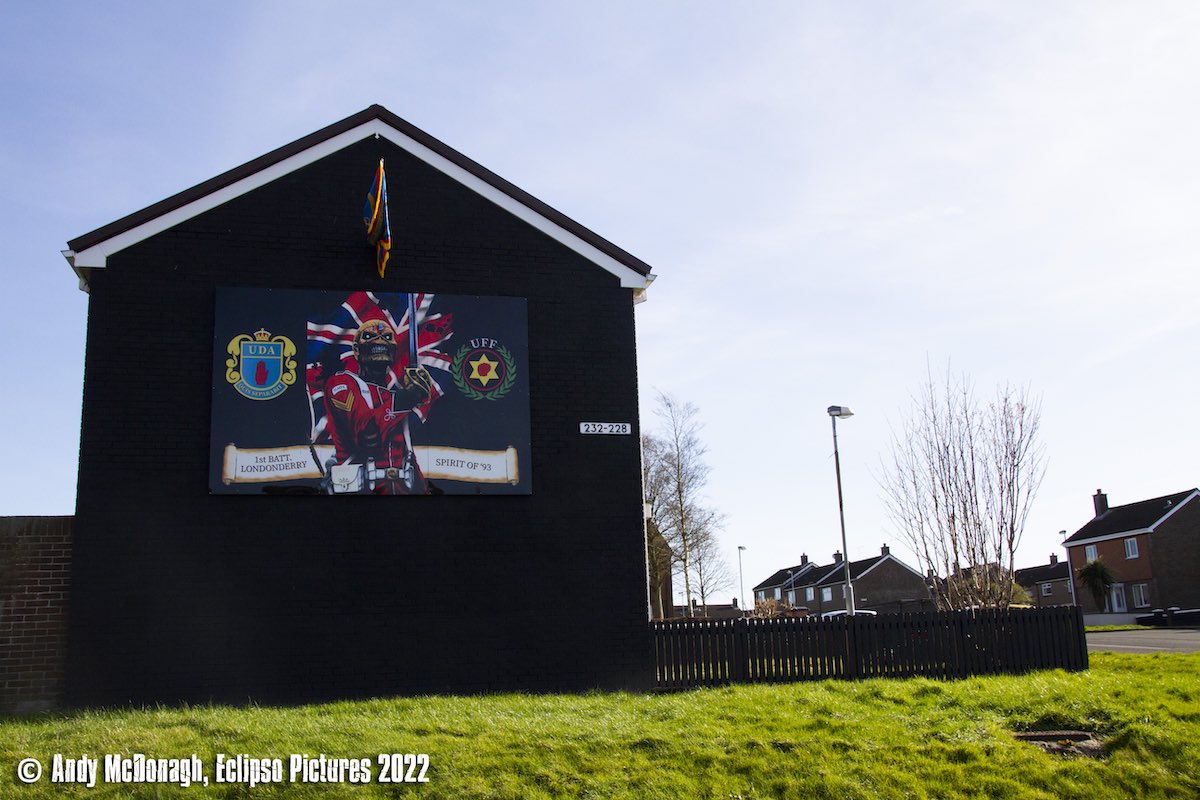
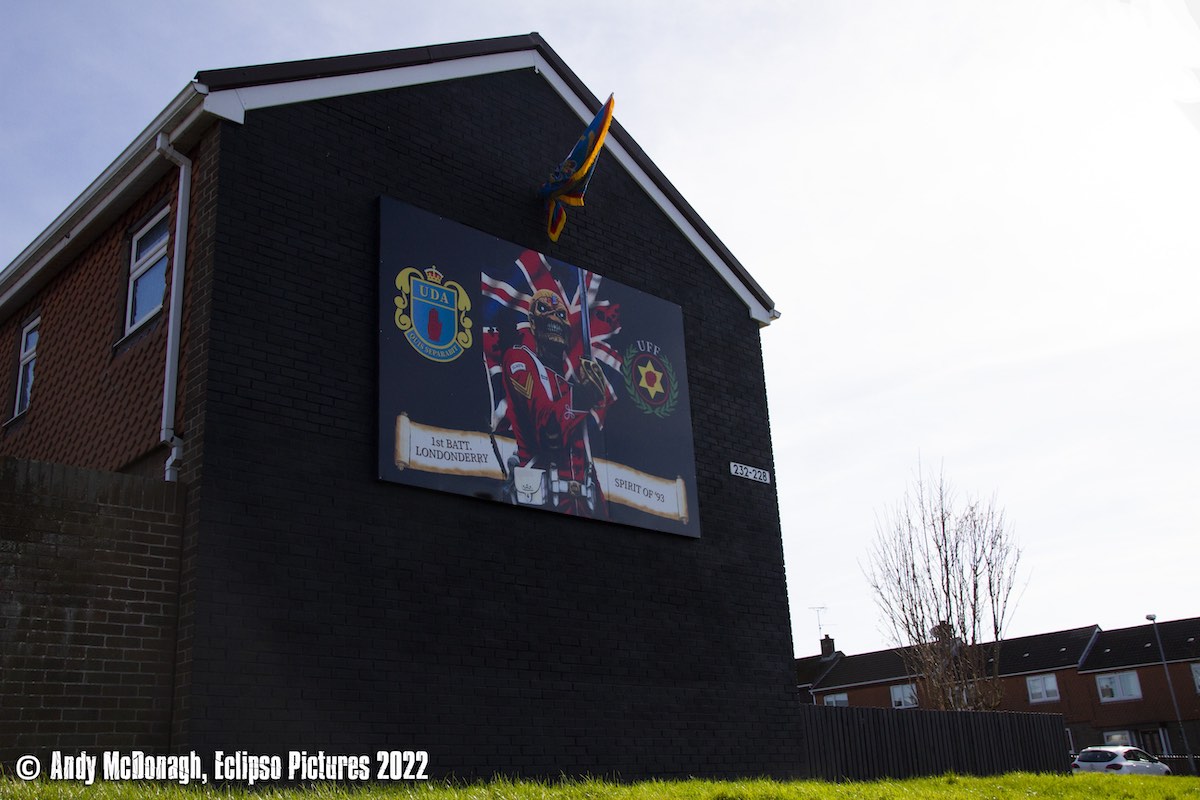
The house in Bond’s Place that had been home to an Eddie mural for many years was torn down last summer (see final image for the hoarding around the site of the absent gable); it had been used since at least 1982 for images of the Commonwealth, King Billy, and, since 1996, Eddie The Trooper. The final Eddie board that was on the wall has been moved one neighbourhood over, into Lincoln Court. It was the first to include the words “Spirit Of ’93” – presumably a reference to the Greysteel Massacre in which eight people in the Rising Sun bar were killed in reprisal for the Shankill Bombing (BelTel). The “raid” was planned in – and both gunmen rented rooms at – the UDP office on Bond’s Place, just across Bonds Street (NI Judiciary).
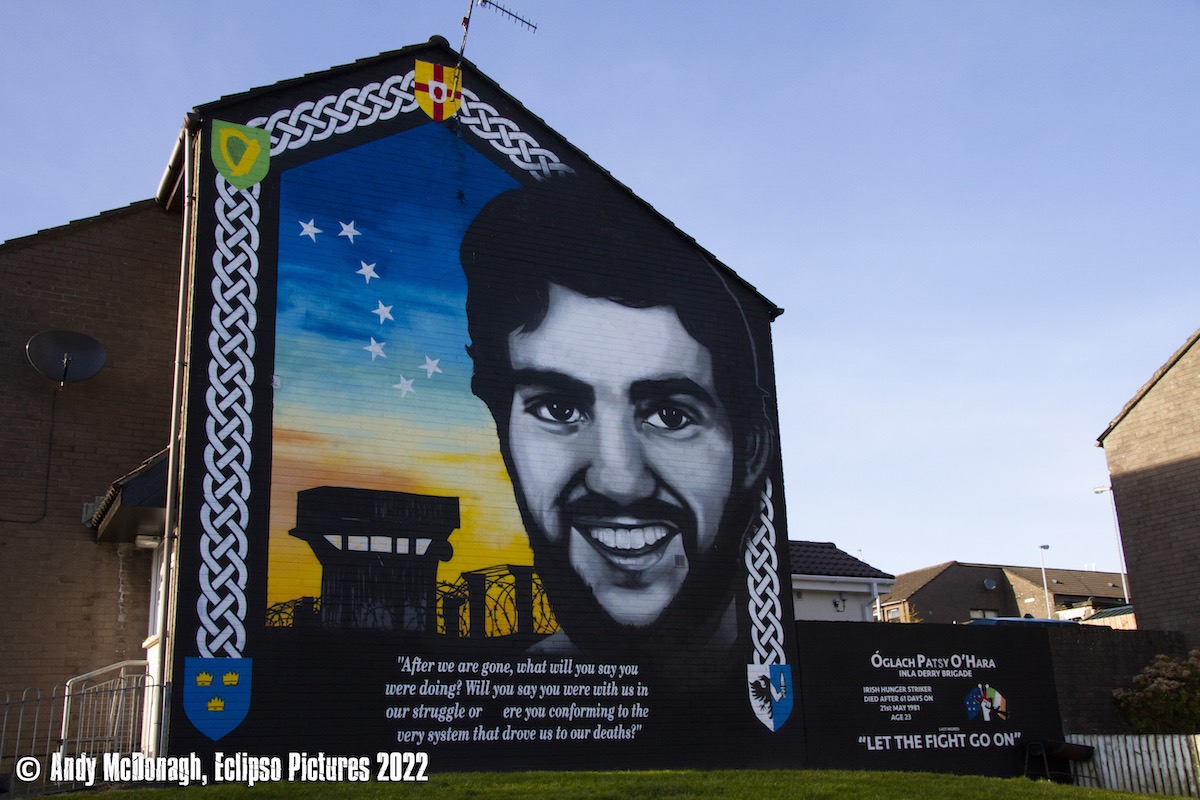
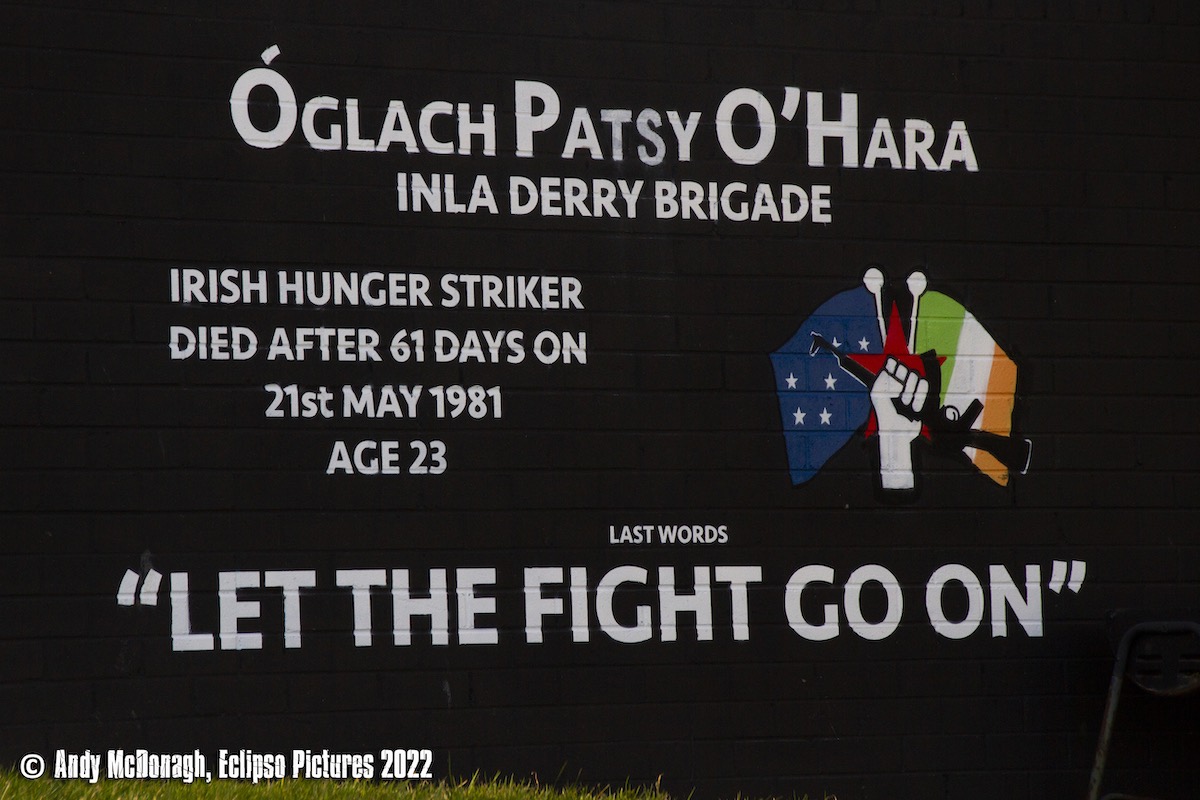
Patsy O’Hara was born in 1957 Bishop Street, Derry, and joined Na Fıanna in 1970 and the local Sınn Féın cumann in 1971 and, in August was shot in the leg by British soldiers. In 1972 he joined the Republican Clubs and in 1975 the IRSP. He was imprisoned multiple times, the final time being in January 1979 for possession of a hand grenade (Bobby Sands Trust). He went on hunger strike 41 years ago tomorrow (March 22nd) and was the first of the three INLA hunger strikers to die in 1981. The long-standing mural in Bishop Street was repainted for the 40th anniversary of his death. (For the previous version, see Let The Fight Go On.)
“Óglach Patsy O’Hara, INLA Derry Brigade, Irish hunger striker, who died after 61 days on 21st May 1981, age 23. Last words ‘Let the fight go on’.”
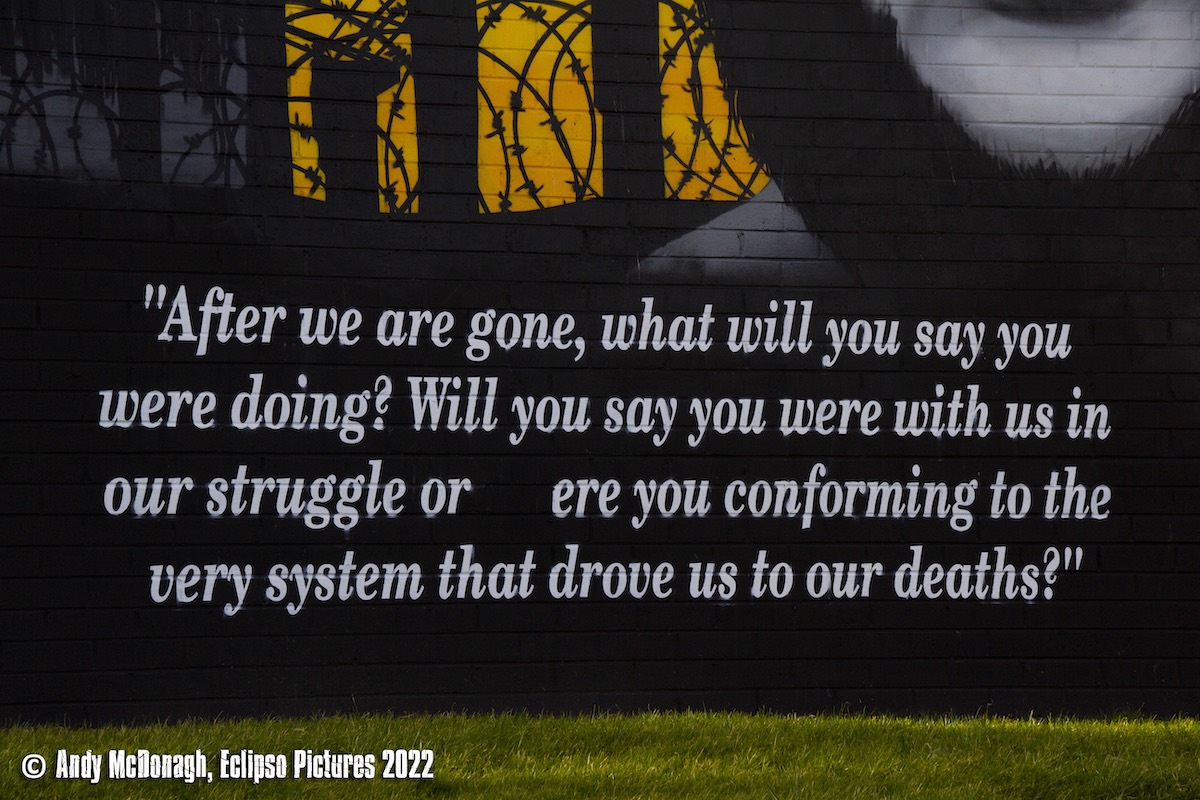
“After we are gone, what will you say you were doing? Will you say you were with us in our struggle or where you conforming to very system that drove us to our deaths?” – these words also appeared in the 2013 mural to O’Hara on Shaws Road, west Belfast.
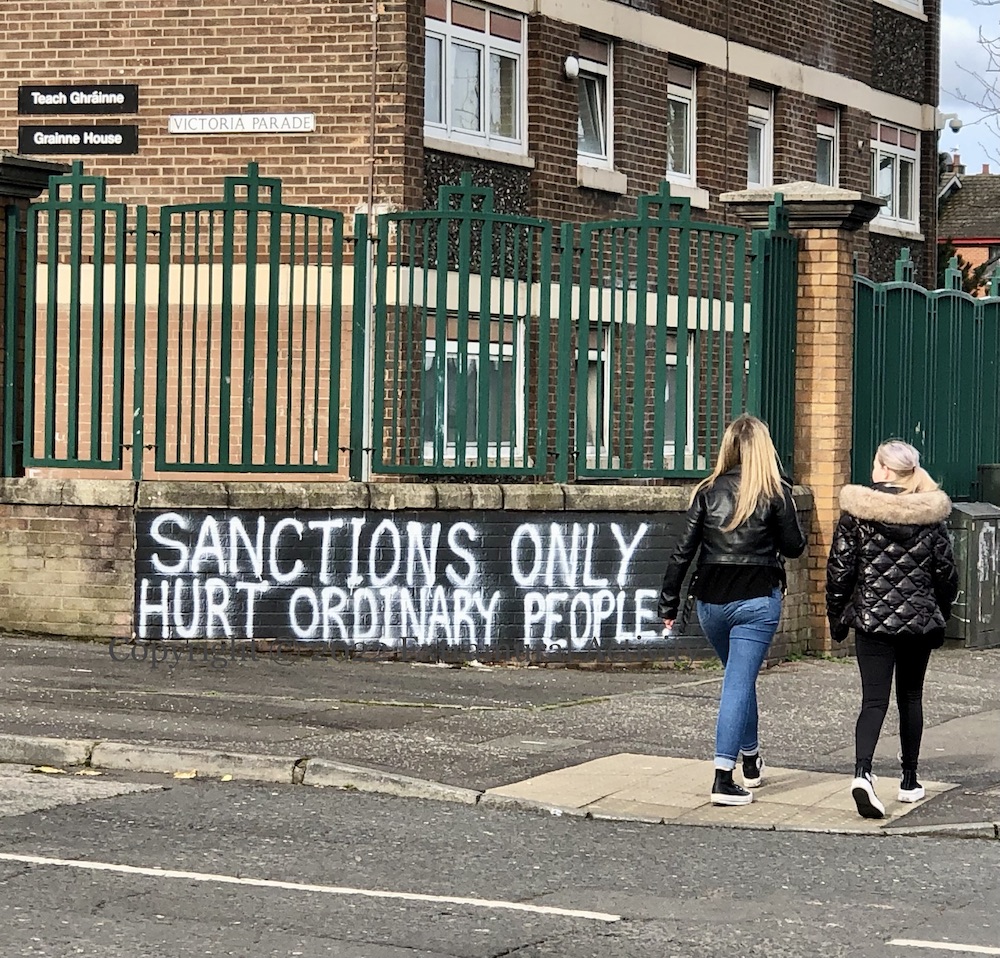
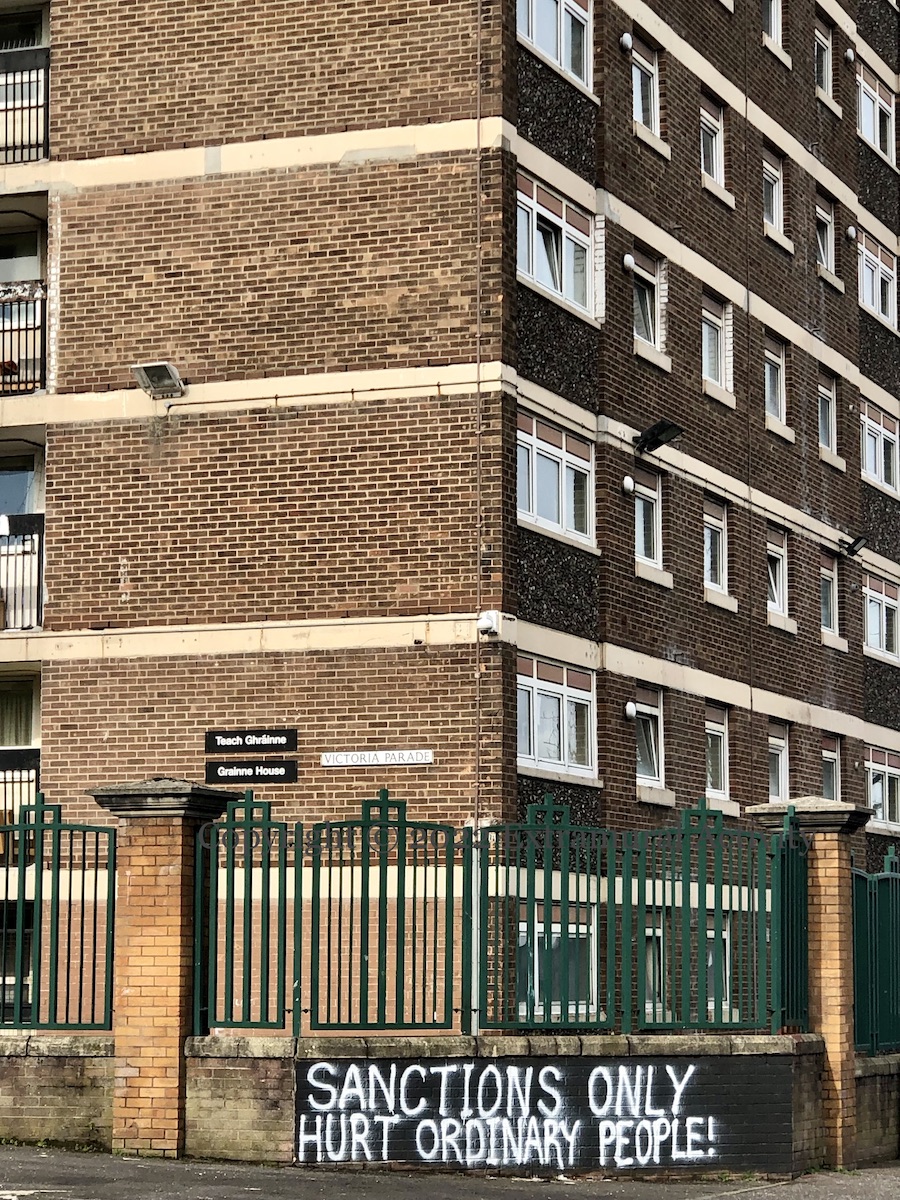
This is an update to End The Sanctions! We’re Freezing, which has now been changed to “Sanctions only hurt ordinary people”, perhaps including the “ordinary people” of Russia alongside those of the New Lodge.
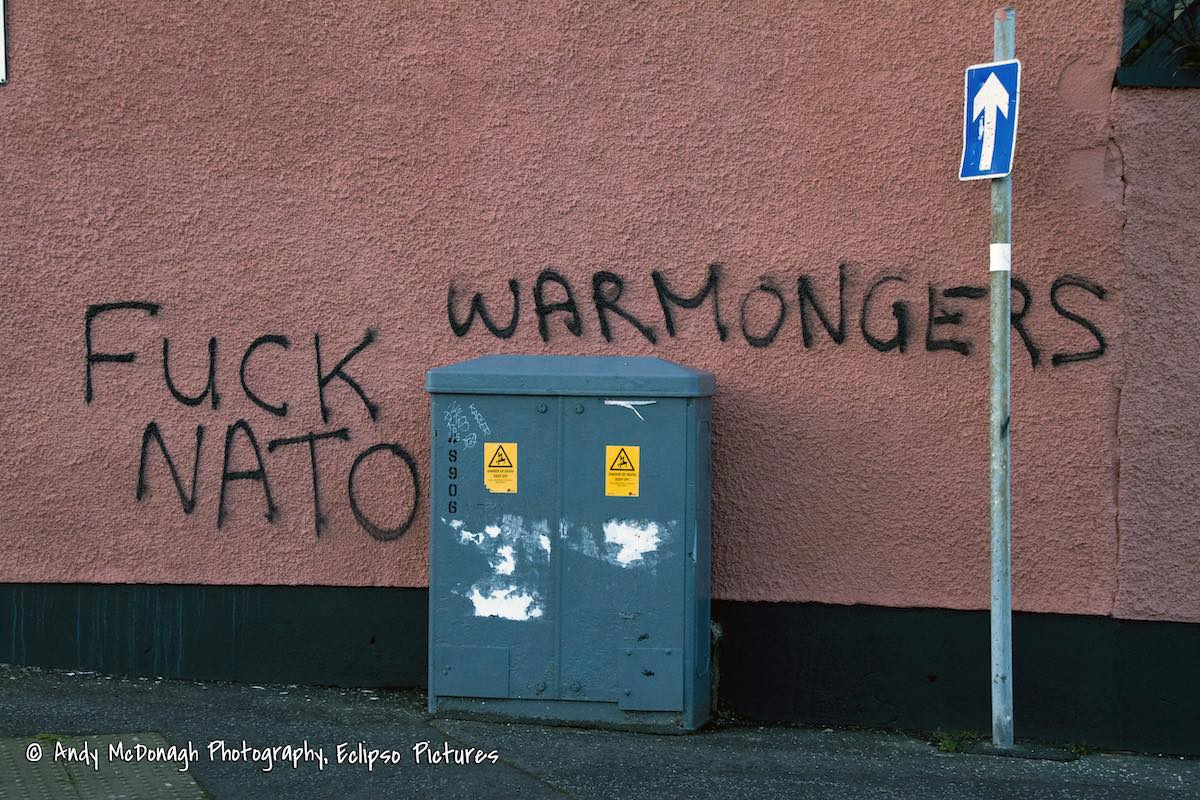
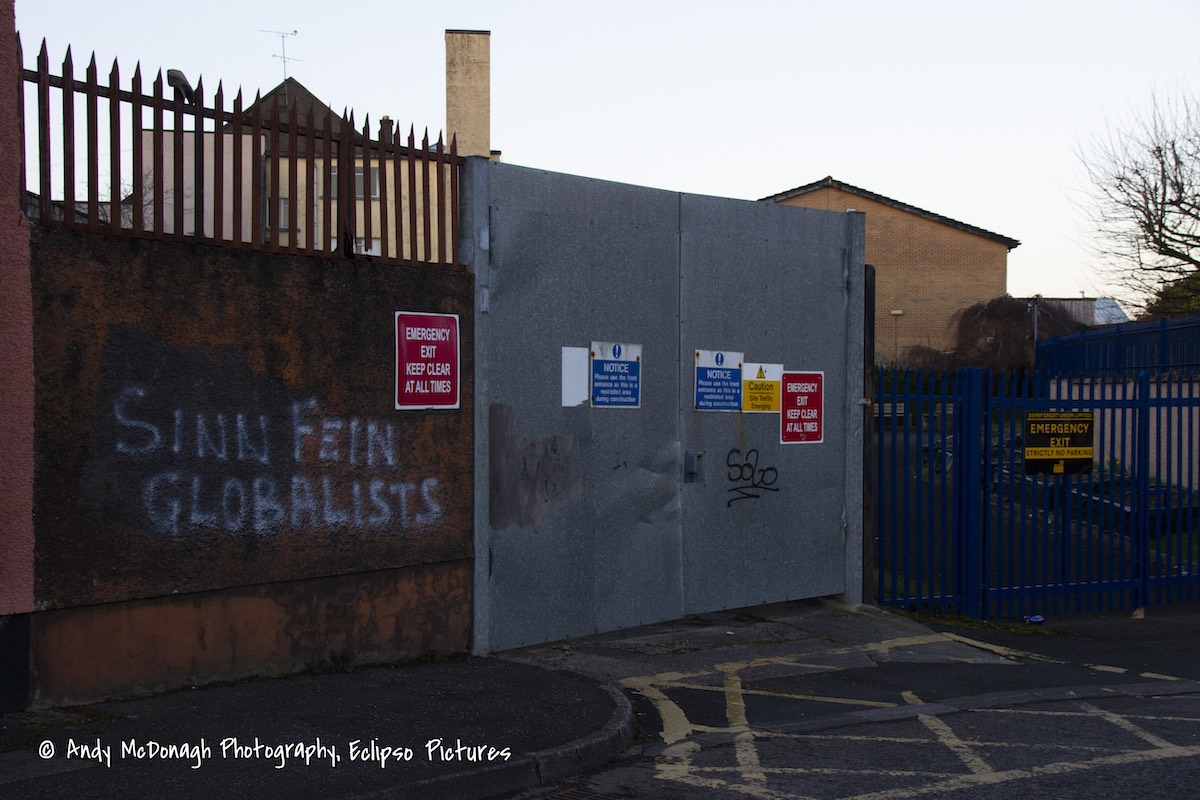
Two criticism of neoliberal globalism in Frederick Street, Derry: above, a rationale for the Russian invasion of Ukraine: “Fuck NATO – warmongers”; below, “Sinn Féin globalists” – criticism of Sinn Féin’s support of Ireland’s membership in the European community (which is possibly a critique from the far-right National Party (web), according to the Guardian).
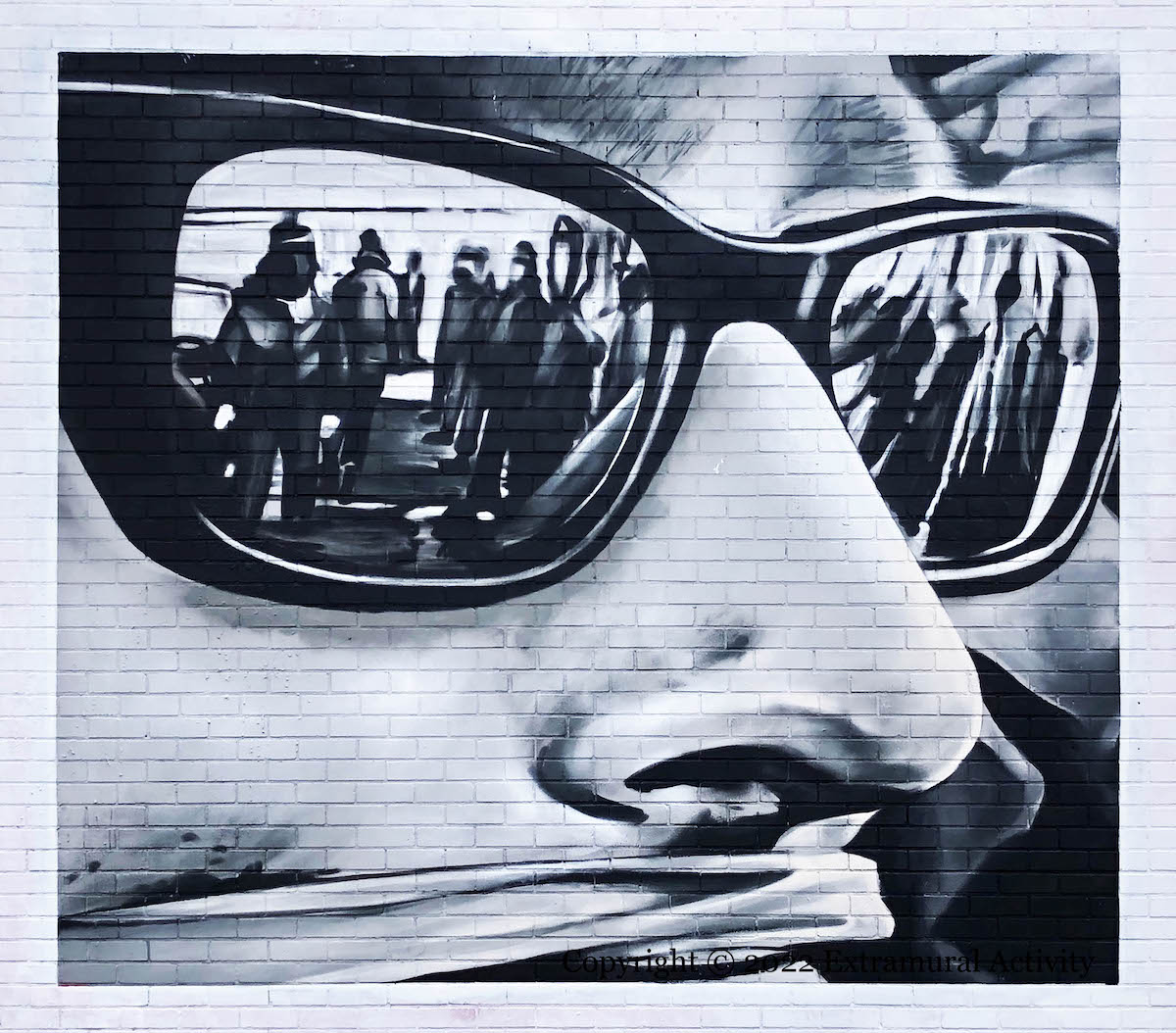
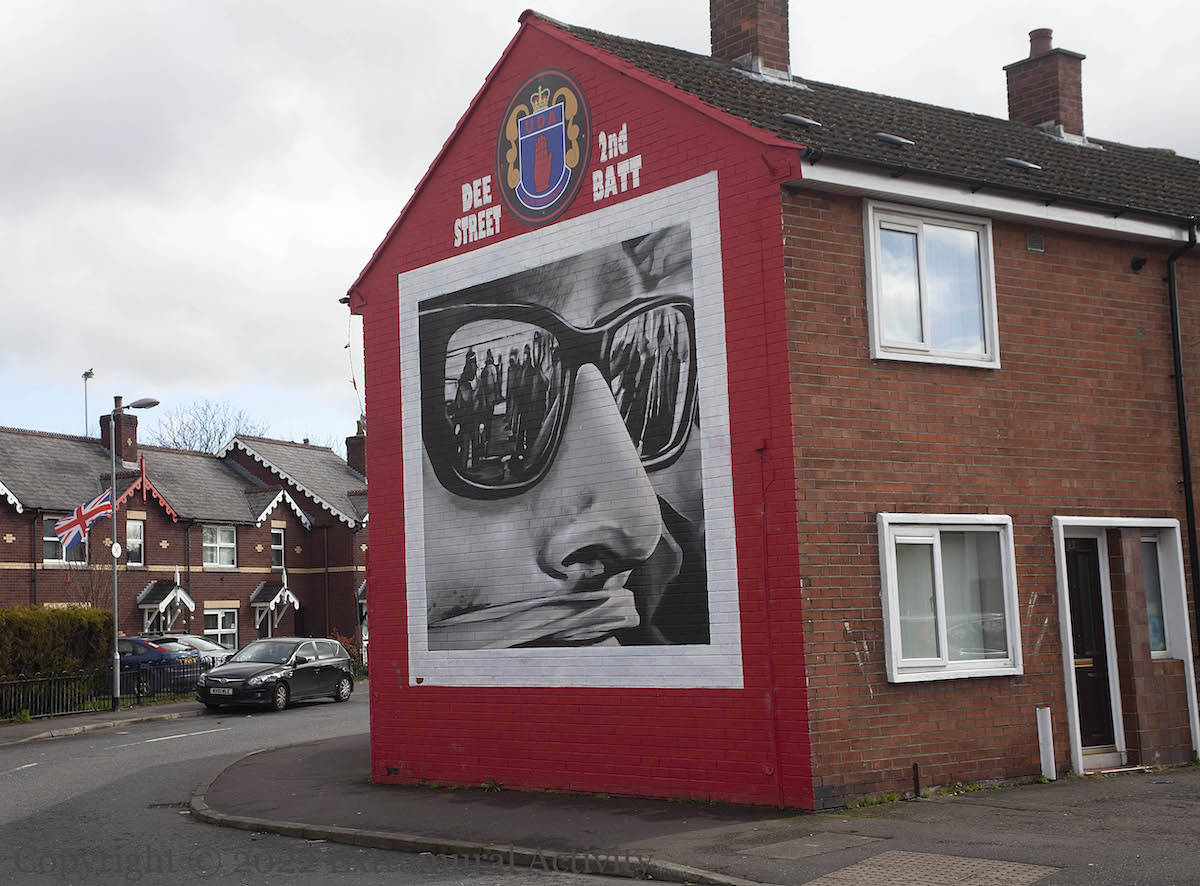
Perhaps because of the Covid pandemic, this mural of UDA volunteers on parade reflected in the sunglasses of one of their comrades took months to complete (it was started in late 2020 and was still unfinished last summer). It replaces the previous “UFF Formed 1973” mural – see Northern Island.
The photograph reproduced is from the 1974 Ulster Workers’ Strike; it appeared on the cover of Don Anderson’s Fourteen May Days (CAIN).
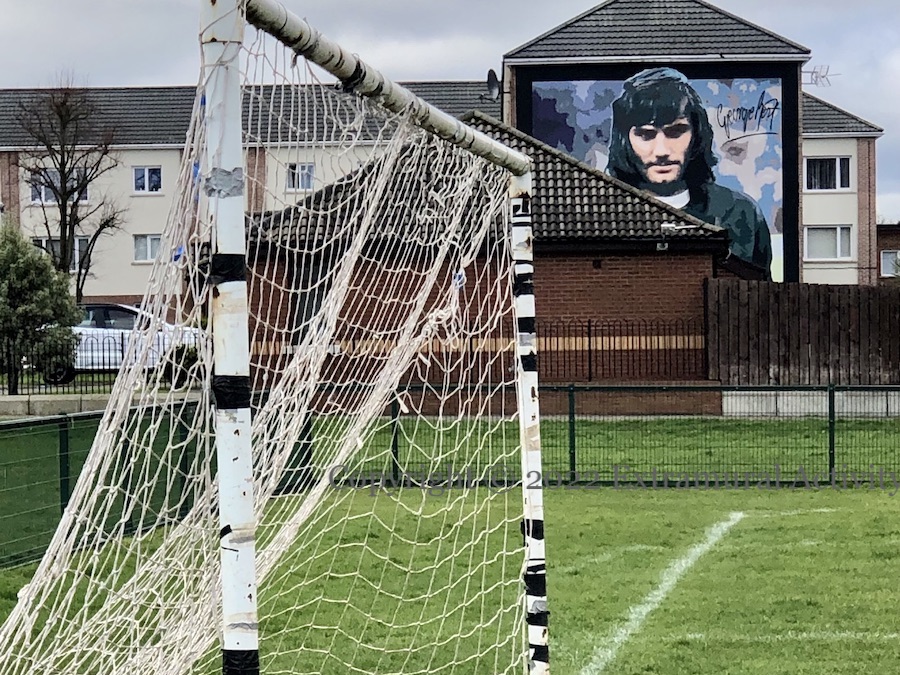
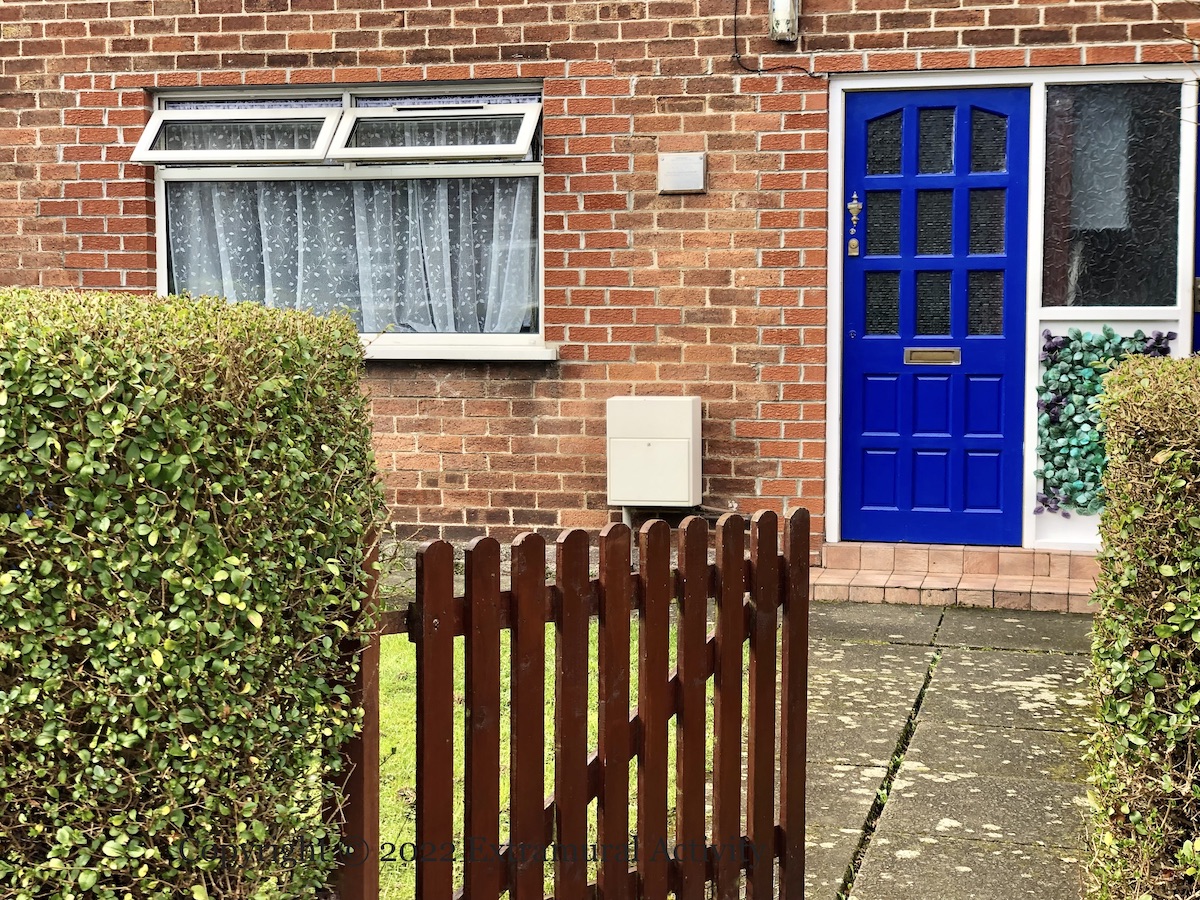
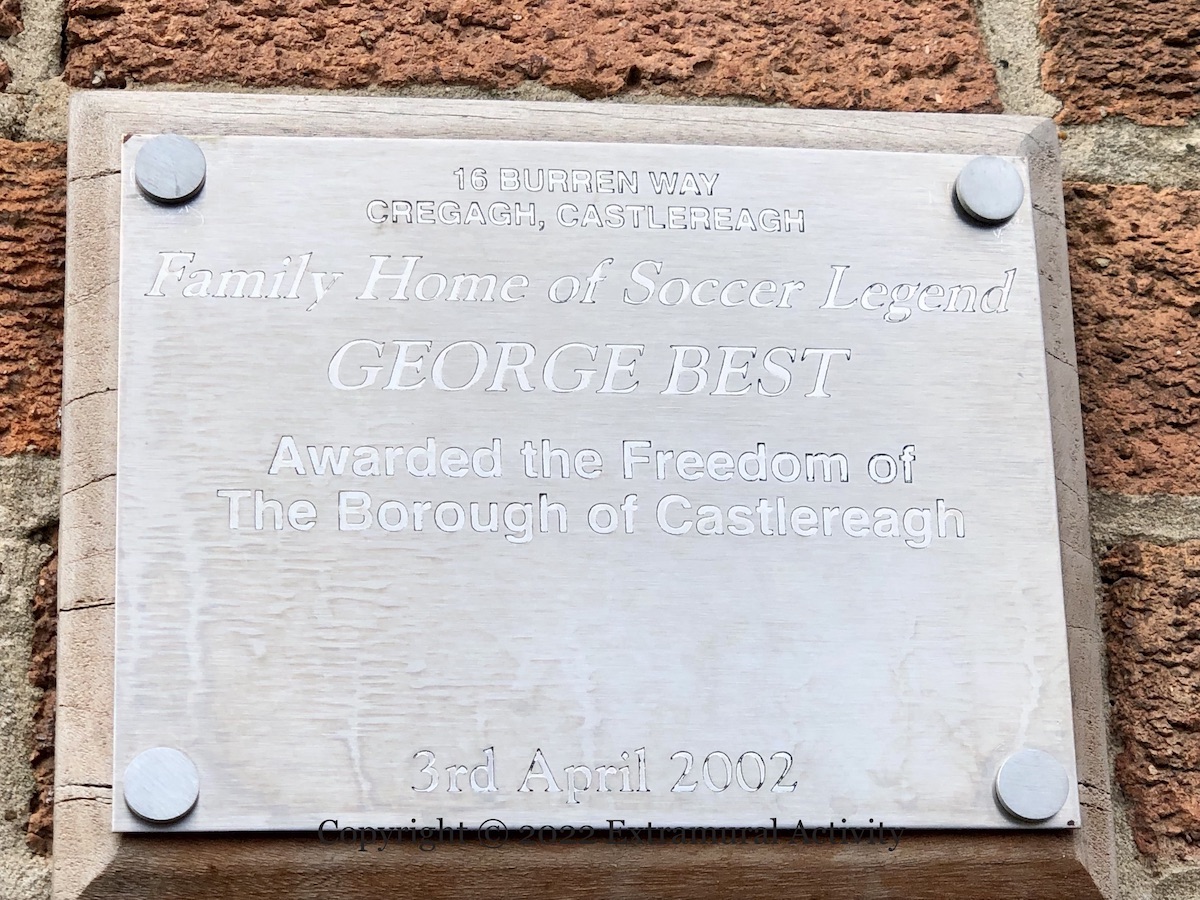
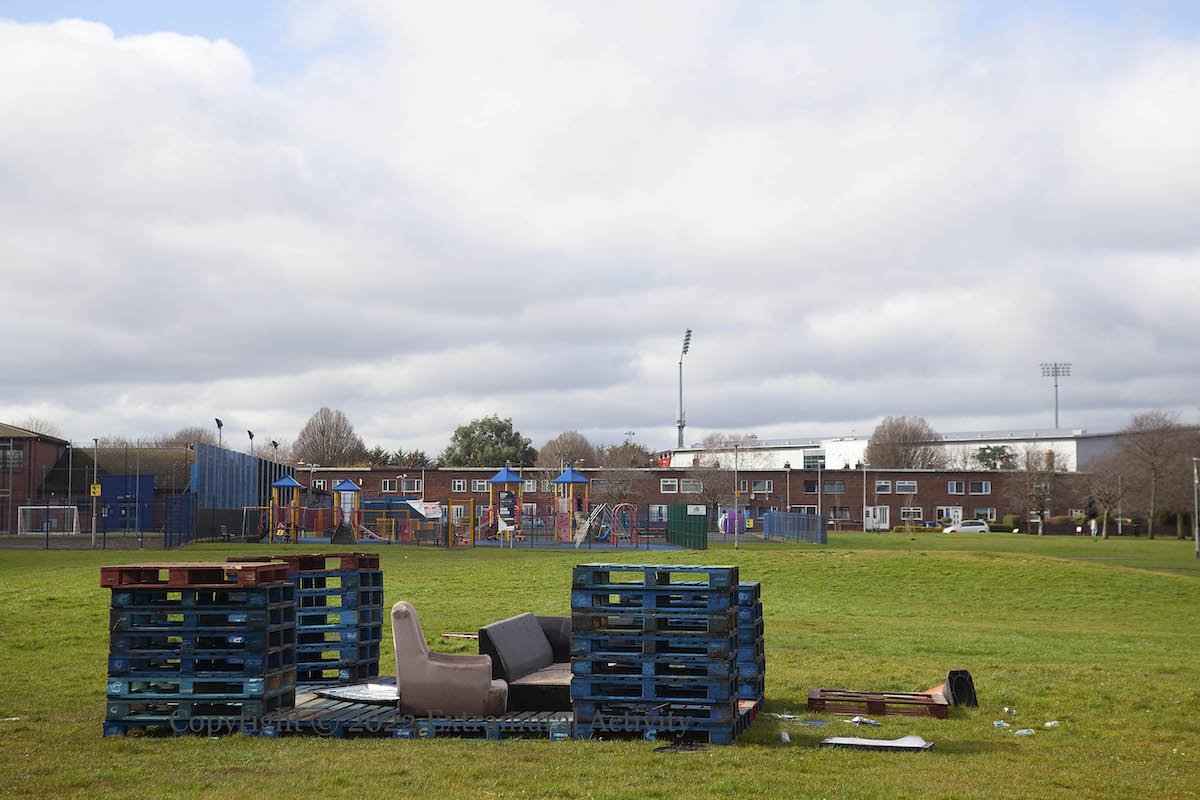
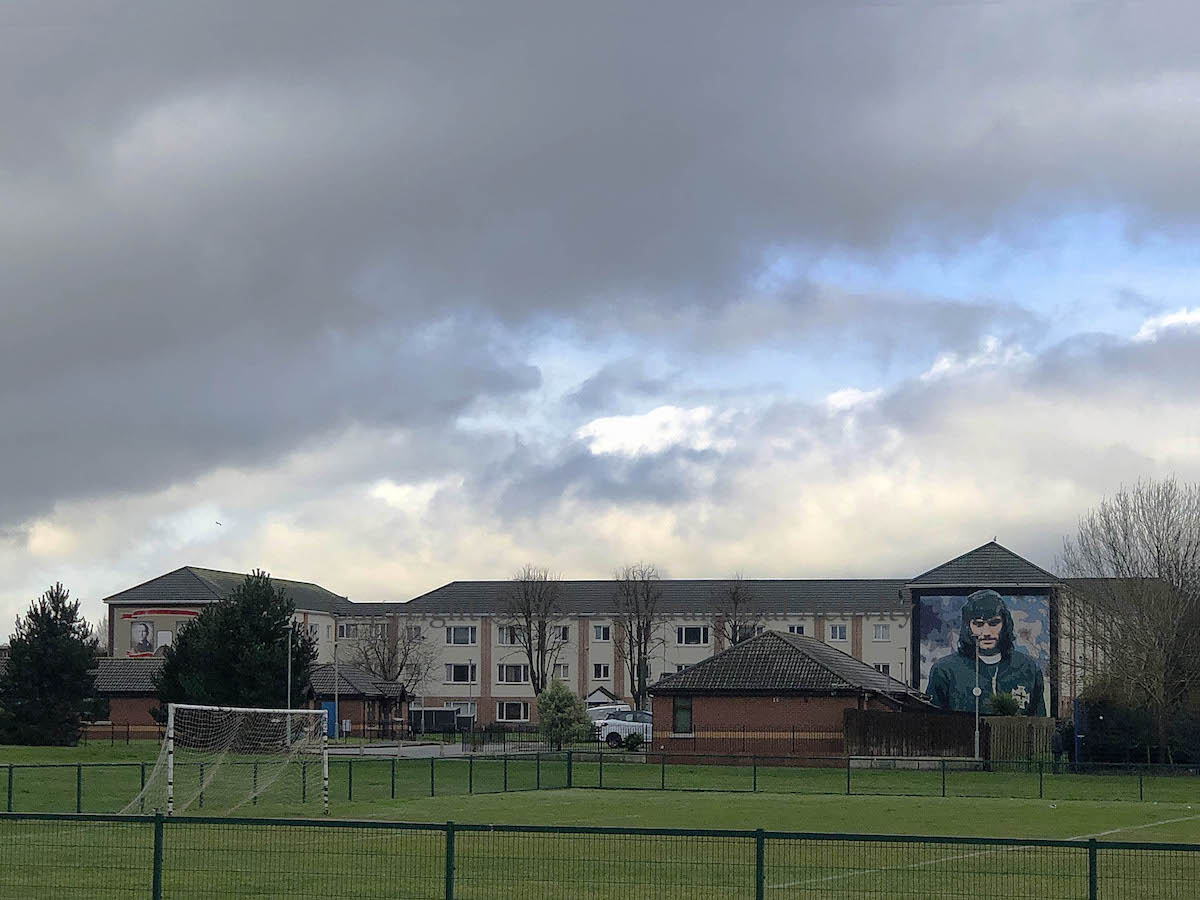
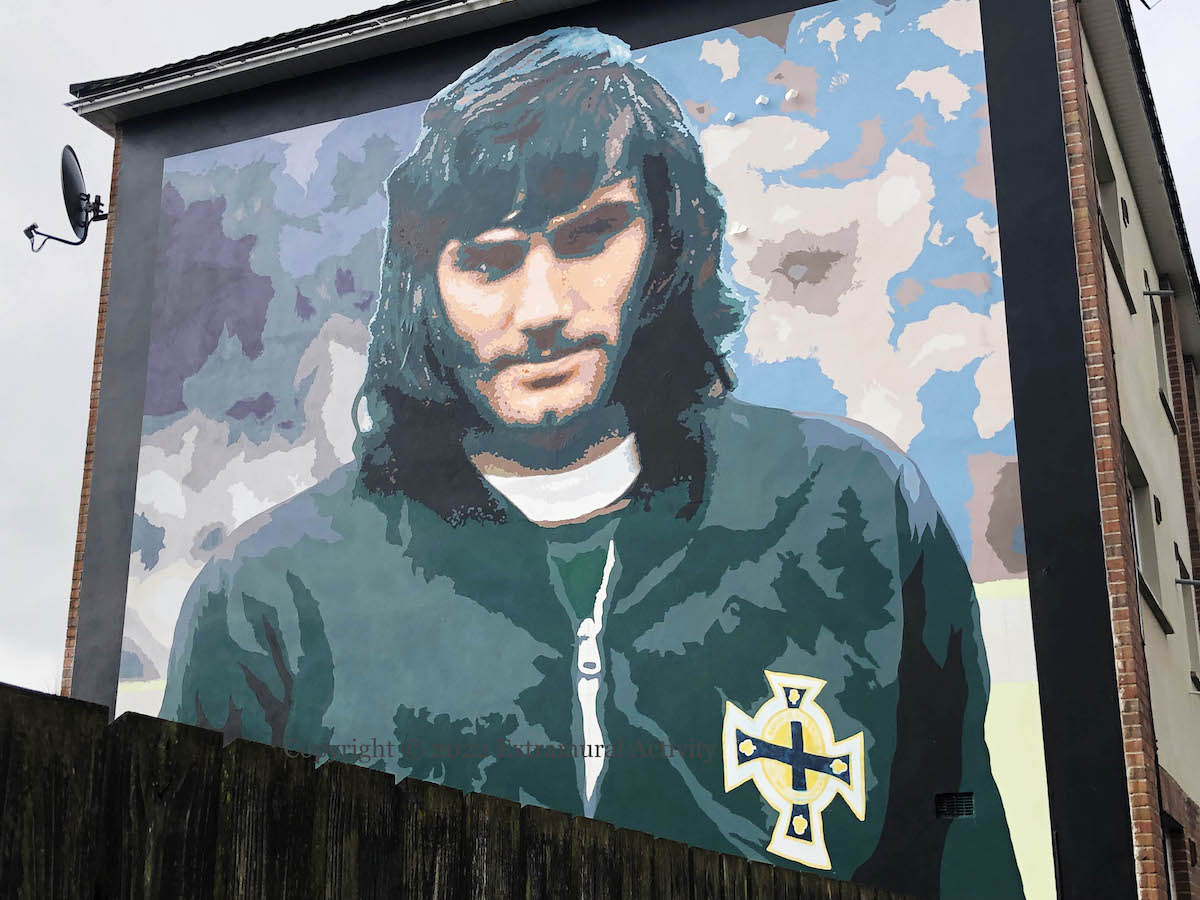
From the age of two-and-a-half George Best lived in Cregagh and played football on the pitch at the centre of the estate, where Cregagh Boys played their home games. After playing for Lisnasharragh Secondary he went to Manchester United at age fifteen – in 1961 – and from there to international stardom. When he died in 2005, he was remembered in the estate by a mural (that replaced a UFF mural). It stood for about ten years and now been updated with the mural shown in today’s images, along with the family home that has been returned to a 1960’s appearance – complete with George Best memorabilia – and is available to rent on AirBnb. The home and playing fields are also the starting part of the George Best Trail.
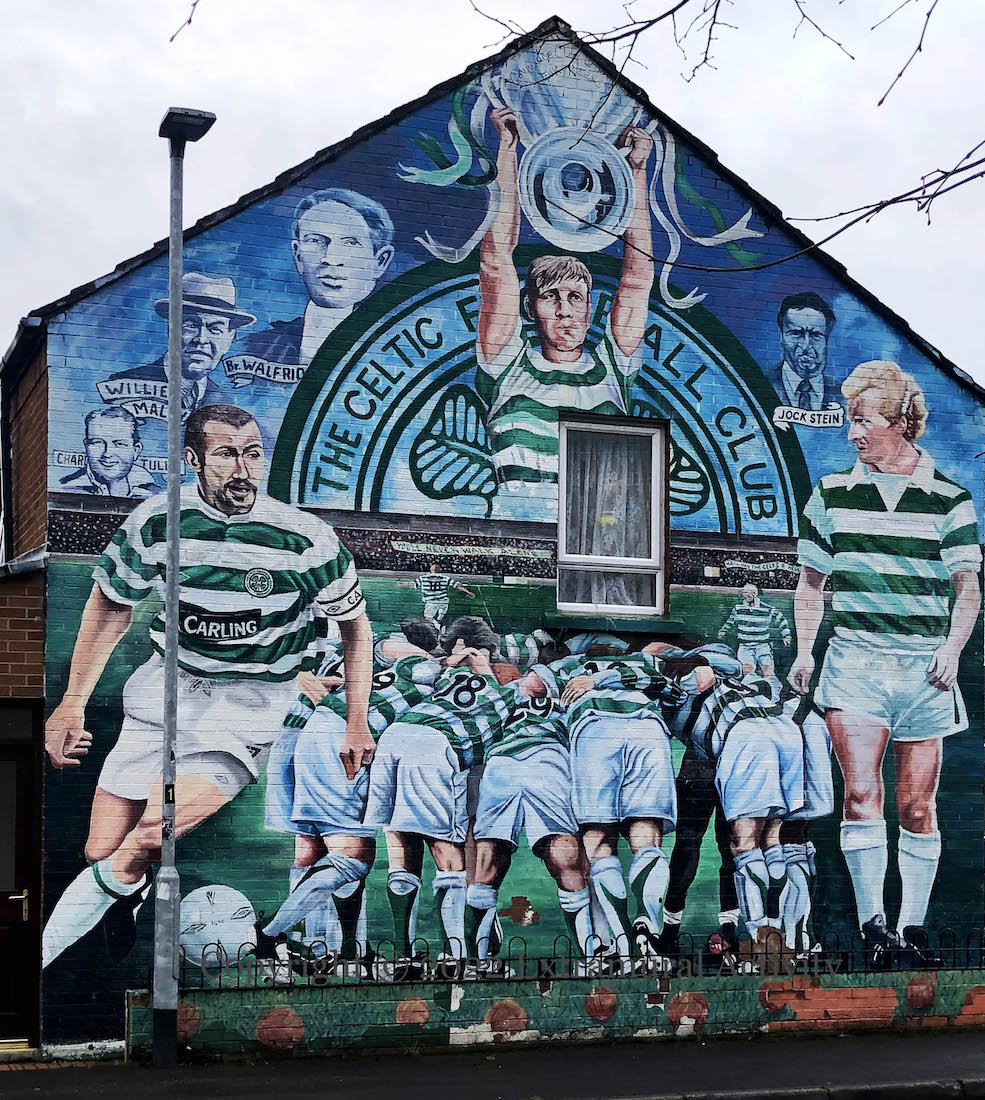
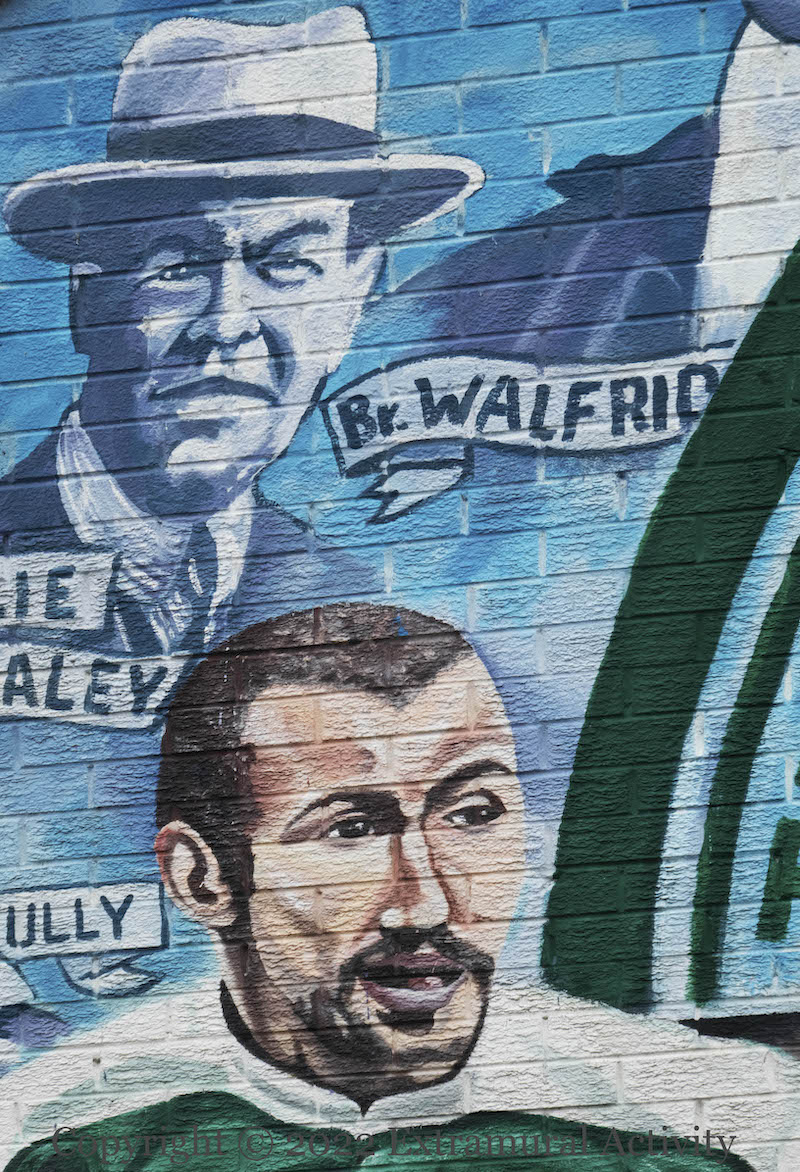
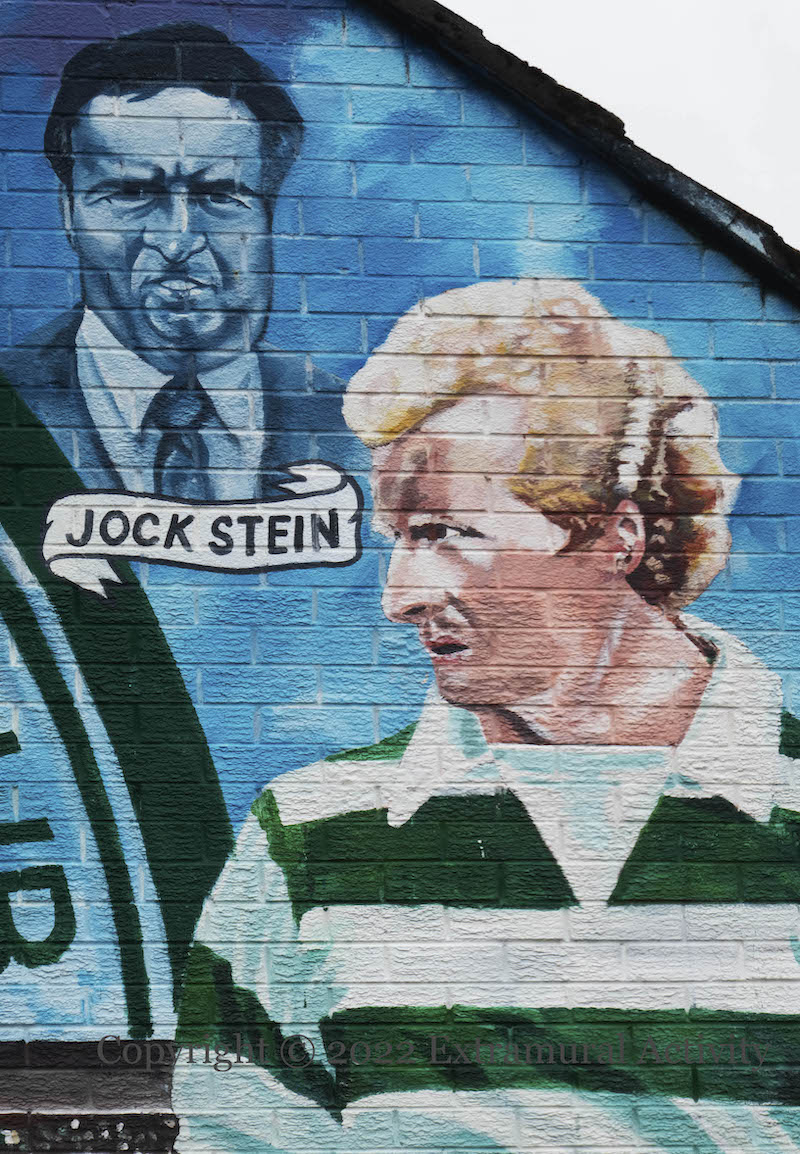
Carling last sponsored Celtic FC in the 2009-2010 season, which means that the heroes shown in this 2009 mural are another decade in the past. In the apex are Charlie Tully (of Belfast and Glasgow Celtic), Willie Maley (the first manager), Br. Walfrid (founder of the club in 1888), Billy McNeil lifting the European Cup in 1967, Jock Stein (player 1951-1957 and manager 1965-1978), while on the field are former players Henrik Larsson (1997-2004) and Jimmy Johnstone (1962-1965).
In the centre of the image, the team is “doing the huddle”, which is also practiced by Cliftonville.
 Seosamh Mac Coille Collection