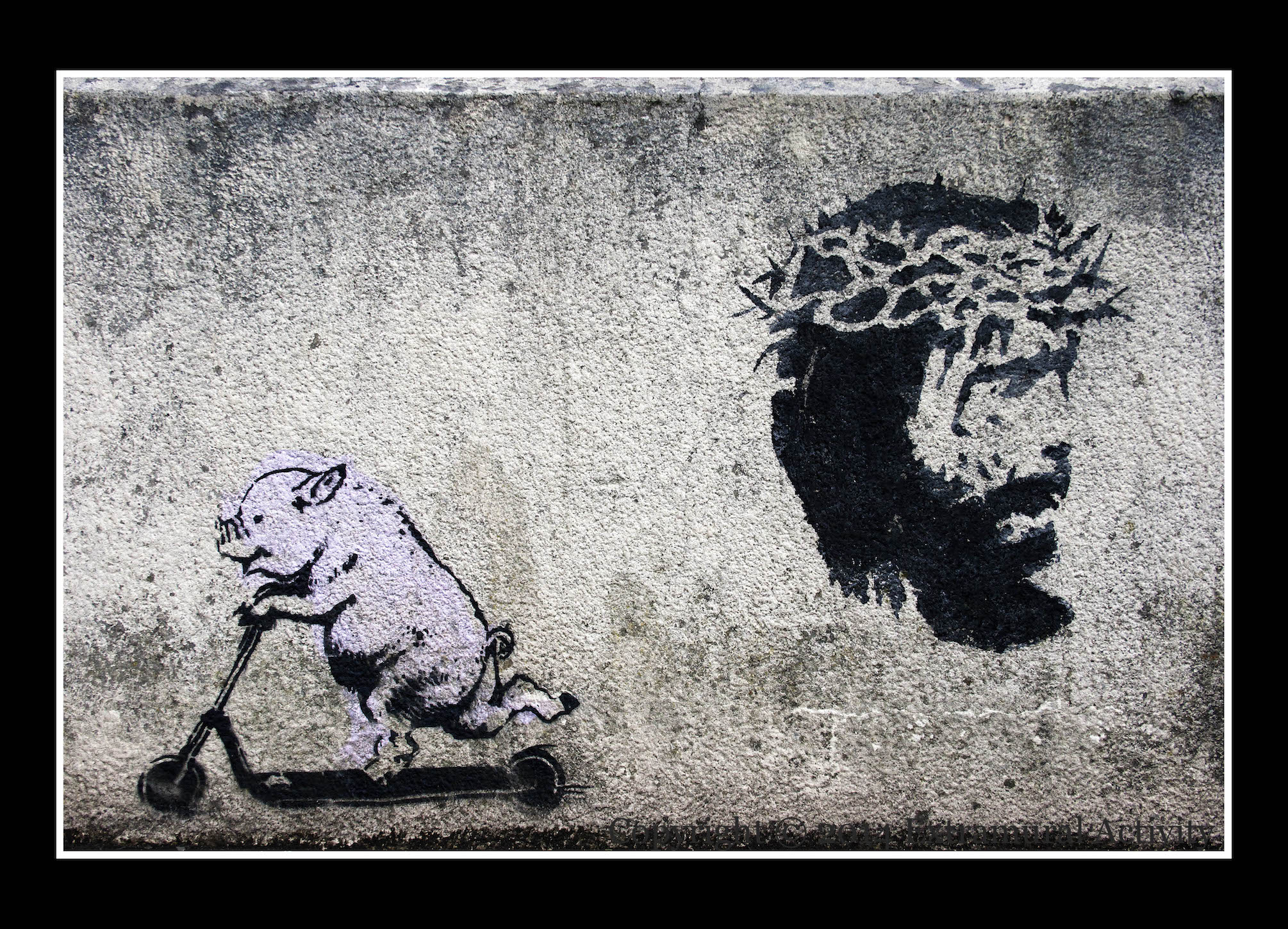
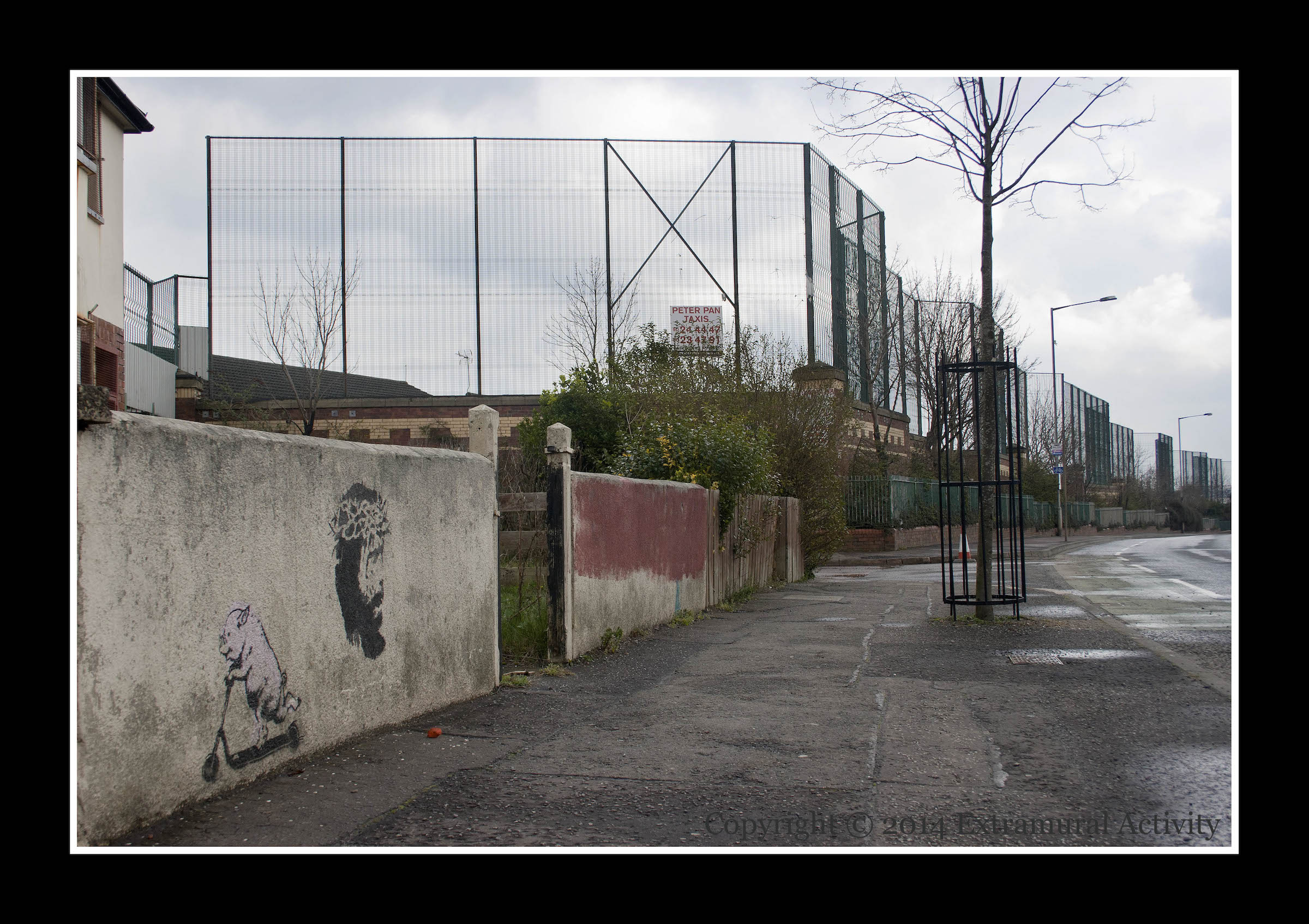
A pig on a scooter. A disembodied head of Jesus of Nazareth (seen previously in One Love). And (below) the Springfield Road “peace” line.
Click image to enlarge
Copyright © 2014 Seosamh Mac Coılle
X01749 X01750
A pig on a scooter. A disembodied head of Jesus of Nazareth (seen previously in One Love). And (below) the Springfield Road “peace” line.
Click image to enlarge
Copyright © 2014 Seosamh Mac Coılle
X01749 X01750
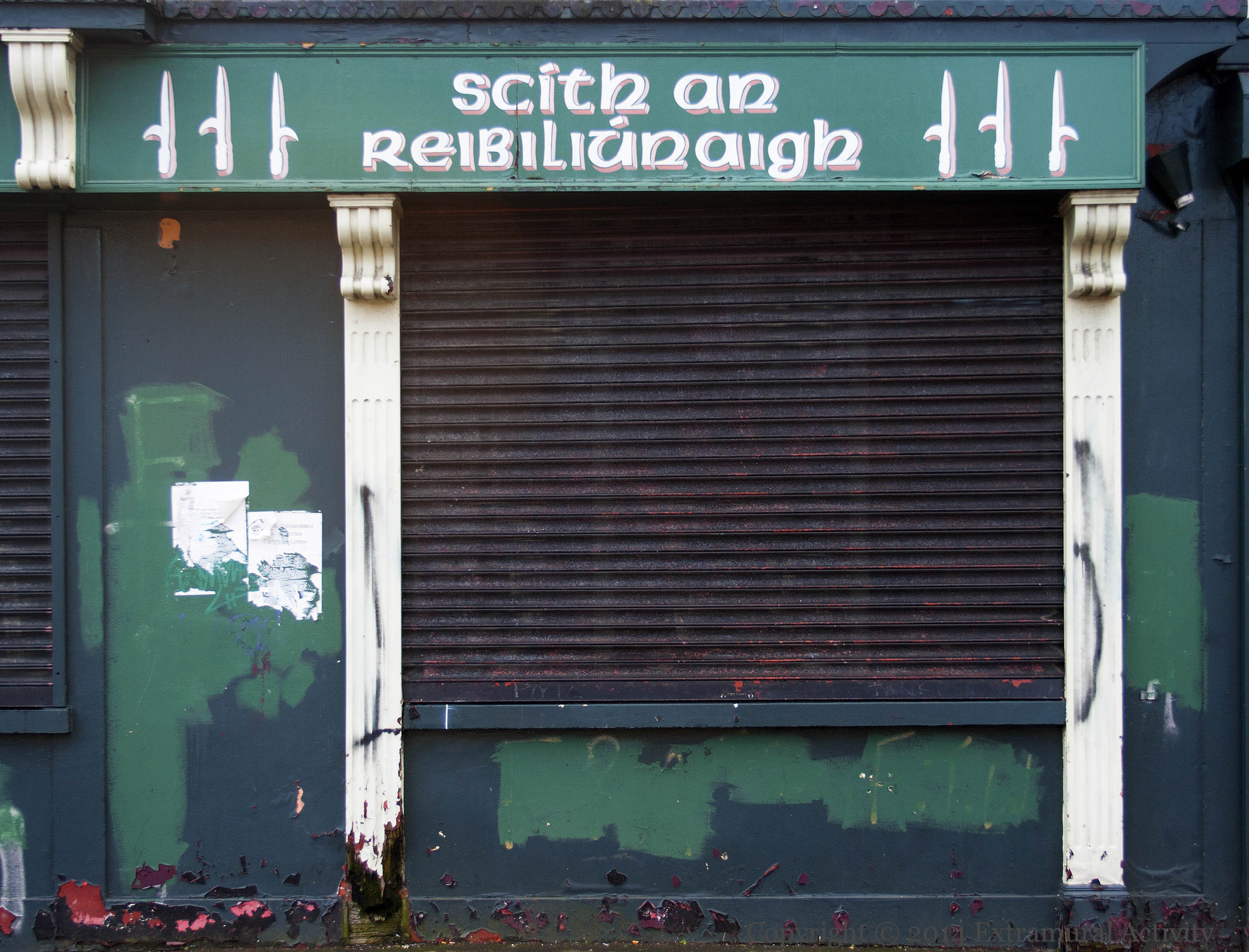
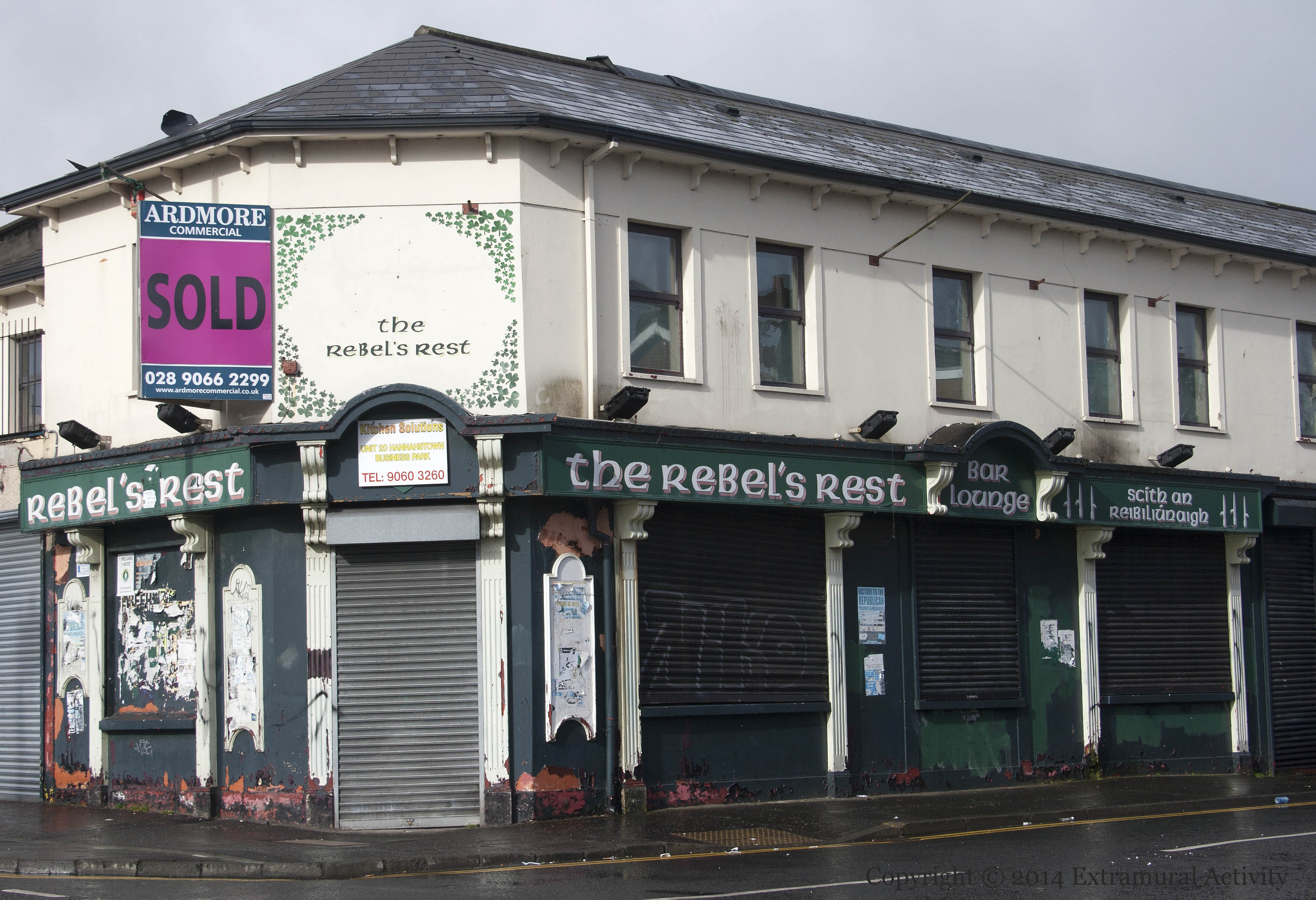
The Rebel’s Rest /Scíth An Reıbılúnaıgh pub on the Falls at Cupar Street Lower has closed and been sold.
Click image to enlarge
Copyright © 2014 Seosamh Mac Coılle
X01744 X01743
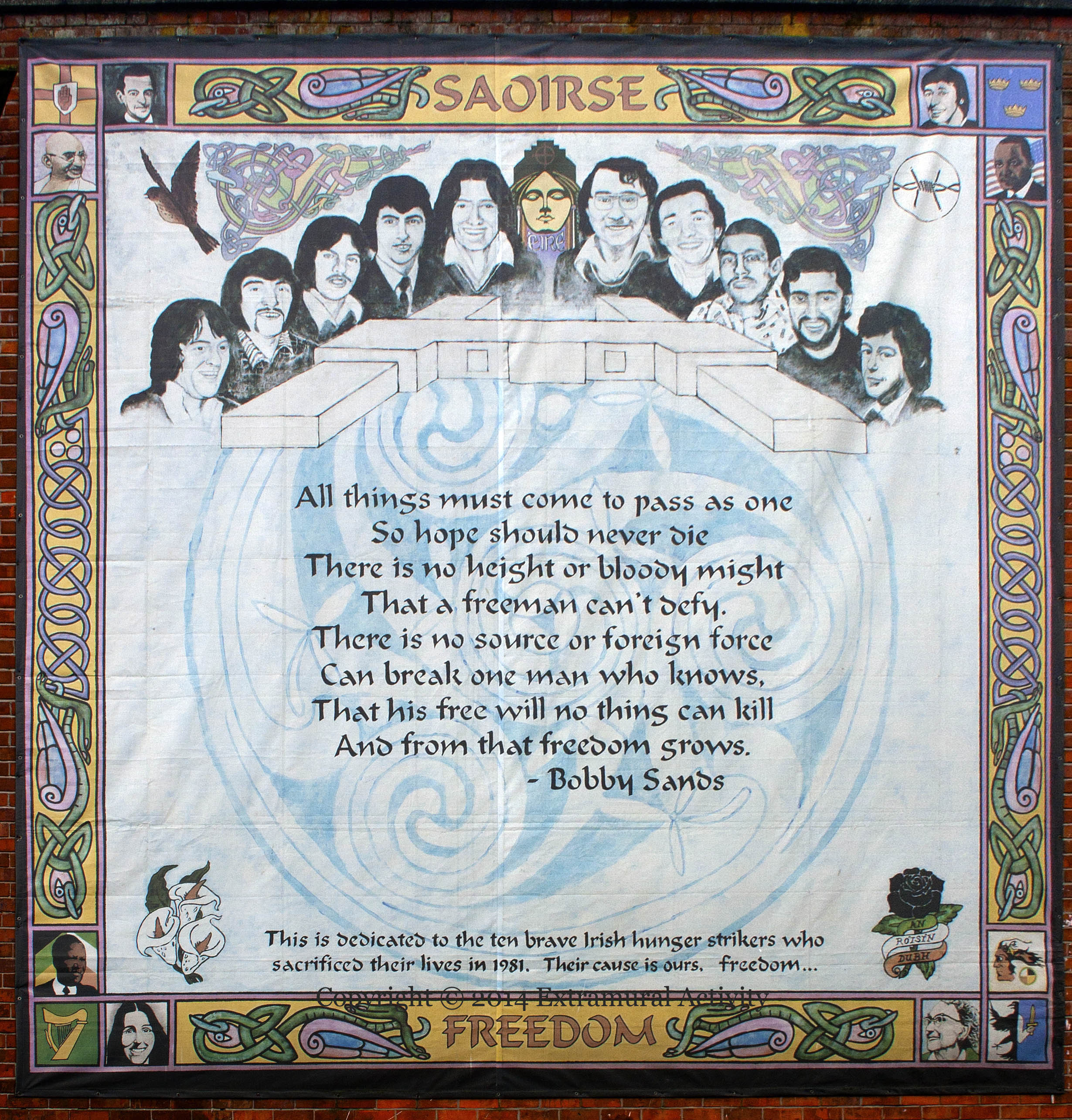
This printed tarp on the side of the Falls Road commemorates the ten 1981 hunger strikers (along with Frank Stagg, Michael Gaughan, Nora Connolly, and Maıréad Farrell, paired with international figures Gandhi, Martin Luther King, Leonard Peltier, and Nelson Mandela) and features a verse from a Bobby Sands poem The Crime Of Castlereagh: “All things must come to pass as one/So hope should never die/There is no height or bloody might/That a freeman can’t defy./There is no source or foreign force/Can break one man who knows,/That his free will no thing can kill/And from that freedom grows.”
This tarp, which is 20′ x 20′, was printed from Mo Chara’s original 8′ x 8′ painting; it was also printed on a 30′ x 30′ tarp in New York. For all three, see the Chronological Catalogue of Mo Chara’s works.
Click image to enlarge
Copyright © 2014 Seosamh Mac Coılle
X01742 freedom saoırse easter lily an róısín roısín dubh mahatma gandhi MLK martin luther king nelson mandela fuıseog barbed wire their cause is ours dedicated brave irish sacrificed
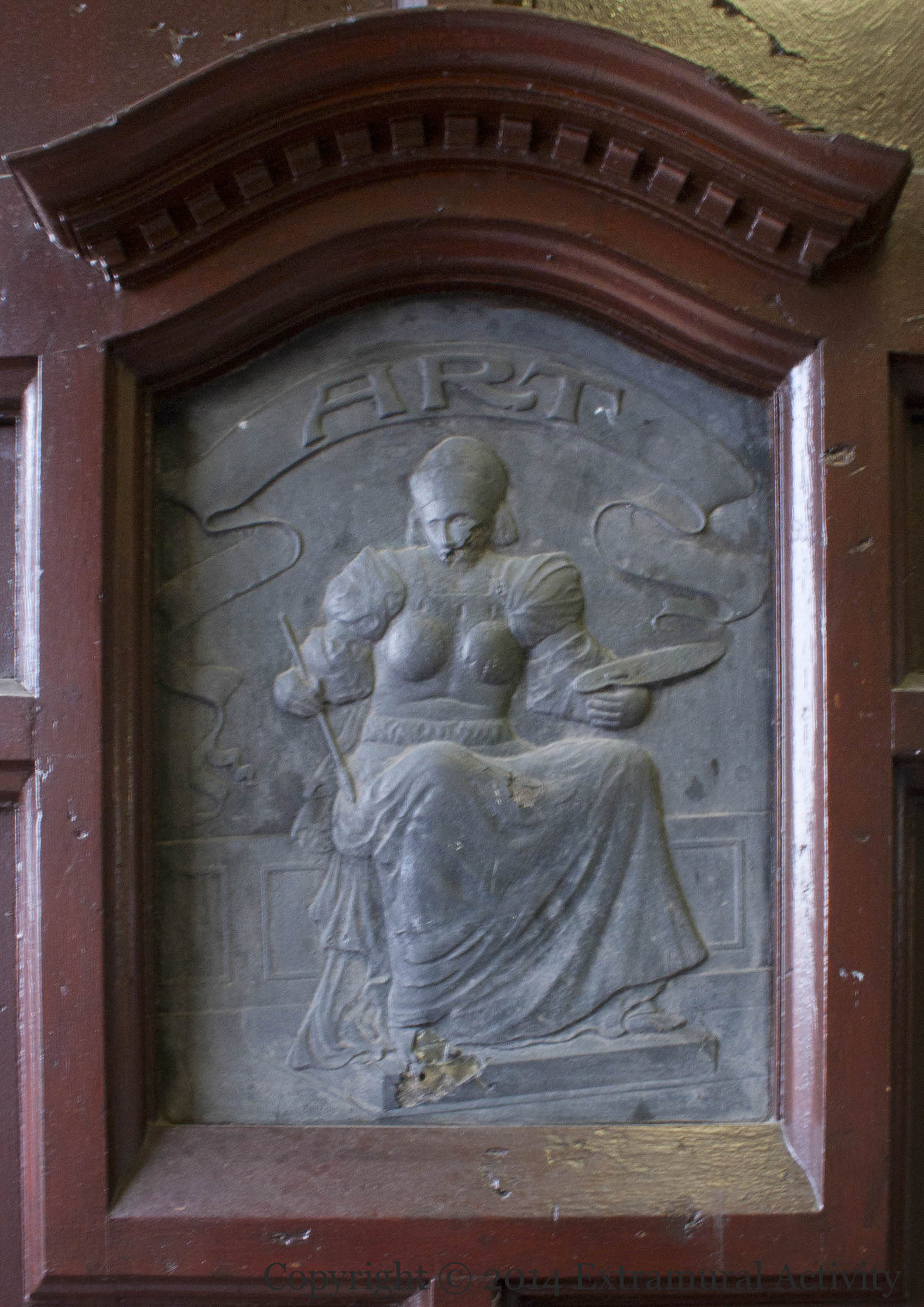
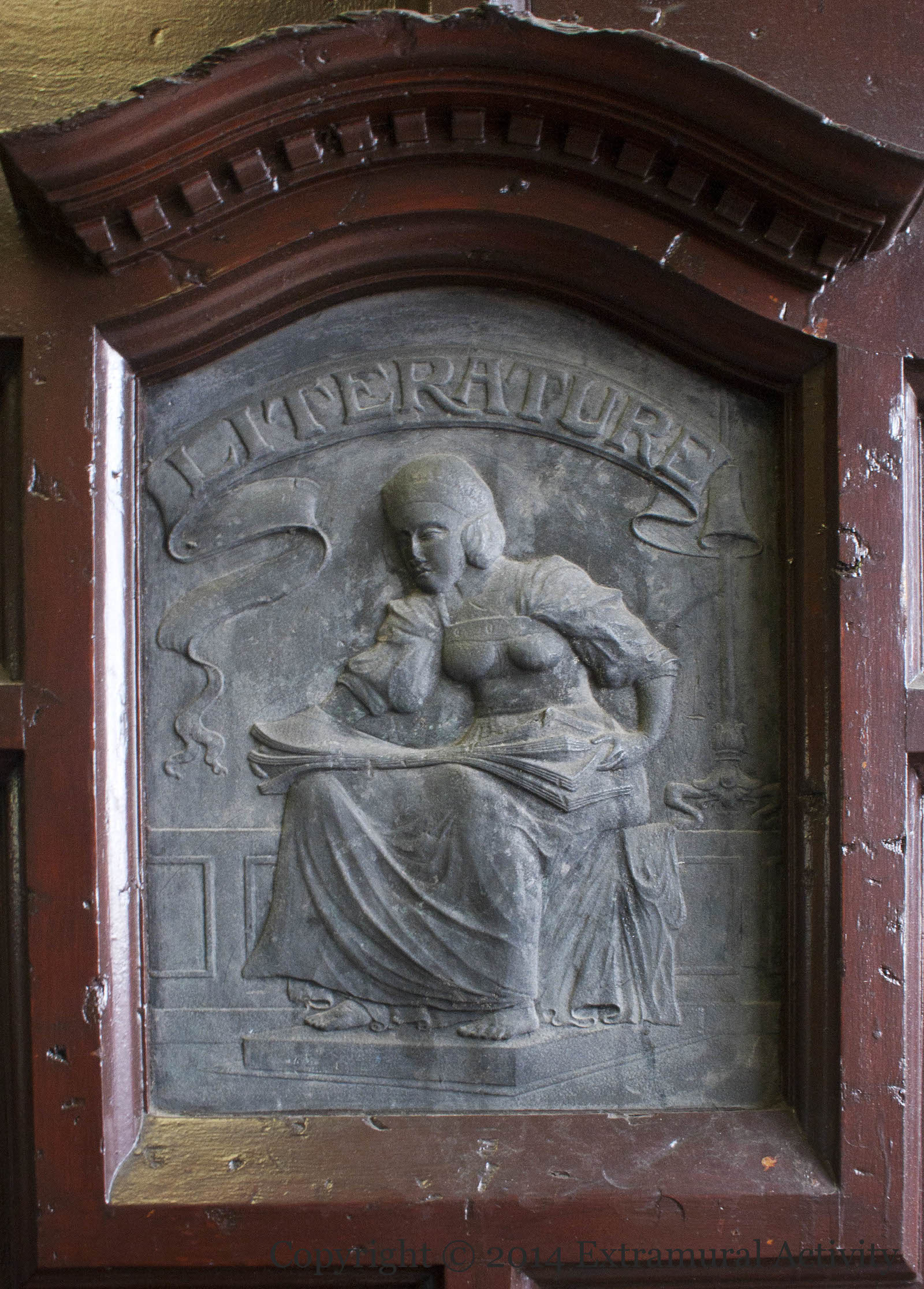
The Falls Road library is a ‘Carnegie Library’ (WP) – built with almost 4,000 pounds donated by Scotland-born American Andrew Carnegie. It opened on January 2nd, 1908, the second of three such libraries in Belfast, alongside Oldpark and Donegall Road. Its doors feature these two pieces by Holywood artist Rosamund Praeger: Art, seen here holding an artist’s palette – and Literature, seen below reading a folio. Art and Literature also take the form of angels, along with a third muse, Science, in the stonework above the doors.
Video history of the library from Northern Visions.
Click image to enlarge
Copyright © 2014 Seosamh Mac Coılle
X01740 X01741
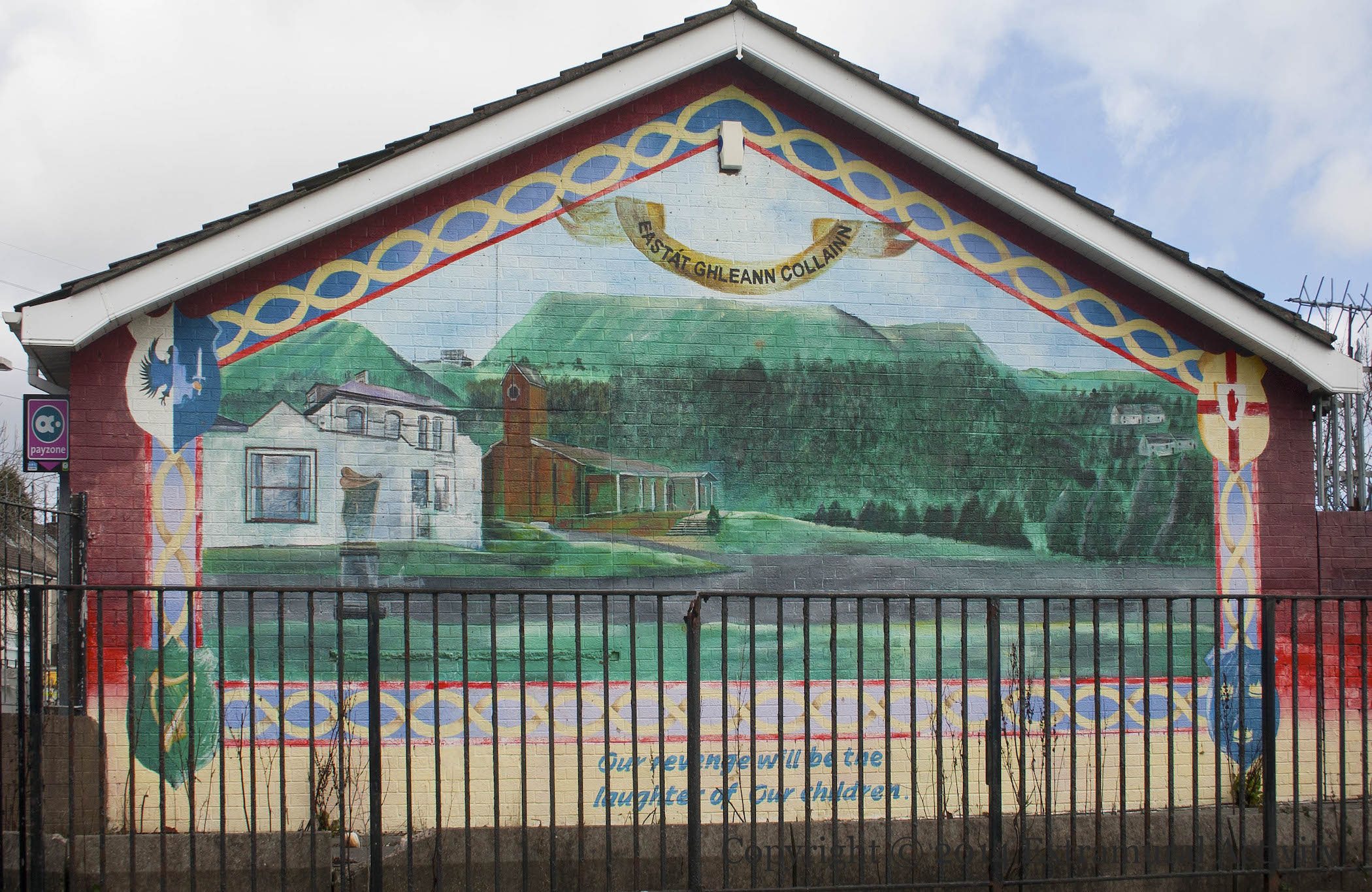
This mural in the Glen Colin estate, just off the Glen Road, shows The Roddy’s club (in white) with the hunger striker memorial in the shape of a harp in front (shown in the image below) and the St. Oliver Plunkett church, which is in fact on the other (southern) side of the Glen Road, with the twin peaks of Divis and Black Mountain in the background. The Bobby Sands quote “Our revenge will be the laughter of our children” is at the bottom.
Previously featured: The Battle Of Antrim in the grounds of The Roddy’s.
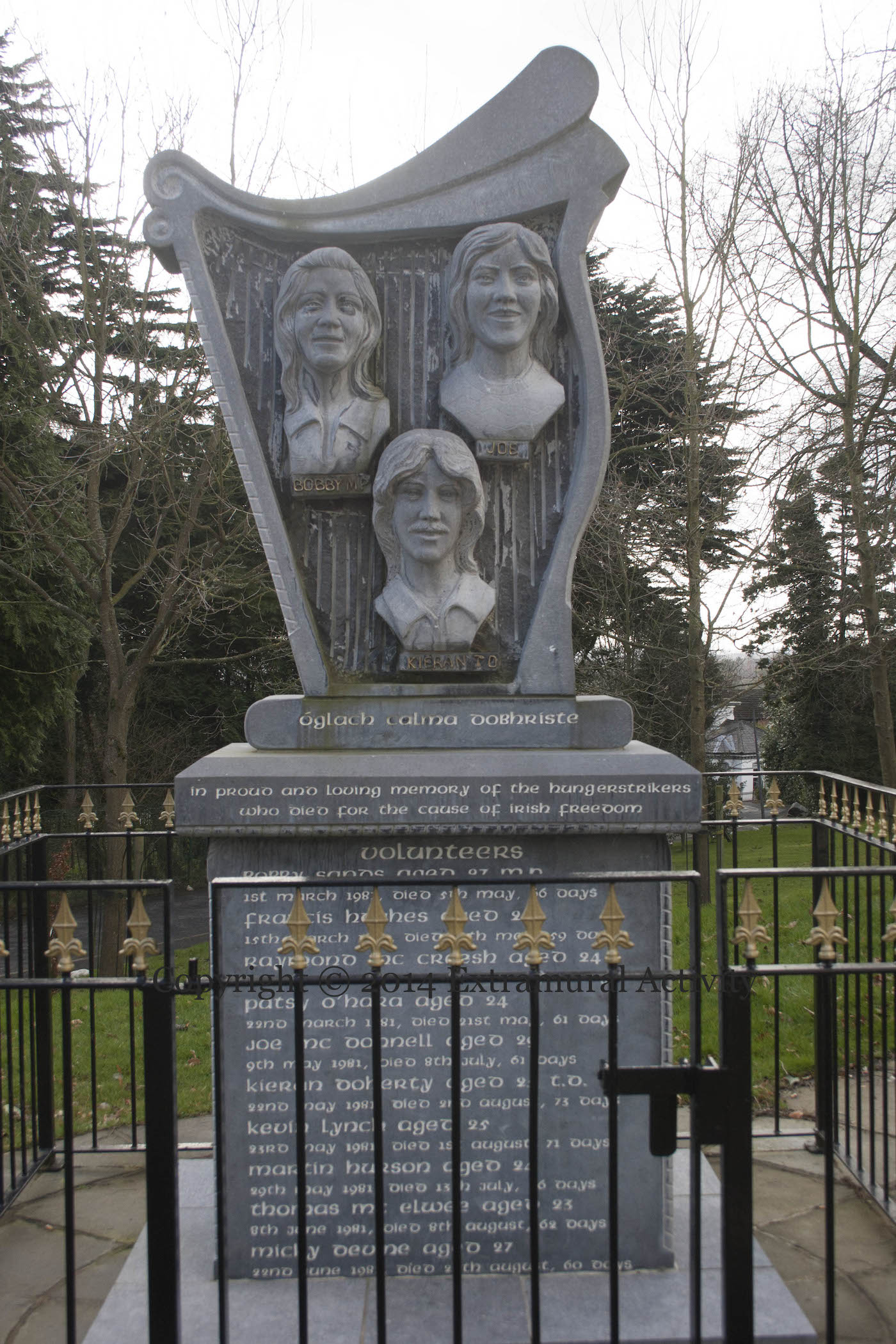
Click image to enlarge
Copyright © 2014 Seosamh Mac Coılle
X01739 X01758 volunteers irish freedom hughes mccreesh o’hara mcdonnell doherty lynch hurson mcelwee devine mccorley
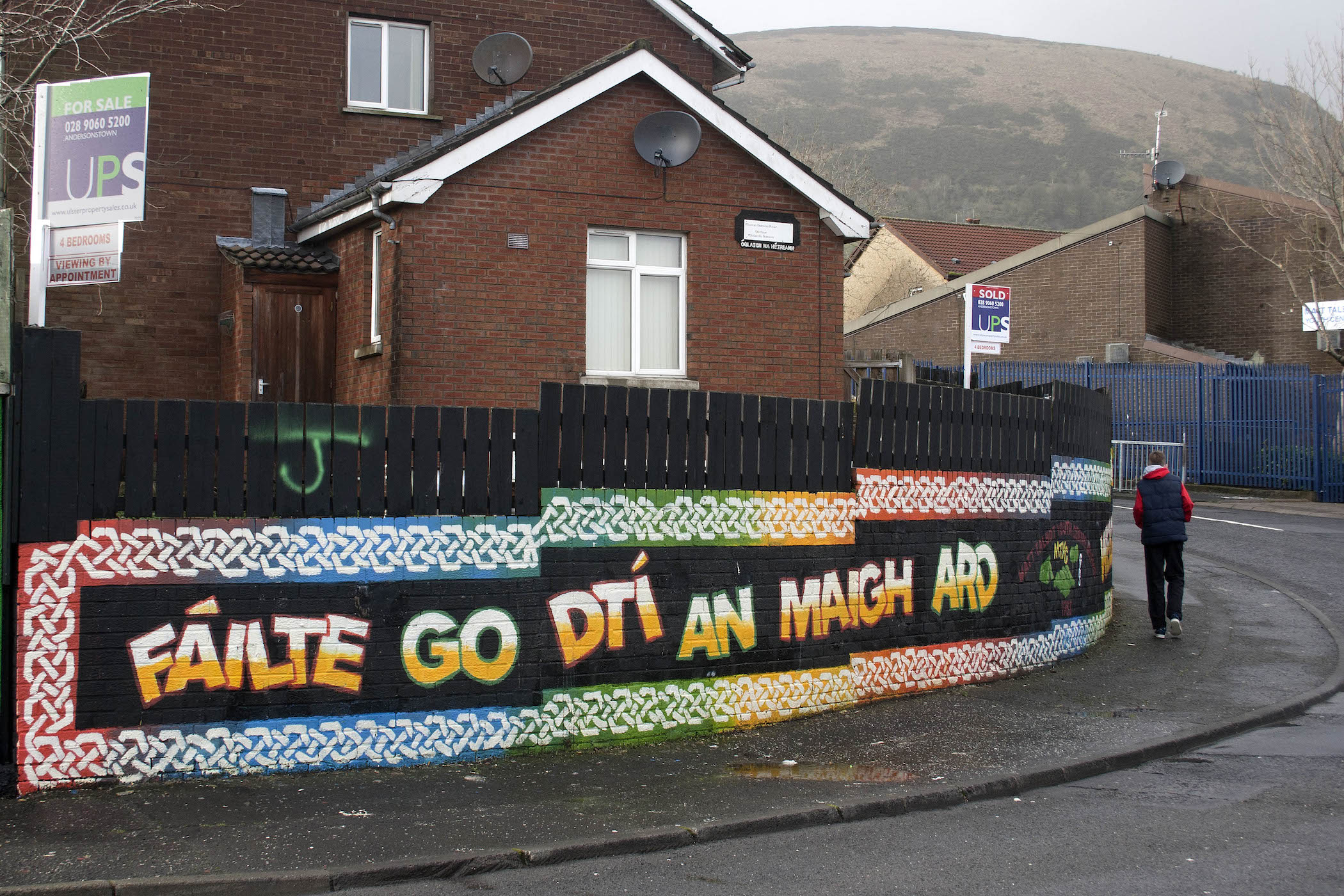
Welcome sign and insignia of the Matt Talbot youth centre (and óglaıgh sign on the building) on New Barnsley Gardens in Moyard.
Previously: Moyard Waterworld
Click image to enlarge
Copyright © 2014 Seosamh Mac Coılle
X01681
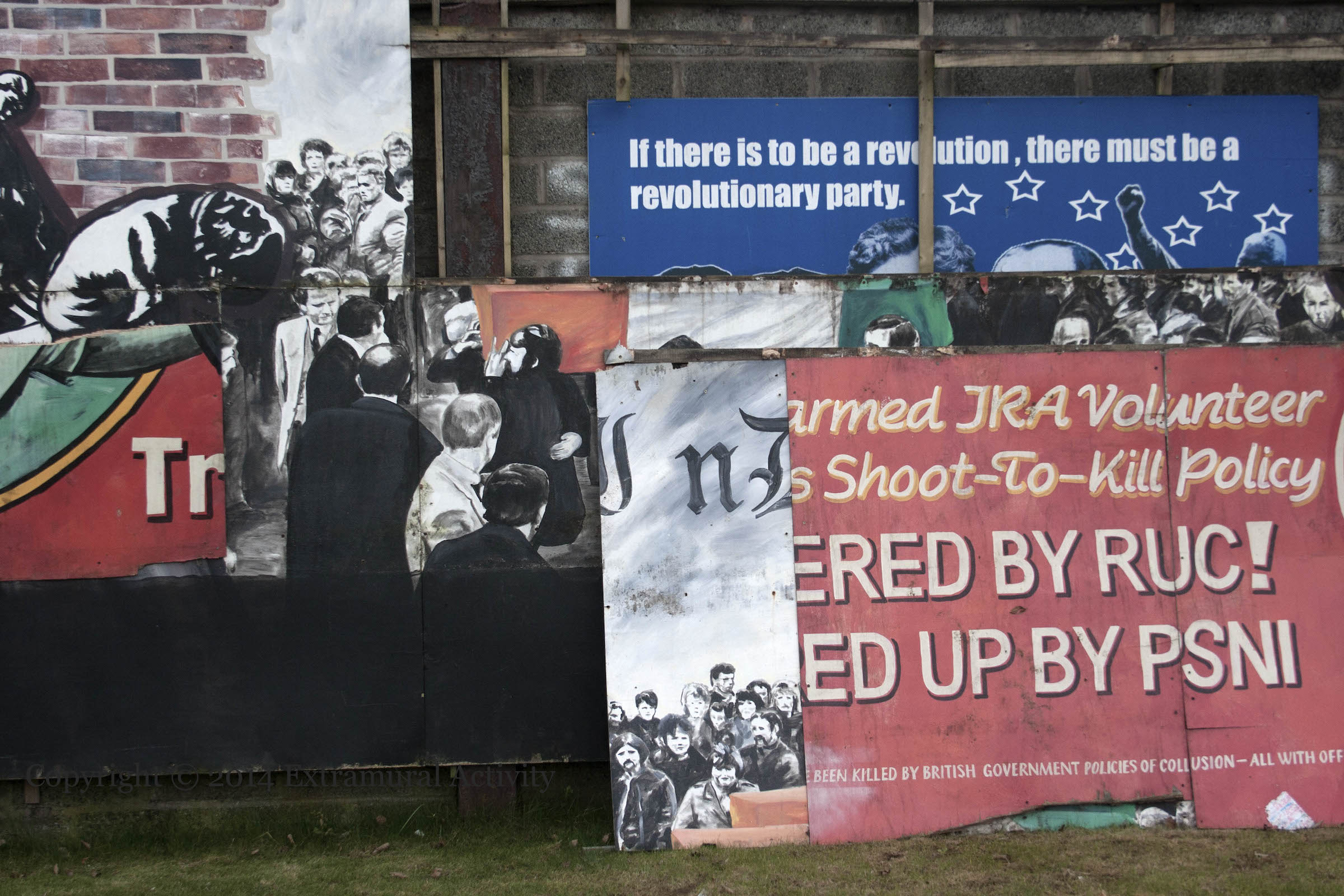
Three generations of boards at the junction of the Falls and Glen roads: from most recent to least: Pearse Jordan (“Murdered by RUC! Covered up by PSNI”), Gibraltar Three (“I nDıl Chuımhne”; this was later realized on the Divis Street International Wall, see 25 Years), and a (presumably) IRSP board (“If there is to be a revolution, there must be a revolutionary party.” [Mao Zedong]). The oldest of the three appears to be the one in the best shape. The site itself used to be the Andersonstown RUC/Army barracks.
Click image to enlarge
Copyright © 2014 Seosamh Mac Coılle
X01733 unarmed ira volunteer a victim of britain’s shoot-to-kill policy irish republican socialist party british government policies of collusion justice delayed denied truth and justice now
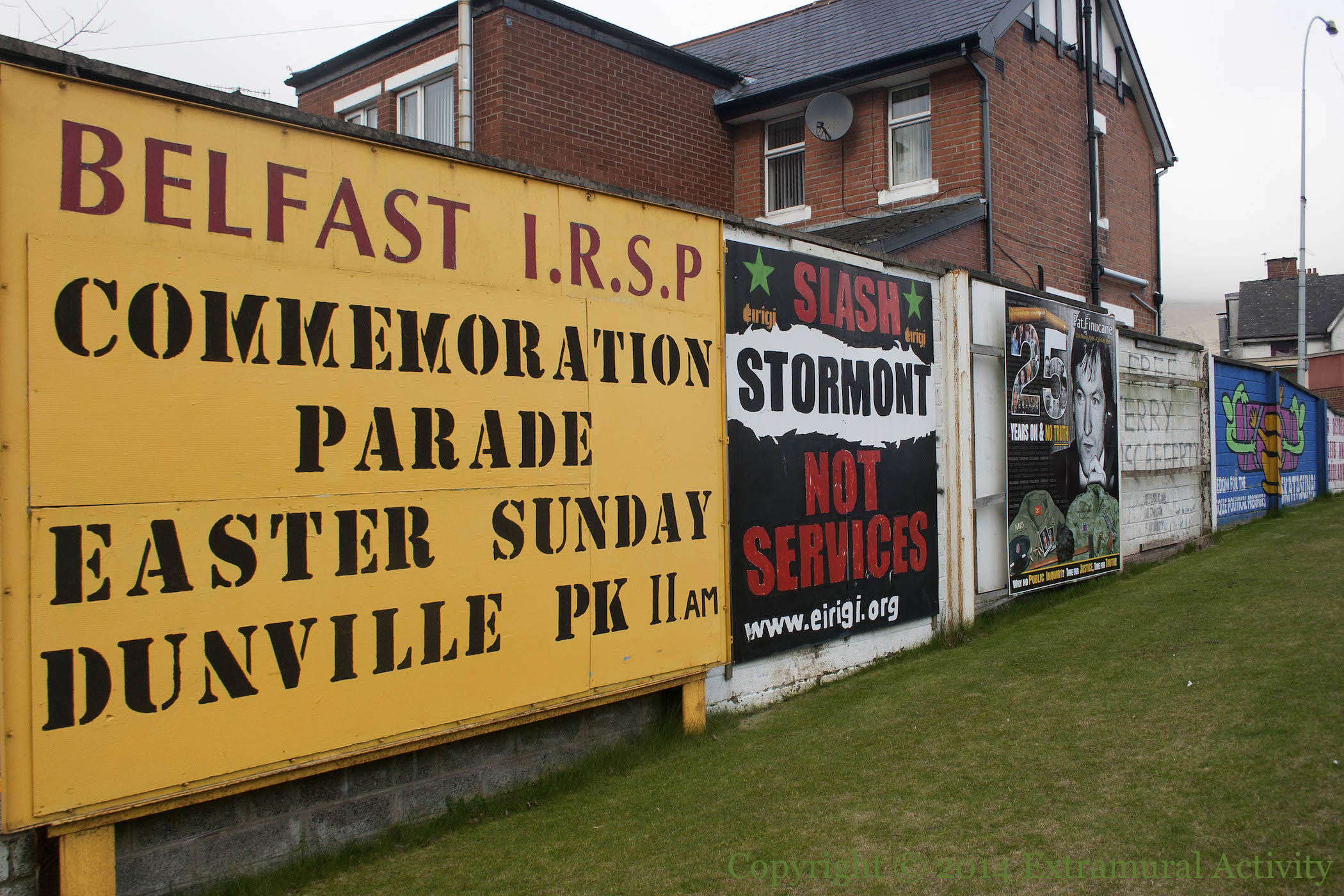
A board in the Glen Rd/Falls Road triangle: “Belfast I.R.S.P. Commemoration parade, Easter Sunday, Dunville Pk 11am”. The board is a permanent fixture but this year the commemoration in question is of the 40th anniversary of the IRSP itself, as well as the 1916 Rising.
Featured previously from the same location: Slash Stormont | Finucane 25 | Revolutionary Party
Click image to enlarge
Copyright © 2014 Seosamh Mac Coılle
X01735
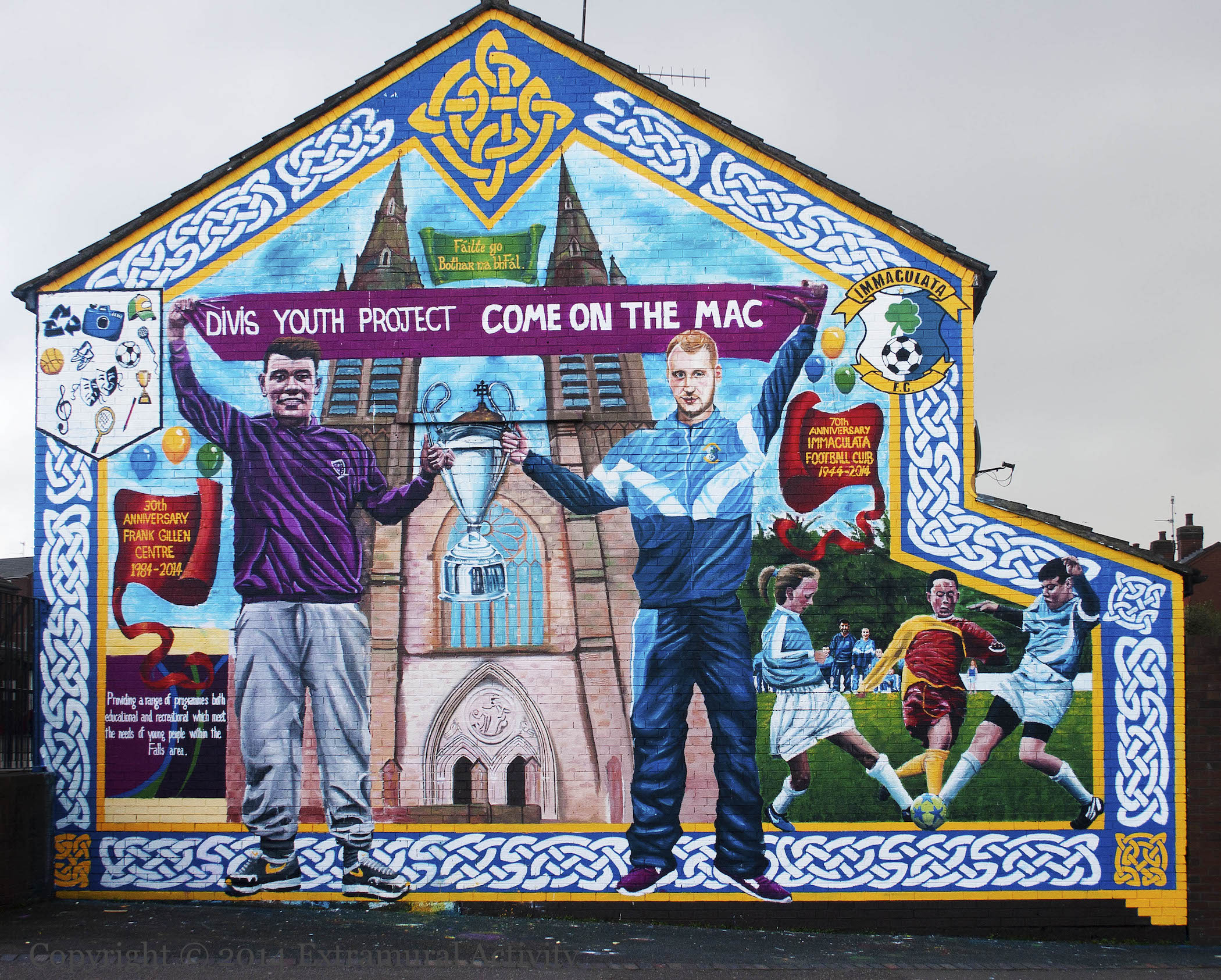
This new Albert Street mural in the lower Falls celebrates the 30th anniversary of the Frank Gillen Centre and the 70th anniversary of Immaculata Football Club. The figure on the right is current Cliftonville player Liam Boyce who grew up in the area and played for Immaculata as a youth. The team’s logo appears to the right of Boyce’s outstretched hand. (If you know the local player on the left, please leave a comment or send an e-mail.)
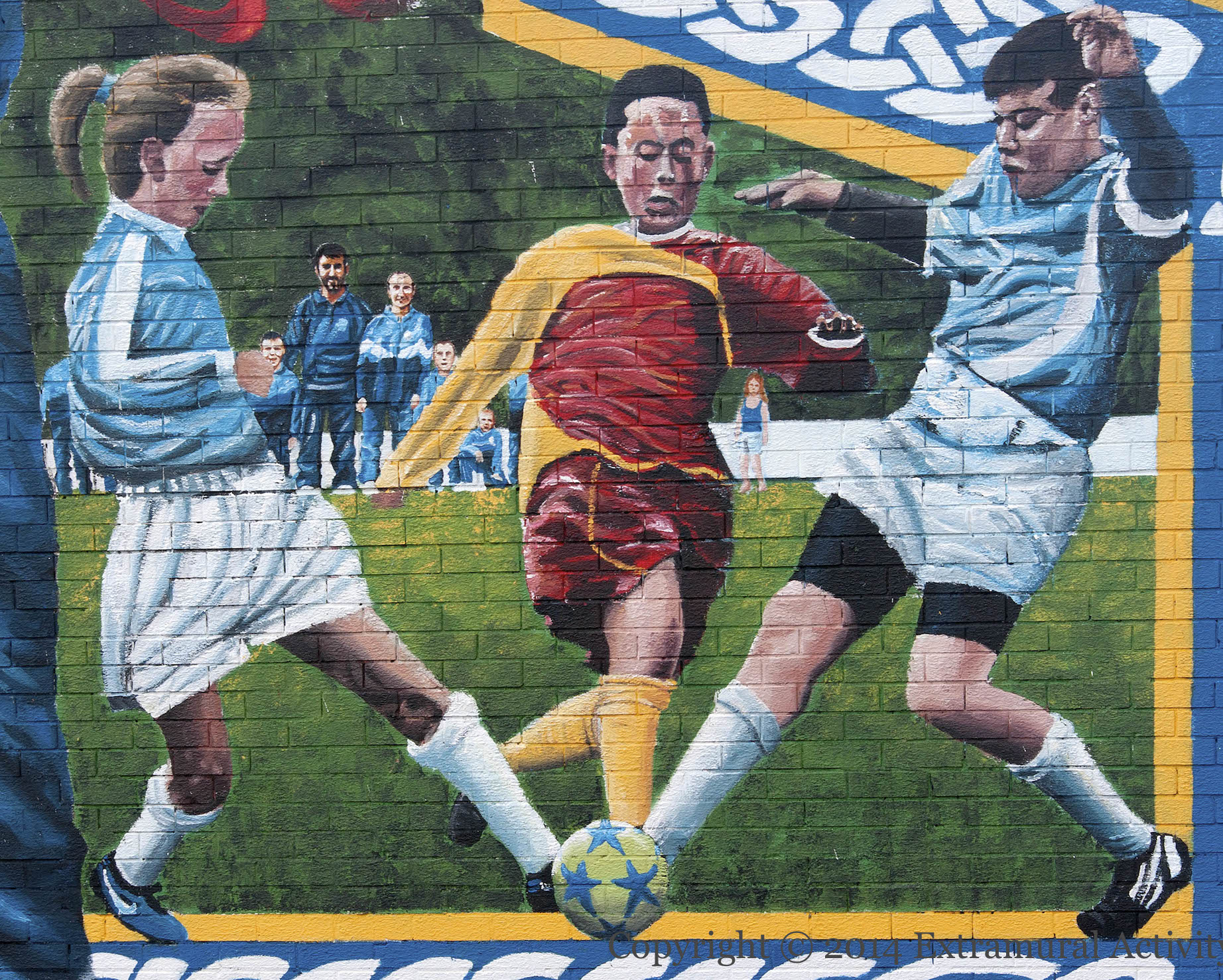
The piece was painted by Mickey Doherty and Lucas Quigley. Detail of the players in the lower right below.
Previously: Immaculata boxing | Mysterious Ways (St. Peter’s)
Click image to enlarge
Copyright © 2014 Seosamh Mac Coılle
X01732 X01731 fáılte go bóthar na bhfál st. peter’s cathedral providing a range of programmes both educational and recreational which meet the needs of young people in the Falls area.
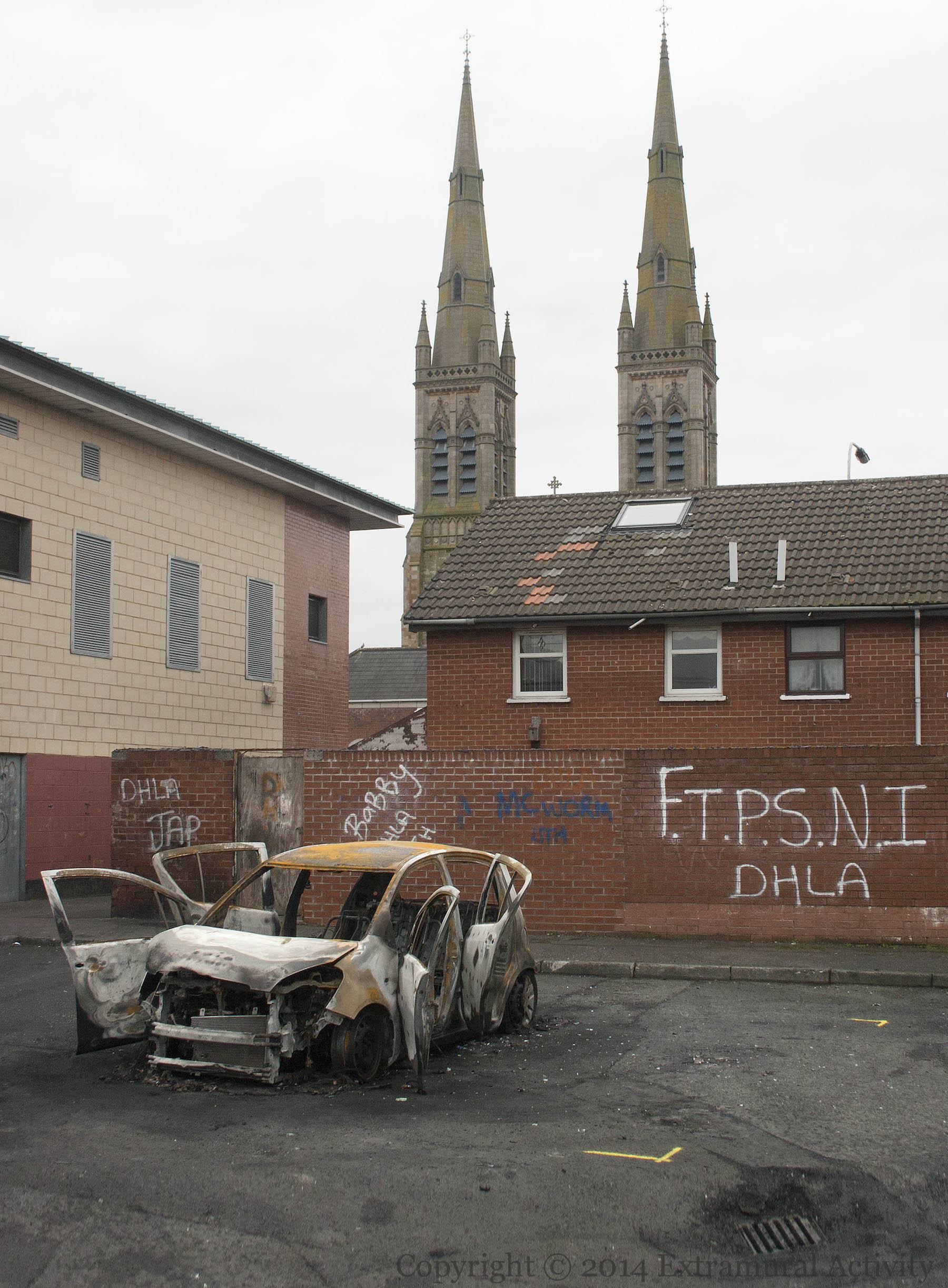
A burnt-out car in the shadow of St. Peter’s cathedral and at the back of the Maureen Sheehan Health Centre, just off Albert Street, which is infamous for “DHLA” (Divis Hoods Liberation Army) joyriding. The new murals in the area (such as Our Youth, Our Future) are part of an intervention project to improve it.
2014-12 update: there has been an upsurge in carjackings in late 2014 (BelTel).
Click image to enlarge
Copyright © 2014 Seosamh Mac Coılle
X01728 FTPSNI

