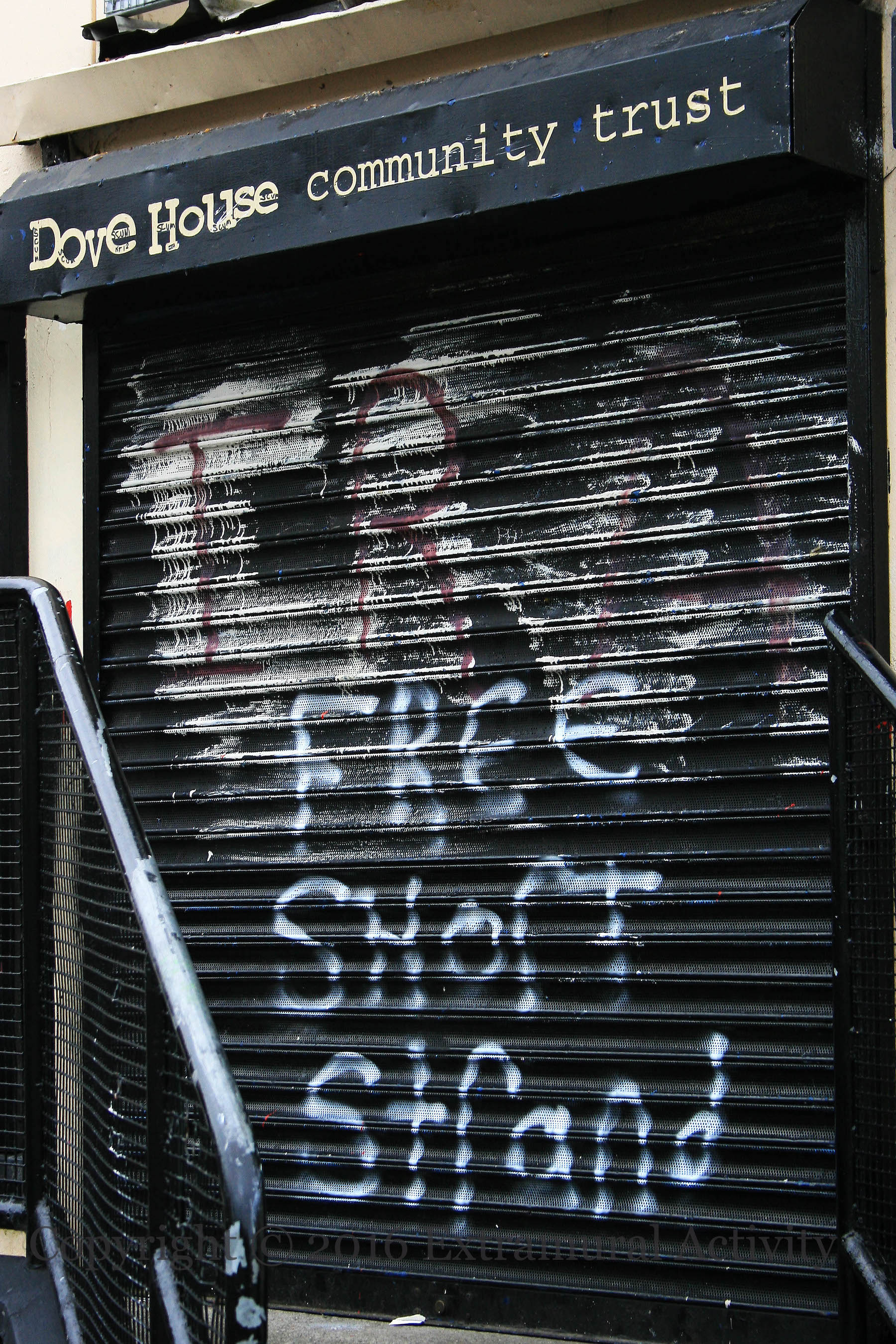
Graffiti in support of the nationalist community in east Belfast on the shutters of Dove House Community Trust in Derry, with a giant “IRA”.
Click image to enlarge
Copyright © 2016 Seosamh Mac Coılle
X03243 meenan sq
Graffiti in support of the nationalist community in east Belfast on the shutters of Dove House Community Trust in Derry, with a giant “IRA”.
Click image to enlarge
Copyright © 2016 Seosamh Mac Coılle
X03243 meenan sq
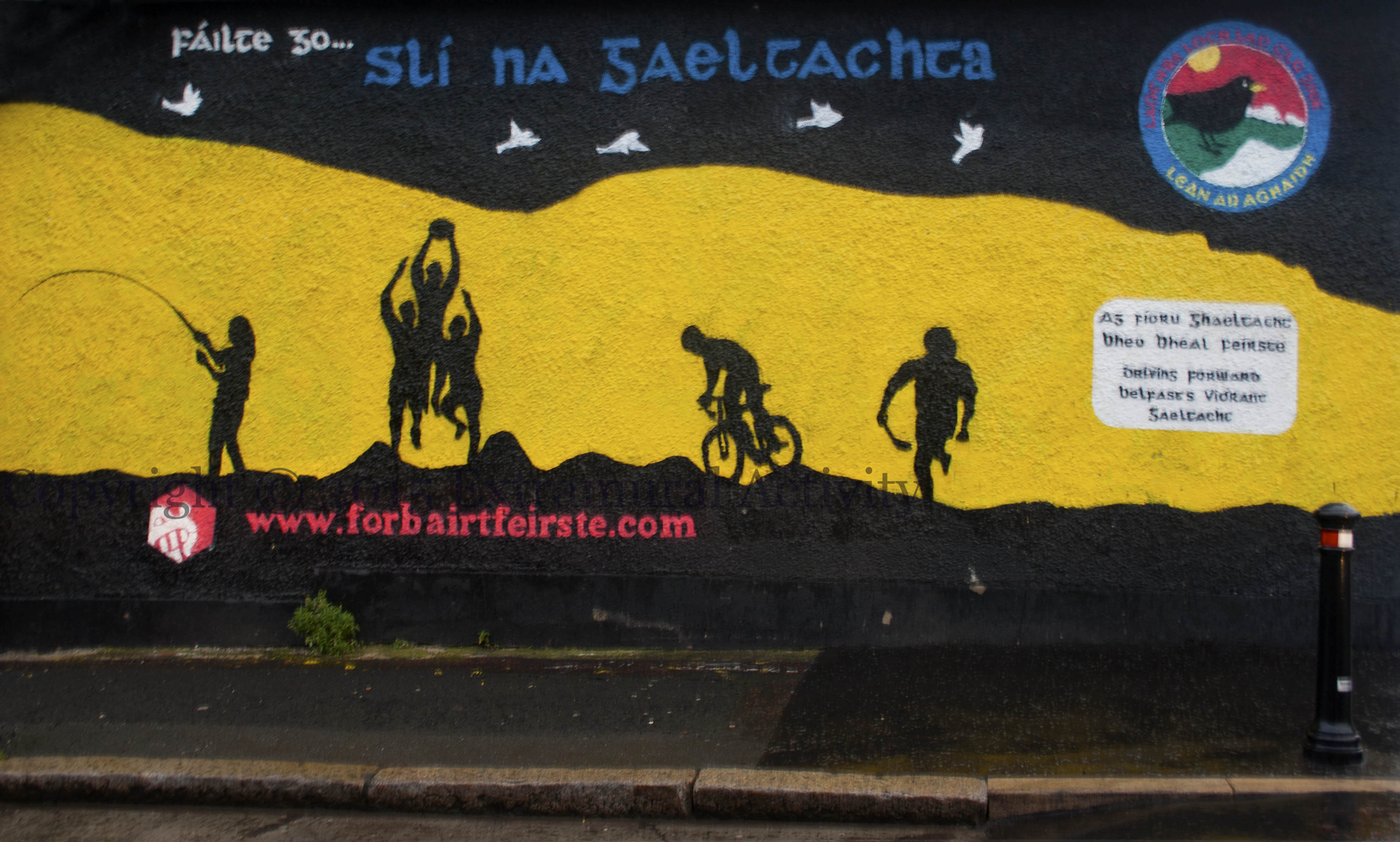
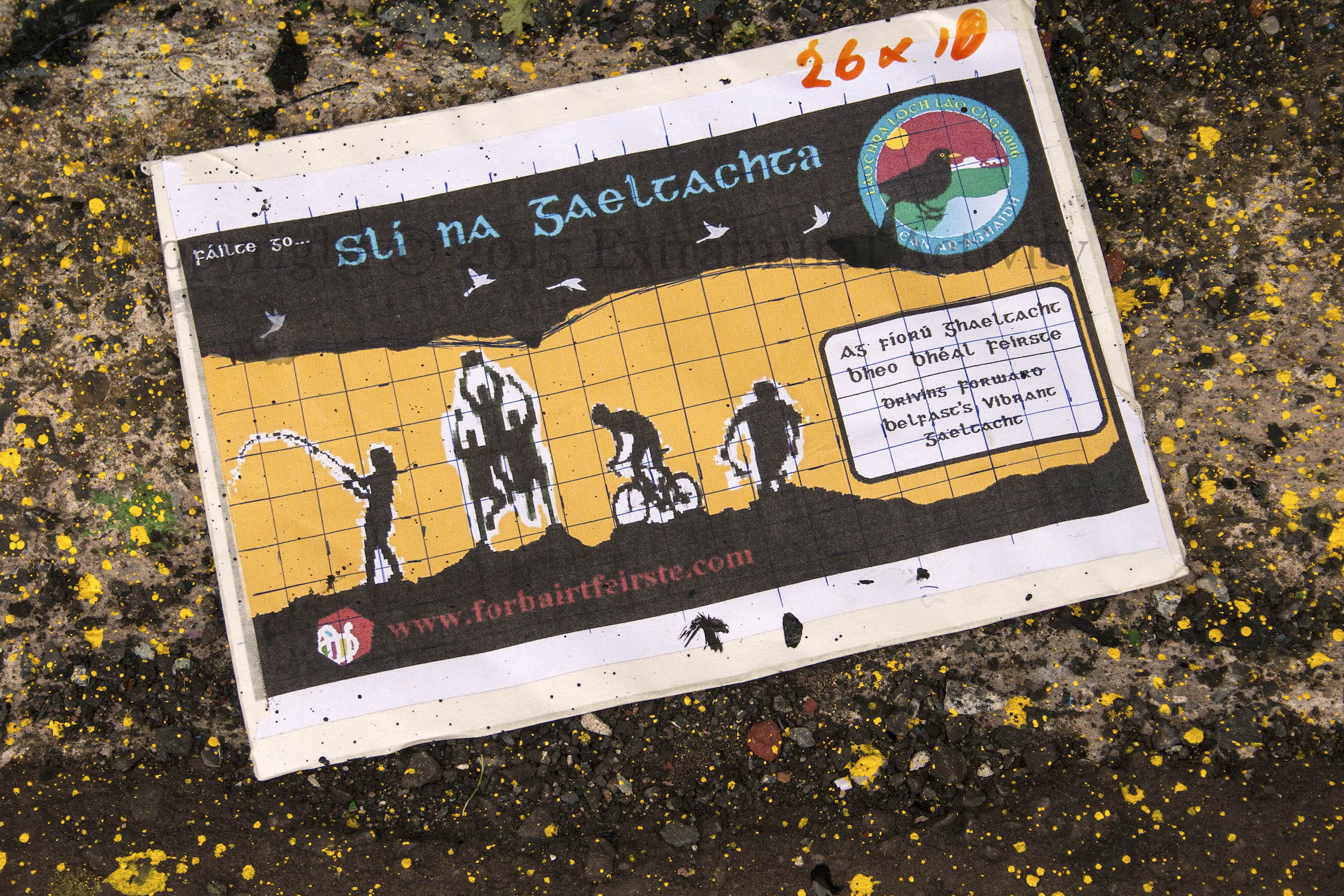
Slí Na Gaeltachta (The Gaeltacht Way) is a 2.5-mile trail of twenty-six “art and heritage” stops from the city centre to the Whiterock Road in west Belfast. A gaeltacht is an Irish-speaking region.
See previously: Onwards – memorial mural to Clive Dutton, author of the Dutton Report calling for the regeneration of west Belfast by (in part) developing its Irish-language identity.
Click image to enlarge
Copyright © 2015 Seosamh Mac Coılle
X03225 X02752 brighton st www.forbaırtfeırste.com fáılte go welcome to Ag fíorú ghaeltacht bheo Bhéal Feırste – Driving forward Belfast’s vibrant Gaeltacht.
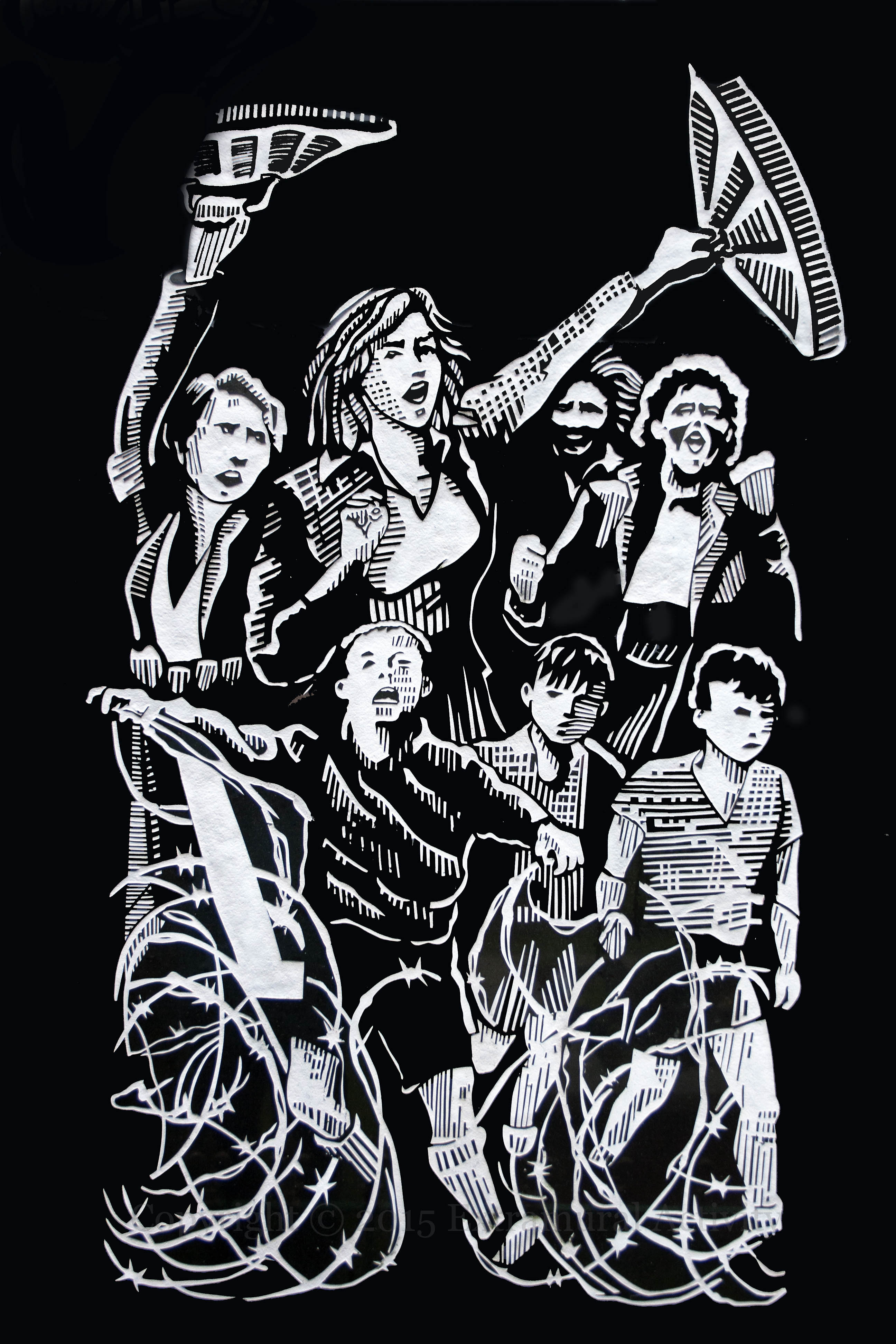
The two images featured today are of carved panels in the Falls Garden Of Remembrance (with the gold-plated surround removed). The garden commemorates fallen members of (IRA) D company but the panels suggest a wider appreciation of lower Falls residents. The same is also true of the mural in the background of the wide shot (third image, below), for which see Cry “Havoc”.
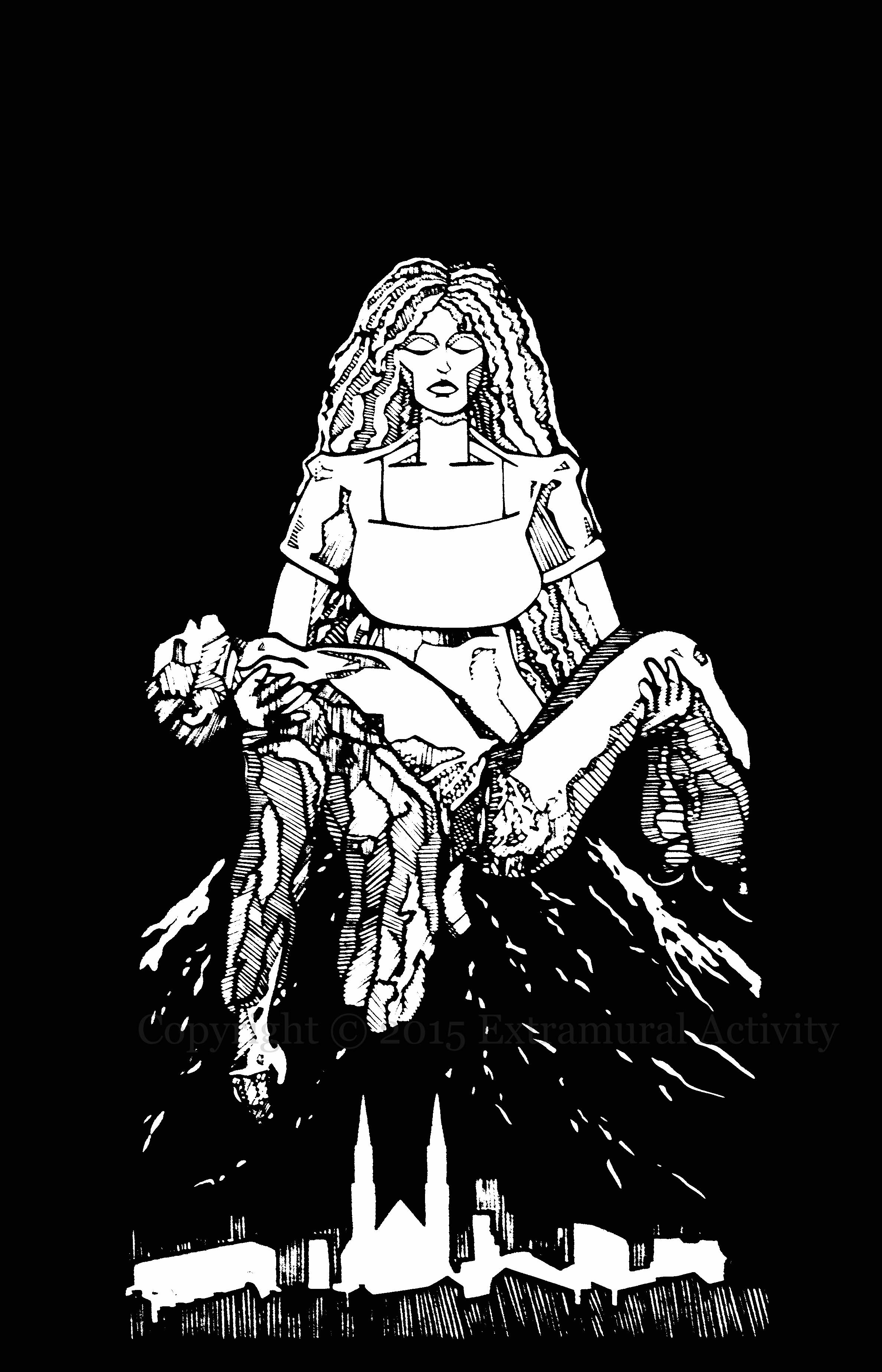
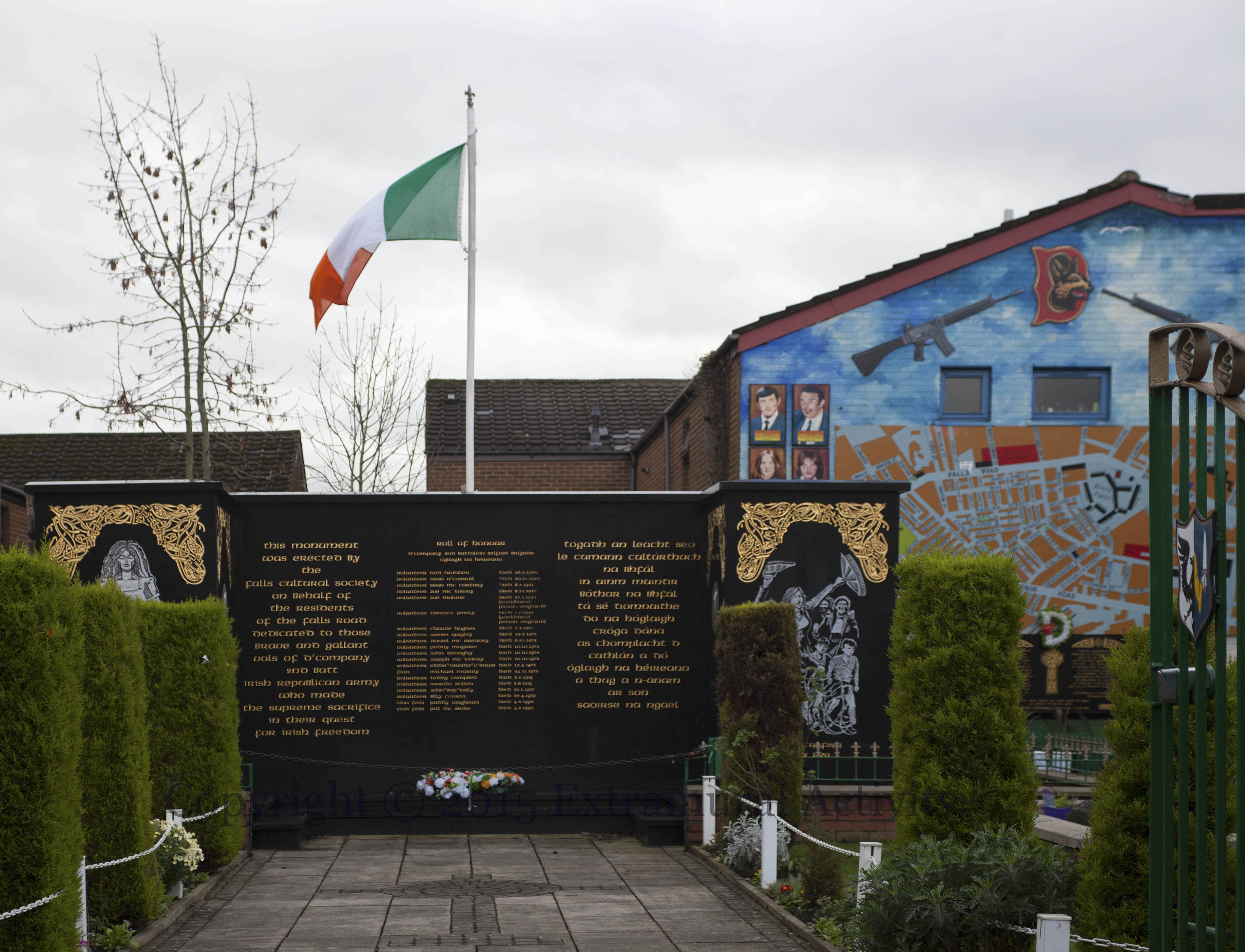
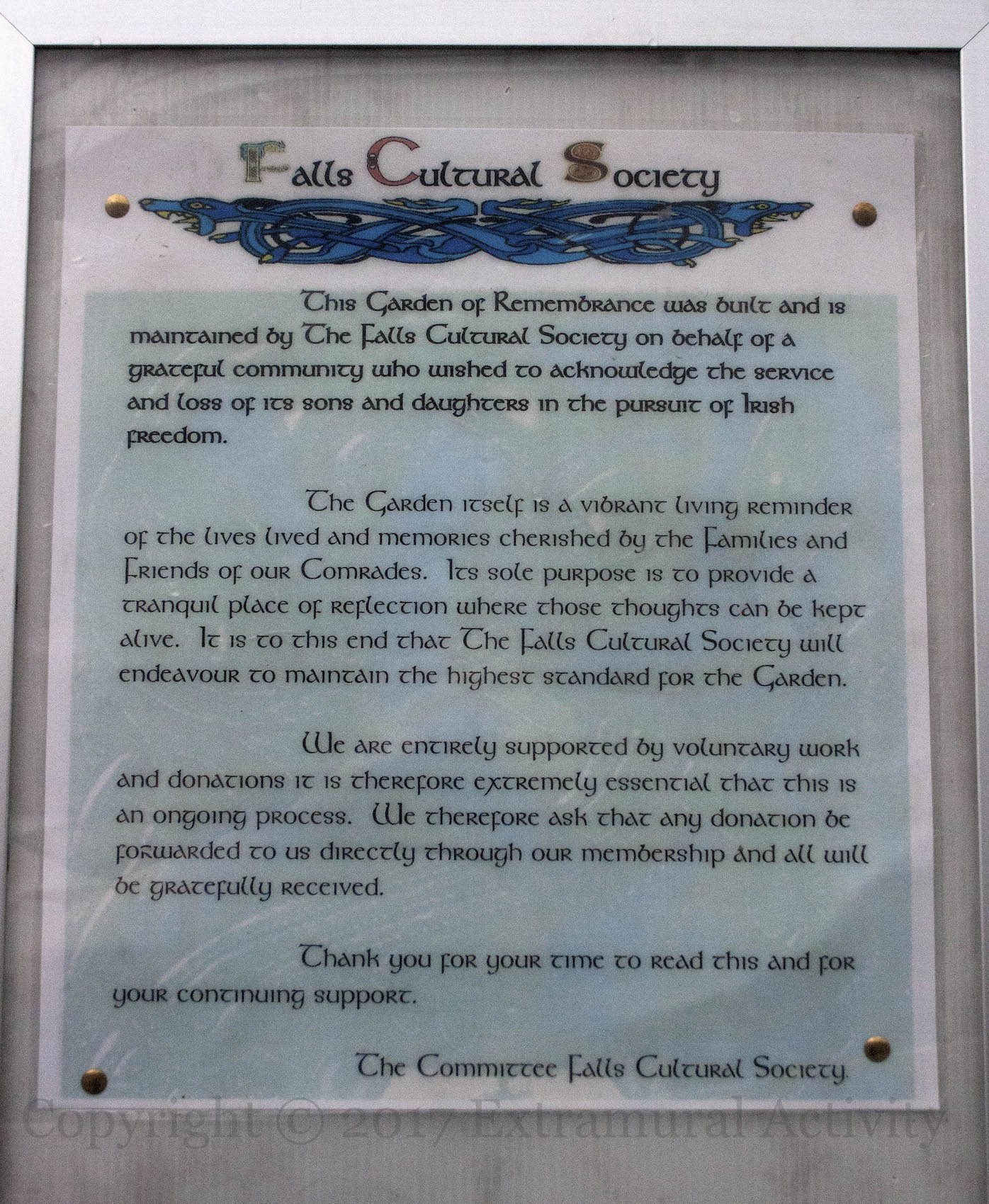
Click image to enlarge
Copyright © 2015 Seosamh Mac Coılle
X03227 X03226 X03242 falls cultural society the service and loss of its sons a daughters in the pursuit of irish freedom
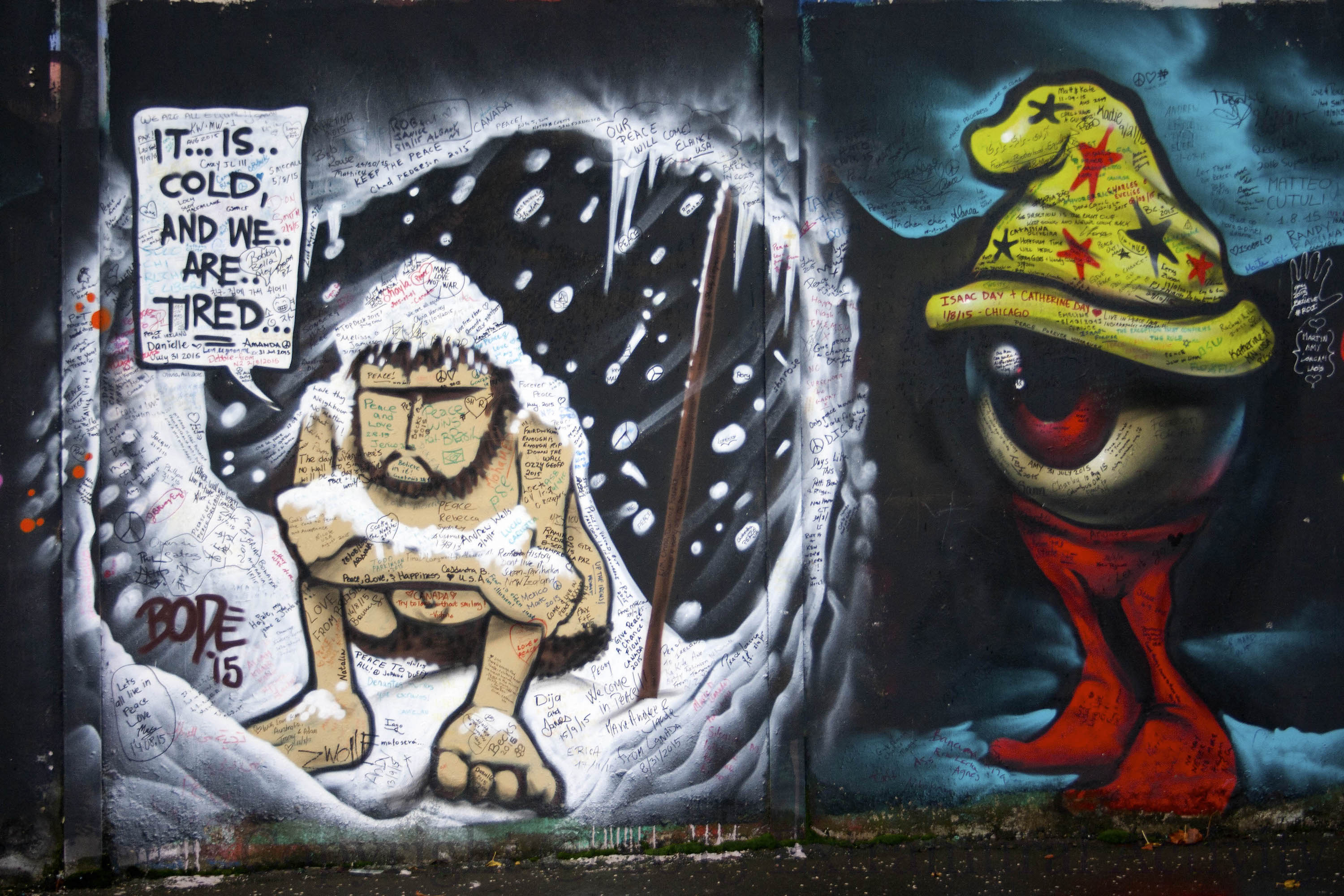
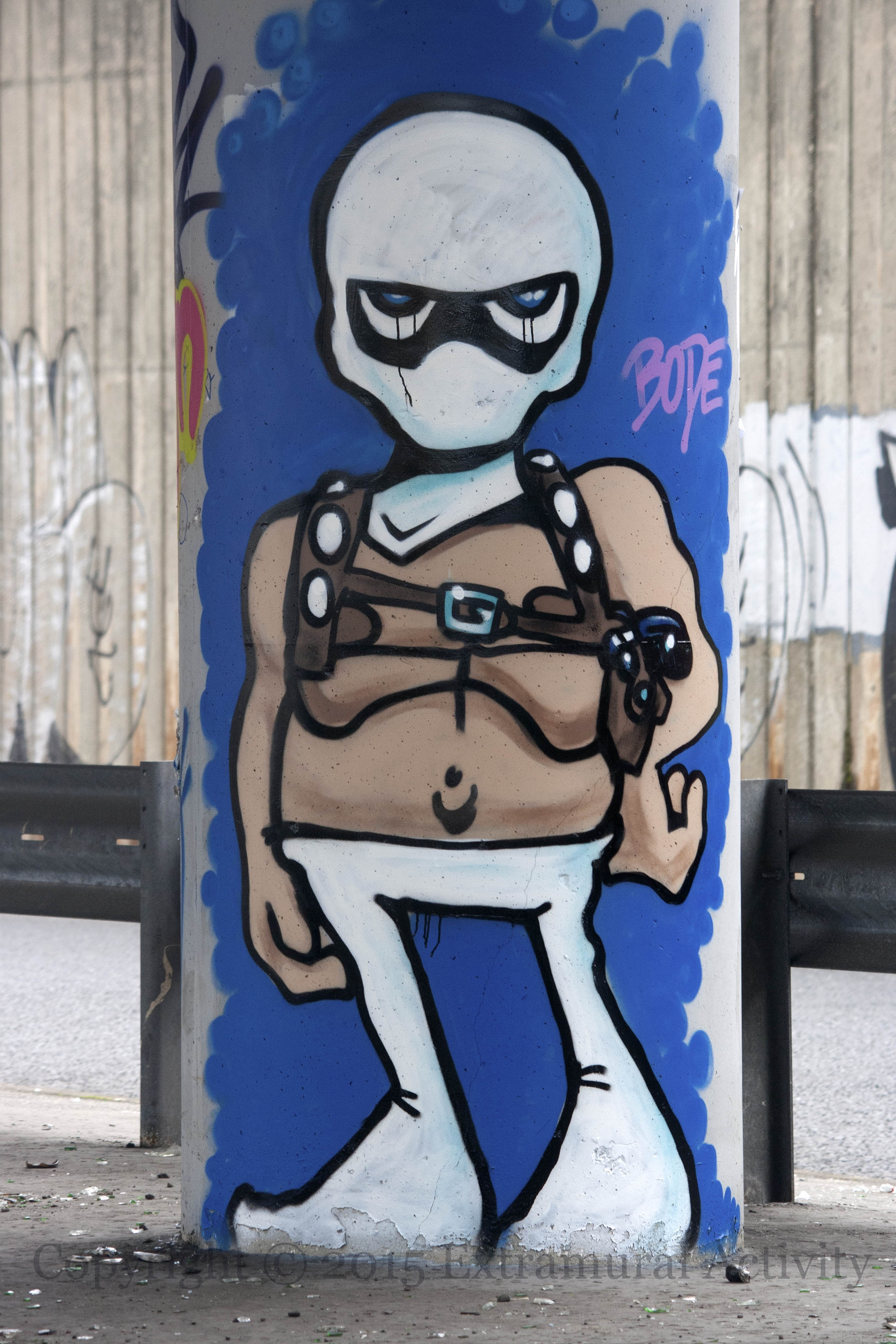
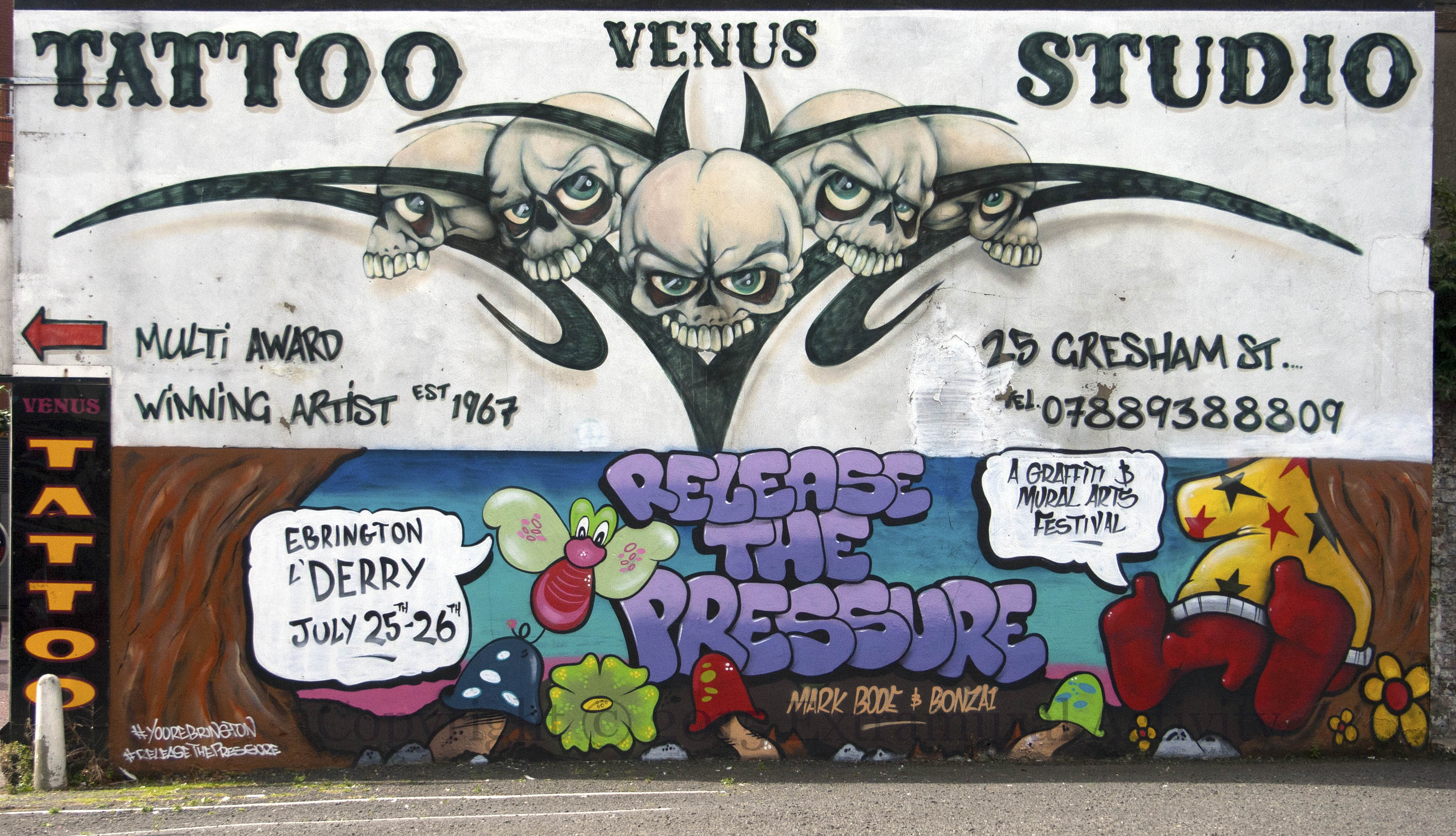
Two murals by Mark Bodé (web) and another in his style (and that of his father, Vaughan Bodé). The first is on the Cupar Way “peace” line and shows a disgruntled caveman and the Yellow Hat character; the second is in the Lecky Road underpass in London-/Derry and shows the character Cobalt 60; and the third is a promotional mural in the style of the Bodés in Gresham Street. All three date to this (2015) summer, when Bodé came to Derry for the ‘Release The Pressure’ street art festival. (Bodé’s official piece for the festival, painted with Dave Bonzai, can be seen in Metalmorphosis.)
Click image to enlarge
Copyright © 2015 Seosamh Mac Coılle
X03198 X02759 X02763 ebrington Karl Donal Adam Glenn Blaze FX
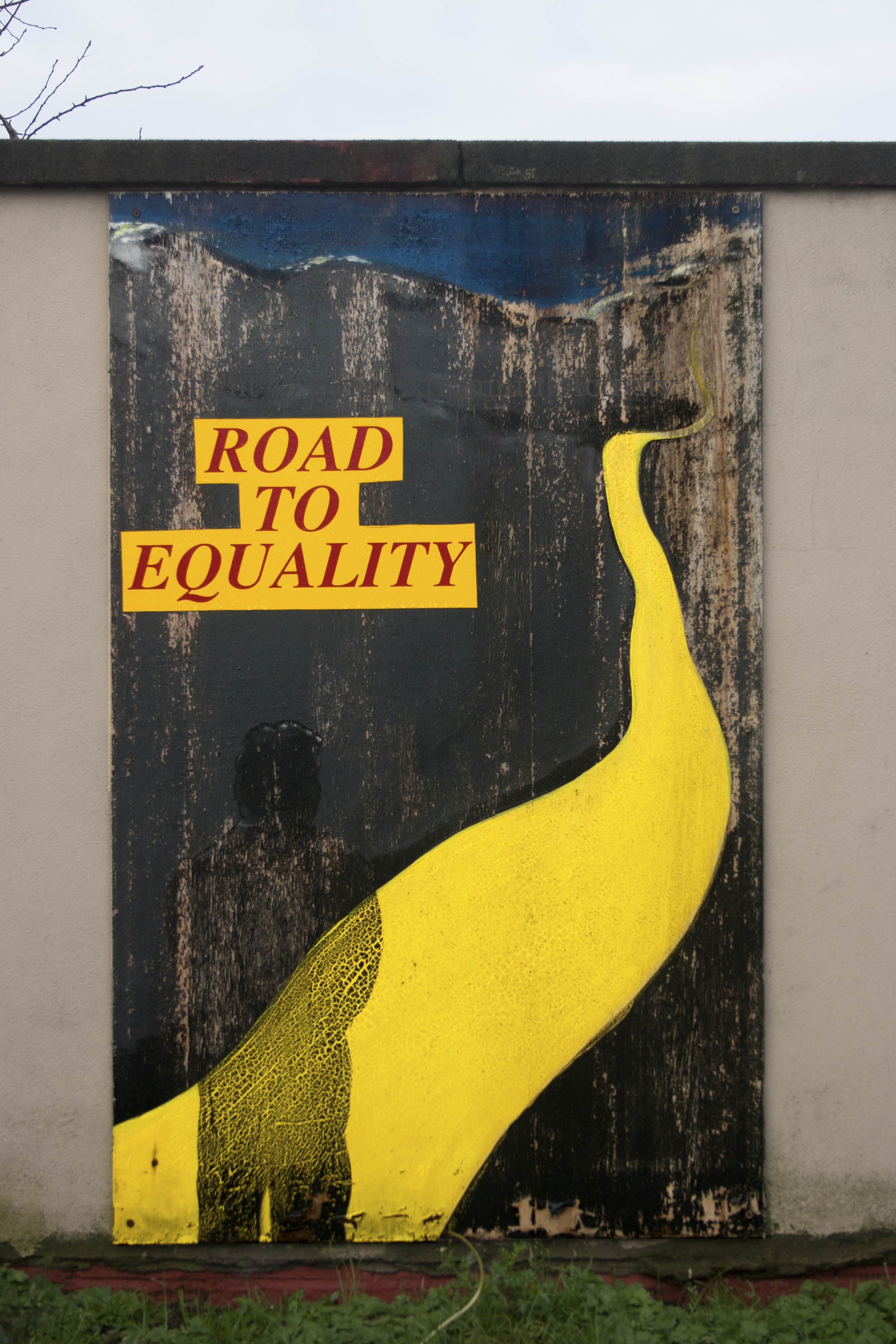
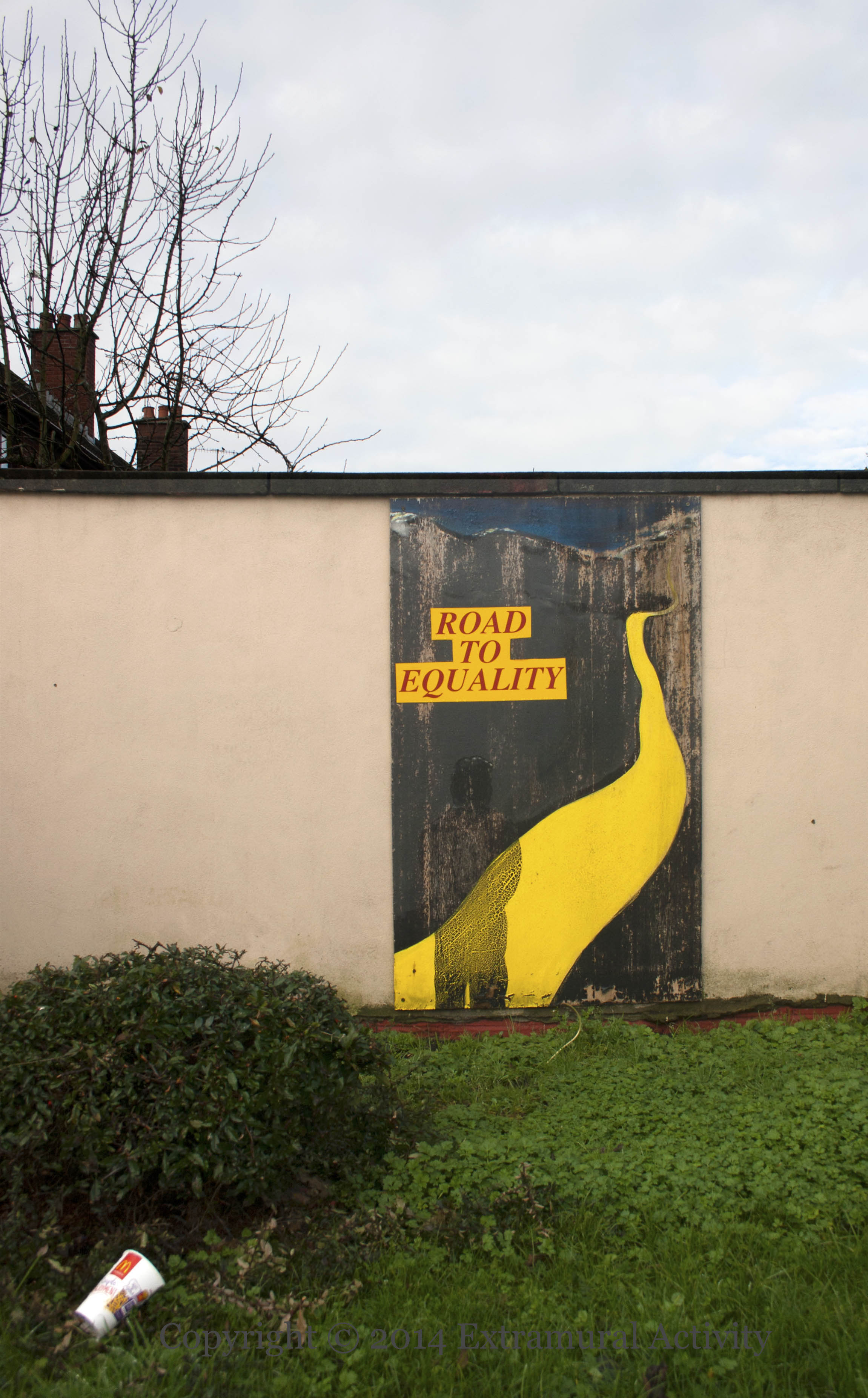
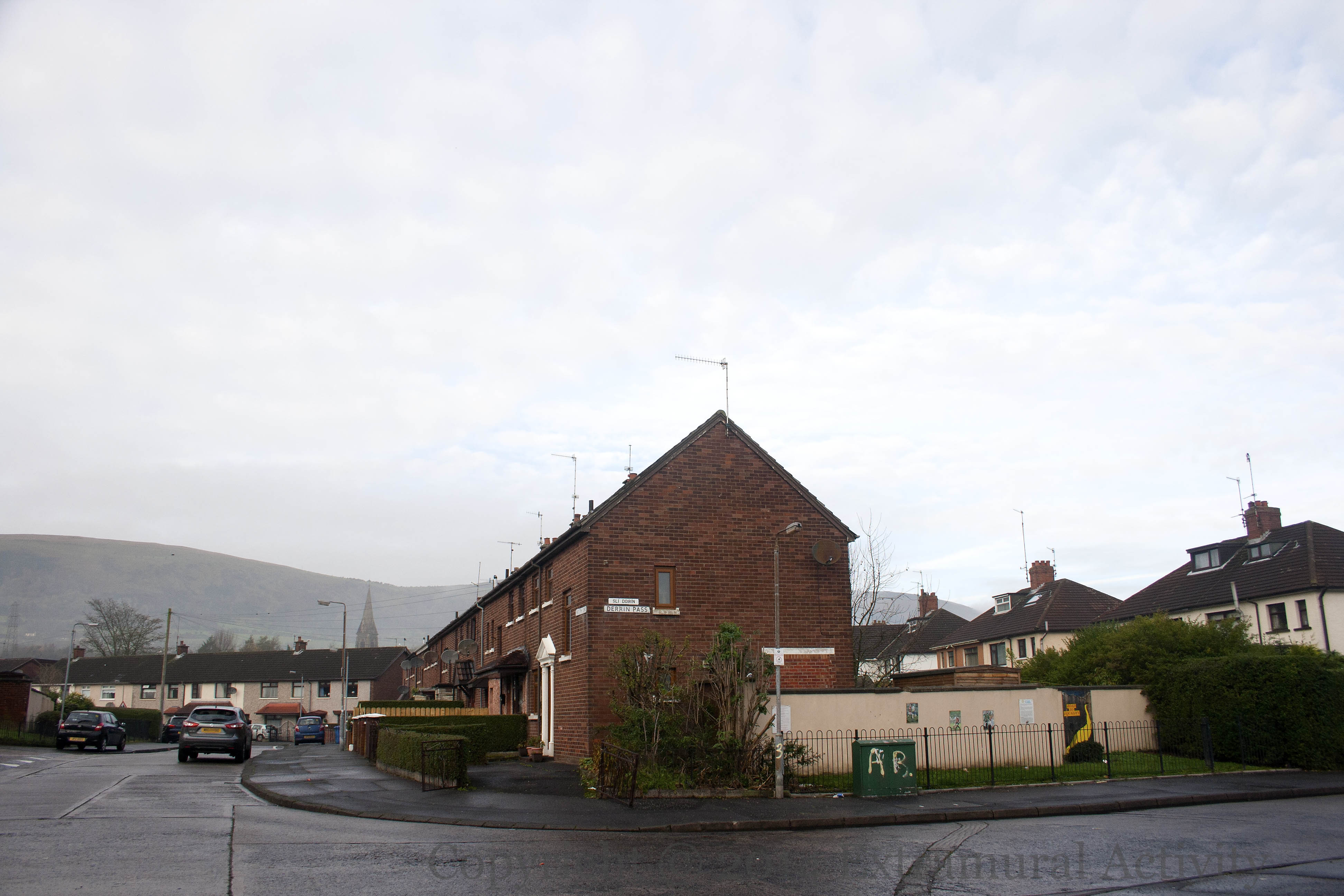
The road to equality is long and winding and goes through Andersonstown’s Derrin Pass. The junction is full of small board depicting Gaelic games, Irish culture, and landscape drawings, as well as exhortations towards equality — see the corresponding entry in the Peter Moloney Collection.
Click image to enlarge
Copyright © 2014 Seosamh Mac Coılle
X02398 X02399 X02400
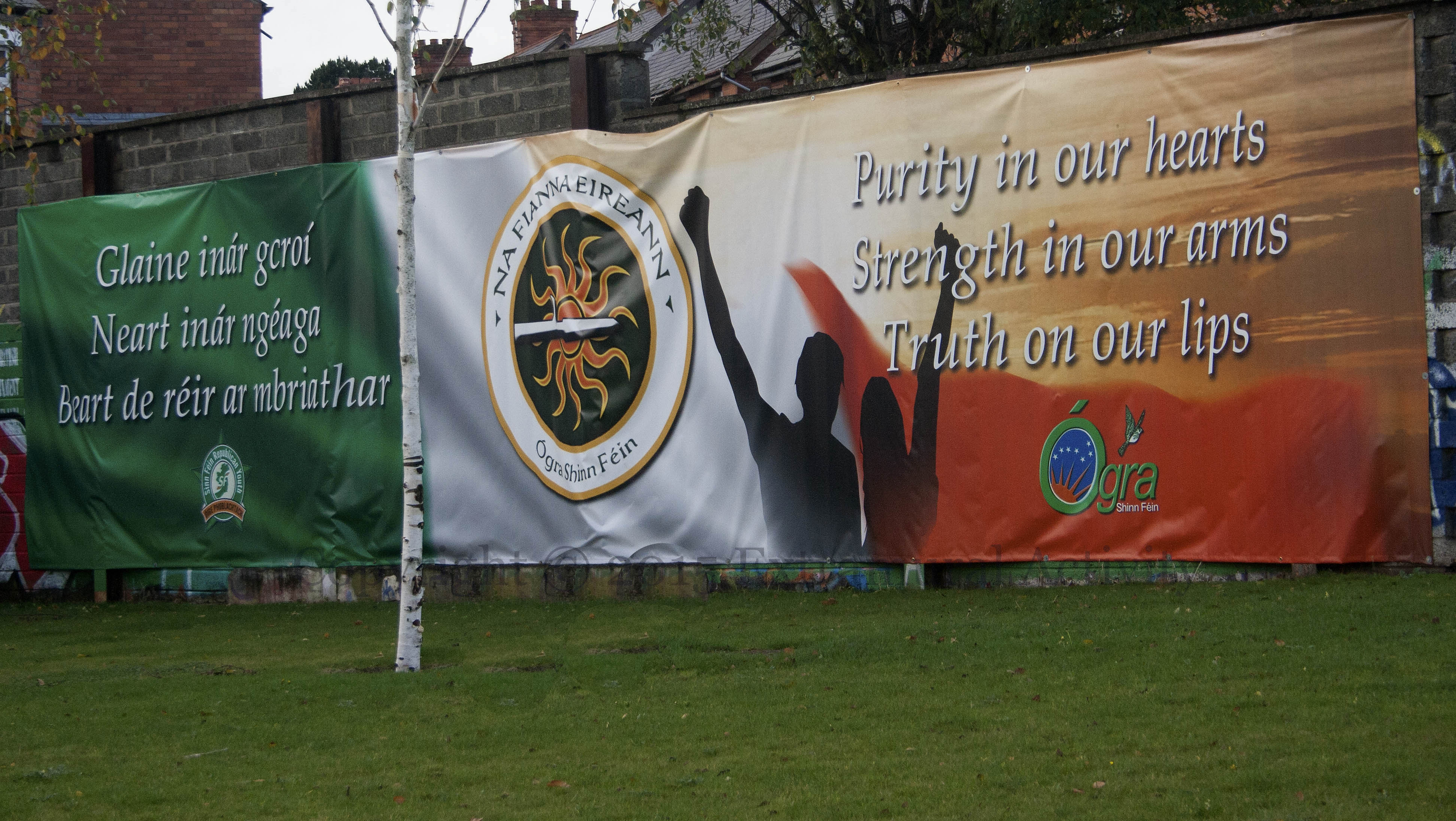
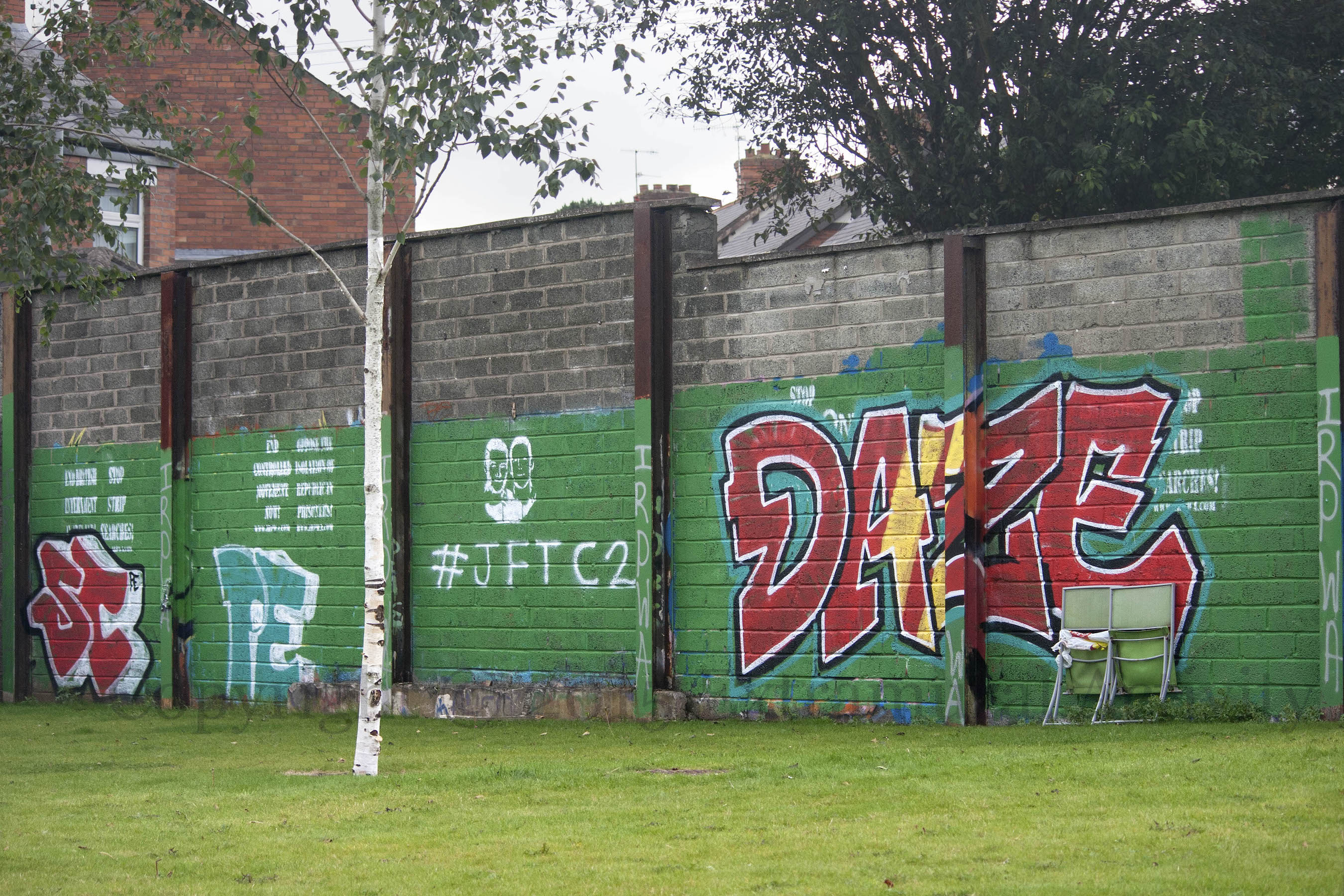
This is the middle wall on the site of the former Andersonstown RUC station, which has undergone three changes in recent months. The longstanding Fıanna sunburst (see X00350) was painted over with IRPWA stencils (Stop strip searches, End Internment, Justice For The Craigavon 2) which in turn were largely covered with writing by DAZE (see the image below). Most recently, a large Fıanna banner, shown above, has been placed over the wall.
Click image to enlarge
Copyright © 2015 Seosamh Mac Coılle
X03188 X03014 Falls Rd Sınn Féın republican youth óıge phoblachtach ógra shınn féın glaıne ınár gcroí neart ınár ngéaga beart de réır ar mbrıath purity in our hearts strength in our arms truth on our lips irish republican prisoners welfare association
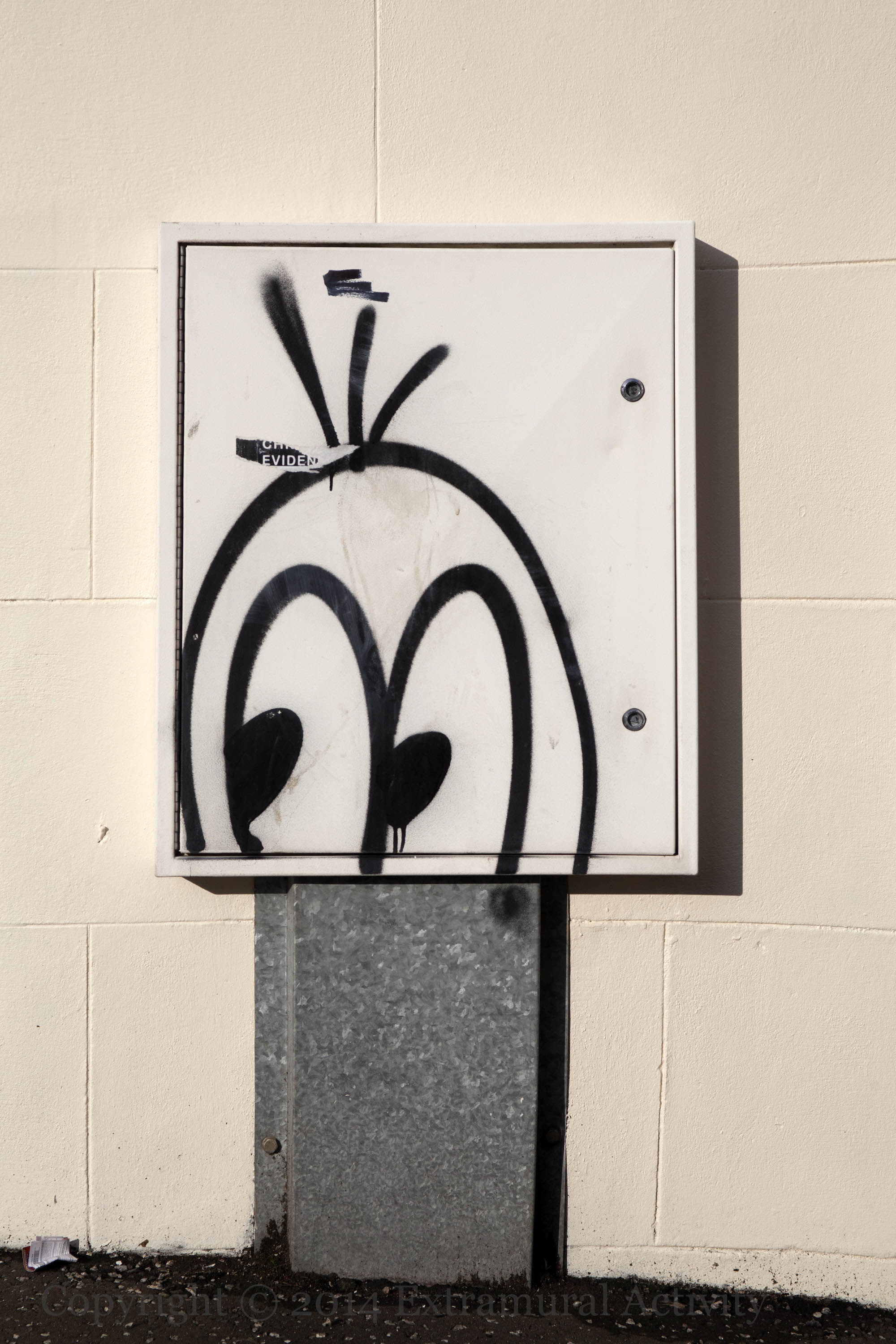
There are eyes everywhere in west Belfast.
Click image to enlarge
Copyright © 2014 Seosamh Mac Coılle
X02357 cartoon kilroy springmeadow
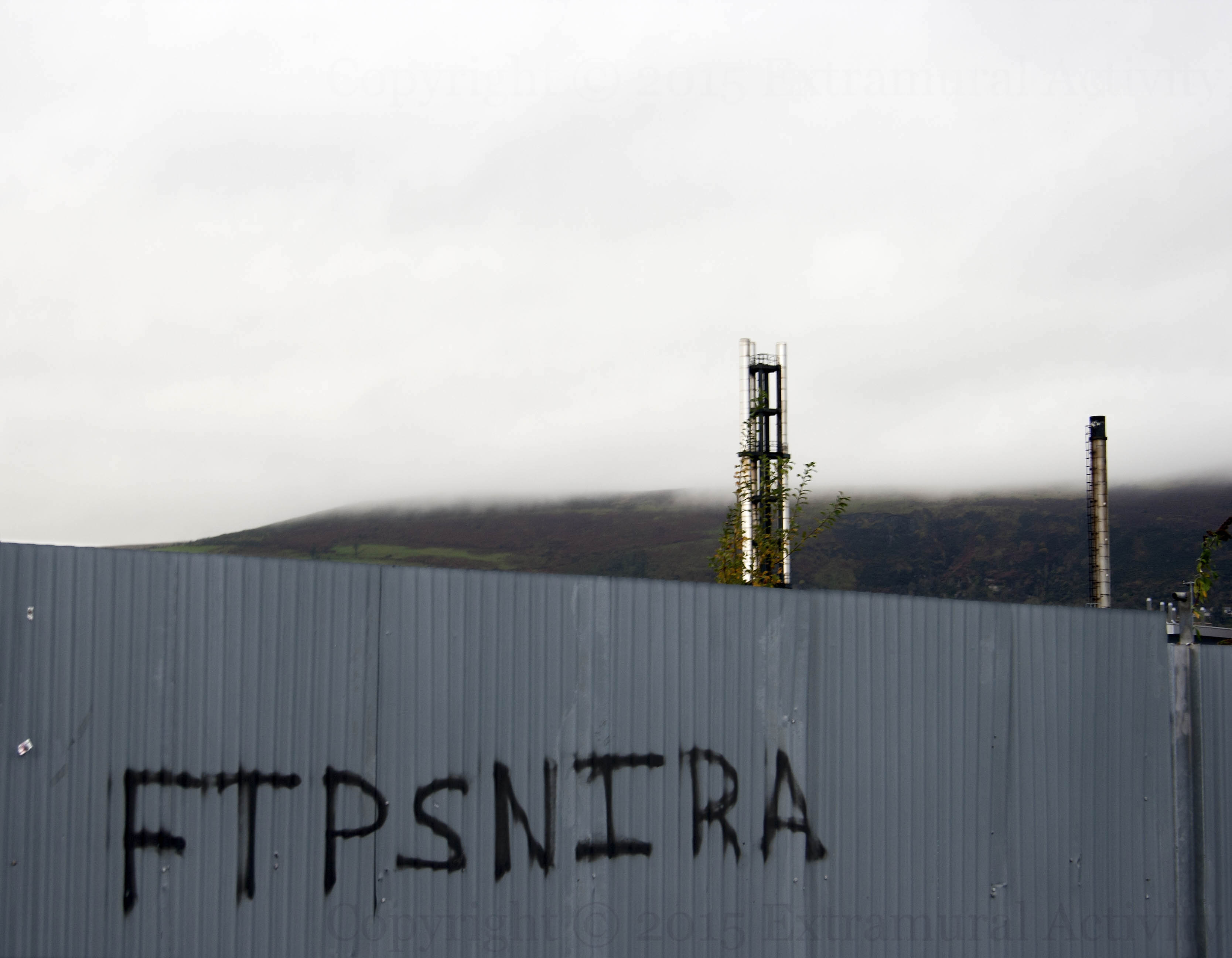
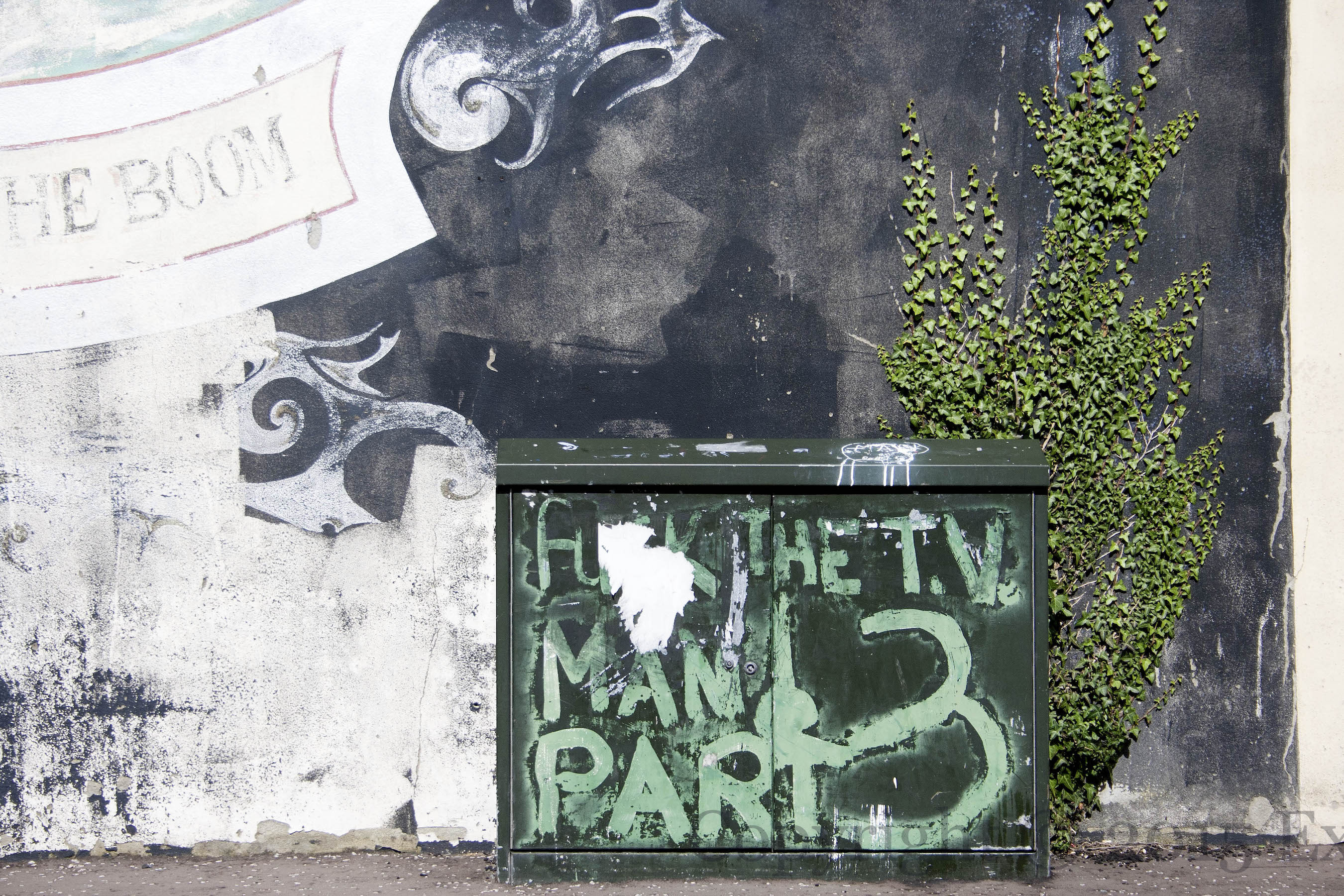
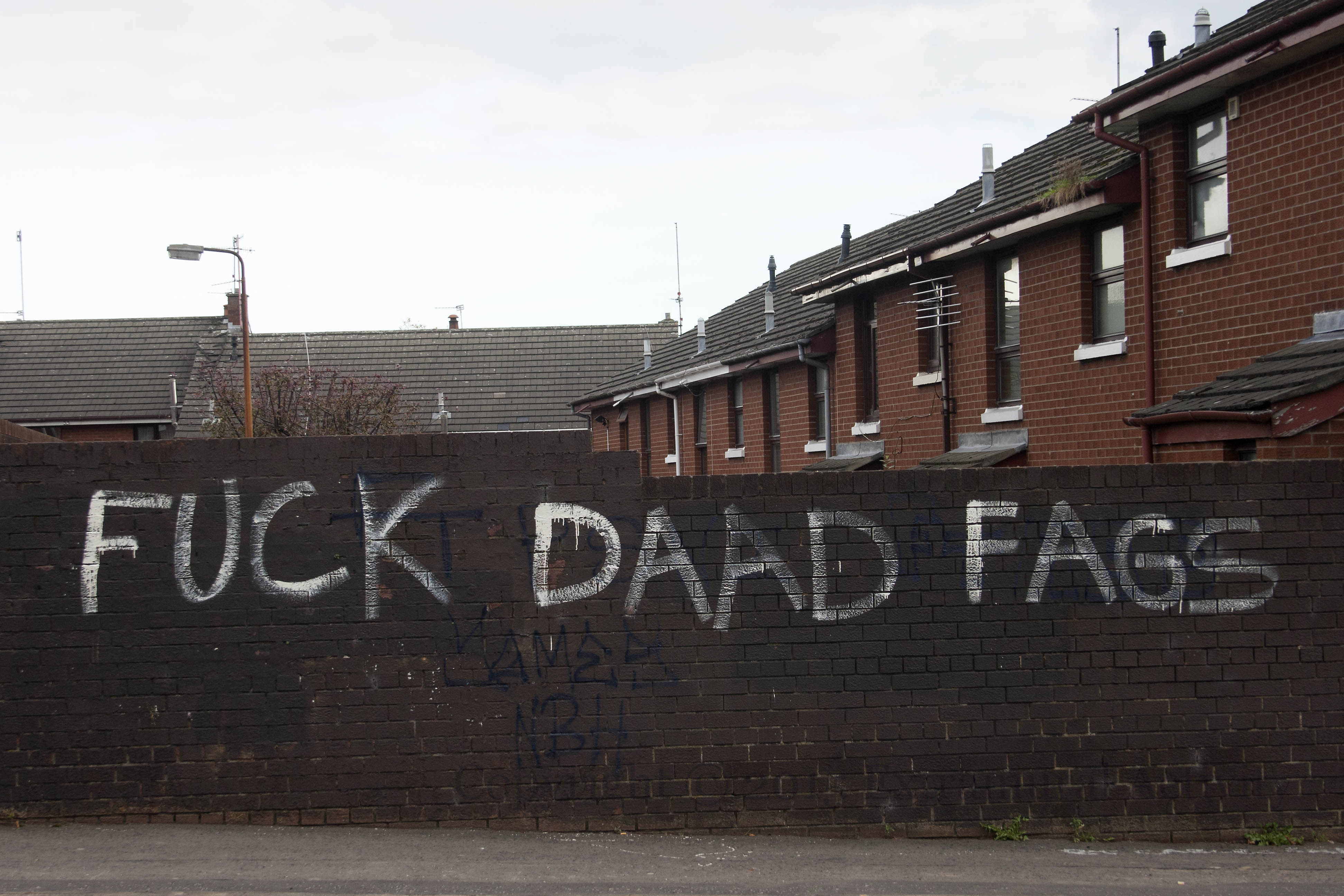
Three F-bombs today in a concentrated package. Above we have the PSNI and the IRA combined into one (and next to a swastika, not shown) in Maladon Street, south Belfast. Below, we have “Fuck the TV man, part 3” in Roulston Street in Londonderry’s Waterside. And finally, there is is “Fuck DAAD fags” on the New Lodge Road in north Belfast. “DAAD” stands for “direct action against drugs”, a group which counted Kevin McGuigan and Jock Davison as members (both of whom were killed in a feud this summer) and now goes by “AAD”. (For AAD and the murders of Davison and McGuigan see Irish News | Belfast Telegraph | Guardian.)
Click image to enlarge
Copyright © 2015 Seosamh Mac Coılle
X03158 X02858 X03152
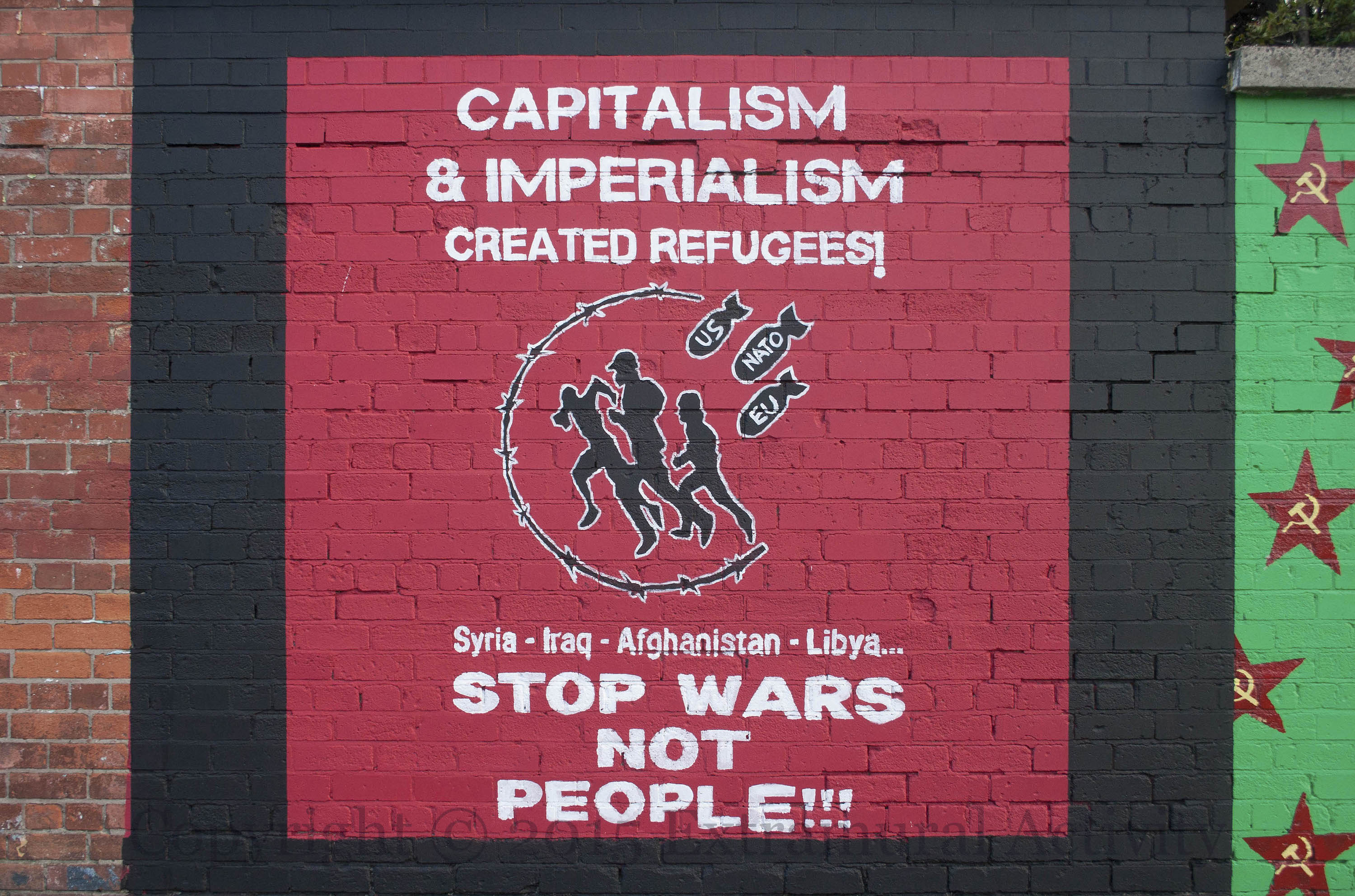
The bombs of the US, NATO, and the EU drive fleeing refugees into a circle of barbed wire in this new mural on Beechmount Avenue: “Capitalism & imperialism created refugees! Syria • Iraq • Afghanistan • Libya … Stop wars not people!!!” A report in Saturday’s New York Times on the migrant crisis cites a June UN report when it asserts that “There are more displaced people and refugees now than at any other time in recorded history — 60 million in all”.
Previously: Refugees Welcome
Click image to enlarge
Copyright © 2015 Seosamh Mac Coılle
X03143 ascaill ard na bhfeá antifa international
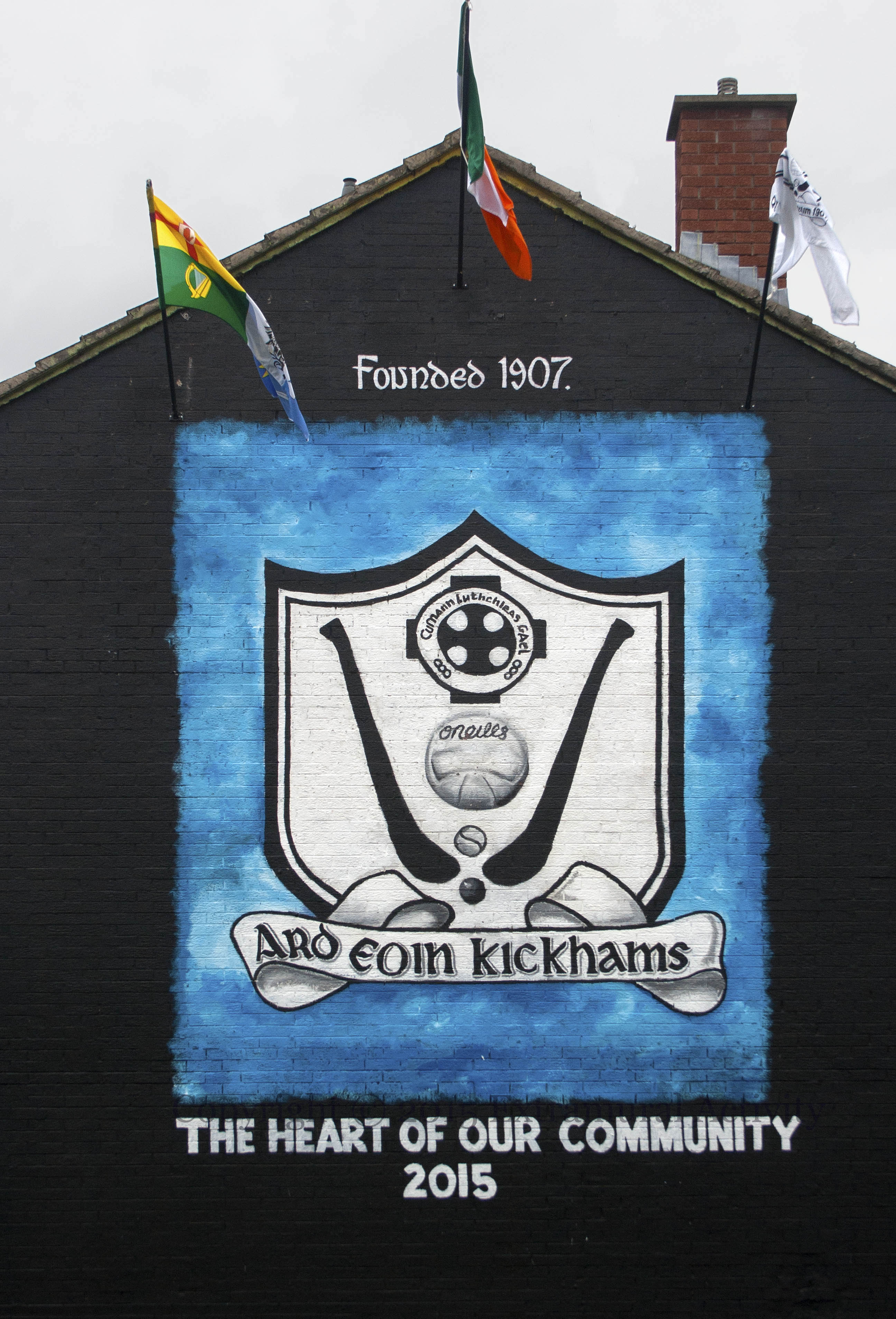
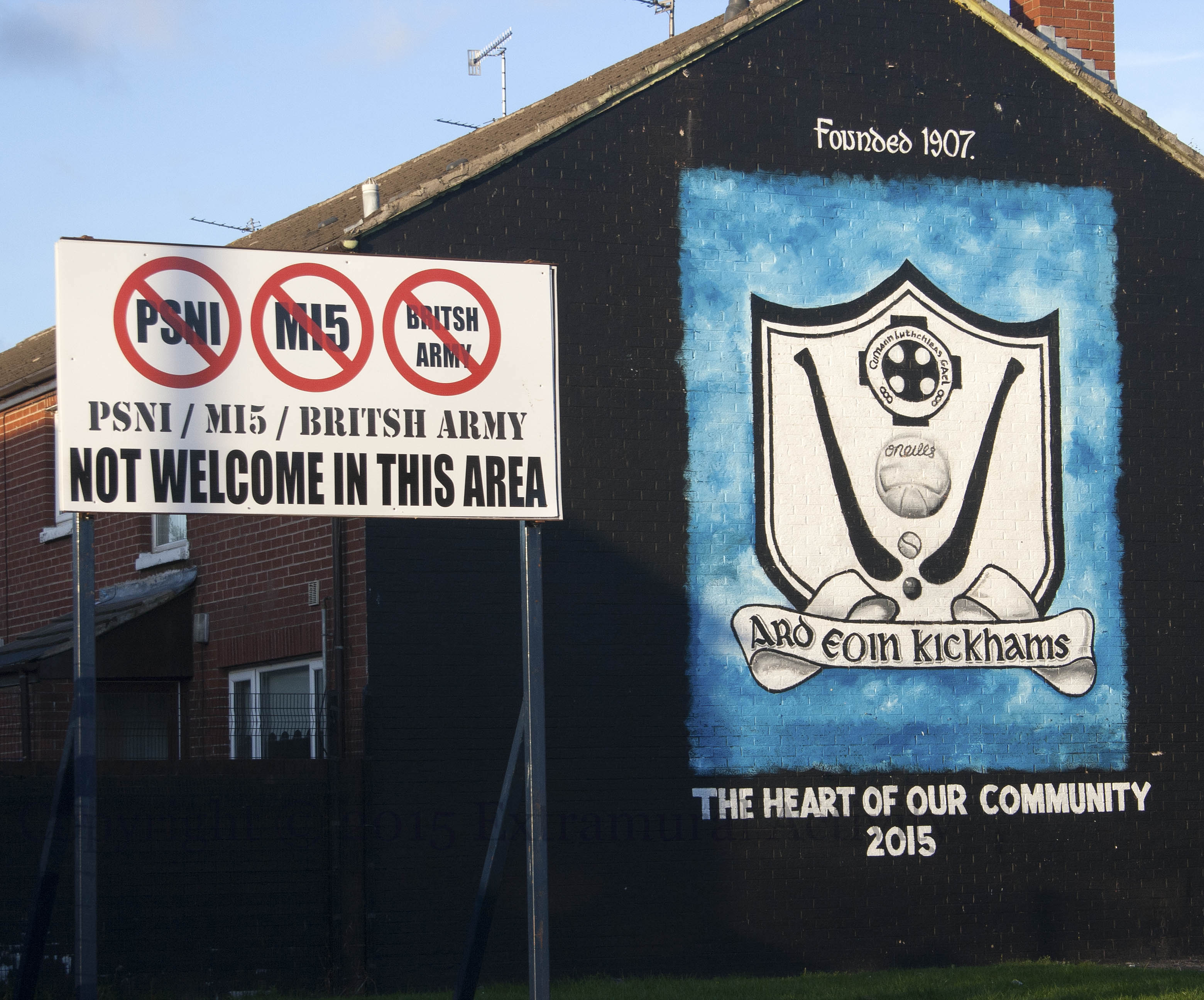
In early August the RNU blacked out an Ard Eoın Kickhams GAA mural in Ardoyne (featured previously) and replaced it with a tarp calling for the RUC/PSNI to be disbanded (see this Belfast Live article for an image). After complaint from the local community, the tarp was removed and the central part of the mural was repainted, showing the celtic cross of Cumann Lúthcleas Gael, a football, sliotars, and hurleys. Members of the RUC were forbidden from GAA membership until “Rule 21” (WP) until 2001; they are now permitted to join and play Gaelic games, even if they not welcome in the area – see the image below.
Click image to enlarge
Copyright © 2015 Seosamh Mac Coılle
X02758 X03138 founded 1907 MI5 british army not welcome in this area gaelic athletic association GAA CLG

