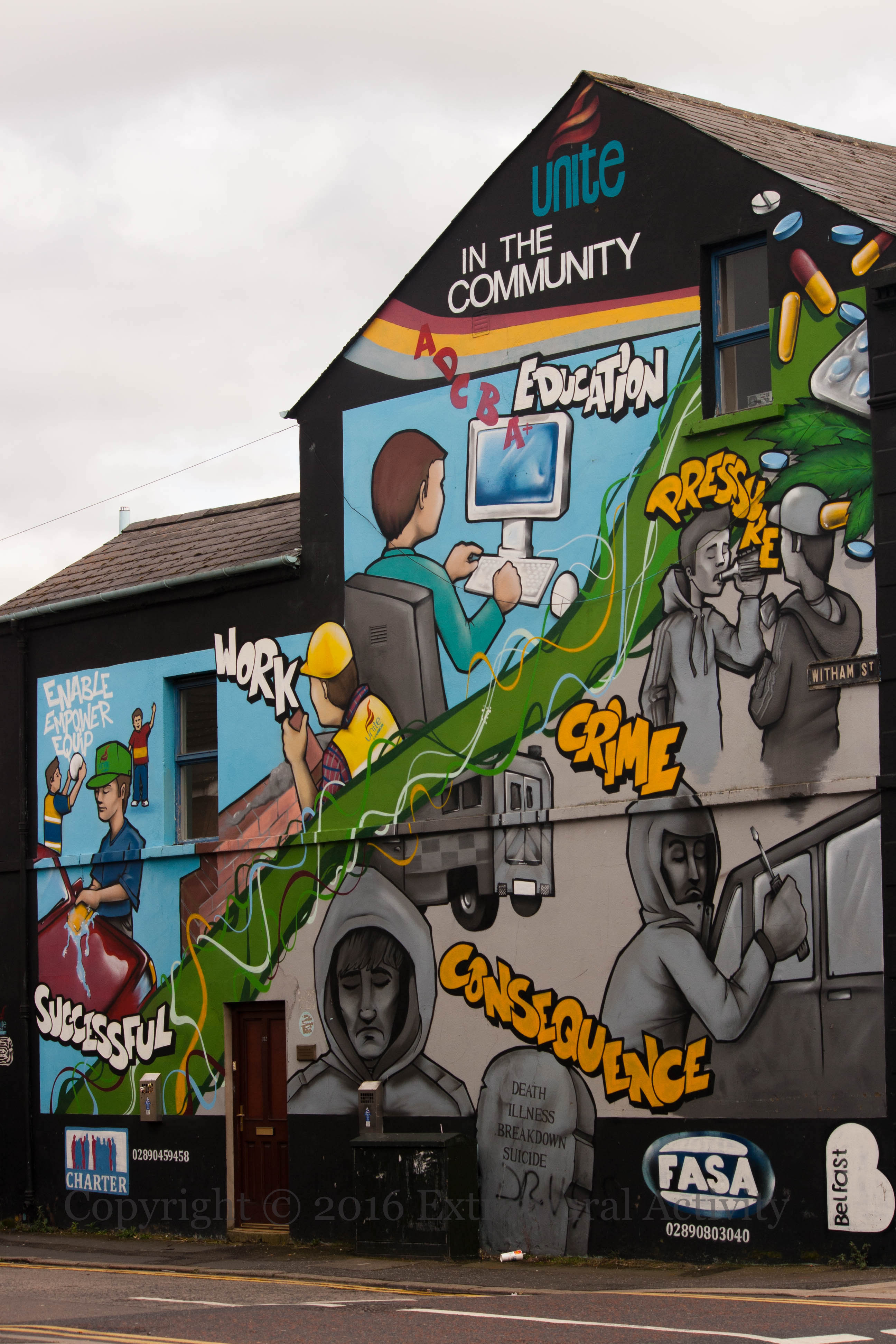
A socially-themed mural in east Belfast: On the dark, down, side: (peer-)pressure, crime, consequence, death, illness, breakdown, suicide. On the up, bright, side; education, work, successful, “enable, empower, equip” (the motto of CharterNI)
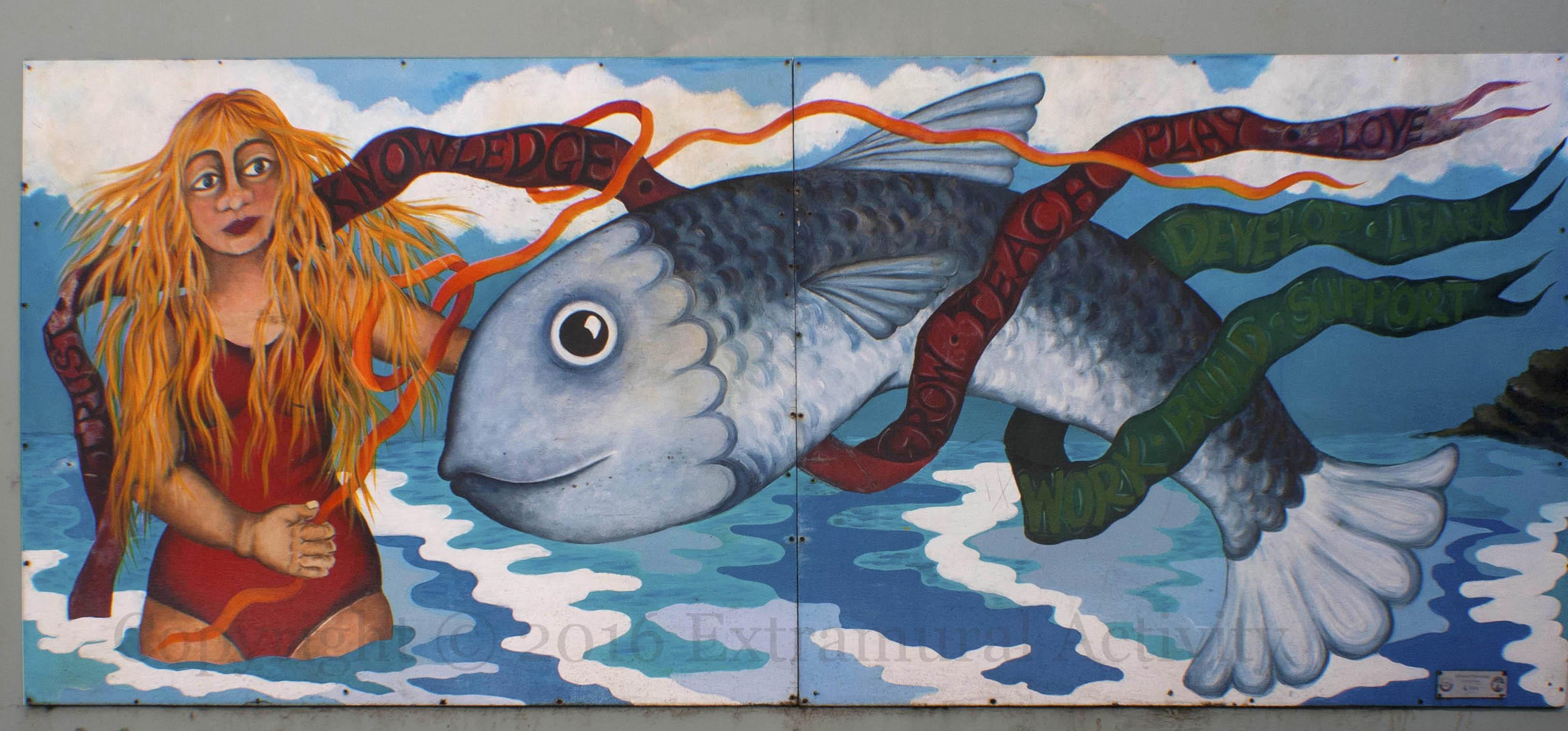
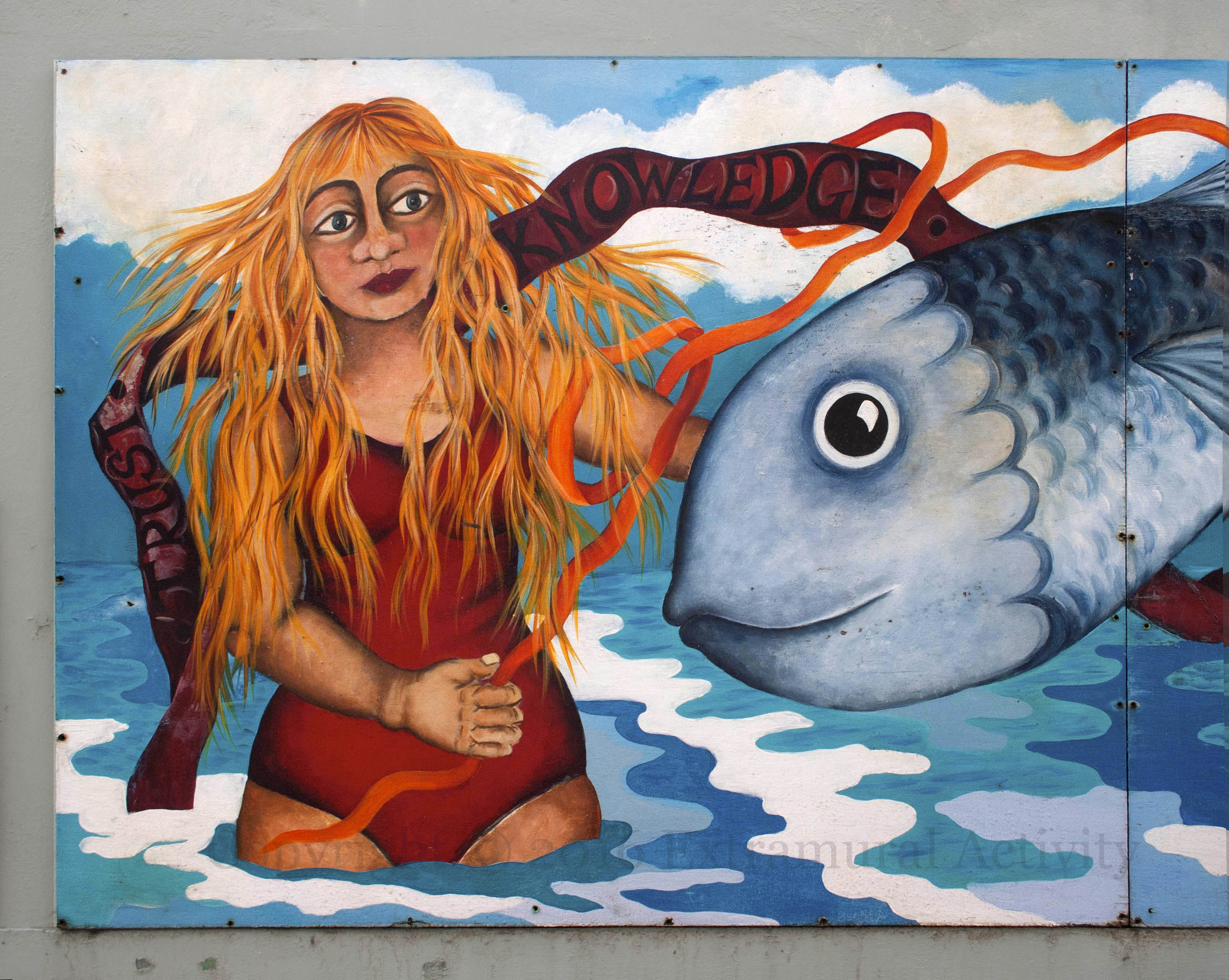
A woman standing in the sea befriends a giant salmon in this mural by Lesley Cherry (web | Fb) behind the Windsor Women’s Centre (Fb) on Broadway in south Belfast. “Trust – Knowledge – Grow – Teach – Play – Love”. Close-up of the left-hand side below.
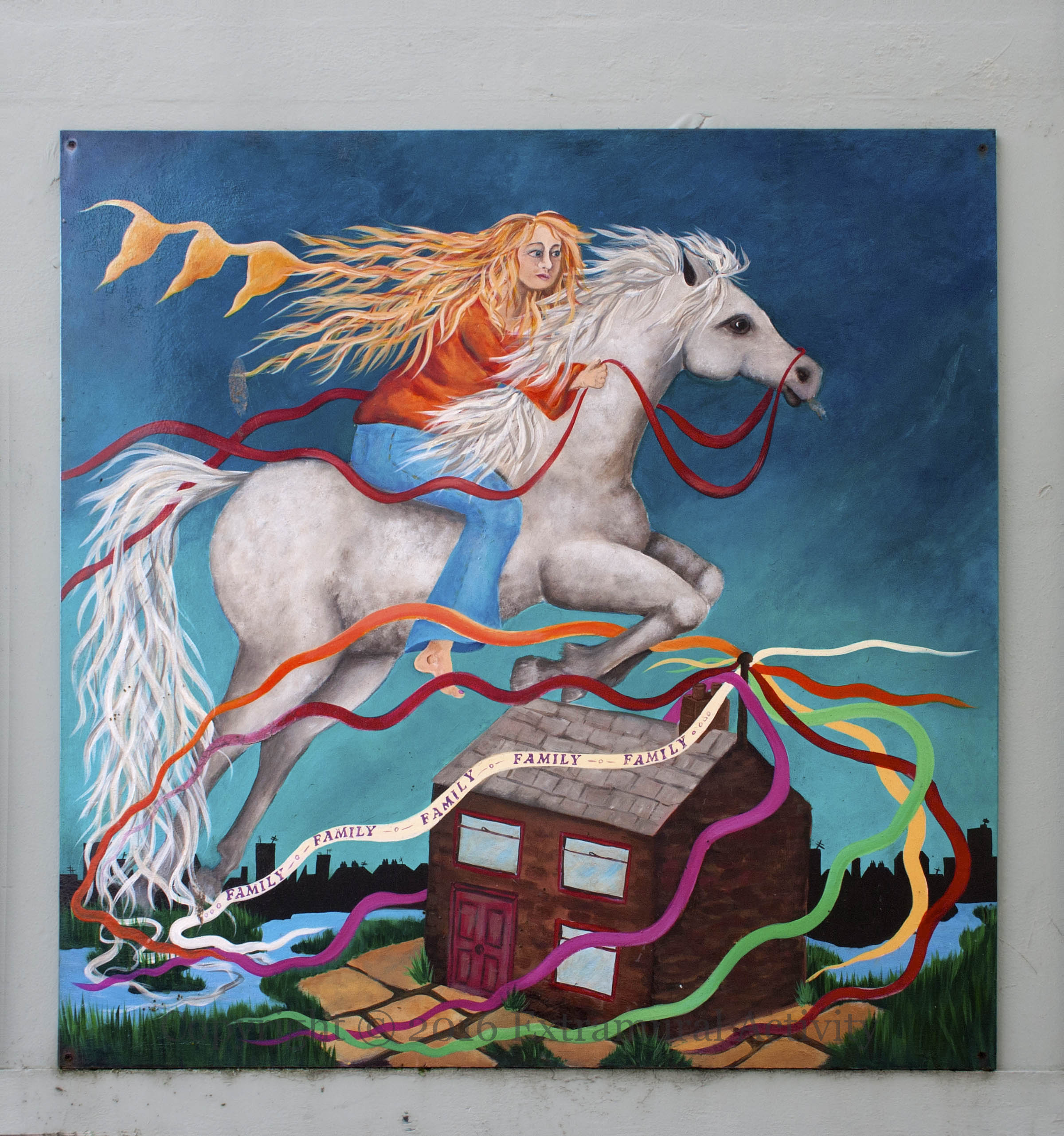
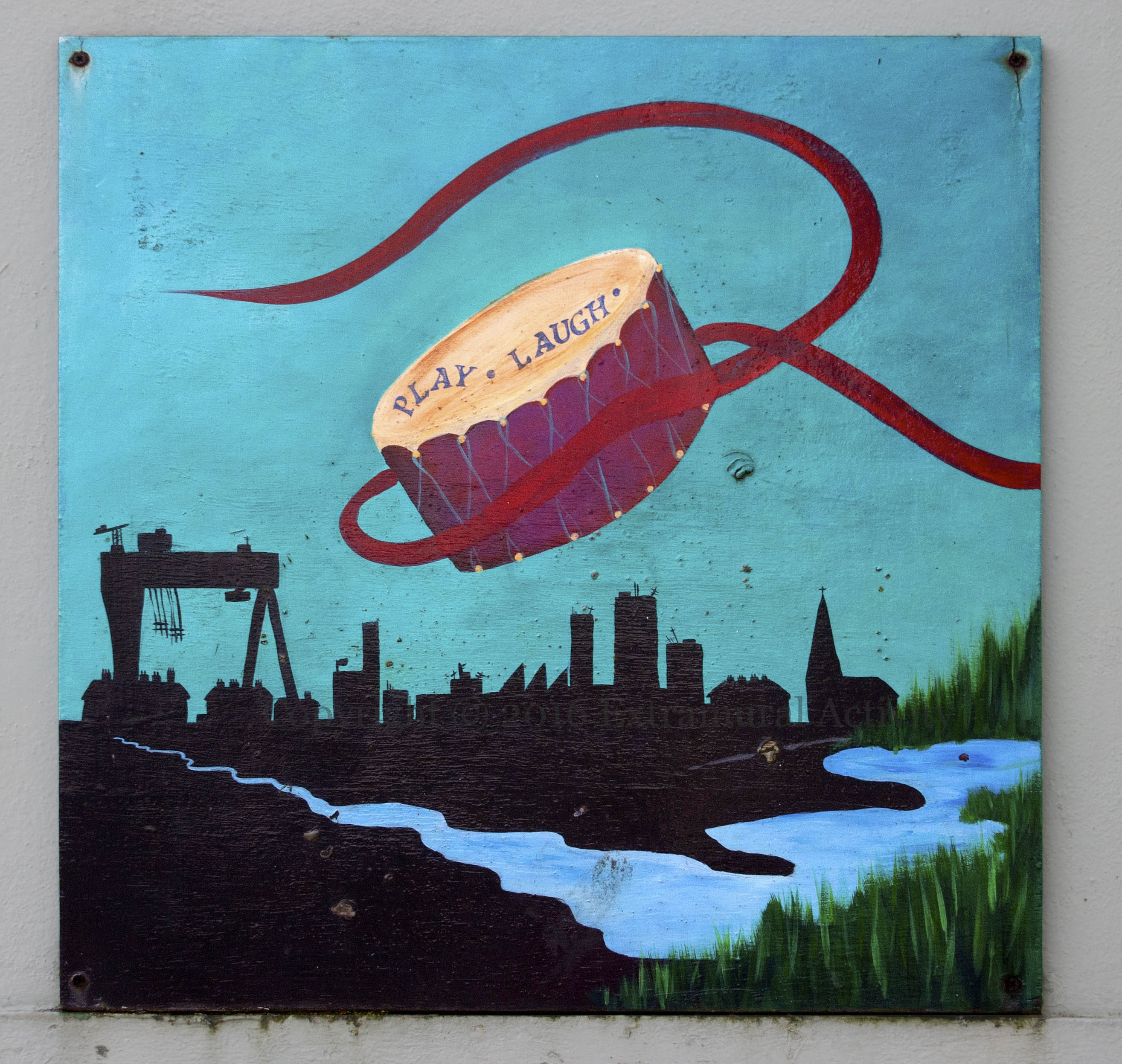
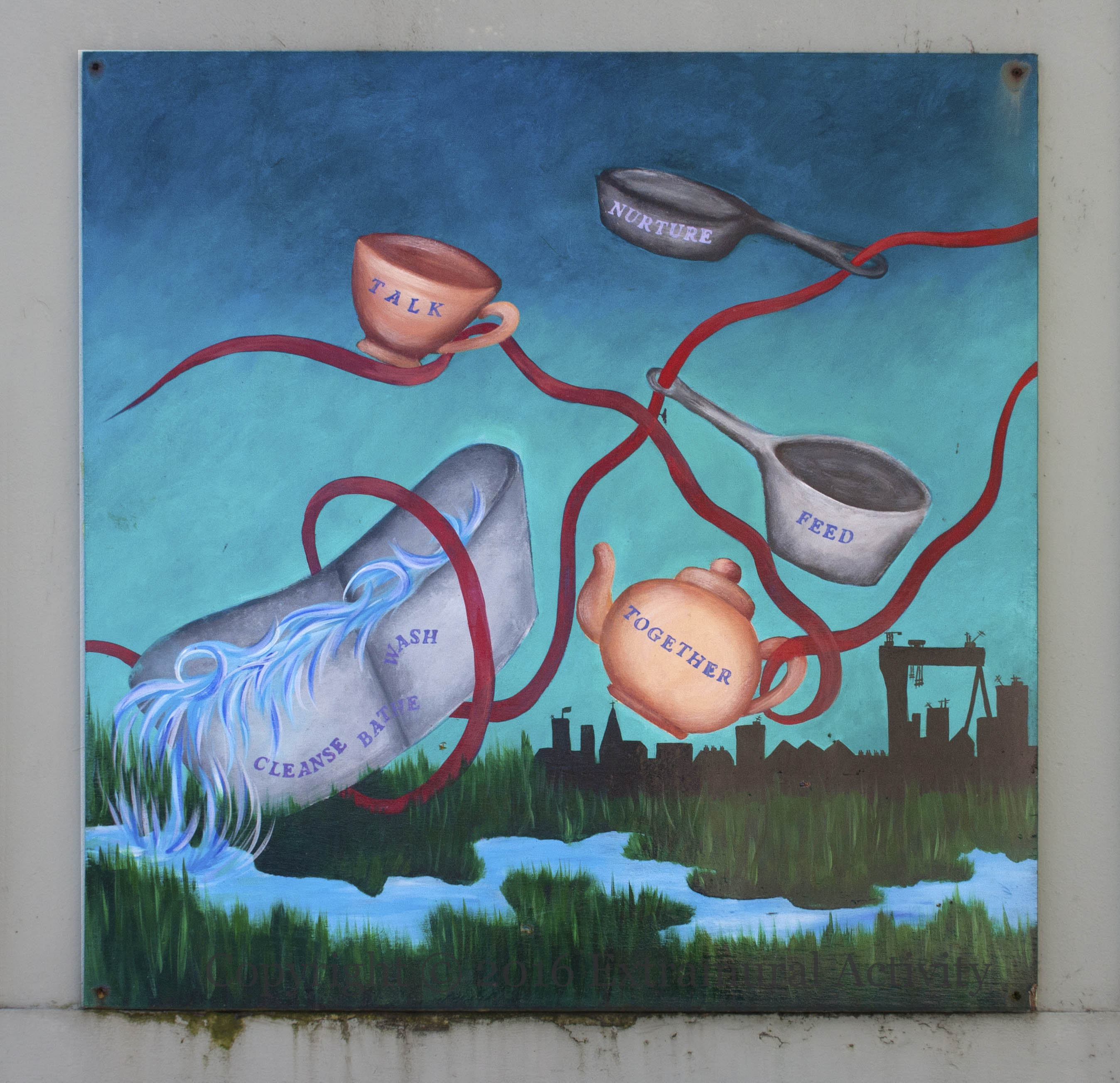
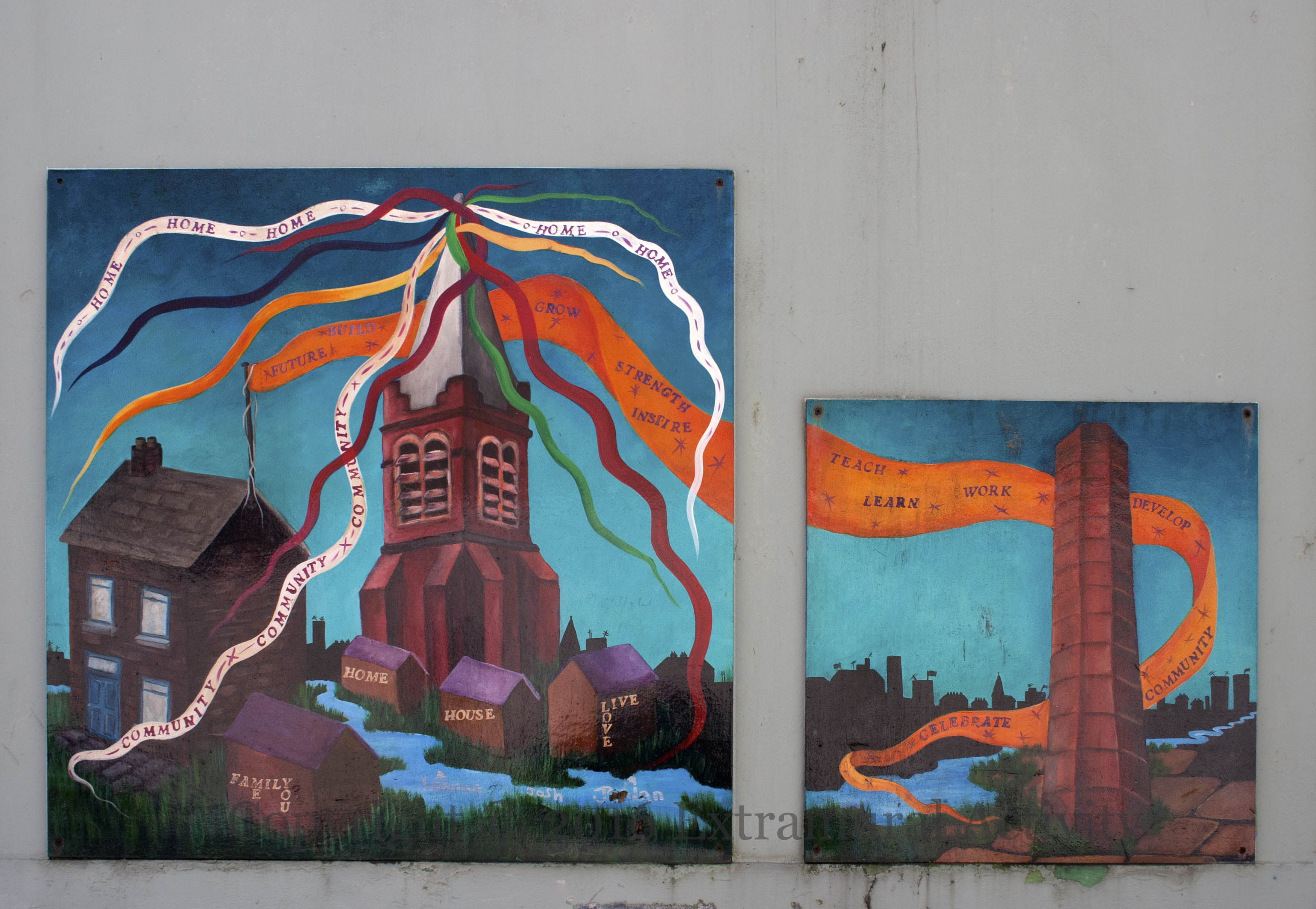
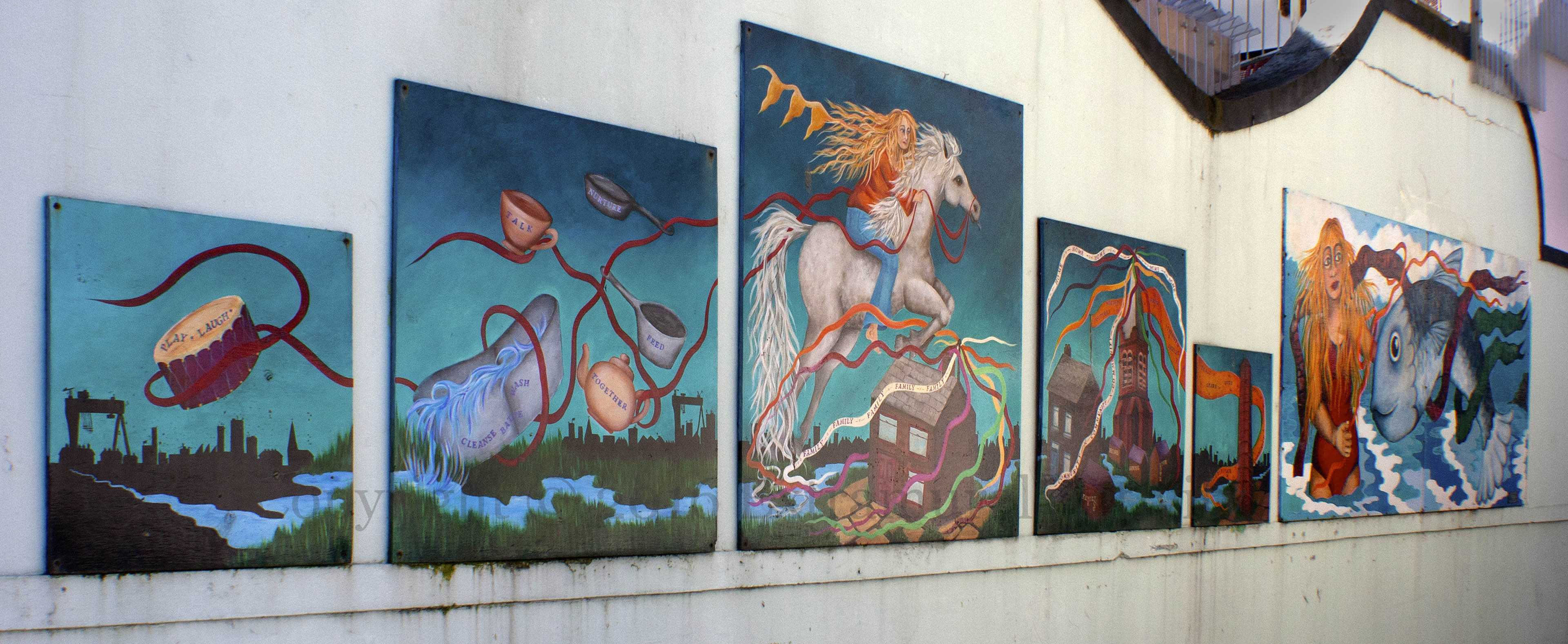
Here are all five panels from Lesley Cherry’s Village Life piece at the rear of the Windsor Women’s Centre in south Belfast (along with the Salmon Of Knowledge piece featured previously). In the first two, wrapped up in the ribbons streaming from a horse in the central panel (shown above) are a drum (against a backdrop of Belfast city, including a Harland & Wolff crane), a bathtub, teapot and teacup, and pot and pan. The fourth shows the spire of a church and the fifth the smokestack from a factory.
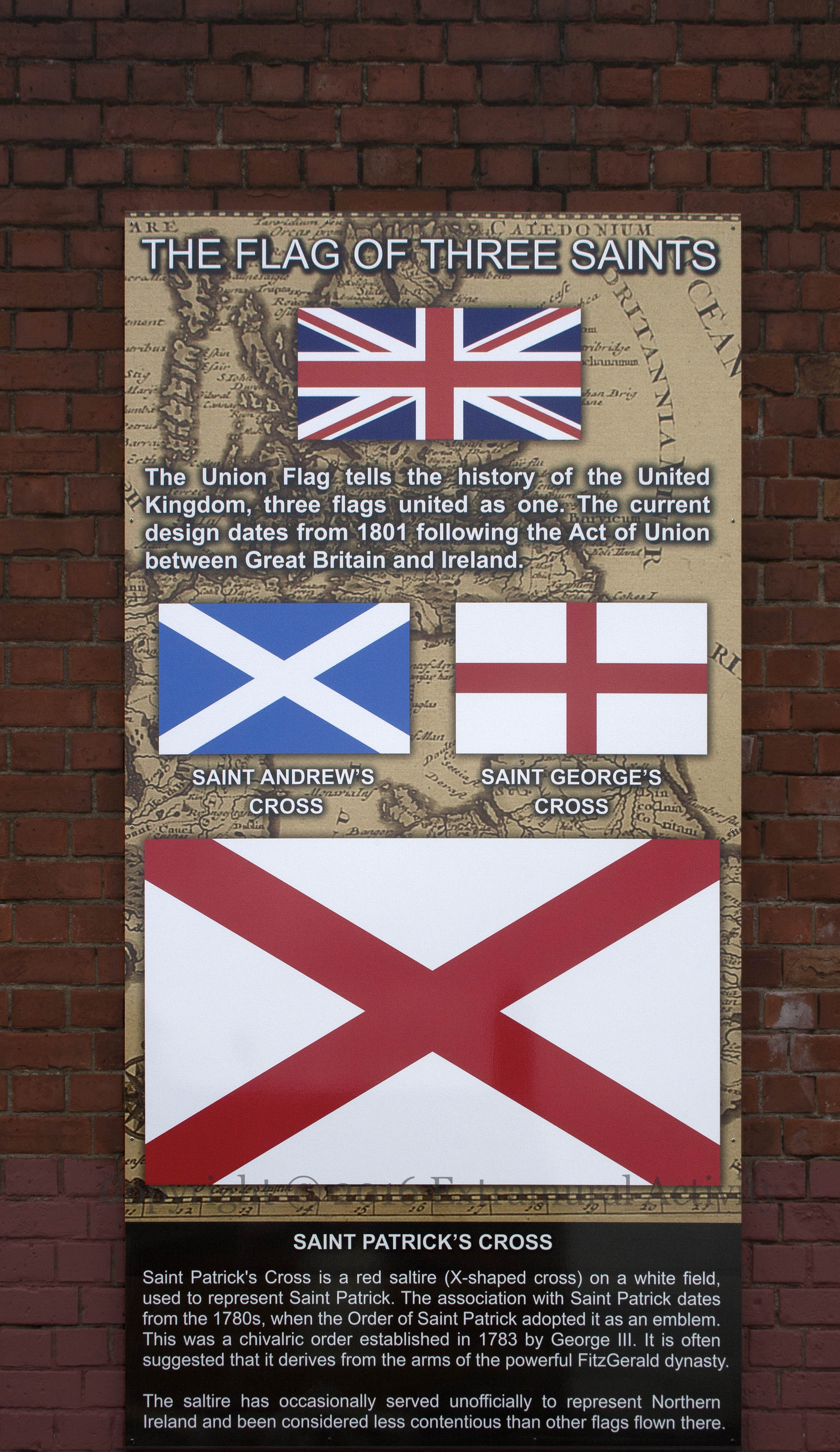
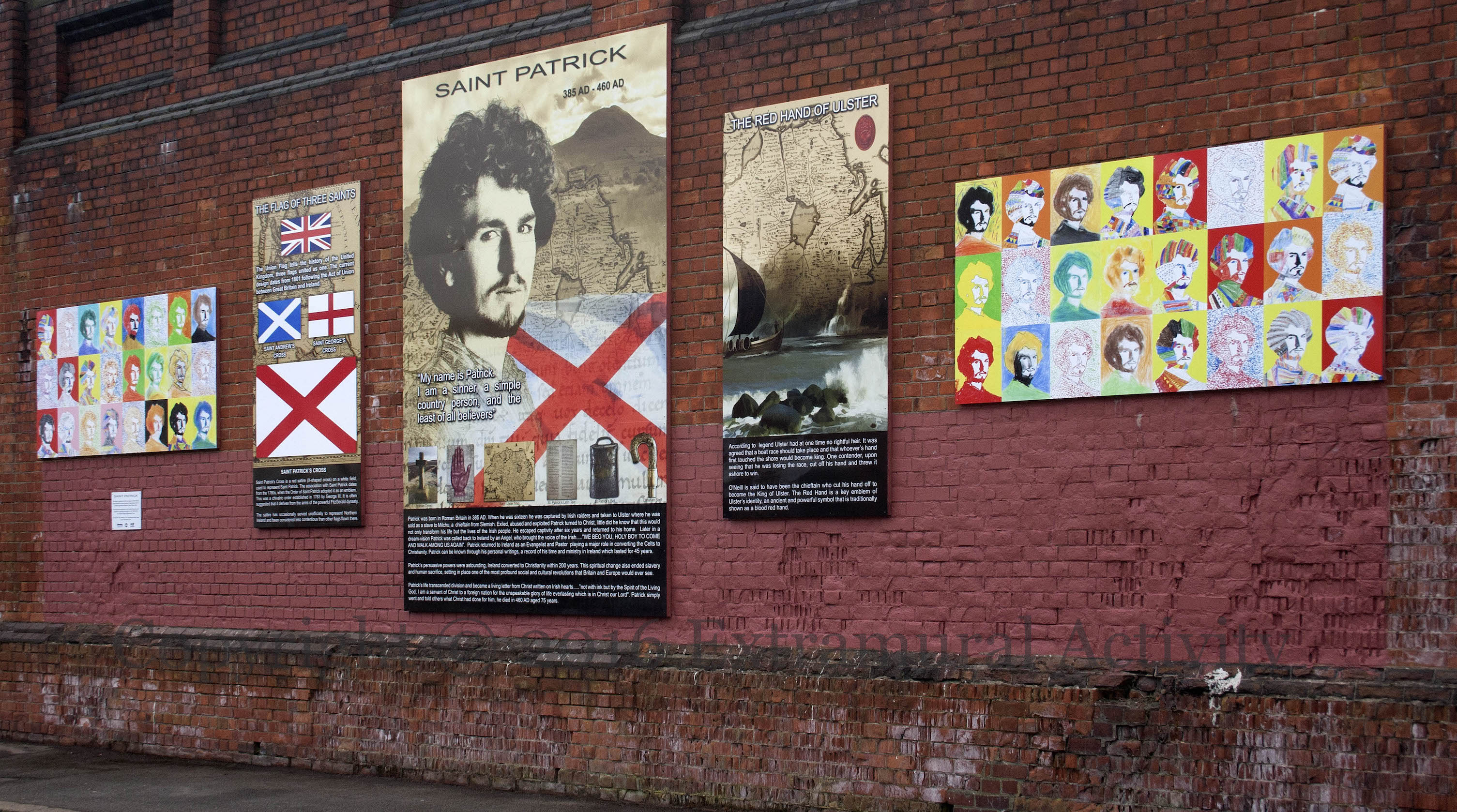
Here is the final board in the new “St Patrick” set on Tates Avenue (and a wide shot of them all, below). This one explains the composition of the Union flag as a combination of the saltire of Saint Andrew of Scotland, the cross of Saint George of England, and the saltire of Saint Patrick of Ireland. As the text notes, the saltire is much later than the saint: “The association with Saint Patrick dates from the 1780s, when the Order of Saint Patrick adopted it as an emblem. This was a chivalric order established in 1783 by George III. It is often suggested that it derives from the arms of the powerful FitzGerald dynasty [which dates to the 12th century].”
The text ends oddly: “The saltire has occasionally served unofficially to represent Northern Ireland and [has] been considered less contentious than other flags flown there.” Similar language is used on the symbols.com page for the Saltire.
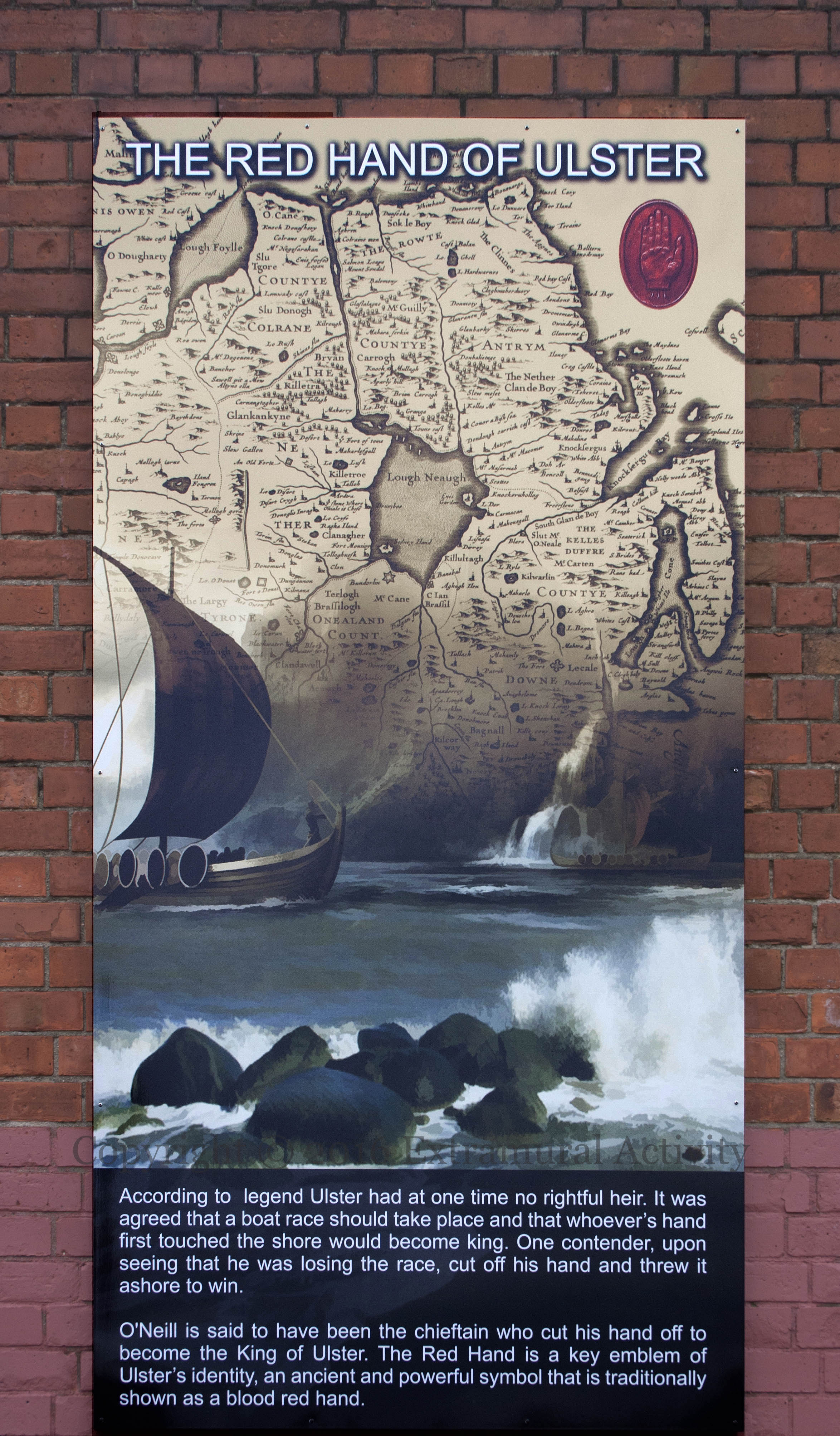
Here is one of the new boards on Tates Avenue (the others will be featured over the next two days). It shows a ship racing towards shore, superimposed over a 1659 map of Ulster by Blaeu.
“The Red Hand Of Ulster: According to legend Ulster had at one time no rightful heir. It was agree that a boat race should take place and that whoever’s hand first touched the shore would become king. One contended, upon seeing that he was losing the race, cut off his hand and threw it ashore to win. O’Neill is said to have been the chieftain who cut his hand off to become the King of Ulster. The Red Hand is a key emblem of Ulster’s identity, an ancient and powerful symbol that is traditionally shown as a blood red hand.”
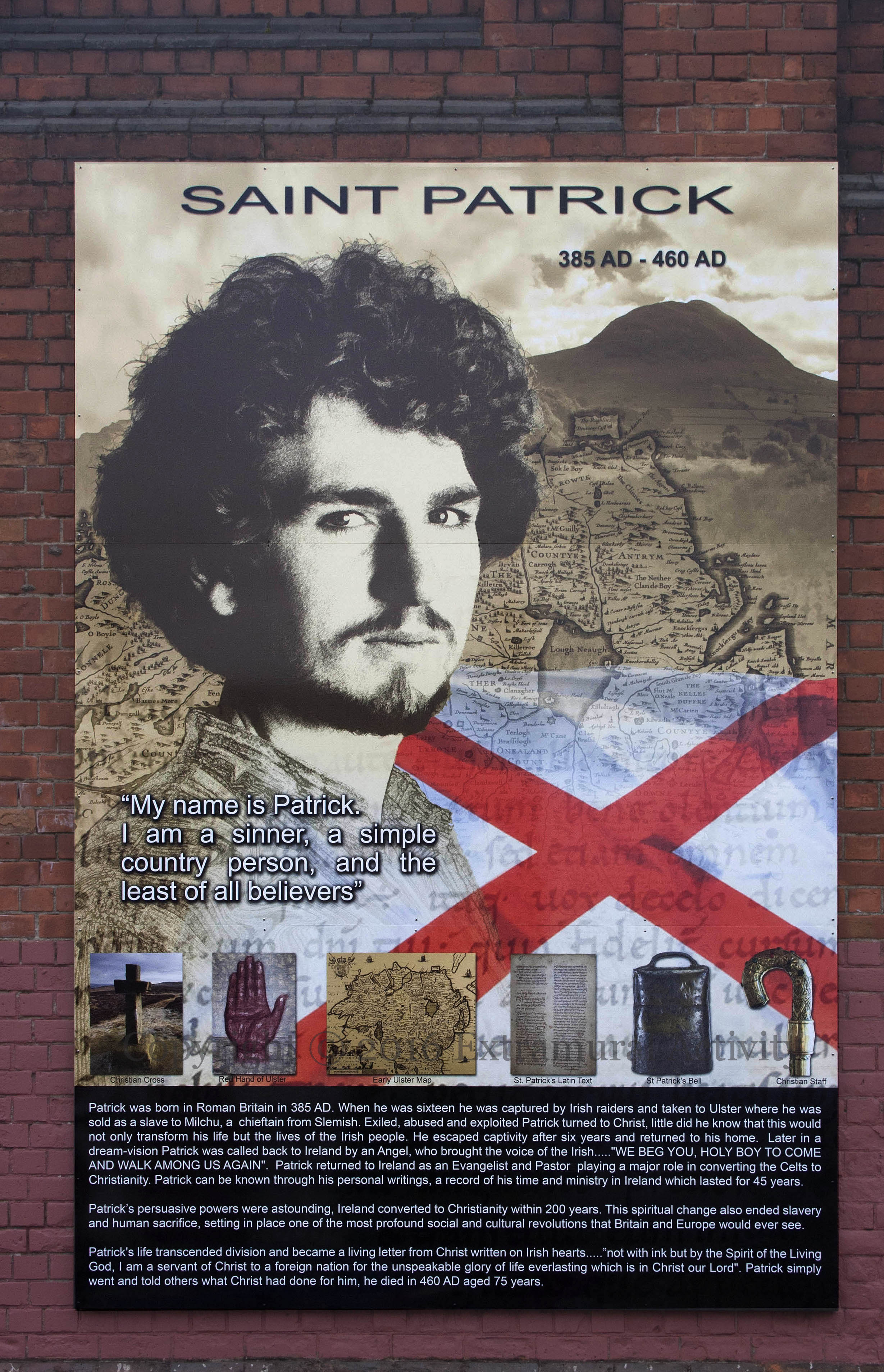
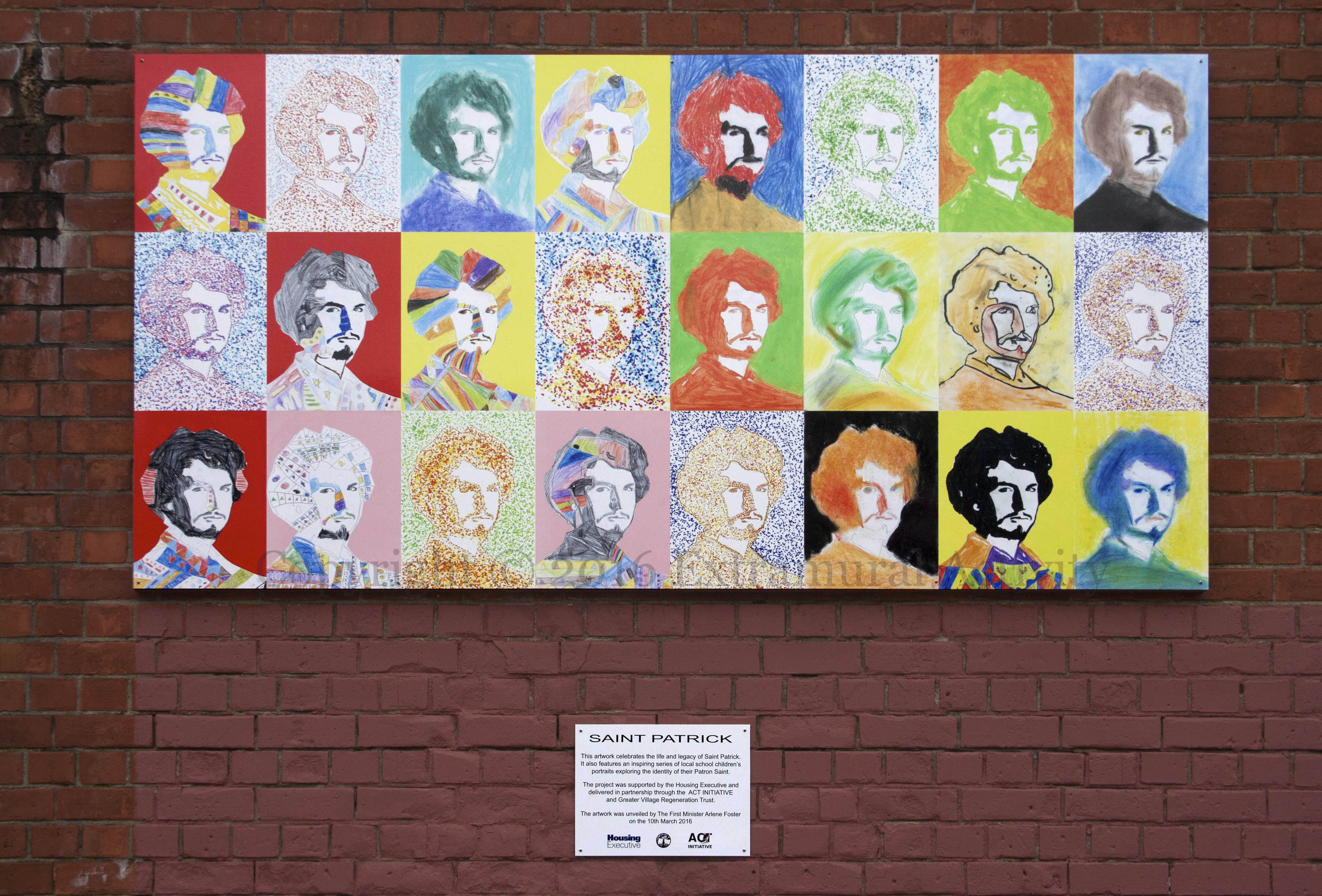
Featured today are two (more) of the boards in a set on Tates Avenue. The central board, shown above, shows a young Patrick (without the clerical garb in which he is often portrayed) against the backdrop of Slemish mountain, where Patrick is thought to have tended sheep as a young slave to a local chieftain, c. 401 AD and developed his Christian faith.
The second image is of colourings of the Saint Patrick profile by children from the nearby Donegall Road Primary School.
The boards were unveiled on March 10th, 2016 by first minister Arlene Foster who remarked that the saint had become “very Gaelicised” and this — and the presence of Irish tricolours at parades — deterred unionists from celebrating “the patron saint of everybody in Northern Ireland” (Belfast Telegraph; also contains video of the launch). Anglicanism venerates saints but Presbyterianism does not, generally taking the “communion of saints” to refer to all members of the church.
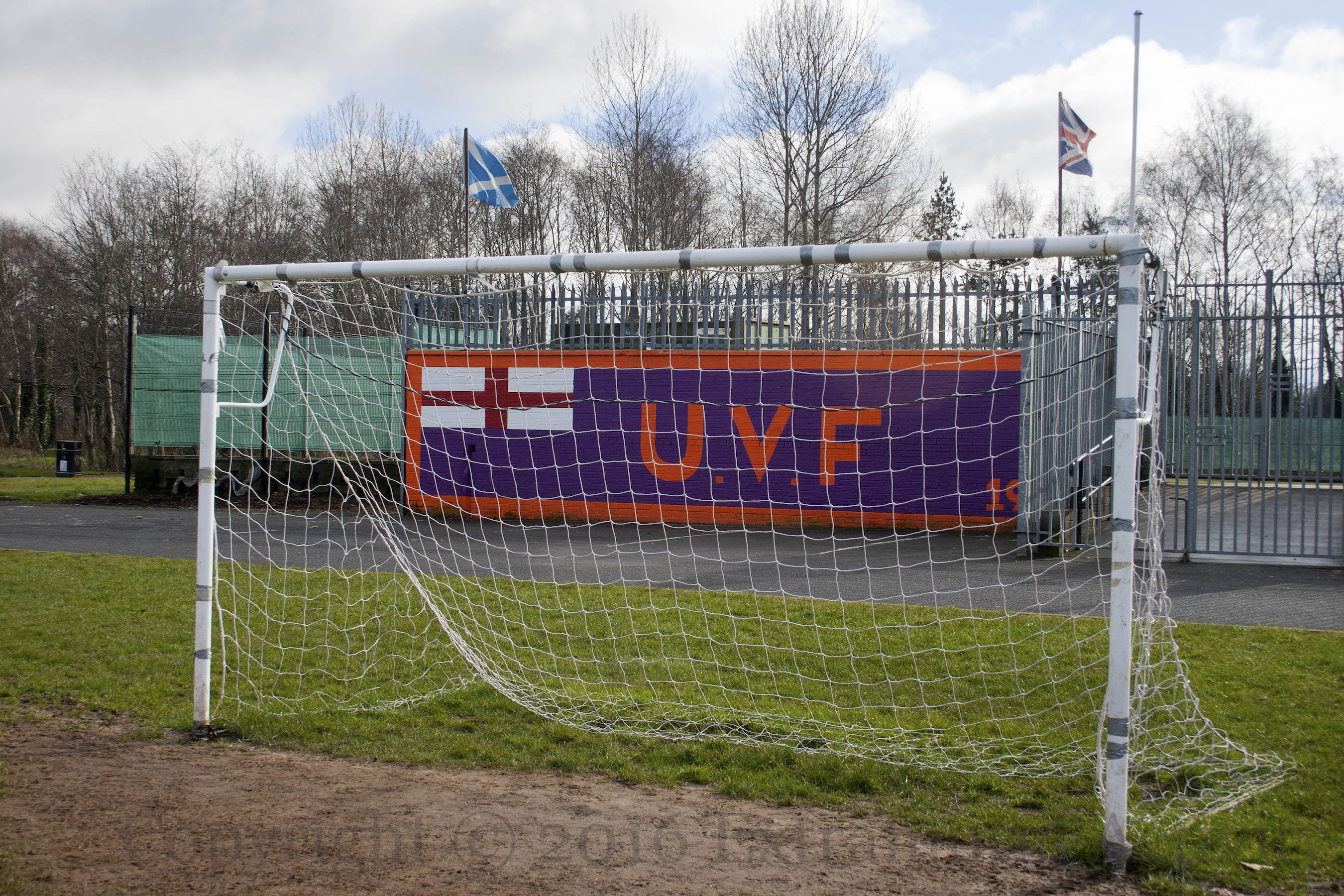
The Irish News last week reported the concerns of west Belfast parents whose children sometimes play under-10 football at Inverary Community Centre, in front of the UVF mural shown above, with the flags of Scotland and the United Kingdom in the background. East Belfast FC, which is based at Inverary, responded that the complaints are “contrived” and that all children are welcome at the ground.
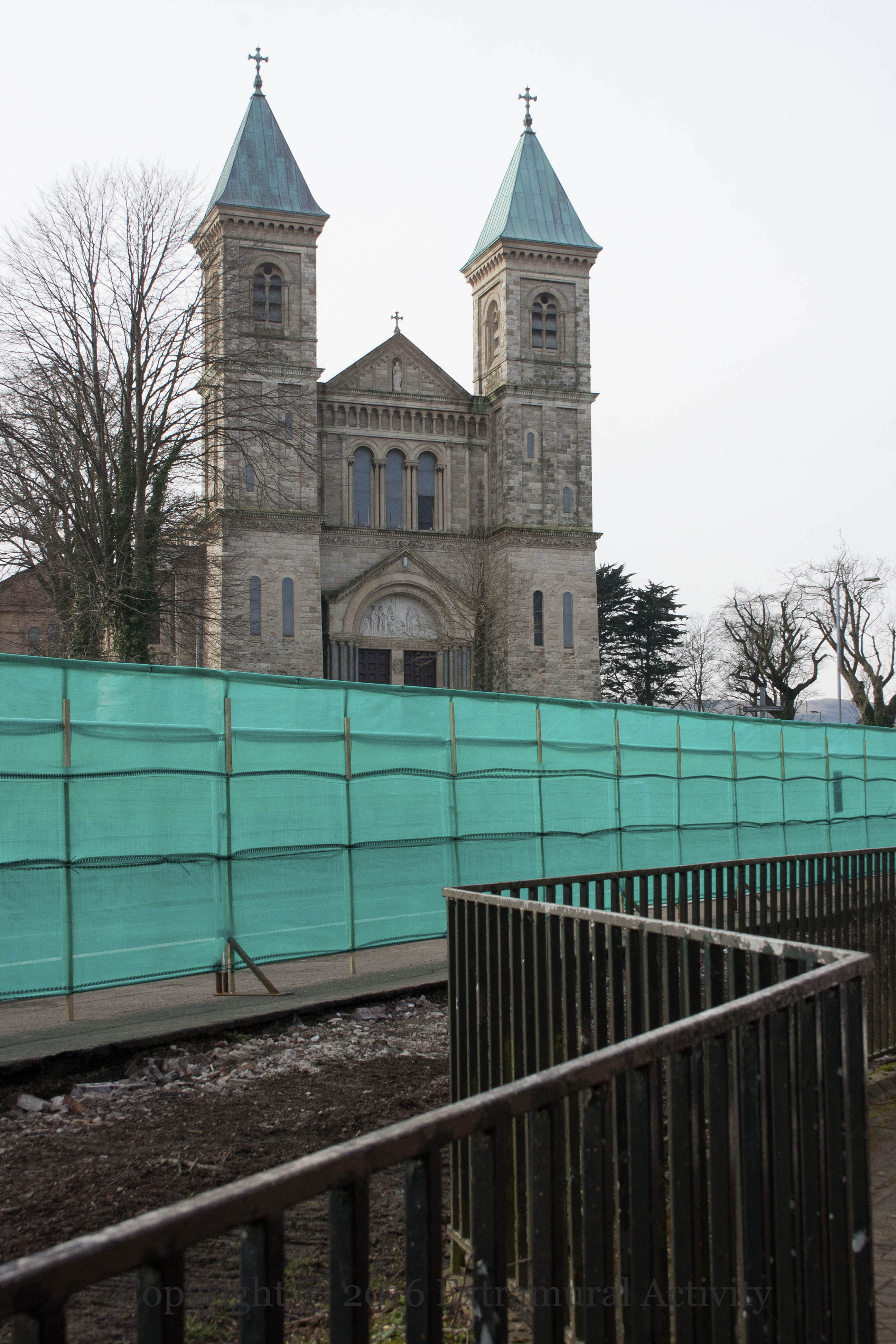
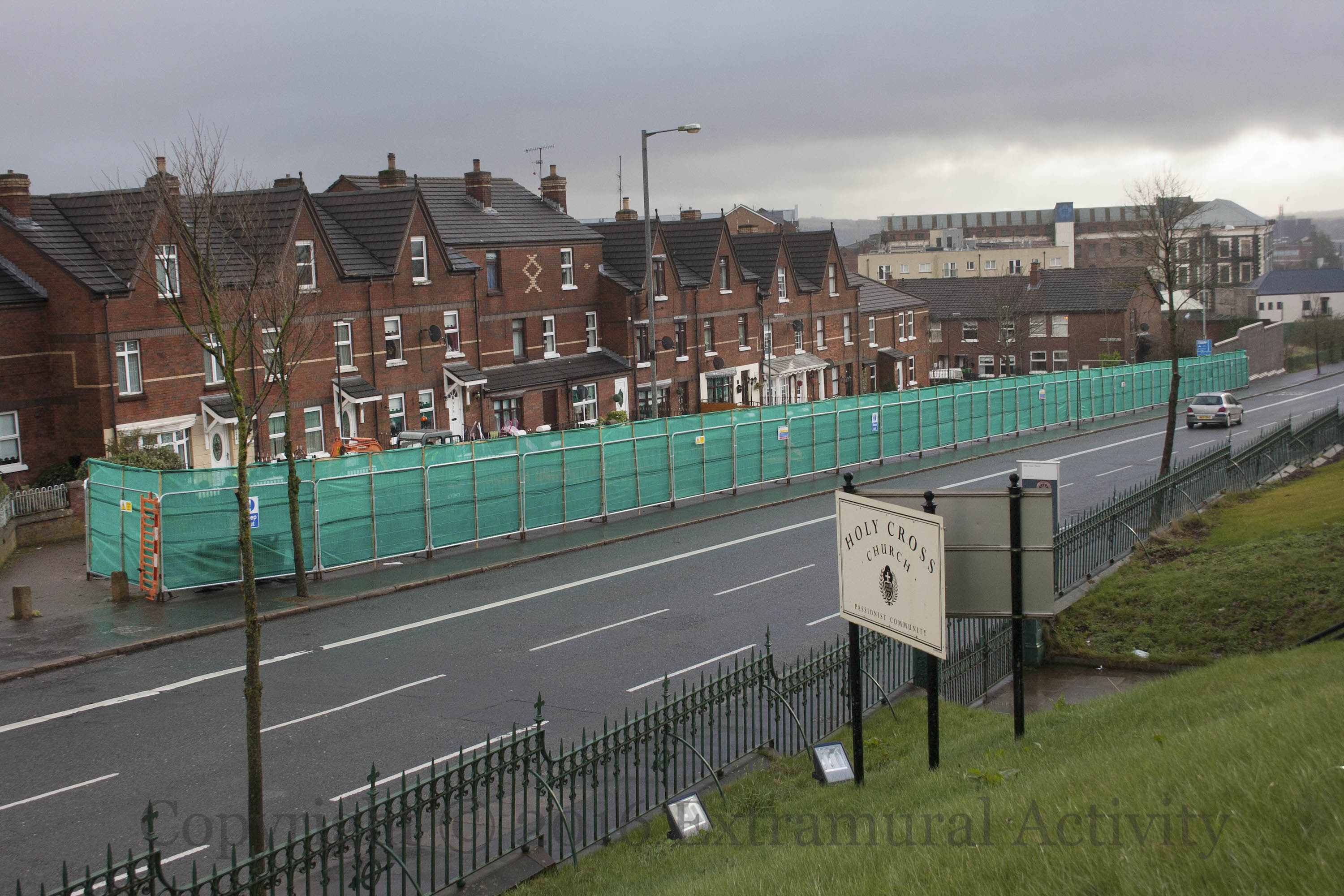
More “peace” line images today (after yesterday’s repainting of the Cliftonville “peace” line in Blue Sky Thinking): at the end of February work began taking down a section of the 8 foot high wall on the Ardoyne side of the Crumlin Road, separating Ardoyne from the Woodvale area, though the section close to Woodvale and the wall on the Woodvale side remain for now.
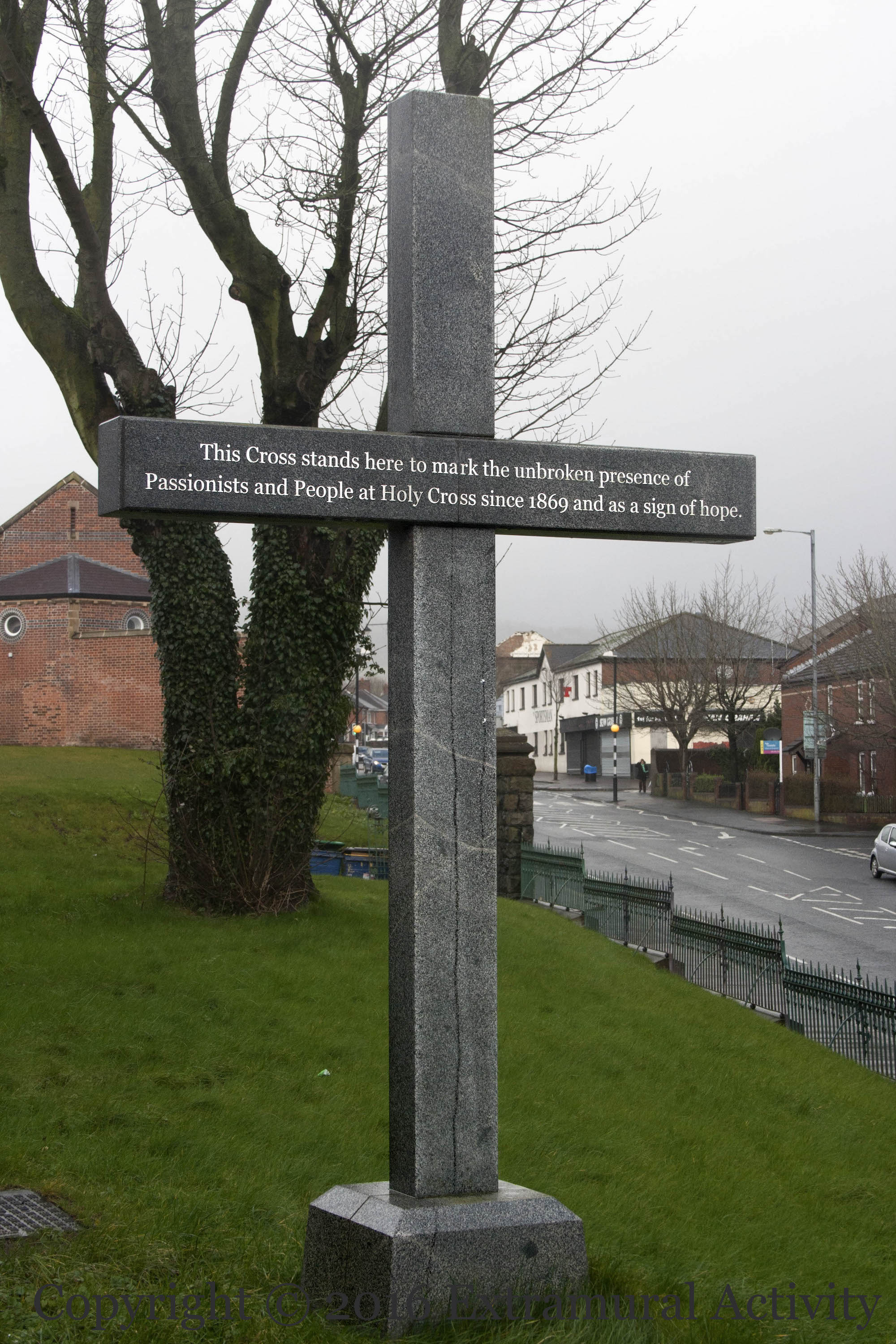
The houses on the north side of the road will now be able to see the road and the doors of Holy Cross church (shown above).
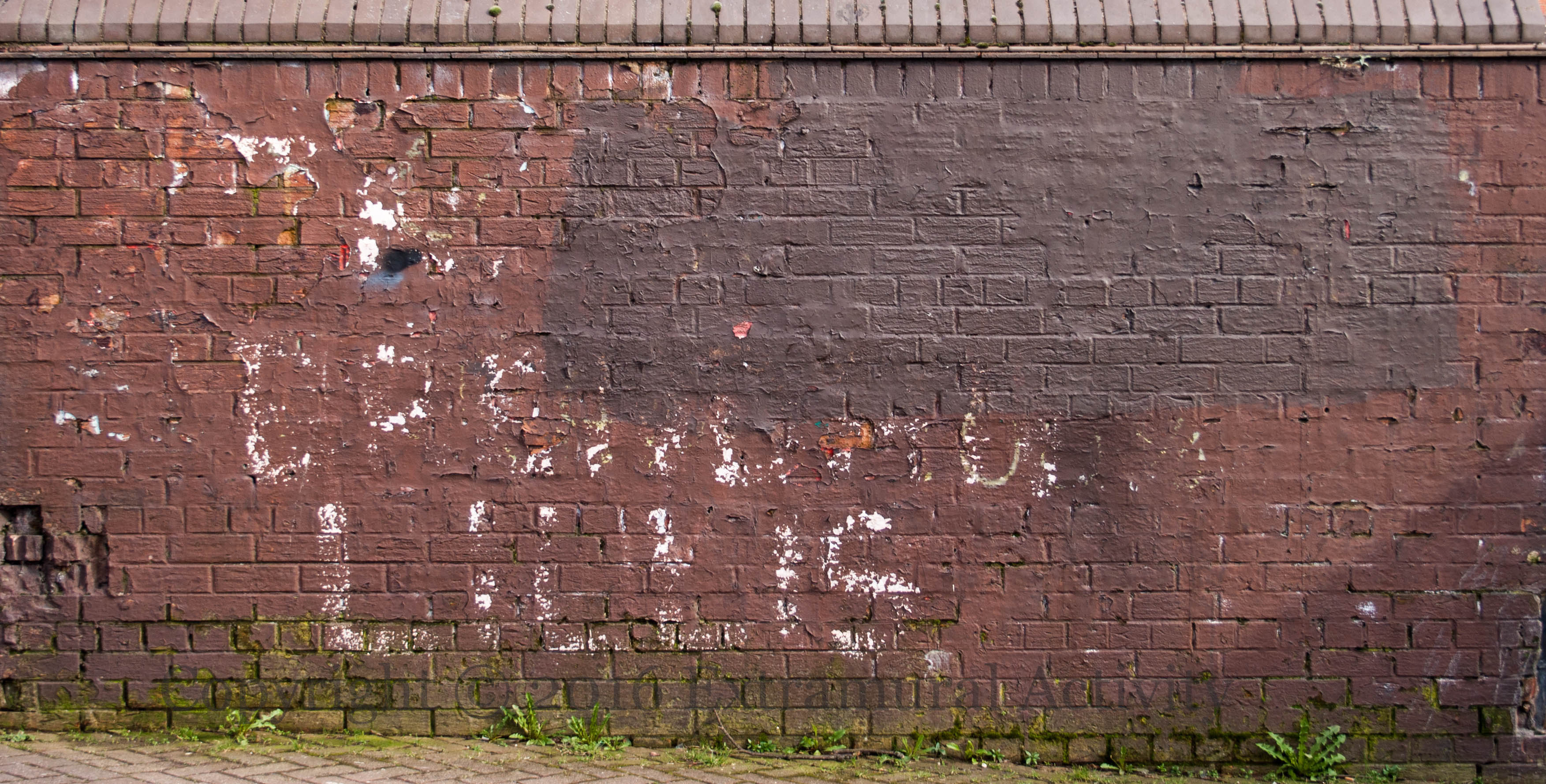
The vintage piece of Free Brendan Lillis graffiti shown in the final image survives, just out of picture to the left in the wide shot below.
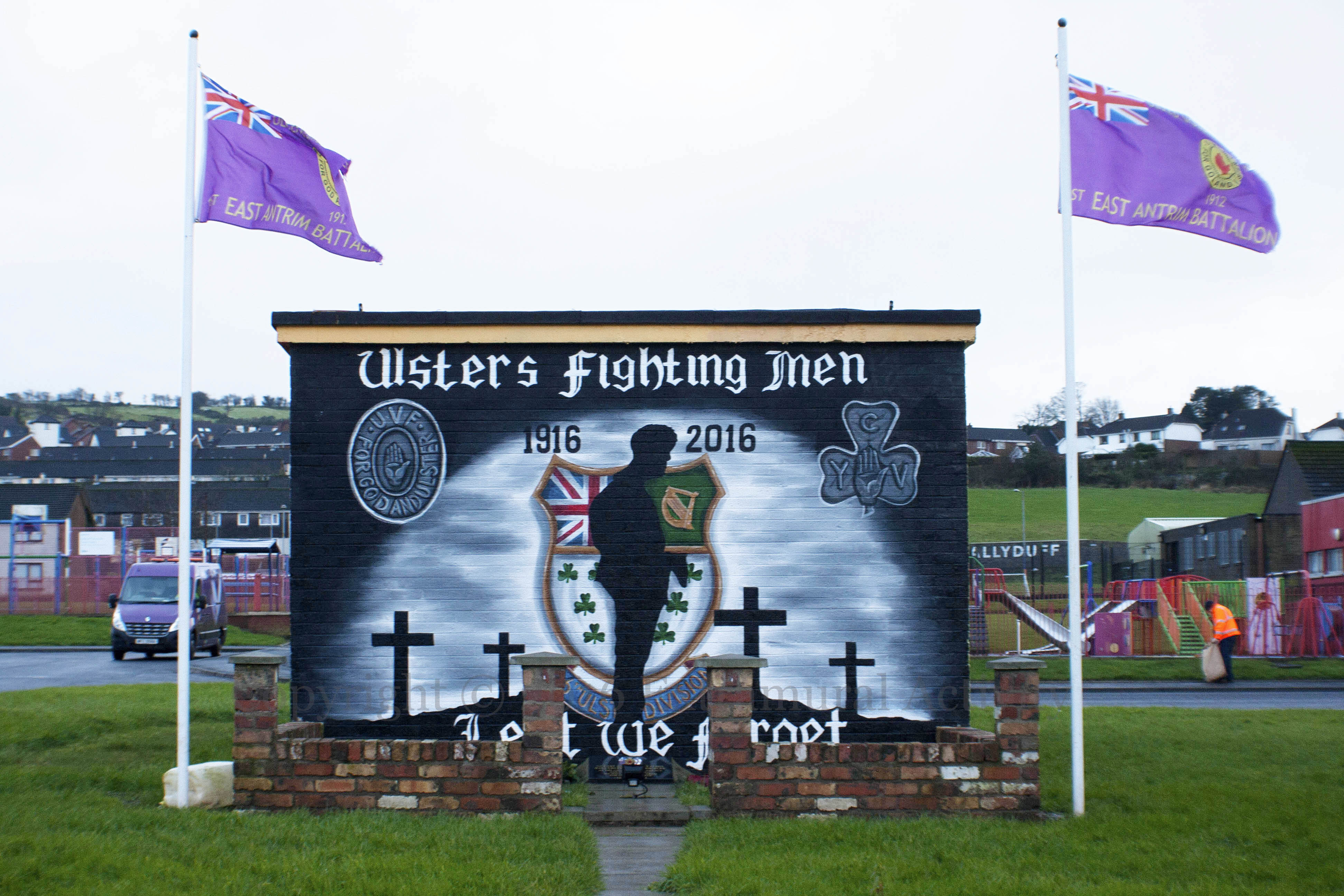
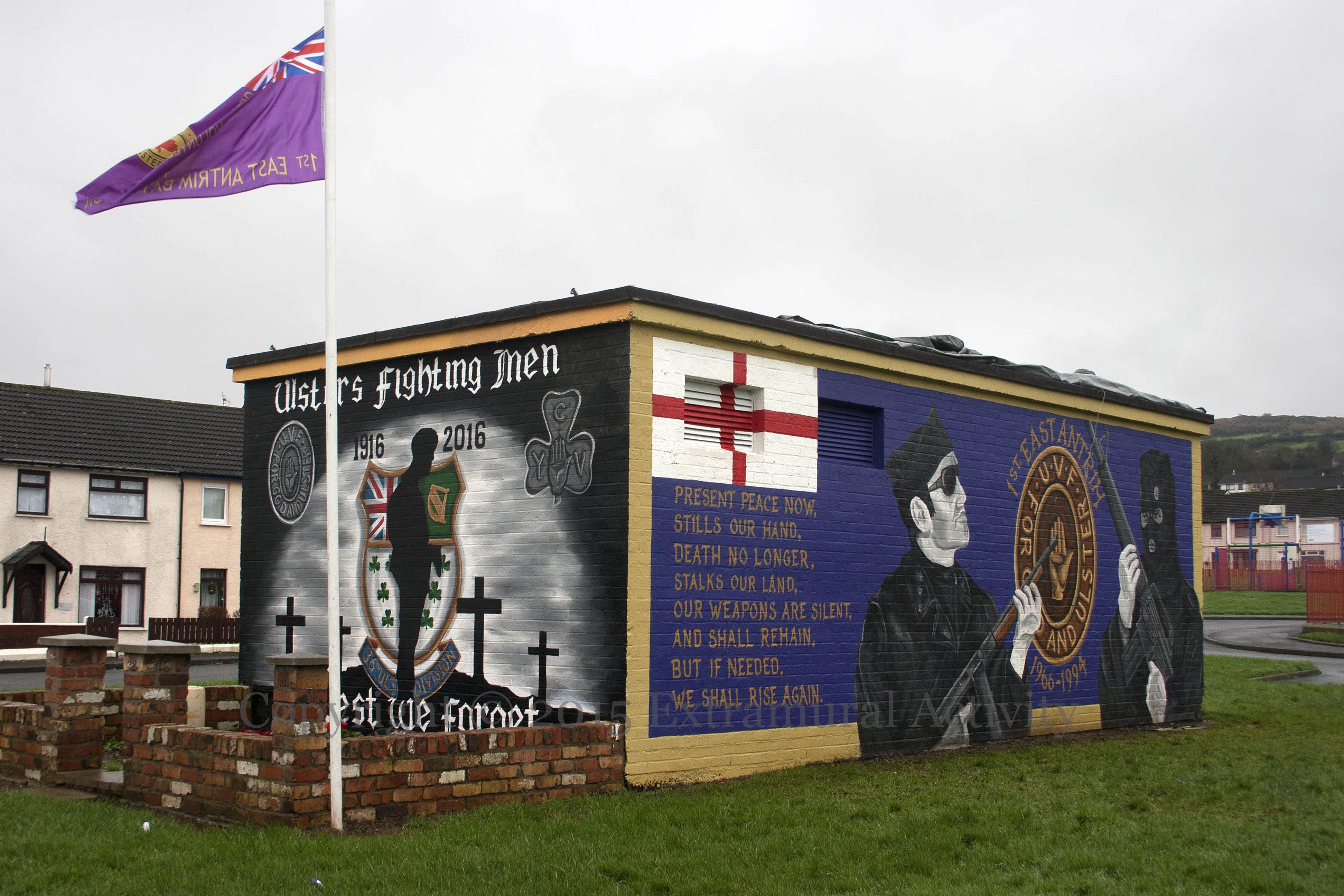
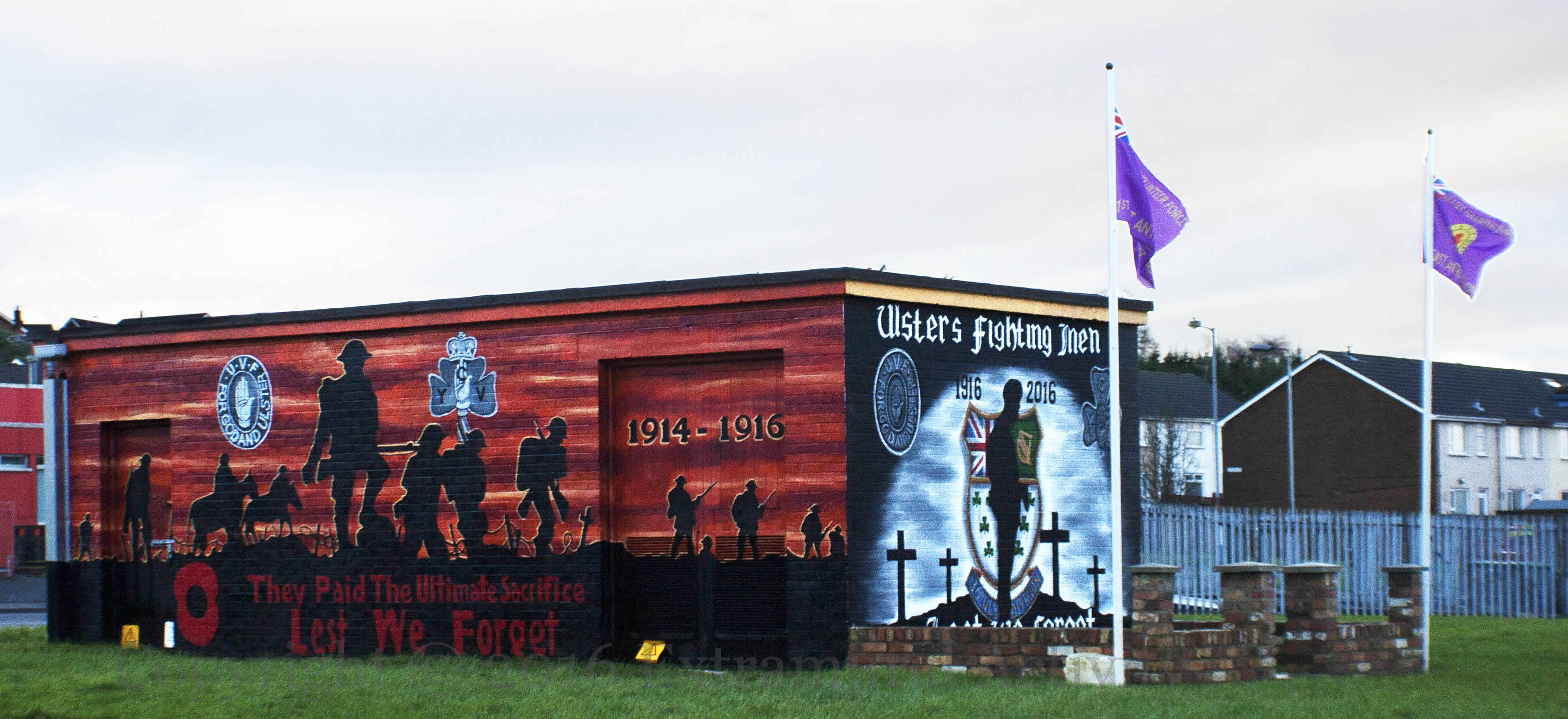
This new mural in Ballyduff commemorates the sacrifice of the Ulster Volunteers and Young Citizen Volunteers who fought in WWI and in particular their action in 1916; 2016 is the centenary of the Battle Of The Somme. The flag of (modern) UVF 1st East Antrim battalion flies on either side of the mural.
 Seosamh Mac Coille Collection