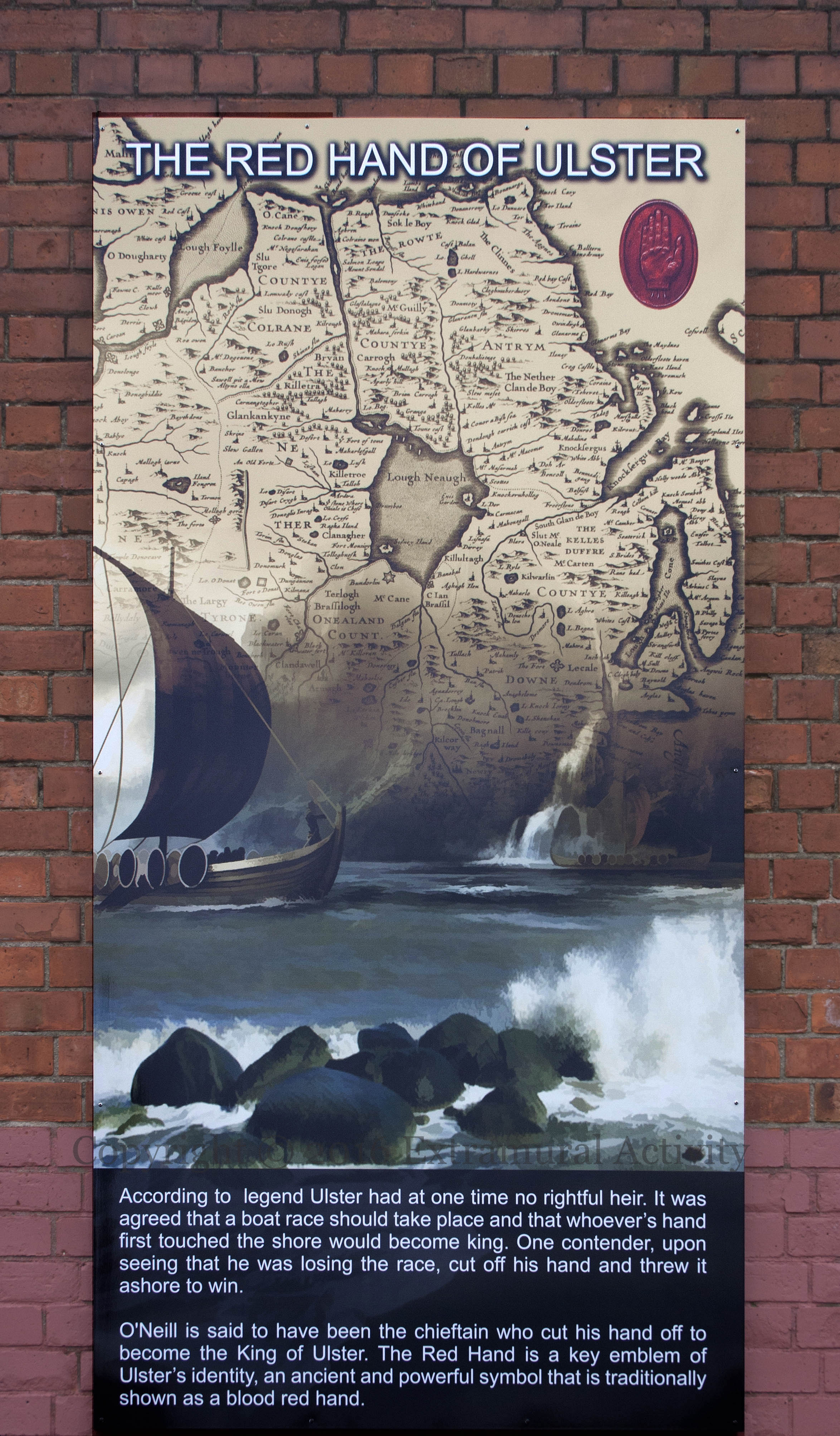
Here is one of the new boards on Tates Avenue (the others will be featured over the next two days). It shows a ship racing towards shore, superimposed over a 1659 map of Ulster by Blaeu.
“The Red Hand Of Ulster: According to legend Ulster had at one time no rightful heir. It was agree that a boat race should take place and that whoever’s hand first touched the shore would become king. One contended, upon seeing that he was losing the race, cut off his hand and threw it ashore to win. O’Neill is said to have been the chieftain who cut his hand off to become the King of Ulster. The Red Hand is a key emblem of Ulster’s identity, an ancient and powerful symbol that is traditionally shown as a blood red hand.”
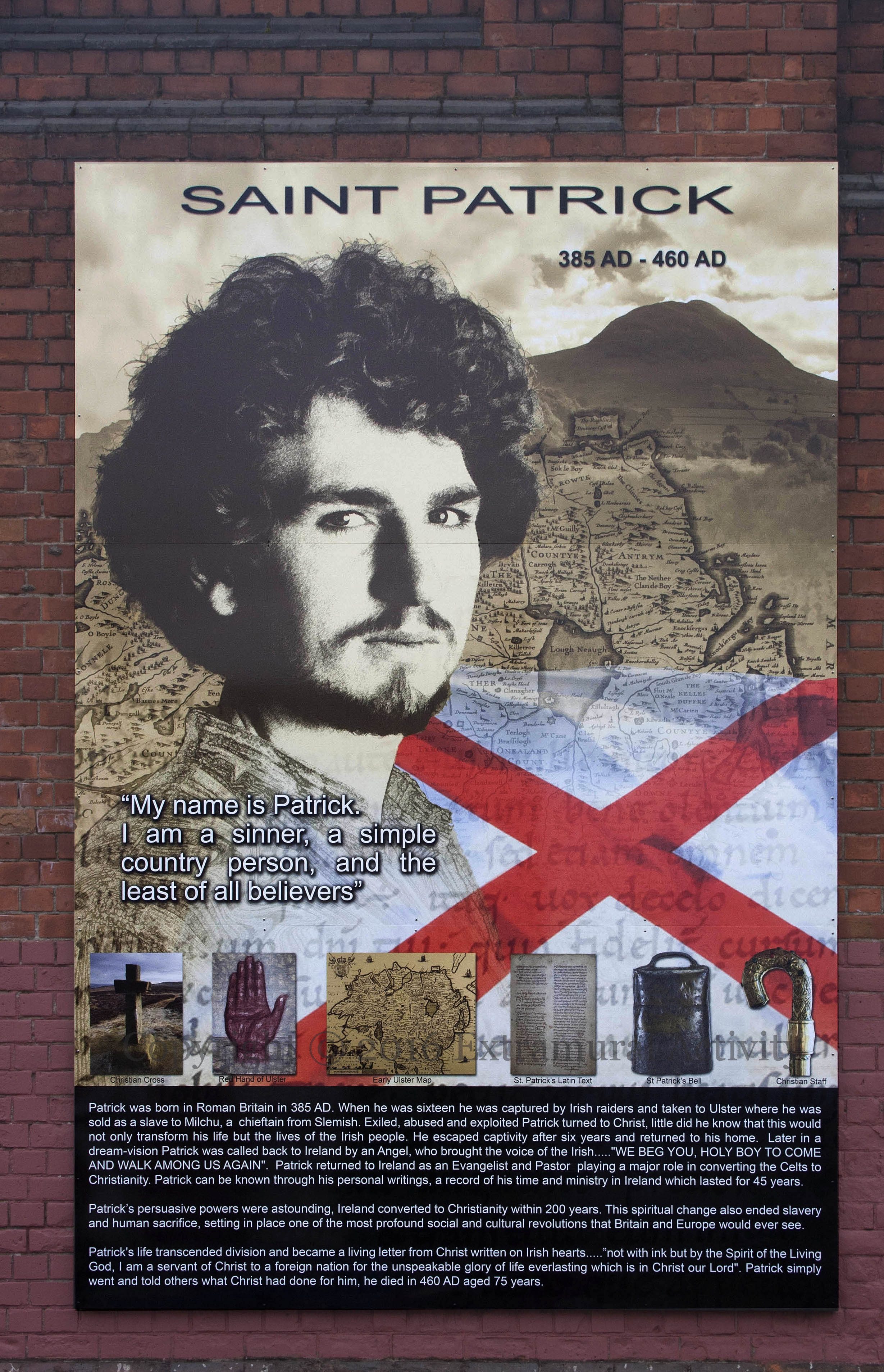
Featured today are two (more) of the boards in a set on Tates Avenue. The central board, shown above, shows a young Patrick (without the clerical garb in which he is often portrayed) against the backdrop of Slemish mountain, where Patrick is thought to have tended sheep as a young slave to a local chieftain, c. 401 AD and developed his Christian faith.
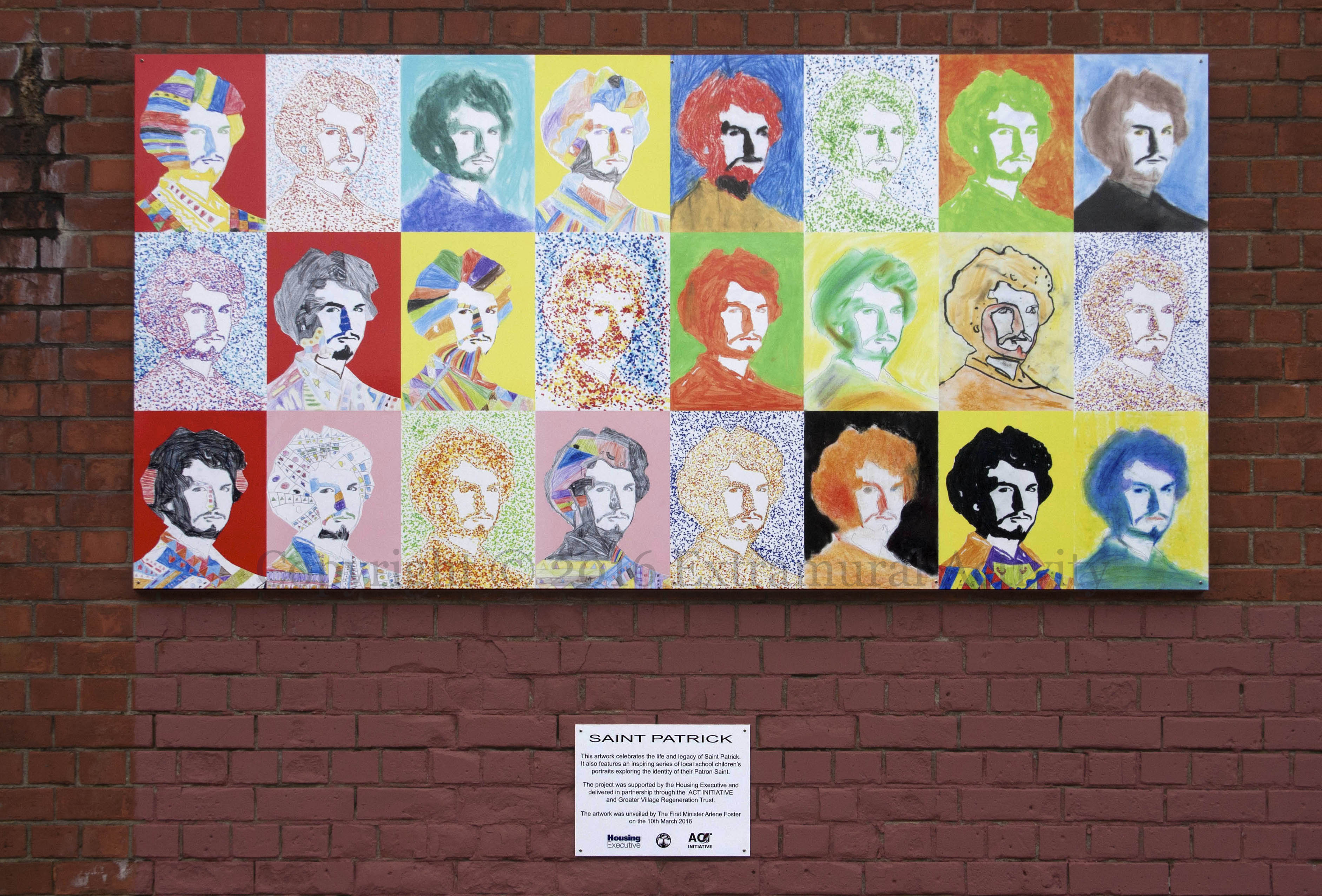
The second image is of colourings of the Saint Patrick profile by children from the nearby Donegall Road Primary School.
The boards were unveiled on March 10th, 2016 by first minister Arlene Foster who remarked that the saint had become “very Gaelicised” and this — and the presence of Irish tricolours at parades — deterred unionists from celebrating “the patron saint of everybody in Northern Ireland” (Belfast Telegraph; also contains video of the launch). Anglicanism venerates saints but Presbyterianism does not, generally taking the “communion of saints” to refer to all members of the church.
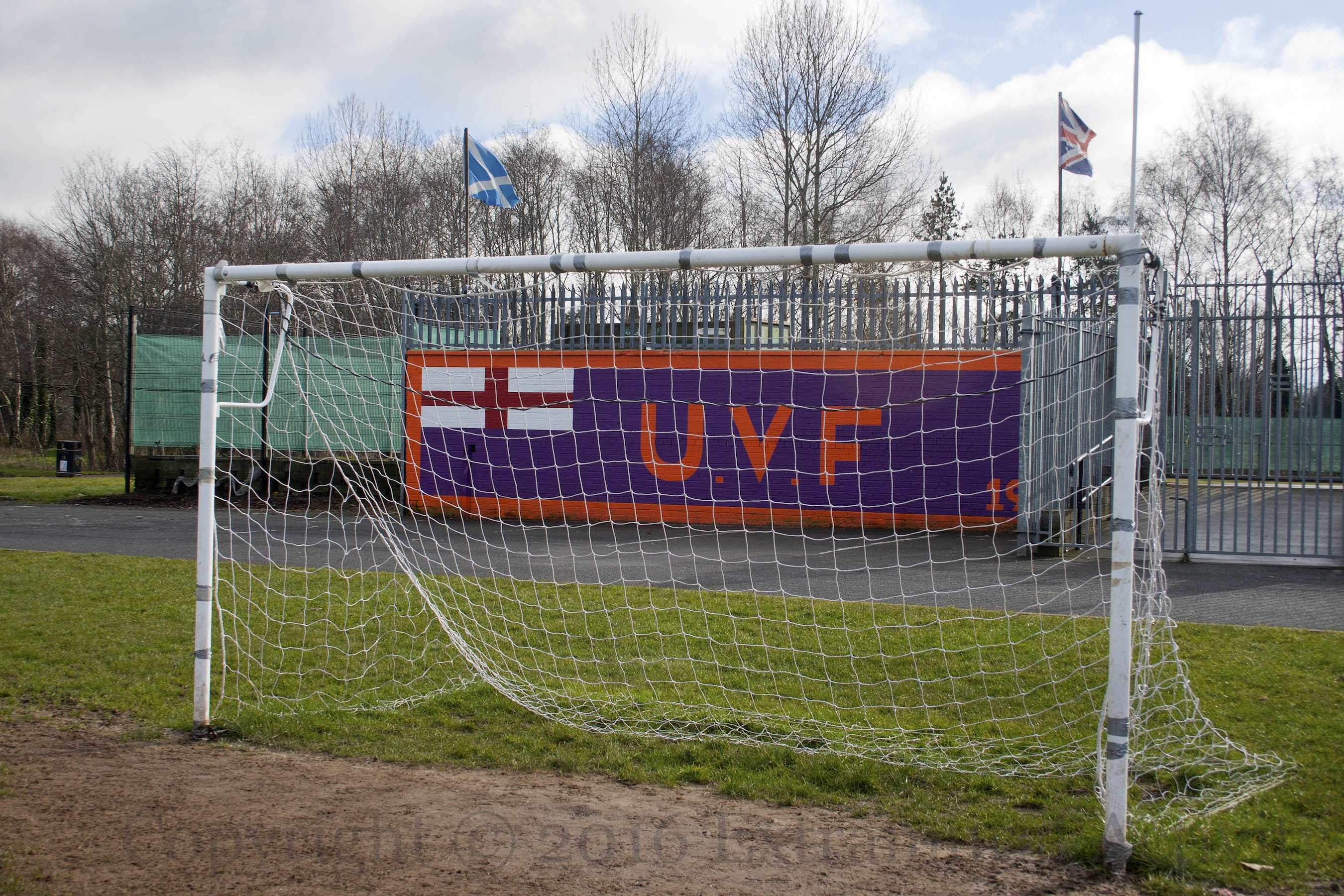
The Irish News last week reported the concerns of west Belfast parents whose children sometimes play under-10 football at Inverary Community Centre, in front of the UVF mural shown above, with the flags of Scotland and the United Kingdom in the background. East Belfast FC, which is based at Inverary, responded that the complaints are “contrived” and that all children are welcome at the ground.
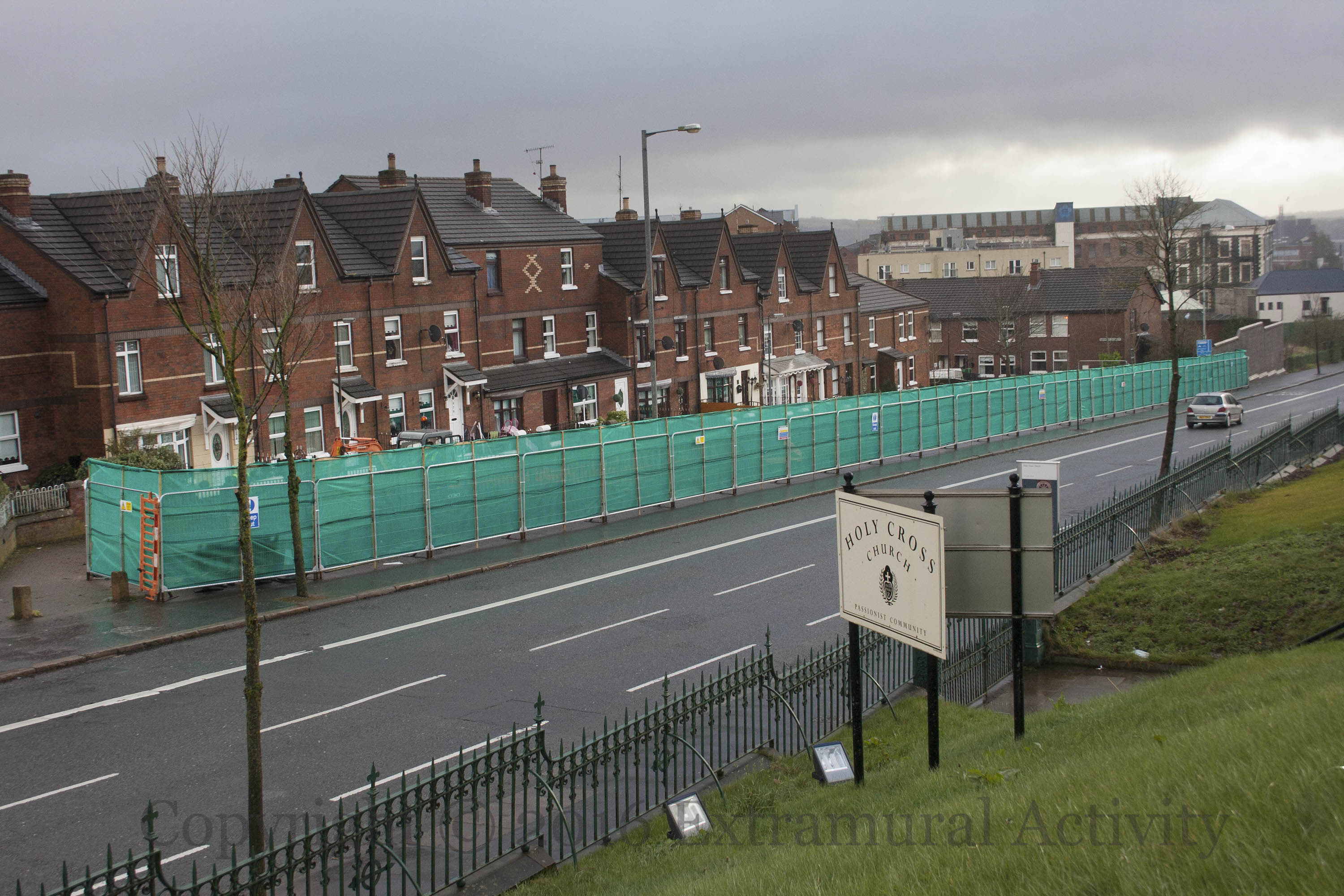
At the end of February work began to take down a section of the 8 foot high wall on the Ardoyne side of the Crumlin Road, separating Ardoyne from the Woodvale area, though the section close to Woodvale and the wall on the Woodvale side remain for now.
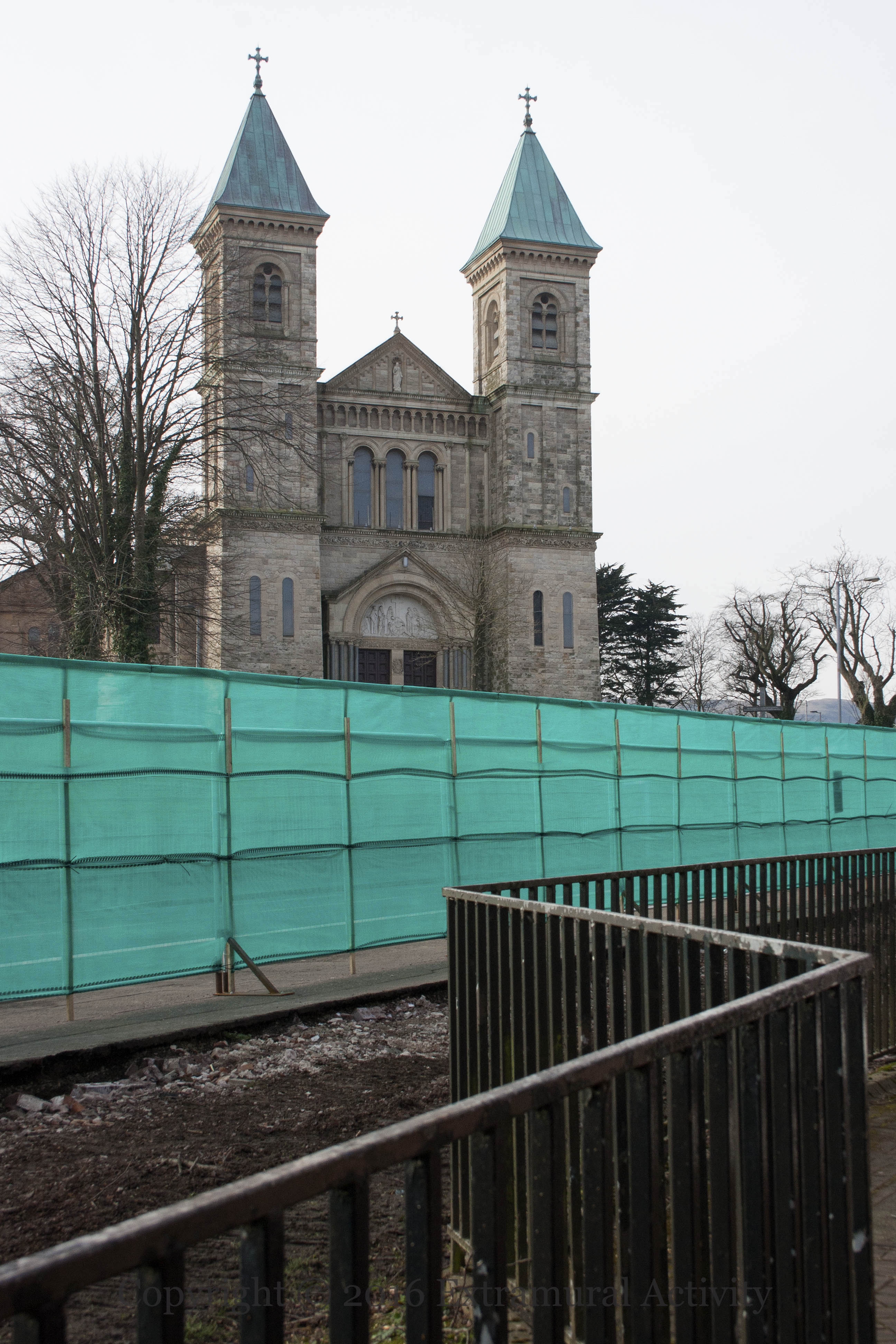
The houses on the north side of the road will now be able to see the road and the doors of Holy Cross church (shown above).
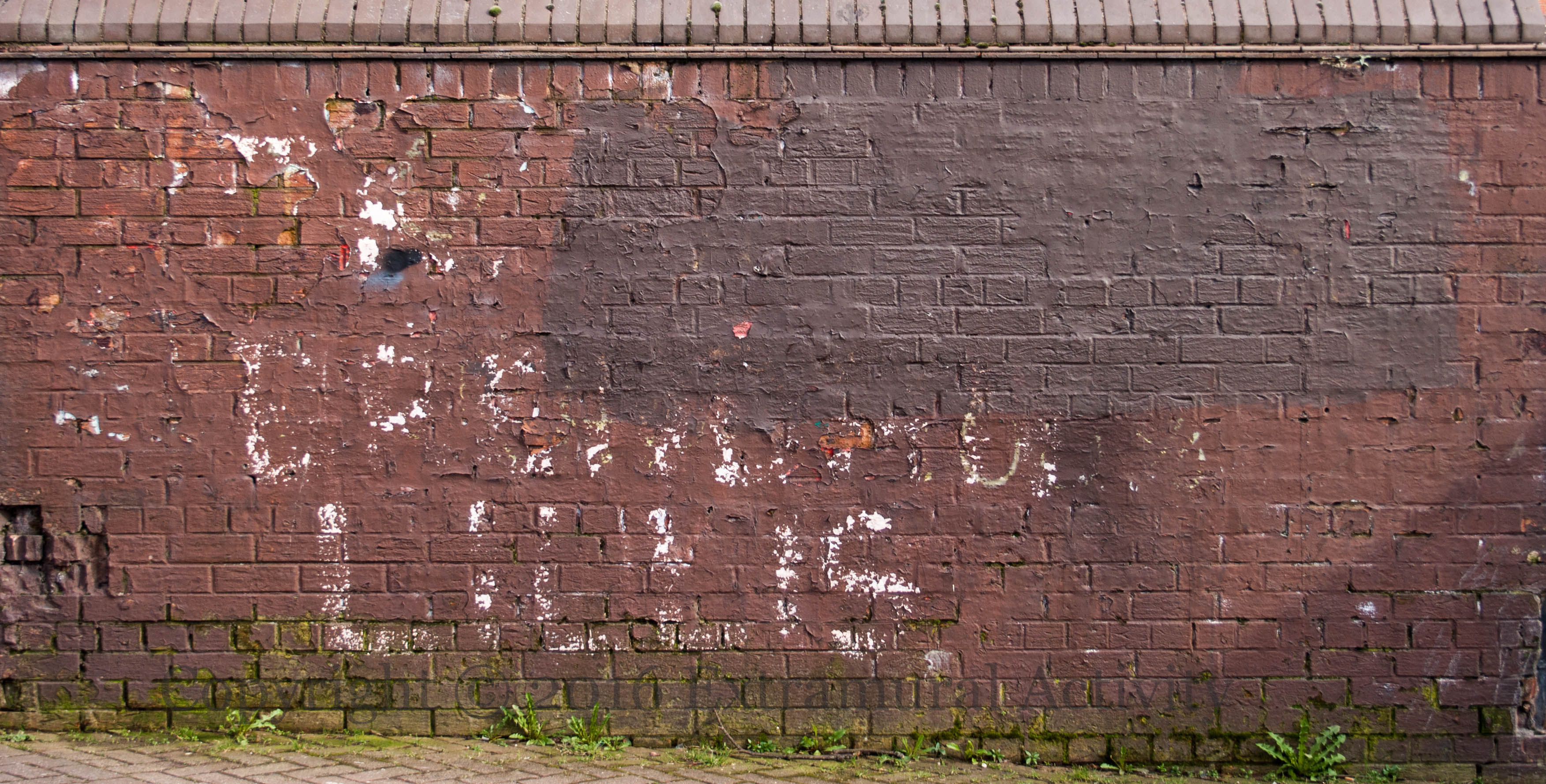
The vintage piece of Free Brendan Lillis graffiti shown in the final image survives, just out of picture to the left in the wide shot below.
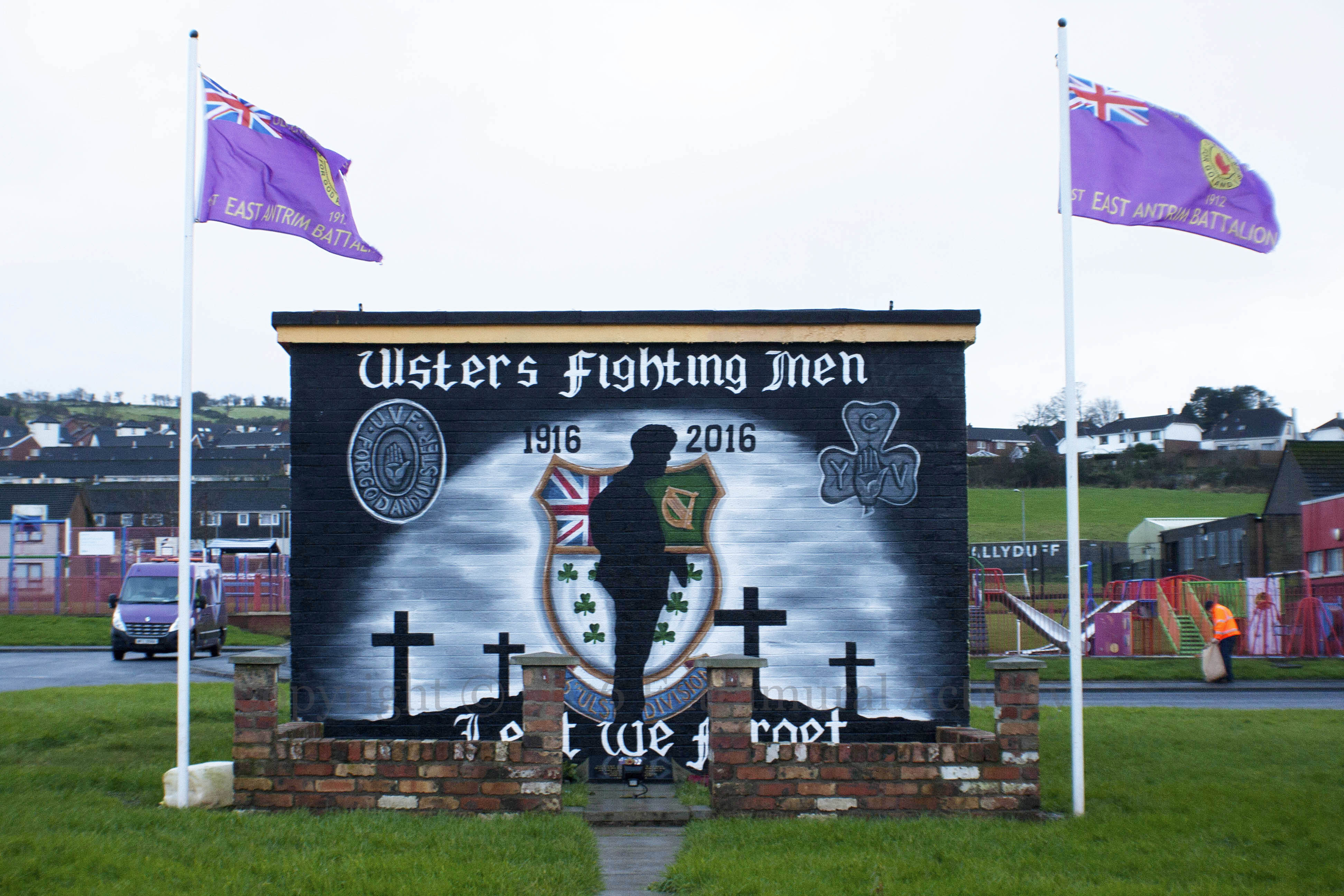
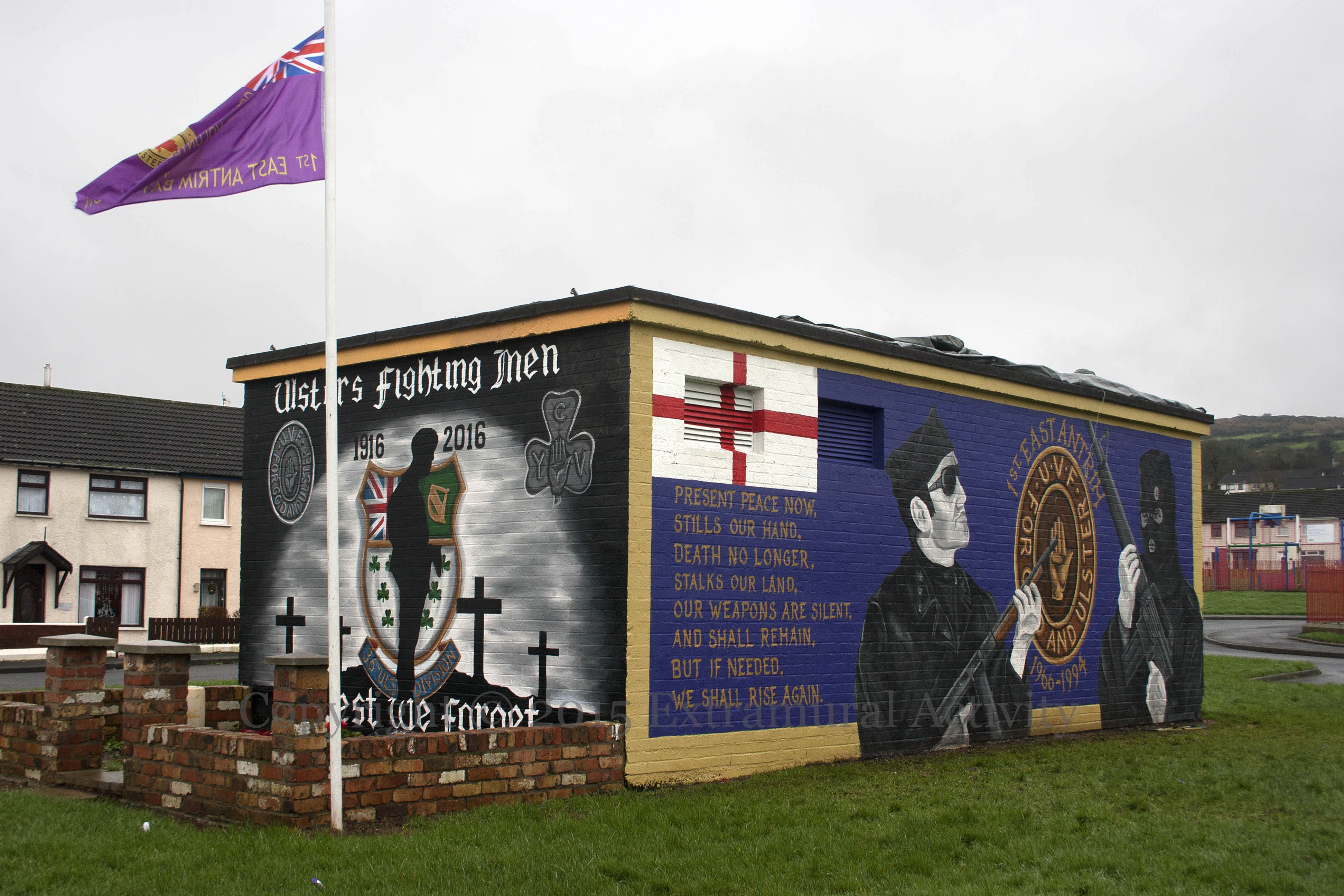
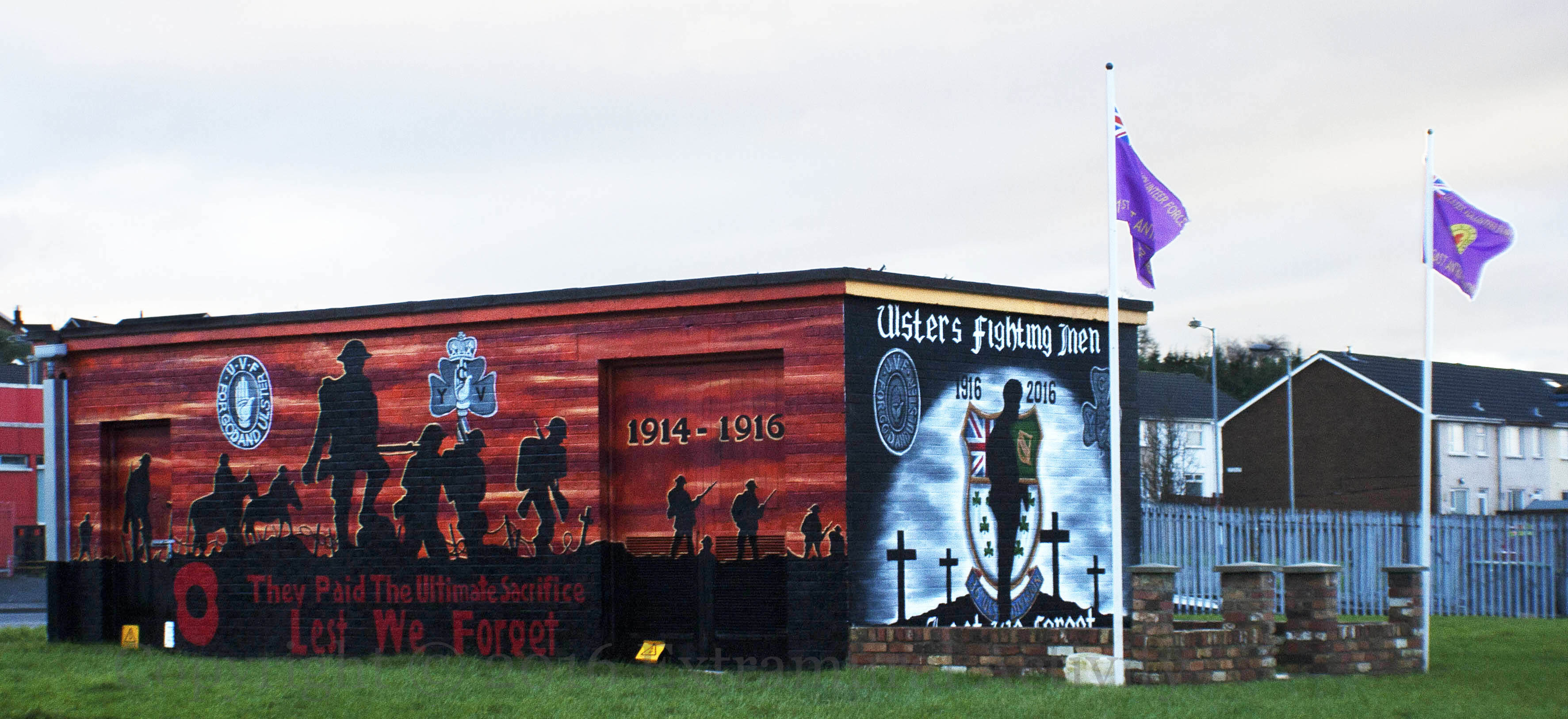
This new mural in Ballyduff commemorates the sacrifice of the Ulster Volunteers and Young Citizen Volunteers who fought in WWI and in particular their action in 1916; 2016 is the centenary of the Battle Of The Somme. The flag of (modern) UVF 1st East Antrim battalion flies on either side of the mural.
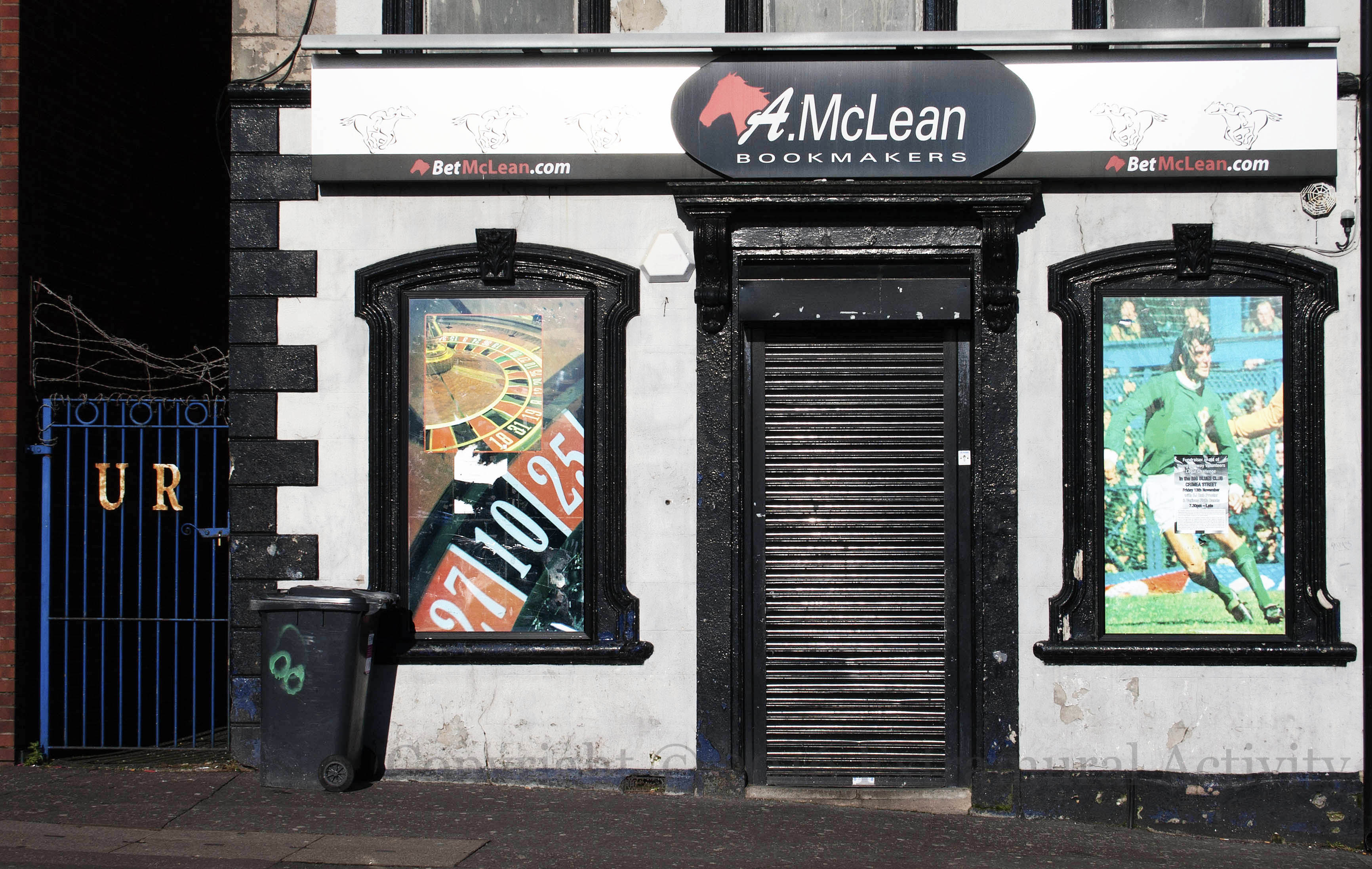
The images in the windows of the McLean’s bookies on the Shankill Road suggest that betting on sports – even on George Best – is like playing roulette. The gate to the left (with barbed wire on top) is marked with the letters “U” and “R” of the nearby Ulster Rangers supporters club. (For two murals there, see previously: Save The Shankill | Doing Her Duty).
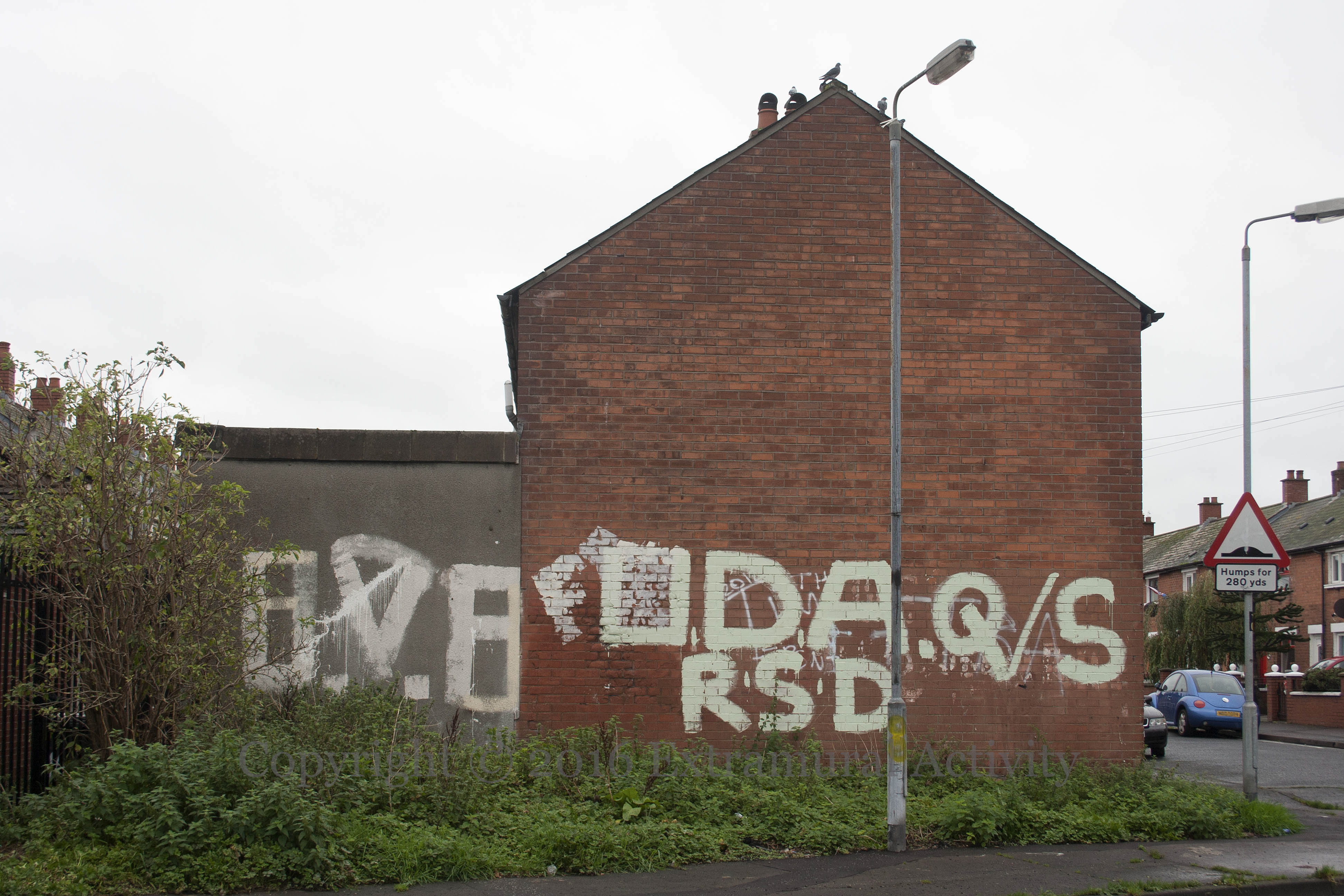
Three images of initialisms: Above in Milner Street, “UVF” [Ulster Volunteer Force] has been painted over but “UDA” [Ulster Defence Association], “Q/S” [quis separabit], and “RSD” [Roden Street Defenders] remain.
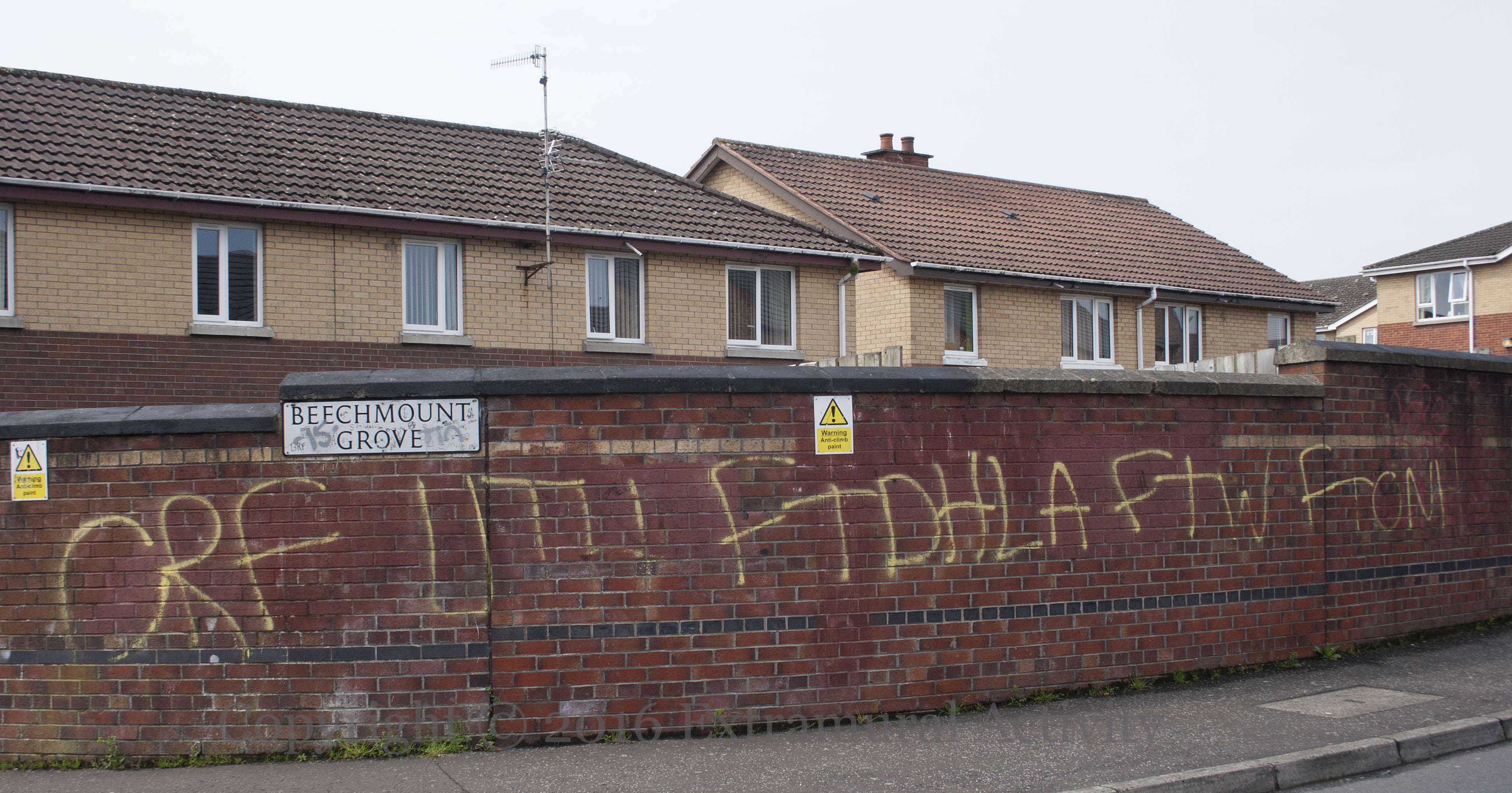
In the second image, in Beechmount Grove, we have “CRF” [Catholic Reaction Force?], “UTH” [Up the hoods], “FTDHLA”, [Eff the Divis Hoods Liberation Army”, FTW” [Free the weed?], “FTONH” [Eff the Óglaıgh Na hÉıreann]
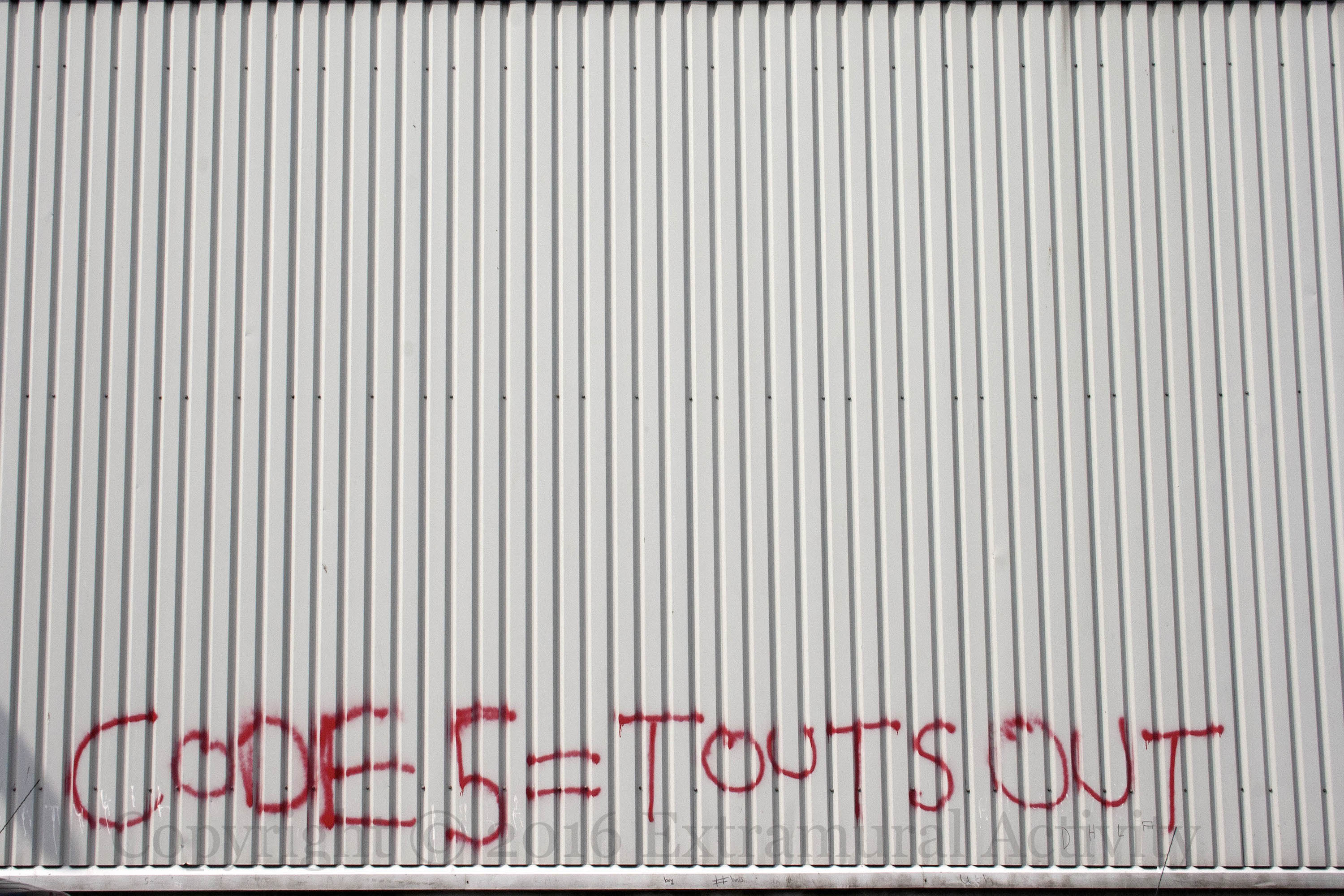
The last (in Percy St) is left as an exercise for the reader. (Or: we have no idea what “code 5” is.)
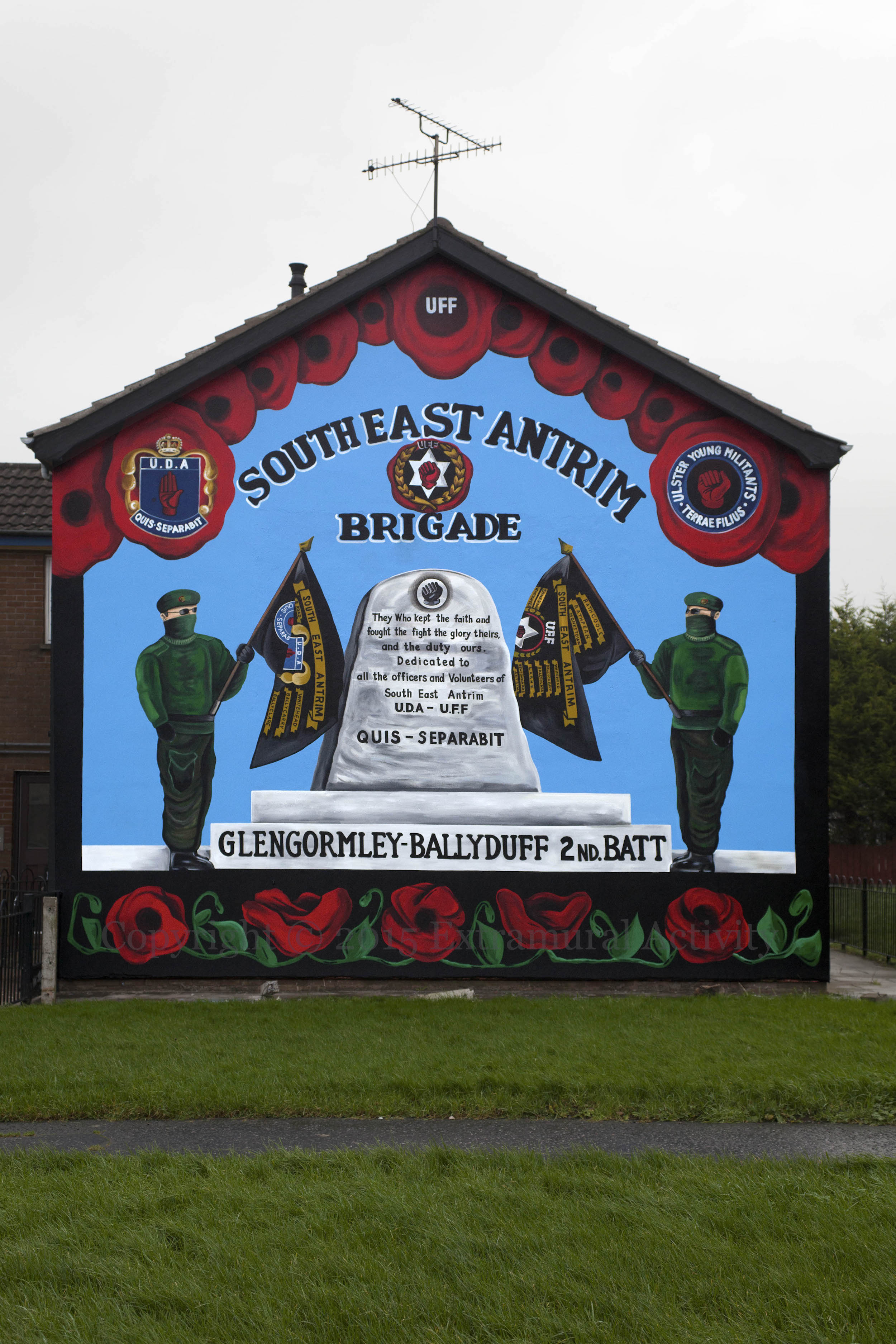
The new loyalist mural in Ballyduff shows volunteers in sunglasses and scarves standing with flags to either side of a monument which reads “They who kept the faith and fought the fight, the glory theirs and the duty ours. Dedicated to the officers and Volunteers of South East Antrim U.D.A. – U.F.F. Quis separabit.”
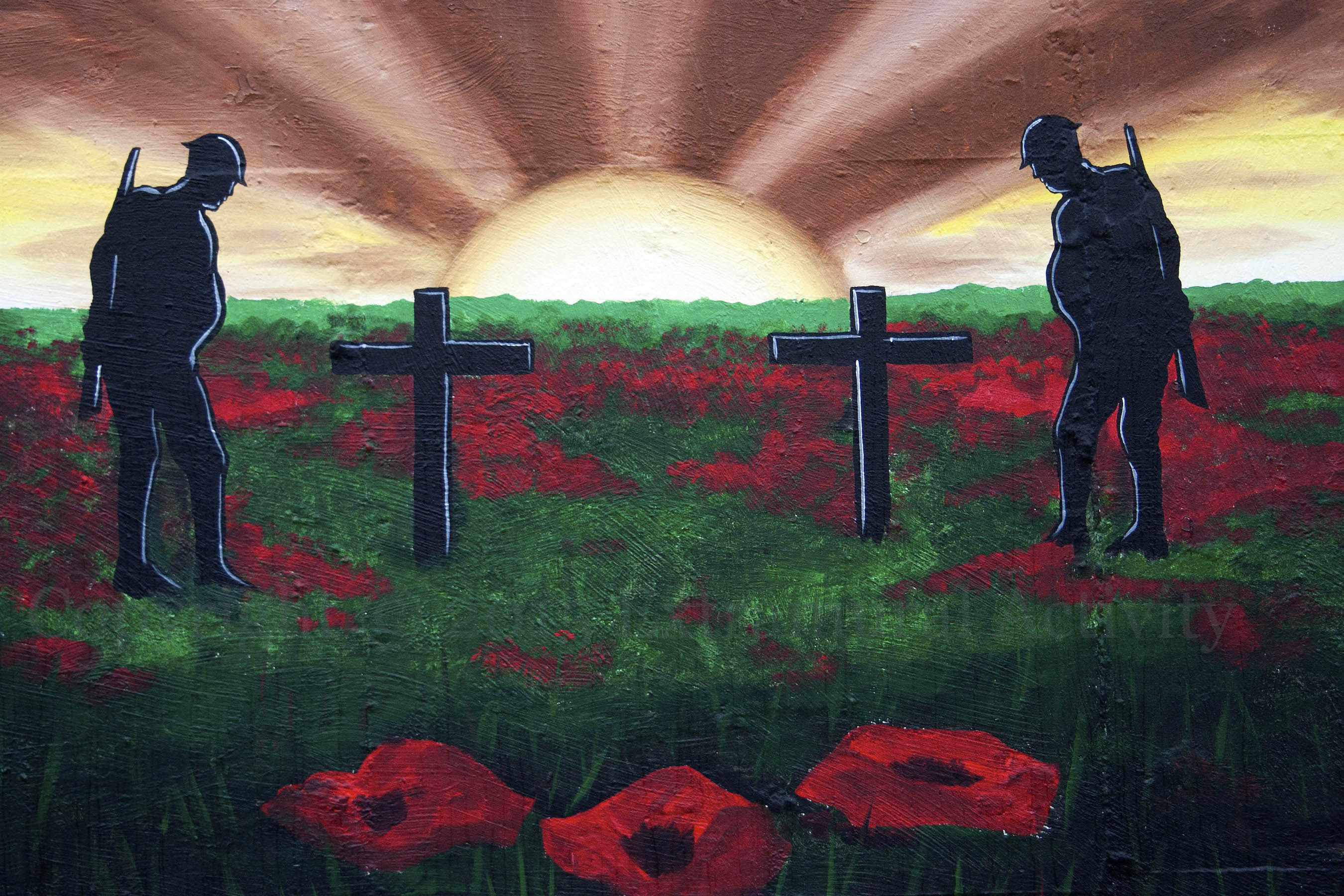
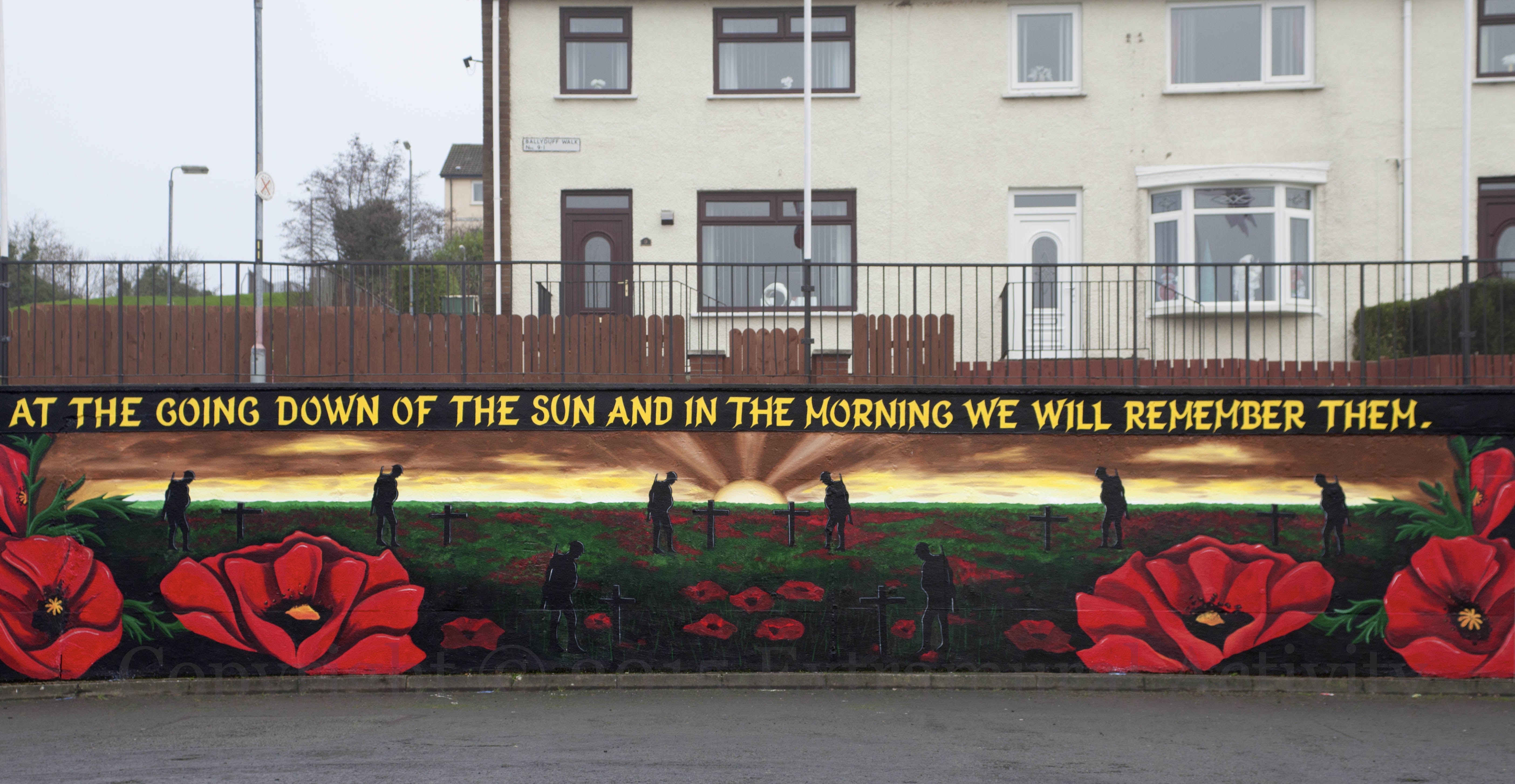
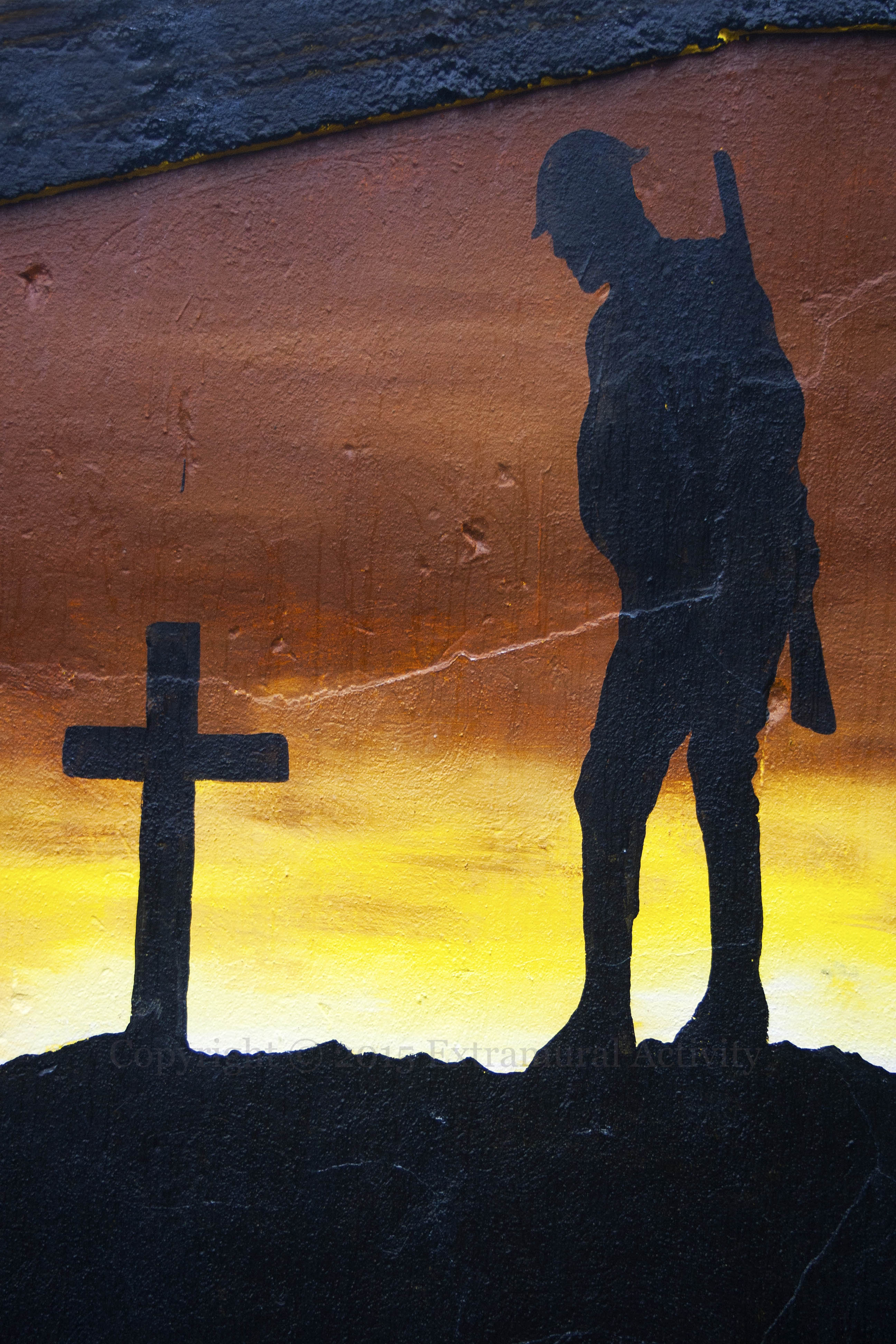
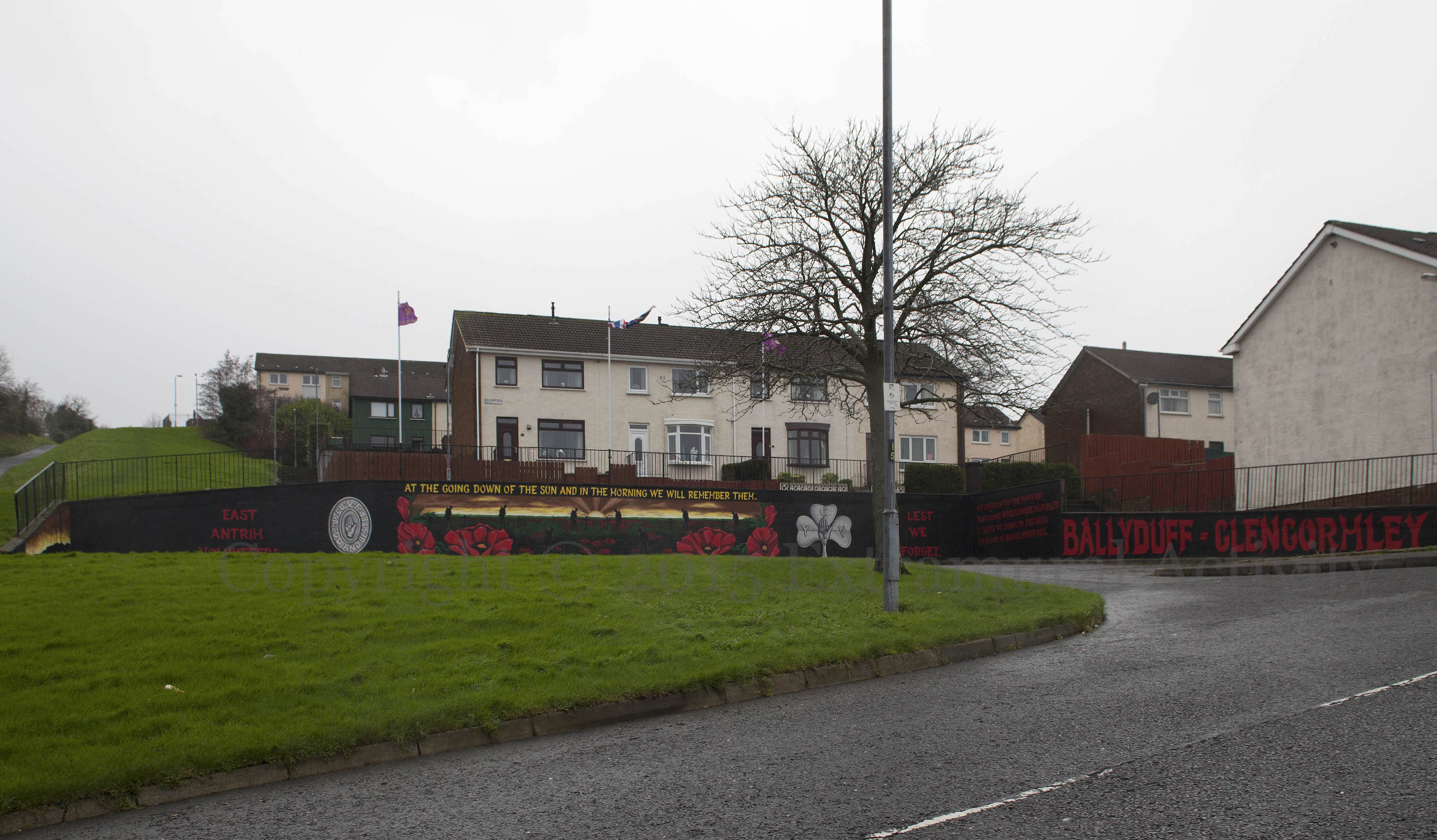
Five images of a new, multi-wall, mural in Ballyduff. The main panel shows WWI soldiers bowed over graves in Flanders surrounded by poppies. This is accompanied by the red-hand emblem of the Ulster Volunteers and the shamrock of the YCV.
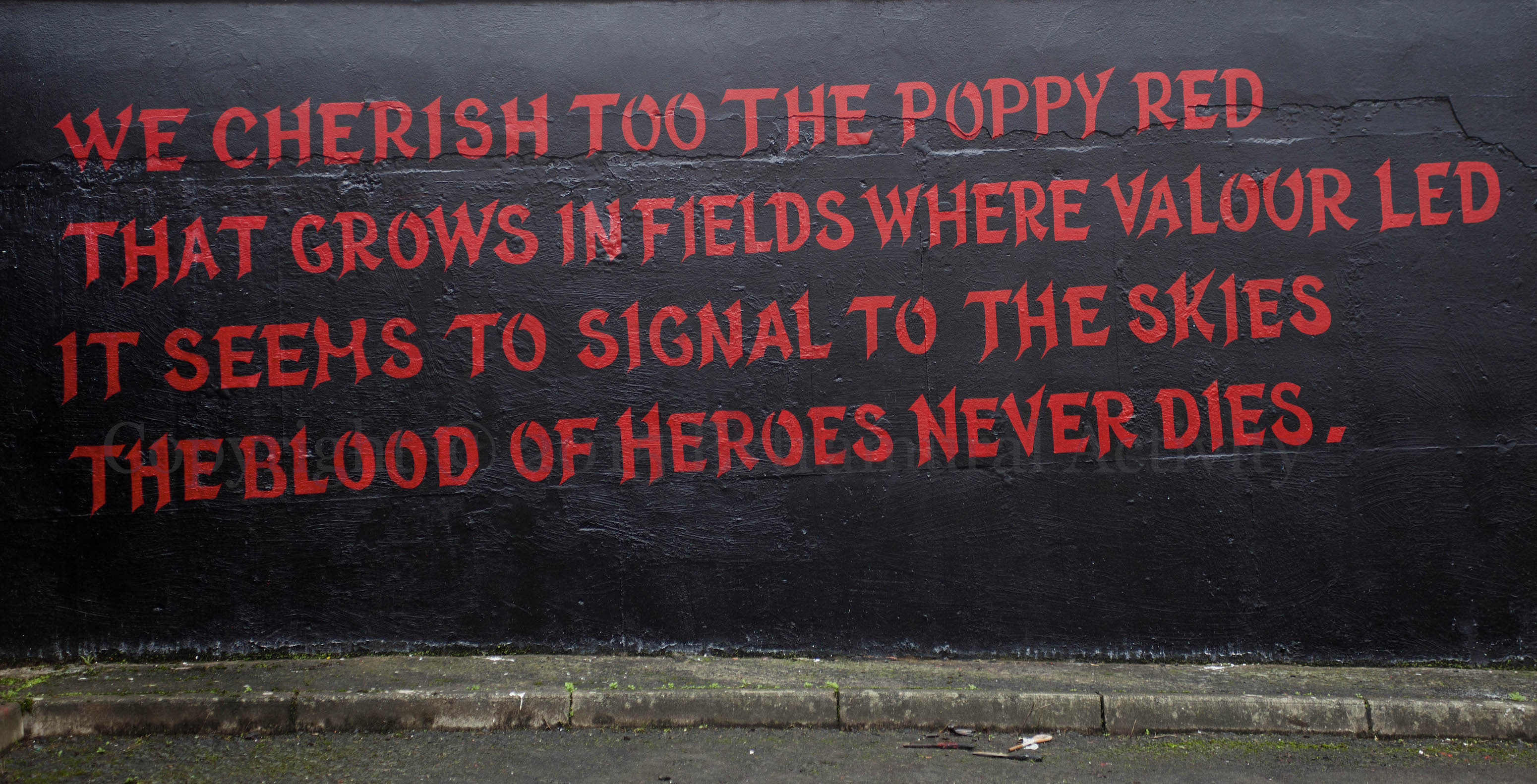
On a side wall (see the fourth image) is a verse from American professor Moina Michael’s poem We Shall Keep The Faith: “We cherish too the poppy red that grows in fields where valour led; it seems to signal to the skies the blood of heroes never dies”. It was Michael who began to raise funds for servicemen by selling (silk) poppies, also adopted by the British Legion in 1921 (WP).