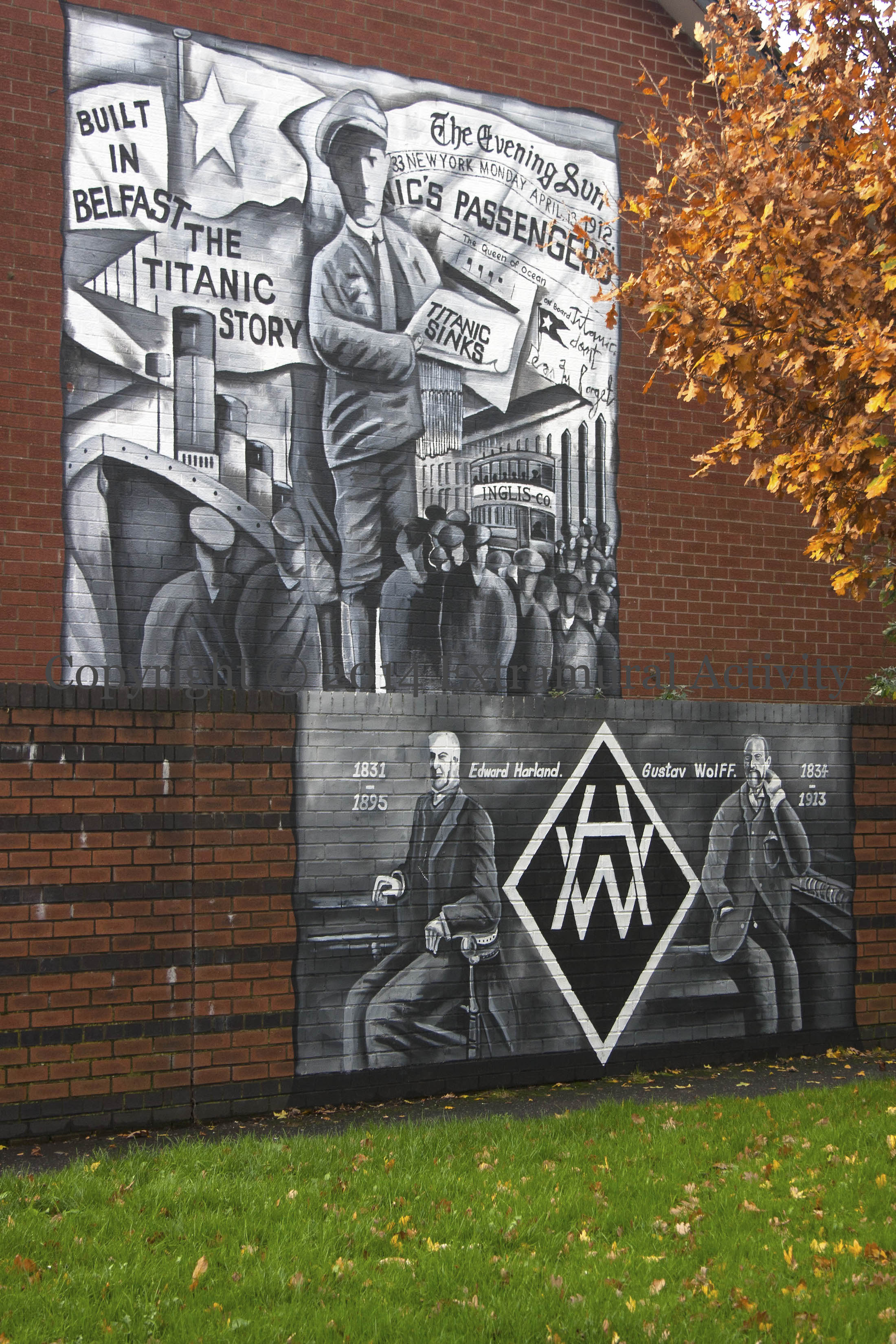
“Titanic Sinks” is the headline of the newspaper in this recent mural in east Belfast. In fact, news was hard to come by in the first few days after the sinking in the early morning of April 15th, 1912, as Titanic sank a thousand miles from New York and wireless was the only means of communication. The Evening Sun’s headline on April 15th (which might be partially reproduced here) announced “All Titanic Passengers Are Safe; Transferred in Lifeboats at Sea” (image at Pratt Library). Here is a NYTimes article about the difficulty in getting reliable news in the days after the sinking. This is new work by John Stewart. (Report on the launch at NIHE.)
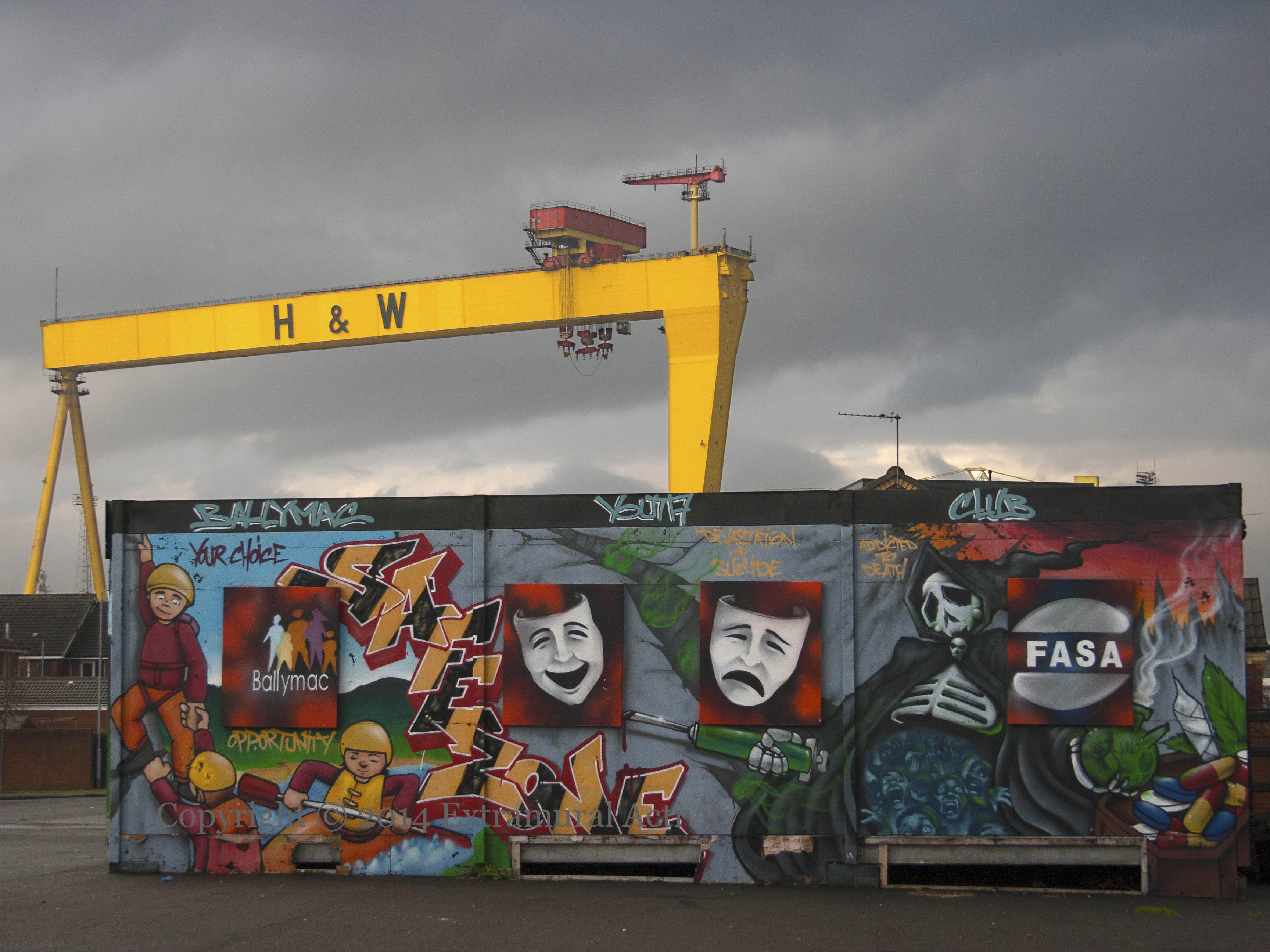
On one side are children rock-climbing and canoeing, on the other are the masks of tragedy and comedy and a skeletal Death, shrouded in vapours from an earth split open and cloaking a multitude of souls ensnared with needle, pipe, and pills. The south wall of the Ballymac Youth Centre in Pitt Park promises a safezone from the “devastation of suicide” or becoming “addicted to death”. Harland & Wolff’s Goliath stands in the background.
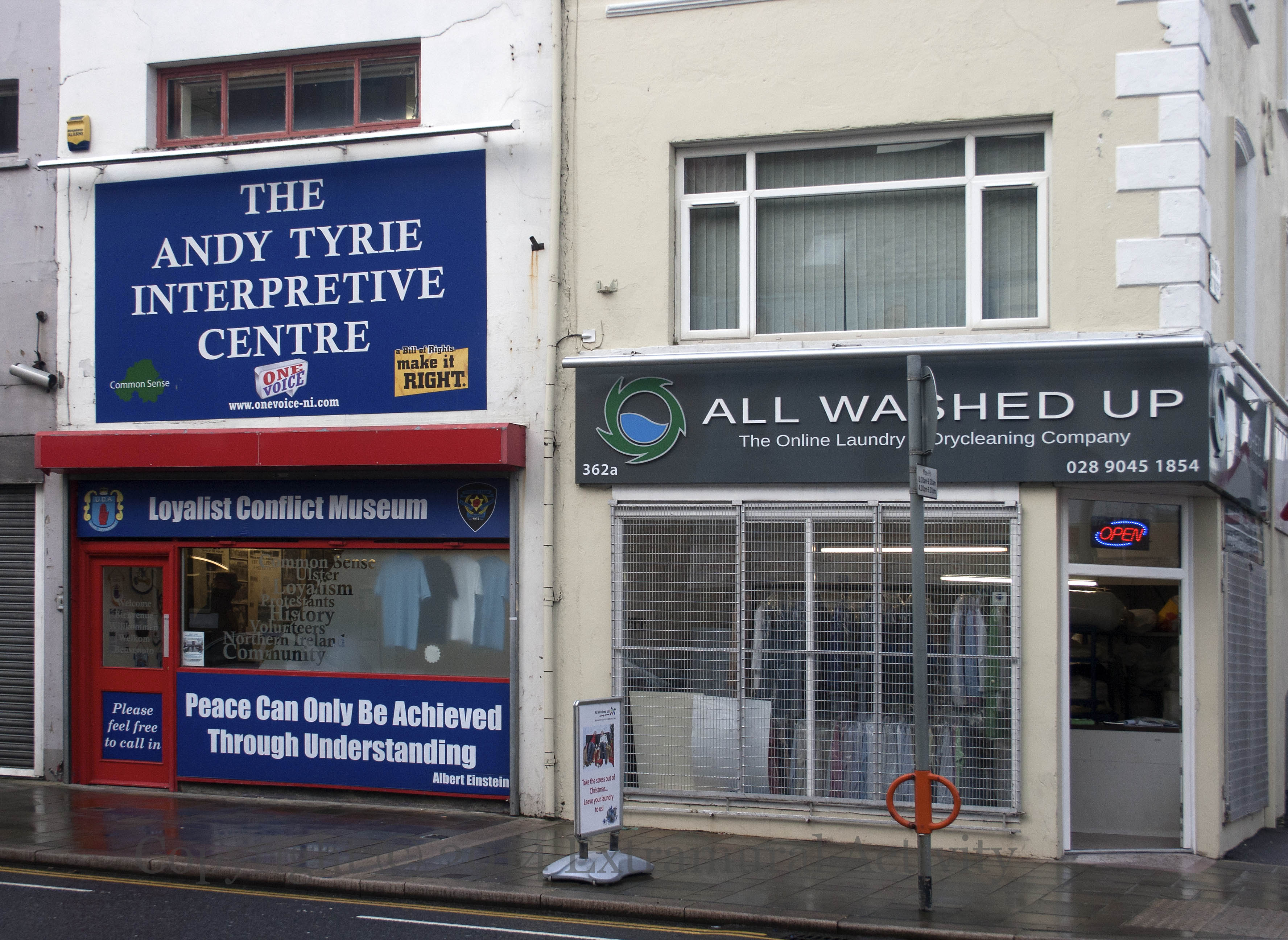
The Andy Tyrie Interpretive Centre on the Newtownards Road was opened on August 31st, 2012 (FB) and includes UDA/UFF memorabilia from troubles, including the 1974 Ulster Workers’ Council Strike in which the centre’s namesake, then head of the UDA, played a large role (WP).
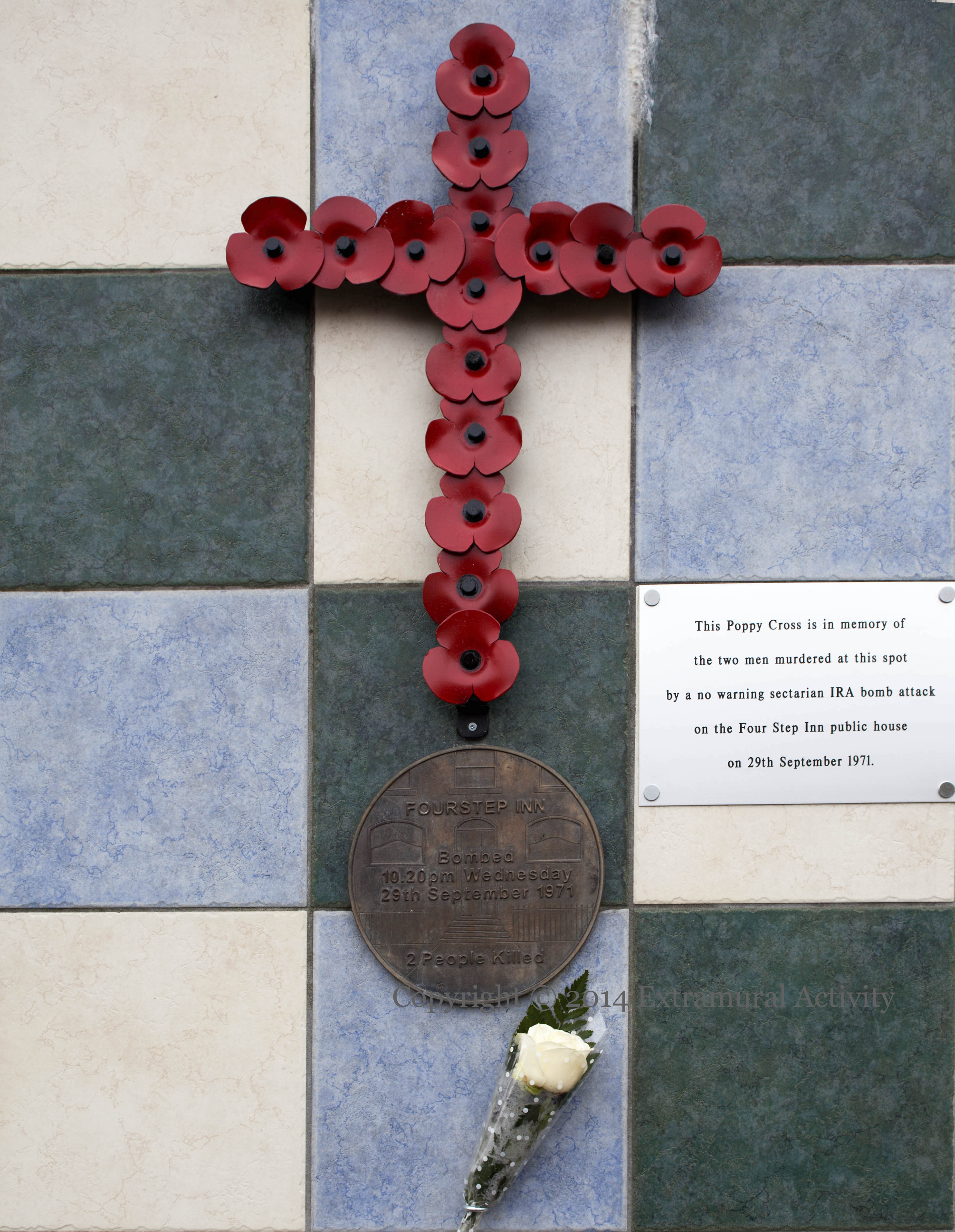
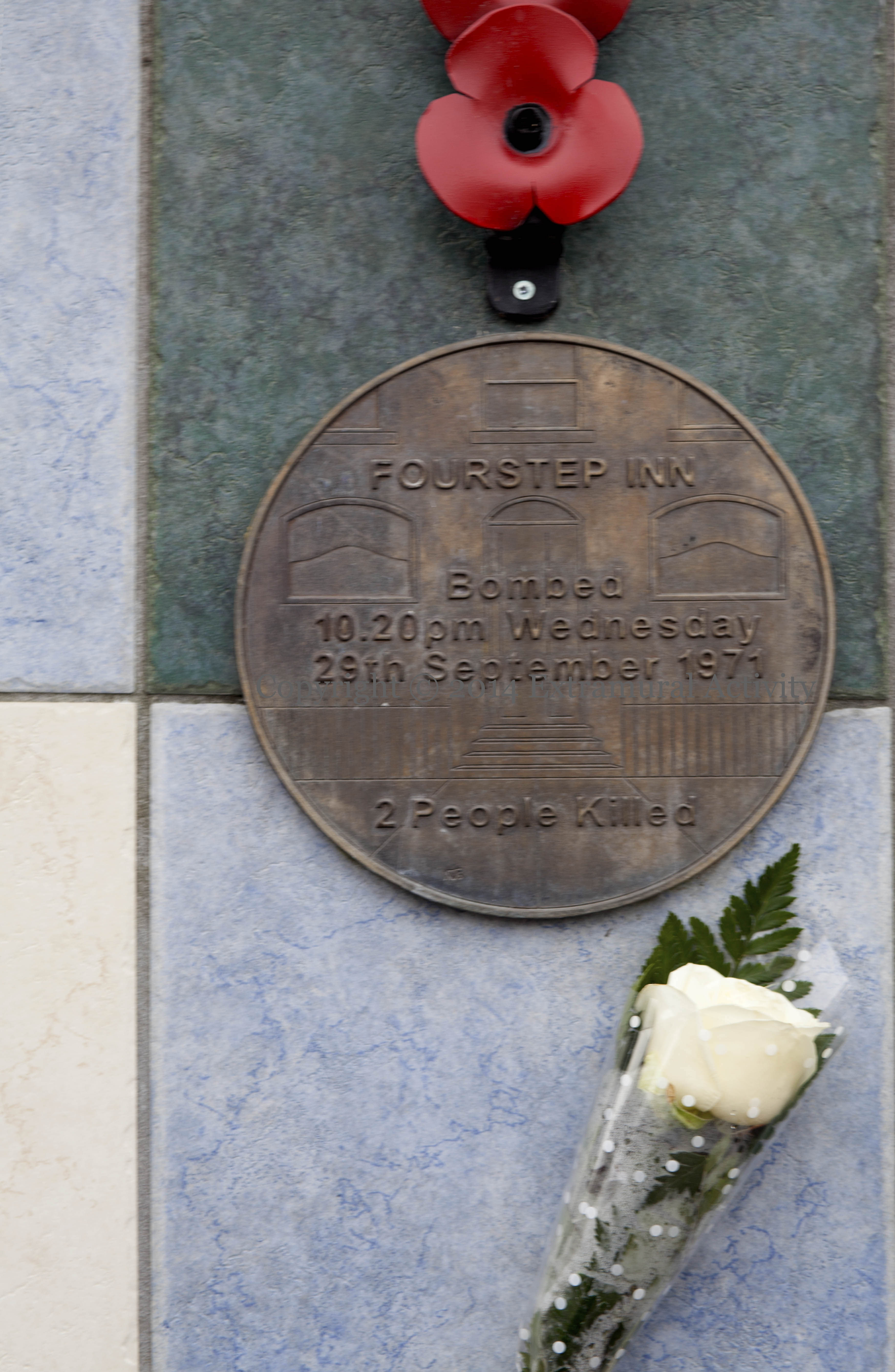
“This poppy cross is in memory of the two men murdered at this spot by a no warning sectarian IRA bomb attack on the Four Step Inn public house on 29th September 1971.” The two men were Alexander Andrews (60) and Ernest Bates (38) (CAIN). A similar cross was also erected further down the Shankill, at the former site of Frizzell’s Fishmongers, bombed in 1993. Both attacks are among the five Shankill bombings commemorated in Where Is Our Truth?
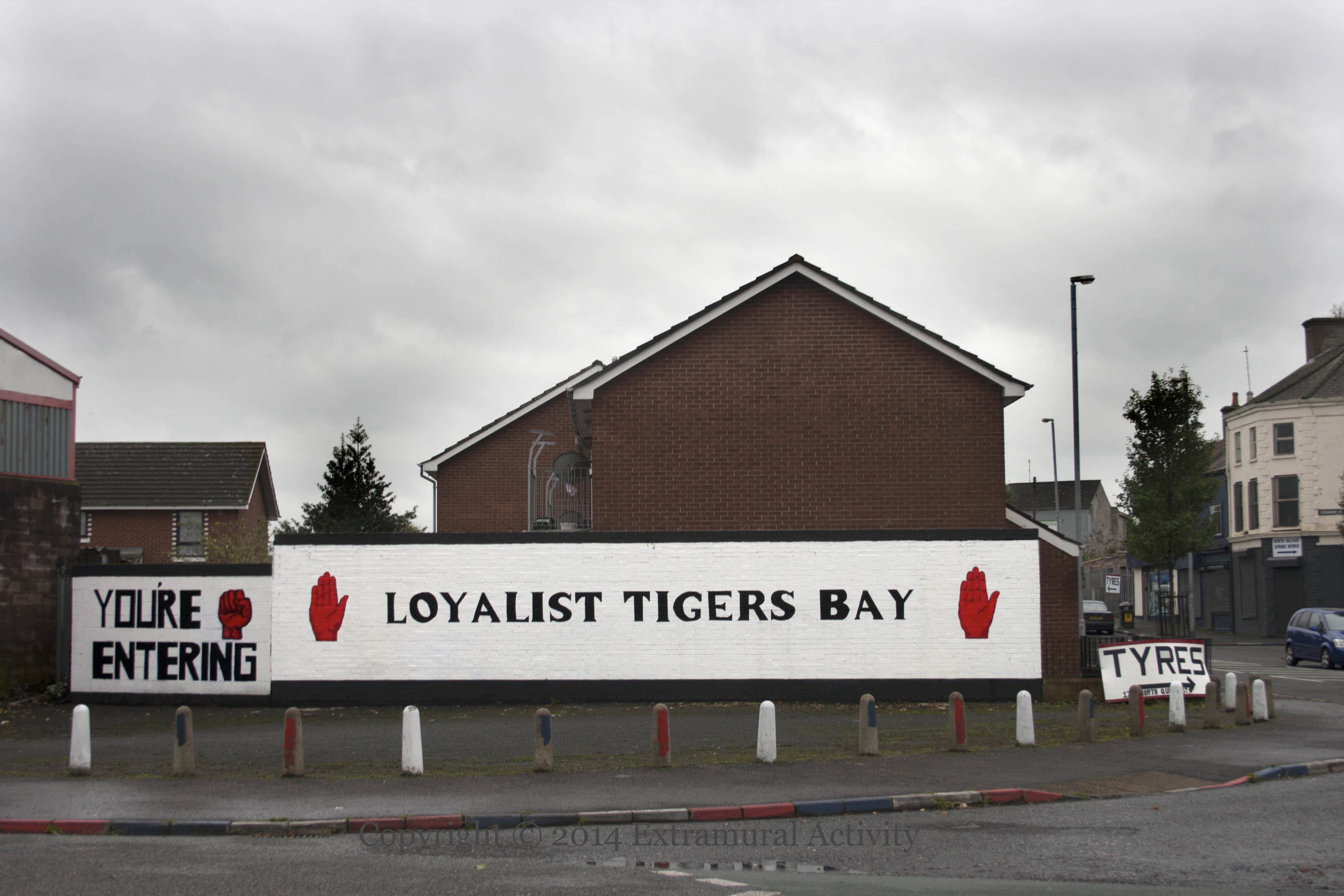
The previous board in this location said “‘yes’ to a better future” beneath a tiger, a rainbow, and a DJ at his turntables (see an image at CCDL). That future, it seems, is to go back to a mural similar to the one prior to 2009 – You’re entering Loyalist Tiger’s Bay – though the explicit UDA/UFF insignia are gone, leaving only the clenched fist.
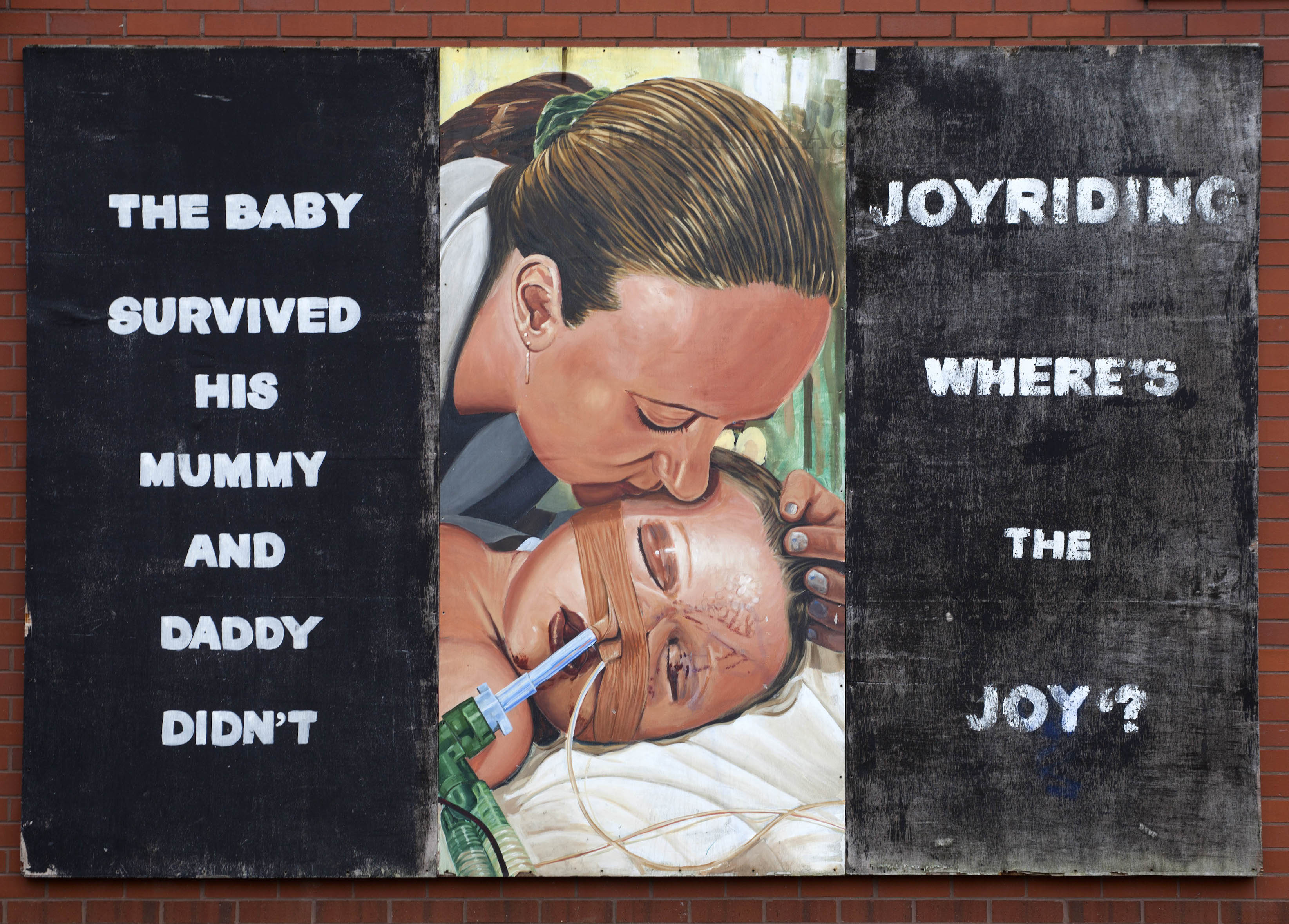
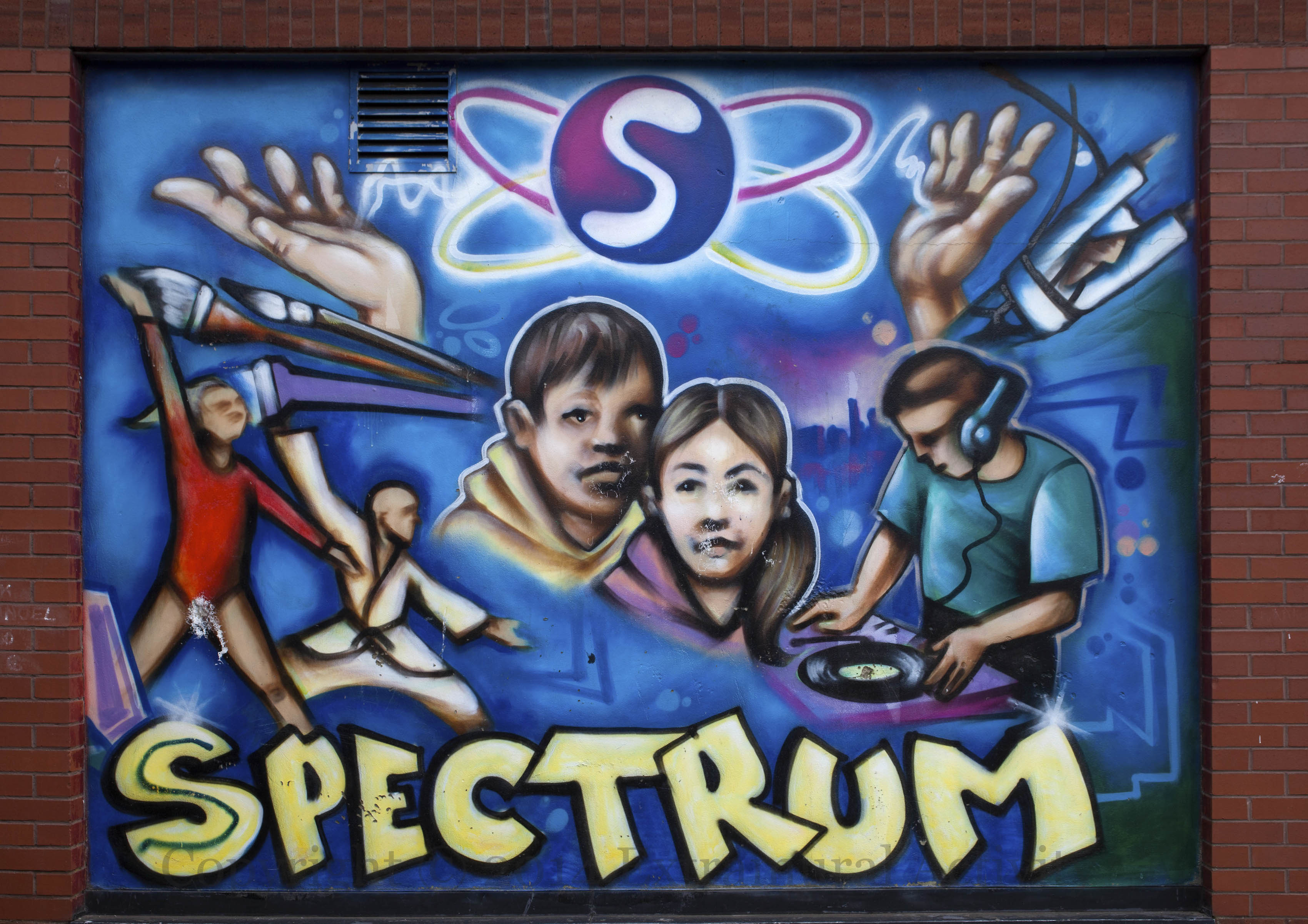
Here are two boards from outside the Spectrum Centre on the Shankill Road. “The baby survived, his mummy and daddy didn’t. Joyriding: Where’s the joy?”. (A similar board is at the junction of Whiterock and Springfield Roads and another in Duncairn Avenue). The board below features youth activities such as painting, martial arts, and DJing.
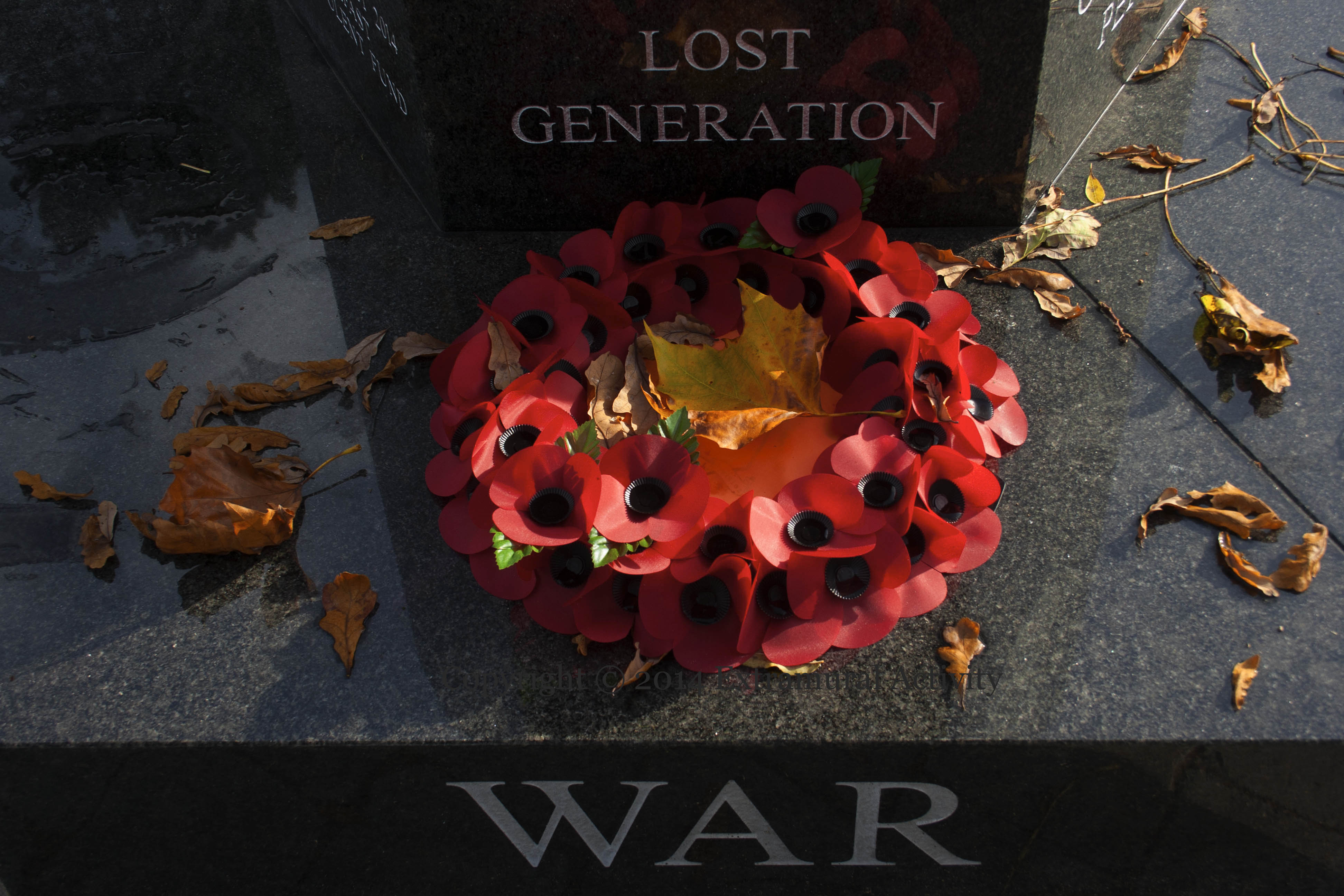
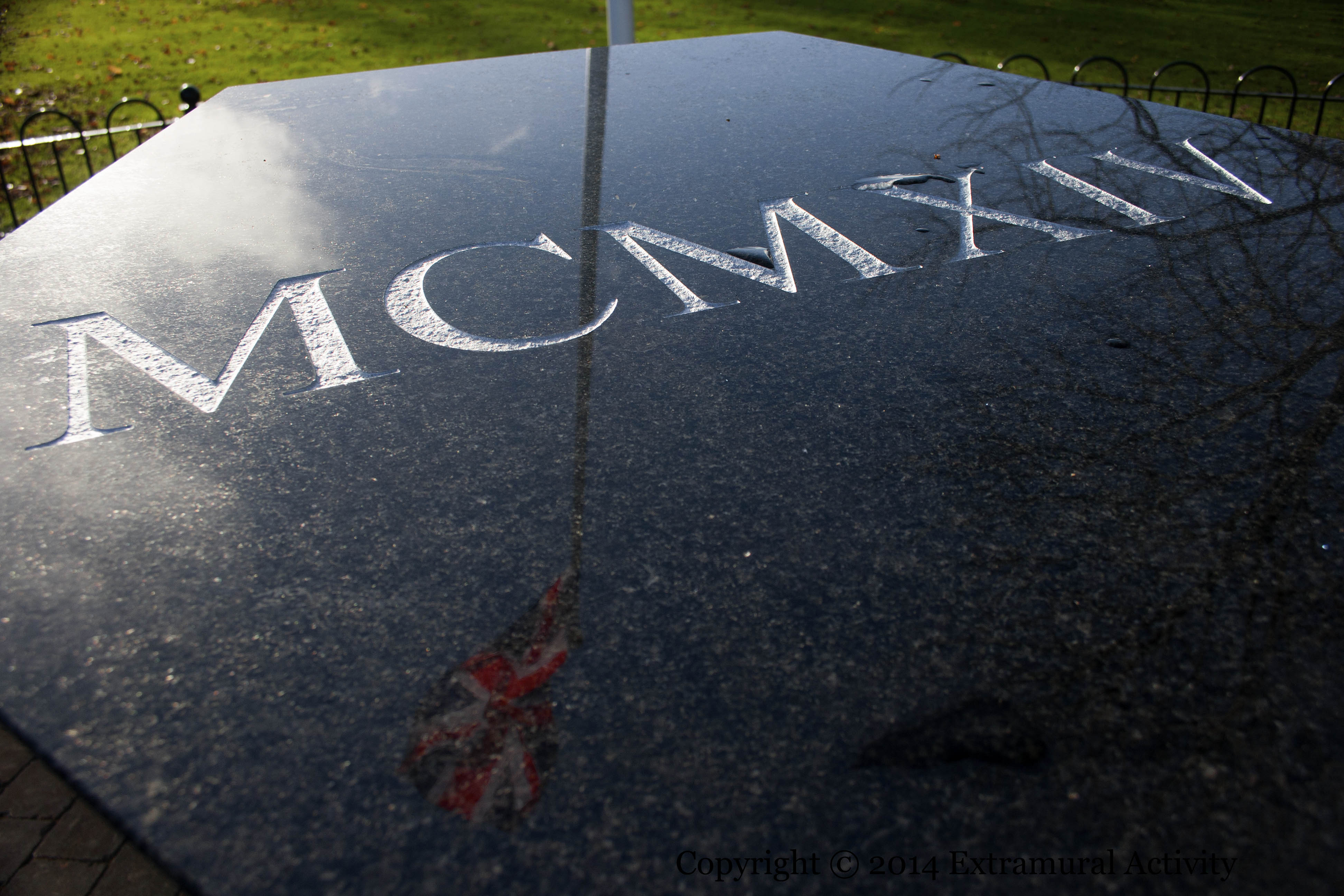
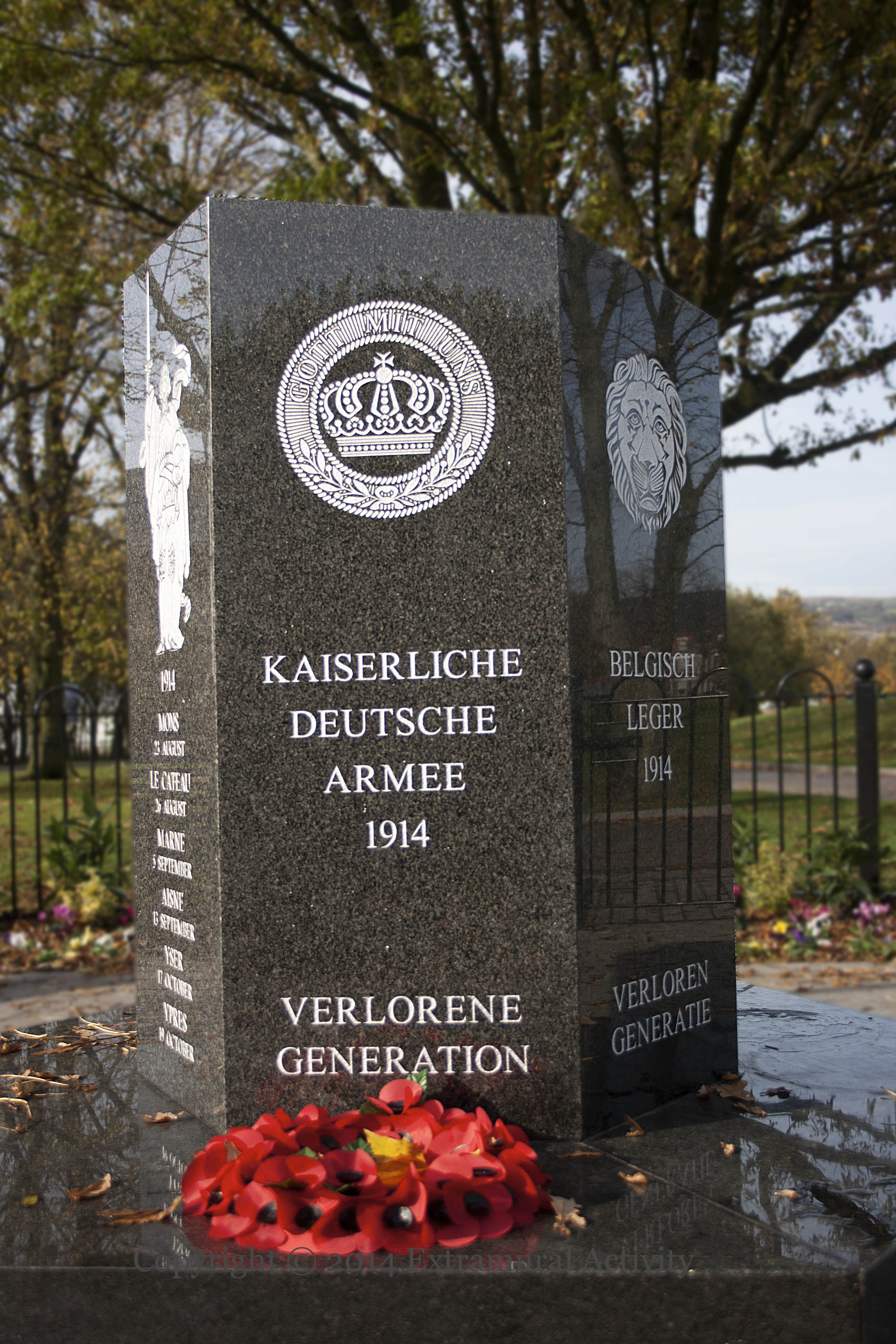
Approximately 10 million military personnel and 7 million civilians died in WWI, with massive losses coming in August-September-October of 1914, as German forces invaded Belgium and northern France, before being stopped at the Marne and entrenching at the Aisne; both sides then attempted to out-flank one another in a “race to the sea” (WP – Invasion | WP – Casualties). The dead of those first months – including German forces (see third image, below) – are commemorated in a new monument, a granite stone with six sides, like a rock from the Giant’s Causeway, in Woodvale Park (BelTel | NewsLetter). A searchable database of 10,000 Irish soldiers who died in Belgium is now available at the In Flanders Fields Project.
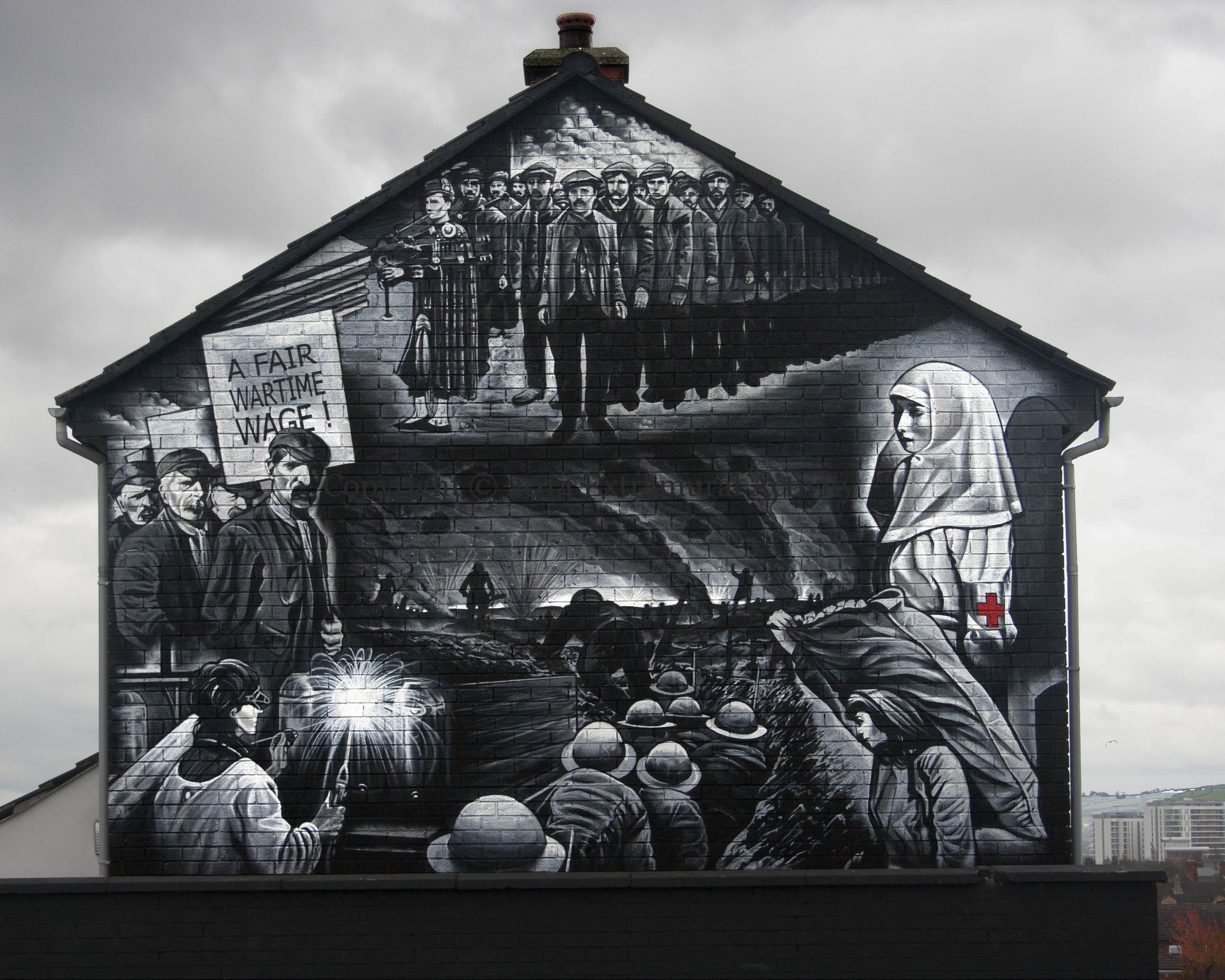
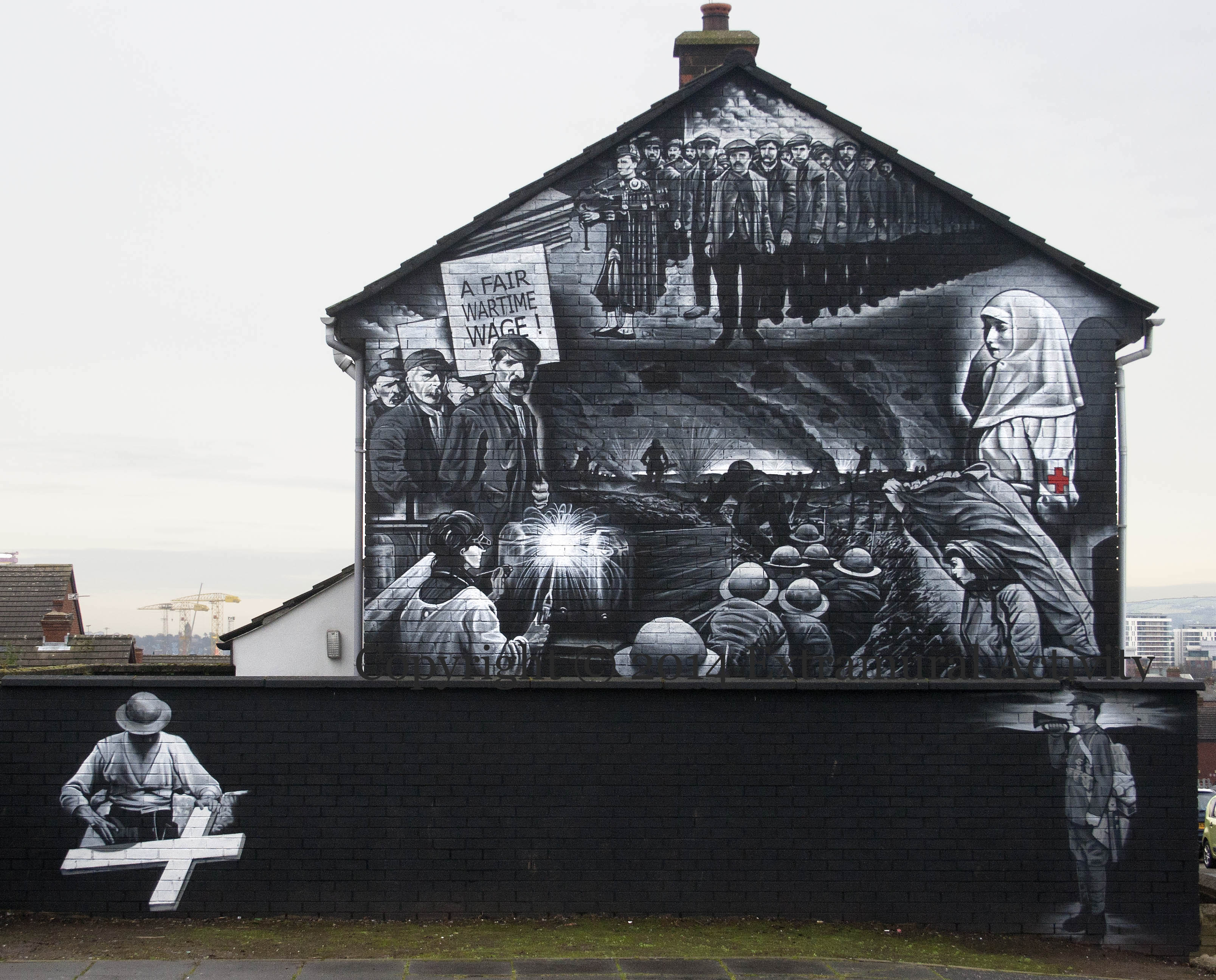
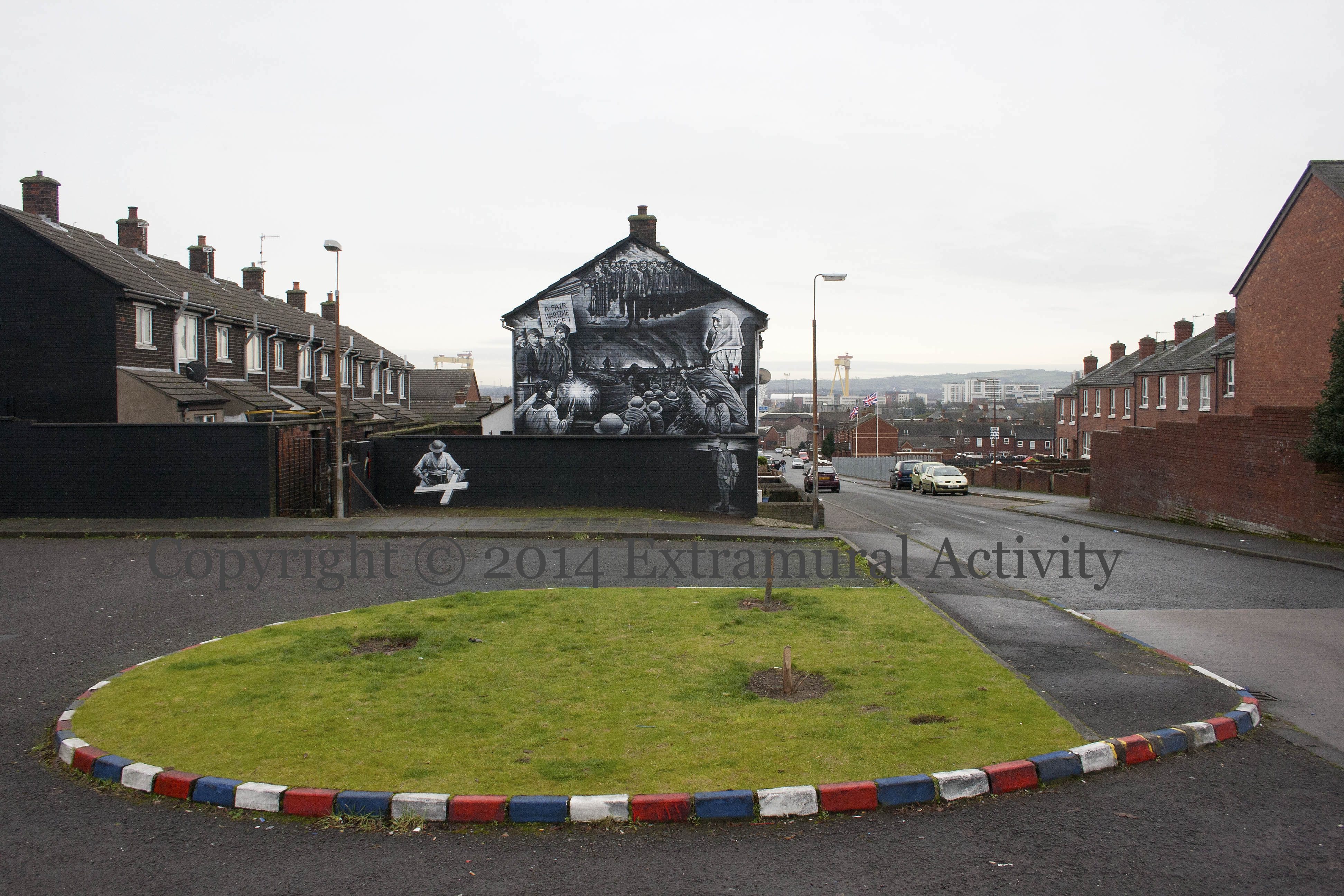
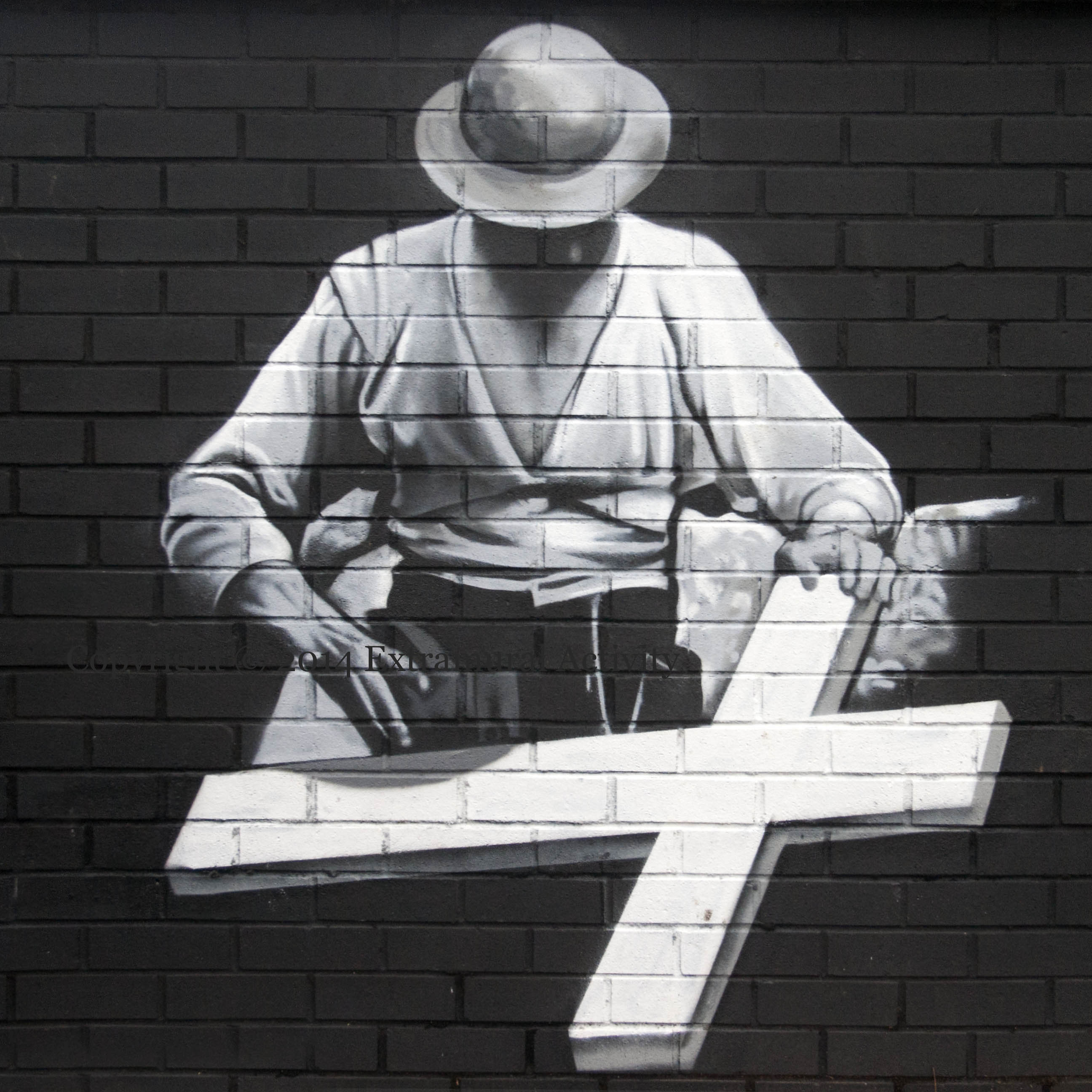
This new piece in Tiger’s Bay illustrates various kinds of ‘Wartime Work’.
The central image of soldiers at the battle of the Somme is surrounded by images of various occupations: shipyard workers and miners perhaps, along with women welding, carrying coke and nursing. It’s not clear what the “fair wartime wage” refers to: there was a general strike at the shipyards in 1919 (The Great Unrest | Workers’ Liberty). The original Somme photograph is widely known – it was also reproduced in the Bangor mural to Sir Edward Bingham; the nurse is apparently the Grand Duchess Olga Nikolaevna of Russia – WP. The woman carrying a sack of coke is from the Imperial War Museum’s collection.
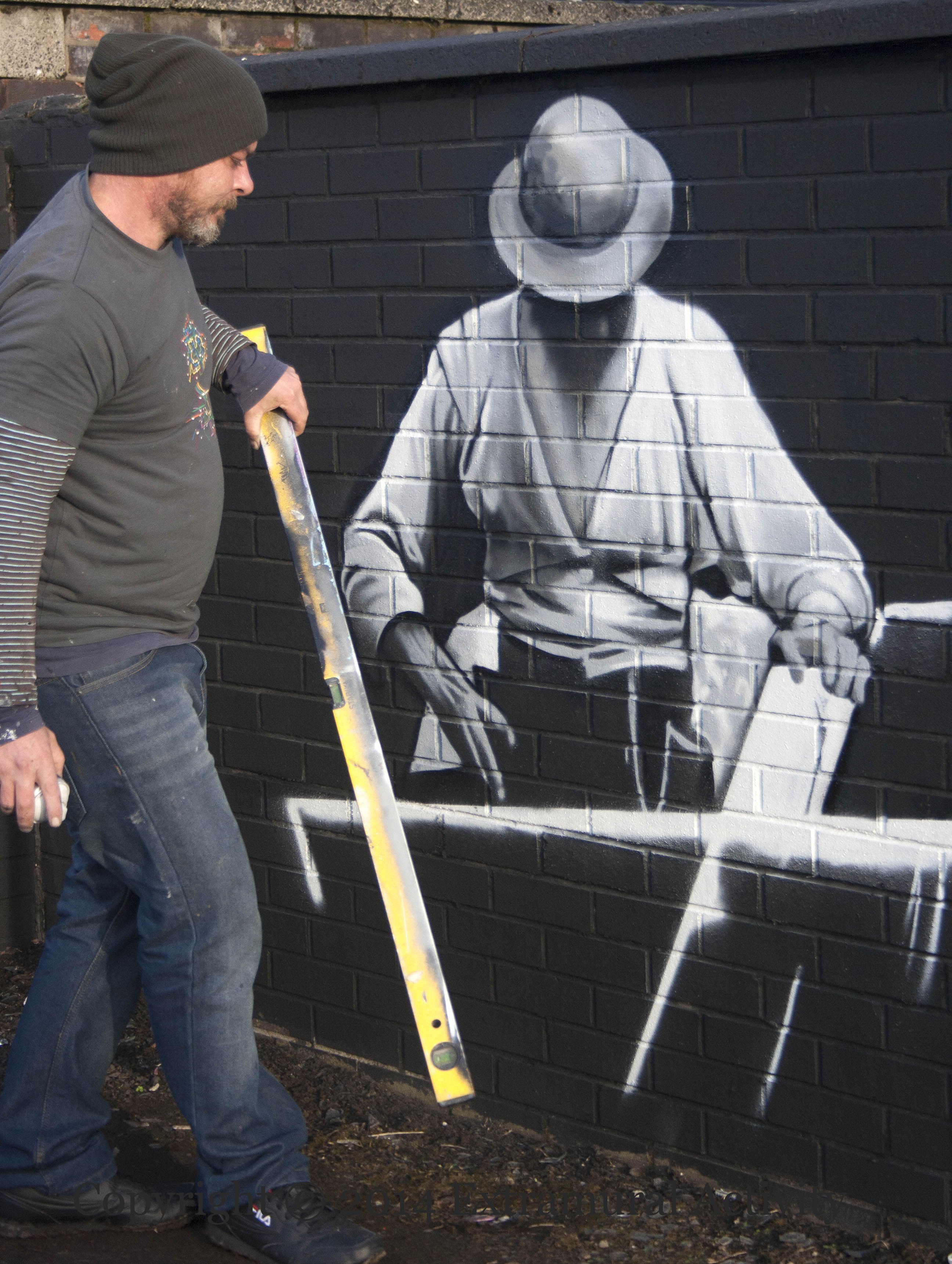
The image above is from after the main wall was completed; the second image, below, shows the lower wall also. The lower wall is intended to be full, but painting has ceased indefinitely. The third image below shows the red, white, and blue kerb-stones, with the H&W cranes in the distance. The artist Jonny McKerr is shown at work. Another in-progress shot can be found at Arts For All. Last year McKerr did a similarly-styled piece on The Belfast Blitz.
Update: The low wall was completed and an information-board added for the official launched on 2015-06-25 – see Aftermath.
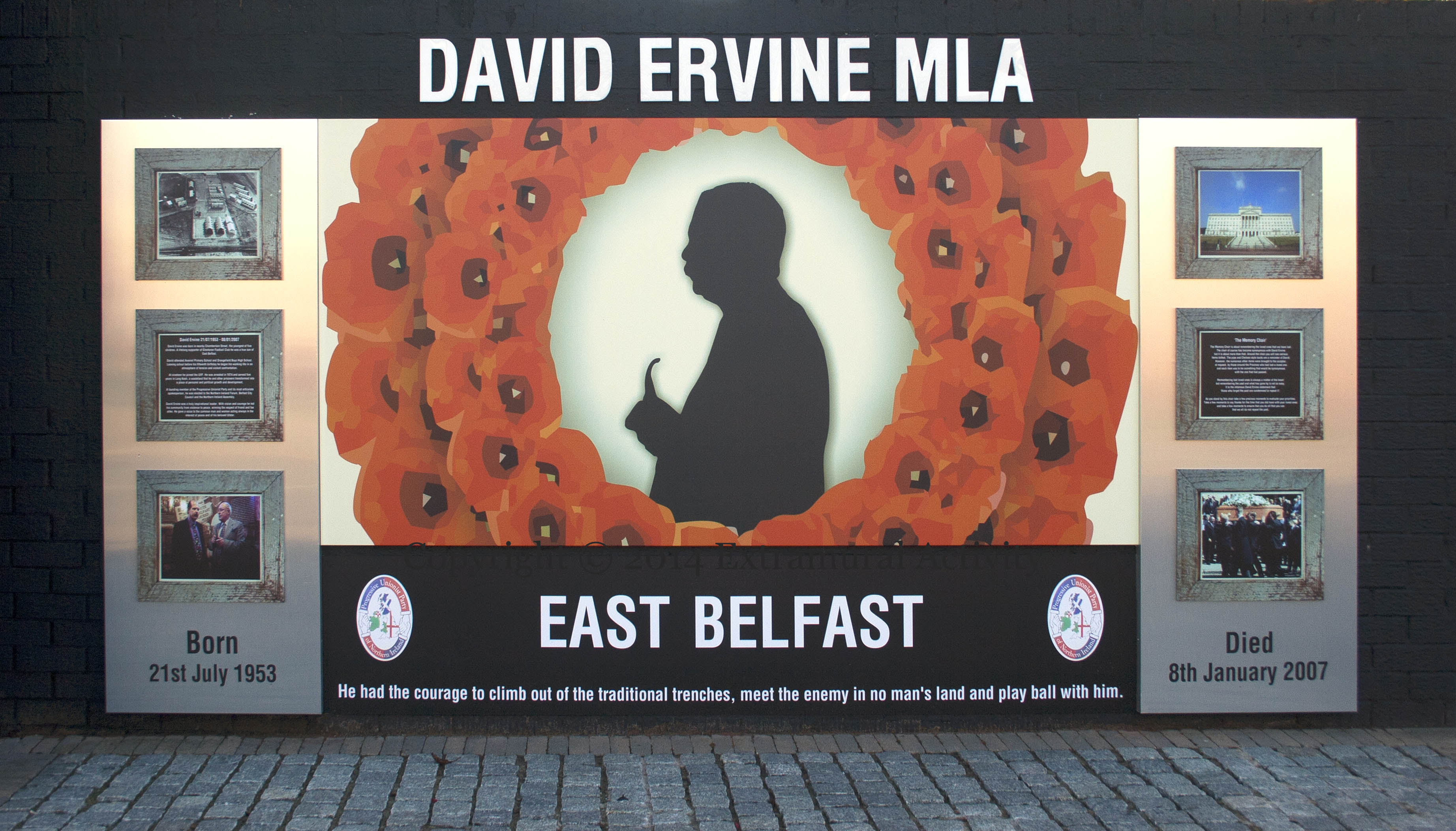
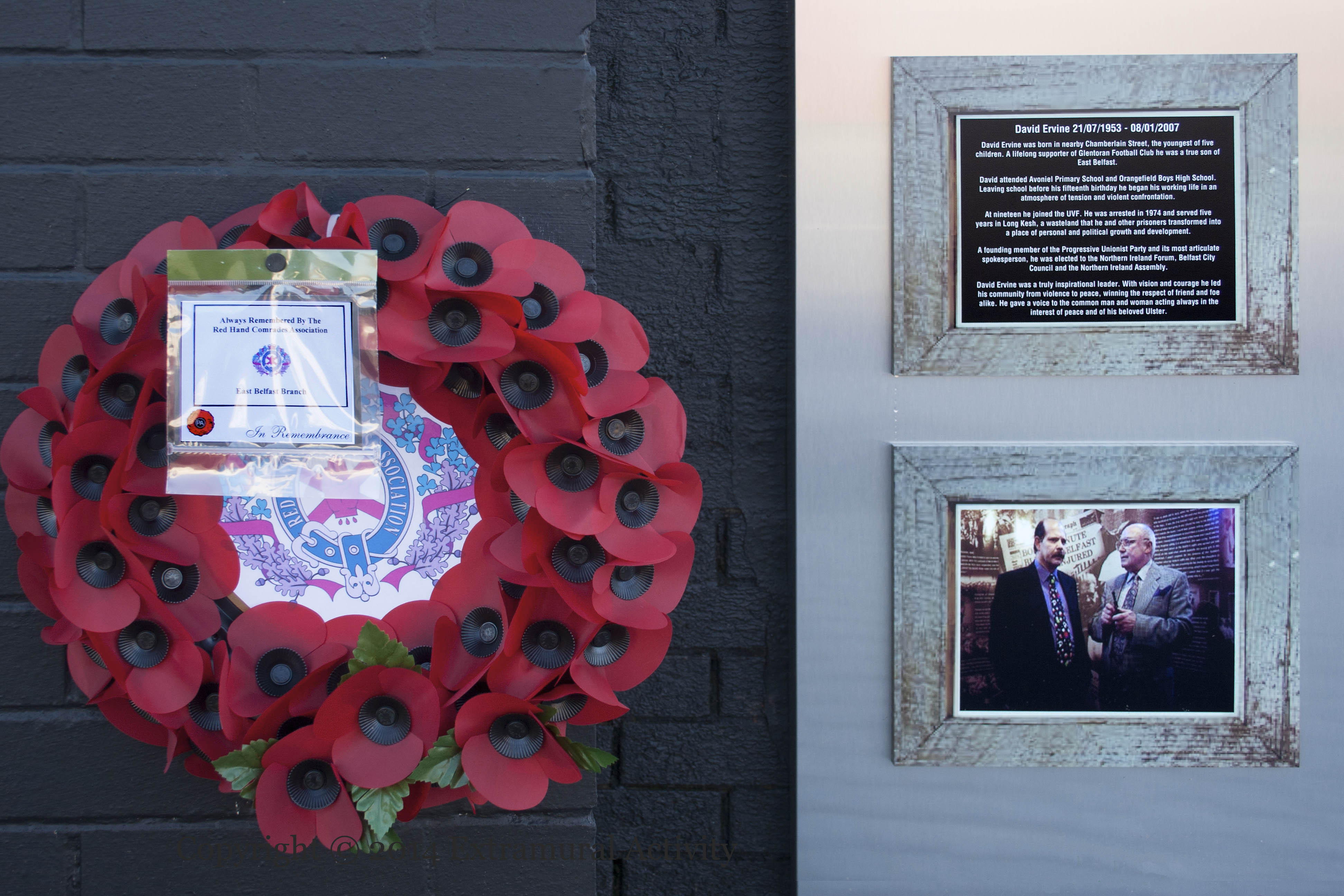
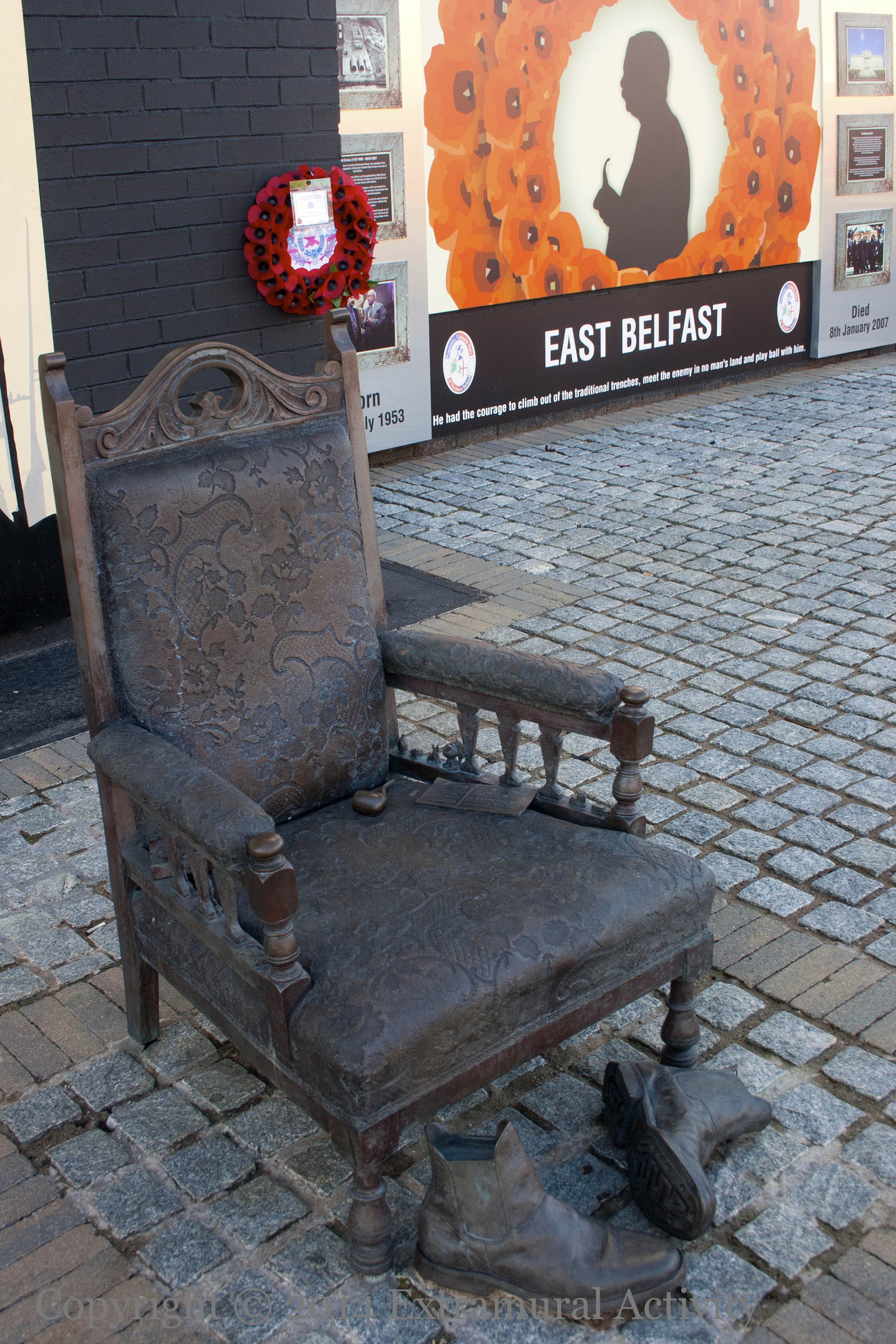
“He had the courage to climb out of the traditional trenches, meet the enemy in no man’s land and play ball with him.” David Ervine was a UVF member, arrested in 1974 and served six years in the Maze before turning to politics. He first ran for office in 1985 and represented East Belfast in the NI Assembly from 1998 until his death in 2007. The new board, above, shows Ervine’s silhouette in a wreath of poppies along with pictures of and information about his life; the image below of the lower left-hand side includes a photograph of Ervine with Gusty Spence.
Video of the launch (on 2014-11-01) is available at U.tv
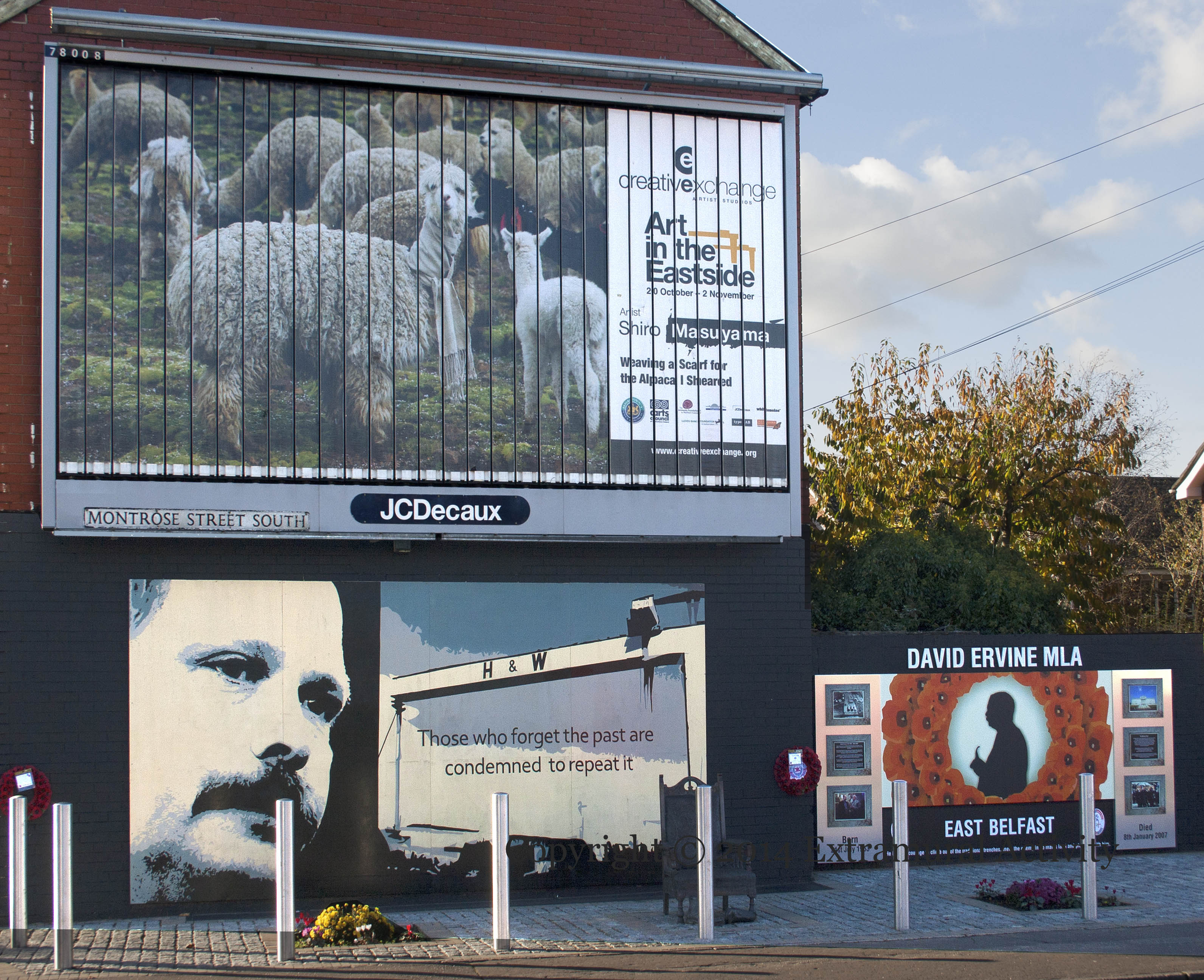
At the same time that the new David Ervine board was put in place, the existing board next to it, which dates to 2008, was spruced up. The image above is a wide shot of both boards, while the image below shows the commemorative casting in front. For the original board, see David Ervine; for explanations of the sculpture, including its pipe, prayer-book, ticket, and boots, see Memory Chair.
 Seosamh Mac Coille Collection