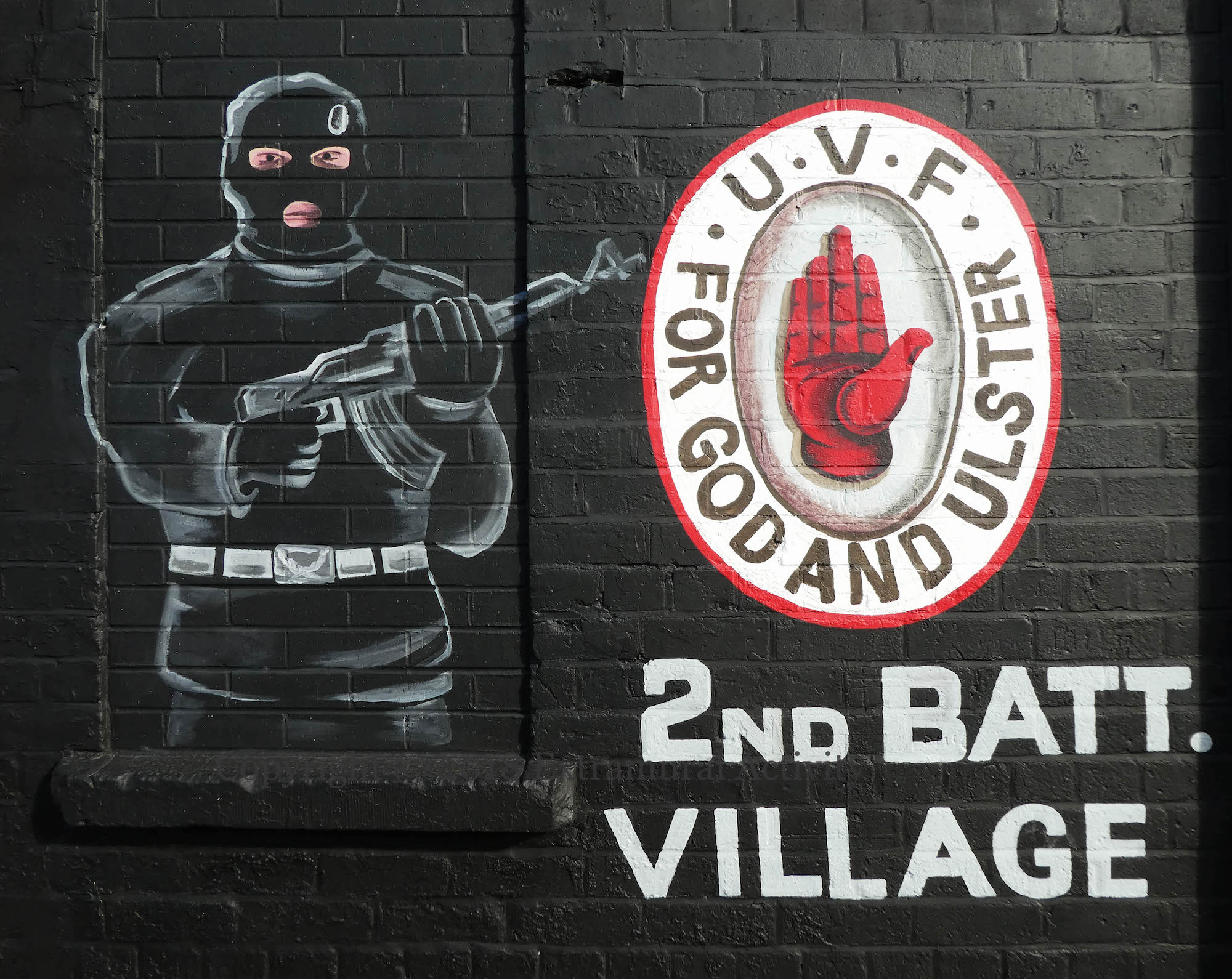
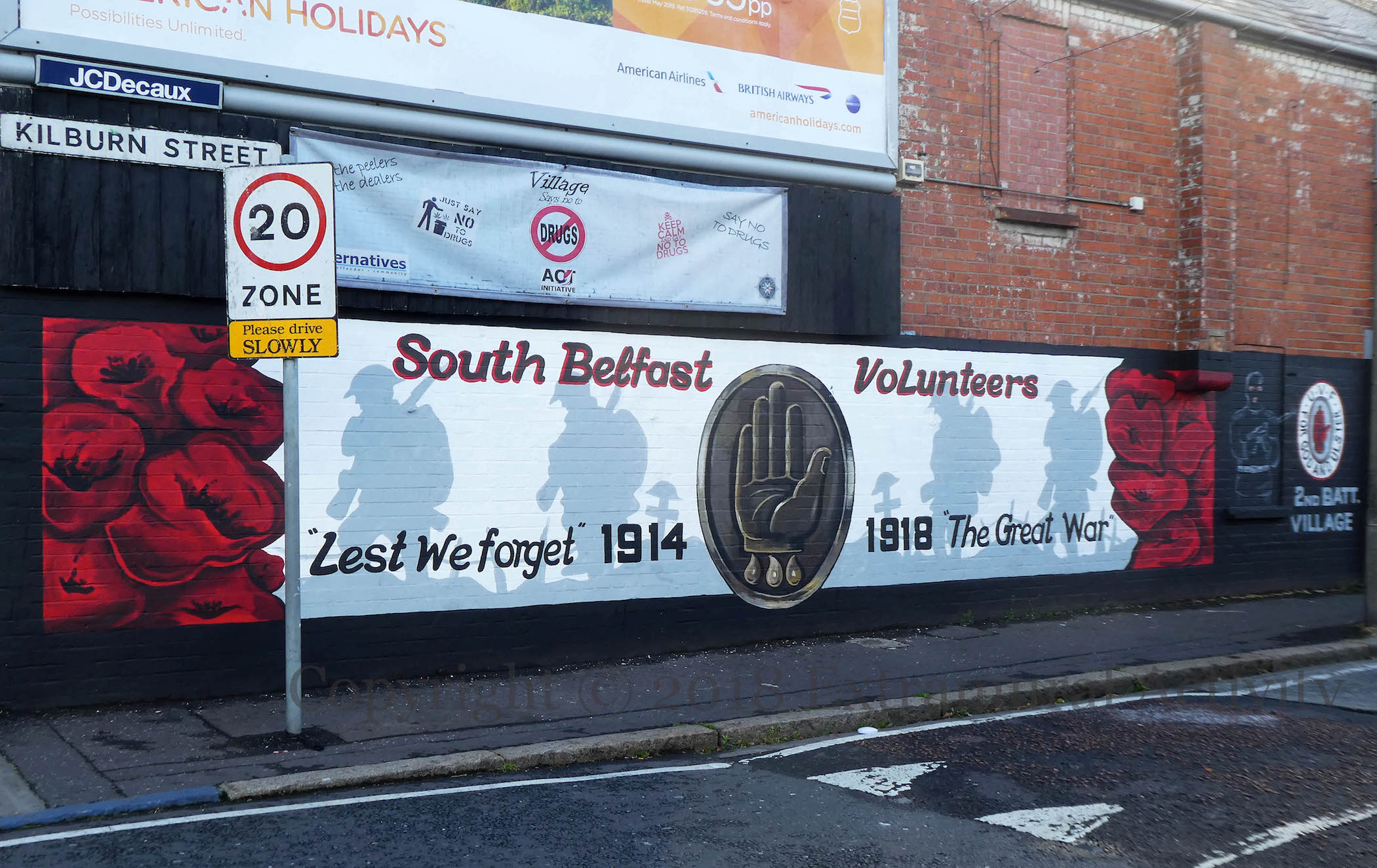
The main panel (shown below) is a tribute to soldiers in the Great War (1914-1918), with a border of poppies and silhouetted soldiers reflecting over helmets on crosses. To the side, however, is the modern UVF volunteer (shown above), with balaclava and assault rifle.
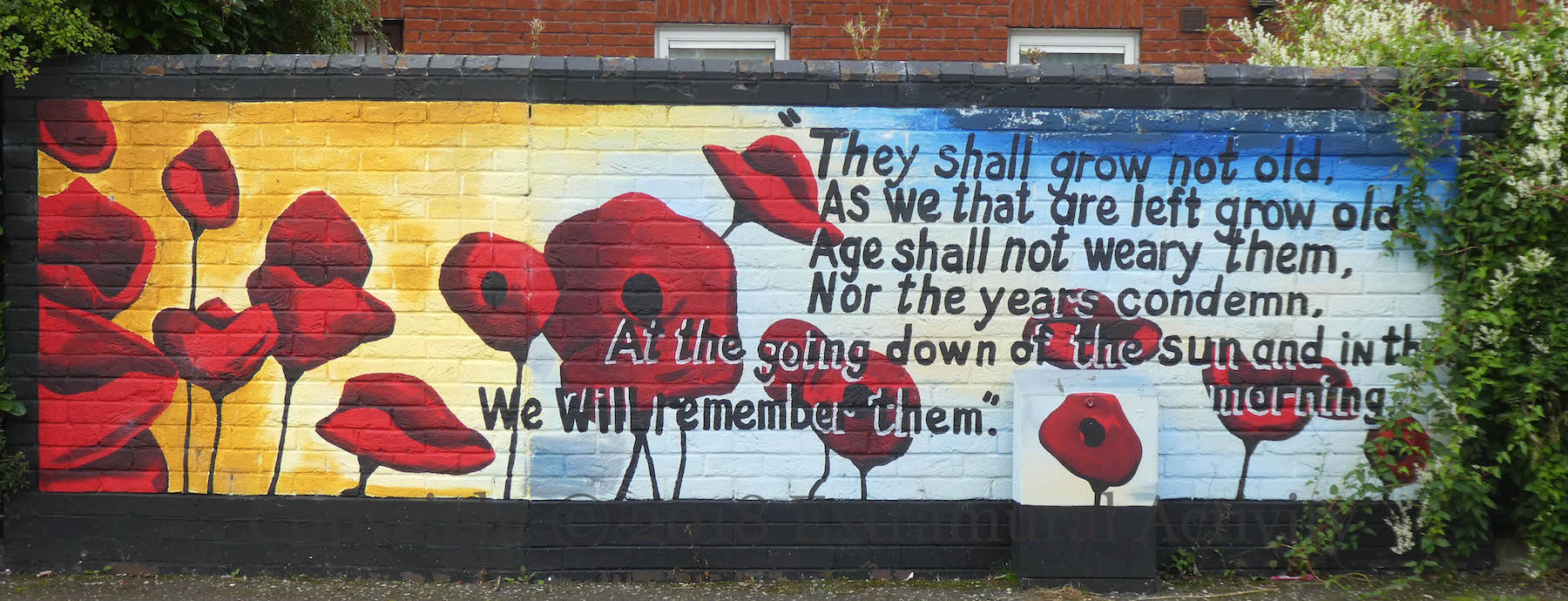
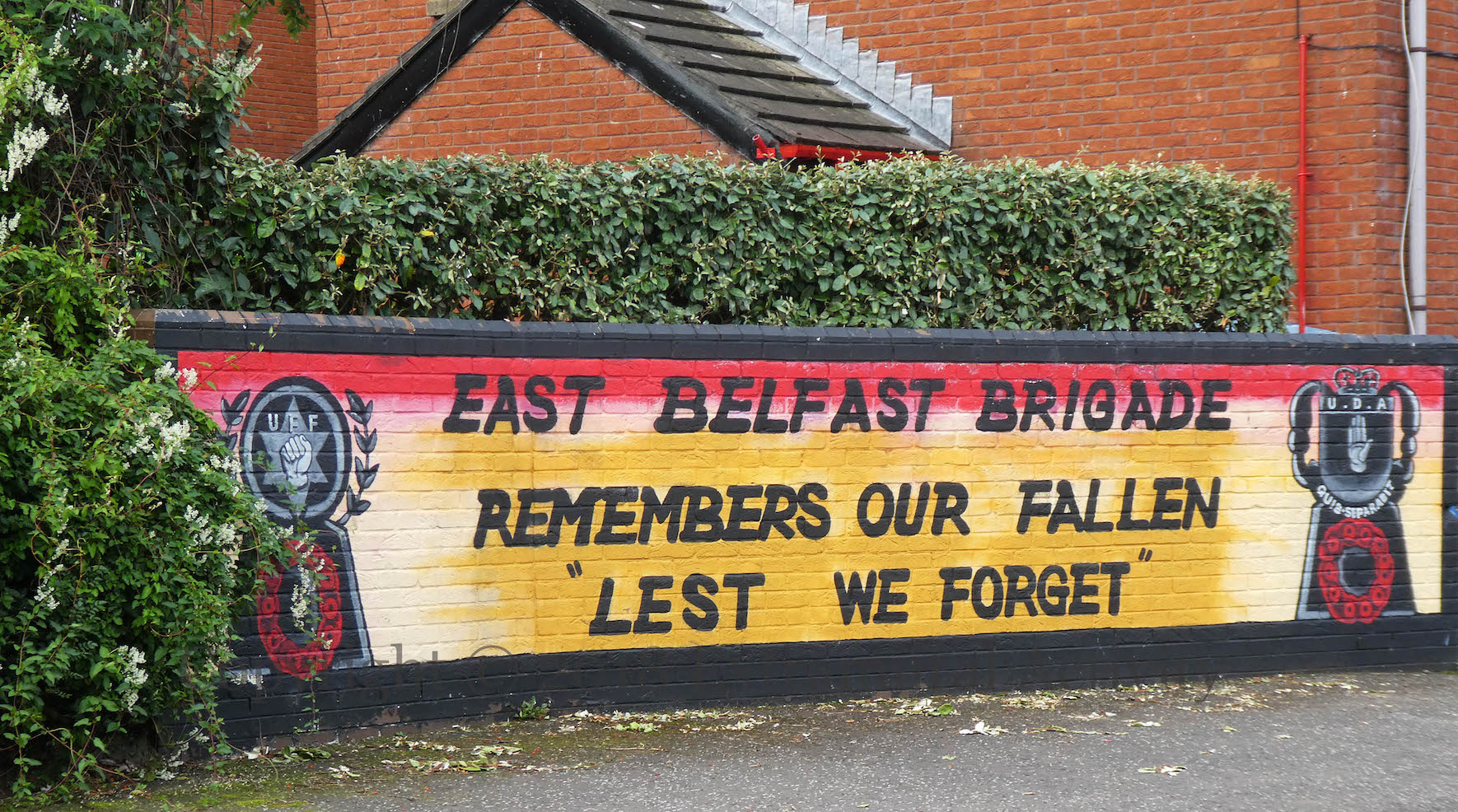
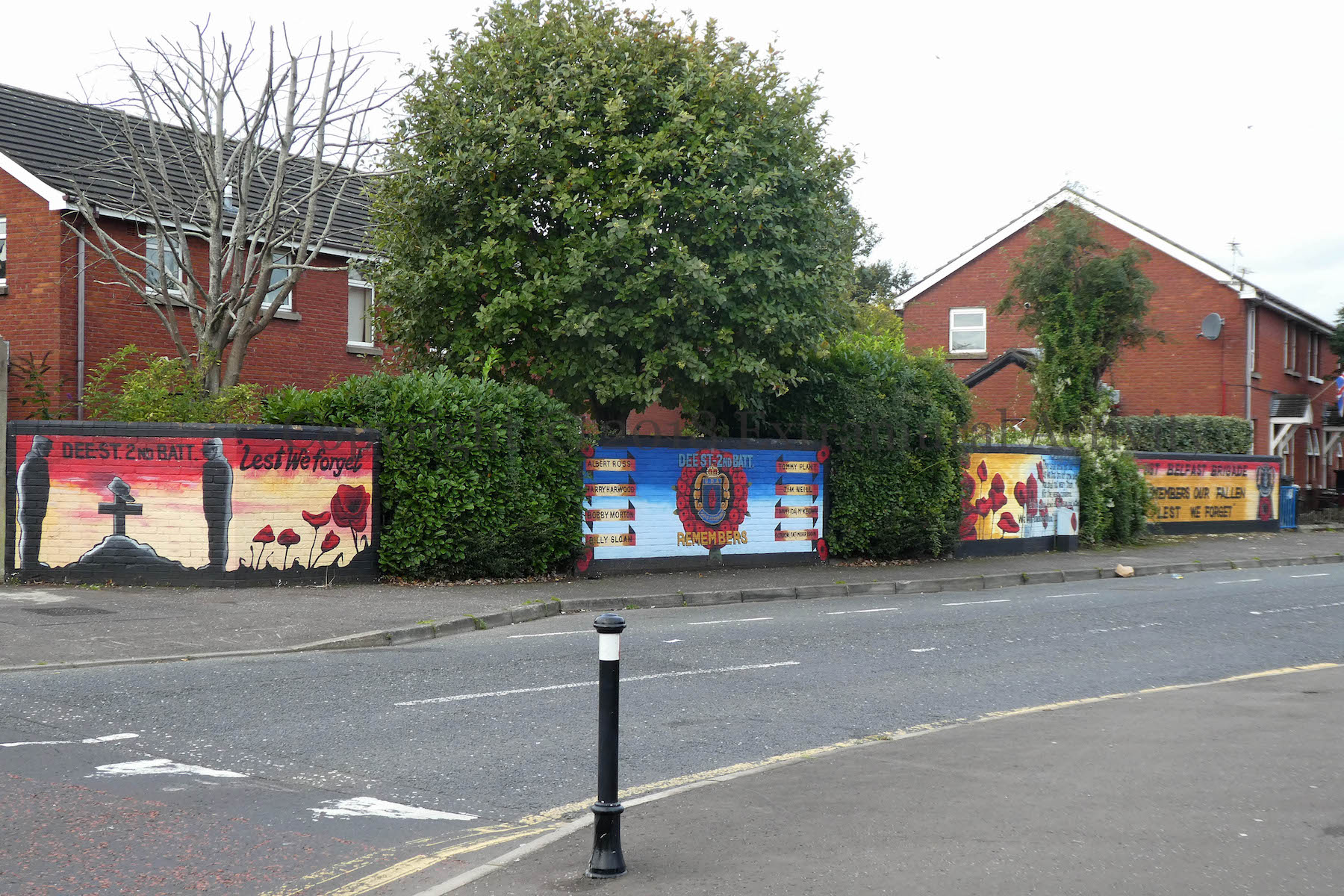
A new series of UDA “memorial” murals has been painted along Island Street, in east Belfast. Poppies are featured throughout, as we have increasingly seen over the last few years. New to this series, however, are the use of Lawrence Binyon’s poem For The Fallen in the third panel (see below) and in the image above – the left-most of the four – modern UDA volunteers stand in reflection upon an above-ground grave, also symbolic of the fallen of World War I.
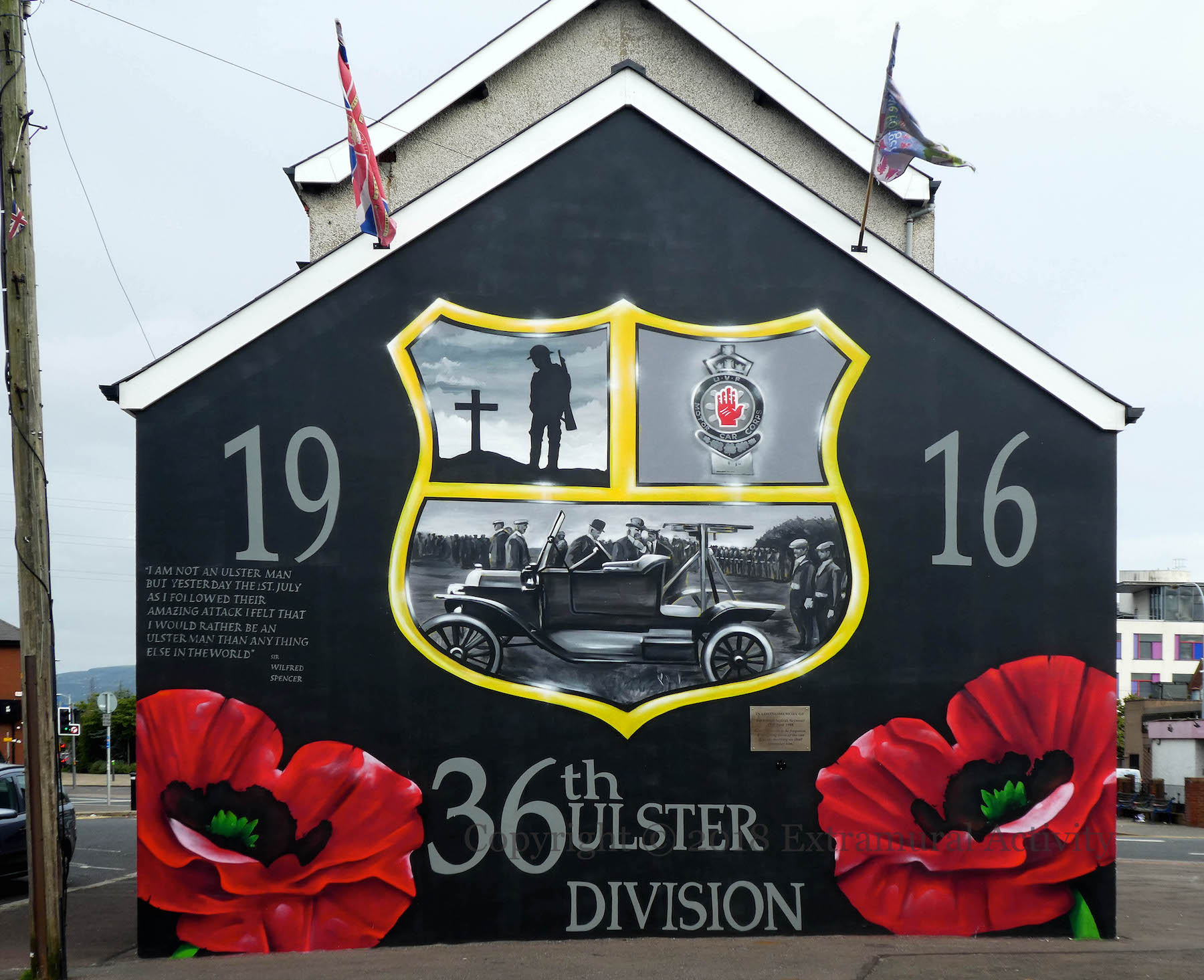
The first time that the horseless carriage was used in a military operation was the Ulster Volunteers’ “Larne Gunrunning” of April 1914. By this time, there are thought to have been 350 vehicles in the Corps (Angelsey). It’s not clear whether the cars were later used by the 36th (Ulster) Division – please comment/get in touch if you can shed light on this. (For Spencer’s quote on the left, see I am not an Ulsterman.) The plaque is to (modern) UVF volunteer ‘Squeak’ Seymour.
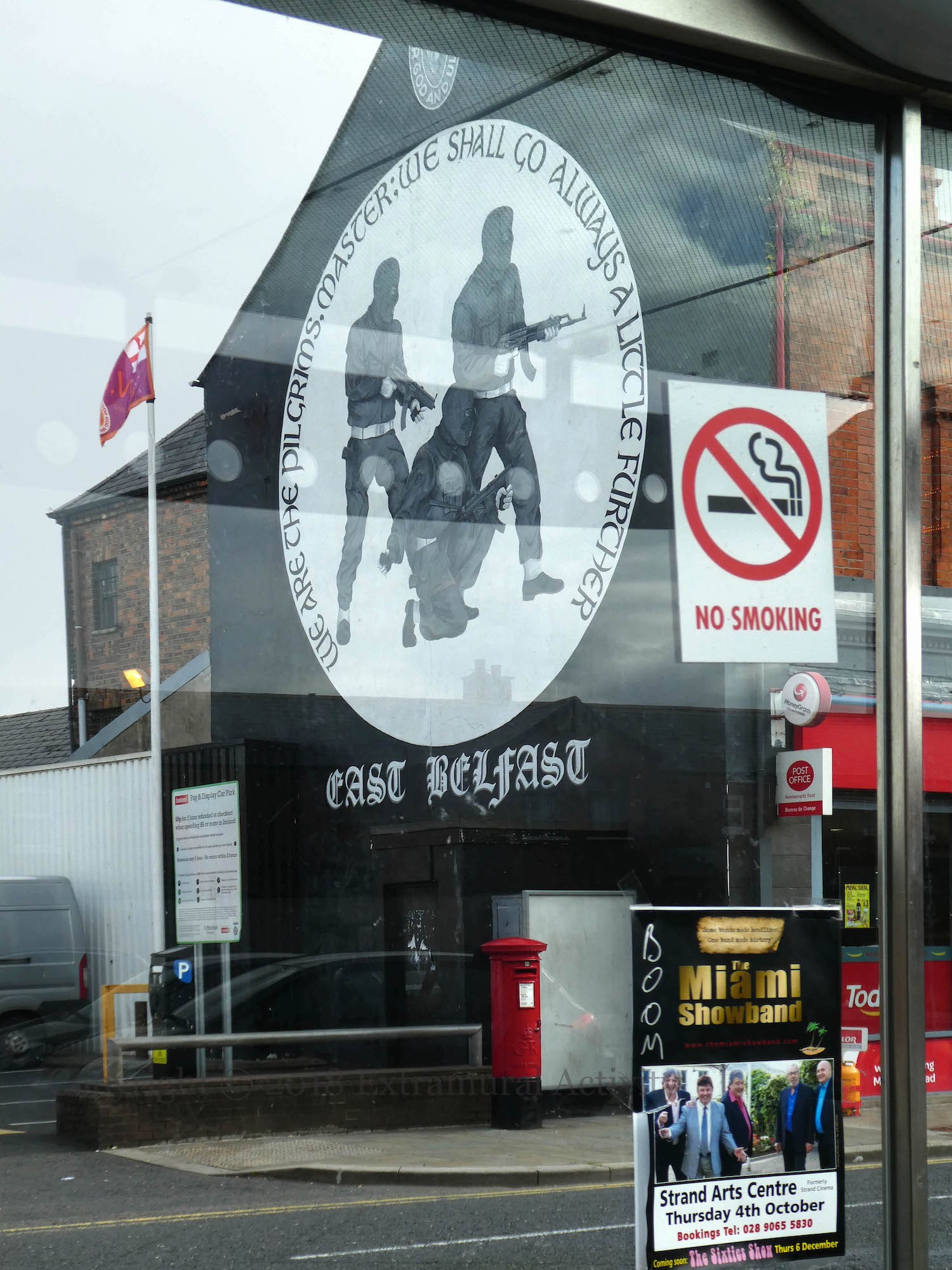
Three members of the Miami Showband were killed in 1975 at a fake check-point set by members of the UVF’s Glennane Gang. The explosion during the incident did not kill the musicians (as the graffiti on the poster above in loyalist east Belfast suggests); they were shot. Rather, a bomb exploded prematurely as it was being planted on their van, killing two of the attackers – see Boyle & Somerville – prompting the shooting spree (WP) that left three of the five band-members dead.
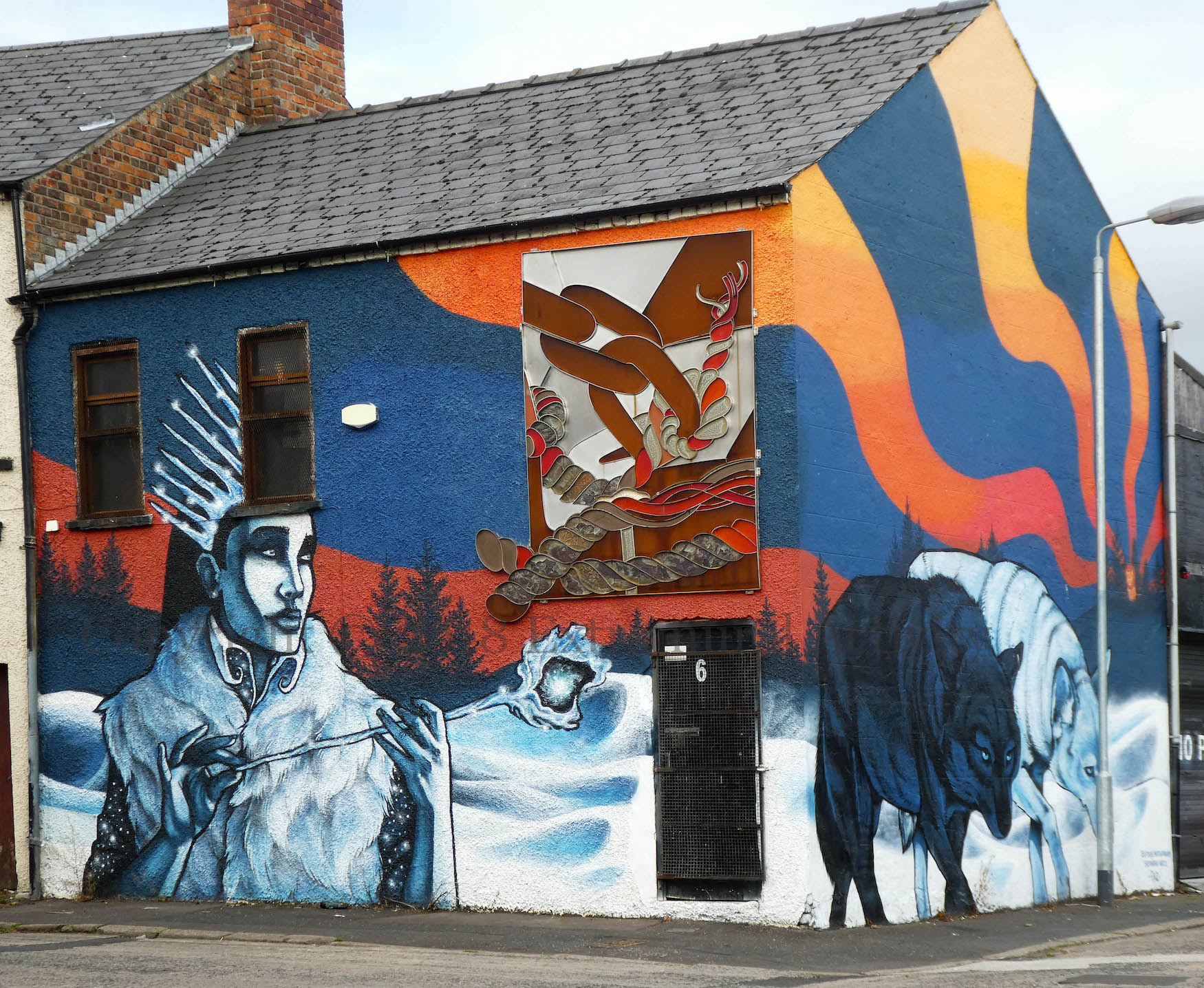
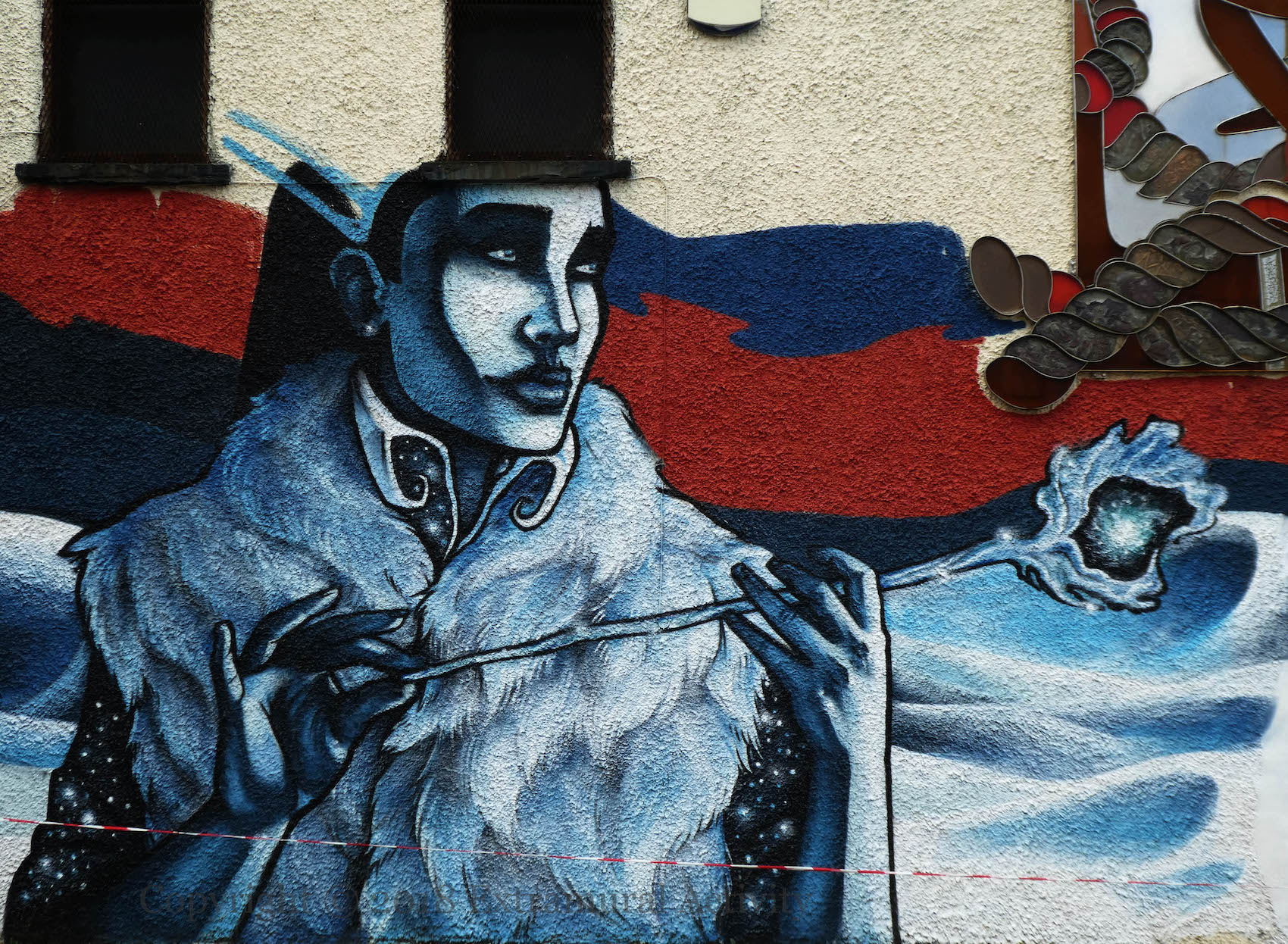
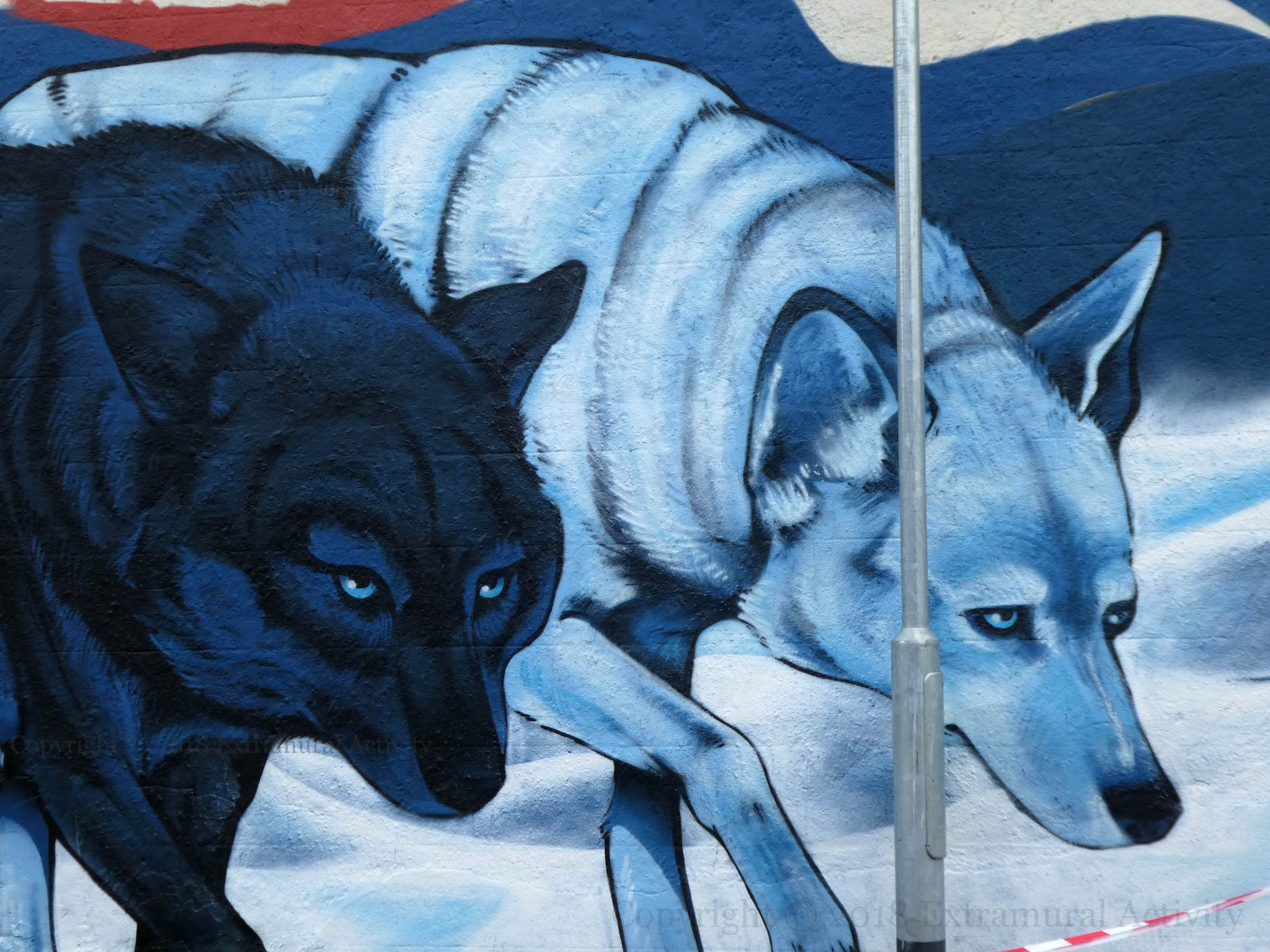
Shown are the White Witch (Jadis) and two wolves, Maugrim – Captain of the Secret Police – and Vardan (from the movie adaptation). The piece is called “Winter’s End” however, because Jadis’s reign over Narnia – the winter of 100 years – is under threat from Aslan the lion.
The piece is by Friz (web). The two images below are in-progress shots from March. For the metalwork in the top right, see Chains & Ropes. The corner – which is typically beset with cars – is in Townsley Street/Manderson Street, Belfast, next to CS Lewis square.
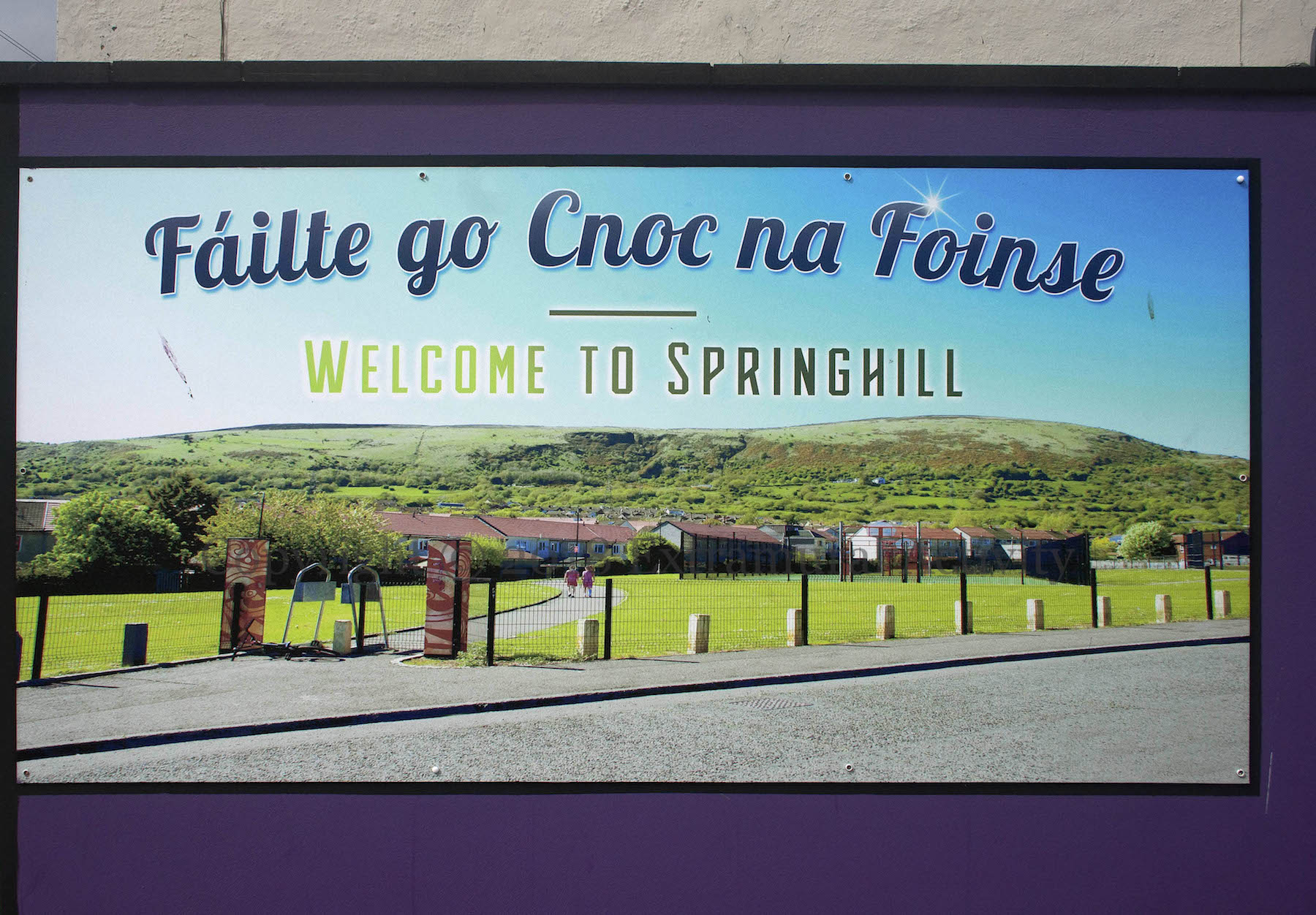
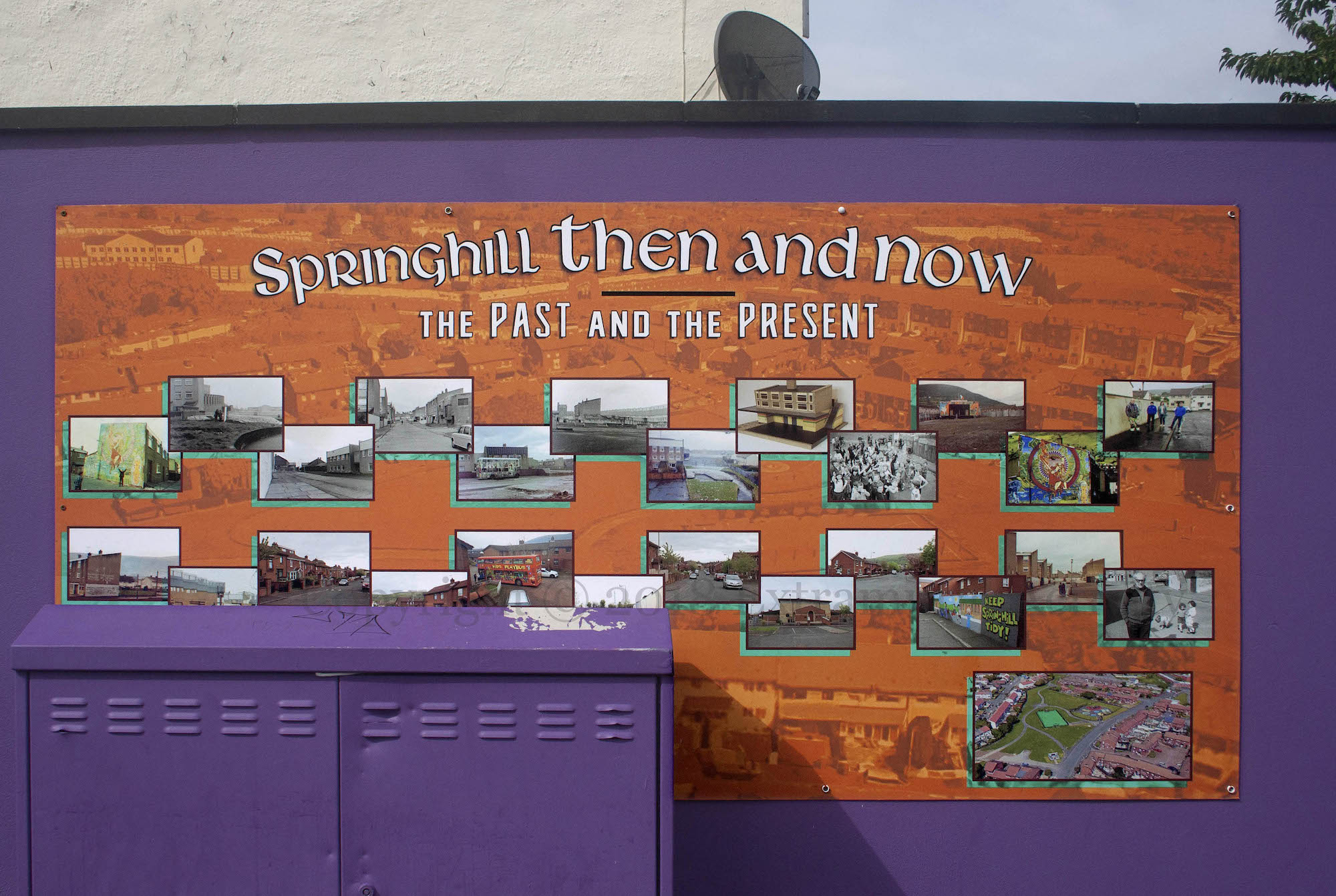
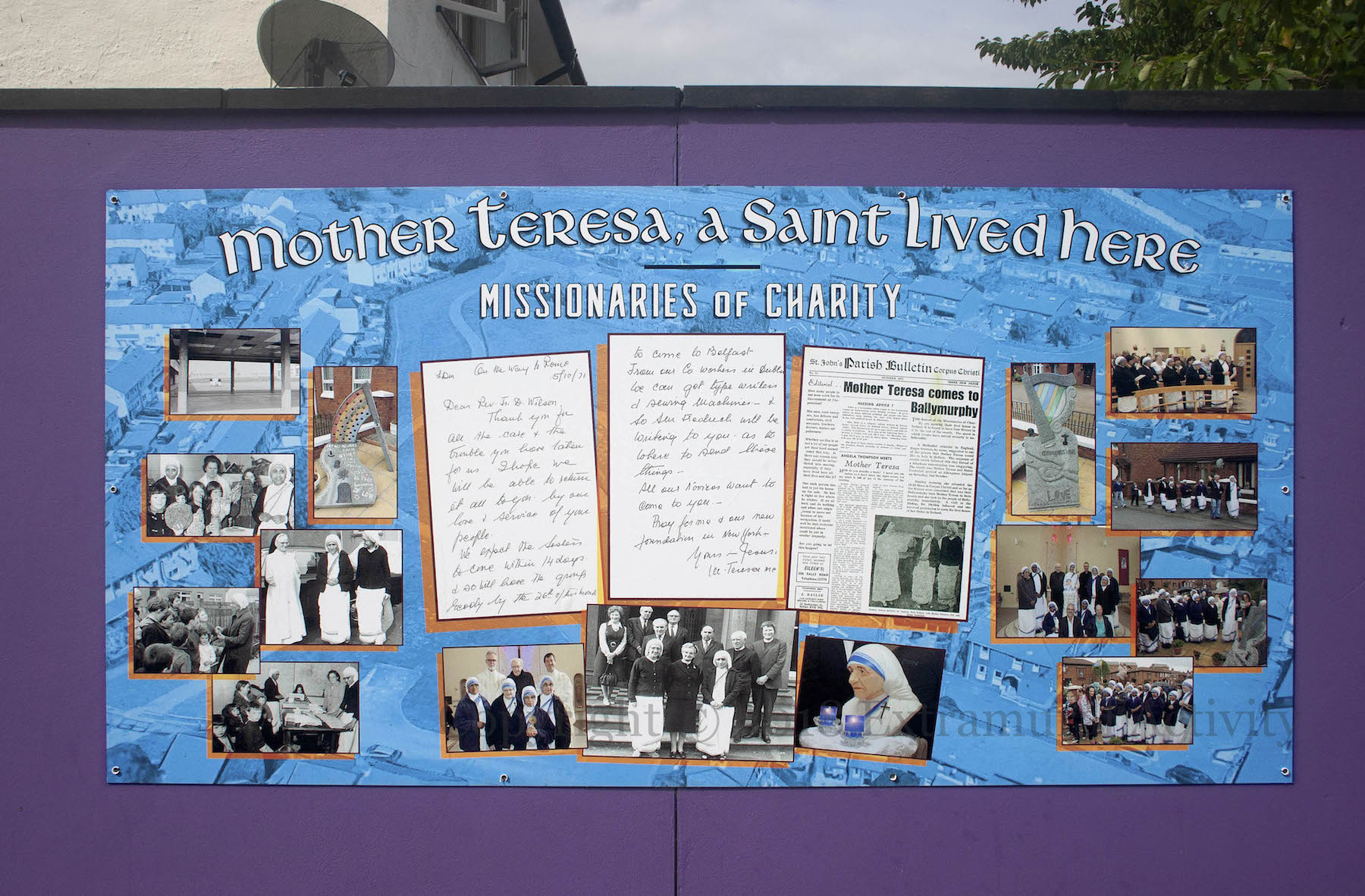
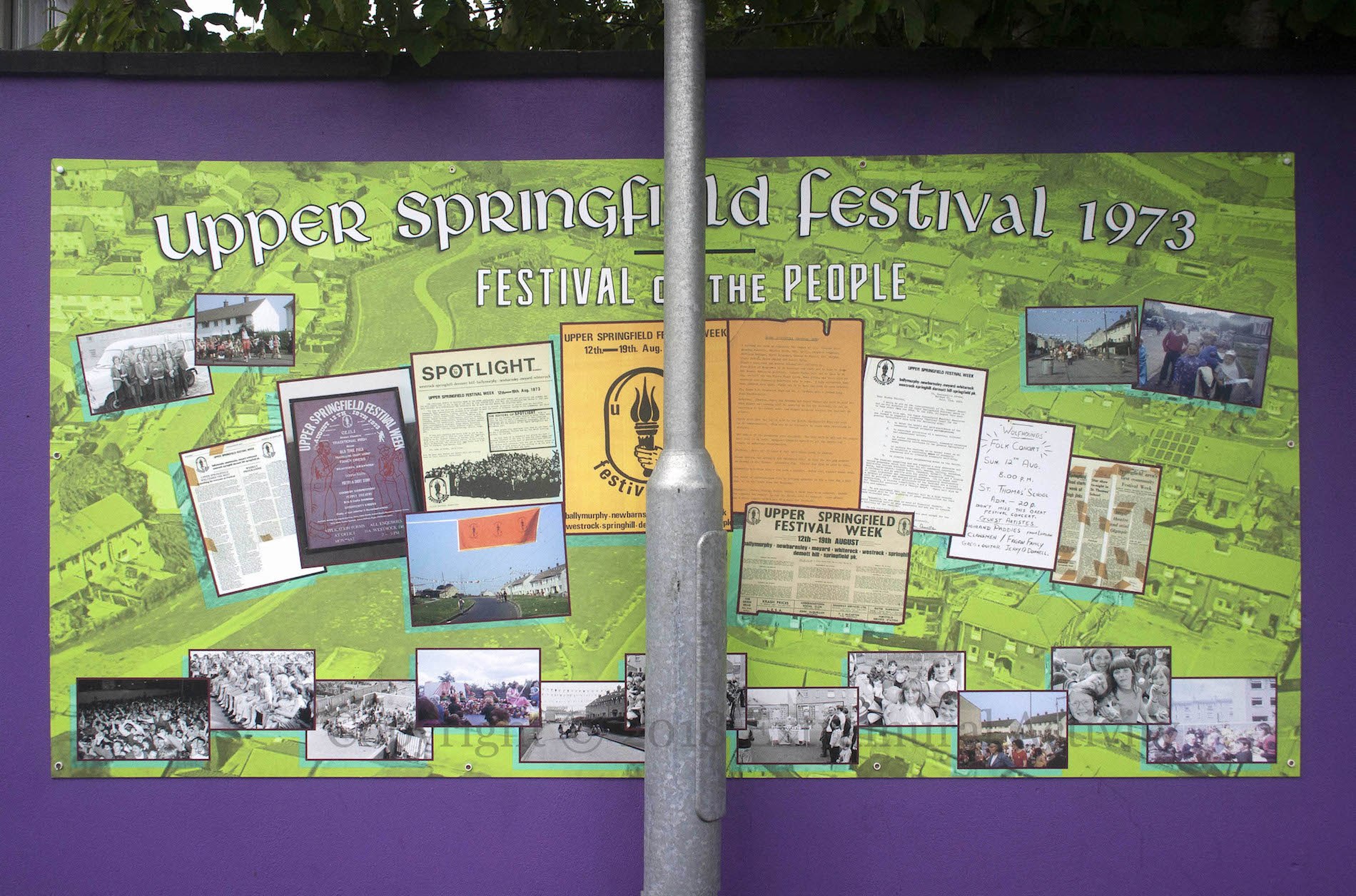
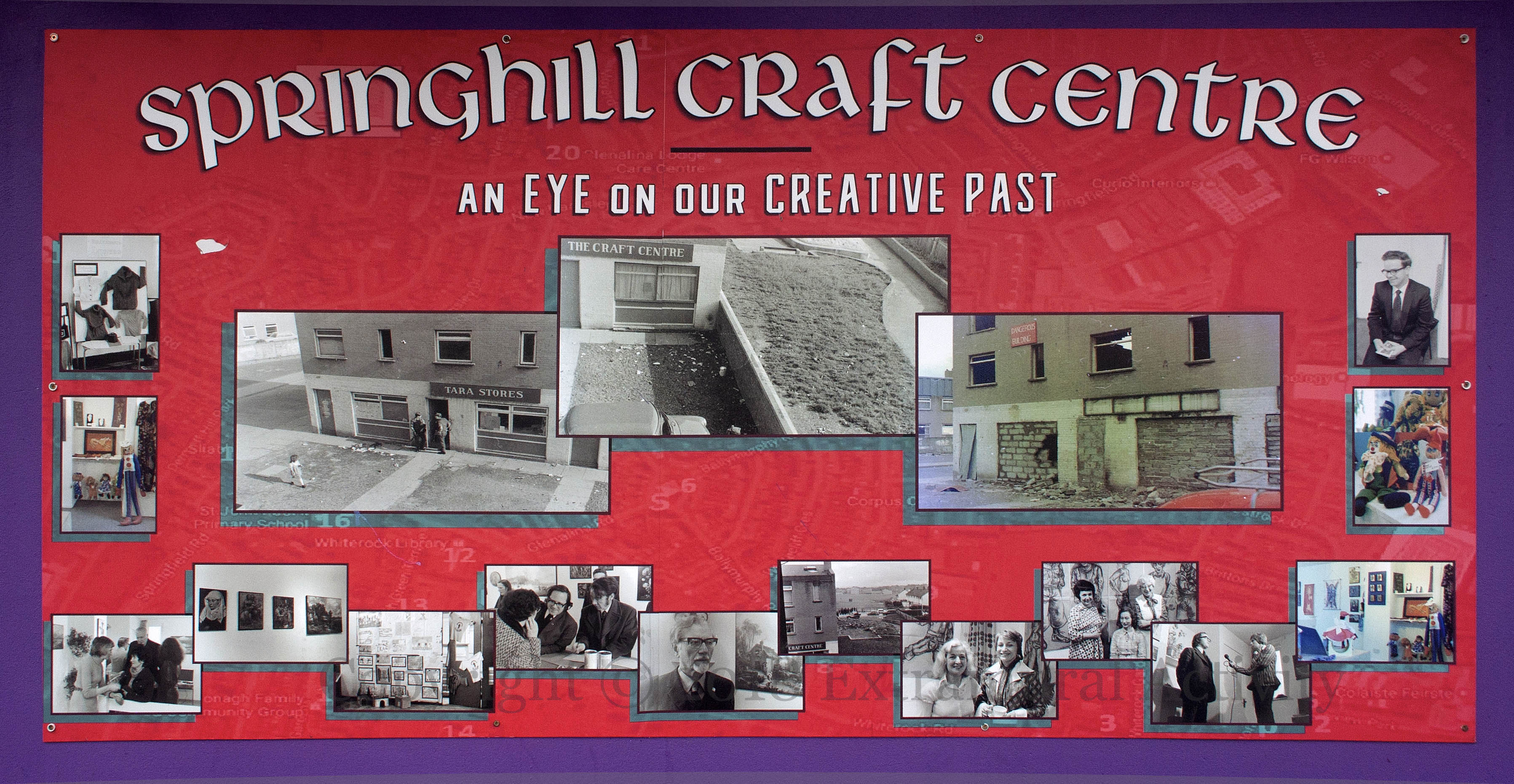
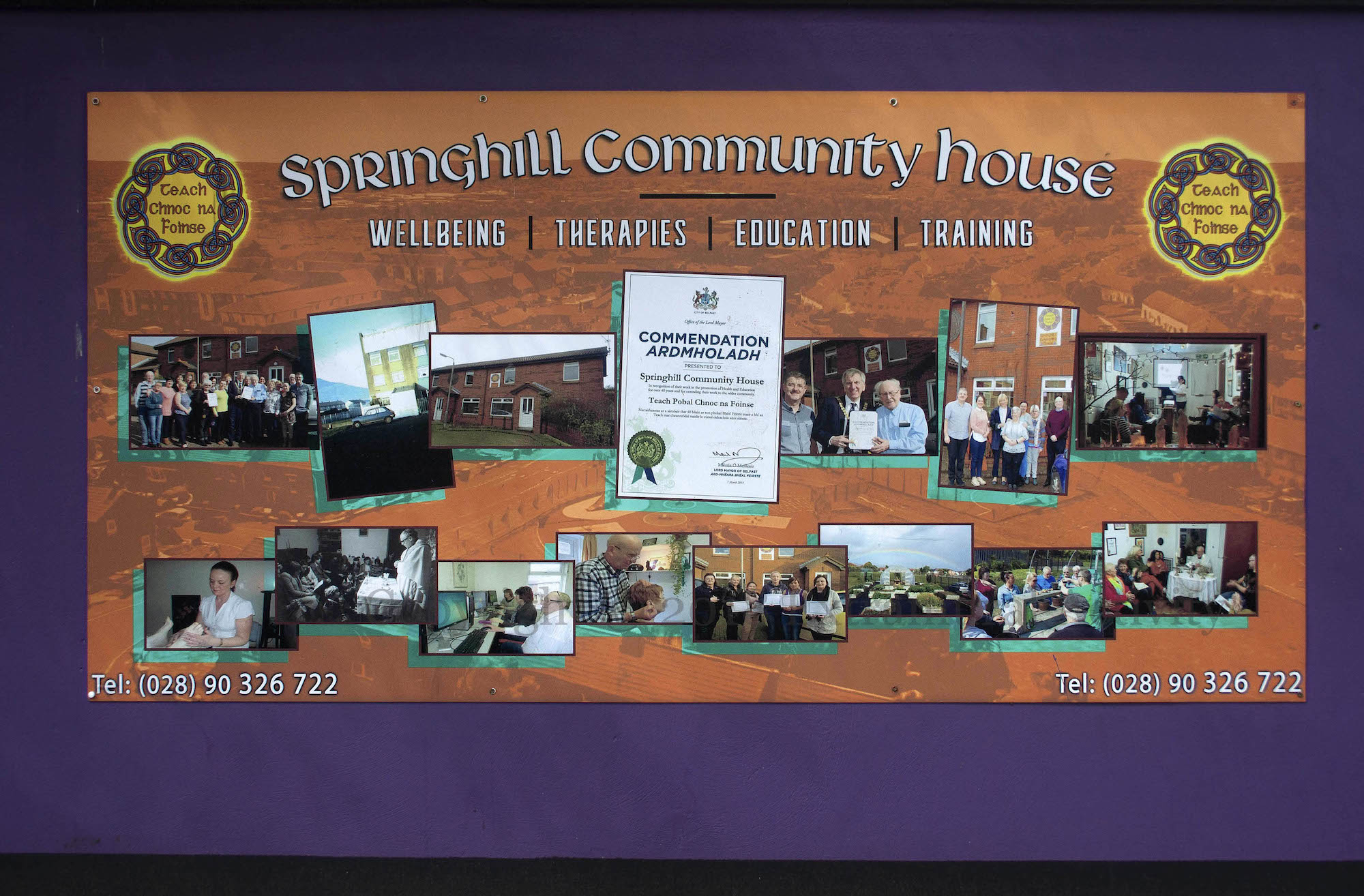
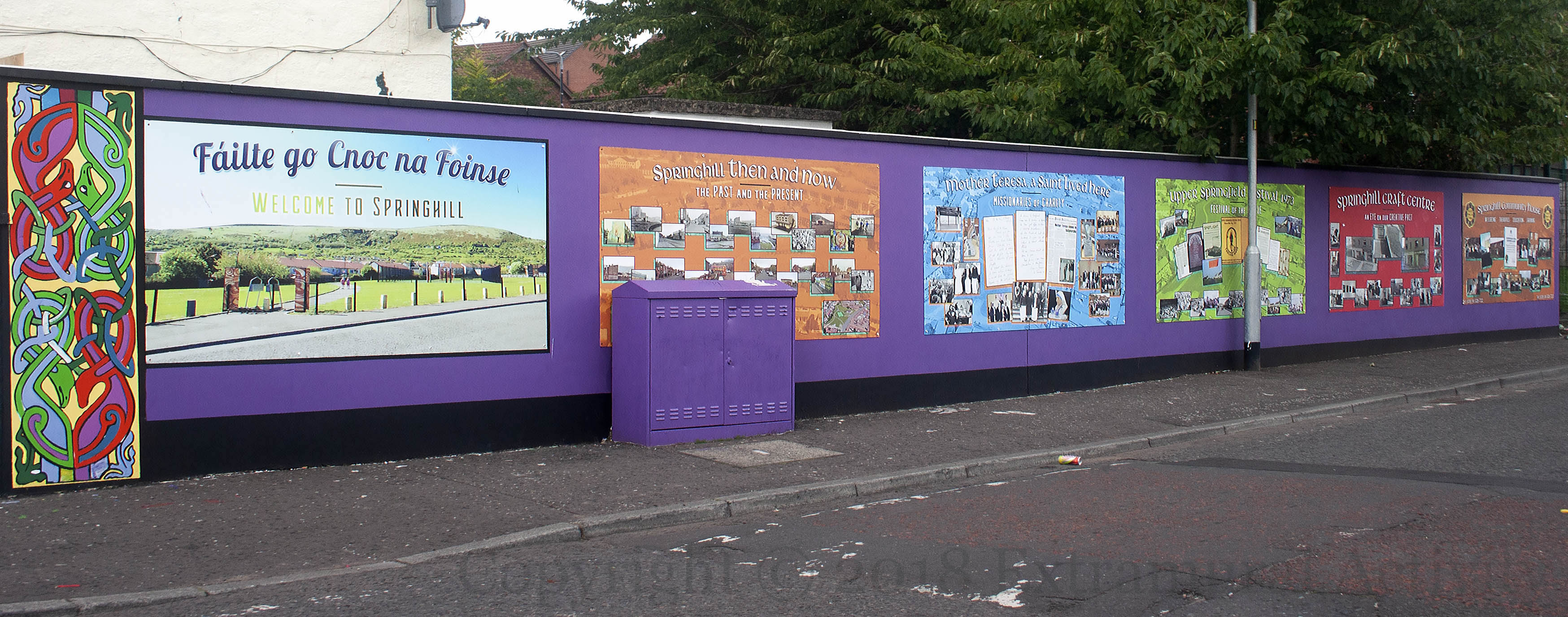
“Fáılte go Cnoc na Foınse – Welcome to Springhill.” There are a dozen new boards on either side of the Ballymurphy entrance to Springhill, highlighting positive aspects of the community, such as the work of Mother Teresa and four Missionary Sisters Of Charity from 1971-1973, the Upper Springfield Festival of 1973 (later revived in 1988 and years following as the Springhill Festival), Tara Stores and The Craft Centre, set up as a form of local enterprise in an area of mass unemployment, and the Springhill Community House, still in operation today but going back to Des Wilson and Noelle Ryan. There is no explicit mention of the 1972 Springhill-Westrock Massacre, though there is a picture of Fr Noel Fitzpatrick on the south side of the street – see Live Here, Love Here.
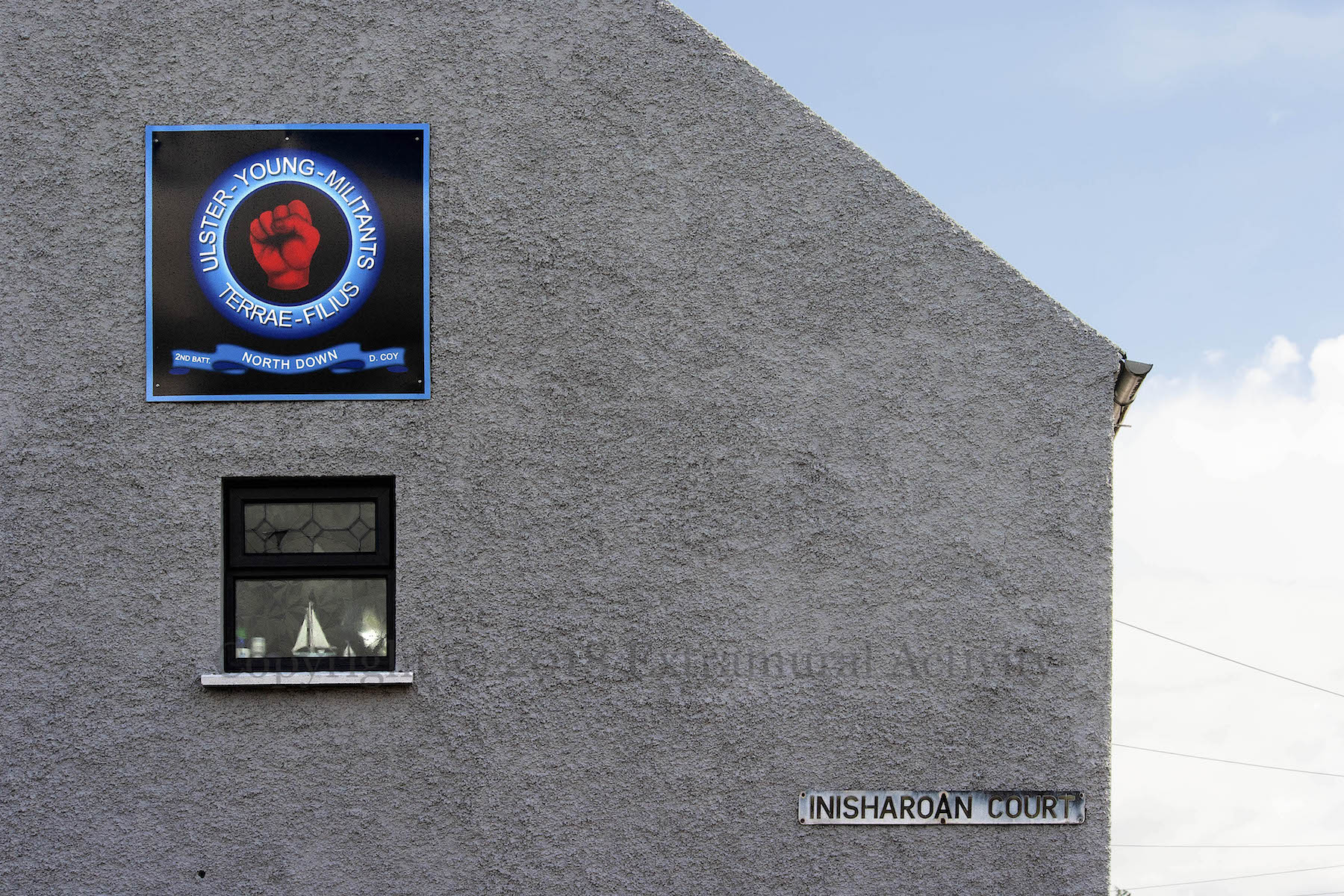
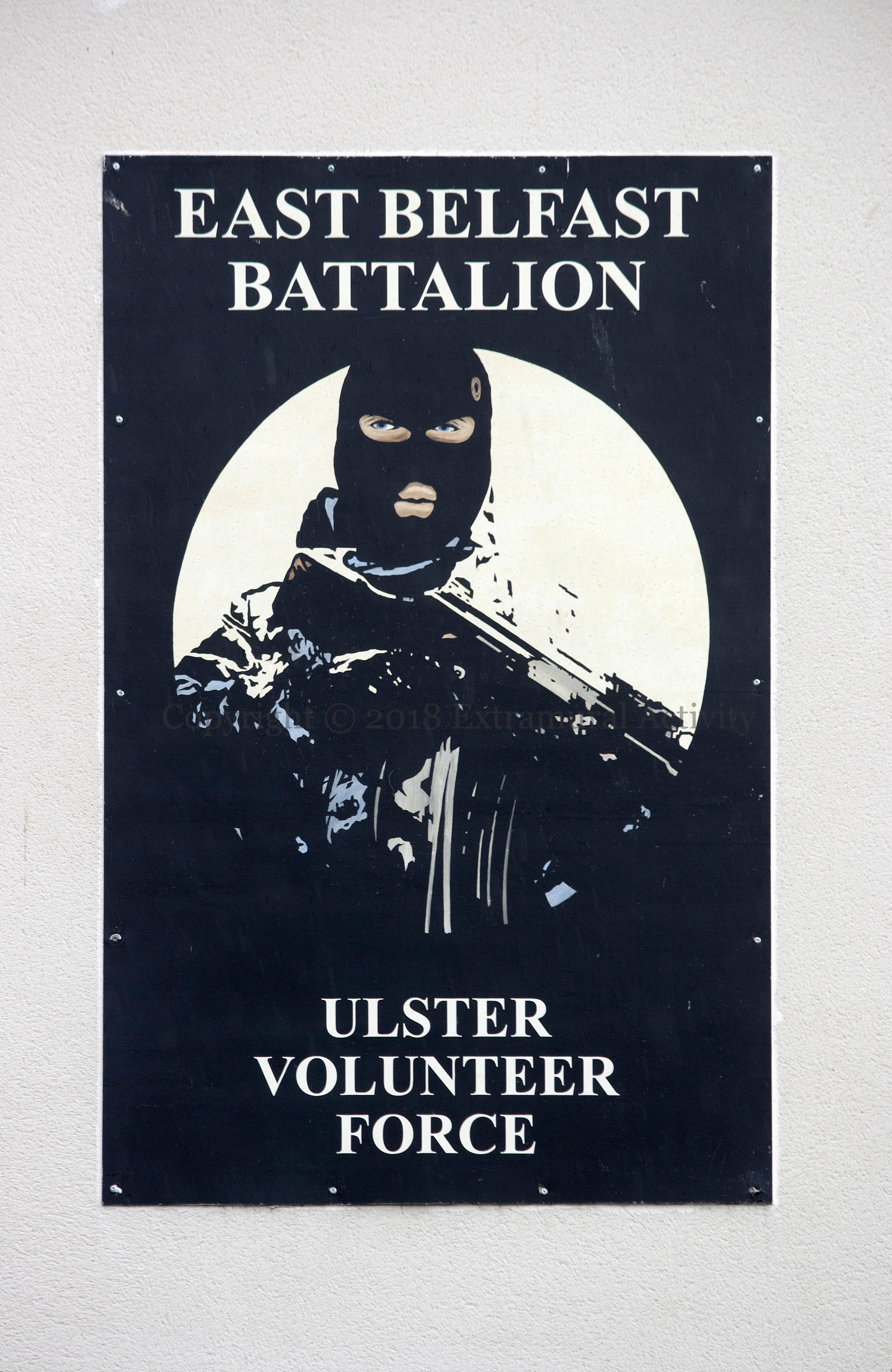
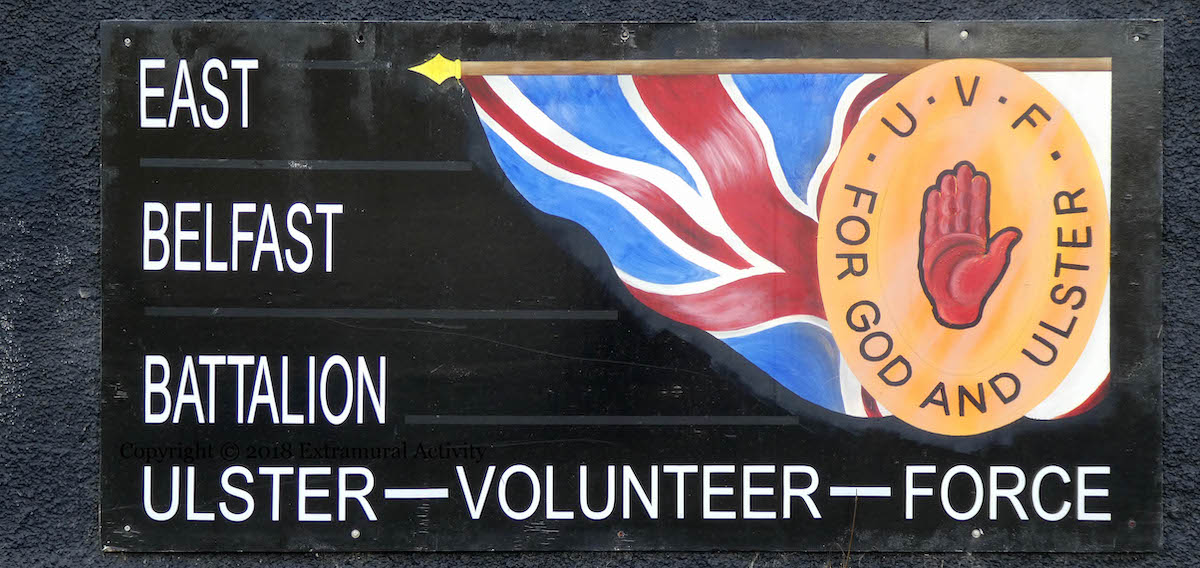
This hooded gunman from the East Belfast UVF – like the series of stencils featured previously in EB UVF – is on a wall in Newtownards’s Westwinds estate. Below is a EB UVF mural at the bottom of Bowtown, not far from the West Belfast UDA mural in Greenwell St. The UVF and UDA also compete in the Glen estate; compare Today’s Local with Our Heritage In Your Hands.
Questions about EB UVF lawlessness in north Down arose over the summer with a “business opportunity” presented to local hostelries (Belfast Live | ITV).
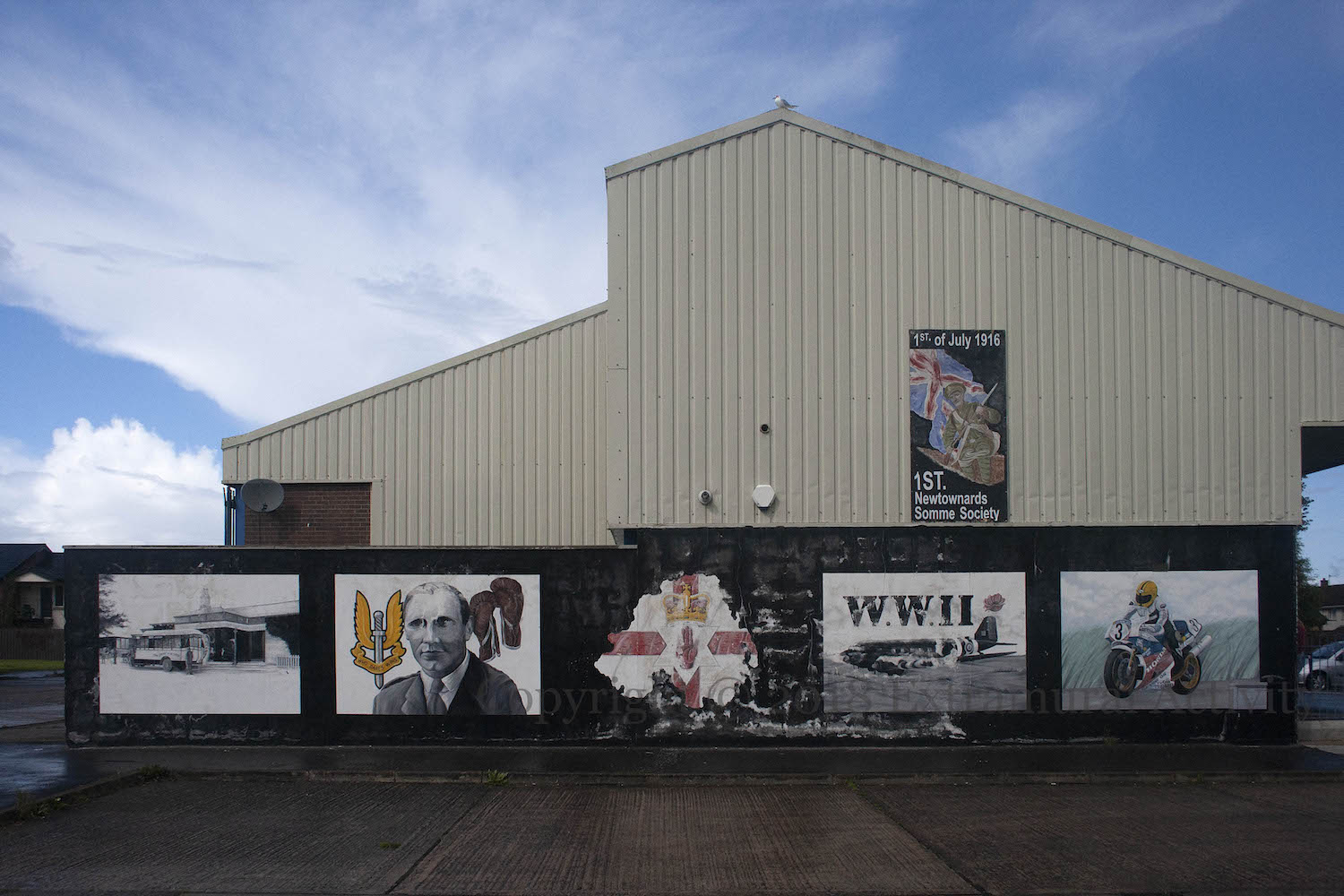
Here are six panels from the shops in the Westwinds estate in Newtownards, which have replaced a UVF mural (Help Us To Help You).
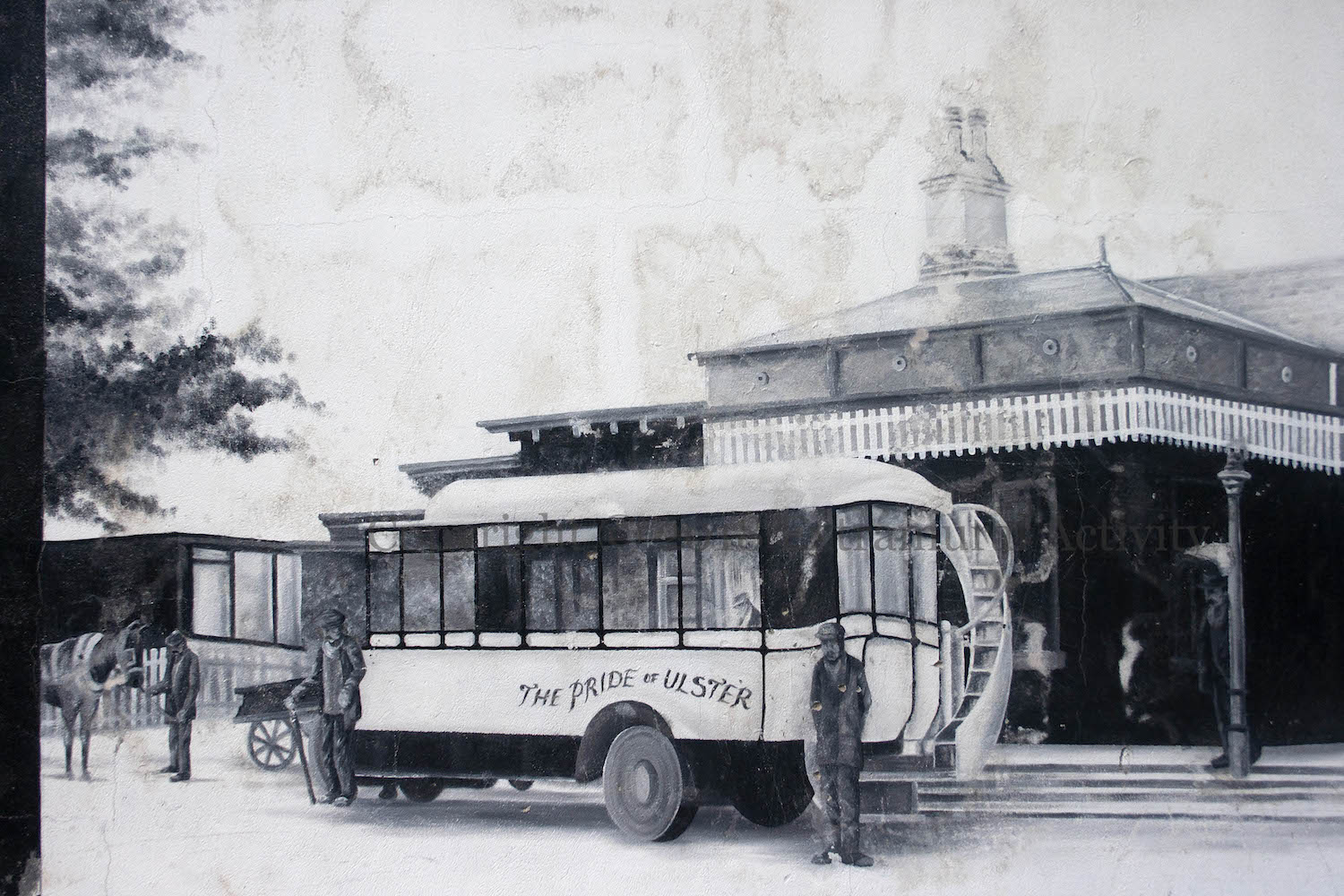
Little is known about the omnibus called “The Pride Of Ulster”, except that this picture shows it at Newtownards Railway Station, Victoria Avenue, c. 1920. SAS soldier and boxer (and rugby-player) Blair “Paddy” Mayne, DSO, is portrayed in the second panel. (For more, see these posts about Mayne from 2013 and 2014.).
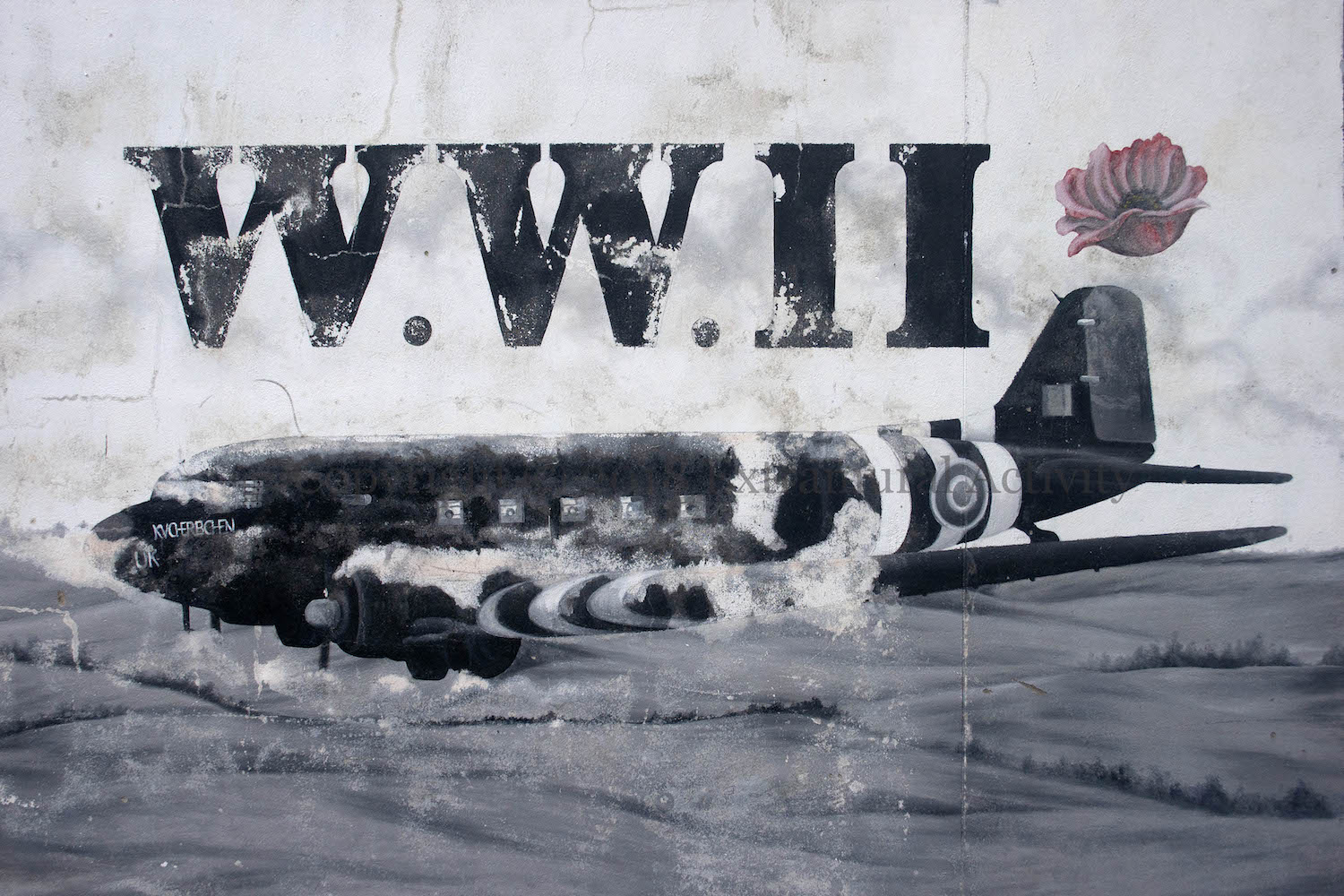
On the other side of the Ulster Banner in the centre is a WWII Douglas Dakota C-47, specifically “FZ692 of No. 233 Squadron, around the D-Day period in 1944. This aircraft, which was named “Kwicherbichen” by her crews, was involved in Para-dropping operations on the eve of D-Day and subsequently in re-supply and casualty evacuation missions into and out of forward airfields in the combat areas” (RAF).
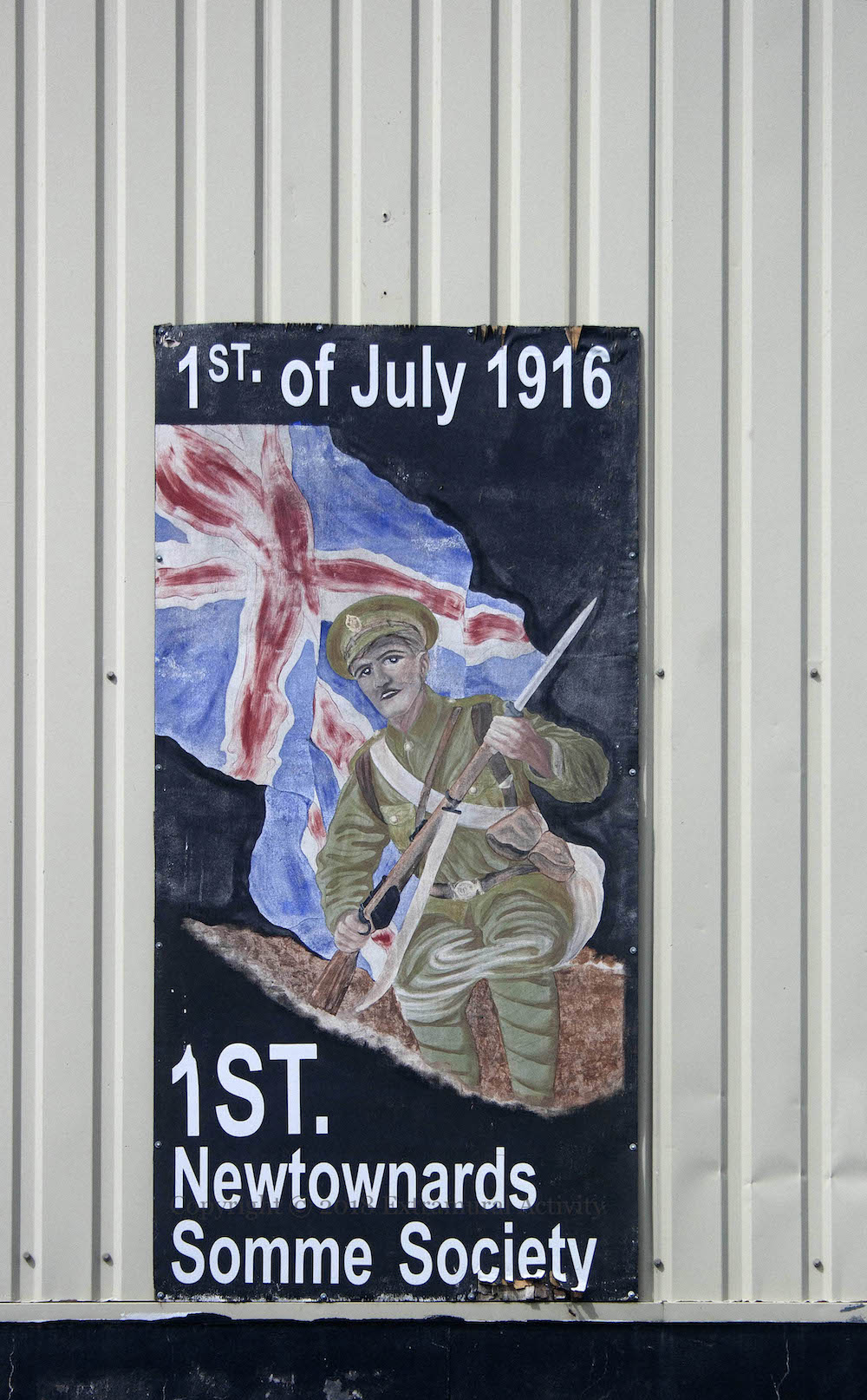
Motorcyclist Joey Dunlop is on the far right (see Race Of Legends), and above them all is a WWI board from the 1st Newtownards Somme Society (based in the Somme museum in Conlig?).
 Seosamh Mac Coille Collection