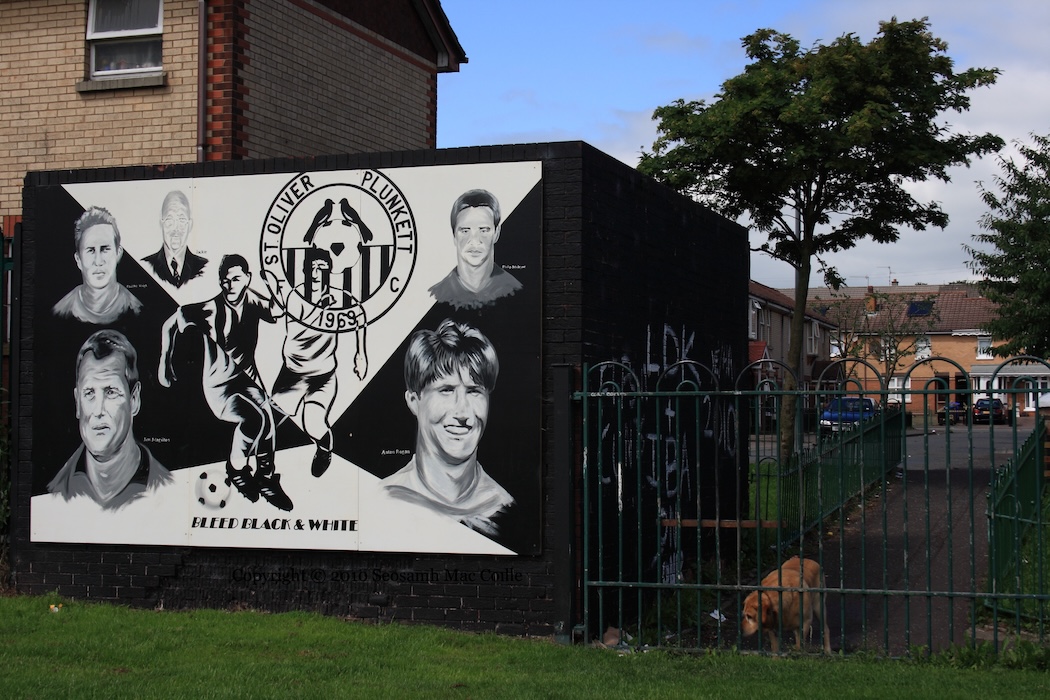
St Oliver Plunkett FC, [founded] 1969, (Fb) with portraits of Philip Mulryne, Anton Rogan, Jim Magillen, Paul McVeigh, Jackie, next to Lenadoon Park, where the team plays its home games.
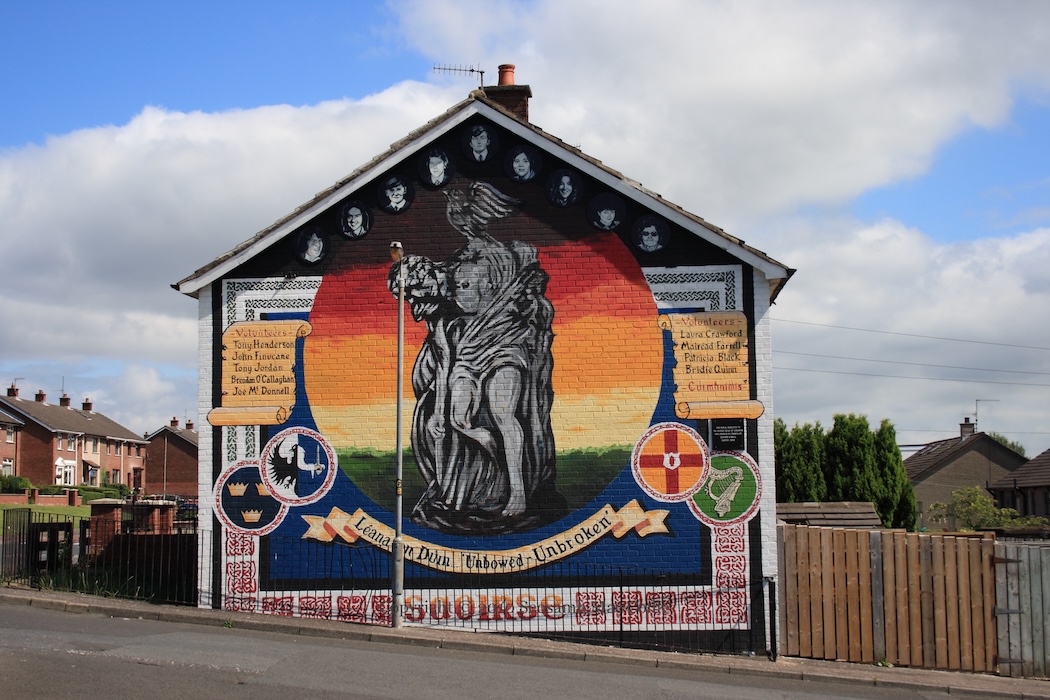
The main Lenadoon mural is refreshed and more portraits and a plaque added (on the right). The dying Cú Chulaınn (as portrayed in bronze by Oliver Sheppard, in a statue installed in the GPO in 1935) is used as a symbol for the locals from Lenadoon (including IRA volunteers) who fought for freedom (“saoırse”). They are listed on the scrolls to each side and in the portraits in the apex: Tony Henderson, John Finucane, Brendan O’Callaghan, Joe McDonnell, Laura Crawford, Maıréad Farrell, Patricia Black, Bridie Quinn (previously listed as Bridie O’Neill).
For the previous version (though without the three faces it initially had, of O’Callaghan, McDonnell, and Farrell) see M01934.
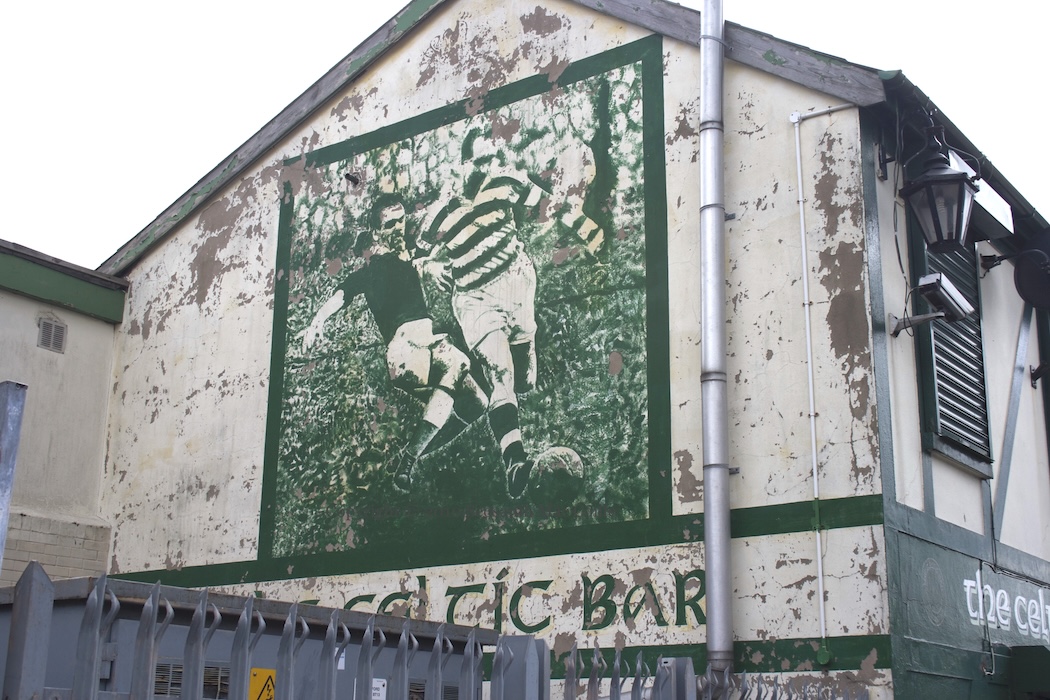
Charlie Tully, born in the Pound Loney in 1924, played for Belfast Celtic (1944-1948) and Glasgow Celtic (1948-1959) (WP | CharlieTully.com). The mural is on the back of the Celtic Bar on the Falls Rd/Waterford St.
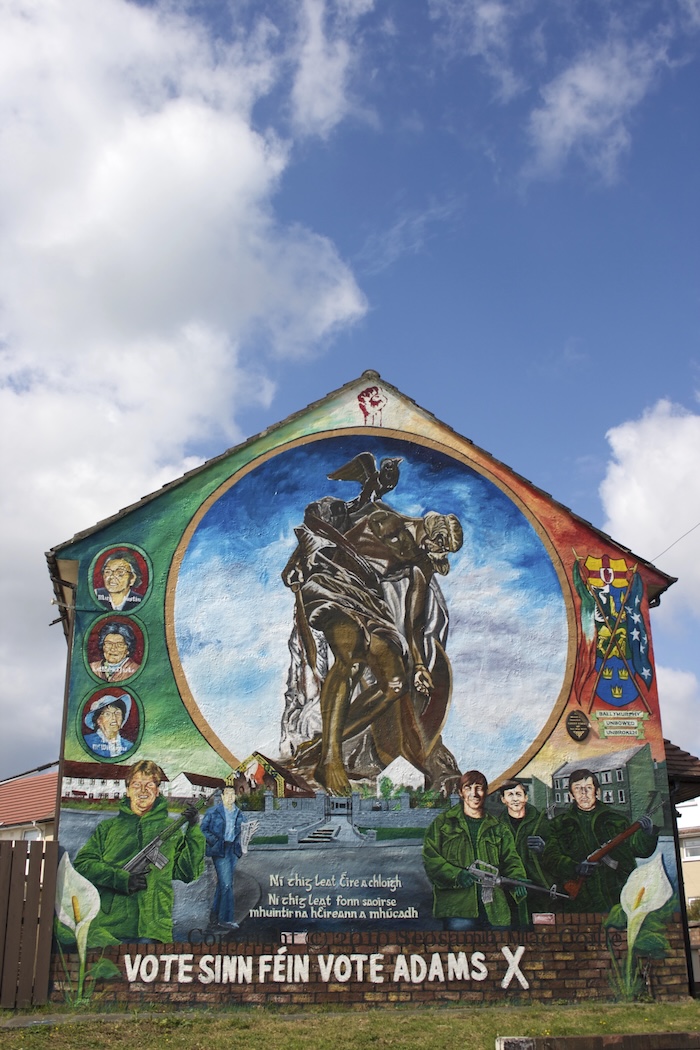
“Ballymurphy unbowed, unbroken” with images of Ballymurphy including the mural of McCrudden-O’Rawe–Jordan and memorial garden on Divismore Way (left) and Springhill (right). The male figures in the foreground are unnamed but the four in jackets are presumably Stone, McWilliams, McCracken, and Dougal after their mural in Springhill Drive was blanked; the female activists on the left of Cú Chulaınn are Mary Austin, Kathleen Clarke, Annie McWilliams. “This mural was unveiled by Gerry Adams MP 2nd May 2010.”
“Ní thıg leat Éıre a chloígh, ní thıg leat fonn saoırse mhuıntır na hÉıreann a mhúc[h]adh.” [“You cannot subdue Ireland; you cannot extinguish the desire for the freedom of the Irish people.”]
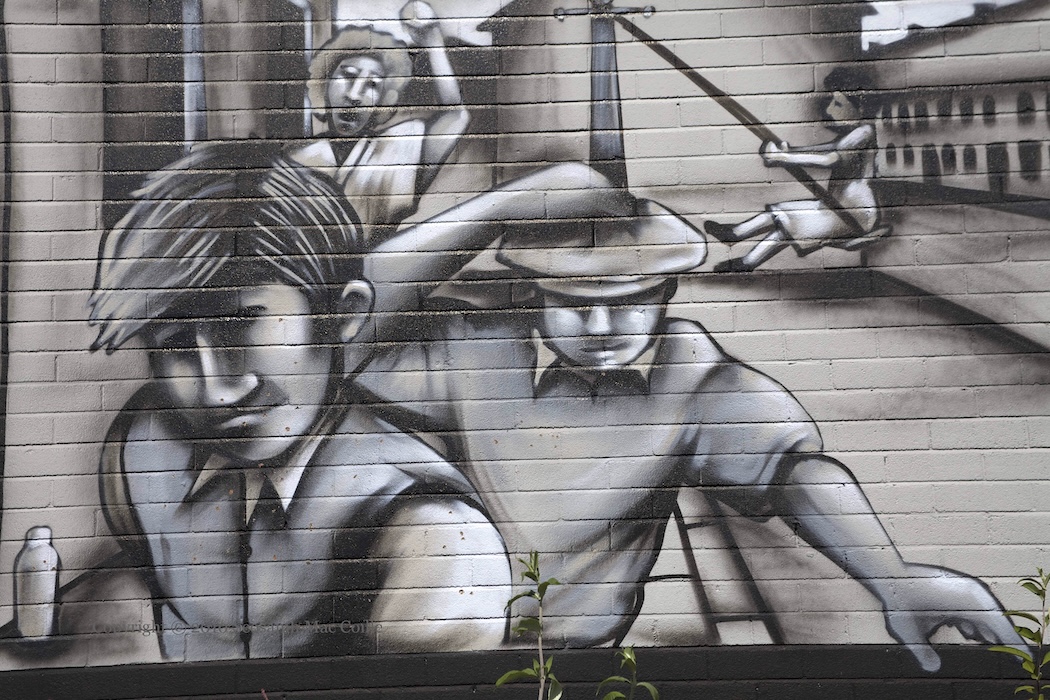
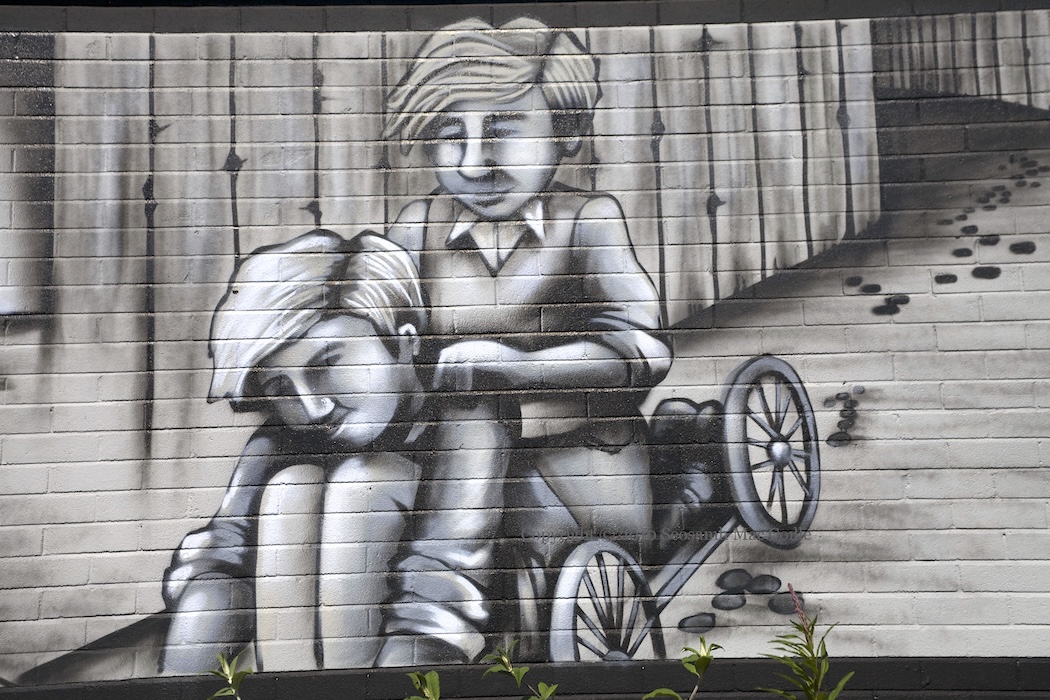
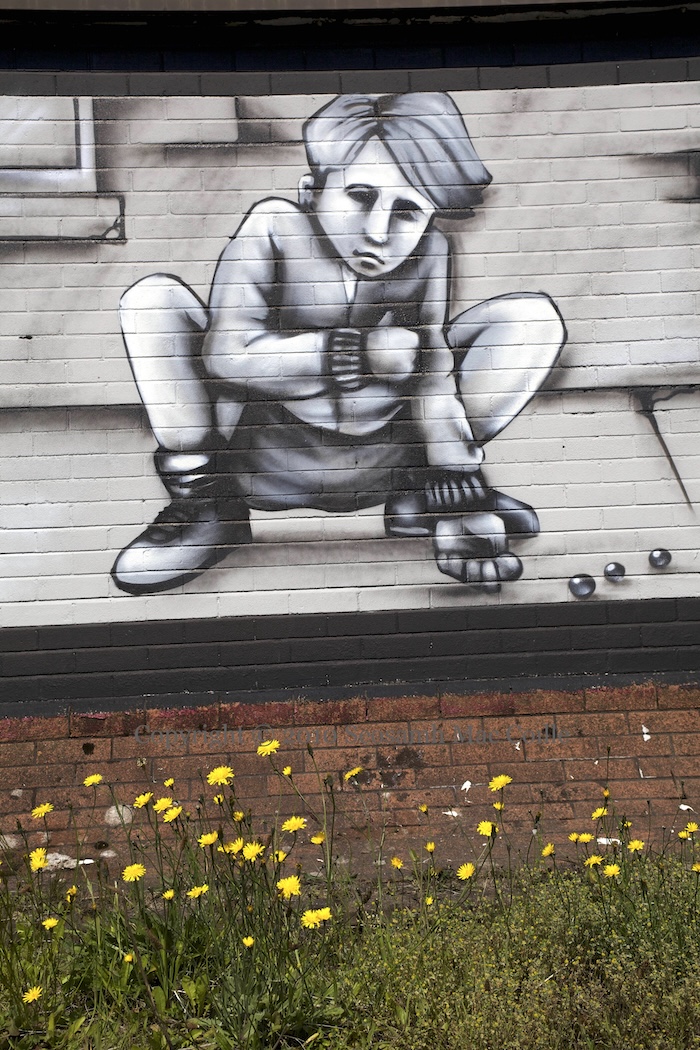
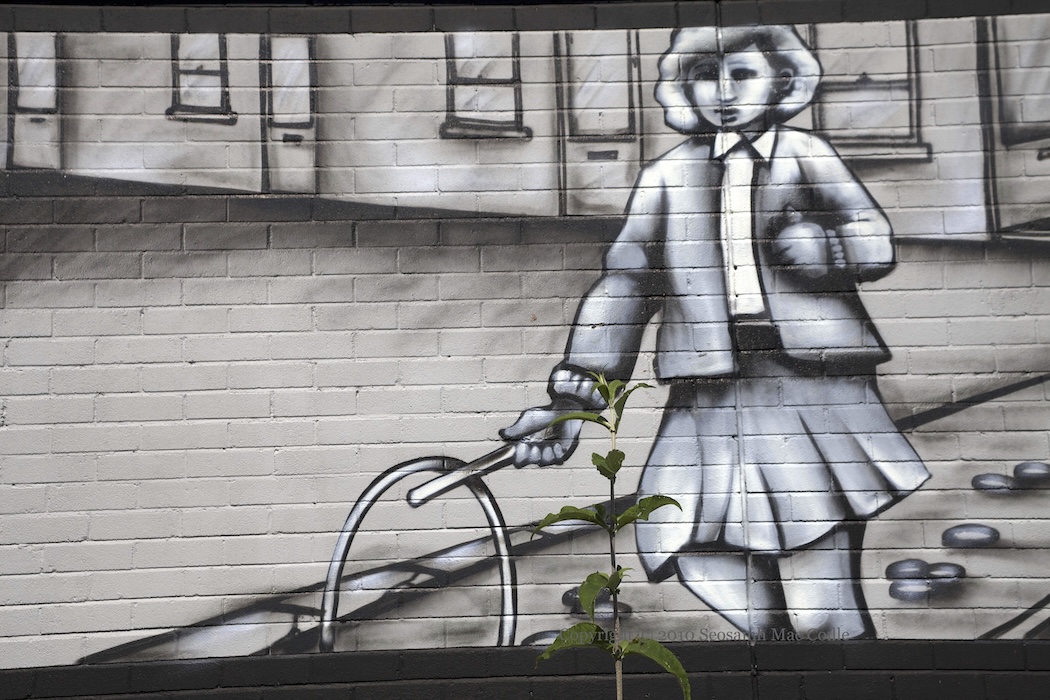
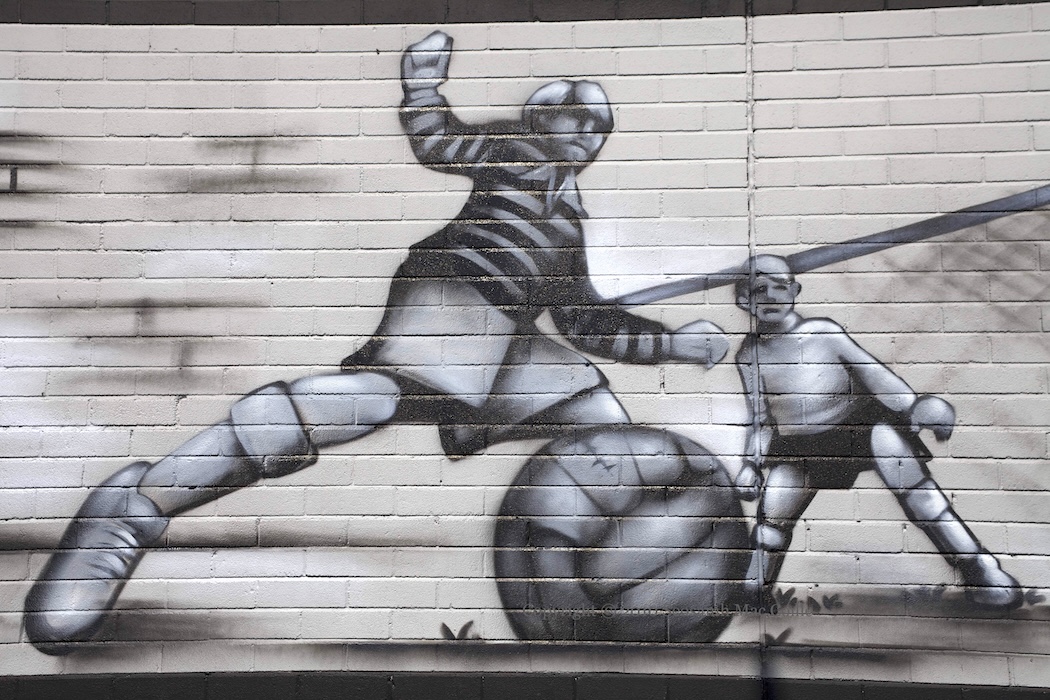
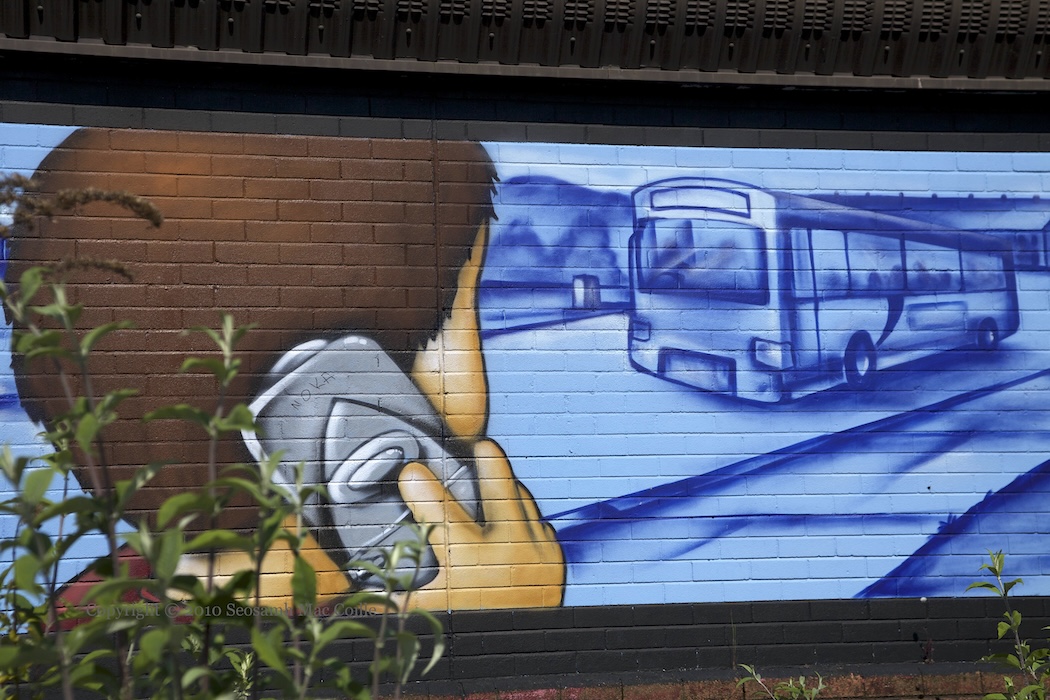
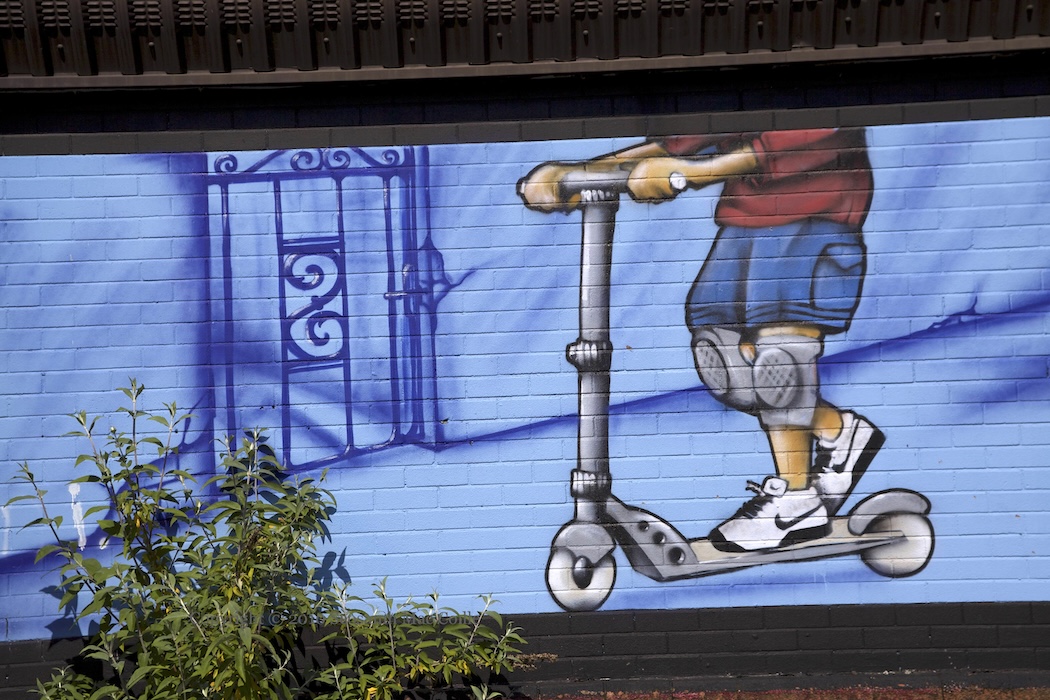
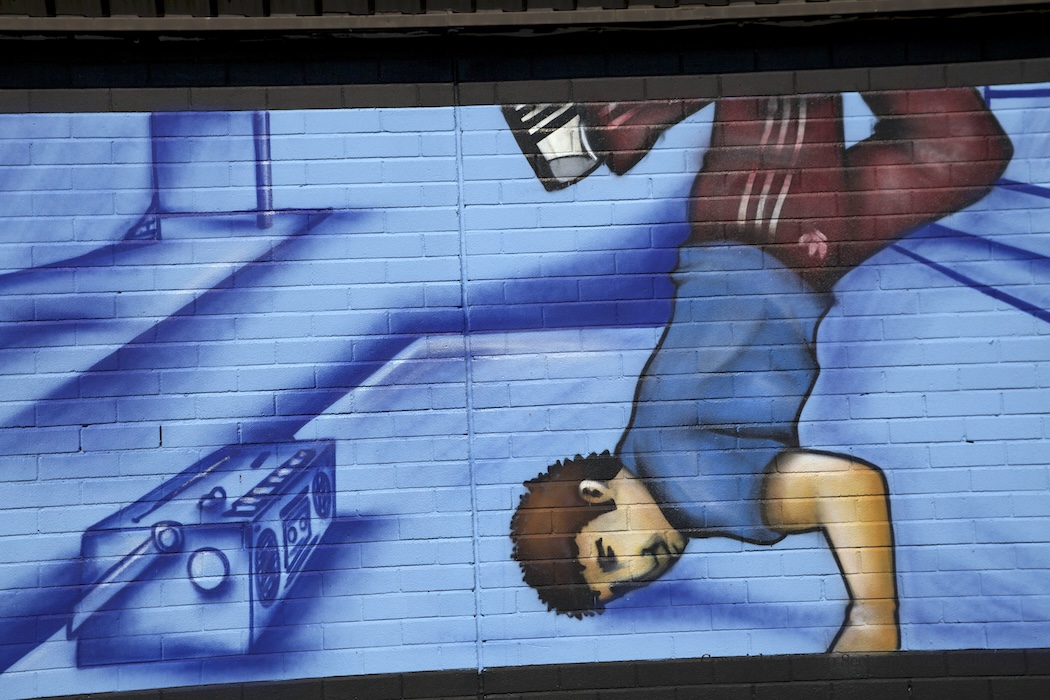
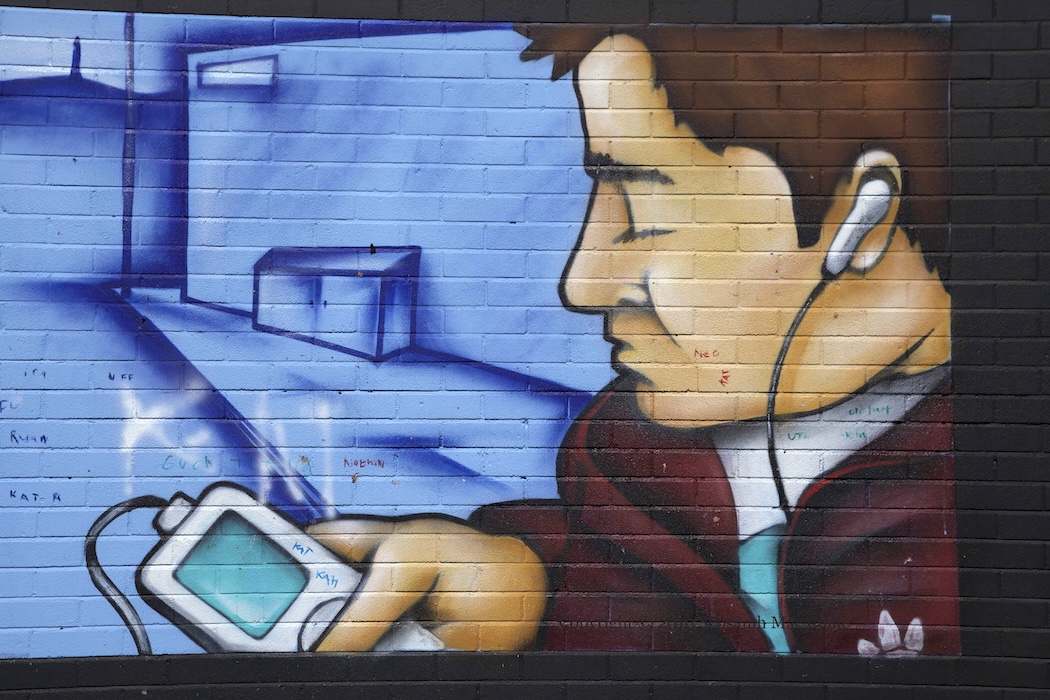
These are panels 1, 2, 6, 7, 8, 9, 12, 16, 17, and 19 (of 19) of the children’s mural in Hopewell Avenue. It shows kids at play across the century, from lamp-post swings and marbles to razor scooters and break-dancing. By Blaze FX.
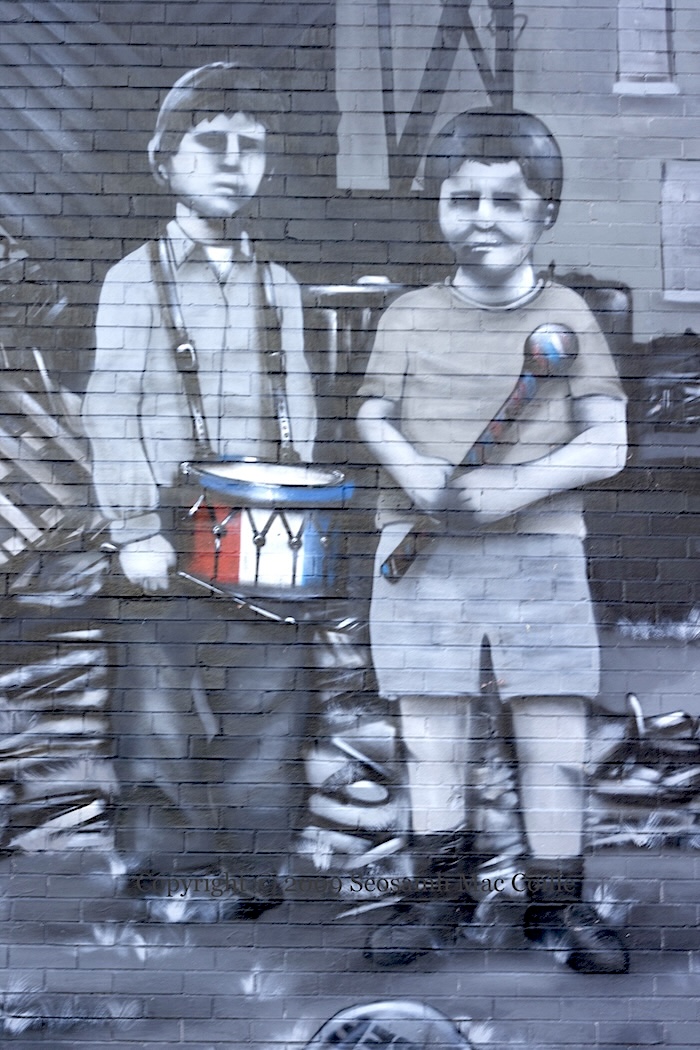
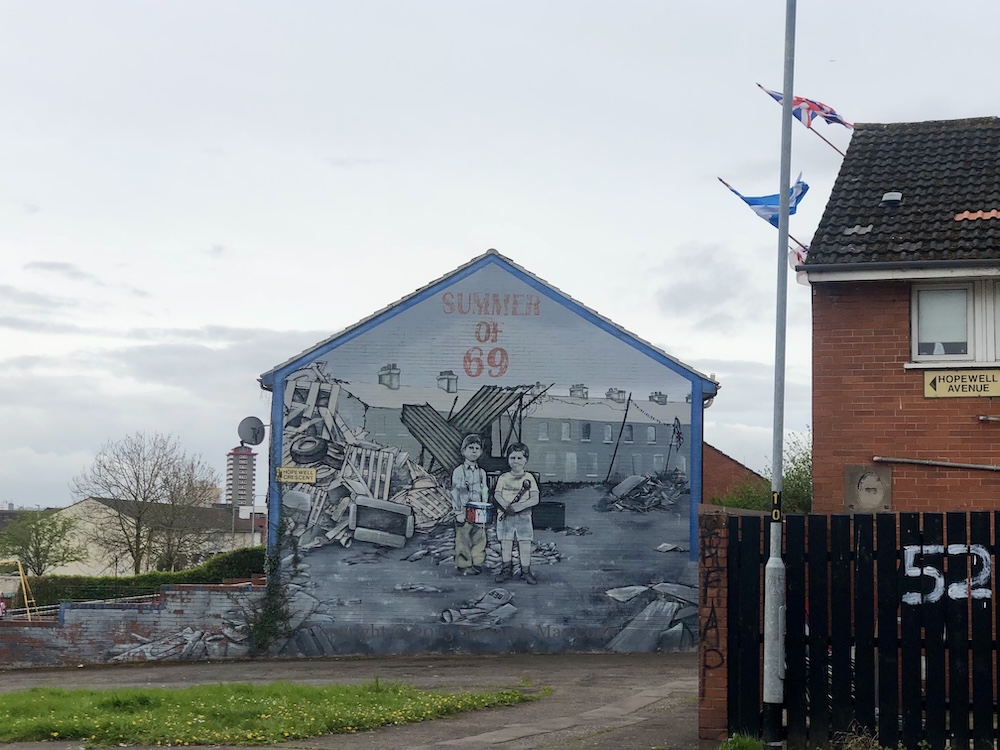
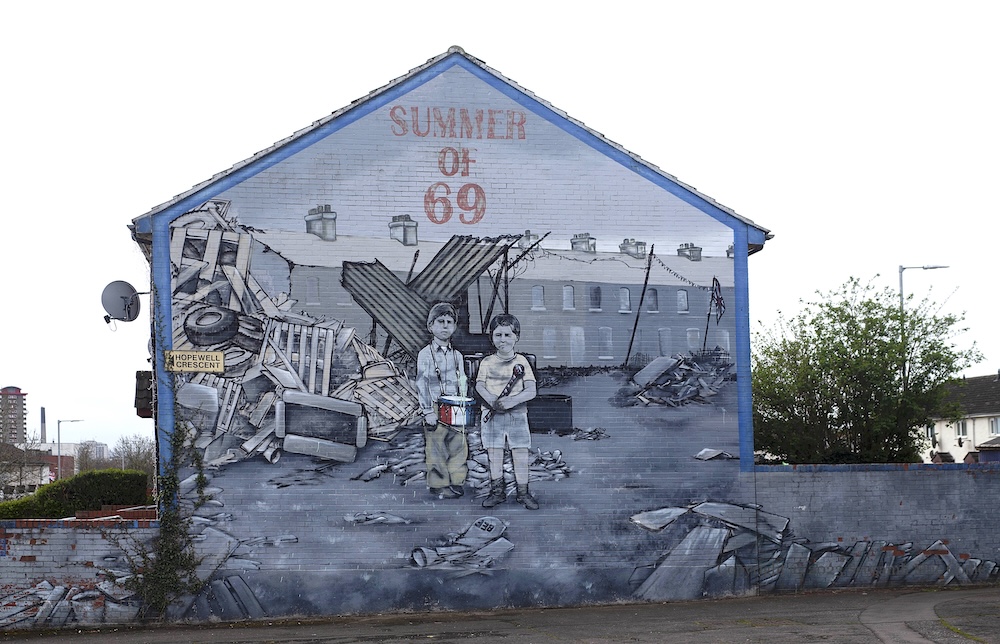
The summer of 1969 is generally taken to be the beginning of the Troubles in Belfast and the most famous symbol of the August riots is the burning of Bombay Street. The street was (and is) just below the old Cupar Street, where many streets drop down from the Shankill (you can see the distribution of PUL and CNR houses in the Visual History page on the west Belfast “peace” line). This event is commemorated in nationalist murals (see e.g. No Mission) but for a statement from the PUL perspective, see Can It Change?
The mural is based on a Frankie Quinn photograph “Belfast 1984”.
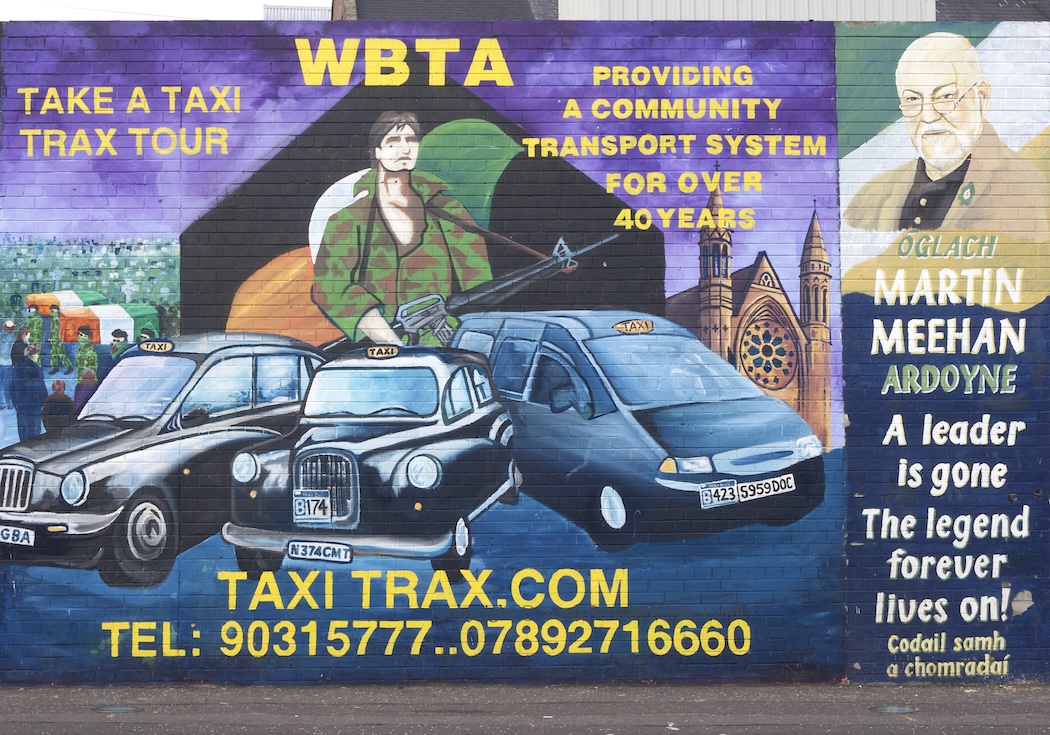
“Providing a community transport system for over 40 years.” The West Belfast Taxi Association (WBTA) have had a mural on the International Wall since at least 2006, offering tours of west Belfast and the murals in particular.
Martin Meehan was originally OIRA but switched to the Provisionals after the split. He was the first person convicted of membership of the PIRA and spent 18 years in prison during the Troubles (WP). “Codaıl samh a chomradaí.”
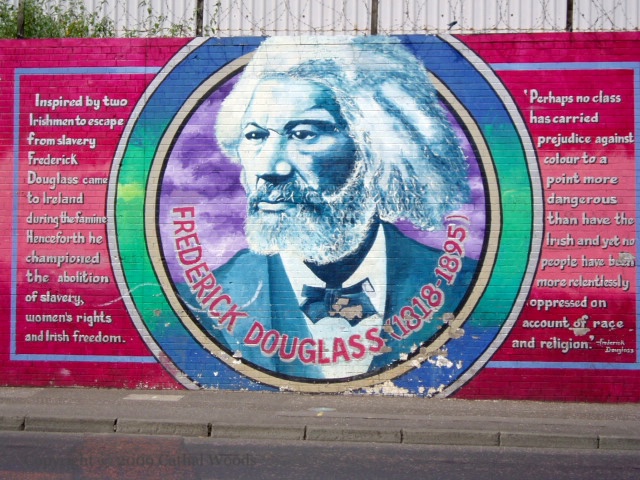
“Inspired by two Irishmen to escape from slavery, Frederick Douglass came to Ireland during the famine. Henceforth he championed the abolition of slavery, women’s rights and Irish freedom.”
“Perhaps no class has carried prejudice against colour to a point more dangerous than have the Irish and yet no people have been more relentlessly oppressed on account of race and religion.
(Also by Douglass, and which would have made an apt quote for the mural: “I prayed for twenty years but received no answer until I prayed with my legs.”)
 Seosamh Mac Coille Collection