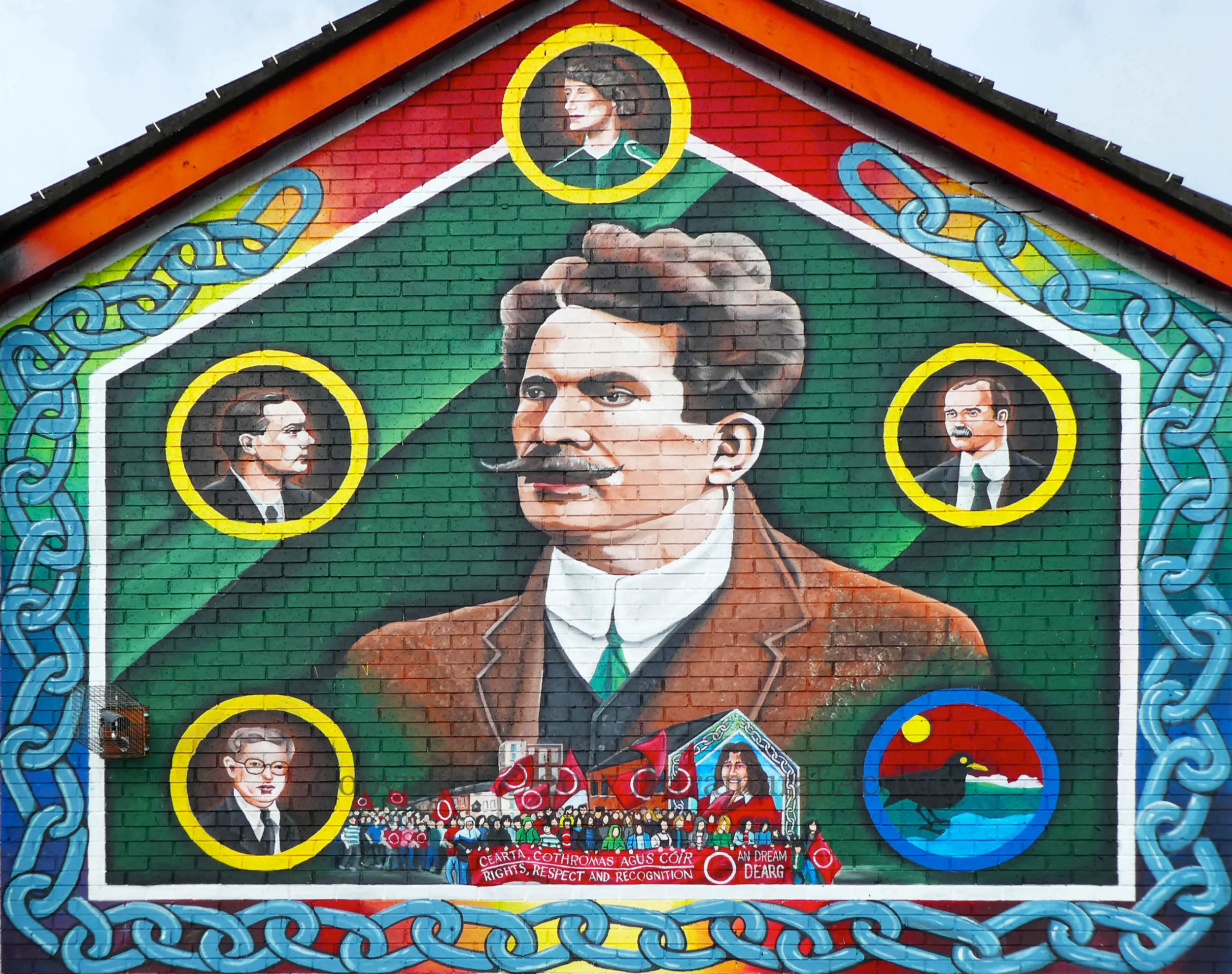
Tomás Ághas

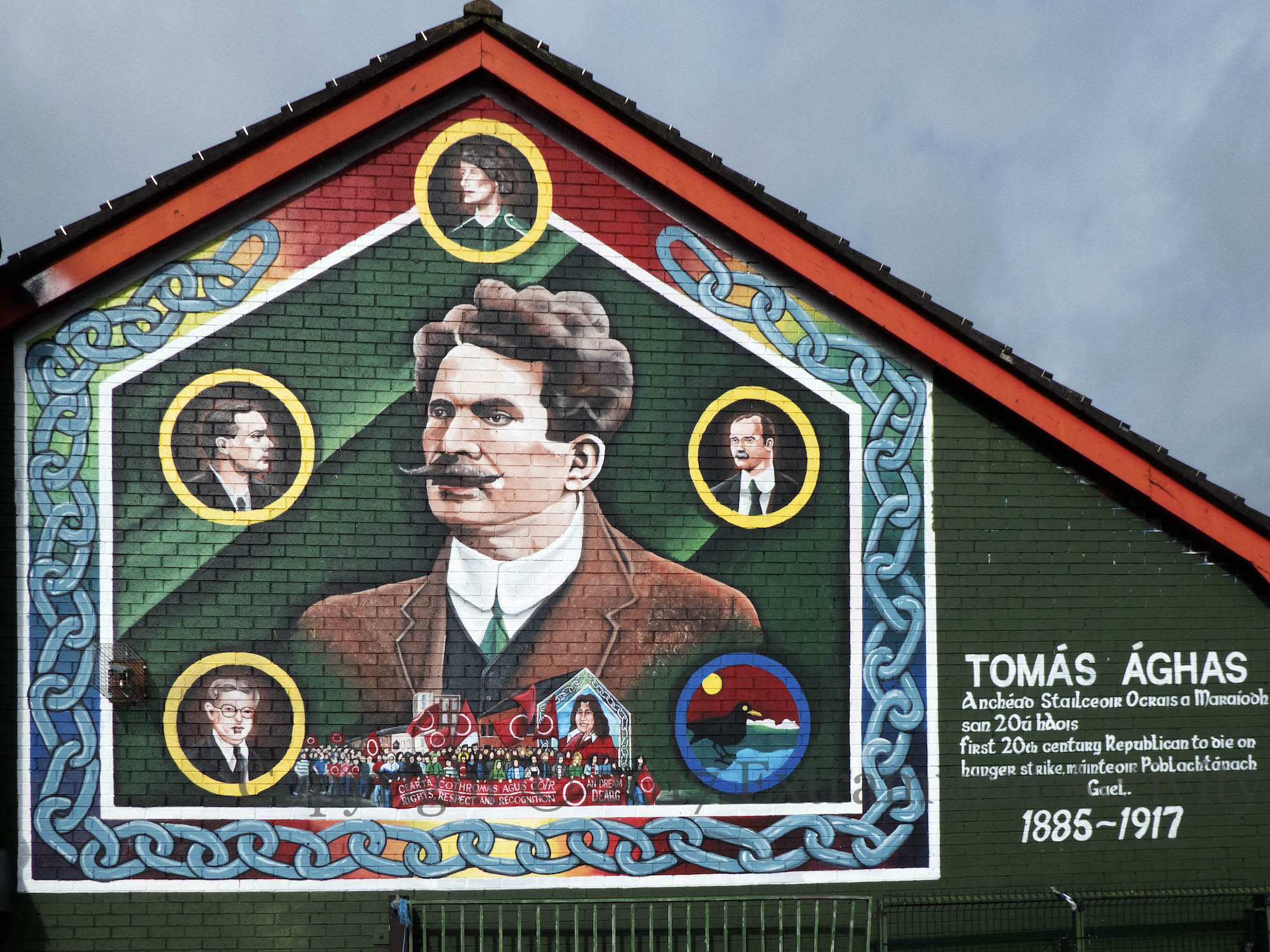
Thomas Ashe was working as an Irish teacher in Dublin when he joined the Irish Volunteers and in 1916 served as a battalion commander in the Easter Rising, for which he was sentenced to penal servitude for life. He went on hunger strike in May 1917 and again in September when he was rearrested by the British authorities for a “seditious” speech. He died on September 25th, one hundred years ago, becoming “an chéad staılceoır ocraıs a maraíodh san 20ú haoıs” (“first hunger striker to die in the 20th century”).

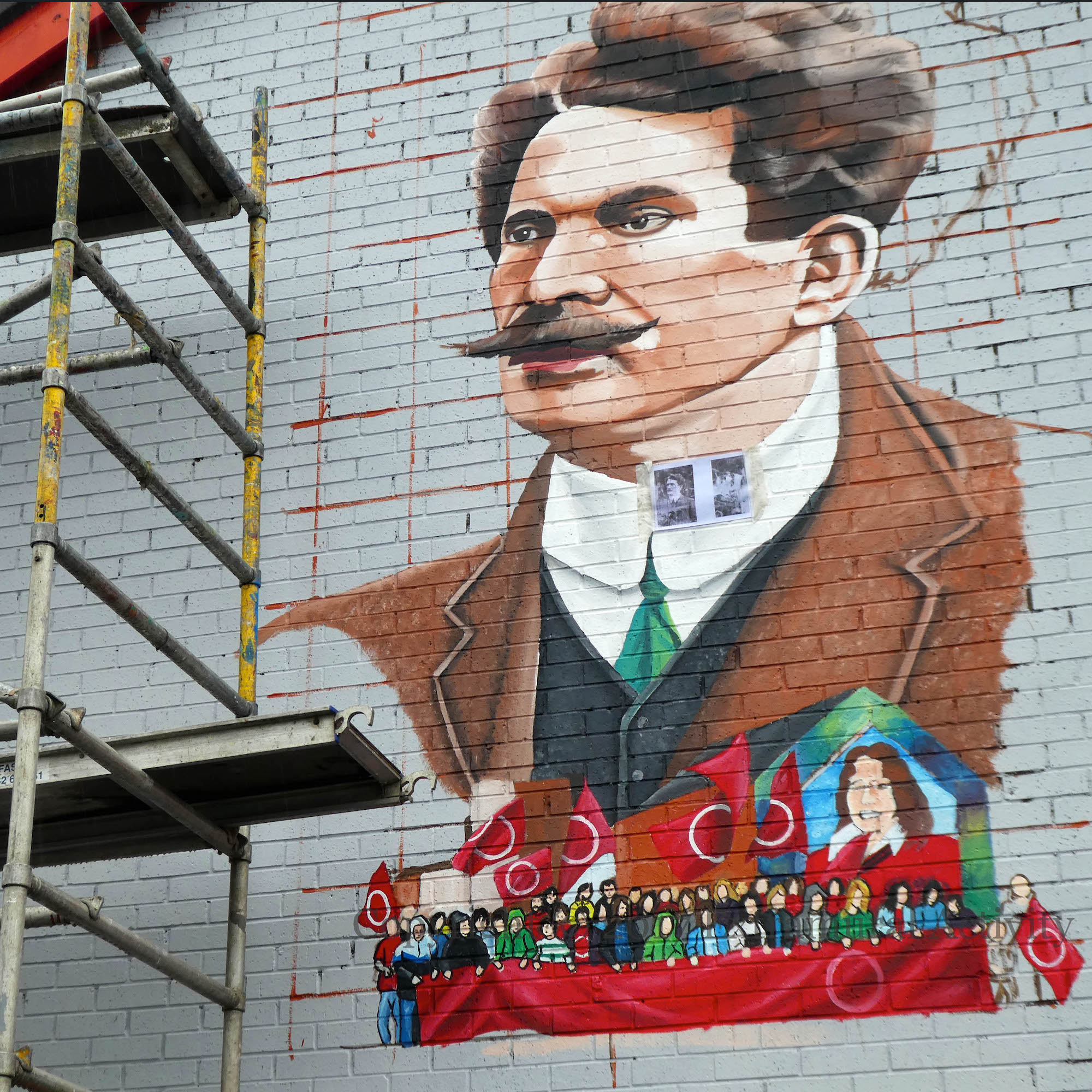
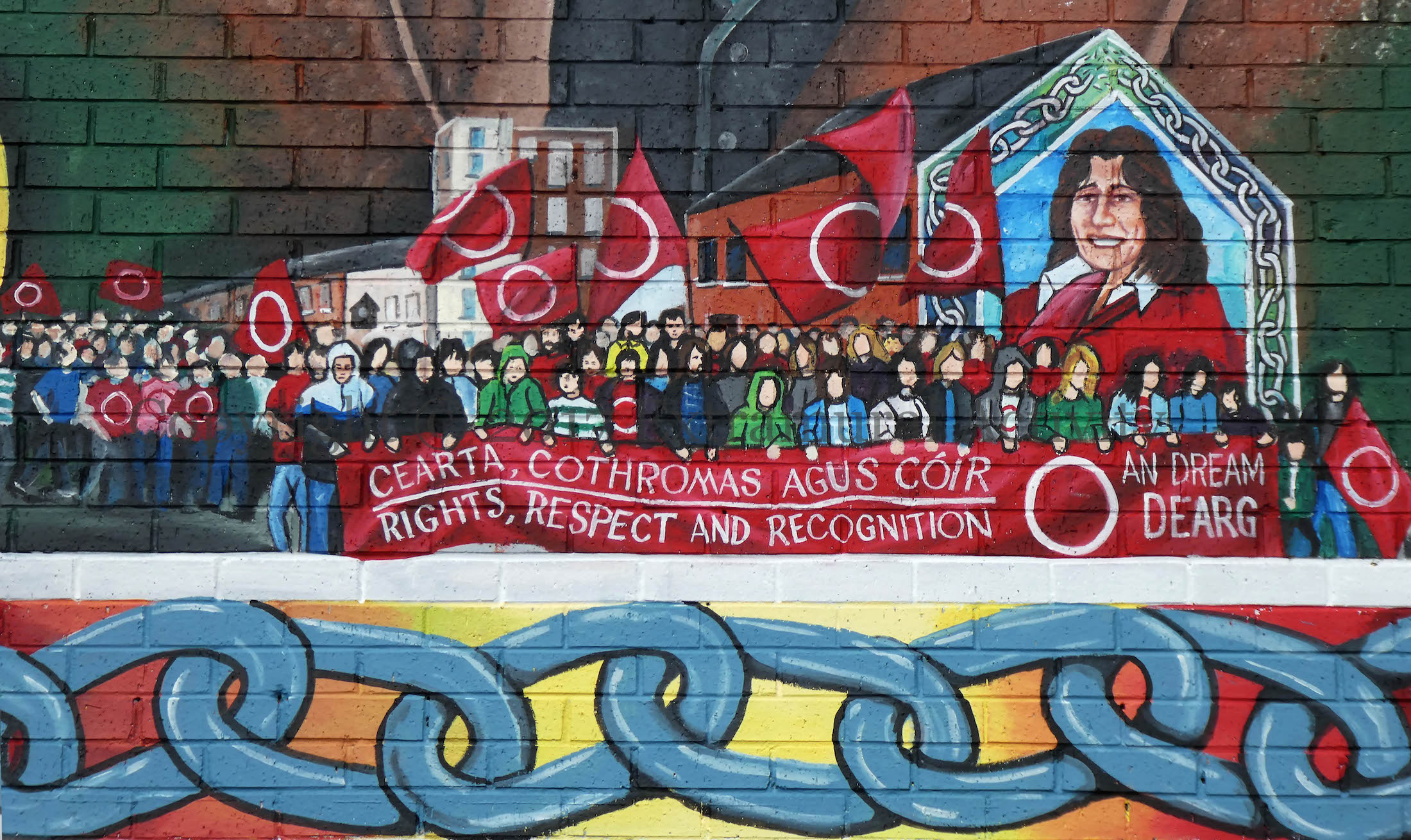
In the five circles around his portrait are Countess Markievicz, Pádraig Pearse, and James Connolly – fellow fighters in the Rising – and Máırtín Ó Cadhaın (author of Cré Na Cılle and IRA member interned during WWII), and the symbol of Laochra Loch Lao and more generally of An Ceathrú Gaeltachta/Gaeltacht Quarter (see previously The Big Plan and Onwards). In the middle (shown in detail below), An Dream Dearg march in support of Acht Na Gaeılge (an Irish language Act) past the Bobby Sands mural on Sevastopol Street.
Click image to enlarge
Copyright © 2017 Seosamh Mac Coılle
X04542 X04543 X04540 X04541 whiterock rd cearta cothramas agus coır 1885-1917 poblachtanach gael
Do Not Touch

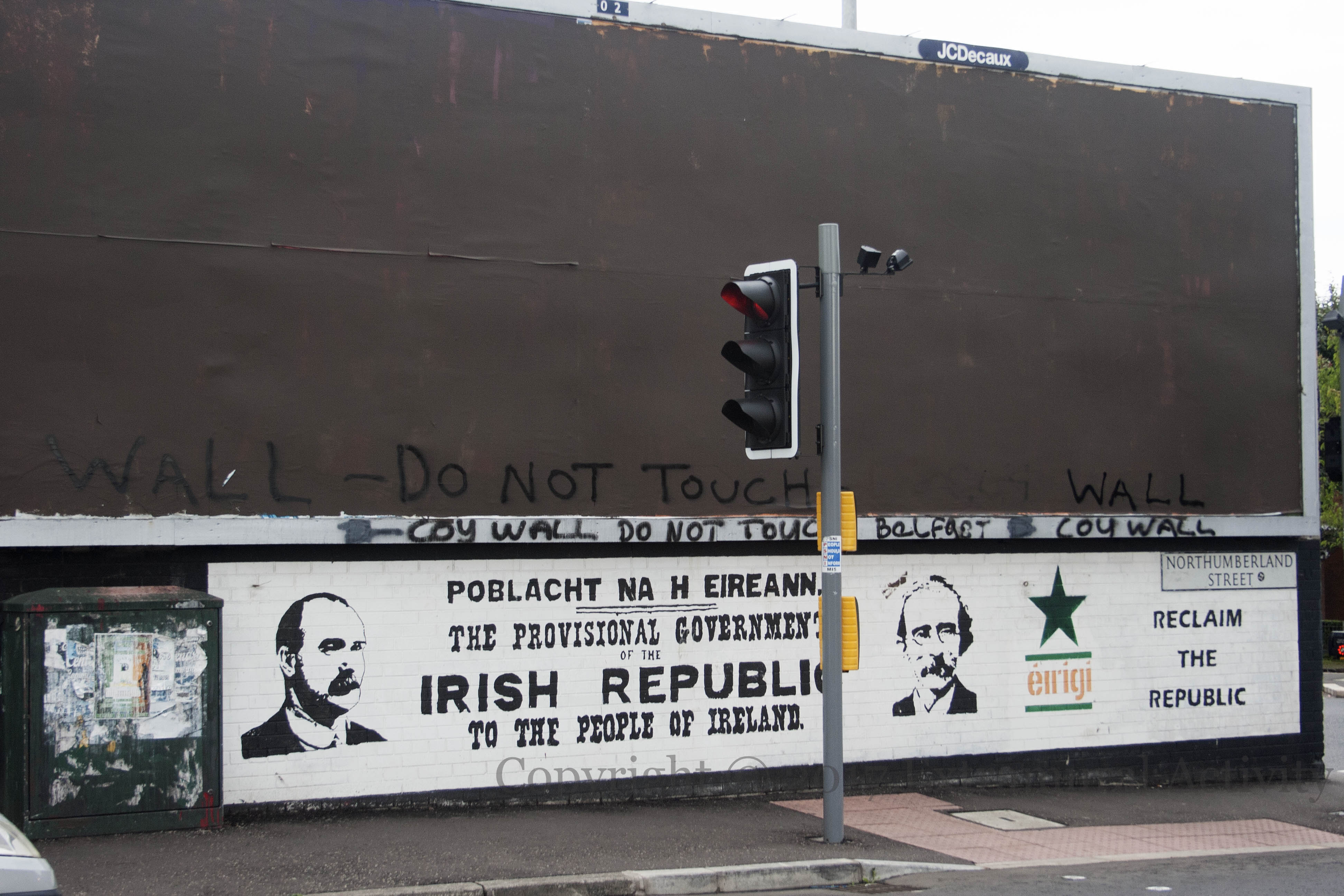
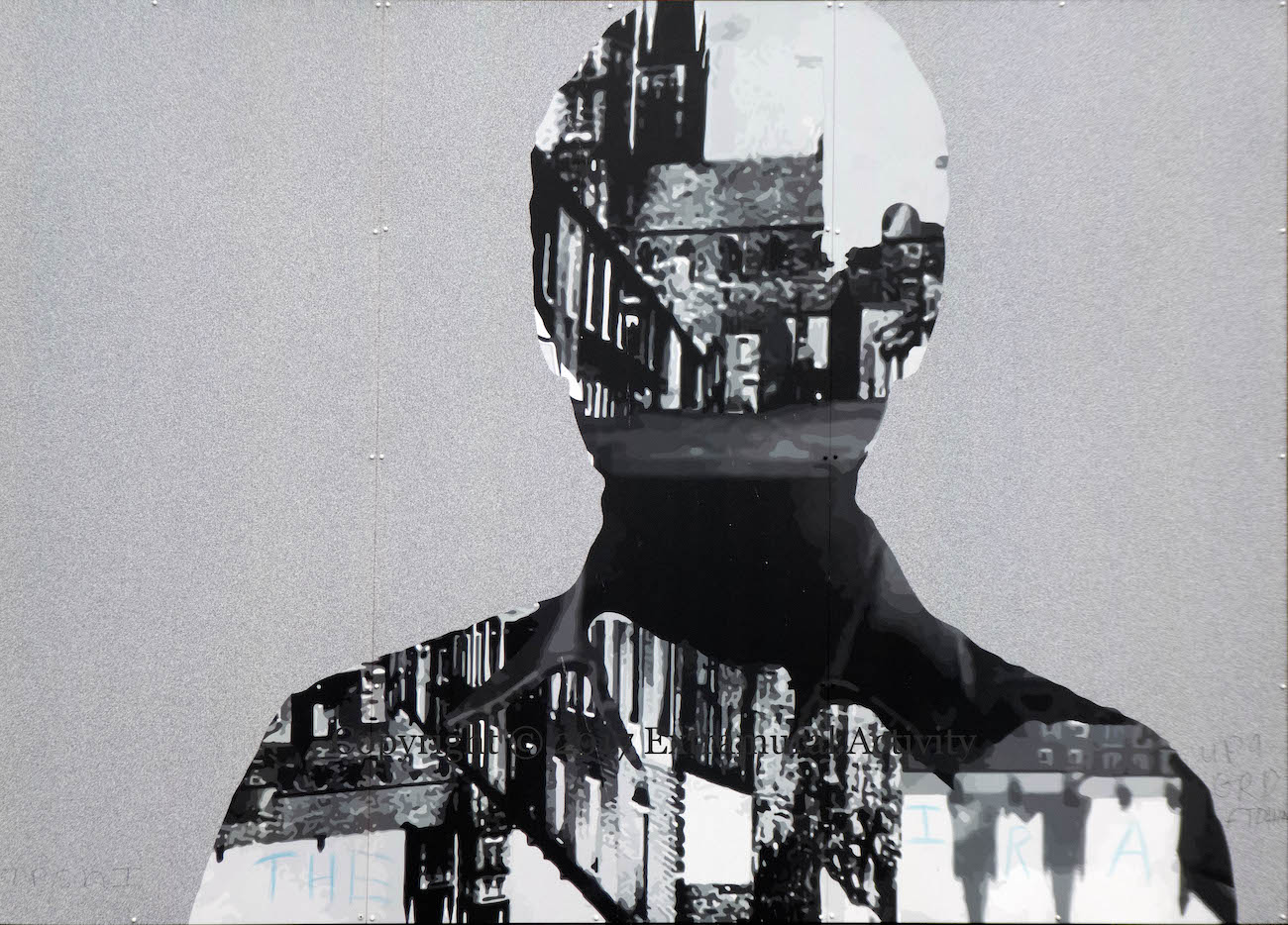
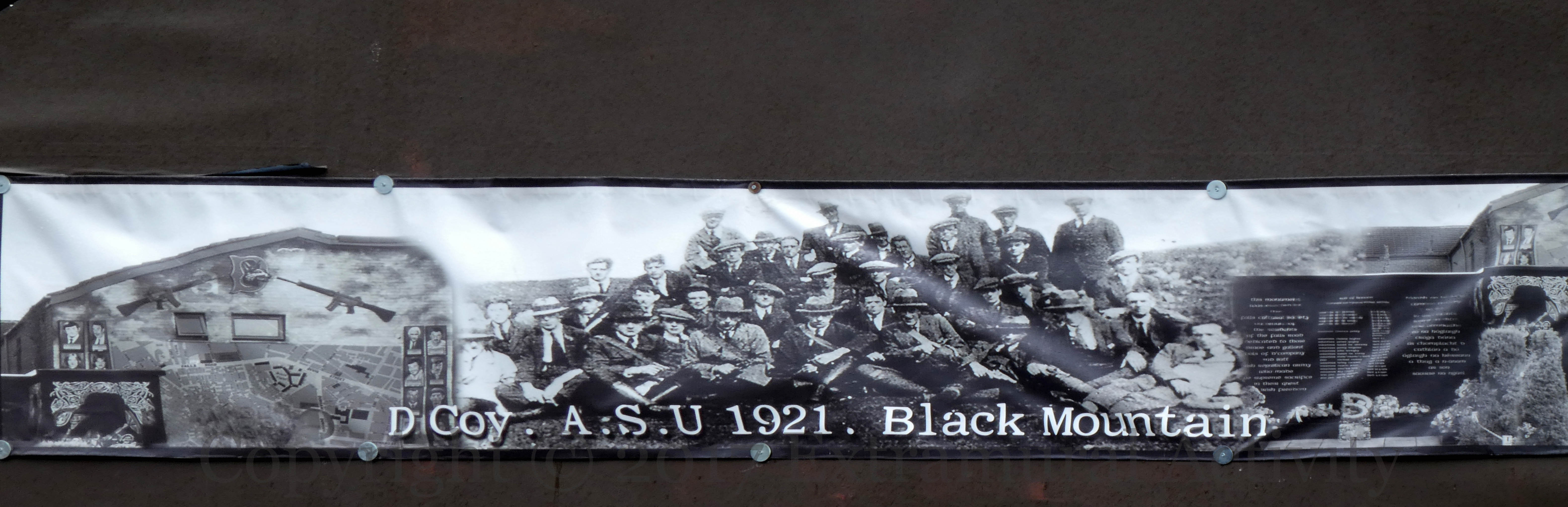
Towards the end of August the advertising hoarding at the corner of Divis and Northumberland Streets was covered with brown paint and a warning scrawled along the bottom rail: “D-Coy wall – Do not touch – Belfast D Coy wall” (though the two “D”s were painted over). (See the second image.)

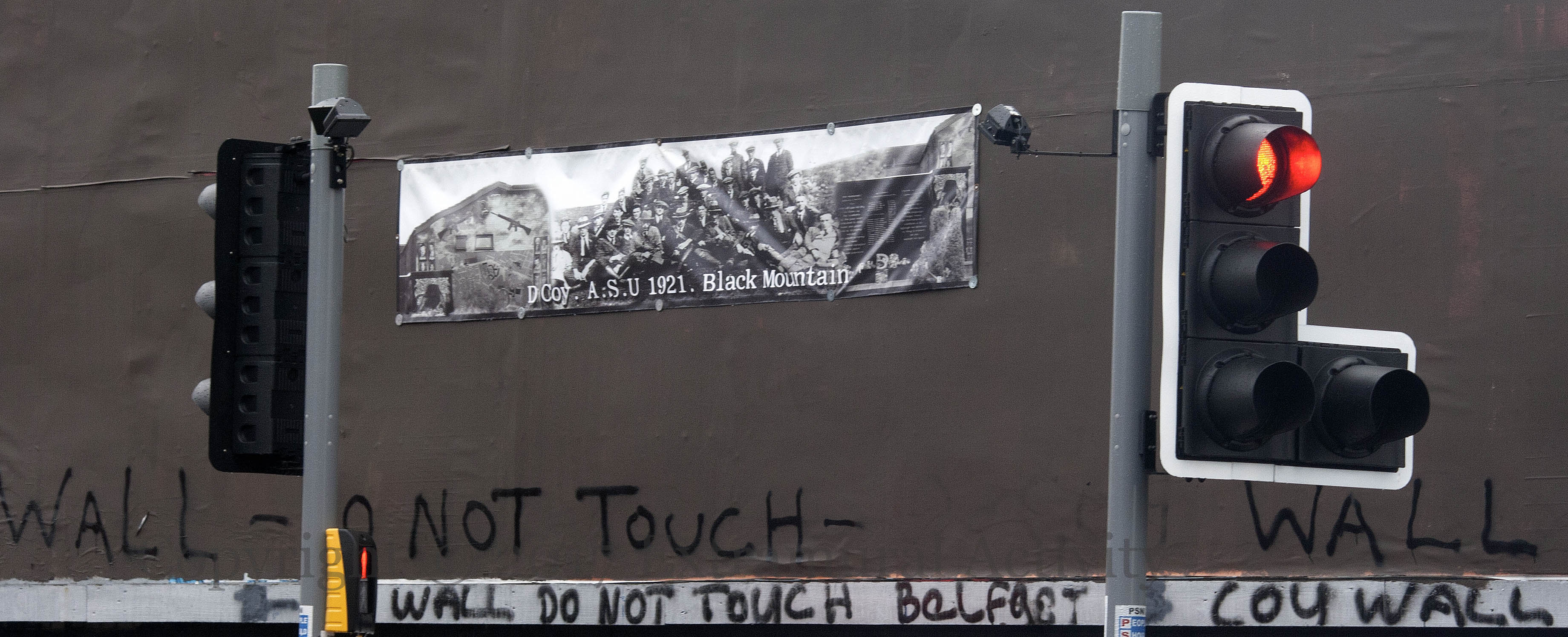
A few weeks later, the banner above was added, showing the men of the northern IRA’s D Coy “active service unit” (“ASU”), between images of the (Troubles-era) D Coy mural and memorial garden (PMC | History Carved In Stone). A direct line between the IRA of  and the PIRA unit is possible – some of the Northern Division went with Joe McKelvey, leader of the 3rd Division, to Dublin to support the anti-Treaty forces (WP) though most of the northern IRA accepted the assurance that the six counties would soon join the South. (For some guesstimates at the number of northerners who served pro-Treaty, see treasonfelony.)

But perhaps only an ideological heritage is intended, that the Black Mountain unit of 1921, and the D Coy of the Troubles, and the contemporary D Coy, alike aim at (Northern) Irish independence.

Click image to enlarge
Copyright © 2017 Seosamh Mac Coılle
X04504 X04426 X04464

Join Us And Have A Voice

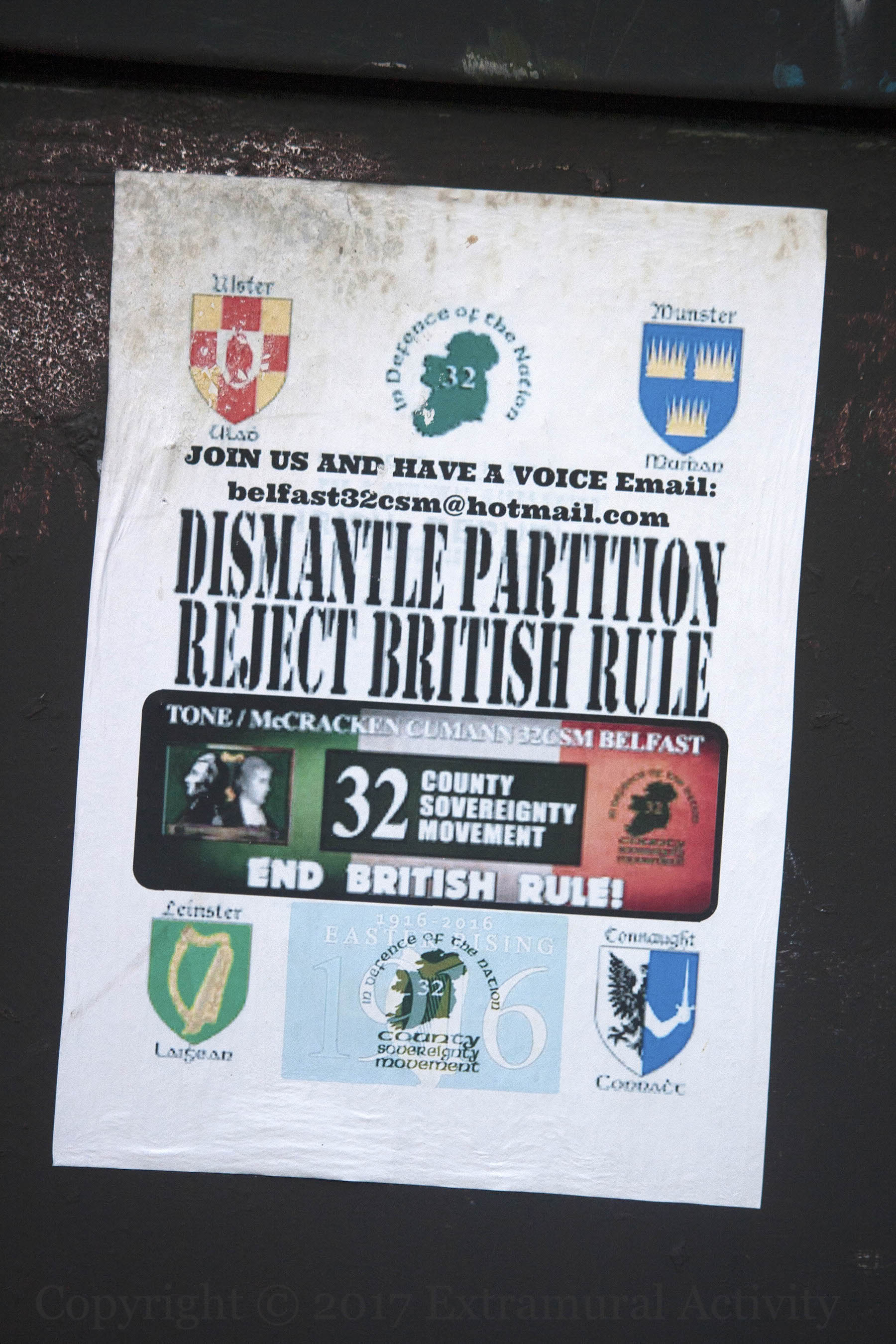
This is a 32 County Sovereignty Movement (32CSM) poster from west Belfast, asking people to “Dismantle partition – reject British rule”. The organisation describes itself as “a republican pressure group”. The Belfast cumann (Fb | web) is named after Wolfe Tone and Henry Joy McCracken (of the 1798 Rebellion).

Click image to enlarge
Copyright © 2017 Seosamh Mac Coılle
X04507

On The Other Side

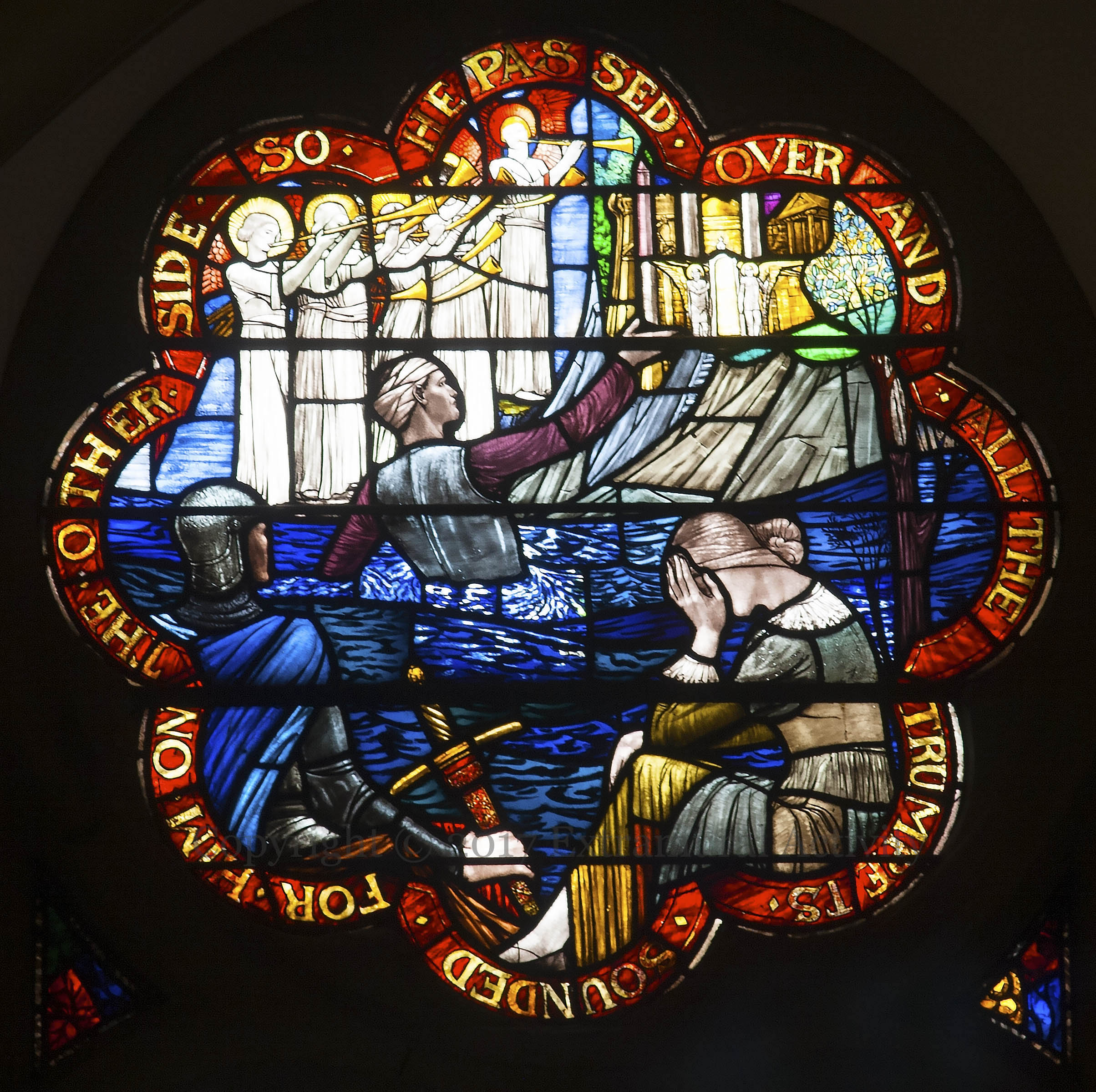
The stained glass from Townsend Street Presbyterian shown above depicts a scene from Bunyan’s Pilgrims Progress, where Valiant-for-truth crosses over to his Father’s house. The glass was unveiled in 1922 in memory of “John Sinclair Martin of the 5th Royal Irish Rifles and his son Robert T Martin” (Beechgarave | History Hub Ulster).

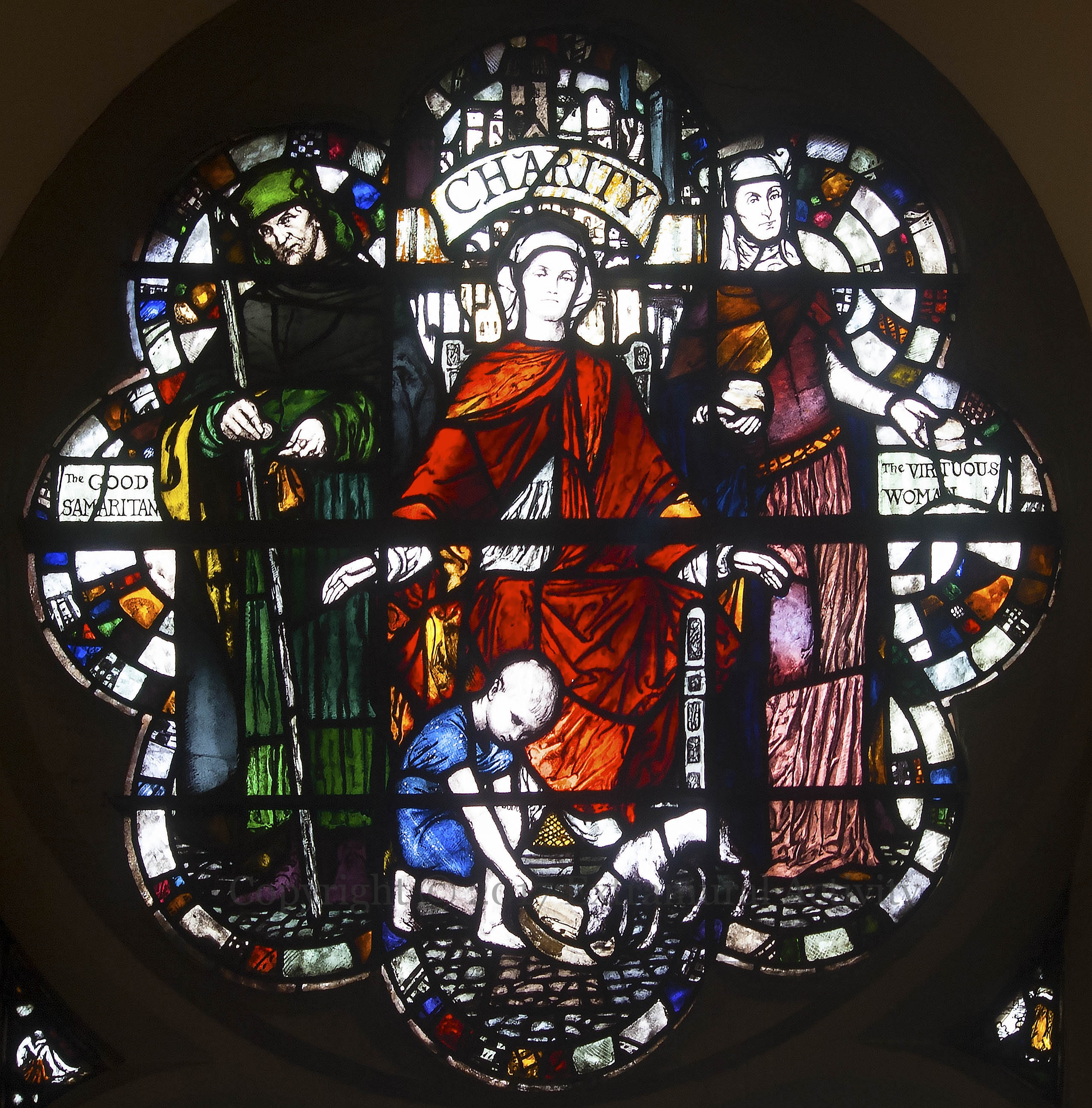
Below is ‘Charity’ from the trio of ‘Faith, Hope, and Charity’ by Wilhelmina Geddes, unveiled 1914-02-08. 2016 saw the publication of a biography of Geddes (BelTelIrish Times).

Click image to enlarge
Copyright © 2017 Seosamh Mac Coılle
X04476 X04475

Maid Of Erin

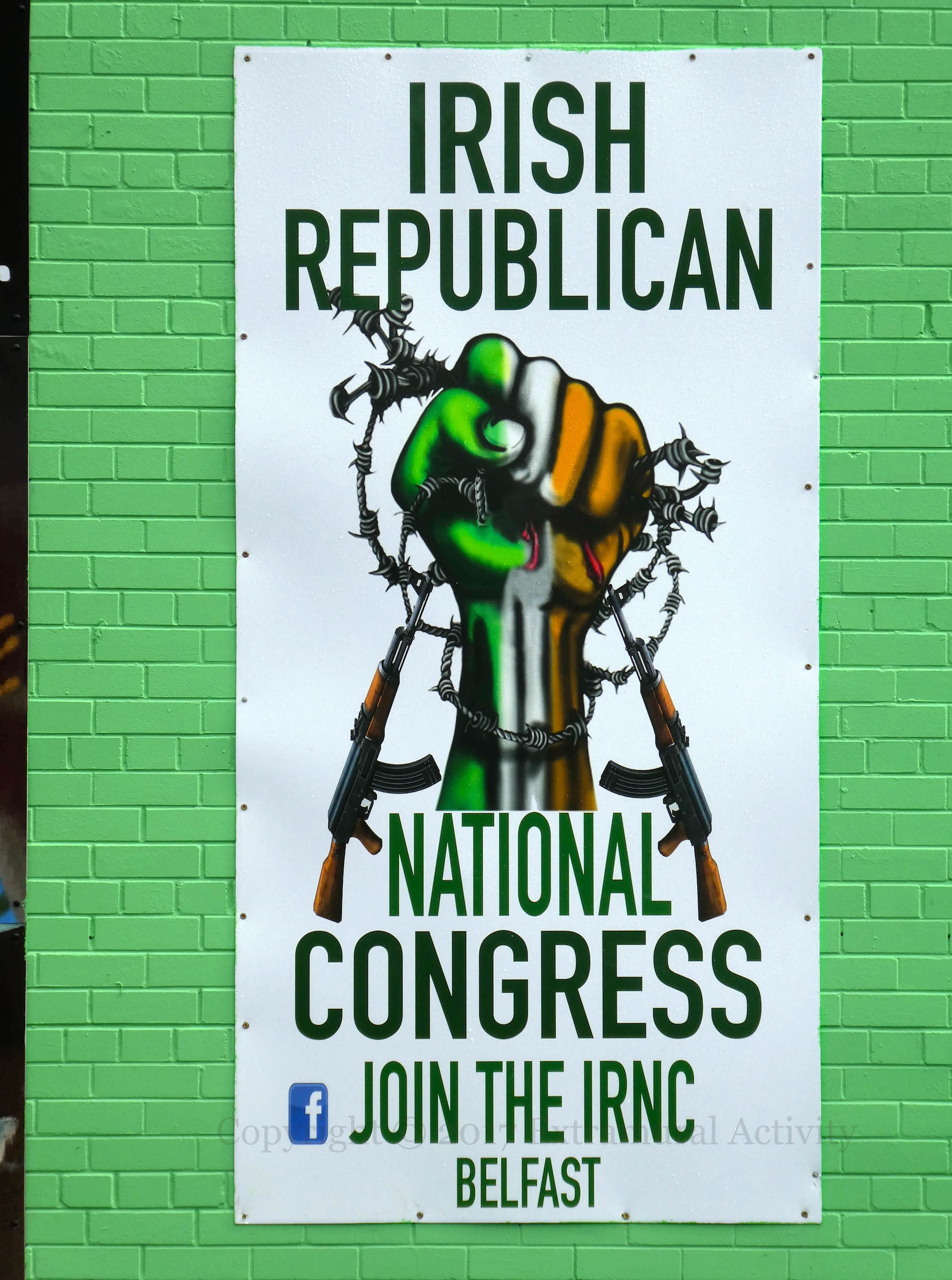
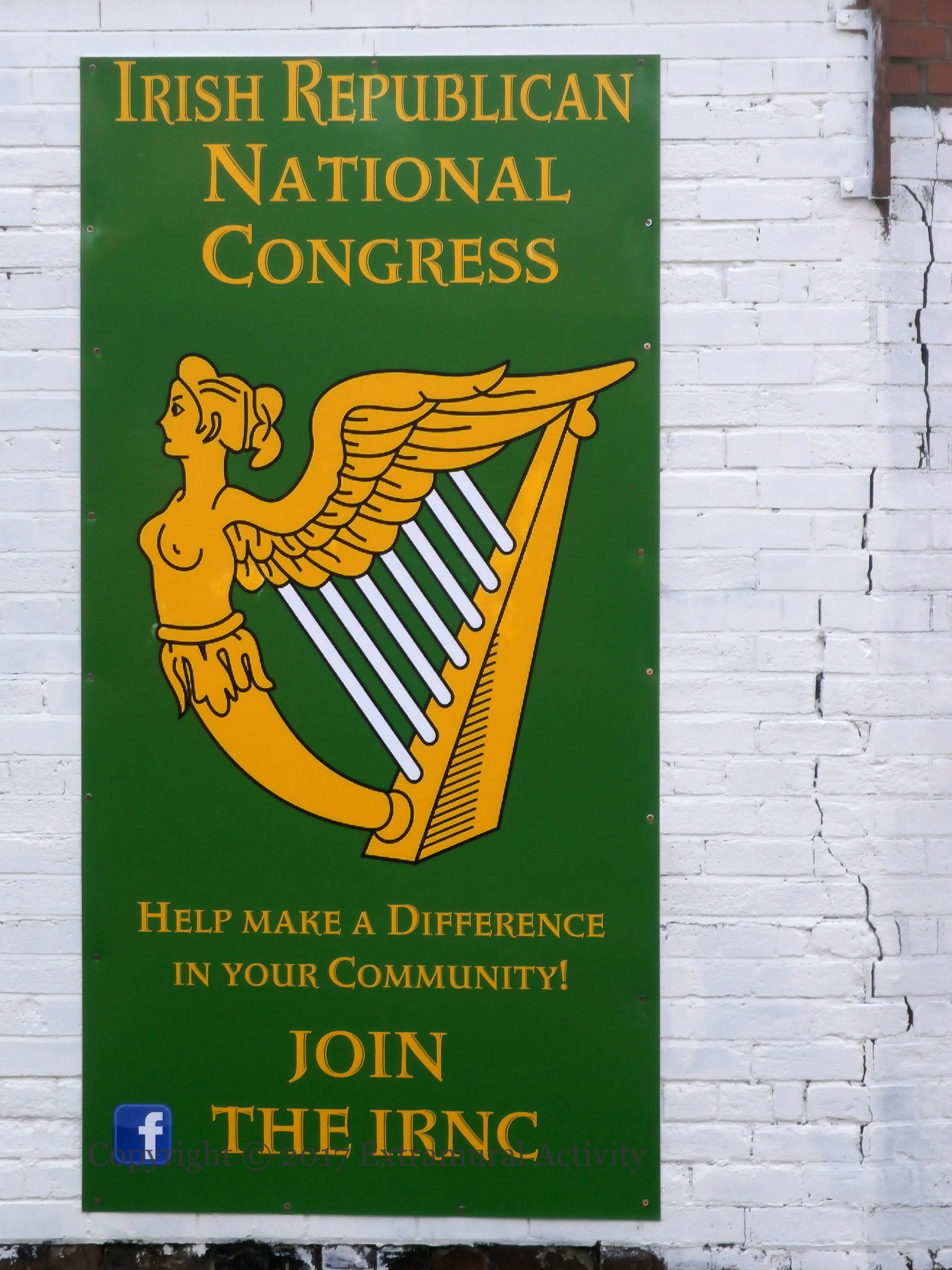
The harp as a symbol of Ireland dates back to the 1500’s, with the ‘winged maiden’ version current by the late 1700s. The United Irishmen replaced the crown typically added above it (used, for example, by the Royal Irish Rifles) with a cap of freedom (for another image see the 2000 Bobby Sands mural). The Irish Republican National Congress (web) is a 2014 group with the goal of a united Ireland.

Click image to enlarge
Copyright © 2017 Seosamh Mac Coılle
X04470 help make a difference in your community join the irnc