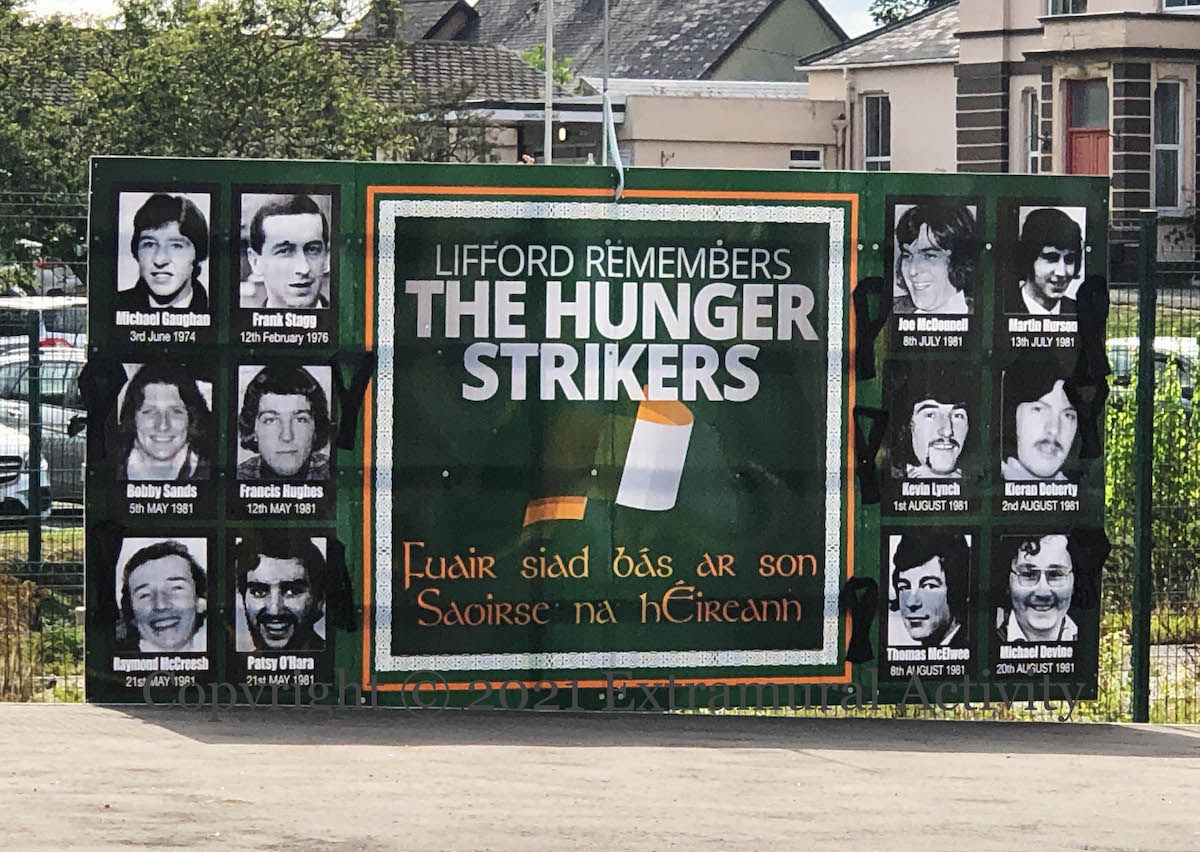
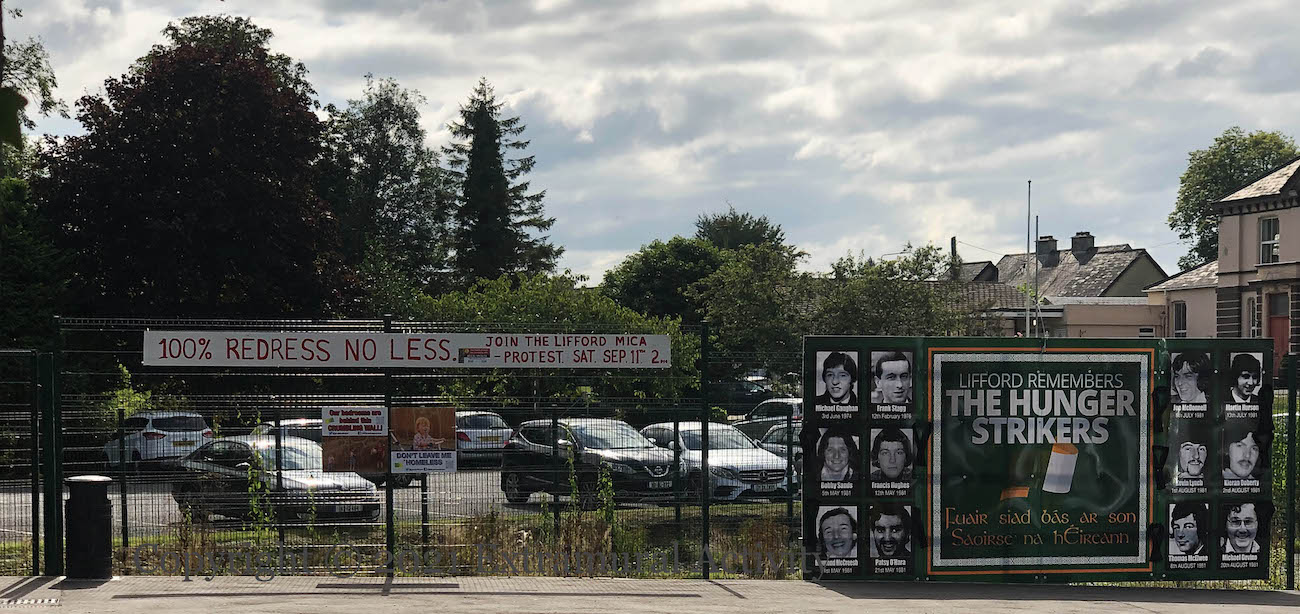
“Fuaır sıad bás ar son saoırse na hÉıreann” [they died for Ireland’s freedom] Although it’s the 40th anniversary of the 1981 hunger strike, this Lifford (Co. Donegal) board includes Michael Gaughan and Frank Stagg who died in English prisons in the 1970s.
If you can explain the flag in the centre, please get in touch. The wide shot, below, includes a call to rally for 100% Redress, No Less.
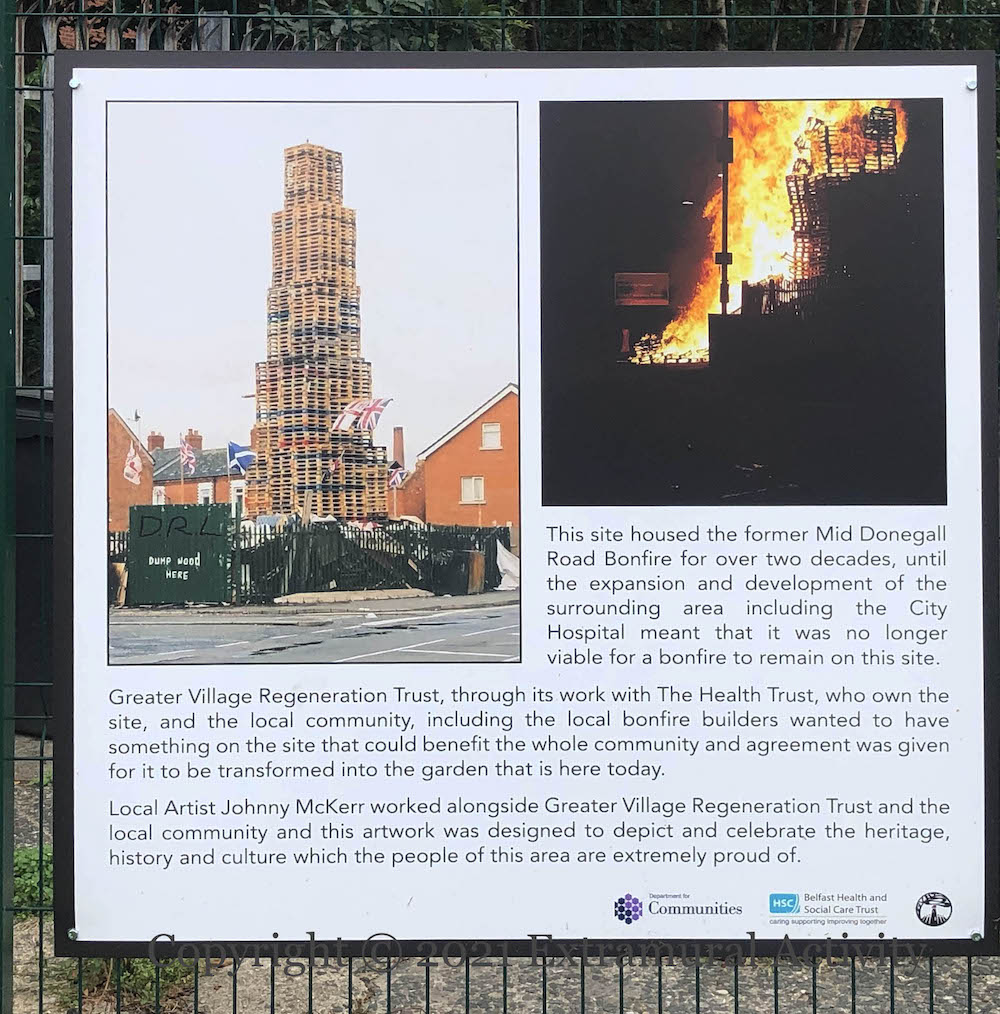
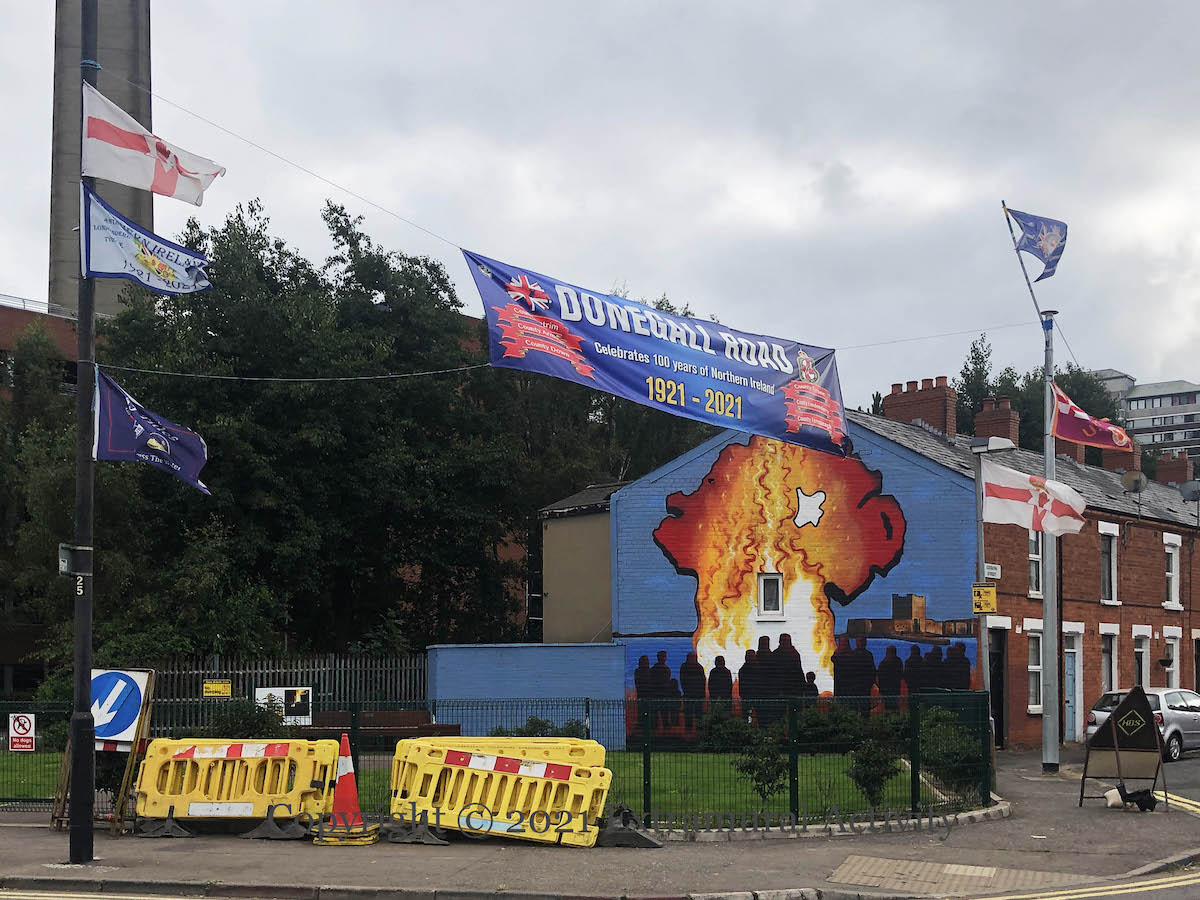
“This site housed the former Mid Donegall Road Bonfire for over two decades, until the expansion and development of the surrounding area including the City Hospital meant that it was no longer viable for a bonfire to remain on this site. Greater Village Regeneration Trust, through its work with The Health Trust, who own the site, and the local community, including the local bonfire builders wanted to have something on the site that could benefit the whole community and agreement was given for it to be transformed into the garden that is here today. Local Artist Johnny [sic] McKerr worked alongside Greater Village Regeneration Trust and the local community and this artwork was designed to depict and celebrate the heritage, history and culture which the people of this area are extremely proud of.”
The info board includes a photograph of the bonfire spilling out towards the car-park for the City. The other image is a photograph from the Peter Moloney Collection, used without permission, and photoshopped to add “DRL” – Donegall Road Loyalists.
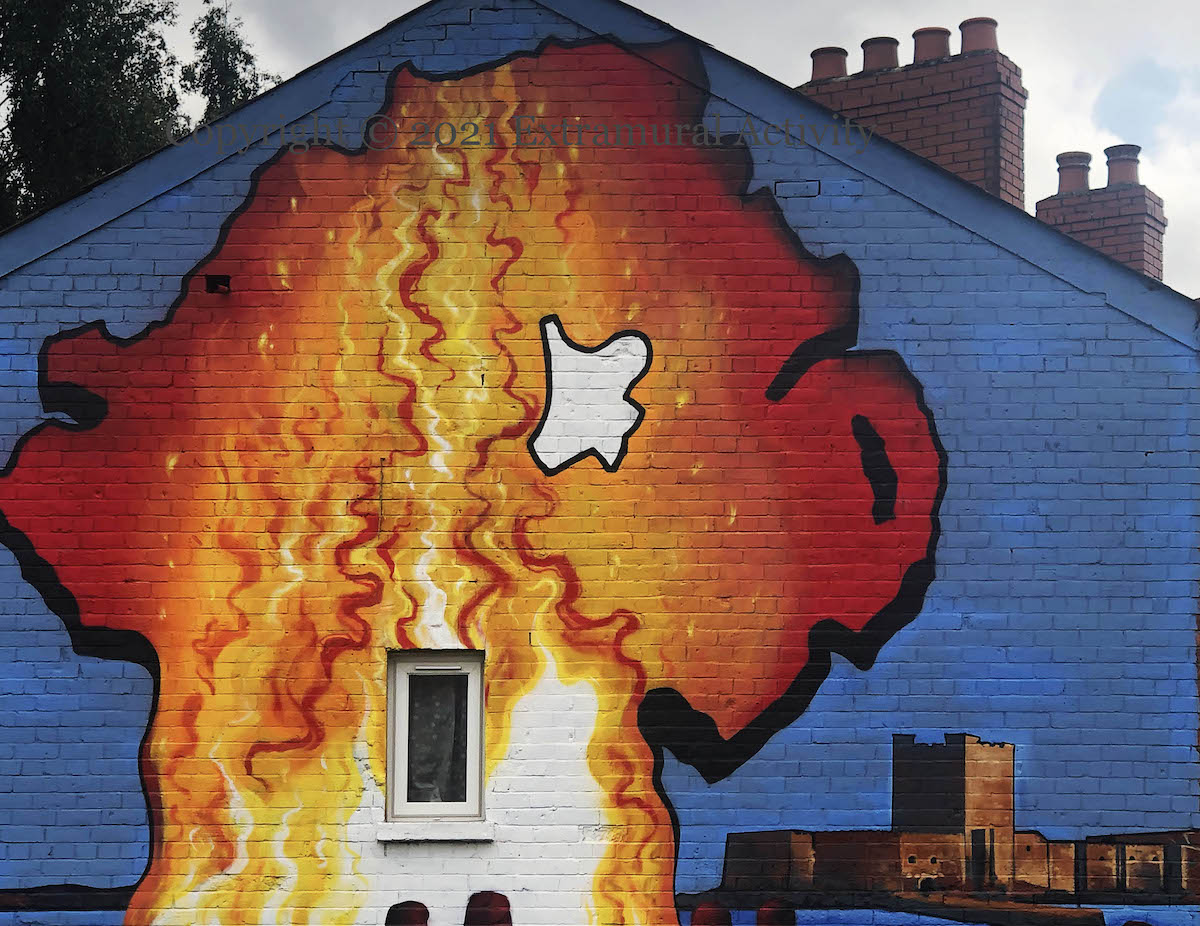
According to Eddie Kelly of the GVRT, Carrickfergus castle is included because “This is where King William landed, and the annual bonfire is a symbol of a beacon lit across the coast to guide him” (Belfast Live).
Painted by JMK/Jonny McKerr (tw) at Coolfin St on Donegall Rd.
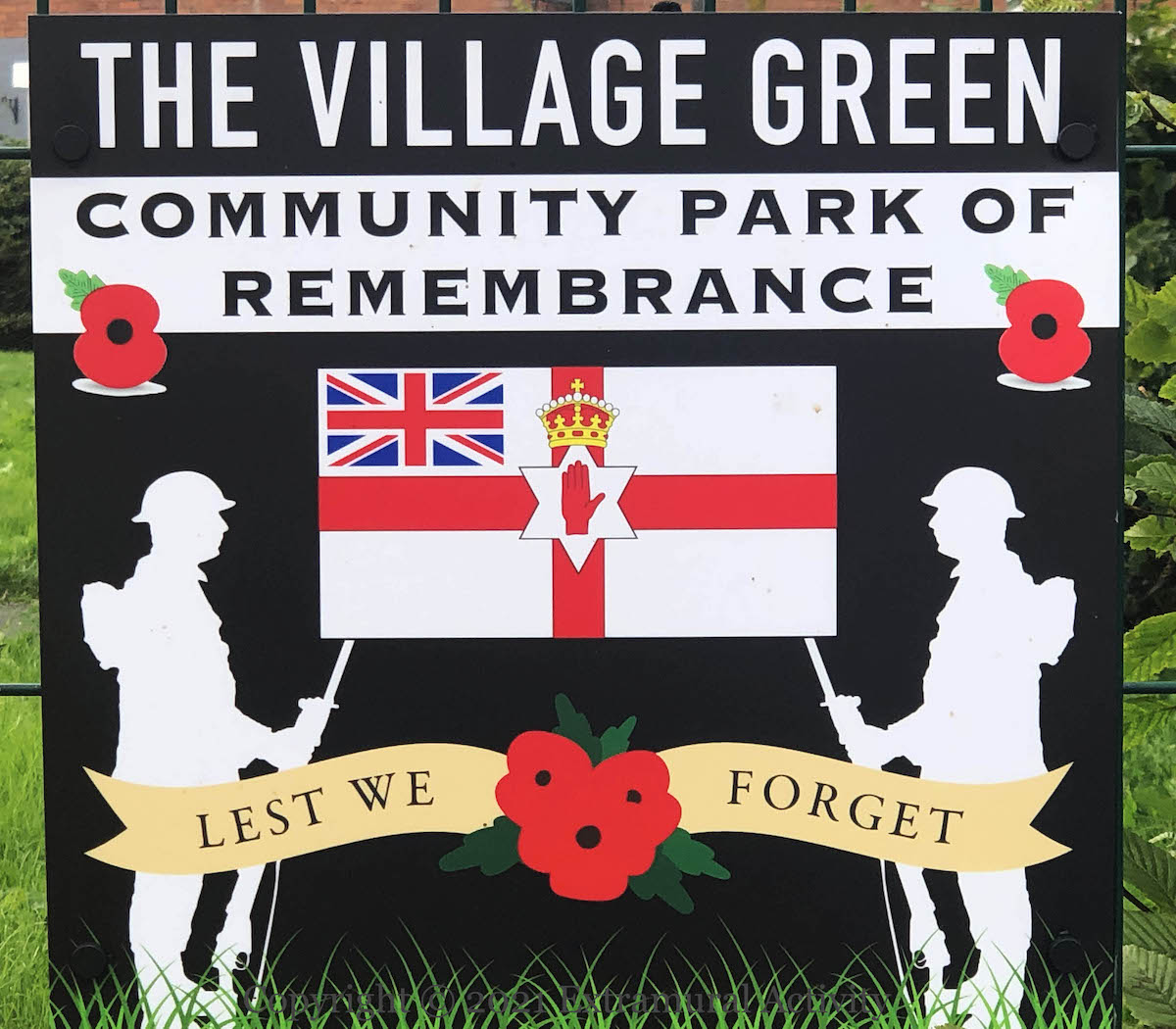
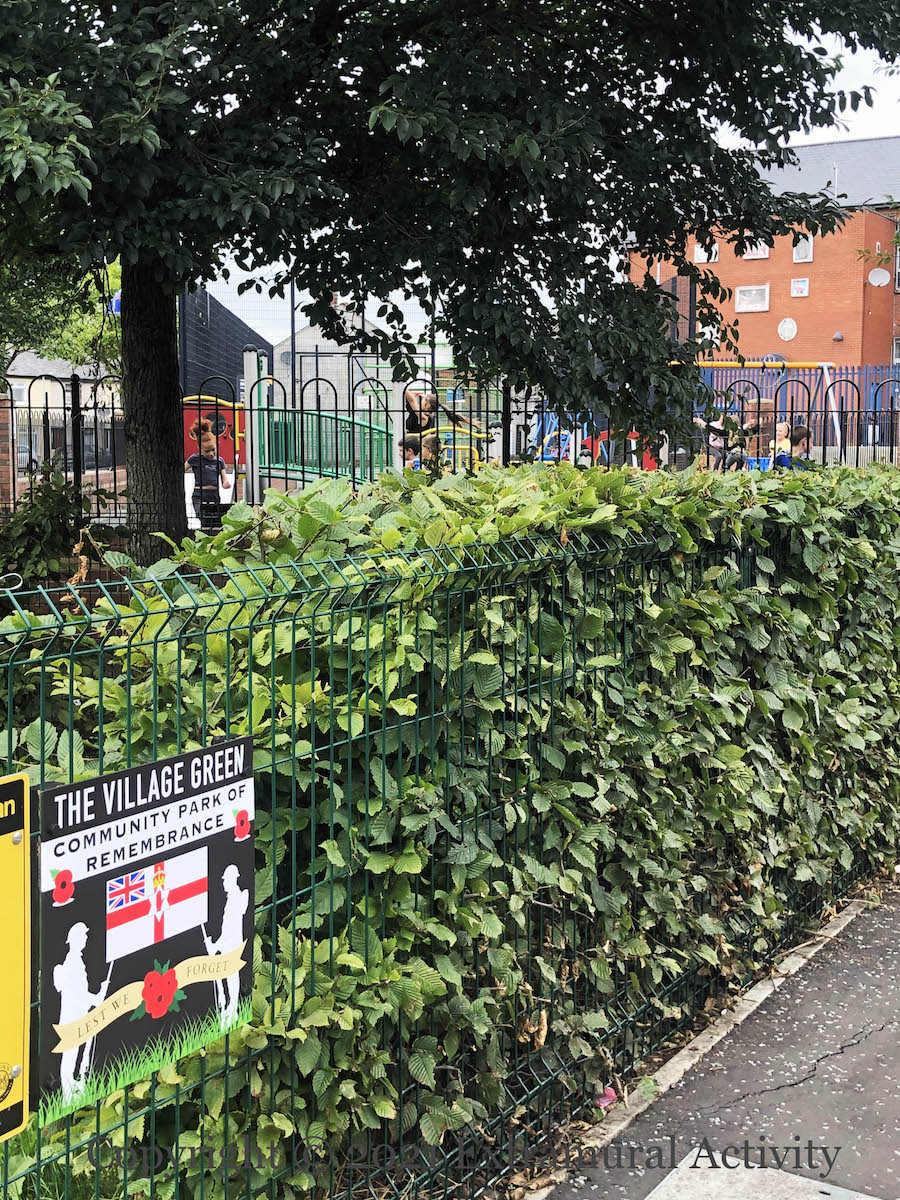
Part of the most recent development of the upper streets in the Village was not to rebuild the two rows on houses on Ebor and Nubia/Moltke streets and in their place construct a park – the Village Green – and playground. This new board on the outside railings make the park a “community park of remembrance” for WWI, showing an Ulster Banner with a Union Flag in the canton. There was formerly on this site an image of Thiepval Tower and a UVF stone.
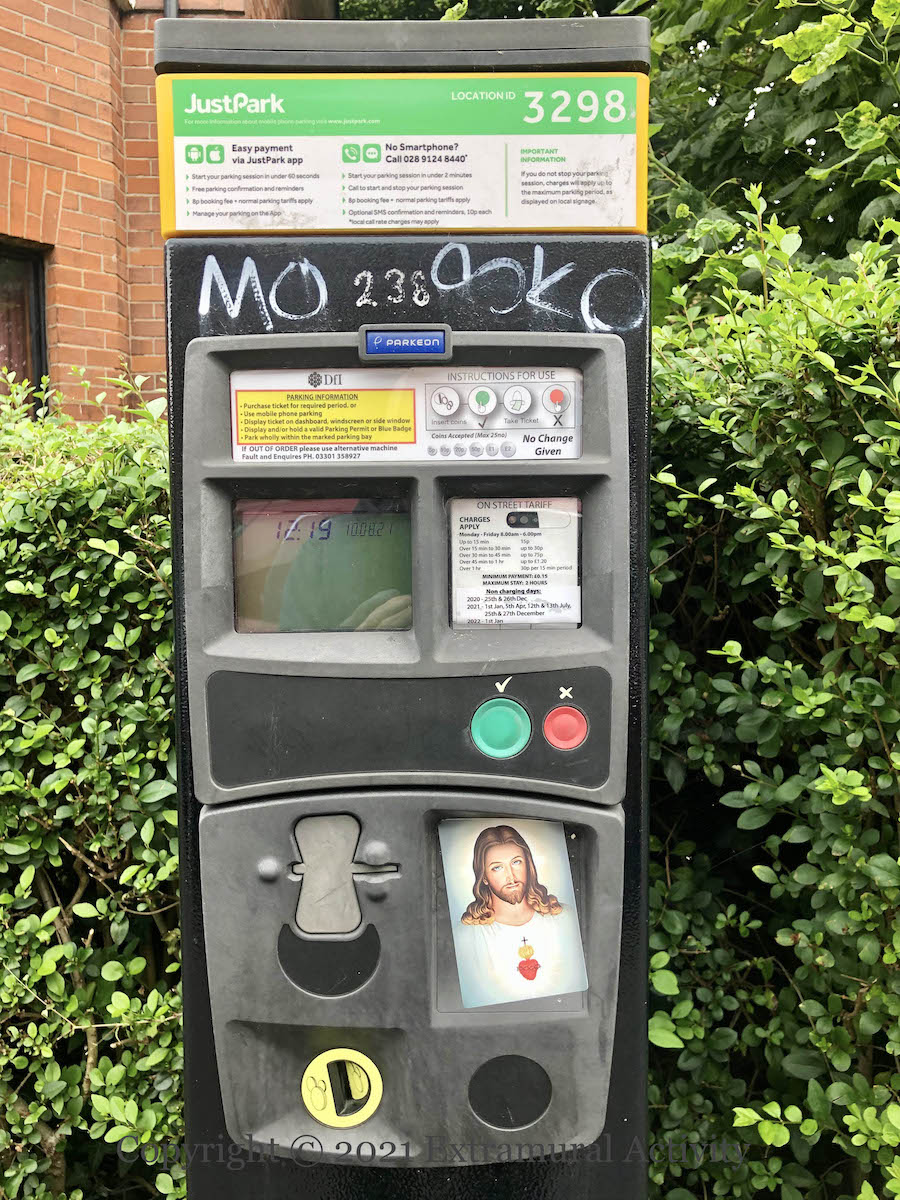
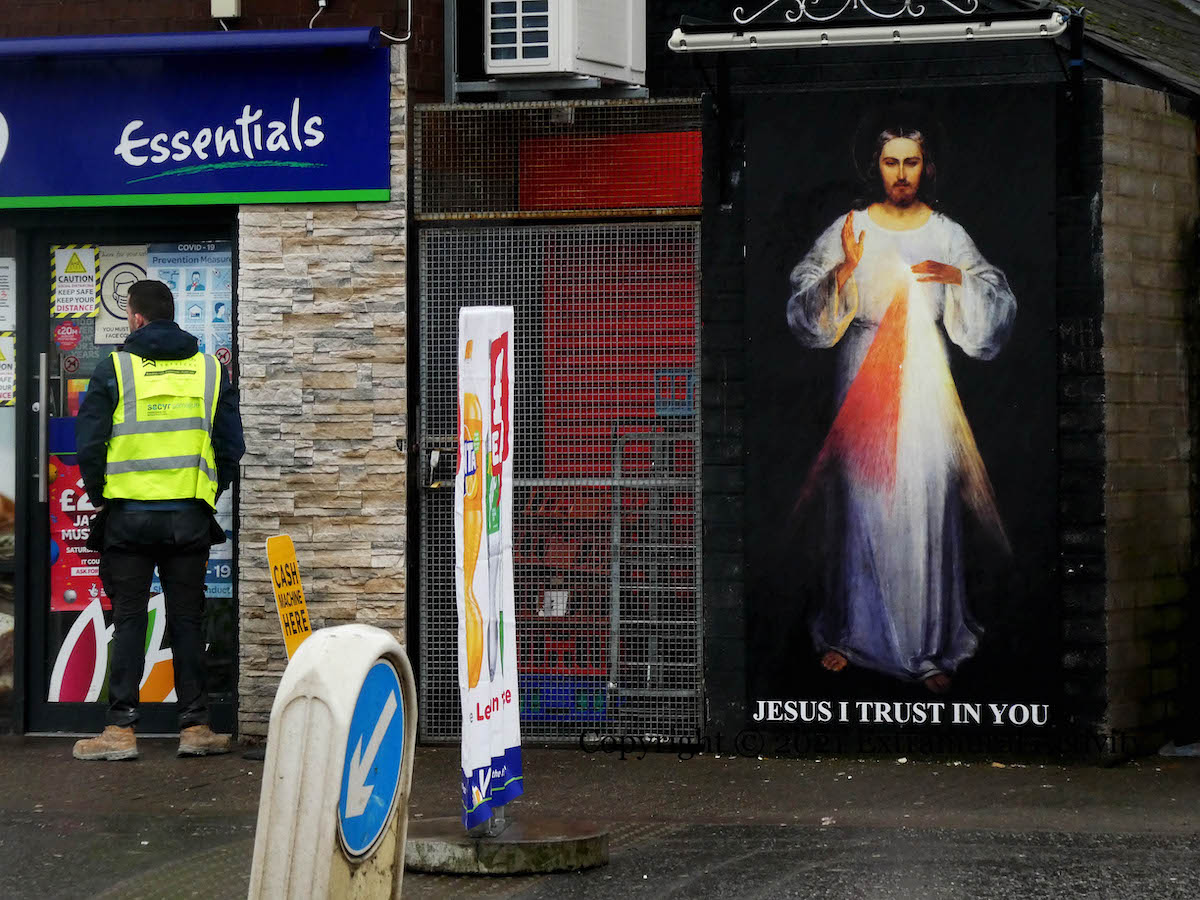
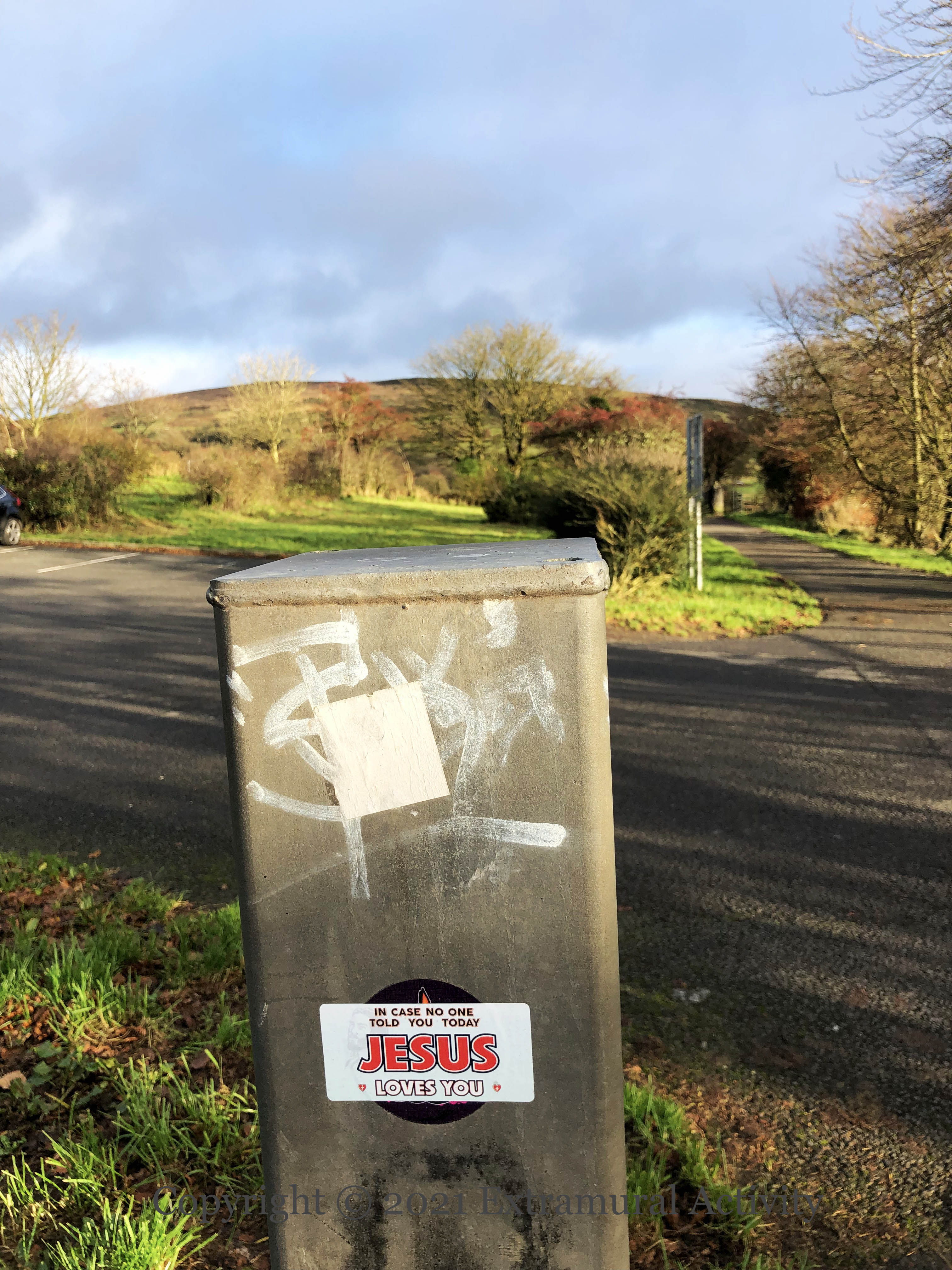
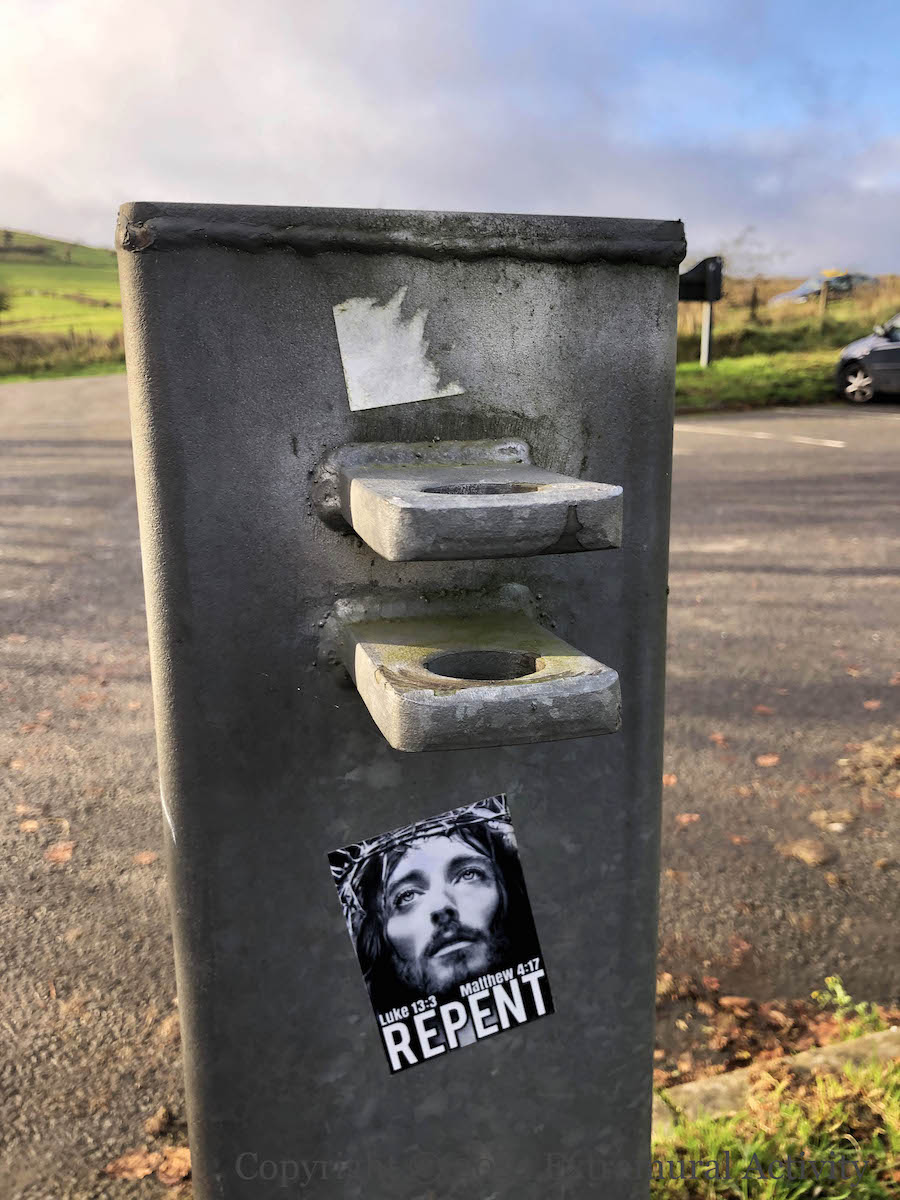
Four appearances of Jesus in Belfast in 2021: the sacred heart of Jesus on a parking meter; Jesus (previously seen in Glengormley – Nearer My God To Thee – and explained in This Image Is Blessed); and two stickers from the Hightown Road: “In case no one told you today, Jesus loves you” and “Repent – Luke 13:3, Matthew 4:17”.
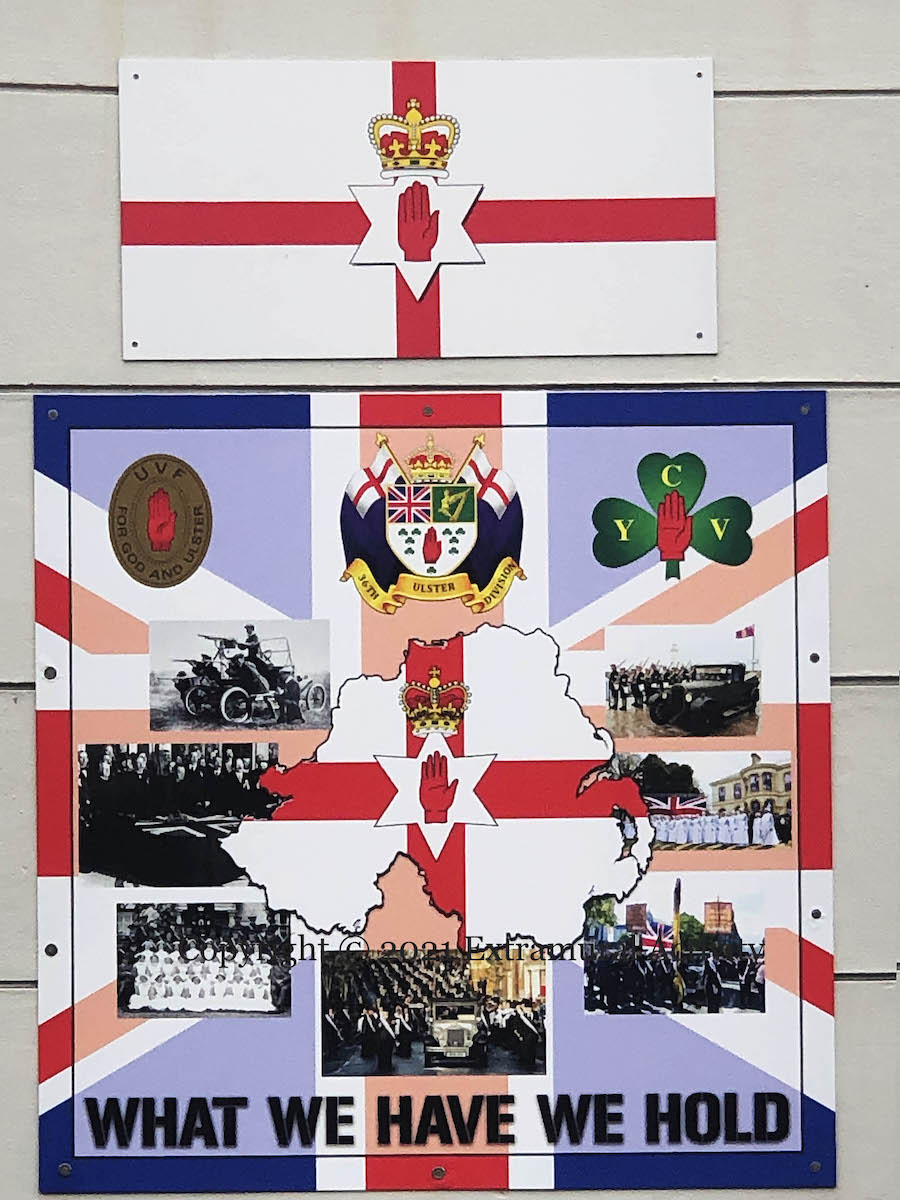
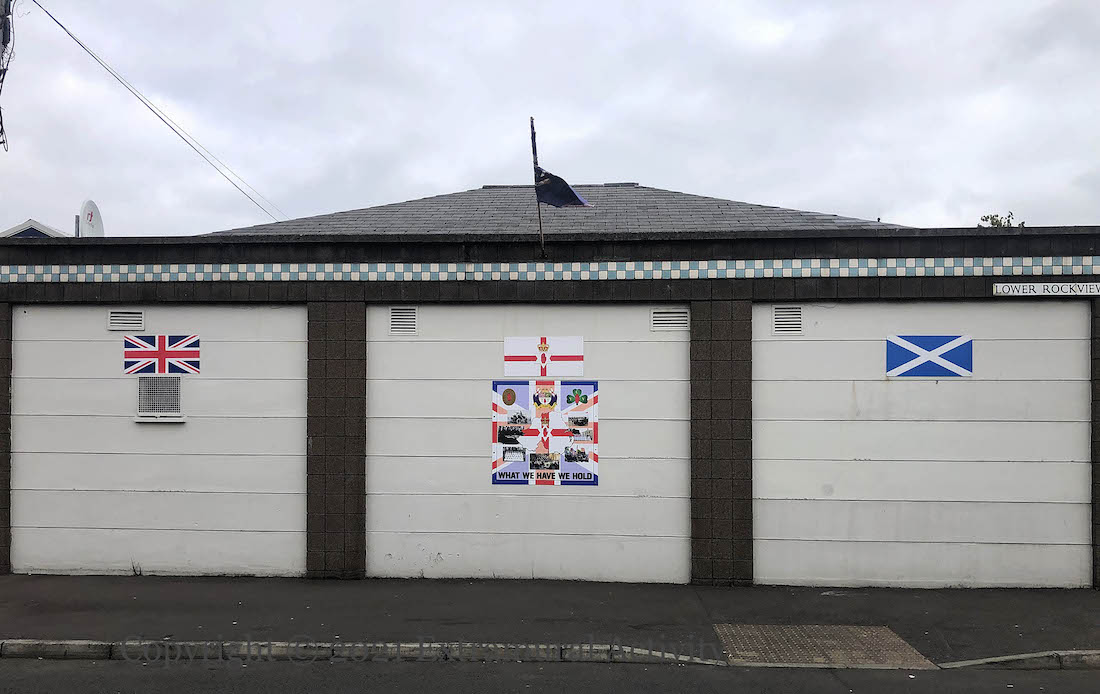
This Village board celebrates the Covenant, Ulster Volunteers, and the 36th (Ulster) Division, with photographs both vintage and contemporary.
For the photograph of Carson signing the Covenant, and an earlier mural, see Betting Office. For the photograph of the car-mounted gun, and an earlier mural recreating the photo, see UVF 75th Anniversary. For images akin to the contemporary photos, see these BelTel galleries one | two of the 100th anniversary celebrations of the Ulster Volunteers.
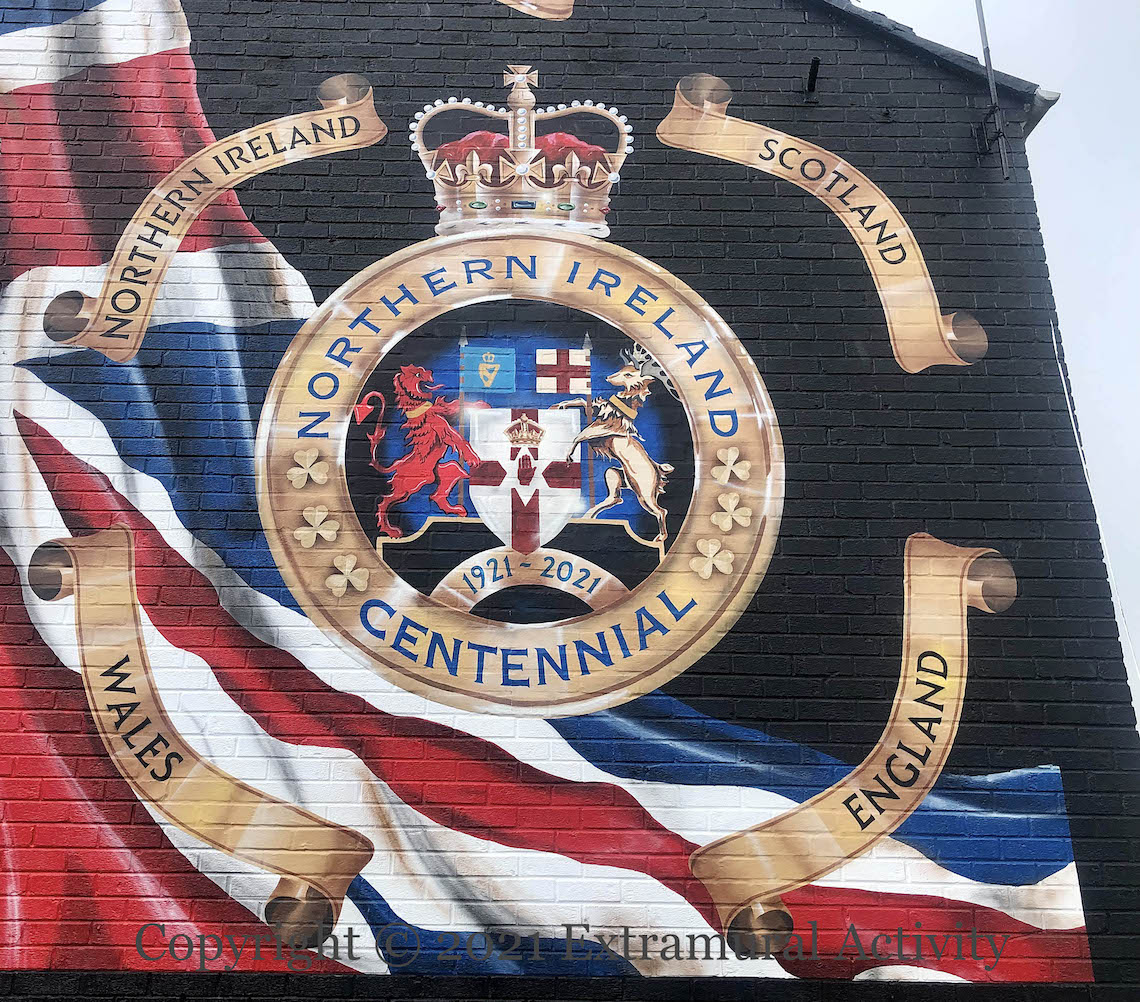
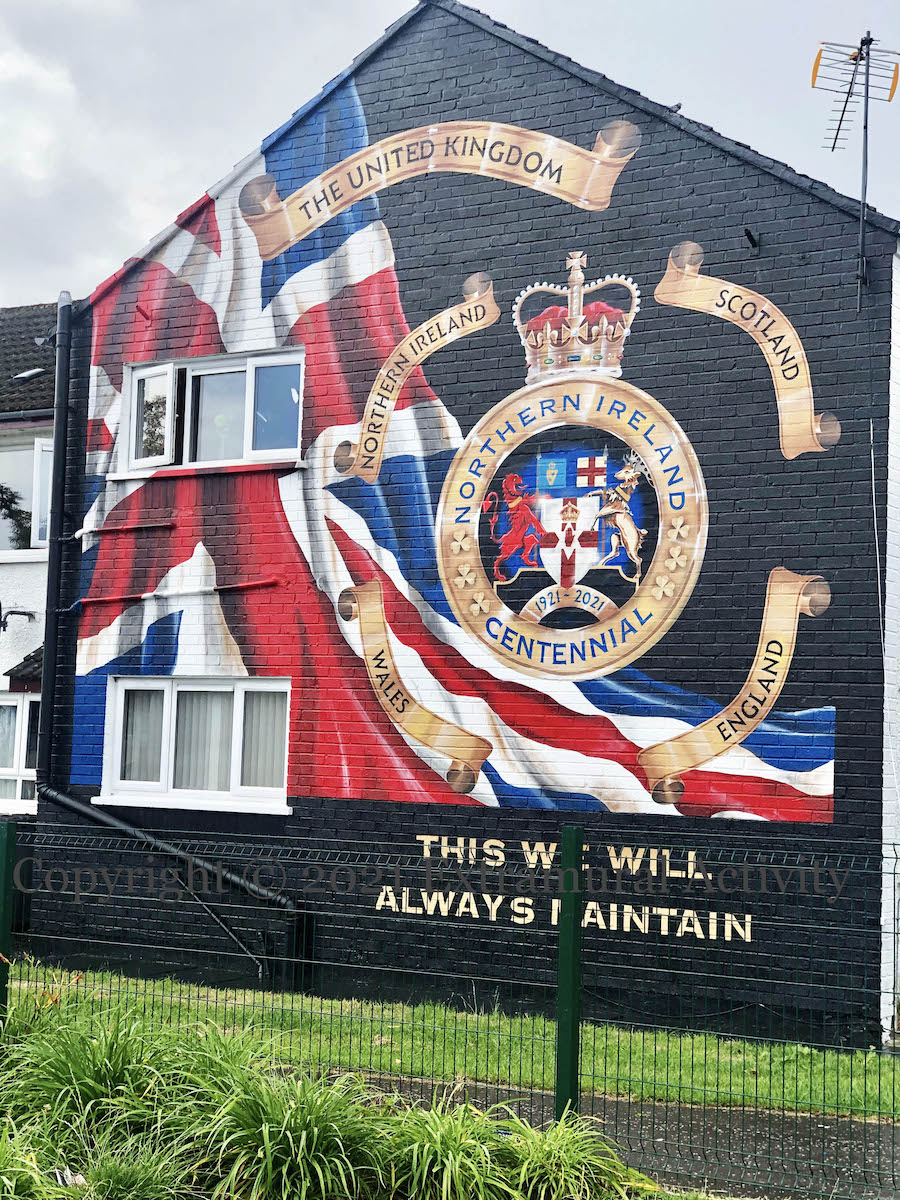
The Northern Ireland government’s coat of arms was approved for use in 1924, three years after the government was established. Its “supporters” – the red lion of Scotland and an Irish elk, carrying (respectively) Irish harp and De Burgh flags, and standing on a grassy mound with flax plants – were added later.
This mural celebrating the centenary of Northern Ireland’s creation, in the Woodburn estate, Carrickfergus, accurately shows the Tudor crown on the arms, as was used at the time of creation and prior to the Edwardian crown (WP).
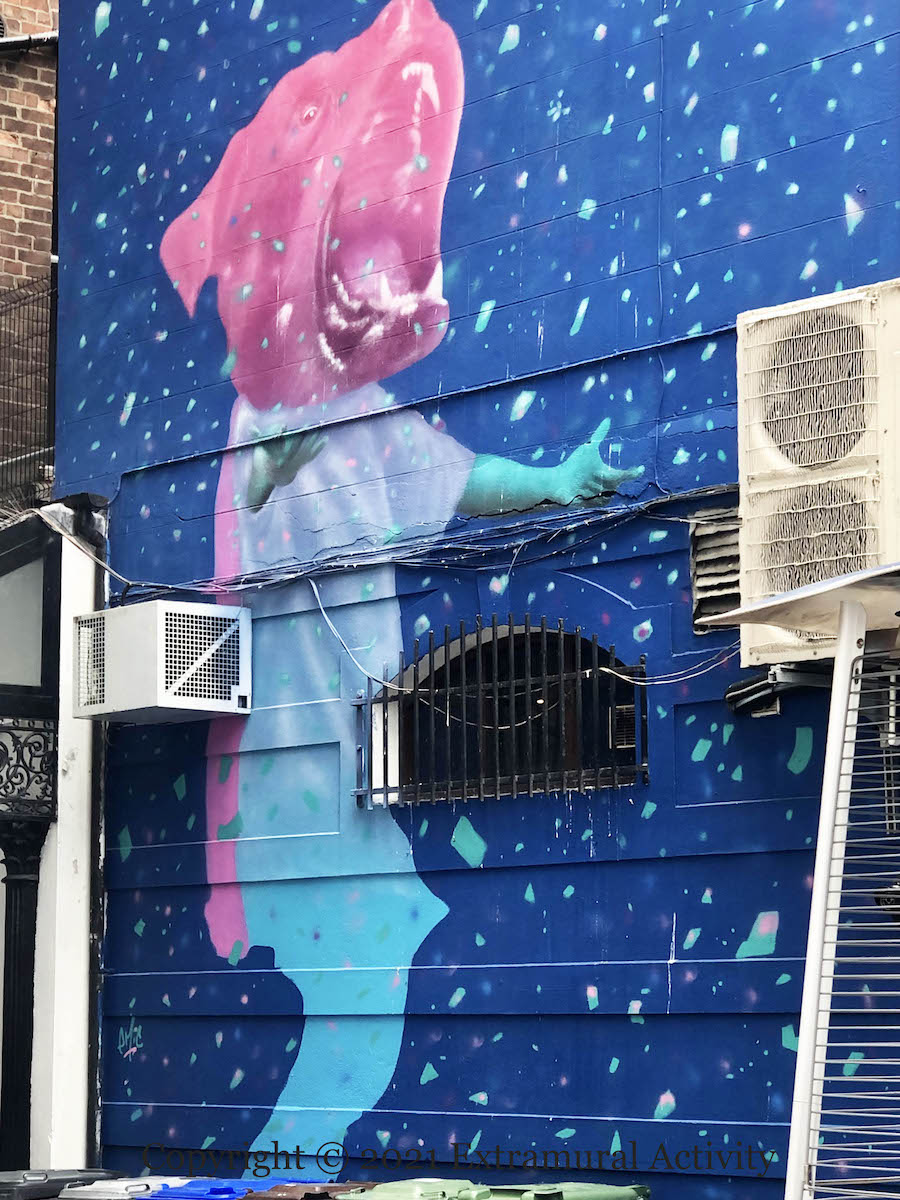
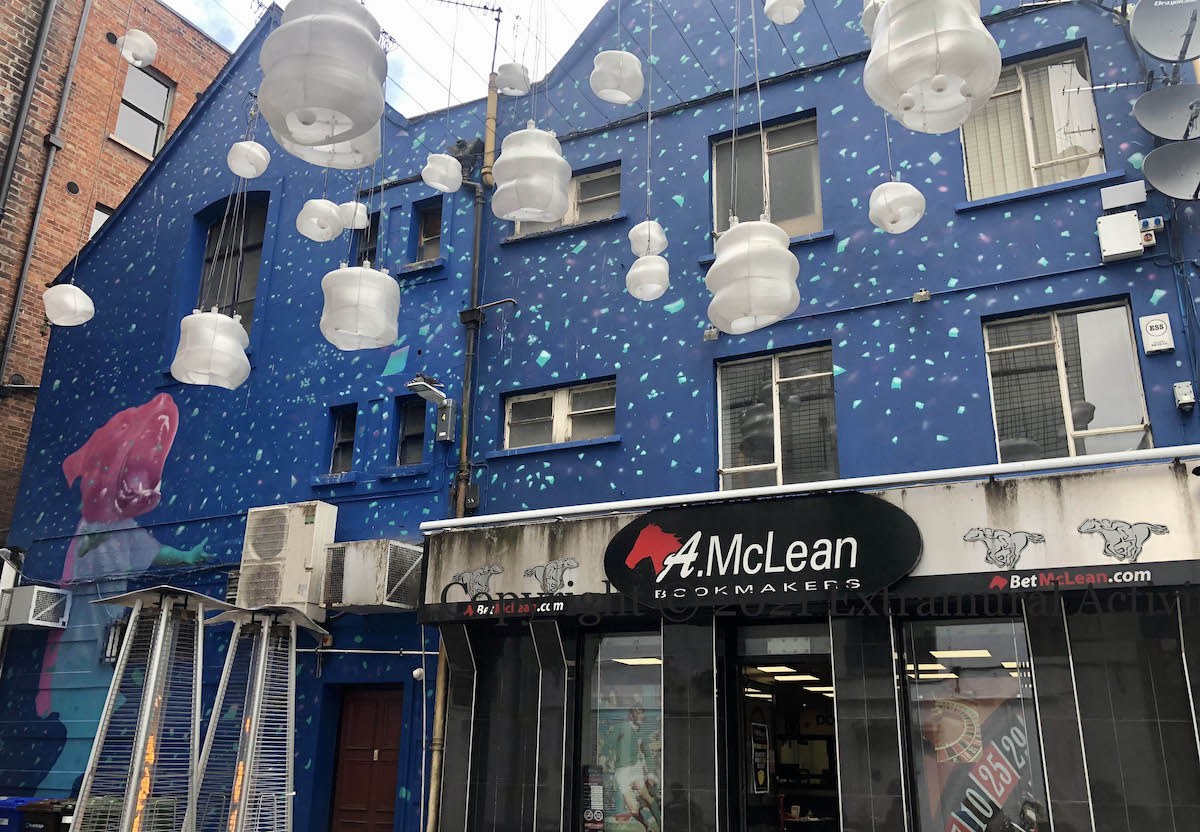
Work by emic (ig) – official title Ffallen [sic] – in Winecellar entry, inspired by Ciaran Carson’s Belfast Confetti, itself inspired by “a public notice from the corporation of Belfast (1678) which highlights a growing problem of Butchers and Tanners mastiff dogs attacking livestock, people, and even young children in the city” (Belfast Walking Tours). The wide shot (below) shows “3D printed floating orbs were created from recycled ocean plastics suspended over the central courtyard” (BCC).
 Seosamh Mac Coille Collection