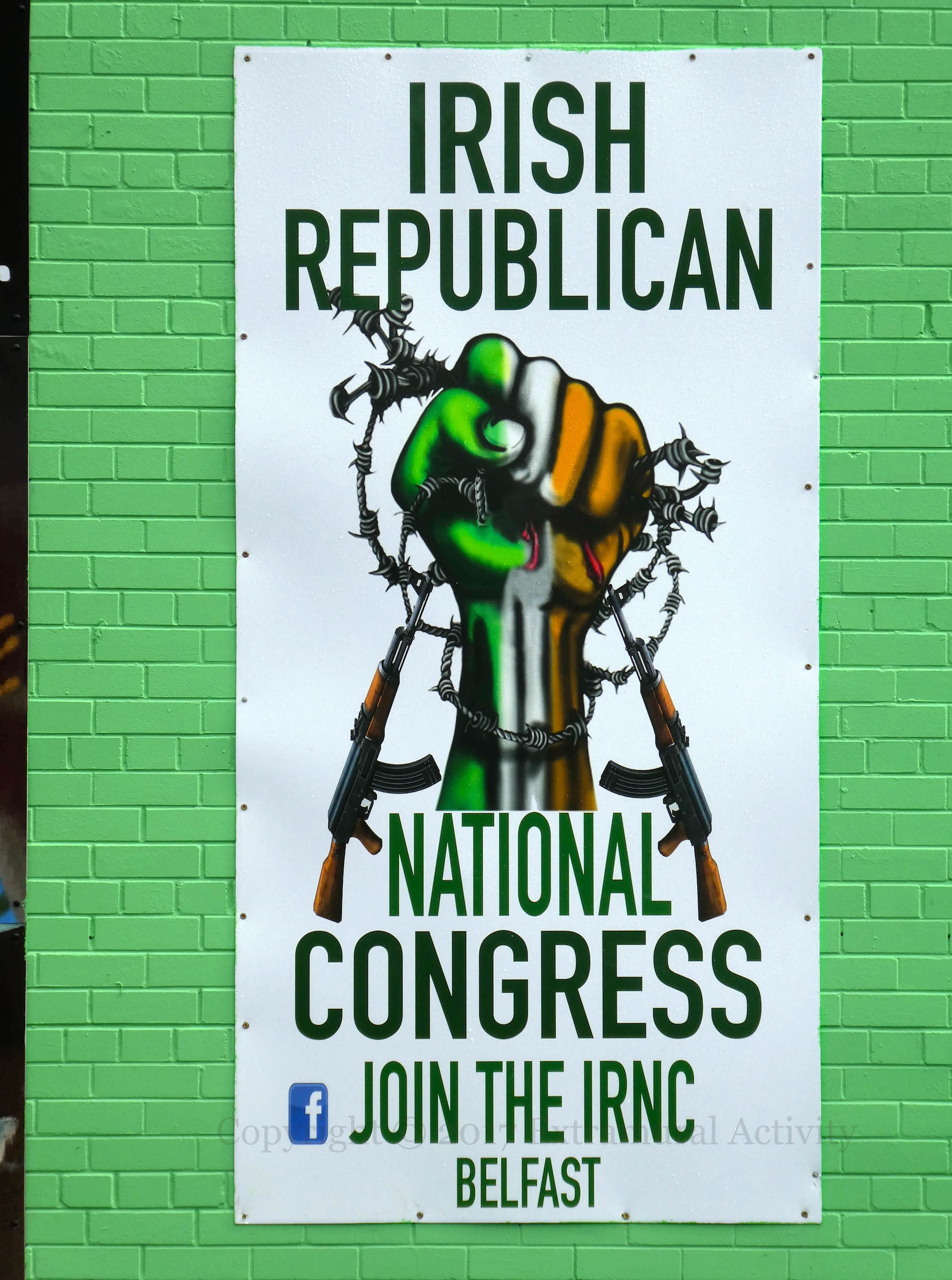
Here is another Irish Republican National Congress (Fb | web) board. Where the first (in Beechmount) featured a Maid Of Erin harp, this one features assault rifles and some nasty barbed wire.
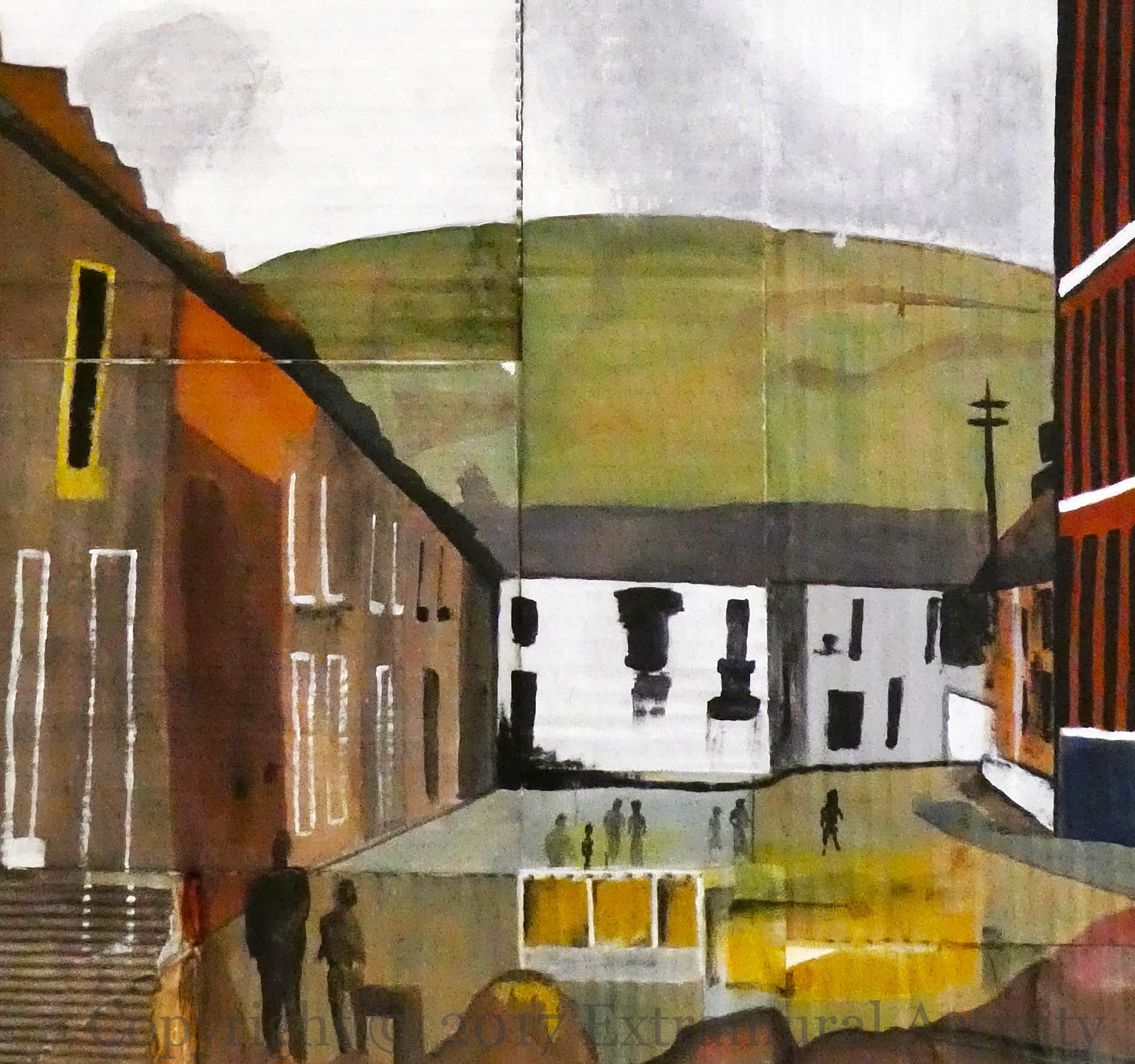
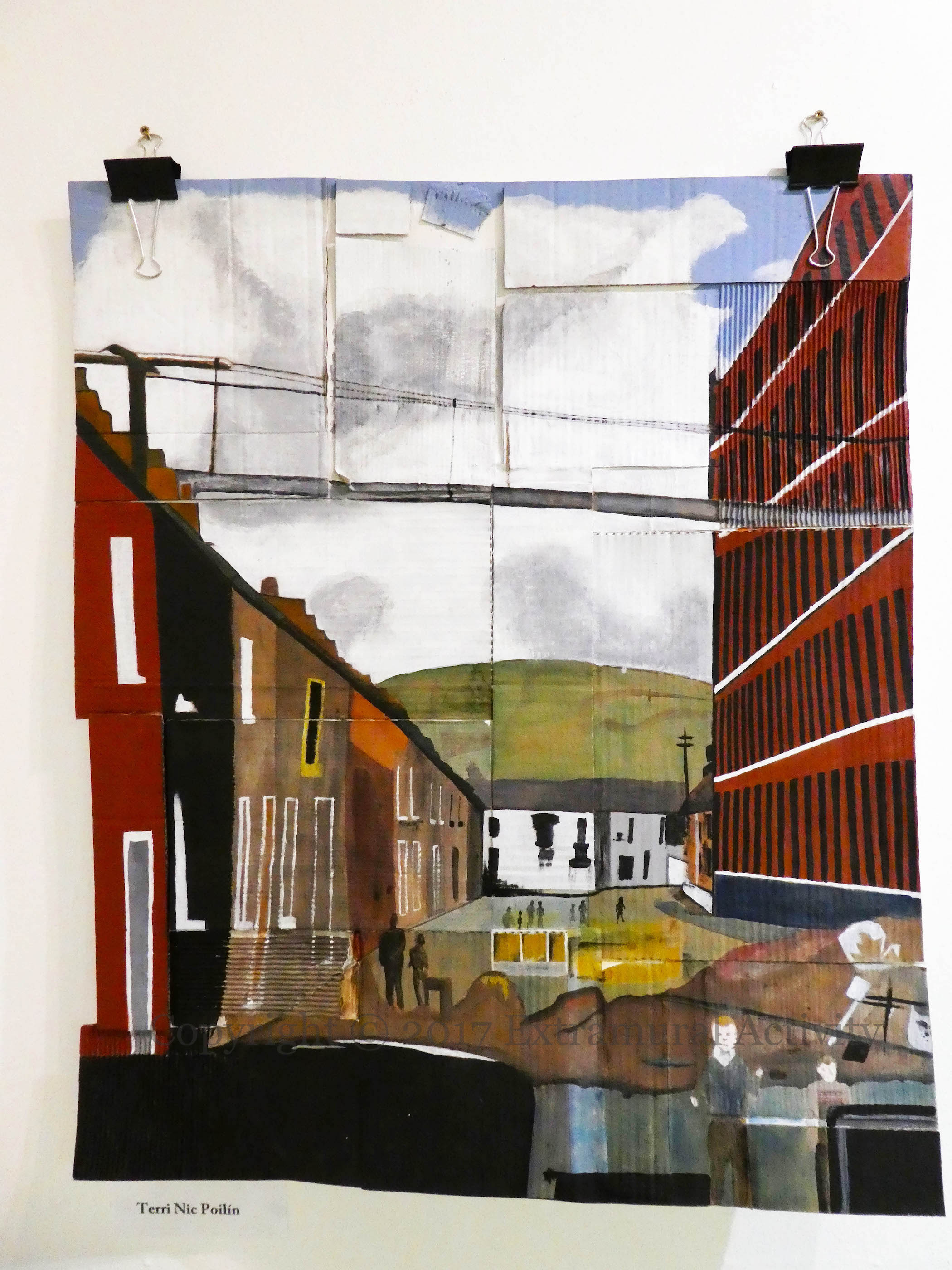
Year 10 GCSE student Terri Nıc Poılín imagines what the view would be like if the “peace wall” were removed, using cardboard as a canvas. The piece was part of the Coláıste Feirste art show in An Chultúrlann.
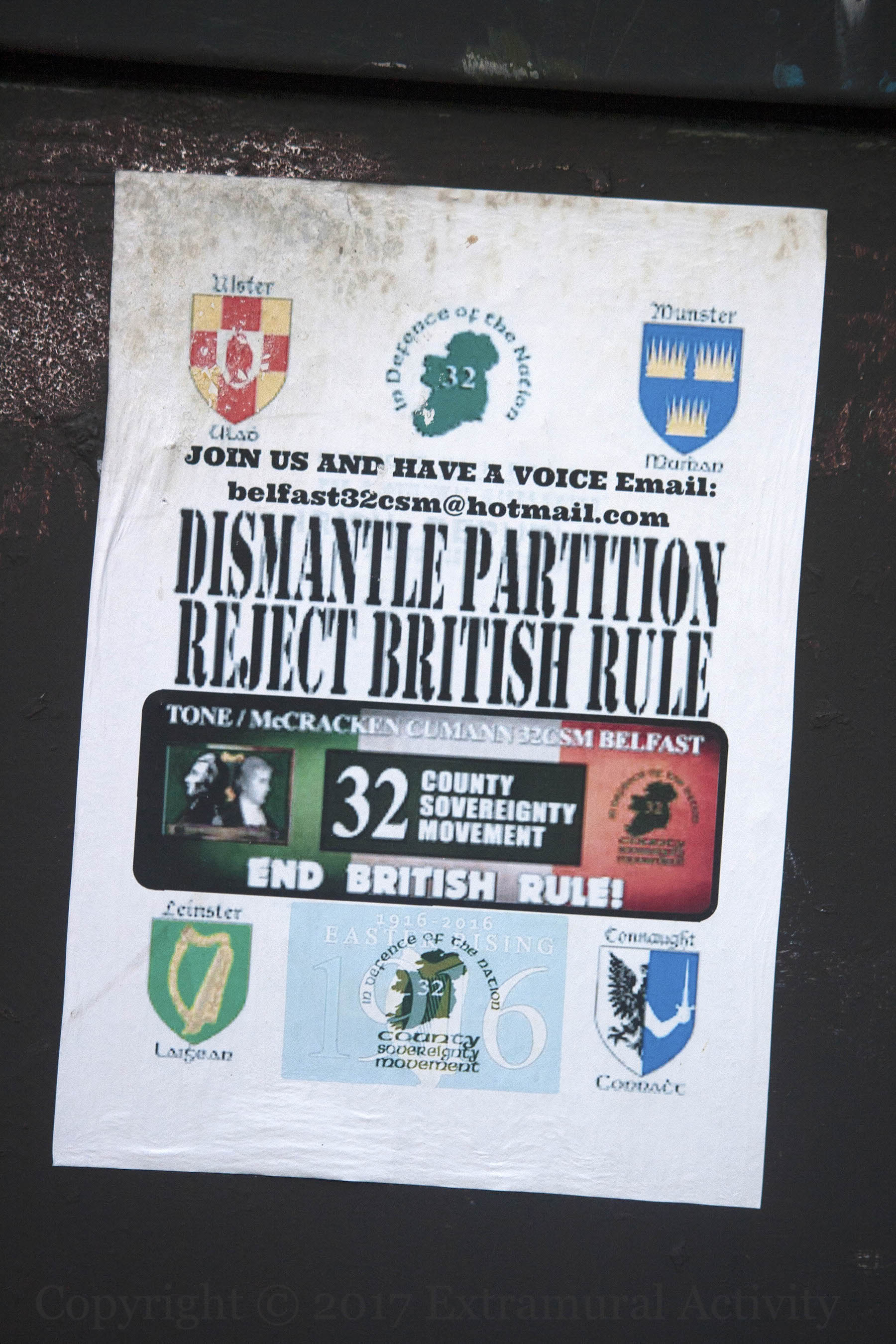
This is a 32 County Sovereignty Movement (32CSM) poster from west Belfast, asking people to “Dismantle partition – reject British rule”. The organisation describes itself as “a republican pressure group”. The Belfast cumann (Fb | web) is named after Wolfe Tone and Henry Joy McCracken (of the 1798 Rebellion).
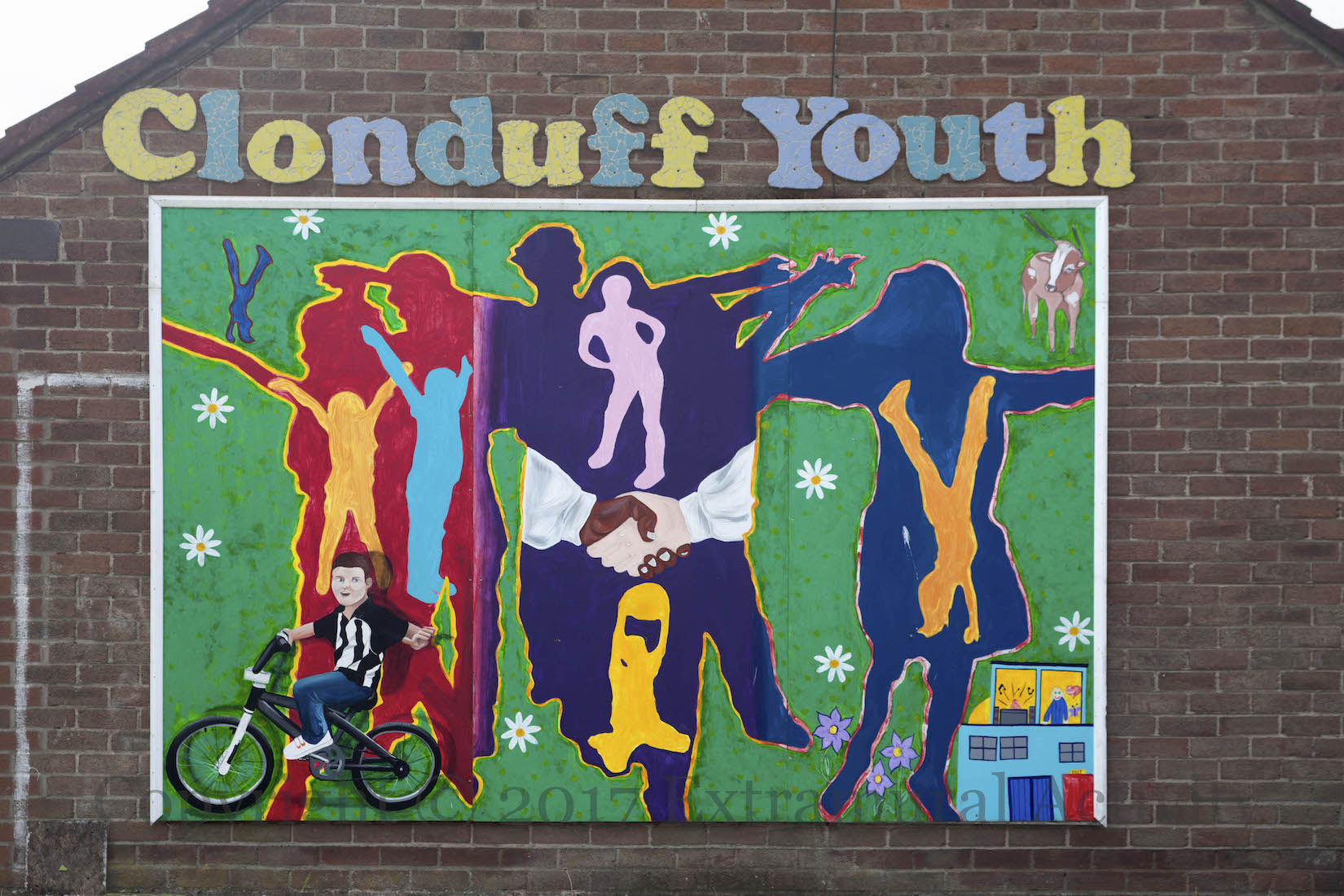
Nozzle & Brush worked with the young people of Clonduff Youth in a project to change the image of the estate. In years past, this wall was “UVF reserved”.
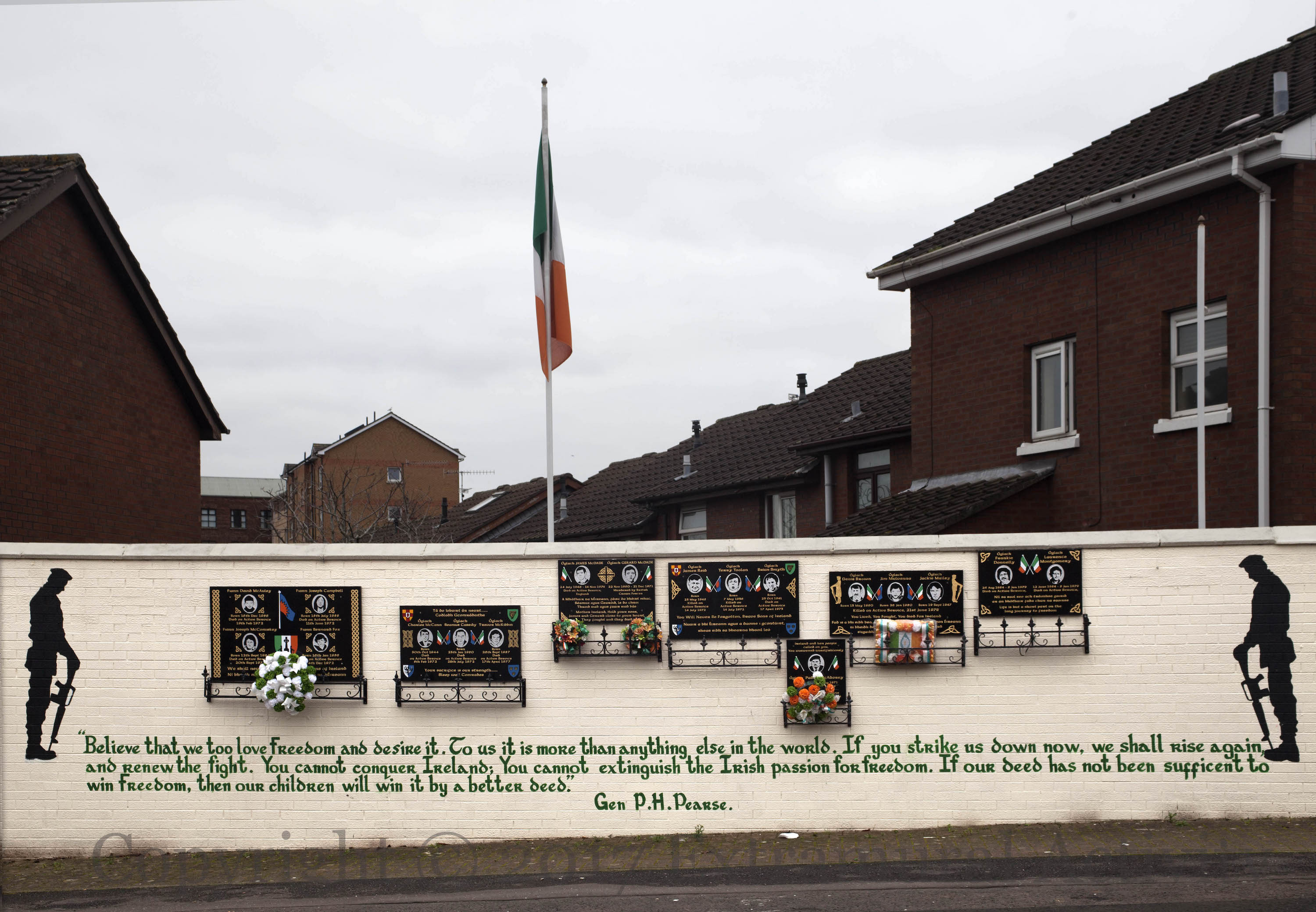
“[I assume that I am speaking to Englishmen who value their freedom, and who profess to be fighting for the freedom of Belgium and Serbia [in WWI].] Believe that we too love freedom and desire it. To us it is more than anything else in the world. If you strike us down now, we shall rise again and renew the fight. You cannot conquer Ireland; you cannot extinguish the Irish passion for freedom. If our deed has not been sufficient to win freedom, then our children will win it by a better deed – Gen. P. H. Pearse” at his court martial in 1916.
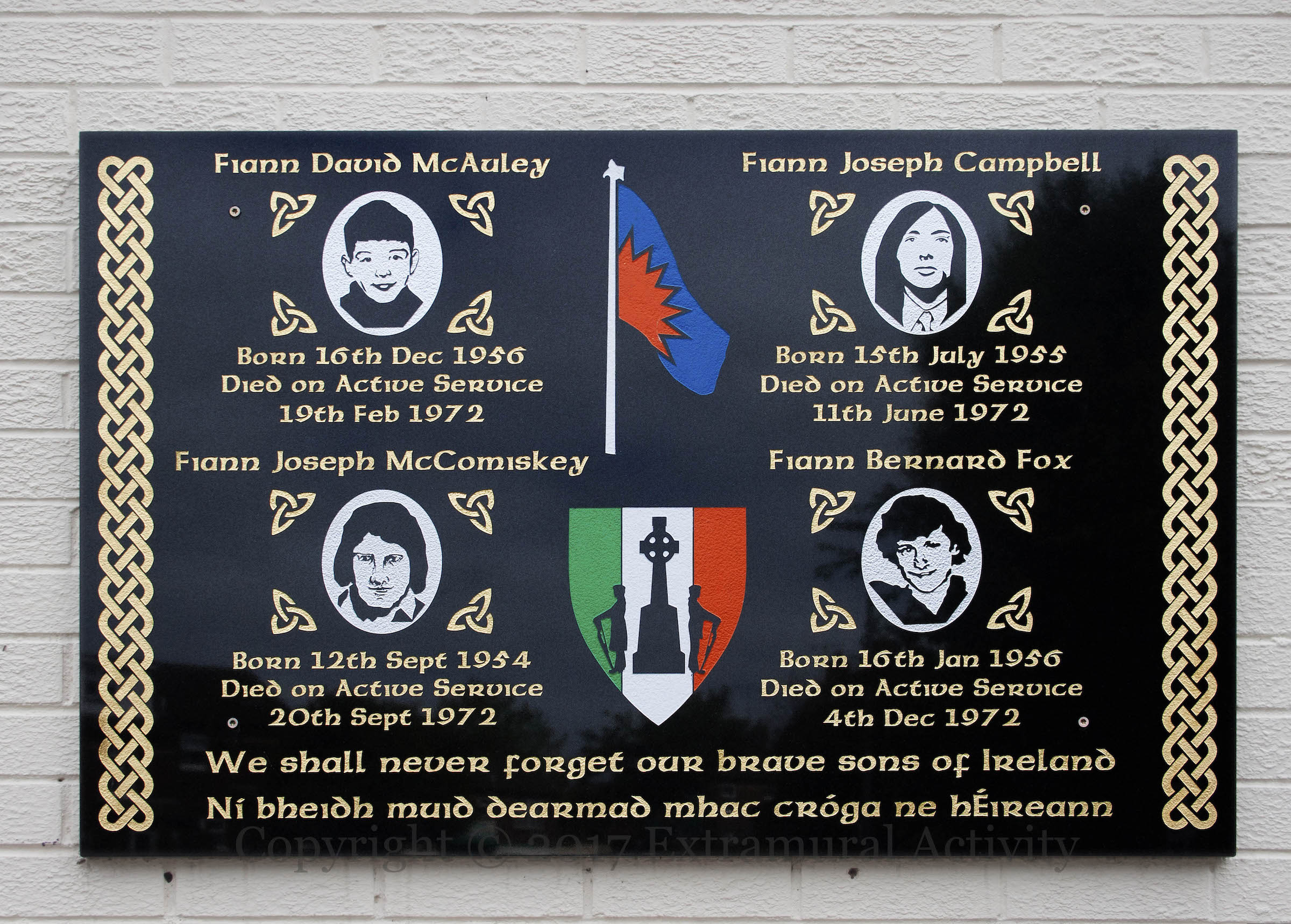
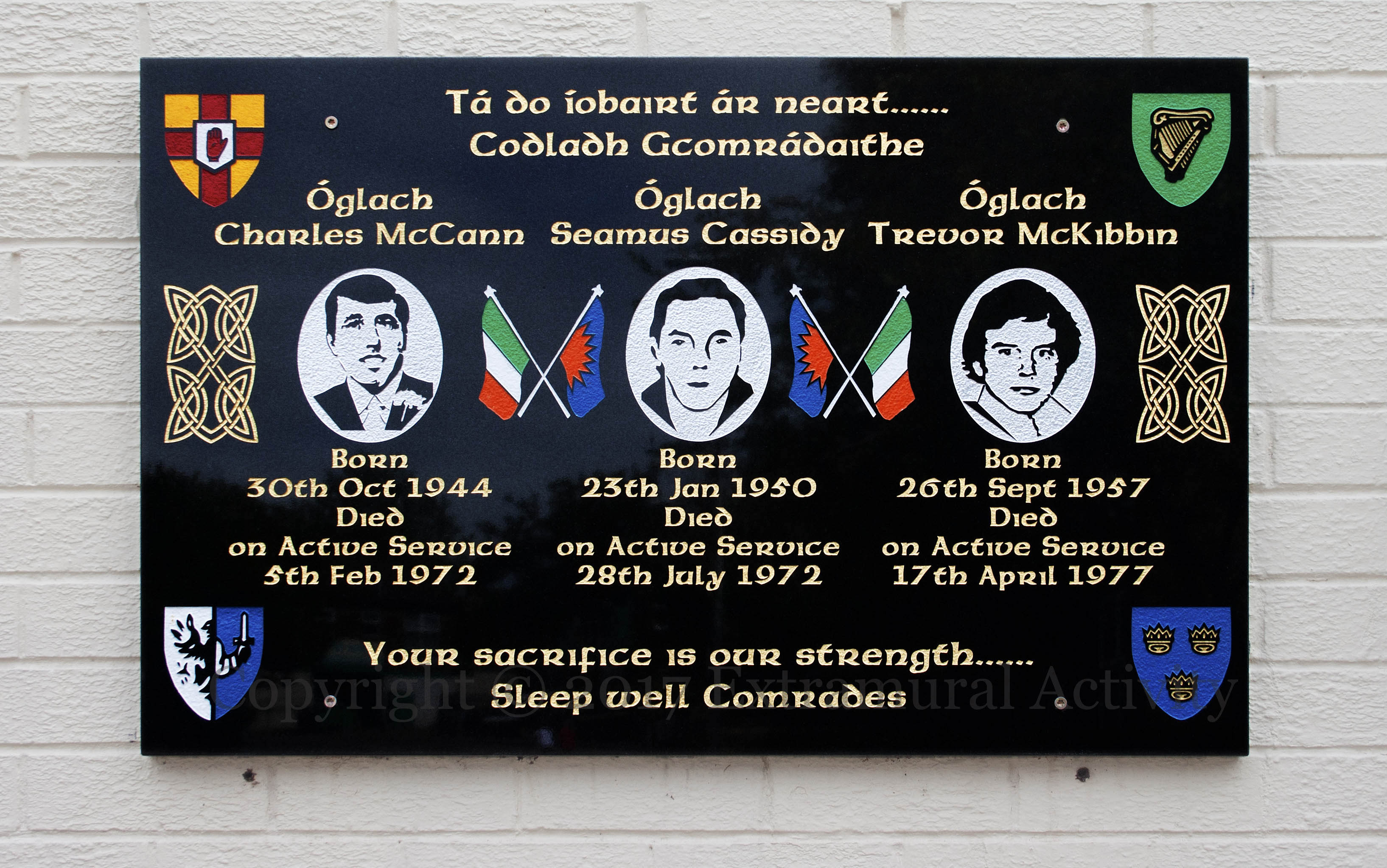
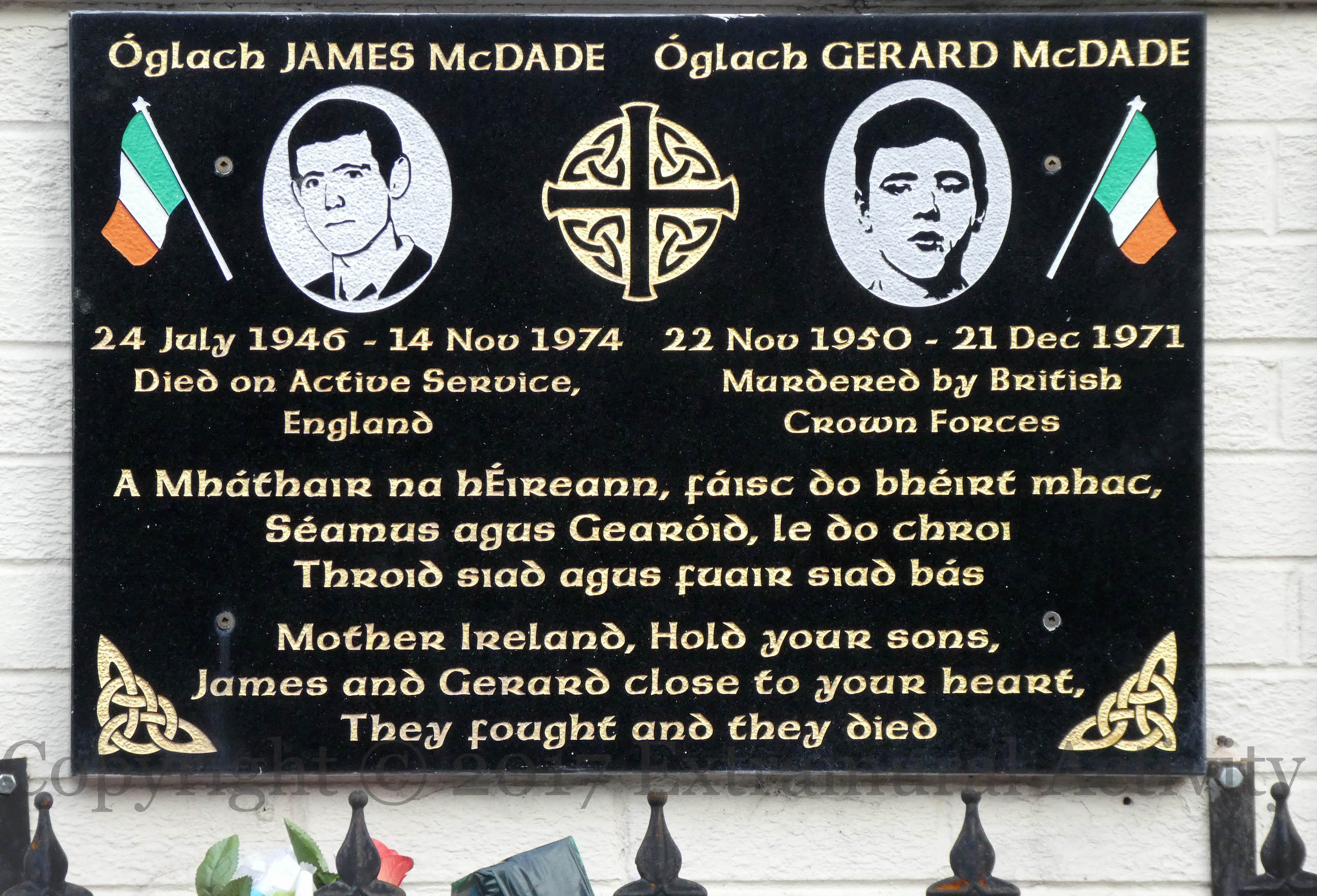
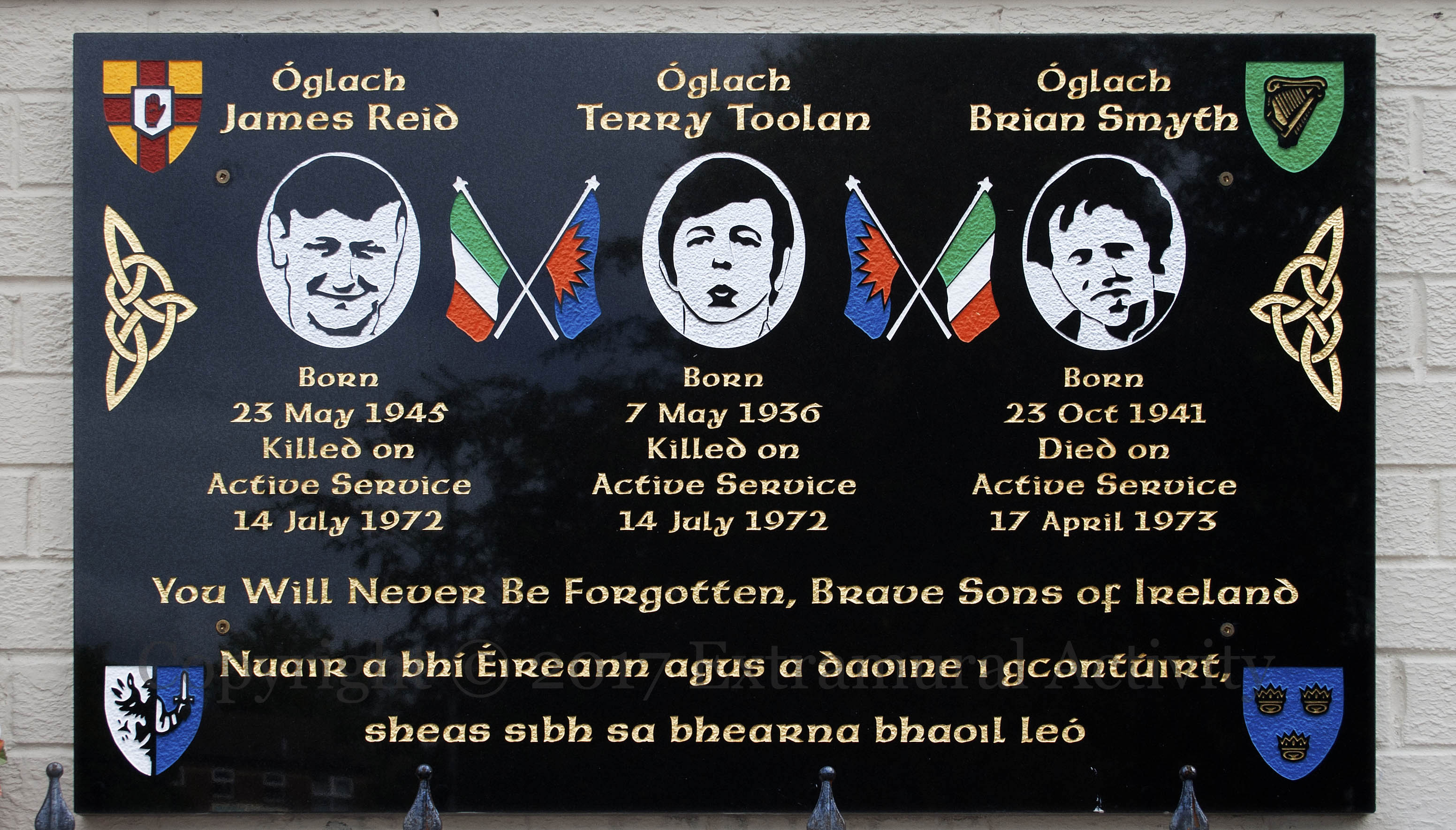
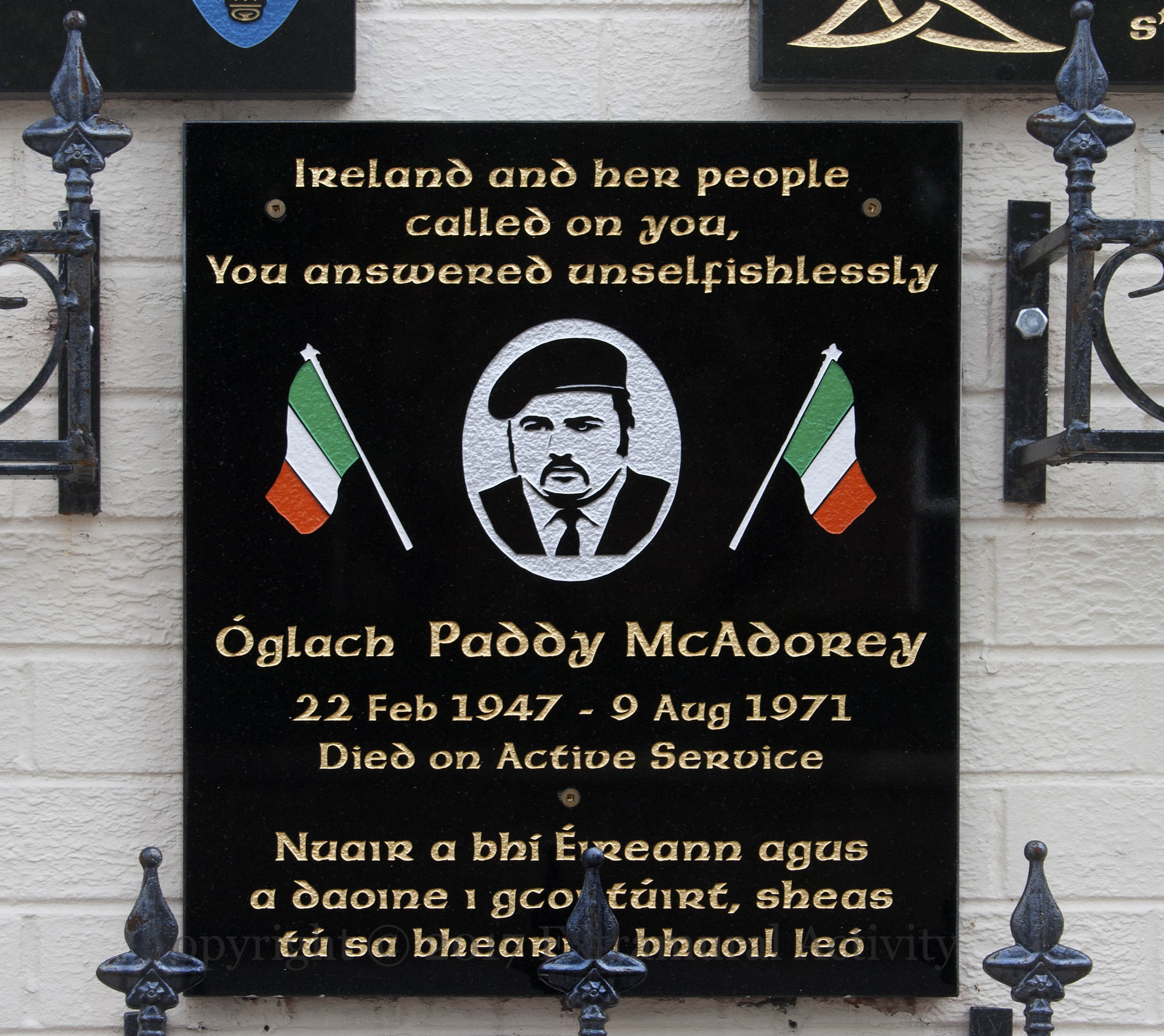
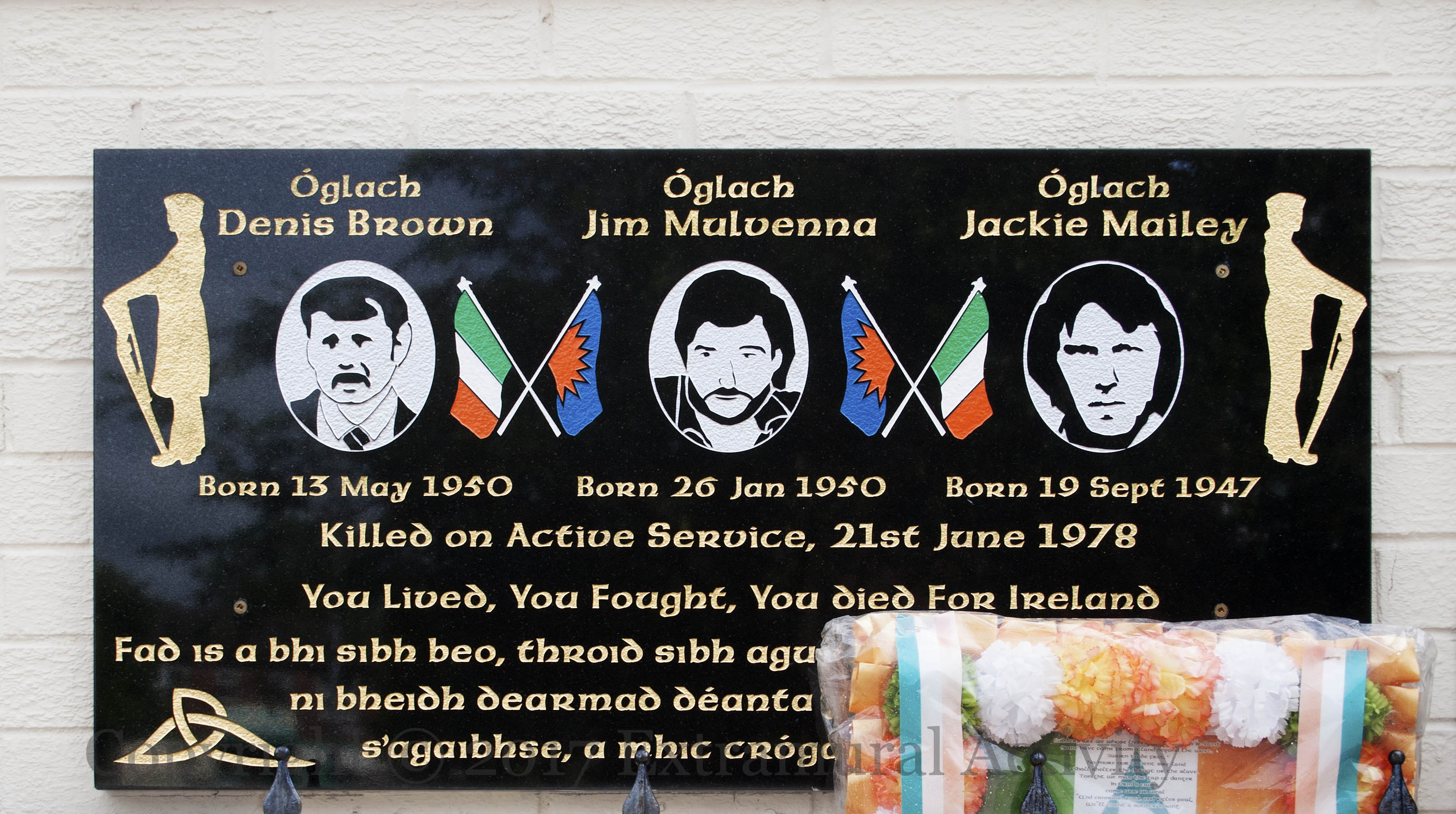
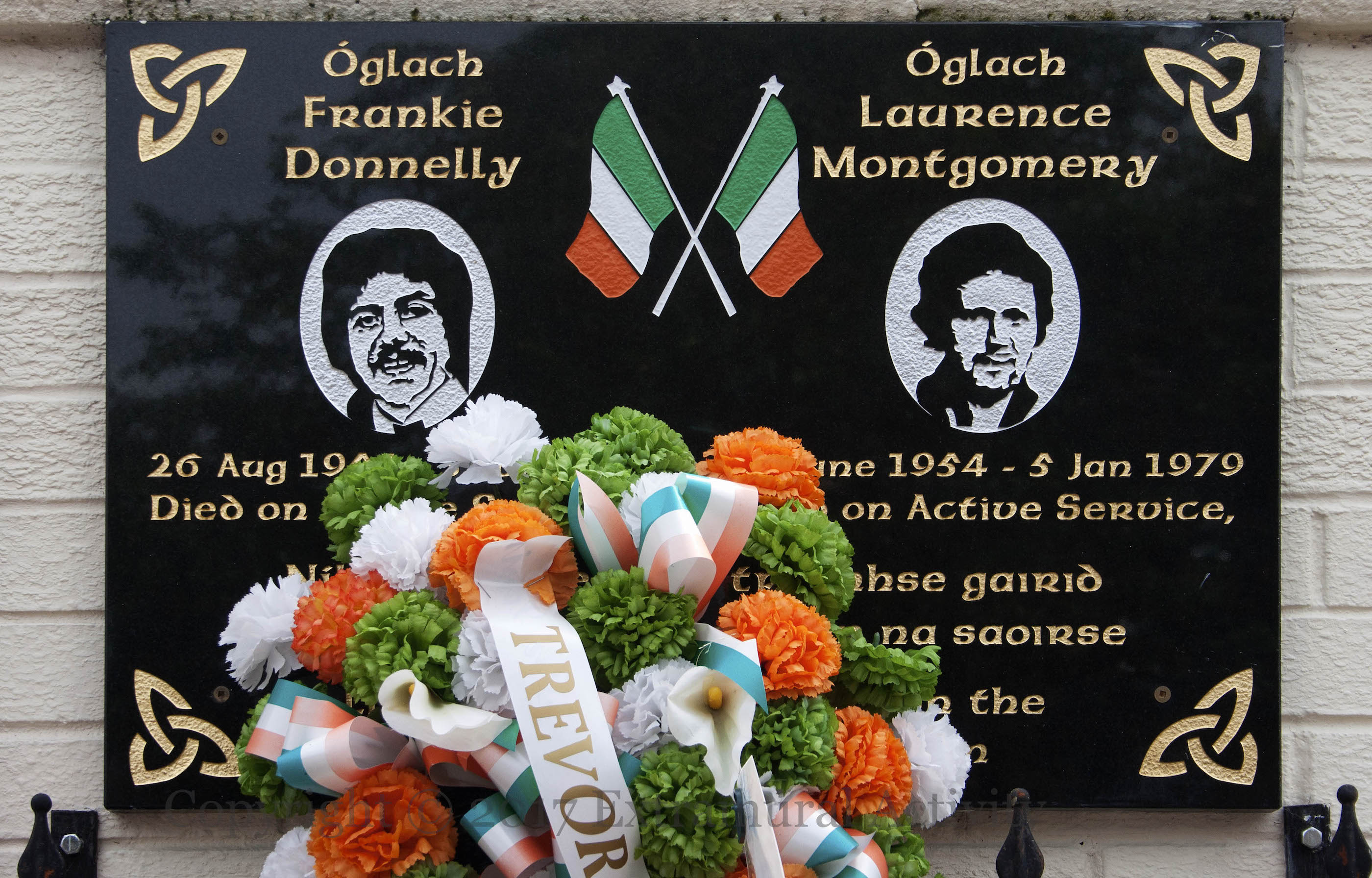
Here are eight images of the memorial plaques to deceased Ardoyne IRA fianna and ógliagh fromt he 1970s: David McAuley, Joseph Campbell, Joseph McComiskey, Bernard Fox, Charles McCann, Seamus Cassidy, Trevor McKibbin, James McDade, Gerard McDade, James Reid, Terry Toolan, Brian Smyth, Paddy McAdorey, Denis Brown, Jim Mulvenna, Jackie Mailey, Frankie Donnelly, Laurence Montgomery.
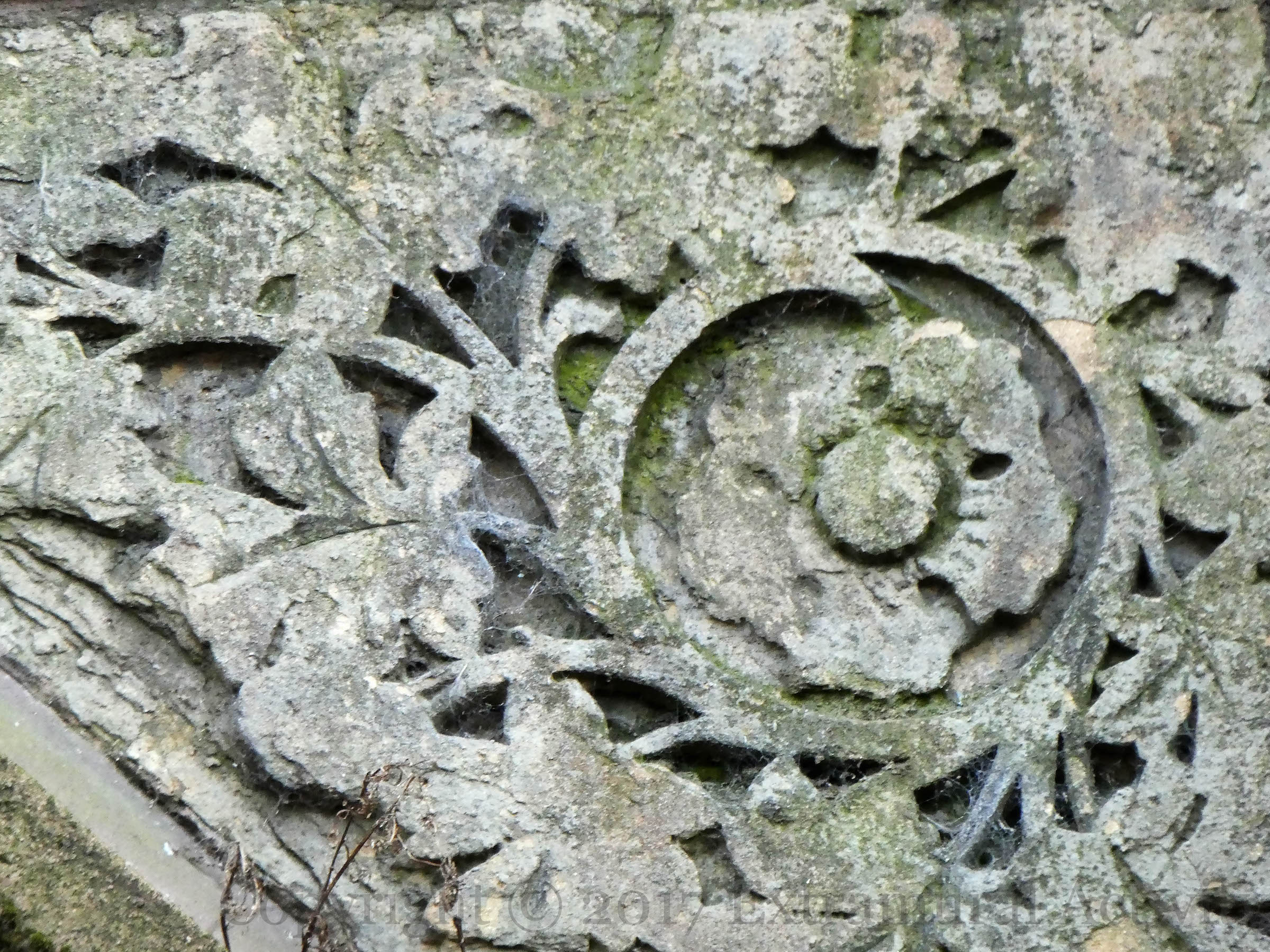
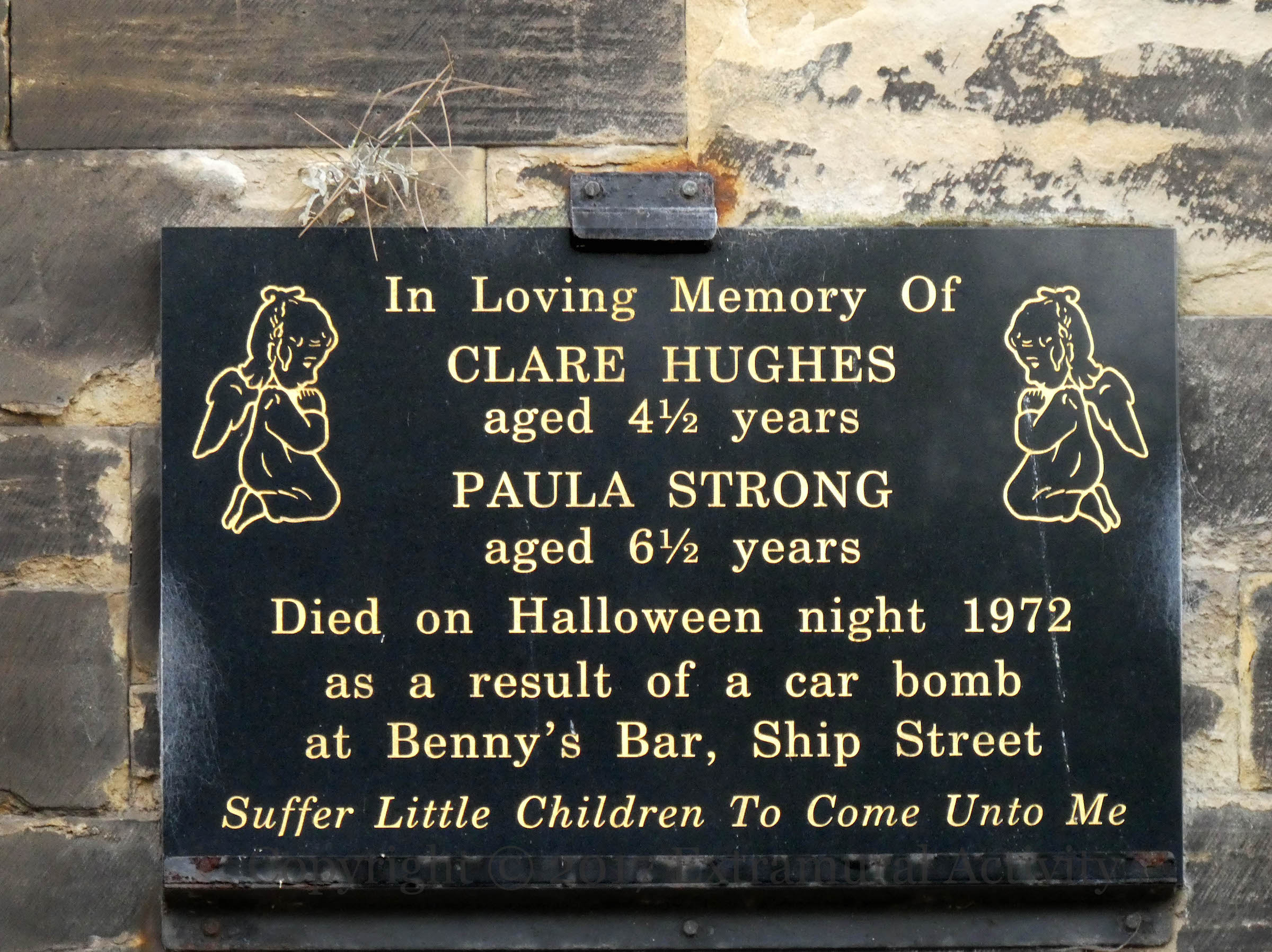
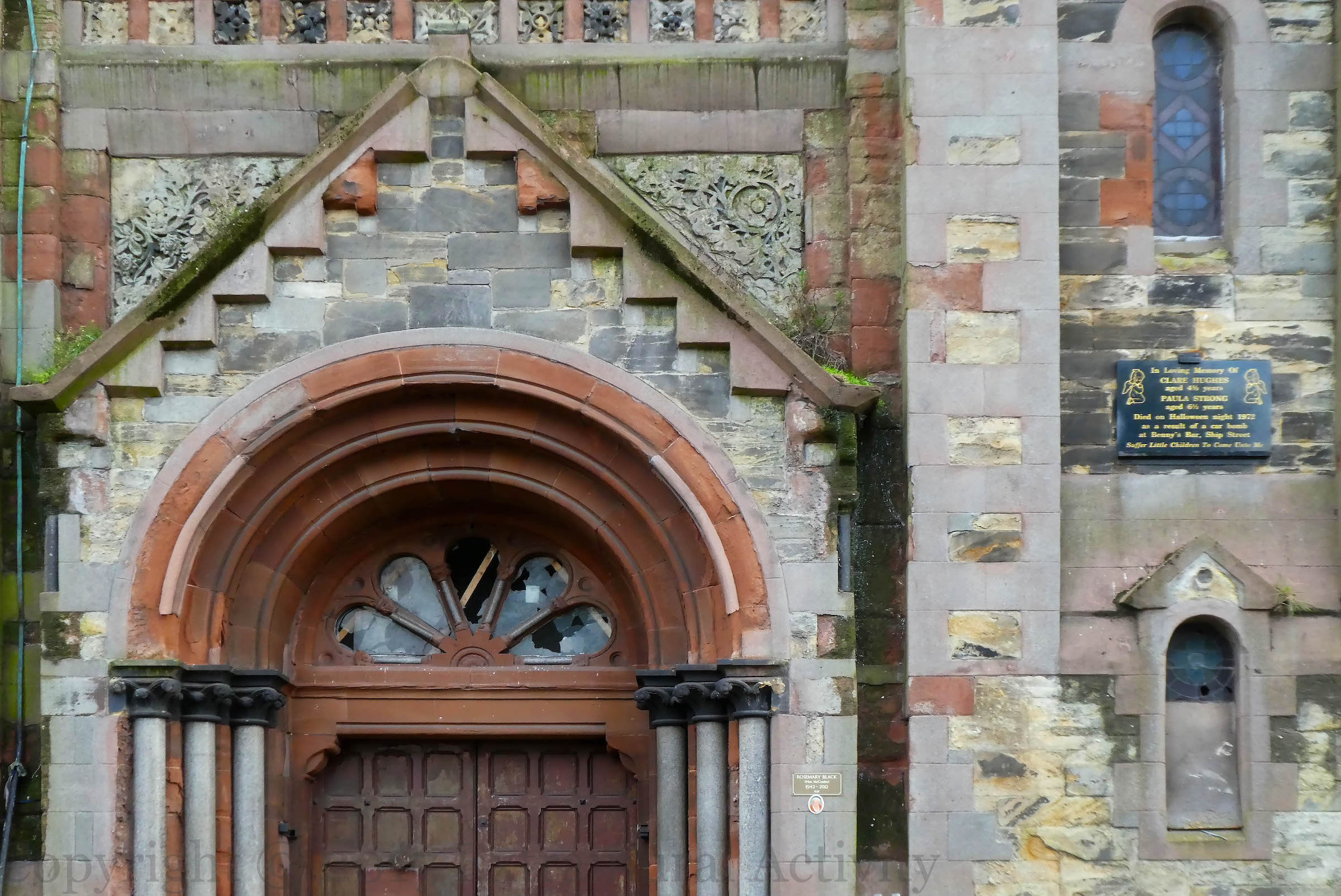
Restoration on the exterior St Joseph’s chapel in Sailortown – a Catholic church decommissioned in 2001 – is set to begin this month (BelTel). The building, originally constructed in 1880, is in such a state that it was declared a dangerous building earlier this year (Irish News). Here are three images from the front: a masonry rose above the door; a plaque to two young girls who were killed by a UDA car bomb in 1972; and a wide shot. BelfastLive has a gallery of the interior, which also needs restoration.
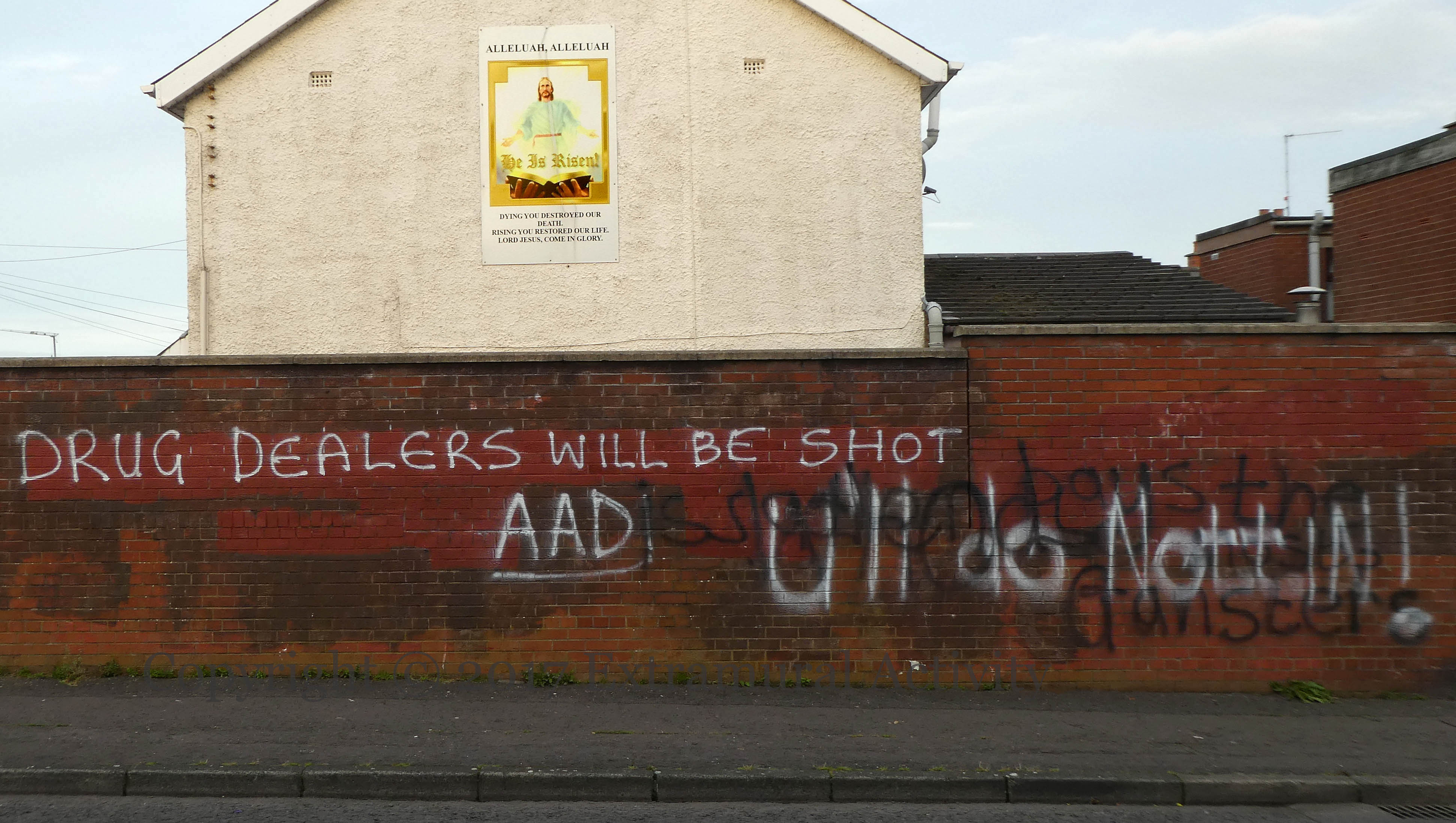
A drugs-related dialogue on the walls of Berwick Road in Ardoyne. “AAD” is “Action Against Drugs” who threaten that “Drug dealers will be shot” (in June, they claimed responsibility for two killings – Irish News). But the respondent – perhaps with the power of the resurrection in mind – is unimpressed.
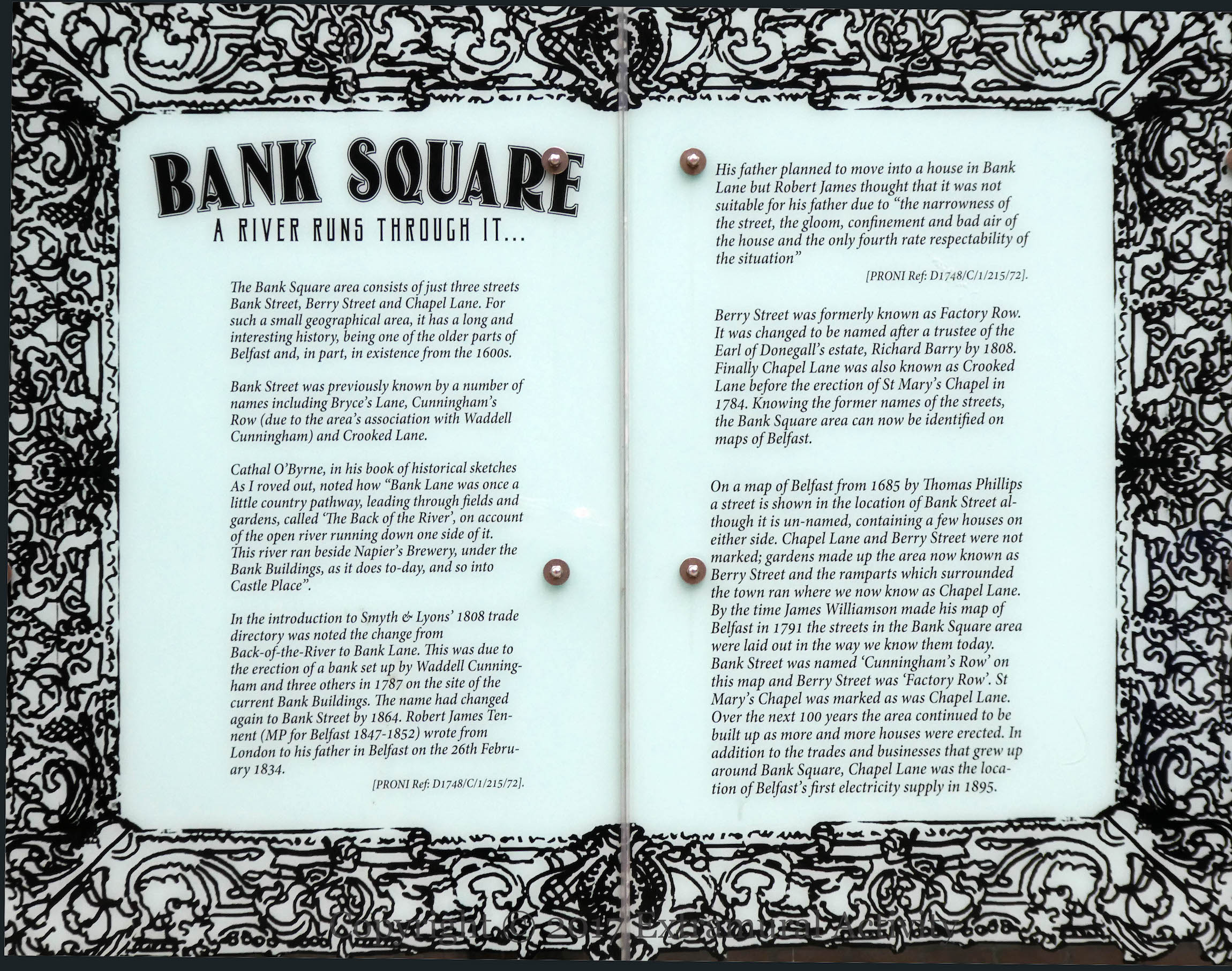
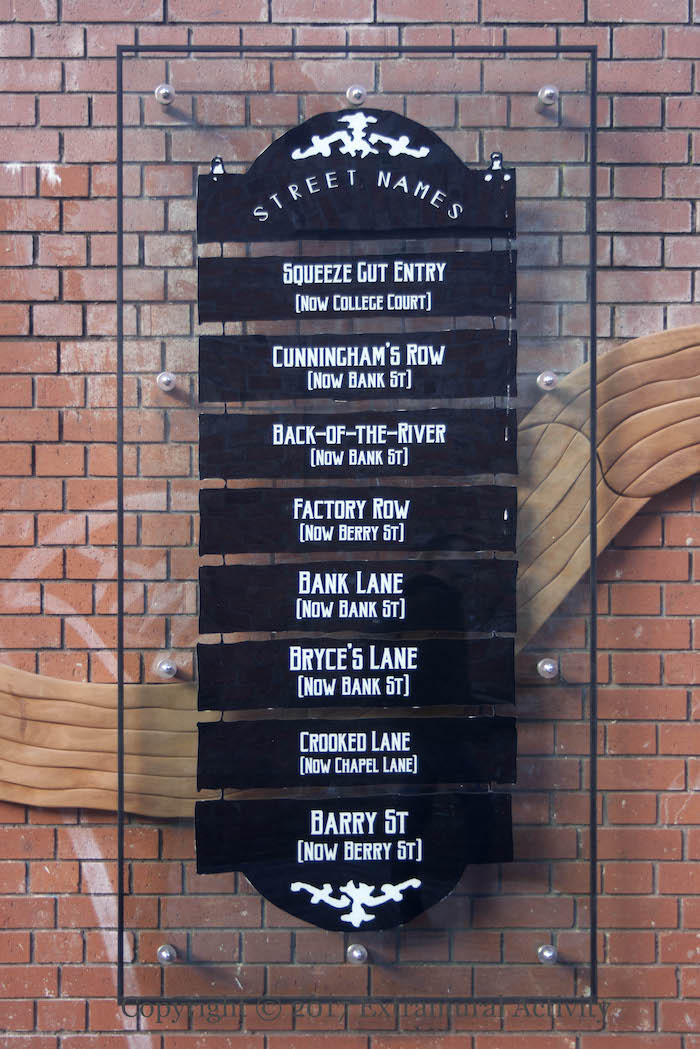
The river in question is the Farset, which in the late 1700s was still open in what was then the Back-Of-The-River area and is now Bank Square. It was all covered over by 1804.
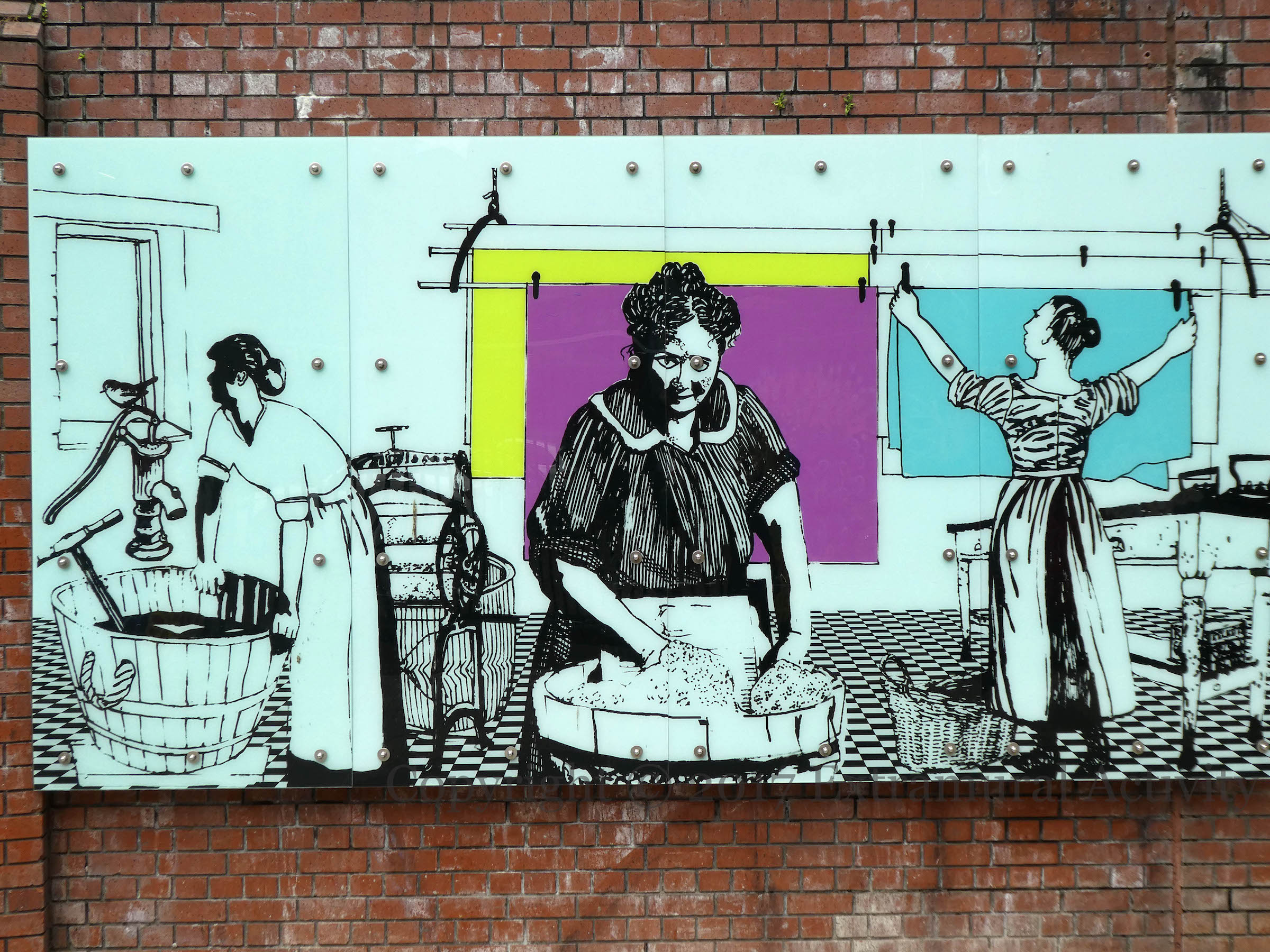
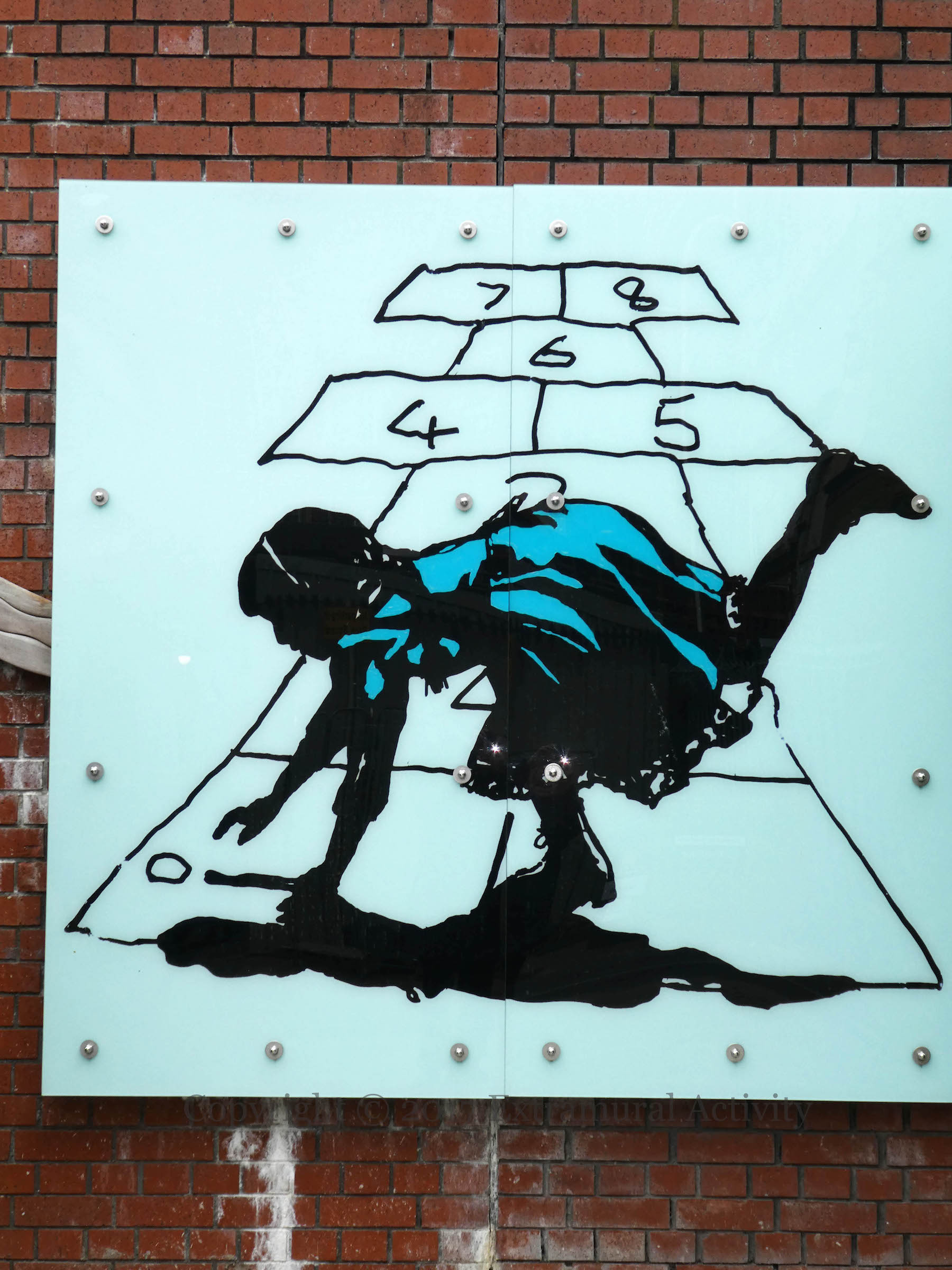
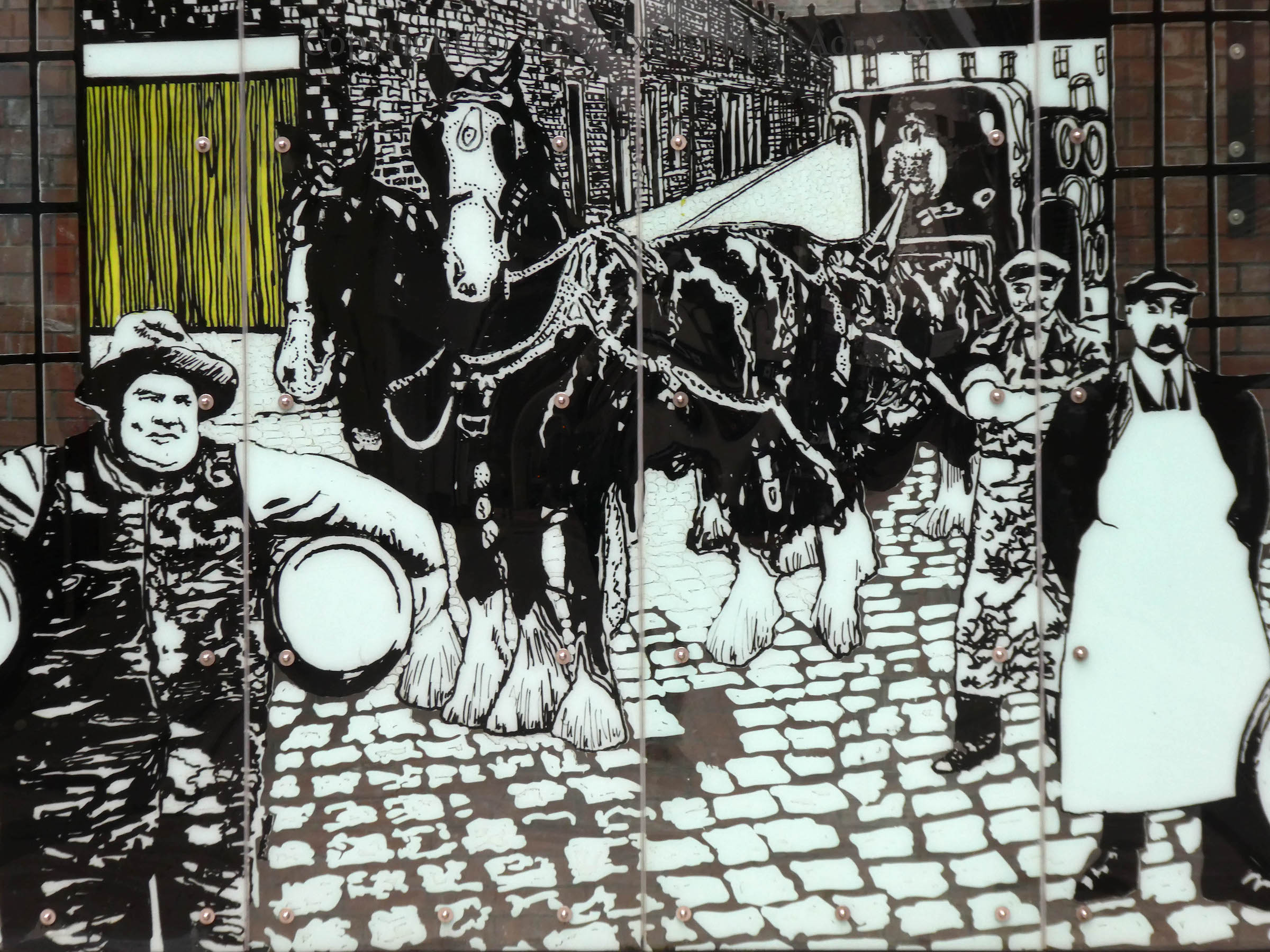
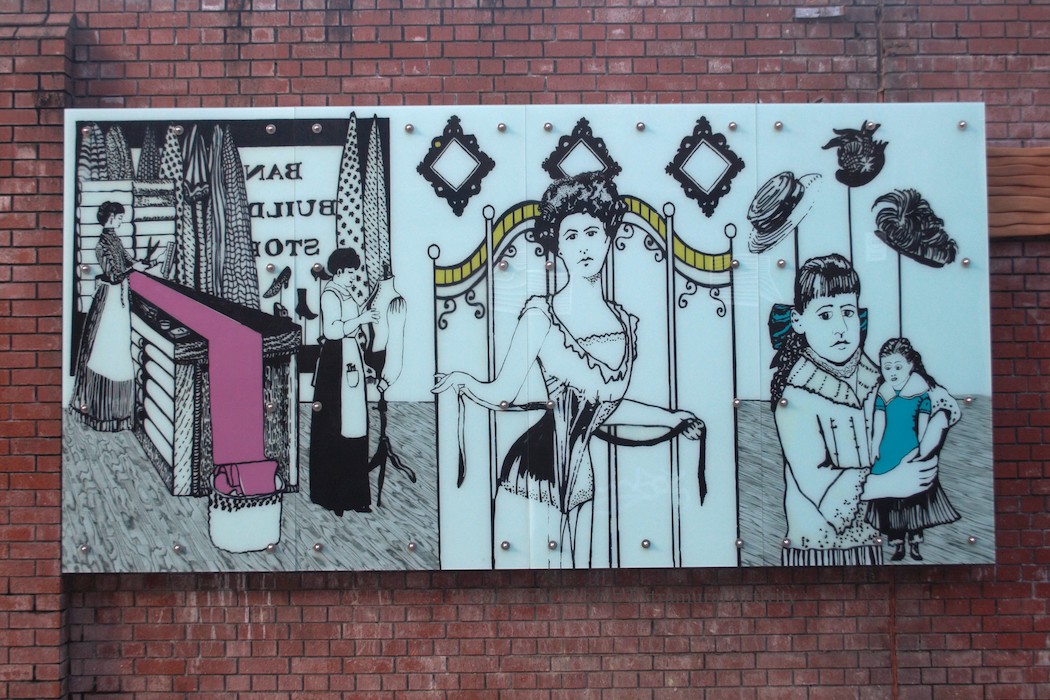
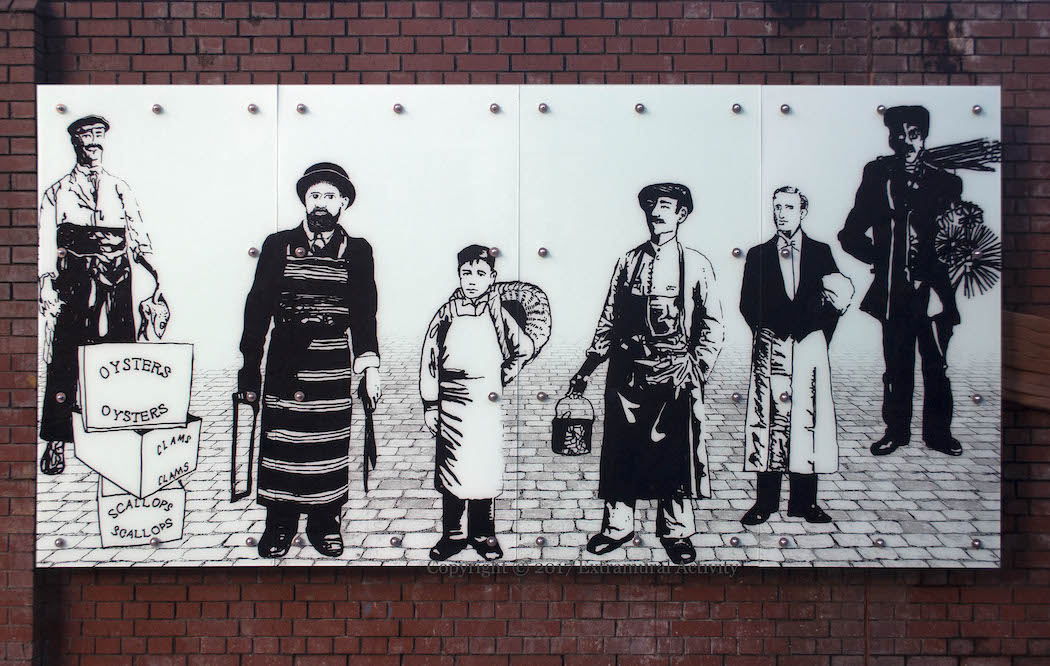
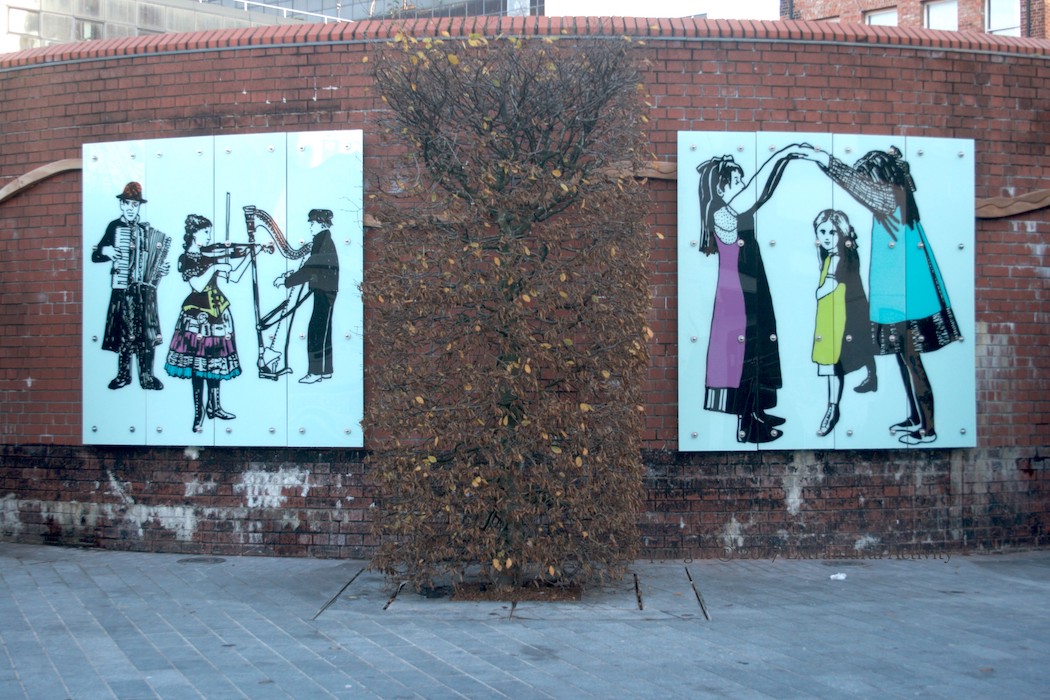
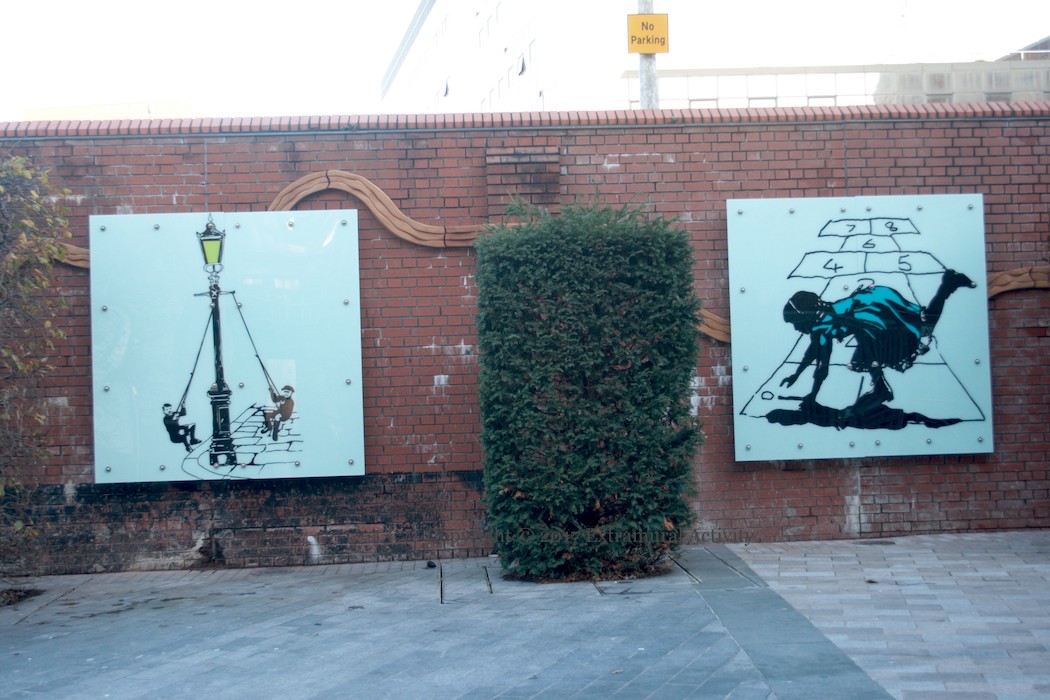
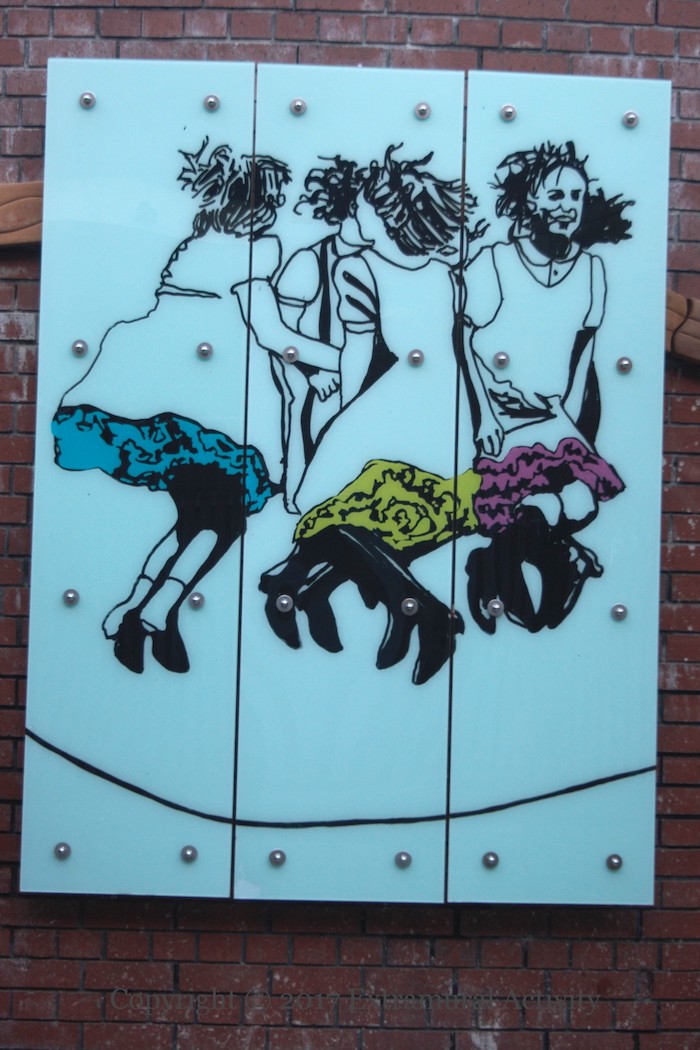
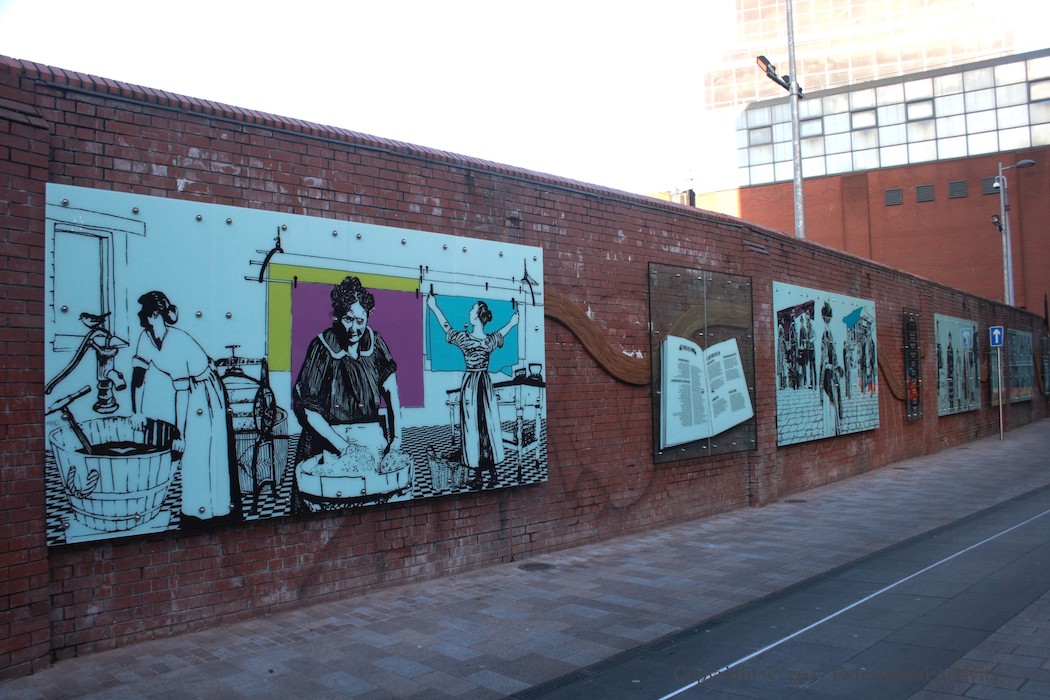
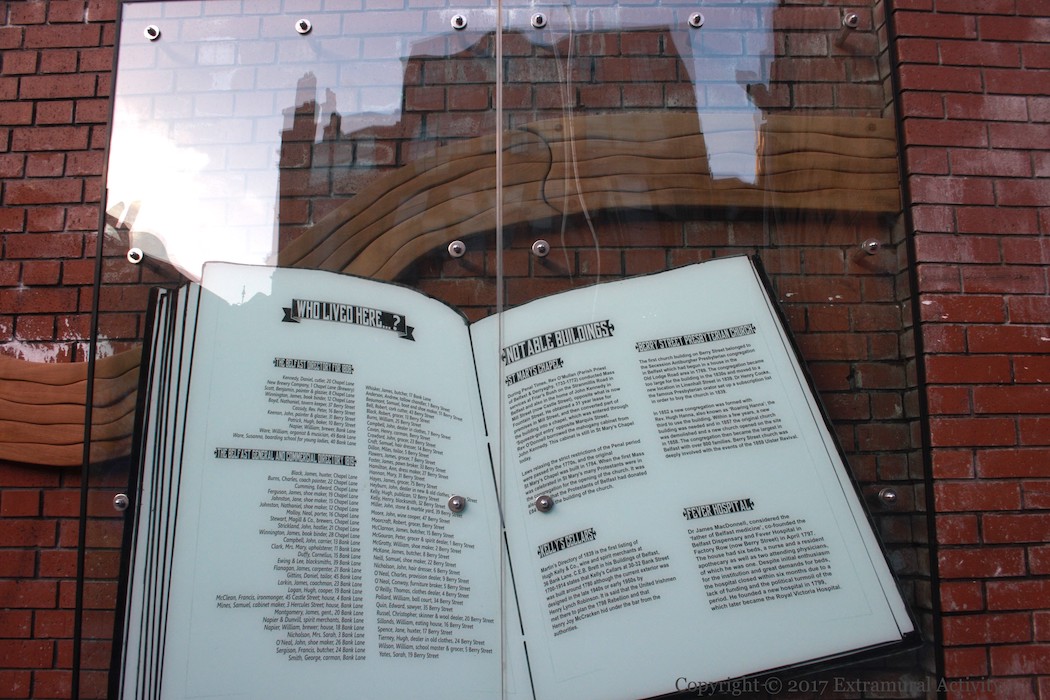
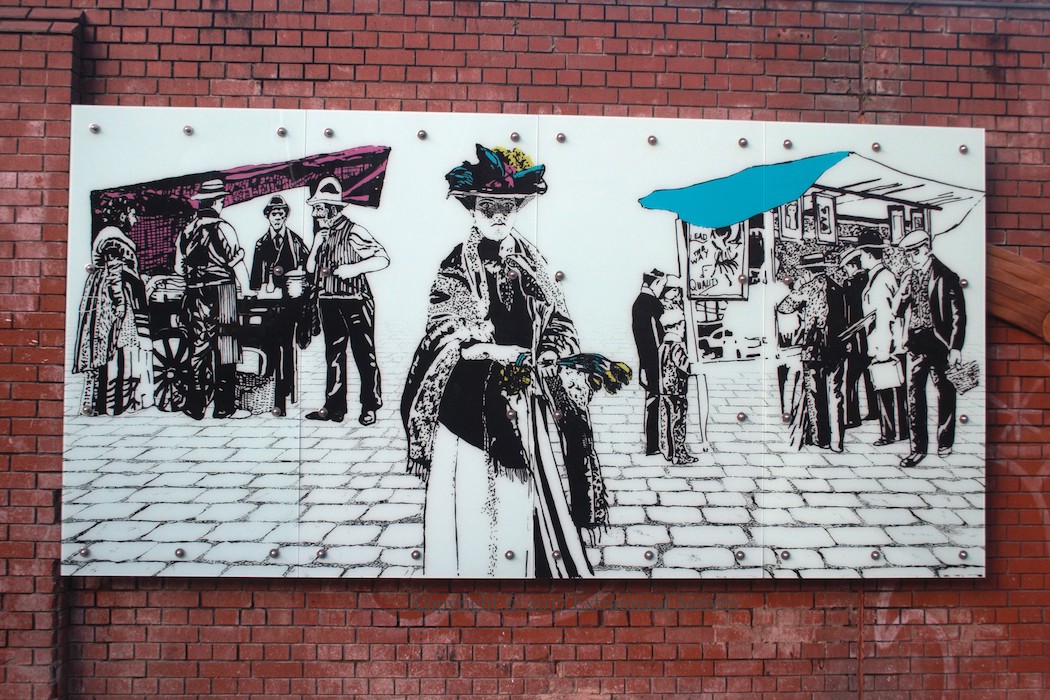
The 2015 installation of ‘life in the old days’ panels is by Annemarie Mullan, Stephen Mackey, and King Street Arts, presenting street scenes inspired by “information from the 1898 census” (CultureNI | Love Belfast).
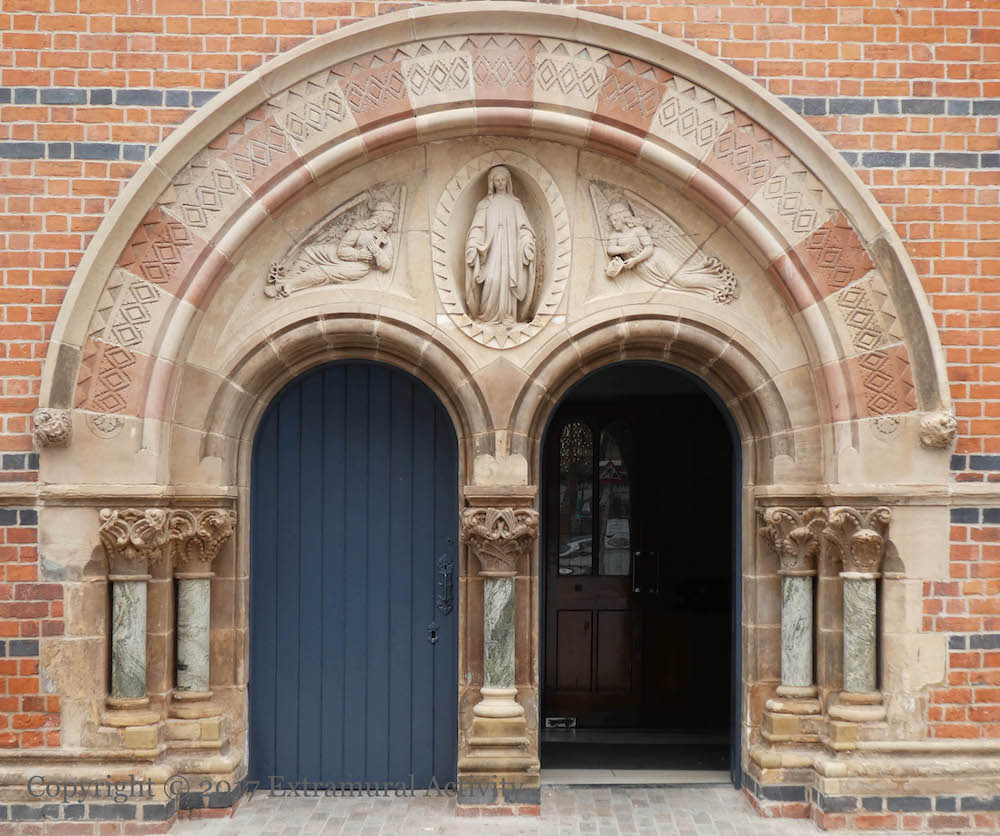
St Mary’s Chapel Lane is Belfast’s first post-penal law Catholic church, originally constructed in 1784 with funds from local Presbyterian and Anglican congregations (WP). The current building dates to 1868. It was made a “B1” listed building in 1979. The “doorcase” is described as follows in its entry: “Painted sandstone doorcase comprises a pair of round-headed door openings with vertically-sheeted timber doors and bowtel arches rising from squat green marble columns with elaborate stiff-leaf capitals surmounted by an oval niche housing a statue of St. Mary and flanking seraphims to the spandrels. The entire entrance is framed by a further bowtel arch with chevron moulding and outer hood moulding also rising from a pair of green marble columns.”
 Seosamh Mac Coille Collection