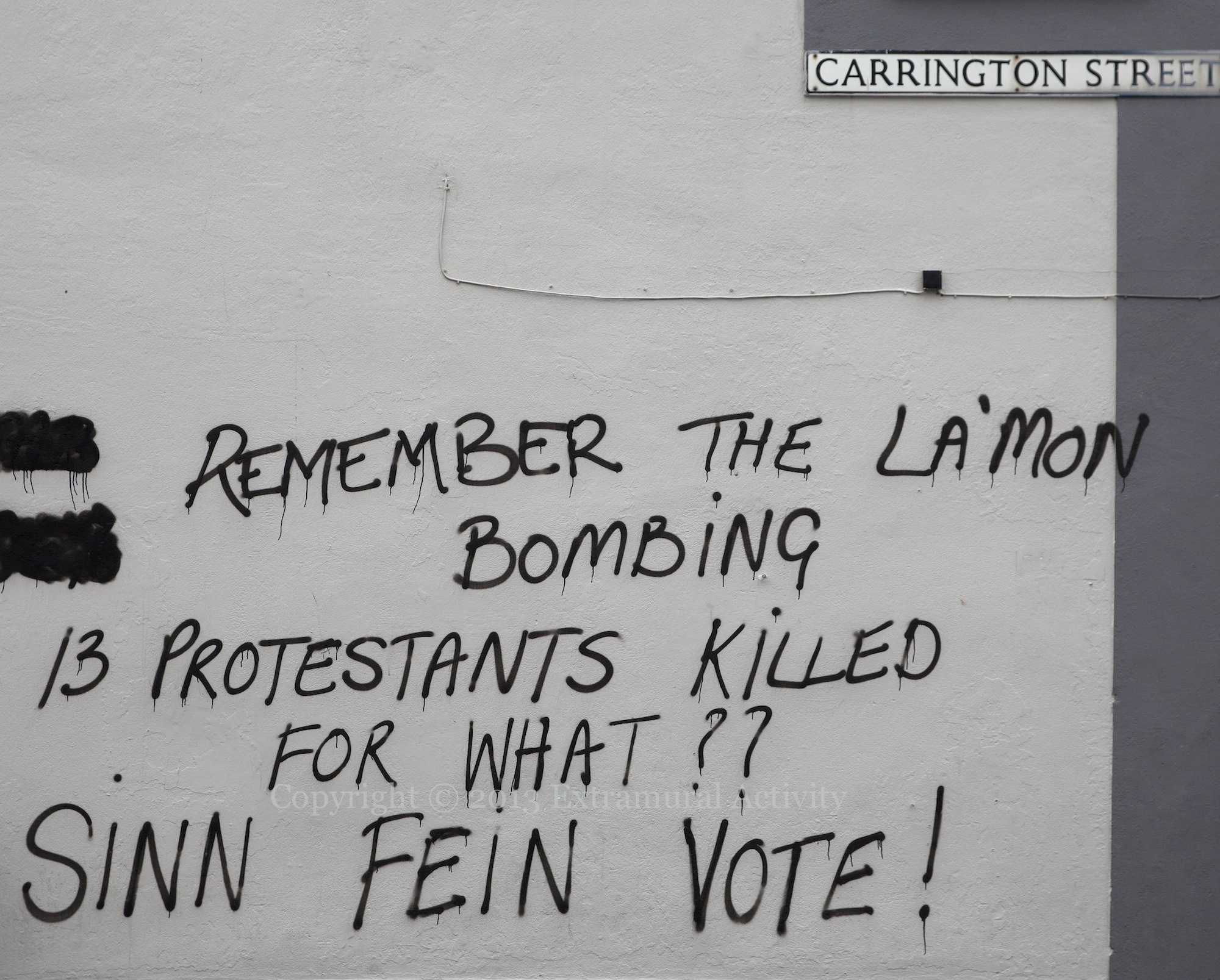
Graffiti on Carrington Street, in east Belfast: “Remember The La Mon bombing. 13 Protestants killed. For what?? Sinn Fein vote!” The La Mon hotel and restaurant, outside Belfast, was filled with civilians enjoying dinner-dances at the time it was bombed by the IRA in February 1978 (WP).
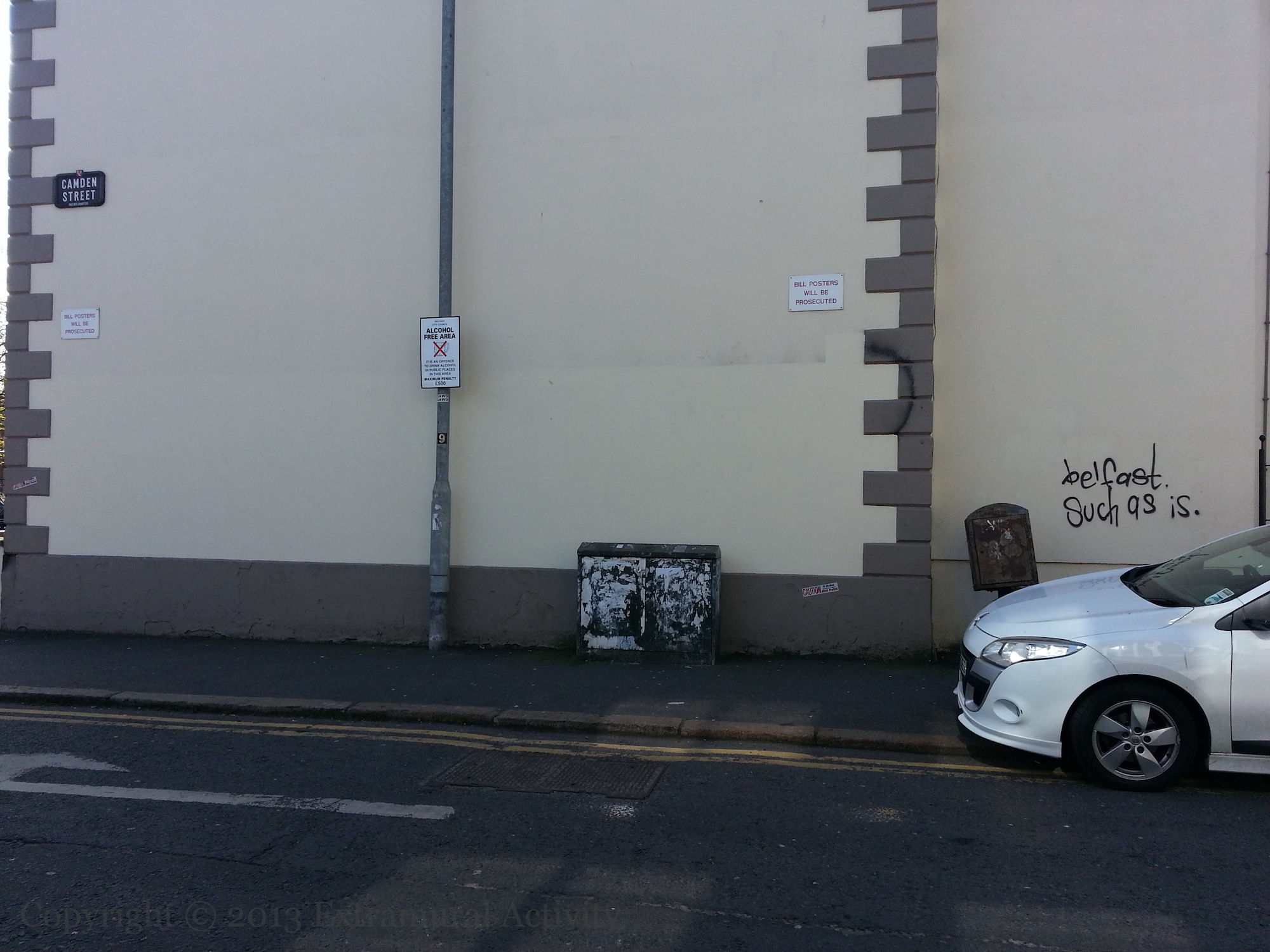
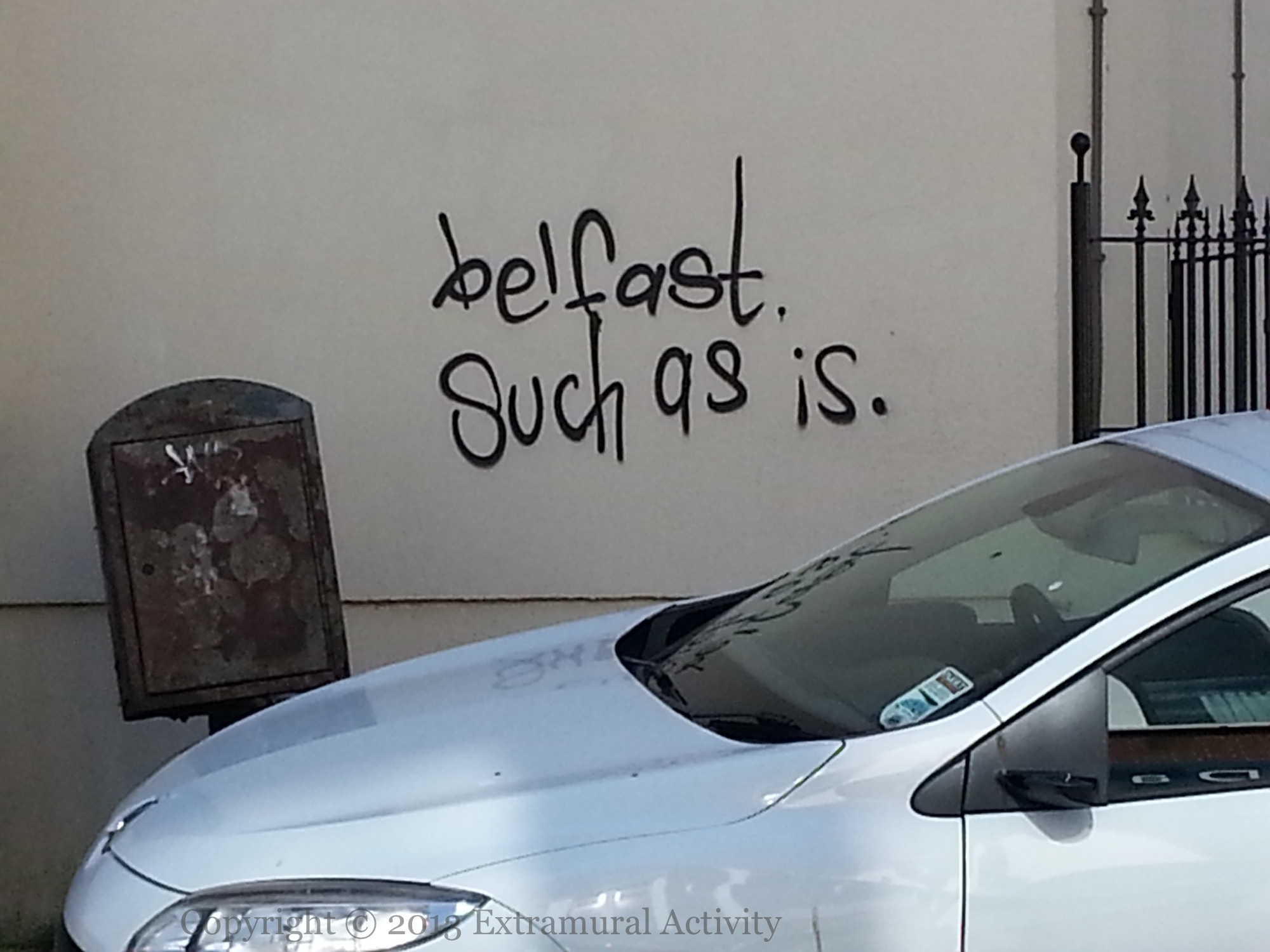
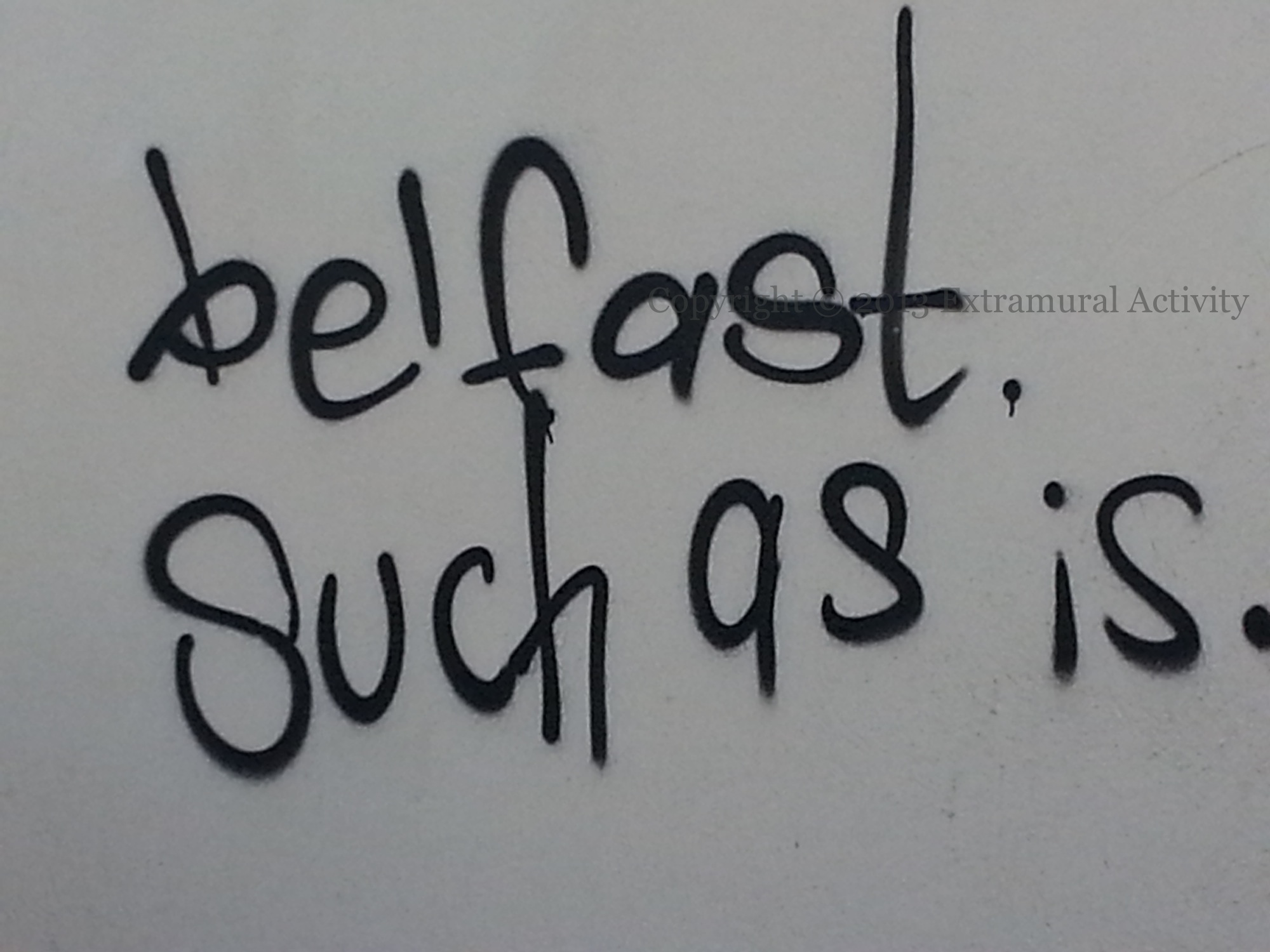
Belfast in all its glory, such as [it] is: signs forbidding the posting of bills, a sign forbidding public consumption of alcohol, flyers scraped off an electrical box, double yellow lines forbidding you to park, with a car parked there nonetheless, a rusted postie’s box … and graffiti. Camden Street. Medium-range and Close-up views below.
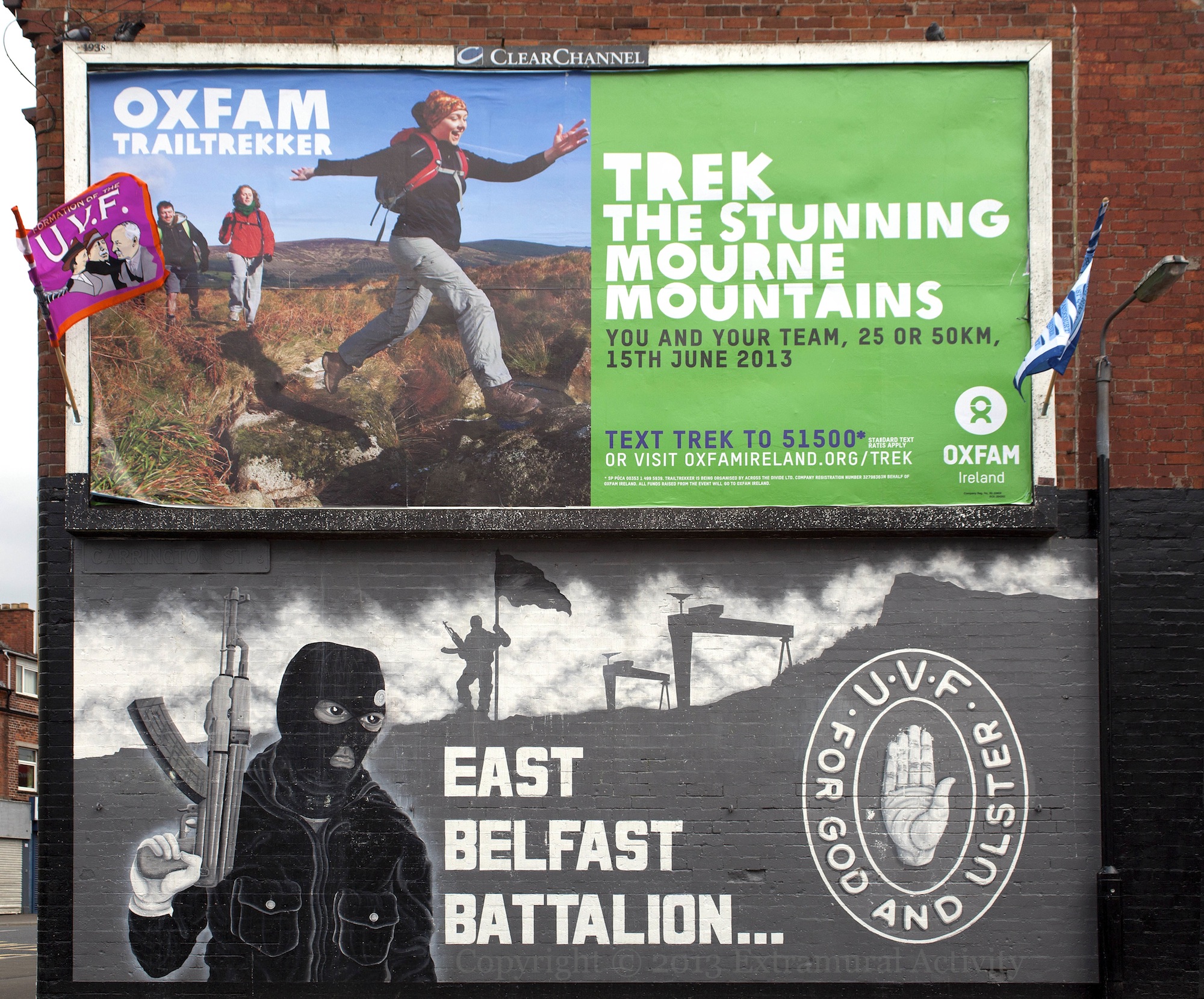
Two of the UVF flags put up to commemorate the 100 year anniversary of the formation of the UVF still flying (on May 5th) above the black-and-white UVF mural in Carrington Street at the junction with the Ravenhill Road. The flags were supposed to come down directly after the parade on April 20th (BBC-NI) but there is now confusion as to who is responsible for their removal.
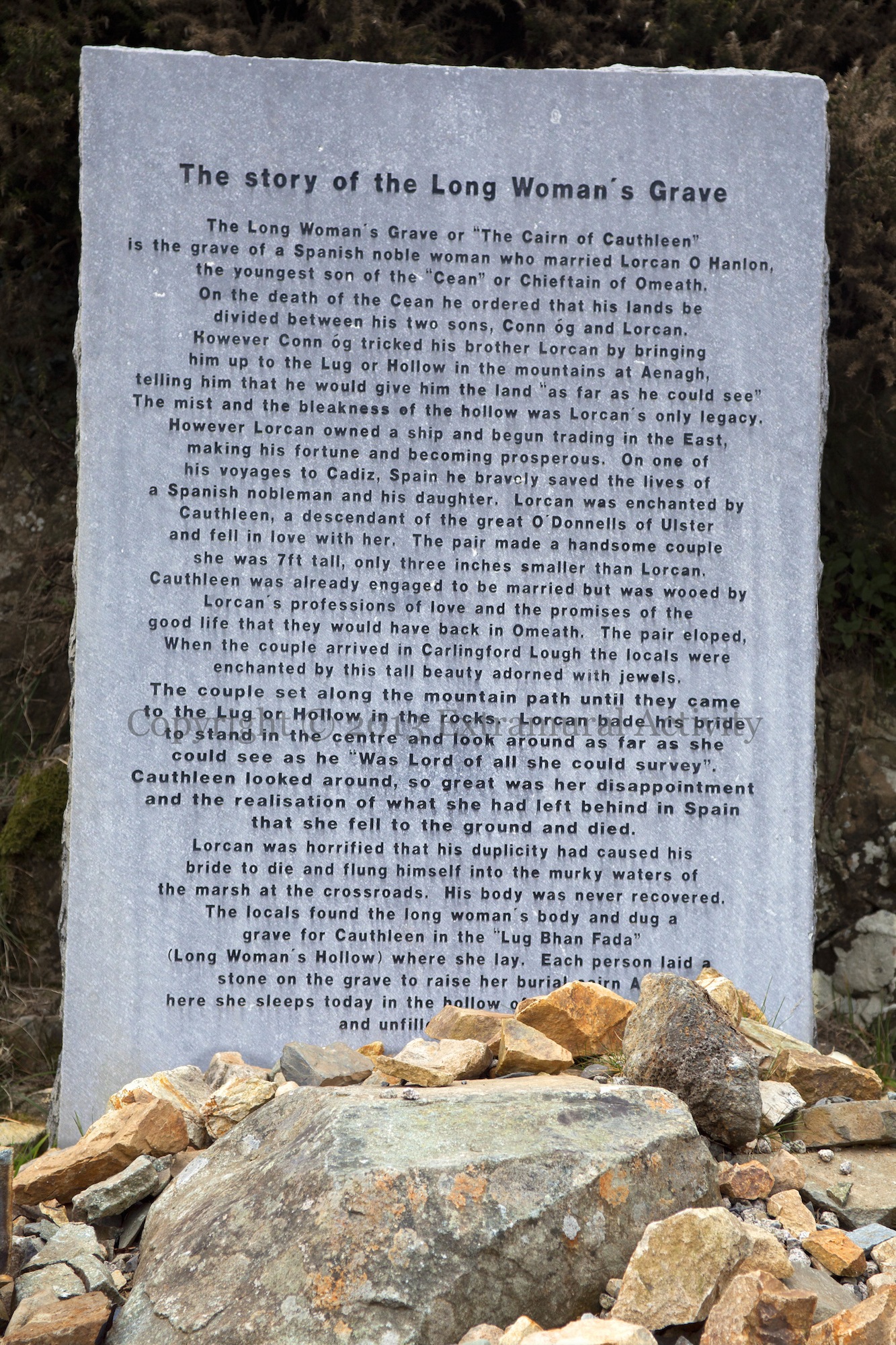
The Long Woman was 7ft tall, a Spaniard of Ulster heritage who died of disappointment after eloping with Lorcan and returning with him (to the Omeath area of County Louth, just on the south side of Carlingford Lough and south of Newry) and having the same trick pulled on her that Lorcan’s brother had pulled on him when divvying up their inheritance — you can be owner of the land as far as you can see … while standing in a hollow.
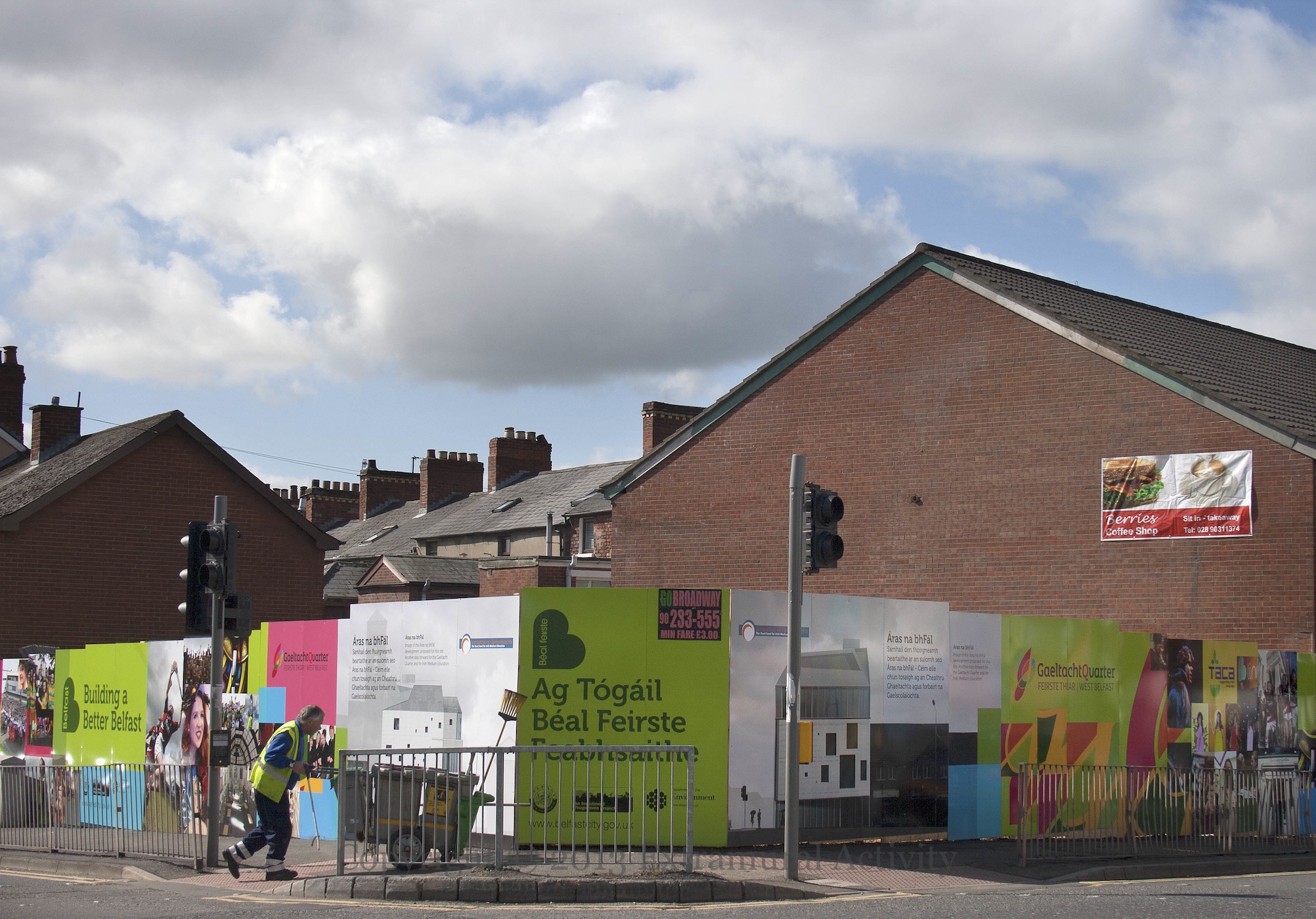
Irish-language signage from Belfast City Council at the corner of An Bealach Leathan/Broadway and Bóthar na bhFál/Falls Road. On the left you can see the English translation of the central board’s “Ag tógáıl Béal Feirste feabhsaıthe”: “Building a better Belfast”. The building shown to the right and left of the centre is proposed for the site.
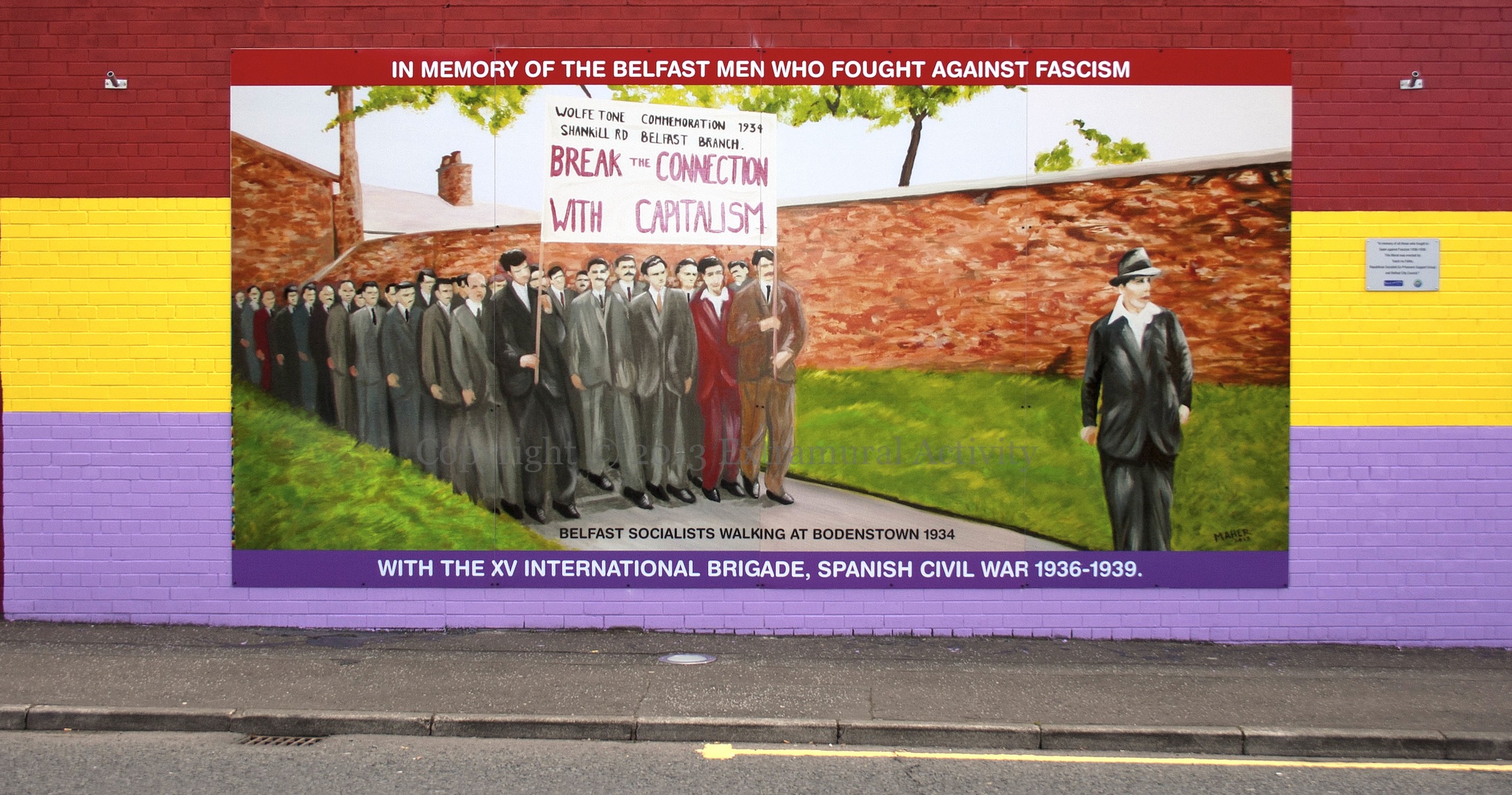
“In Memory of the Belfast men who fought against fascism with the international brigade, Spanish civil war 1936 – 1939.” The colours of the international brigade (red, yellow and purple – here a lighter violet colour) serve as a background.
The board shows Belfast socialists walking at Bodenstown, 1934 as part of the annual Wolfe Tone commemoration, held each year in June. Tone, an Anglican and the founder of the United Irishmen, is buried in the Bodenstown graveyard. Sources report, however, that there was an attempt to exclude these marchers, from “Shankill Rd Belfast Branch”, from part of the 1934 commemoration. The reasons given vary: they were carrying a non-standard banner, they had communist leanings, and, they were Protestants. (See Paddy Byrne | WP1 – though a different banner is mentioned | WP2 – see “legacy” section | WP3 – see fn. 1).
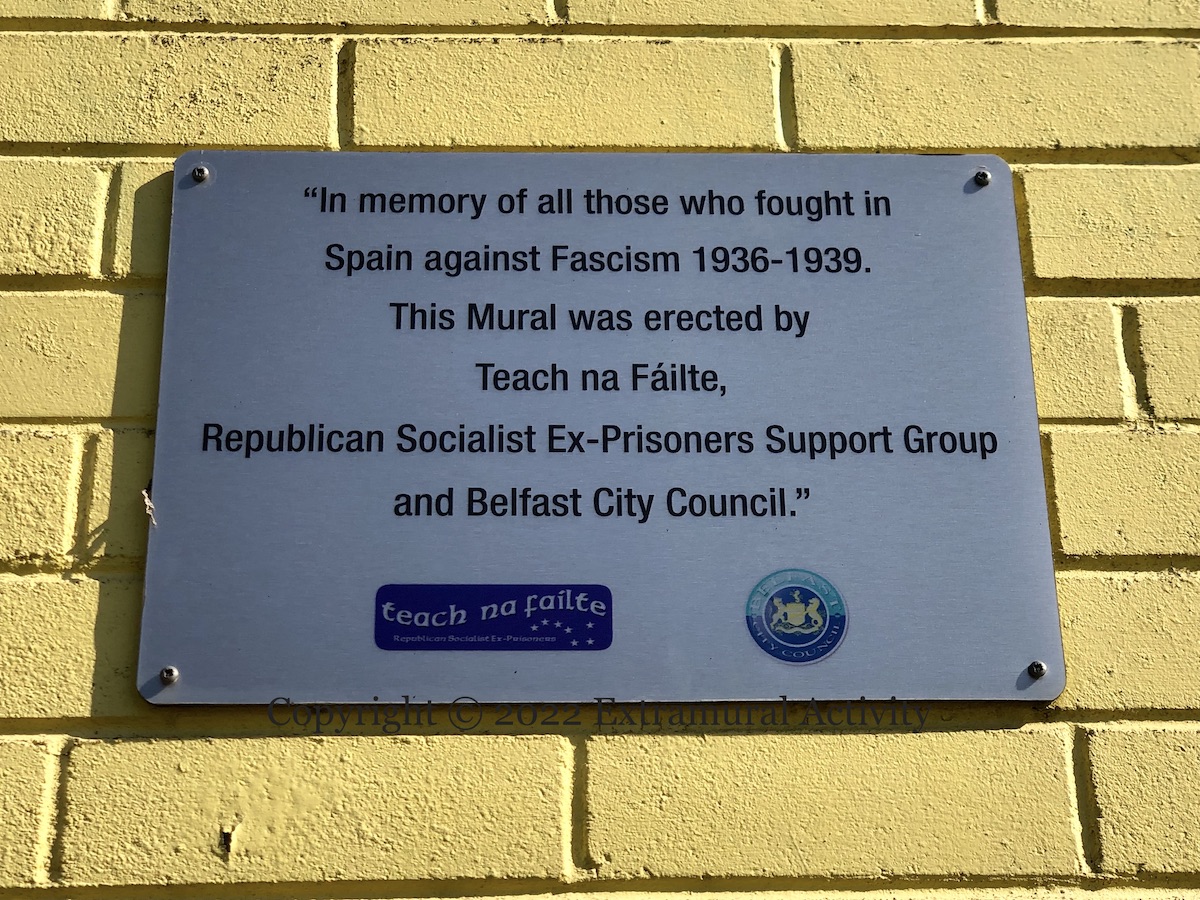
The plaque to the right reads: “In memory of all those who fought in Spain against Fascism 1936-1939. This mural was erected by Teach Na Fáılte Republican Ex-Prisoners Support Group and Belfast City Council. It was unveiled on April 20th, 2013 (irsp.ie). Signed “[Fra] Maher 2013”.
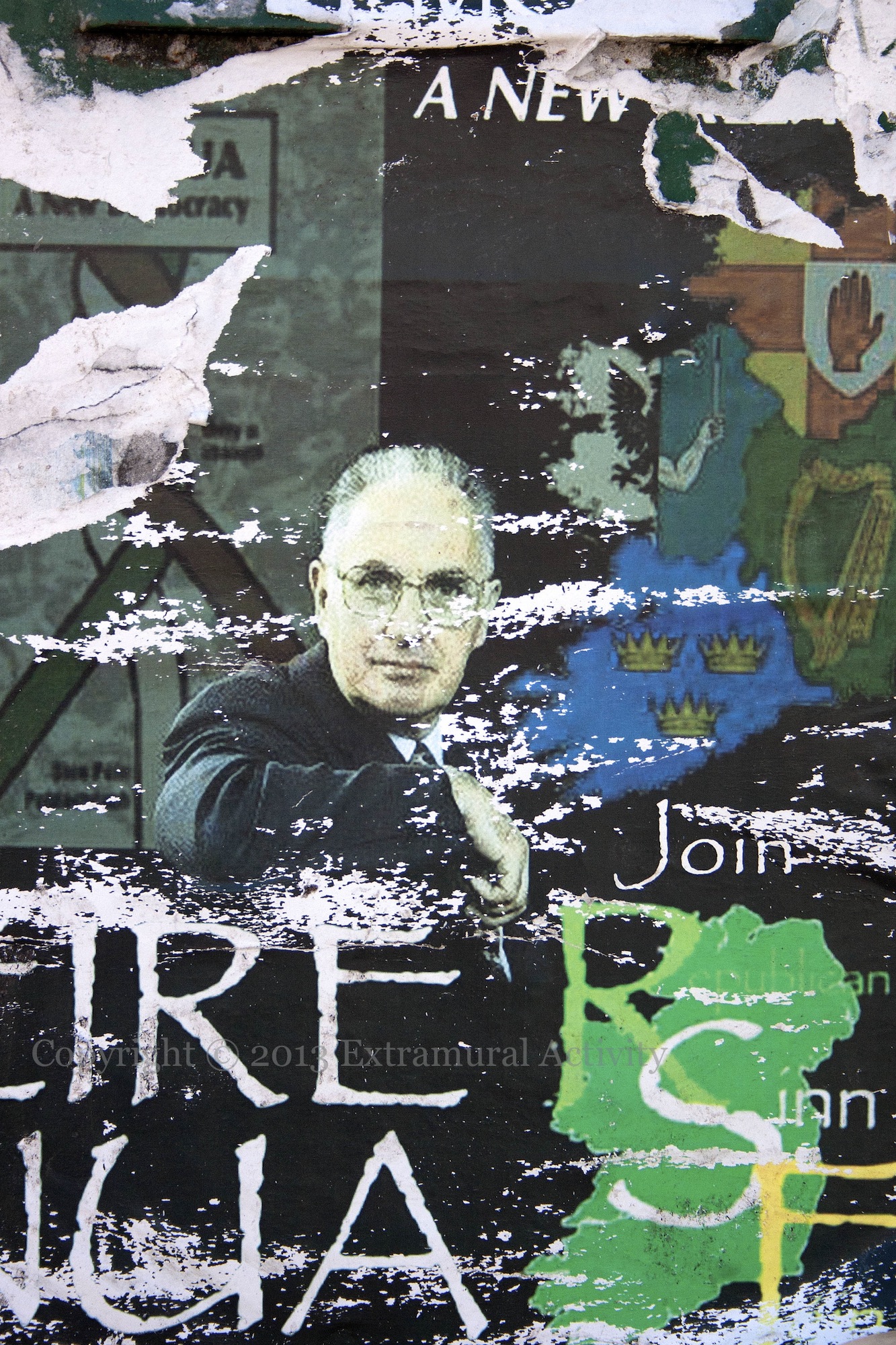
This is a recent poster (this one on the Antrim Road near Carlisle Circus) featuring the “Éıre Nua” plan of the 70s and 80s (which remains policy of Republican Sınn Féın, which split from Sınn Féın in 1986) and one of its authors, Ruaırí Ó Bradaıgh (WP). The plan calls for four parliaments, one in each of the four provinces, with a capital in Athlone. A documentary, Unfinished Business, featuring Ó Bradaıgh, can be seen here.
Update: Ó Bradaıgh died on June 5th, 2013 (Irish Times)
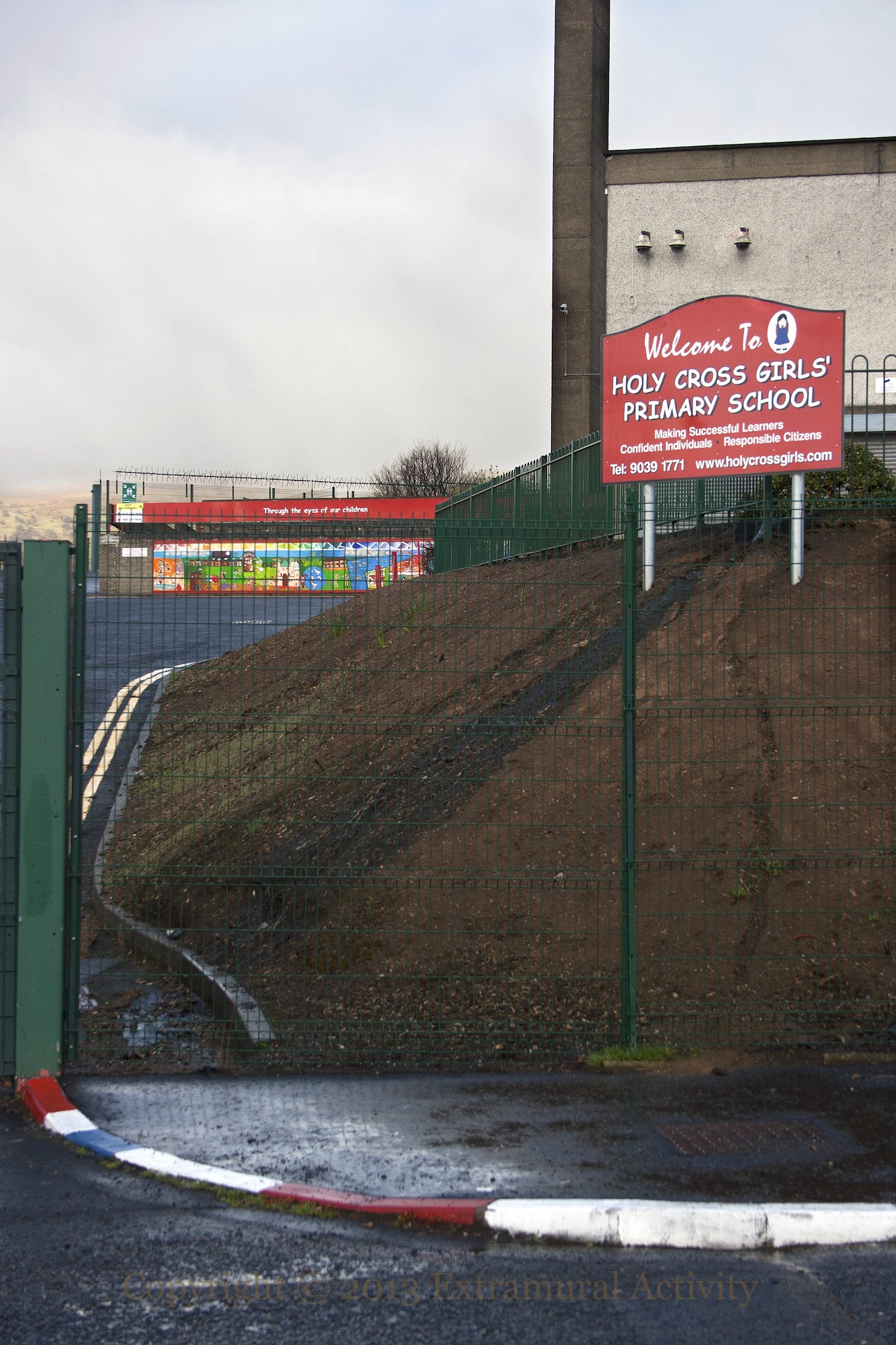
Holy Cross Primary – an all-girls Catholic school – sits in the loyalist Glenbryn neighbourhood, above Alliance Avenue in Ardoyne. The freshly-painted kerb-stones leave no doubt as to the precarious situation of the school, which is well-known as the site of a dispute in 2001 when loyalists attempted to block access to the school (WP).
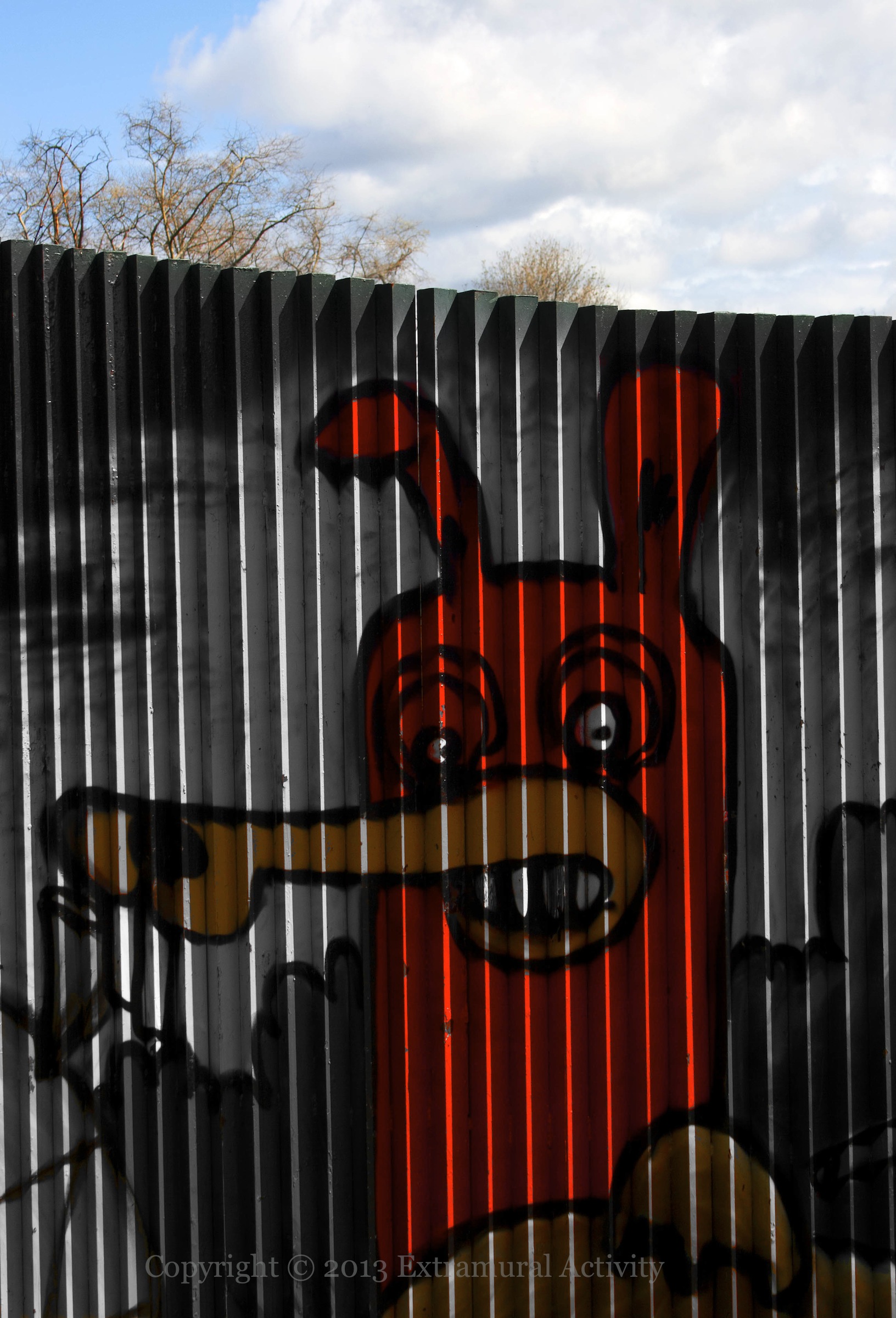
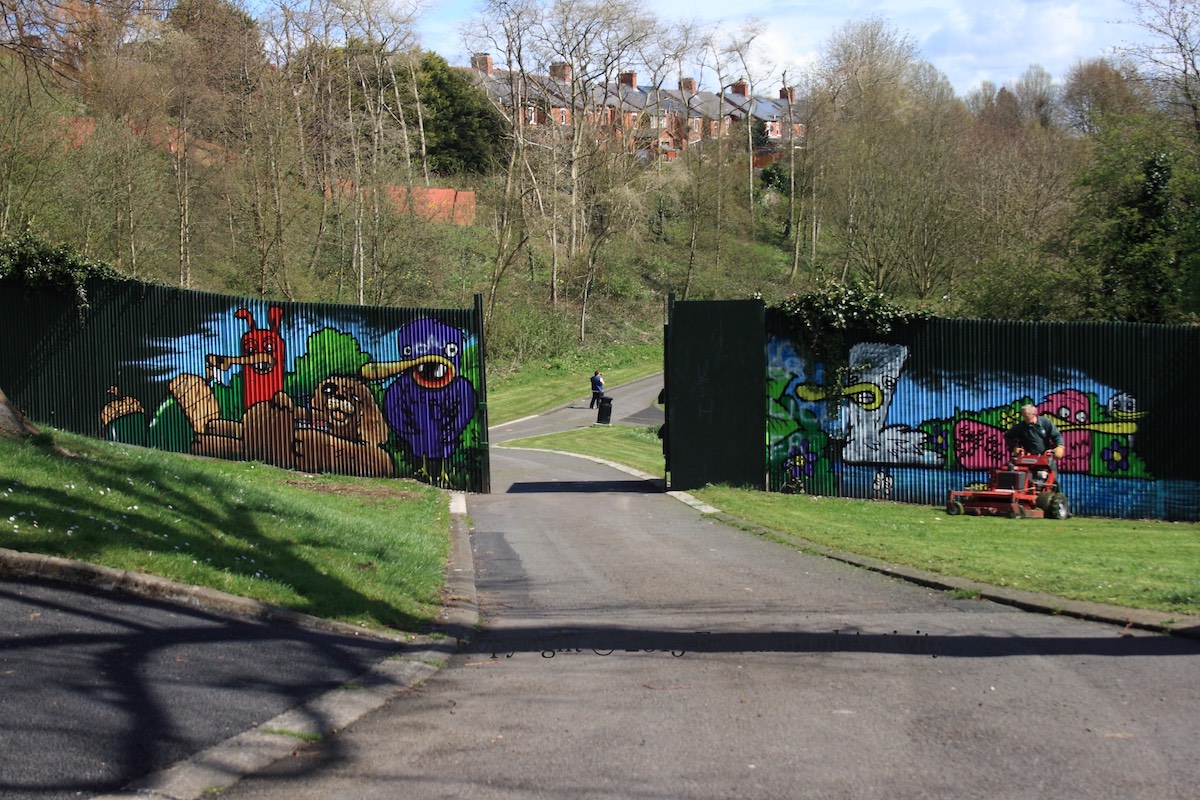
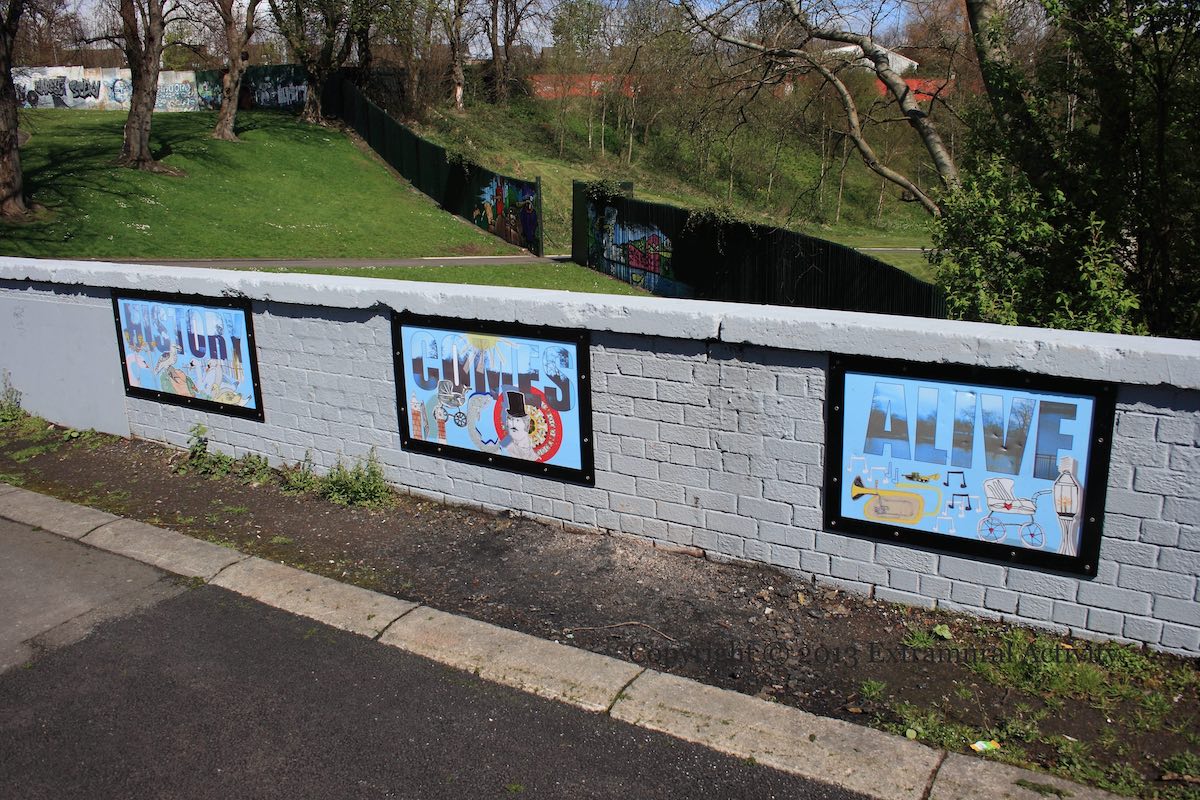
This street art is on a wall/fence that runs right through the middle of Alexandra Park, separating the loyalist Mountcollyer and republican Newington neighbourhoods. The ‘History Comes Alive’ triptych is on the nationalist side.
 Seosamh Mac Coille Collection