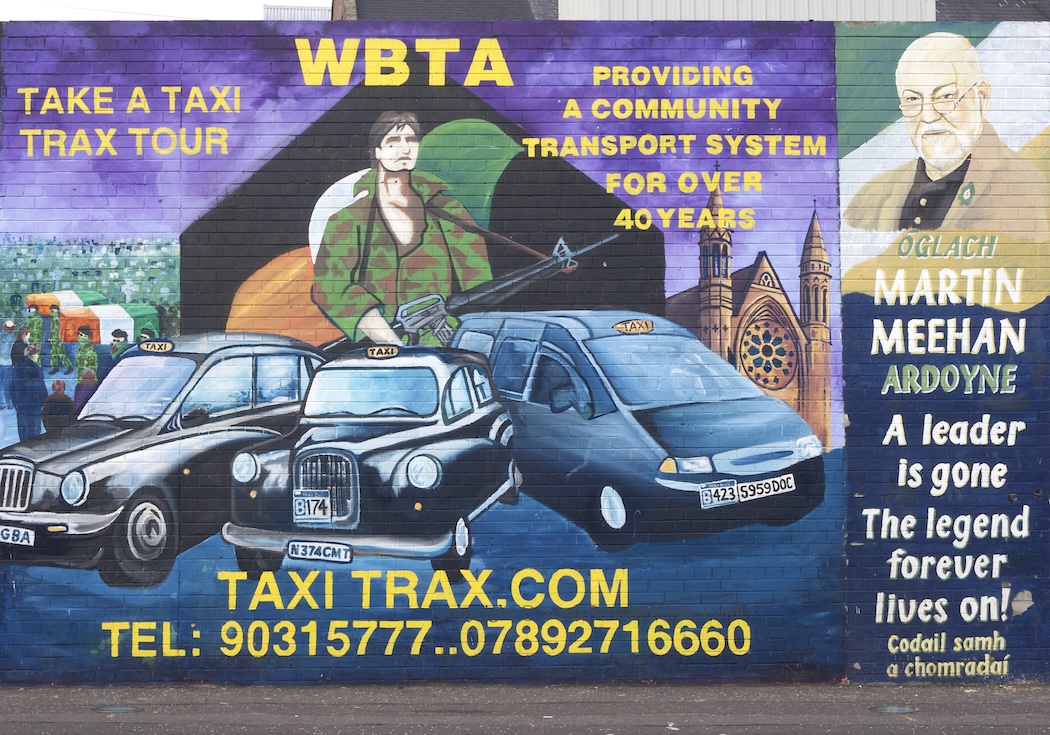
“Providing a community transport system for over 40 years.” The West Belfast Taxi Association (WBTA) have had a mural on the International Wall since at least 2006, offering tours of west Belfast and the murals in particular.
Martin Meehan was originally OIRA but switched to the Provisionals after the split. He was the first person convicted of membership of the PIRA and spent 18 years in prison during the Troubles (WP). “Codaıl samh a chomradaí.”
Banksy’s “Slave Labour” was sold on Sunday night for about three-quarter of a million pounds sterling, to an as-yet anonymous buyer. It was sold by the owners of the Poundland store on whose exterior wall it was originally stencilled. This BBC video shows the piece, both removed and in situ. In other Banksy news this weekend, his giant rat piece in Liverpool is to be removed and preserved.
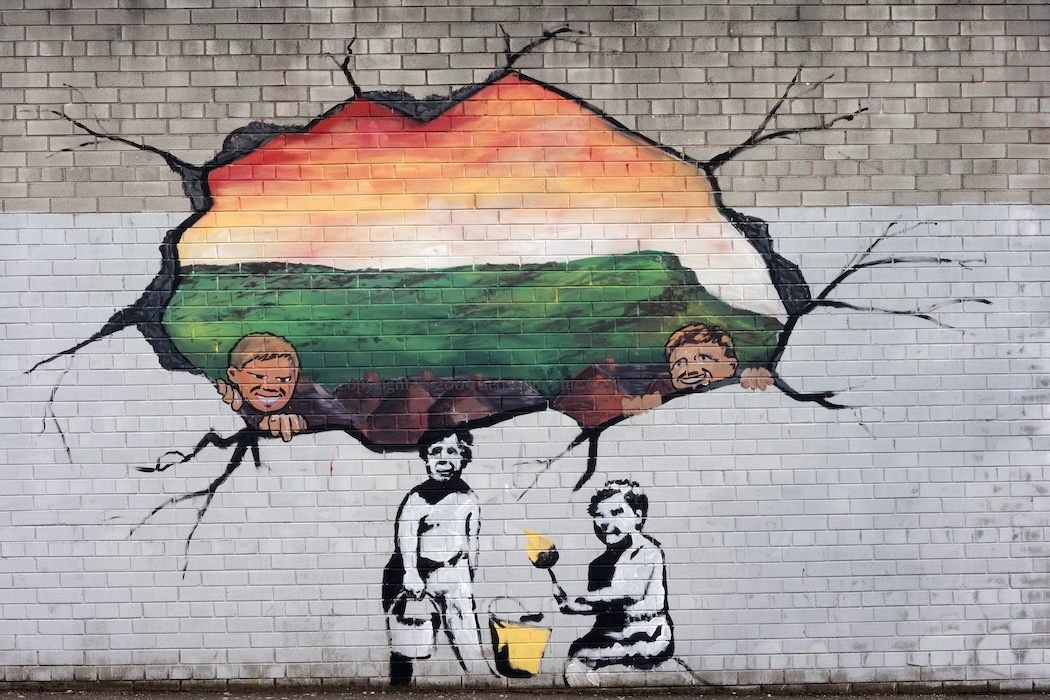
The image above is a 2009 piece on Northumberland Street (Visual History page) imitating one of Banksy’s pieces in the West Bank. In the Bethlehem piece, the hole in the wall reveals a tropical paradise; here, it reveals the hills around Belfast. There is a shot of the artists painting the piece at the beginning of the documentary about them, “Paint For Peace“. This piece as later replaced by the Latuff “solidarity” mural.
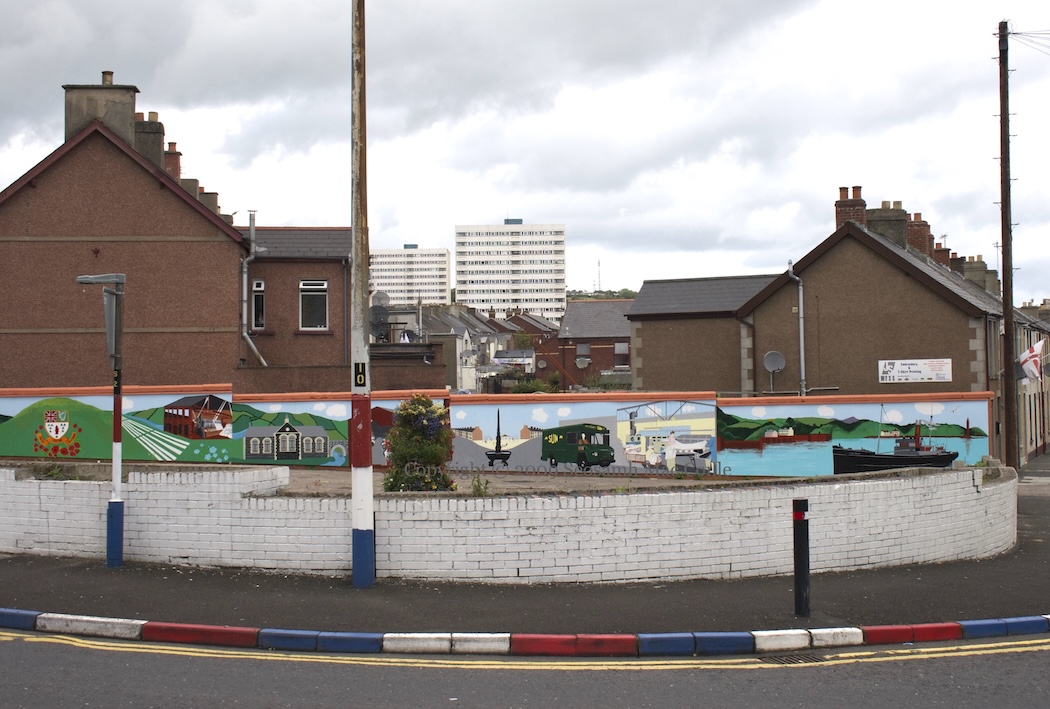
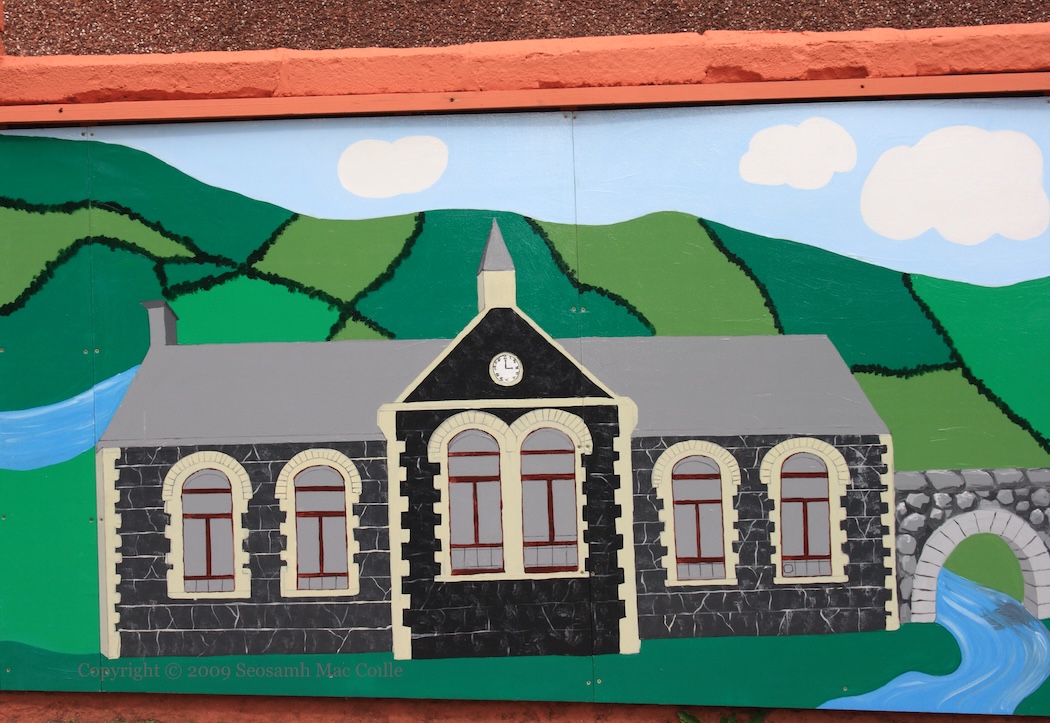
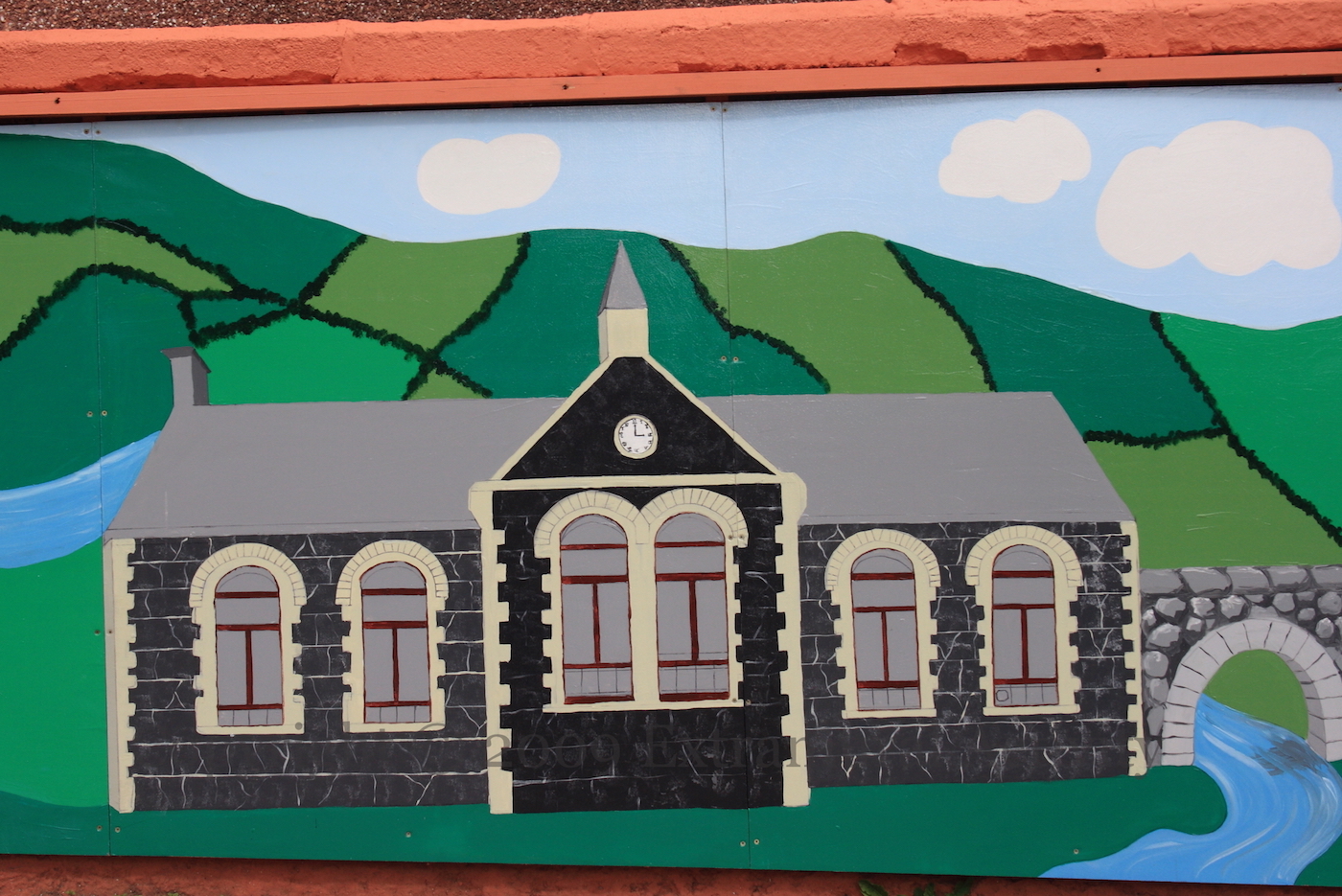
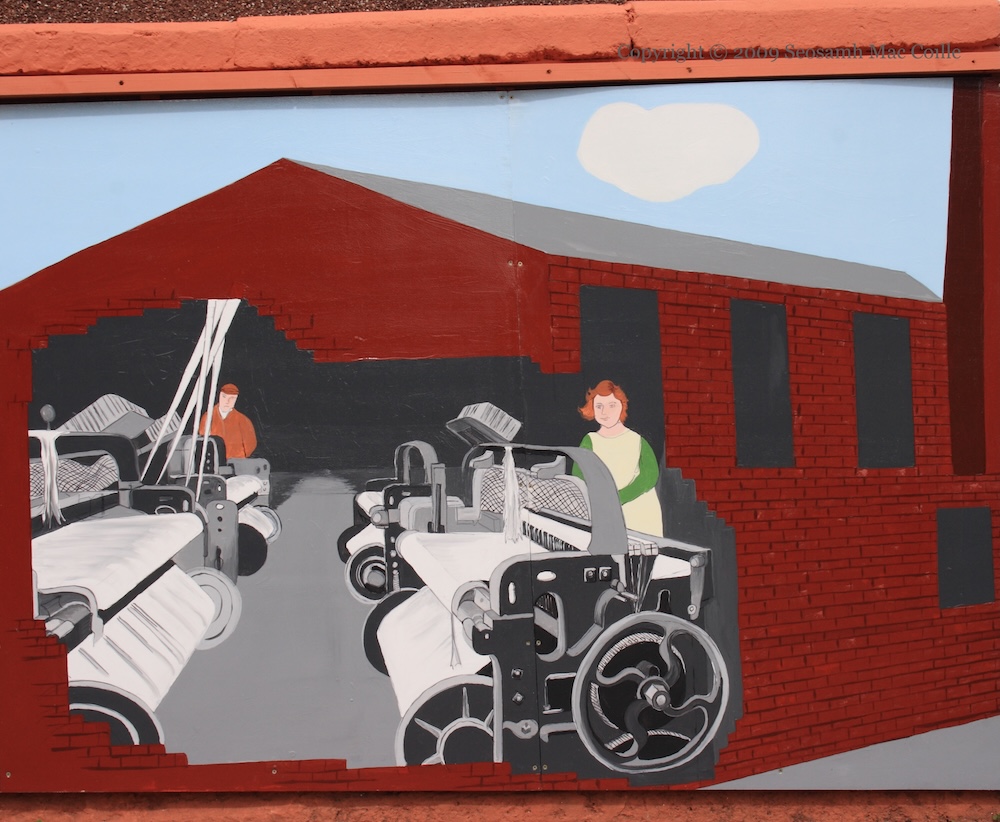
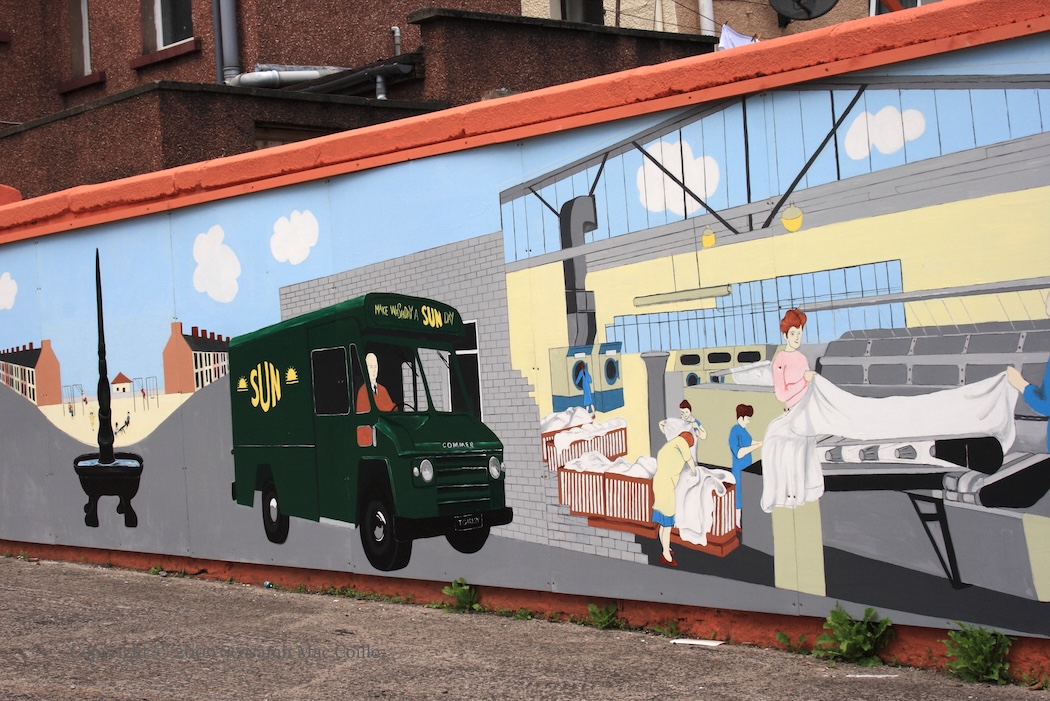
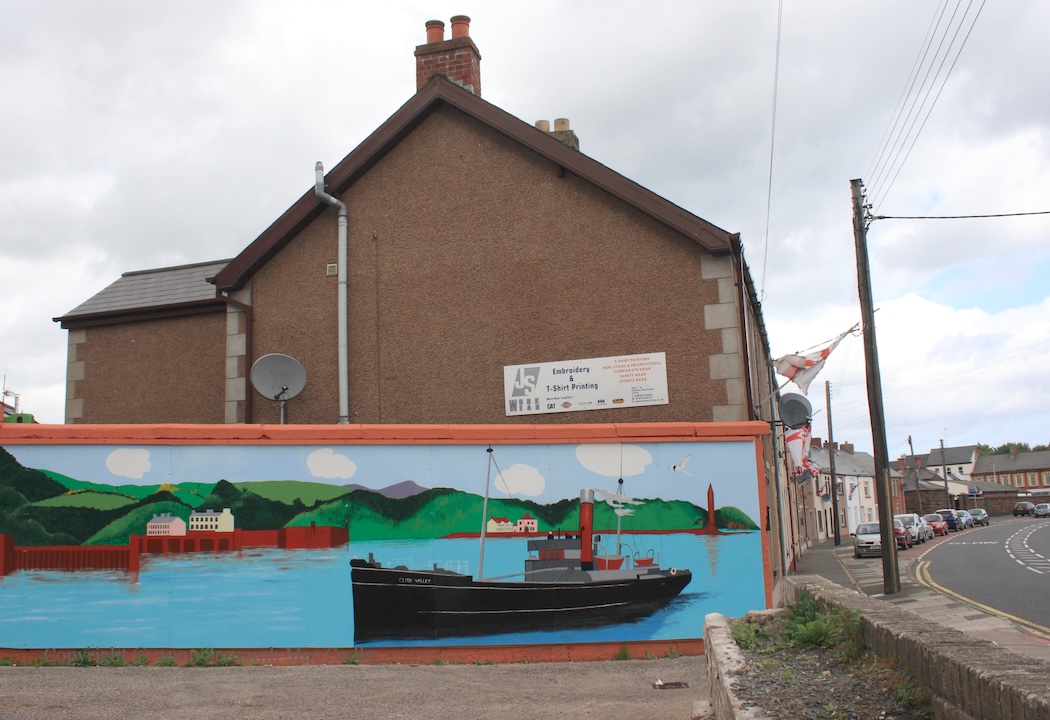
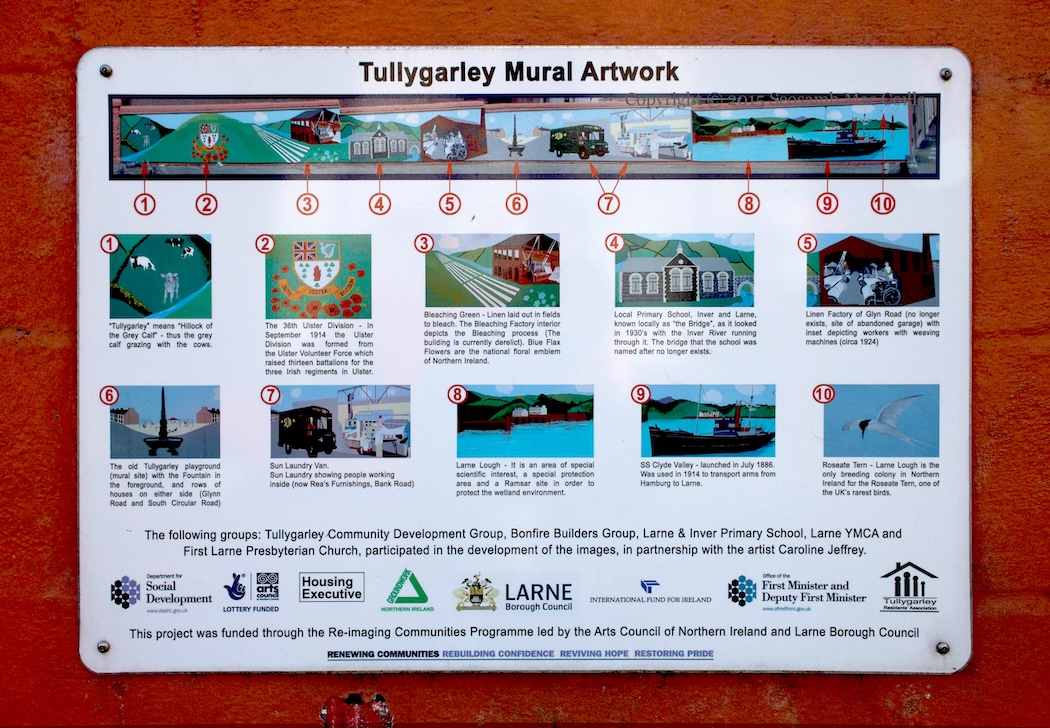
This series of boards, painted by Caroline Jeffrey, presents life in Larne from the early 20th century. As part of the 2009 Re-Imaging Project, it is largely non-sectarian, and begins with the derivation of the name “Tullygarley” from the Irish for “Hillock of the Grey Calf”, but includes the emblem of the 36th (Ulster) Division and the gunrunning ship Clyde Valley. It replaces a “God save the queen”/1690 mural, visible here.
Info board: “Tullygarley” means “Hillock of the Grey Calf” – thus the grey calf grazing with the cows.
The 36th Ulster Division – In September 1914 the Ulster Division was formed from the Ulster Volunteer Force which raised thirteen battalions for the three Irish regiments in Ulster.
Bleaching Green – Linen laid out in fields to bleach. The Bleaching Factory interior depicts the Bleaching process. (The building is currently derelict.) Blue Flax Flowers are the national floral emblem of Northern Ireland.
Local Primary School, Inver and Larne, known locally as “the Bridge”, as it looked in the 1930’s with the Inver River running through it. The bridge that the school was named after no longer exists.
Linen Factory of Glyn [Glynn] Road (no longer exists, site of abandoned garage) with inset depicting workers with weaving machines (circa 1924).
The old Tullygarley playground (mural site) with the Fountain in the foreground, and rows of houses on either side (Glynn Road and South Circular Road).
Sun Laundry Van. Sun Laundry showing people working inside (now Rea’s Furnishings, Bank Road).
Larne Lough – it is an area of special interest, a special protection area and a Ramsar site in order to protect the wetland environment.
SS Clyde Valley – launched in July 1886. Was used in 1914 to transport arms from Hamburg to Larne.
Roseate Tern – Larne Lough is the only breeding colony in Northern Ireland for the Roseate Tern, one of the UK’s rarest birds.
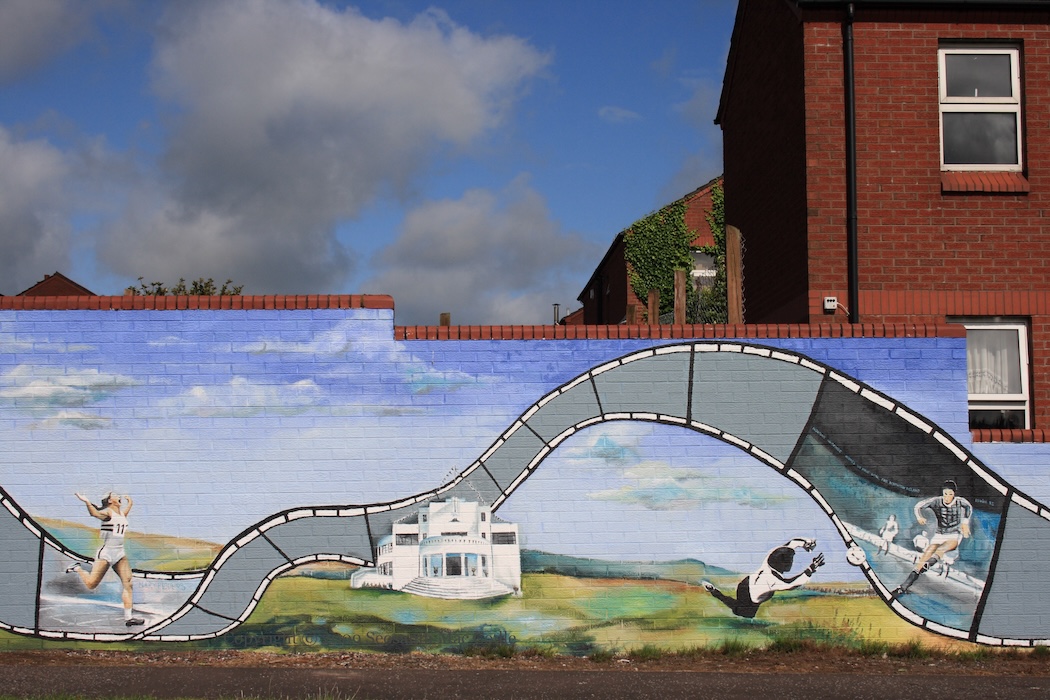
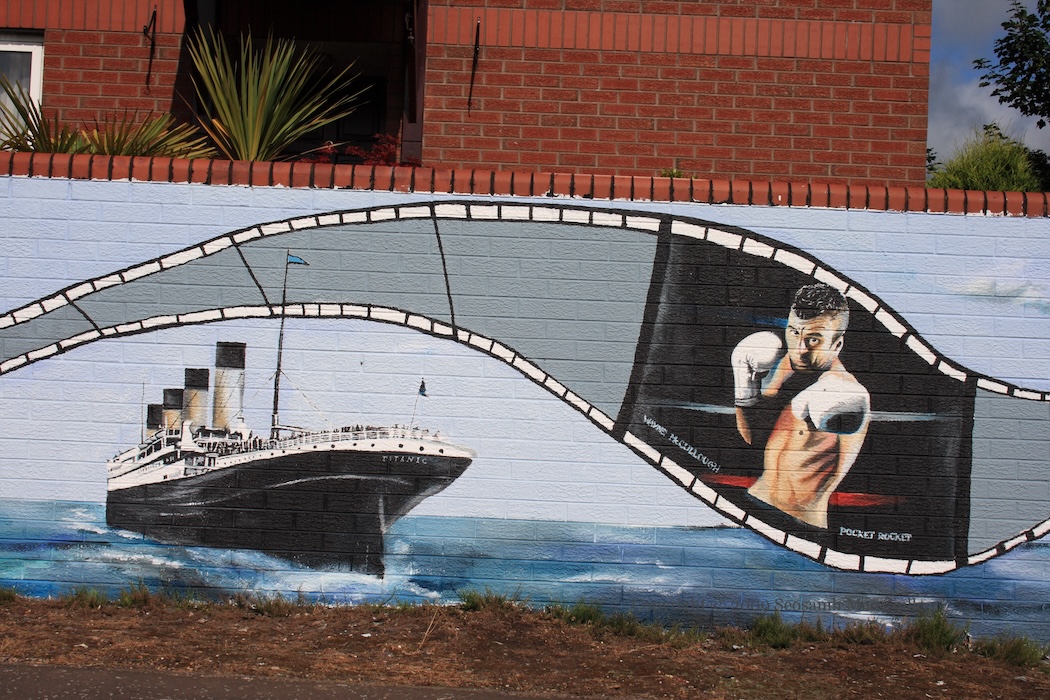
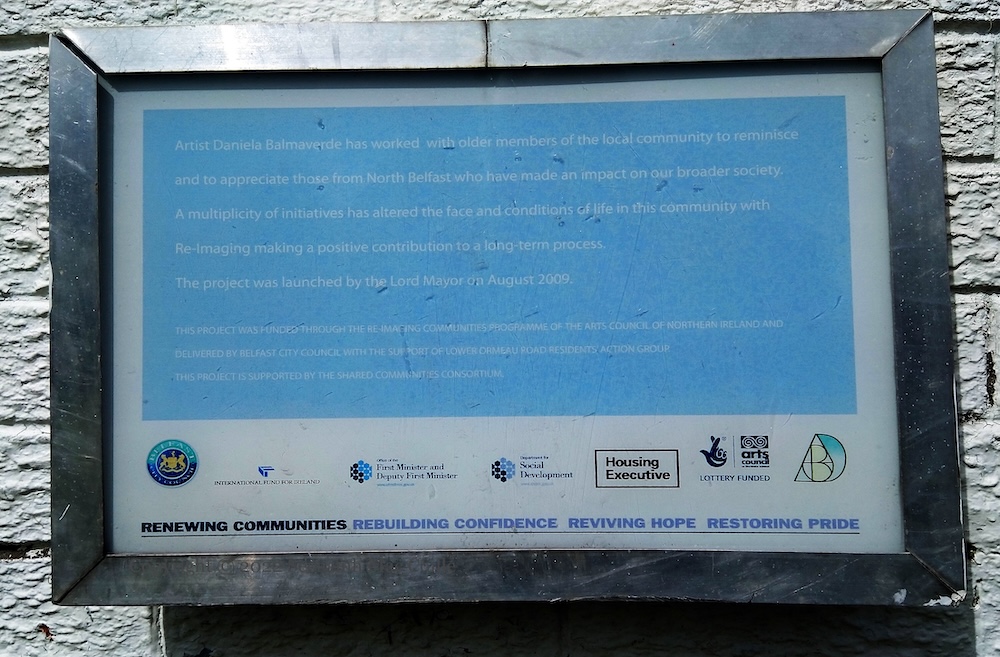
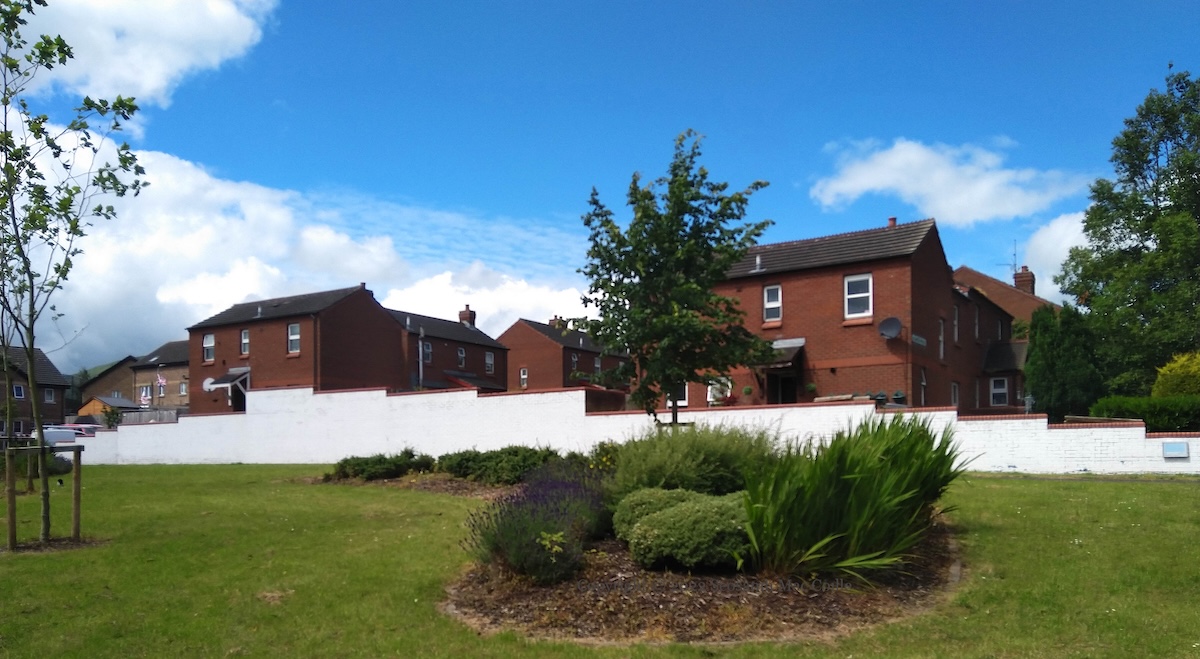
“Artist Daniela Balmaverde has worked with older members of the local community to reminisce and to appreciate those from North Belfast who have made an impact on our broader society. A multiplicity of initiatives has altered the face and conditions of life in this community with Re-Imaging making a positive contribution to a long-term process. The project was launched by the Lord Mayor on August 2009 This project was funded through the Re-Imaging Communities programme of the Arts Council of Northern Ireland and delivered by Belfast City Council with the support of Lower Ormeau Road Resident’s Action Group. This project is supported by the Shared Communities Consortium.”
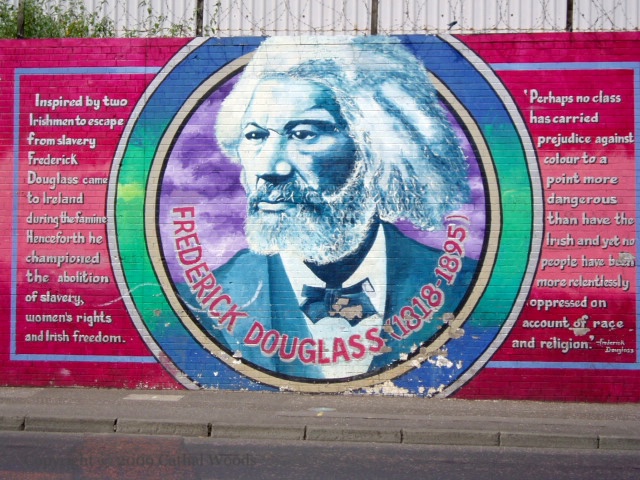
“Inspired by two Irishmen to escape from slavery, Frederick Douglass came to Ireland during the famine. Henceforth he championed the abolition of slavery, women’s rights and Irish freedom.”
“Perhaps no class has carried prejudice against colour to a point more dangerous than have the Irish and yet no people have been more relentlessly oppressed on account of race and religion.
(Also by Douglass, and which would have made an apt quote for the mural: “I prayed for twenty years but received no answer until I prayed with my legs.”)
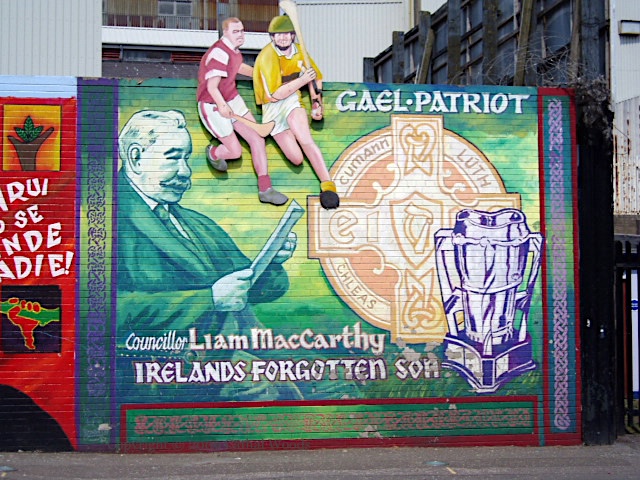
“Councillor Liam MacCarthy, Ireland’s forgotten son. Gael, patriot. Winners of the All-Ireland hurling championship are awarded a trophy named after MacCarthy.
This is an unusual mural in terms of form: it is a mix of mural and board and the knot-work border does not go around the top, so that the hurley players extend the painting and not do not break the frame of the painting.
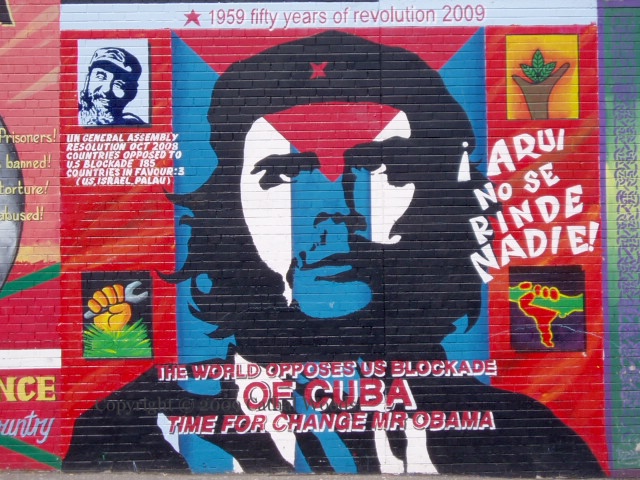
Pro-Cuba mural on the International Wall and criticism of the Obama regime’s continuation of the US blockade. “The world opposes US blockade of Cuba. Time for a change Mr Obama.” “UN General Assembly resolution Oct 2008. Countries opposed to the blockade: 185. Countries in favour: 3 (US, Israel, Palau)”. “¡Aqui no se rinde nadie!” [There’s no giving up here!] (For criticism of Obama’s predecessor, George W. Bush, on the international wall, see this mural.)
The word “Venceremos” would later be added on the left; see M05637.
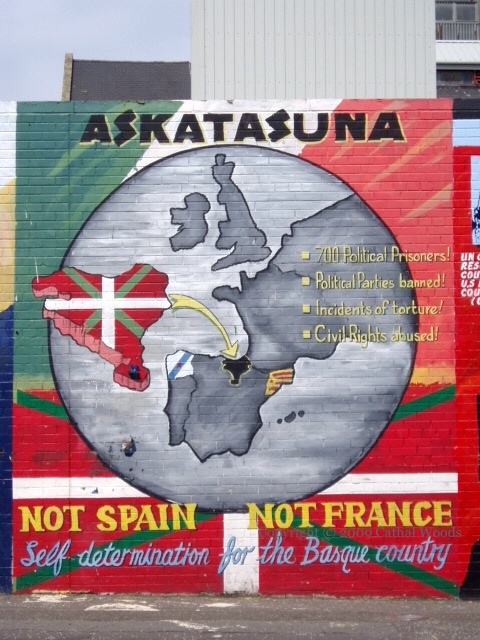
“Askatasuna [freedom]. 700 political prisoners! Political parties banned! Incidents of torture! Civil rights abused! Not Spain, not France. Self-determination for the Basque country.” Also highlighted on the map are Galicia and Catalonia.
 Seosamh Mac Coille Collection