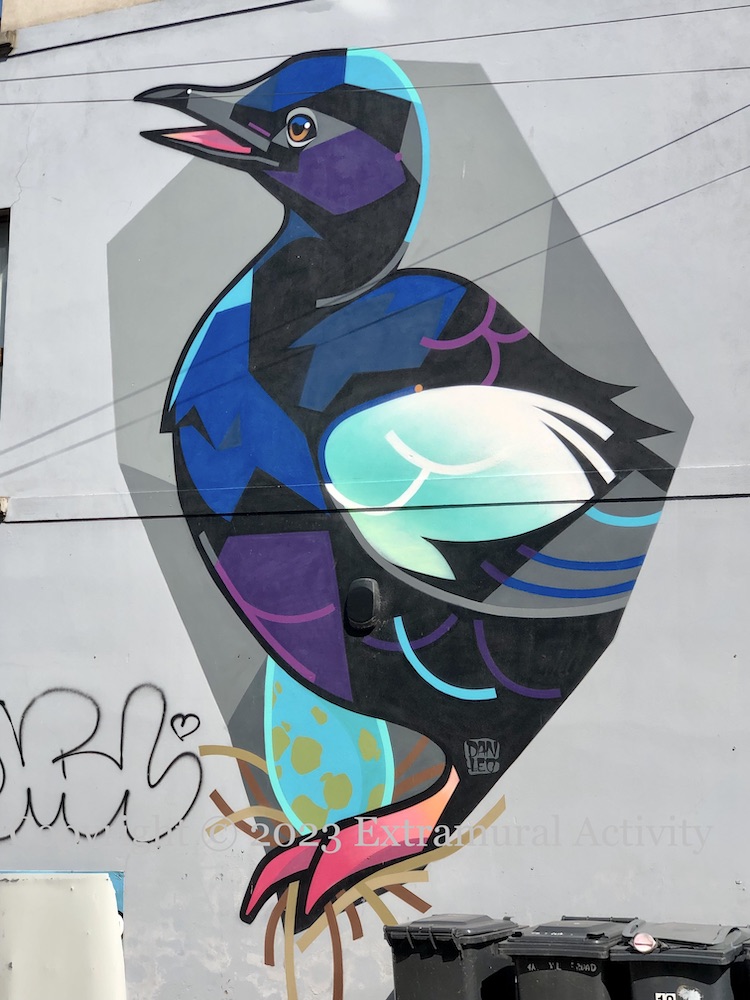
The guillemot is distinctive for its red “gape” (inside of mouth). It spends most of its time on and around water but nests on cliff ledges and other remote spaces in May (BirdWatchIreland). The pointed shape of the egg makes it less likely to fall off cliffs (British Birds). They have been nesting in Bangor since at least 1911 (Geograph). If you can’t spot any at the marina, you can check out this mural by Dan Leo (ig) in nearby Victoria Road.
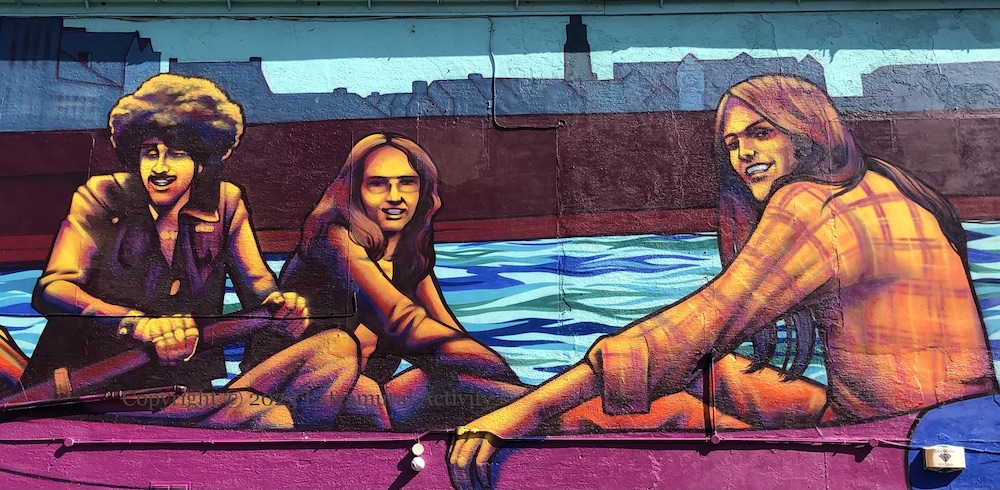
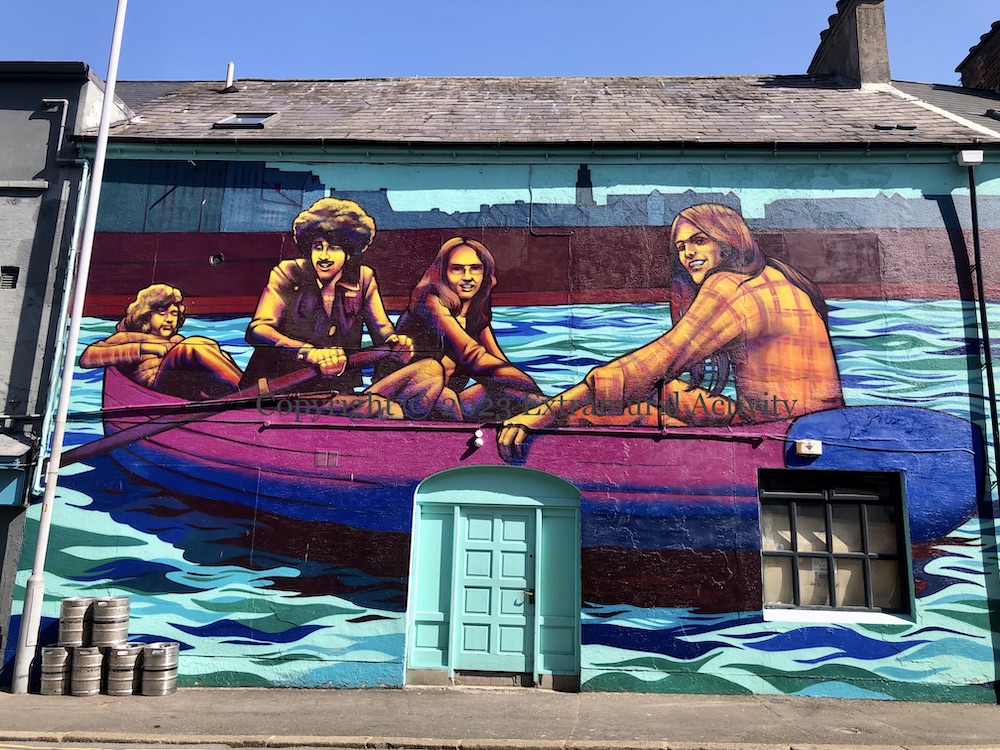
Before rock band Thin Lizzy played the King’s Club at the Queen’s Court hotel in Bangor on July 27th, 1974 (Thin Lizzy Guide), they took to the water in order to take in the town. They were photographed in the act by Dublin photographer Liam Quigley (Indo profile), and the picture (see it at Thin Lizzy Guide) was turned into a mural by Friz (ig) in Crosby Street, Bangor, last year.
Original guitarist Eric Bell (who was also a member of Them) is featured in a mural of famous faces in east Belfast – see Inspiring Belfast.
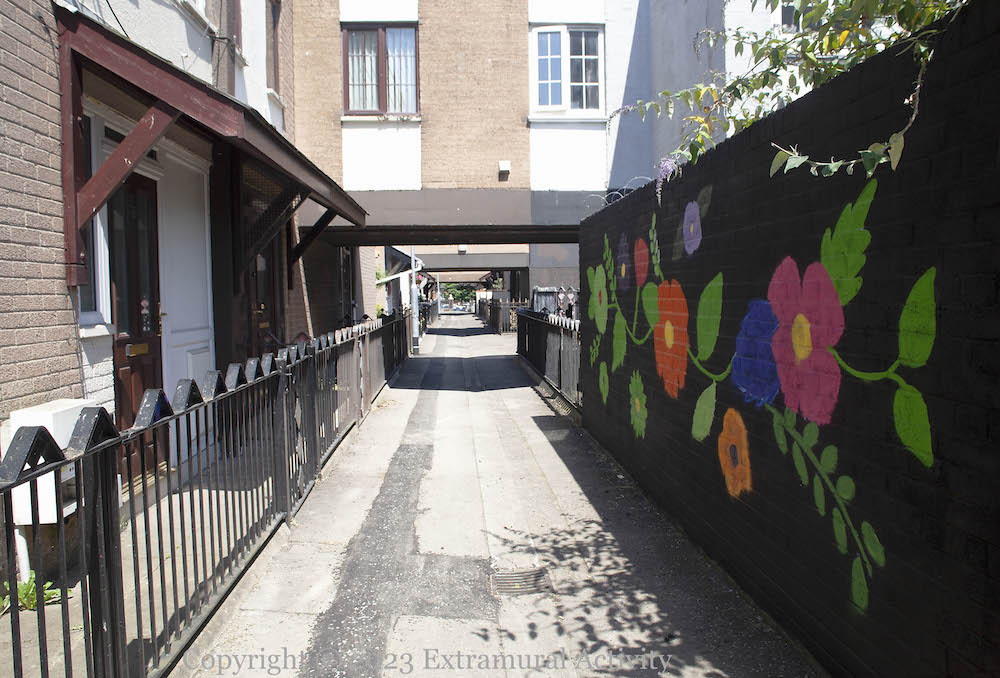
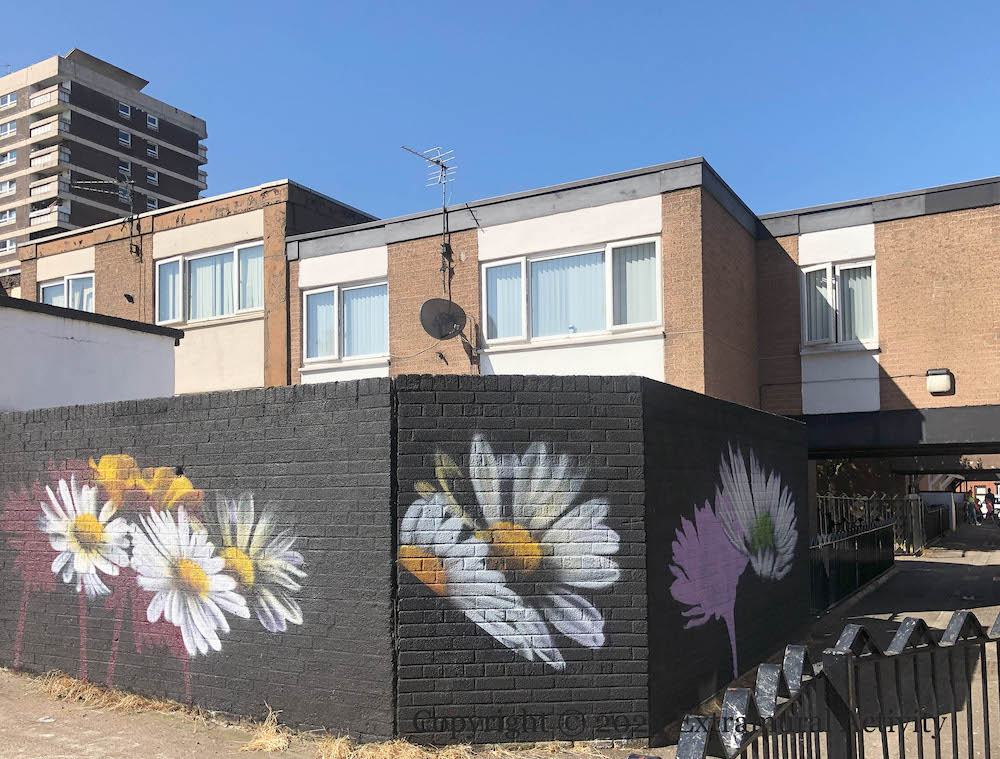
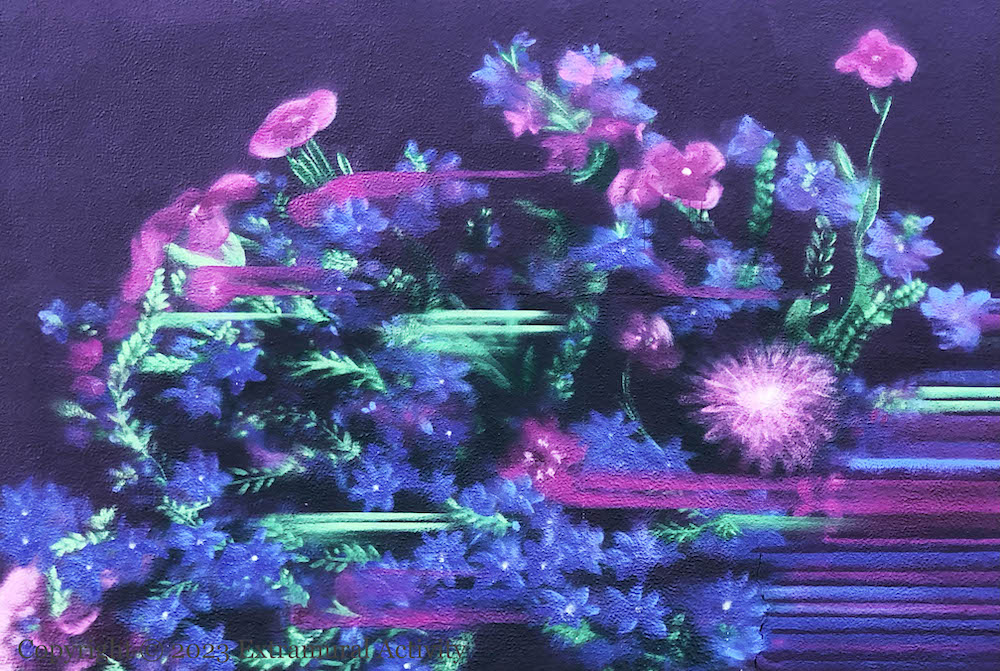
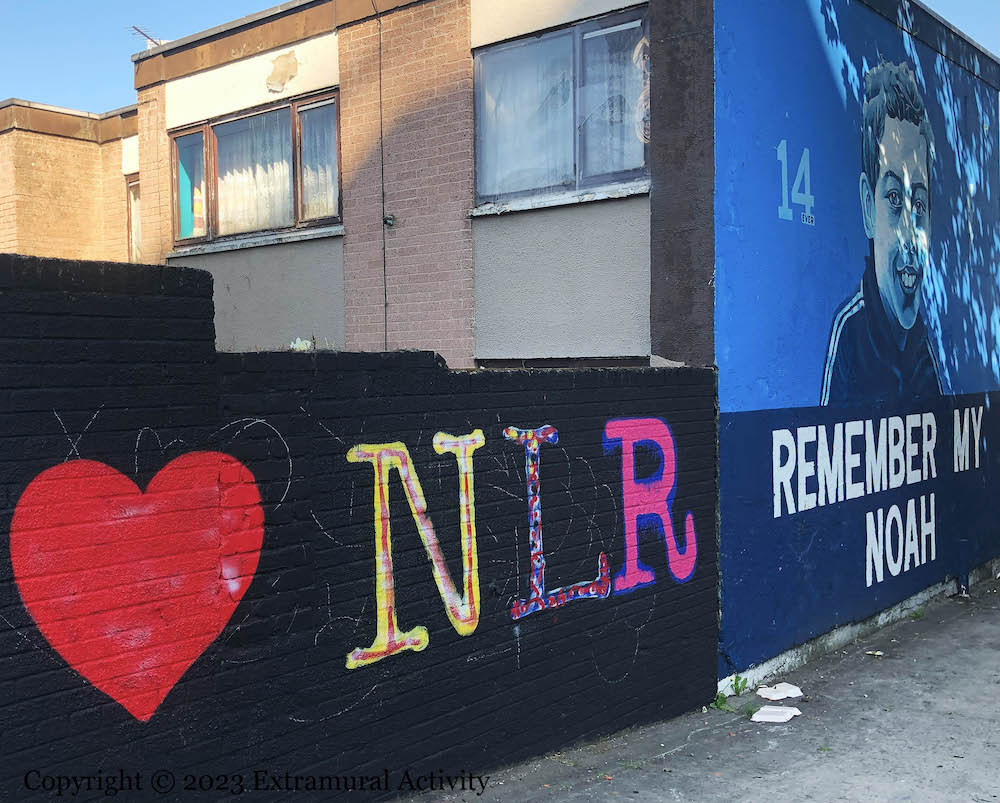
Here is a gallery of images from the new, multi-panel, floral mural in the middle of the New Lodge.
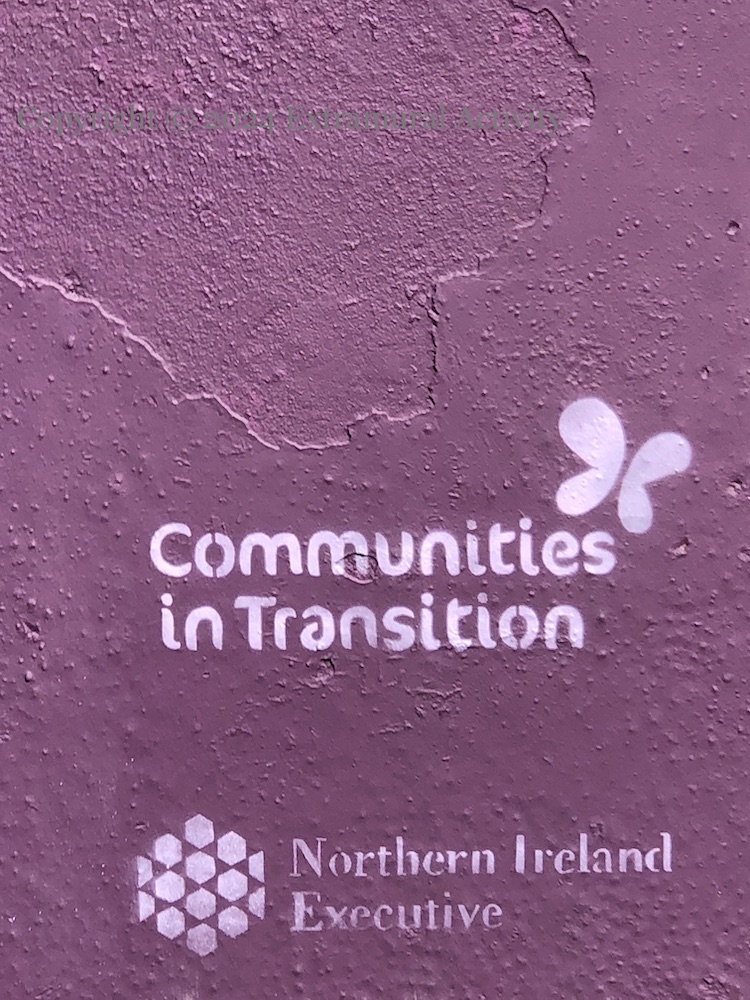
The mural was painted by emic (ig) with young people from the New Lodge Youth Centre, sponsored by Communities In Transition (a programme of the Executive Office) and organised by Community Restorative Justice Ireland (web).
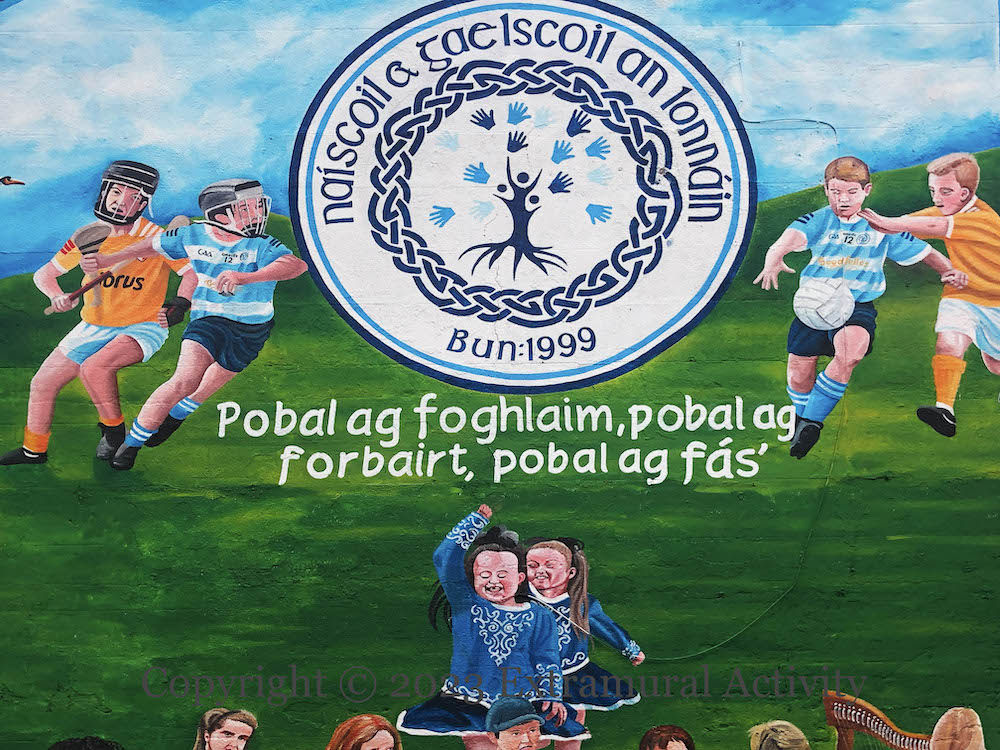
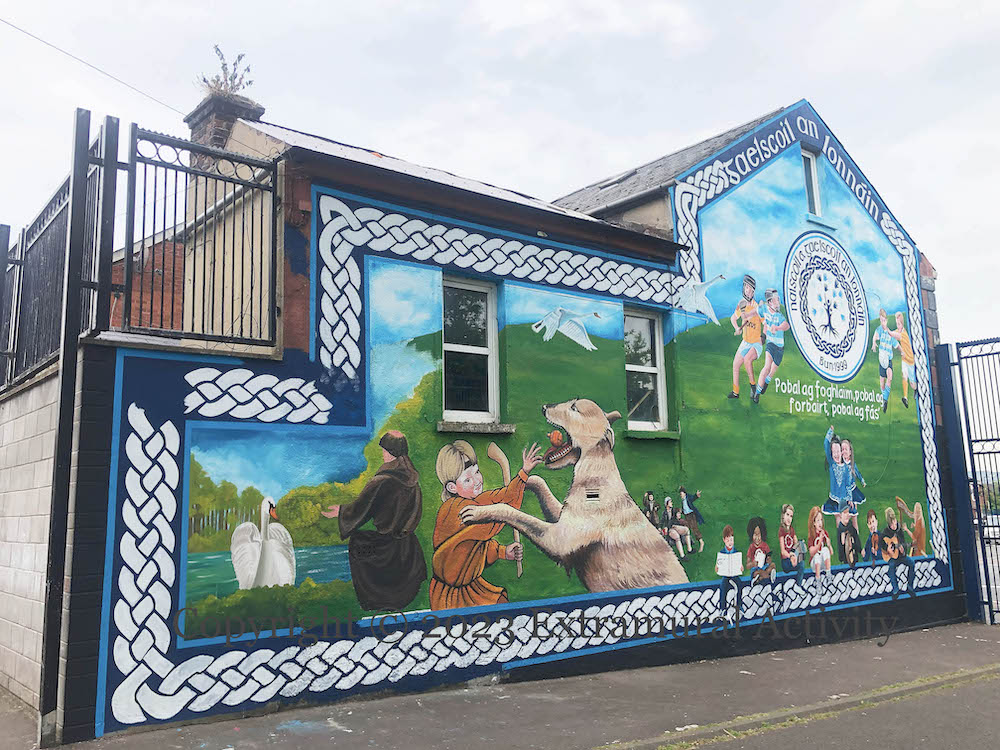
“Pobal ag foghlaım, pobal ag forbaırt, pobal ag fás” [a community learning, developing, growing]
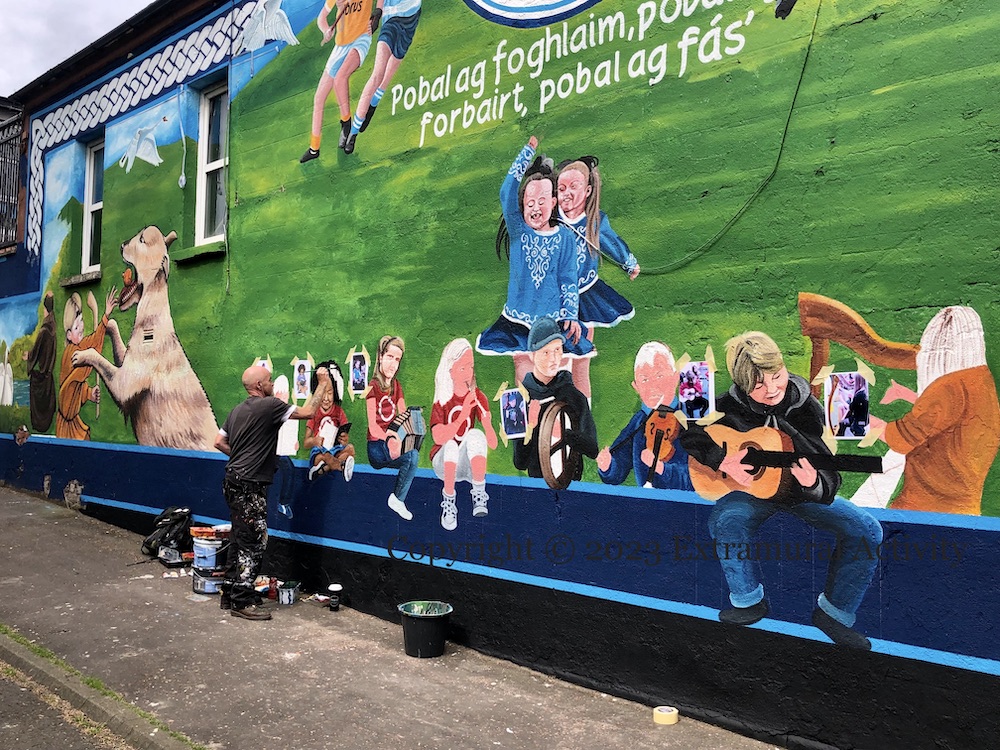
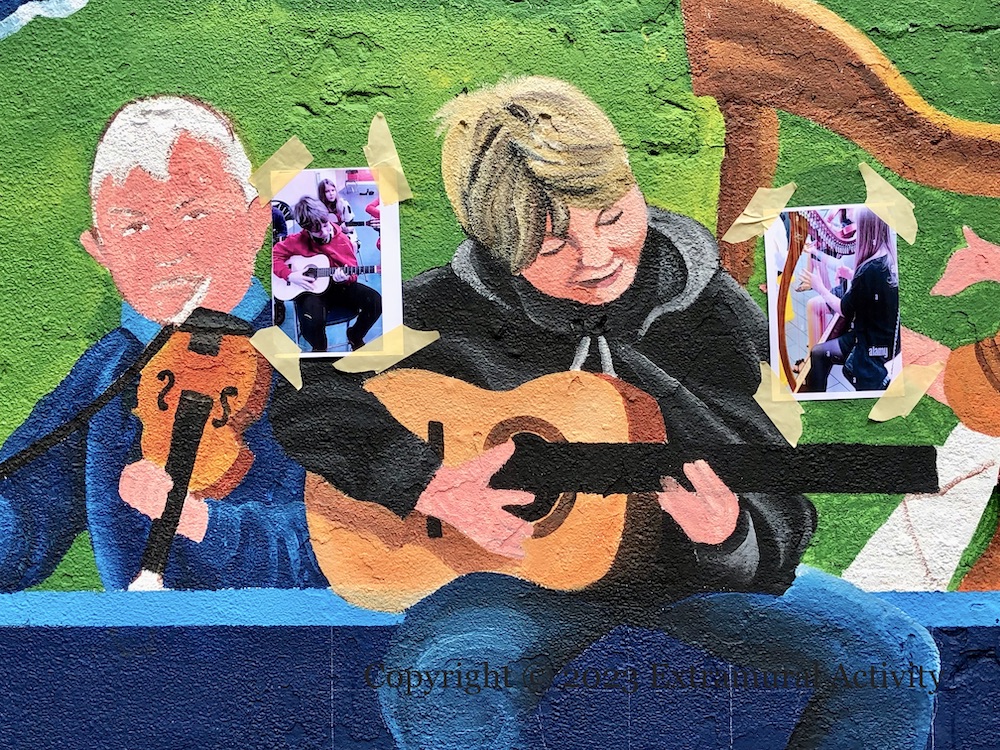
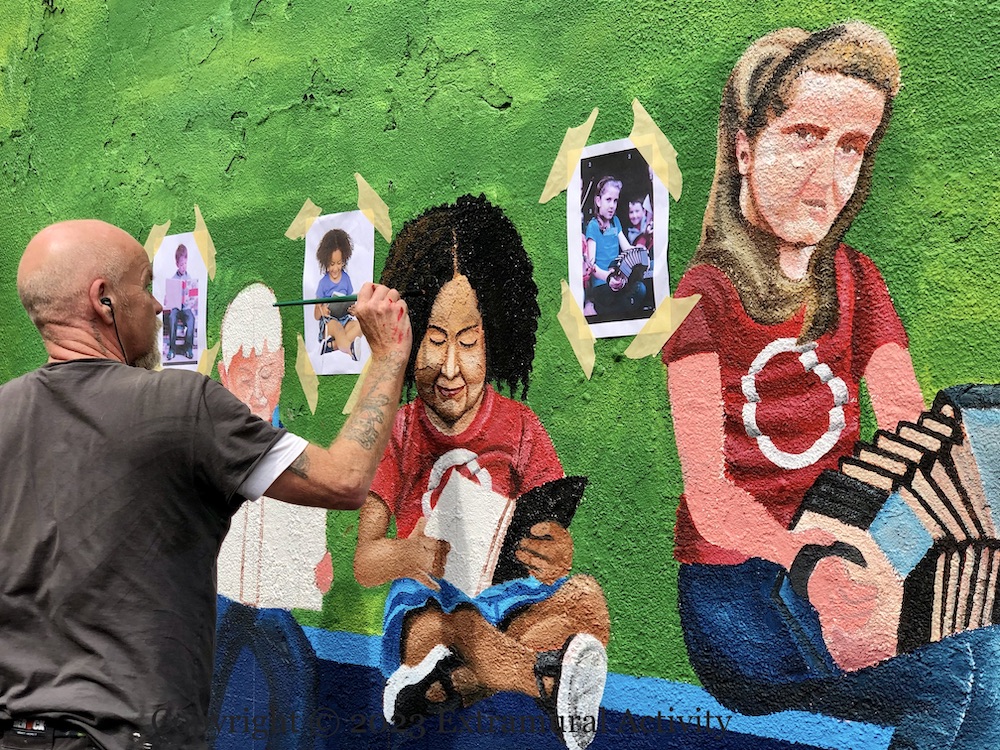
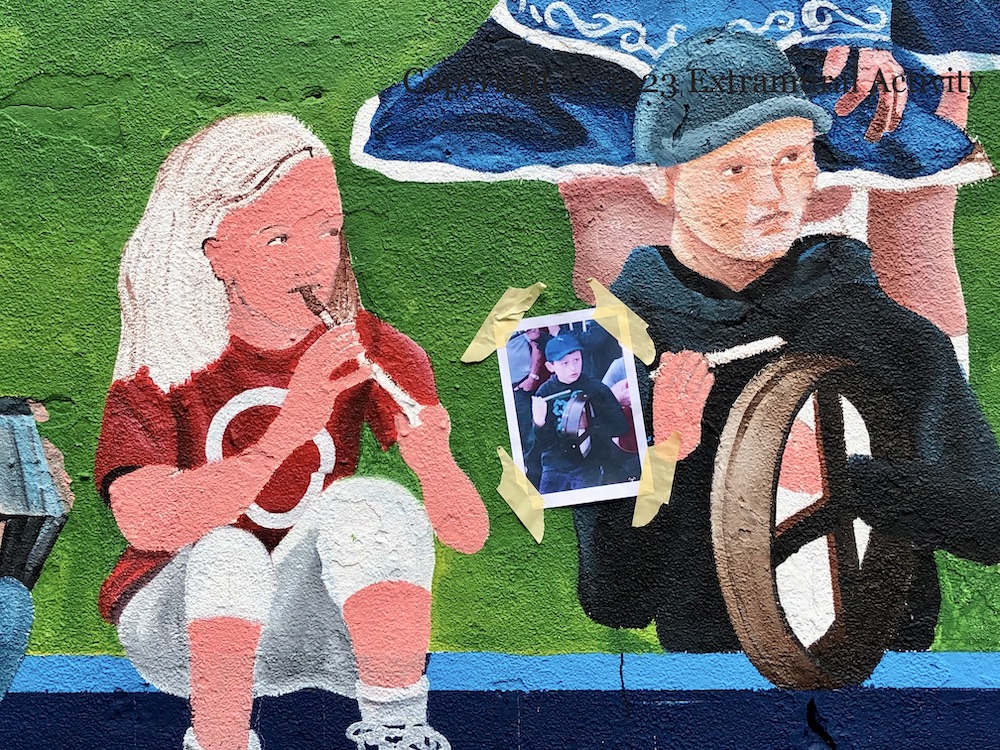
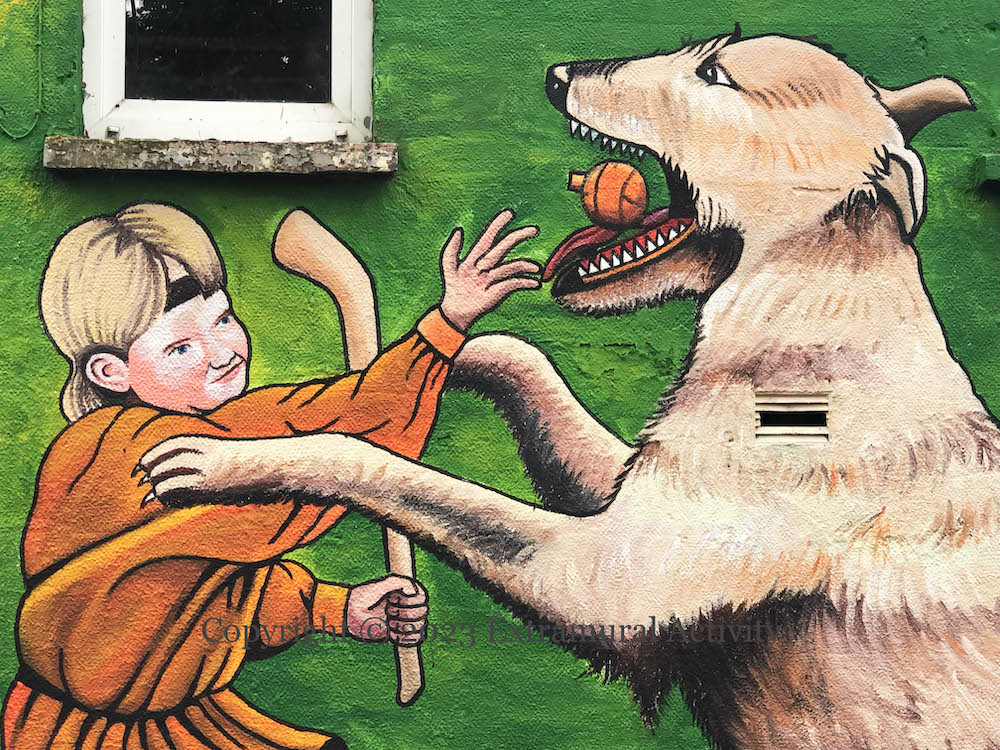
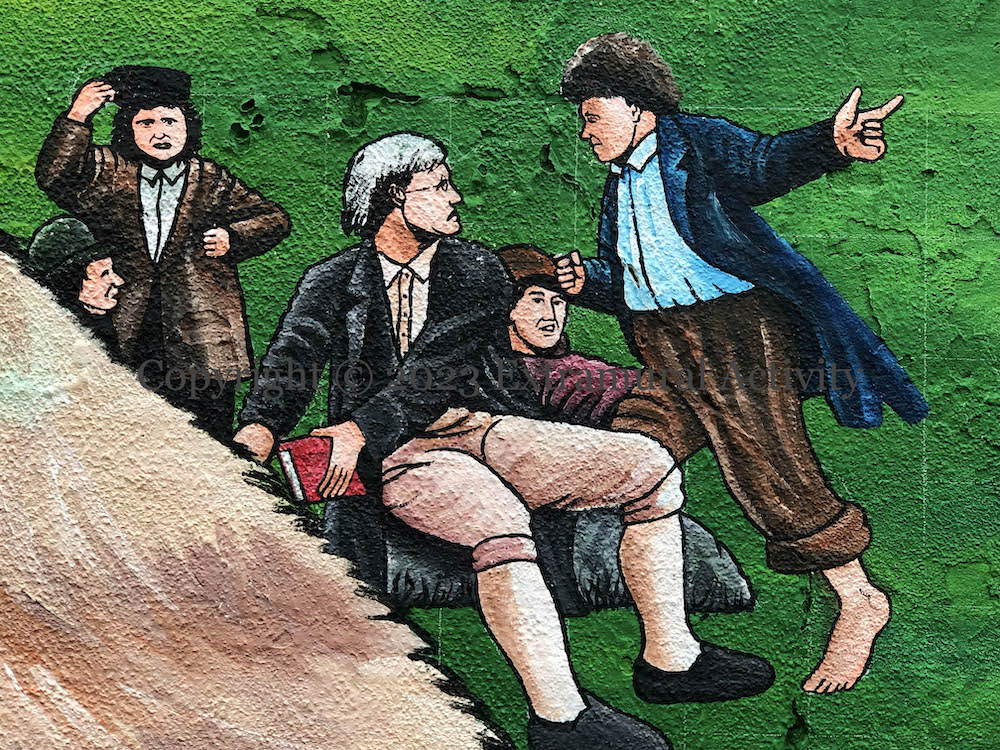
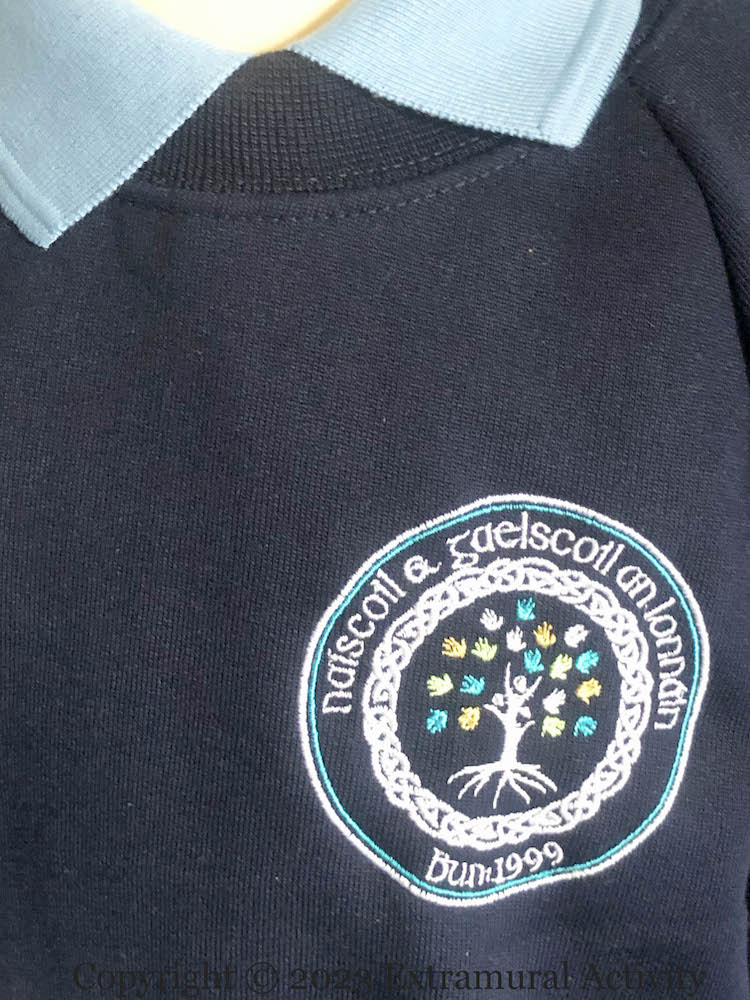
Students from “Naíscoıl & Gaelscoıl An Lonnáın (Fb) bun[aithe] 1999″ [Nursery-school and Irish-language [primary] school of the loney, founded 1999] are shown playing Gaelic games, Irish dancing, and playing traditional instruments (and the guitar). On the left are representations from Irish mythology: the Children Of Lear and Setanta killing Culann’s hound (and taking the name Cú Chulaınn in taking its place), along with hedge-row school (see Hedge Row School).
The origin of the name is unclear; the nearest loney [lane] was the “Pound” loney, so-called because of the animal pen just outside Barrack Street, used to store livestock before moving on to the markets the following day (Rushlight | Uachtar Na bhFál). (The Pound Loney is included in the mural in Durham Street – see Et In Arcadia Ego.)
The other well-known loney in Belfast is the “buttermilk loney” which was either/both what is now Ballysillan Park (that is, connecting Olpark with the horsehoe bend) or the top part of the loney that connected Wheatfield (the top of Ardoyne) to the Ligoniel junction and on towards the old Ligoneil House (there are a mixture of usages in this Belfast Forum thread); this image from the 1930s might show the lane in (what was still at the time) the hills above Oldpark; a new housing-development towards the top of the Ballysillan Park is euphemistically called “Buttermilk Loney”. (It is also said to have been a prior name of Skegoniell Avenue (Belfast History).)
(The Uachtar Na bhFál page also mentions “Turf” loney, “Mountain” loney, and “Killoney”.)
The history of the Irish word “lonnán” is unclear. Uachtar na bhFál says the word is of Scots origin (perhaps as “loanin”). (See this BelTel article on the opening of the Ulster-Scots centre in 2014.) Spelled “lonnen”, it is also a Geordie word (Heslop’s Northumberland Words | wiktionary). The Irish News and Belfast Live, working from the same (uncited) press-release about Páırc An Lonnáın (which is along the Westlink below Raıdıó Fáılte), state that “loney” comes from the English word “loaning”. The Irish word “lonnán” does not appear in Dinneen 1904; Dinneen 1953 defines it (hyper-specifically) as “a grassy recess running up into high basaltic cliffs”.
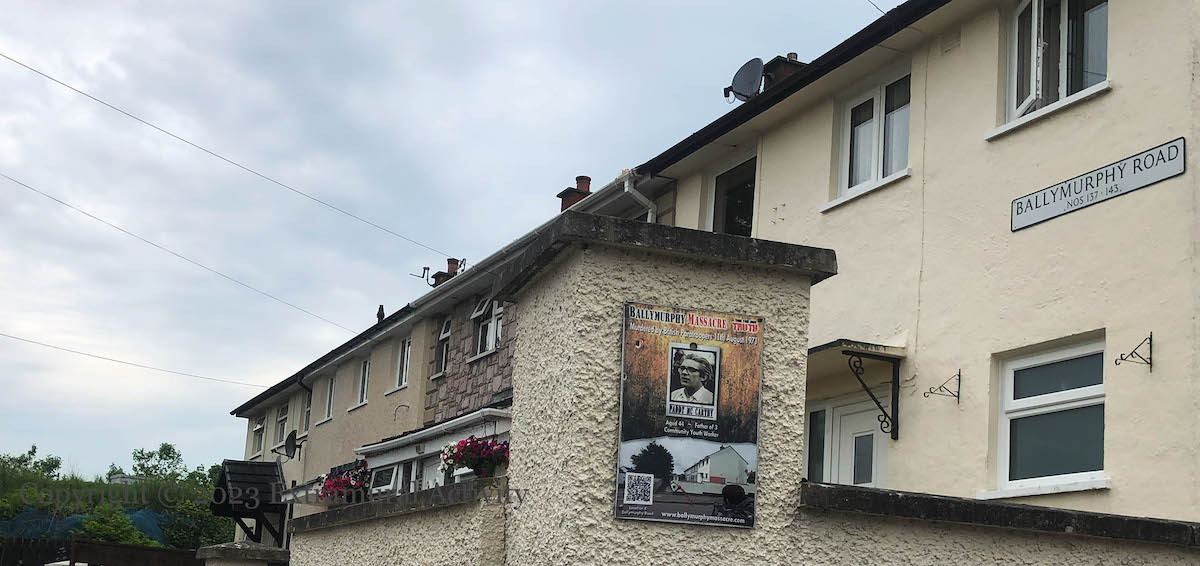
London social-worker Paddy McCarthy took a job at the Ballymurphy Tenants’ Association in west Belfast in 1970. On August 11th, 1971, he tried to broker a ceasefire and evacuation of children from Ballymurphy, where a curfew had been imposed after the introduction of internment. He carried a Red Cross flag but was shot in the hand. He regrouped and then tried to distribute milk to families, but was stopped by two soldiers who either fired over his head or put an unloaded gun in his mouth and pulled the trigger. He died of a heart attack. (Belfast Media | WP | Ballymurphy Massacre | Ballymurphy And The Irish War, written by one of McCarthy’s successors, Ciarán De Baróid, who came to work for the BTA in 1972 – Belfast Media)
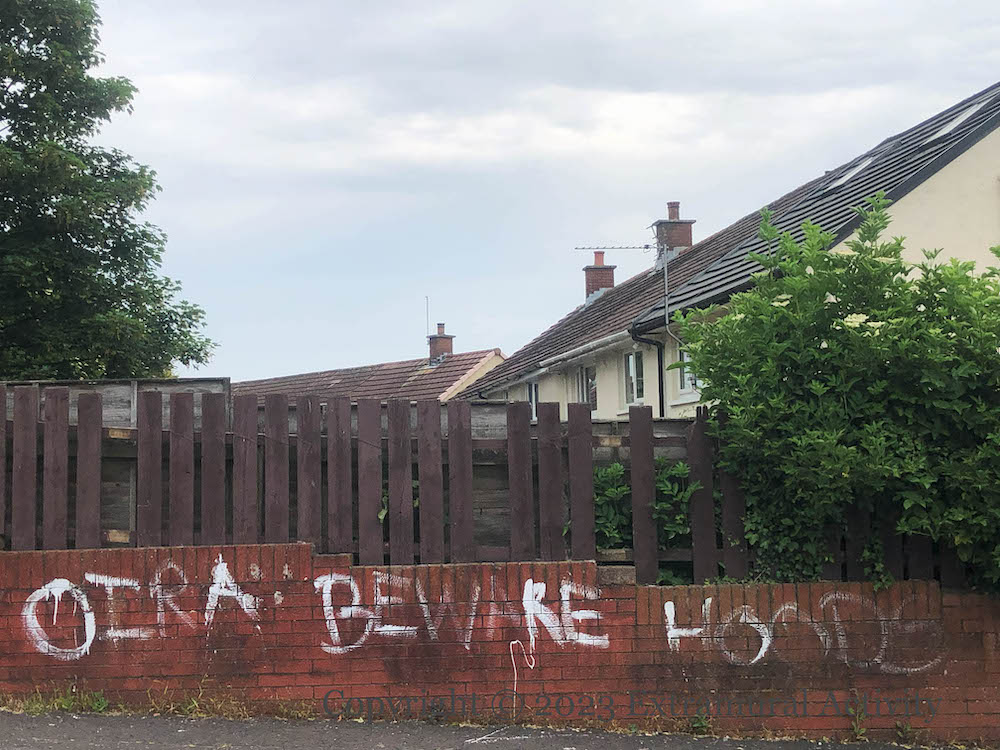
The memorial plaque is in Ballymurphy Road, as is the graffiti below: “OIRA [-] Beware hoods.”
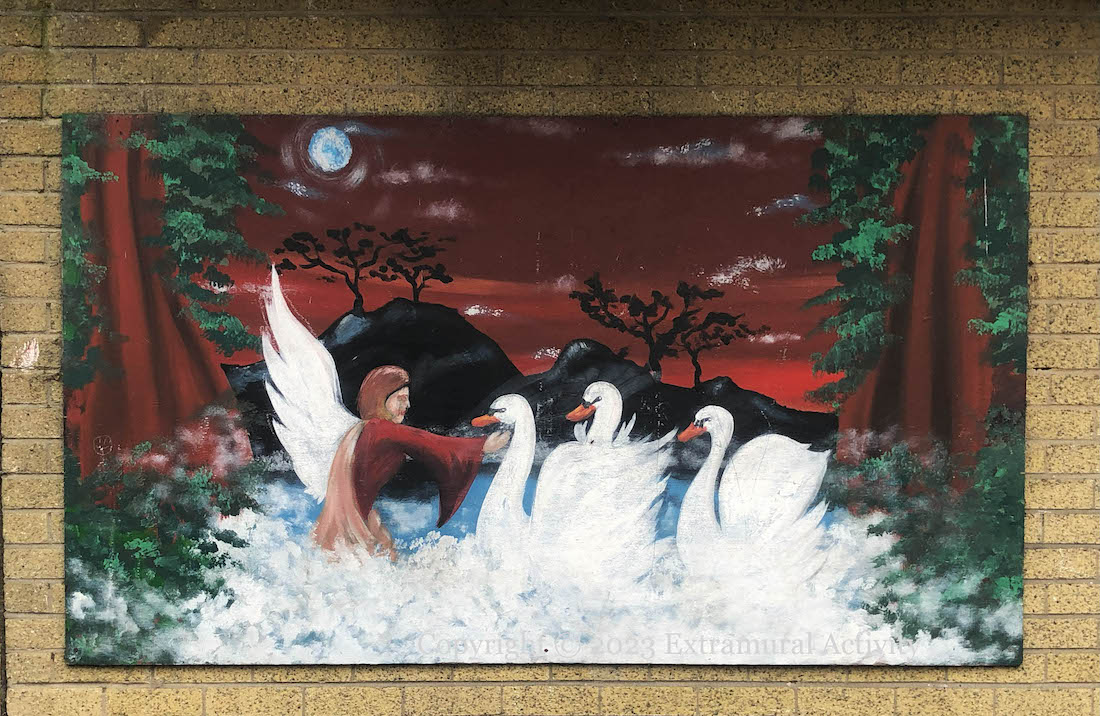
Here are two panels from the front yard of Gaelscoıl An Lonnáın (which recently acquired a new mural).
Above, Lear’s four children are turned into long-living, singing swans by their jealous step-mother Aoıfe, and are restored 900 years later to human form by the pealing of a chapel bell and the touch of a Christian monk. For more on the myth, see The Children Of Lear (and also the story of the mermaid Lí Ban in Sea-Born).
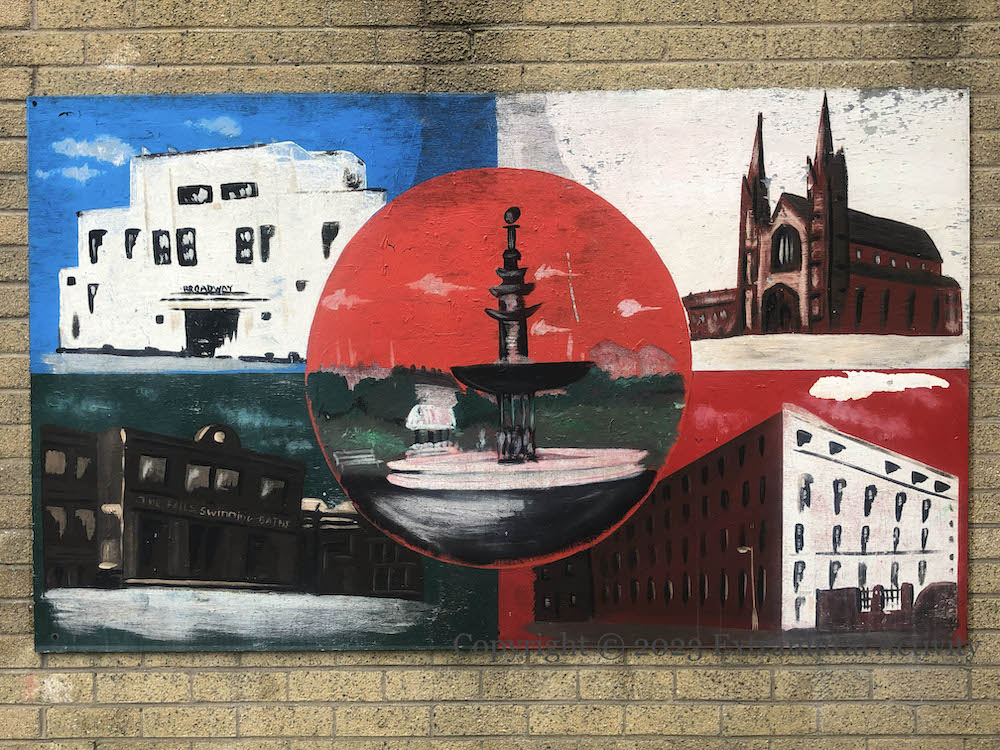
Below, a compilation of local landmarks: Broadway cinema (see At The Pictures), St Peter’s pro-cathedral (see Mysterious Ways), Conway mill (see The Mill), the Corporation Public Baths (and swimming pool), later the Falls Road Public Baths, and here called “The Falls Swimming Baths” (for a reminiscence of the baths, see Belfast History), and the fountain in Dunville Park. The cinema is no more; the baths have been replaced by a leisure centre; the mill stands but functions as a cultural centre.
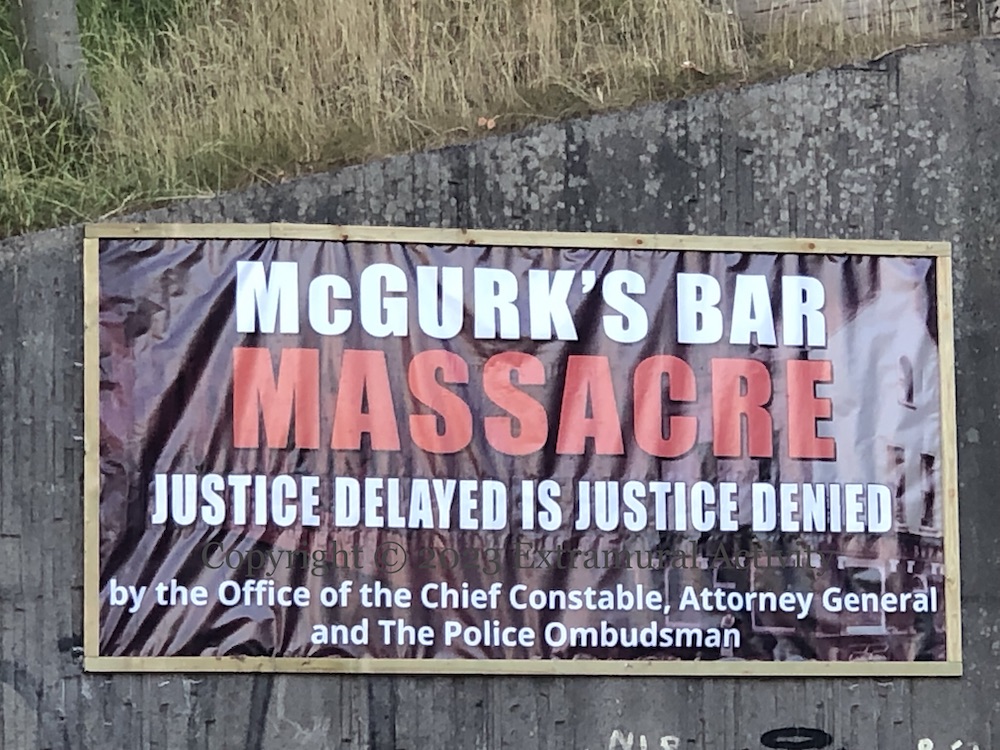
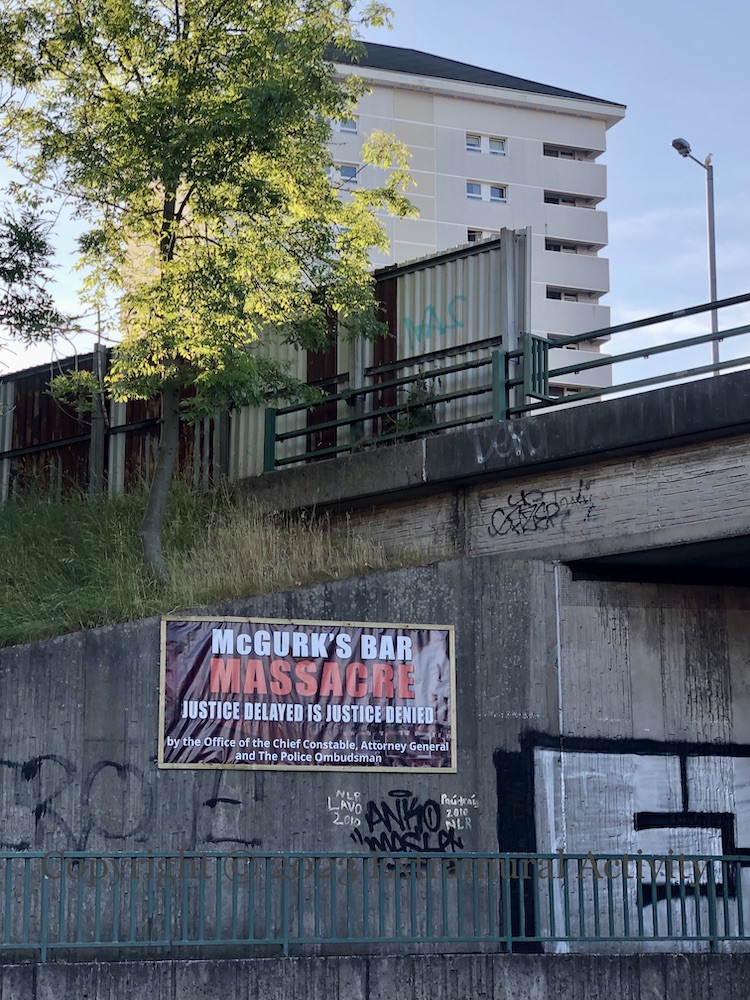
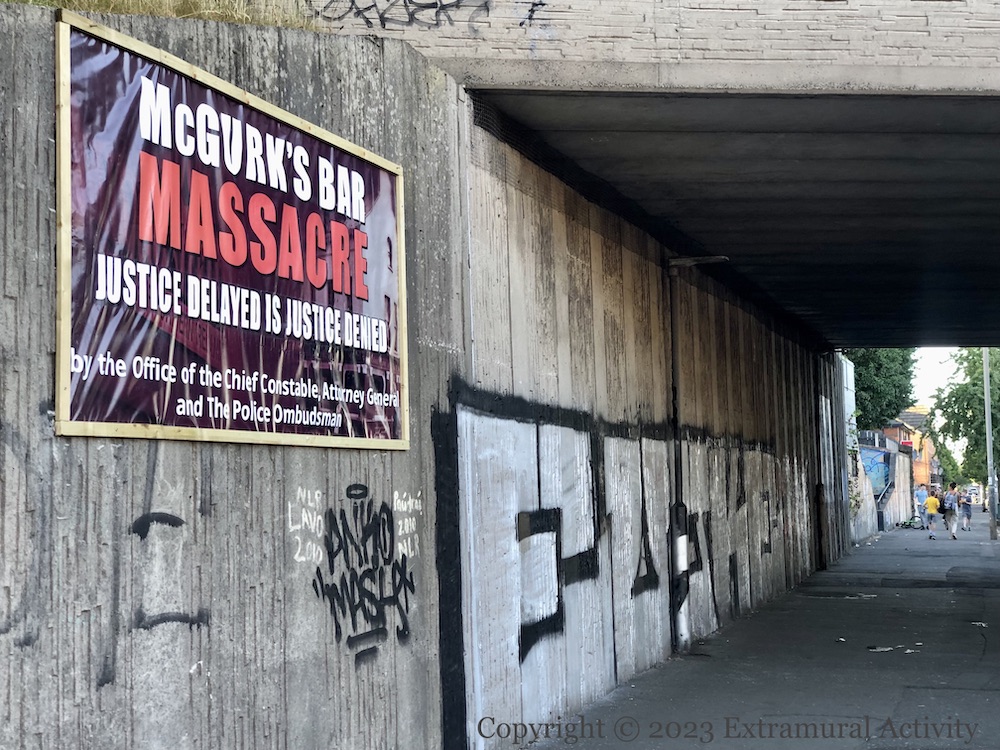
“Justice delayed is justice denied by the Office of the Chief Constable, Attorney General and The Police Ombudsman.” McGurk’s bar was bombed in December, 1971, causing the death of 15 people. At the time, the security forces maintained that the bomb was left by someone from the IRA for later collection and that the pub was affiliated with the IRA, despite the fact that a loyalist group claimed responsibility and a witness saw the bomb being planted a few moments before it went off. Among those repeating the “own goal” story was Brigadier Frank Kitson (McGurk’s Bar twitter | BelTel), who was recently named in a Derry mural in connection with Bloody Sunday – see From The Top Down.
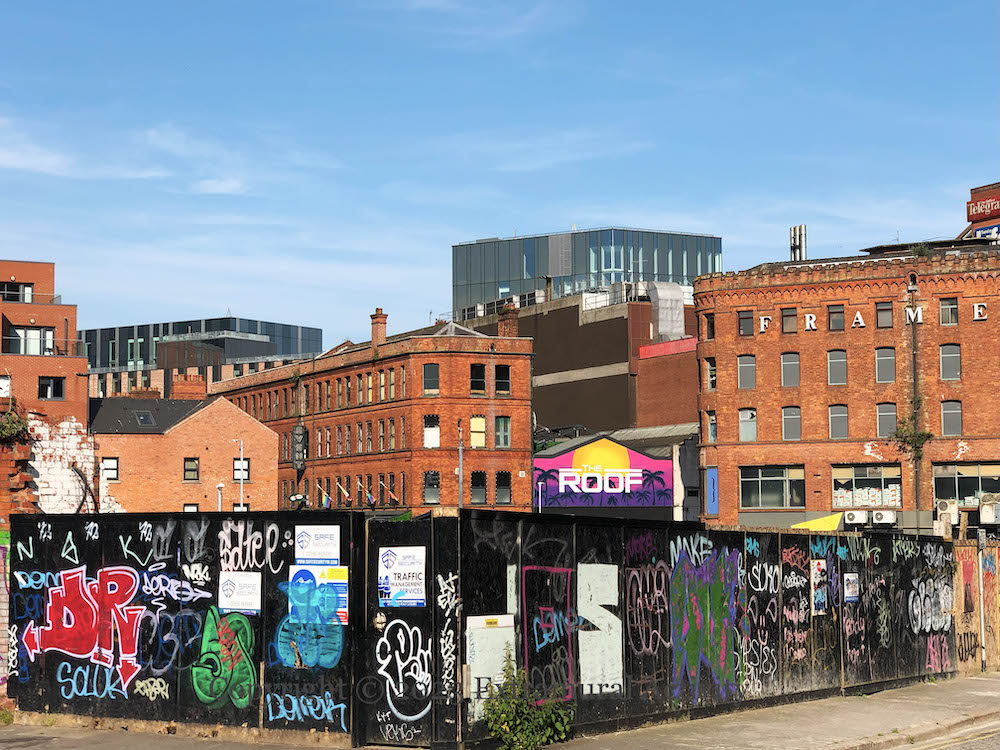
The Roof is the rooftop bar of the Union Street Bar. “The Roof” is by Visual Waste (ig) on the Little Donegall Street side of the bar. The photo was taken from the junction of Stephen and Library streets.
The Ru Paul mural in the space below — seen in Sashay Away — has been blacked out.
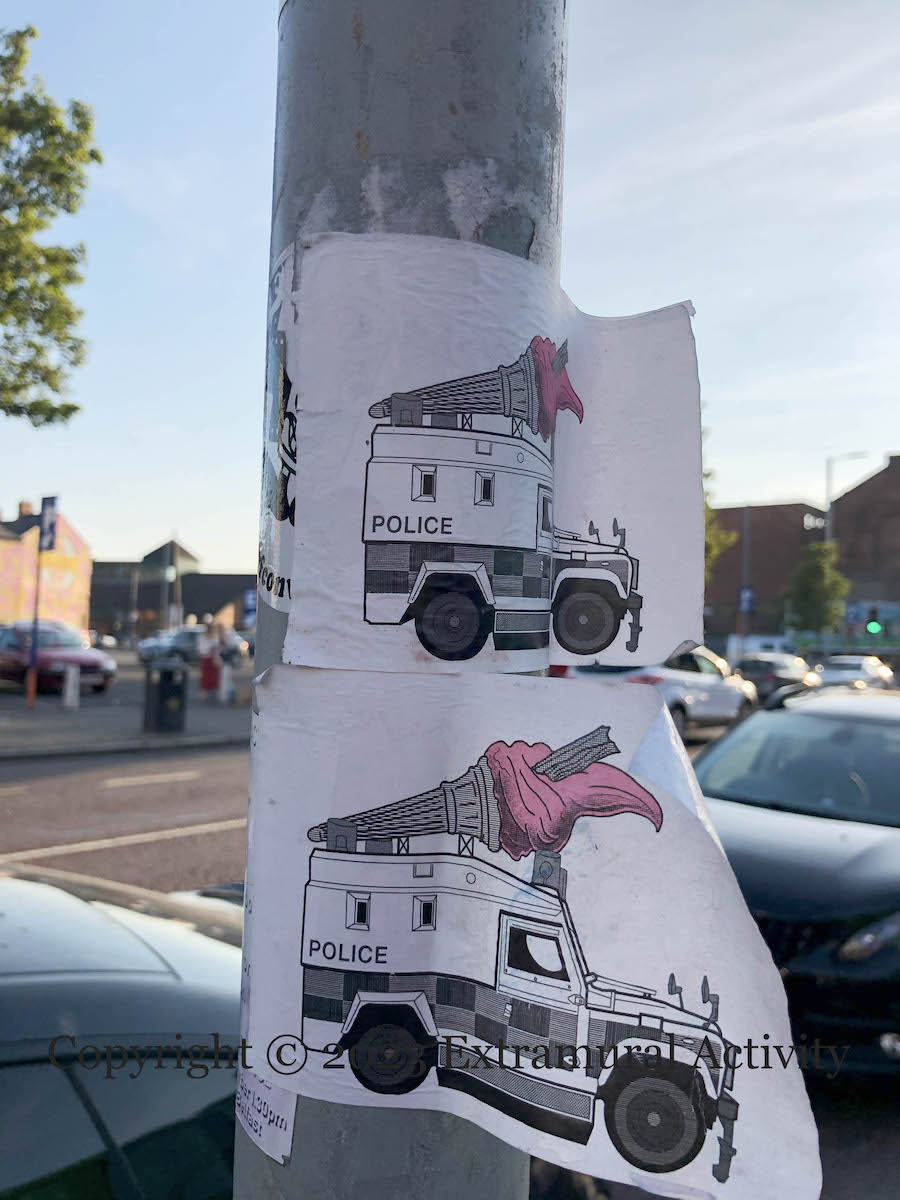
A couple of Leo Boyd (ig) paste-ups of his PSNIce-Cream land-rover (previously a mural in Kent St) are peeling off the pole in North Street, perhaps in part because of the recent warm temperatures.
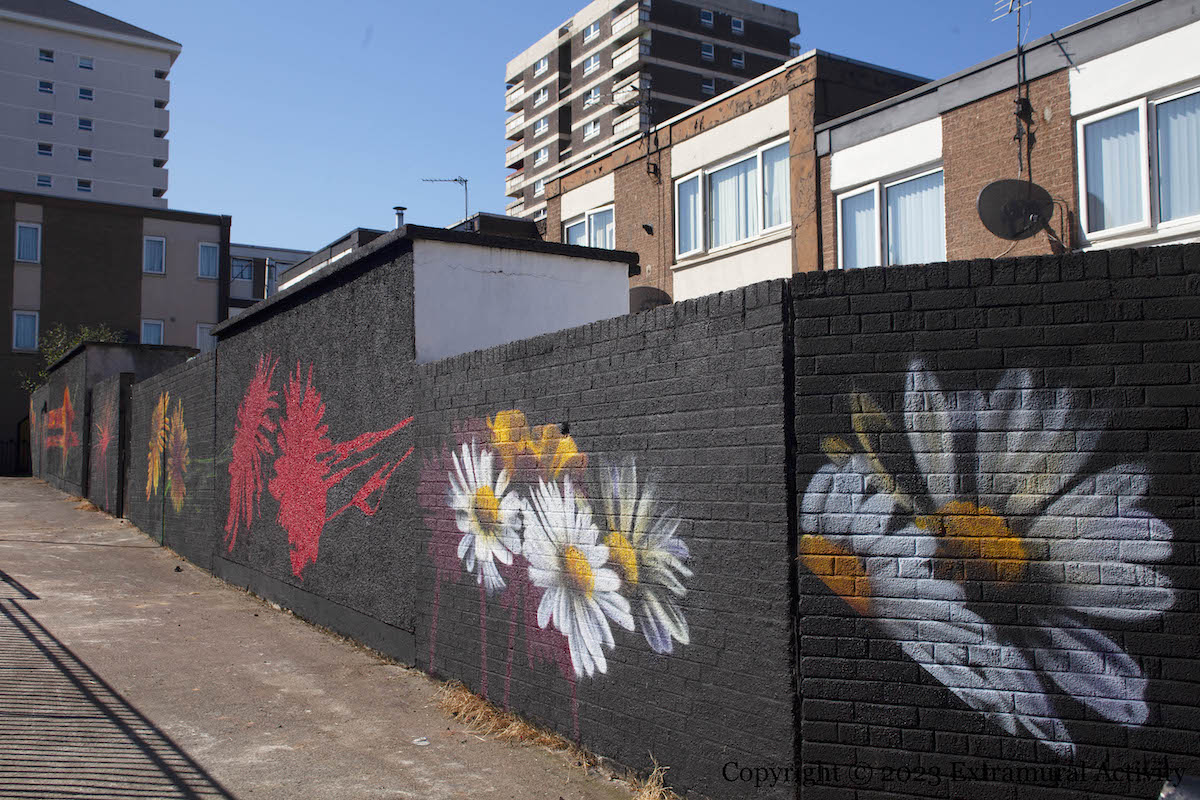
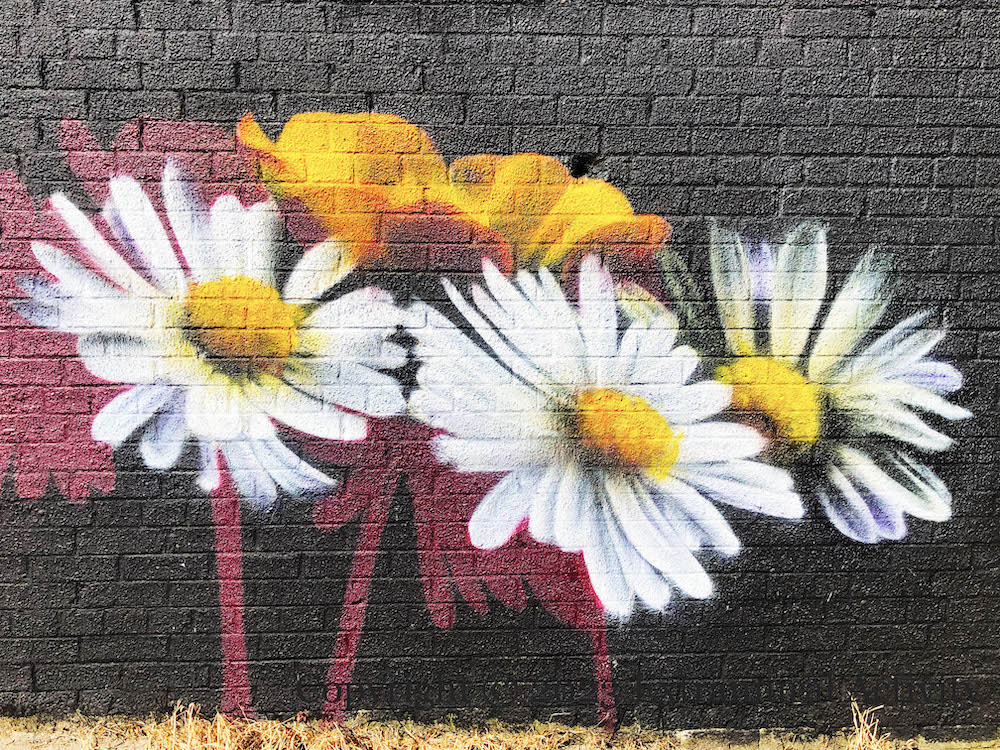
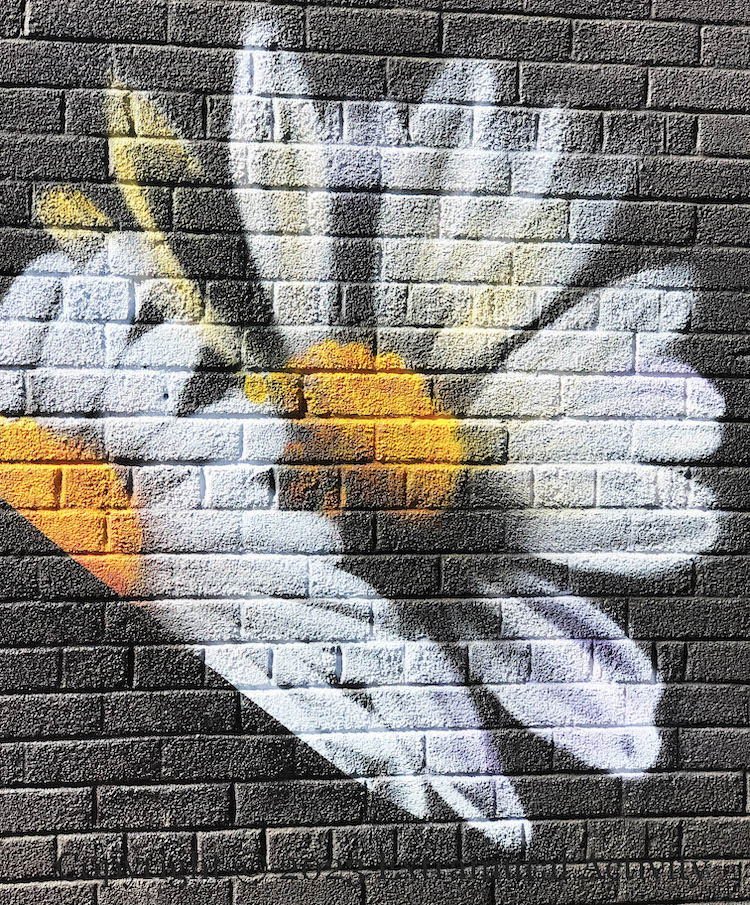
 Seosamh Mac Coille Collection