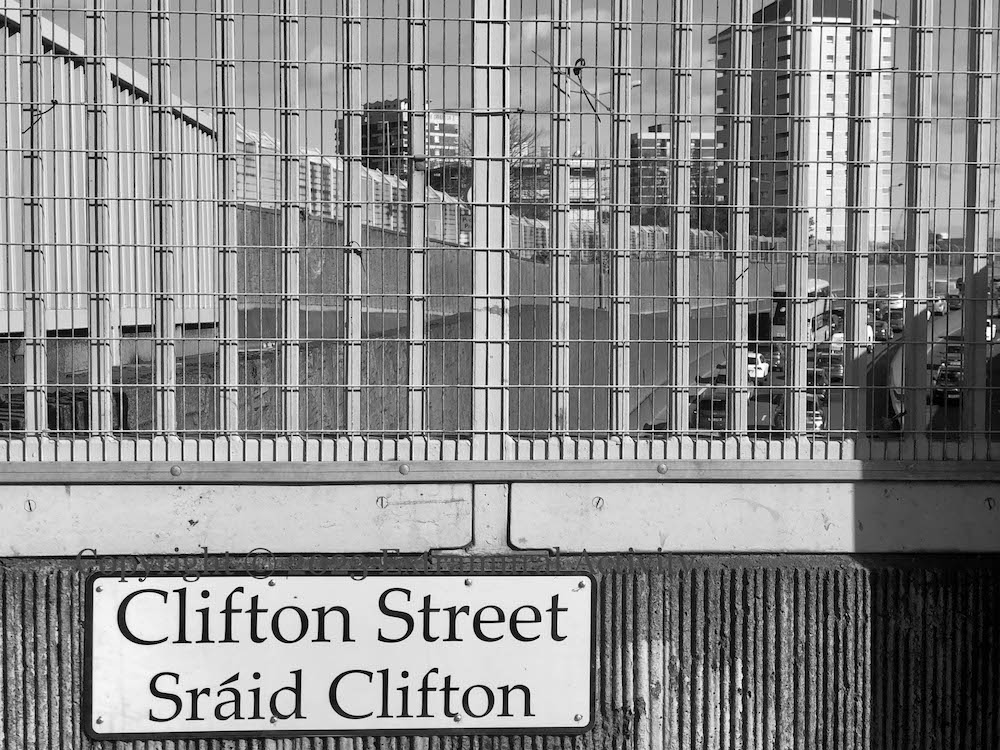
It is a year since the new policy on bilingual street signs was made public; by September there had been 500 applications (Belfast Media) but by January of this year no new signs had been erected and 600 applications were awaiting decision (Belfast Live | Irish News from Feb). One new sign – shown here – was erected in February on Clifton Street (Belfast Media).
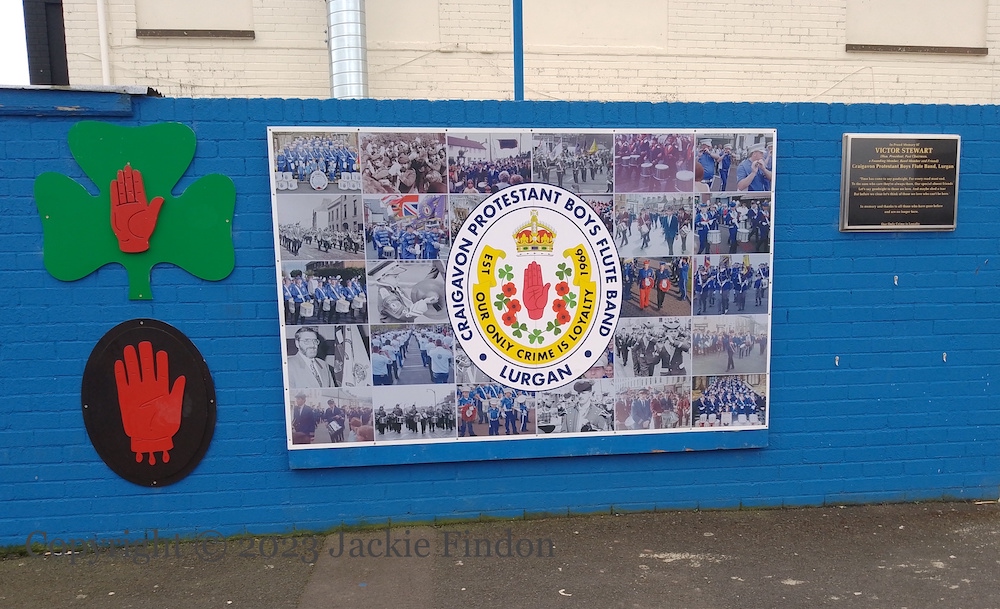
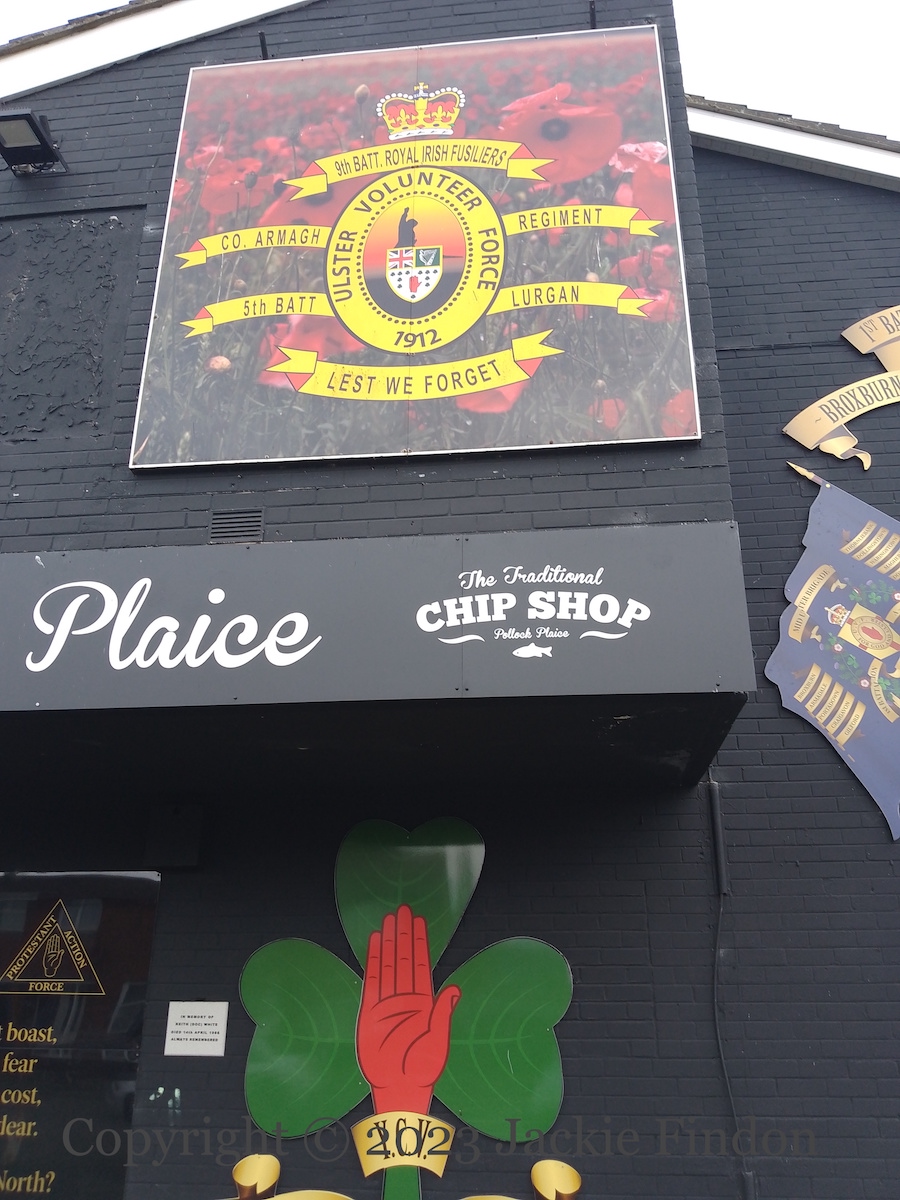
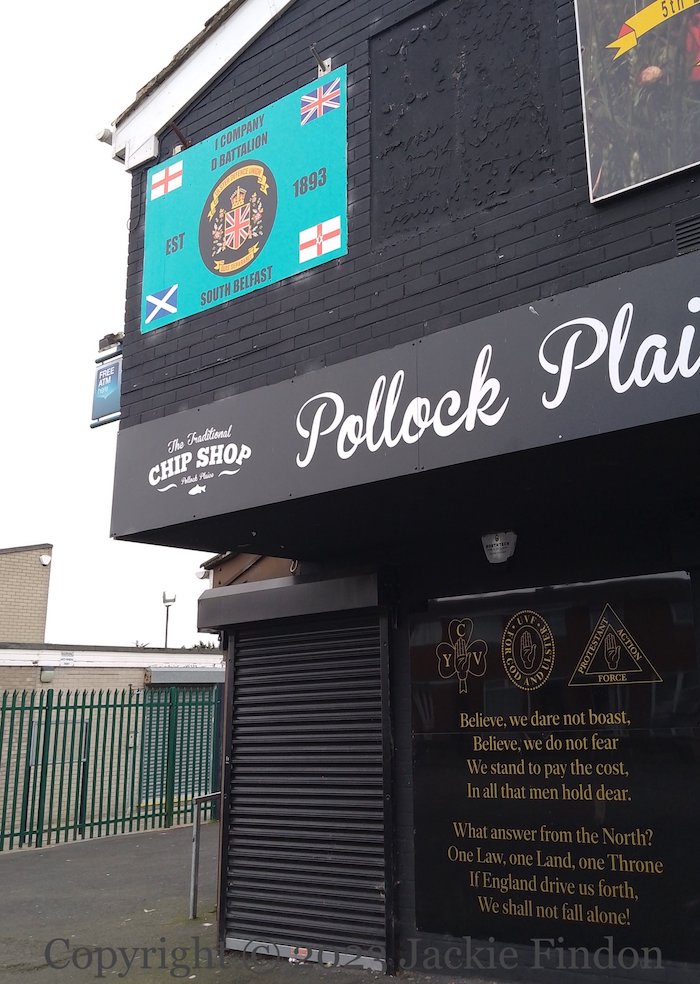
These are the boards at the chip shop (formerly a Spar and before that a Mace) in the centre of the Mourneview estate, Lurgan.
Above, in Mourne Road, a gallery of photographs of the Craigavon Protestant Boys (Fb) past and present, with a plaque in memory of Victor Stewart. “Our only crime is loyalty.”
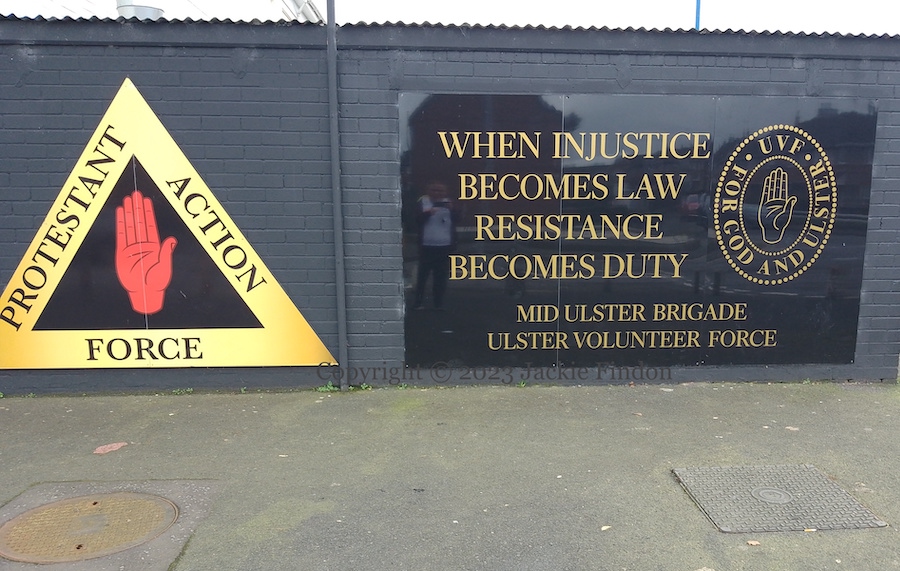
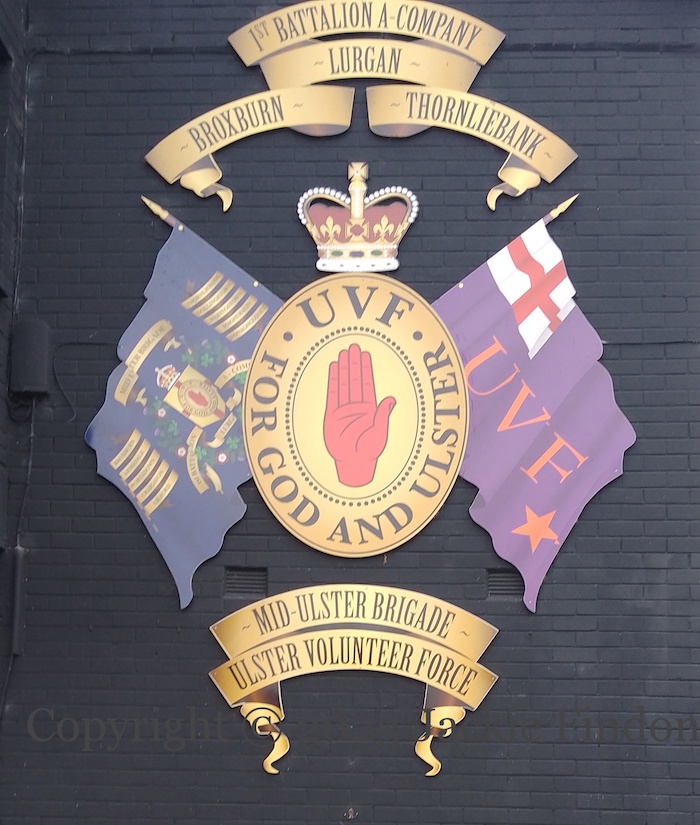
Below are the images from the front of the shop, in Pollock Drive:
First/right: “When injustice becomes law resistance becomes duty.” The same panel was seen in Ballyclare, though for the 1st East Antrim battalion rather than the Mid Ulster brigade.
Next: A company, 1st battalion, Mid Ulster brigade UVF – Lurgan as well as Broxburn (outside Edinburgh) and Thornliebank (near Glasgow).
Next: A tribute to the Ulster Volunteers from the area: the 9th battalion Royal Irish Fusiliers joined the 108th brigade in the 36th (Ulster) Division; the 5th battalion joined the 31st brigade and the 10th (Irish) Division. This board goes back to (at least) 2011.
Next: “Believe, we dare not boast,/Believe, we do not fear/We stand to pay the cost,/In all that men hold dear.//What answer from the North?/One Law, one Land, one Throne/If England drive us forth,/We shall not fall alone!” Kipling’s poem Ulster.
All of the preceding pieces are UVF/PAF, but the last, high up on the left, is a UDU board in the top left of the wall, to 1 company, D battalion, South Belfast.
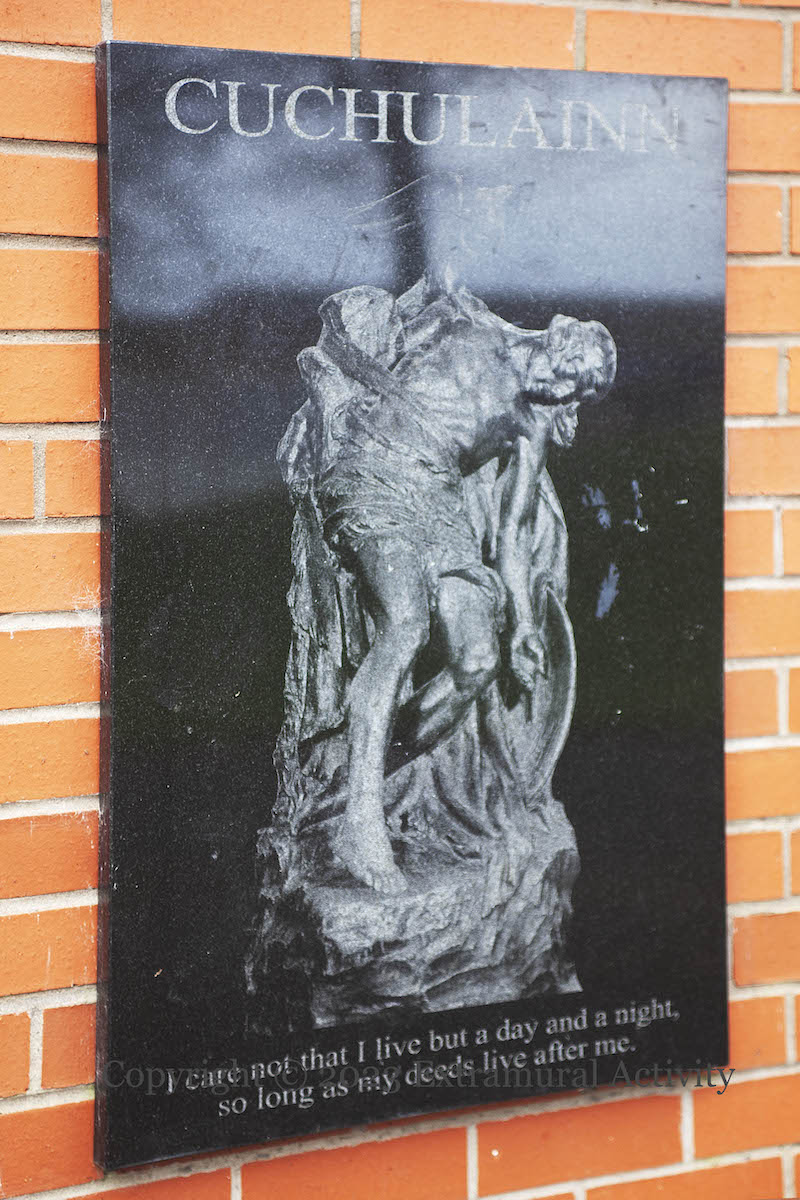
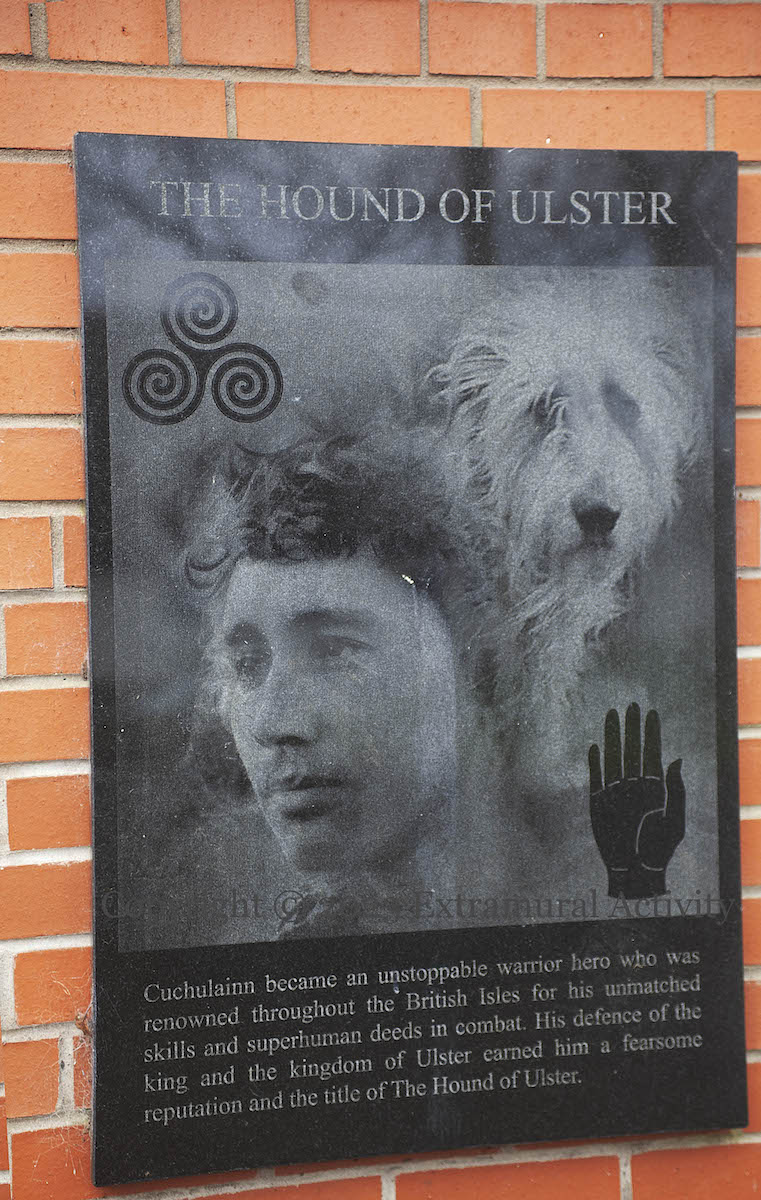
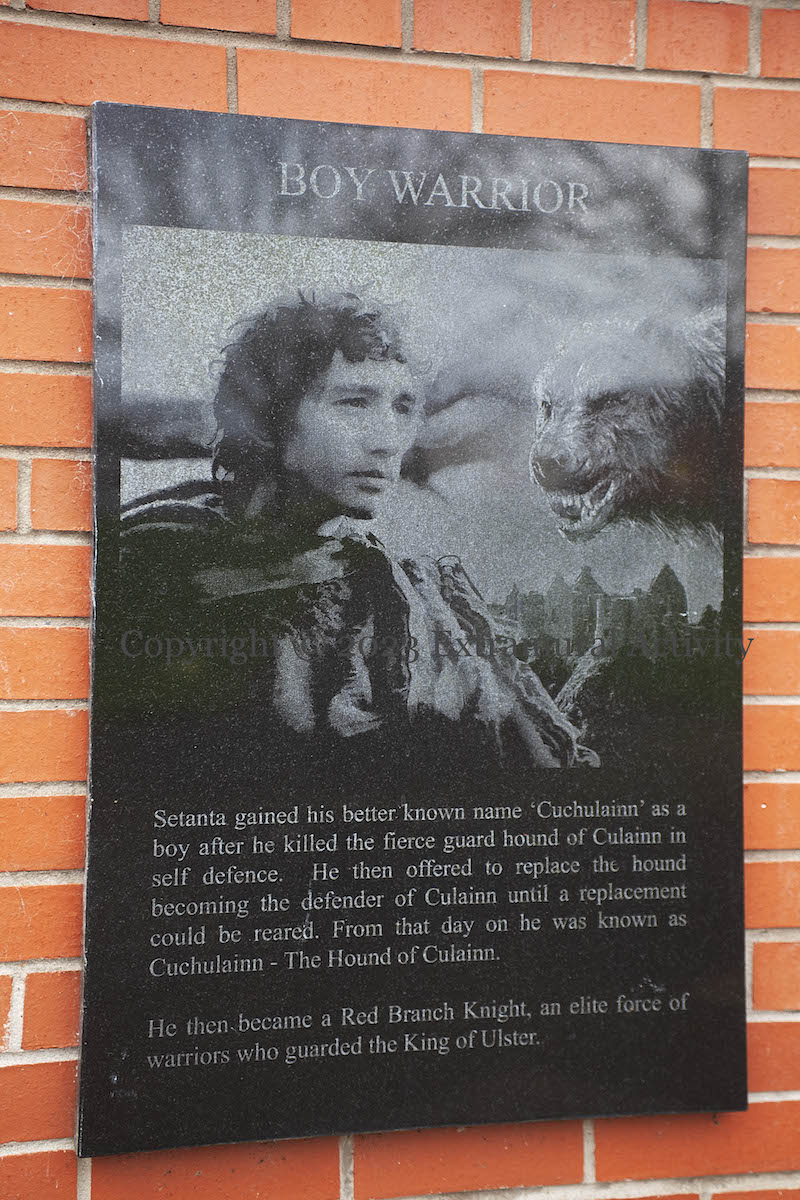
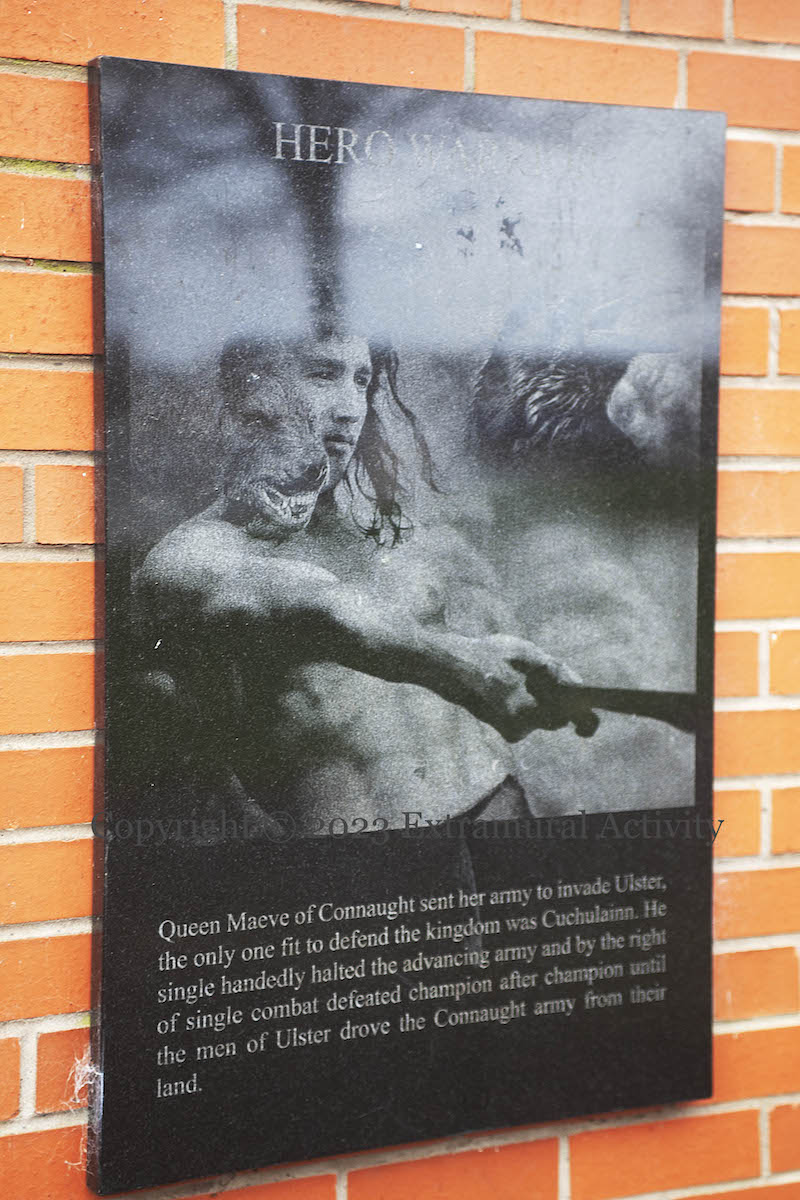
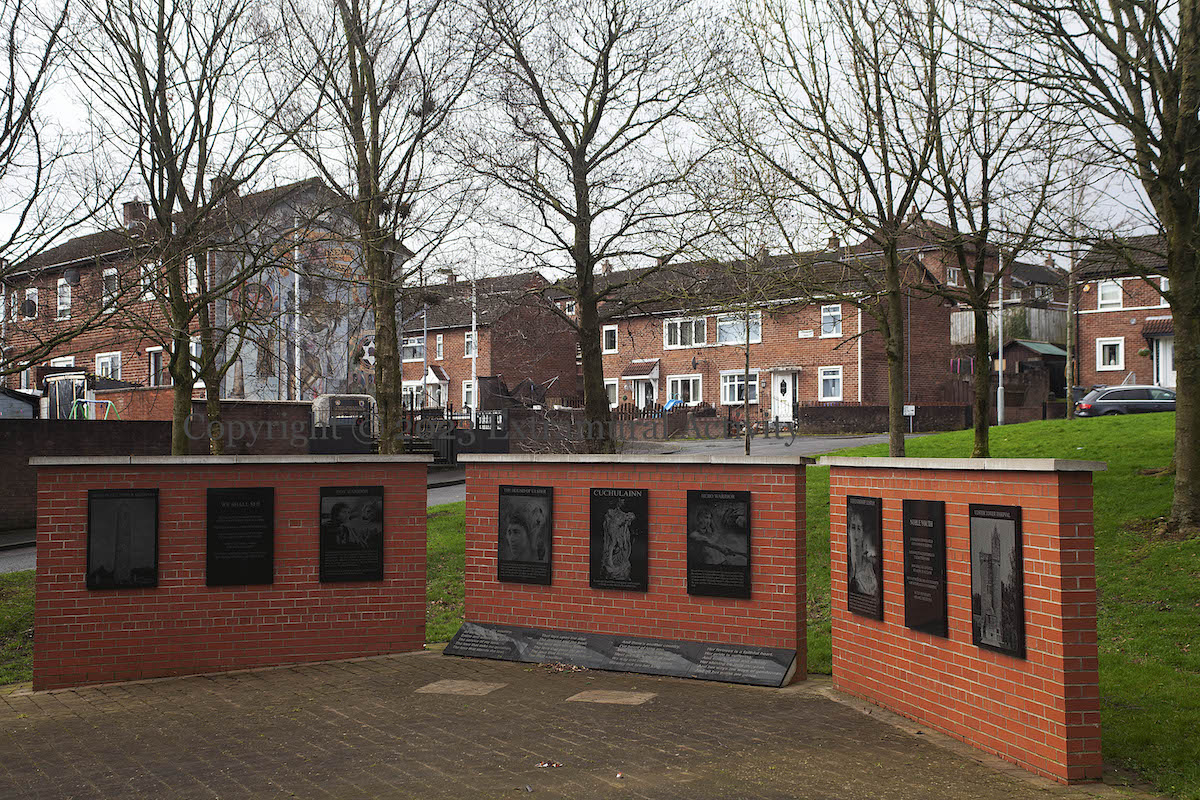
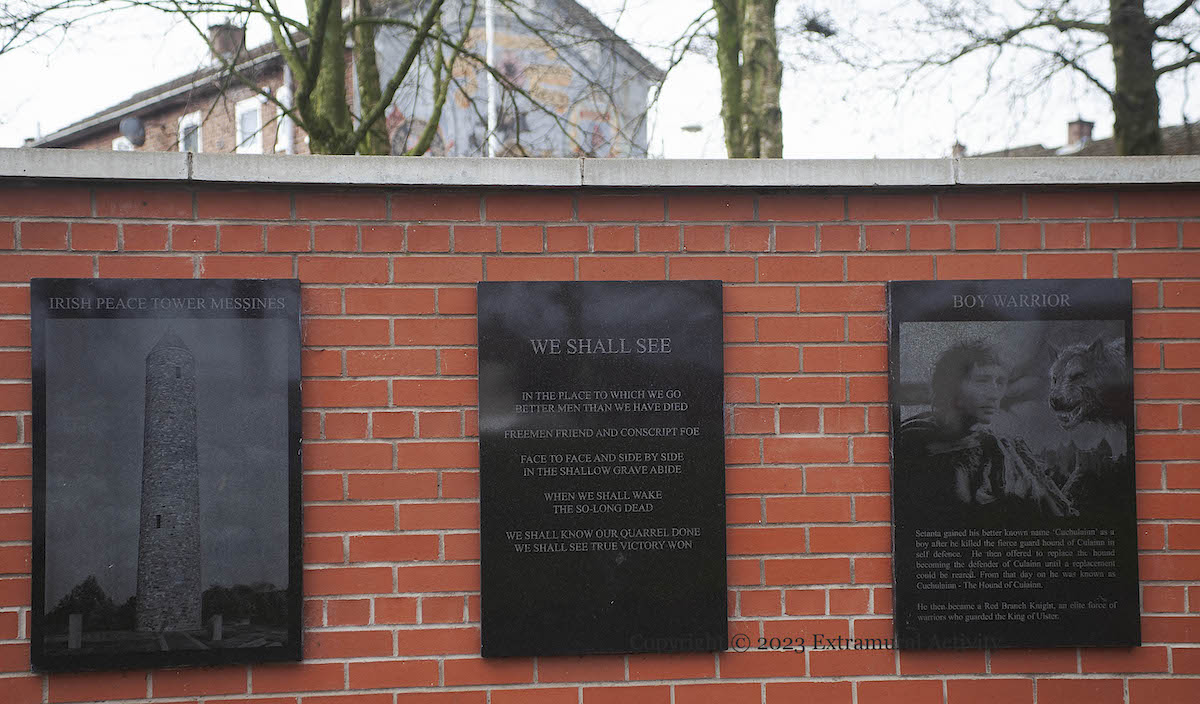
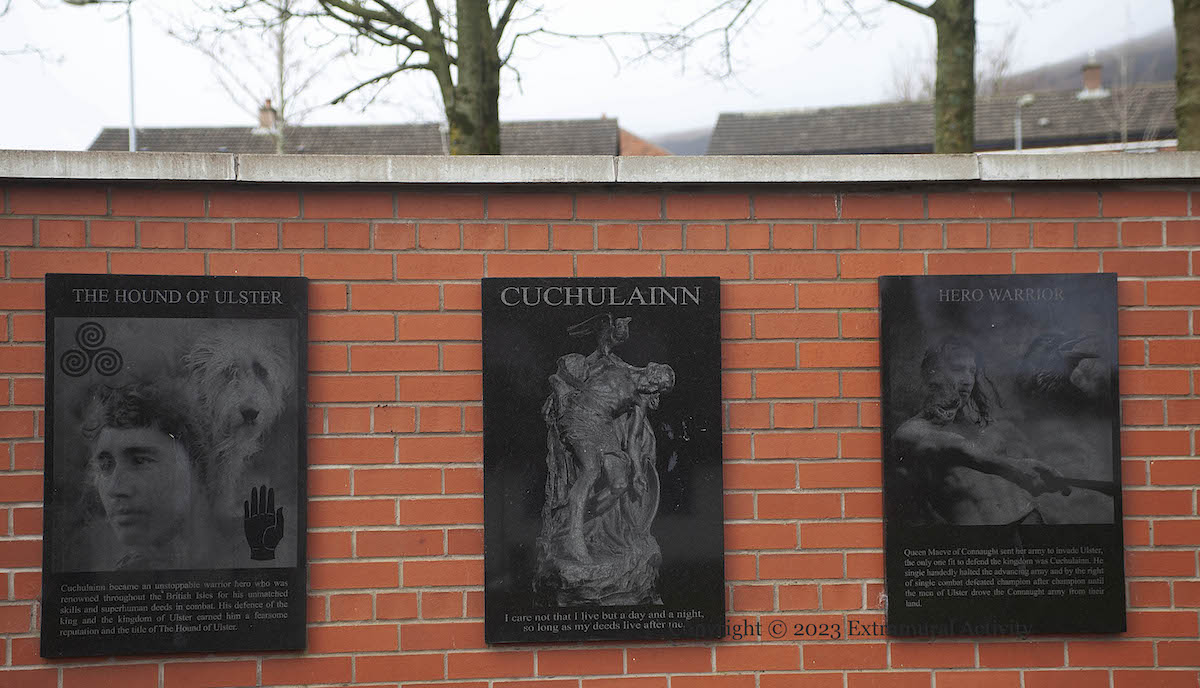
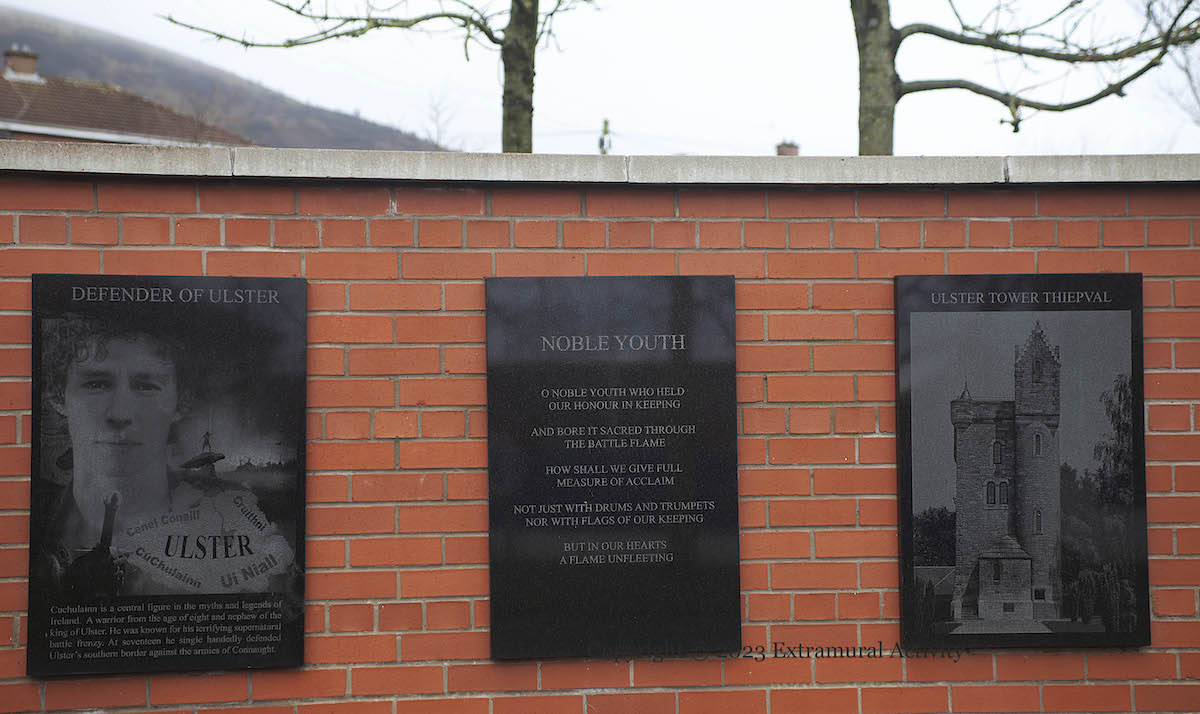
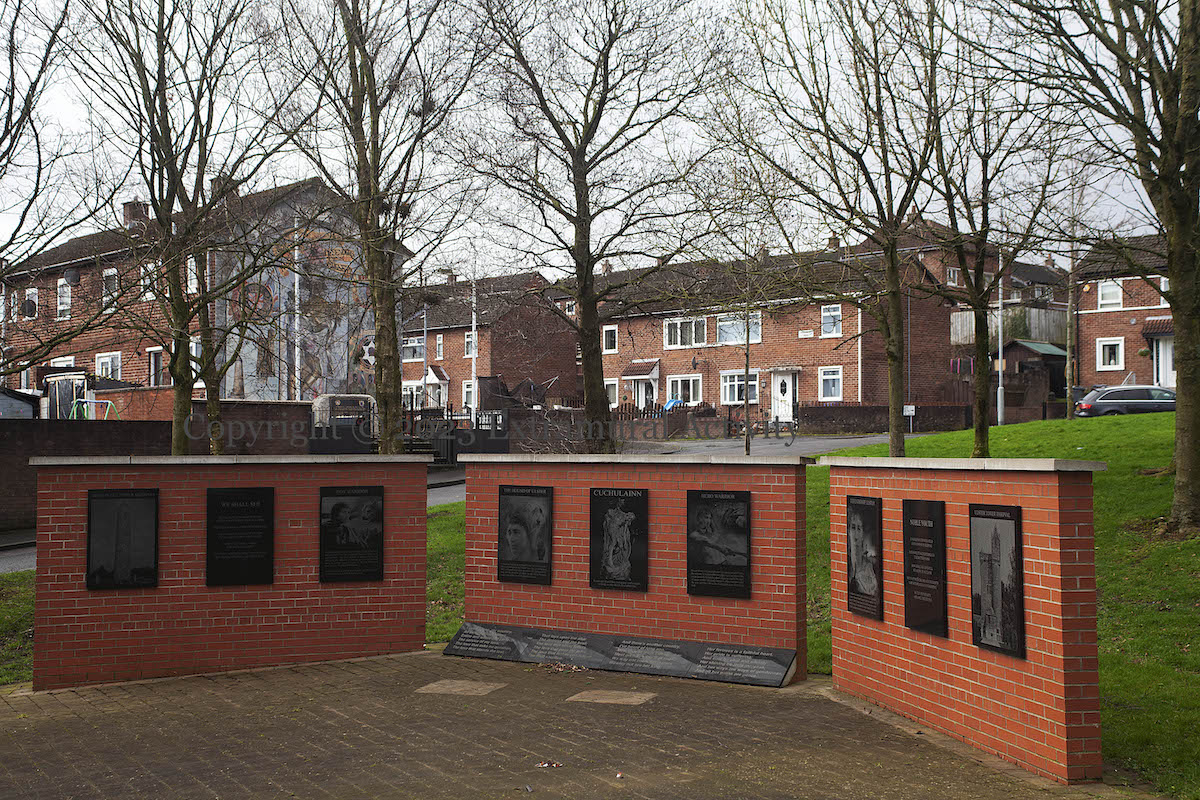
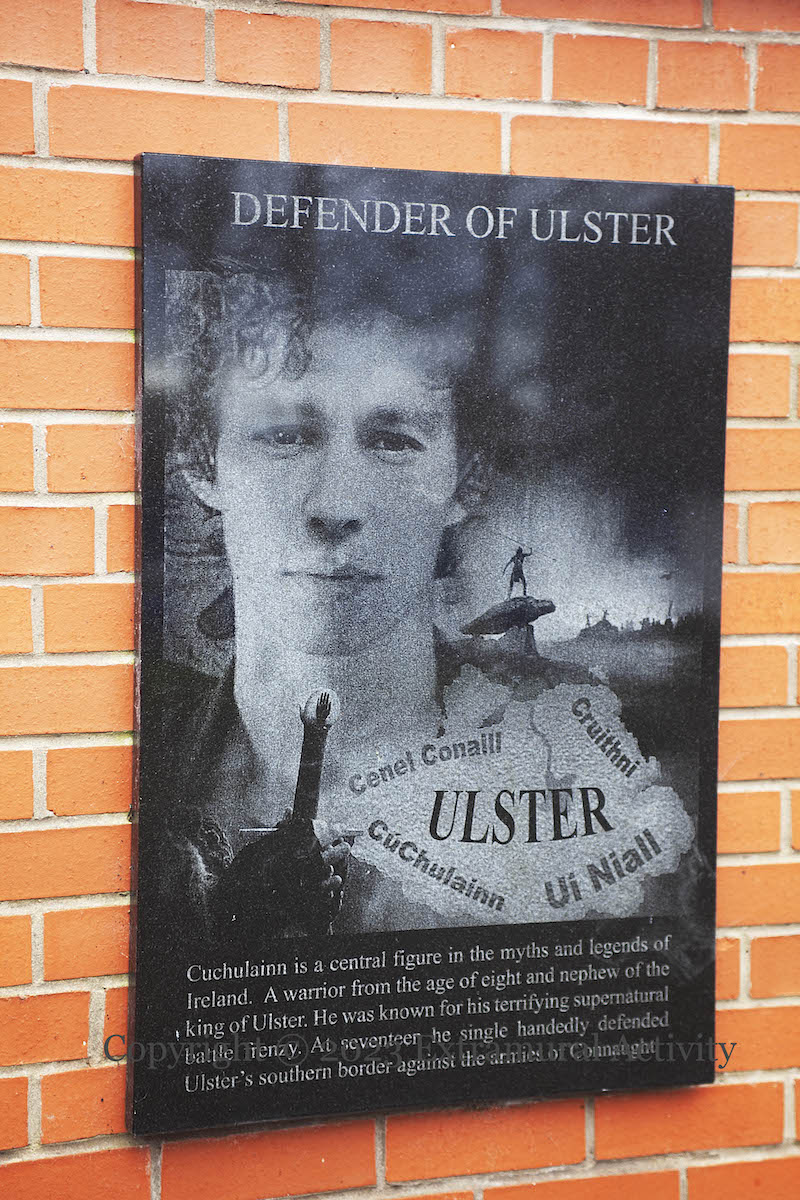
As the Visual History page on the role of Cú Chulaınn makes clear, in PUL muraling and iconography, Cú Chulainn serves as the “ancient defender of Ulster”, and the B Specials, UDR, and loyalist paramilitaries – primarily the UDA but also the UVF – then fit into that tradition. Using Cú Chulaınn as a precursor for service in the Ulster Division of WWI is unique to the panels on Highfield green, five of which are devoted to the hero Cú Chulaınn and four – two on each end – refer to the Great War.
The five Cú Chulaınn panels are (from left to right) Boy Warrior, Hound Of Ulster, Sheppard’s statue, Hero Warrior, and Defender Of Ulster – all shown individually in this post.
On the far left, there are two panels showing Messines tower and a few lines from a Ronald Lewis Carton poem Réveillé (though given a more ‘victorious’ ending) and on the far right, a few lines from Duncan Campbell Scott’s To A Canadian Lad Killed In The War and Thiepval tower. The words to I Vow To Thee My Country (lyrics) are along the bottom (see the wide shot, final image below).
The biographical panels focus on Cú Chulaınn’s age – the sixth panel emphasises that Cú Chulaınn was only 17 when he held off Maeve’s forces – which is perhaps a similarity with those who joined the 36th Division, but how the “defender of Ulster” is connected to the defense of Europe is obscure.
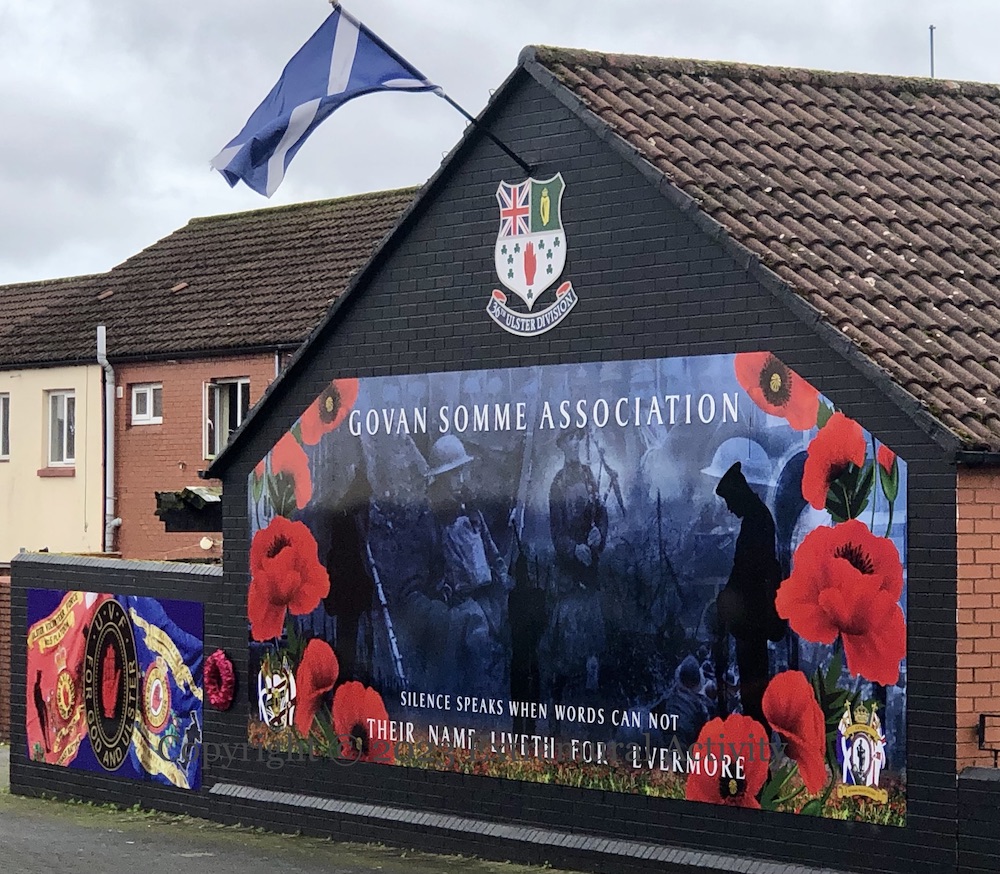
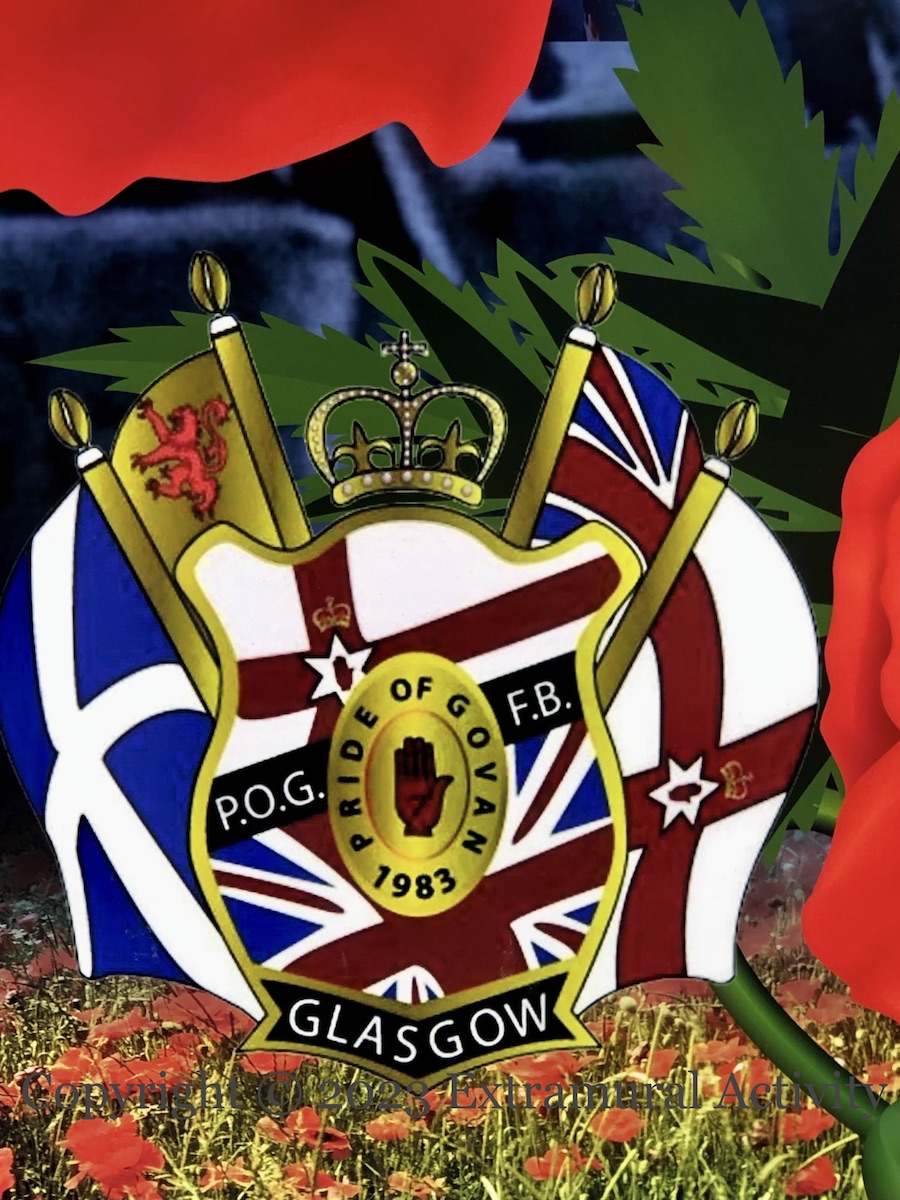
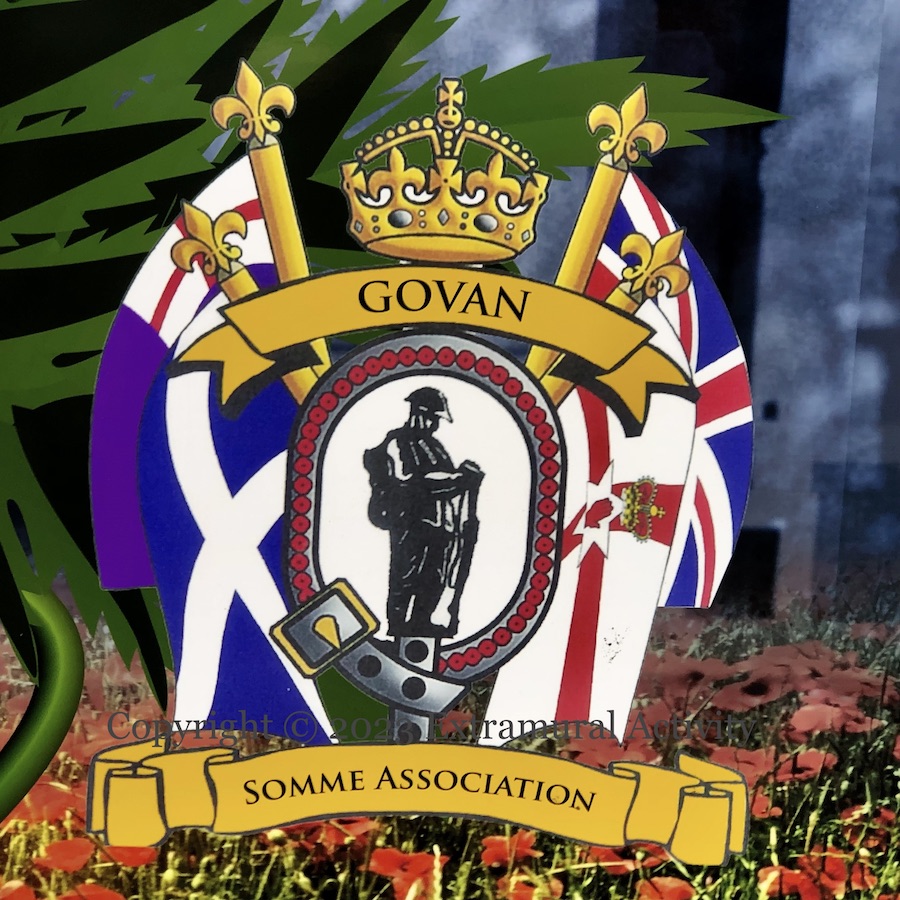
There was previously a (painted) mural on this wall – see Passchendaele Court – but this latest display is a large printed board, with photographs blended together and framed by graveside mourners, poppies, and the emblems of the Pride Of Govan flute band and the Govan Somme Association (Fb), which also supported the previous mural.
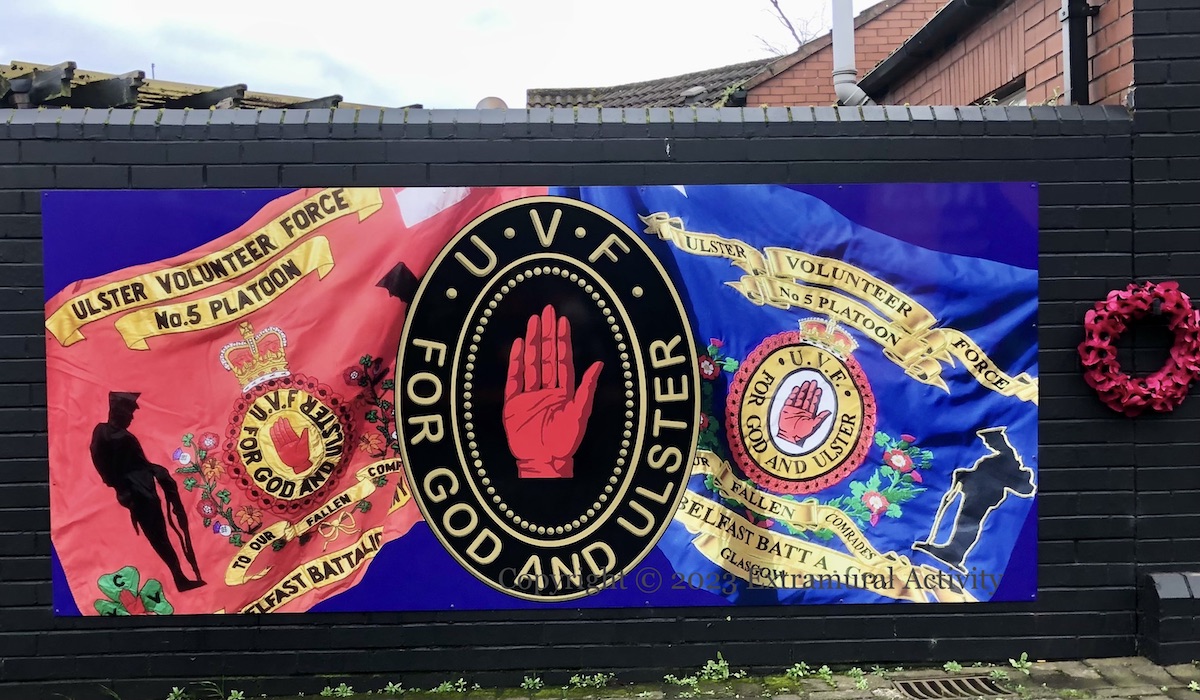
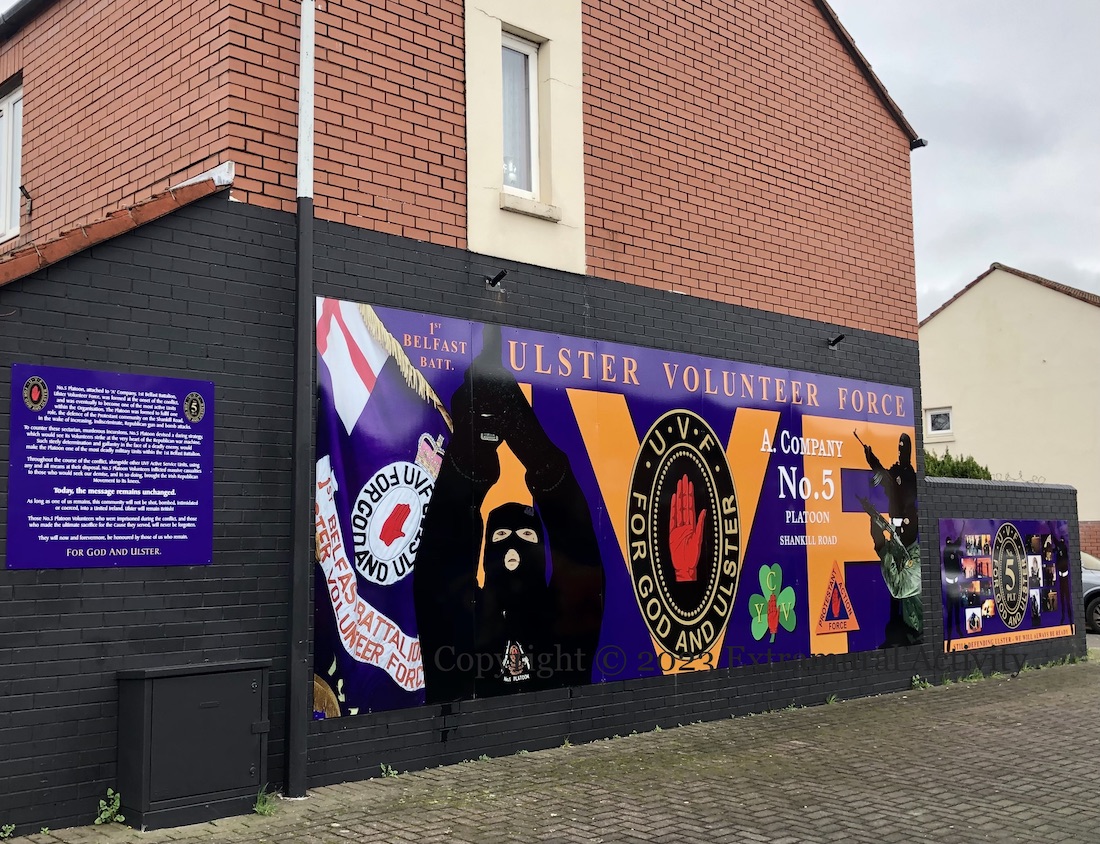
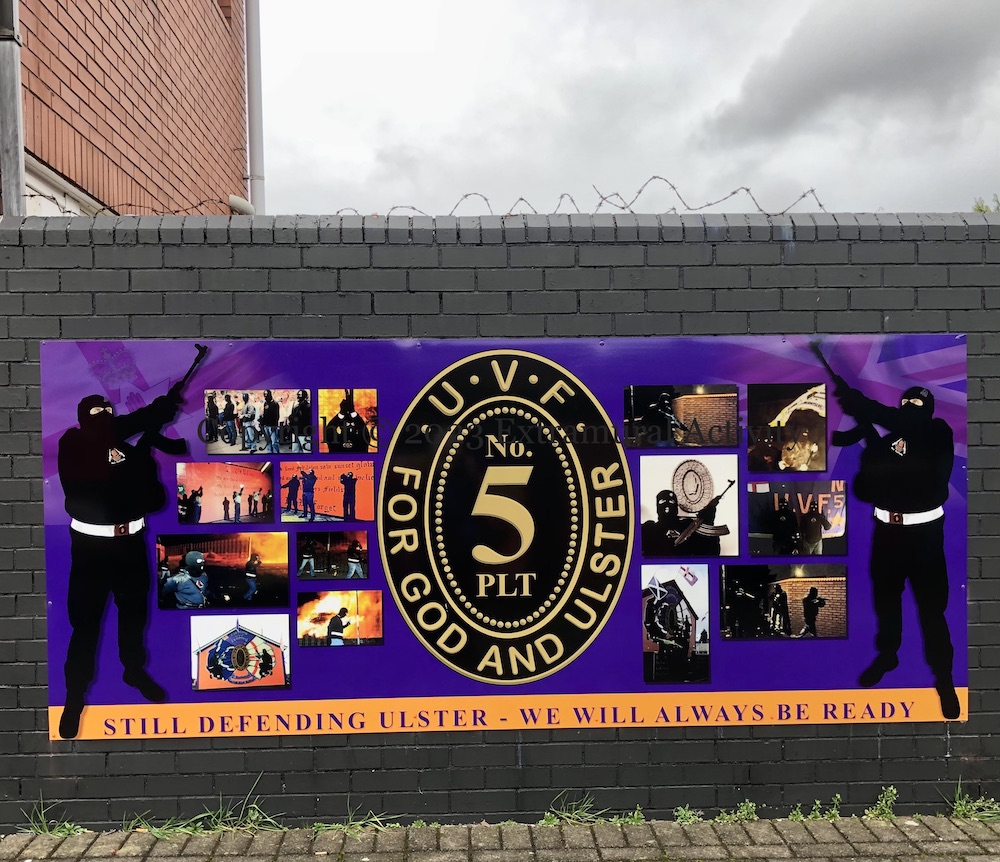
To the left, as seen in the final images, is a smaller UVF (1st Battalion) A Company 5th Platoon board – like the other new board in the street We Will Always Be Ready (and on the other side of Conway Street – see When Needed We Shall Rise Again).
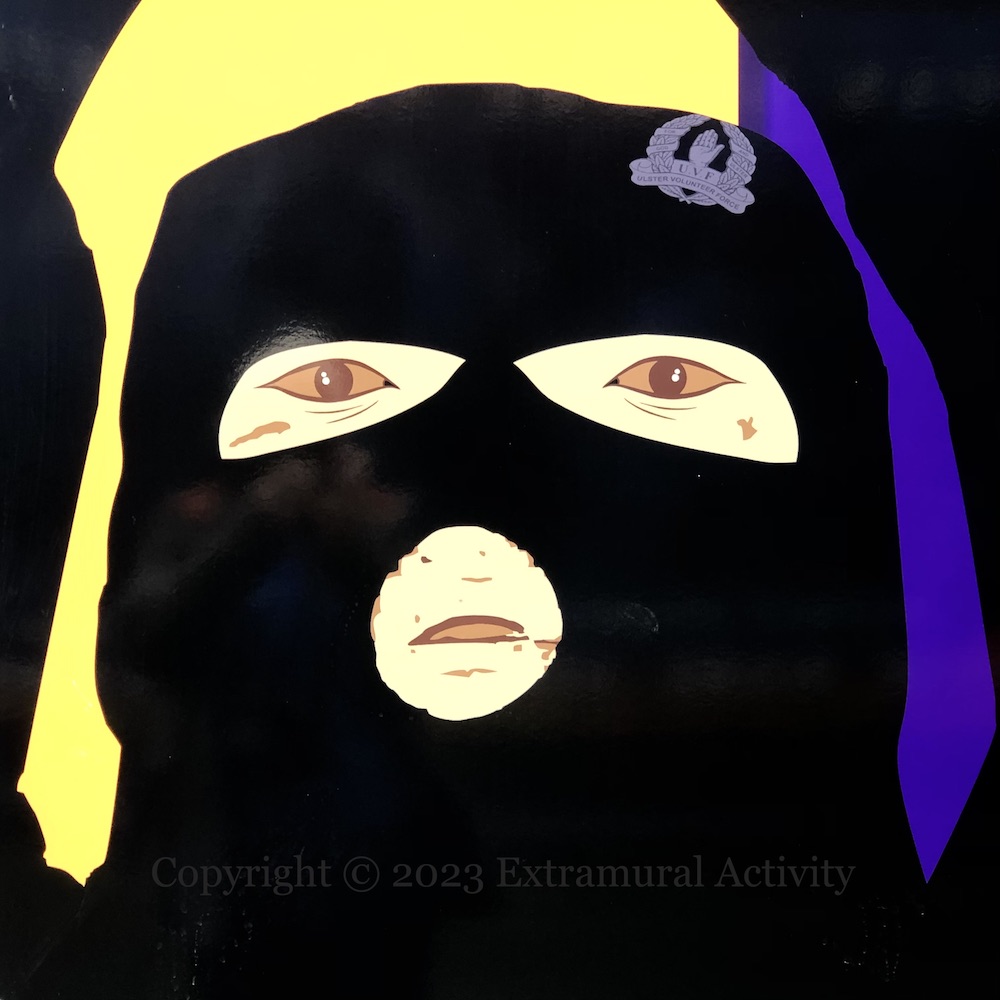
There are three hooded gunmen on the main panel of this new installation along Conway Street, Belfast, and the side panel is a gallery of 14 photographs of hooded gunmen, flanked on either by two more hooded gunmen.
Please note: the photograph above has been photoshopped for colour. The true colour (orange) can be seen in the wide shot, below.
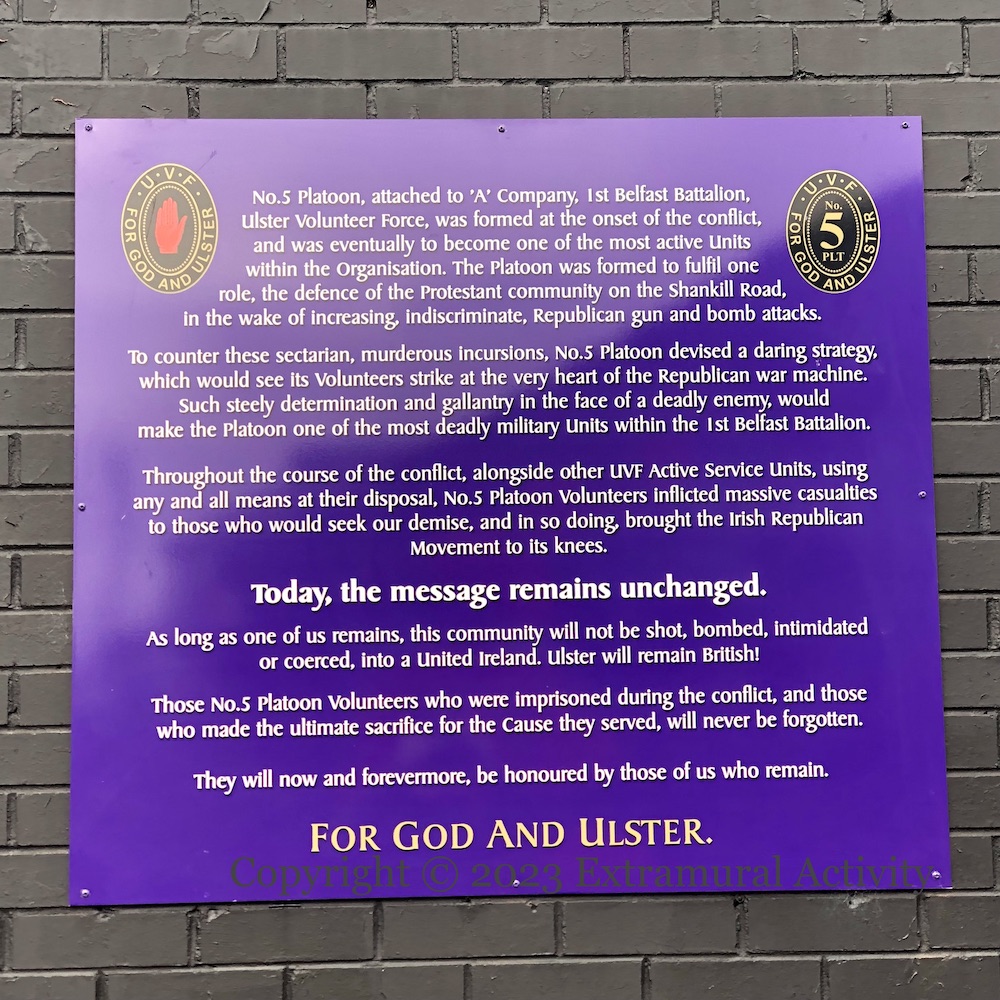
“No. 5 Platoon, attached to ‘A’ Company, 1st Belfast Battalion, Ulster Volunteer Force, was formed at the onset of the conflict, and was eventually to become one of the most active Units with the Organisation. The Platoon was formed to fulfil one role, the defence of the Protestant community on the Shankill Road, in the wake of increasing, indiscriminate, Republican gun and bomb attacks. To counter these sectarian, murderous incursions, No. 5 Platoon devised a daring strategy, which would see its Volunteers strike at the very heart of the Republican war machine. Such steely determination and gallantry in the face of a deadly enemy, would make the Platoon one of the most deadly military Units within the 1st Belfast Battalion. Throughout the course of the conflict, alongside other UVF Active Service Units, using any and all means at their disposal, No. 5 Platoon Volunteers inflicted massive casualties to those who would seek our demise, and in so doing, brought the Irish Republican Movement to its knees. Today the message remains unchanged. As long as one of us remains, this community will not be shot, bombed, intimidated or coerced, into a United Ireland. Ulster will remain British! Those No. 5 Platoon Volunteers who were imprisoned during the conflict, and those who made the ultimate sacrifice for the Cause they served, will never be forgotten. They will now and forevermore, be honoured by those of us who remain. For God and Ulster.”
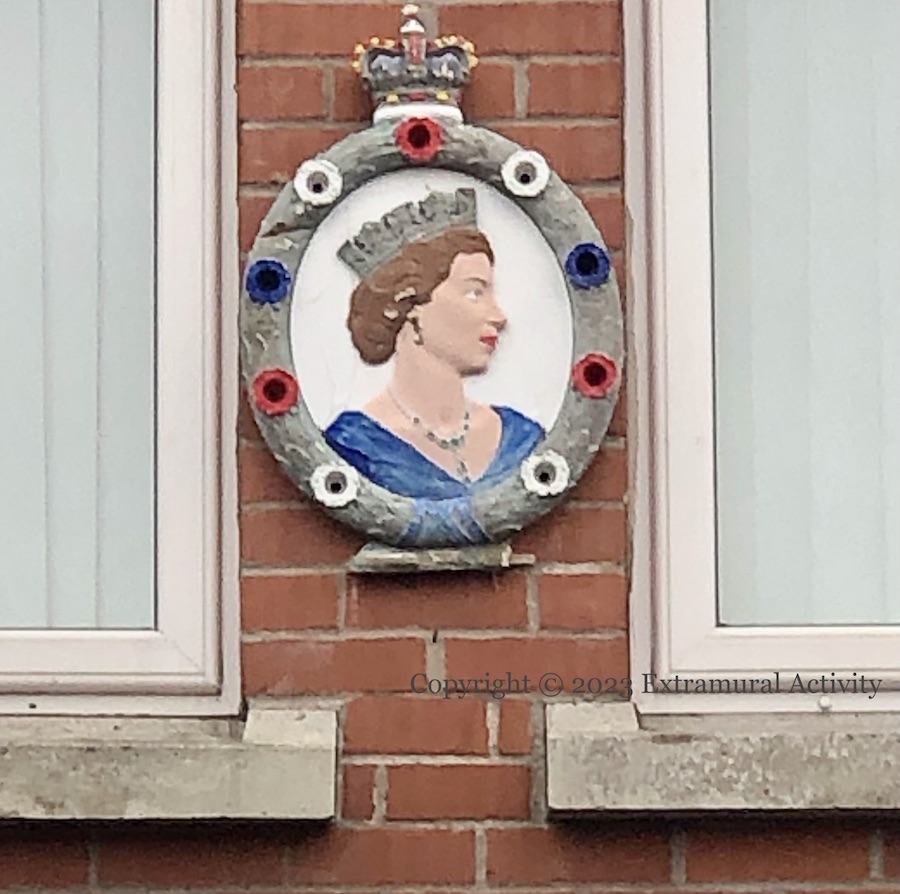
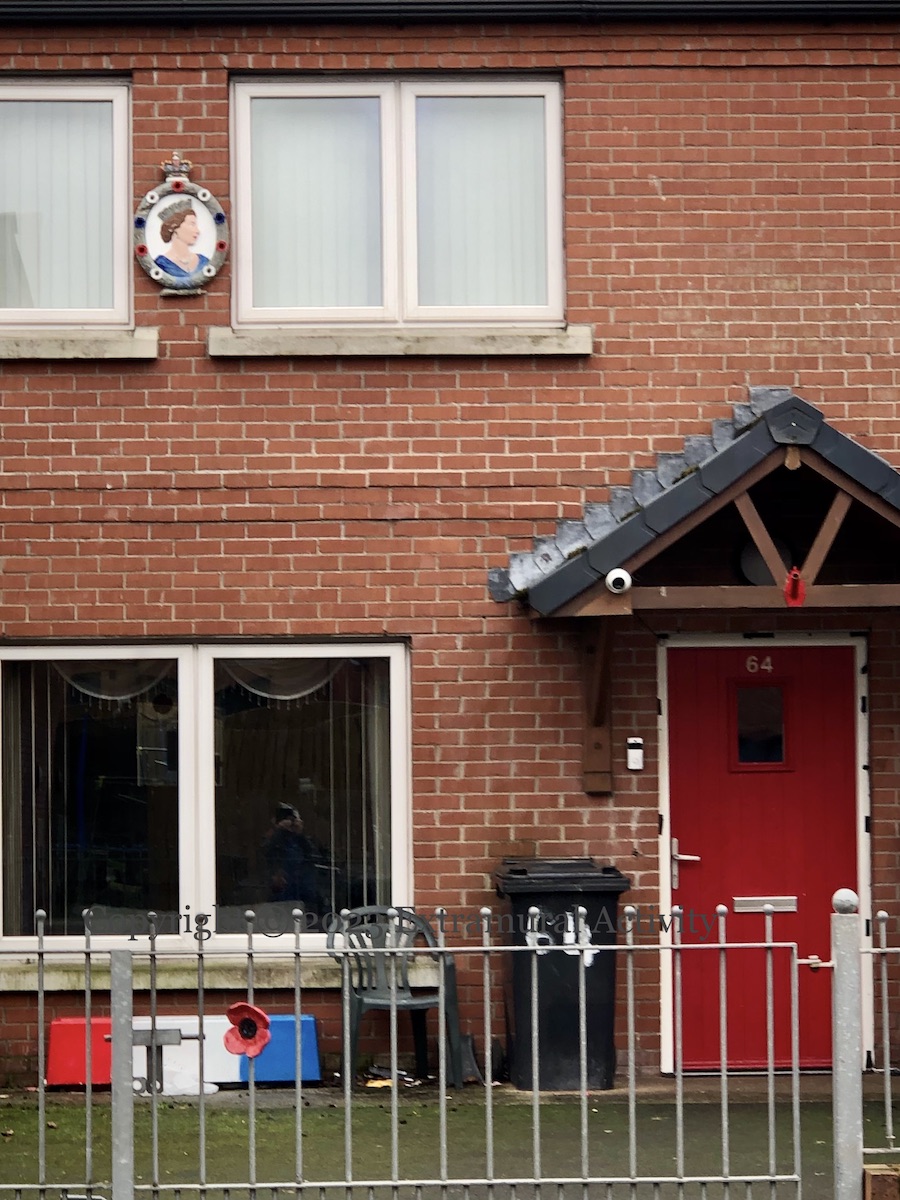
This cast of Queen Elizabeth in profile is mounted on the second storey of a house in Hopewell Crescent, Belfast, prior to her death on September 8th (see e.g. The People’s Queen Is Dead), a few months after her platinum jubilee in June (celebrated with a similar portrait in The Longest Reign).
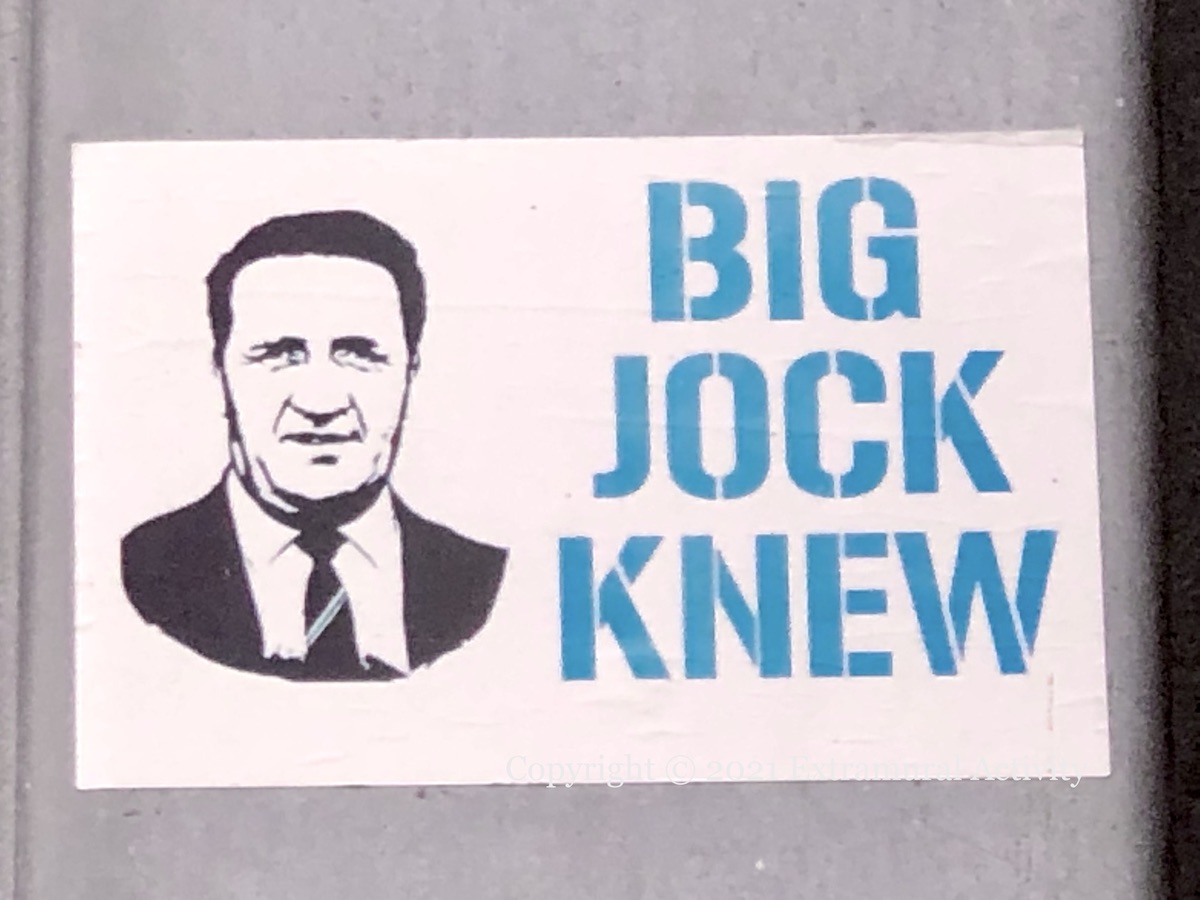
Below, second, from the Shankill: “Big Jock Knew”, that is Celtic manager Jock Stein knew of the sexual abuse of Boys Club manager Jim Torbett. Torbett was sacked by Stein in 1974 but returned to the position in the 1980s. Torbett was tried in 1998 for crimes during the earlier time-period and served 30 months, and again in 2018, for various offenses, receiving a sentence of six years (WP). More charges are to be heard in April, 2023 (Daily Record). The phrase is the title of song sung by fans of teams playing against Celtic (WP).
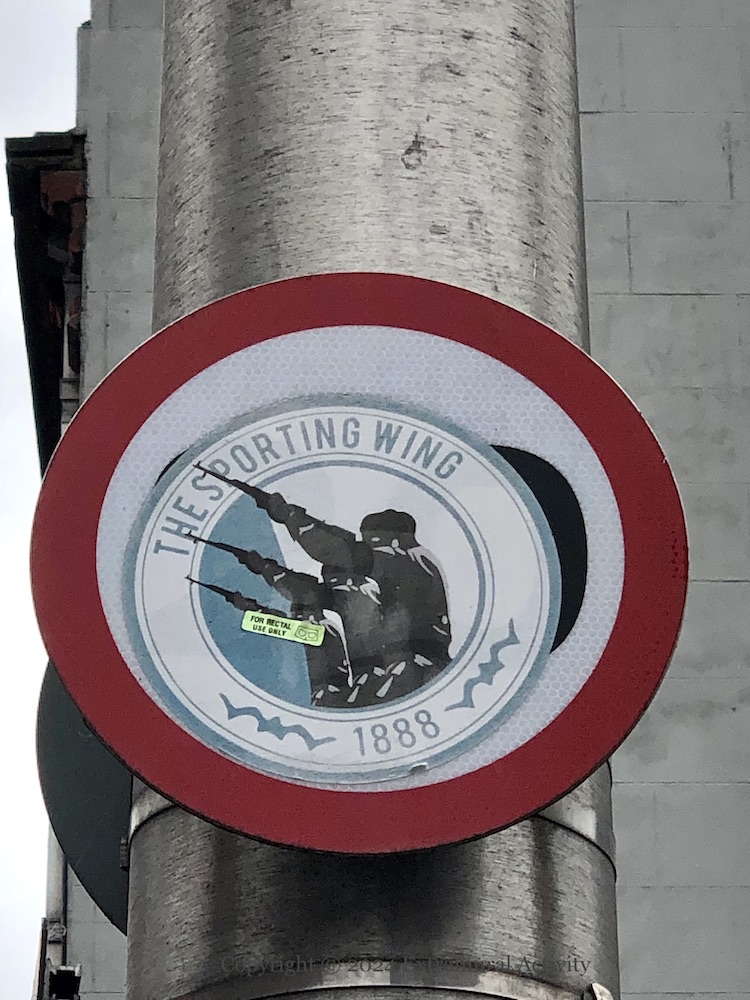
Below, third, from city centre (and also seen on the Falls): “The sporting wing [of the IRA]” is a play on the idea that Sınn Féın was the “political wing” of the IRA and so Celtic FC is the group’s “sporting wing”. Instead of Celtic’s usual four-leaf clover, three hooded gunmen fire a funeral volley.
The GAA has also been given the title (BelTel 2020); Sammy Wilson, as DUP press officer defending UDA attacks on GAA halls in Belfast and Banbridge, in September 1993, described the GAA as “the IRA at play” (WP). (For a history of the two organisations, see Irish Peace Process.) Instead of Celtic’s usual four-leaf clover, three hooded gunmen fire a funeral volley.
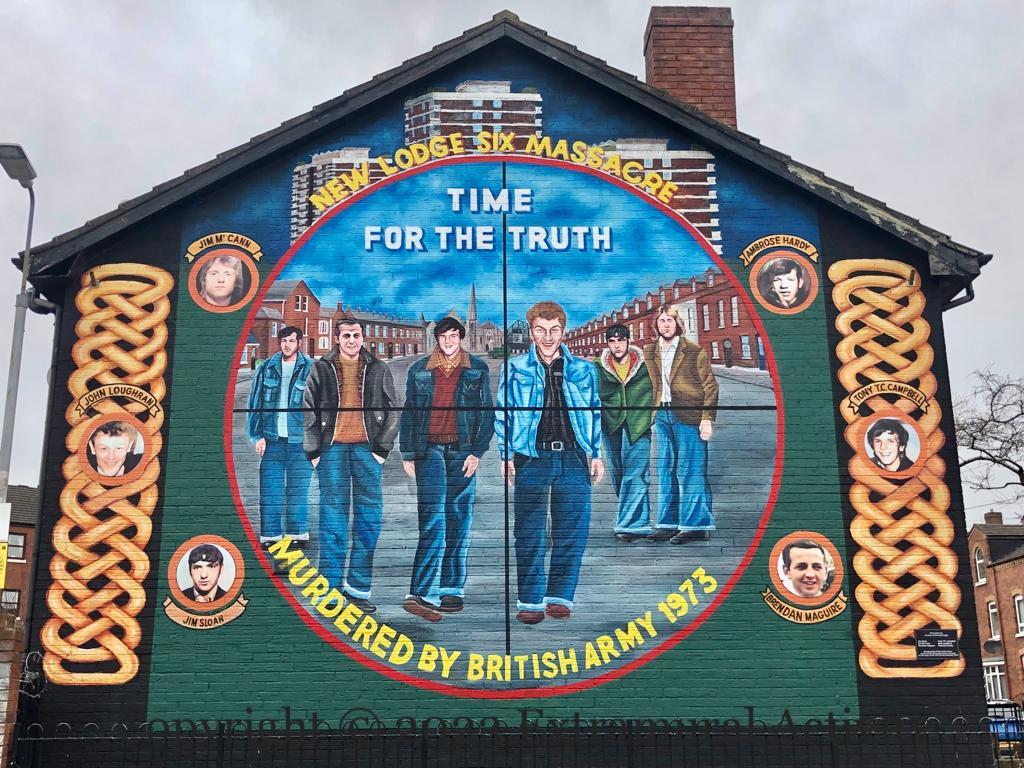
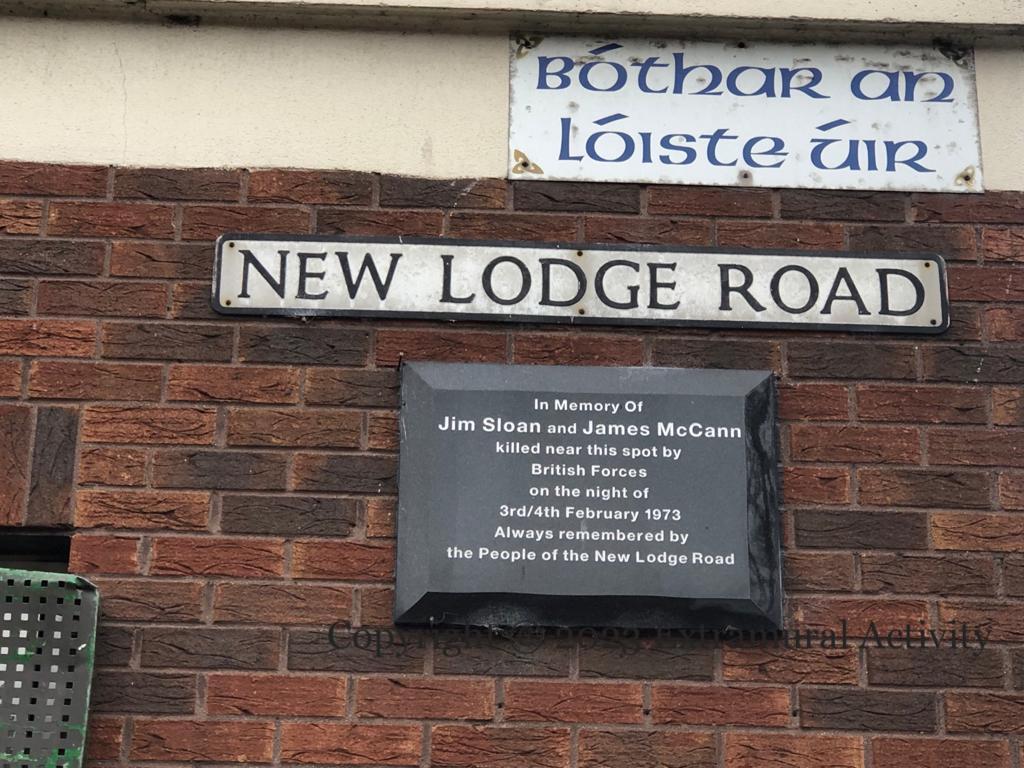
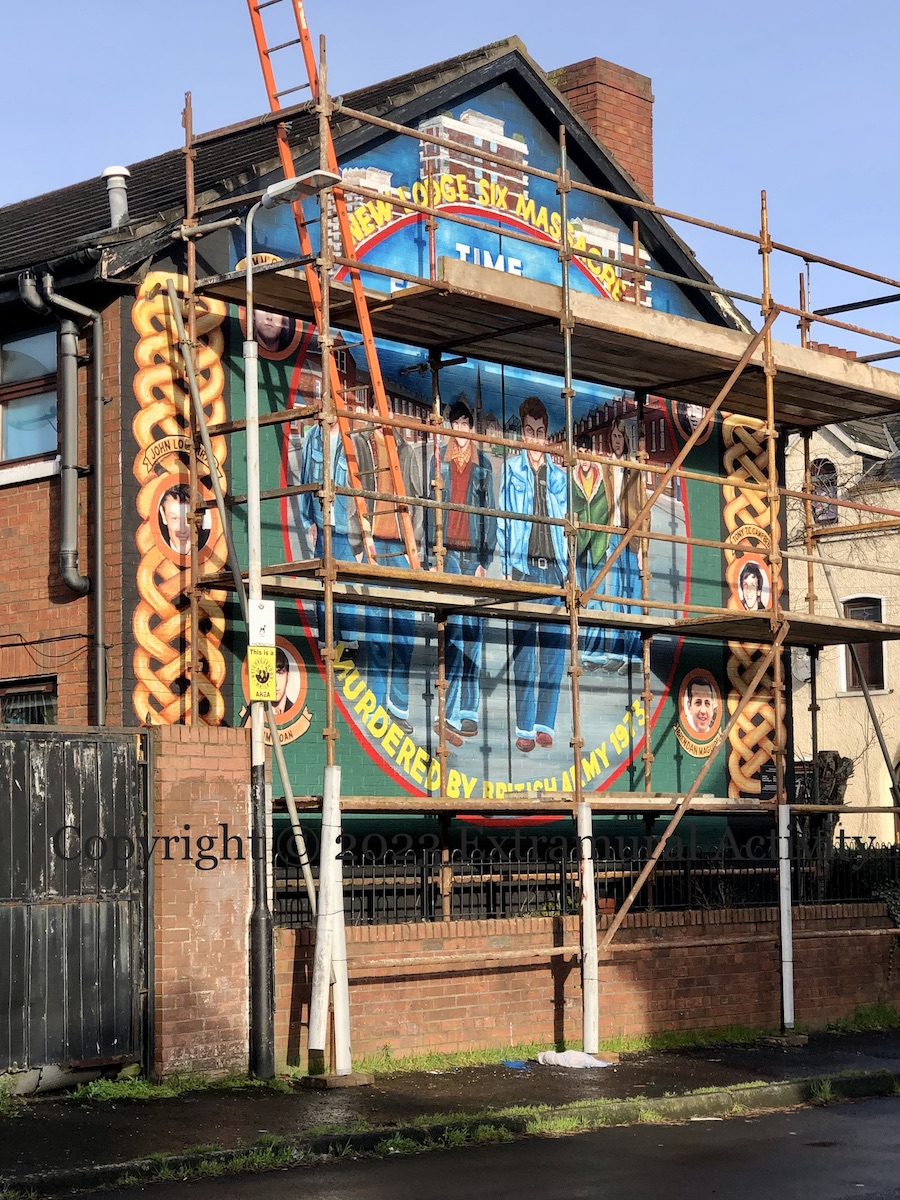
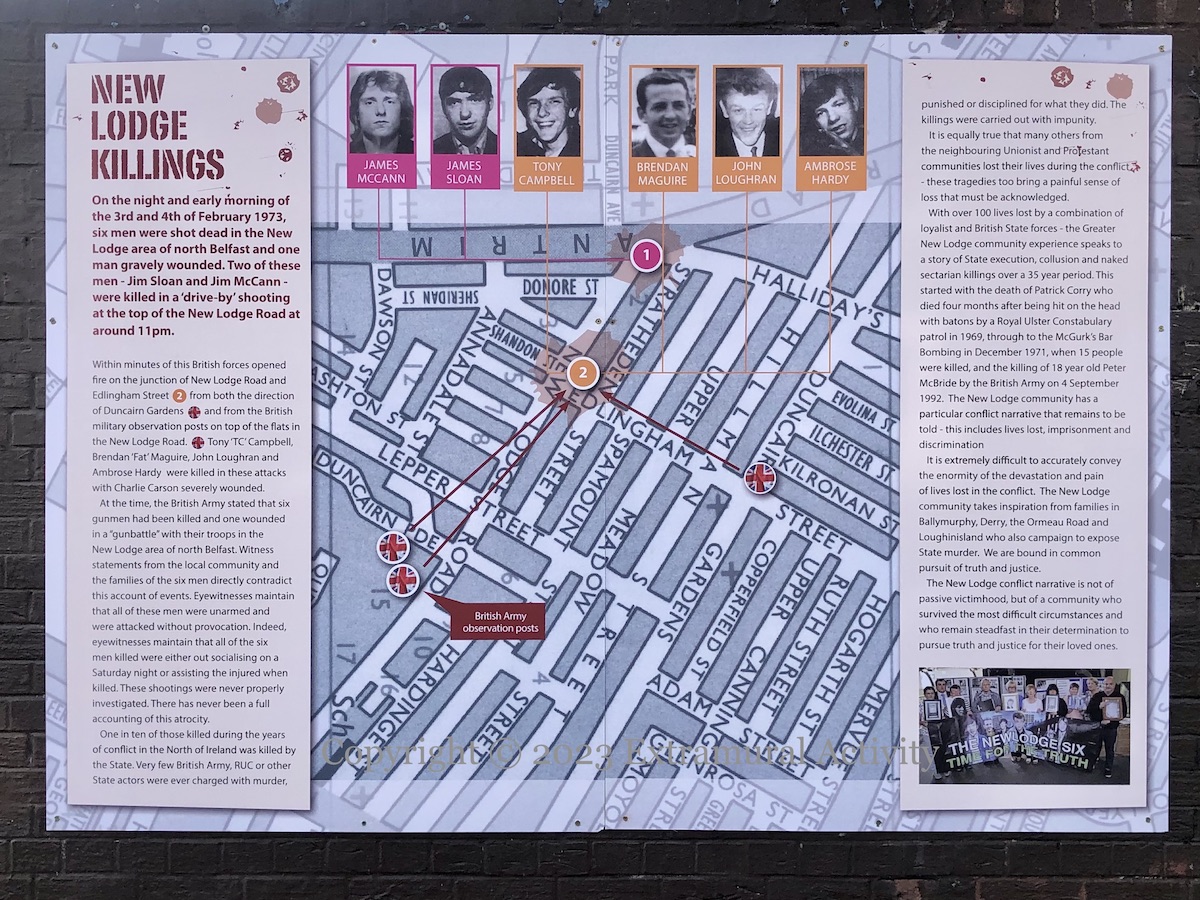
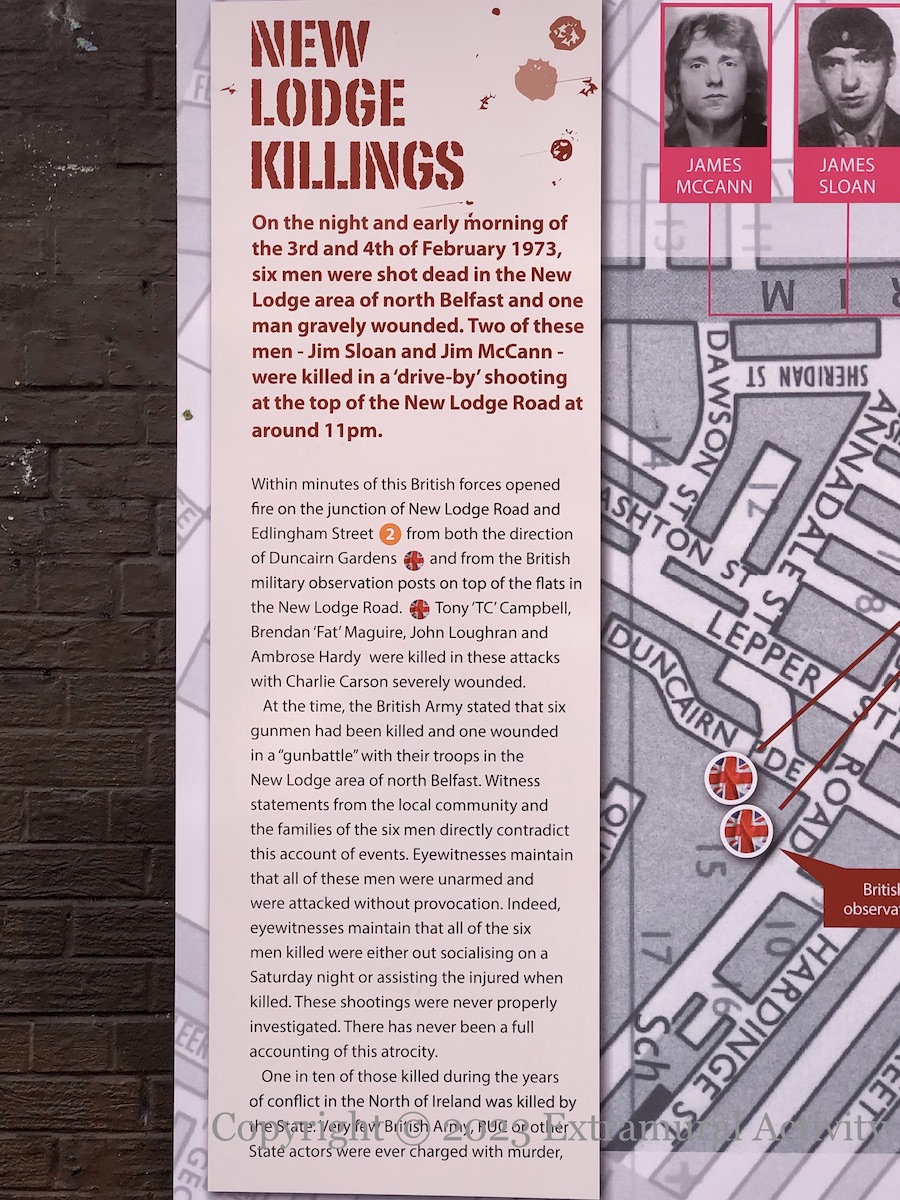
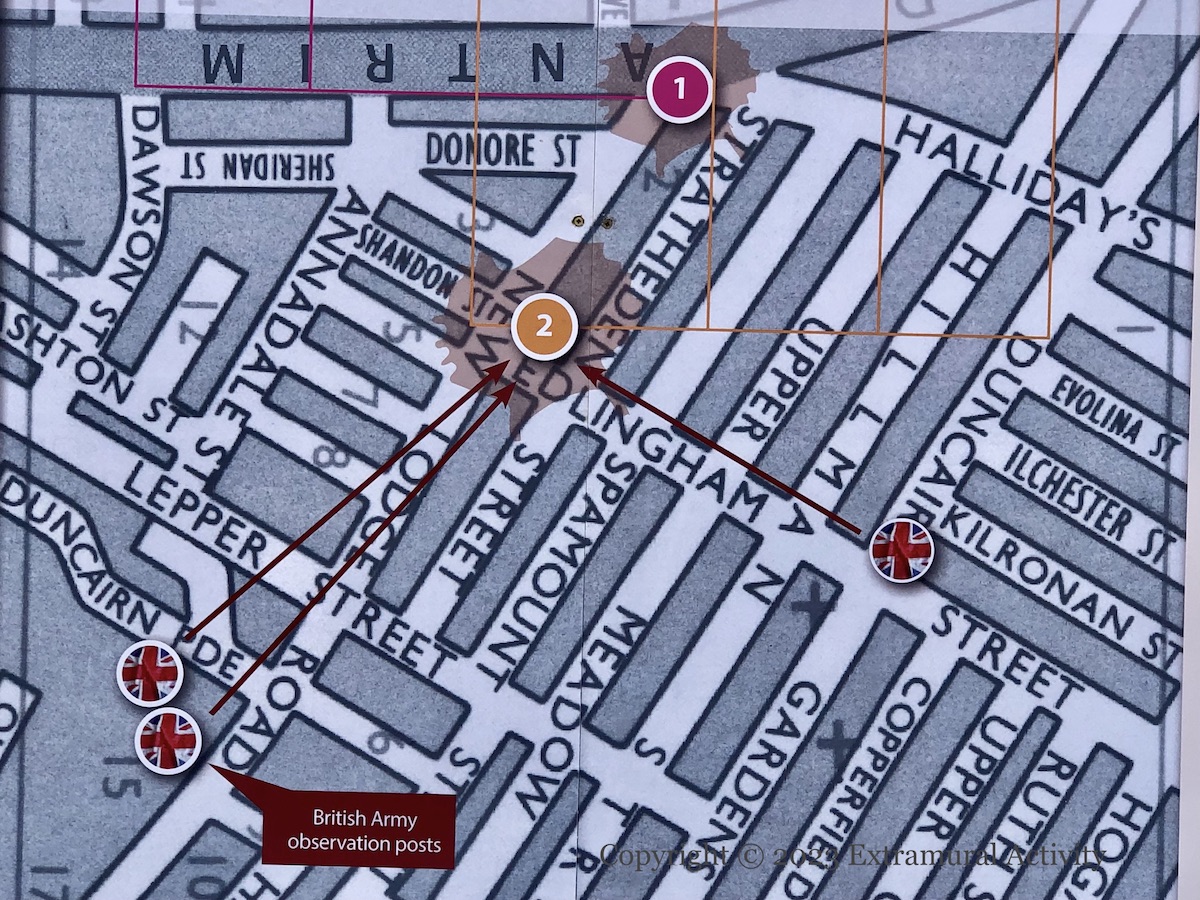
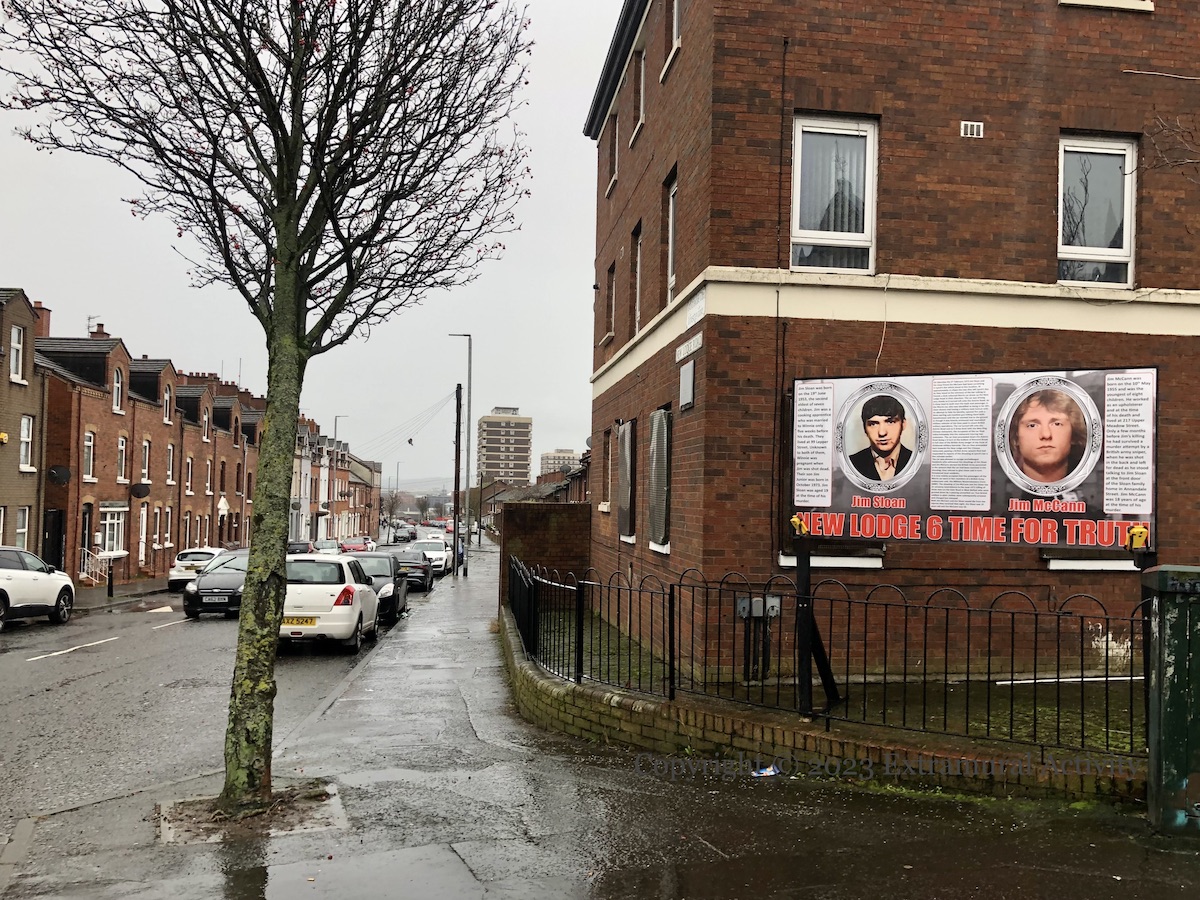
A candle-lit vigil (youtube | iTV) took place last Friday (February 3rd) to commemorate the 50th anniversary of the “New Lodge Six Massacre”. Shortly before midnight on the night of February 3rd-4th, 1973, Jim Sloan and James McCann were killed by the UDA outside a bar – or so the authorities alleged; the plaque shown below near the spot where they were shot reads “killed by British Forces”; full details of what is currently known about the killings can be found at Paper Trail.
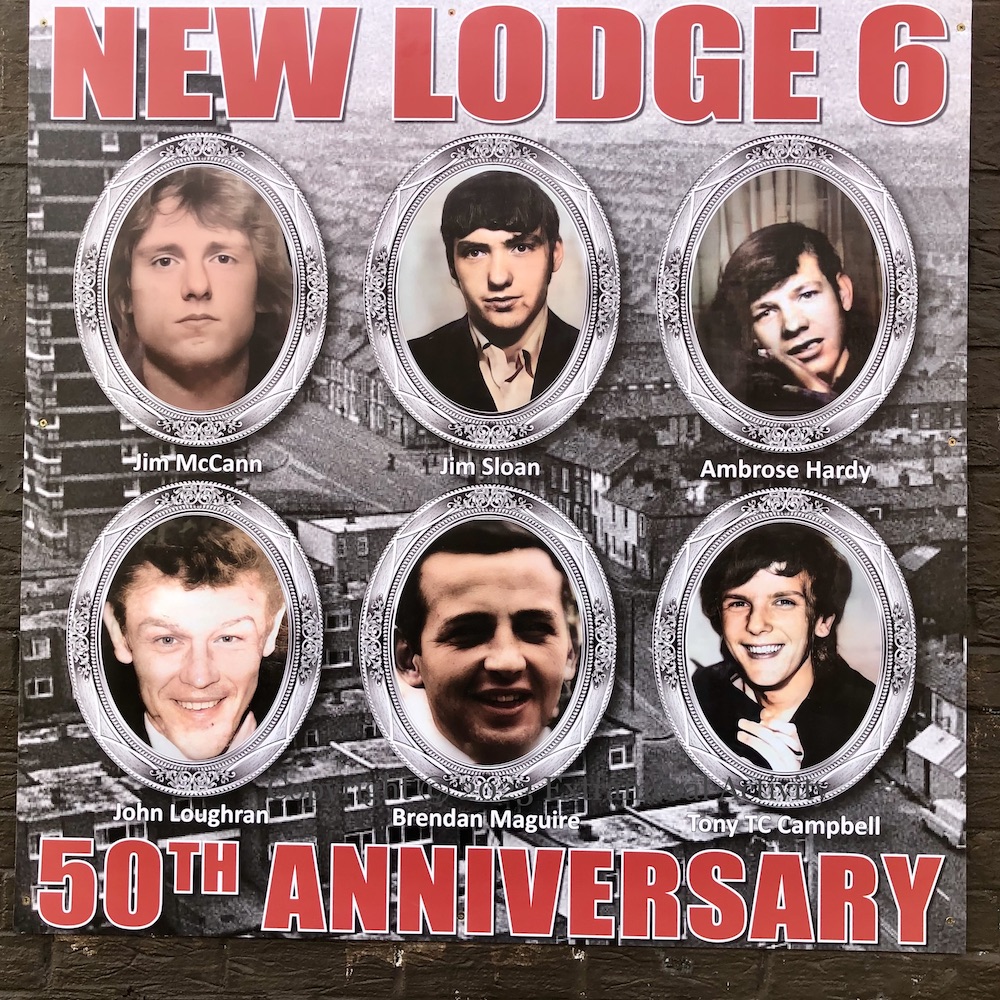
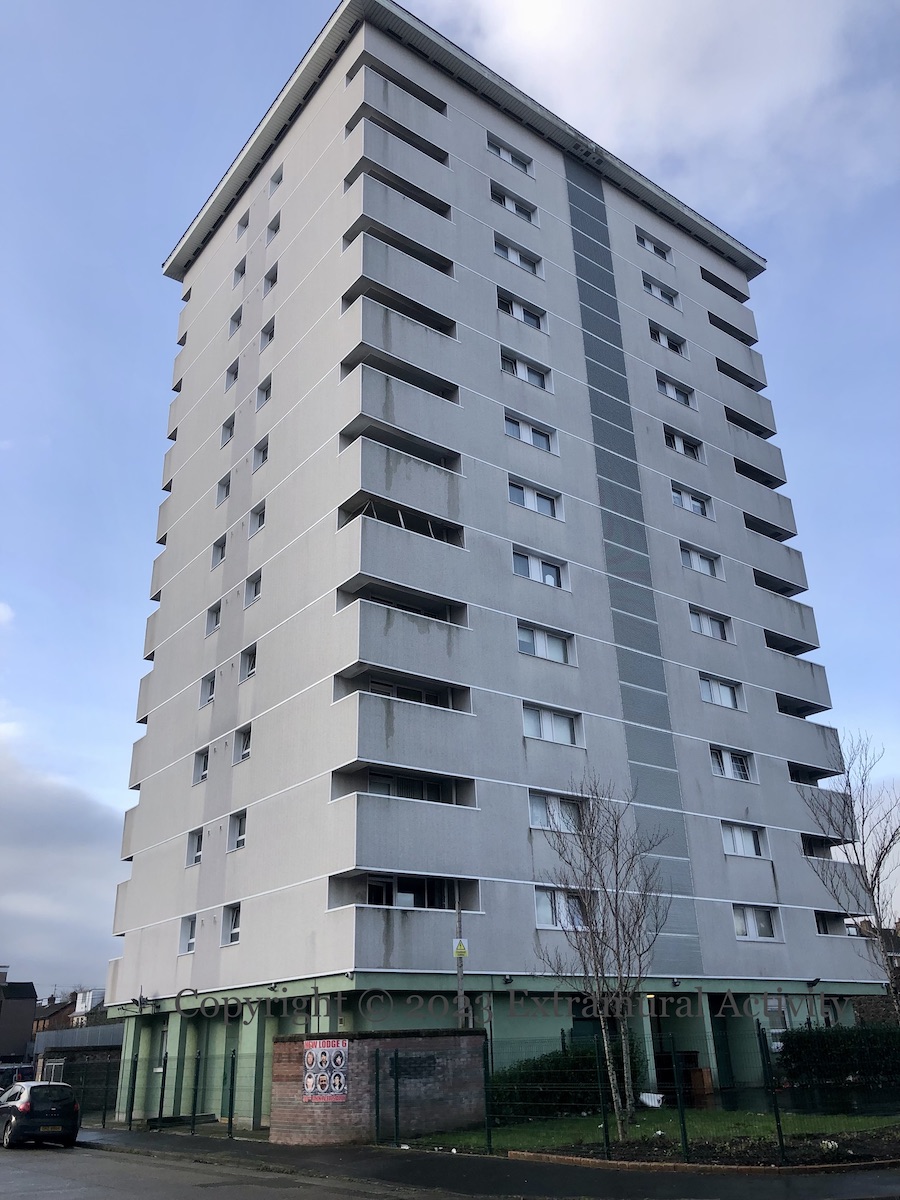
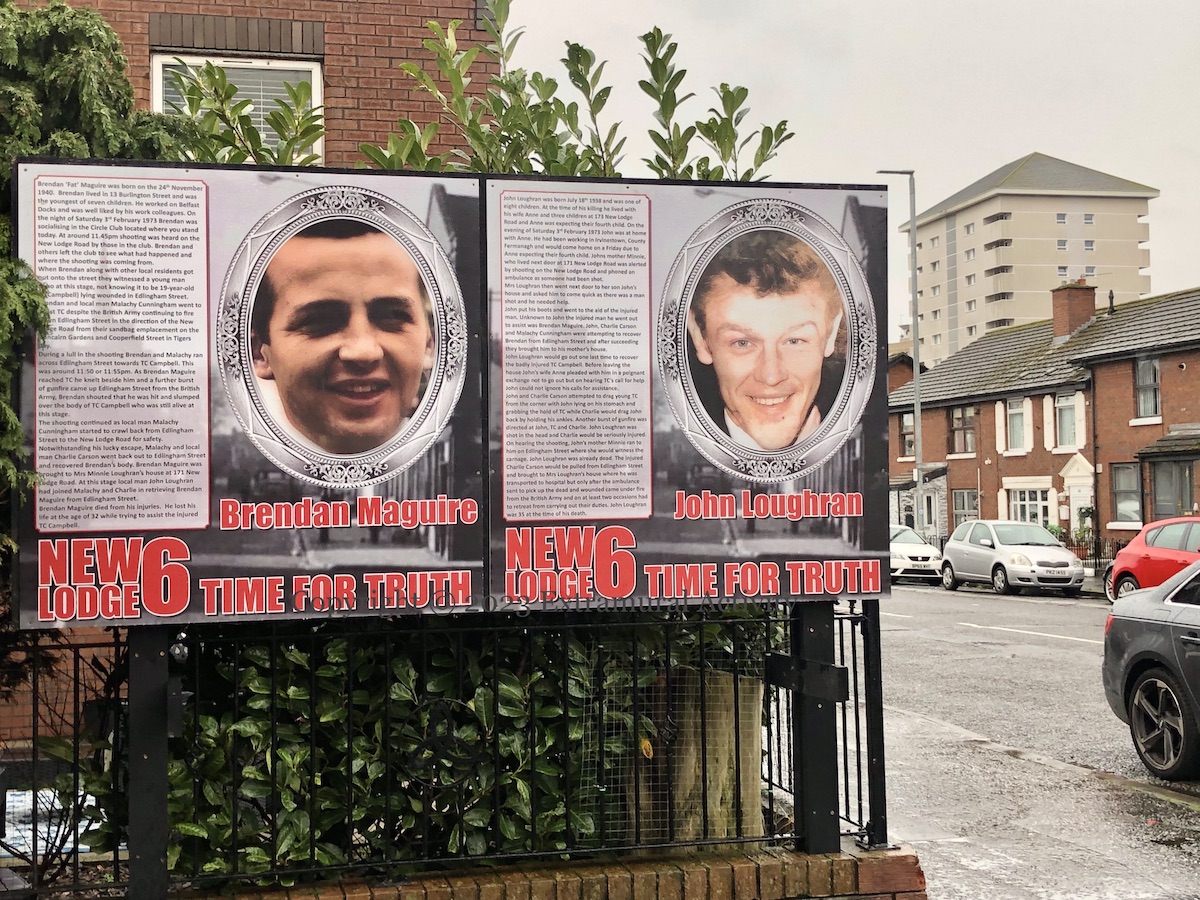
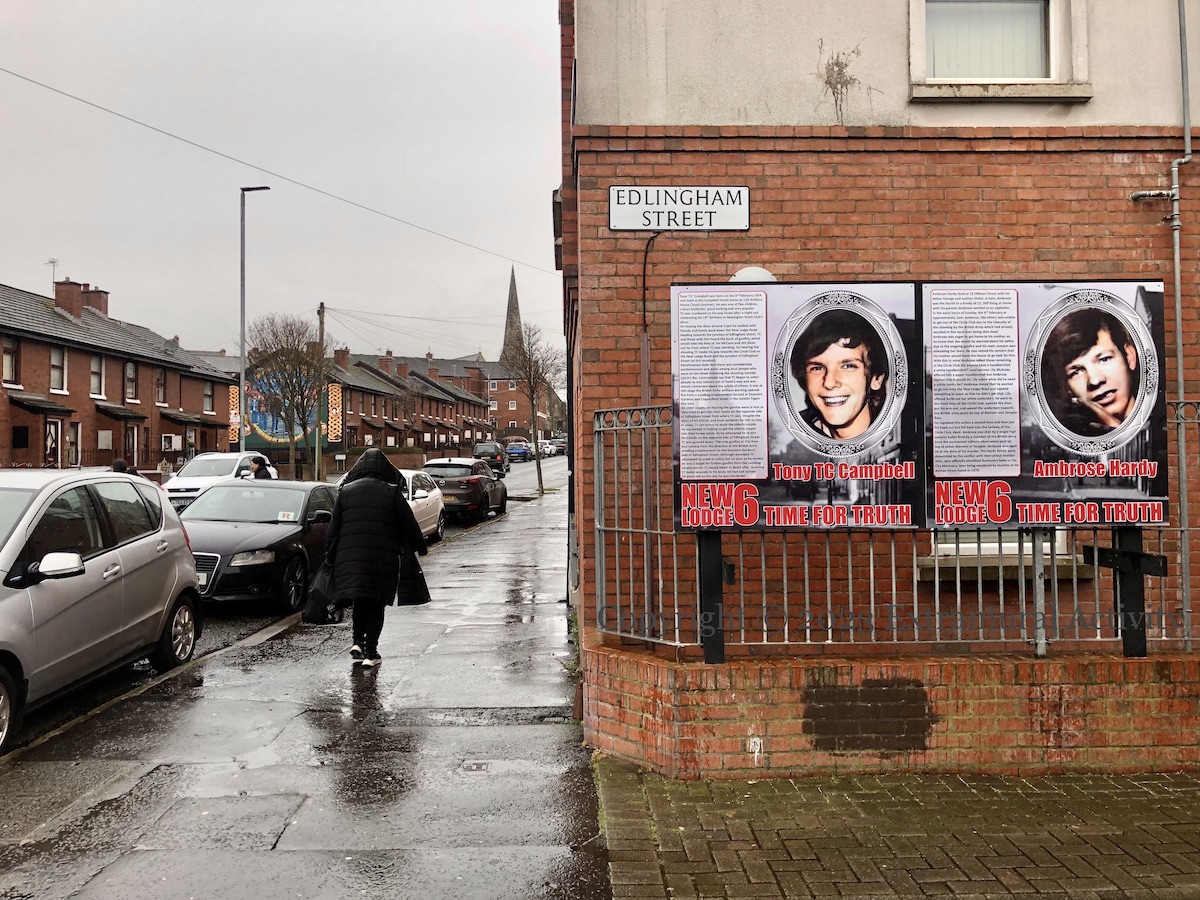
Four more – Tony ‘TC’ Campbell, Ambrose Hardy, Brendan Maguire, John Loughran – were among those who came to the area of the initial shootings and were killed by British Army snipers from their positions on top of the flats, using night-vision sights.
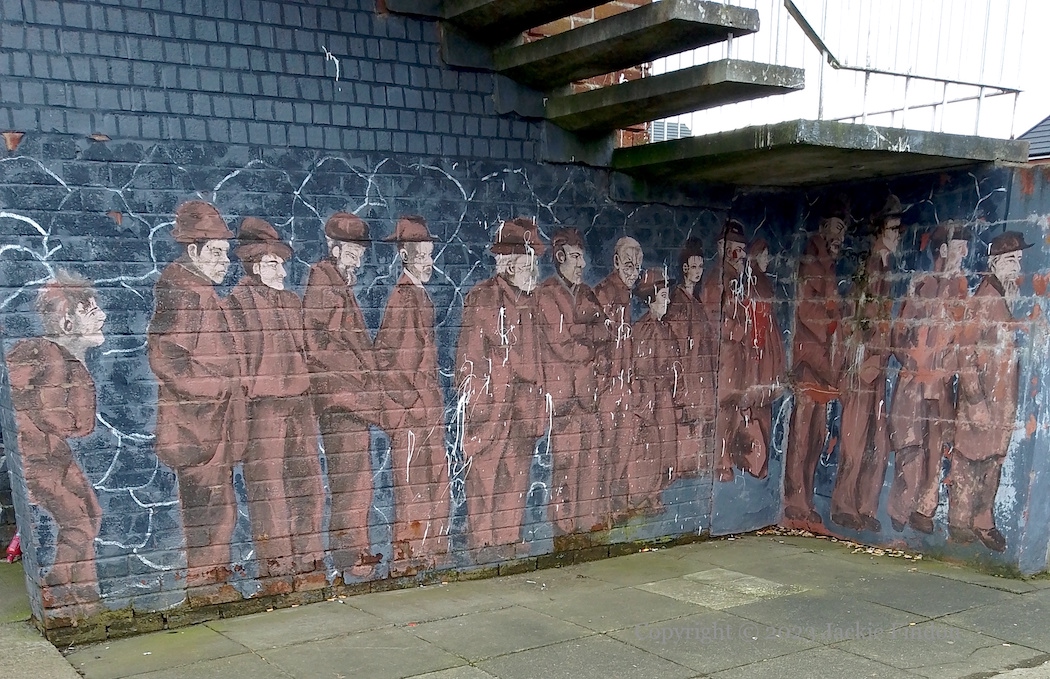
The memorial mural in Donore Court was repainted for the event. From left to right, it shows Hardy, Maguire, Campbell, Loughran, Sloan, and McCann walking down New Lodge Road with (what was) Duncairn Presbyterian and (what was) the RUC station on the Antrim Road behind them. The previous (2011) version of the mural showed a body being carried whereas this new one shows them smiling as they walk, though still in the sights of a sniper’s rifle. Other changes were made: the six portraits in the medallions are now photographs rather than paintings; the background is green rather than pink.
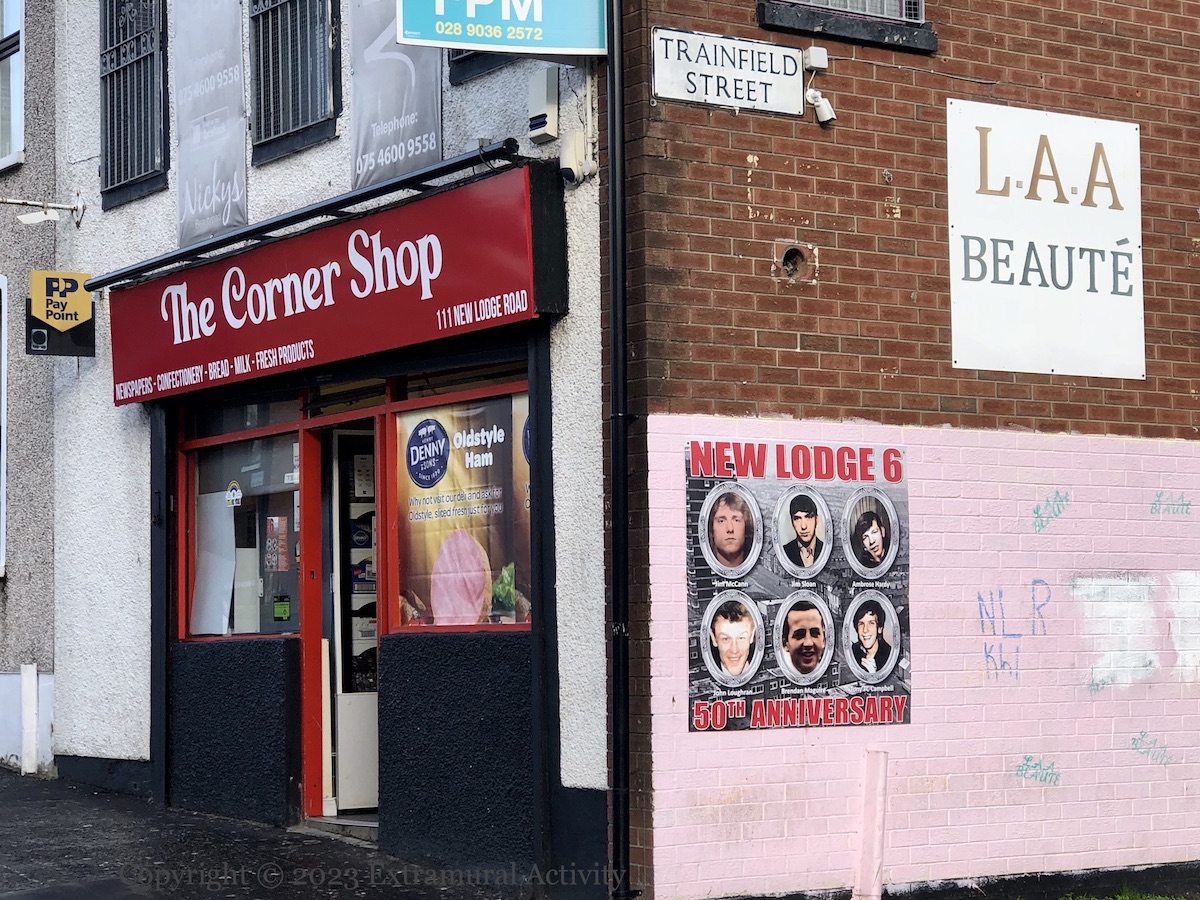
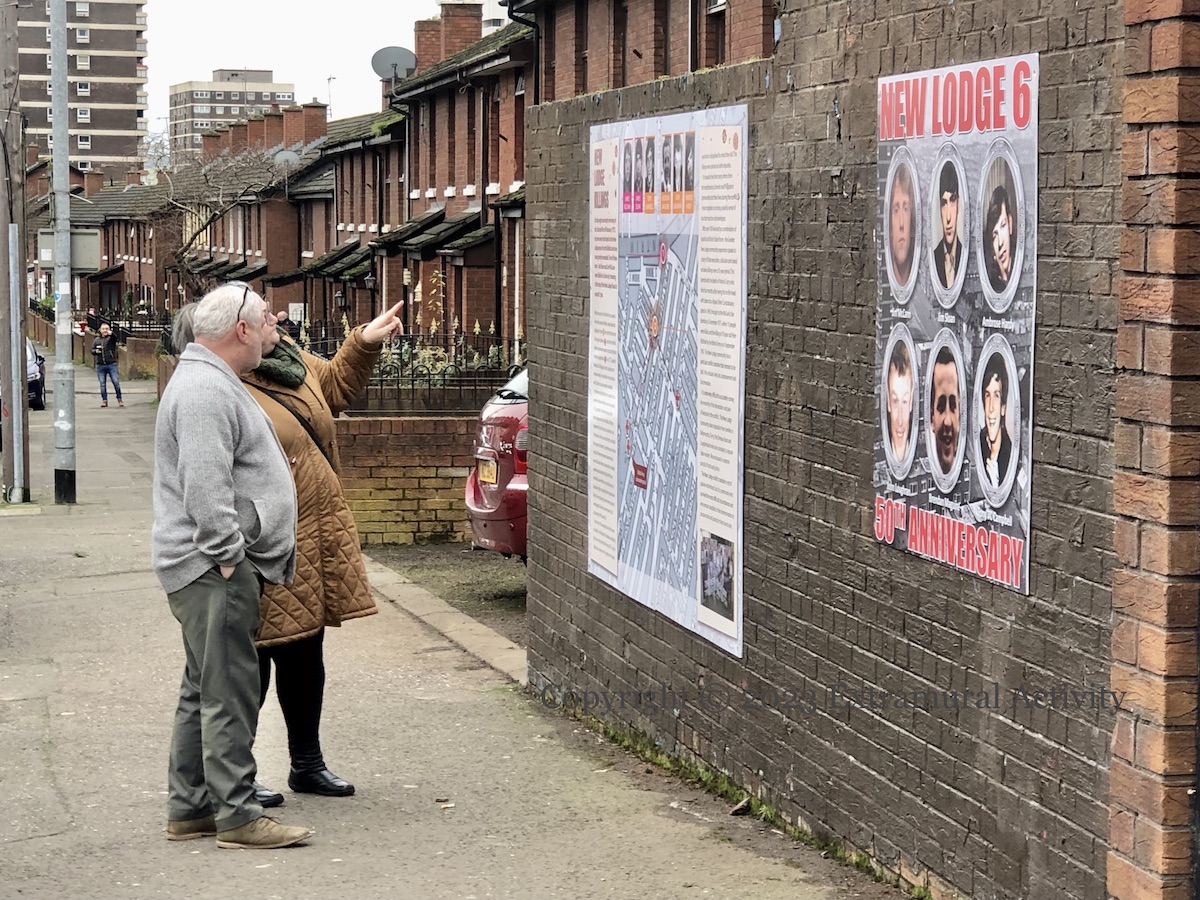
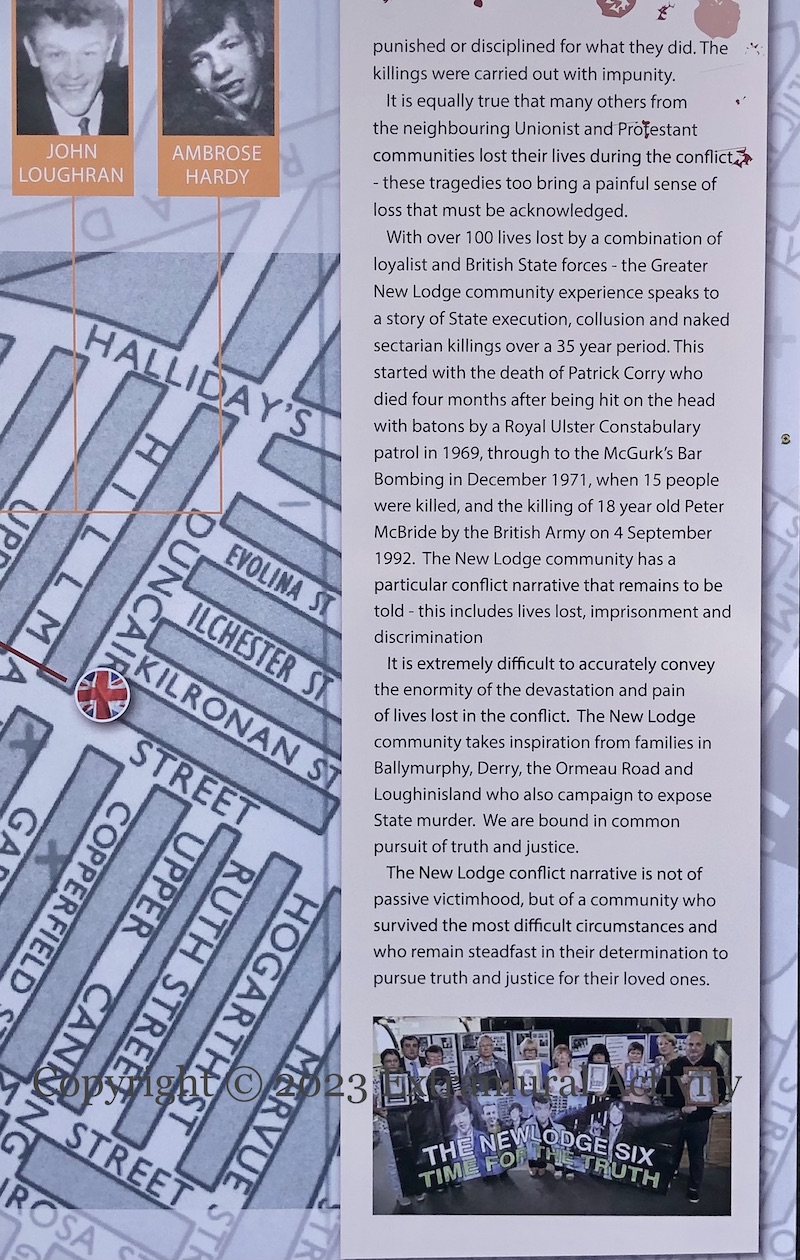
In addition to the repainted mural in Donore Court (featured yesterday in Time For The Truth) a number of information boards have been mounted along the New Lodge Road and on Teach Eithne, presenting photographs and profiles of the six youths who were killed, and a map and description of the events that took place on the night of February 3rd-4th, 1973.
The board concludes, “It is equally true that many others from the neighbouring Unionist and Protestant communities lost their lives during the conflict – these tragedies too bring a painful sense of loss that must be acknowledged. With over 100 lives lost by a combination of loyalist and British State forces – the Greater New Lodge community experience speaks to a story of State execution, collusion and naked sectarian killings over a 35 year period. … The New Lodge community has a narrative that remains to be told – this includes lives lost, imprisonment and discrimination. It is extremely difficult to accurately convey the enormity of the devastation and pain of lives lost in the conflict. … The New Lodge conflict narrative is not of passive victimhood, but of a community who survived the most difficult circumstances and who remain steadfast in their determination to pursue truth and justice for their loved ones.”
 Seosamh Mac Coille Collection