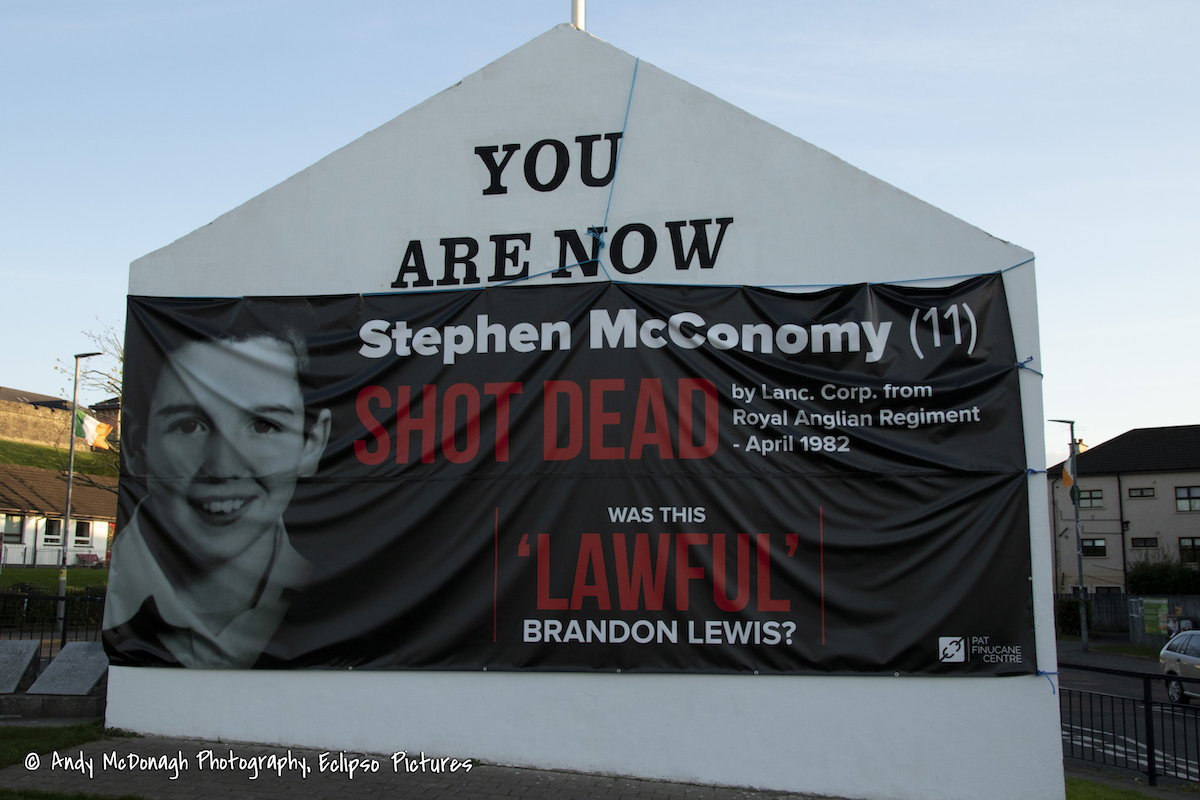
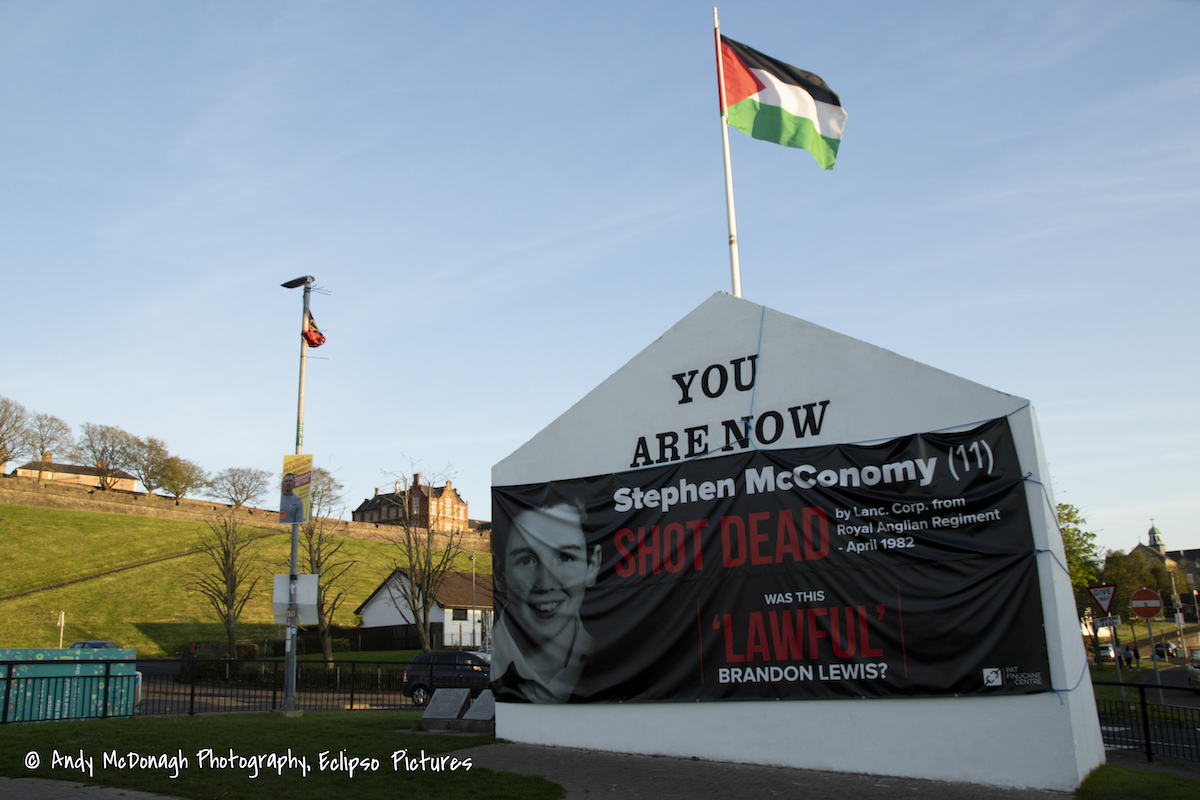
A 2021 command paper that proposed a statue of limitations and amnesty for so-called “legacy” killings included the claim that ‘the vast majority of security force killings were lawful’ (BelTel) and the comment has been attributed to NI Secretary Brandon Lewis (Pat Finucane Centre). (For background see e.g. this eamonnmallie.com piece.) The claim is used against him in this tarp commemorating Stephen McConomy was hit by a plastic bullet forty years ago this month, on April 16th, and died three days later: “Stephen McConomy (11) shot dead by Lanc. Corp. from Royal Anglian Regiment – April 1982. Was this ‘lawful’, Brandon Lewis?” Speaking at the memorial service, surviving family-members vowed to continue resisting the proposed limitations (Derry Journal).
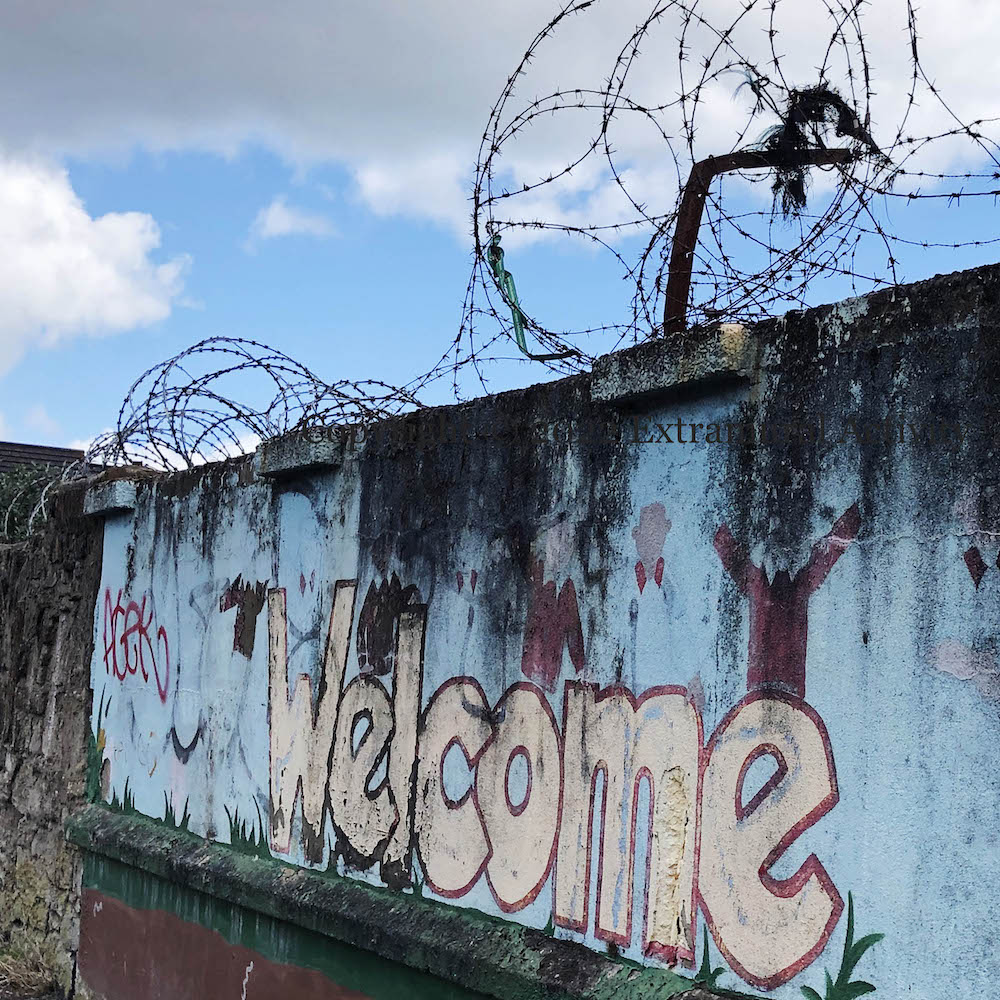
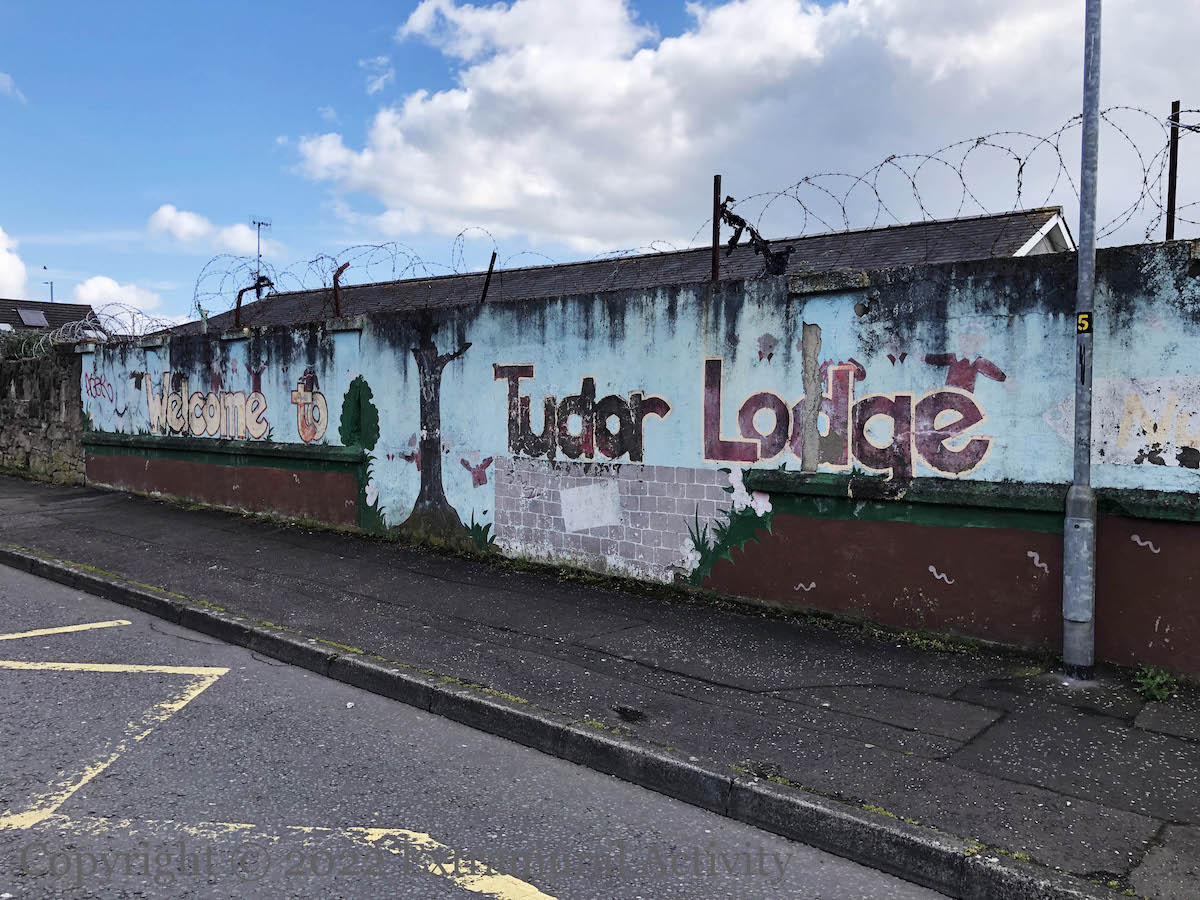
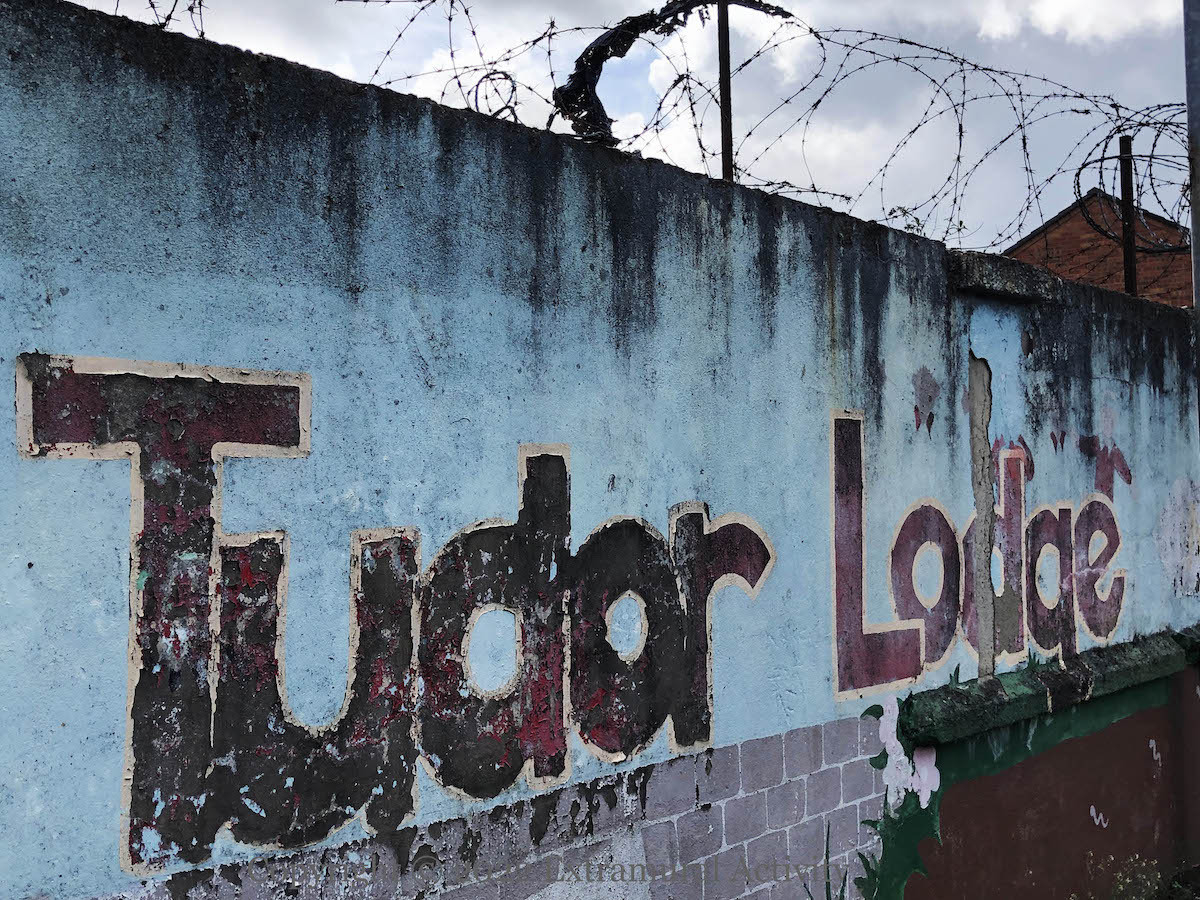
Tudor Place (the street) is now simply the top end of Crimea Street, but in years past it was physically separated and accessible only from the Crumlin Road. The reason for that seems to be that in the 1800s it was the grounds of a lodge, called Tudor Lodge. The nursery school is on the site of the old lodge (which is not the lodge known as Old Lodge) and takes its name.
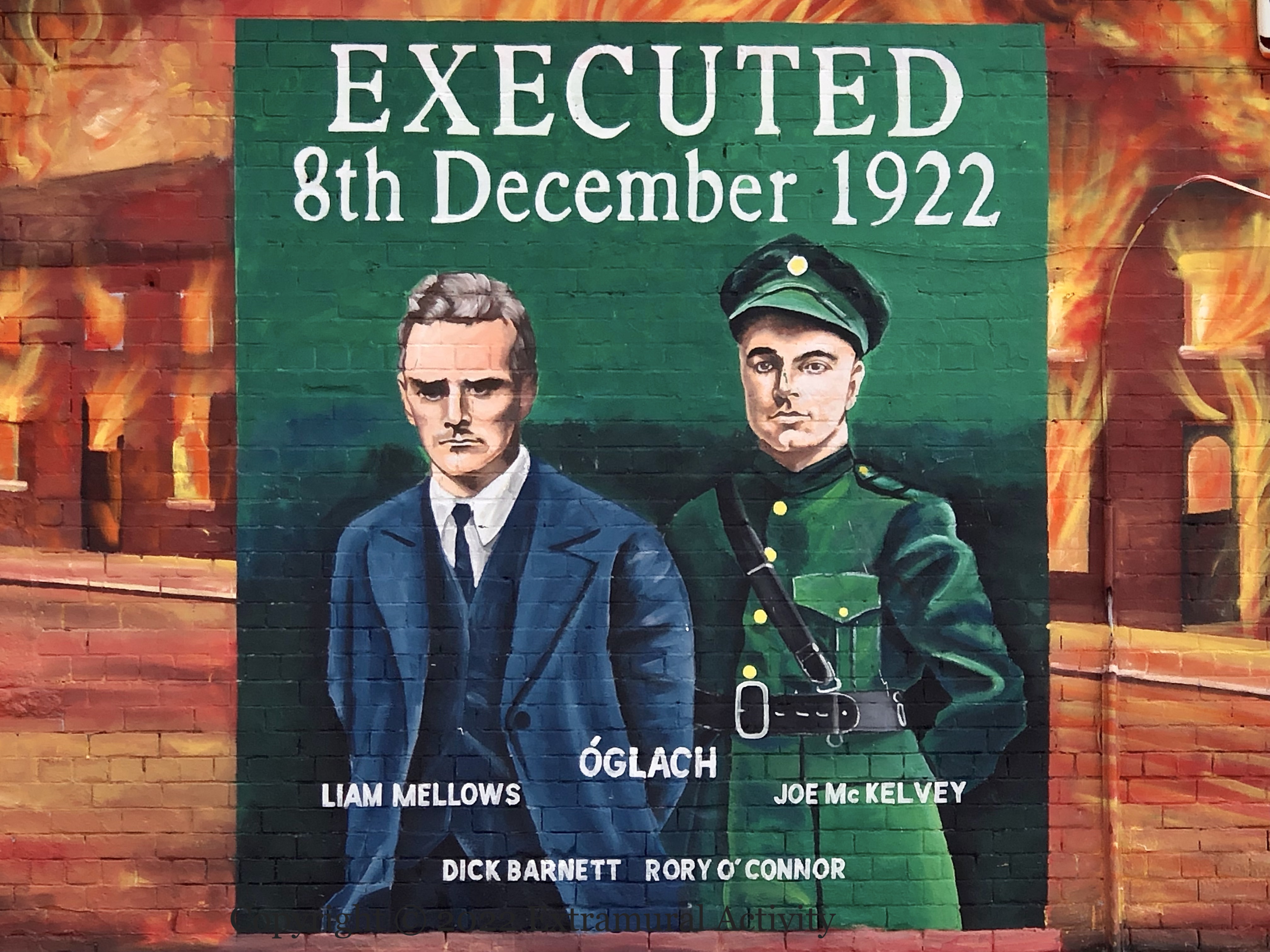
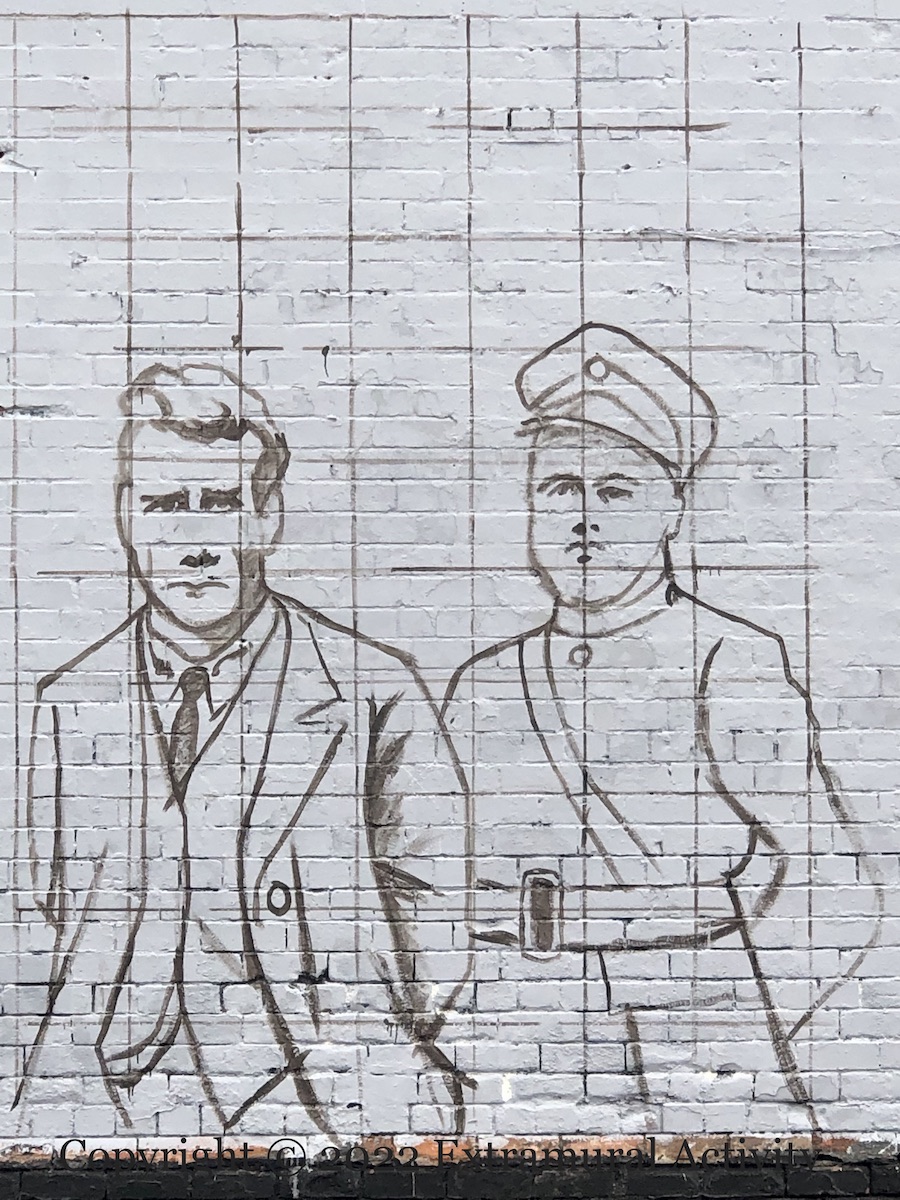
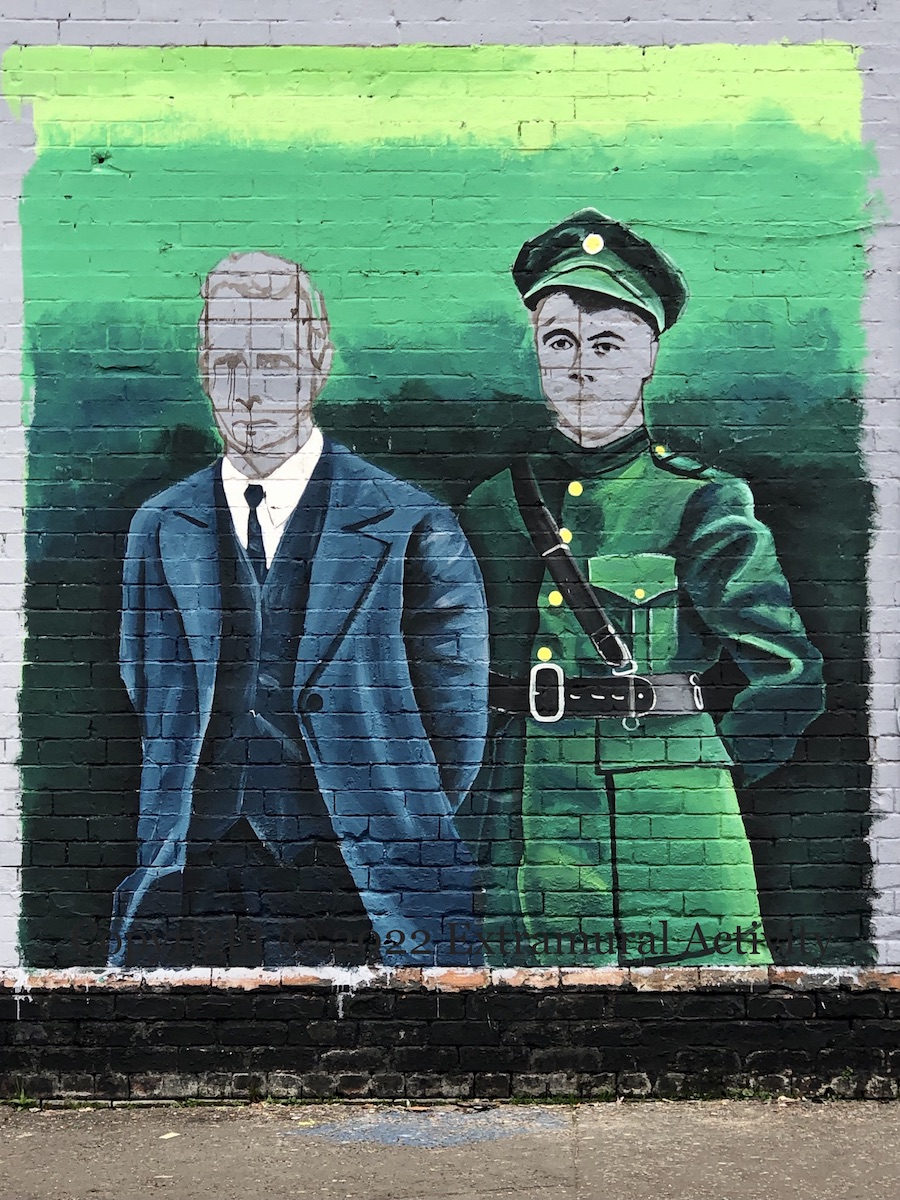
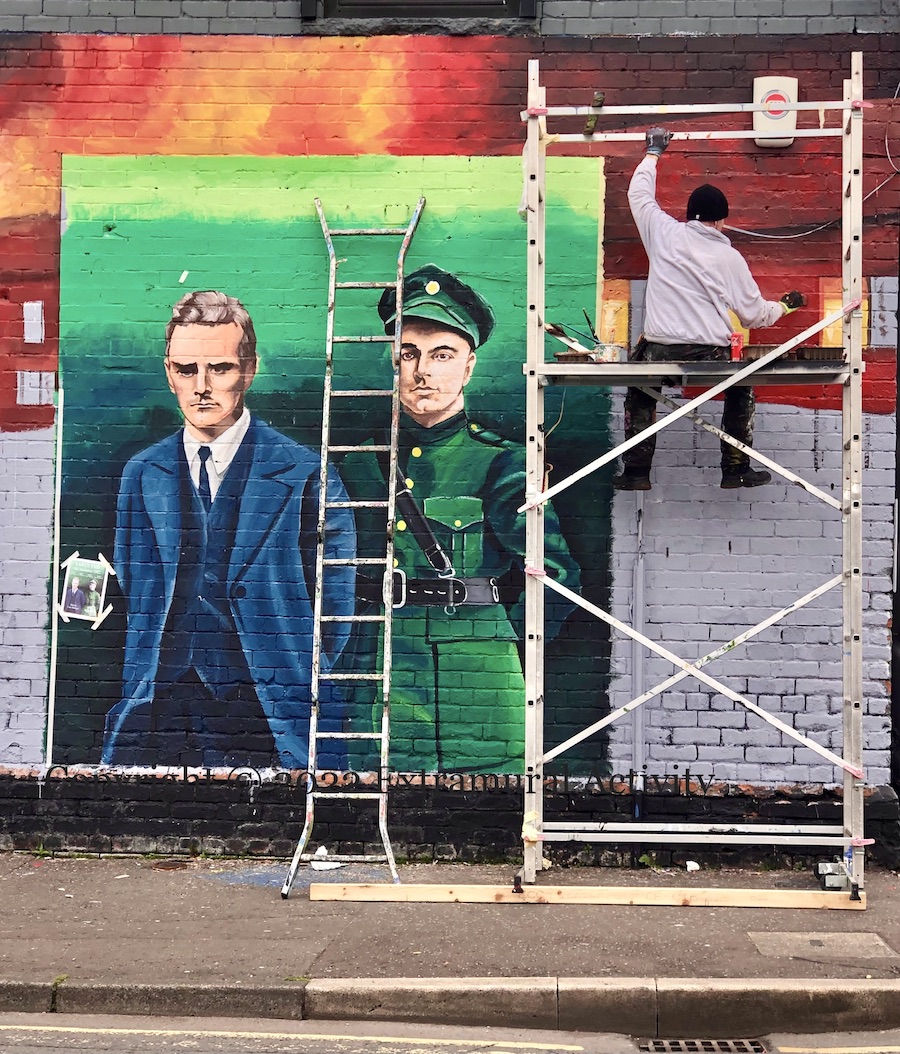
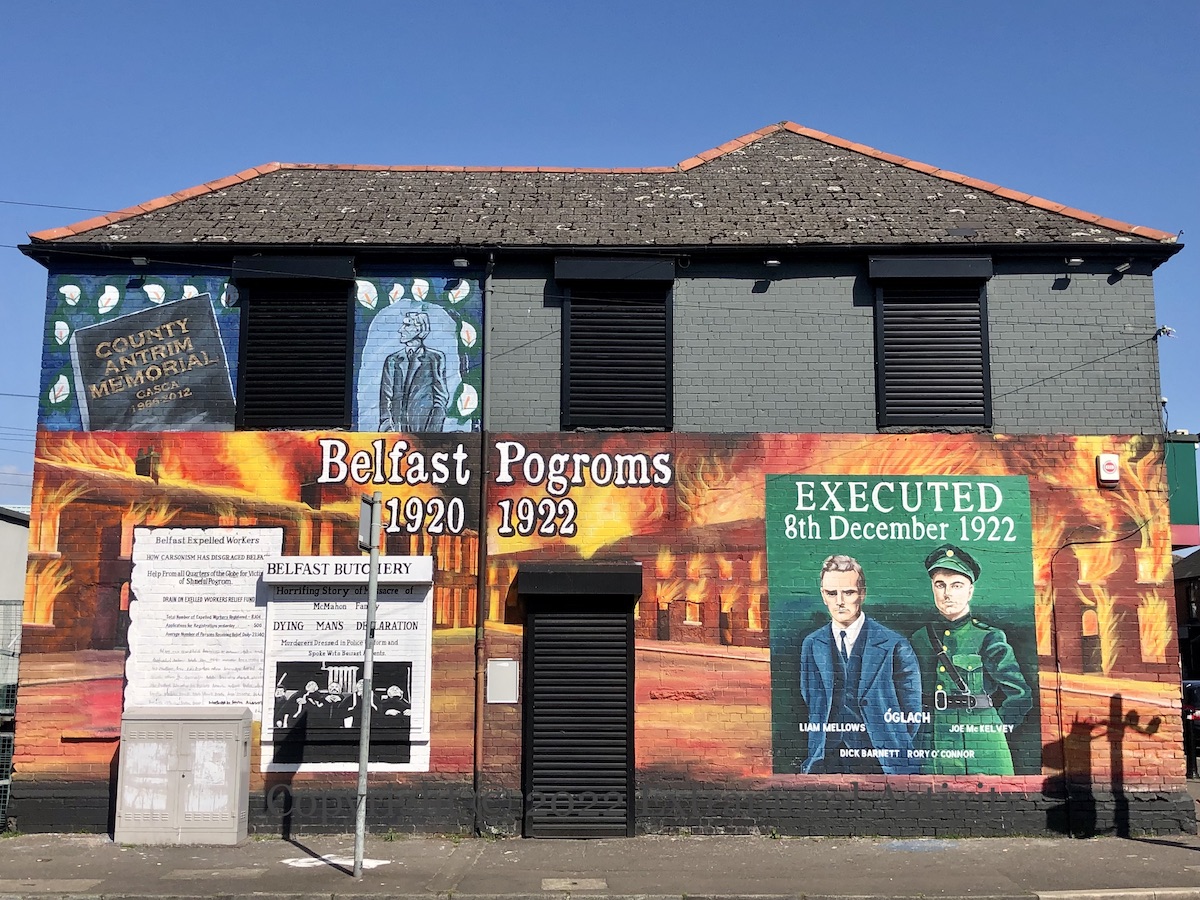
On October 18th, 1922, the third Dáıl/second Provisional Government Of Southern Ireland approved – in the absence of anti-Treaty members – a bill entitled the “Army Emergency Powers Resolution” which introduced martial law, including martial courts with the death penalty for anyone found in possession of an illegal firearm – “illegal” meaning not sanctioned by the nascent pro-Treaty Free State. Under these powers, seven IRA volunteers were executed on November 17th and 19th, followed on the 24th by Erskine Childers (a member of the team that negotiated the Treaty but subsequently against it). In response, the IRA declared that TDs who had voted for the bill were fair game, and on December 7th Seán Hales of Cork was shot and killed. In reprisal, the government ordered the execution of four more volunteers, one from each province: Liam Mellows, Joe McKelvey, Dick Barnett, Rory O’Connor. The four had been arrested five months earlier, on June 30th, 1922, at the start of the Civil War, after surrendering the Four Courts. By the end of the war, 81 executions had taken place. (An Phoblacht | Irish Times | The Irish Story | WP | WP)
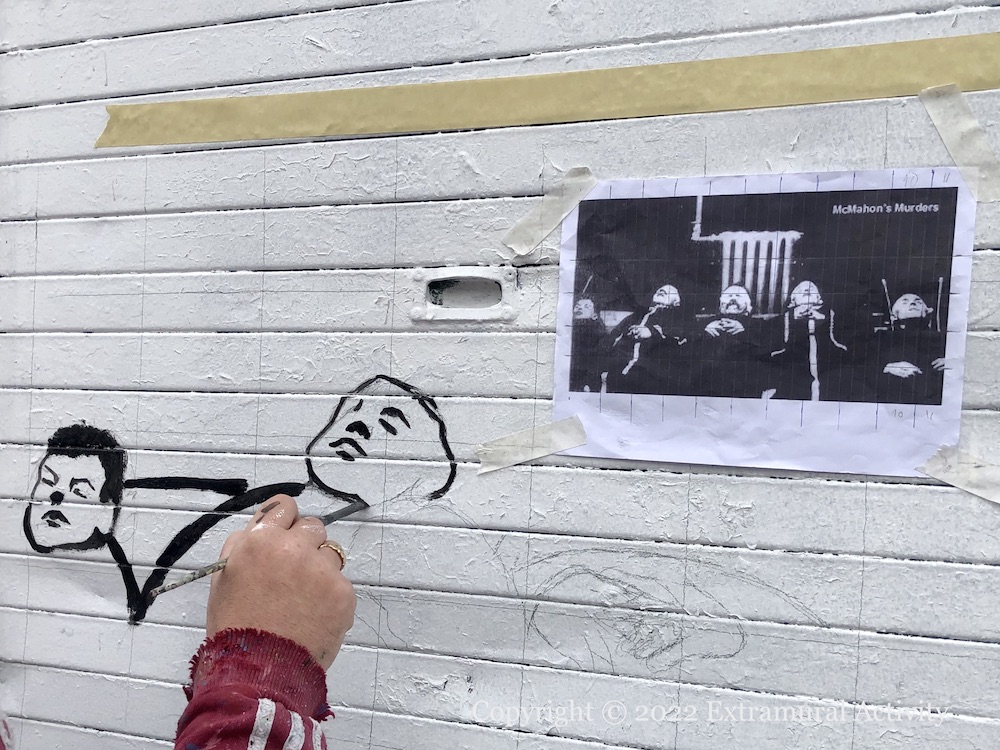
For the left-hand side of the wall, on the shipyard clearings and the McMahon murders, see Belfast Butchery.
“Belfast Pogroms 1920-1922.” Against the backdrop of the first Dáıl, the War Of Independence, and the debate in Westminster over the fourth Home Rule bill (it would be passed in November 1920), northern Protestants began to assert their de facto independence from the rest of Ireland – both in economic and in military terms.
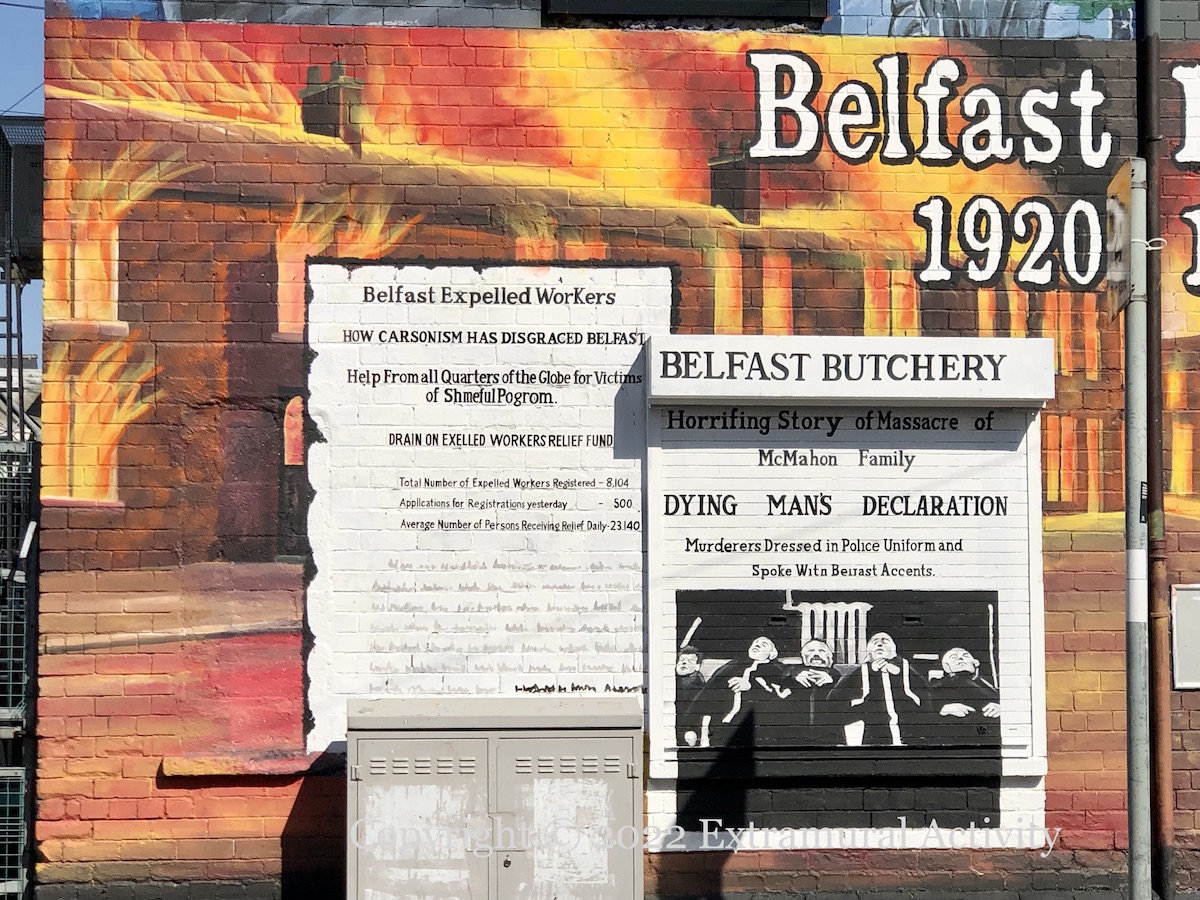
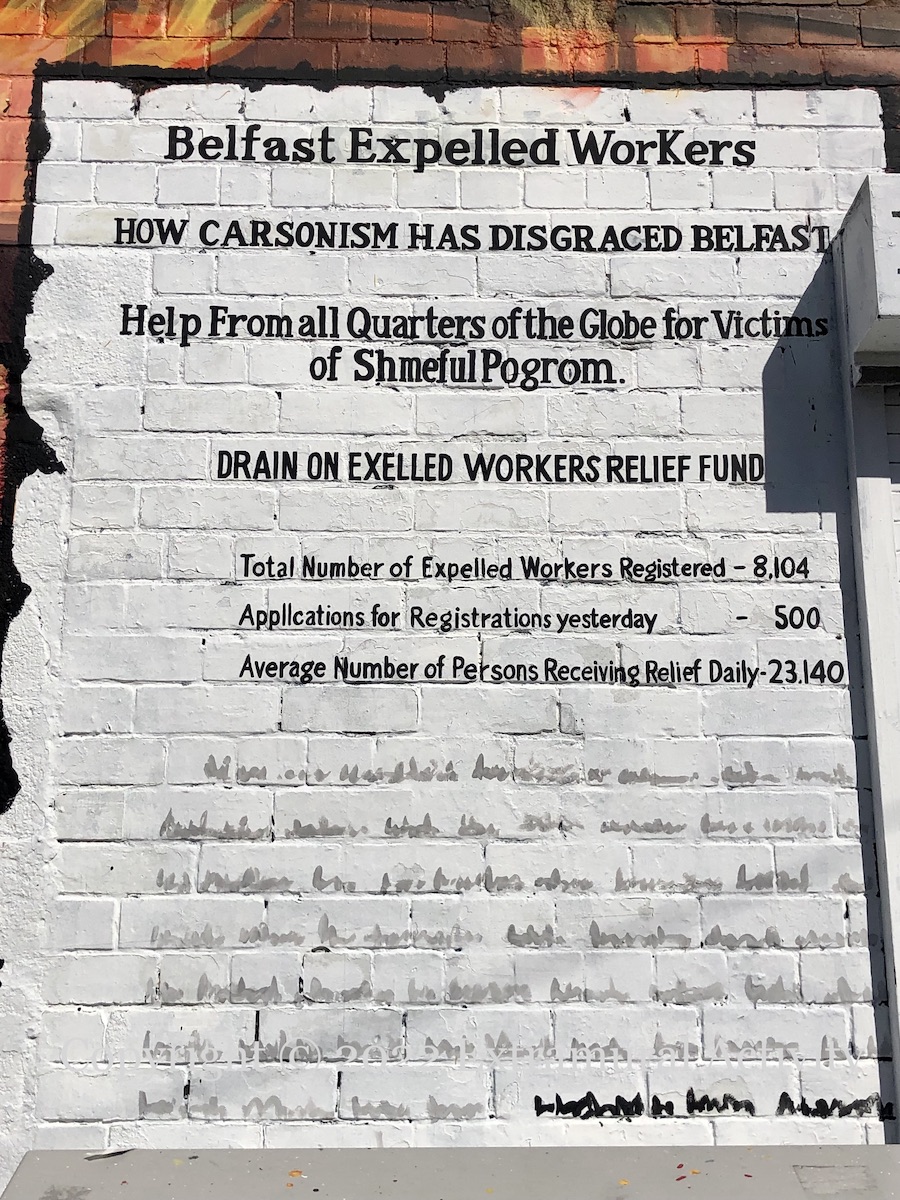
On July 12th, 1920, Edward Carson spoke to a crowd in Derry and, addressing the government in Westminster, said “if you are yourself unable to protect us from the machinations of Sınn Féın, and you won’t take our help; well, then, we tell you we will take the matter into our own hands.” (Treason Felony). Nine days later, the “clearings” of Catholics from Belfast shipyards and mills began, with about 5,700 Catholics and 1,850 socialists (“rotten Prods“) being expelled from Workman Clark and Harland & Wolff yards, and in total 10,000 workers from yards and mills over the next two weeks (History Ireland). In combination with the straitened economic circumstances of the time (post WWI) thousands (23,140 according to this mural, which reproduces a flyer derived from the Irish News of October 6th, 1920 – via The Irish Story’s account of the start of the “Belfast Pogrom”) were on relief.
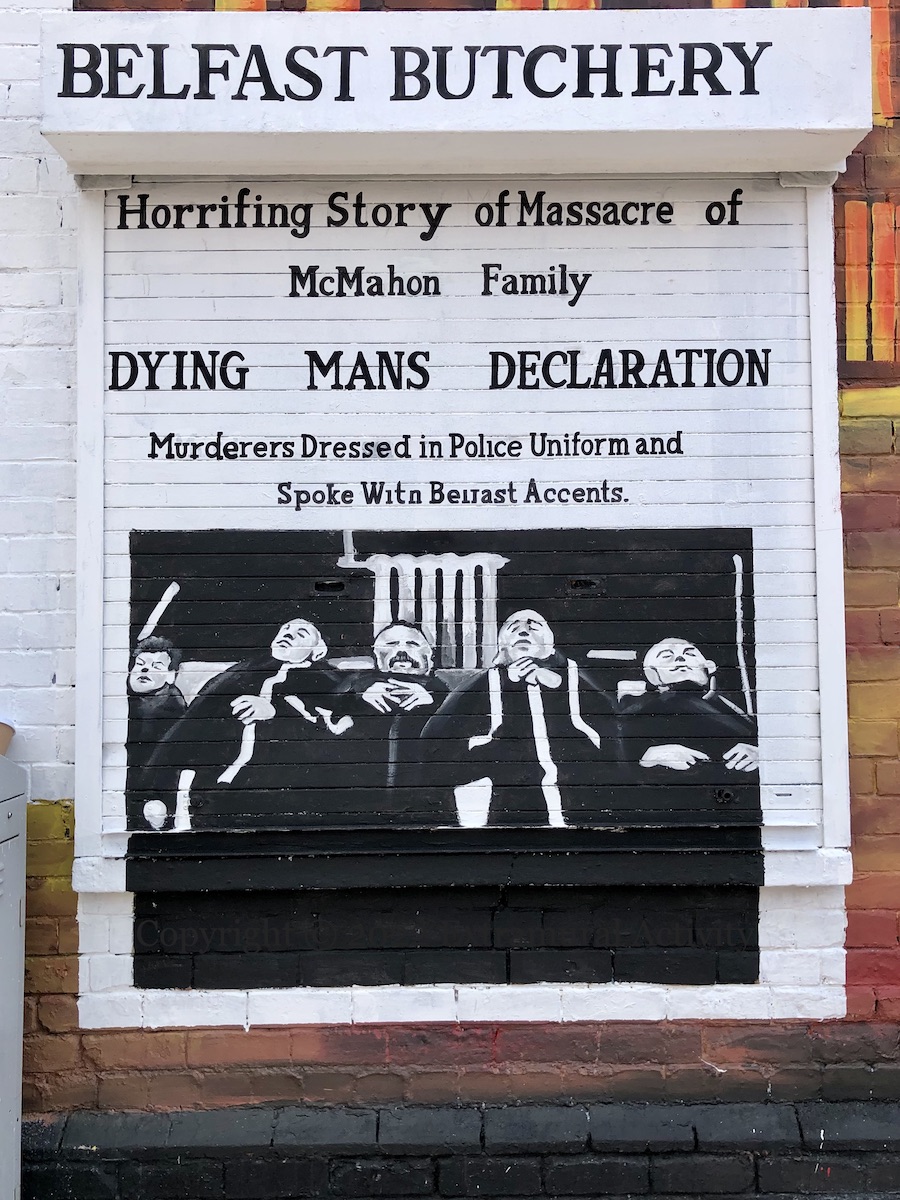
Militarily, in October, 1920, the Ulster Special Constabulary was established (drawing on members of the Ulster Volunteers, which had been reconstituted in June 1920, and the 21,000 members of the Ulster Imperial Guards (WP)) as an alternative to the Royal Irish Constabulary in fighting actions by the IRA in Belfast, Derry, and elsewhere in the north. On March 23rd, 1922, two officers of the Specials were killed in Belfast city centre by the IRA. In reprisal, two Catholic civilians were killed in the Short Strand, and in the early hours of March 24th, a party of five men, four dressed in RIC uniforms, burst into the home of Catholic businessman Owen McMahon and shot McMahon, his six sons, and one of his employees – only two of the sons survived. District Inspector John Nixon of the RIC was suspected of leading the attack on the McMahon household – see The RIC Murder Gang and Pat And Dan Duffin. (The headlines are from the Freeman’s Journal of March 25th, 1922 – see Joe Baker’s 80-page account of the murders of summer 1922; the photograph of the McMahon corpses that is reproduced in the mural can be seen at Slugger.)
This is the first half a new mural in Ascaıll Ard Na bhFeá; the “1922” part can be seen in Executed.
“Belfast Expelled Workers – How Carsonism has disgraced Belfast – Help from all quarters of the globe for victims of sh[a]meful pogrom – Drain on Ex[p]elled Workers[‘] Relief Fund. Total number of expelled workers registered – 8,104; Applications for registrations yesterday – 500; Average number of persons receiving relief daily – 23,140.”
“Belfast Butchery – Horrif[y]ing story of massacre of McMahon family – Dying man[‘]s declaration – Murderers dressed in police uniform and spoke with Belfast accents.”
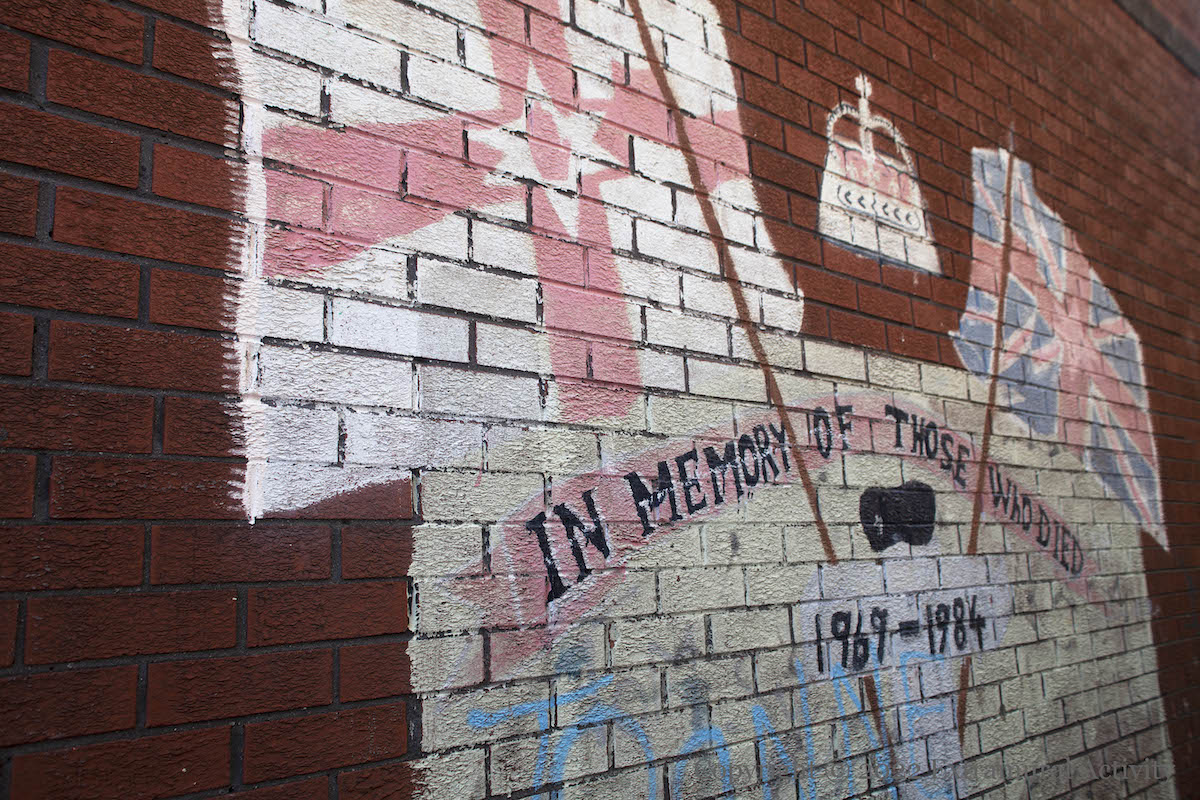
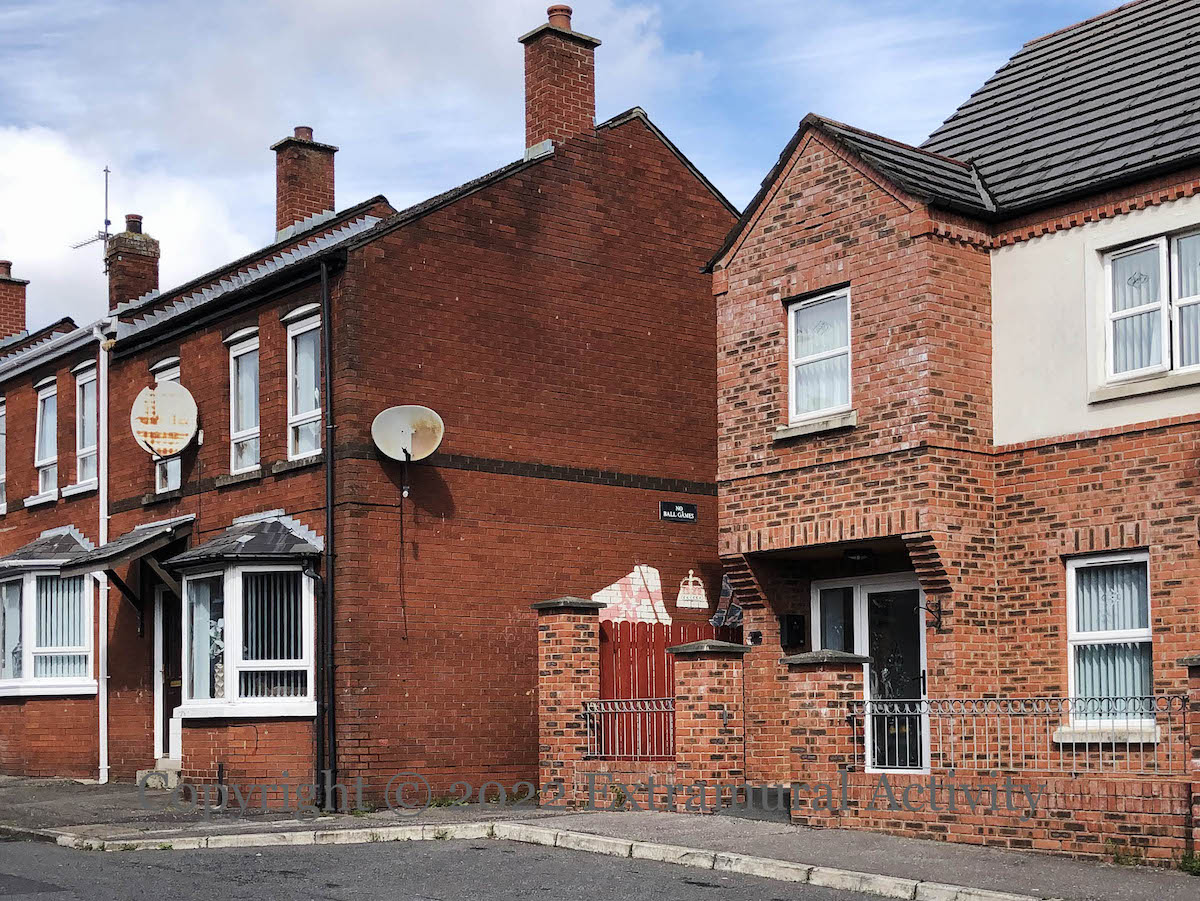
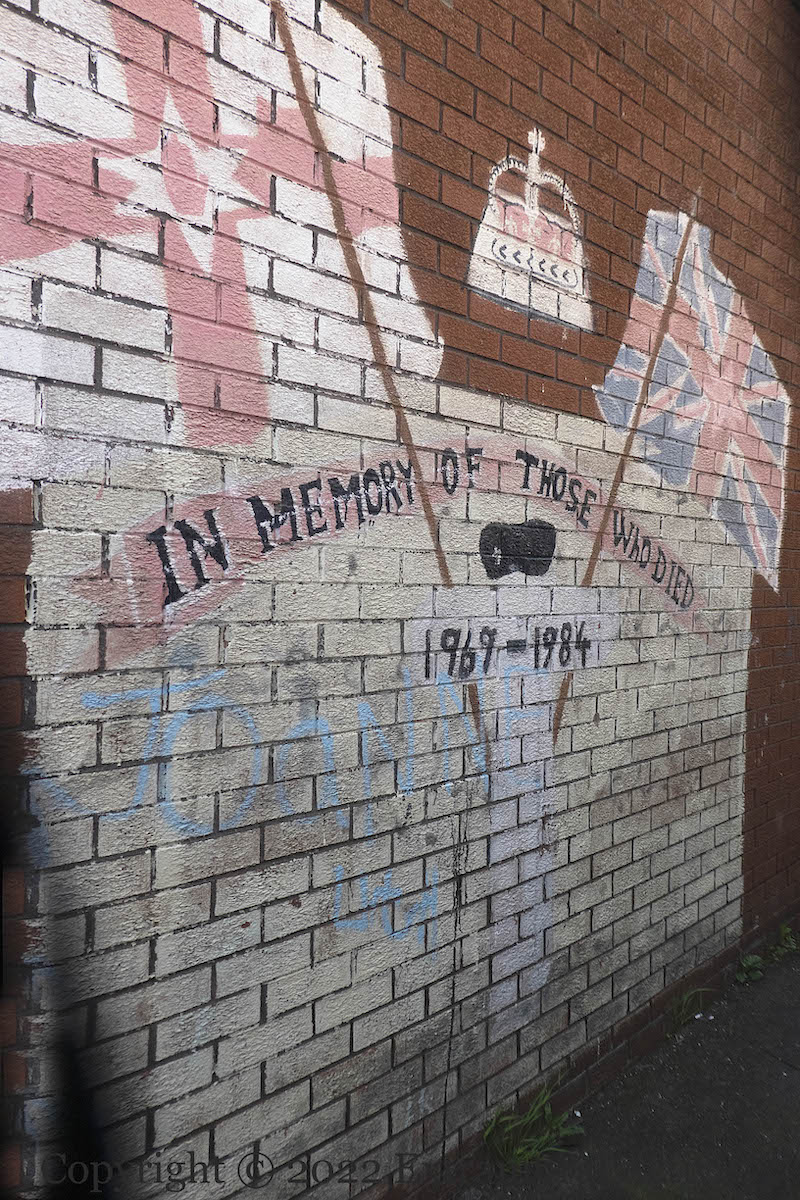
This mural – which perhaps memorialises the RUC in particular – has evidently been rolling since 1984 and the two different styles of house and brick (in the image below) explain its longevity – it’s in a narrow alley between two different stages of construction on Sydney Street West, initially to where the old Harrybrook Street used to be and then extended out to Snugville Street.
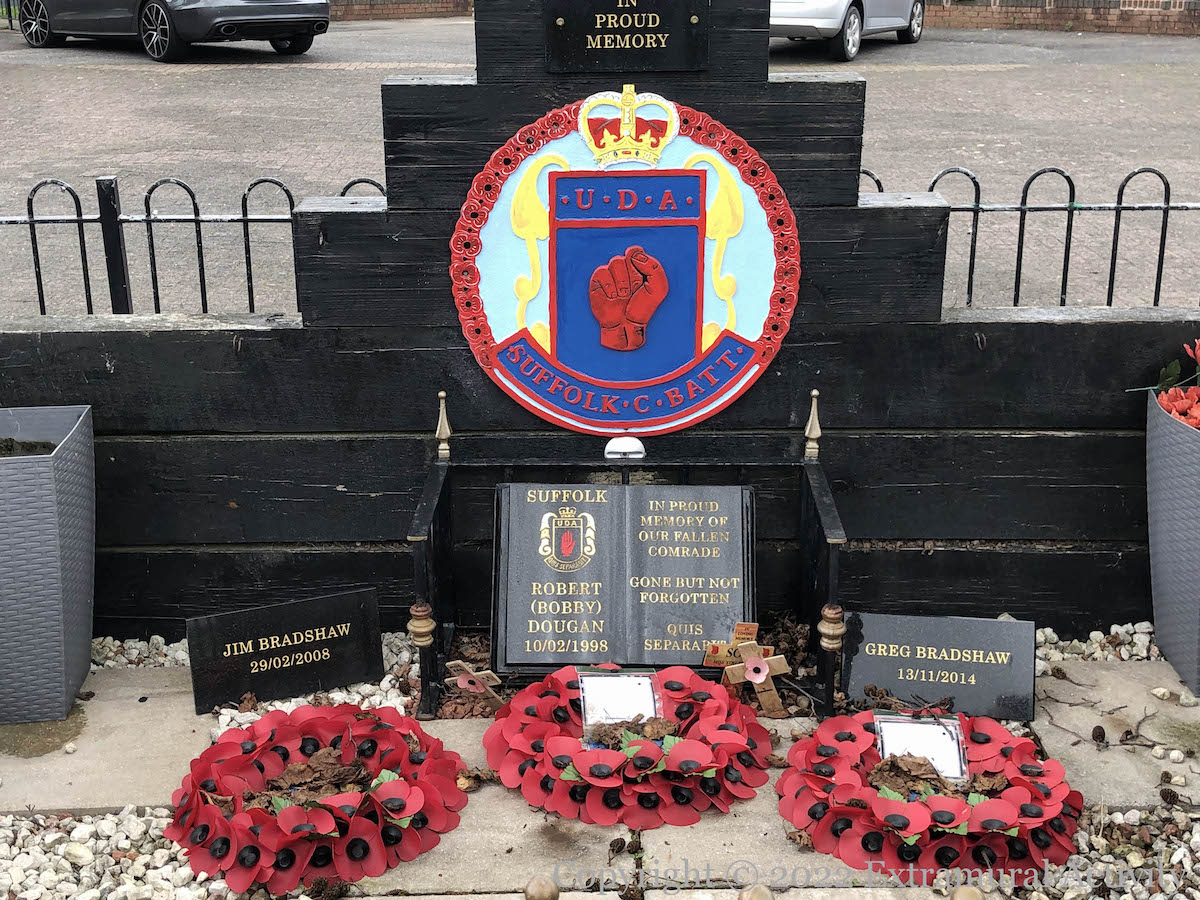
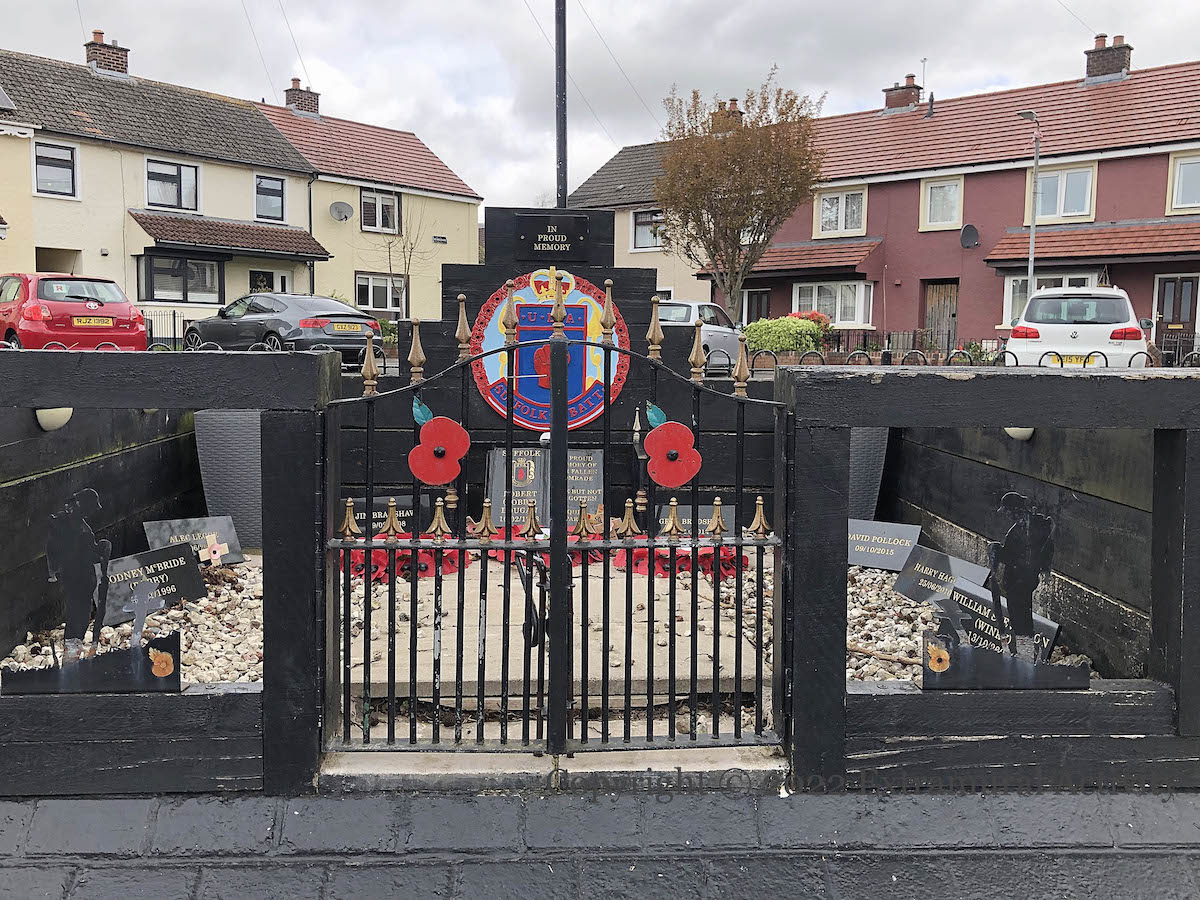
Robert Dougan was commander of the UDA South Belfast Brigade and lived Oranmore Drive (BelTel). He was killed by the IRA on February 10th, 1998 while sitting in a car outside Balmoral Textiles in Dunmurry, which led to a month-long expulsion of Sinn Féin from the peace talks taking place at the time (L.A. Times); two months later the Good Friday Agreement was signed. There had been attempts on his life in 1993 and 1994 (Irish Times).
The plaques, from left to right, are to Rodney McBride (1996), Alec Legge (2007), Jim Bradshaw (2008), Robert Dougan (1998), Greg Bradshaw (2014), David Pollock (2015). Harry Haggan (2010), William Stevenson (2008).
Tildarg Avenue. There is a mural to Dougan on Sandy Row – see Everyone’s Friend.
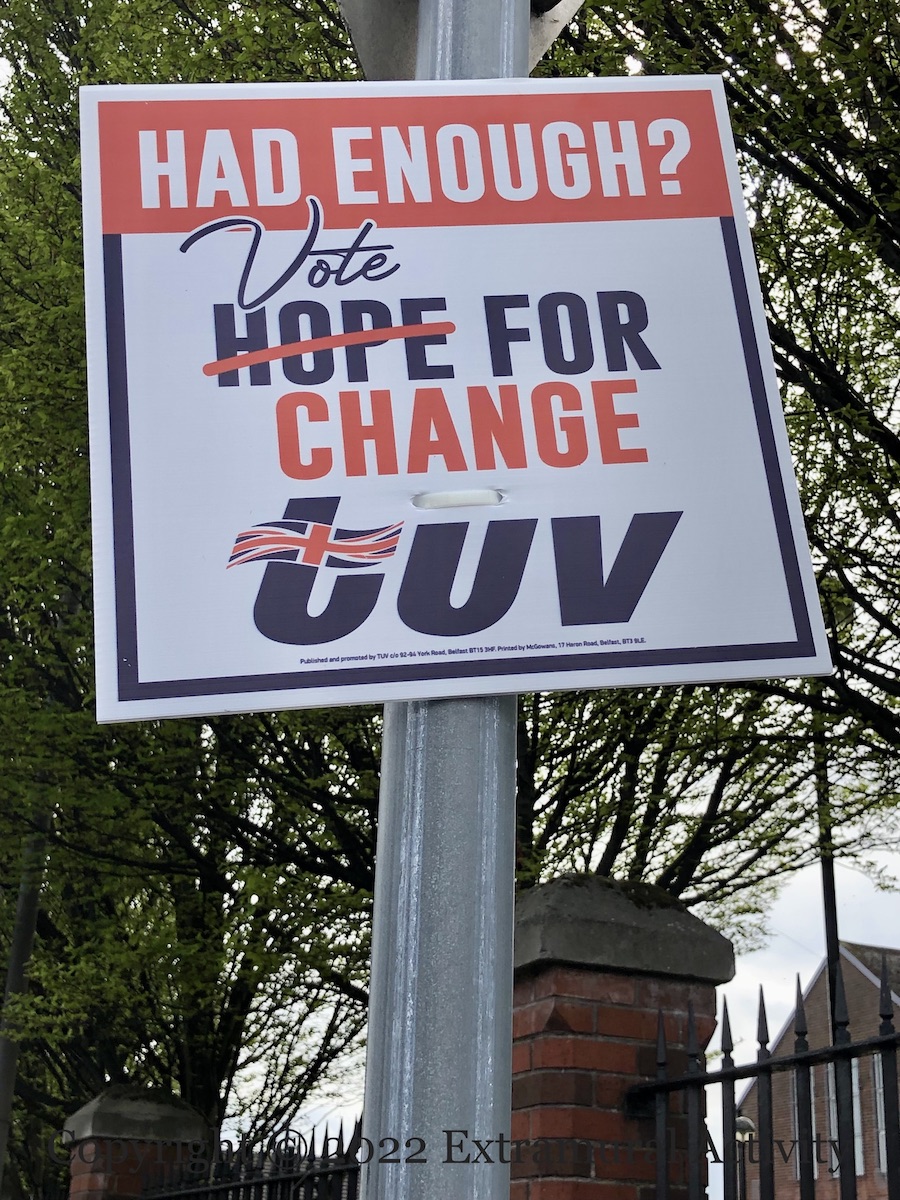
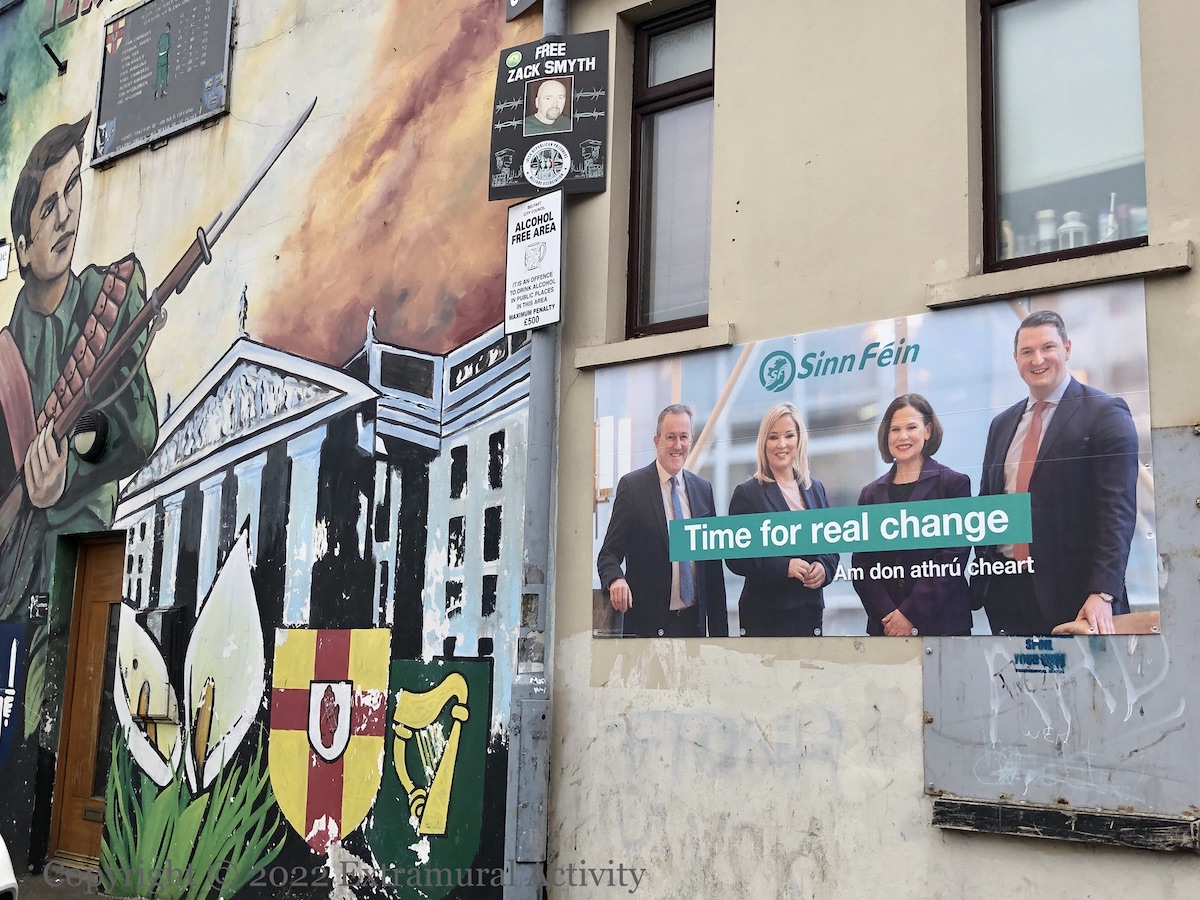
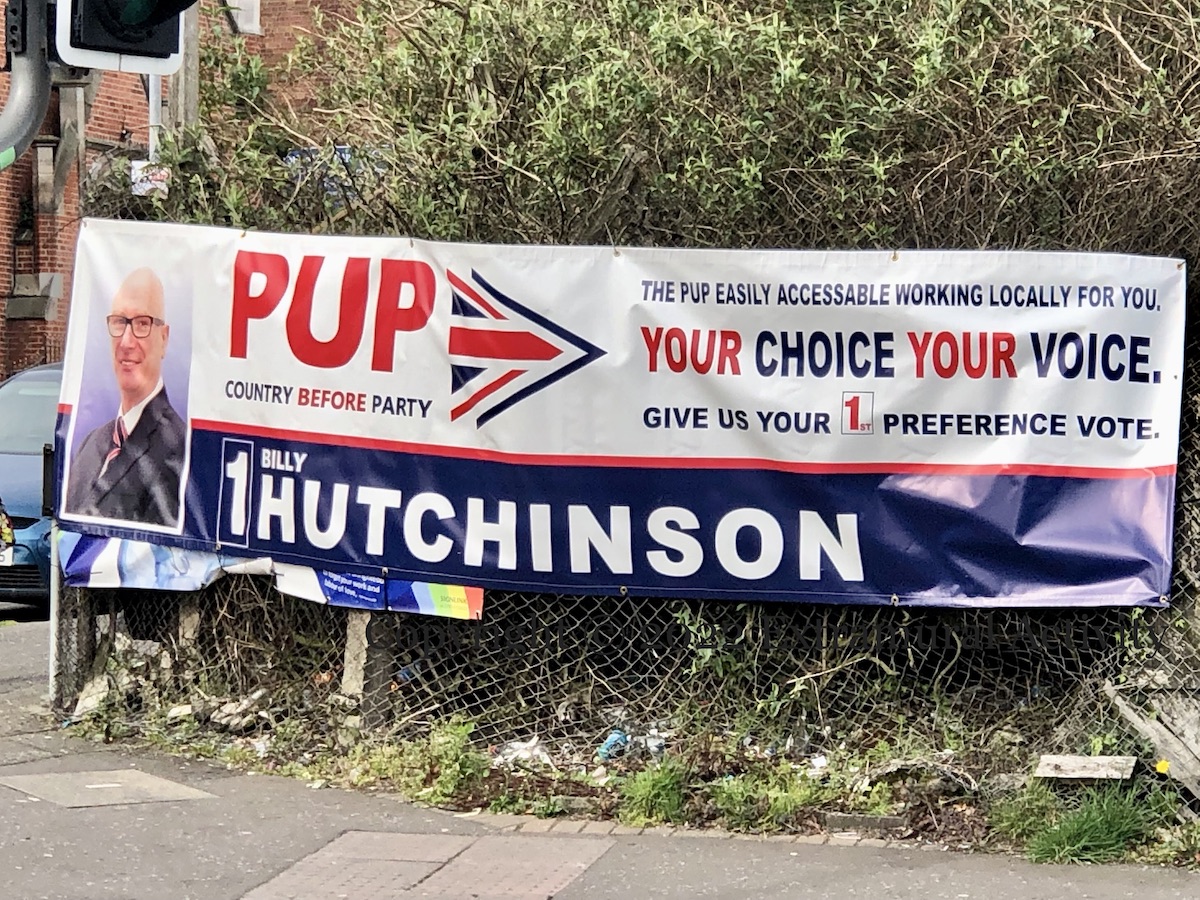
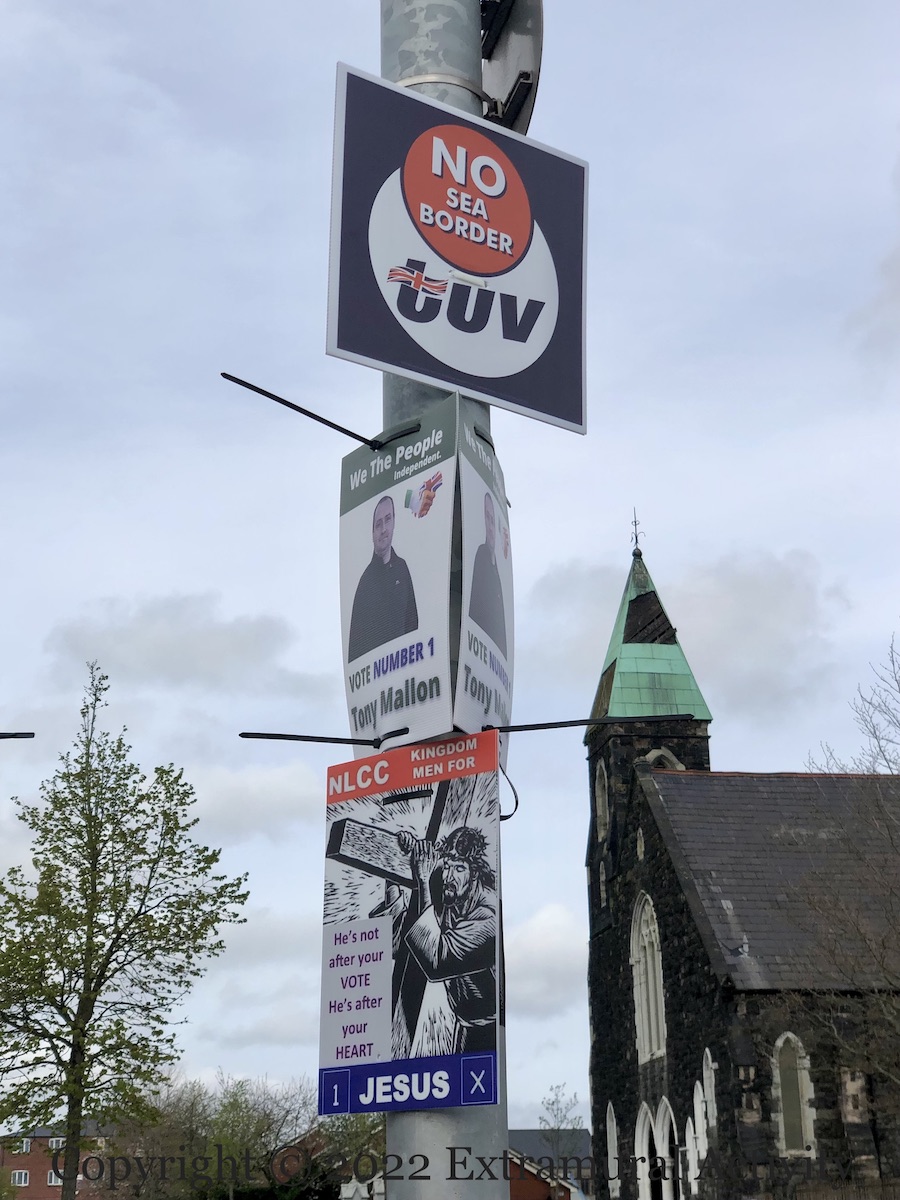
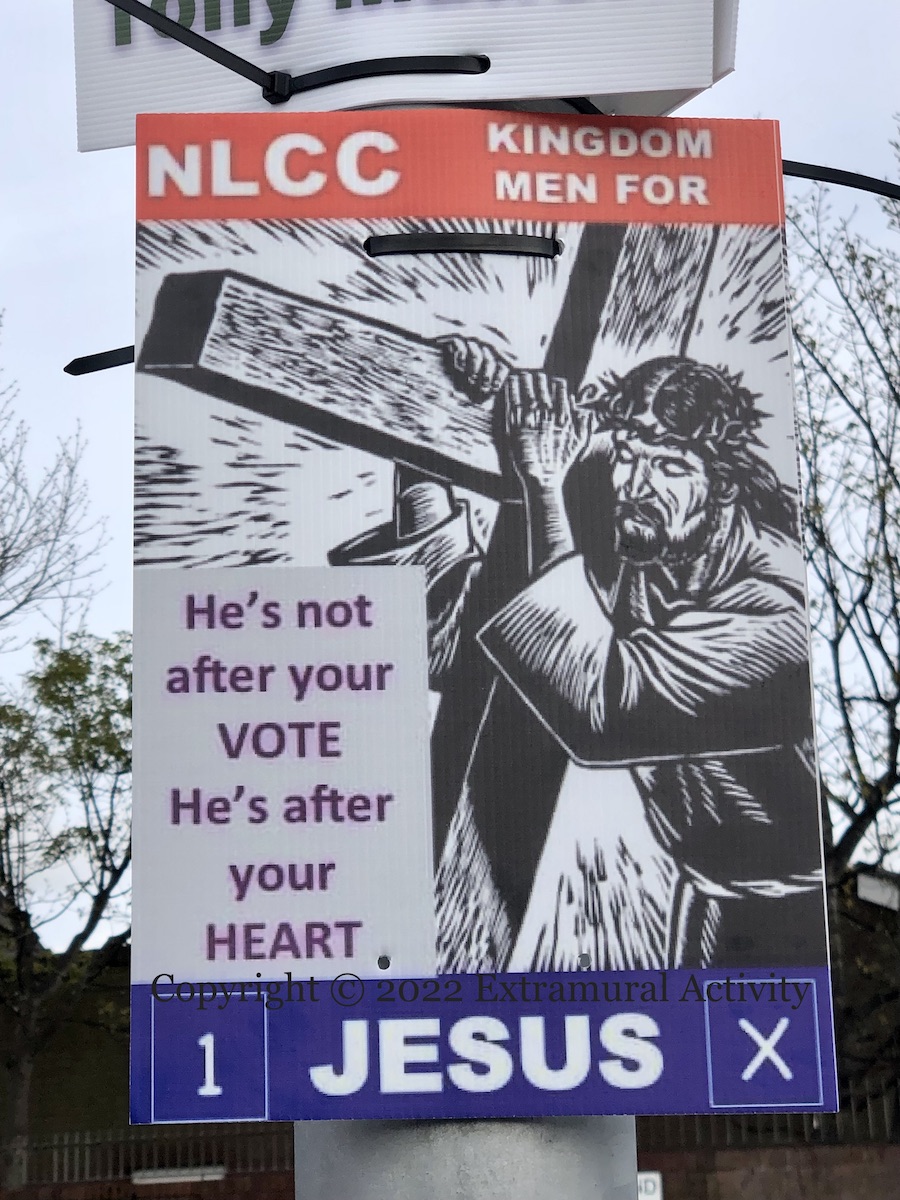
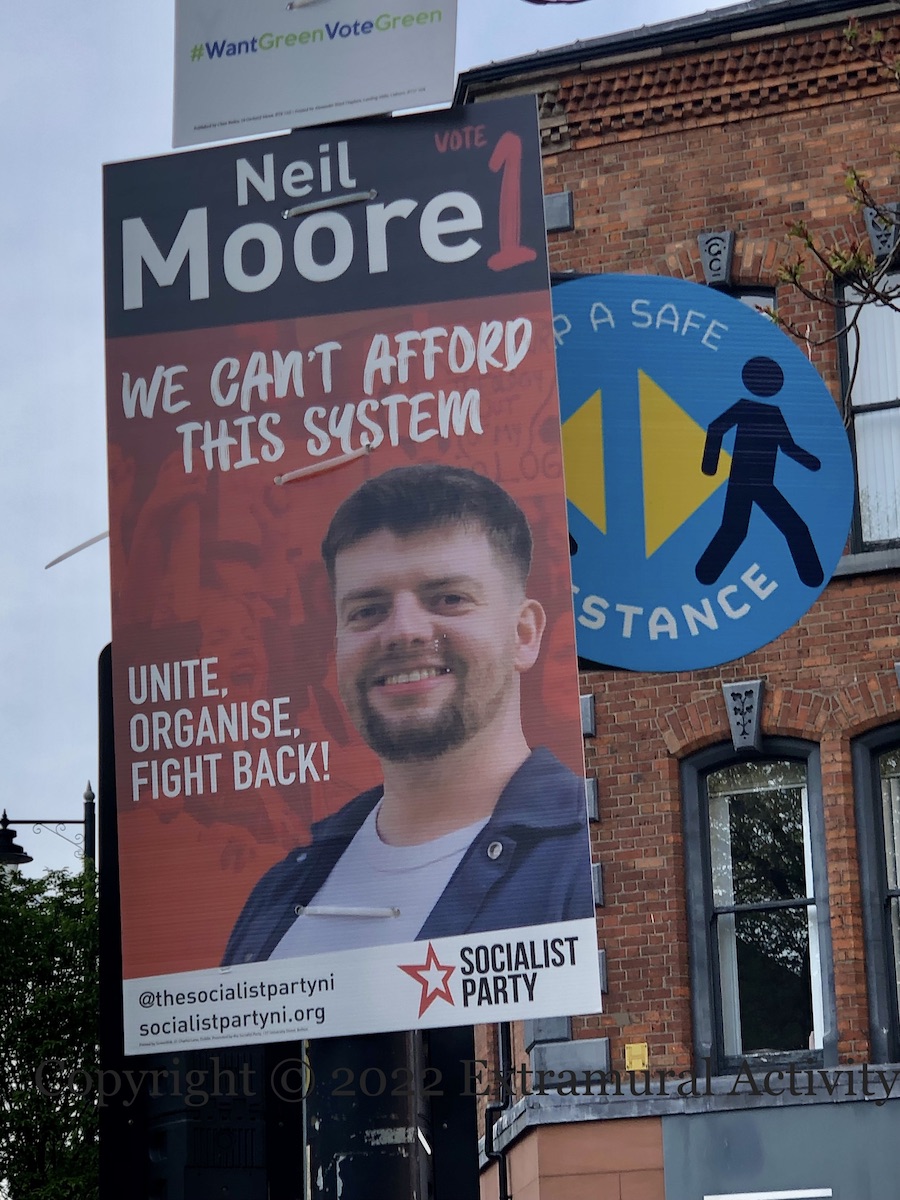
The NI Assembly election is on Thursday May 5th. Here is another gallery of electoral posters. Where last week’s selection included a Noah Donahoe placard in electoral style, this weeks’ includes one for New Life City Church (ig), again in the style of an electoral candidate: “He’s not after your vote, he’s after your heart.” Also shown are: (above) TUV’s ‘don’t hope; vote’; Sinn Féin’s “Time for real change” on top of a “spoil your vote” stencil; the PUP’s “country before party” with anti-woke independent Tony Mallon’s “We the people”; and last, Neil Moore of the Socialist Party “We can’t afford this system” (namely, capitalism).
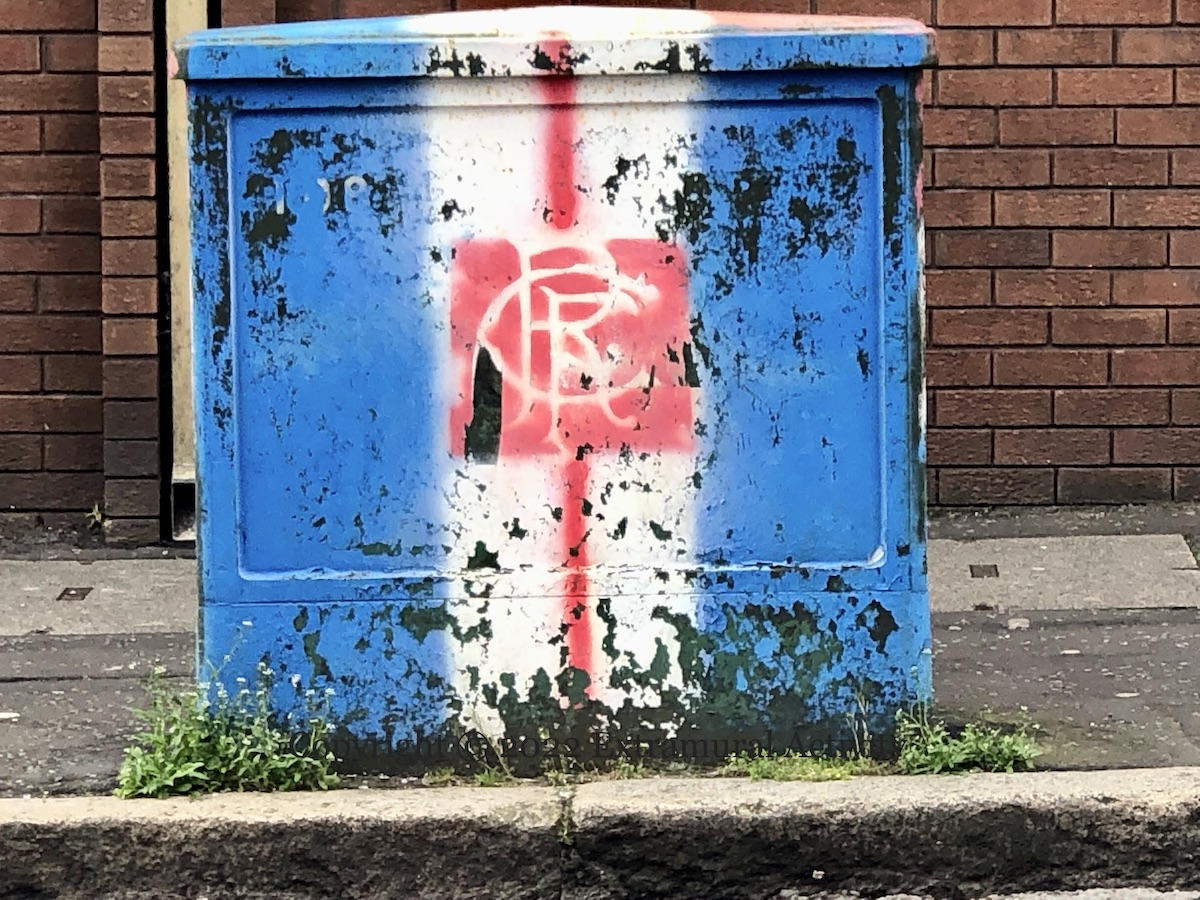
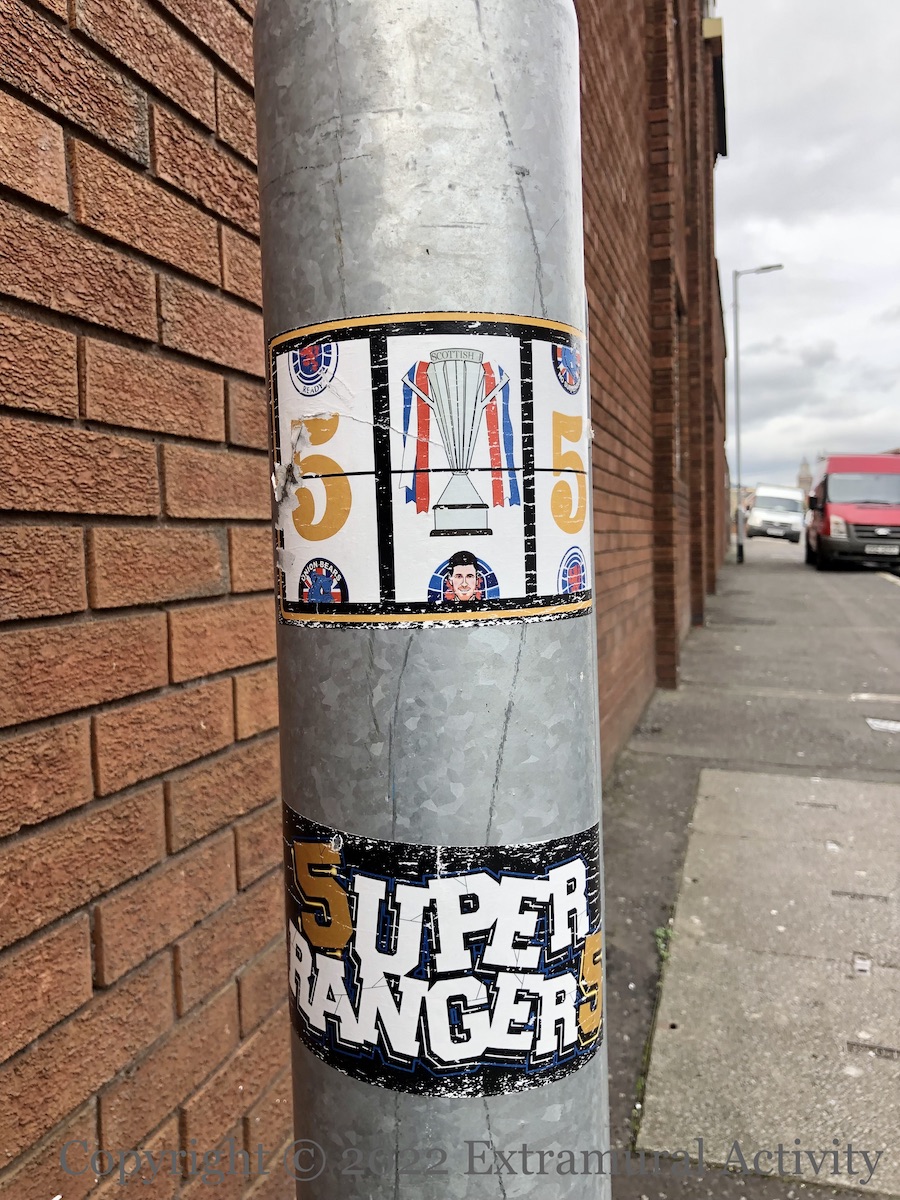
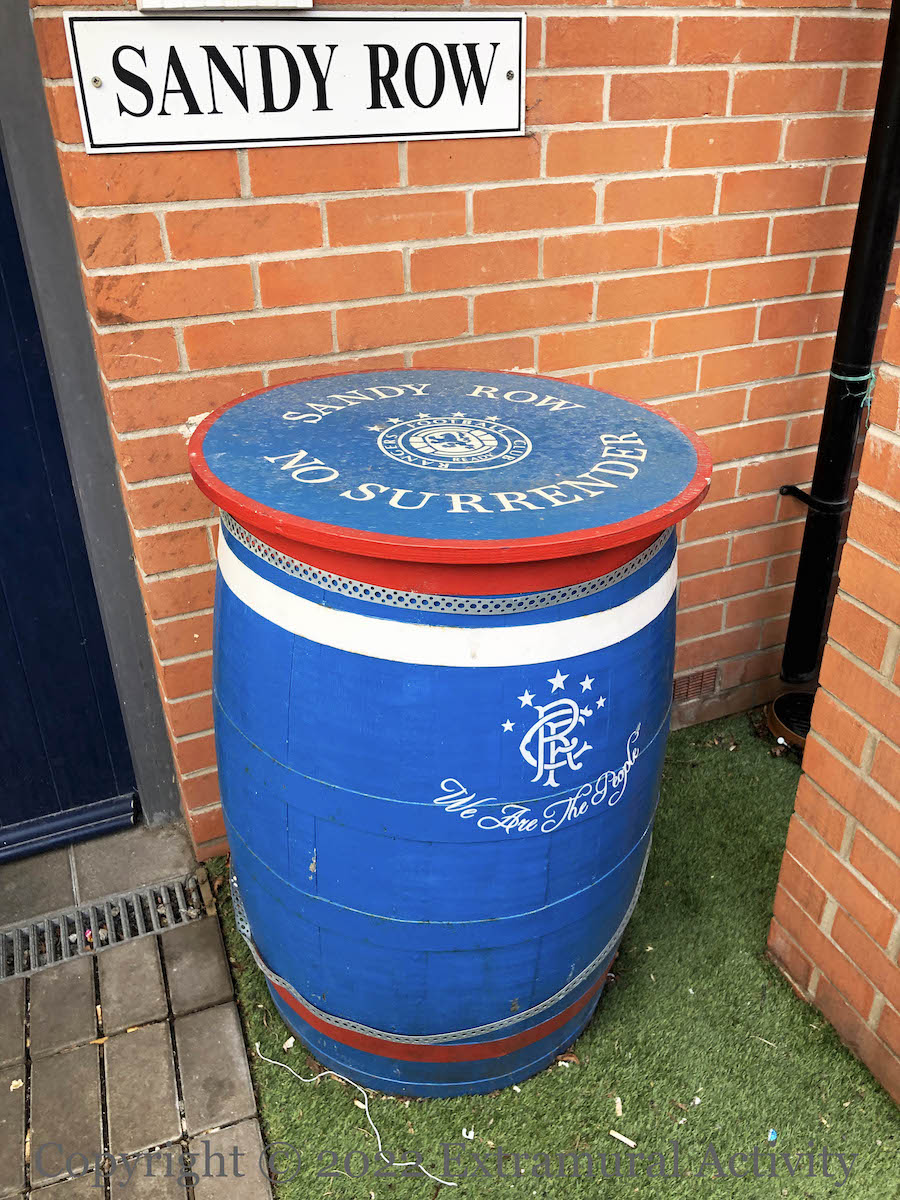
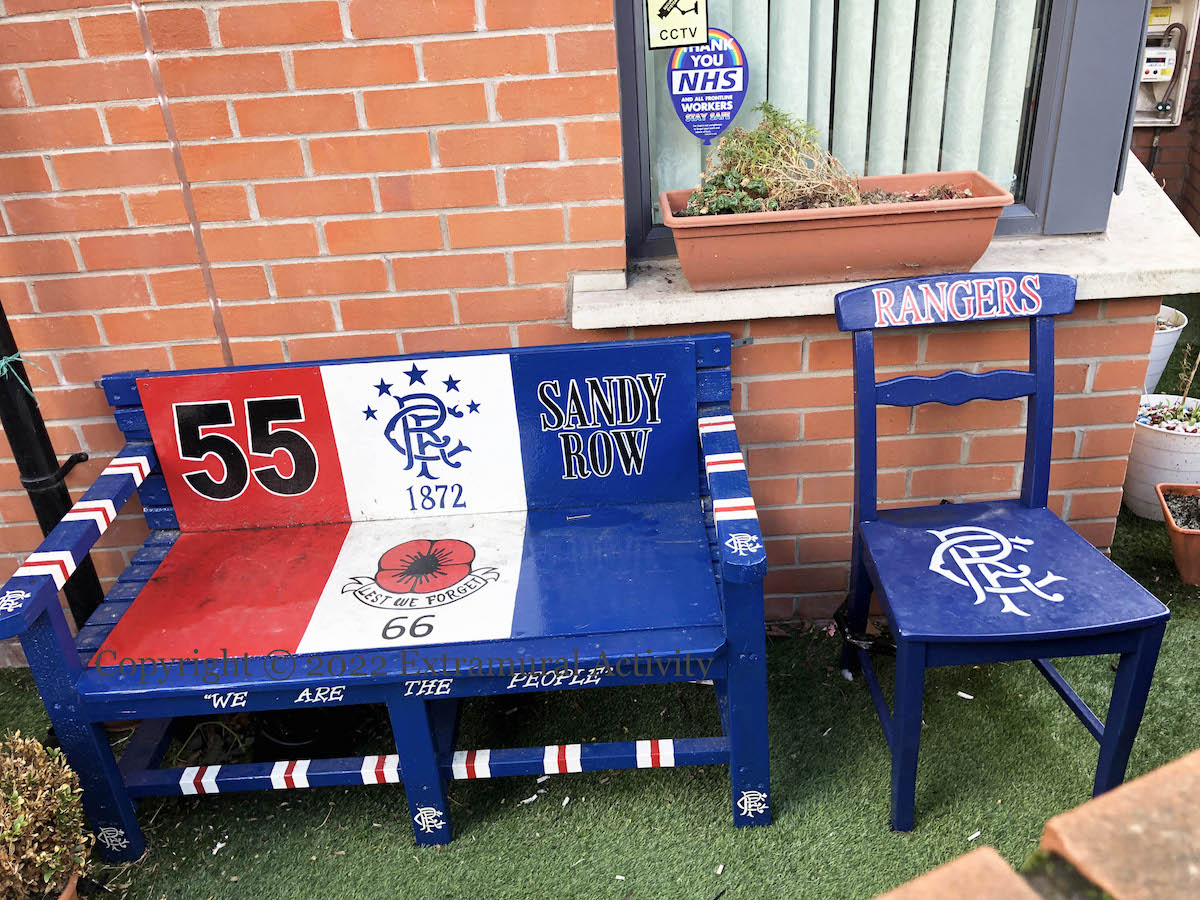
The slot machine last year came up with a 55 Scottish league title for Rangers and Rangers fans across Belfast celebrated with stickers and flags (Let Us Shout Joyfully | Order Restored | 55 | F*ck Your Ten In A Row | Blues Brothers | We’re Back | Legends Never Die) and also the stencilled electricity box from Berlin Street, west Belfast (above) and the furniture and barrel (below) from Sandy Row, south Belfast. This year is not looking so good, as they are six points down with three games to go (SkySports).
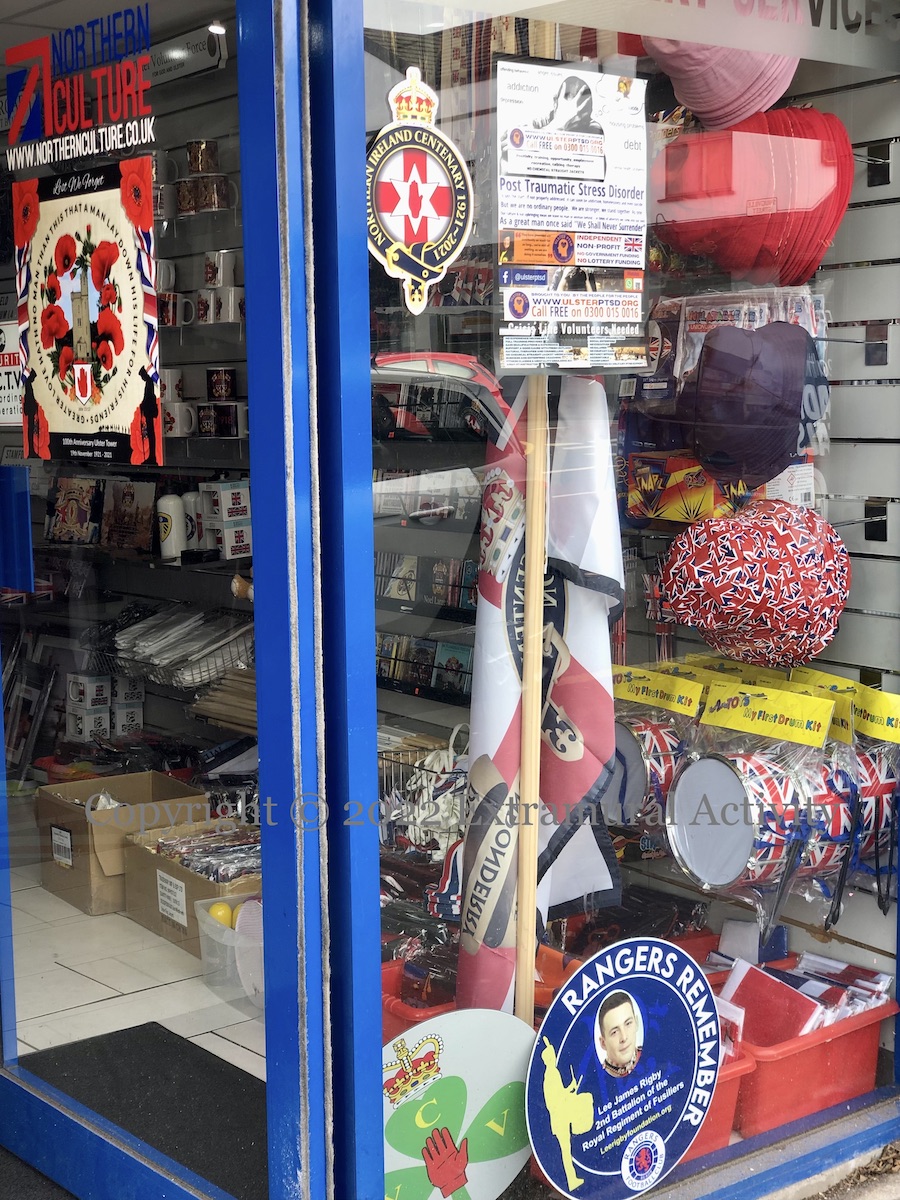
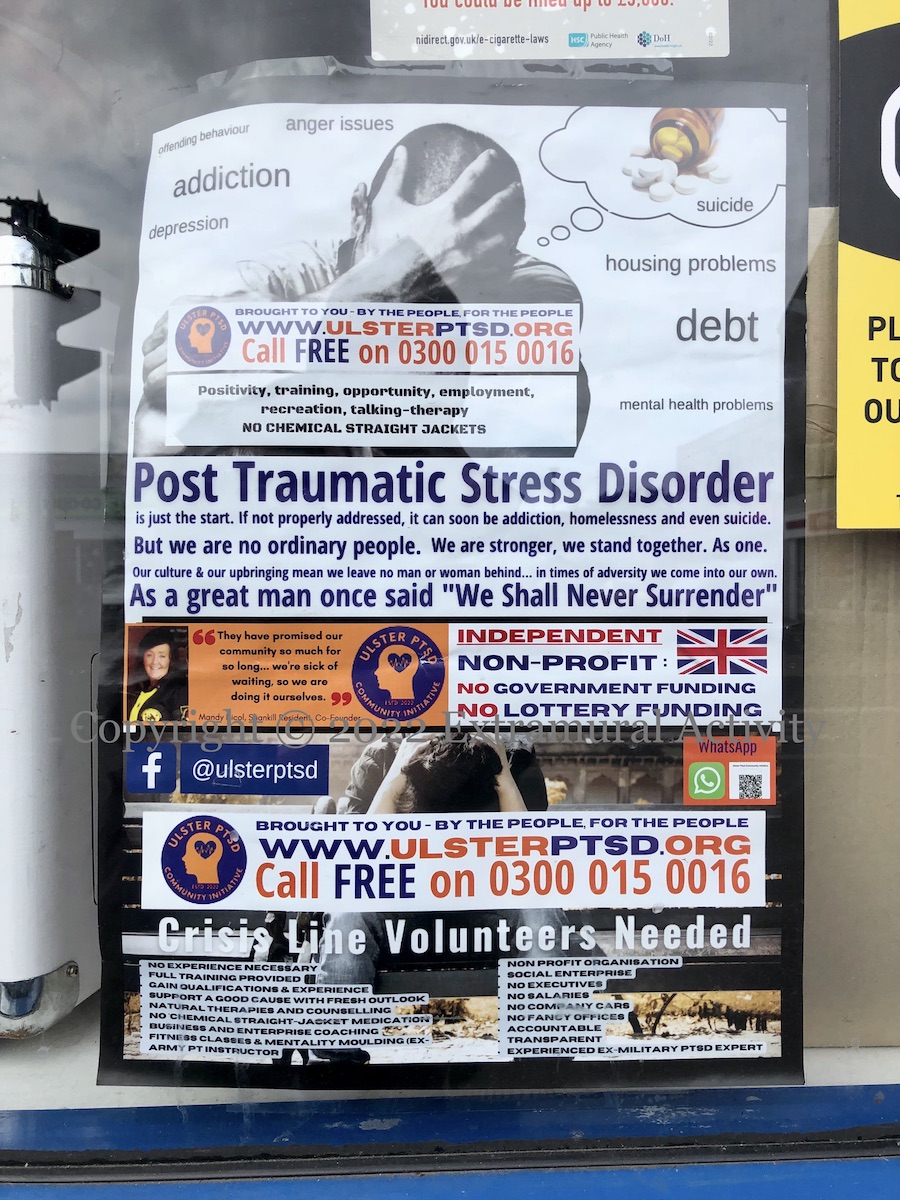
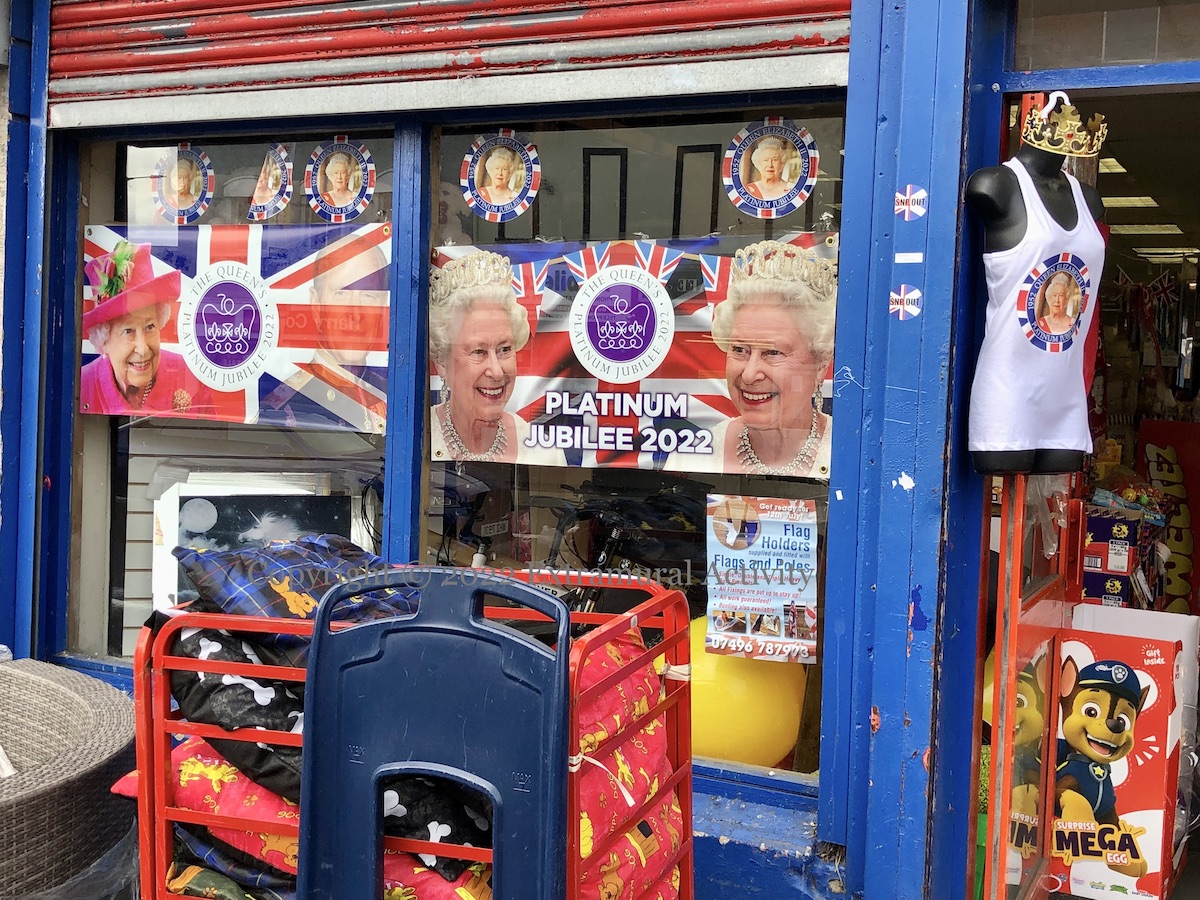
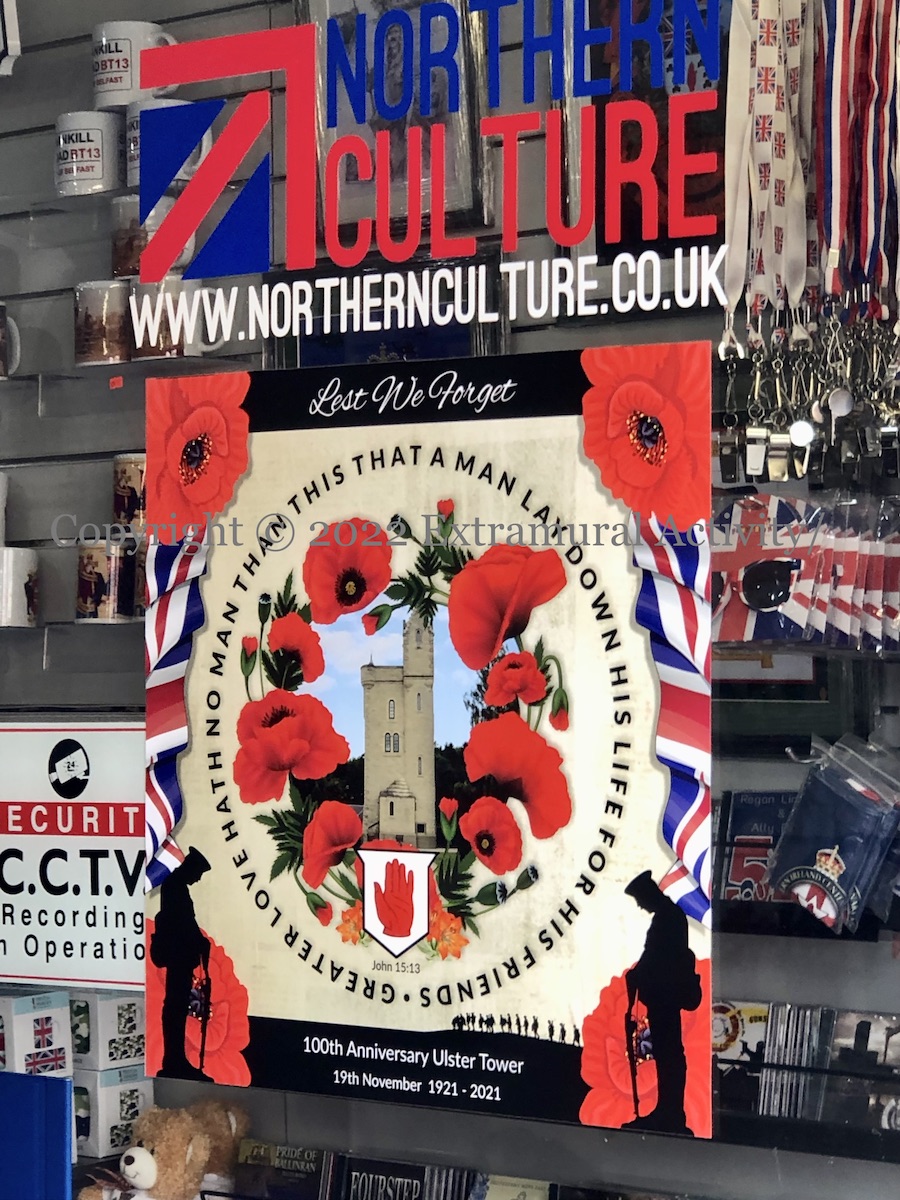
An Orange parade to celebrate the centennial of Northern Ireland – postponed last year on account of the pandemic – will take place today, with roughly 130 bands marching from Stormont to Belfast city centre (Belfast Live). There is not much indication of the parade in posters or murals, perhaps because the anniversary itself has passed. If we read the community’s concerns from the displays in the window of this Shankill Road shop (just above the old Beresford St and the Mussen Cortège mural), they include the NI centenary and the murder of Lee Rigby (WP) (image above), PTSD (second image), the upcoming platinum jubilee of Queen Elizabeth (third) – we will have more jubilee photos over the coming week, and the centenary of the Ulster Tower WWI memorial (see e.g. Our Heritage In Your Hands).
 Seosamh Mac Coille Collection