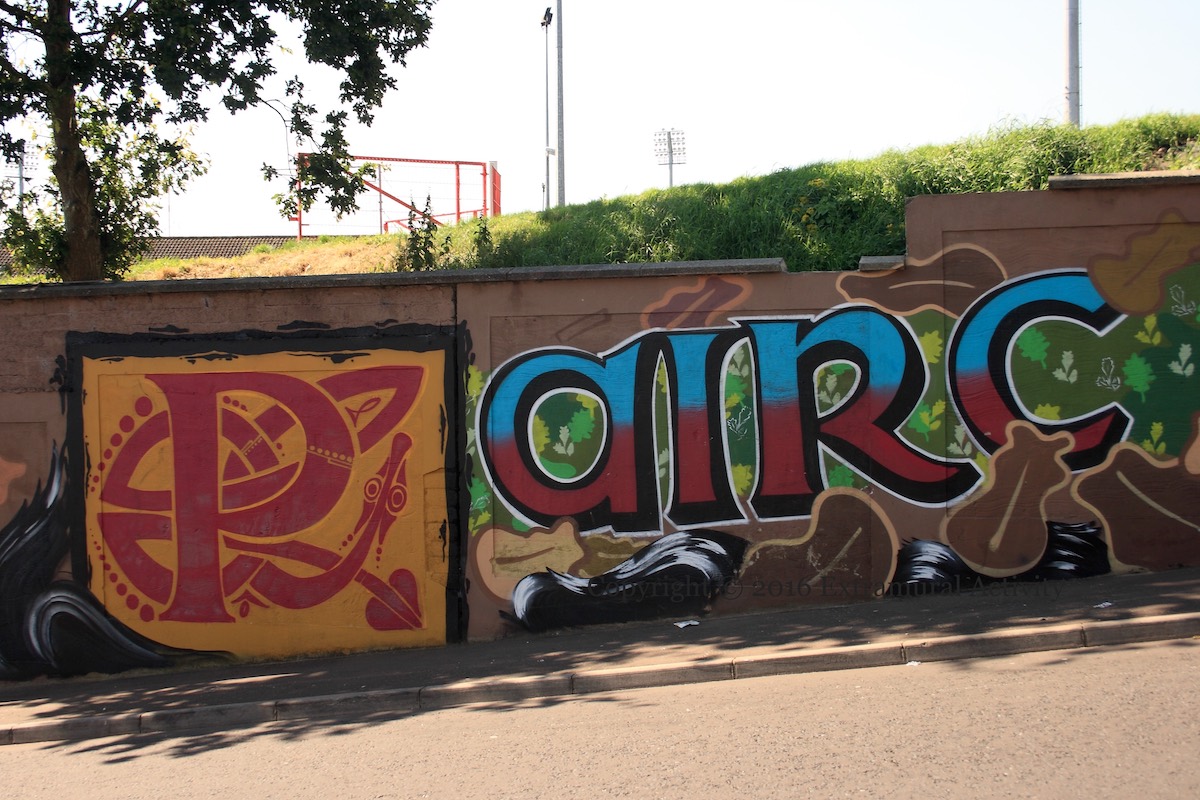
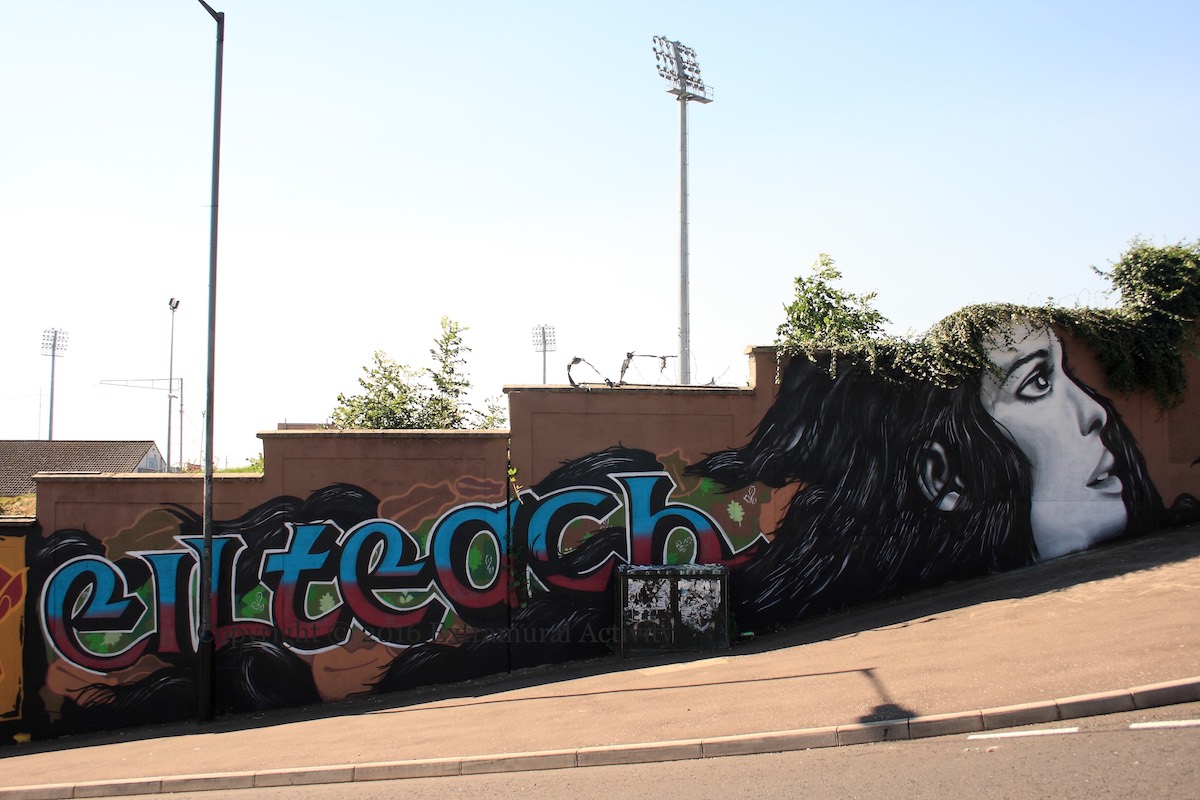
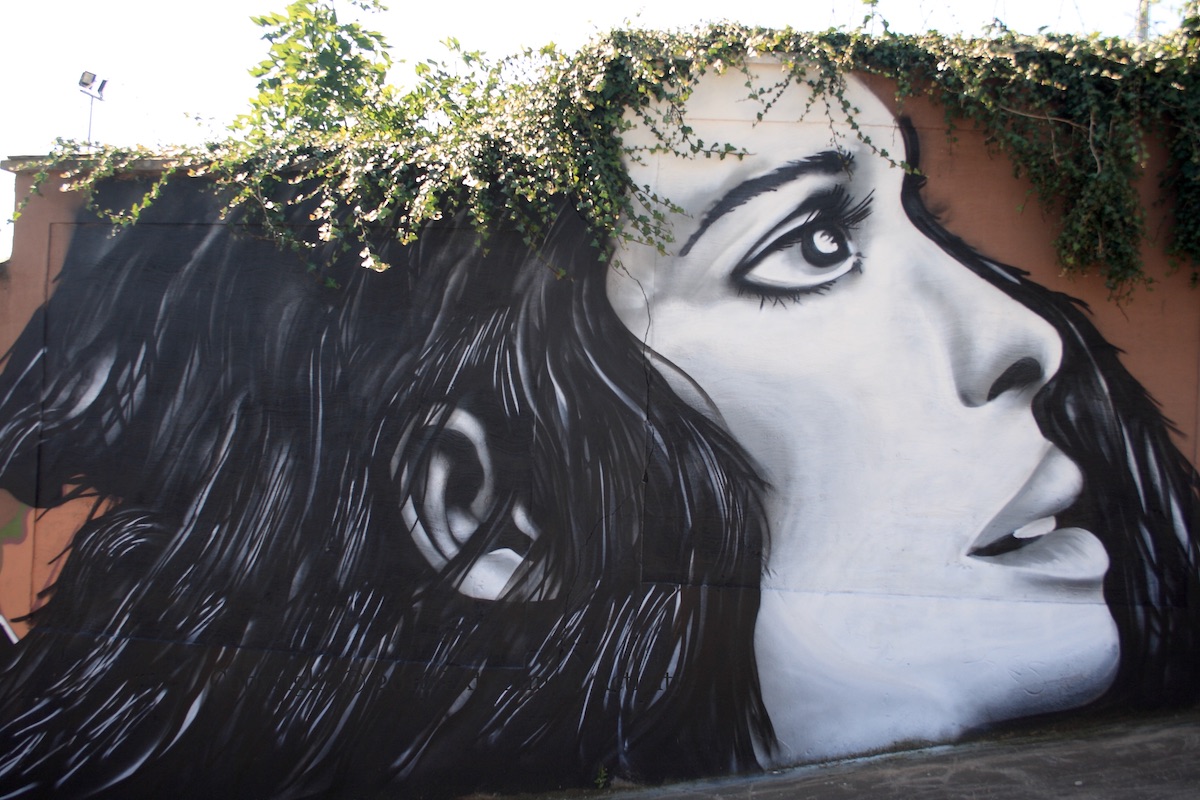
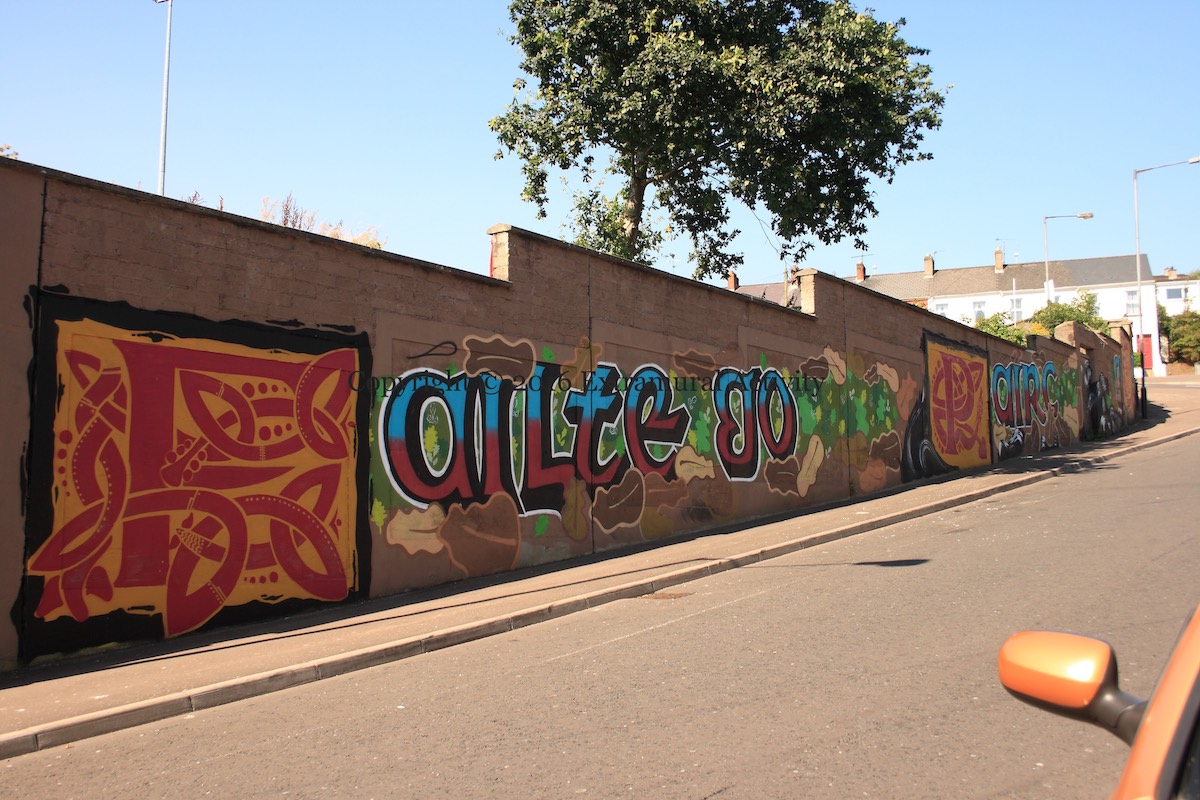
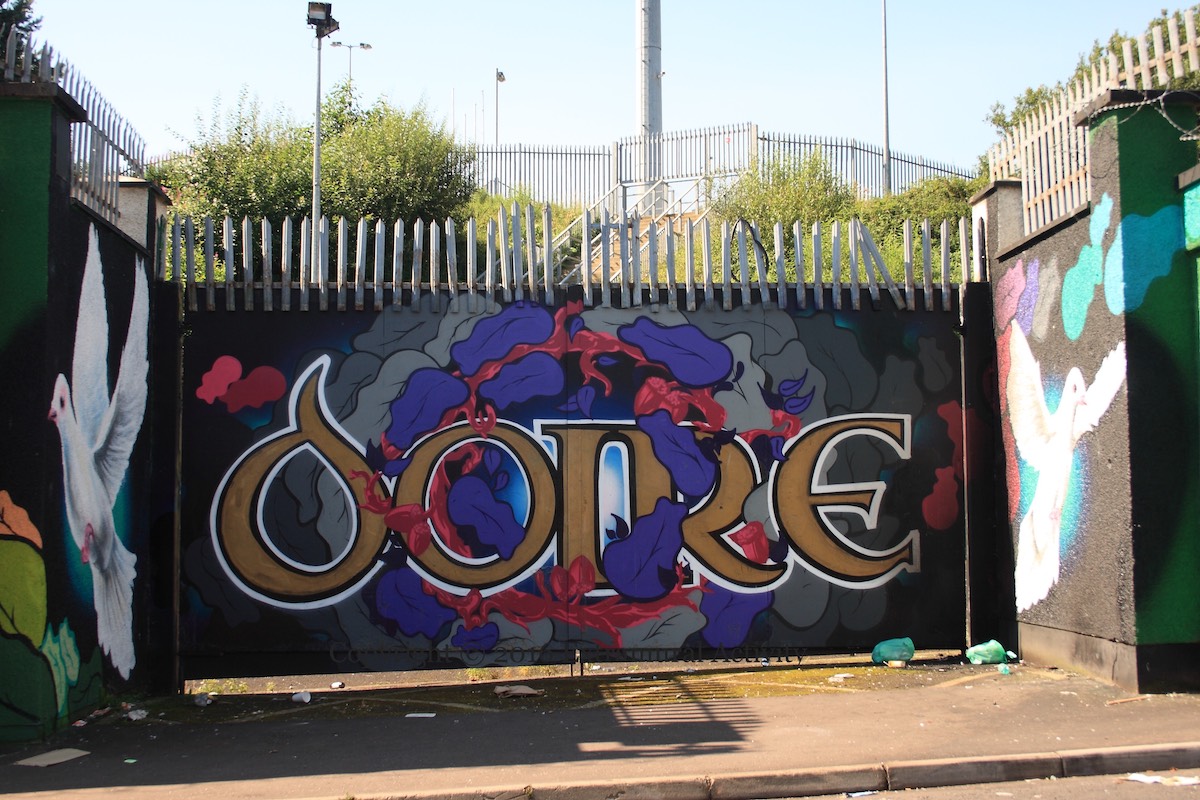
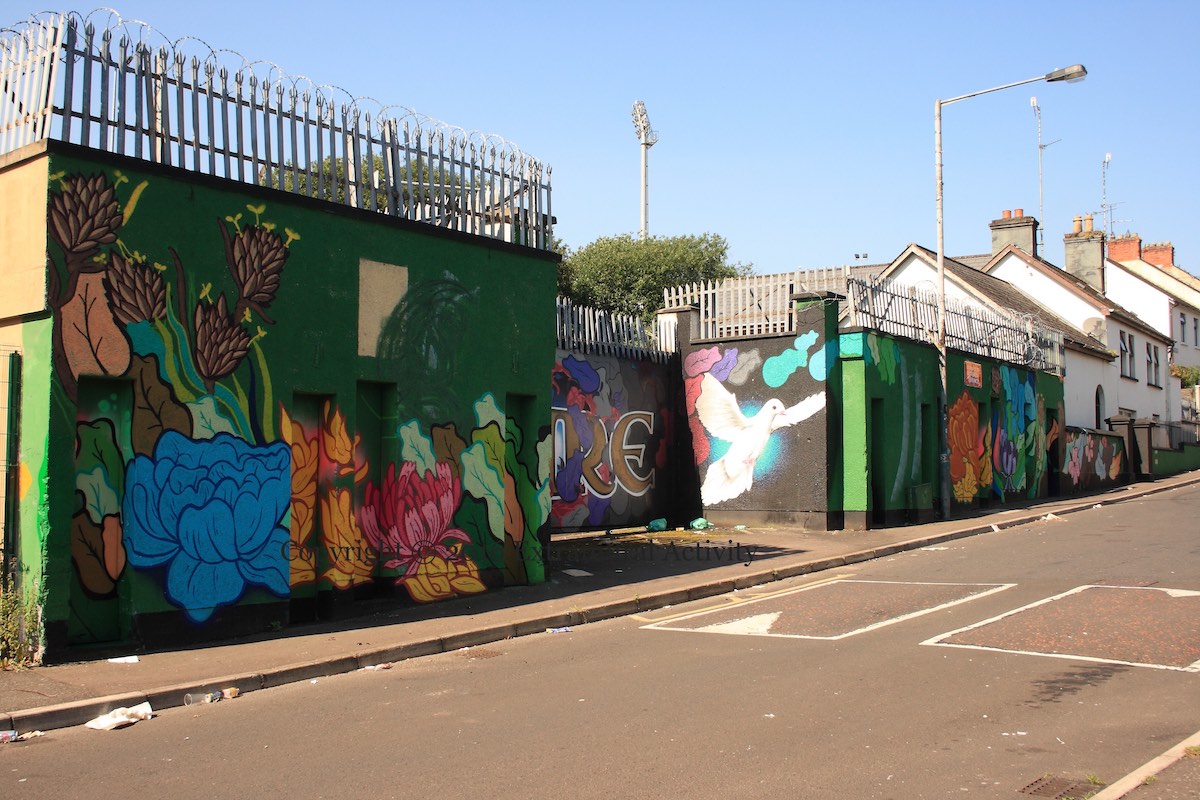
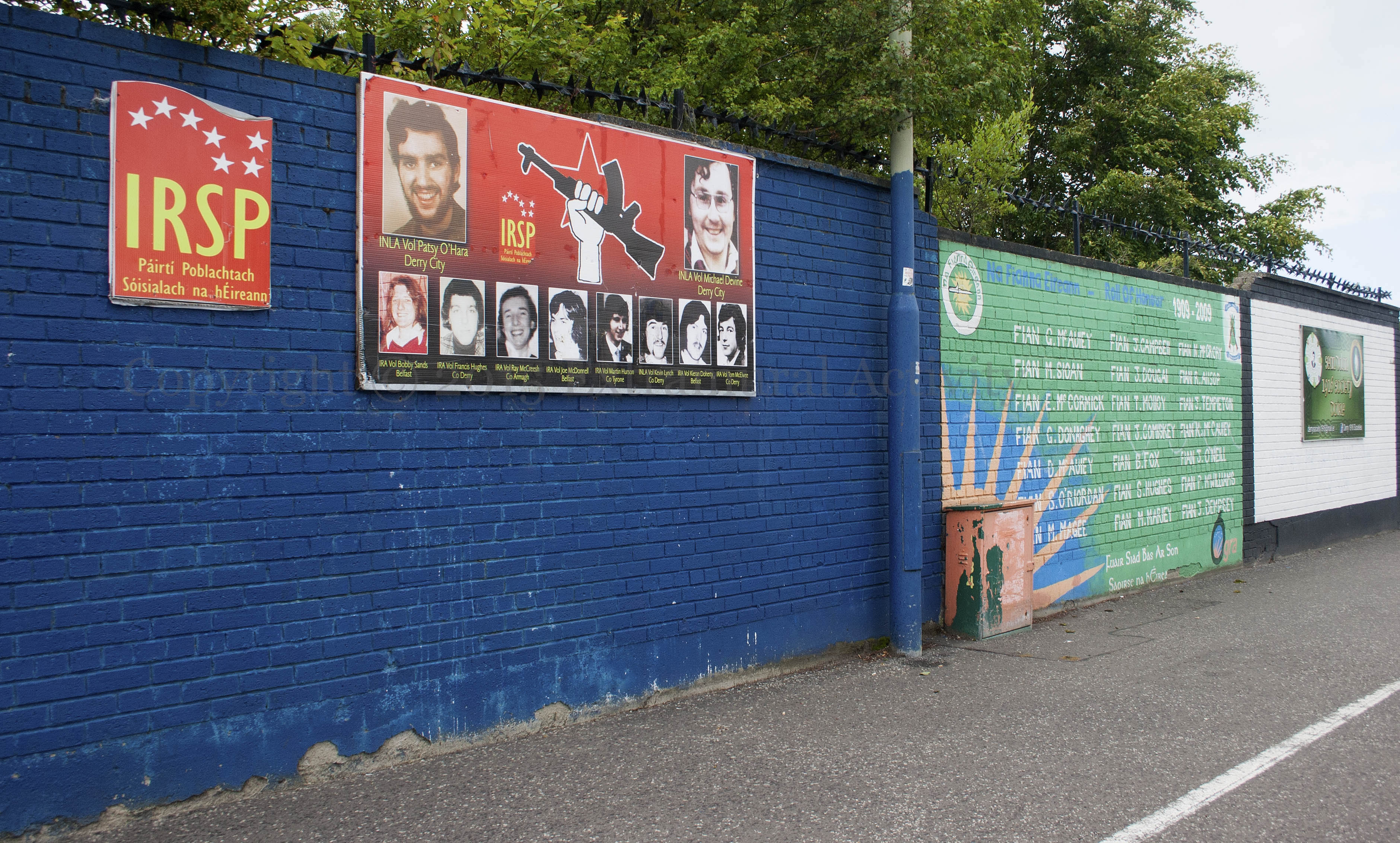
These images all come from Stanley’s Walk, along with eastern side of Celtic Park, which is home to Derry GAA games and has a capacity of 18,000 spectators.
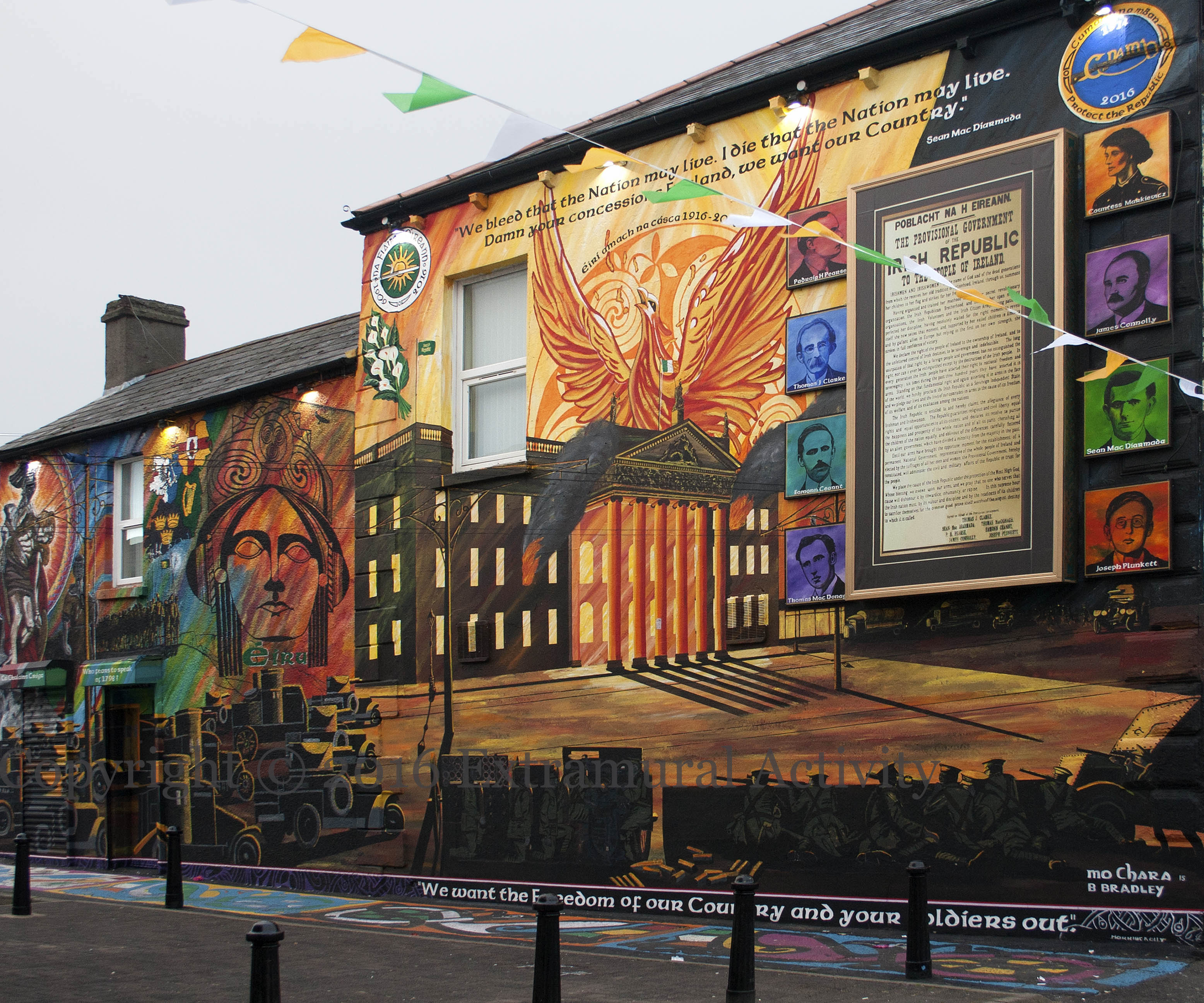
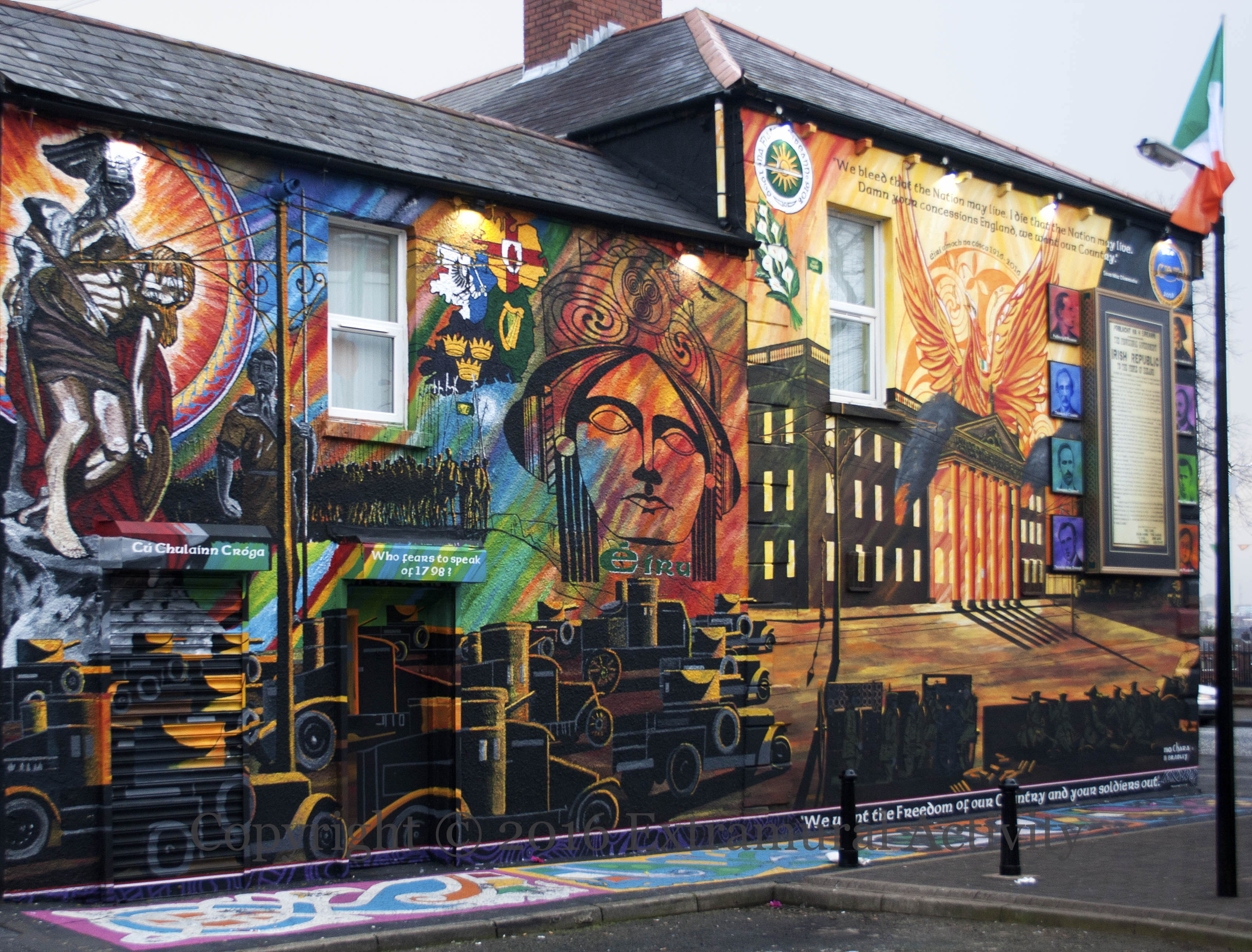
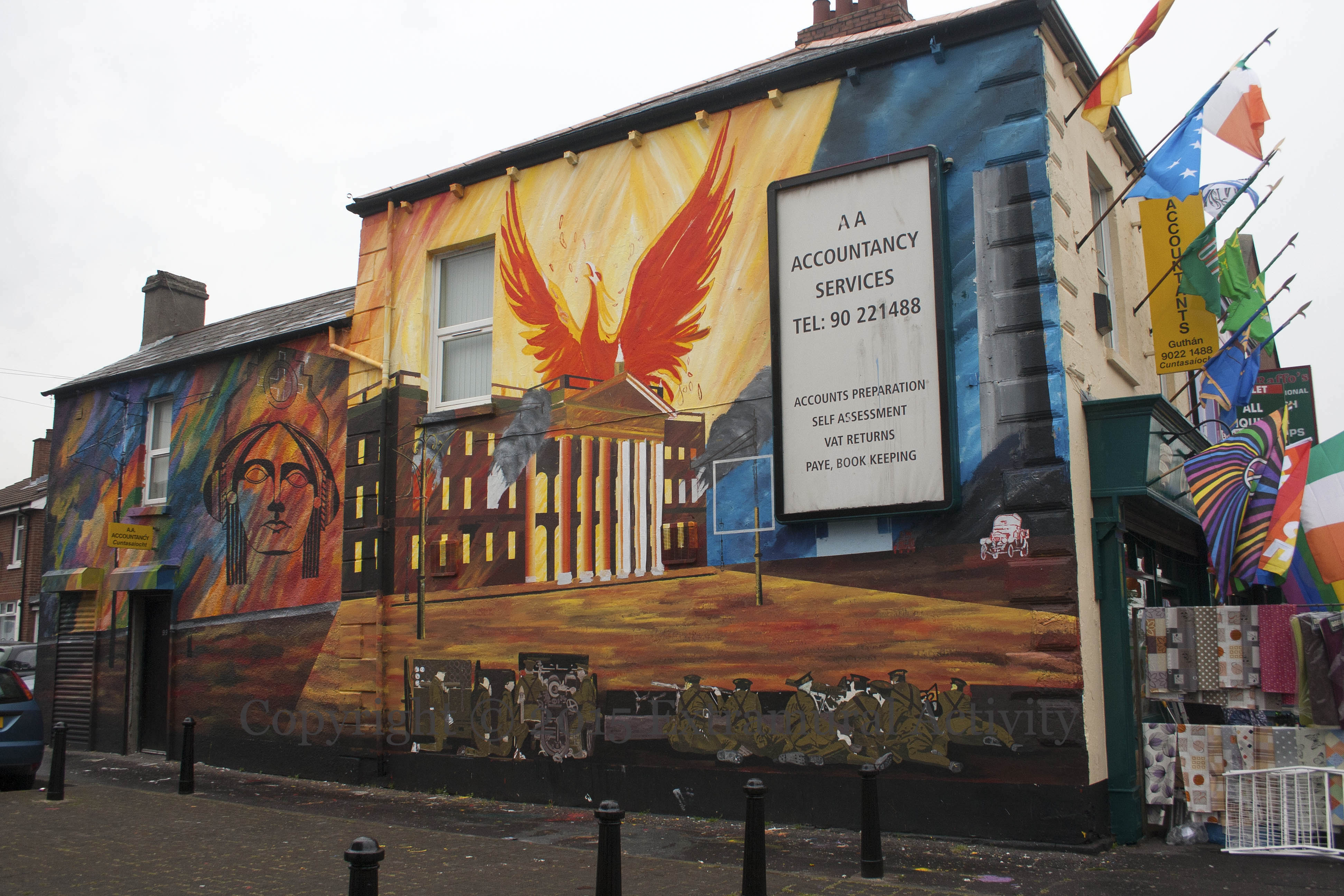
Arrayed against the forces of the British Army (which are shown laying siege to the Dublin GPO during the Easter Rising in armoured cars and in sniping positions in the foreground of the mural, along the whole length of the wall) are various symbols of Irish nationalism:
Oliver Sheppard‘s 1911 statue of Cú Chulaınn dying (see the Visual History page); the pikemen of the 1798 Rebellion (featured in Éırí Amach 1798); the four provinces of Ireland; Érıu the mythological queen of Ireland/Éıre as designed by Richard J King/Rísteard Ó Cíonga; Easter lilies; the emblems of Na Fıanna Éıreann and Cumann Na mBan on either side of a quote from (The Mainspring) Sean MacDiarmada, “We bleed that the nation may live; I die that the nation may live. Damn your concessions, England: we want our country”; a phoenix rising from the flames of the burning Dublin GPO (inspired by Norman Teeling’s 1998 painting The GPO Burns In Dublin); the GPO flying an ‘Irish Republic’ flag and a Tricolour; portraits of signatories and other rebels — (left) Padraig H. Pearse, Thomas J Clarke, Eamonn Ceannt, Thomas MacDonagh, (right) Countess Markievicz, James Connolly, Sean MacDiarmada, Thomas Plunkett; the declaration of independence, placed over the advertising box of AA Accountants – see the in-progress shot below.
For more work-in-progess images, see Éırí Amach 1798. At the very bottom is a quote from the mother of Gerard ‘Mo Chara’ Kelly, Harriet Kelly: “We want the freedom of our country and your soldiers out.”
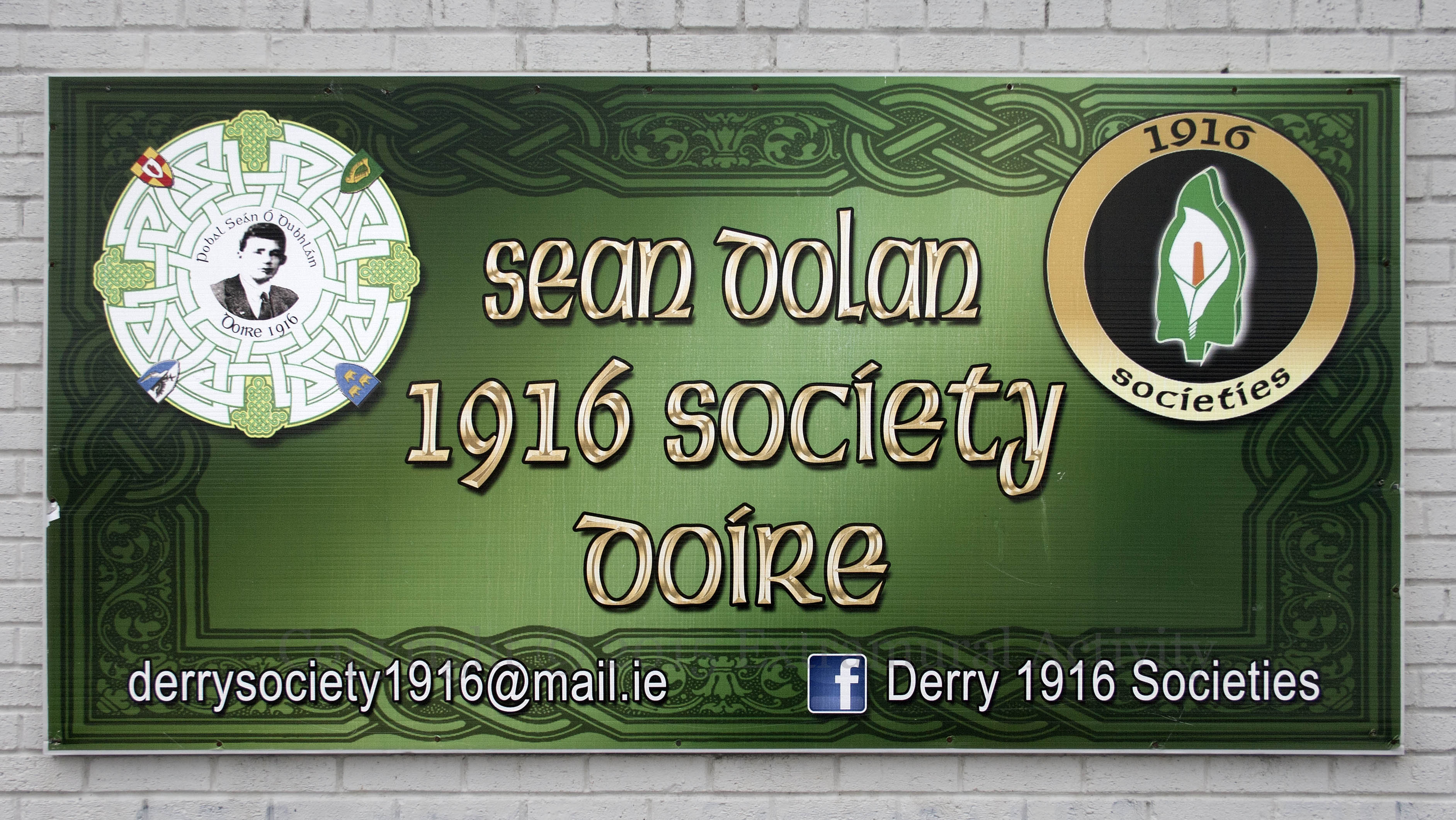
The Derry branch of the 1916 Societies (Fb) is named after Sean Dolan, an IRA volunteer interned at the outbreak of WWII on the prison ship Al Rawdah (WP | saoırse32) before being moved to Crumlin Road gaol. He was released on grounds of ill health shortly before dying in 1941 at age 28 in Derry. The title of today’s post comes from Dolan’s gravestone, which is in Ardmore (findagrave).
It was the 1916 Societies that hoisted an Irish tricolour from the roof of Stormont in June 2015 (BBC).
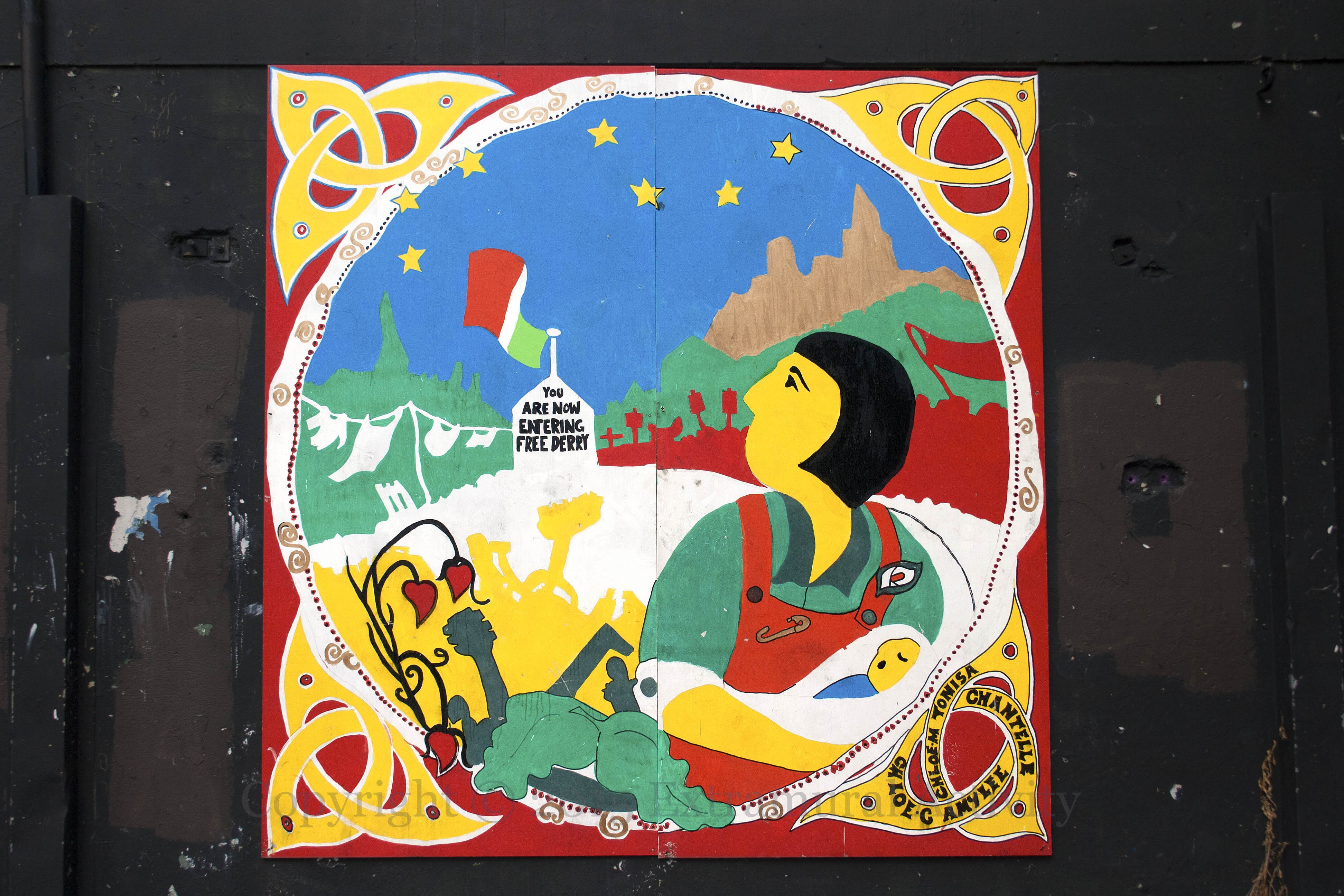
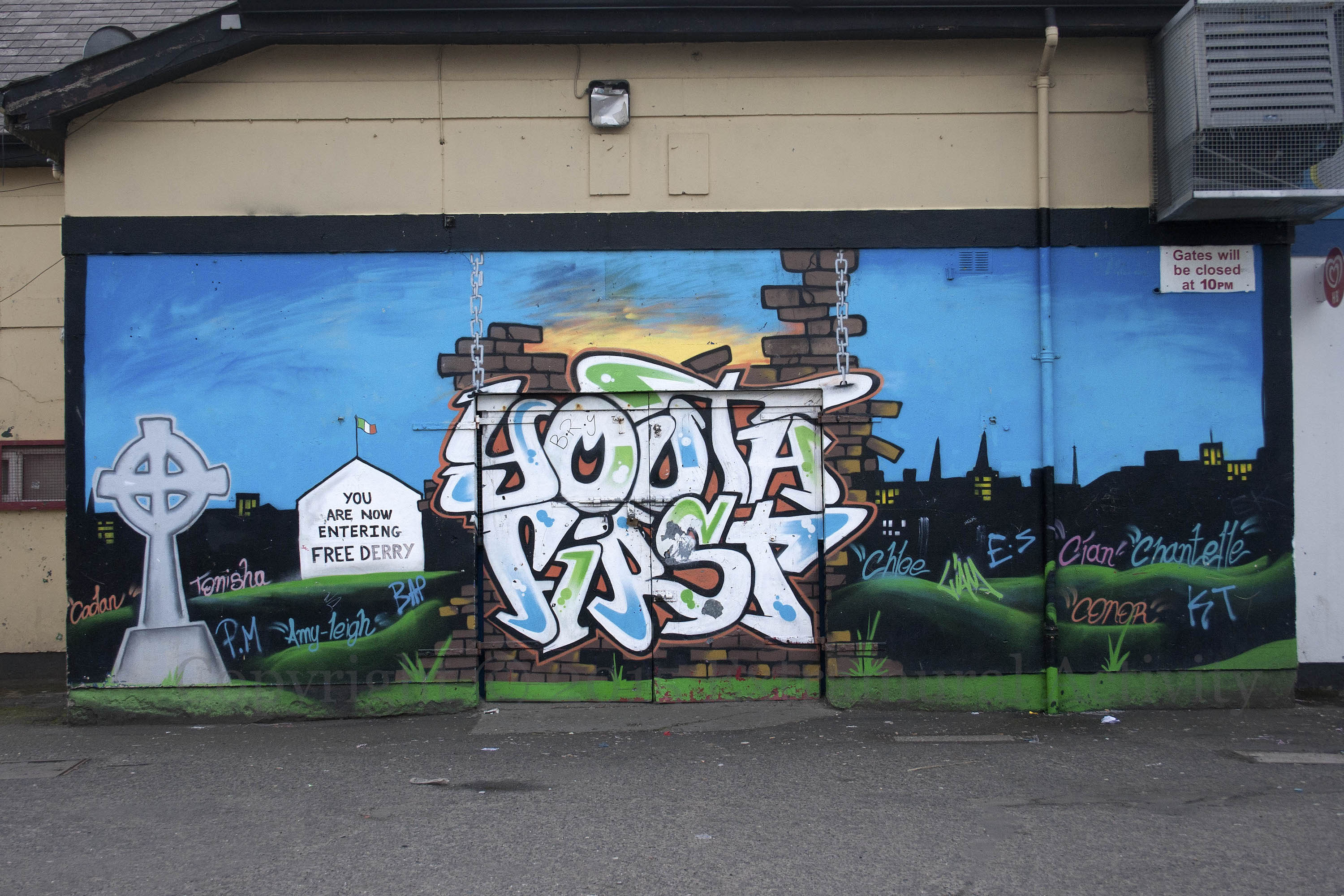
Here are two murals from the Youth First (Tw) group in and around their Bogside home in Meenan Square. In the image above, a young mother sporting both a nappy pin and an Easter lily tends to her infant child while casting a look back at Free Derry corner and the silhouettes of marchers and washing on a line. The image below also shows Free Derry corner and the skyline of the city.
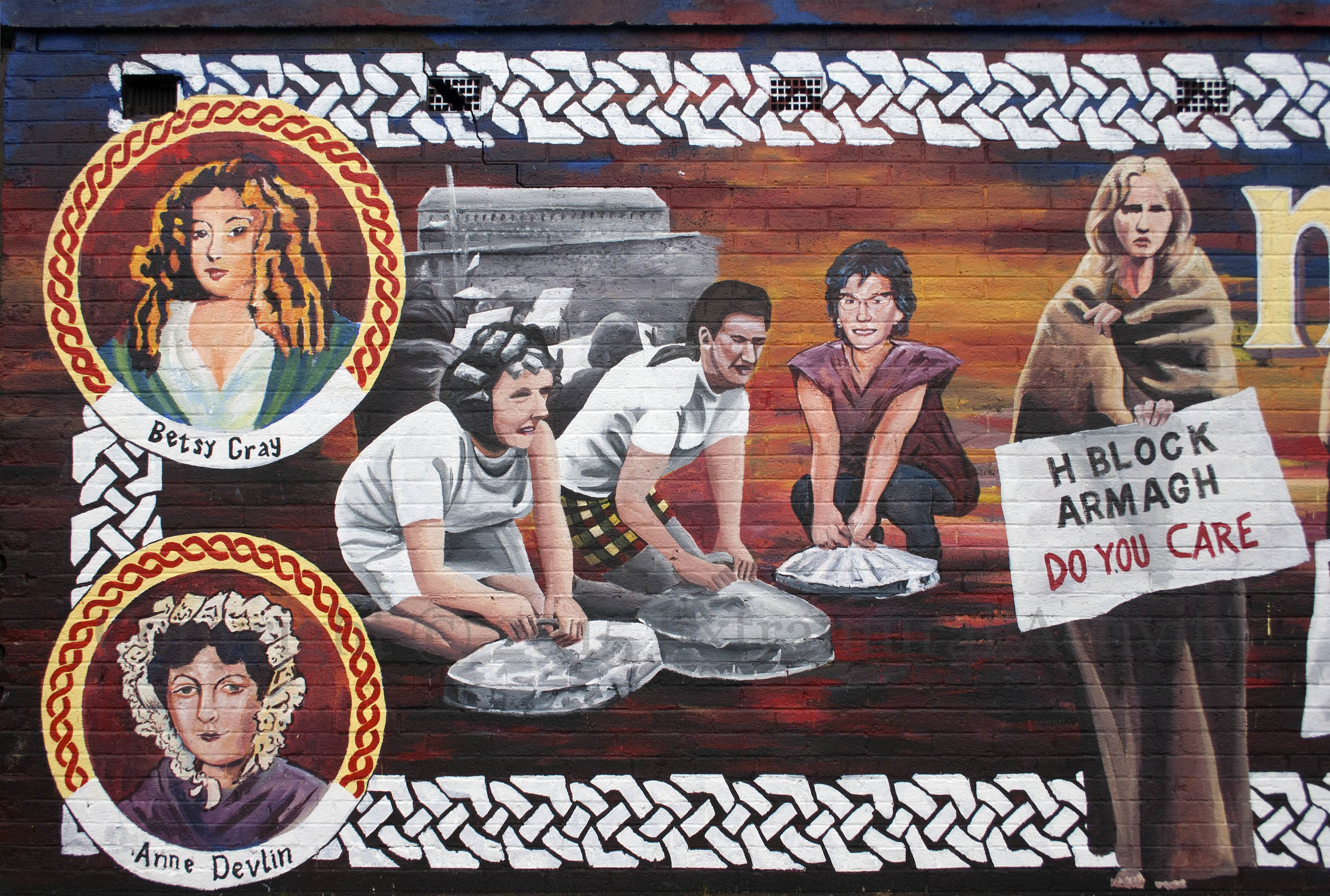
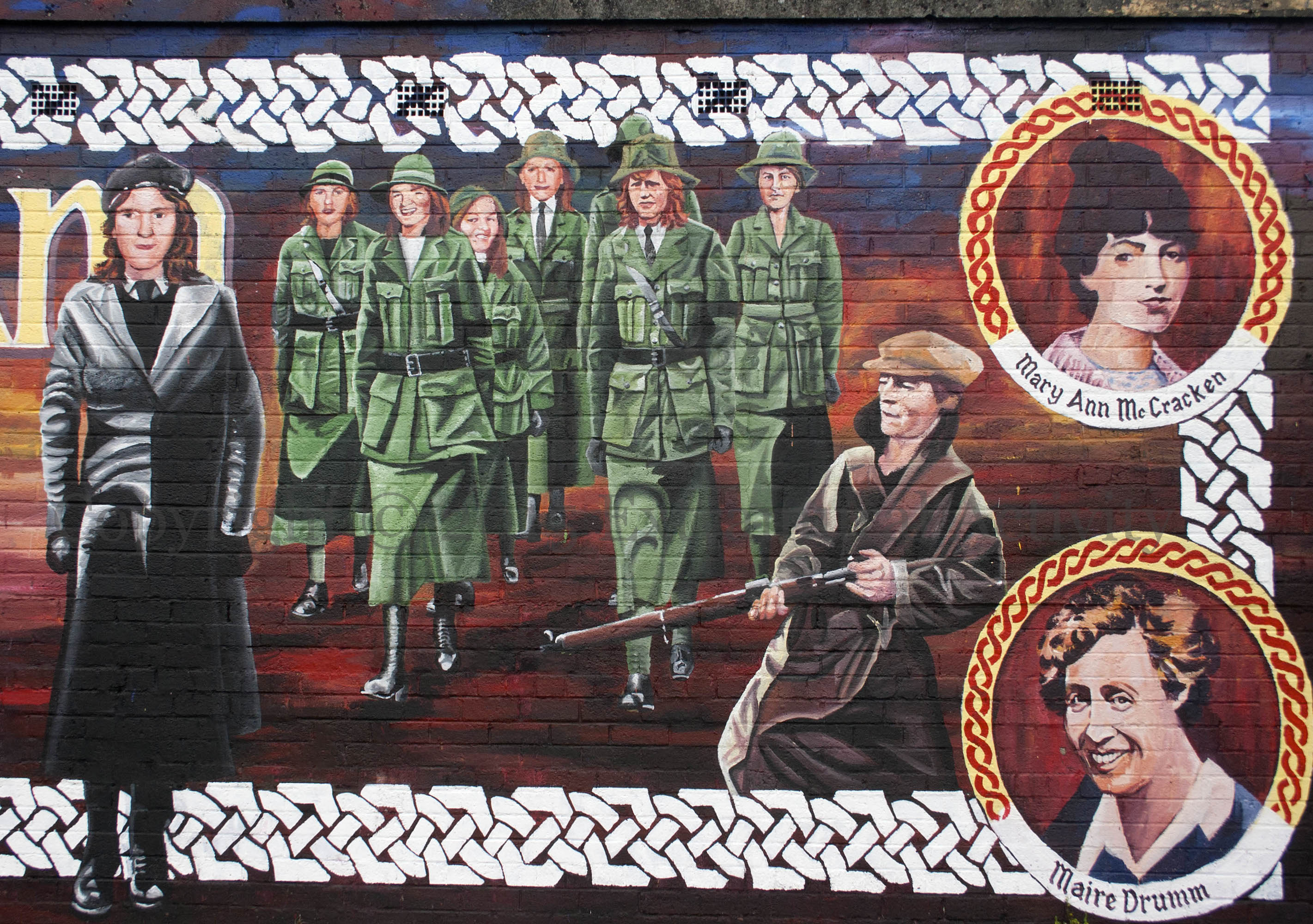
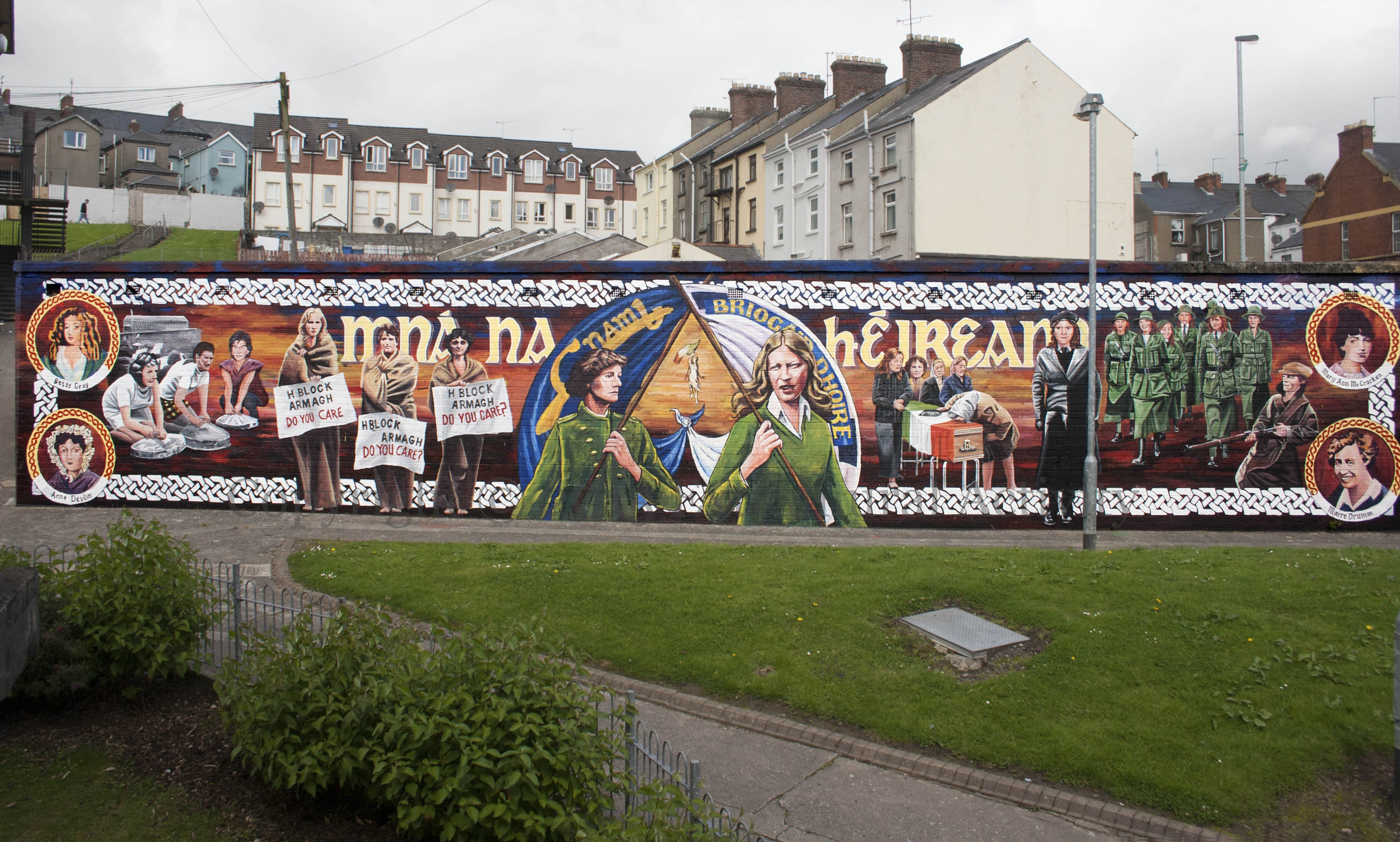
Here are two images of the extremes of the Mná Na hÉıreann mural.
In the four corners are circles of Betsy Gray, Anne Devlin, Mary Ann McCracken, and Máıre Drumm. Gray and McCracken were Presbyterians; Gray fought (or at least, was killed) in the 1798 rebellion, as did McCracken’s brother Henry Joy; Mary Ann went on to work for the poor of Belfast and lobby against slavery. Anne Devlin assisted in Robert Emmet’s 1803 rising. (National Graves Assoc) Máıre Drumm was vice-president of Sınn Féın and commander of Cumann Na mBan, who are shown marching on the right-hand side.
In the cloth cap and holding a rifle is Eithne Coyle, a leader and later president of Cumann Na mBan, imprisoned both by the Black and Tans before the treaty and after it by the Provisional Irish government (WP). For the photograph on which her pose here is based, see An Phoblacht‘s History Of Cumann na mBan, which also includes the photo of marching women (discussed previously in Mothering Sunday In Beechmount) though the faces have been changed here, presumably to those of more contemporary volunteers. The same is probably true of the third woman with a bin lids on the left – leave a comment or send an e-mail if you can put a name to any of these faces.
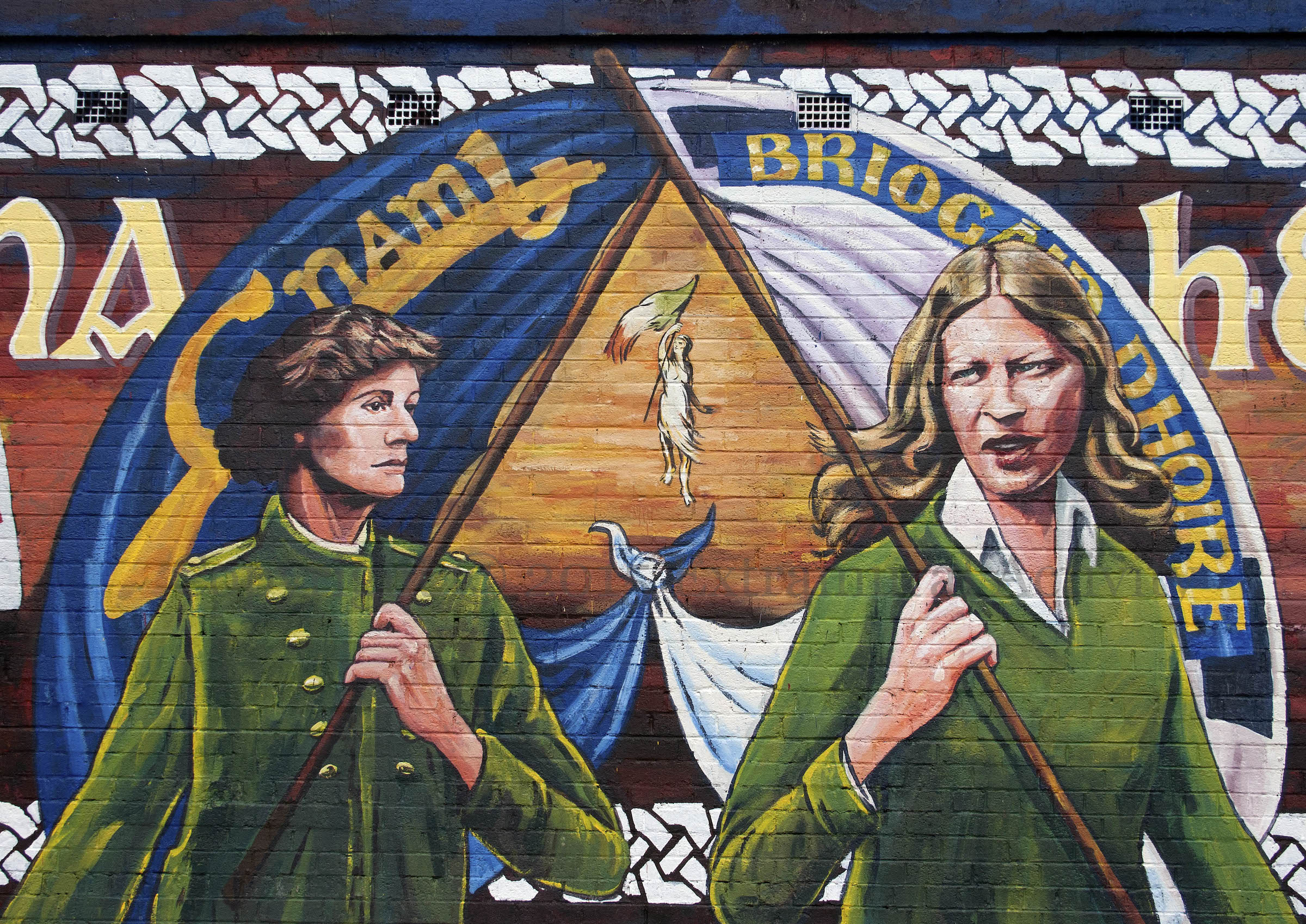
Countess Markievicz, carrying a flag of Cumann Na mBan, and Ethel Lynch, carrying a flag of the Derry IRA, take centre stage in the Mná Na hÉıreann mural in London-/Derry/Doıre’s bogside. Markievicz is famous for her role in the Easter Rising of 1916 (WP); Lynch died in December 1974 of injuries sustained when a bomb exploded prematurely. (Derry Journal – also contains the photo on which the painting above is based.) Between them, “Liberty leads the people” waving an Irish tricolour.
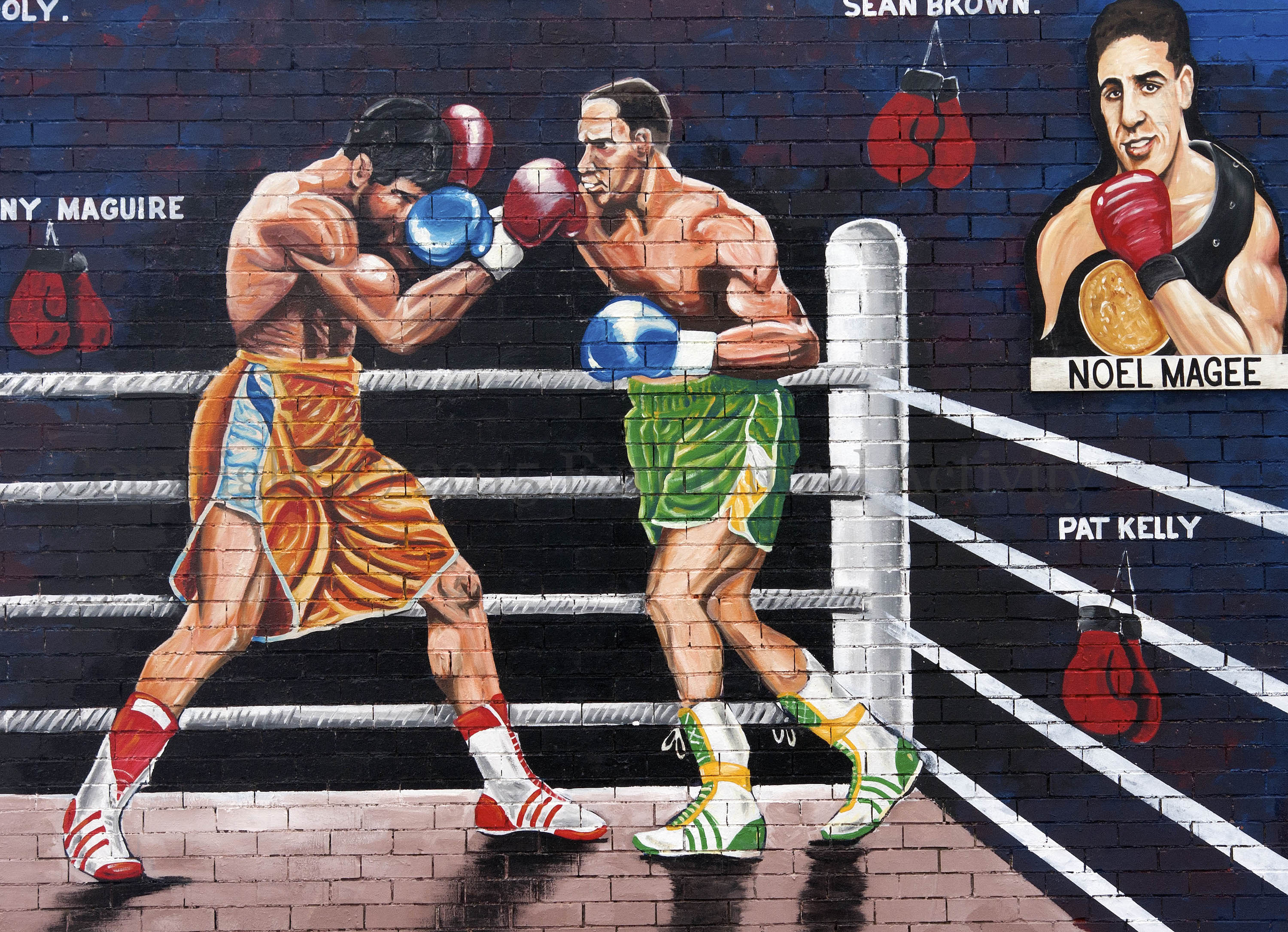
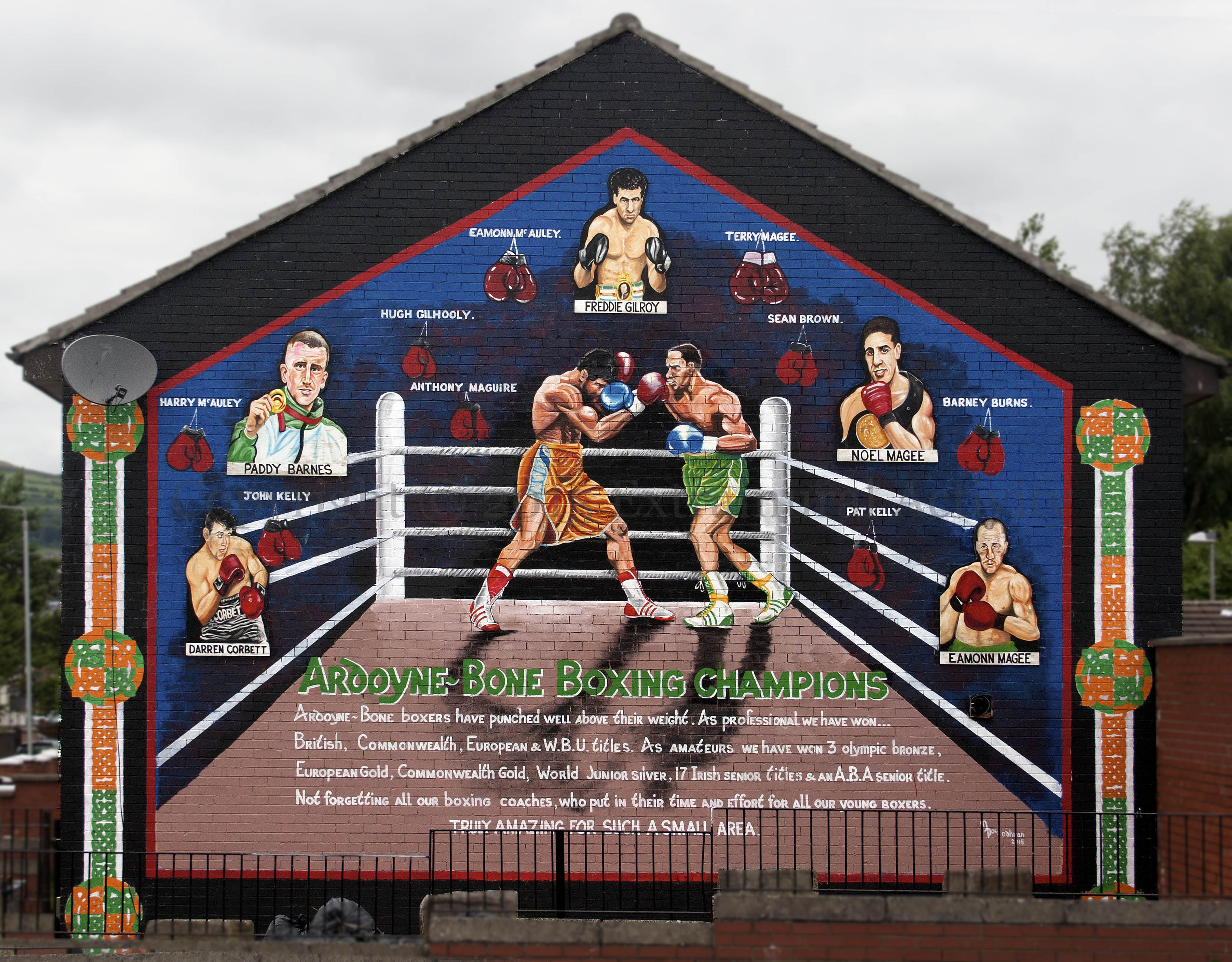
“Ardoyne-Bone boxers have punched well above their weight. As professional we have won … British, Commonwealth, European & W.B.U. titles. As amateurs we have won 3 olympic bronze, European Gold, Commonwealth Gold, World Junior silver, 17 Irish senior titles & an A.B.A senior title. Nor forgetting all our boxing coaches, who put in their time and effort for all our young boxers. Truly amazing for such a small area.” The wide shot below shows the whole of this new Ardoyne/Ard Eoın mural celebrating local boxers; the boxers named are Darren Corbett (WP), John Kelly (FightsRec), Paddy Barnes (WP), Harry McAuley (BoxRec), Anthony Maguire, Hugh Gilhooley (BoxRec), Eamonn McAuley (BoxRec), Freddie Gilroy (WP), Terry Magee (WP), Sean Brown, Noel Magee (WP), Barney Burns, Pat Kelly, Eamonn Magee (WP).
A mural celebrating Paddy Barnes’s 2014 Commonwealth gold medal: Oh, Paddy Boy
Pathé video of John Kelly being knocked out in 1954
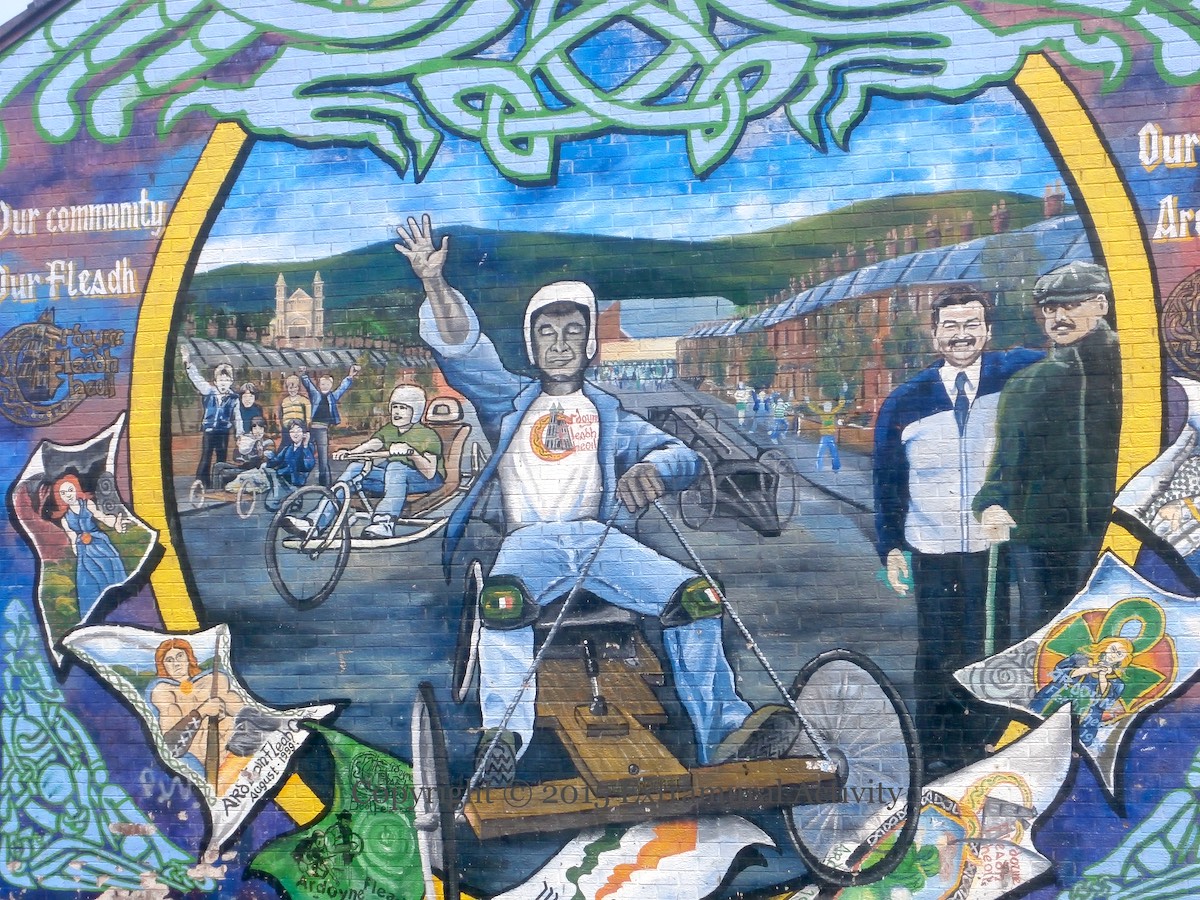
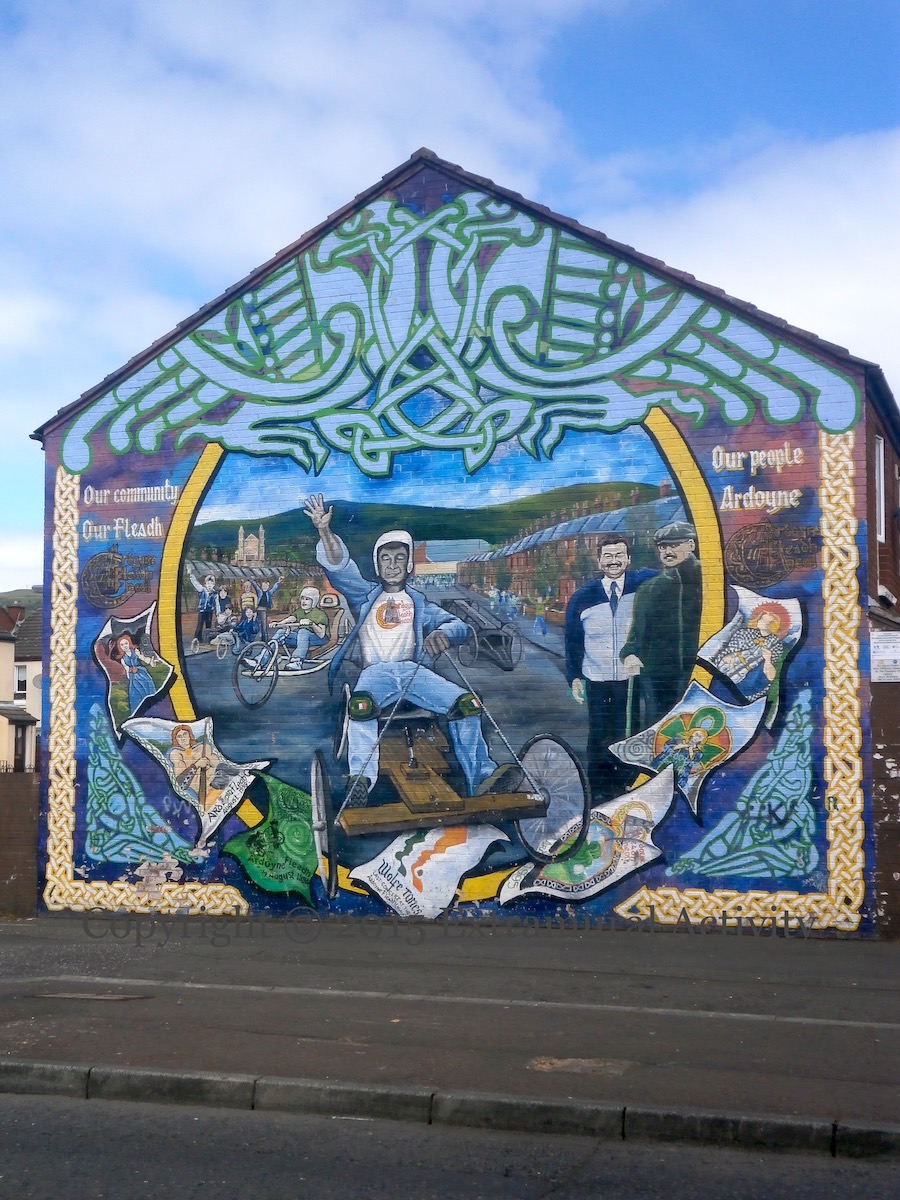
The Wolfe Tones will headline the 2015 Ardoyne Fleadh Cheoıl (Fb) on August 15th. Last year, The Druids caused controversy by advising British Army forces and loyalists to go “back to England” (BelTel).
Along the bottom are various of the posters/programme covers from years past: (left to right) the 1998 cover, by Sean Doran, was also painted in Ardoyne Avenue; Cú Chulaınn on the 1999 poster was painted in Ardoyne Avenue (S00089); the fiddler and bodhrán player appeared on a t-shirt; a classic Wolfe Tones poster shows the four faces in profile; Fleadh Érıu on the 1995 poster (under the go-kart’s left wheel) was painted on this wall in 1994; the 1996 Fleadh poster, also by Sean Doran; disappearing on the right is Doran’s 1997 cover.
The Ardoyne Fleadh Cheoıl emblem (on the go-karter’s t-shirt and under the text on the left) was used in Maıreann An Spıorad. The festival began in 1970.
A new mural will be launched as part of this year’s festival: Boxing Champions.
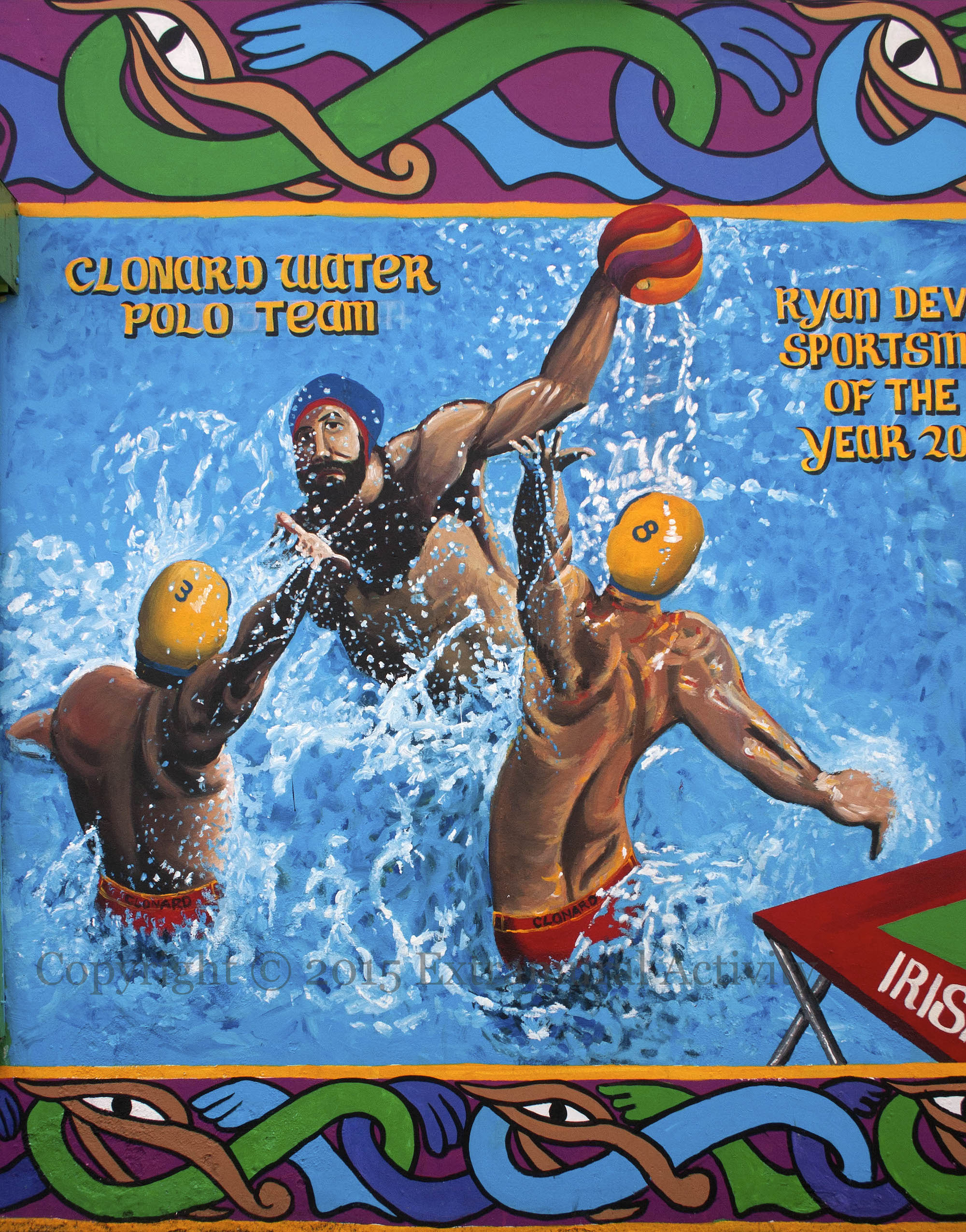
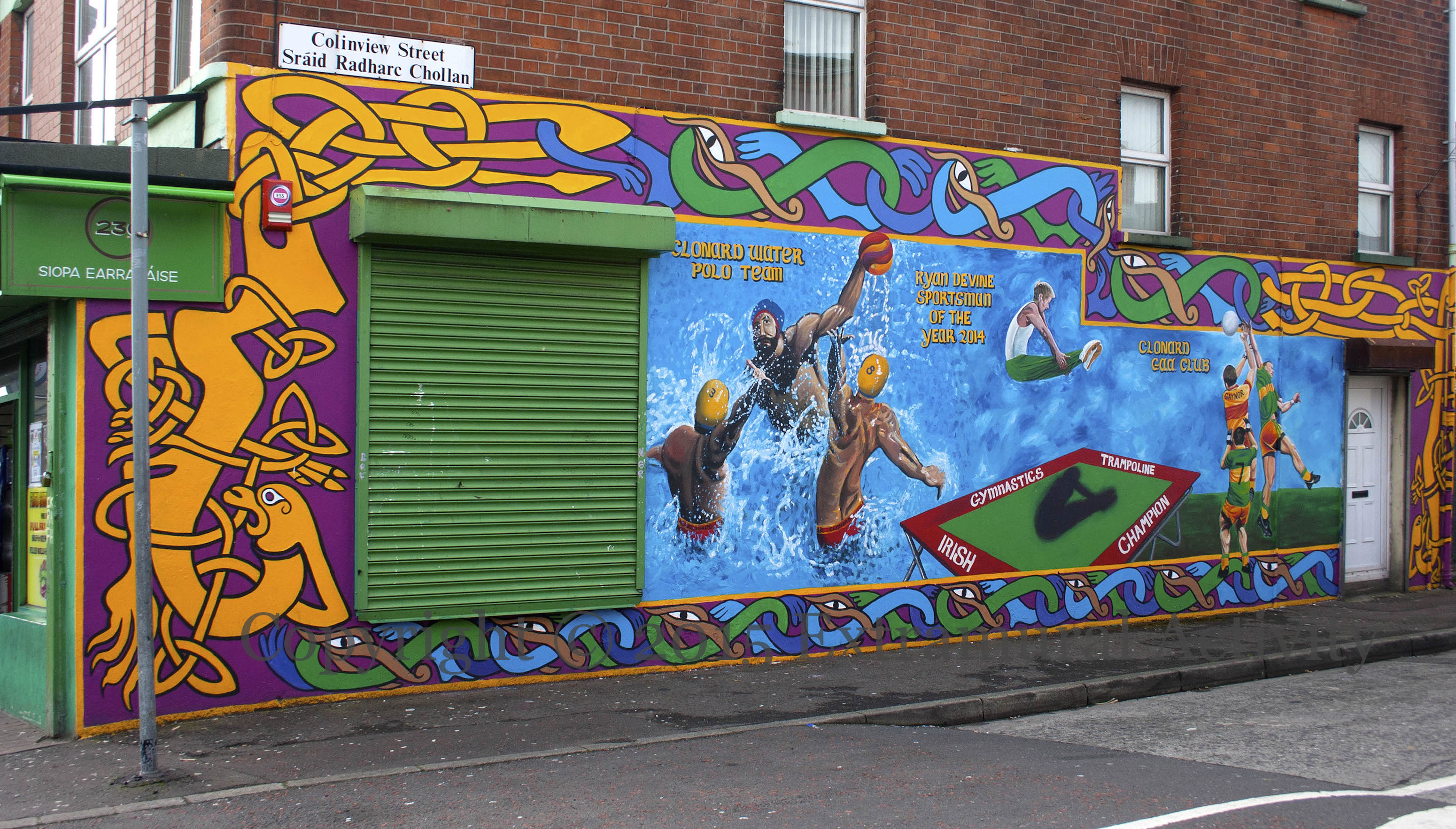
A new mural on Colinview Street/Sráıd Radharc Chollan celebrates local sports: first (shown above) is the Clonard water polo club (Fb), second (in the wide shot, below) is Ryan Devine of Anderstonstown Trampoline Club, junior sportsman of the year, 2014 (Fb), and third, Clonard GAA. The mural is on the side wall of The Flush newsagents, near the former location (above ground) of the Farset and Forth rivers, where dams and races were put in to supply a cotton mill and linen mill and, later, a laundry, a hat-makers, and a biscuit factory. The river, flowing south, then became the Blackie in Beechmount. (Information gleaned from the Belfast Forum).
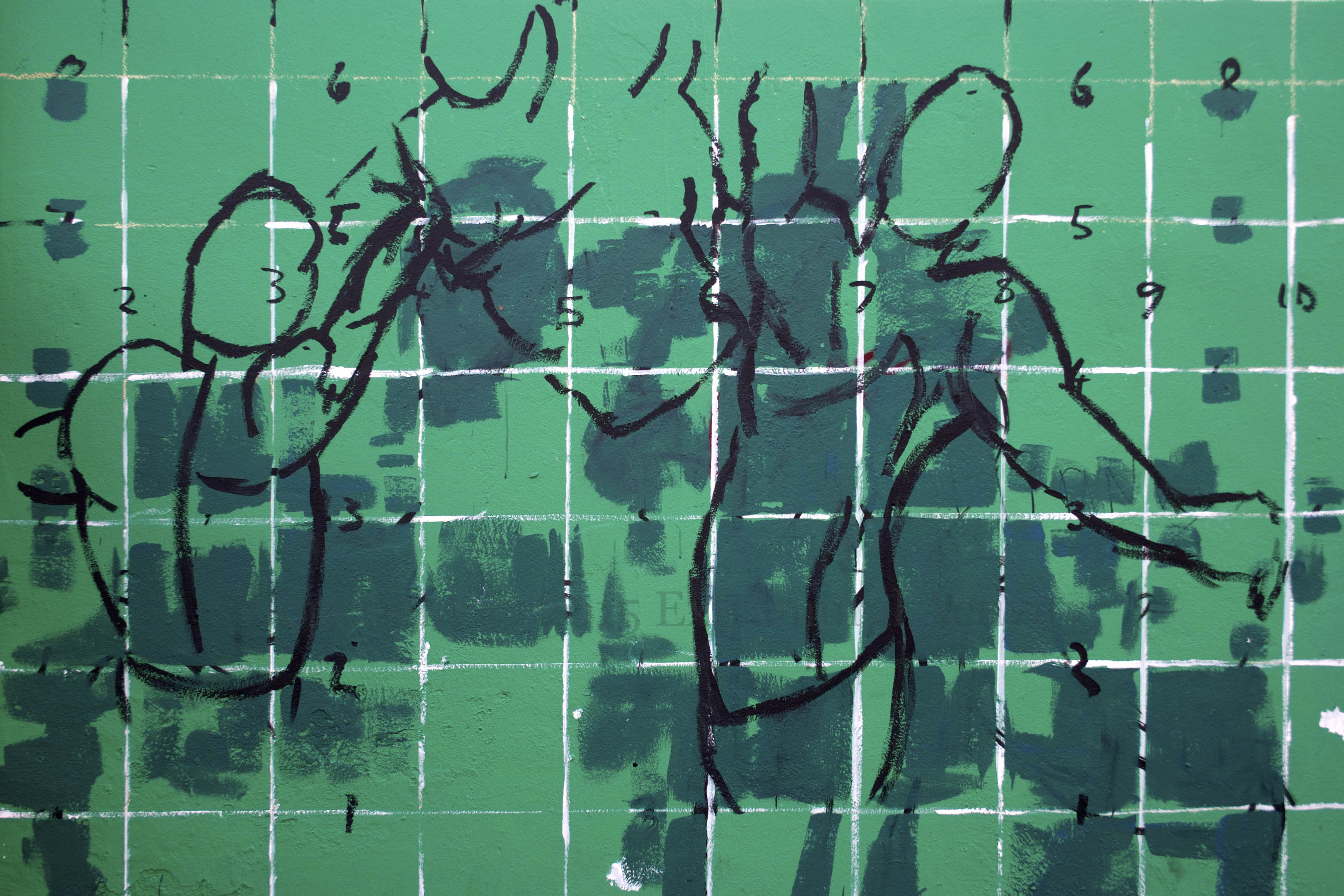
The final image below is the cartoon for the water polo part of mural, which was begun back in February.
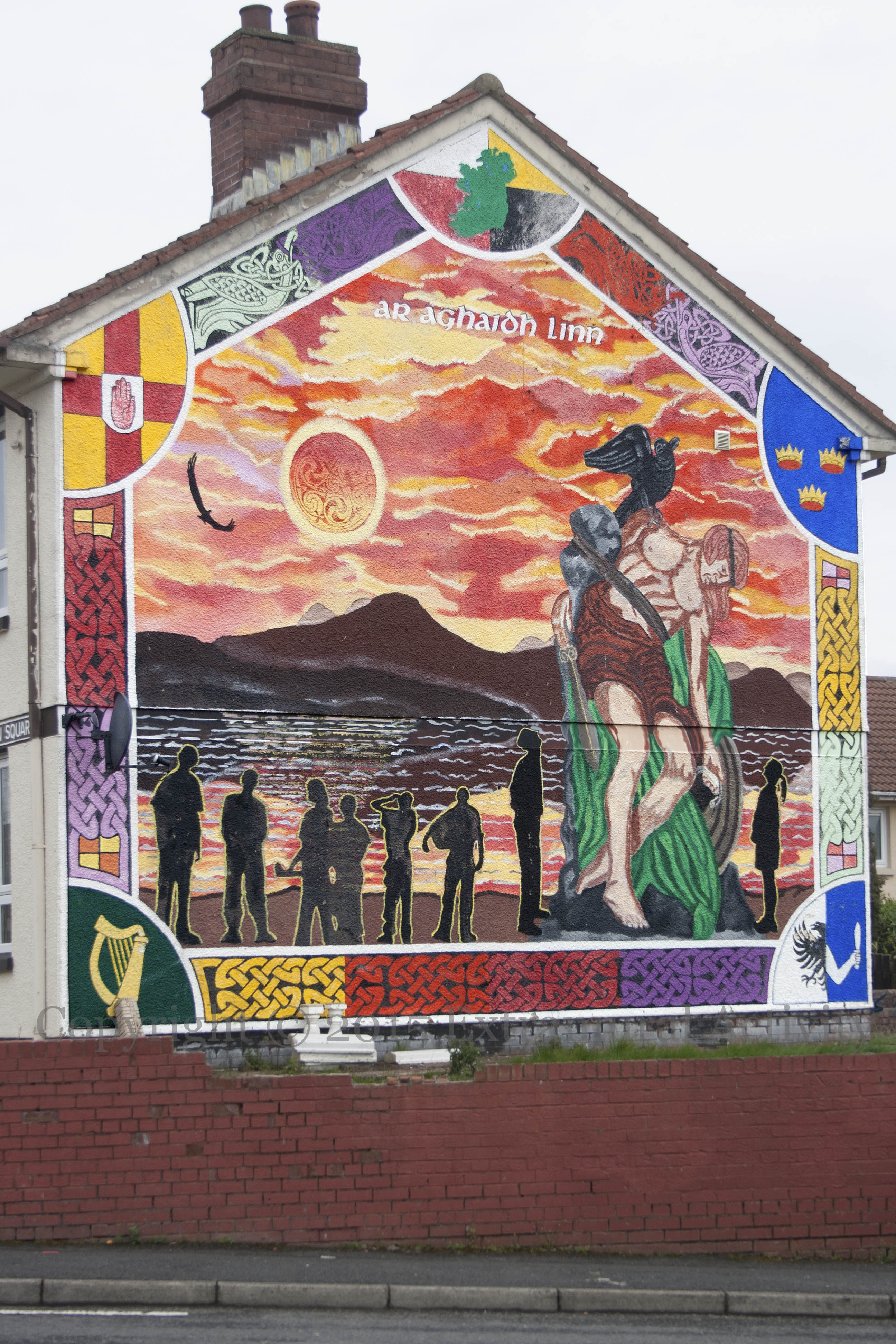
“Ar aghaıdh linn [Onward]” Silhouetted figures, one carrying a hurley, take inspiration from a dying Cú Chulaınn and gaze across a body of water, perhaps Carlingford Lough towards the mountains of Mourne – Cú Chulaınn’s traditional place of death is in County Louth, outside Dundalk. Tuan the hawk historian, who has seen all of the conquests of Ireland, flies overhead.
 Seosamh Mac Coille Collection