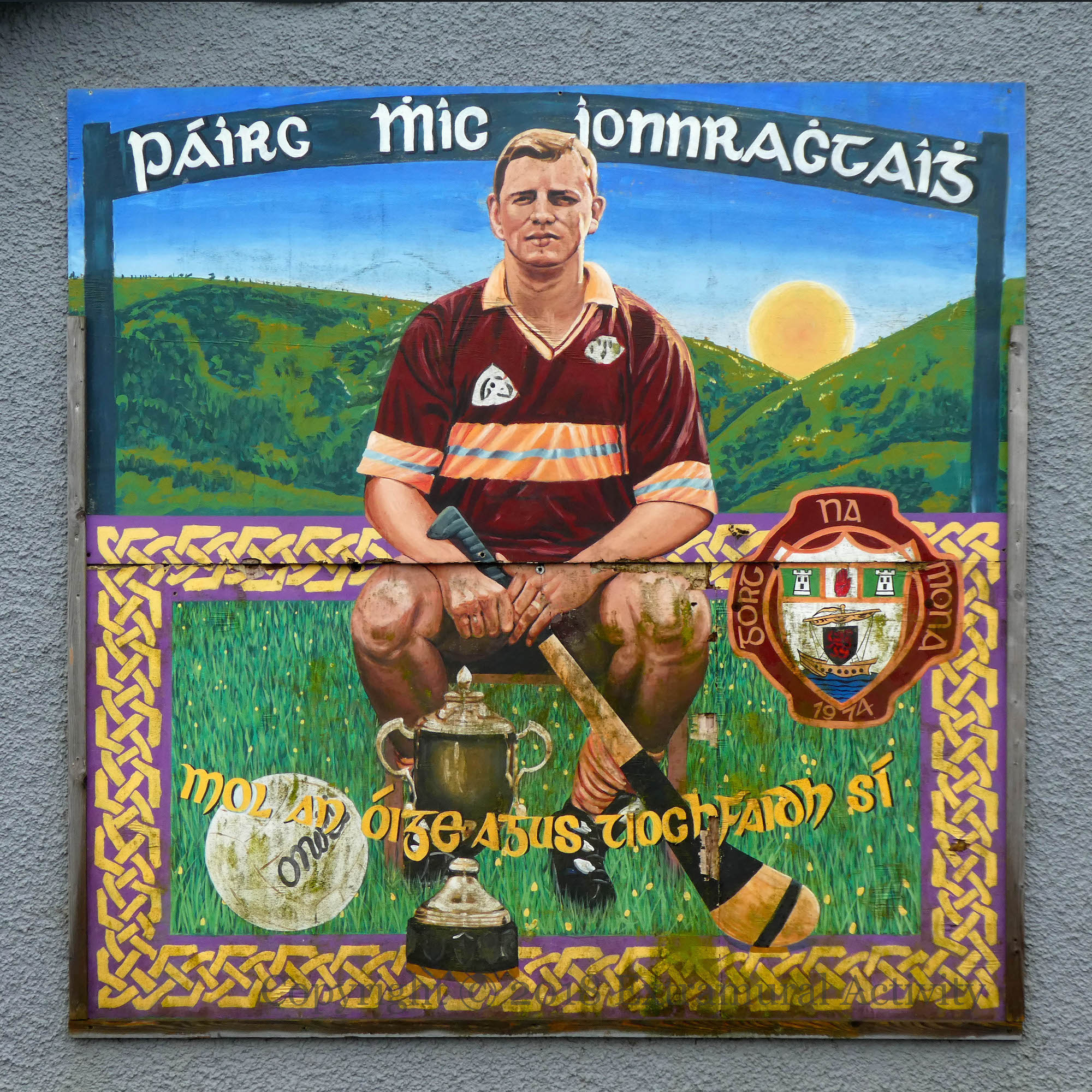
Gort Na Móna (Fb) play their home games at Páırc Mhıc Ionnrachtaıgh/Enright Park, named after the local Enright clan and in particular Terry Óg, who was killed by the LVF in January 1998 as he was working as a doorman at Space nightclub (Independent | Irish Times). In addition to football and hurling, he was a boxer, Irish dancer, and – as will be seen in the other mural to his memory – a lover of the outdoors.
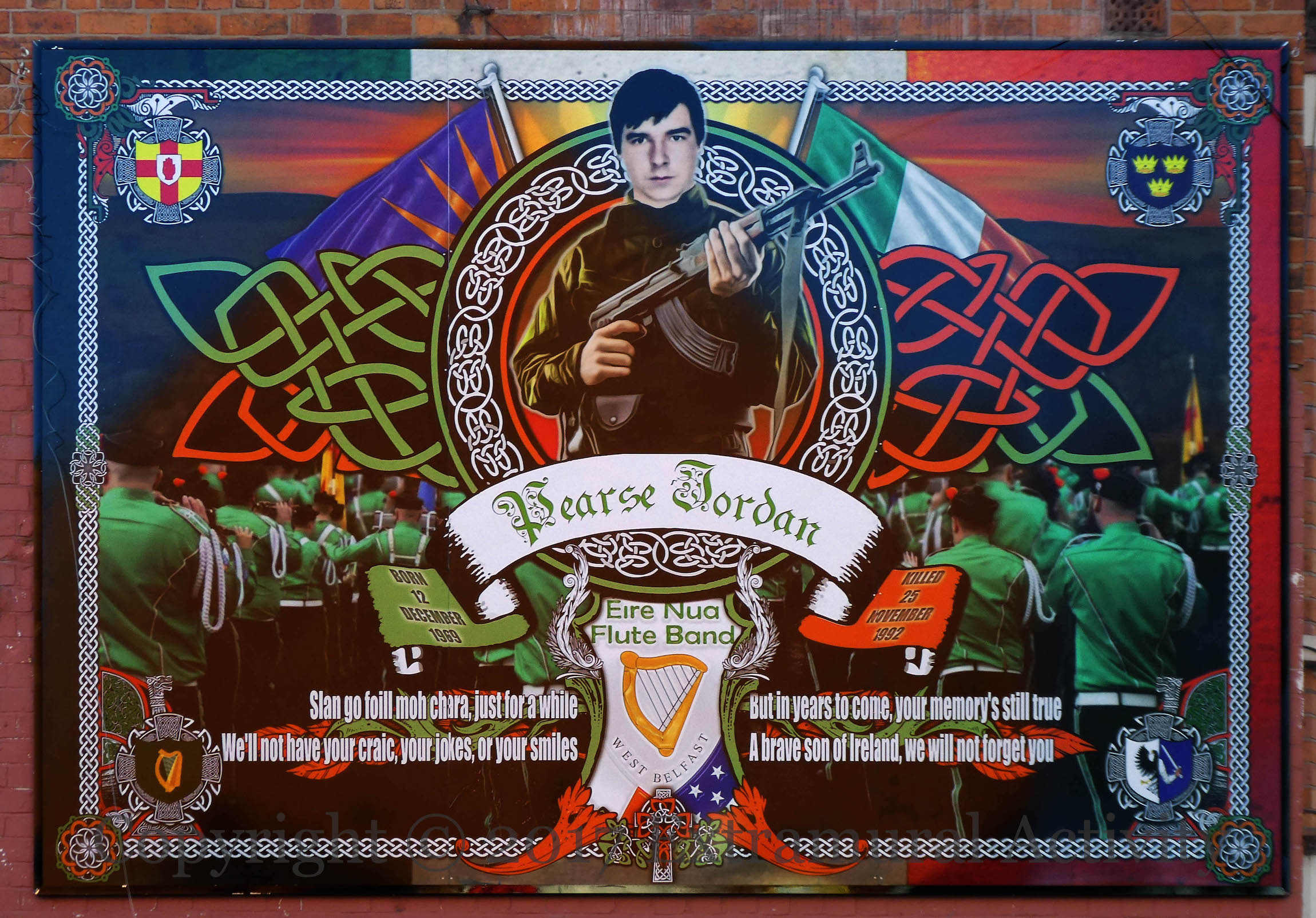
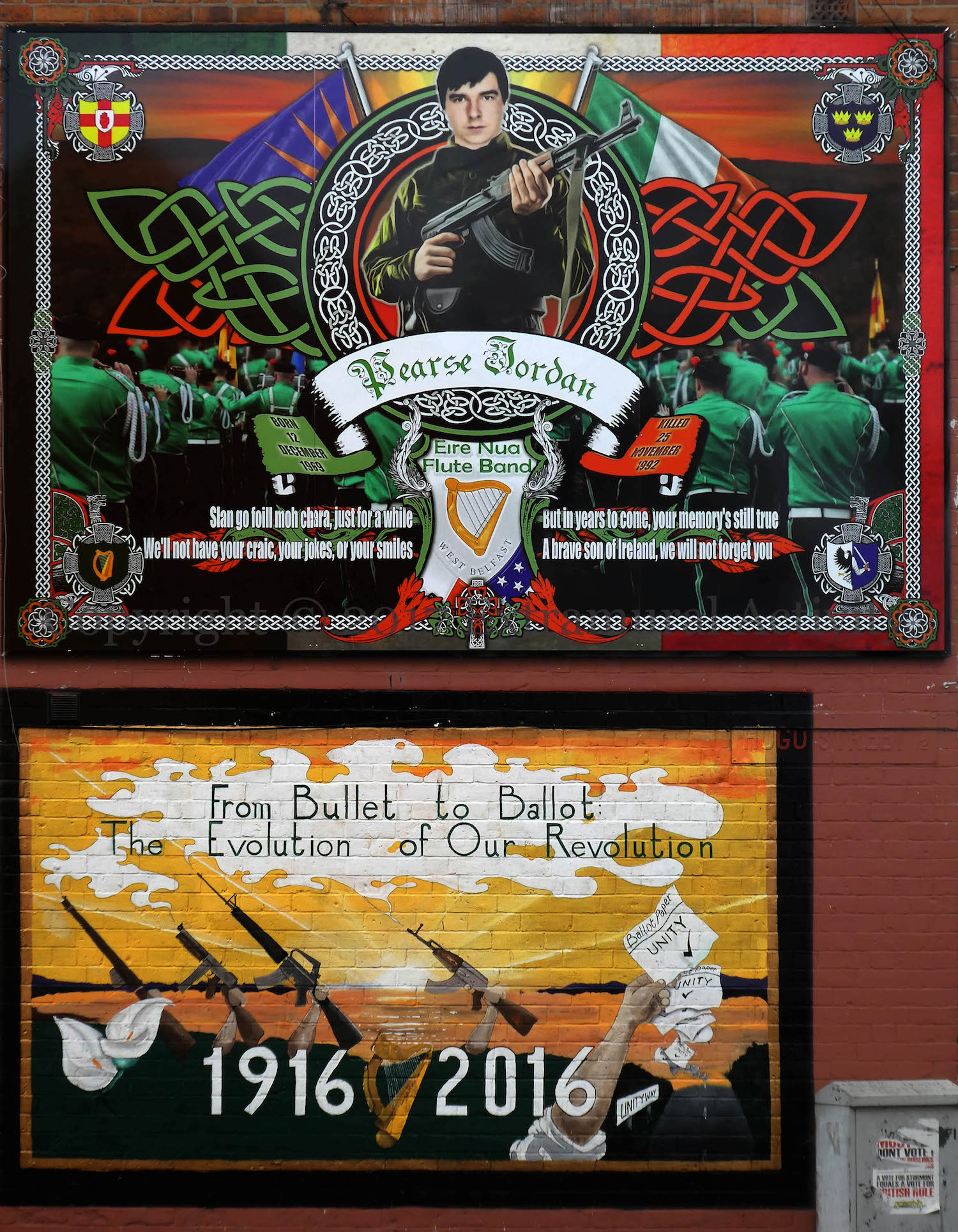
Pearse Jordan was unarmed when he was killed by the RUC on November 25th, 1992 but in this new Éıre Nua Flute Band board he leaves his prints on an assault rifle. (previous Éıre Nua board) His killing was ruled unlawful, and subsequent inquest insufficient, by the European Court Of Human Rights in 2001. The campaign for an inquest continues (An Phoblacht).
The words on the board – “Slan [sic] go foıll [sic] moh [sic] chara, just for a while/We’ll not have your craic, your jokes, or your smiles/But in years to come, your memory’s still true/A brave son of Ireland, we will not forget you” – are the chorus of The Ballad Of Pearse Jordan (words | sung by The Irish Brigade).
The board is in Hugo Street, which is also the site of his memorial plaque, just above the Evolution Of Our Revolution, as seen in the second image, below.
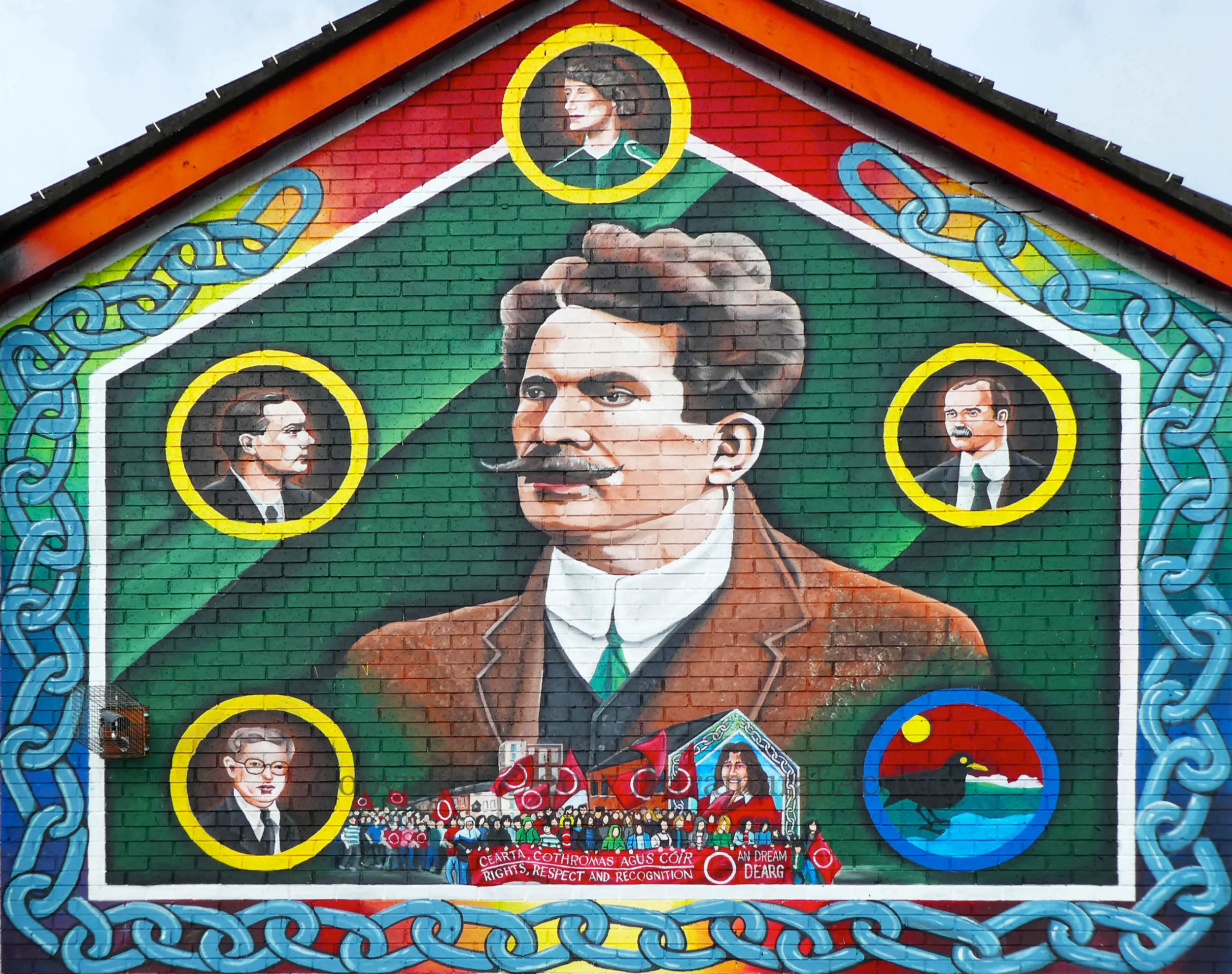
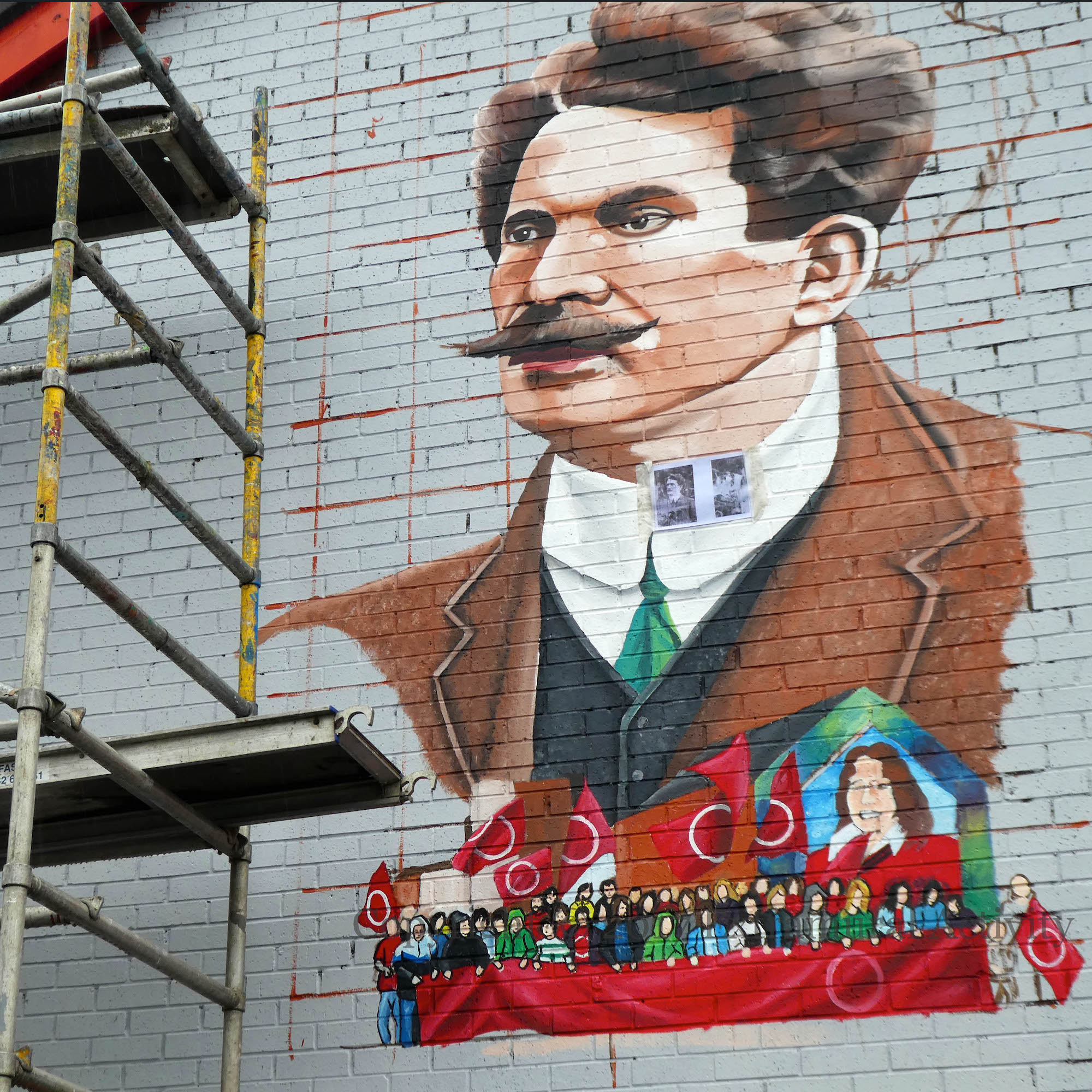
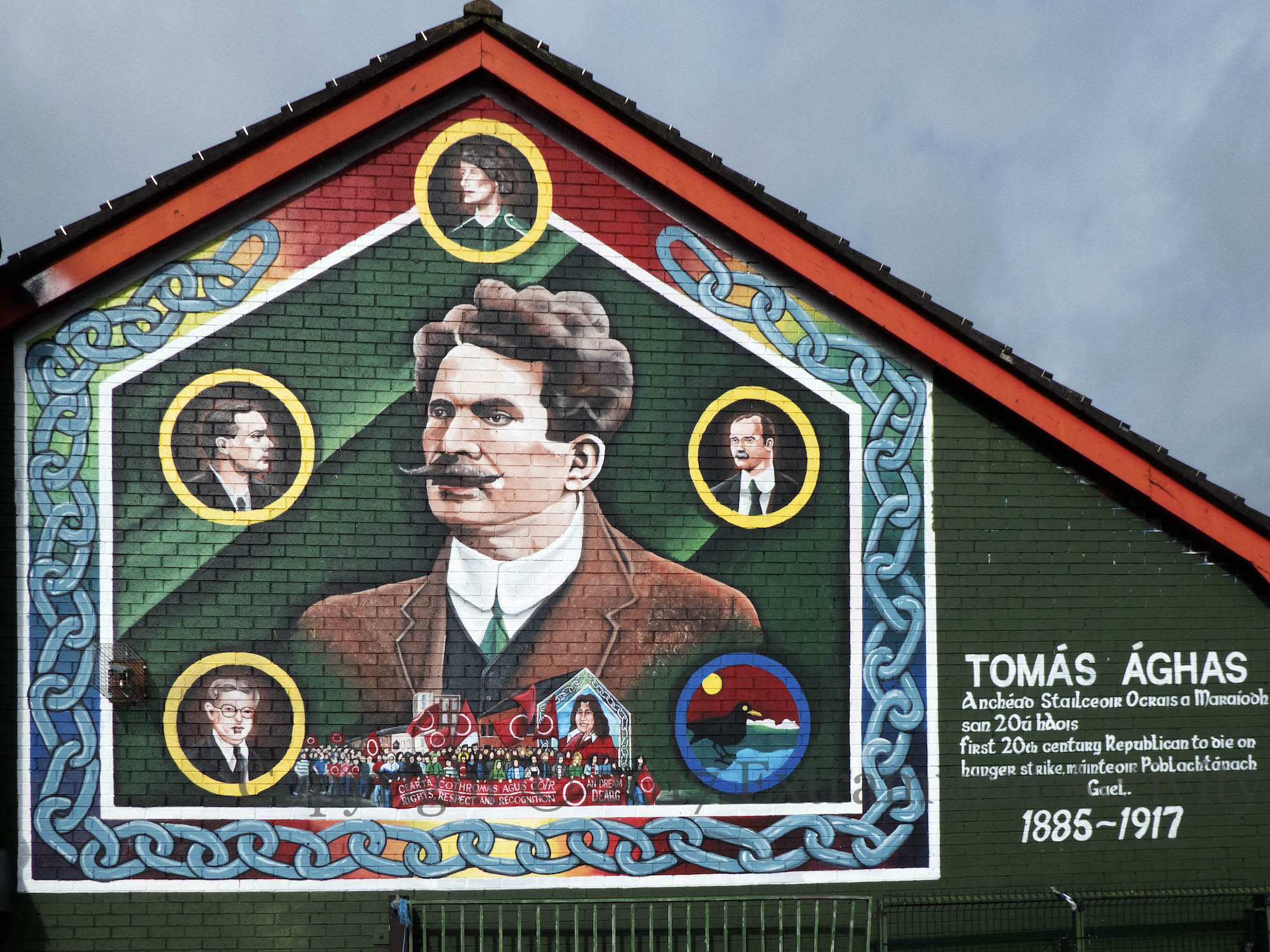
Thomas Ashe was working as an Irish teacher in Dublin when he joined the Irish Volunteers and in 1916 served as a battalion commander in the Easter Rising, for which he was sentenced to penal servitude for life. He went on hunger strike in May 1917 and again in September when he was rearrested by the British authorities for a “seditious” speech. He died on September 25th, one hundred years ago, becoming “an chéad staılceoır ocraıs a maraíodh san 20ú haoıs” (“first hunger striker to die in the 20th century”).
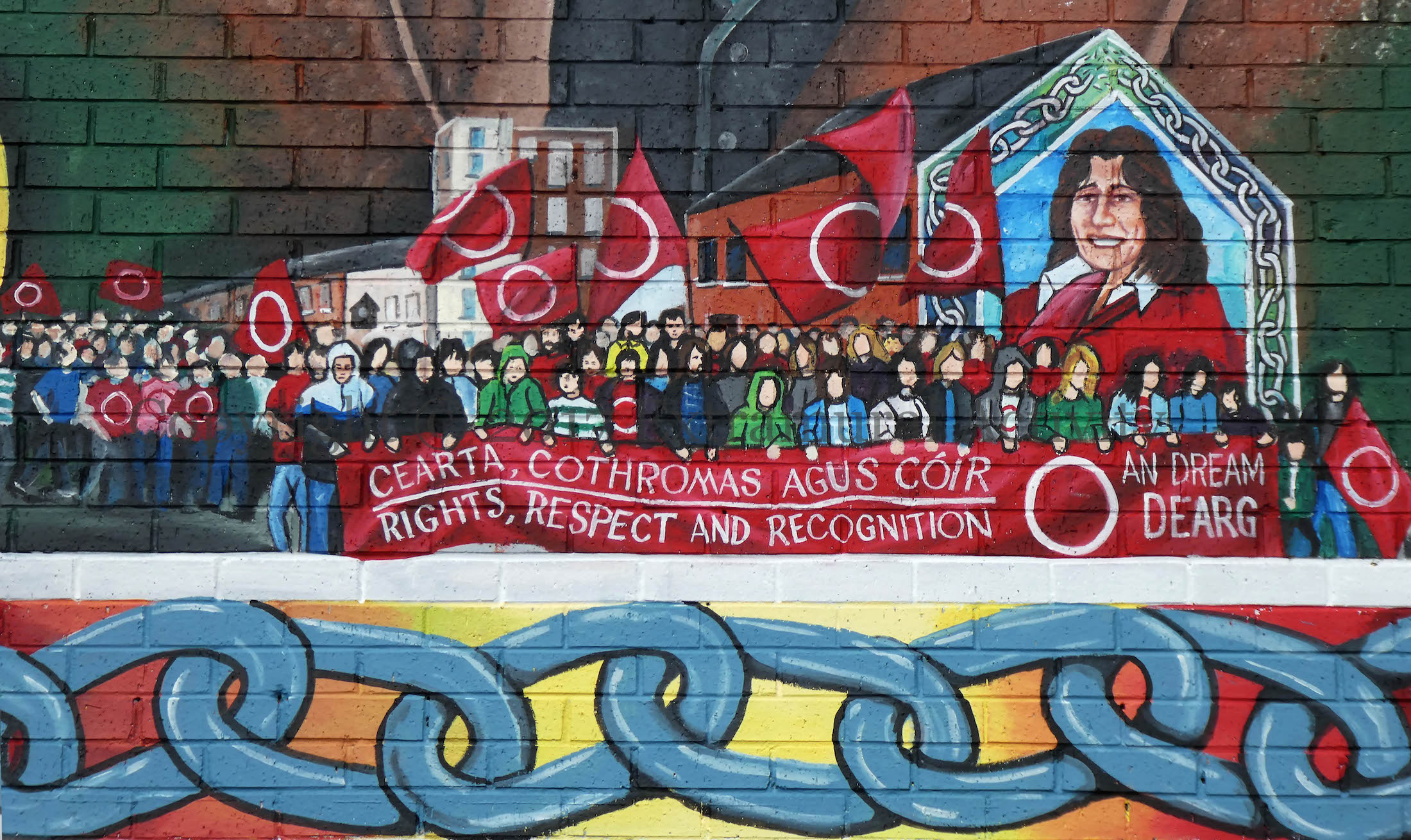
In the five circles around his portrait are Countess Markievicz, Pádraig Pearse, and James Connolly – fellow fighters in the Rising – and Máırtín Ó Cadhaın (author of Cré Na Cılle and IRA member interned during WWII), and the symbol of Laochra Loch Lao and more generally of An Ceathrú Gaeltachta/Gaeltacht Quarter (see previously The Big Plan and Onwards). In the middle (shown in detail below), An Dream Dearg march in support of Acht Na Gaeılge (an Irish language Act) past the Bobby Sands mural on Sevastopol Street.
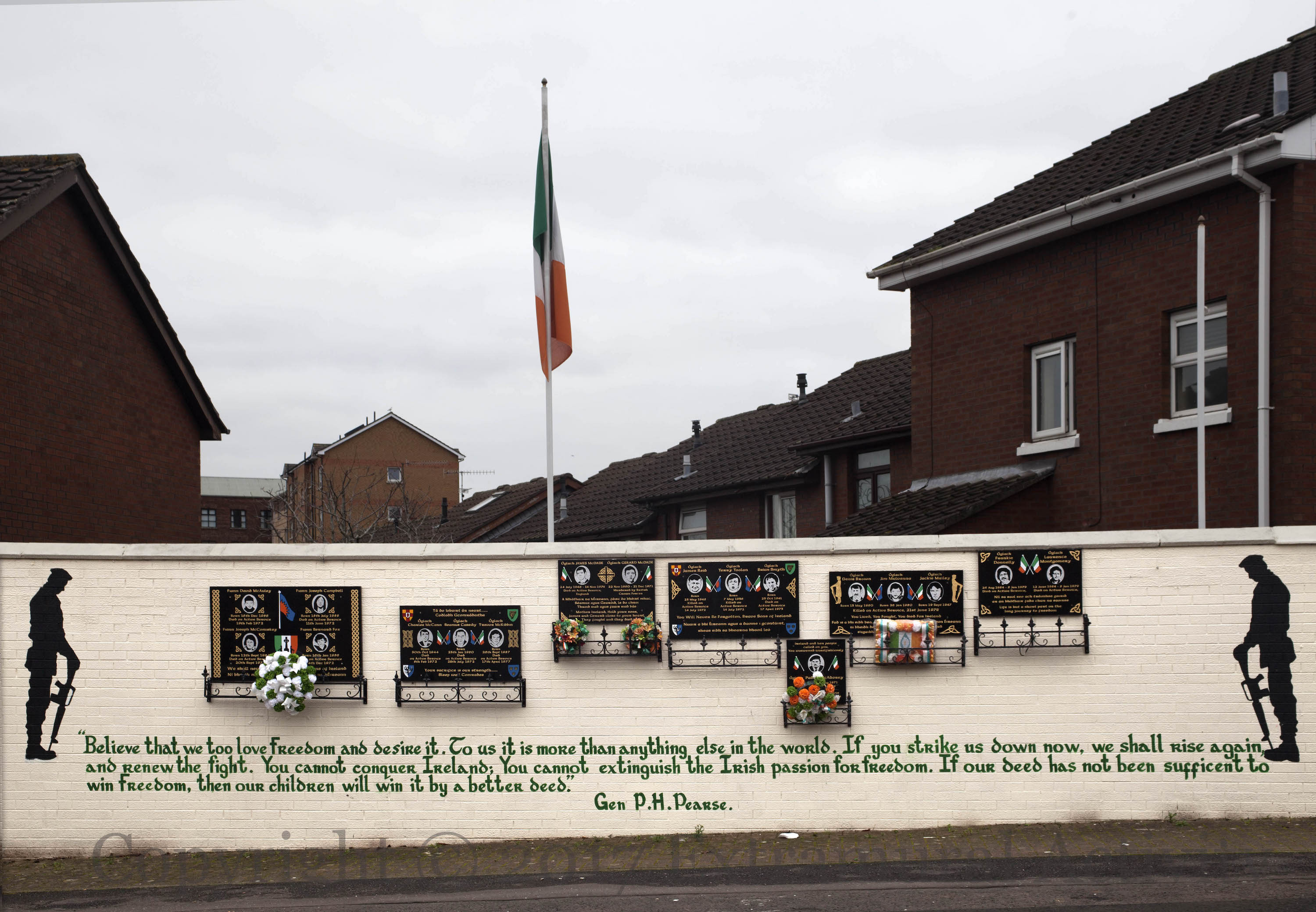
“[I assume that I am speaking to Englishmen who value their freedom, and who profess to be fighting for the freedom of Belgium and Serbia [in WWI].] Believe that we too love freedom and desire it. To us it is more than anything else in the world. If you strike us down now, we shall rise again and renew the fight. You cannot conquer Ireland; you cannot extinguish the Irish passion for freedom. If our deed has not been sufficient to win freedom, then our children will win it by a better deed – Gen. P. H. Pearse” at his court martial in 1916.
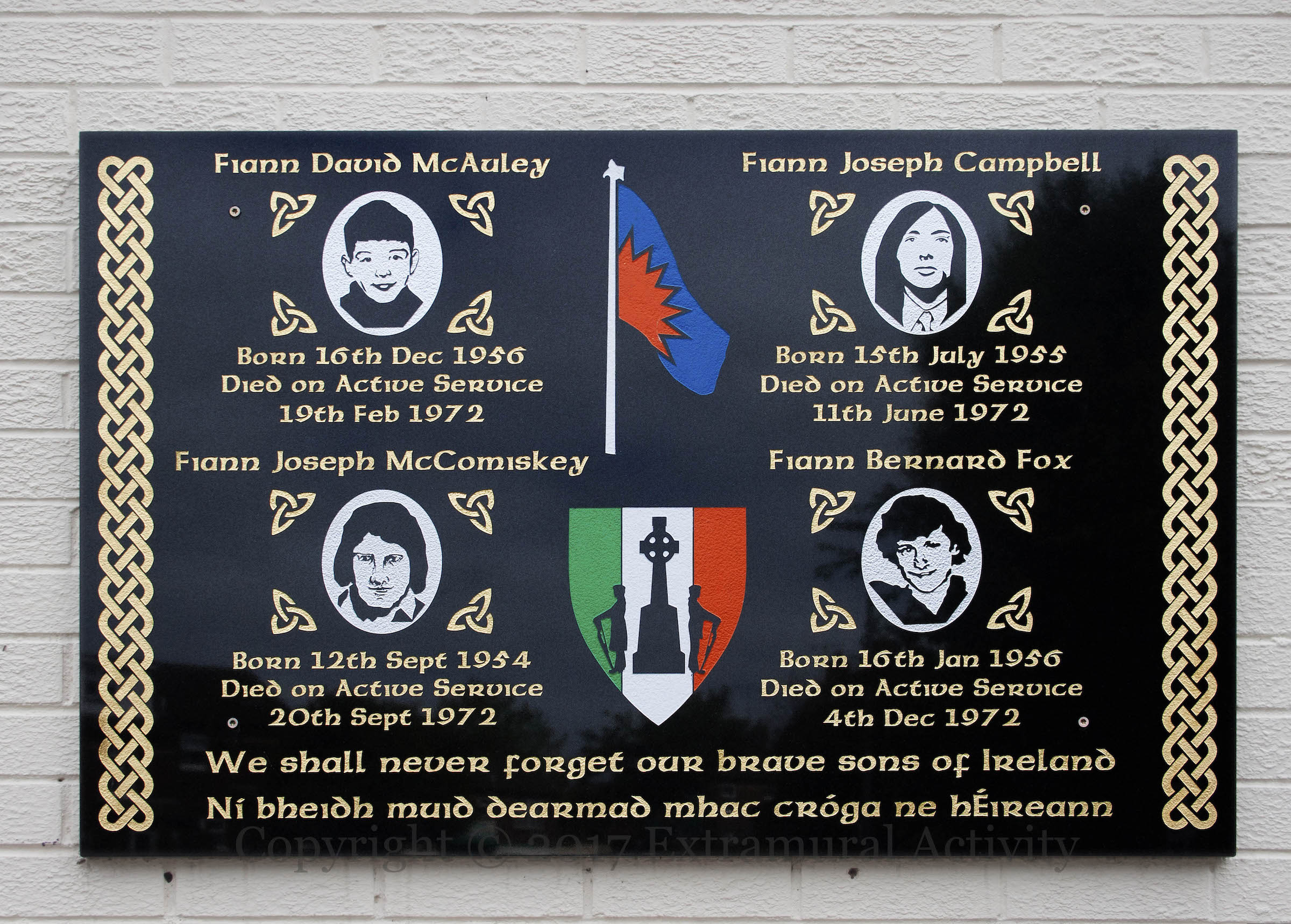
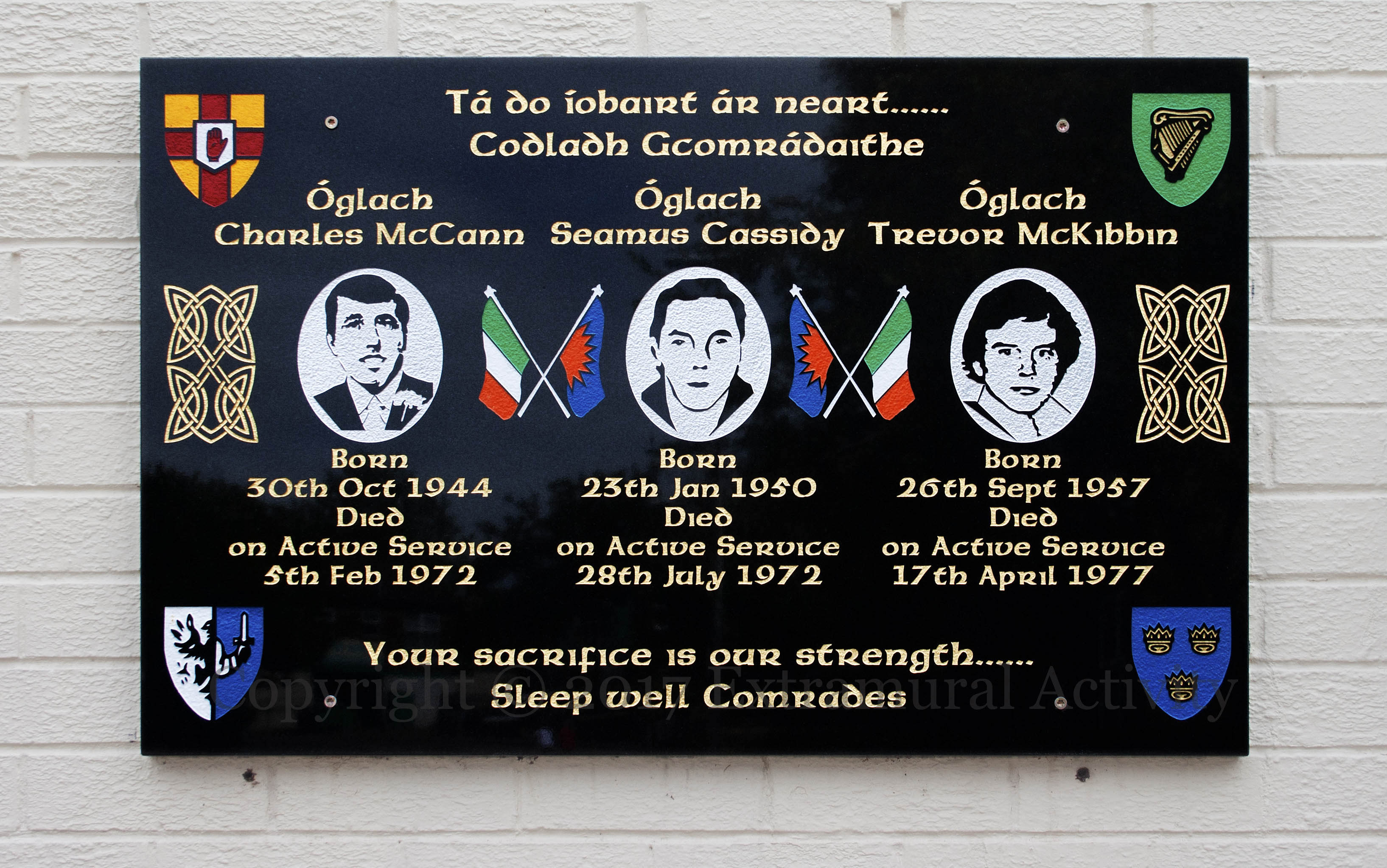
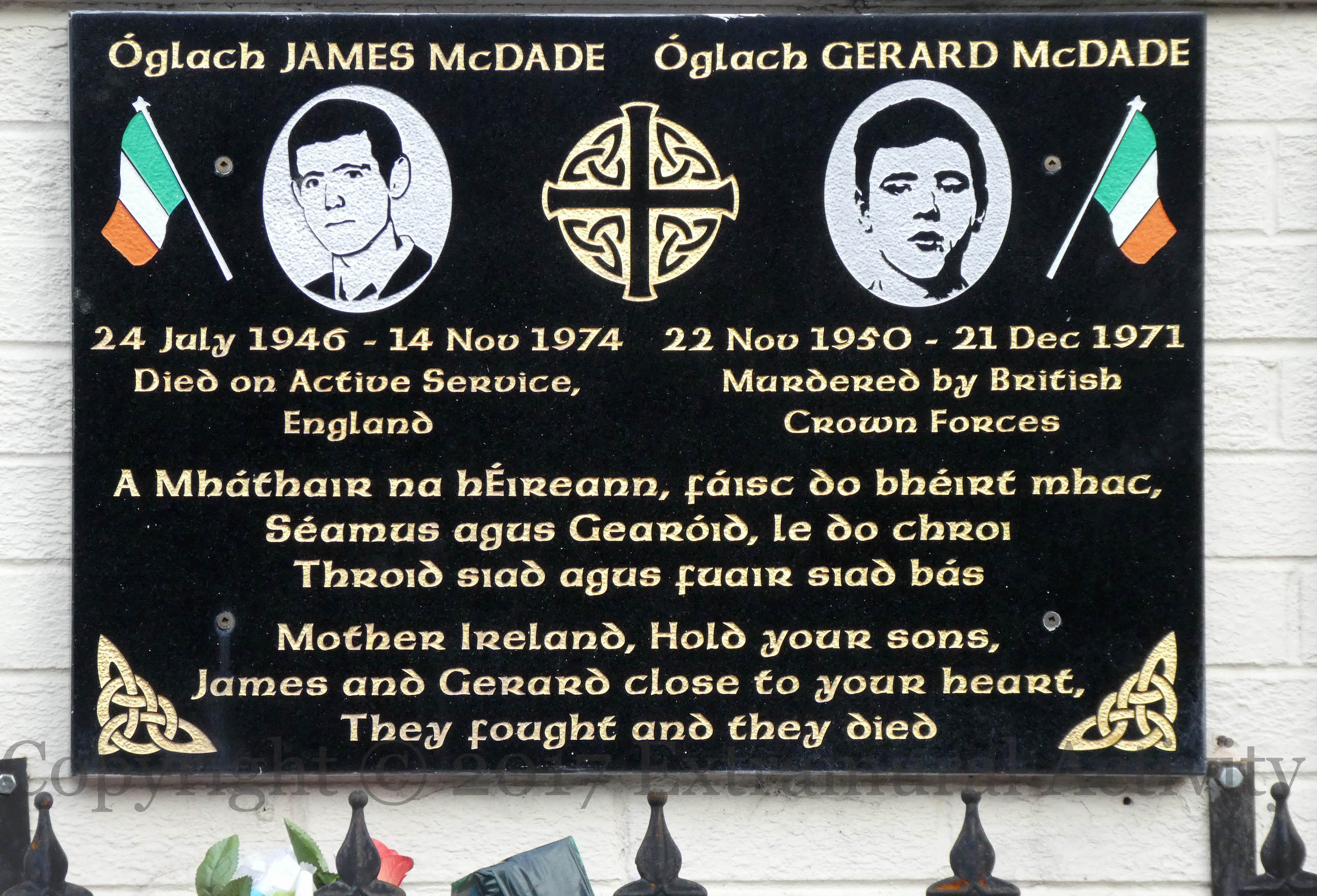
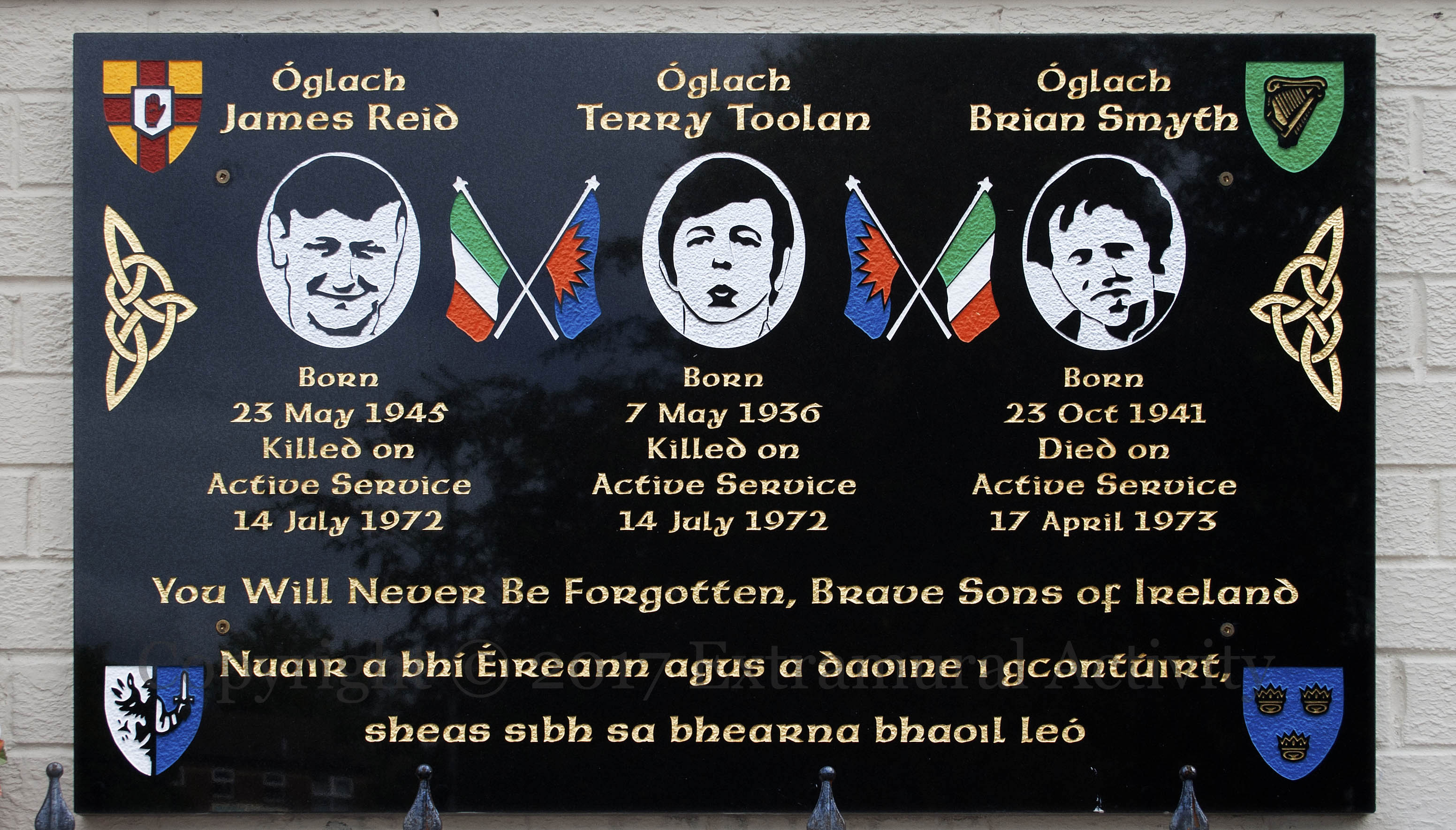
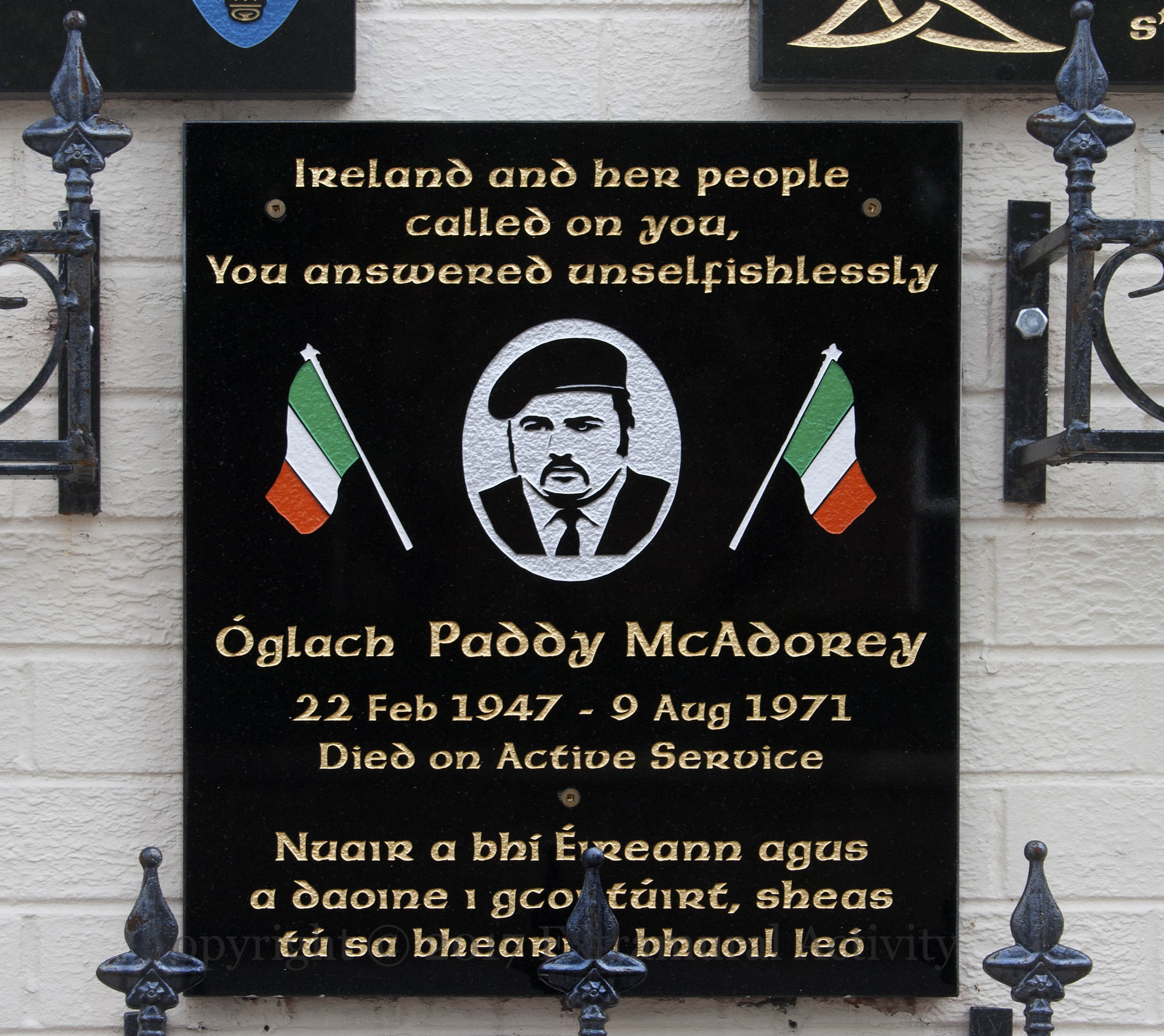
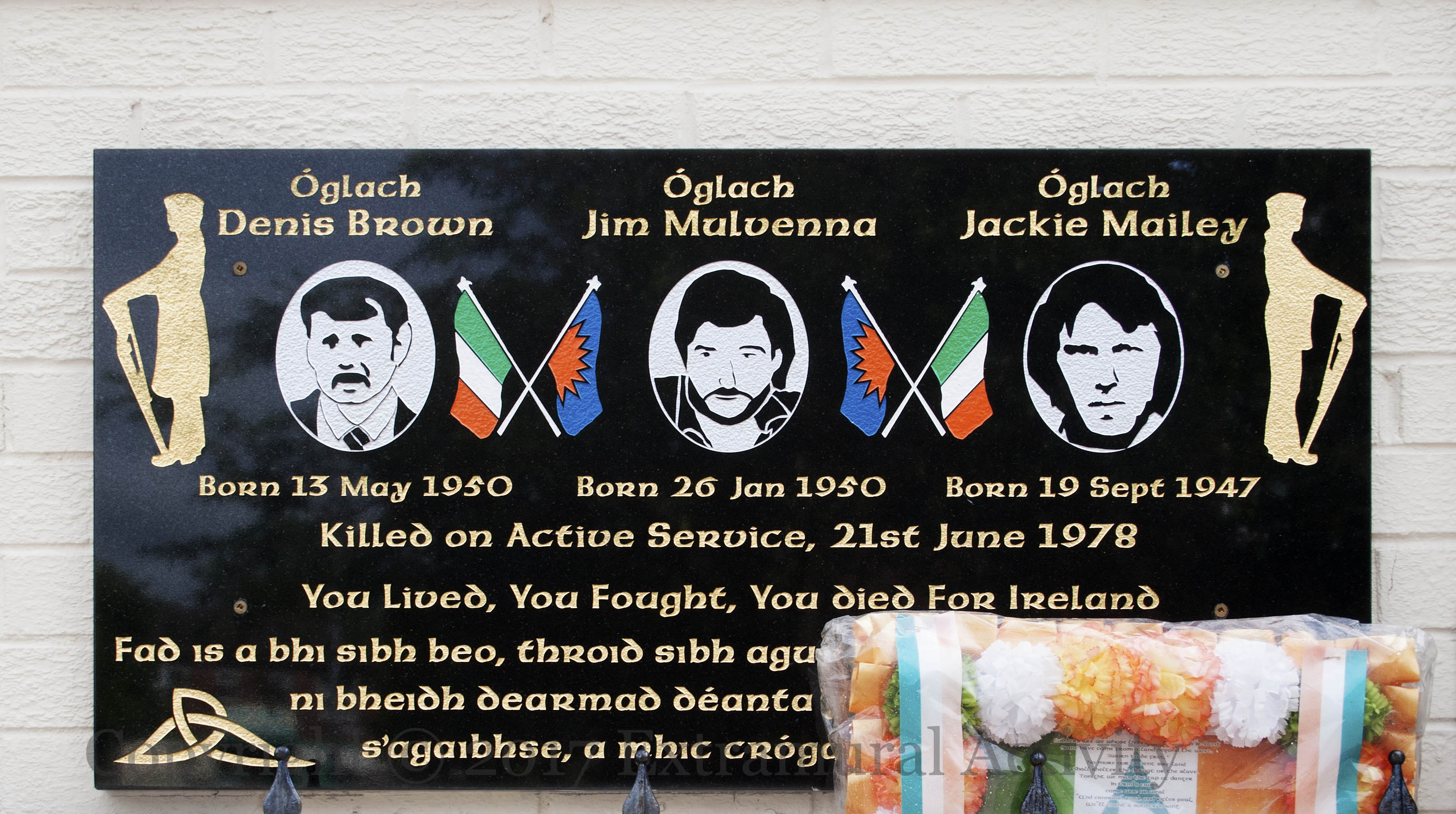
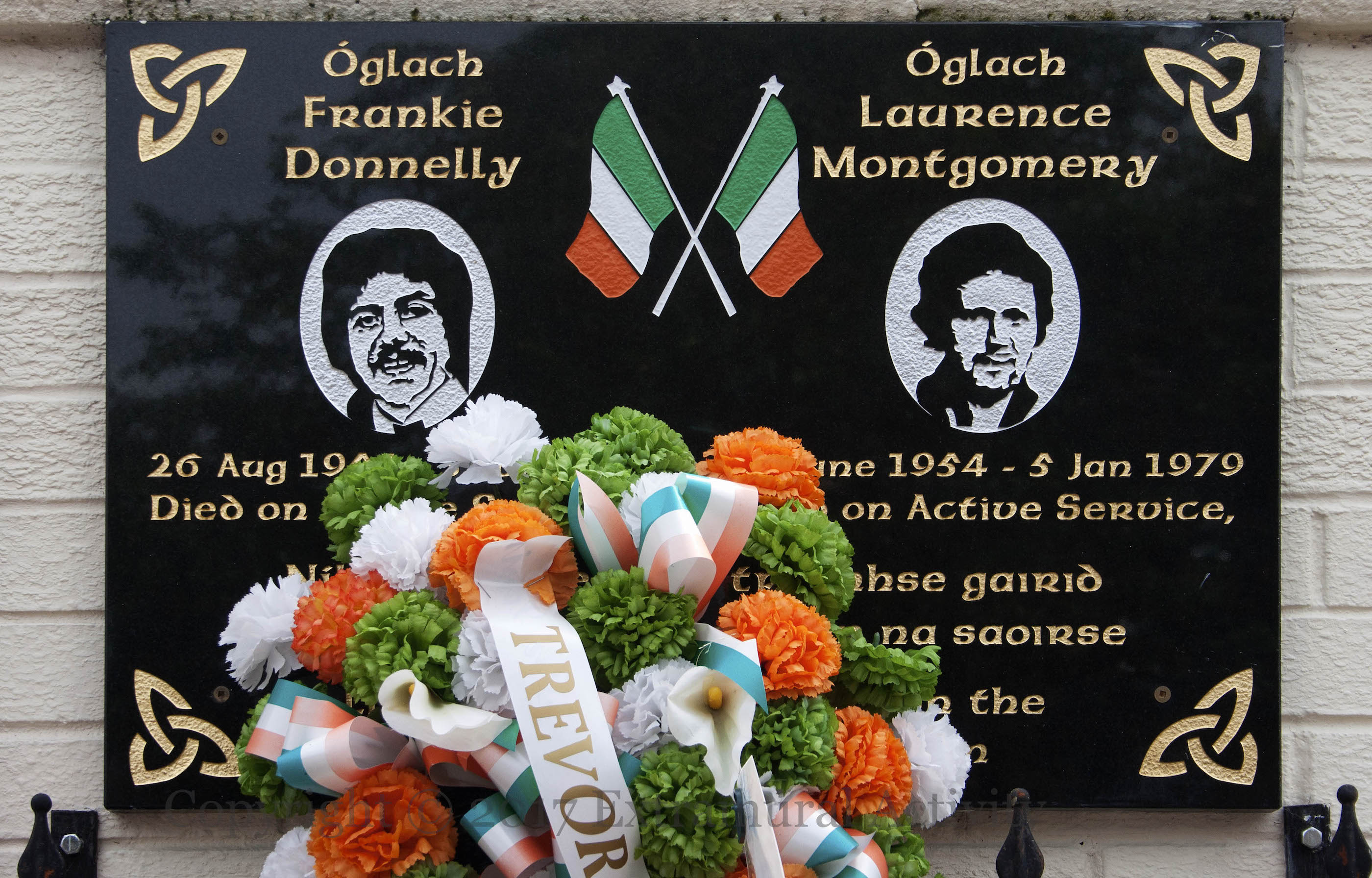
Here are eight images of the memorial plaques to deceased Ardoyne IRA fianna and ógliagh fromt he 1970s: David McAuley, Joseph Campbell, Joseph McComiskey, Bernard Fox, Charles McCann, Seamus Cassidy, Trevor McKibbin, James McDade, Gerard McDade, James Reid, Terry Toolan, Brian Smyth, Paddy McAdorey, Denis Brown, Jim Mulvenna, Jackie Mailey, Frankie Donnelly, Laurence Montgomery.
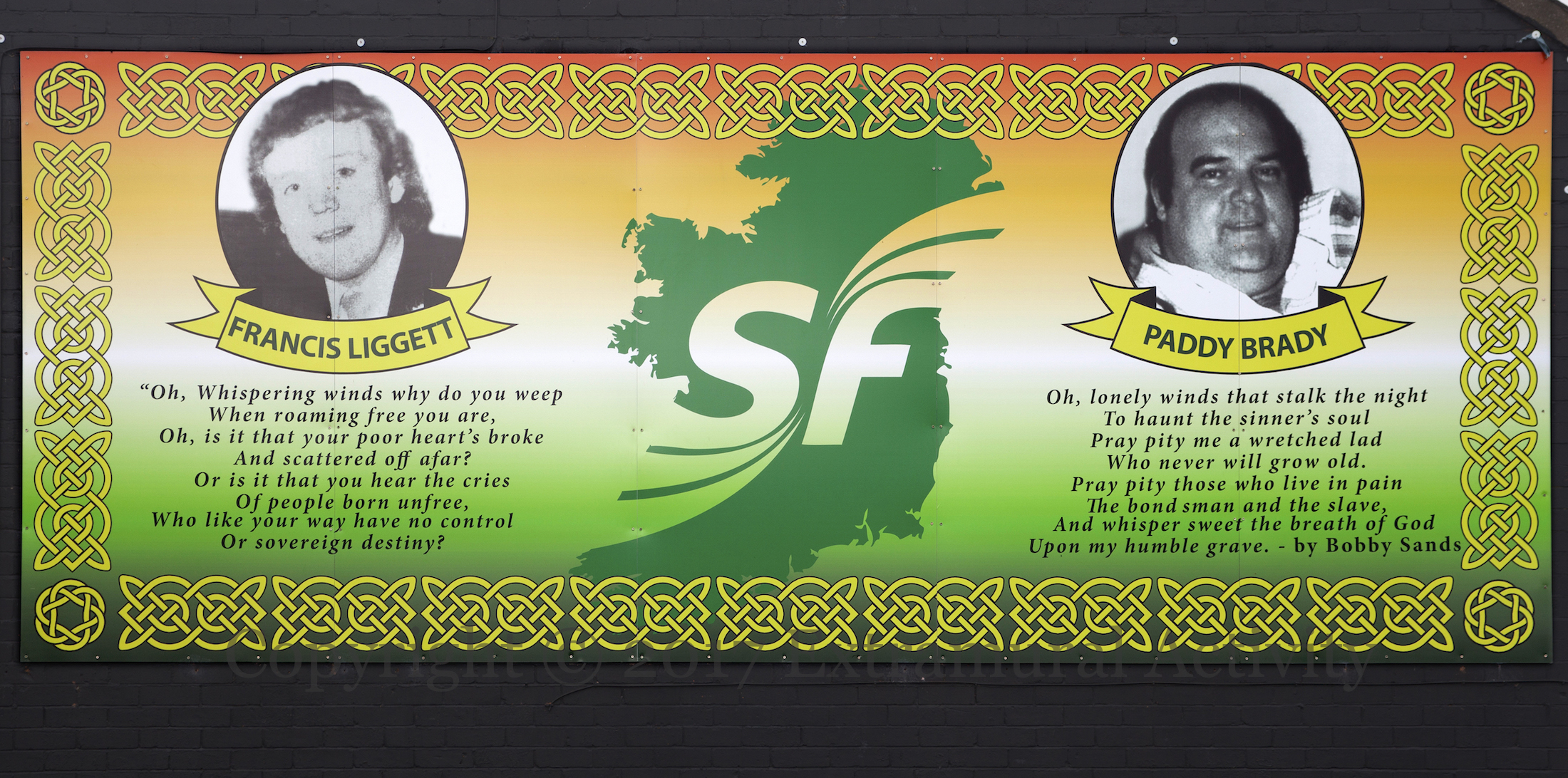
IRA volunteer Francis Liggett was shot dead by the British Army during an attempted armed robbery at Royal Victoria Hospital, Falls Road in 1973 (Sutton) while local Sinn Féin member Paddy Brady was shot by the UFF while at work in 1984 (Sutton | An Phoblacht). They are commemorated in the St James memorial garden with the board shown above, featuring two verses from Bobby Sands’s poem Weeping Winds: Oh, Whispering [Whistling, in the original] winds why do you weep/When roaming free you are, Oh! Is it that your poor heart’s broke/And scattered off afar? Or is it that you bear the cries/Of people born unfree, Who like your way have no control/Or sovereign destiny? Oh! Lonely winds that stalk [walk] the night/To haunt the sinner’s soul/ Pray pity me a wretched lad/Who never will grow old. Pray pity those who lie in pain/The bondsman and the slave And whisper sweet the breath of God/Upon my humble grave.
The board is similar in design to the painted one it replaces, except that Éire was at the centre rather than the “SF” logo.
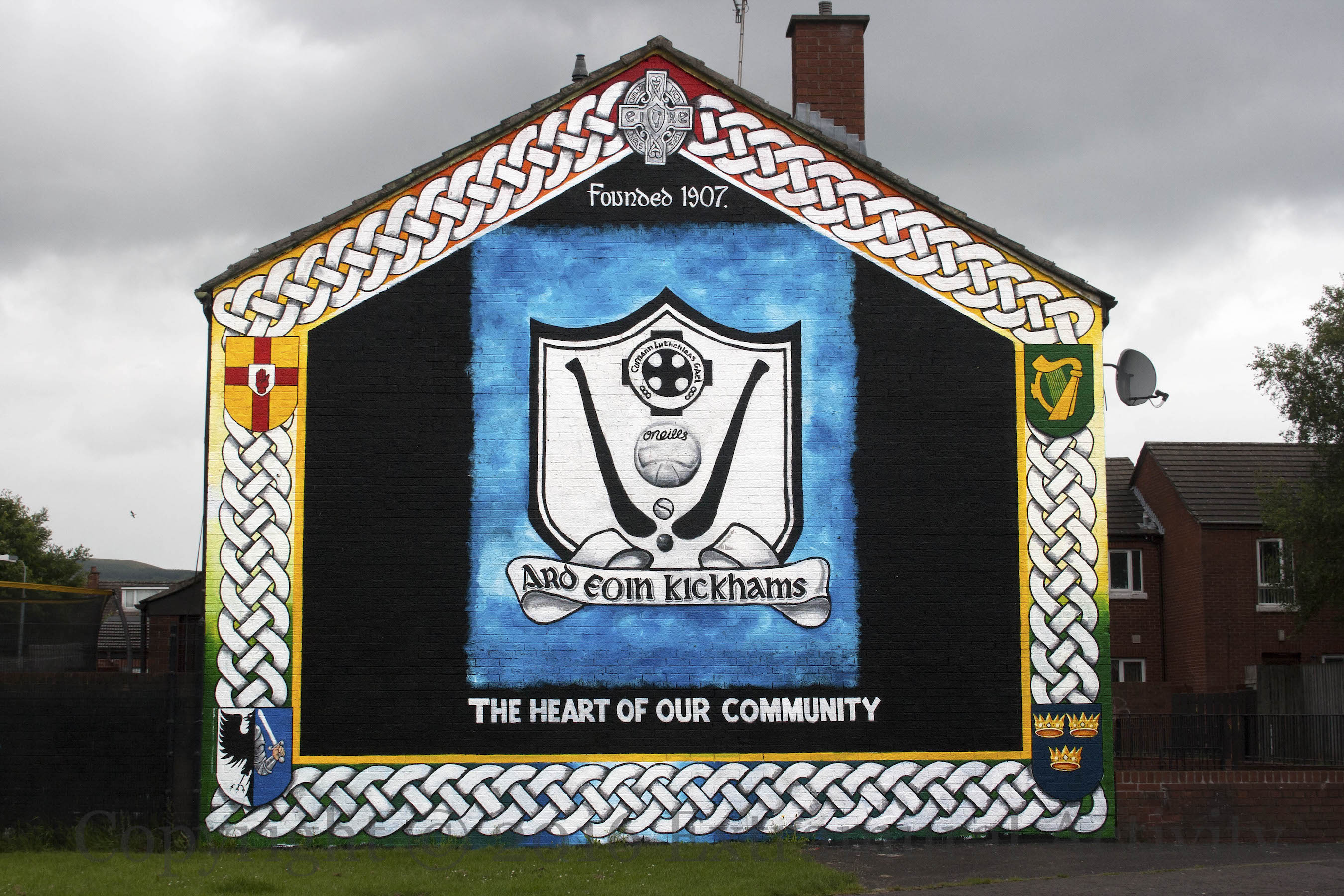
A border of Celtic knot-work and the shields of the four provinces has been added to the Ard Eoın Kickhams mural at the top of Havana Way. (For the previous version, see The Heart Of Our Community.)
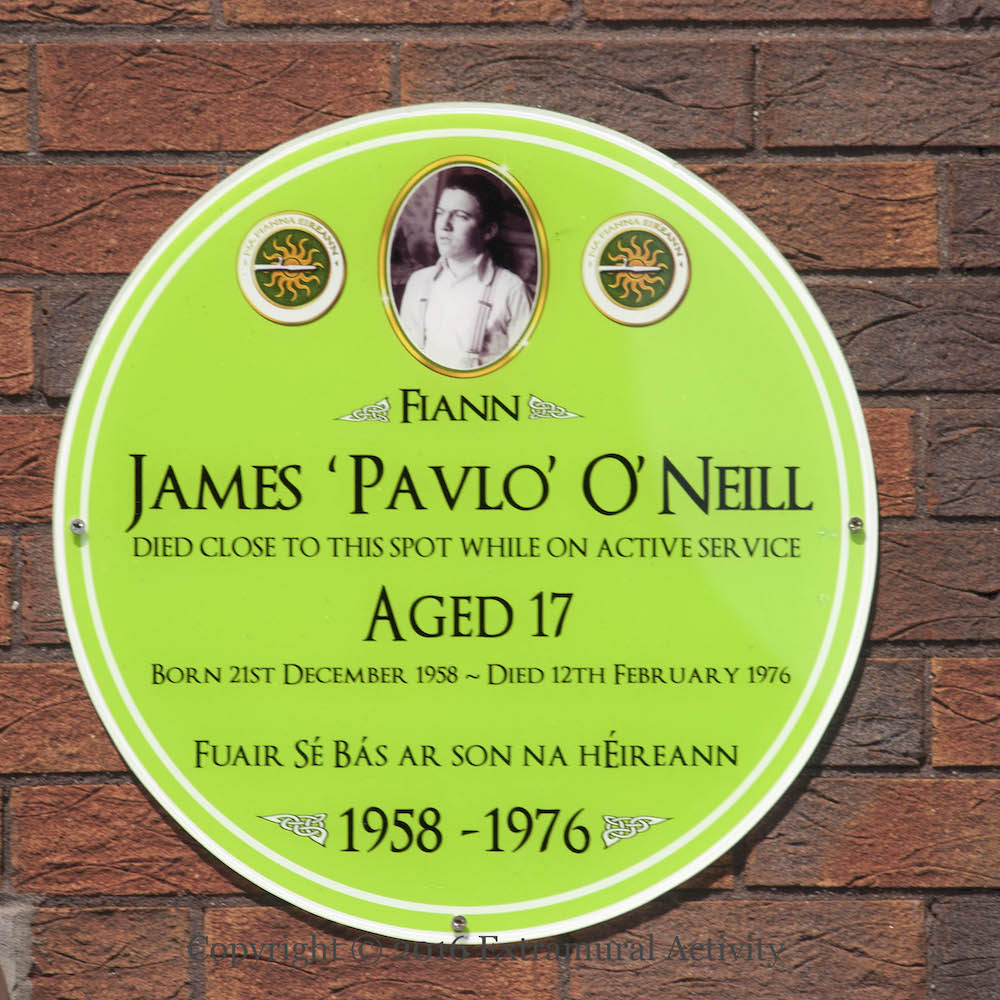
“Fıann [sic] James ‘Pavlo’ O’Neill died close to this spot while on active service, aged 17. Born 21st December 1958 – died 12th February 1976. Fuaır sé bás ar son na hÉıreann. 1958-1976”. Jim O’Neill was killed in during an IRA arson attack on a furniture warehouse on the Antrim Road near the New Lodge – Gerry Fitt’s house next door might have been the ultimate target (Belfast Child). The local flute band is in part named after him – see O’Neill-Allsopp Memorial Flute Band.
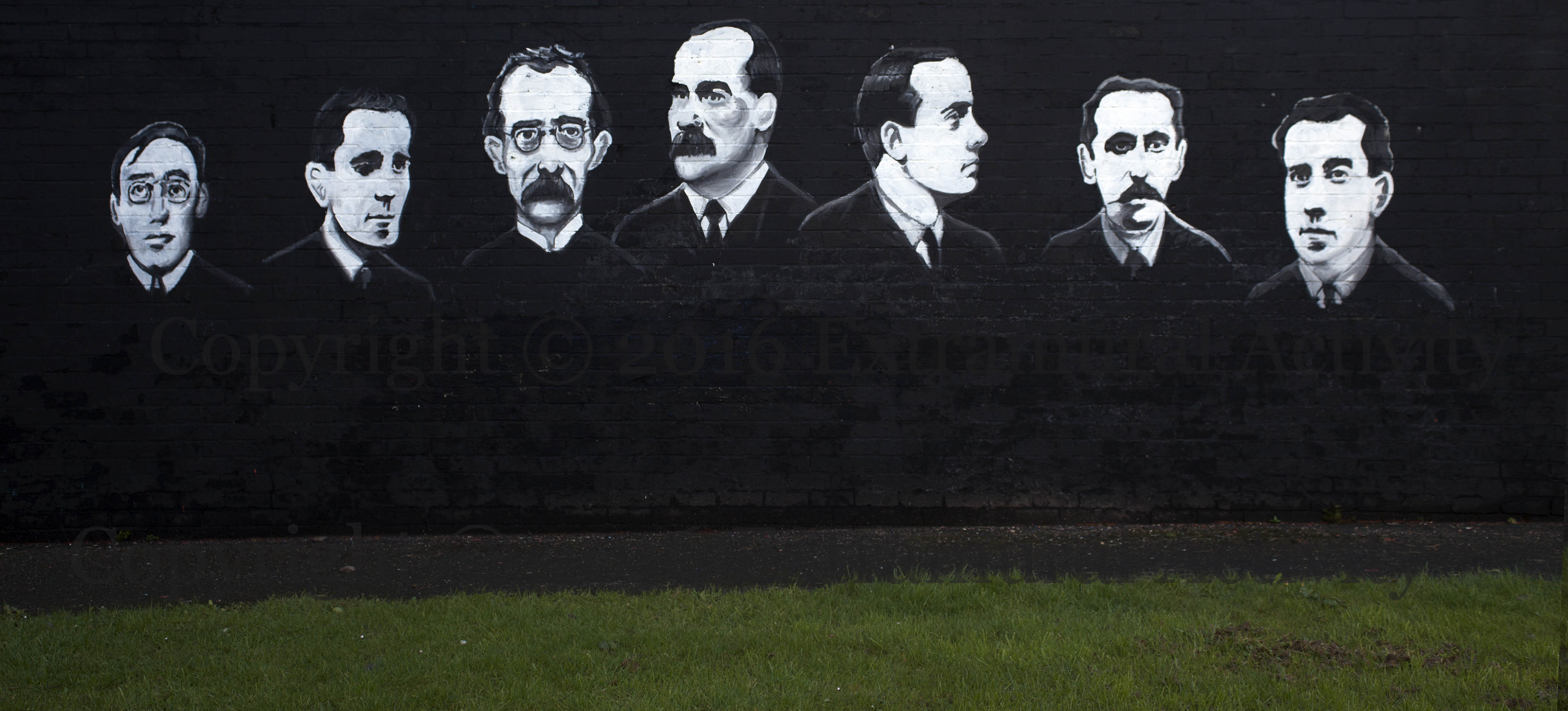
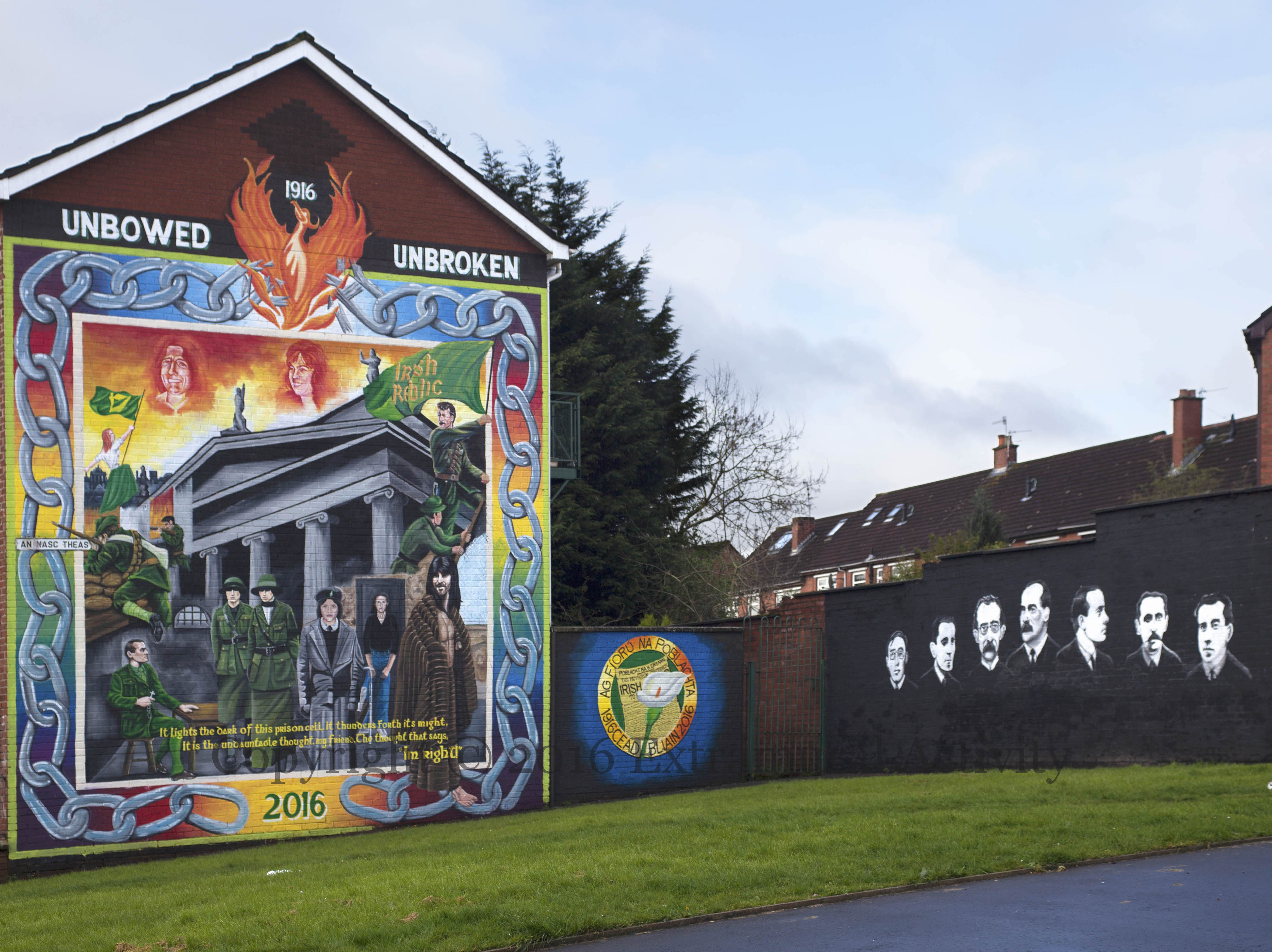
The seven signatories of the 1916 Proclamation of the provisional government of the Irish Republic. From left to right: Joseph Plunkett, Sean MacDiarmada, Thomas Clarke, James Connolly, Padraig Pearse, Éamonn Ceannt, Thomas MacDonagh.
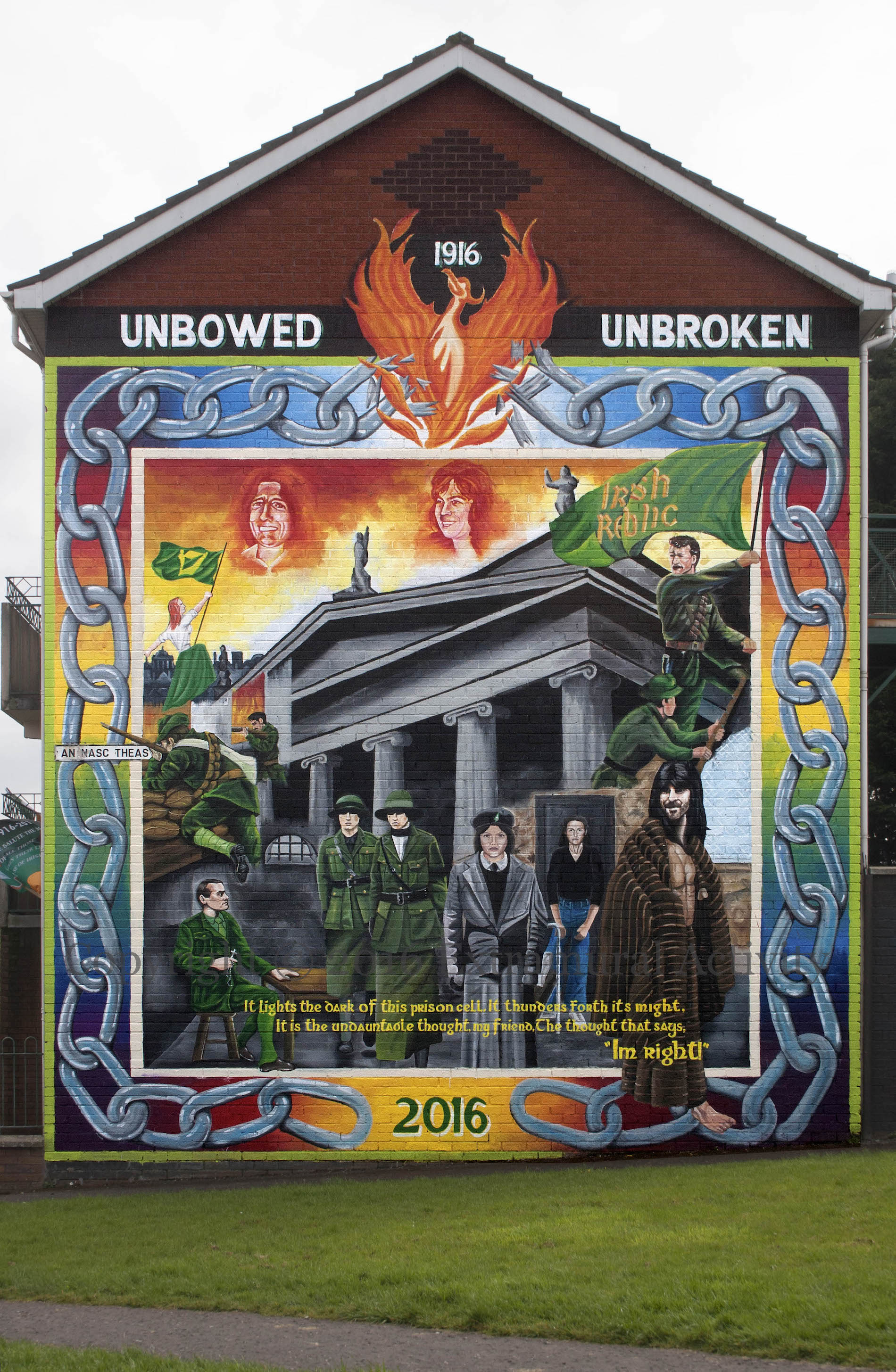
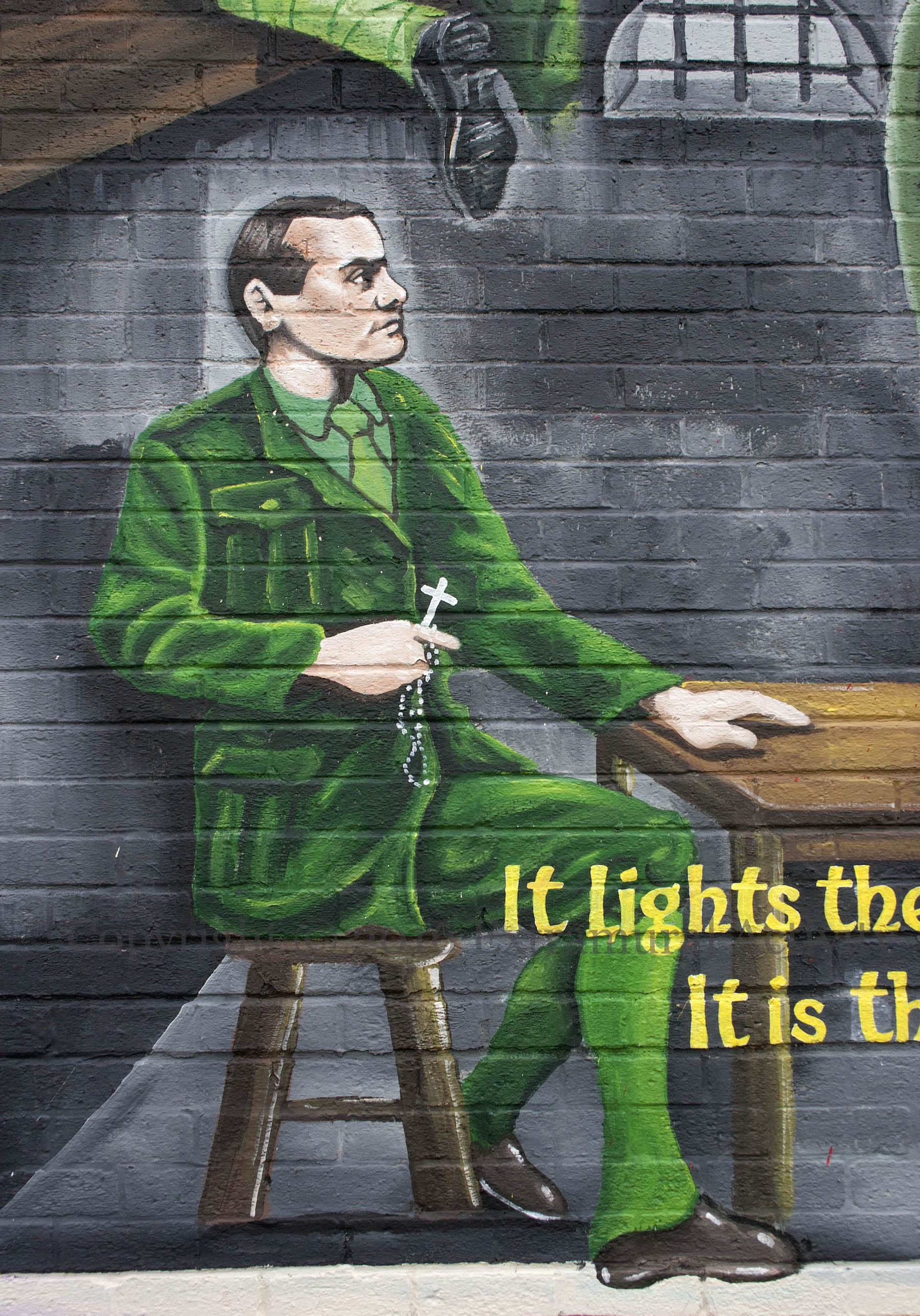
A succession of Irish rebels is shown in this new mural in Andersonstown, west Belfast. It begins (top left) with the rebellion of 1798 and then to the Easter Rising of 1916 at the GPO in Dublin. In the lower left, a pious Padraıg Pearse awaits his execution with rosary beads in hand. There are then shown female figures from Cumann Na mBán and the IRA (see previously: United Irishwomen, Do You Care? and Mothering Sunday In Beechmount), and then Maıréad Farrell in Armagh Women’s Prison (for the original, see Prison Walls). In the bottom right corner there is a blanketman. The busts of Bobby Sands and Joe McDonnell float above the GPO and the last verse of Sands’s The Rhythm Of Timeform the epigraph: “It lights the dark of this prison cell, it thunders forth its might, it is the undauntable thought, my friend, the thought that says, “I’m right”.
 Seosamh Mac Coille Collection