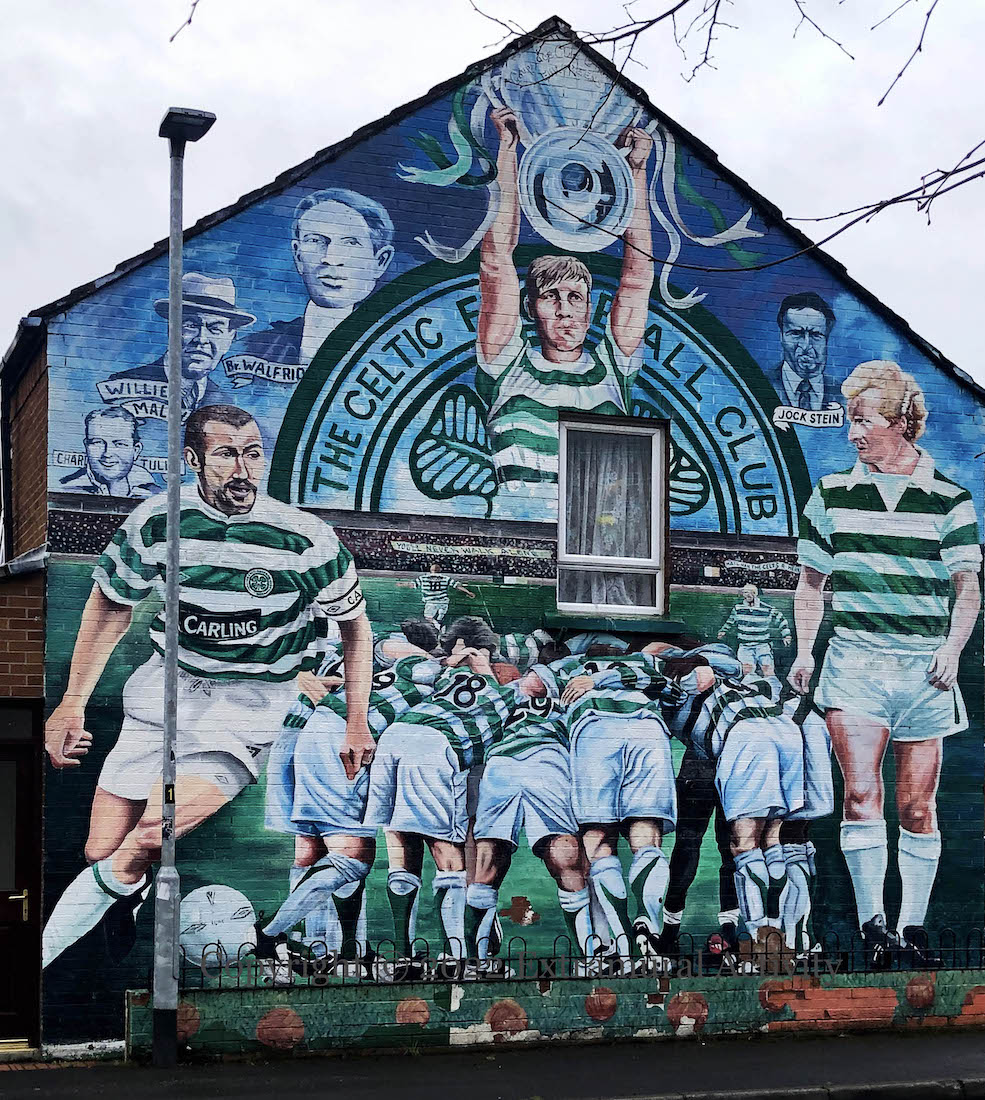
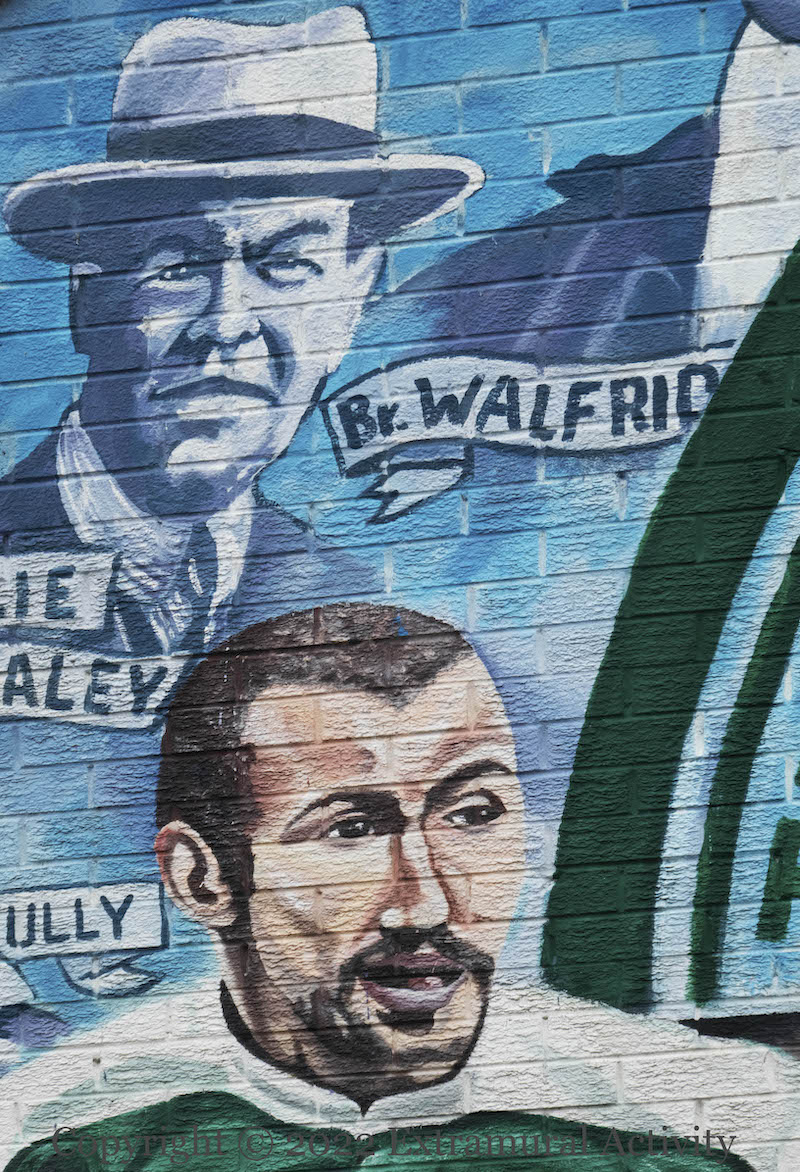
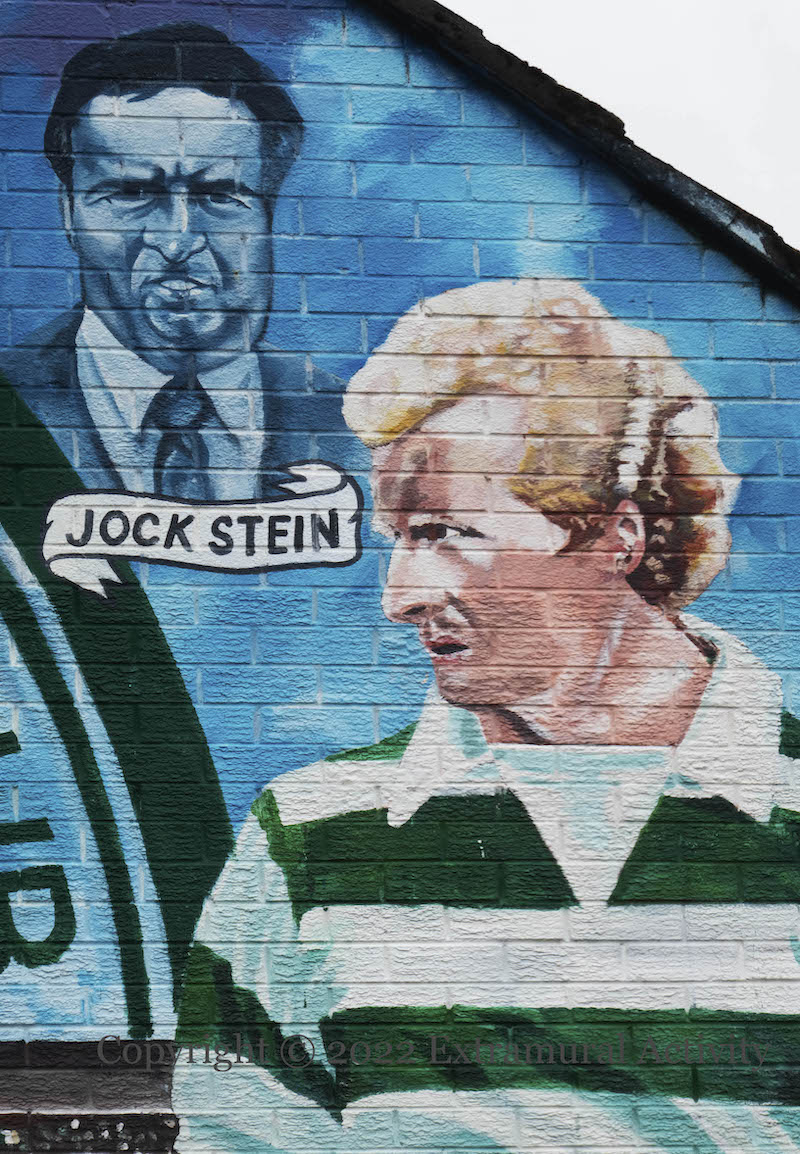
Carling last sponsored Celtic FC in the 2009-2010 season, which means that the heroes shown in this 2009 mural are another decade in the past. In the apex are Charlie Tully (of Belfast and Glasgow Celtic), Willie Maley (the first manager), Br. Walfrid (founder of the club in 1888), Billy McNeil lifting the European Cup in 1967, Jock Stein (player 1951-1957 and manager 1965-1978), while on the field are former players Henrik Larsson (1997-2004) and Jimmy Johnstone (1962-1965).
In the centre of the image, the team is “doing the huddle”, which is also practiced by Cliftonville.
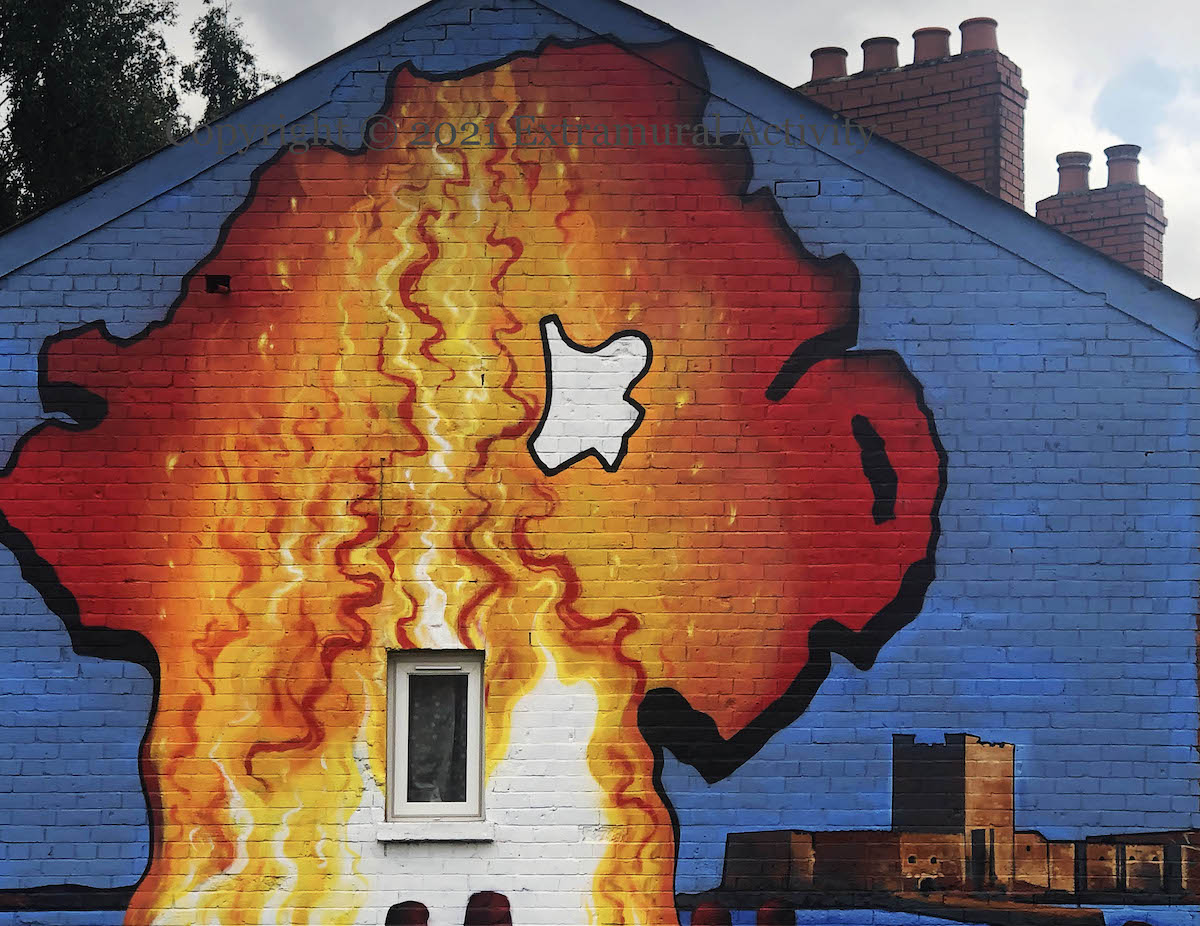
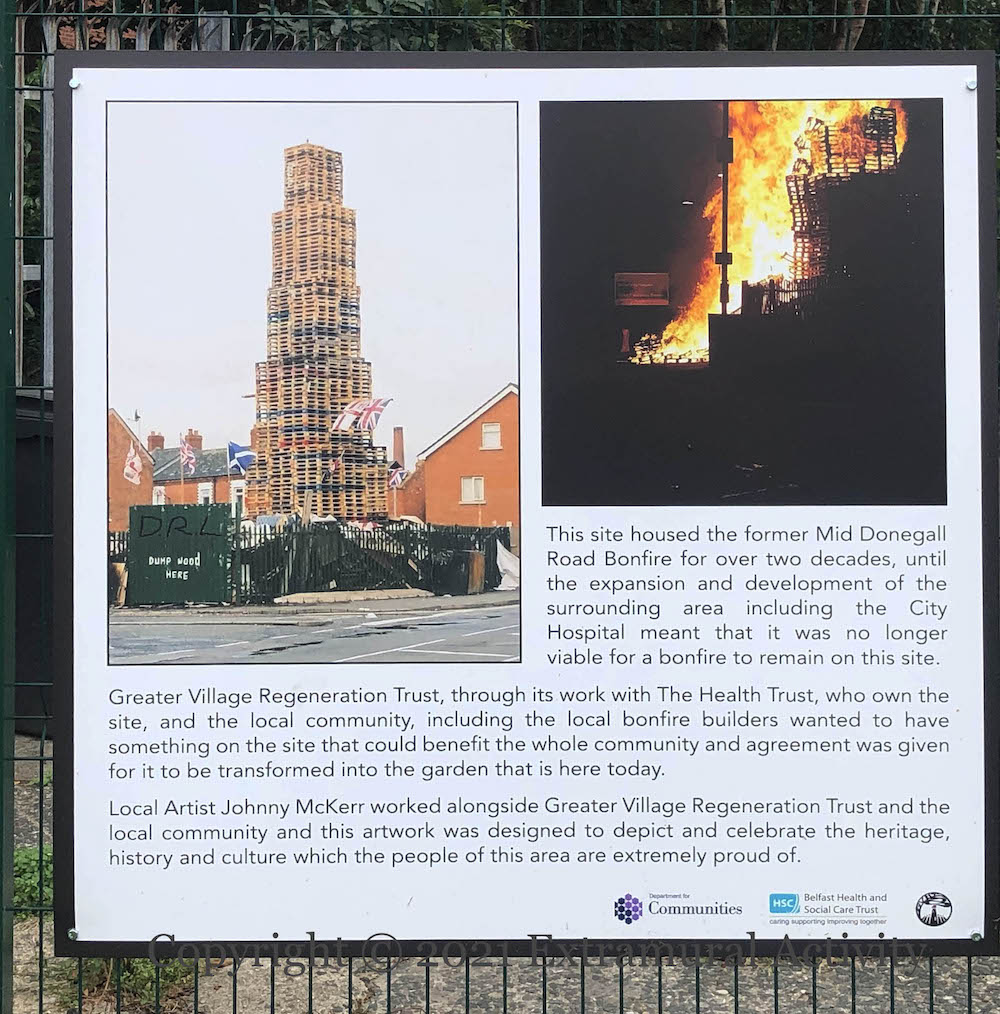
“This site housed the former Mid Donegall Road Bonfire for over two decades, until the expansion and development of the surrounding area including the City Hospital meant that it was no longer viable for a bonfire to remain on this site. Greater Village Regeneration Trust, through its work with The Health Trust, who own the site, and the local community, including the local bonfire builders wanted to have something on the site that could benefit the whole community and agreement was given for it to be transformed into the garden that is here today. Local Artist Johnny [sic] McKerr worked alongside Greater Village Regeneration Trust and the local community and this artwork was designed to depict and celebrate the heritage, history and culture which the people of this area are extremely proud of.”
The info board includes a photograph of the bonfire spilling out towards the car-park for the City. The other image is a photograph from the Peter Moloney Collection, used without permission, and photoshopped to add “DRL” – Donegall Road Loyalists.
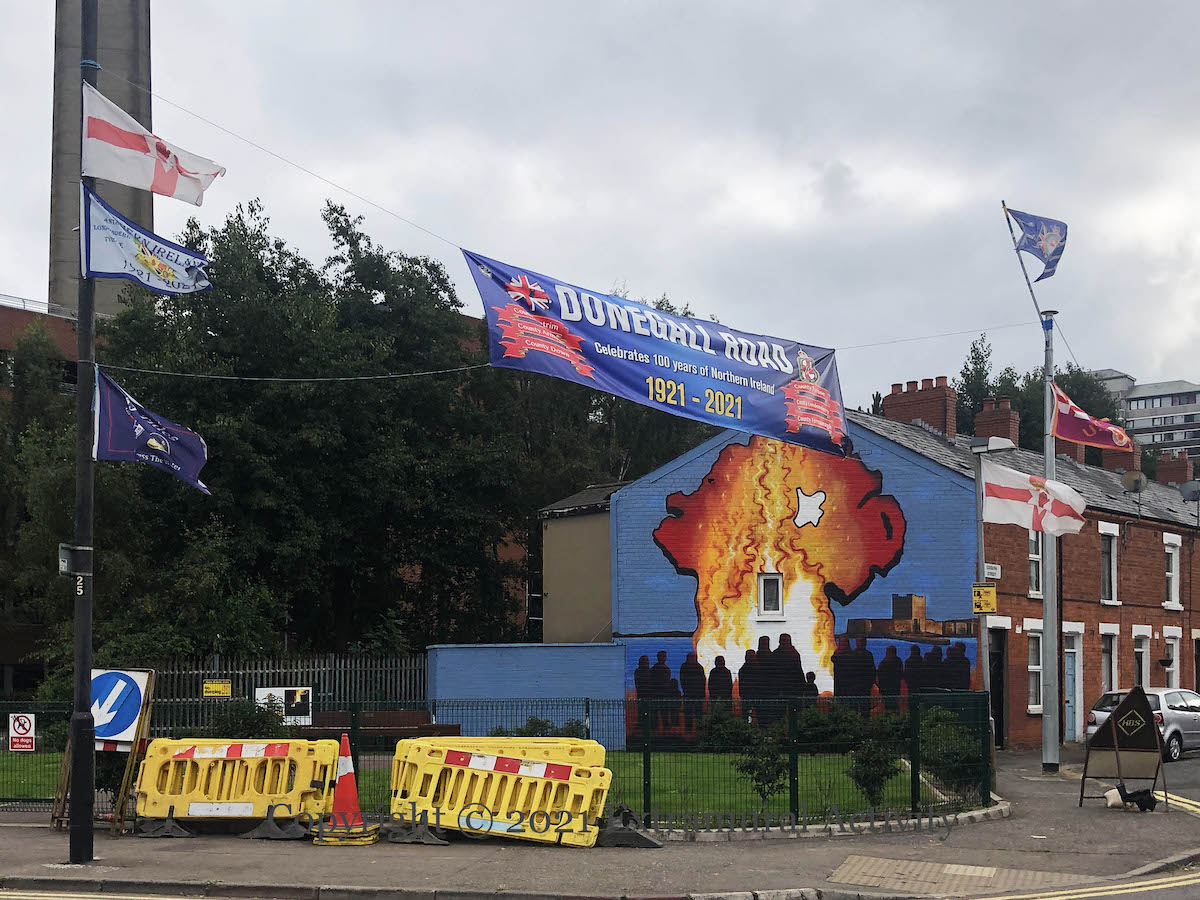
According to Eddie Kelly of the GVRT, Carrickfergus castle is included because “This is where King William landed, and the annual bonfire is a symbol of a beacon lit across the coast to guide him” (Belfast Live).
Painted by JMK/Jonny McKerr (tw) at Coolfin St on Donegall Rd.
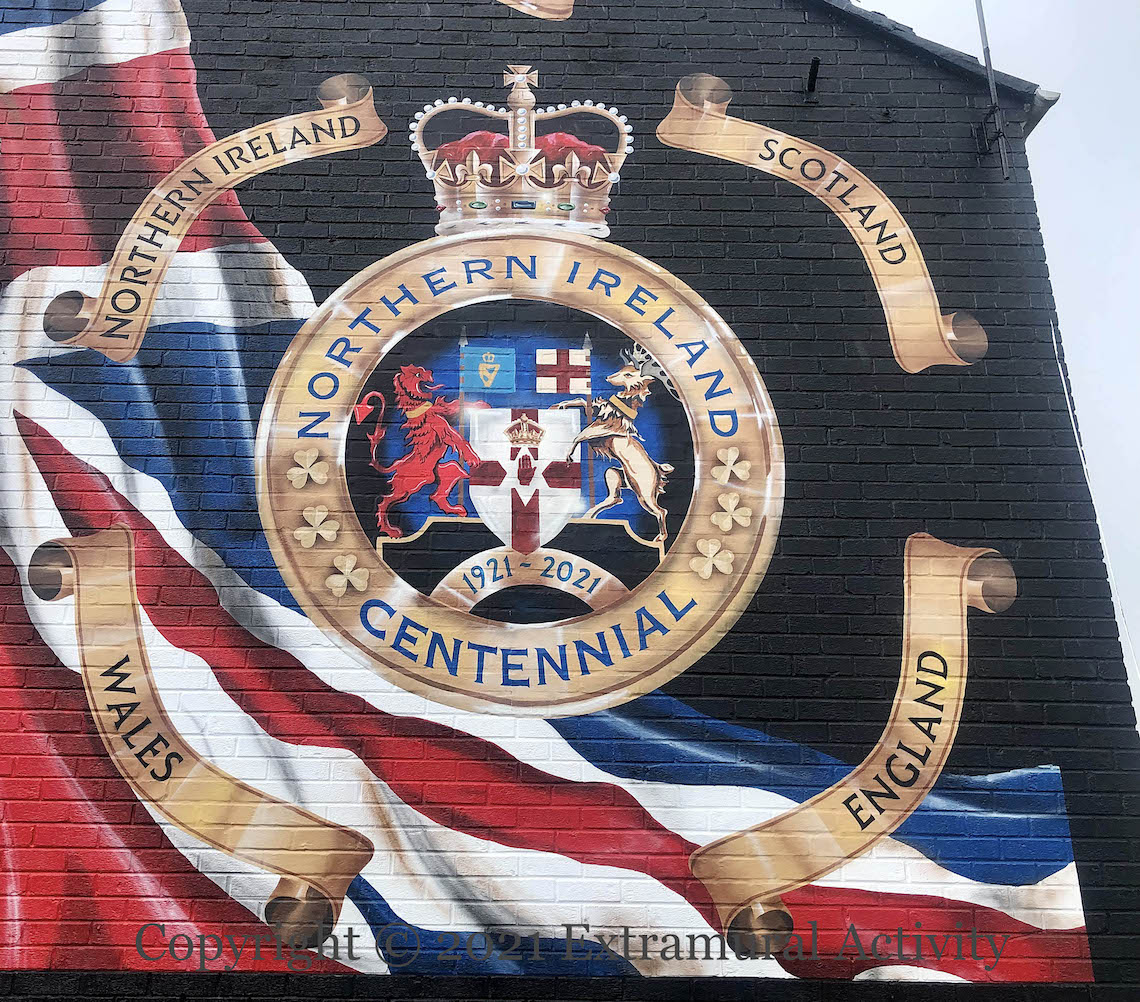
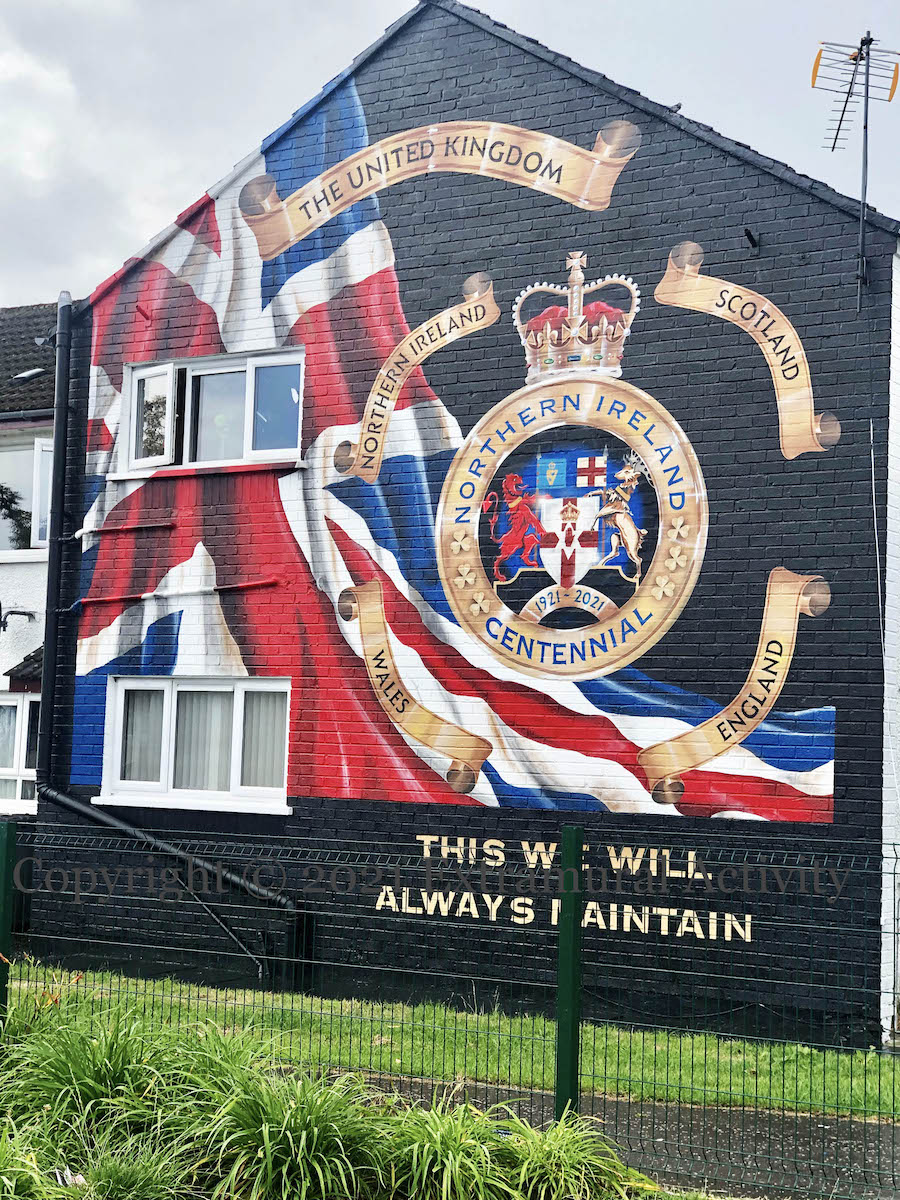
The Northern Ireland government’s coat of arms was approved for use in 1924, three years after the government was established. Its “supporters” – the red lion of Scotland and an Irish elk, carrying (respectively) Irish harp and De Burgh flags, and standing on a grassy mound with flax plants – were added later.
This mural celebrating the centenary of Northern Ireland’s creation, in the Woodburn estate, Carrickfergus, accurately shows the Tudor crown on the arms, as was used at the time of creation and prior to the Edwardian crown (WP).
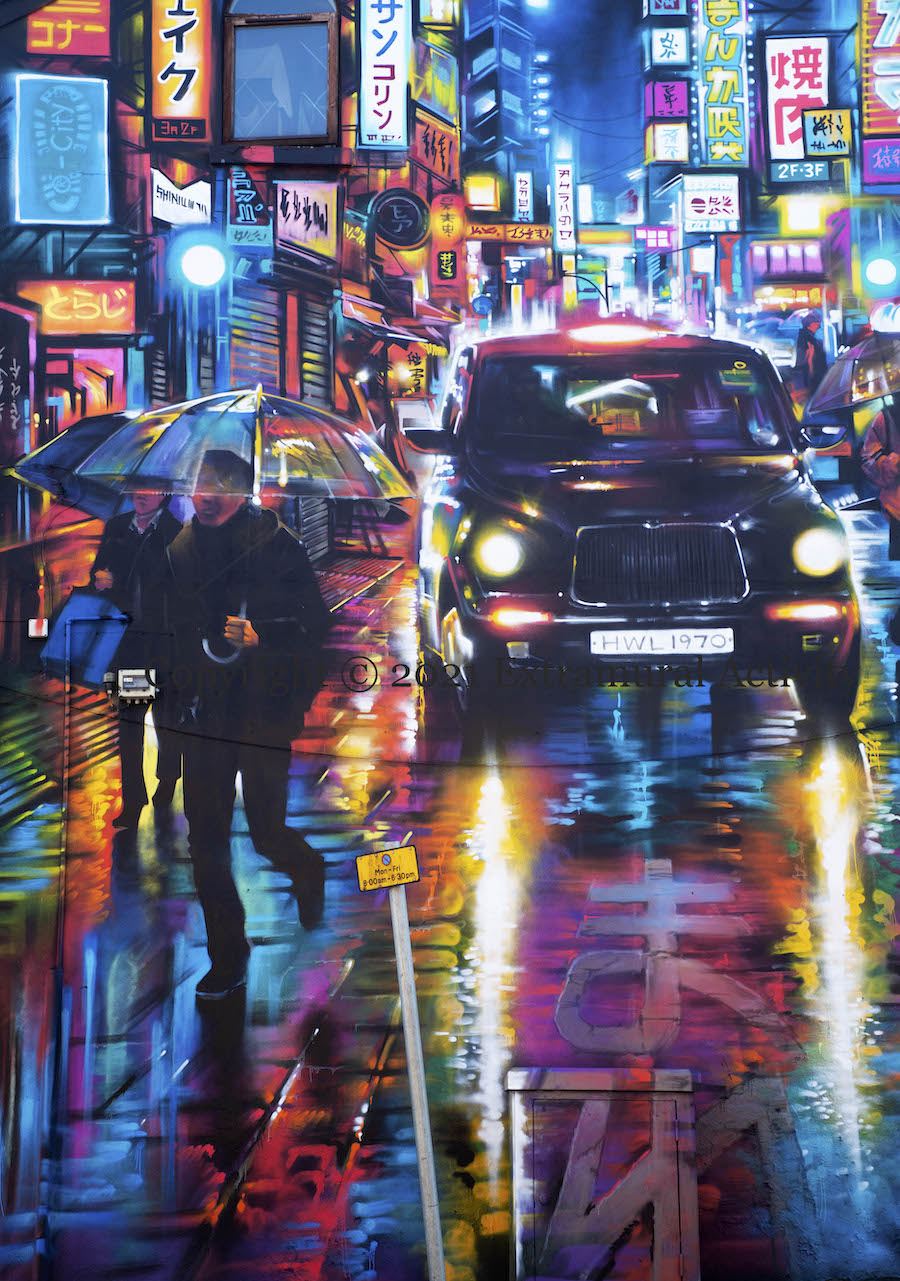
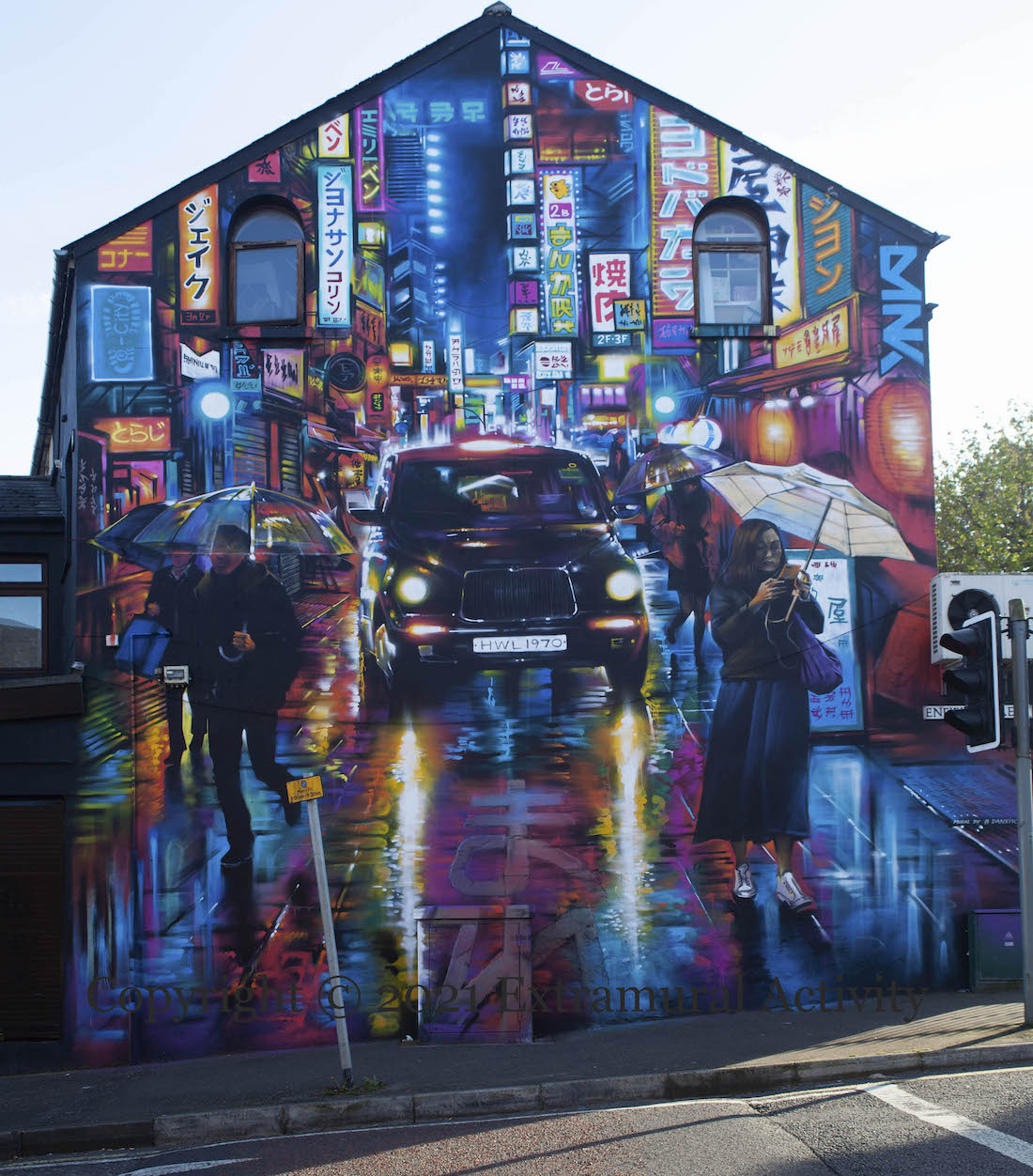
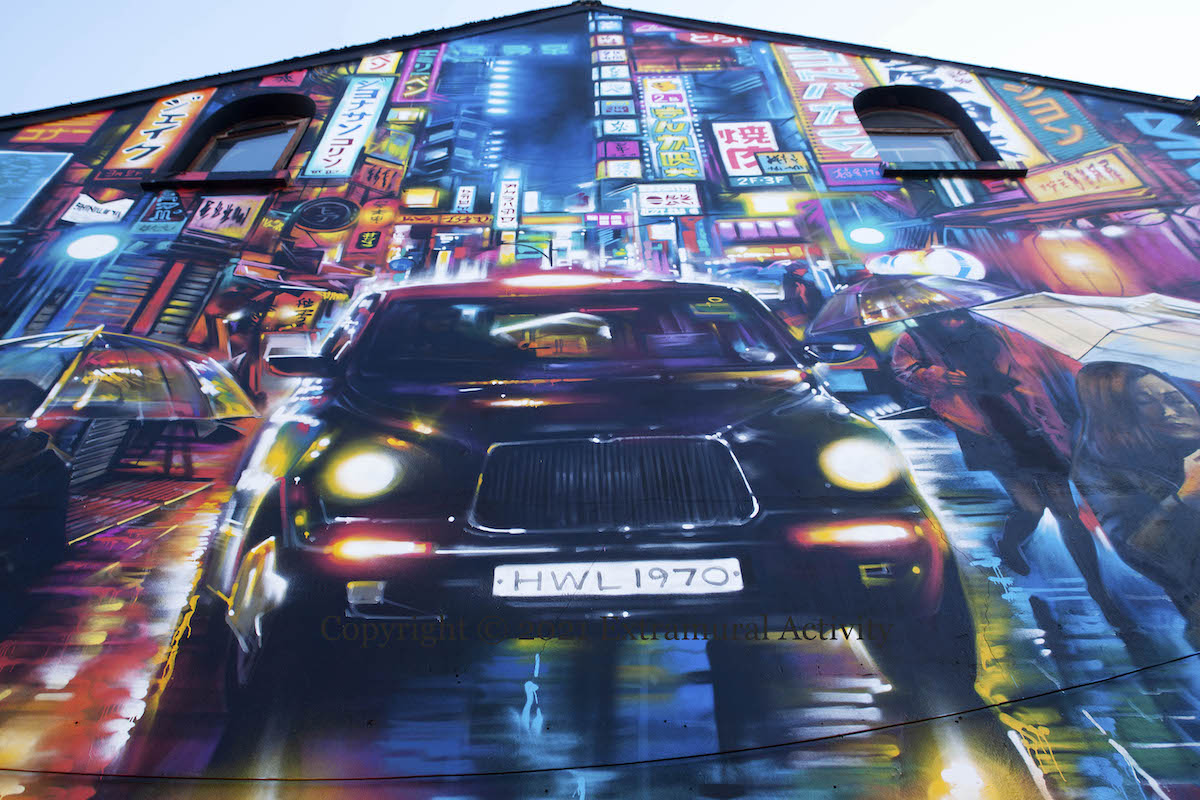
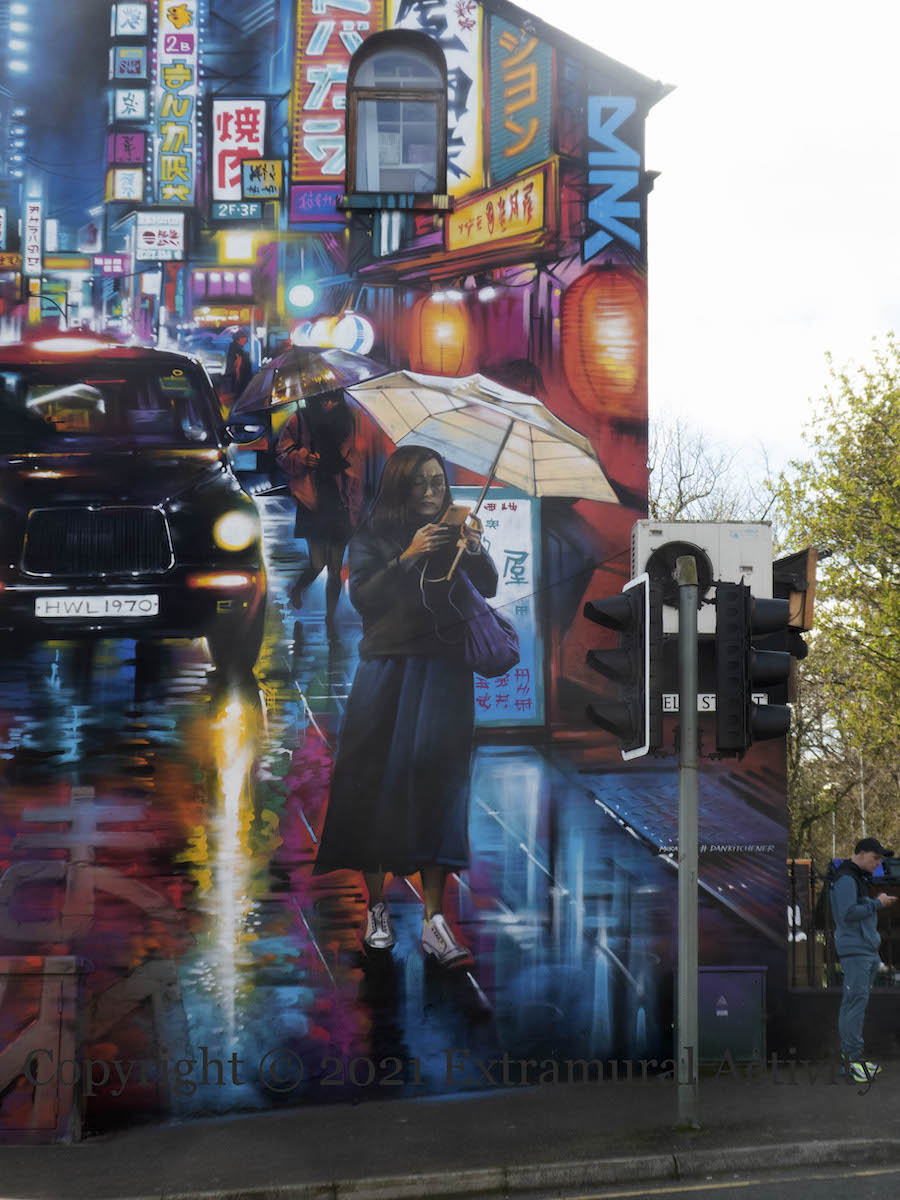
Free-hand sprayer Dan Kitchener’s (web) latest mural in Belfast (in Enfield Street in the Woodvale) places a black taxi – a mainstay of transportation in West Belfast – in the streets of Tokyo. To our knowledge, this is the first piece of street art in PUL West Belfast other than on the “peace” line; it will be interesting to see how well it survives compared to both sectarian murals and street art in the city centre.
“The title of the piece is ‘You can go Anywhere’ to show that with hard work and determination, you can explore the world. The mural is Sponsored by local Butchers shop Hugh Linton Butchers and R City youth group which are an award-winning organization helping Communities Integrate Through Youth. With the help of Jonathan Hodge local community volunteer. The taxi’s number plate HWL 1970 is a nudge towards the establishment founder Hugh Linton” (Belfast Walking Tours Fb).
Dan released a video of the mural in progress. Previously by Dan for Culture Night: The Dream | Blurry Eyed.
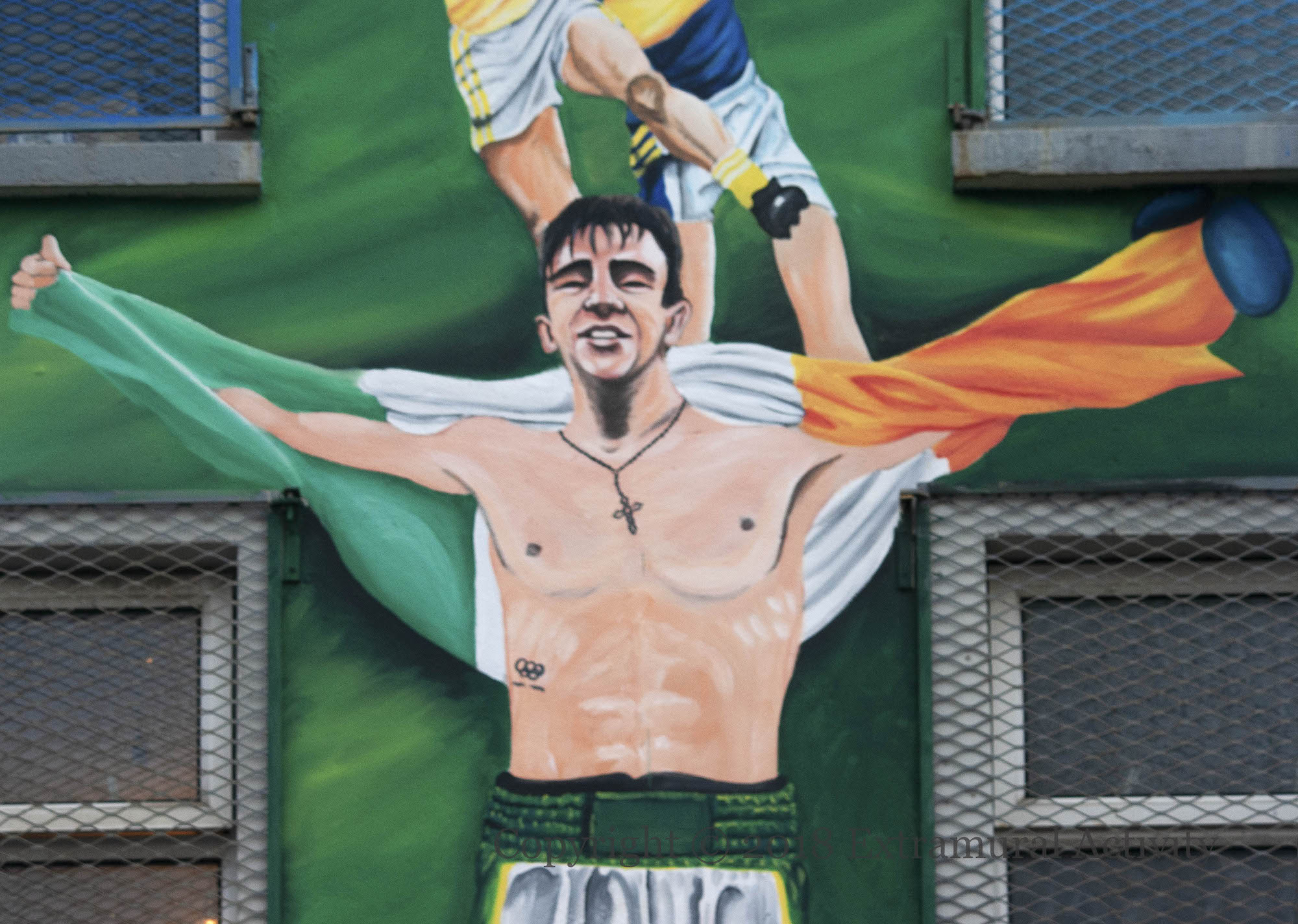
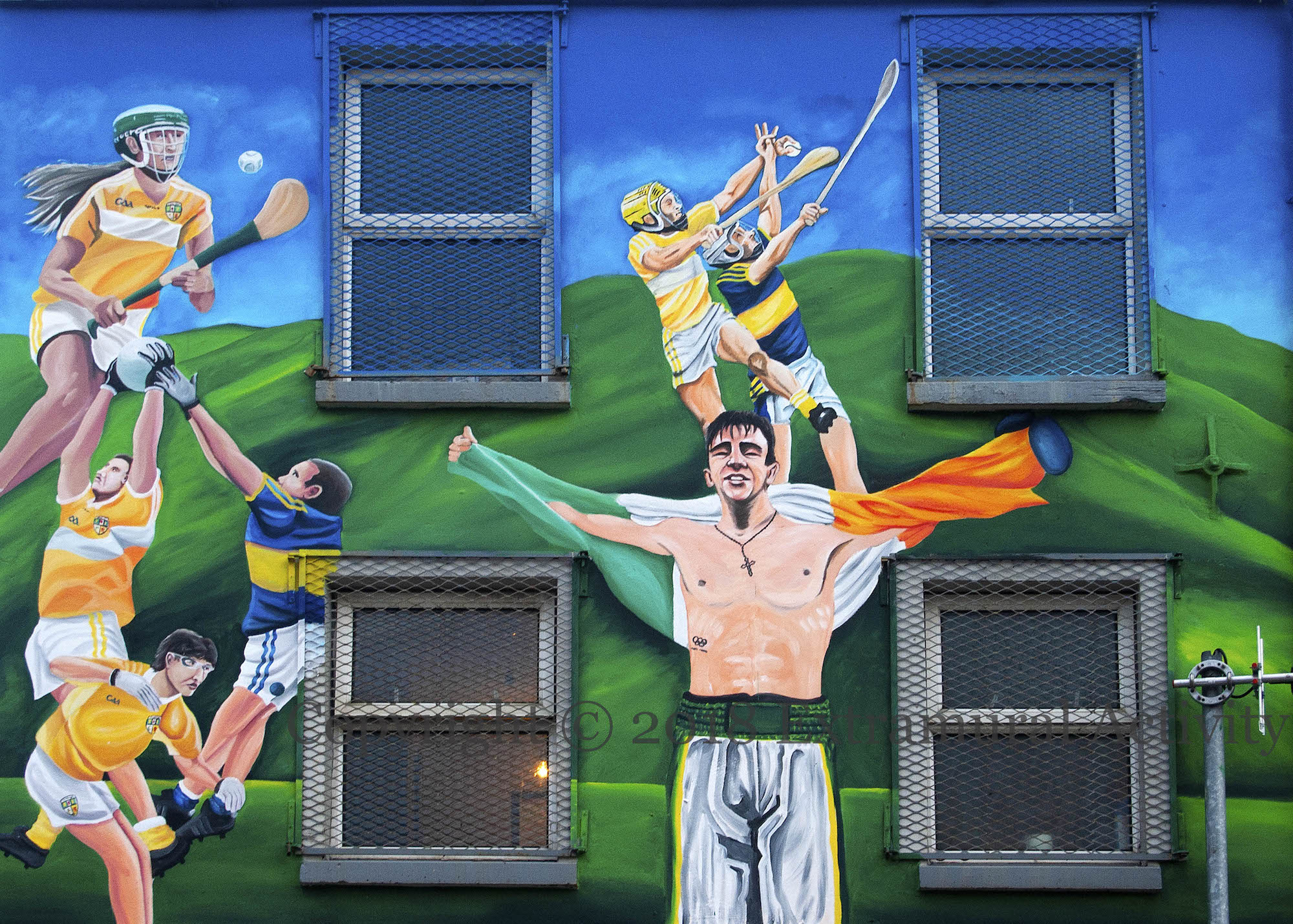
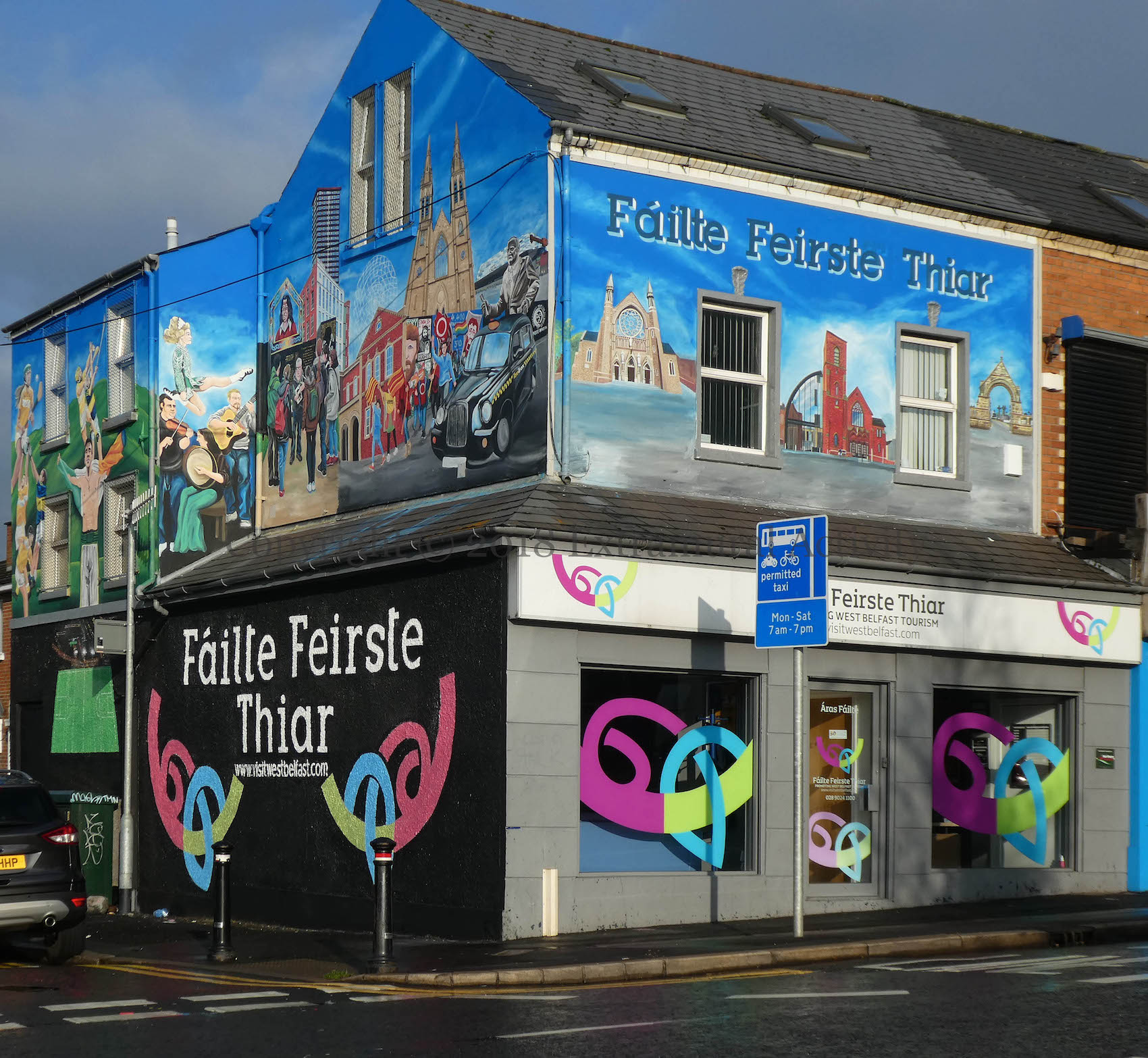
Michael Conlan (tw | ig) won his first title and tenth professional bout on Saturday night (December 22nd), in Manchester, by defeating Englishman Jason Cunningham (BBC). He features here in one of the new murals on the Fáılte Feırste Thıar offices alongside the traditional Gaelic games of hurling, camogie, football, and handball.
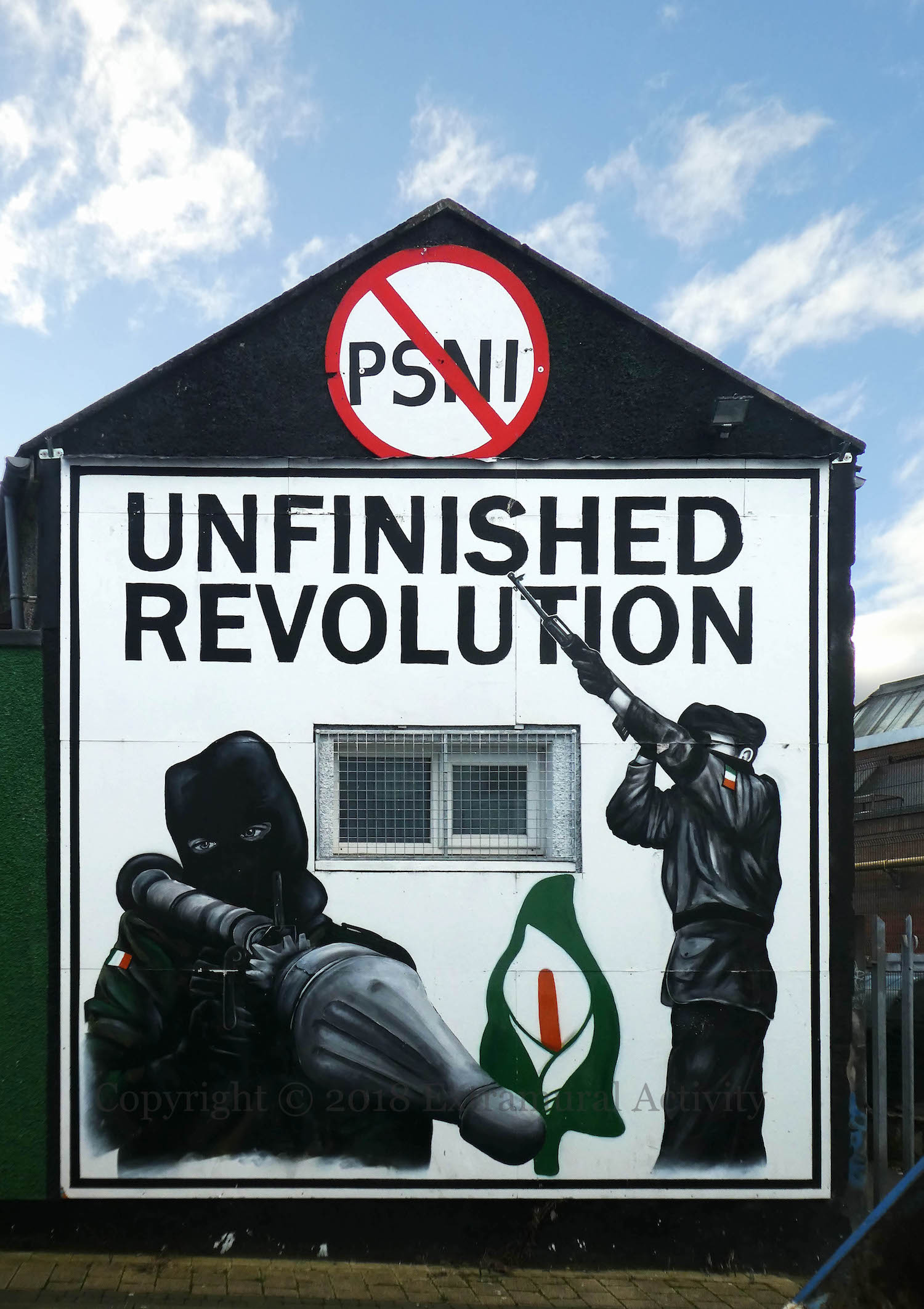
When this mural was first painted in October, 2016 there were calls for its removal on account of the re-appearance of a hooded gunman with RPG (Irish News | BelTel), in the style of IRA murals from before the peace (e.g. most similar to this 1989 mural but see also these other examples). It was still present in November of 2018. The “unfinished revolution” is that of the 1916 Easter Rising, represented by the Easter lily.
The mural is next to Junior McDaid House – the offices of the IRPWA (web | Fb) and Saoradh (web) – in Chamberlain Street, Derry – see previously Victory To The Republican Prisoners.
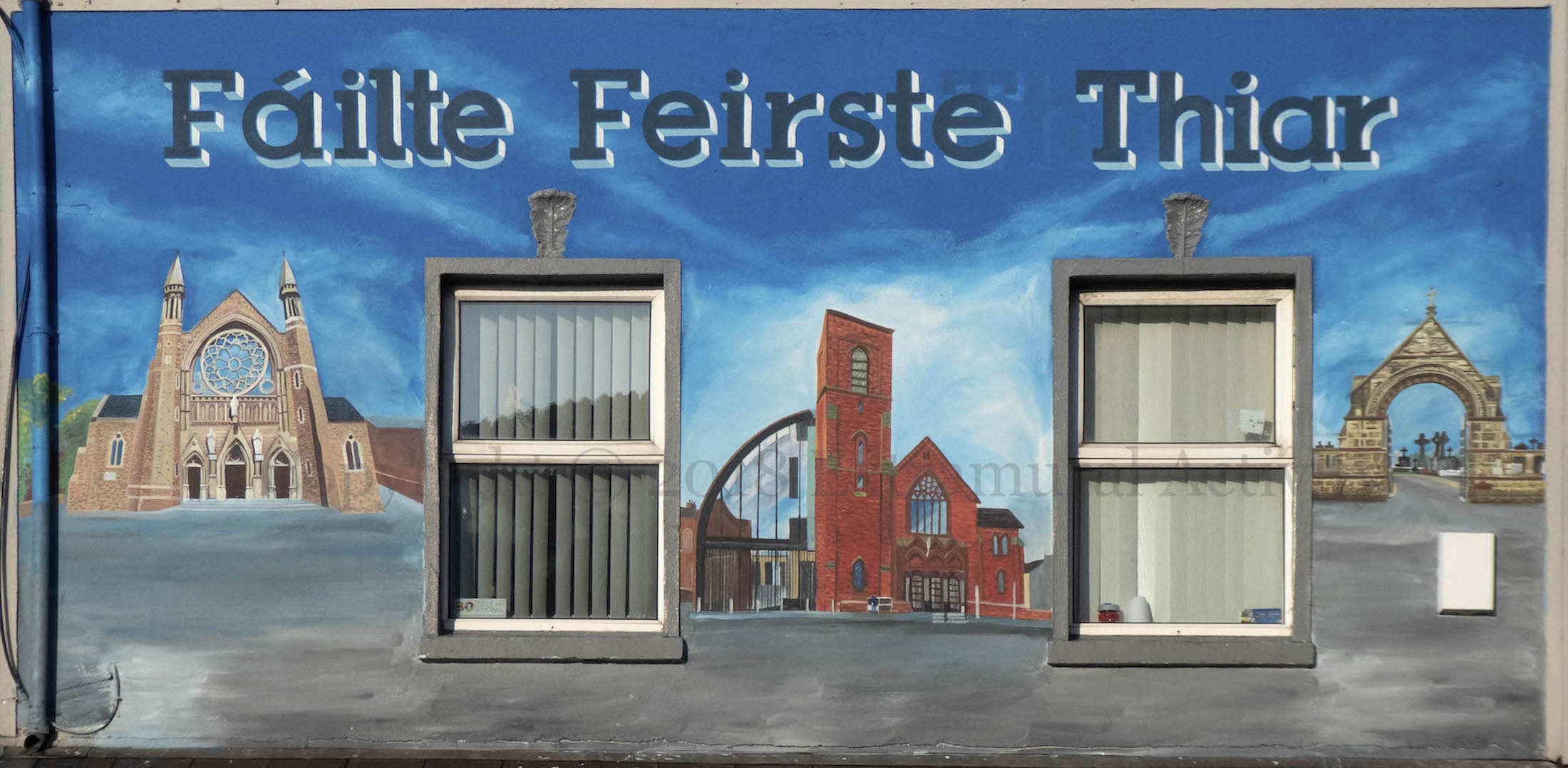
As you head west along Falls Road, you will pass by the three landmark buildings depicted in the mural above: Clonard Monastery, Cultúrlann McAdam-Ó Fıaıch (opposite this mural and the offices of Fáılte Feırste Thıar), and the entrance to Milltown Cemetery at the edge of Andersonstown. For the parts of the mural in Brighton Street, see The Conlan Revolution and Fáılte Feırste Thıar.
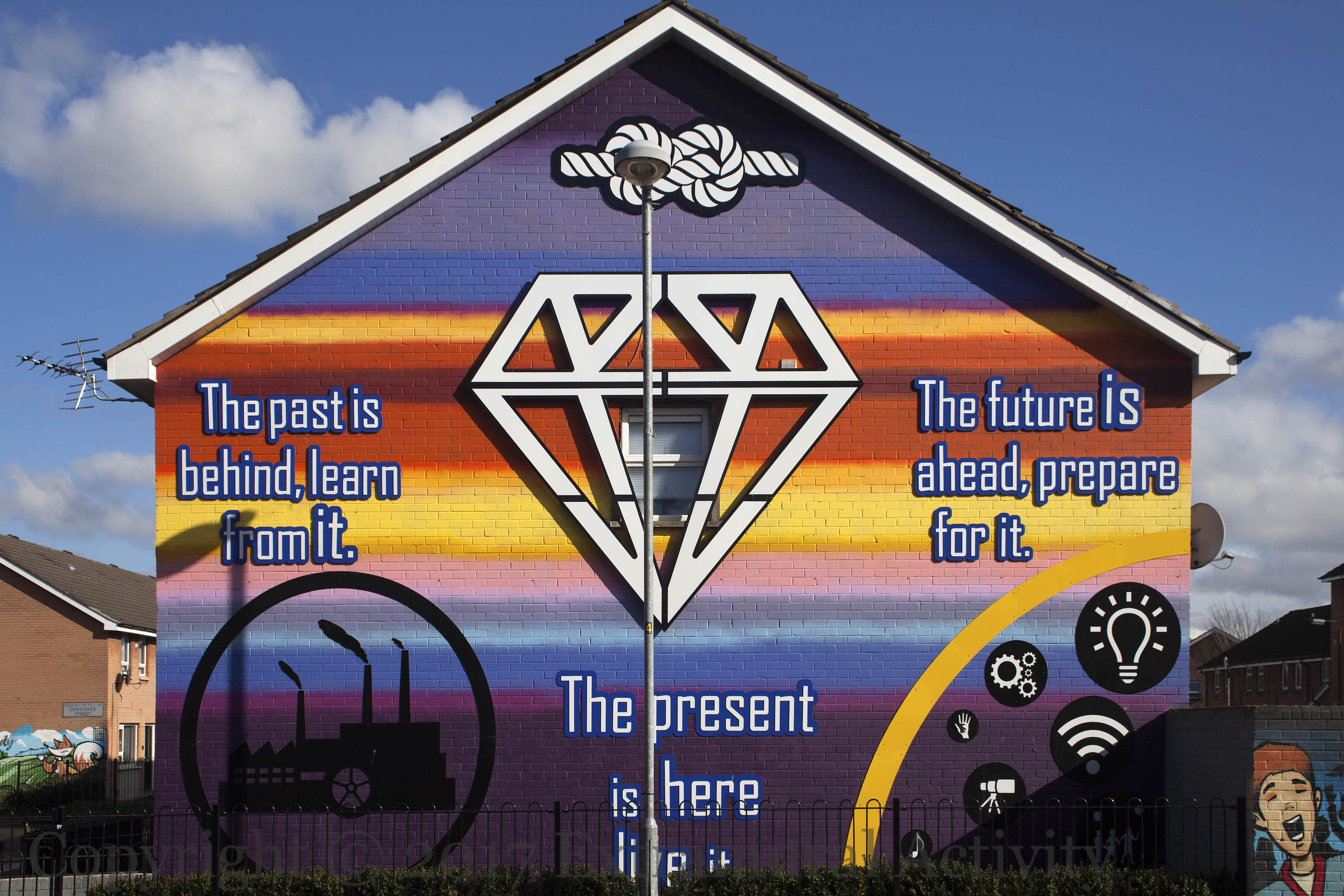
“The past is behind, learn from it. The present is here, live it. The future is ahead, prepare for it.” 2016 mural and board-cut diamond (which is lit from behind at night) in Lord Street, replacing the old LPA mural which lasted from 1997 to 2015.
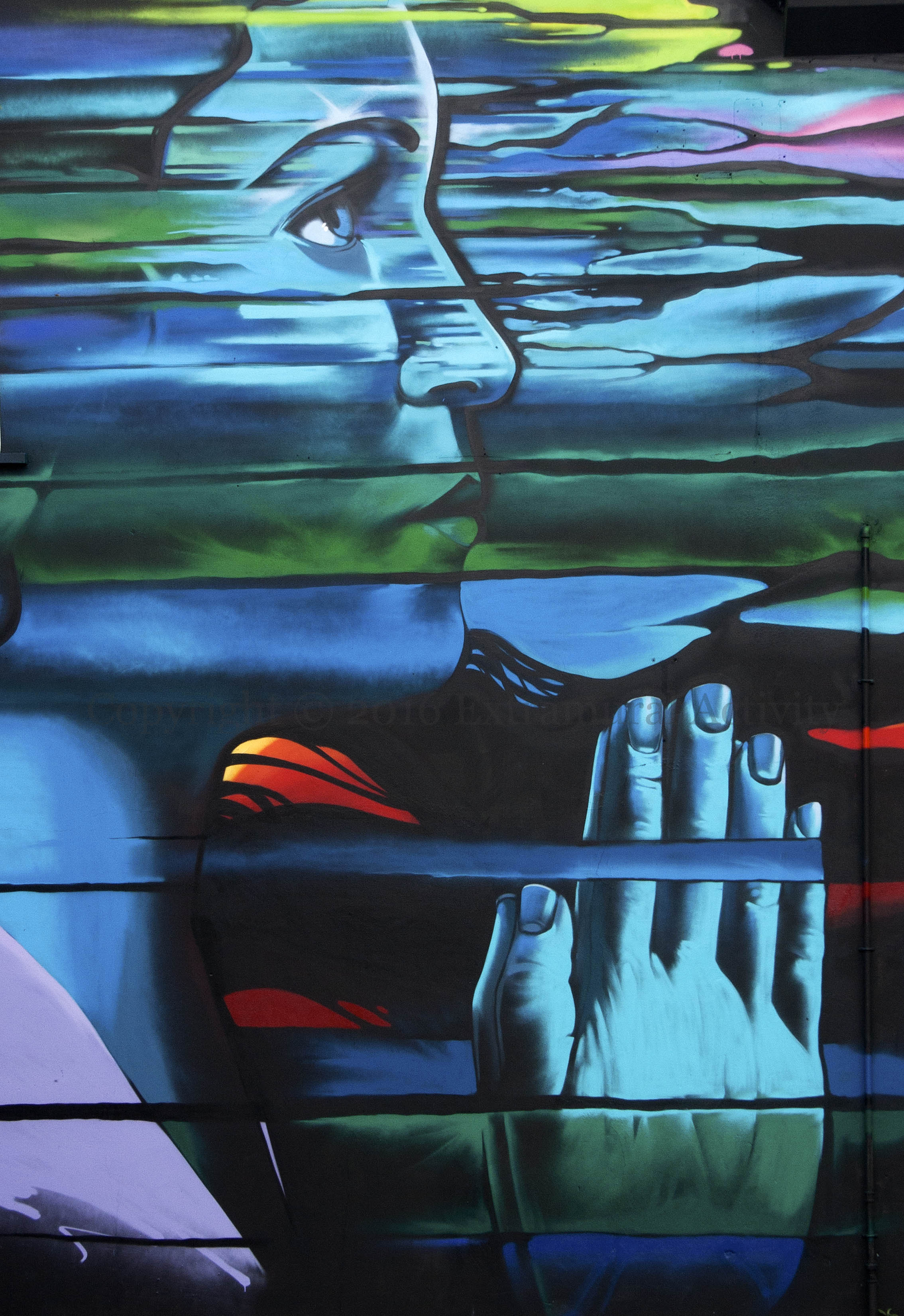
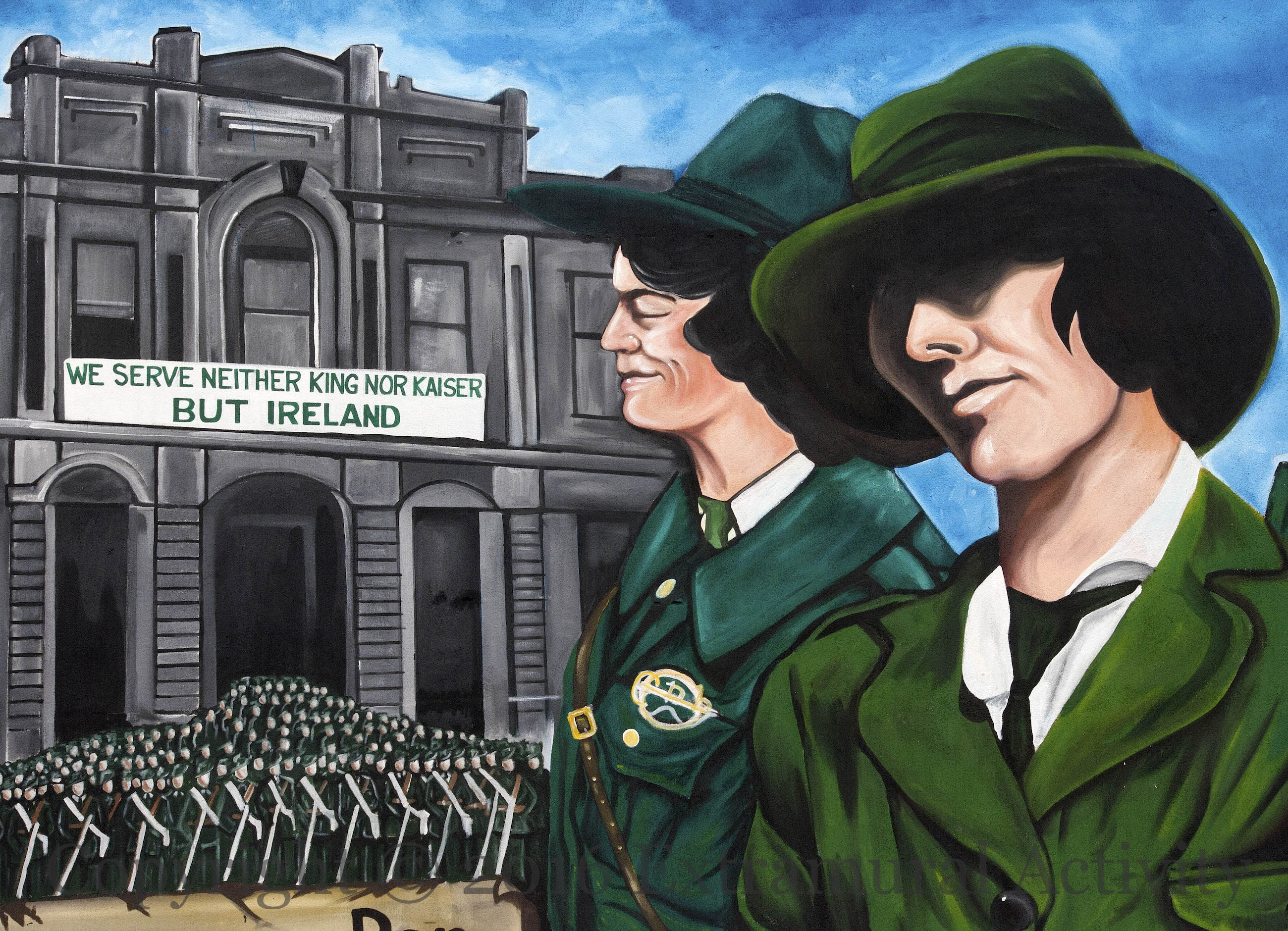
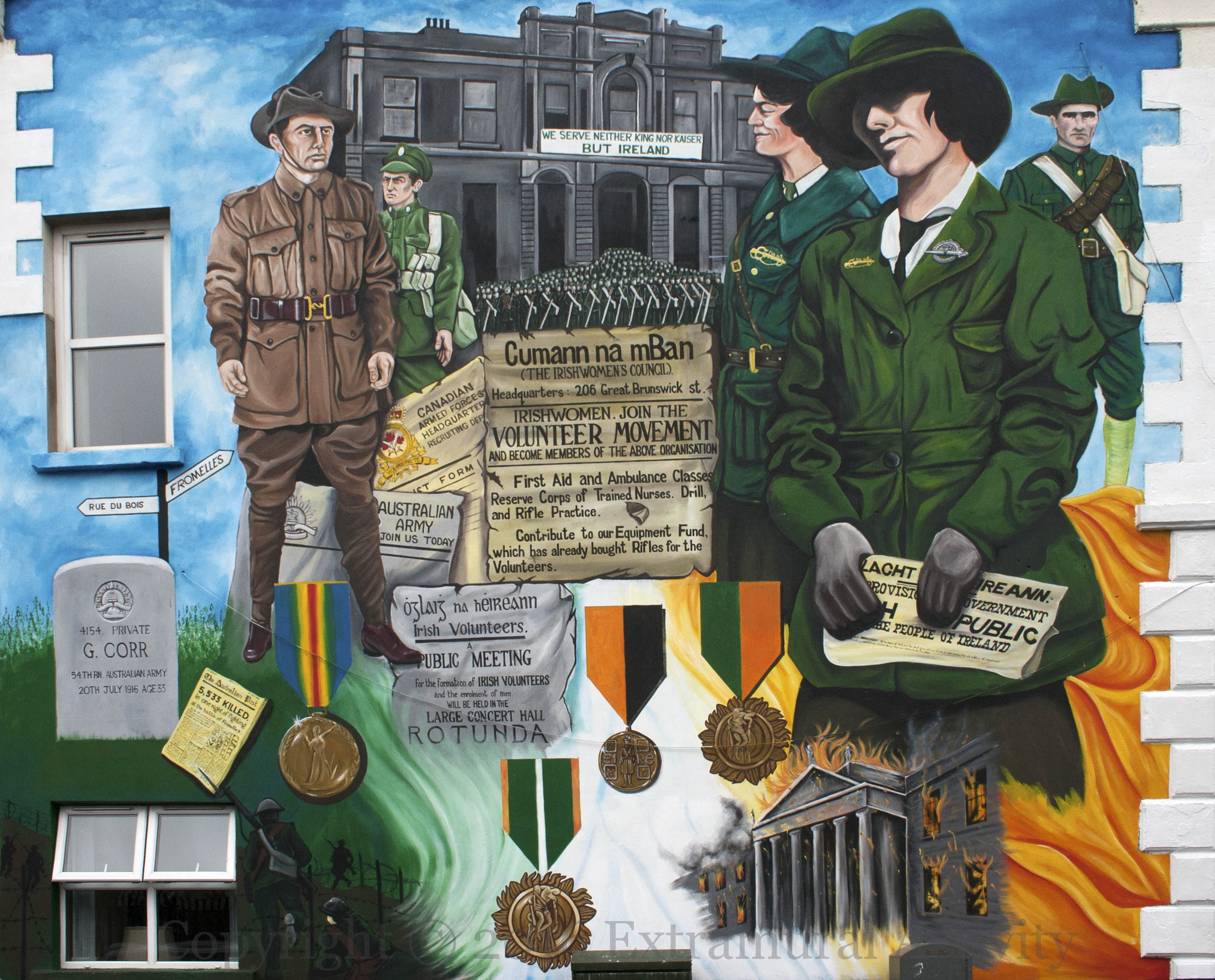
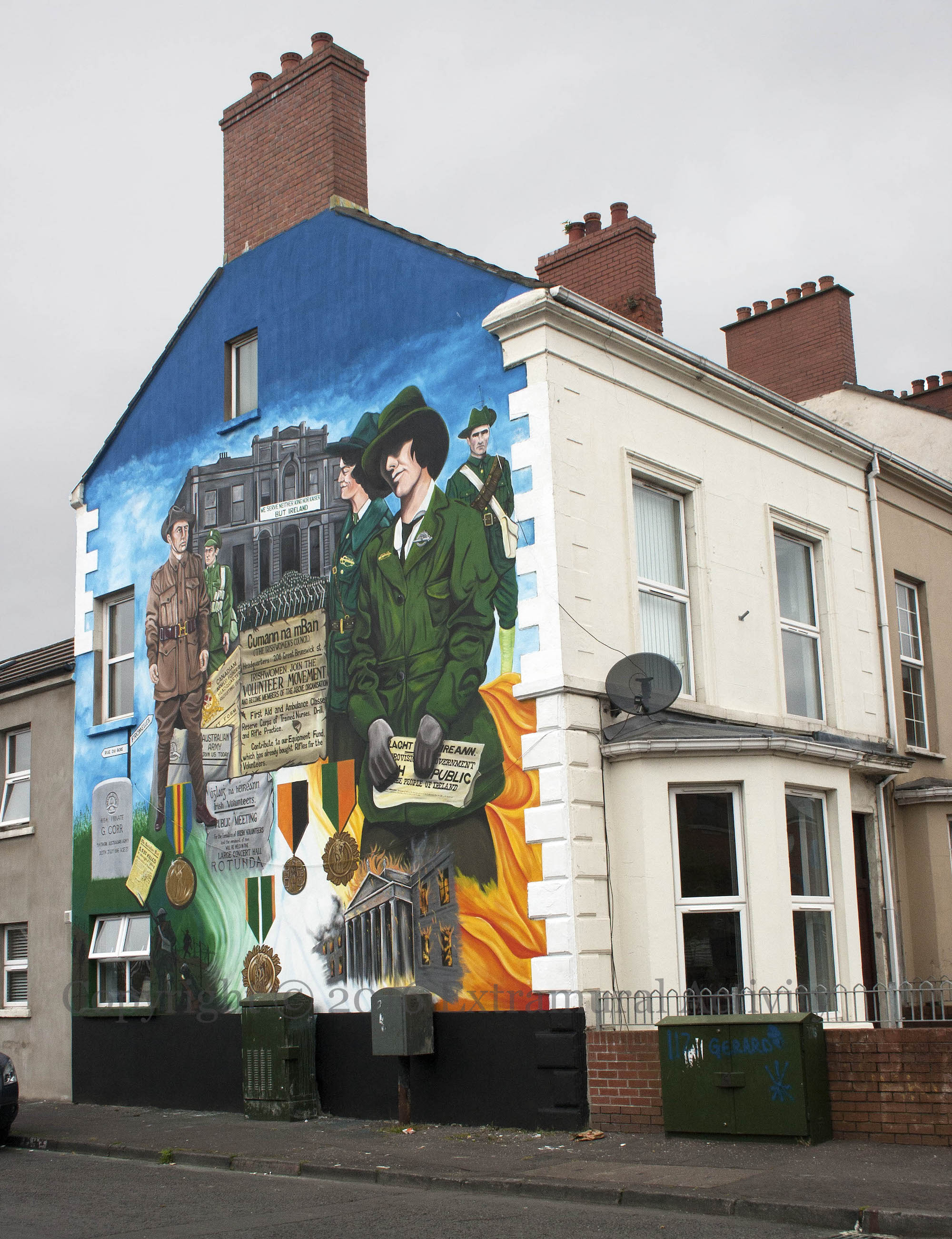
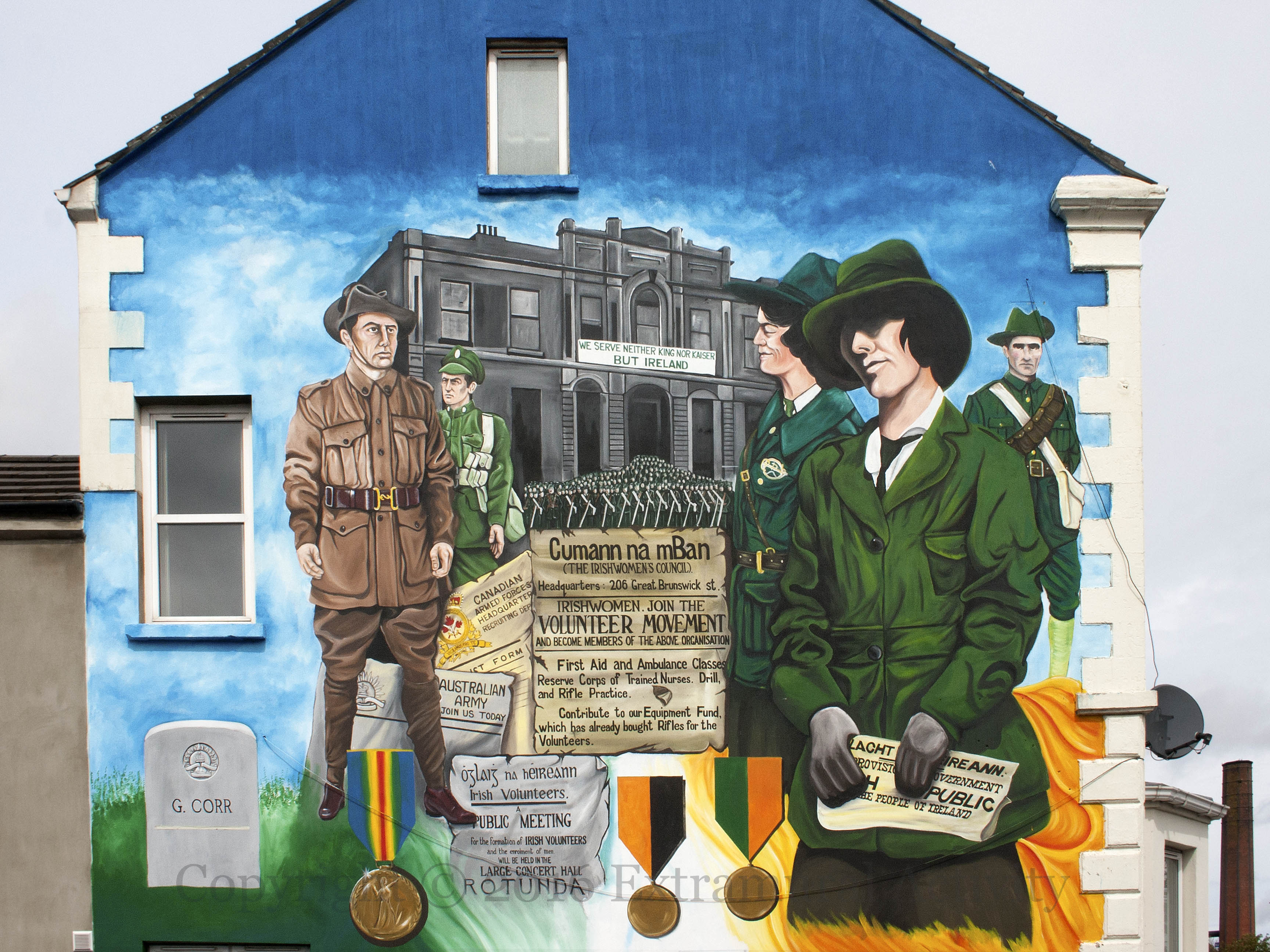
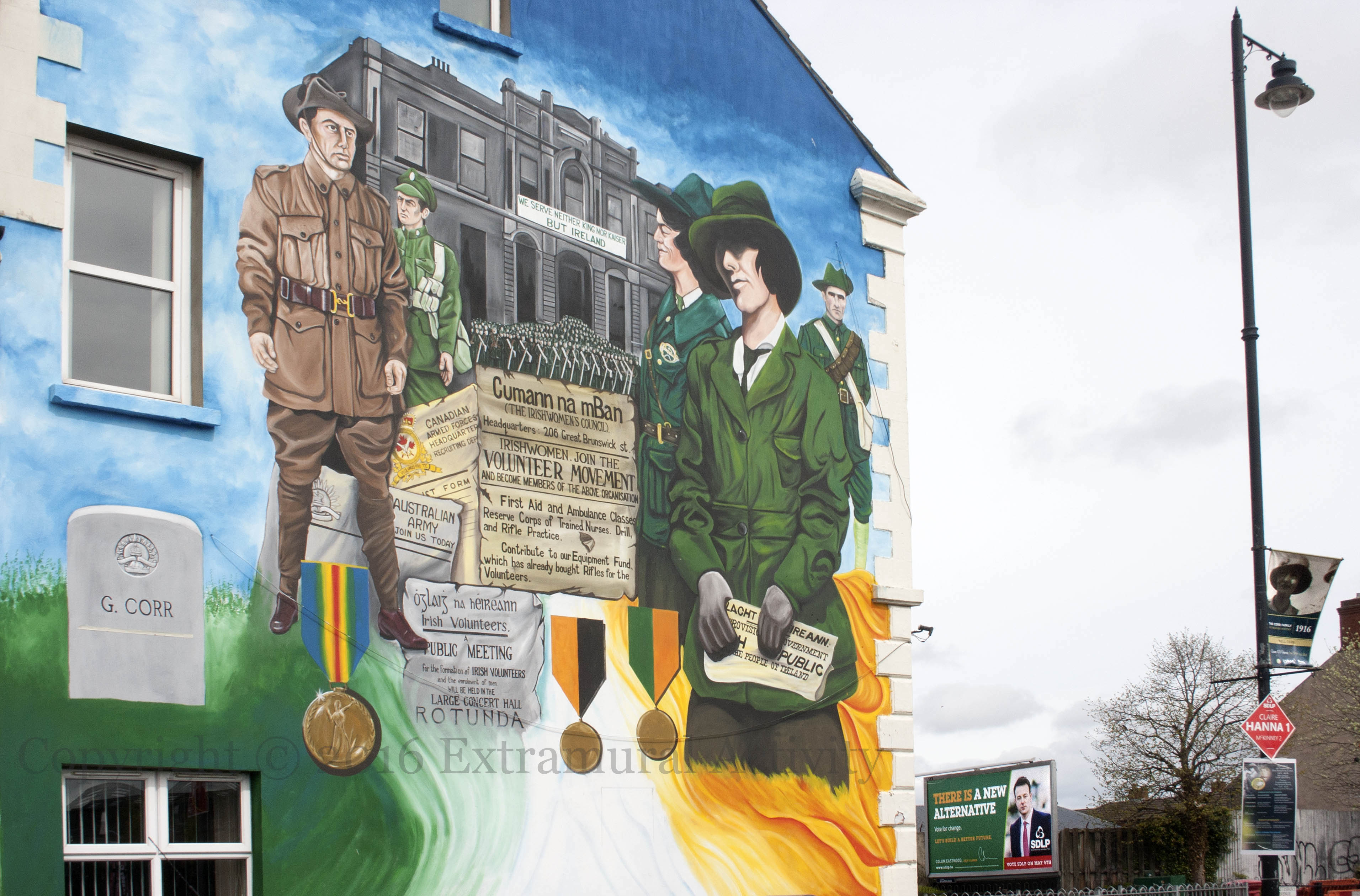
Nell (l) and Elizabeth (r) Corr from 107 Ormeau Road joined Cumann Na mBan in 1915 and travelled to Dublin in 1916 (with Nora Connolly, Ina Connolly, Bridie Farrell, Lizie Allen, Kathleen Murphy, and another girl called O’Neill (Treason Felony)) to serve as messengers in the preparations for April’s Easter Rising. They were in Liberty Hall (shown in the detail above) on the morning of the rising before heading north. Brother George, on the other hand, died at the Somme as a soldier in the Australian infantry, while another brother, Charles, fought in WWI with the Canadian Expeditionary Force. They are pictured on the left-hand side of the mural. (BBC | BBC video) There are two images of the work in-progress at the bottom of the post.
On the information board, added later: “The Corr Family, Witnessing History 1916. This mural was unveiled on 20 July 2016 to commemorate the significant and courageous part played by the Corr Family, from Belfast’s Ormeau Road, in the seminal events around 1916 including the Easter Rising, the War Of Independence and the First World War. The mural depicts key events from the period in which the Corr Family members were involved. Elizabeth and Nell Corr joined Cumann Na mBan and travelled to Dublin to meet the leaders of the 1916 Easter Rising on the morning of the rebellion. Elizabeth and Nell remained active throughout the revolutionary period, visiting Terence MacSwiney in Crumlin Road Prison and campaigning in Longford to secure the election of Joseph McGuinness, a republican prisoner being held in Lewes Prison, Isle Of Wight. Henry Corr joined the Irish Volunteers and was part of the Ulster mobilisation for the East Rising. George Carr went to Australia and joined the Australian Army, fighting in France in 1913. Three months after the 1916 Rising, George was killed in the Battle Of The Somme fighting with the 54th battalion of the Australian Infantry and is buried in France. Charles Corr went to Canada and fought in France with the Canadian Army during 1916, being gassed and wounded during the fighting. LORAG. Housing Executive. Clann Uí Chorra, An Staır Ina Beo.”