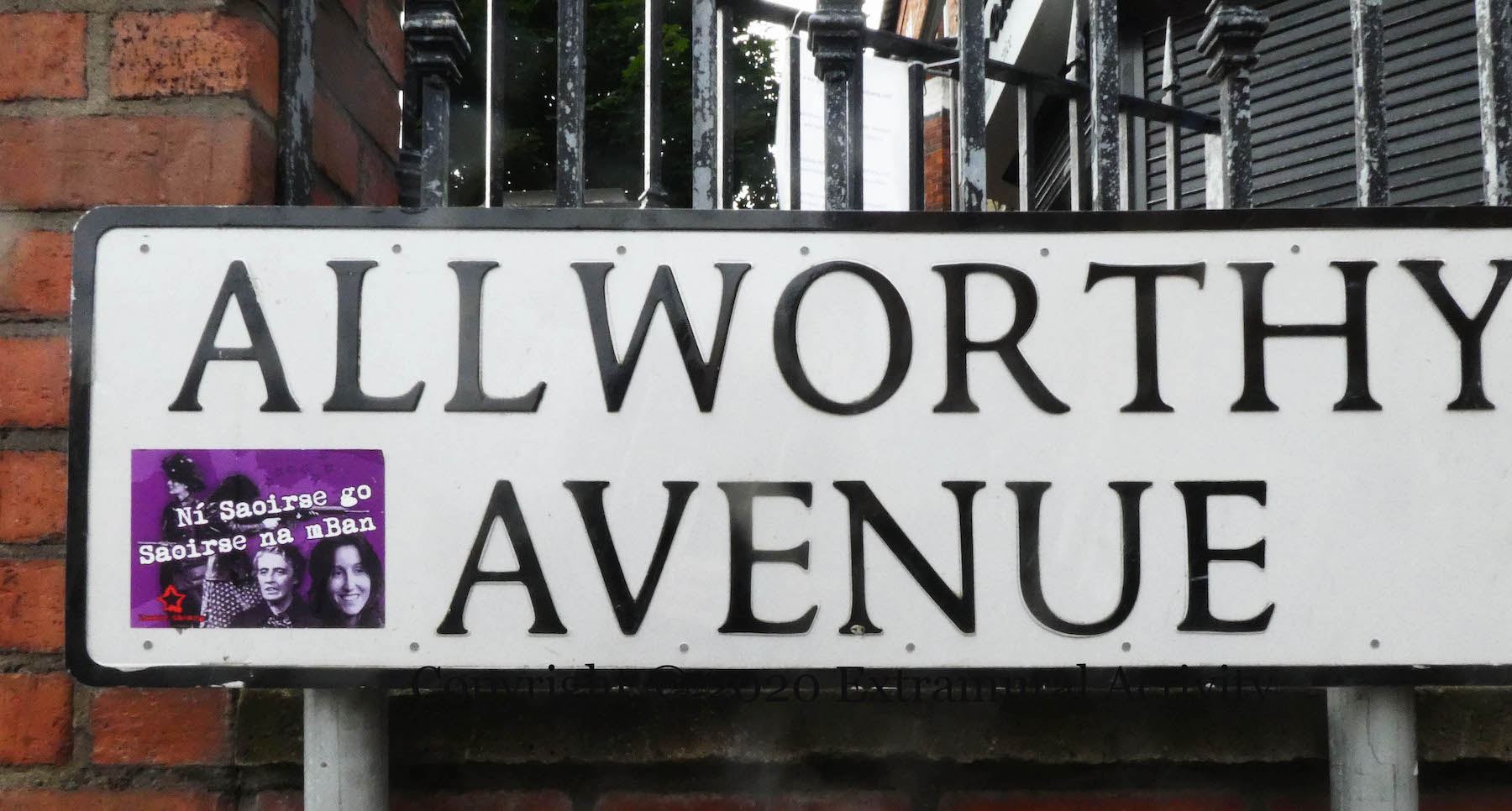
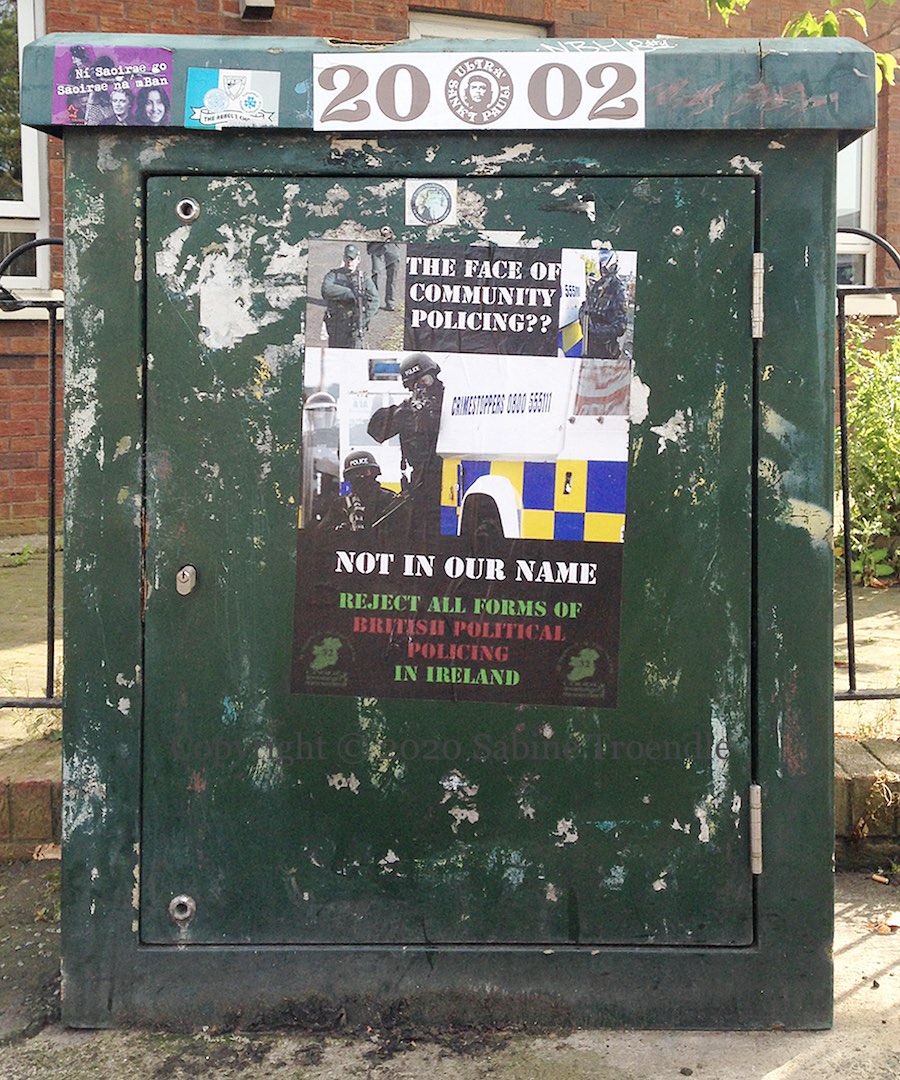
Ní saoırse go saoırse na mban [“There is no freedom without the freedom of women”] with images of Countess Markievicz, Colman Doyle’s famous ?1974? image of a (staged) female IRA volunteer with AR-18, Máıre Drumm, and Maıréad Farrell. Lasaır Dhearg (web) sticker in north Belfast.
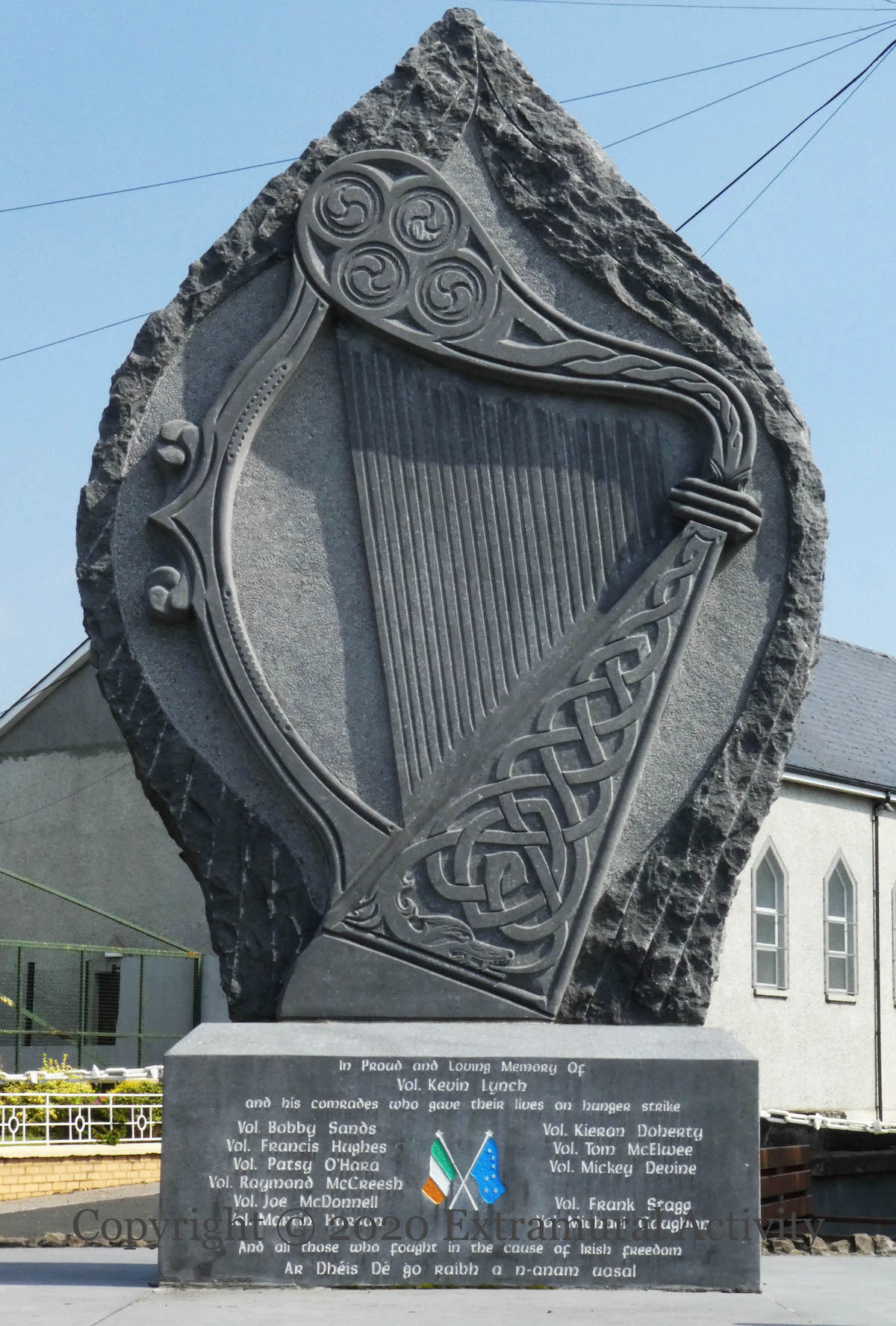
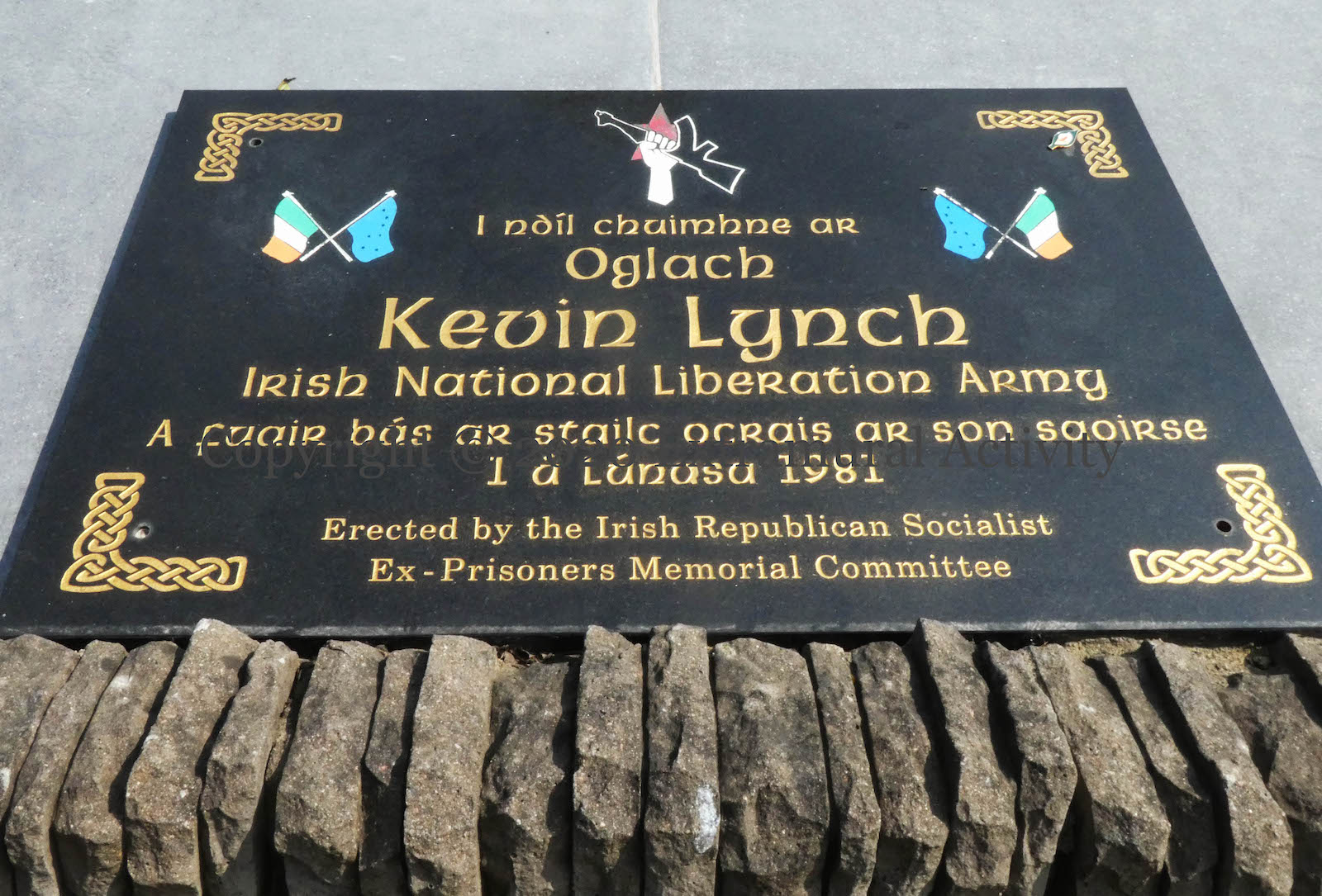
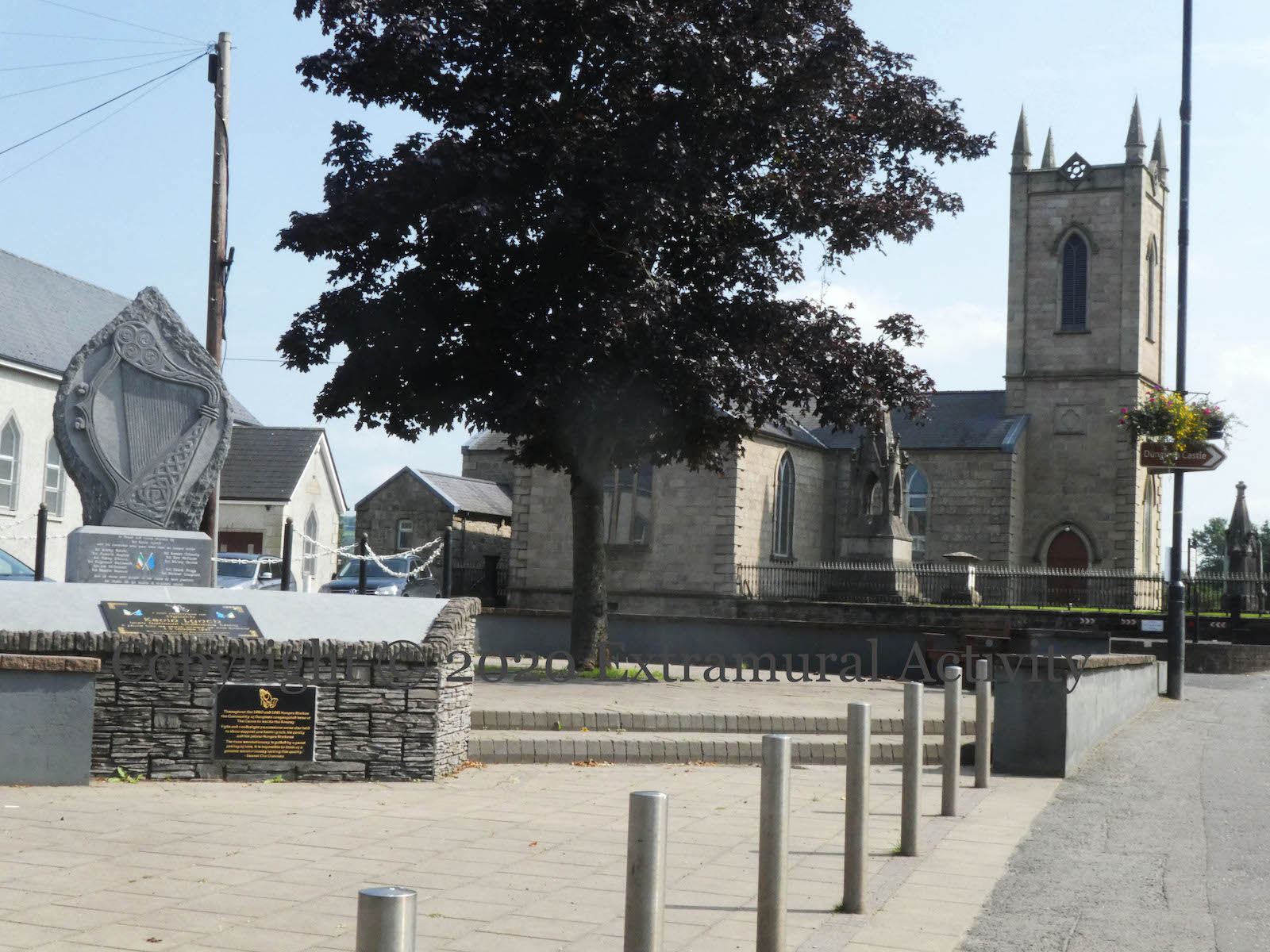
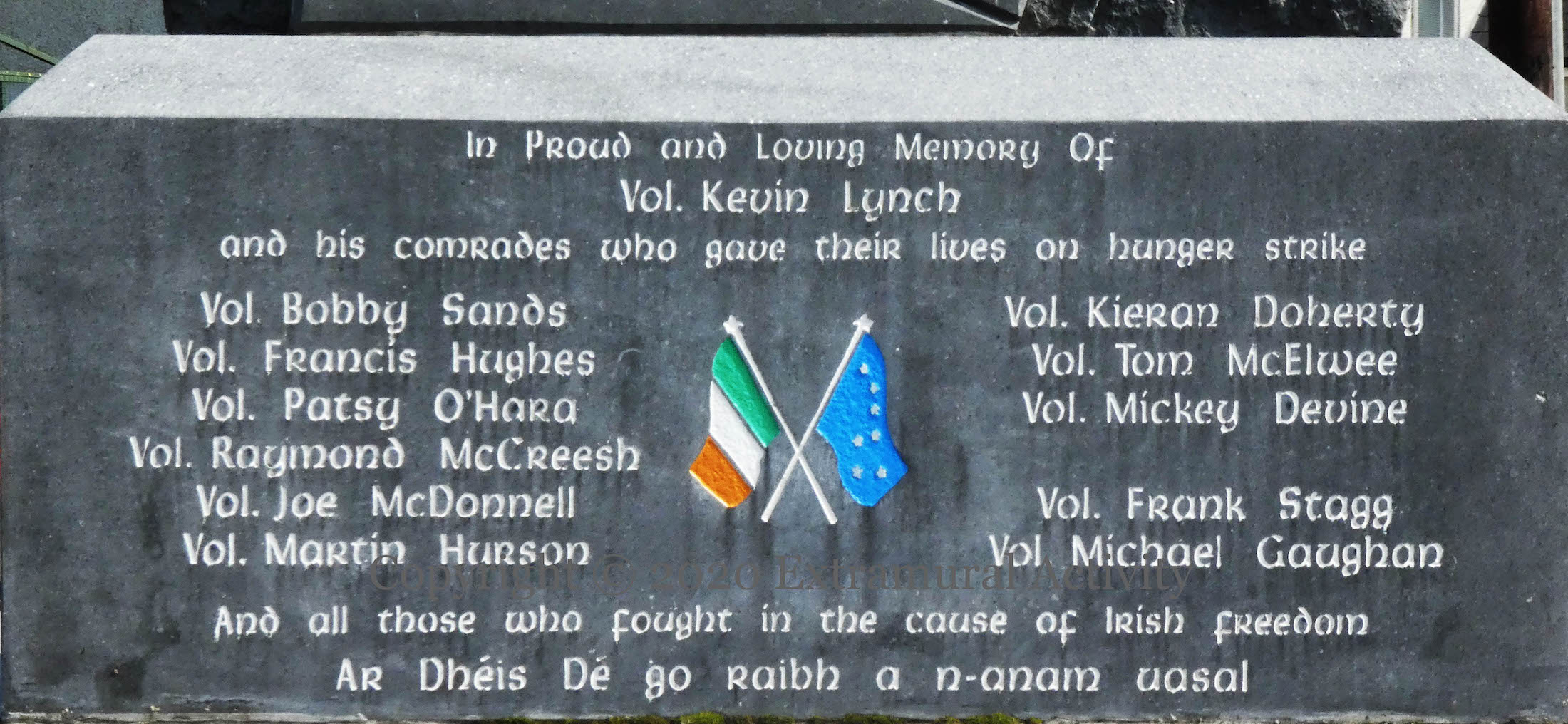
“The true revolutionary is guided by a great feeling of love. It is impossible to think of a genuine revolutionary lacking this quality” – Che Guevara Lynch. The INLA’s Kevin Lynch died in the second hunger strike after 71 days. He is buried in Dungiven, where this memorial sits on the main road between Derry and Maghera.
“I ndíl [ndıl] chuımhne ar Óglach Kevin Lynch a fuaır bás ar staılc ocraıs ar son saoırse, 1ú Lúnasa 1981 [who died on a hunger strike for freedom, 1st August 1981]. Erected by the Irish Republican Socialist Ex-Prisoners Memorial Committee.”
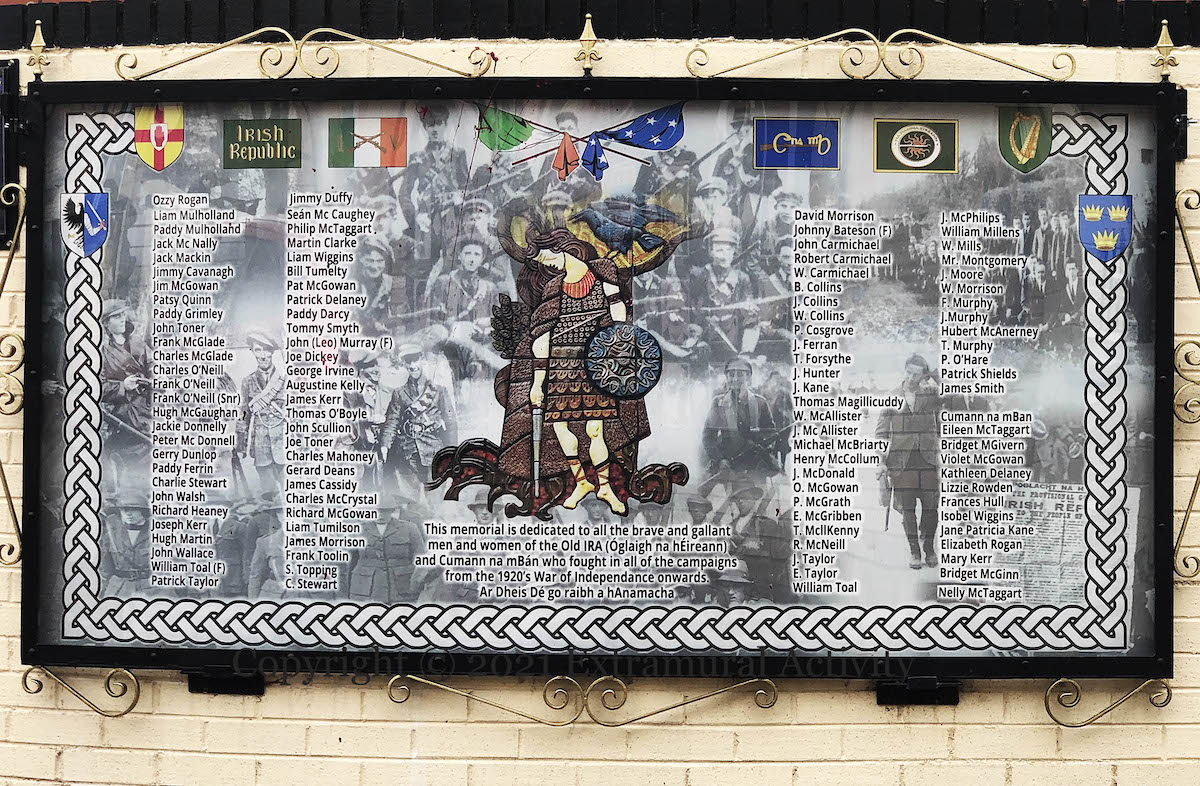
Cú Chulaınn stands dying; the raven on his shoulder will signal his death. “This memorial is dedicated to all the brave and gallant men and women of the Old IRA (Óglaıgh na hÉıreann) and Cumann Na mBán who fought in all of the campaigns from the 1920s War of Independence onwards.”
The Irish tricolour with crossed rifles was the flag of the Irish Volunteers (Óglaıgh na hÉıreann), the splits in which gave rise all the subsequent IRAs.
For a roll of honour 1916-1966, including some profiles, see Treason Felony.
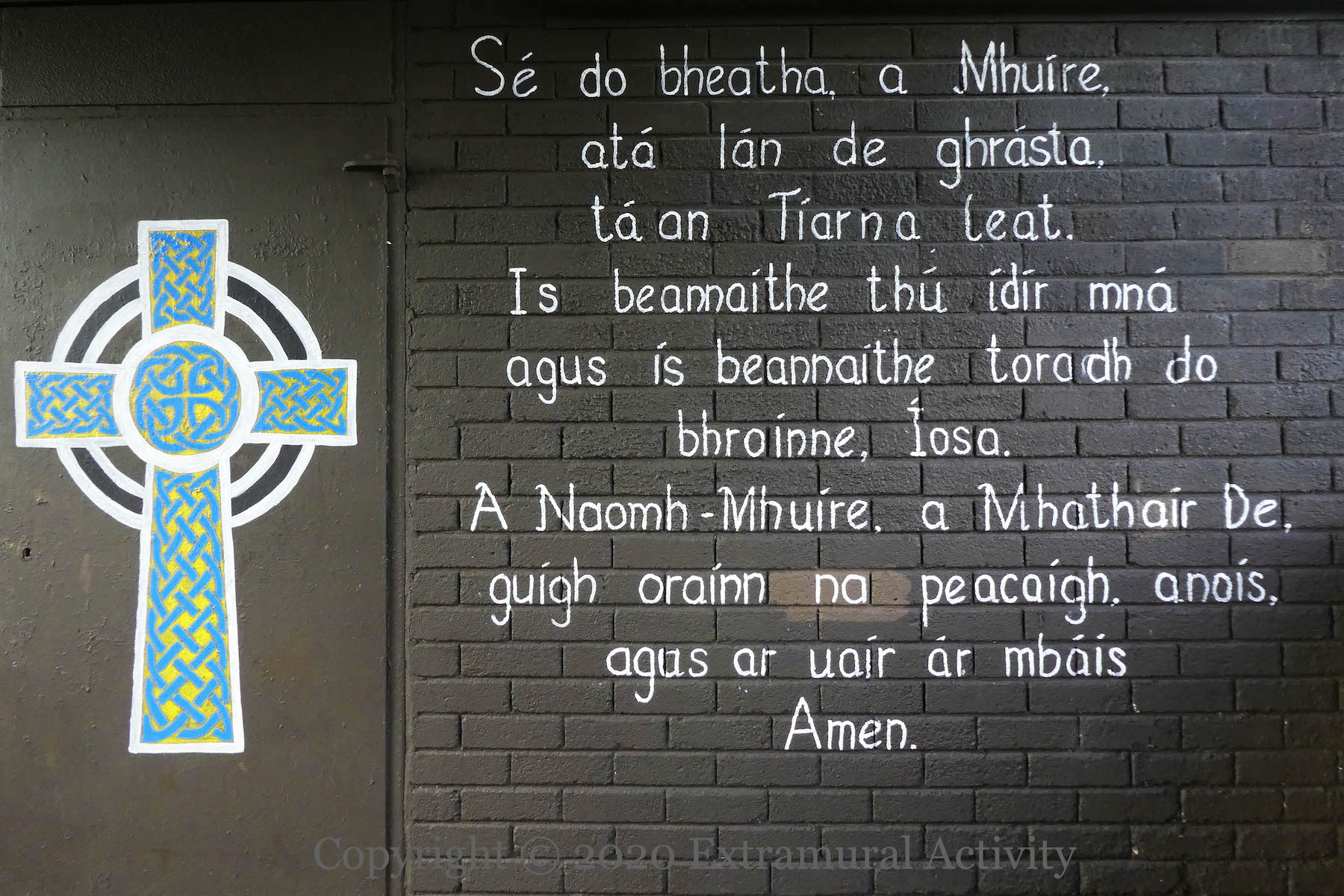
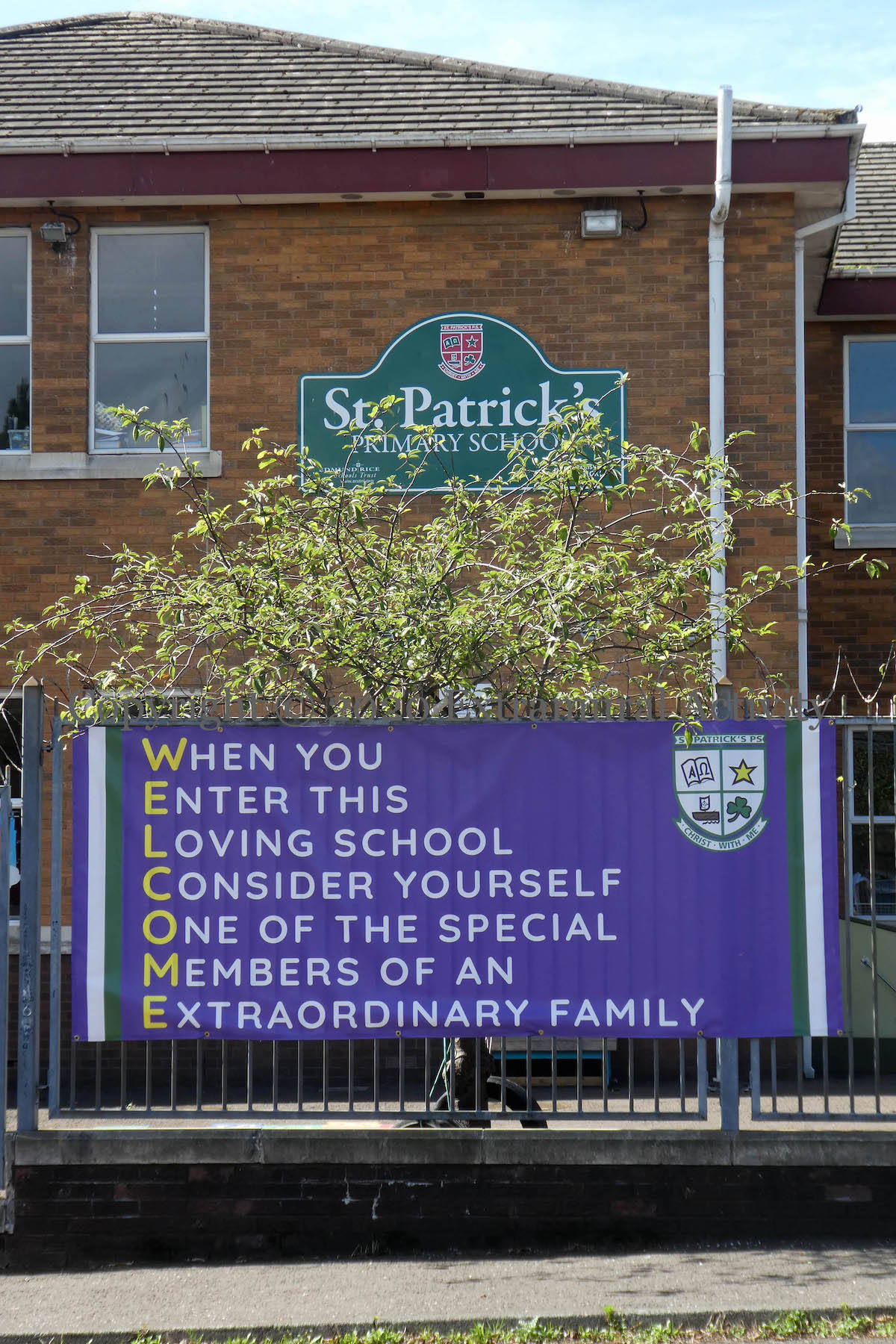
“Welcome: When you Enter this Loving school Consider yourself One of the special Members of an Extraordinary family”. Two images from St Patrick’s primary on the edge of the New Lodge. The “Hail Mary’ is written in Irish
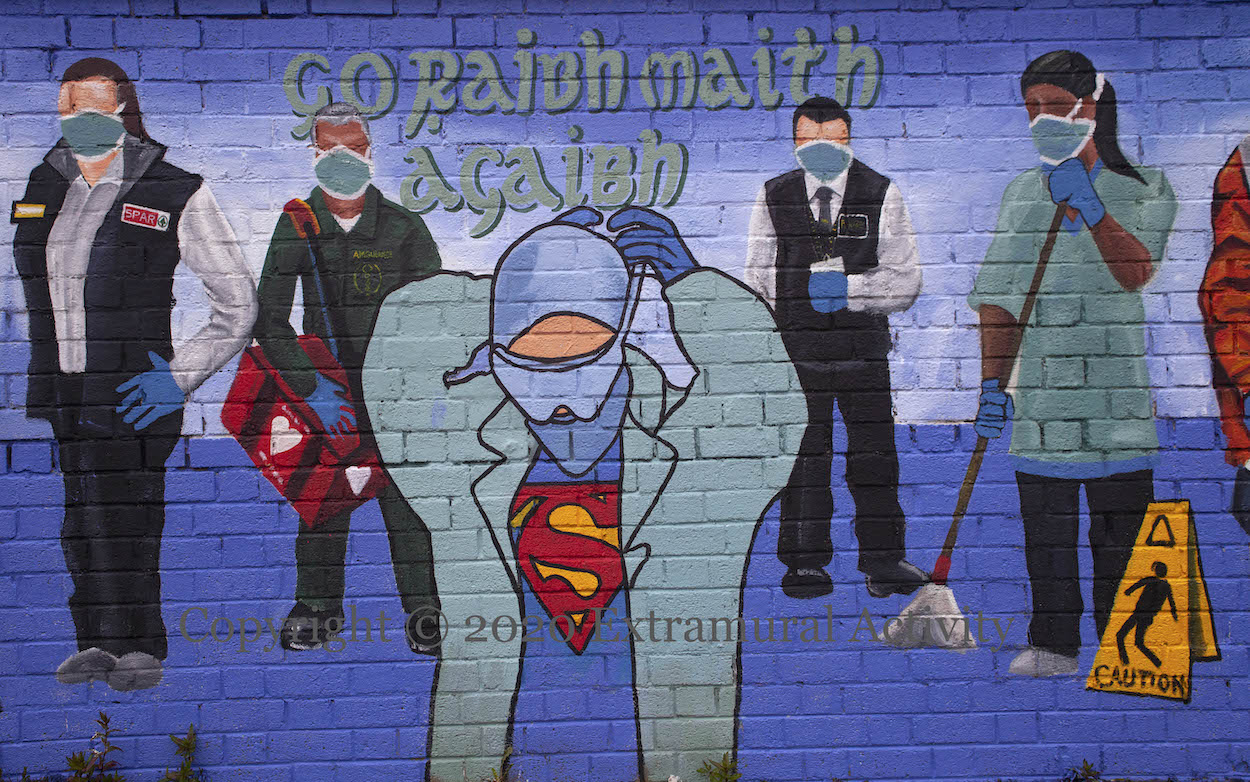
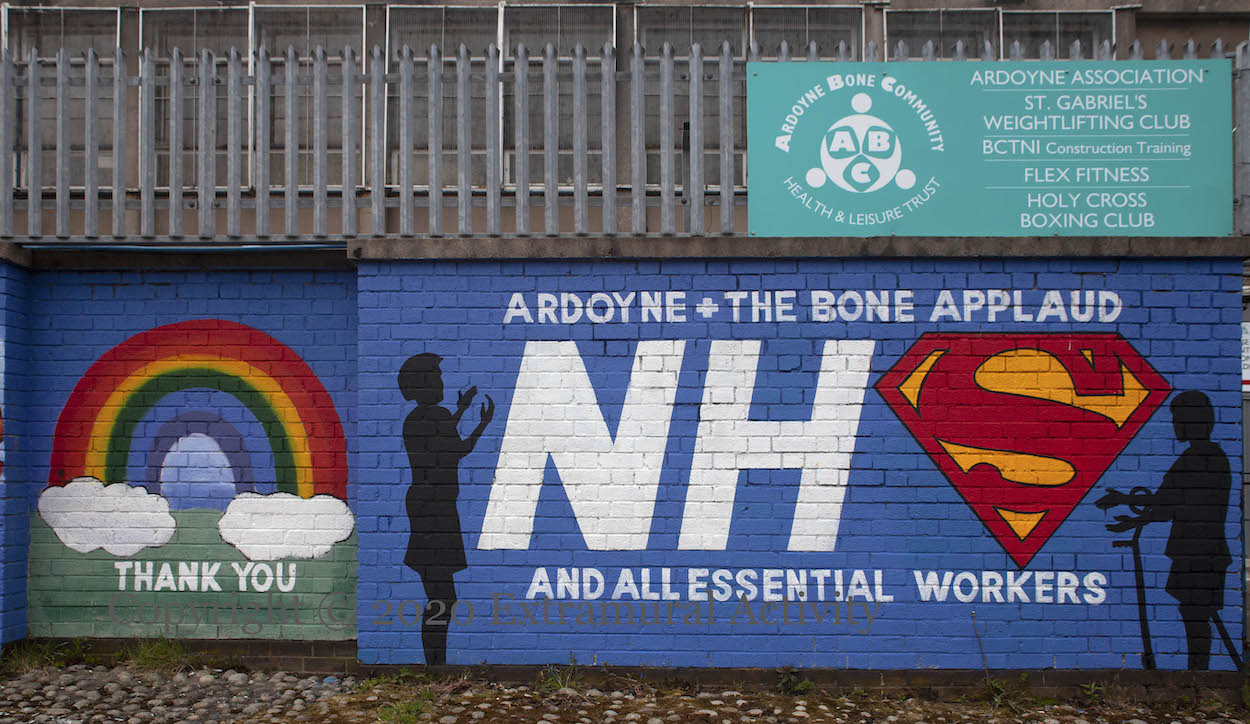
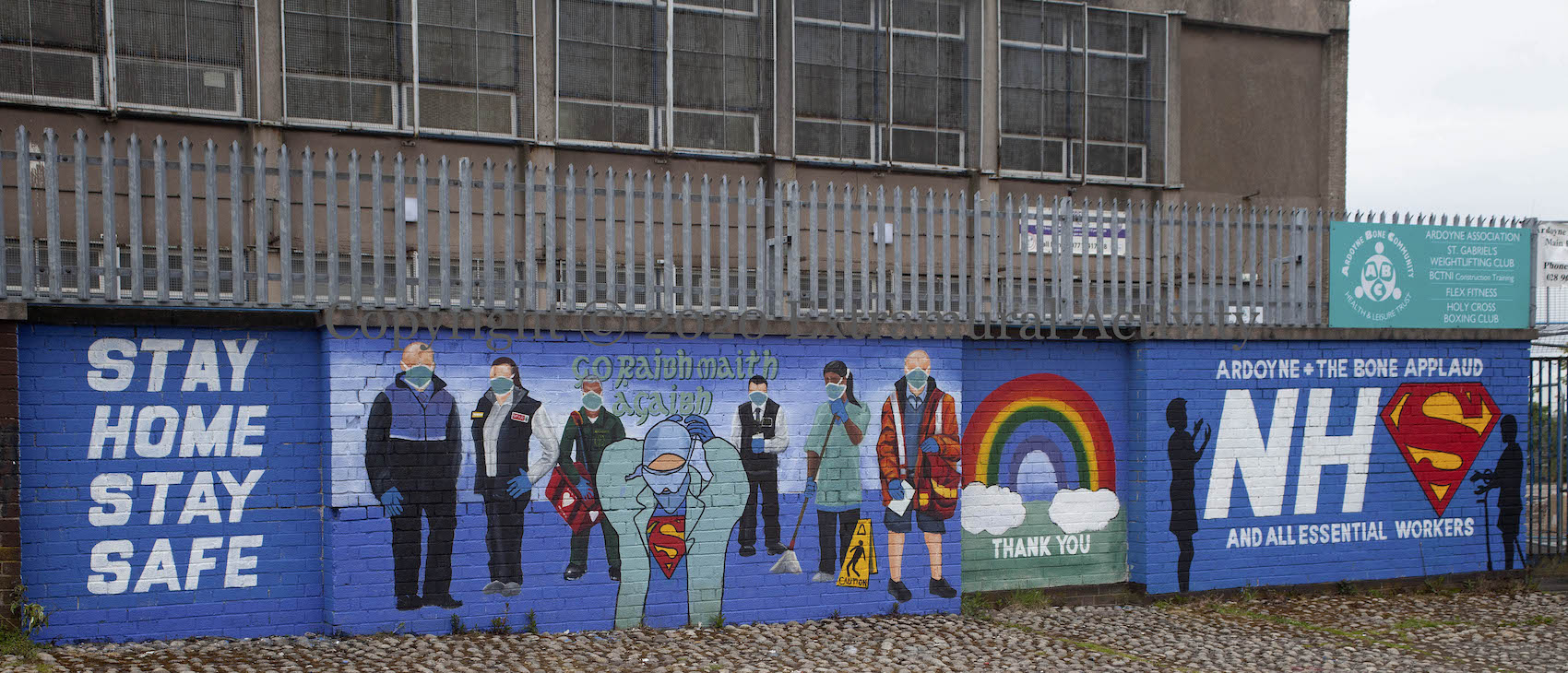
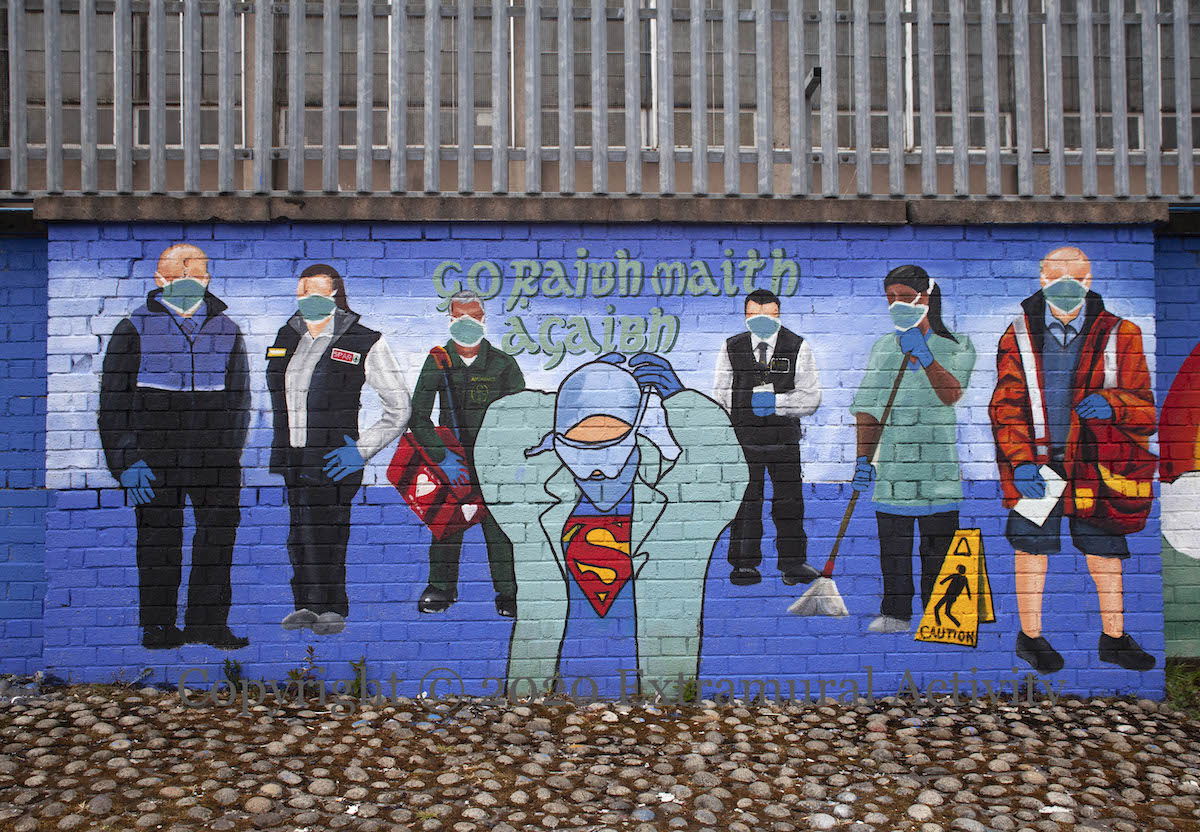
“Go raıbh maıth agaıbh/Thank you – Ardoyne + The Bone applaud NHS and all essential keyworkers”, “Stay home, stay safe”. The keyworkers (including shop servers and hospital janitors) all wear masks and gloves.
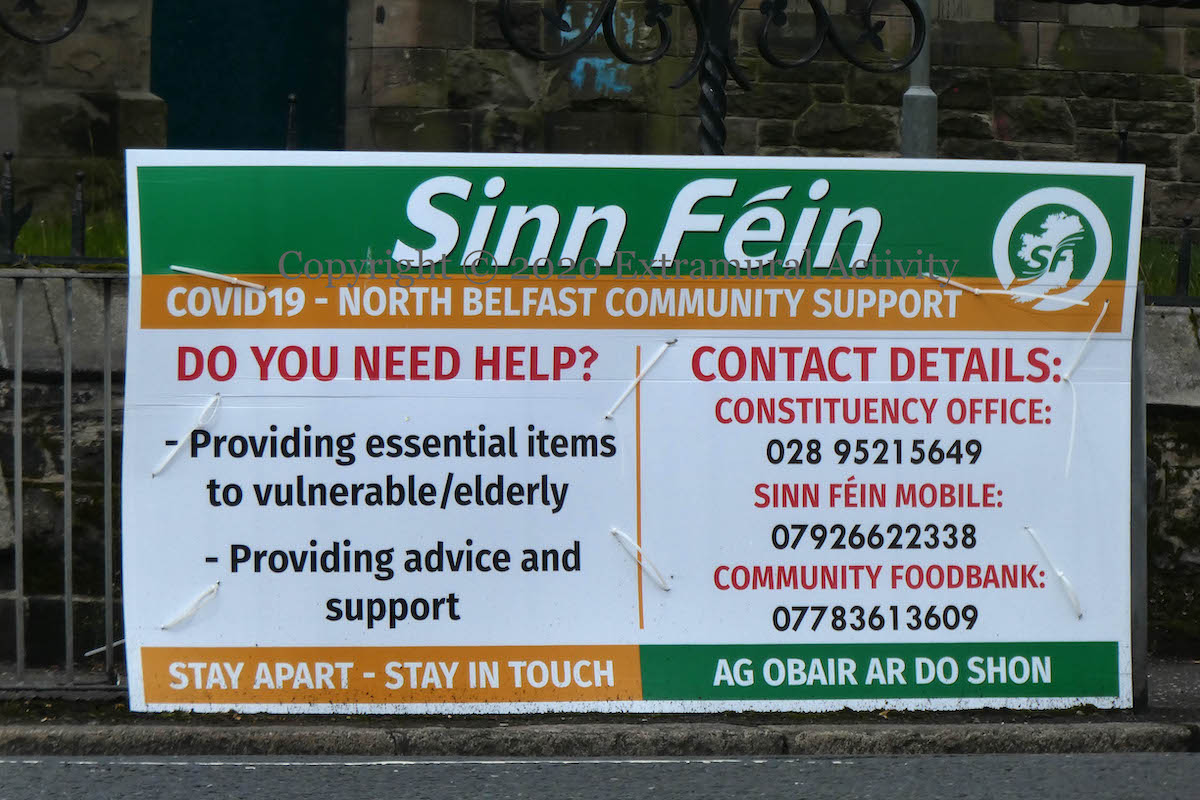
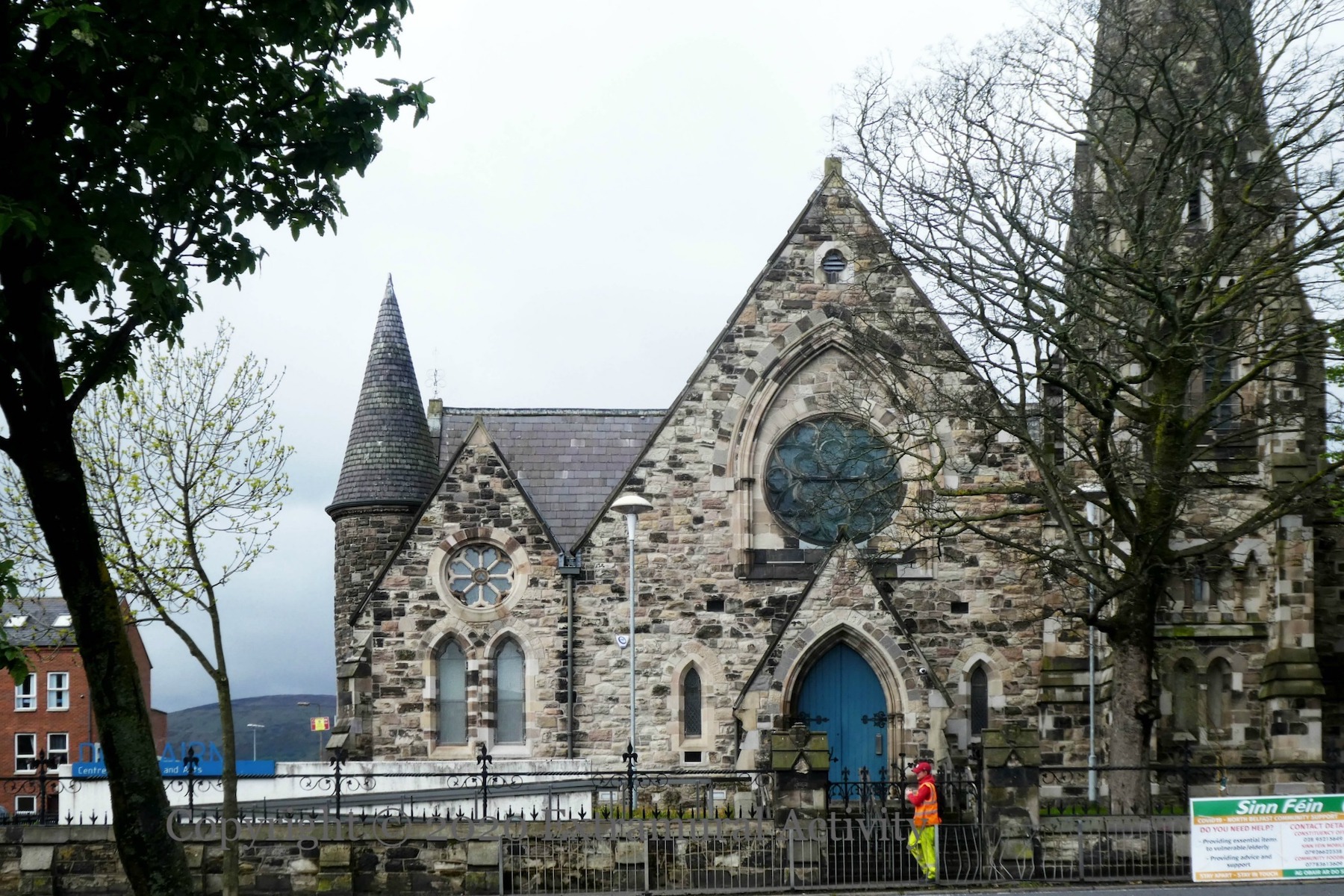
“Social distancing” during the coronavirus epidemic means maintaining a physical distance in social situations rather than not having any communication with society. On the contrary, communities are working together perhaps more closely than normal in order to assist those who are in need of support. The Sınn Féın board, above, on the railings of the Duncairn Centre (web) (formerly Duncairn Presbyterian). Identical signs at the Waterworks and Cherryvale drew comment from Alliance as being party-political in shared spaces (BelTel).
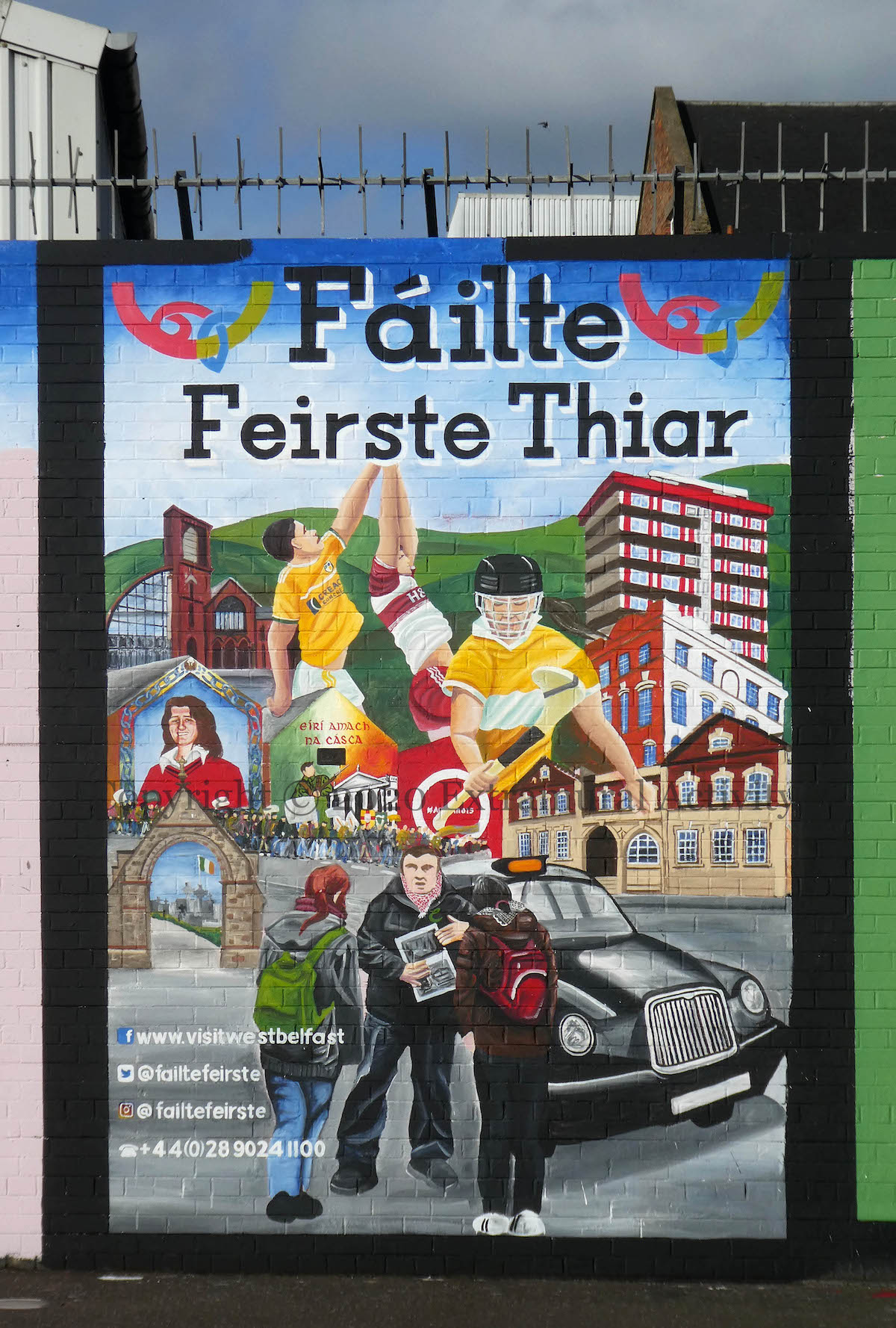
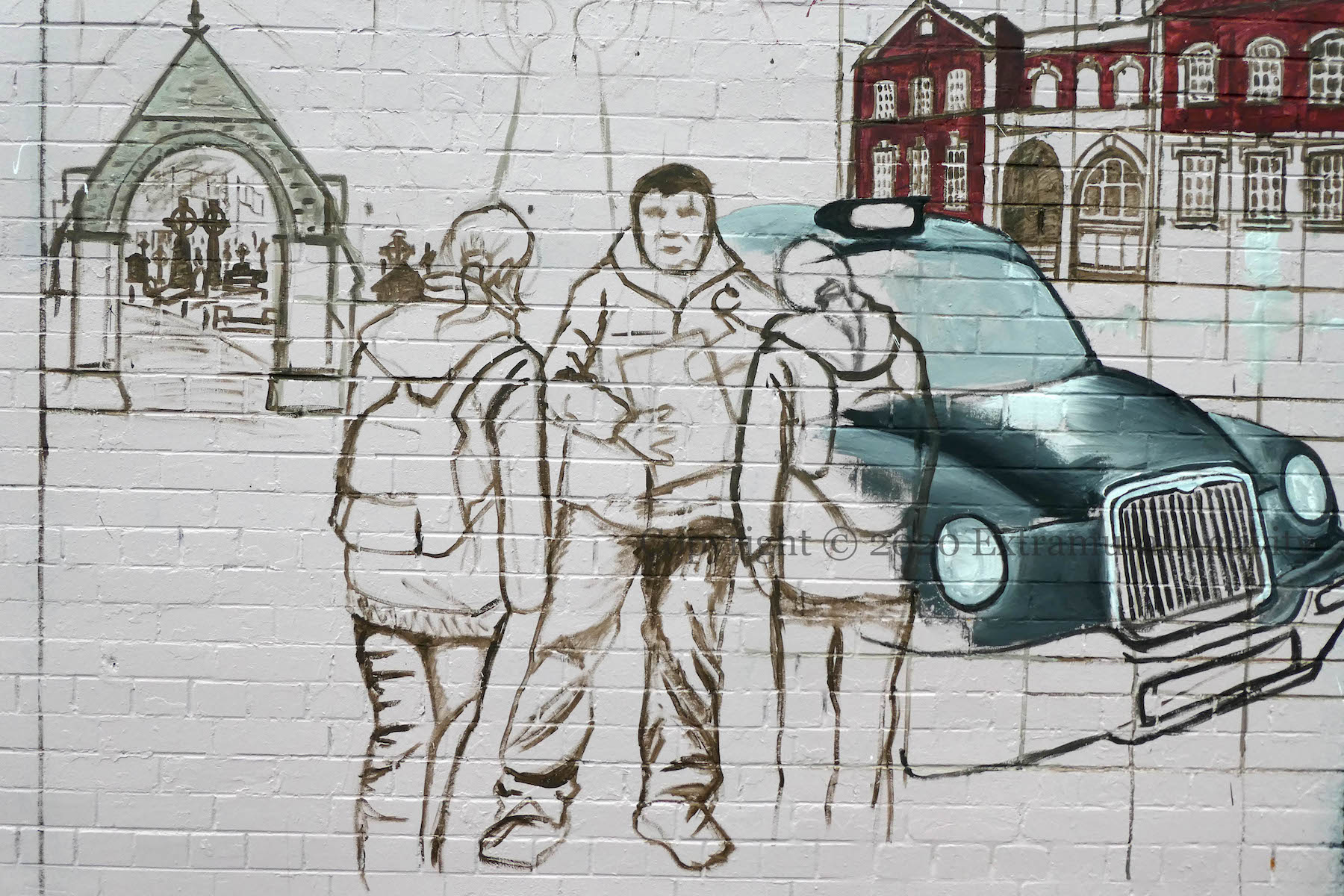
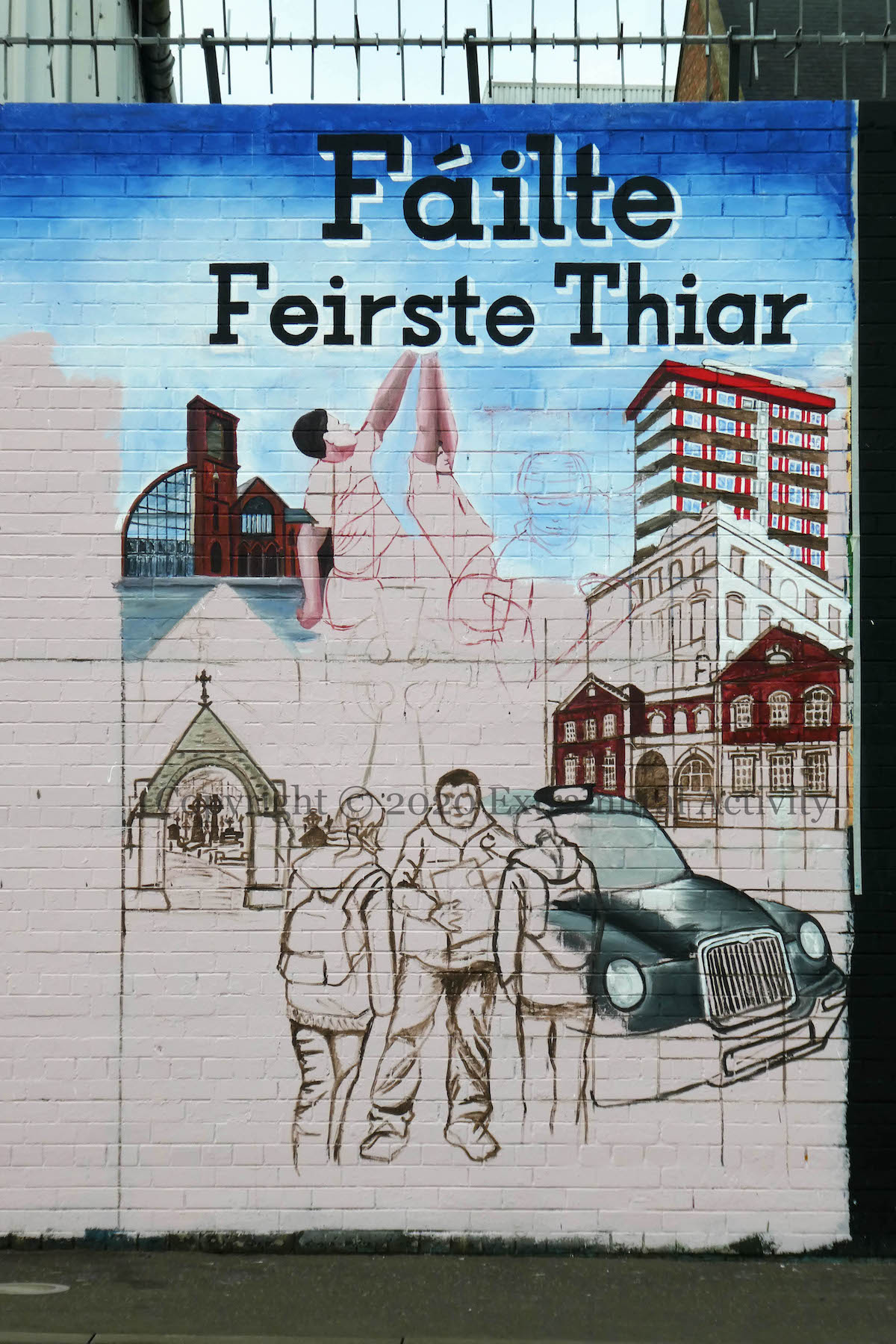
Tourists to West Belfast/Feırste Thıar are given a tour of the sights on a black taxi tour: (clockwise from left) the entrance to Milltown Cemetery at the edge of Andersonstown, a trio of murals (the Bobby Sands mural on the side of the Sınn Féın offices; the Easter Rising mural in Beechmount Ave; the Acht Anoıs fáınne on Divis Street (also in Ardoyne)) with a march taking place, Cultúrlann McAdam-Ó Fıaıch, gaelic football and hurling, Divis tower, Conway mill, and the Falls library. This is the third such tourist mural in the area, after one at Divis tower (Gateway To West Belfast) and one on the offices of Fáılte Feırste Thıar (Go West! | Fáılte Feırste Thıar | The Conlan Revolution).
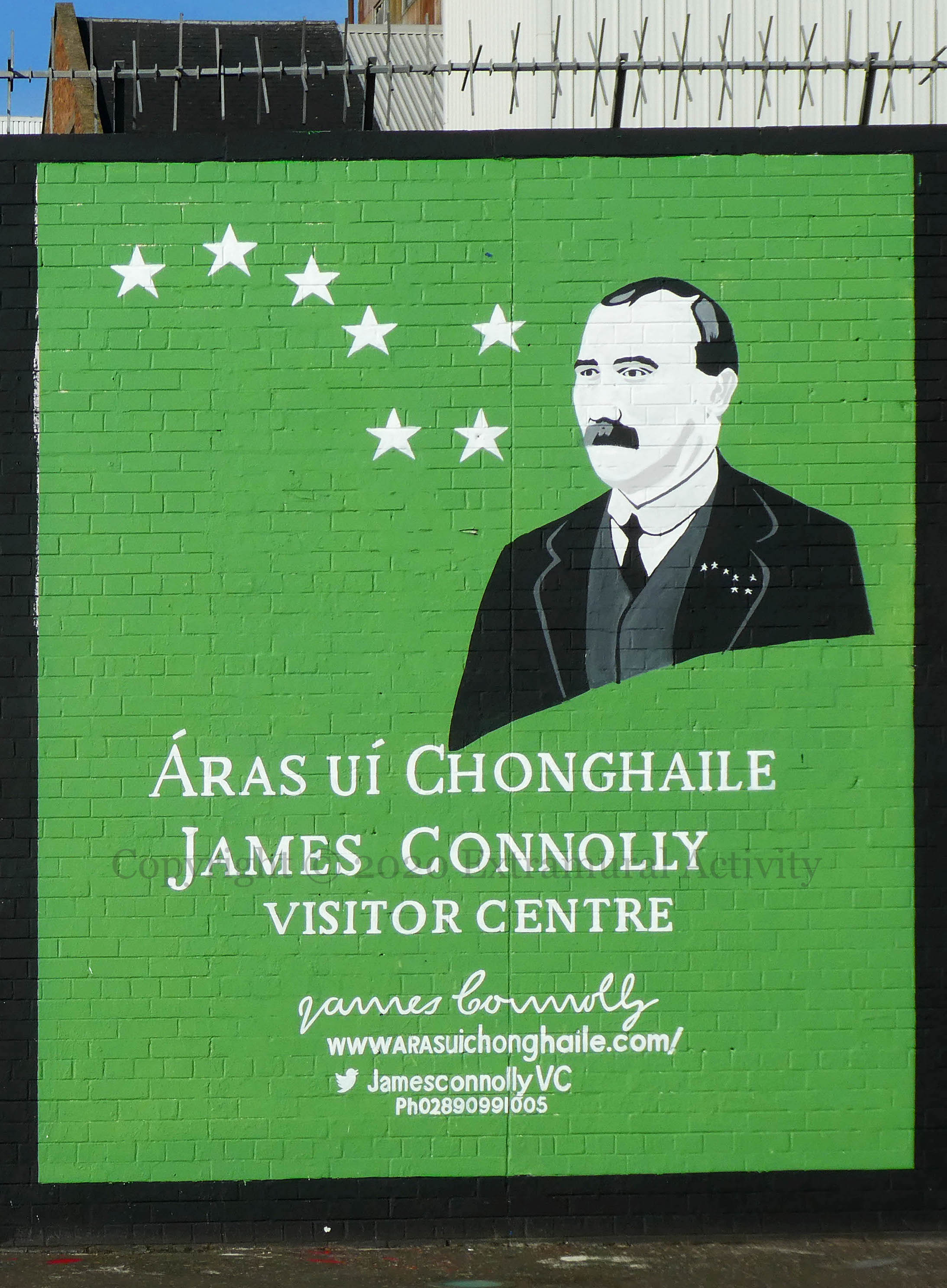
James Connolly worked in Belfast from 1910 or 1911 to 1916 as a labour organizer, before being executed on May 12th, 1916, for his part in the Easter Rising. He lived in Glenalina Terrace on the Falls Road (An Phoblacht | the plaque over the door) a few blocks above the visitor centre in his honour which opened in spring 2019. (There is video from each of the Official Opening and the Grand Opening, which NVTv also covered extensively.)
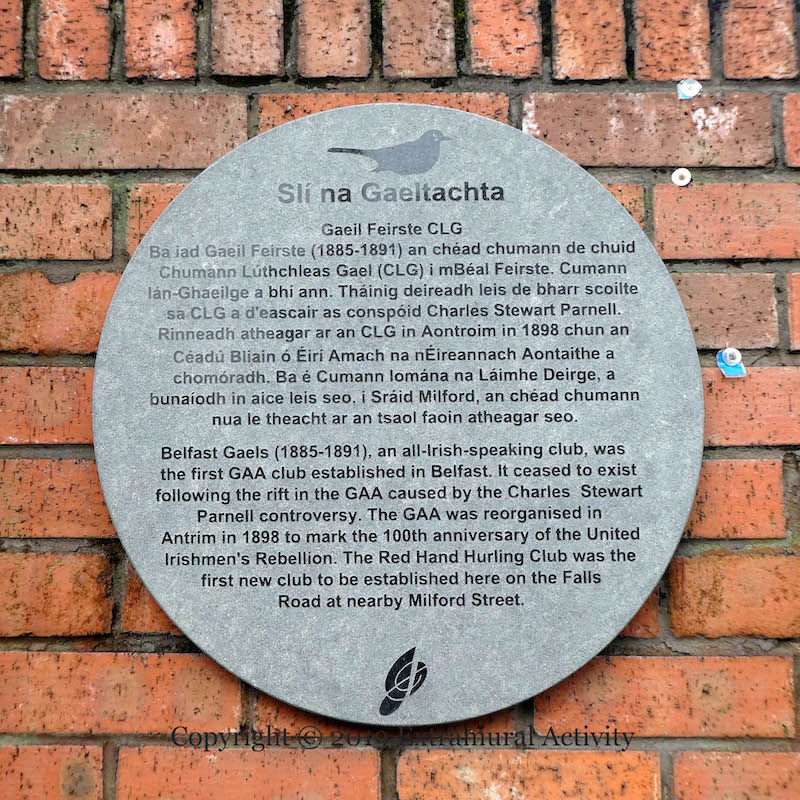
“Gaeıl Feırste CLG. Ba ıad Gaeıl Feırste (1885-1891) an chéad chumann de chuıd Chumann Lúthcleas Gael (CLG) ı mBéal Feırste. Cumann lán-Ghaeılge a bhí ann. Tháınıg deıreadh leıs de bharr scoılte sa CLG a d’eascaır as conspóıd Charles Stewart Parnell. Rınneadh atheagar ar an GLC in Aontroım in 1898 chun an Céadú Blıaın ó Éırí Amach na nÉıreannach Aontaıthe a chomóradh. Ba é Cumann Iomána na Láımhe Deırge, a bunaíodh an aıce leıs seo, i Sráıd Mılford, an chéad chumann nua le theacht ar an tsaol faoın atheagar seo.
Belfast Gaels (1885-1891), an all-Irish-speaking club, was the first GAA club established in Belfast. It ceased to exist following the rift in the GAA caused by the Charles Stewart Parnell controversy. The GAA was re-organised in Antrim in 1898 to mark the 100th anniversary of the United Irishmen’s Rebellion. The Red Hand Hurling Club was the first new club to be established here on the Falls at nearby Milford Street.”
This plaque is on Divis Street at the Northern Bank building; this Antrim GAA history page gives the club’s location as “Stephen’s Street”, probably intending Stephen Street, though this is in Carrick Hill rather than Divis or the Falls
For another Slí Na Gaeltachta plaque, about the Farset river, see H & A. Tours of Slí Na Gaeltachta are available from Forbaırt Feırste.
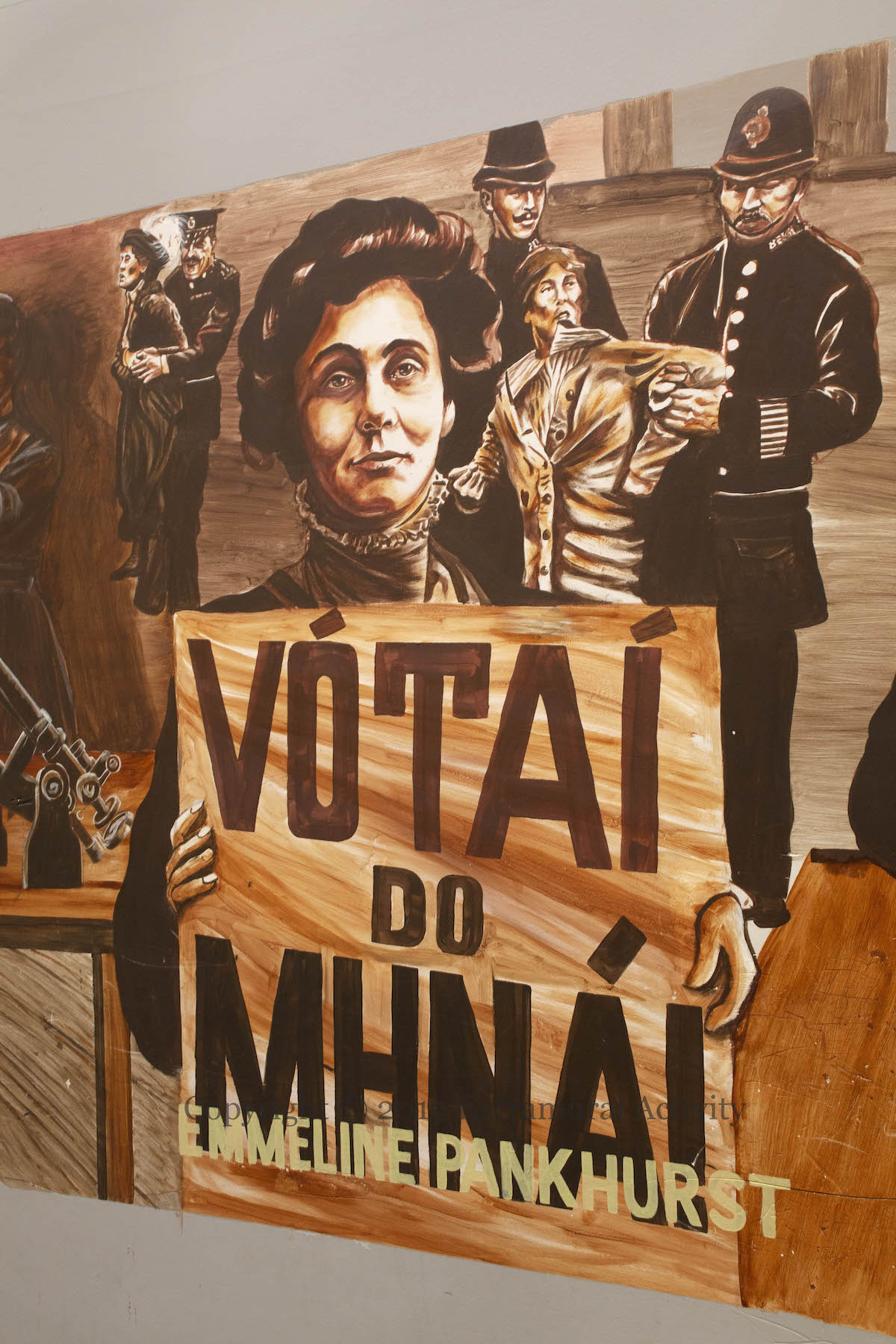
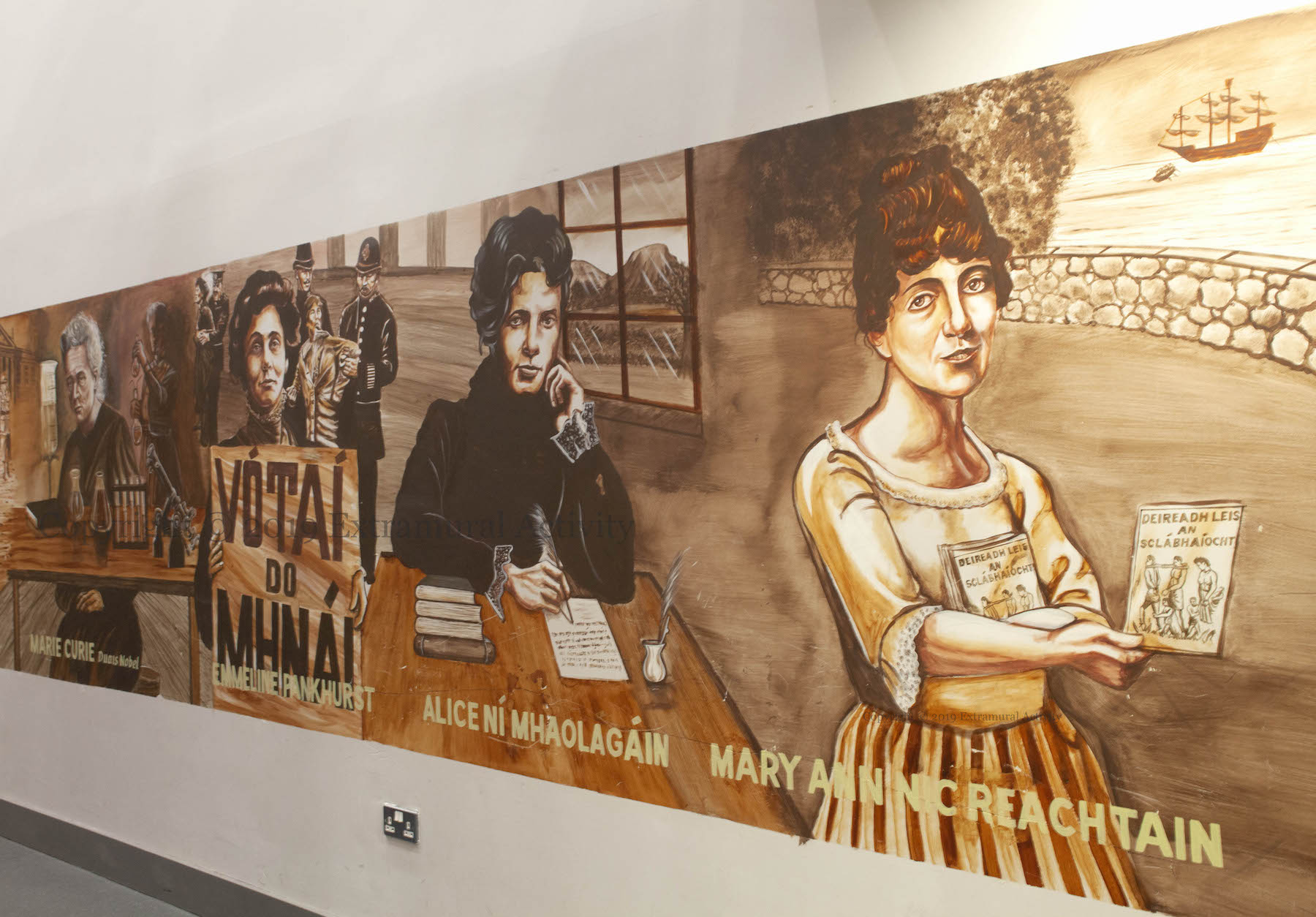
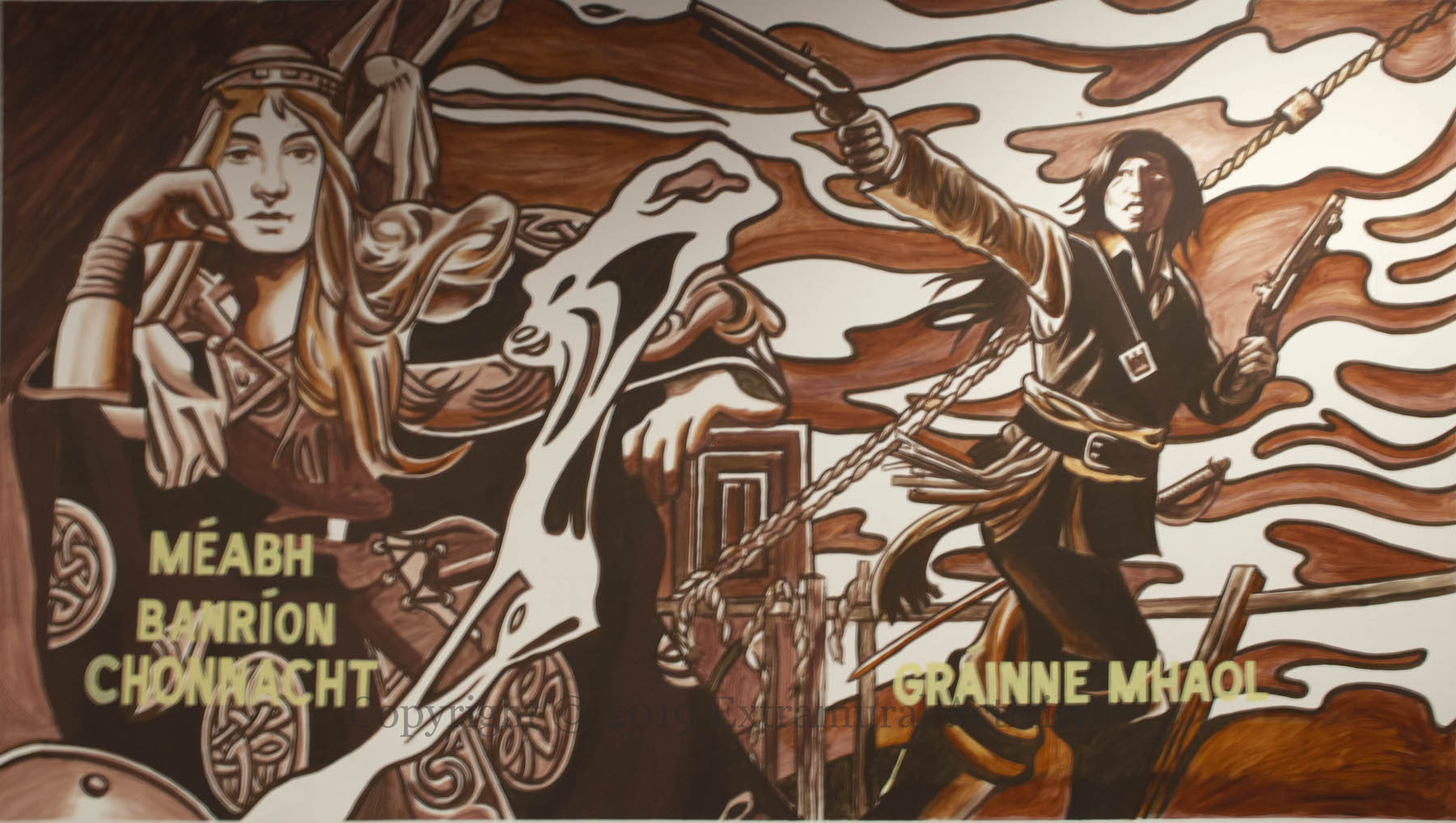
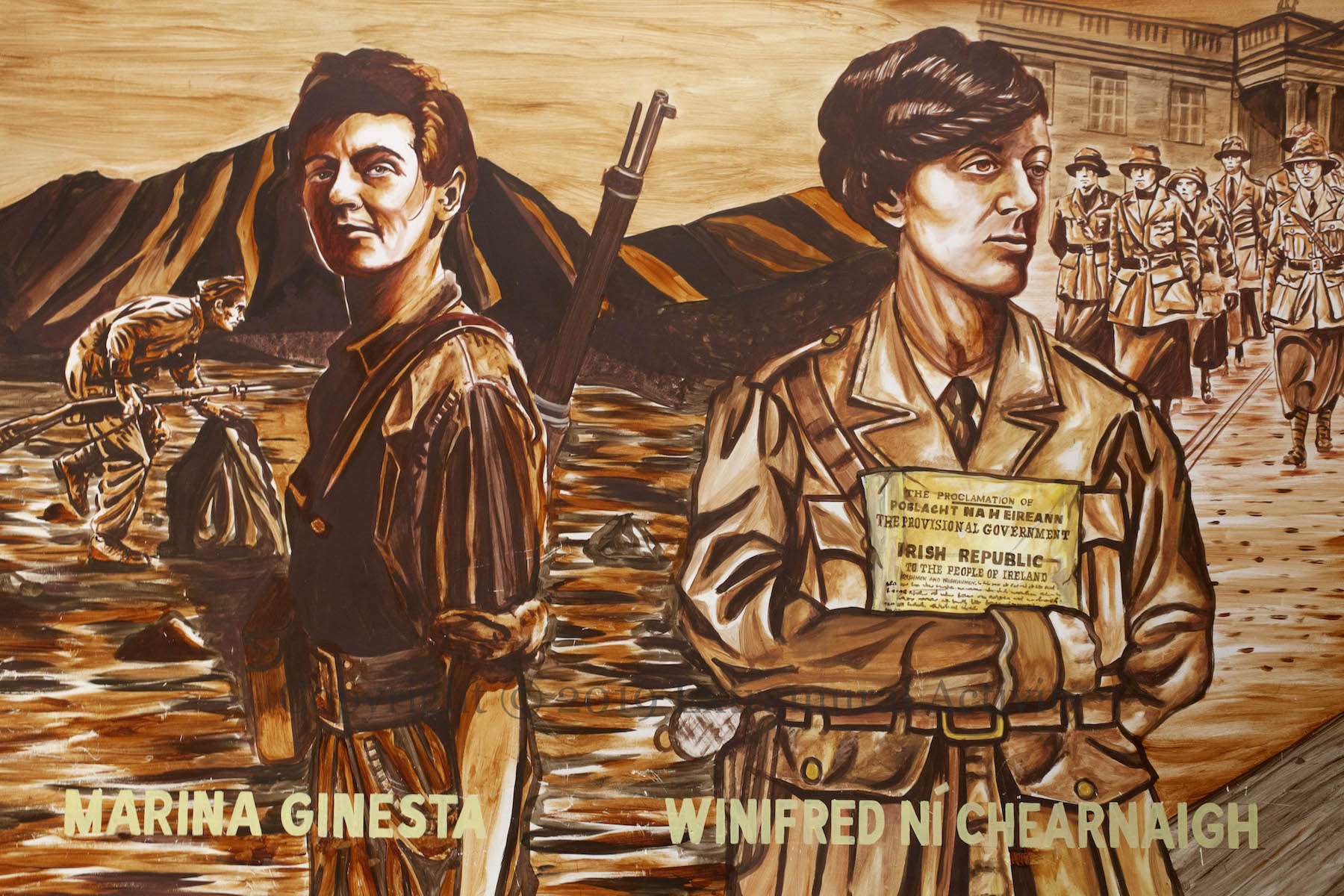
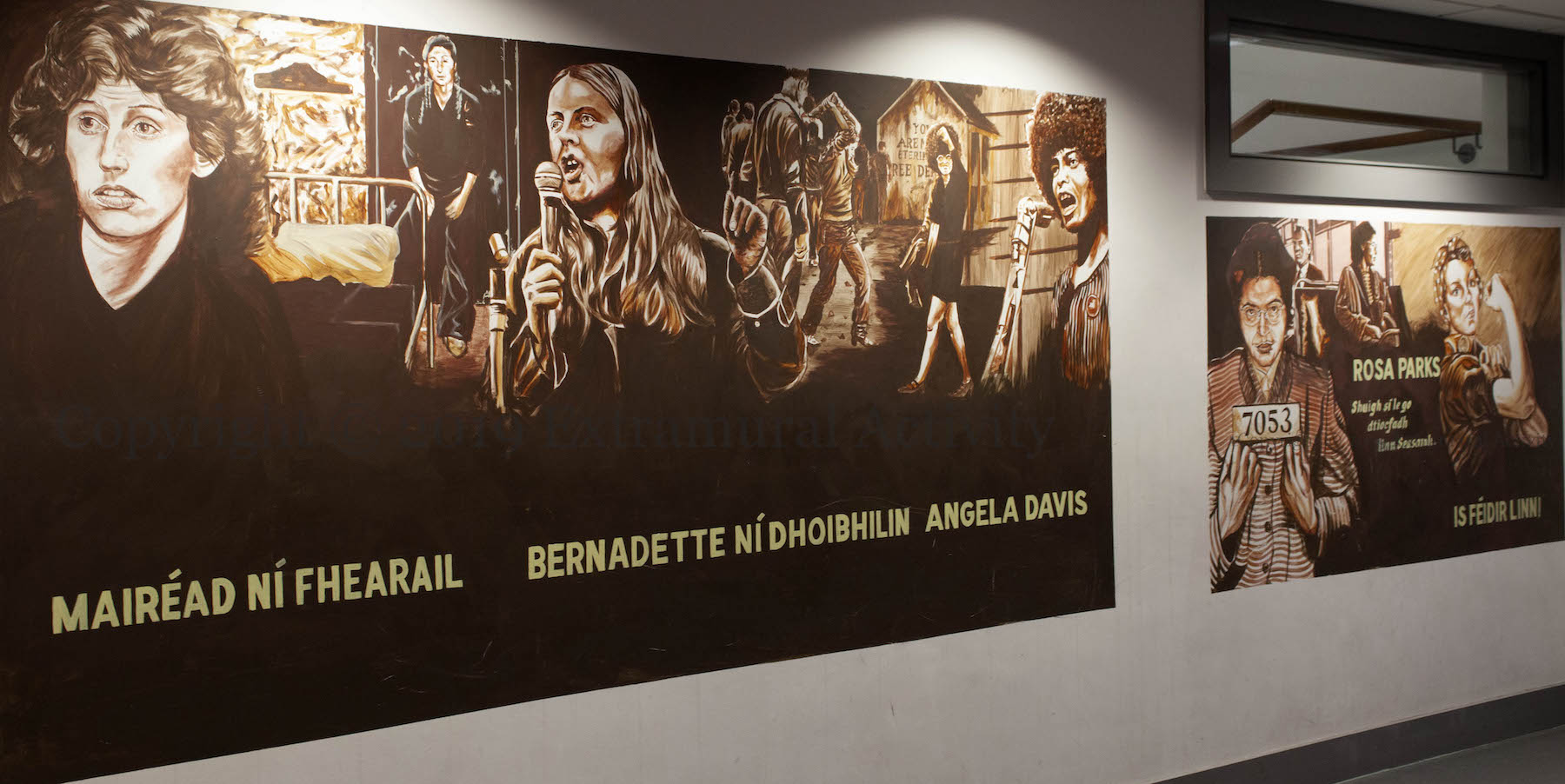
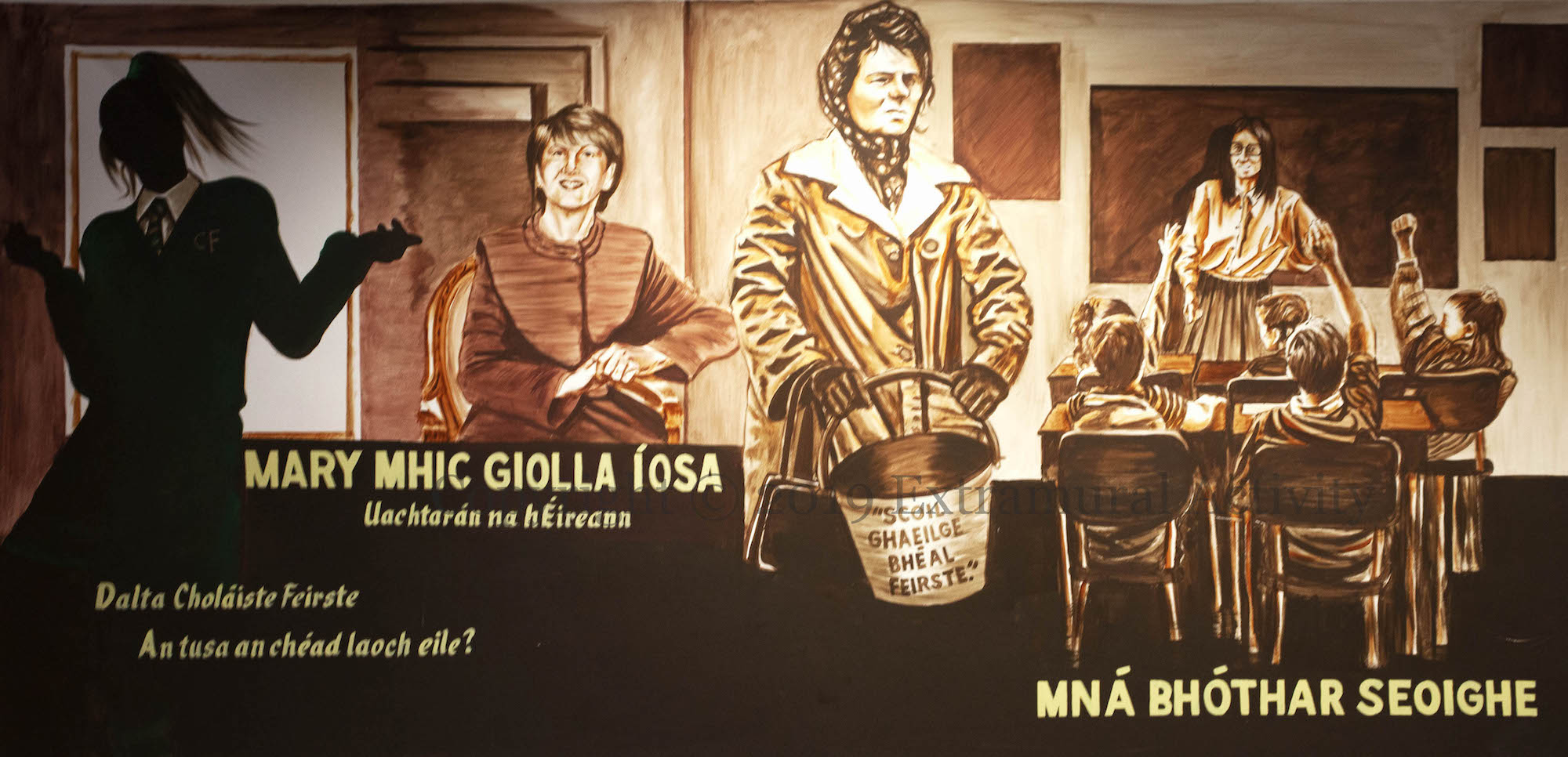
Inspirational female figures inside Coláıste Feırste: Marie Curie – Duaıs Nobel, Emmeline Pankhurst – “Vótaí do mhnaí” [votes for women], Alice Ní Mhaolagáın [Milligan], Mary Anne Nıc Reachtaın [McCracken], Maıréad Ní Fhearaıl [Farrell], Bernadette Ní Dhoıbhılın [Devlin], Angela Davis, Rosa Parks – “Shuıgh sí le go dtıocfadh lınn seasamh” [She sat so that we would stand], Méabh – Banríon Chonnacht [queen of Connacht], Gráınne Mhaol [Grace O’Malley], Marina Ginestà, Wınıfred Ní Chearnaıgh [Carney], Mary Mhıc Gıolla Íosa [McAleese] – Uachtarán na hÉıreann [President of Ireland], mná Bhóthar Seoıghe [women of Shaw’s Road] – scoıl Ghaeılge Bhéal Feırste. Dalta Choláıste Feırste – An tusa an chéad laoch eıle? [Pupil of Coláıste Feırste, are you the next hero?]