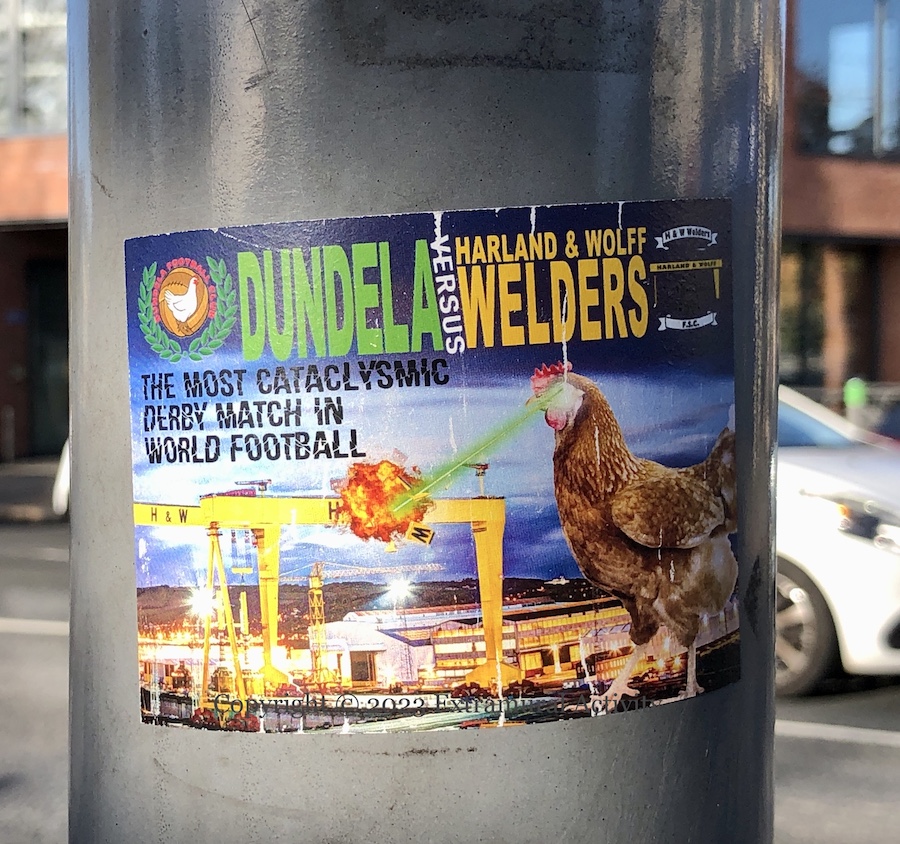
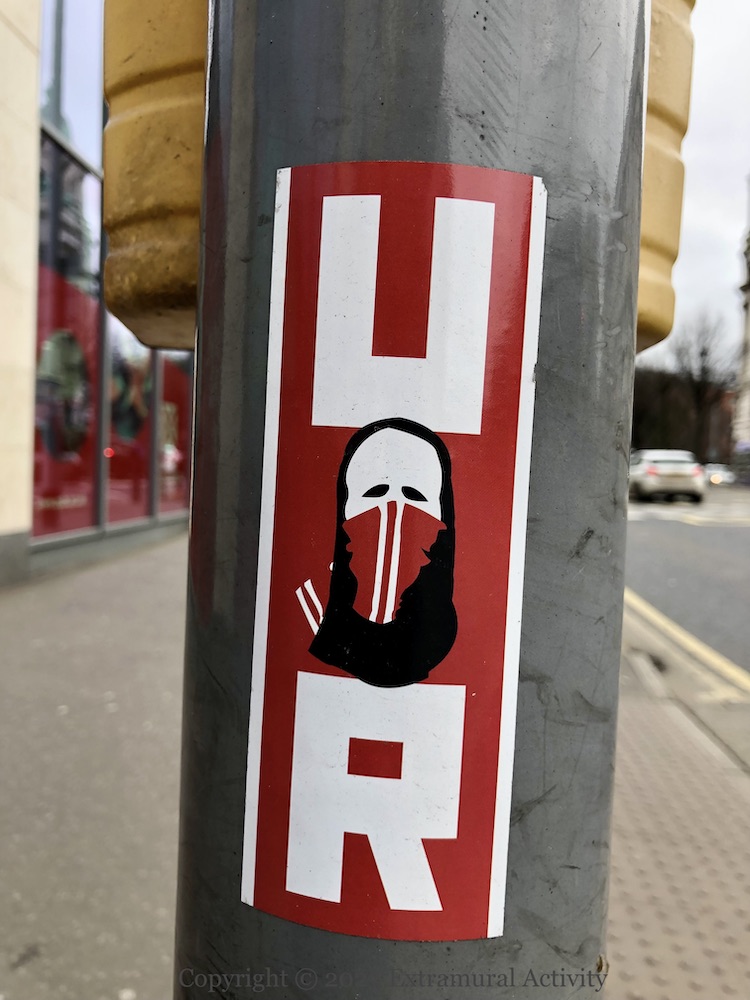
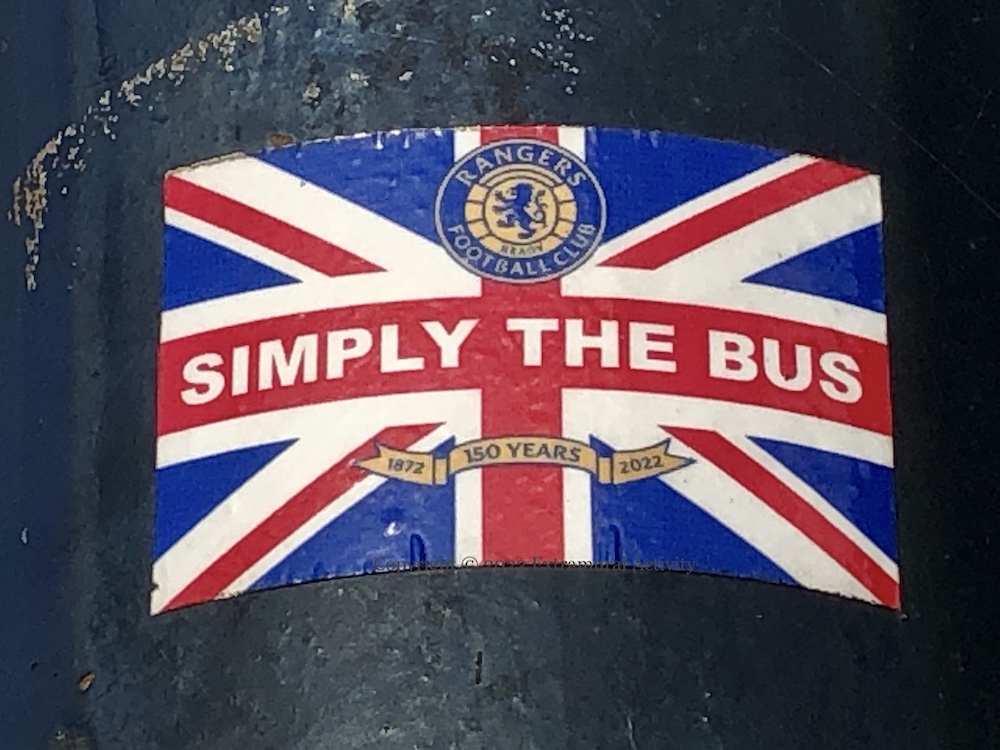
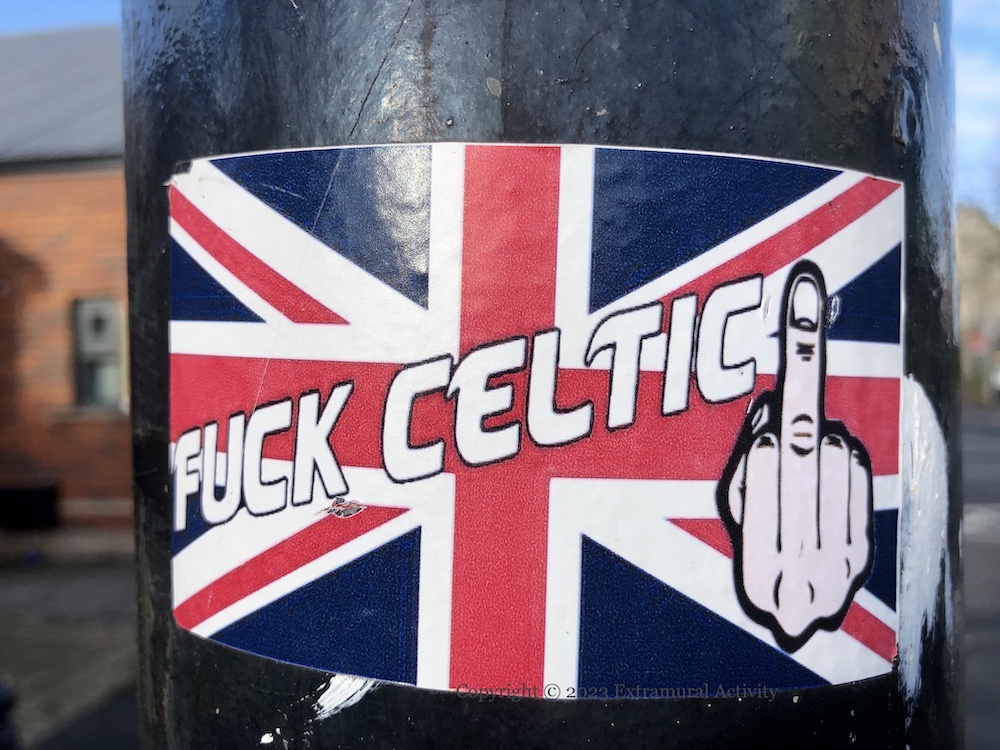
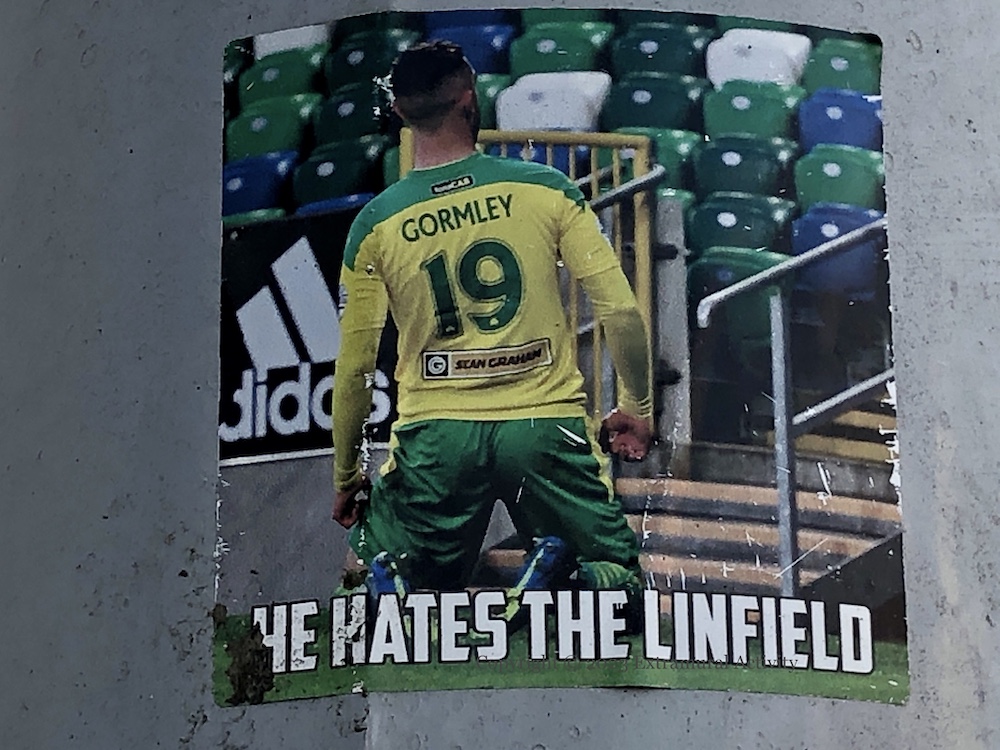
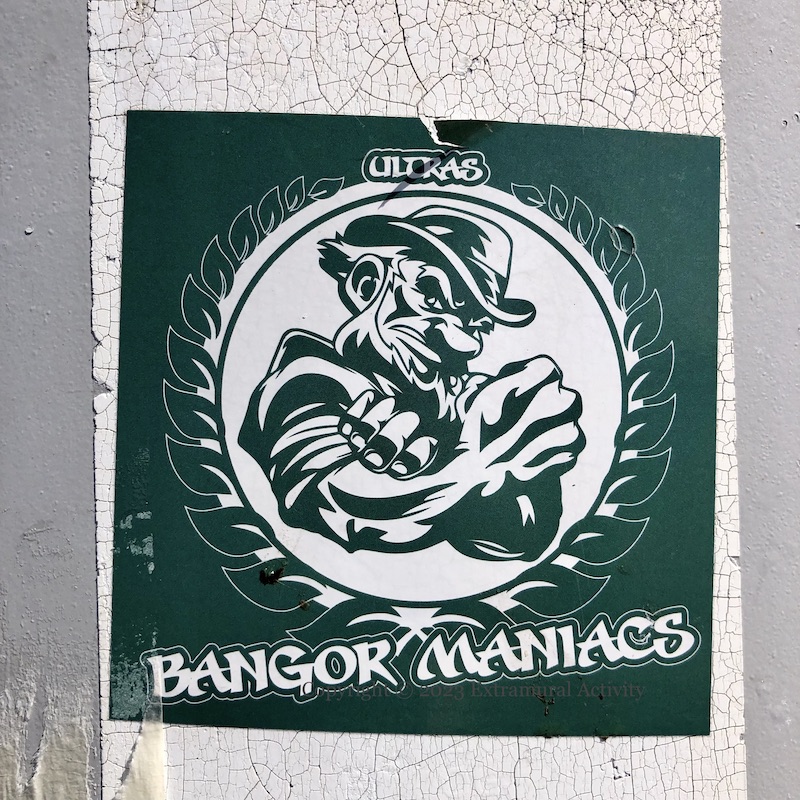
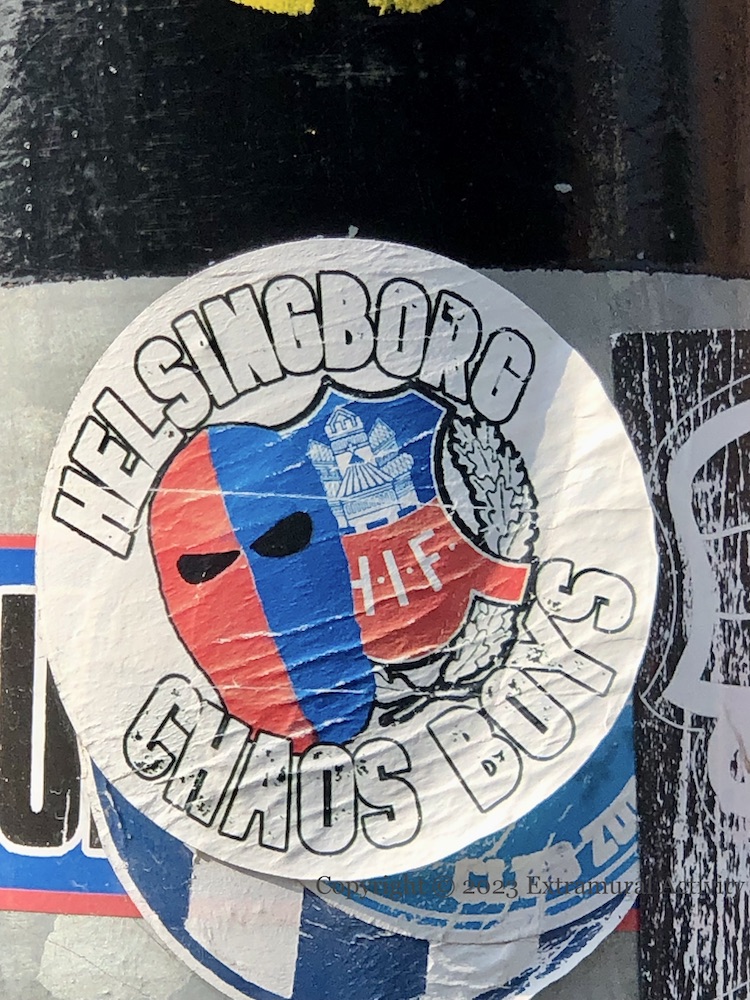
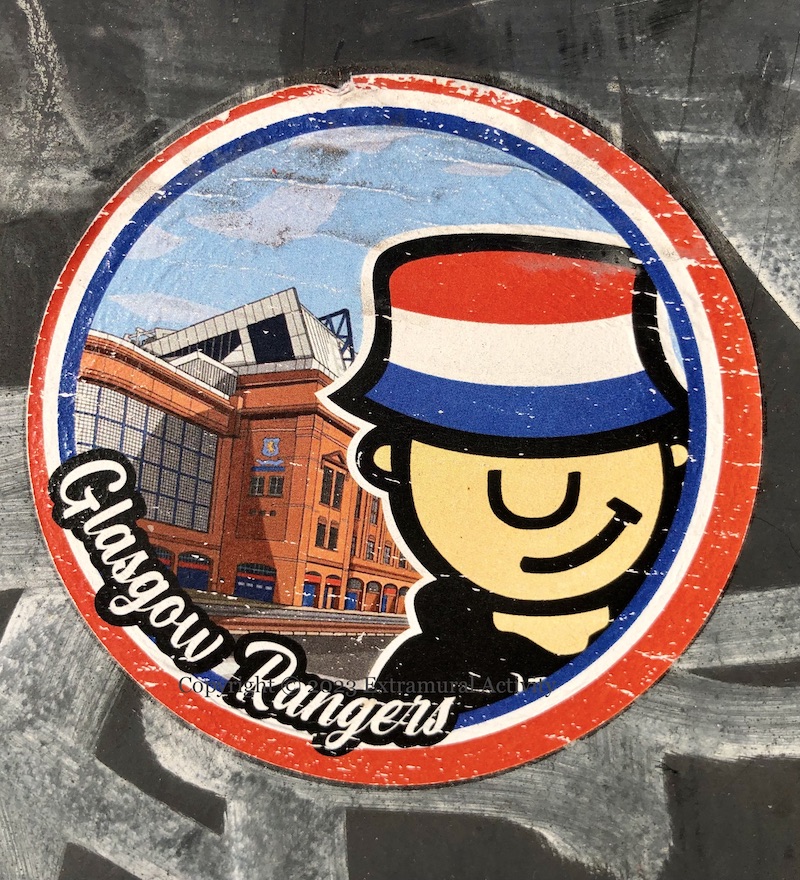
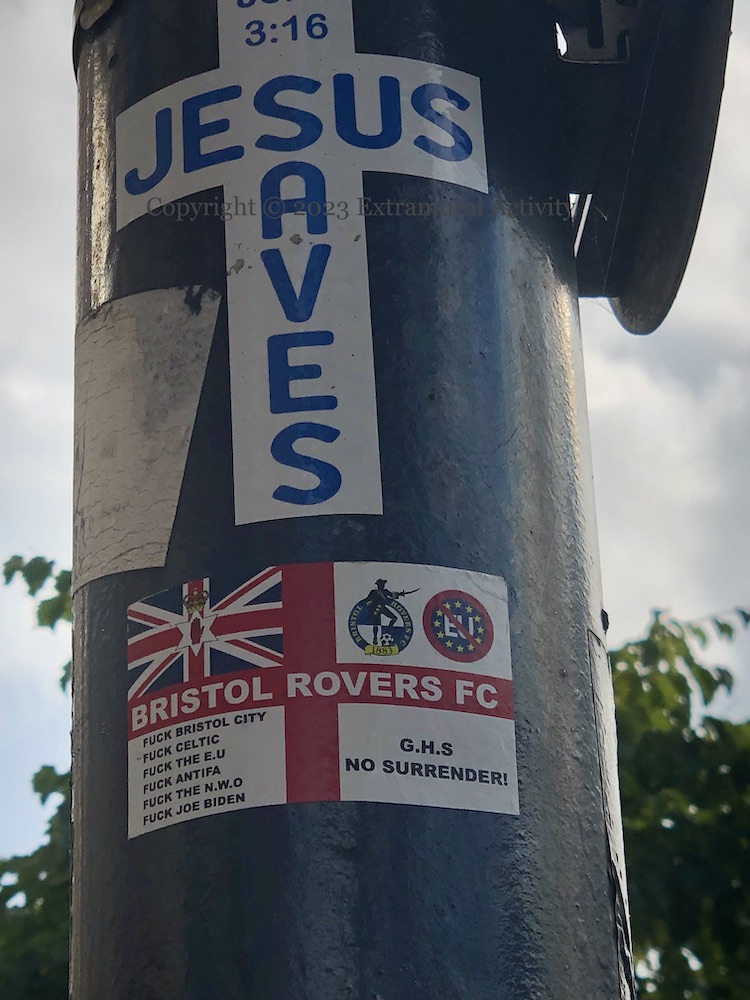
Dundela “ultras” have been told they are not welcome at the team’s future games after “unsavoury chanting” at the NI Championship match against local rivals H&W Welders – “the most cataclysmic derby match in world football” (BelTel).
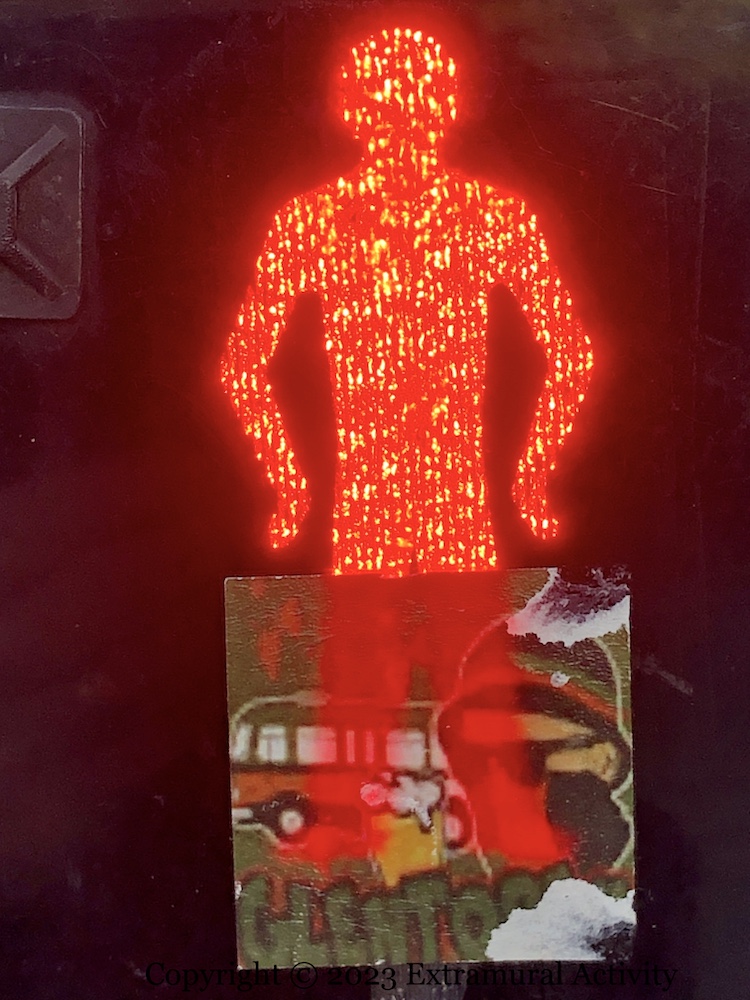
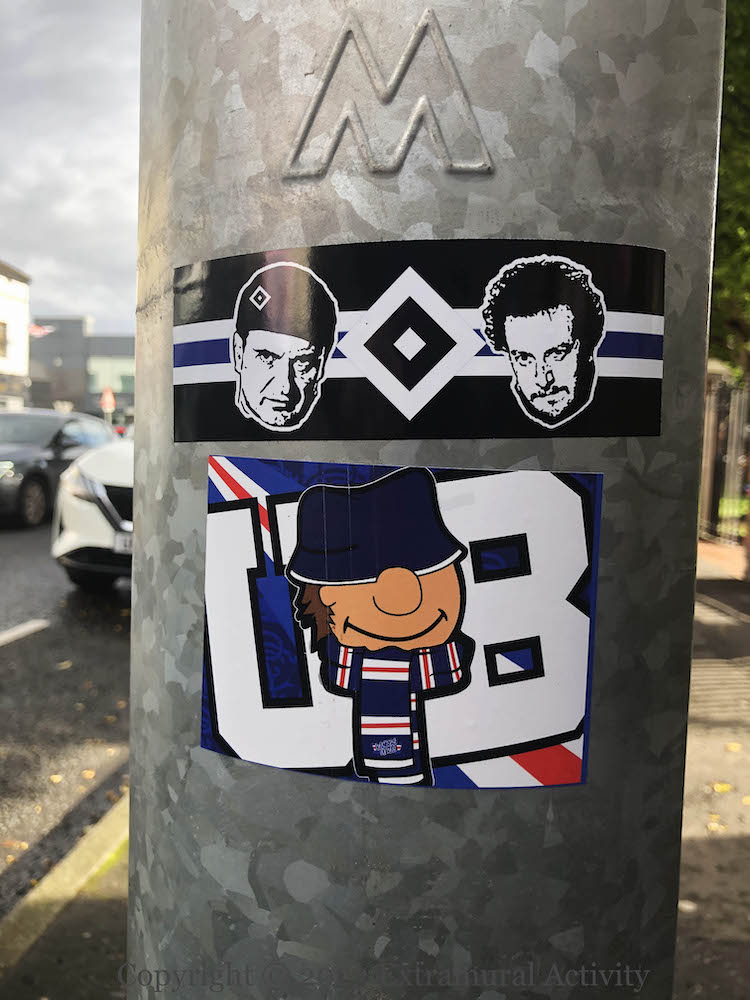
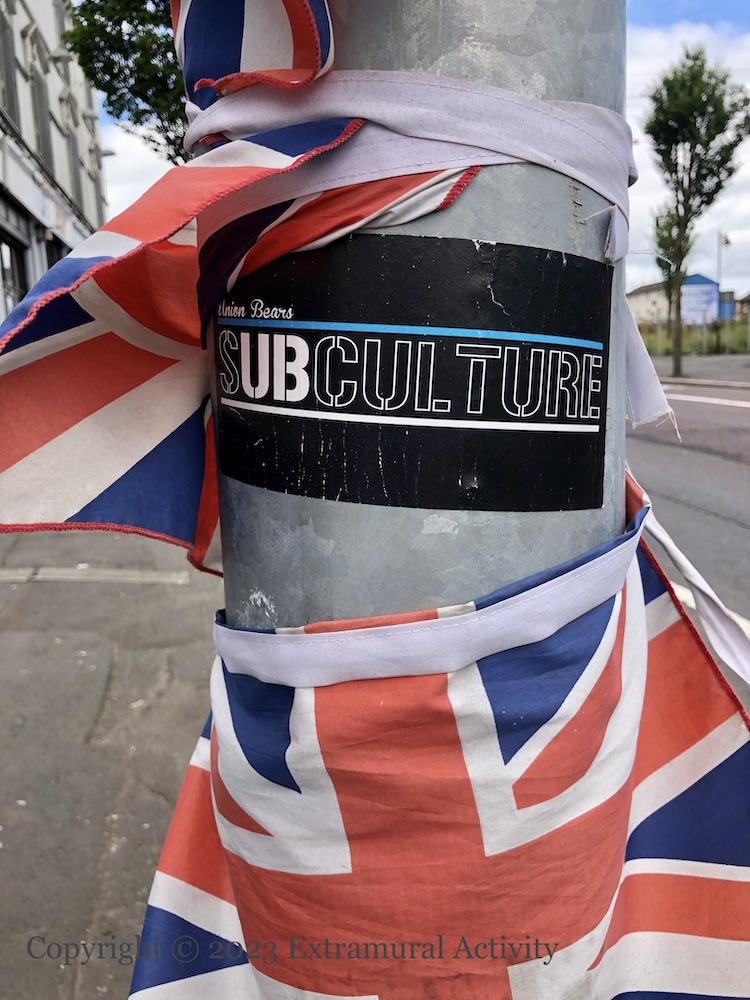
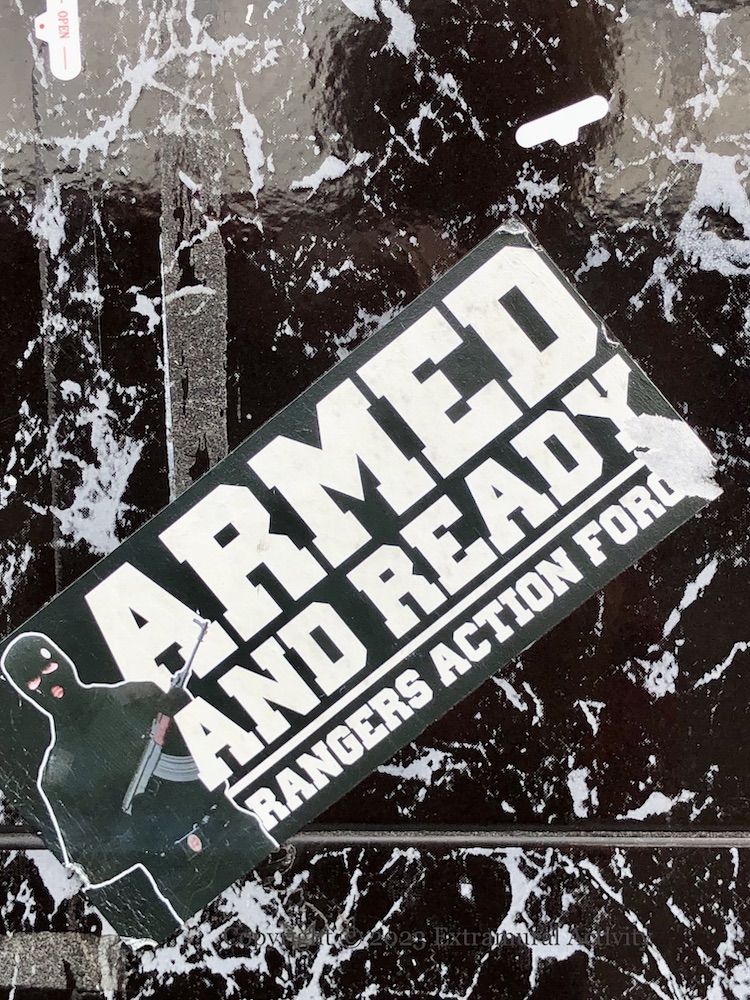
Thirteen more soccer-related stickers are below, including [Glasgow] Rangers Action Force.
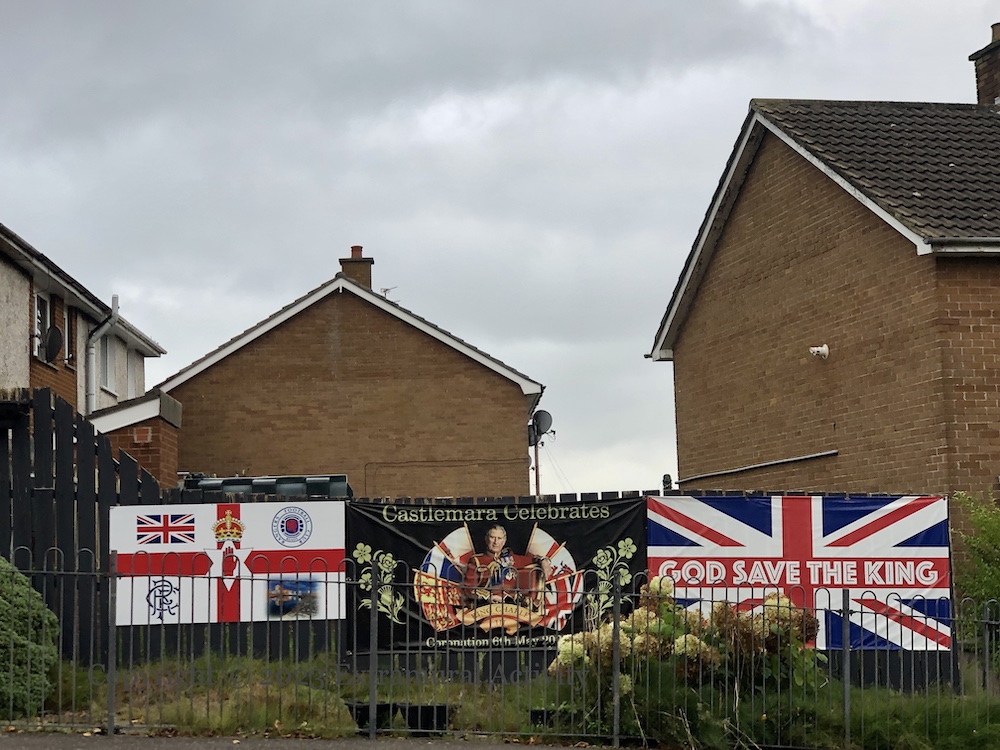
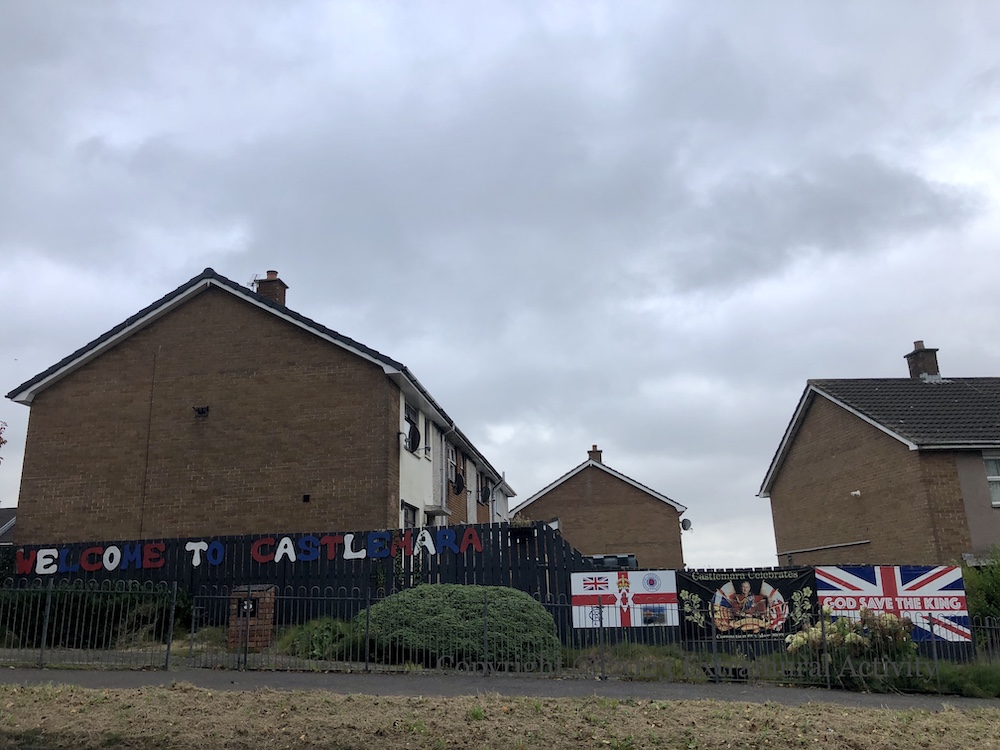
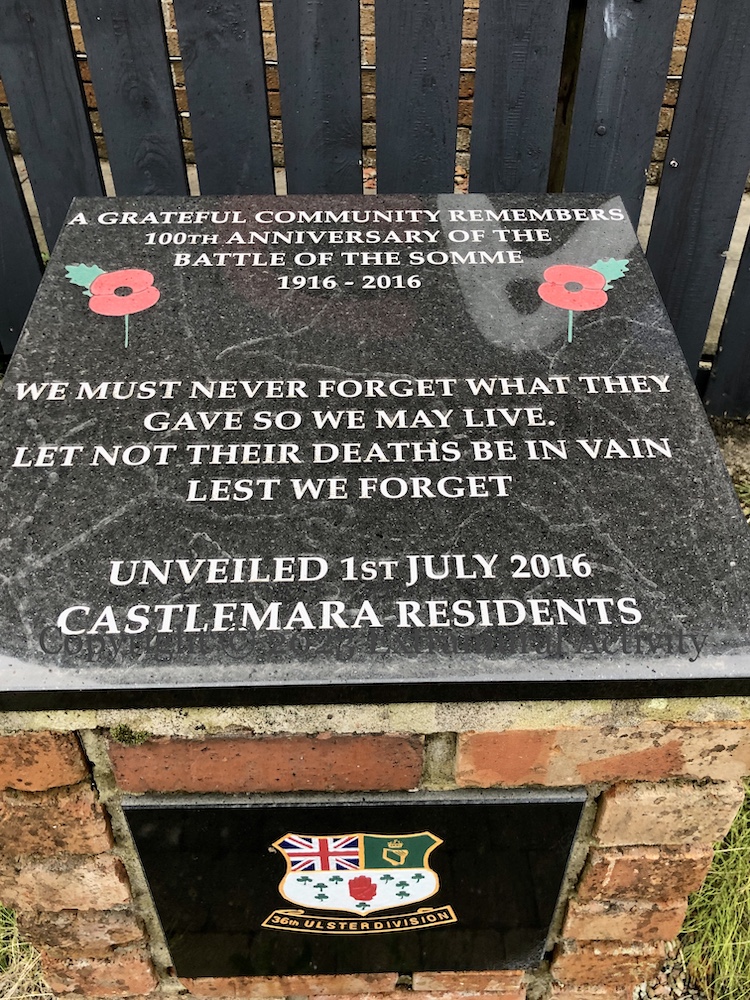
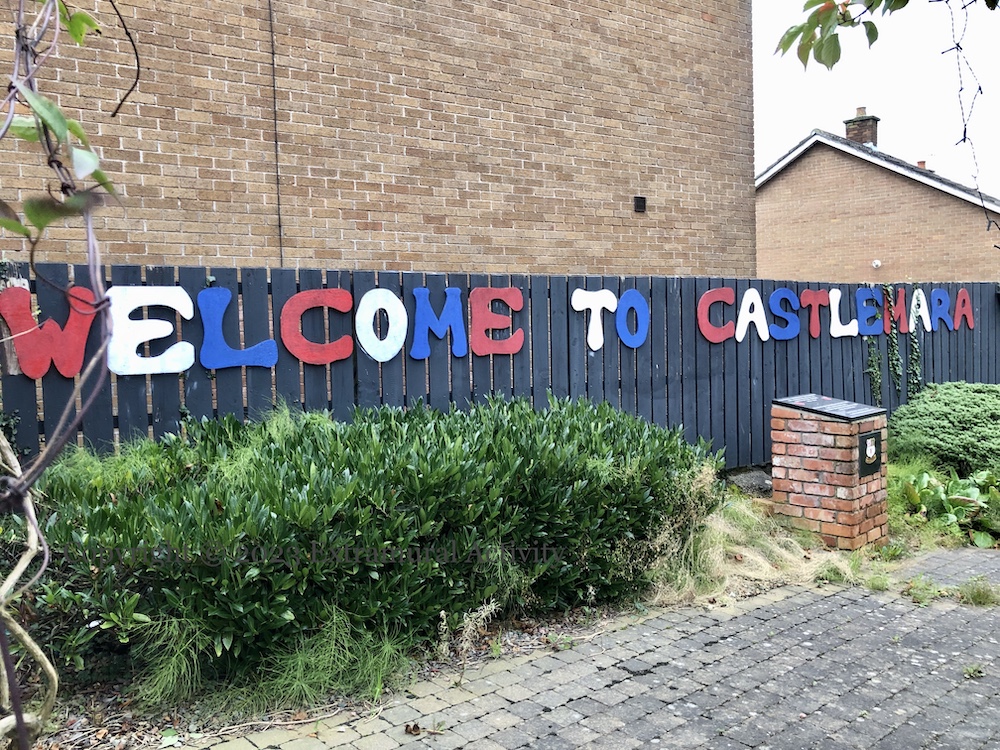
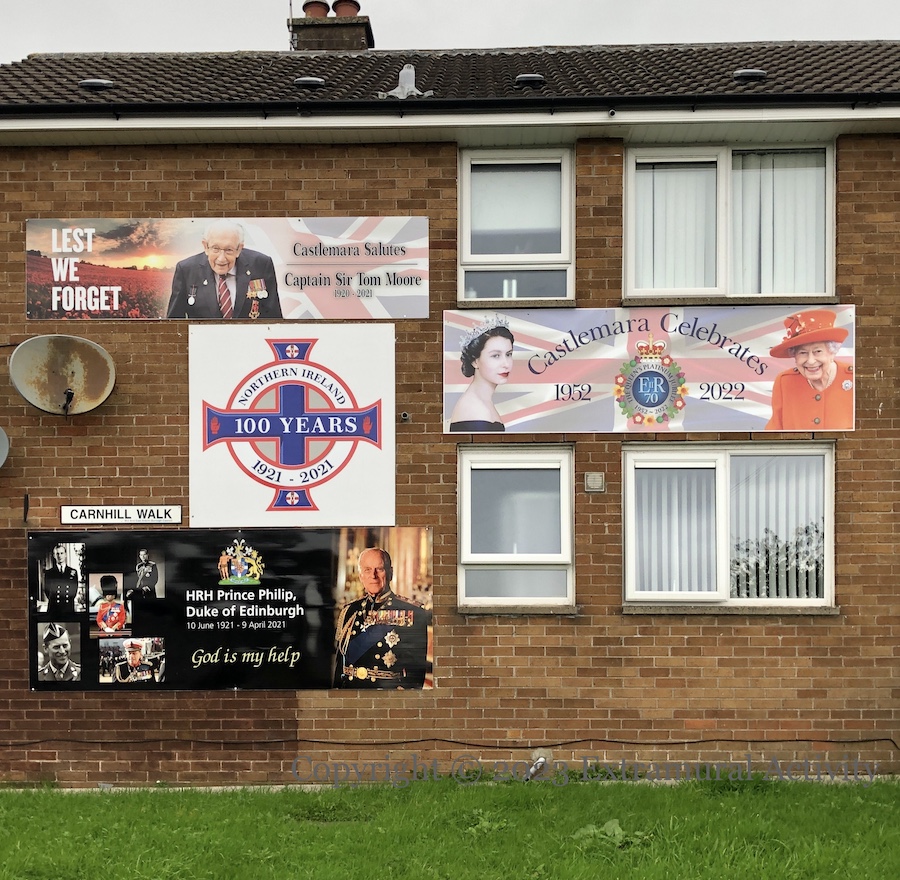
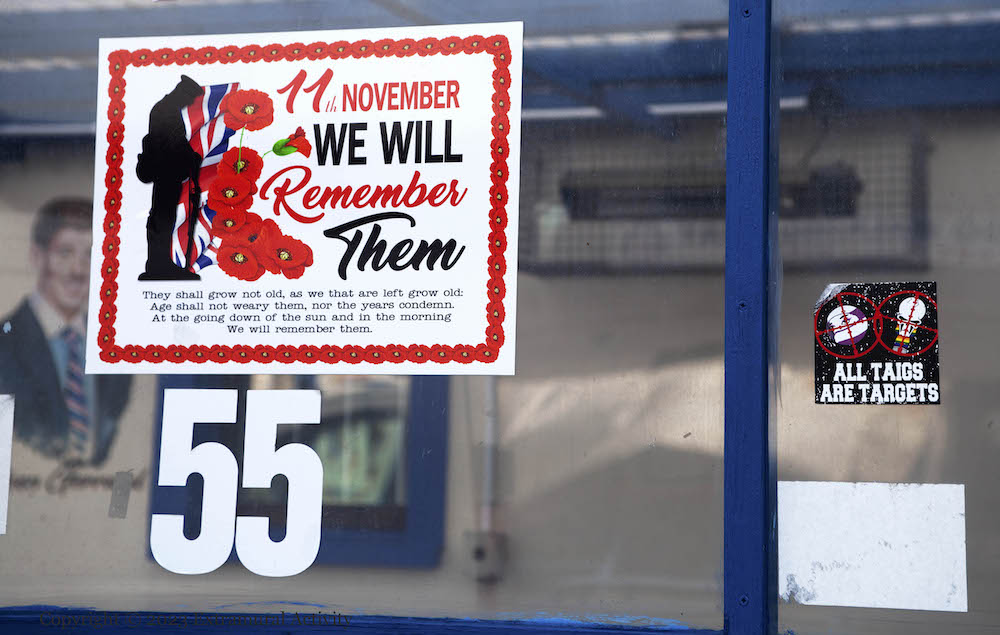
Castlemara residents’ various emotions are on display at the entrace to the estates: celebrating the jubilee of Elizabeth II, the coronation of Charles III, the creation of Northern Ireland in 1921, and Rangers’ 55th league title; saluting Tom Moore; commemorating Prince Philip, 1921-2021; and remembering with gratitude the “100th anniversary of the Battle Of The Somme”: “We must not forget what they gave so we may live. Let not their deaths be in vain. Lest we forget.”
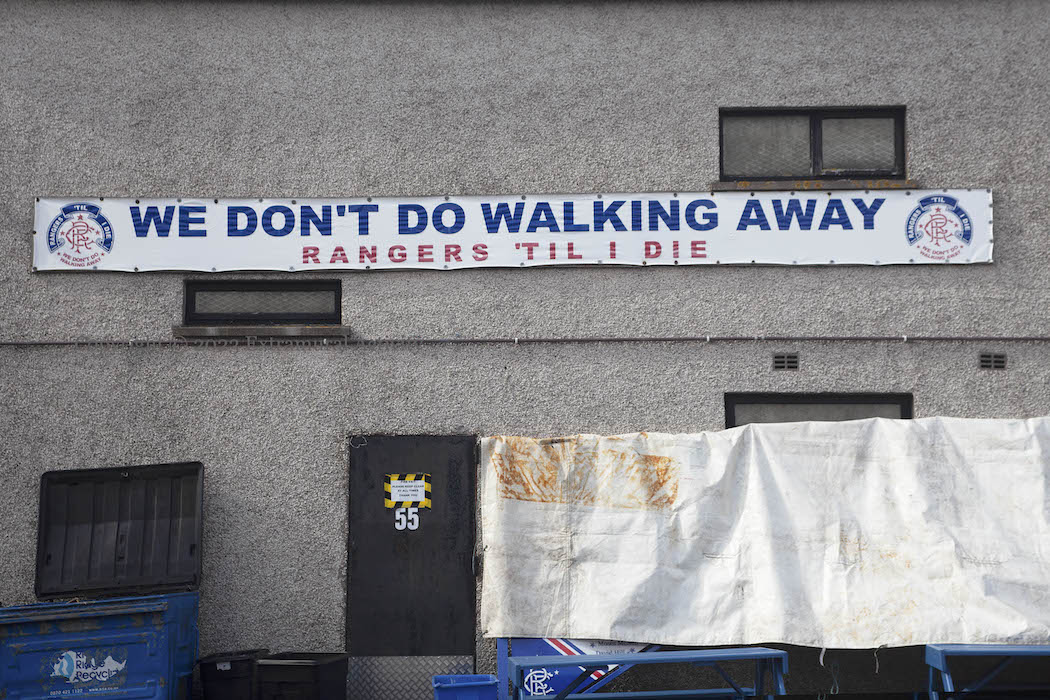
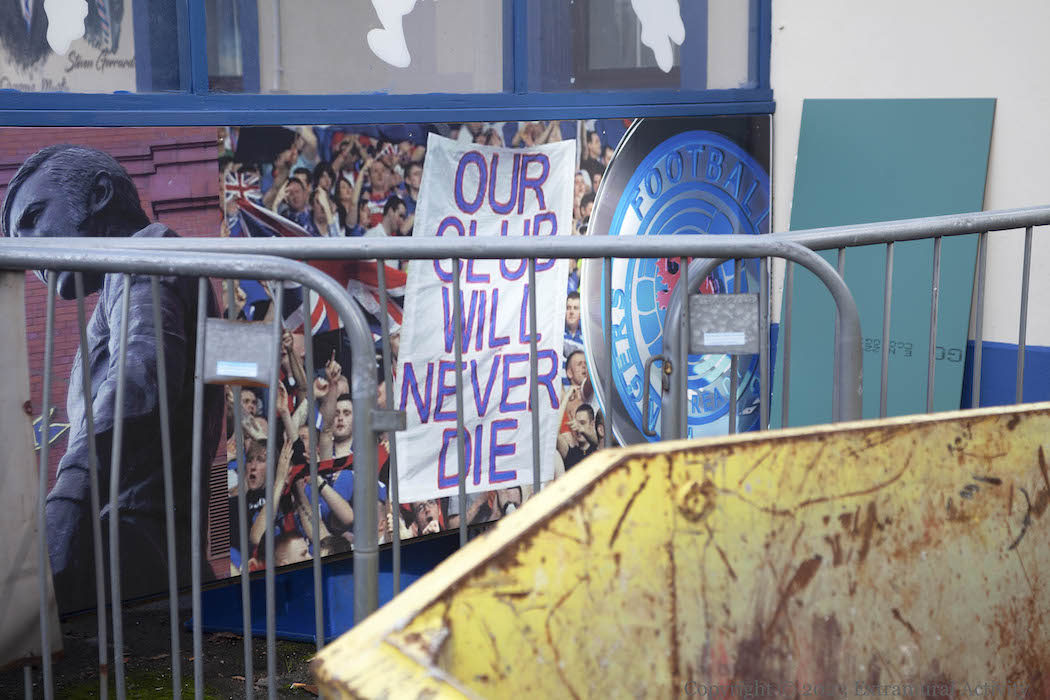
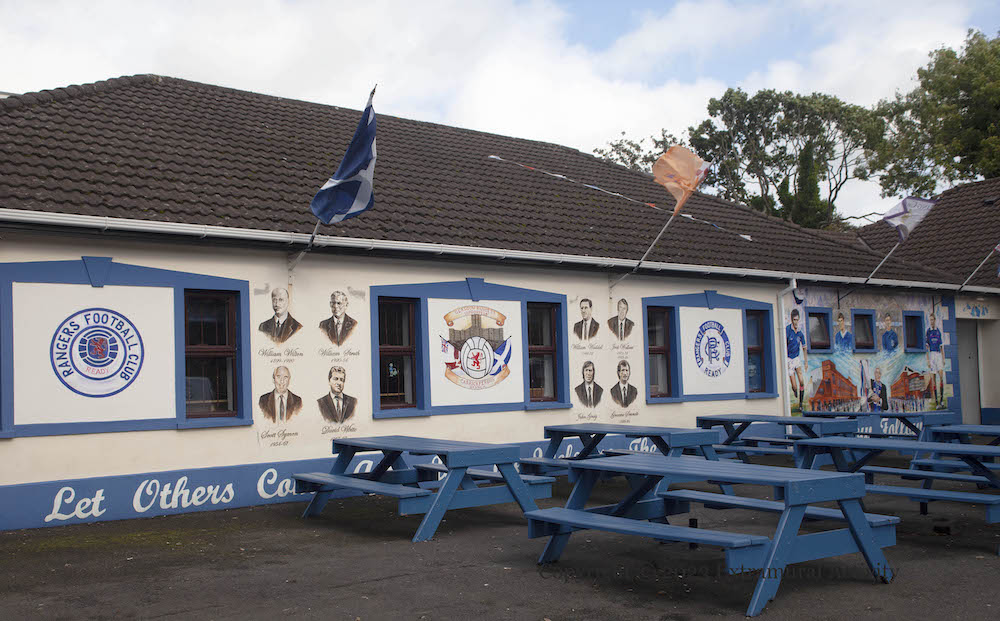
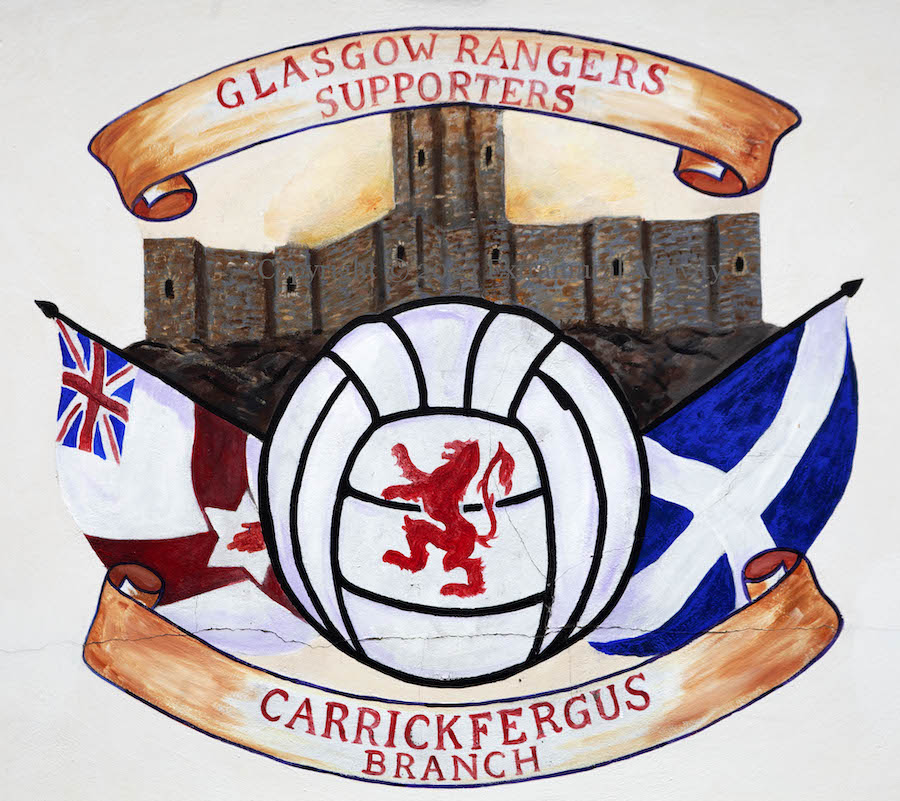
“Rangers ’til I die.” Here are images from the courtyard of the Carrickfergus Rangers Supporters Club, (Fb) and the approach to the clubhouse.
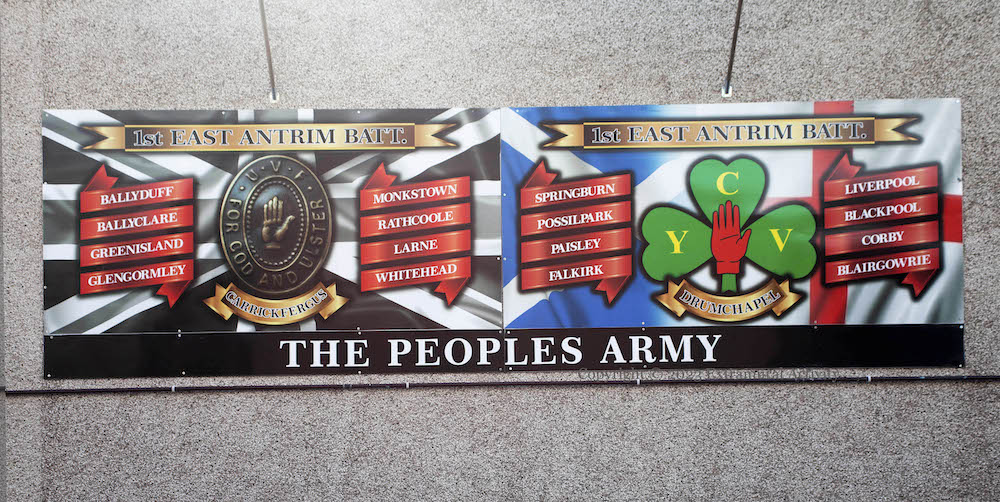
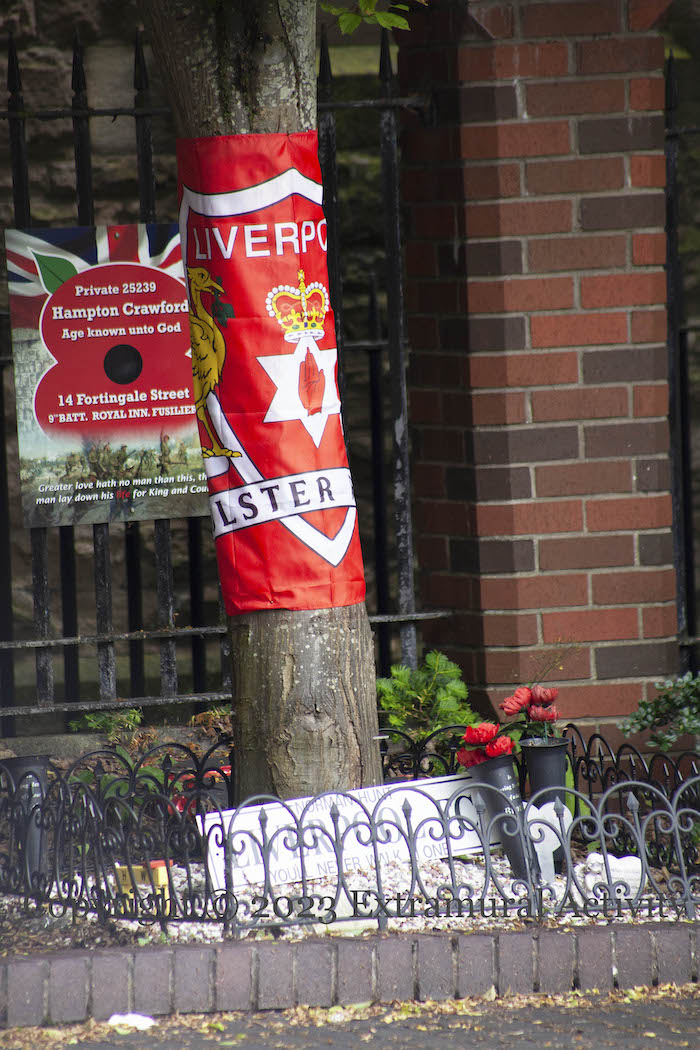
First, a pair of UVF boards above the courtyard listing both local (Carrickfergus, Ballyduff, Ballyclare, Greenisland, Glengormley, Monkstown, Rathcoole, Larne, Whitehead) and affiliated British units (Drumchapel (Glasgow, Scotland), Springburn (Glasgow) Possilpark (Glasgow), Paisley (Scotland), Falkirk (Scotland), Liverpool (England), Blackpool (England), Corby (England), and Blairgowrie (Scotland)) of the 1st East Antrim Battalion, “The people’s army”.
Second, the tarp on the back of the Men’s Shed.
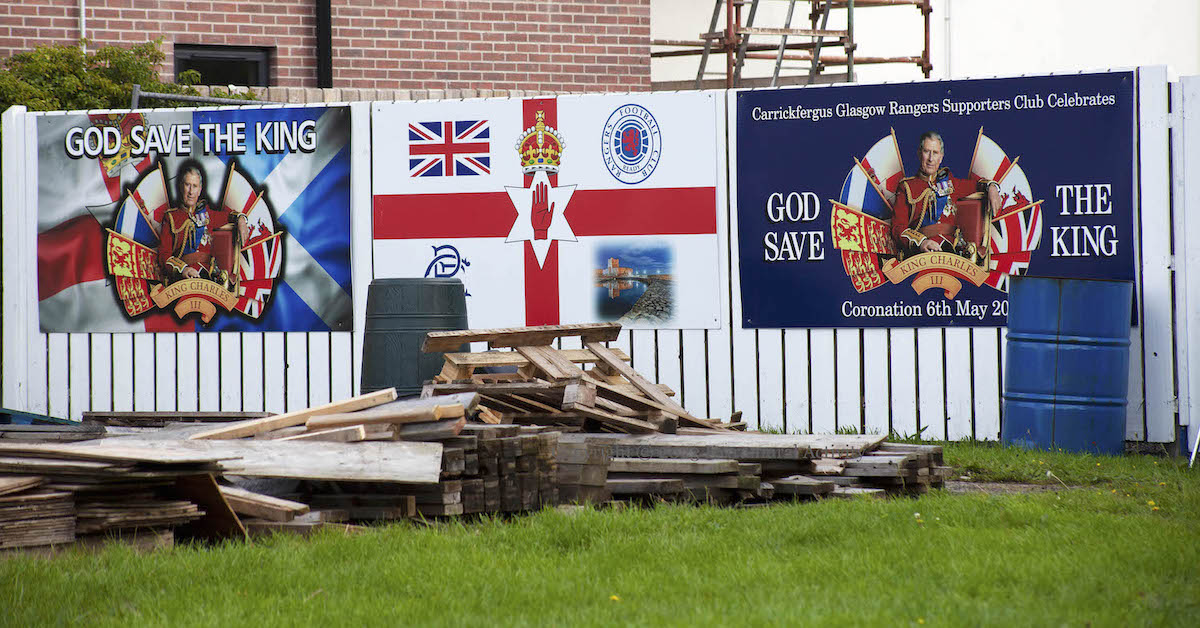
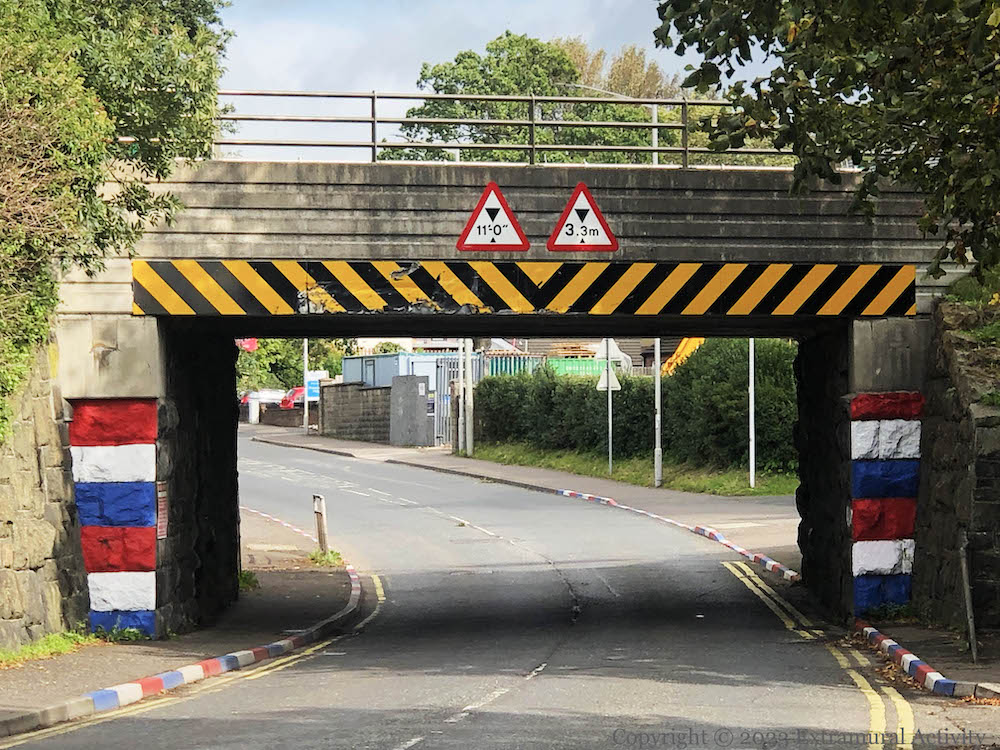
Third and fourth, the boards on the lawn and the painted columns of the railway bridge on St Bride’s Street/North Road.
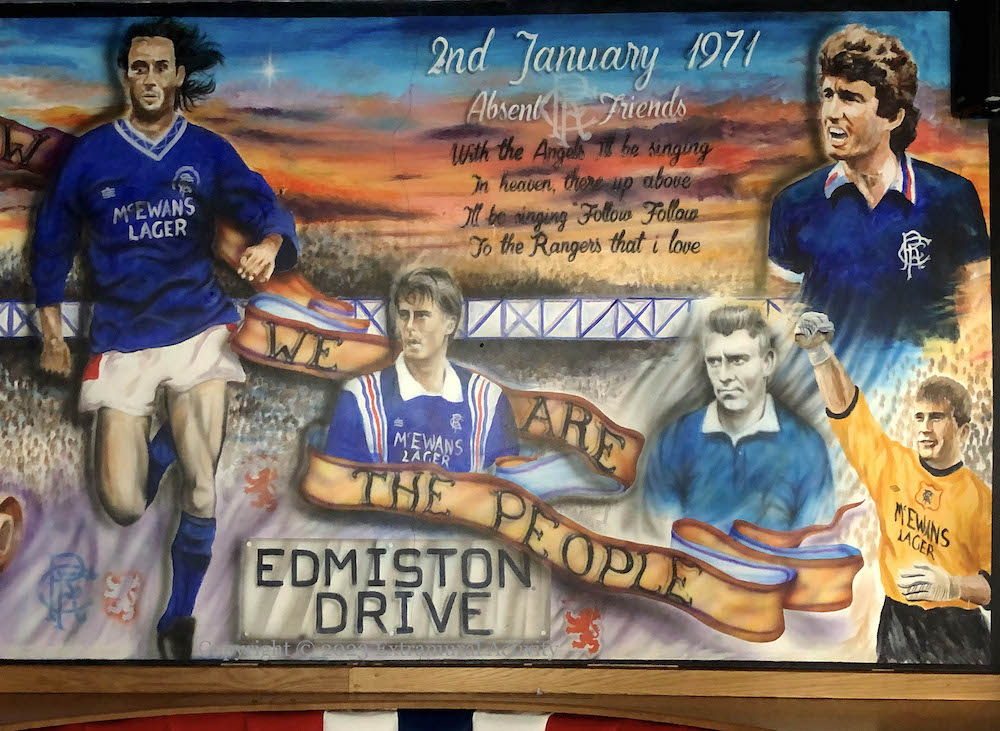
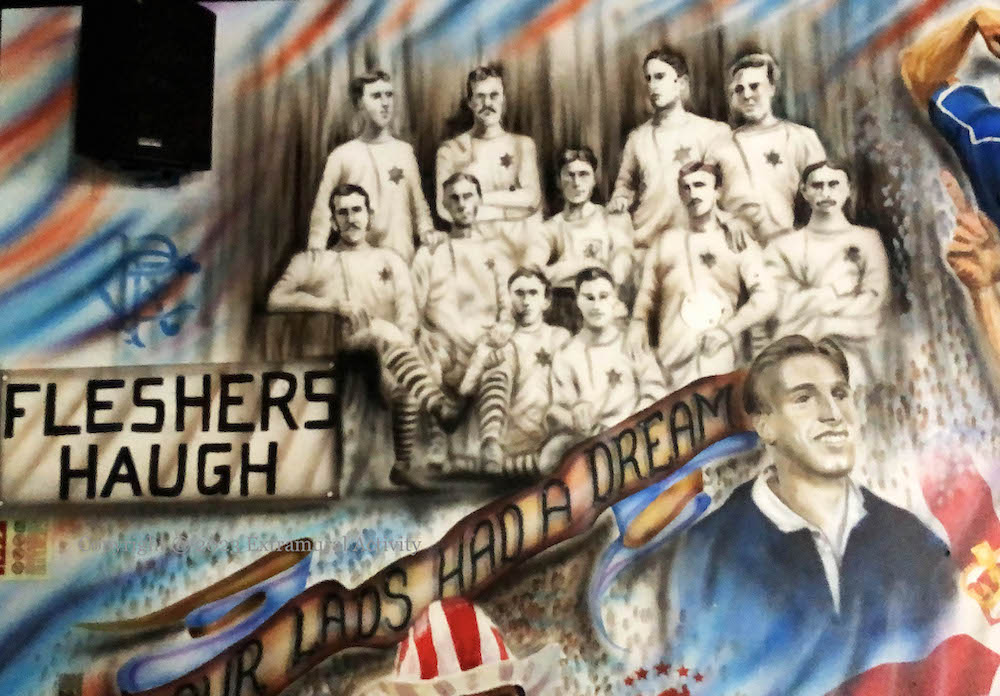
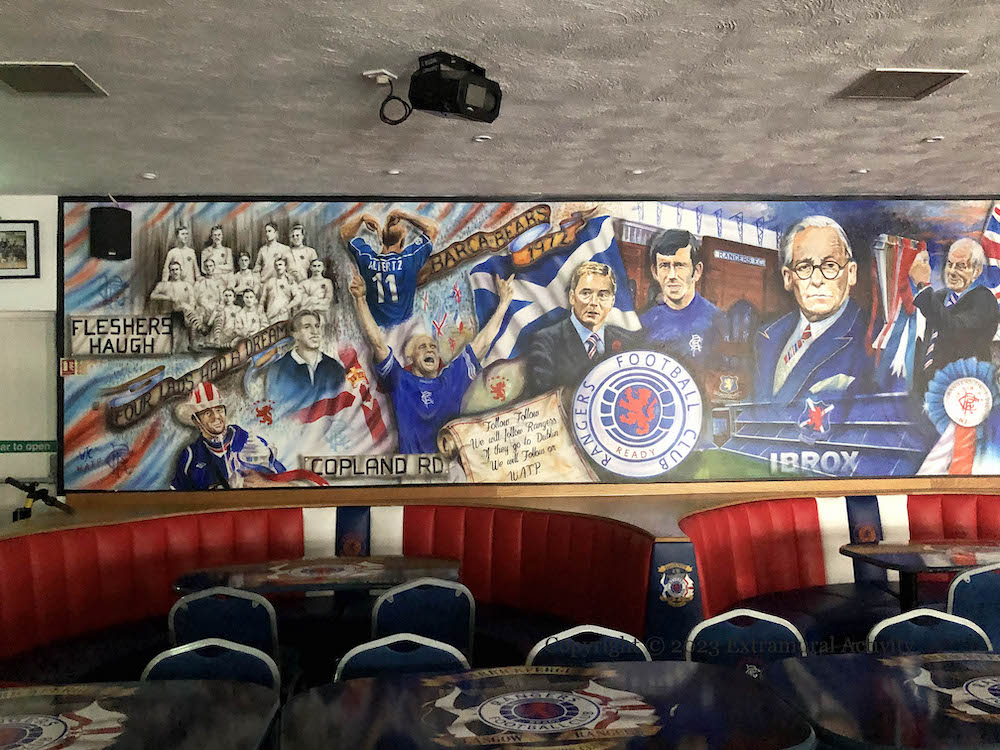
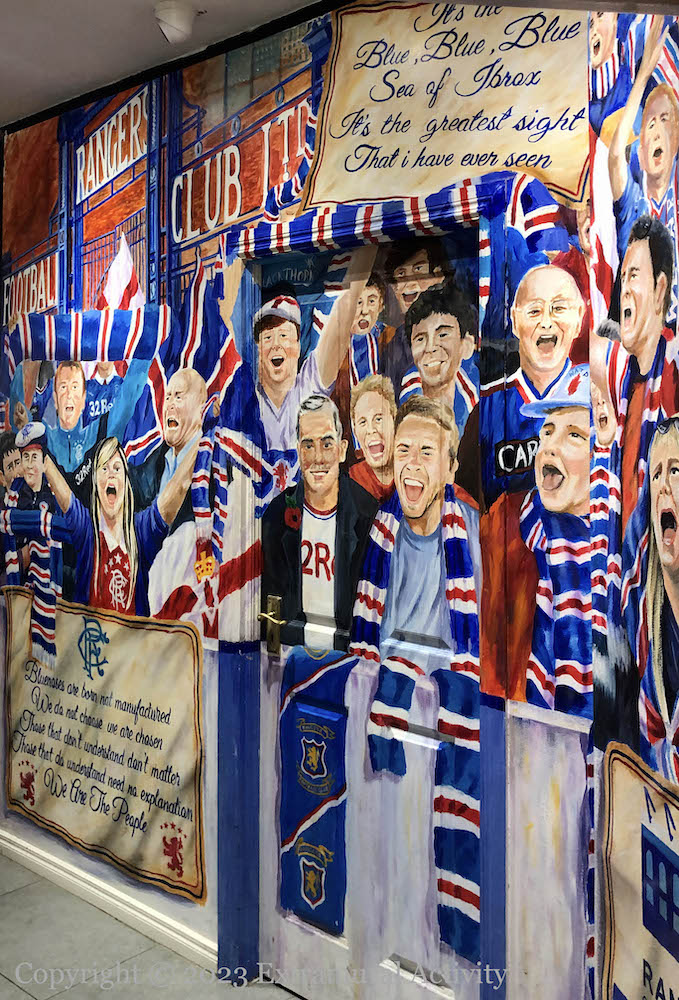
Here are images of murals from the interior and the outside patio of the Rangers Supporters Club (Fb) in Carrickfergus. January 2nd, 1971 – included in the panel above – is the date of the Ibrox disaster, in which 66 people died (WP). “Fleshers’ Haugh” [Butchers’ Low-Lying Meadow] – included in the panel below – is the part of Glasgow Green where Rangers played their games in the first three years of the club’s existence (Scotland Guide). Edmiston Drive (above) and Copland Road (third image) are streets adjacent to the stadium.
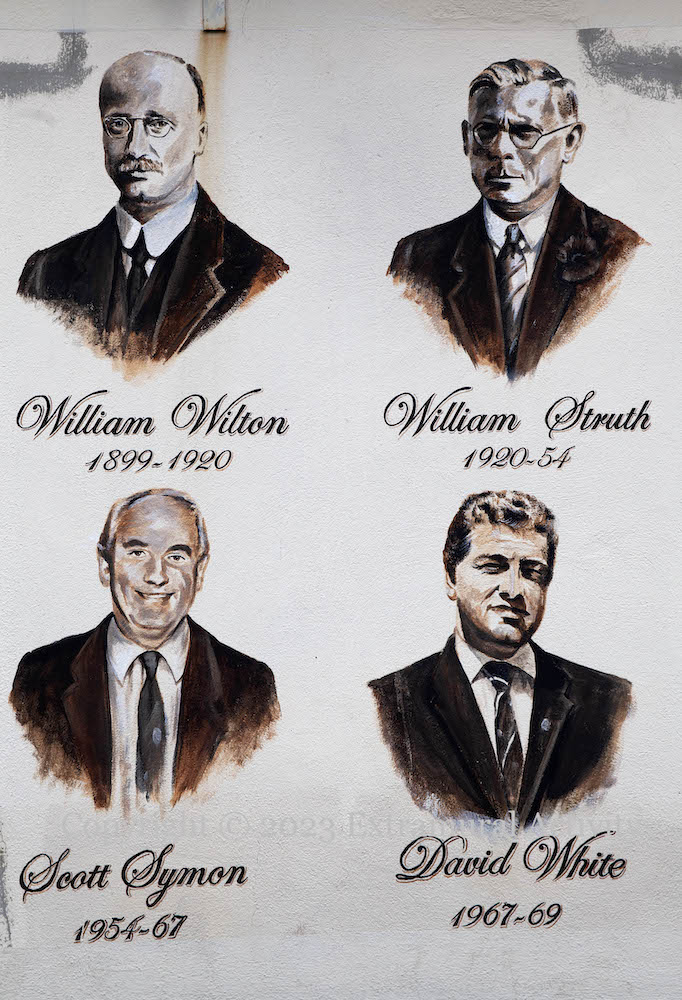
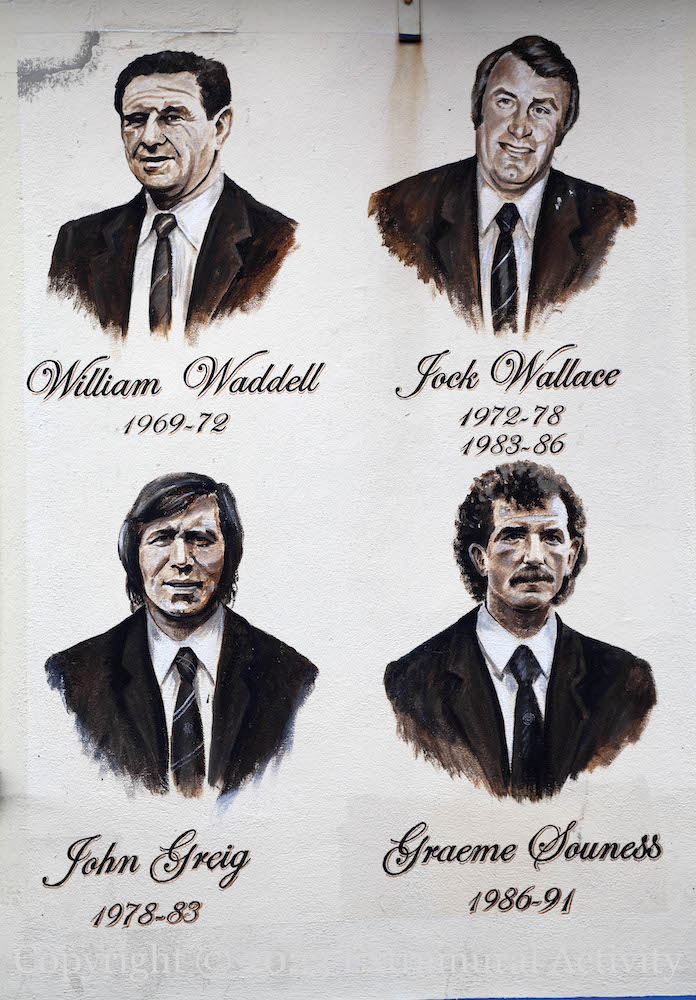
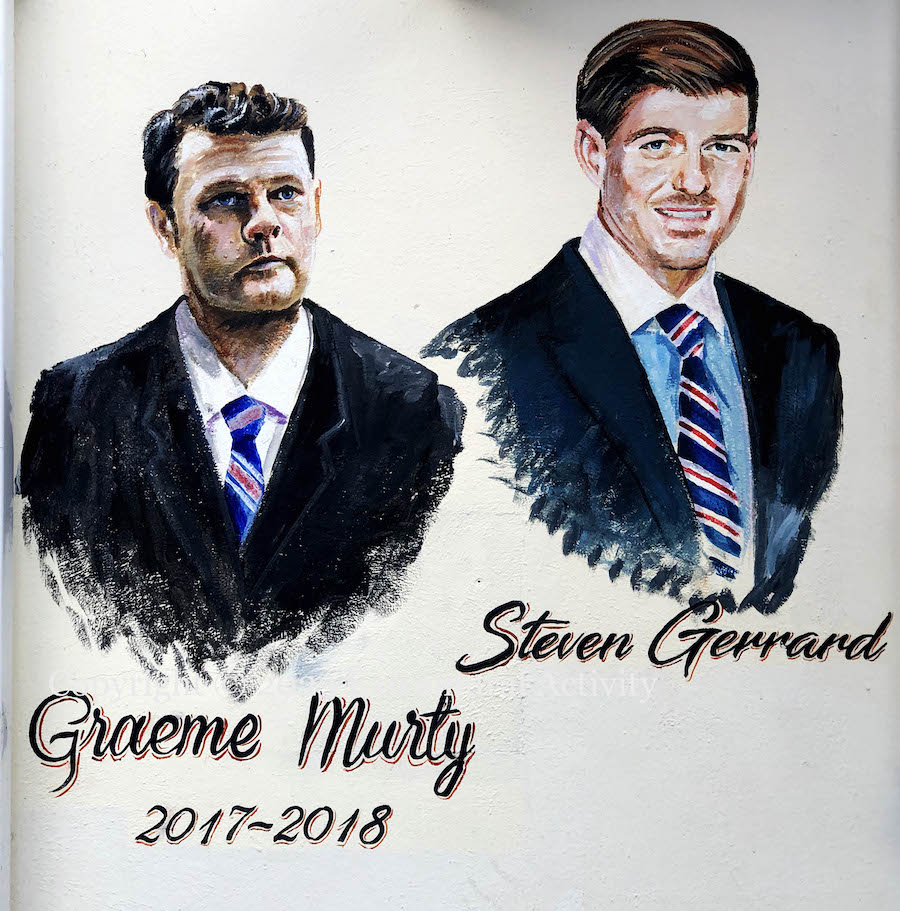
“Let others come after us – we welcome the chase.” The exterior wall of the Carrickfergus Rangers Supporters Club presents a gallery of the club’s managers from 1899 to 2018. In order they are William Wilton, Bill Struth, Scot Symon, David White, William Waddell, Jock Wallace, John Greig, Graeme Souness, Walter Smith, Dick Advocaat, Alex McLeish, Paul Le Guen, Ally McCoist, Stuart McCall, Mark Warburton, Pedro Caixinha, Graeme Murty, Steve Gerrard (and since then, there have been Giovanni van Bronckhorst, Michael Beale, and (currently) Philippe Clement).
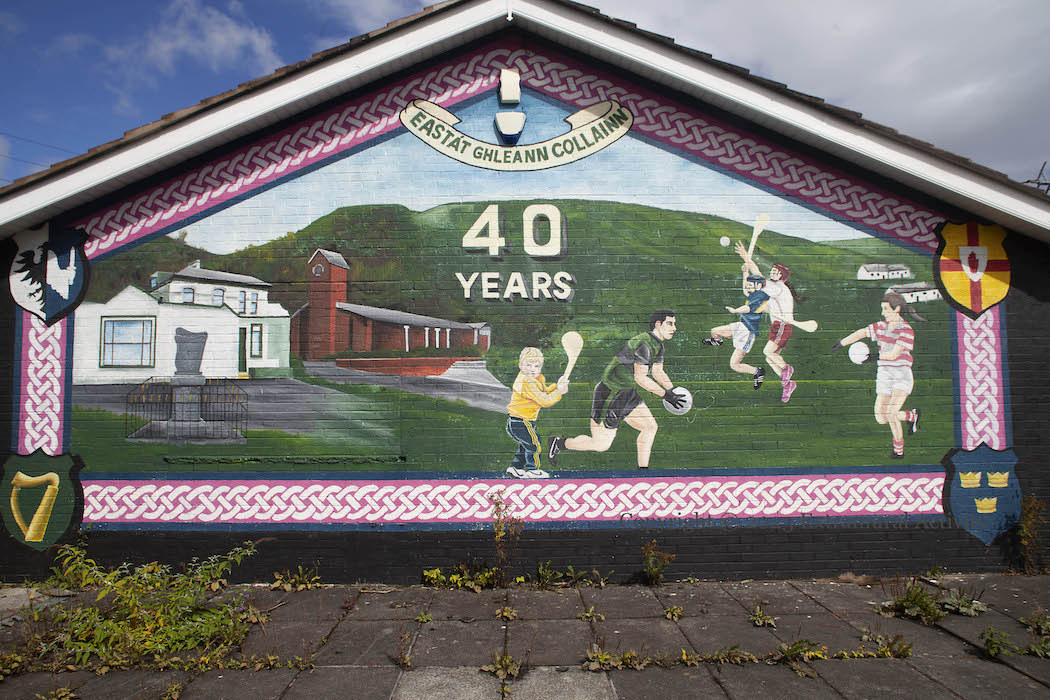
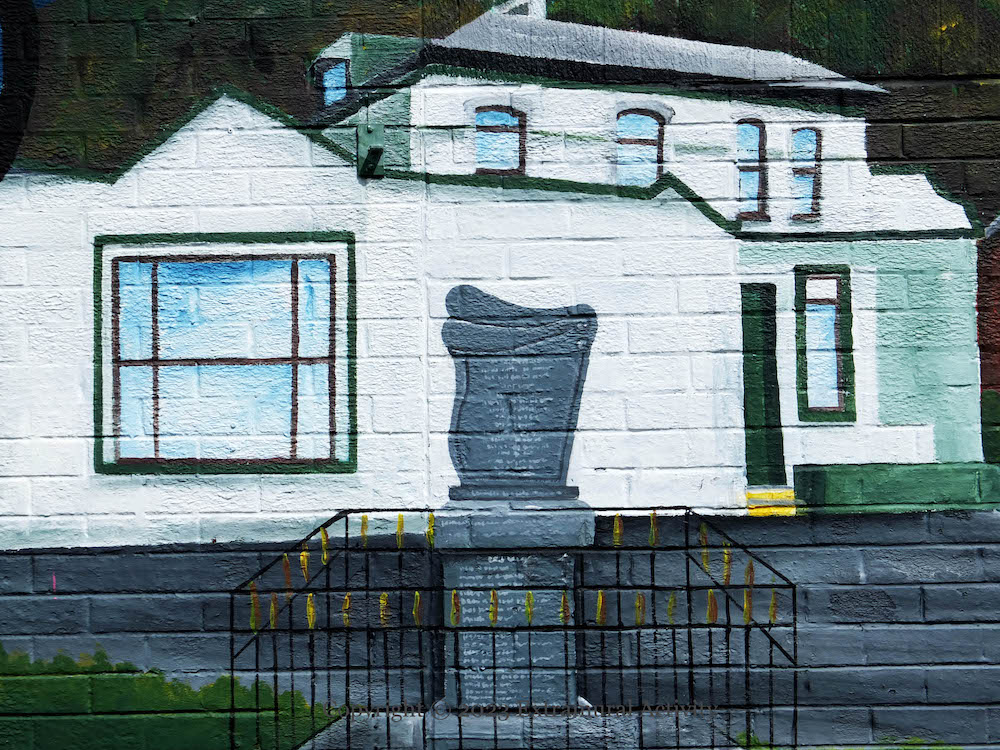
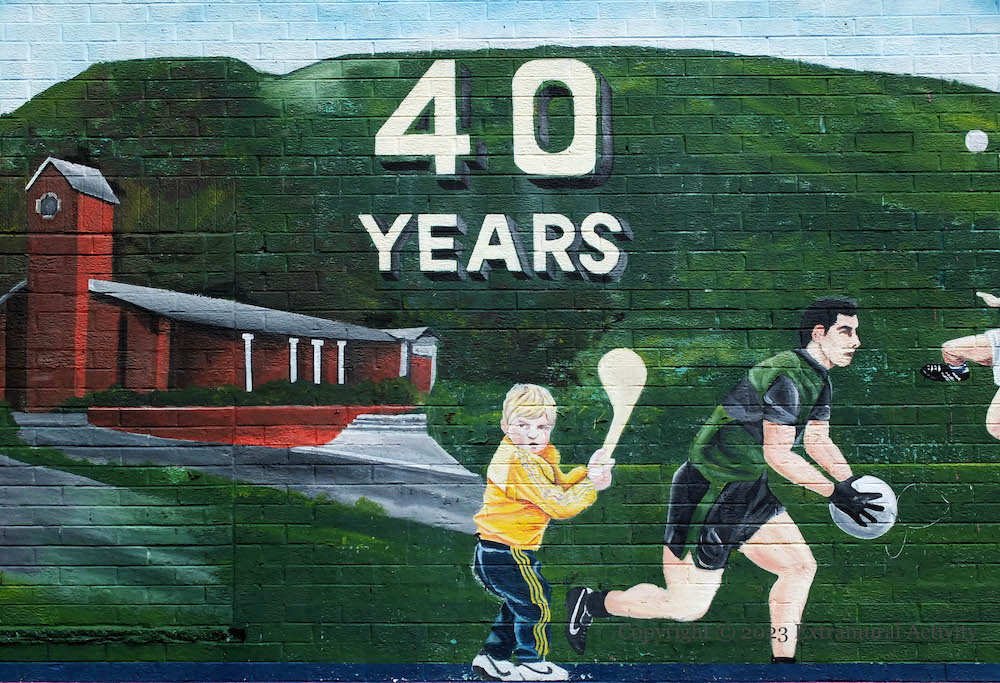
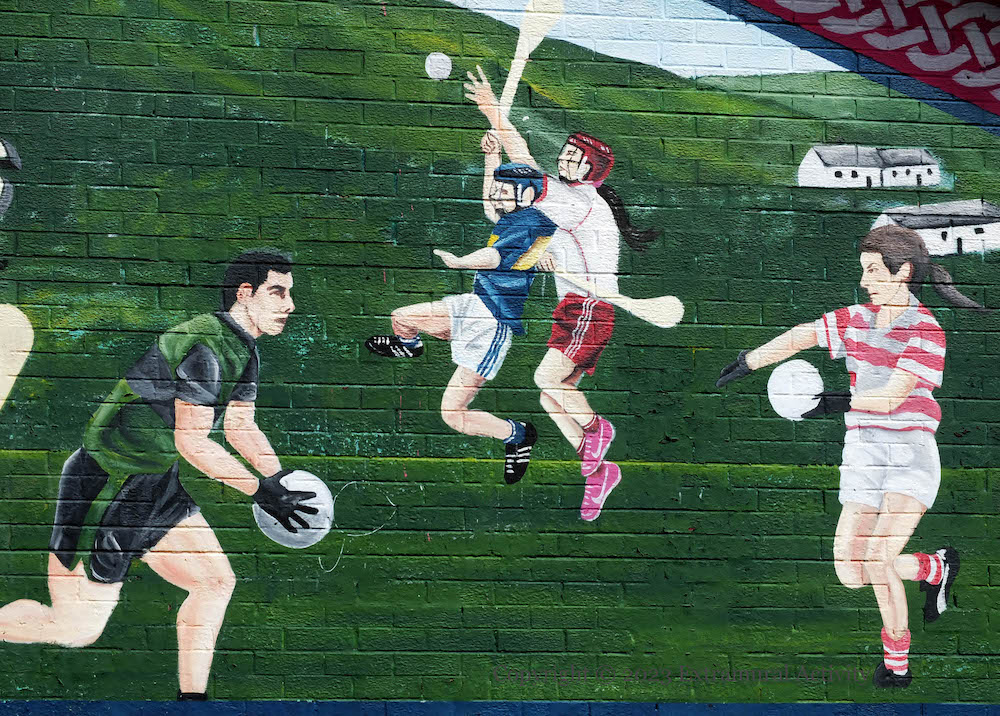
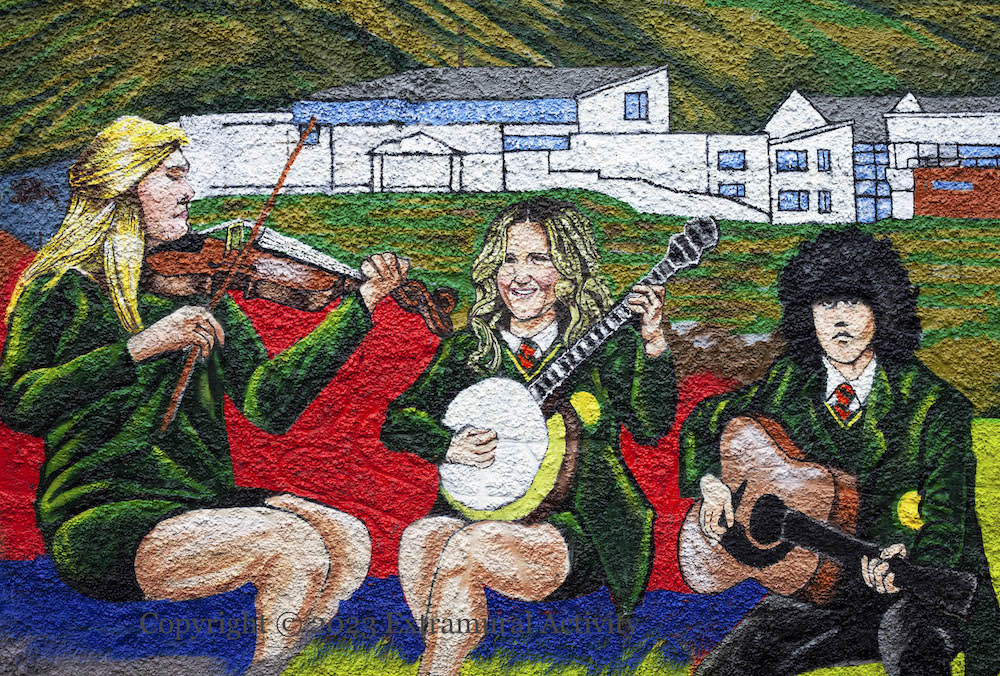
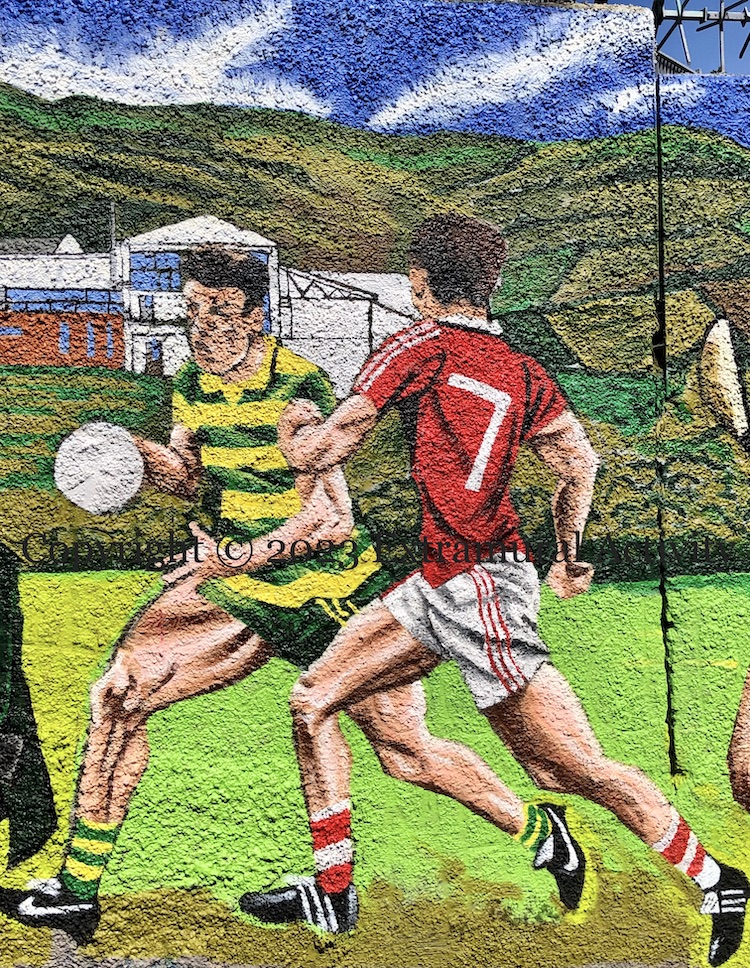
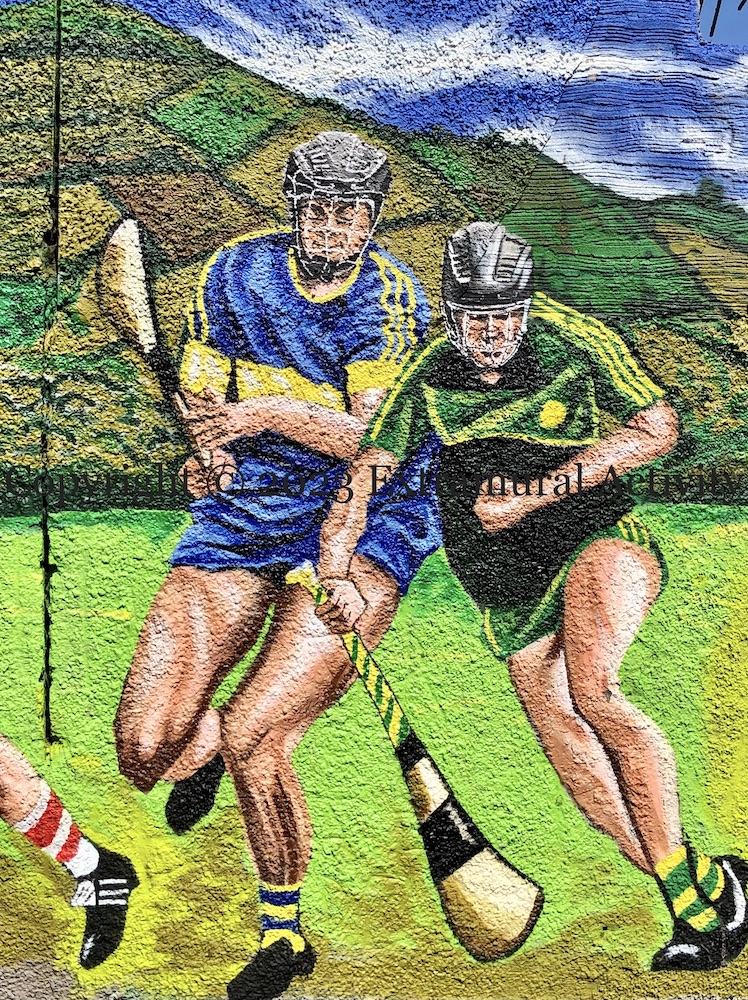
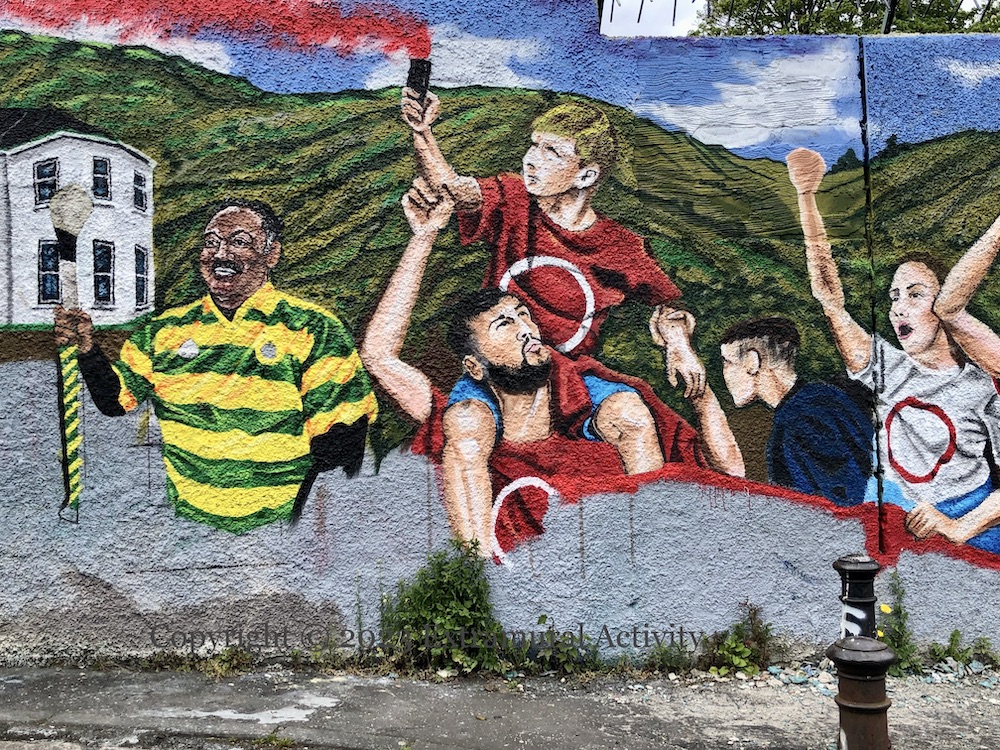
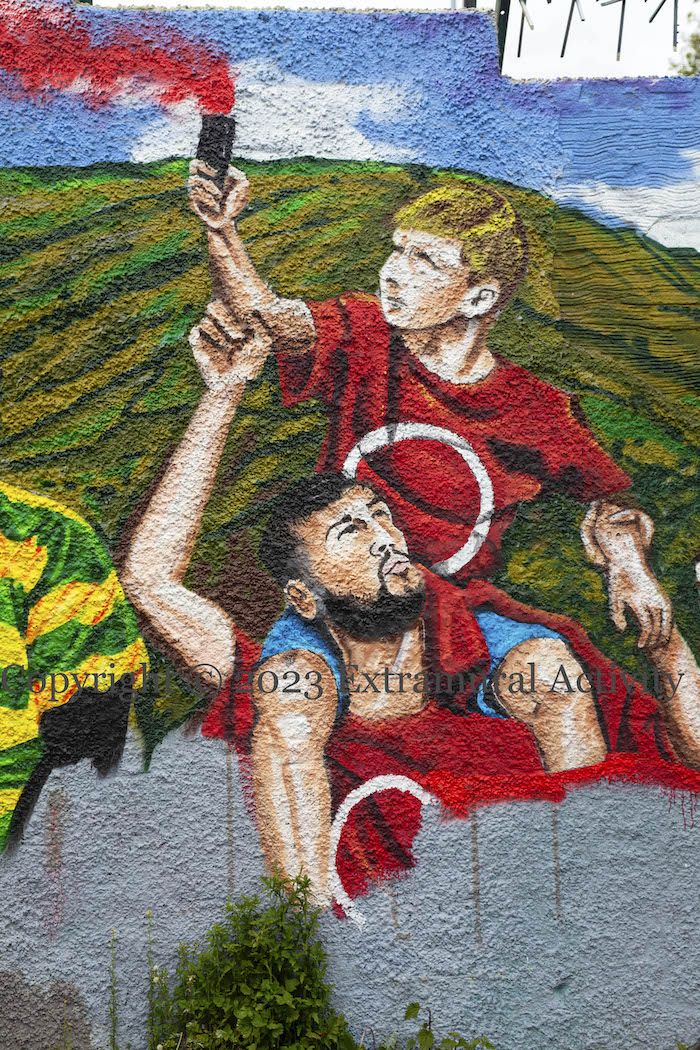
Glencolin estate was built next to Moyard House (which in 1984 became home to the Roddy’s (web), shown in the image directly below) on the Glen Road in 1979 (Belfast Forums). For the fortieth anniversary of “eastát Ghleann Collaınn” the mural at the entrance to the estate was (belatedly) repainted. The composition of the mural remains as in the previous version, with the Roddy’s and Oliver Plunkett church in the shadow of Dubhaıs and Slıabh Dubh; they are now joined by images of Gaelic games. The Bobby Sands quote has been removed.
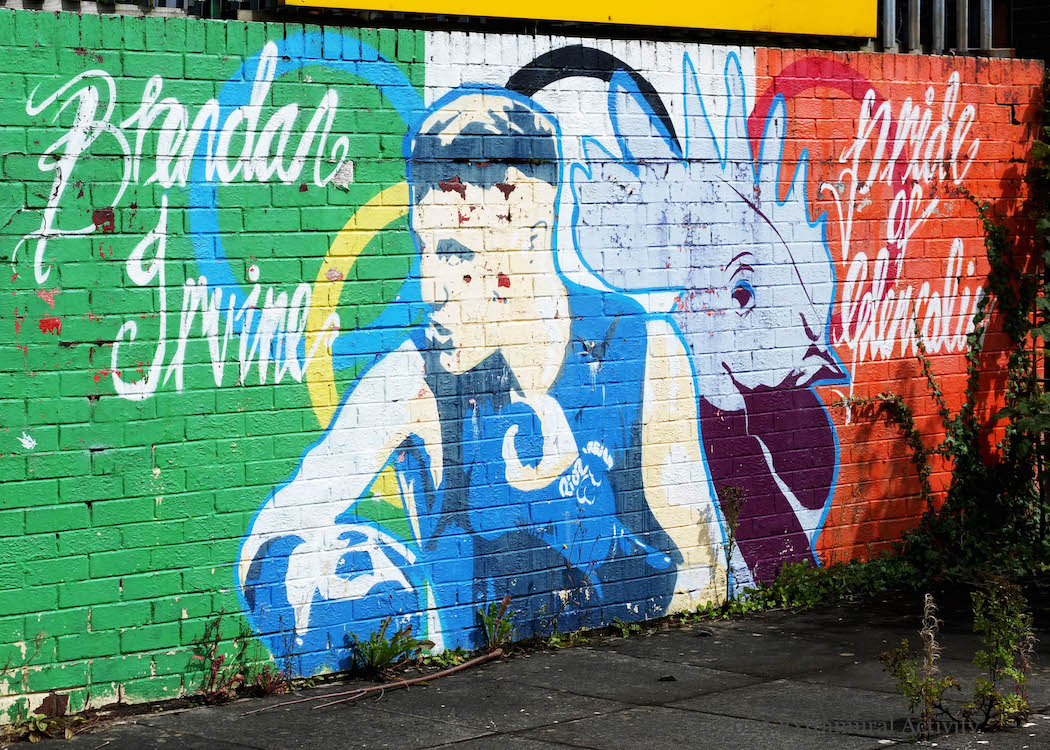
The 2018 side-wall shows boxer Brendan Irvine — “the wee rooster” — who represented Ireland in the Tokyo (2020) and Rio (2016) Olympics at flyweight (Olympics).
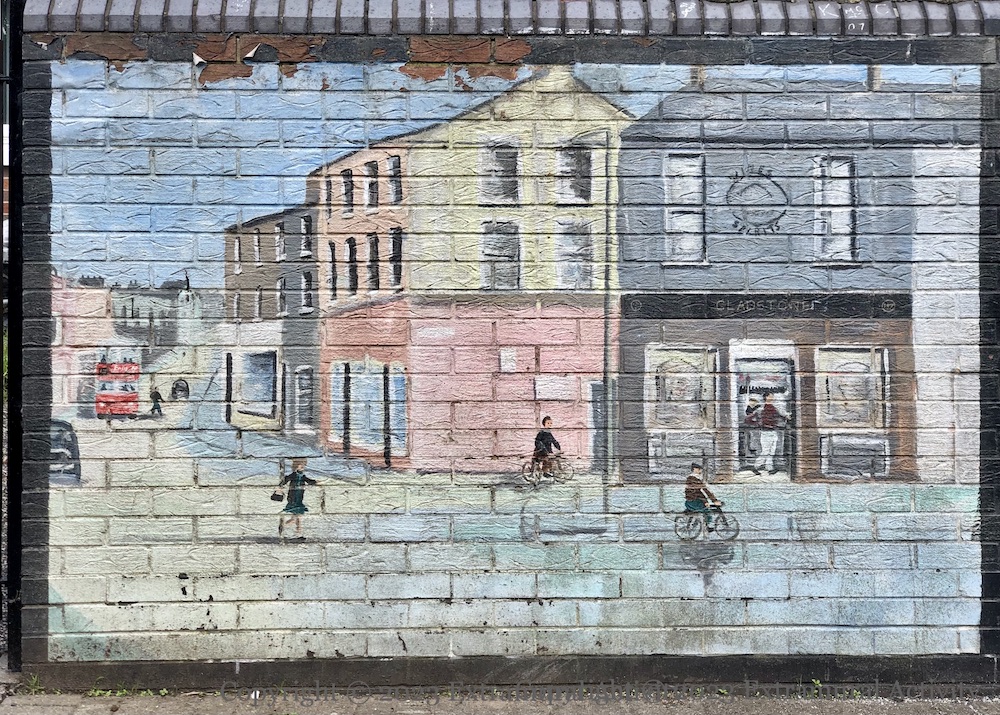
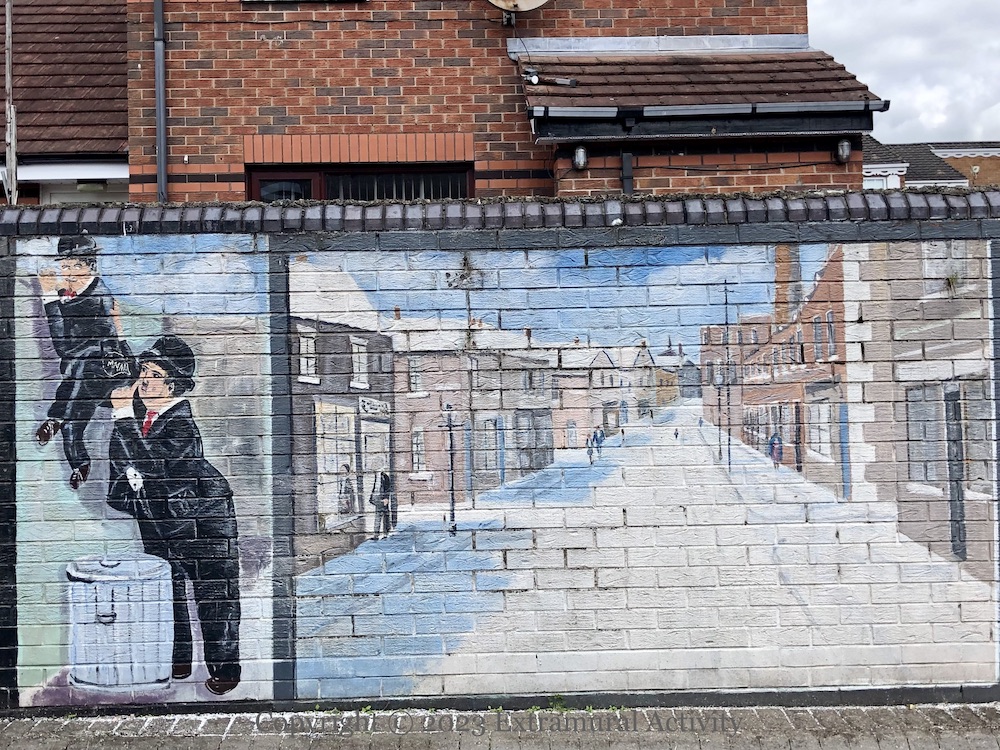
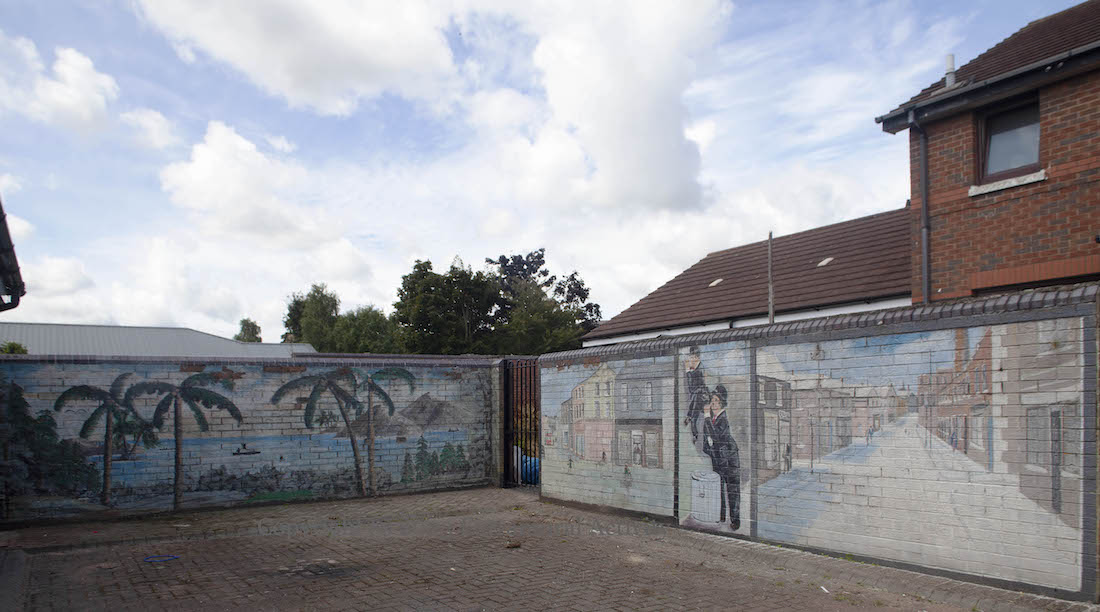
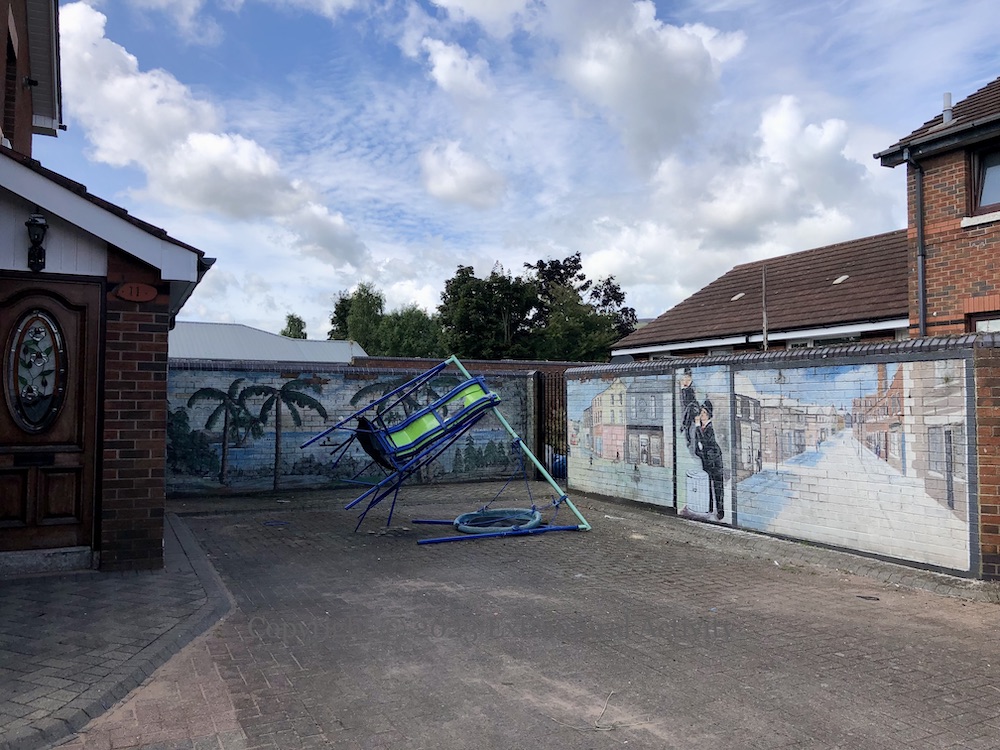
The Gladstone Bar — seen on the right of the image above – was in Gilford Street at the junction with Divis Street, which stretches towards the city on the left. The other street image is perhaps also Divis St/Falls Rd though there are no easily-identifiable landmarks. In between them is a scene from the 1930 Laurel and Hardy film, Night Owls (WP).
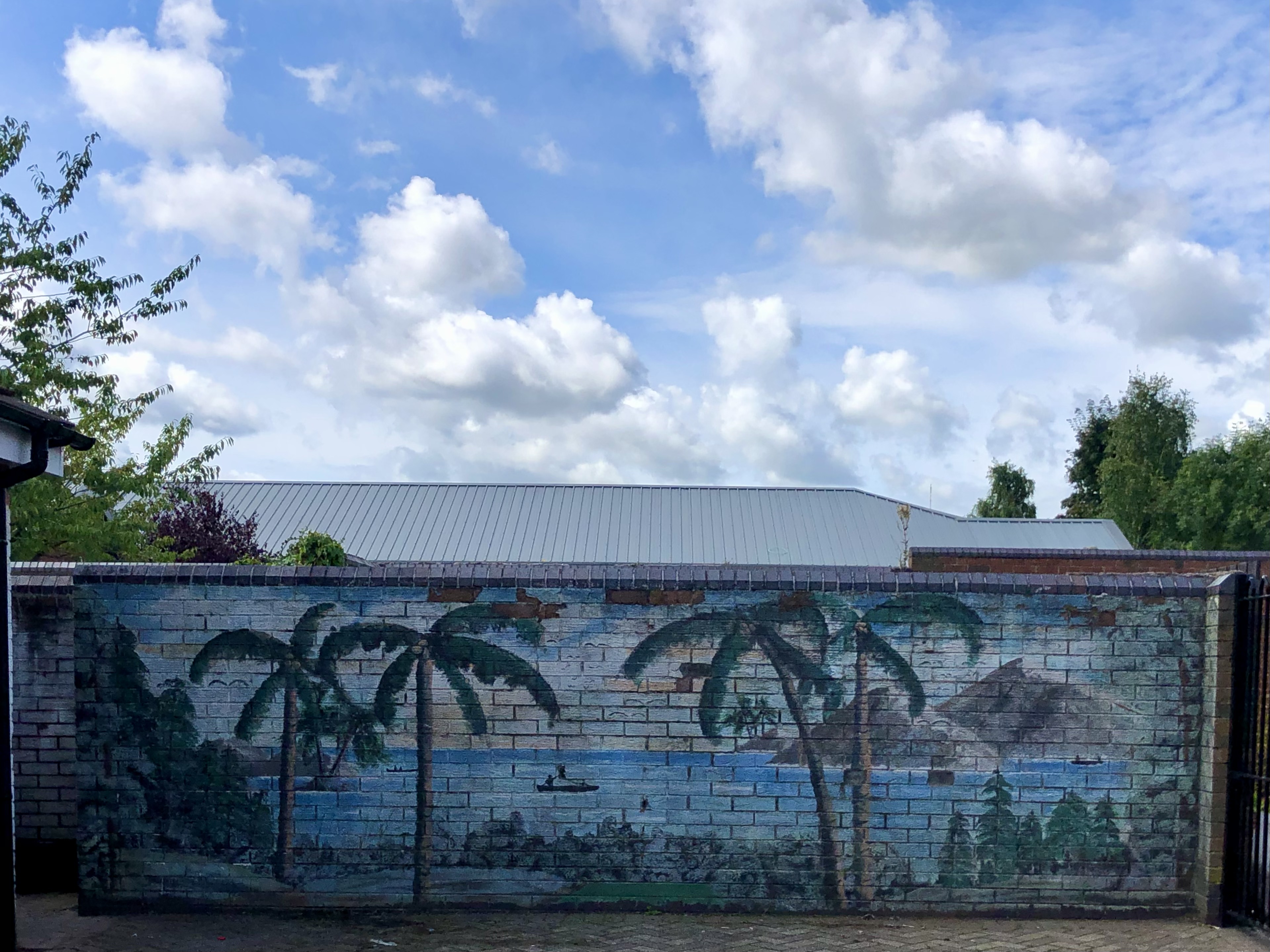
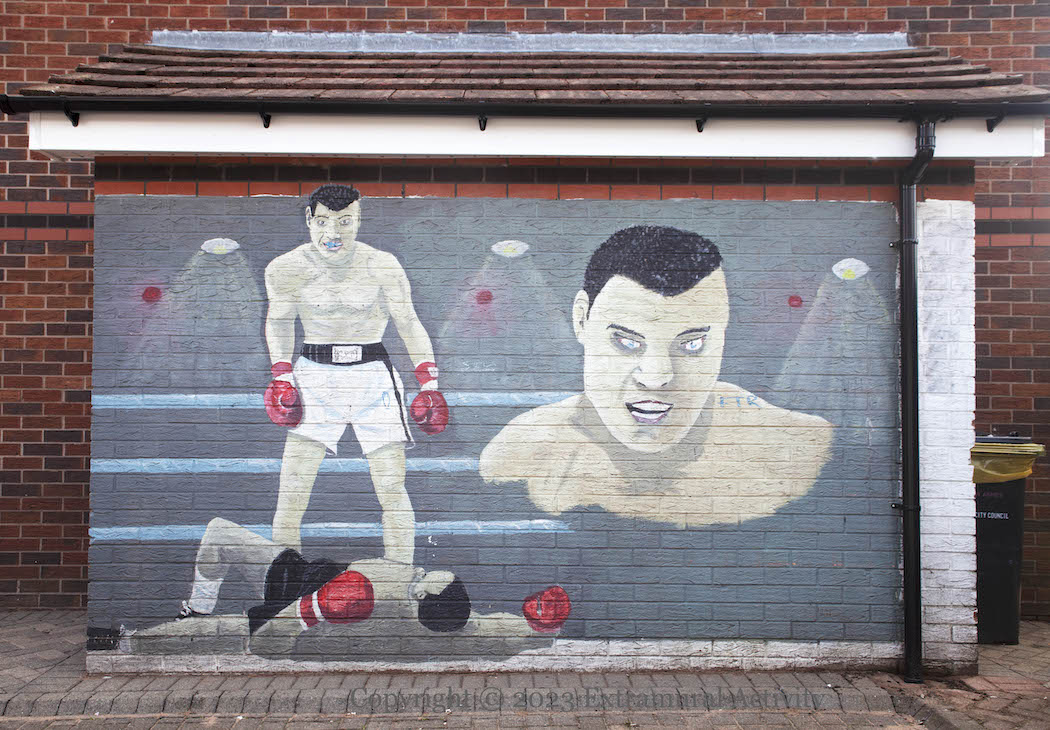
To the left of these three is a mural of an island paradise, and to its left (in the final image) we find Muhammad Ali, based on the famous photo of Ali standing over Sonny Liston in their second encounter.
The murals are in a courtyard off Ross Road and were probably painted at the request of a local resident. The Ali-Liston fight – in 1965 – perhaps gives a date for the consciousness that groups all of these items together – the Gladstone was still standing in the 60s and Laurel and Hardy played on UK televisions into the 1970s. The source for the palm trees is unknown.
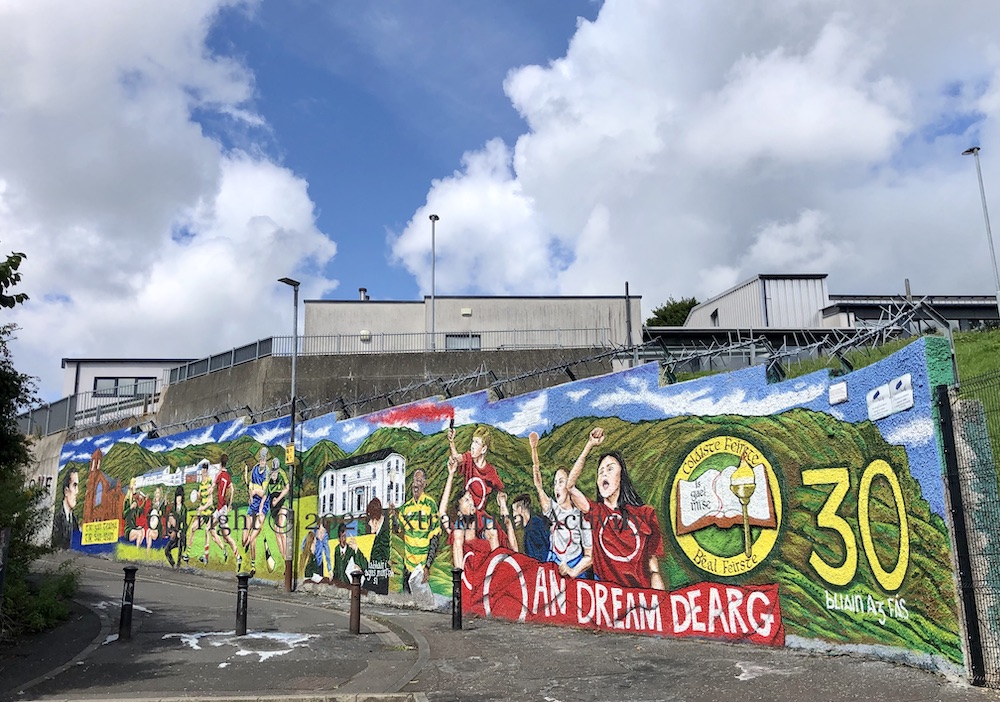
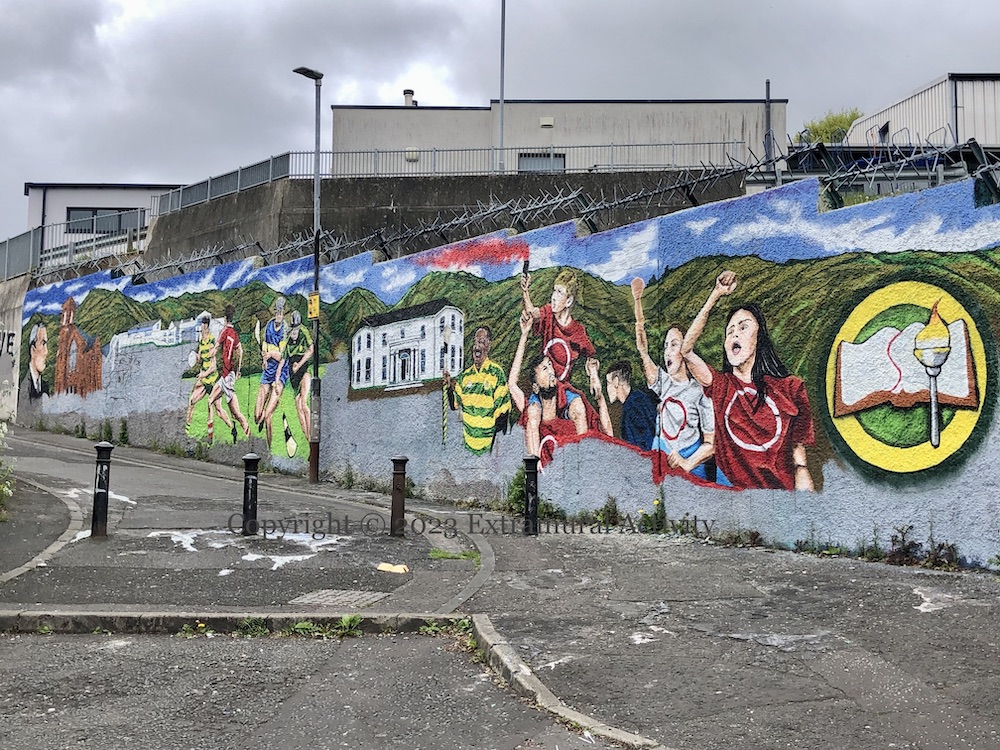
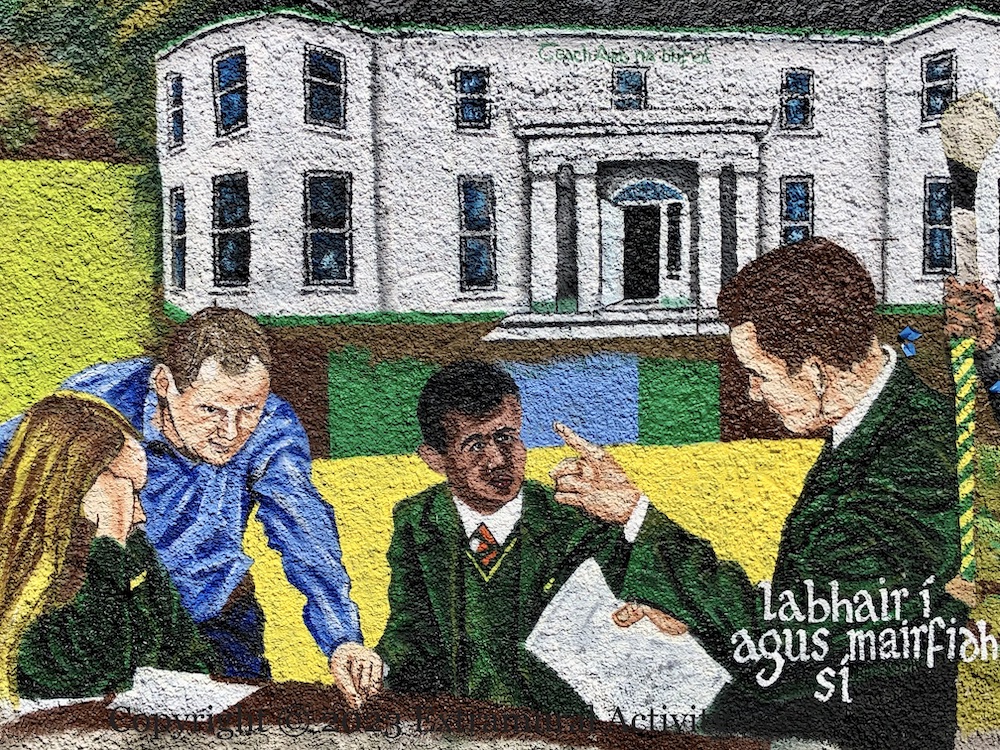
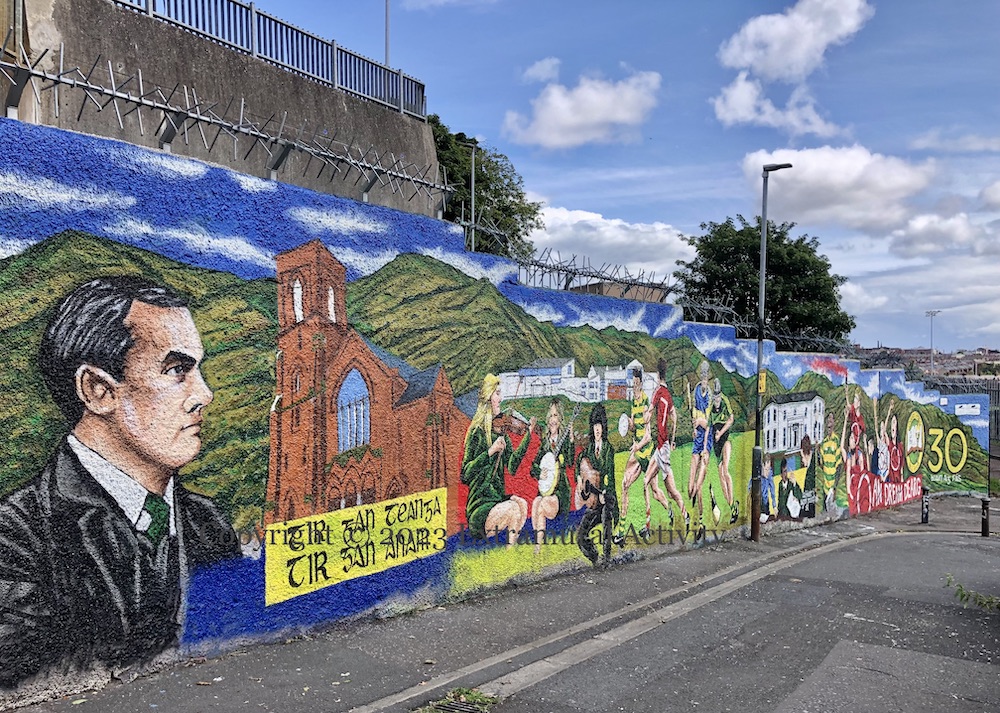
What is now Coláıste Feırste began life as Meánscoıl Feırste in 1991, teaching a group of nine students a curriculum inspired by Patrick Pearse (discussed previously in An Tusa An Chéad Laoch Eıle?) and based in Cultúrlann MacAdam-Ó Fıaıch (Cultúrlann). It moved to Beechmount in 1998 and in 2018 expanded into new buildings that were meant to accommodate 600 pupils (Doherty Architects), which it has now exceeded (BBC) as it enters its thirty-third year in existence.
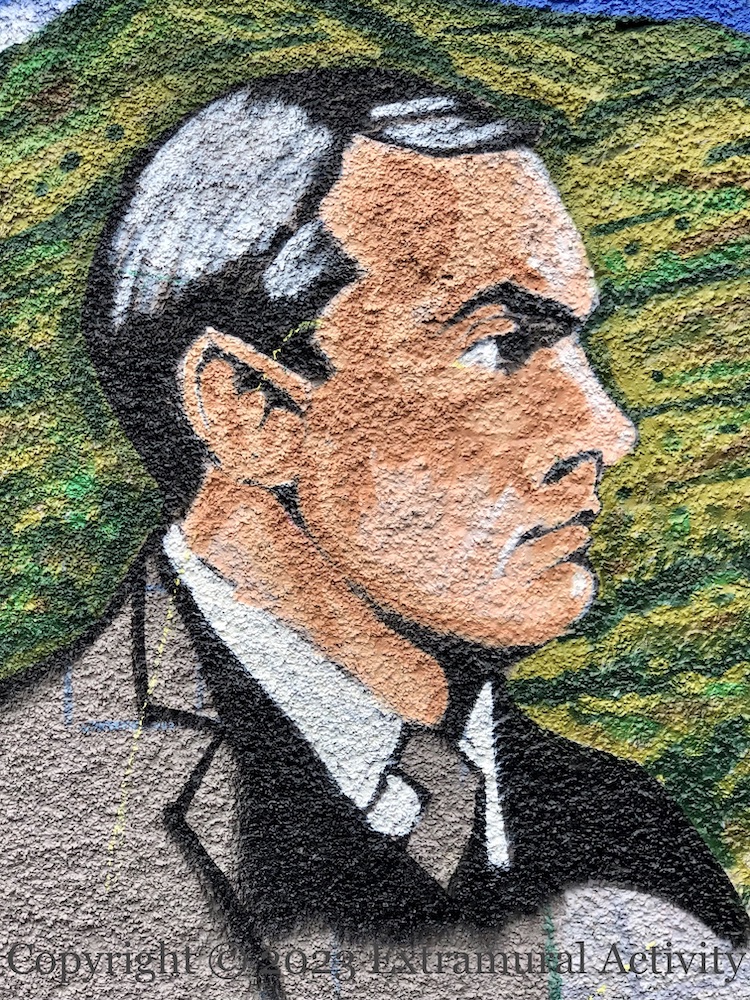
The theme of preserving and promoting the Irish language occurs in several places in the mural: next to Pearse we see his saying, “Máırtín Ó Chadháın ” [a land without a language [is] a land without a soul], in the classroom scene we have “Labhaır í agus maırfıdh sí” [speak it and it will endure], and finally we see the Dream Dearg protesting for an Irish-Language Act (see previously #AchtAnoıs).
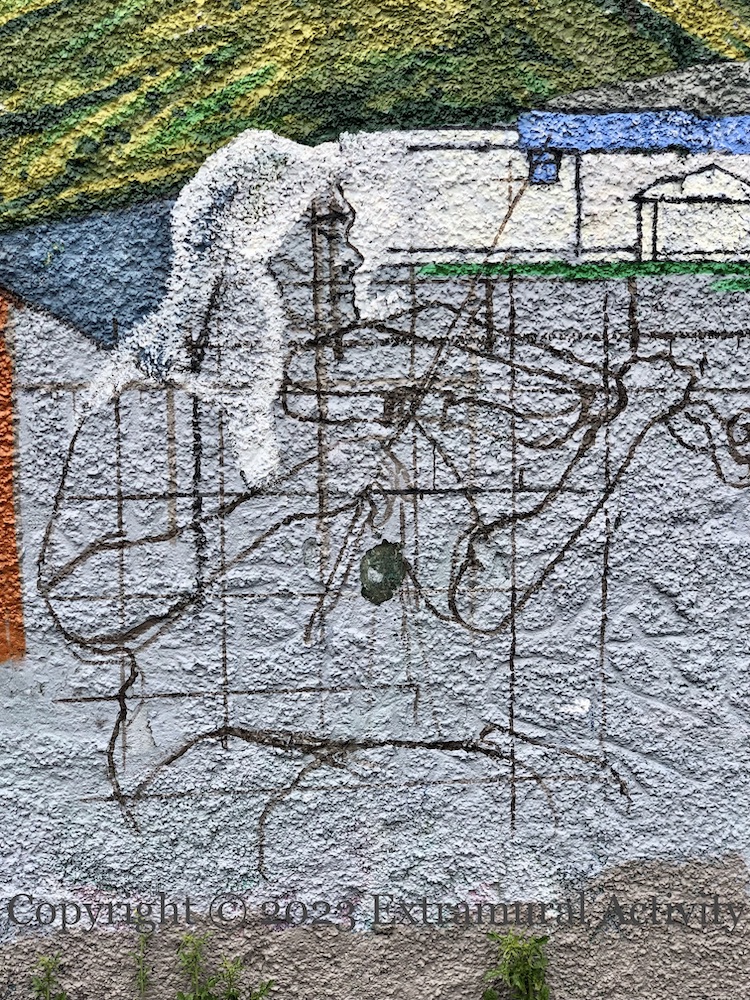
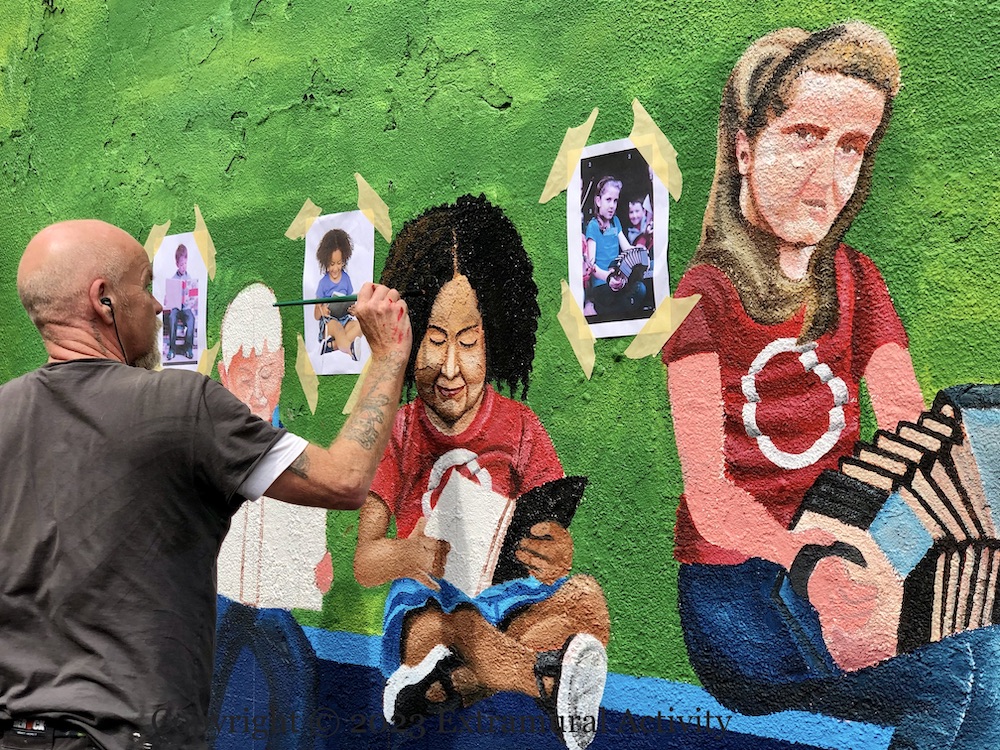
The in-progress images included below among completed detailed shots date from May 6th and 20th.
Giant’s Foot/Beechview Park. Replaces the short-lived mural of Olympians, seen in Sporting Giants.
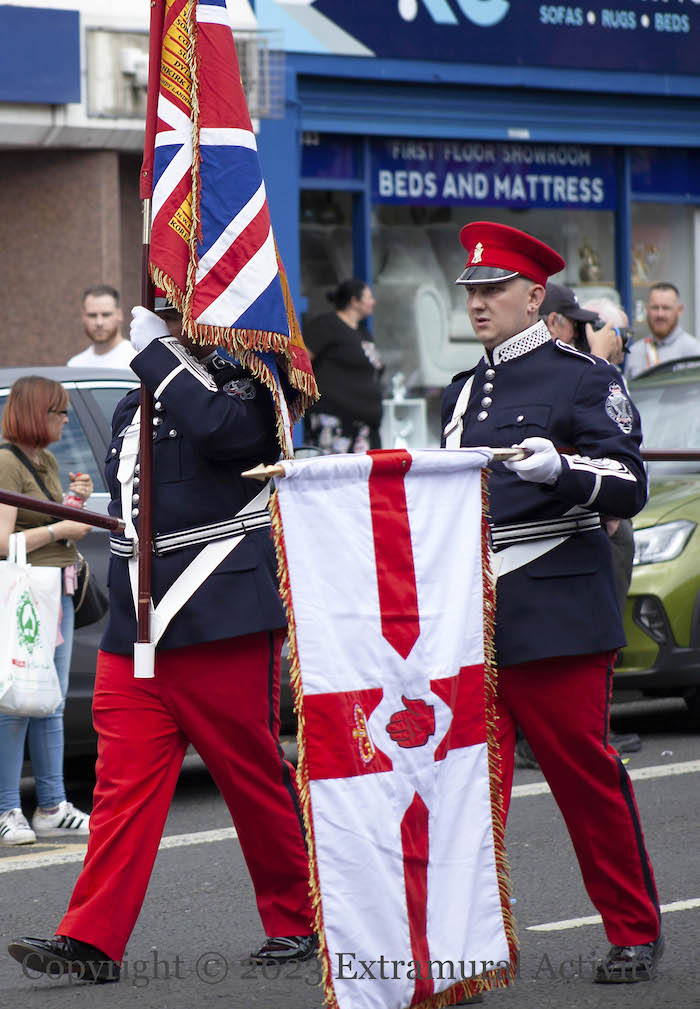
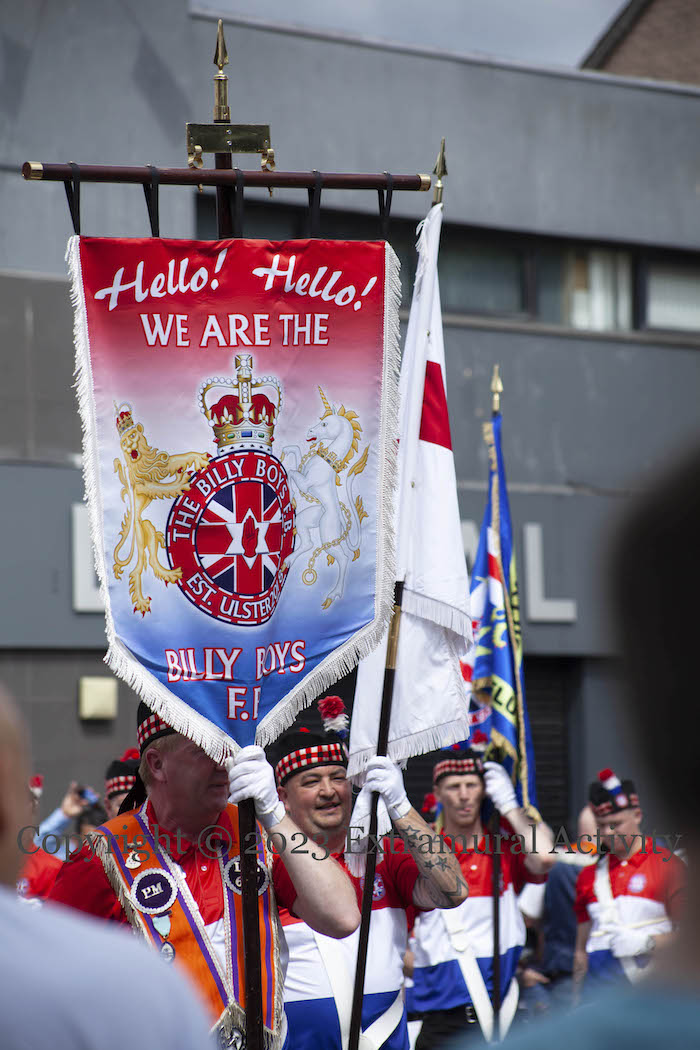
19 towns and cities will hold gatherings for the Twelfth, with the longest parade being the six miles from Carlisle Circus to the field at Barnett Demesne (near Shaw’s Bridge) in Belfast. These images come from a Shankill parade at the end of June, with (above) the (Shankill) Sons Of Ulster (Fb) and (below) the Billy Boys (Rathcoole) (Fb).
For a complete list of gatherings, see Belfast Live
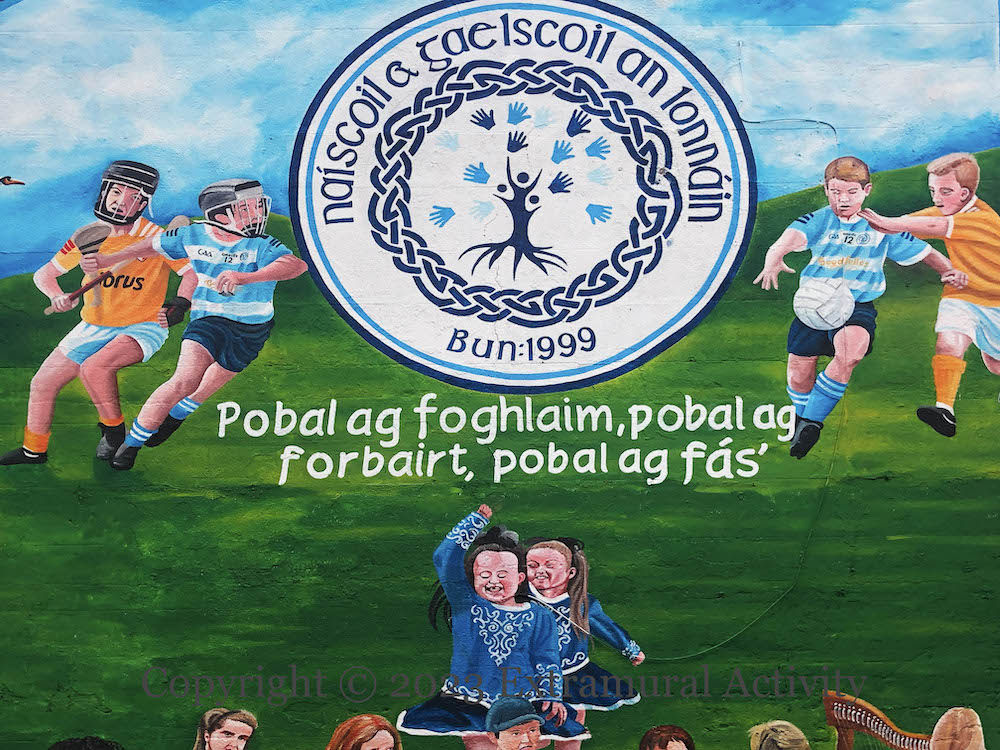
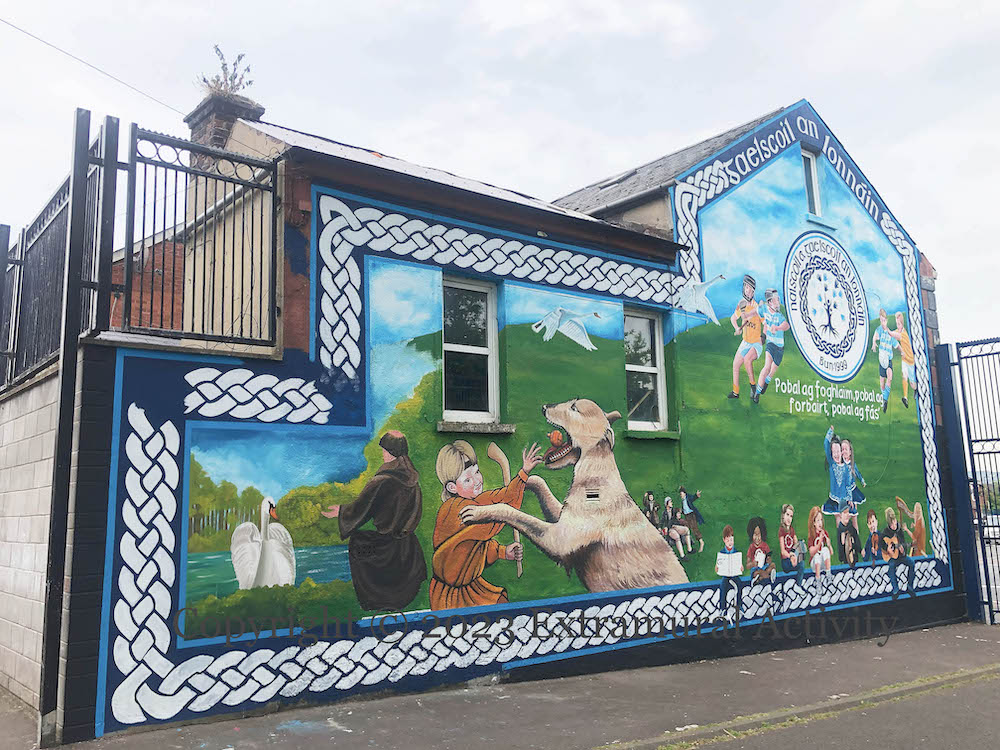
“Pobal ag foghlaım, pobal ag forbaırt, pobal ag fás” [a community learning, developing, growing]
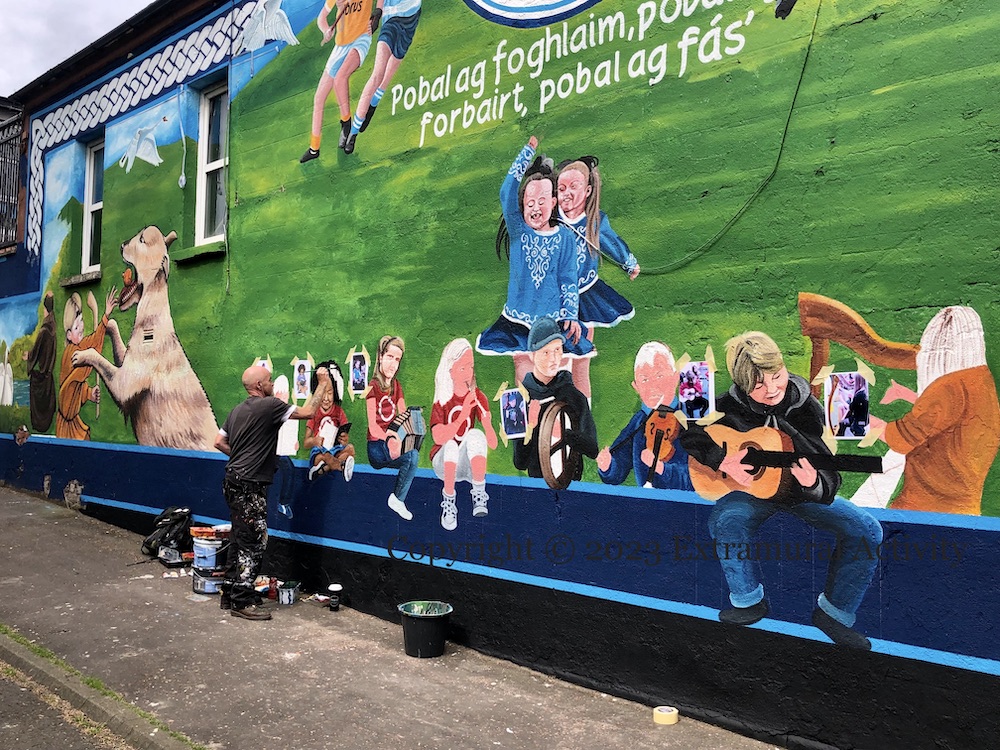
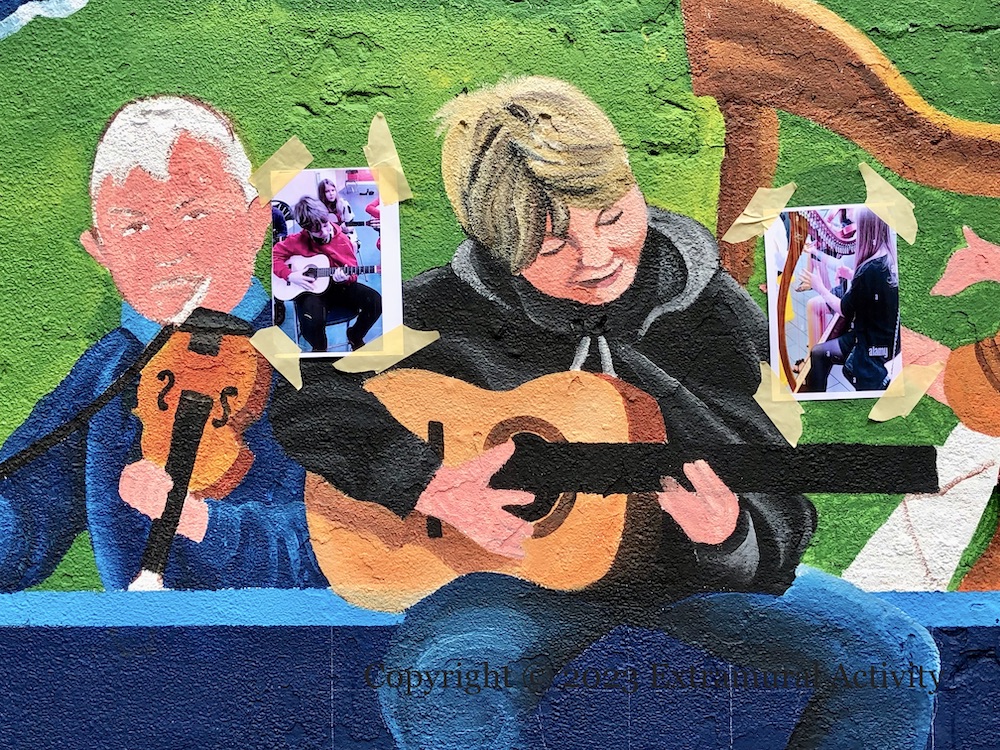
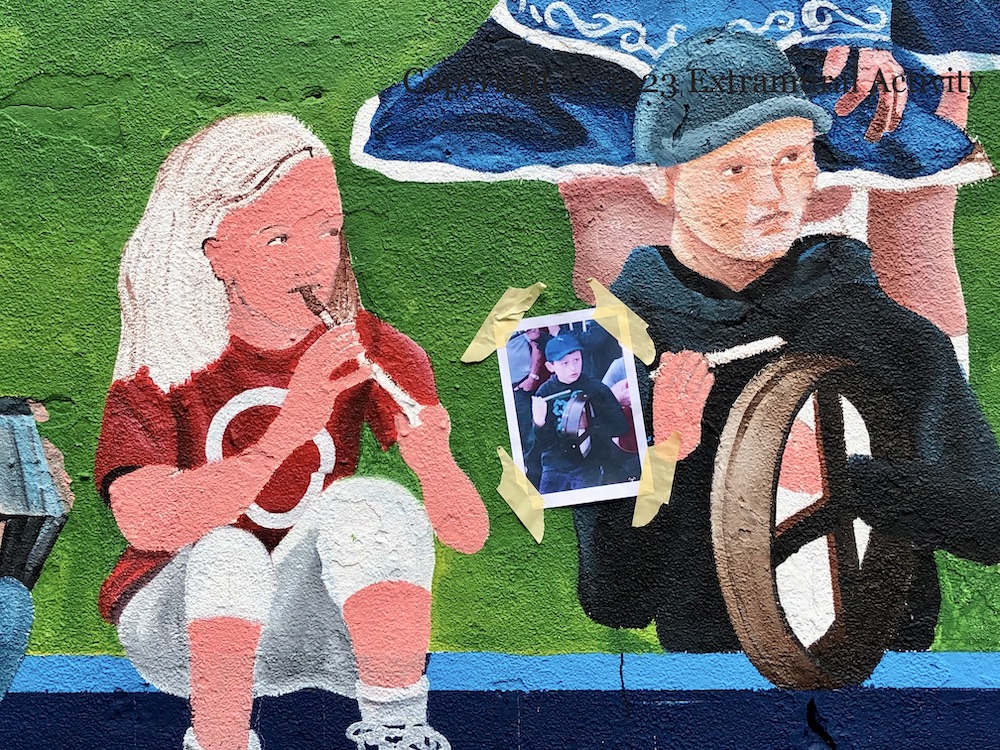
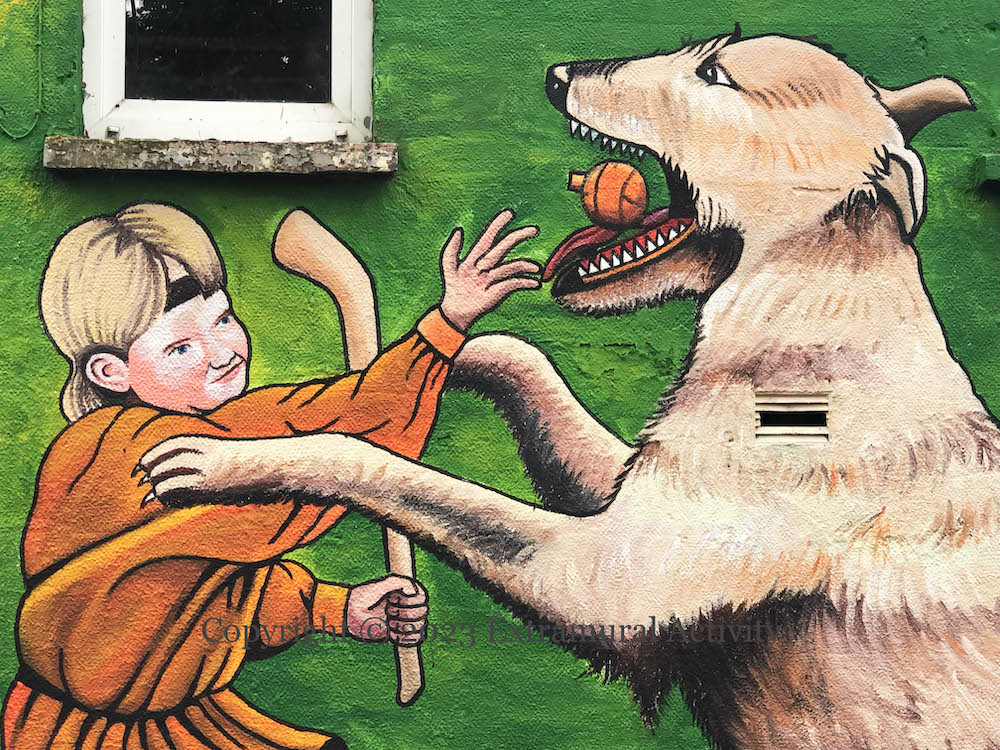
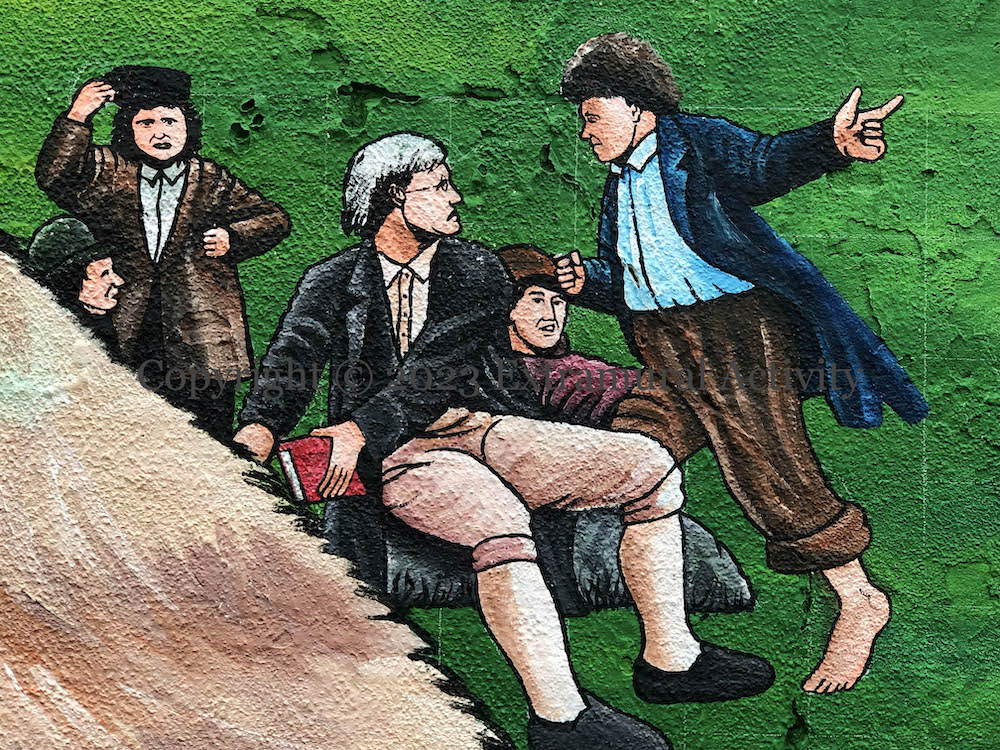
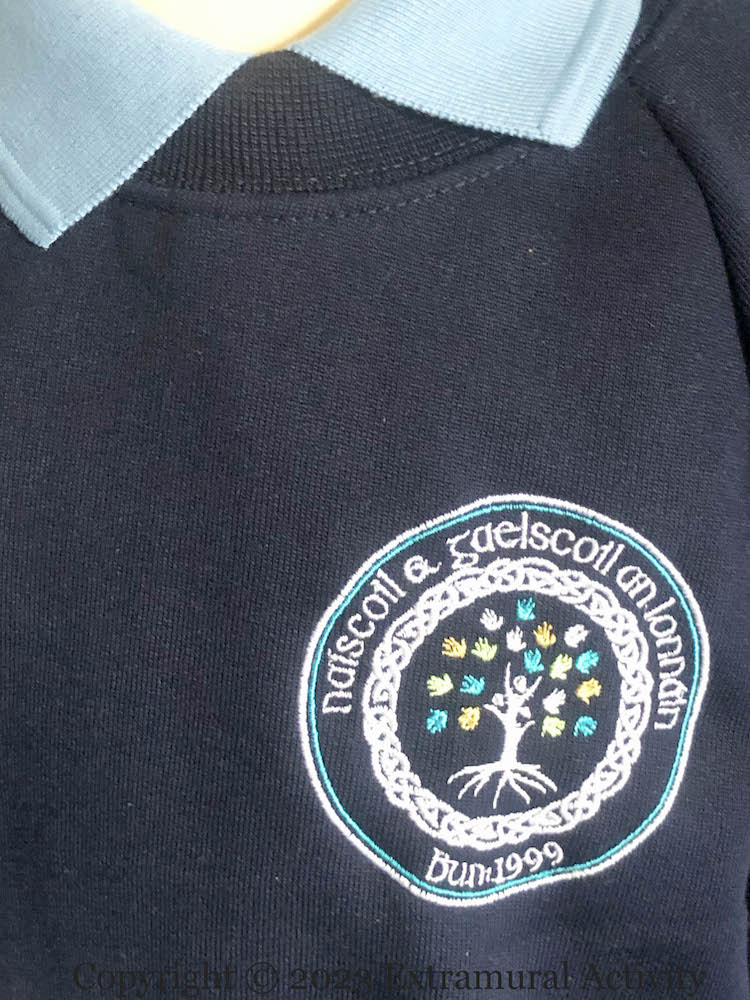
Students from “Naíscoıl & Gaelscoıl An Lonnáın (Fb) bun[aithe] 1999″ [Nursery-school and Irish-language [primary] school of the loney, founded 1999] are shown playing Gaelic games, Irish dancing, and playing traditional instruments (and the guitar). On the left are representations from Irish mythology: the Children Of Lear and Setanta killing Culann’s hound (and taking the name Cú Chulaınn in taking its place), along with hedge-row school (see Hedge Row School).
The origin of the name is unclear; the nearest loney [lane] was the “Pound” loney, so-called because of the animal pen just outside Barrack Street, used to store livestock before moving on to the markets the following day (Rushlight | Uachtar Na bhFál). (The Pound Loney is included in the mural in Durham Street – see Et In Arcadia Ego.)
The other well-known loney in Belfast is the “buttermilk loney” which was either/both what is now Ballysillan Park (that is, connecting Olpark with the horsehoe bend) or the top part of the loney that connected Wheatfield (the top of Ardoyne) to the Ligoniel junction and on towards the old Ligoneil House (there are a mixture of usages in this Belfast Forum thread); this image from the 1930s might show the lane in (what was still at the time) the hills above Oldpark; a new housing-development towards the top of the Ballysillan Park is euphemistically called “Buttermilk Loney”. (It is also said to have been a prior name of Skegoniell Avenue (Belfast History).)
(The Uachtar Na bhFál page also mentions “Turf” loney, “Mountain” loney, and “Killoney”.)
The history of the Irish word “lonnán” is unclear. Uachtar na bhFál says the word is of Scots origin (perhaps as “loanin”). (See this BelTel article on the opening of the Ulster-Scots centre in 2014.) Spelled “lonnen”, it is also a Geordie word (Heslop’s Northumberland Words | wiktionary). The Irish News and Belfast Live, working from the same (uncited) press-release about Páırc An Lonnáın (which is along the Westlink below Raıdıó Fáılte), state that “loney” comes from the English word “loaning”. The Irish word “lonnán” does not appear in Dinneen 1904; Dinneen 1953 defines it (hyper-specifically) as “a grassy recess running up into high basaltic cliffs”.