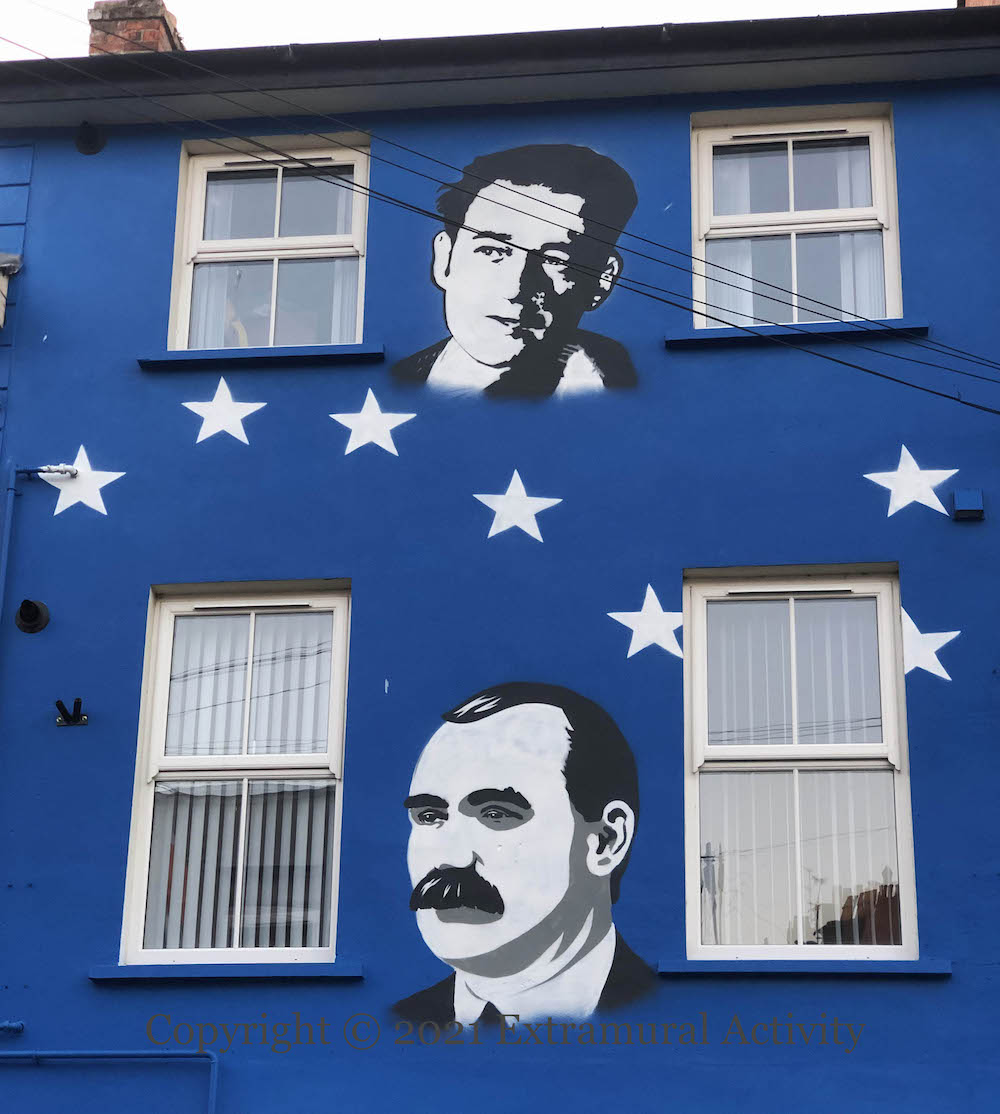
“A free Ireland will control its own destiny from the plough to the stars.” So James Connolly is said to have explained the significance of “the plough in the stars” (Ursa Major) as a symbol of Irish revolutionary socialism. (Though no source is given for the remark. See the Paddy Duffy Collection for more.)
Connolly and Seamus Costello, heroes of the IRSP (web) are painted on James Connolly house in Chamberlain Street, Derry, which is also home to Teach Na Fáılte, the Republican Socialist Ex-Prisoners group.
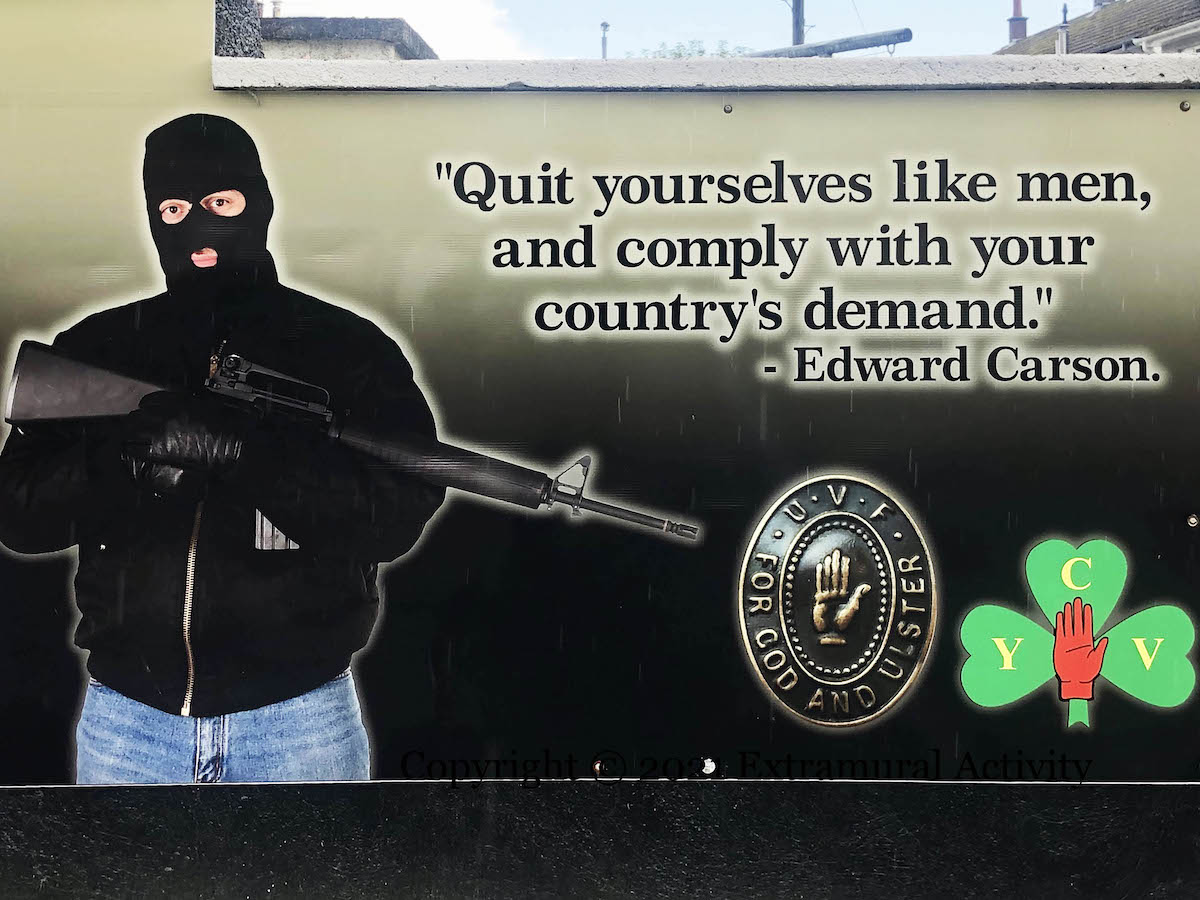
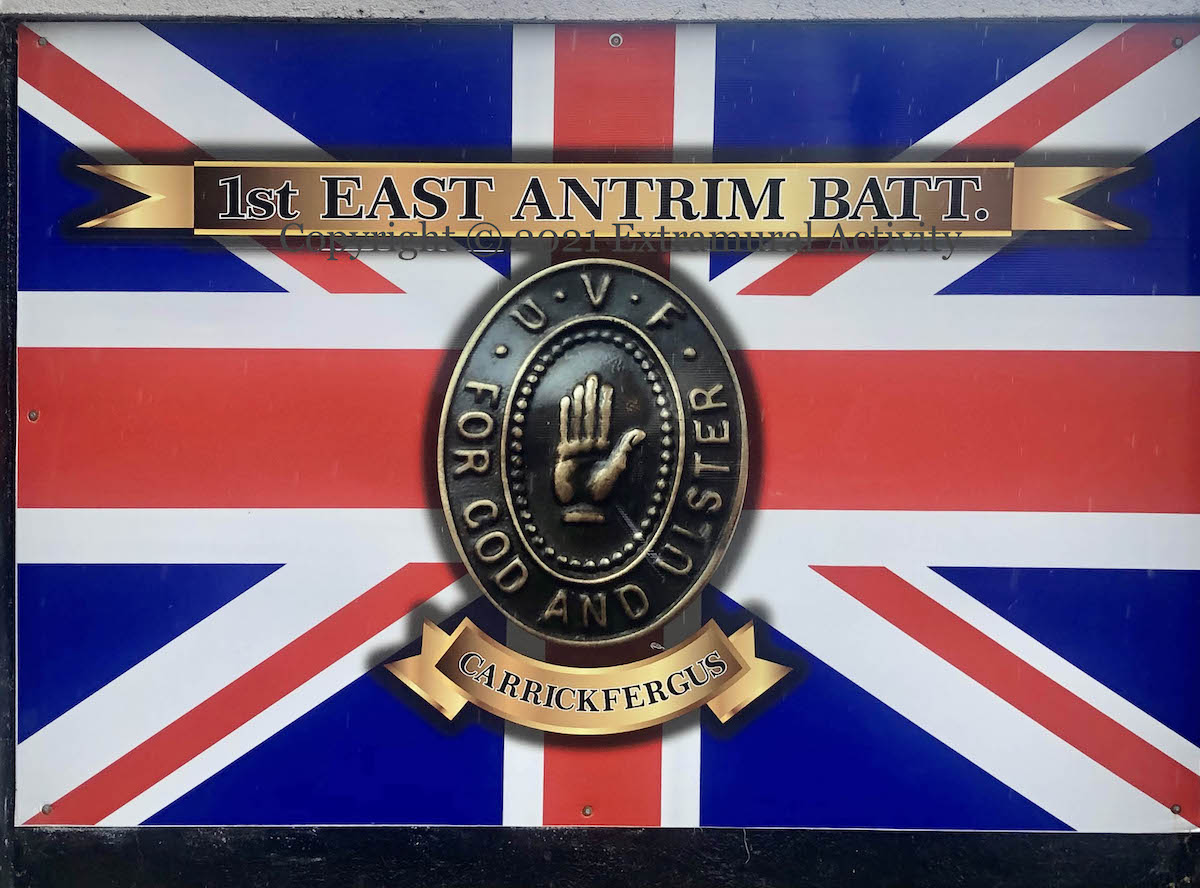
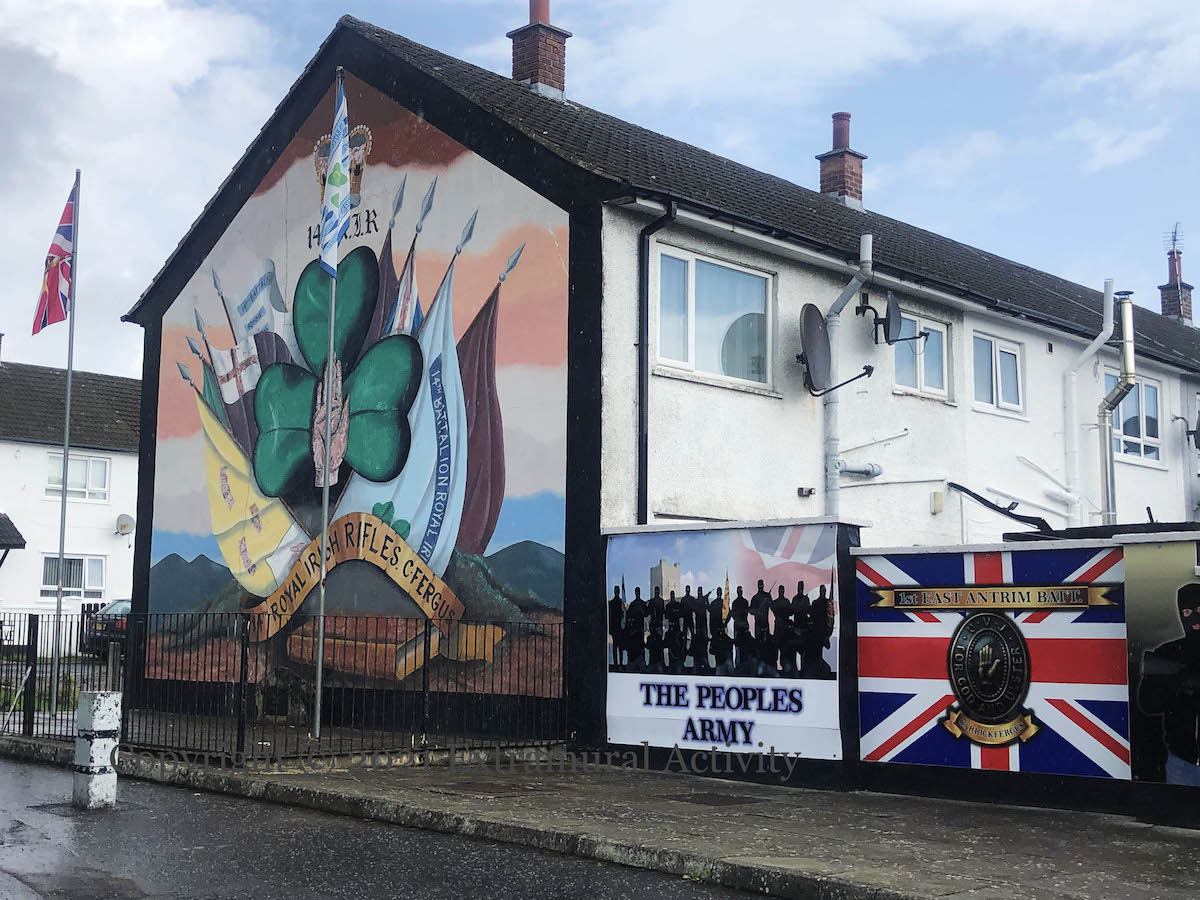
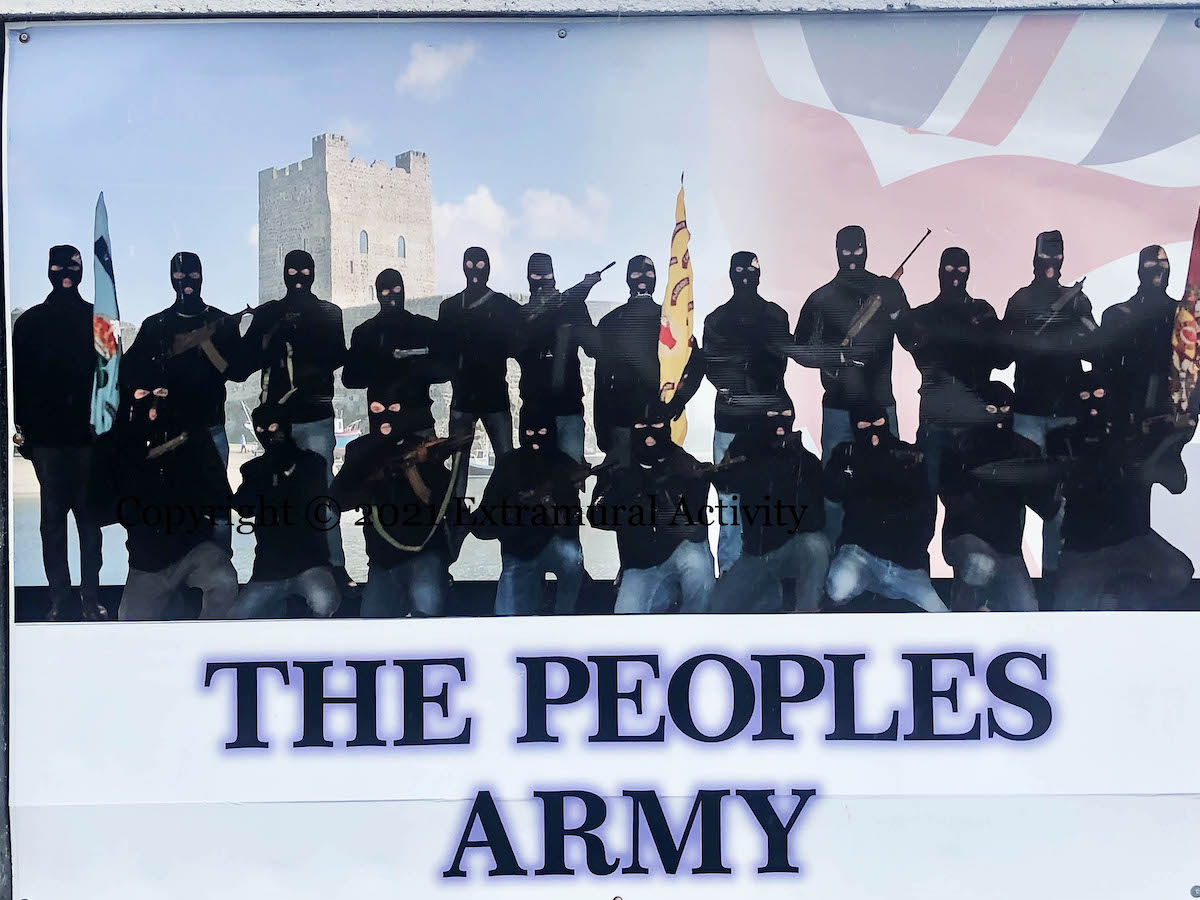
In September, 1914, six weeks after the Great War had begun, Edward Carson wrote to the Ulster Volunteers entreating “those who have not already responded” to “my call for Defenders of the Empire” to “enlist at once for the Ulster Division in Lord Kitchener’s Army”, fighting alongside “our fellow Britishers”: “Quit yourselves like men and comply with your country’s demand”. The impulse for the display of force shown here – two panels of hooded gunmen from the 1st East Antrim battalion of the UVF – is the other, original, motivation for the paramilitary force, which Carson describes as “to defend our citizenship in the United Kingdom” (Strachan & Nally).
For the RIR mural, see For Valour. The new panels shown here re-re-image the VC part of that previous mural in the Larches, Carrickfergus.
Compared to the UVF, the UDA more strongly detect an existential threat to loyalism and evince a siege mentality that provokes the need for armed resistance. Hence the more frequent presence of armed gunmen in UDA murals (which is also due in part to the UVF being able to “re-image” around the Ulster Volunteers and the Somme). With Brexit and the Protocol, however, armed gunmen have recently been appearing more frequently in UVF murals – see, for example, If Our Shores Are Threatened | Bang Up To Date | Our British Identity.
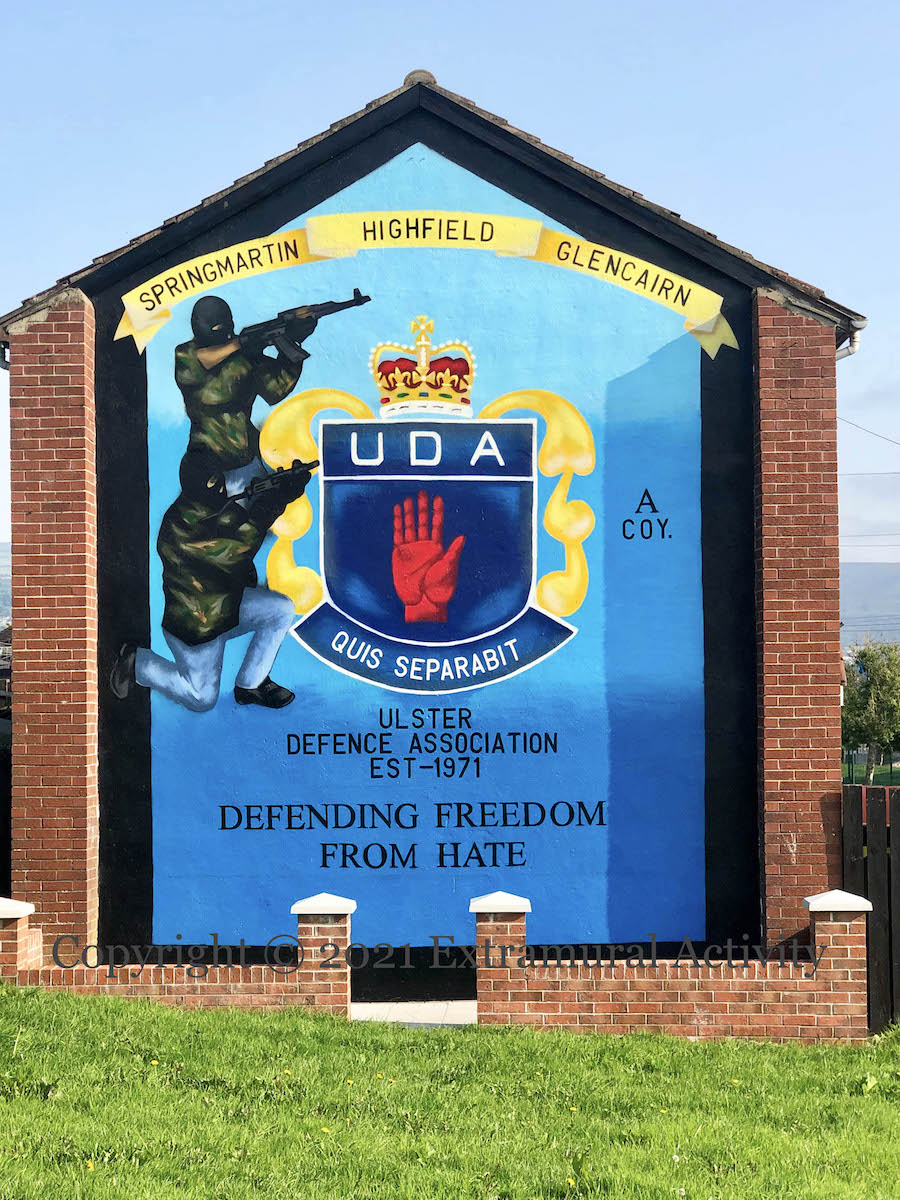
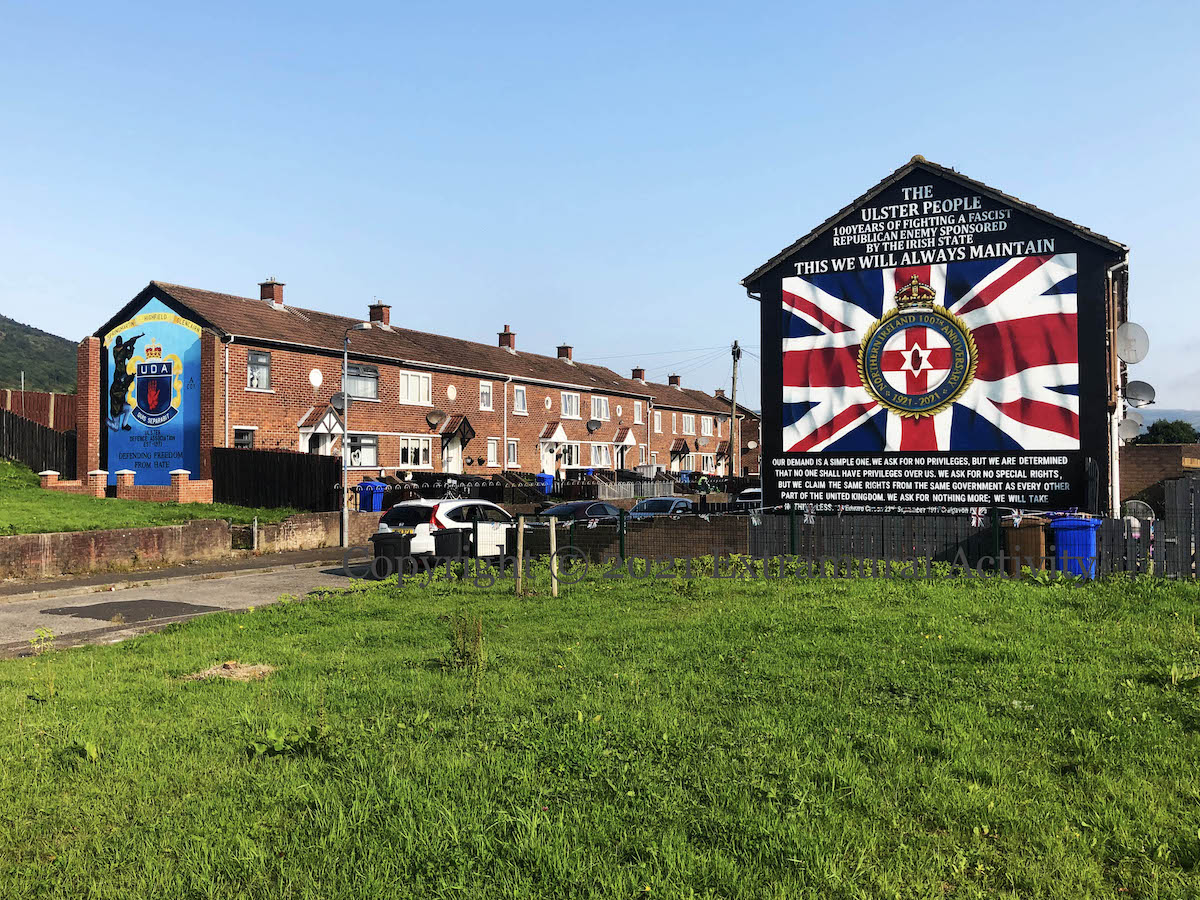
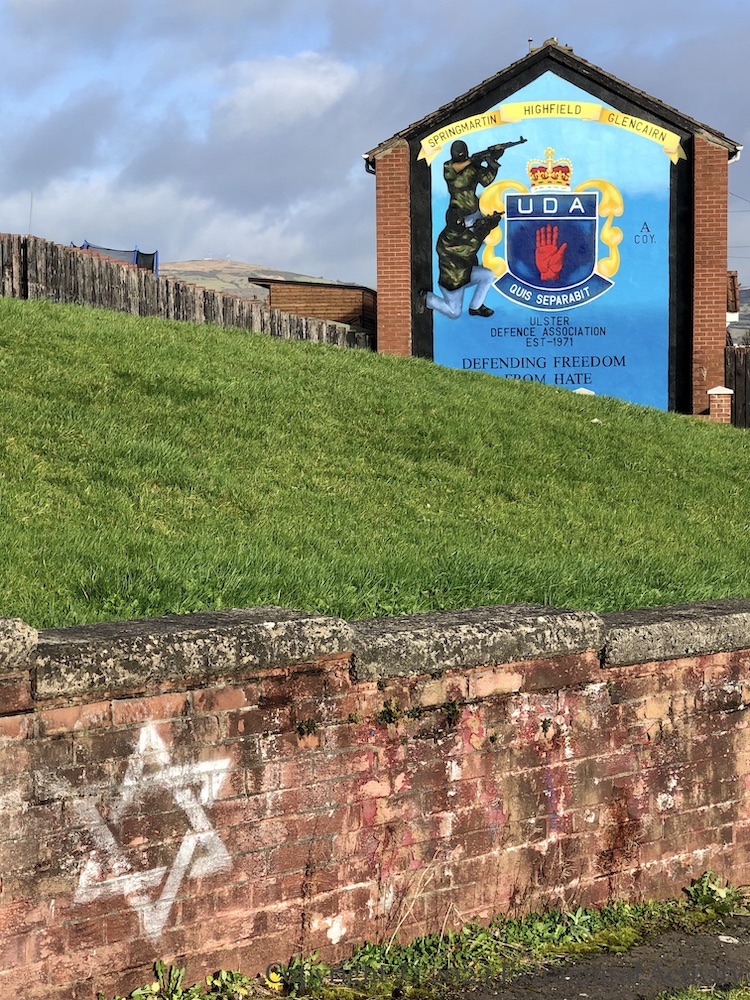
“Springmartin–Highfield–Glencairn Ulster Defence Association est. 1971. Defending freedom from hate.” As the companion mural (We Will Take Nothing Less) makes clear, the hate is coming from a “fascist republican enemy” (“Sinn Fein/IRA”, presumably) and the government of Ireland. Graphically, this mural is the same as the previous one on this wall: Under The Protection Of The UDA.
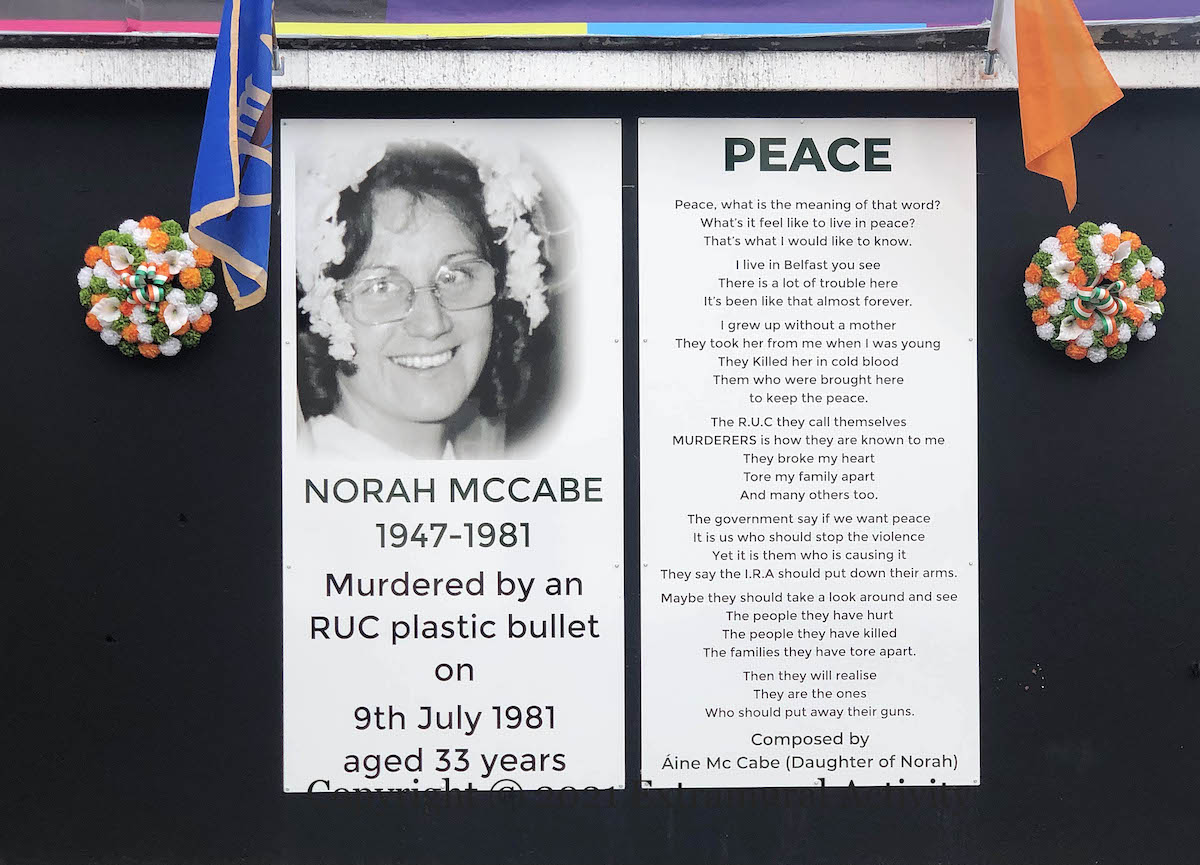
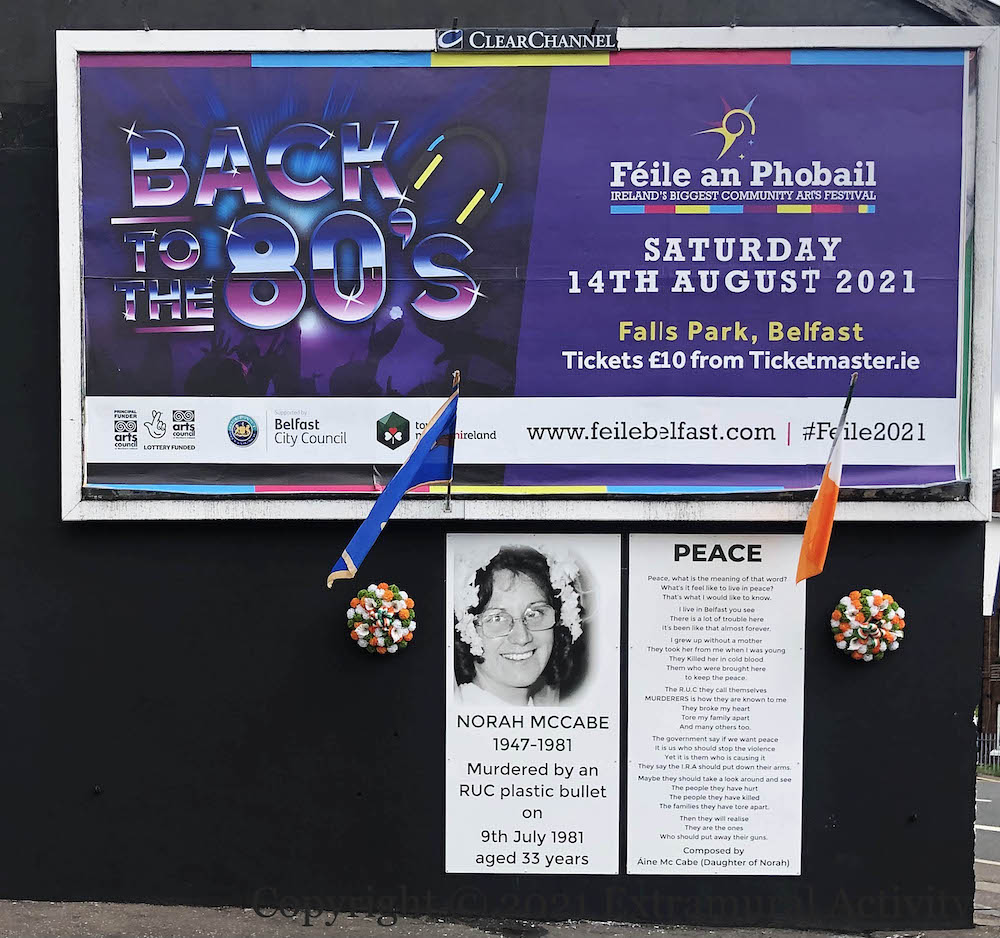
Norah McCabe was shot in the back of the head by a plastic bullet fired from an RUC land rover at around 7:45 a.m. on July 9th, 1981, the day after hunger striker Joe McDonnell died. (Danny Barrett would be killed by a British Army sniper in the evening.) The new boards were mounted to coincide with the fortieth anniversary of McCabe’s death. In 1981, a mural was painted at the same spot (in the old Linden Street) to protest the use of plastic bullets: see Plastic Death.
“Norah McCabe, 1947-1981, murdered by an RUC plastic bullet on 9th July 1981, aged 33 years.” With a poem “Peace” by daughter Áıne McCabe, who was three months old when her mother was killed (Irish News).
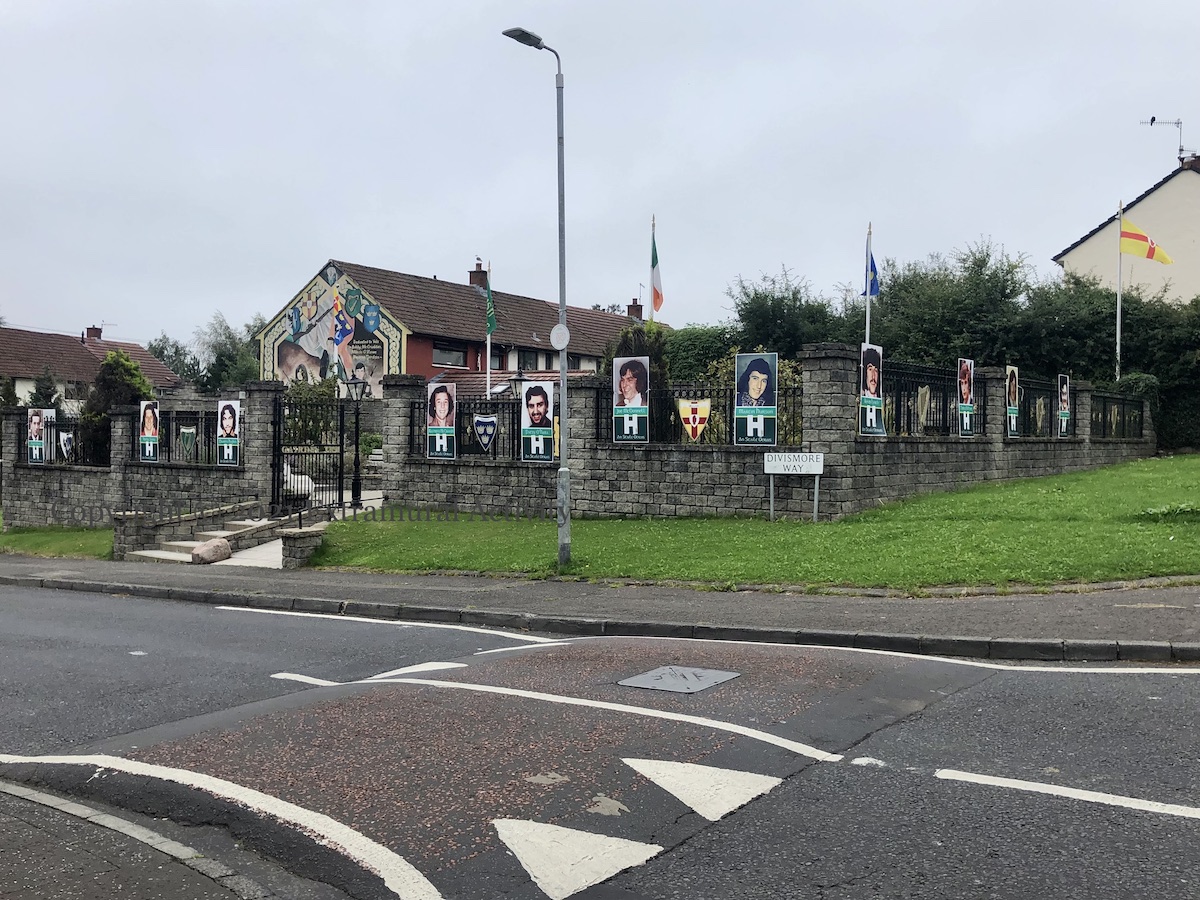
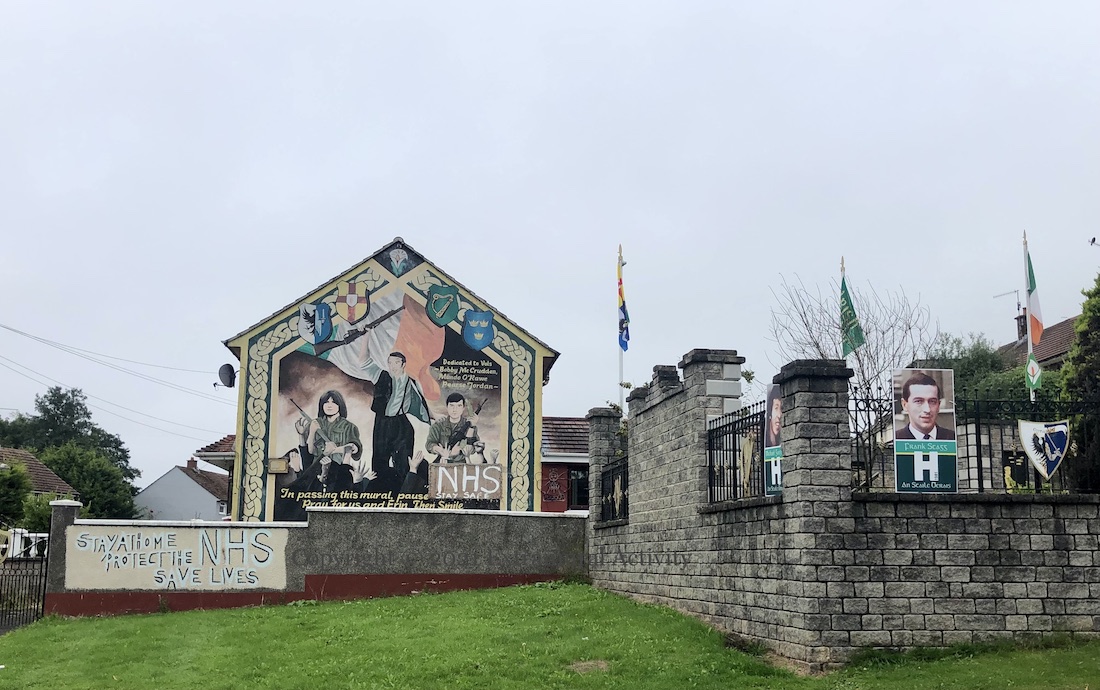
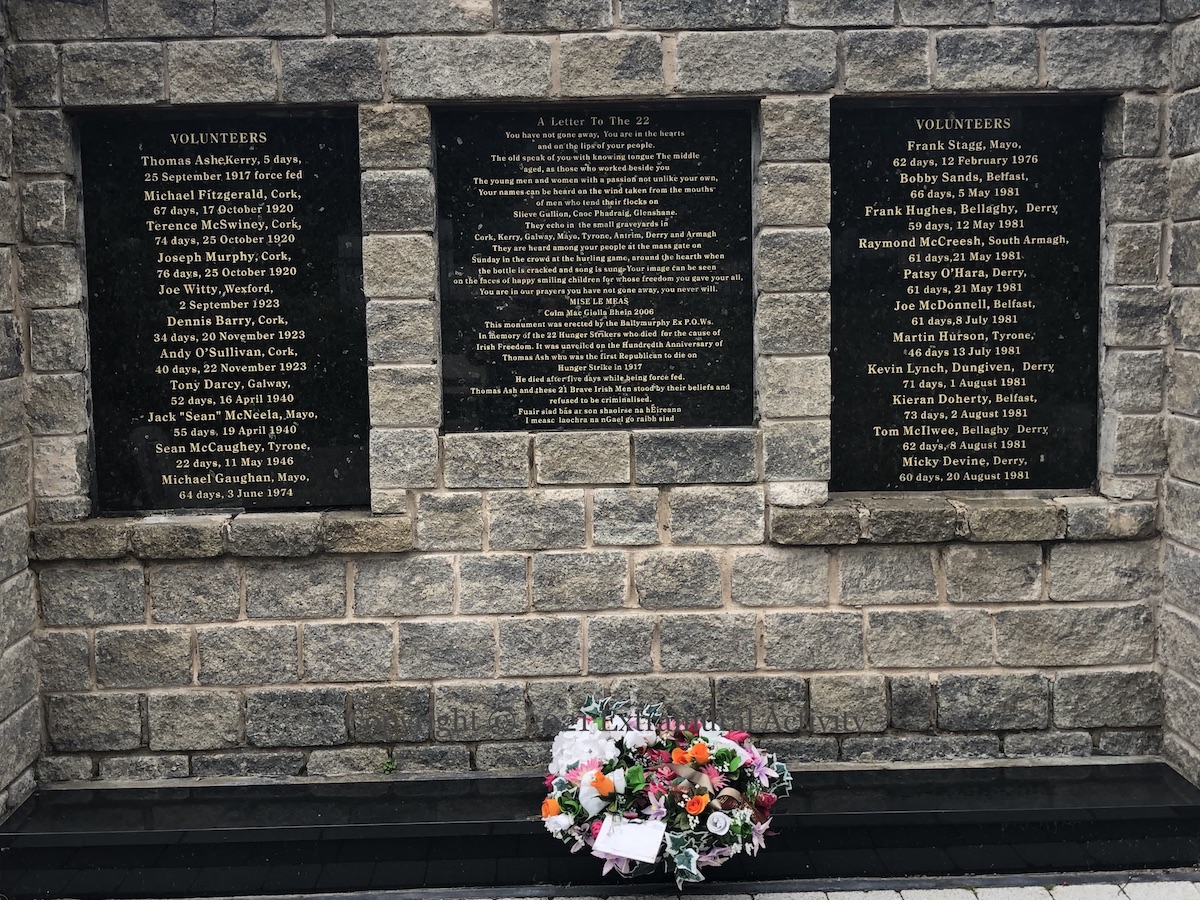
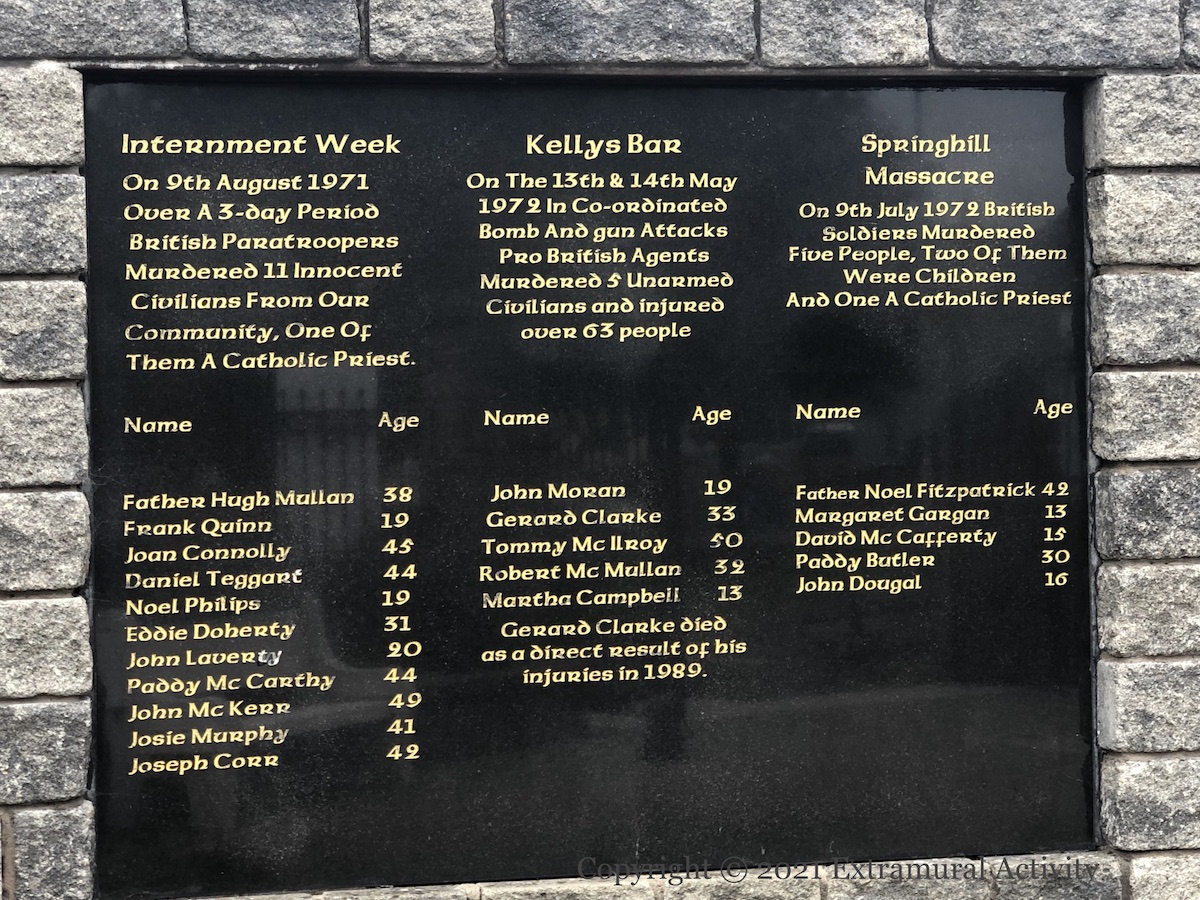
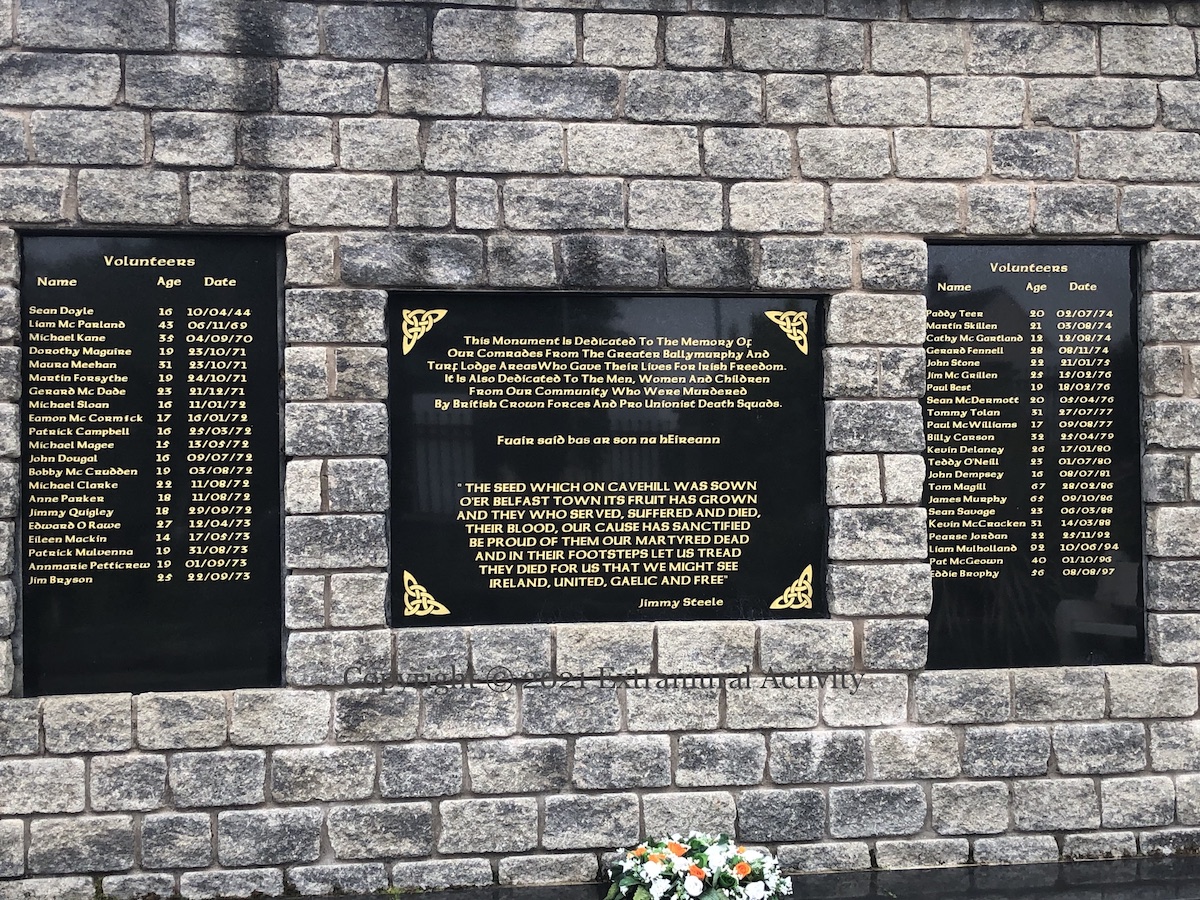
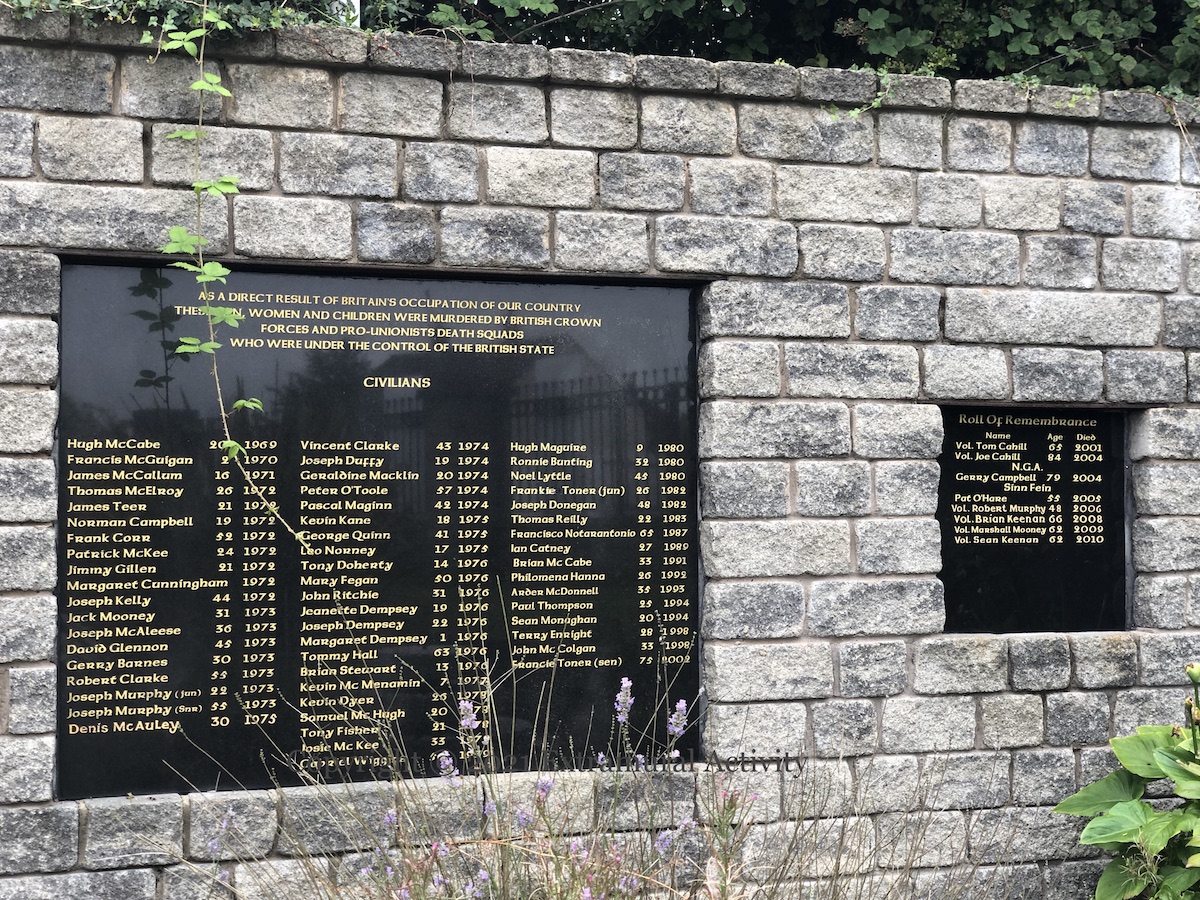
For the 40th anniversary of the 1981 Hunger Strike, portraits of the deceased ten (plus Frank Stagg and Michael Gaughan from the 1970s) were placed on the railings of the Ballymurphy memorial garden. There is a new (compared to 2006 and 2008) set of plaques, erected in 2017:
“A Letter To The 22: You have not gone away, you are in the hearts and on the lips of your people. The old speak of you with knowing tongue. The middle aged, as those who worked beside you. The young men and women with a passion not unlike your own. Your names can be heard on the wind taken from the mouths of men who tend their flocks on Slieve Gullion, Cnoc Phadraıg, Glenshane. They echo in the small graveyards in Cork, Kerry, Galway, Mayo, Tyrone, Antrim, Derry and Armagh. They are heard among your people at the mass gate on Sunday in the crowd at the hurling game, around the hearth when the bottle is cracked and song is sung. Your image can be seen on the faces of happy smiling children for whose freedom you gave your all. You are in our prayers you have not gone away, you never will. Mıse le meas Colm Mac Gıolla Bheın 2006. This monument was erected by the Ballymurphy Ex POWs in memory of the 22 hunger strikers who died for the cause of Irish freedom. It was unveiled on the hundredth anniversary of Thomas Ash[e] who was the first republican to die on hunger strike in 1917. He died after five days while being force fed. Thomas Ash[e] an these 21 brave Irish men stood by their beliefs and refused to be criminalised. Fuaır sıad bás ar son shaoırse na hÉıreann. I measc laochra na nGael go raıbh sıad.”
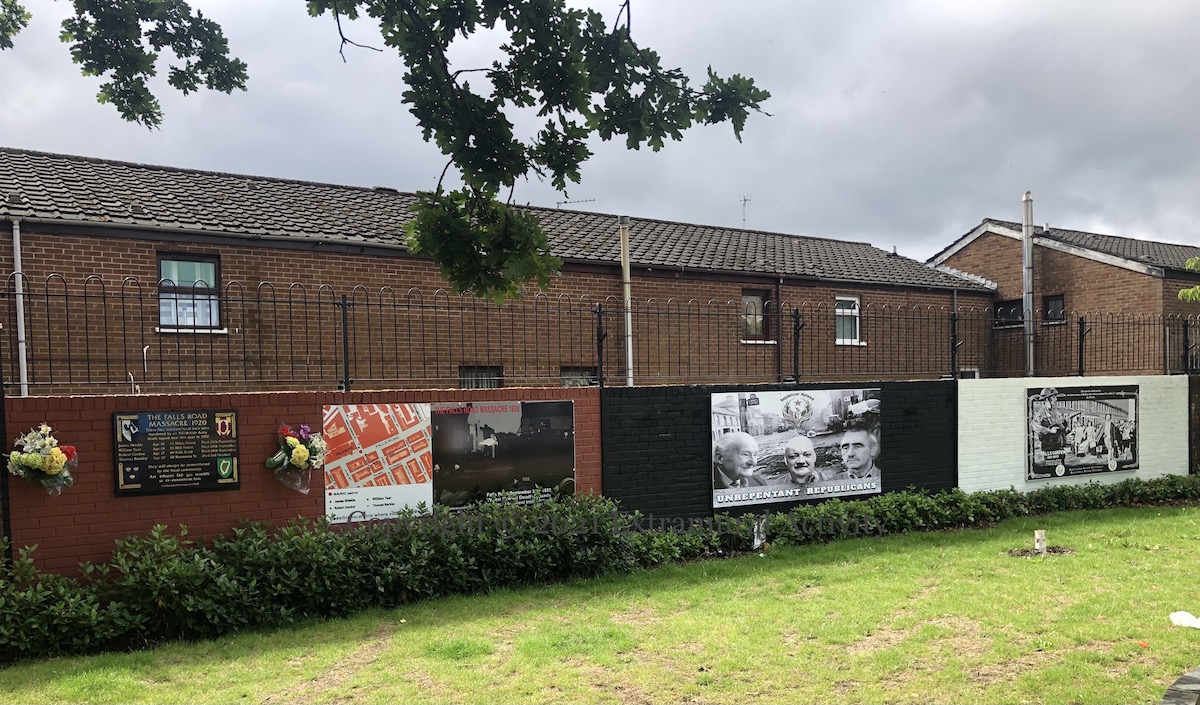
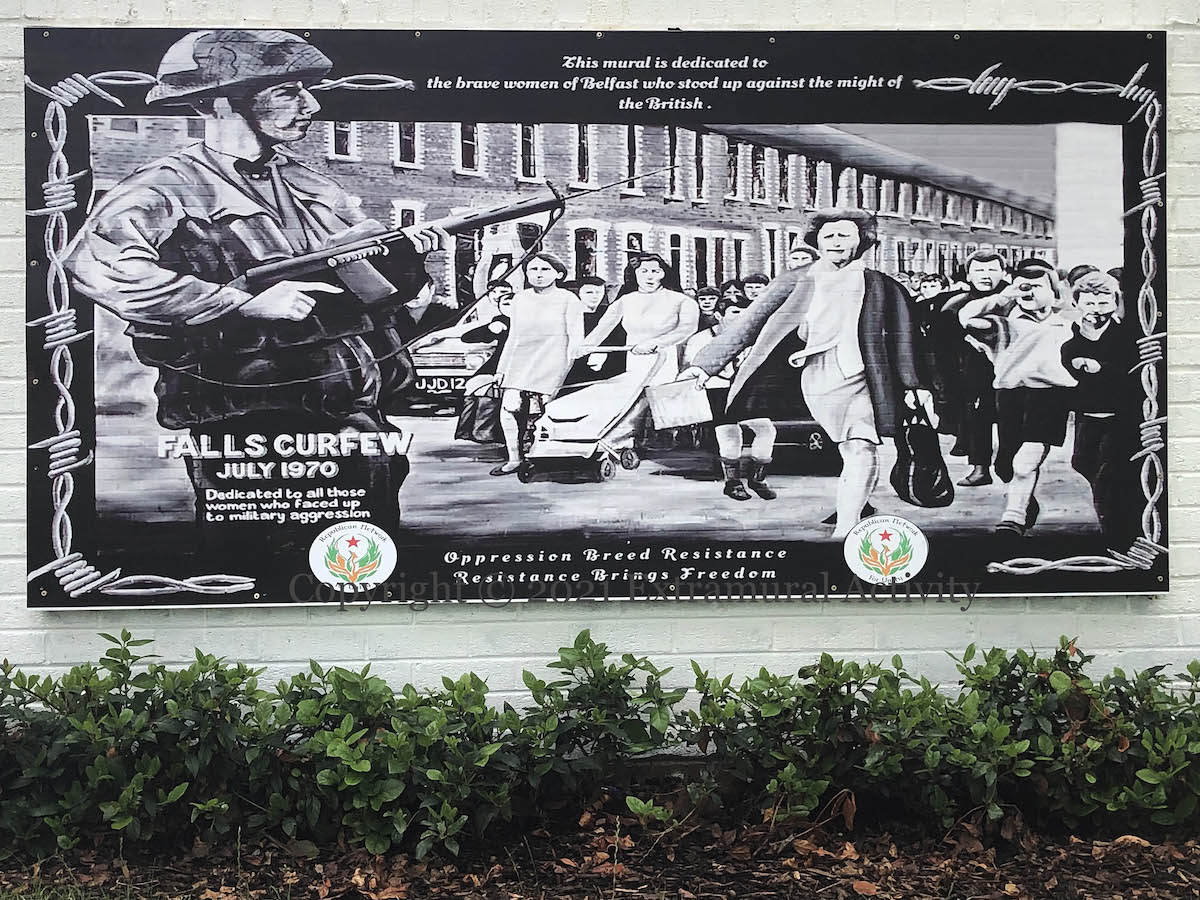
These two new boards along the Falls Road were mounted by Belfast RNU (tw), commemorating the actions of Billy McKee, Alec Murphy, and Brendan Hughes in 1969 at the onset of the Troubles, and of Máıre Drumm and “the brave women of Belfast who stood up against the might of the British” in bringing the Falls Curfew to an end. (This board was previously a mural on Divis Street.)
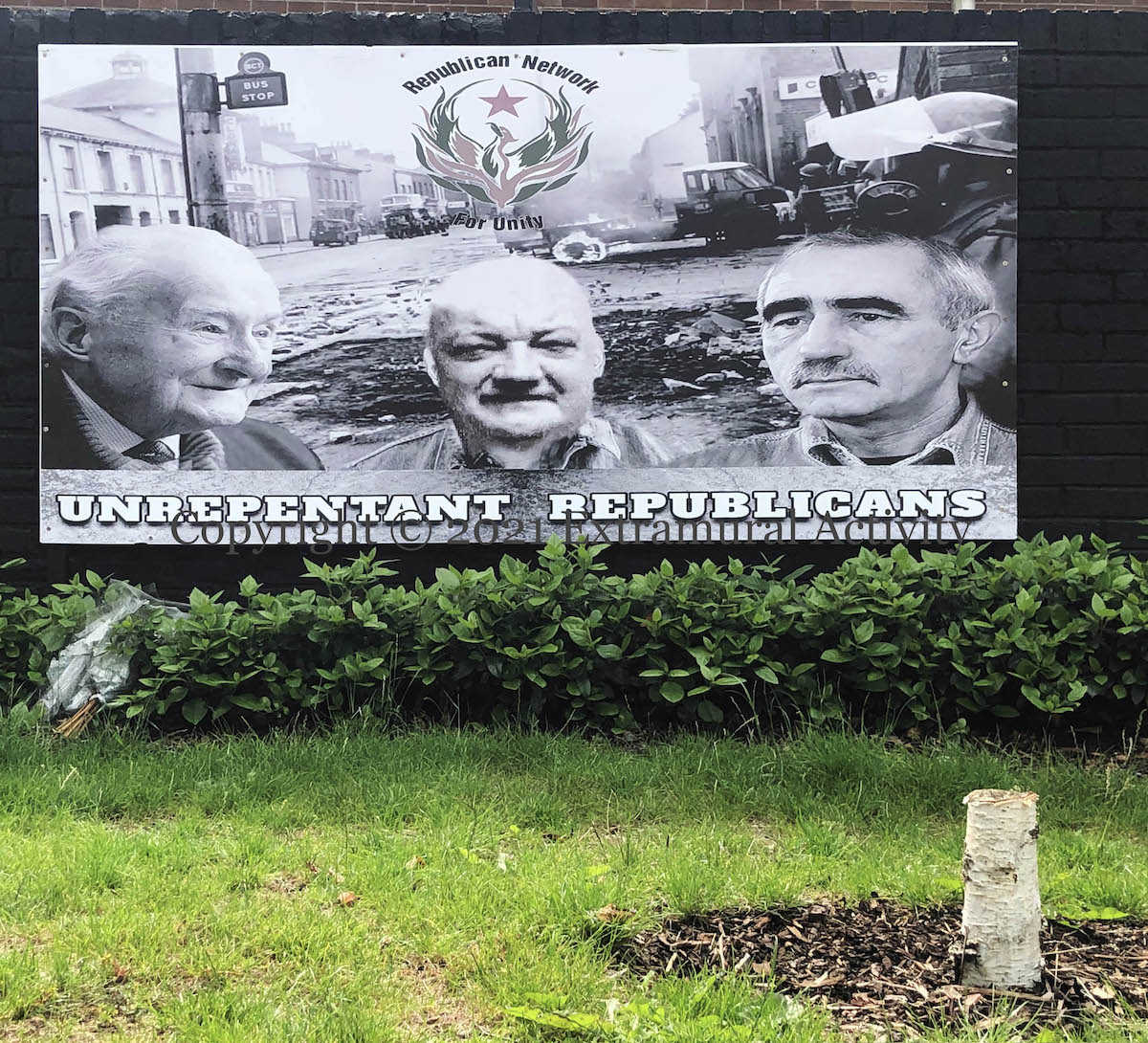
McKee and Hughes are profiled in a D Company mural in the number one spot of the International Wall. Murphy died in 2019 “unrepentant” of his republicanism (which was prompted by the Falls Curfew) and in particular his conviction along with Harry Maguire for the Corporal Killings (Irish News | BelTel). For a personal obituary, see The Pensive Quill.
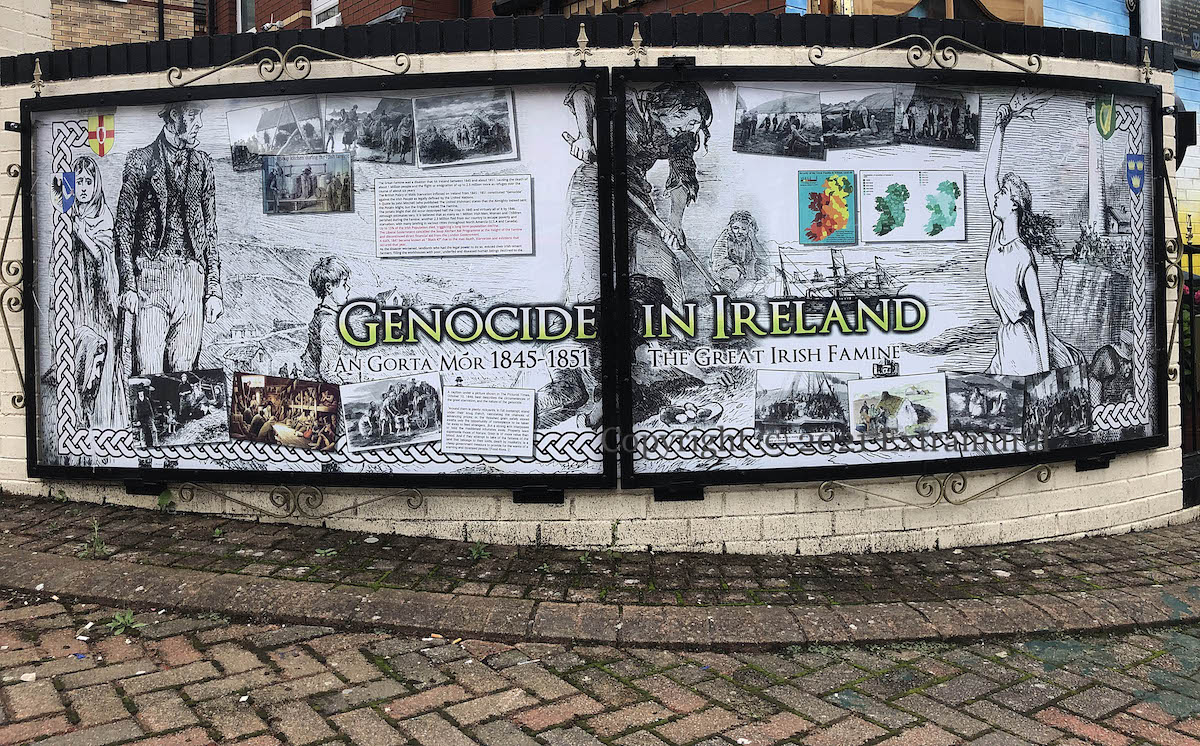
Photography was still in its infancy in 1850 and would not appear in newspapers until the 1880s (LoC). Instead, newspapers used illustrations to bring their stories to life. This board in Ard An Lao (Ardoyne/Bone) – “An Gorta Mór [The Great Hunger] 1845-1851 – The Great Irish Famine” – combines three of them to serve as a background for other images and information.
 Seosamh Mac Coille Collection