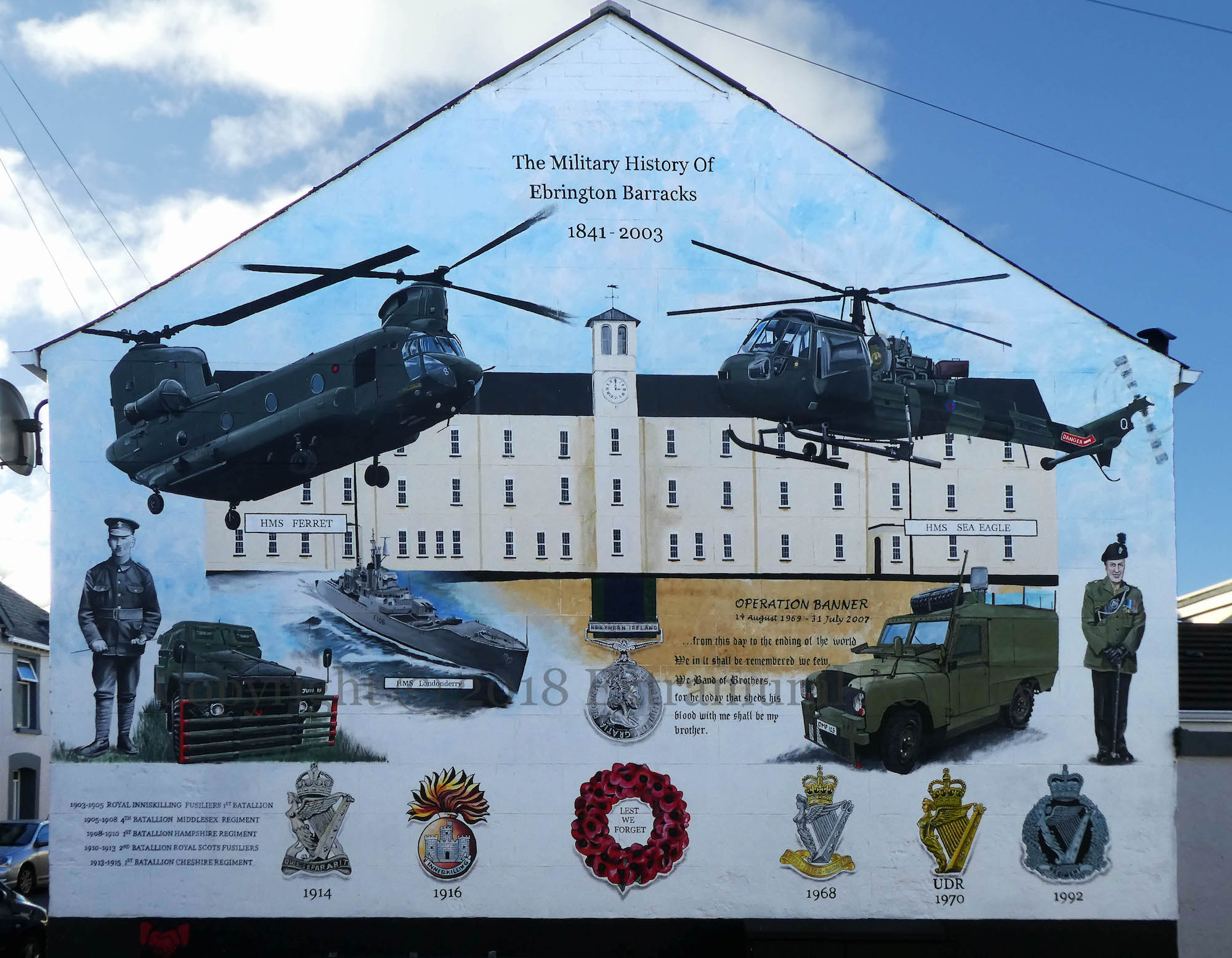
Between its construction in 1841 and decommissioning in 2003, Ebrington Barracks served as a home to many military units, including those whose emblems are at the bottom of the mural above (from left to right): the Royal Irish Rifles, Royal Inniskilling Fusiliers, Royal Irish Rangers, UDR, and the Royal Irish Regiment.
HMS Ferret and HMS Sea Eagle are not in fact ships but a part of Ebrington barracks given to the navy to serve as a “stone frigate” during (Ferret) and after (Sea Eagle) WWII. HMS Londonderry was an anti-submarine frigate but does not appear to have a particular connection to Ebrington (please comment if you know otherwise).
The Northern Ireland General Service medal – in the middle of the mural – was awarded to any soldier who served at least 30 days during Operation Banner, the deployment of British troops in Northern Ireland from 1969 onwards.
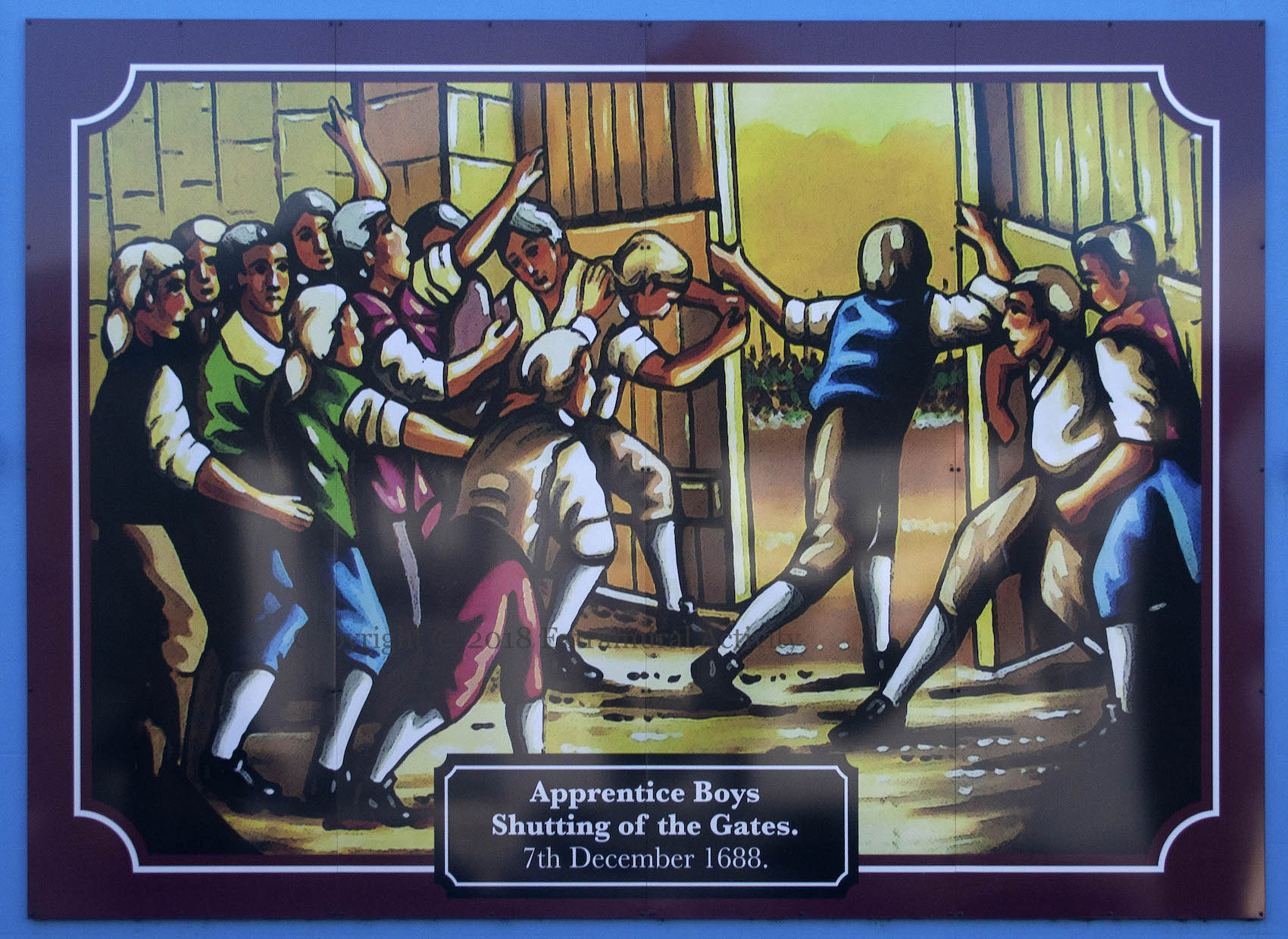
The Apprentice Boys mural in Emerson Street, Londonderry, which was at least fifteen years old, was replaced in 2018 with a version of boards (shown above). The shutting of the city gates in December 1688 began the Siege Of Derry.
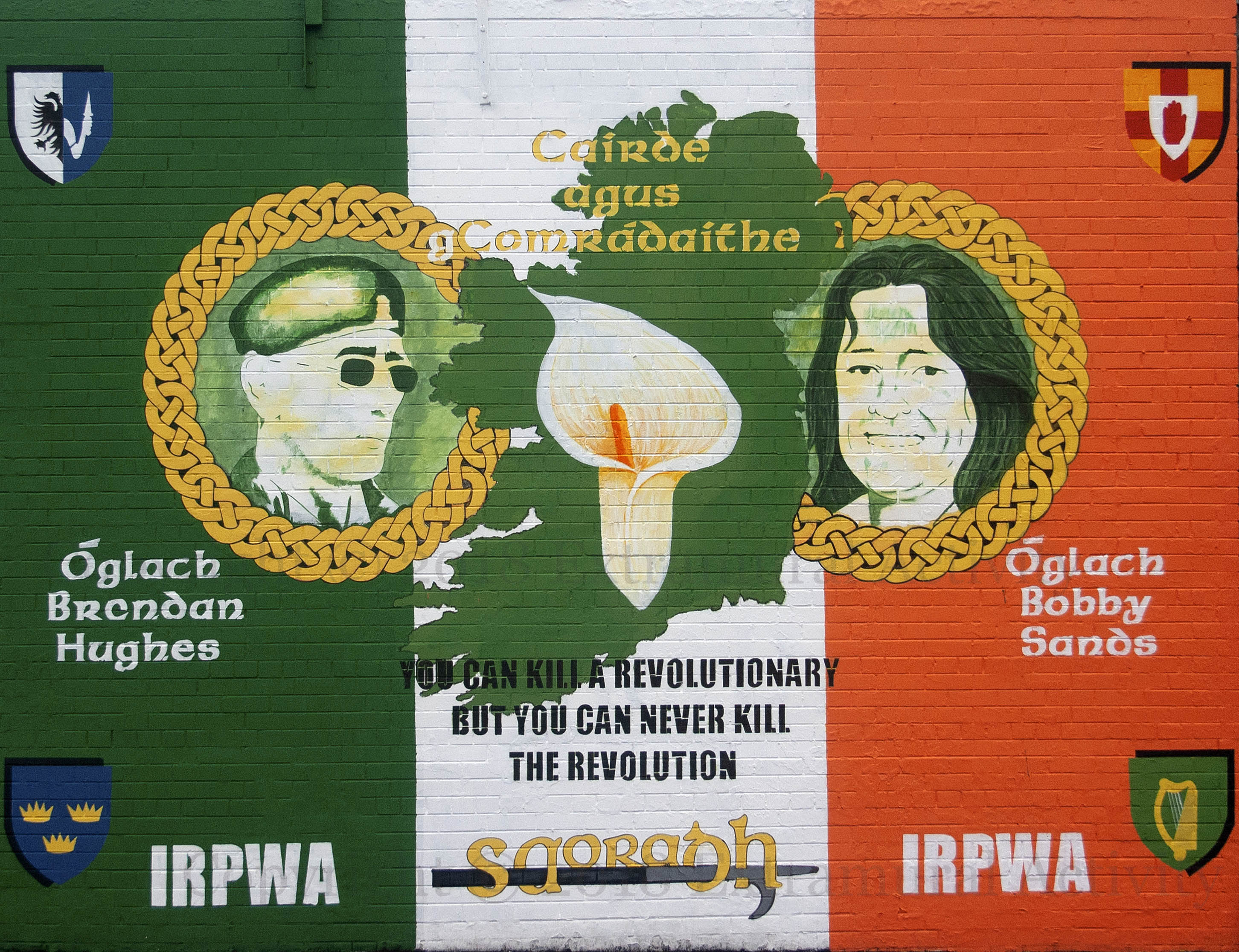
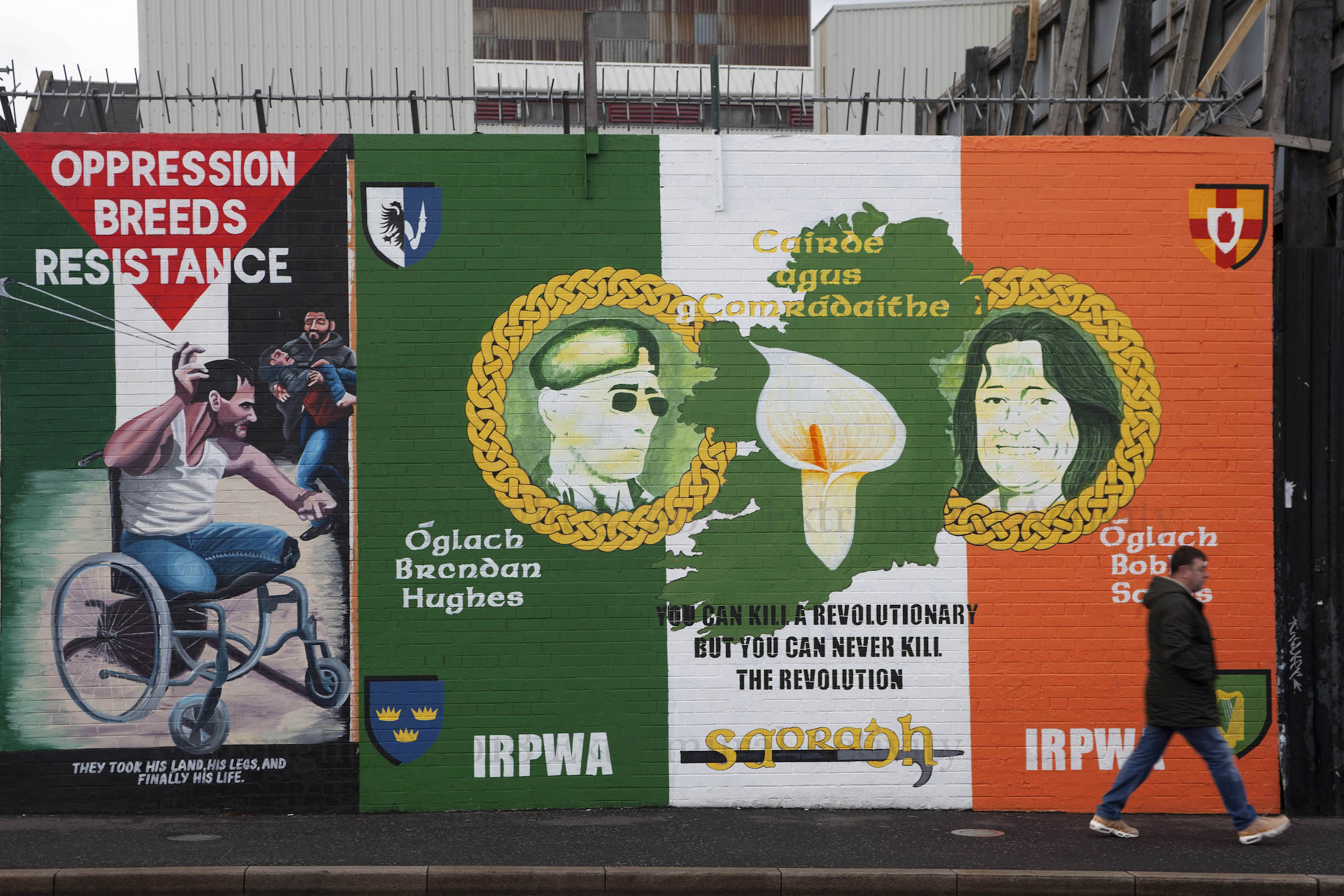
“Friends and comrades” – IRA volunteers Brendan Hughes (“The Dark”) and Bobby Sands were leaders of the 1980 and 1981 hunger strikes, respectively. Hughes survived when the first strike was called off after 53 days; Sands died in the ’81 strike after 66 days of fasting. “IRPWA” is the Irish Republican Prisoners’ Welfare Association (Fb); Saoradh (web) is a hard-line left-wing republican party.
The mural to the left shows Palestinian double-amputee Saber Al-Ashkar, protesting as part of the Great March Of Return.
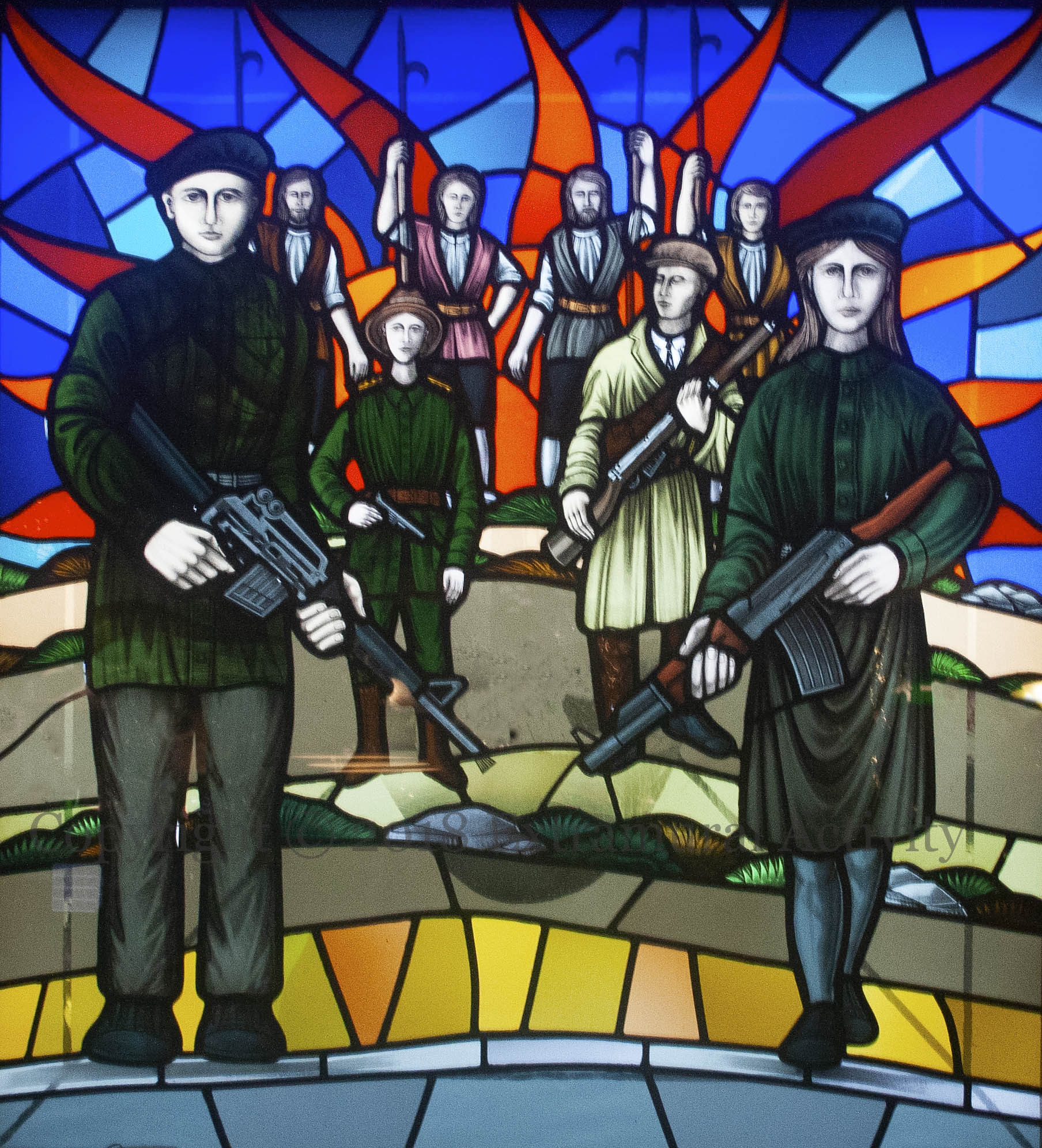
This is one of the stained glass windows inside the Felons’ Club on the Falls Road in Andersonstown, showing Irish revolutionaries from the 1798 Rebellion, through the Easter Rising and Civil War, to the recent “Troubles”.
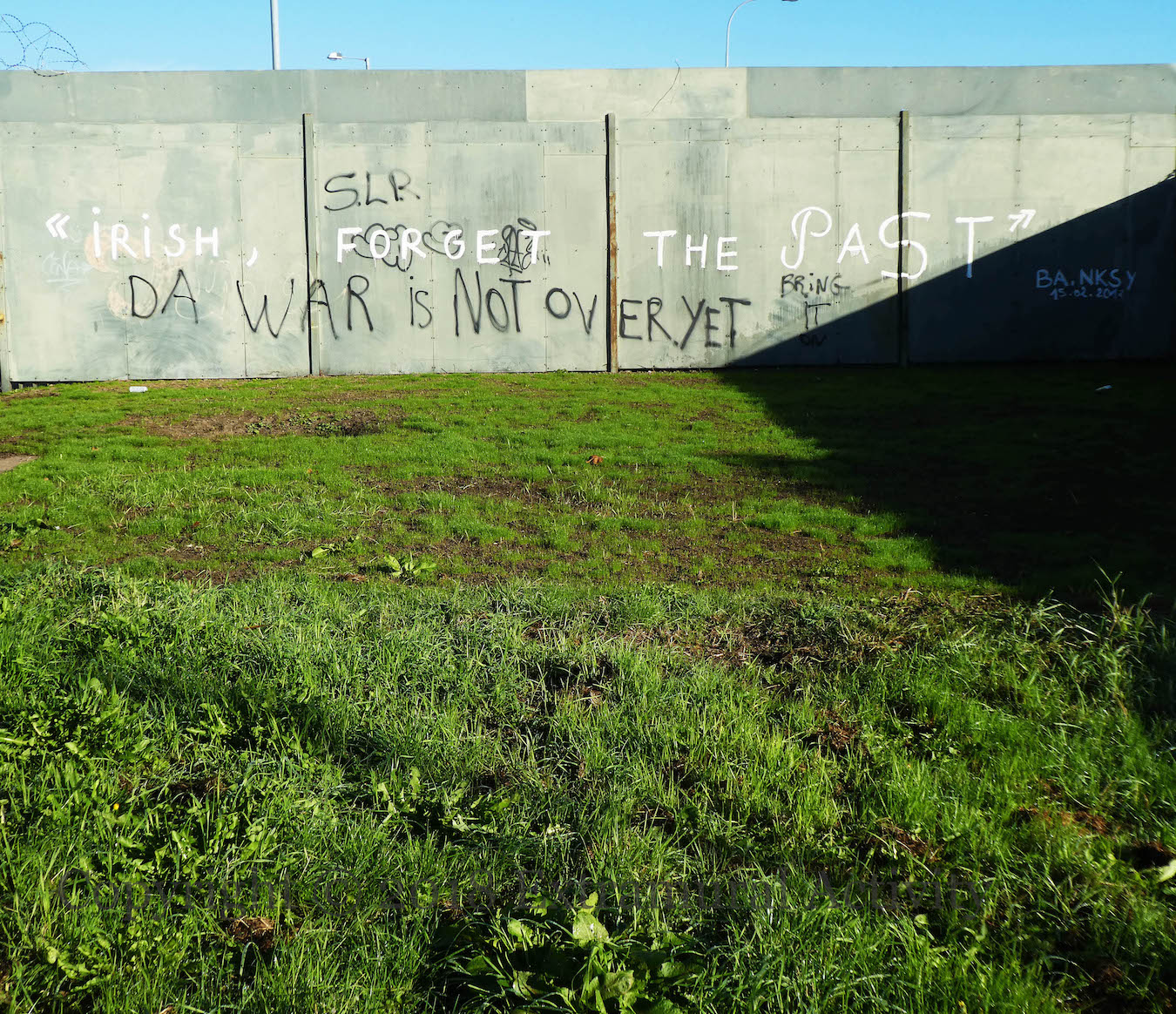
Well-meaning but simplistic (if not patronising) message from a tourist: «Irish, forget the past.» Local response: “Da war is not over yet.” Response-to-the-response: “Bring it on.” On the nationalist side of the “peace” line at Townsend Street.
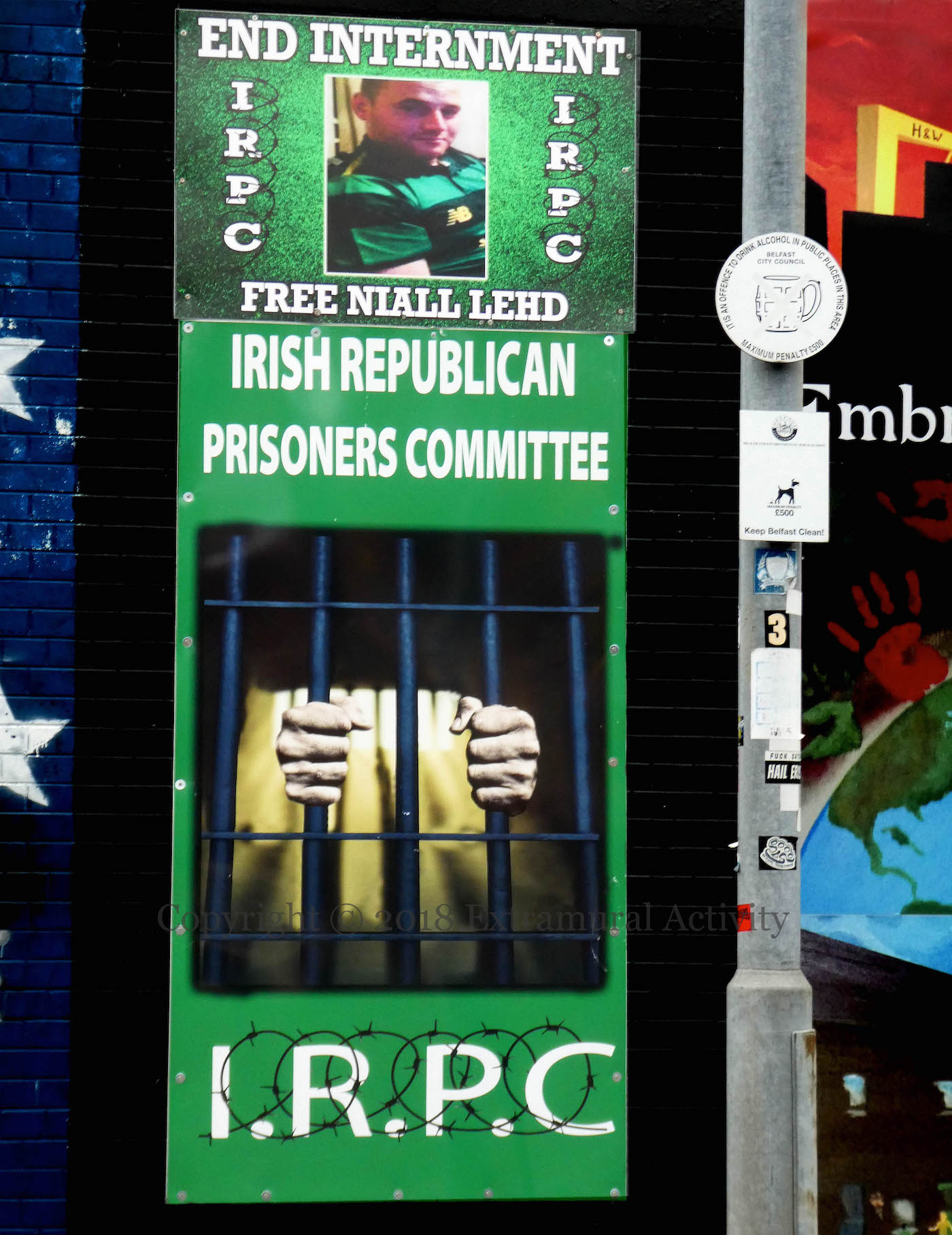
Continuity IRA or Irish Republican National Congress (IRNC – see Join The IRNC and Maid Of Erin) member Niall Lehd was initially arrested on explosives charges in 2014 (BBC-NI) and given early release in 2016 (An Phoblacht) but returned to jail a year ago, in March of 2018 (Irish News). In December he was charged on several counts relating to terrorism and explosives (Belfast Live). Lehd professes his innocence and says his license was revoked simply because he is “an unrepentant republican” (Free Niall Lehd campaign). His cause has been added to the IRPC (Irish Republican Prisoners Committee | Fb) board on Northumberland Street.
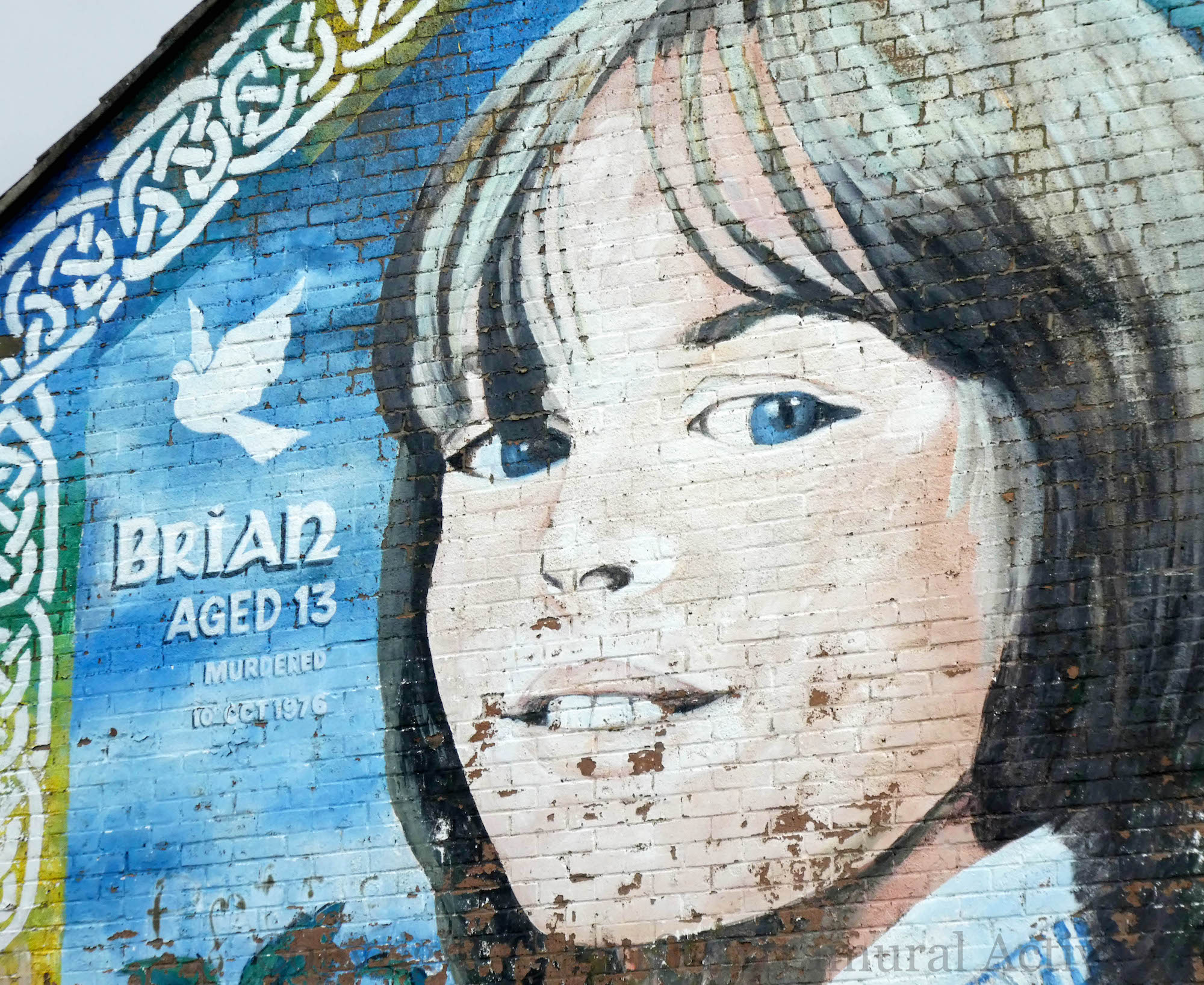
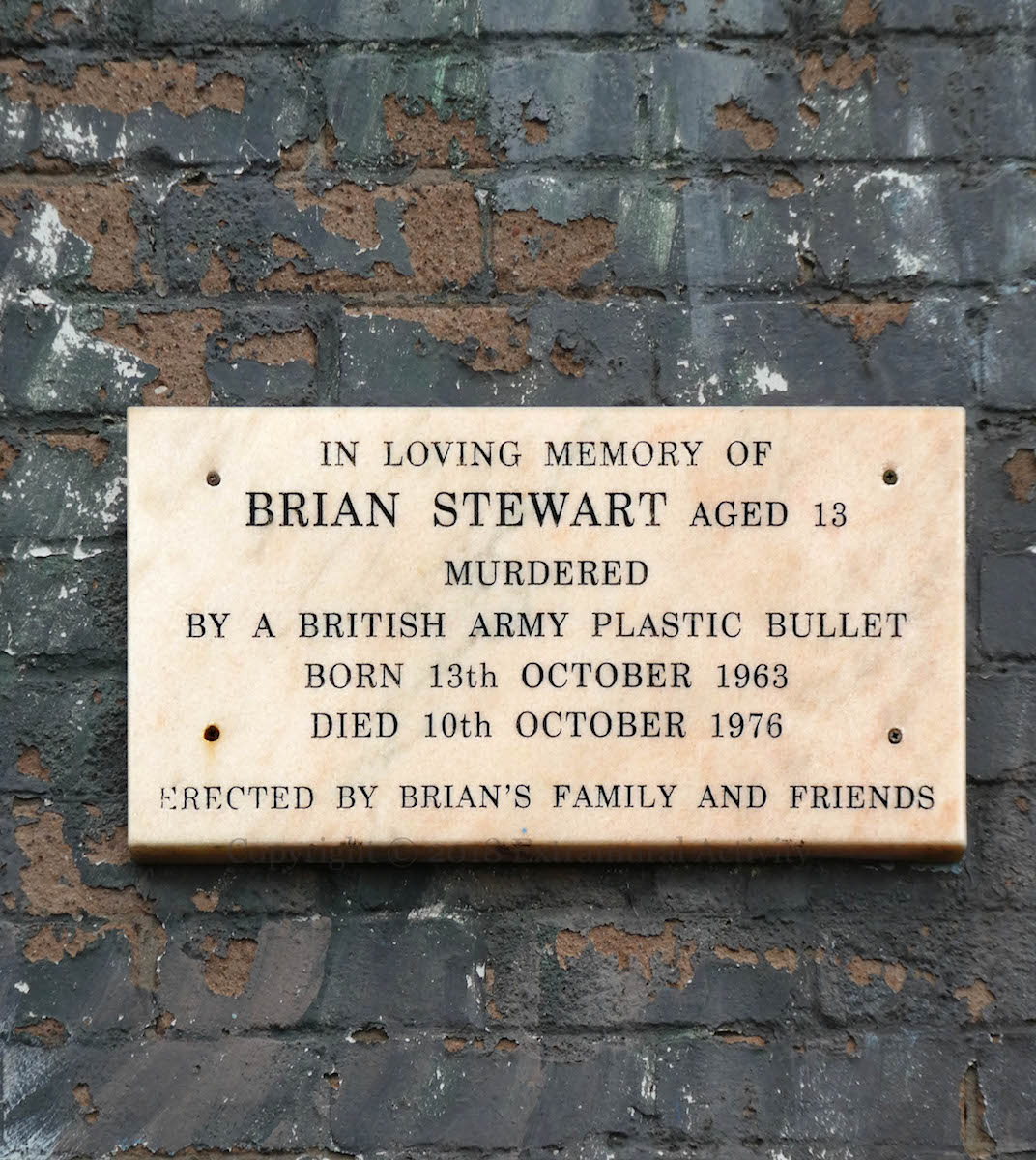
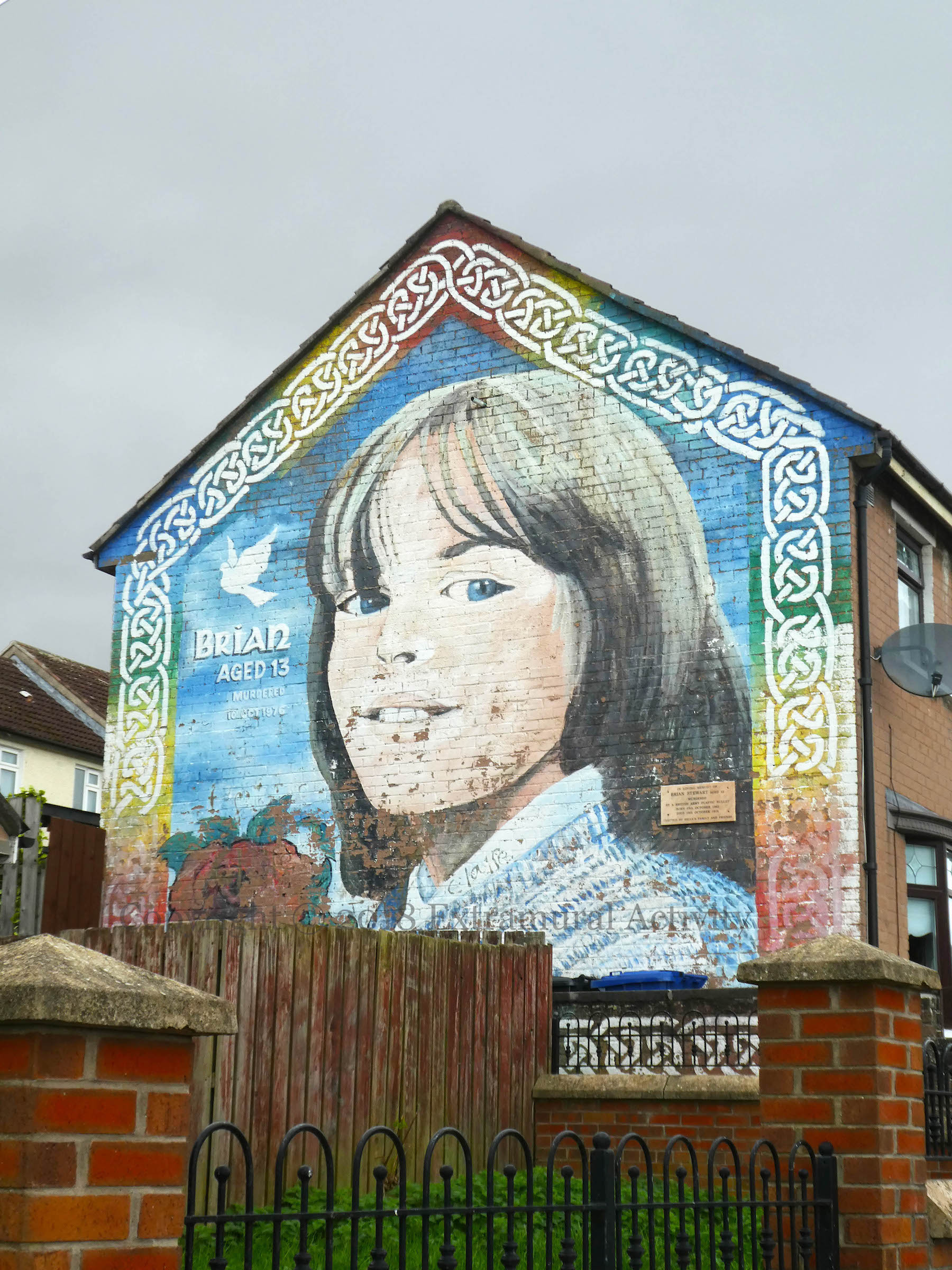
13 year-old Brian Stewart died on October 10th, 1976 – 42 years ago today – six days after being hit by a plastic bullet fired by the King’s Own Scottish Borders near his Turf Lodge Home. He was buried three days later, on October 13th – what would have been his fourteenth birthday. (For the long search for justice, see sister Marie Stewart | sceptic peg | saoirse32).
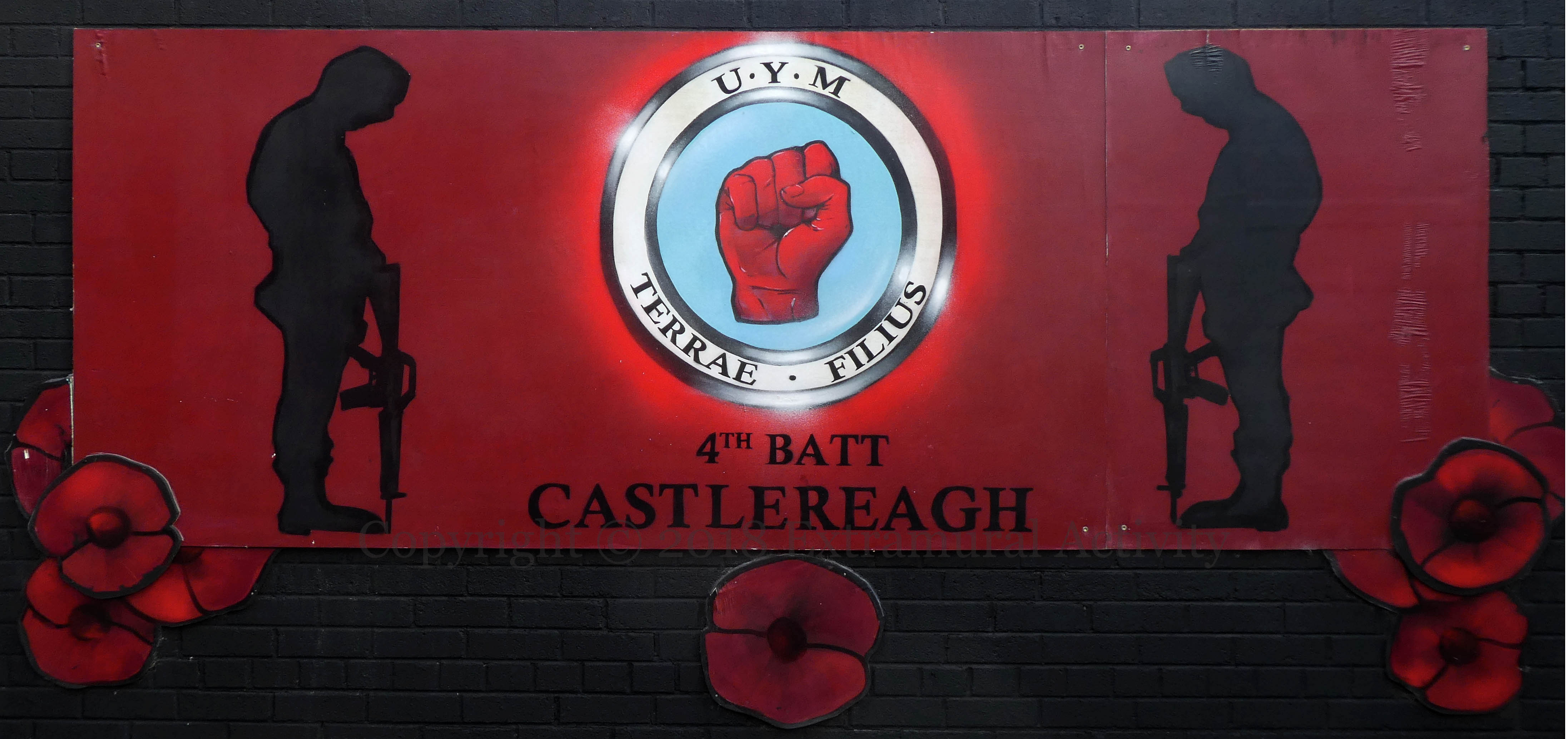
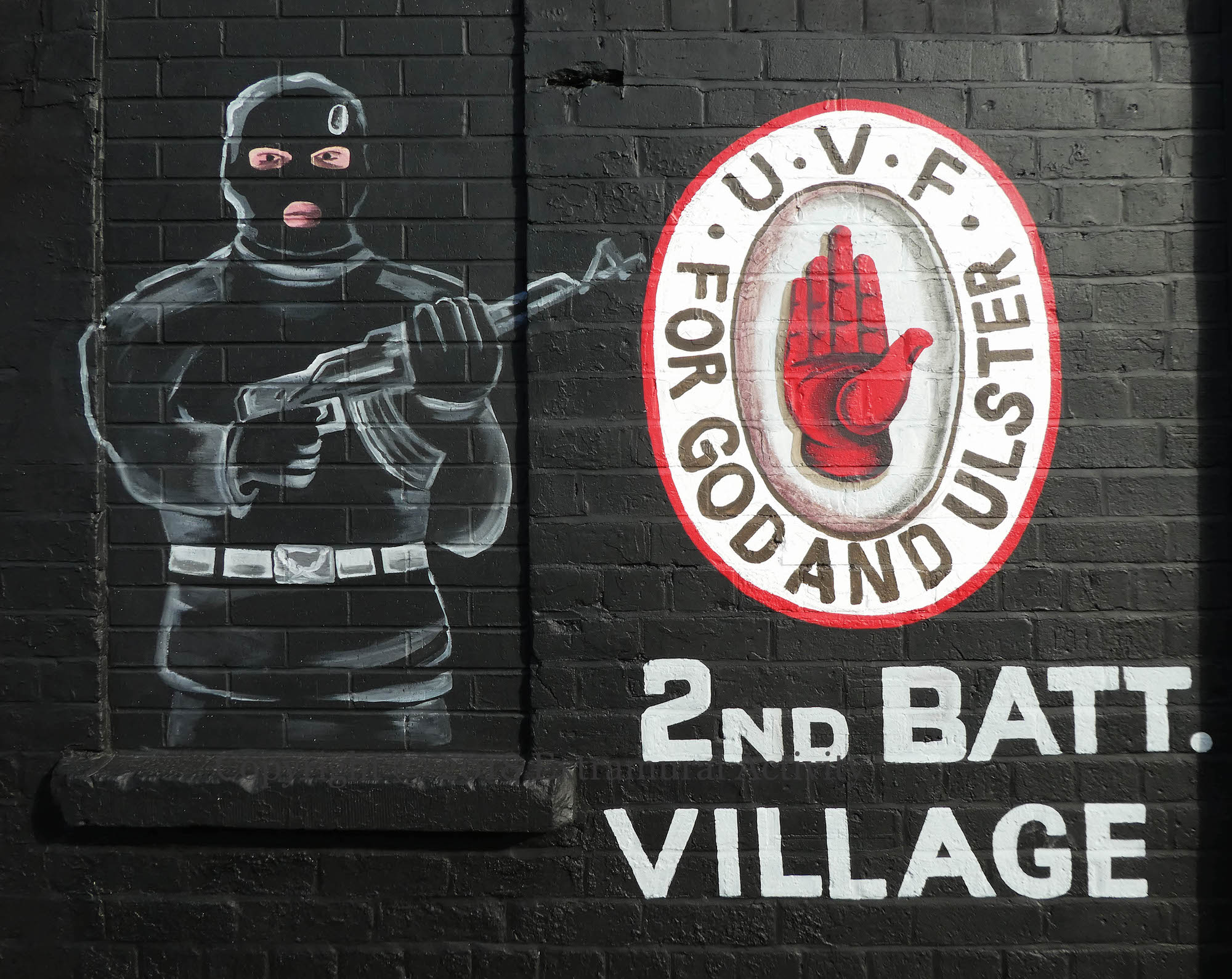
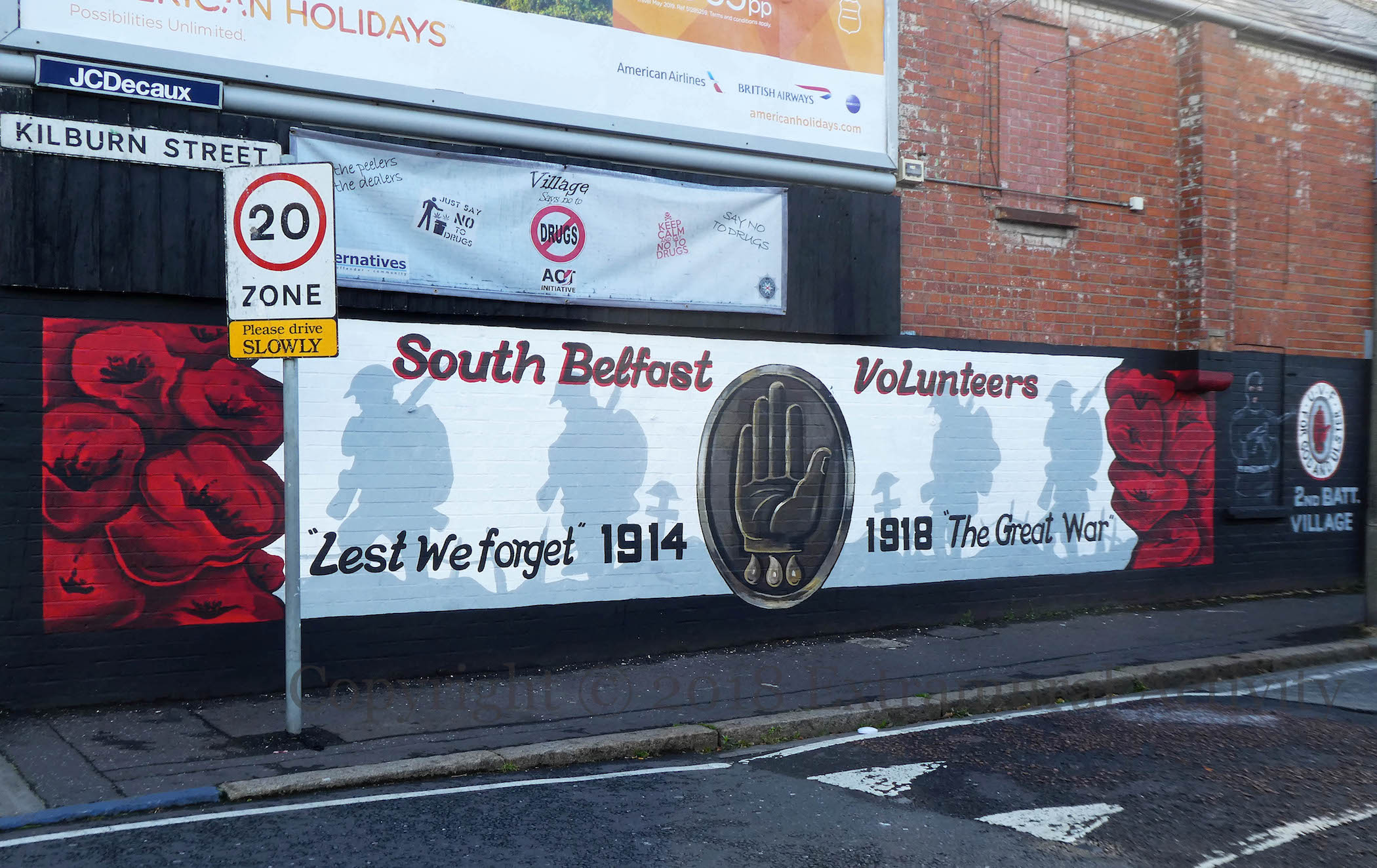
The main panel (shown below) is a tribute to soldiers in the Great War (1914-1918), with a border of poppies and silhouetted soldiers reflecting over helmets on crosses. To the side, however, is the modern UVF volunteer (shown above), with balaclava and assault rifle.
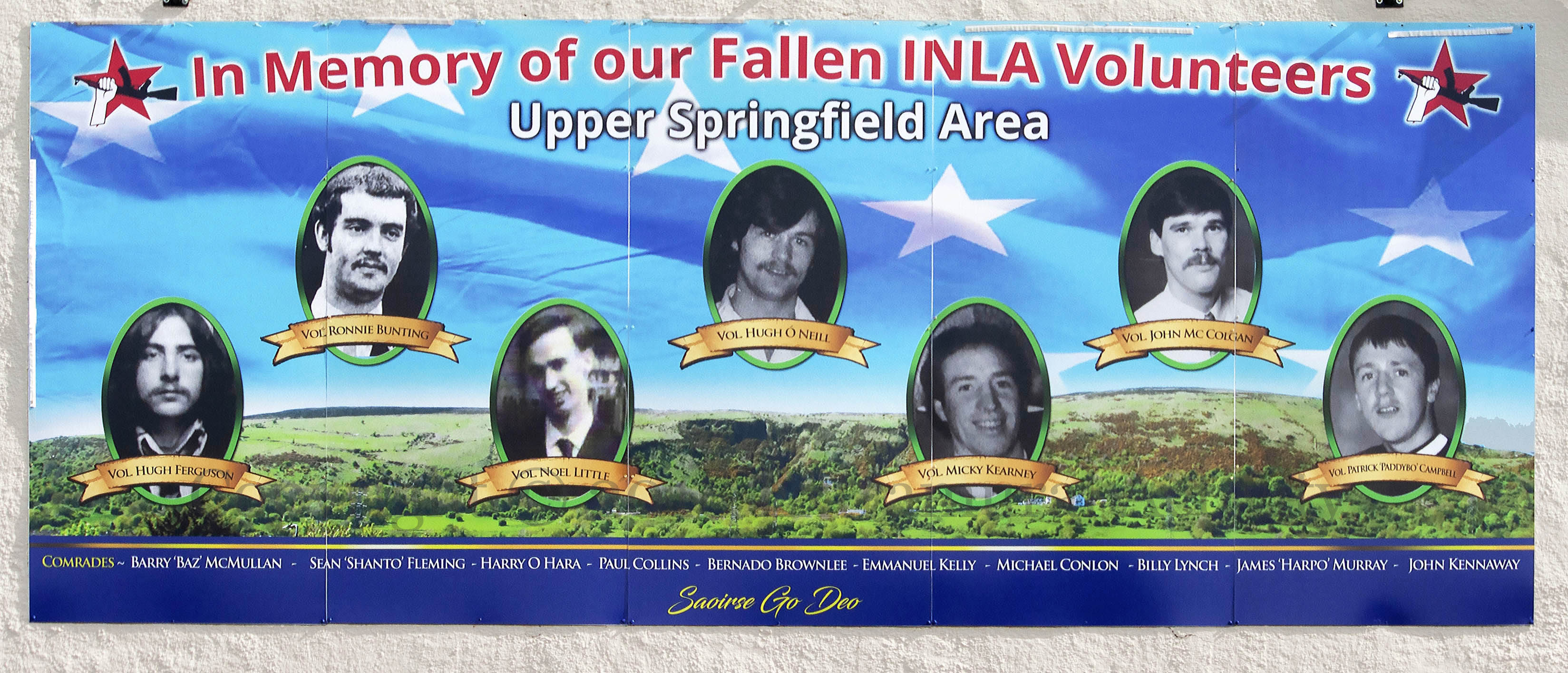
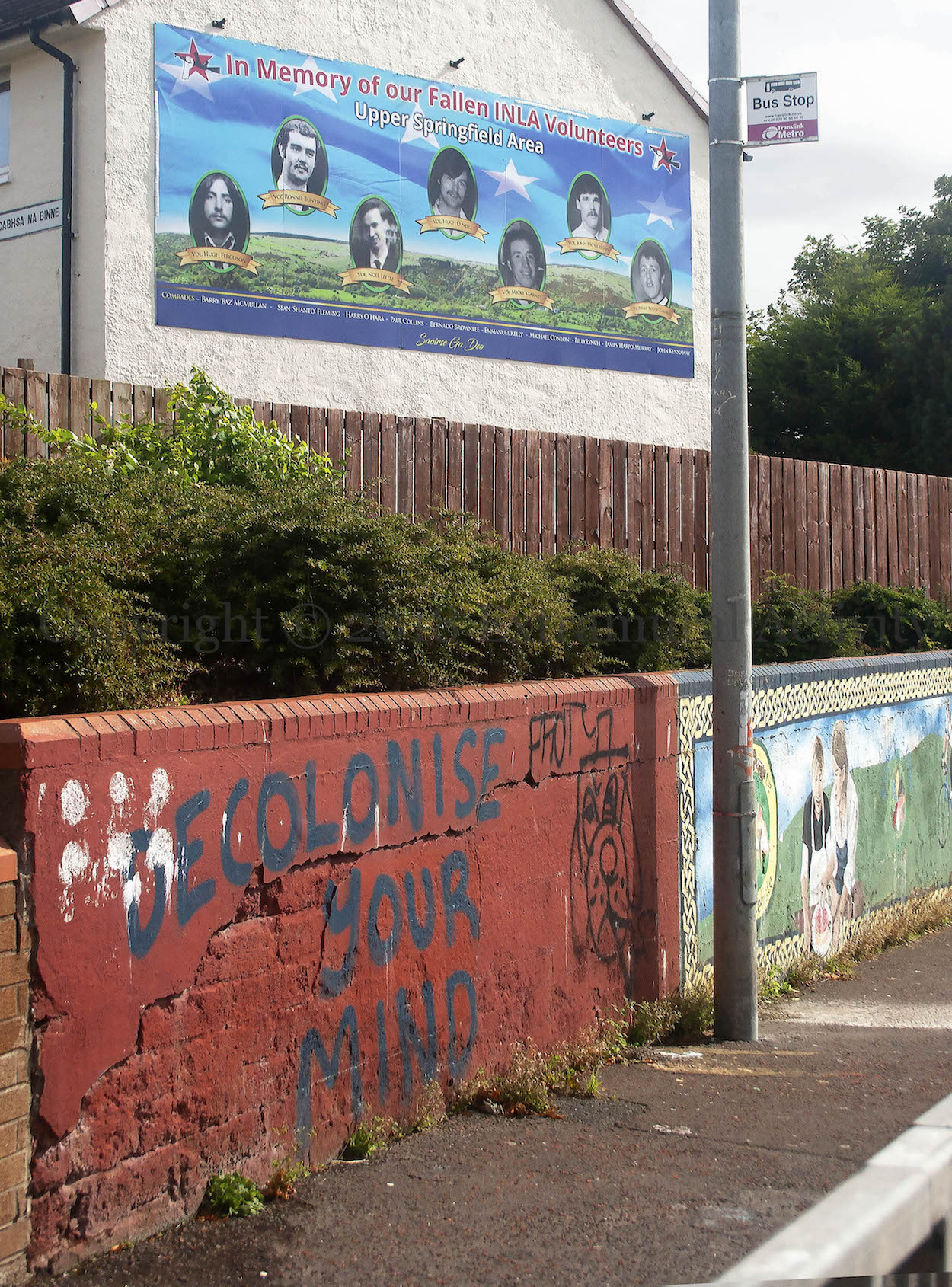
“In memory of our fallen INLA volunteers, upper Springfield area: Hugh Ferguson, Ronnie Bunting, Noel Little, Hugh O’Neill, Micky Kearney, John McColgan, Paddy “Paddybo” Campbell. Comrades: Barry “Baz” McMullan, Sean “Shanto” fleming, Harry O’Hara, Paul Collins, Bernado Brownlee, Emmanuel Kelly, Michael Conlon, Billy Lynch, James “Harpo” Murray, John Kennaway. Saoırse go deo [freedom forever].” Ferguson was the first member of the INLA to die, in 1975 in the feud with the OIRA. Bunting and Little/Lyttle (both Protestants) were shot dead in 1980 in Bunting’s Andersonstown home by masked gunmen from the UDA or SAS with RUC complicity.