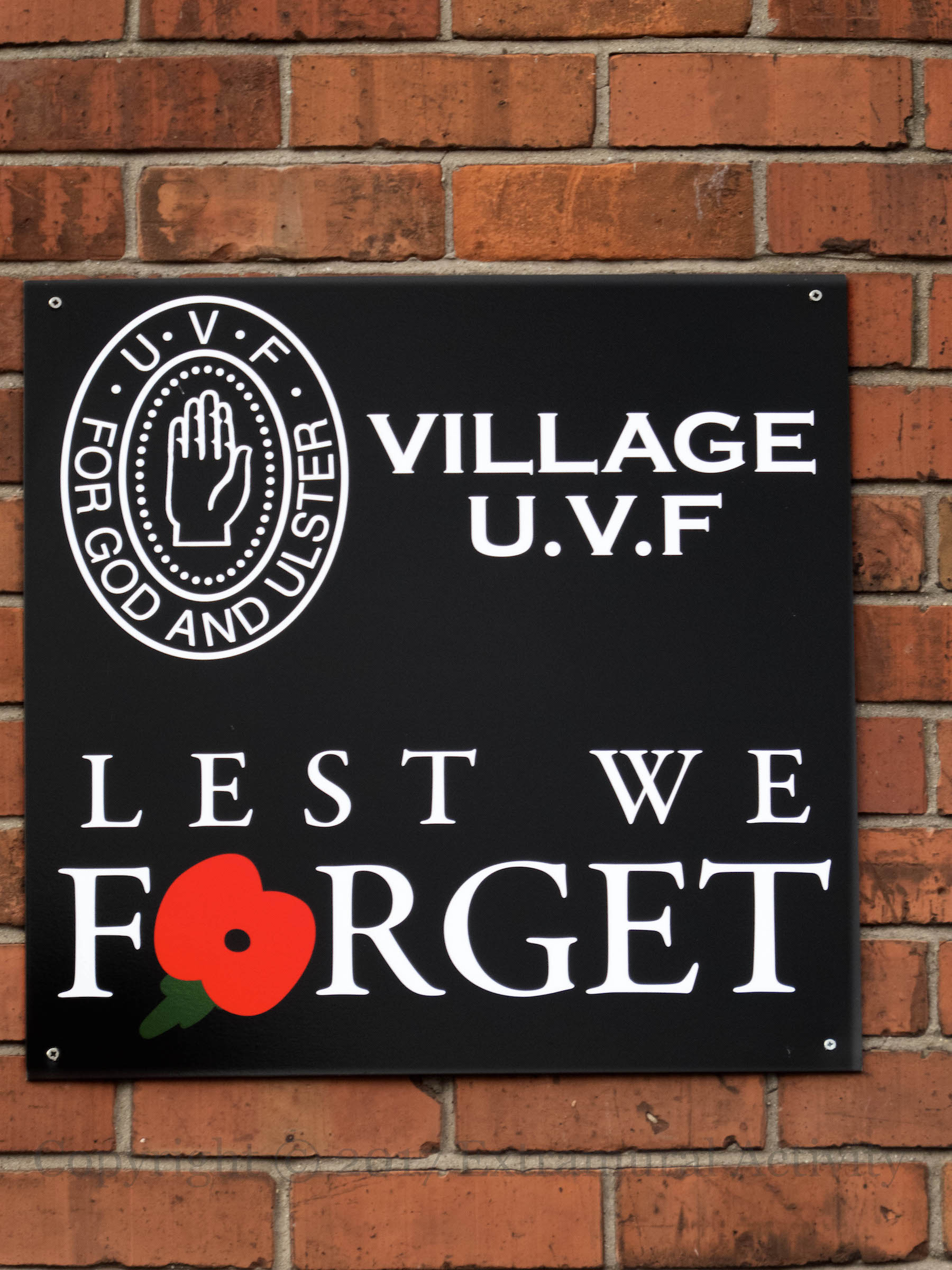
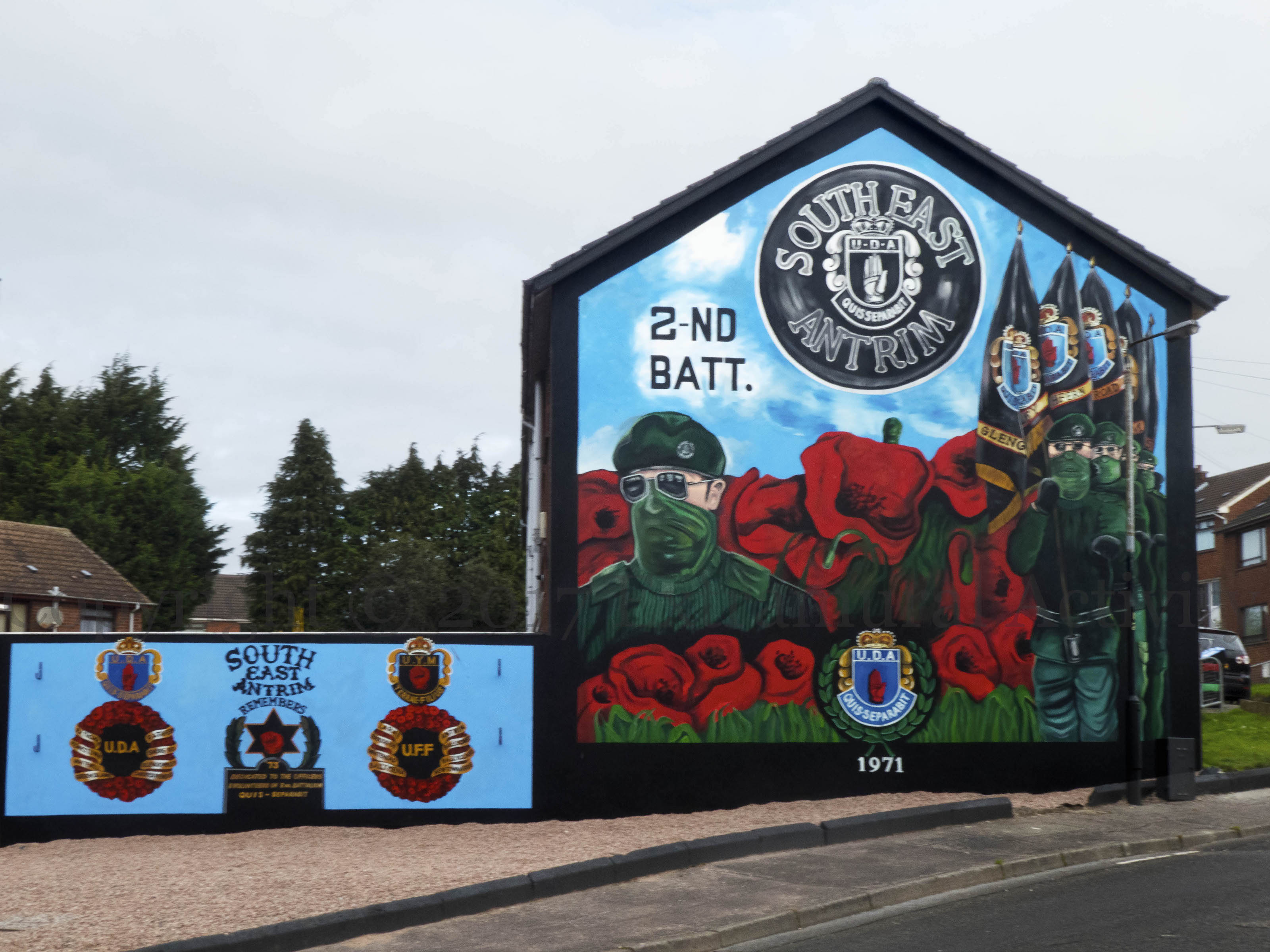
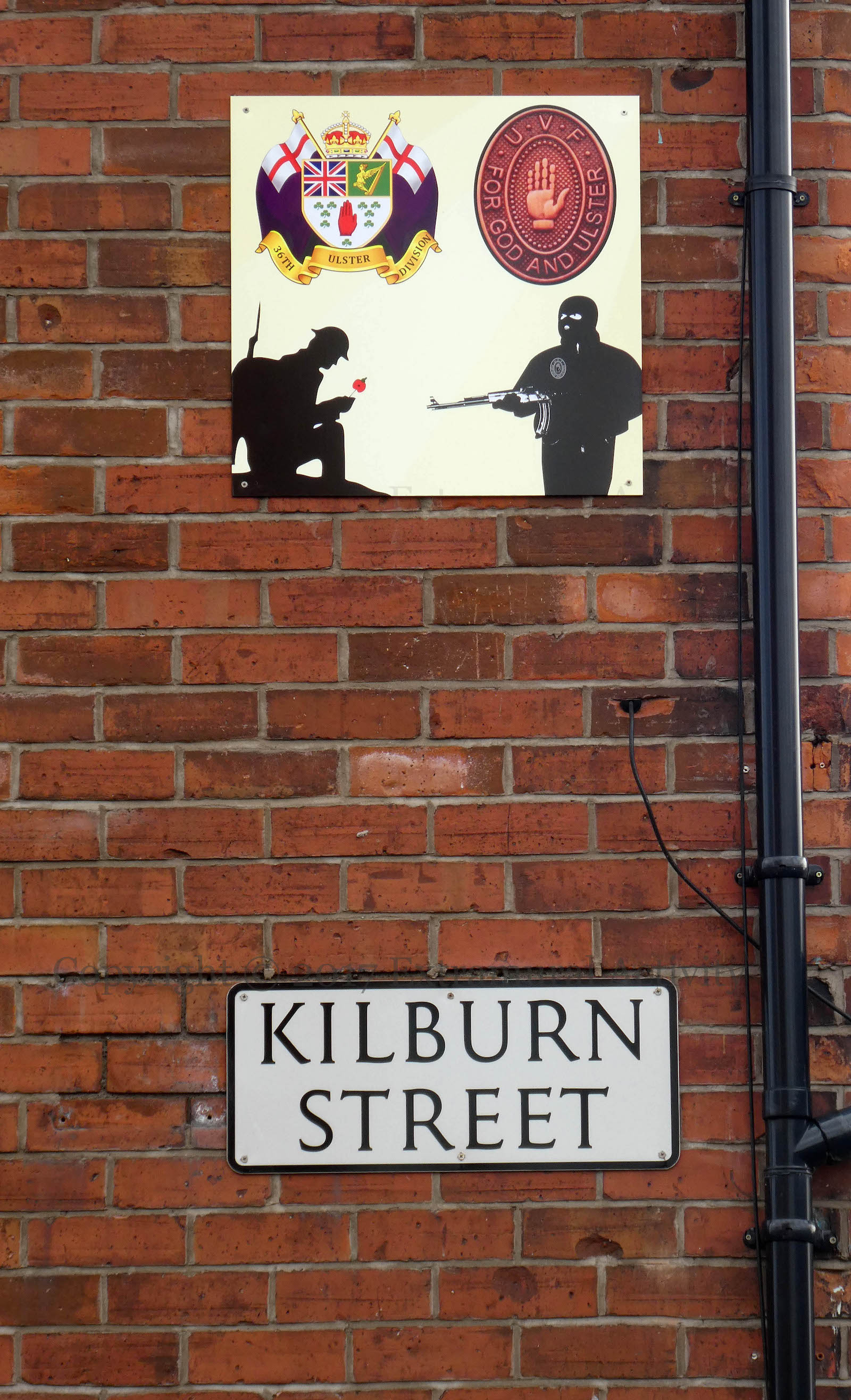
A WWI poppy is used as the “O” in “Lest we forget”, joining together the Ulster Volunteers of 1912 and the modern Ulster Volunteer Force. For more of the many small UVF boards mounted in the Village in order to re-establish its presence, see South Belfast Volunteers | Welcome To The Village | A Hive Of Glass | For God And Ulster.
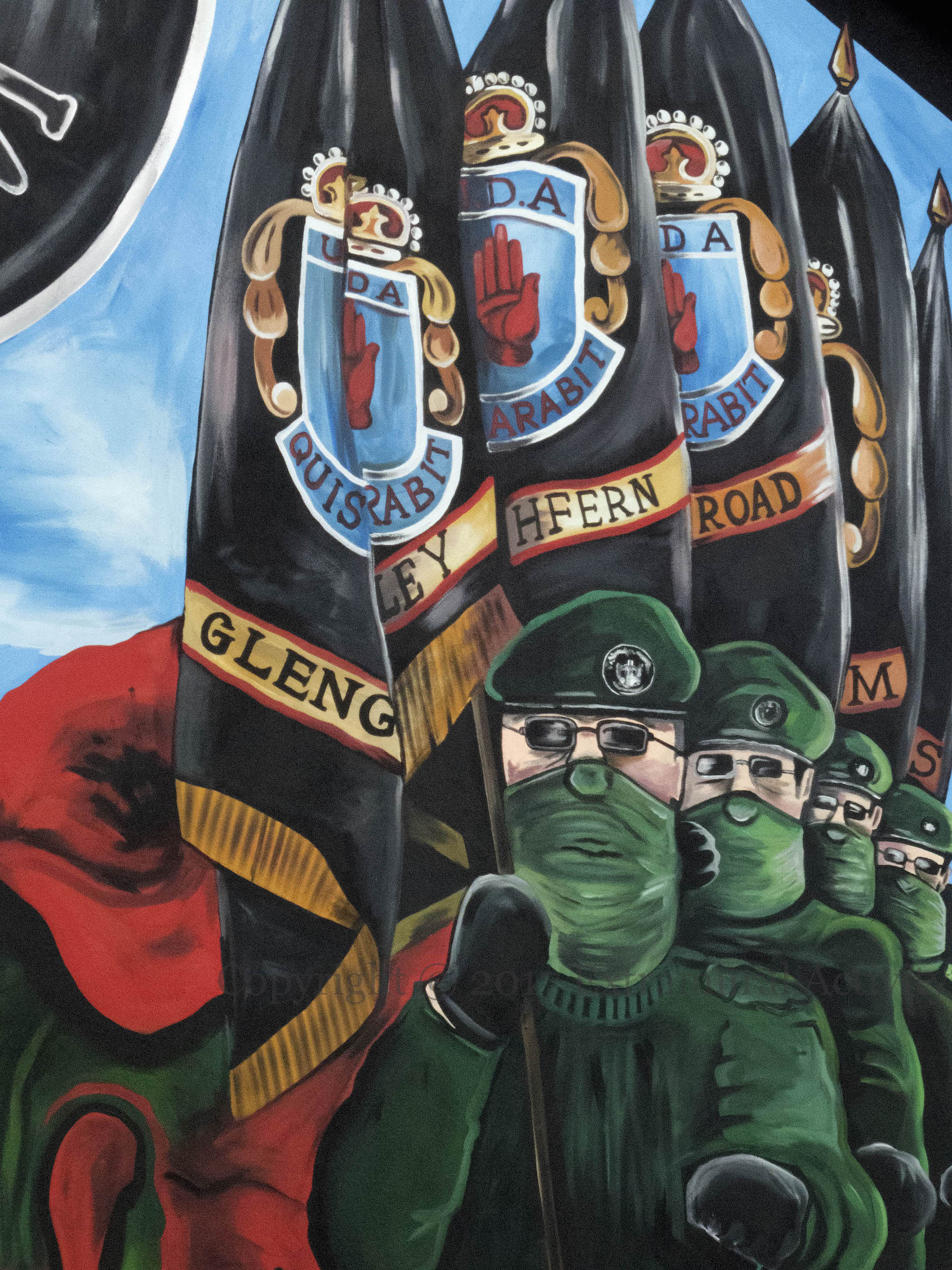
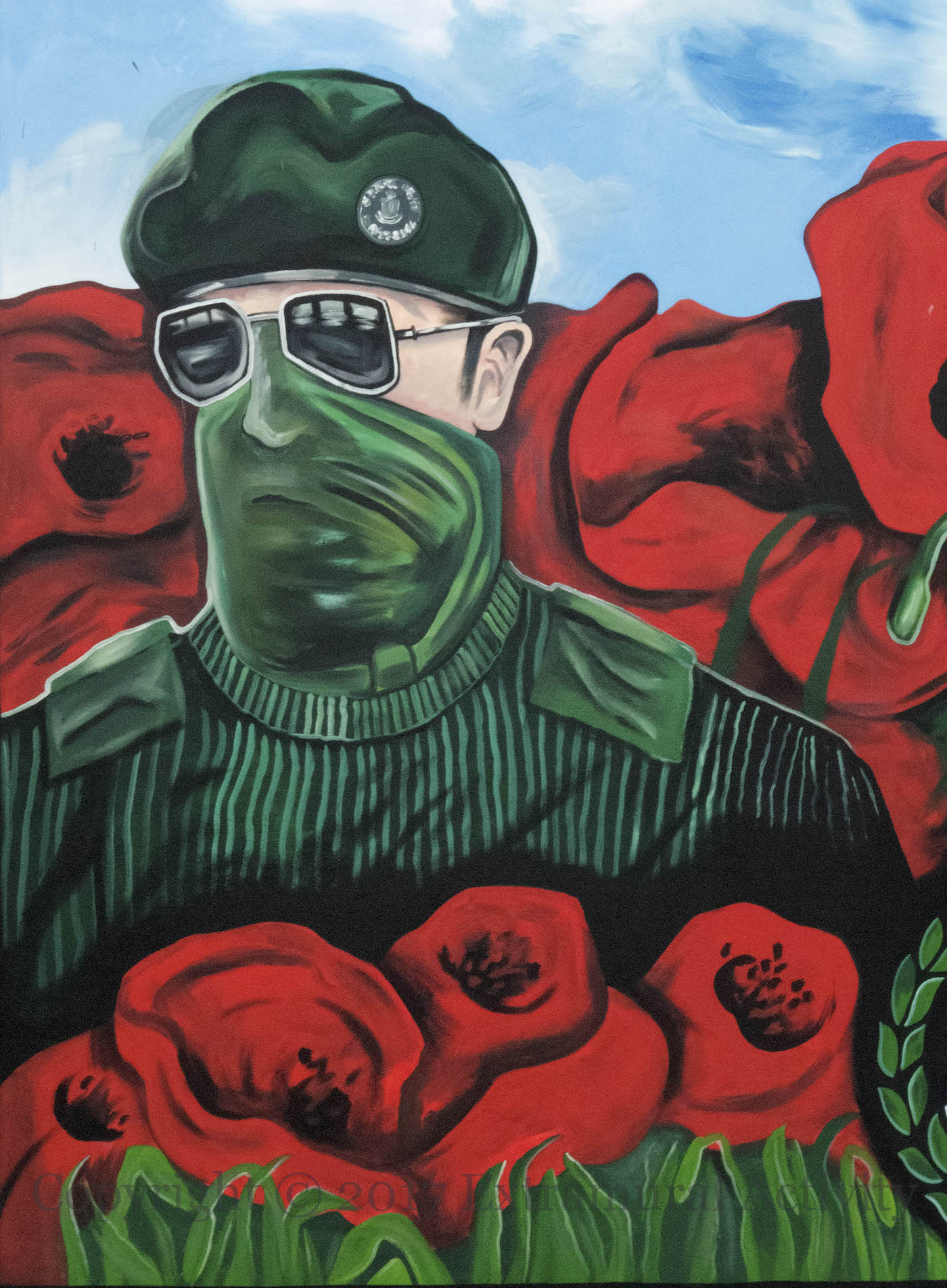
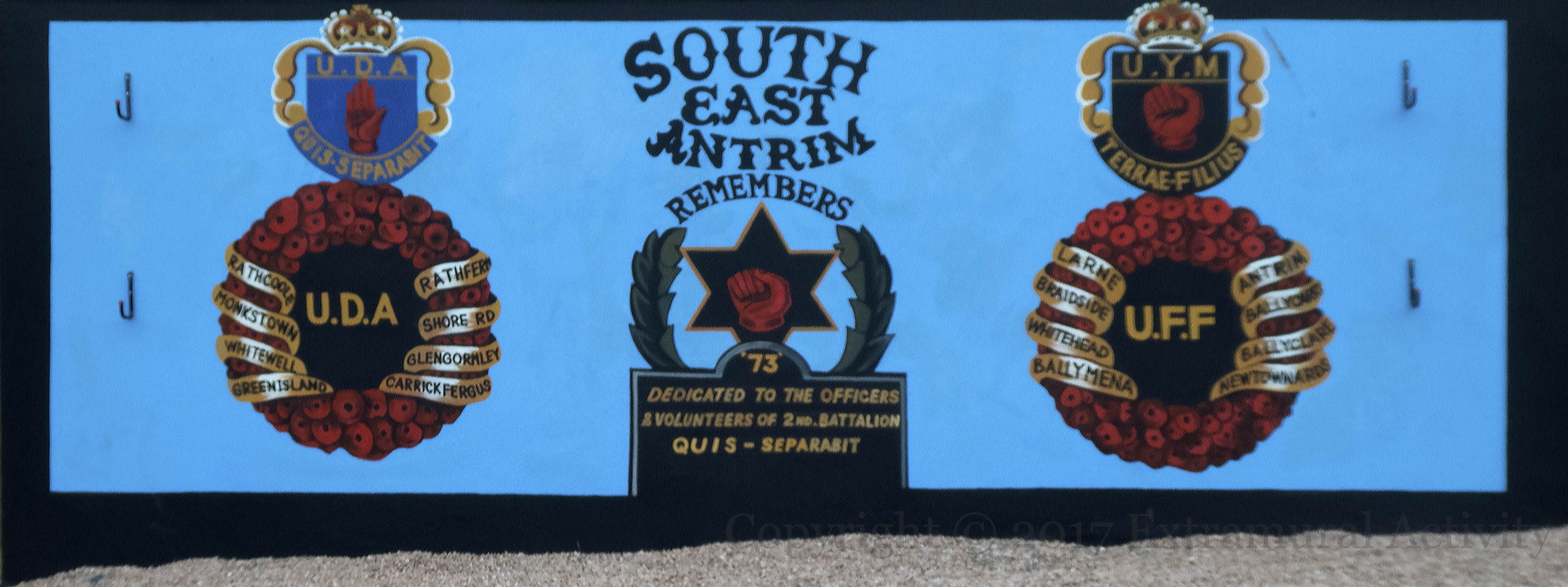
This new South East Antrim 2nd battalion UDA/UFF mural in Glengormley prominently uses poppies, usually seen in UVF murals on account of their shared name with the Ulster Volunteers of 1912 and WWI. Replaces They Live With Us.
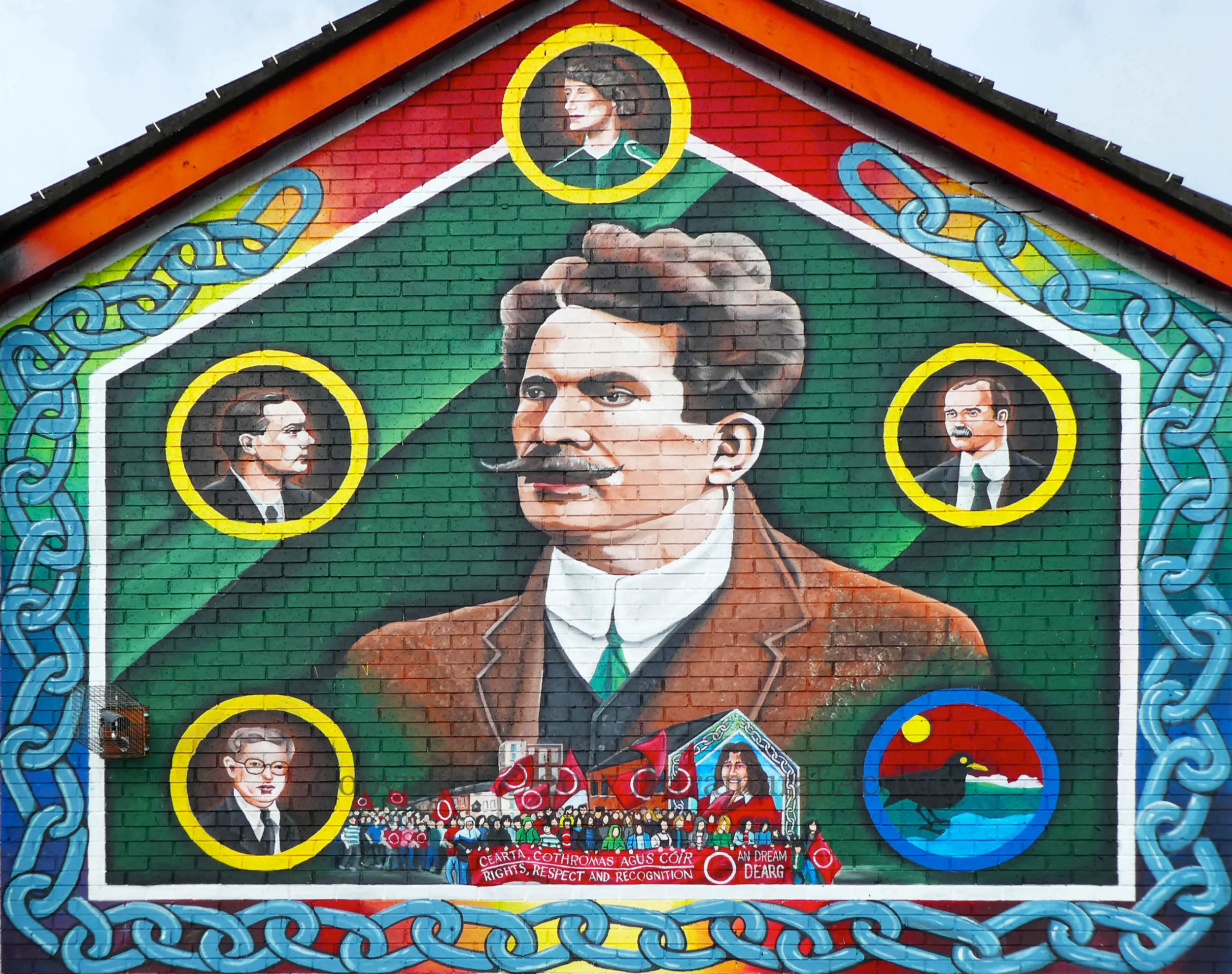
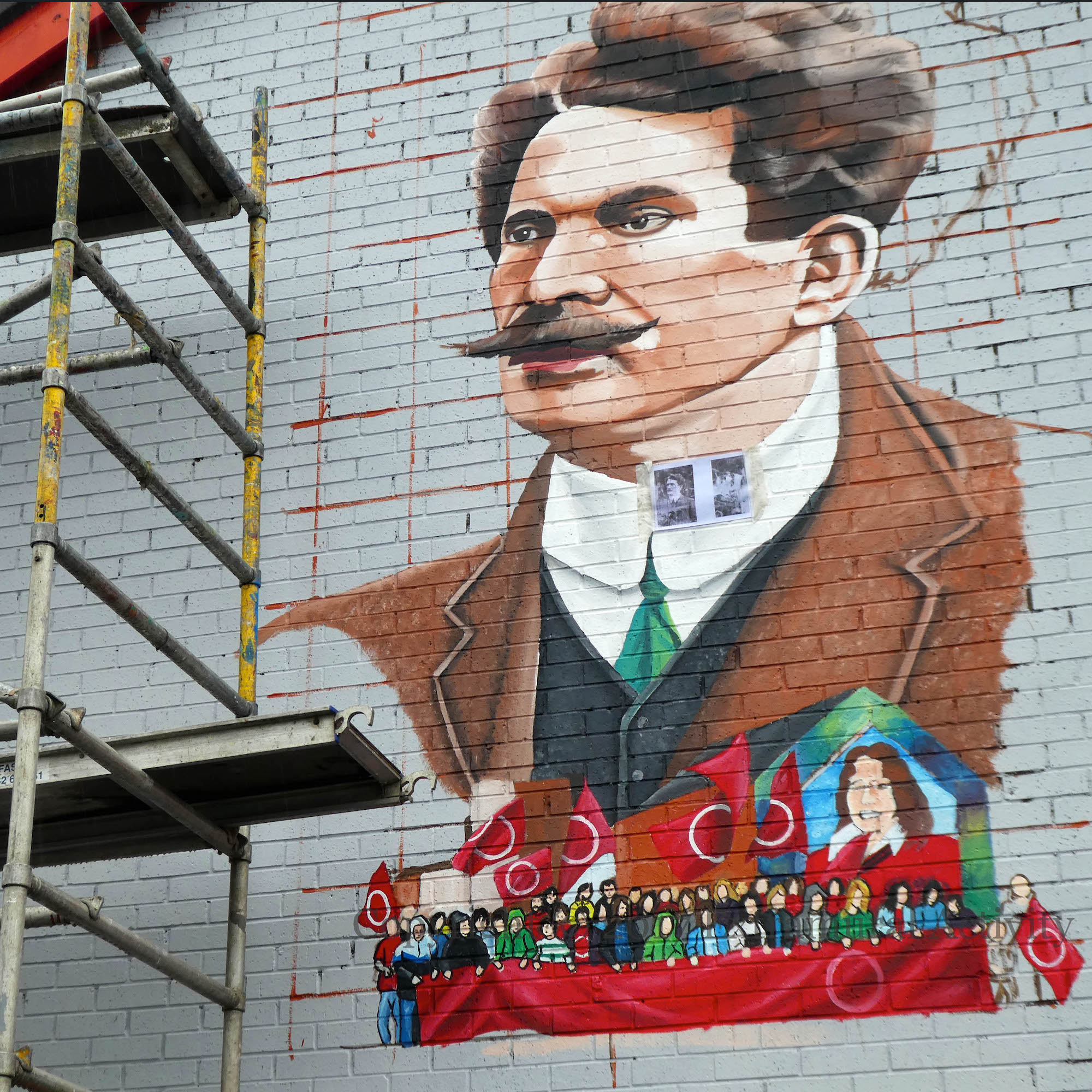
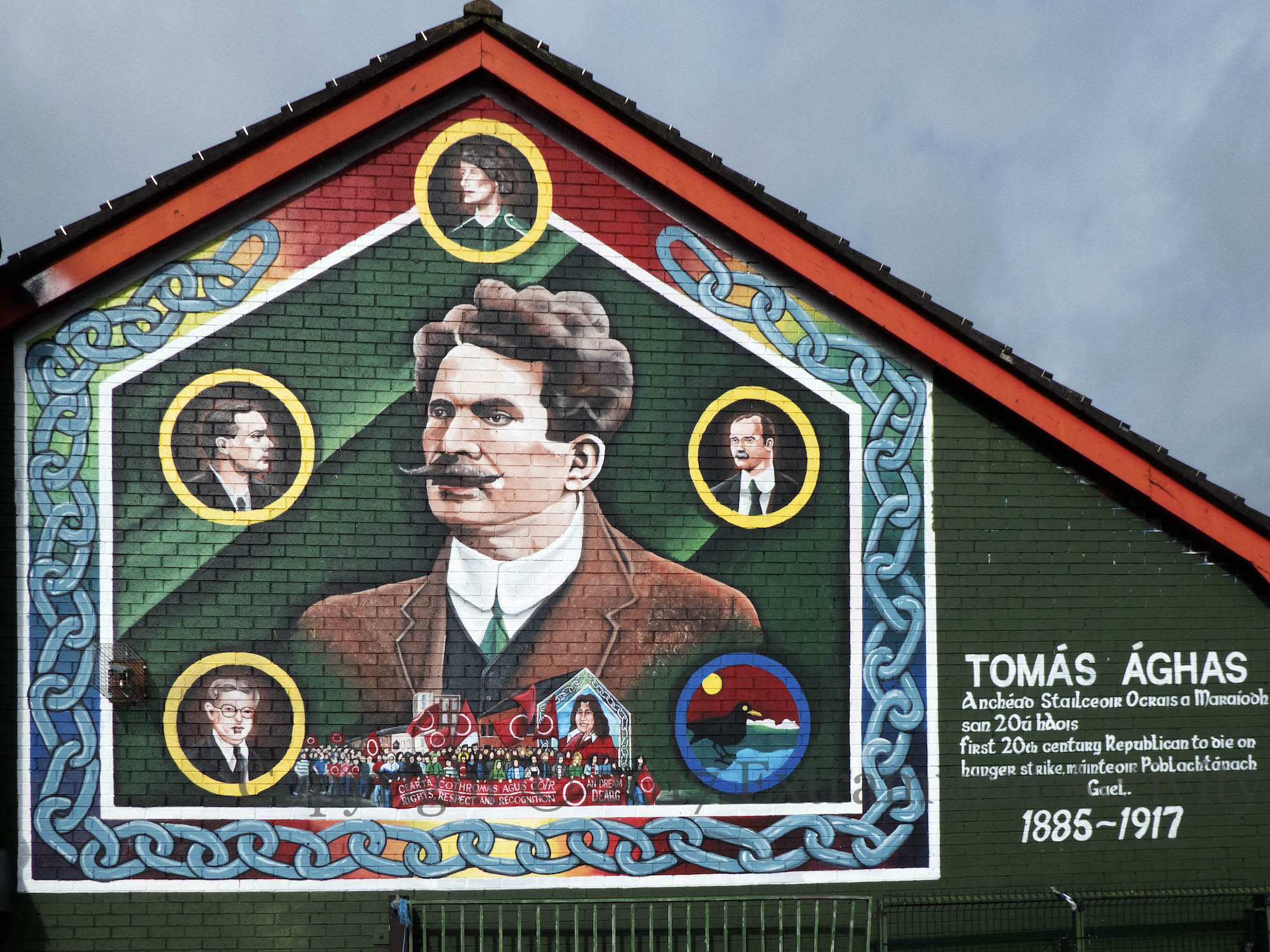
Thomas Ashe was working as an Irish teacher in Dublin when he joined the Irish Volunteers and in 1916 served as a battalion commander in the Easter Rising, for which he was sentenced to penal servitude for life. He went on hunger strike in May 1917 and again in September when he was rearrested by the British authorities for a “seditious” speech. He died on September 25th, one hundred years ago, becoming “an chéad staılceoır ocraıs a maraíodh san 20ú haoıs” (“first hunger striker to die in the 20th century”).
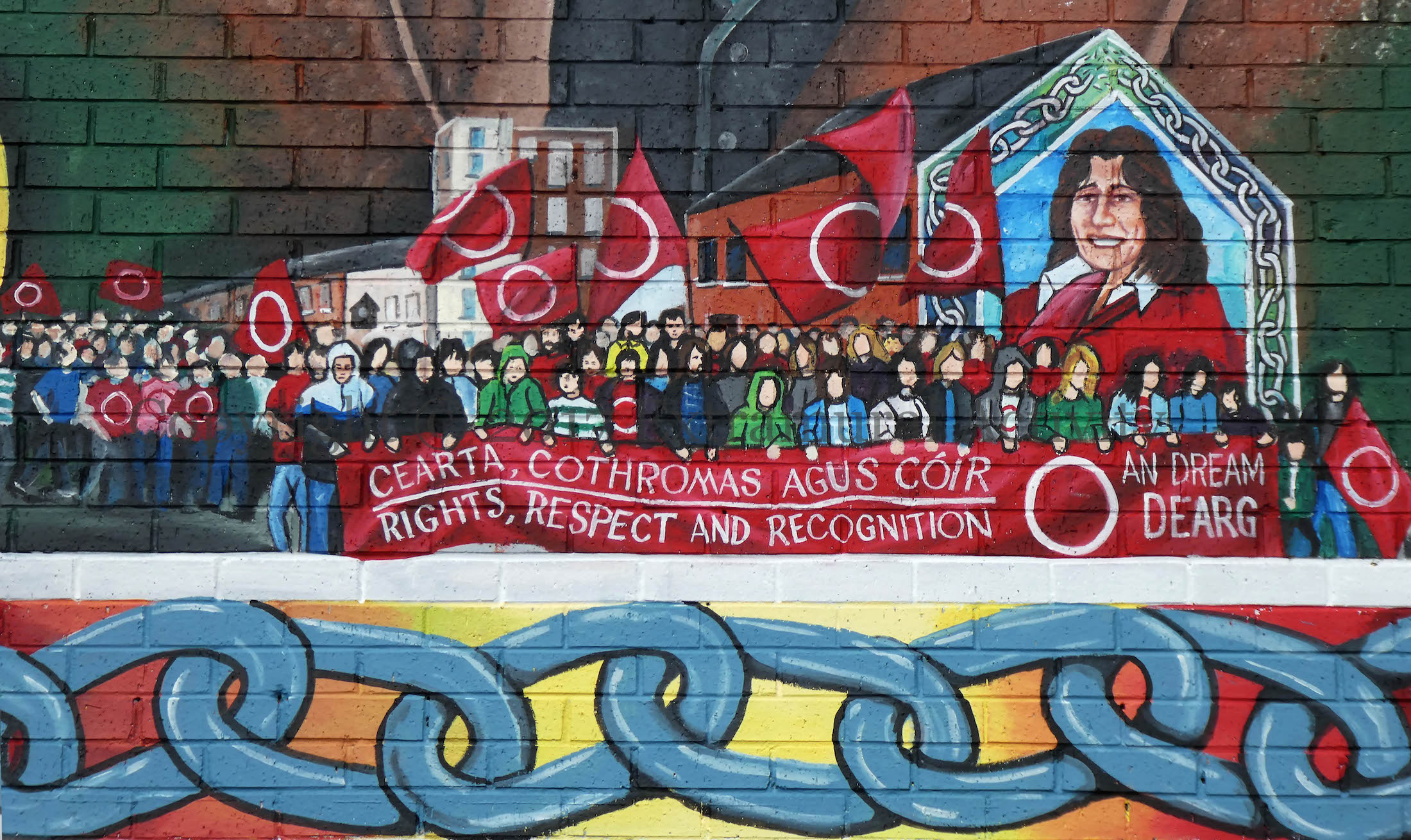
In the five circles around his portrait are Countess Markievicz, Pádraig Pearse, and James Connolly – fellow fighters in the Rising – and Máırtín Ó Cadhaın (author of Cré Na Cılle and IRA member interned during WWII), and the symbol of Laochra Loch Lao and more generally of An Ceathrú Gaeltachta/Gaeltacht Quarter (see previously The Big Plan and Onwards). In the middle (shown in detail below), An Dream Dearg march in support of Acht Na Gaeılge (an Irish language Act) past the Bobby Sands mural on Sevastopol Street.
The members of the anti-Home Rule ‘Ulster Volunteers’, formed in 1912, joined the 16th and 36th divisions at the onset of WWI. The emblem of the Ulster Volunteers is on the right (the emblem of the 36th is on the left). The same emblem was used in 1966 when the modern UVF was founded.
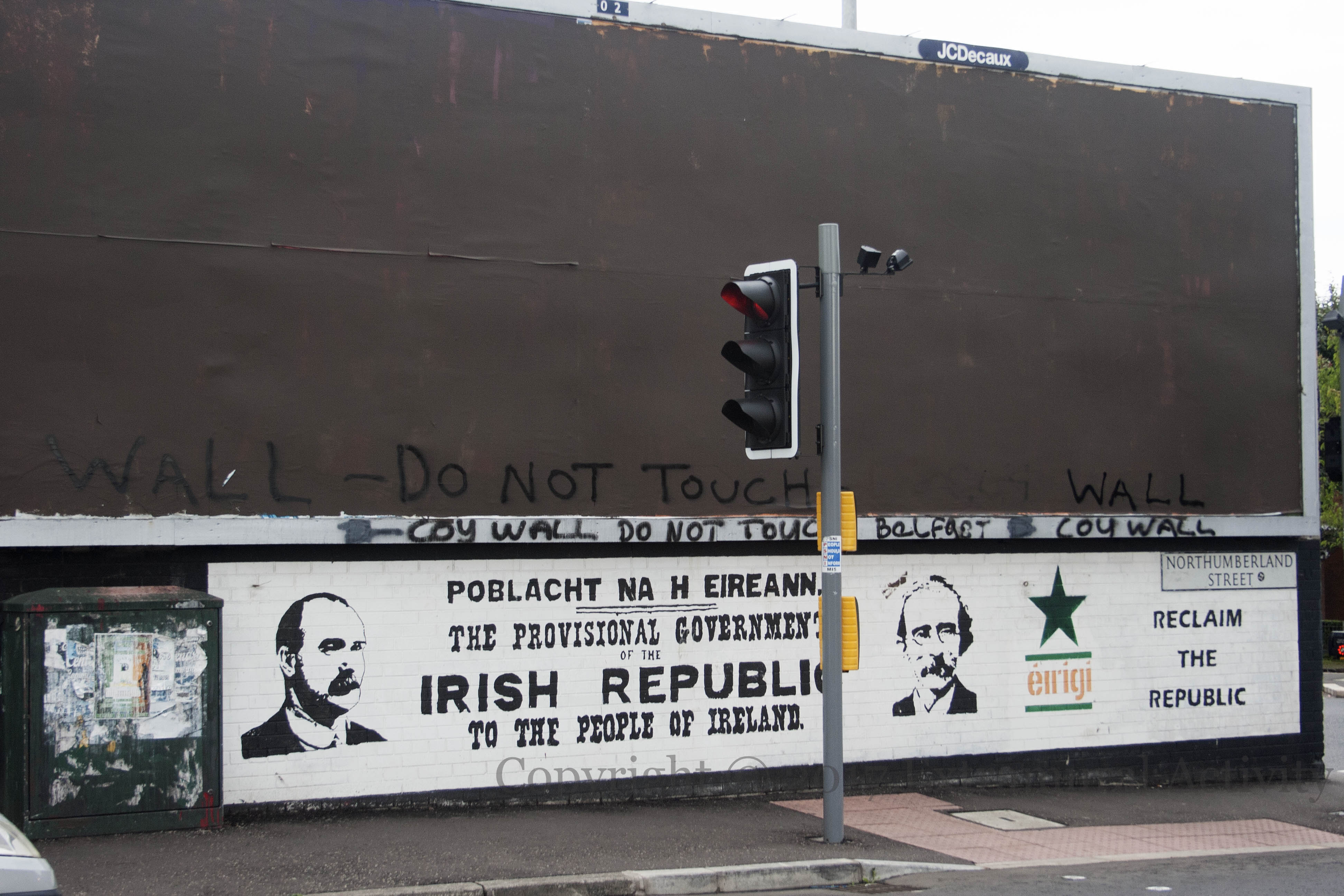
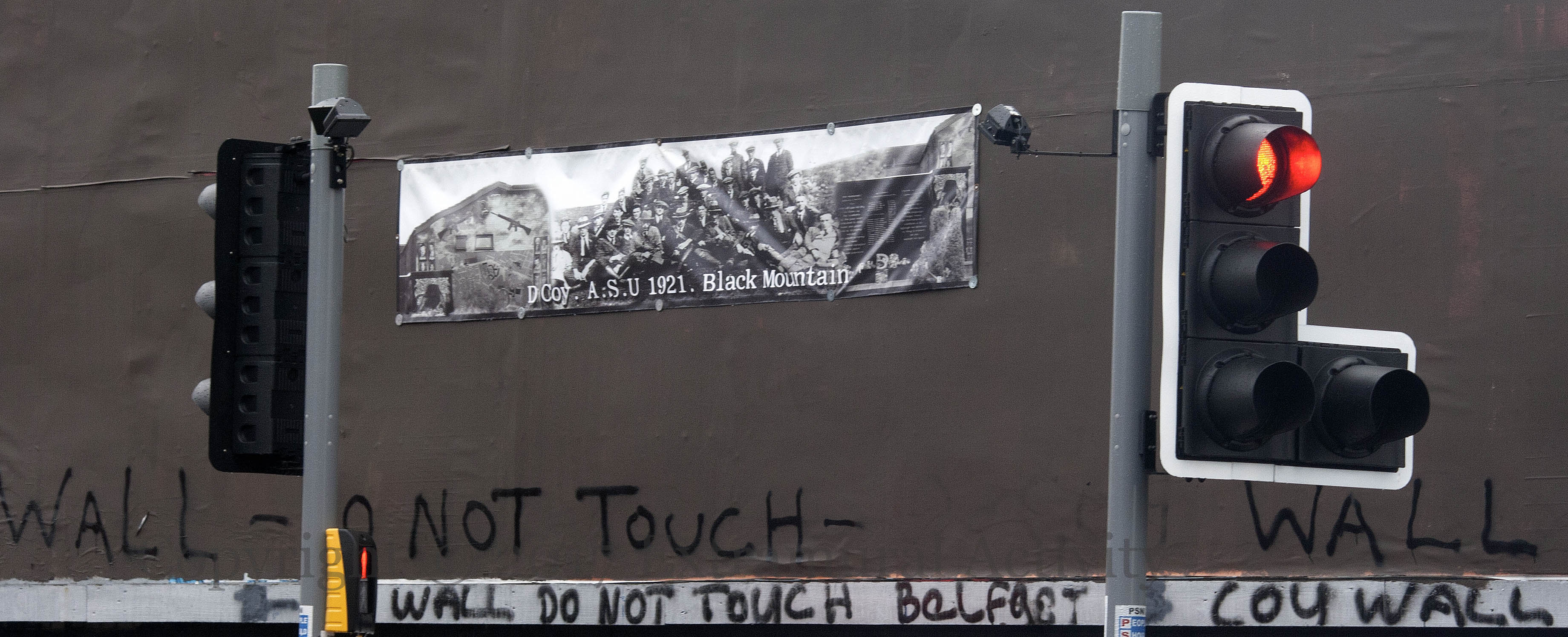
Towards the end of August the advertising hoarding at the corner of Divis and Northumberland Streets was covered with brown paint and a warning scrawled along the bottom rail: “D-Coy wall – Do not touch – Belfast D Coy wall” (though the two “D”s were painted over). (See the second image.)
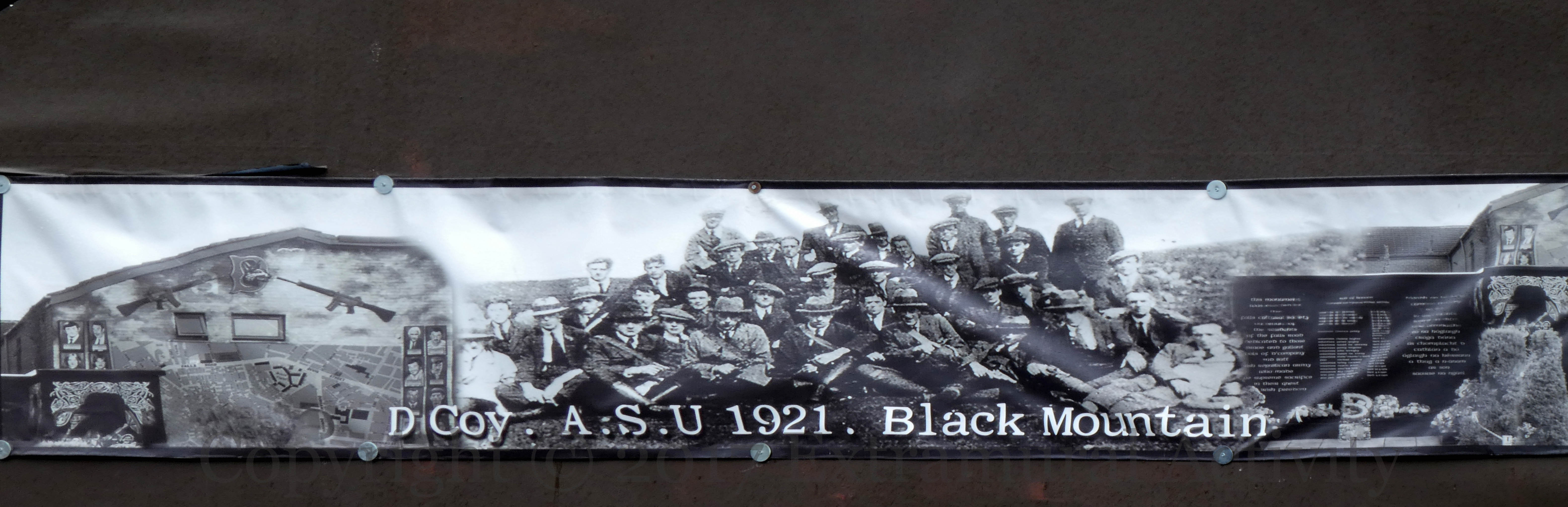
A few weeks later, the banner above was added, showing the men of the northern IRA’s D Coy “active service unit” (“ASU”), between images of the (Troubles-era) D Coy mural and memorial garden (PMC | History Carved In Stone). A direct line between the IRA of and the PIRA unit is possible – some of the Northern Division went with Joe McKelvey, leader of the 3rd Division, to Dublin to support the anti-Treaty forces (WP) though most of the northern IRA accepted the assurance that the six counties would soon join the South. (For some guesstimates at the number of northerners who served pro-Treaty, see treasonfelony.)
But perhaps only an ideological heritage is intended, that the Black Mountain unit of 1921, and the D Coy of the Troubles, and the contemporary D Coy, alike aim at (Northern) Irish independence.
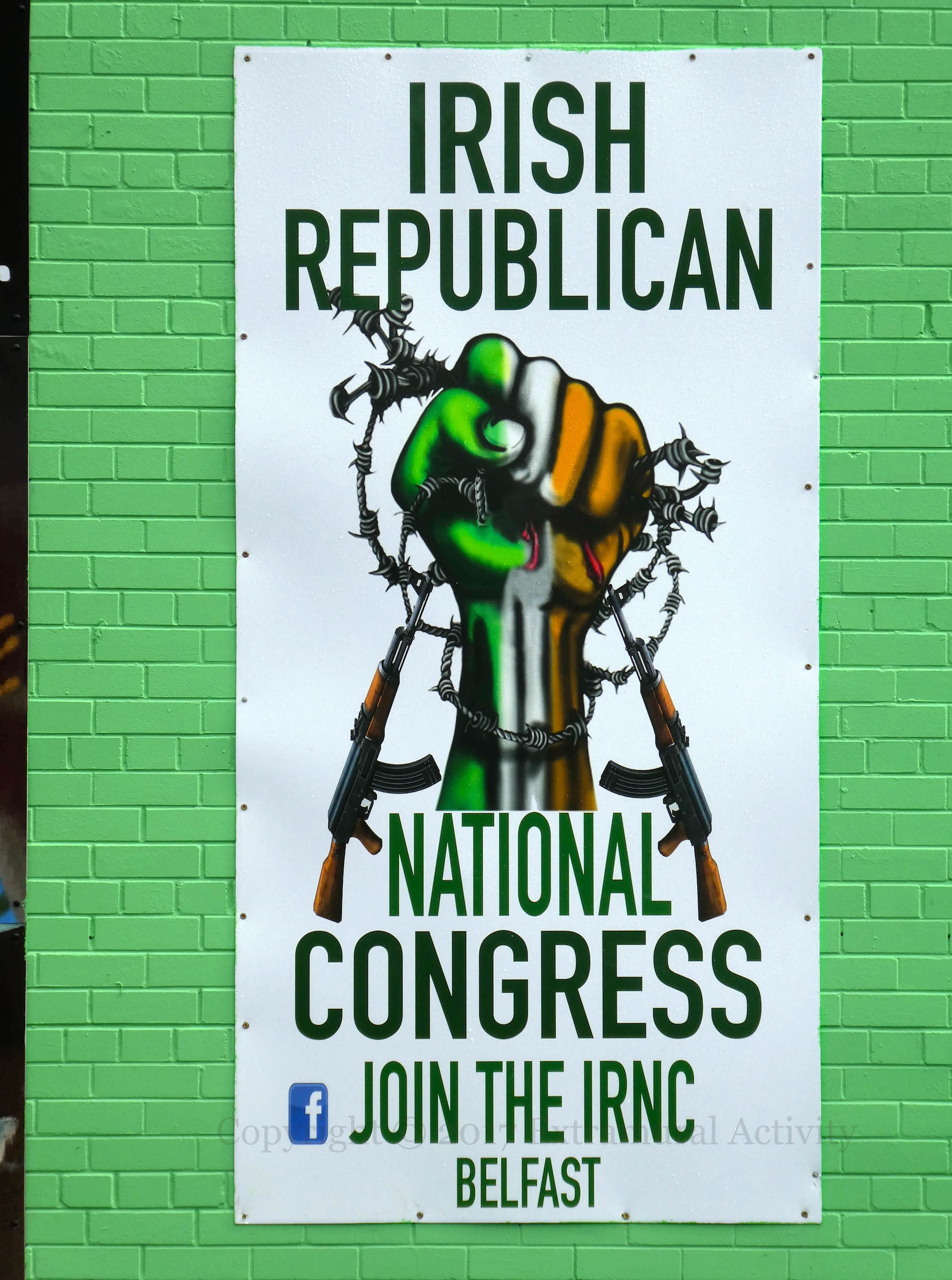
Here is another Irish Republican National Congress (Fb | web) board. Where the first (in Beechmount) featured a Maid Of Erin harp, this one features assault rifles and some nasty barbed wire.
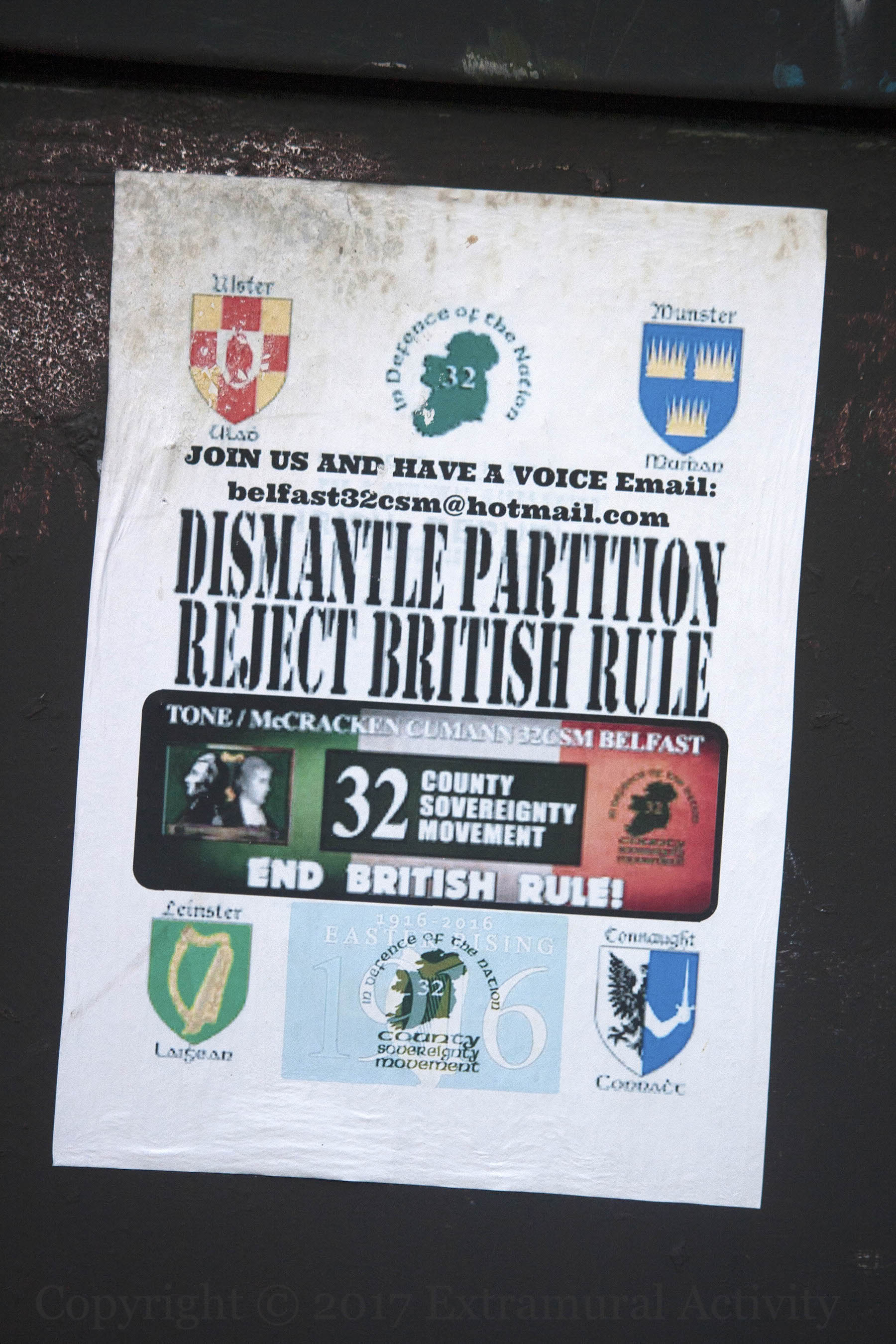
This is a 32 County Sovereignty Movement (32CSM) poster from west Belfast, asking people to “Dismantle partition – reject British rule”. The organisation describes itself as “a republican pressure group”. The Belfast cumann (Fb | web) is named after Wolfe Tone and Henry Joy McCracken (of the 1798 Rebellion).
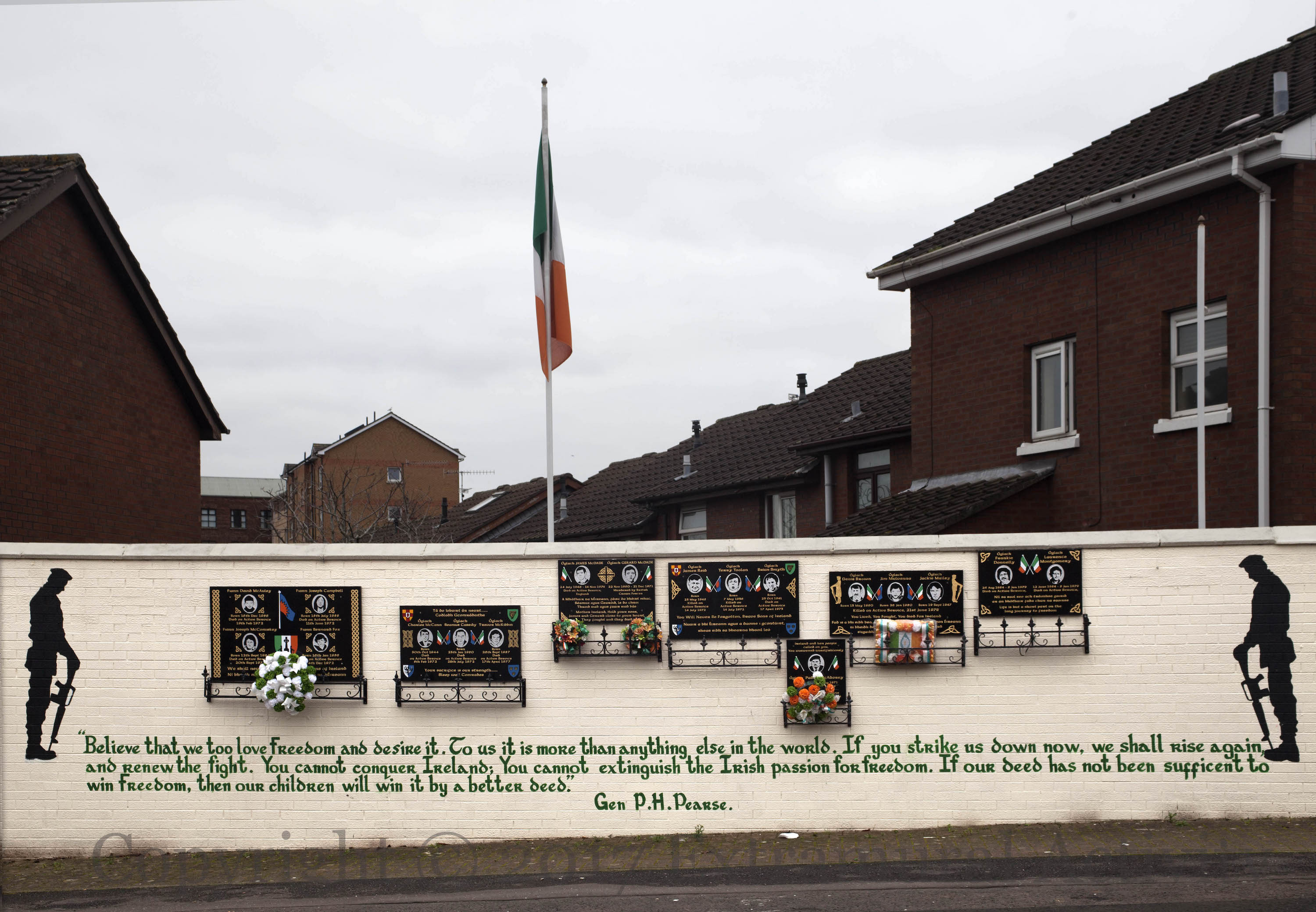
“[I assume that I am speaking to Englishmen who value their freedom, and who profess to be fighting for the freedom of Belgium and Serbia [in WWI].] Believe that we too love freedom and desire it. To us it is more than anything else in the world. If you strike us down now, we shall rise again and renew the fight. You cannot conquer Ireland; you cannot extinguish the Irish passion for freedom. If our deed has not been sufficient to win freedom, then our children will win it by a better deed – Gen. P. H. Pearse” at his court martial in 1916.
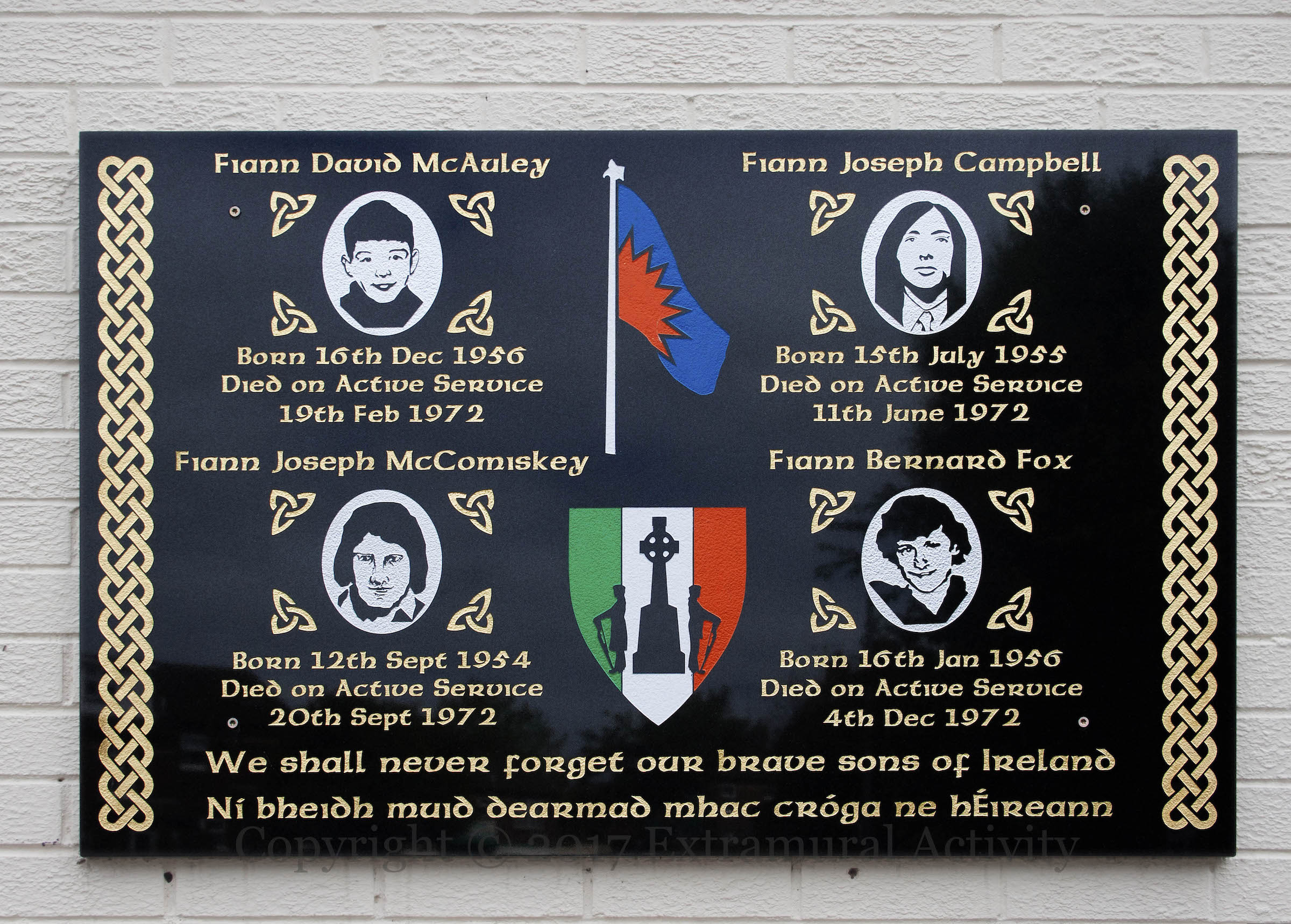
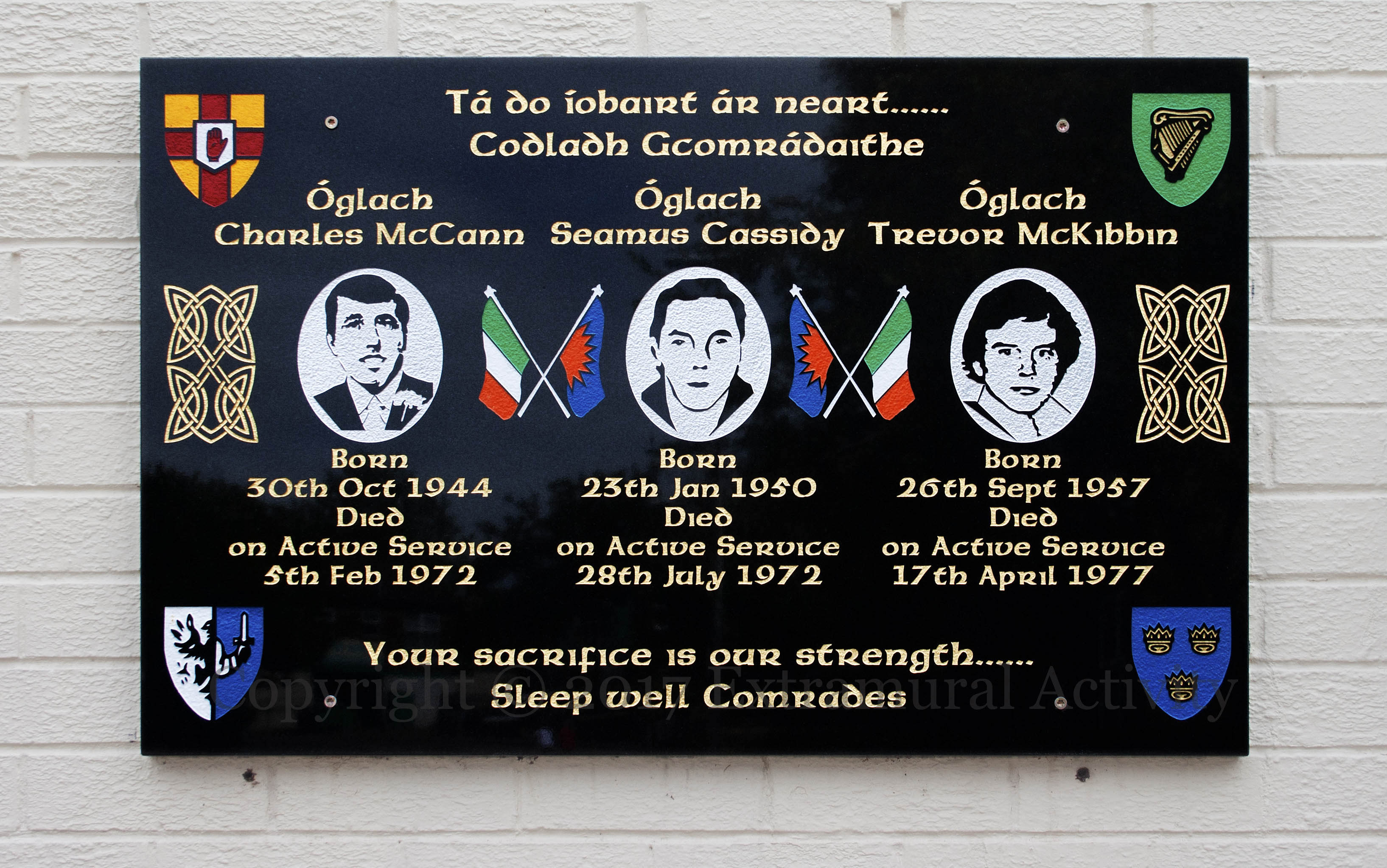
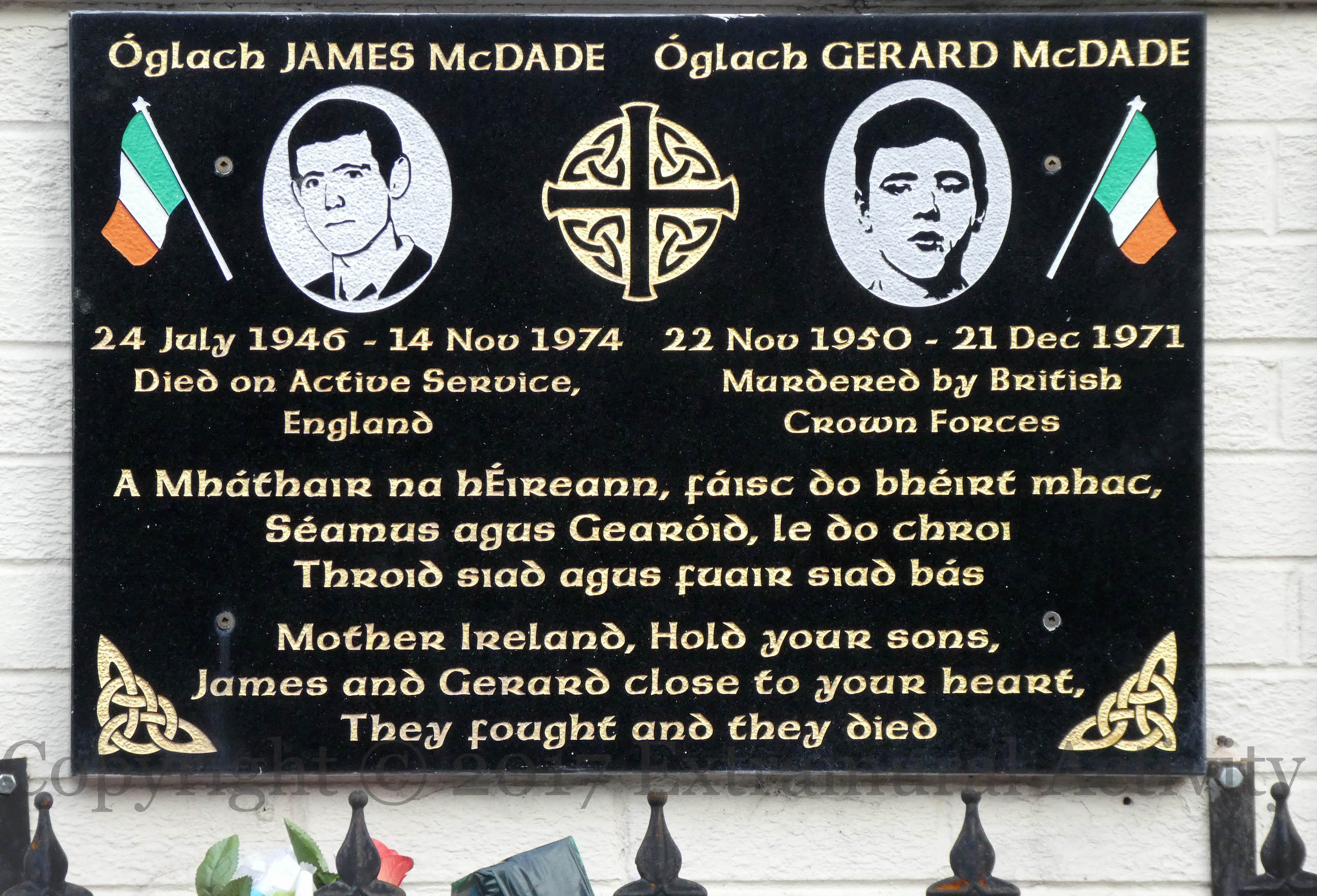
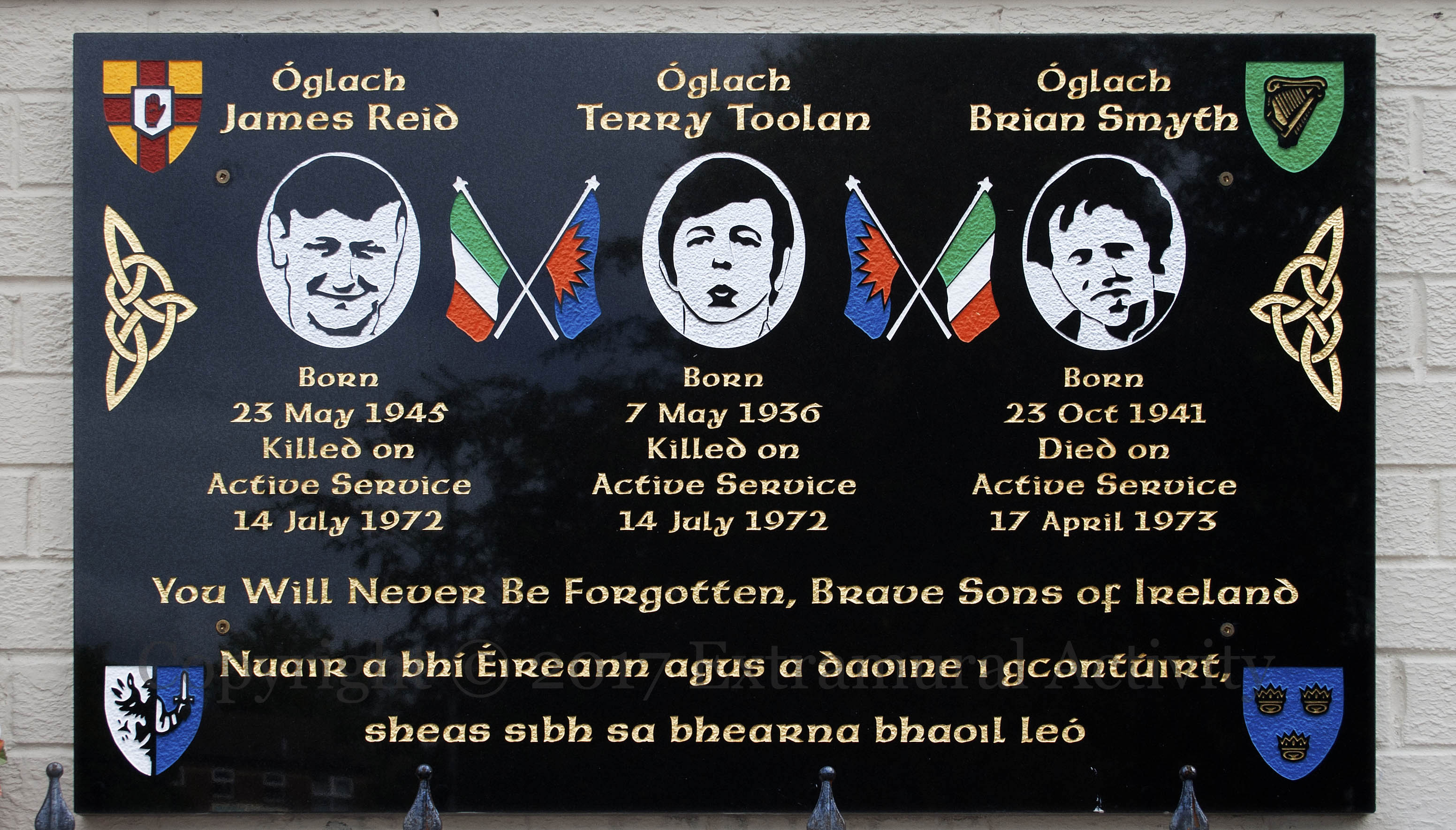
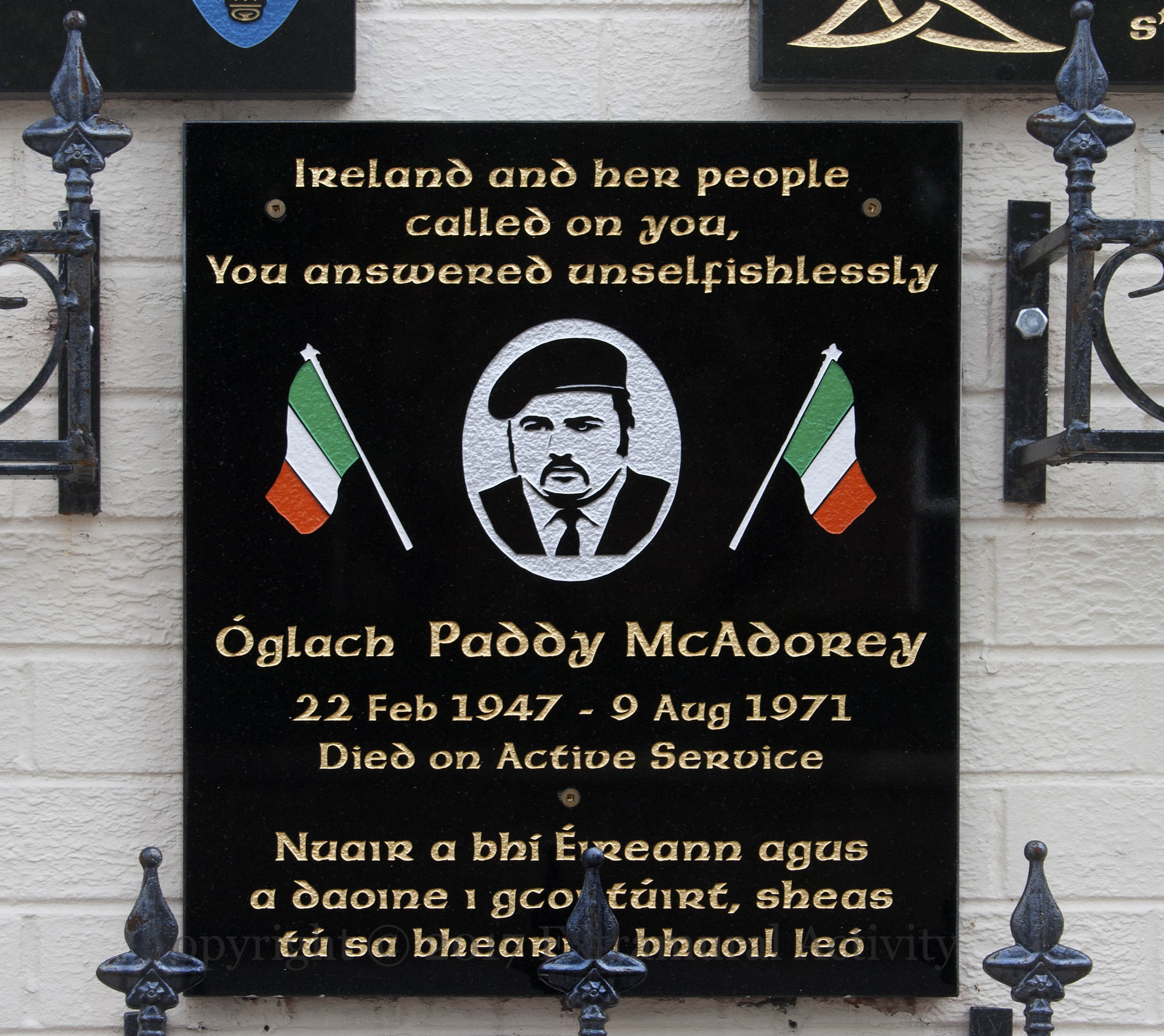
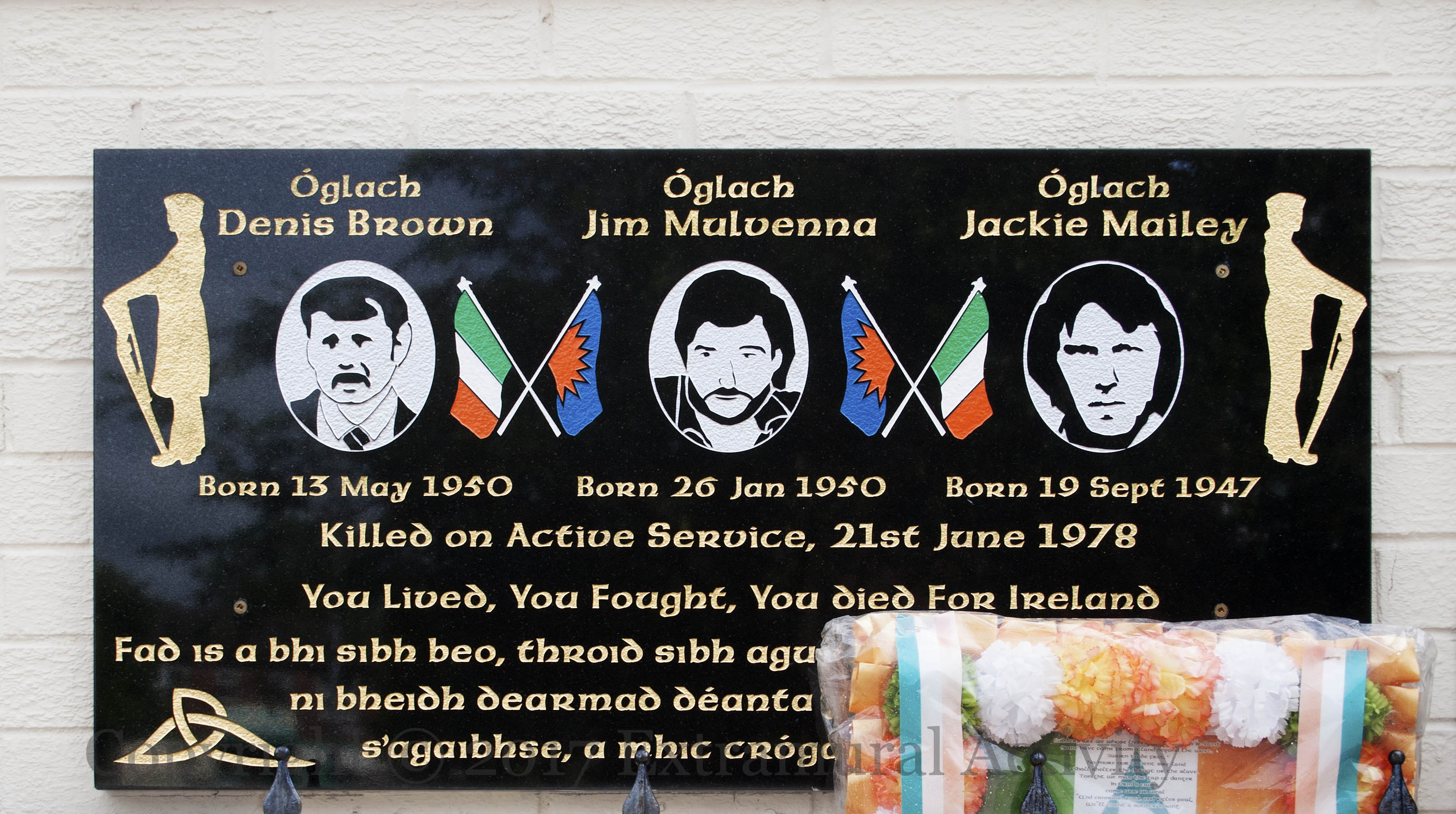
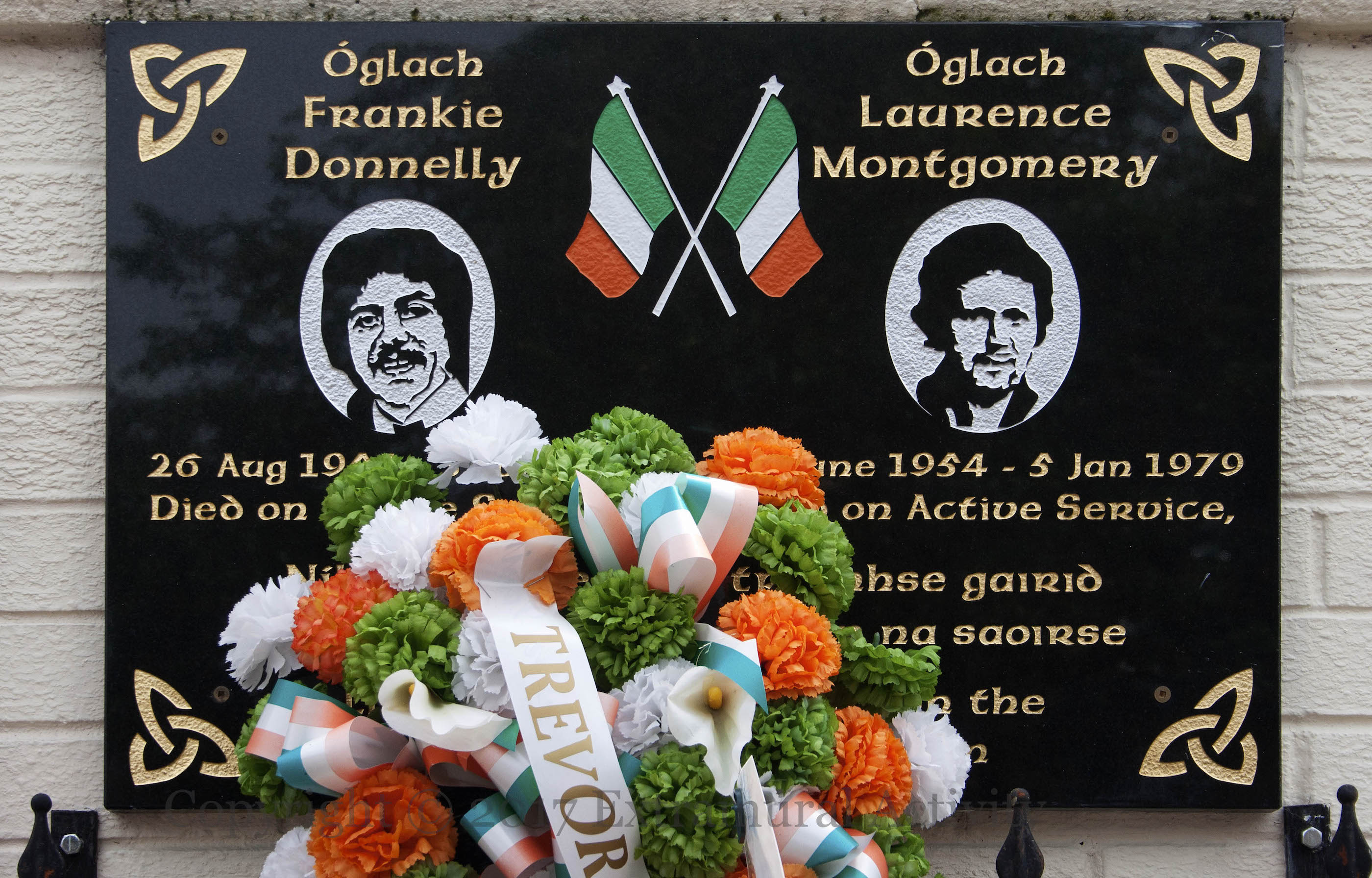
Here are eight images of the memorial plaques to deceased Ardoyne IRA fianna and ógliagh fromt he 1970s: David McAuley, Joseph Campbell, Joseph McComiskey, Bernard Fox, Charles McCann, Seamus Cassidy, Trevor McKibbin, James McDade, Gerard McDade, James Reid, Terry Toolan, Brian Smyth, Paddy McAdorey, Denis Brown, Jim Mulvenna, Jackie Mailey, Frankie Donnelly, Laurence Montgomery.
Here is another reproduction of a vintage Troubles image on a small board in Derry/Doire, the well-known image of OIRA volunteer Joe McCann at Inglis bakery in the Markets in 1971.
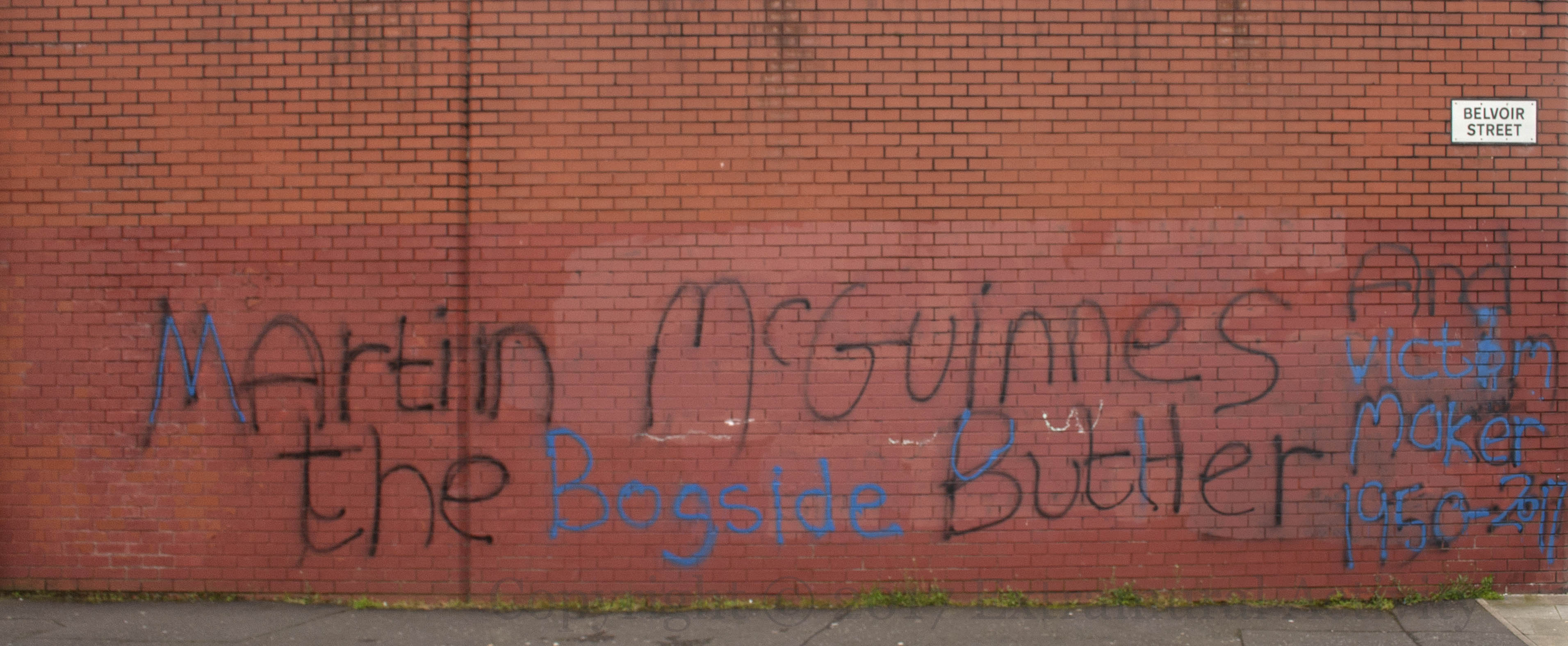
“Martin McGuinnes [sic], the Bogside buther [sic] and victim maker 1950-2017” – commentary on IRA volunteer and Sinn Féin politician Martin McGuinness’s recent (March 2017) death from amyloidosis, in Belvoir Street.
 Seosamh Mac Coille Collection