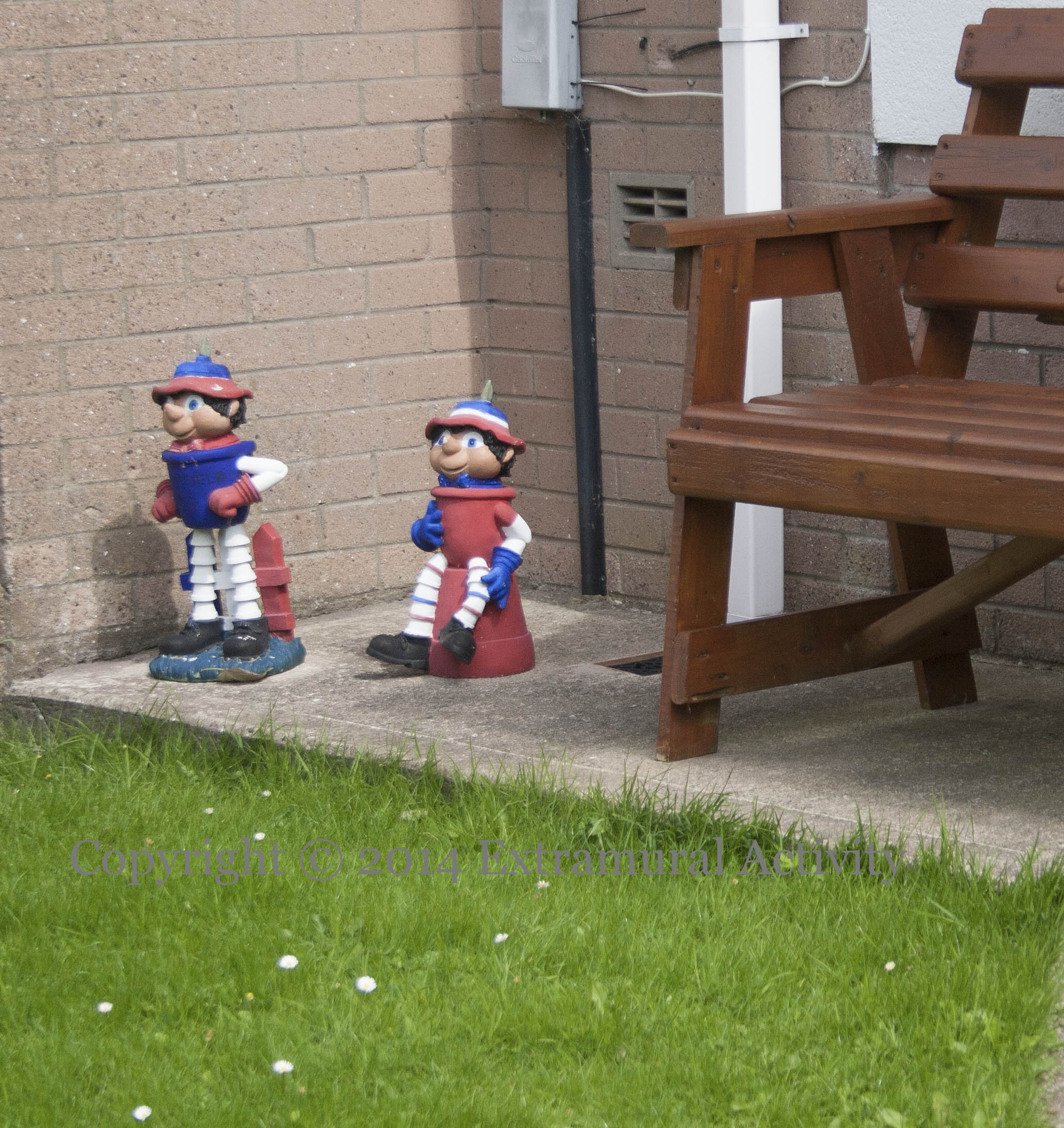
The original ‘Flower Pot Men’ was a radio show in 1951 and then a television series in December 1952; it featured the adventures/mishaps of two flower pot men, ending – because they were identical – with the question ‘Which of those two flower pot men – was it Bill or was it Ben?” The few (10? IMDb) episodes produced were repeated until 1970. “Bill” and “Ben” were the names of the younger brothers of creator Hilda Brabban and ‘Little Weed’ was based on her younger sister, Phyllis (Toonhound | Daze Of Our Lives). The characters were revived in 2001 and given a new look; the garden ornaments above from in a yard in Monkstown are based on the modern pair, though painted in red, white, and blue.
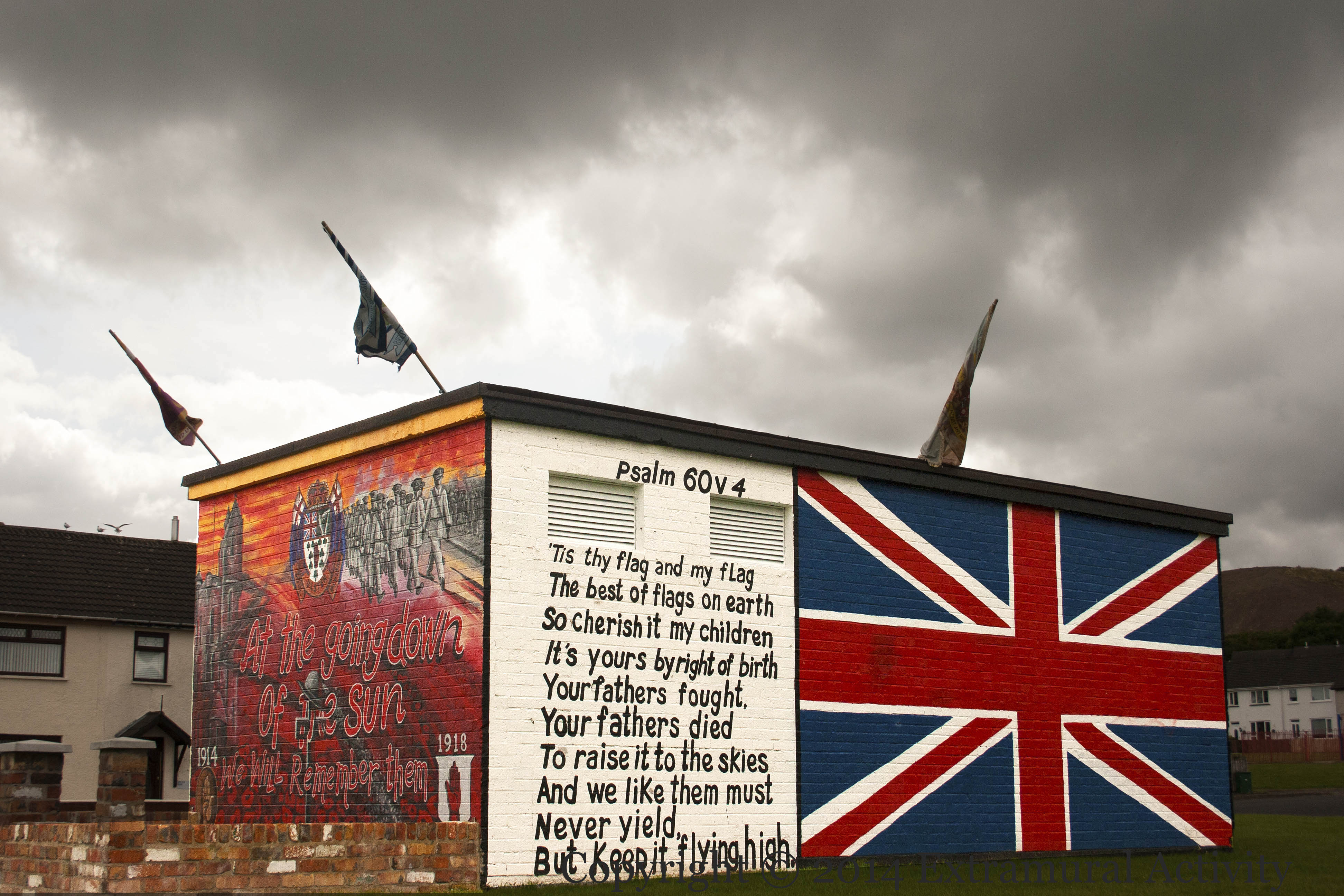
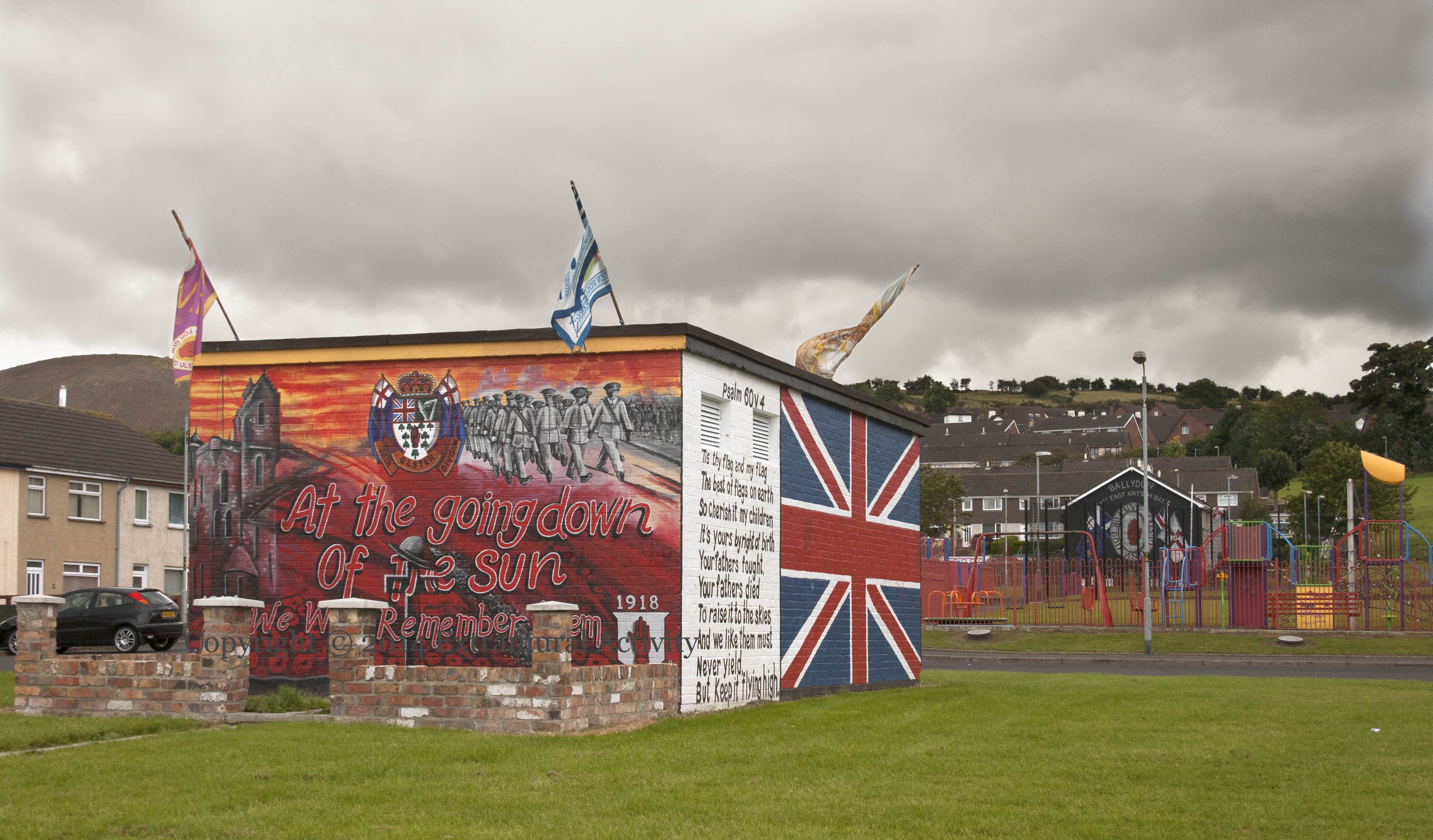
Translations of Psalm 60.4 vary, but it is something like “You (the Lord) have given those who fear you a banner so that they will not flee before your arrows”, which might work quite well alongside a Union jack. But in fact, only one source claims the poetic lines on the side of this Ballyduff electrical sub-station come from Psalm 60.4; they are rather the first stanza of a 1902 poem (earliest found mention), The UnionJack, by Edward Shirley, in Little Poems For Little People:
‘Tis thy flag and my flag, the best of flags on earth;
Oh, cherish it my children, for ’tis yours by right of birth.
Your fathers fought, your fathers died, to rear it to the skies;
And we like them will never yield, but keep it flying high.
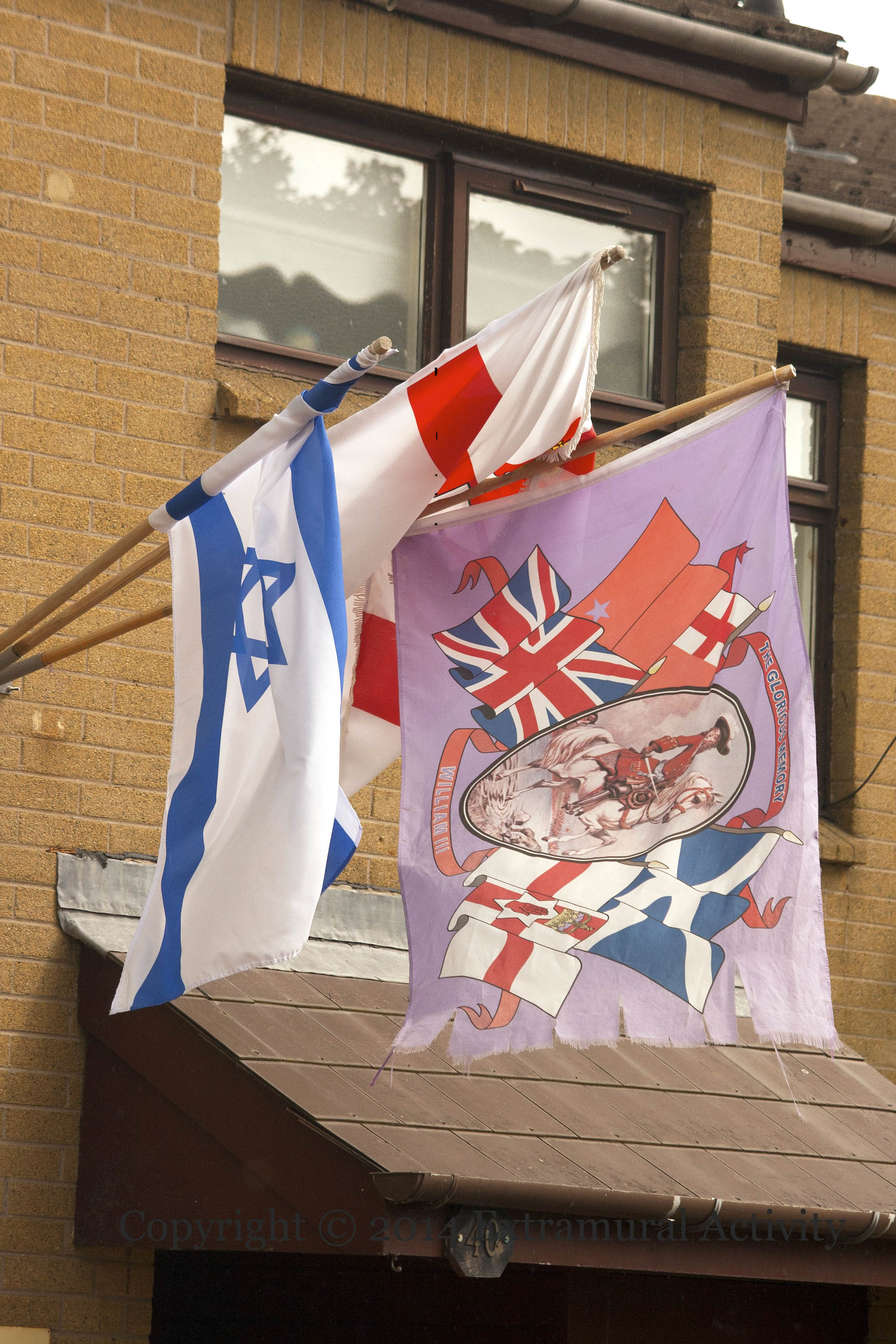
The flag of Israel flies beside the flag of the parliament of Northern Ireland and one celebrating “The glorious memory” of William III, crossing the Boyne on his horse. Ballyduff.
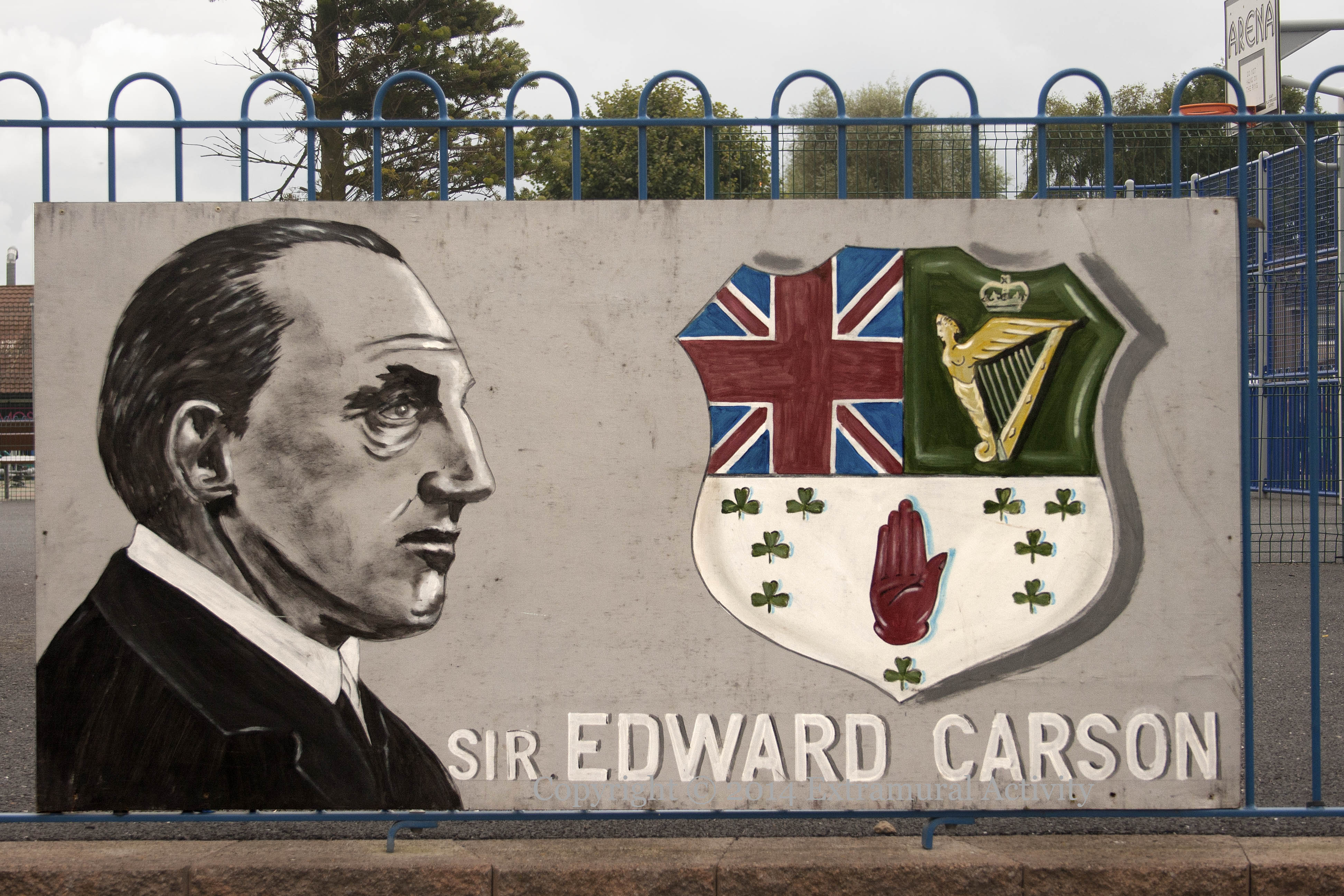
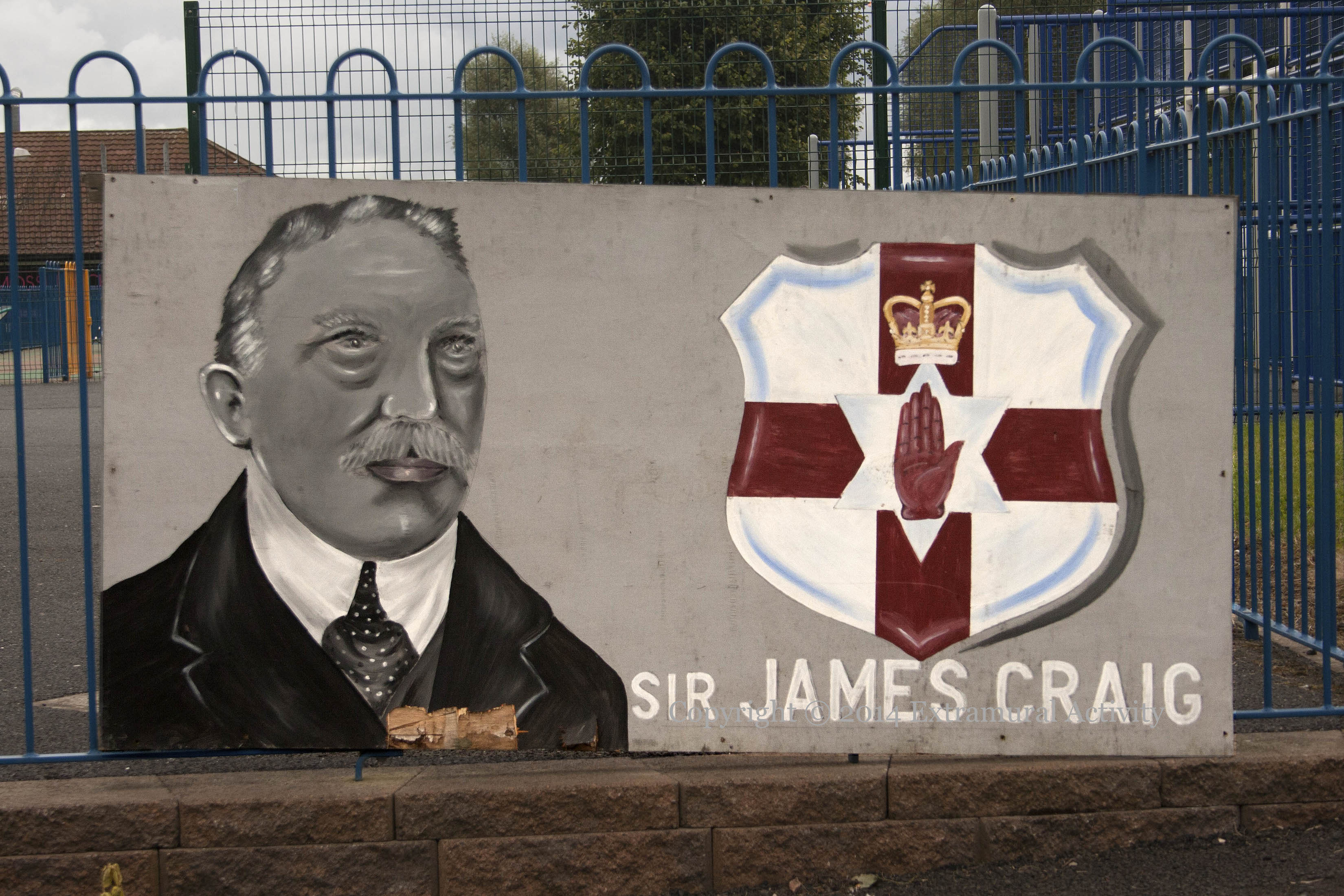
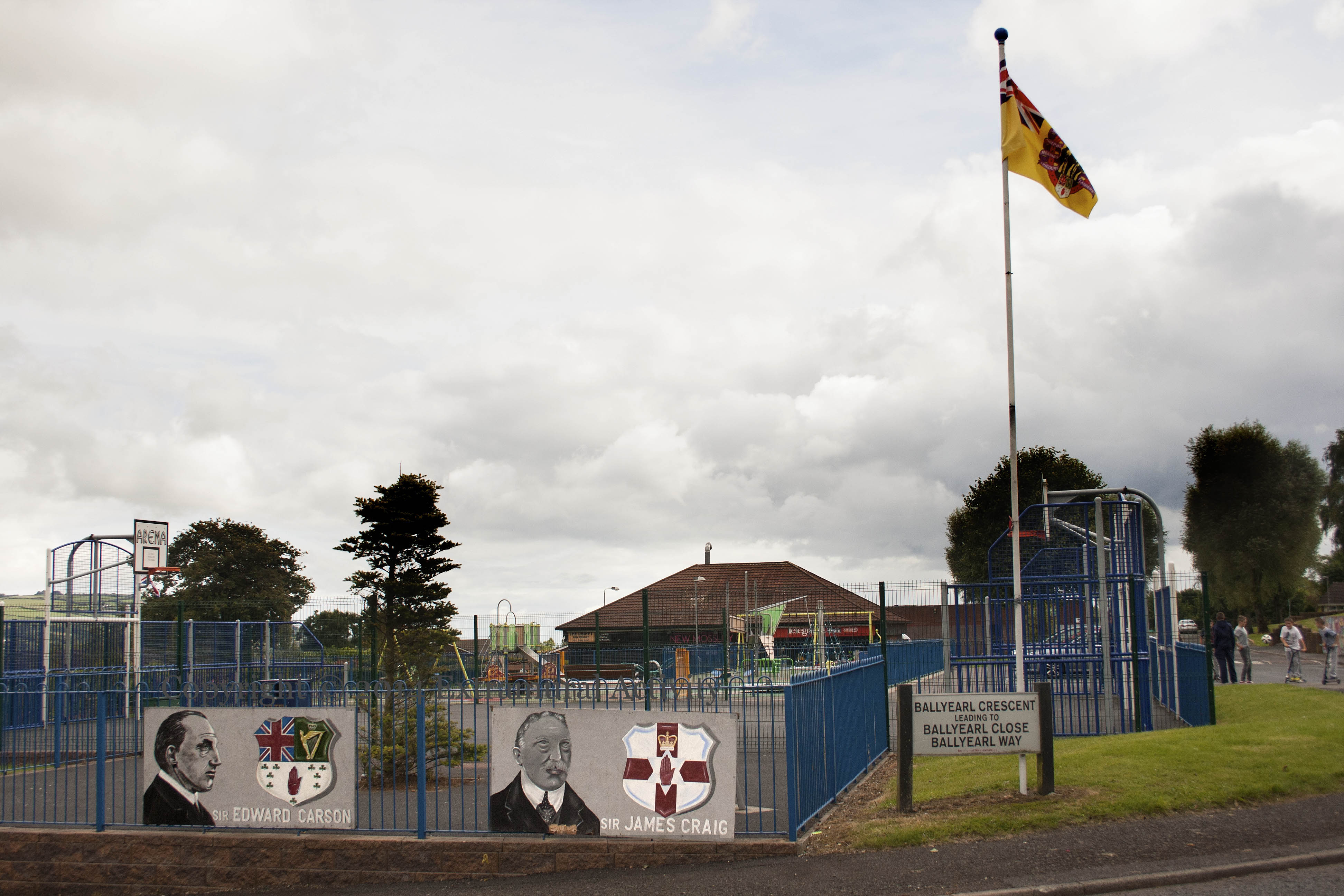
Carson (above) and Craig (below), founders of the Ulster Volunteers and the first two leaders of the Ulster Unionist Party, stand watch at the edge of an outdoor pitch and children’s playground in New Mossley, beneath a flag of the 36th (Ulster) division (see wide shot below). Carson’s profile is shown next to the emblem of the 36th division; Craig is shown next to the flag of Northern Ireland.
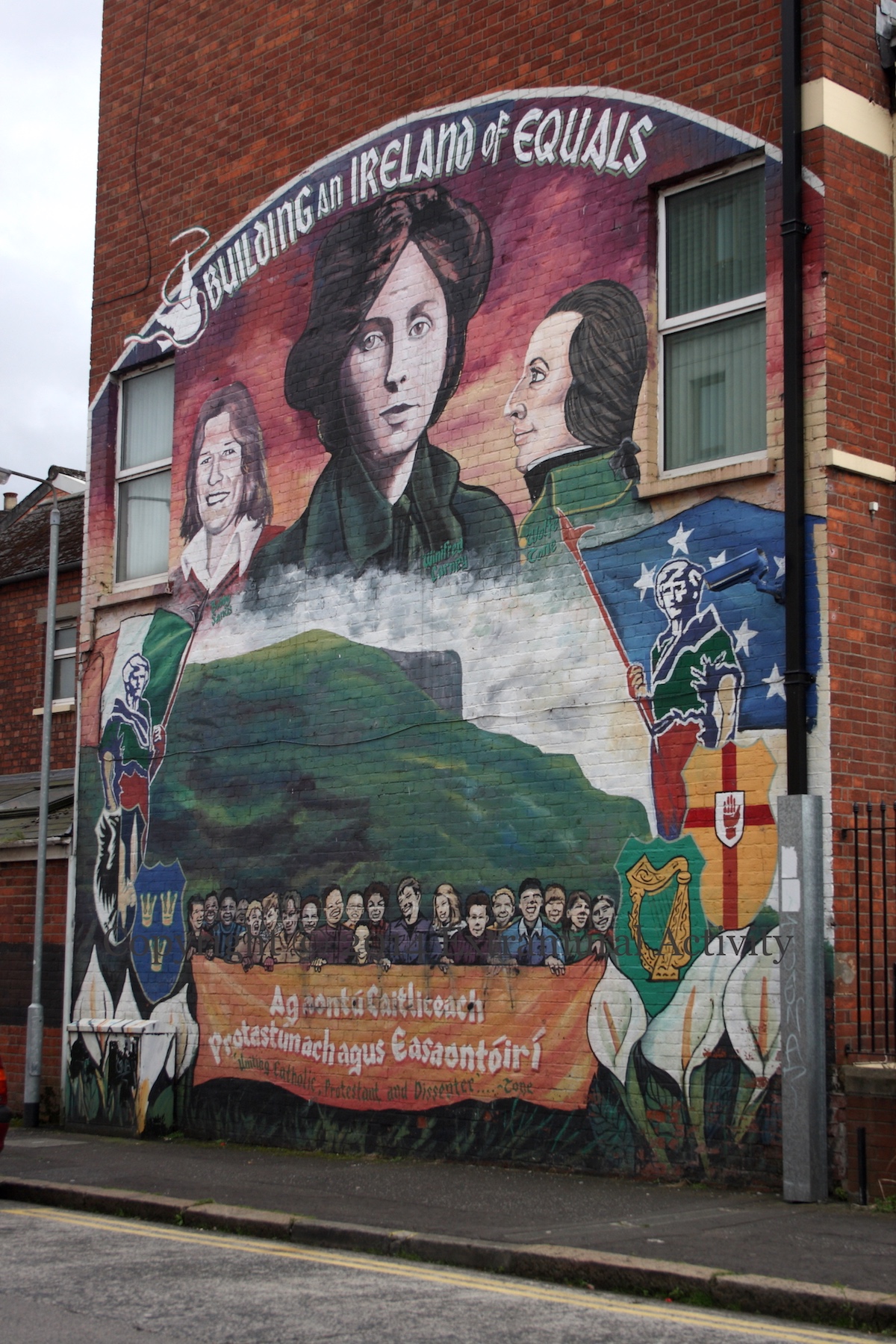
The aspect of Cave Hill commonly known as Napoleon’s Nose is shown sheltering the people of Newington, surrounded by heroes and emblems of the past – Bobby Sands, Wolfe Tone, and in the centre, Winifred Carney. This republican mural is both internally directed (at Newington and the New Lodge) and externally, being on the main Antrim Road (Oceanic avenue, on the side of the Sınn Féın office) which is a main artery between the city and points north.
“Ag aontú Caıtlıceach, Protastúnach agus Easaontóırí.” – “Uniting Catholic, Protestant, and Dissenter.” In An Argument On Behalf Of The Catholics Of Ireland (1791), Wolfe Tone of the United Irishmen wrote, “To subvert the tyranny of our execrable government, to break the connection with England, the never-failing source of all our political evils, and to assert the independence of my country, these were my objects. To unite the whole people of Ireland, to abolish the memory of past dissensions, and to substitute the common name of Irishman, in place of the denominations of Protestant, Catholic and Dissenter, these were my means.”
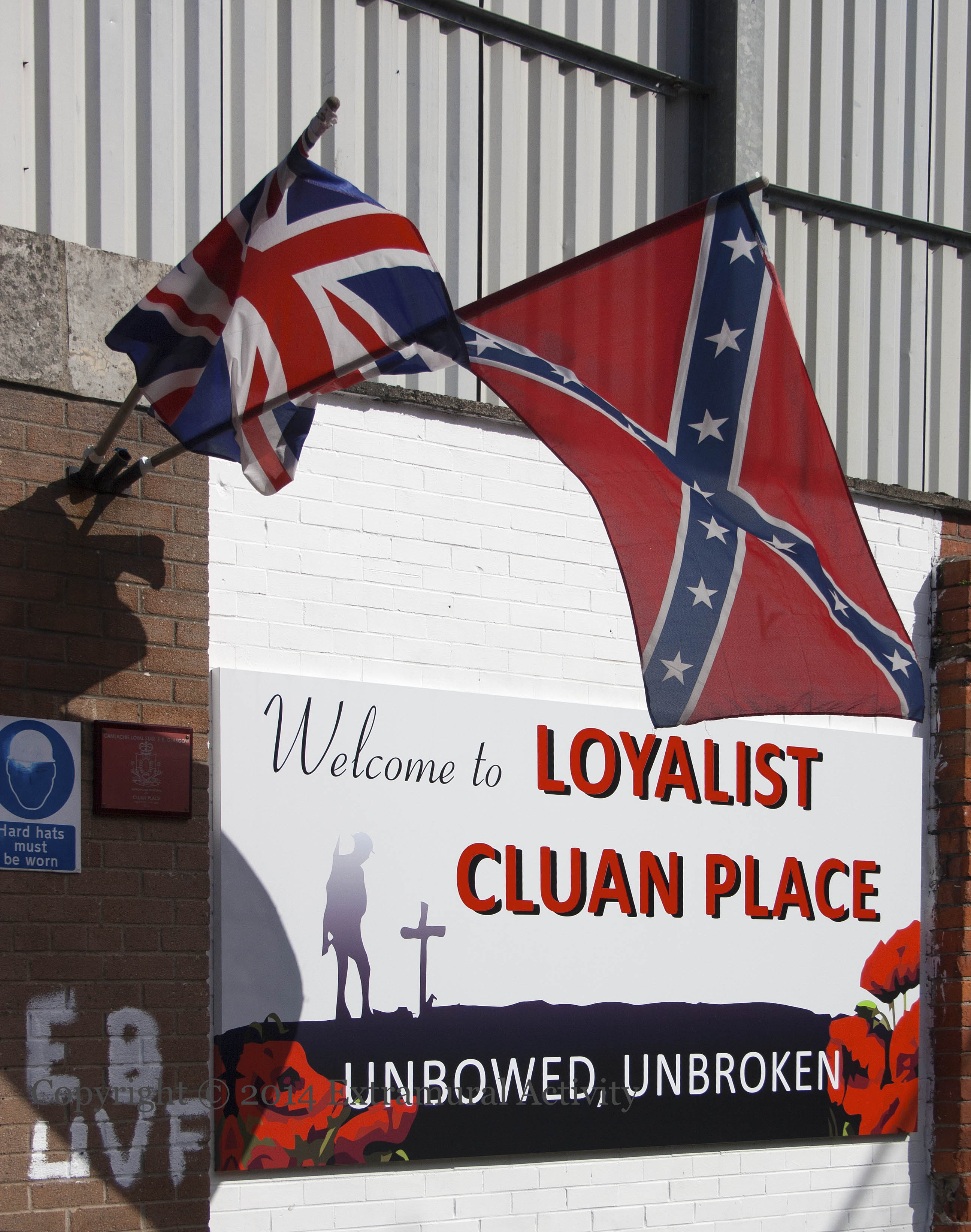
Below the “peace” line, a confederate flag flies alongside the union jack over a new board in Cluan Place reading “Unbowed, Unbroken” and “east Belfast UVF” graffiti.
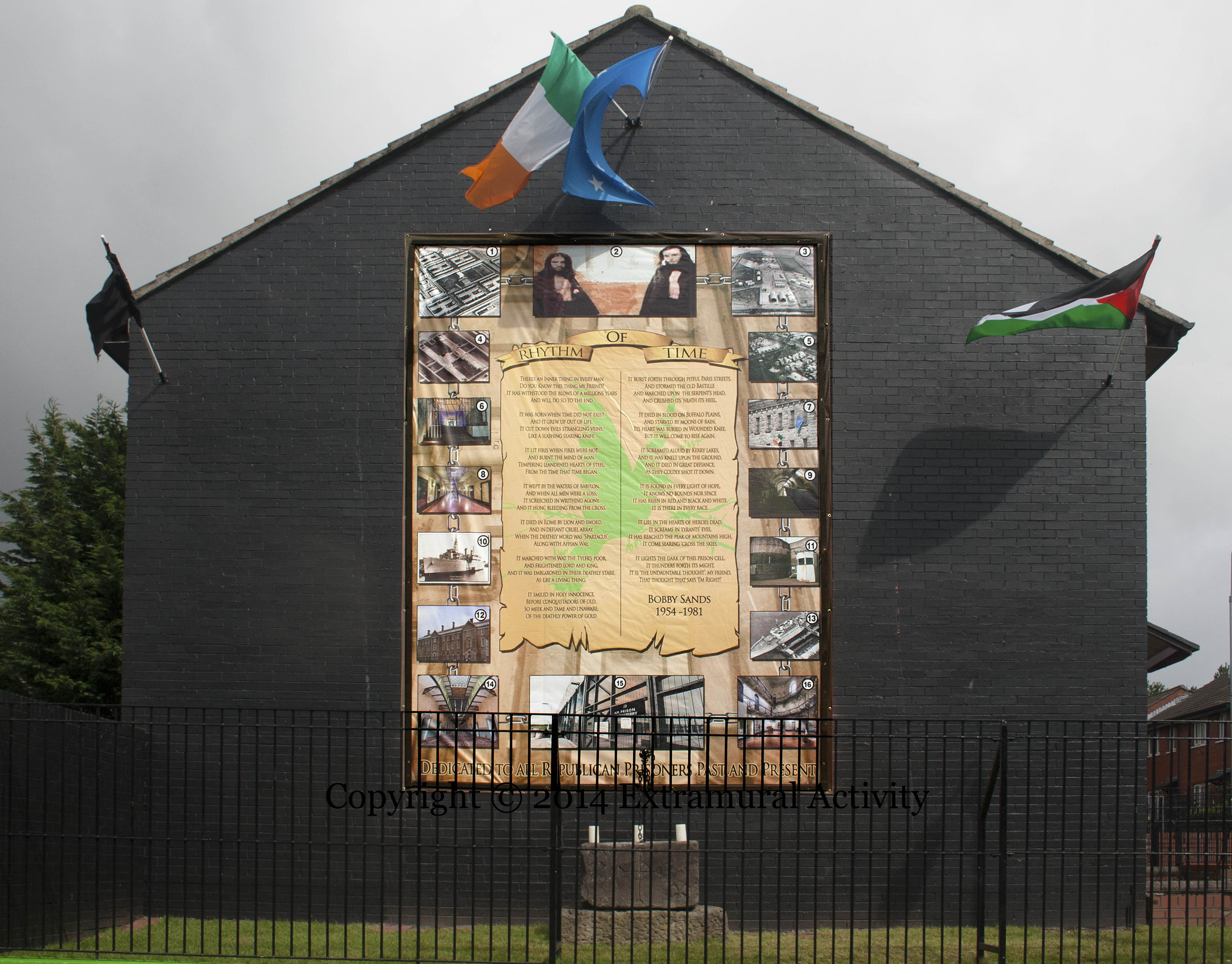
Bobby Sands’s poem The Rhythm Of Time, published in 1981 as part of Prison Poems, is printed in full along with images of Long Kesh and other prisons in which republican prisoners were held.
The work was launched 2014-08-10, to coincide with the anniversary of the introduction of interment in 1971 (see e.g. this BBC news report).
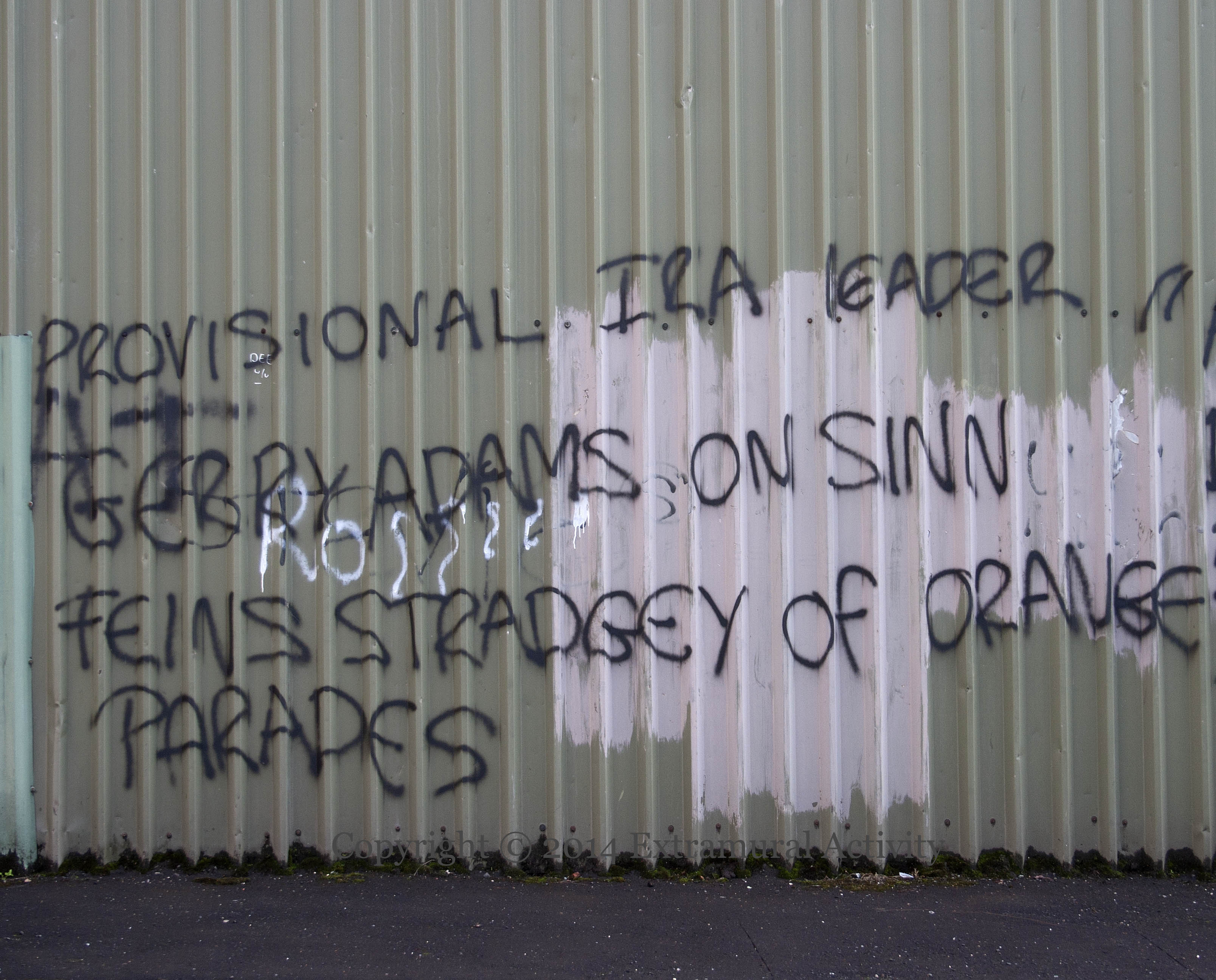
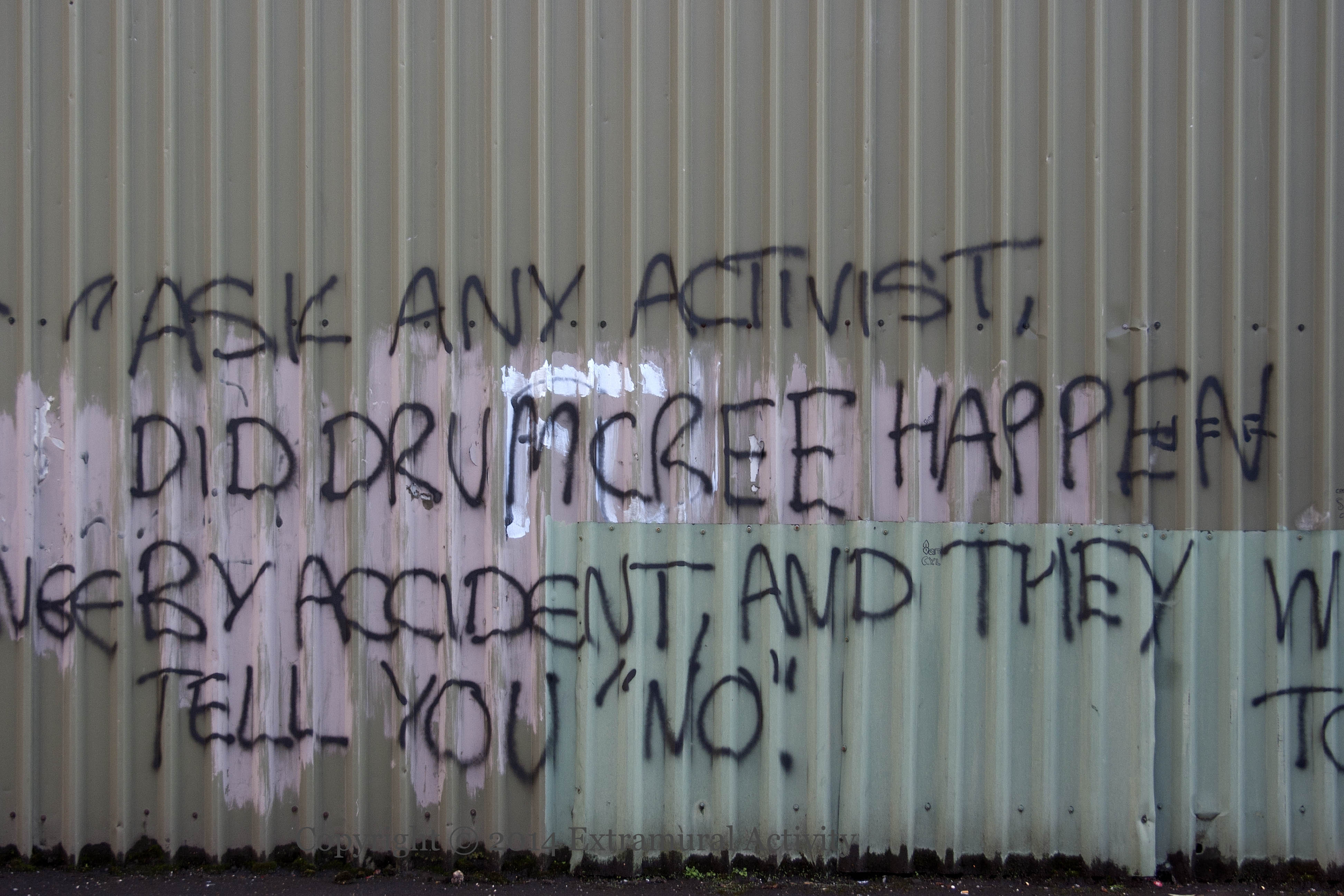
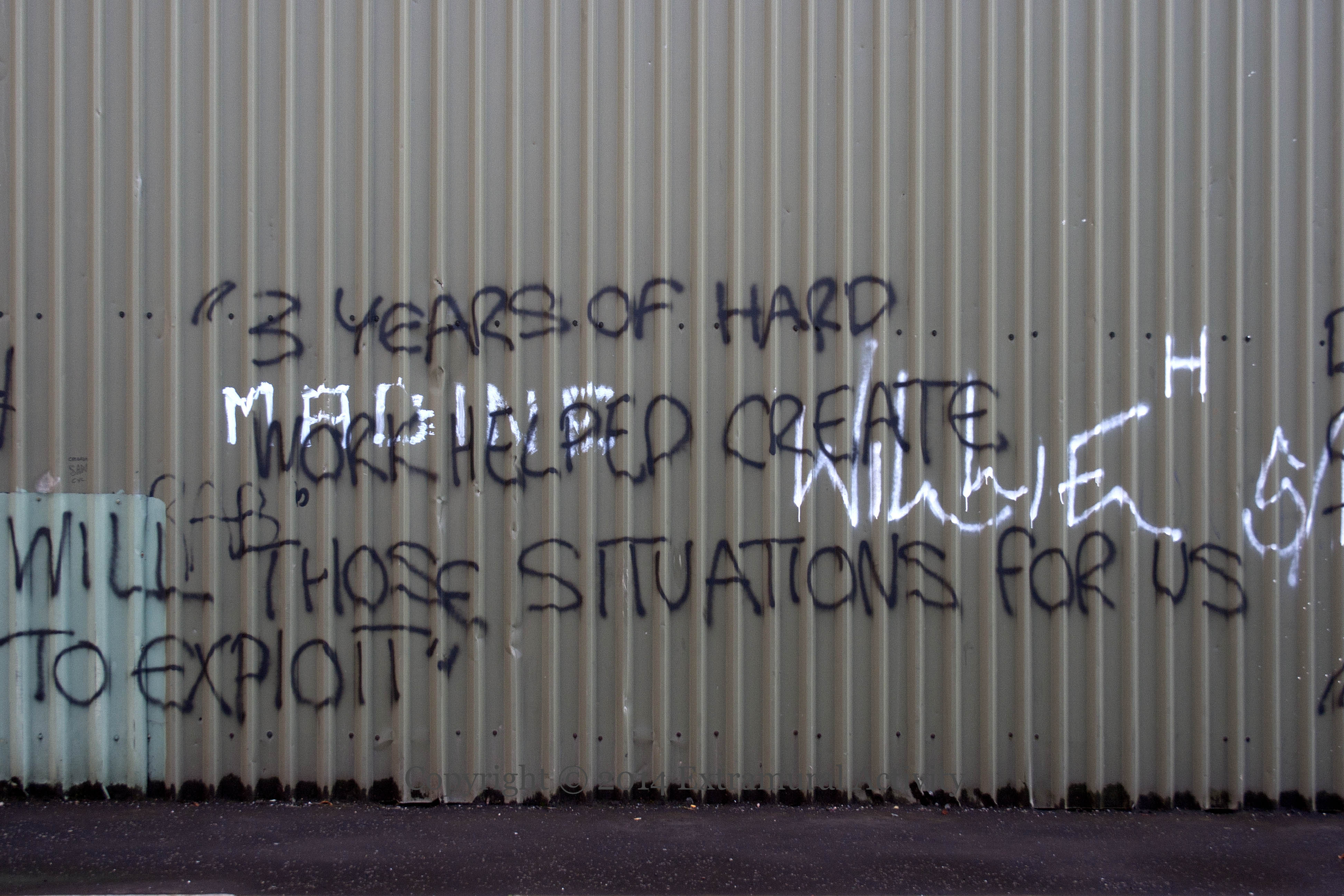
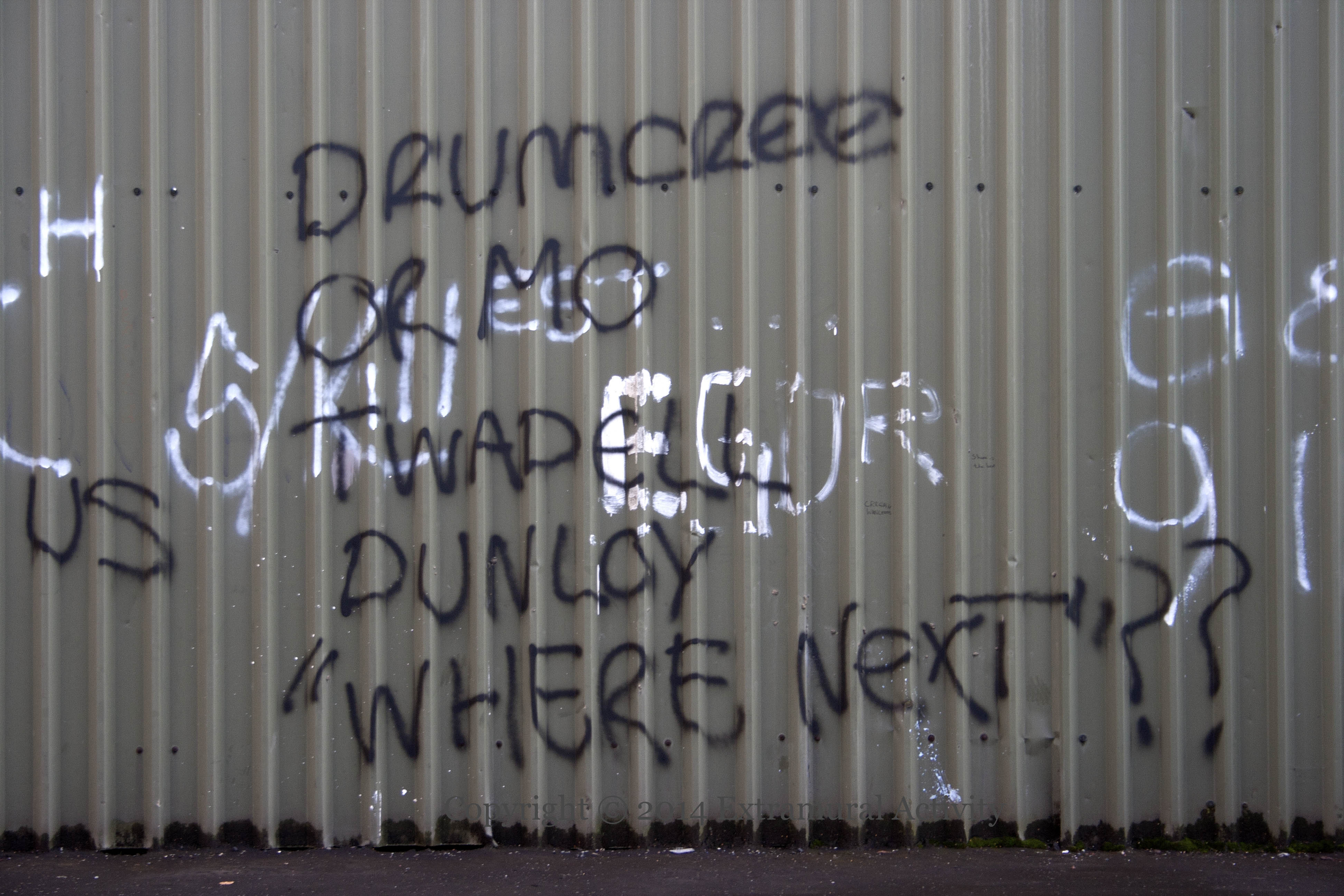
Wood (Crimes Of Loyalty p. 202) gives the following quote, reportedly a transcript of remarks made by Adams at a Sınn Féın meeting in Meath, as, “Ask any activist in the North, did Drumcree happen by accident, and he will tell you “No.”. Three years of work on the Ormeau Road, in Portadown, and parts of Fermanagh and Newry, Armagh, and in Bellaghy, and up in Londonderry [other sources, such as the Irish Times, give the much more likely “Derry”]. Three years of work went into creating that situation and fair play to those who put the work in. They are the type of scene chances we need to focus on and develop and exploit.”
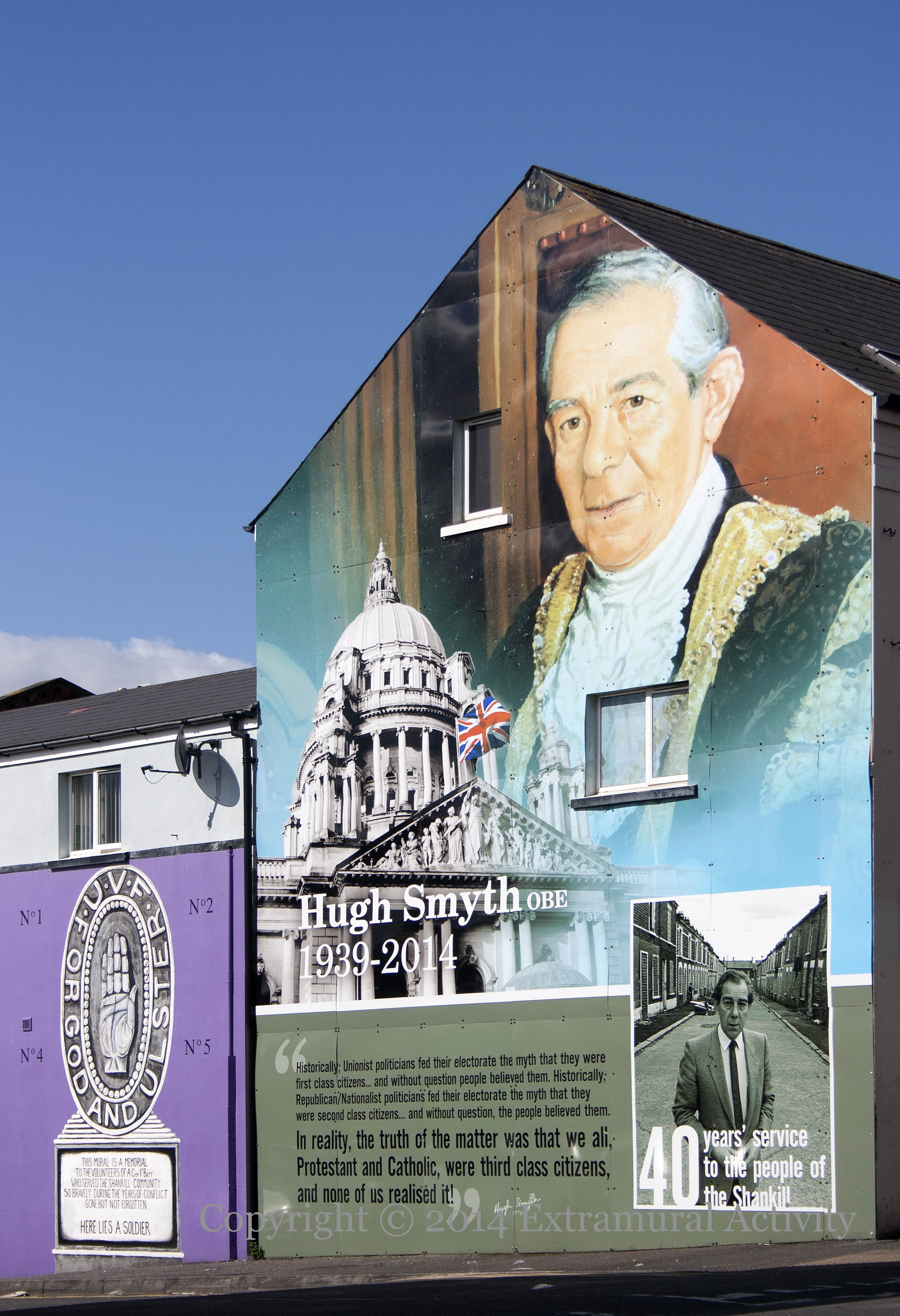
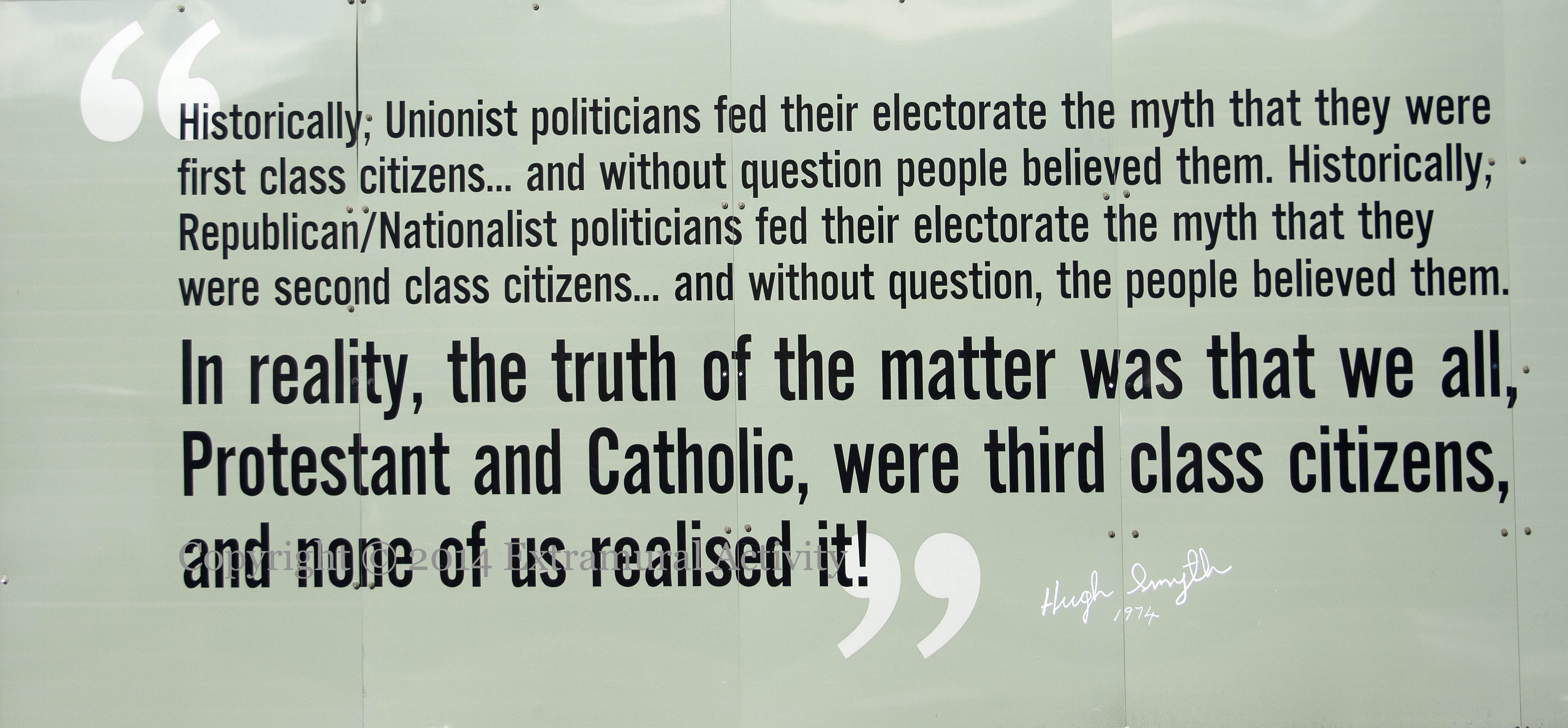
Hugh Smyth OBE was born in the Woodvale area and represented the upper Shankill as an Independent Unionist and then a Progressive Unionist in Belfast City Council for forty-one years, until the year before his death in May 2014, including a term as Lord mayor in 1994-1995 – he is pictured in the main image (above) in his mayoral robes.
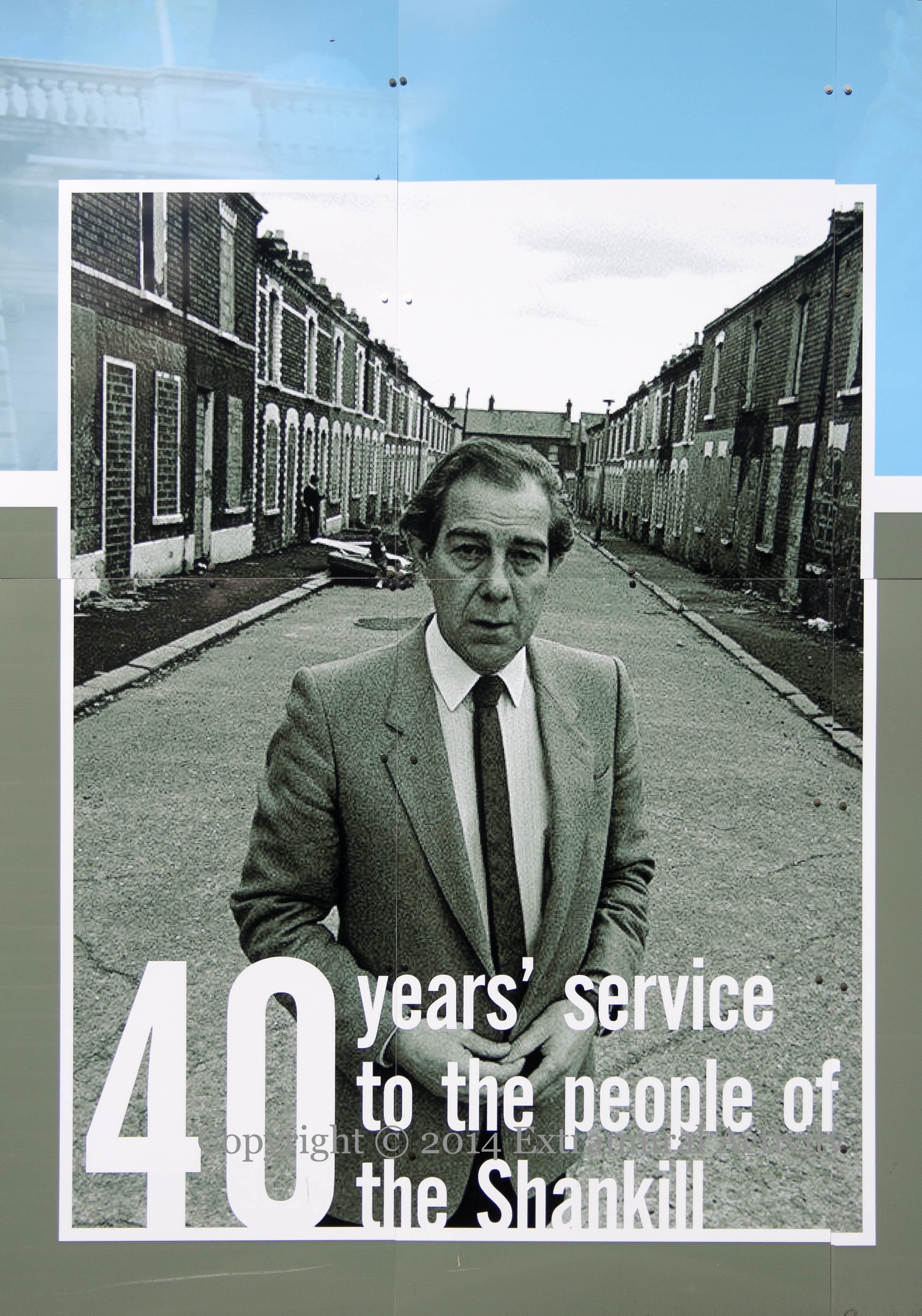
The portrait on the right (shown solo below) was taken by Bobbie Hanvey and is kept in a Boston College archive; more from the archive of 50,000 images can be seen at BC.edu and on Flickr.
As the quote (shown in the final image below) indicates, his politics were oriented towards the working class: “Historically, Unionist politicians fed their electorate the myth that they were first class citizens… and without question people believed them. Historically, Republican/Nationalist politicians fed their electorate the myth that they were second class citizens… and without question the people believed them. In reality, the truth of the matter was that we all, Protestant and Catholic, were third class citizen, and none of us realised it!” The board was officially launched on June 19th.
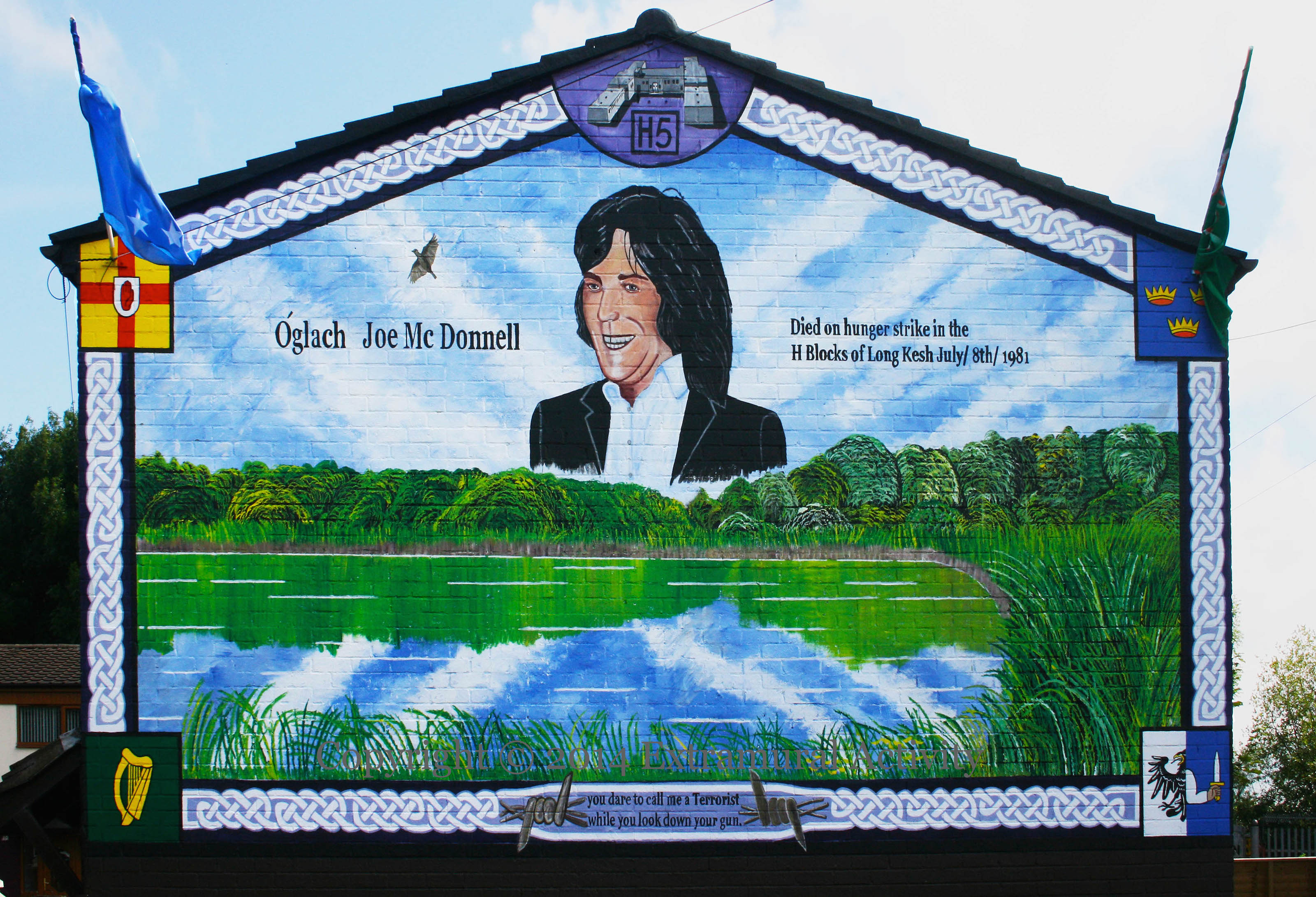
Joe McDonnell was a Provisional IRA volunteer (óglach) imprisoned in the Maze H-blocks. He was the fifth hunger-striker to die, on July 8th, 1981 after 61 days. The Wolfe Tones wrote a ballad in his memory (for their 1983 LP A Sense Of Freedom), which FAI chief John Delaney was recorded singing in a Dublin pub a few weeks ago (November, 2014) after a 4-1 win by the Republic over the US in a friendly. He at first denied it was him, then apologized, and has kept his job (Guardian).
As of this morning (December 10th, 2014), the song, re-released by the Wolfe Tones as a charity Christmas single in aid of the Simon Community, is the #7 single at itunes.ie.
The mural above was painted in July by Gerard “Mo Chara” Kelly, on the Suffolk Road, Andersonstown, west Belfast.
 Seosamh Mac Coille Collection