Sailortown Dockers

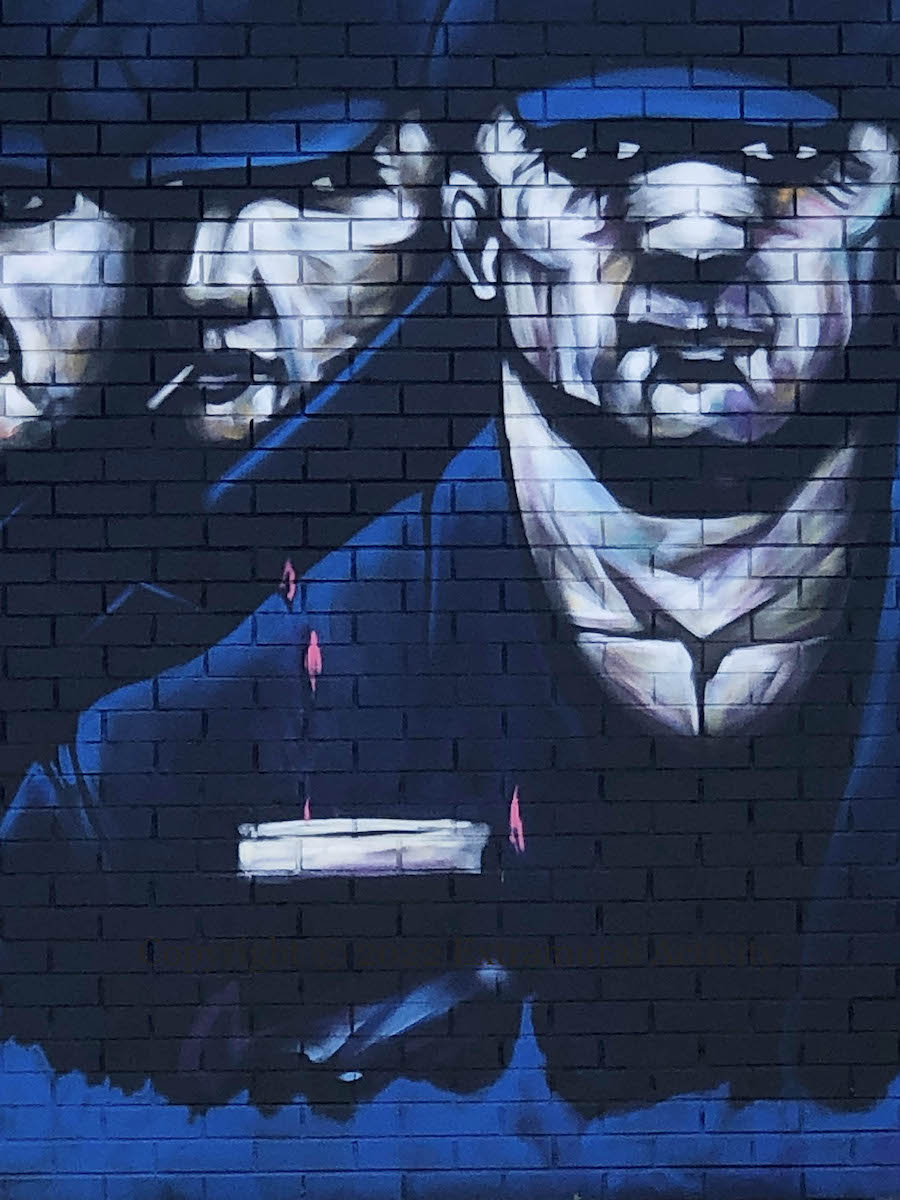
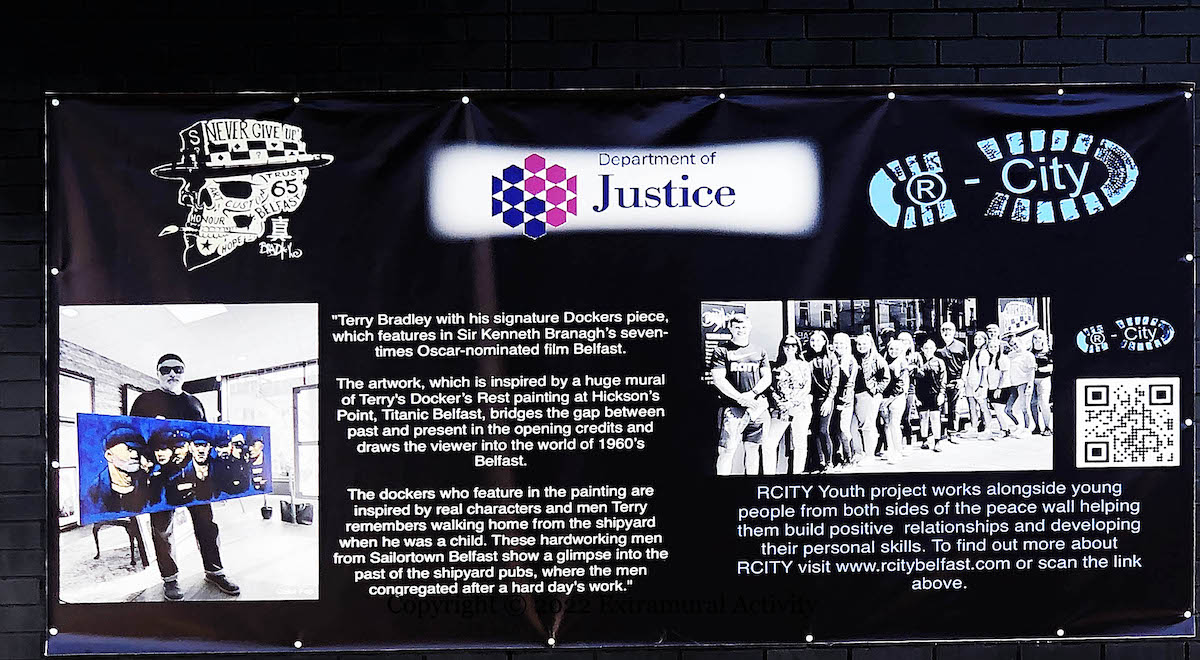
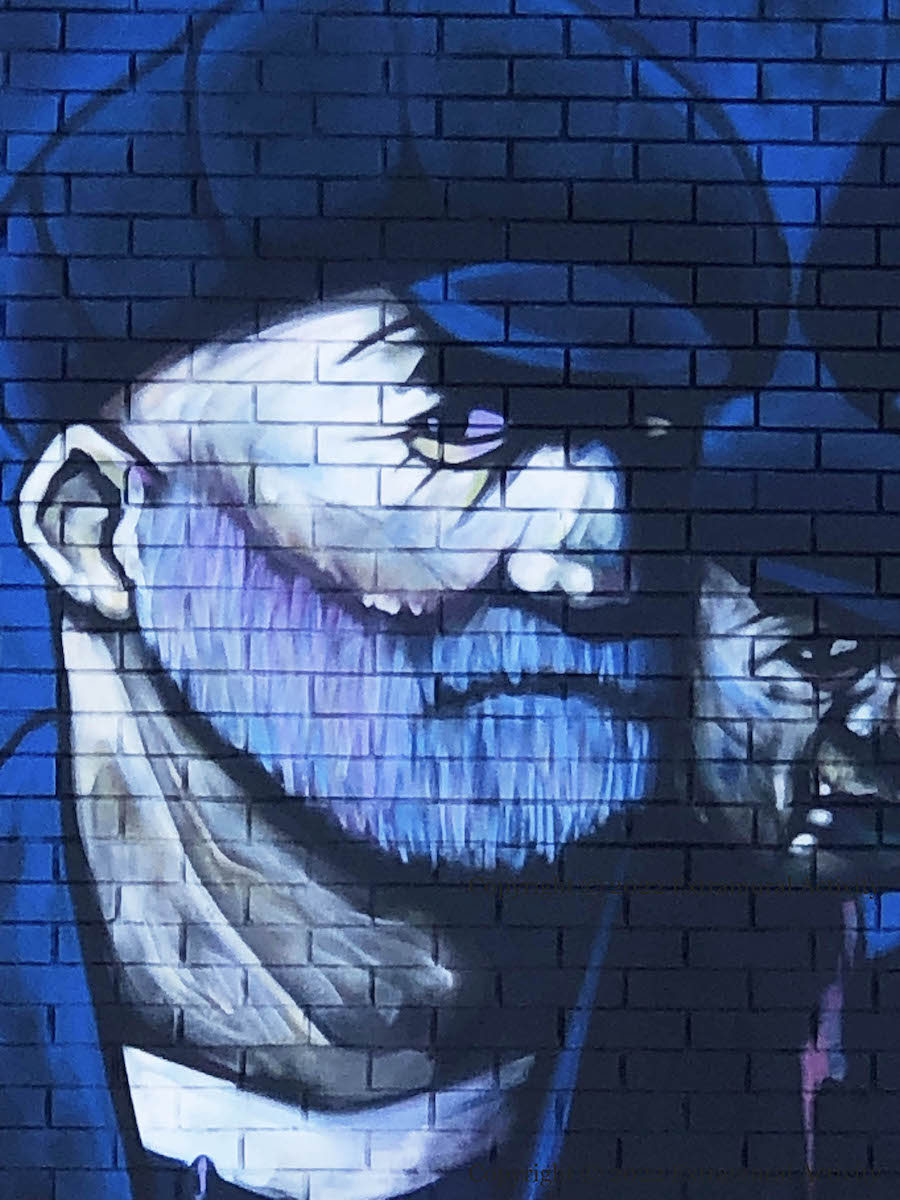
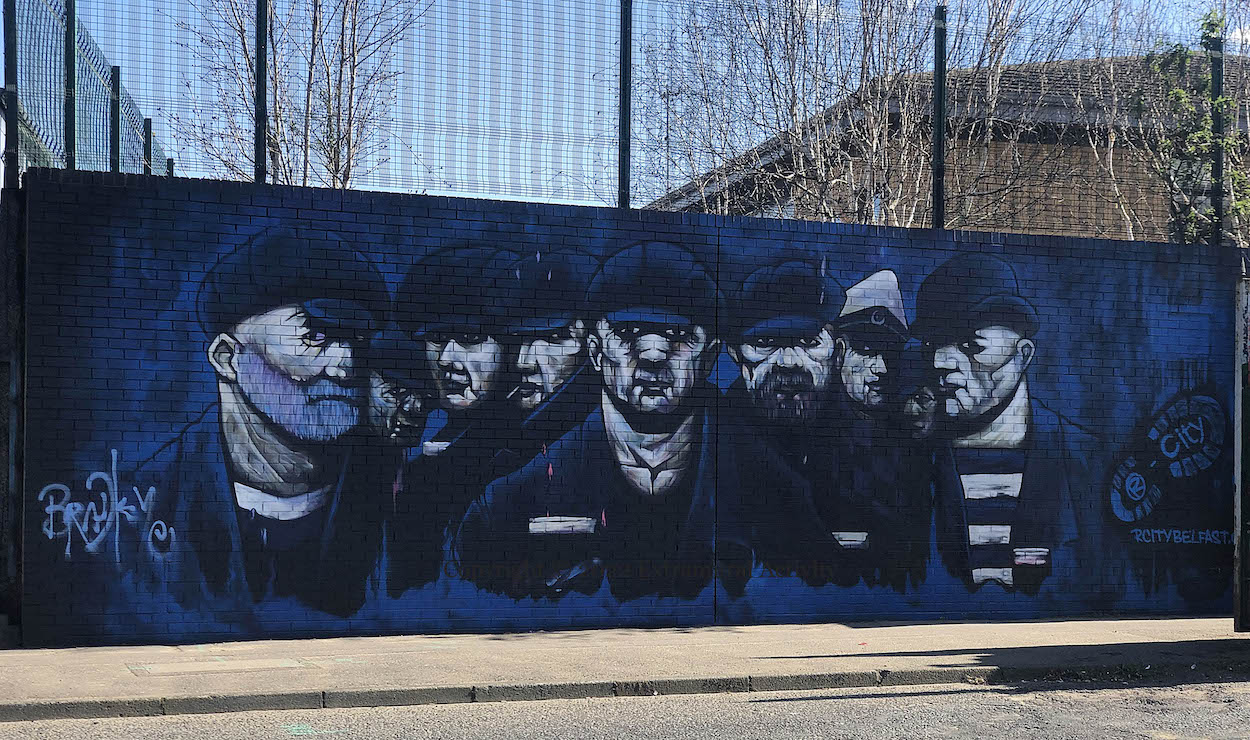
This is a mural of a painting of a mural of a mural. The original is the piece by Terry Bradley (web) and Friz (web) at the Titanic museum’s pub (see Dockers’ Rest), which was then reproduced in a different colour for the opening montage of the Kenneth Branagh film Belfast. The success of the film prompted the Department Of Justice to commission Bradley for a painting that could be turned into a mural and he reproduced the film version (BelTel). The mural that enlarges that painting was painted by DMC on Lanark Way, just above the security gates (Belfast Live).

“The dockers who feature in the painting are inspired by real characters and men Terry remembers walking home from the shipyard when he was a child. These hardworking men from Sailortown, Belfast, show a glimpse into the past of the shipyard pubs, where the men congregated after a hard day’s work.”

With support from R-City (web).
Click image to enlarge
Copyright © 2022 Seosamh Mac Coılle
X09884 X09883 [X09885] X09886 X09887
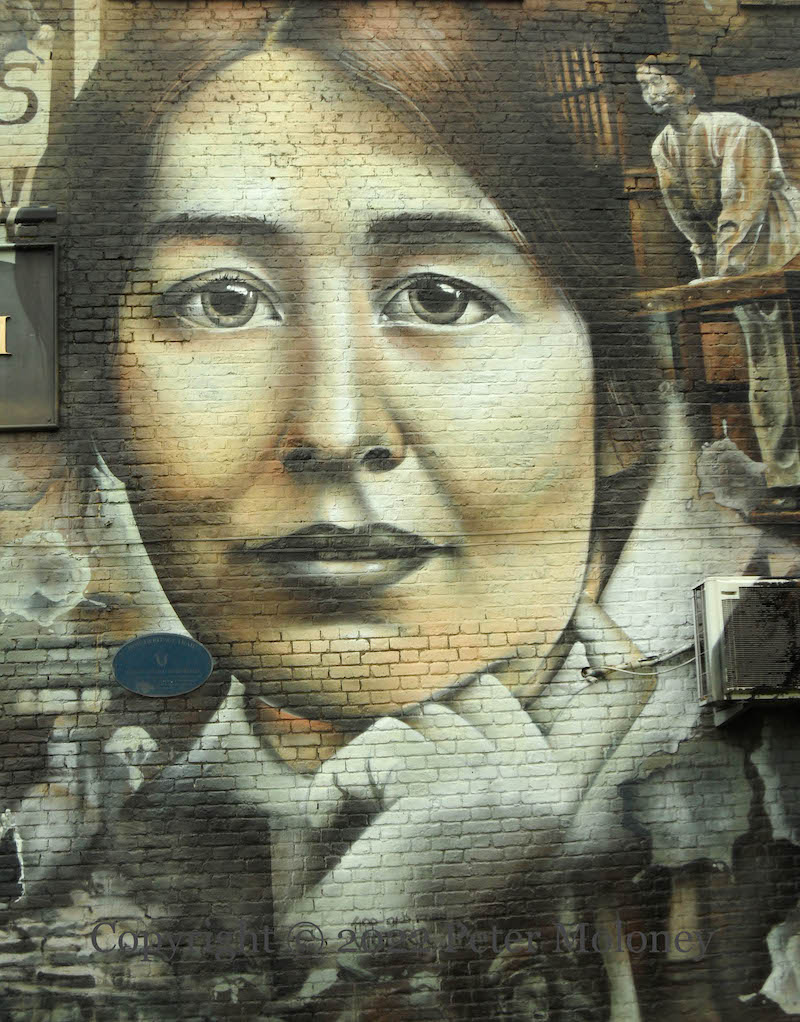
Women’s Hall And Cost Price Restaurant

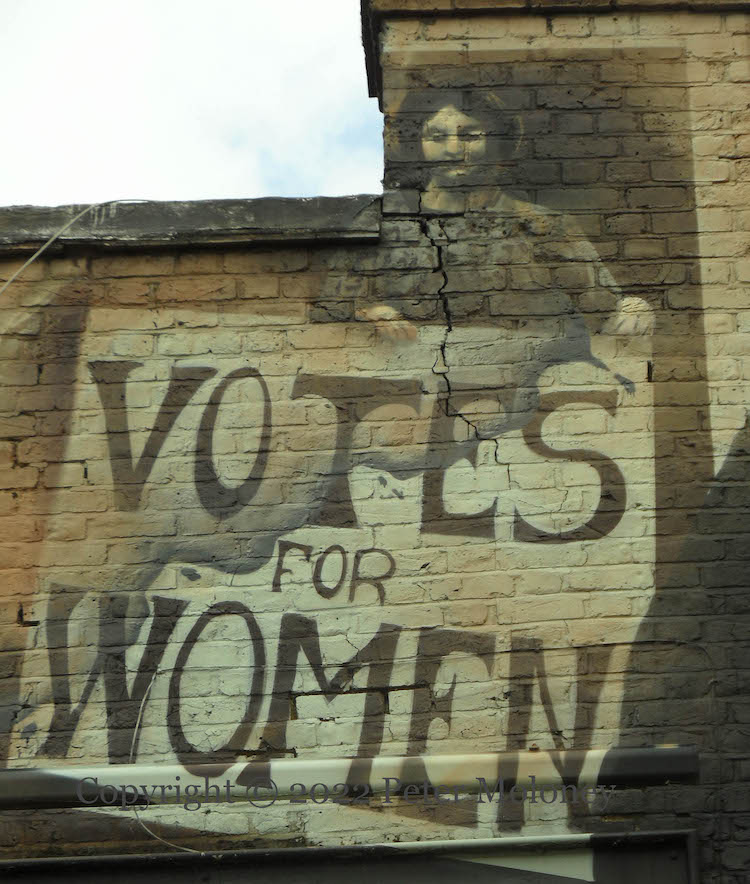
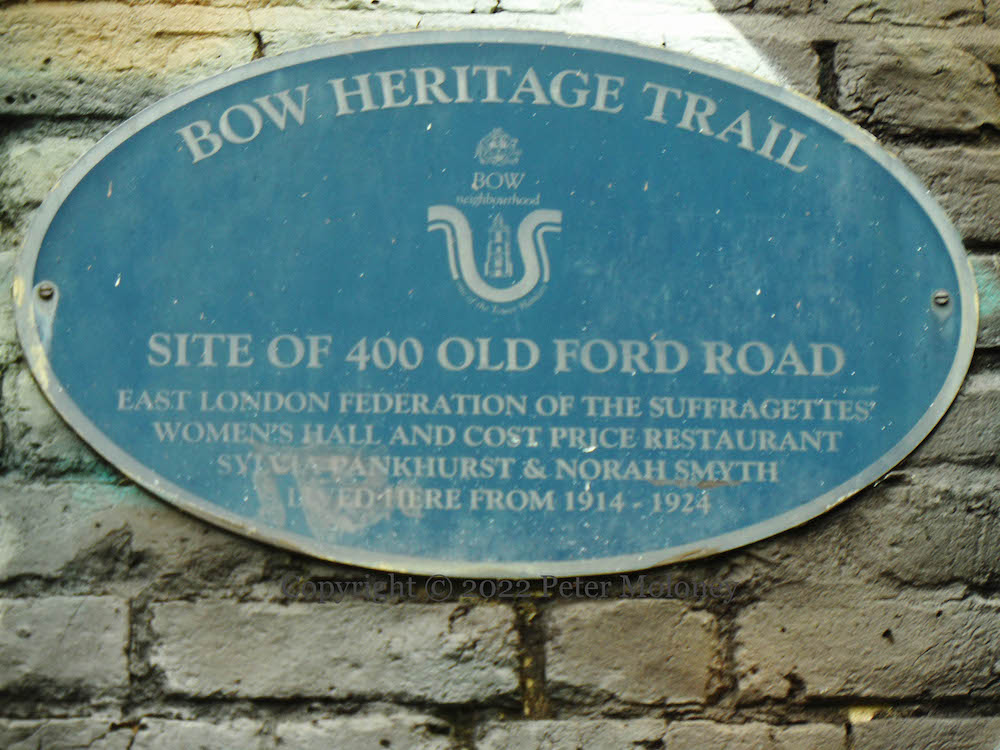
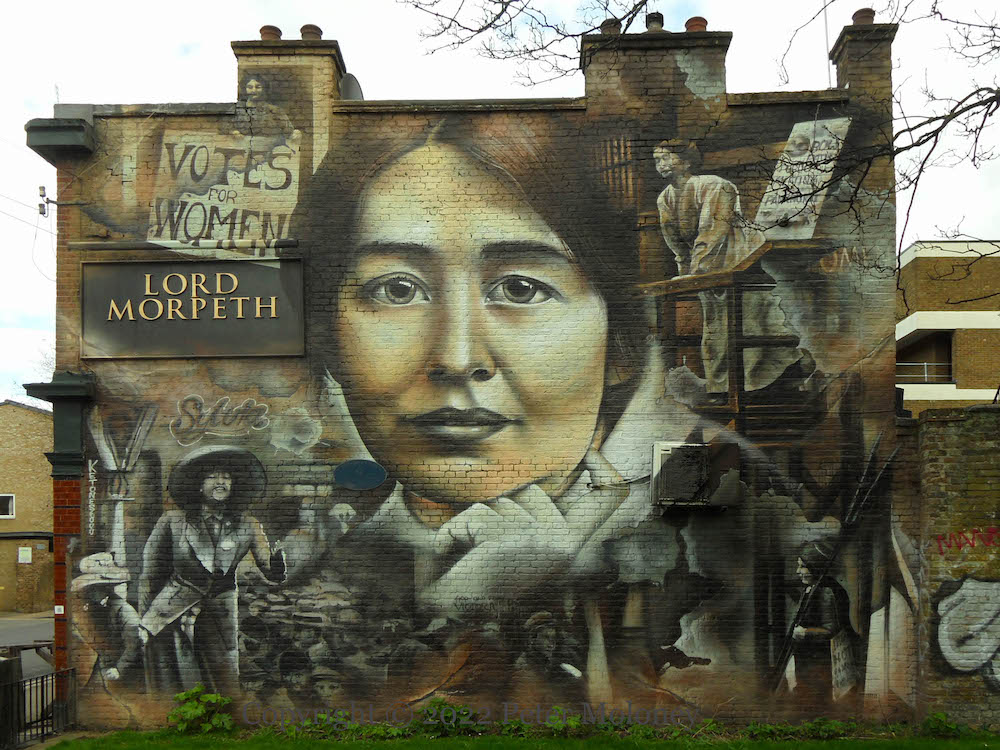
Eight-time hunger-striker Sylvia Pankhurst and the East London Federation Of The Suffragettes [ELFS] provided a cost-price restaurant to provide meals to the poor in the “Women’s Hall” at the back of the house at 400 Old Ford Road in response to the inflation in food prices at the onset of WWI (Inspiring City | East End Women’s Museum).

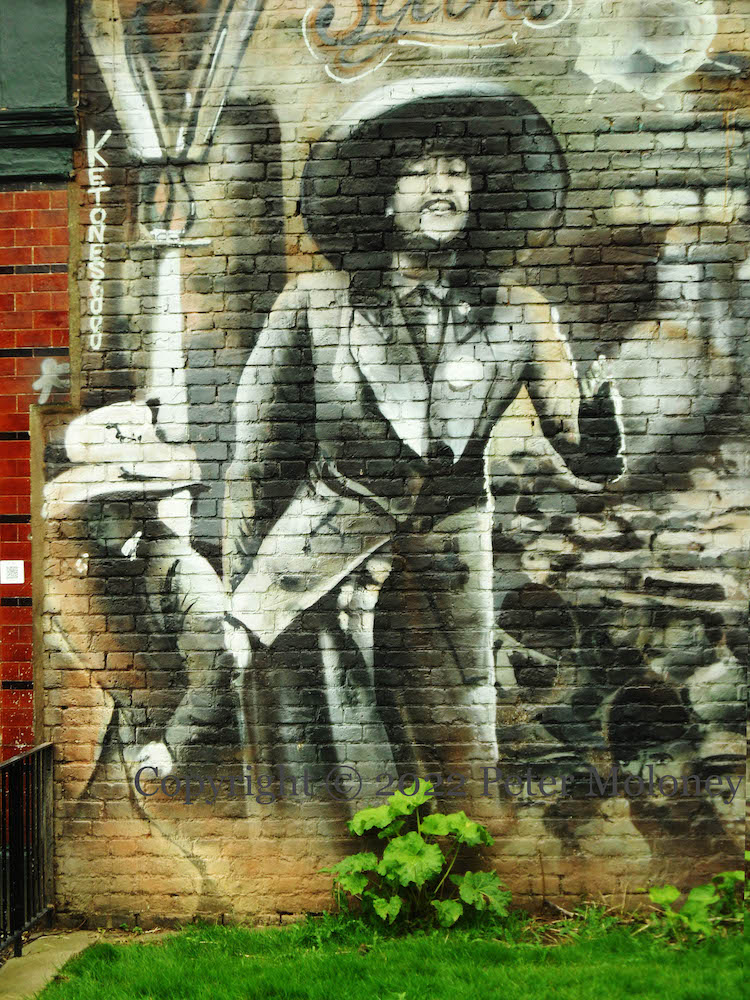
In the top left, with the “Votes For Women” sign, is Christabel Pankhurst, one of Sylvia’s sisters, a co-founder of the Women’s Social And Political Union – motto “Deeds, not words” – and editor of The Suffragette. (Charlotte Despard – recorded separately – was also a member of the WSPU.)

(The third sister, Adela, was founder of the WSPU’s yet more radical sub-group the ‘Young Hot Bloods’ (WP). Their mother was Emmeline Pankhurst, who had founded the WSPU in 1903 (WP); she is featured in a mural on Belfast’s Donegall Road bridge – see Those Days Are Over.)

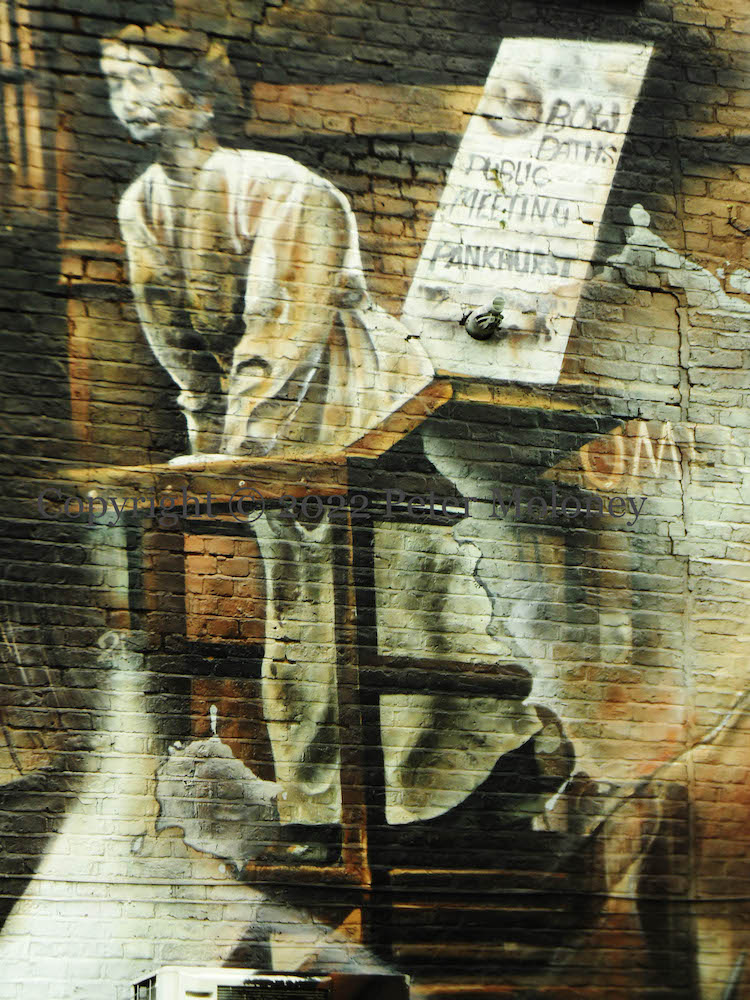
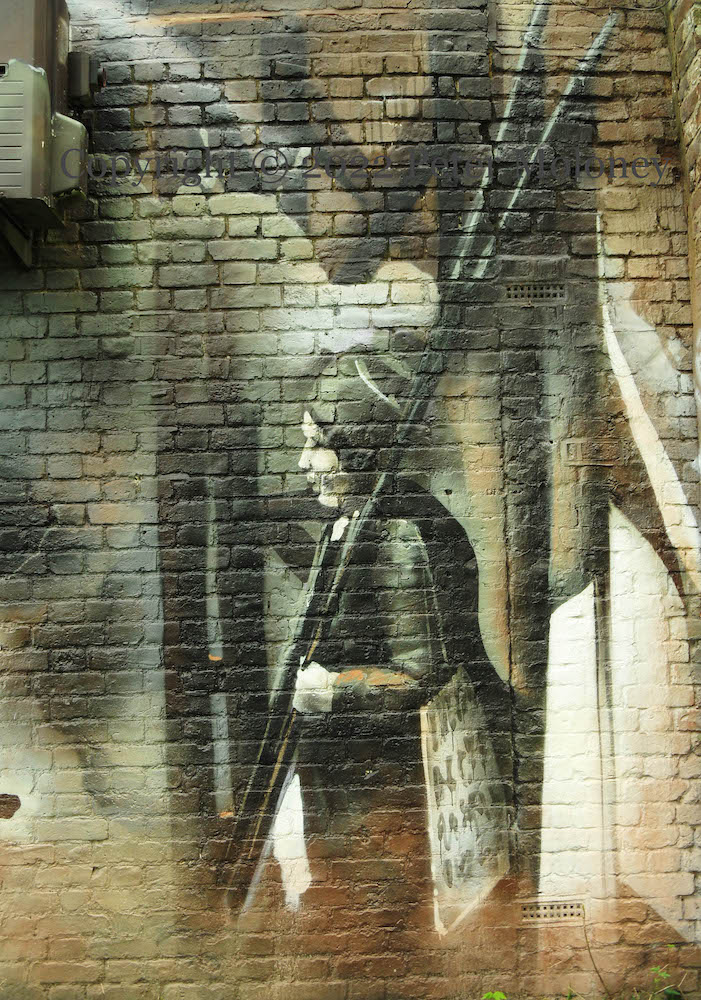
In the top right (shown in close-up in the third image), Sylvia speaks in 1912 from a small platform outside the WPSU office in Bow Road, before the WSPU and ELFS split in 1914.

The mural is by Ketones6000 (ig) in 2018 on the side of the Lord Morpeth pub which was frequented by Pankhurst and the east London suffragettes (web). The pub is at 402 Old Ford Road and the mural thus overlooks the site of the women’s hall.

Click image to enlarge
Copyright © 2011 Peter Moloney
X09868 X09867 X09869 X09870 X09871 X09865 X09866

Take These Seeds

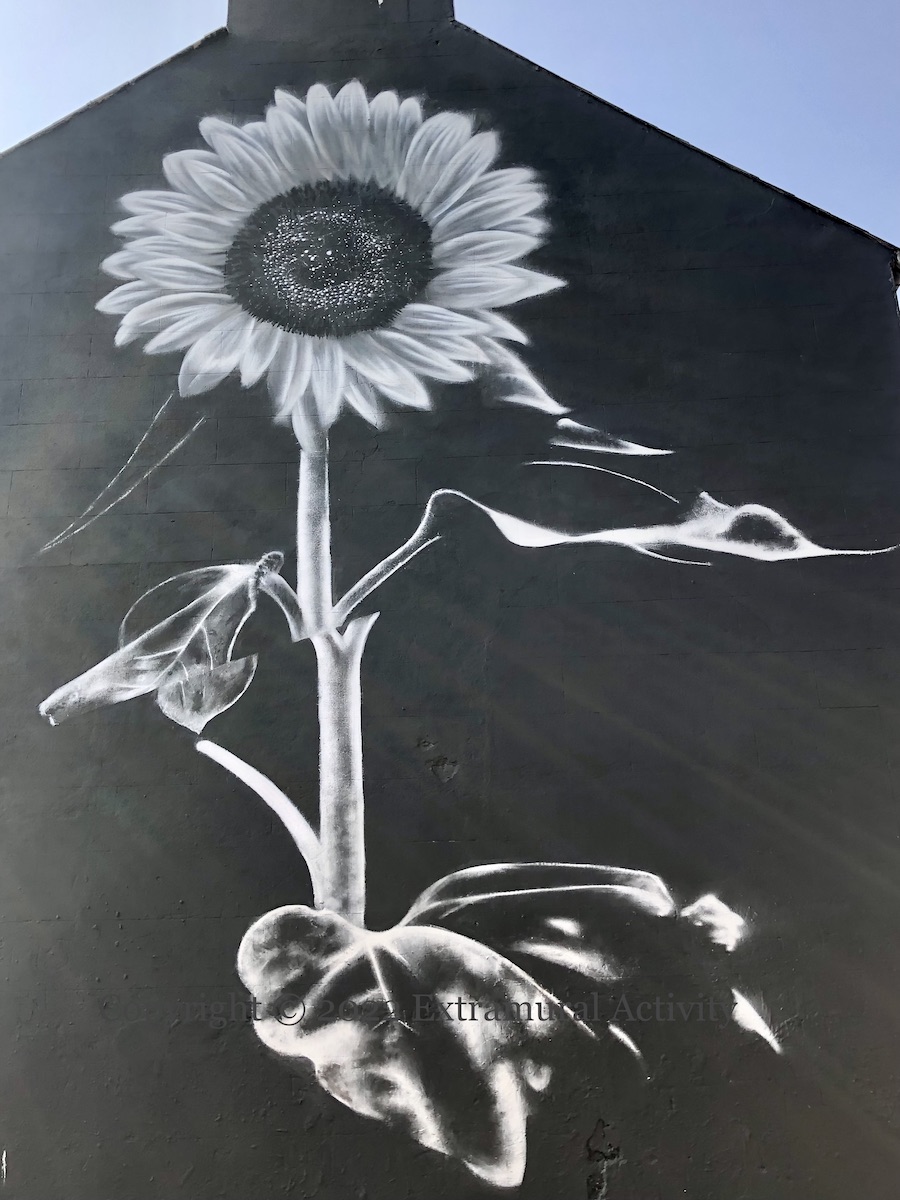
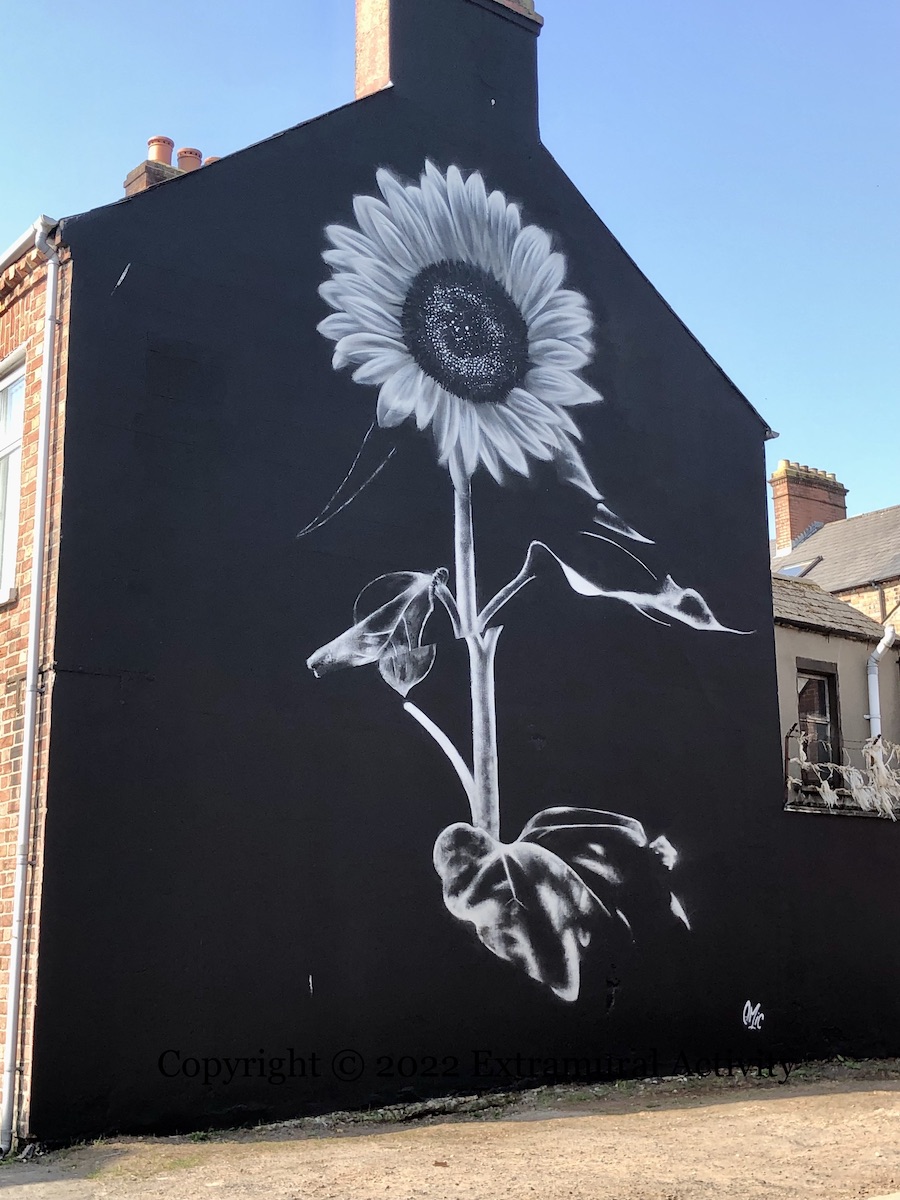
A Ukrainian woman in Heniches’k (just north of Crimea) (video with subtitles) became famous for berating an invading Russian soldier with the words “Take these seeds and put them in your pockets so at least sunflowers will grow here when you all die here.” Ukraine is the world’s largest producer of sunflower oil (WP) and since the Russian invasion began on February 24th, prices have increased – so far – by about 70% (Money Control), sending countries (especially India – Reuters | Bloomberg) and companies around the globe scrambling for alternatives, such as the replacement of sunflower oil by rapeseed oil in the making of crisps in Ireland (The Journal). The sunflower has become a symbol of solidarity with Ukraine, along with the Ukrainian flag. This giant sunflower was painted by emic (web | ig) in Harrow Street.

Update: added to the side wall “Ar scáth a chéıle a mhaıreann na daoıne”, here translated as “People live in each other’s shadows.” See the images in the Paddy Duffy collection.

Click image to enlarge
Copyright © 2022 Seosamh Mac Coılle
X09845 X09844

New Development

When Cupar Way was constructed (circa 1984) it was a joining stretch of road put in place where the houses along Ashmore Street had been, and joined up (part of) Cupar Street and the old First Street; the new road in toto was called “Cupar Way”. Ashmore had been left undeveloped after the start of the Troubles and despite the presence of the separating barrier from 1969 onward, many of the houses on both sides of the wall were demolished or left vacant for various lengths of time. Carlow Street, for example, was redeveloped in 1981, even before the modern wall was put in place, while Ashmore and the bottom of the old Sugarfield Street was not redeveloped until the mid-1990s. (For more info and maps see the Visual History page of the Cupar Way “peace” line.)

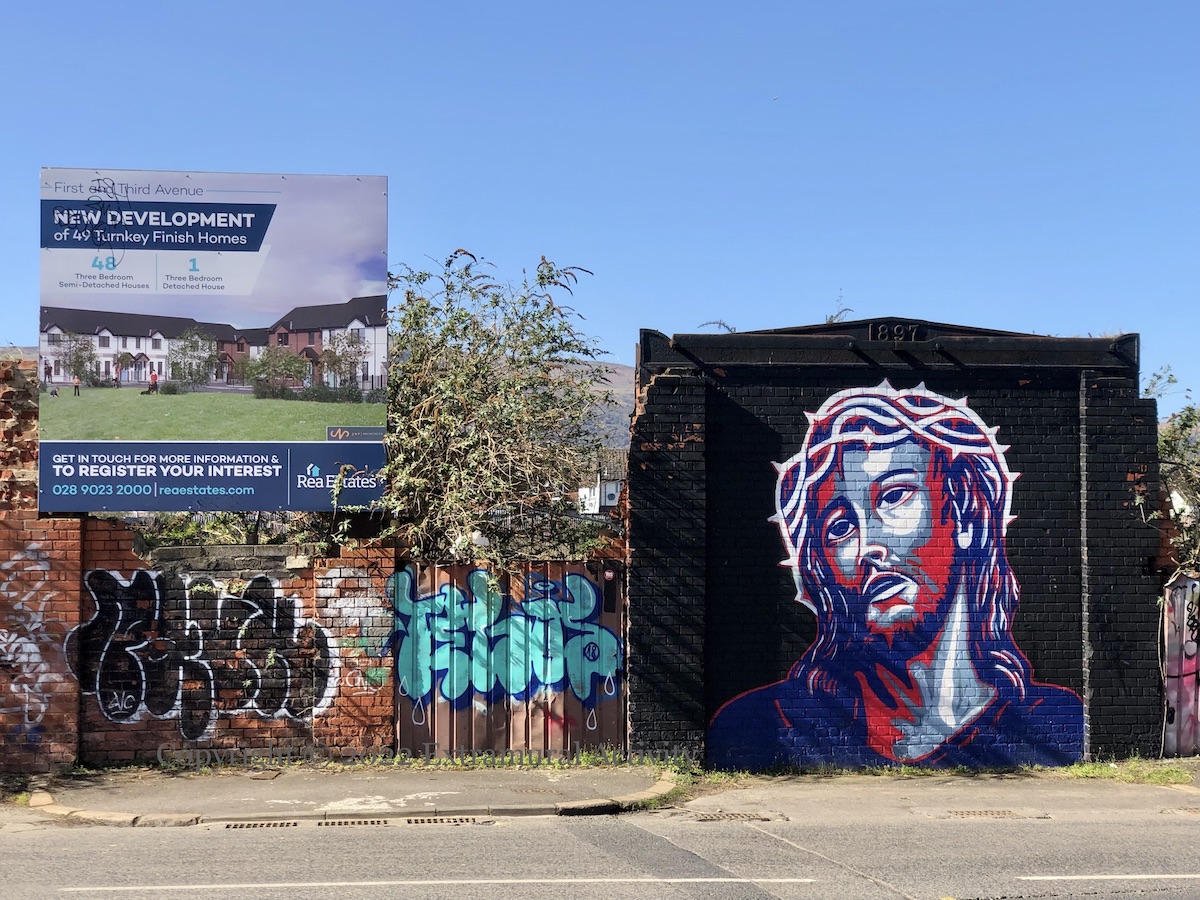
The block between First and Third streets was occupied (from 1956 onward) by a Wellman Smith Owen Engineering factory, which had earlier been the Falls Foundry (History); it’s not clear what the date “1897” refers to (above Jesus’s head – for the mural, see Prince Of Peace Line) as the foundry was established in 1845 (Lindsay 1970, Textile History 1.3). Wellman still exists as a company but the foundry at First Street was closed in 1968 (Grace’s). The site is finally to be redeveloped with 48 semi-detached and one detached house – images of what the houses will look like upon completion can be seen at Rea Estates (web).

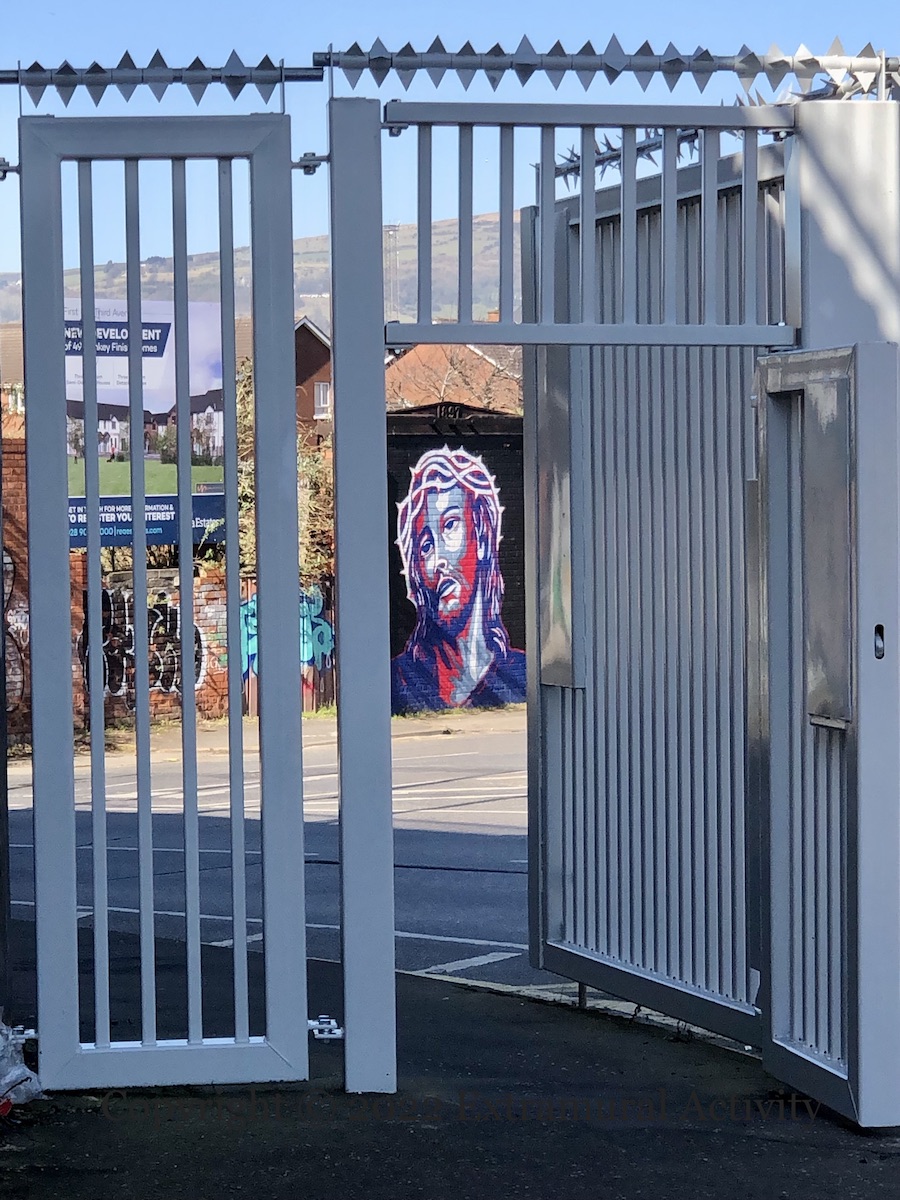
The new development is presaged by the (May 2021, but still looking fresh) scaled-down security gate at the junction with North Howard Street – similar to the changes made at Workman Avenue and at Townsend Street – with pedestrian gates on both footpaths and no metal sheeting to obscure the view.

Click image to enlarge
Copyright © 2022 Seosamh Mac Coılle
X09818 X09817

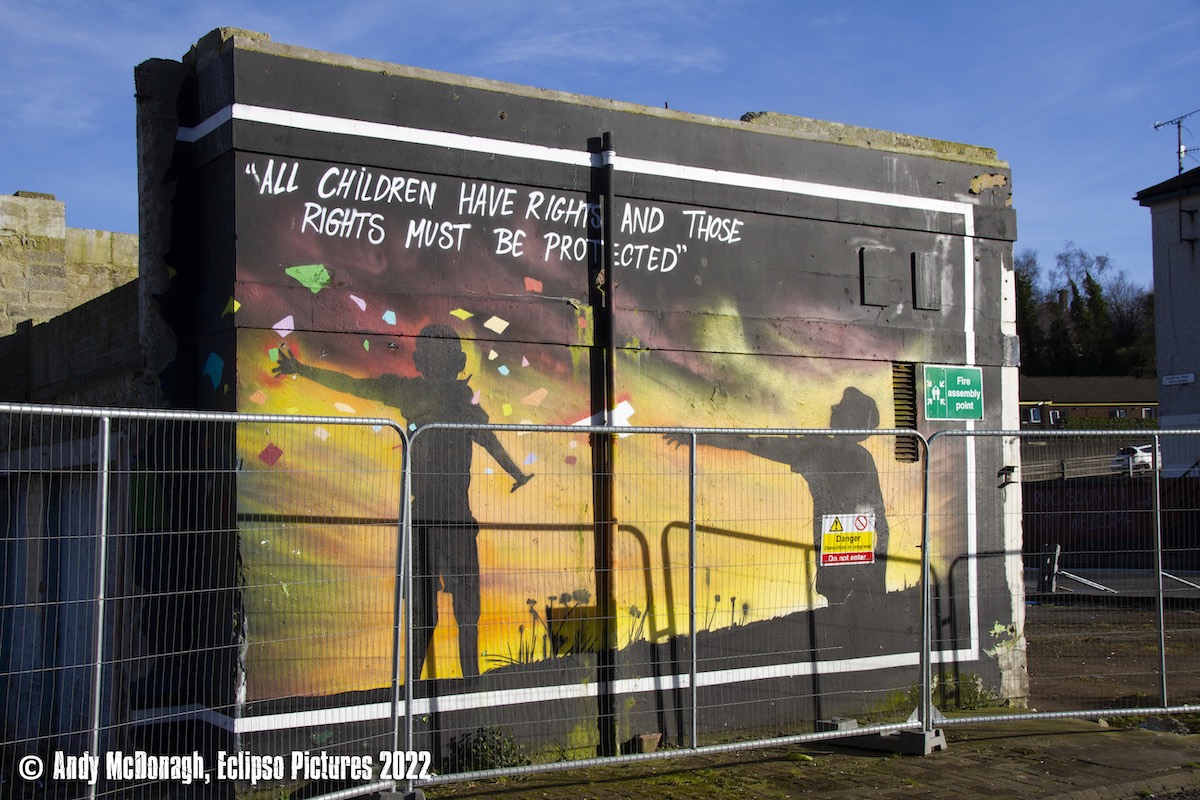
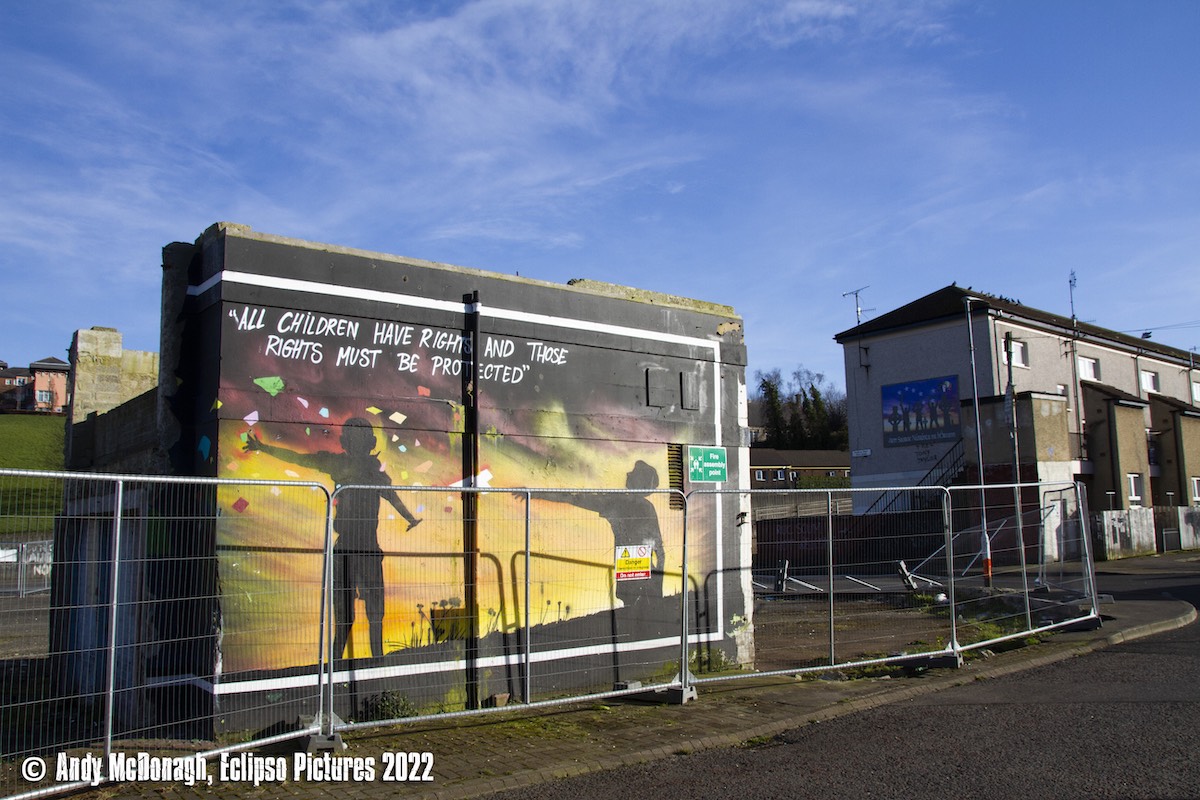
All Children Have Rights

The Bogside Inn and bogside shops have been razed and “exciting plans” made for a new development (Derry Journal). All that remains at present is the electrical station near Durrow Park, and all that remains of the murals along Meenan Square is the final panel shown above: “All children have rights and these rights must be protected.”

Click image to enlarge
Copyright © 2022 Andy McDonagh/Eclipso Pictures (ig | Fb)
X09788 X09789

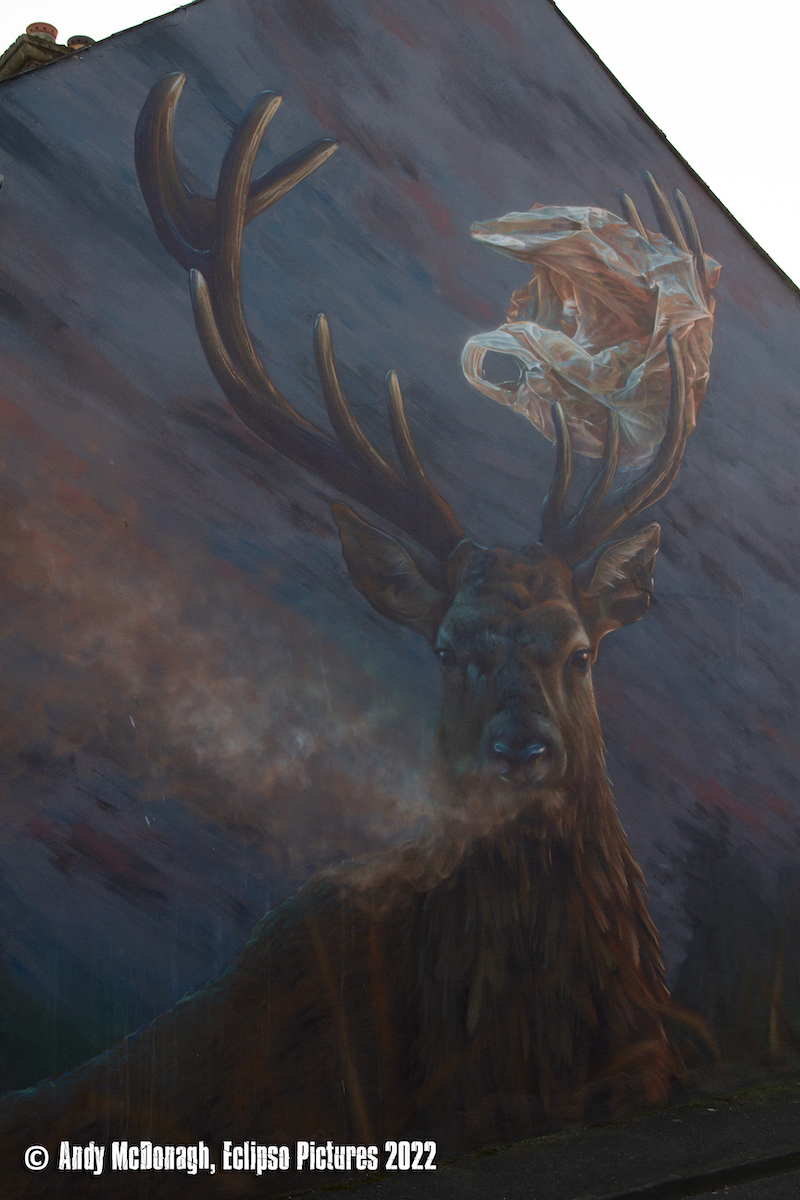
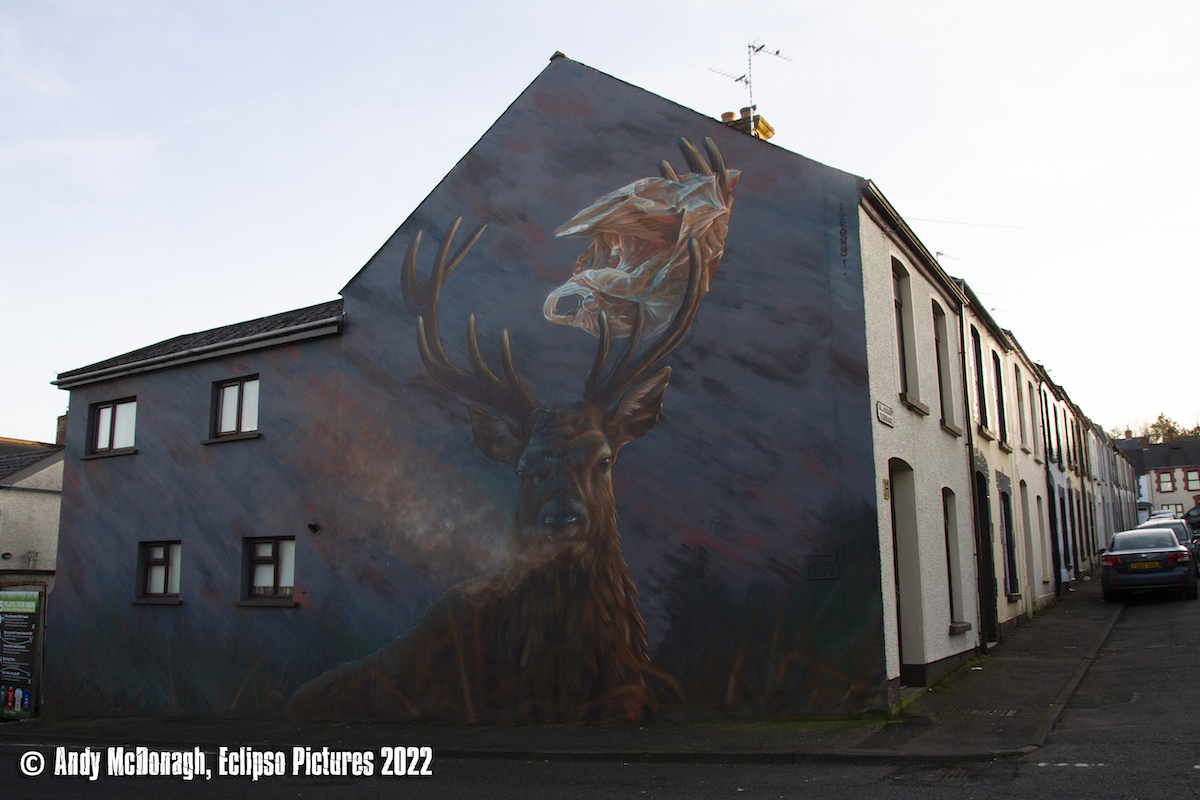
Monarch Of The Glen

London street artist Irony (ig) drew on Edwin Landseer’s 1851 painting The Monarch Of The Glen (WP) for this piece of street art – fitting with its location as both near the Glen area of London-/Derry and formerly the old Scotch quarter (Derry Journal) – but updating it for contemporary audiences with an environmental message and the source of its less formal name: Stag With A Bag.

With support from London Calling (web).

Glenview Avenue, London-/Derry. Another large piece by Irony (in Belfast): Pearl.

Click image to enlarge
Copyright © 2022 Andy McDonagh/Eclipso Pictures (ig | Fb)
[X09798] [X09799] [X09800] X09801 X09802

After We Are Gone

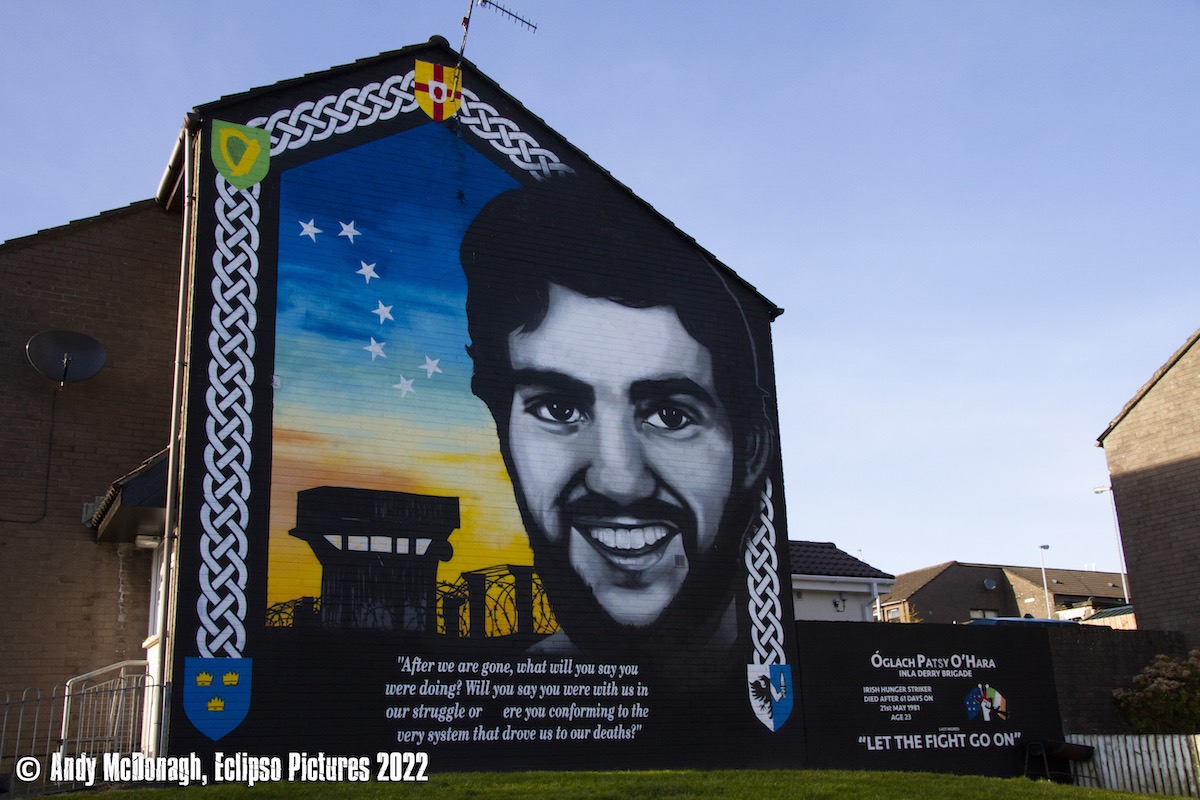
Patsy O’Hara was born in 1957 Bishop Street, Derry, and joined Na Fıanna in 1970 and the local Sınn Féın cumann in 1971 and, in August was shot in the leg by British soldiers. In 1972 he joined the Republican Clubs and in 1975 the IRSP. He was imprisoned multiple times, the final time being in January 1979 for possession of a hand grenade (Bobby Sands Trust). He went on hunger strike 41 years ago tomorrow (March 22nd) and was the first of the three INLA hunger strikers to die in 1981. The long-standing mural in Bishop Street was repainted for the 40th anniversary of his death. (For the previous version, see Let The Fight Go On.)

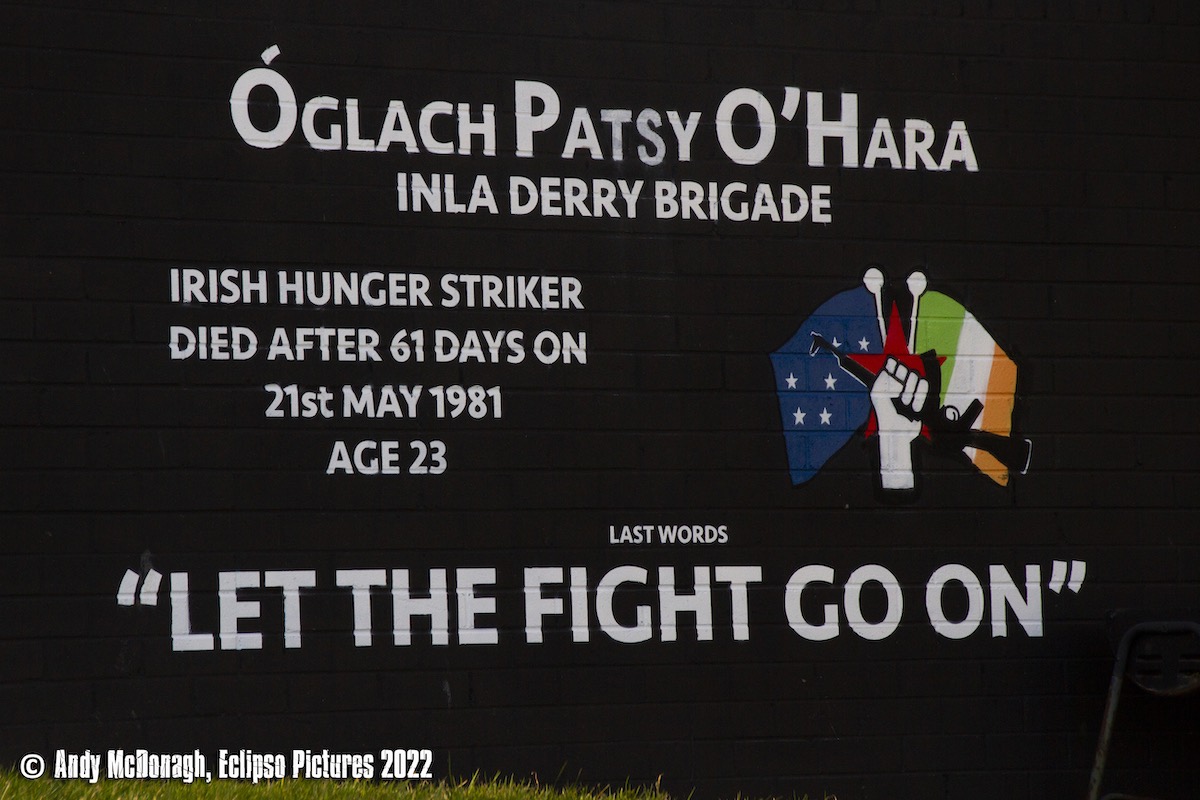
“Óglach Patsy O’Hara, INLA Derry Brigade, Irish hunger striker, who died after 61 days on 21st May 1981, age 23. Last words ‘Let the fight go on’.”

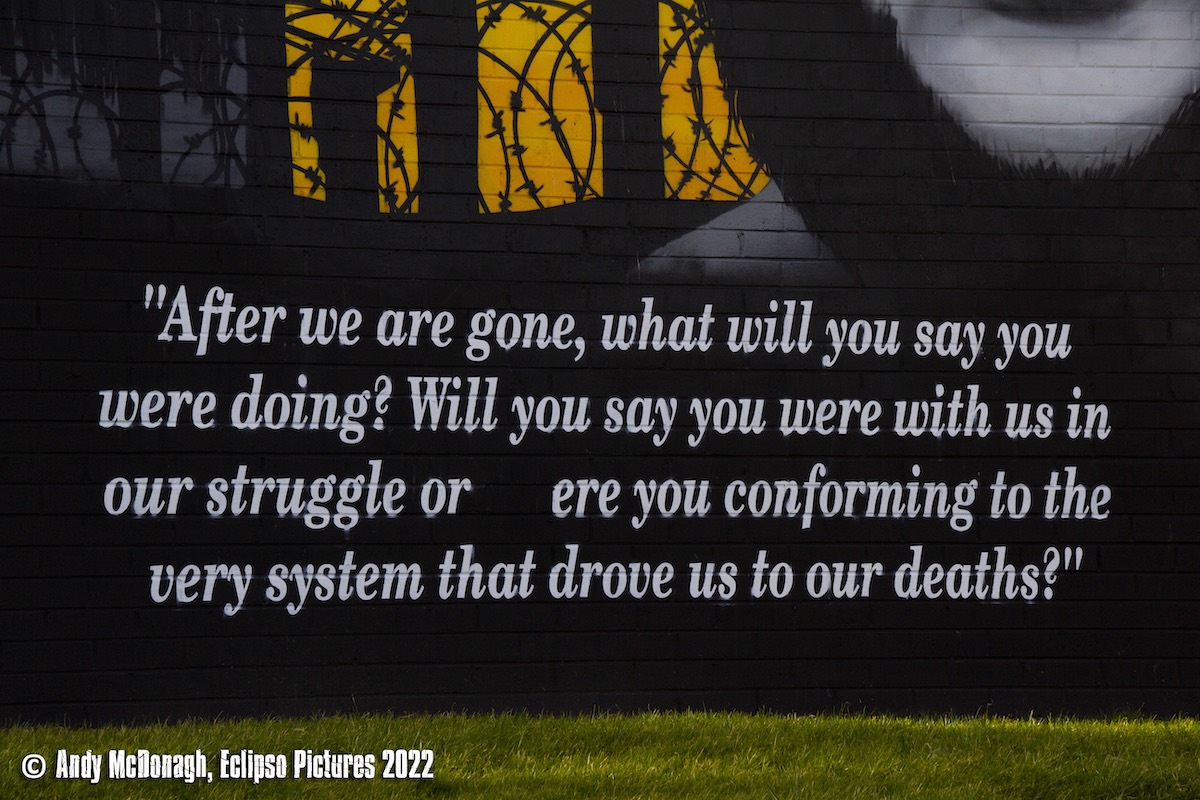
“After we are gone, what will you say you were doing? Will you say you were with us in our struggle or where you conforming to very system that drove us to our deaths?” – these words also appeared in the 2013 mural to O’Hara on Shaws Road, west Belfast.

Bishop Street, Derry

Click image to enlarge
Copyright © 2022 Andy McDonagh/Eclipso Pictures (ig | Fb)
X09795 X09796 X09797

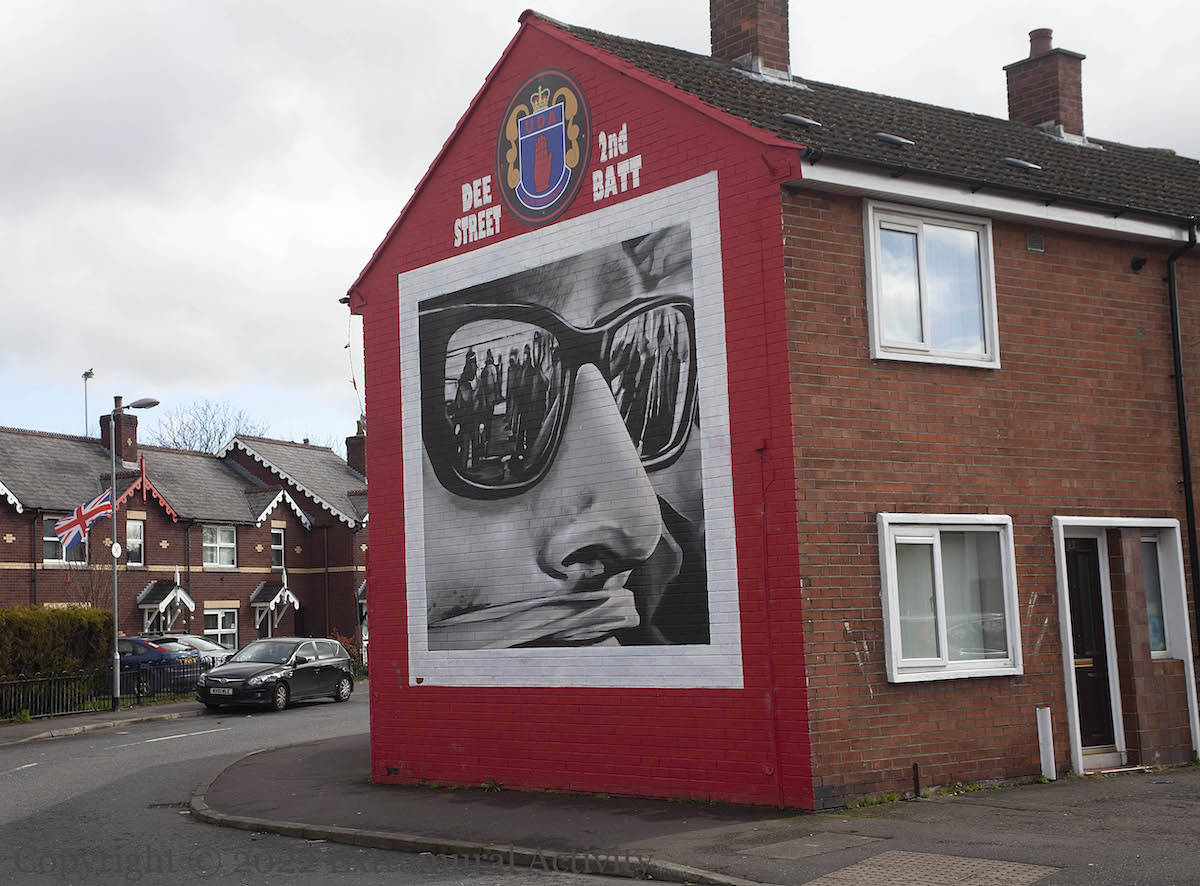
Dee St 2nd Batt

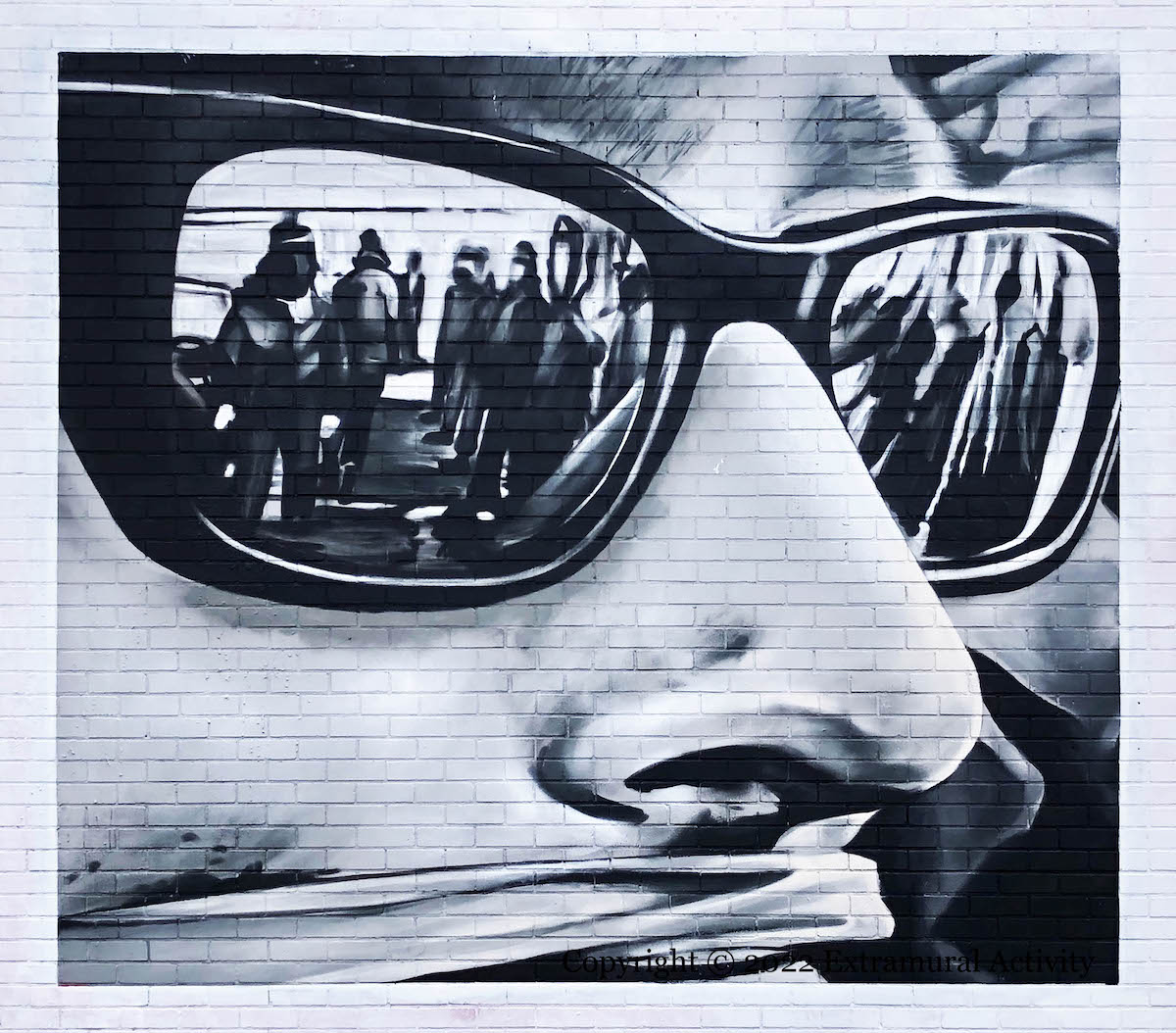
Perhaps because of the Covid pandemic, this mural of UDA volunteers on parade reflected in the sunglasses of one of their comrades took months to complete (it was started in late 2020 and was still unfinished last summer). It replaces the previous “UFF Formed 1973” mural – see Northern Island.

The photograph reproduced is from the 1974 Ulster Workers’ Strike; it appeared on the cover of Don Anderson’s Fourteen May Days (CAIN).

Avoniel Road, east Belfast

Click image to enlarge
Copyright © 2022 Seosamh Mac Coılle
X09781 X09779 [X09780]

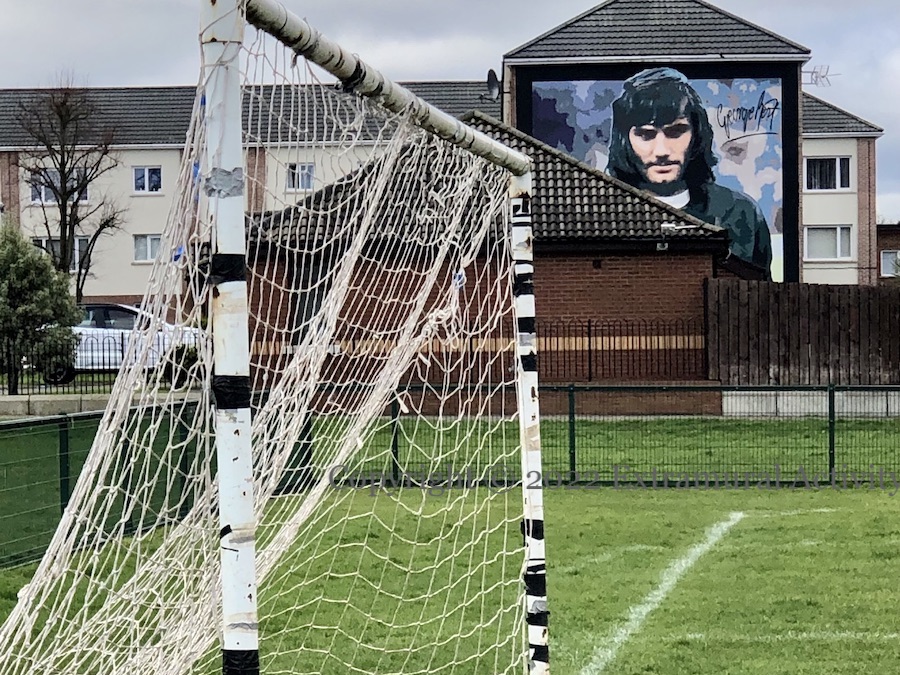
Maradona Good, Pelé Better, George Best

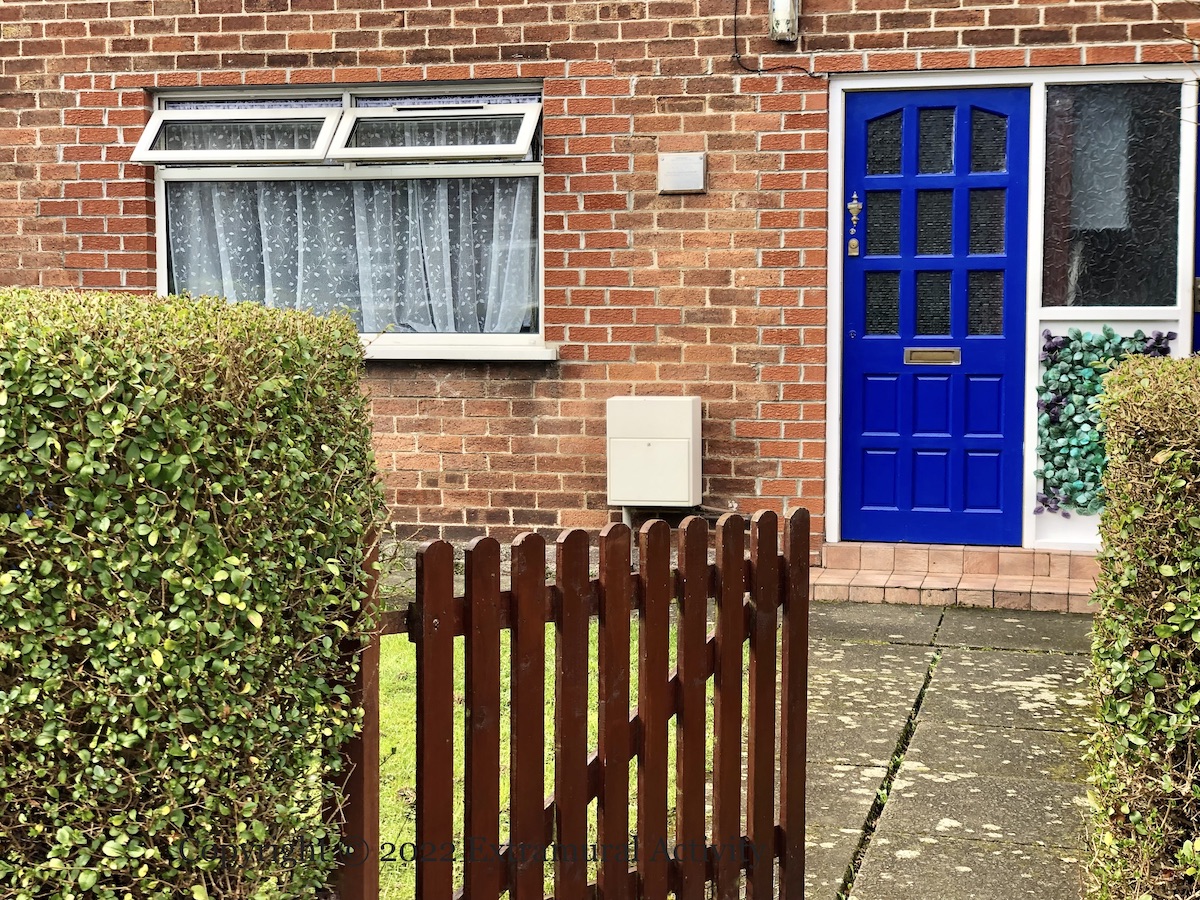
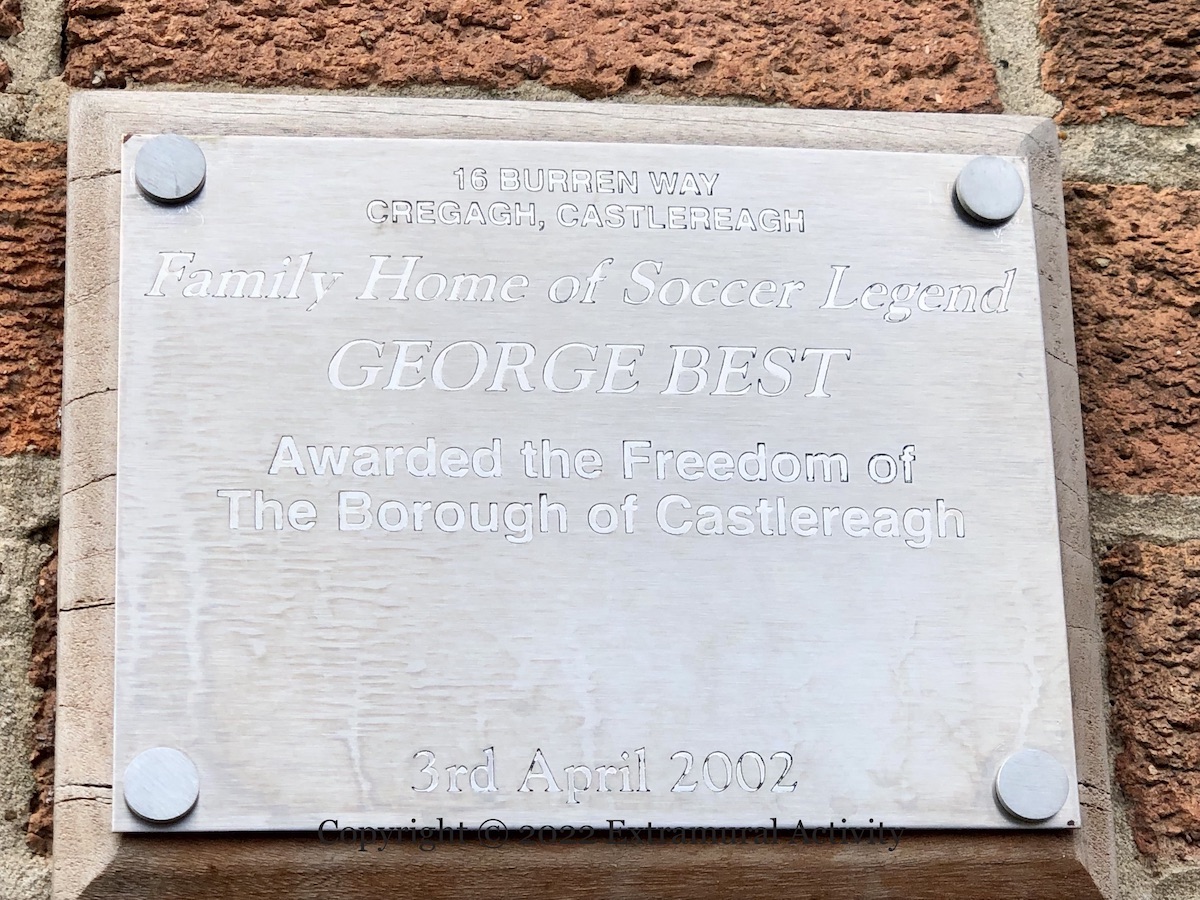
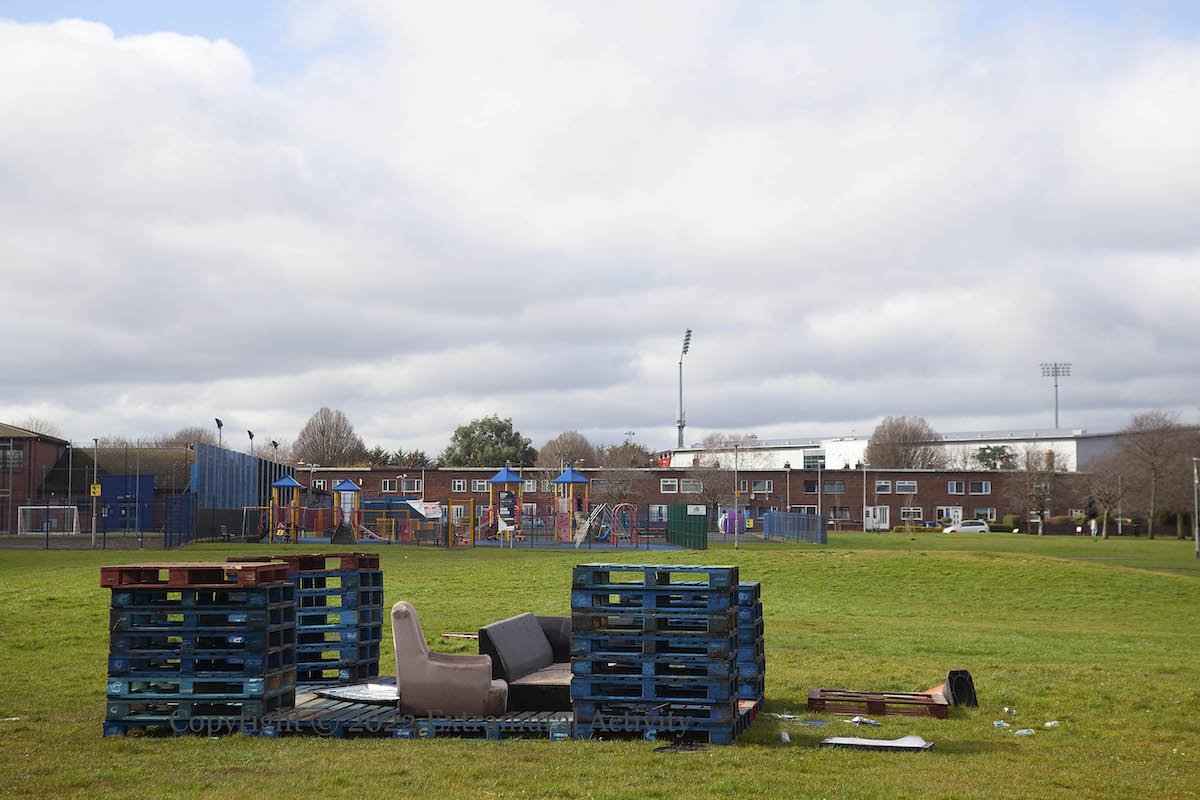
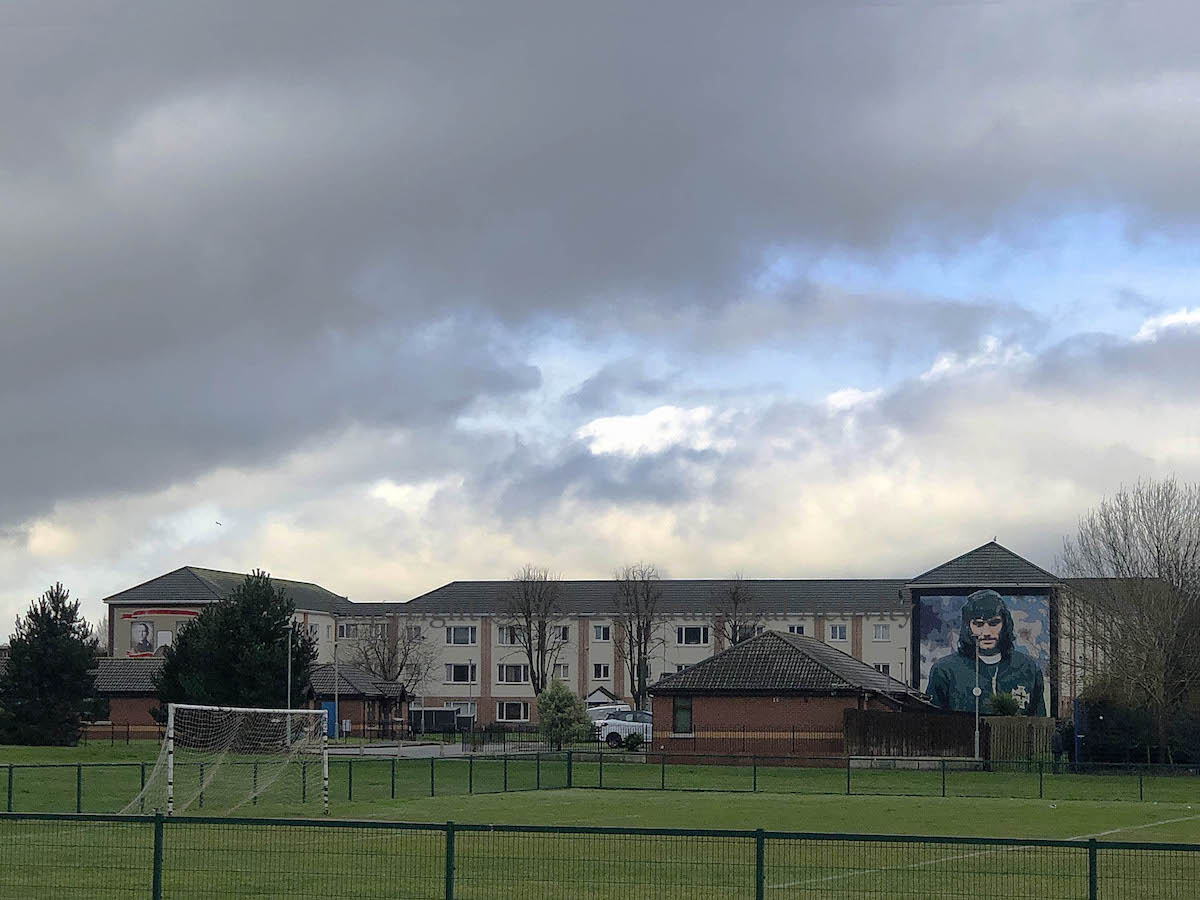
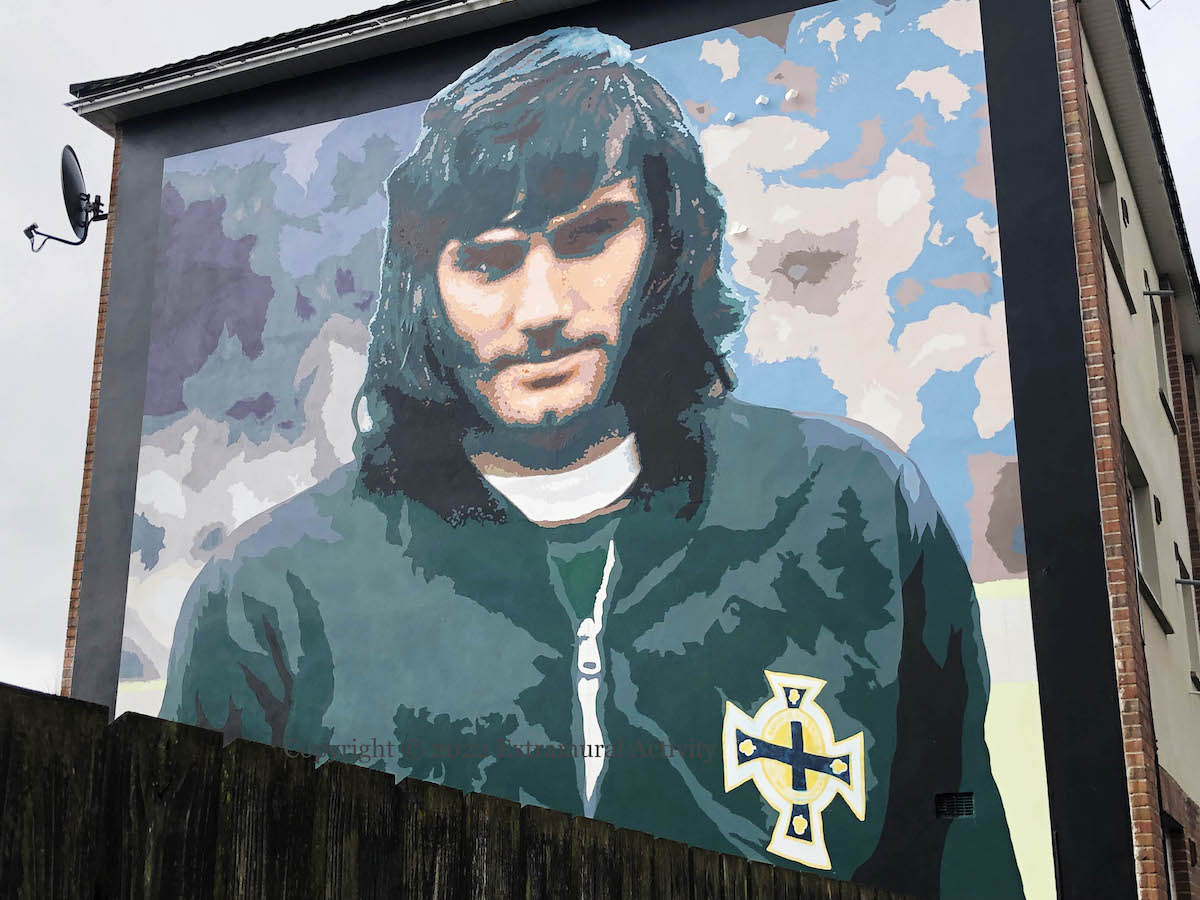
From the age of two-and-a-half George Best lived in Cregagh and played football on the pitch at the centre of the estate, where Cregagh Boys played their home games. After playing for Lisnasharragh Secondary he went to Manchester United at age fifteen – in 1961 – and from there to international stardom. When he died in 2005, he was remembered in the estate by a mural (that replaced a UFF mural). It stood for about ten years and now been updated with the mural shown in today’s images, along with the family home that has been returned to a 1960’s appearance – complete with George Best memorabilia – and is available to rent on AirBnb. The home and playing fields are also the starting part of the George Best Trail.

Click image to enlarge
Copyright © 2022 Seosamh Mac Coılle
X09771 [X09772] [X09775]
X09773 X09774 X09776
X09762 X09760 [X09761]

The Bould Bhoys

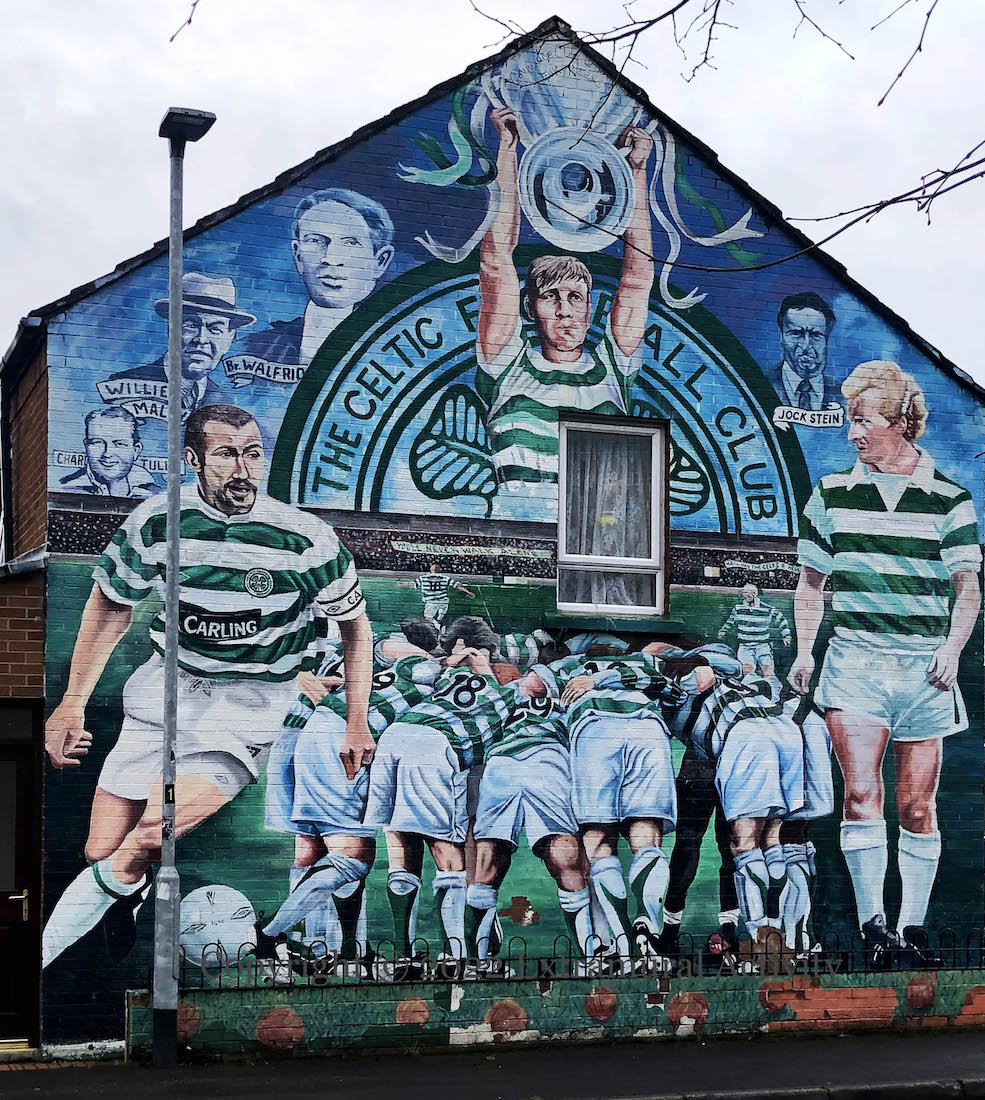
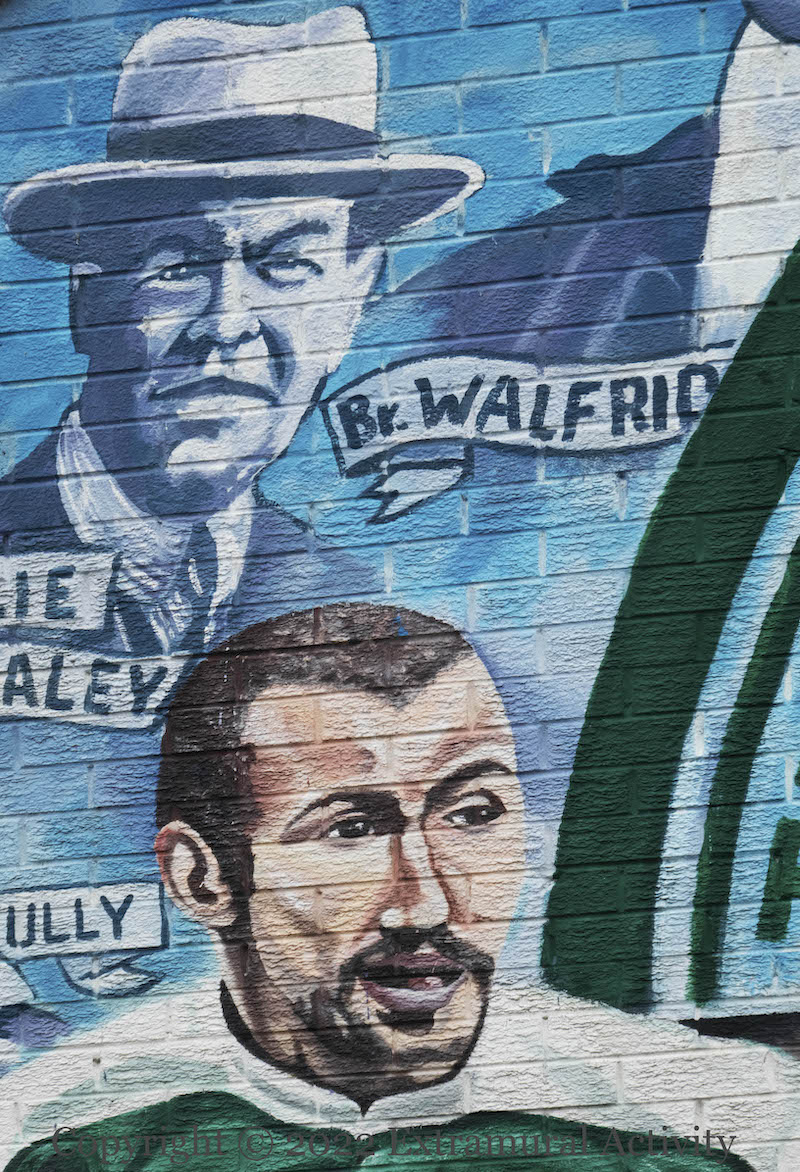
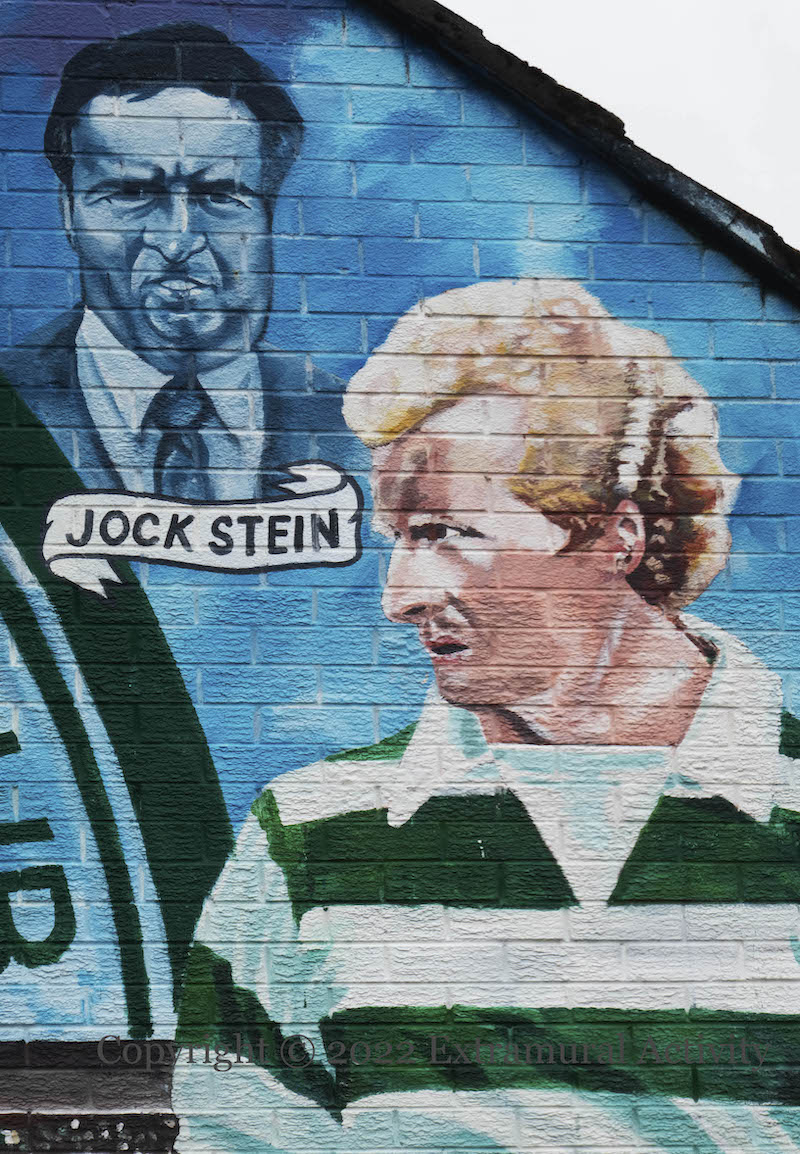
Carling last sponsored Celtic FC in the 2009-2010 season, which means that the heroes shown in this 2009 mural are another decade in the past. In the apex are Charlie Tully (of Belfast and Glasgow Celtic), Willie Maley (the first manager), Br. Walfrid (founder of the club in 1888), Billy McNeil lifting the European Cup in 1967, Jock Stein (player 1951-1957 and manager 1965-1978), while on the field are former players Henrik Larsson (1997-2004) and Jimmy Johnstone (1962-1965).

In the centre of the image, the team is “doing the huddle”, which is also practiced by Cliftonville.

Click image to enlarge
Copyright © 2022 Seosamh Mac Coılle
X09040 X09041 X09042 Friendly St